


Abstract
This study investigates the influence of geometric scaling on transient heat transfer in injection molds using a two-dimensional finite element model. Transient thermal simulations were performed in ANSYS Mechanical APDL 2025 r1to evaluate the temperature evolution of the injected part during the cooling phase for multiple uniform scaling factors. The numerical results were processed using symbolic regression in Eureqa (Version 0.98 bet) to derive analytical models describing the temporal evolution of the average part temperature. Well-defined linear relationships were identified between model dimensions and thermal response across the analyzed scaling range. The proposed analytical models show excellent agreement with finite element results, with errors consistently below 1%. These results demonstrate that geometric scaling laws can be used to reliably estimate thermal behavior in injection molds of different sizes without the need for exhaustive numerical simulations, providing a computationally efficient approach for early-stage thermal analysis and model-based prediction in injection molding applications.
1. Introduction
Conformal cooling channels (CCCs) are widely discussed as an approach to improve thermal management in injection molds, particularly by enabling cooling layouts that better follow part geometry than conventional straight-drilled channels, leading to improved thermal performance and temperature uniformity [1,2,3]. The feasibility and adoption of CCCs are closely linked to rapid tooling and advanced manufacturing routes, since these processes enable the fabrication of complex internal cooling geometries that are difficult or impractical to machine using conventional methods [4,5,6,7]. Beyond feasibility, combined numerical and experimental studies on conformally cooled metal tooling support the evaluation of the thermal performance of CCC concepts under realistic mold conditions [8,9].
A recurring theme in the literature is the need for systematic design methods and optimization, including layout strategies that incorporate geometric constraints and cooling objectives [10,11,12]. Analytical and computational optimization frameworks have been proposed for cooling-system design in injection molding, spanning classical optimal design formulations and simplified analytical modeling approaches intended to reduce the design burden [12,13,14,15]. In parallel, algorithmic and geometry-aware channel generation methods have been developed to automate conformal layout creation, including automatic circuit design, spiral channel concepts, and visibility- or distance-based geometric construction rules [16,17,18,19]. Because mold thermal behavior depends not only on channel layout but also on heat-transfer mechanisms at the polymer–mold interface, studies addressing heat-transfer coefficients and process and surface effects provide additional context for more realistic thermal modeling assumptions [20]. Two- and three-dimensional transient heat-transfer studies have provided deeper insights into time-dependent thermal behavior and sensitivity to geometric parameters, supporting systematic methodologies for optimal channel placement and enhanced cooling efficiency [21,22,23,24,25,26]. Silva et al. [27] conducted a numerical structural analysis of injection molds equipped with conformal cooling channels. Their results demonstrated that the mechanical performance and structural integrity of the mold should be considered alongside the thermal benefits of conformal cooling-channel designs. Finally, coupled thermal–structural analyses demonstrate that CCCs can be designed not only for superior thermal performance but also for mechanical reliability under cyclic thermal loading, a conclusion strongly reinforced by recent state-of-the-art reviews emphasizing advanced modeling, optimization strategies, and strategic channel placement as key drivers of efficient and sustainable molding processes [28,29]. The current study distinguishes itself by utilizing finite element method (FEM) simulations in combination with Eureqa [30,31], a symbolic regression tool, to develop accurate models that allow the prediction of thermal behavior during the injection molding process. The present article uses ANSYS Mechanical APDL to model injection molds. It focuses on the influence of geometric scaling on the transient thermal behavior of injection-molded parts. In this study, analytical temperature prediction models were developed using symbolic regression. The work is therefore centered on geometry-scaling-driven thermal modeling.
2. Numerical Procedure
A 2D transient thermal study was performed using ANSYS Mechanical APDL 2020 R2 for numerical work. To obtain a more precise analytical model for the temperature prediction over time, numerical findings are consulted.
2.1. Geometry
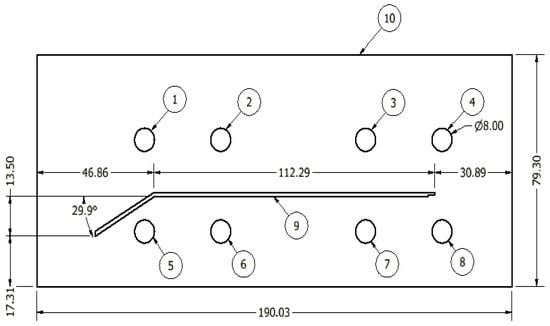
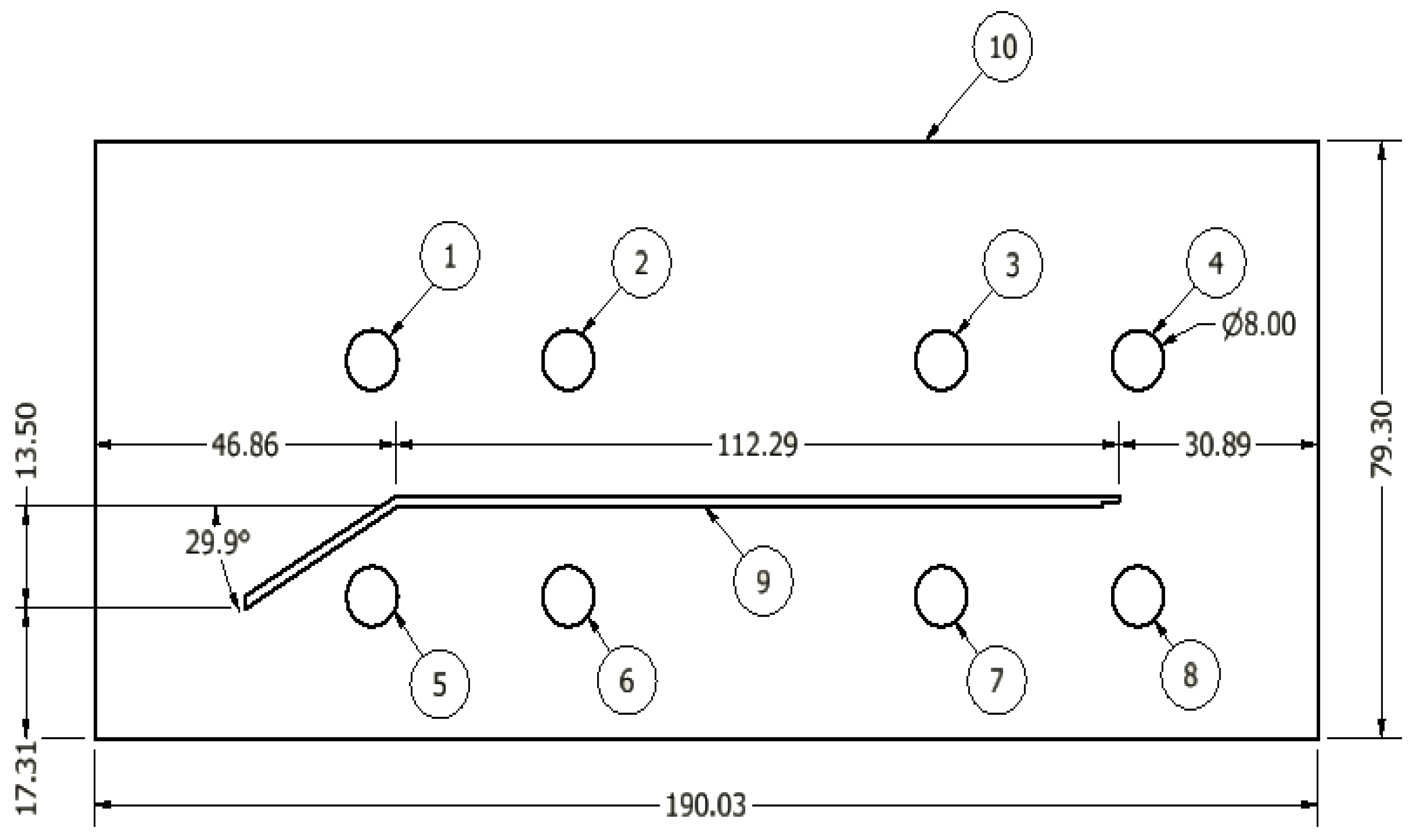
The geometry of the analyzed 2D model is presented in Figure 1.
Figure 1.
Set drawing: simplification of the 2D model [21,22,24,25].
The components of the geometry are explained in Table 1.
Table 1.
Components of the geometry used in the simulations [21,22,23,24,25,26].
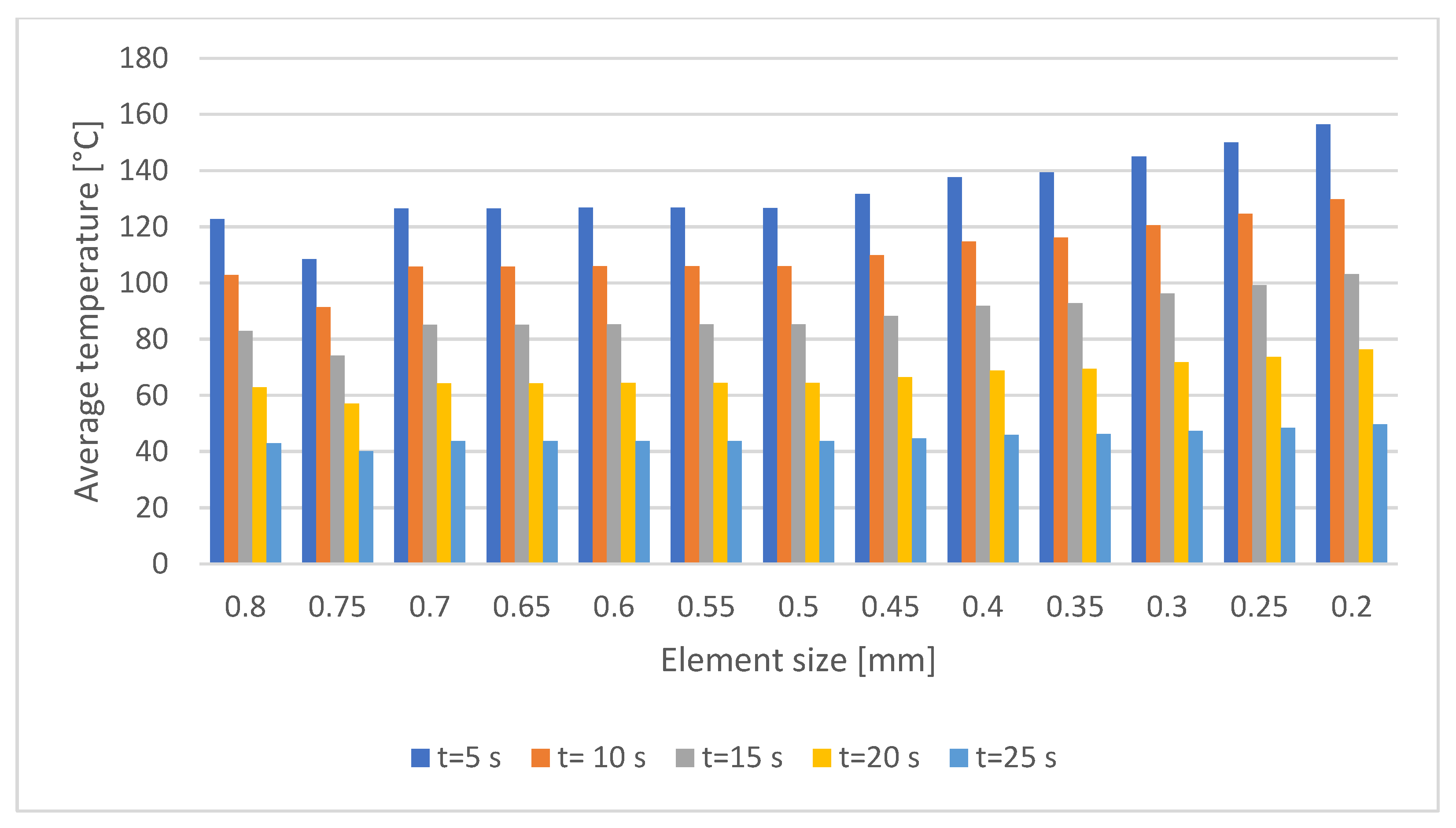
The cooling pipelines, seen as circles numbered 1 to 8 in Figure 2, were constructed of liquid water. The injected component consists of polypropylene (PP), whereas the mold cavity is composed of P20 steel.
Figure 2.
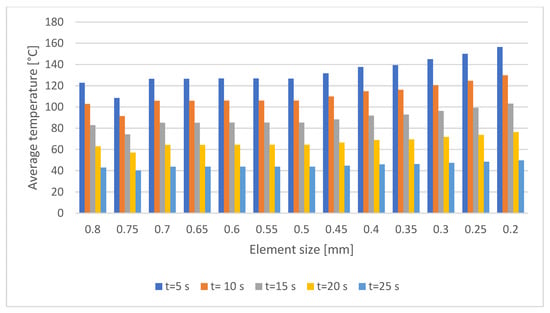
Results of the mesh convergence analysis: average temperatures.
2.2. Materials
Table 2 lists the materials’ properties.
Table 2.
Properties of water and injected material: PP and P20 steel [21,22,23,24,25,26].
The cooling channels, shown by circles, are made of water in the liquid phase. Polypropylene (PP) makes up the injected portion, and P20 steel makes up the mold cavity. Only steel is regarded as a solid among these materials; the other two are regarded as fluids.
2.3. ANSYS Mechanical APDL
Table 3 displays the boundary conditions implemented in ANSYS Mechanical APDL 2025 r1.
Table 3.
Thermal conditions applied [21,22,24,25].
The thermal conditions applied in steady-state thermal were a temperature of 23 °C to outer lines and a temperature of 40 °C at the 8 cooling channels. The thermal conditions applied in transient state thermal were an initial temperature of 210 °C, decreasing to 23 °C. The total time for the analysis is 30 s.
3. Results
3.1. Mesh Convergence
A mesh convergence study was performed, as it is necessary to verify the accuracy and reliability of the FEM results and to justify that the chosen mesh provides a good balance between computational cost and solution precision.
Figure 2 displays the mesh convergence analysis’s temperature results.
Equation (1) was used to get the mesh convergence results shown in Figure 3.
where
- Ti is the average temperature of the considered element size;
- Ti−1 is the average temperature of the previous adjacent (higher) element size.
Figure 3.
Results of the mesh convergence analysis: Error.
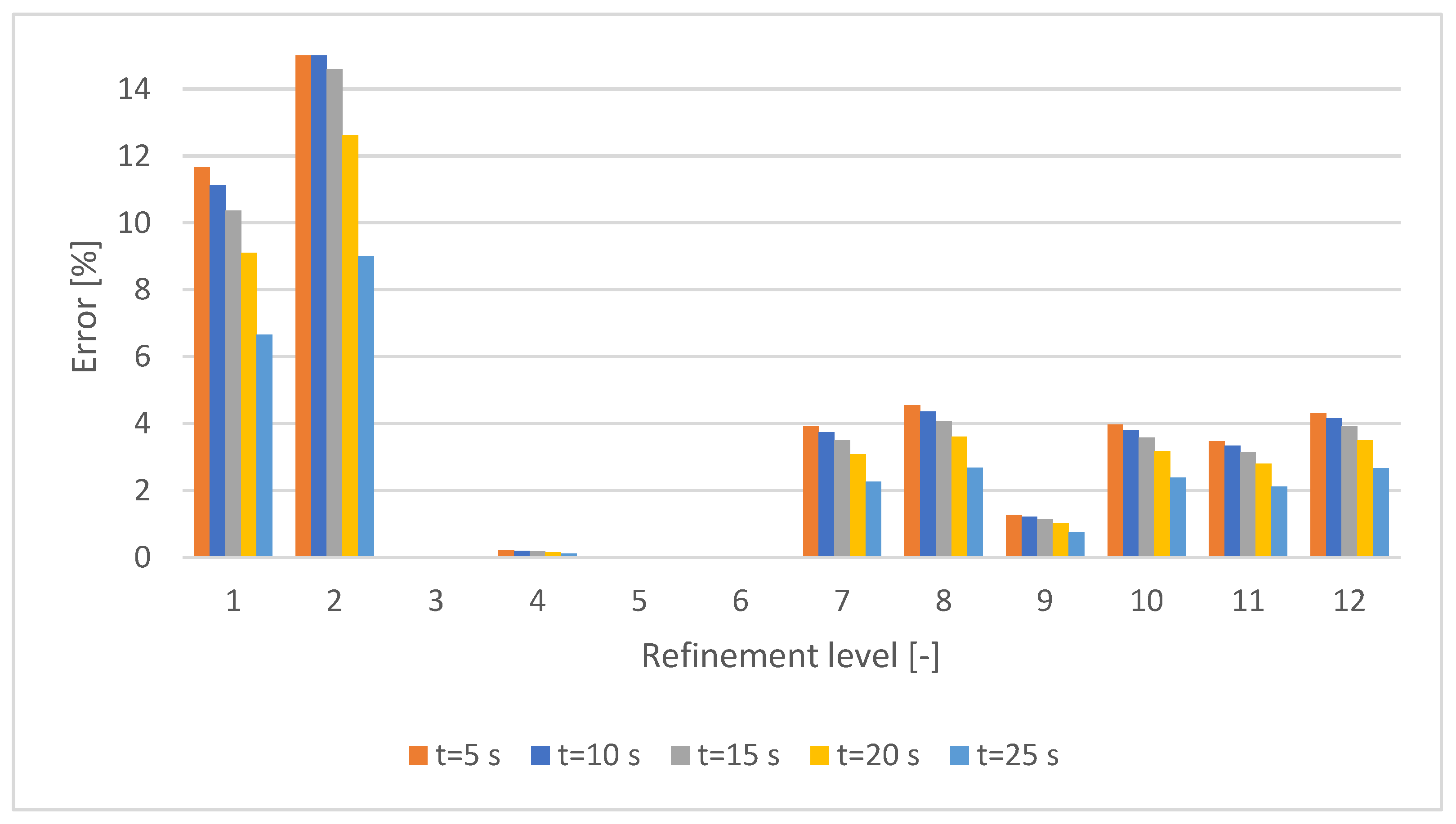
In steps of 0.05 mm, element sizes ranging from 0.2 to 0.8 mm were examined to find the optimal size for obtaining the results. The part’s average temperature (component 9 of Figure 1) is considered. Figure 3 presents the errors obtained from the mesh convergence analysis. The refinement levels were determined by comparing a given element size with the ones from the next refinement level, as defined in Equation (2).
The optimal element size, as shown in Figure 3, is 0.55 mm, as the matching refinement level, 5, produces the least amount of inaccuracy.
3.2. Initial Results
The metric Error, depicted in Equation (3), was employed to measure the divergence between the analytical and classical analytical methods:
where
- TA is the temperature by the analytical method, and TN is the average temperature by the numerical method.
The percentage difference between the analytical model and the numerical approach is represented by the metric error.
3.3. New Analytical Models
The symbolic regression software EUREQA [30,31] was used to develop analytical models for predicting the transient temperature evolution obtained from the finite element (FEM) simulations. The software identifies mathematical expressions that accurately describe the relationship between the average part temperature and time for each geometric scaling factor. The analytical models were generated using the symbolic regression software Eureqa from the transient finite element results obtained with ANSYS Mechanical APDL. For each geometric scaling factor, the input dataset consisted of the average temperature of the injected part extracted at five time instants (5, 10, 15, 20, and 25 s) during the cooling period. Eureqa employs a symbolic regression algorithm based on genetic programming, generating candidate analytical expressions through an evolutionary search that simultaneously minimizes prediction error and equation complexity using Pareto optimization. The simplest analytical expression satisfying the required prediction accuracy was selected from the Pareto front for each scaling factor. Model accuracy was evaluated by comparing the analytical predictions with the finite element results using the coefficient of determination (R2) and the root mean square error (RMSE). The resulting analytical models showed excellent agreement with the numerical simulations, with R2 values close to unity and very low RMSE values.
For each scaling value, the resulting analytical model takes the following form:
where is the time, and Tavg is the average temperature.
Tavg = a − bt
Table 4 shows the values of coefficients for the analytical model obtained in Eureqa.
Table 4.
Values of coefficients a and b obtained.
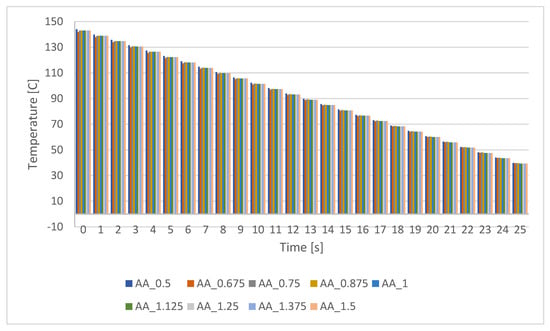
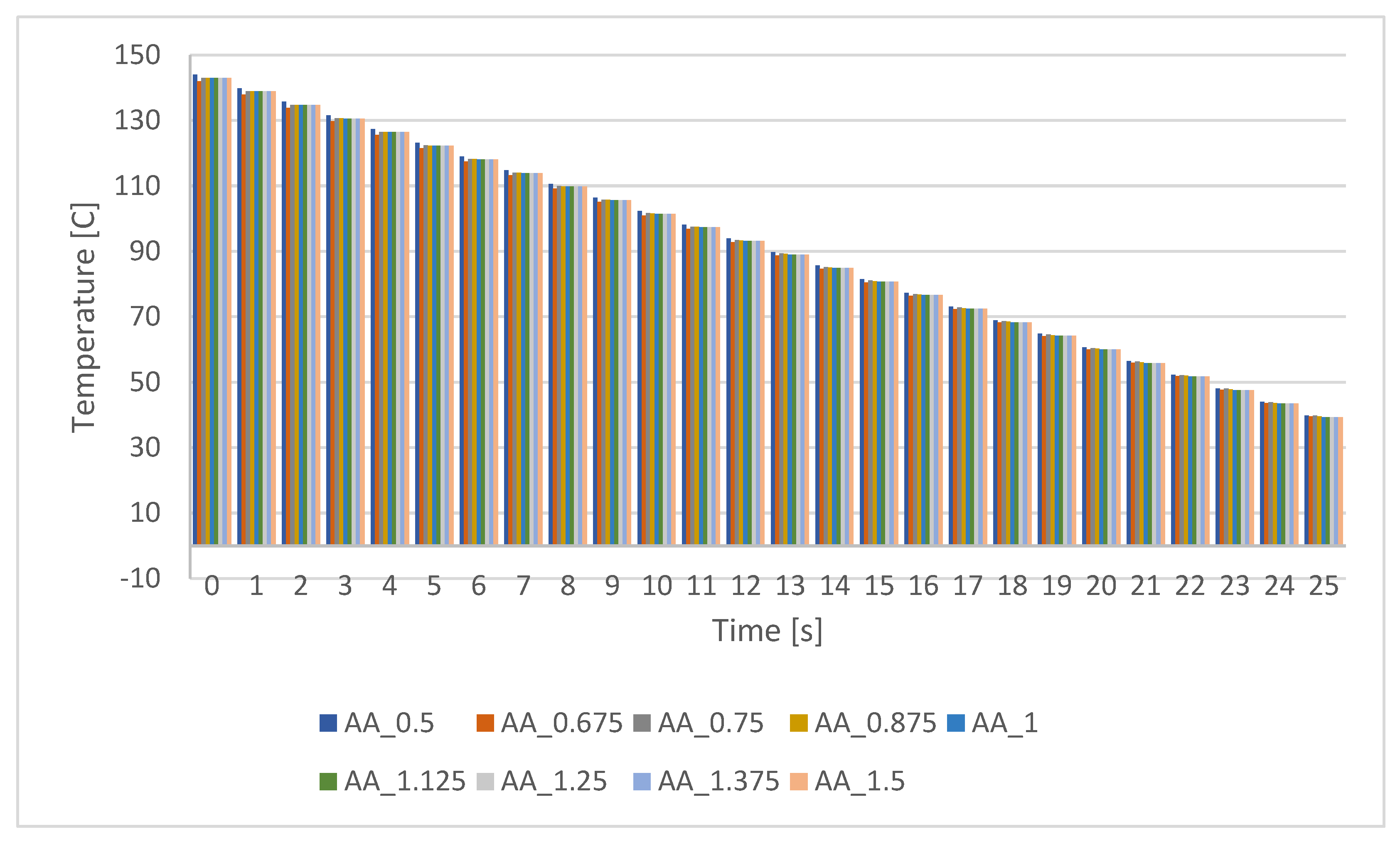
The temperatures obtained using the unique analytical method, taking into account multiple scaling factors, are displayed in Figure 4.
Figure 4.
Novel analytical results for each scaling value: temperature over time, using the novel analytical model (Equation (4) and Table 4).
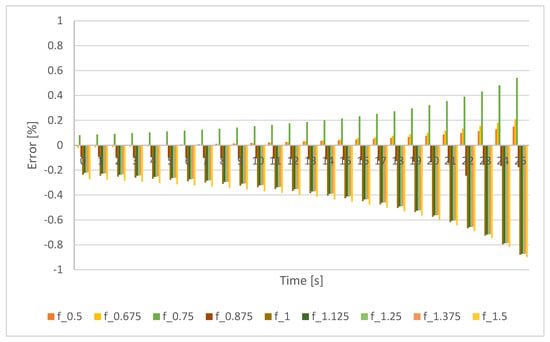
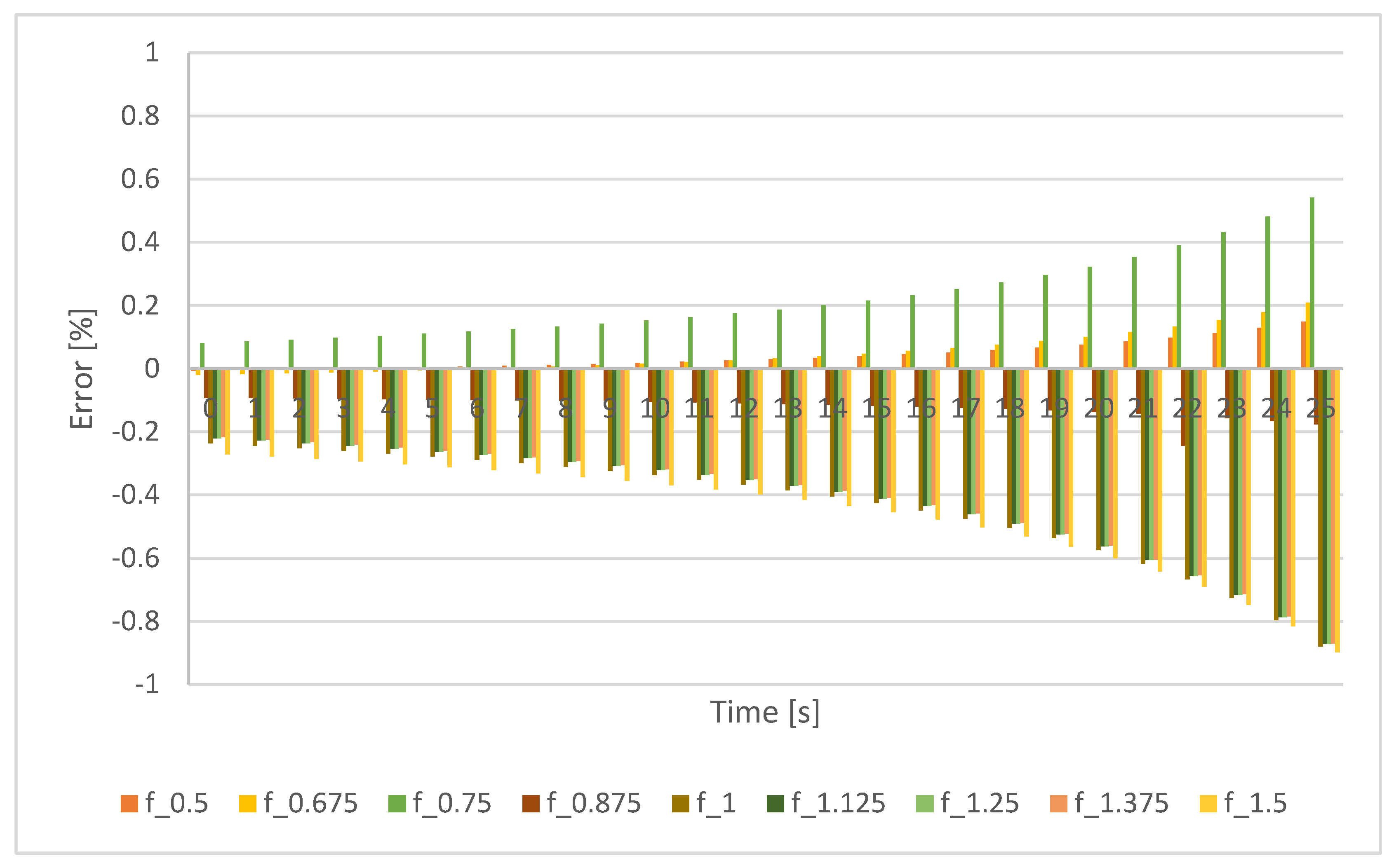
Figure 5 displays the correlations between the numerical method, determined by Equation (3), and the proposed analytical method.
Figure 5.
Error results considering the new analytical model and the numerical model: temperature distributions for samples with uniform scaling.
4. Discussion and Conclusions
This work presents a comprehensive investigation of two-dimensional transient heat transfer in injection molds equipped with conformal cooling channels (CCCs), combining advanced analytical modeling based on symbolic regression having numerical simulations as a basis.
The results indicate that, within the investigated scaling range (0.5–1.5), uniform geometric scaling produces only minor changes in the transient thermal response. Since all geometric dimensions, including the cooling channel diameters, channel spacing, and distances between the cooling channels and the injected part, were scaled proportionally, the overall heat-transfer characteristics remained largely unchanged. Consequently, only slight variations were observed in the coefficients of the analytical models. This finding demonstrates that the thermal response is relatively insensitive to uniform geometric scaling within the investigated range and supports the applicability of the proposed analytical models for predicting the cooling behavior of geometrically scaled injection molds.
The proposed analytical model shows excellent agreement with the numerical results throughout almost the entire transient cooling process. As shown in Figure 5, the relative error remains below approximately 1% from 0 to 25 s for all scaling factors. Overall, this study bridges the gap between computational efficiency and predictive accuracy, establishes the equivalence between well-constructed analytical models and 2D finite element solutions for transient heat transfer, and provides practical scaling rules for geometric adaptation, with direct relevance to industrial sectors such as automotive, packaging, and medical device manufacturing. The proposed methodology offers a validated, cost-effective, and highly applicable framework for improving thermal control and optimizing conformal cooling channel design in injection molding. A limitation of the present study is that the proposed analytical models were developed and evaluated using the same finite element dataset employed for symbolic regression. Consequently, although the models exhibit excellent agreement with the numerical results, their predictive capability has not yet been validated using independent experimental measurements or separate numerical datasets. The proposed analytical expressions should therefore be regarded as surrogate models applicable to the investigated geometry, material properties, thermal boundary conditions, and geometric scaling range (0.5–1.5). Future work will focus on validating the methodology using independent experimental data and three-dimensional finite element simulations, as well as extending the approach to more complex mold geometries and cooling channel configurations.
Author Contributions
Conceptualization, H.M.S.; methodology, H.M.S.; software, H.M.S.; validation, H.M.S.; formal analysis, H.M.S.; investigation, H.M.S.; resources, H.M.S.; data curation, H.M.S.; writing—original draft preparation, H.M.S.; writing—review and editing, J.d.S.R., J.C., and F.S.; visualization, H.M.S.; project administration, A.R.; funding acquisition. All authors have read and agreed to the published version of the manuscript.
Funding
This research received no external funding.
Institutional Review Board Statement
Not applicable.
Informed Consent Statement
Not applicable.
Data Availability Statement
Data will be made available upon request.
Conflicts of Interest
The authors declare no conflict of interest.
References
- Shayfull, Z.; Sharif, S.; Zain, A.M.; Ghazali, M.F.; Saad, R.M. Potential of conformal cooling channels in rapid heat cycle molding: A review. Adv. Polym. Technol. 2014, 33, 21381. [Google Scholar] [CrossRef] [Scilit]
- Kanbur, B.B.; Suping, S.; Duan, F. Design optimization of conformal cooling channels for injection molding: A review. Int. J. Adv. Manuf. Technol. 2020, 106, 3253–3271. [Google Scholar] [CrossRef] [Scilit]
- Wei, Z.; Wu, J.; Shi, N.; Li, L. Review of conformal cooling system design and additive manufacturing for injection molds. Math. Biosci. Eng. 2020, 17, 5414–5431. [Google Scholar] [CrossRef] [Scilit]
- Shine, M.S.; Ashtankar, K.M.; Kuthe, A.M.; Dahake, S.W.; Mawale, M.B. Direct rapid manufacturing of molds with conformal cooling channels. Rapid Prototyp. J. 2018, 24, 1347–1364. [Google Scholar] [CrossRef] [Scilit]
- Ahn, D.G. Applications of laser assisted metal rapid tooling process to manufacture molding and forming tools. Int. J. Precis. Eng. Manuf. 2011, 12, 925–938. [Google Scholar] [CrossRef] [Scilit]
- Ferreira, J.C.; Mateus, A. Studies of rapid soft tooling with conformal cooling channels for plastic injection moulding. J. Mater. Process. Technol. 2003, 142, 508–516. [Google Scholar] [CrossRef] [Scilit]
- Hopkinson, N.; Dickens, P. Analysis of rapid manufacturing—Using layer manufacturing processes for production. Proc. Inst. Mech. Eng. B 2000, 214, 345–356. [Google Scholar]
- Mazur, M.; Brincat, P.; Leary, M.; Brandt, M. Numerical and experimental evaluation of a conformally cooled H13 steel injection mould manufactured with selective laser melting. Int. J. Adv. Manuf. Technol. 2017, 93, 881–900. [Google Scholar] [CrossRef] [Scilit]
- Hassan, H.; Regnier, N.; Defaye, G.; Fortin, A. 3D study of cooling system effect on the heat transfer during injection molding. Int. J. Therm. Sci. 2010, 49, 1611–1622. [Google Scholar] [CrossRef] [Scilit]
- Park, H.-S.; Dang, X.-P. Optimization of conformal cooling channels with array of baffles for plastic injection molding. Int. J. Precis. Eng. Manuf. 2010, 11, 879–890. [Google Scholar] [CrossRef] [Scilit]
- Lin, Z.C.; Chou, M.H. Design of the cooling channels in non-rectangular plastic flat injection mold. J. Manuf. Syst. 2002, 21, 167–186. [Google Scholar] [CrossRef] [Scilit]
- Park, S.J.; Kwon, T.H. Optimal cooling system design for the injection molding process. Polym. Eng. Sci. 1998, 38, 1450–1462. [Google Scholar] [CrossRef] [Scilit]
- Rao, N.S.; Schumacher, G.; Schott, N.R.; O’Brien, K.T. Optimization of cooling systems in injection molds by an easily applicable analytical model. J. Reinf. Plast. Compos. 2002, 21, 451–459. [Google Scholar] [CrossRef] [Scilit]
- Tang, L.Q.; Chassapis, C.; Manoochehri, S. Optimal cooling design for multi-cavity injection molding. Finite Elem. Anal. Des. 1997, 26, 229–251. [Google Scholar] [CrossRef] [Scilit]
- Agazzi, A.; De Napoli, L.; Parenti, P.; Brambilla, L. Effective cooling system design for injection molding optimization. Int. J. Mater. Form. 2013, 6, 167–178. [Google Scholar]
- Wang, Y.; Yu, K.M.; Wang, C.C.L.; Zhang, Y. Automatic design of conformal cooling circuits for rapid tooling. Comput.-Aided Des. 2011, 43, 1001–1010. [Google Scholar] [CrossRef] [Scilit]
- Wang, Y.; Yu, K.M.; Wang, C.C.L. Spiral and conformal cooling channel design in injection molding. Comput.-Aided Des. 2015, 66, 1–14. [Google Scholar] [CrossRef] [Scilit]
- Au, C.K.; Yu, K.M.; Chiu, W.K. Visibility-based conformal cooling channel generation for injection molding. Comput.-Aided Des. 2011, 43, 356–369. [Google Scholar] [CrossRef] [Scilit]
- Au, C.K.; Yu, K.M. Variable distance adjustment for conformal cooling channel design. Comput.-Aided Des. 2014, 52, 73–86. [Google Scholar]
- Liu, Y.; Gehde, M. Effects of surface roughness and processing parameters on heat transfer coefficient between polymer and cavity wall during injection molding. Int. J. Adv. Manuf. Technol. 2016, 84, 1325–1333. [Google Scholar] [CrossRef] [Scilit]
- Silva, H.M.; Noversa, J.; Fernandes, L.; Rodrigues, H.; Pontes, A. Sensitivity analysis of conformal Cooling Channels for injection molds: Two-Dimensional transient heat transfer analysis. Eng. Proc. 2025, 87, 16. [Google Scholar] [CrossRef] [Scilit]
- Silva, H.M.; Fernandes, L.; Rodrigues, H.; Noversa, J.; Pontes, A. 2D heat transfer of an injection mold: ANSYS Workbench and Mechanical APDL. Eng. Proc. 2023, 56, 308. [Google Scholar] [CrossRef] [Scilit]
- Silva, H.M.; Rodrigues, H.; Noversa, J.; Fernandes, L.; Pontes, A. 3D heat transfer of an injection mold: ANSYS Workbench and Mechanical APDL. Eng. Proc. 2023, 56, 298. [Google Scholar] [CrossRef] [Scilit]
- Silva, H.M.; Noversa, J.T.; Fernandes, L.; Rodrigues, H.; Pontes, A. A design optimization methodology applied to conformal cooling channels in injection molds: 2D transient heat transfer analysis. Eng. Proc. 2023, 56, 297. [Google Scholar] [CrossRef] [Scilit]
- Silva, H.M.; Vasques, C.; Rodrigues, H.L.; Noversa, J.T.; Fernandes, L.; Pontes, A.J. A methodology for the optimal placement of conformal cooling channels in injection molds: 2D transient heat transfer analysis. Int. J. Adv. Manuf. Technol. 2024, 132, 5261–5274. [Google Scholar] [CrossRef] [Scilit]
- Silva, H.M.; Noversa, J.T.; Fernandes, L.; Rodrigues, H.L.; Pontes, A.J. Design optimization of conformal cooling channels for injection molds: 3D transient heat transfer analysis. Mech. Adv. Mater. Struct. 2023, 31, 4610–4621. [Google Scholar] [CrossRef] [Scilit]
- Silva, H.M.; Noversa, J.; Rodrigues, H.; Fernandes, L.; Pontes, A. Structural analysis of molds with conformal cooling channels: A numerical study. Eng. Proc. 2023, 56, 295. [Google Scholar] [CrossRef] [Scilit]
- Silva, H.M.; Noversa, J.T.; Fernandes, L.; Rodrigues, H.L.; Pontes, A.J. Design, simulation and optimization of conformal cooling channels in injection molds: A review. Int. J. Adv. Manuf. Technol. 2022, 120, 4291–4305. [Google Scholar] [CrossRef] [Scilit]
- Silva, H.M. A review on the design optimization of conformal cooling channels in injection molds. Int. J. Adv. Manuf. Technol. 2025, 138, 2653–2671. [Google Scholar] [CrossRef] [Scilit]
- Schmidt, M.; Lipson, H. Distilling free-form natural laws from experimental data. Science 2009, 324, 81–85. [Google Scholar] [CrossRef] [Scilit]
- Schmidt, M.; Lipson, H. Eureqa Software, version 0.98 beta; Nutonian, Inc.: Somerville, MA, USA, 2014.

Disclaimer/Publisher’s Note: The statements, opinions and data contained in all publications are solely those of the individual author(s) and contributor(s) and not of MDPI and/or the editor(s). MDPI and/or the editor(s) disclaim responsibility for any injury to people or property resulting from any ideas, methods, instructions or products referred to in the content. |
© 2026 by the authors. Licensee MDPI, Basel, Switzerland. This article is an open access article distributed under the terms and conditions of the Creative Commons Attribution (CC BY) license.