Proceeding Paper

Pregnancy Labor Prediction Using Magnetomyography Sensing and a Self-Sorting Cybernetic Model †
1
Nsugbe Research Labs, Swindon SN1 3LG, UK
2
Shenzhen Institute of Advanced Technology, Chinese Academy of Sciences, Shenzhen 518055, China
3
Automatic Control and Systems Engineering, University of Sheffield, Sheffield S10 2TN, UK
4
Utilities Engineering Unit, University of Trinidad and Tobago, 14-24 Keate Street, Port of Spain 100801, Trinidad and Tobago
5
School of Computing, Ulster University, Newtownabbey BT37 0QB, UK
*
Author to whom correspondence should be addressed.
Presented at the 8th International Electronic Conference on Sensors and Applications, 1–15 November 2021; Available online: https://ecsa-8.sciforum.net.
Eng. Proc. 2021, 10(1), 60; https://doi.org/10.3390/ecsa-8-11312
Published: 1 November 2021

Abstract

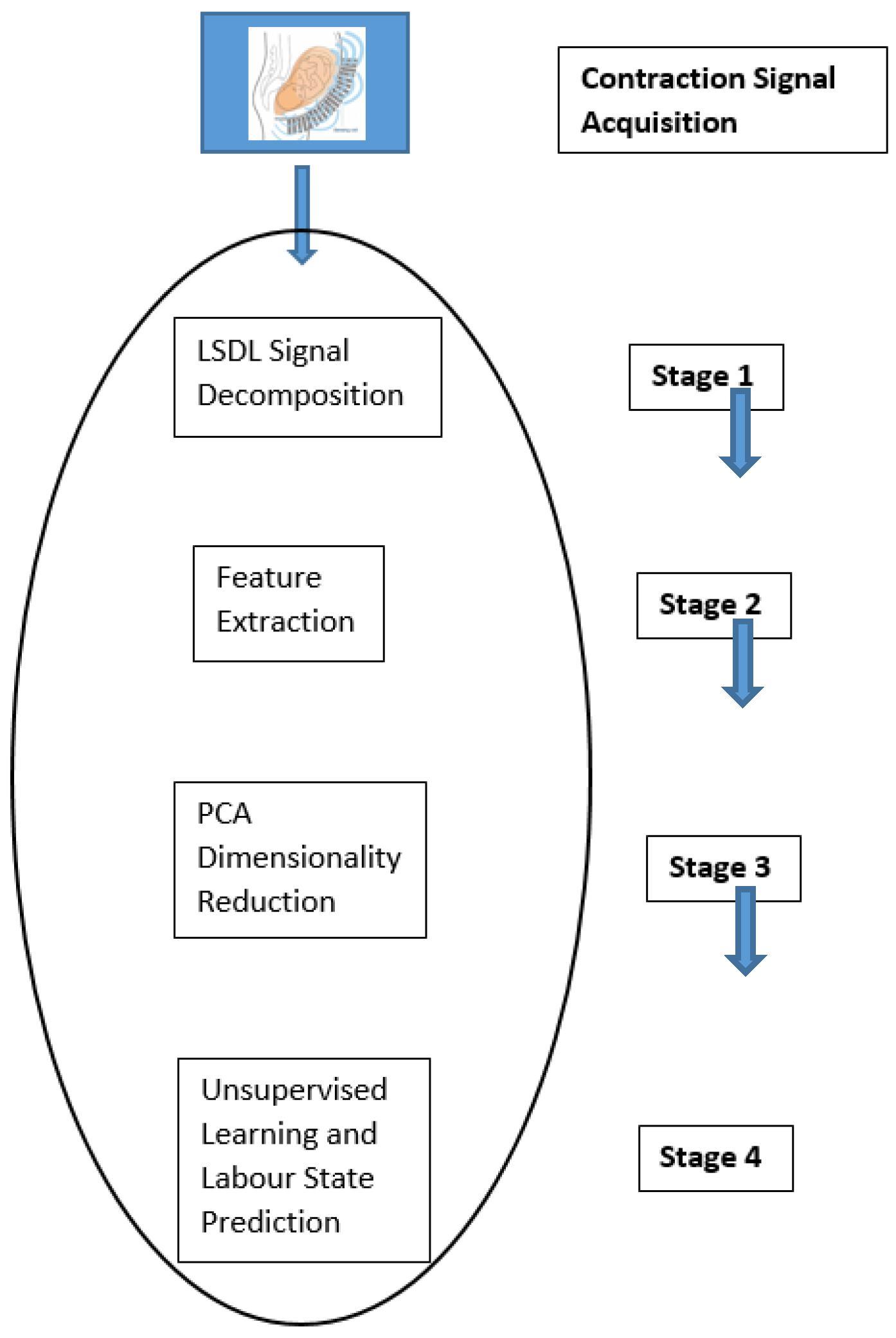
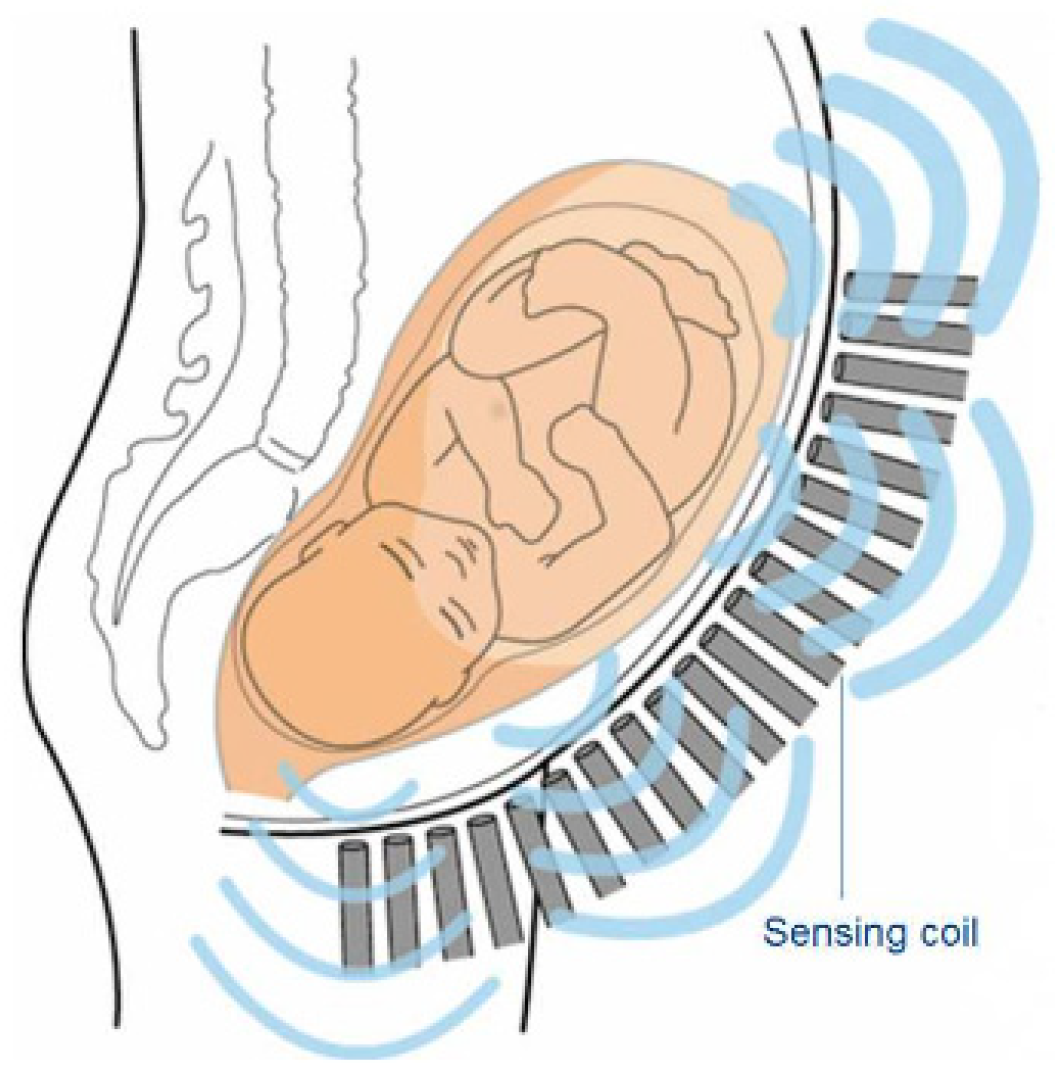
To date, effective means of predicting pregnancy labor continues to lack. Magnetic field signals during uterine contraction have shown, in recent studies, to be a good source of information for predicting labor state with a greater accuracy compared with existing methods. The means of labor prediction methods from such signals appear to rely on a supervised learning post-processing framework whose calibration relies on an effective labelling of the training sample set. As a potential solution to this, using a reduced electrode channel from magnetomyography instrumentation, we propose a multi-stage self-sorting cybernetic model that is comprised of an ensemble of various post-processing methods, and is underpinned by an unsupervised learning framework that allows for an automated method towards learning from the trend in the data to infer labor state and imminency. Experimental results showed a comparable accuracy with those from a supervised learning method adopted in a prior study. Additionally, an architecture of how an intelligent cybernetic model can be used for labor prediction and cost saving benefits within a clinical setting is offered by this study.
Keywords: cybernetics; decision support; biosensors; unsupervised learning; electromagnetism; pregnancy; signal processing; obstetrics; artificial intelligence; intelligent systems cybernetics; decision support; biosensors; unsupervised learning; electromagnetism; pregnancy; signal processing; obstetrics; artificial intelligence; intelligent systems