


Abstract
This study characterizes the plant community associated with Agave americana L. in the Béni-Saf region (northwestern Algeria) and evaluates the bioactive potential of its compounds through an in silico approach. Floristic surveys were conducted using the Braun–Blanquet method. The biological spectrum was dominated by therophytes and chamaephytes, reflecting adaptation to Mediterranean climatic constraints. Mediterranean elements constituted the dominant biogeographical group, confirming the Mediterranean character of the study area. Six compounds belonging to steroidal sapogenins, flavonoids, and phenolic acids were selected and docked against cyclooxygenase-2 (COX-2; PDB ID: 5IKR) using AutoDock Vina. Hecogenin exhibited the most favorable binding affinity (−9.1 kcal/mol), followed by kaempferol (−7.1 kcal/mol) and gitogenin (−6.9 kcal/mol). These results highlight both the ecological characteristics of the plant community and the potential interest of A. americana as a source of bioactive compounds. However, these in silico findings require further validation through complementary computational and experimental studies.
1. Introduction
Agave americana L. (Asparagaceae) is a perennial succulent species native to Mexico and the southern United States, widely introduced into Mediterranean regions. Its crassulacean acid metabolism (CAM) photosynthesis confers high water-use efficiency, enabling its establishment in dry and disturbed environments [1]. In northwestern Algeria, the species is now naturalized, yet the ecological structure of the plant communities associated with it remains poorly documented. Characterizing the floristic composition and biological spectra of such communities is essential for understanding both the environmental conditions of the host habitats and the potential ecological impact of this exotic species [2]. Beyond its ecological relevance, A. americana is recognized as a valuable source of secondary metabolites, including steroidal sapogenins, flavonoids, and phenolic acids [3]. These compounds have attracted pharmacological interest due to their reported anti-inflammatory, antioxidant, and anticancer properties. Among potential therapeutic targets, cyclooxygenase-2 (COX-2) plays a central role in inflammatory processes by catalyzing the biosynthesis of pro-inflammatory prostaglandins. Its inhibition is therefore a well-established strategy for developing anti-inflammatory agents. In this context, in silico approaches such as molecular docking offer a rapid and cost-effective means to screen natural compounds for potential interactions with COX-2 prior to experimental validation. AutoDock Vina is widely used for this purpose and provides estimates of binding affinity and information on possible ligand-binding modes [4].
Agave americana has also attracted considerable interest because of its phytochemical composition and pharmacological potential. In particular, steroidal sapogenins such as hecogenin and tigogenin isolated from A. americana have been reported to exhibit anti-inflammatory activity in experimental models [5] More recent studies have also highlighted the anti-inflammatory potential of A. americana extracts and the possible contribution of steroidal saponins and sapogenins to this activity. Since cyclooxygenase-2 (COX-2) is a key enzyme involved in inflammatory processes, it was selected as a molecular target to investigate the potential interactions of selected A. americana bioactive compounds through molecular docking. The present study therefore aimed to: (i) characterize the floristic composition and ecological structure of the plant community associated with A. americana in the Béni-Saf region (northwestern Algeria), and (ii) evaluate the potential interactions of six selected bioactive compounds from this species with COX-2 (PDB ID: 5IKR) using molecular docking.
2. Materials and Methods
2.1. Study Area
The study was conducted in the Béni-Saf region, located on the northwestern Algerian coast in the Aïn Témouchent Province. The study area is approximately located at 35°17′ N and 1°25′ W. The investigated site, referred to as Béni-Saf 1, supports diverse Mediterranean vegetation, including Agave americana L.
2.2. Floristic Study
A floristic survey was conducted at the Béni-Saf 1 station to identify the plant species present and characterize the flora associated with Agave americana. For each identified taxon, the botanical family, morphological type, biological type according to Raunkiaer’s classification, and biogeographical type were recorded. The recorded species were subsequently grouped according to these different categories to characterize the floristic and ecological composition of the study site.
2.3. Selection of Bioactive Compounds
The compounds used for the in silico study were selected based on available phytochemical data concerning Agave americana. The selected molecules represented different chemical classes, including steroidal sapogenins, flavonoids, and phenolic acids. Six compounds were retained for molecular docking simulations against cyclooxygenase-2 (COX-2): hecogenin, gitogenin, rocogenin, quercetin, kaempferol, and caffeic acid.
2.4. Preparation of the Molecular Target
Cyclooxygenase-2 (COX-2) was selected as the molecular target. Its three-dimensional structure was obtained from the Protein Data Bank under the accession number PDB ID: 5IKR. Protein preparation was performed using UCSF Chimera. Unnecessary molecules were removed, and hydrogen atoms were added. The prepared protein structure was subsequently saved in a format suitable for molecular docking simulations.
2.5. Ligand Preparation
The structures of the six selected compounds were individually prepared prior to molecular docking. Each ligand was converted and saved in the appropriate format required for use with AutoDock Vina 1.2.7.
2.6. Molecular Docking and Interaction Analysis
Molecular docking simulations were performed using AutoDock Vina through UCSF Chimera version 1.17.3.
Each ligand was docked separately against the prepared COX-2 structure (PDB ID: 5IKR). The docking results were evaluated based on the predicted binding affinity, expressed in kcal/mol. For each compound, the pose showing the lowest binding energy was selected as the most favorable conformation. The selected docking results were subsequently visualized and analyzed using Discovery Studio 2020 Client.
The protein–ligand complexes corresponding to the selected poses were examined to identify potential molecular interactions between the ligands and COX-2. Three-dimensional (3D) representations of the protein–ligand complexes and two-dimensional (2D) interaction diagrams were generated to illustrate the observed interactions.
3. Results
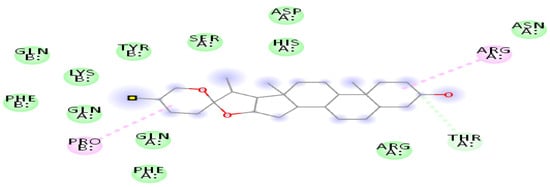
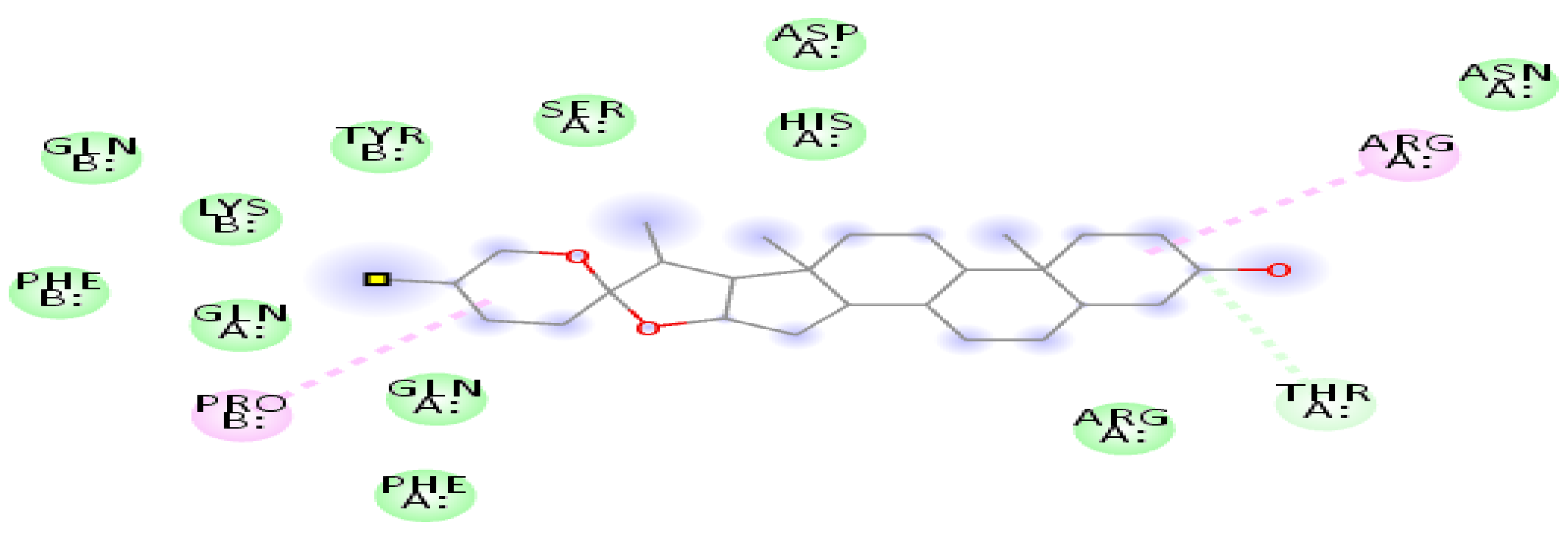
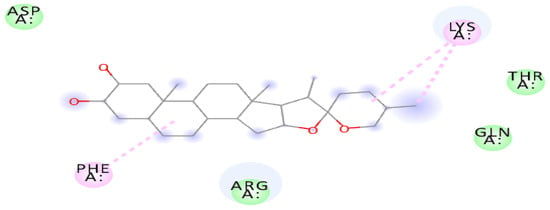
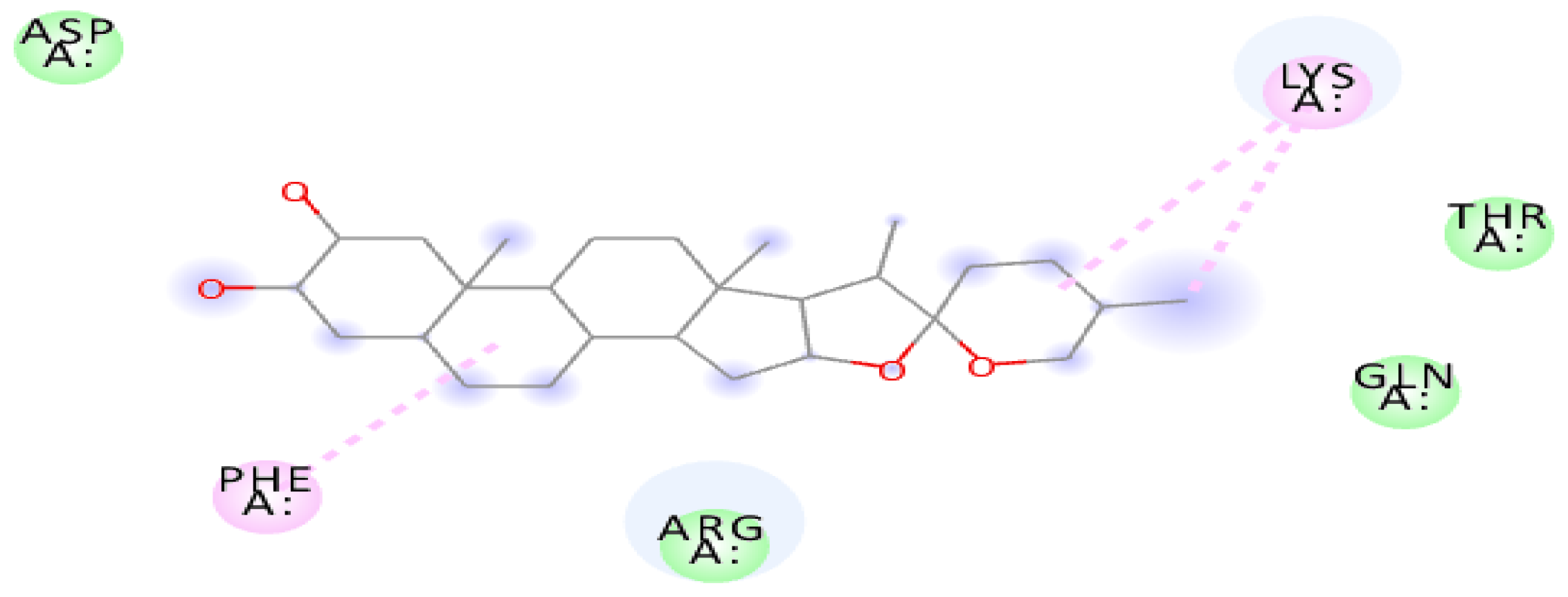
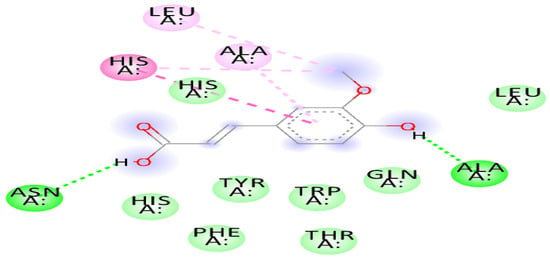
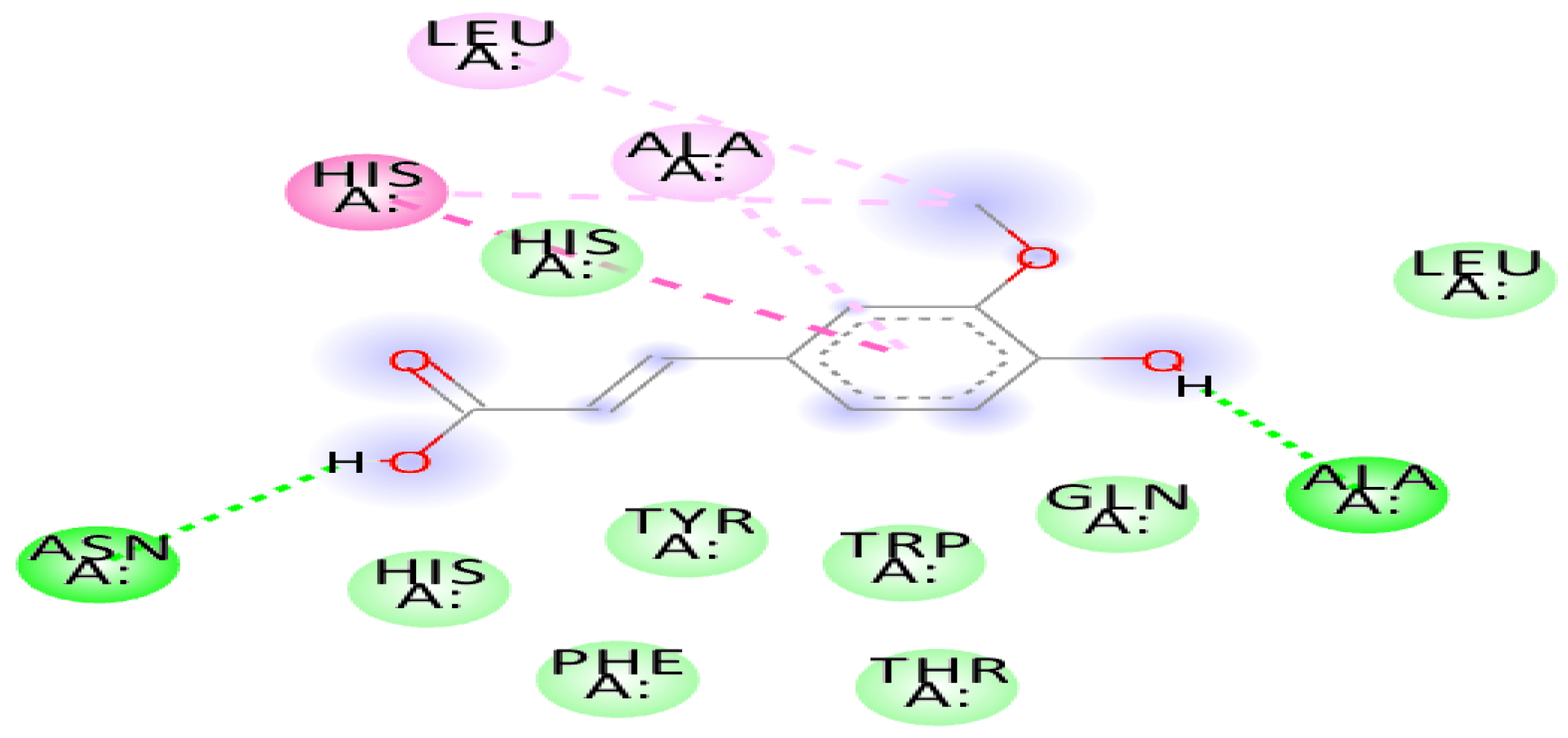
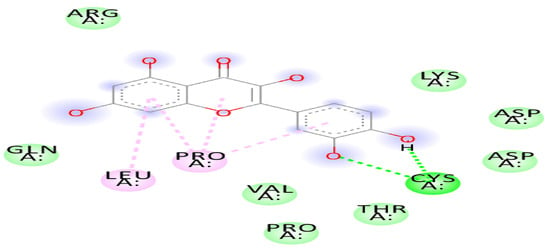
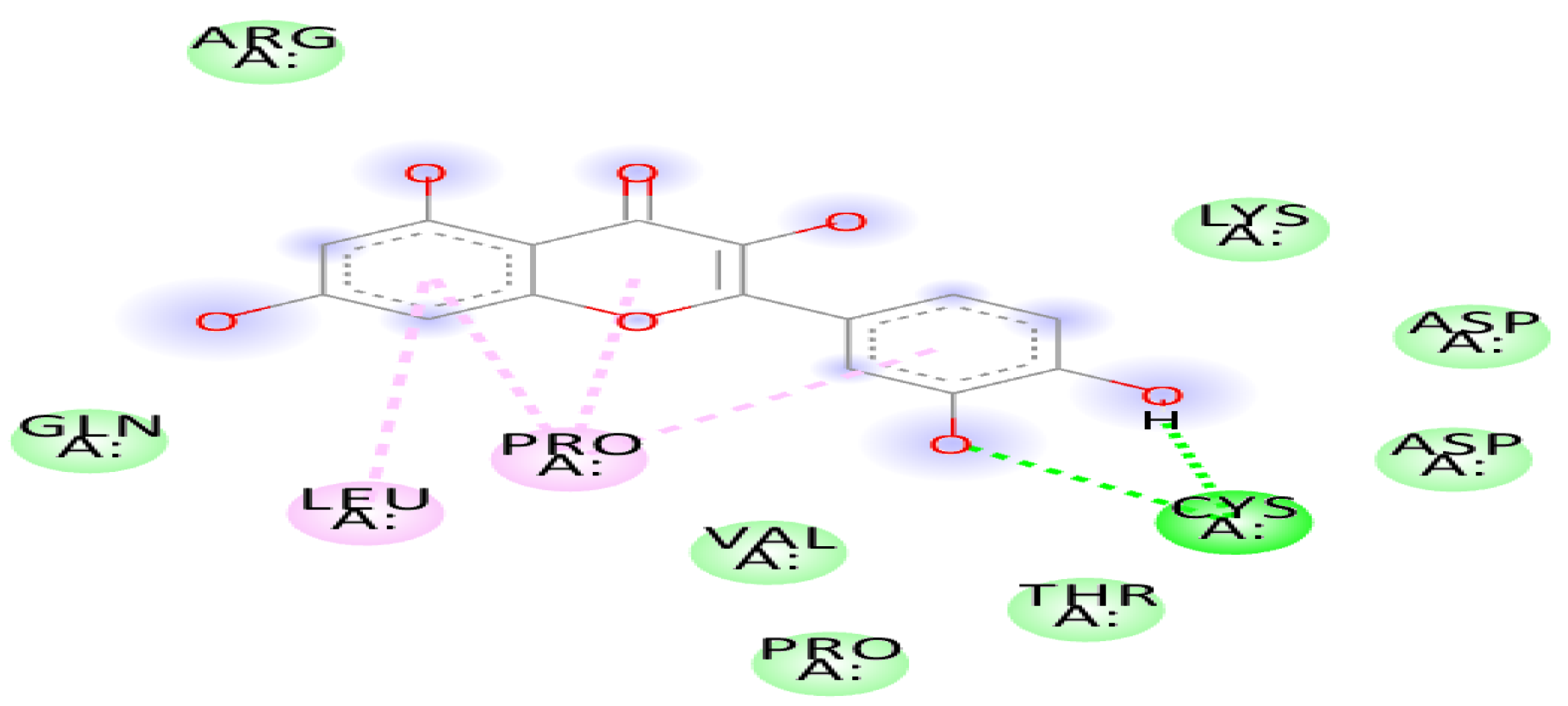
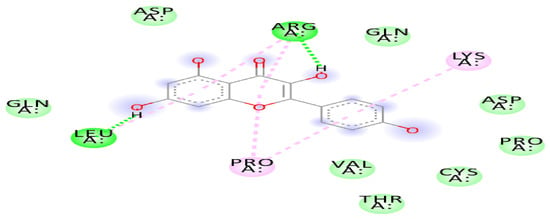
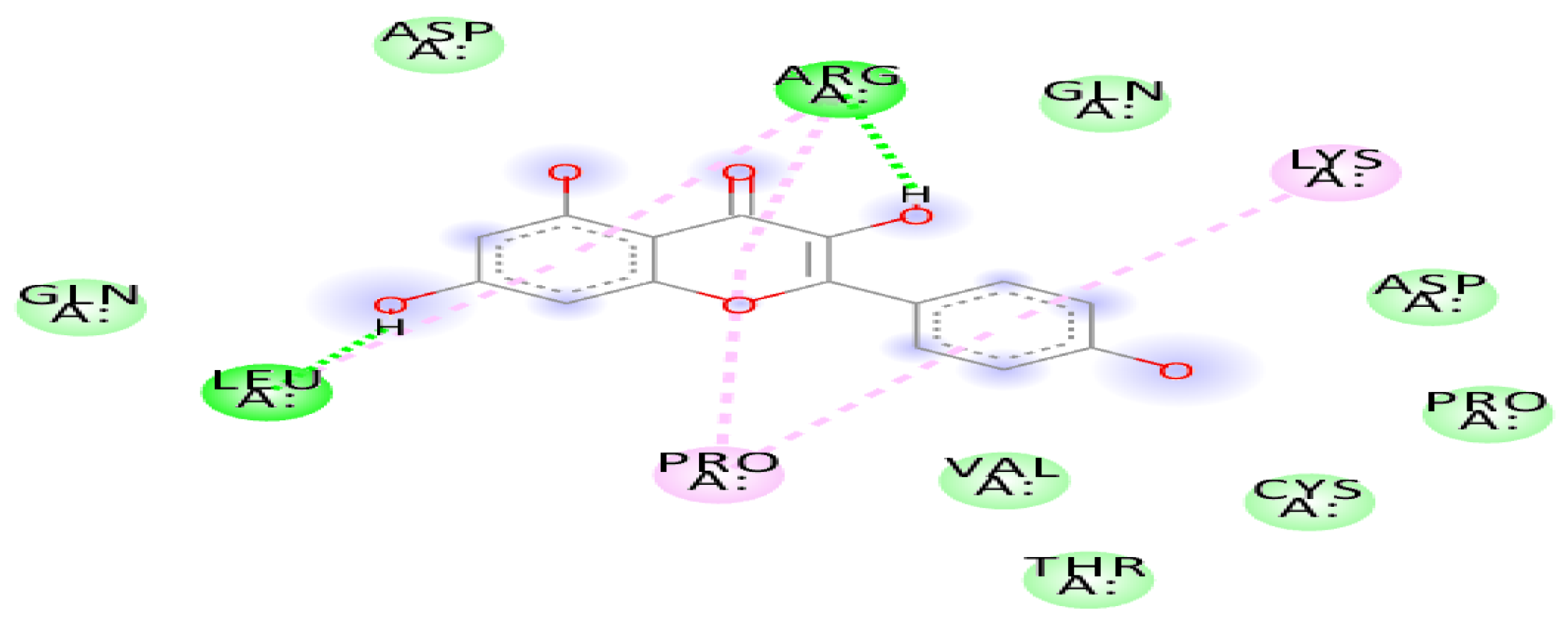
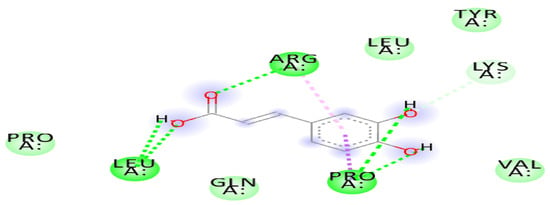
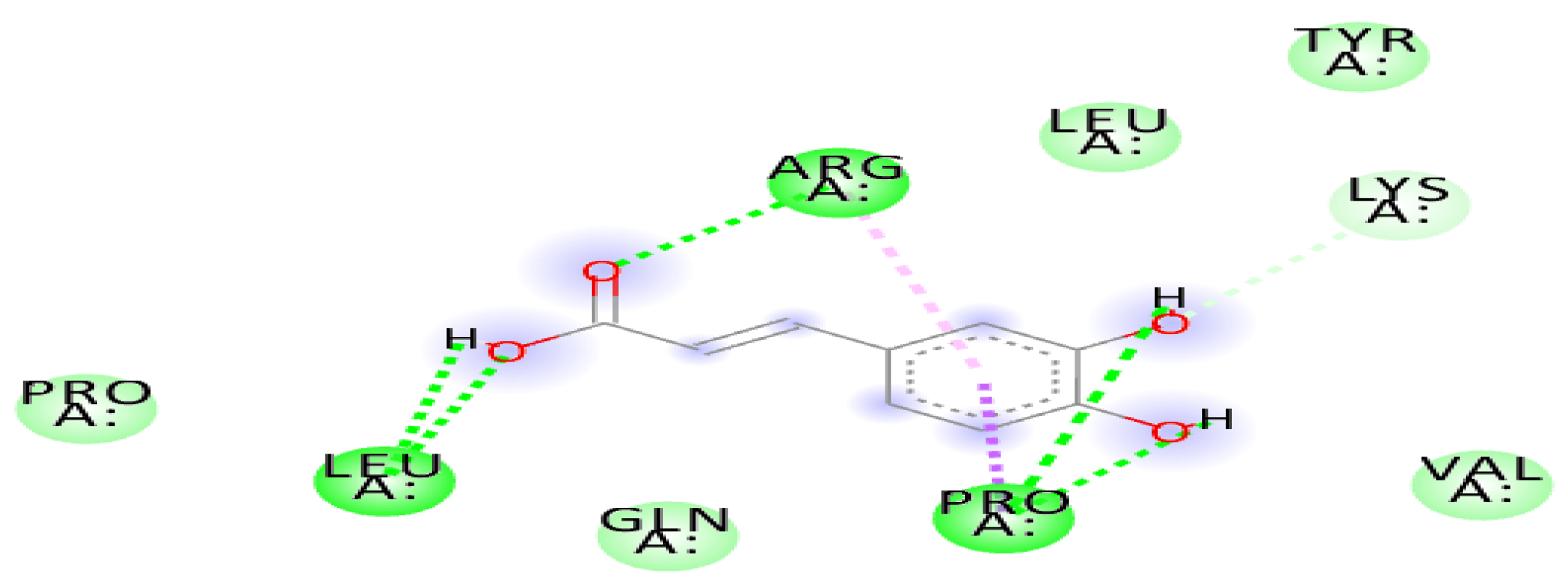
The three best-performing compounds (hecogenin, kaempferol, and gitogenin) interact with cyclooxygenase-2 mainly through: Conventional hydrogen bonds: polar, stable interactions with key residues (e.g., Tyr, Asp, Lys, Arg, Ser), essential for binding specificity and affinity. Hydrophobic alkyl and Pi-Alkyl interactions: additional stabilization through contacts with non-polar residues (e.g., Ala, Val, Leu, Ile, Pro) (Figure 1 and Figure 2). Hecogenin, which showed the most favorable predicted binding affinity, exhibits a well-balanced interaction network combining hydrogen bonds and hydrophobic contacts, explaining its top ranking (Figure 1). Furthermore, other prominent compounds such as rocogenin (Figure 3), quercetin (Figure 4), and kaempferol (Figure 5) also display significant binding affinities through similar mechanisms. Specifically, Figure 3 illustrates that rocogenin establishes Pi-Alkyl and van der Waals interactions, while Figure 4 and Figure 5 highlight that quercetin and kaempferol are stabilized primarily by conventional hydrogen bonds and Pi-Alkyl interactions within the active site. Kaempferol and gitogenin display similar profiles, with kaempferol showing a greater predominance of hydrogen bonds and gitogenin exhibiting more pronounced alkyl interactions (Figure 2). Additionally, caffeic acid (Figure 6) also exhibits significant interactions with COX-2, including conventional hydrogen bonds and Pi-Alkyl interactions, further supporting the potential of these phenolic compounds as COX-2 inhibitors. These interactions ensure optimal stabilization of the ligand–enzyme complex, supporting their potential as COX-2 inhibitors.
Figure 1.
Molecular interactions of hecogenin with cyclooxygenase-2 (COX-2): Two-dimensional interaction diagram of [compound] with cyclooxygenase-2 (COX-2). The different colors indicate the types of ligand–receptor interactions: green represents van der Waals interactions, light green represents carbon–hydrogen bonds, and purple represents alkyl interactions.
Figure 2.
Molecular interactions of gitogenin with cyclooxygenase-2 (COX-2): Two-dimensional interaction diagram of [compound] with cyclooxygenase-2 (COX-2). The different colors indicate the types of ligand–receptor interactions: green represents van der Waals interactions, while purple represents Pi-Alkyl and Alkyl interactions.
Figure 3.
Molecular interactions of rocogenin with cyclooxygenase-2 (COX-2): Two-dimensional interaction diagram of [compound] with cyclooxygenase-2 (COX-2). The different colors indicate the types of ligand–receptor interactions: light green represents van der Waals interactions, dark green represents conventional hydrogen bonds, dark purple represents Pi-Pi stacked interactions, and purple represents Alkyl and Pi-Alkyl interactions.
Figure 4.
Molecular interactions of quercetin with cyclooxygenase-2 (COX-2): Two-dimensional interaction diagram of [compound] with cyclooxygenase-2 (COX-2). The different colors indicate the types of ligand–receptor interactions: green represents van der Waals interactions, dark green represents conventional hydrogen bonds, red represents unfavorable donor–donor interactions, and purple represents Pi-Alkyl interactions.
Figure 5.
Molecular interactions of kaempferol with cyclooxygenase-2 (COX-2): Two-dimensional interaction diagram of [compound] with cyclooxygenase-2 (COX-2). The different colors indicate the types of ligand–receptor interactions: green represents van der Waals interactions, dark green represents conventional hydrogen bonds, red represents unfavorable donor–donor interactions, and purple represents Pi-Alkyl interactions.
Figure 6.
Molecular interactions of caffeic acid with cyclooxygenase-2 (COX-2): Two-dimensional interaction diagram of [compound] with cyclooxygenase-2 (COX-2). The different colors indicate the types of ligand–receptor interactions: green represents van der Waals interactions, dark green represents conventional hydrogen bonds, light green represents carbon–hydrogen bonds, mauve represents Pi-Sigma interactions, and purple represents Pi-Alkyl interactions.
4. Discussion
The present study combined a floristic and ecological characterization of the plant community associated with Agave americana in the Béni-Saf region with an in silico evaluation of the bioactive potential of its secondary metabolites. This integrative approach allows for an understanding of both the ecological role of this exotic species in its introduced environment and its phytochemical potential. The floristic analysis revealed a relative diversity with 30 species distributed across 20 families, dominated by Asteraceae, Poaceae, and Lamiaceae (13% each). This predominance is characteristic of open and disturbed Mediterranean environments, as these families comprise opportunistic species adapted to water stress and anthropogenic pressures [2,6]. The biological spectrum, dominated by therophytes (33.33%) and chamaephytes (30%), confirms the adaptation of the vegetation to summer aridity and recurrent disturbances, consistent with observations made in other regions of northwestern [6]. The dominance of the Mediterranean element (33%) attests to the thermo-Mediterranean character of the study area. The presence of Agave americana within this plant community illustrates its ability to acclimate to local conditions. As a CAM (Crassulacean Acid Metabolism) plant, it exhibits high water-use efficiency, conferring a competitive advantage in arid and semi-arid environments [7]. However, its exotic and potentially invasive nature raises questions regarding its impact on native flora, justifying long-term ecological monitoring.
From a phytochemical perspective, Agave americana is recognized as a source of diverse secondary metabolites, including steroidal sapogenins, flavonoids, and phenolic acids [1]. The selection of the six tested compounds was based on their documented occurrence in the species and their reported biological activities. The molecular docking results against COX-2 (PDB ID: 5IKR) showed that hecogenin exhibited the most favorable predicted binding affinity (−9.1 kcal/mol), followed by kaempferol (−7.1 kcal/mol) and gitogenin (−6.9 kcal/mol). These values are comparable to those reported in previous studies for natural COX-2 inhibitors, suggesting an interesting anti-inflammatory potential for these compounds. The interaction analysis revealed that the three top-performing compounds interact with COX-2 through a dual mechanism: (i) conventional hydrogen bonds with key polar residues (Tyr, Asp, Lys, Arg, Ser), and (ii) hydrophobic alkyl and pi-alkyl interactions with non-polar residues (Ala, Val, Leu, Ile, Pro). This interaction profile is typical of competitive COX-2 inhibitors and contributes to the stabilization of the ligand–enzyme complex. Hecogenin stands out with a particularly well-balanced interaction network, explaining its top ranking. The use of AutoDock Vina [3] proved relevant for preliminary virtual screening, allowing the ranking of compounds according to their predicted affinity and guiding future investigations toward the most promising molecules. Despite encouraging results, this study presents certain limitations inherent to the in silico approach. Molecular docking does not account for protein flexibility, solvation effects, or conformational dynamics, which may influence the prediction of binding affinities. Furthermore, natural compounds may undergo metabolic transformations that affect their in vivo bioactivity. Additional studies are therefore necessary to validate these predictive results, including molecular dynamics simulations, ADMET (absorption, distribution, metabolism, excretion, toxicity) analyses, and in vitro and in vivo experimental tests. Moreover, the evaluation of the anti-inflammatory activity of A. americana extracts could be considered to confirm the potential suggested by the docking results.
5. Conclusions
This study characterized the ecological structure of the vegetation associated with Agave americana in northwestern Algeria and explored the bioactive potential of its secondary metabolites through molecular docking. The results identified hecogenin, kaempferol, and gitogenin as the compounds showing the most favorable predicted binding affinities toward COX-2, with interactions involving hydrogen bonds and hydrophobic contacts that may contribute to the stabilization of the ligand–enzyme complexes. These findings highlight the potential of A. americana as a source of bioactive compounds and provide preliminary insights into its possible pharmacological valorization. Further phytochemical, experimental, and pharmacological studies are required to validate these in silico findings and to better assess the biological activities of the identified compounds.
Author Contributions
Conceptualization, G.S.; methodology, G.S. and A.I.; software, G.S.; validation, G.S., H.F. and H.Y.; formal analysis, G.S. and A.I.; investigation, G.S. and A.I.; resources, G.S. and H.F.; data curation, G.S. and A.I.; writing—original draft preparation, G.S.; writing—review and editing, G.S., H.F., H.Y. and D.Y.; visualization, G.S. and A.I.; supervision, G.S.; funding acquisition, H.F. All authors have read and agreed to the published version of the manuscript.
Funding
This research received no external funding.
Institutional Review Board Statement
Not applicable.
Informed Consent Statement
Not applicable.
Data Availability Statement
The data presented in this study are available from the corresponding author.
Conflicts of Interest
The authors declare no conflict of interest.
References
- Bouhlel, M.; Sahnoun, M.; Zouari, N.; Brini, F.; Saibi, W. The metabolic and biochemical mapping of Agave americana leaf juice encode their prospective biotechnological uses. Process Biochem. 2021, 110, 52–62. [Google Scholar] [CrossRef] [Scilit]
- Ghalem, S.; Hassani, F.; Aouadj, S.A.; Bouayed, I.S. Biological, morphological and phytobiogeographic diversity of Malva subovata (DC.) Molero & J.M. Monts. (Malvaceae) in the Tlemcen region, Algeria. Biodivers. J. 2021, 12, 139–145. [Google Scholar] [CrossRef] [Scilit]
- Sidana, J.; Singh, B.; Sharma, O.P. Saponins of Agave: Chemistry and bioactivity. Phytochemistry 2016, 130, 22–46. [Google Scholar] [CrossRef] [Scilit] [PubMed]
- Trott, O.; Olson, A.J. AutoDock Vina: Improving the speed and accuracy of docking with a new scoring function, efficient optimization, and multithreading. J. Comput. Chem. 2010, 31, 455–461. [Google Scholar] [CrossRef] [Scilit] [PubMed]
- Peana, A.T.; Moretti, M.D.L.; Manconi, V.; Desole, G.; Pippia, P. Anti-inflammatory activity of aqueous extracts and steroidal sapogenins of Agave americana. Planta Medica 1997, 63, 199–202. [Google Scholar] [CrossRef] [Scilit] [PubMed]
- Ghalem, S.; Abdelli, I.; Hassani, F.; Bouayad, S. Phytosociological and phytoecological aspects of Malva subovata (DC.) Molero & J.M. Monts. in the Traras Mountains. Bangladesh J. Bot. 2022, 51, 821–827. [Google Scholar] [CrossRef] [Scilit]
- Ghalem, S.; Abdelli, I.; Hassani, F.; Belhadji, A.; Bekkal Brikci, S. The floristic composition, morphometric and the adaptation of a new species: Malva subovata in the matorral of Algeria (Djbel fellaoucen). Not. Bot. Horti Agrobot. Cluj-Napoca 2023, 51, 12926. [Google Scholar] [CrossRef] [Scilit]
Disclaimer/Publisher’s Note: The statements, opinions and data contained in all publications are solely those of the individual author(s) and contributor(s) and not of MDPI and/or the editor(s). MDPI and/or the editor(s) disclaim responsibility for any injury to people or property resulting from any ideas, methods, instructions or products referred to in the content. |
© 2026 by the authors. Licensee MDPI, Basel, Switzerland. This article is an open access article distributed under the terms and conditions of the Creative Commons Attribution (CC BY) license.