


Abstract
The convergence of chemistry and applied pharmaceutical materials science enables the rational design of hybrid systems for sustained drug delivery. This study investigates hydrogenated cottonseed oil (HCSO), a structurally modified lipid derived from organic hydrogenation, as a hydrophobic matrix-forming material in engineered pharmaceutical composites. Diclofenac sodium, a commonly used nonsteroidal anti-inflammatory drug (NSAID), was selected as a model compound to probe the relationship between molecular composition, matrix architecture, and drug-release behaviour. Matrix tablets containing 30 mg of diclofenac sodium were prepared by direct compression with variable ratios of HCSO, calcium sulfate, and lactose, yielding hybrid organic–inorganic systems with tunable physicochemical properties. Dissolution studies were conducted using USP Apparatus II in distilled water at 37 ± 0.5 °C and 75 rpm over 24 h. Drug release was quantified by UV–Vis spectrophotometry at 276 nm. The results demonstrate that HCSO functions as a hydrophobic phase, forming a diffusion-controlled barrier that governs solvent penetration and drug mobility. Increasing HCSO content significantly retarded release; in the two derivative tablets, D15H60Ca24 achieved ~81.05% release over 13 h, while D15H24Ca60 exhibited slower kinetics (~48.89% over 24 h), reflecting enhanced matrix cohesion and reduced porosity. In contrast, Lactose-based tablets, as a control and hydrophilic organic excipient, promoted pore formation and rapid diffusion, enabling nearly complete release within 5 h. This study highlights how principles of applied organic functions, such as hydrophobicity, phase behaviour, and molecular interactions, can inform pharmaceutical material design. HCSO-based systems are sustainable, biodegradable hybrid materials that enable precise modulation of drug-release kinetics through compositional and structural control. These findings provide context for applying molecular interactions to functional pharmaceutical applications and support the development of next-generation hybrid drug delivery systems that may contribute to scalable, cost-effective pharmaceutical materials.
1. Introduction
Oral drug delivery systems remain the most commonly used route of management because of their convenience, patient compliance, and economic advantages. However, conventional immediate-release dosage forms often result in rapid drug absorption followed by a sharp decline in plasma concentration, leading to fluctuations outside the therapeutic window and increased incidence of adverse effects. Sustained release (SR) drug delivery systems have therefore been developed to maintain prolonged and controlled drug release, improving therapeutic efficacy while minimising dosing frequency and side effects [1,2,3,4]. Matrix tablets are among the most common strategies for achieving sustained drug release, thanks to their simple formulation and manufacturing. In these systems, the drug is embedded in a matrix of hydrophilic or hydrophobic materials, and drug release is controlled by a combination of diffusion, dissolution, and erosion mechanisms. The relative contribution of these mechanisms depends on formulation variables such as polymer type, excipient solubility, drug physicochemical properties, and matrix structure [1,2,3]. Despite their advantages, achieving predictable and reproducible drug release remains challenging, particularly for highly water-soluble drugs. Hydrophobic matrix systems offer an effective approach to prolong drug release by limiting water penetration and reducing drug diffusion. Lipid-based excipients, such as waxes and hydrogenated oils, form water-repellent barriers that enhance sustained-release performance, especially where hydrophilic matrices alone may provide insufficient release control [5,6,7]. Hydrogenated cottonseed oil (HCSO), a lipid-based excipient, has been shown to function as a robust hydrophobic matrix former, with increasing wax concentration reducing drug release rates due to increased matrix tortuosity and decreased wettability [6]. Studies have shown that lactose-containing formulations disintegrate faster, swell more, and release drugs more readily than matrices containing insoluble excipients [8,9]. This indicates that the interplay between hydrophobic and hydrophilic components critically determines matrix performance.
Mechanistically, understanding drug release kinetics is essential for the rational design of sustained-release systems. Drug release from matrix tablets is commonly described using mathematical models such as zero-order, first-order, Higuchi, and Korsmeyer–Peppas models. These models provide insights into whether the release mechanism is diffusion-controlled, erosion-controlled, or governed by anomalous transport phenomena [10,11]. Hydrophobic matrices are typically associated with diffusion-controlled (Higuchi-type) release, whereas hydrophilic matrices often exhibit non-Fickian release behaviour due to simultaneous swelling and erosion [7,9,12]. Diclofenac sodium is a widely used nonsteroidal anti-inflammatory drug (NSAID) for the treatment of chronic inflammatory and pain-related conditions. However, its relatively short biological half-life necessitates frequent administration, which may reduce patient compliance and increase the risk of gastrointestinal side effects. As a result, sustained-release formulations have been extensively investigated to prolong drug release, maintain therapeutic drug levels over an extended period, and improve overall treatment outcomes [1,3,13]. Several approaches have been explored for sustained-release diclofenac sodium formulations, including hydrophilic polymers (e.g., HPMC), hydrophobic polymers (e.g., ethyl cellulose), and lipid-based matrices. Previous studies have shown that increasing polymer or wax content generally slows drug release, whereas soluble excipients promote release by increasing matrix porosity and facilitating water penetration [3,13,14]. Despite advances in sustained-release formulations, the combined effects of hydrophobic and hydrophilic excipients remain insufficiently understood. This study investigated the dissolution behaviour of diclofenac sodium matrix tablets containing hydrogenated cottonseed oil (HCSO) and excipients of differing solubility (lactose and calcium sulphate). The influence of excipient type and concentration on drug release was evaluated to improve understanding of matrix design and optimise sustained-release performance.
2. Experimental Procedures
Diclofenac sodium matrix tablets were prepared by direct compression using hydrogenated cottonseed oil (HCSO) as the hydrophobic matrix-forming agent and either calcium sulphate or lactose as filler excipients. All ingredients were sieved, blended, lubricated with magnesium stearate, and compressed into 200 mg tablets using a hydraulic press. The complete formulation compositions and preparation details are provided in the Supplementary Materials. In vitro drug release studies were performed using a USP Apparatus II (paddle method) with 900 mL distilled water maintained at 37 ± 0.5 °C and a paddle speed of 75 rpm. Dissolution samples were collected over 24 h and analysed by UV-Visible spectrophotometry at 276 nm to determine diclofenac sodium concentrations. Near-infrared (NIR) spectroscopy was employed for compositional analysis of the tablets. Drug release profiles were evaluated using cumulative percentage release versus time plots, and release parameters including t50 and t90 were determined. The Supplementary Materials present the full experimental procedures, instrument settings, and analytical methods.
3. Result and Discussion
3.1. NIR Spectroscopy Analysis of Tablet Composition
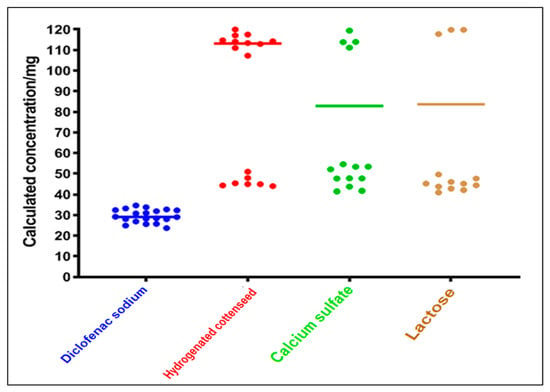
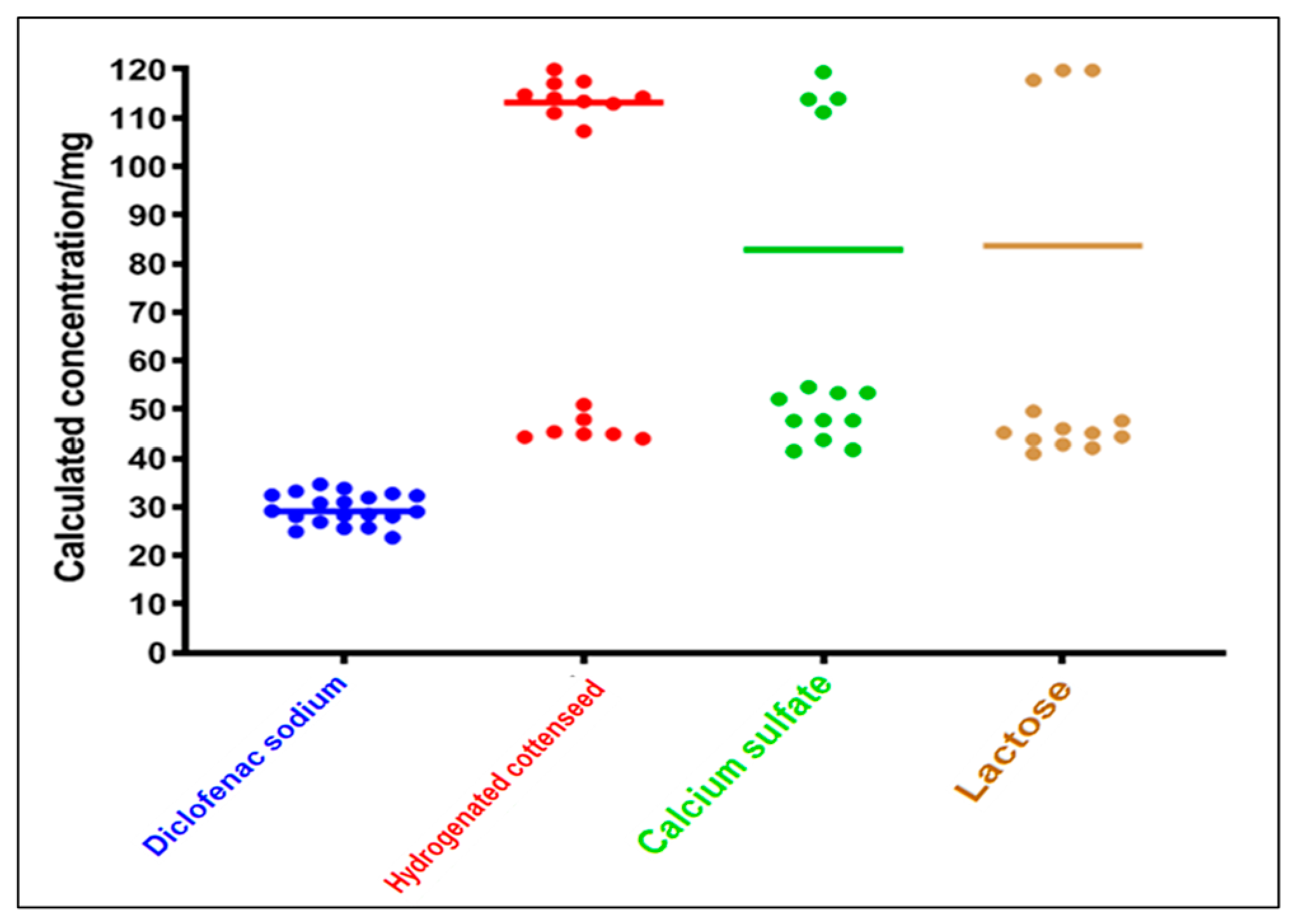
NIR spectroscopy combined with Partial Least Squares (PLS) regression was used to evaluate the composition of the diclofenac sodium matrix tablets. Spectra were collected over the range of 2800–11,500 cm−1, and calibration models were developed for diclofenac sodium, hydrogenated cottonseed oil (HCSO), calcium sulphate, and lactose. The predicted concentrations showed close agreement with the nominal formulation values, with diclofenac sodium predicted at approximately 29.5 mg compared with the target value of 30 mg (Figure 1). Calibration and validation results demonstrated strong linear correlations between predicted and actual concentrations, confirming the accuracy and robustness of the PLS models (Supplementary Materials). Similar findings have been reported for quantitative pharmaceutical analysis using NIR spectroscopy and chemometric modelling, highlighting its suitability for rapid, non-destructive multi-component analysis [15,16]. The results confirm the consistency of the tablet formulations and provide confidence that the differences observed in wettability and dissolution behaviour are attributable to formulation composition rather than manufacturing variability [17,18].
Figure 1.
Predicted concentrations of diclofenac sodium (API) and excipients (HCSO, calcium sulfate, and lactose) in different formulations based on PLS calibration models.
3.2. Contact Angle and Surface Wettability Analysis
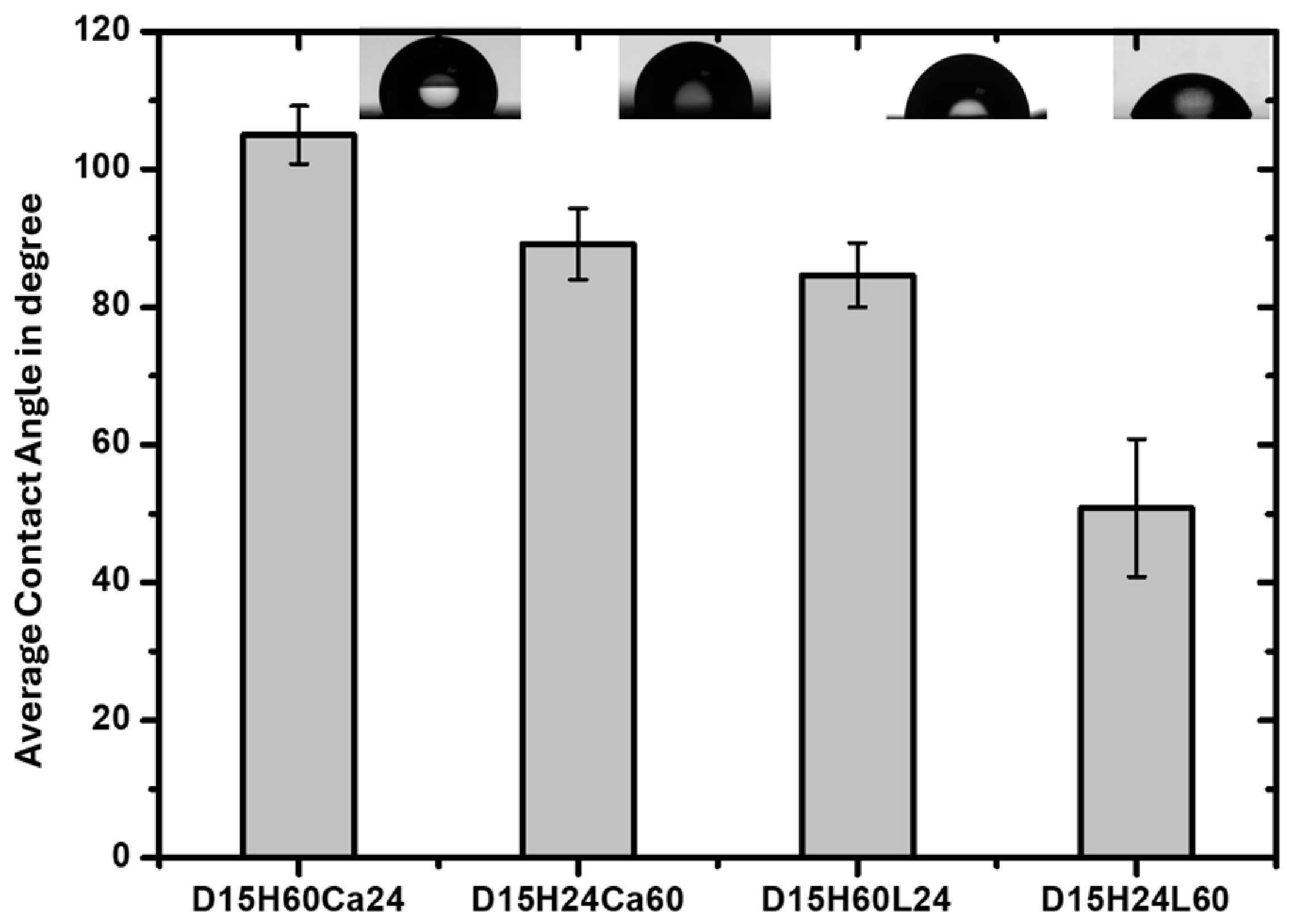
The wettability of the diclofenac sodium matrix tablets was evaluated by static contact angle measurements, a widely used method for assessing surface hydrophilicity and predicting liquid penetration into pharmaceutical matrices [19]. As shown in Table 1, all formulations exhibited a progressive decrease in contact angle over time, indicating gradual wetting of the tablet surface. However, the extent of wetting varied considerably among formulations. The highest initial contact angle was observed for D15H60Ca24 (111°), while D15H24L60 exhibited the lowest value (67°) and the highest rate of change (5.6°/min), reflecting enhanced wettability.
Table 1.
Shows that all formulations experience a decrease in contact angle over time, confirming progressive wetting.
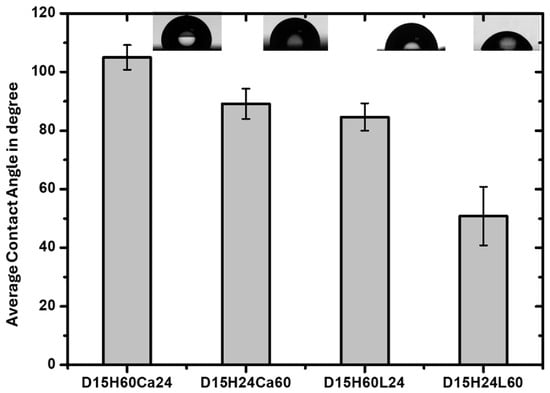
The results demonstrate that increasing the proportion of hydrogenated cottonseed oil (HCSO) increased surface hydrophobicity, whereas lactose promoted hydrophilicity and faster wetting (Figure 2). Formulations containing calcium sulphate showed intermediate behaviour, consistent with its insoluble nature and limited contribution to liquid spreading. The presence of magnesium stearate may also have contributed to higher contact angles due to its known hydrophobic properties [20].
Figure 2.
Bar chart showing the initial contact angle (θc) values of all formulations (D15H60Ca24, D15H24Ca60, D15H60L24, and D15H24L60). The results show a clear transition from hydrophobic to hydrophilic behaviour as lactose concentration increases and HCSO content decreases.
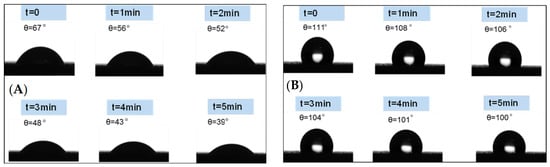
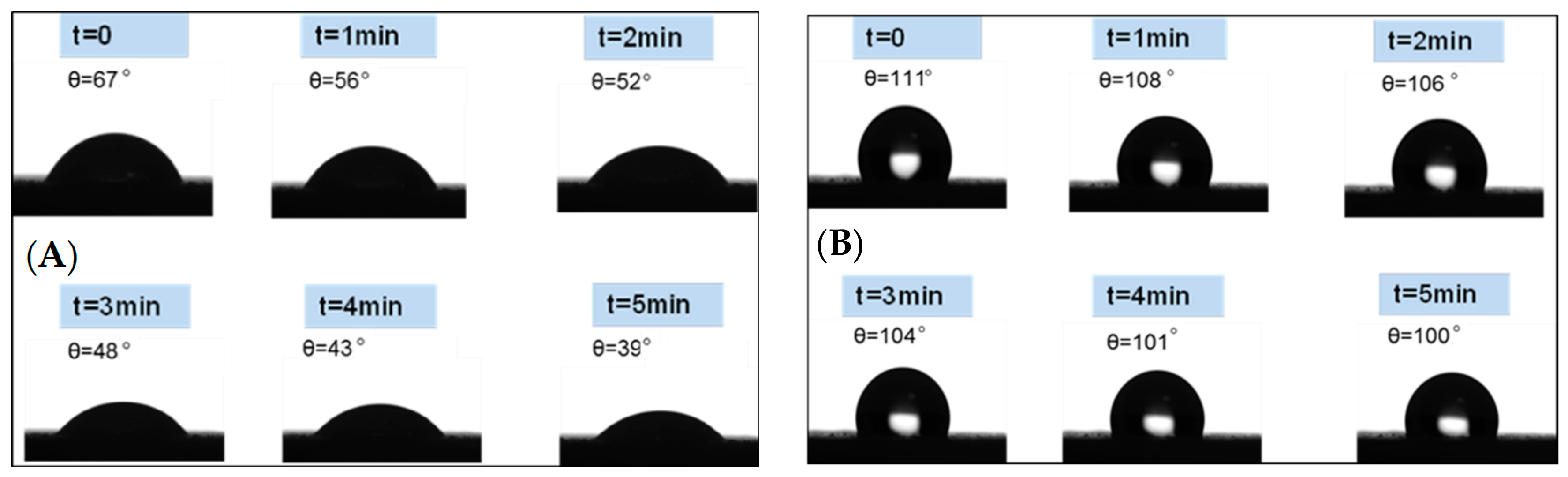
Representative droplet images (Figure 3) further confirmed these observations. Lactose-rich formulations showed rapid droplet spreading and absorption, whereas tablets with higher HCSO levels maintained a more spherical droplet shape, indicating greater resistance to wetting. Similar relationships between surface composition, wettability, and liquid-solid interactions have been reported previously [19,21]. The contact angle results correlate well with the dissolution data, demonstrating that increasing hydrophilicity enhances water penetration and drug release, while hydrophobic matrices promote sustained-release behaviour.
Figure 3.
Representative droplet images illustrating the contact angle behaviour on tablet surfaces over time for selected formulations ((A) D15H24L60 and (B) D15H60Ca24). The reduction in contact angle with time reflects progressive wetting and liquid absorption into the matrix.
3.3. Calibration Curve and Analytical Reliability
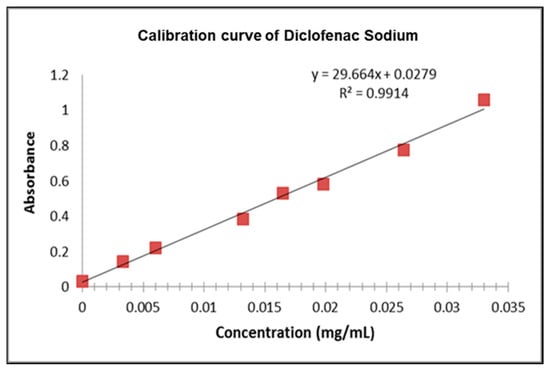
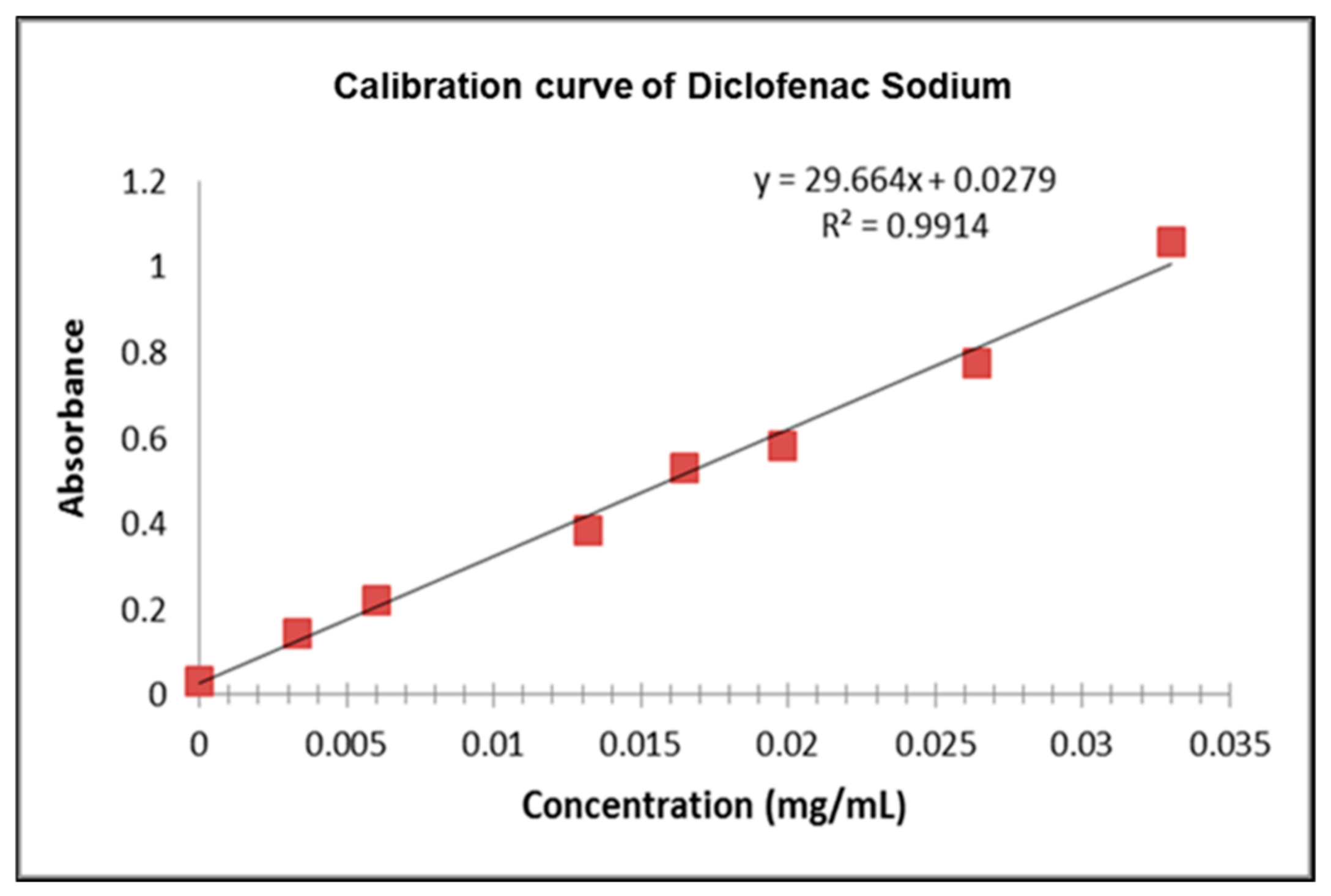
The calibration curve for diclofenac sodium was constructed by plotting absorbance versus concentration at the selected wavelength of 276 nm, as illustrated in Figure 4. A strong linear relationship was observed (R2 = 0.991), indicating acceptable linearity for quantitative analysis. The slight deviation from ideal linearity (R2 = 0.991) may be attributed to minor experimental variations, including instrument sensitivity and inconsistencies in sample preparation. Nevertheless, the obtained value falls within acceptable limits for pharmaceutical analysis, ensuring reliable quantification of drug concentration during dissolution testing. Accurate calibration is critical since any deviation directly influences the calculation of cumulative drug release and, consequently, the interpretation of release kinetics.
Figure 4.
Calibration curve and linear regression equation for diclofenac sodium at 275 nm.
3.4. Dissolution Behaviour of Calcium Sulfate-Based Matrices
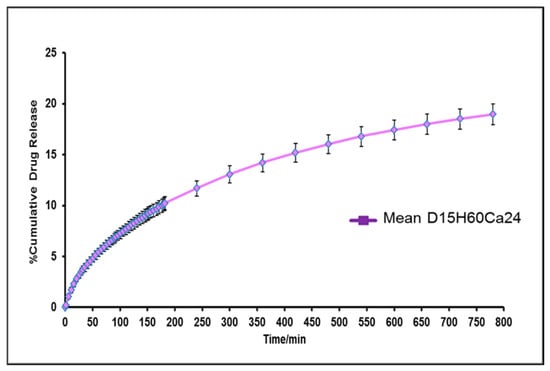
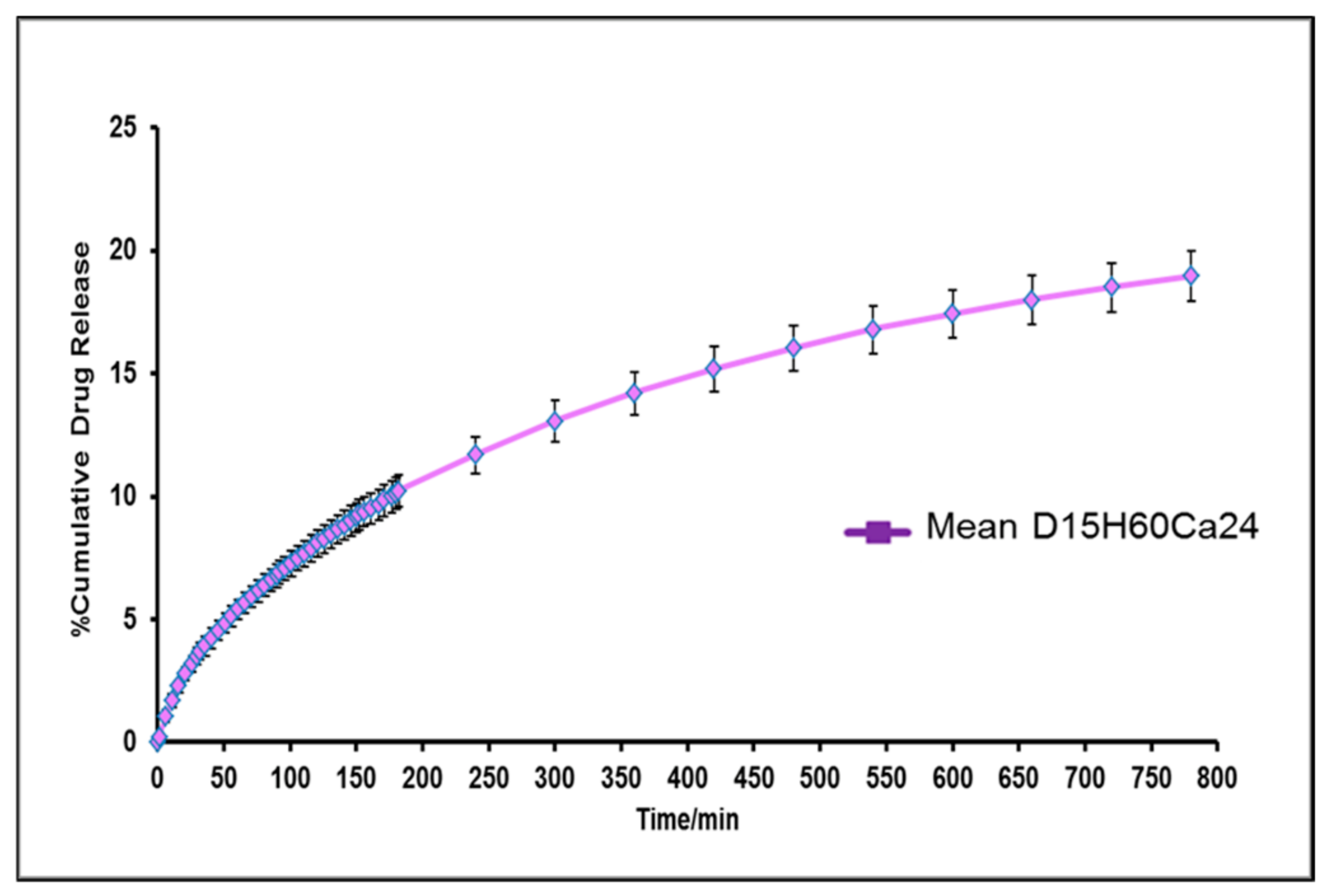
The dissolution profile of formulation D15H60Ca24 is presented in Figure 5. This formulation, containing a high proportion of hydrogenated cottonseed oil (60%), exhibited a prolonged release profile, with approximately 81.05% drug release achieved after 13 h. The observed sustained-release behaviour can be attributed to HCSO’s strong hydrophobicity, which limits water penetration and reduces drug diffusion through the matrix.
Figure 5.
Shows the in vitro release profiles of Diclofenac sodium formulation D15H60Ca24.
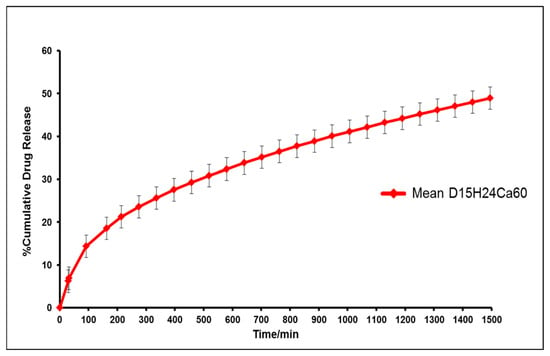
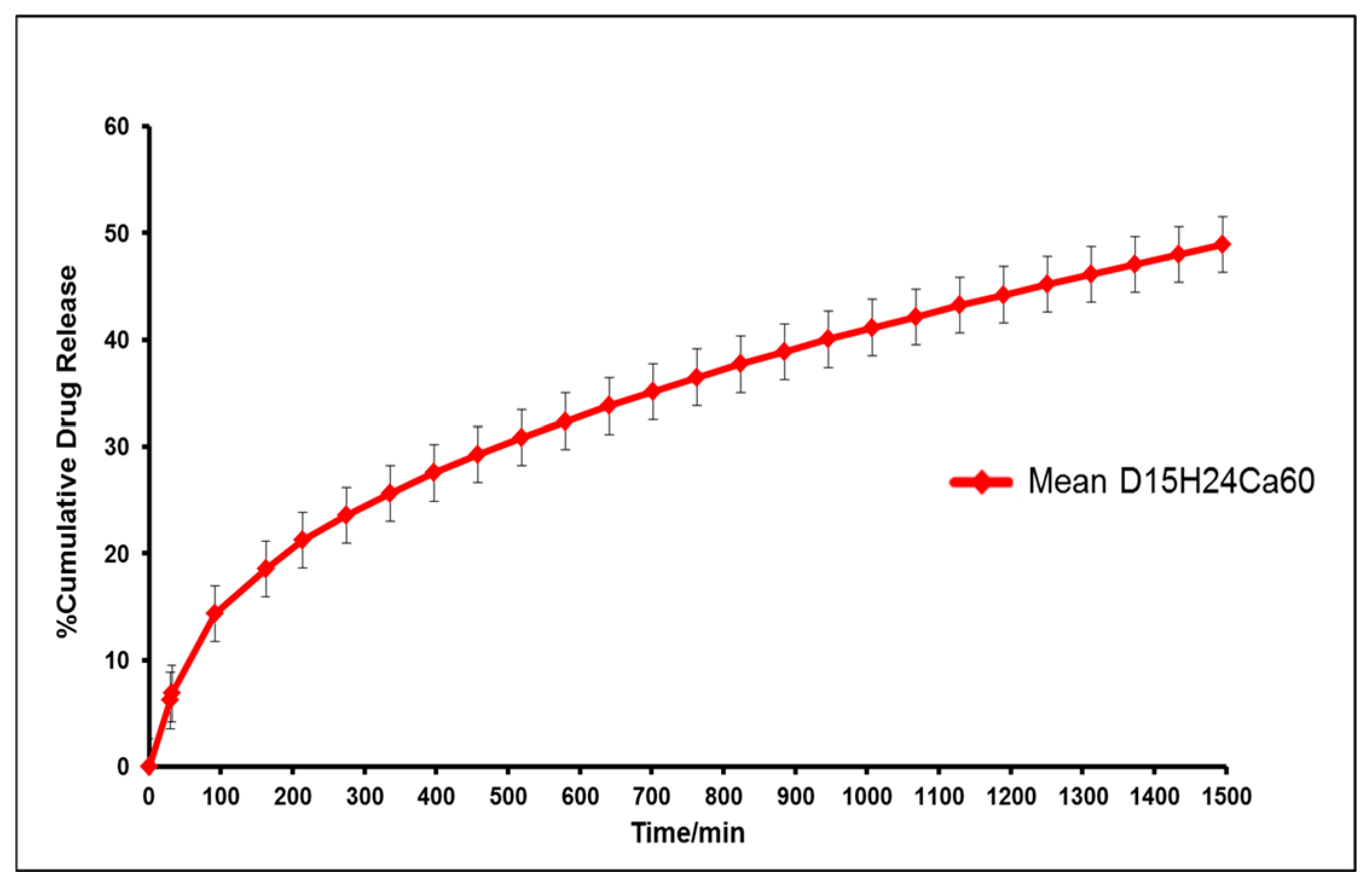
The presence of calcium sulfate, an insoluble excipient, further contributes to sustained release by maintaining matrix integrity and inhibiting pore formation. As a result, drug release is primarily controlled by diffusion through a dense hydrophobic matrix, resulting in a relatively controlled, extended-release profile. In contrast, formulation D15H24Ca60 (Figure 6), containing a lower HCSO concentration (24%) and a higher proportion of calcium sulfate, exhibited significantly slower, incomplete drug release, with only 48.89% released over 24 h. This behaviour suggests that reduced hydrophobic content, combined with the predominance of an insoluble filler, limits matrix hydration and reduces drug mobility. Consequently, drug release is severely restricted, potentially resulting in suboptimal bioavailability.
Figure 6.
Shows the in vitro release profiles of formulation D15H24Ca60.
3.5. Dissolution Behaviour of Lactose-Based Matrices
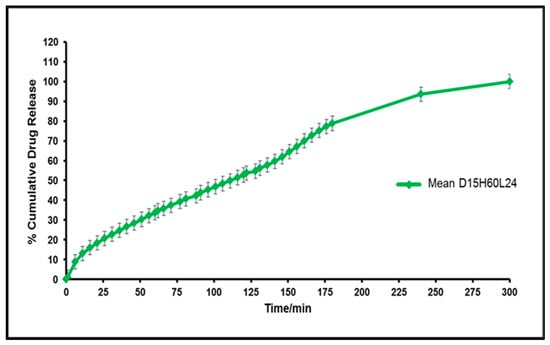
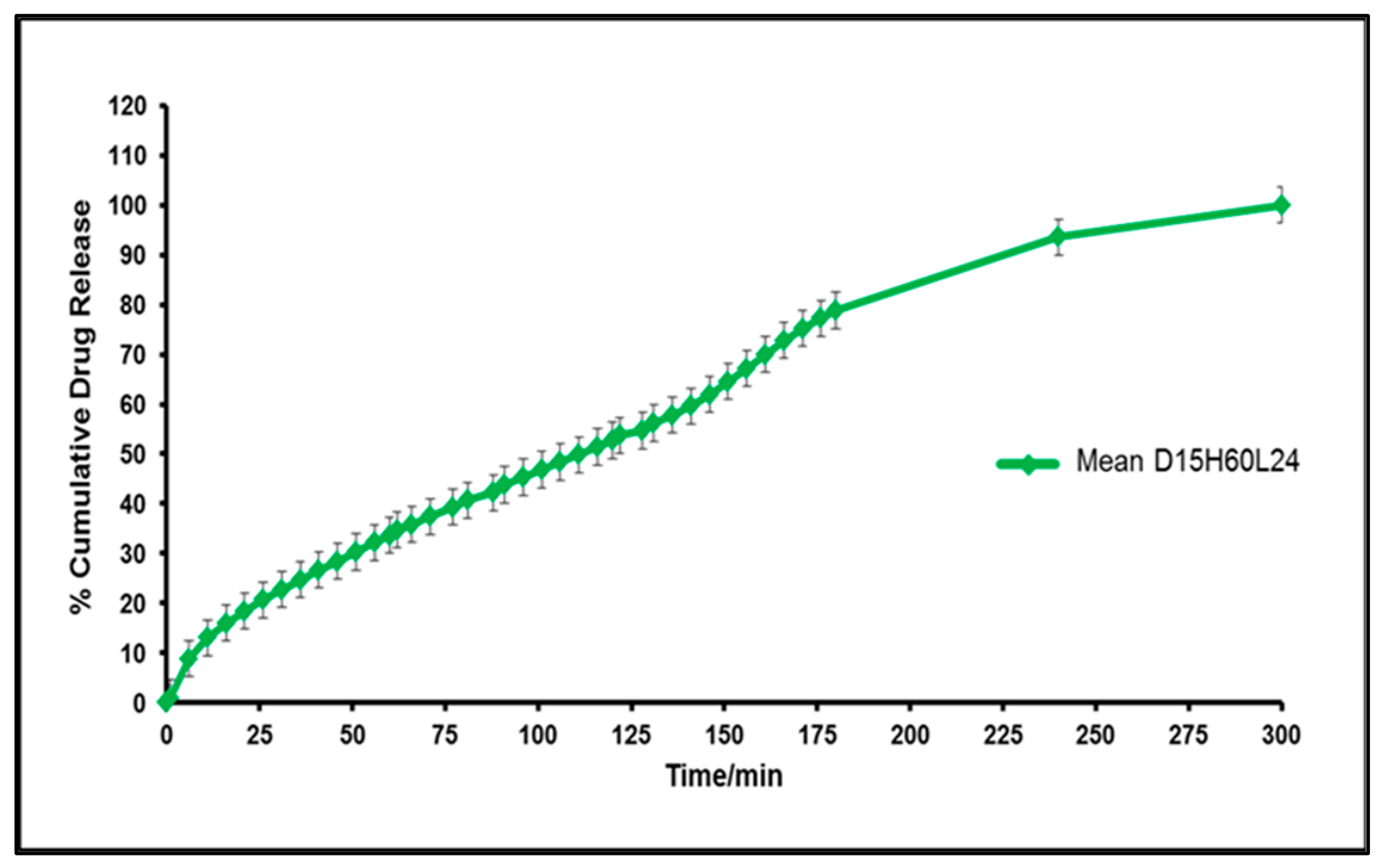
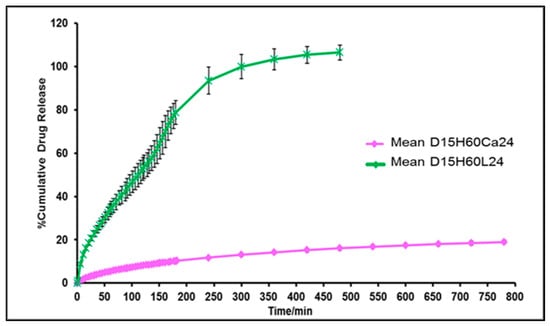
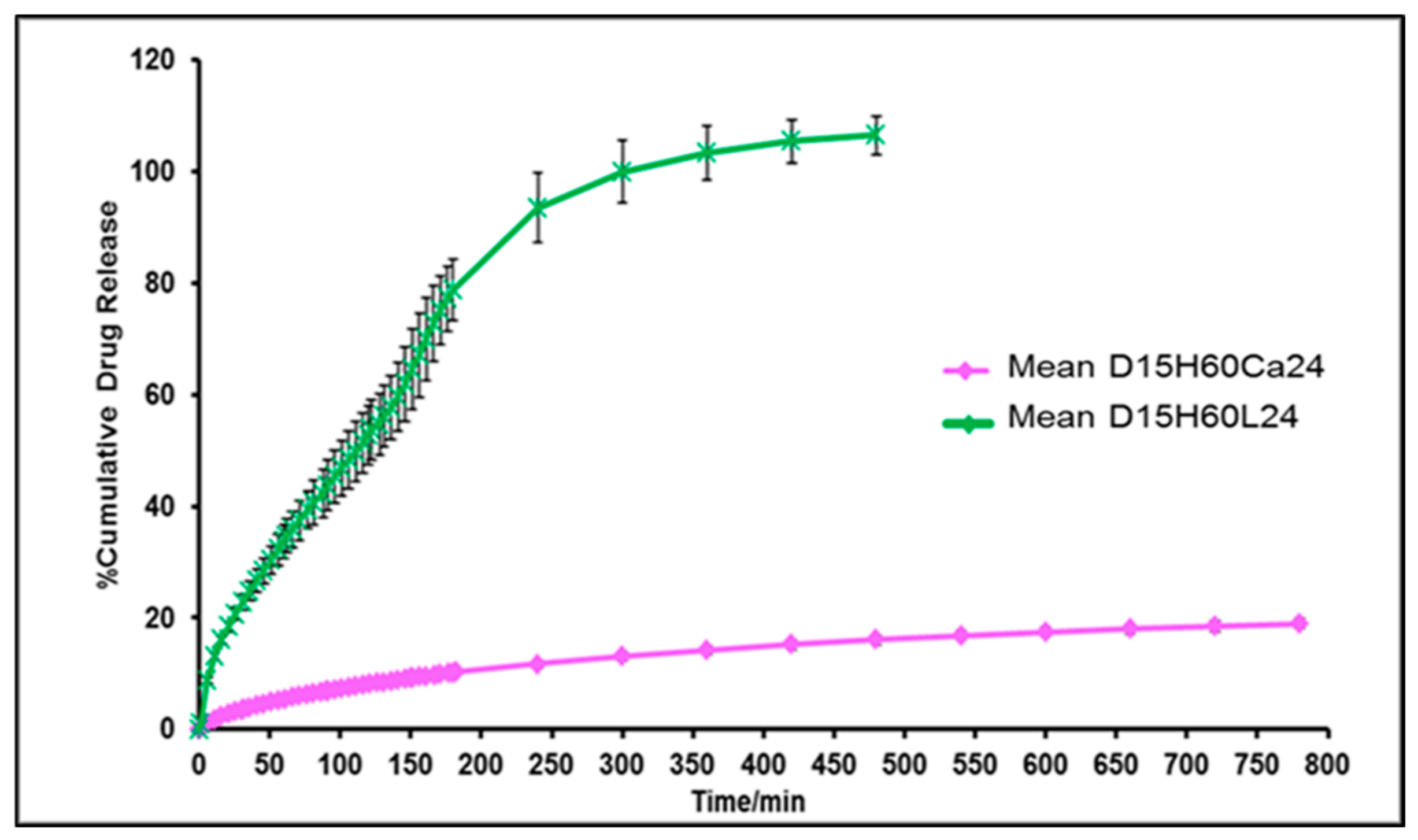
Lactose-containing formulations showed markedly different release behaviour. As shown in Figure 7, formulation D15H60L24 exhibited rapid drug release, reaching approximately 99.98% within 5 h. Despite the high HCSO concentration, lactose significantly enhanced drug release because of its hydrophilic, water-soluble nature. Lactose acts as a channelling agent within the matrix, dissolving rapidly upon contact with the dissolution medium and creating pores that facilitate water penetration and drug diffusion. This significantly reduces the retardation effect of the hydrophobic matrix, resulting in a faster release profile.
Figure 7.
Mean cumulative % drug release profiles of formulation D15H60L24.
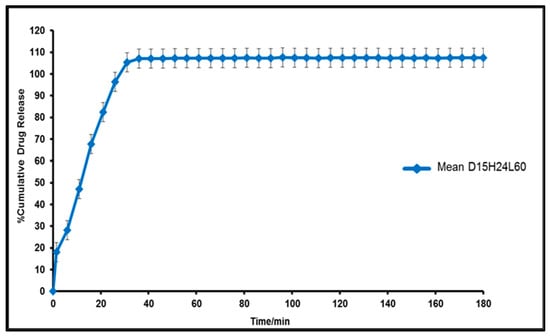
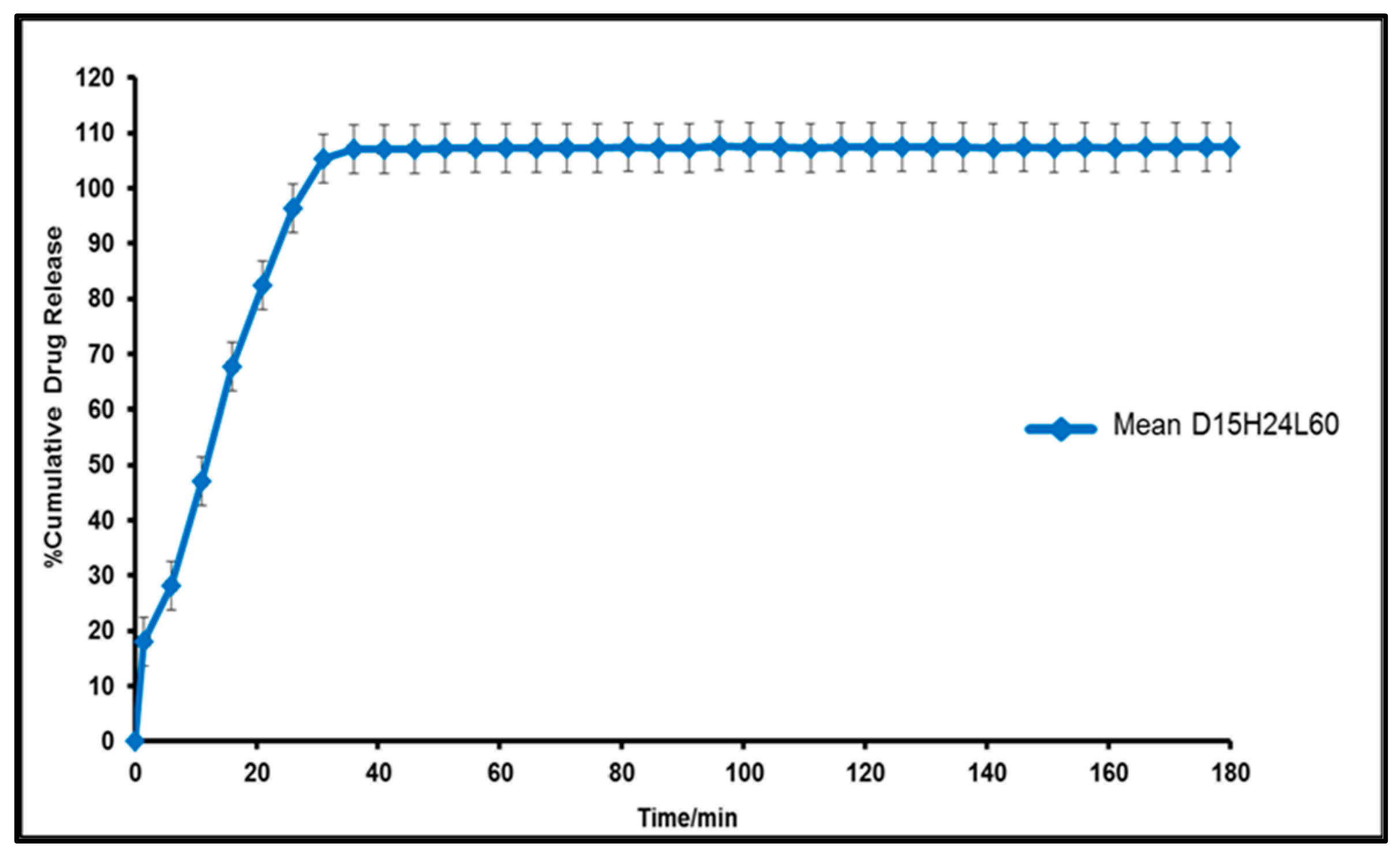
Similarly, formulation D15H24L60 (Figure 8), containing a higher lactose proportion (60%), demonstrated extremely rapid release, achieving nearly complete drug release within 30 min. This indicates that at higher concentrations, lactose dominates the matrix behaviour, leading to rapid disintegration and loss of sustained-release characteristics. The high porosity and reduced matrix integrity allow for immediate drug release, resembling an immediate-release formulation.
Figure 8.
Mean cumulative % drug release profiles of formulation D15H24L60.
3.6. Comparative Analysis of Matrix Systems
The comparative dissolution profiles (Figure 9) demonstrate the significant influence of excipient type on drug release behaviour. Formulation D15H60Ca24 showed the most sustained release, whereas lactose-containing formulations released diclofenac sodium more rapidly, with release rates increasing as lactose concentration increased. These findings confirm that HCSO acts as a hydrophobic release-retarding agent, calcium sulphate helps maintain matrix integrity, and lactose promotes water penetration and drug diffusion. Figure 9 compares D15H60Ca24 and D15H60L24, which contain identical amounts of diclofenac sodium (15%) and HCSO (60%) but different fillers. D15H60Ca24 exhibited a highly retarded release profile, with only 18.95% drug release after 13 h, whereas D15H60L24 achieved almost complete drug release within 5 h. This marked difference indicates that filler selection can affect release behaviour more than HCSO concentration alone. The insoluble calcium sulphate restricted water penetration and maintained matrix structure, while the water-soluble lactose increased porosity and facilitated rapid drug diffusion.
Figure 9.
Shows comparative mean cumulative release profiles of formulations D15H60Ca24 and D15H60L24.
3.7. Drug Release Kinetics and Mechanistic Considerations
To provide an initial interpretation of the observed dissolution behaviour, established mathematical models commonly used to investigate matrix tablets were considered. These models can provide useful insight into the potential mechanisms central drug release and may be applied in future studies for detailed kinetic evaluation.
The Higuchi model [22] describes drug release from a matrix system as a diffusion-controlled process based on Fick’s law in Equation (1):
where:
Q = kHt1/2
Q = cumulative amount of drug released at time t;
kH = Higuchi dissolution constant;
t = release time.
The sustained-release behaviour observed for formulations containing higher levels of hydrogenated cottonseed oil (HCSO), particularly D15H60Ca24, suggests that diffusion through the matrix may contribute significantly to drug release. The hydrophobic nature of HCSO is expected to restrict water penetration and create a more tortuous pathway for drug transport. Therefore, as an initial interpretation, the release behaviour may be consistent with diffusion-controlled release as described by the Higuchi model. The Korsmeyer-Peppas model (Equation (2)) is commonly used to provide insight into drug release mechanisms from matrix systems; comparison of kinetic models will be required to confirm the dominant release mechanism.
where:
Mt/M∞ = fraction of drug released at time t;
k = kinetic constant;
n = release exponent indicative of the release mechanism.
For cylindrical tablets, the release exponent (n) is typically interpreted as follows:
n ≈ 0.45: Fickian diffusion;
0.45 < n < 0.89: Non-Fickian (anomalous) transport;
n ≈ 0.89: Case II transport (zero-order release).
The observed differences between hydrophobic and lactose-containing formulations suggest that multiple drug-release mechanisms are involved [10,23]. Lactose-rich formulations exhibited rapid release due to enhanced water penetration and pore formation, whereas higher HCSO concentrations produced slower release by increasing diffusional resistance. Accordingly, the release behaviour may be described by the Korsmeyer-Peppas model, although detailed kinetic analysis was beyond the scope of this study [24]. Drug release was governed by the balance between matrix hydrophobicity, excipient solubility, and the resulting tablet microstructure.
4. Conclusions
This study investigated the dissolution behaviour of diclofenac sodium sustained-release matrix tablets formulated with hydrogenated cottonseed oil (HCSO) and different excipients. Drug release was strongly influenced by both HCSO concentration and filler type. Higher HCSO levels retarded drug release by increasing matrix hydrophobicity and reducing porosity, whereas lactose accelerated release through enhanced water penetration and pore formation. Calcium sulphate improved matrix integrity but limited overall drug release at higher concentrations. Among the formulations studied, D15H60Ca24 exhibited the most desirable sustained-release characteristics, demonstrating the effectiveness of HCSO as a hydrophobic matrix-forming agent. Overall, the findings highlight the importance of excipient selection and matrix composition in controlling drug release and optimising sustained-release formulations.
Supplementary Materials
The following supporting information can be downloaded at: https://www.mdpi.com/article/10.3390/chemproc2026022125/s1, Experimental Procedure; Table S1: Composition of two formulations of diclofenac sodium matrix tablets (mg/tablet) containing Calcium sulphate; Table S2: Composition of two formulations of diclofenac sodium matrix tablets (mg/tablet) containing lactose; Table S3: Summarises the dissolution testing apparatus and specifications used in this work; Results and discussion; Figure S1: Calibration curves and relative errors were calculated for diclofenac sodium, HCSO, calcium sulfate, and lactose, demonstrating the predictive capability and accuracy of the NIR–PLS models.
Author Contributions
Methodology, A.S. and M.H.M.; validation and testing A.S.; data analysis, E.B., A.S., S.T. and M.H.M.; investigation, A.S. and M.H.M.; resources, M.H.M. and A.S.; writing—original draft preparation, A.S.; writing—review, E.B., M.H.M., S.T. and A.S.; writing—editing, E.B., M.H.M., S.T. and A.S. All authors have read and agreed to the published version of the manuscript.
Funding
This research received no external funding.
Institutional Review Board Statement
Not applicable.
Informed Consent Statement
Not applicable.
Data Availability Statement
Data is contained within the article.
Acknowledgments
The authors would like to acknowledge the assistance provided by the North Africa International Centre for Research on Serums, Vaccines and Genetic Diseases, Zawia, Libya; the Medical Research Centre Zawia, Libyan Authority for Scientific Research; as well as the Libyan Scholarship Program and Sheffield Hallam University MERI during this research program.
Conflicts of Interest
The authors declare no conflicts of interest.
References
- Mehta, R.Y.; Missaghi, S.; Tiwari, S.B.; Rajabi-Siahboomi, A.R. Application of Ethylcellulose Coating to Hydrophilic Matrices: A Strategy to Modulate Drug Release Profile and Reduce Drug Release Variability. AAPS PharmSciTech 2014, 15, 1049–1059. [Google Scholar] [CrossRef] [Scilit]
- Guillarme, D.; Nguyen, D.T.T.; Rudaz, S.; Veuthey, J.-L. Method Transfer for Fast Liquid Chromatography in Pharmaceutical Analysis: Application to Short Columns Packed with Small Particle. Part II: Gradient Experiments. Eur. J. Pharm. Biopharm. 2008, 68, 430–440. [Google Scholar] [CrossRef] [Scilit]
- Dastidar, D.G.; Biswas, A.; Das, A.; Naskar, S.; Mahish, R. Development and Optimization of Sustained-Release Matrix Tablets of Diclofenac Sodium Using Carboxymethylated Chitosan Through Systematic Application of Design of Experiments. Drug Metab. Bioanal. Lett. 2024, 17, 121–136. [Google Scholar] [CrossRef] [Scilit]
- Patel, H.; Panchal, D.R.; Patel, U.; Brahmbhatt, T.; Suthar, M. Matrix Type Drug Delivery System: A Review. J. Pharm. Sci. Biosci. Res. 2011, 1, 143–151. [Google Scholar]
- Ghormade, J.M.; Yadav, S.K.; Burakle, P.V.; Raut, A.S. The Role of Matrix Tablet in Controlled Release Drug Delivery System. GSC Biol. Pharm. Sci. 2023, 23, 220–225. [Google Scholar] [CrossRef] [Scilit]
- Lopes, C.M.; Manuel Sousa Lobo, J.; Costa, P.; Pinto, J.F. Directly Compressed Mini Matrix Tablets Containing Ibuprofen: Preparation and Evaluation of Sustained Release. Drug Dev. Ind. Pharm. 2006, 32, 95–106. [Google Scholar] [CrossRef] [Scilit]
- Maanvizhi, S.; Iyyappan, V.; Bhavishi, P.G. In-Vitro Release Study of Diclofenac Sodium from Topical Gel Formulations Using Diffusion Cell. Res. J. Pharm. Technol. 2020, 13, 2901. [Google Scholar] [CrossRef] [Scilit]
- Bendgude, T.; Iyer, R.; Sushi, S. The Effects of Lactose, Microcrystalline Cellulose and Dicalcium Phosphate on Swelling and Erosian of Compressed HPMC Matrix Tablets. Iran. J. Pharm. Res. 2010, 9, 349–358. [Google Scholar] [CrossRef] [Scilit]
- Vasvári, G.; Kalmár, J.; Veres, P.; Vecsernyés, M.; Bácskay, I.; Fehér, P.; Ujhelyi, Z.; Haimhoffer, Á.; Rusznyák, Á.; Fenyvesi, F.; et al. Matrix Systems for Oral Drug Delivery: Formulations and Drug Release. Drug Discov. Today Technol. 2018, 27, 71–80. [Google Scholar] [CrossRef] [Scilit]
- Sudha, B.S.; Sridhar, B.K.; Srinatha, A. Modulation of Tramadol Release from a Hydrophobic Matrix: Implications of Formulations and Processing Variables. AAPS PharmSciTech 2010, 11, 433–440. [Google Scholar] [CrossRef] [Scilit]
- Duong, T.T.; Huynh, D.T.M.; Nguyen, T.-U.T.; Tran Huynh, Q.-D.; Thi Phan, T.-T.; Tran, T.-T.; Van Nguyen, H.; Iskandar, B.; Nguyen, D.-K. Formulation Development of Diclofenac Sodium Extended-Release Tablet Using Hydrophobic and Hydrophilic Matrix Systems. J. Appl. Pharm. Sci. 2025, 16, 219–229. [Google Scholar] [CrossRef] [Scilit]
- Fu, Y.; Kao, W.J. Drug Release Kinetics and Transport Mechanisms of Non-Degradable and Degradable Polymeric Delivery Systems. Expert Opin. Drug Deliv. 2010, 7, 429–444. [Google Scholar] [CrossRef] [Scilit]
- Taha, E.I.; Shazly, G.A.G.; Harisa, G.I.; Barakat, N.S.; Al-Enazi, F.K.; Elbagory, I.M. Formulation and in Vivo Evaluation of Diclofenac Sodium Sustained Release Matrix Tablet: Effect of Compression Force. Pak. J. Pharm. Sci. 2015, 28, 573–579. [Google Scholar] [CrossRef] [Scilit]
- Kedir, W.M.; Deresa, E.M.; Diriba, T.F. Pharmaceutical and Drug Delivery Applications of Pectin and Its Modified Nanocomposites. Heliyon 2022, 8, e10654. [Google Scholar] [CrossRef] [Scilit]
- Liu, M.; Fu, R.; Xu, G.; Dong, W.; Qi, H.; Dong, P.; Song, P. Simultaneous Quantitative Analysis of Polymorphic Impurities in Canagliflozin Tablets Utilizing Near-Infrared Spectroscopy and Partial Least Squares Regression. Molecules 2026, 31, 230. [Google Scholar] [CrossRef] [Scilit]
- Awotunde, O.; Cai, J.; El Azar, C.G.; Medina, D.; Eyolfson, S.I.; Hayes, K.; Waffo, C.; Djang’eing’a, R.M.; Ziemons, E.M.; Sacré, P.-Y.; et al. Field Assessment of Active Ingredient Quantity in Pharmaceutical Tablets with Limited Calibration of near Infrared Spectra: An Application to Ciprofloxacin Tablets. J. Pharm. Biomed. Anal. 2024, 246, 116189. [Google Scholar] [CrossRef] [Scilit] [PubMed]
- Remoto, P.J.G.; Gordon, K.C.; Fraser-Miller, S.J. A Quantitative Chemometric Study of Pharmaceutical Tablet Formulations Using Multi-Spectroscopic Fibre Optic Probes. Pharmaceuticals 2024, 17, 1659. [Google Scholar] [CrossRef] [Scilit]
- Jovic, O.; O’Mahony, M.; Solomon, S.; Egan, D.; O’Callaghan, C.; McCormack, C.; Jones, I.; Cronin, P.; Walker, G.M.; Mouras, R. Merging Real-Time NIR and Process Parameter Measurements in a Fluidized Bed Granulation Process to Predict Particle Size. Pharmaceutics 2025, 17, 720. [Google Scholar] [CrossRef] [Scilit]
- Biasin, A.; Pribac, F.; Franceschinis, E.; Cortesi, A.; Grassi, L.; Voinovich, D.; Colombo, I.; Grassi, G.; Milcovich, G.; Grassi, M.; et al. The Key Role of Wettability and Boundary Layer in Dissolution Rate Test. Pharmaceutics 2024, 16, 1335. [Google Scholar] [CrossRef] [Scilit]
- Veronica, N.; Heng, P.W.S.; Liew, C.V. Magnesium Stearate Fatty Acid Composition, Lubrication Performance and Tablet Properties. AAPS PharmSciTech 2024, 25, 262. [Google Scholar] [CrossRef] [Scilit] [PubMed]
- Takita, S.; Nabok, A.; Lishchuk, A.; Mussa, M.H.; Smith, D. Detection of Prostate Cancer Biomarker PCA3 with Electrochemical Apta-Sensor. Eng. Proc. 2022, 16, 8. [Google Scholar] [CrossRef] [Scilit]
- Siepmann, J.; Peppas, N.A. Higuchi Equation: Derivation, Applications, Use and Misuse. Int. J. Pharm. 2011, 418, 6–12. [Google Scholar] [CrossRef] [Scilit] [PubMed]
- Atre, P.; Rizvi, S.A.A. Advances in Oral Solid Drug Delivery Systems: Quality by Design Approach in Development of Controlled Release Tablets. BioChem 2025, 5, 9. [Google Scholar] [CrossRef] [Scilit]
- Hirun, N.; Kraisit, P. Drug-Polymers Composite Matrix Tablets: Effect of Hydroxypropyl Methylcellulose (HPMC) K-Series on Porosity, Compatibility, and Release Behavior of the Tablet Containing a BCS Class I Drug. Polymers 2022, 14, 3406. [Google Scholar] [CrossRef] [Scilit] [PubMed]

Disclaimer/Publisher’s Note: The statements, opinions and data contained in all publications are solely those of the individual author(s) and contributor(s) and not of MDPI and/or the editor(s). MDPI and/or the editor(s) disclaim responsibility for any injury to people or property resulting from any ideas, methods, instructions or products referred to in the content. |
© 2026 by the authors. Licensee MDPI, Basel, Switzerland. This article is an open access article distributed under the terms and conditions of the Creative Commons Attribution (CC BY) license.