


Abstract
Background: The most appropriate management of glucose-lowering therapies in patients exposed to iodinated contrast media (ICM) is still debated. The recent development of antidiabetic drugs that improve cardiovascular and renal outcomes leads to questions regarding their impact on the risk of contrast-associated acute kidney injury (CA-AKI). The present study aimed to assess the effect of different glucose-lowering therapies on the rate of CA-AKI among patients undergoing coronary angiography and/or angioplasty. Methods: Diabetic patients exposed to ICM for coronary procedures were retrospectively identified and divided according to the strategy for the management of diabetes mellitus. The use of a new antidiabetic drug (NAD) was defined for patients treated with SGLT2-I, DDP4-I or GLP-1 receptor agonists on admission. The primary endpoint was the occurrence of CA-AKI within 72 h after contrast medium exposure. Results: We included 462 patients with diabetes mellitus, 51.5% treated with insulin, 44.4% treated with metformin and 50.9% receiving NAD. Among them, 48 (10.4%) experienced CA-AKI. Patients experiencing acute renal injury were more often treated with calcium channel blockers (p = 0.04) and diuretics (p = 0.004), and less often P2Y12 inhibitors (p = 0.04), and presented lower levels of hemoglobin (p = 0.02). Patients receiving NADs displayed a significantly lower occurrence of CA-AKI (33.3% vs. 53.6%, p = 0.009), mainly for those treated with SGLT2-I. On the contrary, patients treated with sulfonylureas and meglitinides displayed a significant increase in the rate of CA-AKI (10.4% vs. 3.9%, p = 0.05). The results were confirmed via multivariable analysis, with NADs and diuretics emerging as the only independent predictors of CA-AKI (NAD: adjusted OR = 0.42 [0.21–0.81], p = 0.01; diuretics: adjusted OR = 2.22 [1.14–4.35], p = 0.02). The independent predictors of CA-AKI were the use of NADs (adjusted OR = 0.45 [0.24–0.86], p = 0.02) and diuretics (adjusted OR = 2.57 [1.33–4.97], p = 0.005). Conclusions: Among patients with diabetes mellitus undergoing coronary angiographic procedures, the use of diuretics, sulfonylureas and meglitinides is associated with an increased occurrence of CA-AKI, whereas the rate of events was significantly lower among users of new antidiabetic drugs and especially SGLT2-I.
1. Background
Patients with diabetes mellitus are at increased risk of renal disease and acute kidney injury (AKI) [1].
Several efforts have been made to establish the pathophysiological determinants of diabetic nephropathy (DN), including glomerular fibrosis, inflammation, tubular hypoxia and atrophic degeneration [2,3].
Drug-associated AKI accounts for 20% of all acute renal events in diabetic patients, and particular harm has emerged with the triple combination of renin–angiotensin blockers, diuretics and non-steroidal anti-inflammatory drugs, such as acetylsalicylic acid, which are commonly prescribed to those with diabetes, due to their high cardiovascular risk [4,5].
Contrast-associated AKI (CA-AKI), defined as the worsening of renal function occurring within 48–72 h from the intravascular administration of iodinated contrast media (ICM), is a third cause of hospital-acquired AKI [6]. Patients with DM are more frequently exposed to radiological procedures that require the use of contrast media, such as angiographic procedures, therefore displaying a particularly enhanced risk of CA-AKI.
Antidiabetic treatment itself has been associated with unclear renal and cardiovascular outcomes, as both the ineffective management of hyperglycemia and hypoglycemic crisis have been associated with enhanced thrombosis, cardiovascular events and increased in-hospital mortality [7].
Particular concerns have been raised with the concomitant use of certain classes of antidiabetics drugs, such as metformin, in association with ICM, potentially enhancing the risk of lactic acidosis and CA-AKI, although the risk of such events has been significantly re-considered in most recent recommendations [8,9].
The development of new oral drugs, offering additional cardiovascular and renal protective effects, and in particular sodium–glucose cotransporter 2-inhibitors (SGLT2-I) and glucagon-like peptide-1 receptor agonists (GLP-1A), has raised attention regarding the role and management of glucose-lowering therapies in patients exposed to ICM during angiographic procedures.
The aim of the present study was to assess the impact of different glucose-lowering therapies on the risk of CA-AKI among diabetic patients undergoing coronary angiography and/or angioplasty.
2. Methods
Patients with diabetes mellitus undergoing coronary angiography and/or angioplasty between 16 January 2019 and 1 December 2024 in 4 high-volume tertiary Public Hospitals in Italy were retrospectively identified.
Diabetes mellitus was defined as a history of diabetes mellitus, requiring or not requiring specific glucose-lowering treatment, fasting glycemia > 126 mg/dL or HbA1c > 6.5% at admission. Treatment with new antidiabetic drugs (NADs) was defined as when the patient was receiving drugs pertaining to either the GLP-1RA, SGLT2-I, or dipeptidylpeptidase 4-inhibitor (DPP4-I) class.
Exclusion criteria were defined as: 1) refusal or inability to provide informed consent; 2) missing data (serum creatinine at 24–48 h, contrast amount); 3) dialysis or estimated glomerular filtration rate (eGFR) < 20 mL/min/1.73 m2 based on the Chronic Kidney Disease Epidemiology Consortium (CKD-EPI) equation; and 4) cardiogenic shock.
This study was approved by our local Ethical Committee (Comitato Etico Interaziendale Novara, Italy, emended CE 2615/2019 on 11 April 2019) and performed in accordance with the principles of the Declaration of Helsinki.
Data on clinical characteristics, anthropometric parameters, pharmacological therapy, laboratory parameters and procedural data were collected and included in a dedicated database.
Chronic kidney disease (CKD) was defined as a history of renal insufficiency or as a reduction in the eGFR < 60 mL/min/1.73 m2 using the CKD-EPI formula.
Blood samples were drawn at admission for the assessment of baseline chemistry, including glucose, creatinine, uric acid levels, lipid profile and blood cell count.
Renal function was assessed at 12–24 and 48–72 h after exposure to ICM.
2.1. Study Procedures
The procedures of this study have been previously described [10]. The contrast medium used was non-ionic and low-osmolality (Optiray-Ioversol, 350 mg/mL, Ultravist-Iopromide, 370 mg/mL, Onnipaque-Iohexol 350 mg/mL; Visipaque-Iodixanol, 320 mg/mL). Standard saline hydration before and after angiography was performed in all the patients with a baseline eGFR < 60 mL/min/1.73 m2, according to internal protocols. Specific to the diabetic population, in patients with CKD, metformin could be withheld 24 h before elective procedures and re-started soon after, according to renal function, whereas other oral drugs were maintained. Sliding-scale insulin protocols were applied in patients with uncontrolled (above 180 mg/dL) blood glucose during hospitalization.
2.2. Study Endpoints
The primary study endpoint was the occurrence of CA-AKI, defined according to the KDIGO equation as: (1) an absolute increase in serum creatinine levels by ≥0.3 mg/dL from baseline at 48 h post-exposure, (2) a relative increase in serum creatinine by ≥50% from baseline, or (3) a urine output reduced to ≤0.5 mL/kg/hour for at least 6 h [11].
2.3. Statistical Analysis
Statistical analysis was performed using the SPSS 23.0 statistical package (IBM Corporation, Armonk, NY, USA). Continuous data were expressed as the mean ± SD and categorical data as percentage. An analysis of variance (ANOVA) and the chi-square test were used for continuous and categorical variables, respectively. Patients were grouped according to the occurrence of CA-AKI.
A forward-conditional multivariable logistic regression analysis was performed to assess the independent predictors of CA-AKI among patients with diabetes mellitus (including age, gender, CKD, diuretics, statins, NADs or sulfonylureas and meglitinides, contrast volume), including variables associated with CA-AKI in univariable analysis. Multivariable logistic regression analysis was applied to evaluate the impact of different antidiabetic therapies after correction for baseline confounders. A two-sided p-value < 0.05 was considered statistically significant.
For the handling of missing data, the availability of creatinine values was required for inclusion in this study, as stated in Section 2, while few missing data among other variables were imputed using the KNN method. In regard to model overfitting, Akaike’s information criterion was assessed (AIC < 2).
3. Results
We included 462 patients with diabetes mellitus undergoing coronary angiographic procedures. Among them, 48 (10.4%) experienced CA-AKI.
The baseline characteristics of the study population are shown in Table 1. As displayed, patients undergoing acute renal injury were more often treated with CCBs (p = 0.04) and with diuretics (p = 0.004) and presented lower levels of hemoglobin (p = 0.02) and a lower use of P2Y12 inhibitors.
Table 1.
Clinical characteristics according to the risk of contrast-associated acute kidney injury (AKI).
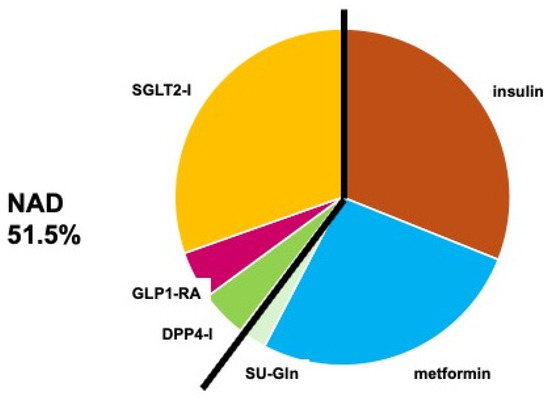
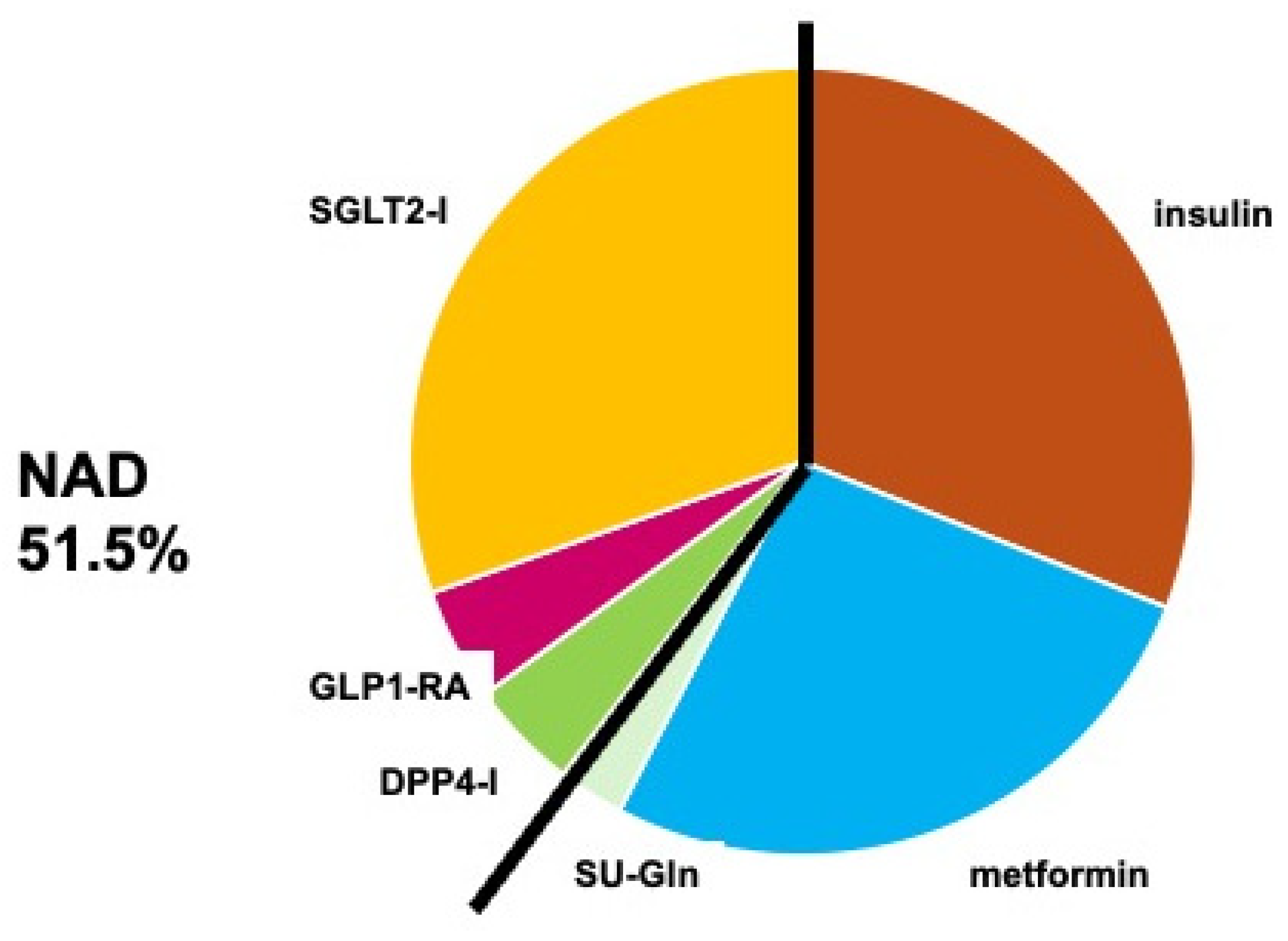
Insulin was the most common glucose-lowering therapy, being used by 51.5% of the patients, followed by metformin (44.4%), as displayed in Figure 1. At the patient level, a NAD was used by most of the patients, of whom 50.9% were on SGLT2-I, 7.8% on GLP1-RA and 7.6% on DDP4-I. Patients treated with NADs were more likely to receive a combination therapy: two drugs in 142 patients (30.7%) and three drugs in 81 patients (17.5%).
Figure 1.
Distribution of different oral antidiabetic drugs in study population (NAD: new antidiabetic drugs; GLP1-RA: glucagon-like peptide 1-receptor agonists; SGLT2-I: sodium–glucose transporter 2-inhibitors; DPP4-I: dipeptidylpeptidase 4-inhibitors; SU-Gln: sulfonylureas and meglitinides).
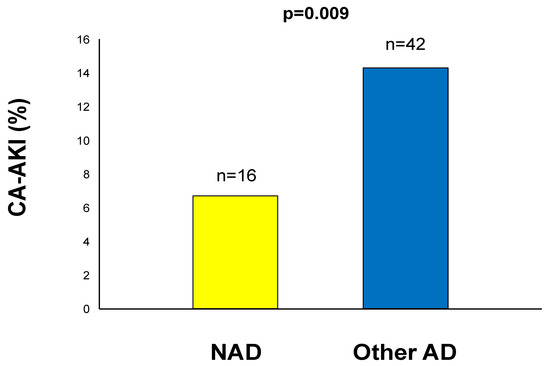
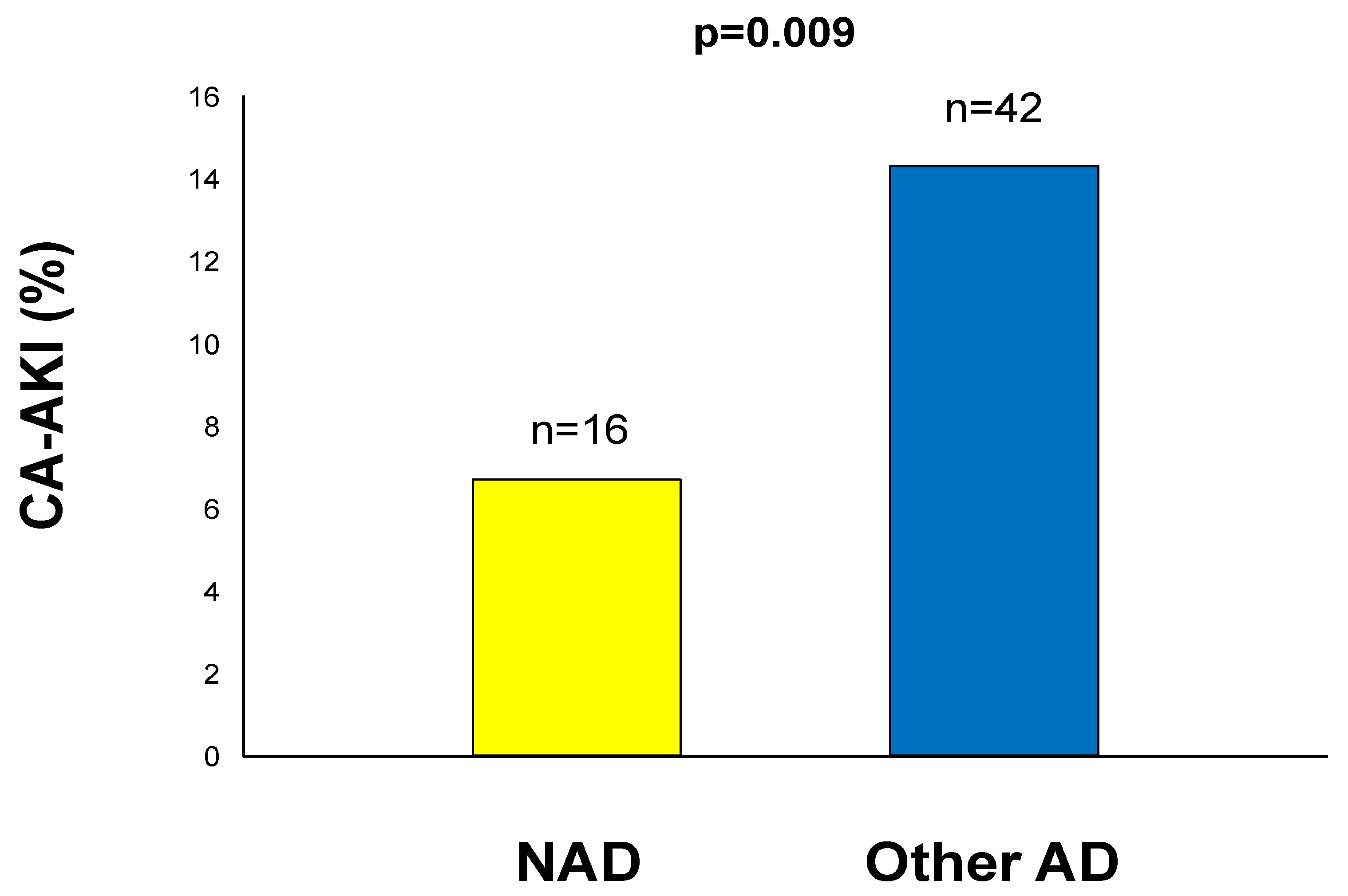
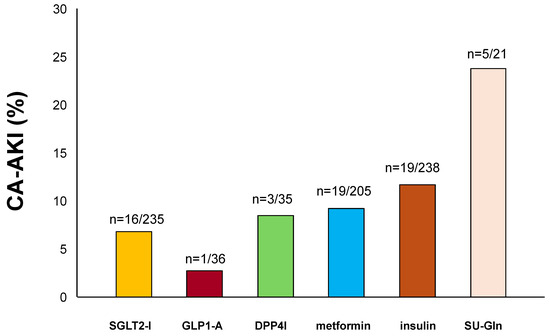
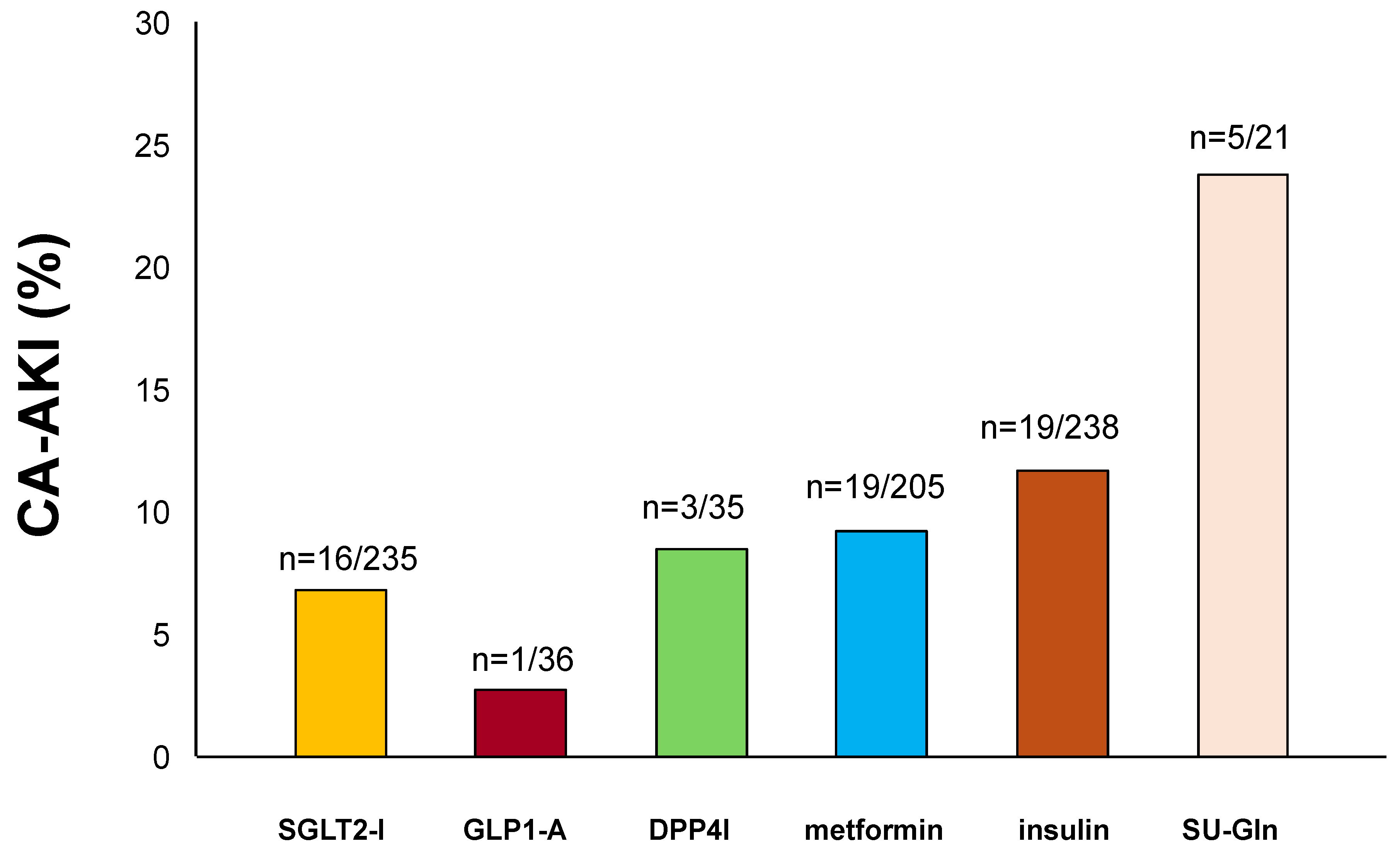
The rate of CA-AKI events was 10.3% (n = 48). Patients receiving NADs displayed a significantly lower occurrence of CA-AKI (6.7% vs. 14.3%, p = 0.009), as displayed in Figure 2. In particular, the occurrence of CA-AKI was significantly lower in patients on SGLT2-I (6.8% vs. 14.1%, p = 0.01) and slightly lower in those on GLP1-A (2.8% vs. 11%, p = 0.15), an RA, whilst not differing in terms of the use of DPP4I (8.5 vs. 10.6%, p = 0.99), DPP4-I, metformin (9.3% vs. 11.3%, p = 0.54) or insulin (11.8% vs. 9.8%, p = 0.36). On the contrary, patients treated with sulfonylureas and meglitinides displayed a significant increase in the rate of CA-AKI (23.8% vs. 9.8%, p = 0.05). The individual rate of CA-AKI for each class of glucose-lowering agents is displayed in Figure 3. No difference in the occurrence of CA-AKI was observed between patients receiving single or combined antidiabetic therapy (1 drug: 12.5%; 2 drugs: 8.1%; ≥3 drugs: 7.4%, p = 0.13).
Figure 2.
The prevalence of contrast-associated acute kidney injury (CA-AKI) according to the use of new antidiabetic drugs (NADs).
Figure 3.
Prevalence of CA-AKI with different glucose-lowering therapies. GLP1-RA: glucagon-like peptide 1-receptor agonists; SGLT2-I: sodium–glucose transporter 2-inhibitors.
After correction for baseline differences, sulfonylureas and meglitinides confirmed the increased risk of CA-AKI (adjusted OR = 4.64 [1.48–14.5], p = 0.008), whereas an opposite reduction was confirmed for NADs (adjusted OR = 0.51 [0.26–0.98], p = 0.045).
In multivariable analysis, the use of NADs emerged as the only negative independent predictor of CA-AKI among diabetic patients (NAD: adjusted OR = 0.45 [0.24–0.86], p = 0.02), whereas diuretics (adjusted OR = 2.57 [1.33–4.97], p = 0.005) were positively associated with CA-AKI.
4. Discussion
The present study represents one of the largest cohorts of patients with diabetes mellitus undergoing coronary angiography and/or PCI, where we assessed the effect of different antidiabetic drugs on the occurrence of CA-AKI. We demonstrated that new oral therapies (NADs), and in particular SGLT2-I, were associated with a lower rate of acute renal events, whereas opposite outcomes were observed with sulfonylureas and meglitinides.
Diabetes mellitus severely affects renal function by disrupting kidney homeostasis, reducing the oxygenation of the kidneys, and inducing vascular damage and the inflammatory response, thus increasing the susceptibility of the kidneys to hypoxia [2]. Moreover, the association of diabetes mellitus with important comorbidities, such as hypertension, metabolic syndrome and cardiovascular disease, can further impact renal function, both directly and by enhancing the exposure of these patients to therapies and procedures accompanied by the risk of AKI, such as those requiring ICM [12,13]. According to Hapca et al. [14], the incidence of CA-AKI in patients with diabetes was 4.7 times higher as compared to a nondiabetic population without CKD, in a cohort of more than 16,000 patients.
Previous studies, in addition, have shown that acute renal events are associated with worse prognosis and a higher rate of permanent renal dysfunction when occurring in patients with diabetes mellitus [15].
The impact of antidiabetic drugs on the risk of AKI has been extensively debated, with inconsistent results. In particular, metformin, a commonly prescribed oral antidiabetic agent, can induce lactate accumulation and potentially fatal lactic acidosis, especially under particular circumstances such as renal or hepatic dysfunction, which can be exacerbated by the administration of ICM [16]. Therefore, metformin discontinuation was previously recommended prior to ICM exposure [8]. Nevertheless, severe lactic acidosis related to the use of contrast media is anecdotal and generally associated with a pre-existing CKD condition, with more recent data and current guidelines generally supporting the maintenance of metformin, although the evidence in this field remains limited [9,17,18].
The recent advancement in glucose-lowering therapies, with the introduction of three new classes of drugs (SGLT2-I, GLP1-RA and DPP4-I) providing no harm or even potential benefits to diabetic kidneys, offers new insights for the management of these patients.
In the Dapagliflozin and Cardiovascular Outcomes in Type 2 Diabetes (DECLARE-TIMI 58) trial, dapagliflozin reduced the primary endpoint of cardiovascular mortality and hospitalization for heart failure, showing an additional reduction in renal events (4.3% vs. 5.6% in the placebo group, hazard ratio 0.76; 95% CI, 0.67 to 0.87) [19].
These data have been further reinforced in dedicated trials. In the Dapagliflozin and Prevention of Adverse Outcomes in Chronic Kidney Disease (DAPA-CKD) trial, SGLT2-I lowered the risk of a composite endpoint of a sustained decline in the eGFR of at least 50%, end-stage kidney disease, or death from renal or cardiovascular causes [20].
Comparable data were obtained in the EMPA-KIDNEY (Study of Heart and Kidney Protection with Empagliflozin) trial, where empagliflozin therapy led to a lower risk of progression of kidney disease or death from cardiovascular causes than placebo [21].
In a recent large-scale meta-analysis encompassing eight trials, comprising 60,080 patients, GLP1-RA reduced the risk of individual MACE components, all-cause mortality, hospital admission for heart failure, and worsening kidney function in patients with type 2 diabetes [22].
In the Stockholm CREAtinine Measurements (SCREAM) project [23], among 17,407 participants who newly initiated NADs, the occurrence of AKI did not differ among therapies, being however numerically lower for SGLT2-I users, confirming in unselected patients the nephroprotective effects that have been shown by gliflozins in randomized clinical trials.
However, few data exist so far on the role of glucose-lowering therapies specific to post-contrast AKI. In the present study, we demonstrated in a high-risk unselected cohort of patients with DM that the use of NADs, and especially SGLT2-I, was associated with a significant reduction in CA-AKI. On the contrary, an increased risk was observed with the use of diuretics, sulfonylureas and meglitinides. The detrimental effects of diuretics, inducing volume depletion, reduced urinary clearance and an excess of tubular workload, are well established, with several studies showing that implementing hydration before ICM exposure significantly prevents the risk of CA-AKI [24].
Similarly, sulfonylureas and meglitinides have been potentially associated with cardiovascular events and mortality, and especially among patients with CKD, displaying, in addition, an enhanced risk of hypoglycemia. Therefore, these drugs should be preferentially avoided in CKD patients [25].
In a recent study, Nusca et al. [26] compared the risk of CA-AKI in 293 diabetic patients treated with NADs and propensity-matched patients on established antidiabetic therapy. They showed a significant approximately 50% reduction (from 8.5% to 4.1%) in the incidence of renal damage in patients treated with NADs, with the greatest benefit being observed with SGLT2-I and GLP1-RA. However, in this study the rate of CA-AKI was extremely low, potentially due to the inclusion of low rates of patients presenting with acute coronary syndrome, multivessel disease or reduced left ventricular function.
Nevertheless, the most recent larger-scale BMC2 Registry [27] also confirmed the renoprotective effects of SGLT2-I in diabetic patients undergoing PCI, and similar results were found in the GLICINE Registry, encompassing patients with and without diabetes mellitus treated with SGLT2-I [28].
In accordance with the previous literature [25,29], we showed that there was no effect of DPP4-I on CA-AKI, although the modest number of patients receiving these drugs, and generally as a combination therapy, certainly prevents more specific considerations. Indeed, patients receiving SGLT2-I or GLP-1 receptor agonists systematically differ from those receiving other antidiabetic drugs in terms of frailty and comorbidities, a variability that could have weighed on our observations.
In addition, we observed no difference in the occurrence of CA-AKI among patients treated with a single or combined multiple antidiabetic agents, suggesting no relationship between the severity of DM and the risk of CA-AKI.
Several mechanisms have been proposed to explain the renal benefits of SGLT2-I and GLP1-RA in the prevention of CA-AKI [2,30,31]. Among them, the effects on renal circulation; enhancing glomerular perfusion, both direct and induced by the impact on cardiac performance; the reduced activation of the renin–aldosterone system in favor of nitric oxide-mediated renal vasodilation; and the inhibition of tubular resorption and energetic consumption could prevent renal ischemic damage. Moreover, the anti-inflammatory and antioxidant effects further contribute to counteracting the mechanisms promoting CA-AKI [32].
Indeed, the newfound evidence of the lower rate of CA-AKI events among patients with DM treated with NADs could be of value in consideration of the relevant prevalence and prognostic impact of the problem and accounting for the lack of validated pharmacological strategies for the prevention of CA-AKI. Nevertheless, future dedicated randomized trials are certainly needed to confirm our results and identify the higher-risk subsets of patients that could derive larger benefits with novel antidiabetic agents.
5. Study Limitations
The first limitation of this study can be considered the inclusion of a heterogeneous cohort of patients with diabetes mellitus, although baseline renal function and major cardiovascular risk factors were well balanced according to the occurrence of AKI. In addition, such an unselected cohort deeply reflects the real-life population.
Another limitation can be considered the lack of additional laboratory parameters, such as cystatin C, albuminuria/proteinuria and 24 h albuminuria, not allowing us to provide any additional insight or independent evaluation of CA-AKI events.
In addition, data on glycosylated hemoglobin and diabetes duration were not available in all the patients; therefore we could not assess the effects of glycemic control, although the number of drugs used for DM control did not impact the results.
Finally, we did not perform a systematic follow-up; therefore we cannot draw conclusions about the need for renal replacement therapy or long-term renal and clinical outcomes.
6. Conclusions
The present study showed, in patients with diabetes mellitus undergoing coronary procedures with ICM exposure, an increased rate of CA-AKI associated with the use of sulfonylureas and meglitinides, being conversely significantly lower among new antidiabetic drug (NAD) users and especially SGLT2-I. NADs and diuretics emerged as the only independent predictors of CA-AKI. Nevertheless, future larger-scale randomized trials are certainly needed to confirm our findings and assess the effect of diabetes severity and different glucose-lowering pharmacological combinations on the risk of CA-AKI.
Author Contributions
Conceptualization, M.V., M.N., G.C. (Giuseppe Ciliberti) and F.Z.; methodology, M.V. and F.Z.; formal analysis, M.V.; data curation, M.L., J.P., A.F., E.B., D.L., G.C. (Gennaro Ciliberti), E.N., R.M., G.G. and E.M.; writing—original draft preparation, M.V., M.N., G.C. (Giuseppe Ciliberti) and F.Z.; writing—review and editing, T.P. and M.M.; supervision, A.D.R., R.B., O.V., D.C. and A.R. All authors have read and agreed to the published version of the manuscript.
Funding
This research received no external funding.
Institutional Review Board Statement
This study was conducted in accordance with the Declaration of Helsinki and approved by the local Ethical Committee (Comitato Etico Interaziendale Novara, Italy, emended CE 2615/2019 on 11 April 2019).
Informed Consent Statement
Informed consent was obtained from all subjects involved in this study.
Data Availability Statement
Data are available from the authors upon reasonable request.
Conflicts of Interest
The authors declare no conflicts of interest.
References
- Farooqi, S.; Dickhout, J.G. Major comorbid disease processes associated with increased incidence of acute kidney injury. World J. Nephrol. 2016, 5, 139–146. [Google Scholar] [CrossRef] [Scilit] [PubMed]
- Infante, B.; Conserva, F.; Pontrelli, P.; Leo, S.; Stasi, A.; Fiorentino, M.; Troise, D.; Dello Strologo, A.; Alfieri, C.; Gesualdo, L.; et al. Recent advances in molecular mechanisms of acute kidney injury in patients with diabetes mellitus. Front. Endocrinol. 2023, 13, 903970. [Google Scholar] [CrossRef] [Scilit] [PubMed]
- Barbieri, L.; Verdoia, M.; Schaffer, A.; Cassetti, E.; Di Giovine, G.; Marino, P.; Suryapranata, H.; De Luca, G. Pre-diabetes and the risk of contrast induced nephropathy in patients undergoing coronary angiography or percutaneous intervention. Diabetes Res. Clin. Pract. 2014, 106, 458–464. [Google Scholar] [CrossRef] [Scilit] [PubMed]
- Kaufman, J.; Dhakal, M.; Patel, B.; Hamburger, R. Community-acquired acute renal failure. Am. J. Kidney Dis. 1991, 17, 191–198. [Google Scholar] [CrossRef] [Scilit] [PubMed]
- Lapi, F.; Azoulay, L.; Yin, H.; Nessim, S.J.; Suissa, S. Concurrent use of diuretics, angiotensin converting enzyme inhibitors, and angiotensin receptor blockers with non-steroidal anti-inflammatory drugs and risk of acute kidney injury: Nested case control study. BMJ 2013, 346, e8525. [Google Scholar] [CrossRef] [Scilit] [PubMed]
- Mehran, R.; Owen, R.; Chiarito, M.; Baber, U.; Sartori, S.; Cao, D.; Nicolas, J.; Pivato, C.A.; Nardin, M.; Krishnan, P.; et al. A contemporary simple risk score for prediction of contrast-associated acute kidney injury after percutaneous coronary intervention: Derivation and validation from an observational registry. Lancet 2021, 398, 1974–1983. [Google Scholar] [CrossRef] [Scilit] [PubMed]
- Frier, B.M.; Schernthaner, G.; Heller, S.R. Hypoglycemia and cardiovascular risks. Diabetes Care 2011, 34, S132–S137. [Google Scholar] [CrossRef] [Scilit] [PubMed]
- Chiarito, M.; Sanz-Sanchez, J.; Piccolo, R.; Condello, F.; Liccardo, G.; Maurina, M.; Avvedimento, M.; Regazzoli, D.; Pagnotta, P.; Garcia-Garcia, H.M.; et al. Safety of metformin continuation in diabetic patients undergoing invasive coronary angiography: The NO-STOP single arm trial. Cardiovasc. Diabetol. 2023, 22, 28. [Google Scholar] [CrossRef] [Scilit] [PubMed]
- Xu, Q.; Huang, W.; Li, Q.; Bao, T.; Luo, H.; Luo, X. Systematic review and meta-analysis of current guidelines, and their evidence base, on risk of renal function after administration of contrast medium for diabetic patients receiving metformin. Front. Med. 2025, 12, 1547725. [Google Scholar] [CrossRef] [Scilit] [PubMed]
- Zilio, F.; Ciliberti, G.M.; Paternoster, J.; Faraguna, A.; Barnoffi, E.; Lorusso, D.; Ciliberti, G.; Piva, T.; Nicolini, E.; Marini, M.; et al. Impact of gender on contrast-associated acute kidney injury among patients receiving Sodium-Glucose cotransporter-2 inhibitors prior to coronary interventions: insights from the GLICINE registry. Minerva Cardiol. Angiol. 2026; in press. [CrossRef] [Scilit]
- Khwaja, A. KDIGO clinical practice guidelines for acute kidney injury. Nephron Clin. Pract. 2012, 120, c179–c184. [Google Scholar] [CrossRef] [Scilit] [PubMed]
- James, M.T.; Grams, M.E.; Woodward, M.; Elley, C.R.; Green, J.A.; Wheeler, D.C.; De Jong, P.; Gansevoort, R.T.; Levey, A.S.; Warnock, D.G.; et al. A meta-analysis of the association of estimated GFR, albuminuria, diabetes mellitus, and hypertension with acute kidney injury. Am. J. Kidney Dis. 2015, 66, 602–612. [Google Scholar] [CrossRef] [Scilit] [PubMed]
- Verdoia, M.; Nardin, M.; Gioscia, R.; Suryapranata, H.; Kedhi, E.; Rognoni, A.; De Luca, G.; Novara Atherosclerosis Study Group (NAS). Impact of renal failure and high-platelet reactivity on major cardiovascular ischemic events among patients with acute coronary syndrome receiving dual antiplatelet therapy with ticagrelor. Minerva Cardiol. Angiol. 2023, 71, 257–265. [Google Scholar] [CrossRef] [Scilit] [PubMed]
- Hapca, S.; Siddiqui, M.K.; Kwan, R.S.; Lim, M.; Matthew, S.; Doney, A.S.; Pearson, E.R.; Palmer, C.N.; Bell, S.; BEAt-DKD Consortium. The relationship between AKI and CKD in patients with type 2 diabetes: An observational cohort study. J. Am. Soc. Nephrol. 2021, 32, 138–150. [Google Scholar] [CrossRef] [Scilit]
- Venot, M.; Weis, L.; Clec’h, C.; Darmon, M.; Allaouchiche, B.; Goldgran-Tolédano, D.; Garrouste-Orgeas, M.; Adrie, C.; Timsit, J.F.; Azoulay, E. Acute kidney injury in severe sepsis and septic shock in patients with and without diabetes mellitus: A multicenter study. PLoS ONE 2015, 10, e0127411. [Google Scholar] [CrossRef] [Scilit] [PubMed]
- Thomsen, H.S.; Morcos, S.K.; Almén, T.; Aspelin, P.; Bellin, M.F.; Clément, O.; Heinz-Peer, G.; Reimer, P.; Stacul, F.; van der Molen, A.J.; et al. Metformin and contrast media. Radiology 2010, 256, 672–673. [Google Scholar] [CrossRef] [Scilit] [PubMed]
- Jung, J.; Cho, Y.Y.; Jung, J.H.; Kim, K.Y.; Kim, H.S.; Baek, J.H.; Hahm, J.R.; Cho, H.S.; Kim, S.K. Are patients with mild to moderate renal impairment on metformin or other oral antihyperglycaemic agents at increased risk of contrast-induced nephropathy and metabolic acidosis after radiocontrast exposure? Clin. Radiol. 2019, 74, 651.e1–651.e6. [Google Scholar] [CrossRef] [Scilit] [PubMed]
- Fan, Y.; Cai, Q.; Chen, S.; Zhang, B.; Zhang, Y.; Zhen, J.; Zhang, G. Appraisal of guidelines for managing contrast medium in patients with metformin: Consensuses, controversies, and gaps. Eur. Radiol. 2023, 33, 6290–6298. [Google Scholar] [CrossRef] [Scilit] [PubMed]
- Wiviott, S.D.; Raz, I.; Bonaca, M.P.; Mosenzon, O.; Kato, E.T.; Cahn, A.; Silverman, M.G.; Zelniker, T.A.; Kuder, J.F.; Murphy, S.A.; et al. Dapagliflozin and Cardiovascular Outcomes in Type 2 Diabetes. N. Engl. J. Med. 2019, 380, 347–357. [Google Scholar] [CrossRef] [Scilit] [PubMed]
- Heerspink, H.J.L.; Stefánsson, B.V.; Correa-Rotter, R.; Chertow, G.M.; Greene, T.; Hou, F.F.; Mann, J.F.E.; McMurray, J.J.V.; Lindberg, M.; Rossing, P.; et al. Dapagliflozin in Patients with Chronic Kidney Disease. N. Engl. J. Med. 2020, 383, 1436–1446. [Google Scholar] [CrossRef] [Scilit] [PubMed]
- The EMPA-KIDNEY Collaborative Group; Herrington, W.G.; Staplin, N.; Wanner, C.; Green, J.B.; Hauske, S.J.; Emberson, J.R.; Preiss, D.; Judge, P.; Mayne, K.J.; et al. Empagliflozin in Patients with Chronic Kidney Disease. N. Engl. J. Med. 2023, 388, 117–127. [Google Scholar] [CrossRef] [Scilit] [PubMed]
- Sattar, N.; Lee, M.M.Y.; Kristensen, S.L.; Branch, K.R.H.; Del Prato, S.; Khurmi, N.S.; Lam, C.S.P.; Lopes, R.D.; McMurray, J.J.V.; Pratley, R.E.; et al. Cardiovascular, mortality, and kidney outcomes with GLP-1 receptor agonists in patients with type 2 diabetes: A systematic review and meta-analysis of randomised trials. Lancet Diabetes Endocrinol. 2021, 9, 653–662. [Google Scholar] [CrossRef] [Scilit] [PubMed]
- Alkas, J.; Bosi, A.; Sjölander, A.; Barany, P.; Elinder, C.G.; Fu, E.L.; Carrero, J.J. Novel glucose-lowering drugs and the risk of acute kidney injury in routine care; the Stockholm CREAtinine Measurements (SCREAM) project. J. Nephrol. 2023, 36, 705–711. [Google Scholar] [CrossRef] [Scilit] [PubMed]
- Al Hariri, M.; Al Hassan, S.; Khalifeh, M.; Tamim, H.; El Majzoub, I.; El Zahran, T. Factors associated with contrast-associated acute kidney injury in an emergency department: A cohort study in Lebanon. PLoS ONE 2025, 20, e0316604. [Google Scholar] [CrossRef] [Scilit] [PubMed]
- Prischl, F.C.; Wanner, C. Renal Outcomes of Antidiabetic Treatment Options for Type 2 Diabetes-A Proposed MARE Definition. Kidney Int. Rep. 2018, 3, 1030–1038. [Google Scholar] [CrossRef] [Scilit] [PubMed]
- Nusca, A.; Di Bitonto, M.P.; Spanò, A.; Bernardini, F.; Mangiacapra, F.; Ricottini, E.; Melfi, R.; Giannone, S.; Ussia, G.P.; Grigioni, F. Effects of Novel Antidiabetic Agents on Contrast-Associated Acute Kidney Injury in Diabetic Patients Undergoing Percutaneous Coronary Intervention. Am. J. Cardiol. 2025, 240, 50–56. [Google Scholar] [CrossRef] [Scilit] [PubMed]
- Hyder, S.N.; Seth, M.; Hamilton, D.E.; Stoute, H.; Daher, E.; Chattahi, J.; Samman, B.; Gupta, V.; Briguori, C.; Rudnick, M.; et al. Reno-Protective Effects of SGLT2 Inhibitors in Patients with Diabetes Undergoing Percutaneous Coronary Intervention: Insights from the BMC2 Registry. Circ. Cardiovasc. Interv. 2026, 19, e015645. [Google Scholar] [CrossRef] [Scilit] [PubMed]
- Verdoia, M.; Zilio, F.; Nardin, M.; Leverone, M.; Paternoster, J.; Faraguna, A.; Barnoffi, E.; Lorusso, D.; Ciliberti, G.; Piva, T.; et al. Gliflozins in the prevention of contrast Associated NEphropathy: The Glicine registry. Int. J. Cardiol. 2026, 462, 134700. [Google Scholar]
- Rosenstock, J.; Perkovic, V.; Johansen, O.E.; Cooper, M.E.; Kahn, S.E.; Marx, N.; Alexander, J.H.; Pencina, M.; Toto, R.D.; Wanner, C.; et al. Effect of Linagliptin vs Placebo on Major Cardiovascular Events in Adults with Type 2 Diabetes and High Cardiovascular and Renal Risk: The CARMELINA Randomized Clinical Trial. JAMA 2019, 321, 69–79. [Google Scholar] [PubMed]
- Caruso, I.; Giorgino, F. Renal effects of GLP-1 receptor agonists and tirzepatide in individuals with type 2 diabetes: Seeds of a promising future. Endocrine 2024, 84, 822–835. [Google Scholar] [CrossRef] [Scilit] [PubMed]
- Dai, Z.-C.; Chen, J.-X.; Zou, R.; Liang, X.-B.; Tang, J.-X.; Yao, C.-W. Role and mechanisms of SGLT-2 inhibitors in the treatment of diabetic kidney disease. Front. Immunol. 2023, 14, 1213473. [Google Scholar] [CrossRef] [Scilit] [PubMed]
- Chu, C.; Lu, Y.-P.; Yin, L.; Hocher, B. The SGLT2 inhibitor empagliflozin might be a new approach for the prevention of acute kidney injury. Kidney Blood Press. Res. 2019, 44, 149–157. [Google Scholar] [CrossRef] [Scilit] [PubMed]

Disclaimer/Publisher’s Note: The statements, opinions and data contained in all publications are solely those of the individual author(s) and contributor(s) and not of MDPI and/or the editor(s). MDPI and/or the editor(s) disclaim responsibility for any injury to people or property resulting from any ideas, methods, instructions or products referred to in the content. |
© 2026 by the authors. Licensee MDPI, Basel, Switzerland. This article is an open access article distributed under the terms and conditions of the Creative Commons Attribution (CC BY) license.