


Abstract
Background: Diabetes mellitus (DM) is an emerging public health challenge in Africa, driven by rapid urbanisation, changing lifestyles and socio-economic transitions. As the global prevalence rises, evidence on the burden and determinants of DM across African countries remains fragmented and inconsistent. Objective: We aimed to synthesize evidence from existing systematic reviews and meta-analyses on the prevalence and determinants of diabetes mellitus across African populations, thereby informing targeted interventions and policy actions. Methods: This umbrella review followed the PRISMA guidelines and included systematic reviews and meta-analyses of studies, published up to December 2024, that reported on DM prevalence and/or risk factors for DM in adults across four African countries. The literature was retrieved from PubMed, Scopus, Web of Science and African Journals Online (AJOL). Quality assessment was conducted using the AMSTAR 2 (A Measurement Tool to Assess Systematic Reviews, version 2) tool, and only moderate- to high-quality reviews were retained. Random-effects models were used to estimate the pooled prevalence and odds ratios (ORs), while heterogeneity, publication bias and sensitivity analyses were also conducted. Findings: Seven reviews were included, covering four countries: Ethiopia, South Africa, Nigeria and Ghana. The pooled prevalence of diabetes mellitus was 9.0% (95% CI: 6.0–12.0%), with significant heterogeneity (I2 = 99.8%). Among the determinants, only family history of DM (OR:5.11, 95% CI: 2.96–8.85), hypertension (OR: 2.52; 95% CI: 1.65–3.83), obesity (OR: 3.04; 95% CI: 1.92–4.82), physical inactivity (OR: 3.32; 95% CI: 1.99–5.54), smoking (OR: 2.59; 95% CI: 1.23–5.47), unhealthy diet (OR: 4.77; 95% CI: 1.73–13.18) and urban residence (OR: 5.81; 95%CI: 4.41–7.65), showed a statistically significant association. Sensitivity analysis confirmed the robustness of pooled prevalence, and no significant publication bias was detected. Conclusions: Diabetes mellitus prevalence in Africa is rising and approaching the global averages. The heterogeneity in risk factors underscores the need for localised, context-specific strategies.
1. Introduction
Non-communicable diseases (NCDs) are a leading global health challenge, responsible for 71% of all deaths worldwide and over half the total disease burden [1,2]. Their impact is particularly severe in low- and middle-income countries (LMICs) [3] where they account for 78% of all deaths, 85% of premature mortality, and 50% of disabilities [1,2]. This growing burden is closely linked to rapid industrialization and urbanisation, which have driven profound lifestyle changes, most notably diets high in processed foods and sugar-sweetened beverages, along with reduced physical activity, contributing to the rise of obesity and type 2 diabetes mellitus (DM) [4]. Globally, an estimated 422 million adults are living with diabetes, nearly 80% of them in LMICs [5,6], with type 2 DM comprising about 90% of cases where prevalence is particularly high in urban areas and among older populations [7], reflecting both demographic trends and shifts in lifestyle risk factors.
DM encompasses a spectrum of chronic metabolic disorders, characterised by persistent hyperglycaemia, and is typically categorised into two main types, based on pathophysiology [8]. Type 1 DM, though less common, usually develops in childhood or adolescence and is believed to result from an autoimmune-mediated destruction of pancreatic β-cells, triggered by genetic and environmental factors. In contrast, type 2 DM—marked by insulin resistance and inadequate insulin secretion—develops gradually and is commonly diagnosed in adults over the age of 40. However, recent trends indicate increasing incidence of type 2 DM among the younger populations, including children and adolescents, largely due to rising obesity rates and sedentary lifestyles, influenced by rapid urbanisation [9].
If left undiagnosed or poorly managed, diabetes can lead to severe complications and premature mortality, affecting the cardiovascular system, kidneys, eyes, blood vessels and nerves. It significantly raises the risk for heart disease and stroke. The International Diabetes Federation (IDF) report is a key reference on global diabetes trends. In its eighth edition, it was reported that 77% of the diabetes-related deaths among individuals under 60 years of age occur in sub-Saharan Africa, underscoring the continent’s inadequate healthcare systems and their limited capacity to manage the disease burden [10,11]. This suggests that diabetes has evolved into a silent epidemic in the region, with the situation expected to worsen.
The IDF projects that, by 2045, the prevalence of diabetes will have increased by 156% in Africa, compared to 16% in Europe, 35% in North America and the Caribbean, and 84% in South East Asia [12]. However, these projections are accompanied by considerable uncertainty, largely due to insufficient and outdated data from sub-Saharan Africa. Over three quarters of countries in the region lack primary data on adult diabetes prevalence. For instance, it is reported that Ethiopia, South Africa and the Democratic Republic of Congo, some of Africa’s most populous countries, have the highest number of people living with diabetes, yet the data informing these estimates are of low quality and limited scope [13].
Despite these alarming statistics, the response to diabetes in the region remains insufficient. Screening, prevention and research continue to be deprioritised. Although imperfect, the IDF estimate reflects a genuine increase in diabetes prevalence. Additional studies have reinforced this trend, highlighting rapid increases in both the prevalence and absolute number of diabetes cases in LMICs compared to high-income countries [14,15].
The growing prevalence of diabetes and persistent data gaps have led to an increase in primary studies, with the aim of generating national estimates in the countries most affected by the disease. However, while several country-level systematic reviews and meta-analyses have been published [13,16,17], they are geographically fragmented.
This umbrella review aims to consolidate the best available evidence on the prevalence of diabetes mellitus among adults in four African countries. By addressing the scarcity of up-to-date data, this study seeks to inform policymakers and health planners, supporting the design and implementation of targeted strategies that can mitigate the growing burden of diabetes and align with the aims of Sustainable Development Goal 3.4 (SDG 3.4) by ensuring healthy lives and well-being for all, at all ages, through preventing premature mortality of non-communicable diseases, including diabetes.
2. Methods
2.1. Search Strategy and Eligibility Criteria
This umbrella review was conducted in accordance with the Preferred Reporting Items for Systematic Reviews and Meta-Analysis (PRISMA-2020 checklist) with a PROSPERO registration number of CRD420251029548 (Supplementary File S1). A comprehensive literature search was performed on PubMed, Scopus, Web of Science and African Journals Online (AJOL), to identify systematic reviews and meta-analyses reporting on the prevalence and determinants of diabetes mellitus in African countries. The search covered studies published up to December 2024, using keywords and MeSH (medical subject headings) terms, such as “diabetes mellitus”, “prevalence”, “risk factors” and “determinants”, combined with names of individual African countries, using Boolean operators (AND, OR). Additionally, the reference lists of included studies were hand-searched, to identify any additional eligible articles. Studies were included if they met the following criteria:
- ✓
- Systematic review or meta-analysis conducted in individual African countries;
- ✓
- Focused on the adult population;
- ✓
- Reported pooled prevalence estimates and/or quantitative measures of association (odds ratios) for diabetes mellitus risk factors;
- ✓
- Published in English;
- ✓
- Provided sufficient statistical data for extraction and synthesis.
This umbrella review was limited to countries with at least one eligible systematic review/meta-analysis; ultimately, four countries met these criteria.
2.2. Data Extraction and Quality Assessment
Two reviewers, (SAT) and (TMW), independently screened the titles, abstracts and full texts, using predefined eligibility criteria. Discrepancies were resolved through discussion with the third reviewer, (SWT). A standardised data extraction form was used to collect key study characteristics, including author, publication year, country, number of included studies, total sample size, pooled estimates with a 95% confidence interval (CI), determinants with their estimates, heterogeneity statistics and quality assessments. The AMSTAR 2 tool was used to appraise the methodological quality of the included reviews. Only studies rated as moderate- to high-quality were retained for final synthesis.
2.3. Assessment of Overlap of Primary Studies
As this study is an umbrella review, overlap of primary studies across the included systematic reviews and meta-analyses was considered a potential methodological concern. However, a formal quantification of overlap using the corrected covered area (CCA) was not undertaken, as several included reviews did not provide complete lists of primary studies. Consequently, some degree of overlap of primary evidence across reviews is likely. This overlap was considered when interpreting findings, with emphasis placed on the consistency and direction of estimates across reviews rather than on the precision of pooled estimates.
2.4. Statistical Analysis
A random-effects meta-analysis model was applied to account for anticipated heterogeneity across studies. For prevalence data, proportions were pooled using the inverse variance method to stabilise variances. For risk factors, pooled odds ratios (ORs), with their 95% CIs, were calculated.
Heterogeneity was assessed using Cochran’s Q test, I2 statistic (with values >75% indicating substantial heterogeneity) and Tau2. Publication bias was evaluated through visual inspection of funnel plots, Egger’s test and Begg’s rank correlation test.
Sensitivity analysis was performed using a leave-one-out approach, to determine the influence of individual studies on the pooled estimates and heterogeneity. Additionally, funnel plot asymmetry was quantified using regression-based methods to estimate small study effects and bias-related limit estimates, along with their confidence intervals. An analysis was conducted using R (R-4.6.0).
Determinants were eligible for quantitative pooling if they were reported in at least two included reviews and were conceptually comparable. Determinants reported in only one review or exhibiting substantial methodological heterogeneity were synthesized narratively.
3. Results
3.1. Study Characteristics
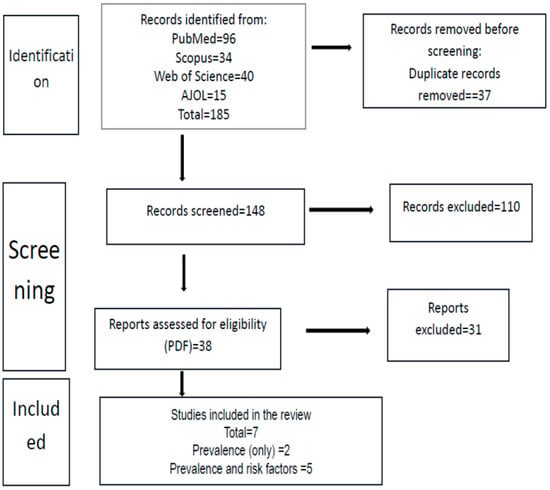
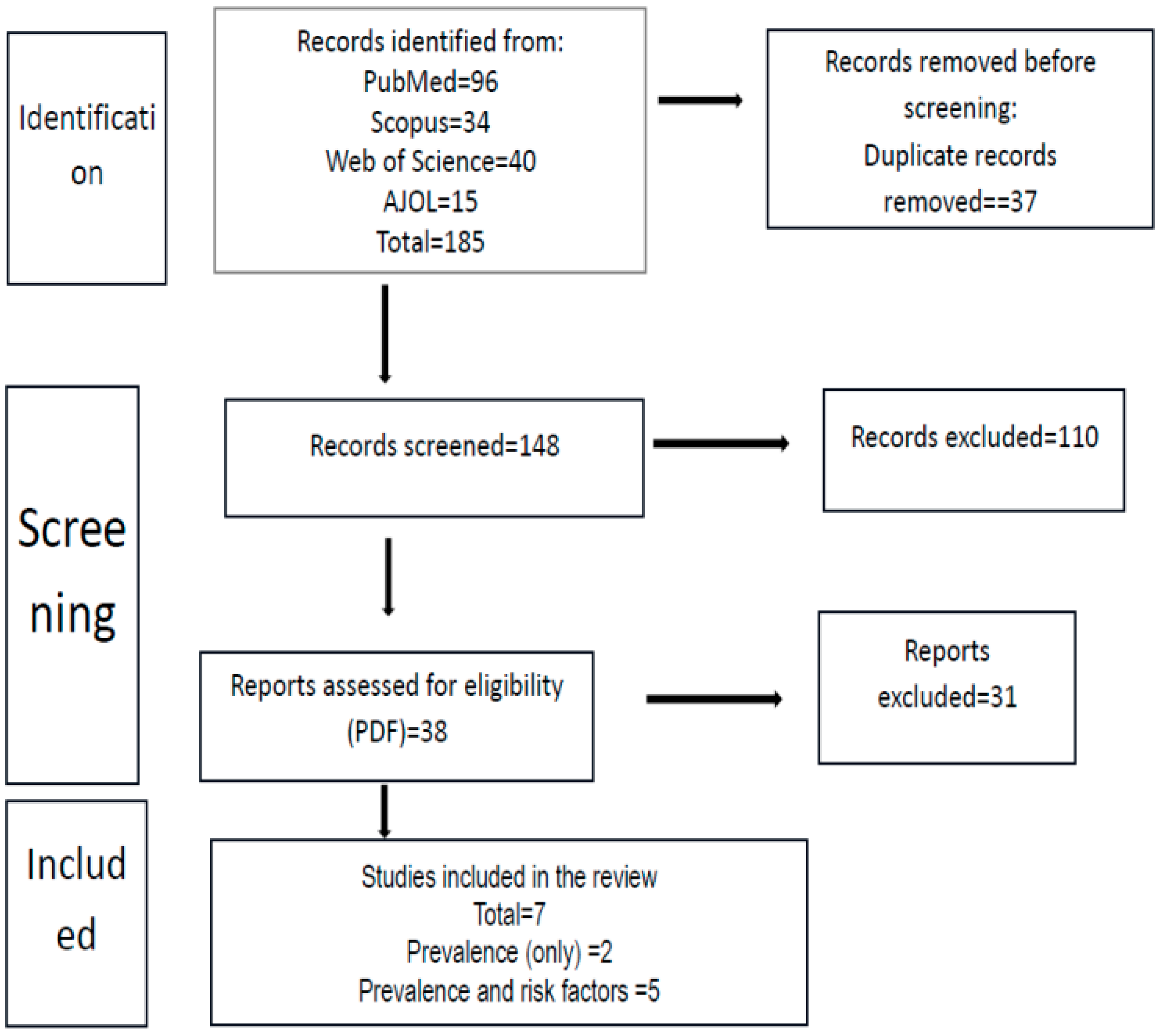
As illustrated in Figure 1, a total of 185 records were identified through database searches. After removing duplicate entries, the remaining articles were screened based on their titles and abstracts. Following the exclusion of 110 studies that were not relevant to the research topic, 38 full-text articles were retrieved and assessed according to the inclusion criteria. Ultimately, seven studies were included in the final analysis and relevant data were extracted. Among these, five articles reported prevalence and risk factors together, and two articles reported only prevalence data. Accordingly, three reviews were from Ethiopia [18,19,20], two were from Nigeria [17,21], one was from South Africa [22] and one was from Ghana [23] (Supplementary Table S1).
Figure 1.
Flow diagram showing the umbrella review identification process.
3.2. Prevalence of Diabetes Mellitus
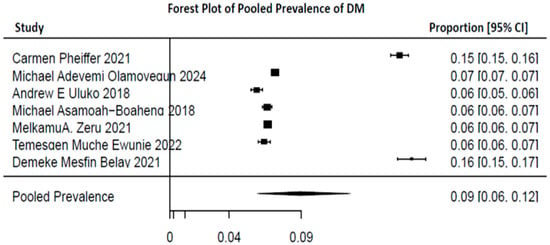
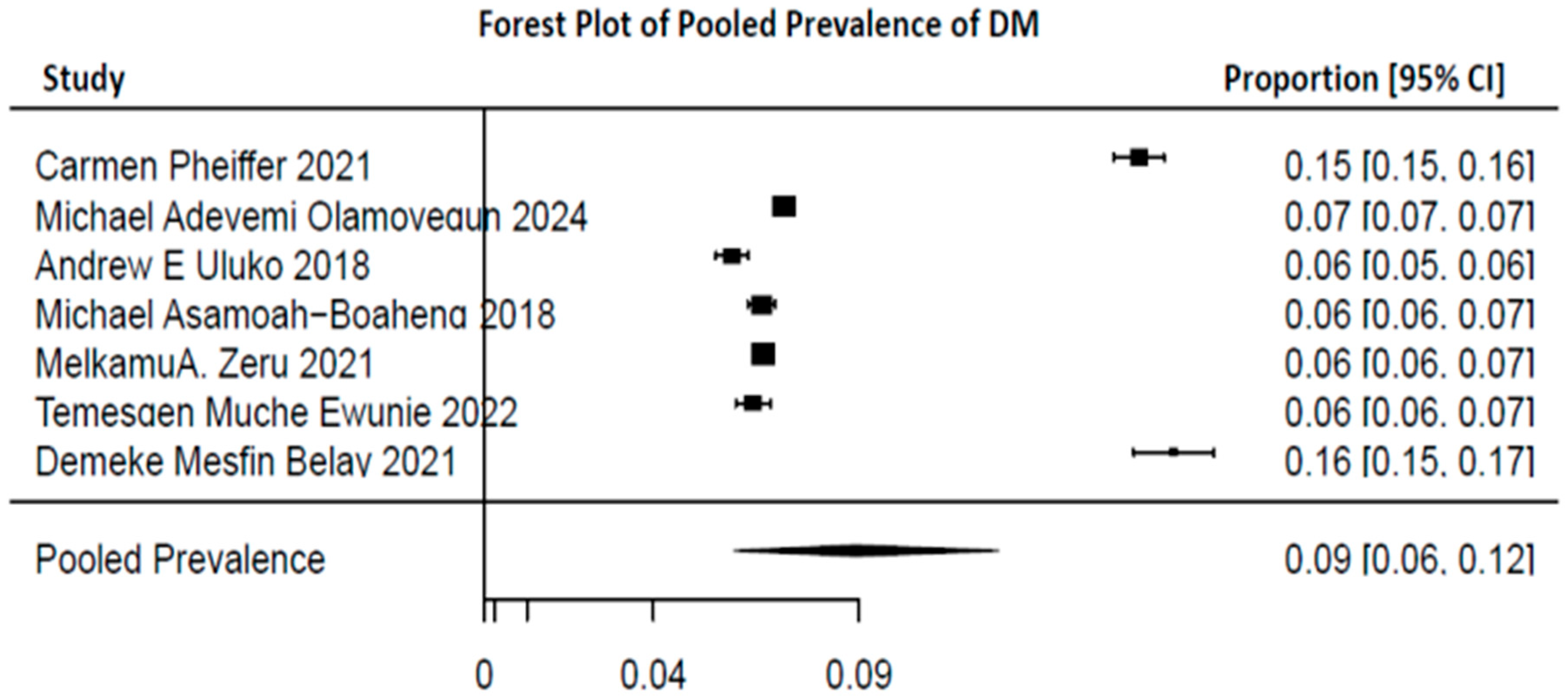
The pooled prevalence of diabetes mellitus across four countries in this review was 9.0% (95% CI: 6.0–12.0%), but heterogeneity was extremely high (I2 = 99.8%), indicating substantial variation between studies. As such, this pooled estimate should be interpreted cautiously.
The prevalence of diabetes mellitus was observed to be as low as 5.8% in Nigeria [17], and as high as 16% in South Africa [22] and Ethiopia [19]. The heterogeneity analysis revealed substantial heterogeneity among the included studies, as reflected by an I2 of 99.8%, and a highly significant Cochran’s Q test (Q = 2444.19, p < 0.001), which indicates that nearly all observed variation in prevalence estimate was due to true differences between studies, rather than chance. The between-study variance (tau2 = 0.2411) and its confidence interval further support the presence of considerable variability in effect sizes (Figure 2).
Figure 2.
Pooled prevalence of diabetes mellitus [17,18,19,20,21,22,23].
3.3. Publication Bias for Prevalence
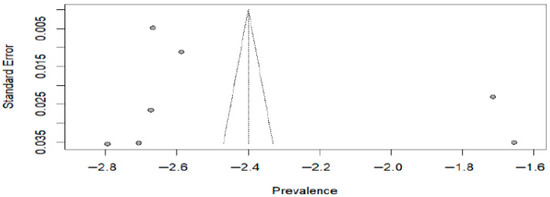
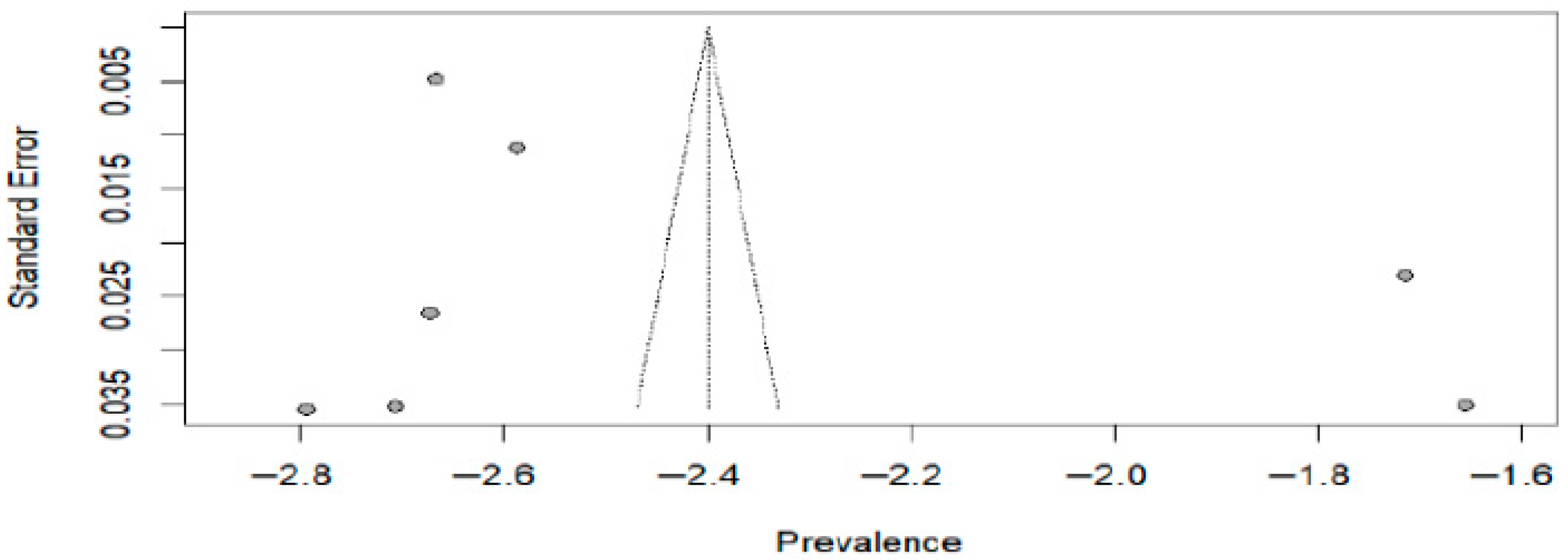
Publication bias was assessed using a funnel plot, Egger’s test and Begg’s test. The funnel plot suggests a degree of asymmetry, indicating a potential publication bias or small study effect. However, Egger’s test revealed no statistically significant evidence of publication bias (t = 1.40, df = 5, p = 0.2210). Similarly, Begg’s test showed no significant rank correction, suggestive of publication bias (z = −0.45, p = 0.6523). Although both tests did not indicate the presence of publication bias, it is important to note that the number of included studies (n = 7) may limit the power of these tests (Table 1 and Figure 3).
Table 1.
Publication bias for the prevalence of DM.
Figure 3.
Funnel plot for publication bias in the overall prevalence (pooled).
3.4. Sensitivity Analysis and Publication Bias
The leave-one-out sensitivity analysis indicated that no individual study disproportionately influenced the pooled prevalence estimate of diabetes mellitus. Accordingly, the pooled prevalence stayed relatively consistent, from 7.4% to 8.8%, regardless of the study removed, which indicated that no single study has overly influenced the pooled estimate.
Heterogeneity remained high and I2 remained very high (>99%) across all the iterations, confirming that heterogeneity is substantial and not driven by a single study.
Removing Belay, D. et al. (2021) [19] led to the lowest Tau2 (0.1606), suggesting that this study contributed to heterogeneity more than the others; still, by removing it, the I2 remained high, at 99.7% (Table 2).
Table 2.
Sensitivity analysis.
3.5. Narrative Summary and Meta-Analyses for Determinants
Multiple determinants/risk factors for diabetes mellitus were identified across the reviews. The most frequently reported and consistently associated factors were obesity (Ors ranging from 2.01 to 7.41), physical inactivity (ORs 1.92 to 5.79), and older age (ORs 1.91 to 6.6), all demonstrating positive associations with relatively narrow confidence intervals. A family history of DM also showed strong and consistent associations (ORs 3.46 to 9.73), as did urban residence (ORs 4.79 to 6.0). Lifestyle-related factors, including unhealthy diet and smoking (ORs 1.97 to 4.4), were reported in multiple reviews. Duration of HAART over 6 years had the highest reported odds ratio (OR 18, 95% CI 5.85–30.43) indicating the strongest association in a specific population group.
Due to significant methodological heterogeneity across the included reviews stemming from variations in design, diagnostic criteria, and population characteristics a pooled meta-analysis for most predictors were not feasible. Instead, a narrative synthesis was used to summarize and interpret the most consistently reported associations (Supplementary Table S2).
Where meta-analyses were feasible, findings revealed varying level of associations between determinants and DM. Among the determinants, family history of diabetes mellitus emerged as a strong predictor, showing a statistically significant association with a pooled odds ratio (OR) of 5.11 (95% CI: 2.96–8.85), indicating a consistent and meaningful relationship across studies. Hypertension was also significantly associated with increased risk (pooled OR: 2.52; 95% CI: 1.65–3.83), as were obesity (pooled OR: 3.04; 95% CI: 1.92–4.82), physical inactivity (pooled OR: 3.32; 95% CI: 1.99–5.54), smoking (pooled OR: 2.59; 95% CI: 1.23–5.47), and unhealthy diet (pooled OR: 4.77; 95% CI: 1.73–13.18).
Notably, urban residence was associated with the highest relative risk among the examined factors (pooled OR: 5.81; 95%CI: 4.41–7.65), highlighting the potential influence of environmental and lifestyle patterns linked to urban settings (Supplemental Figure S1).
3.6. Heterogeneity and Publication Bias Across Key Determinants
The funnel plot analysis, complemented by statistical testing, offered insights into potential publication bias and heterogeneity among the included studies. For hypertension, significant heterogeneity was observed (p = 0.0449), although there was no strong evidence of publication bias (p = 0.5542). The corresponding limit estimate (b = 0.7183) had a wide confidence interval, indicating uncertainty in the effect size. Unhealthy diet exhibited very high heterogeneity (I2 = 96.15%) and strong evidence of publication bias (z = 6.9295, p < 0.0001), with a notably large limit estimate (b = 14.6988), suggesting a potentially inflated association, due to bias. In the case of physical inactivity, substantial heterogeneity was present (I2 = 79.17%), but no significant publication bias was detected (p = 0.3526). Similarly, family history showed significant heterogeneity (I2 = 86.13%), but no significant publication bias (p = 0.1384) (Table 3 and Supplemental Figure S2).
Table 3.
Publication bias for the determinants of DM.
4. Discussion
4.1. Prevalence of DM
In this review, the pooled prevalence of DM, across the four African countries, was 9.0%. This reflects the increasing burden of diabetes within these countries. According to the IDF’s global diabetes estimate, the worldwide prevalence of diabetes among adults, in 2021, was estimated at 10.5%, with about 537 million adults living with diabetes globally [24]. This is slightly higher than the pooled prevalence reported in this review. The global figure reflects a general trend in developed and some middle-income countries, where lifestyle factors, such as high caloric intake, obesity, and sedentary behaviour contribute significantly to the rising incidence of DM [25].
In North America, particularly the United States, the prevalence of DM is notably higher, with studies indicating that about 12% of the adult population is affected [26]. This is a reflection of both genetic factors and the widespread prevalence of obesity and physical inactivity.
In Europe, the prevalence of DM varies significantly by country, with Southern European countries, such as Spain, reporting a prevalence of 9–10%, while Northern Europe reported a lower rate (5–7%) [27,28]. The European pattern suggests that healthcare systems, access to diagnosis and treatment, and public health interventions might play a role in mitigating the risk of DM.
4.2. Implications of Regional Variations
The prevalence of DM in African countries is notably lower than that in North America and Europe, yet it is still concerning, particularly in countries like Ethiopia and South Africa, where rates are approaching those seen in developed nations. This could reflect an accelerated epidemiological transition in Africa, as socio-economic development and urbanisation bring with them lifestyle changes that increase the risk of DM. The rise in DM prevalence in these countries highlights the need for early interventions, especially as countries with higher incomes are experiencing a dual burden of both infectious diseases and non-communicable diseases like DM.
4.3. Determinants of DM
The development and progression of DM in the four African countries appear to be influenced by a complex interplay of socio-economic, lifestyle, genetic, and healthcare-related factors.
4.3.1. Socio-Economic Factors
Socio-economic status (SES) remains a double-edged determinant in DM. In urban and more affluent populations, higher income and education levels have been linked to an increased risk of DM, often attributed to a shift towards Westernised lifestyles, characterised by higher consumption of processed foods and reduced physical activity [7,29]. Conversely, in lower SES populations, barriers to healthcare access, poor health literacy and delayed diagnosis contribute to a higher burden of DM or to poorly managed DM [30].
4.3.2. Lifestyle Factors
Lifestyle-related factors, particularly physical inactivity, poor dietary habits and obesity, have shown varying levels of association with DM across studies. Sedentary behaviour and increased intake of energy-dense, nutrient-poor foods have become increasingly prevalent in both urban and rural populations, reflecting broader dietary transitions in Africa [31,32].
The increasing prevalence of obesity, a major risk factor for DM, has been linked to the consumption of processed foods and sugar-sweetened beverages [33]. This trend is tied in large part to diets high in processed foods and sugar-sweetened drinks. The pooled meta-analysis confirmed that lifestyle factors, obesity, physical inactivity, and smoking are all significantly linked to diabetes. But here is the interesting part: the strength of these links is not the same everywhere. It varies from one setting to another, likely reflecting difference in culture, environment, and lifestyle patterns [34].
Our findings from four African countries highlight obesity, elevated BMI and lower socio-economic status as consistent determinants of diabetes. This associations are not unique to Africa. For example, recent evidence from high-income settings, including a nationwide Italian population-based study comparing 2019 and 2022, documented both an increase in diabetes prevalence and a stronger association with obesity and lower educational attainment in the post-COVID-19 period [35]. This suggests that global stressors, such as the COVID-19 pandemic, may amplify underlying social and behavioural risk factors, affecting diabetes prevalence and incidence across diverse populations. By situating our findings within this broader context, we underscore that, despite regional differences in health systems and sociodemographic profiles, many determinants of diabetes are shared globally and may be influenced by macro-level disruptions.
4.3.3. Genetic and Cultural Factors
Genetic predisposition remains a significant risk factor for DM. A systematic review and meta-analysis reported that individuals with a positive family history of diabetes have a 5-fold increased risk of developing DM compared to those without such a history. The heightened risk underscores the heritable nature of DM within these populations. Furthermore, genome-wide association studies have identified specific genetic variants that are associated with increased susceptibility to DM in Africa [36].
4.3.4. Health System and Access to Care
Limited access to healthcare services and inadequate health literacy remains significant barriers to early detection and management of DM in many African contexts. In Sub-Saharan Africa, fewer than 20% of individuals diagnosed with DM in sub-Saharan Africa receive appropriate treatment. In some settings, essential diabetes medications and diagnostics remain largely inaccessible, due to cost and supply chain limitations [37,38,39,40,41].
4.4. Limitations of the Review
Despite the valuable insights gained, this umbrella review has several limitations. First, only seven systematic reviews met the inclusion criteria, which constrain the comprehensiveness and generalizability of the findings. Second, the reporting of determinants across reviews was inconsistent; while some risk factors were commonly reported and pooled, others were identified in single reviews only, which weakens the overall strength of evidence for those associations. Third, there was considerable heterogeneity among the included studies, both in prevalence estimates and in effect sizes of determinants. This variability reflects differences in population studied, and methodological quality. Additionally, the small number of reviews precluded meta-regression to explore sources of heterogeneity or assess potential confounding factors. The review also relied on the quality assessments conducted by the reviews, as the primary studies were not appraised independently. Lastly, the exclusion of non-English and unpublished literature may have introduced publication bias, potentially overrepresenting reviews with significant findings.
5. Conclusions and Recommendations
5.1. Conclusions
This umbrella review revealed a growing public health concern surrounding the prevalence and determinants of DM across the selected African countries. With a pooled prevalence of 9.0%, these findings indicate that, while the burden remains lower than in many high-income regions, it is rapidly increasing and approaching the global averages. The observed prevalence in countries like South Africa and Ethiopia underscores an epidemiological transition, driven by urbanisation, changing dietary practices and sedentary lifestyles.
Importantly, the determinants of DM in the African context are multifactorial. Socio-economic disparities, evolving lifestyle behaviours, genetic predisposition and limited access to healthcare, collectively, shape DM risk and disease outcomes. Factors such as family history, physical inactivity, obesity, smoking, urban residence, and unhealthy diet demonstrated statistically significant associations with DM.
These findings call for context-specific public health strategies that prioritise early detection, health education and improved access to affordable care and medications. Investments in surveillance systems, culturally appropriate health promotion and targeted interventions will be crucial in curbing the growing DM epidemic in Africa. Moreover, future research should aim to refine the understanding of how structural, environmental and behavioural determinants intersect in diverse African populations to inform more precise and equitable DM prevention and control efforts.
5.2. Recommendations
Based on the findings of this umbrella review, the following recommendations are proposed to support the prevention and control of DM in an African context:
- Strengthen early screening and diagnosis: All stakeholders should implement nationwide screening campaigns, targeting high-risk populations, to enable early diagnosis and timely intervention.
- Improve access to essential DM services: Ensure the availability of diagnostic tools, insulin and oral hypoglycaemic agents, through strengthened supply chains, public subsidies and local manufacturing initiatives.
- Integrate DM management into primary healthcare: Embed DM care into existing primary healthcare services, including shifting trained nurses and community healthcare workers, to improve coverage and continuity of care.
- Promote culturally adaptable lifestyle interventions: Develop and implement context-specific public health campaigns with a focus on healthy diets, physical activity and behavioural change, with messaging tailored to local cultural norms and food systems.
- Target socio-economic inequalities: Address structural barriers, such as low health literacy, income inequality and rural healthcare access by designing inclusive policies that prioritise underserved communities.
- Investment in research: Support research to explore contributors to DM in African populations and establish national diabetes registries for reliable data tracking and policy planning.
Supplementary Materials
The following supporting information can be downloaded at: https://www.mdpi.com/article/10.3390/diabetology7050097/s1, File S1: PRISMA Checklist [42]; Table S1: Full search strategies used in the umbrella review; Table S2: Summary of Extracted articles; Table S3: Narrative summary for determinants of DM; Figure S1: Pooled estimates for determinants of DM; Figure S2: Funnel plots for determinants of DM.
Author Contributions
All authors made a significant contribution to the work reported, whether in the conception, study design, execution, acquisition of data, analysis and interpretation, or in all these areas; took part in drafting, revising or critically reviewing the article; gave final approval of the version to be published; have agreed on the journal to which the article has been submitted; and agree to be accountable for all aspects of the work. All authors have read and agreed to the published version of the manuscript.
Funding
This research received no external funding.
Institutional Review Board Statement
Not applicable.
Informed Consent Statement
Not applicable.
Data Availability Statement
Findings of this study were generated from the data collected and analysed on the basis of stated methods and materials; hence, all data were already available in the manuscript.
Acknowledgments
The authors would like to express their sincere gratitude to all researchers whose systematic reviews and meta-analyses were included in this umbrella review, providing a valuable foundation for this synthesis.
Conflicts of Interest
The authors declare no conflicts of interest.
Abbreviations
| Acronym | Full Form |
| AJOL | African Journals Online |
| AMSTAR 2 | A Measurement Tool to Assess Systematic Reviews, version 2 |
| CI | Confidence Interval |
| DM | Diabetes Mellitus |
| IDF | International Diabetes Federation |
| LMICs | Low- and Middle-Income Countries |
| NCDs | Non-Communicable Diseases |
| OR | Odds Ratio |
| PRISMA | Preferred Reporting Items for Systematic Reviews and Meta-Analyses |
| SDG 3 | Sustainable Development Goal 3 (Good Health and Well-being) |
| SES | Socio-Economic Status |
| WHO | World Health Organization |
References
- WHO. Noncommunicable Diseases Country Profiles 2021; WHO: Geneva, Switzerland, 2011. [Google Scholar]
- Nishida, C.; Ko, G.; Kumanyika, S. Body fat distribution and noncommunicable diseases in populations: Overview of the 2008 WHO Expert Consultation on Waist Circumference and Waist–Hip Ratio. Eur. J. Clin. Nutr. 2010, 64, 2–5. [Google Scholar] [CrossRef] [Scilit]
- WHO. World Health Statistics Overview 2019: Monitoring Health for the SDGs, Sustainable Development Goals; WHO: Geneva, Switzerland, 2019. [Google Scholar]
- Hawkes, C.; Harris, J.; Gillespie, S. Urbanization and the nutrition transition. Glob. Food Policy Rep. 2017, 4, 34. [Google Scholar]
- Rathmann, W.; Giani, G. Global Prevalence of Diabetes: Estimates for the Year 2000 and Projections for 2030: Response to Wild et al. Diabetes Care 2004, 27, 2568–2569. [Google Scholar] [CrossRef] [Scilit]
- International Diabetes Federation. International Diabetes Federation: IDF Diabetes Atlas; International Diabetes Federation: Brussels, Belgium, 2013. [Google Scholar]
- Hall, V.; Thomsen, R.W.; Henriksen, O.; Lohse, N. Diabetes in Sub Saharan Africa 1999-2011: Epidemiology and public health implications. A systematic review. BMC Public Health 2011, 11, 1–12. [Google Scholar] [CrossRef] [Scilit]
- Association, A.D. Diagnosis and classification of diabetes mellitus. Diabetes Care 2010, 33, S62–S69. [Google Scholar] [CrossRef] [Scilit]
- Luk, A.O.; Ke, C.; Lau, E.S.; Wu, H.; Goggins, W.; Ma, R.C.; Chow, E.; Kong, A.P.S.; So, W.-Y.; Chan, J.C.N. Secular trends in incidence of type 1 and type 2 diabetes in Hong Kong: A retrospective cohort study. PLoS Med. 2020, 17, e1003052. [Google Scholar]
- Malek, R. Prevalence of type 2 diabetes mellitus in Africa: An updated narrative review. N. Afr. J. Food Nutr. Res. 2020, 4, S87–S92. [Google Scholar]
- Siraj, E.S.; Sjöholm, Å.; Sumner, A.E. Diabetes in Africa in the 21st century: The unique and important challenge of diabetes in Africa, volume II. Front. Public Health 2023, 11, 1265439. [Google Scholar] [CrossRef] [Scilit]
- Whiting, D.R.; Guariguata, L.; Weil, C.; Shaw, J. IDF diabetes atlas: Global estimates of the prevalence of diabetes for 2011 and 2030. Diabetes Res. Clin. Pract. 2011, 94, 311–321. [Google Scholar] [CrossRef] [Scilit]
- Dessie, G.; Mulugeta, H.; Amare, D.; Negesse, A.; Wagnew, F.; Getaneh, T.; Endalamew, A.; Adamu, Y.W.; Tadesse, G.; Workineh, A.; et al. A systematic analysis on prevalence and sub-regional distribution of undiagnosed diabetes mellitus among adults in African countries. J. Diabetes Metab. Disord. 2020, 19, 1931–1941. [Google Scholar] [CrossRef] [Scilit] [PubMed]
- Saeedi, P.; Petersohn, I.; Salpea, P.; Malanda, B.; Karuranga, S.; Unwin, N.; Colagiuri, S.; Guariguata, L.; Motala, A.A.; Ogurtsova, K. Global and regional diabetes prevalence estimates for 2019 and projections for 2030 and 2045: Results from the International Diabetes Federation Diabetes Atlas. Diabetes Res. Clin. Pract. 2019, 157, 107843. [Google Scholar] [CrossRef] [Scilit]
- Sun, H.; Saeedi, P.; Karuranga, S.; Pinkepank, M.; Ogurtsova, K.; Duncan, B.B.; Stein, C.; Basit, A.; Chan, J.C.; Mbanya, J.C. IDF Diabetes Atlas: Global, regional and country-level diabetes prevalence estimates for 2021 and projections for 2045. Diabetes Res. Clin. Pract. 2022, 183, 109119. [Google Scholar] [CrossRef] [Scilit] [PubMed]
- Yitbarek, G.Y.; Ayehu, G.W.; Asnakew, S.; Chanie, E.S.; Bayih, W.A.; Feleke, D.G.; Amare, T.J.; Teshome, F.; Teshome, A.A.; Arage, G.; et al. Undiagnosed diabetes mellitus and associated factors among adults in Ethiopia: A systematic review and meta-analysis. Sci. Rep. 2021, 11, 24231. [Google Scholar] [CrossRef] [Scilit]
- Uloko, A.E.; Musa, B.M.; Ramalan, M.A.; Gezawa, I.D.; Puepet, F.H.; Uloko, A.T.; Borodo, M.M.; Sada, K.B. Prevalence and Risk Factors for Diabetes Mellitus in Nigeria: A Systematic Review and Meta-Analysis. Diabetes Ther. Res. Treat. Educ. Diabetes Relat. Disord. 2018, 9, 1307–1316. [Google Scholar] [CrossRef] [Scilit]
- Zeru, M.A.; Tesfa, E.; Mitiku, A.A.; Seyoum, A.; Bokoro, T.A. Prevalence and risk factors of type-2 diabetes mellitus in Ethiopia: Systematic review and meta-analysis. Sci. Rep. 2021, 11, 21733. [Google Scholar] [CrossRef] [Scilit]
- Mesfin Belay, D.; Alebachew Bayih, W.; Yeshambel Alemu, A.; Kefale Mekonen, D.; Eshetie Aynew, Y.; Senbeta Jimma, M.; Sisay Chanie, E.; Shimels Hailemeskel, H.; Necho Asferie, W.; Kassaw, A.; et al. Diabetes mellitus among adults on highly active anti-retroviral therapy and its associated factors in Ethiopia: Systematic review and meta-analysis. Diabetes Res. Clin. Pract. 2021, 182, 109125. [Google Scholar] [CrossRef] [Scilit]
- Muche Ewunie, T.; Sisay, D.; Kabthymer, R.H. Diabetes mellitus and its association with central obesity, and overweight/obesity among adults in Ethiopia. A systematic review and meta-analysis. PLoS ONE 2022, 17, e0269877. [Google Scholar] [CrossRef] [Scilit]
- Olamoyegun, M.A.; Alare, K.; Afolabi, S.A.; Aderinto, N.; Adeyemi, T. A systematic review and meta-analysis of the prevalence and risk factors of type 2 diabetes mellitus in Nigeria. Clin. Diabetes Endocrinol. 2024, 10, 43. [Google Scholar] [CrossRef] [Scilit] [PubMed]
- Pheiffer, C.; Pillay-van Wyk, V.; Turawa, E.; Levitt, N.; Kengne, A.P.; Bradshaw, D. Prevalence of Type 2 Diabetes in South Africa: A Systematic Review and Meta-Analysis. Int. J. Environ. Res. Public Health 2021, 18, 5868. [Google Scholar] [CrossRef] [Scilit]
- Asamoah-Boaheng, M.; Sarfo-Kantanka, O.; Tuffour, A.B.; Eghan, B.; Mbanya, J.C. Prevalence and risk factors for diabetes mellitus among adults in Ghana: A systematic review and meta-analysis. Int. Health 2019, 11, 83–92. [Google Scholar] [CrossRef] [Scilit] [PubMed]
- Magliano, D.J.; Boyko, E.J. IDF Diabetes Atlas; International Diabetes Federation: Brussels, Belgium, 2021. [Google Scholar]
- Reid, S.; Oliver, N.; Bagnall, C.; Catchpole, I.; Chadwick, P.; Lambert, J.; Li, J.; Schneider, M.; Tajapra, R.; Yan, H.; et al. An Analysis of Diabetes Mortality and Morbidity Risk. 2023. Available online: https://actuaries.org.uk/media/ztfo4huv/an-analysis-of-diabetes-mortality-and-morbidity-risk.pdf (accessed on 15 November 2025).
- Centers for Disease Control and Prevention. CDC 2022 National Diabetes Statistics Report; Centers for Disease Control and Prevention: Atlanta, GA, USA, 2022.
- European Union. Health at a Glance: Europe 2020 State of Health in the EU Cycle; OECD Publishing: Paris, France, 2020. [Google Scholar]
- WHO. Health at a Glance: Asia/Pacific 2020 Measuring Progress Towards Universal Health Coverage; OECD Publishing: Paris, France, 2020. [Google Scholar]
- Atun, R.; Davies, J.I.; Gale, E.A.; Bärnighausen, T.; Beran, D.; Kengne, A.P.; Levitt, N.S.; Mangugu, F.W.; Nyirenda, M.J.; Ogle, G.D. Diabetes in sub-Saharan Africa: From clinical care to health policy. Lancet Diabetes Endocrinol. 2017, 5, 622–667. [Google Scholar] [CrossRef] [Scilit]
- Amoah, A.G.; Owusu, S.K.; Adjei, S. Diabetes in Ghana: A community based prevalence study in Greater Accra. Diabetes Res. Clin. Pract. 2002, 56, 197–205. [Google Scholar] [CrossRef] [Scilit] [PubMed]
- Choudhary, N.; Brewis, A. Urban Nutrition in the Global South: A Narrative Review of Current Research. J. Urban Health 2024, 101, 1279–1294. [Google Scholar] [CrossRef] [Scilit] [PubMed]
- Glatzel, K.; Ameye, H.; Hülsen, V.; Qaim, M. Changing Food Environments in Africa’s Urban and Peri-Urban Areas: Implications for Diets, Nutrition, and Policy; ZEF Working Paper Series. 2024. Available online: https://www.econstor.eu/handle/10419/304435 (accessed on 15 November 2025).
- Ojo, O.; Jiang, Y.; Ojo, O.O.; Wang, X. The association of planetary health diet with the risk of type 2 diabetes and related complications: A systematic review. Healthcare 2023, 11, 1120. [Google Scholar] [CrossRef] [Scilit]
- Tegegne, K.D.; Gebeyehu, N.A.; Yirdaw, L.T.; Yitayew, Y.A.; Kassaw, M.W. Determinants of poor glycemic control among type 2 diabetes in Ethiopia: A systematic review and meta-analysis. Front. Public Health 2024, 12, 1256024. [Google Scholar] [CrossRef] [Scilit]
- Chiavarini, M.; Dolcini, J.; Firmani, G.; Ponzio, E.; Barbadoro, P. Prevalence of Diabetes, Hypertension, and Associated of Cardiovascular Diseases: A Comparative Pre- and Post-COVID Study. Diseases 2024, 12, 329. [Google Scholar] [CrossRef] [Scilit]
- Chen, J.; Sun, M.; Adeyemo, A.; Pirie, F.; Carstensen, T.; Pomilla, C.; Doumatey, A.P.; Chen, G.; Young, E.H.; Sandhu, M. Genome-wide association study of type 2 diabetes in Africa. Diabetologia 2019, 62, 1204–1211. [Google Scholar] [CrossRef] [Scilit]
- Deressa, H.D.; Abuye, H.; Adinew, A.; Ali, M.K.; Kebede, T.; Habte, B.M. Access to essential medicines for diabetes care: Availability, price, and affordability in central Ethiopia. Glob. Health Res. Policy 2024, 9, 12. [Google Scholar] [CrossRef] [Scilit] [PubMed]
- Mohammed, S.A.; Mengesha, H.Y.; Andualem, A.; Seid, E.; Assefa, G.M. Availability, price, and affordability of diabetes mellitus and thyroid dysfunction medicines in South Wollo zone, Northeast Ethiopia. BMC Health Serv. Res. 2024, 24, 1434. [Google Scholar]
- Kaiser, A.H.; Hehman, L.; Forsberg, B.C.; Simangolwa, W.M.; Sundewall, J. Availability, prices and affordability of essential medicines for treatment of diabetes and hypertension in private pharmacies in Zambia. PLoS ONE 2019, 14, e0226169. [Google Scholar] [CrossRef] [Scilit]
- Kibirige, D.; Olum, R.; Kyazze, A.P.; Bongomin, F.; Sanya, R.E. Availability and affordability of essential medicines and diagnostic tests for diabetes mellitus in Africa. Trop. Med. Int. Health 2022, 27, 942–960. [Google Scholar] [PubMed]
- Zhou, B.; Rayner, A.W.; Gregg, E.W.; Sheffer, K.E.; Carrillo-Larco, R.M.; Bennett, J.E.; Shaw, J.E.; Paciorek, C.J.; Singleton, R.K.; Pires, A.B.; et al. Worldwide trends in diabetes prevalence and treatment from 1990 to 2022: A pooled analysis of 1108 population-representative studies with 141 million participants. Lancet 2024, 404, 2077–2093. [Google Scholar] [CrossRef] [Scilit] [PubMed]
- Page, M.J.; McKenzie, J.E.; Bossuyt, P.M.; Boutron, I.; Hoffmann, T.C.; Mulrow, C.D.; Shamseer, L.; Tetzlaff, J.M.; Akl, E.A.; Brennan, S.E.; et al. The PRISMA 2020 statement: An updated guideline for reporting systematic reviews. BMJ 2021, 372, n71. [Google Scholar] [CrossRef] [Scilit] [PubMed]

Disclaimer/Publisher’s Note: The statements, opinions and data contained in all publications are solely those of the individual author(s) and contributor(s) and not of MDPI and/or the editor(s). MDPI and/or the editor(s) disclaim responsibility for any injury to people or property resulting from any ideas, methods, instructions or products referred to in the content. |
© 2026 by the authors. Licensee MDPI, Basel, Switzerland. This article is an open access article distributed under the terms and conditions of the Creative Commons Attribution (CC BY) license.