


Abstract
Background: Small intestine bacterial overgrowth (SIBO) is associated with steatohepatitis (SH) in subjects with metabolic-associated steatotic liver disease (MASLD). The impact of ileocecal valve (ICV) incontinence, a major cause of SIBO in patients with MASLD, remains unknown because of the unmet need for a non-X-ray-dependent diagnosis. Methods: Exploiting water as contrast medium and colonic irrigation via a hydro-colon machine (Clean Colon Srl, Monza, Italy), we developed a new abdominal ultrasound (US) procedure for diagnosing and grading ICV incontinence. In a pilot, observational, feasibility and safety study, we correlated a new ICV incontinence parameter with irritable bowel syndrome (IBS, ROMA IV criteria), serum transaminases (AST, ALT), platelet counts, FIB-4, US liver steatosis and stiffness (LS, measured by Shear Wave and Transient Elastography, SWE and TE). Results: We prospectively studied 32 consecutive subjects with IBS who underwent a pre-colonoscopy colon cleansing after informed consent: 19 males (59%), body mass index (BMI) 26.6 ± 2.6 kg/m2, age 57 ± 19 years, 16 (50%) with US liver steatosis. The half-hour (27 min, range 20–35 min) procedure was safe and well tolerated except in two males with prostate hypertrophy. ICV incontinence was graded (after 2500–3000 mL irrigation) according to cecum/right-colon distention with/without (immediate or delayed) reflux into terminal ileum (TI): 0 = cecum distension without TI reflux; 1 = cecum distension with TI reflux; 2 = absence of cecum distension with TI reflux. Cecum/right-colon distention (grade 0 or 1) was perceived by the patients whereas the right colon irrigation with complete ICV incontinence (grade 2) was symptomless. ICV continence associated with LS (p ≤ 0.0001). A histologic diagnosis of non-alcoholic steatohepatitis was confirmed in a 35-year-old obese male with SIBO and LS > 8 kPa (8.7/8.5 kPa by SWE/TE):steatosis (grade S3) with hepatocyte ballooning, lobular inflammation (grade 6/8) without fibrosis (stage 0/4, F0). Conclusions: The new US-based approach provides a feasible, easy-to-perform, mini-invasive tool for the diagnosis and grading of ICV incontinence. Preliminary results prompt prospective studies investigating the impact of ICV incontinence as a possible co-factor of steatohepatitis in patients with MASLD.
1. Introduction
Steatotic liver disease (SLD) is a major global health problem that affects about 30% of the general population in Western countries, and the prevalence of the most common clinical condition—hepatic steatosis associated with metabolic dysfunction (MASLD)—is expected to increase significantly in the next few years [1,2,3]. MASLD may progress to liver-related complications (such as cirrhosis and hepatocellular carcinoma). In addition, type 2 diabetes mellitus (T2DM), which is strongly associated with greater MASLD prevalence and severity, is one of the most important risk factors for cardiovascular disease, which is the leading cause of death in patients with MASLD [3,4]. Inflammation acts as aggravating co-factor pressing on the steatosis “pedal” to trigger steatohepatitis, and a major “throttle” of progression for both liver and systemic diseases [5]. A primary factor triggering inflammation in both visceral and liver fat is gut dysbiosis that may be caused by small intestine bacterial overgrowth (SIBO) leading to leaky gut [5,6,7,8]. Physiological functioning and continence of the ileocecal valve (ICV) is mandatory to regulate the passage of contents between the terminal ileum and cecum, maintaining distinct microbial loads between the two regions and dysfunctional ICV leads to SIBO [9,10]. Irritable bowel syndrome (IBS) and SIBO were more prevalent in patients with non-alcoholic steatohepatitis (NASH) whose severity, graded by inflammation and staged by fibrosis during histology, was associated with a higher incidence of SIBO [5,6,7,8,11]. This pathogenetic connection is linked to an increased intestinal permeability, or leaky gut, where bacterial toxins contribute to liver inflammation [5,11]. Unfortunately, both the incidence and impact of ICV dysfunction in MASLD remain unknown because of the unmet need of non-X-ray-dependent diagnostic procedures for diagnosing ICV incontinence. In recent years, safe and suitable electromechanical hydro-colon therapy machines for colon cleansing became widely used for pre-colonoscopy preparation [12,13,14,15,16]. Exploiting colon irrigation with this new hydro-colon device and using water as a contrast medium [17], we combined colon hydrotherapy and ultrasonography in a new non-radiologic diagnostic procedure to evaluate ICV incontinence. We present the results of a pilot, proof-of-concept study that aimed to test the feasibility and tolerability of the new diagnostic approach in a consecutive series of patients with IBS who underwent colonic cleansing in preparation for colonoscopy. We performed a correlation analysis between the new parameter represented by grading ICV incontinence and currently used biomarkers of MASLD.
2. Materials and Methods
2.1. Subjects
We prospectively studied 32 consecutive subjects who underwent routine colon cleansing for pre-colonoscopy preparation and signed informed consent. The colonos copies were prescribed by different gastroenterologists because of clinical symptoms suggestive of irritable bowel syndrome (IBS). The patients’ symptomatology was assessed using the Rome IV IBS questionnaire. Demographic data (sex, age), body mass index (BMI), alanine and aspartate transaminases (ALT, AST) and platelet counts were recorded. Liver steatosis and stiffness (LS) were measured via ultrasound. This was an observational, proof-of-concept, feasibility study whose design, conduct and data collection fulfilled the guidelines for strengthening the reporting of observational studies in epidemiology studies [18].
2.2. Abdominal Hydro-Colon Ultrasound
Abdominal ultrasound (US) examination was performed with a Samsung RS 85 Prestige instrument during colon cleansing (Hydro-Colon-US) with the 004RA equipment (Clean Colon Srl, Monza, Italy). This device is certified as class II B, according to Annex III of the Directive 93/42 CEE on medical devices implemented by Legislative Decree n. 46 of 24 February 1997.
The specific features of the device are as follows: powered with rechargeable battery; automated water temperature control with electronic safety system with audible alarm; water pressure control with pressure switch, safety valve and audible alarm; discharge system control with automatic anti-clogging valve; hydraulics composed of 5 anti-return valves; Pall filter application with a membrane system that filters up to 30.2 μ, blocking the passage of legionella, pseudomonas and fungi; disposable speculum with safety belt with Patent n. 01318041. Briefly, B-mode ultrasound images of the intestine were acquired during retrograde gentle introduction of filtered water according to standard procedures [19]. Liver stiffness (LS) was measured by Shear Wave Elastography (SWE) during trans-abdominal ultrasound examination before initiation of hydro-colon using the same ultrasound instrument. The US examination was performed on the patient in the supine position with the right arm extended overhead to optimize the intercostal acoustic window. A two-dimensional region of interest (ROI) for SWE was identified in the right hepatic parenchyma, avoiding large vessels and biliary ducts. Ten valid measurements were collected, and their median value (expressed in kilo Pascal units (kPa) was recorded as the final result. All US examinations were performed by an experienced radiologist (BL) who did not have any knowledge of the patients’ clinical history or biochemical data.
2.3. Grading of ICV Incontinence
ICV incontinence was graded by a visual dynamic analysis during water irrigation of the right colon that started between 2500 and 3000 mL. Namely, when water reached the right colon and cecum, 3 distinct dynamic outcomes were recorded: Grade 0 or Normal or Absence of ICV incontinence when sustained (up to 5 min at least) distention of cecum and right colon occurred without any evidence of reflux into terminal ileum (No reflux); Grade 1 or Intermediate Incontinence when the distention of cecum and right colon was not sustained (or delayed) because of a progressive water reflux within terminal ileum (Late reflux); Grade 2 or Complete Incontinence in cases with a lack of cecum/right colon distention because of the immediate reflux intoterminal ileum (early reflux). The results of the dynamic grading of ICV incontinence were documented by real-time static frames that provided a complete image of the presence/absence of cecum distension with presence/absence of terminal ileum reflux. Therefore, ICV incontinence was graded as follows: 0 = Cecum Distension positive/Terminal Ileum Reflux negative; grade 1 = Cecum Distension positive/Terminal Ileum Reflux positive; grade 2 = Cecum Distension negative/Terminal Ileum Reflux positive.
2.4. Statistical Analysis
Descriptive statistics were performed for all variables. The categorical data are presented as counts and percentages, while the mean and standard deviation are reported for continuous normally distributed data. Associations between multiclass and binary variables were assessed using Pearson’s chi-square test. For comparisons between multiclass variables and continuous ones, distributional assumptions were evaluated and non-parametric methods were applied. Differences across the groups were tested using the Kruskal–Wallis test. When the global test was significant, pairwise Mann–Whitney U tests were conducted for post hoc comparisons, with Bonferroni correction applied to adjust for multiple testing. After the initial analyses, the ICV continence multiclass variable was dichotomized into a binary outcome. To assess the association between this new binary variable and the selected predictors, a multivariable penalized logistic regression model with L2 (ridge) regularization was fitted. The L2 penalty was applied to reduce overfitting and improve model stability in the presence of potential multicollinearity. Because of the exploratory nature of this pilot study and the limited sample size, the multivariable model was restricted to a small number of clinically relevant predictors. Grades 1 and 2 were combined into a single category representing ICV incompetence, whereas grade 0 represented preserved ICV competence. Therefore, the multivariable analysis was intended as an exploratory assessment of independent associations rather than the development of a predictive model. The results were reported as penalized odds ratios with corresponding 95% confidence intervals. A two-sided p-value < 0.05 was considered statistically significant. All statistical analyses were performed using R (version 4.5.1; R Foundation for Statistical Computing, Vienna, Austria) and IBM SPSS Statistics (version 27; IBM Corp., Armonk, NY, USA).
3. Results
We included in the study 32 consecutive subjects whose clinico-pathological characteristics are reported in Table 1.
Table 1.
Clinico-pathological characteristics of 32 subjects who underwent ultrasound hydro-colon examination.
3.1. Hydro-Colon Abdominal Ultrasound
The abdominal ultrasound investigation of the intestine lasted a median of 27 min (range 20–35 min). The procedure was well tolerated in all but two subjects, who were males with large prostate hypertrophy that hampered the colon irrigation with reduced total water volume (<2500 mL) and caused some perineal discomfort.
3.2. Ileocecal Valve Function
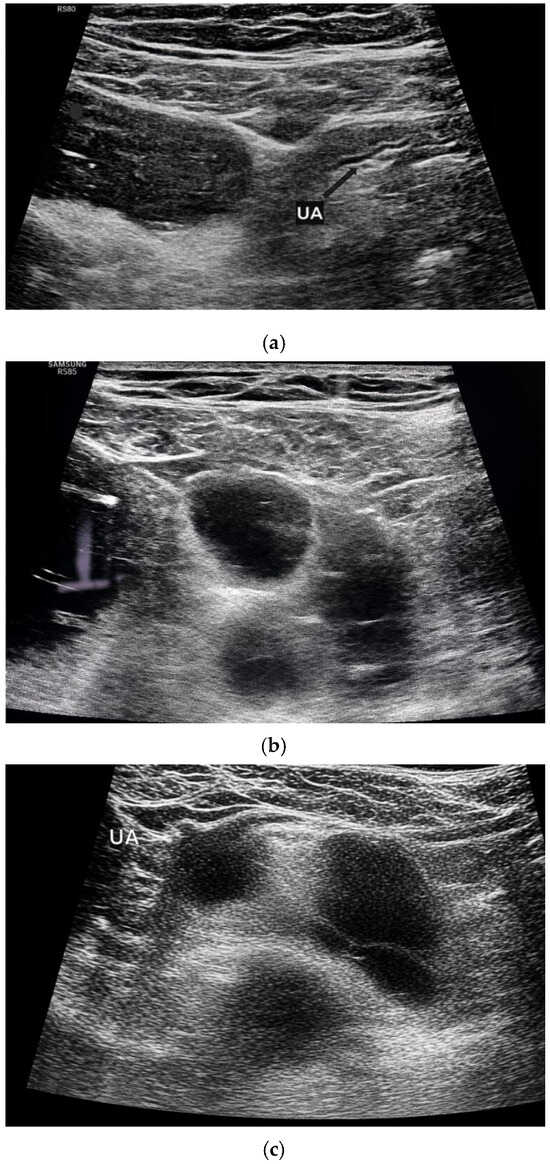
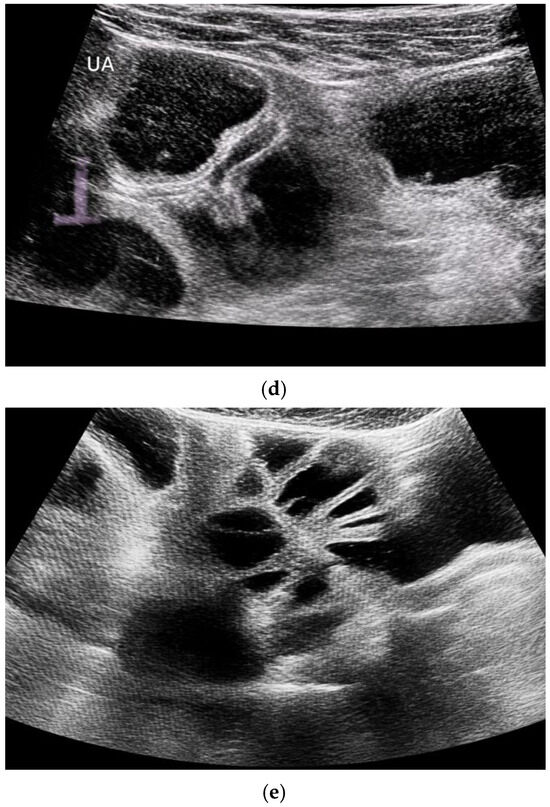
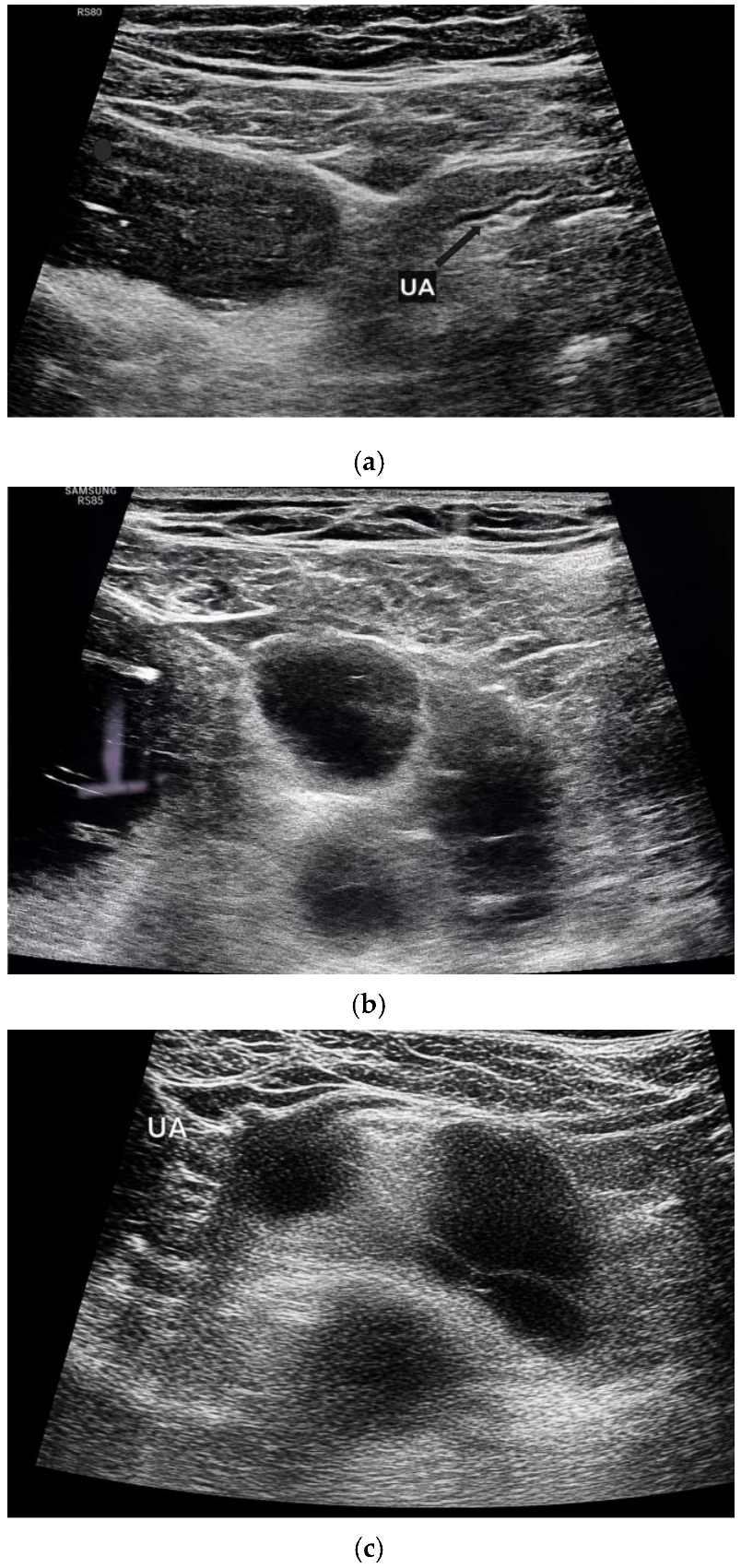
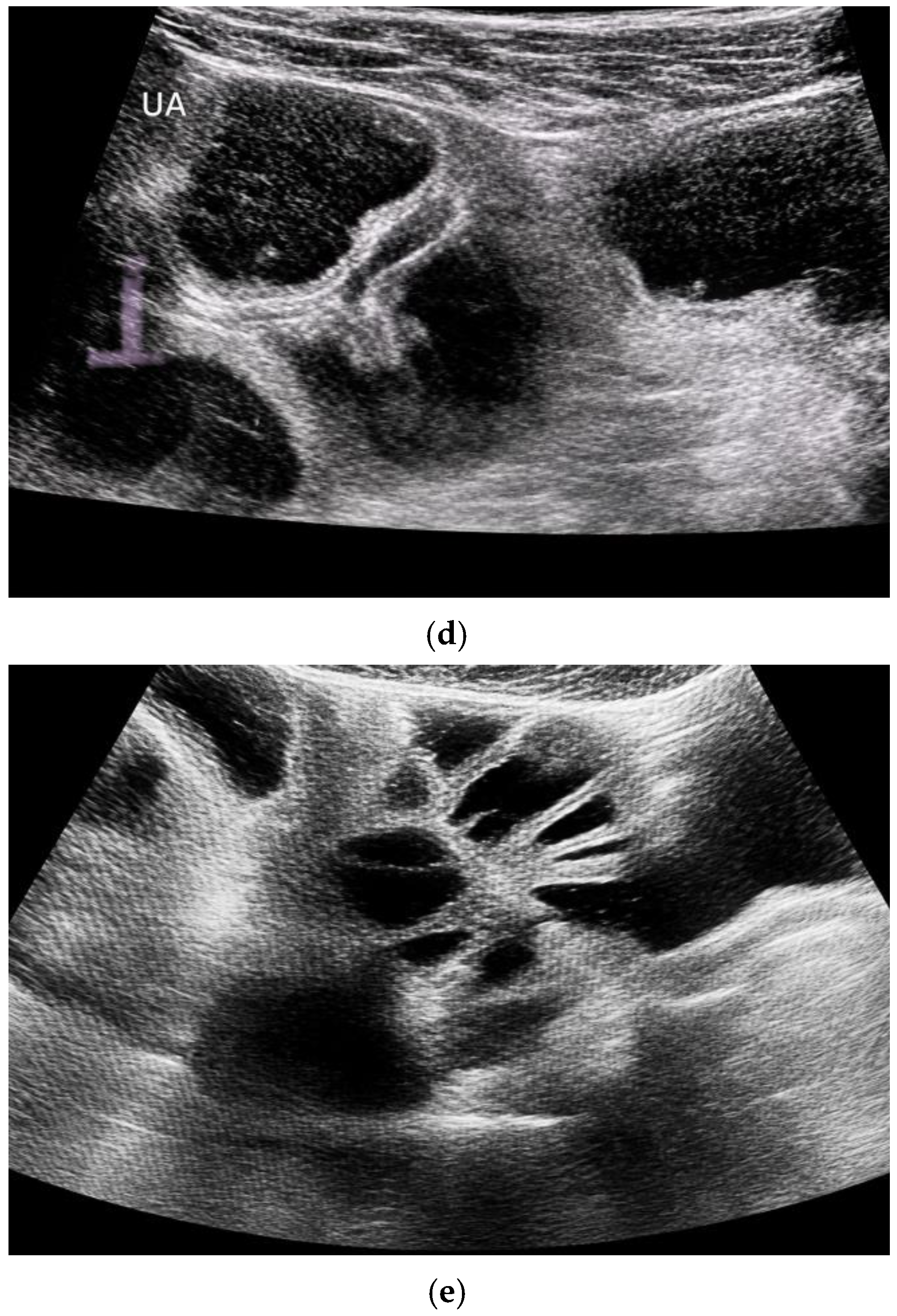
During colon irrigation when about 2500–3500 mL was introduced and the water front had reached the right colon, the function of ICV was graded 0, 1 or 2, as described in the Materials and Methods. Interestingly, the ongoing distention of the right colon and cecum observed in grade 0 or 1 of ICV incontinence was perceived by the patients and associated with distention and/or mild pain in the right abdomen, whereas the right colon irrigation was symptomless in grade 2 cases with complete ICV incontinence. In Figure 1,we report a few examples of real-time static frames registered during the ultrasound hydro-colon procedure showcasing the presence or absence of cecum distension with the presence and/or absence of terminal ileum reflux.
Figure 1.
Hydro-colon abdominal ultrasound performed using Clean Colon 004RA and Samsung RS 85 Prestige equipment. (a) The bottom of the cecal colon and last ileal loop (UA) in basal conditions with regular thickness of the intestinal wall; (b) progressive distension of the cecal colon by retrograde colon wash with instant reflux of water within the last ileal loop; (c) concomitant and progressive distension of the cecal colon and last ileal loop (UA); (d) distension of the cecal colon and last ileal loop (UA); (e) distension of the terminal ileum at the end of the retrograde water flow. The Arrow indicates the last ileal loop (UA).
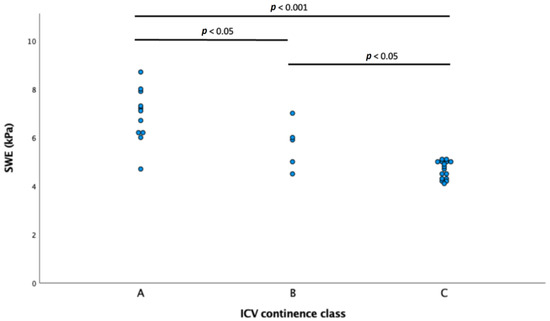
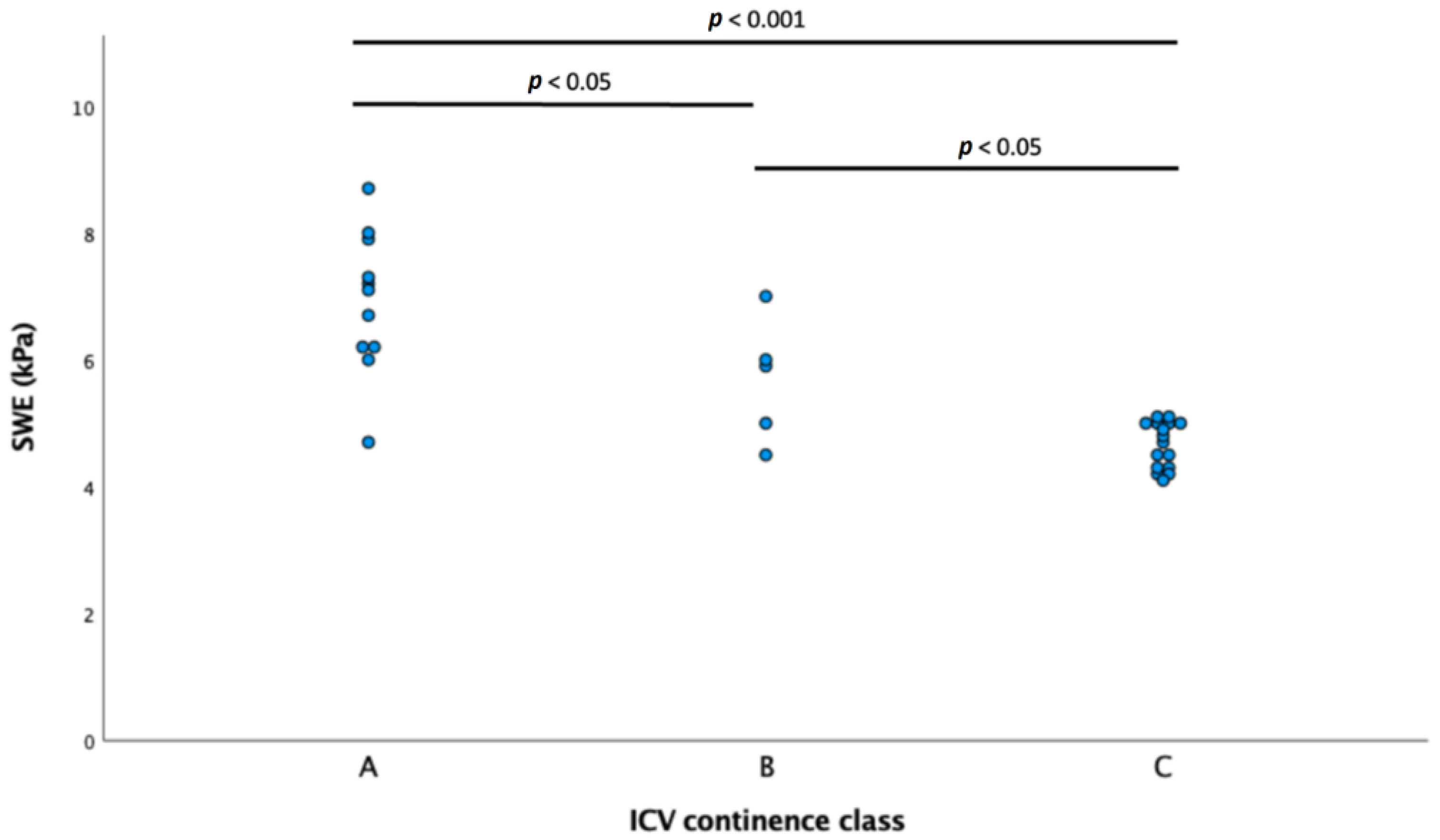
Statistically, the relationship between ICV continence and IBS was significant (χ2 = 21895, p < 0.0001), as was the association between ICV continence and steatosis (χ2= 18164, p = 0.0001). Global chi-square tests indicated that the distribution of IBS and steatosis differed across the three ICV continence categories. Post hoc pairwise comparisons confirmed that these differences were consistently significant across individual-level contrasts for both IBS and steatosis. The continuous variable LS differed significantly across the three ICV continence categories (A = grade 2, B = grade 1, and C = grade 0), as indicated by the Kruskal–Wallis test (H = 18139, p = 0.0001). Post hoc pairwise Mann–Whitney comparisons showed significant differences between A and B (p = 0.0358), grade A and C (p = 0.0001), and B and C (p = 0.0336), confirming that differences between LS values were meaningful across all grades of ICV incontinence (Figure 2).
Figure 2.
Distribution of liver stiffness values assessed by Shear Wave Elastography (SWE) according to the ileocecal valve (ICV) incontinence class. Patients were stratified into Grade A (early complete reflux), Grade B (late incomplete reflux), and Grade C (no-reflux). Box plots show the median and interquartile range, with whiskers indicating minimum and maximum values. SWE values were significantly higher in patients with ICV incontinence (Grades A and B) compared with continent subjects (Grade C), with a progressive decrease in liver stiffness across ICV continence classes. Statistical significance between groups is indicated (p < 0.05, p < 0.001).
After dichotomizing the ICV continence variable by merging categories A (grade 2) and B (grade 1), the resulting binary outcome was analyzed using an L2-penalized multivariable logistic regression model including IBS, steatosis, and LS as predictors. All three variables were independently associated with the dichotomized outcome. IBS showed a positive association (coefficient = 1.378), corresponding to an odds ratio (OR) of 3.97. Steatosis was likewise associated with higher odds of the outcome (coefficient = 1.195; OR = 3.30). LS also demonstrated a significant positive association, with a coefficient of 0.887, indicating that the odds increased by a factor of 2.43 for each unit increase in LS.
3.3. Clinic Case Characterization
One of the subjects was an obese (BMI 35.5 kg/m2 and abdominal circumference 122 cm) 35-year-old male patient with grade II obesity. The patient has an irritable bowel syndrome with mixed habit (IBS-M) and several co-morbidities, such as obstructive sleep apnea syndrome (OSAS), and SIBO, diagnosed via a glucose Hydrogen Breath Test that showed a rise in breath hydrogen by 18 ppm above baseline. Lactose intolerance was excluded by the Breath Test. He first showed signs of hepatic steatosis via ultrasound at 12 yrs of age and was diagnosed with insulin resistance at the age of 13. He was treated with physical exercise and for 1 year, at age 19, he was also treated with metformin. The patient underwent blood analyses with the following results. Blood counts: RBC 5.01 × 10⁶/μL, Hb 14.8 g/dL, WBC 4.60 × 10³/μL, Platelets 236 × 103/μL; biochemical tests: AST/ALT 30/51 UI/L, GGT 16 UI/L, ALP 59 UI/L, Albumin 4.6 g/dL, total bilirubin 0.7 mg/dL, INR 1.05; glucose 93 mg/dL (5.17 mmol/L), insulin 8.34 mUI/L, HOMA index 1.91, total cholesterol 160 mg/dL (4.14 mmol/L), HDL 46 mg/dL (1.19 mmol/L), LDL 101 mg/dL (2.61 mmol/L), triglycerides 62 mg/dL (0.70 mmol/L), TSH 1.5 mUI/L, creatinine 0.98 mg/dL and ferritin 236 μg/L. His FIB-4 (age × AST)/(platelet count × √ALT) index was 0.62. Liver stiffness and steatosis were measured by transient elastography (TE) and attenuation rate parameters (CAP or UAP) measured with both Fibroscan (Touch 502, Echosens, Paris, France) and FT900 (Hisky Medical, Wuxi, Jiangsu Province, China) instruments: the results were TE = 4.4 kPa, CAP = 372 dB/m (IQR 0.7) and TE = 8.5 kPa, UAP = 374 dB/m (IQR 1.3), respectively. Liver stiffness measured by ultrasound (SWE) before water irrigation was 8.7 kPa. At the ultrasound hydro-colon, no obstacles and/or alterations to the surface of the colon lumen were observed during the rise in contrast water till it reached the cecum, where rapid water reflux into the terminal ileum hampered the normal distention of the cecum (grade 2 ICV incontinence).
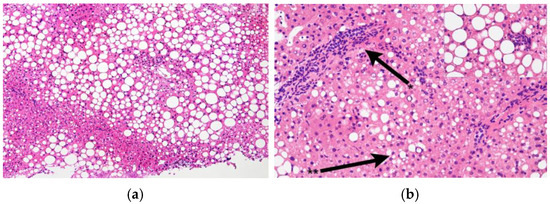
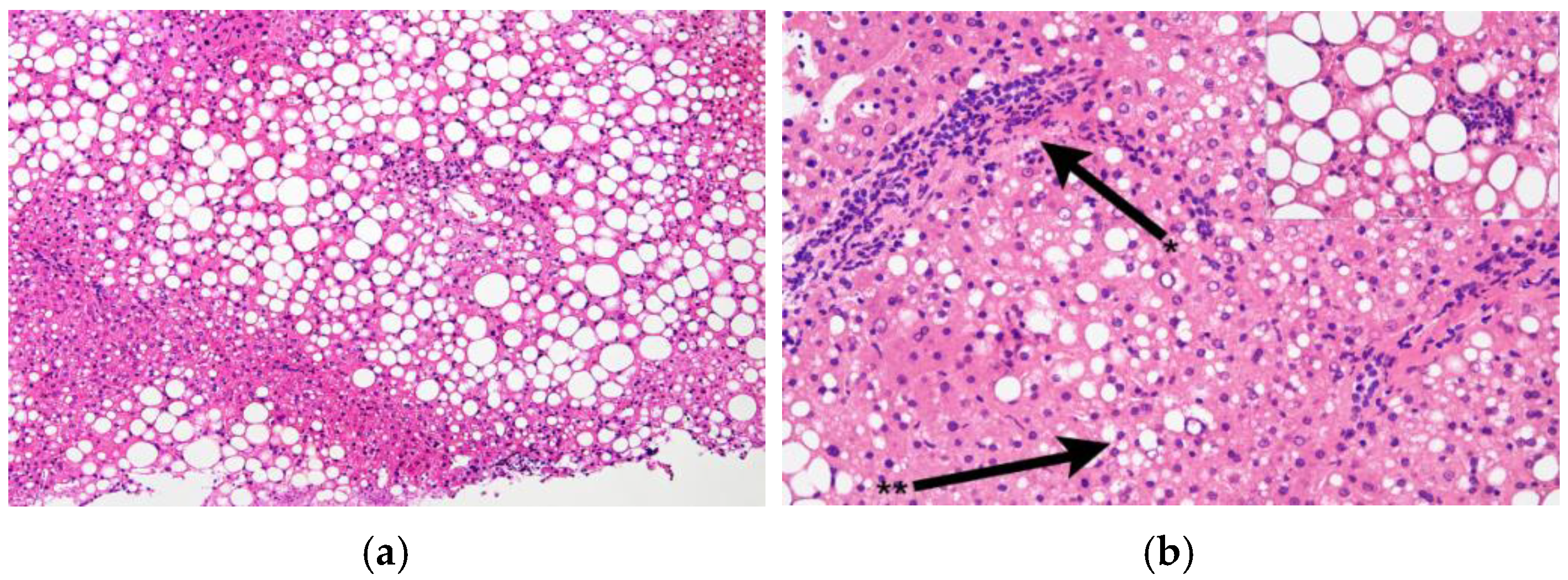
A percutaneous liver biopsy with a 16-gauge needle was performed at the day-hospital service at the Hepatology Unit and Reference Centre of the Tuscany Region for Chronic Liver Disease and Cancer of the University Hospital of Pisa (AOUP), Pisa, Italy. A histologic examination of the 2.5 cm liver specimen showed a liver parenchyma with preserved architecture and portal tracts with a mild inflammation confined within the limiting plate. Inflammatory infiltrates consisted of lymphocytes, some neutrophils, and some histiocytes with ceroid pigment; CK7 and CK19 staining showed a modest and diffuse ductular reaction at the portal lobular interface. In the lobular area, diffuse micro- and macrovesicular steatosis affected approximately 90% of the hepatocytes; numerous hepatocytes showed hyper-glycogenotic nuclei and some of them showed ballooning degeneration. Iron staining was negative and necro-inflammatory foci were associated with lymphocytes; some of them were associated with lipidic granulomas (Figure 3a,b).
Figure 3.
(a) Micro- and macrovesicular steatosis affects approximately 90% of the hepatocytes; (b) * Portal tracts show mild inflammatory infiltrates that are confined within the limiting plate; ** Hepatocytes have hyper-glycogen nuclei, some with ballooning degeneration.
The histologic diagnosis was metabolic dysfunction-associated steatohepatitis (MASH): Grade 6/8: steatosis 3, hepatocytes with ballooning degeneration 1, lobular inflammation 2; Stage 0/4 fibrosis was absent. According to histology, serology and imaging results, the clinico-pathological diagnosis was metabolic dysfunction-associated steatohepatitis (MASH) in a subject with small intestinal bacteria overgrowth (SIBO) Secondary to ICV Incontinence.
4. Discussion
In this observational proof-of-concept study, we tested the feasibility and tolerability of a new combined application of colon hydrotherapy and ultrasonography for a non-X-ray evaluation of the ileocecal valve (ICV) function. The results show that when using water as contrast medium via colon irrigation, by means of hydro-colon automated equipment, an abdominal ultrasound examination can provide an easy, minimally invasive, suitable diagnosis of ICV incontinence. This new diagnostic technique appears safe and very well tolerated and allows reliable grading of ICV incontinence as absent, mild or complete. Accordingly, we correlated this parameter with the clinic-pathological characteristics of the patients. Given the limitations of the narrative nature of this feasibility study and the inherent bias of selecting consecutive subjects who underwent colonoscopy because of IBS, we cannot draw conclusions about the potential clinical applications of this technique. However, some interesting speculation has been prompted by these preliminary results, namely differential clinic pathologic characteristics of the patients with and without ileocecal continence. A high incidence of liver steatosis was expected, given its association with IBS and older age; nevertheless, the high rate of ICV incontinence in patients with biomarkers of steatohepatitis was rather surprising. Very interestingly, all subjects with steatosis and ICV incontinence showed borderline or slightly higher values of liver stiffness (LS) in spite of normal FIB-4 indexes. LS is known to be influenced by three major physical vectors—inflammation, sinusoidal congestion and fibrosis—and the clinically useful cut-offs proposed thus far are instrument- and technique-specific [20]. Our findings are consistent with previous evidence that LS values below 8 kPa are frequently associated with intrahepatic inflammation without significant fibrosis [20,21]. Indeed, this was also the case for the obese patient with MASLD, ICV incontinence and SIBO who underwent a liver biopsy showing a histologic diagnosis of metabolic dysfunction-associated steatohepatitis (MASH)grade 6/8 in the absence of fibrosis (stage 0/4). He showed a slightly elevated LS by both SWE (8.7 kPa) and TE (4.4 and 8.5 kPa, respectively, when measured by Fibroscan Touch 502 and HiskyFT900 instruments at the same time and mildly elevated AST/ALT (30/51 UI/mL) even with normal platelet counts and an FIB-4 score of 0.62. The different TE values obtained with the two different TE instruments in the same patient at the same time are consistent with our previous findings, which were shown in a large prospective comparative study [20]. In spite of the overall significant correlation and very good agreement between the intermediate LS range (10–20 kPa), LSHisky and LSFibroscan were slightly discordant across the other segments of the LS dynamic range. LSMHisky provided higher values in cases with LSM < 10 kPa, whereas LSMFibroscan provided higher values above 20 kPa; in this case, LS values obtained with SWE using Samsung RS 85 Prestige were highly similar with those obtained for TE using Hisky FT900 (8.7 and 8.5 kPa, respectively). Together, these findings demonstrate that the clinically useful cut-offs proposed thus far are instrument- and technique-specific. This case reminds of early forms of steatohepatitis that were detected by TE and reported in IBS patients with leaky gut, in whom dysbiosis was associated with SIBO [6,7,8]. Indeed, even in these cases, SIBO might have occurred as a consequence of ICV incontinence [9,10], as documented in our case.
Several limitations should be acknowledged. First, this was a pilot proof-of-concept study with a limited sample size. Consequently, the multivariable analysis should be interpreted with caution. To mitigate the risk of overfitting, the logistic regression model was intentionally restricted to a small number of clinically relevant predictors and L2 (ridge) regularization was applied. Furthermore, grades 1 and 2 of ICV incompetence were combined for multivariable analysis because both reflected the presence of reflux through the ileocecal valve, whereas grade 0 represented preserved valve competence. Therefore, the multivariable findings should be regarded as exploratory and hypothesis-generating and require confirmation in larger prospective cohorts.
European guidelines for the clinical management of MASLD propose an algorithm aimed to identify patients at higher risk of progressive liver disease based on non-invasive tests [22,23]. Specifically, obtaining an FIB-4 score (derived from the combination of AST, ALT, platelets, and age) is recommended, with a cut-off > 1.3 being indicative of the need for a secondary risk assessment using ultrasound LS measures as transient elastography (TE). Patients with a TE > 8 kPa should be referred to a hepatology specialist for further clinical and diagnostic evaluation [22,23]. However, treatment and prevention of progressive MASLD were previously based on lifestyle modifications (diet and physical activity) only [23]. Recently, new drugs such as glucagon-like peptide-1 agonists (GLP-1, dual agonist for (GLP-1)-glucose-dependent insulin tropic polypeptide (GIP) receptors, and sodium/glucose cotransporter-2 inhibitors (SGLT-2) have shown for the first time an improvement in both cardiovascular and liver steatosis outcomes in T2D patients [24,25,26,27,28]. Similarly, thyroid hormone (TH) analogues such as Resmetirom have been approved by the Food and Drug Administration (FDA) and European Medicines Agency (EMA) for the treatment of MASLD patients with F2–F3 fibrosis [29,30,31,32,33,34]. In the near future, new molecules—namely the analogues of hepatokine and fibroblast growth factor-21 (FGF21)—capable of modulating the metabolic profile (glucose and lipid metabolism) in an earlier stage of the disease, prior to the emergence of overt type 2 diabetes (T2D), will become available [34,35,36]. All this evidence emphasizes the importance of early diagnosis and treatment of steatohepatitis. Thus, it is essential to identify patients at risk of disease progression long before the development of liver parenchymal fibrosis associated with advanced liver disease. The cases reported in this narrative study illustrate how US transient elastography using appropriate screening cut-offs may provide a very useful tool for the early identification of patients with ongoing inflammatory liver disease, namely steatohepatitis, and will allow them to be referred for timely therapy that is essential to prevent the development of irreversible metabolic disease and liver-related complications. The presence of concurrent IBS symptoms in patients with MASLD might reflect underlying ileocecal valve incontinence, which can lead to SIBO and increased intestinal permeability. These alterations may consequently trigger intrahepatic inflammation, fueling the progression of liver and systemic diseases associated with MASLD. Mechanistic research on the gut microbiota–enterohepatic circulation published within the last few years enhances the inspirational value of our findings, since there is growing evidence suggesting a potential pathogenetic role played by the intestinal overgrowth of apparently harmless commensal bacteria [37]. Therefore, the significance of the very preliminary findings in this small cohort of patients lies in the identification of a non-X-ray-based diagnostic procedure to study the role and importance of ICV incontinence in MASLD in relation to co-factors that trigger hepatic and systemic inflammation and contribute to disease progression. Furthermore, the incidental US diagnosis of colon polyps confirmed by colonoscopy in the two cases studied here suggest that large prospective studies should address whether this procedure might also be proposed as complementary tool for timely indication for colonoscopy in subjects at risk of colon cancer.
5. Conclusions
We have developed and reported the feasibility of a new ultrasound-based technique for diagnosing ICV incontinence that is worth being explored as a possible co-factor of small bowel bacterial overgrowth triggering steatohepatitis in subjects with MASLD. These preliminary results prompt future research aiming to validate the clinical value of this new X-ray-free diagnostic procedure in prospective and larger patient cohorts. In addition, the description of this case series highlights the importance of identifying lower TE cut-offs combined with multiple non-invasive tests to screen MASLD individuals for earlier identification of steatohepatitis. In fact, the newly proposed pharmacological intervention would have the highest chance of preventing disease progression in the early stages. Future research should also focus on exploring the functional roles of SIBO in the progression and response to treatment of subgroups of MASLD patients.
Author Contributions
F.B.: Methodology, Data curation, Writing—original draft, Writing—review and editing. A.S.: Methodology, Data curation. Writing—original draft, Writing—review and editing. F.F.: Methodology, Data curation, Writing—original draft, Writing–review and editing. M.R.B.: Methodology, Writing—original draft, Writing—review and editing. L.B.: Data curation, Investigation, Writing—review and editing. D.C.: Investigation, Writing—review and editing. G.P.: Investigation, Writing, Writing—review and editing. S.C.: Investigation, Writing—original draft, Writing—review and editing. All authors have read and agreed to the published version of the manuscript.
Funding
The authors declare that there was not any financial support for the research and/or publication of this article.
Institutional Review Board Statement
The study was conducted in accordance with the Declaration of Helsinki and approved by the Ethics Committee of the University Hospital of Pisa CEAVNO (protocol code 1179, date of approval 22 December 2016).
Informed Consent Statement
Written informed consent has been obtained from the patient(s) to perform this study.
Data Availability Statement
The raw data supporting the conclusions of this article will be made available by the authors on request.
Conflicts of Interest
The authors declare that the research was conducted in the absence of any commercial or financial relationships that could be construed as a potential conflict of interest.
Abbreviations
Alanine aminotransaminase (ALT); aspartate aminotransaminase AST); body mass index (BMI); fibrosis-4 index (FIB-4; ileocecal valve (ICV); homeostatic model assessment(HOMA); irritable bowel syndrome (IBS); kilo-Pascal units (kPa); liver stiffness (LS); metabolic dysfunction-associated steatotic liver disease (MASLD), metabolic dysfunction associated steatohepatitis (MASH); non-alcoholic steatohepatitis (NASH); obstructive sleep apnea syndrome (OSAS); region of interest (ROI); small intestine bacterial overgrowth (SIBO); steatohepatitis (SH); steatotic liver disease (SLD); type 2 diabetes mellitus (T2DM); Shear Wave Elastography (SWE); ultrasound (US); transient elastography (TE); terminal ileum (TI).
References
- Rinella, M.E.; Lazarus, J.V.; Ratziu, V.; Francque, S.M.; Sanyal, A.J.; Kanwal, F.; Romero, D.; Abdelmalek, M.F.; Anstee, Q.M.; Arab, J.P.; et al. A multi-society Delphi consensus statement on new fatty liver disease nomenclature. Hepatology 2023, 78, 1966–1986. [Google Scholar] [CrossRef] [Scilit] [PubMed] [PubMed Central]
- Younossi, Z.M.; Golabi, P.; Paik, J.M.; Henry, A.; Van Dongen, C.; Henry, L. The global epidemiology of nonalcoholic fatty liver disease (NAFLD) and nonalcoholic steatohepatitis (NASH): A systematic review. Hepatology 2023, 77, 1335–1347. [Google Scholar] [CrossRef] [Scilit] [PubMed]
- Younossi, Z.M.; Stepanova, M.; Al Shabeeb, R.; Eberly, K.E.; Shah, D.; Nguyen, V.; Ong, J.; Henry, L.; Alqahtani, S.A. The chang in gepidemiology of adult liver transplantation in the United States in 2013–2022: The dominance of metabolic dysfunction-associated steatotic liver disease and alcohol-associated liver disease. Hepatol. Commun. 2023, 8, e0352. [Google Scholar] [CrossRef] [Scilit] [PubMed] [PubMed Central]
- Roh, E.; Jung, H.N.; Heo, J.H.; Han, K.; Kang, J.G.; Lee, S.J.; Ihm, S.-H. Impact of type 2 diabetes on the risk of cardiovascular disease and cardiovascular mortality in patients with non-alcoholic fatty liver disease: A nationwide population-based study. BMJ Public Health 2025, 3, e002020. [Google Scholar] [CrossRef] [Scilit] [PubMed] [PubMed Central]
- Rebelos, E.; Iozzo, P.; Guzzardi, M.A.; Brunetto, M.R.; Bonino, F. Brain-gut-liver interactions across the spectrum of insulin resistance in metabolic fatty liver disease. World J. Gastroenterol. 2021, 27, 4999–5018. [Google Scholar] [CrossRef] [Scilit] [PubMed] [PubMed Central]
- Fitriakusumah, Y.; Lesmana, C.R.A.; Bastian, W.P.; Jasirwan, C.O.M.; Hasan, I.; Simadibrata, M.; Kurniawan, J.; Sulaiman, A.S.; Gani, R.A. The role of Small Intestinal Bacterial Overgrowth (SIBO) in Non-alcoholic Fatty Liver Disease (NAFLD) patients evaluated using Controlled Attenuation Parameter (CAP) Transient Elastography (TE): A tertiary referral center experience. BMC Gastroenterol. 2019, 19, 43. [Google Scholar] [CrossRef] [Scilit] [PubMed] [PubMed Central]
- Mikolasevic, I.; Delija, B.; Mijic, A.; Stevanovic, T.; Skenderevic, N.; Sosa, I.; Krznaric-Zrnic, I.; Abram, M.; Krznaric, Z.; Domislovic, V.; et al. Small intestinal bacterial overgrowth and non-alcoholic fatty liver disease diagnosed by transient elastography and liver biopsy. Int. J. Clin. Pract. 2021, 75, e13947. [Google Scholar] [CrossRef] [Scilit] [PubMed]
- Kessoku, T.; Kobayashi, T.; Tanaka, K.; Yamamoto, A.; Takahashi, K.; Iwaki, M.; Ozaki, A.; Kasai, Y.; Nogami, A.; Honda, Y.; et al. The Role of Leaky Gut in Nonalcoholic Fatty Liver Disease: A Novel Therapeutic Target. Int. J. Mol. Sci. 2021, 22, 8161. [Google Scholar] [CrossRef] [Scilit] [PubMed]
- Miller, L.S.; Vegesna, A.K.; Sampath, A.M.; Prabhu, S.; Kotapati, S.K.; Makipour, K. Ileocecal valve dysfunction in small intestinal bacterial overgrowth: A pilot study. World J. Gastroenterol. 2012, 18, 6801–6808. [Google Scholar] [CrossRef] [Scilit] [PubMed]
- Roland, B.C.; Ciarleglio, M.M.; Clarke, J.O.; Semler, J.R.; Tomakin, E.; Mullin, G.E.; Pasricha, P.J. Low ileocecal valve pressure is significantly associated with small intestinal bacterial overgrowth (SIBO). Dig. Dis. Sci. 2014, 59, 1269–1277. [Google Scholar] [CrossRef] [Scilit] [PubMed]
- Gudan, A.; Kozłowska-Petriczko, K.; Wunsch, E.; Bodnarczuk, T.; Stachowska, E. Small Intestinal Bacterial Overgrowth and Non-Alcoholic Fatty Liver Disease: What Do We Know in 2023? Nutrients 2023, 15, 1323. [Google Scholar] [CrossRef] [Scilit] [PubMed] [PubMed Central]
- Chang, K.J.; Erickson, R.A.; Schandler, S.; Coye, T.; Moody, C. Per-rectal pulsed irrigation versus per-oral colonic lavage for colonoscopy preparation: A randomized, controlled trial. Gastrointest. Endosc. 1991, 37, 444–448. [Google Scholar] [CrossRef] [Scilit] [PubMed]
- Fiorito, J.J.; Culpepper-Morgan, J.A.; Estabrook, S.G.; Scofield, P.; Usatii, V.; Cuomo, J. Hydrotherapy compared with PEG-ES lavage and aqueous sodium phosphate as bowel preparation for elective colonoscopy: A prospective randomized single blinded trial. Am. J. Gastroenterol. 2006, 101, S533. [Google Scholar] [CrossRef] [Scilit]
- Teich, N.; Klecker, C.; Klugmann, T.; Dietel, P. Bowel preparation prior to colonoscopy with a new colonic irrigation device: Results of a prospective observational study. Endosc. Int. Open 2022, 10, E971–E977. [Google Scholar] [CrossRef] [Scilit] [PubMed]
- Hagen, R.; Nguyen, M.T.T.; Anderson, J.C.; Birk, J.W. Navigating Bowel Preparation for Colonoscopy: A Comprehensive Overview. J. Clin. Gastroenterol. 2025, 59, 285–297. [Google Scholar] [CrossRef] [Scilit] [PubMed]
- Zhang, D.; Zhao, C.; Tao, Y.; Zhang, J.; Zhang, Q.; Li, D.; Ye, P.; Yu, X.; Chen, C. Remedial colon hydrotherapy device enema as a salvage strategy for inadequate bowel preparation for colonoscopy: A retrospective cohort study. PLoS ONE 2025, 20, e0319493. [Google Scholar] [CrossRef] [Scilit] [PubMed]
- Makarawo, T.P.; Negussie, E.; Malde, S.; Tilak, J.; Gayagoy, J.; Watson, J.; Francis, F.; Lincoln, D.; Jacobs, M.J. Water as a contrast medium: A re-evaluation using the multidetector-row computed tomography. Am. Surg. 2013, 79, 728–733. [Google Scholar] [CrossRef] [Scilit] [PubMed]
- Cuschieri, S. The STROBE guidelines. Saudi J. Anaesth. 2019, 13, S31–S34. [Google Scholar] [CrossRef] [Scilit] [PubMed]
- You, M.-W.; Moon, S.K.; Park, S.J. How to use intestinal ultrasonography in patients with Crohn disease: Its role in the assessment of disease activity and disease monitoring in the era of the treat-to-target strategy. Ultrasonography 2025, 44, 308–323. [Google Scholar] [CrossRef] [Scilit] [PubMed] [PubMed Central]
- Cappelli, S.; Salvati, A.; Petralli, G.; De Rosa, L.; Ricco, G.; Colombatto, P.; Coco, B.; Oliveri, F.; Faita, F.; Bonino, F.; et al. Comparison of two transient elastography (TE) systems for measuring liver stiffness in clinical practice. Sci. Rep. 2025, 15, 22277. [Google Scholar] [CrossRef] [Scilit] [PubMed]
- Salvati, A.; Faita, F.; Cavallone, D.; Ricco, G.; Colombatto, P.; Coco, B.; Romagnoli, V.; Oliveri, F.; Bonino, F.; Brunetto, M.R. Steatosis/steatohepatitis: How sustainable is the non-invasive instrumental differential diagnosis in clinical practice? Hepatoma Res. 2021, 7, 14. [Google Scholar] [CrossRef] [Scilit]
- European Association for the Study of the Liver (EASL); European Association for the Study of Diabetes (EASD); European Association for the Study of Obesity (EASO). EASL-EASD-EASO clinical practice guidelines on the management of metabolic dysfunction-associated steatotic liver disease (MASLD). Obes. Facts 2024, 17, 374–444. [Google Scholar] [CrossRef] [Scilit] [PubMed] [PubMed Central]
- European Association for the Study of the Liver. EASL Clinical Practice Guidelines on non-invasive tests for evaluation of liver disease severity and prognosis—2021 update. J. Hepatol. 2021, 75, 659–689. [Google Scholar] [CrossRef] [Scilit] [PubMed]
- Newsome, P.N.; Ambery, P. Incretins (GLP-1 receptor agonists and dual/triple agonists) and the liver. J. Hepatol. 2023, 79, 1557–1565. [Google Scholar] [CrossRef] [Scilit] [PubMed]
- Loomba, R.; Hartman, M.L.; Lawitz, E.J.; Vuppalanchi, R.; Boursier, J.; Bugianesi, E.; Yoneda, M.; Behling, C.; Cummings, O.W.; Tang, Y.; et al. Tirzepatide for metabolic dysfunction-associated steatohepatitis with liver fibrosis. N. Engl. J. Med. 2024, 391, 299–310. [Google Scholar] [CrossRef] [Scilit] [PubMed]
- Bandyopadhyay, S.; Das, S.; Samajdar, S.S.; Joshi, S.R. Role of semaglutide in the treatment of nonalcoholic fatty liver disease or non-alcoholic steatohepatitis: A systematic review and meta-analysis. Diabetol. Metab. Syndr. 2023, 17, 102849. [Google Scholar] [CrossRef] [Scilit] [PubMed]
- Wilding, J.P.H.; Batterham, R.L.; Calanna, S.; Davies, M.; Van Gaal, L.F.; Lingvay, I.; McGowan, B.M.; Rosenstock, J.; Tran, M.T.; Wadden, T.A.; et al. Once-weekly semaglutide in adults with overweight or obesity. N. Engl. J. Med. 2021, 384, 989–1002. [Google Scholar] [CrossRef] [Scilit] [PubMed]
- Newsome, P.N.; Buchholtz, K.; Cusi, K.; Linder, M.; Okanoue, T.; Ratziu, V.; Sanyal, A.J.; Sejling, A.-S.; Harrison, S.A. A placebo-controlled trial of subcutaneous semaglutide in nonalcoholic steatohepatitis. N. Engl. J. Med. 2021, 384, 1113–1124. [Google Scholar] [CrossRef] [Scilit] [PubMed]
- Harrison, S.A.; Taub, R.; Neff, G.W.; Lucas, K.J.; Labriola, D.; Moussa, S.E.; Alkhouri, N.; Bashir, M.R. Resmetirom for nonalcoholic fatty liver disease: A randomized, double-blind, placebo-controlled phase 3 trial. Nat. Med. 2023, 29, 2919. [Google Scholar] [CrossRef] [Scilit] [PubMed] [PubMed Central]
- Harrison, S.A.; Bedossa, P.; Guy, C.D.; Schattenberg, J.M.; Loomba, R.; Taub, R.; Labriola, D.; Moussa, S.E.; Neff, G.W.; Rinella, M.E.; et al. A phase 3, randomized, controlled trial of resmetirom in NASH with liver fibrosis. N. Engl. J. Med. 2024, 390, 497–509. [Google Scholar] [CrossRef] [Scilit] [PubMed]
- The Lancet Gastroenterology Hepatology. Resmetirom for NASH: Balancing promise and prudence. Lancet Gastroenterol. Hepatol. 2024, 9, 273. [Google Scholar] [CrossRef] [Scilit] [PubMed]
- Petta, S.; Targher, G.; Romeo, S.; Pajvani, U.B.; Zheng, M.; Aghemo, A.; Valenti, L.V.C. The first MASH drug therapy on the horizon: Current perspectives of resmetirom. Liver Int. 2024, 44, 1526–1536. [Google Scholar] [CrossRef] [Scilit] [PubMed]
- Younossi, Z.M.; Stepanova, M.; Racila, A.; Henry, L.; Labriola, D.; Taub, R.; Nader, F. Health-related quality of life (HRQL) assessments in a 52-week, double-blind, randomized, placebo-controlled phase III study of resmetirom (MGL-3196) in patients with metabolic dysfunction-associated steatohepatitis (MASH) and fibrosis. Hepatology 2024, 81, 1318–1327. [Google Scholar] [CrossRef] [Scilit] [PubMed]
- Loomba, R.; Sanyal, A.J.; Kowdley, K.V.; Bhatt, D.L.; Alkhouri, N.; Frias, J.P.; Bedossa, P.; Harrison, S.A.; Lazas, D.; Barish, R.; et al. Randomized, controlled trial of the FGF21 analogue pegozafermin in NASH. N. Engl. J. Med. 2023, 389, 998–1008. [Google Scholar] [CrossRef] [Scilit] [PubMed]
- Harrison, S.A.; Frias, J.P.; Neff, G.; Abrams, G.A.; Lucas, K.J.; Sanchez, W.; Gogia, S.; Sheikh, M.Y.; Behling, C.; Bedossa, P.; et al. Safety and efficacy of once-weekly efruxifermin versus placebo in non-alcoholic steatohepatitis (HARMONY): A multicentre, randomised, double-blind, placebo-controlled, phase 2b trial. Lancet Gastroenterol. Hepatol. 2023, 8, 1080–1093. [Google Scholar] [CrossRef] [Scilit] [PubMed]
- Gallego-Durán, R.; Ampuero, J.; Maya-Miles, D.; Pastor-Ramírez, H.; Montero-Vallejo, R.; Rivera-Esteban, J.; Álvarez-Amor, L.; Pareja, M.J.; Rico, M.C.; Millán, R.; et al. Fibroblast growth factor 21 is ahepatokine involved in MASLD progression. United Eur. Gastroenterol. J. 2024, 12, 1056–1068. [Google Scholar] [CrossRef] [Scilit] [PubMed] [PubMed Central]
- Xu, Q.Y.; Ren, T.Y.; Zhou, Y.C.; Xu, J.; Du, L.D.; Hong, D.Y.; Zhang, Q.R.; Chu, H.K.; Peng, Z.; Fan, J.G.; et al. Prevotella copri-produced 5-aminopentanoic acid promotes pediatric metabolic dysfunction-associated steatotic liver disease. Hepatobiliary Pancreat. Dis. Int. 2025, 24, 303–315. [Google Scholar] [CrossRef] [Scilit] [PubMed]

Disclaimer/Publisher’s Note: The statements, opinions and data contained in all publications are solely those of the individual author(s) and contributor(s) and not of MDPI and/or the editor(s). MDPI and/or the editor(s) disclaim responsibility for any injury to people or property resulting from any ideas, methods, instructions or products referred to in the content. |
© 2026 by the authors. Licensee MDPI, Basel, Switzerland. This article is an open access article distributed under the terms and conditions of the Creative Commons Attribution (CC BY) license.