


Abstract
This study aimed to evaluate the effectiveness of counseling and educational interventions delivered during pregnancy and early motherhood in promoting maternal health knowledge, self-care behaviors, and related health outcomes among adolescent and young women. A systematic review of randomized controlled trials and quasi-experimental studies published in English or Spanish was conducted using Medline, Web of Science, Scopus, Cinahl, and the Cochrane Library. Methodological quality was assessed using Joanna Briggs Institute critical appraisal tools, and risk of bias was evaluated using the Risk-of-Bias 2 and ROBINS-I tools. Data were synthesized narratively and in tables. When comparable outcomes were reported, preliminary meta-analyses were performed using standardized mean differences with random-effects models. The certainty of evidence was assessed using the GRADE approach. Seven studies (n = 7) involving 776 participants were included. Interventions consisted of counseling or educational programs delivered through face-to-face sessions, group activities, or digital resources. Overall, the interventions were associated with improvements in pregnancy-related knowledge, self-care behaviors, psychological outcomes, and maternal health practices and attitudes; however, the certainty of evidence was low to very low and a high risk of bias was identified across studies. Meta-analysis suggested a possible beneficial effect favoring the intervention for pregnancy-related health knowledge (SMD = 1.90; 95% CI: −0.02 to 3.83) and self-care behaviors (SMD = 2.39; 95% CI: 0.29 to 4.49), although substantial heterogeneity was observed. Counseling and educational interventions during pregnancy may contribute to improvements in pregnancy-related health knowledge and self-care among pregnant adolescents and young women; however, the current evidence is limited and of low certainty. Further well-designed studies conducted in diverse settings are needed to confirm these findings and strengthen the evidence base.
1. Introduction
Pregnancy is a complex and multidimensional process that involves physical, psychological, and social changes [1], and it requires maturity to assume new responsibilities associated with the maternal role, while not being exempt from complications [2]. Therefore, specialized professional prenatal care is essential to prevent and manage such complications [2].
According to the World Health Organization (WHO), adolescence is the developmental period following childhood and preceding adulthood, ranging from 10 to 19 years of age [3]. It is a transitional stage with physical and psychological changes in which young women face new challenges and vulnerabilities related to risk behaviors, including pregnancy. Thus, adolescent pregnancy refers to women who become mothers before the age of 19 at the time of delivery [2]. It is a global phenomenon that may be associated with health, social, and economic challenges for both the mother and the newborn, including difficulties related to educational continuity, emotional well-being, health literacy, access to healthcare resources, and social support, which may influence adolescents’ adaptation to the responsibilities associated with motherhood [1,4].
Adolescents and young women may experience important educational, psychosocial, and healthcare support needs during pregnancy and early motherhood, particularly in many low- and middle-income countries where adolescent pregnancy rates remain high [3]. According to the WHO, approximately 21 million girls aged 15 to 19 years become pregnant each year, and around 12 million give birth [3]. These estimates underscore the global magnitude of adolescent pregnancy and the persistent inequalities affecting maternal health across different regions. Despite a global decline in adolescent birth rates in recent years, particularly in developed countries, substantial regional disparities persist. According to the Spanish National Institute of Statistics, in 2021 there were 7202 births among mothers under 20 years of age, representing a 50% decrease since 2008 [5]. However, in regions such as sub-Saharan Africa and Central Asia, trends vary considerably between countries, with some settings experiencing slower declines or even increases in adolescent birth rates, reflecting differences in access to education, reproductive health services, and broader social determinants of health [3,6]. Nevertheless, the present review does not aim to frame pregnancy among all adolescents and young women as inherently problematic or pathological, but rather to explore the potential role of counseling and educational interventions in supporting maternal health knowledge, self-care, and psychosocial adaptation during pregnancy and early motherhood.
These differences may be due to the lack of promotion of comprehensive sexual education, lack of family support, and insufficient health system services [6,7]. In addition, adolescents’ access to contraceptive education is influenced by health professionals’ attitudes, including limited training, personal beliefs, and cultural biases that may restrict open discussions about sexual and reproductive health [8,9]. In this regard, health literacy is fundamental for adequate prenatal care for both the mother and the newborn [10]. According to the 2011 European project, improving this literacy requires enhancing communication between professionals and adolescents, with the aim of fostering self-care and empowerment in the context of maternity [11].
According to WHO, self-care is the ability of individuals, families, and communities to promote their own health, prevent disease, maintain health, and cope with illness and disability, with or without professional support [12]. In the context of pregnant women, promoting self-care can help maintain their health and well-being. Although pregnancy is not itself a health problem, adequate monitoring is necessary to prevent complications [13]. In this sense, adopting healthy practices includes recommendations on maintaining a balanced diet, engaging in physical activity, taking nutritional supplements, and avoiding the consumption and abuse of toxic substances [14].
For adolescent mothers, the transition to motherhood often occurs within broader processes of social and developmental transition, which may vary across contexts and can present additional challenges. Their ability to adapt depends on the amount of information, attitudes, and behaviors acquired. However, some adolescents may experience limitations in health-related knowledge, access to information, or psychosocial support, making it important to implement comprehensive programs that include health education strategies tailored to the needs of this population sector [15,16]. Although adolescence is commonly defined as the period between 10 and 19 years of age, young women aged 20 to 25 years were also considered in this review because this group may still experience important educational, psychosocial, and healthcare support needs during the transition to motherhood, particularly in vulnerable social or healthcare contexts.
Recent evidence has highlighted the importance of health counseling and educational interventions in promoting self-care, improving health literacy, and enhancing psychological well-being among pregnant women, including adolescents. However, the available evidence remains limited and heterogeneous, particularly in low- and middle-income countries, where adolescent pregnancy is most prevalent. A recent systematic review has emphasized significant gaps in the evidence regarding effective interventions targeting pregnant adolescents and their newborns, particularly in relation to behavioral outcomes, mental health, and access to care [17]. Similarly, other reviews have reported that, although psychosocial interventions may improve positive mental health outcomes, there is still limited evidence regarding their effectiveness in preventing mental health disorders and other risk behaviors among pregnant and parenting adolescents, highlighting an important gap in current knowledge [18].
Additionally, motherhood in young women aged 20 to 25 years may present different contextual characteristics compared to adolescents. While both groups may experience vulnerabilities, young women may experience different social, educational, and healthcare context compared with adolescents, which could influence their experience of the transition to motherhood. However, these differences are not uniform and may vary depending on individual and contextual factors. Importantly, the current evidence does not allow for definitive conclusions regarding the extent to which these factors translate into differences in maternal or neonatal outcomes [8,19]. It is essential that health interventions, such as professional counseling, address the specific needs of this age group to promote self-care, mental health, and empowerment in the context of motherhood [8].
While these developmental and social differences are relevant to understanding the context of pregnancy in these populations, the present review does not aim to directly compare outcomes between adolescents and young adult women. Instead, it focuses on evaluating the overall effectiveness of counseling and educational interventions across both groups. Therefore, the findings should be interpreted considering the heterogeneity of developmental stages, social contexts, and healthcare settings represented in the included studies.
In this context, the following research question was posed: What is the effectiveness of counseling and educational interventions in promoting self-care, knowledge, attitudes toward the transition to motherhood, and healthy practices among pregnant and parenting adolescent and young women? Accordingly, the aim was to evaluate the effectiveness of counseling and educational interventions delivered during pregnancy and early motherhood in promoting maternal health knowledge, self-care behaviors, and related health outcomes among adolescent and young women.
2. Materials and Methods
2.1. Design
A systematic review was conducted in accordance with the Preferred Reporting Items for Systematic Reviews and Meta-Analyses (PRISMA) guidelines [20], the checklist of which can be found in the Supplementary Materials. The research question was formulated using the PICO framework: Population (P): pregnant and parenting adolescent and young women; Intervention (I): counseling and educational interventions aimed at promoting self-care and improving maternal health knowledge, attitudes toward motherhood, and healthy practices; Comparison (C): routine care or standard prenatal/postpartum care; and Outcomes (O): self-care behaviors, maternal health knowledge, attitudes toward motherhood, healthy practices, and related psychosocial outcomes. The review protocol was prospectively registered in PROSPERO (CRD420251132537). Generative artificial intelligence (GenAI) was not used in the conception, preparation, or writing of this paper.
2.2. Information Sources and Search Strategy
The first step involved identifying relevant publications on the topic through preliminary searches in Google Scholar® and PROSPERO to refine research question. Subsequently, comprehensive searches were conducted in the databases Medline (PubMed), Web of Science (WOS), Scopus, Cinahl, and Cochrane Library in February 2026. The search strategy employed Medical Subject Headings (MeSH) terms: “Pregnancy”, “Pregnant People”, “Adolescent Mothers”, “Health Knowledge, Attitudes, Practice”, “Self Care”, and “Counseling”, combined using the Boolean operators AND and OR. All searches were conducted by one researchers (CRS) and independently verified by a second reviewer (CARS) in accordance with the PRISMA-S guidance [21]. Detailed search strategies are presented in Table 1.
Table 1.
Search strategy in each of the databases.
2.3. Inclusion and Exclusion Criteria
Randomized Controlled Trials (RCTs) and quasi-experimental studies involving pregnant or parenting adolescents (10 to 19 years) and young women (20 to 25 years) were included. Studies that did not exclusively focus on these age groups were also considered if adolescents or young women were part of the sample and the mean age of participants was below 26 years. This criterion was applied due to the limited literature specifically addressing pregnant and parenting adolescents and young women. However, no restrictions or subgroup analyses by age group were applied due to the expected limited availability of stratified data. Studies published in English or Spanish, were included in the review. No restrictions were applied regarding publication date. Studies employing other designs, such us systematic, scoping, or narrative reviews, observational studies, and case reports or gray literature were excluded.
2.4. Screening Process and Risk-of-Bias Assessment
After conducting the searches, all records were exported to Excel®. Duplicates were removed, and the remaining were screened by title and abstract, and categorized as potentially eligible, uncertain eligibility, or excluded. Records classified as potentially eligible or uncertain eligibility were retrieved for full-text screening. The methodological characteristics of the full-text records were assessed using the Joanna Briggs Institute (JBI) critical appraisal checklist for RCTs (13 items) and for quasi-experimental studies (9 items). The JBI tools were used descriptively to summarize the methodological quality of the included studies, and no studies were excluded based on a numerical JBI score or predefined threshold. The screening process was performed independently by two reviewers (CRS and CARS), with disagreements resolved by a third reviewer (HGT).
Risk-of-bias was assessed using the Cochrane Risk-of-Bias 2 (RoB 2) tool for RCTs [22] and the ROBINS-I V2 tool for quasi-experimental studies [23]. Each domain was rated as low risk-of-bias, some concerns, or high risk-of-bias. Two independent reviewers (CARS and SMP) conducted the assessments, and discrepancies were resolved by a third reviewer (CMDG). The robvis tool [24] was used for visualization of risk-of-bias assessments.
2.5. Data Extraction
The primary outcome of interest was self-care behaviors. Secondary outcomes included maternal health knowledge and other related maternal health outcomes, such as attitudes, preventive health behaviors, coping skills, and psychological well-being, regardless of whether these were reported as primary or secondary outcomes in the included studies.
Sociodemographic and clinical variables were extracted from the included studies and summarized through narrative synthesis and tables. Data were collected on study characteristics (country, year, study design, primary and secondary outcomes, and instruments used), as well as on intervention characteristics (type of counseling or educational intervention, context, session duration, and participants involved). When studies did not report the mean and standard deviation (SD) of participants’ age but instead provided the median and interquartile range (IQR), these values were converted to approximate mean and SD estimates using established methods. Assuming an approximately normal distribution, the median was considered an estimate of the mean, and the SD was calculated as IQR/1.35, following the approaches described by Wan et al. [25] and Luo et al. [26]. Additional outcome variables were extracted when available. Data extraction was conducted independently by two blinded reviewers (CRS and SMP), with disagreements resolved by a third reviewer (CMDG). Where feasible, results were pooled in a meta-analysis.
2.6. Meta-Analysis
Meta-analyses were conducted using the online software Meta-Mar (meta-analysis calculator, version 4.0.2; no manufacturer address specified by the developer) for studies comparing two or more groups on outcomes such us knowledge and self-care. Post-intervention means, and standard deviations were used for the calculations. When studies reported multiple outcome measurements over time, the first post-intervention assessment was selected for pooling to ensure comparability across studies and to avoid double counting of follow-up measurements. Random-effects models were applied to account for heterogeneity across studies, which was assessed using the I2 statistic. The standardized mean difference (SMD) was calculated using Hedges’ g. Variance was estimated using the inverse variance method, with restricted maximum likelihood. Forest plots were generated to present the SMDs, with their corresponding effect sizes and 95% confidence intervals (95%CI). Given the limited number of studies available for some outcomes and the variability in outcome measurement instruments, the pooled estimates should be interpreted with caution.
2.7. Certainty of Evidence
The certainty of evidence for the main outcomes was assessed using the Grading of Recommendations Assessment, Development and Evaluation (GRADE) approach [27,28]. The GRADE framework evaluates the overall certainty of evidence across studies for each outcome by considering five domains: risk of bias, inconsistency of results, indirectness of evidence, imprecision of effect estimates, and publication bias. Evidence from RCTs initially starts as high certainty, whereas evidence from non-randomized studies begins as low certainty and may be downgraded or upgraded depending on these domains.
For each outcome, the certainty of evidence was evaluated by three reviewers (CRS, CARS and HGT) based on the methodological quality of the included studies, the consistency of results across studies, the directness of the evidence in relation to the research question, the precision of the pooled or reported estimates, and the potential for publication bias. When serious or very serious concerns were identified in one or more domains, the certainty of evidence was downgraded accordingly. The final certainty of evidence was classified into four levels: high, moderate, low, or very low.
3. Results
3.1. Search Results
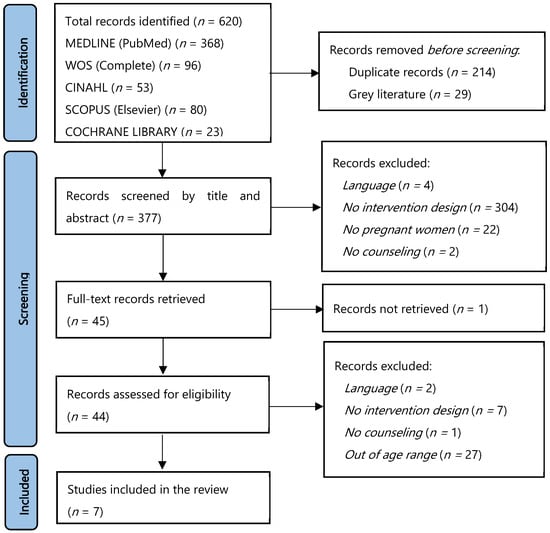
A total of 620 records were identified. After removing duplicates and grey literature, 377 records were screened by title and abstract. Following the screening process, 44 full-text records were assessed for eligibility. Of these, 37 records were excluded for reasons including absence of an intervention design, participants outside the defined age range, or insufficient methodological quality. Ultimately, seven (n = 7) studies met the inclusion criteria and were included in the review, as illustrated in the PRISMA [20] flow diagram in Figure 1.
Figure 1.
PRISMA flow diagram of the included studies.
3.2. Study Characteristics
Overall, most studies demonstrated moderate to high methodological quality, although some limitations were identified in specific methodological domains. The included studies comprised RCTs and quasi-experimental studies conducted in several countries, including Thailand [29,30], Colombia [31], Spain [32], and Iran [33,34,35]. The critical appraisal of the included studies is presented in Supplementary Table S1.
The clinical settings included antenatal clinics, health centers, prenatal care services, hospital maternity units, and community prenatal programs. Table 2 summarizes the study designs, country, clinical settings, objectives, primary and secondary outcomes, and main conclusions of the included studies.
Table 2.
General characteristics of included studies.
Across the included studies (n = 776 participants), the weighted mean age of participants was 19.28 years (SD = 4.48).
The interventions consisted of educational or counseling programs delivered through face-to-face sessions, group discussions, or digital resources [30,33,34,35]. Most interventions included four to six sessions lasting approximately 60–120 min. Some studies used alternative delivery formats, such as a four-week mobile health self-efficacy program including educational modules and weekly reminders [29], or a four-session nursing educational intervention addressing hypertensive disorders of pregnancy and self-care determinants [31]. Additionally, Díaz-Hurtado et al. [32] implemented a postpartum educational program based on group talks and printed materials focused on self-care and warning signs.
A wide range of validated instruments was used to assess outcomes. These included knowledge and self-efficacy measures [29], the knowledge on hypertensive disorders of pregnancy scale and behavioral determinants questionnaire [31], a self-care knowledge questionnaire [32], the test of functional health literacy in adults, the general self-efficacy scale, and the urinary tract infection preventive behavior questionnaire [33]. Other studies used the quality of prenatal care questionnaire and the prenatal distress questionnaire [34], the coping skills scale and the antenatal depression scale [30], the health practices questionnaire II, the pregnancy questionnaire assessing maternal attitudes, and the pregnancy symptoms inventory [35]. Table 3 summarizes the characteristics of the participants and the clinical and statistical results.
Table 3.
Clinical and statistical results of included studies.
3.3. Risk-of-Bias Assessment
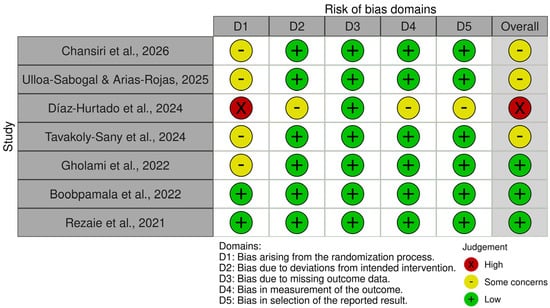
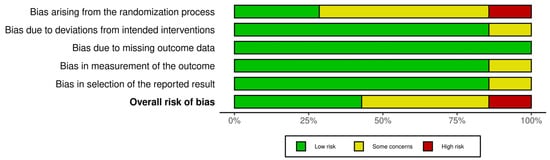
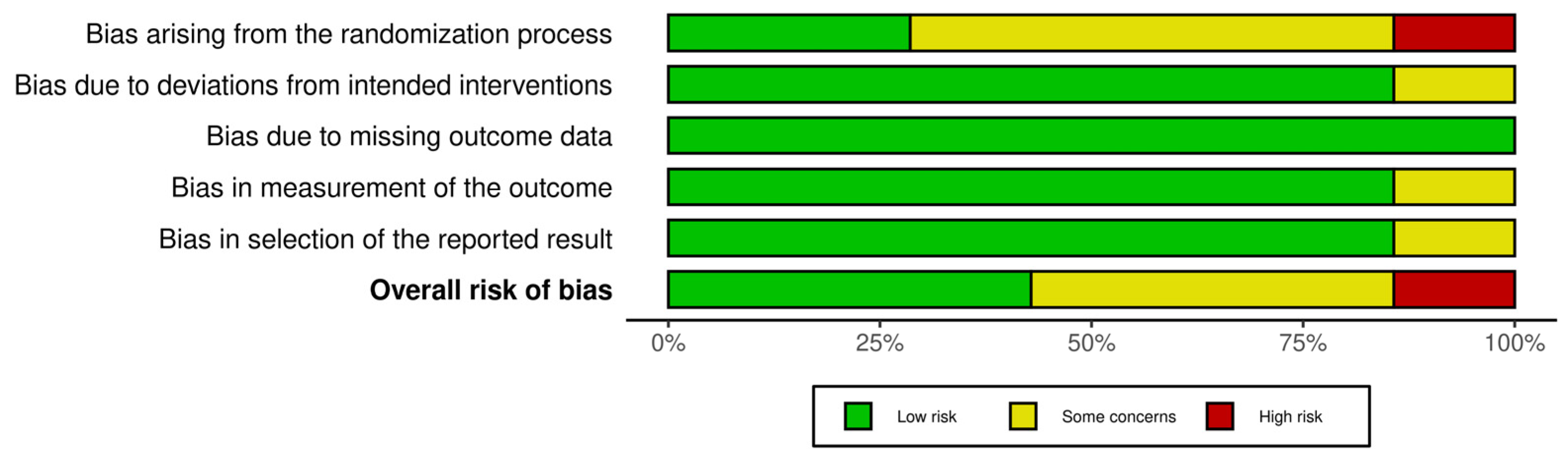
The risk-of-bias assessment of the included studies showed that three studies were rated as having a low risk of bias, three as having some concerns, and one as having a high risk of bias in the overall judgment (Figure 2). The main concerns were related to limitations in the randomization process or the use of non-randomized study designs, while most studies showed a low risk of bias in domains related to deviations from intended interventions, outcome measurement, and missing outcome data.
Figure 2.
Risk-of-bias domains in each included study [29,30,31,32,33,34,35].
As shown in Figure 3, most studies presented a low risk of bias regarding intervention implementation, outcome measurement, and management of missing data. However, some concerns were identified mainly in the randomization process or study design, particularly in quasi-experimental studies. Overall, approximately half of the studies were rated as having some concerns, while one study presented a high risk of bias due to the absence of a control group.
Figure 3.
Risk-of-bias in all included studies.
3.4. Preliminary Meta-Analysis
3.4.1. Pregnancy-Related Health Knowledge
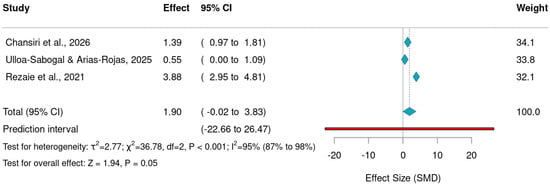
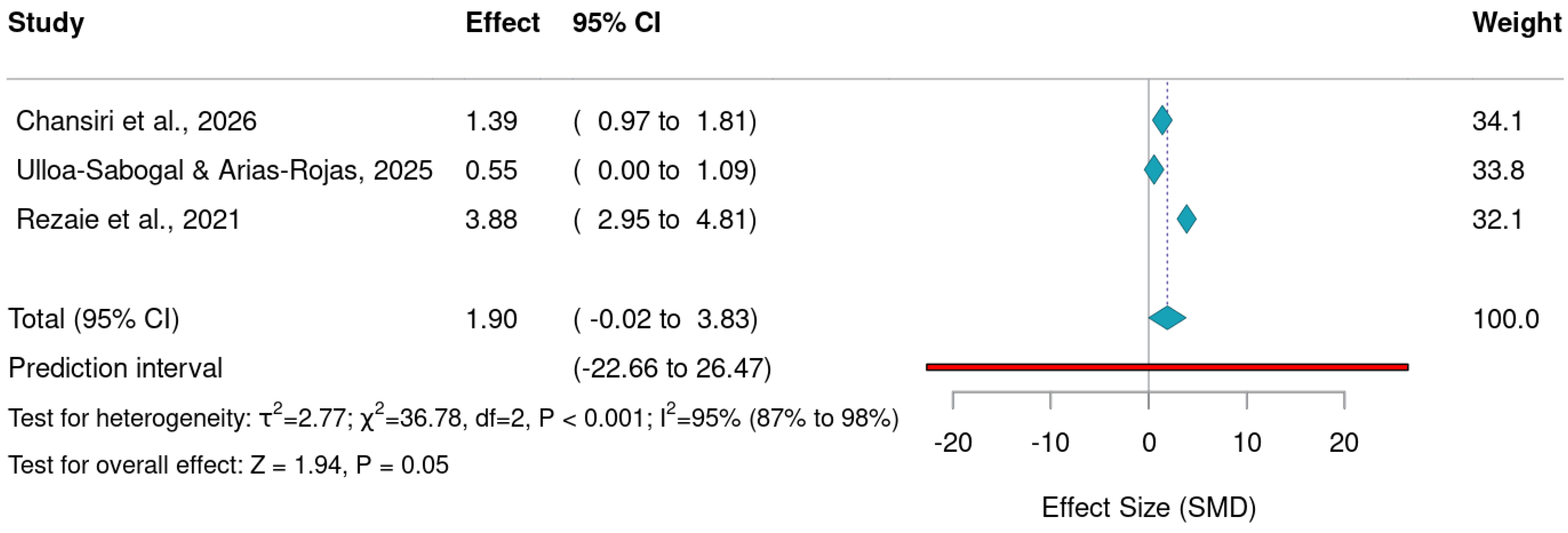
A meta-analysis including three studies [29,31,35] evaluated the effect of counseling and educational interventions on pregnancy-related health knowledge. The pooled analysis showed a large effect favoring the intervention (SMD = 1.90), although the CI crossed the null value (95%CI: −0.02 to 3.83; p = 0.05). Substantial heterogeneity was observed across studies (I2 = 95%; τ2 = 2.77; χ2 = 36.78, p < 0.001), indicating considerable variability in the magnitude of intervention effects. Although all studies favored the intervention, the effect sizes differed markedly. Therefore, while the results suggest a potential benefit of counseling and educational interventions on maternal health knowledge during pregnancy, the findings should be interpreted with caution, as illustrated in Figure 4.
Figure 4.
Forest Plot for the variable “pregnancy-related health knowledge” [29,31,35].
3.4.2. Self-Care Behaviors
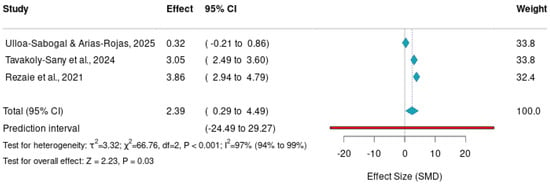
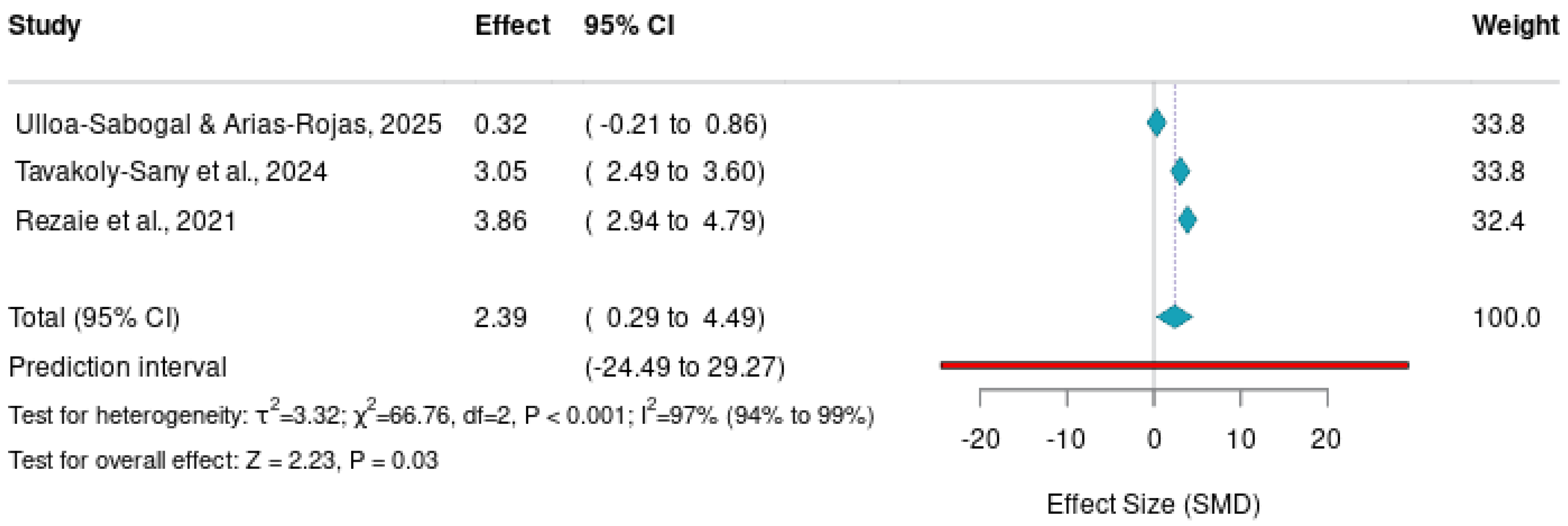
A meta-analysis including three studies [31,33,35] evaluated the effect of the intervention on the self-care behaviors. The pooled analysis showed a large effect favoring the intervention (SMD = 2.39; 95%CI: 0.29 to 4.49; p = 0.03). However, substantial heterogeneity was observed across studies (I2 = 97%; τ2 = 3.32; χ2 = 66.76, p < 0.001), indicating considerable variability in the magnitude of the intervention effects. Although most studies favored the intervention, the effect sizes differed markedly, with one study showing a small and non-significant effect while the others reported very large effects. Therefore, while the results suggest a potential benefit of the intervention, the findings should be interpreted with caution due to the high heterogeneity and wide prediction interval, as illustrated in Figure 5.
Figure 5.
Forest Plot for the variable “self-care behaviors” [31,33,35].
3.5. Certainty of Evidence Results
Table 4 presents a summary of the number and design of studies contributing to each outcome, the estimated effect when available, and the corresponding assessment of risk of bias, inconsistency, indirectness, imprecision, and publication bias. Overall, the certainty of evidence ranged from low to very low across outcomes, mainly due to methodological limitations of the included studies, substantial heterogeneity between interventions and outcome measures, and the limited number of studies available for several outcomes.
Table 4.
Summary of findings and certainty of evidence.
4. Discussion
Adolescent and young women’s pregnancy may involve important health, social, and educational support needs, particularly in resource-limited settings [4,6]. Evidence consistently shows that morbidity and mortality associated with pregnancy are higher among adolescents than among adult women, highlighting the potential value of targeted counseling and educational interventions for adolescents and young women who may experience social or healthcare vulnerability [4,22]. Socioeconomic determinants such as low educational attainment, limited access to reproductive health services, and social vulnerability may contribute substantially to contexts in which adolescent pregnancy is associated with poorer maternal and neonatal outcomes. Previous research conducted in low- and lower-middle-income countries has also identified structural factors such as poverty, limited educational opportunities, and restricted access to reproductive health services as key determinants associated with adolescent pregnancy [34].
The findings of this review suggest that educational and counseling interventions may improve several health-related outcomes among pregnant adolescents and young women. Overall, the included studies showed improvements in pregnancy-related health knowledge, self-care practices, preventive behaviors, self-efficacy, coping skills, and psychological well-being. For example, a nursing educational intervention aimed at improving knowledge and self-care behaviors related to hypertensive disorders during pregnancy demonstrated significant improvements in knowledge and self-care behaviors compared with routine prenatal care, while also showing high acceptability and feasibility among participants [29]. Similarly, a self-care counseling intervention in adolescent pregnant women significantly improved overall health practices and all their subdomains, and also enhanced attitudes toward motherhood and pregnancy, although it did not significantly reduce pregnancy symptoms [33]. These findings reinforce the relevance of structured counseling as a strategy to strengthen both behavioral and attitudinal dimensions of maternal health among pregnant adolescents and young women. These findings are consistent with previous evidence indicating that counseling-based educational programs can enhance maternal self-efficacy and health-related behaviors among adolescent mothers, including breastfeeding practices and other aspects of maternal care [35,36].
Theory-based educational interventions also are particularly useful when they target key behavioral determinants on maternal health. In this context, approaches grounded in constructs such as self-efficacy and health literacy have been associated with improvements in preventive health behaviors during pregnancy [31]. These findings suggest that interventions informed by behavioral theory may facilitate more sustained changes in health-related practices among pregnant women.
Digital and technology-based interventions may provide additional opportunities to reach adolescents and young women in a scalable and accessible way. In this context, mobile health approaches have been associated with improvements in pregnancy-related knowledge, self-efficacy, and maternal health behaviors among pregnant adolescents [27]. These findings suggest that digital formats may contribute not only to strengthening educational and psychosocial outcomes, but also to supporting positive maternal health experiences during pregnancy and early motherhood. Such approaches may be particularly relevant for adolescent populations, for whom mobile-based interventions are often more acceptable and easier to integrate into everyday life. The growing use of digital health technologies in maternal care has also been highlighted in recent systematic reviews, which report that mobile health tools may support monitoring and self-management of pregnancy-related conditions such as gestational diabetes [37].
The review also highlights the importance of psychosocial interventions during pregnancy. Evidence suggests that counseling-based approaches may contribute to improving coping abilities and emotional well-being among pregnant adolescents [28]. Likewise, counseling strategies focusing on interpersonal relationships and emotional support have been associated with improvements in several dimensions of prenatal well-being and self-care [32]. Taken together, these findings suggest that counseling interventions during pregnancy should not be limited to knowledge transmission alone, but should also address emotional adaptation, interpersonal relationships, and women’s confidence in managing pregnancy-related demands. This perspective aligns with broader evidence indicating that psychosocial interventions during pregnancy can support behavioral change and reduce health risks, including smoking cessation and other modifiable behaviors that influence maternal and neonatal outcomes [38,39,40,41].
Another relevant finding is that educational interventions may also be beneficial during the postpartum period. Educational support provided to adolescent mothers has been associated with improvements in self-care knowledge following childbirth, highlighting the continued importance of maternal education beyond pregnancy [30]. Although this evidence relates to the postpartum stage, it reinforces the broader idea that adolescent and young mothers benefit from structured educational support during key maternal transitions.
An important aspect highlighted by this review is the need to differentiate counseling approaches according to age group. Adolescent pregnant women often experience a dual transition involving both developmental and maternal challenges, frequently in a context in which they may experience lower health literacy, reduced autonomy, or greater social vulnerability depending on the social and healthcare context [10,33]. In this context, counseling interventions may need to be more structured, supportive, and tailored to promote understanding, emotional adaptation, and empowerment. In contrast, young adult women may have different contextual characteristics, including, on average, greater access to social, educational, or economic resources, which could influence their experience of the transition to motherhood [10,19]. However, these differences are not uniform and may vary depending on individual and contextual factors. Importantly, the current evidence does not allow definitive conclusions regarding how these factors translate into differences in maternal or neonatal outcomes. It is important to note that the included studies did not allow for stratified analyses by age group, which limits the ability to draw conclusions about differential effectiveness between adolescents and young adult women. Future research should specifically explore age-stratified effects of counseling interventions to better understand the distinct needs of these populations.
The preliminary meta-analyses conducted in this review suggest that counseling and educational interventions may be associated with improvements in pregnancy-related health knowledge and self-care behaviors among pregnant adolescents and young women. However, these findings should be interpreted with caution, as the certainty of the evidence was low to very low across outcomes, and a serious or very serious risk of bias was identified in most studies. In addition, considerable heterogeneity was observed across interventions and outcome measures. Therefore, the results should be considered exploratory, and no firm conclusions can be drawn regarding the effectiveness of these interventions, particularly regarding potential differential effects across adolescent and young adult populations. Consistent with these findings, the GRADE assessment indicated that the certainty of evidence ranged from low to very low across all outcomes, mainly due to methodological limitations, risk of bias, and heterogeneity among studies.
Several contextual factors may influence the effectiveness of these interventions. Educational level, socioeconomic status, access to healthcare services, and social support were repeatedly identified in the included studies as relevant background factors. For example, previous research has highlighted that interventions grounded in behavioral theory may remain effective even in populations with relatively limited educational or socioeconomic resources [31]. In addition, counseling approaches that promote communication, emotional support, and social relationships during pregnancy may be particularly beneficial for women experiencing uncertainty or distress during the transition to motherhood [32]. These findings suggest that effective interventions should be sensitive to the social, emotional, and healthcare contexts in which pregnancy and early motherhood occur among adolescents and young women. Furthermore, other maternal health behaviors and contextual conditions may influence pregnancy outcomes. For example, studies have reported that pregnant women often experience uncertainty or negative perceptions regarding weight management during antenatal care, which may affect engagement with health recommendations [42]. Additionally, the practice of self-medication during pregnancy has been identified as a widespread concern globally, often associated with limited access to healthcare services and insufficient health literacy [43,44]. In addition, broader structural and policy changes affecting access to contraception and reproductive health services at the global level may influence adolescent pregnancy trends and should be considered when interpreting these findings.
From a policy and practice perspective, the findings of this review have important implications at multiple levels. At the individual (micro) level, counseling and educational interventions may support pregnant adolescents in developing self-care skills, improving health literacy, and enhancing psychological well-being, thereby facilitating a more positive transition to motherhood. At the interpersonal and healthcare (meso) level, these findings highlight the need for healthcare professionals to adopt structured, age-sensitive, and person-centered counseling approaches that address not only clinical aspects but also emotional and social needs. At the system and policy (macro) level, the results support the integration of counseling and health education strategies into maternal and reproductive health programs, particularly in settings where adolescents and young women may experience social or healthcare vulnerability during pregnancy and early motherhood. Policymakers should consider incorporating these interventions into routine antenatal and postnatal care, as well as into community-based and school-based programs, to reduce health inequalities and promote long-term well-being among adolescent mothers and their children.
Nevertheless, this review has several limitations. First, the limited availability of studies specifically targeting pregnant adolescents restricted the ability to draw strong conclusions for this age group. Several included studies involved mixed samples of pregnant women or young adults, which may affect the generalizability of findings. Second, methodological heterogeneity across studies, including differences in intervention content, delivery formats, outcome measures, and follow-up periods, limited the possibility of conducting more robust quantitative analyses. Third, publication bias could not be formally assessed due to the small number of studies included in the meta-analyses. Finally, the quantitative synthesis should be considered exploratory because only a limited number of studies reported sufficiently comparable outcomes and substantial heterogeneity was observed across pooled estimates. In this sense, the current evidence should be interpreted with caution due to the small number of studies included in the meta-analyses, the methodological heterogeneity across studies, and the variability in outcome measurement. Additionally, the inclusion of heterogeneous age groups limited the possibility of identifying differential intervention effects according to developmental stage.
Despite these limitations, the findings highlight the importance of integrating educational, psychosocial, and technology-supported interventions into maternal health programs for adolescents and young women, particularly when tailored to the developmental and contextual needs of different populations. Comprehensive strategies that combine health education, counseling, behavioral support, and digital tools may help strengthen pregnancy-related knowledge, self-care capacity, preventive health behaviors, and psychological adaptation during pregnancy and the transition to motherhood.
5. Conclusions
Counseling and educational interventions during pregnancy may contribute to improvements in pregnancy-related health knowledge and self-care behaviors among pregnant adolescents and young women; however, the current evidence is limited and of low certainty.
Overall, the available findings suggest possible benefits of counseling-based strategies for strengthening maternal knowledge, preventive health behaviors, and psychosocial adaptation during pregnancy. Nevertheless, further research using more rigorous and standardized study designs is required to confirm the effectiveness of these interventions, particularly regarding knowledge, self-efficacy, mental health, and healthy practices among adolescents and young women during pregnancy and early motherhood.
Future studies should also include more diverse geographical and sociocultural contexts in order to improve the generalizability of the findings. In addition, stronger evidence is needed on the social and healthcare resources available to support pregnant and parenting adolescents and young women, particularly within maternal health services and community-based programs.
Given the heterogeneity of developmental stages and social contexts represented in the included studies, the findings should be interpreted cautiously. These findings also suggest that counseling and educational interventions may need to be adapted according to the developmental and social characteristics of adolescent and young adult women, highlighting the potential relevance of context-sensitive and developmentally appropriate approaches in maternal health programs.
Supplementary Materials
The following supporting information can be downloaded at: https://www.mdpi.com/article/10.3390/women6020037/s1, Table S1: Critical appraisal of the included studies; PRISMA 2020 Checklist.
Author Contributions
Conceptualization, C.R.-S. and C.-A.R.-S.; methodology, C.R.-S., C.-A.R.-S. and H.G.-d.l.T.; software, C.-A.R.-S.; validation, H.G.-d.l.T., S.M.-P. and C.d.l.M.D.-G.; formal analysis, C.R.-S. and C.-A.R.-S.; investigation, C.R.-S., C.-A.R.-S., H.G.-d.l.T., S.M.-P. and C.d.l.M.D.-G.; resources, C.R.-S. and C.-A.R.-S.; data curation, C.R.-S. and C.-A.R.-S.; writing—original draft preparation, C.R.-S. and C.-A.R.-S.; writing—review and editing, H.G.-d.l.T., S.M.-P. and C.d.l.M.D.-G.; visualization, H.G.-d.l.T., S.M.-P. and C.d.l.M.D.-G.; supervision, C.-A.R.-S. and H.G.-d.l.T.; project administration, C.R.-S. All authors have read and agreed to the published version of the manuscript.
Funding
This research received no external funding.
Institutional Review Board Statement
Not applicable.
Informed Consent Statement
Not applicable.
Data Availability Statement
Data are available upon reasonable request to the corresponding author.
Conflicts of Interest
The authors declare no conflicts of interest.
Abbreviations
The following abbreviations are used in this manuscript:
| CG | Control Group |
| CI | Confidence Interval |
| CoNOCiTHE | Knowledge on Hypertensive Disorders of Pregnancy Scale |
| HPQ-II | Health Practices Questionnaire II |
| IG | Intervention Group |
| IQR | Interquartile Range |
| JBI | Joanna Briggs Institute |
| M | Mean |
| MD | Mean Difference |
| NA | Not applicable |
| NS | Not serious limitations |
| PDQ | Prenatal Distress Questionnaire |
| PICO | Population—Intervention—Comparison—Outcomes |
| PRE-MAMA | Pregnancy Questionnaire |
| PRISMA | Preferred Reporting Items for Systematic Reviews and Meta-Analyses |
| PSI | Pregnancy Symptoms Inventory |
| QE | Quasi-experimental |
| QPCQ | Quality of Prenatal Care Questionnaire |
| RCT | Randomized Controlled Trial |
| S | Serious limitations |
| SD | Standard Deviation |
| SMD | Standardized Mean Difference |
| TOFHLA | Test of Functional Health Literacy in Adults |
| UD | Undetected limitations |
| UTI | Urinary Tract Infection |
| VS | Very serious limitations |
| WHO | World Health Organization |
References
- Serdan Ruiz, D.L.; Vasquez Bone, K.K.; Yupa Pallchisaca, A.E. Cambios fisiológicos y anatómicos en el cuerpo de la mujer durante el embarazo. Univ. Cienc. Tecnol. 2023, 27, 29–40. [Google Scholar] [CrossRef] [Scilit]
- Palomino Pérez, L.M.; Pérez Suárez, E.; Cabrero Hernández, M.; de la Cruz Benito, A.; Cañedo, G. Embarazo en adolescentes en los últimos 11 años: Motivos de consulta y factores de riesgo. An. Pediatr. 2018, 89, 121–122. [Google Scholar] [CrossRef] [Scilit]
- World Health Organization. Adolescent Health. 2024. Available online: https://www.who.int/news-room/fact-sheets/detail/adolescent-pregnancy (accessed on 8 April 2026).
- Azevedo, W.F.; Diniz, M.B.; Fonseca, E.S.; Azevedo, L.M.; Evangelista, C.B. Complications in adolescent pregnancy: Systematic review of the literature. Einstein 2015, 13, 618–626. [Google Scholar] [CrossRef] [Scilit]
- Martínez-Guisasola Campa, J.; Guerrero Ibáñez, M. Embarazo y maternidad en adolescentes. Pediatr. Integral 2022, 26, 289–299. [Google Scholar]
- DeMarco, N.; Twynstra, J.; Ospina, M.B.; Darrington, M.; Whippey, C.; Seabrook, J.A. Prevalence of low birth weight, premature birth, and stillbirth among pregnant adolescents in Canada: A systematic review and meta-analysis. J. Pediatr. Adolesc. Gynecol. 2021, 34, 530–537. [Google Scholar] [CrossRef] [Scilit]
- Ramírez-Aranda, J.M.; Gómez-Gómez, C.; Villarreal-Pérez, J.Z.; García-Elizondo, F.J.; Rodríguez-Rodríguez, I.; Rosas-Herrera, C.H.; Flores-Cavazos, M. Factores de protección y riesgo del embarazo en la adolescencia. Med. Univ. 2013, 15, 64–72. [Google Scholar]
- Mambo, S.B.; Lodhi, M.M.; Asiimwe, I.; Bizimana, G.N.; Makelele, A.M.; Mbina, S.A.; Igwe, M.C.; Ibrahim, U. Healthcare workers’ attitudes and factors affecting provision of sexual and reproductive health services to adolescents in refugee settlements, Western Uganda. Front. Reprod. Health 2025, 7, 1498305. [Google Scholar] [CrossRef] [Scilit] [PubMed]
- Baigry, M.I.; Ray, R.; Lindsay, D.; Kelly-Hanku, A.; Redman-MacLaren, M. Barriers and Enablers to Young People Accessing Sexual and Reproductive Health Services in Pacific Island Countries and Territories: A Scoping Review. PLoS ONE 2023, 18, e0280667. [Google Scholar] [CrossRef] [Scilit] [PubMed]
- Kululanga, L.I.; Kadango, A.; Lungu, G.; Jere, D.; Ngwale, M.; Kumbani, L.C. Knowledge deficit on health promotion activities during pregnancy: The case for adolescent pregnant women at Chiladzulu District, Malawi. BMC Pregnancy Childbirth 2020, 20, 3386. [Google Scholar] [CrossRef] [Scilit]
- Juvinyà-Canal, D. Alfabetización en salud en la comunidad. Innov. Educ. 2021, 31, 7952. [Google Scholar] [CrossRef] [Scilit]
- World Health Organization. WHO Guideline on Self-Care Interventions for Health and Well-Being; WHO: Geneva, Switzerland, 2022; Available online: https://www.who.int/es/publications/i/item/9789240052239 (accessed on 6 December 2024).
- Sociedad Española de Ginecología y Obstetricia. Control prenatal del embarazo normal. Obstet. Ginecol. 2018, 61, 510–527. [Google Scholar]
- Nguyen, L.D.; Nguyen, L.H.; Ninh, L.T.; Nguyen, H.T.T.; Nguyen, A.D.; Vu, L.G.; Nguyen, H.S.A.; Nguyen, S.H.; Doan, L.P.; Vu, T.M.T. Women’s holistic self-care behaviors during pregnancy and associations with psychological well-being: Implications for maternal care facilities. BMC Pregnancy Childbirth 2022, 22, 4961. [Google Scholar] [CrossRef] [Scilit] [PubMed]
- Denehy, J. Health education: An important role for school nurses. J. Sch. Nurs. 2001, 17, 233–238. [Google Scholar] [CrossRef]
- Gómez-Mercado, C.A.; Montoya-Vélez, L.P. Factores sociales, demográficos, familiares y económicos relacionados con el embarazo en adolescentes, área urbana, Briceño, 2012. Rev. Salud Pública 2014, 16, 394–406. [Google Scholar] [CrossRef] [Scilit]
- Sabet, F.; Prost, A.; Rahmanian, S.; Al Qudah, H.; Cardoso, M.N.; Carlin, J.B.; Sawyer, S.M.; Patton, G.C. The forgotten girls: The state of evidence for health interventions for pregnant adolescents and their newborns in low- and middle-income countries. Lancet 2023, 402, 1580–1596. [Google Scholar] [CrossRef] [Scilit]
- Laurenzi, C.A.; Gordon, S.; Abrahams, N.; du Toit, S.; Bradshaw, M.; Brand, A.; Melendez-Torres, G.J.; Tomlinson, M.; Ross, D.A. Psychosocial interventions targeting mental health in pregnant adolescents and adolescent parents: A systematic review. Reprod. Health 2020, 17, 65. [Google Scholar] [CrossRef] [Scilit] [PubMed]
- United Nations International Children’s Emergency Fund. Addressing the Needs of Adolescent and Young Mothers Affected by HIV; UNICEF: Nairobi, Kenya, 2020; Available online: https://www.unicef.org/esa/media/7151/file/UNICEF-ESA-Young-Mothers-HIV-Report-2020.pdf (accessed on 6 December 2024).
- Page, M.J.; McKenzie, J.E.; Bossuyt, P.M.; Boutron, I.; Hoffmann, T.C.; Mulrow, C.D.; Shamseer, L.; Tetzlaff, J.M.; Akl, E.A.; Brennan, S.E.; et al. The PRISMA 2020 statement: An updated guideline for reporting systematic reviews. BMJ 2021, 372, n71. [Google Scholar] [CrossRef] [Scilit]
- Rethlefsen, M.L.; Kirtley, S.; Waffenschmidt, S.; Ayala, A.P.; Moher, D.; Page, M.J.; Koffel, J.B. PRISMA-S: An extension to the PRISMA statement for reporting literature searches in systematic reviews. J. Med. Libr. Assoc. 2021, 109, 174–200. [Google Scholar] [CrossRef] [Scilit]
- Sterne, J.A.C.; Savović, J.; Page, M.J.; Elbers, R.G.; Blencowe, N.S.; Boutron, I.; Cates, C.J.; Cheng, H.-Y.; Corbett, M.S.; Eldridge, S.M.; et al. RoB 2: A revised tool for assessing risk of bias in randomised trials. BMJ 2019, 366, l4898. [Google Scholar] [CrossRef] [Scilit]
- Sterne, J.A.C.; Hernán, M.A.; Reeves, B.C.; Savović, J.; Berkman, N.D.; Viswanathan, M.; Henry, D.; Altman, D.G.; Ansari, M.T.; Boutron, I.; et al. ROBINS-I: A tool for assessing risk of bias in non-randomised studies of interventions. BMJ 2016, 355, i4919. [Google Scholar] [CrossRef] [Scilit] [PubMed]
- McGuinness, L.A.; Higgins, J.P.T. Risk-of-bias VISualization (robvis): An R package and Shiny web app for visualizing risk-of-bias assessments. Res. Synth. Methods 2021, 12, 55–61. [Google Scholar] [CrossRef] [Scilit]
- Wan, X.; Wang, W.; Liu, J.; Tong, T. Estimating the sample mean and standard deviation from the sample size, median, range and/or interquartile range. BMC Med. Res. Methodol. 2014, 14, 135. [Google Scholar] [CrossRef] [Scilit] [PubMed]
- Luo, D.; Wan, X.; Liu, J.; Tong, T. Optimally estimating the sample mean from the sample size, median, mid-range, and/or mid-quartile range. Stat. Methods Med. Res. 2018, 27, 1785–1805. [Google Scholar] [CrossRef] [Scilit] [PubMed]
- Guyatt, G.H.; Oxman, A.D.; Vist, G.E.; Kunz, R.; Falck-Ytter, Y.; Alonso-Coello, P.; Schünemann, H.J. GRADE: An emerging consensus on rating quality of evidence and strength of recommendations. BMJ 2008, 336, 924–926. [Google Scholar] [CrossRef] [Scilit]
- Guyatt, G.H.; Oxman, A.D.; Akl, E.A.; Kunz, R.; Vist, G.; Brozek, J.; Norris, S.; Falck-Ytter, Y.; Glasziou, P.; DeBeer, H.; et al. GRADE guidelines: 1. Introduction—GRADE evidence profiles and summary of findings tables. J. Clin. Epidemiol. 2011, 64, 383–394. [Google Scholar] [CrossRef] [Scilit]
- Chansiri, S.; Moonpanane, K.; Kurain, S. Prevention of preterm birth and low birth weight through the mHealth self-efficacy program among first-time pregnant adolescents in Northern Thailand: A quasi-experimental study. Pac. Rim Int. J. Nurs. Res. 2026, 30, 238–251. [Google Scholar] [CrossRef] [Scilit]
- Boobpamala, S.; Kongvattananon, P.; Quinn Griffin, M.T. Effectiveness of an Early Depression Prevention Program on Coping Skills and Depression among Pregnant Adolescents: A Randomized Controlled Trial. Pac. Rim Int. J. Nurs. Res. 2022, 26, 296–312. [Google Scholar]
- Ulloa-Sabogal, I.M.; Arias-Rojas, M. Nursing intervention “EducaTHE” to improve knowledge and self-care behaviors for hypertensive disorders in pregnant women: A randomized controlled pilot study. Investig. Educ. Enferm. 2025, 43, e14. [Google Scholar] [CrossRef] [Scilit]
- Díaz-Hurtado, D.E.; Mora-Pérez, Y.; Iglesias-Armenteros, A.L.; Sánchez-García, Z.T.; Dos Santos Goulart, G.; Cambil-Martín, J. Influencia de una intervención educativa en puérperas adolescentes sobre nivel de conocimientos de autocuidado. Rev. Cuba. Enferm. 2024, 40, e6541. [Google Scholar]
- Tavakoly-Sany, S.B.; Eslami, V.; Lael-Monfared, E.; Ghavami, V.; Peyman, N. Effect of an educational intervention based on self-efficacy theory and health literacy skills on preventive behaviors of urinary tract infection in pregnant women: A quasi-experimental study. PLoS ONE 2024, 19, e0306558. [Google Scholar] [CrossRef] [Scilit]
- Gholami, A.; Mehdizadeh Tourzani, Z.; Kabir, K.; Yazdkhasti, M. The effectiveness of Adlerian group counseling approach on mother’s distress and self-care during pregnancy: A randomized controlled trial. J. Holist. Nurs. Midwifery 2022, 32, 254–264. [Google Scholar] [CrossRef] [Scilit]
- Rezaie, R.; Mohammad-Alizadeh-Charandabi, S.; Nemati, F.; Mirghafourvand, M. The effect of self-care counseling on health practices of adolescent pregnant women: A randomized controlled trial. BMC Pregnancy Childbirth 2021, 21, 4203. [Google Scholar] [CrossRef] [Scilit]
- Pradhan, R.; Wynter, K.; Fisher, J. Factors associated with pregnancy among adolescents in low-income and lower middle-income countries: A systematic review. J. Epidemiol. Community Health 2015, 69, 918–924. [Google Scholar] [CrossRef] [Scilit] [PubMed]
- Fahim, S.H.; Kazemi, F.; Masoumi, S.Z.; Refaei, M. The effect of midwife-oriented breastfeeding counseling on self-efficacy and performance of adolescent mothers: A clinical trial study. BMC Pregnancy Childbirth 2023, 23, 672. [Google Scholar] [CrossRef] [Scilit] [PubMed]
- Coşkun, A.M.; Karakaya, E.; Yaşer, Y. A safe motherhood education and counselling programme in Istanbul. Eur. J. Contracept. Reprod. Health Care 2009, 14, 424–436. [Google Scholar] [CrossRef] [Scilit]
- Garg, N.; Arunan, S.K.; Arora, S.; Kaur, K. Application of Mobile Technology for Disease and Treatment Monitoring of Gestational Diabetes Mellitus Among Pregnant Women: A Systematic Review. J. Diabetes Sci. Technol. 2022, 16, 491–497. [Google Scholar] [CrossRef] [Scilit]
- Chamberlain, C.; O’Mara-Eves, A.; Oliver, S.; Caird, J.R.; Perlen, S.M.; Eades, S.J.; Thomas, J. Psychosocial interventions for supporting women to stop smoking in pregnancy. Cochrane Database Syst. Rev. 2013, 10, CD001055. [Google Scholar] [CrossRef] [Scilit]
- Tahan, C.; Dobbins, T.; Hyslop, F.; Lingam, R.; Richmond, R. Effect of digital health, biomarker feedback and nurse or midwife-led counselling interventions to assist pregnant smokers quit: A systematic review and meta-analysis. BMJ Open 2023, 13, e060549. [Google Scholar] [CrossRef] [Scilit]
- Swift, J.A.; Pearce, J.; Jethwa, P.H.; Taylor, M.A.; Avery, A.; Ellis, S.; Langley-Evans, S.C.; McMullen, S. Antenatal Weight Management: Women’s Experiences, Behaviours, and Expectations of Weighing in Early Pregnancy. J. Pregnancy 2016, 2016, 8454759. [Google Scholar] [CrossRef] [Scilit]
- Chaudhary, V.; Kumari, S.; Khurana, N.; Azharuddin, M.; Singh, A.P.; Devi, V.; Dhir, D.; Pal, B. Prevalence of self-medication practices among pregnant women in India: A systematic review and meta-analysis. Pharmacoepidemiol. Drug Saf. 2024, 33, e5791. [Google Scholar] [CrossRef] [Scilit]
- Bouqoufi, A.; Laila, L.; Boujraf, S.; Hadj, F.A.E.; Razine, R.; Abouqal, R.; Khabbal, Y. Prevalence and associated factors of self-medication in worldwide pregnant women: Systematic review and meta-analysis. BMC Public Health 2024, 24, 308. [Google Scholar] [CrossRef] [Scilit] [PubMed]

Disclaimer/Publisher’s Note: The statements, opinions and data contained in all publications are solely those of the individual author(s) and contributor(s) and not of MDPI and/or the editor(s). MDPI and/or the editor(s) disclaim responsibility for any injury to people or property resulting from any ideas, methods, instructions or products referred to in the content. |
© 2026 by the authors. Licensee MDPI, Basel, Switzerland. This article is an open access article distributed under the terms and conditions of the Creative Commons Attribution (CC BY) license.