


Abstract
Tirzepatide and semaglutide are among the most effective incretin-based therapies currently used in type 2 diabetes and obesity. To review direct comparative clinical evidence on tirzepatide versus semaglutide, with emphasis on glycemic efficacy, body-weight reduction, metabolic and mechanistic parameters, and tolerability. PubMed was searched from inception to March 14, 2026, without language or date restrictions, for original human studies directly comparing these agents and secondary pooled, mechanistic, exploratory, or post hoc analyses derived from direct comparative trials. Eleven eligible publications were identified, largely representing three parent comparative settings: SURPASS-2, a 28-week mechanistic phase 1 study, and SURMOUNT-5. Across the available direct comparative literature, tirzepatide generally demonstrated greater metabolic efficacy within the studied dosing and trial frameworks. In type 2 diabetes, it produced larger reductions in HbA1c and body weight, whereas in obesity without diabetes it was associated with greater weight loss and waist-circumference reduction. Mechanistic analyses also favored tirzepatide across several measures of insulin sensitivity, glucose control, and body composition. Secondary and pooled analyses further suggested more frequent achievement of combined glycemic and weight targets and more durable metabolic benefit. Both agents showed the expected incretin-related tolerability profile, with gastrointestinal adverse events predominating. The currently available direct comparative evidence suggests greater metabolic efficacy of tirzepatide, particularly with respect to HbA1c reduction and body-weight loss. However, this conclusion should be interpreted cautiously because the evidence base remains limited, includes multiple overlapping secondary analyses, and is influenced by comparator-dose selection and trial design.
Keywords:
tirzepatide; semaglutide; type 2 diabetes; obesity; systematic review; body weight; HbA1c; insulin sensitivity 1. Introduction
Incretin-based pharmacotherapy has substantially reshaped the treatment of type 2 diabetes and obesity. Among the agents that have most clearly changed the therapeutic landscape are semaglutide, a selective glucagon-like peptide-1 (GLP-1) receptor agonist, and tirzepatide, a dual glucose-dependent insulinotropic peptide (GIP)/GLP-1 receptor agonist. Both have demonstrated robust effects on glycemic control and body-weight reduction [1,2,3,4,5,6,7,8,9,10,11,12,13,14,15,16].
Direct comparison is particularly important because cross-trial interpretation can be distorted by differences in dose, population, background therapy, follow-up duration, and endpoint definitions. The comparative evidence base now extends beyond the pivotal efficacy trials and includes secondary analyses that may refine, qualify, or contextualize the primary efficacy signal [1,2,3,4,5,6,7,8,9,10,11].
From a clinical perspective, the central question is not only which drug produces larger average reductions in HbA1c or body weight, but also whether the available comparisons reflect how these agents are selected in practice. Routine treatment decisions depend on metabolic and obesity phenotype, anticipated tolerability, speed of titration, long-term persistence, comorbidities, cardiovascular-risk profile, and therapeutic goals. Direct comparative evidence is therefore most useful when it informs real treatment decisions rather than simple numerical ranking.
The aim of this review was to synthesize the available direct comparative evidence on tirzepatide versus semaglutide, while incorporating selected secondary and contextual analyses that help clarify how the current comparative hierarchy should be interpreted [12,13,14,15,16,17,18,19,20].
2. Materials and Methods
This article was designed as a structured narrative review of direct comparative clinical evidence on tirzepatide versus semaglutide. The aim was not to perform a formal systematic review or meta-analysis, but to identify and synthesize studies in which both agents were directly compared within the same clinical or analytical framework.
A targeted PubMed/MEDLINE search was performed from database inception to March 14, 2026, using the search terms “tirzepatide” AND “semaglutide.” The search was restricted to human studies and focused on clinical trials, secondary analyses, post hoc analyses, and pooled analyses derived from direct comparative clinical programs. No date restrictions were applied. CENTRAL, Embase, clinical trial registries, gray literature, and conference abstracts were not searched.
Because the objective of this review was to synthesize directly comparative evidence rather than all efficacy or safety data for each agent separately, the search strategy was intentionally focused on studies in which tirzepatide and semaglutide were compared within the same clinical or analytical framework. However, we acknowledge that the use of a single database and a narrow search strategy may have resulted in the omission of additional relevant studies, including non-indexed publications, conference reports, registry-based analyses, or recently published material.
Eligible publications were original human investigations or secondary analyses directly comparing tirzepatide and semaglutide in adults with type 2 diabetes, obesity, or overweight. Studies were considered eligible if they reported at least one clinically or mechanistically relevant outcome, including HbA1c, body weight, waist circumference, glycemic targets, insulin sensitivity, beta-cell function, body composition, patient-reported outcomes, or tolerability. Randomized head-to-head trials, mechanistic randomized studies, and post hoc or pooled analyses from comparative trial programs were included. Narrative reviews, editorials, journal-club articles, modeling studies, simulations, and indirect treatment comparisons were excluded from the primary synthesis, although selected contextual studies were discussed where relevant.
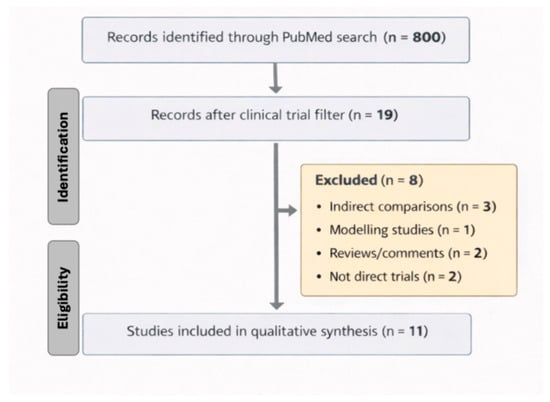
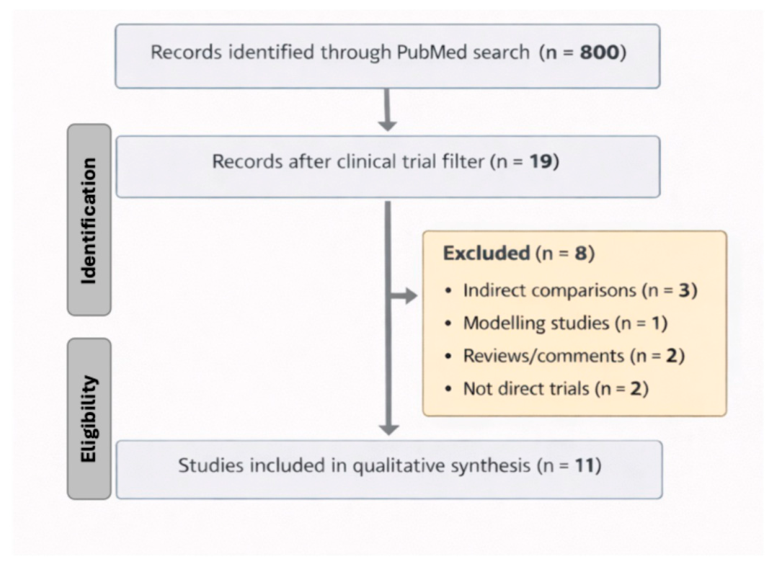
Study selection and data extraction were performed independently by two reviewers (JMU and JR). Disagreements were resolved by discussion and, when necessary, by consultation with a third reviewer (PN). No formal standardized risk-of-bias or certainty-of-evidence assessment tool was applied, because the manuscript was designed as a structured narrative review rather than a formal systematic review. Nevertheless, particular attention was paid to distinguishing independent parent comparative trials from secondary, pooled, exploratory, mechanistic, and post hoc analyses derived from overlapping trial populations. Extracted data included study design, population, intervention and comparator doses, follow-up duration, main outcomes, and principal findings (Figure 1).
Figure 1.
Flow diagram of study identification and selection for the structured narrative review.
Because several included publications were secondary, exploratory, or pooled analyses derived from the same parent trial populations, no formal meta-analysis was undertaken [1,2,3,4,5,6,7,8,9,10,11]. A quantitative synthesis would have risked overrepresenting repeated analyses of overlapping datasets and creating a misleading impression of evidentiary precision across heterogeneous and potentially non-equivalent comparator-dose frameworks. In particular, the principal diabetes head-to-head trials did not compare tirzepatide and semaglutide at clearly equivalent glycemic-potency doses, limiting the interpretability of pooled quantitative estimates. Instead, findings were synthesized qualitatively according to clinical domain: glycemic efficacy, body-weight reduction, mechanistic metabolic outcomes, patient-reported outcomes, and tolerability.
No formal risk-of-bias or certainty-of-evidence assessment was performed. This is acknowledged as a limitation and reflects the structured narrative design of the review rather than a fully systematic review methodology. Accordingly, the manuscript should be interpreted as a structured narrative synthesis of currently available direct comparative evidence rather than as a comprehensive systematic review intended to capture all potentially relevant literature.
3. Results
Eleven publications were included [1,2,3,4,5,6,7,8,9,10,11]. However, these publications did not represent eleven independent comparative datasets. The effective evidence base was concentrated primarily within three parent comparative settings: SURPASS-2 (n = 1879), a mechanistic randomized phase 1 trial (approximately n = 117 across treatment groups), and SURMOUNT-5 (n = 751) [1,2,3,11]. Most additional publications represented secondary, pooled, exploratory, mechanistic, participant-level, or post hoc analyses derived from these same parent populations rather than independent replication cohorts. Consequently, the apparent breadth of the literature substantially exceeds the true independence of the comparative evidence base. The currently available literature is therefore relatively broad in endpoint exploration but limited in fully independent head-to-head replication (Table 1).
Table 1.
Studies comparing tirzepatide and semaglutide.
To facilitate interpretation of the currently available comparative evidence, Supplementary Table S1 summarizes the principal quantitative treatment differences and key interpretative limitations across the major direct comparative trial frameworks.
Several included publications represent secondary, pooled, exploratory, or post hoc analyses derived from overlapping parent trial populations and should not be interpreted as independent confirmatory comparative trials. Accordingly, these analyses were interpreted as supportive or hypothesis-generating rather than as equivalent to independent replication datasets.
3.1. Glycemic Efficacy and Body-Weight Reduction in SURPASS-2
The pivotal type 2 diabetes comparison was SURPASS-2. In that trial, 1879 adults with type 2 diabetes receiving metformin were randomized to tirzepatide 5, 10, or 15 mg once weekly or semaglutide 1 mg once weekly [1]. Tirzepatide was both noninferior and superior to semaglutide for HbA1c reduction, and the advantage increased across the tirzepatide dose range. Mean HbA1c reductions were −2.01, −2.24, and −2.30 percentage points with tirzepatide 5, 10, and 15 mg, respectively, versus −1.86 percentage points with semaglutide, corresponding to estimated treatment differences of −0.15 percentage points (95% CI, −0.28 to −0.03; p = 0.02), −0.39 percentage points (95% CI, −0.51 to −0.26; p < 0.001), and −0.45 percentage points (95% CI, −0.57 to −0.32; p < 0.001), respectively. Body-weight reduction also consistently favored tirzepatide, with least-squares mean estimated treatment differences versus semaglutide of −1.9, −3.6, and −5.5 kg, respectively (p < 0.001 for all comparisons) [1]. Gastrointestinal adverse events were the most common: nausea occurred in 17–22% of tirzepatide-treated patients versus 18% with semaglutide, diarrhea in 13–16% versus 12%, and vomiting in 6–10% versus 8%; serious adverse events were reported in 5–7% and 3%, respectively [1]. These between-group differences suggest a clinically relevant efficacy signal in favor of tirzepatide within the dosing framework used in SURPASS-2. Importantly, the comparator in SURPASS-2 was semaglutide 1 mg weekly, and therefore the observed treatment differences should not be assumed to represent the maximal achievable efficacy of semaglutide across higher-dose therapeutic frameworks. Although these findings support a comparative metabolic efficacy signal within the studied framework, the trial was not designed to determine comparative cardiovascular benefit, long-term persistence, or real-world adherence.
3.2. Secondary and Exploratory Metabolic Analyses
Secondary and pooled analyses derived from SURPASS-2 suggested that differences between tirzepatide and semaglutide may extend beyond conventional glycemic endpoints to markers of islet-cell function, insulin sensitivity, composite metabolic target attainment, and durability of combined glycemic and weight benefit [7,8,9,10]. Exploratory analyses also suggested greater improvement in insulin sensitivity relative to weight loss with tirzepatide [6]. However, because these reports were derived from overlapping trial populations and exploratory analytical frameworks, they should be interpreted as supportive and hypothesis-generating rather than independently confirmatory evidence. Collectively, these analyses provide descriptive context for metabolic patterns observed within the same comparative trial programs.
3.3. Mechanistic Metabolic Findings
The mechanistic phase 1 trial provided physiological context for the clinical findings. In that trial and its related secondary analyses, tirzepatide was associated with greater improvement in several integrated metabolic measures, including insulin sensitivity, glucose excursions, fasting glucose, and fat-mass reduction, compared with semaglutide 1 mg [3,4,5,6]. In the body-composition analysis, the mechanistic trial included 45 participants receiving tirzepatide 15 mg, 44 receiving semaglutide 1 mg, and 28 receiving placebo; at week 28, tirzepatide-treated participants achieved approximately 11 kg of body-weight reduction, and fat-mass reduction was greater by −3.8 kg versus semaglutide (95% CI, −6.2 to −1.4; p = 0.002), with a greater percentage reduction in fat mass as well (−7.1% vs. −4.0%; between-group difference −3.1% [95% CI, −4.9 to −1.2]; p = 0.001) [4]. Appetite-related effects appeared broadly similar between the active drugs: the between-group difference in the overall appetite score versus semaglutide was 5.3 (95% CI, −4.0 to 14.6; p = 0.260) [4]. These mechanistic findings do not by themselves determine treatment choice and should be interpreted as exploratory physiological observations that may help contextualize clinical findings rather than as independent evidence of comparative clinical superiority.
3.4. Body-Weight Reduction in Obesity Without Diabetes
Greater body-weight reduction with tirzepatide was observed in both diabetes and obesity settings. In SURPASS-2, weight loss favored tirzepatide over semaglutide 1 mg [1]. In SURMOUNT-5, 751 adults with obesity but without diabetes underwent randomization, and tirzepatide was associated with greater body-weight and waist-circumference reduction than semaglutide 2.4 mg [2]. At week 72, the least-squares mean percent change in body weight was −20.2% (95% CI, −21.4 to −19.1) with tirzepatide versus −13.7% (95% CI, −14.9 to −12.6) with semaglutide (p < 0.001), while the least-squares mean change in waist circumference was −18.4 cm (95% CI, −19.6 to −17.2) versus −13.0 cm (95% CI, −14.3 to −11.7), respectively (p < 0.001) [2]. Participants receiving tirzepatide were also more likely to achieve body-weight reductions of at least 10%, 15%, 20%, and 25% [2]. These results suggest potentially meaningful differences in weight-loss efficacy between the two agents within the specific framework studied in SURMOUNT-5, although broader clinical implications may depend on patient phenotype, tolerability, long-term persistence, and treatment goals.
3.5. Patient-Reported Outcomes
Patient-reported outcomes were less extensively studied. The SURMOUNT-5 quality-of-life analysis indicated greater improvement in health-related quality of life with tirzepatide than with semaglutide, broadly consistent with the greater weight loss observed in the parent trial [11]. Even so, patient-reported outcomes should be interpreted as supportive rather than decisive, particularly when they largely mirror differences already seen in weight loss.
3.6. Safety and Tolerability
Across the available direct comparisons, both agents demonstrated the expected incretin-related tolerability profile, with gastrointestinal symptoms representing the most common adverse events [2,16]. From a clinical perspective, the more relevant consideration is whether nausea, diarrhea, or vomiting interfered with dose escalation, long-term treatment persistence, or willingness to continue therapy. Based on the currently available head-to-head evidence, there is no convincing indication of a major qualitative safety difference between tirzepatide and semaglutide [21]. Because incretin-based therapies are often intended for long-term treatment, persistence and adherence may ultimately influence comparative real-world effectiveness as much as differences in short-term metabolic efficacy [1,2,10].
4. Discussion
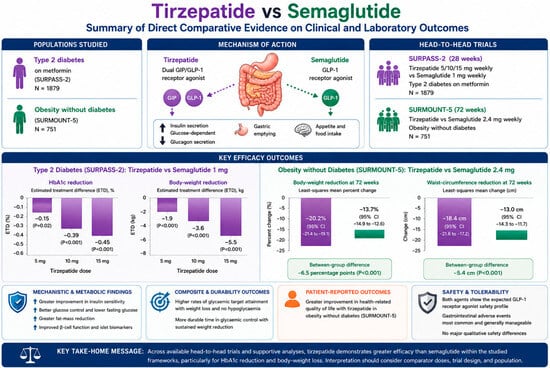
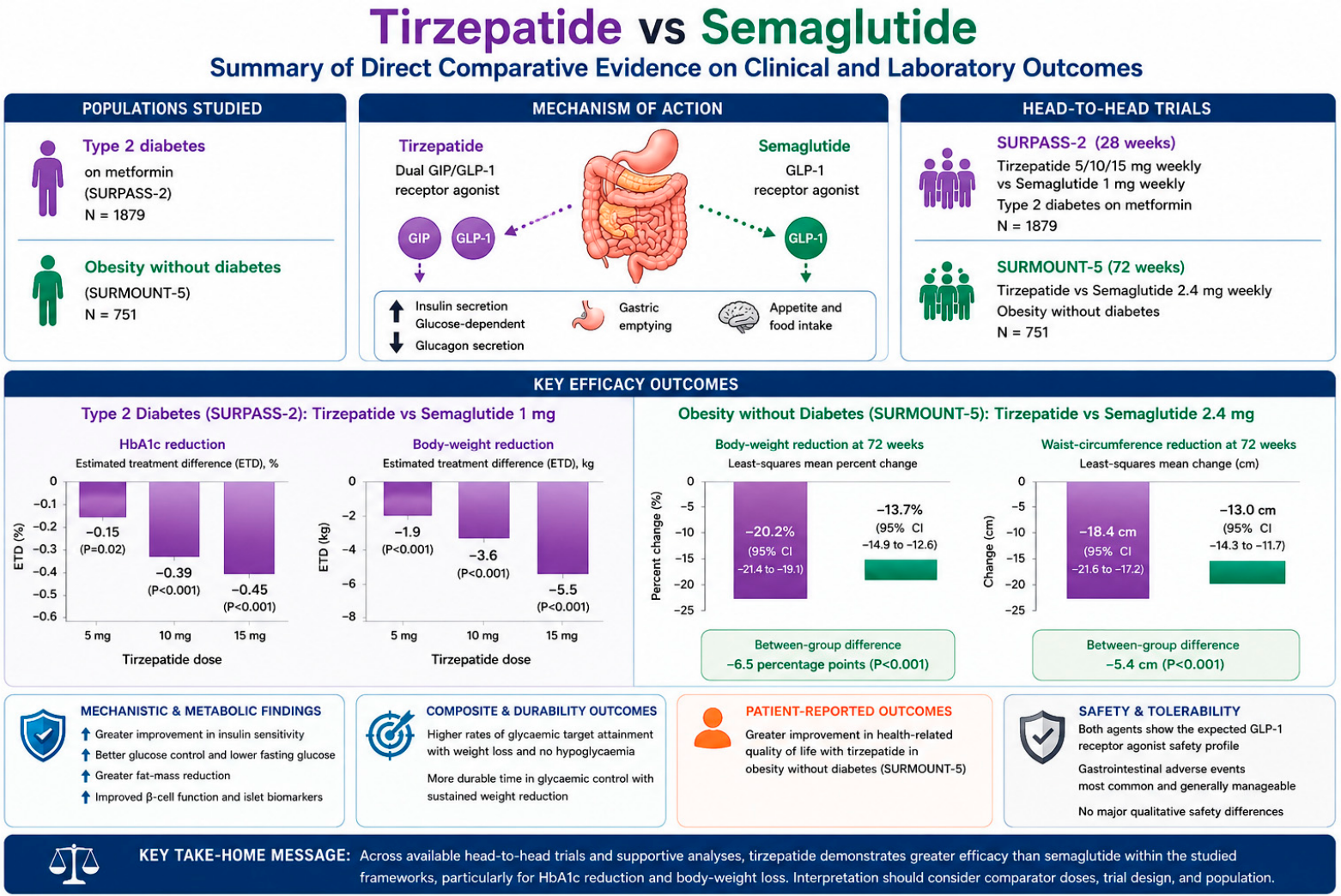
Across the principal direct comparative datasets, the magnitude of HbA1c reduction with tirzepatide relative to semaglutide ranged from approximately −0.15 to −0.45 percentage points in SURPASS-2, while between-group differences in body-weight reduction ranged from approximately −1.9 to −5.5 kg depending on tirzepatide dose [1]. In SURMOUNT-5, the between-group difference in percentage body-weight reduction was approximately 6.5 percentage points in favor of tirzepatide [2]. Although these comparisons were not pooled quantitatively because of methodological heterogeneity and overlapping datasets, they provide semi-quantitative descriptive context regarding the magnitude and consistency of observed treatment differences across currently available head-to-head trial frameworks. The principal comparative treatment differences are summarized semi-quantitatively in Supplementary Table S1. The central illustration summarizes the principal comparative efficacy signals, mechanistic findings, and interpretative limitations across currently available direct comparative trial frameworks (Figure 2).
Figure 2.
Central illustration. Direct comparative evidence on tirzepatide versus semaglutide across clinical, metabolic, mechanistic, and patient-reported outcomes. This illustration summarizes two head-to-head trials comparing tirzepatide and semaglutide: SURPASS-2 and SURMOUNT-5. The upper panels provide a brief overview of the populations studied, highlight the differences in the mechanisms of action for tirzepatide and semaglutide, and describe the design of the trials. The lower panel presents key efficacy outcomes of the studies. Abbreviations: GLP-1—glucagon-like peptide-1; GIP—glucose-dependent insulinotropic peptide; HbA1c—hemoglobin A1c. Figure was created using Open AI Chat GPT–5. The conceptual design and scientific content were created by the authors, and AI-assisted tools were used solely for graphical rendering.
Taken together, the currently available direct comparative trial programs suggest greater metabolic efficacy of tirzepatide within the studied dosing and comparison frameworks, particularly with respect to HbA1c reduction, body-weight loss, and several mechanistic measures of insulin sensitivity and glucose control. This pattern appears internally consistent across clinical and mechanistic analyses; however, the strength of inference is limited by the concentration of evidence within a small number of parent datasets and by repeated secondary analyses of overlapping populations [1,2,3,4,5,6,7,8,9,10,11]. The apparent breadth of the literature should therefore not be mistaken for extensive independent replication. Although eleven eligible publications were identified, most were derived from three parent comparative settings: SURPASS-2, a 28-week mechanistic randomized trial, and SURMOUNT-5. This concentration of evidence also influenced the intentionally focused search strategy, as the review was designed primarily to synthesize direct comparative datasets rather than to systematically evaluate the entire incretin literature across multiple indirect frameworks. Consequently, the evidence base is rich in secondary endpoint exploration but remains limited in truly independent head-to-head confirmation. This distinction was intentionally maintained throughout the review to minimize the risk of selective overinterpretation of overlapping datasets.
Importantly, the currently observed comparative pattern should not be regarded as a definitive therapeutic hierarchy across all possible comparison frameworks. Accordingly, interpretations of comparative superiority should remain conditional and framework-specific, particularly because currently available direct trials did not compare the agents at clearly established glycemic-potency-equivalent doses. The pivotal diabetes head-to-head trial compared tirzepatide with semaglutide 1 mg weekly [1], whereas subsequent evidence demonstrated that higher semaglutide doses may provide additional efficacy. SUSTAIN FORTE showed greater HbA1c and body-weight reduction with semaglutide 2.0 mg compared with 1.0 mg while maintaining a similar safety profile [12]. Furthermore, a phase 2 study published in 2025 explored semaglutide doses up to 16 mg weekly, suggesting that the maximal therapeutic potential of semaglutide may extend beyond the dose used in SURPASS-2 [18]. These findings raise an important methodological issue: the currently available direct comparisons may not fully reflect the highest achievable efficacy of semaglutide. Accordingly, the observed superiority of tirzepatide, although valid within the specific trial designs, should not automatically be extrapolated into an unconditional therapeutic ranking.
Conceptually, comparisons between tirzepatide and semaglutide may ultimately be more informative when based on comparable glycemic potency rather than nominal dose labels alone. Only head-to-head studies using doses that produce similar glycemic efficacy can more definitively clarify potential differences across other clinically relevant domains, including body weight, insulin sensitivity, tolerability, treatment persistence, and long-term cardiovascular outcomes.
A similar issue arises in obesity and obesity plus type 2 diabetes. SURMOUNT-5 directly compared tirzepatide with semaglutide 2.4 mg in obesity without diabetes and favored tirzepatide [2]. However, evidence in populations with concomitant obesity and type 2 diabetes remains indirect and derives from separate parent trial programs rather than direct head-to-head comparisons. STEP 2 demonstrated clinically meaningful weight reduction with semaglutide 2.4 mg in overweight or obesity with type 2 diabetes [13], whereas SURMOUNT-2 showed substantial weight reduction with tirzepatide 10 and 15 mg in a broadly similar clinical setting [14]. Although cross-trial comparisons should be interpreted cautiously, these findings collectively suggest that dedicated head-to-head studies in patients with obesity and type 2 diabetes remain warranted, as the relative balance between the two agents in this population may not fully mirror either SURPASS-2 or SURMOUNT-5.
Long-term outcome framing could also change interpretation. In SELECT, semaglutide 2.4 mg reduced major adverse cardiovascular events in people with overweight or obesity and established cardiovascular disease but without diabetes [15]. In contrast, SURPASS-CVOT compared tirzepatide with dulaglutide rather than semaglutide and found noninferiority for the primary cardiovascular endpoint [17]. These data do not allow a direct cardiovascular ranking between tirzepatide and semaglutide, but they indicate that greater weight loss or HbA1c reduction should not be assumed to translate into superior cardiovascular outcomes.
Protocol differences may also influence comparative interpretation. A randomized pilot study published in 2025 found that slower, flexible semaglutide titration improved adherence and reduced gastrointestinal adverse events without loss of efficacy [19]. This suggests that comparative tolerability and persistence can be influenced not only by drug choice, but also by titration strategy. Such design variables may affect future head-to-head comparisons and could modify the apparent balance between efficacy and tolerability.
The findings of this review should also be considered in the context of emerging indirect comparative evidence and network meta-analyses. These analyses are broadly directionally consistent with the direct head-to-head evidence, but their inferential value remains limited by cross-trial differences in population characteristics, baseline HbA1c and body weight, background therapy, comparator doses, titration schedules, treatment duration, and endpoint definitions [16,22,23,24]. Therefore, indirect comparisons should not be used to establish a therapeutic hierarchy between tirzepatide and semaglutide or to infer superiority in populations not directly studied in head-to-head trials. Rather, they provide contextual, hypothesis-generating information and underscore the need for adequately powered direct comparisons using optimized and clinically comparable dosing strategies, particularly in mixed populations such as patients with obesity and type 2 diabetes.
Another clinically relevant consideration is treatment persistence and adherence under routine-care conditions [25,26,27,28,29,30,31,32]. In incretin-based therapies, long-term effectiveness may be influenced not only by glycemic or weight-loss efficacy, but also by gastrointestinal tolerability, titration strategy, treatment expectations, and willingness to continue therapy over time [19,21]. Accordingly, future comparative studies should incorporate structured assessment of persistence, discontinuation, and patient-reported treatment burden, because these factors may meaningfully influence real-world comparative effectiveness.
Limitations
This review has several methodological limitations. First, it was designed as a structured narrative review rather than a formal systematic review or quantitative meta-analysis. The search strategy was intentionally focused on direct comparative evidence and was limited to PubMed/MEDLINE using a narrow predefined search framework. CENTRAL, Embase, Scopus, Web of Science, clinical trial registries, gray literature, and conference abstracts were not searched. Consequently, potentially relevant studies, unpublished analyses, recently indexed reports, or non-indexed material may have been missed. No formal risk-of-bias assessment or certainty-of-evidence grading was performed. Therefore, the present review should be interpreted as a structured narrative synthesis of published direct comparative evidence rather than a comprehensive systematic review intended to capture all potentially relevant literature.
Second, the apparent breadth of the comparative literature exceeds its true independence. Although eleven eligible publications were identified, many represented secondary, pooled, exploratory, or post hoc analyses derived from a small number of parent comparative trial populations, primarily SURPASS-2, the mechanistic phase 1 study, and SURMOUNT-5. Consequently, endpoint diversity should not be interpreted as repeated independent replication. In addition, the included evidence was methodologically heterogeneous, combining pivotal randomized head-to-head trials with mechanistic and exploratory analyses that differ substantially in inferential strength.
Third, an important limitation of the currently available direct comparative evidence is comparator-dose equivalence. The principal diabetes head-to-head trial compared tirzepatide with semaglutide 1 mg weekly, whereas subsequent studies demonstrated greater glycemic and weight-loss efficacy with higher semaglutide doses, including semaglutide 2.0 mg and investigational higher-dose regimens. Therefore, the currently observed superiority of tirzepatide should be interpreted within the specific dosing frameworks used in the available trials rather than as a definitive universal therapeutic hierarchy. Future head-to-head studies using more comparable glycemic-potency frameworks and optimized dosing strategies are needed to better define relative differences in efficacy, tolerability, persistence, and long-term clinical outcomes.
Fourth, publication and sponsorship-related bias cannot be excluded. Much of the available direct comparative evidence originates from sponsor-initiated trial programs, and several included reports represent secondary or exploratory analyses from the same parent datasets. Because this review did not include gray literature, trial registries, conference abstracts, or a formal assessment of publication bias, the published evidence may overrepresent favorable comparative findings.
Finally, indirect treatment comparisons discussed in the manuscript, although generally directionally consistent with the direct evidence, remain assumption-dependent and should be regarded as contextual rather than confirmatory evidence.
To improve interpretability despite the absence of formal meta-analysis, the manuscript includes a semi-quantitative comparative summary of the principal direct comparative trial frameworks (Supplementary Table S1).
5. Conclusions
Current direct comparative trial programs appear to suggest a conditional metabolic efficacy advantage of tirzepatide over semaglutide within the studied dosing and trial frameworks, particularly with respect to HbA1c reduction and body-weight loss. This comparative pattern was observed across the principal available direct comparative settings, including SURPASS-2 and SURMOUNT-5, and was directionally supported by exploratory mechanistic and secondary analyses.
However, interpretation of the currently available evidence requires substantial caution. The effective evidence base remains limited and concentrated within a small number of overlapping parent trial populations, while many included publications represent secondary, pooled, mechanistic, exploratory, or post hoc analyses rather than independent confirmatory comparative studies. In addition, the currently observed comparative pattern is substantially influenced by comparator-dose selection, titration strategy, population characteristics, and trial design. In particular, the principal diabetes head-to-head trial compared tirzepatide with semaglutide 1 mg weekly, which may not fully represent the maximal therapeutic potential of semaglutide across higher-dose therapeutic frameworks.
Accordingly, the presently available evidence should not be interpreted as establishing a definitive universal therapeutic hierarchy between tirzepatide and semaglutide. Rather, the current data suggest a framework-specific comparative metabolic advantage of tirzepatide within the studied clinical settings, while the broader relative efficacy and long-term clinical positioning of the two agents remain incompletely resolved.
Future adequately powered head-to-head trials using optimized and clinically comparable dosing strategies, particularly in populations with concomitant obesity and type 2 diabetes, are needed to better define relative differences in efficacy, tolerability, treatment persistence, and long-term card iovascular outcomes.
Supplementary Materials
The following supporting information can be downloaded at: https://www.mdpi.com/article/10.3390/obesities6030038/s1. Table S1. Semi-quantitative summary of principal treatment differences across direct comparative trial frameworks.
Author Contributions
Conceptualization—J.M.U., J.K. and E.P.N.; Investigation/Literature Search: J.M.U., J.R., P.N., R.G., Ł.S., J.K. and E.P.N.; Writing—Original Draft: J.M.U. and J.K.; Writing—Review and Editing: J.R., P.N., R.G., Ł.S. and E.P.N.; Visualization: J.M.U. All authors have read and agreed to the published version of the manuscript.
Funding
This research received no external funding.
Institutional Review Board Statement
Not applicable.
Informed Consent Statement
Not applicable.
Data Availability Statement
No new data were created or analyzed in this study.
Conflicts of Interest
The authors declare no conflicts of interest.
Abbreviations
The following abbreviations are used in this manuscript:
| GLP-1 | glucagon-like peptide-1 |
| GIP | glucose-dependent insulinotropic peptide |
| HbA1c | hemoglobin A1c |
References
- Frías, J.P.; Davies, M.J.; Rosenstock, J.; Pérez Manghi, F.C.; Fernández Landó, L.; Bergman, B.K.; Liu, B.; Cui, X.; Brown, K.; SURPASS-2 Investigators. Tirzepatide versus Semaglutide Once Weekly in Patients with Type 2 Diabetes. N. Engl. J. Med. 2021, 385, 503–515. [Google Scholar] [CrossRef] [Scilit] [PubMed]
- Aronne, L.J.; Horn, D.B.; le Roux, C.W.; Ho, W.; Falcon, B.L.; Gomez Valderas, E.; Das, S.; Lee, C.J.; Glass, L.C.; Senyucel, C.; et al. Tirzepatide as Compared with Semaglutide for the Treatment of Obesity. N. Engl. J. Med. 2025, 393, 26–36. [Google Scholar] [CrossRef] [Scilit] [PubMed]
- Heise, T.; Mari, A.; DeVries, J.H.; Urva, S.; Li, J.; Pratt, E.J.; Coskun, T.; Thomas, M.K.; Mather, K.J.; Haupt, A.; et al. Effects of Subcutaneous Tirzepatide versus Placebo or Semaglutide on Pancreatic Islet Function and Insulin Sensitivity in Adults with Type 2 Diabetes: A Multicentre, Randomised, Double-Blind, Parallel-Arm, Phase 1 Clinical Trial. Lancet Diabetes Endocrinol. 2022, 10, 418–429. [Google Scholar] [CrossRef] [Scilit]
- Heise, T.; DeVries, J.H.; Urva, S.; Li, J.; Pratt, E.J.; Thomas, M.K.; Mather, K.J.; Karanikas, C.A.; Dunn, J.; Haupt, A.; et al. Tirzepatide Reduces Appetite, Energy Intake, and Fat Mass in People With Type 2 Diabetes. Diabetes Care 2023, 46, 998–1004. [Google Scholar] [CrossRef] [Scilit]
- Mather, K.J.; Mari, A.; Heise, T.; DeVries, J.H.; Hua, M.; Urva, S.; Coskun, T.; Haupt, A.; Heine, R.J.; Pratt, E.; et al. Effects of Tirzepatide vs Semaglutide on β-Cell Function, Insulin Sensitivity, and Glucose Control During a Meal Test. J. Clin. Endocrinol. Metab. 2024, 109, 3046–3054. [Google Scholar] [CrossRef] [Scilit]
- Mather, K.J.; Mari, A.; Weerakkody, G.; Heise, T.; DeVries, J.H.; Urva, S.; Coskun, T.; Milicevic, Z.; Haupt, A.; Thomas, M.K. Greater Improvement in Insulin Sensitivity per Unit Weight Loss Associated with Tirzepatide versus Semaglutide: An Exploratory Analysis. Diabetes Obes. Metab. 2025, 27, 1507–1514. [Google Scholar] [CrossRef] [Scilit]
- Frias, J.P.; De Block, C.; Brown, K.; Wang, H.; Thomas, M.K.; Zeytinoglu, M.; Maldonado, J.M. Tirzepatide Improved Markers of Islet Cell Function and Insulin Sensitivity in People With T2D (SURPASS-2). J. Clin. Endocrinol. Metab. 2024, 109, 1745–1753. [Google Scholar] [CrossRef] [Scilit] [PubMed]
- Lingvay, I.; Cheng, A.Y.; Levine, J.A.; Gomez-Valderas, E.; Allen, S.E.; Ranta, K.; Torcello-Gómez, A.; Thieu, V.T. Achievement of Glycaemic Targets with Weight Loss and without Hypoglycaemia in Type 2 Diabetes with the Once-Weekly Glucose-Dependent Insulinotropic Polypeptide and Glucagon-like Peptide-1 Receptor Agonist Tirzepatide: A Post Hoc Analysis of the SURPASS-1 to -5 Studies. Diabetes Obes. Metab. 2023, 25, 965–974. [Google Scholar] [CrossRef] [Scilit]
- Bergman, B.K.; Rosenstock, J.; Garvey, W.T.; Batterham, R.L.; Chen, Y.; Liu, M.; Sharma, P.; Karanikas, C.A.; Thieu, V.T. Time Spent in Glycaemic Control with Sustained Body Weight Reduction with Tirzepatide: A Post Hoc Analysis of the SURPASS Clinical Trial Programme. Diabetes Obes. Metab. 2025, 27, 3223–3232. [Google Scholar] [CrossRef] [Scilit]
- Patel, H.; Khunti, K.; Rodbard, H.W.; Bajaj, H.S.; Bray, R.; Kindracki, Z.; Rodríguez, Á. Gastrointestinal Adverse Events and Weight Reduction in People with Type 2 Diabetes Treated with Tirzepatide in the SURPASS Clinical Trials. Diabetes Obes. Metab. 2024, 26, 473–481. [Google Scholar] [CrossRef] [Scilit]
- Shukla, A.P.; Dunn, J.P.; Gomez Valderas, E.; Fraseur Brumm, J.; Karanikas, C.A.; Hunter Gibble, T. Improved Health-Related Quality of Life with Tirzepatide versus Semaglutide in Adults with Obesity or Overweight from the SURMOUNT-5 Trial. Diabetes Obes. Metab. 2026, 28, 452–462. [Google Scholar] [CrossRef] [Scilit]
- Frías, J.P.; Auerbach, P.; Bajaj, H.S.; Fukushima, Y.; Lingvay, I.; Macura, S.; Søndergaard, A.L.; Tankova, T.I.; Tentolouris, N.; Buse, J.B. Efficacy and Safety of Once-Weekly Semaglutide 2·0 Mg versus 1·0 Mg in Patients with Type 2 Diabetes (SUSTAIN FORTE): A Double-Blind, Randomised, Phase 3B Trial. Lancet Diabetes Endocrinol. 2021, 9, 563–574. [Google Scholar] [CrossRef] [Scilit]
- Davies, M.; Færch, L.; Jeppesen, O.K.; Pakseresht, A.; Pedersen, S.D.; Perreault, L.; Rosenstock, J.; Shimomura, I.; Viljoen, A.; Wadden, T.A.; et al. Semaglutide 2·4 Mg Once a Week in Adults with Overweight or Obesity, and Type 2 Diabetes (STEP 2): A Randomised, Double-Blind, Double-Dummy, Placebo-Controlled, Phase 3 Trial. Lancet 2021, 397, 971–984. [Google Scholar] [CrossRef] [Scilit] [PubMed]
- Garvey, W.T.; Frias, J.P.; Jastreboff, A.M.; le Roux, C.W.; Sattar, N.; Aizenberg, D.; Mao, H.; Zhang, S.; Ahmad, N.N.; Bunck, M.C.; et al. Tirzepatide Once Weekly for the Treatment of Obesity in People with Type 2 Diabetes (SURMOUNT-2): A Double-Blind, Randomised, Multicentre, Placebo-Controlled, Phase 3 Trial. Lancet 2023, 402, 613–626. [Google Scholar] [CrossRef] [Scilit]
- Lincoff, A.M.; Brown-Frandsen, K.; Colhoun, H.M.; Deanfield, J.; Emerson, S.S.; Esbjerg, S.; Hardt-Lindberg, S.; Hovingh, G.K.; Kahn, S.E.; Kushner, R.F.; et al. Semaglutide and Cardiovascular Outcomes in Obesity without Diabetes. N. Engl. J. Med. 2023, 389, 2221–2232. [Google Scholar] [CrossRef] [Scilit] [PubMed]
- Karagiannis, T.; Malandris, K.; Avgerinos, I.; Stamati, A.; Kakotrichi, P.; Liakos, A.; Vasilakou, D.; Kakaletsis, N.; Tsapas, A.; Bekiari, E. Subcutaneously Administered Tirzepatide vs Semaglutide for Adults with Type 2 Diabetes: A Systematic Review and Network Meta-Analysis of Randomised Controlled Trials. Diabetologia 2024, 67, 1206–1222. [Google Scholar] [CrossRef] [Scilit]
- Nicholls, S.J.; Pavo, I.; Bhatt, D.L.; Buse, J.B.; Del Prato, S.; Kahn, S.E.; Lincoff, A.M.; McGuire, D.K.; Miller, D.; Nauck, M.A.; et al. Cardiovascular Outcomes with Tirzepatide versus Dulaglutide in Type 2 Diabetes. N. Engl. J. Med. 2025, 393, 2409–2420. [Google Scholar] [CrossRef] [Scilit]
- Aroda, V.R.; Jørgensen, N.B.; Kumar, B.; Lingvay, I.; Laulund, A.S.; Buse, J.B.; trial investigators. High-Dose Semaglutide (Up to 16 Mg) in People With Type 2 Diabetes and Overweight or Obesity: A Randomized, Placebo-Controlled, Phase 2 Trial. Diabetes Care 2025, 48, 905–913. [Google Scholar] [CrossRef] [Scilit]
- Eldor, R.; Avraham, N.; Rosenberg, O.; Shpigelman, M.; Golan-Cohen, A.; Cukierman-Yaffe, T.; Merzon, E.; Buch, A. Gradual Titration of Semaglutide Results in Better Treatment Adherence and Fewer Adverse Events: A Randomized Controlled Open-Label Pilot Study Examining a 16-Week Flexible Titration Regimen Versus Label-Recommended 8-Week Semaglutide Titration Regimen. Diabetes Care 2025, 48, 1607–1611. [Google Scholar] [CrossRef] [Scilit]
- Jastreboff, A.M.; le Roux, C.W.; Stefanski, A.; Aronne, L.J.; Halpern, B.; Wharton, S.; Wilding, J.P.H.; Perreault, L.; Zhang, S.; Battula, R.; et al. Tirzepatide for Obesity Treatment and Diabetes Prevention. N. Engl. J. Med. 2025, 392, 958–971. [Google Scholar] [CrossRef] [Scilit] [PubMed]
- Crisafulli, S.; Alkabbani, W.; Paik, J.M.; Bykov, K.; Tavakkoli, A.; Glynn, R.J.; Htoo, P.T.; Yu, E.W.; Trifirò, G.; Wexler, D.J.; et al. Comparative Gastrointestinal Safety of Dulaglutide, Semaglutide, and Tirzepatide in Adults With Type 2 Diabetes. Ann. Intern. Med. 2026, 179, 1–11. [Google Scholar] [CrossRef] [Scilit]
- Osumili, B.; Fan, L.; Paik, J.S.; Pantalone, K.M.; Ranta, K.; Sapin, H.; Tofé, S. Tirzepatide 5, 10 and 15 Mg versus Injectable Semaglutide 0.5 Mg for the Treatment of Type 2 Diabetes: An Adjusted Indirect Treatment Comparison. Diabetes Res. Clin. Pract. 2024, 212, 111717. [Google Scholar] [CrossRef] [Scilit]
- Hankosky, E.R.; He, X.; Malik, R.; Fraseur Brumm, J.; Wang, F.; Niemeyer, A.; Zhang, X.M.; Garvey, W.T. Tirzepatide 10 and 15 Mg versus Semaglutide 2.4 Mg in People with Obesity or Overweight with Type 2 Diabetes: An Indirect Treatment Comparison. Diabetes Obes. Metab. 2025, 27, 3757–3765. [Google Scholar] [CrossRef] [Scilit]
- Ciudin, A.; Johansson, E.; Zimner-Rapuch, S.; Dimitriadis, G.K.; Bertrand, M.; Curteis, T.; Clark, L.J.; Fan, L.; Sapin, H.; Bergmann, J.-F. Indirect Comparative Efficacy and Safety of Tirzepatide 10 and 15 Mg versus Semaglutide 2.4 Mg for the Management of Obesity and Overweight in Patients with Type 2 Diabetes. Diabetes Obes. Metab. 2025, 27, 4709–4719. [Google Scholar] [CrossRef] [Scilit]
- Kubica, A.; Kasprzak, M.; Siller-Matula, J.; Koziński, M.; Pio Navarese, E.; Obońska, K.; Andruszkiewicz, A.; Sztuba, B.; Fabiszak, T.; Swiątkiewicz, I.; et al. Time-Related Changes in Determinants of Antiplatelet Effect of Clopidogrel in Patients after Myocardial Infarction. Eur. J. Pharmacol. 2014, 742, 47–54. [Google Scholar] [CrossRef] [Scilit] [PubMed]
- Kosobucka, A.; Michalski, P.; Pietrzykowski, Ł.; Kasprzak, M.; Obońska, K.; Fabiszak, T.; Felsmann, M.; Kubica, A. Adherence to Treatment Assessed with the Adherence in Chronic Diseases Scale in Patients after Myocardial Infarction. Patient Prefer. Adherence 2018, 12, 333–340. [Google Scholar] [CrossRef] [Scilit] [PubMed]
- Pietrzykowski, Ł.; Kasprzak, M.; Michalski, P.; Kosobucka, A.; Fabiszak, T.; Kubica, A. The Influence of Patient Expectations on Adherence to Treatment Regimen after Myocardial Infarction. Patient Educ. Couns. 2022, 105, 426–431. [Google Scholar] [CrossRef] [Scilit] [PubMed]
- Kubica, A.; Adamski, P.; Bączkowska, A.; Czarnecki, D.; Derewiecki, T.; Donderski, R.; Grzechowiak, E.; Jasiewicz, M.; Kleinrok, A.; Kozera, G.; et al. The Rationale for Multilevel Educational and Motivational Intervention in Patients after Myocardial Infarction (MEDMOTION) Project Is to Support Multicentre Randomized Clinical Trial Evaluating Safety and Efficacy of Two Ticagrelor-Based De-Escalation Antiplatelet Strategies in Acute Coronary Syndrome (ELECTRA—SIRIO 2). Med. Res. J. 2020, 5, 244–249. [Google Scholar] [CrossRef] [Scilit]
- Jankowski, P.; Koczwarska-Maciejek, D.; Kamiński, K.; Gąsior, Z.; Kosior, D.A.; Styczkiewicz, M.; Kubica, A.; Rajzer, M.; Charkiewicz-Szeremeta, K.; Dąbek, J.; et al. Implementation of Cardiovascular Prevention Guidelines in Clinical Practice. Results from the POLASPIRE II Survey. Pol. Heart J. (Kardiol. Pol.) 2025, 83, 577–584. [Google Scholar] [CrossRef] [Scilit]
- Pietrzykowski, Ł.; Michalski, P.; Kosobucka, A.; Kasprzak, M.; Fabiszak, T.; Stolarek, W.; Siller-Matula, J.M.; Kubica, A. Medication Adherence and Its Determinants in Patients after Myocardial Infarction. Sci. Rep. 2020, 10, 12028. [Google Scholar] [CrossRef] [Scilit]
- Kubica, A.; Obońska, K.; Fabiszak, T.; Kubica, J. Adherence to Antiplatelet Treatment with P2Y12 Receptor Inhibitors. Is There Anything We Can Do to Improve It? A Systematic Review of Randomized Trials. Curr. Med. Res. Opin. 2016, 32, 1441–1451. [Google Scholar] [CrossRef] [Scilit]
- Kubica, A.; Kosobucka, A.; Fabiszak, T.; Gorog, D.A.; Siller-Matula, J.M. Assessment of Adherence to Medication in Patients after Myocardial Infarction Treated with Percutaneous Coronary Intervention. Is There a Place for Newself-Reported Questionnaires? Curr. Med. Res. Opin. 2019, 35, 341–349. [Google Scholar] [CrossRef] [Scilit] [PubMed]

Disclaimer/Publisher’s Note: The statements, opinions and data contained in all publications are solely those of the individual author(s) and contributor(s) and not of MDPI and/or the editor(s). MDPI and/or the editor(s) disclaim responsibility for any injury to people or property resulting from any ideas, methods, instructions or products referred to in the content. |
© 2026 by the authors. Licensee MDPI, Basel, Switzerland. This article is an open access article distributed under the terms and conditions of the Creative Commons Attribution (CC BY) license.