


Abstract
Background: Serum uric acid (SUA) has emerged as a relevant cardiometabolic and hepatic risk marker in adolescents with obesity. Cinnamon has shown metabolic benefits in adults; however, its effects on SUA and hepatic markers in pediatric populations remain unclear. This study aimed to evaluate the efficacy of cinnamon supplementation on serum uric acid, hepatic enzymes, and lipid profiles in adolescents with obesity. Methods: This is a secondary analysis of a randomized, double-blind, placebo-controlled clinical trial including 93 adolescents (10–18 years) with obesity (BMI ≥ 95th percentile). Participants received either 3 g/day of Cinnamomum verum or a placebo for 16 weeks, alongside lifestyle intervention. Changes in BMI z-score, SUA, alanine aminotransferase (ALT), aspartate aminotransferase (AST), gamma-glutamyl transferase (GGT), and triglycerides were analyzed. Results: The cinnamon group showed a greater reduction in BMI z-score compared to placebo (Δ −0.08 vs. −0.02; p < 0.001). Serum uric acid decreased significantly in the cinnamon group (median change: −0.5 mg/dL [IQR: −1.0 to −0.2]) compared to placebo (−0.1 mg/dL [IQR: −0.4 to 0.2]; p < 0.01). Triglycerides also decreased in the cinnamon group (−18 mg/dL [IQR: −35 to −5]) versus placebo (−5 mg/dL [IQR: −20 to 10]; p < 0.05). Hepatic enzymes (ALT, AST, and GGT) decreased significantly within both groups, without significant differences between groups. In a subgroup of participants with elevated baseline ALT (n = 67), ALT decreased in both groups (placebo: 32.0 to 30.0 U/L, p = 0.004; cinnamon: 33.0 to 26.0 U/L, p = 0.001), with a greater but non-significant reduction in the cinnamon group (Δ −6.0 vs. −2.0 U/L; p = 0.197). Conclusions: Cinnamon supplementation significantly reduced serum uric acid and improved metabolic parameters in adolescents with obesity. These findings suggest that cinnamon may act as an adjunct strategy targeting early cardiometabolic risk markers, particularly uric acid.
1. Introduction
Serum uric acid (SUA) has emerged as an important biomarker of cardiometabolic risk in adolescents with obesity. Elevated SUA levels have been associated with hypertriglyceridemia, hyperglycemia, metabolic syndrome, and increased cardiometabolic burden in pediatric populations [1]. Beyond being a byproduct of purine metabolism, uric acid plays an active role in oxidative stress, endothelial dysfunction, and insulin resistance, thereby contributing to the pathophysiological cascade linking obesity to metabolic and hepatic complications.
Childhood obesity remains one of the most critical public health challenges of the 21st century [2,3]. Its rising prevalence has been accompanied by increased rates of dyslipidemia, hypertension, insulin resistance, and metabolic dysfunction-associated steatotic liver disease (MASLD), currently recognized as the most common chronic liver disease in children and adolescents [4,5]. MASLD is defined by hepatic steatosis in the presence of cardiometabolic risk factors and may occur even in the absence of overt transaminase elevation, reflecting early metabolic derangements [4,5].
In addition to insulin resistance and chronic low-grade inflammation, emerging evidence highlights the role of adipose tissue dysfunction and ectopic lipid deposition in the development of metabolic disturbances associated with obesity. Hypertrophic adipocytes exhibit impaired expandability, leading to lipid spillover and accumulation in non-adipose tissues such as liver and muscle, which exacerbates lipotoxicity and metabolic dysregulation. Furthermore, mitochondrial dysfunction and increased oxidative stress contribute to reduced fatty acid oxidation and enhanced reactive oxygen species production, perpetuating insulin resistance and hepatic injury. These interconnected mechanisms provide a more comprehensive understanding of the multifactorial nature of metabolic disturbances in obesity and their progression toward cardiometabolic and hepatic complications [6,7].
Metabolic disturbances in obesity are driven by insulin resistance, chronic low-grade inflammation, altered lipid homeostasis, and increased fructose intake [4]. Notably, fructose metabolism in the liver leads to rapid phosphorylation and depletion of intracellular ATP, which promotes purine nucleotide degradation and subsequent uric acid production. This process has been directly associated with increased serum uric acid levels and contributes to oxidative stress, endothelial dysfunction, and insulin resistance. In addition, fructose-induced hyperuricemia has been linked to stimulation of de novo lipogenesis and hepatic fat accumulation, thereby contributing to the development and progression of metabolic dysfunction-associated steatotic liver disease (MASLD) [5,8]. In pediatric populations, hyperuricemia has been linked not only to components of metabolic syndrome but also to the severity of hepatic steatosis and adverse cardiometabolic profiles [1], positioning uric acid as a potential therapeutic target.
Although lifestyle modification remains the cornerstone of pediatric obesity management, pharmacologic options are limited and may be associated with gastrointestinal or hepatic adverse effects [9,10,11]. Consequently, there is growing interest in adjunctive nutritional strategies capable of improving metabolic risk markers.
Cinnamon has demonstrated beneficial metabolic effects in adults with obesity and type 2 diabetes, including improvements in lipid profile, glycemic control, and insulin sensitivity [12,13,14,15,16,17]. These effects have been attributed to its high polyphenol content, antioxidant properties, and modulation of inflammatory pathways, insulin signaling, and glucose uptake [18]. Additionally, experimental and clinical evidence suggests that cinnamon may influence lipid metabolism and oxidative stress, which are closely linked to hepatic dysfunction and uric acid metabolism. However, most studies have focused on glycemic outcomes, with limited evaluation of hepatic enzymes and minimal evidence regarding serum uric acid, particularly in pediatric populations with obesity [14,15,16,18,19,20,21].
Given the emerging role of uric acid as a cardiometabolic and hepatic risk marker, this study aimed to evaluate the efficacy of cinnamon supplementation on hepatic enzymes, lipid profiles, and, particularly, serum uric acid levels in adolescents with obesity (BMI percentile ≥ 95).
2. Materials and Methods
2.1. Study Design and Participants
This investigation represents a prespecified secondary analysis of a multicenter, double-blind, randomized, placebo-controlled clinical trial conducted in Mexico City. Participants were recruited from outpatient pediatric obesity clinics at two tertiary care hospitals between 15 July and 30 December 2020.
Eligible participants were adolescents aged 10–18 years with obesity, defined as BMI ≥ 95th percentile for age and sex according to international growth references. Exclusion criteria included syndromic obesity, eating disorders (including bulimia nervosa), diagnosis of type 1 or type 2 diabetes mellitus, major depressive disorder, chronic liver disease, use of metformin or other medications known to affect glucose or lipid metabolism, and current use of antioxidant or herbal supplements.
Participants were randomly assigned in a 1:1 ratio to receive cinnamon supplementation or placebo for 120 days. Randomization was generated using Random Allocation Software (RAS), version 2.0, developed in Microsoft Visual Basic 6 for Windows, by a senior investigator not involved in recruitment or outcome assessment. Allocation concealment was maintained throughout the study.
Previous clinical studies have evaluated cinnamon supplementation at doses ranging from 500 to 3000 mg/day for 4–16 weeks, with an overall favorable safety profile and no significant increase in adverse events compared with controls [21]. Some trials have reported metabolic benefits, particularly at doses of 3 g/day, including improvements in glycemic parameters and body composition [18,19,20,21], although findings have been inconsistent [15]. Importantly, cinnamon has demonstrated good tolerability, with no evidence of hepatic or renal toxicity even at higher doses [14,16]. Based on this evidence, a daily dose of 3 g was selected to optimize potential metabolic effects while maintaining safety.
The intervention group received six capsules daily, each containing 500 mg of Cinnamomum verum (BIOD-18015, Veracruz, Mexico), totaling 3 g/day. The control group received identical capsules containing 450 mg of cornstarch (ISAAQUIM, Mexico City, Mexico). Both preparations were packaged in identical bottles to ensure blinding of participants, caregivers, and the investigator.
2.2. Study Procedures
Participants and their families attended an informational session during which the study objectives, procedures, potential risks, and benefits were explained. Written informed consent from parents or legal guardians and written assent from adolescents were obtained before enrollment.
At baseline and after 120 days of intervention, participants attended the research unit between 7:00 and 8:00 a.m. following an overnight fast of 8–12 h. Anthropometric measurements, body composition assessment, and venous blood sampling were performed at both visits.
Adherence to supplementation was assessed through capsule counts at each in-person visit. Adequate adherence was defined as consumption of ≥90% of assigned capsules. Adverse events were systematically recorded at each follow-up visit.
All participants received standardized dietary counseling based on World Health Organization recommendations [22], including a hypocaloric meal plan providing approximately 700 kcal/day less than habitual intake. The prescribed macronutrient distribution was approximately 50% carbohydrates, 20% protein, and 30% total fat. Participants were advised to engage in at least 30 min of daily physical activity. Physical activity levels were assessed using the International Physical Activity Questionnaire at baseline and study completion.
Dietary adherence was evaluated through 24-h dietary recalls conducted during follow-up visits. Nutrient intake was analyzed using Nutritionist IV software (Nutritionist IV, N Squared Computing, San Bruno, CA, USA). Adequate adherence was defined as energy intake ≤ 110% of the prescribed caloric goal and macronutrient distribution within predefined limits (≤60% carbohydrates and ≤35% total fat).
2.3. Outcome Measures
For this secondary analysis, the primary outcome was the change in serum uric acid concentration after 120 days of supplementation.
Secondary outcomes included changes in hepatic enzymes (AST, ALT, and GGT) and lipid profile (triglycerides and HDL cholesterol).
Anthropometric variables, dietary adherence, and physical activity were considered potential confounding variables.
2.4. Laboratory Measurements
After a minimum 12-h fast, venous blood samples were obtained between 7:00 and 8:00 a.m. Serum glucose, triglycerides, HDL cholesterol, and uric acid were measured using colorimetric enzymatic methods (Bayer Diagnostics, Puteaux, France). Intra- and inter-assay coefficients of variation < 7% were considered acceptable.
2.5. Cardiometabolic Profile Assessment and Uric Acid Level Measurements
After a minimum of 12 h of fasting, between 7:00 and 8:00 a.m., blood samples were collected from the antecubital vein in the forearm following the anthropometric assessment. Glucose, TGL, HDLc, and uric acid levels were determined by colorimetric enzymatic methods (Bayer Diagnostics, Puteaux, France). Insulin was measured by chemiluminescence (Roche-Hitachi Modular P and D). Intra- and interassay coefficients of variation < 7% were considered acceptable. A standard curve was also generated for each assay.
2.6. Anthropometry
A certified nutritionist performed anthropometric assessments. Height was measured using a stadiometer (SECA Model 769, SECA GmbH & Co. KG, Hamburg, Germany), and weight was measured using bioelectrical impedance (Tanita BC-568 Segmental Body Composition Monitor, Tokyo, Japan). BMI was calculated as weight (kg)/height (m2). BMI Z-scores were calculated using standardized growth references.
2.7. Statistical Analysis
Analyses were conducted under the intention-to-treat principle. Missing outcome data were imputed using a support vector machine model with a radial basis function kernel (gamma = 0.001; regularization parameter = 100).
Categorical variables are presented as frequencies and percentages. Continuous variables were assessed for normality using the Kolmogorov–Smirnov test. Because most variables were not normally distributed, results are expressed as medians with 95% confidence intervals.
Within-group comparisons were performed using the Wilcoxon signed-rank test. Between-group comparisons of baseline characteristics and changes (Δ = post-intervention minus baseline) were conducted using the Mann–Whitney U test for continuous variables and the χ2 test for categorical variables.
All analyses were performed using STATA version 14.0. A two-sided p-value ≤ 0.05 was considered statistically significant.
2.8. Ethical Considerations
The study protocol received approval from the Institutional Review Boards of the Instituto Mexicano del Seguro Social (CNIS #R-2018-785-108) and the Hospital Infantil de México Federico Gómez (HIM-2018-016) and was registered at ClinicalTrials.gov (NCT04476160). Written informed consent from parents or legal guardians and written assent from adolescents were obtained prior to enrollment. The study was conducted in accordance with the Declaration of Helsinki and followed CONSORT recommendations.
3. Results
3.1. Baseline Characteristics
Of the 146 adolescents screened, 100 met eligibility criteria and were randomized (50 per group). Seven participants discontinued follow-up (four in the cinnamon group and three in the placebo group). Ninety-three participants completed the 16-week intervention. At baseline, groups were comparable with respect to age, sex distribution, pubertal development, BMI Z-score, serum uric acid, triglycerides, HDL cholesterol, and hepatic enzymes (AST, ALT, and GGT). No statistically significant differences were observed between groups (Table 1).
Table 1.
Baseline subject characteristics stratified by treatment.
3.2. Comparison Between Groups
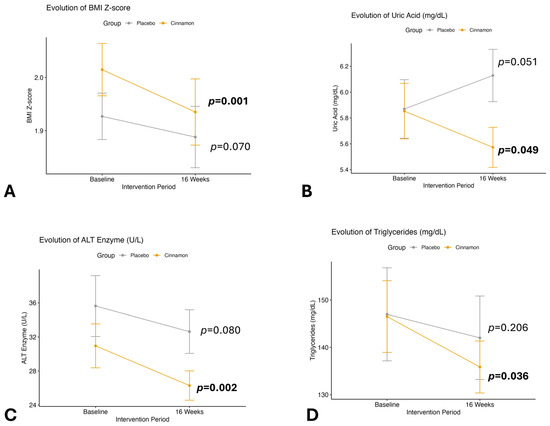
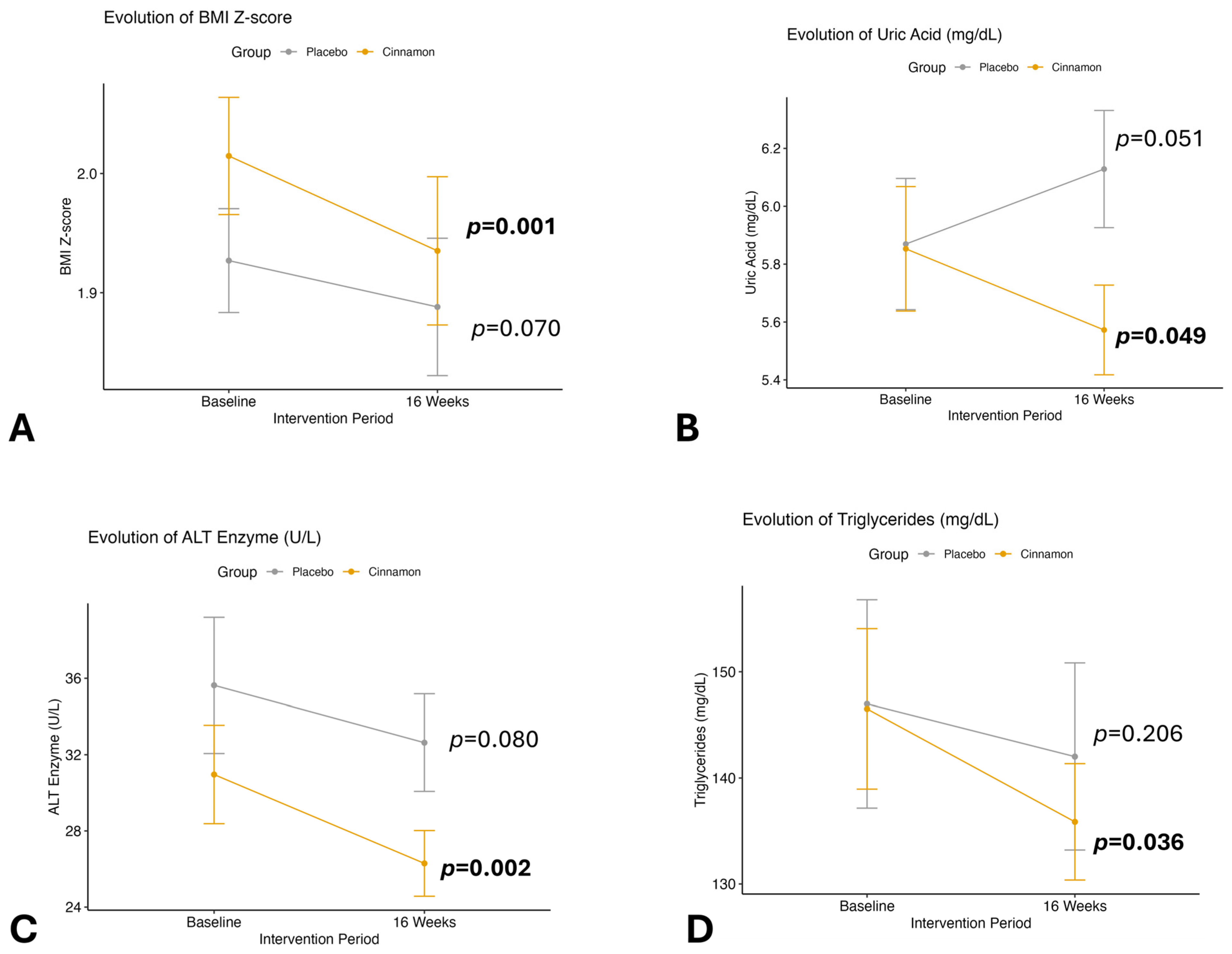
After 16 weeks, the cinnamon group demonstrated significant reductions in BMI Z-score (p = 0.001), serum uric acid (p = 0.049), triglycerides (p = 0.036), and hepatic enzymes (AST p = 0.001; ALT p = 0.002; GGT p = 0.021) (Figure 1).
Figure 1.
Evolution of (A) BMI z-score, (B) serum uric acid, (C) alanine aminotransferase (ALT), and (D) triglycerides in the placebo and cinnamon groups from baseline to 16 weeks of follow-up. Data are presented as median (IQR). Within-group changes were assessed using paired analyses.
In the placebo group, only AST showed a significant reduction (p = 0.004). No significant changes were observed for serum uric acid, triglycerides, ALT, or GGT. The reduction in BMI Z-score in the placebo group did not reach statistical significance (p = 0.070) (Figure 1).
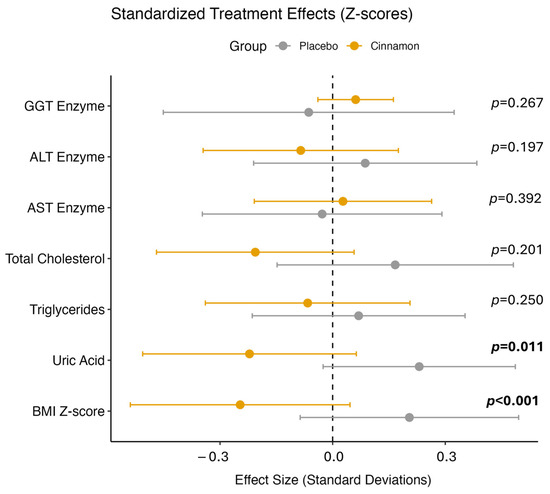
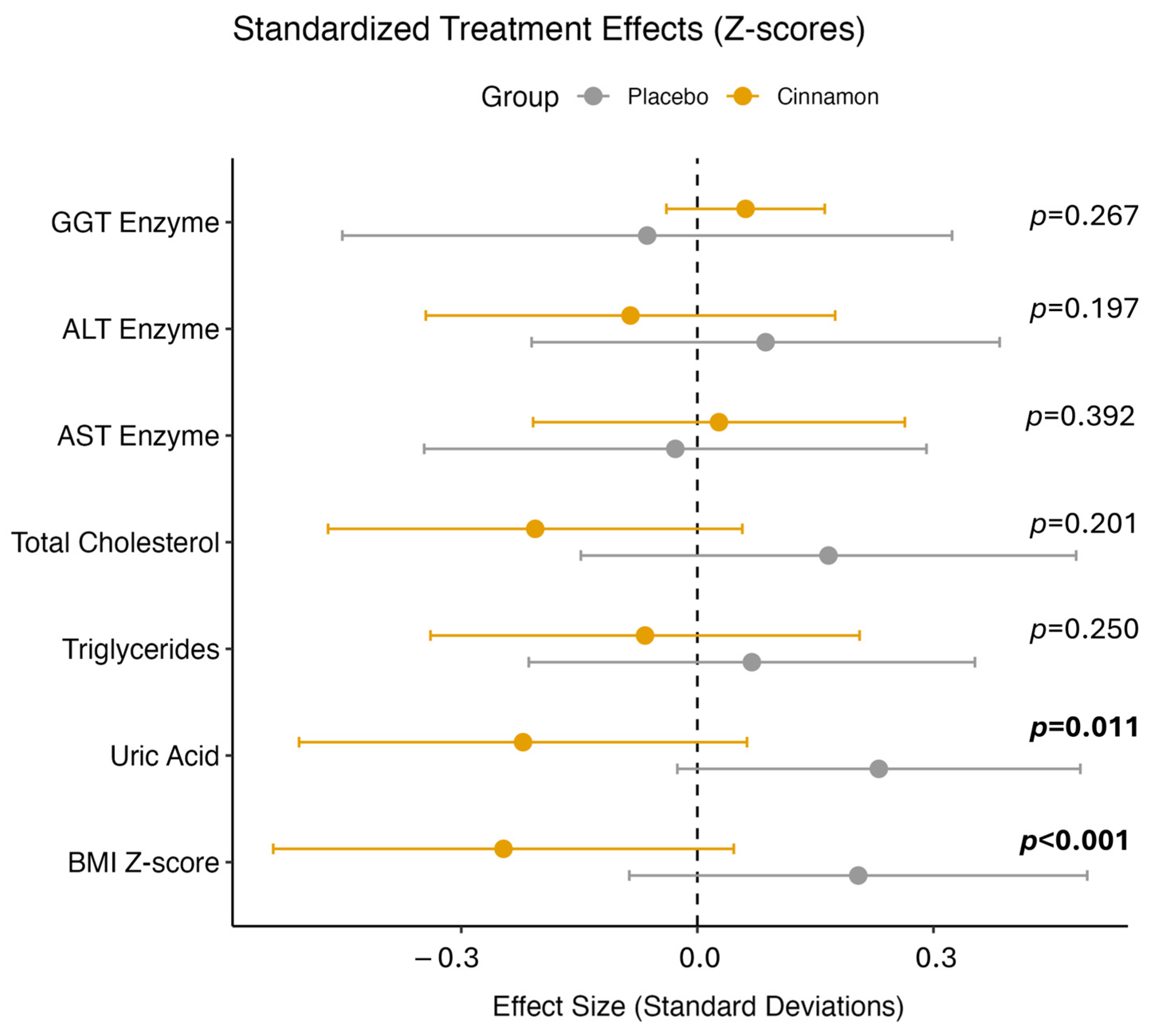
Between-group comparisons of delta values showed a significantly greater reduction in BMI Z-score (Δ −0.08 vs. −0.02; p < 0.001) and serum uric acid (p = 0.011) in the cinnamon group. No significant between-group differences were observed for triglycerides or hepatic enzymes (Table 2) (Figure 2).
Table 2.
Estimated effect changes and deltas in anthropometric characteristics, uric acid, hepatic enzymes and lipid profile after 16 weeks of intervention (after multiple imputation).
Figure 2.
Comparison of delta (Δ) changes from baseline to 16 weeks in BMI z-score and biochemical parameters (uric acid, ALT, and triglycerides) between the placebo and cinnamon groups. Between-group differences were evaluated, and statistically significant differences are indicated.
Adherence to capsule consumption exceeded 90% in both groups, and dietary compliance was similar. Physical activity levels were low overall and did not differ significantly between groups.
3.3. Subgroup Analysis According to Elevated Baseline ALT Levels
A prespecified subgroup analysis was conducted among participants with elevated alanine aminotransferase (ALT) levels at baseline, defined according to sex-specific thresholds proposed by NASPGHAN (ALT > 26 U/L in boys and >22 U/L in girls) [23]. Based on these criteria, 67 participants were identified as having elevated ALT (placebo: n = 35; cinnamon: n = 32).
Within this subgroup, both treatment arms demonstrated significant reductions in ALT after 16 weeks of intervention. In the placebo group, ALT decreased from 32.0 U/L (95% CI: 33.6–51.7) at baseline to 30.0 U/L (29.0–42.4) at follow-up (p = 0.004). Similarly, in the cinnamon group, ALT decreased from 33.0 U/L (31.7–45.3) to 26.0 U/L (24.1–33.0) (p = 0.001).
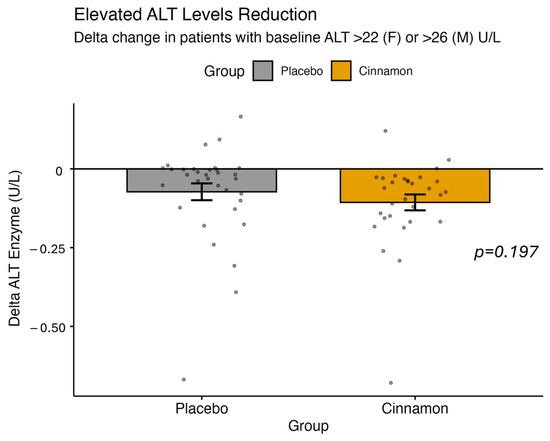
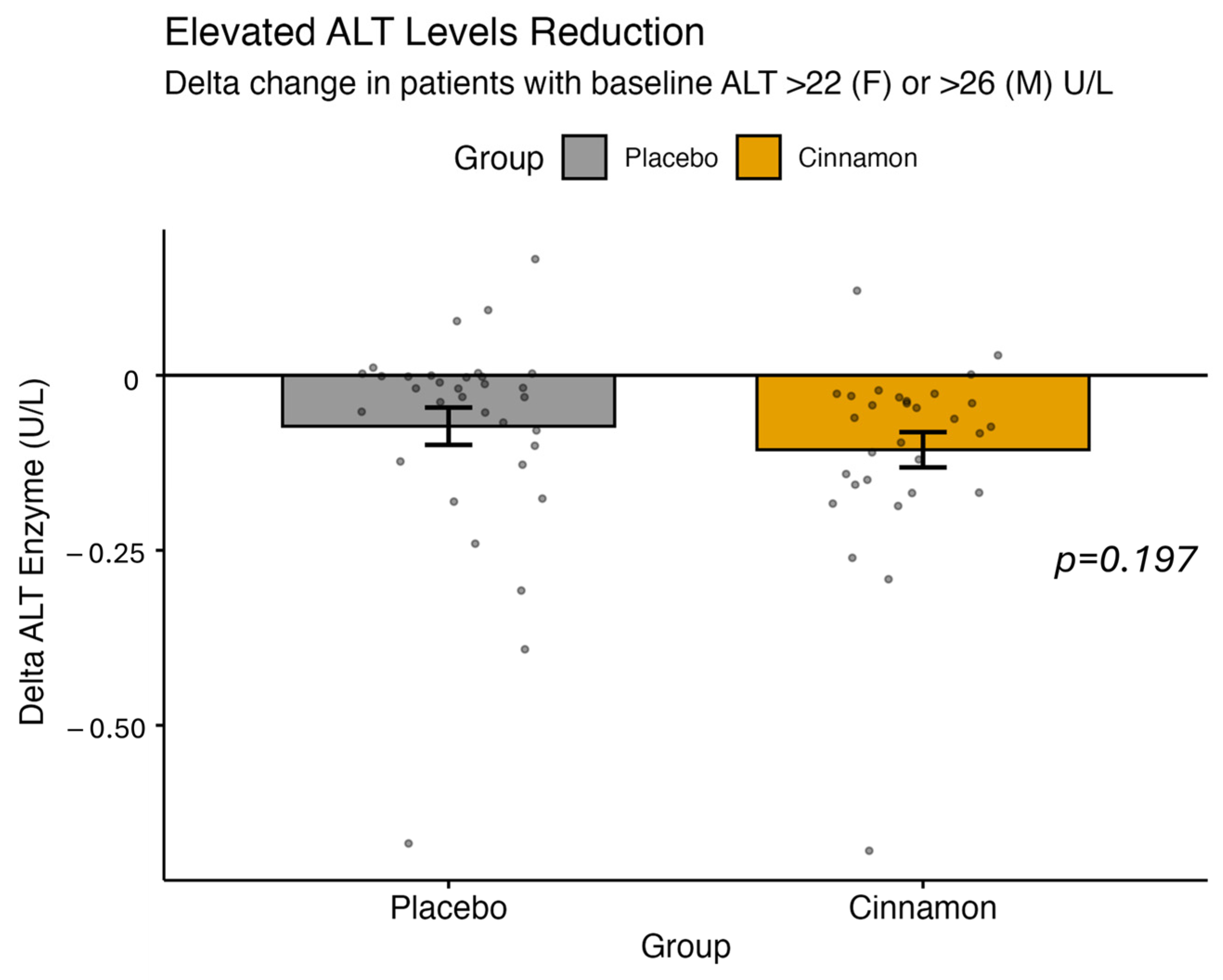
When comparing the magnitude of change between groups, a greater reduction was observed in the cinnamon group (Δ −6.0 U/L [−14.8, −5.0]) compared with the placebo group (Δ −2.0 U/L [−12.0, −1.8]); however, this difference did not reach statistical significance (p = 0.197) (Figure 3).
Figure 3.
Comparison of delta (Δ) changes in ALT from baseline to 16 weeks among participants with elevated ALT at baseline (boys > 26 U/L, girls > 22 U/L). Although a greater reduction was observed in the cinnamon group compared to placebo, the between-group difference did not reach statistical significance.
These findings indicate that ALT levels improved significantly in both groups, with a trend toward a greater reduction in the cinnamon group among participants with elevated baseline values.
4. Discussion
In this secondary analysis of a randomized controlled trial, the most clinically relevant finding was the significant reduction in serum uric acid observed in the cinnamon group, both within-group and in the between-group comparison of delta values. These results support uric acid as a responsive metabolic marker in adolescents with obesity.
Hyperuricemia is increasingly recognized as a mediator—not merely a marker—of metabolic dysfunction. Elevated uric acid promotes oxidative stress, endothelial dysfunction, inflammatory activation, and insulin resistance [24,25,26,27,28]. In pediatric populations, higher uric acid levels have been associated with obesity, dyslipidemia, and metabolic dysfunction-associated fatty liver disease [29]. Therefore, the reduction observed in the cinnamon group may reflect improvement in underlying metabolic pathways linked to insulin resistance.
Similarly, visceral adiposity has been positively correlated with serum uric acid levels [26]. Although visceral fat was not directly measured in our study, the significant reduction in BMI Z-score, together with the decline in uric acid, supports the biological link between adiposity and uric acid metabolism.
Hyperuricemia has also been associated with increased triglycerides and decreased HDL cholesterol, contributing to cardiometabolic clustering [30]. In our cohort, reductions in triglycerides and hepatic enzymes accompanied the decline in uric acid in the cinnamon group, suggesting coordinated metabolic improvement.
Both groups showed reductions in AST, and the cinnamon group additionally demonstrated decreases in ALT and GGT; however, no significant between-group differences were observed for hepatic enzyme deltas. This suggests that liver enzyme improvement was primarily attributable to lifestyle modification. Weight reduction remains the cornerstone therapy for pediatric hepatic steatosis and is consistently associated with improvement in aminotransferases [31].
Importantly, no elevation in hepatic enzymes was observed in the cinnamon group, supporting the short-term hepatic safety of the administered preparation and dosage, despite isolated reports of hepatotoxicity associated with excessive coumarin intake [32,33].
Hormesis is defined as a biphasic biological response in which low doses of a stressor or bioactive compound induce adaptive and beneficial cellular effects, while higher doses may be neutral or even harmful [34]. This framework has been increasingly recognized in nutritional interventions, including phytochemicals, where mild metabolic stress can activate antioxidant defenses, improve mitochondrial function, and enhance cellular resilience [34]. In this context, cinnamon and its bioactive compounds—including cinnamaldehyde and cinnamic acid (CA), a naturally occurring compound abundantly found in cinnamon—may exert hormetic effects by modulating key metabolic pathways. CA, a widely consumed nutraceutical, has demonstrated consistent antidiabetic and anti-obesity effects, although its actions at the membrane signaling interface remain underappreciated [35,36]. Experimental and clinical evidence suggests that cinnamon enhances insulin signaling through activation of insulin receptor autophosphorylation and inhibition of protein tyrosine phosphatase-1B, promotes glucose uptake via PI3K-related pathways, and exerts antioxidant effects that reduce obesity-related oxidative stress [37,38,39]. Additionally, cinnamaldehyde influences appetite regulation through TRPA1 activation and ghrelin modulation, promotes lipolysis and thermogenesis in adipose tissue, and may contribute to hepatic metabolic improvement by enhancing glycogen synthesis and reducing gluconeogenesis, thereby supporting liver function and reducing hepatic enzyme activity [40,41,42,43,44,45]. Notably, oxidative stress is a key driver of uric acid production and its deleterious metabolic effects; therefore, the antioxidant properties of cinnamon may indirectly contribute to the observed reduction in serum uric acid levels by attenuating oxidative pathways and improving metabolic homeostasis [46]. These combined mechanisms suggest that cinnamon may act not only through direct metabolic effects but also via adaptive hormetic signaling pathways, potentially contributing to improvements in cardiometabolic risk markers, including serum uric acid.
The randomized controlled design represents a major strength of this study, providing robust evidence on the metabolic effects of cinnamon supplementation in adolescents with obesity. However, as this was a secondary analysis, the trial was not originally powered to detect differences in serum uric acid. In addition, serum levels of cinnamon or its metabolites were not measured at baseline or after the intervention, limiting objective confirmation of exposure. Adherence was assessed through capsule counts at each follow-up visit and demonstrated high compliance, although this method does not fully capture actual ingestion or bioavailability. Furthermore, hepatic imaging was not performed; therefore, the diagnosis of MASLD could not be established. Instead, elevated hepatic enzymes were used to define a subgroup for exploratory analyses, and these findings should be interpreted with caution.
Future studies specifically designed with serum uric acid as a primary endpoint, incorporating imaging-based assessment of hepatic steatosis and objective biomarkers of adherence, are warranted to further elucidate the metabolic effects of cinnamon in pediatric populations.
5. Conclusions
Cinnamon supplementation significantly reduced serum uric acid levels in adolescents with obesity compared with placebo. Given the established association between uric acid, adiposity, insulin resistance, and cardiometabolic risk, cinnamon may represent a complementary metabolic strategy targeting early cardiometabolic mediators in pediatric obesity.
Author Contributions
J.N.Z.-C. and N.L.M.-R. conceptualization, designed the study and acquired the information J.N.Z.-C. and N.L.M.-R. data curation. I.P.-O. and J.M.D.-S. analyzed and interpreted the data. M.A.V.-K., J.N.Z.-C. and J.V.-G. critically revised the manuscript with respect to important intellectual content, wrote the discussion and approved the final version of the article. J.N.Z.-C., M.A.V.-K. and J.V.-G. analyzed and interpreted the data and wrote the article. All authors have read and agreed to the published version of the manuscript.
Funding
This research received no external funding.
Institutional Review Board Statement
The study was conducted in accordance with the Declaration of Helsinki and followed CONSORT recommendations for studies involving humans and approved Instituto Mexicano del Seguro Social (CNIS #R-2018-785-108) and the Hospital Infantil de México Federico Gómez (HIM-2018-016) and was registered at ClinicalTrials.gov (NCT04476160).
Informed Consent Statement
The parents/caregivers provided written informed consent, and each child provided assent.
Data Availability Statement
The data presented in this study are available upon request from the corresponding author due to privacy concerns.
Conflicts of Interest
The authors declare no conflicts of interest.
References
- Villasis-Keever, M.A.; Zurita-Cruz, J.N.; Alcaraz-Hurtado, I.A.; Klünder-Klünder, M.; Vilchis-Gil, J.; Romero-Guerra, A.L.; López-Beltran, A.L.; Delgadillo-Ruano, M.A. Association of Serum Uric Acid Levels with Cardiometabolic Factors in Adolescents with Obesity: A Cross-Sectional Study. Metabolites 2025, 15, 237. [Google Scholar] [CrossRef] [Scilit]
- World Health Organization. Obesity: Preventing and Managing the Global Epidemic, Report of a WHO Consultation; World Health Organization Technical Report Series; World Health Organization: Geneva, Switzerland, 2000; Volume 894, pp. 1–253.
- Apovian, C.M. The Obesity Epidemic—Understanding the Disease and the Treatment. N. Engl. J. Med. 2016, 374, 177–179. [Google Scholar] [CrossRef] [Scilit]
- Tapia Ceballos, L.; López Siguero, J.P.; Jurado Ortiz, A. Prevalencia del síndrome metabólico y sus componentes en niños y adolescentes con obesidad [Prevalence of metabolic syndrome and its components in obese children and adolescents]. An. Pediatr. 2007, 67, 352–361. [Google Scholar] [CrossRef]
- Xanthakos, S.A.; Ibrahim, S.H.; Adams, K.; Kohli, R.; Sathya, P.; Sundaram, S.; Vos, M.B.; Dhawan, A.; Caprio, S.; Behling, C.A.; et al. AASLD Practice Statement on the evaluation and management of metabolic dysfunction-associated steatotic liver disease in children. Hepatology 2025, 82, 1352–1394. [Google Scholar] [CrossRef] [Scilit] [PubMed]
- Weihrauch-Blüher, S.; Wiegand, S. Risk factors and implications of childhood obesity. Curr. Obes. Rep. 2018, 7, 254–259. [Google Scholar] [CrossRef] [Scilit] [PubMed]
- Shulman, G.I. Ectopic fat in insulin resistance, dyslipidemia, and cardiometabolic disease. N. Engl. J. Med. 2014, 371, 1131–1141. [Google Scholar] [CrossRef] [Scilit]
- Jensen, T.; Abdelmalek, M.F.; Sullivan, S.; Nadeau, K.J.; Green, M.; Roncal, C.; Nakagawa, T.; Kuwabara, M.; Sato, Y.; Kang, D.-H.; et al. Fructose and sugar: A major mediator of non-alcoholic fatty liver disease. J. Hepatol. 2018, 68, 1063–1075. [Google Scholar] [CrossRef] [Scilit] [PubMed]
- Hampl, S.E.; Hassink, S.G.; Skinner, A.C.; Armstrong, S.C.; Barlow, S.E.; Bolling, C.F.; Avila Edwards, K.C.; Eneli, I.; Hamre, R.; Joseph, M.M.; et al. Clinical Practice Guideline for the Evaluation and Treatment of Children and Adolescents with Obesity. Pediatrics 2023, 151, e2022060640. [Google Scholar] [CrossRef]
- Khokhar, A.; Umpaichitra, V.; Chin, V.L.; Perez-Colon, S. Metformin Use in Children and Adolescents with Prediabetes. Pediatr. Clin. N. Am. 2017, 64, 1341–1353. [Google Scholar] [CrossRef] [Scilit]
- Mead, E.; Atkinson, G.; Richter, B.; Metzendorf, M.I.; Baur, L.; Finer, N.; Corpeleijn, E.; O’Malley, C.; Ells, L.J. Drug interventions for the treatment of obesity in children and adolescents. Cochrane Database Syst. Rev. 2016, 11, CD012436. [Google Scholar] [CrossRef] [Scilit]
- Mollazadeh, H.; Hosseinzadeh, H. Cinnamon effects on metabolic syndrome: A review based on its mechanisms. Iran. J. Basic Med. Sci. 2016, 19, 1258–1270. [Google Scholar] [CrossRef] [Scilit]
- Gupta Jain, S.; Puri, S.; Misra, A.; Gulati, S.; Mani, K. Effect of oral cinnamon intervention on metabolic profile and body composition of Asian Indians with metabolic syndrome: A randomized double-blind control trial. Lipids Health Dis. 2017, 16, 113. [Google Scholar] [CrossRef] [Scilit] [PubMed]
- Ranasinghe, P.; Jayawardena, R.; Pigera, S.; Wathurapatha, W.S.; Weeratunga, H.D.; Premakumara, G.A.S.; Katulanda, P.; Constantine, G.R.; Galappaththy, P. Evaluation of pharmacodynamic properties and safety of Cinnamomum zeylanicum (Ceylon cinnamon) in healthy adults: A phase I clinical trial. BMC Complement. Altern. Med. 2017, 17, 550. [Google Scholar] [CrossRef] [Scilit] [PubMed]
- Talaei, B.; Amouzegar, A.; Sahranavard, S.; Hedayati, M.; Mirmiran, P.; Azizi, F. Effects of cinnamon consumption on glycemic indicators, advanced glycation end products, and antioxidant status in type 2 diabetic patients. Nutrients 2017, 9, 991. [Google Scholar] [CrossRef] [Scilit] [PubMed]
- Mirfeizi, M.; Mehdizadeh Tourzani, Z.; Mirfeizi, S.Z.; Asghari Jafarabadi, M.; Rezvani, H.R.; Afzali, M. Controlling type 2 diabetes mellitus with herbal medicines: A triple-blind randomized clinical trial of efficacy and safety. J. Diabetes 2016, 8, 647–656. [Google Scholar] [CrossRef] [Scilit] [PubMed]
- Qin, B.; Polansky, M.M.; Sato, Y.; Adeli, K.; Anderson, R.A. Cinnamon extract inhibits the postprandial overproduction of apolipoprotein B48-containing lipoproteins in fructose-fed animals. J. Nutr. Biochem. 2009, 20, 901–908. [Google Scholar] [CrossRef] [Scilit]
- Vafa, M.; Mohammadi, F.; Shidfar, F.; Sormaghi, M.S.; Heidari, I.; Golestan, B.; Amiri, F. Effects of cinnamon consumption on glycemic status, lipid profile and body composition in type 2 diabetic patients. Int. J. Prev. Med. 2012, 3, 531–536. [Google Scholar]
- Leach, M.J.; Kumar, S. Cinnamon for diabetes mellitus. Cochrane Database Syst. Rev. 2012, 12, CD007170. [Google Scholar] [CrossRef] [Scilit]
- Anderson, R.A.; Zhan, Z.; Luo, R.; Guo, X.; Guo, Q.; Zhou, J.; Kong, J.; Davis, P.A.; Stoecker, B.J. Cinnamon extract lowers glucose, insulin and cholesterol in people with elevated serum glucose. J. Tradit. Complement. Med. 2015, 6, 332–336. [Google Scholar] [CrossRef] [Scilit]
- Hajimonfarednejad, M.; Ostovar, M.; Raee, M.J.; Hashempur, M.H.; Mayer, J.G.; Heydari, M. Cinnamon: A systematic review of adverse events. Clin. Nutr. 2018, 37, 1986–1994. [Google Scholar] [CrossRef] [Scilit]
- WHO. Joint WHO/FAO Expert Consultation. Diet, Nutrition and the Prevention of Chronic Diseases; World Health Organization: Geneva, Switzerland, 2002; pp. 54–60.
- Hunter, A.K.; Lin, H.C. Review of clinical guidelines in the diagnosis of pediatric nonalcoholic fatty liver disease. Clin. Liver Dis. 2021, 18, 40–44. [Google Scholar] [CrossRef] [Scilit]
- Johnson, R.J.; Nakagawa, T.; Sanchez-Lozada, L.G.; Shafiu, M.; Sundaram, S.; Le, M.; Ishimoto, T.; Sautin, Y.Y.; Lanaspa, M.A. Sugar, uric acid, and the etiology of diabetes and obesity. Diabetes 2013, 62, 3307–3315. [Google Scholar] [CrossRef] [Scilit]
- Sánchez-Lozada, L.G.; Lanaspa, M.A.; Cristóbal-García, M.; García-Arroyo, F.; Soto, V.; Cruz-Robles, D.; Nakagawa, T.; Yu, M.A.; Kang, D.H.; Johnson, R.J. Uric acid-induced endothelial dysfunction is associated with mitochondrial alterations and decreased intracellular ATP concentrations. Nephron Exp. Nephrol. 2012, 121, e71–e78. [Google Scholar] [CrossRef] [Scilit]
- Wang, H.P.; Xu, Y.Y.; Xu, B.L.; Lu, J.; Xia, J.; Shen, T.; Fang, J.; Lei, T. Correlation Between Abdominal Fat Distribution and Serum Uric Acid in Patients Recently Diagnosed with Type 2 Diabetes. Diabetes Metab. Syndr. Obes. 2023, 16, 3751–3762. [Google Scholar] [CrossRef] [Scilit]
- Lanaspa, M.A.; Sanchez-Lozada, L.G.; Cicerchi, C.; Li, N.; Roncal-Jimenez, C.A.; Ishimoto, T.; Le, M.; Garcia, G.E.; Thomas, J.B.; Rivard, C.J.; et al. Uric acid stimulates fructokinase and accelerates fructose metabolism in the development of fatty liver. PLoS ONE 2012, 7, e47948. [Google Scholar] [CrossRef] [Scilit] [PubMed]
- Pacifico, L.; Bonci, E.; Andreoli, G.; Romaggioli, S.; Di Miscio, R.; Lombardo, C.V.; Chiesa, C. Association of serum triglyceride-to-HDL cholesterol ratio with carotid artery intima-media thickness, insulin resistance and nonalcoholic fatty liver disease in children and adolescents. Nutr. Metab. Cardiovasc. Dis. 2014, 24, 737–743. [Google Scholar] [CrossRef] [Scilit] [PubMed]
- Heinig, M.; Johnson, R.J. Role of uric acid in hypertension, renal disease, and metabolic syndrome. Cleve. Clin. J. Med. 2006, 73, 1059–1064. [Google Scholar] [CrossRef] [Scilit] [PubMed]
- Khan, A.; Safdar, M.; Ali Khan, M.M.; Khattak, K.N.; Anderson, R.A. Cinnamon improves glucose and lipids of people with type 2 diabetes. Diabetes Care 2003, 26, 3215–3218. [Google Scholar] [CrossRef] [Scilit]
- Spiezia, C.; Di Rosa, C.; Fintini, D.; Ferrara, P.; De Gara, L.; Khazrai, Y.M. Nutritional Approaches in Children with Overweight or Obesity and Hepatic Steatosis. Nutrients 2023, 15, 2435. [Google Scholar] [CrossRef] [Scilit] [PubMed]
- Abraham, K.; Wöhrlin, F.; Lindtner, O.; Heinemeyer, G.; Lampen, A. Toxicology and risk assessment of coumarin: Focus on human data. Mol. Nutr. Food Res. 2010, 54, 228–239. [Google Scholar] [CrossRef] [Scilit]
- Navarro, V.J.; Khan, I.; Björnsson, E.; Seeff, L.B.; Serrano, J.; Hoofnagle, J.H. Liver injury from herbal and dietary supplements. Hepatology 2017, 65, 363–373. [Google Scholar] [CrossRef] [Scilit] [PubMed]
- Srivastava, V.; Dhiman, V.K.; Pandey, A.; Verma, S.K.; Singh, D. Harnessing the Medicinal Potential of Herbs through Hormesis: Perspectives in Global Health and Therapeutics. Food Chem. Adv. 2025, 7, 101011. [Google Scholar] [CrossRef] [Scilit]
- Wu, Y.; Qin, H.; Huang, Y.; Lou, F.; Qi, Z.; Liu, T.; Wang, J.; Wu, L.; Peng, X. Cinnamic acid improves insulin sensitivity in prediabetic mice through branched-chain amino acid metabolic reprogramming. Nutr. Metab. 2025, 23, 2. [Google Scholar] [CrossRef] [Scilit]
- Tjandrawinata, R.R.; Rosari, B.P.; Syahputra, R.A.; Surya, R.; Nurkolis, F. Cinnamon-Derived Phytonutrients as Modulators of Ion Channels and G Protein-Coupled Receptor Signaling in Metabolic Diseases. Nutrients 2026, 18, 547. [Google Scholar] [CrossRef] [Scilit]
- Couturier, K.; Hininger, I.; Poulet, L.; Anderson, R.A.; Roussel, A.M.; Canini, F.; Batandier, C. Cinnamon intake alleviates the combined effects of dietary-induced insulin resistance and acute stress on brain mitochondria. J. Nutr. Biochem. 2016, 28, 183–190. [Google Scholar] [CrossRef] [Scilit]
- Li, J.E.; Futawaka, K.; Yamamoto, H.; Kasahara, M.; Tagami, T.; Liu, T.H.; Moriyama, K. Cinnamaldehyde contributes to insulin sensitivity by activating PPARδ, PPARγ, and RXR. Am. J. Chin. Med. 2015, 43, 879–892. [Google Scholar] [CrossRef] [Scilit]
- Zhu, R.; Liu, H.; Liu, C.; Wang, L.; Ma, R.; Chen, B.; Li, L.; Niu, J.; Fu, M.; Zhang, D.; et al. Cinnamaldehyde in diabetes: A review of pharmacology, pharmacokinetics and safety. Pharmacol. Res. 2017, 122, 78–89. [Google Scholar] [CrossRef] [Scilit]
- Camacho, S.; Michlig, S.; de Senarclens-Bezençon, C.; Meylan, J.; Meystre, J.; Pezzoli, M.; Markram, H.; le Coutre, J. Anti-obesity and anti-hyperglycemic effects of cinnamaldehyde via altered ghrelin secretion and functional impact on food intake and gastric emptying. Sci. Rep. 2015, 5, 7919. [Google Scholar] [CrossRef] [Scilit]
- Hafizur, R.M.; Hameed, A.; Shukrana, M.; Raza, S.A.; Chishti, S.; Kabir, N.; Siddiqui, R.A. Cinnamic acid exerts anti-diabetic activity by improving glucose tolerance in vivo and by stimulating insulin secretion in vitro. Phytomedicine 2015, 22, 297–300. [Google Scholar] [CrossRef] [Scilit] [PubMed]
- Khare, P.; Jagtap, S.; Jain, Y.; Baboota, R.K.; Mangal, P.; Bopari, R.K.; Bhutani, K.K.; Sharma, S.S.; Premkumar, L.S.; Kondepudi, K.K.; et al. Cinnamaldehyde supplementation prevents fasting-induced hyperphagia, lipid accumulation, and inflammation in high-fat diet-fed mice. Biofactors 2016, 42, 201–211. [Google Scholar] [CrossRef] [Scilit]
- Tamura, Y.; Iwasaki, Y.; Narukawa, M.; Watanabe, T. Ingestion of cinnamaldehyde, a TRPA1 agonist, reduces visceral fats in mice fed a high-fat and high-sucrose diet. J. Nutr. Sci. Vitaminol. 2012, 58, 9–13. [Google Scholar] [CrossRef] [Scilit] [PubMed]
- Sartorius, T.; Peter, A.; Schulz, N.; Drescher, A.; Bergheim, I.; Machann, J.; Schick, F.; Siegel-Axel, D.; Schürmann, A.; Weigert, C.; et al. Cinnamon extract improves insulin sensitivity in the brain and lowers liver fat in mouse models of obesity. PLoS ONE 2014, 9, e92358. [Google Scholar] [CrossRef] [Scilit]
- Zhang, W.; Xu, Y.C.; Guo, F.J.; Meng, Y.; Li, M. Anti-diabetic effects of cinnamaldehyde and berberine and their impacts on retinol-binding protein 4 expression in rats with type 2 diabetes mellitus. Chin. Med. J. 2008, 121, 2124–2128. [Google Scholar] [CrossRef] [Scilit] [PubMed]
- Lima, W.G.; Martins-Santos, M.E.; Chaves, V.E. Uric acid as a modulator of glucose and lipid metabolism. Biochimie 2015, 116, 17–23. [Google Scholar] [CrossRef] [Scilit] [PubMed]

Disclaimer/Publisher’s Note: The statements, opinions and data contained in all publications are solely those of the individual author(s) and contributor(s) and not of MDPI and/or the editor(s). MDPI and/or the editor(s) disclaim responsibility for any injury to people or property resulting from any ideas, methods, instructions or products referred to in the content. |
© 2026 by the authors. Licensee MDPI, Basel, Switzerland. This article is an open access article distributed under the terms and conditions of the Creative Commons Attribution (CC BY) license.