


Abstract
Steam methane reforming (SMR) is a widely used process for hydrogen (H2) production; however, it produces CO2 as a by-product. A potential solution is to simultaneously purify the H2 component and sequester CO2 by injecting mixtures of H2 and CO2 into depleted subsurface coal, followed by production of the gas mixtures. This process was recently validated experimentally using a huff-n-puff (HNP) approach applied to a real coal core plug sample. Given the challenges associated with extracting real coal core plugs, the present study replicates the same experimental procedures using an artificial (compressed powder) coal core plug, with the results compared to those obtained from the real core plug. In this study, an artificial coal core plug sample was prepared by hydraulically compressing fine coal powder to 9000 psi prior to the HNP experiments. Synthetic SMR gases (75%H2 + 15%CO2 + 10%CH4) were injected into the coal sample, allowed to equilibrate, and then produced from the coal sample. Two cycles of injection/equilibration/production of the synthetic SMR gas were performed at reservoir temperature; a third cycle was carried out using the purified SMR gas after cycle 2. Additionally, the permeability of the coal to gas mixtures during H2 purification/CO2 sequestration experiments was determined using the RTAPK method. After the injection stage of cycle 1, the gas composition stabilized to ~92%H2/3%CO2/5%CH4, demonstrating an increase in H2 concentration. Cycle 2 yielded a similar result. The produced gas of cycle 1 closely matched the equilibrium composition. However, the late-stage-produced gas composition for cycle 2 decreased to ~85%H2/5%CO2/10%CH4. This gas was reinjected for cycle 3, whose late-stage-produced gas (~83%H2/5%CO2/12%CH4) suggested that further H2 purification was not possible. Cycles 1, 2, and 3 yielded a maximum H2 recovery of 59%, 61%, and 63%, and a CO2 storage of 92%, 84%, and 60%. Coal permeability decreased from ~0.4 to ~0.1 md from cycles 1 to 3. These trends align with the previous real coal core plug test, although the artificial coal core plug exhibited higher H2 recovery and lower CO2 storage due to its higher permeability. This proof-of-concept study demonstrates that simultaneous H2 purification and CO2 storage can be achieved through injection of H2-CO2-containing SMR gases into coal samples and subsequent production of the gas mixture. Importantly, it demonstrates that an artificial coal core plug can achieve similar H2 purification performance to a real coal core plug, which is of practical value due to the difficulty of obtaining intact coal core plug samples.
1. Introduction
While the consumption of fossil fuels continues to increase, greater emphasis must be placed on mitigating carbon emissions and transitioning towards energy sources with a lower carbon footprint. Geological sequestration of CO2 is considered to be a critical strategy for reducing the emissions associated with fossil fuel utilization. Deep, unmineable coal seams, such as the Mannville coal in Alberta (Canada), have been proposed as a candidate for CO2 storage [1,2]. CO2 injection into deep coal seams has been successfully field trialed in Japan, China, the United States, Canada, and Australia for the purpose of evaluating CO2 injectivity and storage in coal, as well as the impact of CO2 on enhanced coalbed methane (ECBM) recovery performance [2,3,4,5,6,7,8,9,10,11,12,13]. Adsorption is known to be the primary gas storage mechanism in coal due to the existence of micropores (<2 nm in size) in the organic matter, which contribute to a large internal surface area upon which adsorption occurs [14]. CO2 adsorbs more strongly to coal compared to other gases such as CH4 or H2 [15]; this differential adsorption effect serves as the basis of many industrial processes, such as ECBM using CO2 injection.
In addition to CO2 storage and ECBM, another possible use of the differential adsorption effect in coal for clean energy applications is the purification of hydrogen streams that contain CO2. Hydrogen (H2) is considered to be an energy carrier that can be generated (ideally using renewable sources) and stored in the subsurface and then produced when it is required as a fuel or for other uses [16]. Water electrolysis powered by renewable energy (e.g., solar, hydropower, or wind energy, etc.) is considered a promising approach for hydrogen production without greenhouse gas emissions, i.e., “green hydrogen” [17]. In addition to the energy consumption in water electrolysis, a sustainable freshwater supply and integrated water management are also important for improving the sustainability of the water electrolysis process. For example, researchers have proposed utilizing waste heat generated from an electrolyzer or fuel cell to desalinate seawater for electrolysis, thereby improving the sustainability of the hydrogen production system [18,19]. However, a current common approach to produce H2 is the steam methane reforming (i.e., SMR) process that generates CO2 as a by-product [20]; CO2 needs to be securely captured and stored in order to produce “clean” or “blue” hydrogen. The H2 adsorption capacity of coal is much smaller than CO2 [21]; therefore, it may be possible to simultaneously sequester CO2 and purify H2 streams by injecting the CO2-containing H2 stream into deep coal and producing it back out.
Recently, a few studies of combined H2 purification/CO2 storage have been performed in the laboratory using coal core plug samples. Sayyafzadeh et al. [22] demonstrated this process using coal core plugs through a coreflooding approach. Subsequently, Song et al. [23] demonstrated a huff-n-puff (HNP) scheme using a synthetic SMR gas mixture (containing 75%H2 + 15%CO2 + 10%CH4) injected into a coal sample, which similarly resulted in significant H2 purification/CO2 storage. However, the difficulties of extracting intact core plugs from full-diameter cores complicate the use of this technique with real coal core plugs.
In this research, coal chip samples collected from the Mannville Formation of Alberta were crushed into fine powder and subsequently compressed into artificial coal core plugs using a hydraulic press. A synthetic SMR gas mixture was injected into the artificial coal core plug and produced from the same end to evaluate the potential for simultaneous CO2 sequestration and H2 stream purification. The “RTAPK” (rate-transient analysis, porosity, and permeability) experimental approach [24,25,26] was successfully applied to the artificial coal core plug to assist with the evaluation of permeability before and after SMR gas injection and production. In addition, the experimental results obtained from the artificial coal core plug were systematically compared with those from the real coal core plug [23], demonstrating that an artificial coal core plug could achieve similar H2 purification performance to a real coal core plug. This study offers a simplified and effective approach for future investigation of this technique using coal samples.
2. Materials
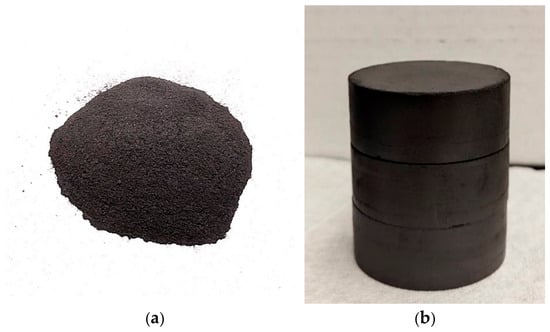
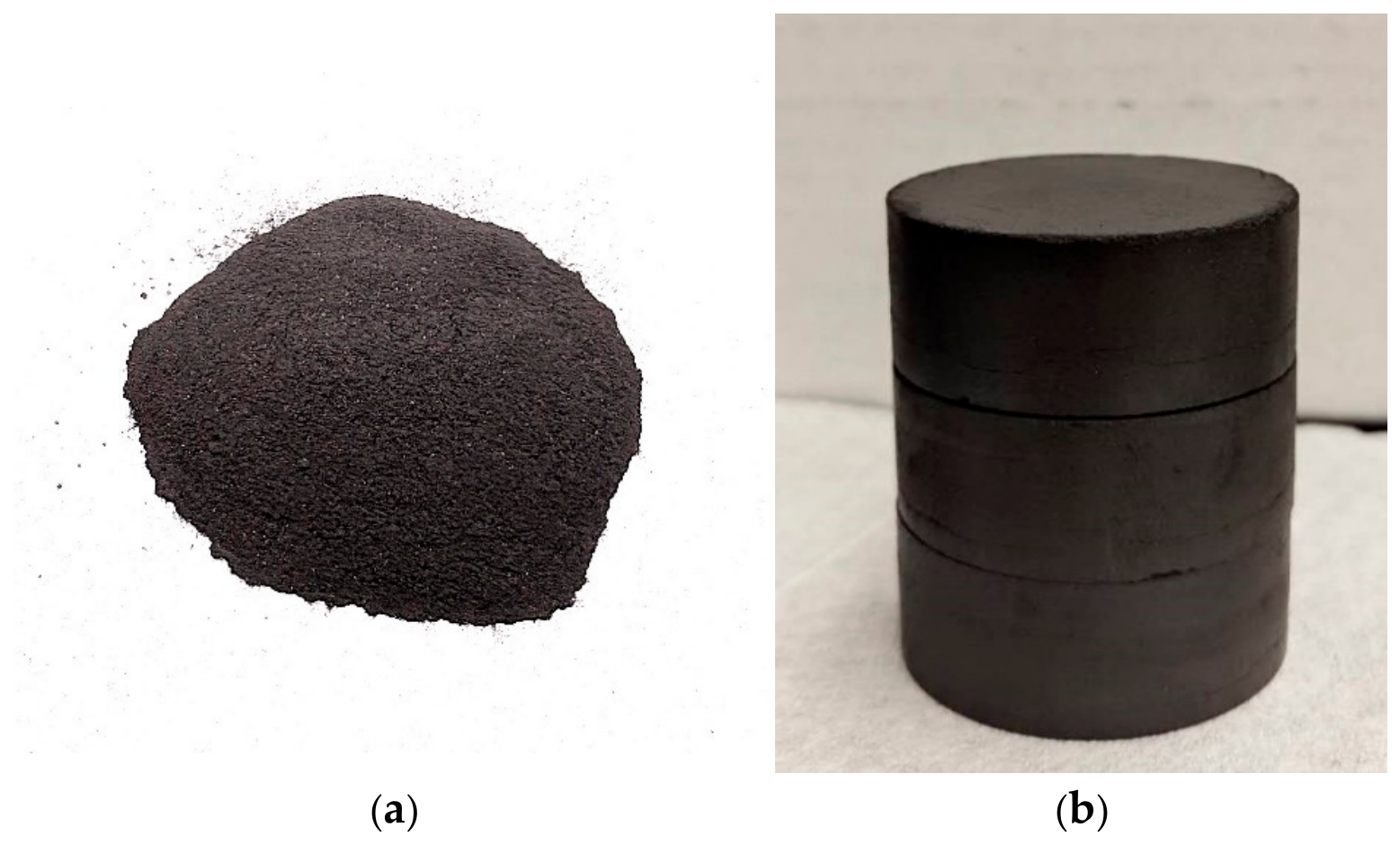
As noted above, coal (chip) samples were obtained from the Mannville Formation of Alberta. These samples were acquired from a full-diameter core recovered from a vertical CO2 injection well drilled as part of a field pilot program designed to test the viability of CO2 injection in the deep Mannville coal [2]. The coal samples were preserved in the as-received condition in a refrigerator (at 4 °C) immediately after recovery from the field to minimize moisture loss. The coal chip samples were crushed into powder (Figure 1a) and compressed with a hydraulic press up to 9000 psi to create artificial core plugs (Figure 1b). While it is expected that the artificial coal core plug has similar gas adsorption characteristics to real coal core plugs extracted from the same interval, clearly the original coal fabric is altered through crushing (affecting permeability, etc.). Nonetheless, it was anticipated that differential adsorption, which affects gas separation, can be studied effectively using the artificial coal core sample, removing the difficulty of acquiring a real coal core plug. Due to the size limitations of the mold to create artificial coal plugs, three shorter plugs were produced individually. Each plug has a diameter of 2” and a length of ~0.83”, and the plugs were stacked together for the experiment. The diameter and length of the stacked artificial coal core plug used in this study are 2” and ~2.5”, respectively. As summarized in Table 1, the helium (He) porosity of the artificial coal core plug is 30.5%. The slip-corrected gas (He) permeability, measured under the estimated reservoir effective stress of 2800 psi using the RTAPK method (see the Section 3 below), is 0.14 md. This permeability is much higher than that obtained for a real coal core plug extracted from the same coal interval (i.e., 0.001 md) [23], which was expected due to the creation of an intergranular system through sample crushing/compression, resulting in a higher permeability/porosity than the intact coal.
Figure 1.
(a) Image of the coal powder crushed from coal chip samples collected from the Mannville Formation (Alberta) and (b) image of the artificial coal plug samples used in the experiments.
Table 1.
Summary of the petrophysical properties of the analyzed artificial coal core plug.
It should be noted that the artificial coal core plug used in this study was not intended to fully reproduce the pore structure and fluid flow properties of real coals under in-situ conditions. Instead, its primary purpose was to establish a controlled and reproducible coal-based porous medium to evaluate the applicability of the RTAPK method to the artificial coal core plug and simultaneously investigate the SMR gas mixture (H2 + CH4 + CO2) separation behavior by the differential adsorption mechanism. Because differential adsorption is the primary mechanism controlling H2 purification and CO2 storage, which are the properties we are using for high-level screening of the suitability of the coal, it is hypothesized that the artificial coal is suitable for this purpose, despite the differences in pore structure/fabric compared to the actual intact coal sample.
A synthetic SMR gas mixture consisting of 75% of H2, 15% of CO2, and 10% of CH4 was applied in the experiments. This composition, adopted from Barelli et al. [27], is representative of a typical industrial SMR gas stream.
3. Methods
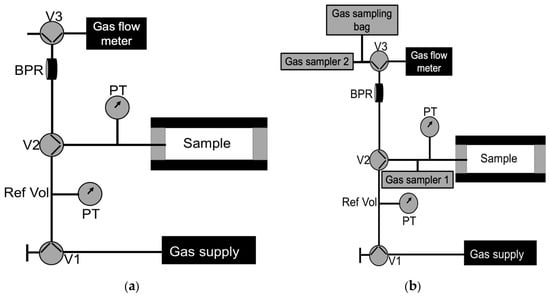
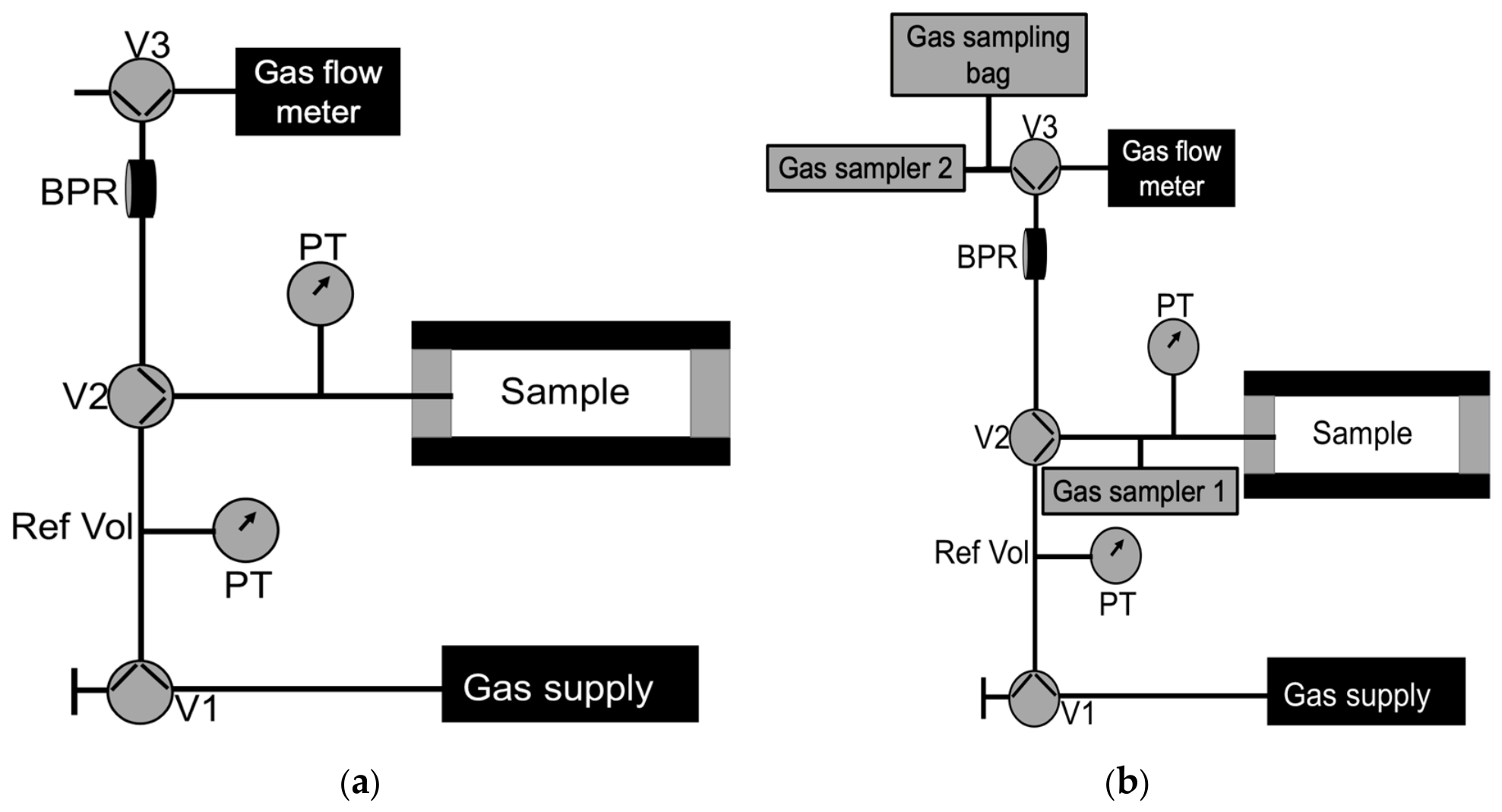
Experimental Setup. Prior to the SMR gas injection experiments, single-component gas RTAPK tests were performed on the artificial coal core plug using helium and hydrogen. The experimental setup for single-component RTAPK tests (Figure 2a) was adopted from the previous RTAPK study of a real coal core plug [23]. The system includes a high-pressure coreholder (Corelab®, Tulsa, OK, USA), a backpressure regulator (BPR, Equilibar®, Fletcher, NC, USA), a mass flowmeter (Omega®, Swedesboro, NJ, USA), a pressure transducer (Keller®, Winterthur, Switzerland), and various valves and fittings (Swagelok®, Solon, OH, USA) to control the gas flow in the system.
Figure 2.
(a) Schematic of the RTAPK device used for single-component gas (helium and hydrogen) permeability estimates for the coal sample. (b) Schematic of the modified RTAPK device used for H2 purification (of synthetic SMR gas) and multi-component gas permeability estimates for the coal sample. Both setups were adopted from Song et al. [23].
A few modifications of the single-component RTAPK setup were implemented to fulfill the objective of evaluating simultaneous H2 purification and CO2 storage using the artificial coal core plug. As illustrated in Figure 2b, two high-pressure gas samplers (samplers #1 and #2), along with additional flow control valves, were integrated into the system to collect the gas samples during both equilibrium and production stages. After collection, gas samples were analyzed by gas chromatography (GC) to determine the compositional evolution of the gas mixture throughout the H2 purification and CO2 sequestration process. A similar setup was also applied in the previous study of SMR gas injection into a real coal core plug [23].
Experimental Procedure. In this study, single-component gas RTAPK tests and H2 purification/CO2 sequestration experiments were performed sequentially with the same artificial coal core plug. The key experimental steps were as follows:
- Coal chips collected from Mannville Formation (Alberta) were crushed into fine powder and then compressed at a pressure up to 9000 psi using a hydraulic press for 2 h to create an artificial coal core plug. The powdering and compression processes were completed within a couple of hours to minimize coal moisture loss and maintain the moisture content of the artificial coal plug close to the original coal samples as much as possible.
- The porosity of the artificial coal core plug was determined using a helium pycnometer (Micromeritics®, Norcross, GA, USA, model: AccuPyc II 1340) to obtain grain density, combined with calipering to obtain the bulk density.
- Slip-corrected gas permeability of the coal core plug was measured with either He or H2 under an effective stress of 2800 psi. This effective stress is representative of the reservoir effective stress condition. The same effective stress was also applied to the artificial coal sample as the initial condition prior to the start of SMR gas injection. The RTAPK method was applied for permeability evaluation. The theory behind and experimental procedure for the RTAPK method have been introduced in previous studies [23,24,25,26].
- The coreholder was evacuated for 48 h to fully remove the residual gas/air from the coal sample.
- A synthetic SMR gas mixture (75%H2 + 15%CO2 + 10%CH4) was injected into the coreholder at a designated pressure (~950 psi) to fully saturate the coal core plug (cycle 1). The system was then allowed to stabilize at a constant pressure and temperature. The system pressure was monitored using a pressure transducer with an accuracy of +/−0.025% (full scale, 6000 psig). The experimental temperature was maintained at 55 °C throughout the experiment, which is consistent with the temperature of the target reservoir where the coal samples were collected for this study.
- After pressure stabilization was achieved, two gas samples were collected from sampler #1 (Figure 2b).
- After compositional equilibrium was achieved inside the coreholder, gas production was initiated at a constant flowing pressure of ~150 psi until the flowrate decreased below 0.3 cc/min. The gas flowrate and flowing pressure were continuously recorded by a flowmeter and pressure transducer, respectively, and were used for permeability evaluation via the RTAPK method.
- During the production stage, produced gas was sampled using sampler #2 and a gas sampling bag at both the beginning and end of production. These gas samples were immediately sent for GC analysis to evaluate the H2 purification and CO2 storage performance for each cycle. The measurement uncertainty of GC analysis was +/−2.5% of the reported concentrations.
- Steps 5–8 were repeated for the following cycle 2.
- Following the approach applied in the previous study for a real coal core plug [23], a new gas composition was prepared based on the results of GC analysis of the produced gas at the end of cycle 2 (step 9). Steps 5–8 were then repeated for cycle 3 using this updated gas composition to investigate the potential to further improve the H2 purity.
It should be noted that, after each cycle of SMR gas mixture purification, the system was maintained under in situ experimental conditions. Any residual gases remaining in the system at the end of the previous cycle, including within the dead volume and coreholder, were kept in place for the next cycle of SMR gas injection. Given the relatively small dead volume of the experimental setup (i.e., 0.62 cc) relative to the large pore volume of the artificial coal core plug (i.e., 38.6 cc), the residual gas within the dead volume is not expected to significantly affect the experimental results of this study.
For each experimental cycle, the H2 recovery and CO2 storage were calculated using the material balance method by accounting for the amounts of H2 and CO2 injected and produced. Calculations of H2 recovery and the CO2 storage ratio are detailed in Appendix A.
As noted above, the coal core plug permeability for each cycle was evaluated using the RTAPK approach based on the recorded flow rate and flowing pressure during the production stage. Importantly, the H2 purification and CO2 storage performance obtained for the artificial coal plug of this study was systematically compared with that from a hard-to-extract real coal core plug used in the previous work [23]. This study, therefore, investigated the feasibility of using an artificial (compressed powder) coal core plug to simplify sample preparation for future studies.
However, it is understood that some moisture loss from the artificial coal plug may still occur during the coal powdering and compression processes, which could represent a limitation of the current experimental procedure and potentially affect the experimental results [28,29]. To further investigate the role of the moisture/water content in SMR gas purification performance, future studies are, therefore, recommended using artificial coal core plugs at different moisture levels/water saturations. The cyclic SMR gas injection and production experiments analogous to those conducted in this study could be conducted to systematically evaluate the impact of moisture/water content on H2 purification, H2 recovery, and CO2 storage performance.
4. Results and Discussion
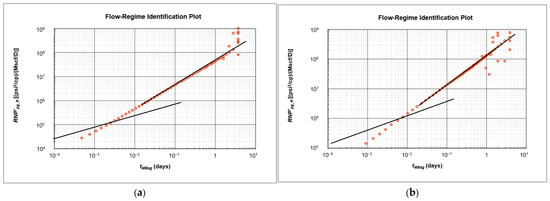
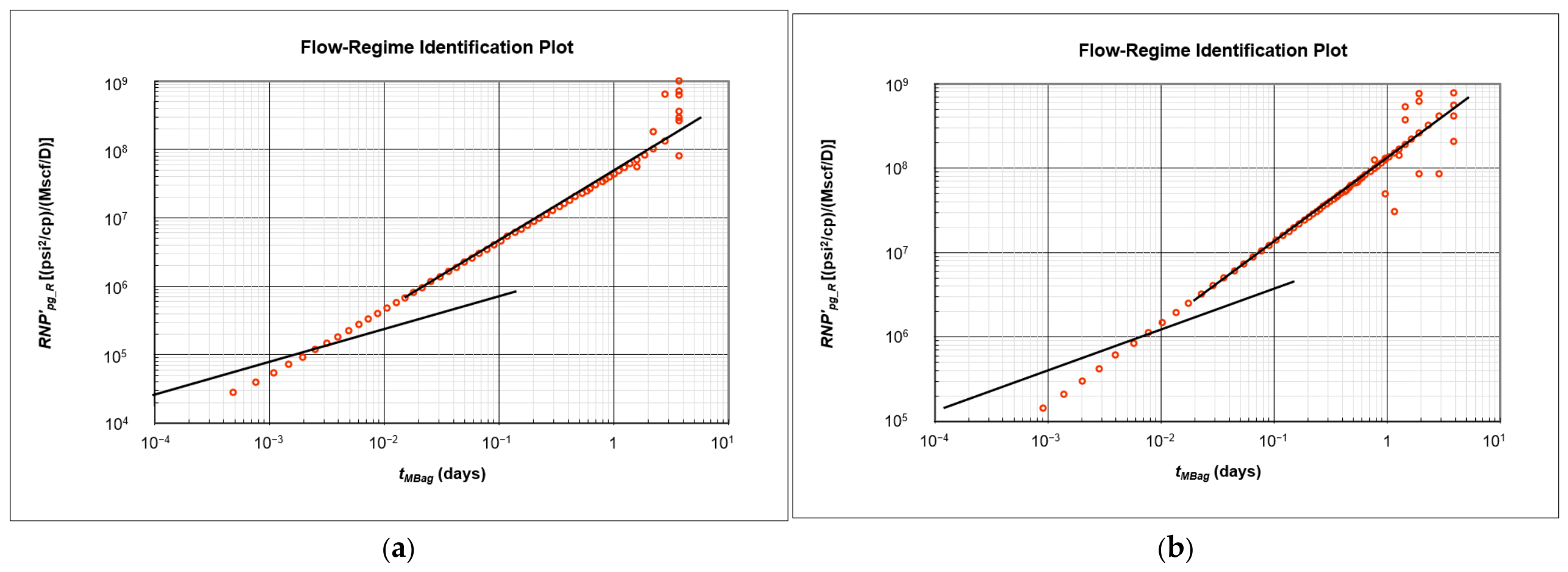
RTAPK Permeability Tests Using Helium and Hydrogen. Following the RTAPK experimental workflow described elsewhere [25,26], the permeability of the artificial coal core plug was measured with either helium or hydrogen under an effective stress of 2800 psi. Selected examples of flow regime identification plots for each gas are presented in Figure 3. Unlike the previous tests conducted on a real coal core plug sample [23], the flow regime identification plots for the artificial coal plug exhibit only boundary-dominated flow (BDF), with no evidence of transient linear flow. This difference is attributed to the higher permeability of the artificial coal core plug compared to the real coal core plug, resulting in rapid attainment of boundary-dominated flow during early stages of production. Consequently, transient linear flow was not observed (and analyzed) for the artificial coal core plug.
Figure 3.
Flow regime identification plot for RTAPK tests with (a) helium gas (200 psi pore pressure, 2800 psi effective stress) and (b) hydrogen gas (200 psi pore pressure, 2800 psi effective stress).
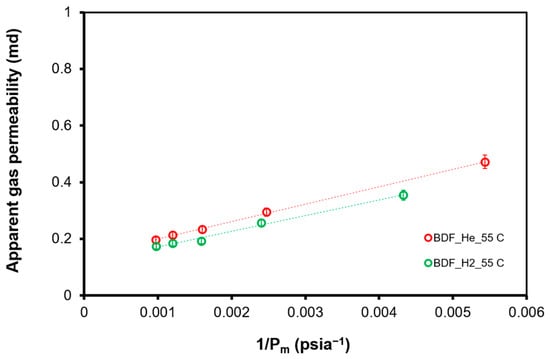
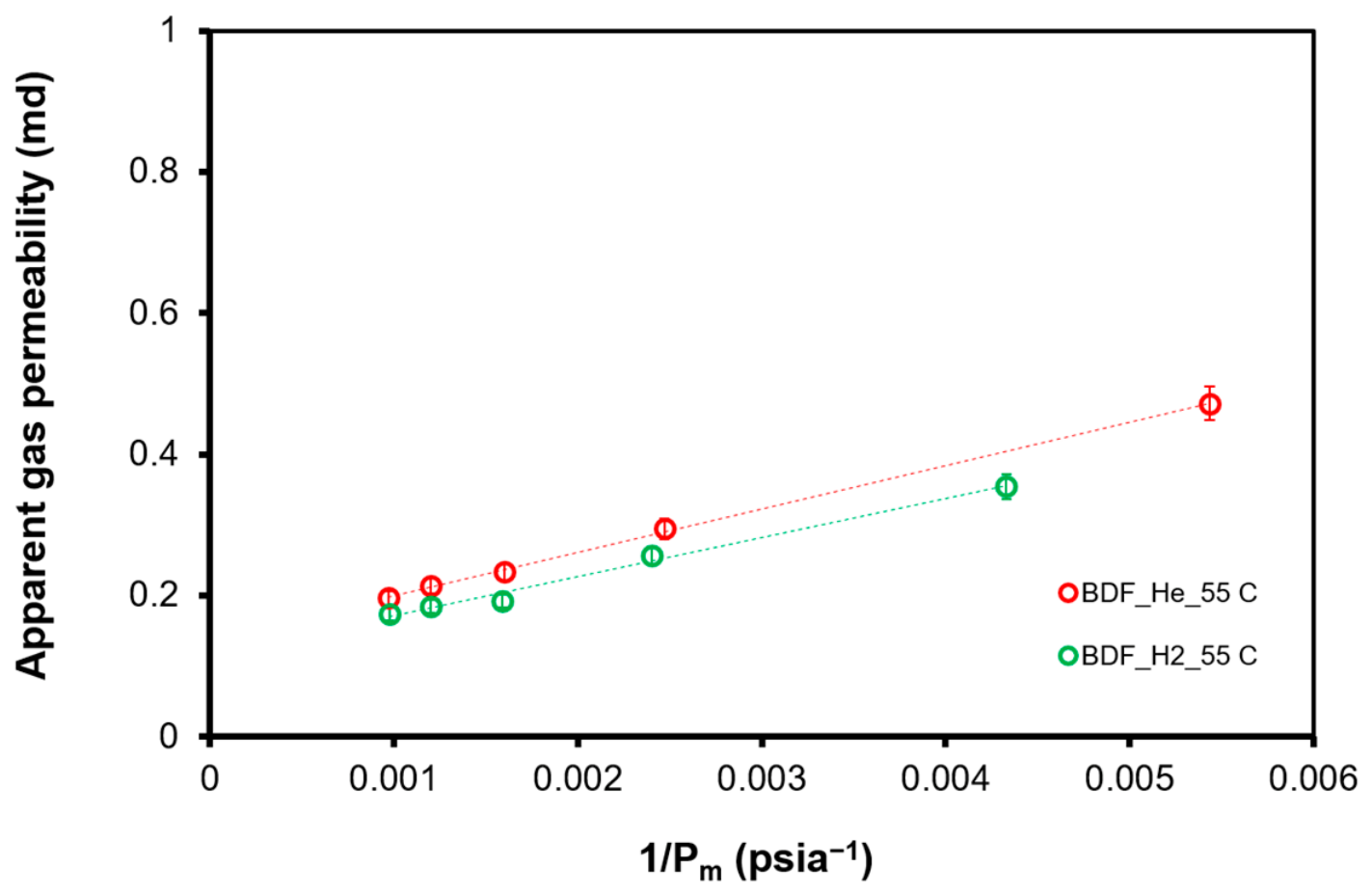
The results of RTAPK permeability tests using helium and hydrogen are presented in the form of a Klinkenberg plot in Figure 4. For both gases, the measured apparent permeability to gas increases with decreasing pore pressure due to the slippage effect. The permeability at each pore pressure was determined using the flowing material balance (FMB) plot [24]. The permeability values of helium and hydrogen appear to be comparable to each other, indicating negligible adsorption effects for both gases. The permeability value obtained for helium at the lowest pore pressure of 183 psi (0.47 md) is greater than previous studies using the RTAPK method [25,26,30], which mostly analyzed samples in the nanodarcy to microdarcy range, demonstrating that the dynamic measurement range of the RTAPK method spans the nanodarcy to millidarcy range.
Figure 4.
Klinkenberg plot illustrating helium and hydrogen permeability values as a function of inverse mean pore pressure.
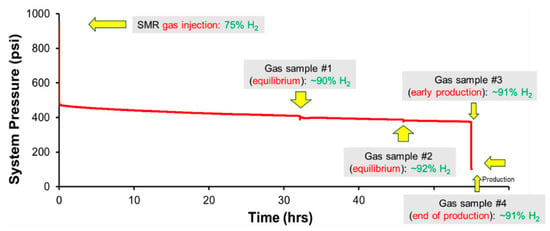
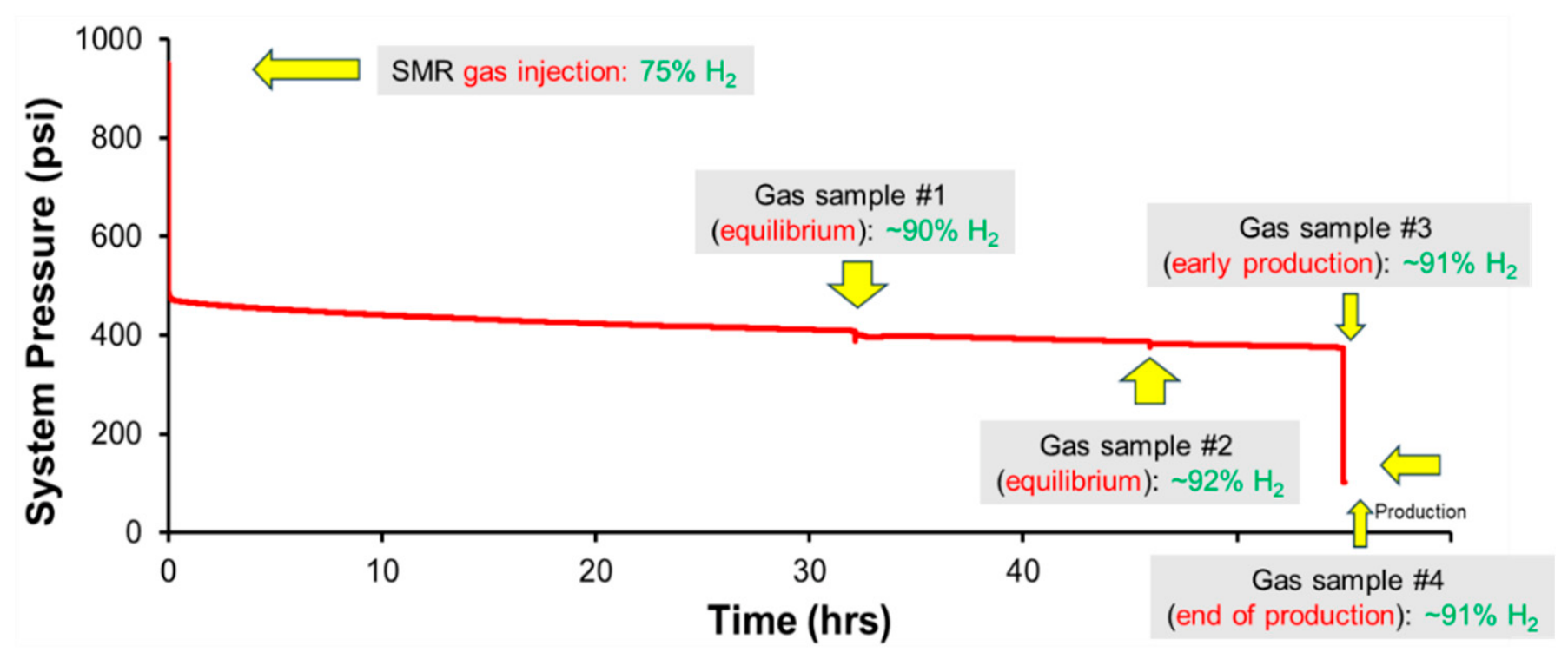
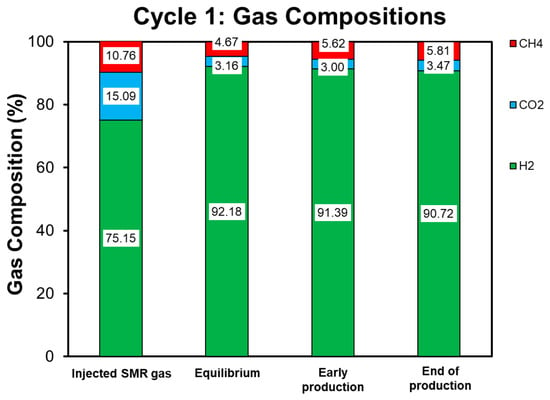
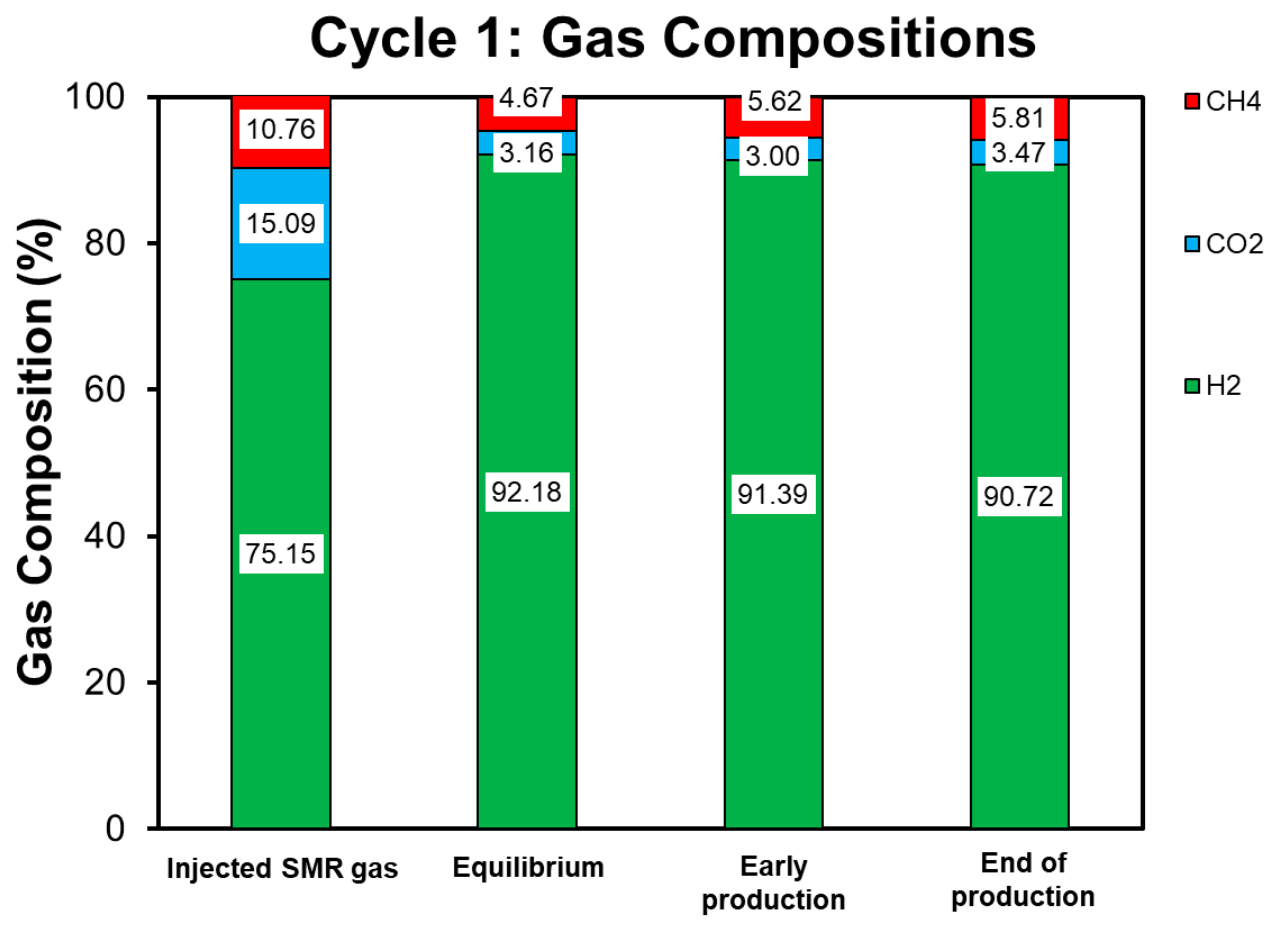
H2 Purification/CO2 Sequestration Experiment-Cycle 1. Following the single-component gas permeability measurements, the first cycle of SMR gas injection was initiated. As illustrated in Figure 5, the synthetic SMR gas mixture (75%H2 + 15%CO2 + 10%CH4) was injected into the coreholder at a designated pressure of ~950 psi, and then the injection was stopped, and the system pressure was allowed to reach equilibrium. During the equilibrium stage, two gas samples (gas samples #1 and #2) were collected from the coreholder, yielding comparable H2 purities of 90% and 92% for gas sample #1 and gas sample #2, respectively. The observed increase in H2 purity relative to the injected composition (75% of H2 content) indicates the preferential adsorption of CO2 and CH4 over H2 within the coal matrix. This interpretation was also supported by high-pressure, high-temperature adsorption experiments performed using the individual components of the SMR gas mixture on coal samples collected from the same well and coal seam as this study [23]. The experimental results demonstrate that CO2 exhibits a stronger adsorption on the coal samples than CH4, whereas H2 exhibits substantially lower adsorption than the other two gases. The production stage was then conducted at a constant flowing pressure of 150 psi. Two additional gas samples (gas samples #3 and #4) were collected at the beginning and end of the production stage. Both samples exhibited a H2 purity of 91% (Figure 6), demonstrating consistent and effective H2 purification performance throughout the production stage of cycle 1.
Figure 5.
Cycle 1 system pressure versus time. Gas sampling points and hydrogen composition during injection, equilibrium (after pressure stabilization), and production stages.
Figure 6.
Composition of gas samples collected during equilibrium and production stages of cycle 1.
During the first cycle of SMR injection, a total of 879 cm3 of H2 gas was injected into the coreholder, of which 59% was recovered by the end of production. A total of 177 cm3 of CO2 was injected, 92% of which was successfully stored in the coal sample. The (maximum) measurement uncertainty associated with H2 recovery and CO2 storage was estimated to be +/−3.3%, given the accuracy of the gas flowmeter (+/−0.8%) combined with the measurement uncertainty of GC analysis (+/−2.5% of the reported concentrations). The same measurement uncertainty was also applied to the subsequent two injection cycles.
The artificial coal core plug exhibited similar H2 purification performance to the real coal core plug for the same cycle [23]. However, the H2 recovery from the artificial coal core plug (59%) is significantly higher than that observed for the real coal core plug (20%). This difference is primarily due to the higher permeability of the artificial coal core plug in this study, which facilitated greater H2 flow during production. In contrast, the CO2 storage of cycle 1 for the artificial coal core plug sample (92%) is somewhat lower than for the real coal core plug sample (96%).
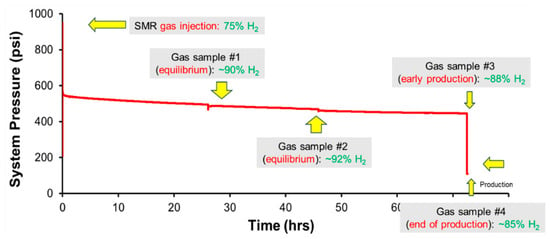
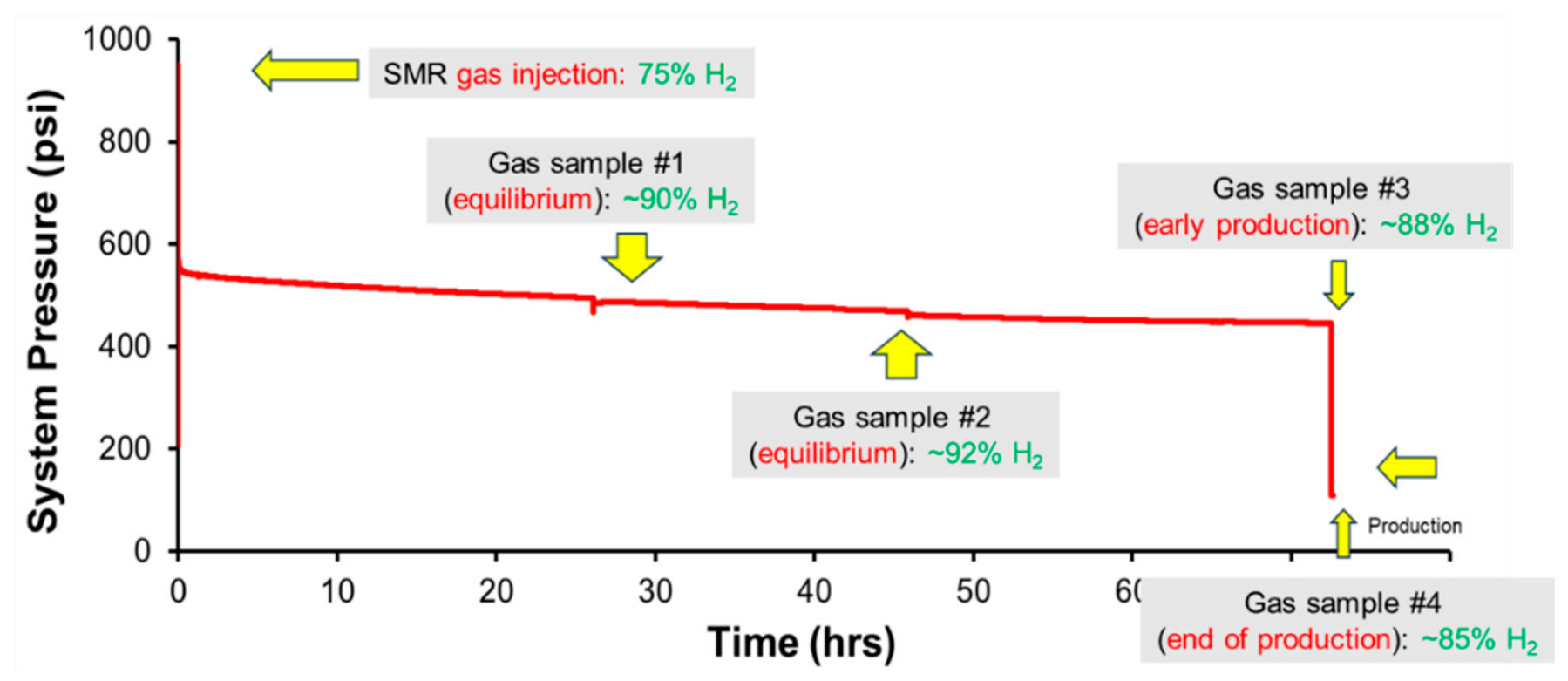
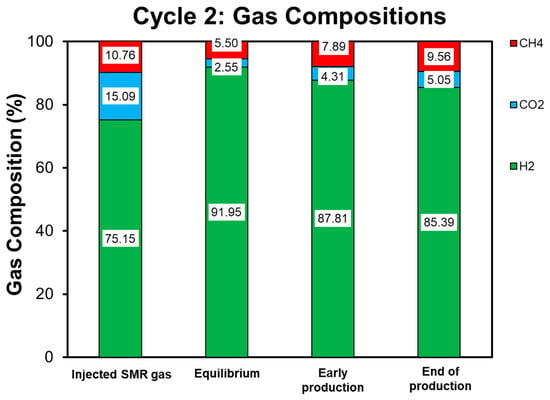
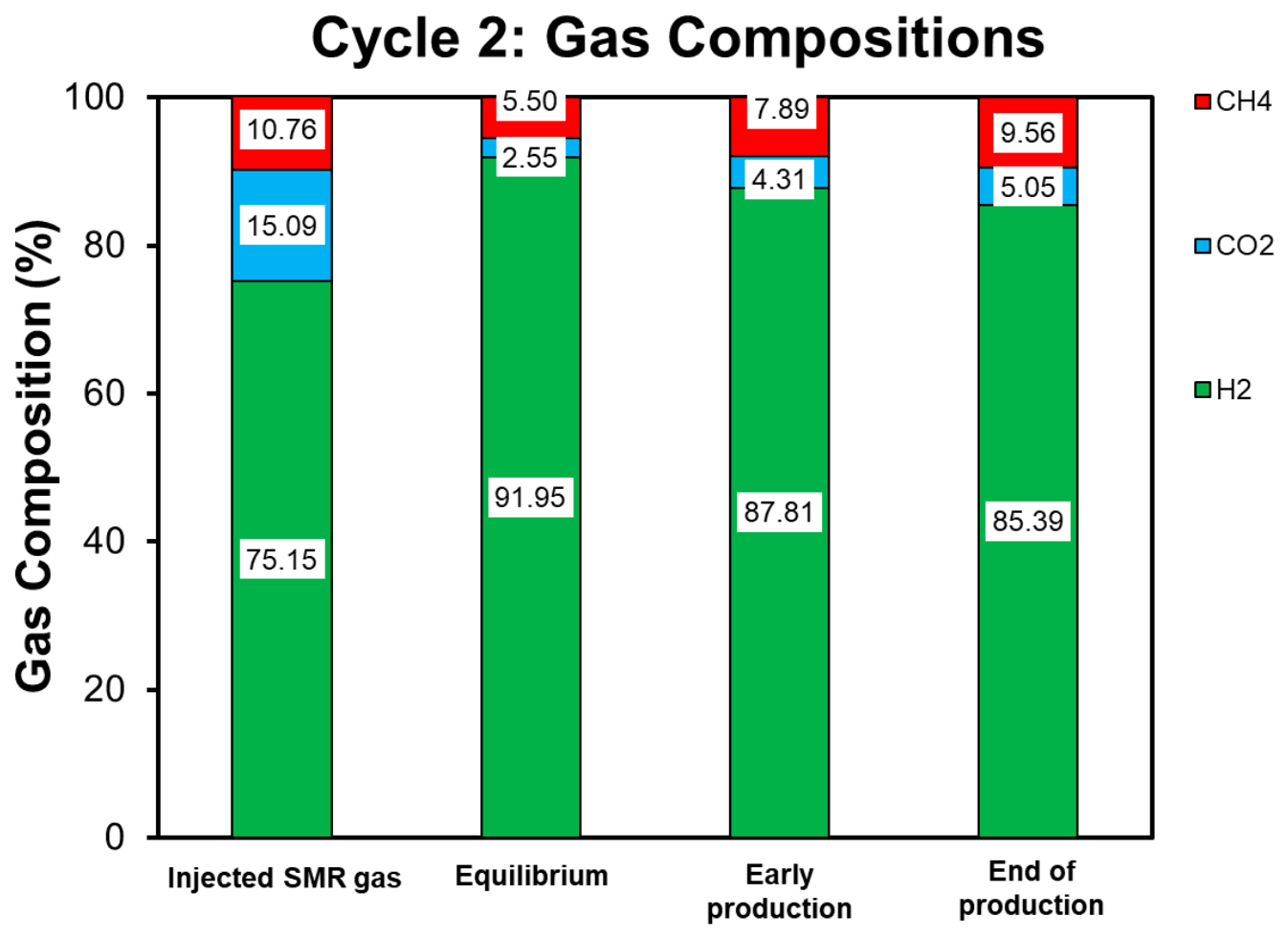
H2 Purification/CO2 Sequestration Experiment-Cycle 2. To further evaluate H2 purification and CO2 storage performance, a second cycle of SMR gas (75%H2 + 15%CO2 + 10%CH4) injection was conducted (Figure 7). Similar to cycle 1, the gas mixture was injected into the coreholder at a pressure of 950 psi, followed by a soaking period to allow the system to reach equilibrium. During the soaking stage, two gas samples (gas samples #1 and #2) were collected from the coreholder exhibiting H2 purities of 90% and 92%, respectively. The gas production stage was then initiated at a constant flowing pressure of 150 psi, during which another two gas samples (gas samples #3 and #4) were collected (at the beginning and end of the production period, respectively). GC analysis indicated that gas sample #3 contained 88% H2, while gas sample #4 contained 85% H2 (Figure 8). Although the equilibrium-stage H2 purity for cycle 2 is comparable to that observed in cycle 1, produced gas from cycle 2 yielded a lower H2 purity (gas sample #3 = 88%; gas sample #4 = 85%). This can be attributed to adsorption of CO2 and CH4 during cycle 1, which reduced the available adsorption capacity of the coal during cycle 2, resulting in lower H2 and higher CO2/CH4 concentrations in the produced gas of cycle 2 (Figure 8).
Figure 7.
Cycle 2 system pressure versus time. Gas sampling points and hydrogen composition during injection, equilibrium (after pressure stabilization), and production stages.
Figure 8.
Composition of gas samples collected during equilibrium and production stages of cycle 2.
A total of 869 cm3 of H2 gas was injected into the coal sample during cycle 2, of which 61% was recovered by the end of the cycle, which is comparable to the H2 recovery of cycle 1 (59%). A total of 174 cm3 of CO2 was injected, 84% of which was stored in the coal. This storage efficiency is lower than that of cycle 1 (92%). As noted earlier, this is mainly because of the adsorption of CO2/CH4 during cycle 1, limiting further gas adsorption during cycle 2.
Comparing this cycle for the artificial coal core plug with that using the real coal core plug [23], the gas collected during early production had a slightly lower H2 content (88% versus 95%). This difference is likely due to the higher permeability of the artificial coal core plug, facilitating greater desorption and transport of CO2 and CH4 from the coal, thereby reducing the H2 content in the produced gas. Furthermore, at the end of cycle 2, the artificial coal core plug yielded a higher H2 recovery (61%) but lower CO2 storage (84%) compared to the real coal core plug (i.e., 38% and 92%, respectively) [23]. This result is also associated with the higher permeability of the artificial coal core plug, which facilitated the production of both H2 and CO2, and, therefore, increased H2 recovery but reduced CO2 storage.
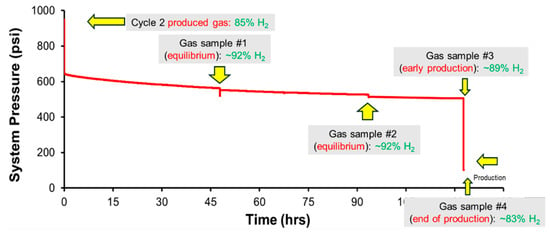
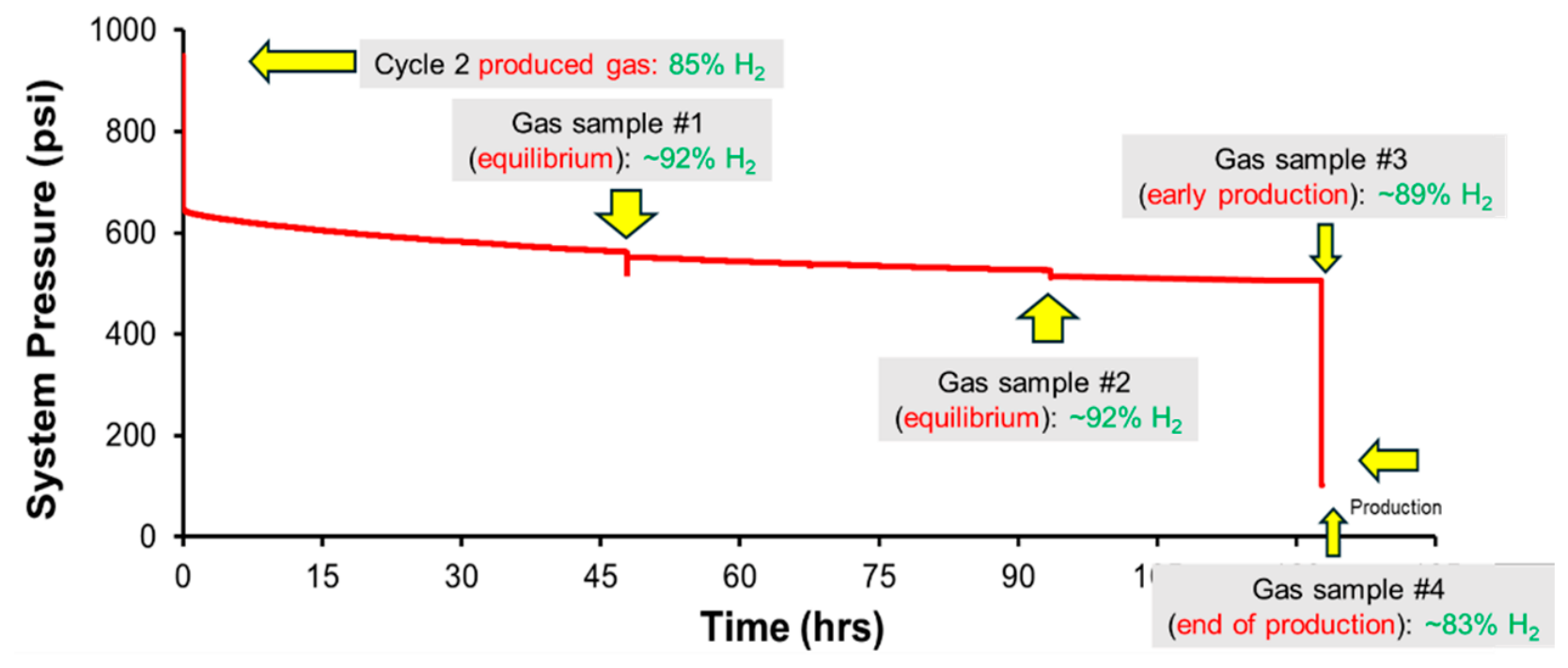
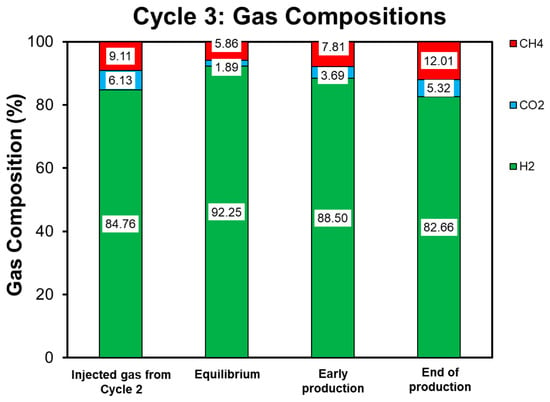
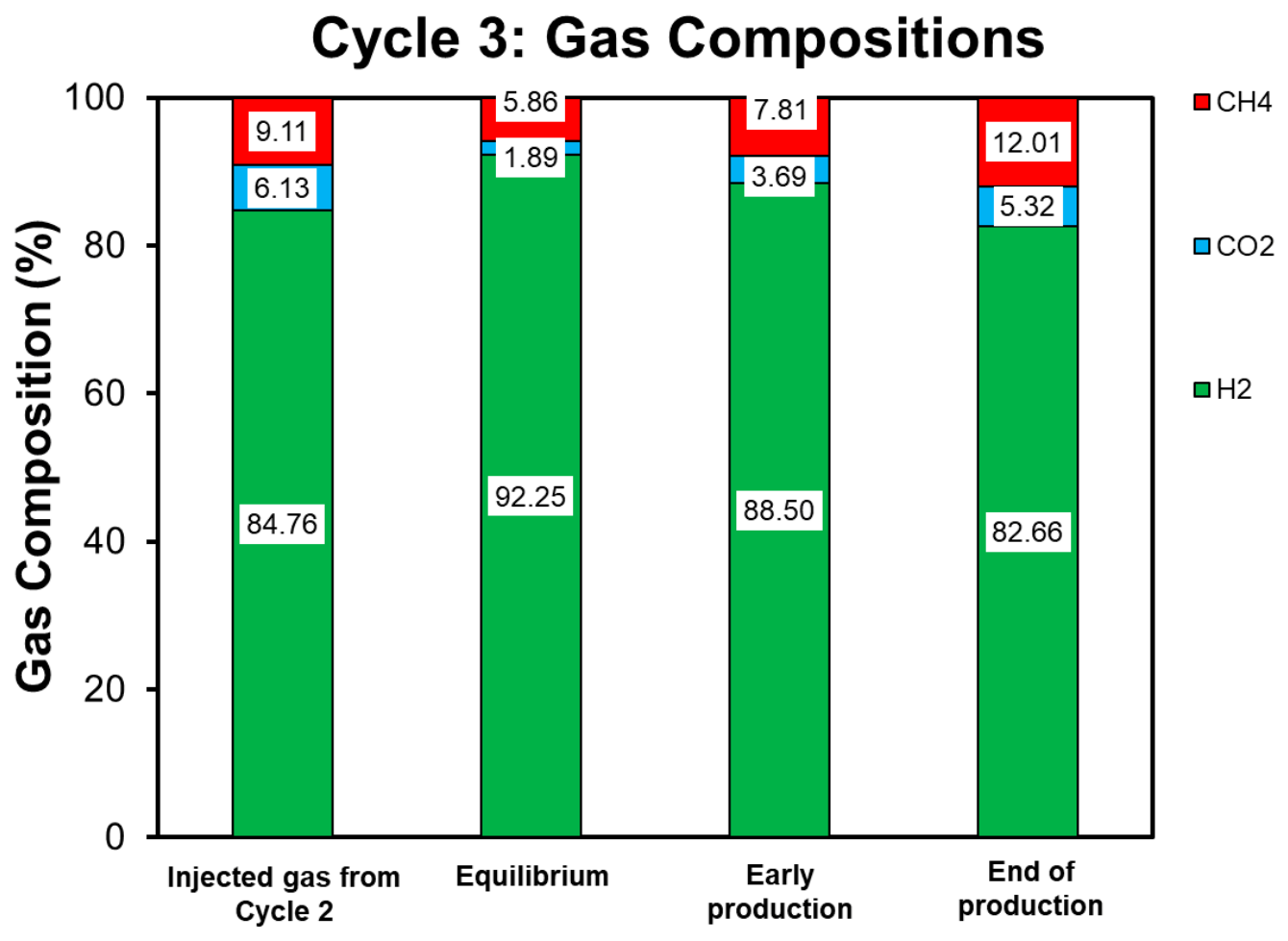
H2 Purification/CO2 Sequestration Experiment-Cycle 3. Finally, a new gas mixture was prepared based on the composition of the gas produced at the end of cycle 2 (85%H2 + 6%CO2 + 9%CH4). The primary purpose of cycle 3 was to simulate recycling of the previously purified gas mixture back into the coal and evaluate whether its H2 purity could be further improved through an additional purification cycle. The same procedure was applied as the previous SMR gas tests with the real coal core plug [23]. The new gas mixture was injected into the coreholder at the same pressure as cycles 1 and 2 (Figure 9). Two gas samples (gas samples #1 and #2) were collected from the coreholder after the system pressure reached equilibrium, while another two samples (gas samples #3 and #4) were collected during the production stage. Although the H2 purity of the gas sampled during equilibrium reached 92%, the H2 content of the produced gas at the end of the cycle decreased to 83% (Figure 10), which is even lower than the gas injected at the start of cycle 3 (85% H2). This experimental result suggests that further improvement in H2 purity is not possible by injecting the produced gas from cycle 2 and performing an additional cycle under the operating conditions of this study. It should be noted that the potential for further H2 purification using this process may significantly depend on the experimental conditions, such as the amount of gas injection, injection pressure, production pressure, and production time of each cycle, as well as on the adsorption properties of coal, which can be influenced by coal rank, maceral composition, pore structure, and other coal properties. Therefore, the conclusion from cycle 3 is limited to the specific operating conditions and coal sample applied in this study. Future studies using different experimental conditions or coal samples with different characteristics are recommended to further evaluate their impact on H2 purification performance when produced gas is injected and subjected to additional cycles.
Figure 9.
Cycle 3 system pressure versus time. Gas sampling points and hydrogen composition during injection, equilibrium (after pressure stabilization), and production stages.
Figure 10.
Composition of gas samples collected during equilibrium and production stages of cycle 3.
From the perspective of field operations, the experimental results associated with cycle 3 suggest that simply increasing the number of cycles may not continuously increase the (reinjected) produced gas H2 purity. Once the separation (preferential) adsorption capacity of the coal tends to decrease after repeated cycles of SMR gas injection and production, further recycling of the produced gas mixture from the previous cycles under the same operating conditions may provide limited improvement in H2 purity. Although not investigated in this study, potential strategies may be considered to restore the separation capacity of the coal formation, such as increased injection pressure/production pressure or extended well shut-in/soaking period; however, these strategies require further investigation.
For cycle 3, a total of 885 cm3 of H2 gas was injected, of which 63% of H2 was recovered. Despite variations in the injected gas compositions for cycles 1–3, H2 recovery was similar (59–63%). In contrast, only 60% of the 64 cm3 of CO2 injected during cycle 3 was stored in the coal sample, which is lower than for cycles 1 and 2 (i.e., 92% and 84%, respectively). This result is likely due to the extensive adsorption of CO2 and CH4 during previous cycles, significantly diminishing the coal sample’s adsorption capacity during cycle 3.
As noted earlier, for the SMR gas injection experiments performed with the real coal core plug [23], the produced gas mixture from cycle 2 (81%H2 + 7%CO2 + 12%CH4) was also reinjected during cycle 3, achieving a H2 purity of 94% at the beginning of production but decreasing to 78% at the end of the production. The end-of-production H2 purity was also lower than that of the gas injected at the start of the cycle (81%), consistent with the observations for the artificial coal core plug used in this study. However, the artificial coal core plug exhibited a higher H2 recovery than the real coal core plug for cycle 3 (63% vs. 46%), with a lower CO2 storage (60% vs. 79%). The underlying mechanisms were discussed for cycles 1 and 2.
For cycles 1–3 performed for this study, the H2 concentration in the gas collected at the end of the production stage decreased from 91% to 83%, while the H2 recovery increased from 59% to 63%, suggesting a practical trade-off between H2 purity and H2 recovery. A similar trend was also observed in the previous study using a real coal core plug, where the H2 purity in the produced gas decreased from 86 to 78%, accompanied by an increase in H2 recovery from 20 to 46% over cycles 1–3 [23]. These observations may be attributed to the progressive accumulation of gases adsorbed within the coal sample over successive cycles, which reduced the remaining adsorption capacity of the coal in subsequent cycles. As a result, larger amounts of the CO2, CH4, and H2 components were produced as the experimental cycles proceeded, leading to a decrease in the H2 purity but an increase in H2 recovery of the produced gas from cycles 1 to 3. A similar trend for CO2 storage was also observed for both artificial and real coal core plugs (i.e., 92–60% vs. 96–79% over cycles 1–3), which may be attributed to the same underlying mechanisms discussed above.
It should be noted that, as a key parameter for evaluating H2 purification performance in coal, the produced gas H2 purity values are reasonably comparable between the artificial and real coal core plugs over cycles 1–3 (i.e., 91%, 85%, and 83% vs. 86%, 81%, and 78%, respectively), while H2 recovery and CO2 storage exhibited similar variation trends despite quantitative differences between the two samples. Overall, H2 purification performance obtained for the artificial coal core plug is consistent with that obtained for the real coal core plug studied previously [23], with some quantitative differences in H2 recovery and CO2 storage owing to the higher permeability of the artificial core plug sample. These findings suggest that artificial core plug samples are useful for investigating the underlying SMR gas transport and adsorption/separation mechanisms in the coal and can be used to screen coals for H2 purification potential when real core plugs are difficult to obtain.
Nevertheless, the current dataset for H2 purification of mixed SMR gases using coal is still limited. Additional experiments using new artificial coal core plugs are, therefore, planned to further evaluate the reliability of the current conclusions. Further, the application scope of the technique will be broadened by (1) applying the method to a larger sample permeability range (from microdarcy to darcy scale), (2) performing experiments with in situ reservoir gases present in the coal samples, and (3) performing H2 purification experiments using different injection/production strategies (e.g., continuous coreflooding).
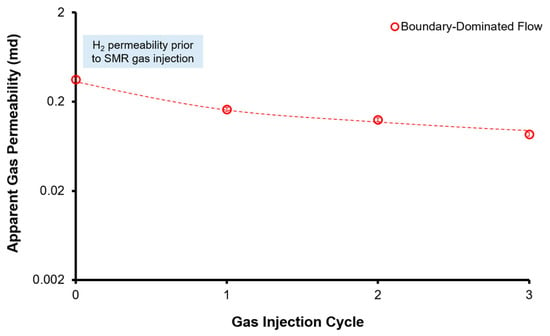
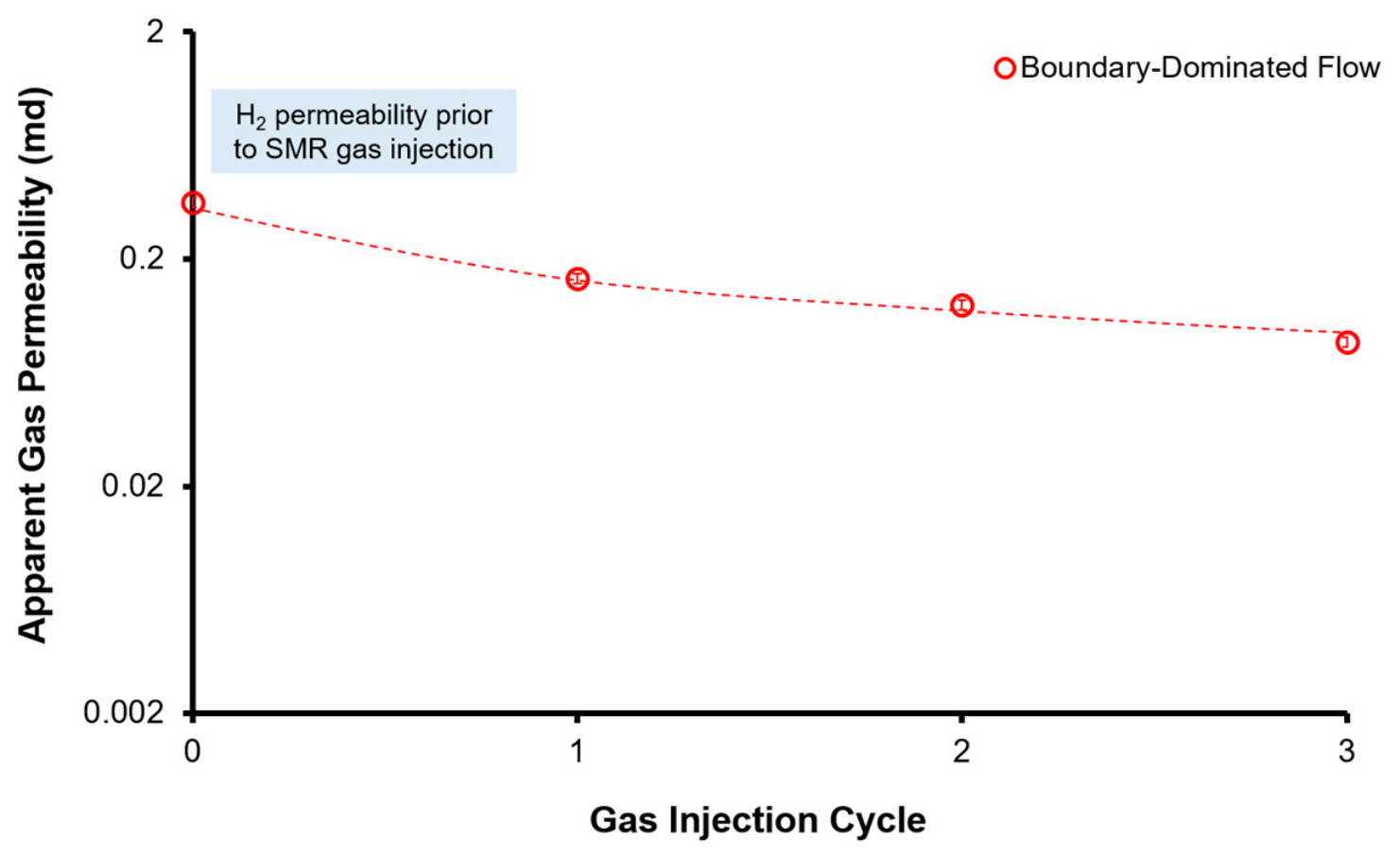
Permeability Changes During SMR Gas HNP Experiments. As noted in the Section 3 (e.g., Experimental Procedure), the RTAPK-derived permeability to pure hydrogen was measured prior to SMR gas injection and compared to the RTAPK-derived permeabilities measured during the HNP cycles 1–3. The pore pressure used for hydrogen permeability measurement (231 psi) was similar to those used for RTAPK permeability estimates for cycle 1 (238 psi), cycle 2 (277 psi), and cycle 3 (303 psi). Unlike RTAPK tests performed using real coal core plugs [23,26], transient linear flow was not observed for the artificial coal core plug used for this study. Consequently, only data from boundary-dominated flow were used to evaluate the permeability variations during the H2 purification and CO2 storage process. As demonstrated in Figure 11, the permeability of the artificial coal core plug decreased from 0.35 md (using pure H2 at a pore pressure of 231 psi) to 0.17 md after cycle 1 (at a pore pressure of 238 psi). However, the decrease in permeability was less significant from cycles 1 to 3. As discussed for previous studies of CO2 injection into coal, adsorption of CO2 onto the coal matrix results in matrix swelling and fracture closure, reducing coal permeability [31,32]. However, when CO2 is injected with a low-sorbing gas, like N2 and H2, the presence of the low-sorbing gas mitigates some of the matrix swelling (because the mixed gas adsorption is less than pure CO2) and hence permeability reduction. This has been demonstrated previously with N2-CO2 mixtures [33,34,35], and more recently with SMR gases [23]. While similar trends of permeability variations were also observed in the previous study with real coal core plug [23], the mechanisms may differ: (1) permeability reduction in the artificial coal core plug (up to 51% reduction from pure H2 to cycle 1) is largely attributed to the reduction in intergranular porosity caused by particle swelling during SMR gas injection (note that the coal chips were crushed to powder and compressed into core plugs creating intergranular porosity free of fractures), and (2) permeability reduction in the real coal core plug (up to 61% reduction from pure H2 to cycle 1) is primarily governed by closure of natural fractures during matrix swelling [36,37,38,39].
Figure 11.
Evolution of RTAPK-derived permeability from pure hydrogen to gas mixtures injected for cycles 1–3.
In addition to the mechanism of CO2-induced coal swelling discussed above, other mechanisms, such as coal particle rearrangement or compaction, may have also contributed to the reduced permeability of the artificial coal sample in this study. The multiple cycles of SMR gas mixture injection and production could have resulted in repeated coal particle swelling and shrinking during the experiment, possibly inducing internal stress variation in the artificial coal sample [40,41]. As a result, some particles may have been rearranged and moved to partially fill or narrow the pores or pore throats of the artificial coal sample, thereby decreasing sample permeability during the H2 purification process. Furthermore, because the entire H2 purification experiment lasted ~1.5 months, the coal particles within the intergranular system might have been further compacted under the effective stress of 2800 psi over the extended experimental period. Such compaction could result in tighter particle packing and a decrease in interparticle pore or pore throat size, thereby contributing to permeability reduction as the experimental cycles proceeded.
5. Conclusions
SMR gas huff-n-puff experiments were performed using an artificial coal core plug sample to examine the amount of H2 purification and CO2 storage potential, with the results compared to a real (intact) coal core plug sample obtained from the same coal interval. The artificial coal core plug sample was created by crushing coal chip samples to powder and compressing in a hydraulic press. In total, three cycles of SMR gas injection/production were conducted. The following conclusions were drawn from this proof-of-concept study:
- Permeability of the artificial coal core plug was too high to observe transient linear flow, and hence permeability could only be determined using a flowing material balance applied to boundary-dominated flow. The highest permeability obtained for this study was ~0.47 md measured using helium gas at a pore pressure of 183 psi and effective stress of 2800 psi, which is also the highest permeability measured with the RTAPK technique to date. The RTAPK technique dynamic range spans from the nanodarcy to millidarcy scale.
- After the gas injection stage of cycles 1, 2, and 3, the hydrogen gas concentration increased to ~92% during the equilibrium stage and then decreased to ~91%, 85%, and 83% at the end of the production stage of each cycle, respectively. This trend is consistent with the previous tests performed on a real coal core plug.
- Cycles 1, 2, and 3 yielded a maximum H2 recovery of 59%, 61%, and 63% and a CO2 storage of 92%, 84%, and 60%, respectively. Compared to the tests performed on a real coal core plug, the artificial coal core plug yielded a higher H2 recovery but lower CO2 storage due to its higher permeability.
- The RTAPK-derived permeability declined substantially from pure H2 to cycle 1, followed by a smaller decrease for cycles 1–3; a similar trend in permeability reduction to the real coal core plug was observed.
- This proof-of-concept experimental study demonstrates the potential for simultaneous H2 purification and CO2 storage through injection of H2/CO2-containing SMR gases into coal samples and subsequent production of the gas mixture under the experimental conditions applied in this study.
- Importantly, the artificial coal core plug exhibited a similar trend in H2 purification performance to a real coal core plug under the experimental conditions of this study. These results suggest that the artificial samples could potentially be used to rapidly and practically screen coals for such performance when real coal core plugs are difficult to obtain.
Author Contributions
Conceptualization, C.S. and C.R.C.; methodology, C.S. and C.R.C.; validation, C.R.C.; formal analysis, C.S.; investigation, C.S. and C.R.C.; writing—original draft, C.S.; writing—review and editing, C.S. and C.R.C.; supervision, C.R.C.; funding acquisition, C.R.C. All authors have read and agreed to the published version of the manuscript.
Funding
This research was funded by Cvictus Inc. and a Mitacs Accelerate Program grant (grant number IT34336).
Data Availability Statement
The raw data supporting the conclusions of this article will be made available by the authors upon request.
Acknowledgments
The authors gratefully thank the sponsorship of this study by Cvictus Inc. and a Mitacs Accelerate Program grant (IT34336). Chris Clarkson would like to acknowledge ARC Resources and Ovintiv for supporting his Research Chair in the field of Subsurface Transitional Energy Pathways (“STEPs”) at the University of Calgary and Matt and Tara Brister for supporting his Tamaratt Professorship in Transitional Energy Research.
Conflicts of Interest
The authors declare no conflict of interest.
Appendix A. Calculation Procedure for Obtaining H2 Recovery and CO2 Storage Ratio
The following equations were used to calculate H2 recovery and CO2 storage ratio for each experimental cycle:
Appendix A.1. Evaluation of H2 Recovery
VH2 inject = Vtotal inject × yH2 inject
VH2 pro = Vtotal pro × yH2 pro
Appendix A.2. Evaluation of CO2 Storage
VCO2 inject = Vtotal inject × yCO2 inject
VCO2 pro = Vtotal pro × yCO2 pro
References
- Viete, D.R.; Ranjith, P.G. The Effect of CO2 on the Geomechanical and Permeability Behaviour of Brown Coal: Implications for Coal Seam CO2 Sequestration. Int. J. Coal Geol. 2006, 66, 204–216. [Google Scholar] [CrossRef] [Scilit]
- Yang, Y.; Hamdi, H.; Clarkson, C.R.; Blinderman, M.S. Numerical Modeling of Field Pilot Data Designed to Evaluate CO2 Storage Potential in the Deep Mannville Coal Seams of Alberta. Presented at the SPE Canadian Energy Technology Conference and Exhibition, Calgary, AB, Canada, 15–16 March 2023; p. SPE 212792-MS. [Google Scholar] [CrossRef] [Scilit]
- Steven, S.H.; Spector, D.; Riemer, P. Enhanced Coalbed Methane Recovery Using CO2 Injection: Worldwide Resource and CO2 Sequestration Potential. Presented at the SPE International Oil and Gas Conference, Beijing, China, 2–6 November 1998; p. SPE 48881-MS. [Google Scholar] [CrossRef]
- Gunter, W.D.; Mavor, M.J.; Robinson, J.R. CO2 Storage and Enhanced Methane Production: Field Testing at Fenn-Big Valley, Alberta, Canada, with Application. Presented at the 7th International Conference on Greenhouse Gas Control, Vancouver, BC, Canada, 5 September 2004. [Google Scholar] [CrossRef] [Scilit]
- Yamaguchi, S.; Ohga, K.; Fujioka, M.; Muto, S. Prospect of CO2 Sequestration in the Ishikari Coal Field, Japan. Presented at the 7th International Conference on Greenhouse Gas Control, Vancouver, BC, Canada, 5 September 2004. [Google Scholar] [CrossRef] [Scilit]
- Damen, K.; Faaij, A.; Bergen, F.; Gale, J.; Lysen, E. Identification of Early Opportunity for CO2 Sequestration-Worldwide Screening for CO2-EOR and CO2-ECBM Projects. Energy 2005, 30, 1931–1952. [Google Scholar] [CrossRef] [Scilit]
- Faiz, M.M.; Saghafi, A.; Barclay, S.A.; Stalker, L.; Sherwood, N.R.; Whitford, D.J. Evaluating Geological Sequestration of CO2 in Bituminous Coals: The Southern Sydney Basin, Australia as a Natural Analogue. Int. J. Greenh. Gas. Control 2007, 1, 223–235. [Google Scholar] [CrossRef] [Scilit]
- He, Q.; Mohaghegh, S.D.; Gholami, V. A Field Study on Simulation of CO2 Injection and ECBM Production and Prediction of CO2 Storage Capacity in Unmineable Coal Seam. J. Pet. Eng. 2013, 2013, 803706. [Google Scholar] [CrossRef] [Scilit]
- Li, X.; Fang, Z. Current Status and Technical Challenges of CO2 Storage in Coal Seam and Enhanced Coalbed Methane Recovery: An Overview. Int. J. Coal Sci. Technol. 2014, 1, 93–102. [Google Scholar] [CrossRef] [Scilit]
- Pan, Z.; Ye, J.; Zhou, F.; Tan, Y.; Connell, L.D.; Fan, J. CO2 Storage in Coal to Enhance Coalbed Methane Recovery: A Review of Field Experiments in China. Int. Geol. Rev. 2018, 60, 754–776. [Google Scholar] [CrossRef] [Scilit]
- Kou, Z.; Wang, T.; Chen, Z.; Jiang, J. A Fast and Reliable Methodology to Evaluate Maximum CO2 Storage Capacity of Depleted Coal Seams: A Case Study. Energy 2021, 231, 120992. [Google Scholar] [CrossRef] [Scilit]
- Wei, G.; Wen, H.; Deng, J.; Ma, L.; Li, Z.; Lei, C.; Fan, S.; Liu, Y. Liquid CO2 Injection to Enhance Coalbed Methane Recovery: An Experiment and In-situ Application Test. Fuel 2021, 284, 119043. [Google Scholar] [CrossRef] [Scilit]
- Han, J.; Hu, Z.; Mao, Z.; Li, G.; Liu, S.; Yuan, D.; Guo, J. How to Account for Changes in Carbon Storage from Coal Mining and Reclamation in Eastern China? Taking Yanzhou Coalfield as an Example to Simulate and Estimate. Remote Sens. 2022, 14, 2014. [Google Scholar] [CrossRef] [Scilit]
- Yan, M.; Bai, Y.; Li, S.; Lin, H.; Yan, D.; Shu, C. Factors Influencing the Gas Adsorption Thermodynamics Characteristics of Low-rank Coal. Fuel 2019, 248, 117–126. [Google Scholar] [CrossRef] [Scilit]
- Sun, Y.; Wang, L.; Wang, R.; Zheng, R.; Zheng, S.; Liao, X.; Zhu, X.; Zhu, Z.; Zhao, Y. Insight on Microscopic Mechanisms of CH4 and CO2 Adsorption of Coal with Different Ranks. Fuel 2022, 330, 125715. [Google Scholar] [CrossRef] [Scilit]
- Verma, A.; Malik, S.; Pal, M. Evaluating the Potential for Underground Hydrogen Storage (UHS) in Lithuania: A Review of Geological Viability and Storage Integrity. Appl. Sci. 2025, 15, 1614. [Google Scholar] [CrossRef] [Scilit]
- Chi, J.; Yu, H. Water Electrolysis Based on Renewable Energy for Hydrogen Production. Chin. J. Catal. 2018, 39, 390–394. [Google Scholar] [CrossRef] [Scilit]
- Kumar, P.; Data, A.; Shabani, B. Towards Self-Water-Sufficient Renewable Hydrogen Power Supply Systems by Utilising Electrolyser and Fuel Cell Waste Heat. Int. J. Hydrogen Energy 2025, 137, 380–396. [Google Scholar] [CrossRef] [Scilit]
- Kumar, P.; Data, A.; Das Kumar, R.; Shabani, B. Electrolyser and Fuel Cell Waste-Heat-Powered Desalination Enabling Water–Energy Circularity in Renewable Hydrogen Systems: An Experimental Proof of Concept. Appl. Therm. Eng. 2026, 293, 130429. [Google Scholar] [CrossRef] [Scilit]
- Bhat, S.A.; Sadhukhan, J. Process Intensification Aspects for Steam Methane Reforming: An Overview. AlCHE J. 2009, 55, 408–422. [Google Scholar] [CrossRef] [Scilit]
- Abid, H.R.; Keshavarz, A.; Lercher, J.; Iglauer, S. Promising Material for Large-scale H2 Storage and Efficient H2-CO2 Separation. Sep. Purif. Technol. 2022, 298, 121542. [Google Scholar] [CrossRef] [Scilit]
- Sayyafzadeh, M.; Camilleri, M.; Sander, R.; Heryanto, D. Core-Scale Experimental and Numerical Study of Mixture Separation in Coal: A Three-Component System Investigation. Fuel 2025, 386, 134122. [Google Scholar] [CrossRef] [Scilit]
- Song, C.; Clarkson, C.R.; Diglint, M.; Ghanizadeh, A.; Blinderman, M.S.; Evans, C.; Liu, S. Study of Simultaneous Hydrogen Gas Stream Purification and CO2 Storage in Coal Samples using an Experimentally Simulated Huff ’n’ Puff Scheme Combined with the Rate-Transient Analysis, Porosity, and Permeability Core Analysis Method. SPE J. 2025, 30, 3861–3880. [Google Scholar] [CrossRef] [Scilit]
- Clarkson, C.R. Unconventional Reservoir Rate-Transient Analysis; Gulf Professional Publishing: Cambridge, MA, USA, 2021. [Google Scholar]
- Shabani, M.; Ghanizadeh, A.; Clarkson, C.R. Permeability Measurement Using Rate-Transient Analysis (RTA): Comparison with Different Experimental Approaches. Fuel 2022, 208, 122010. [Google Scholar] [CrossRef] [Scilit]
- Clarkson, C.R.; Rahimof, N.; Shabani, M.; Song, C.; Bashir, A.; Ghanizadeh, A.; Younis, A. Application of the RTAPK Core Analysis Method to Address Problems Facing Field-Based Characterization and Evaluation of Unconventional Reservoirs. Energy Fuels 2025, 39, 6261–6279. [Google Scholar] [CrossRef] [Scilit]
- Barelli, L.; Bidini, G.; Gallorini, F.; Servili, S. Hydrogen production through sorption-enhanced steam methane reforming and membrane technology: A review. Energy 2008, 33, 554–570. [Google Scholar] [CrossRef] [Scilit]
- Ozdemir, E.; Schroeder, K. Effect of Moisture on Adsorption Isotherms and Adsorption Capacities of CO2 on Coals. Energy Fuels 2009, 23, 2821–2831. [Google Scholar] [CrossRef] [Scilit]
- Xie, H.; Zhu, Y.; Liu, Y.; Feng, G. Effects of Water Distribution on CH4 and CO2 Adsorption in Coal: Experimental and Molecular Simulation Insights. Fuel 2026, 405, 136430. [Google Scholar] [CrossRef] [Scilit]
- Chang, M.; Greene, J.T.; Comisky, J.; Newsham, K.; Clarkson, C.R. Use of Rate-Transient Analysis, Porosity, Permeability (RTAPK) Core Analysis Method to Constrain Permeability Estimates from MICP Data. Presented at the SPE Annual Technical Conference and Exhibition, Houston, TX, USA, 20–22 October 2025; p. SPE-227862-MS. [Google Scholar] [CrossRef] [Scilit]
- Mazumder, S.; Karnik, A.; Wolf, K.H. Swelling of Coal in Response to CO2 Sequestration for ECBM and Its Effect on Fracture Permeability. SPE J. 2006, 11, 390–398. [Google Scholar] [CrossRef] [Scilit]
- Lin, W.; Tang, G.; Kovscek, A.R. Sorption-Induced Permeability Change of Coal During Gas-Injection Processes. SPE Reserv. Eval. Eng. 2008, 11, 792–802. [Google Scholar] [CrossRef] [Scilit]
- Mazumder, S.; Wolf, K.H. CO2 and Flue Gas Coreflood Experiments for Enhanced Coalbed Methane. Presented at the SPE Asia Pacific Oil and Gas Conference and Exhibition, Perth, Australia, 20–22 October 2008; p. SPE-114790-MS. [Google Scholar] [CrossRef] [Scilit]
- Liu, W.; Chu, X.; Xu, H.; Yang, T.; Qin, Y.; Zhao, W. Migration Behavior of Two-Component Gases Among CO2, N2 and O2 in Coal Particles during Adsorption. Fuel 2022, 313, 123003. [Google Scholar] [CrossRef] [Scilit]
- Zhou, L.; Zhou, X.; Fan, C.; Bai, G. Coal Permeability Evolution Triggered by Variable Injection Parameters during Gas Mixture Enhanced Methane Recovery. Energy 2022, 252, 124065. [Google Scholar] [CrossRef] [Scilit]
- Harpalani, S.; Chen, G. Estimation of Changes in Fracture Porosity of Coal with Gas Emission. Fuel 1995, 74, 1491–1498. [Google Scholar] [CrossRef] [Scilit]
- Palmer, I.; Mansoori, J. How Permeability Depends on Stress and Pore Pressure in Coalbeds: A New Model. SPE Reserv. Eval. Eng. 1998, 1, 539–544. [Google Scholar] [CrossRef] [Scilit]
- Abrar, S.W.; Mendhe, V.A.; Kamble, A.D.; Shukla, P.; Sharma, P.; Buragohain, H.; Kumari, S.; Kumari, S.; Anurag; Das, A.K.; et al. Cleat and Fracture Systems in Coal with Implications for Strength, Hydrofracking, and Gas–Water Flow Mechanisms: A Critical Review. ACS Omega 2025, 10, 29909–29928. [Google Scholar] [CrossRef] [Scilit]
- Su, E.; Liang, Y.; Zou, Q.; Niu, F.; Li, L. Analysis of Effects of CO2 Injection on Coalbed Permeability: Implications for Coal Seam CO2 Sequestration. Energy Fuels 2019, 33, 6606–6615. [Google Scholar] [CrossRef] [Scilit]
- Zofia, M.; Stanislaw, M.; Jerzy, Z. Swelling and Acoustic Emission Behavior of Unconfined and Confined Coal during Sorption of CO2. Int. J. Coal Geol. 2013, 116–117, 17–25. [Google Scholar] [CrossRef] [Scilit]
- Fang, Z.; Yang, C.; Shen, S. Influence of Stress on Gas Sorption Behavior and Induced Swelling in Coal: Implications for Sustainable CO2 Geological Storage. Sustainability 2025, 17, 8990. [Google Scholar] [CrossRef] [Scilit]

Disclaimer/Publisher’s Note: The statements, opinions and data contained in all publications are solely those of the individual author(s) and contributor(s) and not of MDPI and/or the editor(s). MDPI and/or the editor(s) disclaim responsibility for any injury to people or property resulting from any ideas, methods, instructions or products referred to in the content. |
© 2026 by the authors. Licensee MDPI, Basel, Switzerland. This article is an open access article distributed under the terms and conditions of the Creative Commons Attribution (CC BY) license.