


Abstract
Glyphosate is one of the most widely used herbicides worldwide, and its extensive application has raised increasing concern regarding environmental occurrence, ecological exposure, and potential risks to non-target organisms. Its major degradation product, aminomethylphosphonic acid (AMPA), has also received growing attention because of its persistence, transport behavior, and contribution to long-term contamination profiles. To clarify the development and emerging priorities of this field, we conducted a bibliometric review of glyphosate-related publications indexed in the Web of Science Core Collection from 1974 to 2024. After screening and data cleaning, 7050 articles and reviews were included. Publication output increased markedly over time, with annual publications exceeding 300 after 2019 and reaching a peak of 488 in 2023. The United States ranked first with 1928 publications, accounting for 27.4% of the total output, followed by Brazil and China. Keyword co-occurrence, temporal overlay, and collaboration analyses showed that glyphosate research has shifted from early agronomic topics, including herbicide efficacy, crop selectivity, and resistance management, toward a broader environmental research framework. Three major research fronts were identified: mechanism-oriented ecotoxicology in non-target organisms, environmental fate and transport of glyphosate and AMPA across soil–water–sediment systems, and the development of analytical and sensing technologies for environmental monitoring. The results further indicate that the field is moving from single-compound residue assessment toward integrated contaminant-ecology perspectives linking occurrence, transformation, biological response, exposure assessment, and ecological risk. Future studies should strengthen the integration of long-term environmental monitoring, AMPA-inclusive risk assessment, realistic multi-stressor exposure scenarios, and field-deployable detection technologies. This review provides a quantitative overview of the global research landscape and identifies priority directions for environmental assessment and management of glyphosate and AMPA contamination.
1. Introduction
Glyphosate is a non-selective, broad-spectrum systemic herbicide that was first commercialized in 1974 and subsequently became one of the dominant herbicides worldwide because of its high weed-control efficacy and inhibition of 5-enolpyruvylshikimate-3-phosphate synthase (EPSPS), a key enzyme in the shikimate pathway for aromatic amino acid biosynthesis [1]. Its global use increased substantially after the introduction and expansion of glyphosate-tolerant cropping systems, which allowed post-emergence application over large agricultural areas and contributed to a marked rise in both agricultural and non-agricultural use [2]. Alongside this expansion, increasing concern has been raised regarding glyphosate occurrence in environmental matrices, its degradation product aminomethylphosphonic acid (AMPA), and potential effects on non-target organisms, ecosystems, and human health [3]. The scientific and regulatory debate has been further intensified by divergent interpretations of toxicological evidence, including the classification of glyphosate by the International Agency for Research on Cancer as “probably carcinogenic to humans” (Group 2A) in 2015 [4,5]. These developments indicate that glyphosate research has moved beyond its original agronomic context and has become an important topic in environmental chemistry, ecotoxicology, exposure assessment, and risk-oriented monitoring. Glyphosate and AMPA are now widely investigated as environmental contaminants because repeated inputs, hydrological transport, and matrix-dependent retention allow their occurrence across multiple environmental compartments. Monitoring studies have reported frequent detections of glyphosate and AMPA in soils, sediments, surface waters, groundwater, precipitation, ditches, drains, rivers, and streams, although occurrence patterns and concentrations vary strongly among land-use types, hydrological settings, and analytical matrices [6]. At the global scale, freshwater monitoring data further indicate that glyphosate contamination is not restricted to agricultural systems and may pose potential risks to aquatic organisms in some regions [7]. AMPA deserves particular attention because it is not only the principal degradation product of glyphosate, but may also originate from other phosphonate-containing compounds; therefore, its detection in natural waters has important implications for source attribution, persistence assessment, and long-term contamination interpretation [8]. In parallel, experimental and review studies have increasingly shown that glyphosate and glyphosate-based herbicides can induce sublethal responses in non-target organisms, including oxidative stress, immune disturbance, neurobehavioral alteration, developmental effects, and changes in aquatic community structure [9,10,11]. Together, these findings demonstrate that glyphosate-related research has shifted from a primarily agronomic focus toward an integrated environmental framework linking occurrence, fate, biological effects, and ecological risk. Bibliometric analysis provides a quantitative and reproducible approach for examining the development, intellectual structure, collaboration patterns, and emerging directions of a scientific field through the integration of performance indicators and science-mapping tools [12,13]. For glyphosate specifically, previous bibliometric studies have provided valuable insights into publication growth, country-level distribution, institutional contributions, politicization of science, market characteristics, and funding-related influences on the global research landscape [14,15]. However, these studies mainly emphasized overall scientific production, controversy, and broad disciplinary patterns, while less attention was given to the environmental research trajectory of glyphosate and AMPA. In environmental contaminant research more broadly, bibliometric approaches have been increasingly used to identify thematic evolution, hotspot transitions, and future research priorities in rapidly expanding fields [16]. Therefore, a focused bibliometric synthesis is needed to clarify how glyphosate-related research has shifted from agronomic and resistance-oriented topics toward ecotoxicological effects, AMPA-related environmental fate, exposure assessment, and monitoring technologies. Accordingly, a focused bibliometric synthesis from an ecological and environmental perspective is timely and necessary. In this study, we analyzed glyphosate-related articles and reviews indexed in the Web of Science Core Collection from 1974 to 2024. By integrating publication-output analysis, country and institutional contribution analysis, collaboration-network mapping, keyword co-occurrence, temporal overlay visualization, and thematic clustering, we aimed to clarify how glyphosate research has evolved from agronomic application and resistance management toward broader environmental and ecological concerns. Specifically, this review sought to identify major knowledge structures, emerging hotspots, and priority research directions related to non-target ecotoxicological effects, environmental fate and transport of glyphosate and AMPA, exposure assessment, and monitoring technologies. By linking bibliometric patterns with environmental interpretation, this work provides a structured reference for future studies on contaminant ecology, ecological risk assessment, AMPA-inclusive monitoring, and risk-oriented management of glyphosate contamination in complex environmental systems.
2. Materials and Methods
2.1. Data Source and Search Strategy
All bibliographic records analyzed in this study were retrieved from the Web of Science Core Collection (WoSCC). To ensure consistency in indexing quality, citation information, and document metadata, the data source was restricted to the Science Citation Index Expanded (SCIE). The search was completed on 31 December 2024. The retrieval period was set from 1974 to 2024, corresponding to the earliest glyphosate-related records indexed in WoSCC and the most recent complete publication year available at the time of data collection.
A topic-field search was conducted using the query TS = (glyphosate), which searches titles, abstracts, author keywords, and Keywords Plus. The term “glyphosate” was used as the core search term because the objective of this study was to characterize the overall research landscape of glyphosate-related studies and then identify environmental subthemes, including AMPA-related fate, ecotoxicology, and monitoring technologies, through keyword co-occurrence and thematic analyses. No restrictions on subject category, journal, country, or region were applied during the initial retrieval stage, in order to capture the broad knowledge domain of glyphosate-related research.
The inclusion criteria were as follows: (i) records indexed in WoSCC-SCIE; (ii) publications within the period 1974–2024; (iii) records containing “glyphosate” in the title, abstract, author keywords, or Keywords Plus; and (iv) document types classified as articles or reviews. The exclusion criteria were (i) editorial materials, meeting abstracts, proceedings papers, letters, corrections, notes, news items, and other non-research document types; (ii) duplicate records; and (iii) records with incomplete bibliographic information that could not be reliably standardized for bibliometric analysis.
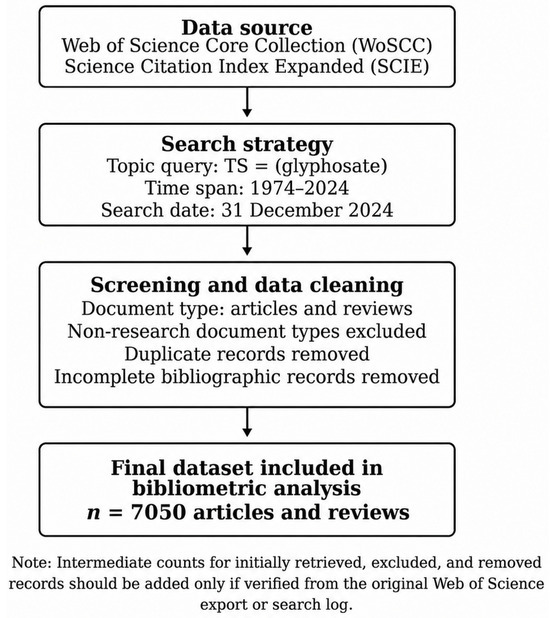
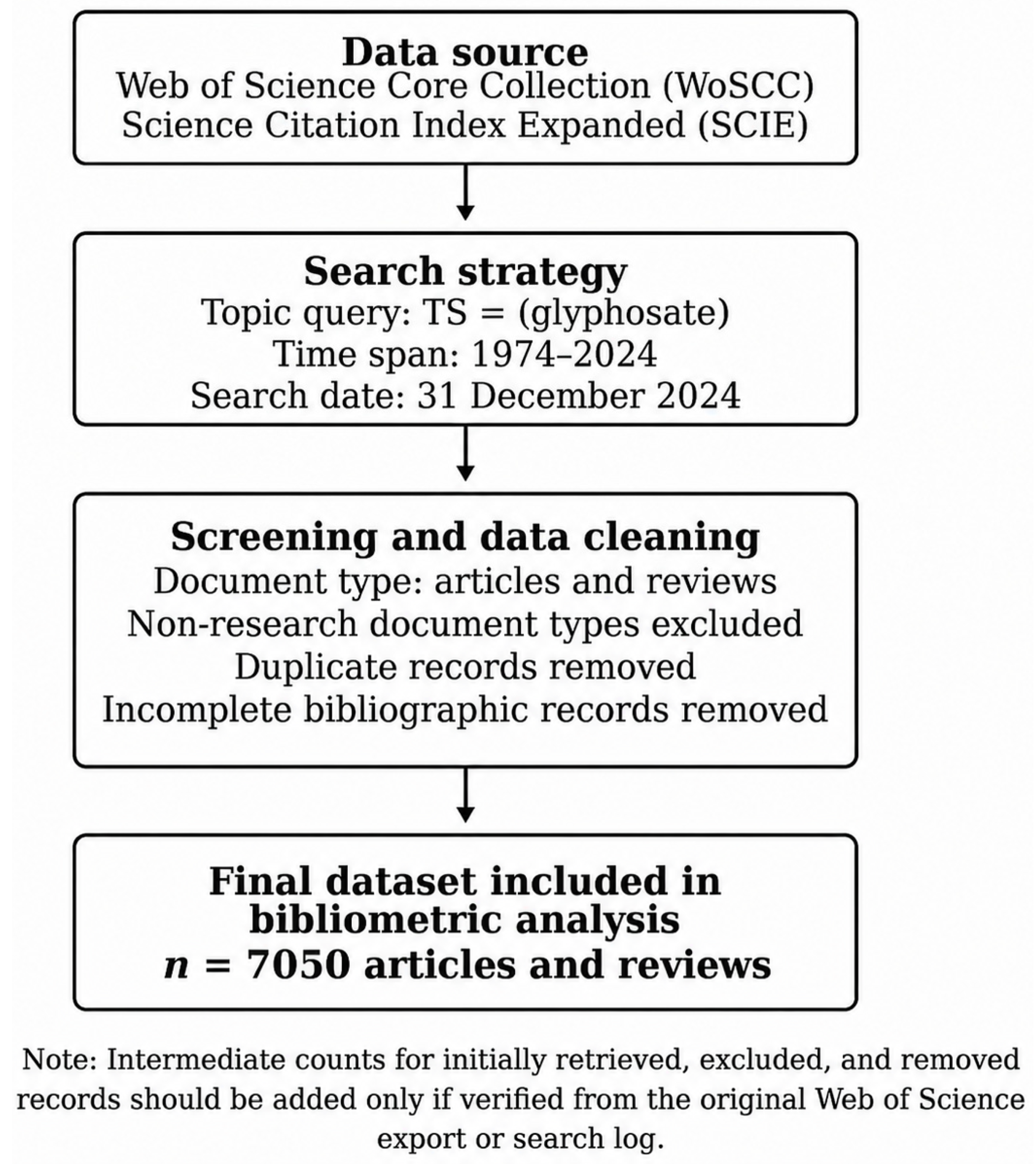
All eligible records were downloaded in “Full Record and Cited References” format for subsequent bibliometric analysis. Duplicate records were identified primarily based on DOI information and, where DOI was unavailable, by cross-checking title, first author, publication year, journal, and source information. After document-type screening, duplicate removal, and bibliographic data cleaning, 7050 articles and reviews were retained as the final dataset. The overall literature identification, screening, exclusion, and inclusion process is summarized in Figure 1.
Figure 1.
Flow diagram of the identification, screening, exclusion, and inclusion process for glyphosate-related publications. The final dataset included 7050 articles and reviews retrieved from the Web of Science Core Collection Science Citation Index Expanded (WoSCC-SCIE) using the topic query TS = (glyphosate).
2.2. Data Preprocessing and Standardization
Before bibliometric analysis, the retrieved records were manually and semi-manually preprocessed to improve data consistency and reduce artificial fragmentation in the bibliometric maps. The preprocessing focused on three types of bibliographic information: country or region names, institutional affiliations, and keywords. For country and region information, spelling variants and alternative expressions were unified where appropriate. Institutional names were standardized by merging obvious variants, abbreviations, and spelling differences referring to the same organization, while retaining institution-level distinctions where independent entities could not be confidently merged.
Keyword preprocessing was conducted to improve interpretability while preserving the original thematic structure of the dataset. First, common formatting differences, including capitalization, hyphenation, singular and plural forms, and spelling variants, were harmonized. For example, “glyphosate based herbicide” and “glyphosate-based herbicide” were standardized to a single form, and inconsistent capitalization of terms such as “oxidative stress”, “risk assessment”, and “herbicide resistance” was corrected. Second, clear synonym or abbreviation variants were merged when they referred to the same concept, such as “aminomethylphosphonic acid” and “AMPA”, and “5-enolpyruvylshikimate-3-phosphate synthase” and “EPSPS”. Third, overly broad or non-informative formatting variants were corrected, but conceptually related terms were not merged when they represented different analytical meanings. For instance, “toxicity”, “ecotoxicology”, and “risk assessment” were retained as separate terms because they represent different levels of biological or environmental interpretation.
Duplicate records were identified mainly using DOI information. For records without DOI information, duplicates were checked by comparing the title, first author, publication year, journal name, and source information. Records with incomplete bibliographic metadata were retained only when the missing fields did not affect the intended analysis; otherwise, they were excluded from the final dataset. All preprocessing steps were independently checked by two researchers. Discrepancies in duplicate identification, keyword merging, institutional standardization, or inclusion decisions were discussed and resolved by consensus to improve reproducibility and minimize subjective bias.
2.3. Bibliometric and Visualization Tools
A combination of bibliometric, statistical, and network-visualization tools was used to analyze the cleaned dataset. Derwent Data Analyzer (DDA, version 12.5; Clarivate Analytics, Philadelphia, PA, USA) was used for bibliographic data organization and descriptive statistics, including annual publication output, country and institutional productivity, journal distribution, Web of Science research-area distribution, and high-frequency keyword statistics. Microsoft Excel 2021 (Microsoft Corporation, Redmond, WA, USA) was used for auxiliary data checking, tabulation, and figure preparation.
VOSviewer (version 1.6.19; Centre for Science and Technology Studies, Leiden University, Leiden, The Netherlands) was used to construct and visualize bibliometric networks, including keyword co-occurrence networks, temporal overlay maps, and collaboration networks at the country and institutional levels [17]. For keyword analysis, author keywords and Keywords Plus were included, and a minimum occurrence threshold of 10 was applied to reduce noise from low-frequency terms and to highlight relatively stable thematic structures. Unless otherwise specified, network construction in VOSviewer used the association-strength normalization method and the default clustering algorithm. Node size indicates occurrence frequency or publication output; link thickness indicates connection strength, and colors indicate either cluster membership or average publication year, depending on the type of visualization.
UCINET 6 (version 6.757; Analytic Technologies, Harvard, MA, USA), together with NetDraw, was applied for social network analysis of international and inter-institutional collaboration [18]. UCINET was used to calculate network indicators such as degree centrality and network density, while NetDraw was used to visualize collaboration structures. Together, these tools enabled quantitative assessment and visual interpretation of publication dynamics, collaboration patterns, disciplinary distribution, and thematic evolution in glyphosate-related research.
2.4. Analytical Framework
The analytical framework was designed to move from descriptive bibliometric indicators to thematic interpretation of the environmental research trajectory of glyphosate and AMPA. Four complementary analytical components were included.
First, temporal evolution was assessed using annual publication output to identify long-term growth patterns and major developmental phases in glyphosate-related research. This analysis provided the chronological basis for interpreting how the field expanded from early agronomic application and resistance-management studies toward broader environmental and ecological topics.
Second, geographical, institutional, and disciplinary structures were evaluated by analyzing country-level productivity, institutional contributions, collaboration networks, and Web of Science research-area distributions. This component was used to identify major contributors, collaboration clusters, disciplinary foundations, and the degree to which glyphosate research has become internationally and interdisciplinarily distributed.
Third, the knowledge structure and thematic evolution of the field were examined using high-frequency keyword statistics, keyword co-occurrence networks, clustering analysis, and temporal overlay visualization. Author keywords and Keywords Plus were used to reveal dominant topics, thematic relationships, and shifts in research focus across different time periods.
Fourth, emerging fronts and future research priorities were identified by integrating keyword-frequency patterns, co-occurrence clusters, average publication year information, period-specific keyword changes, and interpretation of the supporting literature. Particular attention was given to four environmentally relevant themes: non-target ecotoxicological effects, environmental fate and transport of glyphosate and AMPA, exposure assessment, and monitoring technologies. This integrative framework allowed the study to go beyond descriptive mapping and to clarify knowledge gaps, hotspot transitions, and priority directions for ecological risk assessment and monitoring-based management of glyphosate contamination.
2.5. Ethical Statement and Data Availability
This study was based exclusively on publicly indexed bibliographic metadata retrieved from the Web of Science Core Collection and did not involve human participants, human data, animals, biological samples, or field experiments. Therefore, ethical approval was not required. The processed bibliometric dataset, including the cleaned records and summarized analytical outputs used to support the findings of this study, is available from the corresponding author upon reasonable request. The literature identification and screening process is summarized in Figure 1 to improve transparency and reproducibility.
3. Results
3.1. Temporal Evolution of Glyphosate Research
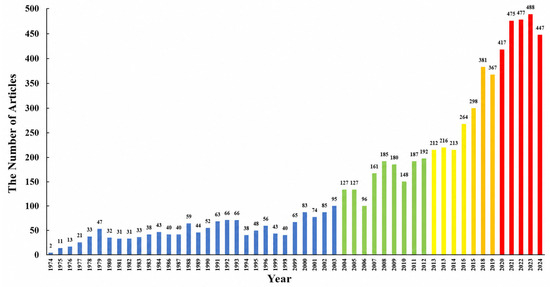
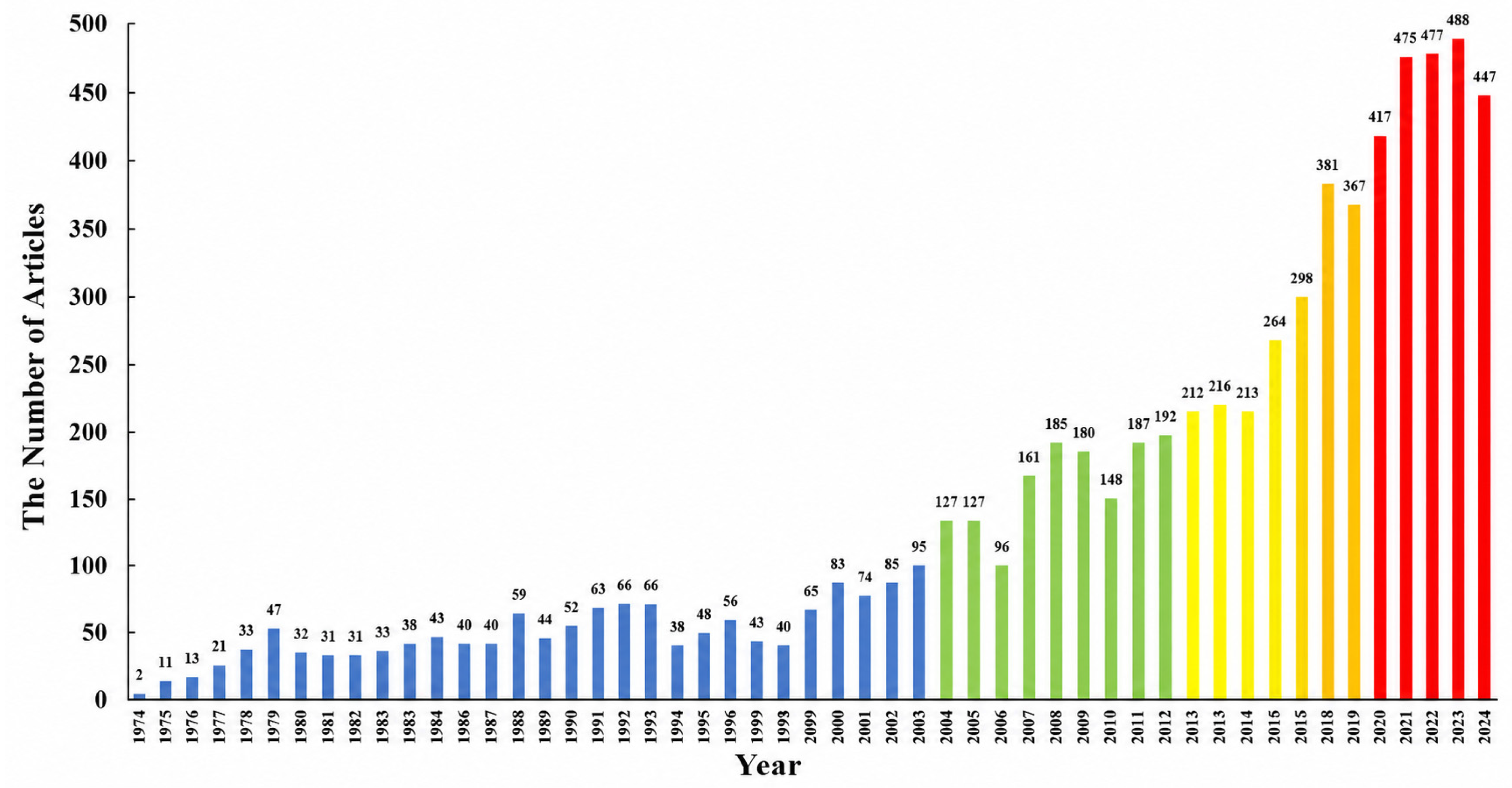
Figure 2 shows the annual number of glyphosate-related articles and reviews indexed in the Web of Science Core Collection-SCIE between 1974 and 2024. After document-type screening, duplicate removal, and bibliographic data cleaning, the final dataset comprised 7050 records. Overall, publication output increased markedly over the study period, indicating sustained and expanding scientific attention to glyphosate across nearly five decades.
Figure 2.
Annual number of SCIE-indexed glyphosate-related publications (1974–2024). Yearly publication counts were retrieved from the Web of Science Core Collection-SCIE using the topic query TS = (glyphosate), accessed on 31 December 2024. The final dataset included 7050 articles and reviews after document-type screening, duplicate removal, and bibliographic data cleaning. Bar colors indicate annual publication-output categories: blue, 0 ≤ n < 100; green, 100 ≤ n < 200; yellow, 200 ≤ n < 300; orange, 300 ≤ n < 400; and red, n ≥ 400.
For interpretation of publication dynamics, the development of glyphosate research was divided into three broad phases according to the long-term growth trajectory. Keyword evolution was further examined in four consecutive analytical periods in Section 3.2 to provide finer thematic resolution. The phase division in this section was based on annual publication patterns and bibliometric trends, rather than a complete historical review of all early experimental studies.
In the early stage (1974–2000), annual publication output remained relatively low, generally below 50 articles per year. The bibliometric pattern suggests that research during this period was mainly associated with herbicidal efficacy, crop selectivity, weed control, and plant-related mechanisms, reflecting the original agronomic context of glyphosate research.
During the transition stage (2001–2014), publication output increased steadily, and the thematic scope became more diversified. In addition to herbicide resistance and crop-related topics, increasing attention was directed toward residue behavior, adsorption, degradation, soil processes, and the movement of glyphosate and AMPA in environmental compartments. This period therefore represents a transition from application- and resistance-oriented research toward broader environmental behavior and non-target effect studies.
In the recent high-output stage (2015–2024), publication growth accelerated further. Annual output exceeded 300 articles after 2019 and reached a peak of 488 publications in 2023. This rapid increase indicates that glyphosate has become an intensively studied environmental and ecological topic extending beyond weed management. The overall temporal trajectory shows a progressive shift from efficacy-oriented agronomic research to a more diversified field involving environmental fate, ecotoxicology, exposure assessment, and risk-related concerns.
3.2. Evolution of Research Focus: Keyword and Cluster Analysis
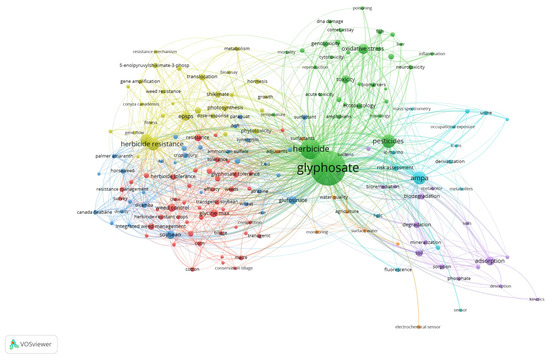
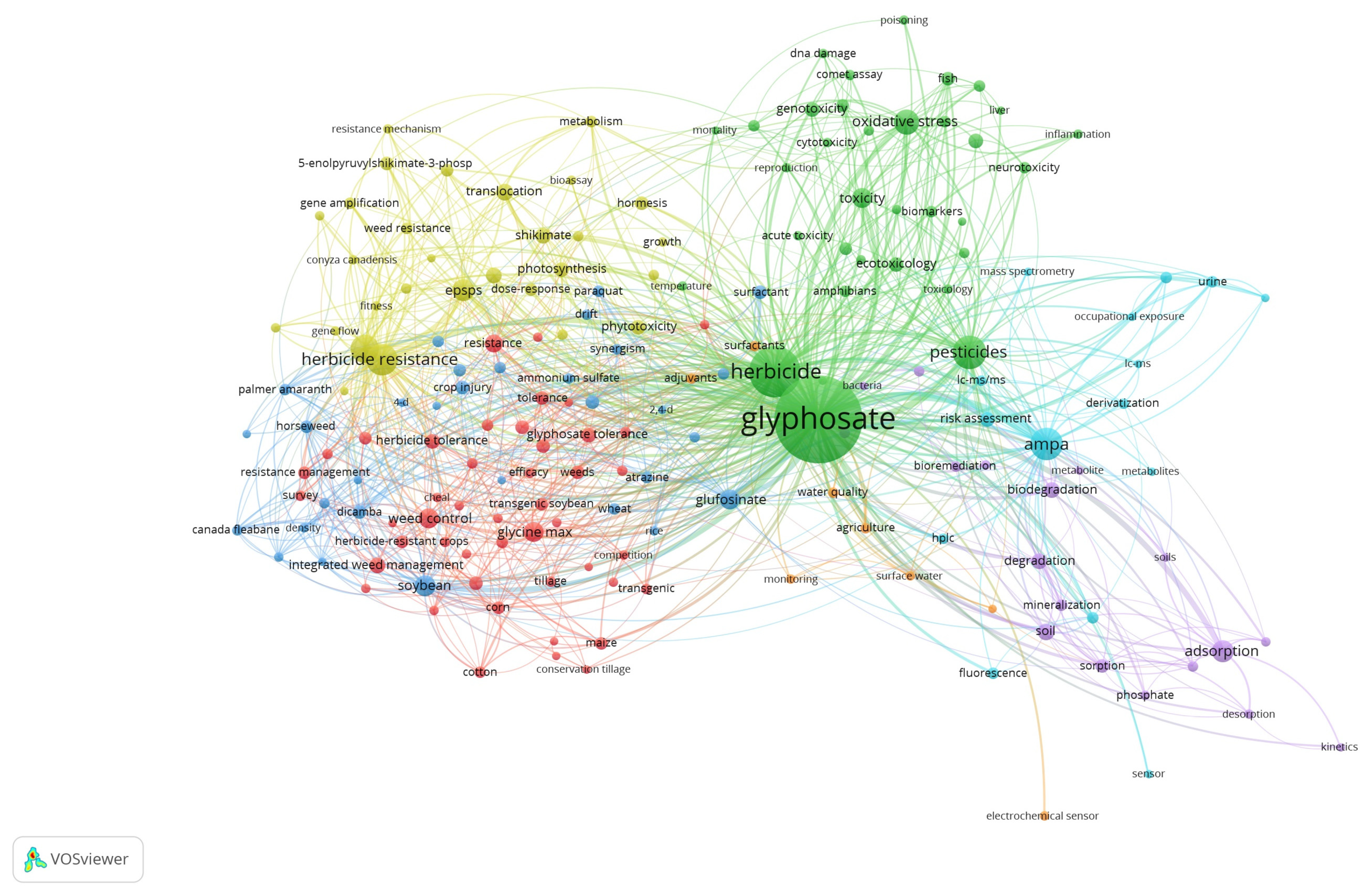
A keyword co-occurrence network was constructed using cleaned author keywords and Keywords Plus to examine the knowledge structure and thematic evolution of glyphosate-related research. As shown in Figure 3, the overall network was organized around several high-frequency terms, including “glyphosate”, “herbicide”, “AMPA”, “herbicide resistance”, “oxidative stress”, “adsorption”, “toxicity”, and “glyphosate-based herbicide”. Node size reflects keyword occurrence frequency, link thickness indicates co-occurrence strength, and colors represent thematic clusters. The network structure indicates that glyphosate research integrates agronomic, environmental, toxicological, and analytical dimensions rather than forming a single disciplinary cluster.
Figure 3.
Keyword co-occurrence network for glyphosate-related publications from 1974 to 2024. The network was generated in VOSviewer using cleaned author keywords and Keywords Plus. Node size reflects keyword occurrence frequency, link thickness indicates co-occurrence strength, and colors indicate clusters of thematically related terms.
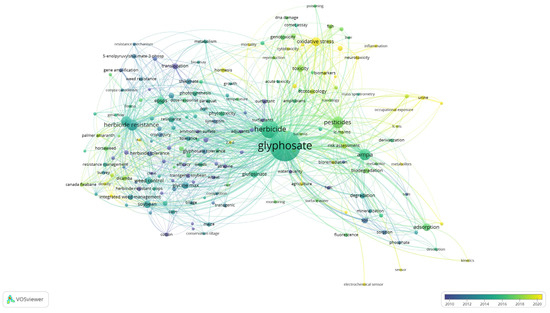
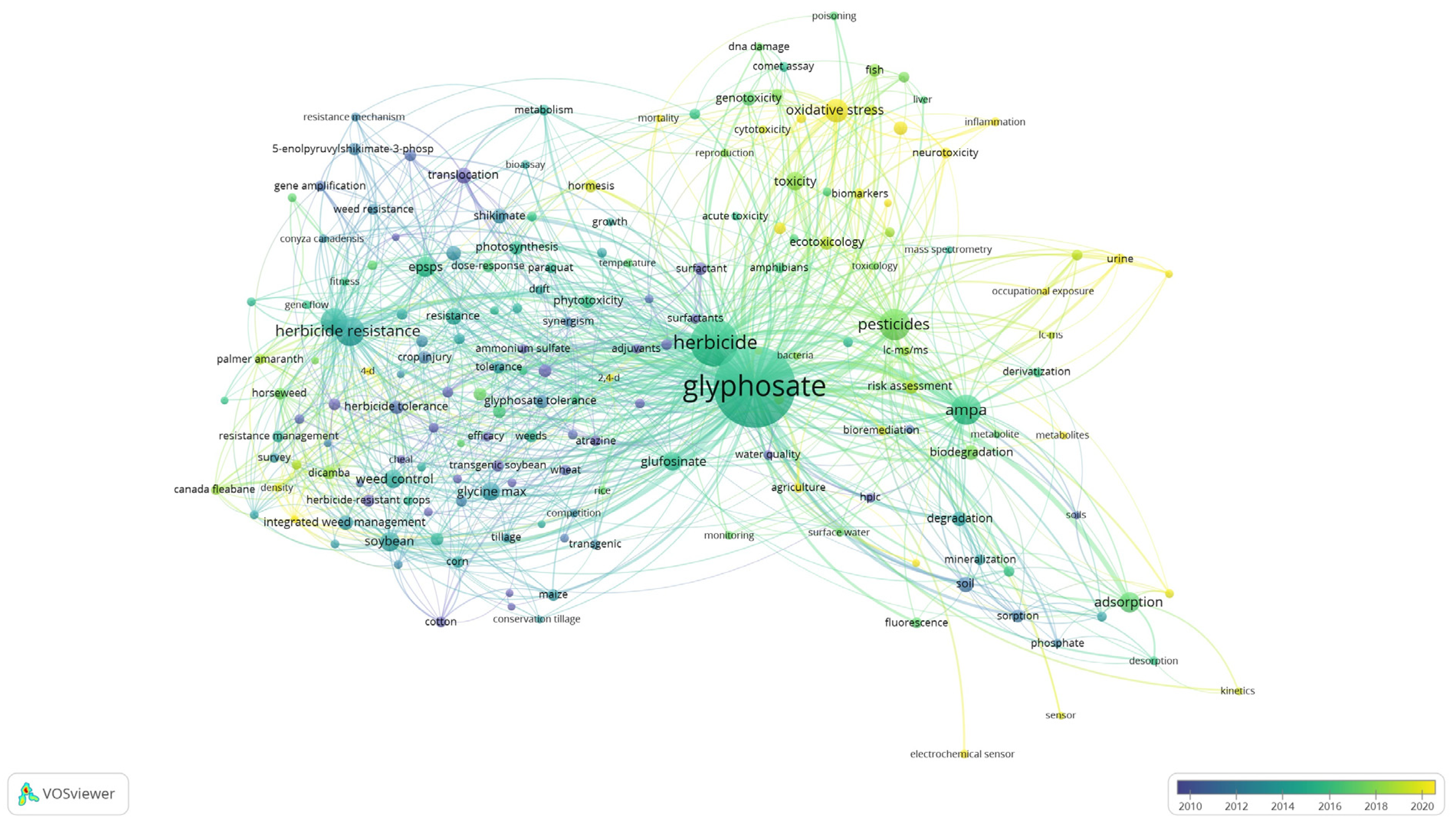
The temporal overlay visualization in Figure 4 further reveals a clear shift in research focus over time. Earlier keyword clusters were mainly associated with agronomic application, weed control, herbicide resistance, glyphosate-tolerant crops, soybean, EPSPS, and translocation. In contrast, more recent keywords were increasingly related to environmental fate, AMPA, adsorption, degradation, oxidative stress, toxicity, biomarkers, ecotoxicology, risk assessment, and monitoring-oriented topics. This temporal pattern indicates that glyphosate research has progressively expanded from crop-production and resistance-management issues toward environmental behavior, non-target biological effects, exposure assessment, and ecological risk interpretation.
Figure 4.
Temporal overlay visualization of keyword co-occurrence in glyphosate-related publications. Colors indicate the average publication year of keywords, with warmer colors representing more recent research themes. The overlay pattern illustrates the shift from earlier agronomic and resistance-management topics toward environmental fate, ecotoxicology, exposure assessment, and risk-oriented research.
Table 1 summarizes the 30 most frequent keywords in the full dataset and in four consecutive analytical periods. Overall, the keyword patterns show a clear thematic transition from agronomic and crop-oriented studies toward residue behavior, environmental fate, and, more recently, ecotoxicology and risk-related interpretation. In the full dataset, dominant terms such as “glyphosate”, “herbicide”, “AMPA”, “oxidative stress”, “adsorption”, “toxicity”, and “glyphosate-based herbicide” suggest that the field now spans both traditional weed-science topics and broader environmental and toxicological research themes.
Table 1.
High-frequency glyphosate-related keywords in the full dataset and across four analytical periods.
3.2.1. Period 2001–2006: Resistance Management and Crop-Production Focus
During 2001–2006, the keyword profile was dominated by agronomic and crop-management terms, including “herbicide resistance”, “herbicide-resistant crops”, “glyphosate resistance”, “glyphosate tolerance”, “transgenic crops”, “transgenic soybean”, “Roundup Ready soybean”, and “weed control”. Mechanism- and application-related terms such as “EPSPS”, “translocation”, “absorption”, “herbicide efficacy”, and “postemergence” were also prominent. These patterns indicate that glyphosate research in this period remained strongly centered on weed science, glyphosate-tolerant cropping systems, herbicide performance, and resistance-management strategies. Environmental terms such as “soil” and “AMPA” were present, but they were less central than agronomic and crop-production themes.
3.2.2. Period 2007–2012: Transition Toward Residue Behavior and Environmental Processes
During 2007–2012, the thematic structure broadened beyond crop resistance and weed control. Agronomic terms such as “glyphosate-resistant crops”, “transgenic crops”, “soybean”, “EPSPS”, and “weed control” remained visible, but environmental process-related terms, including “adsorption”, “degradation”, “soil”, and “AMPA”, became more prominent. The increasing presence of these terms suggests growing attention to the retention, transformation, and transport of glyphosate and AMPA in soil-related systems. Therefore, this period can be interpreted as a transitional stage in which agronomic research remained important, while residue dynamics and environmental fate began to emerge as distinct research directions.
3.2.3. Period 2013–2018: Emergence of Toxicology and Risk-Related Themes
A clearer thematic shift was observed during 2013–2018. In addition to established agronomic terms, keywords such as “oxidative stress”, “toxicity”, “genotoxicity”, “risk assessment”, and “glyphosate-based herbicide” became increasingly visible. These terms indicate that glyphosate research had expanded from herbicide efficacy and crop production toward mechanistic toxicology and non-target biological effects. At the same time, fate-related terms such as “adsorption”, “soil”, “AMPA”, and “translocation” remained important, suggesting that environmental behavior and toxicological interpretation were becoming increasingly interconnected. The appearance of organism-related terms such as “amphibians” further indicates growing concern about ecological effects in non-target taxa.
3.2.4. Period 2019–2024: Ecotoxicology, Biomarkers, and Environmental Monitoring
The period 2019–2024 shows the strongest convergence of environmental and toxicological themes. Keywords such as “oxidative stress”, “biomarkers”, “ecotoxicology”, “risk assessment”, “toxicity”, and “hormesis” indicate a pronounced shift toward mechanism-oriented ecotoxicology and sublethal effect assessment. Meanwhile, “biodegradation”, “adsorption”, “degradation”, “soil”, and “AMPA” remained central, reflecting continued attention to environmental fate, transformation, and persistence. The occurrence of terms such as “urine” also suggests an expansion toward exposure assessment and biomonitoring, while monitoring-related and analytical themes became increasingly relevant in the broader keyword network. Overall, the keyword profile of this period indicates that glyphosate research has evolved into a more integrated field linking environmental fate, biological response, exposure assessment, and ecological risk interpretation.
Overall, the keyword analysis demonstrates that glyphosate research has evolved from a largely agronomic and resistance-oriented field into a broader interdisciplinary domain encompassing environmental chemistry, ecotoxicology, exposure assessment, and monitoring-related themes. This temporal transition is consistent with the cluster structure observed in Figure 3 and the overlay pattern shown in Figure 4 and provides a direct basis for the interpretation of emerging research fronts in the Discussion section.
3.3. Geographic Distribution and International Collaboration
3.3.1. Country-Level Productivity
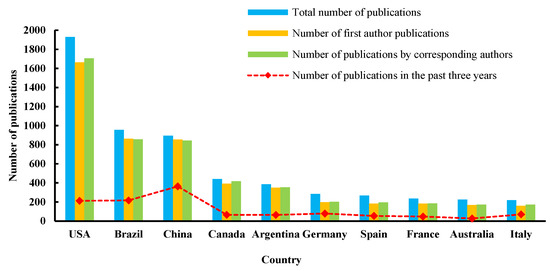
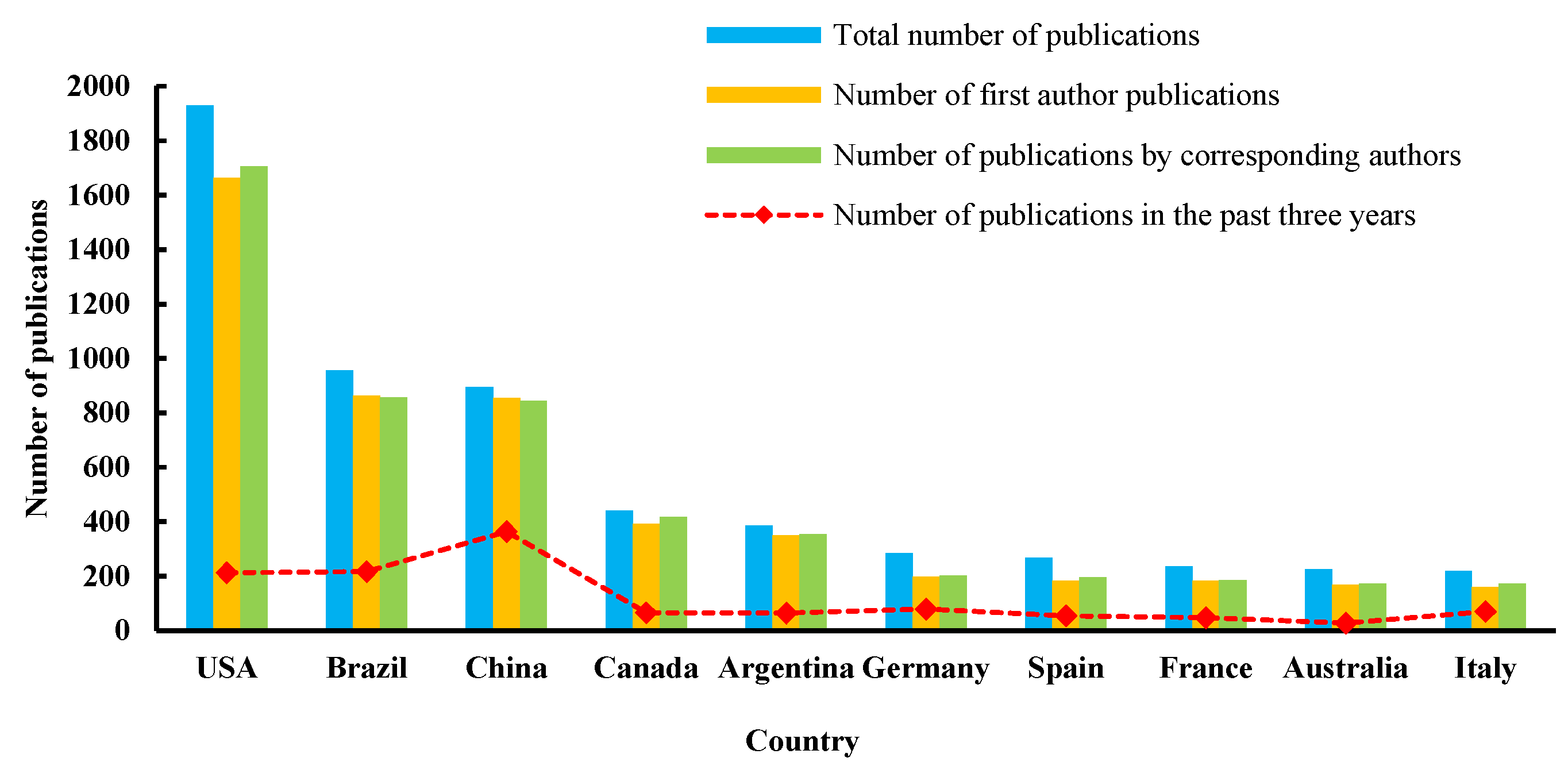
Between 1974 and 2024, glyphosate-related publications involved authors from 118 countries, indicating broad global participation in this research area. However, publication output was strongly concentrated in a limited number of countries. As shown in Figure 5, the top 10 countries were the United States, Brazil, China, Canada, Argentina, Germany, Spain, France, Australia, and Italy, which together accounted for more than 82% of all publications in the dataset.
Figure 5.
Country-level publication output in glyphosate-related research from 1974 to 2024. The ten most productive countries are ranked by the number of SCIE-indexed publications. Bars show total publications, first-author publications, corresponding-author publications, and publications in the past three years. The United States, Brazil, and China accounted for the largest shares of global output.
The United States ranked first with 1928 publications, representing 27.4% of the total output. Brazil and China occupied the second and third positions, followed by Canada and Argentina. The remaining countries in the top 10 each contributed several hundred publications, indicating that glyphosate research is globally distributed but still dominated by a relatively small core group of high-output countries.
These leading countries include several major agricultural economies, suggesting that glyphosate research output is closely associated with large-scale agricultural production, herbicide use, resistance management, environmental monitoring, and ecological risk assessment. In addition to total publication output, the distribution of first-author publications, corresponding-author publications, and publications in the past three years further indicates that research leadership and recent activity are concentrated in a limited number of countries, although participation from other regions has increased over time.
Citation-based indicators further suggest that publications from the United States, Germany, and Australia achieved comparatively high average citation impact. This indicates that scientific influence is not determined only by publication volume, but is also related to research visibility, collaboration capacity, and thematic specialization within the global glyphosate research landscape.
3.3.2. International Collaboration Network
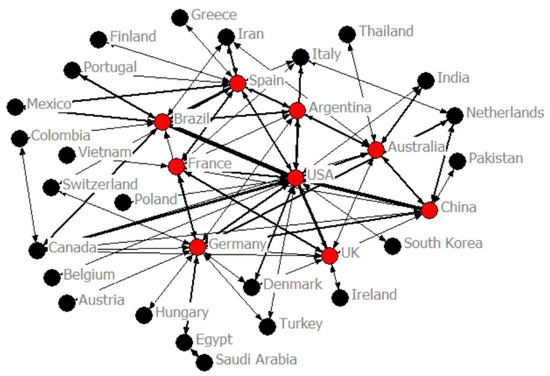
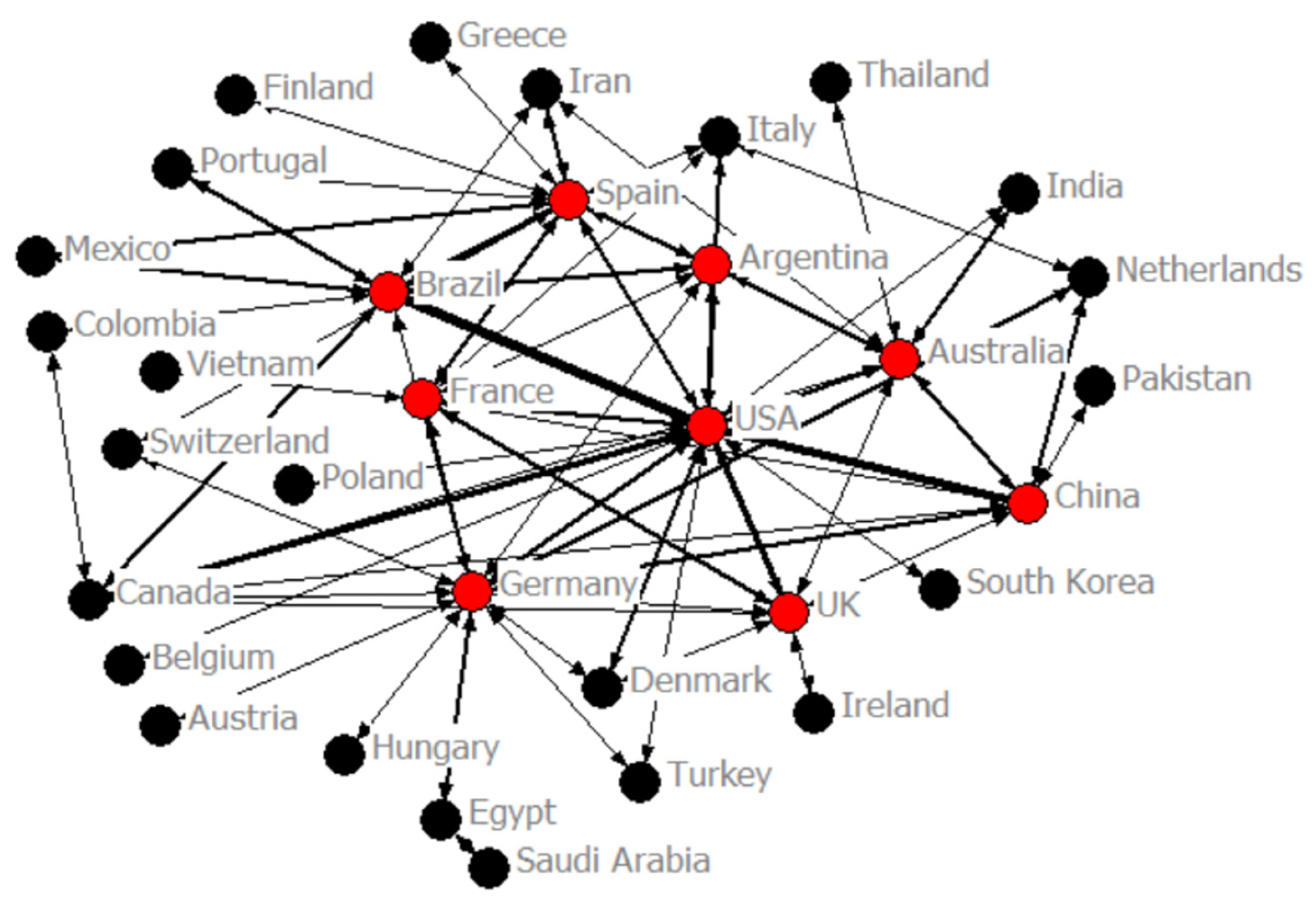
The international collaboration network provides information beyond publication counts by showing how countries are connected through co-authored publications. As shown in Figure 6, country partnerships with five or more instances of cooperation formed a visible international collaboration structure. The United States occupied a central position in this network and showed strong cooperative links with several major research-producing countries, including Canada, China, Brazil, the United Kingdom, Germany, France, and Australia. This pattern indicates that the United States has functioned not only as the largest contributor in terms of publication output, but also as an important hub for international knowledge exchange in glyphosate research.
Figure 6.
Country partnerships with five or more instances of cooperation in glyphosate-related research from 1974 to 2024. Each node represents a country or region, and connecting lines indicate international cooperation. Red nodes indicate major collaborative hub countries in the network, while black nodes indicate other collaborating countries or regions. Line thickness reflects the strength of cooperation between countries or regions.
The United States–Canada connection represents one of the strongest collaborative relationships in the network. This close partnership may be related to comparable agricultural production systems, shared concerns about herbicide use and resistance management, and common interests in environmental monitoring and pesticide regulation. Collaboration between the United States and European countries, including Germany, France, and the United Kingdom, was also prominent, reflecting the importance of glyphosate research across different agricultural, environmental, and regulatory contexts. In addition, links involving Brazil, Argentina, China, and other countries indicate that glyphosate research has become increasingly internationalized, especially in regions where large-scale crop production, herbicide-resistance management, and environmental risk assessment are major concerns.
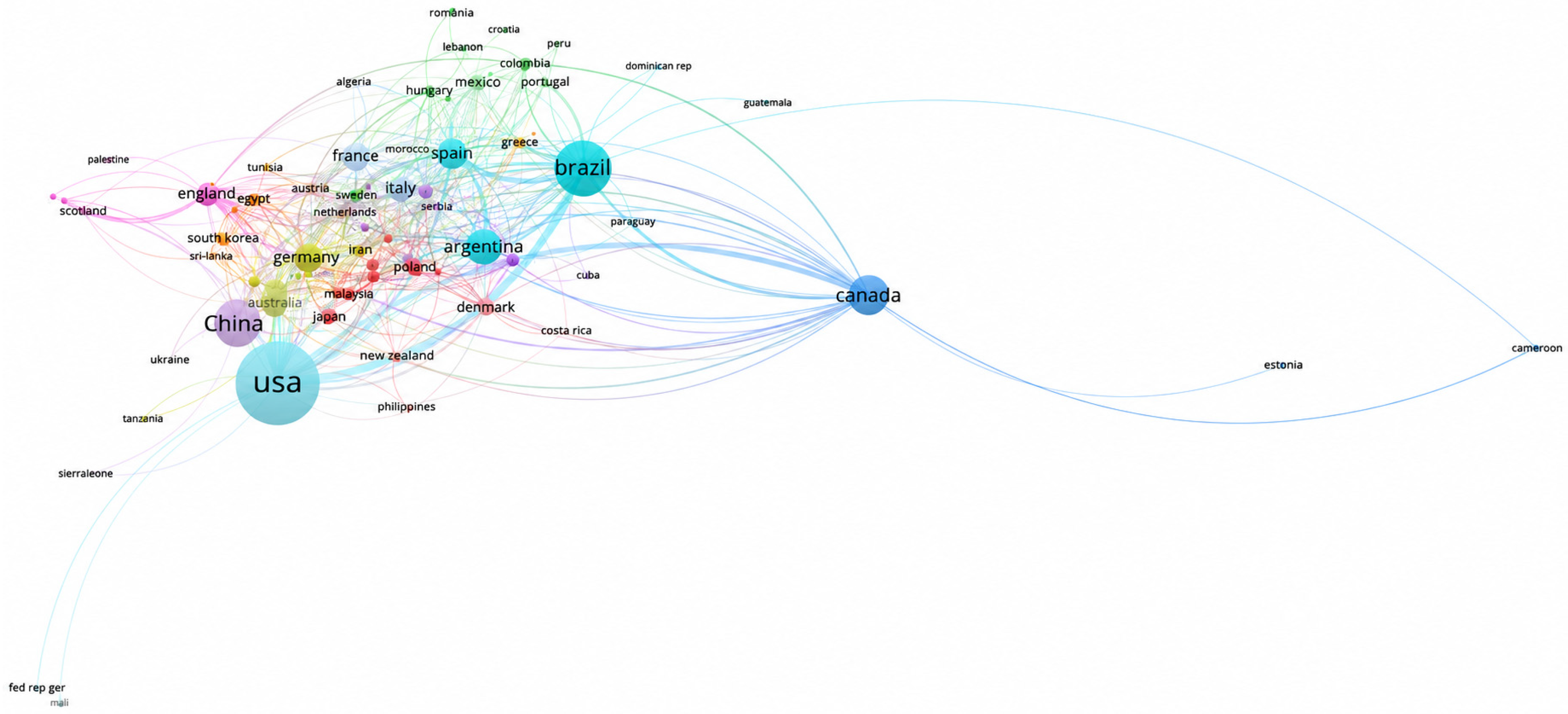
The broader global collaboration pattern is further illustrated in Figure 7. The global network shows that glyphosate research is organized around several major hubs, with the United States, Brazil, China, Canada, and European countries forming important collaborative nodes. Regional clustering was also observed. A South American cluster involving Brazil and Argentina reflects the strong agricultural relevance of glyphosate in this region. A European cluster is characterized by frequent intra-regional cooperation, while the increasing involvement of China and other Asian countries suggests that glyphosate-related research has become more geographically diverse. Nevertheless, the network remains uneven, with some countries occupying central positions and others remaining relatively peripheral.
Figure 7.
Global collaborative network for glyphosate-related research from 1974 to 2024. The country-level collaboration network shows the global structure of co-authored glyphosate-related publications. Node size reflects publication output or network prominence, connecting lines indicate international collaboration links, and colors indicate different collaboration clusters generated by the network analysis.
The relevance of international collaboration analysis lies in its ability to reveal how knowledge, methods, and monitoring experience are exchanged across regions. Strong collaboration can promote methodological standardization, cross-regional comparison of environmental occurrence data, coordinated exposure assessment, and more consistent ecological risk evaluation. Conversely, weakly connected regions may contribute fewer comparable data to global assessments, limiting the integration of local contamination evidence into broader environmental management frameworks. Therefore, the collaboration-network results indicate that future glyphosate and AMPA research would benefit from broader international coordination, especially in long-term monitoring, multi-matrix exposure assessment, and harmonized ecological risk evaluation.
3.4. Institutional and Disciplinary Landscape
3.4.1. Institutional Productivity
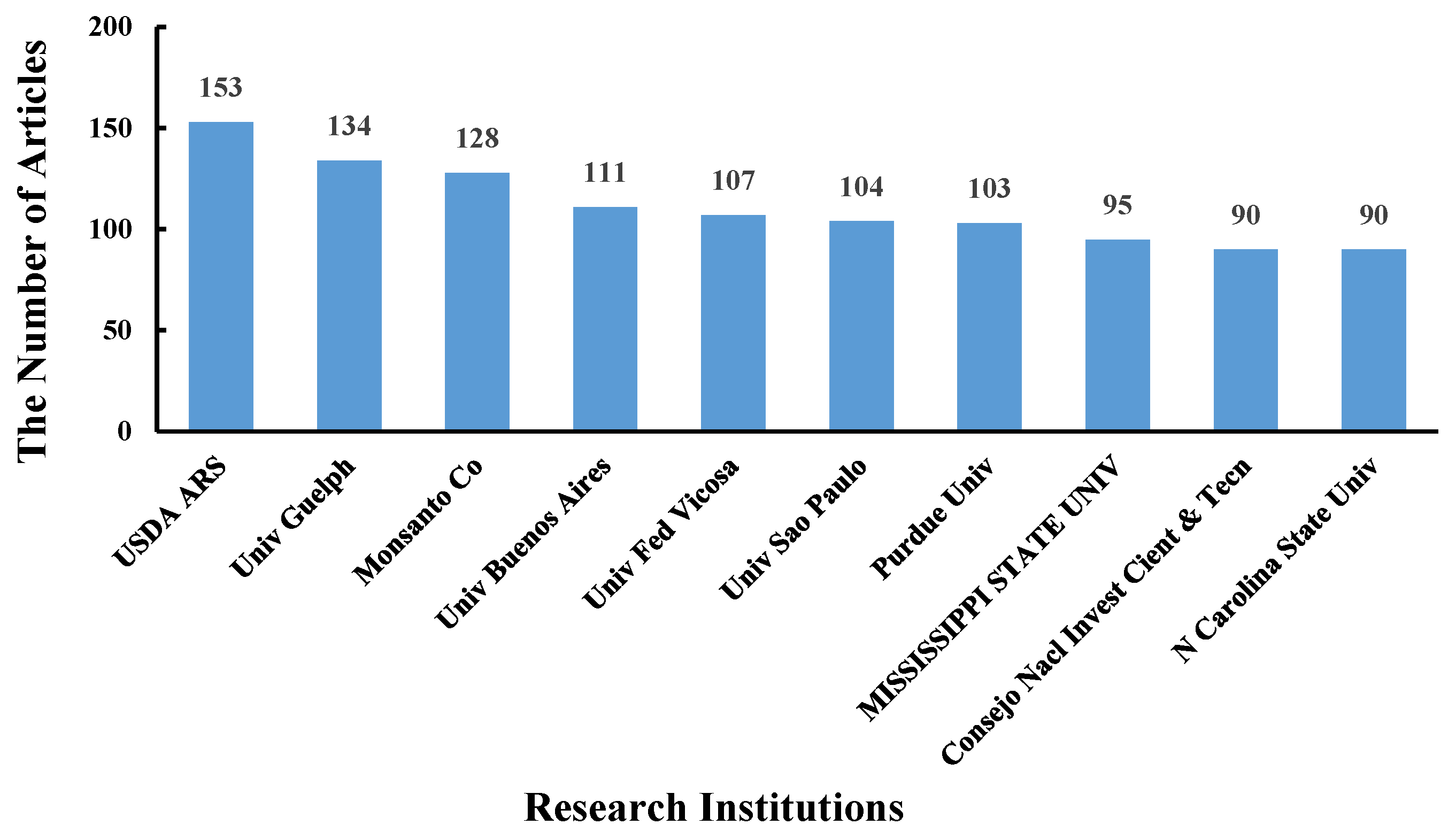
The institutional distribution of glyphosate-related publications further shows that research output was concentrated within a relatively small group of productive organizations. As shown in Figure 8, the top 10 institutions included Monsanto Company, the USDA Agricultural Research Service (ARS), the University of Guelph, the University of Buenos Aires, the Federal University of Viçosa, the University of São Paulo, Purdue University, Mississippi State University, Consejo Nacional de Investigaciones Científicas y Técnicas (CONICET, Buenos Aires, Autonomous City of Buenos Aires, Argentina), and North Carolina State University. These institutions represent a mixture of industrial, governmental, and academic organizations, indicating that glyphosate research has been shaped by multiple knowledge-production systems.
Figure 8.
Top 10 institutions publishing on glyphosate-related research in the SCIE database from 1974 to 2024. The figure shows the ten most productive institutions based on SCIE-indexed glyphosate-related articles and reviews. The institutional distribution highlights the contributions of industrial, governmental, and academic organizations, with strong representation from the United States and substantial contributions from Canada, Argentina, Brazil, and other regions.
Notably, several leading institutions were located in the United States, which is consistent with the dominant country-level contribution described in Section 3.3. The strong presence of U.S.-based organizations reflects the long-standing importance of glyphosate in agricultural production, herbicide-resistance management, regulatory assessment, and environmental monitoring. At the same time, the inclusion of institutions from Canada, Argentina, Brazil, and other regions indicates that glyphosate research has developed as an international field, particularly in countries where large-scale crop production, weed management, and pesticide-related environmental concerns are highly relevant.
The coexistence of industry, government agencies, and universities among the most productive institutions is an important feature of the institutional landscape. Monsanto Company reflects the historical role of product development and herbicide technology in shaping early and applied glyphosate research. Public-sector institutions such as the USDA Agricultural Research Service indicate the importance of agricultural management, residue monitoring, and regulatory science. University-based institutions contribute to a broader range of topics, including plant science, environmental chemistry, ecotoxicology, and analytical method development. Therefore, the institutional pattern helps explain why glyphosate research spans herbicide efficacy, crop systems, resistance management, environmental fate, toxicology, and monitoring technologies.
Overall, the institutional results indicate that glyphosate-related research is not evenly distributed across the global scientific system. Instead, it is organized around a core group of influential organizations with strong connections to agriculture, plant science, environmental assessment, and risk-oriented research. This concentration may facilitate sustained research capacity and methodological development, but it also highlights the need for broader participation from regions and institutions where glyphosate exposure and environmental monitoring remain underrepresented.
3.4.2. Disciplinary Composition
From a disciplinary perspective, glyphosate research shows a broad but clearly structured distribution across Web of Science research areas. As shown in Table 2, the three dominant research areas were Agriculture, Plant Sciences, and Environmental Sciences & Ecology with 2535, 1893, and 1598 publications, respectively. Together, these categories demonstrate that glyphosate research remains rooted in agricultural and plant-related sciences while increasingly expanding into environmental research.
Table 2.
Top 10 Web of Science research areas for glyphosate-related publications from 1974 to 2024.
Beyond these core areas, several other disciplines also contribute substantially to the glyphosate literature, including Chemistry, Toxicology, Biochemistry & Molecular Biology, Entomology, Food Science & Technology, Engineering, and Science & Technology—Other Topics. The presence of Chemistry and Toxicology reflects growing attention to residue behavior, analytical determination, environmental transformation, and biological effects. The contribution of Engineering and Food Science & Technology further suggests increasing interest in detection technologies, residue monitoring, processing-related concerns, and technology-oriented environmental surveillance.
The disciplinary distribution is consistent with the temporal and keyword-based results described in Section 3.1 and Section 3.2. The dominance of Agriculture and Plant Sciences reflects the historical foundation of glyphosate research in herbicide application, crop tolerance, weed control, and resistance management. In contrast, the strong representation of Environmental Sciences & Ecology, Chemistry, and Toxicology supports the conclusion that the field has progressively diversified toward contaminant fate, AMPA-related environmental behavior, non-target biological effects, and ecological risk assessment. This disciplinary expansion provides an important basis for understanding why recent glyphosate research increasingly integrates environmental fate, ecotoxicology, exposure assessment, and monitoring technologies.
Taken together, the institutional and disciplinary results indicate that glyphosate research has evolved into a multi-domain field linking agronomy, plant biology, environmental science, analytical chemistry, toxicology, and monitoring-oriented technology development. This broad disciplinary base provides an important context for interpreting the emerging research fronts discussed below.
4. Discussion
4.1. From Agronomic Application to Environmental and Ecological Interpretation
The bibliometric patterns identified in this study show that glyphosate research has undergone a clear conceptual shift over the past five decades. Early work was primarily embedded in weed science, herbicide efficacy, crop selectivity, and resistance management, reflecting the original agronomic context in which glyphosate was developed and widely adopted. This interpretation is consistent with the historical role of glyphosate as a highly effective broad-spectrum herbicide and with the global expansion of herbicide-resistant weed problems under intensive herbicide use [1,2,19]. However, the increasing appearance of keywords related to AMPA, adsorption, degradation, oxidative stress, ecotoxicology, toxicity, and risk assessment indicates that glyphosate is now studied not only as an agricultural input, but also as an environmental contaminant operating across interconnected soil, water, sediment, and biological systems. This transition is supported by a growing body of environmental monitoring evidence. Field studies have detected glyphosate in surface waters, sediments, and agricultural soils, including early monitoring work in soybean-producing regions and broader assessments of glyphosate and AMPA in agricultural topsoils [20,21]. These findings indicate that, although glyphosate can strongly interact with soils and minerals, repeated application, runoff, erosion, and hydrological transport can contribute to its occurrence outside target application areas. Recent syntheses further show that glyphosate occurs across multiple environmental systems, reinforcing the need to interpret glyphosate contamination through a multi-compartment environmental framework rather than only through the lens of crop-field application [22].
The environmental interpretation of glyphosate research has also been strengthened by increasing attention to AMPA and other transformation products. AMPA has been widely discussed as a major degradation product of glyphosate, but its environmental significance is broader because it may show distinct occurrence patterns, persistence, source complexity, and transport behavior in natural waters and soils [7]. More recent work on glyphosate degradation pathways has also shown that AMPA, glycine, and sarcosine may differ in their environmental fate and therefore have different implications for risk assessment [23]. This supports the bibliometric observation that AMPA-related keywords are becoming more visible and that the field is moving from parent-compound residue assessment toward a broader fate-based understanding of glyphosate-related contamination.
At the same time, ecotoxicological research has become increasingly central to the field. Recent reviews of aquatic ecotoxicity indicate that glyphosate, glyphosate-based herbicides, and co-formulants can produce adverse effects in a range of aquatic organisms, with oxidative stress, physiological disturbance, behavioral effects, and formulation-dependent toxicity frequently reported [11]. These findings are consistent with the keyword patterns observed in this study, where oxidative stress, toxicity, biomarkers, and ecotoxicology became increasingly prominent in recent years. Therefore, the shift from agronomic performance to environmental and ecological interpretation is not merely a change in terminology; it reflects an expansion of research questions from weed control and crop management to contaminant occurrence, transformation, biological response, and ecological risk.
This conceptual transition is also relevant to regulatory and management contexts. The 2023 EFSA peer review of glyphosate illustrates that contemporary glyphosate assessment now requires the integration of toxicological, environmental fate, exposure, and ecological information [24]. Accordingly, the bibliometric shift identified here reflects a broader maturation of glyphosate research toward integrated environmental assessment. Glyphosate is increasingly being examined within a contaminant-ecology framework that links agricultural use, environmental occurrence, transformation products, non-target organism responses, monitoring strategies, and risk-oriented management.
4.2. Ecotoxicology Has Become a Major Research Frontier
One of the clearest outcomes of the keyword and overlay analyses is the growing centrality of ecotoxicology in glyphosate research. The emergence of terms such as “oxidative stress”, “biomarkers”, “toxicity”, “ecotoxicology”, and “risk assessment” indicates that recent studies increasingly seek to resolve how glyphosate and glyphosate-based herbicides affect organisms at multiple levels of biological organization. This trend is important because it marks a transition from descriptive residue monitoring to mechanism-oriented interpretation of sublethal responses, including redox imbalance, immune disturbance, neurobehavioral alteration, developmental impairment, endocrine-related effects, and changes in community composition.
This interpretation is well supported by the broader ecotoxicological literature. A recent synthesis of aquatic studies concluded that the toxicity of glyphosate cannot be adequately understood by examining the active ingredient alone, because commercial formulations and co-formulants may substantially modify biological effects in fish, amphibians, invertebrates, algae, and aquatic primary producers [11]. This point is consistent with earlier and widely cited work showing that glyphosate-based formulations can differ in toxicity among aquatic organisms and that environmental factors may influence toxic outcomes [25]. Broader reviews of the freshwater environment have also emphasized that glyphosate and glyphosate-based herbicides may affect aquatic organisms through multiple pathways, including direct toxicity, biochemical disruption, and indirect ecological effects [26].
Fish and zebrafish models further illustrate the mechanistic expansion of glyphosate ecotoxicology. Systematic and review-based evidence indicates that glyphosate and glyphosate-based herbicides can affect zebrafish across embryonic, larval, and adult stages, with reported outcomes including developmental toxicity, mortality, oxidative stress, neurotoxicity, genotoxicity, endocrine disturbance, immune effects, and altered behavior [27,28,29]. Fish behavior has become particularly relevant because changes in swimming, foraging, predator avoidance, and reproductive behaviors may translate sublethal biochemical or physiological disturbances into ecological consequences at the population or community level [28]. These findings help explain why keywords related to biomarkers, oxidative stress, toxicity, and ecotoxicology became more prominent in the recent phase of the bibliometric maps.
Neurotoxicity and behavioral disruption represent another increasingly important component of the ecotoxicological frontier. A systematic review of glyphosate effects on the nervous system reported evidence for altered neurotransmission, oxidative stress, neuroinflammation, mitochondrial dysfunction, and behavioral or motor disturbances across different experimental systems [30]. Although the strength of evidence varies among taxa, exposure conditions, and formulations, these studies indicate that glyphosate-related ecotoxicology is moving beyond simple survival endpoints toward mechanistic endpoints that are more closely linked with organism fitness and ecological function.
Another important implication is that glyphosate-related ecotoxicology is moving toward a multiple-stressor framework. Experimental work has shown that warming can lower critical thresholds for multiple-stressor-induced shifts between aquatic primary producers, suggesting that pesticide-related effects may be amplified under climate-change-related stress conditions [31]. Likewise, co-exposure studies with aged polyethylene microplastics and glyphosate-based herbicides have demonstrated combined toxic effects in Pacific white shrimp, including impacts on immune-related responses and tissue-level endpoints [32]. These developments are highly consistent with the present bibliometric results, which indicate that the most recent stage of glyphosate research is no longer centered solely on herbicide toxicology, but increasingly embedded within the broader ecology of interacting stressors.
Taken together, these findings suggest that ecotoxicology has become a major research frontier because it connects environmental occurrence with biological response and ecological relevance. Future glyphosate research should therefore place greater emphasis on environmentally realistic exposure scenarios, formulation-specific toxicity, non-target organism sensitivity, biomarker validation, long-term sublethal effects, and interactions with co-occurring stressors such as warming, nutrient enrichment, microplastics, and other contaminants. From a bibliometric perspective, this helps explain why ecotoxicology-related keywords are now clustered more closely with environmental fate, exposure assessment, and risk-related terms than with classical agronomic descriptors.
4.3. Environmental Fate and Transport of Glyphosate and AMPA Are Increasingly Independent Themes
The second major frontier highlighted by this study is the environmental fate of glyphosate and especially AMPA. The increasing visibility of keywords such as “AMPA”, “adsorption”, “degradation”, “soil”, “runoff”, “surface water”, and “groundwater” indicates that the field has progressively expanded from compound use patterns to post-release behavior in environmental matrices. This development is important because the ecological relevance of glyphosate contamination depends not only on the parent compound, but also on how residues are transported, transformed, retained, and remobilized across the soil–water–sediment continuum.
Existing literature strongly supports this interpretation. Grandcoin et al. emphasized that AMPA in natural waters has multiple sources and should not be interpreted only as a simple tracer of glyphosate degradation [7]. More recent work has further shown that wastewater and point-source pathways may represent substantial inputs of both glyphosate and AMPA, and that treatment processes, wastewater sludge, and constructed wetland systems can shape downstream release into receiving waters [33]. Field monitoring has also demonstrated that glyphosate and AMPA are commonly found in urban streams and wetlands, indicating that their environmental occurrence is not restricted to agricultural catchments [34]. These findings help explain why the bibliometric landscape has shifted toward keywords related to source attribution, transport interfaces, retention, degradation, and monitoring in surface-water systems.
AMPA-related fate research has also expanded across aquatic and transitional environments. Measurements in Baltic Sea estuaries showed that glyphosate and AMPA can be detected in estuarine systems, demonstrating the need to consider river–estuary–coastal connections when interpreting the transport of these compounds [35]. In freshwater endorheic basins, simultaneous assessment of glyphosate and AMPA in water and sediment further showed that environmental fate and ecotoxicological risk may vary among sites influenced by agricultural, peri-urban, and hydrological conditions [36]. Together, these studies indicate that the fate of glyphosate and AMPA cannot be understood from agricultural application rates alone, but requires attention to hydrology, land use, sediment interaction, and water-body type.
Groundwater and subsurface transport represent another important component of this research frontier. Although glyphosate has often been considered relatively immobile because of strong adsorption to soil and mineral surfaces, monitoring and review studies show that glyphosate and AMPA can still occur in groundwater under certain hydrogeological and land-use conditions [37]. Regional monitoring in agricultural basins of China further demonstrated spatial and seasonal occurrence of glyphosate and AMPA in groundwater and surface water, with runoff, erosion, spray drift, meteorological conditions, and soil characteristics acting as important drivers of water-body exposure [38]. These findings support the need to evaluate glyphosate and AMPA within a multi-pathway transport framework rather than assuming uniformly low mobility.
The present results therefore suggest that AMPA-related research is becoming increasingly independent from the parent glyphosate literature. In earlier work, AMPA often appeared mainly as a secondary analytical endpoint. In contrast, recent studies treat it as an environmental target with distinct persistence, source attribution, transport behavior, and monitoring significance [7,33,37]. Broader syntheses have also emphasized that glyphosate persistence and mobility depend on adsorption, degradation, microbial activity, soil composition, runoff, erosion, and water movement, which together determine whether glyphosate and AMPA remain in soils or move toward surface water, sediment, or groundwater [39]. This supports the bibliometric observation that AMPA-related keywords are becoming more visible and increasingly connected with environmental fate and monitoring themes.
At the global scale, modeling approaches are beginning to place glyphosate and AMPA transport into a larger watershed and river-network context. A recent global assessment estimated annual inputs of glyphosate and AMPA into rivers and showed that AMPA accounted for the majority of modeled river inputs, with important regional differences linked to crop production systems [40]. This type of evidence indicates that AMPA-inclusive fate assessment is essential for understanding long-term contamination and for designing monitoring strategies that extend beyond the parent herbicide alone.
Overall, the rise in AMPA-centered and fate-related keywords in the present bibliometric analysis is not incidental. It reflects a substantive reorientation of glyphosate research toward source attribution, environmental persistence, multi-compartment transport, and risk-relevant monitoring. If monitoring programs or exposure models focus too narrowly on glyphosate alone, they may underestimate chronic background contamination, especially in sediments, groundwater, wastewater-linked pathways, or environments receiving diffuse and repeated inputs. Future research should therefore integrate glyphosate and AMPA measurements across soils, surface waters, groundwater, sediments, wastewater systems, and receiving aquatic environments.
4.4. Expansion and Limitations of Detection and Monitoring Technologies
The third major frontier identified in this study is the development of detection and monitoring technologies for glyphosate and AMPA. Keyword evolution and cluster structure indicate increasing attention to analytical methods, sensors, biosensors, aptasensors, immunosensors, nanomaterials, and miniaturized detection platforms. This trend likely reflects the practical analytical challenges associated with glyphosate itself: its high polarity, strong water solubility, low volatility, weak chromophoric or fluorophoric properties, and matrix-dependent behavior make rapid and selective determination difficult in environmental, biological, and food-related samples [41]. Therefore, glyphosate monitoring has gradually expanded from conventional chromatographic workflows toward rapid screening-oriented platforms intended to shorten analysis time, reduce sample preparation requirements, and improve field applicability.
Conventional instrumental methods remain essential for accurate quantification and regulatory confirmation. Reviews of chromatographic methods show that liquid chromatography, ion chromatography, derivatization-based fluorescence detection, and tandem mass spectrometry have been widely used for glyphosate, AMPA, and related compounds in water, soil, food, urine, and other matrices [42]. Recent LC-MS/MS methods have achieved high sensitivity for glyphosate, AMPA, and glufosinate in surface water and groundwater, demonstrating the continuing importance of laboratory-based confirmatory methods for environmental monitoring [43]. However, these methods generally require specialized instrumentation, trained personnel, controlled laboratory conditions, and matrix-specific validation. As a result, they are difficult to deploy directly for high-frequency field screening or large-scale decentralized monitoring.
Electrochemical sensing has become one of the most active directions in rapid glyphosate detection. Zambrano-Intriago et al. reviewed electroanalytical strategies for glyphosate determination and emphasized the importance of transduction mode, electrode materials, recognition elements, and detection mechanisms in different food and environmental matrices [44]. Recent studies have further explored nanomaterial-enhanced electrochemical and aptamer-based platforms. For example, aptamer-based electrochemical biosensors and nanostructured electrode systems have been developed to improve sensitivity and selectivity for glyphosate detection [45,46]. These approaches show clear promise because electrochemical devices can be compact, relatively low-cost, and compatible with portable detection formats. Nevertheless, challenges remain in receptor stability, electrode fouling, matrix interference, calibration robustness, and performance reproducibility in real environmental samples.
Immunosensors and aptasensors represent another important branch of monitoring-oriented detection technologies. Immunosensor reviews have highlighted the potential of antibody-based devices for rapid, simple, and sensitive monitoring of pesticides, including glyphosate [47]. A rapid on-site immunoassay for glyphosate herbicide has also been reported, demonstrating the feasibility of field-oriented screening formats [48]. In parallel, aptamer-based sensing has expanded rapidly because aptamers offer advantages such as chemical stability, synthetic accessibility, tunable modification, and compatibility with nanomaterials [49]. However, many aptasensor studies remain focused on proof-of-concept development, model matrices, or single-platform optimization. For glyphosate specifically, the availability, validation, and cross-reactivity of recognition elements remain critical issues that need to be resolved before broad environmental deployment.
Optical and nanomaterial-based sensors have also contributed to the diversification of glyphosate detection. Fluorescent, colorimetric, SERS-based, and smartphone-assisted sensing strategies have been explored for pesticide monitoring because they can provide visual readout, low-cost instrumentation, and potential field adaptability [50]. Among glyphosate-specific systems, highly sensitive immunosensing based on optical waveguide light-mode spectroscopy (OWLS) has demonstrated label-free detection capability in competitive assay formats [51]. Such technologies illustrate the movement of the field toward rapid and potentially portable analytical systems. However, field deployment remains limited because many platforms still require derivatization, controlled assay conditions, sample pretreatment, or validation against chromatographic reference methods.
Overall, the present bibliometric results suggest that technological development is advancing faster than routine integration into long-term environmental monitoring programs. Much of the recent sensor literature emphasizes signal amplification, new nanomaterials, novel recognition elements, and low detection limits, whereas fewer studies address long-term matrix robustness, inter-laboratory reproducibility, standardized validation, multi-site monitoring, or compatibility with regulatory surveillance. Broader reviews on glyphosate impacts, detection, and removal strategies also emphasize the need to connect analytical innovation with environmental management needs [52]. Therefore, while rapid detection technologies represent a clear emerging frontier, the next stage of development should prioritize validated performance in real environmental matrices, AMPA-inclusive detection, cross-platform comparability, low-cost field screening, and integration with conventional confirmatory methods.
5. Conclusions
This bibliometric review analyzed 7050 glyphosate-related articles and reviews indexed in the Web of Science Core Collection-SCIE from 1974 to 2024. The results show that glyphosate research has evolved from a field primarily centered on herbicidal efficacy, crop selectivity, weed control, and resistance management into a broader environmental and ecological research domain. The rapid increase in publication output after 2019 and the diversification of keywords indicate that glyphosate is now studied not only as an agricultural input, but also as an environmental contaminant associated with occurrence, transformation, biological response, exposure assessment, and ecological risk.
Three major research fronts were identified. First, ecotoxicology has become a central theme, with increasing attention to non-target organisms, sublethal effects, oxidative stress, biomarkers, formulation-dependent toxicity, and multiple-stressor interactions. Second, AMPA-related environmental fate and transport have become increasingly important, indicating that risk assessment and monitoring should not focus only on the parent compound glyphosate. Third, detection and monitoring technologies have expanded rapidly, especially chromatographic methods, electrochemical sensors, immunosensors, aptasensors, optical sensing platforms, and nanomaterial-assisted approaches. However, the routine integration of rapid detection technologies into long-term field monitoring remains limited.
The findings of this review indicate that glyphosate research is moving toward an integrated contaminant-ecology framework linking agricultural use, environmental occurrence, transformation products, non-target organism responses, analytical monitoring, and risk-oriented management. Future studies should give greater attention to AMPA-inclusive monitoring, multi-matrix transport across soil–water–sediment systems, environmentally realistic exposure scenarios, formulation-specific toxicity, interactions with co-occurring stressors, and standardized field-deployable detection methods. Strengthening these directions will improve the ecological relevance of glyphosate research and support more robust environmental risk assessment and management of glyphosate and AMPA contamination in complex environmental systems.
Author Contributions
Conceptualization, S.K. and H.Y.; methodology, J.S. and C.Z.; formal analysis, J.S., C.Z., L.Z. and D.G.; data curation, J.S. and C.Z.; writing—original draft preparation, J.S.; writing—review and editing, J.S., C.Z., L.Z., D.G., S.K. and H.Y.; visualization, J.S. and C.Z.; supervision, S.K. and H.Y.; project administration, S.K. and H.Y.; funding acquisition, S.K. and H.Y. All authors have read and agreed to the published version of the manuscript.
Funding
This work was supported by the National Key R&D Program of China (2023YFE0106200).
Data Availability Statement
The data supporting the findings of this study are available from the corresponding author upon reasonable request.
Acknowledgments
The authors thank the Centre for Documentation and Information, Institute of Oceanology, Chinese Academy of Sciences, for providing data retrieval and statistical analysis support.
Conflicts of Interest
The authors declare no conflicts of interest.
References
- Duke, S.O.; Powles, S.B. Glyphosate: A once-in-a-century herbicide. Pest Manag. Sci. 2008, 64, 319–325. [Google Scholar] [CrossRef] [Scilit]
- Benbrook, C.M. Trends in glyphosate herbicide use in the United States and globally. Environ. Sci. Eur. 2016, 28, 3. [Google Scholar] [CrossRef] [Scilit] [PubMed]
- Van Bruggen, A.H.C.; He, M.M.; Shin, K.; Mai, V.; Jeong, K.C.; Finckh, M.R.; Morris, J.G., Jr. Environmental and health effects of the herbicide glyphosate. Sci. Total Environ. 2018, 616–617, 255–268. [Google Scholar] [CrossRef] [Scilit] [PubMed]
- Mesnage, R.; Antoniou, M.N. Facts and fallacies in the debate on glyphosate toxicity. Front. Public Health 2017, 5, 316. [Google Scholar] [CrossRef] [Scilit] [PubMed]
- International Agency for Research on Cancer. Some Organophosphate Insecticides and Herbicides: Glyphosate. IARC Monographs on the Evaluation of Carcinogenic Risks to Humans; IARC: Lyon, France, 2015; Volume 112. [Google Scholar]
- Battaglin, W.A.; Meyer, M.T.; Kuivila, K.M.; Dietze, J.E. Glyphosate and its degradation product AMPA occur frequently and widely in U.S. soils, surface water, groundwater, and precipitation. J. Am. Water Resour. Assoc. 2014, 50, 275–290. [Google Scholar] [CrossRef] [Scilit]
- Brovini, E.M.; Cardoso, S.J.; Vilas-Boas, J.A.; Quadra, G.R.; Paranaíba, J.R.; Pereira, R.O.; Mendonça, R.F. Glyphosate concentrations in global freshwaters: Are aquatic organisms at risk? Environ. Sci. Pollut. Res. 2021, 28, 60635–60648. [Google Scholar] [CrossRef] [Scilit] [PubMed]
- Grandcoin, A.; Piel, S.; Baurès, E. Aminomethylphosphonic acid (AMPA) in natural waters: Its sources, behavior and environmental fate. Water Res. 2017, 117, 187–197. [Google Scholar] [CrossRef] [Scilit] [PubMed]
- Gill, J.P.K.; Sethi, N.; Mohan, A.; Datta, S.; Girdhar, M. Glyphosate toxicity for animals. Environ. Chem. Lett. 2018, 16, 401–426. [Google Scholar] [CrossRef] [Scilit]
- Peillex, C.; Pelletier, M. The impact and toxicity of glyphosate and glyphosate-based herbicides on health and immunity. J. Immunotoxicol. 2020, 17, 163–174. [Google Scholar] [CrossRef] [Scilit] [PubMed]
- Klátyik, S.; Simon, G.; Oláh, M.; Takács, E.; Mesnage, R.; Antoniou, M.N.; Zaller, J.G.; Székács, A. Aquatic ecotoxicity of glyphosate, its formulations, and co-formulants: Evidence from 2010 to 2023. Environ. Sci. Eur. 2024, 36, 22. [Google Scholar] [CrossRef] [Scilit]
- Aria, M.; Cuccurullo, C. bibliometrix: An R-tool for comprehensive science mapping analysis. J. Informetr. 2017, 11, 959–975. [Google Scholar] [CrossRef] [Scilit]
- Donthu, N.; Kumar, S.; Mukherjee, D.; Pandey, N.; Lim, W.M. How to conduct a bibliometric analysis: An overview and guidelines. J. Bus. Res. 2021, 133, 285–296. [Google Scholar] [CrossRef] [Scilit]
- Sosa, B.; Fontans-Álvarez, E.; Romero, D.; da Fonseca, A.; Achkar, M. Analysis of scientific production on glyphosate: An example of politicization of science. Sci. Total Environ. 2019, 681, 541–550. [Google Scholar] [CrossRef] [Scilit] [PubMed]
- Klingelhöfer, D.; Braun, M.; Brüggmann, D.; Groneberg, D.A. Glyphosate: How do ongoing controversies, market characteristics, and funding influence the global research landscape? Sci. Total Environ. 2021, 765, 144271. [Google Scholar] [CrossRef] [Scilit] [PubMed]
- Yu, Y.; Wang, S.; Yu, P.; Wang, D.; Hu, B.; Zheng, P.; Zhang, M. A bibliometric analysis of emerging contaminants (ECs) (2001–2021): Evolution of hotspots and research trends. Sci. Total Environ. 2024, 907, 168116. [Google Scholar] [CrossRef] [Scilit] [PubMed]
- Van Eck, N.J.; Waltman, L. Software survey: VOSviewer, a computer program for bibliometric mapping. Scientometrics 2010, 84, 523–538. [Google Scholar] [CrossRef] [Scilit] [PubMed]
- Borgatti, S.P.; Everett, M.G.; Freeman, L.C. UCINET for Windows: Software for Social Network Analysis; Analytic Technologies: Harvard, MA, USA, 2002. [Google Scholar]
- Heap, I. Global perspective of herbicide-resistant weeds. Pest Manag. Sci. 2014, 70, 1306–1315. [Google Scholar] [CrossRef] [Scilit] [PubMed]
- Peruzzo, P.J.; Porta, A.A.; Ronco, A.E. Levels of glyphosate in surface waters, sediments and soils associated with direct sowing soybean cultivation in north pampasic region of Argentina. Environ. Pollut. 2008, 156, 61–66. [Google Scholar] [CrossRef] [Scilit] [PubMed]
- Silva, V.; Montanarella, L.; Jones, A.; Fernández-Ugalde, O.; Mol, H.G.J.; Ritsema, C.J.; Geissen, V. Distribution of glyphosate and aminomethylphosphonic acid (AMPA) in agricultural topsoils of the European Union. Sci. Total Environ. 2018, 621, 1352–1359. [Google Scholar] [CrossRef] [Scilit] [PubMed]
- Ahuja, M.; Kumar, L.; Kumar, K.; Shingatgeri, V.M.; Kumar, S. Glyphosate: A review on its widespread prevalence and occurrence across various systems. Environ. Sci. Adv. 2024, 3, 1030–1038. [Google Scholar] [CrossRef] [Scilit]
- Aslam, S.; Jing, Y.; Nowak, K.M. Fate of glyphosate and its degradation products AMPA, glycine and sarcosine in an agricultural soil: Implications for environmental risk assessment. J. Hazard. Mater. 2023, 447, 130847. [Google Scholar] [CrossRef] [Scilit] [PubMed]
- European Food Safety Authority (EFSA). Peer review of the pesticide risk assessment of the active substance glyphosate. EFSA J. 2023, 21, e08164. [Google Scholar] [CrossRef] [Scilit] [PubMed]
- Tsui, M.T.K.; Chu, L.M. Aquatic toxicity of glyphosate-based formulations: Comparison between different organisms and the effects of environmental factors. Chemosphere 2003, 52, 1189–1197. [Google Scholar] [CrossRef] [Scilit] [PubMed]
- Annett, R.; Habibi, H.R.; Hontela, A. Impact of glyphosate and glyphosate-based herbicides on the freshwater environment. J. Appl. Toxicol. 2014, 34, 458–479. [Google Scholar] [CrossRef] [Scilit] [PubMed]
- Ames, J.; Miragem, A.A.; Cordeiro, M.F.; Cerezer, F.O.; Loro, V.L. Effects of glyphosate on zebrafish: A systematic review and meta-analysis. Ecotoxicology 2022, 31, 1189–1204. [Google Scholar] [CrossRef] [Scilit] [PubMed]
- Lopes, A.R.; Moraes, J.S.; Martins, C.M.G. Effects of the herbicide glyphosate on fish from embryos to adults: A review addressing behavior patterns and mechanisms behind them. Aquat. Toxicol. 2022, 251, 106281. [Google Scholar] [CrossRef] [Scilit] [PubMed]
- Lanzarin, G.A.B.; Félix, L.M.; Fontaínhas-Fernandes, A.; Monteiro, S.M.; Venâncio, C. Effects of glyphosate or glyphosate-based herbicide during the zebrafish life cycle: A review addressing the mechanisms of toxicity. Water 2023, 15, 2276. [Google Scholar] [CrossRef] [Scilit]
- Costas-Ferreira, C.; Durán, R.; Faro, L.R.F. Toxic effects of glyphosate on the nervous system: A systematic review. Int. J. Mol. Sci. 2022, 23, 4605. [Google Scholar] [CrossRef] [Scilit] [PubMed]
- Polst, B.H.; Hilt, S.; Stibor, H.; Hölker, F.; Allen, J.; Vijayaraj, V.; Kipferler, N.; Leflaive, J.; Gross, E.M.; Schmitt-Jansen, M. Warming lowers critical thresholds for multiple stressor-induced shifts between aquatic primary producers. Sci. Total Environ. 2022, 838, 156511. [Google Scholar] [CrossRef] [Scilit] [PubMed]
- Thammatorn, W.; Cholewińska, P.; Kruangkum, T.; Palić, D. Aged polyethylene microplastics and glyphosate-based herbicide co-exposure toxicity in Pacific white shrimp (Litopenaeus vannamei). Front. Mar. Sci. 2024, 11, 1384487. [Google Scholar] [CrossRef] [Scilit]
- Venditti, S.; Kiesch, A.; Hansen, J. Fate of glyphosate and its metabolite AminoMethylPhosponic acid (AMPA) from point source through wastewater sludge and advanced treatment. Chemosphere 2023, 339, 139843. [Google Scholar] [CrossRef] [Scilit] [PubMed]
- Okada, E.; Allinson, M.; Barral, M.P.; Clarke, B.; Allinson, G. Glyphosate and aminomethylphosphonic acid (AMPA) are commonly found in urban streams and wetlands of Melbourne, Australia. Water Res. 2020, 168, 115139. [Google Scholar] [CrossRef] [Scilit] [PubMed]
- Skeff, W.; Neumann, C.; Schulz-Bull, D.E. Glyphosate and AMPA in the estuaries of the Baltic Sea method optimization and field study. Mar. Pollut. Bull. 2015, 100, 577–585. [Google Scholar] [CrossRef] [Scilit] [PubMed]
- Bonansea, R.I.; Filippi, I.; Wunderlin, D.A.; Marino, D.J.G.; Amé, M.V. The fate of glyphosate and AMPA in a freshwater endorheic basin: An ecotoxicological risk assessment. Toxics 2018, 6, 3. [Google Scholar] [CrossRef] [Scilit] [PubMed]
- Carretta, L.; Masin, R.; Zanin, G. Review of studies analysing glyphosate and aminomethylphosphonic acid (AMPA) occurrence in groundwater. Environ. Rev. 2022, 30, 88–109. [Google Scholar] [CrossRef] [Scilit]
- Geng, Y.; Jiang, L.; Zhang, D.; Liu, B.; Zhang, J.; Cheng, H.; Wang, L.; Peng, Y.; Wang, Y.; Zhao, Y.; et al. Glyphosate, aminomethylphosphonic acid, and glufosinate ammonium in agricultural groundwater and surface water in China from 2017 to 2018: Occurrence, main drivers, and environmental risk assessment. Sci. Total Environ. 2021, 769, 144396. [Google Scholar] [CrossRef] [Scilit] [PubMed]
- Kanissery, R.; Gairhe, B.; Kadyampakeni, D.; Batuman, O.; Alferez, F. Glyphosate: Its environmental persistence and impact on crop health and nutrition. Plants 2019, 8, 499. [Google Scholar] [CrossRef] [Scilit] [PubMed]
- Zhang, Q.; Li, Y.; Kroeze, C.; Xu, W.; Gai, L.; Vitsas, M.; Strokal, M. A global assessment of glyphosate and AMPA inputs into rivers: Over half of the pollutants are from corn and soybean production. Water Res. 2024, 261, 121986. [Google Scholar] [CrossRef] [Scilit] [PubMed]
- Valle, A.L.; Mello, F.C.C.; Alves-Balvedi, R.P.; Rodrigues, L.P.; Goulart, L.R. Glyphosate detection: Methods, needs and challenges. Environ. Chem. Lett. 2019, 17, 291–317. [Google Scholar] [CrossRef] [Scilit]
- Masci, M.; Orso, D.; Rizzetti, T.M.; Kemmerich, M.; Barin, J.S.; Prestes, O.D.; Zanella, R. Chromatographic methods for the determination of glyphosate, glufosinate and aminomethylphosphonic acid in environmental samples. Molecules 2024, 29, 2500. [Google Scholar] [CrossRef] [Scilit] [PubMed]
- Pires, N.L.; Passos, C.J.S.; Morgado, M.G.; Mello, D.C.; Infante, C.M.C.; Caldas, E.D. An ultrasensitive LC-MS/MS method for the determination of glyphosate, AMPA and glufosinate in water—Analysis of surface and groundwater from a hydrographic basin in the Midwestern region of Brazil. Sci. Total Environ. 2023, 875, 162499. [Google Scholar] [CrossRef] [Scilit] [PubMed]
- Zambrano-Intriago, L.A.; Amorim, C.G.; Ávila, M.; Pérez, D.; Silva, R.; Oliveira, F.; Santos, J.; Martins, L.; Hernández, P.; Liu, Y.; et al. Challenges in the design of electrochemical sensor for glyphosate-based on new materials and biological recognition. Sci. Total Environ. 2021, 793, 148496. [Google Scholar] [CrossRef] [Scilit] [PubMed]
- Rukhlyada, K.A.; Hianik, T.; Dzantiev, B.B.; Zherdev, A.V.; Kapralov, P.O. Aptamer-based electrochemical biosensor for glyphosate detection. Langmuir 2023, 39, 11094–11104. [Google Scholar] [CrossRef] [Scilit] [PubMed]
- Guo, H.; Ruan, K.; Wang, Y.; Fu, T.; Zhu, J.; Li, X.; Yang, X. Direct and sensitive determination of glyphosate and aminomethylphosphonic acid in environmental water samples by high-performance liquid chromatography coupled with tandem mass spectrometry. J. Chromatogr. A 2016, 1443, 93–100. [Google Scholar] [CrossRef] [Scilit] [PubMed]
- Reynoso, E.C.; Torres, E.; Bettazzi, F.; Palchetti, I. Trends and perspectives in immunosensors for determination of currently-used pesticides: The case of glyphosate, organophosphates, and neonicotinoids. Biosensors 2019, 9, 20. [Google Scholar] [CrossRef] [Scilit] [PubMed]
- Viirlaid, E.; Ilisson, M.; Kopanchuk, S.; Mäeorg, U.; Rinken, A.; Rinken, T. Immunoassay for rapid on-site detection of glyphosate herbicide. Environ. Monit. Assess. 2019, 191, 507. [Google Scholar] [CrossRef] [Scilit] [PubMed]
- Pushparajah, S.; Shafiei, M.; Yu, A. Current advances in aptasensors for pesticide detection. Top. Curr. Chem. 2025, 383, 17. [Google Scholar] [CrossRef] [Scilit] [PubMed]
- Singh, R.; Kumar, N.; Mehra, R.; Kumar, H.; Singh, V.P. Progress and challenges in the detection of residual pesticides using nanotechnology-based colorimetric techniques. Trends Environ. Anal. Chem. 2020, 26, e00086. [Google Scholar] [CrossRef] [Scilit]
- Majer-Baranyi, K.; Szendrei, F.; Adányi, N.; Székács, A. Application of highly sensitive immunosensor based on optical waveguide light-mode spectroscopy (OWLS) technique for the detection of the herbicide active ingredient glyphosate. Biosensors 2023, 13, 771. [Google Scholar] [CrossRef] [Scilit] [PubMed]
- Ogunbiyi, O.D.; Akamo, D.O.; Oluwasanmi, E.E.; Adebanjo, J.; Isafiade, B.A.; Ogunbiyi, T.J.; Alli, Y.A.; Ayodele, D.T.; Oladoye, P.O. Glyphosate-based herbicide: Impacts, detection, and removal strategies in environmental samples. Groundw. Sustain. Dev. 2023, 22, 100961. [Google Scholar] [CrossRef] [Scilit]

Disclaimer/Publisher’s Note: The statements, opinions and data contained in all publications are solely those of the individual author(s) and contributor(s) and not of MDPI and/or the editor(s). MDPI and/or the editor(s) disclaim responsibility for any injury to people or property resulting from any ideas, methods, instructions or products referred to in the content. |
© 2026 by the authors. Licensee MDPI, Basel, Switzerland. This article is an open access article distributed under the terms and conditions of the Creative Commons Attribution (CC BY) license.