


Abstract
Gravity energy storage (GES) has emerged as a promising option for medium- to long-duration storage in renewable-dominated power systems. However, the literature remains fragmented across architectures, modeling approaches, and application contexts, hindering systematic comparison and consistent assessment of technological maturity. This paper presents a systematic review of GES conducted in accordance with the PRISMA 2020 guidelines; 107 studies retrieved from 4 databases (Scopus, Web of Science, IEEE Xplore, and ScienceDirect) were analyzed by integrating fundamental principles, system architectures, modeling and control strategies, and techno-economic performance. Unlike previous reviews, this work explicitly links physical principles, design variables, and system-level performance, enabling consistent cross-architecture comparison and clearer positioning of GES within the broader storage landscape. Liquid-based systems and solid gravity energy storage (SGES) architectures, including tower-, shaft-, rail-, mountain-, piston-, and modular-based systems, are compared in terms of scalability, efficiency, response, and infrastructure requirements. Attention is given to the gap between theoretical and real-world performance, highlighting low intrinsic energy density, strong dependence on large-scale infrastructure, the absence of standardized techno-economic assessment, and limited long-term operational data. The review positions GES as a complementary technology rather than a direct competitor to electrochemical or hydro-based storage, and critically examines emerging trends, including hybridization, digitalization, advanced control, and material optimization. Finally, it identifies key technological and deployment gaps and proposes a research roadmap centered on scalability, standardization, and system integration.
1. Introduction
The increasing penetration of variable renewable energy sources, particularly wind and solar photovoltaics, has significantly intensified the need for energy storage technologies capable of providing operational flexibility, supply reliability, and temporal energy shifting in modern power systems [1,2,3]. As the global energy transition accelerates, driven by decarbonization targets, energy security concerns, and the diversification of electricity matrices, the intermittency and non-dispatchable nature of renewable generation have become central technical challenges for system operation [1,4,5]. These challenges occur across multiple timescales, from frequency and voltage regulation over seconds and minutes to load shifting, peak shaving, and longer-term balancing between supply and demand [6,7,8]. In this context, energy storage is no longer a peripheral option; it has become a key enabling element for the large-scale integration of renewables [1,5,6].
Among the available storage options, electrochemical batteries, PHES, and compressed air energy storage (CAES) currently occupy prominent positions in the electricity sector. However, the literature consistently shows that these technologies also present critical limitations when assessed against the requirements of large-scale, long-duration deployment with geographic flexibility [1,2,3]. Battery energy storage systems (BESSs) offer high efficiency and very fast response, but their broader deployment is constrained by cyclic degradation, shorter operational lifetime, dependence on critical materials, safety concerns in large installations, and, in some cases, high levelized costs [1,2,9]. PHES remains the most mature and widely deployed large-scale storage technology, with high reliability, long lifetime, and competitive costs. However, its expansion is strongly restricted by topographic, hydrological, environmental, and civil infrastructure requirements [1,2,3]. CAES, in turn, can support medium- and long-duration storage, but it often exhibits lower round-trip efficiency, greater thermodynamic complexity, and strong dependence on suitable geological formations; in conventional systems, it may also require thermal assistance from fossil fuels [1,2,3]. Therefore, although these technologies are well established in specific niches, their limitations under high renewable penetration, long-duration storage demand, and locational constraints justify the search for complementary alternatives [1,2,3].
Within this landscape, GES has emerged as a technically viable but still evolving storage solution for stationary applications, especially in the medium- to long-duration range [1,2,3]. Based on the conversion of electrical energy into gravitational potential energy through the controlled lifting and lowering of mass, GES is frequently associated with attributes such as long operational lifetime, low degradation, use of abundant and non-critical materials, and potential scalability to large-capacity applications [1,2,9]. In addition to conventional pumped hydro schemes, the recent expansion of SGES concepts has broadened the technological landscape through multiple architectures, including tower-, shaft-, rail-, mountain-, piston-, and modular-based systems [1,2,3]. These emerging concepts aim to preserve the core advantages of GES while mitigating the strong hydrotopographical dependence traditionally associated with PHES [1,2].
The renewed interest in GES is also closely linked to the growing relevance of long-duration energy storage. Recent studies indicate that GES occupies an intermediate and complementary position between short-duration, high-power technologies, such as flywheels and superconducting magnetic energy storage (SMES), and longer-duration solutions designed for energy shifting over hours or more [1,3,10]. This characteristic makes GES particularly suitable for applications such as peak shaving, renewable integration, and support for hybrid energy systems characterized by temporally coordinated storage functionalities [1,4,11]. Thus, the relevance of GES is not associated solely with conceptual novelty, but also with its alignment with the operational requirements of increasingly renewable-dominated power systems.
Despite this potential, the current body of literature on GES remains significantly fragmented. Existing studies are often distributed across specific architectures, isolated performance analyses, modeling approaches, or application-oriented case studies. This fragmentation limits systematic comparability across configurations and constrains rigorous performance assessment [1,2,3]. Moreover, although recent reviews have significantly advanced the discussion of SGES and its variants [1,2,12], critical gaps persist in the systematic integration of physical principles, architectural classification, dynamic modeling, control strategies, techno-economic assessment, and power-system applications [1,2,4]. In particular, prior reviews have largely remained descriptive, cataloguing architectures without benchmarking them against one another or against competing storage technologies under common criteria. As a result, the current literature lacks a unified framework capable of consistently linking and benchmarking physical principles, system design, and performance evaluation across different GES architectures. Another persistent limitation is the lack of standardized evaluation frameworks. Studies adopt heterogeneous metrics for efficiency, cost, lifetime, response time, and scalability, thereby limiting direct benchmarking and obscuring the operational conditions under which GES can achieve technical and economic competitiveness [1,2,5].
This lack of methodological consistency not only limits cross-study comparability but also constrains the identification of optimal design and operational strategies across GES configurations.
The literature also still lacks sufficient large-scale experimental validation and long-term operational data. Although several publications report promising results based on simulation, pilot systems, or conceptual designs, empirical evidence remains limited regarding long-term reliability, degradation mechanisms, maintenance requirements, and real-world deployment performance [1,2,8]. This issue is particularly relevant because many proposed GES architectures rely on complex electromechanical subsystems, large moving masses, or site-specific infrastructure [1,2,13]. At the same time, new application contexts, including hybrid renewable systems, off-grid configurations, modular plants, and even smart microgrids in abandoned mines, indicate that the field is expanding beyond purely conceptual proposals toward broader system-level integration [1,4,6]. Additional recent studies on small-scale and distributed gravitational storage also suggest that the technology may have a broader application spectrum than initially anticipated, although its competitiveness remains highly dependent on scale, design, and context.
Given these challenges, a systematic review is both necessary and technically justified. This paper addresses these challenges by organizing and integrating the current state of knowledge into GES. It connects fundamental principles, technological architectures, and modeling and control approaches, which are jointly analyzed with performance indicators and techno-economic considerations within a unified analytical framework [1,2,3]. The review further positions GES relative to established storage technologies and discusses its role in renewable-integrated and hybrid energy systems, thereby clarifying its strategic niche within the broader storage landscape [1,2,3]. This work systematically consolidates and critically analyzes fragmented knowledge, identifies major limitations, and highlights the most relevant dimensions for comparison and deployment. It thereby provides a clearer basis for future research, engineering design, and decision-making regarding the development of GES in contemporary energy systems [1,2,8]. To clarify the scholarly positioning of this work, Table 1 compares representative recent review articles with the present review according to taxonomy, modeling and control treatment, techno-economic assessment, and use of engineering demonstration evidence.
Table 1.
Comparison of representative existing review articles and the present review in terms of technological taxonomy, modeling and control treatment, techno-economic assessment, engineering demonstration evidence, and incremental contribution.
As shown in Table 1, previous reviews have substantially advanced the classification and discussion of GES and SGES technologies. However, the literature still lacks an integrated systematic framework that explicitly connects physical principles, architecture-specific design variables, model fidelity, control requirements, techno-economic comparability, maturity level, and deployment evidence across the broader GES family. Figure 1 presents the conceptual positioning of GES within renewable-dominated power systems. As shown in the figure, the expansion of variable renewable generation increases the need for flexibility, balancing, and energy shifting, creating a role for diversified storage portfolios. Within this portfolio, GES occupies a complementary niche between fast-response, short-duration technologies such as batteries and mature large-scale storage options such as PHES, with relevance for medium- to long-duration applications, hybrid energy systems, renewable integration, peak shaving, and off-grid or microgrid support.
Figure 1.
Conceptual positioning of gravity energy storage (GES) in renewable-dominated power systems. The figure illustrates how variable renewable generation increases the need for flexibility, balancing, and energy shifting, positioning GES as a complementary option within a diversified storage portfolio. Compared with fast-response battery storage and mature large-scale pumped-hydro energy storage (PHES), GES occupies an intermediate niche associated with medium- to long-duration storage, long operational lifetime, low degradation of the storage medium, and the use of abundant structural materials.
The figure illustrates how the increasing penetration of variable renewable energy sources intensifies the demand for flexibility, balancing, and temporal energy shifting across multiple timescales. Within this context, GES is positioned as an intermediate and complementary solution among energy storage technologies, particularly suited for medium- to long-duration applications in hybrid systems, renewable integration, peak shaving, and microgrid support, highlighting its role within diversified storage portfolios in renewable-dominated energy systems.
Considering these gaps, this paper provides a systematic review of GES systems. It integrates fundamental principles, technological architecture, modeling and control approaches, and techno-economic evaluation within a unified analytical framework. The main contributions of this work can be summarized as follows: (i) a systematic classification of GES architectures based on physical configuration and operating principles; (ii) an integrated analysis of modeling approaches and dynamic behavior; (iii) a critical assessment of control strategies and grid integration capabilities; and (iv) a comparative techno-economic evaluation of GES in relation to established energy storage technologies. Beyond consolidating fragmented knowledge, this review adopts a deliberately critical and comparative stance: rather than describing architectures in isolation, it benchmarks them against one another and positions GES relative to electrochemical, pumped-hydro, and compressed-air storage, characterizing it as a complementary technology whose competitiveness remains bounded by scale, siting, and storage duration.
The remainder of this paper is organized as follows. Section 2 presents the systematic review methodology and study-selection process. Section 3 introduces the fundamental concepts of energy storage and positions GES within the broader technological landscape. Section 4 classifies the main liquid- and solid-based GES architectures. Section 5 discusses modeling approaches, system design, control strategies, and performance assessment. Section 6 examines operational behavior and techno-economic performance. Section 7 addresses renewable integration, hybrid configurations, and representative application scenarios. Section 8 discusses the principal challenges, emerging trends, technological maturity, and future research roadmap. Finally, Section 9 presents the main conclusions and limitations of the review.
2. Review Methodology
This review was conducted following a structured and reproducible protocol aligned with the PRISMA 2020 statement [14], ensuring transparency in the identification, screening, and selection of the analyzed literature.
2.1. Search Strategy and Information Sources
A systematic search was performed across four databases, Scopus, Web of Science Core Collection, IEEE Xplore, and ScienceDirect, covering publications from 2015 to 2026. The following query was applied to the title, abstract, and keyword fields: (“gravity energy storage” OR “gravity energy storage” OR “solid gravity energy storage” OR “gravity battery” OR “gravity-based energy storage” OR “gravity storage”)
Only English-language documents were considered, and the searches were completed in August 2026. The initial search returned 788 records (Scopus, 388; Web of Science, 191; IEEE Xplore, 124; ScienceDirect, 85).
2.2. Eligibility Criteria
Studies were eligible if they addressed the working principles, technological architectures, dynamic modeling, control strategies, techno-economic assessment, or grid integration of gravity energy storage (GES) systems. Records were excluded when they (i) did not focus on GES, for example, broad energy storage reviews mentioning the technology only incidentally; (ii) lacked an accessible English-language full text; or (iii) were published in low-peer-review proceedings series and superseded by an equivalent journal article already included. It should be noted that the ScienceDirect field search retrieves match more broadly than the field-restricted queries of the other databases; the resulting umbrella reviews were removed during screening under the “not GES-focused” criterion.
2.3. Selection Process and Data Charting
After removing 304 duplicate records, 484 unique records were screened by title and abstract, of which 344 were excluded as out of scope. The remaining 140 records were assessed in full text for eligibility; 34 were excluded (19 without an accessible English full text, 10 published in low-peer-review proceedings, and 5 redundant conference versions of included journal articles), yielding 107 studies included in the review. Two reviewers screened the records independently, and disagreements were resolved by consensus. The selection process is summarized in Figure 2. Data from the included studies were charted using a standardized extraction form capturing architecture type, rated power and energy capacity, round-trip efficiency, technology readiness level, modeling approach, and reported techno-economic indicators (CAPEX, OPEX, and LCOS).
Figure 2.
PRISMA 2020 flow diagram of the identification, screening, and inclusion process.
3. Fundamentals of Energy Storage and Positioning of GES
Before specifically discussing GES, it is necessary to position it within the broader landscape of energy storage technologies, establishing conceptual and functional criteria that define its role within modern power systems and enabling a consistent analytical framework for subsequent discussion.
3.1. Energy Storage Landscape and Classification
Energy storage technologies are generally classified according to the dominant form of energy conversion and retention, providing a fundamental framework for analyzing their functional roles and performance within power systems. Following an established storage taxonomy [8,15], storage systems are broadly organized into four major groups: chemical, mechanical, thermal, and electrical. Within this structure, each category reflects distinct physical storage mechanisms and operational characteristics, which directly influence performance, scalability, and application suitability [8,15]. A slightly more detailed classification is adopted by Tong et al., who distinguish mechanical, electrochemical, chemical, electrical, and thermal storage, highlighting that batteries may be treated either as part of a broader chemical category or as a specific electrochemical class, depending on the analytical framework employed [2]. Despite these classification differences, the conceptual basis remains consistent: storage technologies are fundamentally defined by their primary storage mechanism and their functional role within the power system [2,8,15]. This classification is particularly relevant for comparative analyses, where technological performance, scalability, and application suitability must be evaluated within a consistent conceptual framework. In particular, this classification enables a consistent comparison between technologies with fundamentally different storage principles, which is essential for evaluating the role of GES within the broader energy storage landscape.
Within this framework, GES is positioned within the mechanical storage domain, specifically among systems based on gravitational potential energy, thereby directly linking its operation to fundamental physical principles. Tong et al. subdivide mechanical storage into three main routes: kinetic energy storage, represented by flywheels; elastic potential energy storage, represented by CAES; and gravitational potential energy storage, which includes both PHES and SGES [2]. Accordingly, GES should not be interpreted as an isolated storage solution. Instead, it can be understood as a distinct subclass within mechanical energy storage systems characterized by the conversion of electrical energy into gravitational potential energy and its subsequent recovery through controlled descent [1,2,15]. This positioning is also reinforced by recent reviews that identify GES as an increasingly relevant branch of long-duration storage technologies, particularly in the context of renewable energy integration and large-scale stationary applications [1,8].
Beyond classification by storage mechanism, energy storage technologies can also be distinguished according to whether their primary value lies in energy capacity or power delivery, a distinction that is critical for defining their operational roles in power systems. Although this distinction does not constitute a separate physical storage class, it is analytically relevant because it reflects the relationship between total stored energy and the time over which a system can sustain a given power output [1,2,15]. In this sense, energy-oriented technologies are primarily associated with sustained energy delivery for applications such as temporal energy shifting, peak shaving, load support, and renewable integration over extended periods, whereas power-based technologies are more suitable for short-duration services requiring rapid power injection or absorption, such as transient stabilization, frequency regulation, and power quality support [1,8,15]. This distinction is widely reflected in the literature through comparisons based on discharge time, nominal power, energy capacity, efficiency, and system-level application [1,2,8].
Under this framework, flywheels and SMES are typically positioned within the power-based domain because they operate over short timescales and are designed for high-power, fast-response applications [1,8,15]. By contrast, GES is predominantly characterized as an energy-oriented storage technology, emphasizing its role in sustained energy delivery over extended timescales and its suitability for medium- to long-duration applications [1,2,3]. This characterization is particularly evident in hybrid-system studies, where batteries are generally assigned fast-response functions, while gravity-based subsystems are used to extend discharge duration and increase temporal autonomy [1,4]. Recent analyses also indicate that some GES configurations can achieve capacities at the MWh-to-GWh scale, reinforcing their relevance for long-duration storage, renewable balancing, and peak-demand management [1,3,8]. Therefore, although the boundary between energy-based and power-based technologies is not absolute, this distinction provides a robust analytical basis for positioning GES within the storage landscape, particularly in relation to technologies optimized for sustained energy delivery rather than ultra-fast power response [1,2,4].
In this review, this classification serves two complementary purposes. First, it situates GES within the broader family of mechanical storage technologies, alongside but distinct from flywheels and CAES. Second, it positions GES within the predominantly energy-oriented segment of the storage landscape, which is particularly relevant for renewable-dominated power systems requiring long discharge durations, high durability, and large-scale stationary deployment [1,2,3]. This dual classification, based on storage mechanism and functional role, establishes a robust and consistent conceptual framework for positioning GES within the broader energy storage ecosystem and for clearly defining its operational niche. Figure 3 summarizes the general classification of energy storage technologies and highlights the position of GES within the mechanical storage domain, including its subdivision into PHES and SGES and its basic operating principle.
Figure 3.
Classification of energy storage technologies and positioning of gravity energy storage (GES) within the mechanical storage domain. The diagram highlights the subdivision of GES into pumped-hydro energy storage (PHES) and solid gravity energy storage (SGES), including representative shaft-based, tower-based, and modular SGES configurations. The lower band summarizes the basic GES energy-conversion process, in which electrical input power drives a motor/lifting system to store gravitational potential energy which is subsequently recovered during controlled descent as electrical output power with representing round-trip efficiency [1,2,12].
The figure illustrates the subdivision of GES into PHES and SGES, and its basic operating principle based on the conversion between electrical and gravitational potential energy.
3.2. Positioning of GES Within the Energy Storage Ecosystem
Building upon this classification, GES occupies a distinct and well-defined position within the energy storage ecosystem by combining mechanical storage principles with an energy-oriented operational profile, which directly influences its applicability across different power-system scenarios. Conceptually, GES belongs to the family of storage technologies based on gravitational potential energy, a characteristic that directly determines its scalability, structural requirements, and operational behavior [1,2,8]. Within this family, PHES represents the most mature and historically established form, while SGES includes a range of emerging configurations designed to extend the applicability of gravitational storage beyond the hydrotopographical constraints of conventional PHES [1,2,12]. This positioning is particularly relevant in the context of multi-technology storage portfolios, where different storage mechanisms are coordinated to meet diverse temporal and operational requirements.
From a system-level perspective, the role of GES is primarily associated with medium- to long-duration stationary storage. In contrast to power-oriented technologies such as flywheels and SMES, which are typically used for short-duration, high-power services, GES is primarily positioned as an energy-oriented storage solution. This reflects its suitability for sustained energy delivery and its strategic role in medium- to long-duration applications within renewable-dominated power systems [1,2,15]. This positioning is reinforced by recent studies reporting that GES can reach capacities from the MWh range to several GWh, depending on the architecture, while maintaining relatively fast response times for grid-connected operation [1,3,8]. Accordingly, GES should not be interpreted as a universal replacement for other energy storage technologies, but, rather, as a complementary solution whose value emerges under specific operational conditions, particularly those requiring long lifetime, large storage capacity, and reduced dependence on critical materials [1,2].
Figure 4 compares SGES with PHES, CAES, and BESSs according to their dominant storage principle, characteristic strengths, and main deployment limitations. The comparison highlights that SGES and PHES share the same gravitational storage basis, but differ in storage medium, infrastructure requirements, and siting constraints. CAES is also a mechanical storage technology, but relies on compressed-air storage and therefore involves stronger thermodynamic and geological constraints. BESSs, in contrast, provide high efficiency, high energy density, and fast response, but are generally associated with shorter lifetime and stronger dependence on critical electrochemical materials. This positioning reinforces the role of SGES as a complementary storage route whose value is greatest in medium- to long-duration stationary applications where durability, low storage-medium degradation, and reduced dependence on critical materials are prioritized [1,2,8].
Figure 4.
Conceptual comparison of SGES with PHES, CAES, and BESSs based on storage principle, characteristic strengths, and main deployment limitations. SGES is positioned as a complementary medium- to long-duration storage option within diversified storage portfolios rather than as a universal substitute for mature large-scale storage or fast-response electrochemical systems. Developed by the authors based on [1,2,8].
In relation to PHES, GES shares the same fundamental storage principle but differs in the storage medium and, consequently, in deployment flexibility and infrastructure requirements. PHES remains the benchmark for large-scale gravitational storage due to its high maturity, long operational lifetime, and large installed capacity; however, its expansion remains strongly limited by the need for suitable topography, water availability, extensive civil works, and, in many cases, substantial environmental intervention [1,2,3]. In this context, SGES architectures can be interpreted as an attempt to preserve the core advantages of PHES while reducing its dependence on water resources and site-specific hydrological conditions [1,2]. This makes GES particularly relevant in regions where conventional pumped hydro is impractical, reinforcing its role as a geographically flexible alternative within the gravity-based storage family. The comparison with CAES reveals a different type of relationship. Although both technologies are generally classified as mechanical storage, they rely on distinct physical principles. CAES stores energy in the form of compressed air, whereas GES stores it as the positional energy of a lifted mass [1,2,3]. As a result, CAES is typically associated with greater thermodynamic complexity and stronger geological dependence, especially in conventional underground-reservoir configurations [1,3]. GES, by contrast, is often regarded as structurally simpler from an energy-conversion standpoint, although it still requires significant infrastructure and large-scale electromechanical systems [1,2]. Therefore, in applications where geological constraints, thermal management requirements, or system complexity are critical, GES may offer a structurally simpler alternative where geological conditions restrict CAES deployment [1,3]. Table 2 shows the comparative positioning of GES relative to PHES, CAES, and Li-ion BESS capabilities.
Table 2.
Comparative positioning of GES relative to PHES, CAES, and Li-ion BESS technologies.
The comparison with BESSs, particularly lithium-ion technologies, highlights a fundamental distinction between electrochemical and mechanical storage paradigms. Batteries store energy through reversible electrochemical reactions and are widely adopted due to their high efficiency, fast response, and suitability for short- to medium-duration and distributed applications [1,3,8]. However, they are also associated with shorter lifetimes, cycling degradation, safety concerns in some large-scale installations, and dependence on critical materials [1,2,9]. GES, in contrast, prioritizes long operational lifetime, lower degradation sensitivity, large-scale capacity, and the use of more abundant construction materials, which makes it especially attractive for medium- to long-duration stationary applications [1,2]. For this reason, GES is increasingly discussed as part of a complementary storage portfolio in which batteries address rapid-response functions and GES supports longer-duration energy balancing [1,4].
At the current stage of development, the GES field is characterized by the coexistence of established principles and still-maturing implementations. Academic research has expanded considerably in recent years, covering system classification, dynamic modeling, control strategies, efficiency assessment, and techno-economic analysis [1,2,8]. In parallel, industrial initiatives such as Energy Vault, Gravitricity, and ARES illustrate that tower-, shaft-, and rail-based concepts have progressed beyond purely theoretical proposals, although most remain at pilot, demonstration, or early commercial stages [1,10,13]. This combination of growing academic interest and emerging industrial activity indicates that GES is transitioning from a predominantly conceptual domain toward a more application-oriented technological field, although large-scale deployment remains limited [1,2,8]. Table 2 summarizes representative GES technologies, industrial actors, and patent-based concepts, highlighting their configurations, indicative scale, development status, and distinguishing technical features.
Because this review focuses on GES rather than the entire global energy storage market, international leadership is discussed through GES-specific developments rather than through a worldwide ranking of all storage technologies. The representative cases in Table 3 indicate that current GES activity is concentrated in a limited set of countries and regions, including the USA, Switzerland, the UK, the UAE/India patent route, and China-linked academic and engineering studies. A broader ranking of countries leading battery, pumped-hydro, or all storage deployment would require a separate market analysis with different system boundaries and is therefore outside the scope of this review.
Table 3.
Representative GES technologies, industrial actors, and patent-based concepts.
Taking together, these characteristics position GES as an intermediate and complementary storage solution within the energy storage ecosystem. Its value lies not in directly competing with established technologies, but in addressing specific operational gaps, particularly in long-duration storage applications within renewable-dominated systems. This positioning reflects a broader trend toward diversified storage portfolios, in which multiple technologies operate synergistically to meet increasingly complex system requirements [1,2,3]. Nevertheless, important limitations remain, especially with respect to low intrinsic energy density, substantial infrastructure requirements, and the heterogeneous maturity of different technological routes [1,2,8]. Thus, the relevance of GES lies not in replacing established technologies across all use cases, but in occupying a strategic niche within the broader storage portfolio, particularly for long-duration applications in renewable-dominated systems.
3.3. Physical Principles of Gravity Energy Storage
The fundamental physical principle of GES is defined by the reversible conversion between electrical energy and gravitational potential energy, achieved through the controlled vertical displacement of mass within a gravitational field [1,2]. Tong et al. describe this technology as depending on the vertical displacement of a heavy body to store or release electricity through electromechanical conversion [2]. Similarly, Wang et al. define the process as being based on the lifting and lowering of masses, emphasizing that this principle can be implemented using either liquid media or solid bodies [1]. Accordingly, this mechanism defines the physical basis of the main GES families, including pumped hydro energy storage (PHES) and the different architectures of SGES [1,2]. Foundational treatments in books and reference chapters describe the same reversible mass-elevation principle across different GES implementations [18,19,20]. Operationally, GES involves two complementary stages: charging, in which electrical energy is converted into gravitational potential energy through mass elevation, and discharging, in which the stored energy is recovered via controlled descent and electromechanical conversion. Although the specific configurations vary across technologies, the underlying physical principle remains the same: energy is stored by raising a mass against gravity and recovered through its controlled descent [1]. This explains why gravity storage is frequently described as an adaptation or extension of the conventional pumped hydro principle. Berrada et al. explicitly interpret GES as conceptually related to PHES but designed to mitigate part of the locational and geological constraints associated with conventional pumped hydro systems [21]. Similarly, Tong et al. note that the term GES encompasses both PHES and newer solid-based configurations, even though part of the recent literature uses GES almost synonymously with SGES [2]. Therefore, the development of GES should be understood not as a conceptual rupture, but as a diversification of the same physical principle toward broader deployment flexibility, different storage media, and expanded application scenarios [1,2,21].
The energy stored in a gravity-based system derives directly from the classical expression of gravitational potential energy. In its simplest form, the stored energy can be written as
where E is the stored energy, m is the lifted mass, g is the gravitational acceleration, and h is the lifting height [9,22,23]. When the displacement occurs between two different vertical levels, the released energy may be expressed as
which explicitly highlights that the recoverable energy depends on the vertical difference between the initial and final positions of the mass [9,22,23]. These relations indicate that storage capacity scales linearly with both the mobilized mass and the available height, directly linking system design to geometric and structural constraints [1,9].
This dependence has direct and significant design implications. Due to the intrinsically low energy density of gravitational storage compared with electrochemical systems, achieving practical energy capacities requires substantial mass, significant elevation differences, or both [1,9]. As discussed by AlZohbi, illustrative gravity-battery concepts often rely on masses in the range of hundreds of tons and height differences of tens to hundreds of meters to reach meaningful energy levels [9]. Thus, one of the central engineering challenges of GES is not the validity of the principle itself, but the need to translate a simple physical law into spatially and structurally feasible designs capable of storing energy at practically relevant scales [1,2,9].
However, energy capacity alone does not define the usefulness of a gravity storage system. A key distinction must be made between stored energy and power output. While stored energy depends primarily on mass and height, power depends on the rate at which this energy is converted and delivered to the electrical system. In average terms, power can be approximated as
where P is the average power and t is the discharge time [1,9]. When overall efficiency is considered, the useful output power can be approximated by
where mgh is the gravitational energy stored immediately before discharge and is the discharge-path conversion efficiency, which accounts only for mechanical-to-electrical losses during discharge. It is distinct from the round-trip efficiency defined in Equation (28), where additionally includes the losses incurred during charging. These expressions make clear that two systems with the same stored gravitational energy may deliver very different power levels depending on how quickly the mass is moved and on the capabilities of the electromechanical conversion system.
The distinction between energy capacity and power output is conceptually central to GES system design, as it defines the trade-off between storage magnitude and delivery rate. Energy capacity refers to how much energy the system can store and release, whereas power refers to how fast that energy can be delivered [1,8,15]. In practical terms, energy is associated with the stored “stock” of the system, while power represents the rate of dispatch. Berrada, Loudiyi, and Zorkani explicitly treat the state of charge, charged energy, and discharged energy as distinct operational variables, reinforcing the fact that accumulated energy and temporal delivery capability are not equivalent quantities [21]. Wang et al. also show that GES may exhibit high storage capacities reaching the MWh to GWh range while their response time and power characteristics depend strongly on architecture and conversion design [1]. In their comparison, SGES typically appear with response times on the order of 0.1–0.5 min, whereas PHES is generally placed in the 0.5–1.5 min range, despite both relying on the same gravitational storage principle [1].
Discharge time therefore acts as the link between energy and power. For a fixed stored energy, shorter discharge times imply higher average power; conversely, for a specified power level, longer discharge durations require greater accumulated energy [1,9]. This relationship helps explain why GES can be designed for very different roles: some architectures are optimized for sustained discharge over several hours, whereas others emphasize faster conversion and tighter dynamic control [1,9]. An established storage reference reinforces this distinction by showing that the operational suitability of storage systems depends strongly on the relationship between discharge time and delivered power, which in turn defines whether a given technology is more appropriate for power-quality services, peak support, or energy management applications [8,15].
From this perspective, the relevance of GES lies not only in its underlying storage principle but also in the coupling between physical scalability and operational flexibility, which enables its application in medium- to long-duration storage scenarios with high durability and low degradation [1,2,15]. Its main differentiating feature is that the energy reservoir is essentially mechanical and gravitational rather than electrochemical, thermal, or pneumatic. This gives GES a distinct and strategically relevant position within renewable-dominated energy systems, especially where long-duration storage, reduced chemical degradation, and extended operational life are important design priorities [1,2]. Thus, mass and height determine the total stored energy, while descent rate, control strategy, and electromechanical conversion define the achievable power output and system responsiveness [1,9,15]. Figure 5 illustrates the basic physical and operational principle of GES. During charging, electrical input power drives a motor/lifting or pumping system to elevate the storage medium, thereby increasing its gravitational potential energy according to , where (m) is the elevated mass, (g) is gravitational acceleration, and (h) is the effective elevation difference. During discharging, the controlled descent or release of the storage medium drives electromechanical conversion and produces electrical output power This same gravitational principle underlies both liquid-based configurations such as PHES and solid-mass SGES architectures, although the storage medium, infrastructure, and conversion subsystem differ.
Figure 5.
Basic physical and operational principle of gravity energy storage (GES). Electrical input power is converted into gravitational potential by elevating a storage medium of mass through an effective height During discharge, controlled descent or release drives electromechanical conversion and produces electrical output representing the round-trip efficiency of the charge–discharge process. The same principle applies to PHES and SGES, although the storage medium and infrastructure differ. Developed by the authors based on [1,2,9].
3.4. Main Advantages and Physical Limitations
GES is recognized as a technically relevant option for medium- to long-duration energy storage because it combines intrinsic characteristics that are particularly suited to large-scale stationary applications. Among its most frequently cited strengths are long operational lifetime, relatively low self-discharge, reduced dependence on critical raw materials, and the use of comparatively simple and abundant construction materials, such as water, concrete, steel, sand, and gravel, depending on the architecture employed [1,2,24]. Wang et al. emphasize that gravity energy storage is attractive for renewable integration and peak-demand support precisely because it combines long service life, low maintenance requirements, and the absence of chemical degradation mechanisms [1]. In the same direction, Tong et al. argue that SGES configurations may offer high round-trip efficiency, large energy capacity, and improved geographical adaptability relative to conventional PHES in some deployment contexts [2]. These characteristics are not independent; rather, they reflect the mechanical nature of GES, in which durability, material simplicity, and low degradation are intrinsically coupled and mutually reinforcing.
One of the most important advantages of GES is its long lifetime. Unlike electrochemical storage systems, whose performance progressively declines because of irreversible chemical and structural changes during repeated cycling, GES stores energy mechanically through controlled mass movement [1,2]. As a result, the storage medium itself is not subject to the same intrinsic capacity fade observed in batteries. Wang et al. report that PHES systems may exceed 50 years of operation, whereas SGES systems are commonly reported in the range of several decades, often around 30–50 years depending on architecture and maintenance assumptions [1]. Other gravity-battery studies likewise associate multi-decade service life with the predominantly mechanical nature of the storage mechanism [9,23]. From this perspective, the key durability issue in GES lies less in storage-medium degradation and more in the wear of mechanical and electromechanical subsystems, such as cables, winches, bearings, valves, pumps, turbines, and motor-generators [5,7]. This distinction shifts the reliability focus from material degradation to mechanical fatigue and component durability, with direct implications for maintenance strategies and life-cycle cost analysis.
A second commonly cited advantage is the relatively low self-discharge of gravity energy storage. This point, however, requires careful interpretation. The literature does not provide a universal self-discharge value for GES, because internal losses depend on the specific architecture, control strategy, and subsystem design [1,21]. Nevertheless, gravity storage is not subject to the same spontaneous chemical losses typical of electrochemical systems, because the stored energy remains in the form of gravitational potential energy rather than metastable chemical species [1]. This interpretation is consistent with the dynamic formulations of Berrada, Loudiyi, and Zorkani, in which the storage state includes loss terms and self-discharge effects, indicating that the system is not ideal but is also not dominated by the same mechanisms that characterize battery decay [21]. Compared with flywheels, which may experience substantial standby losses because of continuous rotation, GES does not require high-speed moving masses during the storage period [8,15]. It is therefore more appropriate to state that GES exhibits relatively low self-discharge and lower susceptibility to spontaneous energy loss, while remaining subject to friction, hydraulic losses, motor-generator inefficiencies, and other forms of mechanical and electrical dissipation [1,8,21]. This characteristic enhances the suitability of GES for applications requiring long standby periods with minimal energy loss.
Another significant advantage lies in the use of abundant and, in many cases, lower-risk material inputs. Wang et al. highlight that GES avoids part of the supply-chain and disposal challenges associated with critical minerals in electrochemical storage, and they emphasize the attractiveness of widely available materials such as water and concrete [1,2]. Gravity-battery studies similarly describe storage masses based on conventional structural materials, such as concrete and steel, avoiding electrochemically active storage media [9,23]. In some architectures, this material profile contributes not only to reduced dependence on critical-material supply chains, but also to improved sustainability and life-cycle robustness in large-scale deployments. For example, in mountain gravity energy storage concepts, the storage medium may consist of granular materials such as sand or gravel transported between different elevations [24,25]. This characteristic reinforces the perception of GES as a robust and potentially more sustainable option for large-scale stationary deployment [1,2,26].
These strengths, however, are accompanied by equally important physical limitations. The most fundamental of these is low intrinsic energy density. As Wang et al. point out, gravity-based systems store relatively small amounts of energy per unit mass, which implies that practically relevant capacities require either large masses, large elevation differences, or both [1]. This limitation follows directly from the gravitational energy relationship discussed in the previous section, where stored energy scales with mass and height rather than with a high intrinsic energy density of the storage medium itself [1,9]. Consequently, although GES can reach large total storage capacities, it generally does so through geometric scale and structural mass rather than compact energy concentration. This is one of the main reasons why GES is primarily discussed for stationary, large-footprint applications rather than for compact or distributed storage contexts [1,2]. This limitation fundamentally constrains the volumetric and mass efficiency of GES, restricting its applicability to large-scale stationary systems.
A second major limitation is its strong dependence on dedicated infrastructure. Even in solid-based architectures developed to overcome some of the geographical restrictions of PHES, the literature shows that gravity storage still relies on substantial civil and mechanical structures, including towers, shafts, inclined rails, underground mines, reservoirs, pistons, cables, winches, and robust motor-generator assemblies [1,2,12]. Wang et al. note that although SGES may improve locational flexibility compared with conventional pumped hydro, it still requires significant infrastructure investment and remains strongly dependent on site characteristics [1]. Tong et al. likewise show that the main SGES routes remain structurally intensive even when they exploit existing mines, natural slopes, or tower-like systems [2,12]. In PHES, this dependence is even more evident because technology requires upper and lower reservoirs, water availability, major hydraulic works, and favorable topography. In SGES, replacing water with solid masses may reduce hydrological dependence, but it does not eliminate the need for large-scale supporting structures, land use, structural safety measures, and considerable capital investment [1,2,12]. As a result, the economic viability of GES is strongly dependent on site-specific conditions and infrastructure availability.
Low energy density and infrastructure dependence are intrinsically coupled and mutually reinforcing constraints, as the need to compensate for low energy density directly translates into increased structural and spatial requirements. Because the gravitational potential energy stored per unit mass is relatively small, increasing system capacity requires larger masses, greater elevation differences, or both, which in turn increases the demand placed on towers, shafts, rails, cables, pistons, foundations, and other structural components [1,2,24]. This interdependence explains why different gravity-storage architectures attempt to overcome the same physical limitation through different design strategies, such as using denser materials, exploiting deeper shafts or steeper terrain, or reusing existing infrastructure [1,12,24]. Even so, the literature consistently indicates that the competitiveness of GES depends strongly on the availability, adaptability, or economic viability of the required infrastructure [1,2,24].
Overall, the main advantages of GES can be summarized as long lifetime, relatively low self-discharge, low reliance on critical materials, and the use of simple and abundant structural media, whereas its principal physical limitations are low intrinsic energy density and high dependence on large-scale infrastructure [1,2,24]. These limitations do not invalidate GES but, instead, define its optimal application domain, particularly in large-scale stationary systems where durability, mechanical robustness, and long-duration performance outweigh constraints related to compactness and infrastructure intensity [1,2]. Broader sustainability-oriented studies likewise emphasize durability, conventional structural materials, and the potential for long service life as defining attributes of gravity-based storage [26]. These advantages and limitations can be interpreted in comparative terms when GES is assessed against other established storage technologies. In this context, Figure 6 illustrates that GES exhibits a balanced performance profile, highlighting its role as a complementary technology rather than a direct competitor to high-power or high-density storage solutions. The normalized qualitative scores used in this comparison represent values derived from representative ranges reported in the literature and should be interpreted as comparative indicators rather than absolute performance metrics.
Figure 6.
Multi-criteria radar comparison of energy storage technologies, including GES, PHES, CAES, and lithium-ion batteries (BESSs), based on normalized performance indicators such as efficiency, response time, lifetime, scalability, and technological maturity. Colors represent each technology: GES (blue), PHES (orange), CAES (green), and lithium-ion batteries (red). Developed by the authors based on [1,2,8].
As shown in Figure 6, GES presents a balanced performance profile, combining long lifetime and high scalability with moderate efficiency and response characteristics. This intermediate position reinforces its relevance for medium- to long-duration stationary applications, particularly in scenarios where durability, structural robustness, and reduced dependence on critical materials are prioritized over compactness or ultra-fast response. Low-power implementations have also been analyzed explicitly against battery storage, reinforcing that the most suitable scale and use case remain architecture-dependent [27].
Table 4 summarizes the literature-derived ordinal indicators used to construct the radar comparison. The values are not universal measured benchmarks or weighted decision scores; rather, they are comparative bins derived from the representative ranges reported in the cited literature. A score of 5 denotes the most favorable range among the technologies compared for a given criterion, 4 denotes high performance, 3 intermediate performance, 2 low-to-intermediate performance, and 1 the least favorable range. Response time was scored inversely, so faster response receives a higher score. No weighting was applied across criteria; therefore, the radar chart is intended for visual comparison only and not as a formal multi-criteria ranking.
Table 4.
The literature-derived ordinal indicators used in the radar comparison shown in Figure 6. Scores range from 1 (least favorable or least mature) to 5 (most favorable or most mature) and represent comparative bins rather than universal quantitative benchmarks.
3.5. State of the Art of GES: Recent Research, Reviews, and Industrial Developments
The current state of the art of GES is characterized by the parallel and interdependent evolution of academic research and industrial development, reflecting a transition from conceptual exploration toward application-oriented technological maturation. On the one hand, the scientific literature has expanded rapidly in recent years, covering review studies, architecture classification, dynamic modeling, experimental validation, hybrid integration, techno-economic assessment, and advanced control strategies. On the other hand, industrial initiatives have translated some gravity-based concepts into pilot, demonstration, and early commercial projects, particularly in tower-based, shaft-based, and rail-based configurations. Taking together, these two fronts indicate that GES is progressively evolving from a conceptually established storage principle into an increasingly application-driven technological field. The recent literature therefore spans broad reviews, technology-specific assessments, prototype-oriented studies, and architecture-level optimization rather than a single homogeneous research stream [1,2,4,28,29].
From the academic perspective, recent review papers have helped consolidate the field by organizing the main GES and SGES architectures, clarifying their physical principles, and comparing their main advantages, limitations, and maturity levels. In parallel, more specialized studies have advanced the state of the art in at least four directions: (i) comparative assessment of different GES architectures; (ii) structural, hydraulic, and experimental validation of specific configurations; (iii) integration of GES into hybrid PV/wind/battery systems; and (iv) modular plant design, capacity allocation, and power-stability-oriented control. This diversification reflects a clear transition from conceptual classification toward performance-oriented and system-integration-driven research approaches. Despite this progress, the field remains significantly fragmented, with limited large-scale validation, lack of standardized performance metrics, and insufficient real-world economic assessment. The most recent review literature is especially useful for comparing technological maturity, development trends, and architecture-specific research gaps [1,2,4,28,29,30].
From the industrial perspective, prominent initiatives include Energy Vault, Gravitricity, and ARES, representing tower-, shaft-, and rail-based approaches, respectively [1,2,13]. These implementations show that several non-PHES GES routes have progressed beyond purely conceptual proposals toward pilot, demonstration, or early commercial stages [1,10,16]. Nevertheless, technological maturity remains heterogeneous across architectures, and large-scale long-term operating evidence is still limited.
As summarized in Table 5, the current state of the art of GES is characterized by three simultaneous movements: consolidation of the review literature, diversification of application-oriented research, and emergence of industrial and patent-based implementations. However, these developments also reveal a critical gap between theoretical advancement and large-scale deployment, as experimental validation, standardized evaluation frameworks, and long-term operational data remain limited. This gap clearly highlights the need for integrated analytical frameworks capable of consistently linking physical principles, system design, and techno-economic performance, which directly motivates the structured analytical approach adopted in this review. Recent reviews consistently identify experimental validation, standardization, and demonstrable scale-up as central priorities for the field [1,4,28,29]. To avoid conflating publication type with technological maturity, TRL values are assigned only to industrial or implementation-oriented cases where the cited literature reports pilot, demonstration, or early commercial evidence. Review papers are labeled as synthesis-only evidence and are not treated as technologies with their own TRL. This distinction also separates inherited conclusions from prior reviews from the evidence synthesized in the present work.
Table 5.
Positioning of the present review relative to representative previous reviews, selected primary studies, and industrial evidence, with explicit distinction among synthesis, analytical, simulation, experimental, pilot, demonstration, and early-commercial evidence.
4. Technology Classification and Main GES Architecture
GES technologies can be systematically classified based on two complementary dimensions: the storage medium employed and the physical architecture used to convert, store, and recover gravitational potential energy. This dual classification provides a structured and consistent framework for analyzing the diversity of GES concepts and for comparing their operational characteristics and technological maturity. Within this context, GES encompasses both liquid-based systems, in which the storage medium is typically water or other dense fluids, and solid-based systems, in which energy is stored through the controlled displacement of solid masses. Building on this framework, this section organizes the main technological routes reported in the literature and critically discusses their operating principles, distinguishing characteristics, and current development status [1,2,4,28,29].
4.1. Liquid Gravity Energy Storage
Within liquid gravity energy storage, PHES represents the most mature and widely deployed configuration, serving as both the historical foundation and the primary technological benchmark of gravity-based storage systems. Its operating principle is based on pumping water from a lower reservoir to an upper reservoir during periods of surplus electricity and subsequently converting this stored gravitational potential energy back into electricity through controlled downhill flow across hydraulic turbines. For this reason, PHES can be interpreted as the classical liquid-based manifestation of GES, providing the reference framework against which emerging solid-based and hybrid architectures are evaluated in terms of performance, scalability, and deployment flexibility [1,2]. Recent hydraulic-GES reviews likewise treat hydraulic architecture, manufacturability, and system-scale design as central engineering dimensions of liquid-based gravitational storage [34].
Its maturity is not only a consequence of its long deployment history, but also of its consolidated technical and economic performance, which has been validated at large scale across multiple power systems. The reviewed literature consistently indicates that PHES dominates the global installed storage capacity, offering high efficiency, relatively low cost, and long operational life, while remaining the main reference for large-scale stationary storage applications [1,2,3]. Wang et al. report typical round-trip efficiency values in the range of 70–85%, operational lifetimes exceeding 50 years, and high reliability, in addition to its broad use in grid peaking, renewable integration, and power system support [1]. Similarly, Li et al. describe PHES as a large-capacity, long-duration technology with relatively low operating cost [3]. Accordingly, within GES technologies, PHES serves as the primary benchmark against which emerging configurations are evaluated in terms of efficiency, scalability, and operational reliability [1,2,3].
Nevertheless, technological maturity does not eliminate fundamental physical and deployment limitations. The large-scale expansion of PHES remains strongly dependent on sites with suitable elevation differences, water availability, and adequate civil infrastructure. These constraints directly motivate the development of alternative gravity storage architectures, particularly solid-based systems, which aim to retain the core advantages of PHES while enabling greater deployment flexibility [1,2,3]. Thus, the literature treats PHES not only as the historical protagonist of gravity energy storage, but also as the conceptual and technological starting point for understanding the evolution of contemporary GES architectures [1,2,3]. Figure 7 illustrates the operating principle of PHES, in which water is transferred between two reservoirs separated by an effective hydraulic head (H). During charging, electrical input power drives the reversible pump–turbine system to pump water from the lower reservoir to the upper reservoir, storing gravitational potential energy that depends on water density, gravitational acceleration, hydraulic head, and stored volume. During discharging, water flows back through the penstock with flow rate (Q), driving the turbine–generator set and producing electrical output power . This configuration highlights the dependence of PHES performance on hydraulic head, water availability, and large-scale civil infrastructure.
Figure 7.
Schematic representation of the operating principle of pumped-hydro energy storage (PHES). Electrical input power drives the reversible pump–turbine system to pump water from the lower to the upper reservoir, storing gravitational potential energy that can be expressed as , where is water density, is gravitational acceleration, is hydraulic head, and is stored water volume. During discharge, water flows through the penstock with flow rate , driving the turbine–generator set and producing electrical output power , representing round-trip efficiency. Developed by the authors based on [1,2,8].
4.2. Emerging Liquid Variants with High-Density Fluids
Beyond conventional PHES, recent research has identified emerging liquid-based gravity storage variants aimed at mitigating one of the fundamental limitations of hydropower storage: the relatively low energy density associated with water. These approaches, often referred to as high-density fluid-based gravity energy storage (HDF-GES), replace water with denser fluids to increase the stored energy per unit volume and reduce the overall system footprint. Representative concepts include systems based on high-density mineral fluids, such as the RheEnergise approach (≈2.5 t/m3), and configurations employing dense saline solutions or underground fluid networks operating within confined infrastructures such as mines and tunnels [1]. These variants may therefore be understood as a conceptual extension of liquid gravity energy storage aimed at increasing volumetric energy density, which directly influences system compactness, infrastructure requirements, and overall deployment feasibility [1]. Related hydraulic concepts have also explored auxiliary compressed-air assistance as a means of modifying pressure and energy-conversion behavior [35].
Despite this potential, these systems remain at an early stage of technological maturity and have not yet reached the maturity level of PHES. In practical terms, the use of higher-density fluids represents a promising strategy for improving system compactness, enabling more efficient use of existing infrastructures such as mines and underground tunnels, and partially mitigating the spatial constraints inherent to conventional pumped hydro storage. Nevertheless, within the classification of liquid gravity energy storage, PHES remains the dominant and mature route, whereas high-density fluid systems represent an emerging technological frontier characterized by enhanced volumetric storage density and increased deployment flexibility, albeit with lower technological maturity and limited large-scale validation [1]. Relative to the solid-based architectures discussed in Section 4.2, liquid GES thus spans the two extremes of the maturity spectrum: PHES remains the only fully commercial GES route and the benchmark for efficiency and lifetime, whereas high-density fluid variants remain less mature than most solid-based concepts, positioning liquid GES as simultaneously the most established and, in its emerging variants, among the least validated routes.
4.3. General Overview of SGES
SGES encompasses a class of gravity energy storage technologies in which electrical energy is stored through the controlled elevation of solid masses and subsequently recovered during controlled descent. In contrast to liquid-based systems such as PHES, SGES replaces water as the storage medium with solid bodies, thereby fundamentally altering system design constraints, infrastructure requirements, and deployment flexibility [1,2,12]. Despite these structural differences, all SGES configurations rely on the same fundamental physical principle: the conversion of electrical energy into gravitational potential energy and its subsequent recovery through electromechanical systems [1,2]. Dry-gravity feasibility studies provide an additional foundation for solid-mass architectures in which the storage medium is decoupled from hydraulic reservoirs [36].
The recent expansion of SGES has been driven primarily by the need for increased deployment flexibility relative to PHES. Because conventional pumped hydro requires suitable topography, water availability, and extensive hydraulic infrastructure, solid-based architectures have emerged as alternative routes capable of preserving key advantages such as long operational lifetime, large storage potential, and suitability for medium- to long-duration applications, while reducing hydrological dependence and expanding the range of feasible deployment sites [1,2,12].
A defining feature of SGES is its architectural diversity. Multiple configurations have been proposed to adapt the same gravitational principle to diverse geographical, structural, and operational constraints, including tower-based systems, shaft-based systems, rail- and mountain-based concepts, piston-based systems, and rope-hoisting arrangements, in addition to more recent linear-motor and modular approaches [1,2,3]. This diversity reflects not only the flexibility of the underlying physical principle, but also the absence of a universally optimal configuration, with each architecture presenting distinct trade-offs in terms of scalability, site dependency, structural complexity, and technological maturity [1,2,3]. Other emerging routes investigated in the literature include subsea and deep-water buoyancy/gravity concepts [37,38,39], anchor and deep-ocean gravitational storage [40,41,42], and systems that reuse discontinued wells as the vertical storage infrastructure [43]. From a system-level perspective, SGES is generally positioned as a storage solution for stationary energy storage with medium- to long-duration discharge, particularly in applications where long service life, reduced chemical degradation, and the use of abundant structural materials are desirable [1,2]. However, the literature consistently indicates that no single SGES architecture can be considered universally optimal. Instead, different configurations have been developed to address specific constraints, such as limited surface area, the availability of abandoned mines, natural topographical features, the need for modular expansion, or the pursuit of more compact and controllable storage arrangements [1,2,3]. The following subsections examine the main SGES architecture reported in the literature, highlighting their operating principles, distinguishing features, and current levels of technological maturity.
4.3.1. Tower-Based Systems
Tower-based systems represent one of the principal technological routes within SGES, characterized by the lifting, stacking, and controlled lowering of heavy solid blocks to enable reversible energy conversion. According to the classification proposed by Tong et al., tower SGES (T-SGES) constitutes one of the principal SGES configurations and resembles a crane-based arrangement adapted for the precise handling of large-mass blocks [2]. Similarly, Wang et al. identify tower-based systems as one of the most relevant emerging SGES architectures, emphasizing their greater siting flexibility relative to conventional PHES [1]. Operationally, these systems store energy using surplus electricity to drive motors and lifting mechanisms that raise solid blocks to elevated positions within the tower structure. During discharge, the blocks descend in a controlled manner, operating the electromechanical system in regenerative mode and converting gravitational potential energy back into electricity. Tong et al. [2] indicate that the energy capacity of this architecture depends on the cumulative contribution of the lifted blocks, whereas power depends on stored energy, discharge time, and vertical operating speed. As a result, the overall performance of tower-based systems is governed by the interplay between mass, lifting height, block quantity, and operational velocity, which together determine the energy capacity and power output of the system [2,44,45]. Among the main advantages, the literature highlights modularity, scalability, and reduced dependence on specific geographical conditions compared with PHES. Tong et al. note that T-SGES can be modularly manufactured at large scale, although they also emphasize that precise block control, especially under outdoor operating conditions, remains a critical technical challenge [2]. In the same direction, Wang et al. identify this route as one of the most flexible from the perspective of deployment [1]. Thus, tower-based systems stand out as a promising alternative because they combine the gravitational storage principle with an architecture that is relatively independent of natural topography, although at the cost of increased mechanical complexity, structural requirements, and control system sophistication [1,2]. Recent tower-oriented studies additionally address block-stacking efficiency and structural/seismic constraints, showing that the handling strategy and tower mechanics are integral to system performance [44,45,46].
The literature also reports representative implementations of this route. Tong et al. identify Energy Vault as the main representative implementation of T-SGES and mention the commissioning, in 2020, of a first commercial-scale demonstration unit in Castione, Ticino, Switzerland, based on the stacking of concrete blocks manufactured from local industrial waste [2]. In the same work, the authors report indicative parameters including an energy capacity of approximately 35 MWh, a tower height of 120 m, around 5000 blocks of up to 35 tons each, peak power of 4 MW, discharge duration between 8 and 16 h, round-trip efficiency of up to 90%, and an estimated service life of 30–40 years [2]. These parameters indicate that tower-based SGES systems have progressed beyond purely conceptual proposals and are approaching early commercial deployment, although questions related to cost optimization, operational robustness, and long-term reliability remain under active investigation.
Figure 8 illustrates a representative tower-based SGES configuration inspired by block-stacking concepts, in which solid blocks are lifted during charging and lowered in a controlled manner during discharging. In this architecture, the stored energy depends on the block mass (), the number of lifted blocks ), and the effective lifting height , and can be approximated as (). This configuration exemplifies one of the most technologically advanced tower-based SGES routes reported in the recent literature, while material-oriented studies on concrete and compressed-earth blocks further broaden the design space for tower and suspended-block storage concepts [47,48]. Compared with the other SGES routes, tower-based systems occupy the position of lowest site dependency: unlike shaft-, rail-, and mountain-based architectures, they impose their own vertical height through the built structure rather than relying on favorable terrain, which explains their status as the most commercially advanced SGES route [1,2]. This flexibility is obtained at the cost of high above-ground structural and control demands, as block-handling precision and tower mechanics must be actively managed rather than provided by existing infrastructure [2,44,45,46]. Tower systems therefore trade the terrain-derived height of shaft- and mountain-based concepts for sitting freedom and modular scalability.
Figure 8.
Schematic representation of a tower-based SGES (T-SGES) system. Electrical input power drives a motor-generator and hoisting system to lift solid blocks of mass through an effective height , storing gravitational potential energy that can be approximated as , where is the number of elevated blocks. During discharge, controlled lowering of the blocks drives the generator and produces electrical output power . Developed by the authors based on [2,44,47,48].
Compared with the other SGES routes, tower-based systems occupy the position of lowest site dependency: unlike shaft-, rail-, and mountain-based architectures, they impose their own vertical height through the built structure rather than relying on favorable terrain, which explains their status as the most commercially advanced SGES route [1,2]. This flexibility is obtained at the cost of the highest above-ground structural and control demands among solid architectures, as block-handling precision and tower mechanics must be actively managed rather than provided by existing infrastructure [2,44,45,46]. Tower systems therefore trade the terrain-derived height of shaft- and mountain-based concepts for sitting freedom and modular scalability.
4.3.2. Shaft-Based Systems
Shaft-based systems, also referred to as shaft-type SGES (S-SGES), represent one of the most distinctive SGES architectures, as they use underground vertical shafts or abandoned mines as the effective storage volume for mass displacement [1,2,12]. In the classification proposed by Tong et al., this architecture differs from tower-based systems by exploiting subsurface depth as the effective storage height, rather than relying on above-ground structural elevation [2,12]. In a similar way, Wang et al. define shaft-based storage as a technology in which heavy masses are raised and lowered within natural or adapted underground shafts, with particular emphasis on the reuse of disused mining infrastructure [1].
Operationally, the principle remains similar to that of other solid gravity architectures: during charging, surplus electricity drives motors and hoisting systems to lift the mass, whereas during discharge, the mass descends in a controlled manner, operating the electromechanical system in regenerative mode [1,2,13]. The defining feature of this architecture is that the effective storage height is provided by shaft depth, enabling large vertical displacements without the need for extensive above-ground structures. Morstyn et al. describe a basic arrangement consisting of a vertical shaft, a suspended mass, an induction machine connected by steel cables, and a bidirectional inverter actively interfaced with the grid, comparing its behavior to modern cranes operating with regenerative braking [13]. They also show that the absorbed or delivered power depends on mass, displacement speed, and acceleration, which gives this architecture potential not only for energy storage but also for fast-response grid-support services [13].
A key advantage of shaft-based systems is the reuse of existing underground infrastructure, particularly abandoned mines, which can significantly reduce the need for surface civil works and minimize additional land occupation [1,13]. Wang et al. state that this configuration benefits from already available underground spaces, potentially reducing construction costs and surface land use [1]. Tong et al. likewise emphasizes the strong development potential of this route because it can add value to idle subsurface assets [2,12]. For this reason, shaft-based systems are especially attractive in regions with a mining legacy [1,13].
The literature also reports representative implementations of this architecture. Wang et al. identify Gravitricity in the United Kingdom as one of the main references for S-SGES [1]. According to the authors, the company installed a test facility in 2021 at Leith Port, Edinburgh, using a 15 m shaft and a 50-ton suspended mass, with a reported energy capacity of 1 MWh, peak power of 259 kW, round-trip efficiency of 85%, and a response time of 0.5 s [1]. The same study also mentions a commercial-scale demonstration initiated in 2023 through the adaptation of an 800 m coal-mine shaft in Silesia, designed for 20 MWh and 4 MW [1]. These results indicate that the shaft-based route has progressed beyond purely conceptual proposals and is now being actively explored as a practical deployment pathway, particularly in regions with suitable mining infrastructure [1].
Despite these advantages, this architecture also presents important limitations. Morstyn et al. emphasize that, although there is no direct contact between the suspended mass and the shaft walls, an above-ground support structure is still required, together with detailed structural and geotechnical assessments to ensure safe operation [13]. This includes the need for finite-element analysis, three-dimensional mine mapping, and accurate rock-property characterization [13]. Furthermore, the feasibility of this architecture depends strongly on the availability and reliability of data regarding shaft depth, diameter, and structural condition. As a result, shaft-based systems are inherently site-dependent, with deployment feasibility strongly influenced by geotechnical quality, structural integrity, and the cost of adapting existing infrastructure [1,13]. Figure 9 illustrates the operating principle of shaft-based SGES, in which subsurface depth provides the effective storage height for a suspended mass . During charging, electrical input power drives a surface hoisting system to lift the mass, storing gravitational potential energy according to . During discharging, the controlled lowering of the mass drives the motor-generator and produces electrical output power . Recent shaft-oriented research addresses hoisting-system monitoring, multi-rope friction design, underground deployment, wire-rope dynamics, and suspended-weight implementation as distinct but complementary engineering issues [13,49,50,51,52].
Figure 9.
Schematic representation of a shaft-based SGES (S-SGES) system. A suspended mass is lifted and lowered within a vertical shaft or adapted mine, using the effective storage depth (h) as the elevation difference for gravitational storage. Electrical input power drives the hoisting system during charging, while controlled descent during discharge drives the motor-generator and produces electrical output power . Developed by the authors based on [13,51].
In contrast to tower-based systems, which build their own height above ground, shaft-based systems derive their effective height from existing subsurface depth, which grants them the highest useful-height potential among solid architectures and the lowest additional surface footprint, but binds their feasibility to the local availability and structural integrity of shafts or abandoned mines [1,2,13]. This makes the two routes complementary rather than competing: tower-based systems suit sites without underground assets, whereas shaft-based systems are most attractive precisely where a mining legacy exists. The main overlap in the literature lies with suspended-weight rope-hoisting arrangements (Section 4.3.4), as shaft-based deployments are frequently realized through cable-suspended masses; the distinction adopted here is that Section 4.3.2 treats the use of subsurface depth as the storage volume, whereas Section 4.3.4 treats the cable-hoisting mechanism itself as the defining element.
4.3.3. Rail-Based and Mountain-Based Systems
Rail-based and mountain-based systems constitute a closely related subgroup within SGES, as both rely on the movement of solid masses along inclined terrain to enable reversible energy conversion. Rather than storing energy through vertical lifting inside towers or shafts, these architectures exploit natural elevation differences and favorable topography, making them particularly suitable for regions with natural slopes [1,3,24].
Rail-based systems, also described as rail-mounted gravity energy storage (R-SGES) or advanced rail energy storage (ARES), store energy using surplus electricity to drive heavy vehicles uphill along inclined tracks, while energy recovery occurs through controlled downhill motion operating the traction system in regenerative mode [1,3]. Although the physical principle remains the same as in other SGES architectures, their distinguishing feature lies in the integration of the storage mass into a mobile rail platform, thereby fundamentally coupling energy storage with transport dynamics [1,3]. Li et al. note that both power and energy capacity in rail-based systems are strongly influenced not only by mass and elevation difference, but also by the transport platform and rail-transport arrangement itself [3].
A key advantage of rail-based systems is their ability to exploit sloped or mountainous terrain without requiring water reservoirs or deep underground shafts [1,3]. Wang et al. describe this route as more deployment-flexible than PHES in specific contexts, while Li et al. highlight its potential in areas with favorable topography, where it may serve as a functional alternative to pumped hydro storage [1,3]. At the same time, the literature also points to relevant limitations. Li et al. emphasizes that ARES remains strongly dependent on mountainous areas and rail infrastructure, making it more site-dependent than tower-based alternatives [3]. They also highlight the need for careful control of mass transport to ensure correct motion direction, reduce parasitic losses, limit rail wear, and mitigate operational risks [3]. Furthermore, their comparison suggests that ARES and MGES tend to exhibit slower dynamic response than vertically oriented architectures such as tower-based and shaft-based systems, partly because the generator is located farther from the storage medium and transport occurs over larger spatial distances [3]. Thus, rail-based systems offer gains in scalability and terrain adaptability, but at the cost of increased dependence on linear infrastructure, more complex transport dynamics, and slower dynamic response compared with vertically oriented architectures [3].
Mountain-based systems, usually referred to as MGES, represent a related but distinct SGES route in which natural topography itself serves as the primary gravitational asset [1,3,24]. Rather than being defined by rail infrastructure, MGES is characterized by the direct exploitation of natural topographic elevation, generally through the movement of solid materials such as sand or gravel between lower and upper elevations [24]. Hunt et al. describe this concept as a system in which containers or carriers transport sand or gravel on steep terrain, using motor-generators to convert electricity into lifted mass during charging and to recover electricity during controlled descent [24]. Wang et al. likewise classify MGES among the main emerging SGES architectures, emphasizing its suitability for regions with pronounced relief [1]. Recent rail- and slope-based studies examine distributed drive/control and key-parameter optimization [53,54,55], together with moving-cable dynamics and plant-level efficiency [16,56]. Additional work addresses linear-induction-machine control, multi-machine power allocation, cable vibration, rapid operating-state switching, and transmission-chain losses [57,58,59,60,61].
From an operational perspective, MGES stores energy by transporting granular or solid materials to a higher position, thereby accumulating energy proportional to both the displaced mass and the available elevation difference [24]. Hunt et al. emphasize that materials such as sand and gravel offer practical advantages because they are inexpensive, widely available, non-evaporative, and effectively reusable over long operational periods [24,25]. This helps explain why MGES is frequently presented as a promising alternative for arid regions, islands, and mountainous areas with limited water availability [3,24]. Li et al. add that MGES may reach high capacities and offer good flexibility in both power and energy, making it suitable for medium- and long-duration storage, including storage over weeks or even months in conceptual scenarios [3].
A major advantage of mountain-based systems lies in their ability to exploit large natural height differences without relying on tall towers or deep shafts. Based on Hunt et al., AlZohbi reports that the elevation differences available in MGES may exceed those typically achieved in PHES, favoring long-duration storage applications [9,24]. Li et al. report theoretical parameters such as energy density above 1 kWh/m3, power in the range of 0.5–20 MW, capacities between 2000 and 20,000 MWh, and round-trip efficiencies of 75–82%, with typical applications in mountainous environments and islands [3]. These values reinforce the characterization of MGES as a storage route particularly suited for high-capacity and long-duration applications [3]. Linear-motor topologies proposed for abandoned-mine and mountain configurations illustrate another route for coupling terrain-based storage with direct electromechanical conversion [62].
However, mountain-based systems also present significant limitations. Their deployment is strongly dependent on favorable topography and may involve visual and socio-environmental impacts, and practical challenges related to access and construction in elevated areas [24]. In addition, the longer transport paths and spatial separation between storage medium and generation systems contribute to slower dynamic response compared with vertical SGES architectures [3]. As a result, although MGES offers clear advantages in capacity and long-duration storage, its feasibility remains strongly conditioned by local geography and infrastructure constraints [3,24].
Overall, rail-based and mountain-based systems illustrate how SGES can be adapted to exploit inclined terrain and natural elevation rather than relying on vertical civil structures. Their common strength lies in the direct use of topography as a storage asset, whereas their primary trade-offs involve site dependency, transport complexity, and slower dynamic response relative to more compact vertically oriented architectures [1,3,24]. Figure 10 illustrates the operating principle of a rail-based SGES system, in which mass-loaded rail vehicles are moved along an inclined track to change their elevation. During charging, electrical input power drives the traction or motor-generator system to move the vehicle of mass uphill, storing gravitational potential energy according to , where the effective elevation height can be expressed as . During discharging, the controlled downhill movement of the vehicle enables regenerative generation and produces electrical output power . This architecture is therefore strongly dependent on inclined-track infrastructure, slope geometry, and terrain suitability.
Figure 10.
Schematic representation of a rail-based SGES system, showing the uphill movement of a solid mass during charging and its controlled downhill descent during discharging. The figure emphasizes the use of inclined transport infrastructure for storing and releasing gravitational potential energy. Developed by the authors based on [16,55].
Positioned against the other SGES routes, rail- and mountain-based systems are the terrain-defined end of the spectrum: where tower systems impose their own height and shaft systems borrow it from the subsurface, these architectures derive both height and horizontal extent from natural topography, which grants them the largest long-duration capacity potential (MGES reaching the multi-GWh range) at the price of the strongest geographical dependence and the slowest dynamic response among solid architectures [1,3,24]. This makes them the natural complement to tower- and shaft-based systems within the SGES family: least suited to fast grid-support services, but best suited to bulk, long-duration energy shifting where suitable relief exists.
4.3.4. Piston-Based and Rope-Hoisting Systems
Piston-based and rope-hoisting systems represent two key SGES architectures that, although structurally distinct, share a common emphasis on mechanically controlled mass displacement and strong coupling between gravitational storage and electromechanical conversion [2,13,52]. Both architectures aim to preserve the core advantages of gravity energy storage such as long operational lifetime and large-capacity potential while exploring alternatives to conventional pumped hydro and to purely tower- or shaft-based dry systems [1,2,21].
Piston-based systems, also referred to as hydraulic SGES concepts, store energy through hydraulic lifting of a large solid piston within a vertical reservoir or cavity, where water acts as a force-transmission medium rather than the primary storage element [1,2,12]. Tong et al. describes this route as piston-type SGES (P-SGES), in which pressurized water raises the piston during charging and, during discharge, the downward motion of the piston repressurizes the water and drives a turbine–generator assembly [2]. Similarly, Wang et al. associate this architecture mainly with the Gravity Power and Heindl Energy concepts, highlighting its potential for very large capacities [1].
Operationally, the principle is direct. During charging, surplus electricity powers pumps that transfer water into the system, raising the piston and storing gravitational potential energy; during discharge, the piston mass drives the return flow of pressurized water, which then drives the turbine and reconverts the stored energy into electricity [1,2,21]. Berrada, Loudiyi, and Zorkani explicitly describe this operating logic and show that piston-based SGES may be interpreted as a concept closely related to PHES, but more compact and potentially deployable in underground cavities or abandoned mines [21]. Thus, water acts as the working fluid, while the piston defines the effective gravitational storage mass, distinguishing this architecture from conventional liquid-based systems [2,21]. A key advantage of piston-based systems lies in their ability to combine the large-capacity and long-duration characteristics of PHES with increased flexibility in siting and reduced dependence on dual-reservoir configurations [1,2,21]. Their performance depends strongly on piston dimensions, useful height, material density, and the efficiency of the hydraulic and sealing system [1,2,21]. Tong et al. note that the energy capacity of P-SGES depends on the density difference between the piston and the water, in addition to geometric parameters and conversion efficiency, and they emphasize that denser materials may improve both energy density and overall system performance [2]. In the same direction, Berrada et al. discuss concrete, iron, lead ore, and dense composites as possible piston materials, showing that piston material selection and sealing quality are central design issues [21].
The literature also reports significant indicative values for this route. Tong et al. state that P-SGES systems may reach capacities of several tens of MWh per unit, with power on the order of 5 MW, discharge duration around 4 h, round-trip efficiency between 75 and 80%, and lifetime around 40 years [2]. For large-scale Heindl Energy concepts, the same authors mention capacities between 1 and 10 GWh, investment costs between 120 and 380 USD/kWh, discharge duration of 6–14 h, efficiency near 80%, and lifetime around 60 years [2]. Berrada et al. added that a piston with a diameter of 250 m could theoretically reach approximately 8 GWh, which is comparable to large PHES projects [21]. These results highlight the strong potential of this route for large-capacity and long-duration applications [2,21].
Despite this potential, piston-based systems face significant limitations associated with hydraulic losses, sealing performance, friction, and large-scale structural requirements, all of which directly affect efficiency and operational reliability [2,21]. Berrada et al. show that system behavior is highly sensitive to valve opening, flow losses, and the geometric characteristics of the hydraulic circuit [21]. Thus, although piston-based SGES may reduce some of the geographical constraints of PHES, it still requires large-scale civil infrastructure, advanced sealing engineering, and precise hydraulic control, which explains why it remains at a lower level of technological maturity than conventional pumped hydro [1,2,21]. Recent piston-focused studies provide direct performance, optimization, sizing, and experimental evidence for this architecture [63,64,65,66]. Compressed-air-assisted variants have also been proposed to modify the hydraulic operating cycle and improve the underlying storage concept [35].
Rope-hoisting systems are based on the controlled lifting and descent of suspended masses using cable-driven hoisting systems coupled to motor-generators [1,13,52]. In their simplest form, energy is stored when the grid provides power to raise the suspended mass and recovered when the mass descends through regenerative braking or generator operation [1,13]. Morstyn et al. describe this arrangement for abandoned mine shafts using a suspended mass, an induction machine connected by steel cables, and a bidirectional inverter for grid interfacing [13]. In the SGES classification literature, this logic appears both in the form of suspended-weight systems in shafts and in variants where the cable-based hoisting mechanism itself forms a central part of the storage concept [2,12]. From an operational perspective, rope-hoisting systems are mechanically intuitive and structurally straightforward, with system behavior governed primarily by mass, displacement speed, and acceleration. Morstyn et al. compare them to modern cranes with regenerative braking, showing that absorbed or delivered power depends on these same variables, whereas total stored energy depends primarily on suspended mass and useful depth [13]. Wang et al. associate this route with Gravitricity, whose systems use suspended masses in shafts and offer sufficiently fast response for frequency-regulation services [1]. In this sense, rope-hoisting systems combine energy storage capability with strong dynamic-response potential, making them suitable for fast grid-support services such as frequency regulation [1,13].
A major advantage of this route is the possibility of reusing existing infrastructure, especially disused mine shafts, which can reduce surface land use and part of the civil cost [1,13]. Wang et al. note that the use of already available underground shafts minimizes the need for new excavation and may take advantage of an extensive mining legacy [1]. This is why suspended-weight systems in shafts are often identified as one of the most promising routes in regions with idle underground infrastructure [1,13].
The Gravitricity demonstrations that illustrate this route, namely, the 2021 Leith Port pilot and the 2023 Silesia mine-shaft demonstration, are described in detail in Section 4.3.2; as they physically correspond to suspended masses operating within vertical shafts, the parameters reported there apply equally to the rope-hoisting interpretation of the same systems.
In addition to the classical suspended-weight-in-shaft arrangement, the literature also describes a rope-hoisting piston SGES (RP-SGES) variant, in which a cable-and-winch system is coupled to a hydraulic piston-based architecture [2,52]. Tong et al. [2] explain that, in this configuration, stored energy results from the combined contribution of the piston and the additional rope-hoisting subsystem. This combined operation increases the effectively mobilized mass and the rated power of the system [2]. According to the authors, this concept is still at an early stage and was proposed to increase effectively mobilized mass and rated power through simultaneous operation of the winch and hydraulic system [2]. Emrani et al. likewise describe it as a hybrid between hydraulic components and a mechanical hoisting system composed of a steel cable and drum [52]. Thus, the term rope-hoisting may refer both to the broader cable-lift concept and to this hybrid piston-associated variant [2,52].
Despite their advantages, rope-hoisting systems also present important limitations. Morstyn et al. emphasize the need for an above-ground support structure and for detailed structural and geotechnical assessment to ensure shaft safety [13]. Similar concerns apply to the sizing of cables, motors, and power electronics, especially when rapid ramping or very fast response is required. In the case of RP-SGES, Emrani et al. show that the introduction of a hoisting subsystem requires additional design of cable, drum, and dynamic-load management [52]. Therefore, the feasibility of this route depends strongly on the robustness of the hoisting system, the structural integrity of the shaft or reservoir, and the correct electromechanical sizing of the installation [2,13,52]. Hoisting-focused studies further examine monitoring, multi-rope friction arrangements, and rope-traction efficiency, which are directly relevant to reliability and parasitic-loss control in cable-based systems [49,50,67]. Wire-rope defect-detection research for gantry-crane GES further illustrates the need for condition monitoring of load-bearing hoisting elements [68].
Overall, piston-based and rope-hoisting systems occupy a distinctive position within SGES by bridging hydraulic, mechanical, and suspended-mass storage concepts. Their main strength lies in the ability to achieve large storage capacities while maintaining direct control over mass displacement and energy conversion, whereas their primary trade-offs involve infrastructure intensity, subsystem complexity, sealing or hoisting reliability, and still-limited technological maturity relative to PHES [1,13,52]. Figure 11 illustrates the operating principle of a rope-hoisting SGES system, in which a suspended mass is lifted and lowered through a vertical displacement by a cable-driven hoisting mechanism. During charging, electrical input power drives the motor-generator and hoisting drum to lift the suspended mass, storing gravitational potential energy according to . During discharging, the controlled lowering of the mass drives the hoisting drum and motor-generator in regenerative mode, producing electrical output power . This architecture highlights the central role of steel cables, hoisting drums, and electromechanical conversion in enabling reversible energy storage.
Figure 11.
Schematic representation of a rope-hoisting or suspended-weight SGES. Electrical input power drives the motor-generator and hoisting drum to lift a suspended mass through a vertical displacement , storing gravitational potential energy . During discharge, controlled lowering of the suspended mass drives the hoisting mechanism and motor-generator to produce electrical output power . Developed by the authors based on [13,52].
4.3.5. Emerging SGES Concepts: Linear-Motor-Based and Modular Systems
Among the most recent and still-emerging SGES routes, linear-motor-based and modular systems stand out for their focus on configurational flexibility, control precision, and advanced electromechanical integration, expanding the architectural possibilities of gravity energy storage beyond the more established tower-, shaft-, rail-, and piston-based concepts [2,6,11]. Although these routes remain less mature than PHES and the best-known SGES demonstrations, their relevance lies not in current technological maturity but in their potential to redefine SGES design toward more integrated electromechanical and system-level architectures [1,2,6]. Linear-motor-based systems, also described as linear electric machine-based SGES (LEM-SGES), are characterized by direct vertical displacement of the storage mass using linear electromagnetic actuation, eliminating intermediate transmission mechanisms such as cables, winches, or gearboxes [1,2]. Tong et al. present this route as one of the technical SGES categories, consisting of heavy masses, linear motors, power electronics, vertical guide structures, braking systems, and upper and lower platforms [2]. Similarly, Wang et al. classify this concept among the emerging architectures that combine the gravitational storage principle with direct electromagnetic actuation [1]. Recent machine-level research has expanded from direct linear-drive concepts to current-fluctuation suppression, machine starting, high-thrust-density vernier machines, and bidirectional power-flow operation [17,69,70,71,72].
Operationally, these systems function by moving pistons or heavy blocks vertically inside a guide structure through direct electromagnetic action [2]. During charging, surplus electricity drives the mass from the lower to the upper platform, thereby storing gravitational potential energy; during discharge, the descending motion enables the reverse conversion into electricity [2]. Their defining feature lies in the direct coupling between electrical energy and linear motion, fundamentally altering the traditional separation between mechanical transmission and energy conversion [2]. In energy terms, LEM-SGES follows the same physical basis as other gravity-storage routes. Its performance depends on lifted mass, height difference, and overall system efficiency [2]. Tong et al. note that this route remains at a conceptual stage of development, and identify two main subcategories, namely, surface and underground configurations [2]. According to the authors, a surface configuration with ten 50-ton iron pistons in a 140 m shaft could provide around 136 kWh per system, whereas an underground version could substantially increase the useful height and reach the same capacity with fewer units [2]. This indicates that architecture seeks to exploit vertical modularity to improve design flexibility [2]. The potential advantages highlighted in the literature are rope-free operation, reduced mechanical complexity, and the possibility of improved reliability through the elimination of intermediate transmission components [2]. Tong et al. state that eliminating cables, winches, and gearboxes may favor both efficiency and reliability, making performance strongly dependent on the efficiency of the linear motor itself, which they estimate at around 95% [2]. The same authors also suggest that modular design may facilitate scalability and standardized manufacturing [2]. Wang et al. include this route among the promising architectures precisely because it seeks greater locational independence and tighter electromechanical integration [1]. However, important limitations remain. Tong et al. point out that underground versions still depend on vertical shafts, whereas surface configurations remain constrained by structural height, similarly to tower-based systems [2]. They also note that linear motors were originally developed mainly for horizontal conditions, which makes their vertical application more challenging from a control standpoint [2]. In addition, the need to move multiple pistons sequentially may make full-power response slower than in more conventional shaft-based arrangements [2]. The use of linear motors, guides, and additional platforms also increases cost and operational complexity [2]. Thus, despite its conceptual advantages, LEM-SGES remain constrained by cost, control complexity, and unresolved economic feasibility challenges [1,2]. A second research stream addresses optimized switched-reluctance and permanent-magnet machines, multi-motor switching, droop control, and flux-switching topologies [73,74,75,76,77]. Further studies examine cogging-torque reduction, switched-reluctance linear motors, generator-motor losses, drive-technology cost, sensorless control, and multi-machine load distribution [32,78,79,80,81,82]. Dry-GES machine research also includes flux-switching, wound-field, and vernier linear-machine design and performance optimization [83,84,85,86,87].
Modular gravity systems, often described as modular gravity energy storage (M-GES), represent another emerging SGES direction in which storage is achieved through the coordinated operation of multiple discrete mass units forming a hierarchical and scalable system architecture [6,11]. Rather than relying on a single large storage mass, this architecture distributes the total storage capacity across several modules, each with its own mass, power, and operating regime, thereby forming a scalable and hierarchical arrangement [6,11]. Tong et al. describe M-GES as a promising branch because it combines high capacity, long duration, economic viability, and greater flexibility of configuration [11], while Wang et al. place it within the broader trend of diversification of solid gravity architectures for large-scale deployment [1].
From a system-design perspective, the defining feature of M-GES is that plant performance depends not only on the gravitational principle itself, but also on how total capacity is distributed among units and how these units are activated and coordinated during operation [6,11]. Tong et al. show that modular plants may be organized in multiple layers, in which capacity is first assigned to virtual fleets or equivalent units and then internally redistributed [11]. In their 2024 study, the same authors report that variables such as power granularity, number of units, maximum unit capacity, and diversity of module sizes directly affect plant performance [6]. Thus, in modular systems, the central design challenge shifts from maximizing the storage capacity of a single mass to optimizing the coordinated operation of multiple discrete units under dynamic control constraints [6,11].
One of the main advantages of M-GES is the greater flexibility to adjust energy capacity, power resolution, and system cost [6,11]. Tong et al. report that hybrid configurations may combine the benefits of equal-capacity units with those of units arranged in doubling ratios, thereby improving power distribution without requiring a proportional increase in the total number of modules [11]. In the same study, the proposed configuration limited power deviation to approximately 0.1% and reduced motor-system cost by 50–80% relative to the traditional equal-capacity arrangement [11]. This demonstrates that, in modular SGES, plant architecture itself becomes a key lever for techno-economic optimization [11]. Likewise, the study on typical unit-capacity configuration strategies indicates that modularity may improve scalability and control, provided that the distribution of individual capacities is carefully designed [6]. At the same time, modular systems introduce additional challenges, particularly related to coordination complexity and unit congestion, which can limit power-tracking performance in large-scale plants [11]. Increasing the number of units improves power granularity but also raises capital cost, operational complexity, and spatial requirements, while excessively large modules may hinder manufacturing, maintenance, and scalability [6]. Thus, modularity shifts the design challenge toward control architecture, coordination strategies, and optimal unit sizing [6,11]. Recent multi-unit studies additionally address switching among multiple motors, stochastic load distribution, and operation with non-standardized unit loads [75,82,88].
Overall, linear-motor-based and modular systems represent a shift in SGES development from purely structural scaling toward advanced electromechanical integration and system-level optimization. Their importance lies less in current deployment and more in their potential to expand the conceptual and technological boundaries of gravity energy storage, emphasizing that future progress may depend as much on control strategies and system architecture as on mass and elevation parameters [2,6,11].
Figure 12 illustrates the hierarchical architecture and coordinated operation of M-GES. A central supervisory controller distributes the plant power reference among multiple local units according to their availability and storage state. Each unit independently controls a discrete mass through an effective displacement , providing an individual storage capacity . The coordinated aggregation of units results in a total stored energy and an aggregate power . This modular arrangement enables capacity expansion and finer power allocation, although its implementation requires increasingly sophisticated coordination and control as the number of units increases [1,6,11].
Figure 12.
Conceptual architecture of modular gravity energy storage (M-GES). A central supervisory controller distributes the plant power reference among multiple locally controlled storage units. Each unit stores gravitational potential energy by controlling a discrete mass through an effective displacement . Coordinated operation provides an aggregated storage capacity and plant power . Developed by the authors based on [6,11,89].
In contrast to the preceding architectures, which are defined by how they obtain height (built, subsurface, or terrain-derived), linear-motor and modular systems are defined by how they convert and coordinate energy: the former replaces intermediate transmission with direct electromagnetic actuation, and the latter replaces a single large mass with a coordinated fleet of smaller units. Their differentiator is therefore electromechanical and control-level rather than structural, their differentiator is therefore electromechanical and control-level rather than structural. Their principal open challenges consequently lie in the conversion and control layers rather than in civil infrastructure: linear-motor efficiency and cost, and coordination among multiple units. This positions them less as competitors to the structural architecture than as a design layer that may eventually be superimposed on them.
4.4. Comparative Analysis of GES Architectures
The diversity of GES architectures discussed in the previous subsections demonstrates that gravity energy storage cannot be represented by a single technical configuration, but, rather, by a set of distinct technological pathways optimized for different operational, geographical, and structural conditions [1,2,3]. This architectural diversity constitutes one of the main strengths of GES, but also introduces complexity for direct comparison, as different systems optimize distinct performance variables. Some routes favor greater locational flexibility, others maximize useful height or reuse existing infrastructure, and others seek improved controllability, modularity, or large-scale capacity deployment [1,2,6].
To provide a structured interpretation of this diversity, Table 6 synthesizes the main characteristics of the most relevant GES architecture reported in the literature. The comparison includes the operating principle, typical scale, key advantages, main limitations, site requirements, and technological maturity of each route. Rather than offering fixed or universal values, the table should be interpreted as a comparative synthesis of representative concepts and studies, intended to support a system-level interpretation of architectural trade-offs in GES deployment [1,2,3]. Dedicated comparison studies reinforce this architecture-dependent interpretation by evaluating media, efficiency, technological form, and application suitability within a common comparative framework [3,8,12,90].
Table 6.
Comparative analysis of the main GES architectures, including liquid, solid, and hybrid configurations. The characteristics presented are based on representative concepts and studies reported in the literature and should be interpreted as indicative, as they may vary according to system design, scale, and implementation conditions [1,2,3].
As shown in Table 6, GES architectures differ fundamentally in their balance between deployment flexibility, structural intensity, and scalability potential. Tower-based and modular systems, for example, prioritize deployment flexibility and modular scalability, making them suitable for a broader range of locations, including industrial and potentially urban environments [1,2,6]. By contrast, shaft-based and mountain-based configurations leverage larger effective height differences, enabling higher energy capacity and long-duration storage, but at the cost of strong site dependency [1,3,24].
Rail-based systems occupy an intermediate position by exploiting inclined terrain to balance structural requirements and scalability. However, they introduce trade-offs related to land occupation, transport dynamics, and rail-system losses [1,3]. Piston-based systems represent a hybrid configuration that bridges SGES and PHES, combining a solid gravitational storage mass with hydraulic transmission and thereby preserving some of the large-scale, long-duration features of PHES while remaining more compact in principle. Even so, they still face substantial challenges related to sealing, hydraulic losses, and overall structural complexity [1,2,21]. Rope-hoisting systems similarly offer mechanical simplicity and fast dynamic response, particularly when integrated into existing vertical infrastructure [1,13,52].
From a technological maturity perspective, PHES remains the only fully mature GES route, while most SGES architectures remain in pilot, demonstration, or early commercial stages [1,2]. Tower-based systems have already reached semicommercial visibility through projects such as Energy Vault, and shaft-based or suspended-weight systems have progressed through pilot and demonstration projects such as Gravitricity [1,2]. By contrast, high-density fluid concepts, linear-motor systems, and some modular or hybrid routes remain less mature and are still primarily discussed at the conceptual or early validation level [1,2,11].
Overall, the comparative analysis demonstrates that no single GES architecture is universally optimal. Instead, each configuration embodies a specific balance between scalability, site dependency, infrastructure requirements, dynamic response, and technological maturity [1,2,3]. This highlights the need for context-dependent technology selection, in which system design is guided by application requirements, site characteristics, and acceptable levels of technological risk. From this perspective, the diversity of GES architectures should be interpreted not as fragmentation but as a structured exploration of multiple pathways toward large-scale, long-duration, and geographically adaptable energy storage solutions [1,2,3].
4.5. Cross-Architecture Interpretation
Across different GES routes, three analytical dimensions emerge as particularly relevant for cross-architecture comparison: scalability, site dependency, and structural complexity [1,2,3]. Scalability refers to the ability of a given architecture to scale toward high energy capacities, particularly in grid-scale applications. Site dependency reflects how strongly deployment relies on specific geographical, geological, or hydrological conditions, such as elevation differences, terrain slope, underground shafts, or water availability. Structural complexity refers to the mechanical, hydraulic, and operational sophistication required for construction and control, including moving components, sealing systems, hoisting arrangements, and coordination requirements [1,2,3].
Within this framework, tower-based and modular systems tend to exhibit lower site dependency and greater configurational flexibility, making them attractive for distributed or industrial deployment contexts, although often at the expense of lower effective energy density and increased control complexity [1,2,6]. By contrast, shaft-based and mountain-based systems generally offer stronger scalability and greater storage potential because they can exploit large natural or existing elevation differences, but are more constrained by site-specific conditions [1,3,24]. Rail-based and piston-based systems occupy intermediate positions, balancing storage potential and deployment flexibility while introducing specific trade-offs in transport dynamics, hydraulic performance, or infrastructure requirements [1,3,21].
This cross-architecture interpretation demonstrates that the diversity of GES technologies is not merely a classification exercise, but a reflection of distinct engineering strategies applied to the same physical principle. In other words, the main distinction among GES architectures lies not in the storage mechanism itself, which remains gravitational, but in how each route balances terrain dependence, infrastructure intensity, controllability, and scalability. This perspective clarifies why technology selection in GES must be inherently context dependent and closely aligned with the operational, geographical, and economic conditions of the intended application [1,2,3]. Figure 13 provides a conceptual cross-architecture interpretation of GES systems based on site dependency and scalability, with marker color representing relative structural complexity. As illustrated, modular and tower-based systems tend to occupy regions associated with lower site dependency and greater configurational flexibility, whereas shaft-based and mountain-based systems generally exhibit stronger scalability but are more constrained by geographical or geological conditions. Rail-based, piston-based, and rope-hoisting systems occupy intermediate positions, reflecting their attempt to balance storage potential, infrastructure requirements, and deployment flexibility.
Figure 13.
Cross-architecture interpretation of GES systems based on site dependency and scalability, with marker color representing relative structural complexity. The figure provides a conceptual comparison of the main GES routes, highlighting how different architectures balance deployment flexibility, large-scale potential, and engineering complexity. Developed by the authors based on [1,2,3].
This representation reinforces that the diversity of GES architectures does not arise from different storage principles, which remain gravitational, but from different engineering strategies for balancing scale, terrain dependence, and structural sophistication.
Taken together, Section 4.3, Section 4.4 and Section 4.5 show that the SGES design space is organized along two orthogonal axes: how each architecture obtains its effective height built (tower), subsurface (shaft), or terrain-derived (rail and mountain), and how it converts and coordinates energy through hydraulic transmission (piston), cable hoisting (rope-hoisting), direct electromagnetic actuation (linear-motor), or multi-unit coordination (modular). No architecture dominates across both axes, which is why the literature converges on context-dependent selection rather than a single optimal route. This architectural map provides the basis for the modeling, control, and integration analyses developed in the following sections.
5. Modeling, Design, Control, and Performance Assessment
A comprehensive assessment of GES requires not only understanding its physical principles and architectural diversity, but also a rigorous evaluation of how these systems are modeled, designed, controlled, and evaluated under realistic operating conditions. In this context, the literature has progressively moved from simplified energy-balance models toward more integrated approaches combining dynamic modeling, hydraulic and mechanical analysis, structural and multiphysics assessment, design optimization, and operational performance evaluation. This section reviews the main methodologies used to model and analyze GES systems, with emphasis on the relationships between system configuration, dynamic behavior, control requirements, and key technical performance metrics. By bringing these perspectives together, this section provides a structured basis for understanding how GES technologies are translated from conceptual designs into engineered and operational storage solutions.
5.1. Dynamic Modeling Approaches
Dynamic modeling plays a central role in the analysis of GES systems because it enables the time-domain representation of hydraulic, mechanical, and electrical variables during charging and discharging operation. Rather than treating GES as a static energy reservoir, recent studies increasingly describe it as a coupled electromechanical system whose transient behavior must be evaluated under variable operating conditions, including power fluctuations, load changes, and interactions with renewable generation and the grid [11,52]. Recent studies and reviews also indicate a growing interest in hybrid architectures, coordinated plant-level operation, and power-stability-oriented management strategies, further reinforcing the relevance of dynamic modeling in this field [6,89,91]. Recent dynamic studies cover suspended-weight response under wind loading, design-dependent energy efficiency, digital-twin validation, geotechnical simulation, and extreme-load behavior [33,92,93,94,95]. Marine-load response, inertial behavior, and experimentally validated hydraulic/structural models provide complementary perspectives on transient GES behavior [31,96,97]. In the case of piston-based hydraulic systems, dynamic models generally represent the storage unit as an interconnection of coupled physical submodels, including pressure dynamics, piston motion, hydraulic flow, valve behavior, turbine operation, generator response, and, in some cases, interaction with photovoltaic generation [52]. Under this framework, the objective is not limited to estimating stored energy or overall efficiency, but extends to describing transient phenomena such as stator current oscillations, generated power variation, and rotor speed response during system operation [7,15,66]. This represents a significant shift from simplified energy-balance formulations toward multiphysics dynamic descriptions.
For hydraulic systems incorporating a wire-rope hoisting mechanism, the pump flow rate is expressed as
where Q is the fluid volumetric flow rate, q is the pump displacement per stroke, and n is the angular speed of the pump/motor shaft [52]. The theoretical pump power is given by
where is the theoretical pump power, Q is the volumetric flow rate, and ΔP is the pressure difference in the system [52]. These expressions indicate that, in dynamic hydraulic modeling, instantaneous power depends not only on mass and lifting height, but also on flow conditions, particularly on the relationship between flow rate and pressure difference [52]. When the rope-hoisting subsystem is included, the formulation becomes explicitly multidomain, as rope tension is introduced as an input to the piston submodel together with parameters such as piston mass, rope mass, rope length, cross-sectional area, and elastic modulus [52].
Dynamic modeling has also been extended to hybrid renewable–storage systems, in which the GES unit is analyzed together with variable renewable generation and system-level power exchanges [1,4]. Such formulations connect internal storage dynamics with external operating conditions and can be used to examine the ability of GES to absorb surplus generation and support demand during renewable variability [1,4]. This modeling perspective complements device-level analyses by linking internal dynamics with broader system behavior. A different modeling perspective emerges in M-GES plants, where the focus shifts from internal hydraulic detail to plant-level capacity configuration and coordinated power delivery [11]. Tong et al. show that, in plants composed of multiple discrete mass units, the complexity of operation grows significantly, requiring explicit strategies for unit sizing, dispatch coordination, and power-tracking control [11]. In this context, dynamic modeling becomes more systemic, emphasizing capacity decomposition and coordinated operation rather than local hydraulic behavior. One of the central parameters in this approach is the number of basic units required in the equal capacity (EC) configuration:
where is the number of basic units in the equal-capacity configuration, is the total plant capacity or power, and is the maximum admissible power drop, or, equivalently, the adopted power granularity unit [11]. When the hybrid strategy requires decomposition of oversized units, the number of units after decomposition is defined as
where is the number of units after decomposition according to the maximum admissible unit capacity, is the original unit capacity, and is the maximum admissible capacity per unit [11]. These expressions illustrate that, in modular plants, dynamic modeling is closely tied to the problem of translating the desired plant output into the coordinated operation of multiple discrete storage units [6,11].
Overall, dynamic modeling approaches in GES have evolved from simplified energy-balance formulations toward integrated multiphysics and system-level simulation frameworks capable of capturing both internal device dynamics and plant-level operational behavior. These approaches can be broadly categorized into two levels. The first is device-level physical dynamic modeling, more common in piston-based hydraulic systems and rope-assisted variants, where the emphasis lies on flow, pressure, motion, and electromechanical conversion [7,52,66]. The second is plant-level operational modeling, more evident in modular GES systems, where the focus is on capacity allocation, dispatch granularity, coordinated control, and power-tracking performance [6,11]. Beyond this device-versus-plant distinction, the reviewed approaches also differ markedly in fidelity and computational cost: lumped energy-balance and analytical models (Equations (5)–(8)) are computationally inexpensive and suited to system-level and dispatch studies but omit spatial and transient detail; coupled multidomain dynamic models add hydraulic, mechanical, and electromechanical states at moderate cost and are appropriate for transient and control-oriented analysis; and spatially resolved multiphysics models such as CFD and fluid–structure interaction (Section 5.3) offer the highest fidelity for local pressure, flow, and stress fields at substantially higher computational and data requirements. Table 7 summarizes this trade-off across model classes. Together, these approaches show that the field has evolved from simplified energetic descriptions toward integrated simulation frameworks capable of representing both the internal physics of storage devices and their operational behavior in grid-connected and hybrid renewable systems [52,89,91].
Table 7.
Comparison of modeling classes for GES systems.
The comparison in Table 7 indicates that the selection of a modeling approach depends strongly on the research objective, required fidelity, available input data, and computational constraints. Energy-balance and analytical models are the most appropriate option for preliminary sizing, storage-capacity estimation, dispatch studies, and techno-economic screening, because they require only a limited set of parameters, such as moved mass, lifting height, conversion efficiency, and rated power. Their main advantage is low computational cost and transparent interpretation; however, they cannot represent transient effects, component-level dynamics, structural constraints, or control interactions in detail.
Plant-level coordination and dispatch models provide a more suitable framework when the objective is to evaluate GES operation within hybrid renewable systems, microgrids, or grid-connected applications. These models can represent charging and discharging schedules, state of charge, power limits, renewable variability, and operational constraints over longer time horizons. They are therefore useful for system integration and energy-management studies. Nevertheless, their accuracy depends on the simplified representation of the physical storage subsystem, and they generally require assumed efficiency maps, degradation factors, or cost parameters that may not yet be available for emerging SGES architectures.
Coupled multidomain dynamic models offer higher fidelity by linking mechanical, electrical, hydraulic, and control subsystems. They are particularly relevant for evaluating transient response, motor-generator behavior, hoisting dynamics, hydraulic pressure variation, power tracking, and control stability. These models are more computationally demanding and require detailed component parameters, but they are essential when the objective is to validate dynamic performance or design control strategies. Finally, spatially resolved CFD, structural, and fluid–structure interaction models are appropriate for localized phenomena, such as hydraulic losses, pressure transients, stress concentration, fatigue, and mechanical safety. Although these models provide the highest physical detail, their computational cost and data requirements limit their use mainly to component design, validation, and failure-risk assessment rather than system-level optimization.
Overall, no single model class is universally preferable for GES analysis. Low-order models are adequate for early-stage sizing and comparative assessment, while higher-fidelity models become necessary when transient operation, structural integrity, control performance, or experimental validation are central to the research question. A practical modeling strategy is therefore hierarchical: analytical models can first define feasible design ranges, plant-level models can assess operational value and integration with renewable systems, and multidomain or spatially resolved models can subsequently verify the dynamic and structural behavior of the most promising configurations.
5.2. Hydraulic, Mechanical, and Multiphysics Behavior
In piston-based and hydraulic gravity energy storage systems, system behavior results from coupling among piston motion, chamber pressure evolution, valve-controlled flow, return-pipe dynamics, hydraulic losses, and, in some configurations, additional rope tension [7,31,52]. For this reason, system performance cannot be described solely in terms of stored gravitational potential energy, but must be interpreted through a set of interdependent dynamic variables governing force balance, flow evolution, and electromechanical conversion [31,52,66]. Dedicated piston studies further quantify the coupling between geometry, pressure, efficiency, and operating conditions in hydraulic configurations [63,64].
From a mechanical standpoint, piston motion is governed by a force balance that includes pressure forces, gravity, and friction. In the formulation reported by Emrani and Berrada, this balance may be expressed as
where is the piston material density, is the piston volume, is the piston acceleration, and, ,, and are the pressure forces on the piston faces, the gravitational force, and the friction force, respectively [31]. Friction is given by
where is the friction coefficient and is the normal sealing contact force against the container wall [31]. This term directly affects piston velocity and, consequently, flow rate, pressure evolution, and discharge duration.
On the hydraulic side, the control valve regulates the pressure difference between chambers and therefore the fluid flow. In Emrani et al., the valve-flow dynamics are written as
where is the volumetric flow rate, is the pipe cross-sectional area, is the discharge coefficient, is the return-pipe length, is the valve opening area, is the water density, and and are the chamber pressures [52]. This expression shows that hydraulic response depends not only on the pressure gradient, but also on valve opening and circuit geometry.
The temporal evolution of pressure is obtained from mass conservation with water compressibility:
where is the time derivative of pressure, is the bulk modulus of water, is the instantaneous chamber volume, and and are the inlet and outlet flow rates [31]. Accordingly, pressure becomes a state variable that is highly sensitive to piston position, chamber volume, and valve operation [31,52].
Hydraulic losses are also critical because they directly affect usable power and discharge time. Emrani and Berrada express the total head loss as
where is the total head loss, is the distributed loss, is the localized loss, is the pipe roughness-related friction factor, is the internal diameter, is the mean flow velocity, is the conduit length, is the gravitational acceleration, and is the localized loss coefficient [31]. This formulation highlights the importance of hydraulic design in any realistic assessment of system behavior.
When the system is coupled to a turbine–generator set, the flow dynamics can also be expressed in terms of available hydraulic head. In Berrada and Loudiyi [7,15,66], the hydraulic behavior is represented by
where is the volumetric flow rate, is the static head, is the head loss, is the turbine inlet head, is the conduit cross-sectional area, and is the conduit length [7,15,66]. The corresponding turbine mechanical power is given by
where is the turbine mechanical power, is the turbine efficiency, is the fluid density, is the gravitational acceleration, is the flow rate, and is the available hydraulic head [7,15,66]. These relations make clear that, in hydraulic GES architectures, delivered power depends strongly on transient flow behavior and not only on the nominal stored energy.
In configurations equipped with rope-hoisting assistance, rope tension acts as an additional force on the piston. Emrani et al. show that this tension varies with rope length, moving mass, cross-sectional area, and elastic modulus, affecting stability and the smoothness of transitions among acceleration, steady operation, and deceleration stages [52]. Larger masses, for instance, increase tension amplitude and prolong stabilization time, which reinforces the multidomain nature of the problem. The importance of cable mechanics is also supported by moving-cable and cable-vibration studies that explicitly analyze dynamic properties of the hoisting element [56,59].
At a more advanced level, these systems can also be analyzed as fluid–structure interaction problems. Emrani and Berrada employed CFD and transient structural analysis using ANSYS, based on the conservation equations of mass, momentum, and energy:
where is the fluid density, is the velocity vector, is the pressure, is the dynamic viscosity, represents body forces, is the specific energy, is the thermal conductivity, is the temperature, and is the energy source term [31]. In this framework, the pressure field obtained from the flow solution is transferred to the structural model, enabling the assessment of deformation and stress in the containment structure [31].
Overall, the literature shows that hydraulic, mechanical, and multiphysics behavior in GES is governed by strongly coupled equations describing piston force balance, flow evolution, pressure dynamics, head losses, and hydraulic-to-mechanical energy conversion; in more advanced formulations, these models also include rope tension and fluid–structure interaction [7,31,52]. These studies consistently indicate that piston mass, valve opening, friction, hydraulic losses, rope traction, and structural thickness directly influence power output, discharge duration, motion stability, and operational safety [7,31,52]. Related work on extreme operating conditions shows that large moving masses can introduce architecture-specific dynamic constraints that are not captured by static energy-balance models [98].
5.3. CFD and Experimental Validation
Within the current GES literature, the use of computational fluid dynamics (CFD) remains relatively limited but has already become an important tool for analyzing internal flow behavior, pressure distribution, and fluid–structure interaction in piston-based hydraulic systems. Among the studies reviewed, Emrani and Berrada provide one of the most representative multiphysics approaches by combining analytical modeling, transient two-dimensional CFD simulation in ANSYS Fluent, and structural analysis in ANSYS Mechanical [31]. This approach is particularly relevant because it moves beyond lumped-parameter representations and enables spatial resolution of local pressure and velocity fields, thereby offering a more realistic description of internal hydraulic behavior. The proposed methodology integrates geometric, analytical, CFD, and structural submodels under a common set of design parameters, including container and piston dimensions, piston mass, return-pipe geometry, and valve opening conditions [31]. In the reported study, the analyzed configuration included, among other parameters, a 6 m high container with a diameter of 2.3 m, a 3 m high piston, piston masses ranging from 18 t to 140 t, and valve openings between 10% and 100% [31]. This indicates that CFD was used not merely as a qualitative visualization tool, but as an effective parametric analysis method for evaluating the influence of design and operating variables on system behavior. From a mathematical standpoint, the CFD formulation is based on the conservation equations of mass, momentum, and energy introduced in Equation (16). These equations enable the description of transient flow fields and, more importantly, the quantification of hydraulic loads that are subsequently used in structural assessment.
The fluid–structure coupling is performed in two stages. First, the transient hydraulic problem is solved in Fluent, considering the piston as a moving rigid body and the container as a stationary boundary [31]. Then, the resulting pressure distributions and hydrodynamic forces are transferred to the structural model in Mechanical, where deformations and equivalent stresses are evaluated [31]. According to the reported results, this procedure enables assessment of the structural integrity of the system under the assumption of small deformations. In the tested prototype, the maximum container deformation was 0.00036 m and the maximum equivalent stress reached 83 MPa, with structural stability being strongly influenced by container thickness [31].
Experimental validation represents one of the main strengths of this modeling approach. Rather than validating the model against a single variable, Emrani and Berrada compared simulation outputs with prototype measurements for both internal hydraulic variables and global performance indicators [31]. The reported errors were 4.1% for flow rate, 1.9% for pressure, 3.75% for energy capacity, 7.5% for delivered power, and 4.1% for discharge time [31]. This is methodologically important because it indicates that the model can reproduce not only local hydraulic behavior, but also the broader energetic response of the system with satisfactory agreement. From a review perspective, these results suggest that CFD-based multiphysics analysis can play a strategic role in GES development, particularly for piston-based hydraulic architectures. Spatially resolved simulations allow the identification of pressure concentrations, flow irregularities, and structurally critical regions, which represent an important step toward more robust GES system modeling [31]. At the same time, experimental validation remains essential to ensure that such models remain physically grounded and applicable to real operating conditions. Overall, the combination of CFD and experimental validation represents an important step toward more robust modeling of GES systems. CFD enables spatial analysis of pressure and velocity fields, assessment of the effects of piston mass and valve opening, and generation of realistic structural loading conditions, while experimental validation confirms the predictive capability of the model under prototype-scale operation [31]. As a result, this multiphysics approach emerges as a valuable tool for physical analysis, structural design support, and refinement of dynamic models in hydraulic gravity energy storage systems. Taken together with experimental hydraulic validation and holistic numerical/geotechnical simulation, these studies support a progressively stronger validation chain from analytical model to physical system [31,66,94]. Nevertheless, it should be recognized that this validation evidence rests largely on a single experimentally validated study [31]; large-scale, independent experimental validation of GES models remains scarce, which is itself one of the main gaps identified in this review.
5.4. Design Variables, Sizing, and Scale Effects
The design of GES systems depends on a tightly coupled set of geometric, material, structural, and operational variables that determine not only energy capacity but also power output, mechanical stability, hydraulic behavior, and economic feasibility [13,21,31]. Across the reviewed literature, this issue is particularly relevant in piston-based hydraulic systems, suspended-mass shaft concepts, and optimal sizing studies, where lifting height, stored mass, system diameter, wall thickness, and material density repeatedly emerge as decisive design parameters [13,65,99]. At the same time, as the system scale increases from prototype to MW- and GWh-class applications, these same variables acquire additional importance because they directly influence structural demand, infrastructure requirements, and control complexity [2,13,65]. Finite-element material-selection studies and parametric design optimization further show that structural and material choices must be treated jointly with geometric sizing [99,100].
Among these variables, usable height is the most direct determinant of energy capacity, as it defines the effective elevation difference explored by the storage cycle. In suspended-mass systems, Morstyn et al. express stored energy as [13]
where E is the stored energy, η is the round-trip efficiency, m is the suspended mass, g is the gravitational acceleration, and h is the usable shaft depth or lifting height [13]. This relationship shows that energy increases linearly with both mass and height. A similar physical principle applies to piston-based hydraulic systems, although in such cases the final capacity also depends on vessel geometry, piston density, and structural limitations [2,21,65]. In fact, parametric dimensioning studies indicate that, for the cases studied, increasing system height was more advantageous than increasing diameter [65].
Stored mass is another dominant variable, as it directly governs gravitational energy accumulation while also affecting structural loads, power requirements, and mechanical support conditions. In shaft-based systems, the cylindrical mass volume can be written as [13]
where is the cylindrical mass volume, is the mass diameter, and is the mass height [13]. The corresponding mass is, then,
where ρ is the material density [13]. These expressions make clear that stored mass depends jointly on geometry and material properties. As a result, the selection of the storage body involves a trade-off among density, dimensions, cost, manufacturability, and structural viability [2,65,101].
Diameter is particularly relevant in piston-based hydraulic architectures, where it affects usable volume, pressure loading area, and the structural requirements of both wall and foundation [31,65,99]. Recent sizing and parametric-optimization studies identify diameter and total height among the dominant geometric variables governing capacity and structural demand [65,99]. In suspended-mass shaft systems, diameter is likewise critical because it is constrained by the internal dimensions of the shaft, which directly limit the feasible storage mass and therefore the realizable capacity [13].
Structural thickness, especially in the vessel wall and base, becomes a key design variable in hydraulic systems because it controls mechanical integrity under internal pressure and piston-transmitted loading [31,65]. Experimental and structural analyses show that container geometry and thickness directly affect deformation and stress levels in piston-based GES systems [31]. Parametric optimization further confirms that piston diameter and height are among the most influential design variables, while wall and base dimensions remain constrained by structural requirements [65,99]. Consequently, structural sizing is a major determinant of feasibility and cost in large-scale hydraulic GES.
Material selection also plays a central role because it directly affects energy density, structural resistance, durability, and total system cost [2,21,101]. Tong et al. note that denser materials can improve energy density and overall performance, and identify reinforced concrete as a technically and economically attractive option, often combined with a steel outer shell to improve surface properties, sealing, and wear resistance [2]. Berrada, Loudiyi, and Zorkani also discuss iron, lead ore, concrete, and dense composite materials as possible piston materials [21]. In other GES architectures, the literature additionally refers to concrete blocks, including blocks manufactured with industrial residues, and sand and gravel as storage media [1,12,24]. Therefore, material selection must be evaluated not only in terms of density, but also with respect to local availability, environmental implications, construction practicality, and cost [2,21,24]. Material-specific studies broaden this discussion to concrete stacks and compressed-earth storage masses, emphasizing that density, local availability, and structural performance can directly influence CAPEX [47,48,102].
These design parameters are also directly linked to dynamic behavior and power delivery. In suspended-mass systems, power depends on both mass and lifting or lowering velocity, which in turn may require higher-capacity motors, inverters, and cables [13]. In hydraulic systems, increasing piston mass changes chamber pressure, flow rate, discharge duration, and rope tension when an auxiliary hoisting system is present [31,52]. Accordingly, height, mass, diameter, thickness, and material choice should not be treated as isolated geometric variables, but as strongly coupled design parameters affecting energy storage, power output, structural reliability, and economic performance simultaneously [31,65,99]. For linear-machine concepts, drive selection and machine design can likewise become first-order cost and performance variables [32,87].
From the perspective of sizing methodology, GES design has evolved from predominantly geometric estimation toward constrained techno-economic and parametric optimization [65,99,101]. Recent studies formulate the sizing problem by minimizing cost or maximizing technical performance while satisfying energy, geometric, and structural constraints. In general terms, the objective function can be expressed as
where is the total system cost [65,99,101]. This total cost is further decomposed as
where represents civil and structural costs, is the cost of the storage mass, is the reinforcement cost, and is the cost of the electromechanical subsystem [65,99,101]. This formulation is important because it makes clear that increasing storage capacity cannot be evaluated only in energetic terms; it must also be assessed through its structural and economic consequences.
A fundamental sizing constraint is the requirement of minimum energy capacity, which can be written as
where is the effective system capacity and is the required storage energy [13,65,101]. In suspended-mass systems, this capacity is again represented by the gravitational relationship given in Equation (17), while in piston-based systems the same physical basis remains valid, although the optimal design depends additionally on vessel dimensions and structural restrictions [65,99,101]. The optimization problem also includes geometric and structural constraints, which can be expressed generically as
where is total system height, is container diameter, is wall thickness, and is base thickness [65,99,101]. These constraints emphasize that geometric growth cannot be treated as arbitrary, as every increase in height or diameter also increases structural demand.
In hybrid renewable–storage systems, sizing becomes broader because the problem extends beyond the isolated device [1,4]. In off-grid solar/wind/GES systems, optimization is typically formulated in terms of both cost and reliability, using indicators such as net present cost (NPC), energy cost, and loss of power supply probability (LPSP). A generic expression for NPC may be written as
where is the initial investment, is the operating cost in year, is the maintenance cost, is the replacement cost, is the discount rate, and is the analysis horizon [21,101,103]. The LPSP indicator is expressed as
where is the unsupplied energy and is the demanded energy over the analyzed period. These metrics indicate that in hybrid systems, optimal sizing is no longer only a matter of determining the physical dimensions of the GES device, but also of identifying the most suitable role of GES within a larger energy architecture [1,4].
Scale effects further reinforce this integrated perspective. As GES evolves from laboratory-scale systems to medium- and large-scale installations, the benefits of higher capacity are accompanied by increased structural mass, larger infrastructure, higher capital requirements, and, in some architectures, more demanding control strategies [1,2,13]. In suspended-mass systems, scaling up requires increasing either mass, lifting height, or both, but this growth is ultimately constrained by shaft diameter, allowable weight, cable loading, and the available infrastructure [13]. In piston-based hydraulic systems, larger capacities require taller and wider vessels, thicker structural walls, and increased reinforcement [65,99,101]. In modular plants, scale takes on a different form: rather than enlarging a single storage body, capacity grows through the addition of multiple discrete units, which improves flexibility and power granularity but also increases coordination complexity and may lead to unit congestion under large-scale operation [6].
More broadly, the literature shows that scale is both one of the greatest promises and one of the main development frontiers of GES [1,2]. Review studies emphasize that gravitational storage may reach the GWh scale, with lifetimes of 30–50 years for SGES and even longer for PHES, but they also note that such growth is accompanied by greater land use, higher infrastructure needs, and stronger economic and system-level constraints [1,2]. Importantly, scaling changes not only the magnitude of the problem, but also its dominant limitations: at small scale, the main concerns are proof of concept, hydraulic/mechanical behavior, and experimental validation; at larger scale, structural cost, land occupation, grid integration, coordinated operation, and deployment feasibility become increasingly decisive [2,31,101].
Overall, the reviewed studies indicate that GES design should be treated as an integrated problem linking geometry, material properties, structural requirements, capacity targets, economic optimization, and scaling behavior [2,21,31]. Height directly increases energy capacity, mass depends on both geometry and density, diameter affects storage volume and structural demand, thickness governs mechanical stability, and material selection shapes both performance and feasibility [31,65,99]. As scale increases, these relationships become even more interdependent, making design and sizing not merely a matter of physical dimensioning, but a central part of the techno-economic assessment of gravity energy storage systems [2,65,101].
5.5. Control Strategies, Dynamic Response, and Power Stability
Control strategies in GES define when the system should charge or discharge, how total capacity is distributed among storage units, and how the plant follows a power reference with acceptable stability [6,11,21]. In the literature, this problem is addressed at two main levels: device-level charge/discharge management, especially in renewable-integrated systems, and plant-level coordination in modular architectures, where multiple discrete units must operate collectively [6,11,21]. Recent studies also show growing interest in control-oriented management methods explicitly aimed at improving power stability under variable operating conditions [6,89]. Dedicated control studies also address hybrid-SGES supervisory control and kinetic-energy-compensated gravitational storage [91,104].
At the device and system-management level, charge/discharge control is commonly formulated through the evolution of the storage state. Berrada, Loudiyi, and Zorkani model the storage level as [21]
where is the stored energy at time t, is the stored energy at the previous time step, is the charged energy, is the discharged energy, and is the self-discharge or loss term [21]. This formulation expresses operation as a balance among charging, discharging, and internal losses, subject to capacity and operational constraints [21]. In hybrid renewable systems, the generated power is then divided between direct supply and storage charging, reinforcing the role of control as an energy management layer rather than a purely mechanical function [1,4]. In PV/wind/GES and PV/wind/GES/battery configurations, supervisory control can become hierarchical, assigning longer-duration balancing to GES and faster compensation to electrochemical storage [1,4]. This type of logic is consistent with the broader distinction between energy-oriented and power-oriented storage roles and highlights the need for adaptive supervisory control when multiple storage technologies coexist [1,4].
In M-GES, control is more directly linked to capacity configuration and coordinated dispatch [6,11]. Tong et al. identify three main configuration strategies: EC, double rate (DR), and hybrid arrangements [6,11]. In the EC configuration, the required number is given by Equation (7) [6]. This relation shows that the capacity configuration directly determines the number of units needed to deliver the target power with the desired granularity. In practice, however, modularity alone does not guarantee good dynamic performance. The plant must determine which units should be activated, in what sequence, and under which control strategy [6,11]. Tong et al. report that strategies based on midpoint shedding, hysteresis, and dead-band control can improve plant-level compensation of target power, while hybrid capacity configurations can reduce tracking error and motor cost simultaneously [6,11]. In the 2025 study, the proposed hybrid strategy limited power deviation to approximately 0.1%, indicating that control architecture is a decisive factor in the operational quality of modular GES plants [11]. Dynamic response and power stability are particularly important for renewable-rich systems because they determine the ability of GES to compensate fluctuations, follow dispatch signals, and return rapidly to steady operation after disturbances [1,6,11]. In modular systems, one of the key stability metrics is power deviation, which can be written as [6]
where is the power deviation, is the reference power, and is the delivered output power [6]. Lower deviation indicates better tracking precision and greater operational stability. This issue becomes more critical as plant scale increases, as a larger number of units may lead to unit congestion, making coordinated activation more difficult and degrading power-tracking performance [6,11].
In hydraulic and electromechanical GES systems, dynamic response is governed by coupled flow behavior, hydraulic transients, electromechanical conversion, and controller tuning [7,52,66]. Dynamic and experimental studies show that transient performance must be evaluated through variables such as flow, pressure, generated power, and machine response rather than through stored energy alone [31,52,66]. In these architectures, the hydraulic dynamics are described by Equations (14) and (15), showing that power stability in hydraulic GES depends on both internal flow transients and control-system tuning [7,52,66].
Overall, the literature shows that control strategies, dynamic response, and power stability in GES depend on the interaction between physical architecture and operational logic [6,11,21]. At the system level, control determines how energy is allocated and dispatched; at the plant level, it defines coordination among discrete units; and at the device level, it governs transient stability through hydraulic and electromechanical dynamics. As a result, stable GES operation is not an intrinsic property of the storage principle itself, but an outcome of adequate configuration, control design, and architecture-specific dynamic management [6,7,11]. At machine level, recent work addresses bus-current suppression, generator/motor starting, PMSM operation, multi-motor switching, and droop control [17,70,74,75,76]. Sensorless control and stochastic multi-machine load distribution provide additional approaches for maintaining stable operation [81,82].
5.6. Technical and Energetic Performance Indicators
Among the main technical and energetic indicators used to assess GES, round-trip efficiency (RTE), response time, and lifetime are the most recurrent, as they synthesize conversion quality, operational speed, and long-term durability [5,8,67,90,105]. Together, these metrics are widely used to position GES relative to batteries, PHES, and CAES, particularly in medium- and long-duration stationary applications [1,2,5]. RTE is defined as the ratio between the energy recovered during discharge and the energy consumed during charging [1,5]:
where is the energy delivered during discharge and is the energy absorbed during charging [1,8]. Reported RTE values vary considerably across architectures, typically ranging from around 70–85% for PHES to 75–90% for several SGES concepts, depending on design assumptions and loss modeling [1,2,8]. However, because these values are derived under heterogeneous assumptions regarding loss terms, operating conditions, and system boundaries, the reported ranges should be interpreted as indicative rather than directly comparable across studies. This point is central to the standardization gap discussed below.
Emrani et al. show that this efficiency reflects the cumulative effect of losses in several subsystems and may be written in a generalized form as [5]
where ,,, and represent hydraulic, mechanical, volumetric, electrical, and electromechanical efficiencies, respectively [5]. This decomposition highlights that GES performance depends strongly on the architecture and on the quality of subsystem design, including hydraulic behavior, friction, leakage, and machine conversion losses [5,31,52].
Energy capacity and power capacity are equally fundamental. Energy capacity reflects the total storable energy, governed by mass and usable height, while power capacity reflects the rate of energy delivery, governed by displacement speed and electromechanical conversion [13,21]. In suspended-mass systems, stored energy follows the gravitational relationship given in Equation (18), whereas power depends on displacement velocity and machine rating [13].
Dynamic response time is another key indicator, particularly relevant for grid-support applications. It reflects how quickly a system can transition between operating states or respond to a power reference [1,6]. As previously discussed, some shaft-based systems report response times on the order of 0.5 s, while typical SGES values remain in the range of 0.1–0.5 min [1]. Faster response broadens the potential application range toward frequency regulation and fast balancing services [1,6]. For hydraulic architectures, the mechanical power delivered by the turbine is often used as a performance indicator, as expressed by Equation (15) [7,66]. Together with flow and pressure behavior, this metric links internal hydraulic dynamics to the useful power output of the system [7,52,66]. Durability and lifetime constitute critical long-term indicators. PHES systems may exceed 50 years of operation, while SGES concepts are commonly associated with lifetimes in the range of 30–50 years, owing to the predominantly mechanical nature of the storage process and the absence of chemical degradation [1,2]. This durability is one of the main advantages of GES relative to electrochemical storage, although it depends on the wear behavior of mechanical and electromechanical subsystems [5,7]. From an economic standpoint, techno-economic indicators such as capital cost, net present cost, and levelized cost of storage are increasingly incorporated into GES evaluation, particularly in sizing and hybrid-system studies [21,101,103]. However, the literature remains highly heterogeneous, with substantial variation in cost assumptions, system boundaries, and modeling methodologies [1,2]. This heterogeneity is severe enough that a consolidated quantitative comparison of reported cost figures would be methodologically unsound; the present review therefore treats techno-economic performance qualitatively and identifies cost standardization as a priority gap rather than reporting non-comparable absolute values. As a result, techno-economic comparability remains one of the least standardized aspects of GES assessment [1,2]. A recurring limitation across all these indicators is precisely the absence of standardized evaluation frameworks. Studies adopt heterogeneous assumptions regarding efficiency definitions, boundary conditions, loss modeling, and cost accounting, which limits direct comparison and makes it difficult to establish consistent performance benchmarks [1,2,8]. This lack of standardization is repeatedly identified as a barrier to fair technology comparison and to reliable assessment of technological maturity [1,2]. Consequently, several authors emphasize the need for unified evaluation protocols capable of consistently integrating energetic, dynamic, and economic indicators [1,2,8]. Overall, the performance of GES systems must be understood as a multidimensional property that cannot be captured by efficiency alone [1,2,8]. Round-trip efficiency, energy and power capacity, dynamic response, durability, and techno-economic metrics each describe a different and complementary aspect of system behavior. The main challenge identified in the literature is not the absence of indicators, but the lack of standardized and comparable evaluation methodologies, which remains one of the central obstacles to the consistent assessment and benchmarking of gravity energy storage technologies [1,2,8].
6. Operational Performance, Control, and Techno-Economic Assessment
Beyond their physical principles and architectural diversity, GES systems must be evaluated in terms of how they behave during real operation, how they respond to dynamic conditions, and how they are controlled to deliver stable and reliable power [6,11,52]. Operational performance connects the theoretical potential of gravity storage to its practical usefulness, as a system may exhibit favorable energy capacity or efficiency in principle while still facing challenges related to dynamic response, power tracking, and coordinated operation under variable conditions [6,11]. This section examines the operational behavior of GES systems, focusing on dynamic response, power stability, control strategies, and the conditions under which gravitational storage can operate effectively within modern power systems.
6.1. Control Strategies and Operational Behavior
Control strategies in GES determine when and how the system charges or discharges, how stored energy is allocated, and how individual units are coordinated to track target power profiles with acceptable stability [6,11,21]. In the literature, this problem is typically addressed across two complementary levels: charge/discharge management in standalone or renewable-integrated systems, and coordinated operation in modular plants composed of multiple discrete storage units [6,11,21]. More recent studies also indicate increasing interest in management-oriented approaches specifically focused on improving output stability under variable operating conditions [6,89].
At the system-management level, charge and discharge are described through the evolution of the storage state given in Equation (26). This state is subject to capacity and operating constraints, which can be written generically as [21]
where is the maximum storage capacity and is the admissible energy exchanged per operating step [21]. To avoid inefficient operation, the model also imposes non-simultaneity between charging and discharging states [21].
In renewable-integrated systems, these decisions depend additionally on surplus generation and on the state of complementary storage technologies. The renewable output may be partitioned between direct supply and storage charging as [21]
where is the total generated energy, is the energy sent to storage, and is the energy delivered directly to the grid or load [21]. In hybrid PV/wind/GES and PV/wind/GES/battery systems, supervisory logic can assign longer-duration energy shifting to GES while batteries support faster short-term compensation [1,4]. This type of supervisory strategy reflects the complementary roles of energy-oriented and power-oriented storage technologies within the same plant [1,4].
In M-GES, operational behavior depends more directly on unit-capacity configuration and coordinated dispatch [6,11]. Tong et al. identify three main strategies: EC, DR, and hybrid arrangements combining both [6,11]. For the EC configuration, the required number of basic units is given by Equation (7) [6]. This relation shows that operational behavior in modular plants is directly conditioned by how total capacity is discretized into individual units. However, modularity alone does not ensure satisfactory operation. The plant must decide which units should be activated, in what sequence, and under which dispatch strategy. Tong et al. report that methods based on midpoint shedding, hysteresis, and dead-band control can improve power compensation and reduce output fluctuations [6,89], while their later hybrid capacity strategy reduced tracking error and motor-system cost simultaneously [11]. In the 2025 study, the proposed configuration limited power deviation to approximately 0.1%, showing that operational quality in M-GES plants depends strongly on the coordination method adopted [11]. Recent control-oriented studies likewise show that power-stability performance depends strongly on dispatch logic, unit coordination, and architecture-specific control design [6,89,97].
Overall, the literature organizes GES control and operational behavior into three interacting layers: charge/discharge control based on storage state and operating limits [21]; supervisory energy management in renewable-hybrid systems [1,4]; and coordinated multi-unit operation in modular plants [6,11,89]. Taken together, these studies show that GES operation is no longer treated as a purely mechanical charging–discharging process, but as a structured control problem involving hierarchical coordination, dispatch strategy, and stability-oriented plant management [6,11,89]. Figure 14 schematically summarizes the integrated dynamic modeling framework commonly adopted for GES systems. As shown, the dynamic behavior of the storage unit results from the coupling between control and dispatch logic, electromechanical conversion, hydraulic flow, mechanical motion, and storage-state evolution. This representation helps clarify that GES dynamic modeling is not limited to a single equation or subsystem, but, rather, emerges from the interaction of multiple physical domains that jointly determine pressure, flow, displacement, stored energy, and output power during charging and discharging operations.
Figure 14.
Integrated dynamic modeling framework for GES systems, highlighting the coupling between control, electromechanical conversion, hydraulic behavior, mechanical motion, storage state, and output variables. The figure conceptually synthesizes the main subsystems involved in dynamic modeling and their interactions during charging and discharging operations. Developed by the authors based on [7,31,52].
6.2. Dynamic Response, Power Stability, and Technical Indicators
Dynamic response and power stability are critical for the practical integration of GES, particularly in systems with high shares of variable renewable generation [1,6,11]. In the literature, these issues are mainly analyzed from two perspectives: individual hydraulic or electromechanical systems, in which the response depends on turbine–generator behavior, hydraulic flow, and controller tuning [7,52,66], and modular plants, in which stability also depends on capacity discretization and coordination among multiple storage units [6,11].
In M-GES, power fluctuation is one of the main operational challenges. Tong et al. show that modular architectures provide high configurational flexibility, but the discretization of storage into multiple mass units increases control complexity [6]. In EC arrangement, higher precision and stability can be achieved, albeit at the cost of a larger number of units, whereas the double-rate (DR) arrangement reduces the number of modules but generally worsens tracking quality [6]. In a later study, the hybrid EC–DR strategy significantly reduced output fluctuation and limited delivery deviation to approximately 0.1%, indicating that plant-level stability depends strongly on capacity configuration and unit coordination [11].
This behavior is directly linked to power granularity, which Tong et al. identify as one of the key criteria for evaluating modular configurations [6]. Power deviation, as defined in Equation (27), quantifies this effect: lower values indicate better tracking precision and greater operational stability [6]. As plant scale increases, however, the number of active units also increases, and dead-band-based coordination may lead to unit congestion, thereby degrading tracking capability and making stability and coordination inherently coupled problems in large M-GES plants [6,11]. Power-stability performance therefore depends not only on storage architecture, but also on the dispatch and control strategy adopted [6,89,97]. Response time is another relevant technical indicator because it determines how quickly the system can begin to support the grid and how rapidly it can approach steady operation. Wang et al. report that shaft-based systems, such as Gravitricity, may achieve response times on the order of 0.5 s, which is suitable for frequency-regulation-type applications [1]. The same review indicates typical response times of 0.1–0.5 min for SGES and 0.5–1.5 min for PHES [1]. These values suggest that, although GES is primarily associated with energy-oriented applications, some architectures may also provide relevant dynamic support services [1,97].
In hydraulic GES systems, dynamic response is governed directly by flow evolution, hydraulic head, mechanical motion, and electromechanical control [7,52,66]. Experimental and dynamic-modeling studies indicate that stable operation depends on the coupled response of these subsystems and on appropriate control tuning [31,52,66]. In this case, hydraulic dynamics are described by Equations (14) and (15), which show that power stability depends not only on stored energy, but also on hydraulic transients and controller adjustment [7,15,66].
Beyond dynamic response, the literature consistently identifies round-trip efficiency (RTE), response time, and lifetime as the core technical indicators for GES [1,2,5]. RTE is defined by Equation (28), and its decomposition into subsystem efficiencies is given by Equation (29), showing that overall performance reflects the cumulative effect of losses across the hydraulic, mechanical, volumetric, electrical, and electromechanical stages [5].Lifetime is another strong indicator for GES, particularly in comparison with electrochemical storage [1,2]. Wang et al. report typical lifetimes of 30–50 years for SGES and more than 50 years for PHES [1], while gravity-battery studies and SGES reviews associate this durability with the predominance of mechanical and structural components rather than degradable electrochemical media [2,9]. In practical terms, degradation is therefore more closely related to wear in cables, bearings, seals, hydraulic elements, and electrical machines than to intrinsic loss of storage capacity [2,5].
Overall, dynamic response, power stability, and technical indicators must be interpreted jointly, as they collectively define the operational quality and system-level value of GES under real operating conditions [5,6,11]. Response time and stability determine the quality of short-term operation, especially under variable dispatch conditions, while RTE and lifetime define the broader technical attractiveness of the technology for medium- and long-duration storage. As a result, the practical value of GES depends not only on its storage principle, but on how architecture, control configuration, and subsystem efficiency combine to deliver stable and durable performance under real operating conditions [5,6,11].
6.3. Comparative Performance, Deployment Attributes, and Techno-Economic Assessment
The comparative assessment of GES indicates that its practical value depends less on the gravitational principle itself than on the interplay between architecture, conversion mechanisms, control strategies, and deployment context [1,2,6]. Across the literature, GES is generally positioned as a competitive option for medium- and long-duration stationary storage, particularly because of its high cyclic efficiency, long service life, and large storage potential, although important limitations remain in energy density, infrastructure requirements, and, in some configurations, commercial maturity [1,2].
From a technical standpoint, GES occupies a complementary position within the broader energy storage landscape. Wang et al. report that SGES typically operates at the MW scale, with response times in the range of 0.1–0.5 min, lifetimes of 30–50 years, and round-trip efficiencies of 80–90%, whereas PHES remains associated with GW-scale applications, response times of 0.5–1.5 min, lifetimes of 40–60 years, and efficiencies of 70–85% [1]. In contrast, BESSs provide faster response and higher modularity, but generally with shorter lifetime and stronger dependence on critical materials [1,2]. CAES, in turn, remains relevant for large-scale storage, although typically with lower efficiency and stronger geological dependence [1]. In this sense, GES is best interpreted not as a universal substitute for competing technologies, but as a complementary route whose advantages become more evident in applications requiring durability, large capacity, and reduced electrochemical degradation [1,2].
Within GES itself, comparative performance varies substantially across architectures. PHES remains the most mature gravitational storage form, but its deployment is strongly constrained by hydrological, geographical, and environmental conditions [1]. Solid-based routes broaden the implementation landscape through tower-based, shaft-based, rail-based, mountain-based, piston-based, and modular concepts, each with distinct trade-offs [1,2]. Tower-based and modular systems generally offer greater configurational flexibility and potentially broader siting options, whereas shaft-based concepts can exploit abandoned mine infrastructure and, in some cases, achieve very fast response [1,13]. Rail- and mountain-based systems may reach high capacities under favorable topographic conditions, but their dependence on terrain remains significant [1,3,24]. As a result, no single GES architecture can be considered universally optimal; instead, each configuration is suited to a specific combination of duration, power, land availability, and infrastructure conditions [1,2].
These differences are closely linked to deployment attributes such as modularity, geographical adaptability, safety, and scalability [1,2]. Modularity is particularly relevant in architectures based on multiple discrete units, as it enables phased expansion, configurational flexibility, and adaptation of plant capacity to specific application requirements [2,6]. However, it also tends to increase operational complexity and coordination requirements, especially at large scale [6]. Geographical adaptability is another key factor, as much of the interest in SGES stems from the effort to reduce the siting restrictions of PHES [1,2]. Some routes, such as surface tower-based and linear-motor-based systems, offer relatively greater locational flexibility, whereas others depend more strongly on shafts, mines, rail corridors, or mountainous terrain [1,2]. Accordingly, GES does not provide a uniform siting advantage; adaptability remains architecture-dependent.
Safety is often presented as a relative advantage of GES compared with electrochemical storage, as the storage process is predominantly mechanical and does not rely on combustible or thermally unstable active materials [1,2]. Nevertheless, this advantage should be interpreted with caution. While some configurations reduce specific risks, others introduce substantial mechanical and structural challenges associated with suspended masses, cable systems, pressurized hydraulic circuits, large moving bodies, or environmental exposure [1,2]. Thus, the safety of GES should be understood as a design- and architecture-specific characteristic rather than as an automatic property of the technology.
Scalability is one of the most attractive features of GES in the context of long-duration storage [1,2]. Several reviewed studies emphasize that modular systems, tower-based concepts, shaft-based implementations, and mountain-based configurations may all reach large capacities under appropriate conditions [1,2,6]. Wang et al. further highlight the relevance of GES for peak shaving and temporal matching between supply and demand [1]. However, scalability is inseparable from infrastructure intensity: larger capacities typically require greater structural mass, more land or vertical depth, stronger support systems, and higher upfront investment [1,2]. Therefore, scalability should be interpreted not as a purely technical advantage, but as a feature conditioned by civil, geographical, and economic feasibility.
From a techno-economic perspective, the literature suggests that GES can become competitive in long-lifetime, large-capacity stationary applications, although results remain strongly dependent on architecture, scale, and economic assumptions [21,101,103]. Comparative reviews report potentially competitive levelized storage costs for selected SGES configurations, but also emphasize the heterogeneity of published assumptions and maturity levels [1,8]. Dedicated economic and life-cycle studies therefore evaluate GES using metrics such as capital cost, life-cycle cost, levelized cost, and infrastructure utilization [21,103,106]. Consequently, competitiveness cannot be inferred solely from physical efficiency or lifetime; it must be assessed together with infrastructure requirements, operating profile, scale, and project lifetime. CAPEX-focused work on alternative structural masses further illustrates how material strategy can alter the economic profile of GES without changing the underlying storage principle [102].
In modular plants, techno-economic performance is also influenced by control configuration. Tong et al. show that hybrid capacity strategies can improve tracking quality while substantially reducing motor-system cost relative to conventional equal-capacity configurations [11]. This is particularly important because it demonstrates that operational design and economic viability are not separate issues in GES, but closely linked dimensions of the same engineering problem [6,11]. Likewise, large-scale implementation remains subject to uncertainties related to civil works, site preparation, infrastructure adaptation, and long-term maintenance, which are still insufficiently standardized across the literature [1,2].
Overall, the comparative and techno-economic evidence demonstrates that GES should be understood as a family of differentiated storage solutions rather than a single homogeneous technology. Its main strengths include long lifetime, high potential efficiency, large-scale storage capability, and reduced dependence on critical electrochemical materials, while its main limitations remain low energy density, infrastructure intensity, heterogeneous technological maturity, and context-dependent cost competitiveness. Consequently, any meaningful assessment of GES must be inherently multi-criteria, integrating technical performance, deployment attributes, operational behavior, and techno-economic feasibility within a unified evaluation framework [1,2,11]. Figure 15 presents the multi-criteria framework used to assess the practical suitability of GES systems. The comparative positioning of an architecture cannot be inferred from a single performance metric, but requires the combined assessment of technical performance, deployment attributes, operational behavior, and techno-economic feasibility. These dimensions are influenced by the storage architecture, storage medium, conversion mechanism, deployment context, and project scale, and collectively determine the most appropriate application niche and the associated technical and economic trade-offs. A fully harmonized payback comparison across GES architectures is not reported because the available studies adopt different electricity tariffs, discount rates, utilization factors, project scales, service revenues, and system cost boundaries. Accordingly, CAPEX, OPEX, and LCOS are interpreted within the assumptions and boundaries reported by each source, while payback is treated as a project-specific indicator rather than as a directly transferable cross-technology benchmark.
Figure 15.
Conceptual multi-criteria framework for assessing the practical suitability of GES systems. The framework integrates system and project characteristics with technical performance, deployment attributes, operational behavior, and techno-economic feasibility to identify application niches, relevant trade-offs, deployment feasibility, and evidence uncertainty. Developed by the authors based on [1,8,103].
7. Renewable Integration and Application Scenarios
The relevance of GES extends beyond its internal architecture and technical performance, as its practical value is ultimately determined by how effectively it can be integrated into renewable-based energy systems and adapted to specific operating contexts. In this regard, the literature increasingly examines GES not only as a standalone storage technology, but also as a system-level flexibility resource capable of supporting photovoltaic and wind integration, hybrid storage configurations, off-grid operation, and geographically constrained deployment scenarios. This section reviews these application-oriented perspectives, highlighting how the role of GES changes according to the generation mix, operational scale, and site conditions in which it is implemented.
7.1. Hybrid Integration with PV, Wind, and Battery Systems
The integration of GES with PV, wind, and battery systems is frequently discussed as a system-level application of gravitational storage because it can address temporal mismatch between variable generation and demand [1,4]. In such hybrid configurations, GES can provide energy shifting and sustained surplus absorption, while faster storage technologies may address short-duration fluctuations [1,4]. The value of this arrangement depends strongly on the selected architecture, control strategy, and required storage duration. Small-scale design and fabrication studies also demonstrate direct coupling of gravity-battery hardware with renewable-energy applications, although such prototypes should not be generalized to utility-scale performance [107,108].
In addition to their role in temporal energy balancing, hybrid renewable systems incorporating GES must also be evaluated from a power-quality (PQ) perspective, particularly in scenarios with high penetration of distributed energy resources (DERs). The increasing use of inverter-based generation, such as photovoltaic and wind systems, introduces harmonic distortion, voltage imbalance, and variations in power factor, which directly affect the stability and reliability of distribution systems. In this context, energy storage systems are not only responsible for energy shifting, but also play a complementary role in mitigating PQ disturbances, depending on their control strategy, location, and interaction with the grid. However, recent studies indicate that there is no universally optimal configuration capable of simultaneously minimizing all types of disturbances, reinforcing the need for integrated and context-dependent approaches when designing hybrid PV/wind/GES systems.
In PV and GES systems, the basic operating logic is straightforward: when solar generation exceeds demand, the surplus can be converted into gravitational potential energy; when PV output becomes insufficient, the stored energy can be reconverted to supply the load or support the grid [1,4]. This interaction is especially relevant because PV generation is strongly dependent on irradiance and cell temperature, which directly affect instantaneous power output. A generic photovoltaic power model can be expressed as
where is the PV output power, is the number of modules, is the rated power of each module, is the PV efficiency, is the incident solar irradiance, is the reference irradiance, is the thermal coefficient, is the cell temperature, and is the reference temperature. The cell temperature can be estimated as
where is the ambient temperature and is the nominal operating cell temperature. These relations illustrate the variability of photovoltaic generation and the corresponding role of GES as a temporal energy buffer in PV-coupled systems [1,4].
At the storage interface, renewable output is partitioned between direct supply and storage charging according to Equation (31), and the storage state evolves according to Equation (26) [21]. Although general, this formulation is particularly useful in PV + GES systems because it formalizes the role of gravitational storage as a temporal balancing mechanism between variable generation and load demand [21]. A similar logic applies to wind + GES configurations, but with distinct source dynamics. Wind power can be represented through a standard turbine power-curve formulation as a function of wind speed:
where is the wind turbine power, is the wind speed, is the cut-in speed, is the cut-out speed, is the rated wind speed, and is the rated turbine power. This formulation makes clear that wind output is non-linear, intermittent, and often complementary to PV generation. Consequently, GES in wind-coupled systems can absorb surplus generation and compensate energy deficits over longer timescales [1,4].
This complementarity becomes more explicit in hybrid PV/wind + GES systems, where gravitational storage can reduce the temporal mismatch between generation and consumption [1,4]. In off-grid formulations, reliability can be evaluated through the loss of power supply probability (LPSP), defined in Equation (25), which links storage operation directly to supply continuity. In off-grid design, minimizing unmet demand requires coordinated sizing of generation and storage assets, so the GES unit becomes part of system adequacy rather than a purely auxiliary component [1,4]. The integration becomes more functionally differentiated in PV/wind + gravity + battery systems. In this architecture, the rationale is to distribute storage responsibilities across technologies with different temporal characteristics [1,4]. GES can be assigned longer-duration energy shifting, while batteries provide faster compensation and short-term balancing. This division of functions is consistent with the distinction between energy-oriented and power-oriented storage roles [1,4].
From a system perspective, the combined architecture can exploit source and storage complementarity. PV and wind may reduce the dependence on a single variable renewable resource, GES can provide medium- to long-duration storage with low intrinsic degradation, and batteries can improve short-term controllability [1,4]. The resulting arrangement is therefore better interpreted as a multi-timescale storage architecture than as a simple aggregation of devices.
Overall, the review literature indicates that renewable-hybrid integration is a relevant application context for GES, particularly when storage functions must be distributed across different timescales [1,4]. In PV + GES and wind + GES configurations, gravitational storage primarily contributes sustained energy shifting, whereas hybrid battery–GES arrangements can separate longer-duration storage from fast-response compensation [1,4]. The complementary temporal roles of renewable generation, battery storage, and GES can be illustrated conceptually through their normalized power profiles. As shown in Figure 16, the battery primarily mitigates short-term fluctuations, whereas GES acts over a longer time horizon, supporting sustained balancing and energy shifting within the hybrid system.
Figure 16.
Conceptual representation of multi-timescale power management in a hybrid PV/wind + battery + GES system. The PV/wind profile exhibits short-term fluctuations, the battery provides fast-response compensation and short-term smoothing, and the GES system operates over longer timescales, supporting energy shifting and sustained power balancing. Values are normalized and shown for qualitative illustration only.
The conceptual behavior can be further clarified by explicitly distinguishing the functional roles of each subsystem within the hybrid architecture. In practice, photovoltaic and wind sources provide the primary but inherently variable energy input, whereas the battery contributes fast-response compensation and short-term smoothing, and the GES system supplies longer-duration balancing and energy shifting. Table 8 summarizes this functional division, highlighting how complementary interaction among renewable generation, battery storage, and GES supports more flexible and reliable hybrid system operation.
Table 8.
Roles of components in hybrid PV/wind + gravity + battery systems.
7.2. Off-Grid, Microgrid, and Site-Specific Applications
Off-grid, microgrid, and site-specific deployment scenarios can provide relevant application contexts for GES because they combine long-duration storage needs with local infrastructure and geographical constraints. The suitability of a given architecture therefore depends strongly on the available site, storage duration, and reusable infrastructure [1,13,24]. In such contexts, GES may support temporal balancing and local energy autonomy, but its value remains configuration- and site-dependent.
Off-grid systems are a relevant use case for GES because, in the absence of external grid support, storage becomes central to supply continuity [1,4]. Gravitational storage can absorb renewable surplus and release energy when generation is insufficient, thereby reducing temporal mismatch between local production and demand [1,4]. Reliability in these systems can be characterized using the loss of power supply probability (LPSP) defined in Equation (25). This metric is particularly relevant in off-grid applications because there is no external network to compensate for local deficits. Accordingly, reducing LPSP directly reflects the contribution of GES to autonomy and reliability.In techno-economic analyses of off-grid renewable systems, the role of GES is evaluated not only in energetic terms, but also through system-level cost metrics. A common formulation is the levelized energy cost, expressed generically as [21,101,103]
where is the cost of energy, is the life-cycle cost, and is the total energy supplied to the load over the analysis period [21,101,103]. Such analyses evaluate whether long-duration GES can reduce unmet demand at acceptable life-cycle cost; the outcome remains strongly configuration- and site-dependent [21,101,103].
Microgrids represent a related distributed application context in which local generation, storage, and controlled power management are coordinated at system level [1,4]. Within such architectures, GES can provide longer-duration balancing, while faster storage technologies address short-term fluctuations. This division of roles is conceptually consistent with multi-timescale energy management, although practical performance remains strongly dependent on control design and site conditions.
The literature also suggests that GES may be particularly valuable in microgrids located in environments where PHES is not feasible. Wang et al. emphasize that many SGES concepts were developed precisely to reduce the water and topography constraints associated with PHES [1]. This makes GES attractive for remote communities, dry regions, industrial sites, and isolated systems where large reservoirs are unavailable or environmentally impractical [1]. In this sense, microgrids highlight one of the main strategic strengths of SGES: not replacing PHES directly but extending gravitational storage into deployment contexts where conventional pumped hydro cannot be realistically implemented [1,2].
Among site-specific applications, abandoned mines are one of the most frequently cited opportunities, especially for shaft-based and rope-hoisting or suspended-weight concepts [1,2,13]. Morstyn et al. show that disused mine shafts can be repurposed as vertical storage infrastructures, converting existing underground depth into usable gravitational head [13]. The stored energy in such systems follows Equation (17), with h representing the effective shaft depth. This relation highlights why abandoned mines are particularly attractive: deep shafts allow relevant energy capacities without requiring very large above-ground structures [13]. Wang et al. further discuss the Gravitricity concept as a representative example of this route, reinforcing the growing interest in mine-based deployment [1]. However, this opportunity is conditional on shaft geometry, structural integrity, geotechnical safety, and the feasibility of adapting existing infrastructure [1,13].
Mountainous regions form another important site-specific niche, particularly for mountain-based and, in some cases, rail-based GES architectures [1,3,24]. Hunt et al. describe mountain gravity energy storage (MGES) as a system that transports granular materials such as sand or gravel between reservoirs at different elevations, thereby exploiting the natural topography to store and recover energy [24]. In these environments, the mountain itself functions as the main gravitational asset, reducing the need for tall artificial structures while enabling large elevation differences [1,24]. Li et al. also highlight the relevance of such concepts for mountainous terrains and island systems [3]. These applications are particularly attractive in dry regions or areas where the absence of water availability limits PHES deployment [1,3,24].
More broadly, areas unsuitable for PHES often represent precisely the contexts in which alternative GES architectures become most competitive. The literature consistently shows that, despite its maturity, PHES depends strongly on favorable hydrological, topographical, civil, and environmental conditions [1,2,4]. Many solid-based GES routes were proposed precisely to reduce this dependence and expand the geographical reach of gravitational storage [1,2]. In this sense, areas that are unsuitable for PHES are not necessarily unsuitable for gravitational storage in general. On the contrary, they often define the contexts in which GES has its clearest comparative advantage, particularly when alternative architectures can exploit local terrain, underground infrastructure, or compact modular layouts [1,2].
Nevertheless, these site-specific advantages should not be interpreted as automatic. Abandoned mines may require structural reinforcement and detailed geotechnical evaluation [13]. Mountainous regions may involve difficult access, visual impacts, and construction challenges [24]. Even in areas without PHES potential, GES deployment may still face constraints related to land occupation, transportation logistics, infrastructure adaptation, and grid connection [1,2]. Therefore, the locational attractiveness of GES must be understood as conditional and architecture-dependent rather than universally beneficial. Climatic conditions may further constrain deployment in architecture-specific ways. Severe winters can affect liquid-based or hydraulic configurations through freezing risk, viscosity changes, access limitations, and additional protection requirements, while solid-mass systems may be affected by snow and ice loading, lubrication performance, corrosion, and thermal cycling of mechanical components. However, the current GES literature still provides limited comparative field evidence on climate-dependent degradation or performance losses; these effects should therefore be treated as design and site-assessment factors rather than as quantified universal penalties.
Overall, site-specific deployment is one of the clearest practical dimensions of GES because different architectures exploit different forms of local infrastructure and elevation [1,13,24]. Abandoned shafts can support suspended-mass concepts, mountainous terrain can support slope or material-transport configurations, and alternative SGES routes can extend gravitational storage beyond conventional PHES constraints [2,13,24]. These cases reinforce that GES value is closely tied to architecture-site matching rather than to a single universally optimal configuration.
8. Gaps, Trends, and Future Perspectives
This section synthesizes the main challenges, technological trends, and future perspectives for the consolidation of GES within the evolving energy landscape. Building on the research gaps identified in the Introduction and Review Methodology, this section provides a critical and integrated assessment of the current state of GES technologies, encompassing physical principles, system architectures, modeling approaches, operational strategies, and techno-economic aspects. Rather than reiterating individual findings from previous sections, this section identifies cross-cutting limitations, persistent challenges, and structural inconsistencies identified across the literature. In this context, particular attention is given to the discrepancies between theoretical performance expectations and real-world implementation constraints, which remain a central challenge in the development of GES systems.
Furthermore, this section outlines key research priorities and emerging technological directions, establishing a forward-looking perspective to support future investigations and facilitate the integration of GES solutions into increasingly complex and renewable-dominated energy systems.
8.1. Key Technical, Economic, and Operational Challenges
The advancement of GES technologies is not constrained by a single dominant barrier, but by a set of interdependent technical, economic, and operational limitations that collectively hinder large-scale deployment. These challenges are not merely incremental engineering issues, but reflect deeper structural limitations associated with the current stage of technological maturity of GES systems. Moreover, they are not independent but are structurally interconnected, as physical constraints such as low energy density directly propagate into infrastructure requirements, economic viability, and deployment scalability.
From a technical standpoint, one of the most critical gaps lies in the discrepancy between theoretical performance and real-world operation. While several studies report promising round-trip efficiency values, practical implementations are still affected by mechanical losses, friction, and conversion inefficiencies that are often underestimated in modeling approaches [5,8,67,105]. This discrepancy indicates that current modeling approaches often fail to fully capture real-system complexity, highlighting the need for experimentally validated and physically consistent modeling frameworks. This limitation is reinforced by dedicated efficiency analyses that explicitly quantify loss mechanisms rather than assuming ideal conversion [5,67,105].
In addition, the structural complexity of several GES configurations raises important concerns regarding long-term reliability and maintenance. Systems involving large moving masses, lifting mechanisms, and complex electromechanical components are inherently subject to wear, fatigue, and operational uncertainties. Despite this, the literature still lacks sufficient long-term operational data, which limits the ability to accurately assess durability and life-cycle performance [1,2]. This gap represents a critical barrier to investor confidence and large-scale deployment. Reliability-oriented research on wire ropes, hoisting monitoring, moving cables, and marine/fatigue loading illustrates the breadth of mechanical degradation pathways that require long-term validation [49,56,59,96].
Another fundamental limitation is related to energy density. Unlike electrochemical storage technologies, GES systems inherently require large masses or elevation differences to achieve significant storage capacity. This constraint represents a fundamental physical limitation of the technology, directly influencing land use, infrastructure requirements, and deployment feasibility. As a result, the scalability advantages of GES must be interpreted cautiously, as they are often accompanied by substantial spatial and infrastructural demands.
From an economic perspective, one of the most significant challenges lies in the lack of standardized and transparent cost assessment methodologies. Existing studies frequently rely on heterogeneous assumptions for levelized cost of storage (LCOS), making direct comparisons unreliable and potentially misleading [21,101,103]. This lack of methodological consistency not only complicates academic analysis but also creates uncertainty for stakeholders and investors, slowing down commercialization efforts.
Operationally, GES systems face additional challenges related to their integration into modern power systems. Compared to battery technologies, which offer near-instantaneous response, GES systems typically operate within slower dynamic ranges. While this does not preclude their use in grid services, it limits their applicability in high-frequency response applications and requires more sophisticated control strategies to ensure effective system integration [1,3].
A particularly important cross-cutting issue is the strong dependency of many GES configurations on site-specific conditions. As discussed in previous sections, architectures such as mountain-based and shaft-based systems are inherently constrained by geographical and geological availability. Attempts to overcome this limitation through modular or tower-based designs often introduce additional complexity and cost, revealing a fundamental trade-off between flexibility and performance that remains unresolved.
Taken together, these challenges indicate that the development of GES cannot rely on isolated technical improvements, but requires a systemic and multidisciplinary approach integrating mechanical design, economic evaluation, operational strategy, and site-specific considerations. Without such integration, the gap between conceptual potential and real-world implementation is likely to persist, limiting the role of GES in future energy systems.
To synthesize the main challenges discussed and their implications for the development of gravity energy storage systems, Table 9 provides a structured overview linking key limitations to their associated impacts and potential research directions.
Table 9.
Summary of the main technical, economic and operational challenges associated with GES, including their implications for system performance and deployment, and key research directions identified in the literature [1,2,5].
As summarized in Table 9, the challenges associated with GES are strongly interconnected, often involving trade-offs between performance, cost and deployment constraints. Addressing these issues requires integrated solutions that combine advances in mechanical design, system modeling, materials engineering and economic assessment. This reinforces the need for a multidisciplinary and system-level approach to accelerate the transition from conceptual development to large-scale implementation, particularly in the context of increasingly complex and renewable-based energy systems.
8.2. Technological Maturity and Emerging Trends
The technological maturity of GES systems remains highly heterogeneous, reflecting the diversity of architectural configurations and the relatively early stage of technological development of many proposed concepts. While certain configurations, such as PHES, are fully mature and widely deployed, most GES technologies, particularly modular, tower-based, and piston-based systems, are still in pilot or demonstration phases, with limited large-scale operational experience [1,2].
This uneven level of maturity highlights a key characteristic of the GES landscape: the coexistence of well-established physical principles with still-emerging and only partially validated technological implementations. Although the underlying concept of storing energy through gravitational potential is well understood, its translation into scalable, cost-effective, and reliable systems remains an ongoing challenge. As a result, current research efforts are increasingly focused on bridging the gap between conceptual design and real-world deployment.
One of the most prominent trends in this context is the growing emphasis on system integration and digitalization. Advanced control strategies, real-time monitoring, and the application of data-driven approaches are becoming essential for optimizing the performance and operational flexibility of GES systems. In particular, the use of artificial intelligence and machine learning techniques is emerging as a key enabling pathway for improving predictive maintenance, operational scheduling, and system efficiency under variable operating conditions. Examples already include self-powered hoisting monitoring, AI-assisted machine optimization, and real-time digital-twin validation [33,49,73].
Another important trend is the development of hybrid energy storage systems, in which GES is combined with other technologies such as BESSs or hydrogen-based storage. These hybrid configurations aim to leverage the complementary strengths of different storage mechanisms, enhancing overall system performance, flexibility, and reliability. In this context, GES can provide long-duration storage and structural robustness, while other technologies contribute fast response and higher energy density.
Material innovation and mechanical design optimization represent key areas of ongoing advancement. Research is increasingly directed toward the use of advanced materials, improved lifting mechanisms, and more efficient energy conversion systems to reduce losses and enhance durability. These developments are particularly relevant for addressing some of the core limitations identified in Section 7.1, such as mechanical inefficiencies and structural complexity. Current work on block materials, machine design, and transmission efficiency shows that material and mechanism optimization can be pursued at multiple subsystem levels [32,47,67,102].
Furthermore, there is a growing interest in developing more flexible and location-independent GES configurations. As discussed in Section 4, one of the main limitations of traditional GES systems is their dependency on specific geographical conditions. Emerging concepts aim to mitigate this constraint through modular designs and adaptable architectures, potentially expanding the range of feasible deployment scenarios.
Overall, these trends indicate a transition from purely mechanical and structural approaches toward more integrated, intelligent, and hybridized energy storage systems. This evolution reflects the broader transformation of the energy sector, in which flexibility, digitalization, and system-level optimization are becoming central requirements. In this context, the future development of GES will likely depend on its ability to integrate with other technologies and to operate as part of complex, multi-layered and highly interconnected energy systems. Despite the rapid emergence of new concepts and technological variations, it is important to recognize that many of these developments remain at an early stage and have yet to demonstrate consistent performance under real operating conditions. This suggests that the current expansion of GES concepts appears to be driven as much by exploratory innovation as by validated technological progress, reinforcing the need for critical assessment and large-scale experimental validation. The persistence of proof-of-concept and simulation-heavy studies across several architectures reinforces the need to distinguish conceptual novelty from experimentally validated technological progress [4,28,30,94]. Recent micro-scale experimental demonstrations provide valuable proof-of-concept evidence, although they do not yet establish commercial maturity or long-term performance at grid scale [108].
8.3. Future Research Roadmap and Final Perspective
Building upon the challenges and emerging trends discussed in the previous sections, the future development of GES technologies requires a coordinated, multi-scale, and multidisciplinary research effort. Rather than relying on incremental and isolated improvements, progress in this field will depend on the integration of advances across engineering design, system modeling, economic evaluation, and grid operation. Table 10 provides a structured roadmap for the evolution and large-scale deployment of GES technologies across different time horizons.
Table 10.
Conceptual roadmap for the development and deployment of GES, highlighting key technological, system-level, and market-oriented priorities across short-, medium-, and long-term horizons.
As summarized in Table 10, the development of GES technologies follows a progressive trajectory from validation and standardization in the short term to system integration and performance optimization in the medium term, ultimately leading to large-scale deployment and full market integration in the long term. This evolution highlights the need for coordinated advancements across technological innovation, system operation, and regulatory frameworks, reinforcing the importance of a multidisciplinary approach to enable the widespread adoption of gravity-based energy storage systems.
The time horizons in Table 9 should be interpreted as a scenario-based synthesis of the reviewed literature rather than as a deterministic forecast. The boundaries between short-, medium-, and long-term priorities are intentionally approximate because progress will depend on architecture-specific validation, financing conditions, regulatory treatment, and the availability of long-term operational data.
In the short term (1–3 years), research efforts should focus on the validation and optimization of existing GES concepts through pilot and demonstration projects. Generating reliable operational data is essential to reduce uncertainty related to performance, efficiency, and lifetime. In parallel, the development of standardized methodologies for techno-economic assessment, particularly for LCOS, is critical to enable consistent comparison across different technologies and configurations [1,4,28,103,109].
In the medium term (3–7 years), the emphasis is expected to shift toward system integration and performance enhancement. This includes the development of advanced control strategies, digital monitoring systems, and the incorporation of data-driven approaches such as artificial intelligence for predictive maintenance and operational optimization. Additionally, hybrid energy storage systems combining GES with batteries or other storage technologies are likely to play an increasingly important role, enabling improved flexibility and multi-functional operation within power systems [6,11,33,49,89].
In the long term (7–10+ years), the focus will likely move toward large-scale deployment and full integration of GES within low-carbon energy systems. This will require not only technological maturity but also the development of supportive regulatory frameworks, market mechanisms, and infrastructure planning strategies. At this stage, GES systems may evolve into key components of integrated energy systems, contributing to long-duration storage, grid stability, and sector coupling [1,4,8,28].
9. Conclusions
From a broader perspective, the evolution of GES should not be understood solely as a technological challenge, but as a system-level transformation involving engineering, economics, and energy policy. The successful deployment of GES will depend on its ability to operate within increasingly complex energy systems characterized by high shares of renewable generation, decentralization, and digitalization.
Gravity energy storage should not be interpreted as a universal solution to energy storage challenges, but, rather, as a context-dependent technology whose value depends on specific system requirements, geographical conditions, and integration strategies. Its future relevance will therefore depend not only on technological advancements, but also on its ability to demonstrate clear advantages over competing solutions in real-world applications [1,4,8,28].
In this context, the future of GES will ultimately depend not on its theoretical potential, but on its ability to demonstrate clear, quantifiable and competitive advantages over alternative storage technologies under real-world operating conditions.
The main limitations of this review are the heterogeneity of reported metrics, the limited availability of long-term field data for several SGES concepts, and the lack of standardized cost boundaries across techno-economic studies. These limitations constrain direct numerical ranking but also identify the most important priorities for future experimental validation and comparative assessment.
Author Contributions
Conceptualization: M.L.M.A., E.A.d.S. and O.H.A.J.; methodology: M.L.M.A., E.A.d.S. and O.H.A.J.; investigation: M.L.M.A., E.A.d.S. and O.H.A.J.; literature review: M.L.M.A., E.A.d.S. and O.H.A.J.; data curation: M.L.M.A. and E.A.d.S.; writing—original draft preparation: M.L.M.A. and E.A.d.S.; writing—review and editing: O.H.A.J., J.A.d.L., D.d.H.M. and C.R.S.; visualization: M.L.M.A., E.A.d.S. and O.H.A.J.; supervision: O.H.A.J.; project administration: O.H.A.J.; All authors have read and agreed to the published version of the manuscript.
Funding
This research was partially supported by the Brazilian National Council for Scientific and Technological Development (CNPq), grant numbers 407531/2018-1, 303293/2020-9, 405385/2022-6, 405350/2022-8 and 406662/2022-3.
Institutional Review Board Statement
Not applicable.
Informed Consent Statement
Not applicable.
Data Availability Statement
No new data were created or analyzed in this study. Data sharing is not applicable to this article.
Acknowledgments
The authors acknowledge BOTUNIX LTDA for support provided during the development of the project and the research activities.
Conflicts of Interest
Author Daniel de Haro Moraes was employed by the company Botunix Ltda. The remaining authors declare that the research was conducted in the absence of any commercial or financial relationships that could be construed as a potential conflict of interest.
Abbreviations
| GES | Gravity energy storage |
| SGES | Solid gravity energy storage |
| PHES | Pumped hydro energy storage |
| CAES | Compressed air energy storage |
| BESS | Battery energy storage system |
| SMES | Superconducting magnetic energy storage |
| RTE | Round-trip efficiency |
| LCOS | Levelized cost of storage |
| RES | Renewable energy sources |
| PV | Photovoltaic |
| AI | Artificial intelligence |
| ML | Machine learning |
| KPI | Key performance indicator |
| HDF-GES | High-density fluid-based gravity energy storage |
| T-SGES | Tower solid gravity energy storage |
| R-SGES | Rail-based solid gravity energy storage |
| MGES | Mountain gravity energy storage |
| ARES | Advanced rail energy storage |
| EMS | Energy management system |
| CFD | Computational fluid dynamics |
| TRL | Technology readiness level |
| P-SGES | Piston-type SGES |
| RP-SGES | Rope-hoisting piston solid gravity energy storage |
| LEM-SGES | Linear electric machine-based solid gravity energy storage |
| M-GES | Modular gravity energy storage |
| EC | Equal capacity |
| DR | Double rate |
| LPSP | Loss of power supply probability |
| NPC | Net present cost |
| DER | Distributed energy resources |
| LCC | Life-cycle cost |
| PQ | Power-quality |
| COE | Cost of energy |
| WT | Wind turbine |
References
- Wang, R.; Zhang, L.; Shi, C.; Zhao, C. A Review of Gravity Energy Storage. Energies 2025, 18, 1812. [Google Scholar] [CrossRef] [Scilit]
- Tong, W.; Lu, Z.; Chen, W.; Han, M.; Zhao, G.; Wang, X.; Deng, Z. Solid gravity energy storage: A review. J. Energy Storage 2022, 53, 105226. [Google Scholar] [CrossRef] [Scilit]
- Li, F.F.; Xie, J.Z.; Fan, Y.F.; Qiu, J. Potential of different forms of gravity energy storage. Sustain. Energy Technol. Assess. 2024, 64, 103728. [Google Scholar] [CrossRef] [Scilit]
- Kavoosi, A.; Hagh, M.T. Solid gravity energy storage: Pioneering energy storage solution—A review. J. Energy Storage 2025, 113, 115691. [Google Scholar] [CrossRef] [Scilit]
- Emrani, A.; Berrada, A.; Ameur, A.; Bakhouya, M. Assessment of the round-trip efficiency of gravity energy storage system: Analytical and numerical analysis of energy loss mechanisms. J. Energy Storage 2022, 55, 105504. [Google Scholar] [CrossRef] [Scilit]
- Tong, W.; Lu, Z.; Chen, Y.; Zhao, G.; Hunt, J.D.; Ren, D.; Xu, G.; Han, M. Typical unit capacity configuration strategies and their control methods of modular gravity energy storage plants. Energy 2024, 295, 131047. [Google Scholar] [CrossRef] [Scilit]
- Berrada, A.; Loudiyi, K.; Zorkani, I. Dynamic modeling and design considerations for gravity energy storage. J. Clean. Prod. 2017, 159, 336–345. [Google Scholar] [CrossRef] [Scilit]
- Wang, X.; Yang, H.; Li, X.; Deng, Z.; Fu, G.; Wu, Q.; Zhi, H. Gravitational energy storage: Media taxonomy, efficiency factors, comparison and selection. Appl. Energy 2025, 395, 126233. [Google Scholar] [CrossRef] [Scilit]
- AlZohbi, G. Gravity Battery: A New Innovation for a Sustainable Energy Storage. In 6th International Conference on Electrical Engineering and Green Energy, CEEGE 2023; IEEE: New York, NY, USA, 2023; pp. 230–235. [Google Scholar] [CrossRef] [Scilit]
- Fyke, A. The Fall and Rise of Gravity Storage Technologies. Joule 2019, 3, 625–630. [Google Scholar] [CrossRef] [Scilit]
- Tong, W.; Lu, Z.; Chen, Y.; Zhao, G.; Hunt, J.D.; Xu, G. Enhancing modular gravity energy storage plants: A hybrid strategy for optimal unit capacity configuration. Appl. Energy 2025, 378, 124774. [Google Scholar] [CrossRef] [Scilit]
- Tong, W.; Lu, Z.; Sun, J.; Zhao, G.; Han, M.; Xu, J. Solid gravity energy storage technology: Classification and comparison. Energy Rep. 2022, 8, 926–934. [Google Scholar] [CrossRef] [Scilit]
- Morstyn, T.; Chilcott, M.; McCulloch, M.D. Gravity energy storage with suspended weights for abandoned mine shafts. Appl. Energy 2019, 239, 201–206. [Google Scholar] [CrossRef] [Scilit]
- Page, M.J.; McKenzie, J.E.; Bossuyt, P.M.; Boutron, I.; Hoffmann, T.C.; Mulrow, C.D.; Shamseer, L.; Tetzlaff, J.M.; Akl, E.A.; Brennan, S.E.; et al. The PRISMA 2020 statement: An updated guideline for reporting systematic reviews. Br. Med. J. 2021, 372, n71. [Google Scholar] [CrossRef] [Scilit] [PubMed]
- Berrada, A.; Loudiyi, K. Gravity Energy Storage; Elsevier: Amsterdam, The Netherlands, 2019; pp. 1–171. [Google Scholar] [CrossRef] [Scilit]
- Ma, H.; Hou, X.; Sun, Y.; Wei, Z.; Su, M. Rail gravity energy storage: Distributed-driven configuration, efficiency analysis and multi-objective evaluation. J. Energy Storage 2026, 153, 120829. [Google Scholar] [CrossRef] [Scilit]
- Wang, Y.; Yan, W.; Zong, H.; Chen, H.; Wang, Q.; Ge, L.; Korovkin, N.; Liudmila, S.; Olegovich, P.S.; Alexandrovich, B.E. Control Method for Suppressing Busbar Current Fluctuations in Switched Reluctance Linear Motors for Gravity Energy Storage. IEEE Trans. Power Electron. 2026, 41, 20082–20093. [Google Scholar] [CrossRef] [Scilit]
- Roushenas, R.; Gholamyankarkon, E.; Arabkoohsar, A. Gravity energy storage. In Future Grid-Scale Energy Storage Solutions: Mechanical and Chemical Technologies and Principles; Academic Press: Cambridge, MA, USA, 2023; pp. 543–571. [Google Scholar] [CrossRef] [Scilit]
- Morstyn, T.; Botha, C.D. Gravity energy storage with Weights. In Encyclopedia of Energy Storage; Elsevier: Amsterdam, The Netherlands, 2022; Volume 3, pp. 64–73. [Google Scholar] [CrossRef] [Scilit]
- Franklin, M.; Fraenkel, P.; Yendell, C.; Apps, R. Gravity energy storage systems. In Storing Energy: With Special Reference to Renewable Energy Sources; Elsevier: Amsterdam, The Netherlands, 2022; pp. 91–116. [Google Scholar] [CrossRef] [Scilit]
- Berrada, A.; Loudiyi, K.; Zorkani, I. System design and economic performance of gravity energy storage. J. Clean. Prod. 2017, 156, 317–326. [Google Scholar] [CrossRef] [Scilit]
- Chaturvedi, D.K.; Yadav, S.; Srivastava, T.; Kumari, T. Electricity storage system: A gravity battery. In Proceedings of the World Conference on Smart Trends in Systems, Security and Sustainability, WS4 2020; IEEE: New York, NY, USA, 2020; pp. 412–416. [Google Scholar] [CrossRef] [Scilit]
- Sagar, S.; Sondhi, S.; Sagar, J. Gravity battery: Storing electrical energy in the form of gravitational potential energy. In 2020 IEEE International Conference on Computing, Power and Communication Technologies, GUCON 2020; IEEE: New York, NY, USA, 2020; pp. 182–188. [Google Scholar] [CrossRef] [Scilit]
- Hunt, J.D.; Zakeri, B.; Falchetta, G.; Nascimento, A.; Wada, Y.; Riahi, K. Mountain Gravity Energy Storage: A new solution for closing the gap between existing short- and long-term storage technologies. Energy 2020, 190, 116419. [Google Scholar] [CrossRef] [Scilit]
- Hunt, J.D.; Zakeri, B.; Jurasz, J.; Wada, Y.; Krey, V.; Riahi, K. The power of sand: Can solid gravity close the energy storage gap? J. Energy Storage 2025, 125, 116839. [Google Scholar] [CrossRef] [Scilit]
- Bukya, M.; Saivishal, T.; Reddy, P.U.; Gugulothu, R.; Raghavendra, G.; Kumar, C.C. Development of Sustainable Gravity Energy Storage Systems. In Lecture Notes in Mechanical Engineering; Springer: Singapore, 2026; pp. 239–252. [Google Scholar] [CrossRef] [Scilit]
- Palaniswamy, S.; Elangovan, V.; Mouttouvelou, A.; Ananth, A. Mathematical Analysis and Design of a Low Power Gravity-Based Energy Storage System and Comparison with Battery Storage Systems. Machines 2025, 13, 1104. [Google Scholar] [CrossRef] [Scilit]
- Xu, R.; Huang, X.; Xie, L.; Jin, G. Solid gravitational energy storage technology: A comprehensive review of current status, development trends, and application prospects in desert regions. J. Energy Storage 2026, 163, 122057. [Google Scholar] [CrossRef] [Scilit]
- Liu, L.; Ma, Y.; Li, Y.; Peng, Y.; He, R.; Li, Y. Review of Gravity Energy Storage Research and Development. In 2023 8th International Conference on Power and Renewable Energy, ICPRE 2023; IEEE: New York, NY, USA, 2023; pp. 395–399. [Google Scholar] [CrossRef] [Scilit]
- Zhang, X.; Zhang, K. Research Status and Prospect Analysis of Gravity Energy Storage. In Environmental Science and Engineering; Springer: Cham, Switzerland, 2024; pp. 153–160. [Google Scholar] [CrossRef] [Scilit]
- Emrani, A.; Berrada, A. Structural behavior and flow characteristics assessment of gravity energy storage system: Modeling and experimental validation. J. Energy Storage 2023, 72, 108277. [Google Scholar] [CrossRef] [Scilit]
- Mugyema, M.; Kamper, M.J.; Wang, R.J.; Sebitosi, B.A. Performance and Cost Comparison of Drive Technologies for a Linear Electric Machine Gravity Energy Storage System. IEEE Access 2024, 12, 46953–46966. [Google Scholar] [CrossRef] [Scilit]
- Guruwacharya, N.; Poudel, B.; Pannala, S.; Sundeep, S.; Wenrick, Z.; Sethuraman, L.; Akindipe, D. Digital Twin Modeling and Validation of a Gravity Energy Storage System Using Opal-RT. In INTELEC, International Telecommunications Energy Conference (Proceedings); IEEE: New York, NY, USA, 2025; pp. 199–204. [Google Scholar] [CrossRef] [Scilit]
- Elsayed, M.E.A.; Attia, A.A.A.; Abdelrahman, M.A.; Attia, E.A.; Rashed, M.R. Design for manufacturing a hydraulic gravity energy storage system: A critical review and six-sigma DMADV framework for sustainable energy storage systems. Sustain. Energy Technol. Assess. 2026, 92, 105169. [Google Scholar] [CrossRef] [Scilit]
- Berrada, A.; Loudiyi, K.; Zorkani, I. Toward an Improvement of Gravity Energy Storage Using Compressed Air. Energy Procedia 2017, 134, 855–864. [Google Scholar] [CrossRef] [Scilit]
- Botha, C.D.; Kamper, M.J. Capability study of dry gravity energy storage. J. Energy Storage 2019, 23, 159–174. [Google Scholar] [CrossRef] [Scilit]
- Novgorodcev, A.R.; Jarquin-Laguna, A. Subsea buoyancy gravity energy storage: An innovative modular solution for deepwater’s applications. IET Conf. Proc. 2023, 2023, 227–233. [Google Scholar] [CrossRef] [Scilit]
- Novgorodcev, A.R.; Mols, F.; Laguna, A.J. Subsea buoyancy and gravity energy storage system for deep-water applications: A preliminary assessment. In Proceedings of the International Conference on Offshore Mechanics and Arctic Engineering—OMAE; American Society of Mechanical Engineers: New York, NY, USA, 2022; Volume 8. [Google Scholar] [CrossRef] [Scilit]
- Hu, N.; Zhang, J.; Lv, Y. Efficiency study of megawatt-hour scale ultra-deep water gravity energy storage system in far-offshore environment. IET Conf. Proc. 2026, 2025, 211–216. [Google Scholar] [CrossRef] [Scilit]
- Nascimento, A.; Hunt, J.D.; Silva, G.H.R.; Nascimento, D.; Nascimento, N.; Tong, W.; Leite, J.P.R.R.; de Freitas, M.A.V.; Dias, F.L.G. Anchor gravity energy storage: Turning ships into energy storage plants. J. Energy Storage 2026, 147, 120042. [Google Scholar] [CrossRef] [Scilit]
- Novgorodcev, A.R.; Jarquín-Laguna, A. Prediction of vortex-induced vibration effects on a subsea gravity energy storage module. In Trends in Renewable Energies Offshore—Proceedings of the 5th International Conference on Renewable Energies Offshore, RENEW 2022; CRC Press: Boca Raton, FL, USA, 2023; pp. 907–914. [Google Scholar] [CrossRef] [Scilit]
- Cazzaniga, R.; Cicu, M.; Marrana, T.; Rosa-Clot, M.; Rosa-Clot, P.; Tina, G.M. DOGES: Deep ocean gravitational energy storage. J. Energy Storage 2017, 14, 264–270. [Google Scholar] [CrossRef] [Scilit]
- Vytyaz, O.; Rachkevych, R.; Petryk, I.; Velikanov, E. Development of a concept of gravity energy storage systems based on discontinued wells. East.-Eur. J. Enterp. Technol. 2026, 1, 59–66. [Google Scholar] [CrossRef] [Scilit]
- Li, Y.; Wang, Q.; Zhang, Q.; Fan, Y.; He, D.; Wang, D.; Wang, Q. Mass Block Stacking Strategy for Efficiency Enhancement of Gravity Energy Storage Systems. EAI Endorsed Trans. Energy Web 2026, 12, 1–10. [Google Scholar] [CrossRef] [Scilit]
- Wang, Z.; Wu, G.; Zhang, Y.; Gao, T.; Fang, S.; Chen, J.; Zhu, Y.; Li, Z.; Mou, X.; Yangdong, J.; et al. Dynamic Programming-Based Mass Block Stacking Method of Gravity Energy Storage System for Minimum Energy Consumption. IEEE Trans. Ind. Appl. 2025, 61, 9628–9639. [Google Scholar] [CrossRef] [Scilit]
- Andrade, J.E.; Rosakis, A.J.; Conte, J.P.; Restrepo, J.I.; Gabuchian, V.; Harmon, J.M.; Rodriguez, A.; Nema, A.; Pedretti, A.R. A Framework to Assess the Seismic Performance of Multiblock Tower Structures as Gravity Energy Storage Systems. J. Eng. Mech. 2023, 149, 04022085. [Google Scholar] [CrossRef] [Scilit]
- Punsirichaiyakul, A.; Ratniyomchai, T.; Kulworawanichpong, T. Gravity energy storage by using concrete stacks. In Proceedings of the 2020 International Conference on Power, Energy and Innovations, ICPEI 2020; IEEE: New York, NY, USA, 2020; pp. 17–20. [Google Scholar] [CrossRef] [Scilit]
- Kropotin, P.; Penkov, O.; Marchuk, I. On using unstabilized compressed earth blocks as suspended weights in gravity energy storages. J. Energy Storage 2023, 72, 108764. [Google Scholar] [CrossRef] [Scilit]
- Sun, W.; Zhong, Y.; Gan, Z.; Han, Y.; Cheng, G.; Zhang, Z. A self-powered multi-modal monitoring approach for the hoisting mechanism of gravity energy storage system. J. Energy Storage 2026, 146, 120110. [Google Scholar] [CrossRef] [Scilit]
- Shi, Q.; Wang, D.; Zeng, X.; Guo, Y.; Wang, H.; Xu, Z.; Deng, Q.; Zhong, H.; Wang, B.; Li, C. Research on the Design of Multi-Rope Friction Hoisting System of Vertical Shaft Gravity Energy Storage System. Appl. Sci. 2024, 14, 7556. [Google Scholar] [CrossRef] [Scilit]
- Hunt, J.D.; Zakeri, B.; Jurasz, J.; Tong, W.; Dąbek, P.B.; Brandão, R.; Patro, E.R.; Đurin, B.; Filho, W.L.; Wada, Y.; et al. Underground Gravity Energy Storage: A Solution for Long-Term Energy Storage. Energies 2023, 16, 825. [Google Scholar] [CrossRef] [Scilit]
- Emrani, A.; Berrada, A.; Bakhouya, M. Modeling and Performance Evaluation of the Dynamic Behavior of Gravity Energy Storage with a Wire Rope Hoisting System. J. Energy Storage 2021, 33, 102154. [Google Scholar] [CrossRef] [Scilit]
- Ma, H.; Sun, Y.; Hou, X.; Liu, Y.; Su, M. Distributed Relay-Drive Model and Multi-Motor Self-Balanced Control for Variable-Speed Rail-Based Gravity Energy Storage System. IEEE Trans. Sustain. Energy 2026, 17, 2378–2393. [Google Scholar] [CrossRef] [Scilit]
- Zhang, P.; Li, J.; Zhang, J. Gravity Energy Storage Slope Systems: Fuzzy Adaptive PID Control for Machine-Side Converters. In 8th Asia Energy and Electrical Engineering Symposium, AEEES 2026; IEEE: New York, NY, USA, 2026; pp. 655–660. [Google Scholar] [CrossRef] [Scilit]
- Wang, Z.; Yu, X.; Dong, L.; Gao, T.; Hao, Z.; Gao, J.; Zhu, Y.; Li, Z.; Wang, B.; Mou, X.; et al. Key Parameters Design of Chain-Rail Based Slope Gravity Energy Storage System for Optimal Efficiency. IEEE Trans. Ind. Appl. 2026, 62, 1349–1358. [Google Scholar] [CrossRef] [Scilit]
- Zhu, Y.; Cheng, T.; Liu, M.; Cai, K.; Cheng, G.; Sun, W.; Zhang, Z. Modeling and Dynamic Properties of a Moving Cable in a Gravity Energy Storage System. J. Vib. Eng. Technol. 2026, 14, 38. [Google Scholar] [CrossRef] [Scilit]
- Lyu, W.; Min, Y. Optimization of Power Generation Control for Linear Induction Motors in Suspended Monorail Gravity Energy Storage Systems. In 2025 6th International Conference on Artificial Intelligence and Electromechanical Automation, AIEA 2025; IEEE: New York, NY, USA, 2025; pp. 133–136. [Google Scholar] [CrossRef] [Scilit]
- Chen, J.; Zhu, Y.; Wang, Y.; Liu, D.; Zhong, T.; Yang, S.; Yu, X.; Wu, G.; Wang, Z. Power Allocation Method for Multi-machine System of Slope Gravity Energy Storage with Optimal Energy Efficiency. In Proceedings—2025 International Conference on Power Electronics and Electric Drives, PEED 2025; IEEE: New York, NY, USA, 2025; pp. 109–114. [Google Scholar] [CrossRef] [Scilit]
- Cai, K.; Zhang, X.; Yang, Y.; Liu, M.; Cheng, G.; Sun, W. Vibration of Cables with Flexural Stiffness in a Gravity Energy Storage System. Int. J. Appl. Mech. 2025, 17, 25500802. [Google Scholar] [CrossRef] [Scilit]
- Chen, J.; Wang, B.; Zhu, Y.; Li, Z.; Mou, X.; Liu, D.; Yu, X.; Wu, G.; Wang, X. Rapid Switching Strategy for Charging and Discharging Conditions of Slope Gravity Energy Storage System. In Proceedings—2024 3rd International Conference on Clean Energy Storage and Power Engineering, CESPE 2024; IEEE: New York, NY, USA, 2024; pp. 7–11. [Google Scholar] [CrossRef] [Scilit]
- Gao, T.; Zhang, Y.; Dong, L.; Wang, Z.; Zhao, H.; Huang, Y.; Wang, Y.; Wu, G. Sensitivity Analysis on Efficiency Influence Factors of Transmission Chain Slope Gravity Energy Storage System Based on Sobol Method. In 2024 IEEE International Conference on Electrical Energy Conversion Systems and Control, IEECSC 2024; IEEE: New York, NY, USA, 2024; pp. 255–259. [Google Scholar] [CrossRef] [Scilit]
- Yan, W.; Yang, H.; Xin, J.; Chen, H.; Sun, X.; Wang, Q. Linear Motor Topology Study and Prospect of Abandoned Mine-Type/Mountain Gravity Energy Storage. In 2023 4th International Conference on Power Engineering, ICPE 2023; IEEE: New York, NY, USA, 2023; pp. 133–138. [Google Scholar] [CrossRef] [Scilit]
- He, D.; Luo, N.; Shen, Y. Performance analysis and multi-objective optimization of a compressed air piston hydraulic gravity energy storage (CAPHGES) system. J. Energy Storage 2025, 124, 116872. [Google Scholar] [CrossRef] [Scilit]
- He, D.; Shen, Y.; Luo, N. Performance analysis and optimization of a 20 MWh piston hydraulic gravity energy storage (PHGES) system. Energy 2025, 323, 135768. [Google Scholar] [CrossRef] [Scilit]
- Elsayed, M.E.A.; Attia, A.A.A.; Abdelrahman, M.A.; Attia, E.A. Dimensioning of the hydraulic gravity energy storage system using Fuzzy logic based simulation. J. Energy Storage 2021, 42, 103151. [Google Scholar] [CrossRef] [Scilit]
- Loudiyi, K.; Berrada, A. Experimental Validation of Gravity Energy Storage Hydraulic Modeling. Energy Procedia 2017, 134, 845–854. [Google Scholar] [CrossRef] [Scilit]
- Kropotin, P.; Marchuk, I. On efficiency of load-lifting rope-traction mechanisms used in gravity energy storage systems. J. Energy Storage 2022, 58, 106393. [Google Scholar] [CrossRef] [Scilit]
- Mou, X.; Li, Z.; Wang, Y.; Zhang, Z.; Yang, D.; Wu, J. A Steel Wire Rope Defect Detection Method for Gantry Crane in Gravity Energy Storage Systems. In 2023 3rd New Energy and Energy Storage System Control Summit Forum, NEESSC 2023; IEEE: New York, NY, USA, 2023; pp. 77–80. [Google Scholar] [CrossRef] [Scilit]
- Li, C.; Yu, L.; Dong, Z.; Feng, W.; Liao, X.; Huang, F.; Xiao, Y.; Ma, Y. A Novel Linear-Motor-Driven Gravity Storage System and Its Performance Optimization. Machines 2026, 14, 195. [Google Scholar] [CrossRef] [Scilit]
- Wang, Z.; Wu, G.; Fang, S.; Gao, T.; Li, C.; Eldeeb, H.H.; Huang, Y.; Xu, G.; Zhao, H. Mass-Block-Dragging-Based Starting Method for Synchronous Generator/Motor of Gravity Energy Storage System. IEEE Trans. Ind. Appl. 2026, early access. [Google Scholar] [CrossRef] [Scilit]
- Yuan, J.; Wu, Q.; Zhou, H. Research on high thrust density permanent magnet vernier linear electric machine for gravity energy storage systems based on high saturation magnetic flux density materials. AIP Adv. 2026, 16, 025208. [Google Scholar] [CrossRef] [Scilit]
- Feng, Y.; Chi, S.; Yan, J. Bi-directional Power Flow Simulation of Permanent Magnet Linear Machine for Gravity Energy Storage. In 2025 International Conference on Electrical Automation and Artificial Intelligence, ICEAAI 2025; IEEE: New York, NY, USA, 2025; pp. 346–350. [Google Scholar] [CrossRef] [Scilit]
- Yan, W.J.; Sun, X.; Xin, J.; Chen, H.; Wang, Y.; Quoc, V.D.; Vu, T.N. Design of Gravity Energy Storage Switched Reluctance Machine Based on Artificial Intelligence Optimization Algorithm. Appl. Comput. Electromagn. Soc. J. 2025, 40, 831–839. [Google Scholar] [CrossRef] [Scilit]
- Nie, Z.; Hongkun, L.; Ding, L.; Huang, J.; Zhang, K. Modelling and Study of PMSM Driven Gravity Energy Storage System under Different Operation Conditions. In 2025 4th International Conference on Green Energy and Power Systems, ICGEPS 2025; IEEE: New York, NY, USA, 2025; pp. 216–220. [Google Scholar] [CrossRef] [Scilit]
- Fan, Y.; Li, Y.; Zhai, W.; Yao, L.; Zhang, X.; Deng, J. Multi motor switching control strategy for vertical matrix gravity energy storage system considering charging and discharging characteristics. In 2025 IEEE International Conference on Power and Integrated Energy Systems, ICPIES 2025; IEEE: New York, NY, USA, 2025; pp. 38–43. [Google Scholar] [CrossRef] [Scilit]
- He, D.; Li, Y.; Cao, C.; Fan, Y.; Wang, F.; Zhang, Y.; Cheng, C. Speed-Adaptive Droop Control for Doubly Fed Induction Generator-Based Gravity Energy Storage System. Energies 2025, 18, 5671. [Google Scholar] [CrossRef] [Scilit]
- Li, Y.; Ou, Z.; Zhang, Y.; Shen, Y.; Wang, X.; Zhou, S.; Zeng, X.; Zhao, H. Characteristic Analysis of Flux Switching Linear Machine for Gravity Energy Storage System. In 2024 9th International Conference on Power and Renewable Energy, ICPRE 2024; IEEE: New York, NY, USA, 2024; pp. 1015–1020. [Google Scholar] [CrossRef] [Scilit]
- Zhu, H.; Liang, C.; Ma, X.; Luo, L. Cogging Torque Reduction of Axial Flux Permanent Magnet Synchronous Motors For Gravity Energy Storage System. In Proceedings of 2024 IEEE 7th International Electrical and Energy Conference, CIEEC 2024; IEEE: New York, NY, USA, 2024; pp. 3622–3627. [Google Scholar] [CrossRef] [Scilit]
- Yan, W.; Sun, X.; Wang, Y.; Chen, H.; Yang, H.; Wang, Q. Design of Gravity Energy Storage Switched Reluctance Linear Motor. In 2024 3rd International Conference on Sustainable Mobility Applications, Renewables and Technology, SMART 2024; IEEE: New York, NY, USA, 2024. [Google Scholar] [CrossRef] [Scilit]
- Wang, B.; Mou, X.; Wang, Y.; Luo, C.; Li, K.; Fang, S. Loss characteristic of permanent magnet generator-motor for gravity energy storage application. In 2024 6th International Conference on Energy Systems and Electrical Power, ICESEP 2024; IEEE: New York, NY, USA, 2024; pp. 1358–1363. [Google Scholar] [CrossRef] [Scilit]
- Liang, C.; Ma, X.; Luo, L. Sensorless Control of PMSM In A Gravity Energy Storage System Accounting for Nonlinear Inverter. In Proceedings of 2024 IEEE 7th International Electrical and Energy Conference, CIEEC 2024; IEEE: New York, NY, USA, 2024; pp. 3400–3405. [Google Scholar] [CrossRef] [Scilit]
- Zhu, H.; Wang, Q.; Li, Y.; Zhang, Q.; He, D.; Fan, Y. Vertical Gravity Energy Storage System Multi-Machine Load Distribution Strategy Based on Stochastic Simulation Method. In Proceedings—2024 3rd International Conference on Clean Energy Storage and Power Engineering, CESPE 2024; IEEE: New York, NY, USA, 2024; pp. 163–167. [Google Scholar] [CrossRef] [Scilit]
- Mugyema, M.; Kamper, M.J.; Wang, R.J. Design and Evaluation of a Linear Permanent Magnet Flux Switching Machine for Use in Dry Gravity Energy Storage. In Digests of the Intermag Conference; IEEE: New York, NY, USA, 2023. [Google Scholar] [CrossRef] [Scilit]
- Mugyema, M.; Kamper, M.J.; Wang, R.J. Design Optimization of a Linear Wound Field Flux Switching Machine for Dry Gravity Energy Storage. In 2023 14th International Symposium on Linear Drivers for Industry Applications, LDIA 2023; IEEE: New York, NY, USA, 2023. [Google Scholar] [CrossRef] [Scilit]
- Mugyema, M.; Kamper, M.J.; Wang, R.J. Design Options and Considerations of a Linear Flux Switching Machine for Dry Gravity Energy Storage. In 2023 26th International Conference on Electrical Machines and Systems, ICEMS 2023; IEEE: New York, NY, USA, 2023; pp. 5053–5057. [Google Scholar] [CrossRef] [Scilit]
- Mugyema, M.; Kamper, M.; Wang, R.J. Performance Evaluation of a Linear Vernier Hybrid Machine for Use in Dry Gravity Storage. In 2022 International Conference on Electrical Machines, ICEM 2022; IEEE: New York, NY, USA, 2022; pp. 1675–1681. [Google Scholar] [CrossRef] [Scilit]
- Botha, C.D.; Kamper, M.J.; Wang, R.J. Design optimisation and cost analysis of linear vernier electric machine-based gravity energy storage systems. J. Energy Storage 2021, 44, 103397. [Google Scholar] [CrossRef] [Scilit]
- Wang, S.; Xiao, L. Single-Track Gravity Energy Storage System with Non-Standardized Multi-Unit Loads. Energies 2026, 19, 2144. [Google Scholar] [CrossRef] [Scilit]
- Tong, W.; Lu, Z.; Hunt, J.D.; Zhao, H.; Zhao, G.; Han, M. Power control strategies for modular-gravity energy storage plant. Appl. Energy 2024, 361, 122908. [Google Scholar] [CrossRef] [Scilit]
- Vlahopoulos, D.; Bouhouras, A.S. Performance Evaluation of Electrical Energy Storage Systems Focused on Gravity Storage Technology. In SyNERGY MED 2022—2nd International Conference on Energy Transition in the Mediterranean Area, Proceedings; IEEE: New York, NY, USA, 2022. [Google Scholar] [CrossRef] [Scilit]
- Tong, W.; Lu, Z.; Zhao, H.; Han, M.; Zhao, G.; Hunt, J.D. The structure and control strategies of hybrid solid gravity energy storage system. J. Energy Storage 2023, 67, 107570. [Google Scholar] [CrossRef] [Scilit]
- Cai, K.; Han, Y.; Zhu, Y.; Cheng, H.; Chang, Y.; Sun, W.; Wang, J.; Cheng, G.; Zhang, Z. Dynamic modeling and performance analysis of suspended weight gravity energy storage system under wind loads. J. Mech. Sci. Technol. 2026, 40, 73–86. [Google Scholar] [CrossRef] [Scilit]
- Ma, X.; Wang, Y.; Zhai, X.; Zhang, J.; Guo, L.; Wang, Z. Analysis of the Energy Efficiency Characteristics of Gravity Energy Storage System Based on Discrete Mass Block Design Parameters. In Advances in Transdisciplinary Engineering; IOS Press: Fairfax, VA, USA, 2025; Volume 75, pp. 770–778. [Google Scholar] [CrossRef] [Scilit]
- Mugele, L.; Stutz, H.H. Geotechnical gravity energy storage (GGES): A proof of concept using holistic numerical simulations. J. Energy Storage 2025, 130, 117226. [Google Scholar] [CrossRef] [Scilit]
- Wang, Y.; Wang, Y.; Gao, T.; Dong, L.; Zhang, L.; Ma, X.; Wang, Z.; Zhao, H. Analysis of Energy Efficiency Characteristics of Gravity Energy Storage System. In 2024 IEEE International Conference on Electrical Energy Conversion Systems and Control, IEECSC 2024; IEEE: New York, NY, USA, 2024; pp. 288–292. [Google Scholar] [CrossRef] [Scilit]
- Wang, Z.; Huang, D.; He, H.; Yang, F.; Li, W.; Chen, Y. Dynamic Response and Fatigue Analysis of a New Marine Gravitational Energy Storage System Under Wave Loads. J. Mar. Sci. Eng. 2024, 12, 2196. [Google Scholar] [CrossRef] [Scilit]
- Tong, W.; Lu, Z.; Han, M.; Zhao, H.; Xu, G.; Zhao, G.; Hunt, J.D. Inertial characteristics of gravity energy storage systems. In Asia-Pacific Power and Energy Engineering Conference, APPEEC; IEEE: New York, NY, USA, 2023. [Google Scholar] [CrossRef] [Scilit]
- Feng, G.; Zhou, J.; Zhang, Y.; Liu, B. Analysis of motion of super-massive air-damping solid gravity energy storage system under extreme working conditions. J. Energy Storage 2025, 111, 115408. [Google Scholar] [CrossRef] [Scilit]
- Elsayed, M.E.A.; Abdo, S.; Attia, A.A.A.; Attia, E.A.; Abd Elrahman, M.A. Parametric optimisation for the design of gravity energy storage system using Taguchi method. Sci. Rep. 2022, 12, 19648. [Google Scholar] [CrossRef] [Scilit] [PubMed]
- Berrada, A.; Loudiyi, K. Modeling and material selection for gravity storage using FEA method. In Proceedings of 2016 International Renewable and Sustainable Energy Conference, IRSEC 2016; IEEE: New York, NY, USA, 2017; pp. 1159–1164. [Google Scholar] [CrossRef] [Scilit]
- Berrada, A.; Loudiyi, K.; Zorkani, I. Sizing and economic analysis of gravity storage. J. Renew. Sustain. Energy 2016, 8, 024101. [Google Scholar] [CrossRef] [Scilit]
- Kropotin, P.; Sokolov, R.; Toth, J. Earthly Solutions: Optimizing CAPEX with Compressed Earth Blocks in Gravity Energy Storage Systems. In 2025 IEEE Electrical Energy Storage Applications and Technologies Conference, EESAT 2025; IEEE: New York, NY, USA, 2025. [Google Scholar] [CrossRef] [Scilit]
- Berrada, A. Financial and economic modeling of large-scale gravity energy storage system. Renew. Energy 2022, 192, 405–419. [Google Scholar] [CrossRef] [Scilit]
- Rufer, A. Design and Control of a KE (Kinetic Energy)—Compensated Gravity energy storage System. In 2020 22nd European Conference on Power Electronics and Applications, EPE 2020 ECCE Europe; IEEE: New York, NY, USA, 2020. [Google Scholar] [CrossRef] [Scilit]
- Lin, Z.; Li, Z.; Lin, P.; Zhong, Z.; Chai, L. Theoretical evaluation of round-trip efficiency of solid gravity energy storage systems. J. Intell. Constr. 2025, 3, 1–14. [Google Scholar] [CrossRef] [Scilit]
- Berrada, A.; Emrani, A.; Ameur, A. Life-cycle assessment of gravity energy storage systems for large-scale application. J. Energy Storage 2021, 40, 102825. [Google Scholar] [CrossRef] [Scilit]
- Kumar, P. Design and Fabrication of Gravity Battery: A Breakthrough in Renewable Energy. In 2025 8th International Conference on Electronics, Materials Engineering and Nano-Technology, IEMENTech 2025; IEEE: New York, NY, USA, 2025. [Google Scholar] [CrossRef] [Scilit]
- Gökkuş, G.; Endiz, M.S. Experimental study of a micro-scale gravity-based energy storage with solar energy. J. Energy Storage 2026, 165, 122275. [Google Scholar] [CrossRef] [Scilit]
- Ando Junior, H.; Bretas, A.S.; Leborgne, R.C. Methodology for Calculation and Management for Indicators of Power Quality Energy. IEEE Lat. Am. Trans. 2015, 13, 2217–2224. [Google Scholar] [CrossRef]
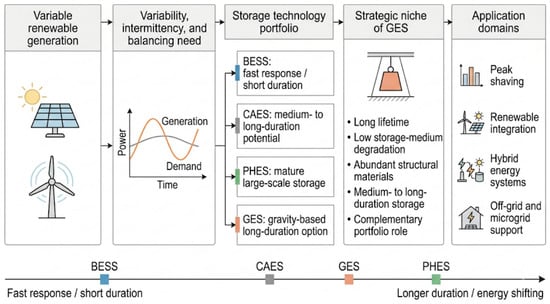
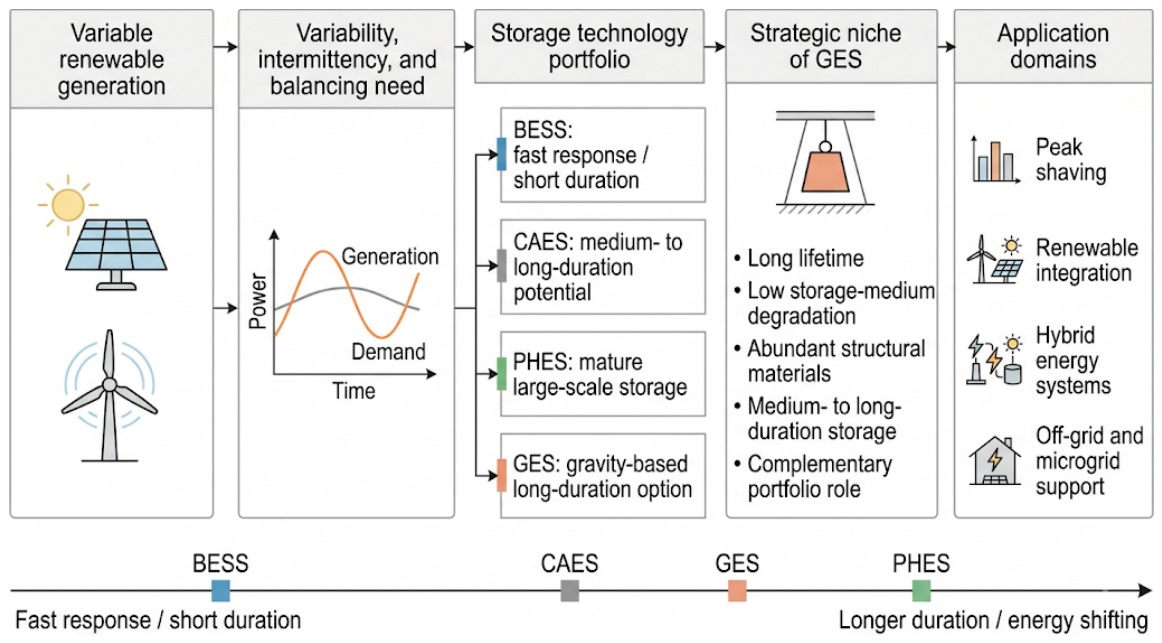
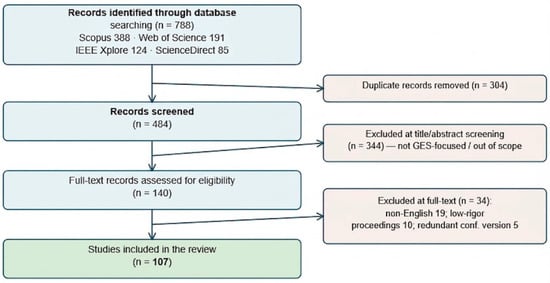
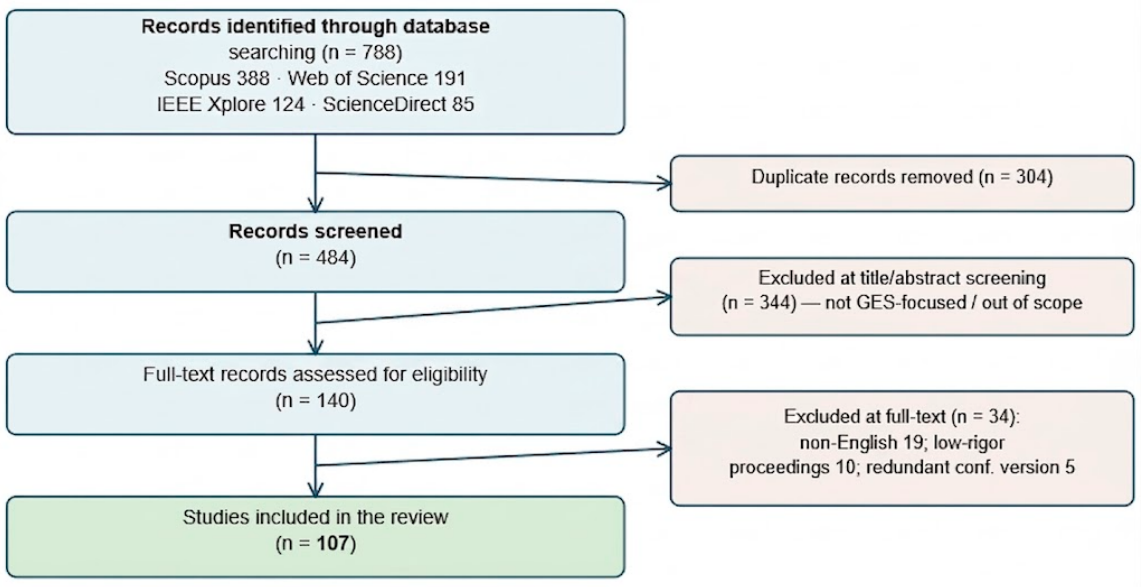
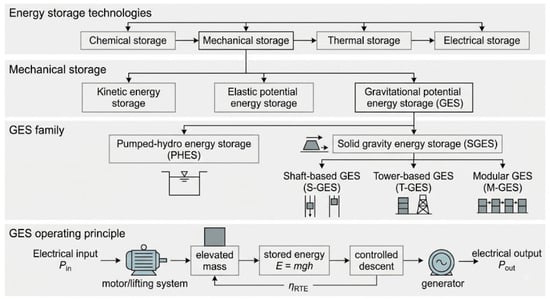
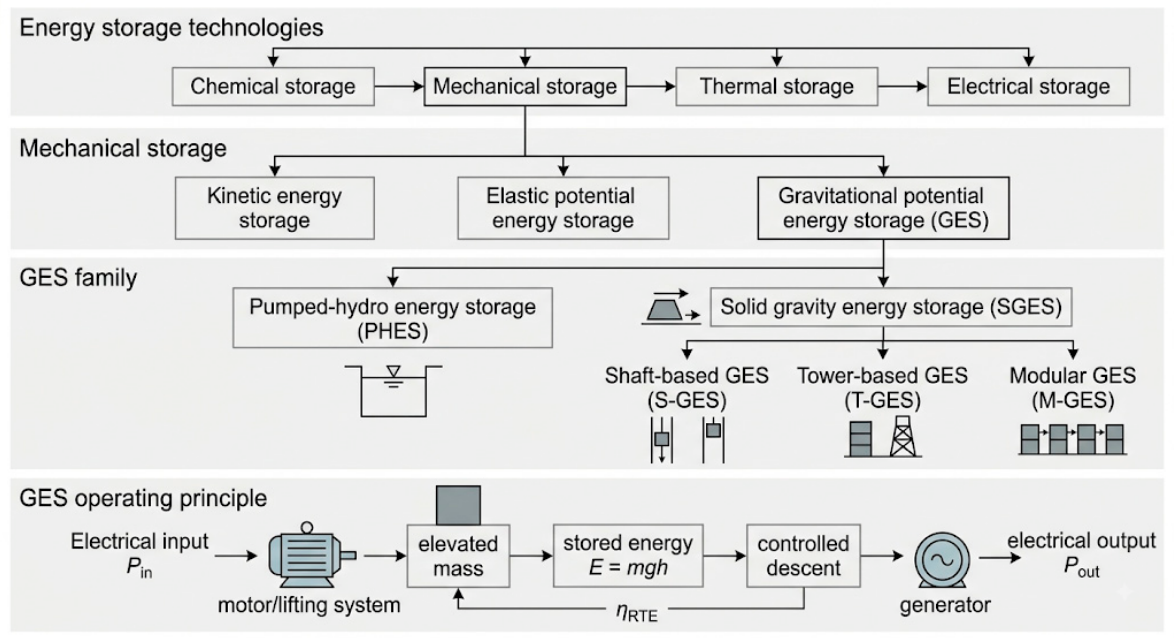
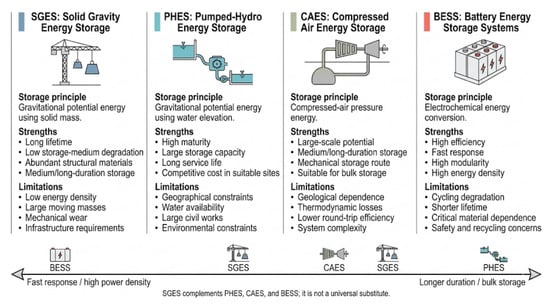
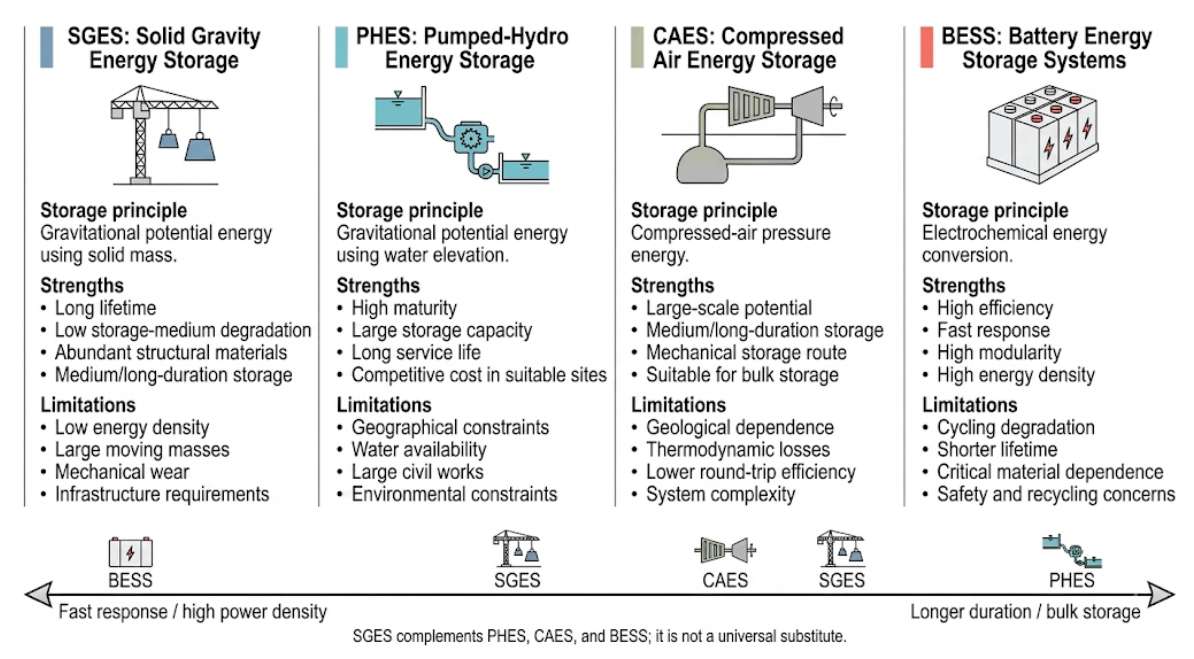
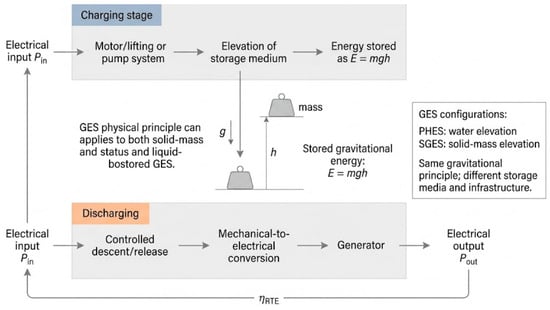
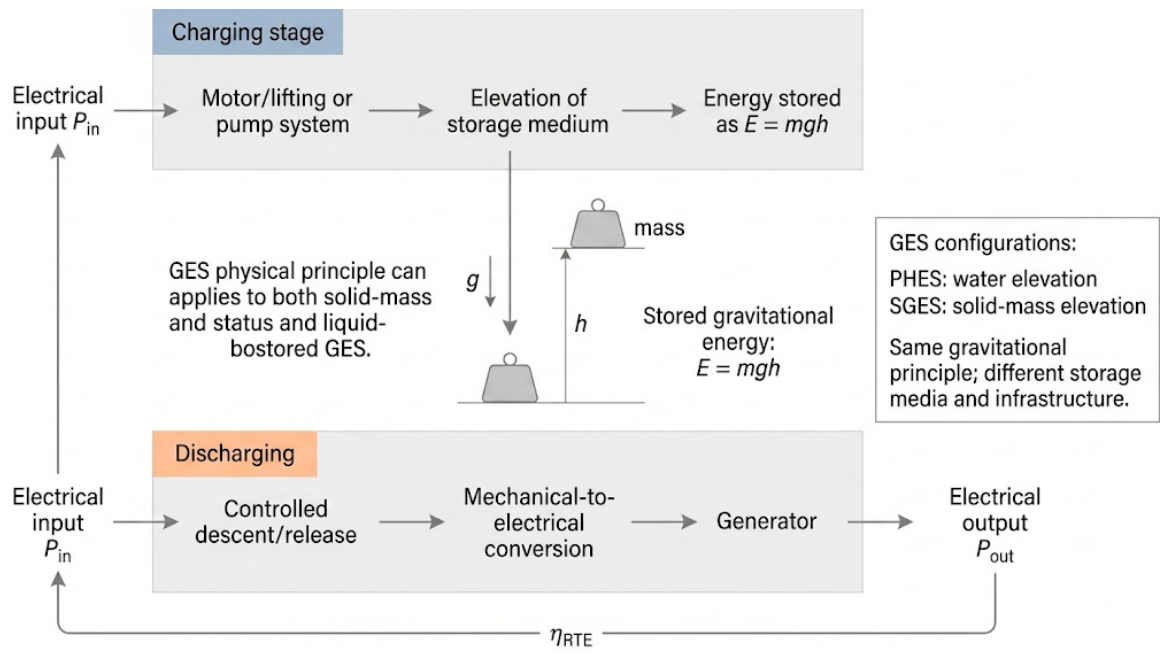
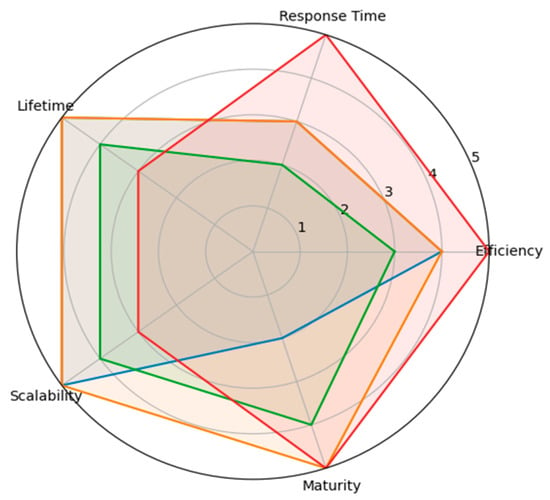
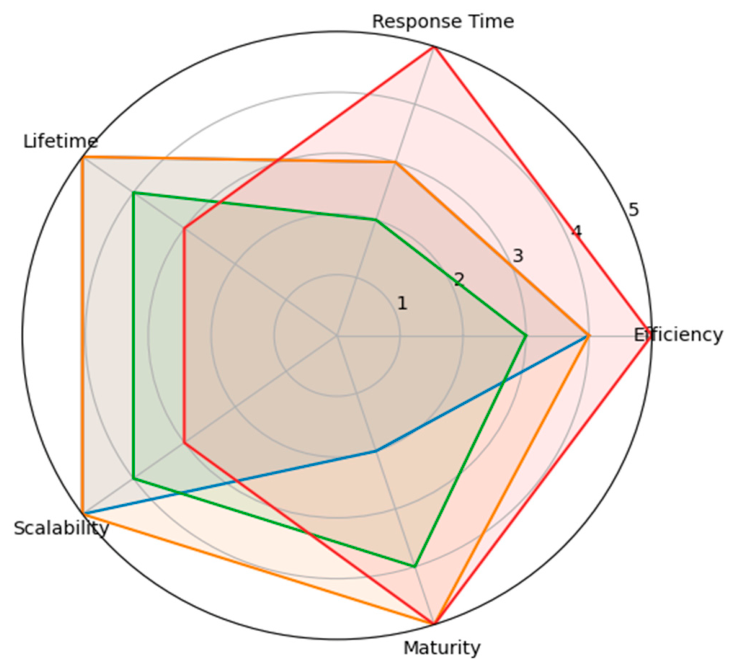
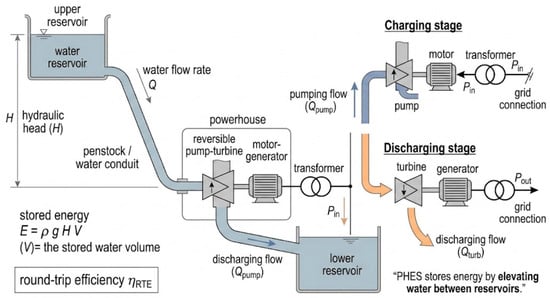
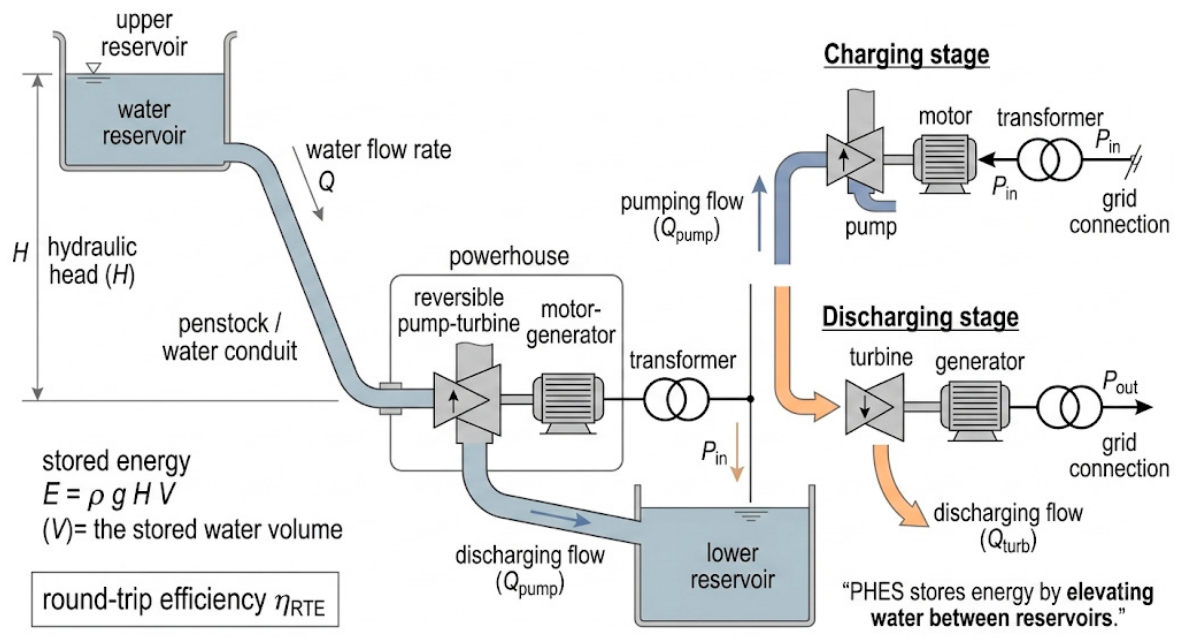
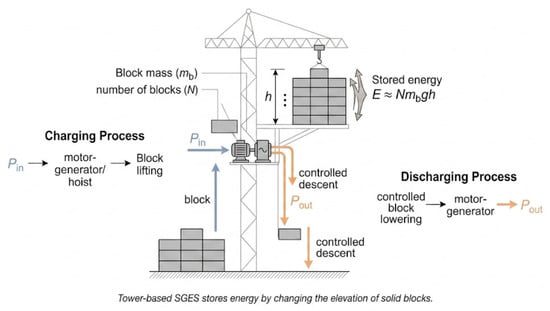
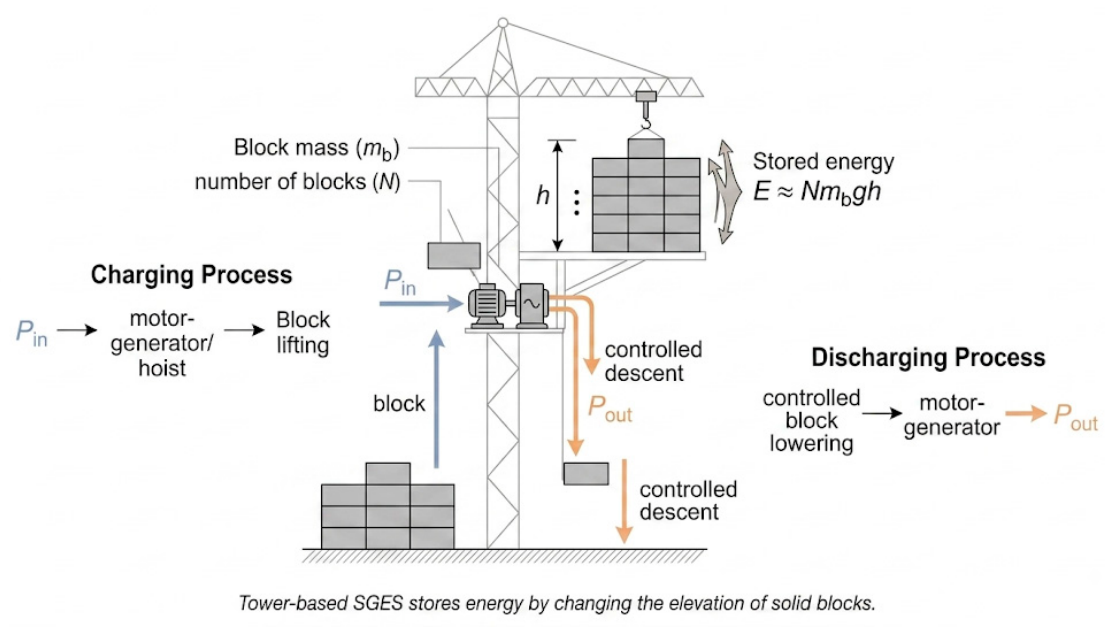
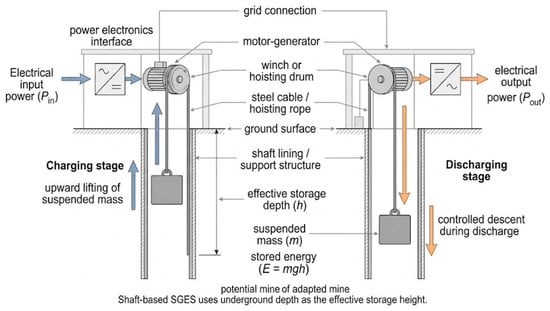
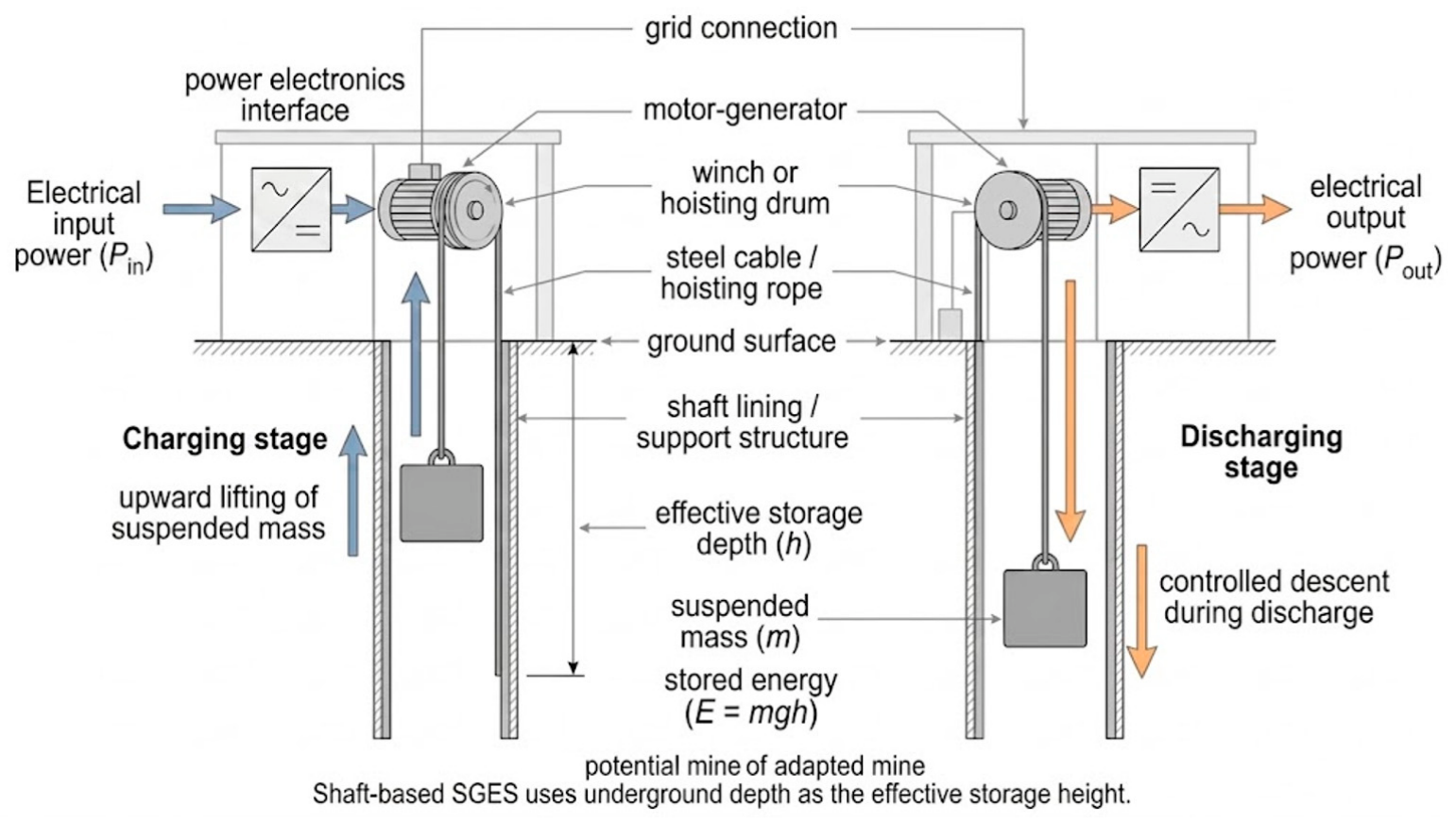
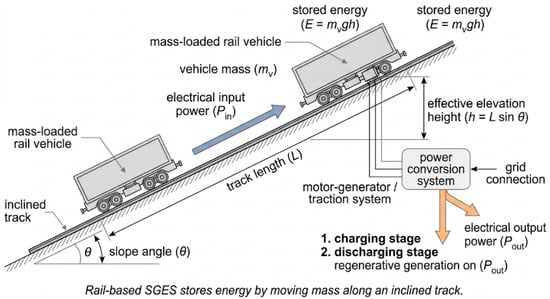
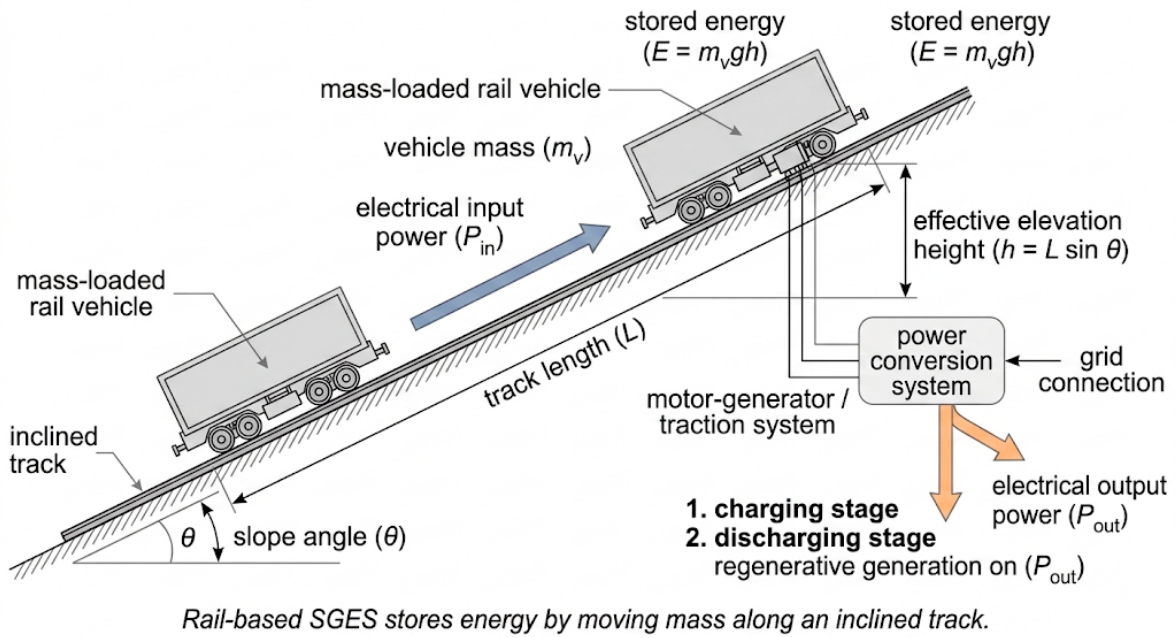
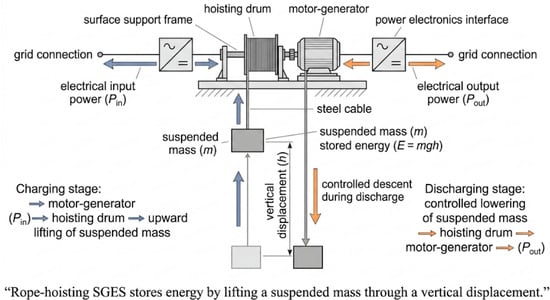
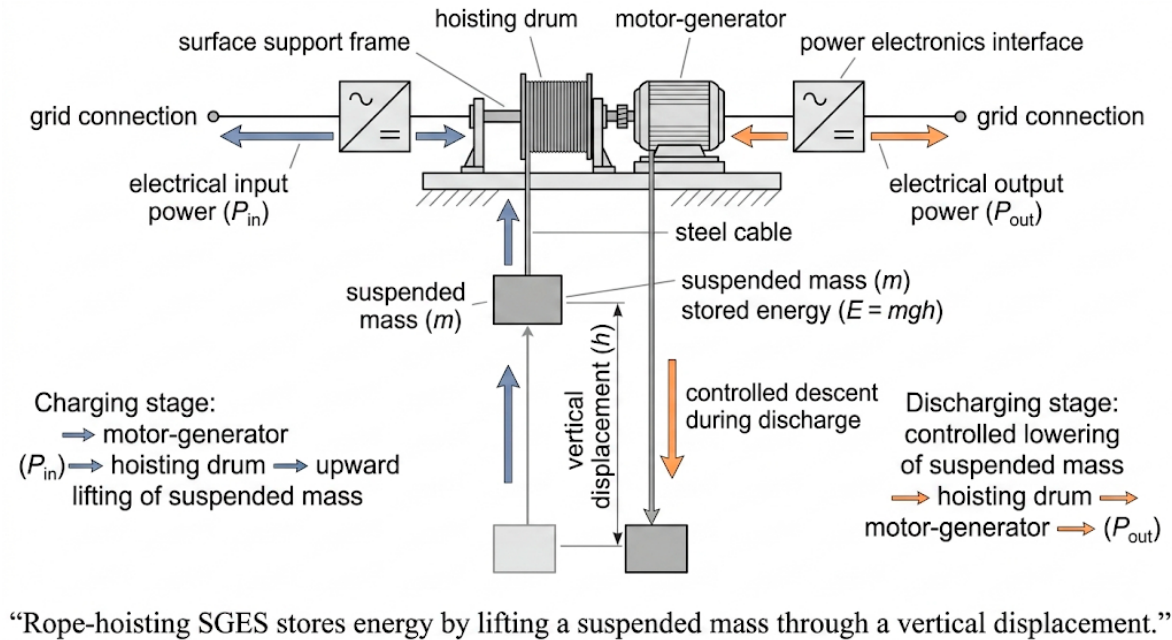
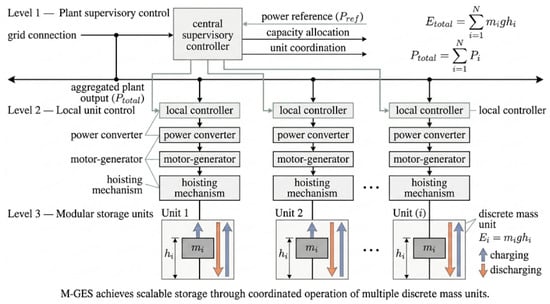
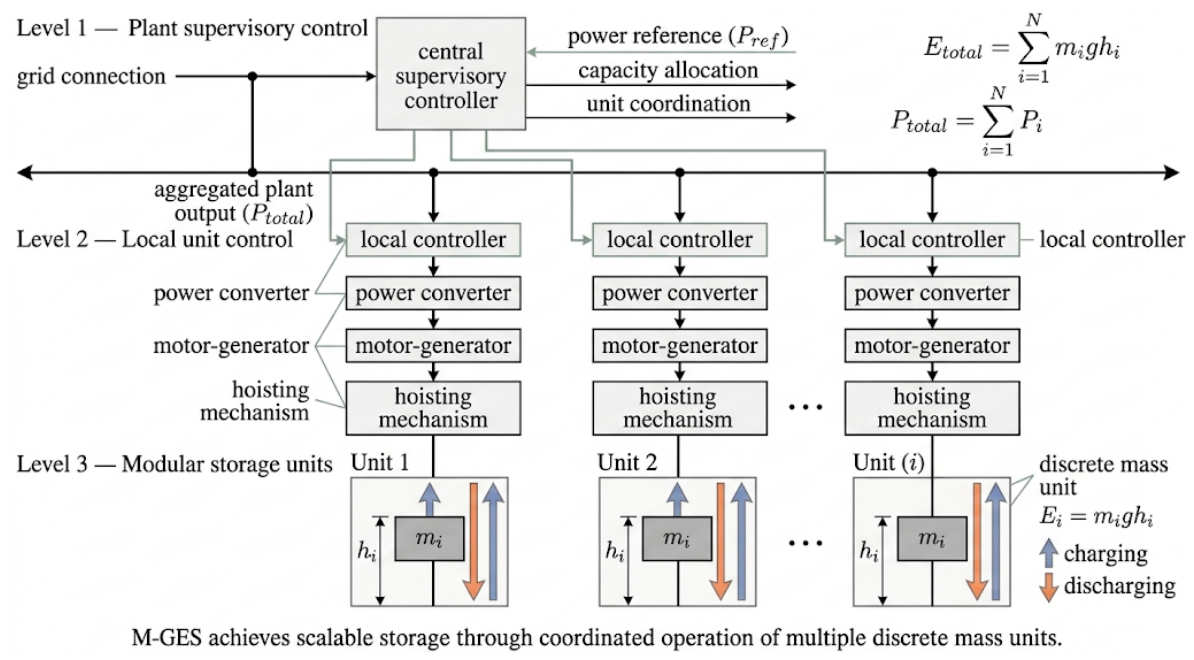
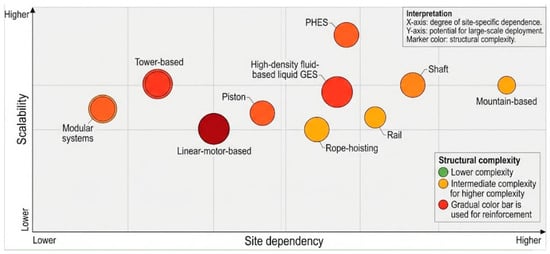
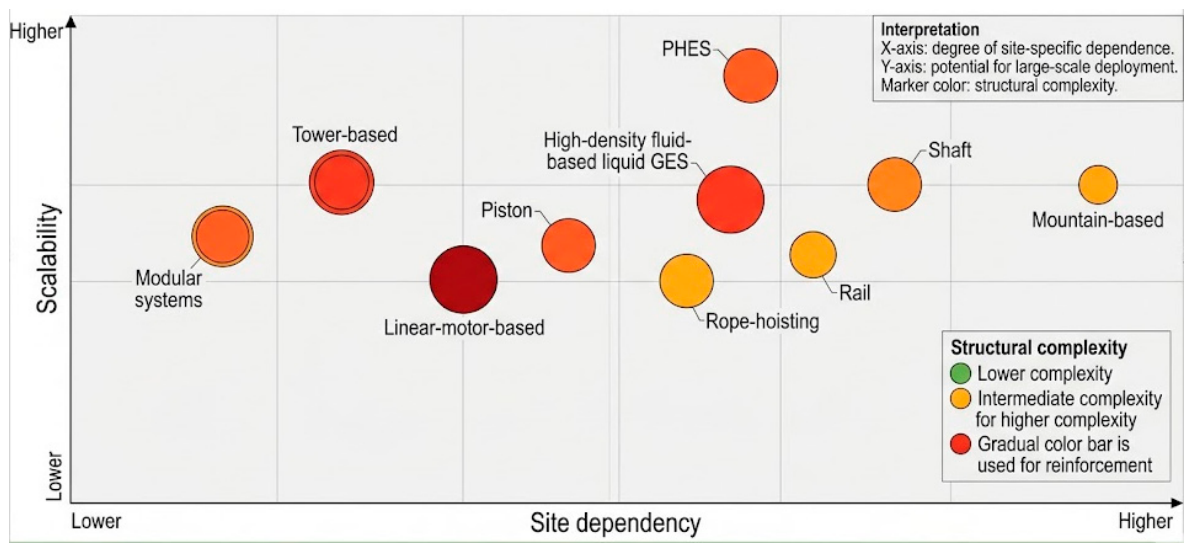
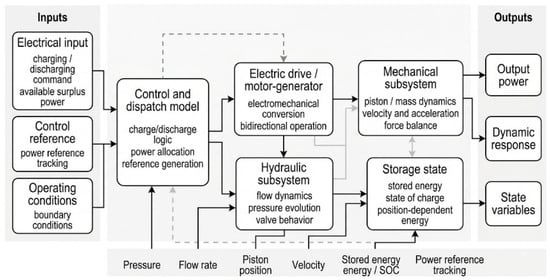
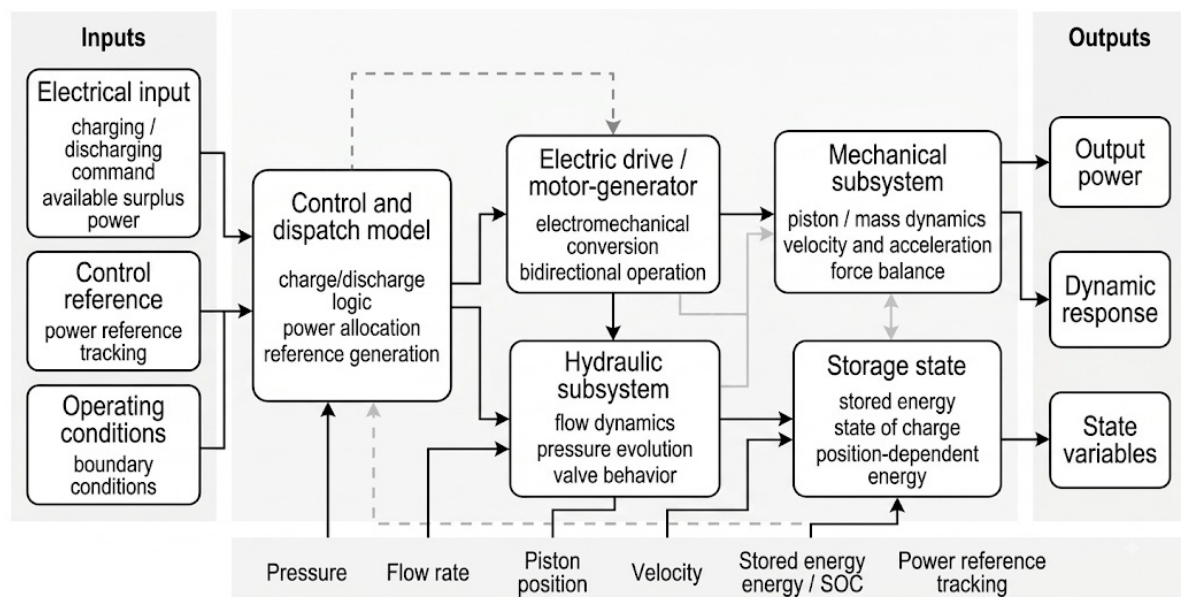
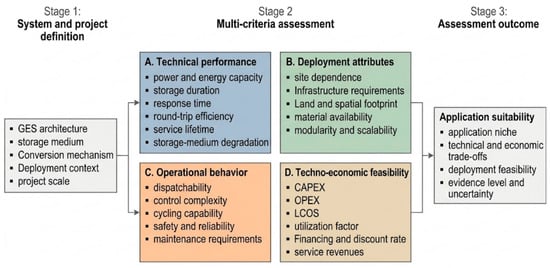
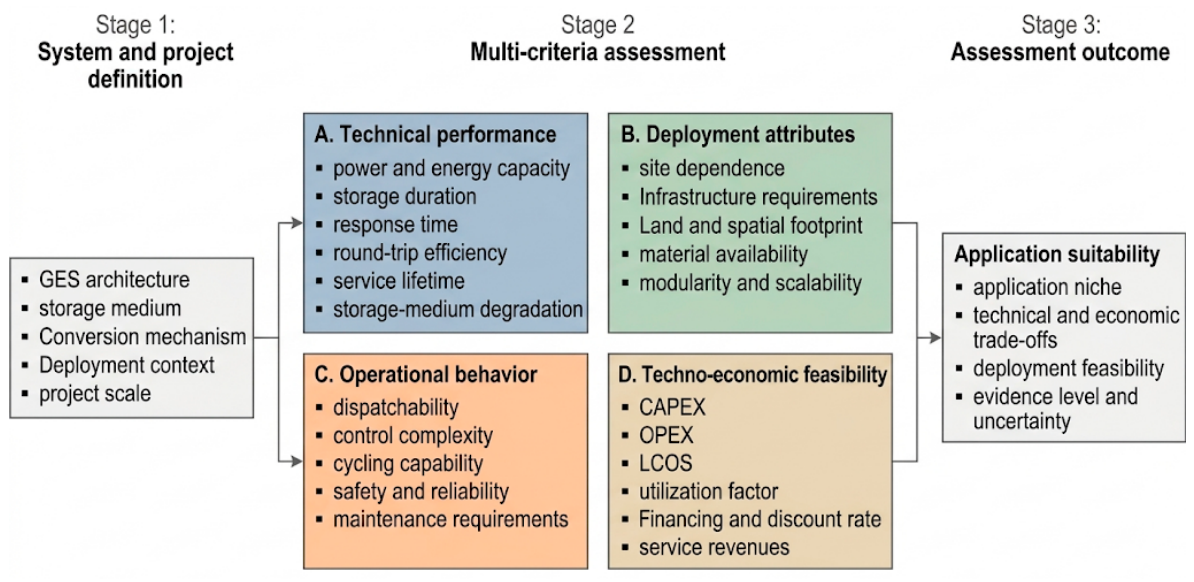
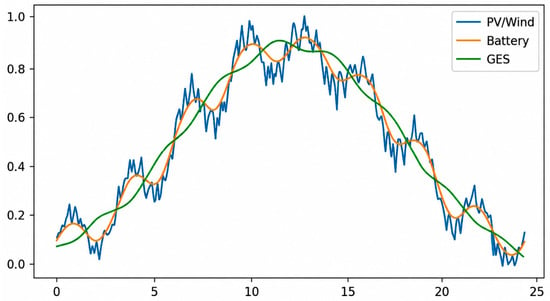
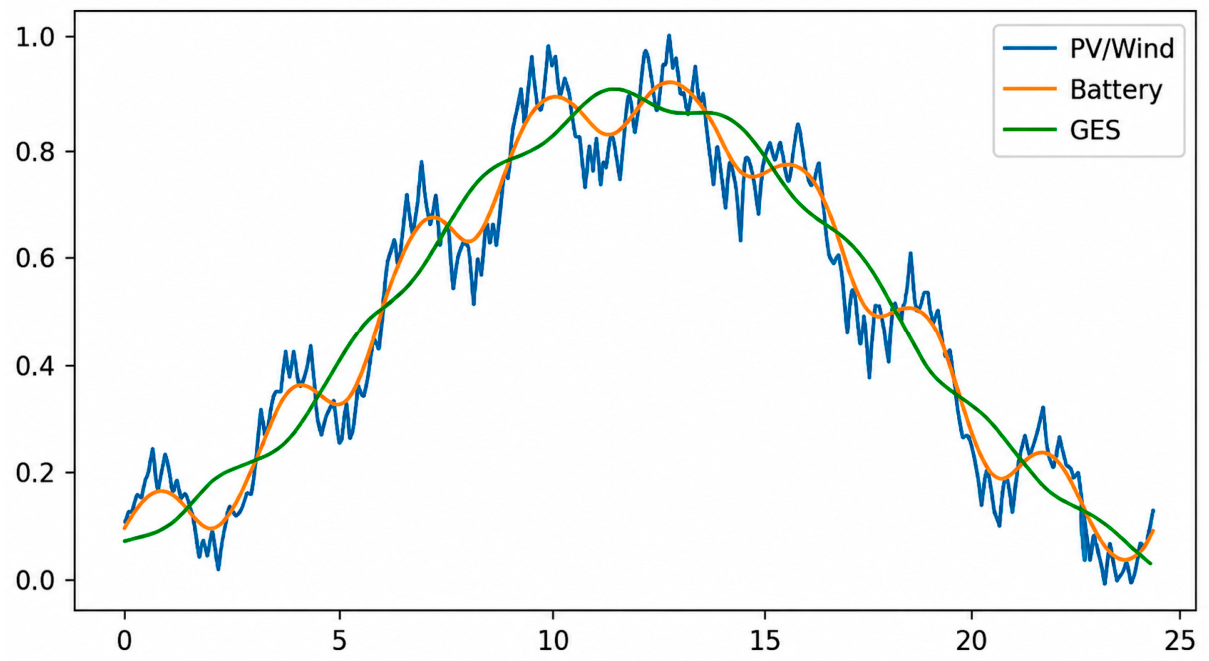

Disclaimer/Publisher’s Note: The statements, opinions and data contained in all publications are solely those of the individual author(s) and contributor(s) and not of MDPI and/or the editor(s). MDPI and/or the editor(s) disclaim responsibility for any injury to people or property resulting from any ideas, methods, instructions or products referred to in the content. |
© 2026 by the authors. Licensee MDPI, Basel, Switzerland. This article is an open access article distributed under the terms and conditions of the Creative Commons Attribution (CC BY) license.