


Abstract
This study investigates the use of mechanical grinding to activate coal bottom ash (CBA) as a low-carbon supplementary cementitious material. Two CBA powders with different fineness levels (75 μm and 45 μm, denoted as SCBA and GCBA) were used to replace 10–50% of cement in mortar specimens. Performance was evaluated through ISO-standard strength tests and the activity index, while micro-analytical techniques characterized the hydration mechanism. The results show that this grinding treatment significantly enhanced pozzolanic activity; at 28 days, the compressive strength of the mixture with 30% GCBA replacement reached 30.6 MPa, which was 44% higher than that of the corresponding SCBA mixture (21.2 MPa). Microstructural analysis confirmed the consumption of portlandite (CH) and the predominant formation of interwoven C-S-H gels and ettringite (AFt), along with residual quartz, calcite, and mullite. These products refine the pore structure and densify the interfacial transition zone. Economic and environmental analysis reveals that CBA substitution reduces raw material costs by 120 CNY/ton and carbon emissions by approximately 261.3 kg CO2/t. Based on the balance of mechanical integrity and environmental benefits, mechanical grinding of CBA to 45 μm at a 30% cement replacement level is proposed as a promising approach for producing low-carbon cementitious materials and for future application in green concrete.
1. Introduction
With the continuous expansion of infrastructure construction, the cement industry, as a highly carbon-intensive sector, is undergoing a critical transition toward greener and more sustainable development [1]. To reduce CO2 emissions from cement production and alleviate resource depletion, the integration of industrial solid waste as supplementary cementitious materials (SCMs) has become an increasingly established trend. Currently, coal bottom ash (CBA), a major solid waste from thermal power plants, faces significant challenges in large-scale disposal. For example, the Jinzhushan branch of Datang Huayin Electric Power Co., Ltd. in Hunan Province generates approximately 102,900 tons of CBA annually. The majority of this CBA is landfilled or stored in open areas, which not only occupies valuable land resources but also contaminates soil, water, and the atmosphere, posing severe risks to human health [2,3]. Despite these environmental challenges, CBA has gained attention due to its potential pozzolanic activity; however, its raw physical state, characterized by porous and rough honeycomb structures, exhibits low natural reactivity, thereby severely restricting its direct industrial application.
The physicochemical properties of CBA vary substantially among power plants, thereby affecting its suitability for use. Physically, CBA characteristics are primarily influenced by rock fragments within coal seams, leading to irregular particle morphologies and rough textures; these properties are also closely related to coal provenance, grinding fineness, combustion temperatures, and furnace types, which collectively dictate the particle size, density, and pore structure [4]. The color of CBA ranges from dark gray to black and is generally darker than cement or natural sand aggregates, with higher carbon content correlating to deeper coloration [5,6]. The irregular, honeycomb-like porosity often results in high water absorption, typically between 11.61% and 32.23% [7]. Such porous structures lead to a lower bulk density, which can reduce the self-weight of structures and potentially enhance seismic performance [3,8,9]. Chemically, the composition is predominantly governed by the coal source and its primary chemical constituents [10,11].
To better contextualize the performance of mechanically ground CBA, it is useful to compare it with widely used SCMs such as fly ash (FA) and ground granulated blast furnace slag (GGBS). While FA is well known for its spherical morphology that improves workability, and GGBS offers strong latent hydraulic properties, raw CBA often presents application challenges due to its irregular, porous structure and higher water demand. However, intensive mechanical grinding effectively modifies this porous morphology and increases the specific surface area [12]. Consequently, the pozzolanic reactivity and microstructural densification capacity of ground CBA can be improved and may approach those of conventional fly ash under suitable activation conditions. This demonstrates that appropriately activated CBA can serve as a highly viable, localized alternative to traditional SCMs for sustainable concrete production.
The latent pozzolanic activity of CBA underpins its use as an SCM. To fully activate this potential, mechanical grinding or chemical activation is required. Abdulmatin et al. reported that pozzolanic activity depends on both physical and chemical properties, with fineness being a critical factor influencing reaction rates. Compared to fly ash, CBA particles are generally larger and unsuitable for direct replacement without prior mechanical grinding [13]. Cheriaf et al. found that ground CBA increased the 28-day strength activity index by 27%, indicating that grinding reduces particle size while enhancing the filler effect and reactivity [14]. Khan et al. observed that mortars and concretes with ground CBA as a cement replacement exhibited superior strength and significantly improved acid resistance [15]. Pan utilized mechanical grinding to obtain high-activity CBA powder as an admixture for high-performance concrete [16]. However, Bajare et al. noted that while 15 min of grinding improved particle size distribution, it resulted in lower compressive strength compared to a 4 min grinding duration, suggesting that over-grinding may damage particle morphology and weaken the filling effect [17].
Regarding chemical activation, Sathonsaowaphak et al. synthesized lignite CBA-based geopolymers using Na2SiO3 and NaOH, achieving compressive strengths of 24–58 MPa [18]. Ul Haq et al. compared geopolymers prepared from fly ash and CBA, reporting similar compressive strengths of 61.4 MPa and 55.2 MPa, respectively [19]. Zhang et al. found that a composite activator of Na2SiO3 and Na2SO4 accelerated the hydration of CBA, generating fibrous ettringite (AFt) and amorphous gels, which significantly enhanced mechanical properties [20]. Regarding applications, Kula et al. found that replacing 5–25% of cement with CBA improved compressive strength at 28 and 90 days [21]. Martins et al. suggested that ground CBA is a viable alternative to cement at replacement rates of 25% and 33%, showing performance comparable to fly ash [22]. Furthermore, Mangi et al. demonstrated that CBA-based concrete cured in seawater showed a strength increase of up to 8.5% at 180 days, supporting its use in marine environments [23].
Despite the existing research on macroscopic CBA performance, an important research gap remains regarding the optimization of industrial grinding thresholds and their direct influence on microstructural densification. Previous studies have primarily focused on raw or lightly processed CBA, leaving the synergistic relationship between specific mechanical grinding levels (e.g., distinguishing between standard 75 μm screening and high-energy 45 μm grinding) and early-age hydration kinetics insufficiently quantified. Moreover, reliable experimental datasets linking grinding fineness, hydration products, and mechanical performance are valuable for developing future predictive models for low-carbon cementitious materials [24,25,26,27,28].
Therefore, this study systematically investigates the physicochemical activation efficiency of regional CBA from the Jinzhushan power plant. The CBA was preprocessed to two target fineness levels (75 μm and 45 μm) and used to replace cement at various proportions (10–50%). Mechanical performance was evaluated through standard strength tests and activity indices. Crucially, a comprehensive suite of micro-analytical techniques—including X-ray diffraction (XRD), differential scanning calorimetry-thermogravimetry (DSC-TG), Fourier transform infrared spectroscopy (FTIR), and scanning electron microscopy (SEM)—was coupled to provide a deeper, semi-quantitative interpretation of the reaction mechanism. By correlating cost-effective processing limits with hydration-product evolution, this research aims to provide a robust theoretical and technical foundation for the large-scale valorization of CBA, facilitating the green transformation of the cement industry.
2. Materials and Methods
2.1. Raw Materials
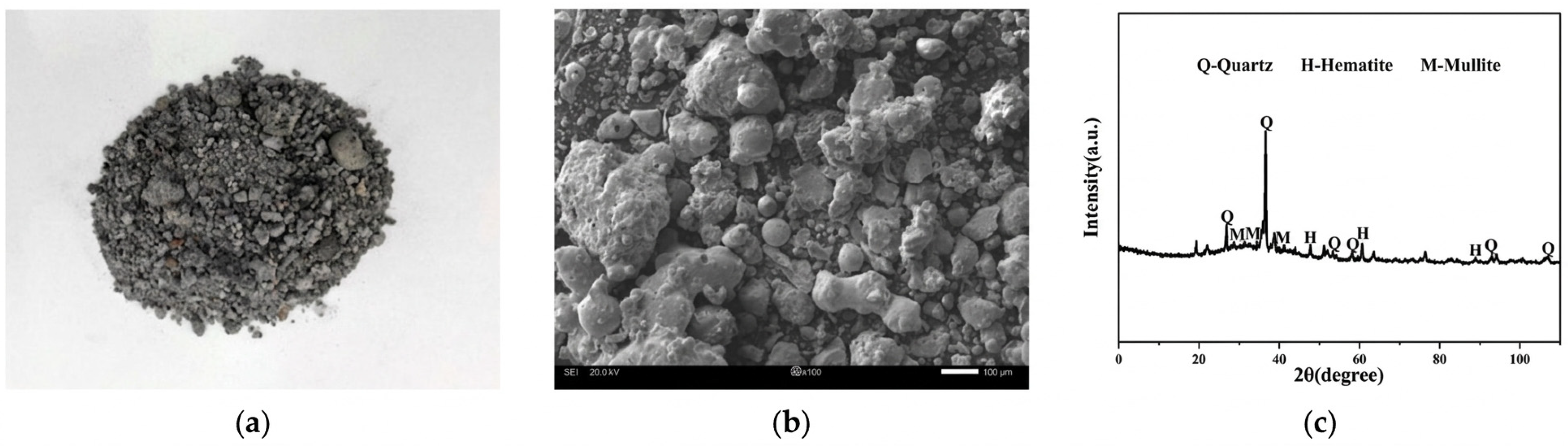
The primary binder used in this study was Type P·I 42.5 Portland cement, manufactured by Fushun Cement Co., Ltd., Beijing, China. The cement had a specific surface area of 358 m2/kg with initial and final setting times of 121 min and 182 min, respectively. The morphology of CBA is shown in the SEM images (Figure 1b), revealing irregular, porous particles with a rough microstructure. Figure 1c illustrates its XRD pattern. The diffractogram exhibits a distinct broad amorphous hump spanning between 2θ = 15° and 35°, which is characteristic of the reactive glassy silica and alumina phases responsible for latent pozzolanic activity. Superimposed on this amorphous baseline are sharp crystalline peaks primarily corresponding to Quartz, Hematite, and Mullite.
Figure 1.
Surface characteristics of coal bottom ash: (a) raw coal bottom ash; (b) SEM image; (c) XRD pattern.
The chemical compositions of the cement and CBA were determined by X-ray fluorescence (XRF) spectrometry, as summarized in Table 1. Chemical analysis indicates that the CBA is mainly composed of silicon dioxide (SiO2), aluminum oxide (Al2O3), calcium oxide (CaO), and iron oxide (Fe2O3). The combined total percentage of these three primary oxides (SiO2 + Al2O3 + Fe2O3) is approximately 84.21%. Consequently, the CBA satisfies the requirements for Class F mineral admixtures as specified in the Chinese standard GB/T 1596-2017 (Fly ash used for cement and concrete) [29].
Table 1.
Chemical compositions of raw materials.
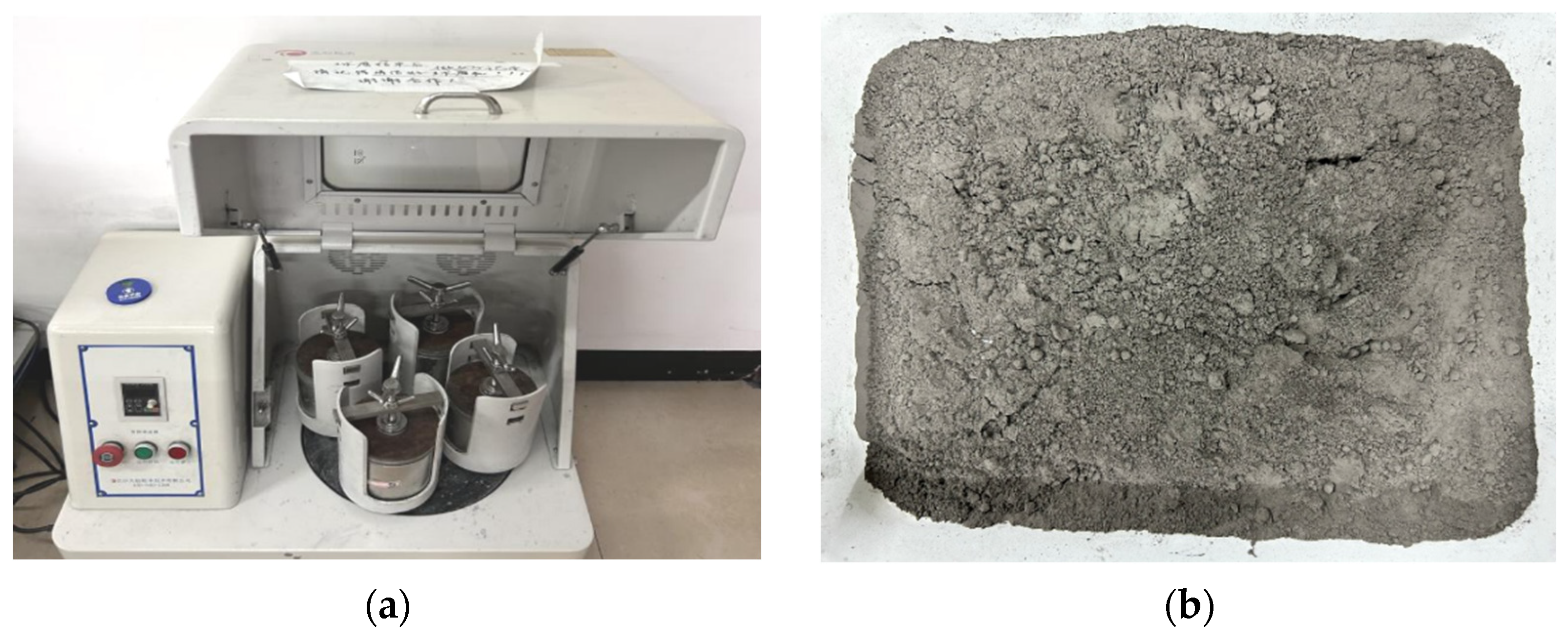
Because the pozzolanic activity of CBA strongly depends on particle fineness, two levels were selected: 75 μm (SCBA), representing a standard industrial screening baseline, and 45 μm (GCBA), representing a cost-effective mechanical grinding limit. The SCBA powder was produced by pulverizing raw coal bottom ash and subsequently separating the particles using a 200-mesh (75 μm) standard test sieve. The GCBA powder was prepared using a vertical planetary ball mill (Figure 2a), manufactured by Tencan Powder Technology Co., Ltd., Changsha, China. The resulting coal bottom ash powder after mechanical grinding is shown in Figure 2b. Approximately 310 g of dried CBA and 400 g of agate grinding media were milled at 320 r/min for 6 h, followed by sieving through a 325-mesh (45 μm) standard sieve. Quantitative analysis showed an average sieve residue of approximately 8.1%, indicating that nearly 92% of the activated particles were smaller than 45 μm. This small fraction of ungrindable residue is primarily attributed to inherent natural quartz grains characterized by high hardness.
Figure 2.
Preparation of coal bottom ash powder: (a) vertical planetary ball mill; (b) coal bottom ash powder after mechanical grinding.
2.2. Mix Proportions
The cement mortar strength tests were conducted in accordance with GB/T 17671-2021 standard (Test Method of Cement Mortar Strength) [30]. Two CBA powders, SCBA and GCBA, were prepared by screening and planetary ball milling, respectively. These powders were categorized by their particle size through sieving with 200-mesh and 325-mesh standard sieves, resulting in SCBA (75 μm) and GCBA (45 μm).
A total of 11 mix proportions were designed, as summarized in Table 2. For all groups, the water-to-binder ratio was maintained at 0.5, and the binder-to-sand ratio was fixed at 1:3. The total mass of the binder (cement plus CBA powder) was kept constant at 450 g. CBA-0 served as the control group. In the experimental groups, the two types of CBA powders were used to partially replace cement at proportions of 10%, 20%, 30%, 40%, and 50% by mass.
Table 2.
Mix proportions of mortar specimens.
Although this study primarily focuses on microstructural activation and hardened mechanical properties, workability and setting behavior should also be considered for future applications. Based on the physical characteristics observed in Section 2.1, the irregular and porous honeycomb-like structure of CBA particles inherently increases the water demand of the mortar to maintain a standard consistency. Previous studies have indicated that the high water absorption of CBA, typically ranging from 11.61% to 32.23%, can lead to a reduction in workability and a decrease in the slump flow of the fresh mixture. Furthermore, the partial replacement of Portland cement with CBA induces a dilution effect, which is expected to extend the initial and final setting times of the pastes. However, the intensive mechanical grinding employed in this research effectively breaks down the porous structure, which potentially mitigates the adverse effects on workability compared to raw CBA.
2.3. Preparation and Curing of Specimens
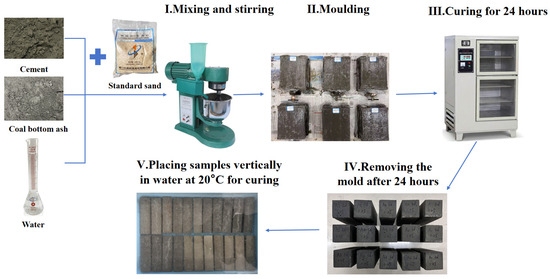
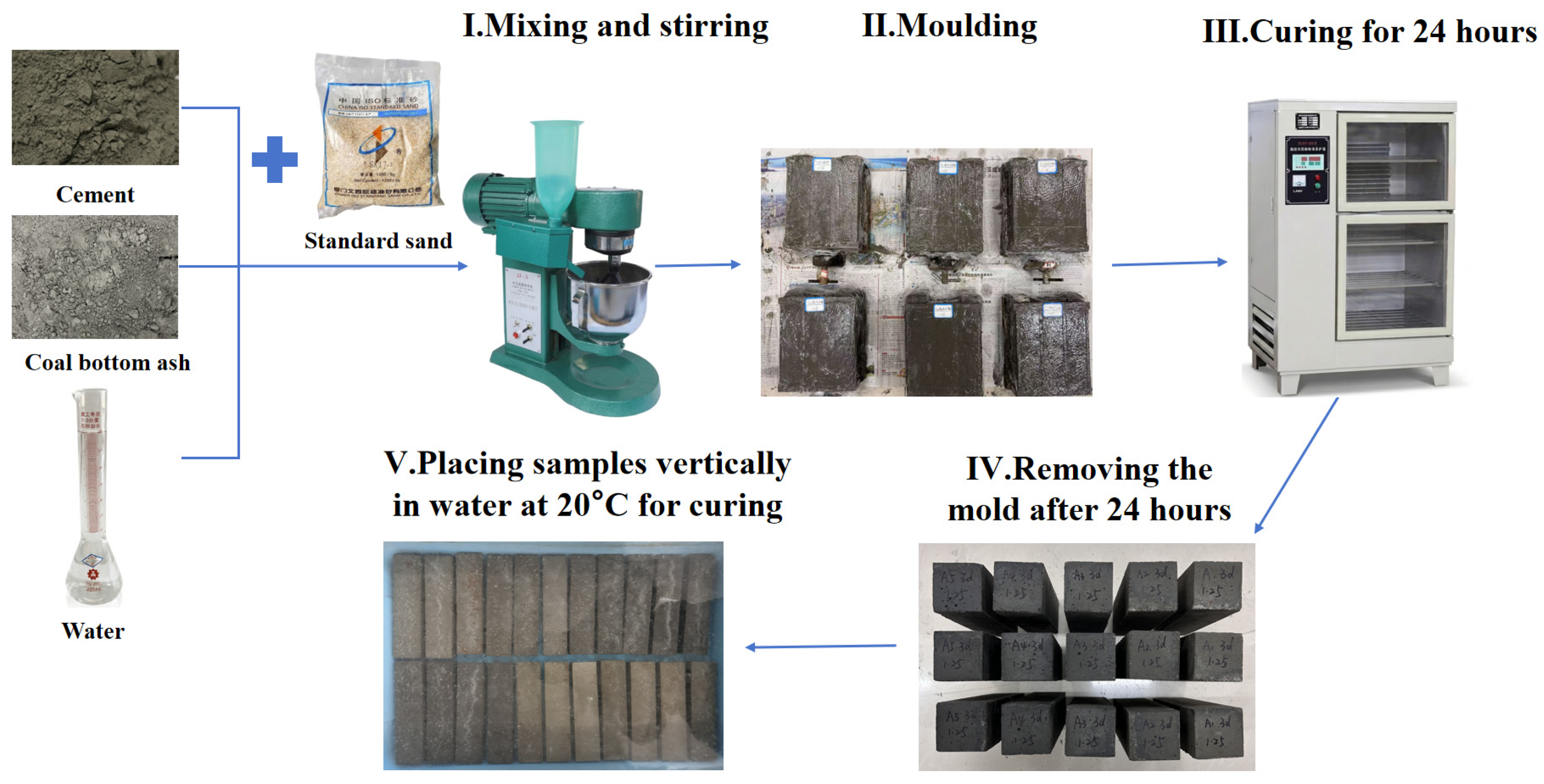
The preparation and curing of the mortar specimens were carried out in strict accordance with the Chinese standard GB/T 17671-2021 (Test Method of Cement Mortar Strength) [30], as illustrated in Figure 3. Prismatic specimens with standard dimensions of 40 mm × 40 mm × 160 mm were cast using standardized steel molds. Initially, the predetermined proportions of Portland cement, coal bottom ash powder, and ISO standard sand were dry-mixed before adding water to ensure a homogeneous mortar consistency. The fresh mixture was then uniformly distributed into the molds and secured onto a vibration table for 120 ± 5 s of consolidation to eliminate entrapped air and enhance specimen density. Following the vibration process, each mold was covered with a plastic plate to prevent moisture loss, then appropriately labeled and stored for 24 ± 1 h. After this preliminary period, the specimens were demolded and immediately transferred to a standard curing room, where they were maintained in a high-humidity environment until reaching the specified testing ages of 3, 7, and 28 days.
Figure 3.
Preparation and curing process of mortar specimens.
2.4. Testing Methods
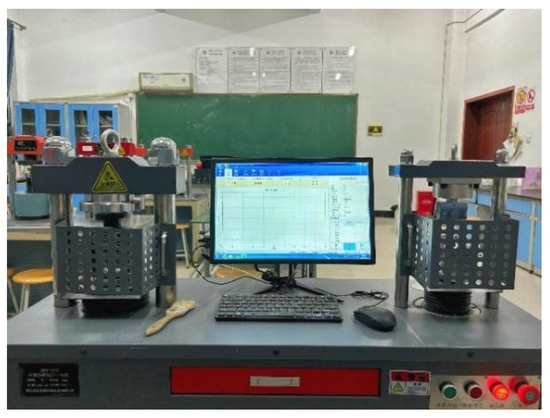
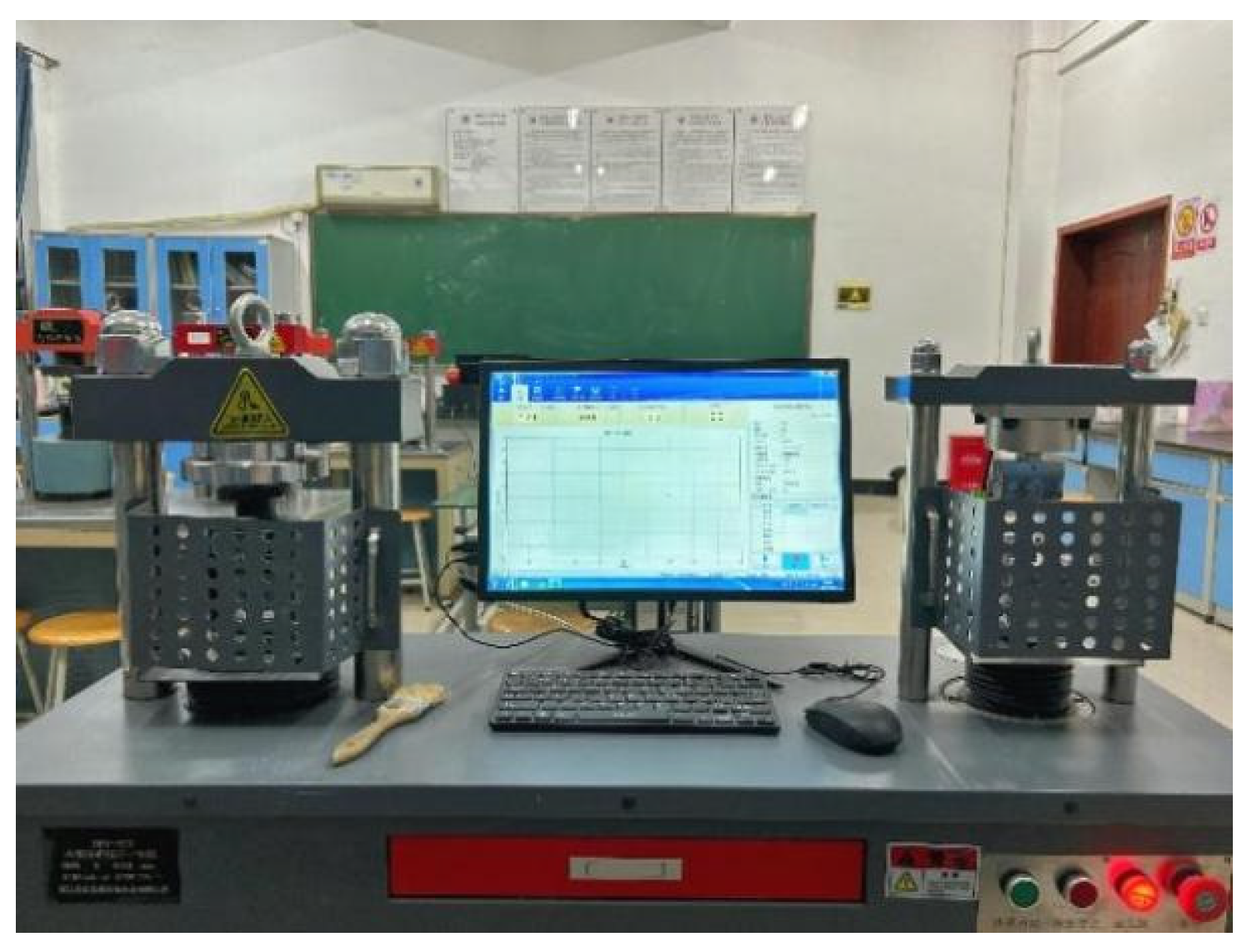
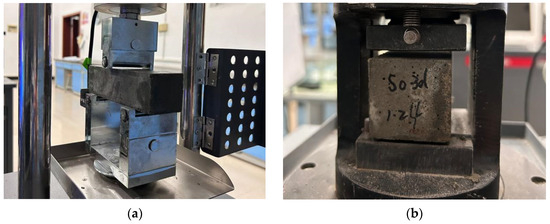
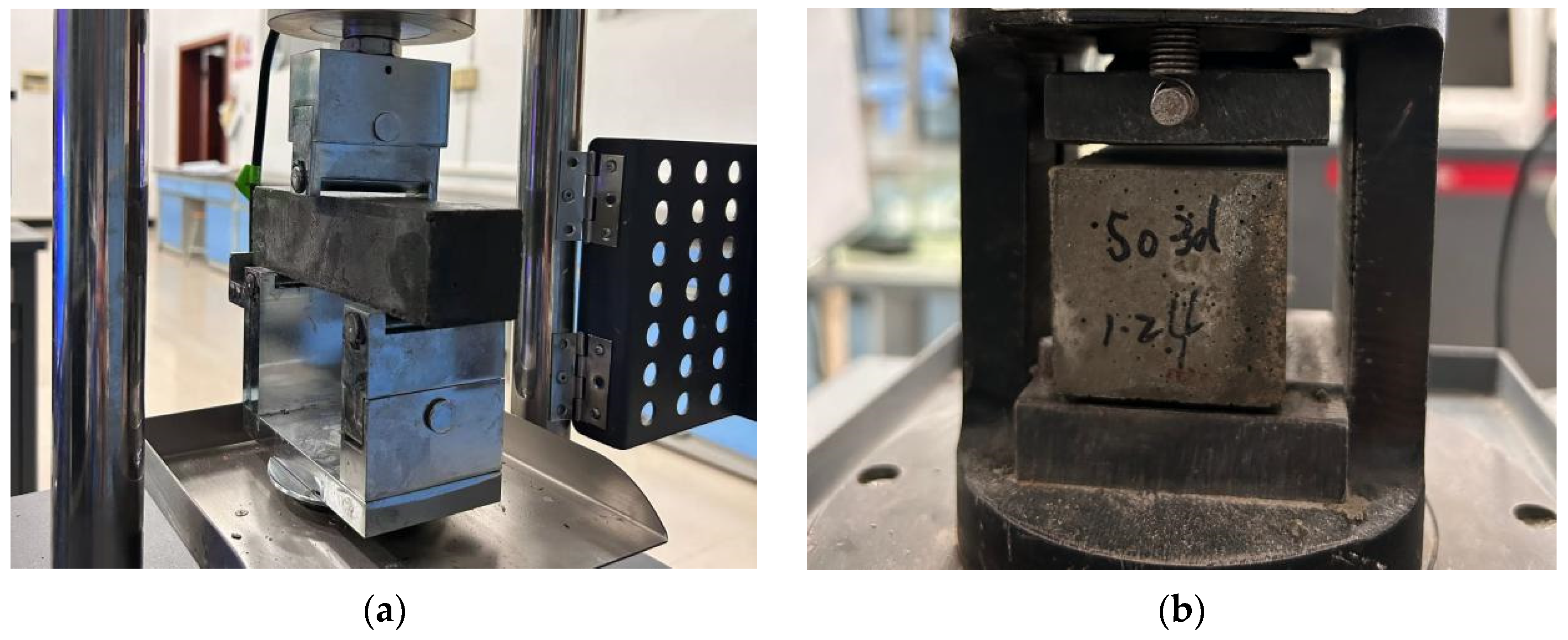
The mechanical strengths of the mortar specimens were determined in strict accordance with GB/T 17671-2021 (Test Method of Cement Mortar Strength) [30]. Upon reaching the specified curing ages, the specimens were tested using a DEY-300 fully automatic flexural and compressive strength testing machine (manufactured by Zhejiang Yingsong Instrument Co., Ltd., Shaoxing, China), as illustrated in Figure 4. Specialized testing fixtures, shown in Figure 5, were employed to ensure precise alignment and load distribution during the tests. To ensure the reliability and repeatability of the experimental results, each reported value for flexural and compressive strength represents the average of three parallel specimens per mix proportion at each curing age. Standard deviations were calculated and presented as error bars in the corresponding figures to reflect the data reliability.
Figure 4.
Computer-controlled flexural and compressive strength testing machine.
Figure 5.
Mechanical property testing: (a) flexural strength test; (b) compressive strength test.
Both the control group and the CBA-incorporated specimens were tested to evaluate the influence of CBA on mechanical performance. The Activity Index (H) for the two types of CBA powders was calculated using the ratio of the compressive strength of the experimental group to that of the reference group at corresponding curing ages, as defined by the following equation:
where Rt represents the compressive strength of the CBA-incorporated mortar, and R0 denotes the compressive strength of the reference group. This index serves as a quantitative measure of the pozzolanic reactivity and strength contribution of the different CBA fineness levels.
The microstructural evolution and hydration products of the CBA-cement system were characterized using a comprehensive suite of analytical techniques. Mineralogical phases were identified by X-ray diffraction (XRD) using a D8 Advance diffractometer (Bruker, Karlsruhe, Germany), with specimens scanned from 10° to 70° (2θ) at a constant rate of 10°/min. Simultaneous thermal analysis was performed using a STA449F5 (Netzsch, Selb, Germany) under a nitrogen atmosphere to monitor the thermogravimetric (TG) mass loss, the derivative thermogravimetry (DTG) rate of mass loss, and the differential scanning calorimetry (DSC) heat flow response as a function of temperature. Chemical functional groups were investigated through Fourier transform infrared (FTIR) spectroscopy using a iS50 (Thermo Fisher Scientific, Waltham, MA, USA) spectrometer within a wavenumber range of 400–4000 cm−1. Furthermore, morphological observations were conducted using a JSM-IT500LV tungsten filament scanning electron microscope (JEOL Ltd., Tokyo, Japan). Before SEM imaging, the specimens were thoroughly dried and gold-coated to ensure electrical conductivity. Elemental compositions and localized chemical signatures were determined via an Elest Plus energy-dispersive X-ray spectrometer (JEOL Ltd., Tokyo, Japan) by identifying characteristic X-ray emission peaks.
3. Results and Discussion
3.1. Flexural Strength
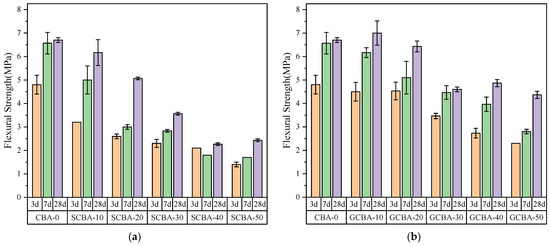
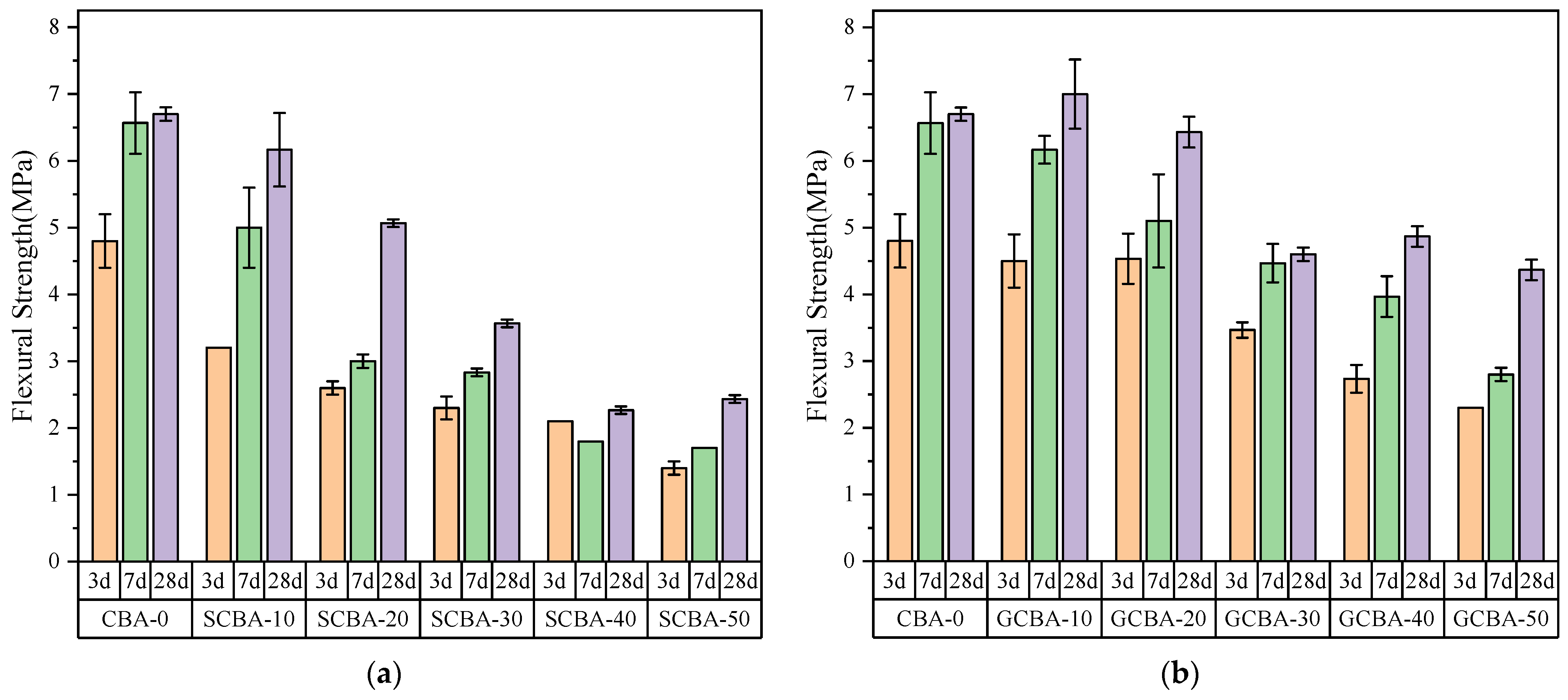
Figure 6 illustrates the evolution of flexural strength for mortar specimens incorporating two fineness levels of coal bottom ash (CBA). The results show that GCBA provides a clear advantage over SCBA in terms of early-age flexural performance. At the 3-day curing stage, the GCBA group exhibited superior strength retention. Specifically, the flexural strengths of GCBA-10 and GCBA-20 were 4.6 MPa and 4.5 MPa, respectively, maintaining over 93% of the reference group’s capacity (4.8 MPa). In contrast, the strengths of SCBA-10 and SCBA-20 at identical replacement levels were significantly lower at 3.2 MPa and 2.6 MPa, corresponding to reductions of 33% and 45% relative to the reference group.
Figure 6.
Flexural strength of mortar specimens containing SCBA and GCBA at different curing ages: (a) SCBA; (b) GCBA.
As curing progressed to 7 days, the GCBA group showed a steady increase. GCBA-10 reached 6.2 MPa, corresponding to 94% of the control group (6.6 MPa). In contrast, the flexural strength of specimens containing SCBA remained consistently suppressed. In particular, at a 40% SCBA replacement level, the flexural strength decreased from 2.1 MPa at 3 days to 1.8 MPa at 7 days, likely because the coarser particles generated higher porosity and weaker interfacial bonding.
By 28 days, the flexural performance of both groups was strongly governed by the replacement level. At the low replacement level of 10%, both SCBA-10 and GCBA-10 achieved peak flexural values of 7.0 MPa, approximately 4.5% higher than the control group (6.7 MPa). This suggests that low-dosage CBA incorporation exerts a positive synergistic effect on long-term flexural strength development. However, when the replacement level exceeded 20%, a sharp attenuation in strength was observed in both groups. At the maximum replacement level of 50%, the flexural strength of the GCBA group decreased to 4.4 MPa, representing a total reduction of approximately 34% relative to the control group.
3.2. Compressive Strength
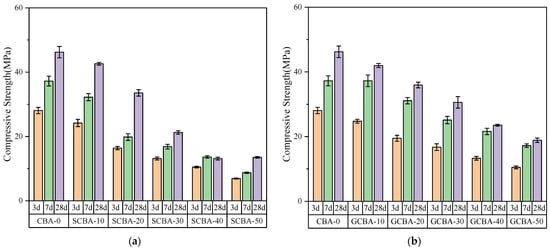
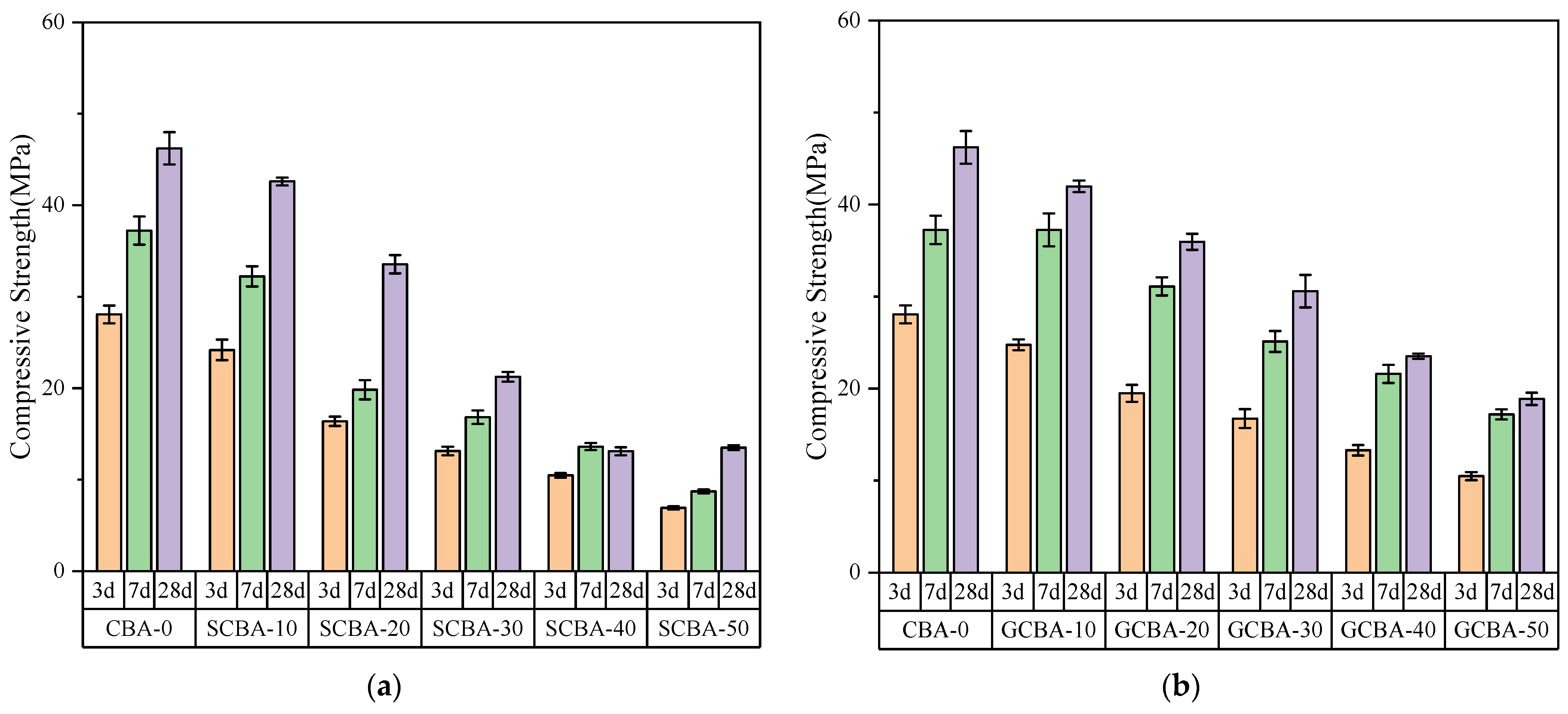
The compressive strength of the mortar specimens generally declined as the coal bottom ash replacement level increased; however, the extent of this reduction depended strongly on CBA fineness and curing age. Figure 7 shows the evolution of compressive strength for mortars incorporating two CBA particle sizes.
Figure 7.
Compressive strength of mortar specimens containing SCBA and GCBA at different curing ages: (a) SCBA; (b) GCBA.
At the early curing age of 3 days, GCBA-10 achieved a compressive strength of 24.8 MPa, slightly higher than the 24.2 MPa recorded for SCBA-10. By 7 days, the strength of GCBA-10 reached 37.2 MPa, essentially matching the control group, whereas SCBA-10 remained considerably lower at 32.2 MPa. At 28 days, the strengths of SCBA-10 and GCBA-10 converged to 42.6 MPa and 42.0 MPa, respectively, indicating that at a low replacement level (10%), particle fineness has a less pronounced effect on ultimate strength.
The benefit of finer particles became more evident at higher replacement levels. At a 30% replacement level, the compressive strength of GCBA-30 (30.6 MPa) was substantially higher than that of SCBA-30 (21.2 MPa), representing an enhancement of approximately 44%. Even at a high replacement level of 50%, the GCBA group maintained a strength of 18.9 MPa, nearly 40% higher than the 13.5 MPa recorded for the SCBA group. Overall, although increasing the CBA replacement level from 0% to 50% inevitably reduced strength, the use of GCBA effectively mitigated this loss through improved filler effects and enhanced pozzolanic reactivity.
The mechanical enhancement of CBA-blended mortars is driven by the combined effects of physical micro-filling and pozzolanic reactivity, consistent with the behavior of other waste-derived cementitious materials [31]. Similar to the necessary chemical activation for burnt kaolin [32], raw CBA relies on intensive mechanical grinding (45 μm threshold) to unlock its pozzolanic potential. Once activated, these particles act as stress transfer nodes and heterogeneous nucleation sites. This resulting structural densification mirrors the microstructural reinforcement seen in systems incorporating pulverized basalt [33], micro-Titania modified ordinary portland cement (OPC)–fine metakaolin (FMK) blends [34], and hematite nanoparticles [35].
Furthermore, the compressive strength evolution at 30% GCBA replacement is consistent with the long-term benefits of fly ash, in which continuous pozzolanic consumption of portlandite refines the interfacial transition zone [36]. Although the present study relies solely on mechanical activation, future mix designs could further improve particle dispersion and packing density by incorporating chemical admixtures, such as acrylate-poly(ethylene glycol) copolymer superplasticizers, to enhance the surface properties and mechanical performance of the matrix [37].
3.3. Activity Index
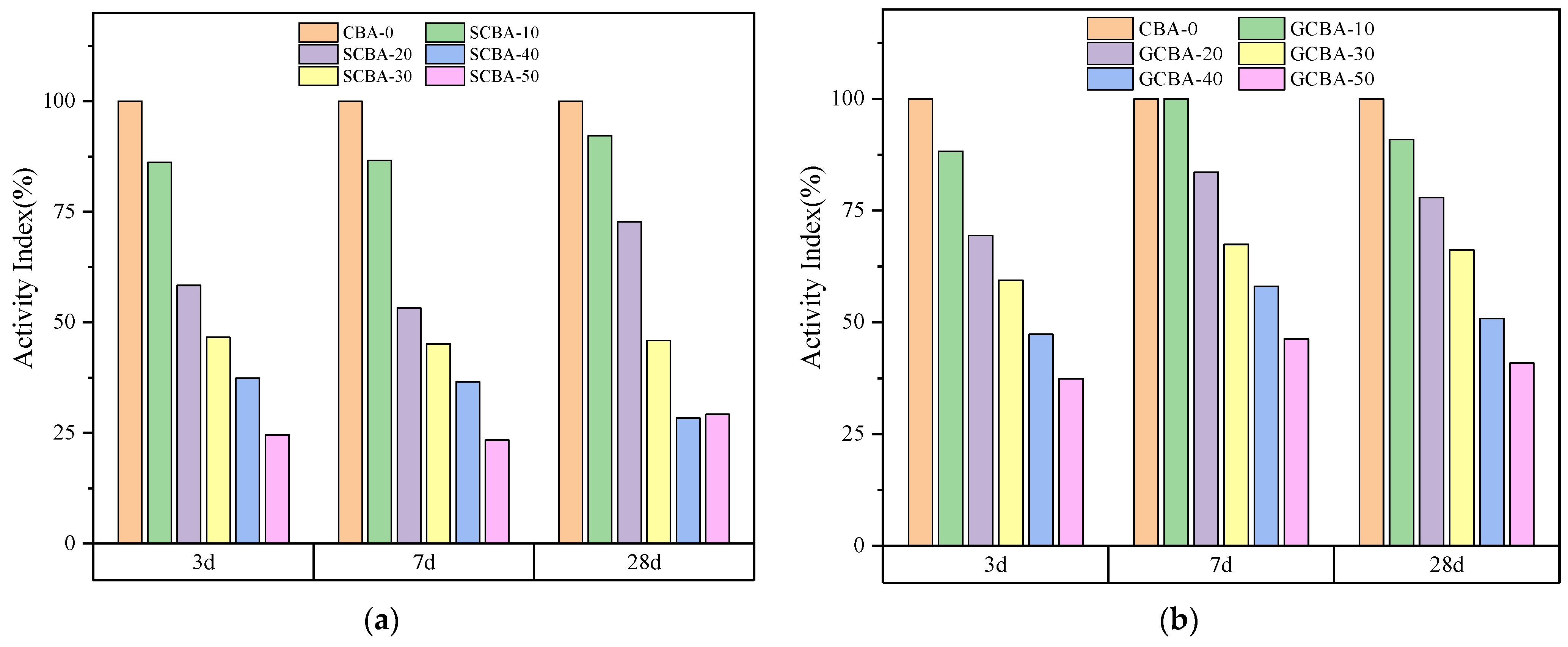
Figure 8 shows the activity index of mortar specimens incorporating two different fineness levels of coal bottom ash (CBA) as cement replacements. The experimental data show that the activity index of the GCBA group consistently exceeded that of the SCBA group at 3, 7, and 28 days at the same replacement levels, indicating the superior pozzolanic reactivity of the finer powder.
Figure 8.
Activity index of mortar specimens containing SCBA and GCBA at different curing ages: (a) SCBA; (b) GCBA.
A key observation in the strength-development kinetics is the contrasting behavior of the two groups as curing proceeds. Although GCBA-50 achieved higher early activity, its growth rate slowed toward 28 days compared to SCBA-50, which exhibits a more significant relative enhancement in the later stages. In contrast, the coarser SCBA particles undergo a delayed pozzolanic reaction. Due to their limited initial surface area, the reaction is slow at early ages; however, sustained curing allows for deeper moisture penetration into the porous honeycomb structure, activating latent reactivity and contributing more substantially to 28-day strength development.
Furthermore, as the replacement level increases, the variation in the activity index between different mixes tends to narrow. This convergence is primarily driven by the dilution effect. At a 50% replacement level, the substantial reduction in cement clinker becomes the dominant constraint on the mechanical integrity of the matrix. Consequently, the additional C-S-H gel produced by the pozzolanic reaction, even in the highly active GCBA specimens, could not fully compensate for the structural deficiency caused by clinker depletion, thereby reducing the differences among activity index values at very high replacement levels.
3.4. Microstructural Analysis
3.4.1. XRD Analysis
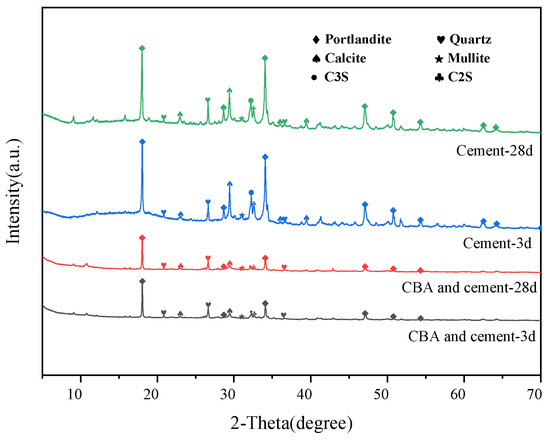
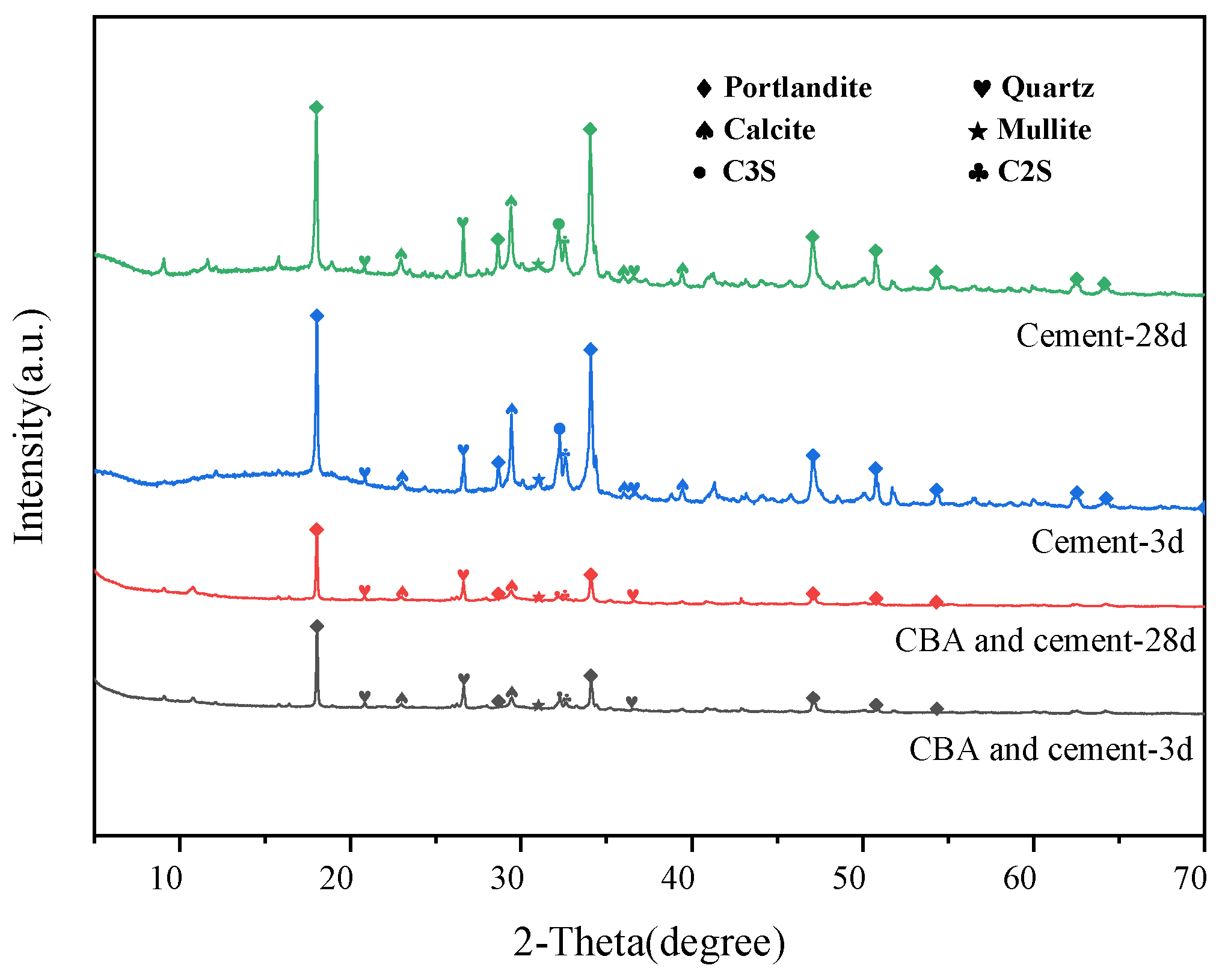
Hydration of the cement paste and CBA–cement blends was stopped at the specified ages using anhydrous ethanol. The dried samples were subsequently ground into fine powder using a ceramic mortar and sieved through a 75 μm mesh for X-ray diffraction characterization. Figure 9 presents the XRD patterns of the control cement paste and the CBA-cement blends at different curing ages, providing insight into the mineralogical phases and their evolution. The results indicate that the incorporation of CBA does not fundamentally alter the types of hydration products formed in the system. The primary crystalline phases identified in all specimens include portlandite (CH), quartz, calcite, and mullite. Notably, quartz and mullite are the predominant mineral components originating from the coal bottom ash.
Figure 9.
XRD patterns of hydration products in cement and CBA–cement pastes at different curing ages.
A clear attenuation of the characteristic diffraction peaks of portlandite was observed in the CBA-incorporated samples compared with the control group. This reduction can be attributed to two synergistic factors: first, the dilution effect, where the partial replacement of cement clinker reduces the total amount of CH generated during initial hydration; and second, the pozzolanic reaction of the CBA, which continuously consumes CH to form additional cementitious gels. Furthermore, the diffraction intensities and peak areas of alite (C3S) and belite (C2S) exhibited a relative decrease after CBA addition. This suggests a lower overall degree of hydration than in the pure cement paste, which is consistent with the lower macroscopic mechanical properties observed in the mortar specimens.
3.4.2. DSC-TG Analysis
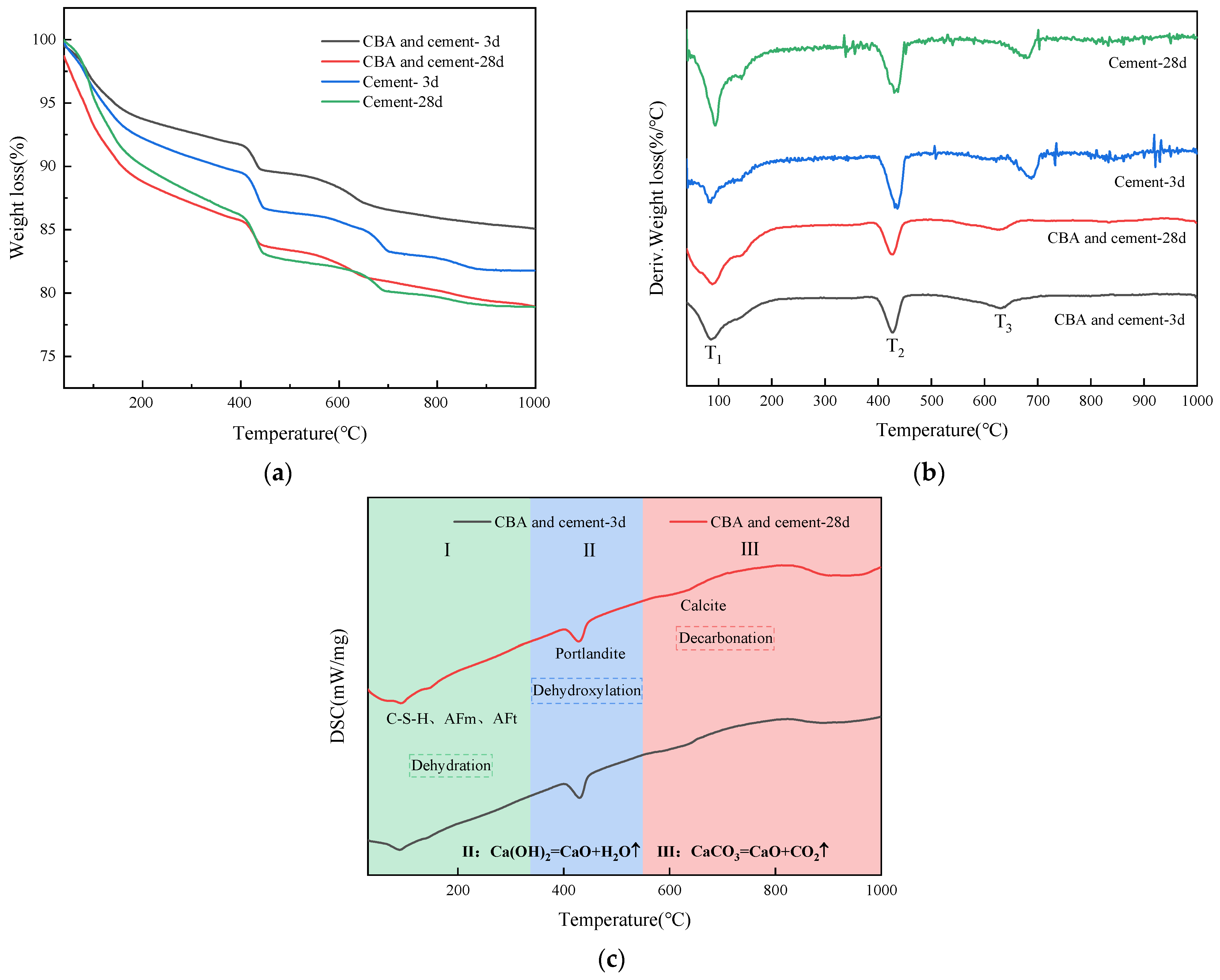
Figure 10 presents the TG, DTG, and DSC curves for the control cement paste and the CBA–cement blends at curing ages of 3 and 28 days. The TG and DTG profiles (Figure 10a,b) provide a comprehensive comparison of all four samples, while the DSC thermograms (Figure 10c) focus on the CBA-cement blends at 3 and 28 days. This focused presentation minimizes curve overlap and clearly shows the time-dependent thermal evolution of the experimental group. The thermogravimetric mass loss profiles can be categorized into three distinct stages corresponding to the endothermic peaks observed in the DTG curves: 50–350 °C, 350–550 °C, and 550–1000 °C.
Figure 10.
Thermal analysis of the CBA–cement pastes at different curing ages: (a) TG curves; (b) DTG curves; (c) DSC curves.
Stage I (50–350 °C): This stage is characterized by the evaporation of free water and the dehydration/dehydroxylation of hydration products, specifically ettringite (AFt) and C-S-H gel. For the CBA-cement blends, the maximum mass-loss rates occurred at 86 °C and 88 °C after 3 and 28 days of curing, respectively. In comparison, the control group exhibited peaks at 85 °C (3 days) and 94 °C (28 days). The lower peak temperature of the 28-day CBA-cement sample suggests a reduced degree of hydration compared to the pure cement paste, indicating that the system still contains a higher proportion of loosely bound water because of the slower pozzolanic reaction of CBA.
Stage II (350–550 °C): This stage corresponds to the dehydroxylation of portlandite. Although the CH-related mass loss increased with curing age, it remained lower than that of the control group at both 3 and 28 days, indicating that CBA incorporation reduced the amount of free portlandite through dilution and pozzolanic consumption.
Stage III (550–1000 °C): The mass loss in this region is primarily attributed to the thermal decomposition of carbonates. The CBA-cement samples exhibited mass losses of 3.98% (3 days) and 4.09% (28 days), with maximum decomposition rates occurring at 630 °C and 628 °C, respectively. These temperatures were markedly lower than those of the control group (688 °C and 680 °C), suggesting that the carbonation products in the CBA-modified system have lower thermal stability.
As shown by the TG curves in Figure 10a, the mass loss trends of the CBA–cement blends and the control group were similar at both 3 and 28 days. With increasing curing age, the increased mass loss associated with C-S-H and CH dehydration indicates the continuous progress of hydration. Notably, the DTG peaks for CH dehydroxylation exhibited a relative decrease at 28 days compared to the 3-day profiles, further confirming that the pozzolanic reaction of the CBA is a sustained process that continuously consumes the CH generated by cement hydration.
To further elucidate the relationship between the microscopic hydration degree and macroscopic strength development, a semi-quantitative correlation was established between the TG-DSC thermal data and the compressive strength results. As demonstrated in the thermal analysis, the mass loss in the 350–550 °C range, which corresponds to the dehydroxylation of portlandite (CH), was significantly lower in the CBA-incorporated specimens compared to the control group. Specifically, at 28 days, the CH mass loss for the CBA blend was 3.33% compared to 4.68% in the control. This reduction confirms the continued reaction of CBA. This micro-level consumption is highly consistent with the observed mechanical trends. For the GCBA-30 specimens, the formation of supplementary C-S-H gels through this pozzolanic reaction effectively compensated for clinker dilution, resulting in a 28-day compressive strength of 30.6 MPa.
The thermal energy absorbed during CH dehydroxylation was proportionally lower in the CBA samples, confirming a reduced absolute amount of free portlandite. Concurrently, the mass loss in Stage I (50–350 °C), associated with C-S-H and AFt dehydration, remained robust. The correspondence between reduced CH content (from TGA) and the retention of compressive strength at later ages indicates that grinding CBA to 45 μm successfully activates its latent pozzolanic properties, promoting the conversion of portlandite into additional C-S-H gels, which contribute to a denser and stronger matrix.
3.4.3. FT-IR Analysis
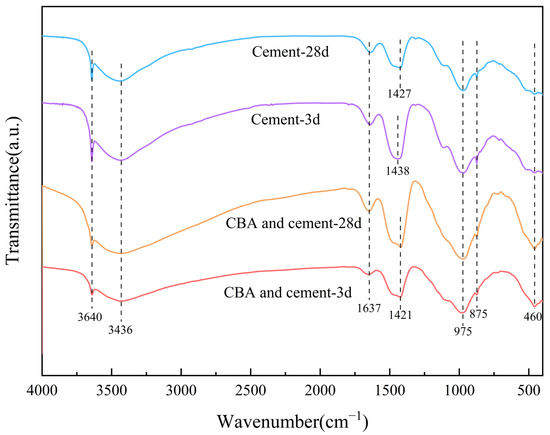
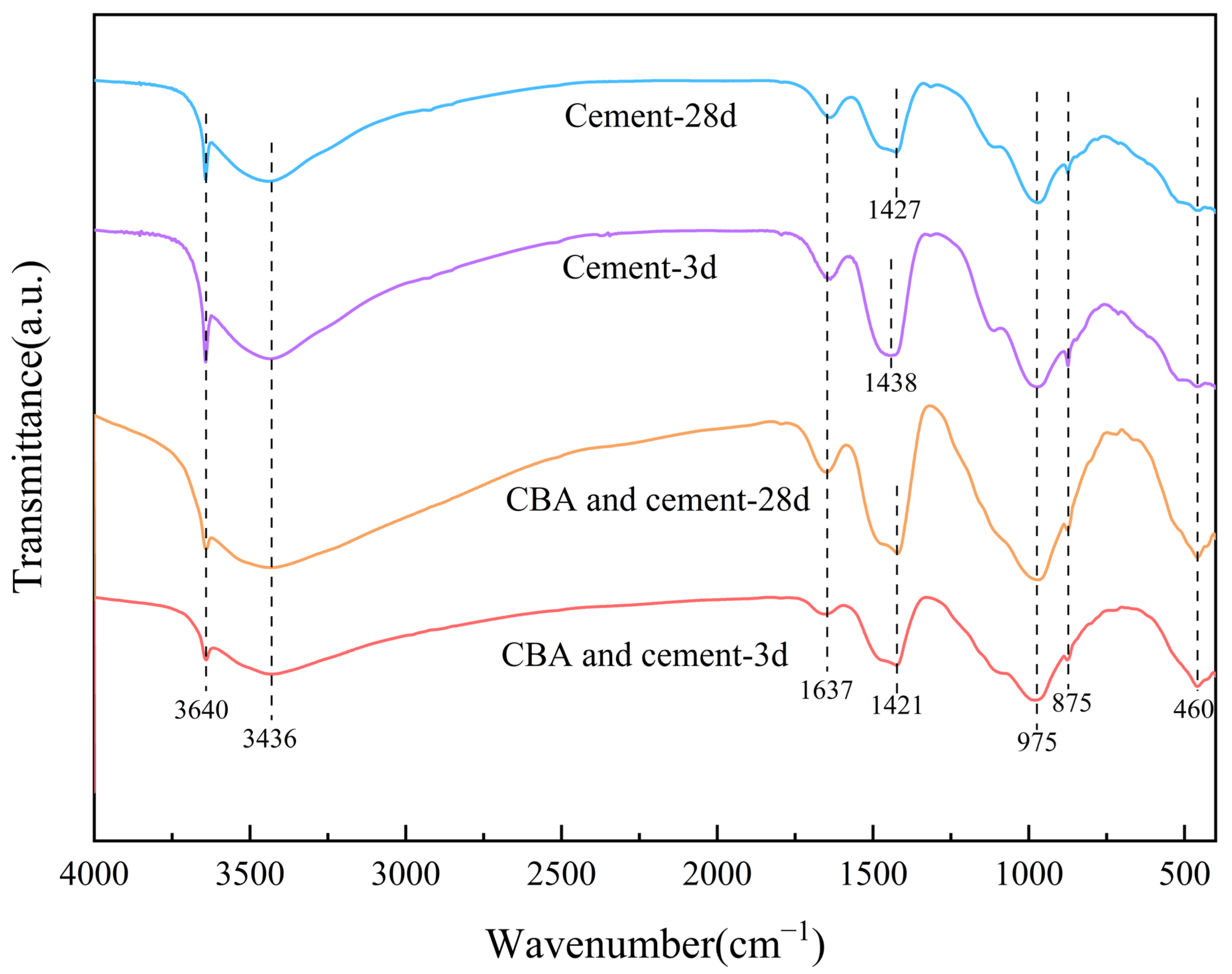
Figure 11 illustrates the Fourier transform infrared spectra of the control cement paste and the CBA-cement blends at different curing ages. The results indicate that the primary vibrational bands for both groups are fundamentally consistent, with prominent absorption peaks identified at 3640, 3436, 1637, 1421, 975, 875, and 460 cm−1.
Figure 11.
FTIR spectra of the hydration products in cement and CBA–cement pastes at different curing ages.
Specifically, the absorption band near 1637 cm−1 is attributed to the H-O-H bending vibration of adsorbed water, whereas the peak at 3436 cm−1 corresponds to the O-H stretching vibration of interlayer water [38,39]. A distinct peak at 3640 cm−1 in the CBA-cement specimens is associated with the O-H vibration of portlandite [40]. Notably, the intensity of this CH absorption peak decreased significantly after CBA addition. This reduction provides spectroscopic evidence of CH consumption through the pozzolanic reaction, resulting in a lower CH concentration in the matrix.
In the lower wavenumber region, the characteristic band between 450 and 650 cm−1 represents the Si-O-Si deformation vibration, and the peak at 460 cm−1 specifically denotes the in-plane Si-O bending vibration, confirming the presence of quartz [38,41]. The broad absorption band within 1400–1450 cm−1 is linked to the formation of calcium carbonate (CaCO3), primarily due to the C-O stretching vibration of CO32− [38,42]. Specifically, the symmetric stretching vibration of C-O at 1421 cm−1 and the out-of-plane bending vibration of CO32− at 875 cm−1 confirm the presence of calcite in the hydration products [41,43].
Although the CBA–cement blends exhibit a C-O absorption peak at 1421 cm−1, the corresponding peak in the control group gradually shifted toward higher wavenumbers. Furthermore, the C-O peak intensity in the control group was higher at 3 days than at 28 days, whereas the CBA-cement blends exhibited the opposite trend. This evolution of the C-O absorption bands is highly consistent with the thermal decomposition trends observed in the TG-DSC analysis.
3.4.4. SEM-EDS Analysis
The micromorphology of the CBA–cement blends at curing ages of 3, 7, and 28 days was investigated by scanning electron microscopy in secondary-electron mode, combined with energy-dispersive spectroscopy to analyze elemental distribution and local chemical composition. This multi-scale approach provides critical insights into the hydration mechanism of coal bottom ash as a supplementary cementitious material.
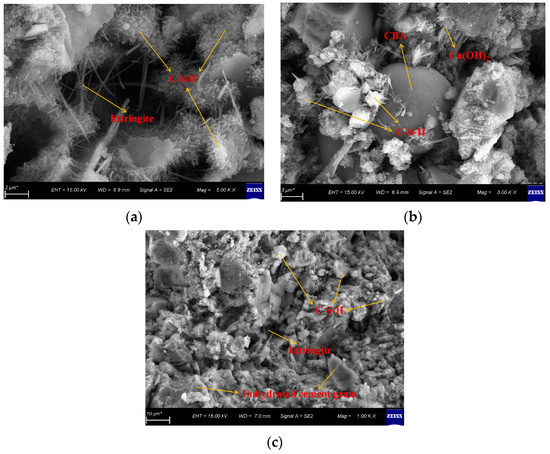
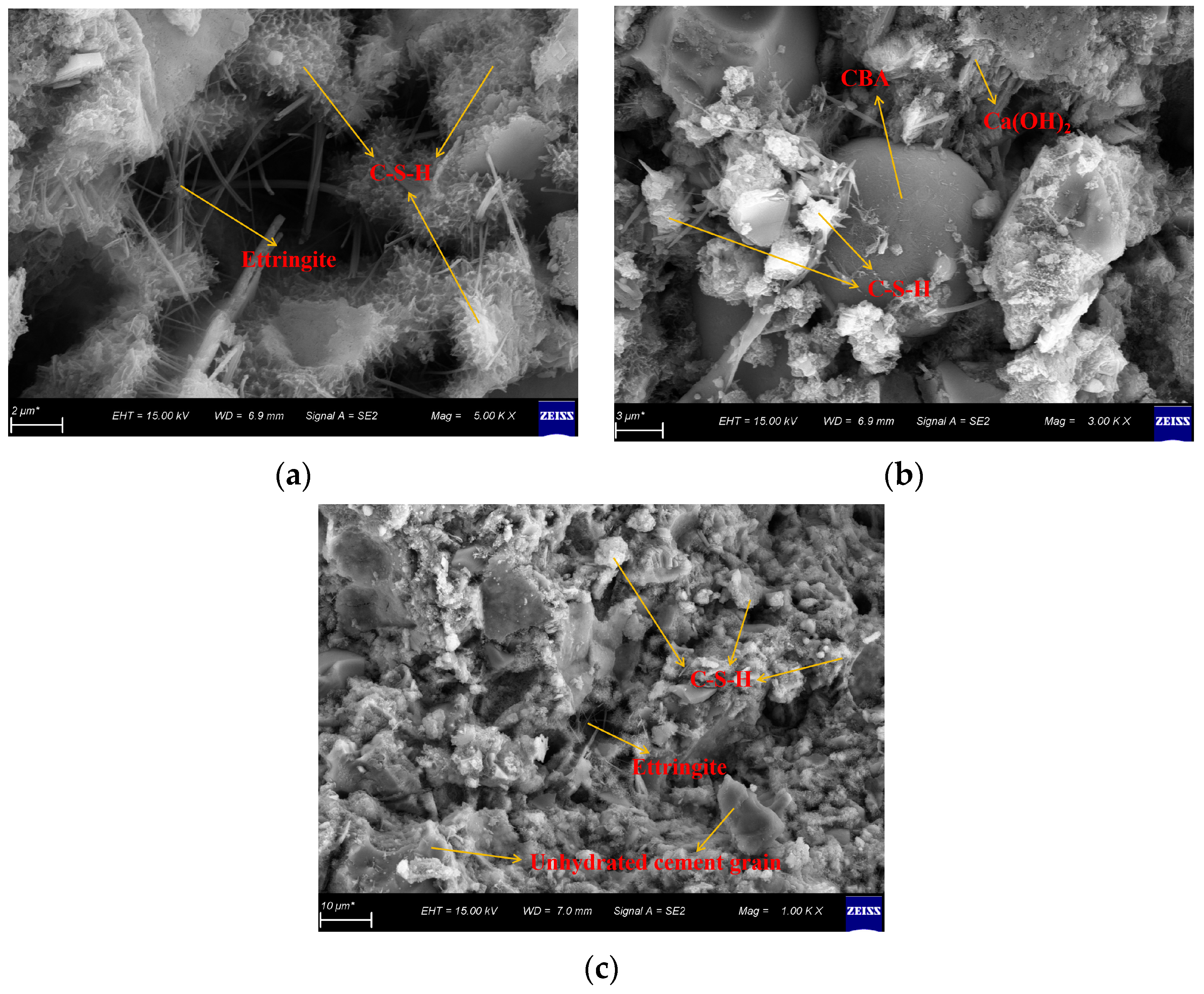
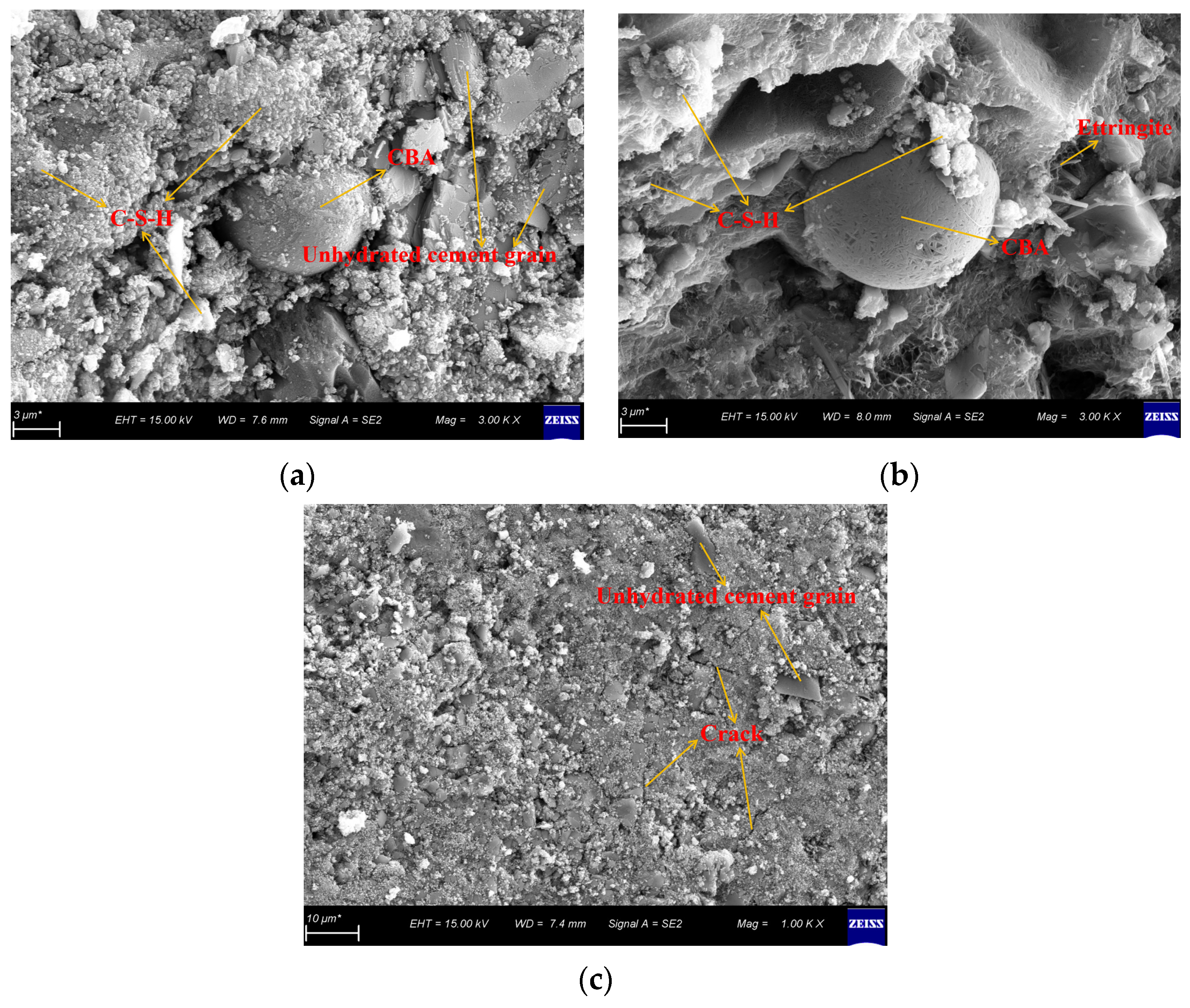
As shown in Figure 12a, needle-like ettringite (AFt) crystals were observed. These acicular crystals form an interwoven network that effectively fills internal micro-pores, establishing an initial structural framework that contributes to the early-age strength development of the system. In Figure 12b, numerous amorphous C-S-H gels are seen nucleating and growing on the relatively smooth surfaces of the CBA particles, extending into the surrounding matrix to facilitate tight interfacial bonding. Due to the limited degree of hydration at 3 days, Figure 12c reveals distinct boundaries between the CBA particles and the cement paste. While these gels had begun to occupy internal voids, a significant volume of inter-particle porosity remains evident. As the hydration reaction progresses, the synergistic growth and interpenetration of C-S-H gels and AFt crystals gradually improve the continuity and compactness of the matrix.
Figure 12.
Microstructure of 3-day hydrated CBA-cement paste: (a) 5000×; (b) 3000×; (c) 1000×. The asterisk (*) represents a reference scale bar.
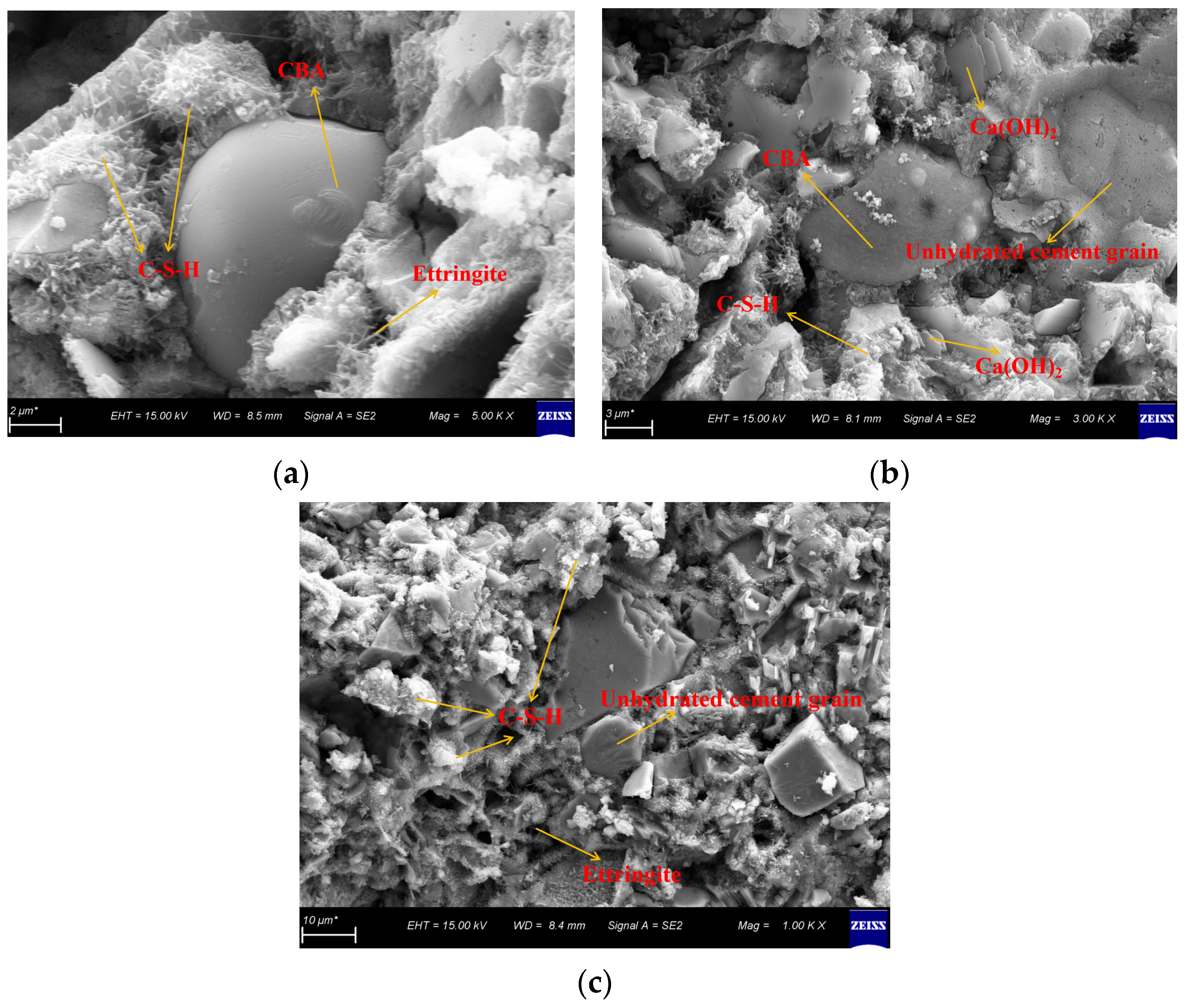
As shown in Figure 13a, the hydration products surrounding the CBA particles were mainly composed of a continuous and uniform network of C-S-H gels, with a sparse distribution of portlandite crystals. In Figure 13b, well-developed hexagonal plate-like CH crystals are clearly observable within the interfacial transition zone between the CBA particles and the hardened cement paste. Some CH crystals are also found growing perpendicularly within the internal capillary pores of the matrix. By the 7-day curing age, Figure 13c reveals that the hydration products have become increasingly interwoven, forming an interconnected network structure that contributes to localized matrix refinement and densification. The continuous accumulation of these products on the CBA particle surfaces provides direct morphological evidence that the pozzolanic reaction and cement hydration are steadily advancing within the system.
Figure 13.
Microstructure of 7-day hydrated CBA–cement paste: (a) 5000×; (b) 3000×; (c) 1000×. The asterisk (*) represents a reference scale bar.
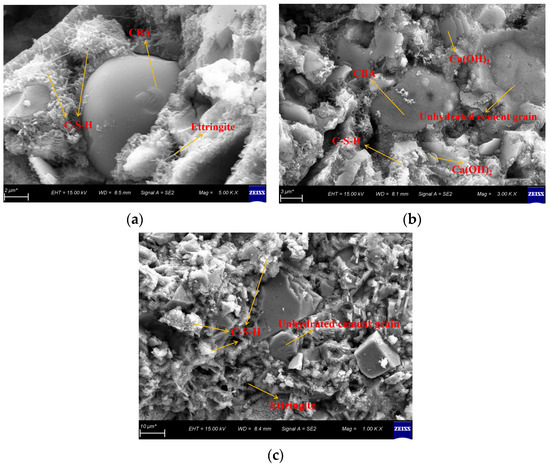
The morphological evolution of C-S-H gel from early-age acicular or flocculent structures to a highly interconnected and densified matrix is clearly evident. As shown in Figure 14a, the surfaces of the CBA particles are either partially etched or encapsulated by a layer of hydration products. This indicates that the CBA particles serve as effective heterogeneous nucleation sites, thereby facilitating the continuous advancement of the hydration process. Furthermore, some CBA particles retain relatively smooth surfaces, as illustrated in Figure 14b, functioning primarily as micro-fillers that occupy internal voids and enhance the overall compactness of the cementitious matrix.
Figure 14.
Microstructure of 28-day hydrated CBA–cement paste: (a) 5000×; (b) 3000×; (c) 1000×. The asterisk (*) represents a reference scale bar.
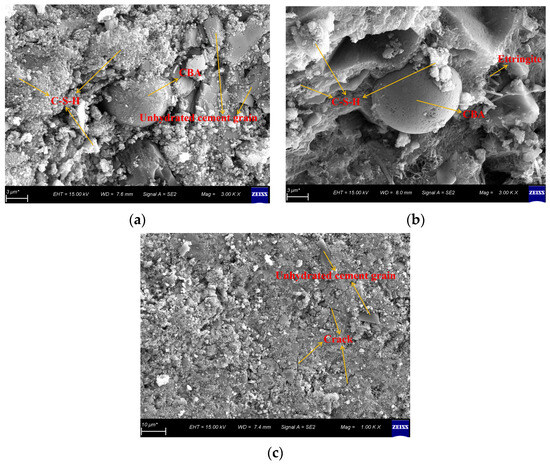
As shown by Figure 14c, the matrix of the CBA–cement blends was significantly denser at 28 days than at 3 days. However, it is noteworthy that the pozzolanic activity provided by mechanical grinding remains limited. In regions characterized by a high concentration of CBA particles, the volume of generated C-S-H gel is insufficient to form a fully continuous structural network. These localized regions of incomplete hydration act as structural weak points in the hardened paste, ultimately leading to the observed decline in macro-mechanical strength at higher replacement levels. Consequently, optimizing the replacement level of CBA is imperative to balance the sustainability benefits with the mechanical integrity of cement-based materials. Although direct quantitative measurements of porosity were not conducted in this phase, the observed microstructural densification in SEM and the increased hydration products strongly suggest a refined pore structure. Future research will incorporate precise porosity analysis to further quantify these micro-level changes.
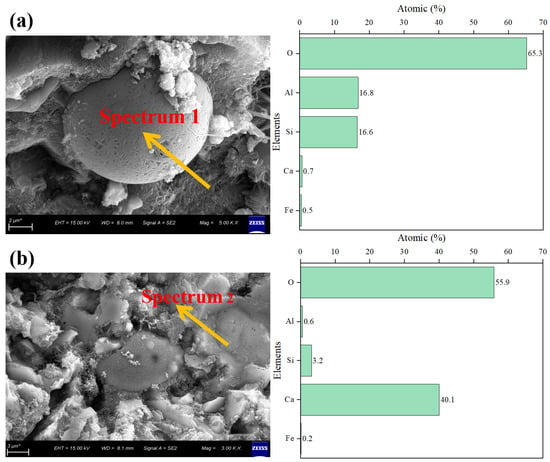
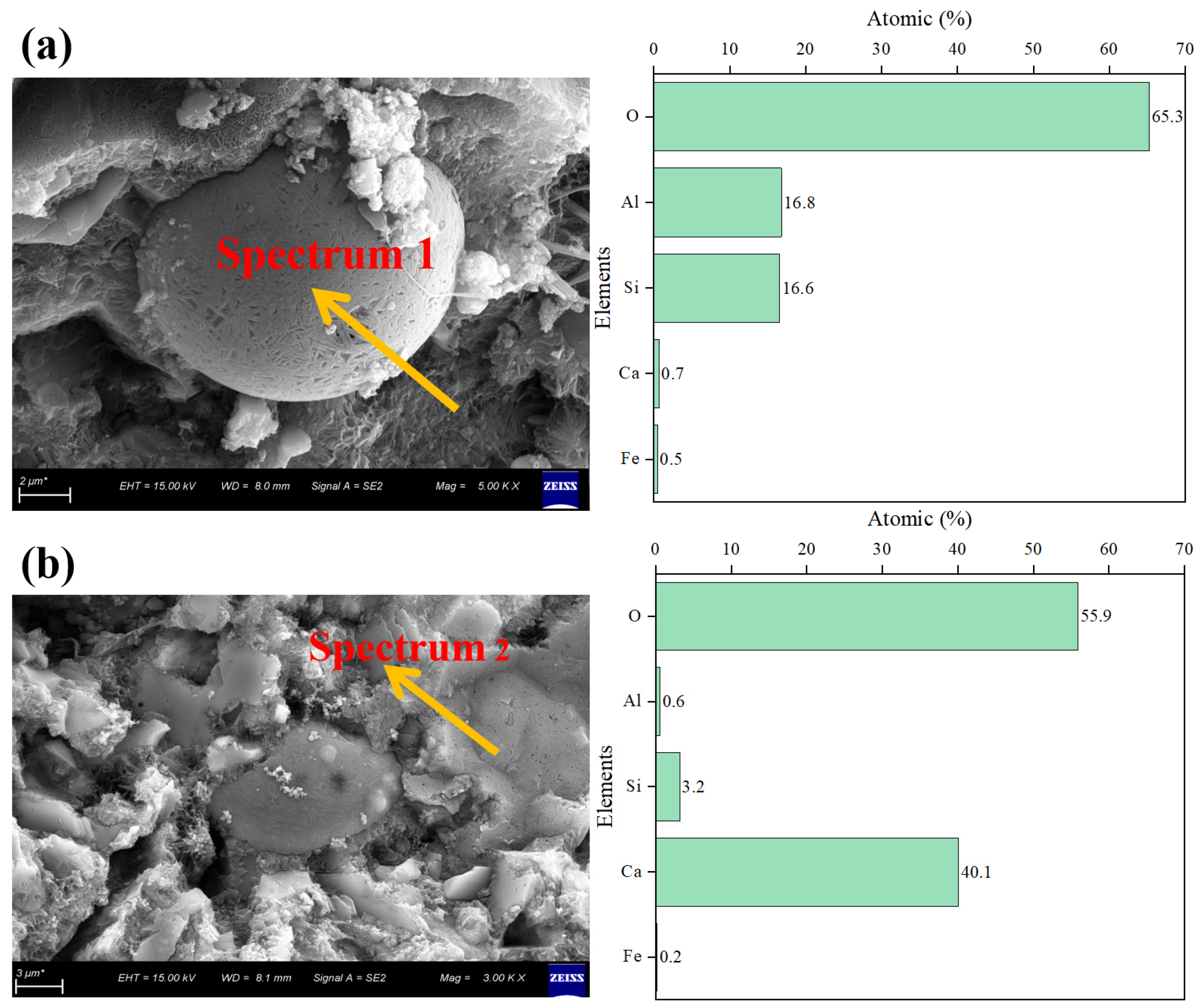
Elemental weight percentages at two representative sampling sites, the CBA particle and the Ca(OH)2-rich region, were measured by EDS analysis, revealing clear differences in chemical composition. To achieve a more accurate stoichiometric characterization of the hydration phases as recommended for cementitious systems, the initial EDS weight percentages were mathematically converted into atomic percentages (At.%) using standard relative atomic masses. The calculated atomic compositions and their corresponding stoichiometric ratios for the two micro-regions are summarized in Table 3.
Table 3.
Calculated atomic percentages and molar ratios of hydration products in different micro-regions based on EDS analysis.
As shown in Figure 15a, the CBA particle exhibits high atomic concentrations of Si (16.6 at.%) and Al (16.8 at.%), while the concentrations of Ca (0.7 at.%) and Fe (0.5 at.%) are extremely low. In contrast, the EDS spectrum in Figure 15b of the CH-rich region shows high atomic proportions of O (55.9 at.%) and Ca (40.1 at.%). The CH-rich region showed high atomic proportions of O and Ca, indicating substantial enrichment of calcium. The localized high atomic proportion of Ca is consistent with morphological features observed via SEM, indicating the nucleation and growth of abundant CH crystals around the CBA particles. Furthermore, surface etching at the interface between CBA particles and the surrounding paste provides morphological evidence of pozzolanic reaction, where reactive silica in CBA consumes Ca(OH)2 to generate additional C-S-H gel, thereby contributing to the development of a more compact and continuous microstructure at later curing ages.
Figure 15.
EDS spectra and elemental compositions of hydration products in different micro-regions: (a) spectrum 1; (b) spectrum 2. The asterisk (*) represents a reference scale bar.
As shown in Table 3, spectrum 1 exhibits a very low Ca/Si ratio (0.04) and a Si/Al ratio close to 1.0, which is consistent with the aluminosilicate nature of the unreacted or partially reacted CBA. In contrast, spectrum 2 displays an extremely high Ca/Si ratio (12.53), confirming substantial portlandite precipitation. The distinct differences in these atomic ratios further corroborate the morphological observations from the SEM images.
4. Economic and Environmental Benefit Analysis
4.1. Economic Cost Advantage
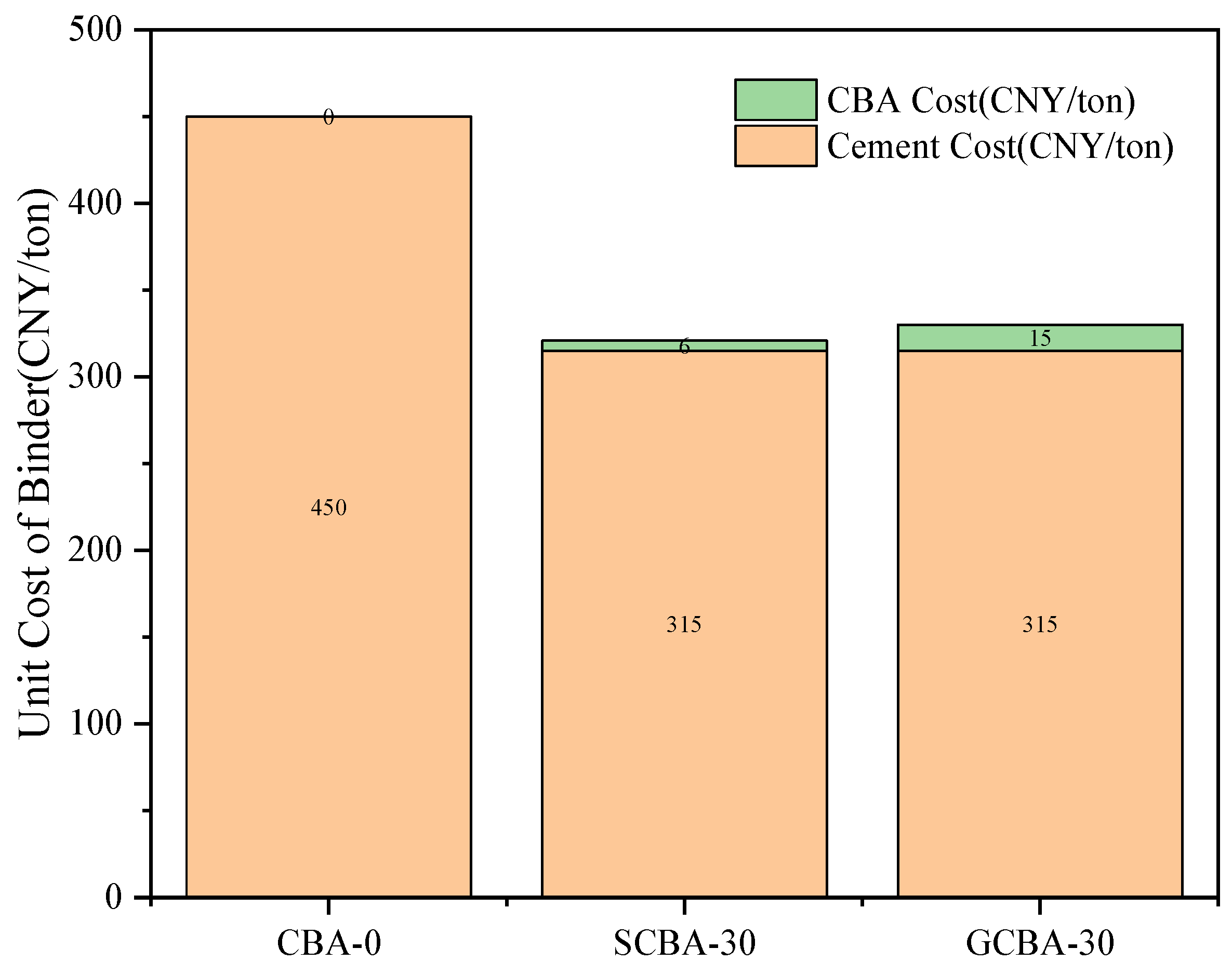
To further evaluate the industrial feasibility of mechanically activated CBA, a quantitative cost–benefit analysis was conducted using regional material and energy prices. Currently, the market price of Portland cement is approximately 450 CNY/ton. As an industrial solid waste, raw CBA can be obtained at a negligible material cost, with regional transportation costs estimated at 20 CNY/ton. The primary additional cost for GCBA (45 μm) is the electrical energy required for the grinding process. Based on an industrial-scale production estimate of 50 kWh/t for grinding coal bottom ash to 45 μm (referencing typical energy consumption values for high-efficiency continuous ball mills in the cement and mineral processing industries) and an industrial electricity rate of 0.6 CNY/kWh, the grinding cost is approximately 30 CNY/ton, bringing the total unit cost of GCBA to 50 CNY/ton. The grinding cost was estimated using industrial-scale continuous milling data rather than laboratory-scale planetary milling, because the latter is not representative of large-scale production. These values were adopted as regional market assumptions based on local material prices and industrial electricity costs in Hunan Province during the study period.
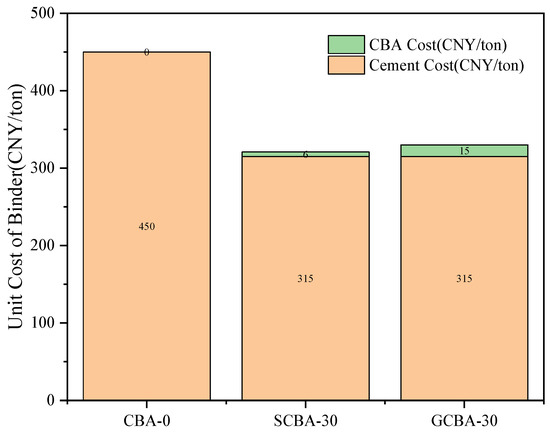
Figure 16 presents the unit cost of the cementitious binder for the control group (CBA-0), SCBA-30, and GCBA-30. The cost of the optimal GCBA-30 blend is calculated as (0.7 × 450) + (0.3 × 50) = 330 CNY/ton. Compared to the 450 CNY/ton cost of pure Portland cement, using 30% GCBA replacement provides an economic saving of 120 CNY/ton, corresponding to a 26.6% reduction in binder cost. While mechanical grinding slightly increases the processing cost compared to standard screening (SCBA), the significant improvement in early-age strength and the marked reduction in clinker dependency make GCBA a cost-effective and scalable alternative for regional concrete production.
Figure 16.
Comparative cost–benefit analysis of the cementitious binder for different mix proportions.
4.2. Environmental Emission Reduction Benefits
To quantitatively evaluate the environmental benefits of using CBA, a simplified life-cycle assessment (LCA) framework was adopted. The functional unit was defined as 1 ton of cementitious binder. The system boundary includes raw material acquisition, the energy-intensive clinker calcination process, and the mechanical grinding of the coal bottom ash. According to global averages, the production of 1 ton of Portland cement releases approximately 900 kg of CO2 [44]. Under a cut-off allocation approach, CBA was treated as an industrial by-product with zero allocated initial emissions. The primary carbon footprint of GCBA arises from the electrical energy consumed during the mechanical grinding process to reach the 45 μm threshold, which is estimated at 30–50 kWh/t. Assuming a standard grid emission factor of 0.58 kg CO2/kWh, the carbon emission for producing 1 ton of GCBA is approximately 17.4–29.0 kg CO2. Consequently, for the optimal GCBA-30 mix (70% cement + 30% GCBA), the total CO2 emission is calculated as (0.7 × 900) + (0.3 × 29) = 638.7 kg CO2/t. Compared to the control group, this represents a net carbon reduction of approximately 261.3 kg CO2 per ton of binder. This calculation demonstrates that mechanically activated CBA can reduce cement consumption and associated CO2 emissions.
5. Conclusions
This study provides a comprehensive investigation of the mechanical activation of coal bottom ash as a sustainable supplementary cementitious material. Based on the experimental results and microstructural analysis, the following main conclusions can be drawn:
- Mechanical grinding to 45 μm (GCBA) represents an effective fineness level for activating CBA. Compared to standard screening (75 μm), GCBA significantly accelerates the early-age pozzolanic reaction, transforming the inert CBA particles into active sites for hydration. Future work should further quantify the role of particle size distribution in optimizing the filler effect and hydration efficiency.
- A 30% replacement level was identified as the optimal balance between environmental benefits and mechanical performance. At this dosage, the 28-day compressive strength of GCBA-30 (30.6 MPa) was approximately 44% higher than that of the corresponding SCBA-30 mixture (21.2 MPa). At this level, GCBA mortars exhibited acceptable mechanical performance, indicating their potential for use in low-carbon cement-based materials.
- The synergistic effect of GCBA is attributed to the accelerated consumption of portlandite and the subsequent formation of additional C-S-H gels. This reaction promoted matrix densification and improved the interfacial transition zone.
- This study establishes an energy-efficient pathway for the high-volume utilization of regional industrial waste and provides a robust experimental dataset that bridges waste valorization and low-carbon cementitious materials.
Overall, although CBA incorporation causes a manageable reduction in mechanical strength, it remains a technically viable and environmentally beneficial supplementary cementitious material for sustainable infrastructure development. Nevertheless, comprehensive long-term durability assessments, including sulfate resistance, chloride penetration, and freeze–thaw resistance, are still required to validate the practical applicability of high-volume CBA systems.
Author Contributions
H.L.: Conceptualization, Methodology, Writing—original draft. H.C.: Writing—review and editing. Z.O.: Conceptualization, Supervision, Funding acquisition, Writing—review and editing. All authors have read and agreed to the published version of the manuscript.
Funding
This research received no external funding.
Institutional Review Board Statement
Not applicable.
Informed Consent Statement
Not applicable.
Data Availability Statement
The original contributions presented in this study are included in the article. Further inquiries can be directed to the corresponding author.
Conflicts of Interest
The authors declare no potential conflicts of interest.
References
- Singh, N.; Shehnazdeep Bhardwaj, A. Reviewing the role of coal bottom ash as an alternative of cement. Constr. Build. Mater. 2020, 233, 117276. [Google Scholar] [CrossRef] [Scilit]
- Sun, J.; Geng, C.L.; Zhang, Z.T.; Wang, X.T.; Xu, L. Present Situation of Comprehensive Utilization Technology of Industrial Solid Waste. Mater. Rep. 2012, 26, 105–109. [Google Scholar]
- Singh, N.; Mithulraj, M.; Arya, S. Influence of coal bottom ash as fine aggregates replacement on various properties of concretes: A review. Resour. Conserv. Recycl. 2018, 138, 257–271. [Google Scholar] [CrossRef] [Scilit]
- Singh, M. Coal bottom ash. In Waste and Supplementary Cementitious Materials in Concrete; Woodhead Publishing: Delhi, India, 2018. [Google Scholar]
- Tamanna, K.; Raman, S.N.; Jamil, M.; Hamid, R. Coal bottom ash as supplementary material for sustainable construction: A comprehensive review. Constr. Build. Mater. 2023, 389, 131679. [Google Scholar] [CrossRef] [Scilit]
- Yun, W.; Xianglin, Z. Study of the properties of fluidized bed combustion ash and slag from a power plant in Huaibei mining area. J. Hefei Univ. Technol. 2014, 37, 705–709. [Google Scholar]
- Muthusamy, K.; Rasid, M.H.; Jokhio, G.A.; Budiea, A.M.A.; Hussin, M.W.; Mirza, J. Coal bottom ash as sand replacement in concrete: A review. Constr. Build. Mater. 2020, 236, 117507. [Google Scholar] [CrossRef] [Scilit]
- Singh, M.; Siddique, R. Effect of coal bottom ash as partial replacement of sand on workability and strength properties of concrete. J. Clean. Prod. 2016, 112, 620–630. [Google Scholar] [CrossRef] [Scilit]
- Ma, K.; Wei, J.; Li, H.; Nie, Q.; Zhang, M.; Wu, R.; Zhao, Q.; Yu, H.; Wang, Z.; Li, S. Seismic performance of joints in coal ash slag concrete frames. Proc. Inst. Civ. Eng.-Struct. Build. 2025, 178, 264–279. [Google Scholar] [CrossRef] [Scilit]
- Zhou, H.; Bhattarai, R.; Li, Y.; Si, B.; Dong, X.; Wang, T.; Yao, Z. Towards sustainable coal industry: Turning coal bottom ash into wealth. Sci. Total Environ. 2022, 804, 149985. [Google Scholar] [CrossRef] [Scilit]
- Ankur, N.; Singh, N. Performance of cement mortars and concretes containing coal bottom ash: A comprehensive review. Renew. Sustain. Energy Rev. 2021, 149, 111361. [Google Scholar] [CrossRef] [Scilit]
- Jaturapitakkul, C.; Cheerarot, R. Development of Bottom Ash as Pozzolanic Material. J. Mater. Civ. Eng. 2003, 15, 48–53. [Google Scholar] [CrossRef] [Scilit]
- Abdulmatin, A.; Tangchirapat, W.; Jaturapitakkul, C. An investigation of bottom ash as a pozzolanic material. Constr. Build. Mater. 2018, 186, 155–162. [Google Scholar] [CrossRef] [Scilit]
- Cheriaf, M.; Rocha, J.C.; Pera, J. Pozzolanic properties of pulverized coal combustion bottom ash. Cem. Concr. Res. 1999, 29, 1387–1391. [Google Scholar] [CrossRef] [Scilit]
- Khan, R.; Ganesh, A. The effect of coal bottom ash (CBA) on mechanical and durability characteristics of concrete. J. Build. Mater. Struct. 2016, 3, 31–42. [Google Scholar] [CrossRef] [Scilit]
- Pan, P. Research of Coal Cinder and Using It as Concrete Admixtures. Master’s Thesis, Jinan University, Guangzhou, China, 2011. [Google Scholar]
- Bajare, D.; Bumanis, G.; Upeniece, L. Coal Combustion Bottom Ash as Microfiller with Pozzolanic Properties for Traditional Concrete. Procedia Eng. 2013, 57, 149–158. [Google Scholar] [CrossRef] [Scilit]
- Sathonsaowaphak, A.; Chindaprasirt, P.; Pimraksa, K. Workability and strength of lignite bottom ash geopolymer mortar. J. Hazard. Mater. 2009, 168, 44–50. [Google Scholar] [CrossRef] [Scilit]
- Ul Haq, E.; Kunjalukkal Padmanabhan, S.; Licciulli, A. Synthesis and characteristics of fly ash and bottom ash-based geopolymers—A comparative study. Ceram. Int. 2014, 40, 2965–2971. [Google Scholar] [CrossRef] [Scilit]
- Zhang, Y.J.; Chai, Q.; Yang, M.Y.; Fan, B.W.; Li, X. Synthesis of bottom ash-based geopolymer Co-activated by double salts. J. Funct. Mater. 2016, 47, 9176–9181. [Google Scholar]
- Kula, I.; Olgun, A.; Erdogan, Y.; Sevinc, V. Effects of colemanite waste, coal bottom ash, and fly ash on the properties of cement. Cem. Concr. Res. 2001, 31, 491–494. [Google Scholar] [CrossRef] [Scilit]
- Martins, I.; Gonçalves, A.; Marques, J. Durability and Strength Properties of Concrete Containing Coal Bottom Ash. In Proceedings pro077: International RILEM Conference on Material Science-AdIPoC-Additions Improving Properties of Concrete-Theme 3; RILEM: Champs-sur-Marne, France, 2010. [Google Scholar]
- Mangi, S.A.; Ibrahim, M.H.W.; Jamaluddin, N.; Arshad, M.F.; Shahidan, S. Performances of concrete containing coal bottom ash with different fineness as a supplementary cementitious material exposed to seawater. Eng. Sci. Technol. Int. J. 2019, 22, 929–938. [Google Scholar] [CrossRef] [Scilit]
- Aygun, B.F.; Bilir, T.; Uysal, M. Coal bottom ash and its applications in cement and concrete technologies: A review. Discov. Civ. Eng. 2024, 1, 86. [Google Scholar] [CrossRef] [Scilit]
- Guan, X.; Wang, L.; Mo, L. Effects of ground coal bottom ash on the properties of cement-based materials under various curing temperatures. J. Build. Eng. 2023, 69, 106196. [Google Scholar] [CrossRef] [Scilit]
- Sapkota, S.C.; Shrestha, S.; Haq, M.; Panthi, A.; Shrestha, A.; Sapkota, S.; Al-Osta, M.A.; Bansal, T. Explainable Hybridized Ensemble Model with a Metaheuristics Algorithm for the Prediction of Compressive Strength of Ultrahigh-Performance Concrete. J. Struct. Des. Constr. Pract. 2026, 31, 04026023. [Google Scholar] [CrossRef] [Scilit]
- Ashraf, M.W.; Tu, Y.; Khan, A.; Siddiqui, A.S.; Mubarak, S.; Sufian, M.; Ullah, S.; Wang, C. Experimental and explainable machine learning-based investigation of the coal bottom ash replacement in sustainable concrete production. J. Build. Eng. 2025, 104, 112367. [Google Scholar] [CrossRef] [Scilit]
- Hashmi, A.F.; Ayaz, M.; Bilal, A.; Haq, M.; Shariq, M. ANN modeling of mechanical properties in high-volume fly ash concrete: Multi-objective cost optimization using NSGA-II for sustainable construction. Asian J. Civ. Eng. 2024, 25, 2867–2882. [Google Scholar] [CrossRef] [Scilit]
- GB/T 1596-2017; Fly Ash Used for Cement and Concrete. National Standard of China: Beijing, China, 2017.
- GB/T 17671-2021; Test Method of Cement Mortar Strength (ISO Method). National Standard of China: Beijing, China, 2021.
- Abo-El-Enein, S.; Hashem, F.; Amin, M.; Sayed, D. Physicochemical characteristics of cementitious building materials derived from industrial solid wastes. Constr. Build. Mater. 2016, 126, 983–990. [Google Scholar] [CrossRef] [Scilit]
- Abo-El-Enein, S.; Heikal, M.; Amin, M.; Negm, H. Reactivity of dealuminated kaolin and burnt kaolin using cement kiln dust or hydrated lime as activators. Constr. Build. Mater. 2013, 47, 1451–1460. [Google Scholar] [CrossRef] [Scilit]
- Al-Aziz, A.A.; El-Hosiny, F.I.; Mohsen, A.; Ramadan, M. Mechanical performance and gamma attenuation capability of sustainable pozzolanic cement incorporating basalt under different curing regimes. Sci. Rep. 2025, 15, 43273. [Google Scholar] [CrossRef] [Scilit] [PubMed]
- Amin, M.; Selim, F.A.; Ramadan, M.; Mohsen, A.; Abu-Dief, A.M.; Ahmed, H.A.; Hashem, F.S. Evaluation of mechanical performance, corrosion behavior, texture characterization and aggressive attack of OPC-FMK blended cement pastes modified with micro Titania. Constr. Build. Mater. 2024, 416, 135261. [Google Scholar] [CrossRef] [Scilit]
- Ramadan, M.; El-Gamal, S.; Wetwet, M.M.; Hazem, M. Amelioration of antimicrobial, radiation shielding, thermal stability of Portland cement composites using hematite nanoparticles. Constr. Build. Mater. 2024, 421, 135661. [Google Scholar] [CrossRef] [Scilit]
- Cantero, B.; Bravo, M.; de Brito, J.; del Bosque, I.F.S.; Medina, C. The Influence of Fly Ash on the Mechanical Performance of Cementitious Materials Produced with Recycled Cement. Appl. Sci. 2022, 12, 2257. [Google Scholar] [CrossRef] [Scilit]
- Abo-El-Enein, S.; Hanafi, S.; El-Hosiny, F.; El-Mosallamy, E.-S.H.; Amin, M. Effect of Some Acrylate—Poly(Ethylene Glycol) Copolymers as Superplasticizers on the Mechanical and Surface Properties of Portland Cement Pastes. Adsorpt. Sci. Technol. 2005, 23, 245–254. [Google Scholar] [CrossRef] [Scilit]
- García Lodeiro, I.; Macphee, D.E.; Palomo, A.; Fernández-Jiménez, A. Effect of alkalis on fresh C–S–H gels. FTIR analysis. Cem. Concr. Res. 2009, 39, 147–153. [Google Scholar] [CrossRef] [Scilit]
- Wang, H.; Wang, L.; Xu, Y.; Cao, K.; Ge, Y.; Wang, X.; Li, Q. Accelerating the Reaction Kinetics of Na2CO3-Activated Slag Mortars by Calcined Recycled Concrete Fines. Materials 2022, 15, 5375. [Google Scholar] [CrossRef] [Scilit]
- Lilkov, V.; Dimitrova, E.; Petrov, O.E. Hydration process of cement containing fly ash and silica fume: The first 24 hours. Cem. Concr. Res. 1997, 27, 577–588. [Google Scholar] [CrossRef] [Scilit]
- Ge, Z.; Xue, X.; Fang, H.; Shao, Y.; Sun, K.; Zhang, H.; Šavija, B. Preparation and characterization of carbonated high-calcium fly ash as supplementary cementitious material. Constr. Build. Mater. 2025, 466, 140285. [Google Scholar] [CrossRef] [Scilit]
- Yuan, B.; Yu, Q.L.; Brouwers, H.J.H. Time-dependent characterization of Na2CO3 activated slag. Cem. Concr. Compos. 2017, 84, 188–197. [Google Scholar] [CrossRef] [Scilit]
- Luan, C.; Wu, Z.; Han, Z.; Gao, X.; Zhou, Z.; Du, P.; Wu, F.; Du, S.; Huang, Y. The effects of calcium content of fly ash on hydration and microstructure of ultra-high performance concrete (UHPC). J. Clean. Prod. 2023, 415, 137735. [Google Scholar] [CrossRef] [Scilit]
- Benhelal, E.; Zahedi, G.; Shamsaei, E.; Bahadori, A. Global strategies and potentials to curb CO2 emissions in cement industry. J. Clean. Prod. 2013, 51, 142–161. [Google Scholar] [CrossRef] [Scilit]

Disclaimer/Publisher’s Note: The statements, opinions and data contained in all publications are solely those of the individual author(s) and contributor(s) and not of MDPI and/or the editor(s). MDPI and/or the editor(s) disclaim responsibility for any injury to people or property resulting from any ideas, methods, instructions or products referred to in the content. |
© 2026 by the authors. Licensee MDPI, Basel, Switzerland. This article is an open access article distributed under the terms and conditions of the Creative Commons Attribution (CC BY) license.