


Abstract
The exploration of alternative energy sources has gained significant traction in recent years, driven by the urgent need to mitigate greenhouse gas emissions and transition towards sustainable energy. Among these alternatives, plume geothermal and hydrothermal systems have emerged as promising options due to their potential for providing clean, renewable energy. This study presents a probabilistic investigation into the sensitivity of plume geothermal and hydrothermal systems under various reservoir conditions in the Williston Basin, North Dakota. In addition to elucidating the impact of reservoir conditions on system performance, the study utilizes probabilistic methods to assess energy output of plume geothermal and hydrothermal systems. Insights derived from this probabilistic investigation offer valuable guidance for the working fluid selection, systems design and optimization in the Williston Basin and beyond. Results from the sensitivity analysis reveal the profound influence of reservoir conditions on the behavior and efficiency of plume geothermal and hydrothermal systems. Our case study on Red River Formation and Deadwood Formations shows a potential of 34% increase and 32% decrease in heat extraction based on varying reservoir conditions. Our investigations in the Beaver Lodge field within the Red River Formation yielded arithmetic mean values for best case resources, hydrothermal resources and the worst case as 6.36 J, 4.75 J and 3.24 J, respectively. Overall, this research contributes to advancing the knowledge and understanding of plume geothermal and hydrothermal systems as viable pathways towards sustainable energy production and carbon sequestration. By highlighting the sensitivity of these systems to reservoir conditions, the study provides valuable insights that can inform decision-making processes and future research endeavours aimed at fostering the transition to a low-carbon energy landscape.
1. Introduction
1.1. Climate Change and Geothermal Energy
The burgeoning global population and its accompanying anthropogenic endeavors have significantly escalated the concentration of greenhouse gases in the atmosphere, with carbon dioxide (CO2) being the primary culprit. The surge in atmospheric CO2 concentrations can be predominantly attributed to human activities, notably the combustion of fossil fuels. This uptick in CO2 levels has catalyzed climate change, which manifests in a plethora of adverse impacts worldwide. From shifting weather patterns to rising sea levels, the repercussions of climate change reverberate across the globe, necessitating urgent and concerted efforts to mitigate its effects. The impacts of global warming on the environment, including phenomena such as sea-level rise and extreme weather conditions, are intensifying due to the anthropogenic release of greenhouse gases, particularly CO2 [1]. In response to this pressing challenge, the adoption of clean, low-carbon, energy-efficient technologies and renewable energy sources emerges as a critical strategy for mitigating emissions. Among these technologies, carbon capture and storage (CCS) stands out as a promising solution. CCS involves capturing CO2 emissions from the flue gases of power plants and other large industrial facilities, followed by the storage of this captured CO2 in carefully selected geological formations. This technology plays a vital role in curbing the environmental impacts of anthropogenic emissions, offering a pathway towards a more sustainable and climate-resilient future [2]. Furthermore, in 2017, CO2 emissions from electricity generation accounted for a substantial 40% of global fuel combustion CO2 emissions [3]. Consequently, it is increasingly evident that achieving climate goals necessitates most fossil fuel-based electricity generation to incorporate CO2 capture and geological storage, utilizing saline formations and depleted oil and gas reservoirs [4]. Rather than solely storing CO2 in sedimentary basins as part of carbon capture and storage (CCS) initiatives, an alternative approach involves circulating the captured CO2 back to the land surface. This CO2 can then be utilized to generate geothermal power within a CO2 Plume Geothermal (CPG) system. This innovative method not only contributes to mitigating CO2 emissions but also harnesses the energy potential of CO2 to generate sustainable geothermal power [5,6,7,8].
1.2. Geothermal Energy Exploration in North Dakota
Nestled beneath the surface of western North Dakota lies a reservoir brimming with untapped potential, the Williston Basin, a rich source of geothermal energy. This abundant resource offers a promising avenue towards sustainable, renewable, and environmentally friendly heat and power solutions. Despite longstanding awareness of its existence, the full development of this resource has been impeded by economic competition from traditional fossil fuels. North Dakota’s strategic geographical location in the heart of the north-central United States, characterized by harsh continental climates, underscores the pressing need for reliable heating solutions throughout the year [9]. Central North Dakota, with its mean annual temperature of 4.3 °C and winter temperatures plummeting to an average of −12.4 °C from December through March, faces a constant demand for heating. Interestingly, even during the summer months from June to September, temperatures often dip below the base level, resulting in negative cooling degree-days. With abundant sedimentary resources lying dormant beneath the earth’s surface, North Dakota stands poised to embrace geothermal energy as a dependable source of energy [10,11,12]. Moreover, the exploration and utilization of this resource hold the promise of reducing reliance on fossil fuels, thereby fostering a more sustainable and environmentally conscious energy landscape in the state. Western North Dakota in particular boasts favorable conditions for the implementation of Enhanced Geothermal Systems [13,14]. Leveraging insights gained from deep oil drilling activities in the region, scientists and researchers have begun to unlock the geothermal potential of the Williston Basin formations [15,16,17,18]. Extensive studies dating back to the 1970s have delved into the basin’s heat flow and temperature distributions, with particular emphasis on the basal clastic Deadwood and Winnipeg [19,20]. The Red River Formation has an estimated thickness of over 214 m, temperatures of over 140 °C and permeability of 0.1 mD—38 mD (Hartig, 2018) [21].
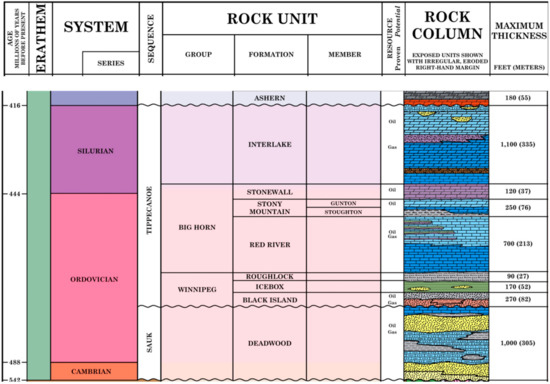
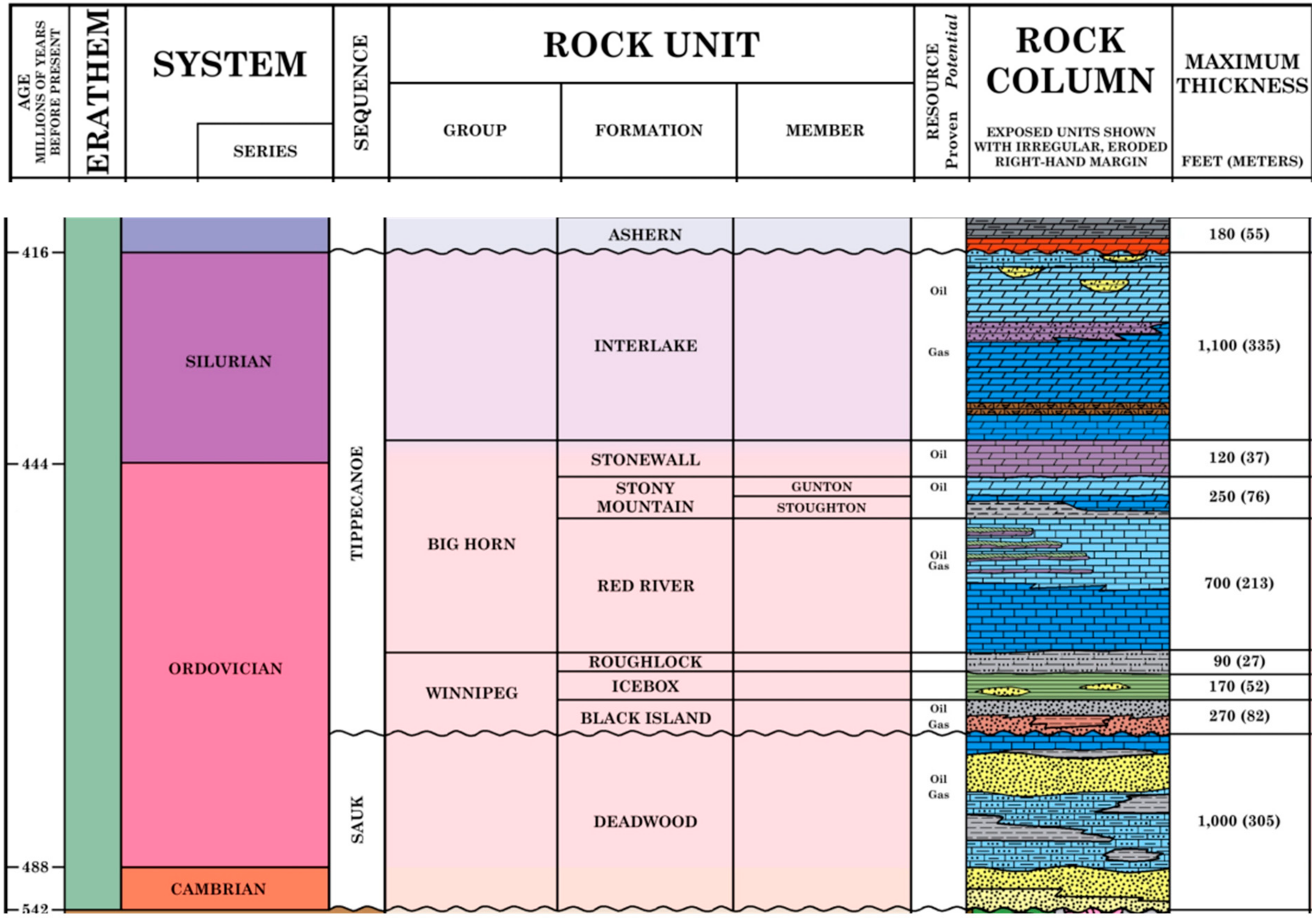
Formed in the Ordovician period, the Red River Formation is the fourth layer within the Big Horn Group. It transitions into the Ordovician Winnipeg Shale, also known as the Roughlock Formation, and is overlain by the Stony Mountain Shale. The Red River Formation primarily comprises limestone, interspersed with lenses of dolomitic mudstone, and features an anhydrite cap at its center. The work of M. Sippel [22] delineated four porosity intervals, A, B, C, and D zones in the Red River’s upper reaches, with zones B and D being the most productive for oil extraction. The Beaver Lodge field within the Red River Formation has an estimated 4.0 J of thermal energy [23]. The Deadwood Formation is segmented into six subgroups identified by variations in Gamma-ray readings from well logs. These changes in Gamma-ray sensitivity are essential for differentiating the subgroups. The formation exhibits various lithological changes, although many are quite subtle. During the deposition of the Deadwood Formation, frequent minor transgressions and regressions occur. Consequently, the lithological features remain consistent throughout the Deadwood Formation’s stratigraphic column. This formation, dating back to the late Cambrian and early Ordovician periods, consists predominantly of dark, organic-rich shale, siltstone, and sandstone (See Figure 1 and Figure 2).
Figure 1.
Modified North Dakota Stratigraphic column showing era, system, rock units, litho-column, and thickness [24].
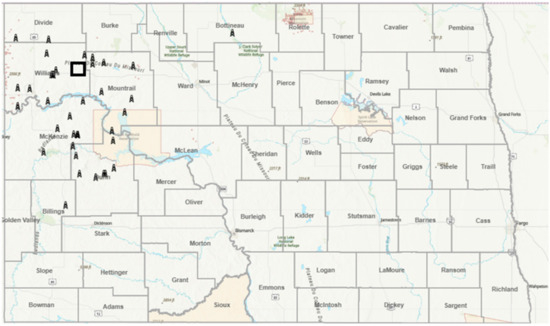
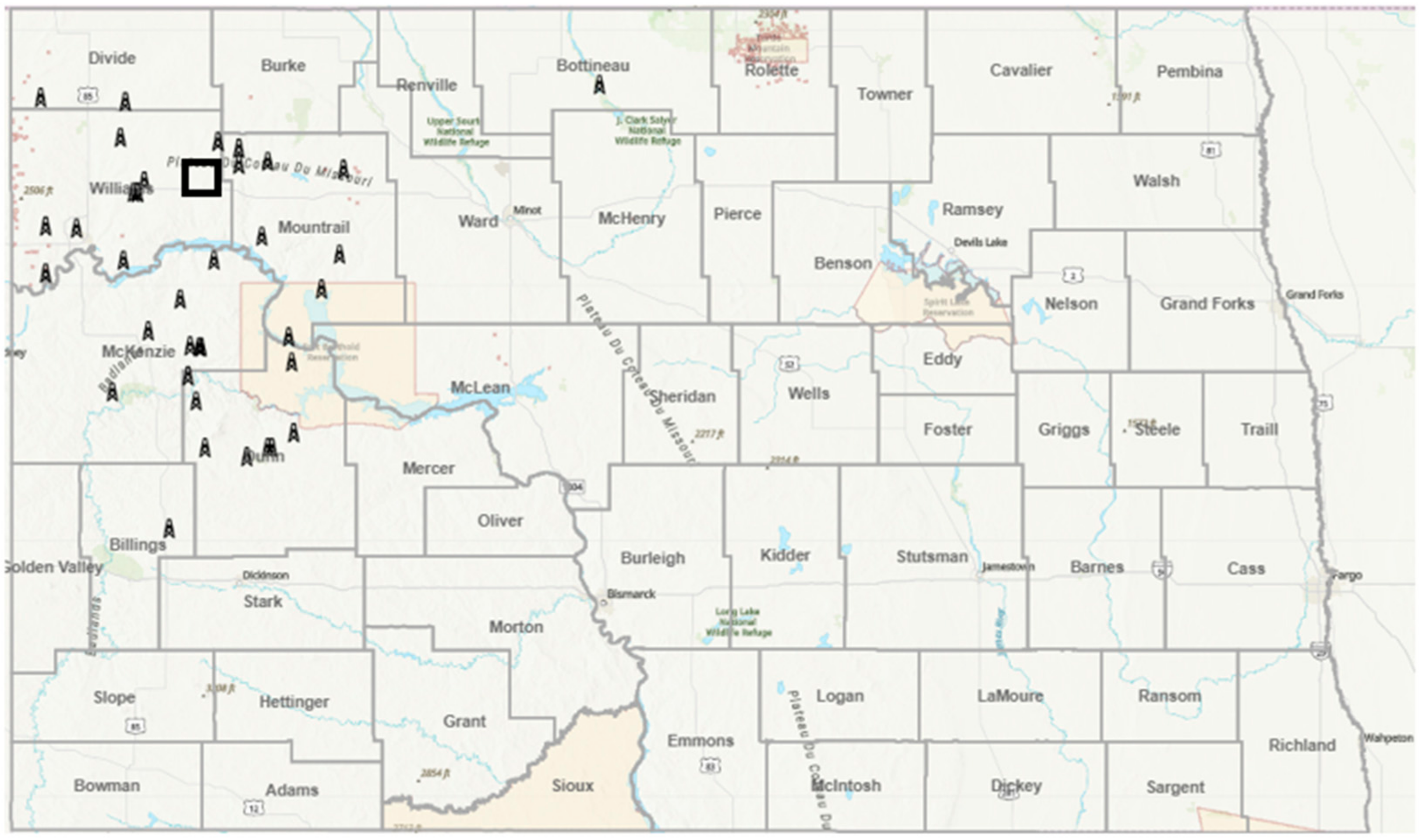
Figure 2.
NDIC Map highlighting location of Beaver Lodge field (Depicted in black square) [25].
1.3. Geothermal Energy Systems (CO2 Plume and Hydrothermal Systems)
Geothermal energy stands as a beacon of sustainability in the realm of renewable energy, offering a reliable and eco-friendly alternative to traditional fossil fuels. At its core, geothermal energy harnesses the Earth’s natural heat to generate electricity and provide heating and cooling solutions for a variety of applications. Hydrothermal systems stand as the stalwart foundation of geothermal energy production. These systems tap into naturally occurring reservoirs of hot water and steam beneath the Earth’s surface, harnessing the planet’s internal heat to generate power. The mechanism driving hydrothermal systems involves the circulation of water through fractured rock layers, where it is heated before returning to the surface in the form of hot water or steam. Brown [26] initially suggested CO2 as a viable working fluid in Enhanced Geothermal Systems (EGSs). CO2 presents three key advantages over brine: first, its high compressibility allows for the creation of a thermosiphon, potentially eliminating the need for circulation pumps [27,28,29]. Second, CO2 boasts lower kinematic viscosity, reducing pressure losses through the reservoir rock [30,31]. Lastly, CO2’s lower mineral solubility mitigates pipe and equipment scaling issues [26]. Studies have shown that CO2 in EGS systems exhibits higher heat extraction rates compared to brine and can facilitate the development of a thermosiphon [28,29,31]. However, widespread deployment of CO2-EGS faces challenges, notably limited CO2 storage potential due to fractured reservoir volumes [32,33]). In contrast, Randolph and Saar [32] introduced a different CO2-based geothermal system termed CO2-Plume Geothermal (CPG) which operates in common sedimentary basins with low-permeability caprocks to contain buoyant CO2 [34,35,36]. These basins offer extensive CO2 storage potential and are targeted for Carbon Capture and Storage (CCS) efforts [2,37]. The superior heat extraction efficiency of CO2 compared to water presents significant advantages, especially in regions characterized by low- to medium-grade geothermal heat resources. In such areas where conventional geothermal electricity production is economically unfeasible, the utilization of CO2 could substantially expand geothermal electricity generation on a global scale. Additionally, this approach offers the added benefit of CO2 sequestration, providing a solution to the pressing challenge of capturing and storing CO2 emissions from sources such as fossil fuel power plants [32]. CPG, or CO2-Plume Geothermal, entails the injection of supercritical CO2 into deep geologic reservoirs that are naturally porous and permeable and are covered by low-permeability cap rock layers. These geological formations are widespread in the United States [2] and globally with approximately half of North America possessing such formations [38,39]. Economically viable sequestration sites have been identified in these regions, making them prime candidates for CPG deployment [40]. These sedimentary basins, which have been utilized for CO2 disposal in various regions since the mid-1990s [41], are now central to ongoing efforts in CO2 capture and sequestration (CCS) aimed at mitigating global climate change [2]. In the CPG process, CO2 displaces native formation fluids such as brine or hydrocarbons, akin to standard CO2 sequestration or enhanced oil recovery (EOR) practices. As it permeates the reservoir, the CO2 is heated by both natural in situ heat and geothermal heat flux. A portion of the heated CO2 is subsequently extracted to the surface and directed through an expansion device, thereby generating power for electrical generators or providing heat for direct use and/or binary power systems. Following this extraction, the CO2 is reinjected into the reservoir, ensuring long-term storage of all injected CO2 [32]. By sequestering CO2 emissions underground, they directly contribute to reducing greenhouse gas emissions. Moreover, they indirectly facilitate further reductions by synergizing with other low-carbon technologies to meet energy demand (Fleming et al., 2022; Ogland-Hand et al., 2019) [42,43].
1.4. Probabilistic Assessment for Geothermal Studies
Utilizing a probabilistic methodology for geothermal assessment is highly important because it effectively manages the uncertainties associated with underground conditions and reservoir properties. This approach plays a crucial role in reducing risks, offering stakeholders valuable insights into the feasibility of projects and investment opportunities by addressing the intricate uncertainties inherent in geothermal exploration. It provides an energy profile by providing probabilities for a range of outcomes. The range of outcomes is of essence to Value at Risk models for economic reasons. Describing a geothermal system and assessing its potential for generating power or thermal energy is known as resource evaluation, marking the first stage in improving the commercial utilization of geothermal resources [44,45]. The estimation of the resource’s capacity often relies on numerical modeling or the volumetric heat storage method. Numerical modeling, extensively utilized across various sectors, is known for its ability to provide reliable calculations [44,45]. It enables heat transfer and fluid flow simulations within complex geothermal systems more effectively than the heat storage technique [46,47]. Assessing uncertainty in numerical model predictions entails conducting simulation experiments and constructing calibrated reservoir models through reverse modeling. This underscores the importance of probabilistic and uncertainty assessment. In South China, probabilistic geothermal resource assessment was conducted by integrating the Response Surface Methodology (RSM) and Experimental Design (ED) with Monte Carlo Simulation, resulting in the development of proxy numerical model [48]. The study demonstrated the operability, applicability, and reliability of ED-RSM in evaluating geothermal potential. Similarly, in the Dikili-Izmir Region of Western Turkey, a study assessed untapped geothermal potential for direct and indirect utilization. With a 50% probability, the study estimated a net electrical power potential of 75 MWe from Yuntdağ and 17 MWe from Kozak, highlighting Kozak’s substantially higher output potential. Additionally, a sensitivity analysis identified critical reservoir parameters affecting net power output while evaluating sustainability aspects from economic and environmental perspectives [49].
2. Methodology
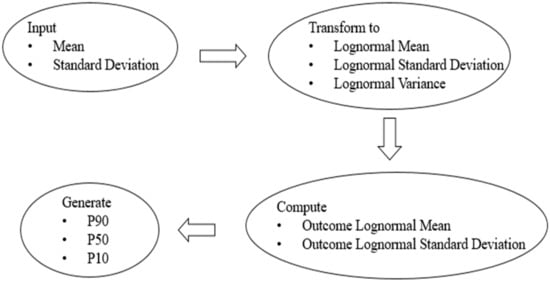
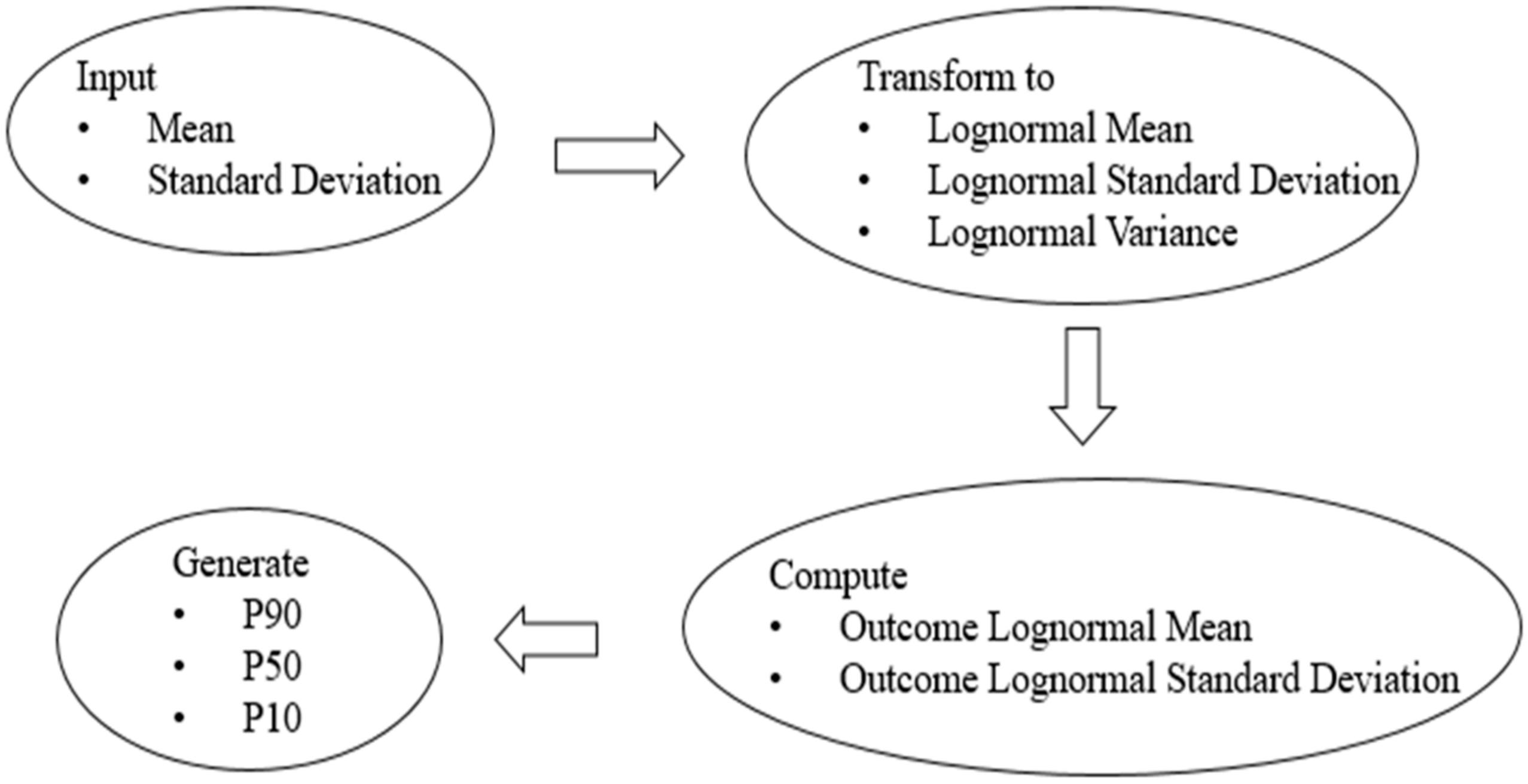
From the North Dakota Industrial Commission [25], core data were collected for the Beaver lodge field. Five wells from the Beaver lodge field were utilized to generate mean and standard deviation for parametric probabilistic assessment. The parametric approach uses mean () and standard deviation () from the reservoir variables and converts them to lognormal standard deviation () and lognormal mean (), Equations (2) and (4), respectively. The sum of the lognormal mean () and lognormal variance () equates to output lognormal mean () and output lognormal variance () as shown in Equation (5). The Probabilistic Distribution Function (PDF) equation for a random variable x is shown in Equation (9). The lognormal distribution, PDF shown in Equation (10), is usually asymmetric and the skewness is dependent on standard deviation. Also, from the National Institute of Standards and Technology [50], thermo-physical properties were collected for both and water. The thermo-physical properties of and water are incorporated into Darcy’s flow equation to determine the thermal flux. The thermal flux of and water, Equation (12), is then incorporated into Equation (11) to determine Producible geothermal resource.
2.1. Comparison of Reservoir Conditions for Energy Recovery
Red River Formation Case 1: Decreasing temperature and decreasing pressure, see Table 1 and Table 2.
Table 1.
Thermophysical Properties of water at reservoir conditions, Red River Formation. (Red River Formation Case 1).
Table 2.
Thermophysical Properties of at reservoir conditions, Red River Formation. (Red River Formation Case 1).
Red River Formation Case 2: Decreasing temperature and increasing pressure, see Table 3 and Table 4.
Table 3.
Thermo-physical Properties of water at reservoir conditions, Red River Formation. (Red River Formation Case 2).
Table 4.
Thermo-physical Properties of CO2 at reservoir conditions, Red River Formation. (Red River Formation Case 2).
Table 5.
Thermo-physical Properties of water at reservoir conditions, Deadwood Formation. (Deadwood Formation Case 1).
Table 6.
Thermo-physical Properties of at reservoir conditions, Deadwood Formation. (Deadwood Formation Case 1).
Table 7.
Thermo-physical Properties of water at reservoir conditions, Deadwood Formation. (Deadwood Formation Case 2).
Table 8.
Thermo-physical Properties of CO2 at reservoir conditions, Deadwood Formation. (Deadwood Formation Case 2).
2.2. Probabilistic Approach for Geothermal Studies
See Table 9 for Reservoir Variables for Geothermal Resource, Beaver Lodge field, and Figure 3 for Flowchart for Probabilistic Parametric Approach.
Table 9.
Reservoir Variables for Geothermal Resource, Beaver Lodge field.
Figure 3.
Flowchart for Probabilistic Parametric Approach.
3. Results and Analysis
3.1. Thermal Heat Flux Results (Red River Formation)
The reservoir pressure and temperature were varied within reasonable ranges of the Red River Formation. The reservoir pressure and temperature were varied inversely to depict different thermal and pressure regimes within the formation. For the Red River Formation, reservoir pressure was the main component with a direct proportion on the thermal flux. Higher reservoir pressures resulted in higher thermal flux regardless of the reservoir temperature. It was observed that at certain temperatures and pressures, water preserves more momentum and has better extraction rates because the high specific heat capacity of water outperforms the low kinematic viscosity of . For the Deadwood Formation, reservoir temperature was the main component with a direct proportion on the thermal flux. Lower reservoir temperature resulted in higher thermal flux regardless of the reservoir pressure. Although not very often, water has better mobilities and extraction efficiency than at specific reservoir conditions due high specific heat capacity. Within the concept of sequestration, higher thermal flux results in more fluid flow within the reservoir hence better storage. Also, when more is stored within the reservoir, it makes the concept of Plume Geothermal more feasible and economical especially with favorable reservoir temperatures such as the Red River Formation and Deadwood Formation.
Red River Formation Case 1: Decreasing Temperature and Decreasing Pressure, see Table 10.
Table 10.
Thermal Heat Flux of /water at reservoir conditions, Red River Formation. (Red River Formation Case 1).
Red River Formation Case 2: Decreasing Temperature and Increasing Pressure, see Table 11.
Table 11.
Thermal Heat Flux of /water at reservoir conditions, Red River Formation. (Red River Formation Case 2).
Deadwood Formation Case 1: Increasing Temperature and Increasing Pressure, see Table 12.
Table 12.
Thermal Heat Flux of /water at reservoir conditions, Deadwood Formation. (Deadwood Formation Case 1).
Deadwood Formation Case 2: Decreasing Temperature and Increasing Pressure, see Table 13.
Table 13.
Thermal Heat Flux of /water at reservoir conditions, Deadwood Formation. (Deadwood Formation Case 2).
3.2. Probabilistic Expectation Curve for Geothermal Resource
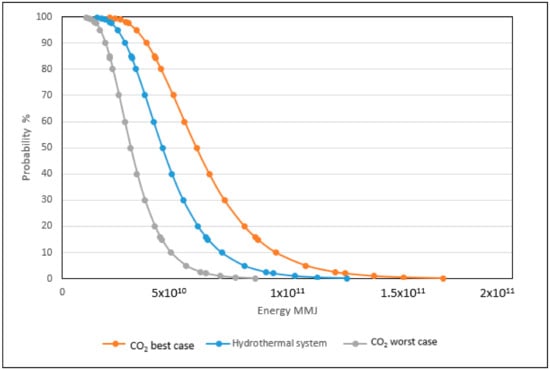
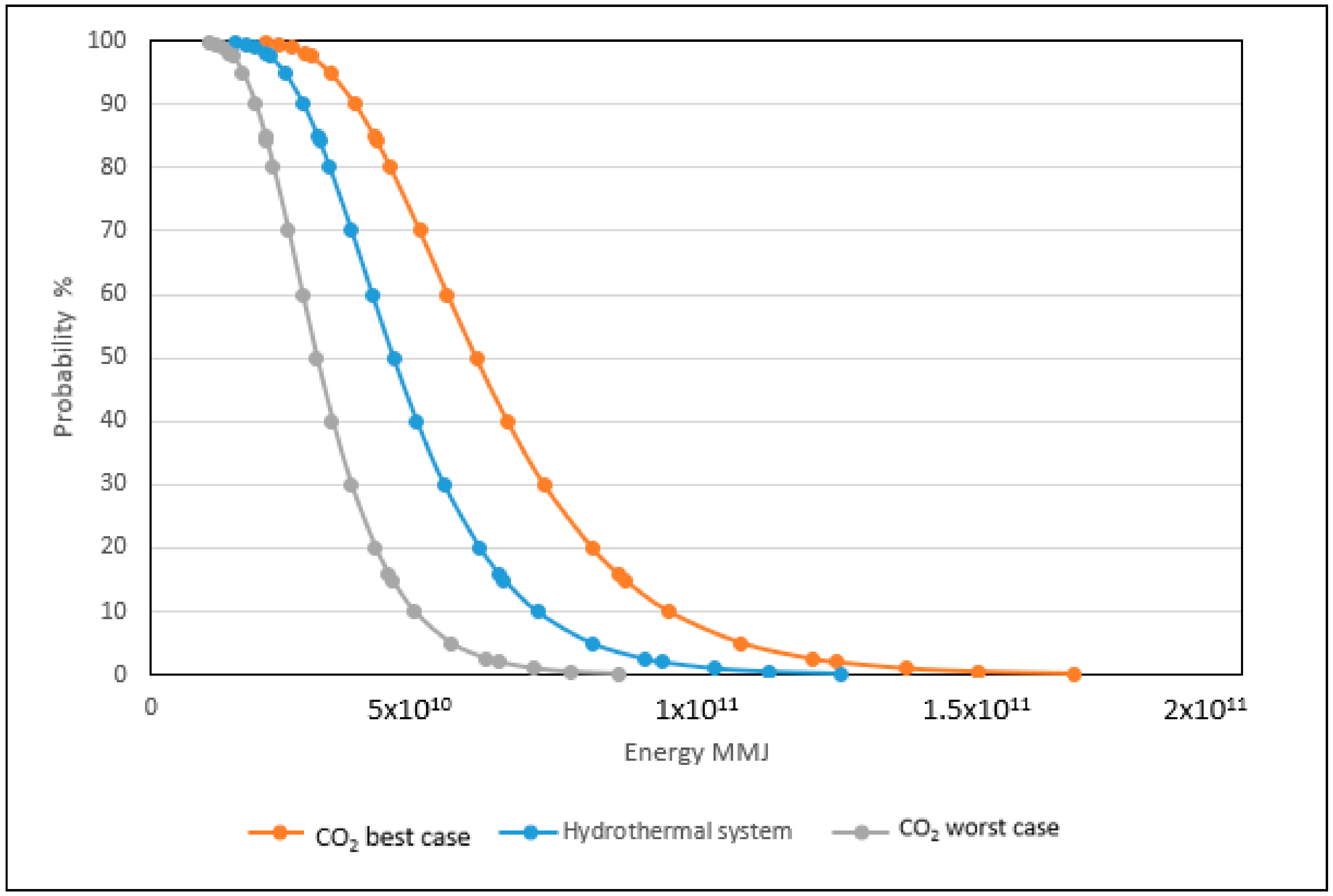
The Probabilistic Expectation Curve provides a graphical representation of expected probability distribution of thermal energy. It assumes input variables to be lognormally distributed which can be utilized to assess the feasibility of a project. From the expectation curve, the best case generated most energy output followed by the hydrothermal system, followed by the worst case. P90 has a 90% probability for the estimate. The P50 is usually the best estimate for parametric probabilistic approach, whereas the P10 is the most unlikely estimate in comparison to P90 and P50. From our studies on the Beaver Lodge field in the Red River Formation, the arithmetic means of the best case, the hydrothermal system, followed by the worst case were 6.360 J, 4.75 J, and 3.24 J, respectively. It was determined that there is a 34% increase in energy output and also a 32% decrease in energy output with depending on the reservoir conditions. This information informs decision-making processes related to geothermal resource development and utilization (See Figure 4 and Table 14).
Figure 4.
Probabilistic Expectation curve for Beaver Lodge field.
Table 14.
Summary of comparative statistical measure for geothermal resources, Beaver Lodge field.
4. Conclusions
Geothermal energy offers a clean and renewable energy in the Williston basin and the utilization of for sequestration and energy extraction benefits both environment and investors. From accurate well testing and downhole hole temperature sensors, precise reservoir conditions could determine the selection of working fluids for geothermal exploration. The probabilistic studies provide an alternative to provide energy solutions due to its data-driven approach, cross-validation nature, accessibility and cost effectiveness. The thermal and pressure regimes vary in reservoirs over time due to geological factors, fluid flow, heat flow, and even seasonal changes, hence understanding the variations within a reservoir is essential for reservoir engineering, production optimization, and resource assessment.
Our case study on Red River and Deadwood Formation shows a potential 34% increase and a 32% decrease in heat extraction based on varying reservoir conditions. Our investigations in the Beaver Lodge field within the Red River Formation yielded arithmetic mean values for best case resources, hydrothermal resources, and the worst case as 6.36 J, 4.75 J, and 3.24 J, respectively. The probabilistic study of plume geothermal and hydrothermal systems in the Williston basin provided major insights into the sensitivity of reservoir conditions for energy extraction systems. It does not account for other key reservoir parameters due to complexity, and numerical simulation is recommended for future work. Randolph et Saar [32] recommended plume geothermal for relatively low geothermal resources, and this study corroborated the results (especially Deadwood Formation). For the reservoir conditions in the Red River Formation, high-pressured regions are recommended for plume geothermal exploration In summary, our study contributes to the growing body of knowledge on plume geothermal and hydrothermal systems in the Williston basin and beyond.
Author Contributions
Conceptualization, E.G. and O.T.; Methodology, E.G. and E.A.O.; Validation, L.Y.N.; Formal analysis, E.G. and S.O.B.; Investigation, E.A.O. and M.C.B.; Writing – original draft, E.G.; Writing – review & editing, O.T., L.Y.N., S.O.B., E.A.O. and M.C.B.; Visualization, L.Y.N. and M.C.B.; Supervision, O.T. All authors have read and agreed to the published version of the manuscript.
Funding
This research received no external funding.
Institutional Review Board Statement
Not applicable.
Informed Consent Statement
Not applicable.
Data Availability Statement
The original contributions presented in the study are included in the article, further inquiries can be directed to the corresponding authors.
Conflicts of Interest
The authors declare no conflict of interest.
References
- Osezua, M.; Bade, S.O.; Gyimah, E.; Tomomewo, O.S. Tomomewo Impact of Climate Change on the Water Resources, Lake Powell, United States. Am. J. Water Resour. 2013, 11, 103–111. [Google Scholar] [CrossRef] [Scilit]
- Metz, B.; Intergovernmental Panel on Climate Change (Eds.) IPCC Special Report on Carbon Dioxide Capture and Storage, 1st ed.; Cambridge Univ. Press: Cambridge, UK, 2005. [Google Scholar]
- IEA. Fuel Share of CO2 Emissions from Fuel Combustion, 2019—Charts—Data & Statistics; IEA: Paris, France, 2019; Available online: https://www.iea.org/data-and-statistics/charts/fuel-share-of-co2-emissions-from-fuel-combustion-2019 (accessed on 1 June 2024).
- Azar, C.; Lindgren, K.; Larson, E.; Möllersten, K. Carbon Capture and Storage From Fossil Fuels and Biomass—Costs and Potential Role in Stabilizing the Atmosphere. Clim. Chang. 2006, 74, 47–79. [Google Scholar] [CrossRef] [Scilit]
- Adams, B.M.; Kuehn, T.H.; Bielicki, J.M.; Randolph, J.B.; Saar, M.O. On the importance of the thermosiphon effect in CPG (CO2 plume geothermal) power systems. Energy 2014, 69, 409–418. [Google Scholar] [CrossRef] [Scilit]
- Adams, B.M.; Kuehn, T.H.; Bielicki, J.M.; Randolph, J.B.; Saar, M.O. A comparison of electric power output of CO2 Plume Geothermal (CPG) and brine geothermal systems for varying reservoir conditions. Appl. Energy 2015, 140, 365–377. [Google Scholar] [CrossRef] [Scilit]
- Fleming, M.R.; Adams, B.M.; Kuehn, T.H.; Bielicki, J.M.; Saar, M.O. Increased Power Generation due to Exothermic Water Exsolution in CO2 Plume Geothermal (CPG) Power Plants. Geothermics 2020, 88, 101865. [Google Scholar] [CrossRef] [Scilit]
- Garapati, N.; Randolph, J.B.; Saar, M.O. Brine displacement by CO2, energy extraction rates, and lifespan of a CO2-limited CO2-Plume Geothermal (CPG) system with a horizontal production well. Geothermics 2015, 55, 182–194. [Google Scholar] [CrossRef] [Scilit]
- Crowell, A.; Gosnold, W. Integrating Geophysical Data in GIS for Geothermal Power Prospecting. Geosphere 2015, 11, 1651–1679. [Google Scholar] [CrossRef] [Scilit]
- Gyimah, E.; Tomomewo, O.; Vashaghian, S.; Uzuegbu, E.J.; Meenakshisundaram, A.; Ouadi, H.; Laalam, A.; Bakelli, O. Heat Flow Study and Reservoir Characterization Approach of the Red River Formation to Quantify Geothermal Potential. GRC Trans. 2023, 47, 3044–3057. [Google Scholar]
- Vashaghian, S.; Gyimah, E.; Tomomewo, O.; Saberi, F. Petro-physical Characterization of Lodgepole Formation as a Geothermal Reservoir. GRC Trans. 2023, 47, 3138–3152. [Google Scholar]
- Koray, A.M.; Gyimah, E.; Rahnema, H.; Tomemewo, O. An Assessment of the Red River Formation as A Geothermal Hotspot in North Dakota: A Machine Learning Approach. GRC Trans. 2013, 47, 1–4. [Google Scholar]
- Ouadi, H.; Laalam, A.; Tomomewo, O.; Alamooti, M.; Dehdouh, A.; Kareb, A.; Gyimah, E. Numerical Investigation of Fishbone Well Design Impact on Geothermal System Enhancement in North Dakota. GRC Trans. 2023, 47, 394–415. [Google Scholar]
- Porlles, J.W.; Tomomewo, O.S.; Afari, S.A.; Gyimah, E.; Laalam, A.; Bakelli, O. An Experimental Study of the Effect of Long-Term Time-Dependent Proppant Behavior Under HP-HT Reservoir Conditions. In Proceedings of the SPE Annual Technical Conference and Exhibition, San Antonio, TX, USA, 18 October 2023. [Google Scholar] [CrossRef] [Scilit]
- Gosnold, W.; Crowell, A.; Nordeng, S.; Mann, M. Co-Produced and Low-Temperature Geothermal Resources in the Williston Basin. GRC Trans. 2015, 39, 653–660. [Google Scholar]
- Gosnold, W.D.; Barse, K.; Bubach, B.; Crowell, A.; Crowell, J.; Jabbari, H.; Sarnoski, A.; Wang, D. Co-Produced Geothermal Resources and EGS in the Williston Basin. GRC Trans. 2013, 37, GRC1030649. [Google Scholar]
- Porro, C.; Esposito, A.; Augustine, C.; Roberts, B. An Estimate of the Geothermal Energy Resource in the Major Sedimentary Basins in the United States. Geotherm. Resour. Counc. Trans. 2012, 36, 1359–1369. [Google Scholar]
- Anderson, T.C. Geothermal Potential of Deep Sedimentary Basins in the United States; Society of Exploration Geophysicists: Tulsa, OK, USA, 2013; Volume 37. [Google Scholar]
- Ferguson, G.; Grasby, S.E. The geothermal potential of the basal clastics of Saskatchewan, Canada. Hydrogeol. J. 2014, 22, 143–150. [Google Scholar] [CrossRef] [Scilit]
- Ufondu, L. Assessment of the Potential Heat Stored in the Deep Aquifers of the Williston Basin for Geothermal Energy Production. 29 August 2017. Available online: https://www.semanticscholar.org/paper/ASSESSMENT-OF-THE-POTENTIAL-HEAT-STORED-IN-THE-DEEP-Ufondu/a0e8aea9a1e3176f73d7360b957485c22d06592c (accessed on 1 June 2024).
- Hartig, C.M. Porous media of the Red River Formation, Williston Basin, North Dakota: A possible Sedimentary Enhanced Geothermal System. Int. J. Earth Sci. 2018, 107, 103–112. [Google Scholar] [CrossRef] [Scilit]
- Sippel, M.A.; Luff, K.D.; Hendricks, M.L.; Eby, D.E. Reservoir Characterization of the Ordovician Red River Formation in Southwest Williston Basin Bowman County, ND and Harding County, SD (No. DOE/BC/14984-14); Luff Exploration Co.: Denver, CO, USA, 1998. [Google Scholar]
- Gyimah, E.; Tomomewo, O.; Gosnold, W.; Fadairo, A.; Kporxah, C.; Porlles, J.; Dehdouh, A. Probabilistic Assessment and Uncertainty Quantification of a Geothermal Resource, Red River Formation, North Dakota. In Proceedings of the 49th Workshop on Geothermal Reservoir Engineering, Stanford, CA, USA, 12–14 February 2024. [Google Scholar]
- Murphy, E.C.; Nordeng, S.H.; Juenker, B.J.; Hoganson, J.W. North Dakota Stratigraphic Column NDGS. 2009. Available online: https://www.dmr.nd.gov/ndgs/documents/Publication_List/pdf/Strat-column-NDGS-(2009).pdf (accessed on 1 June 2024).
- North Dakota Industrial Commission (Oil and Gas Division). Available online: https://www.dmr.nd.gov/oilgas/ (accessed on 1 June 2024).
- Brown, D.W. A Hot Dry Rock Geothermal Energy Concept Utilizing Supercritical CO2 Instead of Water. In Proceedings of the Twenty-Fifth Workshop on Geothermal Reservoir Engineering, Stanford, CA, USA, 24–26 January 2000. [Google Scholar]
- Atrens, A.D.; Gurgenci, H.; Rudolph, V. CO2 Thermosiphon for Competitive Geothermal Power Generation. Energy Fuels 2009, 23, 553–557. [Google Scholar] [CrossRef] [Scilit]
- Atrens, A.D.; Gurgenci, H.; Rudolph, V. Electricity generation using a carbon-dioxide thermosiphon. Geothermics 2010, 39, 161–169. [Google Scholar] [CrossRef] [Scilit]
- Randolph, J.; Adams, B.; Kuehn, T.; Saar, M. Wellbore heat transfer in CO2-based geothermal systems. Trans.—Geotherm. Resour. Counc. 2012, 36, 549–554. [Google Scholar]
- Pruess, K. Enhanced geothermal systems (EGS) using CO2 as working fluid—A novel approach for generating renewable energy with simultaneous sequestration of carbon. Geothermics 2006, 35, 351–367. [Google Scholar] [CrossRef] [Scilit]
- Pruess, K. Enhanced Geothermal Systems (EGS): Comparing Water and CO2 as Heat Transmission Fluids; Lawrence Berkeley National Lab. (LBNL): Berkeley, CA, USA, 2007.
- Randolph, J.B.; Saar, M.O. Combining geothermal energy capture with geologic carbon dioxide sequestration: Geothermal Energy with CO2 Sequestration. Geophys. Res. Lett. 2011, 38, L10401. [Google Scholar] [CrossRef] [Scilit]
- Randolph, J.B.; Saar, M.O. Coupling carbon dioxide sequestration with geothermal energy capture in naturally permeable, porous geologic formations: Implications for CO2 sequestration. Energy Procedia 2011, 4, 2206–2213. [Google Scholar] [CrossRef] [Scilit]
- Bielicki, J.M.; Peters, C.A.; Fitts, J.P.; Wilson, E.J. An examination of geologic carbon sequestration policies in the context of leakage potential. Int. J. Greenh. Gas Control 2015, 37, 61–75. [Google Scholar] [CrossRef] [Scilit]
- Bielicki, J.M.; Pollak, M.F.; Deng, H.; Wilson, E.J.; Fitts, J.P.; Peters, C.A. The Leakage Risk Monetization Model for Geologic CO2 Storage. Environ. Sci. Technol. 2016, 50, 4923–4931. [Google Scholar] [CrossRef] [Scilit] [PubMed]
- Bielicki, J.M.; Pollak, M.F.; Fitts, J.P.; Peters, C.A.; Wilson, E.J. Causes and financial consequences of geologic CO2 storage reservoir leakage and interference with other subsurface resources. Int. J. Greenh. Gas Control 2014, 20, 272–284. [Google Scholar] [CrossRef] [Scilit]
- Gibbins, J.; Chalmers, H. Carbon capture and storage. Energy Policy 2008, 36, 4317–4322. [Google Scholar] [CrossRef] [Scilit]
- Coleman, J.L.; Cahan, S.M. Preliminary Catalog of the Sedimentary Basins of the United States; Open-File Report; US Geological Survey: Reston, VA, USA, 2012.
- Runkel, A.C.; Miller, J.F.; McKay, R.M.; Palmer, A.R.; Taylor, J.F. High-resolution sequence stratigraphy of lower Paleozoic sheet sandstones in central North America: The role of special conditions of cratonic interiors in development of stratal architecture. Geol. Soc. Am. Bull. 2007, 119, 860–881. [Google Scholar] [CrossRef] [Scilit]
- Eccles, J.K.; Pratson, L. A “carbonshed” assessment of small- vs. Large-scale CCS deployment in the continental US. Appl. Energy 2014, 113, 352–361. [Google Scholar] [CrossRef] [Scilit]
- Procesi, M.; Cantucci, B.; Buttinelli, M.; Armezzani, G.; Quattrocchi, F.; Boschi, E. Strategic use of the underground in an energy mix plan: Synergies among CO2, CH4 geological storage and geothermal energy. Latium Region case study (Central Italy). Appl. Energy 2013, 110, 104–131. [Google Scholar] [CrossRef] [Scilit]
- Fleming, M.R.; Adams, B.M.; Ogland-Hand, J.D.; Bielicki, J.M.; Kuehn, T.H.; Saar, M.O. Flexible CO2-plume geothermal (CPG-F): Using geologically stored CO2 to provide dispatchable power and energy storage. Energy Convers. Manag. 2022, 253, 115082. [Google Scholar] [CrossRef] [Scilit]
- Ogland-Hand, J.D.; Bielicki, J.M.; Wang, Y.; Adams, B.M.; Buscheck, T.A.; Saar, M.O. The value of bulk energy storage for reducing CO2 emissions and water requirements from regional electricity systems. Energy Convers. Manag. 2019, 181, 674–685. [Google Scholar] [CrossRef] [Scilit]
- Ciriaco, A.E.; Zarrouk, S.J.; Zakeri, G. Geothermal resource and reserve assessment methodology: Overview, analysis and future directions. Renew. Sustain. Energy Rev. 2020, 119, 109515. [Google Scholar] [CrossRef] [Scilit]
- Ciriaco, A.E.; Zarrouk, S.J.; Zakeri, G.; Mannington, W.I. Refined experimental design and response surface methodology workflow using proxy numerical models for probabilistic geothermal resource assessment. Geothermics 2020, 88, 101911. [Google Scholar] [CrossRef] [Scilit]
- Driesner, T. Numerical Simulation of Multiphase Fluid Flow in Hydrothermal Systems. Rev. Mineral. Geochem. 2007, 65, 187–212. [Google Scholar] [CrossRef] [Scilit]
- Guodong, C.; Shaoran, R.; Zhenhua, R.; Justin, E.; Liang, Z.; Hongsheng, W. The influence of complicated fluid-rock interactions on the geothermal exploitation in the CO2 plume geothermal system. Appl. Energ. 2018, 227, 49–63. [Google Scholar] [CrossRef] [Scilit]
- Wang, M.; Yang, F.; Zhang, Y.; Zhang, D.; Feng, J.; Luo, J.; Zeng, Y. Probabilistic geothermal resource assessment in Maichen Sag, south China. Front. Earth Sci. 2022, 10, 972125. [Google Scholar] [CrossRef] [Scilit]
- Turan, A.; Artun, E.; Saner, S. Probabilistic assessment of geothermal resources and their development in Dikili-İzmir region. SN Appl. Sci. 2021, 3, 634. [Google Scholar] [CrossRef] [Scilit]
- Data Source. Available online: https://webbook.nist.gov/chemistry/fluid/ (accessed on 1 June 2024).

Disclaimer/Publisher’s Note: The statements, opinions and data contained in all publications are solely those of the individual author(s) and contributor(s) and not of MDPI and/or the editor(s). MDPI and/or the editor(s) disclaim responsibility for any injury to people or property resulting from any ideas, methods, instructions or products referred to in the content. |
© 2024 by the authors. Licensee MDPI, Basel, Switzerland. This article is an open access article distributed under the terms and conditions of the Creative Commons Attribution (CC BY) license (https://creativecommons.org/licenses/by/4.0/).