


Abstract
This systematic review synthesizes 37 peer-reviewed studies (2008–2025) addressing early-stage building-envelope design decisions and their influence on energy performance. A structured keyword search of Scopus, Web of Science and Google Scholar followed a three-stage identification–screening–inclusion procedure (84 records identified, 65 undergoing full-text review, 37 retained), with only English-language, peer-reviewed journal articles eligible; no conference papers are represented among the included studies. A review-specific ten-criterion appraisal framework and a standardized extraction taxonomy were applied to support comparative synthesis. Office buildings (43% of studies) and single-family residential dwellings (22%) were the most frequently studied typologies, while schools, multi-family residential, and industrial buildings remained comparatively underexplored. Window/glazing parameters were the most frequently investigated envelope component (84% of studies), followed by wall properties (59%) and shading geometry (49%); whether this distribution reflects ease of parametric representation rather than thermal significance could not be tested with the available evidence. Methodologically, multi-objective, Pareto-based optimization characterized the largest share of studies (32%), with a marked post-2019 shift toward surrogate-assisted and machine-learning-augmented workflows. This methodological advancement was not matched by empirical grounding: only 16% of studies validated simulation outputs against field-measured building performance, while the majority relied on internal or simulation-to-simulation validation alone. Reported energy-performance improvements varied by more than an order of magnitude across inconsistent baselines and metrics, precluding quantitative pooling; the synthesis is accordingly qualitative and comparative. Trade-off analysis remained concentrated on an energy–daylight–thermal-comfort triad, with cost, acoustic performance, and indoor air quality addressed only incidentally, and cross-tabulating climate zone against building type revealed substantial coverage gaps, particularly for cold-climate residential buildings and schools outside hot-arid contexts. These findings identify empirical validation, standardized reporting conventions, and extension of the evidence base to under-represented building types, climates, and performance objectives as important priorities for early-stage envelope research, alongside continued methodological development. The review was conducted and reported in accordance with PRISMA 2020; the search was last run on 10 June 2026.
1. Introduction
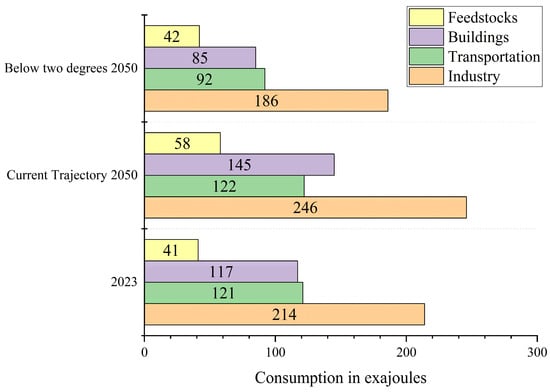
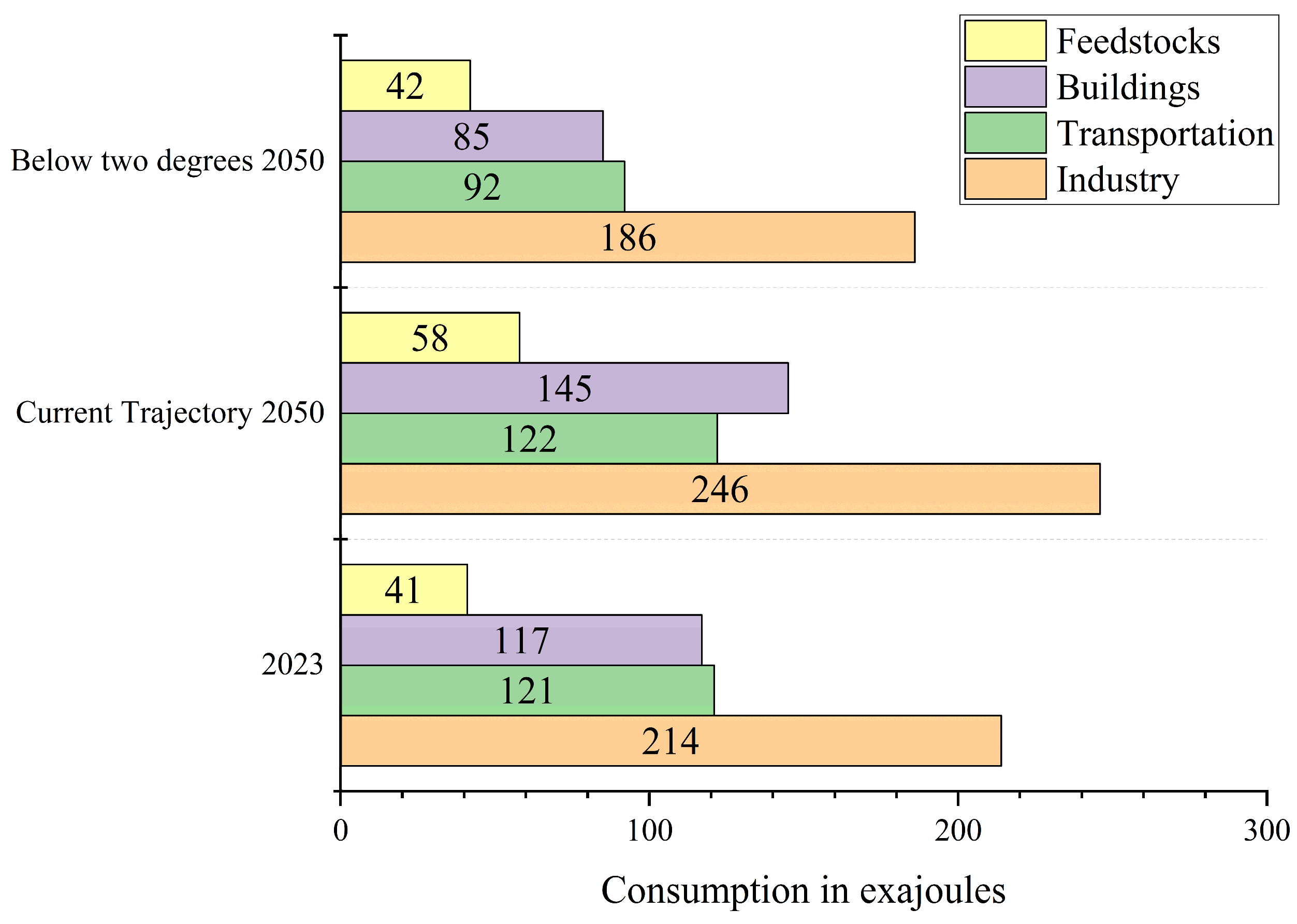
Buildings are among the largest energy-consuming sectors globally, and improving their performance is central to energy-efficiency and decarbonisation agendas. Recent international assessments consistently show that building operations account for around 30% of global final energy consumption and about 26% of global energy-related emissions, underlining the importance of reducing operational demand through design and technology choices [1]. In parallel, the Intergovernmental Panel on Climate Change (IPCC) reports that global final energy demand from buildings reached 128.8 exajoules (EJ) in 2019, equivalent to ~31% of global final energy demand, reinforcing the scale of the challenge and the sector’s mitigation potential [2]. To contextualize the scale of the challenge, Figure 1 illustrates global final energy consumption by sector—industry, transportation, buildings, and feedstocks—comparing 2023 levels against two projected pathways for 2050: a “current trajectory” scenario reflecting existing policy commitments and market trends, and a scenario aligned with limiting global warming to below two degrees Celsius. Across both projections, industry remains the single largest consuming sector, underscoring the scale of decarbonization still required in industrial processes and heavy manufacturing. Buildings, however, exhibit the most volatile trajectory of the four sectors, rising from 117 EJ to 145 EJ under the current-trajectory scenario but falling to 85 EJ under the below-two-degrees scenario—a divergence that positions the building sector, and by extension the building envelope, as one of the areas with the greatest latent potential for emissions abatement [3].
Figure 1.
Final energy demand worldwide in 2023, with a forecast for 2050, by sector and scenario (in exajoules).
The building envelope is a highly important lever in this sector-wide context, as it moderates the transfer of heat and solar gains, daylight admission, and, thus, impacts heating and cooling demand, as well as the quality of the indoor environment. Nevertheless, there are numerous envelope decisions with long-term performance implications that are undertaken in the early design stage where freedom of design is high, but the input information is not very reliable. This condition of the concept phase can be characterized as high leverage-low information: the choices that can have the most significant impact on performance are made before the construction build-ups, systems, controls, and operational patterns are completely established.
The early stage is repeatedly introduced in the literature as the place where designers stand the best chance of coming up with high performance, so long as pertinent performance data can be produced and understood promptly to inform decisions. Indicatively, envelope-based optimisation research expressly points out that most critical design choices take place early and that this stage needs a procedure that can accommodate various, frequently competing goals with little confidence in the input [4]. Practically, it implies that early-stage research can typically make use of simplified geometric archetypes and fewer parameters to enable the performance assessment to be viable when design intent remains under development.
Several recent reviews have examined adjacent aspects of this research space. Li, Shari, and Ab Kadir [5] conducted a large-scale bibliometric analysis of multi-objective optimization for building performance, mapping collaborative networks and research trends across 1604 documents (2003–2023) using CiteSpace, VOSviewer, and Bibliometrix, but without a structured per-study appraisal or systematic assessment of validation practice. Shan et al. [6] systematically reviewed AI-driven multi-objective optimization and decision-making frameworks for urban building energy retrofit, focusing on machine-learning surrogate models, data-driven clustering, and explainable AI for retrofit prioritization at the urban scale, rather than on early-stage envelope design decisions for individual buildings. Huang et al. [7] conducted a PRISMA-based review of 153 studies on performance-driven generative design, coding the literature along five dimensions—including design objects/scales, algorithms/tools, and data/validation—and explicitly noting limited cross-case or field validation as a persistent weakness in this literature; however, this review addresses generative-design workflows broadly rather than applying a structured per-study appraisal, and does not cross-tabulate climate zone against building typology to identify specific evidentiary gaps. Ekanayaka Gunasinghalge, Alazab, and Talukder [8] conducted a systematic review and meta-analysis of AI applications for energy optimization in smart buildings, quantitatively pooling reported energy-saving effect sizes across 126 studies, but with a focus on operational-phase building energy management rather than early-stage design decisions. Collectively, these reviews are each organized around a specific methodological or technological lens—bibliometric trend-mapping, AI-driven retrofit optimization, generative-design workflows, or AI for building operation—rather than around the early-stage envelope-design evidence base specifically, and none applies a structured per-study appraisal framework together with a quantified validation-practice profile and an explicit climate-zone-by-typology gap analysis. The present review addresses this gap by combining a Preferred Reporting Items for Systematic Reviews and Meta-Analyses (PRISMA) 2020-compliant synthesis of early-stage envelope research across all major methodological paradigms with a transparent, review-specific ten-criterion appraisal framework applied to every included study, a quantified validation-practice breakdown (Section 3.6), and a cross-tabulation of climate zone against building typology (Section 3.8) identifying specific evidentiary gaps in the underlying literature.
This review synthesizes that literature systematically, applying a structured identification–screening–inclusion procedure, conducted and reported in accordance with PRISMA 2020, together with an explicit review-specific appraisal framework to 37 peer-reviewed studies published between 2008 and 2025. Specifically, it examines which envelope components and building typologies have received research attention and which remain under-represented; which methodological paradigms characterize the field and how these have evolved over time; the extent to which reported findings are validated against measured building performance; and the range of performance objectives jointly considered beyond energy alone. By synthesizing these dimensions comparatively, the review aims to provide researchers and practitioners with a precise account of where the current evidence base is strong, where it is thin, and where caution is warranted when applying published findings to new design contexts.
2. Methodology
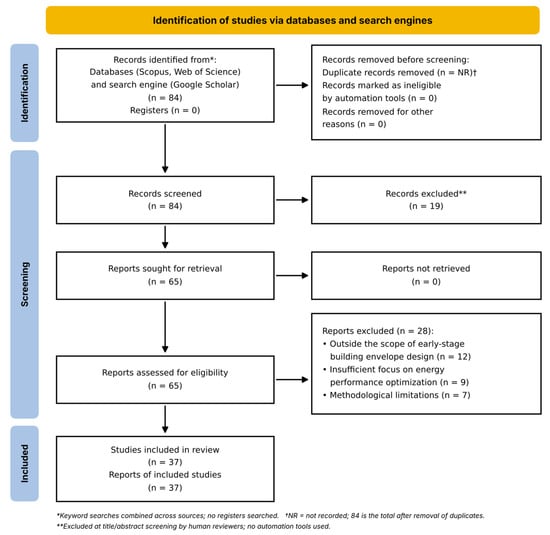
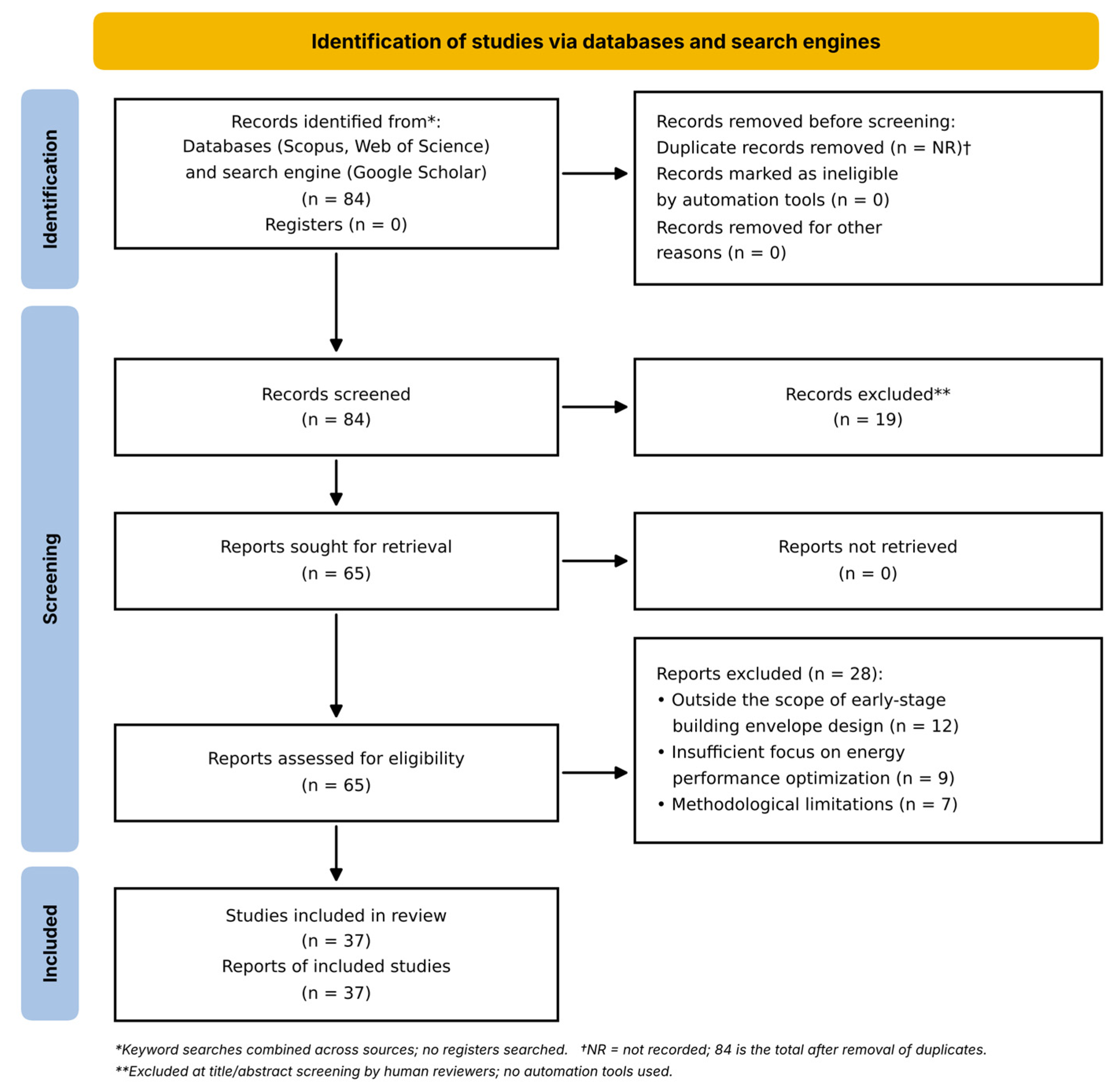
A scientific investigation can be conducted solely through a systematic literature review. In such studies, a literature review goes beyond merely reporting relevant sources; rather, it synthesizes the findings of prior studies and integrates key indicators associated with the research domain to establish an overarching analytical framework that supports informed decision-making on the topic under investigation. In this study, a three-stage research framework, adapted from the approach proposed by Hong and Chan [9] is employed to analyse previous research on early-stage building envelope design and energy-related performance assessment published between 2008 and 2025, as illustrated in Figure 2. The proposed framework consists of three sequential stages: (i) identification of relevant literature sources through a structured database search, (ii) screening and selection of target articles based on predefined inclusion and exclusion criteria, and (iii) systematic review and qualitative analysis of the selected studies. This systematic review was conducted and reported in accordance with the PRISMA 2020 guidelines [10]. The completed PRISMA 2020 checklist, indicating where each item is reported, is provided in the Supplementary Materials (Table S3), and the PRISMA 2020 flow diagram of the identification, screening and inclusion process is shown in Figure 2.
Figure 2.
PRISMA 2020 flow diagram of the identification, screening and inclusion of studies, prepared using the PRISMA 2020 template of Page et al. [10].
2.1. Literature Search Strategy
To achieve the objectives of this study, a systematic literature review approach was adopted to identify reputable academic journals and relevant peer-reviewed studies addressing early-stage building envelope design and building energy performance. The bibliographic search was conducted in Scopus, Web of Science and Google Scholar, which were combined because their coverage of engineering, architecture and energy journals differs [11].
The search covered peer-reviewed journal articles published between 2008 and 2025 and was last run on 10 June 2026. Combinations of the following keywords were applied within the title, abstract and keyword fields: “early-stage design”, “conceptual design”, “building envelope”, “façade design”, “energy performance”, “thermal comfort”, “daylighting”, “multi-objective optimization”, “decision support”, “BIM-based energy simulation”, “machine learning”, “data-driven models”, “surrogate models” and “response surface methodology”. Results were limited to English-language peer-reviewed journal articles in engineering, energy, environmental science and architecture; conference papers were excluded. After removal of duplicates, the search identified 84 records.
The search terms and the screening were structured around three thematic groups: (1) early-stage building envelope design and energy performance optimization; (2) decision-support frameworks and design workflows for early design stages, including BIM-based energy simulation; and (3) data-driven, surrogate and machine-learning-based approaches supporting early-stage design decisions. Titles and abstracts were first screened for relevance to early-stage envelope design and performance-oriented decision support, after which 65 articles were retained for full-text review. Based on predefined inclusion and exclusion criteria, a final set of 37 studies was selected for qualitative synthesis and in-depth analysis. Title and abstract screening and full-text review were conducted independently by four reviewers (three MSc-level and one PhD-level researcher). Disagreements regarding study inclusion were resolved through discussion among the reviewers, with the PhD-level researcher serving as adjudicator in cases where consensus could not be reached. Because the search terms centred on optimization, decision support and data-driven methods, the corpus should be understood as representing optimization-framed early-stage envelope research; the implications of this restriction are discussed in Section 5.
Eligibility Criteria
Eligible studies were peer-reviewed English-language journal articles (2008–2025) that addressed early-stage (conceptual or schematic) envelope design or decision support, treated at least one envelope component (e.g., glazing, walls, roof, shading, form or orientation) as an explicit design variable, and quantitatively evaluated energy performance. Full-text reports were excluded, with one primary reason each, if they fell outside early-stage envelope design (n = 12), lacked sufficient energy focus (n = 9), or reported too little to extract Section 2.4 data items (n = 7); appraisal scores (Section 2.2) were not used for exclusion. Duplicates were removed before screening, no automation tools were used, and all 65 reports sought were retrieved (Figure 2).
An examination of the publication outlets indicates that the selected studies are distributed across a diverse range of peer-reviewed journals, reflecting the interdisciplinary nature of early-stage building envelope design and energy performance research. While no restriction was imposed on specific journals, a subset of well-established journals in the fields of building science, energy and buildings, and sustainable built environments emerged as recurrent publication venues. The distribution of the selected articles across these journals is presented in Table 1.
Table 1.
Distribution of reports assessed at full text (n = 65) and included studies (n = 37) by journal.
2.2. Quality Appraisal
A review-specific structured appraisal framework comprising ten criteria was developed for this review, adapted to the reporting conventions of simulation- and optimization-based envelope research. The criteria addressed: (1) clarity of the research question; (2) adequacy of building-model description; (3) specification of climate and weather data; (4) identification and, where applicable, validation of the simulation tool; (5) definition of design variables and their tested ranges; (6) definition of performance metrics; (7) clarity of the analytical or optimization method; (8) transparency of underlying assumptions (occupancy, schedules, controls); (9) presence and type of result validation; and (10) interpretive rigor of the reported results. Each criterion was scored 0 (not addressed), 1 (partially addressed), or 2 (fully addressed), yielding a composite score out of 20. The scores reported in Supplementary Table S1 are consensus scores, established through structured discussion among the four reviewers after independent scoring. Equal weighting was adopted across all ten criteria for simplicity and transparency, rather than to imply that each criterion carries equivalent evidentiary weight; criteria such as validation against measured data clearly have greater implications for scientific reliability than criteria such as research-question clarity. For this reason, the composite score is reported descriptively (Supplementary Table S1) as a summary of reporting and validation practice, not as an established measure of study quality, and is not used in this review to rank or compare individual studies; instead, as noted below, specific criteria found to meaningfully differentiate the sample are examined individually in the Results. Given the coarse, binary-leaning nature of several criteria and the fact that all included studies had already passed peer review, criteria capturing baseline reporting completeness (1, 2, 5–7, 10) exhibited limited variance across the sample; the criteria found to meaningfully differentiate studies—validation type (9), assumption transparency (8) and climate-data specificity (3)—are therefore emphasized in the Results. Full per-study scores are provided in Supplementary Table S1.
2.3. Thematic Coding of Envelope Components
Studies were classified according to the envelope component(s) treated as explicit design variables, following the taxonomy summarized in Section 3.4. A study was assigned to a given component category where that component’s parameters (e.g., window-to-wall ratio, shading depth, wall U-value) were varied within the study’s simulation, parametric, or optimization setup, rather than held fixed as a background input. Studies addressing multiple components as explicit variables were assigned to multiple codes.
2.4. Data Extraction and Synthesis Methods
Data were extracted by the review team using a standardized spreadsheet form covering bibliographic, contextual (climate zone, building type, scale), design (envelope variables, Section 2.3), methodological (tools, analytical or optimization method), performance (objectives, metrics, baselines and outcomes) and validation information (Supplementary Table S1); unreported items were recorded as “not reported”, without imputation or contacting study authors.
Given the diversity of metrics and baselines, a qualitative comparative synthesis was adopted: studies were grouped by envelope component, methodological paradigm, simulation engine, validation category and performance objective, and climate zone was cross-tabulated against building type to map coverage gaps (Section 3.8). Savings are reported relative to each study’s own baseline (Section 3.9), together with its validation category (Section 3.6), so that field-validated findings can be distinguished from simulation-only results. Coverage was strengthened by searching three complementary databases (Section 2.1), and the empirical grounding of the evidence was characterized through the ten-criterion appraisal (Section 2.2) and validation categories, in place of sensitivity, reporting-bias and GRADE (Grading of Recommendations, Assessment, Development and Evaluation) assessments, which apply to pooled effect estimates.
In parallel with the PRISMA-based review, a Scopus-only bibliometric analysis was conducted as methodological triangulation [12] (TITLE-ABS-KEY: “building envelope” AND “energy performance” AND “optimization”; English-language articles; indexed keyword “Optimization”; Engineering, Energy and Environmental Science; 2008–2025). The 84 retrieved records were analysed in R 4.6.1 using Bibliometrix5.4.1 [13].
3. Results
3.1. Publication Outlets and Temporal Trends
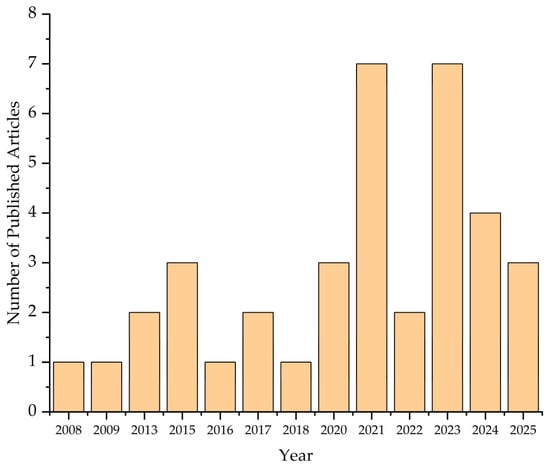
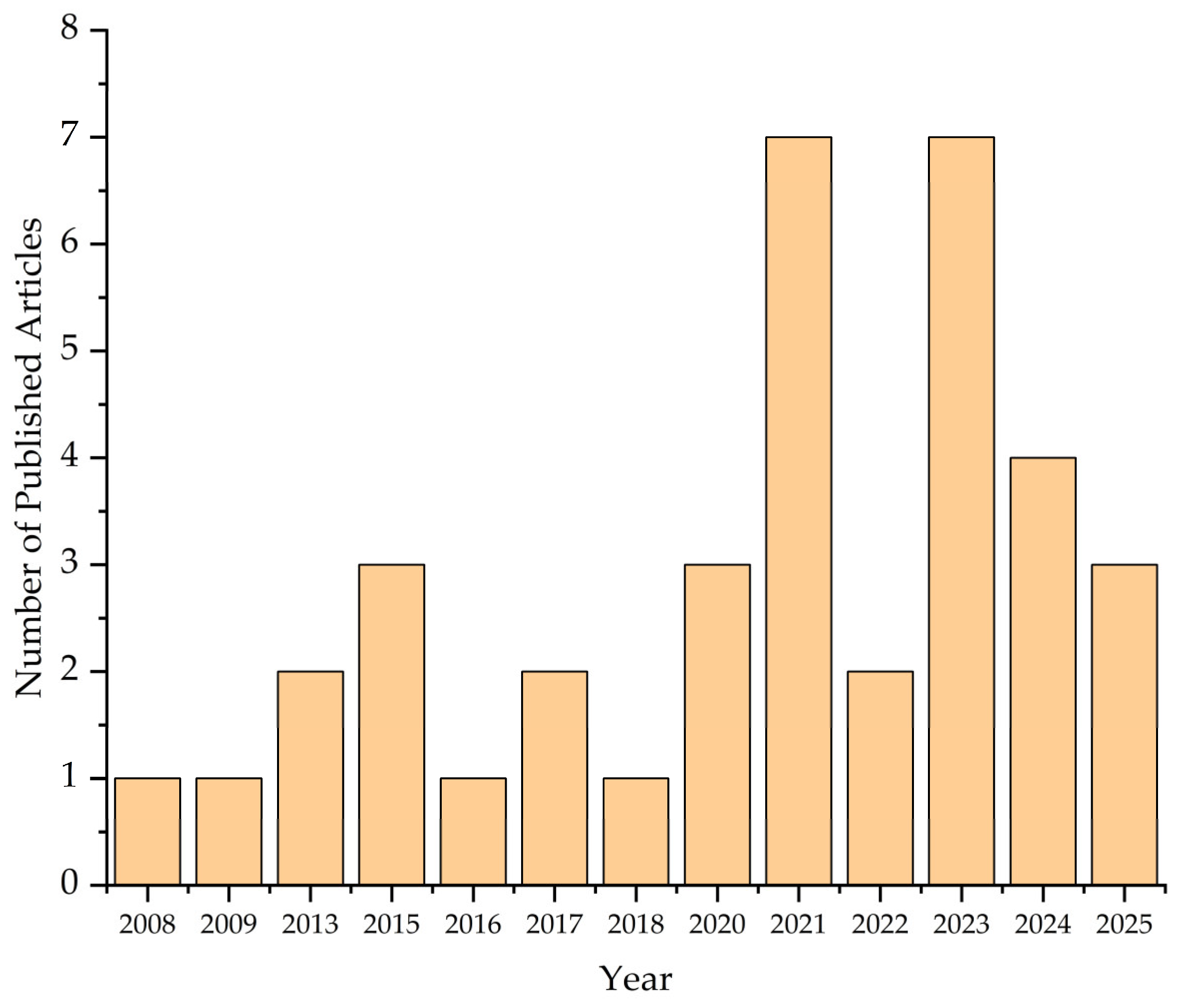
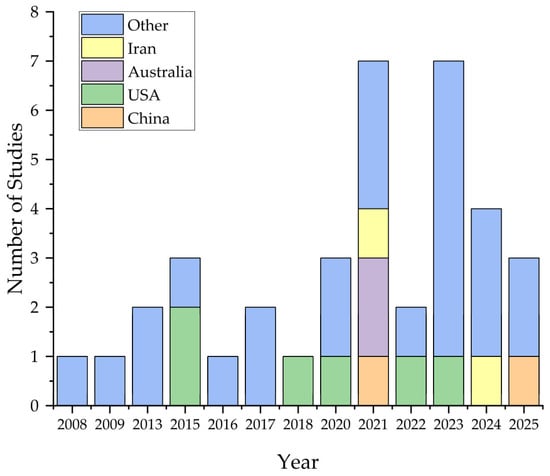
The selected articles were systematically reviewed in terms of their content. Key characteristics extracted from each study included the authors’ countries, the countries that have shown focused research activity in this field, the main findings of the studies, the year of publication, and the adopted research methodologies. The annual distribution of the 37 included articles, published between 2008 and 2025, is illustrated in Figure 3. Of the 84 records identified through the database search, 65 underwent full-text review and 37 were retained for in-depth qualitative analysis after application of the predefined inclusion and exclusion criteria. Publication activity was limited and sporadic up to 2018 (11 studies across seven publication years), whereas 2020–2025 accounts for 26 of the 37 studies (70%). The highest annual counts occurred in 2021 and 2023 (seven studies each), indicating a concentration of scholarly attention in the early 2020s rather than a steady year-on-year increase.
Figure 3.
Annual distribution of selected journal articles.
Figure 3 shows only the years in which included articles were published.
Author-country contribution scores were calculated using the weighting method of Howard et al. [14], which distributes a score of 1 per article among co-authors according to author order (formulation and scoring matrix in the Supplementary Material, Table S2). Countries with scores greater than 1 are listed in Table 2.
Table 2.
Distribution of author contribution scores by country (scores > 1).
The USA obtained the highest contribution score, followed by Portugal, the UK, Australia and Bangladesh. Given the small size of the corpus, these scores describe the authorship of the included studies only; they are not interpreted as indicators of national research capacity and are not used further in the synthesis.
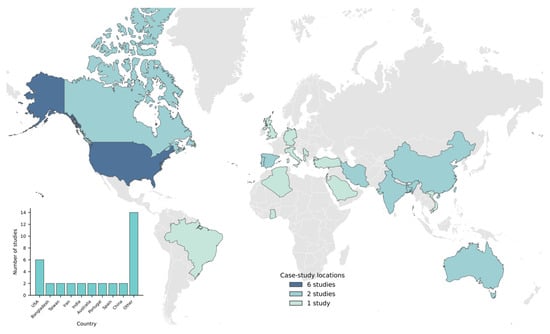
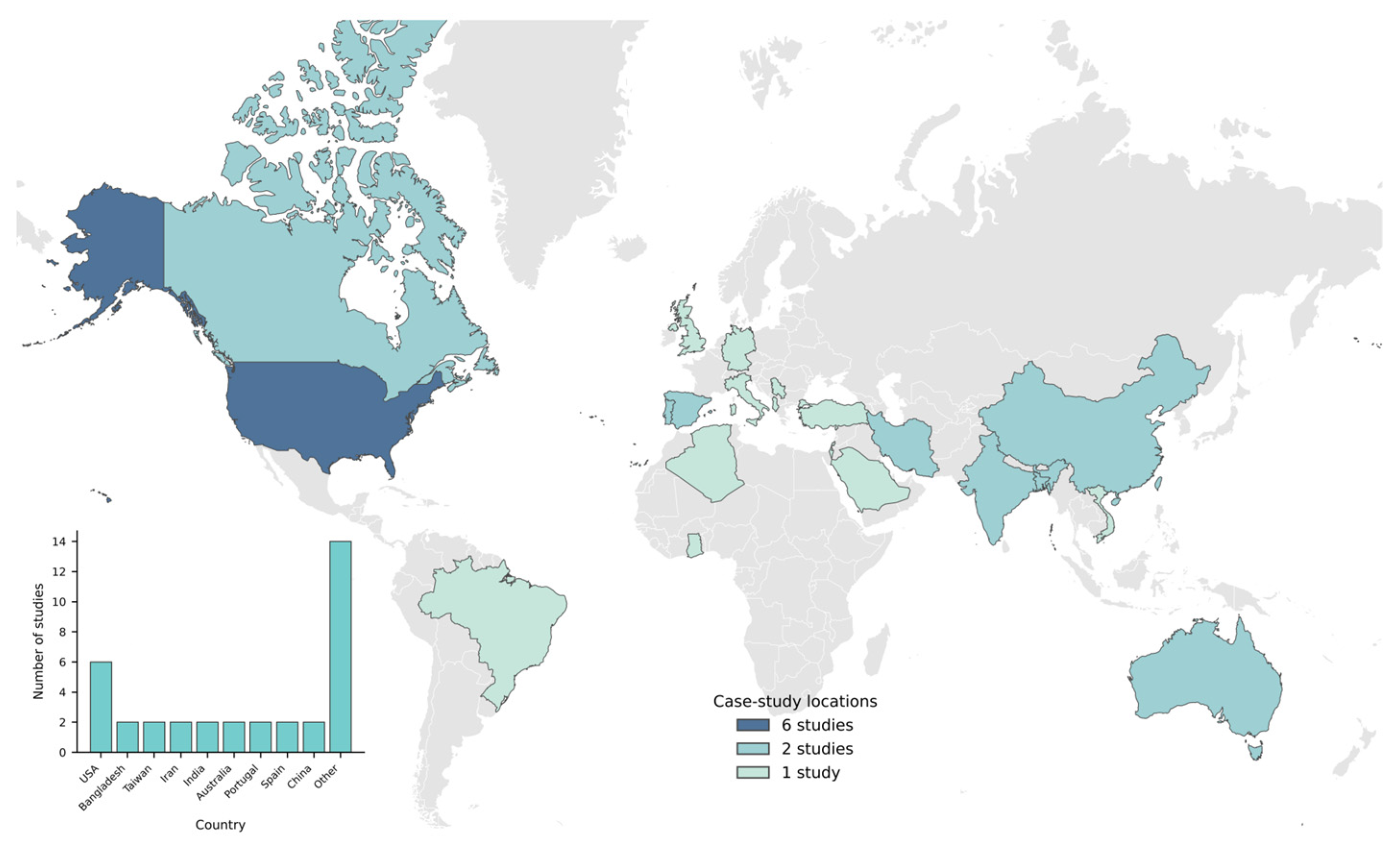
The countries in which the case studies were located are shown in Figure 4. The United States hosts the largest number of case studies (six), followed by Bangladesh, Taiwan, Iran, India, Australia, Portugal, Spain, and China with two each. Whether this geographic spread translates into a broad evidence base is examined jointly with climate and building type in Section 3.8.
Figure 4.
Geographical Distribution of Case-Study Locations.
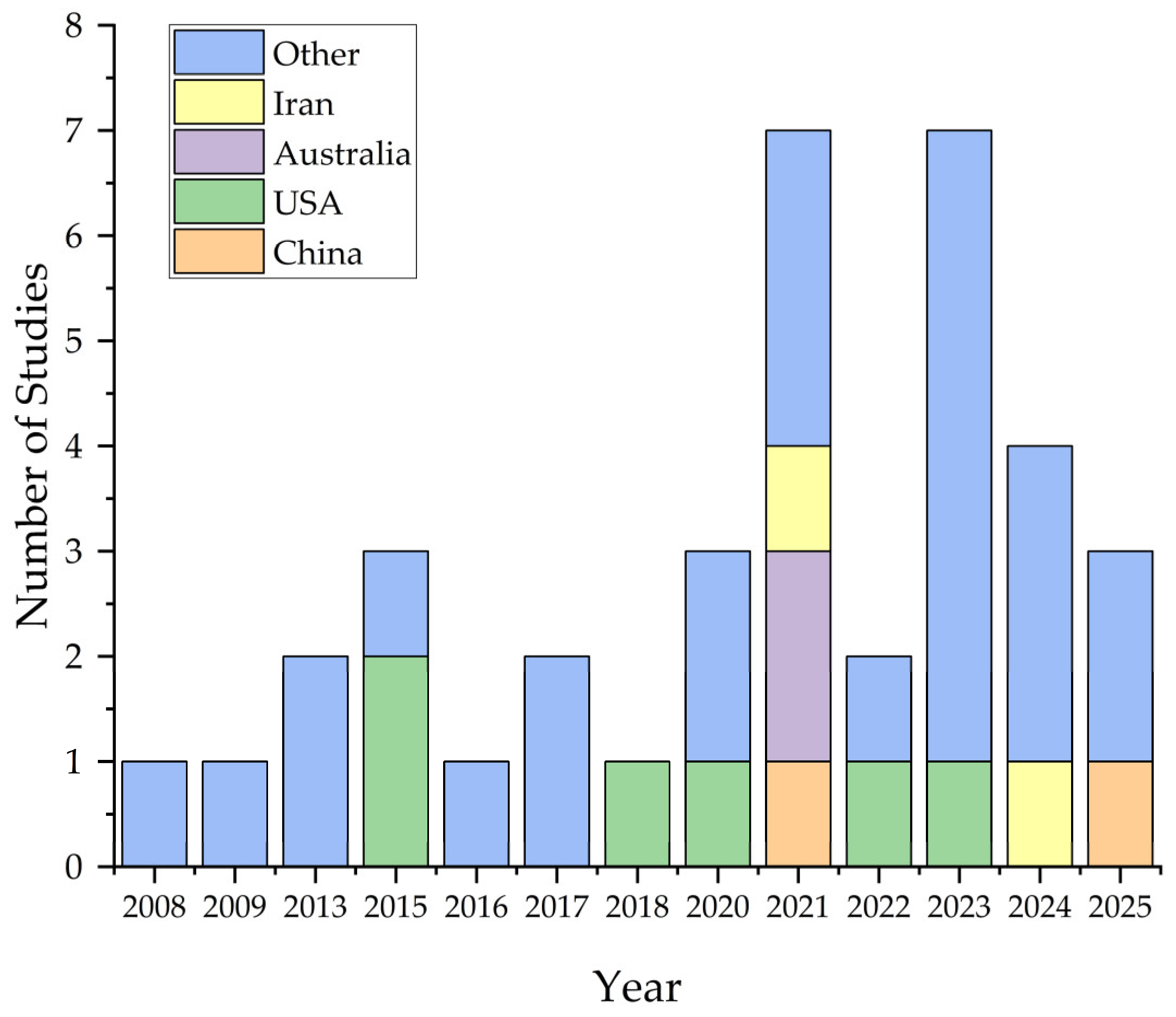
Figure 5 shows the case-study countries by year of publication. Consistent with Figure 3, annual output is highest in 2021 and 2023 (seven studies each), with the 2021 studies being the most geographically dispersed.
Figure 5.
Temporal distribution of the selected studies by case-study country (2008–2025).
3.2. Quality Appraisal of Included Studies
Rather than reducing the appraisal to a single aggregate score, it is more informative to distinguish between reporting completeness and methodological rigor. Six of the ten appraisal criteria (clarity of the research question, model description, definition of variables and ranges, specification of performance metrics, methodological transparency, and rigor of interpretation) were fully satisfied by more than 90% of the included studies, and identification of the simulation tool by 89%. Given that all studies had already undergone peer review, this high level of compliance is not unexpected; accordingly, these criteria provided limited discriminatory value and are not discussed further.
More meaningful variation was observed across three specific dimensions: the level of detail used in reporting climate and weather data, the transparency of modelling assumptions, and, most notably, the form of validation adopted. Among these, validation emerged as the clearest indicator of methodological robustness and is therefore examined in greater depth in Section 3.6. In particular, this criterion distinguishes studies with stronger empirical grounding (e.g., refs. [15,16,17]) from those whose conclusions rely solely on internally consistent, yet empirically unverified, simulation outputs (e.g., refs. [18,19]).
3.3. Characteristics of the Selected Studies
The 37 reviewed studies are synthesized in Table 3 cross-referencing climate zones, building typologies, analytical scales, envelope components, and primary findings. Synthesizing these dimensions reveals two critical structural imbalances in the current evidence base.
First, the literature exhibits a pronounced typological skew. Office buildings and single-family homes dominate the sample (e.g., refs. [20,21,22]), collectively serving as the default case-study typology against which most optimization frameworks in this literature are developed and tested. Conversely, building typologies characterized by complex, non-linear thermal mass dynamics, distinct internal heat gains, and non-standard occupancy schedules such as educational facilities [23,24], multi-family residential complexes [15,25], and industrial structures [18] remain noticeably underrepresented. While this pattern could partly reflect the search strategy, a more plausible contributing hypothesis—though not directly tested in this review—is the greater availability of standardized occupancy, schedule, and internal-load data for office and single-family typologies, inputs that are comparatively harder to specify with confidence for buildings with more idiosyncratic operational profiles. Consequently, current design guidelines and optimization pathways cannot be blindly generalized across the built environment without accounting for typology-specific operational boundary conditions.
Second, a significant divergence exists regarding analytical scale and causal resolution. Whole-building simulation frameworks represent the dominant paradigm (e.g., refs. [16,19]). While whole-building models capture holistic energy interactions, they often obfuscate the isolated performance impact of individual envelope variables. Conversely, component-level studies [26,27] offer high mechanistic clarity and direct causal attribution between envelope parameters and thermal responses, yet remain a minority in the literature. Recent machine-learning-driven studies [25,28,29] attempt to bridge this gap by scaling parametric evaluations to stock-level datasets. However, this methodological trajectory underscores a fundamental tension across the field: a constant trade-off between representational realism, computational tractability, and causal interpretability, a theme examined in detail in Section 3.5 and Section 3.6.
Table 3.
Synthesis of the studies.
3.4. Key Envelope Components
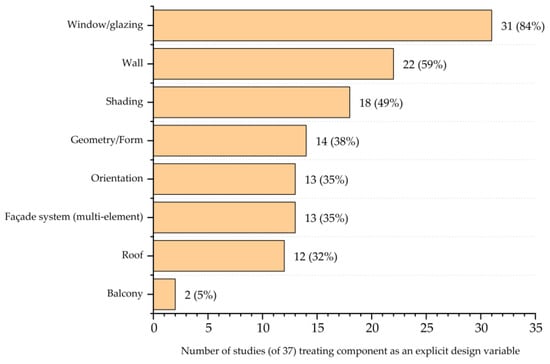
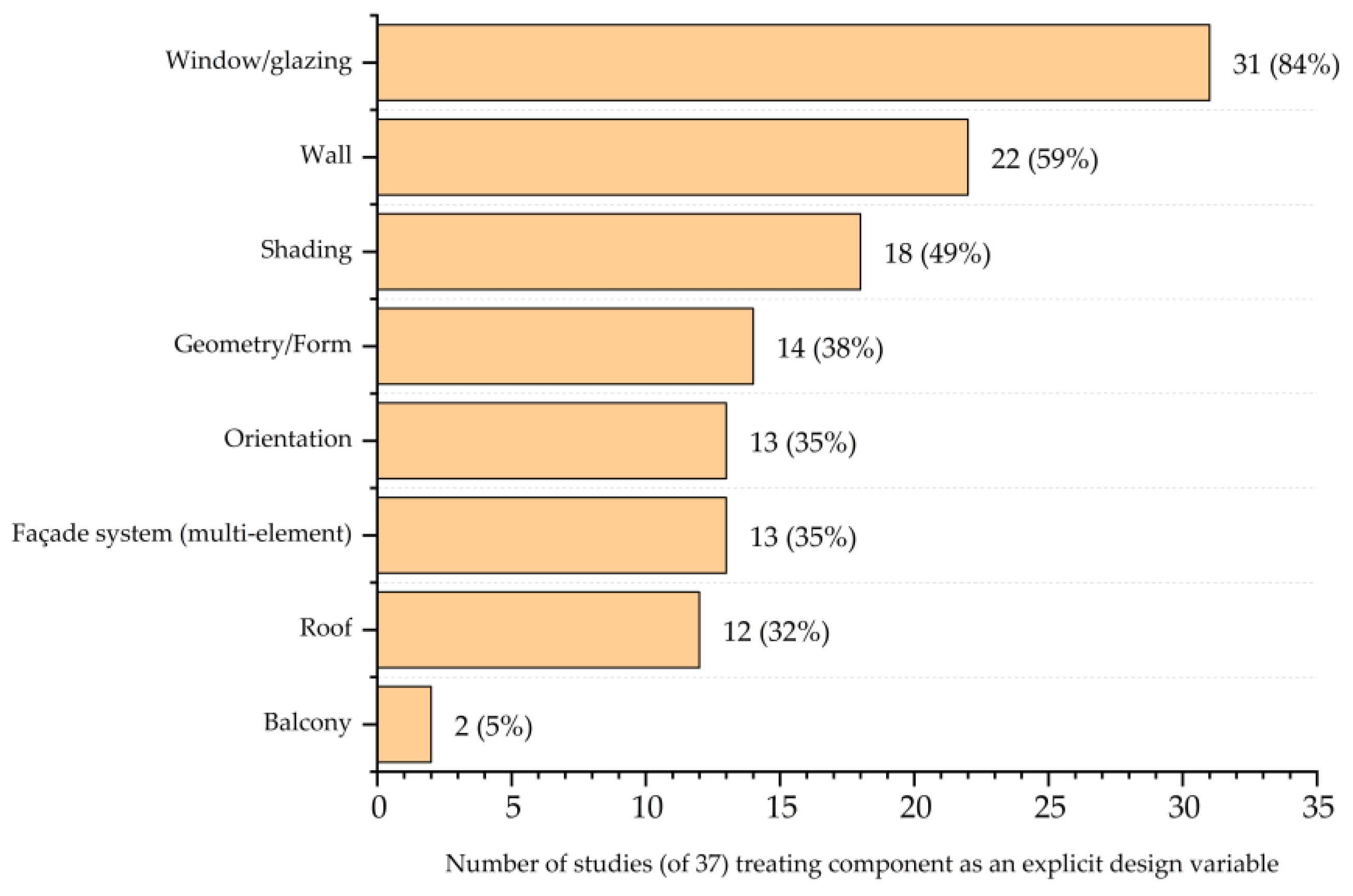
Analysis of the envelope components selected as design variables (Table 4; Figure 6) reveals a research landscape in which glazing and window properties were the most frequently optimized parameters [15,18,20]. One possible explanation, consistent with but not directly tested by the reviewed studies, is computational convenience: glazing parameters are comparatively easy to discretize and manipulate within standard simulation engines, so their prominence need not reflect physical priority alone. However, this focus is disproportionate to the treatment of opaque envelope elements. Despite their critical role in determining the thermal inertia and overall heating/cooling demand of buildings, opaque elements received less attention: walls were varied in 59% of the reviewed studies and roofs in only 32%, compared with 84% for window/glazing parameters [31,32,33].
Table 4.
Summary of envelope-related components and the typical early-stage design decisions.
Figure 6.
Early-stage Building Envelope Components.
This parametrization bias extends to building geometry and orientation [4,27,45], which are often treated as fixed boundary conditions or secondary factors rather than core optimization objectives. A particularly striking omission is the role of balcony geometry, addressed by only a negligible fraction of the literature [15,19]. In the context of modern, high-density urban residential design, balconies significantly influence self-shading and micro-climatic interactions. The neglect of such features, coupled with the residential typology gap identified in Section 3.8, suggests that current optimization literature may be overlooking critical architectural degrees of freedom. This indicates a clear opportunity for future research to move beyond standard variables and address the complex, three-dimensional realities of urban building envelopes.
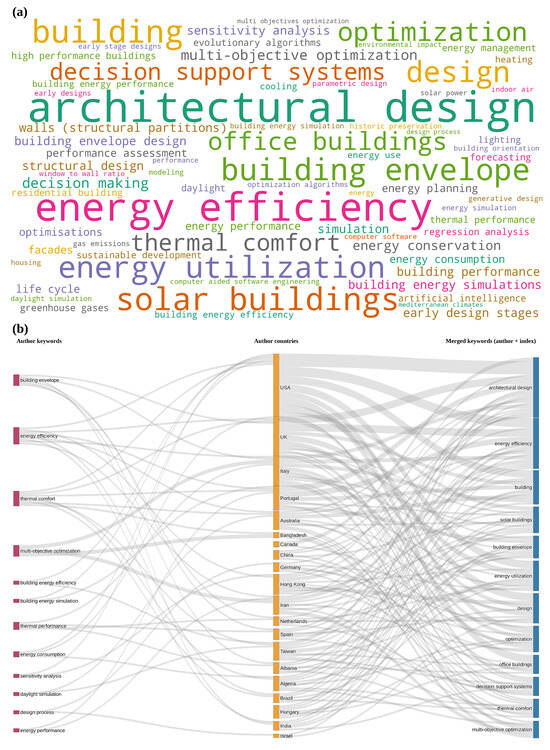
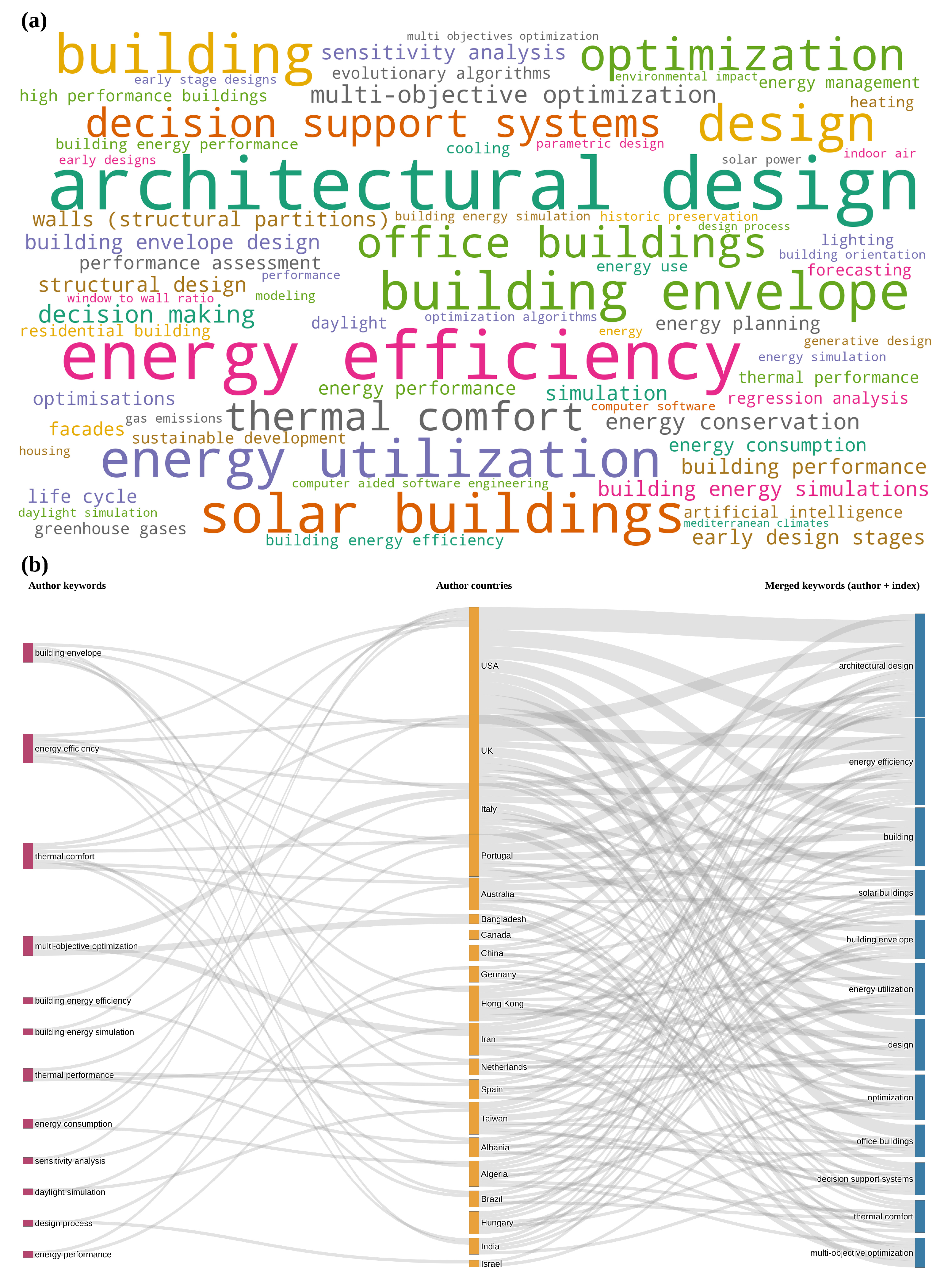
To cross-check the search logic, the 84 Scopus triangulation records were mapped in Bibliometrix (Figure 7). Dominant keywords such as “energy efficiency”, “building envelope” and “architectural design”, shared across authors from several countries, mirror the energy–daylight–comfort focus of the 37 included studies, confirming the search scope and the narrow objective set noted in Section 3.7. To complement the manual coding, a keyword co-occurrence analysis and thematic mapping of the corpus were performed (Figure 7). This analysis is a descriptive bibliometric visualization of the vocabulary used by the included studies; because it is derived from the authors and indexed keywords of the included studies and captures general themes rather than individual envelope components, it does not constitute an independent validation of the manually coded taxonomy in Table 4. The word cloud is dominated by “architectural design,” “energy efficiency,” “energy utilization,” “building envelope,” and “solar buildings,” indicating that the corpus is framed primarily around energy and comfort outcomes, which is consistent with the narrow objective set identified in Section 3.7. A three-field Sankey diagram linking author keywords, contributing countries, and merged thematic keywords further shows that these terms are used by authors from a range of countries, including the USA, the UK, Italy, Portugal, and Taiwan, rather than by a single national research community.
Figure 7.
Keyword landscape of the 84 Scopus records retrieved in the bibliometric triangulation search: (a) word cloud of author and indexed keywords by frequency; (b) three-field Sankey diagram linking the 12 most frequent author keywords, the 20 most frequent author countries, and the 12 most frequent merged (author + indexed) keywords.
3.5. Methodological Approaches in Early-Stage Envelope Design
Table 5 summarizes the methodological approaches of the included studies. Multi-objective, Pareto-based optimization emerges as the most common approach, accounting for roughly one-third of the sample. Together with the smaller but conceptually related category of single-objective optimization, this indicates that formal search-based methods rather than simple scenario comparison have become the dominant methodological approach in early-stage envelope research. By contrast, parametric or deterministic simulation, which may once have represented the default strategy, is used mainly for comparative or exploratory applications.
Table 5.
Methodological paradigms across the reviewed studies (n = 37).
Two additional groupings help clarify the field’s engagement with data-driven methods. When considered together, machine-learning and statistical predictive modeling account for nearly one-fifth of the sample. However, in most of these studies, such models are used only for prediction, rather than being integrated into a search or optimization framework. Across the entire sample, only one study [31] explicitly combines simulation-generated data, machine-learning prediction, and multi-objective optimization within a single workflow. This limited uptake is noteworthy. Although surrogate-assisted optimization is frequently discussed in the broader building-simulation literature as a way to reduce the computational burden of coupling detailed simulation with evolutionary search, it remains, within the present sample, an emerging rather than established approach more a methodological frontier than a mainstream practice.
Decision-support, multi-criteria decision-making (MCDM), and rule- or case-based frameworks form another distinct and non-negligible cluster, representing 14% of the sample. These approaches generally operate outside the simulation-optimization paradigm and tend to address a different stage of the design process. Rather than searching a continuous design space, they are typically used to structure, compare, or rank a limited set of designer-generated alternatives. As a result, reviews focused primarily on optimization-based studies may understate their practical importance for early-stage design, where decision-making often revolves around a small number of discrete options rather than a parametrically generated continuum.
The simulation engines underlying the included studies were classified from the tool chains extracted for each study (Supplementary Table S1, “Tool” column). Of the 37 studies, 28 (76%) used EnergyPlus or an EnergyPlus-based interface (DesignBuilder, OpenStudio, Ladybug/Honeybee, ClimateStudio, or BEopt) for energy simulation, either alone or combined with other tools [4,15,16,17,18,19,20,21,23,24,25,26,28,29,31,32,33,34,35,36,37,39,40,46,47,48,49,50]. DOE-2-based engines were used in two studies [38,45] and TRNSYS in one [22]. Five studies did not employ a whole-building energy simulation engine, relying instead on equation-based calculations, ray-tracing, life-cycle databases, or decision-support databases [27,41,42,43,44], and one study did not report its simulation tool [30]. Thus, among the 31 studies that used a whole-building energy simulation engine, 28 (90%) relied on the EnergyPlus family; apart from the interoperability audit in [49], which compared model data exported to EnergyPlus and DOE-2/eQuest, none compared simulation results across different engines.
3.6. Validation Practices Across Reviewed Studies
Validation practice marks the clearest gap between this literature’s methodological ambition and its empirical grounding. Of the 37 included studies, only 6 (16%) validated simulated performance against field-measured data [15,16,17,24,33,41], using metered energy use [16,17], monitored illuminance or indoor temperature [15,24], or measured data from existing buildings [33,41]. A further 4 studies (11%) relied on standards-based benchmarking against reference buildings or standardized test cases [21,23,30,35], without tying results to measured performance. The remaining 27 studies (73%) relied on internal validation alone, such as cross-checks against the authors’ own simulation models, surrogate-model accuracy metrics or sensitivity analyses (24 studies, 65%) [4,20,22,25,26,28,29,31,32,34,36,37,38,39,40,42,43,44,45,46,47,48,49,50], or reported no validation at all (3 studies, 8%) [18,19,27]. The validation category assigned to each study is reported in the “Validation” column of Table 3.
Most studies instead used internal validation—train/test splits, cross-tool comparison, or benchmarking against baseline models the authors themselves constructed and did not measure. That pattern should not be taken as evidence of weak scholarship in individual papers: at the early design stages these studies address, internal validation is often the only feasible option before construction. Yet its prevalence across the sample suggests that growing methodological sophistication has outpaced empirical grounding. In practice, advanced optimization pipelines are validated largely against themselves. That limits confidence in how far quantitative outputs, including reported energy savings generalize beyond the simulation environment in which they were produced.
3.7. Multi-Objective Structure and Trade-Off Emphasis
The trade-offs pursued across the reviewed studies converge on a narrow and internally consistent triad rather than reflecting the full range of performance dimensions that envelop design decisions are known to influence. Energy–daylight is the most frequently studied pairing [15,18,23,30] followed by energy–thermal comfort [18,21,24,35]; a smaller subset extends this framework to incorporate life-cycle cost or embodied carbon [17,22,31,41,50].
Acoustic performance and indoor air quality, by contrast, were not treated as optimization objectives in any of the included studies and appear only as design constraints in a single study [22], notwithstanding their direct dependence on envelope design decisions: glazing selection and window sizing govern airborne sound transmission as directly as they govern solar and daylight gain, and airtightness strategies pursued to improve energy performance carry immediate, and potentially adverse, consequences for ventilation-driven indoor air quality. The persistence of this narrow objective structure suggests that multi-objective optimization in the early-stage envelope literature has, to date, largely denoted energy considered alongside one or two closely related performance dimensions, rather than a genuinely comprehensive treatment of the trade-offs a practicing designer must reconcile.
3.8. Coverage Gaps: Climate Zone and Building Type
The apparent geographic breadth of the sample conceals a considerably more uneven evidentiary base once climate and building type are considered jointly (Table 6). Cold and continental climates are represented in only two studies: one office building [16] and one mixed office–residential study [49], the latter focused on software interoperability rather than envelope performance. Cold-climate residential envelope performance is therefore addressed only indirectly, through multi-climate studies in which a cold or heating-dominated location is one of several cases examined rather than the focused subject of study [22,46]. Educational buildings exhibit a comparably narrow footprint, confined to hot-arid and multi-climate contexts [23,24,30], with no standalone case identified in temperate, Mediterranean, or cold-climate settings, despite the distinct occupancy and ventilation dynamics of schools plausibly altering which envelope trade-offs are most consequential. Industrial buildings are represented by a single study [18]. This pattern indicates that the evidentiary base underpinning early-stage envelope decision-making is considerably narrower than the nominal count of 37 studies suggests. Findings well established for office buildings, the typology most densely represented in this literature (16 of 37 studies), should accordingly not be assumed to transfer to under-represented typology–climate combinations without further, dedicated investigation.
Table 6.
Cross-tabulation of climate zone and building type.
3.9. Magnitude and Consistency of Reported Performance Outcomes
Among the subset of studies reporting an explicit percentage reduction in energy use or demand relative to a stated baseline, reported savings ranged from as little as 1–2% for geometry-only interventions [34] (internal validation) to approximately 60% for an intelligent-façade design evaluated against a conventional baseline [48] (internal validation), while one study reached net-zero operational energy when cost-optimal envelope design was combined with photovoltaic integration [17] (field-measured validation). Intermediate reductions of roughly 13–48% were reported by studies isolating envelope-only interventions within a single building type [21,23,32,37], none of which validated results against field-measured data: two relied on internal validation [32,37] and two on standards-based benchmarking [21,23]. This spread of more than an order of magnitude cannot be read as evidence of inconsistent envelope performance; rather, it reflects substantial heterogeneity in what is being measured and against what reference point. Reported figures variously describe reductions in energy-use intensity, total heating and cooling demand, life-cycle cost, or thermal-discomfort hours [22], and baselines range from code-minimum reference buildings to the authors’ own unoptimized starting design. No two studies in the sample report savings against a common, standardized baseline.
This heterogeneity, combined with the validation profile established in Section 3.6, whereby the large majority of reported figures rest on internal or simulation-to-simulation validation rather than measured performance, means that the reported outcomes are best interpreted as evidence that envelope optimization reliably yields directionally positive performance improvements, rather than as a basis for estimating a representative or generalizable magnitude of expected savings. Accordingly, this review does not attempt to pool these figures into a single summary statistic; doing so would imply a level of comparability that the underlying studies, individually, do not support.
4. Discussion
This review identifies several consistent patterns that characterize the current state of research on early-stage building-envelope optimization. The first is that methodological development has progressed much faster than empirical validation. Over the past decade, the literature has evolved from conventional optimization techniques toward Pareto-based multi-objective optimization and, more recently, surrogate-assisted and machine-learning-supported approaches. This evolution reflects substantial methodological progress. However, most studies continue to rely on internal simulation-based validation rather than measured building performance. Furthermore, reported performance improvements vary widely across studies, and differences in baseline definitions make direct comparison difficult. As a result, optimization methods have advanced more rapidly than the evidence supporting their practical reliability. Future syntheses in this field would benefit from explicitly distinguishing field-validated findings (currently 16% of this corpus) from simulation-only findings when drawing practical design guidance, rather than treating the two evidentiary bases as interchangeable.
A second pattern concerns the distribution of research attention. The literature is dominated by glazing-related design variables. A plausible but untested explanation is that glazing parameters are comparatively easy to discretize and parameterize within optimization frameworks, so their prominence need not reflect a greater influence on building performance; none of the reviewed studies examines this directly. Similarly, office buildings and single-family residential buildings receive disproportionate attention, which may partly reflect the greater availability of standardized occupancy schedules and simulation inputs for these typologies; this explanation, too, is not tested in the reviewed studies and should be treated as a hypothesis for future investigation. Although studies have been conducted across different climatic regions, research remains concentrated within a relatively small number of climate-building combinations. Consequently, the existing evidence base is less representative than its apparent geographic diversity suggests.
The review also indicates that the multi-objective perspective adopted by much of the literature is narrower than the term implies. Most studies optimize the same three objectives: energy performance, daylight availability, and thermal comfort. Other important criteria, including cost, embodied carbon, acoustic performance, and indoor air quality, are considered far less frequently. Together with the typological and climatic biases identified above, this finding suggests that current research explores only a limited portion of the broader multi-criteria design space.
These findings have different implications for practitioners and researchers. For design practitioners, the results suggest caution rather than skepticism. Reported performance improvements should be interpreted as evidence of the potential benefits of optimization rather than as universally transferable benchmarks. For example, reported energy savings of up to approximately 40% from optimized envelope and window configurations (e.g., refs. [32,37]) are strongly influenced by the selected climate, reference building, and simulation platform. Such results therefore cannot be assumed to apply directly to different project contexts.
Current evidence provides the strongest support for projects that resemble the dominant study settings identified in this review, particularly office buildings located in warm or mixed climates where energy and daylight are the primary optimization objectives. In contrast, practitioners working on schools in cold climates, multi-family residential buildings, or projects emphasizing embodied carbon or construction cost should interpret published optimization results primarily as methodological guidance rather than quantitative design benchmarks. In these situations, project-specific simulation and local design constraints should receive greater emphasis than generalized findings from previous studies.
The review also highlights the practical value of decision-support methods that extend beyond optimization algorithms. As discussed in Section 3.5, rule-based and case-based decision-support frameworks remain relatively underrepresented despite their relevance to conceptual design. During the early design stage, architects often compare a limited number of designer-generated alternatives rather than exploring large parametric design spaces. In such situations, decision-support tools (e.g., refs. [45,48]) may provide more practical assistance than optimization methods that depend on continuous parameter variation.
For researchers, the findings point to several specific priorities. First, the widespread dependence on a small number of simulation engines highlights the need for systematic cross-platform validation. Future studies should examine whether optimization outcomes remain consistent across different simulation tools and modeling assumptions. Such comparisons would improve confidence in published results and clarify the extent to which reported performance gains depend on solver-specific implementations.
Second, the limited use of measured operational data represents an important gap in the current evidence base. Although optimization techniques have become increasingly sophisticated, relatively few studies validate their recommendations using post-occupancy performance data. At present, validating existing optimization methods against measured performance in real buildings is therefore an important priority, complementary to the continued development of new optimization algorithms.
A further methodological issue is the lack of standardized reporting practices. Differences in reference-building definitions, baseline assumptions, and performance metrics reduce the comparability of otherwise well-designed studies. Establishing common reporting conventions, or at least requiring transparent baseline definitions, would substantially strengthen cumulative knowledge and facilitate more meaningful comparisons across future investigations.
The findings of this review also suggest several directions for future research. Greater attention should be given to underrepresented building types and climate contexts, particularly cold-climate residential buildings, schools outside hot-arid and multi-climate contexts, and industrial facilities. Expanding research into these areas would improve the generalizability of optimization frameworks and reduce the current concentration of evidence around a limited set of building scenarios.
Future studies should also broaden the range of optimization objectives. Cost, embodied carbon, acoustic performance, and indoor air quality deserve consideration alongside energy performance, daylight, and thermal comfort as primary design objectives rather than secondary outcomes. Such an expansion would better reflect the multidisciplinary nature of envelope design and the broader sustainability goals increasingly expected of modern buildings.
Finally, stronger empirical validation and greater methodological consistency are essential for the continued development of this research area. Validation using measured post-occupancy data would significantly improve confidence in optimization results, while standardized baseline definitions and reporting practices would enable more robust comparisons across studies. At the same time, surrogate-assisted multi-objective optimization remains a promising but underexplored research direction. Although represented by only a single study in the reviewed literature, this approach has the potential to reduce computational cost while enabling optimization across larger design spaces, more diverse climates, and a wider range of building typologies.
5. Limitations of This Review
Several limitations of this review should be acknowledged. First, the search emphasized optimization-oriented terms, so differently framed studies may be less represented; future reviews could archive full query strings and add citation searching. Second, the appraisal relied on a review-specific framework, as no standardized instrument yet exists for simulation-based envelope studies, which may limit comparability with other reviews. Third, the diversity of metrics and baselines across the literature limited the synthesis to a descriptive, comparative form rather than quantitative pooling.
The country-contribution scores (Table 2), calculated using the established Howard et al. [14] weighting formula, describe authorship representation within the present 37-study sample rather than a country’s overall research capacity, since the method distributes a fixed score by author order and article count. These scores also reflect author affiliation rather than the geographic or climatic focus of the underlying studies.
Finally, early-stage building-envelope optimization is a rapidly evolving research area, particularly with the increasing adoption of surrogate modeling and machine-learning techniques. Studies published after the search date may influence future research trends and methodological developments. Therefore, the findings presented in this review should be interpreted as representing the state of the literature at the time the search was conducted.
6. Conclusions
This review synthesized 37 peer-reviewed studies addressing early-stage building-envelope design decisions and their influence on energy performance, applying a review-specific structured appraisal framework and standardized extraction taxonomy to move beyond descriptive summary toward comparative synthesis. Three findings characterize the current state of this literature. Methodologically, the field has shifted markedly toward multi-objective, Pareto-based optimization and, more recently, machine-learning-augmented workflows, but this sophistication has outpaced empirical validation: only 16% of studies validate simulation outputs against measured building performance, and reported performance-improvement magnitudes vary too widely, across inconsistent baselines and metrics, to support direct comparison. Substantively, research attention is concentrated on glazing-related parameters, office and single-family residential typologies, and a narrow energy–daylight–comfort objective triad. Whether this concentration reflects parametrization convenience and data availability rather than thermal significance remains a hypothesis not tested by the reviewed studies; what the evidence does show is that cold-climate residential buildings, schools, industrial facilities, and non-thermal objectives such as cost, acoustic performance, and indoor air quality remain comparatively underexplored. Structurally, the predominant reliance on EnergyPlus-based tools (76% of studies) means that the platform-independence of reported findings remains largely untested.
Taken together, these findings identify empirical validation against measured performance, standardized reporting of baselines and metrics, and deliberate extension of the evidence base to under-represented building types, climates, and performance objectives as important research priorities, to be pursued alongside, rather than instead of, continued methodological development. Addressing these gaps would substantially strengthen the reliability with which early-stage envelope research can inform design practice.
Supplementary Materials
The following supporting information can be downloaded at: https://www.mdpi.com/article/10.3390/civileng7040082/s1, Table S1: Extraction and appraisal data for the 37 included studies; Table S2: Scoring Matrix; Table S3: PRISMA 2020 checklist for “A Systematic Review of Building Envelope Design and Energy Performance”. Item wording from Page et al. [4] (CC BY 4.0). Refs [51,52] are cited in Supplementary File.
Author Contributions
All authors contributed to the study conception and design. A.L. was responsible for conceptualization, methodology, investigation, visualization, and writing of the original draft. S.A.M.-Z. contributed to methodology, validation, formal analysis, and writing—review and editing. A.A. contributed to investigation, visualization, and writing—review and editing. B.L. contributed to methodology, formal analysis, investigation, and writing. M.G. contributed to conceptualization, methodology, validation, resources, writing—review and editing, supervision, and project administration. All authors have read and agreed to the published version of the manuscript.
Funding
This research received no external funding.
Data Availability Statement
The search terms and filters are reported in Section 2.1, and the data extracted from all included studies, together with the appraisal scores, are provided in Table 3 and Supplementary Table S1. The extraction form is available from the corresponding author upon reasonable request. No analytic code was used.
Acknowledgments
During the preparation of this manuscript, the authors employed ChatGPT (GPT-5.5, OpenAI) and Claude (Claude Opus 5.5, Anthropic) to assist with language refinement, enhance clarity and readability, improve the presentation, and support the overall organization of the manuscript.
Conflicts of Interest
The authors declare no conflicts of interest.
References
- IEA. Buildings-Tracking Clean Energy Progress; International Energy Agency: Paris, France, 2022. [Google Scholar]
- Cabeza, L.F.; Bai, Q.; Bertoldi, P.; Kihila, J.M.; Lucena, A.F.P.; Mata, É.; Mirasgedis, S.; Novikova, A.; Saheb, Y. Buildings. In Climate Change 2022: Mitigation of Climate Change. Contribution of Working Group III to the Sixth Assessment Report of the Intergovernmental Panel on Climate Change; Cambridge University Press: Cambridge, UK, 2022; pp. 953–1048. [Google Scholar]
- Global Energy Demand by Sector & Scenario 2050. Available online: https://www.statista.com/statistics/1607356/projected-global-energy-demand-by-sector-and-scenario/ (accessed on 11 August 2026).
- Echenagucia, T.M.; Capozzoli, A.; Cascone, Y.; Sassone, M. The Early Design Stage of a Building Envelope: Multi-Objective Search through Heating, Cooling and Lighting Energy Performance Analysis. Appl. Energy 2015, 154, 577–591. [Google Scholar] [CrossRef] [Scilit]
- Li, R.; Shari, Z.; Ab Kadir, M.Z.A. A Review on Multi-Objective Optimization of Building Performance-Insights from Bibliometric Analysis. Heliyon 2025, 11, e42480. [Google Scholar] [CrossRef] [Scilit]
- Shan, R.; Jia, X.; Su, X.; Xu, Q.; Ning, H.; Zhang, J. AI-Driven Multi-Objective Optimization and Decision-Making for Urban Building Energy Retrofit: Advances, Challenges, and Systematic Review. Appl. Sci. 2025, 15, 8944. [Google Scholar] [CrossRef] [Scilit]
- Huang, Y.; Zhang, Z.; Su, P.; Li, T.; Zhang, Y.; He, X.; Li, H. Performance-Driven Generative Design in Buildings: A Systematic Review. Buildings 2025, 15, 4556. [Google Scholar] [CrossRef] [Scilit]
- Ekanayaka Gunasinghalge, L.U.G.; Alazab, A.; Talukder, M.d.A. Artificial Intelligence for Energy Optimization in Smart Buildings: A Systematic Review and Meta-Analysis. Energy Inform. 2025, 8, 135. [Google Scholar] [CrossRef] [Scilit]
- Hong, Y.; Chan, D.W.M. Research Trend of Joint Ventures in Construction: A Two-Decade Taxonomic Review. J. Facil. Manag. 2014, 12, 118–141. [Google Scholar] [CrossRef] [Scilit]
- Page, M.J.; McKenzie, J.E.; Bossuyt, P.M.; Boutron, I.; Hoffmann, T.C.; Mulrow, C.D.; Shamseer, L.; Tetzlaff, J.M.; Akl, E.A.; Brennan, S.E.; et al. The PRISMA 2020 Statement: An Updated Guideline for Reporting Systematic Reviews. BMJ 2021, 372, n71. [Google Scholar] [CrossRef] [Scilit]
- Falagas, M.E.; Pitsouni, E.I.; Malietzis, G.A.; Pappas, G. Comparison of PubMed, Scopus, Web of Science, and Google Scholar: Strengths and Weaknesses. FASEB J. 2008, 22, 338–342. [Google Scholar] [CrossRef] [Scilit]
- Bekhet, A.K.; Zauszniewski, J.A. Methodological Triangulation: An Approach to Understanding Data. Nurse Res. 2012, 20, 40–43. [Google Scholar] [CrossRef] [Scilit]
- Aria, M.; Cuccurullo, C. Bibliometrix: An R-Tool for Comprehensive Science Mapping Analysis. J. Informetr. 2017, 11, 959–975. [Google Scholar] [CrossRef] [Scilit]
- Howard, G.S.; Cole, D.A.; Maxwell, S.E. Research Productivity in Psychology Based on Publication in the Journals of the American Psychological Association. Am. Psychol. 1987, 42, 975–986. [Google Scholar] [CrossRef]
- Seraj, F. Height-Responsive Balcony-Integrated Envelope Design for High-Rise Residential Buildings: Sensitivity Analysis and Clustering Based Optimization Approach. J. Daylighting 2025, 12, 375–396. [Google Scholar] [CrossRef] [Scilit]
- Harmathy, N.; Magyar, Z.; Folić, R. Multi-Criterion Optimization of Building Envelope in the Function of Indoor Illumination Quality towards Overall Energy Performance Improvement. Energy 2016, 114, 302–317. [Google Scholar] [CrossRef] [Scilit]
- Ohene, E.; Krarti, M.; Chan, A.P.C.; Hsu, S.-C.; Ansah, M.K. Optimal Design Guidelines for Net Zero Energy Residential Buildings in Cooling-Dominated Climates: Case Study of Ghana. Build. Environ. 2024, 260, 111685. [Google Scholar] [CrossRef] [Scilit]
- Islam, S.M.; Chowdhury, F.; Bhuiyan, F.; Rashid, M.U. Geometry Optimization of Industry Buildings for Energy-Driven Design Development in Bangladesh. J. Daylighting 2024, 11, 119–130. [Google Scholar] [CrossRef] [Scilit]
- Bano, P.; Dervishi, S. The Impact of Vertical Vegetation on Thermal Performance of High-Rise Office Building Facades in Mediterranean Climate. Energy Build. 2021, 236, 110761. [Google Scholar] [CrossRef] [Scilit]
- Chen, W.-A.; Wang, Y.-H.; Chang, H.-J.; Hwang, R.-L. Development of a Rapid Assessment Tool for Integrating Thermal Comfort in Early Design Stage of Energy-Efficient Office Buildings. Appl. Energy 2024, 363, 123072. [Google Scholar] [CrossRef] [Scilit]
- Vettorazzi, E.; Figueiredo, A.; Rebelo, F.; Vicente, R.; Feiertag, G.A. Beyond Passive House: Use of Evolutionary Algorithms in Architectural Design. J. Build. Eng. 2023, 76, 107058. [Google Scholar] [CrossRef] [Scilit]
- Naji, S.; Aye, L.; Noguchi, M. Multi-Objective Optimisations of Envelope Components for a Prefabricated House in Six Climate Zones. Appl. Energy 2021, 282, 116012. [Google Scholar] [CrossRef] [Scilit]
- Talaei, M.; Sangin, H. Multi-Objective Optimization of Energy and Daylight Performance for School Envelopes in Desert, Semi-Arid, and Mediterranean Climates of Iran. Build. Environ. 2024, 255, 111424. [Google Scholar] [CrossRef] [Scilit]
- Lakhdari, K.; Sriti, L.; Painter, B. Parametric Optimization of Daylight, Thermal and Energy Performance of Middle School Classrooms, Case of Hot and Dry Regions. Build. Environ. 2021, 204, 108173. [Google Scholar] [CrossRef] [Scilit]
- Taştemir, I.A.; Koymen, E.; Yasa, E. A Geometry-Based Decomposition Method for Energy Prediction in Early Design Stages of Residential Buildings. Open House Int. 2025, 50, 452–469. [Google Scholar] [CrossRef] [Scilit]
- Granadeiro, V.; Duarte, J.P.; Correia, J.R.; Leal, V.M.S. Building Envelope Shape Design in Early Stages of the Design Process: Integrating Architectural Design Systems and Energy Simulation. Autom. Constr. 2013, 32, 196–209. [Google Scholar] [CrossRef] [Scilit]
- Lee, D.-S.; Jo, J.-H.; Koo, S.-H.; Lee, B.-Y. Development of Climate Indices Using Local Weather Data for Shading Design. Sustainability 2015, 7, 1884–1899. [Google Scholar] [CrossRef] [Scilit]
- Westermann, P.; Welzel, M.; Evins, R. Using a Deep Temporal Convolutional Network as a Building Energy Surrogate Model That Spans Multiple Climate Zones. Appl. Energy 2020, 278, 115563. [Google Scholar] [CrossRef] [Scilit]
- Han, Z.; Liu, G.; Zhang, L.; Li, X.; Yuan, Y. Developing a Dual-Modal Surrogate Model Training Framework for Building Performance Prediction in Early Design Stage. Energy Build. 2025, 329, 115307. [Google Scholar] [CrossRef] [Scilit]
- Alkhatatbeh, B.J.; Kurdi, Y.; Asadi, S. Enhancing Learning Environments: Exploring Optimal Classroom Design Connected to Double-Loaded Corridors across the US Climate Zones. Energy Build. 2023, 298, 113562. [Google Scholar] [CrossRef] [Scilit]
- Long, L.D. An AI-Driven Model for Predicting and Optimizing Energy-Efficient Building Envelopes. Alex. Eng. J. 2023, 79, 480–501. [Google Scholar] [CrossRef] [Scilit]
- Almufarrej, A.M.; Erfani, T. Climate, Buildings’ Envelope Design and Energy Patterns: Improving Energy Performance of New Buildings in Kuwait. Eng. Constr. Archit. Manag. 2023, 30, 172–188. [Google Scholar] [CrossRef] [Scilit]
- Mohanta, A.; Das, S. Decision Support System for the Early Stage of Green Building Envelope Design Considering Energy and Maintainability. Archit. Eng. Des. Manag. 2023, 19, 163–182. [Google Scholar] [CrossRef] [Scilit]
- Hinkle, L.E.; Wang, J.; Brown, N.C. Quantifying Potential Dynamic Façade Energy Savings in Early Design Using Constrained Optimization. Build. Environ. 2022, 221, 109265. [Google Scholar] [CrossRef] [Scilit]
- Nasrollahzadeh, N. Comprehensive Building Envelope Optimization: Improving Energy, Daylight, and Thermal Comfort Performance of the Dwelling Unit. J. Build. Eng. 2021, 44, 103418. [Google Scholar] [CrossRef] [Scilit]
- Abediniangerabi, B.; Shahandashti, S.M.; Makhmalbaf, A. A Data-Driven Framework for Energy-Conscious Design of Building Facade Systems. J. Build. Eng. 2020, 29, 101172. [Google Scholar] [CrossRef] [Scilit]
- Foroughi, R.; Mostavi, E.; Asadi, S. Determining the Optimum Geometrical Design Parameters of Windows in Commercial Buildings: Comparison between Humid Subtropical and Humid Continental Climate Zones in the United States. J. Archit. Eng. 2018, 24, 04018026. [Google Scholar] [CrossRef] [Scilit]
- Amiri, S.S.; Mottahedi, M.; Asadi, S. Using Multiple Regression Analysis to Develop Energy Consumption Indicators for Commercial Buildings in the US. Energy Build. 2015, 109, 209–216. [Google Scholar] [CrossRef] [Scilit]
- Granadeiro, V.; Correia, J.R.; Leal, V.M.S.; Duarte, J.P. Envelope-Related Energy Demand: A Design Indicator of Energy Performance for Residential Buildings in Early Design Stages. Energy Build. 2013, 61, 215–223. [Google Scholar] [CrossRef] [Scilit]
- Li, D.H.W.; Wong, S.L.; Cheung, K.L. Energy Performance Regression Models for Office Buildings with Daylighting Controls. Proc. Inst. Mech. Eng. Part A J. Power Energy 2008, 222, 557–568. [Google Scholar] [CrossRef] [Scilit]
- Soust-Verdaguer, B.; Gutiérrez, J.A.; Llatas, C. Development of a Plug-in to Support Sustainability Assessment in the Decision-Making of a Building Envelope Refurbishment. Buildings 2023, 13, 1472. [Google Scholar] [CrossRef] [Scilit]
- Voigt, M.P.; Roth, D.; Kreimeyer, M. Decision Support for Defining Adaptive Façade Design Goals in the Early Design Phase. Energies 2023, 16, 3411. [Google Scholar] [CrossRef] [Scilit]
- Tsay, Y.-S.; Wu, M.-S.; Lin, C.-H. An Integrated User Interface of Assessment and Optimization for Architectural Façade Shading Designs in Taiwan. Buildings 2022, 12, 2116. [Google Scholar] [CrossRef] [Scilit]
- Mashaly, I.A.; Garcia-Hansen, V.; Isoardi, G.; Cholette, M.E. CFStrace: An Evaluation Method to Include Complex Fenestration Systems in the Façade Design Process. Sol. Energy 2021, 217, 253–262. [Google Scholar] [CrossRef] [Scilit]
- Zhang, B.; Li, X.; Lin, B.; Zhu, Y. A CBR-Based Decision-Making Model for Supporting the Intelligent Energy-Efficient Design of the Exterior Envelope of Public and Commercial Buildings. Energy Build. 2021, 231, 110625. [Google Scholar] [CrossRef] [Scilit]
- Juaristi, M.; Loonen, R.; Isaia, F.; Gómez-Acebo, T.; Monge-Barrio, A. Dynamic Climate Analysis for Early Design Stages: A New Methodological Approach to Detect Preferable Adaptive Opaque Façade Responses. Sustain. Cities Soc. 2020, 60, 102232. [Google Scholar] [CrossRef] [Scilit]
- Donato, M.; Zemella, G.; Rapone, G.; Hussain, J.; Black, C. An Innovative App for a Parametric, Holistic and Multidisciplinary Approach to Early Design Stages. J. Facade Des. Eng. 2017, 5, 113–127. [Google Scholar] [CrossRef]
- Ochoa, C.E.; Capeluto, I.G. Advice Tool for Early Design Stages of Intelligent Facades Based on Energy and Visual Comfort Approach. Energy Build. 2009, 41, 480–488. [Google Scholar] [CrossRef] [Scilit]
- McArthur, J.; Sun, X. Disrupting the Status Quo with Early-Stage BIM-Based Energy Modeling. Technol. Archit. Des. 2017, 1, 231–239. [Google Scholar] [CrossRef] [Scilit]
- Hamida, A.; Alsudairi, A.; Alshaibani, K.; Alshamrani, O. Environmental Impacts Cost Assessment Model of Residential Building Using an Artificial Neural Network. Eng. Constr. Archit. Manag. 2021, 28, 3190–3215. [Google Scholar] [CrossRef] [Scilit]
- Ke, Y.; Wang, S.; Chan, A.P.; Cheung, E. Research Trend of Public-Private Partnership in Construction Journals. J. Constr. Eng. Manag. 2009, 135, 1076–1086. [Google Scholar] [CrossRef] [Scilit]
- Tsai, C.C.; Wen, M.L. Research and Trends in Science Education from 1998 to 2002: A Content Analysis of Publication in Selected Journals. Int. J. Sci. Educ. 2005, 27, 3–14. [Google Scholar] [CrossRef] [Scilit]

Disclaimer/Publisher’s Note: The statements, opinions and data contained in all publications are solely those of the individual author(s) and contributor(s) and not of MDPI and/or the editor(s). MDPI and/or the editor(s) disclaim responsibility for any injury to people or property resulting from any ideas, methods, instructions or products referred to in the content. |
© 2026 by the authors. Licensee MDPI, Basel, Switzerland. This article is an open access article distributed under the terms and conditions of the Creative Commons Attribution (CC BY) license.