


Abstract
Localized water infiltration in rock masses can significantly compromise the stability of foundations and underground structures. Conventional assessments often rely on average water content, while overlooking the spatial heterogeneity of water distribution. This study investigates the mechanical behavior and failure characteristics of black sandstone under partial water immersion through uniaxial compression tests at varying immersion depths and angles. The results indicate that partial immersion causes a sharp, nonlinear reduction in uniaxial compressive strength (UCS), with strength loss at 38.9% saturation reaching 88.5% of total failure, highlighting the vulnerability of partially wetted rock supporting building foundations. Wet–dry interfaces induce stiffness mismatch and stress concentration, shifting failure from global shear to localized lateral crushing, which may affect structural stability in underground or slope-adjacent buildings. Moreover, immersion angle governs a slight U-shaped evolution in strength, with the lowest strength at 45° and a limited recovery at 90°, suggesting orientation-dependent risks for inclined foundation beds. These findings demonstrate that spatial water distribution, rather than overall water content, is a primary factor in rock instability, providing a theoretical basis for risk assessment and design considerations in building and underground construction where localized wetting may occur.
1. Introduction
Water–rock interaction is one of the core driving factors inducing catastrophic failures in rock mass engineering, such as slope instability, sudden water inrushes in tunnels, and floor heave induced by groundwater [1,2,3]. For decades, the deterioration of the physical and mechanical properties of rocks caused by water immersion has been a major research hotspot in rock mechanics [4,5]. Extensive studies have demonstrated that water significantly weakens the physical and mechanical properties of rocks, causing reductions in strength, stiffness, and long-term stability [6,7]. It is widely acknowledged that macroscopic mechanical parameters of rocks (e.g., uniaxial compressive strength and elastic modulus) degrade substantially as water content increases [8,9], which has direct implications for the stability of building foundations and underground structures.
Based on unsaturated rock mechanics and poromechanics theories, the mechanical response of partially saturated geomaterials is fundamentally governed by matric suction, effective stress, and water-induced weakening [10]. Matric suction contributes to the apparent cohesion and stiffness of geomaterials, whereas wetting reduces suction and degrades the load-bearing capacity of the solid skeleton [11]. For rock materials, the presence of water further weakens intergranular bonding, reduces fracture surface energy, and promotes subcritical crack growth, thereby accelerating damage initiation and propagation under external loading [12]. Most studies are predicated on the idealized assumption that rocks are fully saturated or exhibit uniform water distribution, often treating overall water content as the sole indicator for evaluating rock deterioration induced by water immersion [13]. In real engineering environments, however, water distribution within rock masses is highly nonuniform [14]. It frequently exhibits pronounced spatial gradients due to capillary imbibition, transient infiltration events such as rainfall [15], and fluctuating boundary conditions (e.g., reservoir water level fluctuations) [16]. Furthermore, advancing wetting fronts, or wet–dry interfaces, are commonly inclined rather than horizontal, especially in fractured or stratified formations. Such nonuniform and anisotropic water distributions can induce localized weakening, stress concentration, and incompatible deformation, fundamentally altering the damage evolution and failure behavior of rocks. These effects are critical when assessing the safety of rock-supported foundations and subterranean constructions, where localized wetting may compromise structural integrity.
Recent studies have begun to recognize the importance of water heterogeneity by comparing different immersion conditions at equivalent water contents [17,18,19]. These investigations indicate that nonuniform water distribution may induce more severe strength degradation than uniform saturation, highlighting the limitations of conventional water content-based evaluations [20,21,22]. Nevertheless, existing studies are largely restricted to simplified scenarios, typically assuming horizontal wet–dry interfaces. As a result, the influence of interface geometry—particularly its inclination—on stress distribution, damage evolution, and failure mechanisms remains insufficiently understood. When water infiltrates along inclined planes, the wet–dry interface forms a specific orientation relative to the applied stress field, raising several key scientific questions: How does immersion depth control the evolution of water content and strength degradation? How does the inclination of the wet–dry interface affect failure characteristics? And is rock deterioration governed primarily by water content or by the spatial configuration of water distribution? These questions are especially relevant for the design and safety assessment of foundations, underground structures, and slope-adjacent constructions in water-sensitive environments.
To address these issues, uniaxial compression tests were conducted on black sandstone under controlled immersion conditions to investigate the effects of spatial water distribution on mechanical behavior. The relationships between immersion depth and strength degradation, as well as between immersion angle and failure characteristics, were systematically analyzed. Additionally, a comparative study between partial and full immersion conditions at equivalent water contents was performed to elucidate the role of water distribution. Corresponding failure characteristics were identified based on annotated post-failure photographs and classification criteria, and the mechanisms governing strength evolution and failure development were discussed. The results provide new insights into water-induced rock deterioration and offer a theoretical basis for hazard assessment and engineering design in environments involving localized water–rock interactions, including building foundations and underground structures.
2. Methodology
2.1. Engineering Background
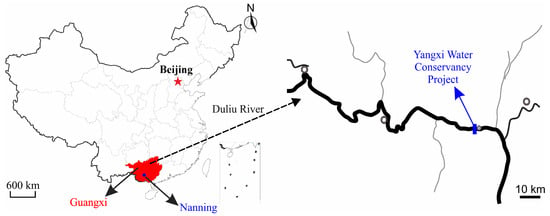
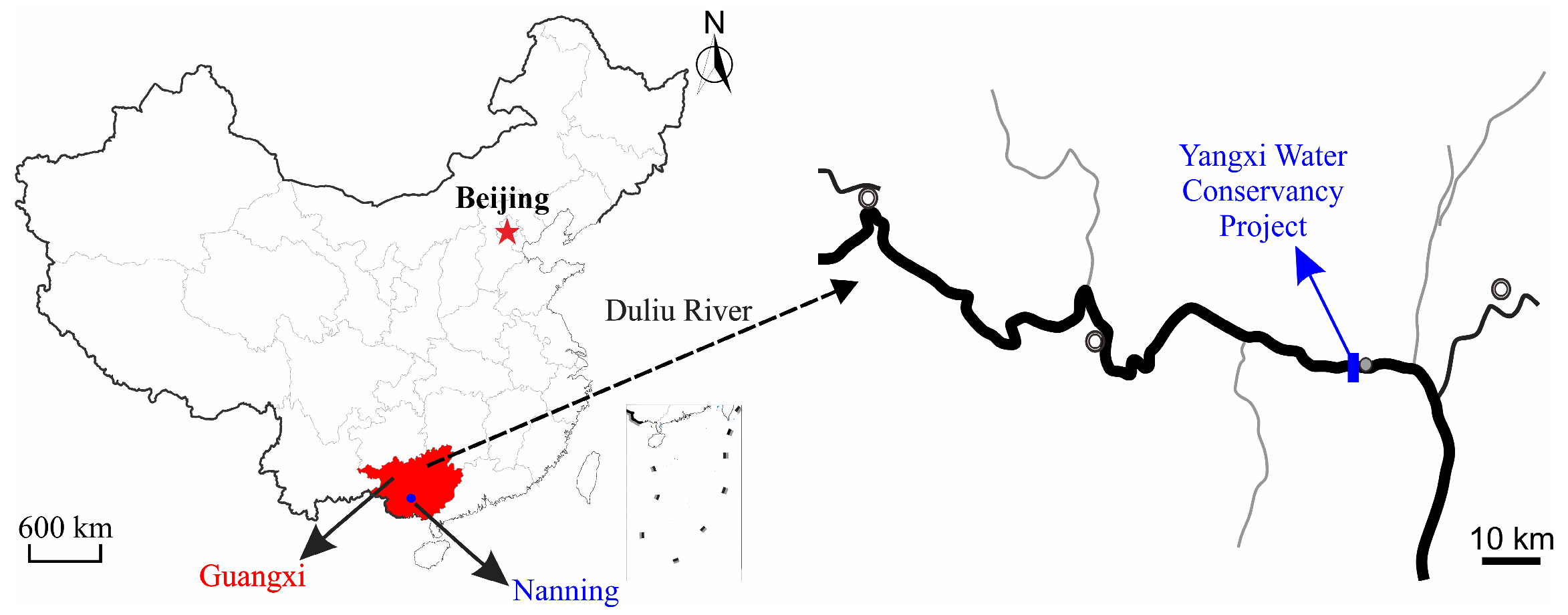
The Yangxi Water Conservancy Project is a large-scale multipurpose project located on the upper Liujiang River in Guangxi, China (Figure 1). It is one of the key flood-control projects in the middle and lower reaches of the Liujiang River and is mainly designed for flood control, with additional functions of hydropower generation and navigation.
Figure 1.
Location of the Yangxi Water Conservancy Project.
The reservoir has a normal water level of 163.00 m, a flood-control high water level of 186.80 m, a total storage capacity of 8.5 × 10⁸ m3, and a maximum dam height of 75.5 m. Sandstone strata are present in the project area. During reservoir operation, water-level fluctuations may induce repeated wetting and drying of sandstone in dam foundations and bank slopes, resulting in localized water infiltration, wet–dry interfaces, and nonuniform water distribution. Therefore, the Yangxi Water Conservancy Project provides a representative engineering background for investigating the mechanical behavior and failure characteristics of sandstone under partial water immersion conditions. These engineering conditions also provide a practical basis for designing partial immersion tests with different immersion depths and inclination angles.
2.2. Sample Preparation and Characterization
The black sandstone was selected as the testing material in this study because sandstone strata are commonly encountered in water conservancy and underground engineering. To minimize material heterogeneity, all samples were cored from a single, intact, and homogeneous sandstone block. In accordance with the recommendations of the International Society for Rock Mechanics (ISRM) [23], the rock block was processed into standard cylindrical samples with a diameter of 50 mm and a height of 100 mm, corresponding to a height-to-diameter ratio of 2:1. This sample geometry is commonly used in laboratory uniaxial compression tests of rocks and has been widely adopted in previous sandstone strength tests [3,5]. The ends of the samples were carefully polished to ensure end-face flatness of less than 0.01 mm, which is critical for achieving consistent and reliable mechanical testing results, particularly when evaluating rock stability in foundations or underground structures.
Basic physical property measurements indicated that the dry density (ρd) of the black sandstone samples ranged from 2.30 to 2.36 g/cm3, with an average value of 2.33 g/cm3. The average porosity (n) of the samples was determined to be 3.96%, calculated using the following relationship:
where Gs is the specific gravity of the black sandstone, measured using the pycnometer method and found to be 2.43, and ρw is the density of water, taken as 1.00 g/cm3. Accurate determination of density and porosity is essential for assessing the potential effects of water infiltration on rock-supported foundations and similar engineering applications.
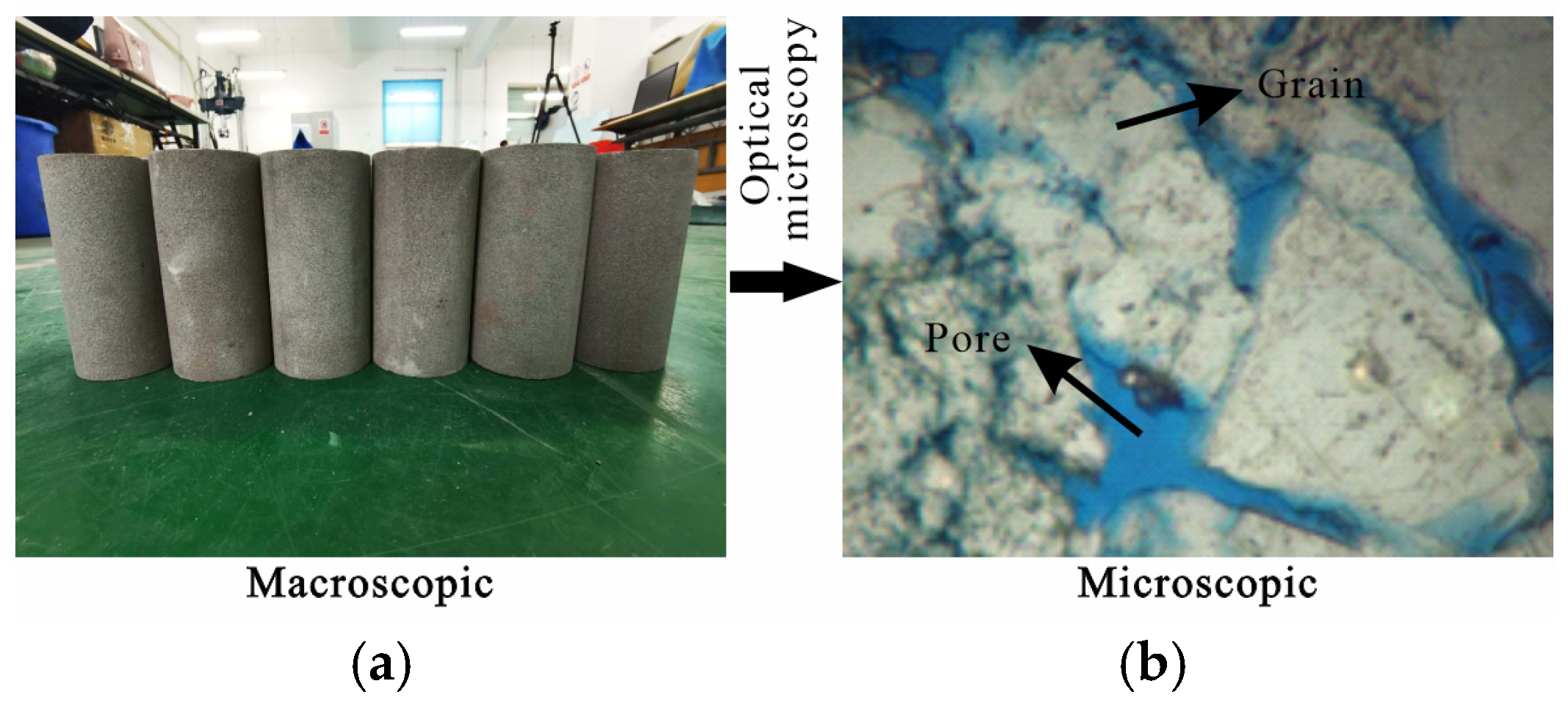
XRD analysis showed that the tested sandstone was mainly composed of quartz, albite, and illite, accounting for 44.10%, 27.86%, and 20.89%, respectively, with minor calcite, K-feldspar, and montmorillonite contents of 4.29%, 1.88%, and 0.89%, respectively. Microscopic observation further showed that the sandstone was characterized by a granular framework dominated by mineral grains and intergranular pores (Figure 2). The blue-impregnated areas in the microscopic image indicate the distribution of connected pores and pore throats. These pore spaces provide potential pathways for water infiltration, while the presence of clay minerals, especially illite and montmorillonite, may enhance the water sensitivity of the sandstone.
Figure 2.
Macroscopic and microscopic characteristics of the tested sandstone: (a) prepared cylindrical sample; (b) thin-section microscopic image showing mineral grains and connected pores.
2.3. Experimental Setup
2.3.1. Testing Equipment
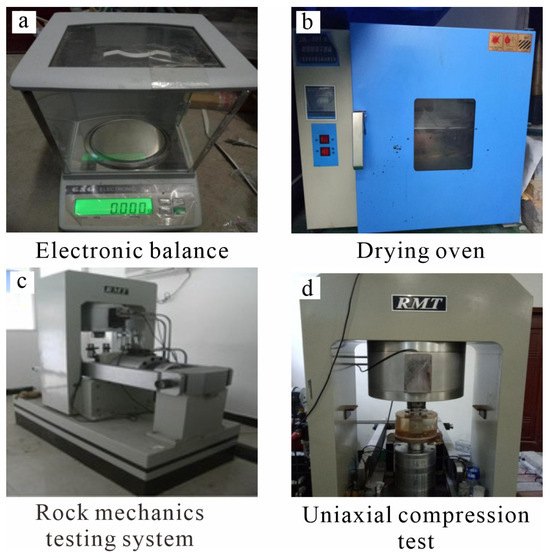
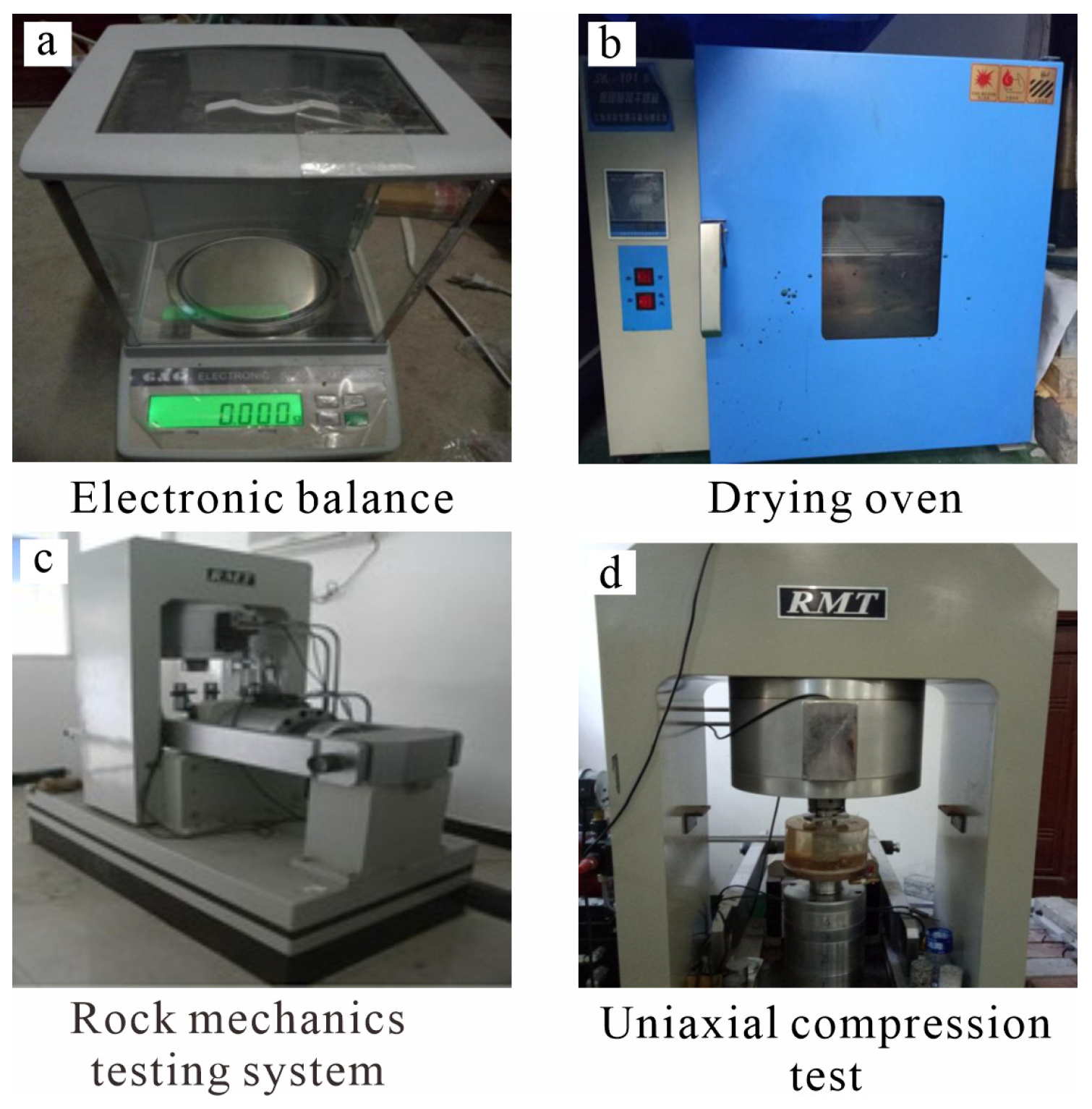
The primary testing equipment employed in this study included an electronic balance, a digital blast drying oven, and the RMT-150C rock mechanics testing system (Figure 3). The electronic balance (Shanghai Jingsheng Scientific Instrument Co., Ltd., Shanghai, China) was used to measure sample mass with a precision of 0.001 g (Figure 3a). The drying oven (Shanghai Shengke Instrument Equipment Co., Ltd., Shanghai, China) was used to prepare samples in a dry state by maintaining a temperature of 105 °C for 24 h until a constant mass was achieved (Figure 3b). These procedures ensured that subsequent mechanical testing results accurately reflected the influence of water–rock interaction under controlled conditions, which is critical for understanding the potential impact on the stability of building foundations and underground structures.
Figure 3.
Experimental testing equipment: (a) electronic balance; (b) drying oven; (c) RMT-150C rock mechanics testing system; (d) uniaxial compression test.
Mechanical tests were conducted using the RMT-150C testing system (Figure 3c,d), developed by the Institute of Rock and Soil Mechanics, Chinese Academy of Sciences (Wuhan, China). This versatile system is capable of performing multiple types of rock mechanical tests, including uniaxial compression, indirect tensile (Brazilian) tests, triaxial compression, and shear tests. In the present study, it was primarily employed for uniaxial compression testing to evaluate the influence of water infiltration on rock mechanical behavior, which is directly relevant to the stability assessment of building foundations and underground structures subjected to localized wetting.
2.3.2. Immersion Schemes
In hydraulic engineering environments such as dam foundations and reservoir-bank slopes, rock masses are often exposed to fluctuating water levels, resulting in complex water occurrence conditions. Specifically, rock masses may experience (i) partial immersion, where only a portion of the rock is submerged (e.g., the lower section being underwater while the upper part remains exposed to air), and (ii) cyclic or full immersion, where the entire rock mass becomes saturated. These different conditions produce distinct spatial water distributions within the rock, which can substantially influence its mechanical performance and, consequently, the structural stability of supported constructions.
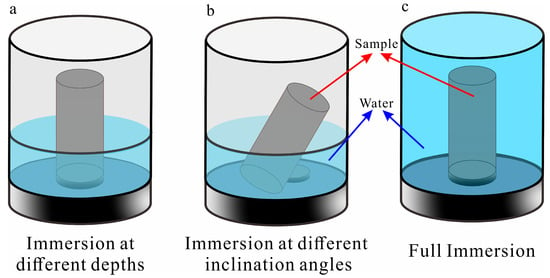
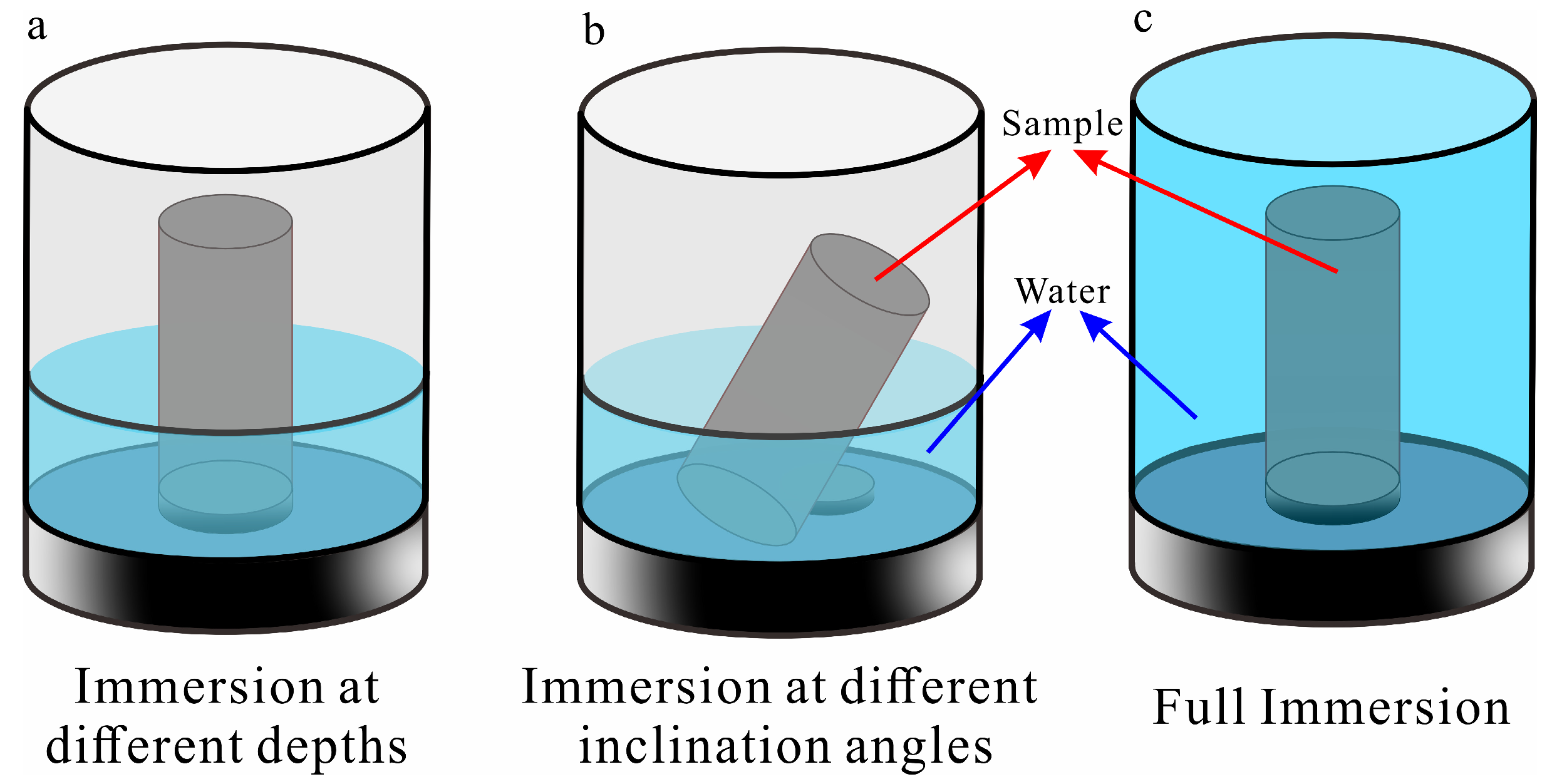
To simulate these water distribution modes, various immersion treatments were designed in this study, including partial immersion at different depths and inclination angles and full immersion, as illustrated in Figure 4. The selected inclination angles of 0°, 30°, 45°, 60°, and 90° were used to represent typical orientations of wet–dry interfaces that may occur in engineering rock masses, such as horizontal wetting fronts, inclined seepage along bedding or fractures, and vertical infiltration along joints or preferential seepage channels. Therefore, these angles provide representative geometric conditions for evaluating the influence of spatial water distribution on sandstone mechanical behavior.
Figure 4.
Schematic illustration of different immersion modes: (a) immersion at different depths; (b) immersion at different inclination angles; (c) full immersion.
- Immersion depth tests: Immersion ratios were set at 0 (dry), 0.125, 0.25, 0.5, and 1 (full immersion) relative to sample height. The samples were subjected to vacuum immersion for 4 h to facilitate water infiltration into the pore structure. After immersion, surface water was immediately wiped off, samples were weighed to determine the actual water content, and they were then rapidly double-sealed with wax and cling film to prevent water loss or redistribution. The samples were subsequently subjected to uniaxial compression testing.
- Immersion angle tests: To further investigate the influence of spatial water distribution geometry, dry samples were placed at inclination angles of 0°, 30°, 45°, 60°, and 90°. Water was added to submerge 0.125 of the sample height, achieving approximately 50% saturation relative to full immersion conditions, followed by a 10 h immersion period. After immersion, surface water was wiped off, and the samples were weighed, sealed, and tested under uniaxial compression to evaluate the effect of immersion angle on mechanical behavior.
- Comparison of immersion modes: To explore differences in water distribution at identical overall water contents, a comparative study between partial and full immersion conditions was performed. Under partial immersion (Figure 4a,b), water was primarily concentrated below the immersion line, with a very short transition zone above it driven only by capillary action, leaving the upper portion relatively dry. This configuration created a pronounced internal water gradient. In contrast, fully immersed samples (Figure 4c) exhibited relatively uniform water distribution with minimal spatial gradients. By carefully controlling immersion time, full immersion samples with the same overall water content as partially immersed samples were prepared for comparative mechanical testing.
2.3.3. Mechanical Testing Procedures
Uniaxial compression tests were conducted to determine fundamental mechanical parameters of black sandstone, including uniaxial compressive strength (UCS), elastic modulus, and Poisson’s ratio, under different water conditions. All tests were performed at a constant loading rate of 0.5 kN/s until macroscopic failure occurred (Figure 3d). This loading rate was selected to ensure a stable quasi-static loading process, and the same loading rate was used for all samples to ensure the comparability of mechanical responses under different water immersion conditions [3]. During loading, axial and lateral deformations were continuously recorded using LVDTs, allowing accurate characterization of stress–strain behavior. The results obtained under dry, partially immersed, and fully immersed conditions provide a consistent and reliable basis for evaluating the influence of water distribution modes on the mechanical behavior of rock, which is particularly relevant for the design and risk assessment of building foundations and underground structures in water-sensitive environments.
3. Results
3.1. Water Immersion Behavior and Water Content Evolution
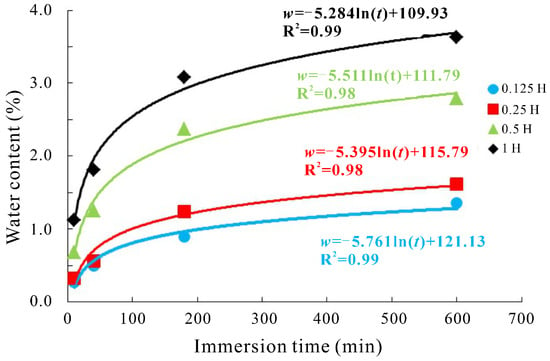
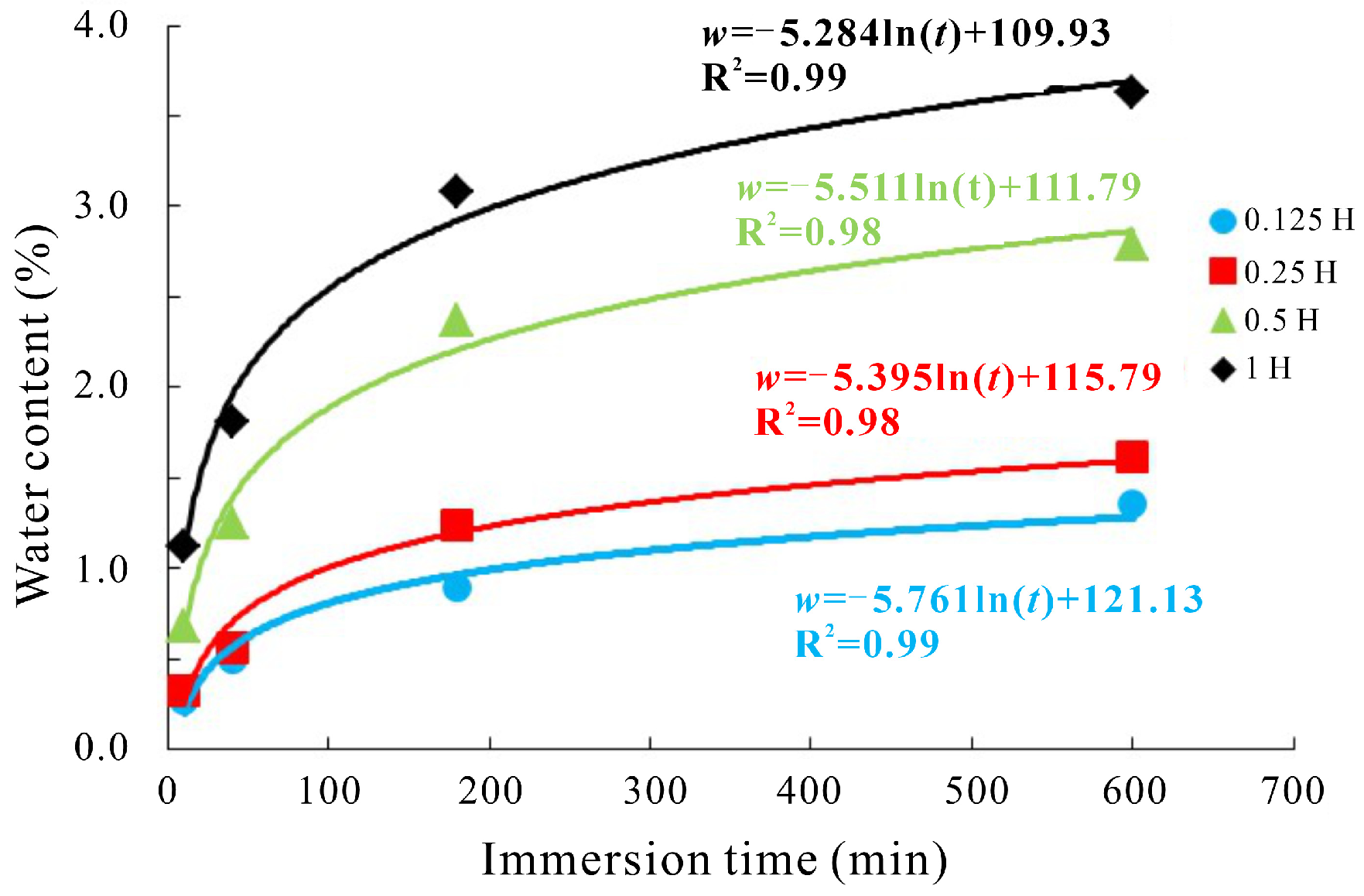
To investigate the imbibition behavior and water content evolution of black sandstone under different immersion modes, four homogeneous samples were selected for water absorption tests at immersion ratios of 0.125, 0.25, 0.5, and 1 relative to sample height (Figure 5). Prior to testing, the samples were dried to a constant mass, cooled to room temperature, and precisely weighed to determine their dry mass (). The samples were then placed in distilled water at the designated immersion depths.
Figure 5.
Evolution of water content with immersion time under different immersion depths.
During the imbibition process, sample mass was continuously monitored and dynamically adjusted according to the absorption rate to minimize disturbances caused by frequent handling. The water content at a specific soaking time , , was calculated as follows:
where is the water content at immersion time (%), is the mass of the sample at time (g), and is the initial dry mass of the sample (g).
The results of these tests provide a detailed characterization of water uptake and distribution dynamics within the sandstone, which are essential for understanding localized wetting effects on mechanical behavior. Such insights are particularly relevant for the design and safety assessment of foundations and underground structures, where partial or nonuniform saturation of supporting rock may significantly influence structural stability.
Rapid increase stage (0–180 min): At the initial stage of immersion, the dry pore structure of the sandstone generates strong matric suction, driving rapid water ingress into the rock matrix. Consequently, water content increases sharply. After 180 min (3 h), the water contents of samples with immersion depths of 0.125 H, 0.25 H, 0.5 H, and H reached approximately 0.90%, 1.25%, 2.38%, and 3.08%, respectively. A greater immersion depth provides a larger water–rock contact area and more infiltration pathways, resulting in a more pronounced increase in water content.
Gradual deceleration stage (180–600 min): As the interconnected pores below the water level become progressively filled, the internal matric suction weakens. Water migration into the upper, initially dry zones then relies primarily on capillary action. The increased permeation resistance leads to a significant reduction in absorption rate. By 600 min (10 h), the water contents for immersion depths of 0.125 H, 0.25 H, 0.5 H, and H showed a decelerated growth trend, reaching 1.35%, 1.61%, 2.79%, and 3.63%, respectively.
Stabilization stage (>600 min): Beyond 10 h of immersion, all curves plateaued, indicating that partially immersed samples at various depths reached a dynamic water equilibrium, with water content remaining essentially constant.
Additionally, black sandstone samples were forcibly saturated using a vacuum method. The average water content of these saturated samples reached 4.06%, approximately 0.43% higher than the ultimate water content achieved through free immersion. This discrepancy indicates that, under natural immersion conditions, entrapped air bubbles remain in some pore spaces, preventing complete saturation.
These observations provide a detailed characterization of water uptake and distribution dynamics in black sandstone, which is crucial for understanding how localized wetting may influence mechanical stability in building foundations, slopes, and underground structures. By linking water content evolution stages to immersion depth and saturation behavior, these results offer quantitative insights that can inform engineering design and risk mitigation strategies in water-sensitive construction environments.
3.2. Mechanical Properties of Sandstone Under Dry and Saturated Conditions
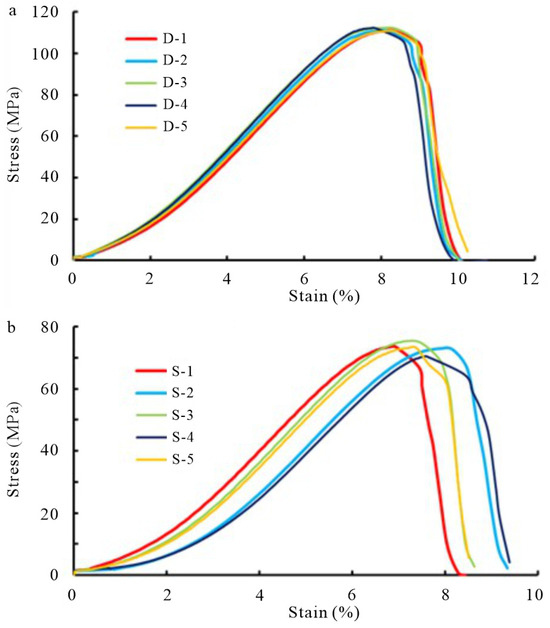
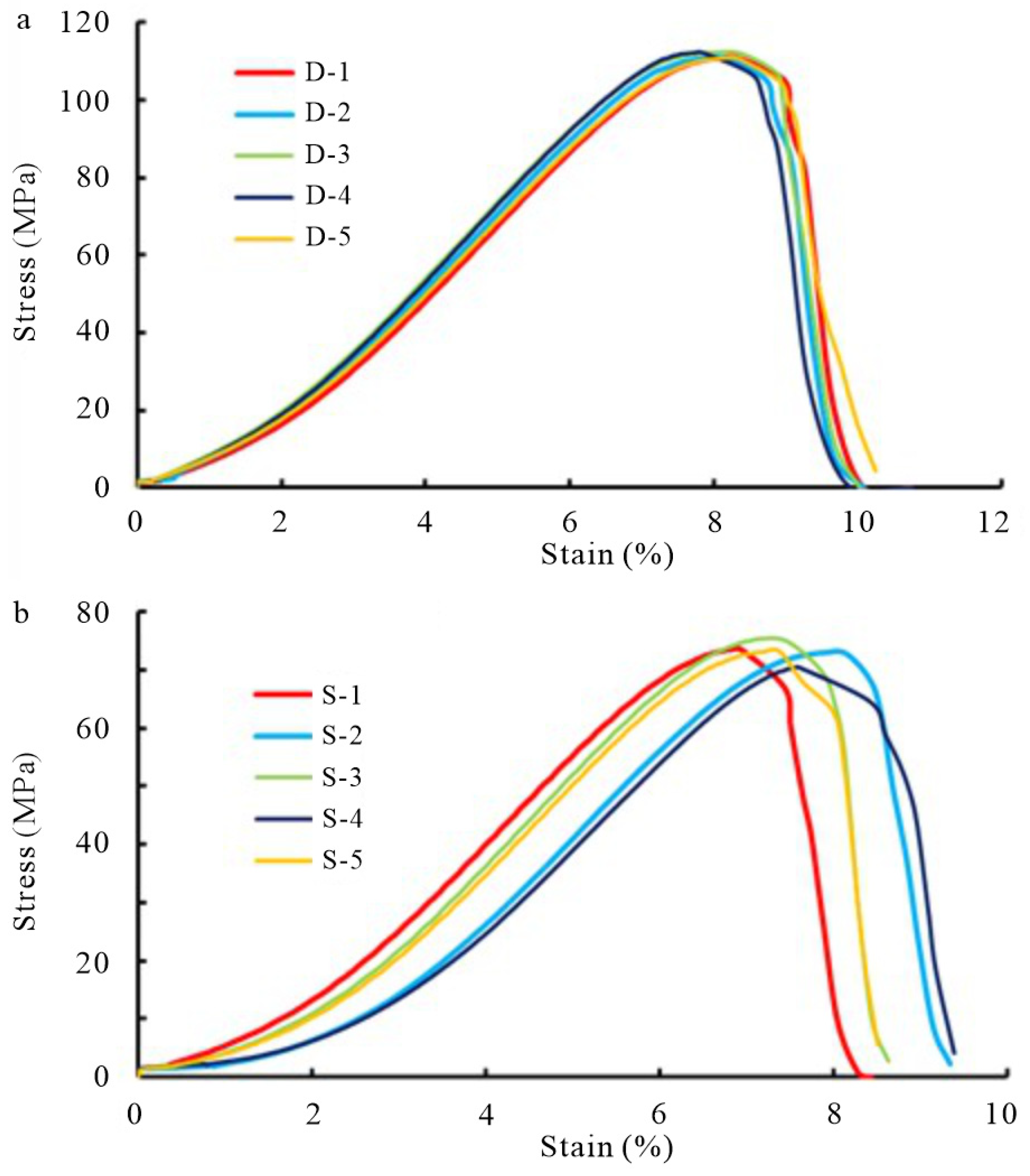
Figure 6 presents the axial stress–strain curves for dry and saturated sandstone samples obtained from uniaxial compression tests. In Figure 6, D-1 to D-5 denote five parallel dry samples, whereas S-1 to S-5 denote five parallel saturated samples. These labels are used only to distinguish replicate samples within the same testing condition and do not represent different experimental parameters. The stress–strain response exhibits four characteristic stages typical of brittle rocks.
Figure 6.
Stress–strain curves of sandstone samples under uniaxial compression test: (a) dry; (b) saturated. D-1 to D-5 represent five parallel dry samples, while S-1 to S-5 represent five parallel saturated samples.
In the initial stage, the curve shows a nonlinear trend, reflecting the progressive closure of micropores under compressive loading. During this compaction phase, the deformation rate gradually decreases as stress increases.
As stress continues to rise, the curve enters a linear elastic stage, in which the rock skeleton undergoes primarily elastic deformation. The slope of this linear segment represents the elastic modulus of the sample, a key parameter for assessing the stiffness of rock supporting building foundations or underground structures.
Once the applied stress exceeds the yield limit, the curve begins to deviate from linearity and bends downward, indicating the initiation of new microcracks within the rock interior. These microcracks propagate and coalesce progressively with increasing stress, leading to accelerated internal damage accumulation.
At the peak stress (UCS), the rock reaches its maximum load-bearing capacity. Beyond this point, microcracks rapidly interconnect to form macroscopic failure planes, resulting in a sharp decline in strength. This post-peak softening behavior highlights the potential for sudden failure in rock masses that support foundations, underground structures, or slope-adjacent constructions, particularly under conditions of water saturation or nonuniform wetting.
Understanding these stages of mechanical behavior under both dry and saturated conditions is essential for evaluating the structural stability and design safety of rock-supported structures, enabling more reliable engineering assessments and mitigation strategies in water-sensitive environments.
By comparing Figure 6a,b, the peak stress of the saturated sample is significantly lower than that of the dry samples. This data comparison clearly reflects the severe weakening effect of water on the strength of the black sandstone.
3.3. Uniaxial Mechanical Properties of Sandstone Under Different Immersion Modes
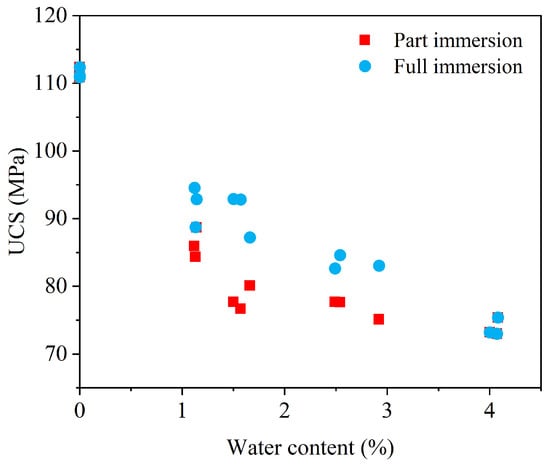
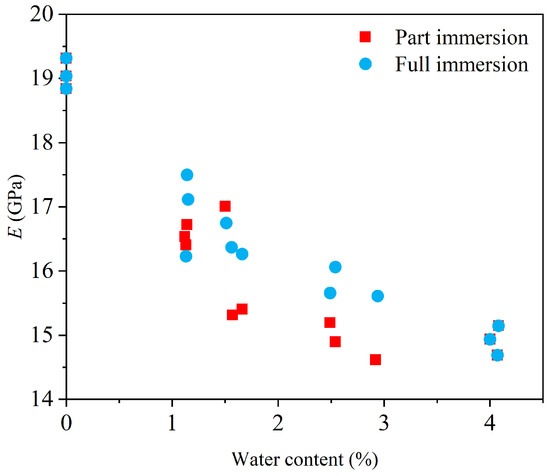
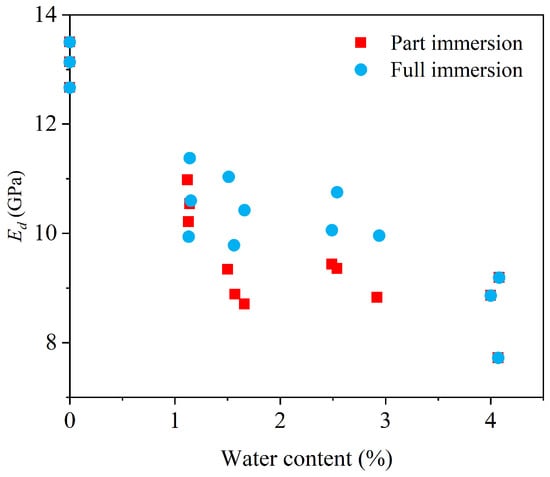
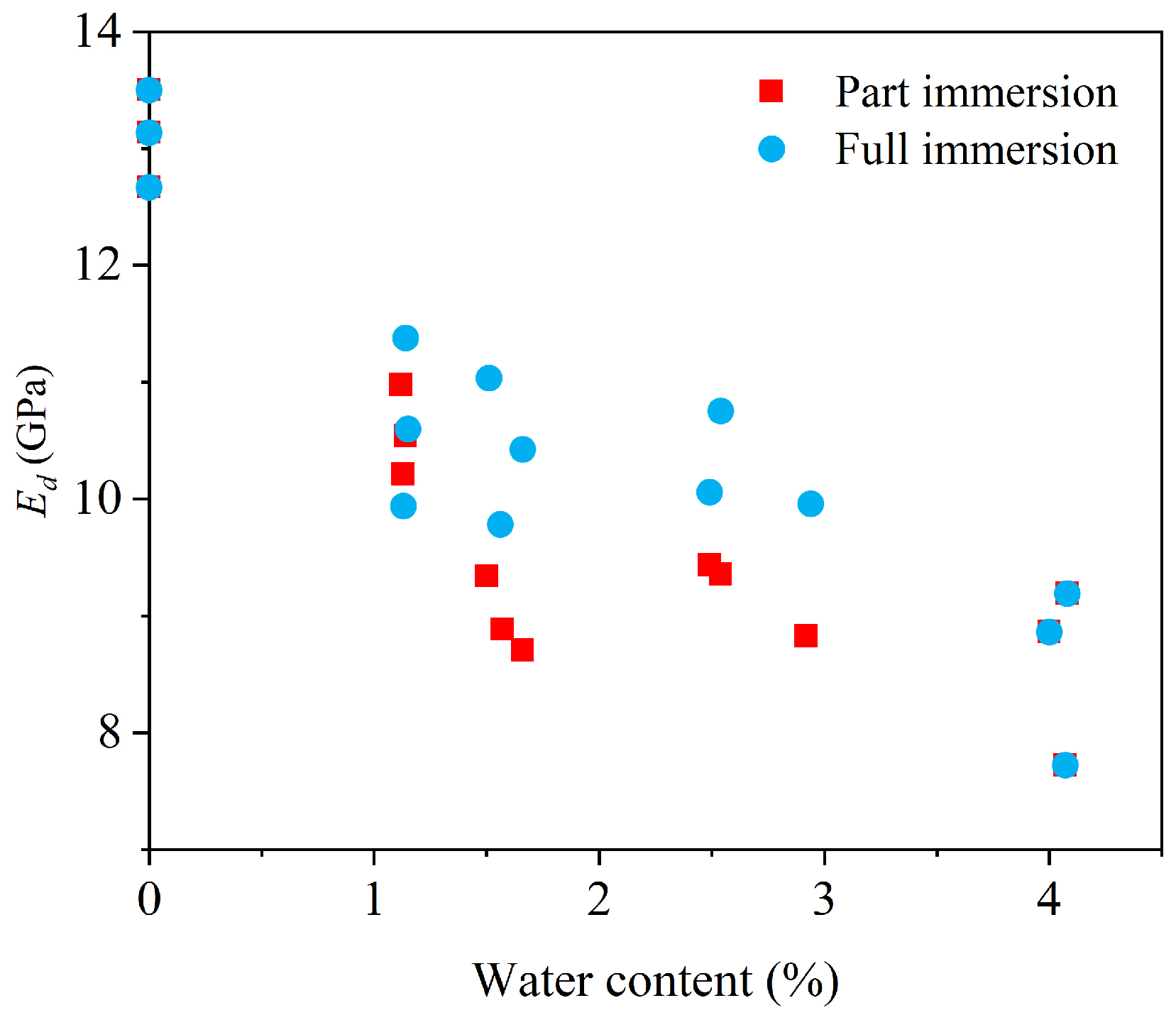
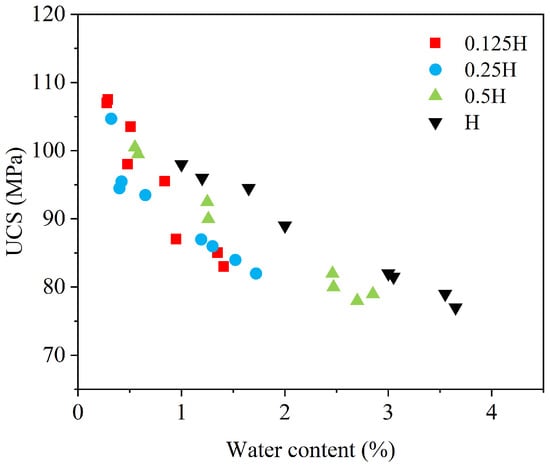
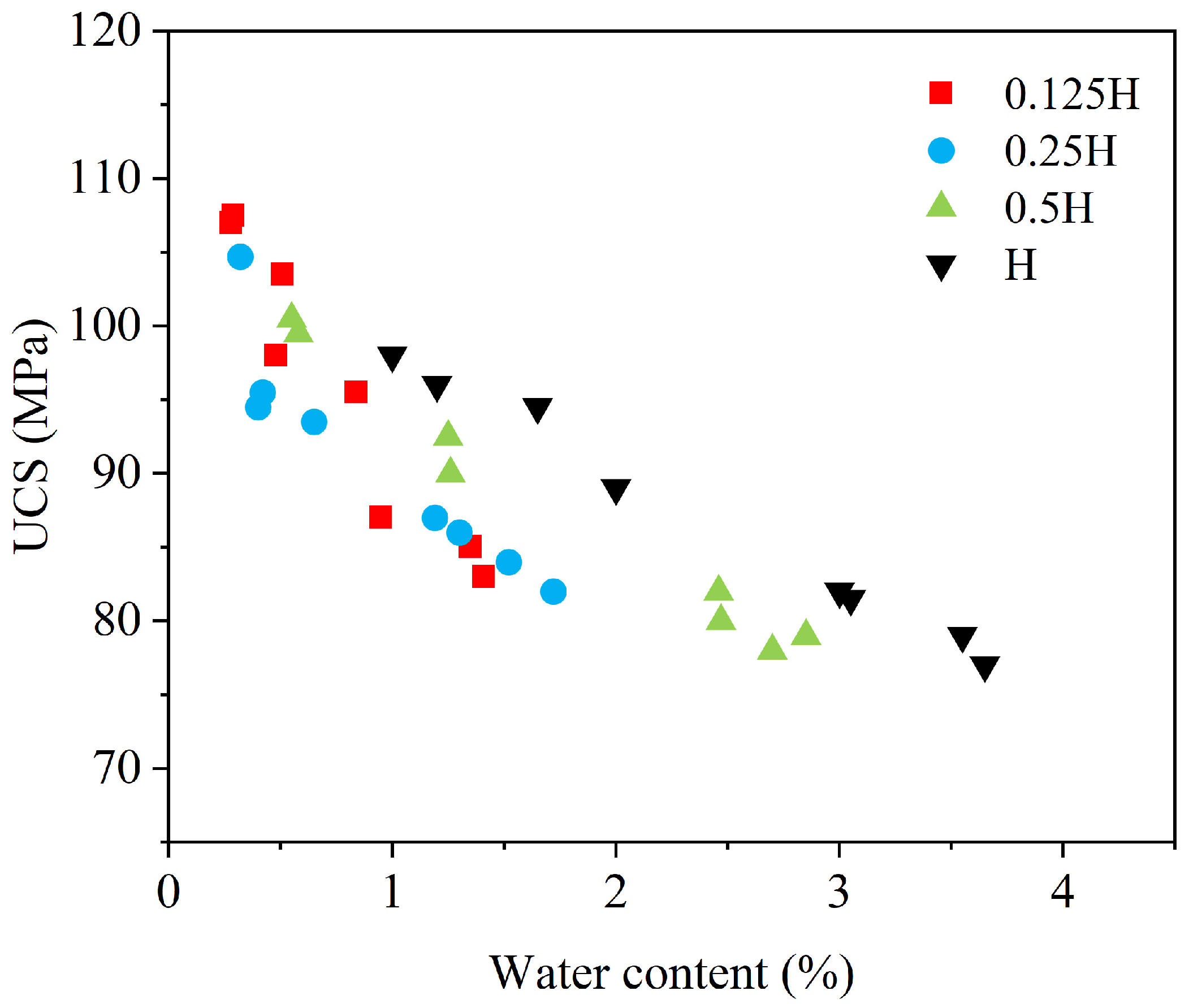
To investigate the deterioration effects induced by water distribution, Figure 7, Figure 8 and Figure 9 present the comparative evolution of three macroscopic mechanical parameters—UCS, elastic modulus, and deformation modulus—for sandstone samples under partial and full immersion modes at equivalent overall water contents.
Figure 7.
Comparison of UCS versus water content under partial and full immersion modes.
Figure 8.
Comparison of elastic modulus versus water content under partial and full immersion modes.
Figure 9.
Comparison of deformation modulus versus water content under partial and full immersion modes.
As shown, all three mechanical parameters decrease monotonically with increasing water content, regardless of the immersion mode. However, the degradation patterns differ substantially between partial and full immersion conditions. These differences highlight the critical role of spatial water distribution in influencing rock mechanical behavior, in addition to overall water content.
The findings have important implications for engineering design and stability assessment of rock-supported structures, such as foundations, underground constructions, and slopes, where localized or nonuniform wetting may exacerbate mechanical deterioration and compromise structural safety. Understanding how different water immersion modes affect UCS and stiffness parameters enables more accurate prediction of rock stability under variable hydrological conditions and informs effective risk mitigation strategies in water-sensitive construction environments.
Under partial immersion, all mechanical parameters exhibit a pronounced nonlinear degradation, characterized by a rapid initial drop followed by gradual stabilization. This behavior reflects the high sensitivity of sandstone strength to localized under partial immersion conditions. In contrast, under full immersion, the mechanical parameters show an approximately linear decline with increasing water content, indicating a relatively gradual and homogeneous deterioration process. Notably, at low water contents, the degradation caused by partial immersion is significantly more severe than that observed under full immersion at equivalent water contents.
Taking UCS (Figure 7) as an example, at 0.125 H (low water content regime), when the overall water content is only 1.13%, the UCS of the partially immersed sample decreases to 86.33 MPa, corresponding to a reduction of 25.14 MPa from the dry state. This accounts for 66.9% of the total strength loss between dry and fully saturated conditions. In comparison, under full immersion at a similar water content, the strength reduction accounts for only 51.6% of the total loss.
At 0.25 H, when water content reaches 38.9% of saturation, the strength reduction under partial immersion rapidly rises to 88.5% of the total loss, indicating that the rock has nearly reached its saturated strength level despite containing less than half of its maximum water content. By contrast, the corresponding reduction under full immersion remains significantly lower. At 0.5 H, when water content reaches 65.4% of saturation, the strength reduction under partial immersion reaches 92.1% of the total loss, whereas under full immersion, it is only 74.5%.
Compared with UCS, the elastic modulus and deformation modulus show a more gradual degradation with increasing water content. The elastic modulus decreases by approximately 21.71%, whereas the deformation modulus decreases by approximately 34.41% after water immersion, indicating that stiffness degradation is less abrupt than strength degradation. UCS is more sensitive to localized wetting because peak strength is controlled by crack initiation and coalescence in the weakest region, especially near the wet–dry interface. In contrast, the elastic and deformation moduli mainly reflect the overall deformation resistance of the sample. Under partial immersion, the dry portion can still participate in load bearing, thereby partly maintaining the apparent stiffness. Therefore, localized water distribution has a stronger effect on peak strength than on stiffness parameters. These results highlight the critical role of spatial water distribution in accelerating mechanical deterioration, especially under partial immersion conditions. From an engineering perspective, this finding is particularly relevant for foundations and underground structures exposed to localized wetting, where even small amounts of water infiltration can substantially compromise rock stability and reduce structural safety. Understanding such nonlinear degradation behavior provides essential guidance for design, risk assessment, and mitigation strategies in water-sensitive construction environments.
3.4. UCS of Sandstone Under Different Immersion Depths
Figure 10 illustrates the variation of the UCS of black sandstone with immersion time for four different immersion depths (0.125 H, 0.25 H, 0.5 H, and H). For all depths, the UCS exhibits a nonlinear decreasing trend over time, which can be divided into two characteristic stages.
Figure 10.
Variation of UCS with immersion time under different immersion depths.
Initial rapid decrease stage (0–3 h): During the early stage, the UCS of samples at all immersion depths declines sharply. For example, at 3 h, the UCS values of the 0.125 H and fully immersed (H) samples decrease from 111.47 MPa in the dry state to 91.25 MPa and 81.75 MPa, respectively.
Subsequent gradual stabilization stage (3–10 h): In this stage, the rate of strength reduction significantly slows, and the UCS gradually approaches a stable value (attenuation rates of 0.08, 0.04, 0.03, and 0.05, respectively). This behavior indicates that the internal pore structure becomes progressively saturated, and additional water uptake produces a diminishing effect on mechanical degradation.
The observed trends demonstrate that immersion depth strongly influences the rate and magnitude of UCS reduction, with deeper immersion resulting in faster initial deterioration. From an engineering perspective, these findings are directly relevant for rock-supported foundations, underground structures, and slopes, where even partial saturation can significantly reduce rock strength. Such insights are essential for designing and assessing the stability of water-sensitive construction environments.
Furthermore, a comparison across different immersion depths reveals two notable trends. At any given time, greater immersion depth corresponds to lower UCS values (H < 0.5 H < 0.25 H < 0.125 H), highlighting the controlling role of the water–rock contact area in strength degradation. As immersion time progresses, the strength differences among samples with varying depths gradually decrease. For instance, at 10 min, the average strength difference between the 0.125 H and H samples is approximately 11 MPa. At 10 h, the corresponding values decrease to 84 MPa and 78 MPa, narrowing the gap to 6 MPa. This behavior indicates that, over time, the influence of initial spatial differences in water distribution diminishes due to progressive internal water redistribution, which has important implications for predicting long-term stability of rock-supported foundations and underground structures under partial wetting conditions.
3.5. UCS of Sandstone Under Different Immersion Angles
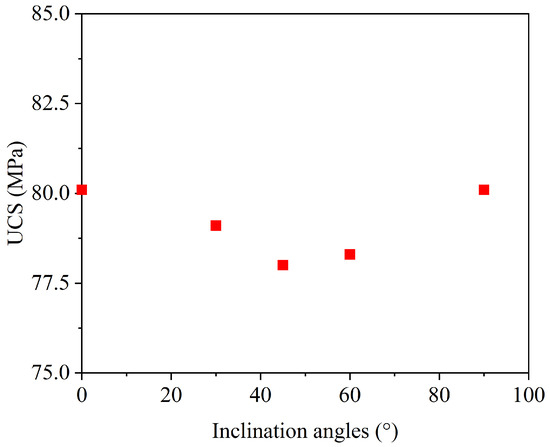
Figure 11 illustrates the variation of UCS for sandstone samples subjected to different immersion angles (0° to 90°) at a constant immersion depth (0.125 H). The UCS exhibits a slight U-shaped variation with increasing immersion angle. Specifically, the UCS first decreases from 0° to 45° and then slightly increases from 45° to 90°. However, the overall variation is relatively small, with a maximum difference of approximately 2.5 MPa among the tested angles. Therefore, this U-shaped variation should be interpreted as a weak trend rather than a strong strength-control effect, since it may also be influenced by the natural heterogeneity of sandstone and experimental scatter.
Figure 11.
UCS of sandstone samples under different immersion angles at a constant immersion depth of 0.125 H.
In the first stage (0–45°), UCS decreases from 80.09 MPa to a minimum of 77.98 MPa. This reduction may be related to the increase in the effective water–rock contact area caused by sample inclination. In the second stage (45–90°), the UCS shows a slight recovery, rising to approximately 80.09 MPa at 90, despite the higher water content due to maximized contact area. This behavior cannot be explained solely by water content and suggests a transition in the dominant mechanical mechanism, potentially associated with load alignment along the rock skeleton.
These results suggest that immersion angle may influence the mechanical response of sandstone, but its effect on peak UCS is relatively limited. Its influence is more clearly reflected in the spatial configuration of the wet–dry interface and the corresponding failure characteristics, such as damage localization and crack propagation paths. The immersion angle, therefore, serves as a key parameter in controlling damage localization and failure patterns, which is highly relevant for engineering design and risk assessment of building foundations, underground constructions, and slopes in water-sensitive environments.
3.6. Uniaxial Compression Failure Characteristics Under Different Immersion Conditions
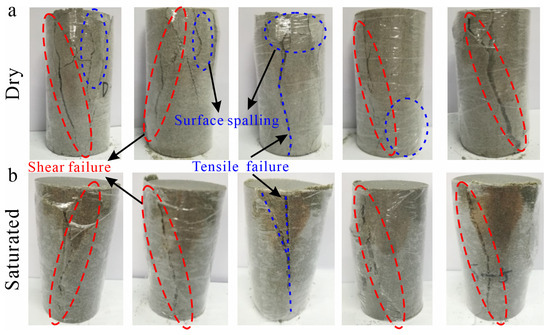
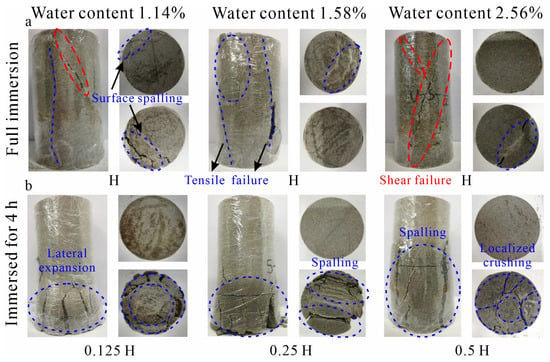
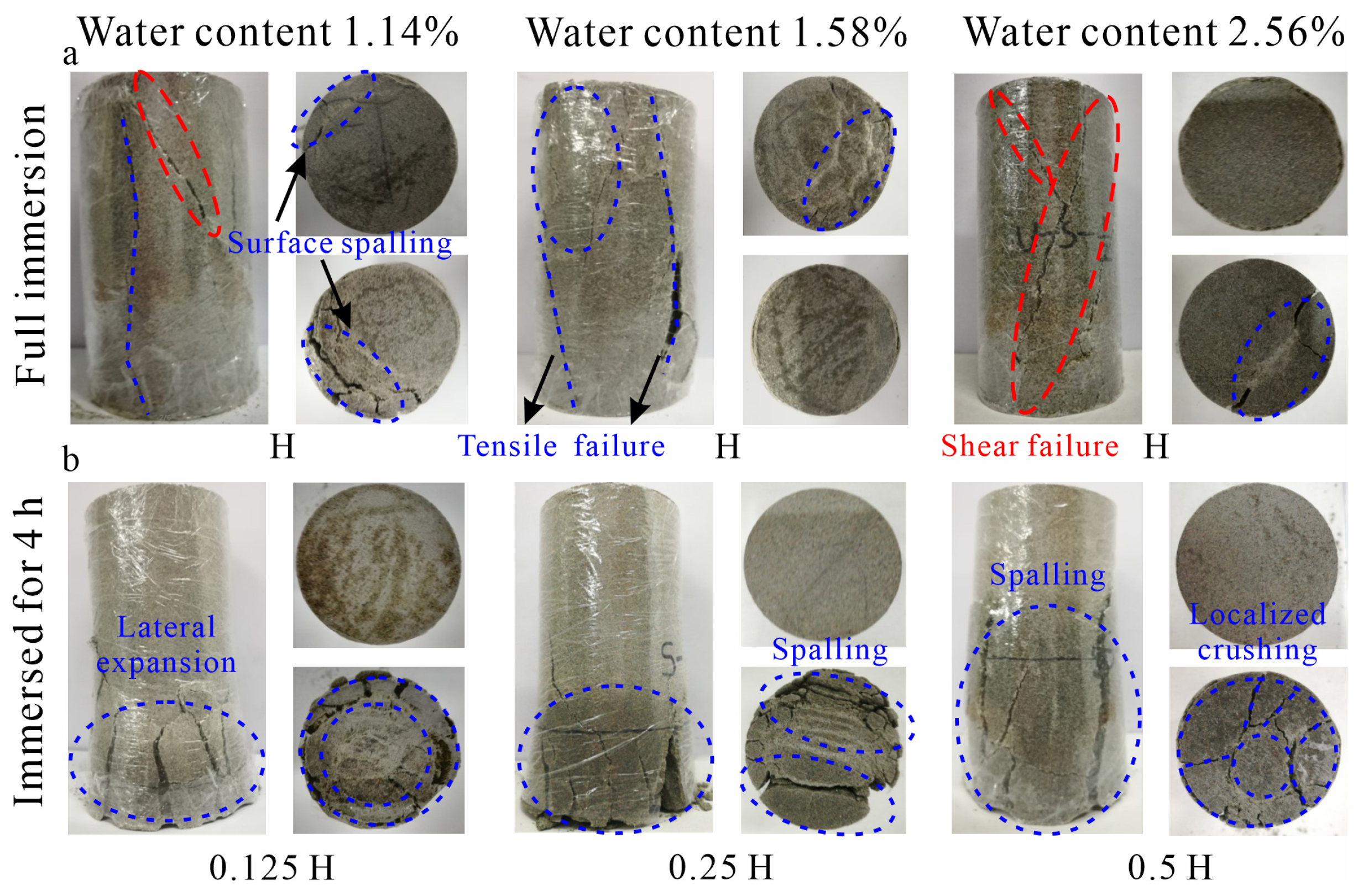
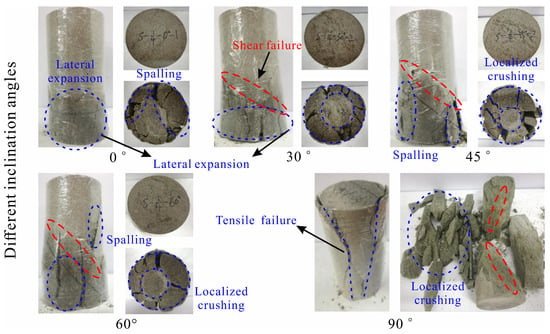
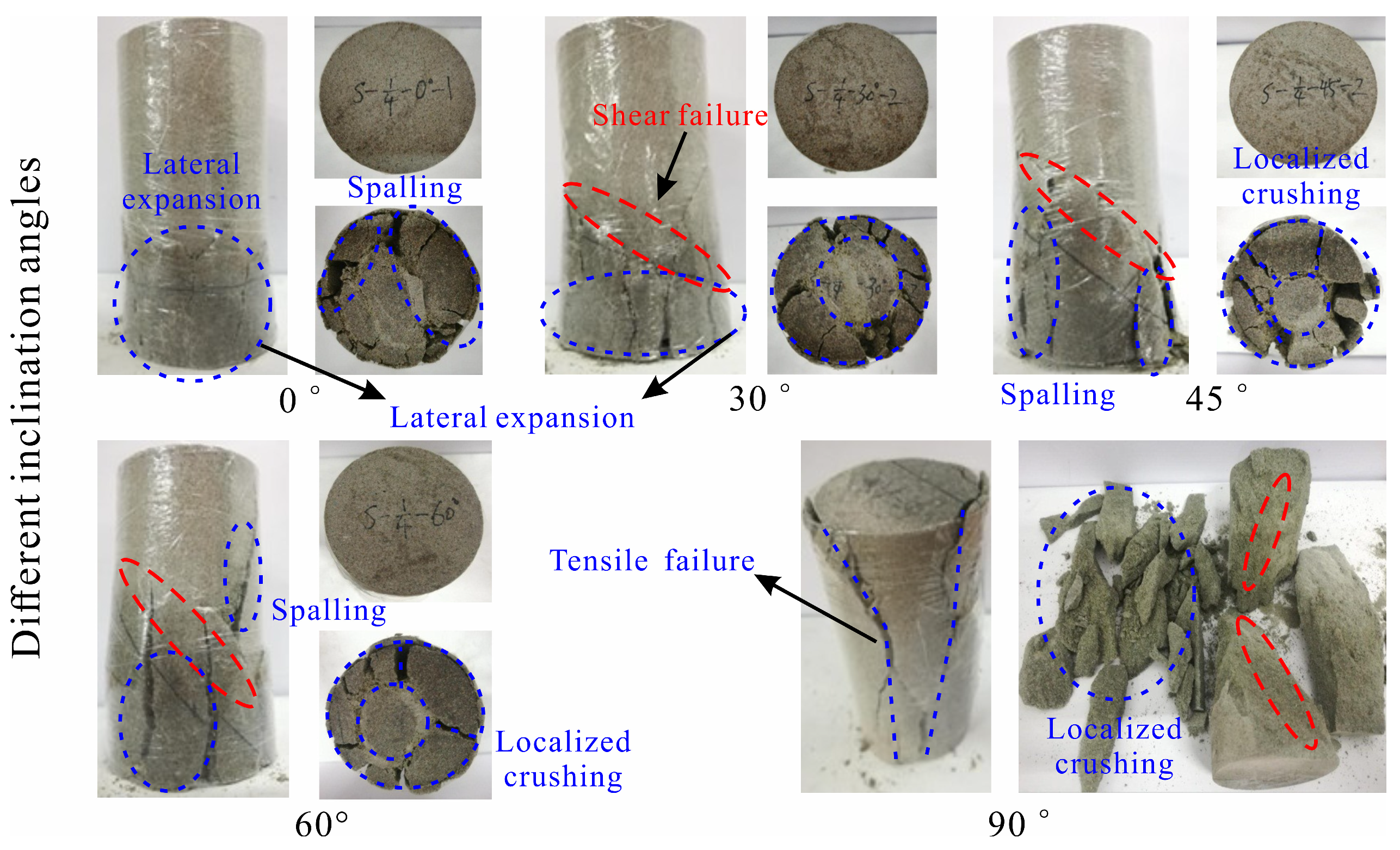
Figure 12, Figure 13 and Figure 14 illustrate the macroscopic failure characteristics of sandstone samples under uniaxial compression for different states, immersion depths, and angles. To make the identification of failure characteristics clearer, the post-failure photographs were annotated based on visible macroscopic failure characteristics. In the annotated images, red dashed ellipses indicate dominant inclined shear failure, whereas blue dashed lines and ellipses indicate tensile failure, surface spalling, lateral expansion, and localized crushing zones. These failure characteristics were identified according to the orientation of the main cracks, the location of damaged zones, the degree of fragmentation, and the integrity of the remaining sample. Overall, both the presence of water and its spatial distribution exert a significant influence on failure modes and fragmentation characteristics. Variations in water conditions not only modify the dominant failure path but also control the degree of damage localization and the integrity of the samples, which has direct implications for the stability of rock-supported foundations, underground structures, and slopes.
Figure 12.
Failure modes of sandstone under uniaxial compression for dry and saturated conditions. Red dashed ellipses indicate dominant shear failure, whereas blue dashed ellipses indicate secondary tensile failure and surface spalling: (a) dry sandstone; (b) saturated sandstone.
Figure 13.
Failure modes of sandstone under uniaxial compression under (a) full immersion and (b) partial immersion conditions. Red dashed ellipses indicate dominant shear failure, whereas blue dashed ellipses indicate tensile failure, surface spalling, lateral expansion, and localized crushing zones.
Figure 14.
Influence of immersion angle on failure modes of sandstone under partial immersion conditions. Red dashed ellipses indicate inclined shear failure, whereas blue dashed ellipses indicate lateral expansion, surface spalling, localized crushing, and tensile failure.
As shown in Figure 12, under both dry and saturated conditions, sandstone mainly exhibits inclined shear failure, accompanied by different degrees of secondary tensile failure and surface spalling. However, a notable difference is observed in the degree of fragmentation. Dry samples exhibit severe surface spalling with multiple intersecting cracks after failure, appearing highly shattered and demonstrating typical brittle fracture characteristics (Figure 12a). In contrast, saturated samples generally display more concentrated main cracks and larger remaining fragments, suggesting that full water penetration alters the crack development pattern and reduces the degree of fragmentation (Figure 12b).
Under full immersion conditions (Figure 13a), samples generally exhibit through-going failure, including dominant inclined shear failure and local tensile failure. This behavior reflects a relatively uniform stress distribution and homogeneous weakening within the rock. Nevertheless, the layered failure observed at the sample ends is primarily caused by the migration of the dry–wet interface along the height direction, emphasizing the role of spatial water gradients in controlling localized damage development.
These observations demonstrate that both water content and its spatial configuration critically influence the initiation, propagation, and localization of fractures. For engineering applications, understanding these characteristics is essential for designing and assessing the safety of foundations, underground structures, and slopes exposed to variable or localized water infiltration, where nonuniform wetting may significantly compromise rock stability and increase the risk of sudden failure.
In contrast, under partial immersion conditions (Figure 13b), the sandstone samples exhibit pronounced localized and nonuniform failure characteristics across different immersion depths (0.125 H, 0.25 H, 0.5 H). The upper dry portion remains largely intact, whereas the lower wetted portion experiences lateral expansion, spalling, and localized crushing. The annotated damaged zones show that cracks and crushing are mainly concentrated near the wetted region and the wet–dry transition zone, rather than extending through the entire sample. This behavior indicates that the water gradient induces strong mechanical heterogeneity, which governs the initiation of cracks and constrains the propagation of macroscopic failure.
From an engineering perspective, these findings highlight that nonuniform water distribution can significantly compromise the stability of rock-supported foundations and underground structures, even when only part of the rock mass is wetted. Understanding such localized failure mechanisms [24] is essential for design, risk assessment, and mitigation strategies in water-sensitive construction environments, where partial saturation may create highly heterogeneous stress fields and localized damage.
With increasing immersion angle (Figure 14), the annotated failure characteristics indicate that the spatial configuration of the wet–dry interface affects the location and form of damage evolution. At 0°, failure is concentrated in a horizontal localized crushing zone at the bottom of the sample. As the angle increases to 30° and 45°, crushed and fragmented zones develop prominently along the inclined wet–dry interface, producing a strongly asymmetric failure mode. This indicates that the interface may act as a preferential path for crack propagation under favorable stress orientation.
At higher angles (60° and 90°), the failure characteristics transition from localized crushing to a combination of axial splitting and global shear failure. Notably, under vertical partial immersion (90°), the sample exhibits severe fragmentation, localized crushing, and tensile failure, indicating a more unstable failure process associated with the redistribution of load between dry and wetted regions.
From an engineering perspective, these results demonstrate that immersion angle and spatial water distribution critically influence the localization, propagation, and severity of rock damage. Such insights are particularly relevant to the design and stability assessment of foundations, underground structures, and slopes exposed to partial or nonuniform wetting [25], where the orientation of wet–dry zones can substantially affect the failure characteristics and risk of sudden structural compromise.
4. Discussion
4.1. Deterioration Effects of Different Immersion Modes on UCS
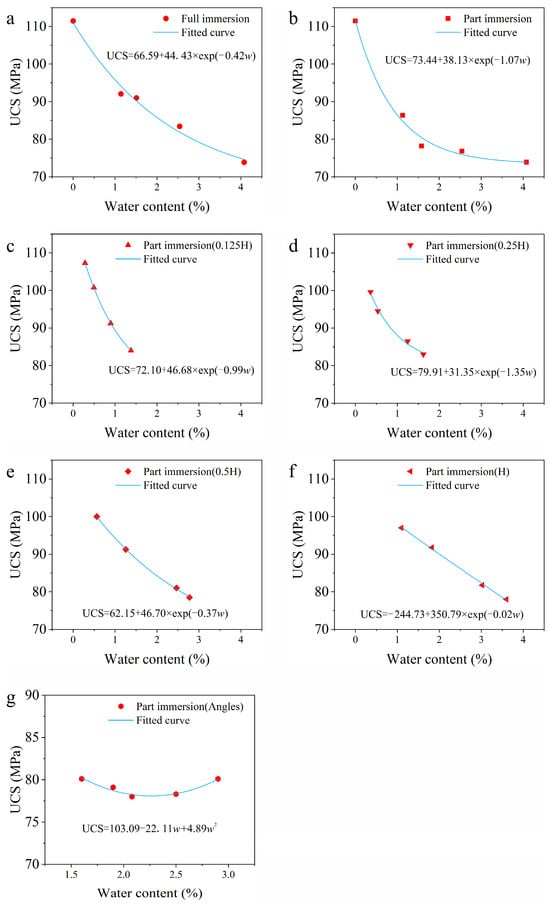
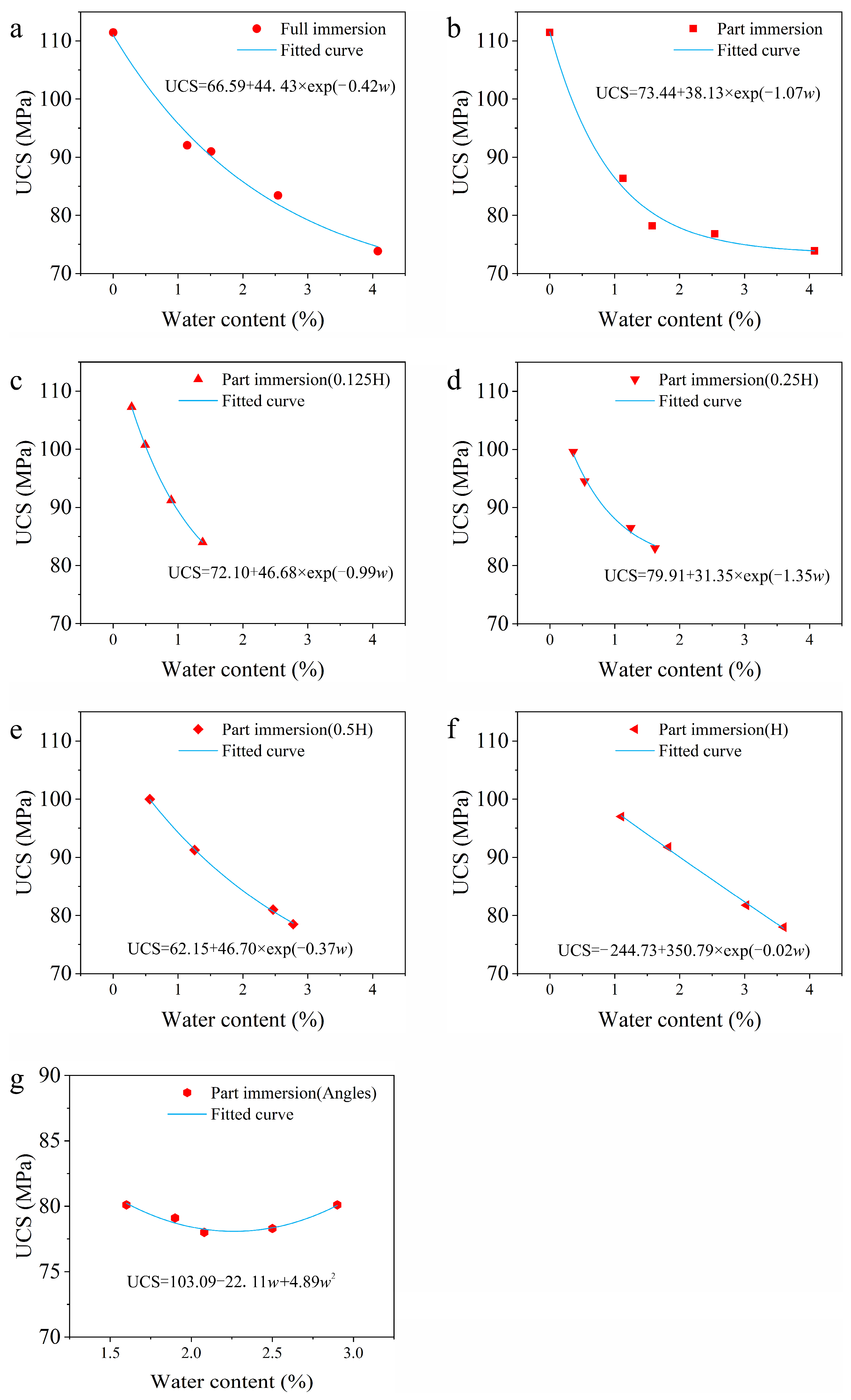
The fitting results shown in Figure 15 quantitatively reveal the intrinsic relationship between water content and rock deterioration under different immersion conditions. The pronounced difference in fitting coefficients (−0.42 vs. −1.07) between Figure 15a,b indicates that full immersion is dominated by a global, homogeneous weakening process, whereas partial immersion is governed by pronounced localized effects, with the saturated lower region acting as a critical weak zone that controls the overall stability of the sample. The strong stiffness contrast between the dry and wet regions induces stress concentrations and strain incompatibilities near the wet–dry interface, promoting premature localized failure [26,27]. Consequently, substantial reductions in UCS can occur even at relatively low overall water contents.
Figure 15.
Relationship between UCS and water content under different immersion conditions and corresponding fitting equations: (a) full immersion; (b) partial immersion; (c–f) partial immersion with different immersion depths of 0.125 H, 0.25 H, 0.5 H, and H, respectively; (g) partial immersion under different immersion angles.
With increasing immersion depth (Figure 15c–f), the shape of the fitting curves gradually transitions from a steep “L-type” pattern (0.125 H) to a nearly linear trend (H). This evolution reflects the progressive reduction of internal water gradients [28,29]. At shallow immersion depths, failure is primarily controlled by localized stress concentrations, whereas at greater depths, stress distribution becomes more uniform, leading to a gradual shift in the dominant damage mechanism from localized crushing to global shear failure.
The U-shaped fitting curve in Figure 15g further highlights the controlling role of interface geometry in damage evolution. As the immersion angle increases from 0° to 45°, the inclined wet–dry interface may act as an induced structural weak plane. According to the Mohr–Coulomb criterion [30], shear stress along the interface is maximized at intermediate orientations, making the region highly susceptible to shear slip. The presence of water may further reduce the shear resistance along the interface, promoting crack initiation and propagation.
As the angle increases from 45° to 90°, a slight recovery in UCS is observed. This behavior can be explained by a transition in the load-bearing mechanism. Under vertical partial immersion, the sample can be idealized as a parallel load-bearing system, composed of a dry, high-stiffness region and a saturated, weakened region. The dry portion acts as a structural skeleton, sustaining a significant portion of the applied stress and constraining deformation in the saturated zone [19,20]. This interaction mitigates the weakening effect of water, resulting in a partial recovery of macroscopic strength, despite the higher water content.
These results indicate that the degradation of rock strength is influenced not only by the overall water content but, more critically, by the spatial distribution and geometric configuration of water, which govern stress redistribution and the initiation and propagation of failure paths. From an engineering perspective, this finding emphasizes the importance of accounting for localized wetting and water gradients in the design and stability assessment of foundations, underground structures, and slopes [31], where nonuniform water distribution can substantially affect rock performance and structural safety.
4.2. Damage Evolution and Failure Mechanisms Under Different Spatial Water Distributions
The macroscopic strength degradation (Figure 15) and failure characteristics (Figure 12, Figure 13 and Figure 14) discussed in Section 4.1 can be fundamentally attributed to microscopic weakening mechanisms and their influence on crack evolution processes [32]. Water distribution introduces pronounced mechanical heterogeneity at the grain scale, which affects crack initiation, propagation, and coalescence [33,34].
At the microscopic level, water weakens the rock matrix through both physicochemical and mechanical effects. It reduces intergranular bonding strength and promotes subcritical crack growth by lowering the surface energy required for crack propagation [11,14]. Additionally, water films along grain boundaries facilitate intergranular sliding, decreasing local stiffness and enhancing deformability in wetted zones. In contrast, dry regions retain relatively high stiffness and strength, creating a strong mechanical contrast within the sample (Figure 7).
This heterogeneity results in deformation incompatibility between wet and dry zones. At the wet–dry interface, differences in stiffness and deformation capacity generate stress concentrations and strain discontinuities, serving as sites for microcrack initiation [35]. Once initiated, microcracks preferentially propagate through the wetted regions, where resistance is lower, forming localized damage zones. This mechanism explains the observed transition from distributed microcracking to localized macroscopic failure under nonuniform water conditions.
Furthermore, the inclination of the wet–dry interface may modulate microcrack evolution by altering stress decomposition. From 0° to 45°, increasing shear stress and reduced normal constraint promote interfacial sliding, while water lubrication accelerates crack coalescence along the interface, resulting in pronounced weakening (Figure 14). From 45° to 90°, crack propagation deviates from the interface into the surrounding matrix, accompanied by increased load sharing by the dry region. This transition from interface slip to distributed cracking explains the strength recovery observed at higher angles.
Overall, the macroscopic responses of the sandstone samples can be interpreted as the result of coupled processes involving microscopic weakening, interface-controlled crack propagation, and nonuniform damage evolution. These findings provide a mechanistic explanation for the dependence of rock strength and failure characteristics on the spatial distribution and geometric configuration of water, which is highly relevant for engineering design and risk assessment of foundations, underground structures, and slopes in water-sensitive construction environments. Understanding these mechanisms allows engineers to anticipate localized failures and optimize design and mitigation strategies in rock-supported constructions subjected to partial or nonuniform wetting.
5. Conclusions
Based on experimental investigations and analyses of black sandstone under various water distribution states, this study overcomes the limitations of traditional assessments based solely on overall water content. The primary conclusions are summarized as follows:
- Partial immersion induces pronounced nonlinear strength reduction. Under identical overall water contents, strength deterioration under nonuniform water distribution far exceeds that observed under uniform full immersion. While full immersion results in a mild and linear decline in UCS, partial immersion produces a negative exponential drop. Notably, at only 38.9% of the saturated water content, strength reduction reaches 88.5% of the total loss, highlighting the extreme sensitivity of sandstone to localized wetting in engineering contexts.
- Water gradients generate internal stiffness contrasts and localized failure characteristics. Localized water accumulation produces distinct heterogeneity in mechanical properties, causing strain incompatibility and stress concentration at the wet–dry interface. This localized weakening shifts the failure mode from global shear to premature lateral expansion and localized crushing in wetted zones, confirming that water-rich regions act as critical triggers for rock instability in foundations, underground structures, and slope-adjacent constructions.
- Immersion angle governs a slight U-shaped evolution in strength. As an independent geometric factor, immersion angle significantly affects load-bearing capacity. At a constant immersion depth, UCS exhibits a non-monotonic trend, initially decreasing and subsequently recovering as the angle increases from 0° to 90°. The inclined wet–dry interface serves as an induced weak plane, with the minimum UCS (77.98 MPa) occurring at approximately 45°, where interfacial shear stress and lubrication effects are maximized.
- Vertical partial immersion promotes strength recovery via a parallel load-bearing mechanism. At 90°, despite the highest water content, UCS anomalously recovers to values comparable to horizontal immersion. In this configuration, the dry zone can function as a load-bearing skeleton, constraining deformation and delaying failure in the saturated region. These findings indicate that, in complex engineering environments, the spatial distribution and geometric configuration of water exert a more critical influence on rock stability than the overall water content alone.
Collectively, these conclusions provide a mechanistic understanding of how localized and nonuniform water infiltration affects strength degradation, failure characteristics, and damage localization. Such insights are directly applicable to the design, stability assessment, and risk mitigation of foundations, underground structures, and slopes in water-sensitive construction environments, enabling engineers to anticipate localized failures and optimize structural safety.
Author Contributions
Conceptualization, S.T. and C.Z.; methodology, Y.L., B.G., P.C. and S.D.; software, Y.L., B.G. and P.C.; validation, S.T., S.D. and C.Z.; formal analysis, B.G., P.C. and S.D.; investigation, B.G., P.C. and S.D.; resources, S.T. and C.Z.; data curation, Y.L., B.G., P.C. and S.D.; writing—original draft preparation, Y.L., B.G. and P.C.; writing—review and editing, S.T. and C.Z.; visualization, S.D.; supervision, S.T.; project administration, S.T. All authors have read and agreed to the published version of the manuscript.
Funding
This research was financially supported by the Key Research and Development Program of Guangxi Zhuang Autonomous Region (Grant Nos. GuiKe FN2600640101 and GuiKe AB24010069).
Data Availability Statement
Data will be made available upon request.
Conflicts of Interest
Authors Yiming Li, Bin Gan, and Peizhao Chen are employed by the company Guangxi Water & Power Design Institute Co., Ltd. The remaining authors declare that the research was conducted in the absence of any commercial or financial relationships that could be construed as a potential conflict of interest.
References
- Men, Y.; Zhang, Z.; Wang, J.; Yu, X.; Wang, C.; Wang, K.; Ba, X. Numerical analysis method of water inrush during blasting in water-resistant rock mass tunnels based on FEM-SPH coupling algorithm. Buildings 2025, 15, 1765. [Google Scholar] [CrossRef] [Scilit]
- Ding, S.; Tang, S.B.; Jia, H.L.; Zhao, Z.R.; Xiao, H.P.; Chen, P.Z. Spatiotemporal water distribution governs anisotropic mechanical weakening and localized tensile failure in sandstone. J. Rock Mech. Geotech. Eng. 2025. [Google Scholar] [CrossRef] [Scilit]
- Jia, H.L.; Xiao, K.Y.; Hao, Y.B.; Jin, L.; Wei, Y.; Tan, X.J. Moisture migration within the melting laps during construction controls frost heaving damage of lining in permafrost tunnels. Tunn. Undergr. Space Technol. 2026, 167, 107107. [Google Scholar] [CrossRef] [Scilit]
- Shang, D.L.; Zhao, Z.H.; Dou, Z.H.; Yang, Q. Shear behaviors of granite fractures immersed in chemical solutions. Eng. Geol. 2020, 279, 105869. [Google Scholar] [CrossRef] [Scilit]
- Ma, H.F.; Song, Y.Q.; Chen, S.J.; Yin, D.W.; Zheng, J.J.; Shen, F.X.; Li, X.S.; Ma, Q. Experimental investigation on the mechanical behavior and damage evolution mechanism of water-immersed gypsum rock. Rock Mech. Rock Eng. 2021, 54, 4929–4948. [Google Scholar] [CrossRef] [Scilit]
- Hashiba, K.; Fukui, K. Effect of water on the deformation and failure of rock in uniaxial tension. Rock Mech. Rock Eng. 2014, 48, 1751–1761. [Google Scholar] [CrossRef] [Scilit]
- Zou, X.W.; Zhou, T.; Li, G.; Hu, Y.; Deng, B.; Yang, T. Intelligent inversion analysis of surrounding rock parameters and deformation characteristics of a water diversion surge shaft. Designs 2024, 8, 116. [Google Scholar] [CrossRef] [Scilit]
- Sun, X.M.; Ding, J.X.; He, L.S.; Shi, F.K.; Miao, C.Y.; Zhang, Y.; Zhu, M.Q.; Yang, J.K.; Xie, C. Quantitative characterization of water absorption pore structure evolution in sandstone based on nitrogen adsorption and mercury intrusion. J. Cent. South Univ. 2024, 31, 182–195. [Google Scholar] [CrossRef] [Scilit]
- Tang, S.B. The effects of water on the strength of black sandstone in a brittle regime. Eng. Geol. 2018, 239, 167–178. [Google Scholar] [CrossRef] [Scilit]
- Silva, M.R.; Schroeder, C.; Verbrugge, J.C. Unsaturated rock mechanics applied to a low-porosity shale. Eng. Geol. 2008, 97, 42–52. [Google Scholar] [CrossRef] [Scilit]
- Cai, G.Q.; Yin, F.J.; Liu, H.S.; Su, Y.L.; Yang, R. Creep behavior and microstructural evolution of unsaturated red-bed mudstone under coupled matric suction-stress effects. Eng. Geol. 2026, 363, 108558. [Google Scholar] [CrossRef] [Scilit]
- Cai, X.; Zhou, Z.L.; Liu, K.W.; Du, X.M.; Zang, H.Z. Water-weakening effects on the mechanical behavior of different rock types: Phenomena and mechanisms. Appl. Sci. 2019, 20, 4450. [Google Scholar] [CrossRef] [Scilit]
- Zhang, Z.Z.; Gao, F. Experimental investigation on the energy evolution of dry and water-saturated red sandstones. Int. J. Min. Sci. Technol. 2015, 25, 383–388. [Google Scholar] [CrossRef] [Scilit]
- Yu, L.Q.; Yao, Q.L.; Liu, J.F.; Li, X.H.; Chong, Z.H.; Wang, F.R.; Xie, H.X.; Li, Y.H. Effect of spatial distribution of water on rock mechanical properties and characterization of water diffusion. Constr. Build. Mater. 2025, 470, 140551. [Google Scholar] [CrossRef] [Scilit]
- Chen, Y.L.; Irfan, M.; Uchimura, T.; Cheng, G.W.; Nie, W. Elastic wave velocity monitoring as an emerging technique for rainfall-induced landslide prediction. Landslides 2018, 15, 1155–1172. [Google Scholar] [CrossRef] [Scilit]
- Zhao, N.H.; Hu, B.; Yan, E.; Yi, Q.L. Research on the creep mechanism of Huangniba landslide in the Three Gorges Reservoir Area of China considering the seepage–stress coupling effect. Bull. Eng. Geol. Environ. 2019, 78, 4107–4121. [Google Scholar] [CrossRef] [Scilit]
- Zhao, Z.; Wu, P.; Wang, L.; Li, M.; Mao, X.B.; Chen, L. Influence of moisture content on creep mechanical characteristic and mic-fracture behavior of water-bearing coal specimen. Geofluids 2022, 1, 4014462. [Google Scholar] [CrossRef] [Scilit]
- Zhou, Z.L.; Cai, X.; Cao, W.Z.; Li, X.B.; Xiong, C. Influence of water content on mechanical properties of rock in both saturation and drying processes. Rock Mech. Rock Eng. 2016, 49, 3009–3025. [Google Scholar] [CrossRef] [Scilit]
- Ding, S.; Tang, S.B. Mechanical behavior evolution and failure characteristics of saturated and dry rocks under different water pressure environments. Int. J. Rock Mech. Min. Sci. 2024, 178, 105777. [Google Scholar] [CrossRef] [Scilit]
- Ding, S.; Tang, S.B. Creep behavior of rocks under coupled high stress and water pressure. Eng. Geol. 2025, 363, 108562. [Google Scholar] [CrossRef] [Scilit]
- Song, M.W.; Zhang, W.Z.; Zou, Y.F.; Chen, J.J. Numerical simulation of uniaxial compressive strength and failure characteristics of non-uniform water-bearing sandstone. Materials 2023, 16, 6396. [Google Scholar] [CrossRef] [Scilit] [PubMed]
- Li, G.H.; Wang, Y.T.; Wang, D.; Yang, X.X.; Yang, S.P.; Zhang, S.P.; Li, C.J.; Teng, R.X. An unsteady creep model for a rock under different moisture contents. Mech. Time-Depend. Mater. 2023, 27, 291–305. [Google Scholar] [CrossRef] [Scilit]
- Brown, E.T. Rock Characterization, Testing & Monitoring: ISRM Suggested Methods; Published for the Commission on Testing Methods, International Society for Rock Mechanics; Pergamon Press: Oxford, UK, 1981. [Google Scholar]
- Xu, J.; Zheng, L.; Song, G.; Zhang, D.; Sheil, B.; Marshall, A.M. Effects of embedded walls on tunnelling-induced sandy ground displacements: A numerical investigation. Géotechnique 2025, 75, 472–485. [Google Scholar] [CrossRef] [Scilit]
- Xu, J.; Franza, A.; Marshall, A.M.; Losacco, N.; Boldini, D. Tunnel–framed building interaction: Comparison between raft and separate footing foundations. Géotechnique 2021, 71, 631–644. [Google Scholar] [CrossRef] [Scilit]
- Huang, S.B.; Yu, S.L. Effect of water saturation on the strength of sandstones: Experimental investigation and statistical analysis. Bull. Eng. Geol. Environ. 2022, 81, 323. [Google Scholar] [CrossRef] [Scilit]
- Tan, L.H.; Cai, X.; Ren, T.; Yang, X.H.; Rui, Y.C. DEM numerical study on mechanical behaviour of coal with different water distribution models. Struct. Eng. Mech. 2021, 80, 523–538. [Google Scholar] [CrossRef]
- Jia, H.L.; Liu, X.H.; Tan, X.J.; Yang, L.; Li, J.L. Ultrasonic and NMR-based estimation of the microstructure at ice-rock interface. Int. J. Rock Mech. Min. Sci. 2025, 189, 106091. [Google Scholar] [CrossRef] [Scilit]
- Zhang, C.; Bai, Q.; Han, P. A review of water rock interaction in underground coal mining: Problems and analysis. Bull. Eng. Geol. Environ. 2023, 82, 157. [Google Scholar] [CrossRef] [Scilit]
- Singh, A.; Ayothiraman, R.; Rao, K.S. Failure criteria for isotropic rocks using a smooth approximation of modified mohr–coulomb failure function. Geotech. Geol. Eng. 2020, 38, 4385–4404. [Google Scholar] [CrossRef] [Scilit]
- Xu, J.M.; Gao, M.; Wang, Y.K.; Yu, Z.H.; Zhao, J.Y.; DeJong, M.J. Numerical investigation of the effects of separated footings on tunnel-soil-structure interaction. J. Geotech. Geoenviron. 2025, 151, 04025057. [Google Scholar] [CrossRef] [Scilit]
- Cheng, T.; Li, H.R.; He, M.C.; Xiao, Y.M. Strength and acoustic emission weakening mechanism of sandstone after prolonged water immersion: Insights from micro-fracture. Eng. Fract. Mech. 2023, 291, 109571. [Google Scholar] [CrossRef] [Scilit]
- Hadizadeh, J.; Law, R.D. Water-weakening of sandstone and quartzite deformed at various stress and strain rates. Int. J. Rock Mech. Min. Sci. 1991, 28, 431–439. [Google Scholar] [CrossRef] [Scilit]
- Baud, P.; Zhu, W.; Wong, T.F. Failure mode and weakening effect of water on sandstone. J. Geophys. Res. Solid Earth 2000, 105, 16371–16389. [Google Scholar] [CrossRef] [Scilit]
- Liu, H.L.; Zhu, W.C.; Yu, Y.J.; Xu, T.; Li, R.F.; Liu, X.G. Effect of water imbibition on uniaxial compression strength of sandstone. Int. J. Rock Mech. Min. Sci. 2020, 127, 104200. [Google Scholar] [CrossRef] [Scilit]
Disclaimer/Publisher’s Note: The statements, opinions and data contained in all publications are solely those of the individual author(s) and contributor(s) and not of MDPI and/or the editor(s). MDPI and/or the editor(s) disclaim responsibility for any injury to people or property resulting from any ideas, methods, instructions or products referred to in the content. |
© 2026 by the authors. Licensee MDPI, Basel, Switzerland. This article is an open access article distributed under the terms and conditions of the Creative Commons Attribution (CC BY) license.