


Abstract
Multifunctional hybrid spheres were developed via ionic gelation, using sodium alginate as an encapsulating matrix to integrate TiO2, Fe3O4, activated carbon, hypochlorite-impregnated clinoptilolite zeolite, and metallic copper, followed by chitosan coating and glutaraldehyde cross-linking to enhance mechanical stability. The material combines photocatalytic, adsorbent, antimicrobial, and magnetic functions in a single system, expected to support partial treatment of contaminated water. X-ray diffraction confirmed the expected crystalline phases with no impurities. Physicochemical evaluation showed reductions in turbidity (1.8 to 0.7 NTU), total hardness (306 to 150 mg/L), iron (0.4 to 0.01 mg/L), and lead (<0.001 mg/L), while free residual chlorine remained within permissible limits. Microbiologically, fecal coliforms decreased from 83 to <1.5 CFU/100 mL and total coliforms from 839 to 19 CFU/100 mL. Photocatalytic activity, evaluated using methylene blue, showed an absorbance decrease from 0.38 to 0.17 A.U. over 4 h, corresponding to a blank-corrected removal of 95.5% relative to clean water, fitted to a pseudo-first-order kinetic model (R2 = 0.8868). These results demonstrate a synergistic effect among adsorption, photocatalysis, disinfection, and magnetic recovery, positioning the hybrid spheres as a promising alternative for sustainable water treatment technologies.
1. Introduction
Access to safe drinking water remains one of the principal challenges for sustainable development and public health. According to the World Health Organization (WHO) and UNICEF, around 2.2 billion people lack access to safely managed drinking water services, while the growing discharge of domestic and industrial wastewater increases the presence of organic contaminants, pathogenic microorganisms, heavy metals, and microplastics, among other emerging contaminants in bodies of water [1,2,3]. This situation has driven the development of more efficient water purification technologies capable of simultaneously addressing chemical and microbiological contamination problems. Among the most widely used technologies are adsorption, heterogeneous photocatalysis, ion exchange, chemical disinfection, and magnetic separation processes. However, most of these methods act on only one specific type of contaminant; this situation implies the implementation of numerous consecutive treatment stages, increasing operational costs and making recovery of the materials used more difficult [4]. As a result, in recent years there has been growing interest in the development of multifunctional hybrid materials capable of integrating different removal mechanisms within a single structure [5]. Hybrid materials based on biodegradable polymer matrices represent one of the most promising strategies for this purpose. Particularly, sodium alginate has been widely used as an encapsulating material due to its biocompatibility, low cost, ease of processing through ionic gelation, and high capacity to immobilize functional particles without significantly affecting their activity [6]. Encapsulating active materials within alginate matrices makes it possible to obtain systems that are easily recoverable, reusable, and pose a lower risk of nanoparticle release into the environment [7,8]. Among the functional materials most widely used for water treatment, titanium dioxide (TiO2) remains the reference photocatalyst due to its high chemical stability, low toxicity, and ability to generate reactive oxygen species under irradiation, promoting the degradation of dyes, organic contaminants, and microorganisms [9,10]. In parallel, magnetite (Fe3O4) has attracted considerable interest in its magnetic properties, which allow efficient recovery of the material through the use of external magnetic fields, reducing losses during operation and facilitating its reuse [11,12,13]. Activated carbon, for its part, remains one of the most efficient adsorbents owing to its high surface area and abundance of micropores, which enable the retention of organic compounds, dyes, pharmaceutical residues, and several emerging contaminants [14,15]. Furthermore, natural zeolites, particularly clinoptilolite, exhibit high ion-exchange and adsorption capacity and are used to remove heavy metals [16,17] and to incorporate antimicrobial agents through cationic exchange or chemical impregnation processes [18]. The incorporation of antimicrobial materials constitutes another relevant aspect of modern water treatment systems. Metallic copper (Cu) has been extensively studied for its antimicrobial properties, attributed mainly to the gradual release of Cu+ and Cu2+ ions in aqueous media, as well as to the generation of reactive oxygen species that can cause oxidative damage to the cell membranes, proteins, and genetic material of various pathogenic microorganisms [19,20]. Owing to these characteristics, copper has been used in disinfection and microbiological control applications, contributing to the inactivation of bacteria, viruses, and other microorganisms present in water. Similarly, the use of hypochlorite supported on porous materials such as zeolites represents an alternative for prolonging the release of disinfecting agents and reducing the direct consumption of chemical products during treatment [21]. To improve the mechanical stability of alginate matrices, several studies have reported using chitosan coatings cross-linked with glutaraldehyde. This system increases the structural strength of the beads, reduces the loss of active particles during operation, and considerably improves their reusability over multiple treatment cycles [22,23]. In addition, both alginate and chitosan are biodegradable biopolymers, which favors the development of environmentally sustainable materials. While numerous studies have individually evaluated photocatalytic, adsorbent, magnetic, or antimicrobial materials, few studies to date have focused on integrating all of these mechanisms within a single reusable hybrid system that simultaneously combines photocatalytic degradation, adsorption, disinfection, and magnetic recovery. The development of this type of material represents a promising strategy for simplifying treatment processes, increasing the general efficiency of the system, and reducing the costs associated with operating and recovering the material. In this context, the present study proposes the development of multifunctional hybrid spheres obtained through ionic gelation of sodium alginate, incorporating TiO2, Fe3O4, activated carbon, hypochlorite-loaded clinoptilolite zeolite, and Cu as functional materials. The spheres are subsequently coated with chitosan and cross-linked with glutaraldehyde to improve their mechanical stability and reusability. It is expected that the synergistic combination of adsorption, photocatalysis, ion exchange, antimicrobial activity, and magnetic separation mechanisms will enable the development of a biodegradable, reusable, and low-cost material with high potential for applications in water treatment and sanitation.
2. Materials and Methods
2.1. Manufacturing of Multifunctional Spheres
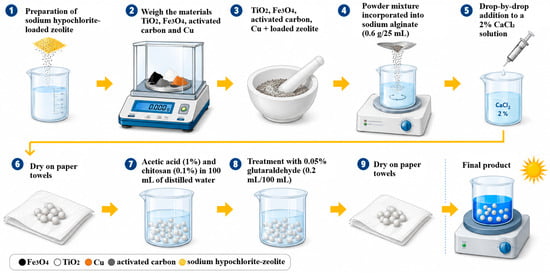
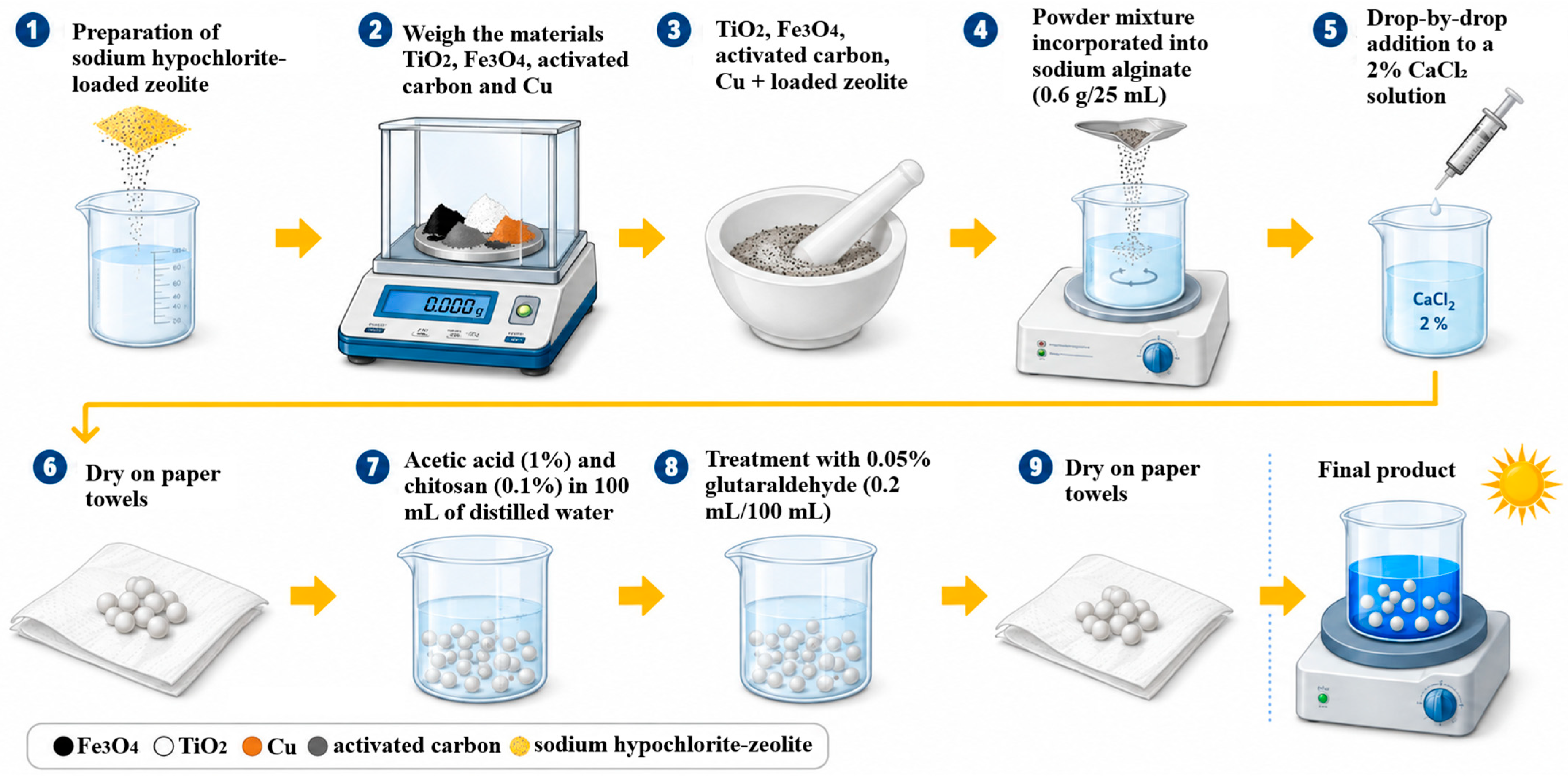
The multifunctional beads were synthesized through an ionic gelation process using sodium alginate (Alday Ingredientes, Puebla, México) as the encapsulating matrix to integrate materials with photocatalytic, adsorbent, antimicrobial, and magnetic properties. Beforehand, 0.10 g of natural clinoptilolite-type zeolite (10 μm, 99%, Mexsert SA, Aguascalientes, Mexico) was washed with distilled water to remove impurities and subsequently impregnated in 50 mL of a 2% sodium hypochlorite (Sigma-Aldrich, St. Louis, MO, USA) solution for 2 h. At the end of this process, the zeolite was drained to preserve the disinfecting agent adsorbed within its porous structure. For the preparation of the polymeric matrix, 0.60 g of sodium alginate was dissolved in 25 mL of distilled water under constant stirring until a homogeneous solution was obtained, which was left to hydrate for 30 min. Subsequently, 0.10 g of TiO2 (5 μm, 99.9%, Sigma-Aldrich, St. Louis, MO, USA), 0.06 g of Fe3O4 (5 μm, 99.9%, Sigma-Aldrich, St. Louis, MO, USA), 0.15 g of activated carbon, 0.10 g of hypochlorite-impregnated zeolite, and 0.02 g of metallic copper (~1 μm, 99.9%, SkySpring Nanomaterials, Inc. Houston, TX, USA) were gradually incorporated, homogenizing the suspension until a uniform distribution of the materials was achieved. The resulting mixture was transferred to a syringe and added dropwise into 100 mL of a 2% (w/v) CaCl2 (Sigma-Aldrich, St. Louis, MO, USA) solution, where immediate gelation of the alginate occurred, forming spheres, which remained in the solution for 7 min to complete cross-linking and were subsequently washed with distilled water. The obtained spheres were coated by immersion in a 0.1% chitosan (Encapsuladoras México, CDMX, México) solution prepared in 1% acetic acid for 5 min under gentle stirring and were then subjected to treatment with 0.05% glutaraldehyde for 5 min in order to increase their mechanical stability. Finally, the spheres were rinsed twice with distilled water to remove residues of the cross-linking agent, dried at room temperature (35–40 °C), and stored in airtight containers protected from moisture and light until subsequent characterization and evaluation. Figure 1. Presents a schematic illustration of the preparation route for multifunctional hybrid spheres composed of TiO2, Fe3O4, Cu, activated carbon, and hypochlorite-loaded zeolite. The synthesis procedure includes precursor preparation, powder mixing, incorporation into a sodium alginate matrix, ionic gelation in a CaCl2 solution, chitosan coating, glutaraldehyde crosslinking, and final drying to obtain the multifunctional composite spheres.
Figure 1.
Production process for multifunctional spheres.
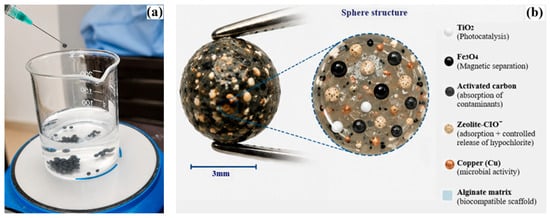
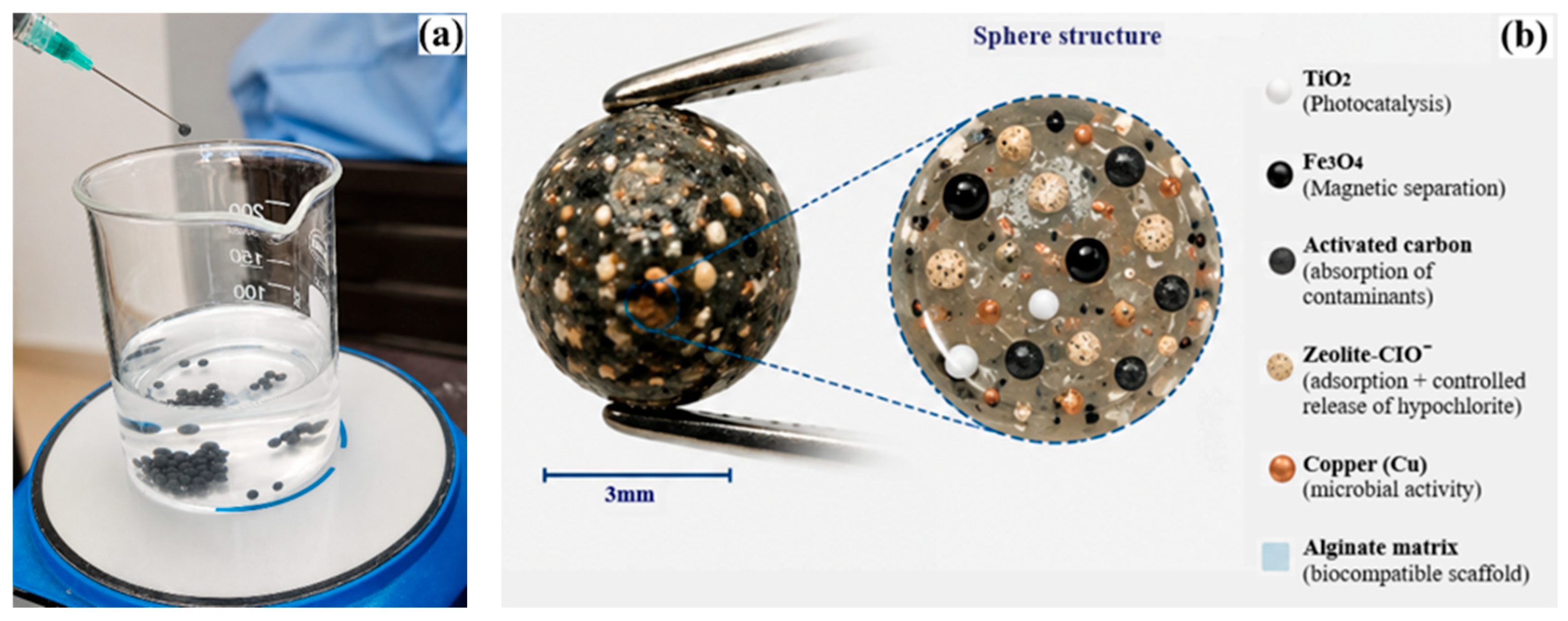
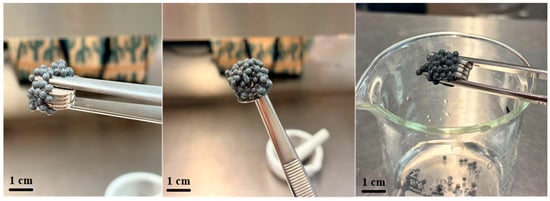
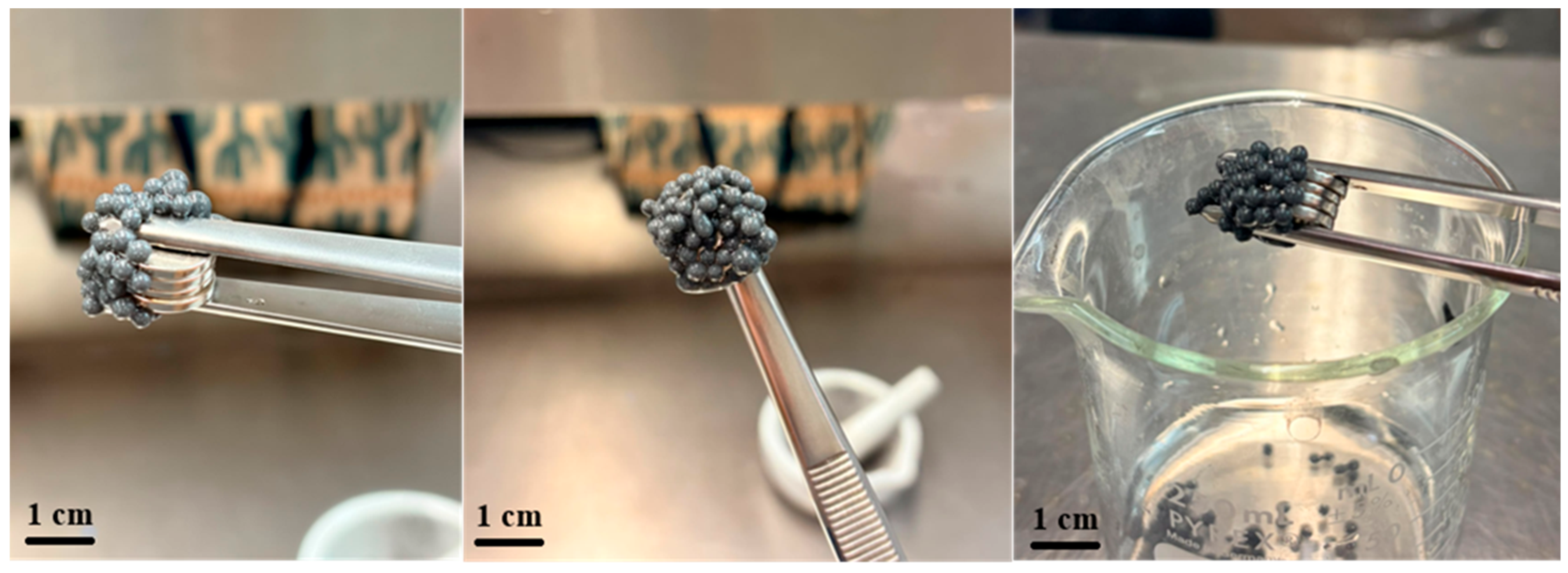
Figure 2a shows the multifunctional hybrid spheres produced by the ionic gelation process developed in this study for the partial treatment and sanitation of contaminated water. The particles exhibit an approximately spherical morphology, a relatively uniform size, and good structural integrity, features that facilitate their handling, recovery, and reuse over five treatment cycles. Nevertheless, a partial decline in their water-cleaning effectiveness was observed as the reuse cycles progressed. The formation of a solid, stable matrix confirms the viability of the encapsulation method for integrating adsorbent (activated carbon and zeolite), photocatalytic (TiO2), antimicrobial (Cu and hypoclorite), and magnetic (Fe3O4) components into a single hybrid system. This provides a promising platform for sustainable water treatment technologies. Figure 2b presents a schematic of the sphere’s interior, illustrating its constituent components.
Figure 2.
Multifunctional hybrid spheres. (a) Hybrid spheres and (b) interior of hybrid spheres.
2.2. Powder Characterization
Before encapsulation with chitosan, the particle size distribution of the homogenized powders was determined by laser diffraction using a Mastersizer 2000 (Malvern Panalytical, Almelo, The Netherlands). Powder morphology was examined by scanning electron microscopy (SEM) with a JEOL 6300 microscope (Akishima, Tokyo, Japan). Crystalline structure was analyzed by X-ray diffraction (XRD) using a Bruker D8 Advance diffractometer (Billerica, MA, USA), with data collected over a 2θ range of 10–100°, a step size of 0.016°, and a counting time of 10 s per step. Diffraction patterns were analyzed using X’Pert HighScore Plus software (version 2.2b).
2.3. Absorbance Measurements
Optical absorbance measurements were performed using a compact CCD spectrometer (Thorlabs CCS200, Newton, NJ, USA) with a deuterium lamp as the UV-Vis light source, operating over the 200–1000 nm wavelength range. The UV-Vis spectrum recorded in transmission of distilled water in a standard quartz cuvette (10 mm optical path length) was first recorded as the reference, followed by acquisition of the UV-Vis spectrum recorded in transmission of multifunctional sphere suspensions in distilled water using identical quartz cuvettes. Absorbance values were then calculated from the reference and sample spectra using the spectrometer software. The photocatalytic activity of multifunctional spheres was evaluated by monitoring the degradation of methylene blue (MB), used as a model organic pollutant, under solar irradiation for 5 h, every day in March, from 9:00 a.m. to 2:00 p.m., 23°44′ N, 99°08′ W. The experiments were carried out in a glass beaker containing 200 mL of distilled water, 5 g of the multifunctional spheres, and 0.05 mL (0.25 mg/L) of methylene blue. The suspension was magnetically stirred at 400 rpm throughout the experiment. Aliquots were collected at 60 min intervals to monitor the degradation kinetics and assess water decontamination efficiency. Before irradiation, the spheres were kept in contact with the MB solution in the dark for 1 h to allow the adsorption–desorption equilibrium to be established.
2.4. Microbiological Test
Microbiological analyses were performed at 0 and 150 min in accordance with the applicable Mexican standards [24] to evaluate the effect of the photocatalytic material on water decontamination (methylene blue was not used in these experiments). Water samples collected before and after treatment were stored under refrigerated conditions (5 ± 2 °C) and protected from light to preserve sample integrity. In addition, water hardness was determined in accordance with Mexican standard NMX-AA-072-SCFI-2001 [25], and iron content was determined in accordance with standard NMX-AA-051-SCFI-2016 [26]. All water analyses were conducted within 1 h of sample collection.
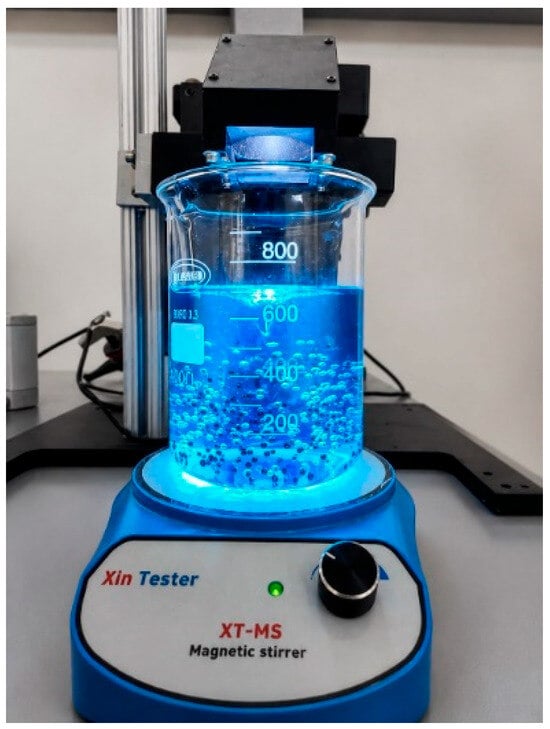
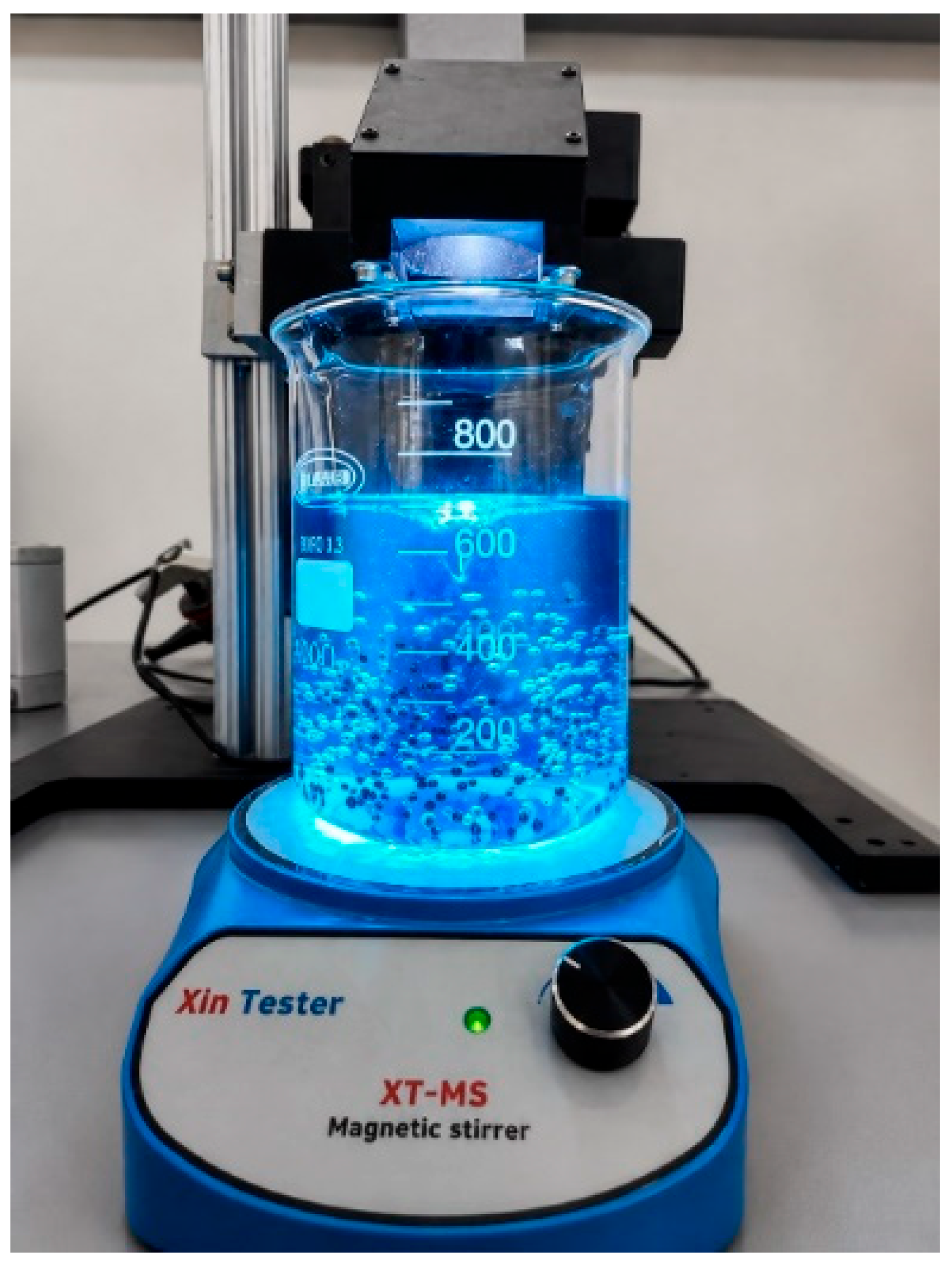
Figure 3 shows the experimental setup used to evaluate the performance of the multifunctional hybrid spheres in the partial treatment and sanitation of contaminated water. The system consisted of a 1000 mL beaker equipped with a magnetic stirring plate, which maintained constant agitation and promoted contact between the spheres and the contaminants in the aqueous medium. The tests were carried out using methylene blue as a model contaminant to evaluate photocatalytic activity, as well as stagnant water and water with a microbiological load to analyze the material’s adsorption and disinfection capacity. Incorporating magnetite (Fe3O4) into the alginate matrix allowed the spheres to be recovered using an external magnetic field at the end of each trial, facilitating separation from the liquid medium and potential reuse in subsequent cycles. This experimental setup enabled controlled laboratory conditions to evaluate the overall response of the hybrid system and the synergistic interaction among the adsorption, photocatalysis, disinfection, and magnetic recovery processes.
Figure 3.
Scale-model prototype of water treatment using photocatalytic spheres under laboratory conditions.
3. Results
3.1. Particle Size
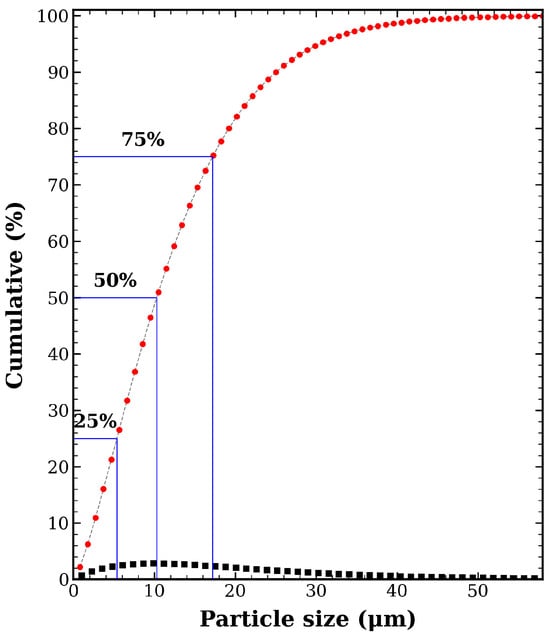
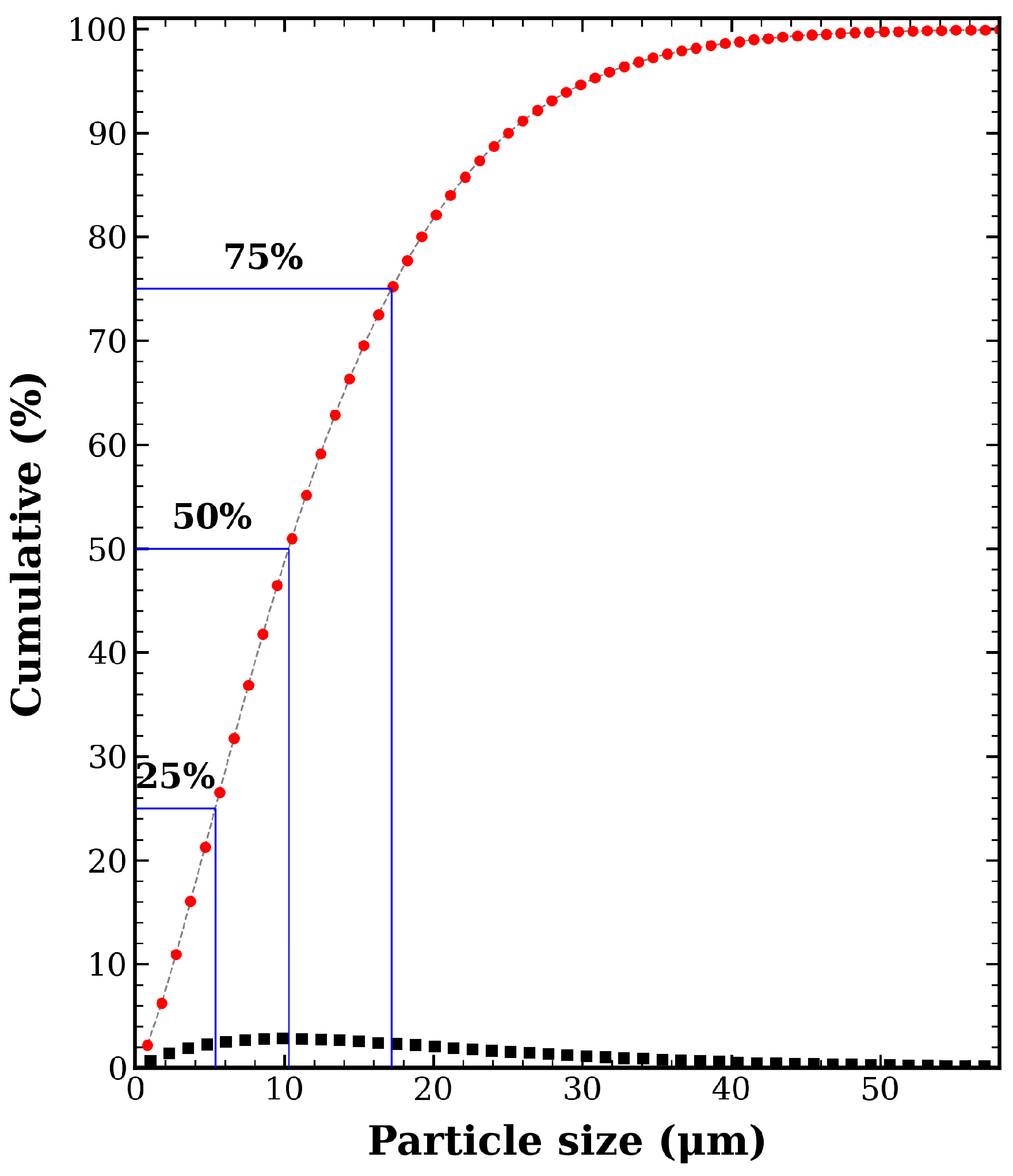
Figure 4 shows the particle size distribution of the powder, with the red lines indicating the corresponding quartiles. The particles exhibit a size range of approximately 1–50 μm, with a median particle size of about 10 μm. About 50% of particles fall between 1 and 10 μm, while the remaining 50% range from 10 to 50 μm. The distribution also indicates that approximately 25% of the particles have sizes below 5 μm, while another 25% exceed 20 μm. These results indicate a relatively broad particle size distribution, with a predominance of particles in the micrometer range. However, the larger particles (>10 μm) may result from agglomeration during processing or incomplete powder dispersion.
Figure 4.
Particle size distribution.
3.2. Powder Morphology
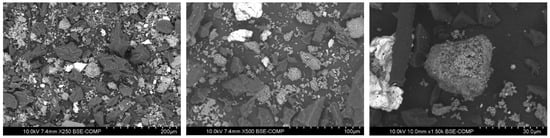
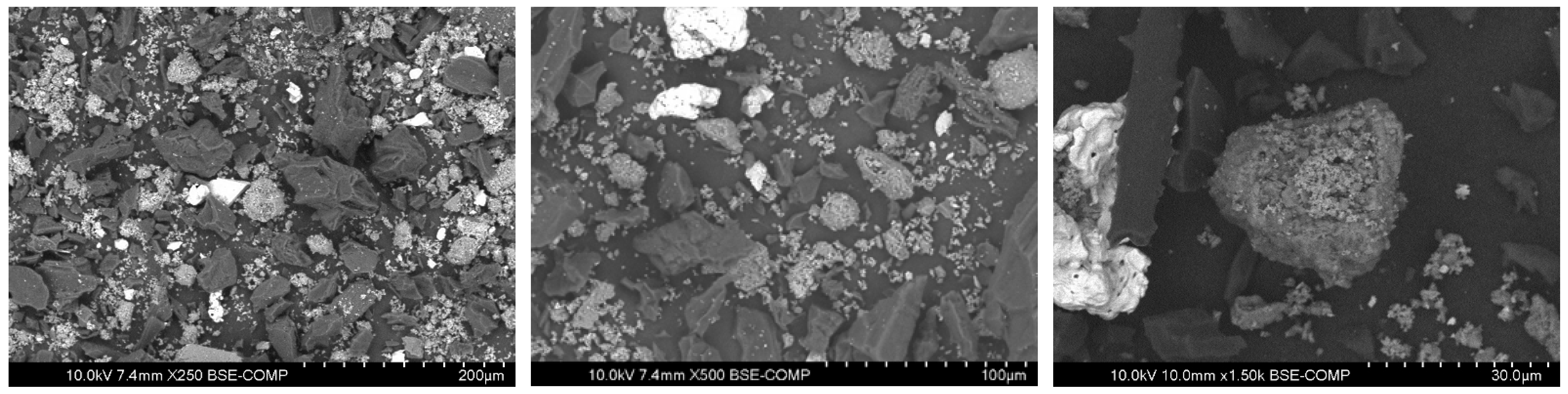
Figure 5 presents scanning electron microscopy (SEM) micrographs of the mixed powders (zeolite, Cu, TiO2, Fe3O4, and C) at different magnifications. The micrographs reveal that the primary particles exhibit a predominantly spherical to irregular morphology, with a broad particle size distribution ranging from approximately 1–2 µm to over 20 µm. This heterogeneity in particle size is consistent with the multi-component nature of the powder mixture, where each constituent phase retains its characteristic size range. A notable degree of particle agglomeration is also observed, which can be attributed to two main factors: (i) the intrinsically high surface energy of the fine particles, which promotes cohesive interactions to minimize surface free energy, and (ii) the presence of Cu species, which appear to enhance interparticle interactions and may induce localized bridging effects between adjacent particles. This agglomeration behavior is particularly relevant for subsequent processing steps, as it can influence powder flowability, packing density, and the homogeneity of the final consolidated material.
Figure 5.
SEM micrographs of mixed powders (zeolite, Cu, TiO2, Fe3O4, and C) at different magnifications.
3.3. Mappings
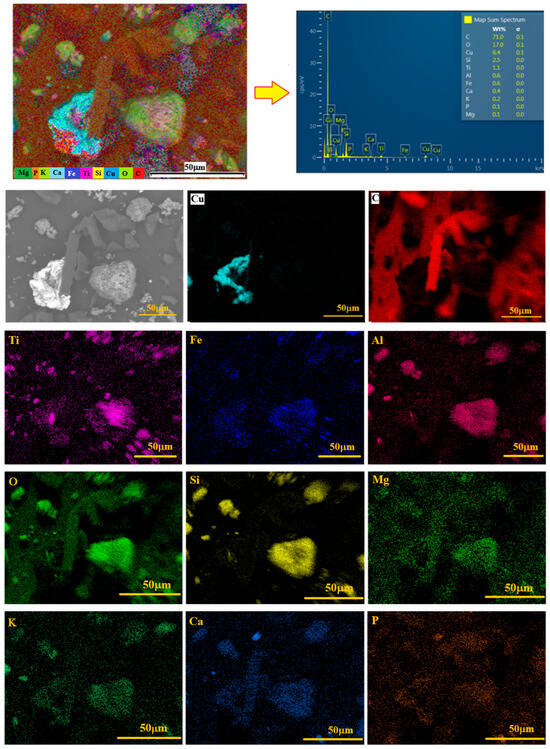
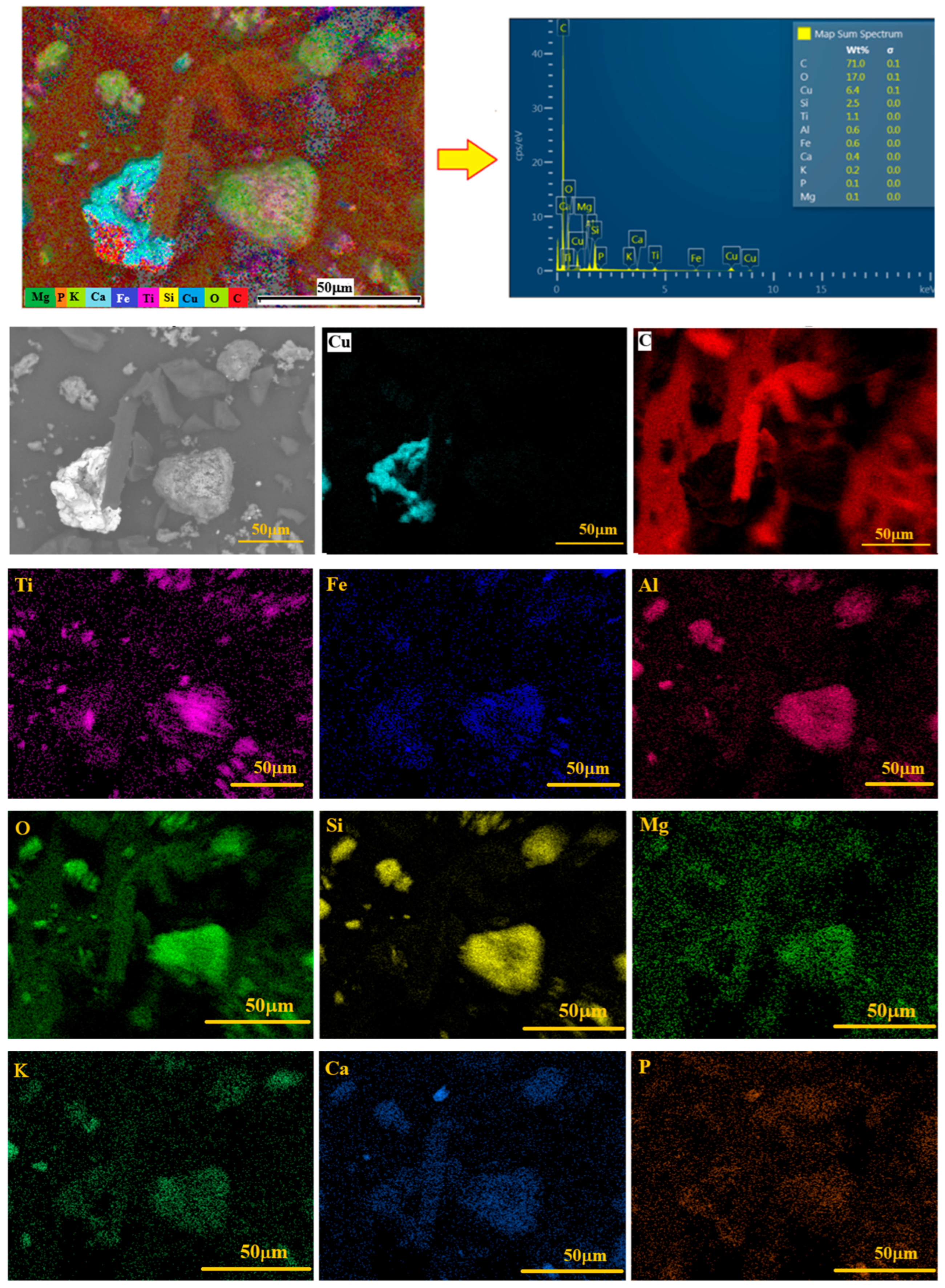
Figure 6 presents the elemental mapping of the mixed powders (zeolite, Cu, TiO2, Fe3O4, and C) that were placed inside the hybrid spheres. The maps clearly reveal the characteristic signals of all chemical elements comprising the powder mixture, confirming that its fundamental chemical composition is preserved after the modification process. Oxygen signals are consistently observed together with the metallic elements (Ti, Fe, K, Ca, Mg, Al), indicating the oxide nature of these components. Additionally, Cu is detected outside the oxide-rich regions. The images show a homogeneous spatial distribution of all elements throughout the mixture. Furthermore, the absence of additional elemental signals indicates that no significant impurities were introduced during synthesis, supporting the chemical purity of the composite. The elemental maps also reveal a strong spatial correlation between the different metals and oxygen, consistent with the expected stoichiometry of the oxide phases, while the Cu signal appears to be finely and uniformly distributed rather than localized in discrete clusters, a desirable feature for enhancing surface-related properties such as photocatalytic activity. Complementary Energy-Dispersive X-ray Spectroscopy (EDS) spectra reinforce these findings, displaying the characteristic peaks of the constituent elements, thereby confirming the formation of a composite system.
Figure 6.
EDS element distribution maps of mixed powders (zeolite, Cu, TiO2, Fe3O4, and C).
3.4. X-Ray Diffraction Analysis of Powders
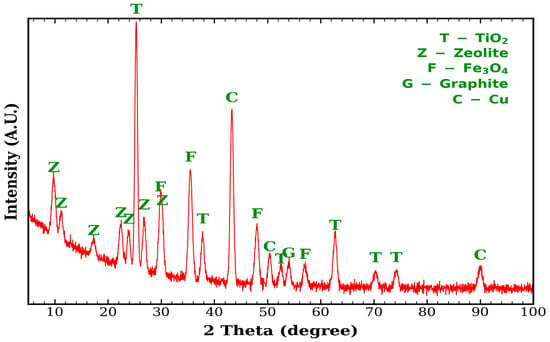
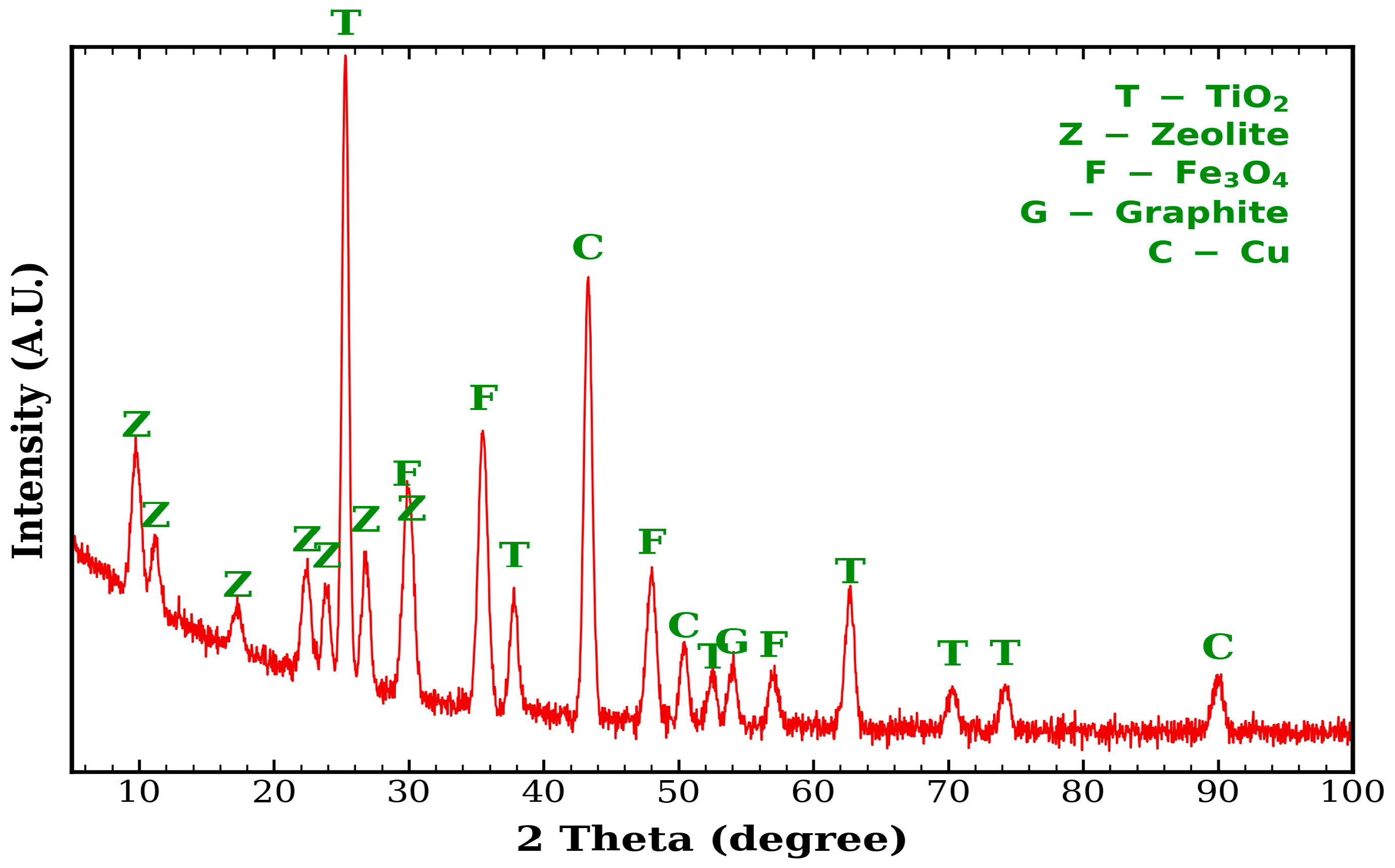
The powder mixture was homogenized in a porcelain mortar and then characterized by X-ray diffraction (XRD) to confirm the presence of the crystalline phases of the components selected for the manufacture of the multifunctional spheres. The resulting diffractogram is shown in Figure 7. As shown, the reflections corresponding to graphite, copper, zeolite, magnetite, and TiO2 were clearly identified. No additional peaks associated with secondary phases or impurities were observed, confirming that the mixture contains the expected crystalline phases and has a composition suitable for incorporation into the multifunctional spheres.
Figure 7.
X-ray diffraction pattern of the powder mixture to be incorporated into the microspheres.
3.5. Physicochemical and Microbiological Results
To evaluate the overall performance of the developed multifunctional hybrid system, physicochemical, microbiological, and spectroscopic analyses were conducted before and after treatment of contaminated water with the photocatalytic spheres (methylene blue was not used in these experiments). These tests determined the material’s capacity to remove contaminants, improve water quality, and reduce the microbiological load. The results presented in Table 1 showed a significant improvement in the quality of the treated water. From a physicochemical standpoint, a substantial decrease in turbidity was observed, indicating efficient removal of suspended particles and colloidal matter. Likewise, the reduction in total hardness suggests partial adsorption of the ions responsible for this parameter, while the decrease in iron and lead concentrations confirms the system’s ability to immobilize and remove potentially toxic metals through combined surface adsorption and ion-exchange mechanisms, favored by the presence of activated carbon and clinoptilolite. On the other hand, the free residual chlorine concentration remained within acceptable limits throughout the treatment process, demonstrating that the calcium hypochlorite-impregnated clinoptilolite acted as a controlled-release system for the disinfectant. This behavior is favorable, as it maintains a continuous bactericidal effect without generating excessive chlorine concentrations that could affect water quality or promote the formation of disinfection by-products. The microbiological results showed a highly significant reduction in fecal coliforms (Escherichia coli), with concentrations falling below the detection limit of the analytical method used. This behavior demonstrates the high disinfecting efficacy of the hybrid system, attributable to the synergistic effect between the oxidizing action of the gradually released chlorine, the photocatalytic activity of TiO2 under irradiation, and the antimicrobial properties of the copper incorporated into the matrix. These results demonstrate that the multifunctional hybrid spheres constitute a promising alternative for water treatment, combining adsorption, photocatalysis, and disinfection processes within a single material. The complementary action of their components enabled the simultaneous reduction in physical, chemical, and biological contaminants, evidencing a synergistic effect that improves the overall efficiency of the system.
Table 1.
Results of physicochemical and microbiological analyses of treated and untreated water.
3.6. Analysis of Absorbance
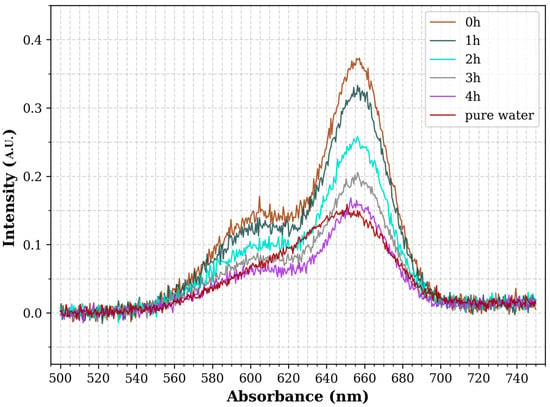
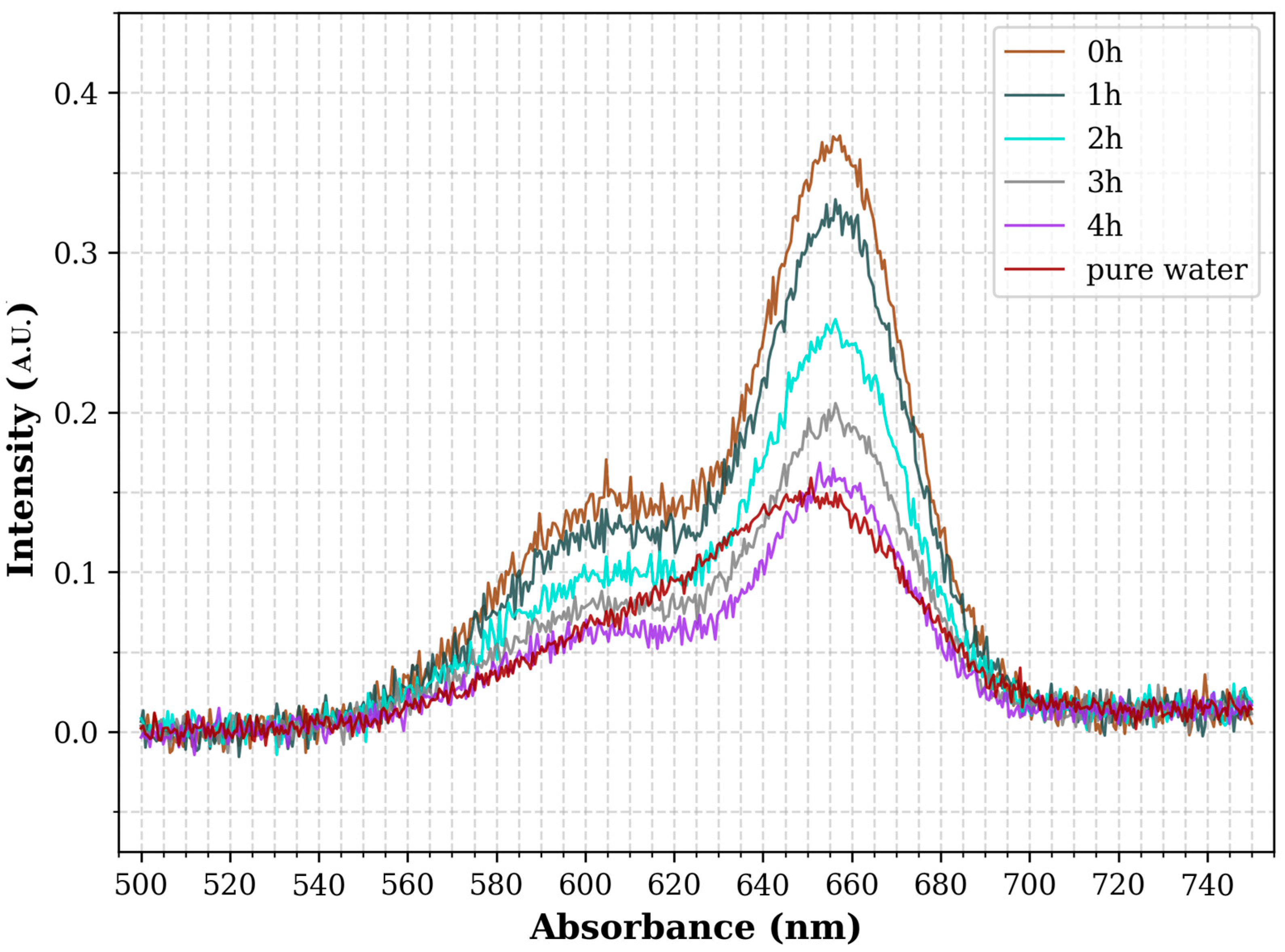
Figure 8 presents the linear optical intensity spectra obtained using a Thorlabs optical spectrum analyzer (OSA) for clean water, water contaminated with methylene blue, and samples subjected to different treatment times with the multifunctional hybrid pheress. The spectrum of clean water, with an absorbance of approximately 0.16 A.U., was used as a reference to establish the optical behavior of the medium without contaminant. By comparison, the contaminated sample showed an initial absorbance of 0.38 A.U., indicating the presence of methylene blue and lower UV-Vis spectrum recorded in transmission of optical radiation through the medium. As the treatment time increased, a progressive decrease in absorbance was observed. After 1, 2, 3, and 4 h, the recorded values were 0.33, 0.26, 0.20, and 0.17 A.U., respectively. This trend indicates a gradual reduction in the concentration of methylene blue present in the water, since, under conditions where the Beer–Lambert relationship holds, absorbance is proportional to the concentration of the absorbing species. The decrease in absorbance was particularly significant during the first three hours of treatment. Comparing the initial value of 0.38 A.U. with the value obtained after 4 h (0.17 A.U.), a reduction of approximately 55.3% of the initial absorbance is observed. Likewise, the final value is very close to that of clean water (0. 0.16 A.U.), differing by only 0. 01 A.U. This behavior indicates that, after 4 h, the system achieved considerable recovery of the water’s optical characteristics. The greatest decrease occurred between 1 and 3 h, when absorbance dropped from 0. 33 to 0. 20 A. U. Subsequently, between 3 and 4 h, the decrease was less pronounced, from 0. 20 to 0. 17 A.U., suggesting a tendency toward stabilization of the process. This behavior may be associated with the progressive decrease in the concentration of the contaminant available in the medium and with the occupation of the active adsorption sites present on the spheres. Additionally, as the methylene blue concentration decreases, fewer molecules are available to participate in the photocatalytic processes. In terms of optical removal, the results demonstrate that the multifunctional hybrid spheres exhibit a significant capacity to reduce the presence of methylene blue in water. The decrease in absorbance can be attributed to the combined action of adsorption and photocatalytic mechanisms, in which the functional components of the spheres initially promote contaminant capture and subsequently facilitate its transformation through photocatalytic processes. It is important to note that the decrease in absorbance provides evidence of the removal and/or transformation of the species responsible for the coloration; however, it does not, by itself, demonstrate the complete mineralization of methylene blue. Therefore, to confirm the complete degradation of the contaminant and determine the possible formation of intermediate products, it would be advisable to complement these results with additional analytical techniques. Overall, the results show a favorable treatment trend, characterized by a continuous decrease in absorbance from 0. 38 to 0. 17 A. U., reaching a value very close to that of clean water after 4 h. This confirms that the developed hybrid spheres have a positive effect on reducing the model contaminant and promoting the recovery of the water’s optical properties.
Figure 8.
Trend in the sample’s absorbance spectra (A.U.), showing the gradual decrease in the contaminant peak centered at 660 nm.
Using the absorbance data presented in Figure 8, Table 2 was constructed to quantify the apparent concentration or the decrease in absorbance relative to the initial value, considering that an absorbance of 0.16 A.U. corresponds to clean water. Since clean water exhibits an absorbance of 0.16 A.U., the most appropriate approach is to correct the absorbance values for the blank before calculating (C/C0). Table 3 presents the corrected absorbance as a function of the initial value of water absorbance.
Table 2.
Absorbance data for each time and apparent concentration with respect to the initial value.
Table 3.
Corrected absorbance as a function of the initial value of water absorbance.
According to Beer–Lambert’s law:
where
At = absorbance at time t
A0 = initial absorbance = 0.38 A.U.
Ab = clean water absorbance = 0.16 A.U.
Therefore:
A0 − Ab = 0.38 − 0.16 = 0.22
C/C0 calculation
Thus, after 4 h of treatment, the result is
and the relative removal calculated from the corrected absorbance is
C/C0 = 0.045
Removal = 95.5%
This is considerably more representative than the 55.3% obtained by directly comparing the absorbances without correcting for the blank.
Although the absorbance decreased from 0.38 to 0.17 A.U. during the treatment, the final value was very close to that of the clean-water blank (0.16 A.U.). Therefore, after correcting the measurements by subtracting the clean-water background, the absorbance attributed to methylene blue decreased from 0.22 to 0.01 A.U., corresponding to an approximate 95.5% reduction. Accordingly, the (C/C0) ratio, calculated from the blank-corrected absorbance values, decreased progressively throughout the treatment, confirming the effective removal of methylene blue from the aqueous solution. The (C/C0) value decreased from 1.00 at the beginning of the treatment to 0.773, 0.455, 0.182, and 0.045 after 1, 2, 3, and 4 h, respectively. Consequently, after 4 h of treatment, an approximate 95.5% reduction in the apparent methylene blue concentration was achieved. This behavior confirms the high capacity of the multifunctional hybrid spheres to remove the model pollutant through the combined effects of adsorption and photocatalysis.
3.7. Kinetic Absorbance
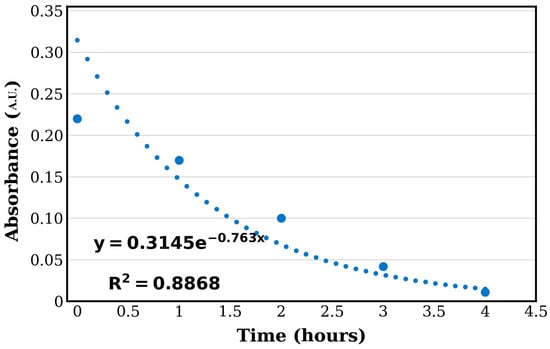
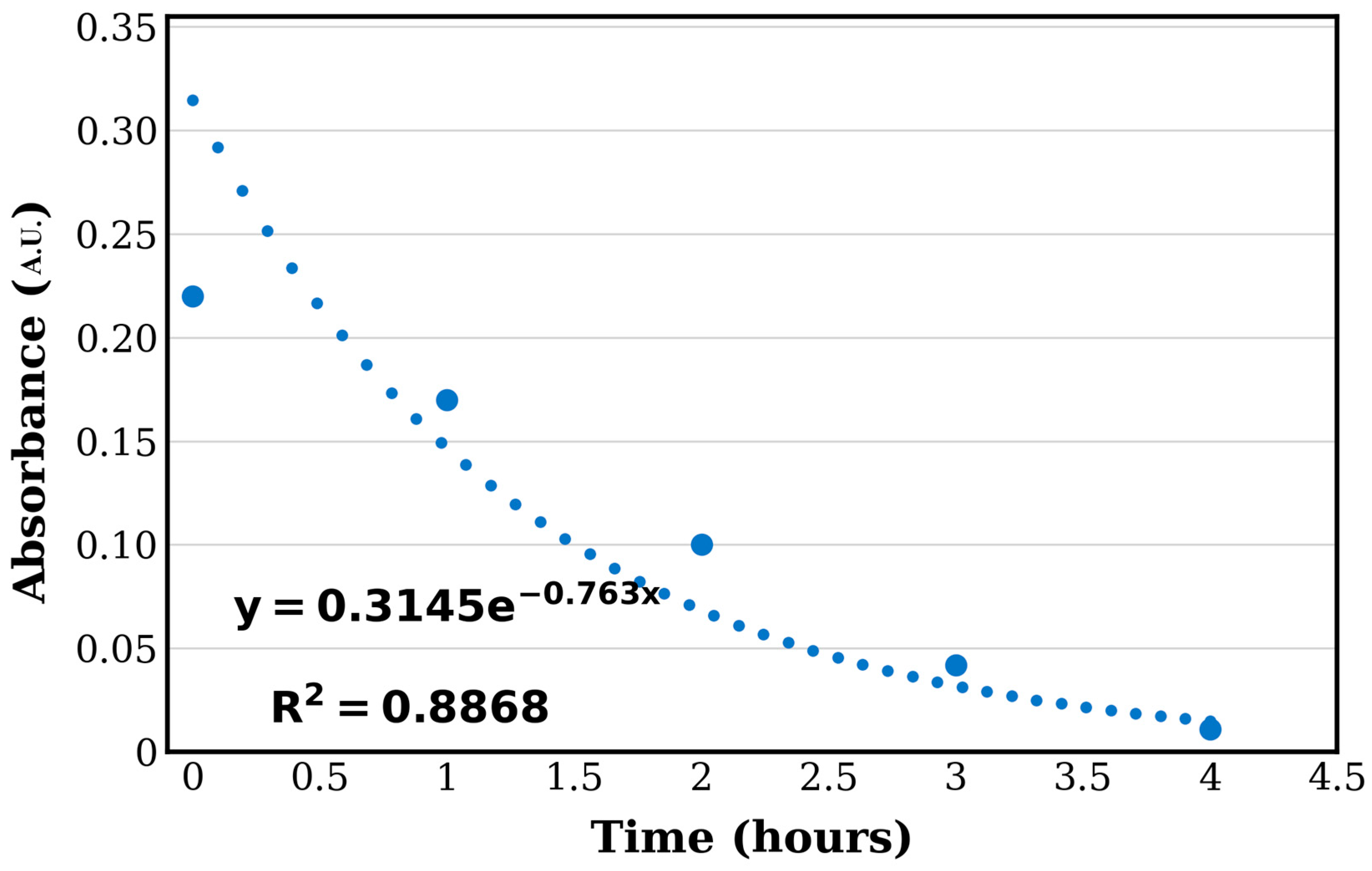
The temporal evolution of methylene blue (MB) absorbance under solar irradiation is shown in Figure 9. A pronounced decrease in absorbance was observed, from approximately 0.22 A.U. initially to 0.01 A.U. after 4 h, indicating a substantial reduction in MB concentration during the treatment. The experimental data were well fitted by an exponential decay function (y = 0.314e−0.763x; R2 = 0.8868), indicating that the degradation rate was higher during the initial stages and decreased with irradiation time. This behavior can be attributed to the photocatalytic activity of TiO2 and the contribution of metallic Cu, which can promote charge separation and the generation of reactive oxygen species, mainly •OH and O2•−. These species favor the oxidation and transformation of MB molecules at the surface of the hybrid spheres. The residual absorbance observed at longer irradiation times suggests the possible formation of intermediate oxidation products, indicating that although MB removal was significant, complete mineralization may require longer treatment times. Overall, the results demonstrate the effectiveness of the hybrid spheres for the solar-assisted degradation of MB in aqueous media.
Figure 9.
Degradation kinetics of the contaminant at 660 nm fitted to the pseudo-first-order exponential model (A = 0.314e−0.763t, R2 = 0.8868).
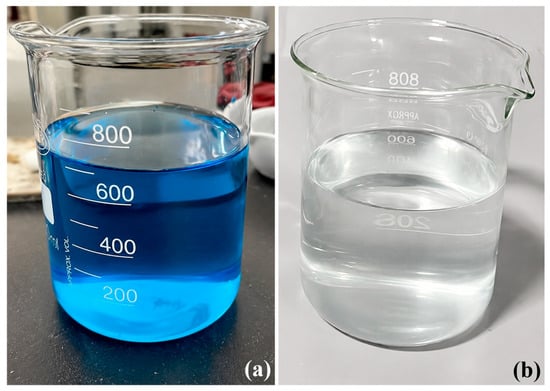
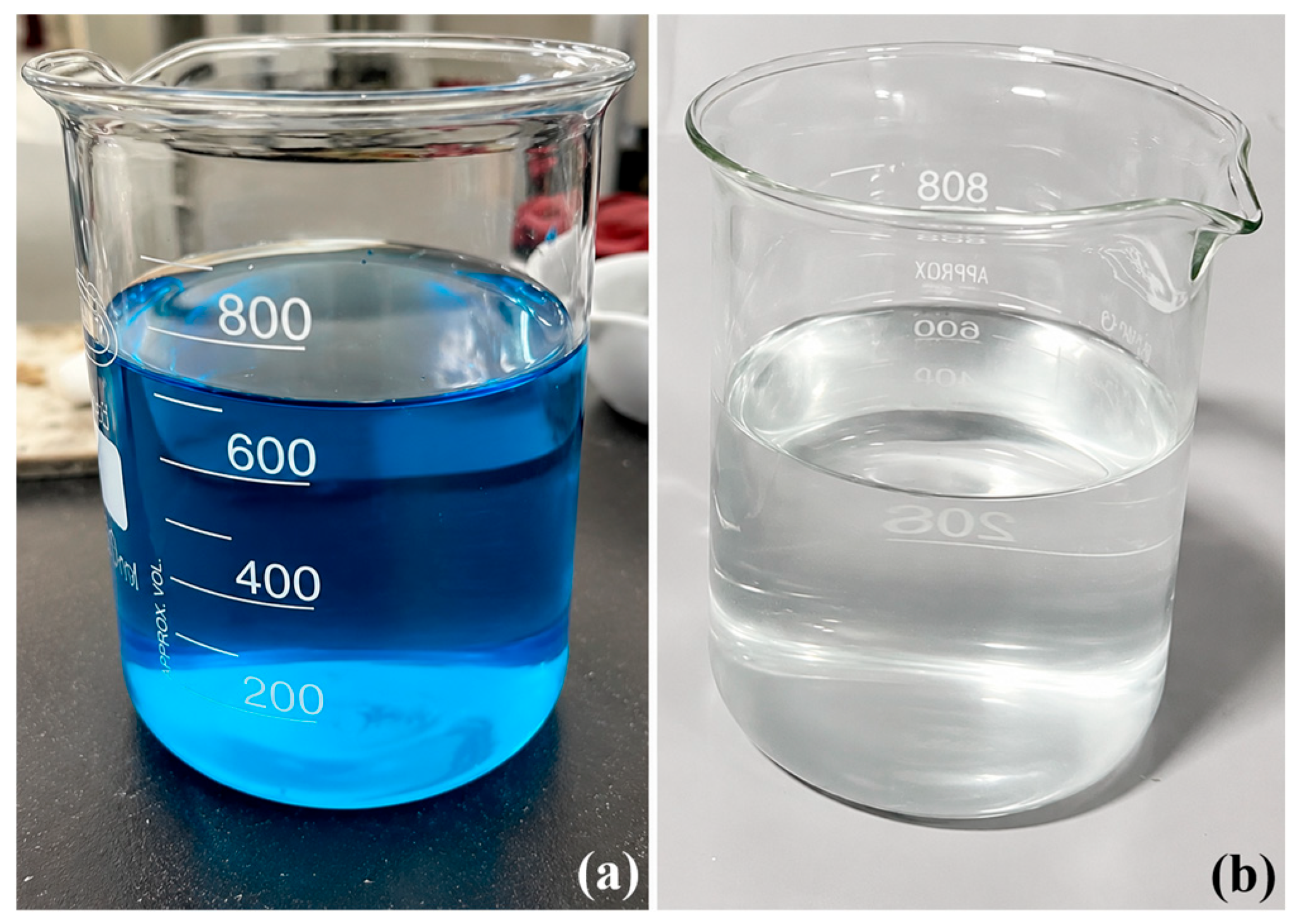
Figure 10 shows the visual appearance of the contaminated water sample before treatment (0 min), with 0.10 mL of methylene blue added as an indicator compound to qualitatively evaluate the adsorption and degradation capacity of the multifunctional hybrid system. The intense blue coloration initially observed confirms the presence of the dye in solution and provides a reference for assessing treatment efficiency. After 4 h of treatment with the multifunctional hybrid spheres, a noticeable decrease in the intensity of the blue coloration is observed, accompanied by increased water transparency. This visual change suggests the removal and degradation of methylene blue through the synergistic action of the adsorption mechanisms provided by activated carbon and zeolite, together with the photocatalytic activity of TiO2, which promotes the oxidation of the organic compounds present in the solution. The visual results were consistent with the laboratory analyses, which confirmed a significant improvement in the quality of the treated water. An approximate reduction of 98% in total coliforms and greater than 95% in fecal coliforms was achieved, along with reductions of 61% in total hardness and 97.5% in iron concentration. These results demonstrate that the hybrid system is not only capable of degrading visible organic pollutants but also of removing microorganisms indicative of fecal contamination and reducing inorganic species present in the water.
Figure 10.
(a) Water contaminated with methylene blue before treatment. (b) Water after 4 h of exposure to sunlight in the presence of the multifunctional hybrid system.
As shown in Figure 11, the spheres were successfully recovered after treatment. The magnetite (Fe3O4) incorporated into their composition imparts magnetic behavior, allowing rapid separation from the aqueous medium under an external magnetic field. This facilitates recovery of the material, suggesting potential for reuse in successive cycles. The black color of the spheres is attributable to their magnetite content. Each sphere measures approximately 3 mm in diameter, a size that balances ease of magnetic recovery with sufficient surface area for water sanitization.
Figure 11.
Magnetic recovery of multifunctional hybrid spheres using an external magnet after photocatalytic treatment.
4. Discussion
The integration of TiO2, Fe3O4, activated carbon, hypochlorite-impregnated clinoptilolite zeolite, and metallic copper into an alginate-chitosan matrix produced a multifunctional system with synergistic performance. X-ray diffraction confirmed that the crystalline phases of each original component were preserved without impurities, validating the feasibility of the encapsulation method. Regarding physicochemical removal, the reductions in turbidity (61%) and iron (97.5%) are attributable to the combined action of activated carbon and zeolite as adsorbents and ion exchangers. This performance aligns with reports for natural clinoptilolite, where iron removal rates of up to 95.4% [27] and efficiencies of 95–99% for heavy metals have been documented when the zeolite is combined with other materials [28,29]. Free residual chlorine remained within the regulatory range, validating the controlled-release design of the hypochlorite impregnated into the zeolite. However, the hypochlorite will eventually be depleted and cease to be effective; the maximum number of cycles for the spheres was 5, which is consistent with similar studies [30]. Microbiological efficacy (fecal coliforms below the limit of detection) results from the combined action of chlorine oxidation, reactive species generated by TiO2, and the bactericidal effect of copper. This finding is consistent with previous studies in which alginate beads loaded with 4% Cu inactivated 99.97% of bacteria in 90 min, compared with only 44.2% for free, dispersed copper [31], suggesting that immobilization in a polymer matrix enhances the antimicrobial effect compared with free metal. For photocatalytic degradation, the pseudo-first-order kinetic fit (R2 = 0.8868) and the corrected removal rate of 95.5% in 4 h are competitive with other supported TiO2 systems: TiO2/alginate spheres have achieved up to 98% in 180 min [32,33], whereas TiO2/SBA-15 composites achieved only 67% in 90 min [34]. TiO2 spheres in polysulfone–alginate have shown greater long-term stability, maintaining >99% degradation over 25 cycles [35], suggesting room for improvement in the durability of the system developed here. Correcting the absorbance relative to the clean water blank was key to avoiding underestimation of the actual efficiency (55.3% uncorrected vs. 95.5% corrected). However, the decrease in absorbance alone does not confirm complete mineralization; therefore, it is recommended to supplement the analysis with HPLC, TOC, or mass spectrometry. Finally, the incorporation of Fe3O4 enabled the magnetic recovery of the spheres, an advantage over the TiO2/alginate or zeolite systems reported in the literature, which typically rely on filtration or centrifugation. Unlike comparative studies that focus on a single mechanism, the system developed integrates adsorption, photocatalysis, disinfection, and magnetic recovery into a single reusable platform, which explains the observed synergistic effect and positions it as a promising alternative for sustainable water treatment.
5. Conclusions
A multifunctional hybrid sphere system was successfully developed through ionic gelation, using sodium alginate as an encapsulating matrix to incorporate TiO2, Fe3O4, activated carbon, hypochlorite-impregnated clinoptilolite zeolite, and metallic copper, with a chitosan coating and cross-linking with glutaraldehyde. The process yielded spheres with uniform morphology and good structural integrity, confirming the feasibility of encapsulating multiple functions in a single material.
- ○
- X-ray diffraction confirmed that the crystalline phases of all components were preserved during the manufacturing process, with no evidence of impurities or secondary phases, ensuring that the individual functional properties (photocatalysis, magnetism, adsorption, antimicrobial activity) remain available within the polymer matrix.
- ○
- The system demonstrated a significant ability to improve the physicochemical quality of the water, with substantial reductions in turbidity (61%), total hardness (61%), iron (97.5%), and lead, while maintaining free residual chlorine within regulatory limits thanks to the controlled-release design of the hypochlorite impregnated in the zeolite.
- ○
- Highly effective microbiological disinfection was achieved, with fecal coliforms reduced to below the limit of detection and total coliforms reduced by approximately 98 percent, a result attributable to the synergistic action of gradually released chlorine, reactive oxygen species generated by TiO2, and the intrinsic bactericidal effect of copper.
- ○
- The photocatalytic activity against methylene blue, as a model contaminant, showed an actual removal rate of 95.5% in 4 h (corrected for the clean water blank), with a satisfactory kinetic fit to a pseudo-first-order model (R2 = 0.8868), representing competitive performance compared to supported TiO2 systems reported in the literature.
- ○
- The incorporation of Fe3O4 enabled the magnetic recovery of the spheres at the end of each treatment cycle, addressing a common operational limitation in powdered adsorbent and photocatalytic materials and opening up the possibility of reuse in subsequent treatments.
- ○
- As a limitation, the decrease in absorbance indicates the removal or transformation of the model dye, but does not in itself confirm its complete mineralization. For future work, it is recommended to supplement the characterization with additional analytical techniques (HPLC, total organic carbon, mass spectrometry) to identify possible degradation byproducts, as well as to evaluate the stability and reusability of the material over multiple treatment cycles.
Author Contributions
Conceptualization, R.M.C.-R. and E.R.-R.; methodology, R.M.C.-R., X.A.-S. and I.I.L.-L.; validation, R.M.-S., M.A.N.-M. and E.R.-R.; formal analysis, R.M.-S., M.A.N.-M. and E.R.-R.; investigation, R.M.C.-R., X.A.-S. and I.I.L.-L.; resources, R.M.-S., M.A.N.-M. and E.R.-R.; data curation, R.M.C.-R. and X.A.-S.; writing—original draft preparation, R.M.C.-R. and E.R.-R.; writing—review and editing, R.M.-S. and M.A.N.-M.; visualization, R.M.C.-R. and E.R.-R.; supervision, E.R.-R.; project administration, E.R.-R.; funding acquisition, I.I.L.-L., R.M.-S. and M.A.N.-M. All authors have read and agreed to the published version of the manuscript.
Funding
This research received no external funding.
Institutional Review Board Statement
Not applicable.
Informed Consent Statement
Not applicable.
Data Availability Statement
The original contributions presented in this study are included in the article. Further inquiries can be directed to the corresponding author.
Conflicts of Interest
The authors declare no conflicts of interest.
Abbreviations
The following abbreviations are used in this manuscript:
| NTUs | Nephelometric Turbidity Units |
| CFU | Colony-Forming Unit |
| WHO | World Health Organization |
| XRD | X-ray diffraction |
| NOM | Mexican official standard by its Spanish acronyms |
| OSA | Optical spectrum analyzer |
| A.U. | Arbitrary unit |
| MB | Methylene blue |
| HPLC | High-performance liquid chromatography |
| SEM | Scanning electron microscopy |
| TOC | Total organic carbon |
References
- World Health Organization; United Nations Children’s Fund. Progress on Household Drinking Water, Sanitation and Hygiene 2000–2022: Special Focus on Gender; WHO: Geneva, Switzerland; UNICEF Joint Monitoring Programme (JMP): New York, NY, USA, 2023. [Google Scholar]
- Nishmitha, P.S.; Akhilghosh, K.A.; Aiswriya, V.P.; Ramesh, A.; Muthuchamy, M.; Muthukumar, A. Understanding emerging contaminants in water and wastewater: A comprehensive review on detection, impacts, and solutions. J. Hazard. Mater. Adv. 2025, 18, 100755. [Google Scholar] [CrossRef] [Scilit]
- Alam, M.S.; Tahriri, F.; Chen, G. Trends, challenges, and research pathways in emerging contaminants: A comprehensive bibliometric analysis. Integr. Environ. Assess. Manag. 2025, 21, 496–506. [Google Scholar] [CrossRef] [Scilit] [PubMed]
- Liu, Y.; Yang, J.; Wu, J.; Jiang, Z.; Zhang, X.; Meng, F. The application of multifunctional metal–organic frameworks for the detection, adsorption, and degradation of contaminants in an aquatic environment. Molecules 2025, 30, 1336. [Google Scholar] [CrossRef] [Scilit] [PubMed]
- Rando, G.; Sfameni, S.; Plutino, M.R. Development of Functional Hybrid Polymers and Gel Materials for Sustainable Membrane-Based Water Treatment Technology: How to Combine Greener and Cleaner Approaches. Gels 2023, 9, 9. [Google Scholar] [CrossRef] [Scilit] [PubMed]
- Lee, K.Y.; Mooney, D.J. Alginate: Properties and biomedical applications. Prog. Polym. Sci. 2012, 37, 106–126. [Google Scholar] [CrossRef] [Scilit] [PubMed]
- Wang, Y.; Lu, Y. Sodium alginate-based functional materials toward sustainable applications: Water treatment and energy storage. Ind. Eng. Chem. Res. 2023, 62, 11279–11304. [Google Scholar] [CrossRef] [Scilit]
- Boontanom, A.; Suwanpinij, P.; Alessandri, I.; Vassalini, I. Durable Composite Alginate Hydrogels for the Remediation of High-Concentration Cr(VI) in Industrial Effluents. Water 2026, 18, 2078. [Google Scholar] [CrossRef] [Scilit]
- Fujishima, A.; Honda, K. Electrochemical photolysis of water at a semiconductor electrode. Nature 1972, 238, 37–38. [Google Scholar] [CrossRef] [Scilit] [PubMed]
- Tanos, F.; Razzouk, A.; Lesage, G.; Cretin, M.; Bechelany, M. A comprehensive review on modification of titanium dioxide-based catalysts in advanced oxidation processes for water treatment. ChemSusChem 2024, 17, e202301139. [Google Scholar] [CrossRef] [Scilit] [PubMed]
- Gupta, A.K.; Gupta, M. Synthesis and surface engineering of iron oxide nanoparticles for biomedical applications. Biomaterials 2005, 26, 3995–4021. [Google Scholar] [CrossRef] [Scilit] [PubMed]
- Keshta, B.E.; Gemeay, A.H.; Sinha, D.K.; Elsharkawy, S.; Hassan, F.; Rai, N.; Arora, C. State of the art on the magnetic iron oxide nanoparticles: Synthesis, functionalization, and applications in wastewater treatment. Results Chem. 2024, 7, 101388. [Google Scholar] [CrossRef] [Scilit]
- Boontanom, A.; Maddaloni, M.; Suwanpinij, P.; Vassalini, I.; Alessandri, I. Industrial waste against pollution: Mill scale-based magnetic hydrogels for rapid abatement of Cr(vi). Environ. Sci. Water Res. Technol. 2024, 10, 551–564. [Google Scholar] [CrossRef] [Scilit]
- Streit, A.F.; Côrtes, L.N.; Druzian, S.P.; Godinho, M.; Collazzo, G.C.; Perondi, D.; Dotto, G.L. Development of high-quality activated carbon from biological sludge and its application for dyes removal from aqueous solutions. Sci. Total Environ. 2019, 660, 277–287. [Google Scholar] [CrossRef] [Scilit] [PubMed]
- Pet, I.; Sanad, M.N.; Farouz, M.; Elfaham, M.M.; El-Hussein, A.; Abd El-Sadek, M.S.; Althobiti, R.A.; Ioanid, A. Review: Recent developments in the implementation of activated carbon as heavy metal removal management. Water Conserv. Sci. Eng. 2024, 9, 62. [Google Scholar] [CrossRef] [Scilit]
- Velarde, L.; Nabavi, M.S.; Escalera, E.; Antti, M.-L.; Akhtar, F. Adsorption of heavy metals on natural zeolites: A review. Chemosphere 2023, 328, 138508. [Google Scholar] [CrossRef] [Scilit] [PubMed]
- Wang, S.; Peng, Y. Natural zeolites as effective adsorbents in water and wastewater treatment. Chem. Eng. J. 2010, 156, 11–24. [Google Scholar] [CrossRef] [Scilit]
- Nikolov, A.; Dobreva, L.; Danova, S.; Miteva-Staleva, J.; Krumova, E.; Rashev, V.; Vilhelmova-Ilieva, N. Natural and modified zeolite clinoptilolite with antimicrobial properties: A review. Acta Microbiol. Bulg. 2023, 39, 147–161. [Google Scholar] [CrossRef] [Scilit]
- Grass, G.; Rensing, C.; Solioz, M. Metallic copper as an antimicrobial surface. Appl. Environ. Microbiol. 2011, 77, 1541–1547. [Google Scholar] [CrossRef] [Scilit] [PubMed]
- Vincent, M.; Duval, R.E.; Hartemann, P.; Engels-Deutsch, M. Contact killing and antimicrobial properties of copper. J. Appl. Microbiol. 2018, 124, 1032–1046. [Google Scholar] [CrossRef] [Scilit] [PubMed]
- Kurwade, V.; Yerpude, V.; There, A. Sodium Hypochlorite as a Disinfectant: Current Challenges in Stability and Advances in Formulation Technology. Int. J. Pharm. Sci. 2026, 4, 2720–2747. [Google Scholar] [CrossRef]
- Rinaudo, M. Chitin and chitosan: Properties and applications. Prog. Polym. Sci. 2006, 31, 603–632. [Google Scholar] [CrossRef] [Scilit]
- Feyissa, Z.; Edossa, G.D.; Gupta, N.K.; Negera, D. Development of double crosslinked sodium alginate/chitosan based hydrogels for controlled release of metronidazole and its antibacterial activity. Heliyon 2023, 9, e20144. [Google Scholar] [CrossRef] [Scilit] [PubMed]
- NOM-210-SSA1-2014; Products and Services. Microbiological Test Methods. Determination of Indicator Microorganisms. Determination of Pathogenic Microorganisms. Secretariat of Health: Mexico City, Mexico, 2015.
- NMX-AA-072-SCFI-2001; Water Analysis—Determination of Total Hardness in Natural Water, Wastewater, and Treated Wastewater—Test Method. Secretariat of Environment and Natural Resources (SEMARNAT): Mexico City, Mexico, 2001. Available online: https://www.gob.mx/cms/uploads/attachment/file/166788/NMX-AA-072-SCFI-2001.pdf (accessed on 13 October 2026).
- NMX-AA-051-SCFI-2016; Determination of Metals in Water by Atomic Absorption. Secretaría de Economía: Mexico City, Mexico, 2016. Available online: http://www.economia-nmx.gob.mx/normas/nmx/2010/nmx-aa-051-scfi-2016.pdf (accessed on 13 October 2026).
- Zanin, E.; Scapinello, J.; de Oliveira, M.; Rambo, C.L.; Franscescon, F.; Freitas, L.; Muneron de Mello, J.M.; Fiori, M.A.; Oliveira, J.V.; Dal Magro, J. Adsorption of heavy metals from wastewater graphic industry using clinoptilolite zeolite as adsorbent. Process Saf. Environ. Prot. 2017, 105, 194–200. [Google Scholar] [CrossRef] [Scilit]
- Muchiri, K.M.; Murithi, G.; Kiratu, J.; Simiyu, R. Adsorptive Elimination of Heavy Metal Ions from Wastewater Utilizing Natural and Synthetic Zeolites: Mechanistic Analysis, Modification Techniques, and Performance Assessment. J. Chem. 2026, 2026, 3200644. [Google Scholar] [CrossRef] [Scilit]
- Kumari, S.; Chowdhry, J.; Kumar, M.; Garg, M.C. Zeolites in wastewater treatment: A comprehensive review on scientometric analysis, adsorption mechanisms, and future prospects. Environ. Res. 2024, 260, 119782. [Google Scholar] [CrossRef] [Scilit] [PubMed]
- Simonescu, C.M.; Culita, D.C.; Marinescu, G.; Atkinson, I.; Marinescu, V.; Oprea, O.; Stanica, N. Novel Magnetically Recoverable Amino-Functionalized MIL-101(Fe) Composite with Enhanced Adsorption Capacity for Pb(II) and Cd(II) Ions. Molecules 2025, 30, 2879. [Google Scholar] [CrossRef] [Scilit] [PubMed]
- Thomas, S.F.; Rooks, P.; Rudin, F.; Atkinson, S.; Goddard, P.; Bransgrove, R.; Mason, P.T.; Allen, M.J. The bactericidal effect of dendritic copper microparticles, contained in an alginate matrix, on Escherichia coli. PLoS ONE 2014, 9, e96225. [Google Scholar] [CrossRef] [Scilit] [PubMed]
- Nouri, L.; Ghezal, W.; Bachari, K. Elaboration and characterization of photobiocomposite beads, based on titanium (IV) oxide and sodium alginate biopolymer, for basic blue 41 adsorption/photocatalytic degradation. Int. J. Biol. Macromol. 2020, 151, 66–84. [Google Scholar] [CrossRef] [Scilit] [PubMed]
- Balakrishnan, A.; Appunni, S.; Chinthala, M. Biopolymer-supported TiO2 as a sustainable photocatalyst for wastewater treatment: A review. Environ. Chem. Lett. 2022, 20, 3071–3098. [Google Scholar] [CrossRef] [Scilit]
- Ulfa, M.; Al Afif, H.; Saraswati, T.E.; Bahruji, H. Fast Removal of Methylene Blue via Adsorption-Photodegradation on TiO2/SBA-15 Synthesized by Slow Calcination. Materials 2022, 15, 5471. [Google Scholar] [CrossRef] [Scilit] [PubMed]
- Mehmood, C.T.; Zhong, Z.; Zhou, H.; Xiao, Y. Constructing porous beads with modified polysulfone-alginate and TiO2 as a robust and recyclable photocatalyst for wastewater treatment. J. Water Process Eng. 2020, 38, 101601. [Google Scholar] [CrossRef] [Scilit]

Disclaimer/Publisher’s Note: The statements, opinions and data contained in all publications are solely those of the individual author(s) and contributor(s) and not of MDPI and/or the editor(s). MDPI and/or the editor(s) disclaim responsibility for any injury to people or property resulting from any ideas, methods, instructions or products referred to in the content. |
© 2026 by the authors. Licensee MDPI, Basel, Switzerland. This article is an open access article distributed under the terms and conditions of the Creative Commons Attribution (CC BY) license.