


Abstract
Allophane, halloysite, and imogolite are aluminosilicate clays, whose structures mainly contain silicon and aluminum. However, their morphologies differ markedly: allophane occurs as hollow/porous nanospheres, imogolite as single-walled aluminosilicate nanotubes, and halloysite as multi-walled rolled nanotubes. These structural contrasts control surface hydroxyl chemistry, pH-dependent (variable) charge, porosity, and the accessibility of inner/outer surfaces, which in turn govern the performance of adsorption, catalysis/photocatalysis, enzyme immobilization, biomedical delivery, hydrogel, and membrane technologies. Here, we critically synthesize recent advances with an emphasis on structure–property–function relationships and on the transition from natural/synthesized extracts to engineered/functionalized nanohybrids. At the end of the review, we show that targeted control of morphology, surface charge, and surface functionalization consistently shifts selectivity and stability, enabling application-specific optimization. We also highlight priorities for future research and explain how they contribute to Sustainable Development Goals.
1. Introduction
Allophane, halloysite, and imogolite are natural aluminosilicate clays (ACs), whose characteristic dimensions fall within the nanometer scale (approximately 1–100 nm). These phases are major constituents of many volcanic ash soils (VASs; Andisols), formed through weathering of volcanic glass under typically acidic conditions and humid climates, where silicon (Si) and aluminum (Al) mobilization as well as reprecipitation drive the development of short-range-order minerals [1,2]. Andisols occur widely across volcanic provinces in the Asia-Pacific region, Europe, Africa, and Oceania [3], and the Americas, particularly along the Pacific Ring of Fire [4,5,6,7,8,9,10].
The aluminosilicate composition is built from Si tetrahedra and Al octahedra; however, these materials differ sharply in morphology and surface architecture: allophane forms hollow/porous nanospheres [11], imogolite forms single-walled nanotubes (NTs) [12,13], and halloysite forms rolled multi-walled NTs [14,15]. This morphological diversity translates into distinct distributions of Si-OH and Al-OH functional groups on inner versus outer surfaces, creating pH-dependent variable charge and highly reactive interfaces in aqueous environments. Moreover, allophane and imogolite exhibit a gibbsite-like Al-octahedral outer surface with Si-bearing groups oriented toward the inner surfaces. Halloysite exhibits kaolinite-like 1:1 layering with Si-rich outer and Al-rich inner surfaces [16,17]. This “inside–outside” chemistry is central to selective adsorption, confinement, and functionalization strategies that differentiate these nanostructures from conventional ACs. In fact, over the past few years, the number of publications on allophane, imogolite, and halloysite ACs has increased markedly (Figure 1a). This is because these ACs possess important physical properties, including a high specific surface area (SSA), hydrophilicity, and pH-dependent charge behavior, which enable their use across diverse fields [18,19].
Figure 1.
The search was performed in the Scopus database (26 August 2026) using the keywords (a) “allophane” or “imogolite” or “halloysite” limited to articles’ titles, abstracts, and keywords, in the English language, and research articles, and (b) an increase in the number of reviews by year based on the keywords “allophane” or “imogolite” or “halloysite”.
Due to their chemical stability, biocompatibility, and low cost [20], a large body of work has explored their use in the adsorption of oxyanions [21,22] and heavy metals (HMs) [9,23], heterogeneous catalysis, photocatalysis [24], enzyme immobilization [25,26,27], membranes [28], hydrogel reinforcement [29,30,31], and biomedical carrier systems [32,33,34]. However, the literature is often fragmented by application area, reports noncomparable performance metrics, and underconnects outcomes to mechanistic surface chemistry. In addition, the surface properties, structure, and composition of ACs can be modified through physical, chemical, or intercalation treatments to enhance their performance. In the same way, ACs can also be integrated with other phases or matrices to form clay-based composite materials, producing hybrid systems with improved physicochemical properties and a broader range of potential applications [35,36]. However, until now, reviews of these three ACs and their clay-based composite forms have been limited (Figure 1b).
Based on the above, this review aims to address this gap by systematically examining allophane, halloysite, and imogolite as well as their clay-based composites through a structure–property–function framework, with particular emphasis on the differences between natural and synthetic materials and on how surface charge, structural features, and composition influence their properties and applications.
2. Aluminosilicate Clays
2.1. Formation
Allophane and imogolite are formed due to precipitation of soluble Al and Si and by the weathering of any parent material ranging from sandstone to granite [12,37]. The assembly and persistence of allophane or imogolite depend on the organic matter (OM) content and the rainfall regime. These ACs generally occur in soil horizons with low OM content, and Al can exist in inorganic complexes rather than organic acid complexes or humic substances [38]. Since the structure of allophane on a local scale is similar to that of proto-imogolite (the precursor of imogolite) [12], some studies note that imogolite and allophane are nanopolymorphs due to their local-scale structures [39]. The conversion from a spherical shape to a tubular shape occurs at an early stage of precipitation because of the edge tension in the proto-imogolite [39]. Allophane can be obtained from Andisols through a series of reactions that generally involve the removal of OM, iron (Fe) oxides, and nanometric fractions, but it can also be synthesized. For its part, imogolite is a paracrystalline secondary Al mineral [40] that forms a gel film on the surface of volcanic rocks. Some imogolites that originate in soil require a complex purification process because they often coexist with allophane and other ACs [41]. Hence, it is common to use synthetic imogolite, which is usually obtained through the sol-gel process [42], rather than natural imogolite. Like allophane and imogolite, halloysite is formed by weathering, pedogenesis, or hydrothermal alteration of ultramafic rocks, volcanic glass, and pumice. Although halloysite can be derived from the conversion of primary silicates (feldspars, amphiboles, and micas), its formation in Andisols is favored in humid tropical climates with low rainfall. This induces less desilication, unlike allophane, which is predominant in soils with a high rainfall regime [7].
Taken together, these findings indicate that formation reflects coupled control by Al and Si concentration, OM complexation, rainfall-driven desilication, and precursor chemistry rather than by pH alone. Closely related proto-imogolite building blocks can assemble into allophane nanospheres or imogolite NTs, thereby imparting distinct curvatures, porosities, and inner-surface accessibility [7,8,12,38,39,41]. Cross-study comparisons must also distinguish natural extracts, which retain source-dependent coexisting phases, from phase-pure synthetic materials.
2.2. Characteristics
Allophane particles are usually described as porous spheres (Figure 2a) [43,44] with outer diameters of 3.5–5 nm [11] and inner diameters of 2–4 nm (Figure 2b). The thickness of the wall is 0.7–1 nm, and the pore diameter is 0.3–0.4 nm [45,46] (Figure 2b) and has a specific surface area (SSA) of 400–900 m2 g−1 [46,47]. The outer layer consists of Al octahedral units, and the inner layer is composed of Si tetrahedral units. Al can be found in both tetrahedral and octahedral coordinates [48].
Figure 2.
(a) Scanning electron microscopy (SEM) image of the allophane structure (source: authors’ own work) and (b) allophane structure (reprinted with permission under a Creative Commons Attribution 4.0 International Public License) [49].
Natural allophane can be categorized as Al-rich (Al/Si molar ratio of 2) or Si-rich (Al/Si molar ratio of 1), and its chemical formula is expressed as 1–2 SiO2·Al2O3.5–6H2O [50]. The Si sites in the structure, usually denoted as Qn for silicates (where n ranges from 0 to 4), represent the number of directly linked Si tetrahedra. Si-rich allophanes exhibit a framework like that of Al-rich allophones, in addition to other polymerized species of Si (Q1–Q4) in addition to isolated Si tetrahedra (Q0). The Si-OH sites on the inner wall and the Al-OH sites on the outer wall of the particle enable allophane to acquire different charges (negative or positive) depending on the pH conditions and isomorphic substitution of Al3+ for Si4+. Wang et al. [51] reported that the structure of allophane can be altered under acidic conditions, with an increase in pore size at pH > 3 and dissolution of the structure at pH < 3, as observed with imogolite.
On the other hand, imogolite aluminosilicate is microporous and may begin to form immediately in soils derived from vitreous volcanic ash or weathered pumice beds, although it has also been found in many podzols [52]. However, it can also be easily synthesized at relatively low temperatures (100–150 °C) [53] using chemical reagents containing Si and Al [12,41] with uniform diameters [53], where values of SSA are about 200–400 m2 g−1 [13]. The formation of synthetic imogolite is easily recognizable, as a gelatinous product forms from the suspension upon the addition of an ammonia solution. The quality of the synthetic product can be easily assessed by the turbidity of the suspension and the formation of a white precipitate [54]. The structure of imogolite is a single gibbsite-like sheet bound by unpolymerized Si tetrahedra [40]. Its structure corresponds to a hollow tube, consisting of a single, modified gibbsite curved sheet with an outer diameter of 2 nm and inner diameters ranging from 0.6 nm for natural imogolite to 2.8 nm for synthetic imogolite. The nanotube length ranges from approximately 100 nm to several μm (Figure 3a) [12,13,52].
Figure 3.
(a) SEM images of the imogolite structure (reprinted with permission under a Creative Commons Attribution 4.0 International Public License) [55] and (b) imogolite nanotubes (source: figure created by the authors using Adobe Illustrator).
The tubule wall consists of an outer curved gibbsite sheet (Al octahedral) with SiOH groups attached inside and AlOH groups outside. The unit composition of imogolite corresponds to (OH)3Al2O3SiOH). The AlOH groups have a positive structural charge and are not very reactive; the SiOH groups found in the internal part acquire a negative charge at high pH values [40] (Figure 3b). The size of the imogolite can be varied by changing the temperature [45] or the type of chemical precursor or by replacing Si atoms with other atoms [45], such as germanium (Ge) [12] or Fe [56]. The interior of the imogolite is believed to be accessible to water and aqueous species; this has been studied using classical molecular dynamics simulations in NTs of various radii, which show that water molecules can diffuse along the center of the nanotube [57]. Imogolite NTs form transparent aqueous liquid crystalline solutions with strong birefringence and high X-ray scattering power [53].
Meanwhile, halloysite is a rolled, tube-shaped aluminosilicate with a kaolinite-like structure. A monolayer of water molecules separates the unit layers in halloysite. Consequently, halloysite has a structural formula of Al2(OH)4Si2O5·nH2O. The hydrated form of halloysite (n = 2) is called “halloysite-(10 Å)”, where a layer of water molecules is present between multiple layers of halloysite. The dehydrated halloysite structure (n = 0) is referred to as “halloysite-(7 Å)”. It is obtained by the loss of water molecules through gentle heating and/or under vacuum pressure (Figure 4a) [58].
Figure 4.
(a) SEM halloysite image (reprinted with permission under a Creative Commons Attribution 4.0 International Public License) [59] and (b) halloysite nanotube structure (source: figure created by the authors using Adobe Illustrator).
The outer surface of halloysite nanotubes (HNTs) is similar to that of SiO2, whereas the inner surface of the NTs is similar to that of Al2O3 [16]. Like allophane and imogolite, halloysite can adopt a positive or negative charge depending on the pH. The external surface, which is like silica, adopts a negative charge at high pH values. In contrast, the internal part, which is similar to alumina, adopts a positive charge at low pH [33]. Halloysite has lengths of 400 to 1000 nm [14,15,60], and in some cases they reach 5000 nm. The inner diameter ranged from 5 to 70 nm, and the outer diameter ranged from 30 to 190 nm. A study by Churchman et al. [60,61] using different types of halloysite tubes revealed that their properties vary according to origin.
2.3. Functional Applications of Allophane, Imogolite, and Halloysite
2.3.1. Adsorption Technologies
Adsorption is the process by which ions or organic molecules are retained on the surface of ACs by physical or chemical forces through interactions with functional groups [62]. Because ACs have a high SSA and functional groups that can adopt charge depending on the pH, they can remove both anionic and cationic contaminants.
The adsorption of several ions on allophane has been studied because of the excellent adsorption capacity for both cations and anions resulting from functional groups located in both the inner and outer parts of the material [50,63]. One of the most frequently used ions for this purpose is phosphate, which is an anion with high retention by allophane due to the presence of Al groups [64,65,66,67]. The importance of studying this anion stems from the need to understand phosphorus retention in volcanic soil ash [68]. It has also been studied in conjunction with anions such as arsenate [65,69,70,71,72], borate, chromate, selenite [69], sulfate [5,67,73], oxalate [64,66,67], fluoride [74], citrate [67], iodate, and iodide [75]. The adsorption of cations has rarely been studied, which included zinc (Zn), cobalt (Co), strontium, barium (Ba) [23], cesium (Cs) [76], copper (Cu), and cadmium (Cd) [9]. Moreover, the organic species worthy of note are inositol hexakisphosphate [68], 2,4-dichlorophenol, pentachlorophenol [77], benzene [78], benzoic acid, phthalic acid, benzaldehyde, ethyl benzoate, diethyl phthalate [78], detergents, and fatty acids [79]. All these studies have shown that the adsorption of anions and cations affects the charge of allophane molecules and the surface properties of particles [80]. In addition, ammonia gas adsorption has only been studied with allophane [81].
Similarly, few studies have investigated the adsorption of neutral molecules [82] and ions [83,84,85,86] on imogolite. For instance, Wilson et al. [82] examined the movement of benzene molecules adsorbed on imogolite and the ability of water or air vapor to remove benzene from imogolite pores. Guerra et al. [83] reported that imogolite is a suitable adsorbent for the rubidium present in drinking water because of its rapid adsorption of anions onto the support. Arancibia-Miranda et al. [85] and Clark et al. [86] investigated the adsorption of HMs such as Cd, Cu, and Co. The adsorption of anionic species such as chloride, perchlorate, boron [87], carboxylate [88], selenate [89], and arsenic [90] has also been studied by imogolite. Kurokawa et al. [87] analyzed the adsorption of boron in relation to the contents of imogolite and ferrihydrite and they reported that the adsorption increased from pH 5 to 8, peaked at pH 8 to 9, and decreased from pH 9 to 1. In recent years, the functionalization of imogolite has led to changes in their inner and outer surface properties, as well as their hydrophilicity, porosity, and thermal stability [56]. Guerra et al. [91] compared the ability of imogolite and imogolite functionalized with 2-mercaptothiazoline (IMOMTZ) to remove methylene blue (MB) from an aqueous solution. It was determined that 40.32 × 10⁻¹ mmol g−1 and 65.13 × 10⁻¹ mmol g−1 were adsorbed by imogolite and IMOMTZ, respectively. Similarly, Arancibia-Miranda et al. [92] evaluated the adsorption of Cu, Cd, and arsenic on magnetic imogolite nanocomposites functionalized with Fe oxide and reported that compared with nonfunctionalized imogolite, Fe oxide (magnetite) favored adsorption of HMs. The adsorption of basic, acidic, nonpolar, and polar amino acids, including arginine, lysine, glutamic acid, and glycine, respectively, has been investigated [93]. Glutamic acid, which has the highest affinity for the imogolite surface, was used to prepare a composite of a synthetic surfactant with a glutamic acid polar head and a hydrophobic C12 alkyl tail [93]. This material was used to evaluate the adsorption of rhodamine B isothiocyanate in aqueous and physiological saline solutions, exhibiting high adsorption efficiency in both media.
Halloysite has also been shown to adsorb organic compounds such as phenol [94] and benzene, as well as HMs. The benzene adsorption rate increased when the solution is heated, as adsorption sites are released (120 °C) due to the removal of water molecules from the nanotube structure [95]. Modifying the structure of halloysite can improve its adsorption properties. Compared with pure halloysite, diethanolamine- and triethanolamine-modified halloysite enhanced the adsorption capacity of metals in the following order: Pb(II) > Cu(II) > Cd(II) > Zn(II) [96]. Similarly, polyethyleneimine (PEI)– HNTs exhibited a 64-fold higher Cr(VI) adsorption capacity than pristine HNTs at pH = 2 after 36 h of shaking [97]. A biopolymer based on chitosan and natural halloysite has also been investigated for Cu(II) adsorption. The incorporation of halloysite into chitosan increased the adsorption capacity of Cu(II) [98]. In most cases, adsorption is primarily due to the hydroxyl groups or other functional groups present in the substances used to modify the structure of the nanomaterial. The magnetic nanohybrid (Fe3O4/halloysite) exhibited a Cr(VI) adsorption capacity 100 times greater than that pure halloysite [99].
Dyes are organic compounds used in industries such as paper, rubber, textile, and leather. They are discharged into the environment through wastewater, posing a threat to aquatic life [100].
The use of HNTs modified with Fe oxide nanoparticles has been investigated for the removal of naphthol B [101] or sulfonated HNTs to remove reactive black 5 and reactive red 49 [102]. Halloysite calcination, alkaline treatment, and subsequent acid treatment increase its SSA and porosity. This modification considerably increased the adsorption capacity (618 mg g−1) of MB [103]. The adsorption of 4-chloroaniline was evaluated using pure and acid-activated halloysite, which improved when halloysite treated with sulfuric acid was used [104]. Herbicide adsorption, such as that of prometryn, was better in halloysite treated with 96% sulfuric acid (0.579 mg g−1) than in those treated with 63% nitric acid (0.043 mg g−1) or 30% sodium hydroxide (0.025 mg g−1) [105]. Other compounds, such as pefloxacin (an antibacterial agent), have also been investigated, achieving an adsorption of up to 40 mg g−1 over 100 min at temperatures ranging from 298 to 308 K [106]. In water treatment, polystyrene-halloysite membranes have been studied, yielding promising results for the remediation of wastewater from the paper industry [107].
Overall, adsorption is controlled by solute speciation, pH-dependent Al–OH/Si–OH chemistry, the Al/Si ratio, competing species, and physical access to the relevant interface. Modification can markedly increase uptake: IMOMTZ increased MB adsorption from 40.32 × 10⁻² mmol g−1 to 65.13 × 10⁻² mmol g−1 [91], Fe3O4/halloysite produced a 100-fold removal response involving reduction and immobilization of chloroanilines [99], and halloysite-derived mesoporous silica reached 618 mg g−1 for MB [103]. These values describe different transformed materials and test conditions; they do not establish an intrinsic ranking of pristine allophane, imogolite, and halloysite. Precipitation, Al leaching, and incomplete regeneration data further limit comparisons.
2.3.2. Catalysis Processes
The goal of catalysis is to accelerate the rate of a reaction, which is achieved through an alternative mechanism to that by which a reaction normally occurs [108]. Among the factors that influence the reaction is the SSA of the material. The ACs have a high SSA and the advantage of being natural materials, making their cost for industrial use minimal. Aluminosilicate clays do not act as catalysts; rather, they serve as supports or carriers within clay-based composites. In these hybrid systems, the active phase (e.g., transition metals, metal oxides, or noble metal nanoparticles) drives the chemical transformation, while the clay framework provides structural stability, high SSA, and localized pollutant accumulation [109].
One of the reactions used in catalysis is the Fenton-type reaction, in which the oxidation mechanism involves the reversible reaction of hydrogen peroxide (H2O2) with Fe2+ under acidic conditions [110]. The reversible reactions involve the oxidation of Fe2+ to Fe3+, the generation of the hydroxyl radical (·OH), and the subsequent reduction of Fe3+ to Fe2+. The highly oxidative radicals produced by the reaction may quickly degrade most organic pollutants to carbon dioxide (CO2) and water.
Allophane coated with Fe oxides has been used for the degradation of MB. As natural allophane, allophane particles contain Fe; thus, allophane adsorbs MB by chemical and physical interactions, whereas the interaction of H2O2 with allophane’s Fe results in the formation of ·OH, which degrades MB [111]. In the oxidation of atrazine using synthetic allophane coated with Fe oxide, greater efficiency was achieved with electro-Fenton reactions than with the heterogeneous Fenton system. Atrazine (1-chloro-3-ethyl amino-5-isopropylamino-2,4,6-triazine) is an organic herbicide frequently detected as a pollutant in groundwater sources and in drinking water sources [112]. In addition, Garrido-Ramírez et al. [113] evaluated the catalytic activity of Fe and Cu oxides supported on allophane for the oxidation of phenol using H2O2 under ambient conditions by a Fenton-type reaction. The oxidation of phenol has also been studied by Marco et al. [114] through heterogeneous electro-Fenton reactions using bimetallic Fe–Cu (Fe oxide–Cu oxide) particles supported on allophane, where they achieved greater efficiency by using bimetallic nanoparticles rather than ACs alone because of the synergistic effect between allophane and Fe as well as Cu oxides.
The use of imogolite as a catalyst for the selective isomerization of glucose to fructose has been explored. It is a step in biomass conversion processes for obtaining biofuel and chemical products. Germanium (Ge) was replaced by Si, and the internal surface was functionalized with methyl groups, yielding 30% glucose conversion and a fructose selectivity of 45%. Kuroda et al. [115] reported that imogolite ACs are useful for manufacturing functionalized materials containing gold (Au) nanoparticles. Owing to the thermal stability and high porosity of the imogolite, the material produced presented optical properties like those of Au nanoparticles.
Owing to its large SSA, halloysite is a material used to support diverse types of nanoparticles. For example, halloysite hybridized with Ce and Zr increased the catalytic efficiency of the conversion of CO, C3H8, and NOx [24]. Composite magnetite-halloysite has also been studied for the catalytic degradation of pentachlorophenol, a highly recalcitrant chlorinated organic compound found in aquatic systems and soils [116]. Halloysite–polyacrylamide–cyclodextrin combined with palladium nanoparticles contributes to the Sonogashira C–C coupling reaction [117]. Pd-Co, Pd-Cu, and Pd-Ni supported on HNTs have been used as catalysts in CO oxidation studies. Among them, Pd-Ni/HNT nanocomposite exhibited higher catalytic activity than the other nanomaterials evaluated [118]. Jaine et al. [119] used a simple one-step synthetic method to immobilize Rh, Pd, or Pt nanoparticles on the surfaces of halloysite, alumina, and silica. These composites were used to evaluate the catalytic hydrogenation of olefins such as cyclohexene, 1,5-cyclooctadiene, and 1-octene. Higher catalytic activity was observed for the catalysts supported on halloysite than for those supported on other materials. This difference was due to a more homogeneous distribution of metallic nanoparticles over the halloysite surface. Halloysite has been studied with Au nanoparticles for the oxidation of carcinogenic organic molecules [120,121]. Manganese (Mn) oxides have also been supported on halloysite for the catalytic thermal oxidation of formaldehyde, achieving 90% CO2 at 149 °C [121]. Sahiner et al. [122] modified halloysite with different types of amines containing modifying agents. The resulting material was used as a catalyst in the methanolysis of sodium borohydride for hydrogen production, yielding positive results because of its biocompatibility.
2.3.3. Photocatalytic Processes
Photocatalysis is a light-induced catalytic process in which a photocatalyst absorbs photons, generates electron–hole pairs, and promotes redox reactions that produce reactive oxygen species (ROSs), which then degrade organic pollutants into less harmful products [123]. In this sense, ACs do not possess an intrinsic bandgap activity and cannot act as photocatalysts on their own. Instead, they function strictly as photocatalyst supports, adsorbents, or electron-mediating matrices [124].
The degradation of trichloroethylene, a solvent, and acetaldehyde by photocatalysis [125] was studied by Nishikiory et al. [126,127] using allophane-TiO2 compounds; trichloroethylene is transformed into products such as phosgene and dichloroacetyl chloride, which are rapidly adsorbed on allophane and gradually degraded after diffusion into TiO2. Ono and Katsumata [128] enhanced the photocatalytic activity of an allophane-TiO2 mixture through acid treatment, leading to improved photocatalytic decomposition of gaseous acetaldehyde compared with that of TiO2 or allophane treated with acid alone. For the photocatalytic degradation of gaseous acetaldehyde, Hojamberdiev et al. [129] used allophane-wakefieldite (CeVO4)–cesium (Cs) composite obtained by mechanical mixing and hydrothermal synthesis. They reported that, compared with allophane or CeVO4, both composites showed higher photocatalytic activity than individual material, with the allophane in the composites increasing the degree of adsorption. Moreover, compared with the compounds obtained by mechanical mixing, the synthesized hydrothermal compound shows greater photocatalytic activity because of a longer, more homogeneous distribution of CeVO4-Cs and allophane. In another study on the photodegradation of gaseous acetaldehyde, Hojamberdiev et al. [130] used Bi2WO6-allophane and bismuth oxyiodide (BiOI)-allophane, prepared by mechanical mixing and hydrothermal synthesis. Using a batch at room temperature, with 50 mg of materials and 200 mg kg−1 of acetaldehyde under irradiation from an LA-251Xe lamp (520–600 nm), they found that BiOI and BiOI-allophane achieved complete acetaldehyde degradation (100%) within 5–7 h, whereas Bi2WO6-allophane reached 75.5% after 8 h, while the mixed and synthesized composites achieved 100% and 85.6% degradation, respectively, over the same period.
In recent years, imogolite-doped composites have been used for the photodegradation of organic pollutants [131,132]. For example, the photodegradation of tartrazine, a widely used dye in the food industry and a relevant chemical pollutant in wastewater as well as groundwater [131], has been investigated by methyl-imogolite and Fe-doped methylimogolite composites. In addition, Katsumata et al. [132] reported that upon UV irradiation, imogolite-TiO2 exhibited superior efficiency in the photodegradation of acetaldehyde. Acid Orange 7 is also a pollutant present in wastewater and groundwater. In this regard, Shafia et al. [38] reported that the compound imogolite–Fe (0.70% and 1.4% by weight) improved the adsorption on the external surface of the material because >90% of the Azo Acid Orange 7 was removed. Moreover, the catalytic properties are affected; apparently, the Fe3+ and H2O2 species do not come into direct contact, thereby preventing reactions driven by the Fenton process.
Compared with commercial TiO2, a halloysite–TiO2 composite showed greater photodegradation of NOx [133]. In their research on photocatalysts, Gómez et al. [134] demonstrated that Au-decorated HNTs degrade organic dyes. Thus, this represents an ecological method for light-induced oxidation reactions carried out at room temperature. Similarly, the experiments conducted by Li et al. [135] demonstrated that the halloysite–CeO2–AgBr nanocomposite favored the photocatalytic degradation of methyl orange. The enzyme could serve as a base for the growth of nanoparticles. In this sense, compared with the halloysite–TiO2 compound, the amylose–halloysite–TiO2 compound exhibited high dispersion and SSA, and more effective photocatalytic activity for the photodegradation of MB and 4-nitrophenol (4-NP) under UV irradiation [136]. The photodegradation of aniline in the presence of HNTs, activated halloysite (AHal), TiO2, and commercial titania P25 under UV irradiation has also been studied. The photodecomposition rate constant decreased in the order P25 > TiO2 > AHal > HNTs [137]. The photodegradation of chloroanilines such as 2-chloro and 2,6-dichloroaniline has been studied under UV radiation using halloysite coated with TiO2 and halloysite coated with Fe oxide. Compared with those of TiO2 (anatase) and P25, the activity of these composites was greater [138]. Halloysite–rose bengal compounds were used to evaluate the photodegradation of 4-n-nonylphenol, a pesticide and a water pollutant. Compared with halloysite alone, the hybrid catalyst was more efficient for the oxidation of 4-n-nonylphenol [16]. On the other hand, Cipta et al. [139] evaluated BiOI supported on natural halloysite and reported that, compared with bismuth oxyiodide alone, its use prevents oxyiodide agglomeration, allows modulation of the energy bandgap, and reduces electron–hole recombination in the photocatalyst.
In catalysis and photocatalysis, ACs usually act as a hydroxylated support, at the adsorption interface, or in the confinement domain, whereas Fe, Cu, noble metals, or semiconductors constitute the principal reactive phase. Allophane couples contaminant capture with Fe-mediated or TiO2-driven conversion, imogolite offers a tunable lumen for selective catalysis, and halloysite disperses metal or semiconductor nanoparticles and limits agglomeration. The performance must therefore be assigned to the complete composite rather than the pristine mineral. Removal should also be separated from chemical transformation and mineralization: >90% Acid Orange 7 removal by Fe-imogolite was attributed mainly to adsorption because Fe3+ and H2O2 did not contact effectively [42], whereas BiOI/halloysite was linked to reduced agglomeration and electron–hole recombination [139].
2.3.4. Enzyme Immobilization
Owing to their SSA, ACs have been evaluated for enzyme immobilization because they act as enzymatic nanoreactors. This procedure is used to increase the availability of the enzyme on the substrate, as well as its stability and reusability, which in turn allows for greater productivity, an essential requirement for today’s industry.
Organic phosphorus mineralization in decomposed cattle manure has been evaluated with allophane ACs [25]. The results revealed increased specific enzymatic activity of phosphatase and the kinetics of organic phosphorus mineralization [26]. The immobilization of phosphatase on allophane enables the activity of the enzyme by protecting its conformation [26]. The immobilization of phytases obtained from Escherichia coli and Aspergillus niger on allophane covered with Fe oxides and natural montmorillonite has also been studied [27]. The authors determined that synthetic allophane improved thermal stability and increased the proteolysis resistance of phytases. In addition, the residual activity of both phytases increased under acidic conditions.
As a support, halloysite offers greater thermal stability, good storage, and reuse stability. These findings suggest that halloysite is a favorable support material for the immobilization of other enzymes that have yet to be studied. Pandey et al. [33] immobilized α-amylase after functionalizing the surface of halloysite with 3-aminopropyl triethoxysilane (APTES) to improve the affinity for the enzyme, which was achieved by the interaction of the carboxylate groups of the enzyme with the aminopropyl groups generated in APTES [33]. Wang et al. [140] immobilized lipase on halloysite through electrostatic interactions, which allowed it to maintain 80% of its catalytic activity for several days compared with free lipase, which lost its activity during the same period. Additionally, laccase, glucose oxidase, and lipase are immobilized on HNTs through adsorption on both the inner and outer walls, mainly through electrostatic interactions between the net charge of the protein and the internal negative and external positive charges of the HNTs [141]. Similarly, Rouster et al. [142] investigated the encapsulation of β-lactamase in HNTs and its use in resistant hydrophilic bioactive coatings. The enzyme was found to be adsorbed within the lumen of the HNTs because of the interaction of the positive charge that it presents and the negative charge of the β-lactamase, resulting in greater enzymatic activity than that of coatings that do not contain NTs. This evidence links immobilization performance to accessible hydroxylated surfaces, protein support electrostatics, and lumen dimensions. Allophane protected phosphatase conformation and improved phytase stability [25,26,27], whereas halloysite offered both an exterior and a lumen and could be functionalized with APTES to increase enzyme affinity [33]. Quantitative analysis showed that halloysite supported α-amylase and urease retained >80% of their catalytic activity after 60 min of heating and >90% after 15 d of storage [143], and immobilized lipase on halloysite retained approximately 80% of the catalytic activity for 14 d [140]. These benefits must be balanced against possible diffusion limitations or activity loss from overly strong binding. Comparable imogolite-specific evidence is not synthesized in the manuscript and should be considered a gap in the literature.
2.3.5. Biomedical Uses
Since ancient times, ACs have been used in healthcare, specifically in medical therapy [144]. Over the years, this use has become more sophisticated and advanced, and ACs are used in the pharmaceutical and biomedical fields, such as in the transport and release of drugs [145], among other applications.
Medical applications of allophane are recognized for their bactericidal properties, which can be enhanced by forming nanocomposites with Cu and Si nanoparticles. Allophane has also been used as a support for Ag nanoparticles, showing strong bactericidal activity against Escherichia coli and Staphylococcus aureus [32]. Like other ACs, such as halloysite [32], allophane possesses these properties, and its application inhibits [46] the formation of edemas [32,145]. Allophane induces lipid peroxidation and the oxidative degradation of lipids in cell membranes [146]. To explore new methods for drug release, Kawachi et al. [31] investigated the preparation, characterization, and properties of hydrogels based on deoxyribonucleic acid (DNA) using natural allophane. The strong affinity of phosphate for allophane promotes the adsorption of DNA because of interactions with the phosphate groups of DNA.
Halloysite has been shown to possess antiseptic properties and is used to fill polymeric fibers. Such fibers could be used to prepare wound dressings, fabric coverings, tissue engineering fibers, and dental and suture materials. Karolina et al. [147] demonstrated the ability of multilayer polylactic acid/halloysite/gentamicin porous membranes to prevent infections during bone regeneration. Antibacterial sprays with water–halloysite dispersions loaded with antiseptics could be interesting. Halloysite NTs coupled with Ag nanoparticles are bactericidal against Escherichia coli and Staphylococcus aureus, achieving 100% efficiency [148]. Similarly, the essential oil Zataria multiflora encapsulated in halloysite efficiently eliminated Escherichia coli during its controlled release [149]. These NTs are also used in drug delivery systems, especially when a topical effect is needed [150]. According to the research by Barman et al. [151], who demonstrated that HNTs exhibited controlled release and strong antimicrobial activity against Gram-positive and Gram-negative bacteria. Moreover, Rao et al. [152] suggested that halloysite nanocomposite hydrogels are effective at delivering drugs to treat colon cancer. Another hydrogel based on chitosan/oxidized starch/halloysite was evaluated for its metronidazole release capacity [153]. Hydrogels prolong the release of metronidazole because of the presence of halloysite [153]. Hence, they could be ideal materials for the controlled administration of medications. Halloysite has been studied for the design of systems that transport and release drugs (α-lipoic acid and moxifloxacin hydrochloride) and that prevent photodegradation simultaneously; the results revealed that encapsulation promotes controlled release and increases the photostability of drugs [154,155,156]. Their research has demonstrated that halloysite has the potential to be an excellent pharmaceutical, economic, natural, and abundantly available excipient.
Halloysite ACs have the most developed carrier evidence because their large lumen supports loading and sustained release, while their exterior integrates with polymers; the reported systems include antibacterial agents and pH-responsive drug delivery hydrogels [147,156]. However, the particle composition, size, dose of ACs and exposure route, residual metals, sterilization, and long-term fate must be reported before clinical or pharmaceutical claims are made.
2.3.6. Hydrogel Systems
Hydrogels are hydrophilic three-dimensional networks that can absorb large amounts of water. The poor mechanical properties of hydrogels obtained from natural or synthetic sources limit their application in industrial and biomedical fields. One way to enhance these properties is by incorporating additional materials. In this sense, different studies have added imogolite to improve the properties of hydrogels [29,157]. For example, an acrylamide hydrogel was reinforced with imogolite to study its mechanical and optical properties [29]. Compared with simple hydrogels, the resulting hydrogels had better mechanical properties [29]. Similarly, to obtain a hydrogel based on poly (acrylic acid) and improve its mechanical properties, imogolite nanofibers were used, which interlace between the polymeric units and align along the elongation force, allowing an extension of up to 1800% and subsequent recovery [157]. Apart from acrylic acid, 2-hydroxyethyl acrylate, acrylamide, and N-isopropylacrylamide have also been used to generate hydrogels with imogolite via in situ copolymerization, resulting in hydrogels with adjustable physical properties that respond to stimuli such as deformation and temperature [158].
Compared with native nonhybrid hyaluronic acid (HA)-based hydrogels, hybrid imogolite fibrous (IG) nanotube hyaluronic acid (IG/HA) hydrogels have shown superior mechanical properties and lower degradation rates [159]. Furthermore, compared with hydrogels containing imogolite, these hydrogels had better mechanical properties and lower degradation rates. The crosslink density increased when an additional IG network was incorporated into the crosslinked HA network [159]. The imogolite-polyacrylic acid hydrogel synthesized by γ-ray radiation showed excellent mechanical properties because of the imogolite-based structure, characterized by overlapping layers. Imogolite can contribute to both stress relaxation and the maintenance of structures during applied stress [158,160]. Finally, in bone tissue engineering, imogolite has been studied as a nucleation site for calcium phosphate growth. Gelatin-based hydrogels, in the presence of a biocompatible crosslinking agent within the gelatin network, are treated with cryogenic techniques to obtain particles with pores of 100 µm [161]. The interactions among gelatin, imogolite, and the crosslinking agent result in microscale structural conversion of the hydrogel. Minor effects at the nanoscale are shown. Cryogenic treatment enables the formation of pores with the required size range (100 μm) for the permeation of bone cells. Imogolite promotes the formation of carbonated hydroxyapatite and hydroxyapatite [161].
Imogolite provides the clearest structure–property–function relationship in hydrogels: its high-aspect ratio NTs interlace polymer chains, align under strain, transfer load, and contribute to stress relaxation [157], while cryogenic processing of gelatin/imogolite systems produced ~100 µm pores, and the imogolite surface promoted hydroxyapatite nucleation [161]. Allophane contributes strongly to phosphate-mediated binding in DNA hydrogels [31], whereas halloysite mainly serves as a lumen reservoir in sustained-release hydrogels [152,153]. Direct comparison remains limited by differences in polymer chemistry, nanotube loading, crosslinking, and mechanical testing.
2.3.7. Membrane Systems
Membranes are thin films of materials or combinations of materials created for different purposes and used in industry, medicine, and the environment, among other areas.
In the case of allophane, a titanium alkoxide sol-gel has been used to disperse allophane ACs to create a membrane for the photocatalytic degradation of trichloroethylene and acetaldehyde [125]. The distribution of allophane on the surface of the film promoted the adsorption of dichloroacetyl chloride or phosgene, a product of the degradation of trichloroethylene, and CO2 in the case of acetaldehyde [125].
Hybrid films have been manufactured from cellulose fibers and natural imogolite NTs to address environmental issues. The mechanical and thermomechanical properties of the hybrid films were improved by the addition of up to 1% w/w imogolite. Thin hybrid films of phosphorylated cellulose (P-CNC) nanocrystals with imogolite NTs were also obtained. The presence of phosphate groups results in a strong affinity for imogolite. This allows P-CNC/imogolite films to be quite stable in water over a wide pH range compared to cellulose-imogolite nanocrystal films under the same conditions [162]. Instead of imogolite, Ge-imogolite with cellulose nanocrystals has also been studied to obtain films.
Halloysite has also been used in combination with hydroxypropyl cellulose to form a film that subsequently becomes a geopolymer with flame-retardant properties and high thermal stability. Halloysite NTs are responsible for reducing the activation energy of degradation and reducing the combustion rate [163]. Membranes have been developed with modified and unmodified imogolite NTs on the surface for reverse osmosis applications [158]. They were obtained by interfacial polymerization of polyamide on macroporous polyacrylonitrile supports. The modification was performed with polyvinylpyrrolidone and polydimethylsiloxane to improve the dispersion of the NTs. This process resulted in increased water permeability while maintaining ion rejection [158]. Nanocomposite membranes have also been synthesized by integrating aluminogermanate imogolite (GeINT) NTs, both in their original form and with modified surfaces, into thin polyamide films. When vertically modified GeINT was incorporated, the specific flow increased by 205% when the concentration of GeINT was 5 mg g−1 compared with that of the pure membrane [28]. This was due to the greater water permeability in the incorporated GeINT than in the pure polyamide. When the direction of the GeINTs was parallel to the membrane surface, the specific water flow was only 105% [28]. New direct osmosis membranes of thin-film nanocomposites (polyamide–aluminosilicate NTs) were compared to the pure polyimide membrane. The permeability and selectivity of the nanocomposite membrane with 0.2% w/v of aluminosilicate NTs improved simultaneously.
The membrane performance depends on the particle distribution, polymer compatibility, and nanotube orientation. Allophane–TiO2 films couple the adsorption of trichloroethylene intermediates with photocatalytic conversion [125]. Natural imogolite reinforces cellulose films, while phosphate groups increase imogolite–cellulose affinity and water stability [162]. Halloysite contributes to a relatively large lumen and a polymer-compatible exterior, but sulfonation, antimicrobial loading, or other modifications often provide the decisive function [102,107,147]. Natural, synthetic, and modified NTs must therefore be distinguished explicitly.
To provide an integrated overview of the materials discussed in this review, Table 1 summarizes the key structure–property–function relationships of natural, synthetic, and modified aluminosilicate clays and composites. This comparison highlights how structural and physicochemical characteristics are associated with their functional applications.
Table 1.
Comparative structure–property–function evidence for natural, synthetic, and modified aluminosilicate clays (ACs) discussed in this review.
3. Sustainability Opportunities and Constraints
The reviewed evidence identifies credible sustainability opportunities but does not establish sustainability from natural origin alone. Allophane combines a high reported SSA and variable-charge hydroxyl chemistry for oxyanion retention and adsorption-assisted catalysis [21,112]; imogolite provides a chemically differentiated, tunable lumen for oriented films, hydrogels, and functionalized catalysts [115]; and halloysite provides a larger lumen and a polymer-compatible exterior for adsorption, catalytic support, membranes, and delivery systems [121]. These structure-specific functions can support contaminant control, resource-efficient catalysis, enzyme stabilization, and controlled release. Consequently, ACs contribute to various Sustainable Development Goals (SDGs): mainly SDG 6 (Clean Water and Sanitation) through the removal of contaminants from water and SDG 13 (Climate Action) by supporting environmentally sustainable technologies (Figure 5). Furthermore, the potential sustainability benefits of ACs are closely linked to their performance throughout their entire life cycle. Factors such as energy requirements during extraction, chemical inputs used for modification, transportation needs, and material recovery options can significantly influence their overall environmental footprint. Therefore, life cycle assessment approaches are essential for identifying trade-offs between different aspects and avoiding the shifting of environmental burdens between the production, use, and disposal stages Finally, the sustainability of ACs depends on how they are extracted/synthesized, processed, used, and discarded after application.
Figure 5.
Schematic representation of the structural characteristics, material processing, key applications, and future research directions of aluminosilicate clays from volcanic ash soils, highlighting their role in contributing to the Sustainable Development Goals of the United Nations (source: figure created by the authors using Biorender).
4. Conclusions
Allophane, imogolite, and halloysite are aluminosilicate clays (ACs), the application performance of which follows a structure–property–function relationship. The functionalization of ACs can introduce binding sites, improve the dispersion of metals or semiconductors, suppress agglomeration, and stabilize immobilized enzymes. These benefits are nevertheless formulation- and condition-specific rather than intrinsic to the mineral alone. Future studies should investigate the long-term behavior of these ACs under realistic conditions and develop predictive structure–property models to guide their optimization for different applications. Furthermore, integrating life cycle analysis and techno-economic analyses will be fundamental to evaluating large-scale viability and environmental sustainability. Such efforts will help identify applications that maximize both functional performance and contributions to the Sustainable Development Goals.
Author Contributions
Conceptualization, J.S.-Y., D.H., J.S.-H., P.P.-G., C.U. and L.C.-J.; Methodology, L.C.-J.; Validation, J.S.-Y., D.H., J.S.-H., P.P.-G. and C.U.; Formal analysis, J.S.-Y., D.H., J.S.-H., P.P.-G., C.U. and L.C.-J.; Writing—original draft, J.S.-Y., D.H., J.S.-H., P.P.-G., C.U. and L.C.-J.; Writing—review & editing, J.S.-Y., D.H., J.S.-H., P.P.-G., C.U. and L.C.-J.; Visualization, J.S.-Y., D.H., J.S.-H., P.P.-G., C.U. and L.C.-J. All authors have read and agreed to the published version of the manuscript.
Funding
This work was funded by ANID CEDENNA CIA 250002.
Institutional Review Board Statement
Not applicable.
Informed Consent Statement
Not applicable.
Data Availability Statement
No new data were created or analyzed in this study. Data sharing is not applicable to this article.
Acknowledgments
This work was funded by ANID CEDENNA CIA 250002. Jonathan Suazo-Hernandez acknowledges the support of Agencia Nacional de Investigación y Desarrollo (ANID), Chile (Fomento a la Vinculación Internacional (FOVI) Project N° 250145. P.P-G. acknowledges the support of the FONDECYT Initiation Project N° 11260202.
Conflicts of Interest
The authors declare no conflicts of interest.
References
- Gardi, C.; Angelini, M.; Barceló, S.; Comerma, J.; Cruz Gaistardo, C.; Encina Rojas, A.; Jones, A.; Vargas, R. Atlas de Suelos de América Latina y el Caribe, Comisión Europea; Oficina de Publicaciones de la Unión Europea: Luxembourg, 2014. [Google Scholar]
- FAO. Base Referencial Mundial Del Recurso Suelo 2014 Sistema Internacional de Clasificación de Suelos; FAO: Rome, Italy, 2015. [Google Scholar]
- Akahashi, T.T.; Hoji, S.S. Distribution and Classification of Volcanic Ash Soils. Glob. Environ. Res. 2002, 6, 83–97. [Google Scholar]
- Pérez, N.A.; Bucio, L.; Lima, E.; Soto, E.; Cedillo, C. Identification of Allophane and Other Semi-Crystalline and Amorphous Phases on Pre-Hispanic Mexican Adobe Earth Bricks From. Microchem. J. 2016, 126, 349–358. [Google Scholar] [CrossRef] [Scilit]
- Delmelle, P.; Delfosse, T.; Delvaux, B. Sulfate, Chloride and Fluoride Retention in Andosols Exposed to Volcanic Acid Emissions. Environ. Pollut. 2003, 126, 445–457. [Google Scholar] [CrossRef] [Scilit] [PubMed]
- Alvarado, A.; Mata, R.; Chinchilla, M. Arcillas Identificadas En Suelos de Costa Rica a Nivel Generalizado Durante El Período 1931-2014: Ii. Mineralogía de Arcillas En Suelos Con Características Vérticas y Oxídico Caoliníticas. Agron. Costarric. 2014, 38, 107–131. [Google Scholar]
- Ndayiragije, S.; Delvaux, B. Coexistence of Allophane, Gibbsite, Kaolinite and Hydroxy-Al-Interlayered 2:1 Clay Minerals in a Perudic Andosol. Geoderma 2003, 117, 203–214. [Google Scholar] [CrossRef] [Scilit]
- Zehetner, F.; Miller, W.P.; West, L.T. Pedogenesis of Volcanic Ash Soils in Andean Ecuador. Soil Sci. Soc. Am. 2003, 67, 1797–1809. [Google Scholar] [CrossRef] [Scilit]
- Silva-Yumi, J.; Escudey, M.; Gacitua, M.; Pizarro, C. Kinetics, Adsorption and Desorption of Cd(II) and Cu(II) on Natural Allophane: Effect of Iron Oxide Coating. Geoderma 2018, 319, 70–79. [Google Scholar] [CrossRef] [Scilit]
- Broquen, P.; Lobartini, J.C.; Candan, F.; Falbo, G. Allophane, Aluminum, and Organic Matter Accumulation across a Bioclimatic Sequence of Volcanic Ash Soils of Argentina. Geoderma 2005, 129, 167–177. [Google Scholar] [CrossRef] [Scilit]
- Henmi, T.; Wada, K. Morphology and Composition of Allophane. Am. Mineral. 1976, 61, 379–390. [Google Scholar]
- Levard, C.; Doelsch, E.; Basile-Doelsch, I.; Abidin, Z.; Miche, H.; Masion, A.; Rose, J. Structure and Distribution of Allophanes, Imogolite and Proto-Imogolite in Volcanic Soils. Geoderma 2012, 183–184, 100–108. [Google Scholar] [CrossRef] [Scilit]
- Olson, N.; Deshpande, N.; Gunduz, S.; Ozkan, U.S.; Brunelli, N.A. Utilizing Imogolite Nanotubes as a Tunable Catalytic Material for the Selective Isomerization of Glucose to Fructose. Catal. Today 2019, 323, 69–75. [Google Scholar] [CrossRef] [Scilit]
- Zhao, Y.; Abdullayev, E.; Vasiliev, A.; Lvov, Y. Halloysite Nanotubule Clay for Efficient Water Purification. J. Colloid Interface Sci. 2013, 406, 121–129. [Google Scholar] [CrossRef] [Scilit] [PubMed]
- Zhang, Y.; Tang, A.; Yang, H.; Ouyang, J. Applications and Interfaces of Halloysite Nanocomposites. Appl. Clay Sci. 2015, 119, 8–17. [Google Scholar] [CrossRef] [Scilit]
- Bielska, D.; Karewicz, A.; Lachowicz, T.; Berent, K.; Szczubiałka, K.; Nowakowska, M. Hybrid Photosensitizer Based on Halloysite Nanotubes for Phenol-Based Pesticide Photodegradation. Chem. Eng. J. 2015, 262, 125–132. [Google Scholar] [CrossRef] [Scilit]
- Moore, J.F.; Paineau, E.; Launois, P.; Shaffer, M.S.P. Continuous Binder-Free Fibers of Pure Imogolite Nanotubes. ACS Appl. Mater. Interfaces 2021, 13, 17940–17947. [Google Scholar] [CrossRef] [Scilit] [PubMed]
- Guercio, L.; Ferlito, C.; D’Agostino, G.; Lisuzzo, L.; Cavallaro, G.; Lazzara, G.; Dolgan, K.; Lvov, Y.M. Hierarchical Oil–Water–Oil Pickering Double Emulsions Stabilized by Tubular Nanoparticles. J. Am. Chem. Soc. 2026, 148, 14726–14731. [Google Scholar] [CrossRef] [Scilit] [PubMed]
- Caruso, M.R.; Calvino, M.M.; Šiler, P.; Cába, L.; Milioto, S.; Lisuzzo, L.; Lazzara, G.; Cavallaro, G. Self-Standing Biohybrid Xerogels Incorporating Nanotubular Clays for Sustainable Removal of Pollutants. Small 2025, 21, 2405215. [Google Scholar] [CrossRef] [Scilit] [PubMed]
- Murugesan, P.; Gopika, M.G.; Rajaji, U.; Hung, K.Y.; Govindasamy, M.; Habila, M.A. Development of Sb2S3/Halloysite Nanotube Composite for Eco-Friendly Electrochemical Sensing of 4 -Nitrotoluene in Water Resources. Appl. Clay Sci. 2026, 293, 108355. [Google Scholar] [CrossRef] [Scilit]
- Yuan, G.; Wu, L. Allophane Nanoclay for the Removal of Phosphorus in Water and Wastewater. Sci. Technol. Adv. Mater. 2007, 8, 60–62. [Google Scholar] [CrossRef] [Scilit]
- Rampe, E.B.; Morris, R.V.; Douglas Archer, P., Jr.; Agresti, D.G.; Ming, D.W. Recognizing Sulfate and Phosphate Complexes Chemisorbed onto Nanophase Weathering Products on Mars Using In-Situ and Remote Observations K. Am. Mineral. 2016, 101, 678–689. [Google Scholar] [CrossRef] [Scilit]
- Baldermann, A.; Grießbacher, A.C.; Baldermann, C.; Purgstaller, B.; Letofsky-Papst, I.; Kaufhold, S.; Dietzel, M. Removal of Barium, Cobalt, Strontium, and Zinc from Solution by Natural and Synthetic Allophane Adsorbents. Geosciences 2018, 8, 309. [Google Scholar] [CrossRef] [Scilit]
- Zhou, Z.; Ouyang, J.; Yang, H.; Tang, A. Three-Way Catalytic Performances of Pd Loaded Halloysite-Ce0.5Zr0.5O2 Hybrid Materials. Appl. Clay Sci. 2016, 121–122, 63–70. [Google Scholar] [CrossRef] [Scilit]
- Calabi-Floody, M.; Velásquez, G.; Gianfreda, L.; Saggar, S.; Bolan, N.; Rumpel, C.; Mora, M.L. Improving Bioavailability of Phosphorous from Cattle Dung by Using Phosphatase Immobilized on Natural Clay and Nanoclay. Chemosphere 2012, 89, 648–655. [Google Scholar] [CrossRef] [Scilit] [PubMed]
- Rosas, A.; De, M.; Mora, L.; Jara, A.A.; López, R.; Rao, M.A.; Gianfreda, L. Catalytic Behaviour of Acid Phosphatase Immobilized on Natural Supports in the Presence of Manganese or Molybdenum. Geoderma 2008, 145, 77–83. [Google Scholar] [CrossRef] [Scilit]
- Menezes-Blackburn, D.; Jorquera, M.; Gianfreda, L.; Rao, M.; Greiner, R.; Garrido, E.; De, M.; Mora, L. Activity Stabilization of Aspergillus Niger and Escherichia coli Phytases Immobilized on Allophanic Synthetic Compounds and Montmorillonite Nanoclays. Bioresour. Technol. 2011, 102, 9360–9367. [Google Scholar] [CrossRef] [Scilit] [PubMed]
- Li, M.; Brant, J.A. Effects of Aluminogermanate Imogolite Nanotube Orientation on Mass Transport across Polyamide Nanocomposite Membranes. J. Memb. Sci. 2019, 585, 38–51. [Google Scholar] [CrossRef] [Scilit]
- Shikinaka, K.; Koizumi, Y.; Shigehara, K. Mechanical/Optical Behaviors of Imogolite Hydrogels Depending on Their Compositions and Oriented Structures. J. Appl. Polym. Sci. 2015, 132, 41691. [Google Scholar] [CrossRef] [Scilit]
- Shikinaka, K.; Abe, A.; Shigehara, K. Nanohybrid Film Consisted of Hydrophobized Imogolite and Various Aliphatic Polyesters. Polymer 2015, 68, 279–283. [Google Scholar] [CrossRef] [Scilit]
- Kawachi, T.; Matsuura, Y.; Iyoda, F.; Arakawa, S.; Okamoto, M. Preparation and Characterization of DNA/Allophane Composite Hydrogels. Colloids Surf. B Biointerfaces 2013, 112, 429–434. [Google Scholar] [CrossRef] [Scilit] [PubMed]
- Cervini-Silva, J.; Nieto, A.; Palacios, E.; Pentrak, M.; Pentrakova, L.; Kaufhold, S.; Ufer, K.; Ramírez-Apan, M.T.; Gómez-vidales, V.; Rodríguez, D.; et al. Anti-Inflammatory, Antibacterial, and Cytotoxic Activity by Natural Matrices of Nano-Iron(Hydr)Oxide/Halloysite. Appl. Clay Sci. 2016, 120, 101–110. [Google Scholar] [CrossRef] [Scilit]
- Pandey, G.; Munguambe, D.M.; Tharmavaram, M.; Rawtani, D.; Agrawal, Y.K. Halloysite Nanotubes–An Efficient ‘Nano-Support’ for the Immobilization of α -Amylase. Appl. Clay Sci. 2017, 136, 184–191. [Google Scholar] [CrossRef] [Scilit]
- Rawtani, D.; Pandey, G.; Tharmavaram, M.; Pathak, P. Development of a Novel ‘Nanocarrier’ System Based on Halloysite Nanotubes to Overcome the Complexation of Ciprofloxacin with Iron: An in Vitro Approach. Appl. Clay Sci. 2017, 150, 293–302. [Google Scholar] [CrossRef] [Scilit]
- Ewis, D.; Ba-Abbad, M.M.; Benamor, A.; El-Naas, M.H. Adsorption of Organic Water Pollutants by Clays and Clay Minerals Composites: A Comprehensive Review. Appl. Clay Sci. 2022, 229, 106686. [Google Scholar] [CrossRef] [Scilit]
- Ummartyotin, S.; Bunnak, N.; Manuspiya, H. A Comprehensive Review on Modified Clay Based Composite for Energy Based Materials. Renew. Sustain. Energy Rev. 2016, 61, 466–472. [Google Scholar] [CrossRef] [Scilit]
- Harsh, J. Amorphous Materials. In Encyclopedia of Soils in the Environment; Elsevier: Amsterdam, The Netherlands, 2005; Volume 1, pp. 64–71. [Google Scholar]
- Yuan, G.; Wada, S.-I. Allophane and Imogolite Nanoparticles in Soil and Their Environmental Applications. In Nature’s Nanostructures; Pan Stanford Publishing Pte. Ltd.: Singapore, 2012; pp. 493–553. [Google Scholar]
- Thill, A.; Picot, P.; Belloni, L. A Mechanism for the Sphere/Tube Shape Transition of Nanoparticles with an Imogolite Local Structure (Imogolite and Allophane). Appl. Clay Sci. 2017, 141, 308–315. [Google Scholar] [CrossRef] [Scilit]
- Flor, T.; Bartolom, M.; Cornelis, G.; Hillier, S.; Gustafsson, J.P. Characterization of Imogolite-Type Nanoparticles in Podzols: Morphology and Association with Iron. Geoderma 2025, 459, 117376. [Google Scholar] [CrossRef] [Scilit]
- Du, P.; Yuan, P.; Thill, A.; Annabi-Bergaya, F.; Liu, D.; Wang, S. Insights into the Formation Mechanism of Imogolite from a Full-Range Observation of Its Sol-Gel Growth. Appl. Clay Sci. 2017, 150, 115–124. [Google Scholar] [CrossRef] [Scilit]
- Shafia, E.; Esposito, S.; Armandi, M.; Bahadori, E.; Garrone, E. Reactivity of Bare and Fe-Doped Alumino-Silicate Nanotubes (Imogolite) with H2O2 and the Azo-Dye Acid Orange 7. Catal. Today 2015, 277, 89–96. [Google Scholar] [CrossRef] [Scilit]
- Abidin, Z.; Matsue, N.; Henm, T. Validity of Proposed Allophane Model for the Chemical Morphology. Clay Sci. 2006, 269, 267–269. [Google Scholar]
- Creton, B.; Bougeard, D.; Smirnov, K.S.; Guilment, J. Structural Model and Computer Modeling Study of Allophane. J. Phys. Chem. C 2007, 112, 358–364. [Google Scholar] [CrossRef] [Scilit]
- Wada, K.O.J.I. Minerals Formed and Mineral Formation from Volcanic Ash by Weathering. Chem. Geol. 1987, 60, 17–28. [Google Scholar] [CrossRef] [Scilit]
- Yoshinaga, N.; Aomine, S. Imogolite in Some Ando Soils. Soil Sci. Plant Nutr. 1962, 8, 22–29. [Google Scholar] [CrossRef] [Scilit]
- Dixon, J.B.; Weed, S.B. Minerals in Soil Environments; Soil Science Society of America Inc. (SSSA): Madison, WI, USA, 1989; pp. 1052–1081. [Google Scholar]
- Hashizume, H.; Theng, B.K.G. Adenine, Adenosine, Ribose and 5´-AMP Adsorption to Allophane. Clays Clay Miner. 2007, 55, 599–605. [Google Scholar] [CrossRef] [Scilit]
- Silva-Yumi, J.; Martínez, R.C.; Serrano, C.M.; Lescano, G.C. Allophane, a Natural Nanoparticle Present in Andisoles of Ecuador, Properties and Applications. Granja 2021, 33, 53–66. [Google Scholar] [CrossRef] [Scilit]
- Adachi, Y.; Koga, S.; Kobayashi, M.; Inada, M. Study of Colloidal Stability of Allophane Dispersion by Dynamic Light Scattering. Colloids Surf. A Physicochem. Eng. Asp. 2005, 265, 149–154. [Google Scholar] [CrossRef] [Scilit]
- Wang, S.; Du, P.; Yuan, P.; Liu, Y.; Song, H.; Zhou, J. Structural Alterations of Synthetic Allophane under Acidic Conditions: Implications for Understanding the Acidification of Allophanic Andosols. Geoderma 2020, 376, 114561. [Google Scholar] [CrossRef] [Scilit]
- Akaku, K.; Hayashi, S. Characterization of Synthetic Imogolite Nanotubes as Gas Storage. J. Mater. Sci. 2004, 9, 1799–1801. [Google Scholar] [CrossRef] [Scilit]
- Moore, J.F.; Paineau, E.; Sha, M.S.P.; Launois, P. Wet Spinning Imogolite Nanotube Fibres: An in Situ Process Study. Nanoscale Adva 2023, 5, 3376–3385. [Google Scholar] [CrossRef] [Scilit] [PubMed]
- Harsh, J.B.; Traina, S.J.; Boyle, J.; Yang, Y. Adsorption of Cations on Imogolite and Their Effect on Surface Charge Characteristics. Clays Clay Miner. 1992, 40, 700–706. [Google Scholar] [CrossRef] [Scilit]
- Ookawa, M. Synthesis and Characterization of Fe-Imogolite as an Oxidation Catalyst. In Clay Minerals in Nature: Their Characterization, Modification and Application; IntechOpen: London, UK, 2012; pp. 239–257. [Google Scholar]
- Sha, E.; Esposito, S.; Armandi, M.; Manzoli, M.; Garrone, E.; Bonelli, B. Isomorphic Substitution of Aluminium by Iron into Single-Walled Alumino-Silicate Nanotubes: A Physico-Chemical Insight into the Structural and Adsorption Properties of Fe-Doped Imogolite. Microporous Mesoporous Mater. 2016, 224, 229–238. [Google Scholar] [CrossRef] [Scilit]
- González, R.I.; Rojas-Nunez, J.; Valencia, F.J.; Munoz, F.; Baltazar, S.E.; Allende, S.; Rogan, J.; Alejandro, J.; Kiwi, M.; Ramírez, R.; et al. Imogolite in Water: Simulating the Effects of Nanotube Curvature on Structure and Dynamics. Appl. Clay Sci. 2020, 191, 105582. [Google Scholar] [CrossRef] [Scilit]
- Yuan, P.; Tan, D.; Annabi-Bergaya, F. Properties and Applications of Halloysite Nanotubes: Recent Research Advances and Future Prospects. Appl. Clay Sci. 2015, 112–113, 75–93. [Google Scholar] [CrossRef] [Scilit]
- Bruyère, D. Néogenèses Silico-Alumineuses En Contexte Cryptokarstique: L’halloysite de Beez (Namur, Belgique), et de Aïn Khamouda (Kasserine, Tunisie). Ph.D. Thesis, University of Mons, Mons, Belgium, 2004. [Google Scholar]
- Churchman, G.J. Halloysite Nanotubes: Prospects and Challenges of Their Use as Additives and Carriers—A Focused Review. Clay Miner. 2016, 51, 479–487. [Google Scholar] [CrossRef] [Scilit]
- Pasbakhsh, P.; Churchman, G.J.; Keeling, J.L. Characterisation of Properties of Various Halloysites Relevant to Their Use as Nanotubes and Microfibre Fillers. Appl. Clay Sci. 2013, 74, 47–57. [Google Scholar] [CrossRef] [Scilit]
- Matusik, J. Halloysite for Adsorption and Pollution Remediation. In Nanosized Tubular Clay Minerals; Elsevier Ltd.: Amsterdam, The Netherlands, 2016; Volume 7, pp. 606–627. [Google Scholar]
- Reinert, L.; Ohashi, F.; Kehal, M.; Bantignies, J.; Goze-bac, C.; Duclaux, L. Characterization and Boron Adsorption of Hydrothermally Synthesised Allophanes. Appl. Clay Sci. 2011, 54, 274–280. [Google Scholar] [CrossRef] [Scilit]
- Elsheikh, M.A.; Abidin, Z.; Matsue, N.; Henmi, T. Concentration, Competitive Adsorption of Oxalate and Phosphate on Allophane at Low. Clay Sci. 2008, 188, 181–188. [Google Scholar]
- Shukla, E.A.; Johan, E.; Uhiversi, E.; Shimizu, S. A Comparative Study of Arsenate and Phosphate Adsorption on Nano-Ball Allophane. Clay Sci. 2013, 17, 83–91. [Google Scholar]
- Elsheikh, M.A.; Matsue, N.; Henmi, T. Effect of Si/Al Ratio of Allophane on Competitive Adsorption of Phosphate and Oxalate. Int. J. Soil Sci. 2009, 4, 82–111. [Google Scholar] [CrossRef] [Scilit]
- Jara, A.A.; Violante, A.; Pigna, M.; Mora, L. Mutual Interactions of Sulfate, Oxalate, Citrate, and Phosphate on Synthetic and Natural Allophanes. Soil Sci. Soc. Am. J. 2006, 70, 337–346. [Google Scholar] [CrossRef] [Scilit]
- Nakajima, T.; Noguchi, K.; Hashimoto, Y. Residence Time Effects on Sorption and Desorption Mechanisms of Phosphate and Myo-Inositol Hexakisphosphate on Allophane. Geoderma 2025, 461, 117488. [Google Scholar] [CrossRef] [Scilit]
- Opiso, E.; Sato, T.; Yoneda, T. Adsorption and Co-Precipitation Behavior of Arsenate, Chromate, Selenate and Boric Acid with Synthetic Allophane-like Materials. J. Hazard. Mater. 2009, 170, 79–86. [Google Scholar] [CrossRef] [Scilit] [PubMed]
- Shukla, E.A.; Matsue, N.; Henmi, T.; Johan, E. Arsenate Adsorption Mechanism on Nano-Ball Allophane by Langmuir Adsorption Equation. Environ. Res. Eng. Manag. 2011, 4, 5–9. [Google Scholar] [CrossRef] [Scilit]
- Arai, Y.; Sparks, D.; Davis, A. Arsenate Adsorption Mechanisms at the Allophane—Water Interface. Environ. Sci. Technol. 2005, 39, 2537–2544. [Google Scholar] [CrossRef] [Scilit] [PubMed]
- Gustafsson, J. Modelling Competitive Anion Adsorption on Oxide Minerals and an Allophane-Containing Soil. Eur. J. Soil Sci. 2001, 52, 639–653. [Google Scholar] [CrossRef] [Scilit]
- Ishiguro, M.; Makino, T. Colloids and Surfaces A: Physicochemical and Engineering Aspects Sulfate Adsorption on a Volcanic Ash Soil (Allophanic Andisol) under Low pH Conditions. Colloids Surf. A Physicochem. Eng. Asp. 2011, 384, 121–125. [Google Scholar] [CrossRef] [Scilit]
- Kaufhold, S.; Dohrmann, R.; Abidin, Z.; Henmi, T.; Matsue, N.; Eichinger, L.; Kaufhold, A.; Jahn, R. Allophane Compared with Other Sorbent Minerals for the Removal of Fluoride from Water with Particular Focus on a Mineable Ecuadorian Allophane. Appl. Clay Sci. 2010, 50, 25–33. [Google Scholar] [CrossRef] [Scilit]
- Wang, S.; Zhang, Y.; Liu, D.; Yuan, P.; Li, M.; Du, P. Adsorption Behaviors and Atomistic Mechanisms of Iodate and Iodide on Hollow Spherical Allophane Nanoparticles. Appl. Clay Sci. 2024, 250, 107293. [Google Scholar] [CrossRef] [Scilit]
- Mon, J.; Deng, Y.; Flury, M.; Harsh, J.B. Cesium Incorporation and Diffusion in Cancrinite, Sodalite, Zeolite, and Allophane. Microporous Mesoporous Mater. 2005, 86, 277–286. [Google Scholar] [CrossRef] [Scilit]
- Cea, M.; Seaman, J.C.; Jara, A.A.; Mora, M.L.; Diez, M.C. Adsorption Behavior of 2, 4-Dichlorophenol and Pentachlorophenol in an Allophanic Soil. Chemosphere 2007, 67, 1354–1360. [Google Scholar] [CrossRef] [Scilit] [PubMed]
- Nishikiori, H.; Shindoh, J.; Takahashi, N.; Takagi, T.; Tanaka, N.; Fujii, T. Adsorption of Benzene Derivatives on Allophane. Appl. Clay Sci. 2009, 43, 160–163. [Google Scholar] [CrossRef] [Scilit]
- Nishikiori, H.; Kobayashi, K.; Kubota, S.; Tanaka, N.; Fujii, T. Removal of Detergents and Fats from Waste Water Using Allophane. Appl. Clay Sci. 2010, 47, 325–329. [Google Scholar] [CrossRef] [Scilit]
- Elsheikh, M.; Johan, E.; Munthali, M.; Muchaonyerwa, P.; Matsue, N.; Teruo, H. Charge Characteristics of Nano-ball Allophane as Influenced by Competitive Adsorption of Phosphate and Oxalate. In Proceedings of the 4th Sustainable Phosphorus Summit, Montpellier, France, 1–3 September 2014; pp. 1–2. [Google Scholar]
- Abidin, Z.; Matsue, N.; Henmi, T. Adsorption of Amines on Nano-Ball Allophane and Its Molecular Orbital Analysis. Clay Sci. Soc. Jpn. 2013, 17, 67–73. [Google Scholar]
- Wilson, M.A.; Lee, G.S.H.; Taylor, R.C. Benzene Displacement on Imogolite. Clays Clay Miner. 2002, 50, 348–351. [Google Scholar] [CrossRef] [Scilit]
- Guerra, D.L.; Batista, A.C.; Viana, R.R.; Airoldi, C. Adsorption of Rubidium on Raw and MTZ- and MBI-Imogolite Hybrid Surfaces: An Evidence of the Chelate Effect. Desalination 2011, 275, 107–117. [Google Scholar] [CrossRef] [Scilit]
- Su, C.; Harsh, B.; Bertsch, P.M. Sodium and Chloride Sorption by Imogolite and Allophanes. Clays Clay Miner. 1992, 40, 280–286. [Google Scholar] [CrossRef] [Scilit]
- Arancibia-Miranda, N.; Silva-Yumi, J.; Escudey, M. Effect of Cations in the Background Electrolyte on the Adsorption Kinetics of Copper and Cadmium and the Isoelectric Point of Imogolite. J. Hazard. Mater. 2015, 299, 675–684. [Google Scholar] [CrossRef] [Scilit] [PubMed]
- Clark, C.J.; McBride, M.B. Chemisorption of Cu(II) and Co(II) on Allophane and Imogolite. Clays Clay Miner. 1984, 32, 300–310. [Google Scholar] [CrossRef] [Scilit]
- Kurokawa, R.; Kamura, K. Adsorption of Boron by Volcanic Ash Soils Distributed in Japan. Soil Water Manag. Conserv. 2018, 10, 671–677. [Google Scholar] [CrossRef] [Scilit]
- York, N. Cation and Anion Retention by Natural and Synthetic Allophane and Imogolite. Clays Clay Miner. 1984, 32, 291–299. [Google Scholar] [CrossRef] [Scilit]
- Wang, Y.; Saito, T.; Fakhreddine, S.; Nagasaki, S. Colloids and Surfaces A: Physicochemical and Engineering Aspects Mechanisms of Selenate Adsorption at the Imogolite-Water Interface. Colloids Surf. A Physicochem. Eng. Asp. 2023, 656, 130444. [Google Scholar] [CrossRef] [Scilit]
- Paineau, E. Applied Sciences Imogolite Nanotubes: A Flexible Nanoplatform with Multipurpose Applications. Appl. Sci. 2018, 8, 1921. [Google Scholar] [CrossRef] [Scilit]
- Guerra, D.L.; Batista, A.C.; Viana, R.R.; Airoldi, C. Adsorption of Methylene Blue on Raw and MTZ/Imogolite Hybrid Surfaces: Effect of Concentration and Calorimetric Investigation. J. Hazard. Mater. 2010, 183, 81–86. [Google Scholar] [CrossRef] [Scilit] [PubMed]
- Arancibia-Miranda, N.; Manquián-Cerda, K.; Pizarro, C.; Maldonado, T.; Suazo-Hernández, J.; Escudey, M.; Bolan, N.; Sarkar, B. Mechanistic Insights into Simultaneous Removal of Copper, Cadmium and Arsenic from Water by Iron Oxide-Functionalized Magnetic Imogolite Nanocomposites. J. Hazard. Mater. 2020, 398, 122940. [Google Scholar] [CrossRef] [Scilit] [PubMed]
- Bordes, R.; Holmberg, K. Adsorption of Amino Acids and Glutamic Acid-Based Surfactants on Imogolite Clays. Langmuir 2017, 33, 2411–2419. [Google Scholar] [CrossRef] [Scilit] [PubMed]
- Zhai, R.; Zhang, B.; Wan, Y.; Li, C.; Wang, J.; Liu, J. Chitosan—Halloysite Hybrid-Nanotubes: Horseradish Peroxidase Immobilization and Applications in Phenol Removal. Chem. Eng. J. 2013, 214, 304–309. [Google Scholar] [CrossRef] [Scilit]
- Deng, L.; Yuan, P.; Liu, D.; Annabi-Bergaya, F.; Zhou, J. Effects of Microstructure of Clay Minerals, Montmorillonite, Kaolinite and Halloysite, on Their Benzene Adsorption Behaviors. Appl. Clay Sci. 2017, 143, 184–191. [Google Scholar] [CrossRef] [Scilit]
- Matusik, J.; Anna, W. Enhanced Heavy Metal Adsorption on Functionalized Nanotubular Halloysite Interlayer Grafted with Aminoalcohols. Appl. Clay Sci. 2014, 100, 50–59. [Google Scholar] [CrossRef] [Scilit]
- Tian, X.; Wang, W.; Wang, Y.; Komarneni, S.; Yang, C. Polyethylenimine Functionalized Halloysite Nanotubes for Efficient Removal and Fixation of Cr(VI). Microporous Mesoporous Mater. 2015, 207, 46–52. [Google Scholar] [CrossRef] [Scilit]
- Choo, C.K.; Kong, X.Y.; Goh, T.L.; Cheng, N.G.; Horri, B.A.; Salamatinia, B. Chitosan/Halloysite Beads Fabricated by Ultrasonic-Assisted Extrusion-Dripping and a Case Study Application for Copper Ion Removal. Carbohydr. Polym. 2016, 138, 16–26. [Google Scholar] [CrossRef] [Scilit] [PubMed]
- Tian, X.; Wang, W.; Tian, N.; Zhou, C.; Yang, C.; Komarneni, S. Cr(VI) Reduction and Immobilization by Novel Carbonaceous Modified Magnetic Fe3O4/Halloysite Nanohybrid. J. Hazard. Mater. 2016, 309, 151–156. [Google Scholar] [CrossRef] [Scilit] [PubMed]
- Garg, A.; Chopra, L. Dye Waste: A Significant Environmental Hazard. Mater. Today Proc. 2021, 48, 1310–1315. [Google Scholar] [CrossRef] [Scilit]
- Riahi-Madvaar, R.; Ali, M.; Fazelirad, H. Synthesis and Characterization of Magnetic Halloysite-Iron Oxide Nanocomposite and Its Application for Naphthol Green B Removal. Appl. Clay Sci. 2017, 137, 101–106. [Google Scholar] [CrossRef] [Scilit]
- Wang, Y.; Zhu, J.; Dong, G.; Zhang, Y.; Guo, N.; Liu, J. Sulfonated Halloysite Nanotubes/Polyethersulfone Nanocomposite Membrane for Efficient Dye Purification. Sep. Purif. Technol. 2015, 150, 243–251. [Google Scholar] [CrossRef] [Scilit]
- Shu, Z.; Chen, Y.; Zhou, J.; Li, T.; Sheng, Z.; Tao, C.; Wang, Y. Preparation of Halloysite-Derived Mesoporous Silica Nanotube with Enlarged Specific Surface Area for Enhanced Dye Adsorption. Appl. Clay Sci. 2016, 132, 114–121. [Google Scholar] [CrossRef] [Scilit]
- Szczepanik, B.; Piotr, S.; Garnuszek, M.; Czech, K. Adsorption of Chloroanilines from Aqueous Solutions on the Modified Halloysite. Appl. Clay Sci. 2014, 101, 260–264. [Google Scholar] [CrossRef] [Scilit]
- Grabka, D.; Raczy, M.; Czech, K.; Marek, P. Modified Halloysite as an Adsorbent for Prometryn from Aqueous Solutions. Appl. Clay Sci. 2015, 114, 321–329. [Google Scholar] [CrossRef] [Scilit]
- Zhang, C.; Cui, S.; Wang, Y. Adsorption Removal of Pefloxacin from Water by Halloysite Nanotubes. J. Ind. Eng. Chem. 2014, 23, 12–15. [Google Scholar] [CrossRef] [Scilit]
- Buruga, K.; Kalathi, J.T.; Kim, K.; Ok, Y.S.; Danil, B. Polystyrene-Halloysite Nano Tube Membranes for Water Purification. J. Ind. Eng. Chem. 2017, 61, 169–180. [Google Scholar] [CrossRef] [Scilit]
- Isahak, W.N.R.W.; Al-Amiery, A. Catalysts Driving Efficiency and Innovation in Thermal Reactions: A Comprehensive Review. Green Technol. Sustain. 2024, 2, 100078. [Google Scholar] [CrossRef] [Scilit]
- Ochirkhuyag, A.; Temuujin, J. The Catalytic Potential of Modified Clays: A Review. Minerals 2024, 14, 629. [Google Scholar] [CrossRef] [Scilit]
- Wang, J.; Tang, J. Fe-Based Fenton-like Catalysts for Water Treatment: Catalytic Mechanisms and Applications. J. Mol. Liq. 2021, 332, 115755. [Google Scholar] [CrossRef] [Scilit]
- Abidin, Z.; Kumon, A.; Matsue, N.; Henmi, T. Fenton-like Reaction on Degradation of Organic Dye by Natural Allophane. In Proceedings of the 55th Annual Meeting of The Clay Science Society of Japan, Kagoshima, Japan, 14–16 September 2016; pp. 124–125. [Google Scholar]
- Garrido-Ramírez, E.G.; Mora, M.L.; Marco, J.F.; Ureta-Zañartu, M.S. Characterization of Nanostructured Allophane Clays and Their Use as Support of Iron Species in a Heterogeneous Electro-Fenton System. Appl. Clay Sci. 2013, 86, 153–161. [Google Scholar] [CrossRef] [Scilit]
- Garrido-Ramirez, E.G.; Sivaiah, M.V.; Barrault, J.; Valange, S.; Theng, B.K.G.; Ureta-Zañartu, M.S.; De, M.; Mora, L. Catalytic Wet Peroxide Oxidation of Phenol over Iron or Copper Oxide-Supported Allophane Clay Materials: Influence of Catalyst SiO2/Al2O3 Ratio. Microporous Mesoporous Mater. 2012, 162, 189–198. [Google Scholar] [CrossRef] [Scilit]
- Garrido-Ramírez, E.; Marco, J.F.; Escalona, N.; Escalona, N.; Ureta-Zañartu, M.S. Preparation and Characterization of Bimetallic Fe-Cu Allophane Nanoclays and Their Activity in the Phenol Oxidation by Heterogeneous Electro-Fenton Reaction. Microporous Mesoporous Mater. 2016, 225, 303–311. [Google Scholar] [CrossRef] [Scilit]
- Kuroda, Y.; Fukumoto, K.; Kuroda, K. Uniform and High Dispersion of Gold Nanoparticles on Imogolite Nanotubes and Assembly into Morphologically Controlled Materials. Appl. Clay Sci. 2012, 55, 10–17. [Google Scholar] [CrossRef] [Scilit]
- Tsoufis, T.; Katsaros, F.; Kooi, B.J.; Bletsa, E.; Papageorgiou, S.; Deligiannakis, Y.; Panagiotopoulos, I. Halloysite Nanotube-Magnetic Iron Oxide Nanoparticle Hybrids for the Rapid Catalytic Decomposition of Pentachlorophenol. Chem. Eng. J. 2016, 313, 466–474. [Google Scholar] [CrossRef] [Scilit]
- Sadjadi, S.; Atai, M. Ternary Hybrid System of Halloysite Nanotubes, Polyacrylamides and Cyclodextrin: An Efficient Support for Immobilization of Pd Nanoparticles for Catalyzing Coupling Reaction. Appl. Clay Sci. 2018, 153, 78–89. [Google Scholar] [CrossRef] [Scilit]
- Ahmad, Y.H.; Mohamed, A.T.; Hassan, W.M.I.; Soliman, A.; Mahmoud, K.A.; Aljaber, A.S.; Qaradawi, S.Y.A. Bimetallic Palladium-Supported Halloysite Nanotubes for Low Temperature CO Oxidation: Experimental and DFT Insight. Appl. Surf. Sci. 2019, 493, 70–80. [Google Scholar] [CrossRef] [Scilit]
- Jaine, J.E.; Mucalo, M.R. Synthesis, Characterisation, and Catalytic Properties of Halloysite-Supported Metal Nanoparticles. Mater. Res. Bull. 2018, 111, 251–258. [Google Scholar] [CrossRef] [Scilit]
- Philip, A.; Lihavainen, J.; Keinänen, M.; Pakkanen, T.T. Gold Nanoparticle-Decorated Halloysite Nanotubes—Selective Catalysts for Benzyl Alcohol Oxidation. Appl. Clay Sci. 2017, 143, 80–88. [Google Scholar] [CrossRef] [Scilit]
- Wei, G.; Liu, P.; Chen, D.; Chen, T.; Liang, X.; Chen, H. Activity of Manganese Oxides Supported on Halloysite towards the Thermal Catalytic Oxidation of Formaldehyde: Constraint from the Manganese Precursor. Appl. Clay Sci. 2019, 182, 105280. [Google Scholar] [CrossRef] [Scilit]
- Sahiner, N.; Sengel, S.B. Various Amine Functionalized Halloysite Nanotube as efficient Metal Free Catalysts for H2 Generation from Sodium Borohydride Methanolysis. Appl. Clay Sci. 2017, 146, 517–525. [Google Scholar] [CrossRef] [Scilit]
- Malini, B.; Gandhimathi, R. An Overview of Photocatalytic Degradation of Agricultural Pollutants in Water. Int. J. Green Energy 2024, 21, 2843–2857. [Google Scholar] [CrossRef] [Scilit]
- Danyliuk, N.; Tomaszewska, J.; Tatarchuk, T. Halloysite Nanotubes and Halloysite-Based Composites for Environmental and Biomedical Applications. J. Mol. Liq. 2020, 309, 113077. [Google Scholar] [CrossRef] [Scilit]
- Nishikiori, H.; Matsunaga, S.; Furuichi, N.; Takayama, H. Influence of Allophane Distribution on Photocatalytic Activity of Allophane—Titania Composite Films. Appl. Clay Sci. J. 2017, 146, 43–49. [Google Scholar] [CrossRef] [Scilit]
- Nishikiori, H.; Morita, K.; Shibuya, Y.; Tagashira, K. Degradation of Trichloroethylene Using Allophane–Titania Nanocomposite Supported on Porous Filter. Chem. Lett. 2015, 44, 639–641. [Google Scholar] [CrossRef] [Scilit]
- Nishikiori, H.; Furukawa, M.; Fujii, T. Degradation of Trichloroethylene Using Highly Adsorptive Allophane–TiO2 Nanocomposite. Appl. Catal. B Environ. 2011, 102, 470–474. [Google Scholar] [CrossRef] [Scilit]
- Ono, Y.; Katsumata, K. Enhanced Photocatalytic Activity of Titanium Dioxide/Allophane Mixed Powder by Acid Treatment. Appl. Clay Sci. 2014, 90, 61–66. [Google Scholar] [CrossRef] [Scilit]
- Hojamberdiev, M.; Makinose, Y.; Katsumata, K.; Isobe, T.; Matsushita, N.; Okada, K. Hydrothermal Synthesis and Visible-Light-Driven Photocatalytic Activity of Allophane—Wakefieldite-(Ce) Composite. Adv. Mater. Res. 2014, 896, 545–548. [Google Scholar] [CrossRef] [Scilit]
- Hojamberdiev, M.; Katsumata, K.; Matsushita, N.; Okada, K. Preparation of Bi2WO6—and BiOI—Allophane Composites for Efficient Photodegradation of Gaseous Acetaldehyde under Visible Light. Appl. Clay Sci. 2014, 101, 38–43. [Google Scholar] [CrossRef] [Scilit]
- Bahadori, E.; Vaiano, V.; Esposito, S.; Armandi, M.; Sannino, D.; Bonelli, B. Photo-Activated Degradation of Tartrazine by H2O2 as Catalyzed by Both Bare and Fe-Doped Methyl-Imogolite Nanotubes. Catal. Today 2018, 304, 199–207. [Google Scholar] [CrossRef] [Scilit]
- Katsumata, K.; Hou, X.; Sakai, M.; Nakajima, A. Visible-Light-Driven Photodegradation of Acetaldehyde Gas Catalyzed by Aluminosilicate Nanotubes and Cu(II)-Grafted TiO2 Composites. Appl. Catal. B Environ. 2013, 138–139, 243–252. [Google Scholar] [CrossRef] [Scilit]
- Papoulis, D.; Komarneni, S.; Nikolopoulou, A.; Tsolis-katagas, P.; Panagiotaras, D.; Kacandes, H.G. Palygorskite- and Halloysite-TiO2 Nanocomposites: Synthesis and Photocatalytic Activity. Appl. Clay Sci. 2010, 50, 118–124. [Google Scholar] [CrossRef] [Scilit]
- Gómez, L.; Hueso, J.L.; Ortega-Liébana, M.C. Evaluation of Gold-Decorated Halloysite Nanotubes as Plasmonic Photocatalysts. Catal. Commun. 2014, 56, 115–118. [Google Scholar] [CrossRef] [Scilit]
- Li, X.; Yao, C.; Lu, X.; Hu, Z.; Yin, Y.; Ni, C. Halloysite—CeO2—AgBr Nanocomposite for Solar Light Photodegradation of Methyl Orange. Appl. Clay Sci. 2014, 104, 74–80. [Google Scholar] [CrossRef] [Scilit]
- Zheng, P.; Du, Y.; Chang, P.R.; Ma, X. Amylose—Halloysite—TiO2 Composites: Preparation, Characterization and Photodegradation. Appl. Surf. Sci. 2015, 329, 256–261. [Google Scholar] [CrossRef] [Scilit]
- Szczepanik, B.; Piotr, S. Photodegradation of Aniline in Water in the Presence of Chemically Activated Halloysite. Appl. Clay Sci. 2016, 125, 31–38. [Google Scholar] [CrossRef] [Scilit]
- Szczepanik, B.; Piotr, M.S.; Bana, D.; Kubala-kuku, A.; Stabrawa, I. Synthesis, Characterization and Photocatalytic Activity of TiO2 -Halloysite and Fe2O3 -Halloysite Nanocomposites for Photodegradation of Chloroanilines in Water. Appl. Clay Sci. 2017, 149, 118–126. [Google Scholar] [CrossRef] [Scilit]
- Cipta, I.; Kartini, I.; Syoufian, A.; Dewi, K. Modulated Phase and Morphology of Bismuth Oxyiodide Supported on Natural Halloysite by Alcoholic Solvents. Results Mater. 2025, 27, 100728. [Google Scholar] [CrossRef] [Scilit]
- Wang, H.; Zhao, X.; Wang, S.; Tao, S.; Ai, N.; Wang, Y. Fabrication of Enzyme-Immobilized Halloysite Nanotubes for Affinity Enrichment of Lipase Inhibitors from Complex Mixtures. J. Chromatogr. A 2015, 1392, 20–27. [Google Scholar] [CrossRef] [Scilit] [PubMed]
- Tully, J.; Yendluri, R.; Lvov, Y. Halloysite Clay Nanotubes for Enzyme Immobilization. Biomacromolecules 2016, 17, 615–621. [Google Scholar] [CrossRef] [Scilit] [PubMed]
- Rouster, P.; Dondelinger, M.; Galleni, M.; Nysten, B.; Jonas, A.M.; Glinel, K. Layer-by-Layer Assembly of Enzyme-Loaded Halloysite Nanotubes for the Fabrication of Highly Active Coatings. Colloids Surf. B Biointerfaces 2019, 178, 508–514. [Google Scholar] [CrossRef] [Scilit] [PubMed]
- Zhai, R.; Zhang, B.; Liu, L.; Xie, Y.; Zhang, H.; Liu, J. Immobilization of Enzyme Biocatalyst on Natural Halloysite Nanotubes. Catal. Commun. 2010, 12, 259–263. [Google Scholar] [CrossRef] [Scilit]
- Rautureau, M.; Figueiredo Gomes, C.D.S.; Liewig, N.; Katouzian-Safadi, M. Clays and Health Properties and Therapeutic Uses; Springer: Berlin/Heidelberg, Germany, 2017. [Google Scholar]
- Nomicisio, C.; Ruggeri, M.; Bianchi, E.; Vigani, B.; Valentino, C.; Aguzzi, C.; Viseras, C.; Rossi, S.; Sandri, G. Natural and Synthetic Clay Minerals in the Pharmaceutical and Biomedical Fields. Pharmaceutics 2023, 15, 1368. [Google Scholar] [CrossRef] [Scilit] [PubMed]
- Cervini-Silva, J.; Nieto-Camacho, A.; Gómez-Vidales, V.; Kaufhold, S.; Theng, B.K.G. The Anti-Inflammatory Activity of Natural Allophane. Appl. Clay Sci. 2015, 105–106, 48–51. [Google Scholar] [CrossRef] [Scilit]
- Karolina, M.; Makaremi, M.; Li, H.; Pushpamalar, J. Nanotubes in Nano Fi Bers: Antibacterial Multilayered Polylactic Acid/Halloysite/Gentamicin Membranes for Bone Regeneration Application. Appl. Clay Sci. 2017, 160, 95–105. [Google Scholar] [CrossRef] [Scilit]
- Zhang, H.; Zhang, X.; Li, J.; Zan, Y.; Liang, J. Silver@halloysite@chitosan Composite Antibacterial Agent with pH-Response and Sustained Releasing Silver Ions. Mater. Lett. 2025, 399, 139000. [Google Scholar] [CrossRef] [Scilit]
- Shafiei, H.; Saei-Dehkordi, S.; Moradi, M.; Molaei, R. Preparation and Antibacterial Performance of Bacterial Nanocellulose Sachet Containing Zataria multiflora Essential Oil Loaded Halloysite Nanotubes on Escherichia coli O157:H7 in Cheese. LWT 2024, 194, 115812. [Google Scholar] [CrossRef] [Scilit]
- Ghezzi, L.; Spepi, A.; Agnolucci, M.; Cristani, C.; Giovannetti, M.; Tiné, M.R.; Duce, C. Kinetics of Release and Antibacterial Activity of Salicylic Acid Loaded into Halloysite Nanotubes. Appl. Clay Sci. 2017, 160, 88–94. [Google Scholar] [CrossRef] [Scilit]
- Barman, M.; Mahmood, S.; Augustine, R.; Hasan, A.; Thomas, S.; Ghosal, K. Natural Halloysite Nanotubes/Chitosan Based Bio-Nanocomposite for Delivering Norfloxacin, an Anti-Microbial Agent in Sustained Release Manner. Int. J. Biol. Macromol. 2020, 162, 1849–1861. [Google Scholar] [CrossRef] [Scilit] [PubMed]
- Rao, K.M.; Nagappan, S.; Seo, D.J.; Ha, C. pH Sensitive Halloysite-Sodium Hyaluronate/Poly (Hydroxyethyl Methacrylate) Nanocomposites for Colon Cancer Drug Delivery. Appl. Clay Sci. 2014, 97–98, 33–42. [Google Scholar] [CrossRef] [Scilit]
- Sabbagh, N.; Akbari, A.; Arsalani, N.; Eftekhari-sis, B.; Hamishekar, H. Halloysite-Based Hybrid Bionanocomposite Hydrogels as Potential Drug Delivery Systems. Appl. Clay Sci. 2017, 148, 48–55. [Google Scholar] [CrossRef] [Scilit]
- Melnyk, A.; Lazzara, G.; Chyhyrynets, O. Smart Tablets Based on Halloysite Nanotubes for Controlled Delivery and Photoprotection of Active Pharmaceutical Ingredients. Hybrid. Adv. 2025, 9, 100383. [Google Scholar] [CrossRef] [Scilit]
- Kurczewska, J.; Messyasz, B.; Schroeder, G. Dendrimer-Functionalized Halloysite Nanotubes for effective Drug Delivery. Appl. Clay Sci. 2018, 153, 134–143. [Google Scholar] [CrossRef] [Scilit]
- Tan, D.; Yuan, P.; Annabi-Bergaya, F.; Liu, D.; Wang, L.; Liu, H.; He, H. Loading and in Vitro Release of Ibuprofen in Tubular Halloysite. Appl. Clay Sci. 2014, 96, 50–55. [Google Scholar] [CrossRef] [Scilit]
- Lee, H.; Ryu, J.; Kim, D.; Joo, Y.; Lee, S.U.; Sohn, D. Preparation of an Imogolite/Poly (Acrylic Acid) Hybrid Gel. J. Colloid Interface Sci. 2013, 406, 165–171. [Google Scholar] [CrossRef] [Scilit] [PubMed]
- Ryu, J.; Kim, H.; Kim, J.; Ko, J.; Sohn, D. Dynamic Behavior of Hybrid Poly (Acrylic Acid) Gel Prepared by γ -Ray Irradiated Imogolite. Colloids Surf. A Physicochem. Eng. Asp. 2017, 535, 166–174. [Google Scholar] [CrossRef] [Scilit]
- Park, K.; Ma, W.; Higaki, Y.; Takahara, A. Design and Characterization of Hybrid Hydrogels Composed of Imogolite Fibrous Nanotubular Clay and Hyaluronic Acid. Polymer 2016, 100, 238–243. [Google Scholar] [CrossRef] [Scilit]
- Ryu, J.; Ko, J.; Lee, H.; Shin, T.; Sohn, D. Structural Response of Imogolite–Poly(Acrylic Acid) Hydrogel under Deformation. Macromolecules 2016, 49, 1873–1881. [Google Scholar] [CrossRef] [Scilit]
- Gelli, R.; Del Buffa, S.; Tempesti, P.; Bonini, M.; Ridi, F.; Baglioni, P. Enhanced Formation of Hydroxyapatites in Gelatin/Imogolite Macroporous Hydrogels. J. Colloid Interface Sci. 2017, 511, 145–154. [Google Scholar] [CrossRef] [Scilit] [PubMed]
- Cathala, B. Elaboration of Cellulose Nanocrystal/Ge-Imogolite Nanotube Multilayered Thin Films. Lagmuir 2018, 34, 3386–3394. [Google Scholar] [CrossRef] [Scilit] [PubMed]
- Lo Bianco, A.; Calvino, M.M.; Lazzara, G.; Milioto, S.; Cavallaro, G. Geopolymerization of Halloysite Clay Nanotubes Mixed with Hydroxypropyl Cellulose for Development of Composite Films with Flame Resistance Properties. Ceram. Int. 2026, 52, 15130–15138. [Google Scholar] [CrossRef] [Scilit]
- Bertini, M.; Palella, A.; Lisuzzo, L.; Ferrante, F.; Aho, A.; Spadaro, L.; Yu, D.; Duca, D. Synergistic Approaches to the Acidic Activation of Halloysite Nanotubes for Unlocking Their Potential in Sustainable Catalysis. Surf. Interfaces 2025, 72, 107118. [Google Scholar] [CrossRef] [Scilit]
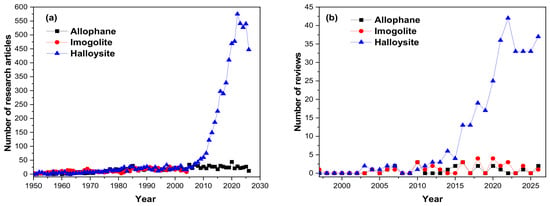
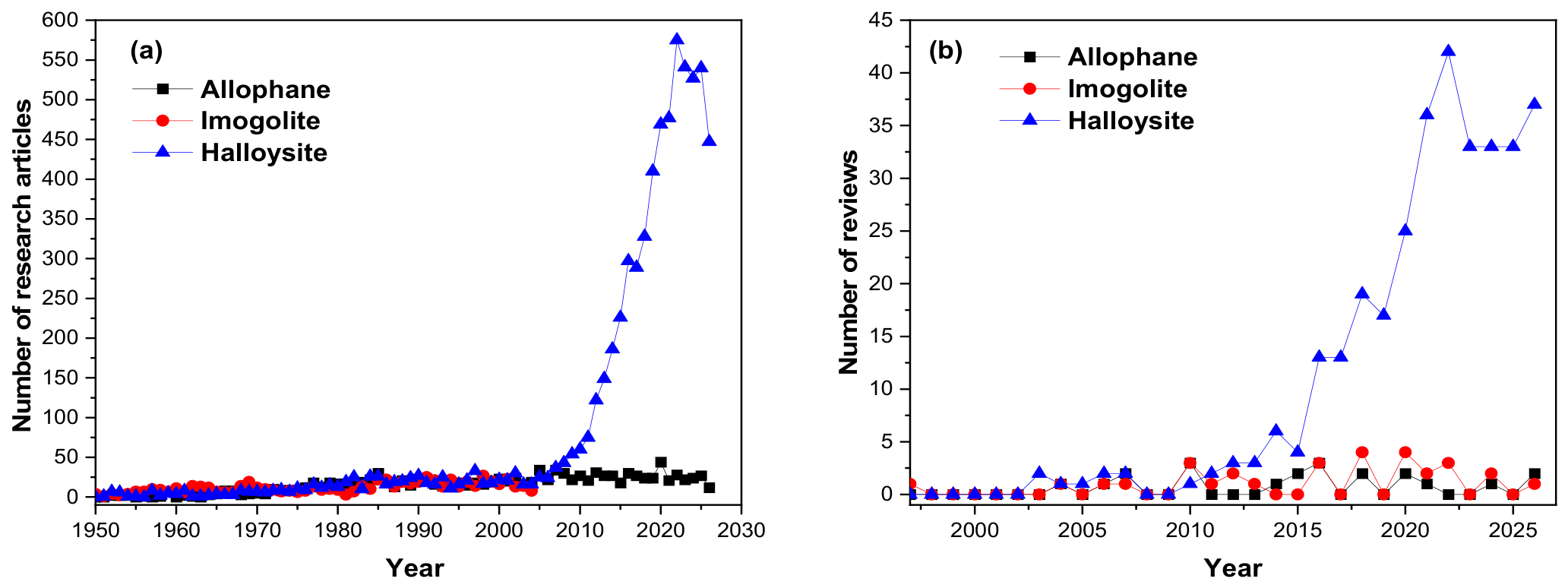
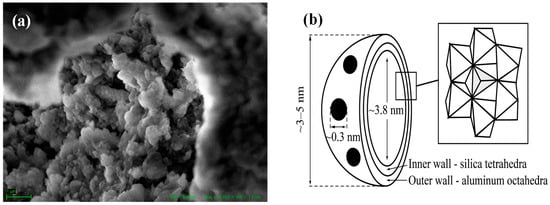
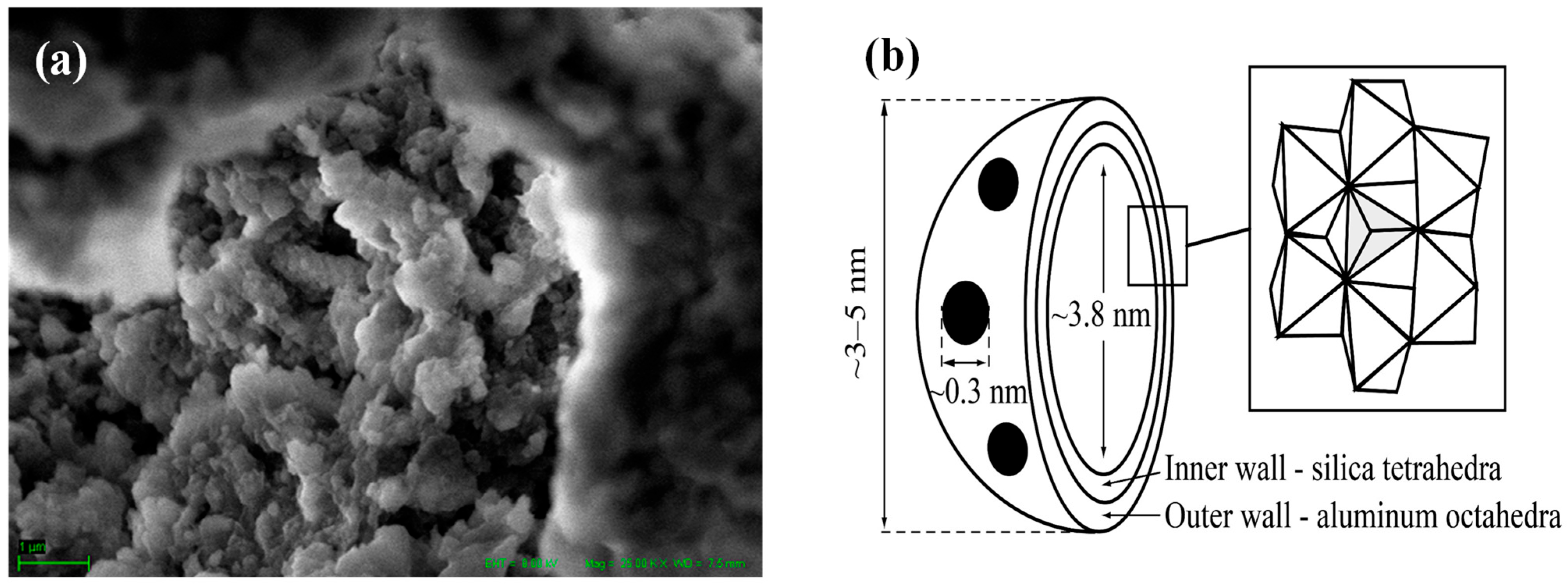
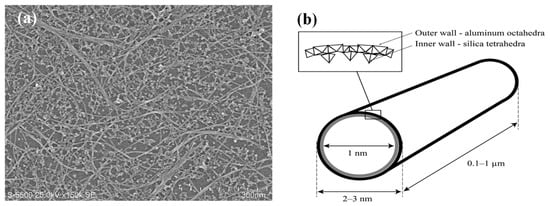
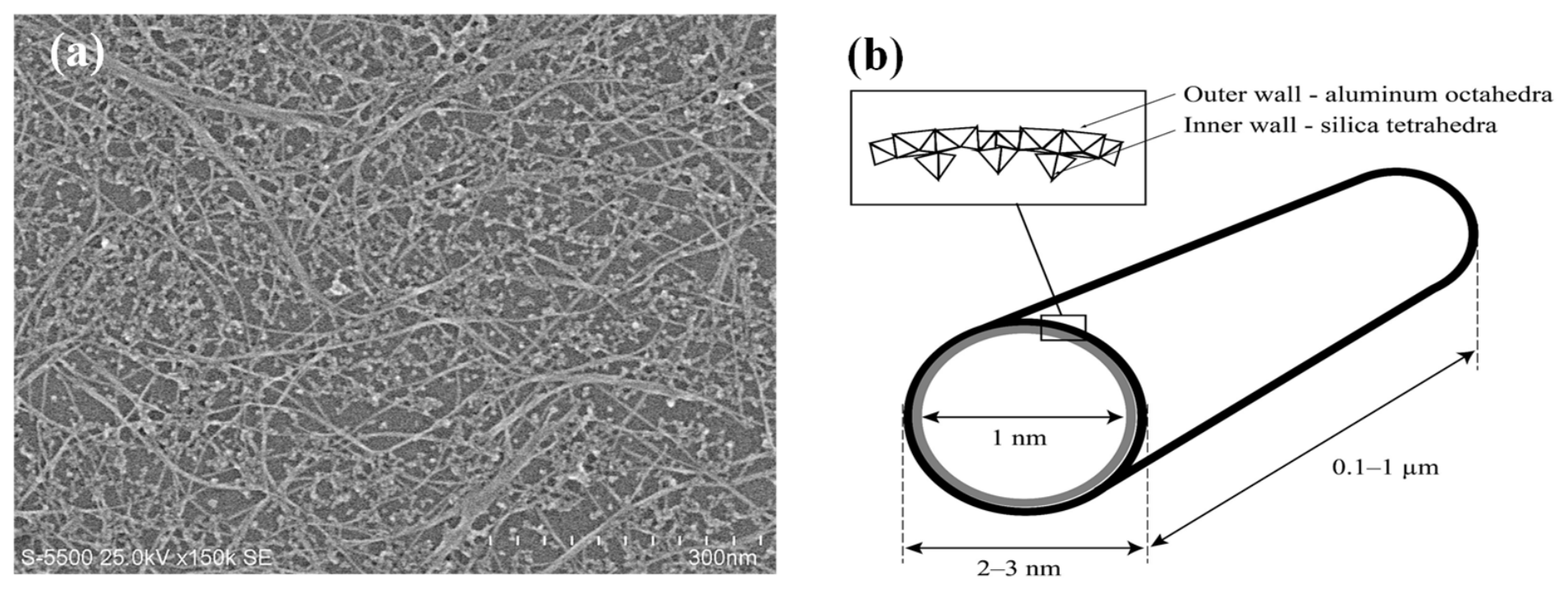
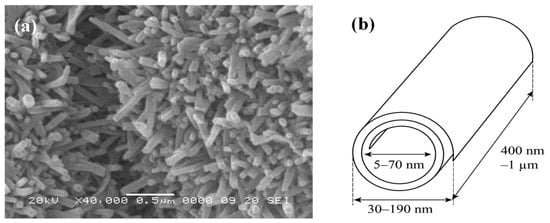
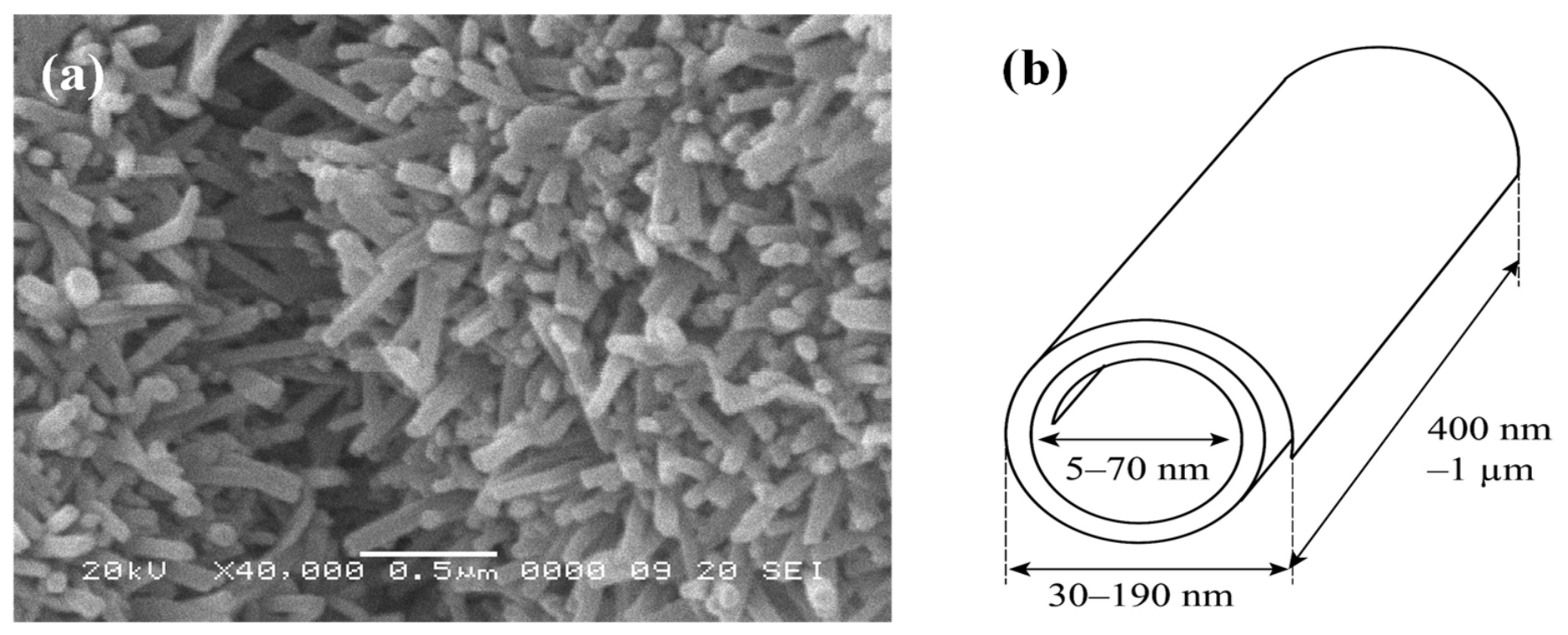
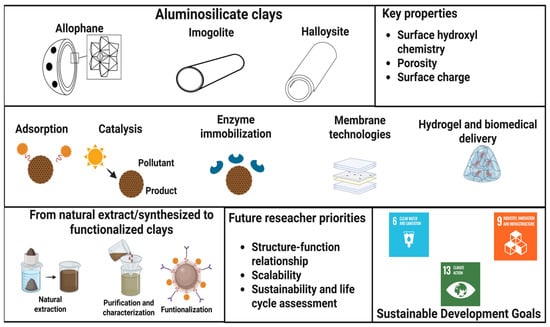
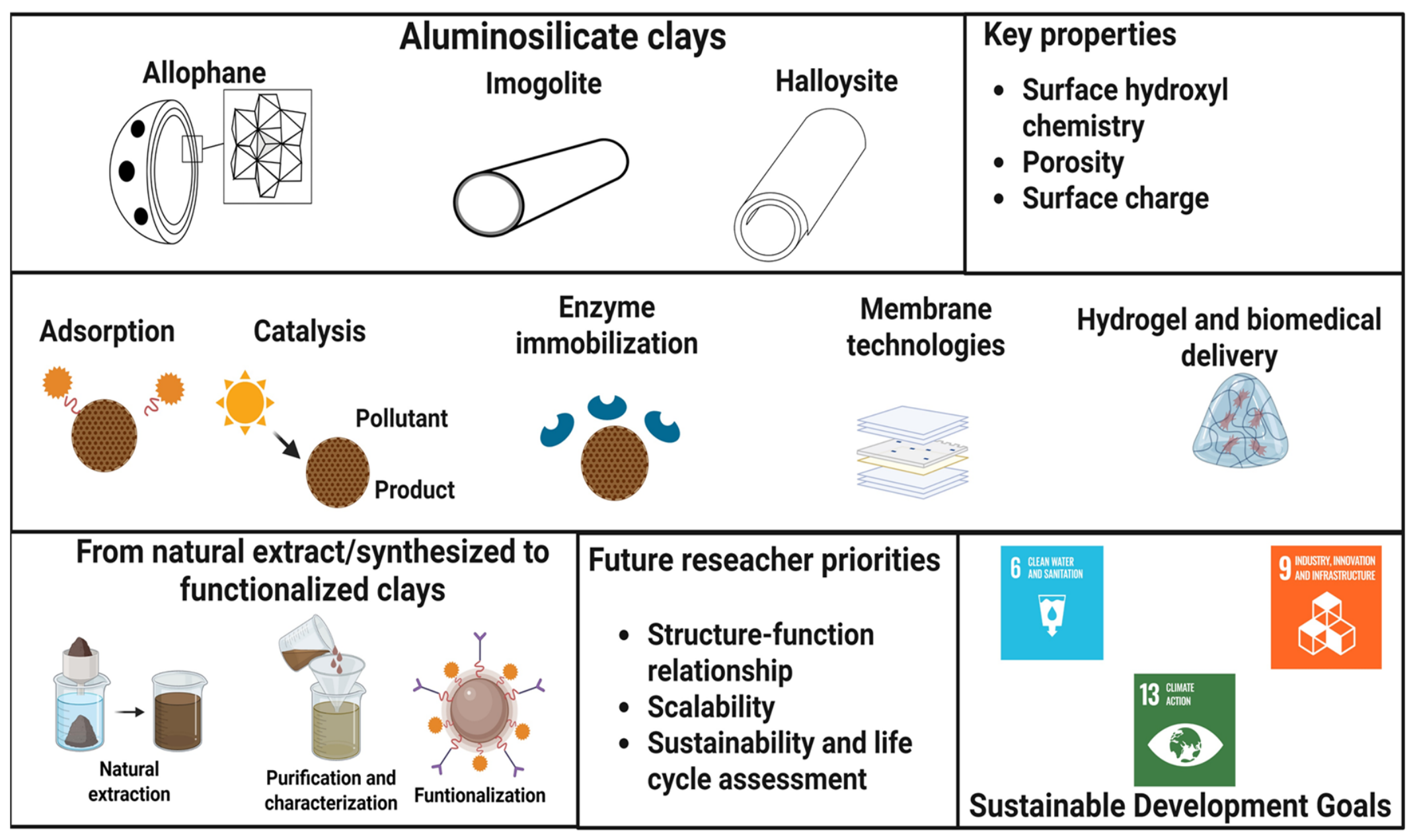

Disclaimer/Publisher’s Note: The statements, opinions and data contained in all publications are solely those of the individual author(s) and contributor(s) and not of MDPI and/or the editor(s). MDPI and/or the editor(s) disclaim responsibility for any injury to people or property resulting from any ideas, methods, instructions or products referred to in the content. |
© 2026 by the authors. Licensee MDPI, Basel, Switzerland. This article is an open access article distributed under the terms and conditions of the Creative Commons Attribution (CC BY) license.