


Abstract
Plastic waste presents a persistent environmental burden, yet its constituent polymers represent structurally valuable chemical feedstocks. Mechanical recycling remains limited due to polymer degradation, additive contamination, and material downcycling, underscoring the need for alternative strategies. Chemical upcycling offers pathways to convert post-consumer plastics into higher-value monomers, functional chemicals, and bioactive or pharmaceutical precursors by exploiting inherent structural motifs such as aromatic rings, ester linkages, and heteroatom-containing backbones. Approaches such as catalytic depolymerization, molecular functionalization, microbial and enzymatic transformation, and scaffold repurposing enable the recovery of polymer-derived building blocks with improved functional value. Case studies illustrating the conversion of discarded plastics into advanced materials and biologically relevant small molecules demonstrate the potential of these approaches to stimulate innovation and expand sustainable chemical practices. Collectively, such developments align with green chemistry principles, support emerging circular chemical economies, and contribute to global sustainability priorities reflected in the United Nations Sustainable Development Goals. This review aims to outline the guiding principles of chemical upcycling and highlight the challenges in chemical design, encouraging the modern chemistry community to tap into the hidden potential of waste plastics.
1. Introduction
The invention of Bakelite by Leo Baekeland in 1907 marked the birth of the first fully synthetic polymer and introduced the concept of plastics into modern materials science. Over the following century, plastics became indispensable, finding applications across virtually every sector, including packaging, transportation, healthcare, and consumer goods. However, the mismatch between their short life-span and long persistence has led to widespread mismanagement and environmental accumulation [1,2].
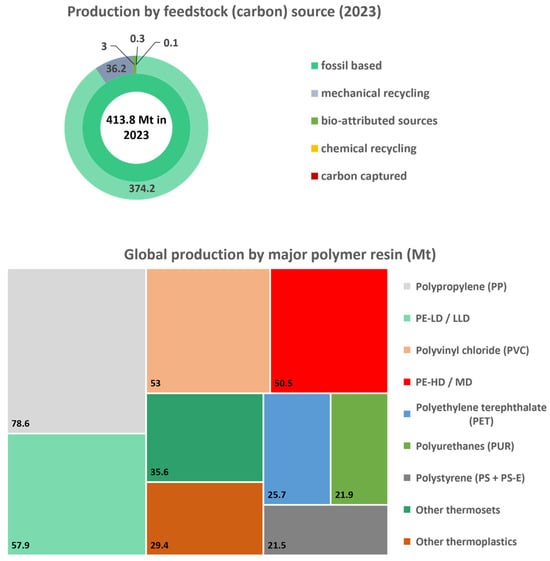
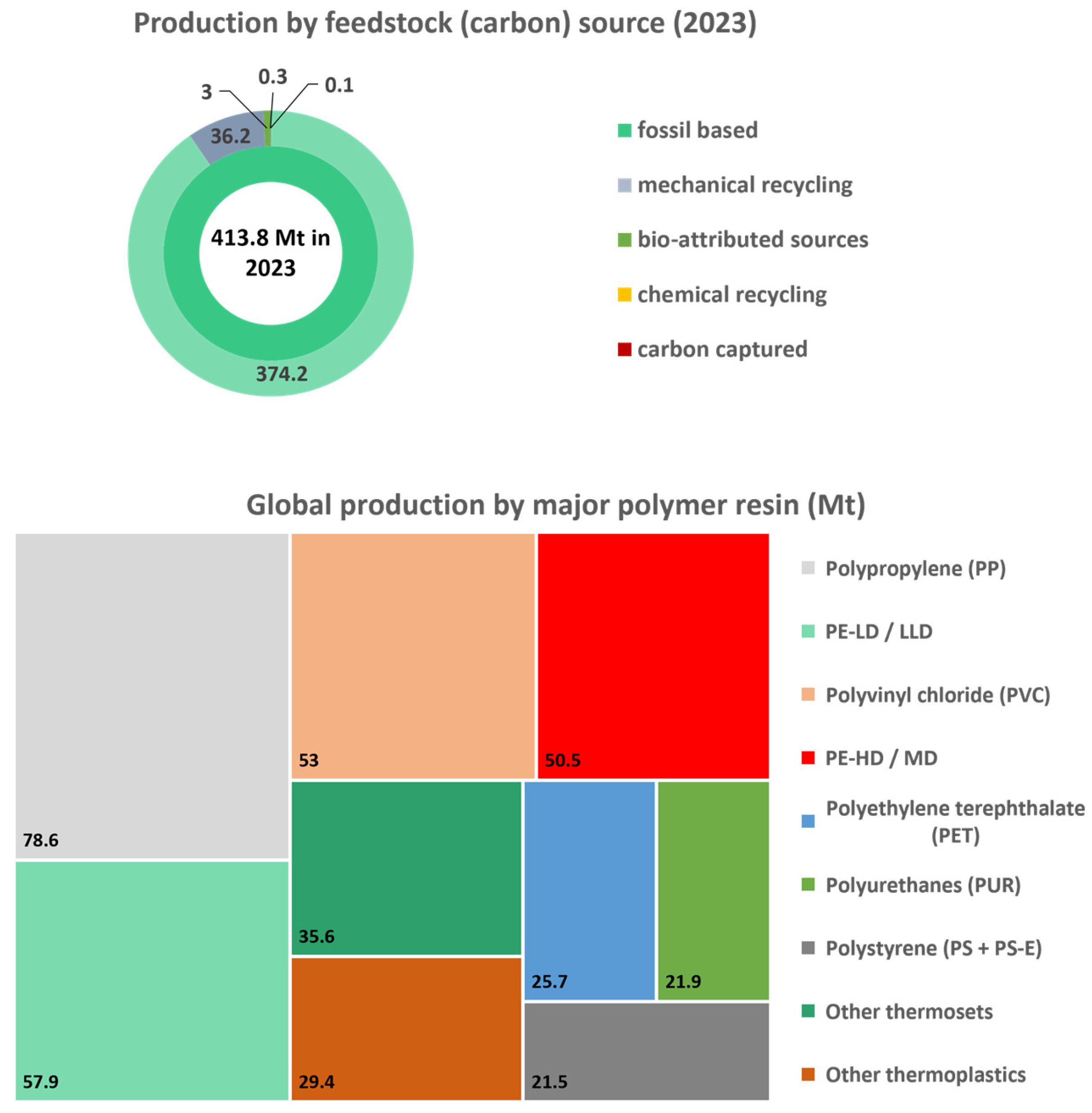
In 2023, global plastic production reached 413.8 million tonnes (Mt), a 3.4% increase from 2022. As illustrated in Figure 1, the production of plastics remained overwhelmingly dependent on fossil-based feedstocks, which accounted for 374.2 Mt (90.4%) of total production. Alternative feedstock sources contributed only a small fraction, comprising mechanically recycled feedstocks (36.2 Mt, 8.7%), bio-attributed feedstocks (3.0 Mt, 0.7%), chemically recycled feedstocks (0.3 Mt, <0.1%), and carbon-captured feedstocks (<0.1 Mt, <0.1%) [3]. Figure 1 further shows that polypropylene (PP) and polyethylene (PE-LD/LLD and PE-HD/MD) together account for the largest share of global plastic production. Despite ongoing recycling efforts, nearly US$100 billion is lost annually due to discarded plastic packaging, and by 2050, plastic debris in the oceans could outweigh fish by mass [4].
Figure 1.
Global plastics production in 2023; distribution of production by feedstock (carbon) source and the production volume of major polymer resins [3].
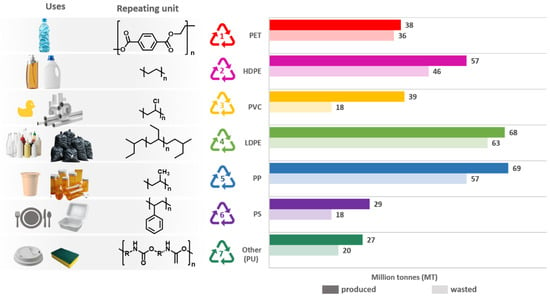
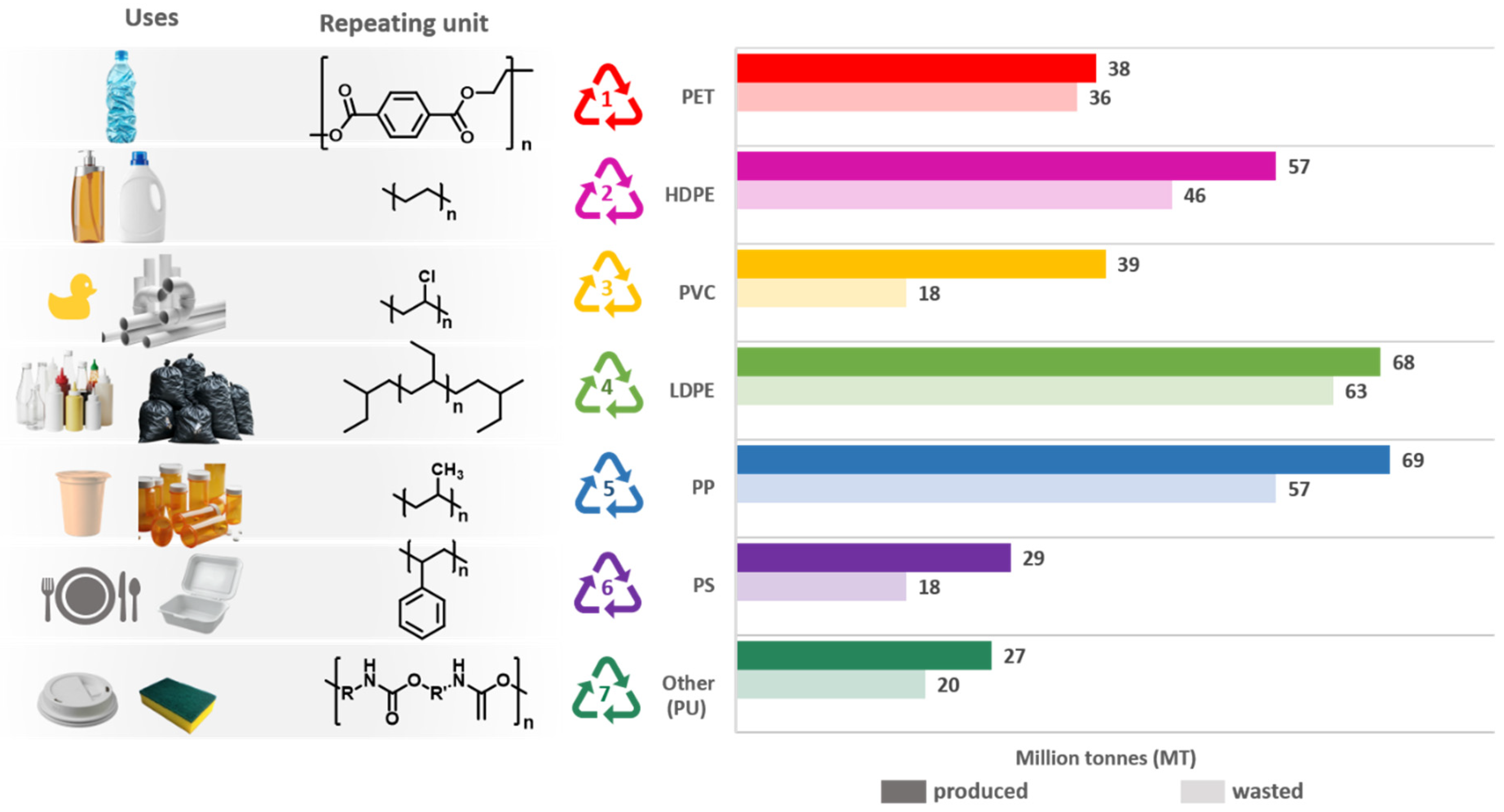
The continuous rise in plastic production has intensified global waste accumulation, with nearly 60% of all plastics ultimately entering the environment [5]. Industrial waste, being relatively homogeneous, can often be downcycled, whereas municipal waste remains highly contaminated and difficult to process. Packaging and single-use plastics dominate global waste streams, accounting for over half of total plastic waste [6]. Classification systems such as the Resin Identification Codes (RICs) (Figure 2) organize plastics into PET (polyethylene terephthalate), HDPE (high-density polyethylene), PVC (polyvinyl chloride), LDPE (low-density polyethylene), PP (polypropylene), PS (polystyrene), and “Others” (PU (polyurethane), PC (polycarbonate)) and PMMA (poly(methyl methacrylate)), etc., category, by processing characteristics rather than recyclability [7]. This underscores the need for circular design and advanced upcycling technologies [8].
Figure 2.
Global production and waste generation in million tonnes (Mt) for the main plastics in 2019, shown alongside their repeating units, typical applications, and recycling codes.
Addressing this global challenge demands not only technological innovation but also a paradigm shift toward sustainable materials design and circular resource management. Emphasizing green chemistry principles in research, industry, and policy development will help advance environmentally responsible materials and processes. Integrating strategies such as polymer degradation, waste valorization, and resource recovery into the technological framework supports the UN Sustainable Development Goals, particularly SDG 12 (Responsible Consumption and Production) [9].
At the same time, redefining plastic waste as a renewable chemical resource opens transformative educational opportunities. Through upcycling, polymers can be transformed into high-value intermediates for applications such as pharmaceuticals [10,11], high-value chemicals, and even hands-on educational experiments that introduce students to sustainable chemistry early in their training [12,13,14,15]. Integrating such practices into laboratory instruction enables students to synthesize, depolymerize, and repurpose plastics, linking experimental learning with environmental responsibility. By engaging with real waste streams, students not only develop technical proficiency but also a system-level understanding of circular chemistry, preparing them to advance sustainable scientific innovation.
2. Recycling vs. Upcycling: Shifting the Paradigm
Plastic waste management has long relied on mechanical recycling, which involves collecting, sorting, cleaning, and reprocessing plastics into pellets. However, repeated cycles degrade polymer quality through thermal and mechanical stress, leading to downcycling into lower-value products. Contamination from additives, dyes, multilayer structures, and mixed polymer streams (particularly polyolefins) further undermines recycling efficiency, making conventional recycling often technically and economically impractical [16,17,18].
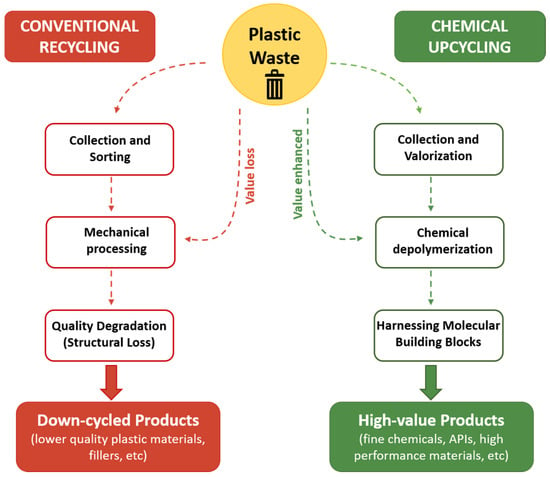
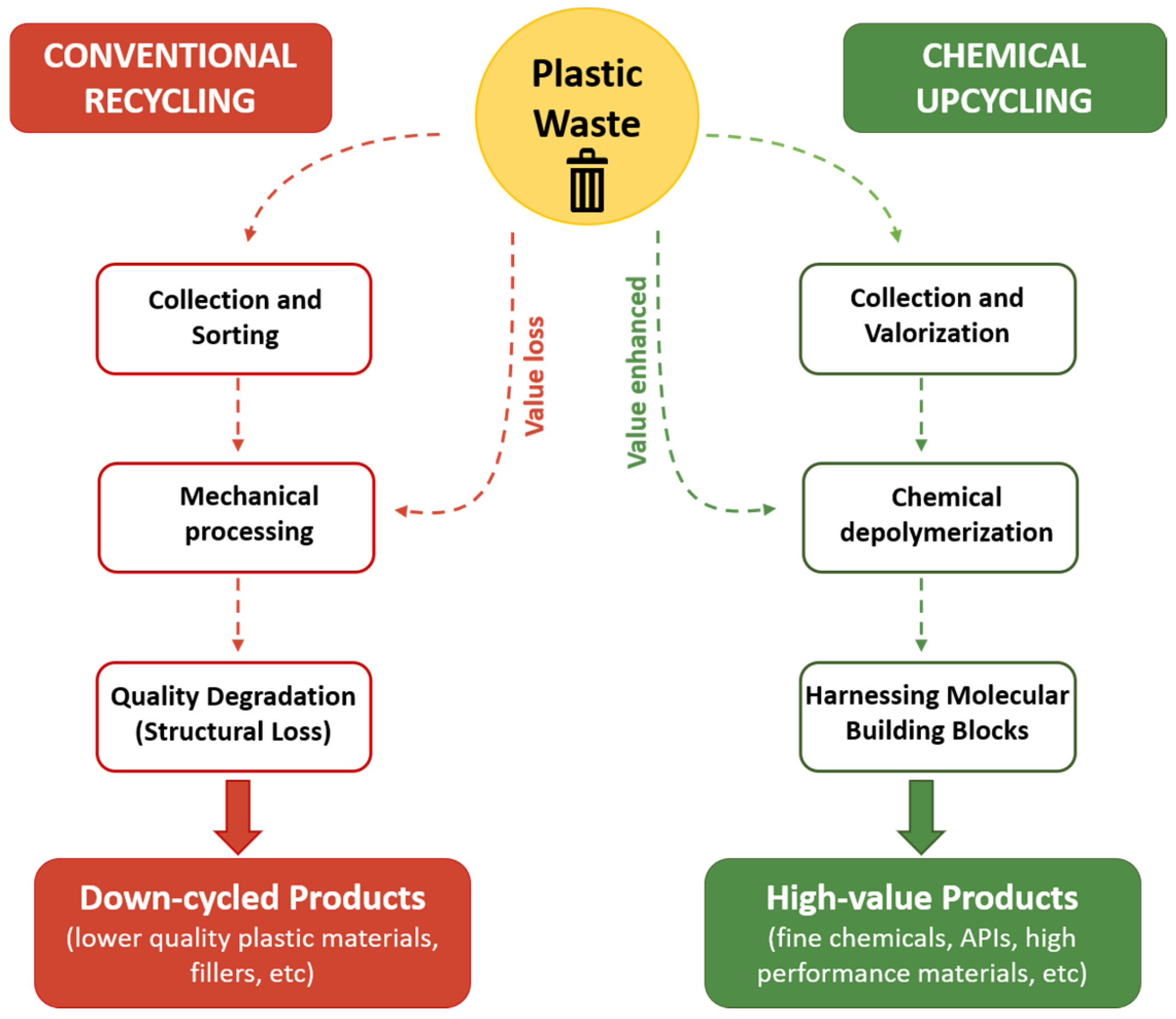
In contrast, upcycling offers a value-enhancing pathway by transforming waste plastics into higher-value products such as fine chemicals, pharmaceuticals, and functional materials [19,20]. Unlike recycling, which seeks to preserve polymers as bulk materials, upcycling leverages the intrinsic chemical motifs embedded within polymers, such as aromatic rings, ester linkages, or halogenated backbones, as advanced building blocks requiring less synthetic effort than petrochemical feedstocks. This approach not only reduces the synthetic effort and energy requirements compared to conventional petrochemical routes but also enables the creation of products with enhanced chemical complexity, functionality, and market value [21,22]. Figure 3 schematically contrasts the pathways and outcomes of conventional recycling versus chemical upcycling of plastics.
Figure 3.
Comparison of conventional recycling and chemical upcycling pathways, highlighting differences in material processing, value retention, and potential for generating high-value products.
Despite rapid progress in the field, several challenges intrinsic to the feedstock, processes, and market ecosystem must be resolved before plastic upcycling can achieve large-scale commercialization.
Securing a stable supply of post-consumer or post-industrial plastics remains a major obstacle. Collection, sorting, and storage of plastic waste often incur costs disproportionate to the value of the resulting upcycled products. Furthermore, the heterogeneous composition of commonly used plastics, such as the presence of dyes, additives, and adhesives in polyethylene products, can interfere with chemical upcycling routes and compromise the purity of the final materials. Issues such as oxidative degradation and low thermal stability of polyolefins (e.g., PE, PP) may further diminish the quality of upcycled outputs [23].
In addition, many upcycling technologies remain energy-intensive or technically restrictive. Thermal or catalytic pyrolysis requires significant energy input and often yields complex product mixtures, complicating downstream separation. Although catalytic hydrogenolysis affords narrower fuel-range fractions, it remains costly and still demands high energy. Certain plastic types, such as polyurethanes, may release toxic gases (e.g., hydrogen cyanide, ammonia) during pyrolysis, presenting additional safety and environmental concerns [24].
Low solubility of plastic polymers in organic solvents might also hamper chemical conversion, frequently necessitating expensive catalysts or prolonged reaction times. Depolymerization processes such as hydrolysis and glycolysis are highly sensitive to contaminants, making clean and well-sorted feedstock indispensable [25]. Additionally, large-scale thermochemical processing of mixed waste streams may lead to the emission of volatile organic compounds (VOCs), creating regulatory and environmental obstacles [26].
Beyond its scientific and economic promise, the success of upcycling also depends on public awareness and engagement [27]. Research on consumer upcycling indicates that enabling perceptions of circular innovation (e.g., empowering consumers, facilitating creative reuse) can foster responsible consumption and support for enabling policy frameworks [28]. By bridging technological advances with societal understanding, upcycling transforms plastic waste from an environmental liability into a valued chemical resource.
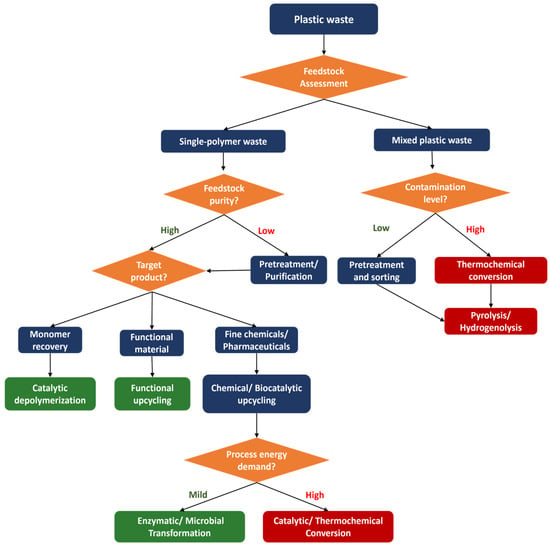
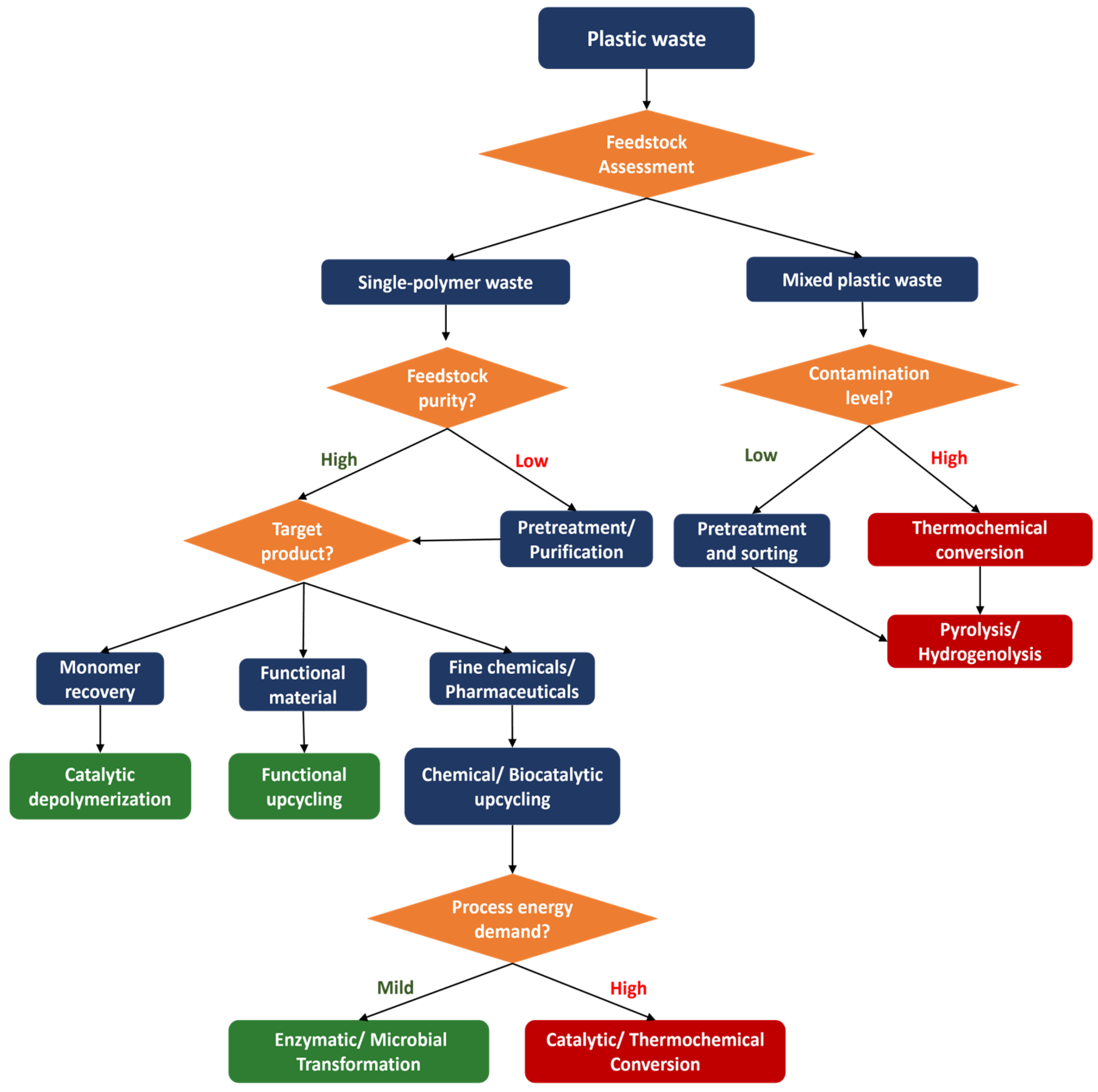
Overall, the combined feedstock, process, environmental, and societal constraints highlight the complexity of translating plastic upcycling from laboratory-scale demonstrations to industrial implementation. Progress in catalyst design, process optimization, and waste-management logistics, together with stronger societal engagement, will be critical to realizing the full potential of upcycling within emerging circular chemical economies. At the same time, the diversity of polymer feedstocks and valorization technologies means that no single upcycling strategy is universally applicable. Instead, selecting an appropriate route requires careful consideration of multiple interrelated factors, including waste composition, feedstock purity, contamination level, target product value, process energy demand, and the desired transformation pathway. As summarized in Figure 4, these decision criteria guide the selection of suitable plastic upcycling strategies, ranging from catalytic depolymerization and functional upcycling to chemical, biocatalytic, and thermochemical conversion routes.
Figure 4.
Decision framework illustrating the selection of plastic upcycling strategies based on waste composition, feedstock purity, contamination level, target product value, and process energy demand.
2.1. Functional Upcycling
Functional upcycling upgrades waste plastics into products with improved or repurposed physical, mechanical, or structural properties, without fundamentally altering the polymer’s chemical backbone. Unlike catalytic depolymerization, which converts polymers into small-molecule intermediates, functional upcycling relies on post-polymerization modification, blending, or surface functionalization to improve performance without extensive chain scission. This approach has been successfully applied to diverse waste streams, including PET bottles, polypropylene masks, and rubber tires, enabling the production of value-added materials whose performance can rival or exceed that of virgin counterparts [29].
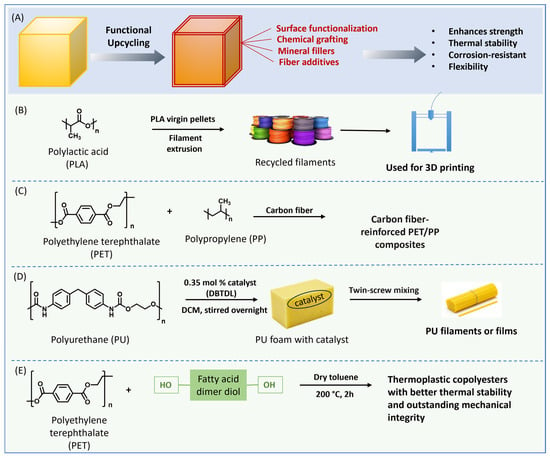
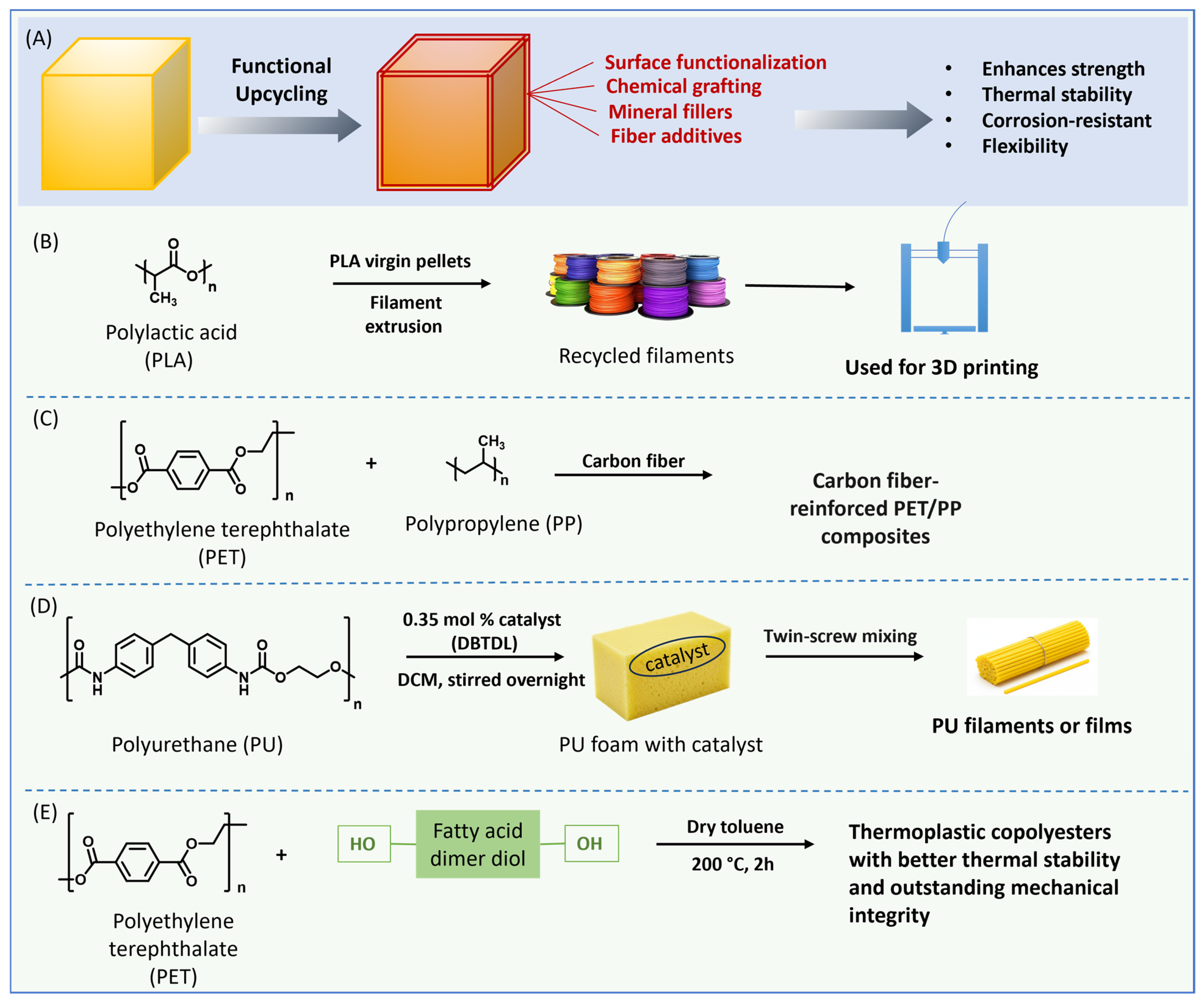
One major route involves reinforcement with fibers, mineral fillers, or nanoscale additives, which markedly enhances strength, stiffness, and thermal stability while imparting lightweight, corrosion-resistant, and flexible characteristics (Figure 5A). Such reinforced composites have found wide application in the automotive, aerospace, and construction industries, where performance demands are high [30,31].
Figure 5.
(A) Functional upcycling of polymer waste to improve its physical, mechanical, or structural properties; (B–E) schemes of functional upcycling of various plastics.
Another application lies in recycled polylactic acid (PLA), which is increasingly used in 3D printing as a sustainable alternative to virgin materials (Figure 5B). Studies have shown that mechanical performance can be partially retained or even improved when recycled PLA is blended with virgin PLA or modified with plasticizers to restore chain mobility and printability. Such blends mitigate brittleness and thermal degradation typically induced by repeated melt processing. Although recycled PLA filaments often exhibit modest reductions in tensile and flexural strength, typically around 10–15% after multiple recycling cycles. These mechanical properties remain within acceptable limits for many printing applications. This demonstrates how functional upcycling, through blending and formulation strategies, can extend the lifespan and usability of biobased polymers in circular manufacturing systems [32,33].
In a related approach, reinforcement of immiscible PET/PP waste blends with carbon fibers has been shown to significantly improve tensile, flexural, and toughness properties, demonstrating compatibility enhancement through mechanical and interfacial means (Figure 5C). Importantly, life-cycle assessments indicate that such hybrid composites can reduce environmental burdens per functional unit by minimizing material use and diverting waste from conventional disposal routes [34].
Moreover, functional upcycling has enabled the reprocessing of traditionally unrecyclable PU thermosets via dibutyltin dilaurate (DBTDL)-catalyzed carbamate exchange reactions (Figure 5D). This introduces reversible bonding within the network, allowing reshaping and recyclability. This process imparts malleability and enables reshaping and reprocessing of PU foams into dense films through twin-screw extrusion, even from commercial waste streams, highlighting a scalable, industrially relevant route for thermoset recycling [35].
Similarly, post-consumer PET has been upcycled into high-performance thermoplastic copolyesters with tunable mechanical properties. In this approach, PET undergoes transesterification-driven molecular exchange, in which ethylene glycol units are partially replaced with 1,4-butane diol, converting segments of PET into PBT-like hard blocks. The resulting materials are segmented multiblock copolyesters: hard, crystalline PET/PBT domains impart rigidity and thermal stability, while renewable fatty-acid-derived soft segments contribute thermoplasticity, elasticity, and toughness (Figure 5E). Notably, the PBT-containing copolymers exhibit faster crystallization kinetics and a higher modulus than PET-based analogs, making them particularly suitable for injection-molding and other high-performance engineering applications. This single-pot, solvent-free upcycling strategy demonstrates how recycled and renewable monomers can be synergistically integrated to create sustainable materials [36].
Overall, functional upcycling provides a valuable intermediate pathway between mechanical recycling and full chemical depolymerization. While it preserves much of the polymer’s intrinsic structure, its potential is ultimately constrained by the chemical diversity of the starting material. Nevertheless, continued innovation in hybrid material design is expanding the boundaries of what can be achieved through functional upcycling within a sustainable and circular chemical framework.
2.2. Chemical Upcycling
Chemical upcycling has emerged as a promising strategy to transform plastic waste into high-value monomers, oligomers, or entirely new molecular structures through chemical, catalytic, or biological processes [37]. Unlike functional upcycling, which upgrades plastics into enhanced materials while largely preserving the polymer backbone, chemical upcycling actively depolymerizes plastics into low-molecular-weight building blocks that can be repurposed into fuels, specialty chemicals, or advanced materials [38,39]. By leveraging rational catalyst design and process optimization, chemical upcycling can effectively address contaminated or mixed plastic streams, an area where functional upcycling faces inherent limitations. This “plastic refinery” approach not only mitigates environmental pollution and carbon emissions but also broadens the chemical utility of waste plastics, embedding them more fully within the framework of a circular economy [40]. Recent years have witnessed significant advancements in developing sustainable, selective, and energy-efficient upcycling processes, marking an important step toward realizing a truly circular and resource-resilient chemical industry.
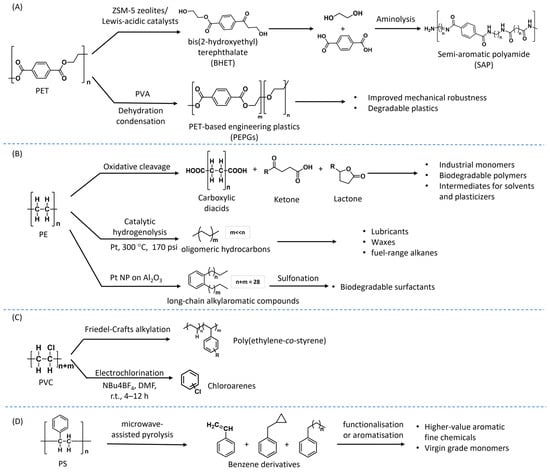
PET is among one of the most abundant polyester plastics manufactured all over the world. While existing mechanical and chemical processes have made contributions to the recycling of PET waste, upcycling PET into high-value products may offer novel opportunity to the long-run sustainability of the economy and society. Catalytic depolymerization is a powerful strategy for converting PET waste into high-purity monomers such as terephthalic acid (TPA) and ethylene glycol (EG), overcoming the degradation and contamination issues associated with mechanical recycling. Lewis-acidic catalysts, such as metal oxides, supported nanoparticles, Zn2+, Mg2+, layered hydroxides, and ZSM-5 zeolite-activate ester carbonyl groups for nucleophilic attack, selectively cleaving PET into bis(2-hydroxyethyl) terephthalate (BHET) and ultimately TPA and EG [41]. These catalysts suppress oligomer formation, enabling near-quantitative monomer recovery and repolymerization into virgin-grade PET. Recovered TPA can also undergo esterification, amidation, or metal–ligand coordination to yield advanced thermoplastics, functional intermediates, and metal–organic frameworks, supporting a plastic-refinery approach that maximizes value recovery.
Complementing these catalytic strategies, recent studies have demonstrated solvothermal chemical conversion of PET waste into high-performance engineering plastics. In one example, PET molecular chains were coupled with poly(vinyl alcohol) (PVA) units via dehydration condensation under mild solvothermal conditions, without requiring high temperatures or catalysts to form PET-based engineering plastics (PEPGs) with tensile strengths up to 78 MPa [42]. Incorporation of PVA reduced the activation energy for degradation, improving both mechanical robustness and soil-burial degradability. This approach exemplifies how chemical upcycling can simultaneously enhance performance and sustainability, transforming PET waste into durable yet degradable materials for next-generation engineering applications.
Further expanding PET valorization pathways, aminolysis-based upcycling has emerged as a versatile strategy for producing semi-aromatic polyamides (SAPs) with superior thermal and mechanical properties. Using PET-derived intermediates and biobased diamines from castor oil along with sebacic acid, novel SAPs were synthesized via ambient-pressure aminolysis, forming polymers structurally related to polyphthalamides (PPAs) [43]. These materials exhibit high glass transition temperatures, excellent heat resistance, and good melt-processability, offering a sustainable alternative to traditional engineering plastics. This methodology not only extends the utility of PET waste but also demonstrates how biobased and waste-derived feedstocks can converge to create high-performance materials within a circular polymer economy (Figure 6A).
Figure 6.
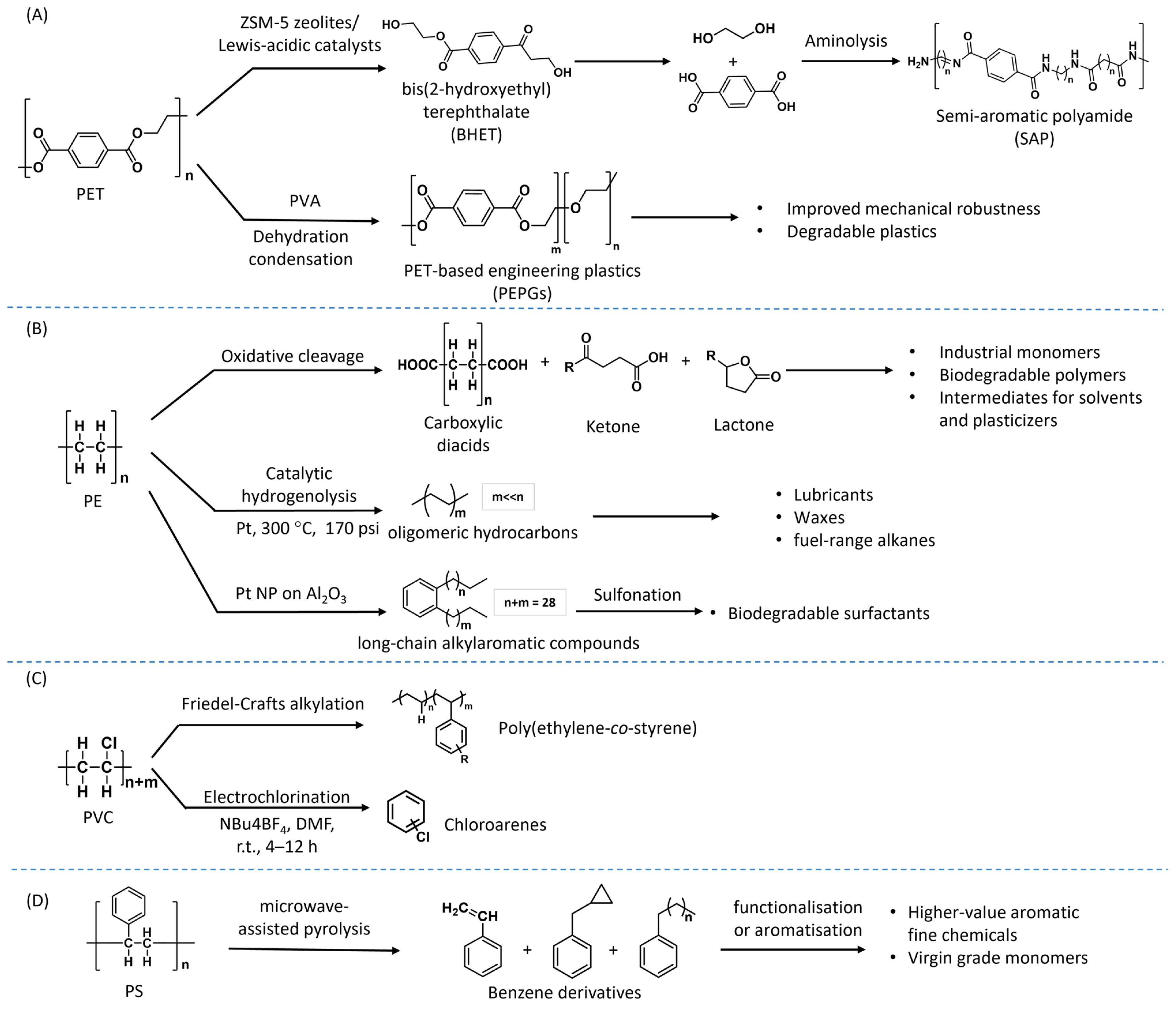
Reaction pathways demonstrating the conversion of (A) PET into BHET and further transformed into SAP, or directly into PET-based engineering plastics through PVA-assisted dehydration-condensation, (B) PE to oxygenated products through oxidative cleavage, oligomeric hydrocarbons through catalytic hydrogenolysis, or value-added surfactants through Pt/Al2O3-catalyzed aromatization followed by sulfonation, (C) PVC to poly(ethylene-co-styrene) derivatives and chloroarenes via Friedel-Crafts alkylation or electrochlorination, respectively, and (D) PS to benzene derivatives that can be further functionalized or aromatized into high-value aromatic chemicals and virgin-grade monomers.
PE featuring a resistant and durable character is widely used due to the low manufacturing cost and versatile properties. However, the presence of inert C–C makes the recycling a challenge. The oxidative depolymerization of PE provides a selective pathway to convert recalcitrant polyolefin waste into linear di-carboxylic acids through radical-mediated C–C bond cleavage under aerobic conditions. Peroxyl-driven hydrogen abstraction initiates chain scission, producing di-acids along with ketones and lactones at moderate temperatures and pressures. These oxygenated products serve as valuable platform chemicals that can be transformed into industrial monomers such as adipic and succinic acids for nylon, polyurethane, and biodegradable polymer synthesis, as well as intermediates for solvents and plasticizers. This approach establishes an important front-end feedstock generation step where polyethylene waste can be redirected into established chemical supply chains rather than disposal [44].
In parallel, catalytic hydrogenolysis has emerged as an efficient route for converting single-use PE into high-value liquid hydrocarbons such as lubricants, waxes, and fuel-range alkanes. This transformation is achieved through catalytic hydrogenolysis using platinum (Pt) nanoparticles supported on strontium titanate (SrTiO3) perovskite nanocuboids, which serve as a highly active and selective catalyst system. The catalyst, synthesized via atomic layer deposition (ALD), enables uniform dispersion of Pt nanoparticles and precise control of active sites, facilitating effective C–C bond cleavage. Under solvent-free conditions at 300 °C and 170 psi hydrogen pressure, long-chain PE macromolecules are selectively depolymerized into oligomeric hydrocarbons with narrow molecular weight distributions. The resulting oligomeric products display high viscosity, thermal stability, and narrow molecular weight distributions, properties comparable to commercial lubricants, demonstrating a scalable and sustainable pathway for PE valorization [45].
Complementing these reductive and oxidative strategies, dehydroaromatization-based upcycling enables the conversion of PE into long-chain alkylaromatic compounds that can be sulfonated to form biodegradable surfactants. Using Pt nanoparticles supported on alumina (Al2O3), Zhang et al. achieved in situ hydrogen generation via dehydroaromatization of shorter hydrocarbon chains, which simultaneously fuels hydrogenolysis of longer ones [46]. This solvent-free process operates at moderate temperatures and produces minimal gaseous byproducts, offering a clean, energy-efficient route to renewable surfactant precursors (Figure 6B).
PVC is a widely used polymer, valued for its durability, chemical stability, and tunable properties, which can be customized through the addition of various plasticizers, stabilizers, and lubricants. Despite being the third most produced polymer globally, PVC remains one of the least recycled materials because its chlorine-containing backbone and complex additive composition hinder compatibility with conventional recycling methods. These features contribute to persistent environmental concerns associated with PVC waste, and effective recycling or upcycling approaches will require strategies that address the reactivity of the C–Cl bond in the polymer structure. Recent advances have demonstrated creative approaches to chemical upcycling of PVC through controlled C–Cl activation. For instance, Fieser and co-workers reported a tandem hydrodechlorination/Friedel–Crafts alkylation strategy that enables the conversion of PVC into poly(ethylene-co-styrene) derivatives [47]. Meanwhile, the McNeil group developed an electrochemical upcycling method that integrates homolytic C–Cl reduction with oxidative arene electrochlorination, allowing waste PVC to act as a chlorine feedstock for the synthesis of chloroarenes at room temperature [48]. Furthermore, Goulas and colleagues reported a tandem dehydrochlorination–hydrogenation–hydrogenolysis process to produce polyethylene-like waxes suitable for hot-melt adhesive applications. The team achieved >70% yields of wax products, with high efficiency in both chlorine elimination and alkene hydrogenation [49]. Collectively, these studies underscore the growing potential of PVC upcycling technologies that not only mitigate environmental hazards but also transform problematic plastic waste into value-added materials (Figure 6C).
PS waste constitutes a major portion of plastic pollution because of its extensive deployment in disposable food packaging, cutlery, and protective materials. As most PS ends up in landfills, upcycling presents a viable strategy to elevate this low-value polymer into high-value products and functional chemical intermediates. Microwave-assisted depolymerization of PS offers a promising route for chemical recycling of this widely used polymer. By exposing PS to microwave irradiation typically in the presence of a microwave susceptor (carbon, silicon carbide) to enhance absorption of microwave energy, the polymer chains undergo rapid thermal or radical-driven scission, producing high yields of styrene monomer and other aromatic hydrocarbons. Under reduced pressure microwave-assisted pyrolysis of PS with carbon as susceptor achieved liquid yields above 75% and a styrene concentration of ~72 wt% [50]. Similarly, converting expanded PS via microwave-assisted pyrolysis produced oil fractions (51–60 wt%) rich in styrene, cyclopropyl methylbenzene and alkylbenzenes [51]. Once recovered, the styrene monomer can be purified and reused in polymer manufacture or further upgraded into higher-value aromatic fine chemicals via functionalization or aromatization to create a closed-loop or value-added recycling stream. A recent commercial assessment describes a modular microwave-based technology platform which uses microwave depolymerization of PS to recover styrene monomers with purity comparable to virgin material, enabling their reuse (Figure 6D) [52].
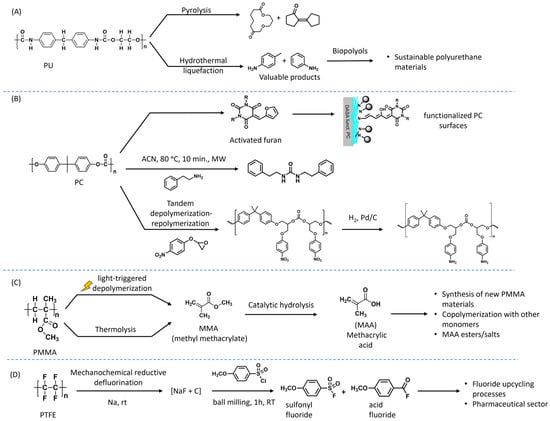
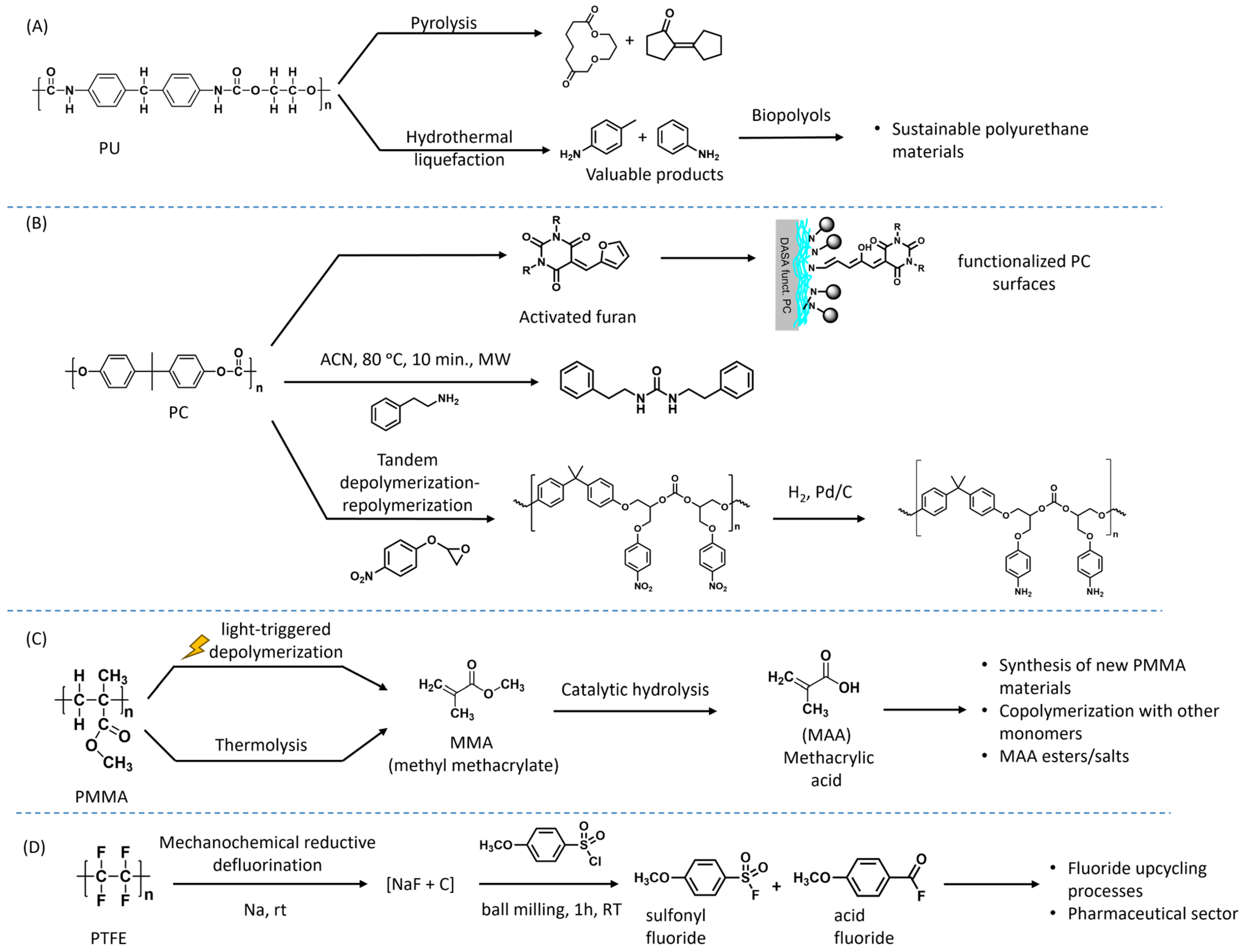
Although PU does not belong to any of the conventional seven resin categories, it ranks as the sixth most produced polymer globally, finding extensive use in construction, transportation, and furniture industries. However, recycling PU, particularly thermoset PUs such as rigid and flexible foams, poses significant challenges for recycling due to their highly cross-linked network structures and the presence of numerous additives [53]. Recently, Adhikari and co-workers investigated the liquid products generated from the thermochemical depolymerization of linear thermoplastic polyurethane pellets using both pyrolysis and hydrothermal liquefaction (HTL). Reaction temperatures between 250 and 550 °C were selected based on thermogravimetric analysis (TGA) of the feedstock. The pyrolysis process at 550 °C yielded the highest liquid fraction (63.08 ± 2.46 wt%) and achieved an energy recovery of 59.25%. In contrast, HTL conducted at 400 °C produced the maximum oil yield (40.09 ± 4.06 wt%), with the resulting oil exhibiting the highest carbon content (70.37 ± 4.00 wt%) and the lowest oxygen content (16.45%). Notably, the major valuable products identified were aniline and p-aminotoluene, both of which can be utilized in combination with biopolyols to synthesize sustainable polyurethane materials. This approach not only recovers value from PU waste but also promotes circularity within the plastics industry through a chemical upcycling strategy (Figure 7A) [54].
Figure 7.
Reaction pathways demonstrating the conversion of (A) PU into cyclic oxygenated compounds, aromatic diamines, and other valuable intermediates that can be reused for the preparation of biopolyols and sustainable polyurethane materials, (B) PC to value-added amide products, or tandem depolymerization–repolymerization followed by hydrogenation to generate functionalized polycarbonate materials, (C) PMMA to MMA through depolymerization or thermolysis, which can be hydrolyzed to MAA and reused in polymer synthesis, copolymerization, or ester and salt production, and (D) PTFE into sulfonyl fluorides, acyl fluorides, and other value-added fluorinated products through mechanochemical reductive defluorination followed by ball-milling-assisted fluorination reactions.
Among engineering plastics, PC is valued for its mechanical strength, thermal stability, and transparency, supporting widespread use in consumer goods and technical applications. However, its chlorine-free yet highly stable carbonate backbone, reliance on phosgene-based synthesis routes, and release of bisphenol A (BPA) upon degradation pose sustainability concerns and limit the effectiveness of conventional mechanical recycling. As a result, chemical upcycling has emerged as a more promising strategy, enabling selective depolymerization of PC into BPA and carbonyl-rich intermediates that can be repurposed into higher-value functional materials. For instance, Singh and co-workers demonstrated that discarded CDs and DVDs can serve as a polycarbonate-derived carbonyl source for the synthesis of photoresponsive donor-acceptor Stenhouse adducts (DASAs) and related functional molecules. In their approach, a library of activated furans was first synthesized from depolymerized polycarbonate obtained from waste CDs, which were subsequently reacted with amine-functionalized polycarbonate surfaces to generate DASA-functionalized materials. This work highlights the potential of PC upcycling as a versatile platform for advanced material design and surface functionalization [55]. The same research group also reported a microwave-assisted depolymerization of PC, in which condensation with phenylethylamine in acetonitrile at 80 °C for 10 min afforded N,N′-diphenylethylurea in 44–78% yield [56]. Other studies have transformed waste polycarbonate into recyclable poly(carbonate-imine)s (PCIs) with desirable thermomechanical properties. Unlike hydrolytically stable PCIs, these materials are acid-hydrolyzable, enabling efficient chemical recycling. They exhibit excellent thermal reprocessability, superior thermal stability, low thermal expansion, and high tensile strength without compromising the structural integrity of reinforcing carbon fibers, underscoring their potential for advanced material applications. Additionally, waste PC has been converted into poly(ether-carbonate) polyols through tandem depolymerization–repolymerization strategies, further demonstrating the versatility of polycarbonate upcycling routes (Figure 7B) [57].
PMMA was discovered in the early 1930s and gained renewed attention during the COVID-19 pandemic as a key material for protective barriers. This thermoplastic polymer is well known for its high tensile and flexural strength, UV resistance, and excellent optical transparency. Conventionally, PMMA is recycled via thermomechanical processing, which typically leads to downcycling, yielding lower-grade products with degraded properties. To overcome this limitation, alternative recycling strategies have recently been developed to enable monomer recovery without product deterioration. A notable example is the visible light-triggered depolymerization of PMMA, wherein chlorine radicals are generated in situ from the solvent to initiate polymer main-chain breakdown. This method achieves near-quantitative depolymerization (>98%) of polymethacrylates, allowing the recovered monomer to be repurposed for the synthesis of new PMMA materials [58]. In a complementary study, G. S. Patience and co-workers reported a heterogeneous catalytic hydrolysis approach for the chemical upcycling of PMMA. In this approach, PMMA is first thermally depolymerized to methyl methacrylate (MMA), which is subsequently hydrolyzed to me vthacrylic acid (MAA). A heterogeneous catalytic hydrolysis strategy employing fresh, activated, regenerated, and desilicated zeolite Y catalysts achieved ≥95% PMMA conversion at 350 °C, with H-type zeolite Y (SiO2/Al2O3 = 80) delivering the highest MAA yield and selectivity. This sequential thermolysis–hydrolysis pathway produces high concentrations of MAA, an important monomeric feedstock for copolymer synthesis and for the production of MAA esters and salts. Acetone and CO were identified as primary by-products resulting from MAA cracking on zeolite acid sites (Figure 7C) [59].
PTFE, commonly known as Teflon, is a highly versatile fluoropolymer distinguished by its exceptional chemical and thermal stability. It exhibits minimal reactivity toward almost all chemical reagents, including strong mineral acids, bases, and oxidizing agents, and maintains thermal stability up to 260 °C, withstanding temperatures as high as 400 °C [60]. However, the same durability that makes PTFE valuable also presents a major challenge at the end of its lifecycle. Disposal via landfill is problematic since PTFE is highly resistant to biodegradation, while incineration demands extremely high temperatures and risks the release of environmentally persistent per- and polyfluoroalkyl substances (PFASs), which are associated with various toxicological and ecological concerns [61]. Given the growing industrial demand for fluorinated small molecules, especially in the pharmaceutical sector, a promising strategy would be to upcycle the fluorine atoms in waste PTFE into valuable fluorinated fine chemicals. Armstrong and co-workers recently reported a mechanochemical reductive defluorination approach that achieves direct upcycling of PTFE under mild conditions. The process involves ball milling PTFE with inexpensive and readily available sodium metal at room temperature, without the use of organic solvents. The resulting products, NaF and elemental carbon, can subsequently be utilized in acid-catalyzed mechanochemical fluorination to generate high-value sulfonyl fluoride and acid fluoride compounds with excellent yields (Figure 7D) [62].
Overall, chemical upcycling transforms plastic waste from an environmental burden into a valuable chemical resource. It links molecular innovation with sustainability by promoting waste as a renewable feedstock and improving how materials are created, used, and recovered. In this way, upcycling drives chemistry toward a more circular and sustainable future.
2.3. Technology Readiness of Plastic Upcycling Routes
The plastic upcycling routes discussed in this review span different levels of technological maturity, as summarized in Table 1. Accordingly, their readiness is qualitatively categorized as laboratory-scale, pilot-scale, or commercial-scale based on the reported processing scale, feedstock complexity, product recovery, equipment integration, and evidence of continuous or industrial operation. This classification is intended as an indicative assessment rather than a formal technology-readiness-level assessment, as most published studies primarily focus on chemical performance rather than engineering, economic, or commercialization aspects.
Table 1.
Indicative technology readiness of representative plastic upcycling strategies discussed in this review.
3. Chemical Value Hidden in Polymers
Plastics are often viewed simply as waste, but at a molecular level, their constituent monomers and structural motifs can closely resemble the core scaffolds found in many pharmaceuticals [63]. Each polymer is composed of repeating units that contain specific chemical functionalities and frameworks. These polymer frameworks often share architectural motifs common in pharmaceuticals, meaning they already contain useful scaffolds that can be directly transformed into bioactive compounds or APIs (active pharmaceutical ingredients) [19,64].
Molecular Resemblance of Polymer Units to Drug Scaffolds
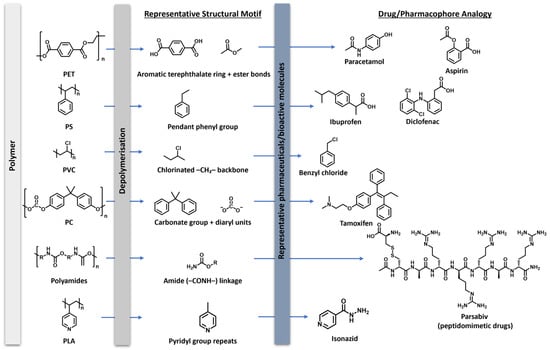
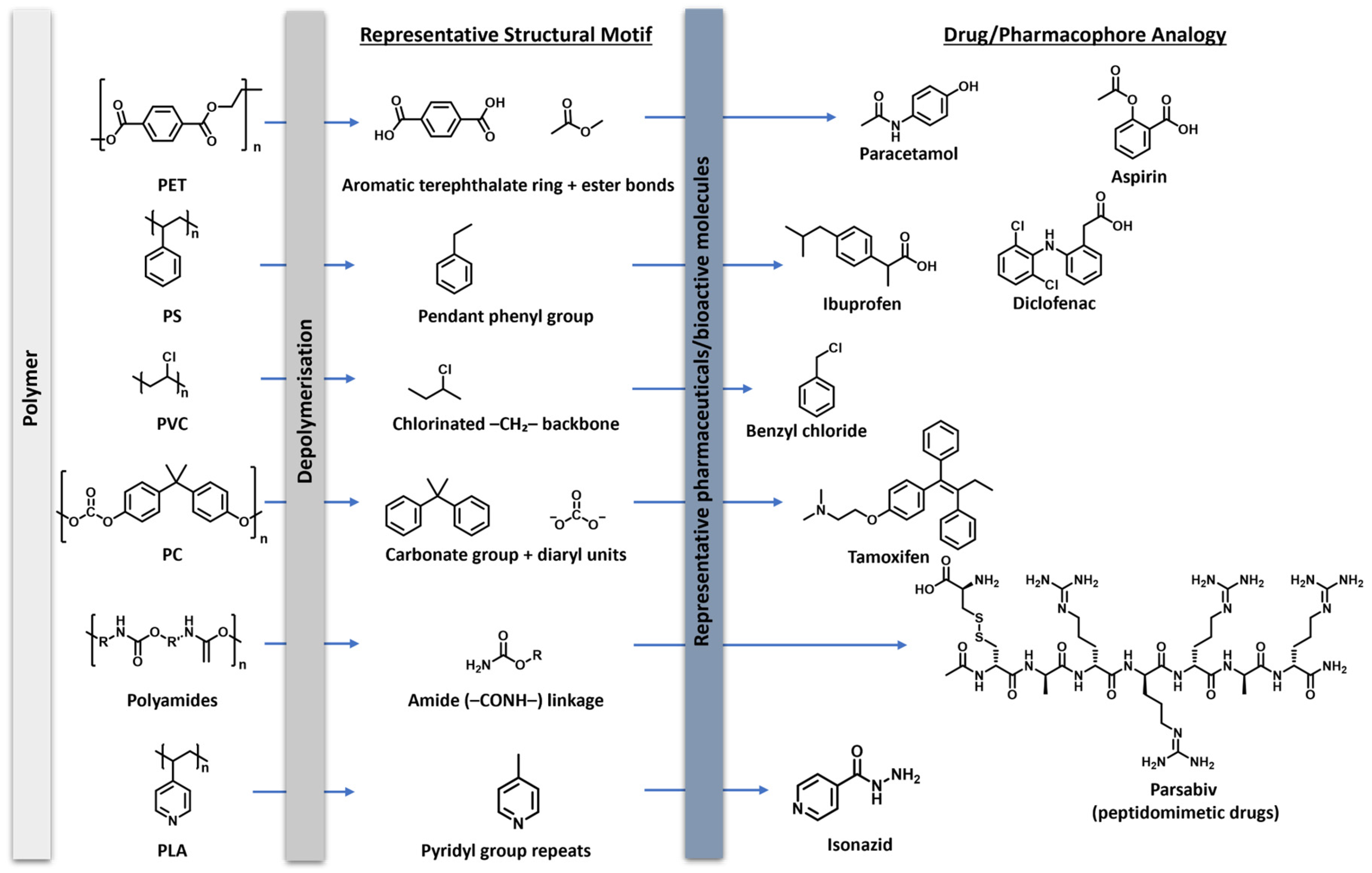
When viewed at the molecular level, many commodity polymers reveal striking structural parallels to established drug scaffolds. For example, PET incorporates ester linkages and terephthalate aromatic rings that echo the functionalized benzene motifs found in analgesics, while PS bears pendant phenyl groups akin to those in ibuprofen and diclofenac. The chlorinated backbone of PVC provides reactive sites analogous to halogenated intermediates in medicinal chemistry, where chlorine substitution is commonly employed to modulate lipophilicity and reactivity. These structural features resemble chloroalkanes and benzyl chlorides that serve as key building blocks for active pharmaceutical ingredients [65].
Beyond these commodity plastics, higher-value polymers display even more direct pharmacophoric relevance. PC, with its carbonate/ester linkages and diaryl motifs, resemble structural features found in carbamate-based prodrugs and selective estrogen receptor modulators (SERMs) such as tamoxifen. Polyamides (nylons), with their –CONH– amide linkages, directly mirror the peptide bond that is the backbone of therapeutic peptides (e.g., insulin, cyclosporine) and peptidomimetics (e.g., Parsabiv) [66]. Likewise, poly(vinylpyridine) (PVPy) incorporates a pyridine ring, found in numerous drugs such as isoniazid. Additionally, PLA represents a renewable polyester with repeating lactic acid units, closely tied to biocompatible and biodegradable systems already used for delivering doxorubicin and paclitaxel in nanoparticle formulations [67,68].
Taken together, these parallels highlight how synthetic polymers act as pre-assembled reservoirs of drug-like fragments, with their repeating units resembling scaffolds central to pharmaceuticals ranging from simple analgesics to complex peptide drugs. Through targeted depolymerization and functionalization, these materials can be chemically upcycled into intermediates and active molecules, demonstrating that plastics are far more than inert waste—they are potential chemical feedstocks bridging polymer science and drug discovery (Figure 8).
Figure 8.
Representative polymer motifs (aromatic, ester, and amide groups) resemble drug scaffolds, illustrating how depolymerized plastics can serve as precursors for bioactive and value-added molecules within sustainable chemical frameworks.
4. Microbial and Enzymatic Transformation of Polymer-Derived Scaffolds
The intersection of polymer degradation and biotechnology has transformed how plastic waste is perceived, i.e., from a problem of persistence to an opportunity for molecular innovation. Microbial and enzymatic transformations have emerged as powerful strategies to upgrade polymer-derived building blocks into high-value products. Microbes such as bacteria and fungi, whether naturally evolved or genetically engineered, can functionalize, rearrange, or extend polymer-derived intermediates into smaller, more versatile molecules through biotransformation and enzymatic catalysis [69,70].
Among these efforts, PET has seen the most extensive progress in enzymatic recycling and bioconversion, with the first reports on enzymatic depolymerization dating back to the early 2000s [71]. Large-scale enzymatic recycling is now approaching commercialization, with a dedicated plant expected to begin operation in 2025, capable of processing 50,000 tons of post-consumer PET annually [72].
Building on this foundation, engineered PET hydrolases have been developed that achieve up to 90% depolymerization within 10 h under mild aqueous conditions [73]. These enzymes employ a Ser-His-Asp catalytic triad and feature modified active sites that enhance accessibility to crystalline PET. The recovered monomers exhibit petrochemical-grade purity, enabling direct repolymerization into food-grade materials and supporting closed-loop PET recycling within a circular, low-carbon economy.
Microbial systems are also being explored to address the limitations of purely enzymatic methods, particularly for mixed or contaminated plastic wastes. For instance, the PETase enzyme from Ideonella sakaiensis catalyzes the hydrolysis of PET into mono(2-hydroxyethyl) terephthalic acid (MHET), while a complementary enzyme, MHETase, subsequently converts MHET into TPA and EG [74]. In parallel, progress has also been made in extending biodegradation to other polymers such as polylactic acid (PLA). Hajighasemi et al. demonstrated that purified enzymes can effectively depolymerize PLA, producing clear and consistent degradation patterns [75].
This tandem chemo-biological approach, first depolymerizing plastics to release functional monomers, then upgrading them through enzymatic or microbial transformations, creates a circular route for converting plastic waste into high-value products such as pharmaceuticals. Together with catalytic, thermochemical, and functional upcycling approaches discussed throughout this review, these strategies illustrate the diverse toolbox available for plastic valorization. However, each route differs considerably in terms of feedstock requirements, product selectivity, energy demand, scalability, and process limitations. A comparative overview of the principal recycling and upcycling strategies, together with their major advantages and limitations, is presented in Table 2. Representative examples of biocatalytic and microbial valorization are subsequently discussed through selected pharmaceutical case studies.
Table 2.
Comparative overview of the principal plastic recycling and upcycling strategies, highlighting their major advantages and limitations.
5. Case Studies: Turning Waste Polymers into High-Value Pharmaceuticals
5.1. From PET Bottles to Paracetamol
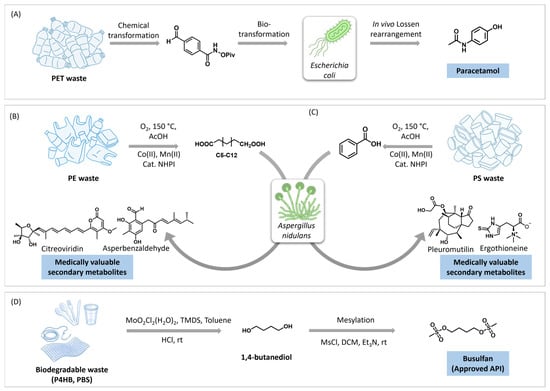
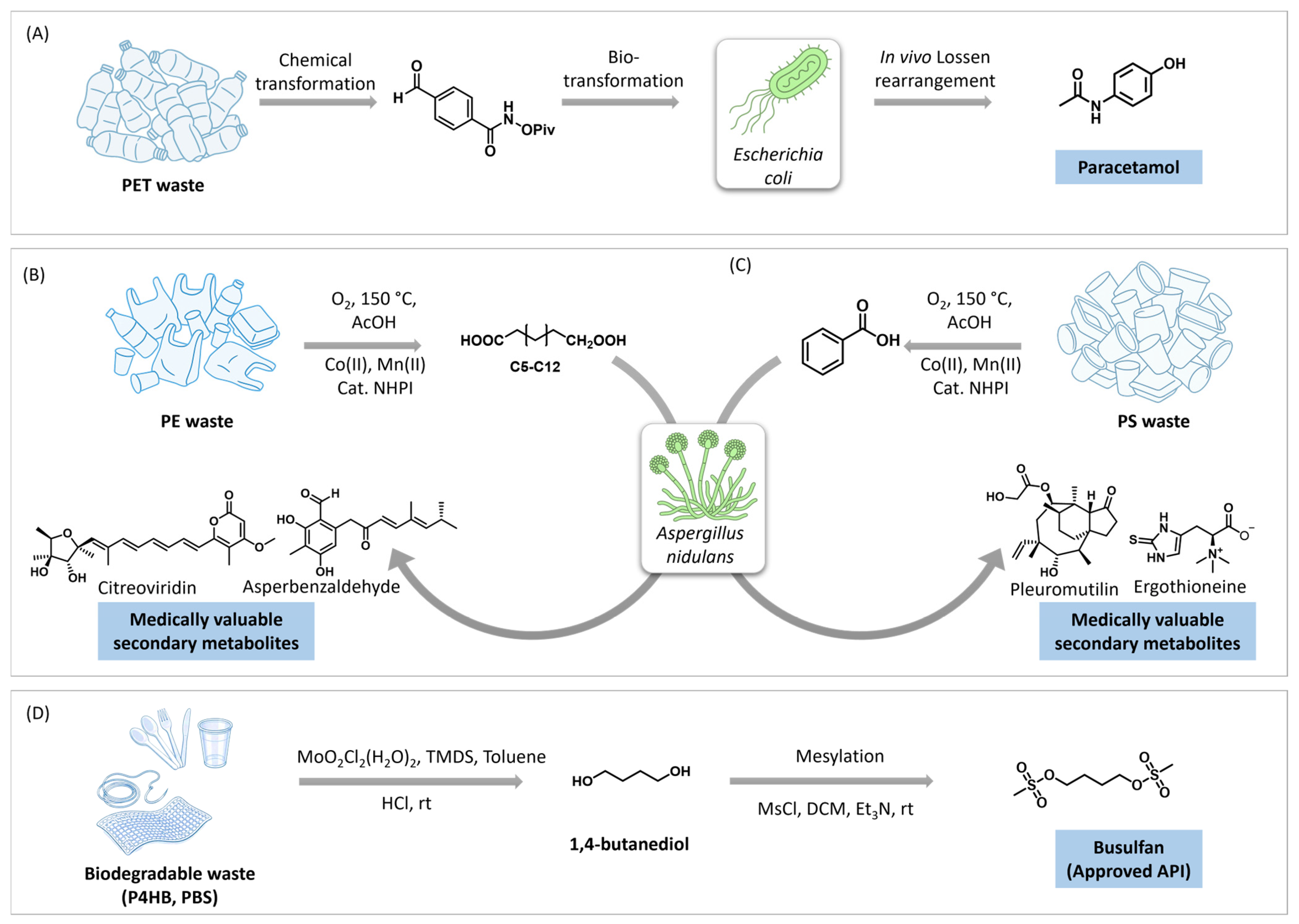
A pioneering study from the University of Edinburgh showcased how post-consumer PET can be transformed into a pharmaceutical precursor through a hybrid chemical-biological strategy (Figure 9A). Instead of traditional mechanical recycling, PET was molecularly deconstructed to release a terephthalate-derived intermediate, which entered engineered Escherichia coli and underwent a Lossen rearrangement inside the cell. By designing strains dependent on the plastic-derived intermediate for growth, the researchers ensured efficient uptake and conversion.
Figure 9.
Chemical-biological and catalytic upcycling of polymer waste into pharmaceuticals and bioactive metabolites. (A) PET waste to paracetamol, (B) PE waste to medically valuable secondary metabolites, (C) PS waste to medically valuable secondary metabolites and (D) Biodegradable polyester waste (P4HB and PBS) to busulfan.
From this point, the biosynthetic machinery of the engineered microbes converted para-aminobenzoic acid (PABA) into paracetamol, a widely used analgesic and antipyretic drug. The process achieved yields approaching 92% within 24 h under ambient conditions, with negligible carbon emissions, underscoring both efficiency and sustainability. Beyond the impressive conversion metrics, the study broke new conceptual ground by embedding a traditionally abiotic rearrangement into living microbial metabolism. This hybrid chemo-biological strategy highlights how the aromatic scaffolds within PET waste can be valorized into active pharmaceutical ingredients, offering a compelling vision of plastic waste as a renewable feedstock for high-value chemical synthesis [11].
5.2. From PE to Complex Fungal Metabolites
A landmark study by Rabot and colleagues demonstrated how polyethylene, one of the most persistent global plastic wastes, can be repurposed into complex fungal metabolites through a two-step chemical-biological platform (Figure 9B). Polyethylene waste, including ocean-recovered material, was first subjected to aerobic oxidative cleavage using cobalt and manganese catalysts with a nitric-oxide source, yielding a suite of α,ω-dicarboxylic acids (C4–C12) as metabolizable chemical intermediates. These diacids served as feedstocks for the filamentous fungus Aspergillus nidulans, chosen for its metabolic robustness and genetic tractability. While shorter-chain diacids inhibited growth, longer-chain substrates (C10–C12) supported fungal metabolism and enabled efficient biotransformation.
Engineered A. nidulans strains expressing selected biosynthetic gene clusters converted these polyethylene-derived intermediates into structurally complex fungal metabolites, including asperbenzaldehyde, citreoviridin, and the antibiotic precursor mutilin. In particular, strain LO10050, equipped with a positive-feedback promoter circuit, produced up to 4.3 g L−1 of asperbenzaldehyde with minimal process optimization, underscoring the scalability of the platform. This strategy expands the chemical space accessible from non-recyclable hydrocarbon polymers and highlights the potential of coupling oxidative depolymerization with fungal biosynthesis to access natural-product-like scaffolds from waste carbon streams. The work reinforces a compelling paradigm in polymer upcycling: even simple polyolefins can serve as viable carbon feedstocks for the sustainable production of pharmacologically relevant molecules [76].
5.3. From PS to Antibiotics, Antioxidants, and Biocontrol Agents
Building on their broader effort to convert commodity plastics into biologically valuable molecules, the same group extended this framework to PS. They showed that post-consumer PS can be transformed into useful bioproducts through a chemo-biological upcycling strategy (Figure 9C). In the chemical stage, mixed-source PS waste underwent Co-Mg-catalyzed aerobic oxidation, selectively yielding benzoic acid (BA). Importantly, the resulting BA stream required no purification before biological processing, highlighting operational simplicity and seamless process integration.
The crude PS-derived BA served as the sole carbon source for engineered Aspergillus nidulans strains expressing biosynthetic genes under the alcA promoter. These strains converted BA into pharmacologically relevant fungal metabolites, including ergothioneine and pleuromutilin-type scaffolds, demonstrating that aromatic motifs obtained from PS waste can directly support natural-product biosynthesis. The same BA stream also supported growth and sporulation of Aspergillus flavus Af36, an approved agricultural biocontrol strain, establishing a path from plastic waste to crop-protection agents.
This study reinforces that even PS, often regarded as highly recalcitrant, can serve as a viable feedstock for sustainable production of pharmaceutical-like metabolites and agricultural biocontrol material. The ability to extract simple aromatic building blocks from PS and repurpose them into biologically meaningful products underscores the expanding potential of plastic upcycling beyond mere degradation [77].
5.4. From Biodegradable Polyesters to Busulfan
A complementary example of pharmaceutical plastic upcycling was reported by Lourenço and Fernandes, who demonstrated the first direct synthesis of the clinically approved anticancer drug busulfan from biodegradable plastic waste (Figure 9D). In this strategy, poly(4-hydroxybutyrate) (P4HB) and polybutylene succinate (PBS) plastic wastes were reductively depolymerized to recover 1,4-butanediol using molybdenum- or KOH-based catalytic systems. The recovered diol was subsequently converted into busulfan through a straightforward mesylation reaction, affording overall yields of 54% from P4HB and 51% from PBS. Beyond demonstrating efficient depolymerization of biodegradable polyesters, this work establishes a new paradigm in plastic valorization by extending waste-derived feedstocks beyond chemical intermediates to the direct synthesis of an approved active pharmaceutical ingredient (API). The study highlights the potential of integrating plastic waste into pharmaceutical supply chains, providing a sustainable route to reduce reliance on fossil-derived feedstocks while advancing circular economy principles [78].
Although the preceding examples demonstrate the growing potential of plastic waste as a feedstock for the sustainable synthesis of pharmaceutical precursors and bioactive molecules, significant challenges must be addressed before these approaches can be translated into practical pharmaceutical and biomedical applications. Unlike conventional petrochemical feedstocks, post-consumer plastics may contain residual additives, plasticizers, pigments, catalyst residues, degradation products, and other contaminants introduced during manufacturing use and waste collection. Therefore, rigorous feedstock sorting, decontamination, and purification strategies are essential before chemical conversion to ensure suitable quality and safety [37,79,80]. Furthermore, every depolymerization, catalytic, or biological transformation step must demonstrate the effective removal of contaminants while maintaining batch-to-batch consistency and product quality [37,81]. In addition, pharmaceutical products derived from waste-based feedstocks must comply with established regulatory frameworks governing impurity control and toxicological risk assessment. These requirements, along with quality-by-design principles, are essential to ensure safety and product efficacy [82]. Consequently, the successful conversion of plastic-derived chemical building blocks into pharmaceutical manufacturing will depend not only on advances in catalytic and biotechnological upcycling but also on the establishment of robust quality assurance systems and Good Manufacturing Practices (GMPs) capable of ensuring material traceability, process reproducibility, and regulatory compliance throughout the manufacturing lifecycle [83,84].
6. Outlook
The convergence of polymer science, catalysis, and biotechnology is reshaping how chemists approach plastic waste. Rather than an environmental burden, waste polymers are increasingly viewed as renewable carbon sources capable of feeding circular manufacturing systems. The studies discussed in this perspective show that commodity plastics such as PET, PE, and PS can be transformed into high-value chemicals and pharmaceutical precursors through catalytic depolymerization and microbial valorization, advancing both resource efficiency and low-carbon chemical production.
The key challenge ahead is scaling these advances into economically viable, industrially relevant technologies. Progress will depend on integrating chemical and biological processes through hybrid chemoenzymatic systems, engineered microbial platforms, and AI-assisted reaction design. Machine learning models for catalyst selection, predictive depolymerization pathway screening, and structure–property correlations can streamline route development and reduce experimental iteration. At the same time, AI is reshaping how chemical knowledge is generated and taught, providing data-driven ways to visualize structural relationships across chemical space and to connect polymers, small molecules, and functional materials. Emerging platforms that support AI-guided synthesis planning and scaffold comparison can help learners interpret algorithmic insights and strengthen chemical reasoning while promoting responsible and transparent use. Targeted depolymerization to release valuable motifs, biocatalytic upgrading of intermediates, and combined chemo-biosynthetic pathways offer promising routes toward near-zero-waste polymer valorization. Embedding these technologies within existing waste-management and manufacturing infrastructure, supported by data-driven scaffold mapping, can accelerate the identification of high-value molecular targets within polymer structures.
In this perspective, these reflections are offered to highlight how advances in polymer upcycling may help shape the future circular-materials landscape.
7. Conclusions
The emerging field of polymer upcycling is redefining how chemists view plastic waste, shifting it from an environmental liability to a source of molecular opportunity. By identifying and utilizing structural motifs found in pharmaceuticals within everyday polymers, researchers are connecting materials science, catalysis, and biotechnology. The studies highlighted here demonstrate that commodity plastics such as PET, PE, and PS are not inert end-products, but valuable starting materials for producing high-value chemicals, pharmaceuticals, and biocatalytic intermediates.
The next stage of progress lies in integration: combining catalytic depolymerization with enzymatic and microbial conversion, scaling hybrid systems, and using data-driven design to discover new reaction pathways. However, the transition toward a circular, waste-neutral chemical economy will also require supportive policies and wider industrial adoption. Together, these advances can help move production from a take-use-dispose model to a more sustainable circular system.
Ultimately, polymer upcycling represents more than a technical innovation; it marks a broader shift in chemistry. It challenges researchers to unite sustainability with synthesis, transforming discarded materials into molecules of value and purpose. In this context, waste is no longer an endpoint, but a foundation for sustainable synthesis.
Author Contributions
Conceptualization, S.C., V.K. and S.S. (Sukhdeep Singh); formal analysis, S.C., P.S. and R.K.; resources, C.S. and H.S.; writing-original draft preparation, S.C., S. and S.S. (Sukhdeep Singh); writing-review and editing, S., P.S., S.S. (Stefan Sinzinger), V.K. and S.S. (Sukhdeep Singh); visualization, V.K. and H.S.; supervision, V.K. and S.S. (Sukhdeep Singh); project administration, V.K., S.S. (Sukhdeep Singh) and S.S. (Stefan Sinzinger); funding acquisition, V.K., S.S. (Sukhdeep Singh) and S.S. (Stefan Sinzinger). All authors have read and agreed to the published version of the manuscript.
Funding
This work was supported by the Carl Zeiss Foundation (Ilmenau School of Green Electronics—ISGE, CZS: P2022-00-135, P13) and DAAD (Project ID: 57761735) for academic exchange.
Institutional Review Board Statement
Not applicable.
Informed Consent Statement
Not applicable.
Data Availability Statement
No new data were created or analyzed in this study. Data sharing is not applicable to this article.
Acknowledgments
Support by the Center of Micro- and Nanotechnologies (ZMN), a DFG-funded core facility (project number 233759584) of the TU Ilmenau, is gratefully acknowledged.
Conflicts of Interest
The authors declare no conflicts of interest.
References
- Baekeland, L.H. The Synthesis, Constitution, and Uses of Bakelite. J. Ind. Eng. Chem. 1909, 1, 149–161. [Google Scholar] [CrossRef] [Scilit]
- El-Rayes, N.; Chang, A.; Shi, J. Plastic Management and Sustainability: A Data-Driven Study. Sustainability 2023, 15, 7181. [Google Scholar] [CrossRef] [Scilit]
- Plastics Europe. Plastics—The Fast Facts 2024; Plastics Europe: Brussels, Belgium, 2024. [Google Scholar]
- Geyer, R. Plastic Waste and Recycling: Environmental Impact, Societal Issues, Prevention, and Solutions; Elsevier: Amsterdam, The Netherlands, 2020; pp. 13–32. [Google Scholar]
- Moliner, C.; Pasquale, G.; Arato, E. Municipal Plastic Waste Recycling through Pyrogasification. Energies 2024, 17, 1206. [Google Scholar] [CrossRef] [Scilit]
- Geyer, R.; Jambeck, J.R.; Law, K.L. Production, use, and fate of all plastics ever made. Sci. Adv. 2017, 3, e1700782. [Google Scholar] [CrossRef] [Scilit] [PubMed]
- Plastics—The Facts 2022. Available online: https://plasticseurope.org/knowledge-hub/plastics-the-facts-2022/ (accessed on 29 October 2025).
- Martín, A.J.; Mondelli, C.; Jaydev, S.D.; Pérez-Ramírez, J. Catalytic processing of plastic waste on the rise. Chem 2021, 7, 1487–1533. [Google Scholar] [CrossRef] [Scilit]
- United Nations Department of Economic and Social Affairs. THE 17 GOALS. Available online: https://sdgs.un.org/goals (accessed on 29 October 2025).
- Kulyabin, P.; Luk, J.; Uslamin, E.; Kolganov, A.; Saini, G.; Hernandez, R.; Pancholi, K.; Pidko, E.; Kumar, A. From Plastic Waste to Pharmaceutical Precursors: PET Upcycling through Ruthenium Catalysed Semi-Hydrogenation. Angew. Chem. 2026, 65, e21838. [Google Scholar] [CrossRef] [Scilit]
- Johnson, N.W.; Valenzuela-Ortega, M.; Thorpe, T.W.; Era, Y.; Kjeldsen, A.; Mulholland, K.; Wallace, S. A biocompatible Lossen rearrangement in Escherichia coli. Nat. Chem. 2025, 17, 1020–1026. [Google Scholar] [CrossRef] [Scilit] [PubMed]
- Sadri, M.; Smith, P.; Spears, S.; Perkins, J.; Dewitt, C.; Savannah, S.; Butler, C.; Qiang, Z. Hands-on Laboratory Experiments for Demonstrating Mixed Plastic Recycling. J. Chem. Educ. 2023, 100, 321–326. [Google Scholar]
- Zhang, C.; Zhang, X. Introducing Closed-Loop Chemically Recyclable Polymers in Undergraduate Polymer Chemistry Course. J. Chem. Educ. 2025, 102, 3452–3458. [Google Scholar] [CrossRef] [Scilit]
- Silverman, J.R. Exploring Waste Management with Art Media in the Laboratory: Pigments, Inks, and Paints from Dye Waste. J. Chem. Educ. 2024, 101, 3904–3911. [Google Scholar] [CrossRef] [Scilit]
- Lim, Y.J.; Wong, B.; Macfee, K.; Cueva, A.; Martinez, E.A.; Paxton, C.; Barnes, R.; Kleinsasser, E.; Williams, T.J. A Polymer Degradation and Remanufacturing Experiment in the High School Classroom. J. Chem. Educ. 2024, 101, 131–135. [Google Scholar]
- Peti, D.; Dobránsky, J.; Michalík, P. Recent Advances in Polymer Recycling: A Review of Chemical and Biological Processes for Sustainable Solutions. Polymers 2025, 17, 603. [Google Scholar] [CrossRef] [Scilit] [PubMed]
- Schade, A.; Melzer, M.; Zimmermann, S.; Schwarz, T.; Stoewe, K.; Kuhn, H. Plastic Waste Recycling─A Chemical Recycling Perspective. ACS Sustain. Chem. Eng. 2024, 12, 12270–12288. [Google Scholar] [CrossRef] [Scilit]
- Capuano, R.; Bonadies, I.; Castaldo, R.; Cocca, M.; Gentile, G.; Protopapa, A.; Avolio, R.; Errico, M.E. Valorization and Mechanical Recycling of Heterogeneous Post-Consumer Polymer Waste through a Mechano-Chemical Process. Polymers 2021, 13, 2783. [Google Scholar] [CrossRef] [Scilit] [PubMed]
- Stadler, B.M.; De Vries, J.G. Chemical upcycling of polymers. Philos. Trans. Math. Phys. Eng. Sci. 2021, 379, 1–15. [Google Scholar] [CrossRef] [Scilit] [PubMed]
- Sun, J.; Dong, J.; Gao, L.; Zhao, Y.Q.; Moon, H.; Scott, S.L. Catalytic Upcycling of Polyolefins. Chem. Rev. 2024, 124, 9457–9579. [Google Scholar] [CrossRef] [Scilit] [PubMed]
- Hou, Q.; Zhen, M.; Qian, H.; Nie, Y.; Bai, X.; Xia, T.; Rehman, M.L.U.; Li, Q.; Ju, M. Upcycling and catalytic degradation of plastic wastes. Cell Rep. Phys. Sci. 2021, 2, 100514. [Google Scholar] [CrossRef] [Scilit]
- Knauer, K.; Lee, M. Circular plastics technologies: Open loop recycling of waste plastics into new chemicals. Phys. Sci. Rev. 2024, 9, 2813–2826. [Google Scholar]
- Roy, P.S.; Garnier, G.; Allais, F.; Saito, K. Strategic Approach Towards Plastic Waste Valorization: Challenges and Promising Chemical Upcycling Possibilities. ChemSusChem 2021, 14, 4007–4027. [Google Scholar] [CrossRef] [Scilit] [PubMed]
- Kosloski-Oh, S.C.; Wood, Z.A.; Manjarrez, Y.; de los Rios, J.P.; Fieser, M.E. Catalytic methods for chemical recycling or upcycling of commercial polymers. Mater. Horiz. 2021, 8, 1084–1129. [Google Scholar] [CrossRef] [Scilit] [PubMed]
- Akovali, G.; Bernardo, C.A.; Leidner, J.; Utracki, L.A.; Xanthos, M. (Eds.) Frontiers in the Science and Technology of Polymer Recycling; Springer Science & Business Media: Dordrecht, The Netherlands, 2013; Volume 351. [Google Scholar]
- Cabanes, A.; Valdés, F.J.; Fullana, A. A review on VOCs from recycled plastics. Sustain. Mater. Technol. 2020, 25, e00179. [Google Scholar] [CrossRef] [Scilit]
- Bridgens, B.; Powell, M.; Farmer, G.; Walsh, C.; Reed, E.; Royapoor, M.; Gosling, P.; Hall, J.; Heidrich, O. Creative upcycling: Reconnecting people, materials and place through making. J. Clean. Prod. 2018, 189, 145–154. [Google Scholar] [CrossRef] [Scilit]
- Coppola, C.; Vollero, A.; Siano, A. Consumer upcycling as emancipated self-production: Understanding motivations and identifying upcycler types. J. Clean. Prod. 2021, 285, 124812. [Google Scholar] [CrossRef] [Scilit]
- Guselnikova, O.; Semyonov, O.; Sviridova, E.; Gulyaev, R.; Gorbunova, A.; Kogolev, D.; Trelin, A.; Yamauchi, Y.; Boukherroub, R.; Postnikov, P. “Functional upcycling” of polymer waste towards the design of new materials. Chem. Soc. Rev. 2023, 52, 4755–4832. [Google Scholar] [CrossRef] [Scilit] [PubMed]
- Edah, G.O.; Atiba, J.O.; Fayomi, O.S.I. Advancements in fibre-reinforced polymers: Properties, applications (A mini review). Next Mater. 2025, 8, 100743. [Google Scholar] [CrossRef] [Scilit]
- Balu, R.; Dutta, N.K.; Choudhury, N.R. Plastic Waste Upcycling: A Sustainable Solution for Waste Management, Product Development, and Circular Economy. Polymers 2022, 14, 4788. [Google Scholar] [CrossRef] [Scilit] [PubMed]
- Wei, X.; Bähr, R. A comparative study of 3D printing with virgin and recycled polylactic acid filaments. CIRP J. Manuf. Sci. Technol. 2024, 54, 75–84. [Google Scholar] [CrossRef] [Scilit]
- Hidalgo-Carvajal, D.; Muñoz, Á.H.; Garrido-González, J.J.; Carrasco-Gallego, R.; Montero, V.A. Recycled PLA for 3D Printing: A Comparison of Recycled PLA Filaments from Waste of Different Origins after Repeated Cycles of Extrusion. Polymers 2023, 15, 3651. [Google Scholar] [CrossRef] [Scilit] [PubMed]
- Gaduan, A.N.; Singkronart, K.; Bell, C.; Tierney, E.; Burgstaller, C.; Lee, K.Y. Mechanical Upcycling Immiscible Polyethylene Terephthalate-Polypropylene Blends with Carbon Fiber Reinforcement. ACS Appl. Polym. Mater. 2022, 4, 3294–3303. [Google Scholar] [CrossRef] [Scilit] [PubMed]
- Sheppard, D.T.; Jin, K.; Hamachi, L.S.; Dean, W.; Fortman, D.J.; Ellison, C.J.; Dichtel, W.R. Reprocessing Postconsumer Polyurethane Foam Using Carbamate Exchange Catalysis and Twin-Screw Extrusion. ACS Cent. Sci. 2020, 6, 921–927. [Google Scholar] [CrossRef] [Scilit] [PubMed]
- Karanastasis, A.A.; Safin, V.; Damodaran, S.; Pitet, L.M. Utility of Chemical Upcycling in Transforming Postconsumer PET to PBT-Based Thermoplastic Copolyesters Containing a Renewable Fatty-Acid-Derived Soft Block. ACS Polym. Au 2022, 2, 351–360. [Google Scholar] [CrossRef] [Scilit] [PubMed]
- Rahimi, A.; García, J.M. Chemical recycling of waste plastics for new materials production. Nat. Rev. Chem. 2017, 1, 0046. [Google Scholar] [CrossRef] [Scilit]
- Chen, H.; Wan, K.; Zhang, Y.; Wang, Y. Waste to Wealth: Chemical Recycling and Chemical Upcycling of Waste Plastics for a Great Future. ChemSusChem 2021, 14, 4123–4136. [Google Scholar] [CrossRef] [Scilit] [PubMed]
- Hussain, I.; Aitani, A.; Malaibari, Z.; Alasiri, H.; Akhtar, M.N.; Aldosari, O.F.; Ahmed, S. Chemical Upcycling of Waste Plastics to High Value-Added Products via Pyrolysis: Current Trends, Future Perspectives, and Techno-Feasibility Analysis. Chem. Rec. 2023, 23, e202200294. [Google Scholar] [CrossRef] [Scilit] [PubMed]
- Chen, X.; Wang, Y.; Zhang, L. Recent Progress in the Chemical Upcycling of Plastic Wastes. ChemSusChem 2021, 14, 4137–4151. [Google Scholar] [CrossRef] [Scilit] [PubMed]
- Wang, Y.; Zhang, Y.; Song, H.; Wang, Y.; Deng, T.; Hou, X. Zinc-catalyzed ester bond cleavage: Chemical degradation of polyethylene terephthalate. J. Clean. Prod. 2019, 208, 1469–1475. [Google Scholar] [CrossRef] [Scilit]
- Gao, B.; Sun, Y.; Lu, Q.; Qin, J.; Chen, M.; Li, X.; Yao, C.; Mao, L. Catalyst-Free Upcycling of Poly(ethylene terephthalate) (PET) Waste into Degradable PET-Based Engineering Plastics via the Solvothermal Method. ACS Sustain. Chem. Eng. 2025, 13, 4758–4767. [Google Scholar] [CrossRef] [Scilit]
- Kaumadi, S.; Simmons, K.; Pilla, S.; Sternberg, J. Biobased chemical recycling: Aminolysis of PET using renewable reagents and monomers to synthesize new semi-aromatic polyamides. RSC Sustain. 2025, 3, 5155–5166. [Google Scholar] [CrossRef] [Scilit]
- Smak, T.J.; de Peinder, P.; Van der Waal, J.C.; Altink, R.; Vollmer, I.; Weckhuysen, B.M. Oxidative Conversion of Polyethylene Towards Di-Carboxylic Acids: A Multi-Analytical Approach. ChemSusChem 2024, 17, e202301198. [Google Scholar] [CrossRef] [Scilit] [PubMed]
- Celik, G.; Kennedy, R.M.; Hackler, R.A.; Ferrandon, M.; Tennakoon, A.; Patnaik, S.; LaPointe, A.M.; Ammal, S.C.; Heyden, A.; Perras, F.A.; et al. Upcycling Single-Use Polyethylene into High-Quality Liquid Products. ACS Cent. Sci. 2019, 5, 1795–1803. [Google Scholar] [CrossRef] [Scilit] [PubMed]
- Zhang, F.; Zeng, M.; Yappert, R.D.; Sun, J.; Lee, Y.-H.; Lapointe, A.M.; Peters, B.; Abu-Omar, M.M.; Scott, S.L. Polyethylene upcycling to long-chain alkylaromatics by tandem hydrogenolysis/aromatization. Science 2020, 370, 437–441. [Google Scholar] [CrossRef] [Scilit] [PubMed]
- Assefa, M.K.; Fieser, M.E. Divergent silylium catalysis enables facile poly(vinyl chloride) upcycling to poly(ethylene-co-styrene) derivatives. J. Mater. Chem. A Mater. 2023, 11, 2128–2132. [Google Scholar] [CrossRef] [Scilit]
- Fagnani, D.E.; Kim, D.; Camarero, S.I.; Alfaro, J.F.; McNeil, A.J. Using waste poly(vinyl chloride) to synthesize chloroarenes by plasticizer-mediated electro(de)chlorination. Nat. Chem. 2023, 15, 222–229. [Google Scholar] [CrossRef] [Scilit] [PubMed]
- Svadlenak, S.; Wojcik, S.; Ogunlalu, O.; Vu, M.; Dor, M.; Boudouris, B.W.; Wildenschild, D.; Goulas, K.A. Upcycling of polyvinyl chloride to hydrocarbon waxes via dechlorination and catalytic hydrogenation. Appl. Catal. B 2023, 338, 123065. [Google Scholar] [CrossRef] [Scilit]
- Bartoli, M.; Rosi, L.; Frediani, M.; Undri, A.; Frediani, P. Depolymerization of polystyrene at reduced pressure through a microwave assisted pyrolysis. J. Anal. Appl. Pyrolysis 2015, 113, 281–287. [Google Scholar] [CrossRef] [Scilit]
- Kachhadiya, K.; Patel, D.; Vijaybhai, G.J.; Raghuvanshi, P.; Surya, D.V.; Dharaskar, S.; Kumar, G.P.; Reddy, B.R.; Remya, N.; Kumar, T.H.; et al. Conversion of waste polystyrene into valuable aromatic hydrocarbons via microwave-assisted pyrolysis. Environ. Sci. Pollut. Res. 2023, 31, 57509–57522. [Google Scholar] [CrossRef] [Scilit] [PubMed]
- Comparative Assessment of Recycling Technologies and Methods for Low-Value Plastic Waste Feasibility Study 2. Available online: https://www.subnational.finance/wp-content/uploads/2025/04/global-assessment-of-recycling-technologies-for-low-value-plastic-waste.pdf (accessed on 29 October 2025).
- Delebecq, E.; Pascault, J.P.; Boutevin, B.; Ganachaud, F. On the versatility of urethane/urea bonds: Reversibility, blocked isocyanate, and non-isocyanate polyurethane. Chem. Rev. 2013, 113, 80–118. [Google Scholar] [CrossRef] [Scilit] [PubMed]
- Hartmann, D.; Rahman, T.; Carias, L.; Auad, M.L.; Adhikari, S. Upcycling Polyurethane Plastics via Thermochemical Conversion Pathways: A Comparison of Hydrothermal Liquefaction and Pyrolysis Processes. ACS Sustain. Chem. Eng. 2024, 12, 15515–15527. [Google Scholar] [CrossRef] [Scilit]
- Zeußel, L.; Chowdhary, S.; Wu, H.; Kumar, V.; Singh, S. Sustainable Harnessing of Waste Polycarbonate for Synthesizing Activated Furans to Generate Stenhouse Adducts on Polymer Surface. Chem. Asian J. 2024, 19, e202400369. [Google Scholar] [CrossRef] [Scilit] [PubMed]
- Chowdhary, S.; Kumar, N.; Henry, N.; Roussel, P.; Demertzis, K.; Singh, S.; Kumar, V. Upcycling Waste Polycarbonate into N,N’-Diphenylethylurea: A Hands-On Experiment for Undergraduate Chemistry Laboratories. J. Chem. Educ. 2025, 102, 1737–1744. [Google Scholar] [CrossRef] [Scilit]
- Chen, Y.C.; Mu, P.Q.; Reddy, K.S.K.; Jeng, R.J.; Abu-Omar, M.M.; Lin, C.H. Upcycling of waste polycarbonate to recyclable Poly(carbonate-imines) with exceptional thermal properties and unprecedented flame retardancy. Chem. Eng. J. 2024, 492, 152376. [Google Scholar] [CrossRef] [Scilit]
- Wang, H.S.; Agrachev, M.; Kim, H.; Truong, N.P.; Choi, T.-L.; Jeschke, G.; Anastasaki, A. Visible light-triggered depolymerization of commercial polymethacrylates. Science 2025, 387, 874–880. [Google Scholar] [CrossRef] [Scilit] [PubMed]
- Zhuang, Y.; Saadatkhah, N.; Nguyen, T.D.; De Tommaso, J.; Ng, C.Y.J.; Wang, C.; Ajji, A.; Patience, G.S. Upcycling polymethyl methacrylate to methacrylic acid. React. Chem. Eng. 2024, 10, 237–250. [Google Scholar] [CrossRef] [Scilit]
- Simon, C.M.; Kaminsky, W. Chemical recycling of polytetrafluoroethylene by pyrolysis. Polym. Degrad. Stab. 1998, 62, 1–7. [Google Scholar] [CrossRef] [Scilit]
- Lim, X. How to get rid of toxic ‘forever chemical’ pollution. Nature 2025, 640, 22–24. [Google Scholar] [CrossRef] [Scilit] [PubMed]
- Lowe, M.E.; Gallant, B.M.; Davison, N.; Hopkinson, M.N.; Kubicki, D.J.; Lu, E.; Armstrong, R.J. A Reductive Mechanochemical Approach Enabling Direct Upcycling of Fluoride from Polytetrafluoroethylene (PTFE) into Fine Chemicals. J. Am. Chem. Soc. 2025, 147, 40895–40899. [Google Scholar] [CrossRef] [Scilit] [PubMed]
- Klauer, R.R.; Hansen, D.A.; Wu, D.; Monteiro, L.M.O.; Solomon, K.V.; Blenner, M.A. Biological Upcycling of Plastics Waste. Annu. Rev. Chem. Biomol. Eng. 2024, 15, 315–342. [Google Scholar] [CrossRef] [Scilit] [PubMed]
- Clark, R.A.; Shaver, M.P. Depolymerization within a Circular Plastics System. Chem. Rev. 2024, 124, 2617–2650. [Google Scholar] [CrossRef] [Scilit] [PubMed]
- Desidery, L.; Lanotte, M. Polymers and plastics: Types, properties, and manufacturing. In Plastic Waste for Sustainable Asphalt Roads; Woodhead Publishing Series in Civil and Structural Engineering: London, UK, 2022; pp. 3–28. [Google Scholar]
- Matyjaszewski, K.; Möller, M. (Eds.) Polymer Science: A Comprehensive Reference; Elsevier: Amsterdam, The Netherlands, 2012; Volume 1. [Google Scholar]
- Panyam, J.; Labhasetwar, V. Sustained Cytoplasmic Delivery of Drugs with Intracellular Receptors Using Biodegradable Nanoparticles. Mol. Pharm. 2004, 1, 77–84. [Google Scholar] [CrossRef] [Scilit] [PubMed]
- Lee, S.; Miyajima, T.; Sugawara-Narutaki, A.; Kato, K.; Nagata, F. Development of paclitaxel-loaded poly(lactic acid)/hydroxyapatite core–shell nanoparticles as a stimuli-responsive drug delivery system. R. Soc. Open Sci. 2021, 8, 202030. [Google Scholar] [CrossRef] [Scilit] [PubMed]
- Jaiswal, S.; Sharma, B.; Shukla, P. Integrated approaches in microbial degradation of plastics. Environ. Technol. Innov. 2020, 17, 100567. [Google Scholar] [CrossRef] [Scilit]
- Wei, R.; Wierckx, N. Editorial: Microbial Degradation of Plastics. Front. Microbiol. 2021, 12, 635621. [Google Scholar] [CrossRef] [Scilit] [PubMed]
- Müller, R.; Schrader, H.; Profe, J.; Dresler, K.; Deckwer, W. Enzymatic Degradation of Poly(ethylene terephthalate): Rapid Hydrolyse using a Hydrolase from T. fusca. Macromol. Rapid Commun. 2005, 26, 1400–1405. [Google Scholar] [CrossRef] [Scilit]
- Carbios to Build in France Its First-of-a-Kind Manufacturing Plant for Fully Bio-Recycled PET in Partnership with Indorama Ventures. Available online: https://www.carbios.com/newsroom/en/carbios-to-build-in-france-its-first-of-a-kind-manufacturing-plant-for-fully-bio-recycled-pet-in-partnership-with-indorama-ventures/ (accessed on 29 October 2025).
- Tournier, V.; Topham, C.M.; Gilles, A.; David, B.; Folgoas, C.; Moya-Leclair, E.; Kamionka, E.; Desrousseaux, M.-L.; Texier, H.; Gavalda, S.; et al. An engineered PET depolymerase to break down and recycle plastic bottles. Nature 2020, 580, 216–219. [Google Scholar] [CrossRef] [Scilit] [PubMed]
- Yoshida, S.; Hiraga, K.; Takehana, T.; Taniguchi, I.; Yamaji, H.; Maeda, Y.; Toyohara, K.; Miyamoto, K.; Kimura, Y.; Oda, K. A bacterium that degrades and assimilates poly(ethylene terephthalate). Science 2016, 351, 1196–1199. [Google Scholar] [CrossRef] [Scilit] [PubMed]
- Hajighasemi, M.; Nocek, B.P.; Tchigvintsev, A.; Brown, G.; Flick, R.; Xu, X.; Cui, H.; Hai, T.; Joachimiak, A.; Golyshin, P.N.; et al. Biochemical and Structural Insights into Enzymatic Depolymerization of Polylactic Acid and Other Polyesters by Microbial Carboxylesterases. Biomacromolecules 2016, 17, 2027–2039. [Google Scholar] [CrossRef] [Scilit] [PubMed]
- Rabot, C.; Chen, Y.; Bijlani, S.; Chiang, Y.M.; Oakley, C.E.; Oakley, B.R.; Williams, T.J.; Wang, C.C.C. Conversion of Polyethylenes into Fungal Secondary Metabolites. Angew. Chem. Int. Ed. 2023, 64, e202214609. [Google Scholar] [CrossRef] [Scilit] [PubMed]
- Rabot, C.; Chen, Y.; Lin, S.Y.; Miller, B.; Chiang, Y.M.; Oakley, C.E.; Oakley, B.R.; Wang, C.C.C.; Williams, T.J. Polystyrene Upcycling into Fungal Natural Products and a Biocontrol Agent. J. Am. Chem. Soc. 2023, 145, 5222–5230. [Google Scholar] [CrossRef] [Scilit] [PubMed]
- Lourenço, D.L.; Fernandes, A.C. Depolymerization of P4HB and PBS Waste and Synthesis of the Anticancer Drug Busulfan from Plastic Waste. Catalysts 2022, 12, 381. [Google Scholar] [CrossRef] [Scilit]
- Al-Salem, S.M.; Lettieri, P.; Baeyens, J. Recycling and recovery routes of plastic solid waste (PSW): A review. Waste Manag. 2009, 29, 2625–2643. [Google Scholar] [CrossRef] [Scilit] [PubMed]
- Hahladakis, J.N.; Velis, C.A.; Weber, R.; Iacovidou, E.; Purnell, P. An overview of chemical additives present in plastics: Migration, release, fate and environmental impact during their use, disposal and recycling. J. Hazard. Mater. 2018, 344, 179–199. [Google Scholar] [CrossRef] [Scilit] [PubMed]
- Vollmer, I.; Jenks, M.J.F.; Roelands, M.C.P.; White, R.J.; van Harmelen, T.; de Wild, P.; van der Laan, G.P.; Meirer, F.; Keurentjes, J.T.F.; Weckhuysen, B.M. Beyond Mechanical Recycling: Giving New Life to Plastic Waste. Angew. Chem. Int. Ed. 2020, 59, 15402–15423. [Google Scholar] [CrossRef] [Scilit] [PubMed]
- Jenke, D. Evaluation of the Chemical Compatibility of Plastic Contact Materials and Pharmaceutical Products; Safety Considerations Related to Extractables and Leachables. J. Pharm. Sci. 2007, 96, 2566–2581. [Google Scholar] [CrossRef] [Scilit] [PubMed]
- Rathore, A.S.; Winkle, H. Quality by design for biopharmaceuticals. Nat. Biotechnol. 2009, 27, 26–34. [Google Scholar] [CrossRef] [Scilit] [PubMed]
- Yu, L.X. Pharmaceutical Quality by Design: Product and Process Development, Understanding, and Control. Pharm. Res. 2008, 25, 781–791. [Google Scholar] [CrossRef] [Scilit] [PubMed]

Disclaimer/Publisher’s Note: The statements, opinions and data contained in all publications are solely those of the individual author(s) and contributor(s) and not of MDPI and/or the editor(s). MDPI and/or the editor(s) disclaim responsibility for any injury to people or property resulting from any ideas, methods, instructions or products referred to in the content. |
© 2026 by the authors. Licensee MDPI, Basel, Switzerland. This article is an open access article distributed under the terms and conditions of the Creative Commons Attribution (CC BY) license.