


Abstract
Dengue and other arboviruses are a rising public health concern, worsened by climate change, globalization, and weak vector control. This study assessed the preparedness of local institutions and general practitioners (GPs)/paediatricians in ASL Roma 5 (Lazio, Italy) for potential arboviral outbreaks. A cross-sectional survey (April–May 2024) conducted 99 interviews: 57 with mayors and 42 with general GPs/paediatricians. A Health Belief Model (HBM)-based questionnaire assessed knowledge, attitudes, and practices regarding arbovirus transmission and management. Data were analyzed using descriptive statistics and chi-square tests. Dengue transmission awareness was low. Most mayors (85.96%) and GPs/paediatricians (88.1%) rated community knowledge as poor; 12.8% of mayors and 4.76% of GPs/paediatricians believed residents recognized local transmission risks. Environmental prevention programs were reported by 57.89% of mayors and 26.19% of GPs/paediatricians. Staff resource adequacy perceptions differed significantly (73.33% GPs/paediatricians vs. 21.82% mayors; p = 0.0005). In emergencies, 84.62% of GPs/paediatricians and 66.07% of mayors felt ready to act within 24 h. Local administrations face organizational and staffing limitations that hinder effective dengue prevention. While GPs/paediatricians showed greater confidence, they stressed the need for further training. Enhancing risk communication, environmental management, and intersectoral collaboration is crucial to improve preparedness for dengue and emerging arboviruses.
1. Introduction
Vector-borne viral diseases (arboviruses) such as dengue, Zika, chikungunya, and yellow fever have become an increasing global public health concern, mainly due to the increasing impact of climate change, rapid unplanned urbanization, global trade, and the decreased effectiveness of vector control programs [1]. Dengue incidence has risen significantly, with an estimated 390 million annual infections, while chikungunya and yellow fever have re-emerged globally [2,3].
Aedes mosquito expansion is driven by global trade, inadequate water and waste management, gaps in vector control programs, and lack of community and political engagement [4,5]. Broad socioeconomic determinants—dense urbanization, inadequate sanitation infrastructure, and climate change—also enhance the risk of arboviral epidemics. Economic costs from dengue fever alone exceed USD 9 billion annually, while the global health and economic burden of arboviral disease is likely underestimated [6].
In 2017, the World Health Assembly approved the Global Vector Control Response (GVCR), a strategic plan for sustainable vector control based on operational capacity, research evidence, and locally adapted interventions [7].
In Italy, the main arboviruses under specific surveillance are chikungunya, dengue, Zika, West Nile virus, Usutu virus, tick-borne encephalitis (TBE), and Toscana virus neuroinvasive disease. In 2024, Italy reported 693 dengue cases, including 213 autochthonous cases, with local transmission clusters in multiple regions [8]. From August to October 2024, 199 autochthonous DENV-2 infections were detected in the city of Fano. The rapid proliferation of dengue in the present outbreak reinforces the case for its being regarded as a credible threat in temperate areas during favourable seasons, demanding increased awareness among medical professionals and the community at large to ensure early identification and quick response [9].
In this context, the present cross-sectional survey was conducted within the territory falling under the jurisdiction of ASL Roma 5, encompassing 70 municipalities. The objectives were to assess the level of local institutional preparedness for arboviral public health emergencies—dengue and its vector Aedes spp., specifically—and to describe the knowledge, attitude, and practices (KAP) of local administrators, GPs and paediatricians regarding the reduction in arboviral risk. In addition, the study employed Health Belief Model (HBM) [10,11] constructs to measure perceived susceptibility, severity, benefits, barriers, cues to action, and self-efficacy among healthcare providers and community decision-makers.
2. Materials and Methods
2.1. Study Design and Setting
A cross-sectional survey was conducted in April and May 2024 within the Local Health Authority (ASL) Roma 5, a district encompassing 70 municipalities in the Lazio Region of Italy. The area includes the city of Rome, with an average altitude of approximately 20 m above sea level, as well as neighbouring municipalities that reach up to 1053 m above sea level. The objective was to assess the degree of knowledge, attitudes, readiness, and practices related to dengue among local institutions, GPs and paediatricians practicing within the same territorial area. The research aimed to examine participants’ readiness and activities concerning dengue and other arboviral diseases, specifically regarding local outbreak response strategies.
2.2. Participants and Sampling
All 70 municipal mayors and an estimated 61 GPs and paediatricians operating in the ASL Roma 5 area were invited to participate. General practitioners (GPs) and paediatricians were identified through the official regional registry of healthcare providers operating within the ASL Roma 5 territory. Eligibility criteria included active professional practice within the ASL Roma 5 territory during the study period and involvement in healthcare activities potentially relevant to the surveillance, early detection, notification, and management of arboviral diseases. A total of 99 structured telephone interviews were completed: 57 with mayors (response rate: 81.4%) and 42 GPs/paediatricians (68.8%). The study population is a broad representation of key institutional and primary healthcare stakeholders involved in arboviral preparedness within the ASL Roma 5 territory, comprising all eligible mayors and physicians who were identified through the regional registry and invited to participate.
2.3. Questionnaire and Data Collection
A structured questionnaire was developed to assess three general areas (available as Supplementary Material to the paper: ‘Supplementary File S1’): knowledge and perception about arboviruses and transmission; attitudes, based on the Health Belief Model constructs of perceived susceptibility, severity, benefits, and barriers [10,11] and actual behaviour in the context of environmental prevention and outbreak response. Likert-scale items (strongly agree to strongly disagree) were subsequently dichotomized for statistical assessment by merging contiguous categories and with “I don’t know” responses excluded [12]. Dichotomous items also assessed whether or not municipalities had implemented systematic plans for environmental control or ordinances that reduced breeding sites.
Telephone interviews were conducted by trained healthcare workers using a standardized guide, with responses recorded electronically [12].
Pilot testing of the 30 participants in the area of ASL Roma 5 was conducted for internal consistency assessment, and Cronbach’s alpha was assessed in order to evaluate reliability [13]. These participants were not included in the final study sample and did not contribute to the study results.
2.4. Statistical Analysis
For the final analysis, descriptive statistics were used to summarize frequency distributions. Comparisons between mayors and GPs/paediatricians were performed using chi-square (χ2). To quantify the strength and direction of the association between professional role and survey responses, odds ratios (ORs) with 95% confidence intervals (95% CIs) were calculated. Odds ratios were estimated using Epi Info™ version 7.2 (Centers for Disease Control and Prevention, Atlanta, GA, USA), while descriptive analyses and graphical representations were performed using RStudio version 4.3.3. Statistical significance was set at p < 0.05. Qualitative answers from open-ended questions were coded thematically into themes such as communication strategies, availability of resources, institutional support, and the need for more cooperation between local authorities and healthcare services [14].
2.5. Ethical Approval
This study was conducted as part of routine public health institutional activities within the Local Health Authority ASL Roma 5 and did not involve any experimental intervention on human subjects. According to current national regulations, observational studies based on anonymised, non-sensitive data collected in the context of official public health functions are exempt from formal ethical committee review. Nonetheless, the research adhered to the principles of the Declaration of Helsinki. Verbal informed consent was obtained from all participants prior to the interviews, and data were collected and processed in compliance with applicable privacy and confidentiality standards.
3. Results
3.1. Perceived Susceptibility and Severity
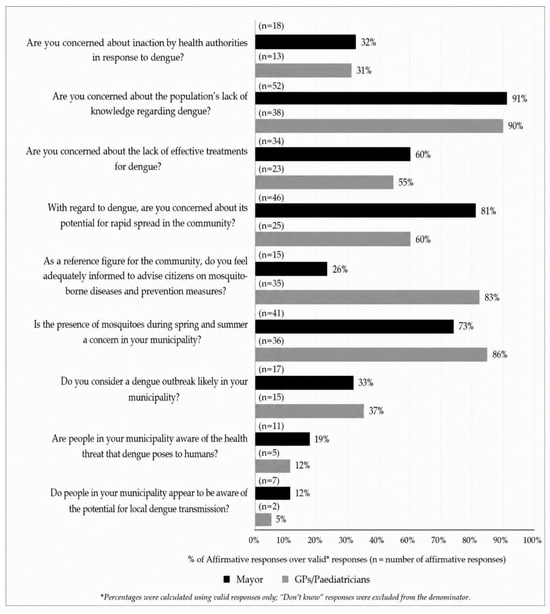
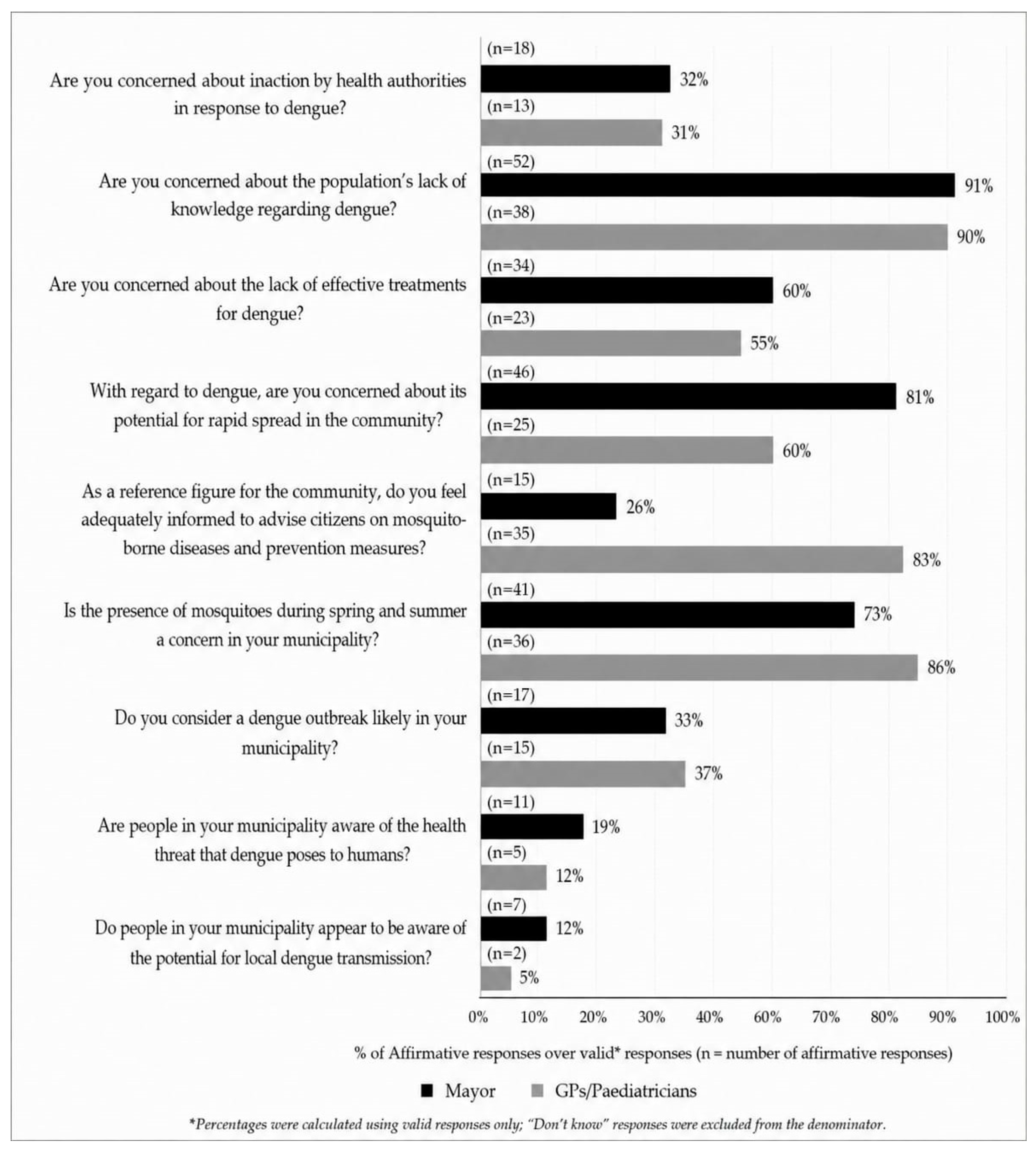
The internal consistency of the questionnaire was evaluated using Cronbach’s alpha, which yielded a value of 0.75 in a pilot test involving 30 healthcare operators. This result indicates good internal consistency and strong inter-item correlation, supporting the questionnaire’s reliability for data collection. Between April and May 2024, a total of 99 interviews were conducted, involving 57 mayors from municipalities within the ASL Roma 5 district (81.4%) and 42 local healthcare providers (GPs/paediatricians, 68.8%). Analysis of the data revealed a widespread under-recognition of dengue risk among the general population. Figure 1 illustrates perceived susceptibility and severity among participants.
Figure 1.
Perceived susceptibility to and severity of dengue and other arboviral infections, including perceived likelihood of introduction, perceived local transmission risk, and concern about disease severity among mayors and healthcare workers in the ASL Roma 5 district (Lazio Region, Italy).
Specifically, 88.1% of GPs/paediatricians and 80.7% of mayors perceived public awareness of the disease as inadequate. Similarly, 95.24% of GPs/paediatricians and 87.72% of mayors judged public knowledge of the virus’s transmission modes to be insufficient. Only a minority of respondents believed the population was aware of the potential for local transmission (4.76% of GPs/paediatricians and 12.8% of mayors) or of the potential health impact of dengue infection (11.9% and 19.3%, respectively). Moreover, 36.59% of GPs/paediatricians and 33.33% of mayors believed that a dengue outbreak could plausibly occur in their municipality. The majority of respondents reported a high mosquito density during the spring and summer months (85.71% of GPs/paediatricians and 73.21% of mayors). These findings underscore the urgent need for targeted risk communication strategies, strengthened prevention measures, and improved interinstitutional and interprofessional coordination to enhance public awareness and preparedness. As shown in the “Perceived Severity” section of Table 1, the survey revealed notable differences between GPs/paediatricians and mayors regarding their level of concern about mosquito-borne diseases such as dengue, as well as their confidence in advising the public on preventive measures. A substantial majority of GPs/paediatricians (83.33%) felt adequately informed to provide guidance to the public, compared to only 26.32% of mayors—a statistically significant difference (p < 0.00001), indicating significantly greater confidence among healthcare professionals.
Table 1.
Awareness and perceived risk of dengue among GPs/paediatricians and mayors in the ASL Roma 5 district (Italy), with p-values for comparisons. (in brackets is indicated the number of affirmative responses).
With respect to dengue, both groups expressed concern over its rapid spread, although mayors reported higher levels of concern (80.7%) than GPs/paediatricians (59.52%), with the difference reaching statistical significance (p = 0.0369). Both groups also expressed concern about the lack of effective treatment options, with no significant difference between them (p = 0.7790). Similarly, a perceived lack of public knowledge was identified as a major issue by nearly all respondents in both groups (approximately 90%), again without statistically significant differences (p = 1.000). In contrast, inaction by health authorities was regarded as a comparatively less critical concern by both cohorts, with no significant difference observed (p = 1.000).
The odds ratio analysis largely confirmed the descriptive findings. For most indicators related to perceived susceptibility, no statistically significant differences emerged between mayors and GPs/paediatricians, as all confidence intervals included the null value (OR = 1). In particular, perceptions regarding community awareness of local dengue transmission (OR = 0.35; 95% CI: 0.07–1.81), awareness of dengue as a health threat (OR = 0.56; 95% CI: 0.18–1.77), the likelihood of a dengue outbreak (OR = 0.86; 95% CI: 0.36–2.05), and concern about mosquito presence (OR = 0.40; 95% CI: 0.15–1.29) did not differ significantly between the two groups. Conversely, marked differences emerged in the perceived severity domain. GPs/paediatricians were substantially more likely to report feeling adequately informed to advise citizens on mosquito-borne diseases than mayors (OR = 0.07; 95% CI: 0.02–0.19; p < 0.001). In contrast, mayors were significantly more likely to express concern regarding the rapid spread of dengue within the community (OR = 2.84; 95% CI: 1.15–7.00; p = 0.0369).
3.2. Perceived Benefits
Overall, GPs/paediatricians reported significantly higher confidence in their ability to advise the population, while both groups shared similar concerns about the rapid spread of dengue and insufficient public awareness, with mayors expressing relatively greater apprehension about the spread of the disease.
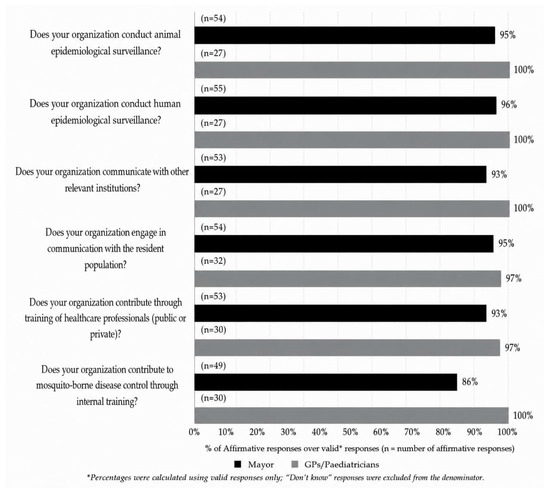
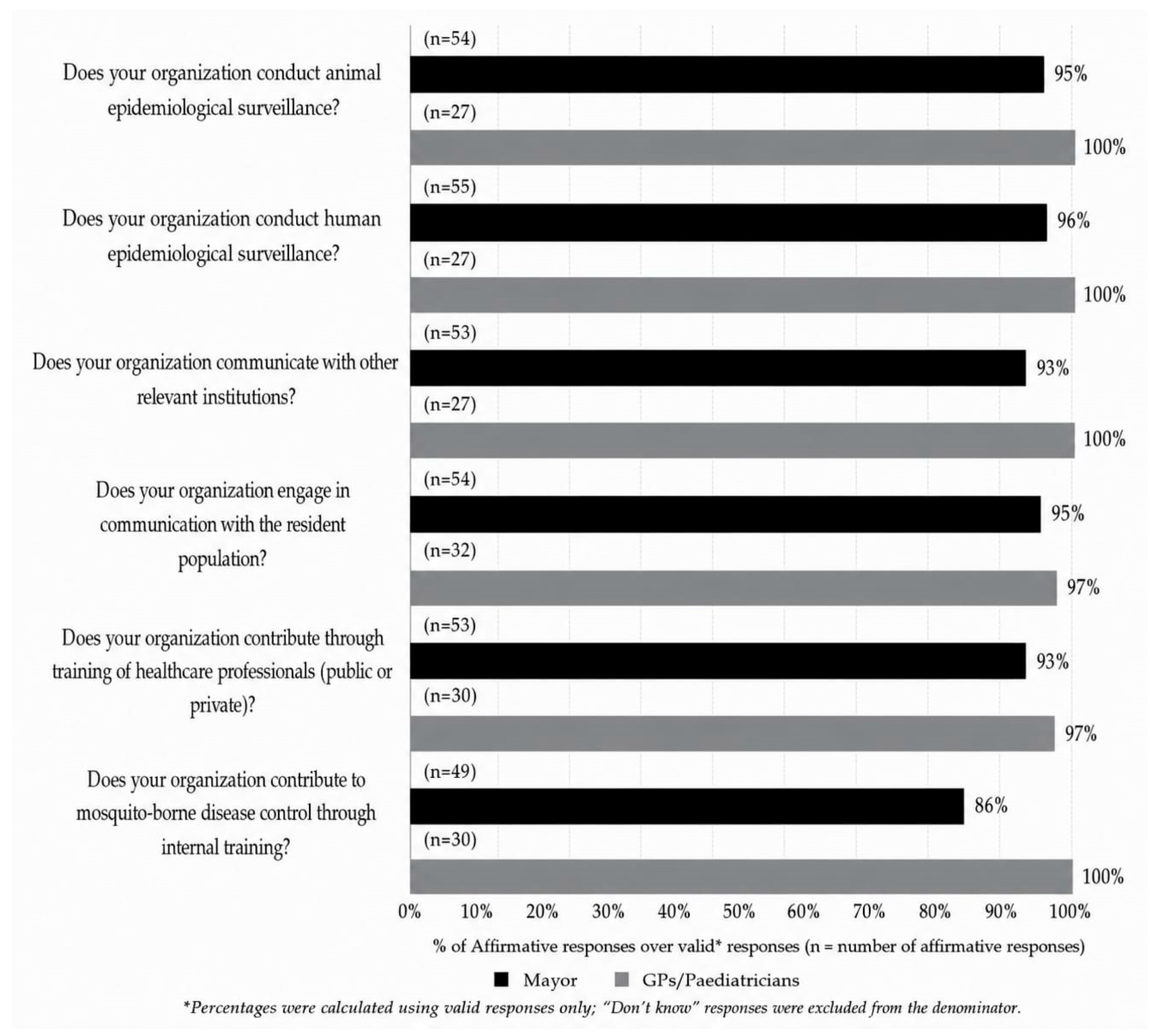
As illustrated in Figure 2 (in the “Perceived Benefits” section of Table 1), the survey highlights differing perceptions between GPs/paediatricians and mayors regarding the barriers and facilitators to controlling mosquito-borne diseases. While both groups agreed on the importance of training, communication, and oversight, they diverged in their views on the availability of resources and the relevance of existing programs. All GPs/paediatricians (100%) considered staff training essential, compared to 85.96% of mayors. Both groups assigned similar importance to communication with citizens and institutions. However, GPs/paediatricians expressed greater satisfaction with the availability of human resources (see the “Obstacles” section of Table 1), whereas mayors reported severe shortages—a statistically significant difference (p = 0.0005). Although perceptions of surveillance did not differ significantly between the groups, GPs/paediatricians were somewhat more supportive of entomological surveillance.
Figure 2.
Perceived benefits of community-based prevention campaigns, environmental control measures, and entomological or virological surveillance activities among mayors and healthcare workers in the ASL Roma 5 district (Lazio Region, Italy).
Within the perceived benefits domain, no statistically significant differences were observed between the two groups. Several variables showed odds ratios that could not be estimated because all GPs/paediatricians provided affirmative responses, indicating a ceiling effect and a generally high level of agreement regarding the importance of training, institutional communication, and epidemiological surveillance activities.
In summary, differences were primarily related to resource availability and inter-community collaboration. Mayors reported greater challenges in resource allocation but observed a higher level of community engagement. These findings underscore the need for effective coordination and adequate resourcing to improve the efficiency and impact of mosquito-borne disease prevention strategies.
3.3. Perceived Obstacles
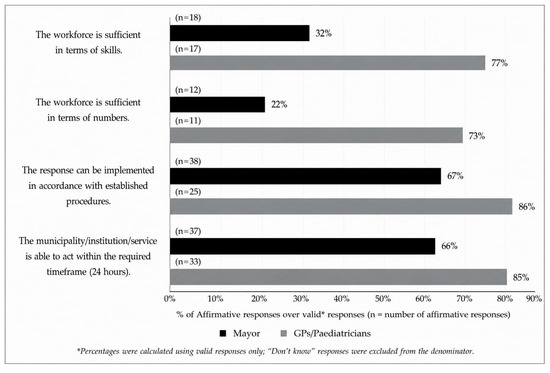
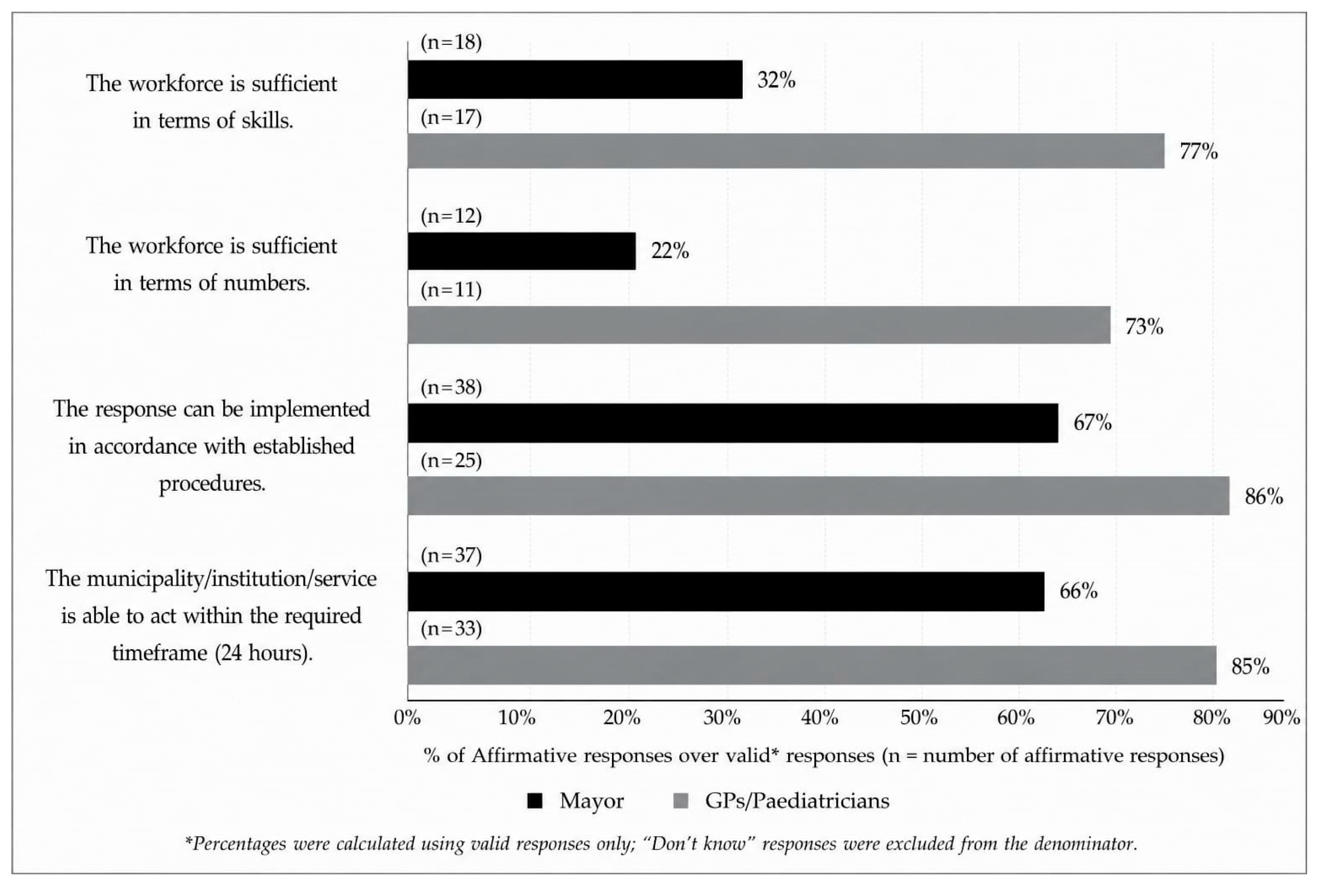
The comparison of the “Obstacles” section, focusing on the capacity to respond in the event of a dengue outbreak, reveals significant differences between mayors and GPs/paediatricians in terms of response timeliness, adherence to protocols, and resource availability. The full distribution of perceived obstacles to dengue and arboviral prevention and outbreak response is presented in Figure 3. As shown in the “Obstacles” section of Table 1, a higher proportion of GPs/paediatricians (84.62%) reported confidence in their ability to respond within the expected 24 h window, compared to 66.07% of mayors. Although this difference did not reach statistical significance (p = 0.0746), it suggests greater uncertainty among mayors regarding their capacity for rapid response.
Figure 3.
Perceived obstacles to implementing effective prevention and outbreak response, including financial constraints, staff shortages, and organizational barriers among mayors and healthcare workers in the ASL Roma 5 district (Lazio Region, Italy).
Resource availability emerged as a critical challenge. While 73.3% of GPs/paediatricians considered their staffing levels to be adequate, only 21.82% of mayors shared this view—a statistically significant disparity (p = 0.0005). This pronounced difference points to a severe shortage of personnel at the municipal level, potentially compromising the efficiency of emergency response efforts. Similarly, 77.27% of GPs/paediatricians reported that their staff were appropriately trained, in contrast to only 32.14% of mayors (p = 0.0007), indicating a substantial gap in workforce preparedness.
The odds ratio analysis confirmed the descriptive findings in the perceived obstacles domain. GPs/paediatricians were considerably more likely than mayors to report that available staff were numerically adequate (OR = 9.85; 95% CI: 2.65–36.56; p = 0.0005) and adequately trained (OR = 7.17; 95% CI: 2.28–22.53; p = 0.0007). Although not statistically significant, healthcare professionals also showed a tendency toward greater confidence in the ability to respond within 24 h (OR = 2.82; 95% CI: 1.00–7.90) and to implement response procedures according to established protocols (OR = 3.12; 95% CI: 0.95–10.27).
3.4. Environmental Prevention Measures
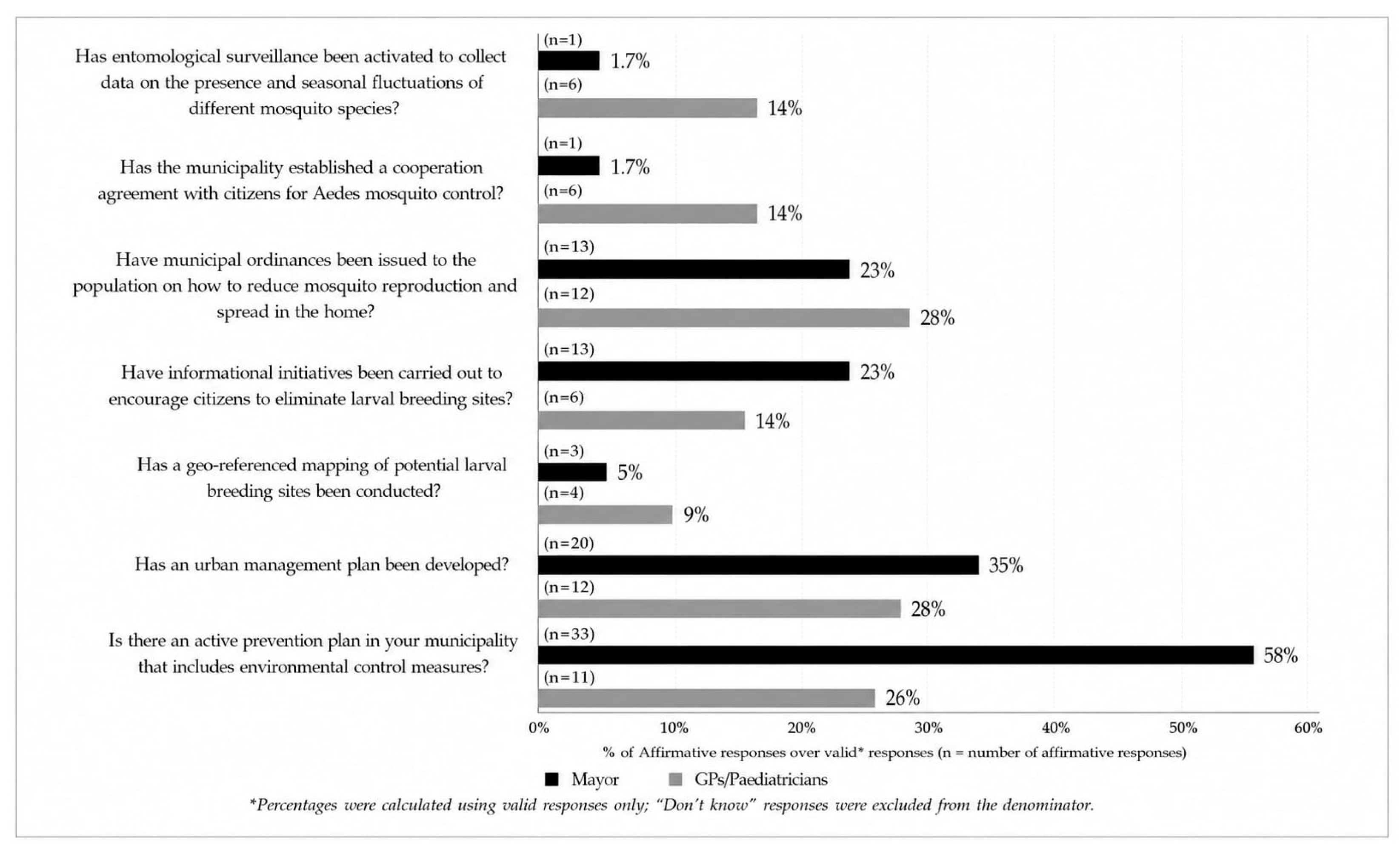
The data on environmental prevention, presented in Figure 4, revealed substantial gaps between reported and confirmed implementation of mosquito control plans: although 57.89% of mayors reported having environmental prevention programs in place, only 26.19% of GPs/PFCs were able to confirm the presence of such plans.
Figure 4.
Environmental control measures: reported implementation of mosquito control and prevention actions by mayors and GPs/paediatricians in the ASL Roma 5 district (Lazio Region, Italy).
The findings are particularly concerning given that over 40% of municipal administrations have not developed any structured plan for environmental prevention—an essential component of integrated strategies to manage health risks associated with the spread of vector-borne diseases such as arboviruses. Furthermore, limited citizen engagement and the insufficient activation of urban planning and entomological surveillance tools highlight a fragmented and poorly coordinated response.
Only 35.09% of mayors and 28.57% of GPs/paediatricians reported the existence of an urban management plan, while georeferenced mapping of potential mosquito breeding sites was reported in less than 10% of cases. Public information campaigns promoting the elimination of larval habitats are infrequent, and municipal regulations or cooperation agreements with residents are similarly scarce. Notably, just 1.75% of mayors reported initiating entomological surveillance or establishing agreements with the population for the control of Aedes mosquitoes, despite the strategic importance of these tools in the prevention of vector-borne diseases [9].
4. Discussion
Arboviral diseases represent a growing and complex public health challenge, requiring coordinated responses at both national and local levels. Climate change and increased human mobility are expanding vector habitats, raising the risk of outbreaks in previously unaffected areas [9,15,16]. Effectively addressing this threat requires a coordinated, cross-sectoral, and multidisciplinary approach that engages all levels of the health system, including local governments and communities [17].
The survey findings suggest inadequate preparedness, effectiveness, and timeliness in local authorities’ response to potential human cases, underscoring a lack of accurate disease-related information [18].
However, some limitations must be acknowledged in interpreting these results. The possibility of non-response bias cannot be ruled out, as individuals with a greater interest in public health preparedness and arboviral disease prevention may have been more likely to participate. Additionally, the exclusion of “I don’t know” responses from dichotomized statistical analyses—while aligned with the study design—may have limited the exploration of areas where respondents perceived insufficient information or uncertainty. These responses, if considered, could have provided further insight into gaps in knowledge or institutional procedures, particularly in a context where local preparedness is still evolving. Regarding multiple comparisons, we have considered adjustments (e.g., Bonferroni or Holm–Bonferroni) where applicable. However, given the exploratory nature of some analyses, we opted for a more conservative approach to avoid excessive loss of statistical power.
The perception of inadequate knowledge regarding virus transmission among most respondents highlights the need to strengthen communication and awareness strategies. Both GPs/paediatricians and mayors acknowledged the importance of training and communication, particularly for institutional staff involved in dengue control. While healthcare professionals and mayors generally view communication efforts positively, mayors expressed more scepticism, suggesting that interventions may appear insufficient or impractical to non-health personnel.
A notable divergence emerged regarding resource availability.
The odds ratio analysis provides additional insight into these differences. While perceptions of dengue risk and community awareness were broadly comparable between the two groups, substantial disparities emerged regarding self-efficacy and organizational capacity. The very low odds ratio observed for confidence in advising citizens suggests that mayors perceive a significant knowledge gap compared with healthcare professionals. Conversely, the significantly higher odds of concern regarding dengue spread among mayors may reflect their broader responsibility for community-level emergency management. The largest effect sizes were observed for staffing adequacy and workforce competence, indicating that municipal administrations perceive considerably greater structural and organizational constraints than healthcare providers. These findings suggest that preparedness gaps are driven less by differences in risk perception than by disparities in institutional capacity and available resources.
GPs/paediatricians reported greater satisfaction with both the quantity and quality of their staff, whereas mayors identified significant human resource shortages—both quantitative and qualitative—that hinder local authorities’ preparedness.
Overall, the survey reveals a substantial gap in perception and preparedness between healthcare providers and local elected officials in the management of dengue risk [19].
Limited public awareness and challenges in implementing effective prevention measures remain critical issues requiring urgent action. One of the most pressing concerns is the inadequate enforcement of environmental prevention plans, with fewer than half of municipalities having implemented concrete mosquito control measures [5].
The lack of urban planning measures—such as stagnant water regulation, green space management, and larval breeding site mapping—compromises prevention campaigns. Seasonal regulations and risk communication are also inadequate. Without structured information campaigns or municipal ordinances, preventive actions are weakened, leaving the public uninformed and less engaged in mosquito control [7].
An effective strategy against arboviral diseases must be rooted in science-in-society principles, fostering transparent dialogue between health institutions and communities. Active participation should be encouraged through meetings, workshops, and clear communication of risks and preventive measures.
Public trust depends on transparency regarding the scientific basis of interventions like vector control. Accessible communication is key to avoiding misunderstandings, reducing resistance, and ensuring a coordinated response at both individual and community levels.
Municipalities must develop tailored preparedness plans, adapted to local environmental and demographic contexts. These plans should be dynamic, regularly updated, and include monitoring mechanisms to assess effectiveness against vector-borne threats.
Prevention strategies require strong public awareness campaigns to inform citizens about transmission, disease severity, and the role of community involvement. Resource allocation is critical to enhance workforce training and expand surveillance teams.
Finally, collaboration between healthcare professionals and local authorities is essential to improve prevention and control. Arbovirus management demands an interdisciplinary, flexible, and participatory approach to address future public health challenges.
5. Conclusions
This study reveals critical gaps in local institutions’ operational readiness to address dengue and arboviral threats in temperate regions. While healthcare professionals report higher levels of preparedness and confidence, municipal administrations face major constraints related to staffing, organization, and implementation of environmental control measures. Bridging this preparedness divide between clinicians and local decision-makers is essential. The study’s findings should be viewed with caution due to its limited scope within a single Local Health Authority and reliance on self-reported perceptions, which may not be applicable to other Italian regions or settings. In addition, the cross-sectional design allows the assessment of perceptions and associations at a specific point in time but does not permit causal inferences regarding the determinants of preparedness. Despite these limitations, the study identifies priority areas that may benefit from targeted interventions. Strengthening intersectoral collaboration, investing in targeted training for both health professionals and municipal staff, and improving risk communication with the public should be prioritized. Developing and maintaining locally adapted prevention and response plans will be crucial to ensure a timely and effective reaction to emerging arboviral challenges in Italy and similar contexts.
Supplementary Materials
The following supporting information can be downloaded at: https://www.mdpi.com/article/10.3390/world7080134/s1. File S1: Questionario Indagine KAB Arbovirosi Marzo–Aprile 2024.
Author Contributions
Conceptualization, M.D.P. and D.D.G.; methodology, M.D.P., A.A., D.D.G. and M.C.; formal analysis, M.D.P. and F.M.; investigation, M.D.P., F.M. and A.P.; writing—original draft preparation, M.D.P. and D.D.G.; writing—review and editing, M.C., A.P. and A.A.; supervision, A.A. All authors have read and agreed to the published version of the manuscript.
Funding
This research received no external funding.
Institutional Review Board Statement
The survey was conducted in accordance with Regulation (EU) 2016/679 (GDPR). Data were collected through telephone interviews after obtaining verbal informed consent. No directly identifiable personal data or special categories of personal data were collected; the database included only the respondent’s municipality and was stored in a password-protected environment accessible only to authorized study personnel. The survey was conducted as part of the institutional public health activities of ASL Roma 5 to assess training needs, and all results are reported in aggregate form, preventing the identification of individual participants.
Informed Consent Statement
Verbal informed consent was obtained from all participants prior to the interviews, and all data were collected and processed in full compliance with privacy and confidentiality regulations.
Data Availability Statement
The dataset generated and analyzed during the current study contains sensitive information on local institutions and is not publicly available due to privacy and institutional restrictions. An anonymized version of the dataset may be made available from the corresponding author upon reasonable request.
Conflicts of Interest
The authors declare no conflicts of interest.
Abbreviations
The following abbreviations are used in this manuscript:
| ASL | Azienda Sanitaria Locale |
| HCWs | Healthcare Workers |
| GPs | General Practitioners |
| KAP | Knowledge, Attitudes, and Practices |
| HBM | Health Belief Model |
| DENV | Dengue Virus |
| TBE | Tick-Borne Encephalitis |
| GVCR | Global Vector Control Response |
| WHO | World Health Organization |
| ISS | Istituto Superiore di Sanità |
| OECD | Organization for Economic Co-operation and Development |
| ECDC | European Centre for Disease Prevention and Control |
References
- World Health Organization. Global Arbovirus Initiative: Preparing for the Next Pandemic by Tackling Mosquito-Borne Viruses with Epidemic and Pandemic Potential; World Health Organization: Geneva, Switzerland, 2024; Available online: https://www.who.int/publications/i/item/9789240088948 (accessed on 15 January 2025).
- Chang, M.S.; Christophel, E.M.; Gopinath, D.; Abdur, R.M. Challenges and future prospects for dengue vector in the Western Pacific region. West. Pac. Surveill. Response J. 2011, 29, 623–633. [Google Scholar] [CrossRef] [Scilit] [PubMed]
- Mayer, S.V.; Tesh, R.B.; Vasilakis, N. The emergence of arthropod-borne viral diseases: A global perspective on dengue, chikungunya and Zika fevers. Acta Trop. 2017, 166, 155–163. [Google Scholar] [CrossRef] [Scilit] [PubMed]
- Horstick, O.; Runge-Ranzinger, S.; Nathan, M.B.; Kroeger, A. Dengue vector control services: How do they work? A systematic literature review and national case studies. Trans. R. Soc. Trop. Med. Hyg. 2010, 104, 379–386. [Google Scholar] [CrossRef] [Scilit] [PubMed]
- Lindsay, S.W.; Wilson, A.; Golding, N.; Scott, T.W.; Takken, W. Improving the built environment in urban areas to control Aedes aegypti-borne diseases. Bull. World Health Organ. 2017, 95, 607–608. [Google Scholar] [CrossRef] [Scilit] [PubMed]
- Bradshaw, C.J.; Leroy, B.; Bellard, C.; Roiz, D.; Albert, C.; Fournier, A.; Courchamp, F. Massive yet grossly underestimated global costs of invasive insects. Nat. Commun. 2016, 7, 12986. [Google Scholar] [CrossRef] [Scilit] [PubMed]
- World Health Organization. Global Vector Control Response 2017–2030; World Health Organization: Geneva, Switzerland, 2017; Available online: https://www.who.int/publications/i/item/9789241512978 (accessed on 15 January 2025).
- Menegale, F.; Manica, M.; Del Manso, M.; Bella, A.; Zardini, A.; Gobbi, A.; Mignuoli, A.D.; Mattei, G.; Vairo, F.; Vezzosi, L.; et al. Risk assessment and perspectives of local transmission of chikungunya and dengue in Italy, a European forerunner. Nat. Commun. 2025, 16, 6237. [Google Scholar] [CrossRef] [Scilit] [PubMed]
- Ministero dell’Ambiente e Della Sicurezza Energetica. Piano Nazionale di Adattamento ai Cambiamenti Climatici, Roma, 2023. Available online: https://climadat.isprambiente.it/pnacc/ (accessed on 15 January 2025).
- Rosenstock, I.M. The Health Belief Model and preventive health behavior. Health Educ. Monogr. 1974, 2, 354–386. [Google Scholar] [CrossRef] [Scilit]
- Janz, N.K.; Becker, M.H. The Health Belief Model: A decade later. Health Educ. Q. 1984, 11, 1–47. [Google Scholar] [CrossRef] [Scilit] [PubMed]
- Istituto Superiore di Sanità. Piano Nazionale di Prevenzione, Sorveglianza e Risposta Alle Arbovirosi, Roma, 2023. Available online: https://www.salute.gov.it/imgs/C_17_pubblicazioni_2947_allegato.pdf (accessed on 15 January 2025).
- Tavakol, M.; Dennik, R. Making sense of Cronbach’s alpha. Int. J. Med. Educ. 2011, 2, 53–55. [Google Scholar] [CrossRef] [Scilit] [PubMed]
- Braun, V.; Clarke, V. Using thematic analysis in psychology. Qual. Res. Psychol. 2006, 3, 77–101. [Google Scholar] [CrossRef] [Scilit]
- Gubler, D.J. Dengue, urbanization and globalization: The unholy trinity of the 21st century. Trop. Med. Health 2011, 39, 3–11. [Google Scholar] [CrossRef] [Scilit] [PubMed]
- Cortes-Azuero, O.; Finch, E.; Ribeiro dos Santos, G.; Sutcliffe, E.; Scarponi, D.; Ryan, S.; Salje, H. The impact of climate and demographic changes on future chikungunya burden and the potential role of vaccines: A mathematical modelling study. medRxiv 2026. [Google Scholar] [CrossRef] [Scilit]
- Herdiana, H.; Fitria Kartika Sari, J.; Whittaker, M. Intersectoral collaboration for the prevention and control of vector borne diseases to support the implementation of a global strategy: A systematic review. PLoS ONE 2018, 13, e0204659. [Google Scholar] [CrossRef] [Scilit]
- World Health Organization. Global Strategic Preparedness, Readiness and Response Plan for Dengue and Other Aedes-Borne Arboviruses (September 2024–September 2025); World Health Organization: Geneva, Switzerland, 2024; Available online: https://cdn.who.int/media/docs/default-source/ntds/dengue/global-sprp-for-dengue-and-other-aedes-borne-arboviruses.pdf?utm_source=chatgpt.com (accessed on 15 January 2025).
- Istituto Superiore di Sanità. Arbovirosi: Bollettini della Sorveglianza Nazionale—Archivio 2024; Epicentro: Roma, Italy, 2024; Available online: https://www.epicentro.iss.it/arbovirosi/archivio-2024 (accessed on 15 January 2025).

Disclaimer/Publisher’s Note: The statements, opinions and data contained in all publications are solely those of the individual author(s) and contributor(s) and not of MDPI and/or the editor(s). MDPI and/or the editor(s) disclaim responsibility for any injury to people or property resulting from any ideas, methods, instructions or products referred to in the content. |
© 2026 by the authors. Licensee MDPI, Basel, Switzerland. This article is an open access article distributed under the terms and conditions of the Creative Commons Attribution (CC BY) license.