


Abstract
Contemporary sustainable development is affected by geopolitical competition, geoeconomic fragmentation and growing strategic uncertainty. These developments challenge conventional assumptions on which sustainability governance is based and raise questions about the relationship between sustainable development, economic security and strategic autonomy. This article examines how geopolitical and geoeconomic transformations are reshaping sustainable development within the European Union and assesses their implications for the future evolution of the European development model. The analysis is based on a qualitative analysis of policies and documents in key EU strategic frameworks, legislative instruments, sustainability reports and the academic literature. Particular attention is paid to the European Green Deal, the European Economic Security Strategy and the Europe 2026 Sustainable Development Report. Sustainable development now depends not only on environmental and social outcomes but also on resilience, secure access to key resources and technologies and the ability to adapt to external disruptions. Economic security and strategic autonomy do not emerge as competing priorities but as enabling conditions for the implementation of sustainability goals. This article argues that sustainability governance in the European Union is undergoing a process of geopoliticisation, in which environmental, economic and strategic considerations are now closely intertwined. Its main contribution is the creation of a framework of sustainable strategic resilience that conceptualises these interactions as mutually reinforcing dimensions of contemporary EU governance.
1. Introduction
Sustainable development has become a central organising principle of European integration. Since the adoption of the Sustainable Development Goals (SDGs) and the launch of the European Green Deal, the European Union has sought to position itself as a global leader in environmentally sustainable, socially inclusive and economically balanced development [1]. Sustainability is no longer limited to environmental policy; it shapes industrial strategy, financial regulation, social cohesion and external relations [2]. The context in which these policies are implemented has changed significantly. The COVID-19 pandemic has exposed vulnerabilities in global production networks, the Russian invasion of Ukraine has triggered an energy crisis and transformed the European security environment [3], and intensifying competition between the US and China has accelerated the securitisation of trade, technology and investment [4]. Together, these events have challenged the assumptions underlying the liberal international economic order and have prompted a reassessment of the relationship between openness, resilience, security and sustainability.
As a result, sustainability can no longer be seen solely as an environmental or socioeconomic project. It has become part of strategic autonomy, economic security, technological sovereignty and resilience. European policymakers have recognised that long-term sustainability goals are difficult to achieve when key sectors depend on vulnerable supply chains, foreign technologies or strategically sensitive imports [5]. Concepts such as economic security, resilience and open strategic autonomy have moved to the centre of EU policymaking, as reflected in the Political Guidelines for the European Commission for 2024–2029, which place competitiveness, security and strategic capacities among the Union’s key priorities [6].
This shift is part of a broader transformation often described as the geopoliticisation of economic governance [7]. Economic interdependence, once seen primarily as a source of prosperity and stability, is now seen through the prism of vulnerability and strategic risk. The expansion of economic instruments for geopolitical purposes has blurred the boundaries between economic and security policy. Access to key resources, technological capabilities and resilient supply chains has become an important source of political influence and strategic leverage.
This development raises new tensions within the governance of sustainability. Measures aimed at strengthening economic security can limit market openness, while efforts to reduce strategic dependence often entail economic costs [8]. Similarly, ambitious climate policies can create pressure for adaptation on the part of industry and households. Sustainable development is therefore pursued in a governance environment characterised by competing objectives relating to sustainability, competitiveness, resilience and security [9].
Despite the relevance of these issues, sustainability, strategic autonomy, economic security and geopolitics remain largely separated in the academic literature. Sustainability research focuses primarily on environmental governance and socioeconomic transformation, while studies on geopolitics and geoeconomics emphasise power competition, strategic dependencies and economic policy. Although recent scholarly knowledge acknowledges the deepening links between these areas, their interaction within the European Union remains under-researched.
This gap is significant because the future effectiveness of EU sustainability policies may depend as much on resilience and strategic capacity as on environmental regulation and technological innovation. Sustainable development, economic security, and strategic autonomy represent interconnected dimensions of a broader transformation of the European model [10].
This situation gives rise to an important research puzzle. While the literature increasingly acknowledges the growing interaction between sustainability, economic security and strategic autonomy, these concepts are still predominantly examined within separate analytical frameworks. As a result, it remains insufficiently explained how their interaction reshapes sustainability governance under conditions of geopolitical uncertainty and what this transformation means for the future development of the European Union. Addressing this unresolved relationship constitutes the central research problem of this study.
This article therefore analyses how current geopolitical and geoeconomic transformations are changing the shape of sustainable development in the European Union. It examines the relationship between sustainability, economic security and strategic autonomy and assesses how their interaction affects the future direction of European integration.
The analysis is guided by three research questions:
- −
- RQ1: How do current geopolitical and geoeconomic transformations affect the implementation of sustainable development in the European Union?
- −
- RQ2: What role do strategic autonomy and economic security play in maintaining the sustainability of the European model?
- −
- RQ3: How can the European Union reconcile sustainability objectives with the demands of resilience, competitiveness and strategic adaptation?
The study uses a qualitative research design combining policy analysis, document analysis, comparative institutional analysis and synthesis of the relevant academic literature. Its empirical basis is formed by EU strategic documents, sustainability reports, legislative frameworks and studies dealing with geopolitics, economic security and sustainable development. This approach allows us to identify key synergies, tensions and trade-offs that shape the evolving relationship between sustainability and geopolitics in the European Union.
The main contribution of the study is the creation of a framework for sustainable strategic resilience that conceptualises sustainable development, economic security and strategic autonomy as mutually reinforcing pillars of the current European model. By integrating geopolitical and geoeconomic dimensions into sustainability analysis, this framework offers new insights into the transformation of sustainability governance in conditions of international uncertainty.
The proposed sustainable strategic resilience framework extends existing concepts of strategic autonomy by shifting the analytical focus from the capacity to act independently to the broader governance conditions required to sustain long-term development under geopolitical uncertainty. Unlike open strategic autonomy, which primarily addresses Europe’s ability to preserve decision-making capacity while remaining economically open, sustainable strategic resilience integrates environmental sustainability, economic security and strategic autonomy within a single analytical framework. It therefore offers a more comprehensive perspective for explaining how these dimensions jointly shape the evolving model of European Union governance.
The rest of this article is organised as follows. Section 2 reviews the relevant literature and develops a theoretical framework. Section 3 describes the methodological approach and empirical sources. Section 4 presents the findings, followed by a discussion of their theoretical and policy implications. Section 6 contains conclusions.
2. Literature Review and Theoretical Framework
2.1. Sustainable Development Governance in the European Union
Sustainable development has evolved from an environmental concept into a multidimensional governance framework that links environmental protection, economic prosperity and social cohesion. Within the European Union, this approach has been institutionalised through the European Green Deal, climate legislation, industrial decarbonisation strategies and cohesion policies [11].
The literature on sustainability governance emphasises that long-term sustainability depends not only on technological innovation and environmental regulation but also on institutional capacity, policy coherence and adaptive management [12]. Effective implementation requires coordination across levels of governance and policy sectors. However, increasing geopolitical uncertainty exposes sustainability policies to external constraints [4]. As a result, sustainable development is becoming not only a regulatory objective but also a question of resilience and strategic capacity.
2.2. Geopolitics, Geoeconomics, and Economic Statecraft
Recent scholarly studies point to a deepening convergence of economics and geopolitics [13]. While economic interdependence has long been seen as a source of stability and prosperity, it is now associated with strategic vulnerability [14]. This shift has revived interest in geoeconomics and economic governance, which emphasise the use of economic instruments to achieve strategic goals.
For the European Union, this development has important implications. As a highly integrated economy dependent on external markets, technologies and resources, the EU faces increasing exposure to geopolitical tensions, economic pressures and supply chain disruptions. Recent research shows that economic interdependence can be transformed into a source of political influence and coercion when states control critical nodes within global production, financial or technological networks [14].
The European Union simultaneously relies on its regulatory and market powers to shape international standards and influence global economic governance beyond its borders [15,16]. These developments illustrate that geoeconomics is no longer limited to trade or industrial policy but has become an important dimension of contemporary European governance. In response, European policymakers are seeking to reconcile economic openness with resilience and strategic interests. The concept of open strategic autonomy reflects this adaptation to a more competitive and fragmented international environment.
The geopolitical environment shaping these developments is interpreted differently across the academic literature. While European policy documents generally present Russia’s invasion of Ukraine as a challenge to the European security order, alternative explanations have also been advanced. Realist scholars, most notably Mearsheimer, interpret the deterioration of relations between Russia and the West within the broader context of the post-Cold War evolution of the European security architecture and NATO enlargement [17,18]. Although these interpretations remain contested, acknowledging their existence contributes to a more balanced understanding of the geopolitical context in which sustainability, economic security and strategic autonomy are currently evolving within the European Union. They are presented here solely to acknowledge the existence of competing perspectives within the academic literature, rather than to endorse any particular interpretation.
2.3. Economic Security and Strategic Autonomy
Economic security has become a central part of contemporary EU governance [19]. It is understood as the ability to maintain critical economic functions in the face of external disruptions and strategic uncertainty [20]. Recent crises have exposed the vulnerabilities associated with dependence on external suppliers of energy, critical raw materials, advanced technologies and medicines. These experiences have accelerated the shift from efficiency-oriented governance to resilience-oriented approaches that emphasise diversification, redundancy and strategic capacity.
This transformation has strengthened the role of strategic autonomy. Initially associated with European security and defence policy [21], the concept has gradually expanded to encompass economic resilience, industrial policy and technological capacity [22]. This evolution has been reflected in the European Union’s concept of open strategic autonomy, which seeks to reconcile openness to international trade and cooperation with the ability to reduce critical dependencies in strategically important sectors [23,24]. More recent policy documents place competitiveness, sustainability and long-term resilience at the centre of this approach, presenting open strategic autonomy as an instrument for strengthening Europe’s capacity to respond to geopolitical and geoeconomic challenges [25,26,27]. Rather than promoting protectionism or economic isolation, the concept aims to preserve openness while strengthening the Union’s ability to anticipate, absorb and adapt to external shocks. It therefore links economic security with the broader objectives of competitiveness, resilience and sustainable development.
2.4. Sustainability in the Context of Strategic Competition
The integration of geopolitical and economic security considerations into public policy has changed the context in which sustainability objectives are pursued [28]. Climate neutrality, digital transformation and industrial modernisation are taking place in an environment shaped by strategic competition and geopolitical uncertainty [29].
This transformation brings both synergies and trade-offs. Investments in renewable energy, clean technologies and industrial innovation can simultaneously promote decarbonisation, competitiveness and resilience. Recent policy analyses argue that Europe’s long-term competitiveness increasingly depends on its capacity to combine sustainability objectives with technological innovation, industrial development and secure access to critical resources [30,31].
From this perspective, competitiveness is not an alternative to sustainability but one of the conditions for maintaining it in an increasingly contested international environment. Conversely, environmental regulation can impose adaptation costs and intensify the tension between sustainability and industrial competitiveness, requiring policies that balance long-term environmental objectives with economic performance and industrial resilience.
In a broader sense, sustainability is no longer exclusively an environmental or socioeconomic objective. It functions as a strategic component of Europe’s response to geopolitical and geoeconomic change.
2.5. Conceptualising Sustainable Strategic Resilience
The literature identifies three closely related but poorly integrated research areas, namely, sustainability governance, economic security and strategic autonomy, as well as geopolitics and geoeconomics [32]. Existing scholarship rarely examines their interplay within a single analytical framework.
This gap is problematic because sustainability depends on resilient supply chains, secure access to technologies and resources, and the ability to manage external vulnerabilities [33]. At the same time, economic security and strategic autonomy derive much of their relevance from their contribution to long-term sustainable prosperity.
Existing concepts have substantially advanced the understanding of the relationship between geopolitics, economic governance and European integration. Strategic autonomy primarily focuses on the European Union’s capacity to act independently in strategically important areas, whereas open strategic autonomy extends this perspective by seeking to reconcile strategic capacity with continued economic openness and international cooperation. Both concepts have considerably enriched the debate on Europe’s adaptation to a more contested geopolitical and geoeconomic environment.
Nevertheless, neither framework explicitly conceptualises the reciprocal interaction between sustainability governance, economic security and strategic autonomy within a single governance model. This conceptual gap provides the rationale for proposing the sustainable strategic resilience framework. As summarised in Table 1, the proposed framework builds upon existing concepts by integrating their respective analytical insights within a common governance framework.
Table 1.
Conceptual comparison of strategic autonomy, open strategic autonomy and the proposed sustainable strategic resilience framework.
As Table 1 illustrates, the proposed framework does not replace existing concepts but builds upon their analytical contributions. Its added value lies in integrating sustainability, economic security and strategic autonomy within a coherent governance framework that captures their mutual interdependence under conditions of geopolitical uncertainty.
To address this limitation, this article proposes the concept of sustainable strategic resilience. This framework integrates three mutually reinforcing pillars: sustainable development, economic security and strategic autonomy. Sustainable development defines long-term societal goals, economic security reduces exposure to external disruptions, and strategic autonomy strengthens the Union’s ability to pursue these objectives in a more challenging geopolitical environment.
Sustainable strategic resilience provides a theoretical basis for subsequent analysis by linking sustainability management with resilience, strategic capacity and long-term competitiveness within a single analytical perspective.
3. Materials and Methods
3.1. Research Design
This study uses a qualitative research design to examine how geopolitical and geoeconomic transformations are reshaping sustainable development in the European Union. Given the institutional and multidimensional nature of the research problem, a qualitative approach is appropriate for analysing the interaction between sustainability governance, strategic autonomy and economic security.
The research is based on a conceptual framework drawing from sustainability studies, political economy and European integration research. The study does not test causal hypotheses; it identifies patterns and relationships that shape the evolving governance of sustainable development in conditions of geopolitical uncertainty.
3.2. Policy Analysis
The empirical core of the study is qualitative policy analysis. This method is used to examine how sustainability, economic security, resilience and strategic autonomy are defined and integrated into EU policymaking.
The analysis focuses on key strategic and regulatory documents, including the European Green Deal [34], the Political Guidelines for the European Commission 2024–2029 [6], the Sustainability Due Diligence Directive [35] and related frameworks addressing competitiveness, industrial transformation, resilience and economic security. Particular attention is paid to policy objectives, strategic priorities, risk perceptions and governance instruments.
The documents analysed were deliberately selected based on their relevance to the research questions and their importance within the evolving EU policy framework on sustainability, economic security, resilience and strategic autonomy. The selection included strategic policy documents, legislative acts and institutional reports issued by the European Union that have shaped the development of sustainability governance, economic security and strategic autonomy in recent years. Priority was given to documents defining policy objectives, governance instruments and strategic priorities, as these provide the most appropriate basis for examining the interaction between the three analytical dimensions addressed in this study.
3.3. Qualitative Analysis of the Scientific Literature
Document analysis is the main source of empirical evidence. The study draws on EU policy documents, legislative acts, policy reports and the academic literature on sustainable development, geopolitics and economic security. Key sources include the Europe 2026 Sustainable Development Report, which provides data on the implementation of the Sustainable Development Goals across Europe, and Geopolitics and Economic Diplomacy in the European Union, which addresses resilience, geoeconomics and strategic autonomy in EU policymaking [36].
These materials are complemented by studies focusing on innovation, sustainable development, economic security and geopolitical fragmentation. The scientific literature was used not only to establish a theoretical background but also to interpret policy developments, compare competing perspectives and contextualise the findings derived from the analysis of EU strategic documents.
3.4. Analytical Procedure
The collected material was analysed through thematic coding and comparative analysis. The coding framework focused on four analytical categories: sustainability, economic security, strategic autonomy and resilience. The coding process involved identifying and classifying recurring references to these categories, as well as related themes such as competitiveness, external dependence, vulnerability and adaptive capacity in the analysed documents. Comparative analysis was then used to identify convergences and divergences in policy documents and analytical sources and to examine how these themes interact within the current sustainability governance in the EU.
To strengthen validity, the study used triangulation by combining strategic documents, legislative frameworks, policy reports and academic literature. This approach reduces dependence on individual sources and allows for cross-validation of findings. Comparing different categories of evidence also helps distinguish recurring governance patterns from interpretations that might reflect the perspective of a single document or source.
3.5. Research Limitations
The study has several limitations. Its qualitative design does not allow for direct testing of causal relationships, and the selection of documents necessarily reflects the scope of the research. Furthermore, the rapidly changing nature of geopolitical and geoeconomic developments may affect the long-term relevance of some of the policy priorities examined. Despite these limitations, the methodology used provides a suitable basis for analysing the interaction between sustainable development, economic security and strategic autonomy in the contemporary European Union. The proposed sustainable strategic resilience framework should therefore be understood as an analytical tool for interpreting complex governance relationships. Future research could examine its applicability through comparative case studies, quantitative operationalisation of its analytical dimensions, or mixed-methods research across different institutional and geopolitical contexts.
4. Results
4.1. Current State of Sustainable Development in the European Union
The European Union remains one of the world’s most successful players in the field of sustainable development. According to the Europe 2026 Sustainable Development Report, the EU achieved an average SDG score of 72.4 points, confirming its position among the most successful regions in the world. Finland, Sweden and Denmark rank as the top three European countries with SDG scores of 80.8, 78.7 and 78.1 [36]. Strong results are particularly visible in the areas of health, education, social protection, quality of institutions and environmental governance. These results reflect the Union’s regulatory capacity and its long-term commitment to sustainable policymaking [37].
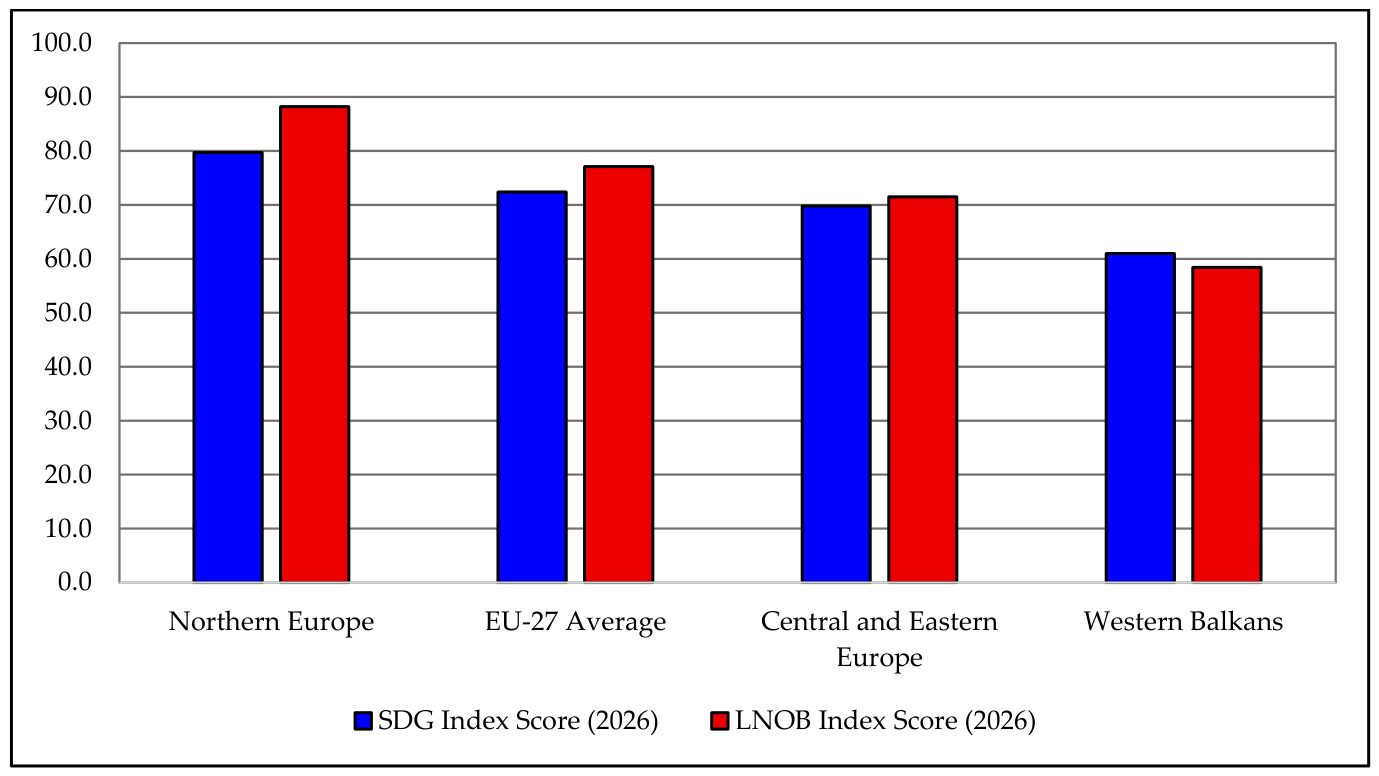
However, the aggregate results conceal significant differences. Northern Europe achieved an average SDG index score of 79.7, compared to 69.8 in Central and Eastern Europe and only 61.0 in the candidate countries [36]. While Northern and Western European countries consistently occupy the highest positions in the SDG rankings, several Central and Eastern European and candidate countries continue to face more significant implementation challenges. These differences reflect differences in innovation capacity, administrative efficiency, economic resilience and institutional performance, which shape countries’ abilities to implement sustainability-related reforms and absorb external shocks.
Europe’s sustainability performance also remains linked to external dependencies. Despite progress in renewable energy deployment, emission reductions and environmental regulation, green and digital transformations continue to rely on imported raw materials, global supply chains and external technological capacities [38]. This dependency is also reflected in the Union’s environmental footprint, as more than 40% of the EU’s greenhouse gas emissions are generated abroad through international production and trade networks [36]. Strategic sectors such as batteries, semiconductors, critical raw materials and clean energy technologies illustrate the extent to which sustainability objectives depend on resources and capacities located outside the Union.
The Europe 2026 Sustainable Development Report further states that no European country is currently on track to achieve all 17 Sustainable Development Goals by 2030. Significant challenges remain in the areas of climate action (SDG 13), sustainable consumption and production (SDG 12), biodiversity protection (SDGs 14 and 15) and sustainable agriculture (SDG 2) [36]. Progress remains particularly uneven in the areas of resource consumption, material footprint and decarbonisation of agriculture and energy-intensive sectors. These challenges highlight the persistent tension between environmental objectives, economic competitiveness and social cohesion [39].
From a governance perspective, sustainable development depends on factors that go beyond national regulatory capacities. Persistent disparities are visible not only in environmental and economic performance but also in the social dimension of sustainability. The ‘Leaving No One Behind’ index scored 75.3 points for the European Union as a whole, but only 53.1 points for the candidate countries, highlighting significant disparities in socioeconomic inclusion and development outcomes across Europe [36].
The report also highlights declining public trust in government institutions in several large European countries and a general weakening of political commitment to implementing the Sustainable Development Goals (SDGs). At the same time, geopolitical tensions, supply chain disruptions and strategic competition expose vulnerabilities that conventional sustainability indicators do not capture. The sustainability of the European model therefore depends not only on environmental and socioeconomic performance but also on resilience and the ability to manage external dependencies.
Evidence suggests that the EU combines relatively strong sustainability performance with significant structural vulnerabilities. This combination provides a starting point for understanding how geopolitical and geoeconomic changes are changing sustainability governance in the European Union.
Institutional capacity and resilience can act as enabling conditions for sustainable development. Countries that score higher on the SDGs and LNOB tend to combine strong governance performance, advanced innovation systems and greater economic adaptability. Conversely, lower-performing regions often face concurrent constraints related to administrative efficiency, investment capacity and socioeconomic cohesion. This pattern suggests that sustainability performance is not determined solely by environmental or social policies but also by broader institutional and economic capabilities that influence the ability to absorb external shocks and adhere to long-term policy commitments. The findings support the argument that resilience should be considered an integral part of sustainability governance, rather than a stand-alone policy objective.
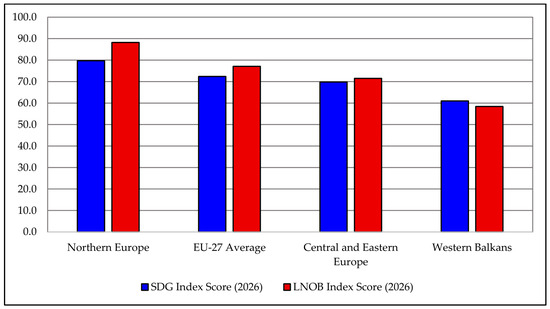
As Figure 1 illustrates, substantial differences in sustainability performance persist across European sub-regions. The contrast between Northern Europe (SDG index: 79.7) and the candidate countries of the Western Balkans (SDG index: 61.0) highlights significant differences in institutional capacity, socioeconomic development and the ability to implement sustainability-related reforms [36]. These differences suggest that European sustainability governance operates in heterogeneous conditions that affect countries’ ability to respond to external shocks and pursue long-term development goals.
Figure 1.
Regional fragmentation of SDG and LNOB index scores across European sub-systems (2026). Source: Authors’ own elaboration based on Europe Sustainable Development Report 2026 [36].
A similar pattern is visible in the Leave No One Behind (LNOB) index. While Northern Europe achieves relatively high levels of social inclusion and cohesion, lower scores in the Western Balkans and parts of Central and Eastern Europe point to persistent socioeconomic vulnerability [36]. These findings highlight the importance of taking into account territorial and institutional differences when assessing the resilience of the European sustainability model. In this context, sustainability performance appears to be closely linked to broader issues of adaptive capacity, resilience and governance effectiveness.
The regional differences illustrated in Figure 1 also reveal an important geopolitical dimension to sustainability governance. The regional comparison follows the analytical classification adopted in the Europe Sustainable Development Report 2026 [36]. Although alternative perspectives, including the frequently discussed North–South divide, are common in the literature, the present grouping provides the most appropriate basis for analysing institutional capacity, socioeconomic resilience and sustainability performance within the empirical framework of this study.
Countries with stronger institutional capacity and higher levels of socioeconomic inclusion generally appear to be better prepared to adapt to geopolitical disruptions, supply chain shocks and technological transformations. Conversely, regions with poorer performance may be more vulnerable to external economic pressures and strategic dependencies, potentially exacerbating existing development disparities within Europe. This suggests that sustainability governance intersects with issues of economic security and strategic resilience. In this respect, the uneven distribution of sustainability performance within Europe is not only a development challenge but also a strategic issue that affects the Union’s overall ability to pursue long-term sustainability goals in an increasingly competitive international environment.
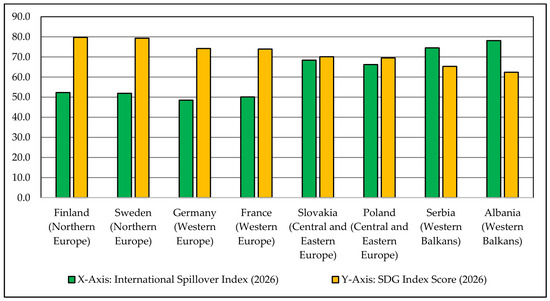
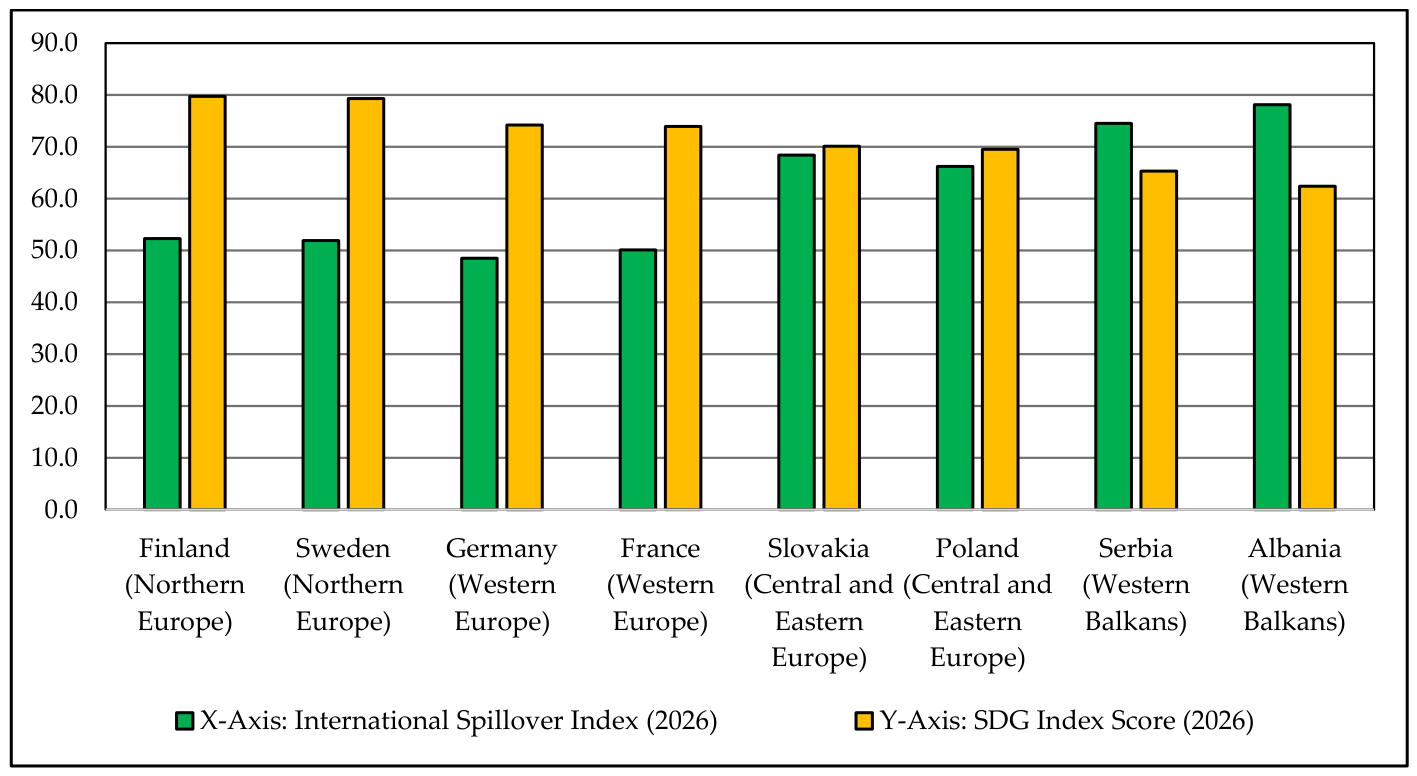
As shown in Figure 2, several countries with lower overall SDG performance also display different spillover profiles, illustrating that domestic sustainability performance and transboundary sustainability impacts represent distinct but complementary dimensions of sustainable development. The International Spillover Index therefore should not be interpreted as a direct measure of overall sustainability performance but as an indicator capturing the external environmental and socioeconomic effects associated with national patterns of production and consumption [36].
Figure 2.
National SDG performance and international spillover profiles (2026). Source: Authors’ own elaboration based on Europe Sustainable Development Report 2026 [36].
The comparison suggests that countries achieving relatively high SDG scores may also generate substantial external environmental and socioeconomic impacts through international production and consumption networks. This pattern is particularly visible in highly developed economies such as Finland, Sweden, Germany and France [36].
These findings highlight the interconnected nature of sustainability management in an integrated global economy, where domestic sustainability performance and transboundary sustainability impacts represent complementary but analytically distinct dimensions of sustainable development. The results reinforce the argument that assessing sustainable development requires consideration of both domestic performance and the transboundary effects associated with international production and consumption networks. They also support the broader analytical perspective developed in this article, according to which sustainability, economic security and strategic autonomy are gradually becoming interrelated dimensions of European governance under conditions of geopolitical uncertainty.
4.2. Geopolitical Transformation and New Constraints on Sustainability
A review of strategic documents and expert reports shows that sustainable development in the European Union is shaped by geopolitical instability and geoeconomic fragmentation [8]. The assumptions on which many sustainability policies were originally formulated—deepening economic integration, stable supply chains and relatively predictable international cooperation—have been challenged by the COVID-19 pandemic, the Russian invasion of Ukraine, intensifying great power competition and the politicisation of trade and technology [32].
A key consequence of this transformation has been the recognition that economic interdependence can create strategic vulnerabilities. EU policy is placing greater emphasis on resilience, diversification and reducing vulnerabilities alongside market openness and integration. This shift is particularly visible in areas such as energy security, critical raw materials, advanced technologies and strategic infrastructure.
The energy crisis triggered by the war in Ukraine illustrates the consequences of these vulnerabilities. Supply disruptions have exposed the risks associated with excessive external dependence, while rising energy prices have triggered inflationary pressures and increased production costs. At the same time, the crisis has accelerated efforts to diversify energy sources and expand renewable energy capacities, reinforcing the link between sustainability and energy security [1].
Similar challenges affect critical raw materials and strategic technologies. Green and digital transformations depend on resources and technologies concentrated in a limited number of countries, making sustainability objectives dependent on supply chain resilience, industrial capacities and technological capabilities [40]. Decarbonisation and digitalisation have become closely linked to broader issues of geopolitical risk management.
These developments are changing the very meaning of sustainability. In addition to environmental and social objectives, sustainability is also associated with resilience and the ability to withstand external disruptions. This reflects a broader shift from efficiency-oriented governance to a model that places greater emphasis on resilience, security and strategic capabilities [3].
Geopolitical and geoeconomic changes have thus become an integral part of sustainability governance and can no longer be considered merely as its external context. Achieving sustainability goals depends on the ability to manage strategic vulnerabilities arising from an uncertain international environment.
4.3. Economic Security as a New Sustainability Imperative
Economic security has moved from a specialised political issue to a central component of current EU governance. This shift reflects the recognition that sustainable development depends on the resilience of critical economic systems, including energy networks, supply chains, technological infrastructure and industrial capacities.
Recent EU strategies prioritise resilience, risk management and vulnerability reduction alongside market integration and openness. This does not represent a departure from sustainability objectives but reflects an effort to reconcile economic openness with the capacity to absorb external shocks and geopolitical disruptions. Recent policy debates also indicate a gradual adjustment of selected Green Deal measures in response to concerns regarding European competitiveness, industrial capacity and regulatory effectiveness. The Draghi and Letta reports similarly argue that strengthening Europe’s long-term competitiveness requires closer integration of sustainability, innovation, resilience and economic security within a coherent policy framework [6,30,31].
The transition to climate neutrality illustrates this interdependence. Achieving sustainability goals requires secure access to energy resources, critical raw materials, advanced technologies, and strategic industrial capacities [38]. Vulnerabilities in these areas can increase costs, slow down investment and limit the implementation of environmental policies. Sustainability management includes aspects traditionally associated with economic security.
Supply chain resilience has become a particular policy priority. Recent disruptions have revealed the risks associated with excessive concentration of production and supply in a limited number of countries [41]. In response, EU policy supports diversification, strategic partnerships and strengthening of industrial capacities aimed at reducing critical dependencies [20].
Industrial policy plays a central role in this process. Sectors such as renewable energy technologies, batteries, semiconductors, artificial intelligence and critical raw materials are simultaneously linked to decarbonisation, competitiveness and economic security [42]. Investments in these areas reflect the growing convergence of the goals of sustainability and economic security.
However, this convergence brings trade-offs. Measures aimed at reducing dependencies and strengthening resilience may increase short-term costs and sometimes conflict with considerations of market efficiency. However, EU policy considers these costs to be manageable compared to the risks associated with strategic vulnerability.
Economic security is currently an integral part of sustainable development and no longer represents a separate policy area. Its growing importance reflects a wider shift towards a model in which sustainability, resilience and competitiveness are pursued as interconnected goals.
4.4. Green Transition and Technological Competition
The green transition is shaped by technological and geopolitical considerations, along with environmental objectives. While climate neutrality remains a central EU policy objective, its implementation has become closely linked to technological leadership, industrial competitiveness and strategic resilience [28]. The transformation has evolved into a broader project of economic transformation.
Many of the technologies essential for decarbonisation have also become strategic assets. Renewable energy systems, batteries, semiconductors, hydrogen technologies, artificial intelligence and advanced digital infrastructure are seen not only as tools for sustainability but also as sources of economic competitiveness and geopolitical influence. The ability to develop and deploy these technologies has consequently become a strategic priority for the European Union [43].
The transition is also creating new forms of dependency. Although renewable energy reduces dependence on imported fossil fuels, it increases demand for critical raw materials, advanced manufacturing capabilities and specialised technological components. The concentration of manufacturing and processing capacities in a limited number of countries creates vulnerabilities that can affect both the pace and resilience of decarbonisation. These concerns are reinforced by evidence showing that the supply of several critical minerals essential for clean energy technologies remains highly geographically concentrated, increasing the strategic importance of diversification and resilience measures as part of the green transition [43,44].
Addressing these vulnerabilities requires not only technological innovation and industrial investment but also the diversification of strategic partnerships. Cooperation with neighbouring regions, particularly North Africa and the Eastern Mediterranean, together with Turkey as an important regional partner, can contribute to more resilient renewable energy value chains, diversify access to strategic resources and enhance the long-term security of Europe’s sustainable energy transition.
In this context, Euro-Mediterranean cooperation has become an increasingly important framework for renewable energy integration, the development of low-carbon hydrogen value chains and the resilience of regional energy networks. Beyond supporting the green transition, it also reinforces the external dimension of the European Union’s sustainability governance by diversifying energy cooperation and strengthening long-term economic security. This external dimension is also reflected in the Global Gateway strategy, through which the European Union links sustainable infrastructure investment, energy connectivity and international partnerships with broader objectives of economic security and geopolitical resilience [45].
Morocco illustrates this approach by emerging as one of the European Union’s principal partners in renewable energy and green hydrogen development [46]. Such partnerships demonstrate how external cooperation can simultaneously support decarbonisation, diversify strategic supply chains and enhance the resilience of Europe’s future energy system.
The Eastern Mediterranean also represents an important area for the diversification of energy cooperation and the development of future low-carbon energy corridors [47]. In this context, Turkey occupies a distinctive position as a strategic partner whose importance is accompanied by persistent geopolitical challenges, illustrating that the external dimension of sustainability governance requires balancing opportunities for cooperation with broader regional and security considerations [48].
Viewed from this perspective, diversified energy partnerships represent not only a means of securing sustainable energy supplies but also an instrument for strengthening economic security, reducing strategic dependencies and reinforcing the sustainable strategic resilience framework proposed in this article. This approach is further reflected in the European Union’s Critical Raw Materials Act, which seeks to reduce excessive external dependencies by strengthening domestic capacities, diversifying supply sources and expanding strategic partnerships with reliable international partners [49].
In response, EU policy combines environmental objectives with industrial and innovation strategies. Support for clean technologies, R&D and strategic investments reflects the drive to strengthen competitiveness while advancing sustainability goals [50]. Innovation capacity thus becomes a key factor linking decarbonisation, economic resilience and technological sovereignty.
This transformation is not without challenges. Intensifying competition in clean technologies can stimulate innovation and investment, but it can also fuel a race to the bottom, regulatory fragmentation and uneven distribution of benefits between Member States. Differences in technological capabilities can reinforce existing economic asymmetries within the Union.
The green transition has become a central arena where sustainability, technological competition and geopolitical adaptation intersect. Its success depends on the EU’s ability to reconcile environmental ambition with industrial competitiveness and strategic resilience.
4.5. Strategic Autonomy and Sustainable Development
Strategic autonomy has become a key concept linking sustainability, economic security and geopolitical adaptation in the European Union. Originally associated with foreign and security policy, it has now expanded to include economic, technological, industrial and sustainable policy [3]. This development reflects the recognition that the long-term viability of the European model depends not only on the performance of internal policies but also on the ability to reduce critical dependencies and maintain strategic capacities.
In EU policy discourse, strategic autonomy is not understood as economic isolation. It refers to the ability to pursue political, economic and sustainable objectives without excessive dependence on external actors. The concept seeks to reconcile openness with resilience by preserving the benefits of international cooperation while limiting exposure to strategic vulnerabilities [20,22].
Many sustainability challenges have a clear strategic dimension. Climate neutrality, green transition and digital transformation depend on secure access to energy sources, critical raw materials, advanced technologies and resilient industrial ecosystems. Without these conditions, sustainability objectives become vulnerable to supply disruptions, market volatility and geopolitical pressure. Strategic autonomy therefore functions as an enabling condition for sustainable development.
The relationship between sustainability and strategic autonomy is largely complementary. Investments in renewable energy sources reduce dependence on imported fossil fuels while strengthening energy security. Supporting innovation and clean technologies simultaneously contributes to decarbonisation, competitiveness and technological resilience. Similarly, diversifying supply chains not only increases economic security but also the stability of sustainability-related investments [51].
However, this convergence brings trade-offs. Reducing external dependence can increase production costs, require significant public investment and create frictions between Member States with different economic structures and industrial priorities. Strategic autonomy requires a balance between resilience, competitiveness, cohesion and openness.
Strategic autonomy serves as an integrative framework linking sustainability, economic security and resilience. This trend reflects the broader transformation of sustainable development from a largely regulatory project to a strategy aimed at strengthening Europe’s long-term adaptive capacity in the context of growing geopolitical pressures [33].
4.6. Towards Sustainable Strategic Resilience
The preceding analysis suggests that sustainable development, economic security and strategic autonomy operate as interconnected components of a common governance framework. The empirical findings consistently demonstrate that progress towards sustainability depends not only on environmental and socioeconomic policies but also on the capacity to manage strategic dependencies, strengthen resilience and enhance strategic capabilities under conditions of geopolitical uncertainty. Within this framework, geopolitical uncertainty is understood as a structural condition of the contemporary governance environment that shapes long-term policy choices rather than as a temporary consequence of individual crises. These findings provide the analytical foundation for the sustainable strategic resilience framework proposed in this article.
These changes have affected the conditions under which sustainability goals are pursued. Progress towards climate neutrality, resource efficiency and social cohesion depends on resilient supply chains, secure access to critical technologies and raw materials and the ability to manage external vulnerabilities. At the same time, economic security and strategic autonomy derive much of their meaning from their contribution to long-term sustainable development [52].
To capture this convergence, this article proposes the concept of sustainable strategic resilience. This framework integrates three mutually reinforcing pillars: sustainable development, economic security and strategic autonomy. Sustainable development provides long-term environmental, economic and social objectives, economic security reduces exposure to external shocks, and strategic autonomy strengthens the Union’s ability to pursue these objectives in conditions of geopolitical uncertainty [33].
The relationship between these pillars is reciprocal rather than hierarchical. Sustainable development creates the demand for resilience and strategic capacities, while economic security and strategic autonomy provide the conditions necessary to achieve sustainability objectives. Resilience therefore results from their interaction and should not be seen as a stand-alone policy objective [10,33].
The sustainable strategic resilience framework proposes a broader understanding of sustainable development within the European Union. Sustainability encompasses not only environmental performance and socioeconomic outcomes but also adaptability, resilience and strategic capacity. The geopoliticisation of the international environment is thus changing not only the governance but also the conceptual foundations of sustainable development in Europe. The main components of the sustainable strategic resilience framework are summarised in Table 2.
Table 2.
Components of the sustainable strategic resilience framework.
5. Discussion
5.1. From Sustainable Development to Sustainable Strategic Resilience
Classical approaches to sustainable development capture only a part of the challenges facing the European Union. Traditional frameworks successfully integrate environmental, economic and social objectives but pay limited attention to the strategic conditions necessary for their implementation [11].
Contemporary sustainability governance operates in an environment shaped by geopolitical competition, technological rivalry, supply chain disruption and increasing economic fragmentation [13]. Under these conditions, achieving sustainability objectives depends not only on environmental performance and socioeconomic outcomes but also on the ability to manage external vulnerabilities and maintain critical capacities.
This change broadens the analytical scope of sustainability. Long-term development requires resilience, adaptability and strategic capacities alongside environmental protection and social cohesion. For this reason, sustainability becomes not only a question of desired outcomes but also of the institutional and economic conditions necessary to achieve them.
The concept of sustainable strategic resilience reflects this transformation. By integrating sustainable development, economic security, and strategic autonomy into a single framework, sustainable strategic resilience emphasises the growing interdependence between sustainability goals and the strategic environment in which those goals are pursued.
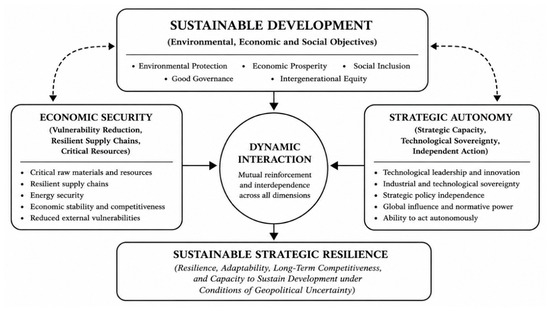
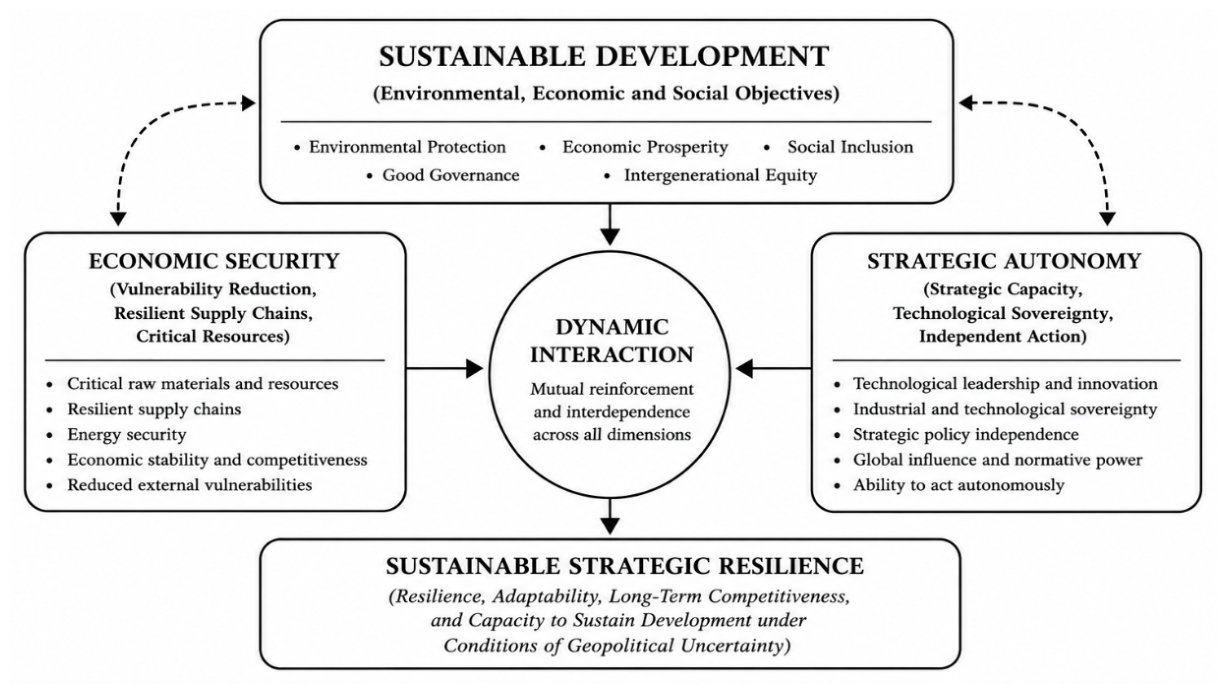
Sustainable strategic resilience does not replace established sustainability principles; it extends them to reflect the realities of an increasingly uncertain international order. In this sense, it represents an adaptation of the sustainability paradigm rather than a departure from it. The conceptual relationships among sustainable development, economic security, strategic autonomy, and resilience are illustrated in Figure 3.
Figure 3.
Sustainable strategic resilience framework. Source: Authors’ own elaboration.
As Table 3 shows, the framework conceptualises sustainable development, economic security and strategic autonomy as mutually reinforcing pillars of the current European development model. Sustainable development provides long-term environmental, economic and social goals, while economic security and strategic autonomy create the conditions necessary for their implementation in conditions of geopolitical uncertainty. Their interaction generates sustainable strategic resilience, understood as the ability to sustain long-term development through resilience, adaptability and strategic capabilities.
Table 3.
Key dimensions of sustainable strategic resilience.
5.2. Reconciling Sustainability and Economic Security
The relationship between sustainability and economic security is often seen as a trade-off [53]. Sustainability policies can increase regulatory and investment costs, while measures aimed at reducing strategic dependency can limit some of the efficiency gains associated with economic openness [54]. This view portrays resilience, competitiveness and sustainability as potentially conflicting objectives.
Recent developments illustrate that these tensions are not merely theoretical. Following Russia’s invasion of Ukraine, several Member States expanded LNG import infrastructure to strengthen energy security and reduce dependence on Russian gas while raising concerns about the long-term compatibility of such investments with climate objectives. Likewise, the simplification of selected sustainability legislation under the 2025 Omnibus package reflects continuing efforts to reconcile competitiveness, regulatory efficiency and sustainability within an increasingly challenging geopolitical environment [55,56].
This relationship appears to be more complex than is often assumed. In the current geopolitical context, sustainability and economic security are interdependent. Sustainable development requires secure access to energy, technology and critical resources, while economic security derives much of its long-term significance from supporting innovation, competitiveness and societal stability [12].
This interdependence challenges approaches that consider sustainability and economic security as separate policy areas. Environmental transformation, industrial resilience and economic security represent different dimensions of the same governance challenge [42]. The key question is therefore not how to prioritise one objective over another but how to effectively manage their interaction. Such trade-offs should not be regarded as temporary deviations from sustainability policy but as an inherent feature of governance in an increasingly complex geopolitical environment. The effectiveness of sustainability governance therefore depends less on eliminating competing objectives than on balancing them through adaptive and coherent policymaking.
The results further suggest that policy synergies can often mitigate the trade-offs associated with sustainability governance. Investments in clean technologies, innovation and strategic industrial capacities can simultaneously promote decarbonisation, competitiveness and resilience [9]. Conversely, narrowly sectoral approaches risk creating policy incoherence and unintended costs.
Reconciling sustainability and economic security should be seen as a governance challenge, not as a choice between competing priorities. Their deepening convergence is a characteristic feature of current EU policymaking and reinforces the logic underlying the sustainable strategic resilience framework.
5.3. The Geopoliticisation of EU Sustainability Governance
The findings point to a broader transformation of sustainable development governance within the European Union. Sustainability policy has traditionally been formulated through environmental, social and regulatory objectives, with geopolitical dynamics largely seen as external constraints. This distinction is becoming increasingly difficult to maintain.
Sustainability governance is becoming part of a broader strategic context shaped by geopolitical competition, economic fragmentation and technological rivalry [32]. As a result, sustainability is no longer pursued solely as a regulatory objective but also as part of Europe’s broader adaptation to a changing international environment.
This shift should not be interpreted as a replacement of environmental priorities by geopolitical considerations. Rather, it reflects the integration of previously separate policy areas. Sustainability, industrial policy, economic governance and strategic planning in the field are increasingly intertwined, changing not only the instruments but also the priorities of EU policymaking.
From a theoretical perspective, this development supports a broader understanding of geopoliticisation. This process goes beyond foreign and security policy and affects policy areas traditionally considered to be regulatory or socioeconomic. Sustainability governance illustrates how geopolitical considerations are reshaping the strategic logic of European integration without displacing its fundamental environmental and development objectives [7].
The geopoliticisation of sustainability governance changes the context in which sustainability is pursued, while its fundamental objectives remain unchanged. What changes is not the objective of sustainable development as such, but the strategic conditions under which it is pursued.
5.4. Implications for EU Policymaking
Sustainability, economic security and strategic autonomy can no longer be addressed through separate policy frameworks. Their interdependence requires a more integrated approach that balances environmental objectives with resilience, competitiveness and strategic capacity.
For the European Green Deal, this means that decarbonisation depends on industrial capacity, technological innovation and secure access to key resources [29]. The effectiveness of climate policy is therefore linked not only to regulatory ambition but also to the resilience of the wider economic system [5].
A similar logic applies to the Clean Industry Deal and related industrial policy initiatives. Industrial transformation not only serves environmental and economic objectives but also reduces vulnerabilities linked to key technologies, strategic sectors and external dependencies. Competitiveness and sustainability operate as complementary and mutually reinforcing objectives [44].
The findings also point to the growing role of strategic autonomy in EU governance. Strategic autonomy is not an alternative to sustainability; it provides a framework through which sustainability objectives can be pursued despite increasing geopolitical pressures.
Finally, the European Economic Security Strategy illustrates the convergence of resilience and sustainability agendas. The strategy recognises that economic security depends not only on reducing strategic dependencies but also on strengthening innovation, technological capacity, competitiveness and resilient supply chains [20,57]. Economic security measures therefore appear most effective when integrated with industrial development and long-term sustainability objectives.
Collectively, these developments point towards a more integrated model of EU governance, in which sustainability, economic security and strategic autonomy function as mutually reinforcing dimensions of a common governance framework. This integrated perspective also provides consistent answers to the three research questions, showing how geopolitical and geoeconomic transformations influence sustainability governance, reinforce the role of economic security and strategic autonomy, and redefine the conditions for long-term sustainable development in the European Union.
6. Conclusions
This study examined how geopolitical and geoeconomic transformations are reshaping sustainability governance in the European Union. The findings demonstrate that these transformations have fundamentally altered the conditions under which sustainability governance is conceived and implemented.
The research draws three conclusions that provide answers to the research questions. First, geopolitical and geoeconomic developments directly affect the implementation of sustainable development by creating vulnerabilities associated with energy systems, critical resources, supply chains, and technological dependencies. Second, economic security and strategic autonomy act as enabling conditions for sustainability by strengthening resilience and reducing exposure to external disruptions. Third, the increasing interdependence of sustainability, economic security, and strategic capacity suggests that these objectives can no longer be addressed through separate policy frameworks.
The study further suggests that sustainable development is undergoing a conceptual transformation. While environmental, economic and social objectives remain central, their achievement depends on resilience, adaptability and the ability to manage strategic dependencies. Sustainability is therefore closely linked to broader issues of competitiveness and strategic capabilities.
The main theoretical contribution of this article is the concept of sustainable strategic resilience. By integrating sustainable development, economic security and strategic autonomy into a single analytical framework, sustainable strategic resilience offers a tool for understanding how sustainability management adapts to a changing geopolitical environment. It also helps to bridge the gap between sustainability studies, geoeconomics and strategic policy research. For a clearer orientation of the documents used, see Appendix A.
The study is limited by its qualitative design and reliance on document analysis. Future research could further develop the proposed framework through comparative studies, quantitative approaches or sector-specific analyses.
Sustainable development in the European Union can no longer be understood solely through environmental and socioeconomic indicators. It increasingly depends on the ability to reduce vulnerability, strengthen resilience and sustain long-term development in conditions of geopolitical uncertainty.
Funding
This research was supported by the EU NextGenerationEU through the Recovery and Resilience Plan for Slovakia under the project within the Smart Transformational and Innovation Consortium Slovakia (STICS) No. 09I02-03-V01-00011.
Institutional Review Board Statement
Not applicable.
Informed Consent Statement
Not applicable.
Data Availability Statement
The data supporting the findings of this study are derived from publicly available policy documents, reports, and statistical databases of the European Union and relevant international organisations. All primary and secondary sources utilised in the analysis are cited within the bibliography.
Conflicts of Interest
The author declares no conflicts of interest.
Appendix A
Table A1.
Overview of the principal documents analysed.
The documents were analysed using a common coding framework focusing on four principal analytical categories: sustainability, economic security, strategic autonomy and resilience. Additional coding categories, including competitiveness, strategic dependencies, external vulnerability and governance capacity, were used where relevant to capture cross-cutting themes and policy interactions across the analysed documents.
References
- Leonard, M.; Pisani-Ferry, J.; Ribakova, E.; Shapiro, J.; Wolff, G. The Geopolitics of the European Green Deal; European Council on Foreign Relations: London, UK, 2021; Available online: https://ecfr.eu/wp-content/uploads/The-geopolitics-of-the-European-Green-Deal.pdf (accessed on 16 July 2026).
- Eckert, E.; Kovalevska, O. Sustainability in the European Union: Analyzing the Discourse of the European Green Deal. J. Risk Financ. Manag. 2021, 14, 80. [Google Scholar] [CrossRef] [Scilit]
- Ivančík, R.; Andrassy, A. Discussing EU’s Security Identity: Defence Spending, Strategic Autonomy and Transition from Normative Ambition to Geopolitical Reality. Entrep. Sustain. Issues 2025, 13, 411–425. [Google Scholar] [CrossRef] [Scilit]
- Zhong, H.; Li, Y.; Ding, J. Global Spillover Effects of the European Green Deal and Plausible Mitigation Options. Nat. Sustain. 2024, 7, 1501–1511. [Google Scholar] [CrossRef] [Scilit]
- Stefanis, C.; Stavropoulos, A.; Stavropoulou, E.; Tsigalou, C.; Constantinidis, T.C.; Bezirtzoglou, E. A Spotlight on Environmental Sustainability in View of the European Green Deal. Sustainability 2024, 16, 4654. [Google Scholar] [CrossRef] [Scilit]
- European Commission. Political Guidelines for the Next European Commission 2024–2029: Europe’s Choice; European Commission: Brussels, Belgium, 2024; Available online: https://commission.europa.eu/document/download/e6cd4328-673c-4e7a-8683-f63ffb2cf648_en (accessed on 16 July 2026).
- Meunier, S.; Nicolaïdis, K. The Geopoliticitization of European Trade and Investment Policy. J. Common Mark. Stud. 2019, 57, 103–113. [Google Scholar] [CrossRef] [Scilit]
- Azim, S.; Rooh, S.; Malik, M.F.; Shah, S.M.A. The Fragmentation of Global Trade: From Protectionism to Gated Globalization. Soc. Sci. Humanit. Res. Rev. 2025, 3, 555–584. [Google Scholar] [CrossRef] [Scilit]
- Vărzaru, A.A. The Relationship Between Economic Performance, Sustainability, and Agricultural Productivity: Empirical Evidence from the European Union. Agriculture 2026, 16, 217. [Google Scholar] [CrossRef] [Scilit]
- Bassi, A.M.; Costantini, V.; Paglialunga, E. Modelling the European Union Sustainability Transition: A Soft-Linking Approach. Sustainability 2021, 13, 6303. [Google Scholar] [CrossRef] [Scilit]
- Sachs, J.D.; Schmidt-Traub, G.; Mazzucato, M.; Messner, D.; Nakićenović, N.; Rockström, J. Six Transformations to Achieve the Sustainable Development Goals. Nat. Sustain. 2019, 2, 805–814. [Google Scholar] [CrossRef] [Scilit]
- Voss, J.-P.; Bauknecht, D.; Kemp, R. (Eds.) Reflexive Governance for Sustainable Development; Edward Elgar Publishing: Cheltenham, UK, 2006. [Google Scholar]
- Huang, J. Geoeconomic Fragmentation: Structural Transformation of the Global Political Economy and Strategic Implications for International Business. Proc. Bus. Econ. Stud. 2025, 8, 227–234. [Google Scholar] [CrossRef] [Scilit]
- Farrell, H.; Newman, A.L. Weaponized Interdependence: How Global Economic Networks Shape State Coercion. Int. Secur. 2019, 44, 42–79. [Google Scholar] [CrossRef] [Scilit]
- Damro, C. Market Power Europe. J. Eur. Public Policy 2012, 19, 682–699. [Google Scholar] [CrossRef] [Scilit]
- Bradford, A. The Brussels Effect: How the European Union Rules the World; Oxford University Press: Oxford, UK, 2020. [Google Scholar]
- Mearsheimer, J.J. Why the Ukraine Crisis Is the West’s Fault: The Liberal Delusions That Provoked Putin. Foreign Aff. 2014, 93, 77–89. [Google Scholar]
- Mearsheimer, J.J. The Causes and Consequences of the Ukraine War. Horiz. J. Int. Relat. Sustain. Dev. 2022, 21, 12–32. [Google Scholar]
- Steinberg, F.; Wolff, G. Dealing with Europe’s Economic (In-)security. Glob. Policy 2024, 15, 183–192. [Google Scholar] [CrossRef] [Scilit]
- European Commission. An EU Economic Security Strategy; JOIN(2023) 20 Final; European Commission: Brussels, Belgium, 2023; Available online: https://eur-lex.europa.eu/legal-content/EN/TXT/PDF/?uri=CELEX:52023JC0020 (accessed on 16 July 2026).
- Ivančík, R. Quo Vadis European Defence and Security. Politicke Vedy 2019, 22, 47–67. [Google Scholar] [CrossRef] [Scilit]
- Tocci, N. European Strategic Autonomy: What It Is, Why We Need It, How to Achieve It; Istituto Affari Internazionali (IAI): Rome, Italy, 2021; Available online: https://www.iai.it/sites/default/files/9788893681780.pdf (accessed on 16 July 2026).
- European Commission. Trade Policy Review—An Open, Sustainable and Assertive Trade Policy; COM(2021) 66 Final; European Commission: Brussels, Belgium, 2021; Available online: https://eur-lex.europa.eu/legal-content/EN/TXT/?uri=celex:52021DC0066 (accessed on 16 July 2026).
- Damen, M. EU Strategic Autonomy 2013–2023: From Concept to Capacity; European Parliamentary Research Service: Brussels, Belgium, 2022; Available online: https://www.europarl.europa.eu/RegData/etudes/BRIE/2022/733589/EPRS_BRI(2022)733589_EN.pdf (accessed on 16 July 2026).
- European Commission. Strategic Foresight Report: Sustainability and People’s Wellbeing at the Heart of Europe’s Open Strategic Autonomy; COM(2023) 376 Final; European Commission: Brussels, Belgium, 2023; Available online: https://eur-lex.europa.eu/legal-content/EN/TXT/?uri=celex:52023DC0376 (accessed on 16 July 2026).
- Mariotti, S. “Open Strategic Autonomy” as an Industrial Policy Compass for the EU Competitiveness and Growth: The Good, the Bad, or the Ugly? J. Ind. Bus. Econ. 2025, 52, 1–26. [Google Scholar] [CrossRef] [Scilit]
- Okano-Heijmans, M. Open Strategic Autonomy; Netherlands Institute of International Relations ‘Clingendael’: Hague, The Netherlands, 2023; Available online: https://www.clingendael.org/sites/default/files/2023-01/Open_strategic_autonomy_.pdf (accessed on 16 July 2026).
- Judijanto, L. Global Economic Transformation in the Digital Age and Geopolitical Fragmentation: Review and Policy Implications. Multitech J. Sci. Technol. 2025, 2, 501–528. [Google Scholar] [CrossRef] [Scilit]
- Dupont, C.; Torney, D. European Union Climate Governance and the European Green Deal in Turbulent Times. Politics Gov. 2021, 9, 312–315. [Google Scholar] [CrossRef] [Scilit]
- Draghi, M. The Future of European Competitiveness; Publications Office of the European Union: Luxembourg, 2024. [Google Scholar] [CrossRef]
- Letta, E. Much More Than a Market: Speed, Security, Solidarity; Publications Office of the European Union: Brussels, Belgium, 2024; Available online: https://www.consilium.europa.eu/media/ny3j24sm/much-more-than-a-market-report-by-enrico-letta.pdf (accessed on 25 April 2026).
- Ivančík, R.; Dušek, J. Sustainable Development and Democratic Resilience in the European Union: Linking Sustainability Governance with Geopolitical, Geoeconomic, and Security Challenges. Sustainability 2026, 18, 3631. [Google Scholar] [CrossRef] [Scilit]
- Folke, C.; Polasky, S.; Rockström, J.; Galaz, V.; Westley, F.; Walker, B. Our Future in the Anthropocene Biosphere: Global Sustainability and Resilient Societies. Ambio 2021, 50, 834–869. [Google Scholar] [CrossRef] [Scilit] [PubMed]
- European Commission. The European Green Deal; European Commission: Brussels, Belgium, 2019; Available online: https://commission.europa.eu/strategy-and-policy/priorities-2019-2024/european-green-deal_en (accessed on 16 July 2026).
- European Commission. Directive (EU) 2024/1760 of the European Parliament and of the Council of 13 June 2024 on Corporate Sustainability Due Diligence and Amending Directive (EU) 2019/1937 and Regulation (EU) 2023/2859; European Commission: Brussels, Belgium, 2024; Available online: https://eur-lex.europa.eu/eli/dir/2024/1760/oj (accessed on 16 July 2026).
- Lafortune, G.; Fuller, G. Europe Sustainable Development Report 2026: SDG Pathways to 2030 and Mid-Century; Sustainable Development Solutions Network (SDSN): Paris, France, 2026; Available online: https://s3.amazonaws.com/sustainabledevelopment.report/2026/europe-sustainable-development-report-2026.pdf (accessed on 16 July 2026).
- Dempere, J.; Udjo, E.; Mattos, P. The Entrepreneurial Impact of the European Directive on Corporate Sustainability Due Diligence. Adm. Sci. 2024, 14, 266. [Google Scholar] [CrossRef] [Scilit]
- Hao, N.; Dragomir, V.D. Renewable Energy, Sustainable Business Models, and Decarbonization in the European Union: Comparative Analysis of Corporate Sustainability Reports. Sustainability 2025, 17, 3646. [Google Scholar] [CrossRef] [Scilit]
- Perevoznic, F.M.; Dragomir, V.D. Achieving the 2030 Agenda: Mapping the Landscape of Corporate Sustainability Goals and Policies in the European Union. Sustainability 2024, 16, 2971. [Google Scholar] [CrossRef] [Scilit]
- Burinskienė, A.; Seržantė, M. Digitalisation as the Indicator of the Evidence of Sustainability in the European Union. Sustainability 2022, 14, 8371. [Google Scholar] [CrossRef] [Scilit]
- Yang, C.; Tian, K.; Gao, X. Supply Chain Resilience: Measure, Risk Assessment and Strategies. Fundam. Res. 2023, 5, 433–436. [Google Scholar] [CrossRef] [Scilit] [PubMed]
- Ivančík, R.; Dušek, J. Transforming European Security: Industrial Resilience, Institutional Adaptation, and Strategic Autonomy for Sustainable Development. World 2026, 7, 70. [Google Scholar] [CrossRef] [Scilit]
- IEA. Global Critical Minerals Outlook 2025; International Energy Agency: Paris, France, 2024; Available online: https://www.iea.org/reports/global-critical-minerals-outlook-2025 (accessed on 16 July 2026).
- Stieber, H.; De Lemos, S. Strategic Autonomy, Competitiveness and Supply Chain Resilience in the EU; European Parliament—Directorate-General for Economy, Transformation and Industry: Brussels, Belgium, 2026; Available online: https://www.europarl.europa.eu/RegData/etudes/BRIE/2026/779844/ECTI_BRI(2026)779844_EN.pdf (accessed on 16 July 2026).
- European Commission. Global Gateway; European Commission: Brussels, Belgium, 2026; Available online: https://commission.europa.eu/topics/international-partnerships/global-gateway_en (accessed on 15 July 2026).
- European Commission. Green Partnership Between the European Union and Morocco; C(2022) 7308 Final; European Commission: Brussels, Belgium, 2022; Available online: https://enlargement.ec.europa.eu/system/files/2022-11/C_2022_7308_F1_ANNEX_EN_V3_P1_2128231.PDF (accessed on 16 July 2026).
- European Commission. Union for the Mediterranean; European Commission: Brussels, Belgium, 2025; Available online: https://energy.ec.europa.eu/topics/international-cooperation/key-partner-countries-and-regions/union-mediterranean_en (accessed on 16 July 2026).
- European Commission. EU Trade Relations with Türkiye: Facts, Figures and Latest Developments; European Commission: Brussels, Belgium, 2024; Available online: https://policy.trade.ec.europa.eu/eu-trade-relationships-country-and-region/countries-and-regions/turkiye_en (accessed on 16 July 2026).
- European Commission. Critical Raw Materials Act; European Commission: Brussels, Belgium, 2024; Available online: https://single-market-economy.ec.europa.eu/sectors/raw-materials/areas-specific-interest/critical-raw-materials/critical-raw-materials-act_en (accessed on 16 July 2026).
- Fernández-Miguel, A.; García-Muiña, F.E.; Riccardi, M.P.; Veglio, V.; Settembre-Blundo, D. Strategic and Systemic Sustainability: Redefining EU Governance Beyond Environmental Policy. Sustainability 2025, 17, 8208. [Google Scholar] [CrossRef] [Scilit]
- Borrell, J. Why European Strategic Autonomy Matters; European External Action Service: Brussels, Belgium, 2020. Available online: https://www.eeas.europa.eu/eeas/why-european-strategic-autonomy-matters_en (accessed on 16 July 2026).
- OECD. Net Zero+: Climate and Economic Resilience in a Changing World; OECD Publishing: Paris, France, 2023; Available online: https://www.oecd.org/content/dam/oecd/en/publications/reports/2023/05/net-zero_75cbd09c/da477dda-en.pdf (accessed on 16 July 2026).
- Nevado-Peña, D.; López-Ruiz, V.-R.; Alfaro-Navarro, J.-L. The Effects of Environmental and Social Dimensions of Sustainability in Response to the Economic Crisis of European Cities. Sustainability 2015, 7, 8255–8269. [Google Scholar] [CrossRef] [Scilit]
- Nowak, A.; Krukowski, A.; Różańska-Boczula, M. Assessment of Sustainability in Agriculture of the European Union Countries. Agronomy 2019, 9, 890. [Google Scholar] [CrossRef] [Scilit]
- European Commission. Omnibus Package; European Commission: Brussels, Belgium, 2025; Available online: https://finance.ec.europa.eu/news/omnibus-package-2025-04-01_en (accessed on 16 July 2026).
- Council of the European Union. Simplification of EU Rules; Council of the European Union: Brussels, Belgium, 2025. Available online: https://www.consilium.europa.eu/en/policies/simplification/ (accessed on 16 July 2026).
- European Council. European Economic Security Strategy; European Council: Brussels, Belgium, 2025. Available online: https://www.consilium.europa.eu/en/policies/european-economic-security/ (accessed on 16 July 2026).

Disclaimer/Publisher’s Note: The statements, opinions and data contained in all publications are solely those of the individual author(s) and contributor(s) and not of MDPI and/or the editor(s). MDPI and/or the editor(s) disclaim responsibility for any injury to people or property resulting from any ideas, methods, instructions or products referred to in the content. |
© 2026 by the author. Licensee MDPI, Basel, Switzerland. This article is an open access article distributed under the terms and conditions of the Creative Commons Attribution (CC BY) license.