Article

Climate and Energy Security Nexus in the Pacific: An Integrative Thematic Review

College of Engineering, and Technical Vocational Education and Training, Fiji National University, Derrick Campus, Samabula, Suva P.O. Box 3722, Fiji
World 2026, 7(6), 88; https://doi.org/10.3390/world7060088
Submission received: 26 February 2026 / Revised: 13 May 2026 / Accepted: 19 May 2026 / Published: 25 May 2026
(This article belongs to the Section Climate Transitions and Ecological Solutions)

Abstract

Despite accounting for less than 0.03% of the world’s greenhouse gas emissions, the Pacific Small Island Developing States (PSIDS) face existential threats to their environment, livelihoods, and regional stability due to their heavy dependence on imported fossil fuels and disproportionate climate vulnerability. To address this “Justice Paradox,” this study utilises a Nexus Mapping framework to qualitatively synthesise the non-linear causal pathways between climate stressors and energy system vulnerabilities. Through an integrative thematic synthesis of literature and regional policy documents, the research identifies systemic bottlenecks, including the “fiscal trap” of post-disaster reconstruction, the “demand-utility paradox” of rising temperatures, and the logistical premiums of archipelagic energy distribution. The analysis suggests that energy decarbonisation represents a strategic opportunity to strengthen climate security across four dimensions: human, national, international, and ecological. To facilitate a secure transition, the study proposes a comprehensive “policy mix” of regulatory standards (sticks), economic de-risking through mechanisms such as Sovereign Green Bonds (carrots), and the institutionalisation of local technical sovereignty (sermons). This research offers an interpretive analytical framework for Pacific policymakers, arguing that decentralised, modular renewables may serve as a strategic shield against climatic instability and support the preservation of regional statehood.

1. Introduction

Human-driven greenhouse gas (GHG) emissions have raised global temperatures by 1.1 °C above 1850–1900 levels, and current policies create a gap that makes exceeding the 1.5 °C threshold likely this century unless deep reductions are made within this decade to reach net zero emissions [1]. In 2021, the energy sector contributed to 75.7% of the total global emissions where energy sector emissions include electricity and heat, transportation, manufacturing and construction and buildings [2]. The energy-related carbon emissions reached 37.8 Gt CO2 in 2024, with China contributing the highest towards global emissions, followed by the United States, the European Union and then India [3]. At the end of the spectrum, the Pacific region’s contribution is less than 0.03% of the world’s total GHG emissions [4,5], yet it is at the forefront of experiencing the adverse impacts of climate change.
The recent US–Iran conflict has created uncertainty in fuel supply and spikes in oil prices and insurance costs [6], where the Pacific region is no exception [7,8]. Even though the impacts will be time-delayed, uncertainty in fuel supply and price surges remains. Estrada et al. [9] had simulated a US–Iran war, and their analysis indicates that a high-intensity war between the US and its allies on one side and Iran on the other will have a huge impact on global fuel prices. In addition, the Russia–Ukraine conflict also constrained natural gas supply in European nations which led to steep surges in energy prices [10]. Oil accounts for about 80% of the Pacific region’s total energy supply, with a fuel bill of about US$6 billion per year, constituting around 5–15% of the gross domestic product of the Pacific Small Island Developing States (PSIDS) [5]. Thus, global conflicts remind nations of the vulnerabilities associated with excessive dependence on external energy sources.
Because energy is directly linked to climate change, there is a growing need to understand how the two are interlinked and what policy measures can be implemented to address these critical issues across regions worldwide. However, before exploring this, it is salient to understand the concepts of climate security and energy security.
Climate security has several dimensions and McDonald [11] deliberates on the impact of climate change on four key areas: (i) Human Security (people’s life and livelihoods are under threat because of climate change), (ii) National Security (there are economic losses because of extreme weather events), (iii) international security (sits between national and Human Security where the international organisations are tasked with responsibility of maintaining order amongst countries) and (iv) ecological security (loss of resources such as forests, fresh water sources, etc.). Hence, climate security is a multi-dimensional threat multiplier, meaning it does not just create new problems; it takes existing vulnerabilities in food, health, and infrastructure and amplifies them until they become national and international crises [12,13]. Because these systems are interconnected, failure in one dimension often triggers a “domino effect” across the others.
Recent scholarship has integrated resilience into this discourse. While Boas and Rothe [14] highlight the term’s growing importance, Ferguson [15] argues that one needs to look beyond military- or market-based resilience and focus more on building strong communities and healthy ecosystems to address climate security. Given its multifaceted nature, climate security bridges diverse stakeholder perspectives. It can be defined as the security implications of climate change in fragile environments, encompassing threats like societal and economic disruptions, resource conflicts, climate-induced displacement, and diminished community resilience [16,17].
On the other hand, initially, energy security in the 1970s focused on reducing reliance on imported fossil fuels during the oil supply crises [18]. However, despite oil being a limited resource, its supply, until recently, was no longer threatened as it had been in the past; consequently, the definition of energy security has evolved, and other current factors are now included in the discourse. For instance, Cherp and Jewell [19] defines energy security beyond the classic 4 A’s (affordability, accessibility, availability and acceptability of energy supplies), instead, they define energy security as “low vulnerability of vital energy systems” which encapsulates in its definition the risks and capability of energy systems to address the exposure to risks and their capacity to be resilient. Beyond international relations and geopolitical factors, robust domestic policies promoting diversification, energy efficiency, and emission reduction are crucial [20]. Wang and Zhou [21] further conceptualise energy security through three dimensions: supply-delivery security, utilisation safety, and political-socioeconomic stability.
While the policy intersection of climate change and energy security is gaining attention, research on their direct relationship remains limited [22]. Nyman [23] points out the inherent conflict: prioritising energy security through cheap fossil fuels exacerbates climate insecurity. Conversely, neglecting climate change in energy policy risks severe global consequences. However, empirical evidence from 39 countries in Europe over the period 1980–2019 indicates that transitioning to nuclear, renewables, and improved energy efficiency can significantly reduce GHG emissions and enhance energy security throughout Europe [24]. In Brazil, Vierira and Dalgaard [25] found that government policies prioritising massive hydroelectric dams and fossil fuels often overlook long-term sustainability. Furthermore, the recent global conflicts, the Ukraine–Russia conflict and the US–Iran conflict, have had adverse impacts on the energy security of nations, including in the Pacific. Hence, it is imperative to understand how energy security and climate security intersect across regions worldwide, including the Pacific.
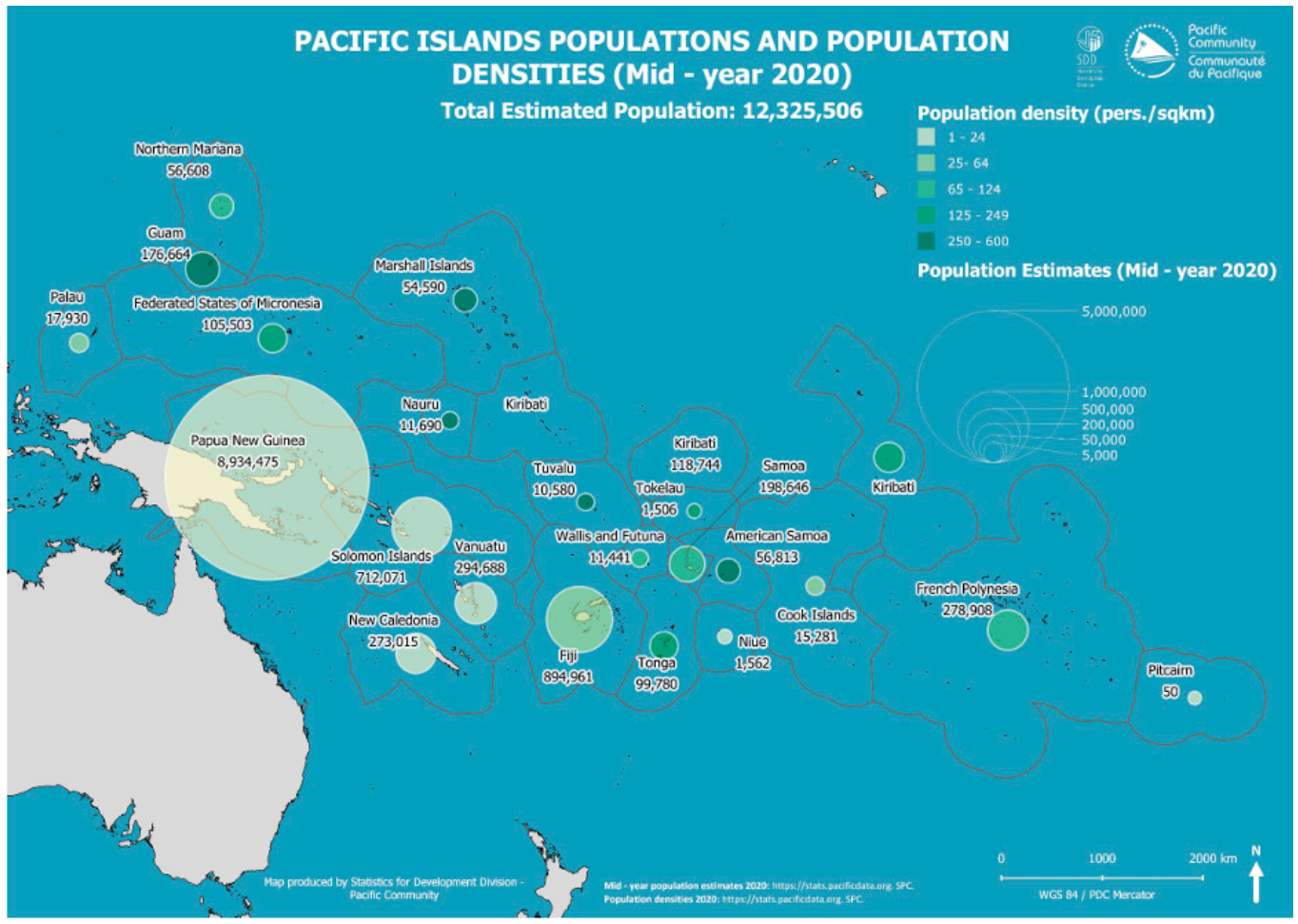
As of Mid-2020, the Pacific region’s total population was 12,325,506. Papua New Guinea (PNG) has the largest population (8,934,475), followed by Fiji (894,961) and the Solomon Islands (712,071), as shown in Figure 1. The total land area of Pacific island nations is 551,542 km2, with 98% of land area located in Melanesian countries (PNG, Solomon Islands, Fiji, New Caledonia, and Vanuatu), 1.5% in Polynesia, and 0.5% in Micronesia [26]. Thus, many PSIDS possess limited land resources but are rich in ocean resources, as evidenced by their large exclusive economic zones (EEZs). A significant portion of their population relies on fishing and farming [27], and Pacific island countries are primarily technology importers rather than manufacturers [28].
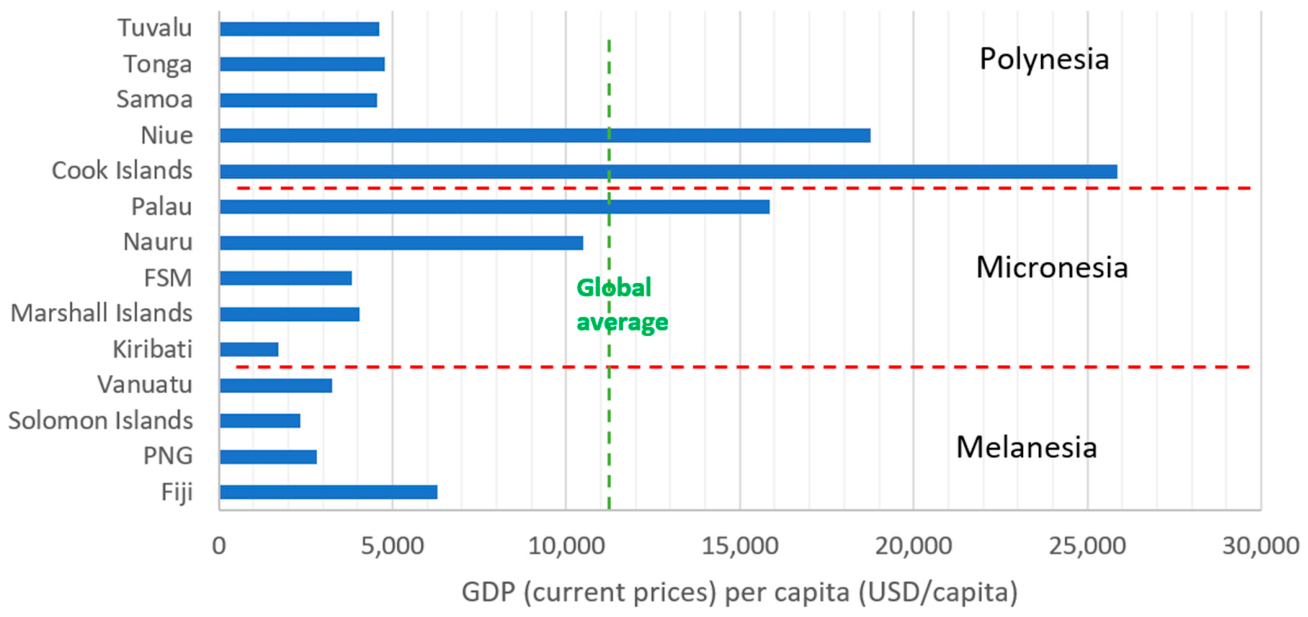
Economic constraints further exacerbate vulnerability. As illustrated in Figure 2, the 2018 GDP per capita at current prices for most PSIDS is below US$5000, significantly lower than the global average of US$11,289 [29]. The limited economies and geographic isolation of PSIDS from developed nations increase the costs associated with development initiatives through the high cost of importation and high brain drain [30,31]. Furthermore, the region is highly vulnerable to natural disasters, including frequent and intense tropical cyclones that have made landfall in recent years [32].
Figure 1. Map of Pacific Islands and their population. Reprinted with permission from Ref. [33]. Copyright 2020 Pacific Community (SPC).
World 07 00088 g001
Figure 2. GDP at current prices per capita for PSIDS in 2018. Reprinted with permission from Ref. [34]. Copyright 2025 Pacific Data Hub.
World 07 00088 g002
PSIDS are among the world’s most vulnerable to climate change and natural hazards [35] and it receives support from several entities. However, the support over the recent years has decreased and is now similar to pre-pandemic years, mainly because of the withdrawal of aid from the USAID [36]. The major development finance providers to the Pacific are Australia, Japan, EU institutions, New Zealand, ADB, the World Bank, the Green Climate Fund, and other donors, including China and Taiwan. [36]. It has been found that foreign aid can significantly reduce climate change vulnerability in Asia–Pacific countries, but there needs to be well-structured governance structures [37].
According to the World Risk Index report 2024, five PSIDS rank within the top 100 most at-risk countries where PNG and Solomon Islands are classified as very high risk, while Fiji and Vanuatu are categorised as high risk category [38]. To reduce climate change vulnerabilities, researchers have studied its impacts across sectors of the economy. Focusing on the Pacific region, researchers have studied the impacts of climate change on: food security, biodiversity [39,40], water availability [41,42,43], health [44,45,46], tourism [47], community resilience and livelihood [48], extreme weather events [49,50], economic resilience [51]. For energy security in the Pacific, Lal and Kumar [52] is calling for greater proliferation of renewable energy in the Pacific to enhance energy security in the region. There are researchers who are studying energy security for Pacific but these studies either have Pacific region merged together with the Asian region or Australia and New Zealand examples are taken from Pacific [20,53]. This means that the papers do not shed much light into the smaller Pacific island nations’ issues.
For the climate and energy security nexus, as this paper assesses, there is little literature on such a study in the Pacific. Howard’s systematic literature reviews [54] show that gender, climate change, and security are emerging topics in the Pacific region, and that more research is needed in this space. Bainton [55] has emphasised in their paper that the global energy transition to renewable energy which needs metals and minerals as raw materials has introduced a ‘compound exposure’ for the Pacific, where the intensified demand for mineral and metal mining from the resource-rich Pacific will exacerbate the region’s existing climate vulnerability. Further, Ge et al. [10] had studied energy security and climate policy uncertainty for China and not the Pacific but their study is interesting where it was found that primary driver of volatility in both energy security and climate transition risks is Climate Policy Uncertainty and thus requires policymakers, including the ones in the Pacific, to develop policies that ensures energy security and climate security so that ‘big players’ in the energy transition and the need to achieve climate goals are able to implement projects and programmes confidently. Prasad and Raturi [56] have recently studied the nexus between Sustainable Development Goals and Nationally Determined Contributions (NDCs) for Pacific Island countries, but this research did not consider the climate security dimension for the Pacific Island Countries, that is, human, national, international and ecological security.
The vulnerability of Pacific Island countries, including limited economies, dispersed populations across numerous islands, and isolation from developed nations, creates substantial challenges. These factors often necessitate that national governments prioritise essential services like health and education, sometimes at the expense of energy concerns. Global major powers often view PSIDS through the lens of strategic competition but Pacific nations are advocating for climate finance, fostering regional cooperation and pushing for inclusive governance structures [57]. The Pacific Islands serve as a stark reminder that climate security and energy security are not disparate issues but inextricably linked facets of a shared survival challenge. Navigating these dynamics of climate change and energy insecurity requires a new paradigm for policy development in the Pacific Islands.
While the existing literature has extensively documented the general environmental vulnerabilities of SIDS and regional studies have separately addressed Pacific energy security, a critical scholarly gap remains in understanding the interconnected climate–energy security nexus within the Pacific. Previous research often treats these domains as separate silos, focusing either on technical carbon-reduction metrics or high-level climate security theory. Hence, the main research question of this paper is “To what extent does the climate–energy security nexus in the PSIDS create unique ‘threat multipliers’ for national sovereignty, and how can a strategic policy mix of decarbonised energy systems mitigate these systemic risks?”
To address this research question, the following objectives are established:
  • Using published literature definitions, assess what energy and climate security mean for the Pacific;
  • Identify how climate drivers such as extreme weather events and rising temperatures act as physical and economic stressors on Pacific energy infrastructure;
  • Evaluate the extent to which energy systems’ decarbonisation mitigates threats across human, national, international and ecological security dimensions;
  • Identify regulatory, economic and informational policy instruments to enhance climate and energy security in Pacific SIDS.
This research offers a critical and timely intervention in the discourse on Pacific climate security, shifting the narrative from passive vulnerability to strategic energy autonomy through an integrative thematic review. It moves beyond aggregate data to qualitatively synthesise how non-linear stressors, such as the fiscal trap of post-disaster reconstruction and the demand-utility paradox of rising temperatures, interlink to impact Pacific security. The paper’s significance lies in reframing decarbonisation by suggesting that energy systems are not merely technical assets or climate change mitigation drivers but a primary line of defence against the erosion of human, national, and ecological security, that is, enhancing climate change adaptation. The study proposes a Nexus Mapping framework for advancing regional stability.
The originality of the work stems from its interpretive bridging of high-level climate security theory with the socio-technical realities of the Pacific. It synthesises literature beyond standard carbon-reduction metrics to explore rural and gender disparities in energy systems, and the potential legal threats to statehood posed by maritime inundation. By proposing a nuanced policy mix of regulatory, economic, and social instruments, the study aims to translate the synthesised evidence into actionable, culturally relevant frameworks. The potential scientific impact is a transformative model for island resilience that treats energy decarbonisation as a cornerstone of regional security and national survival.
While this study focuses specifically on Pacific SIDS, it recognises that Caribbean and African SIDS navigate parallel vulnerabilities in climate, economy, and global dependency. However, their geopolitical and regional frameworks differ significantly. For instance, Caribbean SIDS are strategically embedded within the Americas, while African SIDS like the Seychelles operate within the African Union and Indian Ocean frameworks [57]. By contrast, the Pacific case is analytically distinctive due to the Boe Declaration’s securitisation of climate change [58] and the specific legal threats to maritime statehood (discussed in Section 2.1.2) that necessitate a unique ‘Pacific-led’ energy sovereignty strategy.
The next section of the paper presents the integrative thematic literature review and assesses climate and energy insecurity in the Pacific region. Section 3 then presents the methodology, in which the Nexus approach is outlined. Section 4 presents the results of the climate and energy security nexus followed by Section 5 that identifies and discusses three main policy instruments in strengthening energy security and climate security in the region. Section 6 then presents the conclusions.

2. Integrative Thematic Literature Review: Climate–Energy Insecurity in PSIDS

2.1. Climate (In)Security in the Pacific

Pacific leaders, through the Boe Declaration, have identified climate change as the “single greatest threat to the livelihoods, security, and well-being of the people of the Pacific” [59]. This threat is not merely environmental; it represents an interconnected challenge in which rising sea levels, extreme weather events, and resource scarcity converge. Addressing these issues requires a nuanced understanding of climate security—one that encompasses human, national, international, and ecological dimensions.

2.1.1. Human Security—The Erosion of Livelihoods and Cultural Identity

For PSIDS, climate change is a daily reality that extends beyond physical safety to encompass livelihoods, cultural identity, and overall well-being.
Displacement and Cultural Loss
Sea-level rise and coastal erosion have necessitated relocating coastal communities to higher elevations as a climate adaptation strategy. However, many PSIDS resist displacement due to their fear of losing genealogies, culture, language, and indigenous identity, all of which are deeply tied to their land [60,61].
Resource Scarcity and Food Security
Climate change intensifies droughts, saltwater intrusion, and ocean acidification, directly impacting agricultural productivity and fisheries, which are crucial to the livelihoods of island communities. In Kiribati, for instance, increased temperatures, altered rainfall patterns, and sea-level rise have reduced groundwater supplies and increased salinity, leading to freshwater shortages in Tarawa and significantly affecting human health, well-being, and agricultural productivity [62].
Furthermore, rising sea surface temperatures drive coral bleaching, which accelerates shoreline erosion and devastates artisanal fisheries. This degradation also contributes to health risks like ciguatera fish poisoning [63]. Given the Pacific’s land-to-sea ratio of 1:300 [64], the health of these fisheries is vital for both food security and economic stability. This security is further threatened by tropical cyclones and storm surges, which damage boats, jetties, and infrastructure and, in turn, undermine island livelihoods.
Human Health Impacts and Infrastructure Vulnerability
The health consequences of climate change are both direct and indirect. For example, Category 5 Tropical Cyclone Winston, which made landfall in 2016, caused FJ$13.9 million in damages and losses to the health sector alone in Fiji [65]. The cyclone damaged 88 of 214 health facilities (41%), resulting in 44 human lives lost, more than 120 injuries, and 45 hospitalisations. Following the cyclone, increases in diarrheal diseases, leptospirosis, and typhoid were observed [65]. Similarly, another group of scientists assessed the quality of drinking water in Vanua Levu, Fiji, following Cyclone Ami in January 2003. They found that due to large amounts of silt and debris entering water supply sources after the cyclone, turbidity and total coliform levels increased significantly (by up to 56% and 62%, respectively) from pre-cyclone levels [66]. Beyond physical ailments, the psychological toll is immense. A mental health survey in the Solomon Islands revealed anxieties about sea-level rise and saltwater intrusion into homes, particularly during high tides [67].
Gendered Vulnerabilities
The impacts of climate change are not gender neutral. Women and girls often bear a disproportionate burden, particularly in tasks like water and firewood collection, and face increased vulnerability to violence and exploitation during disaster-related displacement. Howard [54] highlights the superficiality and lack of diversity in existing literature on gendered impacts in the Pacific and calls for further research in this dimension. Prasad et al. [68] conducted an impact of biogas digesters on households in one of the outer maritime islands in Fiji and report that heavy rain and the weight of wet firewood cause body pain for women collecting and transporting it (on foot) for cooking. Hence, further research is needed linking energy and gender.

2.1.2. National Security—Territorial Integrity and Resource Sovereignty

Climate change poses a direct threat to the National Security of PSIDS by challenging their territorial integrity and resource sovereignty. While these nations are generally peaceful, land disputes, often rooted in customary ownerships, are frequent and difficult to resolve due to the misalignment of traditional and modern governance structures [69].
Sea-level rise serves as a primary catalyst for this instability. Low-lying island nations like Tuvalu exemplify this vulnerability; as a fragile, remote, and resource-poor state, its survival depends on factors beyond its local territorial control [70]. Beyond physical inundation, climate change destabilises economies by disrupting agriculture, forcing an increased reliance on expensive food imports, and causing catastrophic GDP losses—estimated between 20 and 60% of GDP-following major cyclones [32,70].
The Crisis of Statehood and Maritime Law
Beyond land territories, PSIDS are large oceanic states that rely heavily on fisheries, and they have been pivotal in developing international maritime and ocean law [71]. However, as per international definitions, (i) once small island states are submerged under water due to sea level rise because of climate change, the island country would lose its sovereignty because, as per international definitions, “a state is an entity with a defined territory on land, permanent population, government and capacity to enter into relations with other states” [72], and (ii) secondly, the inundation of land has an impact on maritime boundaries through shrinking baselines. So, Vaha et al. [71] argue that, as the islands are submerging, the PSIDS are losing their sovereignty, because states cannot exist without land, which is required for civilisation. Consequently, Pacific Island Forum leaders issued declarations in 2021 and 2023 advocating for the permanence of maritime boundaries and continuous statehood of Pacific nations, regardless of physical land loss [71,73].
Resource Scarcity and Social Tension
Climate-induced resource scarcity can exacerbate existing tensions and lead to new conflicts between communities and states. The increasing frequency and intensity of tropical cyclones strain the limited resources of PSIDS and the capacity of governments to respond. Also, Campbell [74] reports that in the town of Gizo (Solomon Islands), Majuro (Marshall Islands), and Funafuti (Tuvalu), fishing has become less productive because lagoons have become polluted and overfishing occurs. This has forced a shift toward imported, processed foods, resulting in a “double burden” of malnutrition—high rates of both underweight and overweight populations [74,75]. Furthermore, the loss of pristine beaches to coastal erosion threatens the tourism sector, which is a vital source of foreign exchange and national income in Pacific Island countries.

2.1.3. International Security—Regional Stability and Global Governance

The profound implications of climate change for PSIDS necessitate a transformation in global governance and cooperation. International organisations play a critical role. For instance, the IPCC provides the scientific baseline for policy, while the Green Climate Fund, established under the UNFCCC, is a good example of how international bodies mobilise funds to support climate mitigation and adaptation projects and programmes. Multilateral agencies such as the World Bank, Asian Development Bank, and United Nations provide support (technical and financial) to countries in addressing climate change and development issues.
Despite these efforts, international bodies face significant hurdles in managing conflicts over dwindling resources and contested sovereignty [76]. Current international law often fails to recognise the damage caused by emissions from developed states that threaten the lives and existence of PSIDS. To address this legal vacuum, some scholars suggest adopting the term “warming war” to catalyse urgent legal avenues for redress and to redefine the responsibility of developed nations toward the security of small island states [77]. However, recently the International Court of Justice has ruled that countries are legally obliged to protect and prevent harm to the environment, and that countries must take actions to mitigate climate change [78]. This ruling prompts countries to rethink their climate protection pledges and the tangible actions they are taking to curb global GHG emissions.

2.1.4. Ecological Security—Protecting Vulnerable Ecosystems

The ecological security of PSIDS is inextricably linked to their human, national and international security. In the Pacific, healthy terrestrial and marine ecosystems are not merely environmental assets; they are the lifeblood of communities, essential for livelihoods, well-being, and long-term survival of island communities.
Marine Ecosystems and the Ocean Economy
The Pacific is highly dependent on the ocean for sustaining its livelihoods, and according to a modelling study by Anthony et al. [79] severe acidification and warming alone can lower reef resilience via impairment of coral growth and increased coral mortality. Furthermore, under the illustrative high-emission scenario (IPCC RCP8.5), 92% of coral cover is projected to be lost by 2100 [80].
Research across Palau, the Marshall Islands, and American Samoa highlights a universal vulnerability: regardless of the size of their local economies, every island relies critically on fisheries for both consumption and exports. Furthermore, these nations depend on coral reefs for essential ecosystem services, including coastal protection from storm surges and recreational activities that drive tourism [81].
Terrestrial Biodiversity and Global Hotspots
Beyond the reefs, terrestrial biodiversity is also under threat from sea-level rise and extreme weather events. The Pacific region encompasses three global biodiversity hotspots characterised by numerous endemic species [82]. Given the deep ancestral connection between Pacific people and their environment, this means that biodiversity loss has cascading effects on livelihoods, cultural heritage, and the Pacific way of life [83]. Tropical cyclones also contribute to rapid deforestation through destructive high winds [84]. These events cause both direct forest loss and complex indirect impacts that relate to habitat fragmentation and species decline [85].
Climate Risks and the SDGs
To summarise the systematic nature of these threats, the WMO [86] presents the interconnected risks associated with climate change (see Figure S1 in Supplementary Materials). These apply to the Pacific region, and overall, it is seen that due to sea level rise, ocean acidification, ocean heat content and global mean surface temperature, several UN SDGs are adversely affected and as noted by Prasad and Raturi [56] the progress of SDGs has been slow in the Pacific region. So, climate change slows or regresses SDG progress.

2.2. Energy (In)Security in the Pacific

Energy security, traditionally defined by the availability, affordability, and accessibility of energy, now crucially incorporates the acceptability of energy systems—emphasising sustainability—and the low vulnerability of vital energy infrastructure [19]. For PSIDS, achieving energy security means closely assessing the challenges and opportunities that are intricately woven into their unique geographical, social, economic, and environmental contexts.
Recent studies, including [52,87], discuss energy security in the Pacific region, and provide updated data. Additionally, the region has a framework for enhancing energy security [88], and individual countries have their own national policies and strategic documents that guide energy development. Common approaches to achieving energy security across PSIDS include reliability of supply, accessibility, affordability, efficiency of use, environmental quality/renewable energy, resilience, adequate institutional framework and enabling environment, and sufficient capacity, technical knowledge and data availability [87].

2.2.1. The Fossil Fuel Dilemma

As shown in Table 1, the Pacific region has set ambitious targets for decarbonising its electricity generation sector, with many aiming for 100% renewable electricity generation. However, the actual share of renewable energy in electricity generation indicates that PSIDS have a long way to go, with most islands having shares below 25%. This implies a heavy reliance on fossil fuels, mainly diesel or heavy fuel oil, for electricity generation, which carries an economic burden on the nation and on customers who pay high electricity tariffs.
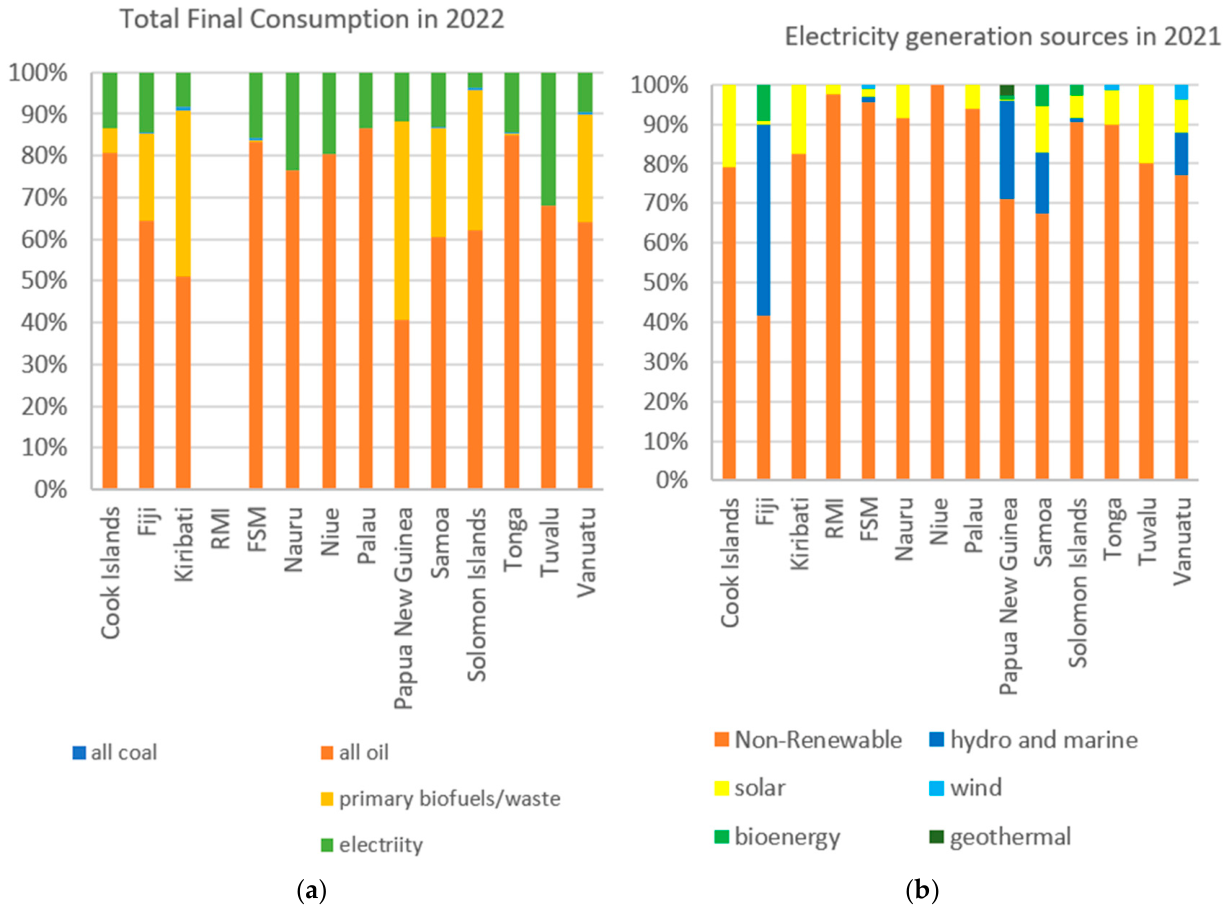
Beyond electricity, the transport sector in PSIDS is almost 100% reliant on imported fossil fuels. On average, the transport sector consumes 56% of all imported fuels, while electricity generation accounts for 34% [87]. As seen in Figure 3a and Figure S2a–c, the energy balances for different countries [89] show that all PSIDS are 100% dependent on fossil fuels in their transport sectors, which are composed of road transport, maritime transport, and domestic air transport. In 2022, Figure 3b shows that, on average, 83% of electricity generation in PSIDS was from non-renewable sources [90]. This dependency has severe economic implications: in 2015, fuel imports averaged 10% of national GDP across the region, ranging from 5% in Vanuatu to 16% in Tuvalu [52]. Such expenditures divert substantial funds from other critical development initiatives.

2.2.2. Electricity Access and the Shift to Micro-Grids

On a positive note, PSIDS have relatively good electricity access rates, as seen in Table 1. However, one should note that, while electricity access is high in island countries, levels of access vary across smaller, remote maritime islands within a PIC. For example, while Fiji’s rural electricity access is 86.8%, the government has prioritised solar home systems (SHSs) for off-grid households where grid extension is technically or financially unfeasible. SHS provide basic lighting and limited power to electrical loads but faces sustainability challenges due to a lack of end-user training in the operation and maintenance of the systems, a lack of technician availability in remote areas, and other challenges [91,92].
Moreover, SHSs do not provide the same level of energy services as grid-connected systems; that is, a lot of electrical load cannot be connected to a typical 300 W SHS [92]. Recently, through the Fiji Rural Electrification Fund (FREF), the Fijian government has shifted focus to developing micro-grids with solar photovoltaic, battery storage, and diesel generator backup [93]. A pilot project has been implemented on Vio Island, and feasibility studies have been conducted at 75 sites in Fiji [94], of which a few projects have acquired financing to be implemented as part of the FREF project.

2.2.3. The Clean Cooking Crisis and Gender Security

Access to clean cooking energy in Pacific Island countries is a significant concern. Table 1 reveals a substantial disparity between urban and rural areas, with some countries reporting rural clean cooking energy access as low as 0.90%. This poses a threat to the security of women and girls, who are primarily responsible for household cooking. They often travel long distances to collect firewood, resulting in physical strain, and suffer eye irritation from kerosene and wood stove use [68,95].

2.2.4. Affordability and the “Rural Premium”

Energy affordability at both the national and household levels is another critical consideration. As highlighted in the Introduction section, PSIDS spend a significant share (5–15%) of their GDP on fossil fuel imports. Additionally, households in Pacific nations face alarmingly high energy prices, where (i) the oil price ranges from US$0.70 per litre to US$1.82 per litre and gas price can reach to around US$4.00 per kg (see Supplementary Figure S3) [96], (ii) the share of energy costs in the total household expenditure can go as high as 23% (see Supplementary Figure S4) [97], and (iii) grid electricity price can be as high as US$0.89/kWh (see Supplementary Figure S5) [97]. Compared to the Caribbean region, where electricity tariffs average US$0.25/kWh [98], PSIDS generally have higher grid electricity tariffs (approximately US$0.39/kWh), except for Fiji, as shown in Supplementary Figure S5. This highlights the affordability challenges faced by PSIDS.
The “rural premium” [99] further exacerbates this issue. Due to geographical dispersion and high logistical costs, LPG cylinders on remote islands such as Tuvalu can cost nearly three times as much as in Fiji [100]. Moreover, off-grid households relying on diesel generators, SHS, or microgrids pay significantly higher tariffs than grid-connected customers. For example, in Fiji, households in Vio Islands pay US$0.838/kWh [101], while grid-connected customers pay US$0.1496/kWh [102], a 5.6-fold difference. Foster and Witte [103] suggest that energy costs should ideally be 5–10% of the household income, but in the Pacific, particularly in rural and remote areas, this percentage is likely much higher. The recent report from IEA [104] further reinforces this issue and highlights that households’ inability to afford energy can negatively impact health and educational outcomes by exposing people to illness risks, hindering productivity levels, reducing study time, and hampering the ease of access to quality learning.
Table 1. Energy landscape for PSIDS. Adapted from Ref. [105]. Data source: [87,105].
CountryRenewable Energy TargetImprove EE
Target
Electricity Access TargetClean Cooking Energy AccessActual RE Share in Electricity Generation in 2018 (%)Actual Fossil Fuel Dependence in Transport (2021 Data) [89]Actual % of Population with Electricity Access in 2021Actual % of Population with Primary Reliance on Clean Cooking Energy in 2021
NationalUrbanRuralNationalUrbanRural
Cook Islands100% by 2020 25100% 78.79825.2
Fiji100% by 2030 100% by 2020 60100%92.19686.851.469.127.5
FSM30% by 2020 2.7 *100%
Kiribati23% by 2025 17100%92.888.394.312.420.41.70
Nauru50% by 202030% increase in efficiency by 2020 2100%100100100100100100
Niue80% by 2020 No definite target given but mention in its NDC substituting cooking fuel to reduce emissions14100% 98.498.498.4
Palau45% by 202535% EE improvement by 2025 2100%10010010043.042.042.75
PNG100% by 2030 69.2 *100%
RMI100% by 2050 95% by 2020Phase out kerosene by 20502No data99.89610066.787.00.90
Samoa100% by 2025 42100%98.310097.937.265.830.2
Solomon Islands79% by 2030 6100%76.379.275.48.9035.61.20
Tokelau100% in long term 0 *No data
Tonga50% by 2020 100% by 2020 10100%10010010086.894.784.5
Tuvalu100% by 202030% EE improvement by 2020 23100%99.710099.174.694.840.9
Vanuatu100% by 2030 100% by 2030NDC mentions improving energy efficiency in biomass energy use for cooking and drying22100%709760.76.9018.71.70
* data is for 2017 sourced from [87].

3. Materials and Methods

This study utilises a qualitative research design to examine the systemic interconnections between climate security and energy security within PSIDS. The research framework is built on the premise that these two domains are not disparate issues, but, as identified by Pacific leaders in the Boe Declaration [58], inextricably linked facets of a shared survival challenge.
To address the central research question, this study adopts an interdisciplinary analytical framework that integrates a thematic literature review with Nexus Mapping. This approach is necessitated by the complex nature of the climate–energy security nexus, which requires synthesising technical energy data with environmental drivers and political security dimensions. By utilising this framework, the study moves beyond a descriptive summary to qualitatively analyse the non-linear causal pathways between climate stressors and energy vulnerabilities in the Pacific context.

3.1. Integrative Thematic Literature Review Protocol

The current study used an integrative thematic literature review [60] where papers related to the Pacific on climate security and energy security were analysed, with references also made to the strategic documents of the Pacific region. This study adopts an integrative approach similar to [57], as the interdisciplinary nature of the climate–energy nexus requires synthesising data that are dispersed across multiple legal, technical and environmental fields. The foundational data for this paper was gathered through an extensive review of literature, multilateral reports, and regional policy documents related to climate security and energy security.
Search strings: Primary search strings focused on the four dimensions of climate security—human, national, international, and ecological—and the evolving definitions of energy security, specifically the “4 A’s” (affordability, accessibility, availability, and acceptability). In addition, search strings: “impacts of climate change on energy infrastructure, power infrastructure, availability of energy resources, and energy infrastructure resilience in Pacific” were used.
Database: Peer-reviewed articles were sourced from the Scopus database (Elsevier B.V., Amsterdam, The Netherlands) and Google Scholar (Google LLC, Mountain View, CA, USA). To ensure the inclusion of regional specificities, the study sourced data from the Pacific Data Hub and institutional publications from the Pacific Community (SPC), the Secretariat of the Pacific Regional Environment Programme (SPREP), the International Renewable Energy Agency (IRENA), and the World Meteorological Organisation (WMO).
Timelines: While no restrictive start date was set to capture foundational Pacific research, the selection process prioritised recent publications (2010–2026) to reflect current geopolitical shifts and the 2018 Boe Declaration.
Inclusion and Exclusion criteria: This study employed an expert-led, purposive sampling strategy to select literature most relevant to the Pacific climate–energy nexus. Initial themes were established based on preliminary scoping of the field and the author’s professional expertise in Pacific energy policy. Inclusion criteria focused on (i) global theoretical frameworks required to define the climate–energy security nexus and (ii) peer-reviewed research and grey literature (policy reports, NGO briefs) containing specific Pacific case examples. Exclusion criteria were applied to technical studies that focused on geographic regions with no translatable relevance to the PSIDS archipelagic reality.
Screening and Synthesis: Abstracts were screened for thematic alignment with the study’s core variables, physical impact, demand-side sensitivity and resource availability, ensuring a focus on regional stability. Following this expert-led screening, 170 sources were used in the study.
To quantify the region’s heavy reliance on imported fossil fuels and the economic impact of climate-induced disasters, the study analysed PSIDS energy balances, sourced from the United Nations Statistics Division (UNSD), and electricity generation data from IRENA.

3.2. Analytical Framework

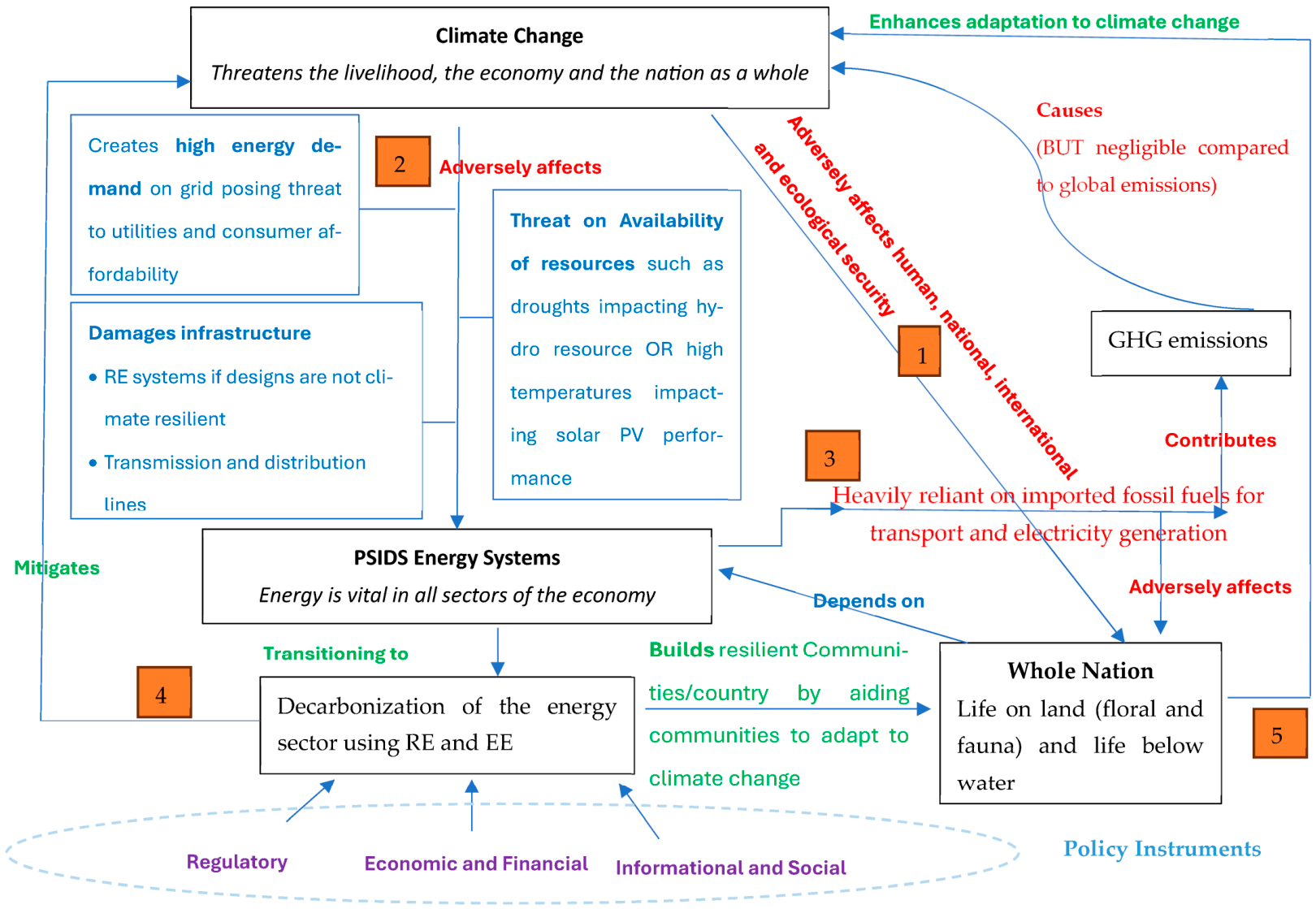
A core component of the methodology was interpretive “Nexus Mapping,” [106] a process for visualising and analysing the causal, non-linear relationships between distinct but overlapping domains—in this case, climate change and energy system vulnerabilities. Instead of treating these sectors in silos, Nexus Mapping (Figure 4) identifies how a change in one domain triggers a domino effect across others. To ensure methodological rigour, the study employed the following four-stage analytical protocol:
A: Mapping and component identification—the process began by mapping the core variables unique to the PSIDS context. The first being the climate drivers such as extreme weather events (cyclones, floods, etc.), rising land/sea temperatures, and sea-level rise. The second variable was the Energy system vulnerabilities, which comprises heavy reliance on imported fossil fuels, centralised grid fragility and high energy costs, especially in rural and small maritime outer islands. The third variable is the security dimensions that encapsulate human, national, international and ecological security. The selection of these components was guided by the author’s expertise in Pacific’s energy systems and the synthesis of literature in Section 2.
B: Coding and categorising of analytical streams—the coding process involved a qualitative, thematic approach where literature and policy data were coded into three thematic streams to trace causal pathways (as seen in Figure 4). (i) Physical Impact mapping—this analysed how climate events physically damage energy infrastructure, such as high category cyclones damaging power lines, jetties and interrupting the supply of fuels and services to outer, smaller maritime islands. (ii) Demand-side sensitivity—this maps how shifting climatic patterns alter energy consumption, for instance, mean temperatures drive a surge in demand for air conditioning and water pumping. (iii) Resource availability analysis—this examines the sensitivity of renewable energy “fuel” sources, such as hydro resources, solar resources and biomass resources, to climate change. In addition, cross-cutting issues for climate–energy security in PSIDS were identified and discussed.
C: Comparison of regional evidence—Pacific-specific case examples (for instance, cyclones in Samoa or hydro-vulnerabilities in Fiji) were compared against global energy and climate security theories to determine whether the Pacific case confirms, extends, or challenges the literature.
D: Interpretive synthesis of the “policy mix”—the final stage involved a qualitative interpretation of these interconnections to identify cross-cutting bottlenecks and threat multipliers. This enabled a transition from theoretical security definitions to the development of a context-specific PSIDS strategy. Drawing on the author’s professional judgement, the interpretive synthesis identifies policy instruments (regulatory, economic and social) that address multiple vulnerabilities simultaneously.
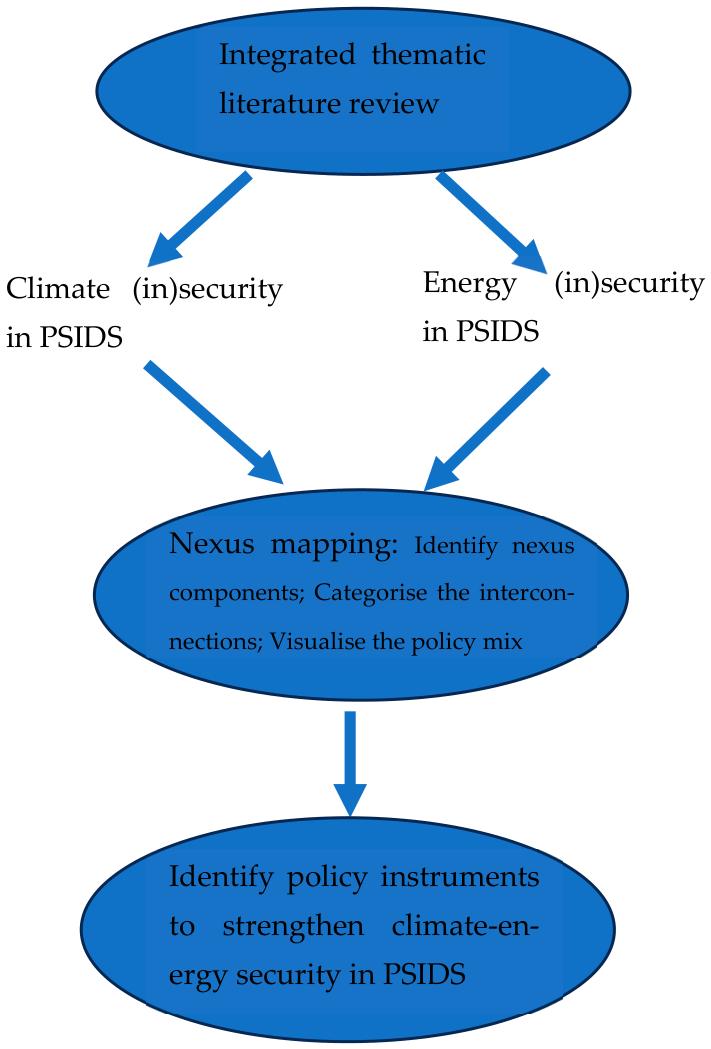
The overall methodological steps used in this study are summarised in Figure 5.

3.3. Research Scope, Limitations and Scope for Future Work

This research focused on content analysis from published literature. As part of future work, an empirical study could be conducted to assess a community in a Pacific island country with respect to its climate and energy security, including how the community addresses these issues and what further actions could be taken. This type of study could be a comparative analysis of different countries, including selected Pacific Island countries and selected developing countries from other regions.
Quantitative data is lacking in this research. Future work could consider obtaining updated disaggregated energy statistics from Pacific Island Countries and analysing progress in achieving energy security, the extent to which this supports climate security, and the energy-related aid provided in the region.

4. Results

Bashir et al. [107] have analysed data on the 25 largest energy-consuming countries from 1990 to 2021 and found that the energy transition and energy transformation reduce energy security risks, while climate change, trade openness and financial market development exacerbate energy challenges. However, in the Pacific region, climate and energy security themes have often been analysed separately. The results presented in this section emerge from an integrative synthesis of interdisciplinary literature and regional policy documents. By utilising the Nexus Mapping framework described in Section 3, the study identifies non-linear causal pathways where climatic stressors directly intersect with energy system vulnerabilities. The following analysis categorises these interconnections (shown in Figure 4) through three coded analytical streams (physical impact, demand-side sensitivity and resource availability). This enabled the work to move beyond descriptive summary toward a rigorous interpretive understanding of the climate–energy security in PSIDS.

4.1. Adverse Impacts of Climate Change on PSIDS

The interpretive mapping (arrow labelled 1 in Figure 4) illustrates that extreme weather events driven by climate change result in significant loss and damage to both people and the country as a whole. For instance, Tropical Cyclone (TC) Evan in 2012 resulted in 14 deaths in Samoa and 10 missing sailors [108]. Similarly, TC Winston in 2016 caused 44 fatalities in Fiji and affected 62% of the population due to storm surges, waves, and flying debris [109]. These events are mapped not just as environmental disasters but as systemic disruptors that severely damaged housing, agriculture, education, and health facilities, as well as critical communication, water supply, and electricity networks—leaving many islands and remote communities isolated for days. Section 2.1 has thoroughly discussed these impacts and other impacts.

4.2. Adverse Impacts of Climate Change on PSIDS Energy Systems

The relationship between climatic stressors and energy security in the Pacific is interpreted through a “threat multiplier” lens, where environmental events not only damage infrastructure but also paralyse the socio-economic systems that depend on it. Table 2 represents the qualitative synthesis of these vulnerabilities. Through the Nexus Mapping protocol, these impacts are categorised into direct physical infrastructure failure, indirect demand-side pressures, and the degradation of renewable “fuel” resources.

4.2.1. Climate Change and Energy Infrastructure

The physical impact coding stream identifies that Pacific energy infrastructure is fundamentally vulnerable due to the region’s archipelagic geography, which creates a high risk for energy delivery. High-category cyclones [110] act as the primary physical trigger, setting off a domino effect that begins with damage to port assets and ends with the grounding of maritime transport vessels. As interpreted in Table 2 under Maritime and Fuel Logistics, events like TC Evan in Samoa and TC Winston in Fiji [108,109,111] paralysed the transport of critical fuels such as LPG and diesel, transforming a localised weather event into a regional Human Security crisis.
Furthermore, the synthesis highlights these events as fiscal stressors. For instance, the US$626 million in total losses from TC Winston [109] and US$200 million in damages from a high-category cyclone in Samoa illustrates how repetitive reconstruction costs divert national development funds toward disaster recovery. This cycle is reinforced by the recent impact of TC Vaianu (April 2026) in Fiji, where torrential rain and flooding have once again outpaced existing engineering standards, causing immediate losses in properties, agricultural sectors and damage to power infrastructure [112].
Strategic Integration: To mitigate these gaps, the author proposes a shift from “project-based” pilots to national-scale technical sovereignty. As suggested in Table 2, this includes the strategic undergrounding of transmission lines engineered for Pacific-specific landslide risks and the promotion of decentralised solar PV (an example is the Fiji Renewable Energy Fund that promotes solar mini-grid development [113]) and biogas systems. These “islanded” systems may serve as a primary defence for maintaining essential services—such as cooking sovereignty—when maritime supply lines are severed. Apart from the electricity sector, focus also needs to go towards greener or cleaner transport fleets, either by the use of biofuels, or electricity in vehicles or maritime vessels [114,115]. 41% of the second NDCs of PSIDS mention reduction in emissions from the transport sector, and so there is now a slow uptake of electric vehicles in the Cook Islands, Fiji, Nauru, Marshall Islands, Samoa, Tuvalu [116] and e-bikes in Vanuatu [117].
Table 2. Synthesis of energy systems’ vulnerabilities and climate security nexus.
CategoryClimate-Related Issues and ImpactsSpecific PSIDS Case ExamplesSecurity Dimensions ImpactedProposed Mitigation and Resilience Strategies
Climate change and Energy infrastructure
Power Grid & TransmissionHigh winds, flooding and landslides causing service disruptions; vulnerability of transmission repair capacity [110].Samoa (TC Evan, 2012): Power sector ranked 2nd most vulnerable; hydropower dams and diesel power station were damaged, 60% restored in 4 weeks, but transmission remained fragile [111].National Security: Economic losses from disrupted industry.Transition to underground lines engineered for flood/landslide resilience.
Maritime & Fuel LogisticsStorm surges damaging ports/jetties; grounded ferries severing outer-island supply chains.Fiji & Samoa (2012–2016): Beaching of Queen Salamasina and damaged jetties paralysed transport of LPG and generator fuel [108,109,118].Human Security: Threats to life/livelihoods; International Security: Regional order risks.Adoption of decentralised energy systems. For instance, biogas for cooking sovereignty during supply chain breaks.
Transport: land transport and maritime transport in Pacific are almost completely dependent on imported fuels, countries to look at alternative fuels, biofuels or electric or hydrogen and improving energy efficiency. For instance, Samoa is piloting electric boats [115].
Climate change and energy demand
Energy Demand1.1 °C temperature rise driving cooling demand and utility strain.Fiji (2022–2023): Low dam levels at Monasavu forced the use of 65 MW of containerised diesel sets [119,120]
Pacific Region: Notable rise in mean land temperature since 1951, characterised by more “hot days” and fewer “cold nights” [121].
Human Security: Heat-stress health risks; Ecological Security: Increased resource intensity.Promoting energy-efficient design and passive cooling using traditional “fale” architecture [122].
Climate change and renewable energy resource
Generation AssetsDamage to hydropower dams and diesel stations; drought-induced reduction in hydro output.
Freshwater scarcity
Damages to biomass [123]
Fiji (2022–2023): Low dam levels at Monasavu forced the use of 65 MW of containerised diesel sets [119,120].
Not enough feedstock for biomass power plants
Ecological Security: Loss of freshwater; National Security: Reduced energy self-sufficiency.Diversifying with decentralised solar PV and localised fuel alternatives like biogas/hydrogen [124].
Proper planning of biomass lots for energy production
Cross-cutting issues
Capital & FinanceCatastrophic GDP losses from intense cyclones; high cost of post-disaster reconstruction.Vanuatu & Tonga: Annualised losses estimated at 6.6% and 4.3% of GDP, respectively [125].
Fiji (TC Winston): US$626M in total losses, with the electricity and transport sectors incurring US$8.65 million and US27.11 million in damages, respectively [109].
Samoa: high-category cyclones in Samoa in 1990 and again in 1991 caused US$130 million and US$200 million in damages, respectively, to electrical, water and telephone connections, as well as widespread destruction of buildings, schools, and homes. Recovery from these events was prolonged, and two decades later, TC Evan in 2012 caused even more extensive damage [108].
National Security: Destabilised economies; Human Security: Diverted social funds.Implementing accessible climate finance and “de-risking” private investment [126].
Capacity & Technical SovereigntyHigh reliance on external consultants; “brain drain” [30,31] of local technicians; lack of O&M for remote systems [127].Regional (2020–2025): failure of off-grid solar in rural areas due to lack of local repair capacity [128] and “fly-in fly-out” models (where technicians go from mainland to outer islands).Human Security: Loss of local jobs; National Security: Dependency on foreign aid/expertise.Establishing regional “Training Hubs” and empowering community technicians for long-term O&M.
Governance & Land TenureMisalignment between modern energy projects and traditional land-owning units; delays in RE deployment.Fiji & Melanesia: Large-scale hydro often face multi-year delays due to customary land lease negotiations [129,130].International Security: Risks to regional order; National Security: Legal disputes over project sites.Formalising “Benefit-Sharing” frameworks and incorporating Traditional Ecological Knowledge into project planning.
LogisticsExtreme distances (186 M km2 of ocean) make supply chains for maintenance and fuel highly vulnerable [131].Vanuatu & Solomons: Among the lowest grid connectivity rates globally; high electricity tariffs [131].Human Security: Uneven access to essential services; National Security: High transport-driven costs.Adopting a “Whole-of-Island” planning framework; local technician training to reduce reliance on external contractors [131].
Energy Justice & GenderWomen bear the brunt of energy poverty (e.g., fuel collection) while excluded from technical roles [68,100,132].Fiji (FREF Project): Designing systems around women’s daily patterns to reflect lived realities rather than abstract models [131,133].Human Security: Gendered health and labour burdens; Ecological Security: Reliance on biomass.Implementing Procedural Justice: Ensuring women and youth are active partners in energy governance and repair training.

4.2.2. Climate Change and Energy Demand

Beyond physical damage, the demand-side coding stream identifies that rising temperatures—recorded at a 1.1 °C increase since 1951 [121]—create an indirect feedback loop that undermines utility stability. This thermal stress drives a surge in electricity demand for cooling, forcing utilities into a “Demand-Utility Paradox”. In Fiji, for example, the synthesis identifies that low dam levels combined with peak demand necessitated the deployment of 65 MW of carbon-intensive containerised diesel generators to maintain grid stability [119,120].
Strategic Integration: Modernising the sector requires the integration of Traditional Ecological Knowledge (TEK) [122] with modern efficiency standards. As suggested in Table 2, the traditional Samoan “fale” architecture offers a blueprint for nature-based design that provides passive cooling and thermal comfort without the capital-intensive requirement for mechanical air conditioning. Further, integrating indigenous design elements into modern construction helps ensure that buildings remain climate-resilient and thermally comfortable while honouring cultural identity.

4.2.3. Climate Change and Renewable Energy Resources

The resource availability coding stream challenges the assumption that renewable energy is inherently secure by highlighting how climate change directly impairs natural resources. Prolonged El Niño-driven droughts [134] reduce hydropower dam levels to critical status, necessitating a costly return to fossil fuels. In addition, it could result in soil hardening and reduced water absorption when it eventually rains [118], leading to landslides and infrastructure damage. Table 2 further identifies that freshwater scarcity also compromises the chemical balance required for biogas digesters, while intense cyclones destroy the forest biomass [123] used by rural communities for traditional cooking. These resource constraints force a regression to expensive LPG or polluting fuels, increasing both economic strain and ecological vulnerability.
Strategic Integration: To safeguard these resources, the synthesis advocates for a “Whole-of-Island” planning framework as highlighted in [131] and outlined in the Logistics and capacity categories of Table 2. By empowering community technicians through regional “Training Hubs” and ensuring Procedural Justice—where women and youth are active partners in energy governance—PSIDS can support the transition to renewables with a resilient, locally led framework.

4.3. Cross-Cutting Structural Challenges in the Pacific Climate and Energy Security

Beyond the direct physical and demand-side impacts, the Nexus Mapping protocol identifies systemic cross-cutting issues for climate–energy security. These factors often act as the “bottleneck” [135] that prevents resilient energy projects from scaling at the pace required by the climate crisis.

4.3.1. Fiscal Vulnerability and Climate Finance

The synthesis in Table 2 highlights that the Pacific region faces a unique “fiscal trap” where catastrophic GDP losses from cyclones—averaging between 4.3% in Tonga and 6.6% in Vanuatu—drain national budgets. The recovery from such events is often prolonged; for example, Samoa’s 1990–1991 disasters caused damage exceeding US$330 million, only for the region to be struck again by even more destructive events like TC Evan two decades later. This interpretive analysis suggests that the repetitive, high costs of post-disaster reconstruction exhaust the capital needed for the long-term energy transition. Addressing this requires a move toward “de-risking” private investment and securing accessible climate finance that recognises the extreme damage incurred by the Pacific’s electricity and transport sectors.

4.3.2. Capacity and Technical Sovereignty

The mapping in Table 2 identifies a high rate of “brain drain” of local technical talent. The failure of many off-grid solar projects in rural areas between 2020 and 2025 is linked to a lack of local operations and maintenance (O&M) capacity. The historical “fly-in fly-out” model of maintenance has proven unsustainable. To achieve technical sovereignty, the region must pivot toward establishing regional “Training Hubs” that empower community-based technicians, ensuring that systems are maintained locally rather than remaining dependent on foreign aid.

4.3.3. Governance and Customary Land Tenure

The Pacific case is analytically distinctive due to the role of customary land ownership in energy governance. As noted in Table 2, large-scale renewable projects in Fiji and Melanesia frequently face multi-year delays caused by misalignments between modern development needs and traditional landowning units. Resolving these issues may require a governance shift toward formalising “Benefit-Sharing” frameworks and integrating Traditional Ecological Knowledge (TEK) into the earliest phases of project planning to ensure community buy-in and regional order.

4.3.4. Logistics

The geographical reality of the Pacific—spanning 186 million km2 of ocean—creates a logistical premium that drives up energy costs. Table 2 shows that Vanuatu and the Solomon Islands have among the highest electricity tariffs and lowest connectivity rates globally due to their vast distances. By adopting the “Whole-of-Island” planning framework proposed in [131], PSIDS can better manage these supply chain vulnerabilities by integrating local energy needs with broader infrastructure and transport planning.

4.3.5. Energy Justice and Gender

Finally, energy security is a matter of social justice. Women in the Pacific bear a disproportionate burden of energy poverty, particularly regarding fuel collection and indoor air pollution, yet they are often excluded from technical and decision-making roles. Synthesis in Table 2 indicates that projects like the FREF are beginning to address this by designing tariff structures for mini-grid energy systems that take gender into consideration [133]. Achieving Procedural Justice—ensuring women and youth are active partners in energy governance—is essential for building a transition that is as socially resilient as it is technically sound.

4.4. Climate Justice Paradox: PSIDS GHG Contribution vs. Vulnerability

The structural challenges discussed in the previous section, particularly the high fiscal burden and logistical premiums, are inextricably linked to the region’s carbon footprint. While the structural barriers make the transition difficult, they also emphasise the cyclical nature of the climate–energy security nexus as established in Figure 4 (Arrow 3).
Referring to the interconnections established in Figure 4, it is interpreted that changing climatic conditions have an adverse impact on the energy systems of PSIDS, fundamentally undermining their energy security. Beyond this vulnerability, the region remains heavily reliant on imported fossil fuels, which further exacerbates the cycle of greenhouse gas (GHG) emissions and limits countries in meeting their NDC targets.
However, it is critical to note that the actual contribution of PSIDS to global emissions is negligible, accounting for a mere 0.02% of the world’s total [136]. This creates a significant “climate justice” paradox: the nations that contribute the least to global warming are among the most severely impacted by its consequences, as seen from the world risk index for Pacific countries [38], highlighting the urgent need for international support in their transition toward resilient, decarbonised energy systems.

4.5. Energy Systems as a Strategic Tool for Climate Security

PSIDS are natural resource-rich island nations. Solar energy is currently the most widely utilised resource across the Pacific region, with applications ranging from utility-scale solar farms, floating solar photovoltaic systems [137], and decentralised micro-grids to solar thermal systems, such as water heaters [138]. The Wind energy potential depends on the wind regime for different countries. There are several wind energy applications found in the Pacific region, including Fiji, the Federated States of Micronesia, New Caledonia, Samoa, Tonga, and Vanuatu. Hydropower application also depends on geographic elevation, and hydroelectricity is available only in Fiji, French Polynesia, New Caledonia, PNG, Samoa, the Solomon Islands, and Vanuatu [138]. Biomass energy, primarily wood, has been used for traditional cooking on many PSIDS, excluding atolls. Fiji, PNG, and the Solomon Islands are also utilising biomass for electricity generation, while some PSIDS, including Fiji and Tuvalu, also have biogas digesters to meet their cooking energy needs [138]. Some Pacific countries have geothermal resources, and the Pacific Islands have ocean wave/tidal energy potential, but these technologies are not commercially available. However, work is underway to establish a 1 MW Ocean Thermal Energy Conversion power plant in Kiribati [139]. In addition, the Pacific region is currently exploring the role that hydrogen energy could play in securing energy and promoting climate security [124]. The feasibility of using liquid hydrogen for uneconomical maritime transport routes in Fiji has been studied by [140], which forms a precursor for future studies on hydrogen implementation in Fiji’s maritime transport sector and other Pacific countries.
While preceding sections established the profound disparity between the Pacific’s negligible emissions and its extreme climate vulnerability, this section analyses how PSIDS are leveraging their rich natural resource base to build an autonomous security architecture. As synthesised in Table 3, the transition from fossil-fuel dependency toward utility-scale solar, hydro, and emerging hydrogen applications is not merely an environmental goal but a strategic move that mitigates security risks at the human, national, international, and ecological levels.
Decarbonisation is interpreted as a primary defence for Human Security by insulating essential services and marginalised communities from both climatic and economic shocks [141]. For instance, domestic biogas systems provide a dual benefit by eliminating indoor air pollution while simultaneously reducing the labour time traditionally spent by rural women on firewood collection [68]. Similarly, the deployment of Solar and Battery Energy Storage Systems (BESS) ensures that critical services, such as vaccine storage in health clinics and operational capacity in schools, remain resilient during national grid outages [142].
Ecological Security is fundamentally enhanced through projects like agrivoltaics [143] and floating solar [137,144,145], which optimise land use and reduce evaporation, while the byproduct of biogas systems provides a nutrient-rich “slurry” that replaces imported chemical fertilisers and improves soil resilience [100]. The electrification of the transport sector follows a similar analytical logic of systemic integration. PSIDS are electrifying their transport sector through the introduction of electric vehicles [117] and this can improve urban air quality [146] and reduce noise pollution [147]. By charging EVs with surplus renewable energy [148], the transport sector functions as a dynamic energy storage reservoir, utilising Vehicle-to-Grid (V2G) technology to stabilise the grid during high penetration of intermittent generators [149]. However, to ensure that the transition does not merely displace environmental harm [150], a circular economy framework must be integrated into the planning phase. For instance, proper disposal or recycling of solar system’s equipment after it reaches its end-of-life [151] must be considered during the planning phase of such systems.
From a National Security perspective, the transition addresses the massive economic losses [152] and infrastructure vulnerabilities identified in earlier sections. Annualised losses from natural disasters in the Pacific—ranging from 4.3% in Tonga to 6.6% in Vanuatu [125]—far exceed the global average [153], and as synthesised in Table 3, “islanded” microgrids and hydropower baseloads provide the necessary resilience to prevent total blackouts after disasters, thereby reducing repetitive recovery costs. Furthermore, the electrification of the transport sector and energy-efficiency improvements in maritime vessels are critical for Fiji’s archipelagic economy, as they reduce the high costs of inter-island trade and ensure reliable supply chains for remote maritime communities. Internationally, these projects strengthen regional standing and geopolitical leadership; meeting the “Global Methane Pledge” through biogas or achieving IMO shipping targets demonstrates Pacific leadership within the “Blue Pacific Continent Strategy”. Crucially, energy-driven adaptation can also restrain forced climate migration by strengthening the adaptive capacity of people in low-lying atolls, such as Tuvalu and Kiribati, allowing them to maintain their livelihoods and statehood on their own land.

4.6. Geo-Political Tensions and Their Impact on Energy Security

The nexus is further tightened by global geopolitical volatility, which acts as a catalyst for local energy transformation. Recent global conflicts have exposed the extreme vulnerability of the Pacific’s fossil-fuel supply chains, leading to “overnight” demand spikes and hazardous domestic fuel hoarding as communities react to supply uncertainties [154,155]. Pacific leaders echo that the fuel shortages will not just affect fuel supply but disrupts family life, cultural obligations and stretched household budgets [154]. As synthesised in Table 3, the shift toward indigenous resources, ranging from hydropower to Vehicle-to-Grid (V2G) storage, is interpreted as a geopolitical necessity that reduces oil dependency and strengthens fiscal autonomy. By replacing fragile, centralised grid architectures with a diverse and locally sourced energy mix, PSIDS may ensure their regional resilience, independent of the volatile transit routes and price shocks of global oil markets. In addition, electrifying the transport sector (land and maritime) would reduce consumption of imported fuels, making it imperative to increase the share of renewable energy in electricity generation.
Table 3. Climate security co-benefits from common current and planned energy projects. [Author’s perspective].
Examples of Project TypeHuman SecurityEcological SecurityNational & Infrastructure SecurityInternational Security
Domestic Biogas systemsHealth: Eliminates indoor air pollution from firewood [156]. Gender: Reduces labour time for women in rural areas [68]. Rural: Improves clean cooking energy access in rural areas and marginalised communities.Soil Resilience: Provides nutrient-rich “slurry” (bio-fertiliser) replacing imported chemicals, improving soil security [157].Waste Management: Prevents untreated animal waste from polluting local aquifers and coastal reefs [157].Methane Capture: biogas systems would use animal manure or agricultural waste and thus contribute to meet country’s “Global Methane Pledge” obligations, enhancing diplomatic standing. 13 PSIDS have signed the Global Methane Pledge [158].
Solar + BESS MicrogridsEssential Services: Keeps health clinics (vaccine storage) operational [159] and schools operational during national grid outages [142] and services outer maritime islands which are commonly serviced by diesel generators. Women are empowered and rural population get access to continuous power with option of connecting unlimited load unlike solar home systems.Water Security: Powers solar pumping for irrigation and desalination, ensuring water access during droughts.Grid Resilience: “Islanded” systems prevent total blackouts after intense natural disasters, reducing recovery costs.Energy Sovereignty: Reduces the “Foreign Exchange Drain” caused by importing diesel, strengthening fiscal autonomy.
Hydro Power ProjectsProvides stable, base-load power for hospitals and emergency services.Regulated water flow can support downstream irrigation during dry seasons.Baseload Resilience: Reduces total reliance on intermittent sources and fuel imports. Hydropower stations can act as storage facilities creating scope for distributed generations such as solar PV.Demonstrates large-scale RE leadership in the Blue Pacific region.
Electric Vehicles (EVs)Public Health: Dramatic reduction in urban air pollution and noise in city or urban areas.Lower transport costs for farmers to bring produce to local markets.Energy Storage: Potential for “Vehicle-to-Grid” (V2G) to support the grid during peak loads.Aligns with the Global Electric Mobility Programme [160] and reduces oil-dependency.
Energy Efficiency Improvement in Maritime transportRemote Access: More efficient vessels ensure reliable supply chains to outer islands.Protects marine ecosystems from oil spills and reduces coastal water pollution.Logistics Security: Lowers the high cost of inter-island trade, vital for Fiji’s archipelagic economy.Contributes to IMO’s global shipping decarbonisation targets [161] and “Blue Pacific Continent Strategy” [162].
Building Efficiency & ConservationThermal Comfort: Passive cooling designs reduce heat-stress risk during rising temperatures.Rooftop water collection in green buildings improves household water security.Demand Side Management: Reduces the need for costly grid expansions and prevents peak-load blackouts.Sets a regional benchmark for “Green Building Codes” in pacific island states.
Grid-Connected Solar ProjectsEnergy Access: Powers urban growth and supports industrial jobs in clean sectors.Utility-scale solar can be co-located with crops (Agrivoltaics) to maximise land use. Or Floating solar PV can be explored for land-constrained locations.Diversification: Reduces the risk of “all-in” reliance on hydro which may fail during extreme droughts. Or reduce the dependence on imported volatile fossil fuels.Accelerates ambitious targets of Pacific region to increase renewable energy share in electricity generation, a key Paris Agreement milestone.

5. Discussions and Policy Instruments

The qualitative synthesis conducted in this study suggests that achieving energy security in the Pacific is not merely a matter of technological substitution but a systemic challenge that requires the simultaneous mitigation of climatic, fiscal, and logistical stressors. The “Nexus Mapping” analysis in Section 4 identified that vulnerabilities in the energy sector are both a product of, and a contributor to, climate insecurity. Therefore, the following discussion evaluates specific indicators and policy “instruments” (regulatory, economic, and social), proposed by the author, through the lens of their ability to foster a resilient, decarbonised, and sovereign energy future for PSIDS.

5.1. Evaluating Resilience Through Climate–Energy Security Indicators

To move beyond traditional energy reporting, the author proposes three strategic indicators, given in Table 4, that measure the maturity of the climate–energy security nexus. These indicators are intended to shift the focus from simple capacity installed to the quality of the transition.
The application of these metrics may facilitate a move toward Nexus Maturity, where energy planning is evaluated by its potential contribution to regional security rather than solely by utility expansion. By utilising the Energy Autonomy Index, PSIDS can potentially quantify their mitigation of the “logistical premium” associated with fossil fuel use, effectively turning domestic renewable resources into a strategic buffer against geopolitical volatility. Furthermore, a high Policy Mix Integration Score suggests a move away from “siloed” governance, potentially helping ensure that land-neutral technologies such as floating solar or agrivoltaics protect both energy sovereignty and the ecological security of limited island territories. Finally, the Climate–Energy Finance Ratio serves as a metric for accountability in international aid, prioritising deep, systemic shifts toward decentralised microgrids that are essential for maintaining Human Security during intense tropical cyclones predicted for the region. Together, these metrics would provide the analytical evidence required to shift the global narrative from viewing the Pacific as a site of climate vulnerability to viewing it as a benchmark for integrated security resilience.

5.2. Author Recommendations: Policy Instruments for Enhanced Security

To facilitate a secure energy transition and break the systemic “bottlenecks” while maintaining climate security in PSIDS, the author recommends three key policy instruments (economic “carrots”, regulatory “sticks”, and informational “sermons” [163]) outlined in Figure 4 and Table 5, which are essential for adopting renewable energy and enhancing energy efficiency.

5.2.1. Regulatory Instruments (The ‘Sticks’)

The author identifies the establishment of robust standards for the importation and installation of renewable energy, energy efficiency technologies and e-transport as a priority for regulatory reform, so that poor quality products are not imported into the country and then installed, thus reducing the life of the RE system, as noted by [164,165]. These “sticks” potentially can function as a fiscal defence mechanism by ensuring that equipment is engineered for specific Pacific conditions, such as high salinity and humidity. This in turn ensures that governments prevent the premature failure of systems that represent a significant loss of climate finance. In addition, for electricity sales, effective tariff regulation is recommended to incentivise utilities to reduce costs and improve efficiency, based on relevant benchmarking and rate-of-return indicators [166]. Furthermore, mandatory disclosure laws and updated grid resilience codes are recommended to provide the transparency required for demand-side management, enabling utilities to stabilise the grid against the intermittency associated with high levels of renewable penetration while informing more integrated national planning.

5.2.2. Economic and Financial Instruments (The ‘Carrots’)

Given the “Fiscal Trap” identified in Section 4, the author recommends utilising economic instruments to “de-risk” private investment and reorient the financial system toward long-term green growth. While donor aid remains crucial, Table 5 highlights that mechanisms such as Sovereign Green Bonds [167] and Blended Finance [168] are essential for bridging the finance gap and attracting private capital. These “carrots” are linked to regulatory “sticks”; for instance, the success of green bond debuts in countries like Fiji is contingent upon the quality of green verification standards and mandatory reporting, which provide the market certainty needed to sustain private sustainable bond markets. By embedding social inclusion and equity criteria into these financial products [169], PSIDS can ensure that climate finance delivers tangible Human Security benefits to the most vulnerable communities.

5.2.3. Information and Social Instruments (The ‘Sermons’)

To address skilled labour migration [170] and the unsustainable “fly-in fly-out” maintenance model, the author argues for prioritising institutional and community-based capacity-building and awareness-creation. The author recommends, as shown in Table 5, that the establishment of Climate–Energy Training Hubs and centralised energy data centres serves as the informational backbone of the transition, providing the evidence-based data needed for effective decision-making and technical sovereignty. Furthermore, formalising the role of local land-owning units through Benefit-Sharing frameworks can act as a vital social instrument to ensure community buy-in from a project’s inception. This could reduce the multi-year delays typically associated with customary land disputes, thereby accelerating the deployment of renewable energy while maintaining regional order and international security.

6. Conclusions

Despite contributing less than 0.03% to global greenhouse gas emissions, the Pacific Small Island Developing States face disproportionate climate impacts that threaten cultural heritage, agriculture, life below water and maritime rights. This integrative thematic review suggests that for the Pacific region, transitioning the energy sector away from volatile imported fossil fuels is a strategic security imperative rather than merely a technical goal. By applying a Nexus Mapping framework, this study has identified potential non-linear causal pathways through which climate stressors can undermine regional energy security.
The synthesis of the literature indicates that the energy infrastructure sector faces significant challenges due to heightened cyclonic activity, rising sea levels, and altered temperature patterns. For instance, the annualised asset losses from natural disasters (6.6% in Vanuatu and 4.3% in Tonga) illustrate a “fiscal trap” that may drain national budgets and exhaust the capital required for long-term energy transformation. This vulnerability extends to the critical transport sector, where climate-induced damage to roads, bridges and jetties creates severe logistical bottlenecks for land and maritime transport. Simultaneously, rising mean temperatures can potentially create a “Demand-Utility Paradox,” in which increased electricity demand for cooling could put utilities under pressure to deploy carbon-intensive fossil-fuel generation to compensate for limited renewable capacity. These stressors do not exist in isolation; they are linked to broader Human Security threats, including sea-level rise and the loss of agricultural land, which drive migration and challenge the cultural identity of Pacific communities.
This study argues that by strengthening energy security, that is, having resilient energy infrastructure, diversified energy sources, distributed renewable energy generation systems, improving energy efficiency and access to affordable energy, climate security can be driven. By potentially enhancing energy autonomy and efficiency, PSIDS could simultaneously mitigate carbon emissions and adapt to climatic shocks, thereby safeguarding human, national, international and ecological security. Achieving this integrated security necessitates a strategic “Policy Mix” that combines regulatory standards (sticks), economic de-risking mechanisms (carrots), and informational capacity-building (sermons).
Ultimately, the interpretive synthesis suggests that achieving integrated security in the Pacific requires aligning policy instruments with the region’s unique geopolitical and legal realities. Unlike other SIDS regions, the Pacific case is analytically distinctive due to the Boe Declaration, which recognises that regional security is inseparable from climate change, environmental protection and Human Security. Furthermore, the existential legal threats to maritime baselines suggest a need for Pacific-led energy sovereignty strategies. By treating decentralised renewables as strategic tools for regional stability and by formalising customary land tenure to foster technical sovereignty, the region may transition from being perceived as passive victims of climate change to proactive leaders in sustainable energy. In this mature nexus, resilient energy systems could serve as a strategic shield against climatic uncertainty, supporting the continued prosperity and security of island nations.

Supplementary Materials

The following supporting information can be downloaded at: https://www.mdpi.com/article/10.3390/world7060088/s1, Figure S1: Risks and threats associated with climate change and how it affects the SDGs. Reprinted with permission from Ref. [86]. Copyright 2025 World Meteorological Organisation; Figure S2: (a) Total Energy Consumption for Transport sector, (note: no data was available for RMI) (b) Total Energy Supply in 2022, (c) Aggregated Energy Balance for Pacific Region in 2022. Data Source: [89]; Figure S3: (a) Average retail price for different fuels (Unleaded petrol, Diesel, Kerosene) in PSIDS in 2018 (b) Average retail price for LPG in 2018. Reprinted with permission from Ref. [96]. Copyright 2025 Pacific Community (SPC); Figure S4: Energy expenditure as a percentage of total household expenditure. Reprinted with permission from Ref. [97]. Copyright 2017 Pacific Community (SPC); Figure S5: Average grid electricity tariffs in PSIDS. Reprinted with permission from Ref. [97]. Copyright 2017 Pacific Community (SPC).

Funding

This research received no external funding.

Institutional Review Board Statement

Not applicable.

Informed Consent Statement

Not applicable.

Data Availability Statement

The data presented in this study are available in the United Nations Statistics Division (UNSD) https://unstats.un.org/unsd/energystats/pubs/balance/ (accessed on 26 March 2025) and the International Renewable Energy Agency (IRENA) statistical profiles for countries https://www.irena.org/Data/Energy-Profiles (accessed on 13 December 2025).

Acknowledgments

The author would like to thank Nandakumar Janardhanan for his review and suggestions for improvement of the zero draft.

Conflicts of Interest

The authors declare no conflicts of interest.

Abbreviations

The following abbreviations are used in this manuscript:
EEEnergy Efficiency
EEZExclusive Economic Zone
FREFFiji Rural Electrification Fund
GDPGross Domestic Product
GHGGreenhouse Gas
IPCCIntergovernmental Panel on Climate Change
IRENAInternational Renewable Energy Agency
NDCNationally Determined Contribution
NGONon-Government Organisation
PSIDSPacific Small Island Developing States
RERenewable Energy
SPCPacific Community
SPREPSecretariat of the Pacific Regional Environment Programme
TCTropical Cyclone
UNFCCCUnited Nations Framework Convention on Climate Change
WMOWorld Meteorological Organisation

References

  1. IPCC. Summary for Policymakers; IPCC: Geneva, Switzerland, 2023; pp. 1–32. [Google Scholar]
  2. Ge, M.; Friedrich, J.; Vigna, L. Where Do Emissions Come from? 4 Charts Explain Greenhouse Gas Emissions by Sector. Available online: https://www.wri.org/insights/4-charts-explain-greenhouse-gas-emissions-countries-and-sectors (accessed on 7 April 2026).
  3. IEA. Global Energy Review 2025; International Energy Agency: Paris, France, 2025; Available online: https://iea.blob.core.windows.net/assets/5b169aa1-bc88-4c96-b828-aaa50406ba80/GlobalEnergyReview2025.pdf (accessed on 7 April 2026).
  4. SPC. Climate Change in the Pacific. Available online: https://climatechangeflagship.spc.int/climate-change-pacific-region (accessed on 7 April 2026).
  5. ESCAP. Pacific Perspective 2022: Accelerating Climate Action; Economic and Social Commission for Asia and the Pacific: Bangkok, Thailand, 2022; Available online: https://repository.unescap.org/server/api/core/bitstreams/52eec907-1f22-4795-bb18-2db6e6a4fd42/content (accessed on 8 April 2026).
  6. Hamdach, W. The War Against Iran and Global Risks: “Tell Me How This Ends”; Georgetown Journal of International Affairs: Washington, DC, USA, 2026; Available online: https://gjia.georgetown.edu/conflict-security/the-war-against-iran-and-global-risks-tell-me-how-this-ends/ (accessed on 8 April 2026).
  7. Howes, S.; Chowdhury, R. The Pacific and the Iran War. DEVPOLICYBlog. 2026. Available online: https://devpolicy.org/the-pacific-and-the-iran-war/ (accessed on 8 April 2026).
  8. RNZ. Tuvalu Declares State of Emergency Over Fuel and Power Supply Concerns. Available online: https://www.rnz.co.nz/news/pacific/592280/tuvalu-declares-state-of-emergency-over-fuel-and-power-supply-concerns (accessed on 15 April 2026).
  9. Ruiz Estrada, M.A.; Park, D.; Tahir, M.; Khan, A. Simulations of US-Iran war and its impact on global oil price behavior. Borsa Istanb. Rev. 2020, 20, 1–12. [Google Scholar] [CrossRef] [Scilit]
  10. Ge, X.; Zhou, D.; Wu, L.; Zhu, Q. Energy security, climate policy uncertainty, and climate transition risk: A mixed-frequency multi-dimensional spillover analysis. Energy Policy 2026, 211, 115091. [Google Scholar] [CrossRef] [Scilit]
  11. McDonald, M. Discourses of climate security. Political Geogr. 2013, 33, 42–51. [Google Scholar] [CrossRef] [Scilit]
  12. UN. Climate Change Recognised as ‘Threat Multiplier’, UN Security Council Debates Its Impact on Peace. Available online: https://www.un.org/peacebuilding/news/climate-change-recognized-%E2%80%98threat-multiplier%E2%80%99-un-security-council-debates-its-impact-peace (accessed on 22 January 2026).
  13. Sultana, F.; Scheffran, J. Climate Change as a Threat Multiplier: Expert Perspectives on Human Security in Bangladesh. Geographies 2025, 5, 77. [Google Scholar] [CrossRef] [Scilit]
  14. Boas, I.; Rothe, D. From conflict to resilience? Explaining recent changes in climate security discourse and practice. Environ. Politics 2016, 25, 613–632. [Google Scholar] [CrossRef] [Scilit]
  15. Ferguson, P. Discourses of Resilience in the Climate Security Debate. Glob. Environ. Politics 2019, 19, 104–126. [Google Scholar] [CrossRef] [Scilit]
  16. UNDP. What Is Climate Security and Why Is It Important? Available online: https://climatepromise.undp.org/news-and-stories/what-climate-security-and-why-it-important (accessed on 5 March 2025).
  17. Jayaram, D. Shifting discourses of climate security in India: Domestic and international dimensions. Third World Q. 2024, 45, 2108–2126. [Google Scholar] [CrossRef] [Scilit]
  18. Khatib, H. Chapter 4—Energy Security; United Nations Development Programme: New York, NY, USA, 2000. [Google Scholar]
  19. Cherp, A.; Jewell, J. The concept of energy security: Beyond the four As. Energy Policy 2014, 75, 415–421. [Google Scholar] [CrossRef] [Scilit]
  20. Sovacool, B.K. An international assessment of energy security performance. Ecol. Econ. 2013, 88, 148–158. [Google Scholar] [CrossRef] [Scilit]
  21. Wang, Q.; Zhou, K. A framework for evaluating global national energy security. Appl. Energy 2017, 188, 19–31. [Google Scholar] [CrossRef] [Scilit]
  22. Toke, D.; Vezirgiannidou, S.-E. The relationship between climate change and energy security: Key issues and conclusions. Environ. Politics 2013, 22, 537–552. [Google Scholar] [CrossRef] [Scilit]
  23. Nyman, J. Rethinking energy, climate and security: A critical analysis of energy security in the US. J. Int. Relat. Dev. 2018, 21, 118–145. [Google Scholar] [CrossRef] [Scilit]
  24. Cevik, S. Climate change and energy security: The dilemma or opportunity of the century? Environ. Econ. Policy Stud. 2024, 26, 653–672. [Google Scholar] [CrossRef] [Scilit]
  25. Vieira, M.A.; Dalgaard, K.G. The energy-security–climate-change nexus in Brazil. Environ. Politics 2013, 22, 610–626. [Google Scholar] [CrossRef] [Scilit]
  26. SPC. Pacific Islands Populations; The Pacific Community: Nouméa, New Caledonia, 2021. [Google Scholar]
  27. ACIAR. Pacific Island Countries. Available online: https://www.aciar.gov.au/publication/aop2021/pacific-island-countries (accessed on 16 February 2026).
  28. Chen, H.; Rauqeuqe, L.; Raj Singh, S.; Wu, Y.; Yang, Y. Pacific island countries: In search of a trade strategy. J. Bank. Financ. Econ. 2019, 12, 56–80. [Google Scholar] [CrossRef] [Scilit]
  29. WB. GDP per Capita (Current US$). Available online: https://data.worldbank.org/indicator/NY.GDP.PCAP.CD (accessed on 24 March 2025).
  30. Negin, J. Australia and New Zealand’s contribution to Pacific Island health worker brain drain. Aust. N. Z. J. Public Health 2008, 32, 507–511. [Google Scholar] [CrossRef] [Scilit]
  31. Curtain, R. Brain Drain 1: A Growing Concern. 2022. Available online: https://devpolicy.org/brain-drain-1-a-growing-concern-20221013/ (accessed on 25 February 2026).
  32. Deo, A.; Chand, S.S.; McIntosh, R.D.; Prakash, B.; Holbrook, N.J.; Magee, A.; Haruhiru, A.; Malsale, P. Severe tropical cyclones over southwest Pacific Islands: Economic impacts and implications for disaster risk management. Clim. Change 2022, 172, 38. [Google Scholar] [CrossRef] [Scilit]
  33. SPC. Pacific Islands Populations and Population Densities (Mid-Year 2020); The Pacific Community: Nouméa, New Caledonia, 2020; Available online: https://share.google/ddrLmyRIJ9OR4xvBg (accessed on 18 March 2025).
  34. PacificDataHub. Gross Domestic Product for Pacific Island Countries and Territories. Available online: https://stats.pacificdata.org/vis?lc=en&df[ds]=SPC2&df[id]=DF_NATIONAL_ACCOUNTS&df[ag]=SPC&df[vs]=1.0&dq=...GDPCPC&pd=2012%2C&to[TIME_PERIOD]=false&ly[cl]=TIME_PERIOD&ly[rw]=GEO_PICT%2CUNIT%2CCURRENCY (accessed on 24 March 2025).
  35. WB. Acting on Climate Change and Disaster Risk for the Pacific; The World Bank: Washington, DC, USA, 2013; Available online: https://www.worldbank.org/content/dam/Worldbank/document/EAP/Pacific%20Islands/climate-change-pacific.pdf (accessed on 17 March 2025).
  36. Duke, R.; Dayant, A.; Ahsan, N.; Rajah, R. Pacific Aid Map: 2025 Key Findings Report; Lowy Institute: Sydney, Australia, 2025. [Google Scholar]
  37. Acheampong, A.O. Enhancing climate change resilience: Does development aid and governance mitigate climate change vulnerability in the Asia-Pacific? Int. J. Disaster Risk Reduct. 2025, 127, 105650. [Google Scholar] [CrossRef] [Scilit]
  38. Bündnis Entwicklung Hilft/IFHV. World Risk Report 2024; Bündnis Entwicklung Hilft: Berlin, Germany, 2024. [Google Scholar]
  39. Wu, Y.-L.; Liang, T.-Y.; Hsu, W.-P.; Shimada, T.; Wirasatriya, A.; Wetchayont, P.; Qiu, C.; Lan, K.-W. Projected impacts of climate change on the spatial distribution and habitat preference of tropical tuna in the Pacific Ocean. Mar. Environ. Res. 2026, 216, 107868. [Google Scholar] [CrossRef] [Scilit]
  40. Ma, Z.; Liu, H.; Yang, Y. Impacts of global climate change on the spatial range of insects distributed across the Pacific Ocean. Ecol. Inform. 2025, 90, 103247. [Google Scholar] [CrossRef] [Scilit]
  41. Leta, O.T.; El-Kadi, A.I.; Dulai, H. Impact of Climate Change on Daily Streamflow and Its Extreme Values in Pacific Island Watersheds. Sustainability 2018, 10, 2057. [Google Scholar] [CrossRef] [Scilit]
  42. Grant, M.; Willetts, J. Locally Led Opportunities for Water, Sanitation and Hygiene, Climate Change and Gender Equality Partnerships in the Blue Pacific. Water 2024, 16, 872. [Google Scholar] [CrossRef] [Scilit]
  43. Sharan, A.; Lal, A.; Datta, B. Evaluating the impacts of climate change and water over-abstraction on groundwater resources in Pacific island country of Tonga. Groundw. Sustain. Dev. 2023, 20, 100890. [Google Scholar] [CrossRef] [Scilit]
  44. Filho, W.L.; Scheday, S.; Boenecke, J.; Gogoi, A.; Maharaj, A.; Korovou, S. Climate Change, Health and Mosquito-Borne Diseases: Trends and Implications to the Pacific Region. Int. J. Environ. Res. Public Health 2019, 16, 5114. [Google Scholar] [CrossRef] [Scilit]
  45. Gibson, K.E.; Barnett, J.; Haslam, N.; Kaplan, I. The mental health impacts of climate change: Findings from a Pacific Island atoll nation. J. Anxiety Disord. 2020, 73, 102237. [Google Scholar] [CrossRef] [Scilit]
  46. Kevany, S. Climate Change, Public Health, and Regional Security in the Indo-Pacific; Elsevier: Amsterdam, The Netherlands; Academic Press: Cambridge, MA, USA, 2026. [Google Scholar]
  47. Wolf, F.; Filho, W.L.; Singh, P.; Scherle, N.; Reiser, D.; Telesford, J.; Miljković, I.B.; Havea, P.H.; Li, C.; Surroop, D.; et al. Influences of Climate Change on Tourism Development in Small Pacific Island States. Sustainability 2021, 13, 4223. [Google Scholar] [CrossRef] [Scilit]
  48. Race, D.; Gentle, P.; Mathew, S. Living on the margins: Climate change impacts and adaptation by remote communities living in the Pacific Islands, the Himalaya and desert Australia. Clim. Risk Manag. 2023, 40, 100503. [Google Scholar] [CrossRef] [Scilit]
  49. Li, L.; Zhang, Y.; Xue, C.; Zheng, Z. Object-Oriented Clustering Approach to Detect Evolutions of ENSO-Related Precipitation Anomalies over Tropical Pacific Using Remote Sensing Products. Remote Sens. 2023, 15, 2902. [Google Scholar] [CrossRef] [Scilit]
  50. Chand, S.S. Impact of Climate Variability and Change on Tropical Cyclones in the South Pacific. In Encyclopedia of the Anthropocene; Dellasala, D.A., Goldstein, M.I., Eds.; Elsevier: Oxford, UK, 2018; pp. 217–225. [Google Scholar]
  51. Ma, J.; Zhang, S.; Li, Q.; Zhong, Z. Government effectiveness, climate risk and economic resilience in Pacific Island Countries. Econ. Anal. Policy 2025, 88, 1877–1893. [Google Scholar] [CrossRef] [Scilit]
  52. Lal, R.; Kumar, S. Energy security assessment of small Pacific Island Countries—Sustaining the call for renewable energy proliferation. Energy Strategy Rev. 2022, 41, 100866. [Google Scholar] [CrossRef] [Scilit]
  53. Taniguchi, M.; Masuhara, N.; Burnett, K. Water, energy, and food security in the Asia Pacific region. J. Hydrol. Reg. Stud. 2017, 11, 9–19. [Google Scholar] [CrossRef] [Scilit]
  54. Howard, E. Linking gender, climate change and security in the Pacific Islands Region: A systematic review. Ambio 2023, 52, 518–533. [Google Scholar] [CrossRef] [Scilit]
  55. Bainton, N.; Skrzypek, E.E.; Lèbre, É. Compound exposure: Climate change, vulnerability and the energy-extractives nexus in the Pacific. World Dev. 2025, 190, 106958. [Google Scholar] [CrossRef] [Scilit]
  56. Prasad, R.D.; Raturi, A. Enhancing sustainable development through implementation of climate goals in Pacific Island Nations: A call for unified action. Energy Sustain. Dev. 2025, 85, 101677. [Google Scholar] [CrossRef] [Scilit]
  57. Mikaelsson, M.; Wibeck, V.; Linnér, B.-O. Navigating the waves of change: Framing Pacific Small Island Developing States within a geopolitical and climate context. Environ. Dev. 2025, 56, 101270. [Google Scholar] [CrossRef] [Scilit]
  58. PIFS. BOE Declaration Action Plan; Pacific Islands Forum Secretariat: Suva, Fiji, 2019. [Google Scholar]
  59. UNDP; PIFS. Pacific Climate Security Assessment Guide; United Nations Development Programme (UNDP) and Pacific Islands Forum Secretariat (PIFS): Suva, Fiji, 2023. [Google Scholar]
  60. Tabe, T. Climate Change Migration and Displacement: Learning from Past Relocations in the Pacific. Soc. Sci. 2019, 8, 218. [Google Scholar] [CrossRef] [Scilit]
  61. Bertana, A. Relocation as an Adaptation to Sea-Level Rise: Valuable Lessons from the Narikoso Village Relocation Project in Fiji. Case Stud. Environ. 2019, 3, 1–7. [Google Scholar] [CrossRef] [Scilit]
  62. Roberts, E.; Andrei, S. The rising tide: Migration as a response to loss and damage from sea level rise in vulnerable communities. Int. J. Glob. Warm. 2015, 8, 258–273. [Google Scholar] [CrossRef] [Scilit]
  63. Barnett, J. Climate change and food security in the Pacific Islands. In Food Security in Small Island States; Springer: Singapore, 2020; pp. 25–38. [Google Scholar]
  64. Barnett, J. Food security and climate change in the South Pacific. Pac. Ecol. 2007, 14, 32–36. [Google Scholar]
  65. Jacot Des Combes, H. Storm Surges, Heavy Rain and Strong Wind: Impacts of Tropical Cyclone Winston in Fiji—Focus on Health. In Extreme Weather Events and Human Health: International Case Studies; Akhtar, R., Ed.; Springer International Publishing: Cham, Switzerland, 2020; pp. 185–196. [Google Scholar]
  66. Mosley, L.M.; Sharp, D.S.; Singh, S. Effects of a Tropical Cyclone on the Drinking-Water Quality of a Remote Pacific Island. Disasters 2004, 28, 405–417. [Google Scholar] [CrossRef] [Scilit]
  67. Asugeni, J.; MacLaren, D.; Massey, P.D.; Speare, R. Mental health issues from rising sea level in a remote coastal region of the Solomon Islands: Current and future. Australas. Psychiatry 2015, 23, 22–25. [Google Scholar] [CrossRef] [Scilit]
  68. Prasad, R.D.; Jreeta; Reddy, N.; Kumar, A.; Dbouk, W.; Yiadom, E.B.; Vassiliades, C. Empowering Kavewa: The socio-economic and environmental impact of biogas technology adoption in rural Fiji. Energy Res. Soc. Sci. 2025, 120, 103940. [Google Scholar] [CrossRef] [Scilit]
  69. Maas, A.; Carius, A. Territorial integrity and sovereignty: Climate change and security in the Pacific and beyond. In Climate Change, Human Security and Violent Conflict: Challenges for Societal Stability; Springer: Berlin/Heidelberg, Germany, 2012; pp. 651–665. [Google Scholar]
  70. Oosterhoff, J. The Interaction of Climate Change with Territorial Sovereignty: Tuvalu as a Case Study. Bachelor’s Thesis, Simon Fraser University, Burnaby, BC, Canada, 2020. [Google Scholar]
  71. Vaha, M.; Falefou, T.; Kensen, M. Climate Change and Ocean Governance in the Pacific: Challenges of Sovereignty and Political Agency; Macmillan Brown Centre for Pacific Studies Press: Christchurch, New Zealand; Pacific Centre for Environment and Sustainable Development: Suva, Fiji, 2024. [Google Scholar]
  72. Lal, K.R. Legal measures to address the impacts of climate change-induced Sea level rise on pacific statehood, sovereignty and exclusive economic zones. Te Mata Koi Auckl. Univ. Law Rev. 2017, 23, 235–268. [Google Scholar]
  73. Strating, R.; Wallis, J. Maritime sovereignty and territorialisation: Comparing the Pacific Islands and South China Sea. Mar. Policy 2022, 141, 105110. [Google Scholar] [CrossRef] [Scilit]
  74. Campbell, J.R. Development, global change and food security in Pacific Island countries. In Food Security in Small Island States; Springer: Singapore, 2020; pp. 39–56. [Google Scholar]
  75. Salem, S. Climate Change and Food Security in the Pacific; E-International Relations: Bristol, UK, 2020; p. 18. [Google Scholar]
  76. Ali, H. Climate Change and Its Impact on Global Security: A Comprehensive Analysis. Fari J. Glob. Aff. Secur. Stud. 2024, 1, 66–78. [Google Scholar]
  77. Davies, K.; Riddell, T. The warming war: How climate change is creating threats to international peace and security. Geo. Environ. Law Rev. 2017, 30, 47. [Google Scholar]
  78. UN. World Court Says Countries Are Legally Obligated to Curb Emissions, Protect Climate. Available online: https://news.un.org/en/story/2025/07/1165475 (accessed on 25 February 2026).
  79. Anthony, K.R.; Maynard, J.A.; Díaz-Pulido, G.; Mumby, P.J.; Marshall, P.A.; Cao, L.; Hoegh-Guldberg, O. Ocean acidification and warming will lower coral reef resilience. Glob. Change Biol. 2011, 17, 1798–1808. [Google Scholar] [CrossRef] [Scilit]
  80. Speers, A.E.; Besedin, E.Y.; Palardy, J.E.; Moore, C. Impacts of climate change and ocean acidification on coral reef fisheries: An integrated ecological–economic model. Ecol. Econ. 2016, 128, 33–43. [Google Scholar] [CrossRef] [Scilit]
  81. Lebrec, M.; Stefanski, S.; Gates, R.; Acar, S.; Golbuu, Y.; Claudel-Rusin, A.; Kurihara, H.; Rehdanz, K.; Paugam-Baudoin, D.; Tsunoda, T.; et al. Ocean acidification impacts in select Pacific Basin coral reef ecosystems. Reg. Stud. Mar. Sci. 2019, 28, 100584. [Google Scholar] [CrossRef] [Scilit]
  82. Taylor, S.; Kumar, L. Global climate change impacts on pacific islands terrestrial biodiversity: A review. Trop. Conserv. Sci. 2016, 9, 203–223. [Google Scholar] [CrossRef] [Scilit]
  83. Westoby, R.; Clissold, R.; McNamara, K.E.; Latai-Niusulu, A.; Chandra, A. Cascading loss and loss risk multipliers amid a changing climate in the Pacific Islands. Ambio 2022, 51, 1239–1246. [Google Scholar] [CrossRef] [Scilit]
  84. Gunnarkeppel. Tropical Cyclones and the Future of Our Forests: Insights from Recent Research. Available online: https://biodiversityoceania.com/2024/07/08/tropical-cyclones-and-the-future-of-our-forest-insights-from-recent-research/ (accessed on 26 March 2025).
  85. Goulding, W.; Moss, P.T.; McAlpine, C.A. Cascading effects of cyclones on the biodiversity of Southwest Pacific islands. Biol. Conserv. 2016, 193, 143–152. [Google Scholar] [CrossRef] [Scilit]
  86. WMO. The State of Global Climate 2024; World Meteorological Organisation: Geneva, Switzerland, 2025. [Google Scholar]
  87. Syngellakis, K.; Johnston, P. Energy security in the Pacific. In The Water, Energy, and Food Security Nexus in Asia and the Pacific: The Pacific; Springer International Publishing: Cham, Switzerland, 2024; pp. 51–83. [Google Scholar]
  88. SPC. Framework for Energy Security and Resilience in the Pacific (FESRIP) 2021–2030; Pacific Community: Nouméa, New Caledonia, 2021. [Google Scholar]
  89. UNSD. 2022 Energy Balances. Available online: https://unstats.un.org/unsd/energystats/pubs/balance/ (accessed on 26 March 2025).
  90. IRENA. Statistical Profiles. Available online: https://www.irena.org/Data/Energy-Profiles (accessed on 13 December 2025).
  91. Urmee, T.; Harries, D. The solar home PV program in Fiji–A successful RESCO approach? Renew. Energy 2012, 48, 499–506. [Google Scholar]
  92. Nand, R.; Raturi, A. Rural Electrification Initiatives in Fiji—A Case Study of Solar Home Systems. In Proceedings of the Solar World Congress 2015, Daegu, Republic of Korea, 8–12 November 2015. [Google Scholar]
  93. ITA. Fiji Rural Electrification Initiative. Available online: https://www.trade.gov/market-intelligence/fiji-rural-electrification-initiative (accessed on 26 March 2025).
  94. Kanwar, V. Information Released for 75 Mini-Grid Sites Selected for Remote Community Electrification in Fiji. Available online: https://leaps.asu.edu/2024/06/fiji-sites/ (accessed on 16 May 2025).
  95. Vassiliades, C.; Diemuodeke, O.E.; Yiadom, E.B.; Prasad, R.D.; Dbouk, W. Policy Pathways for Mapping Clean Energy Access for Cooking in the Global South—A Case for Rural Communities. Sustainability 2022, 14, 13577. [Google Scholar] [CrossRef] [Scilit]
  96. SPC. Pacific Fuel Price Monitor; The Pacific Community: Nouméa, New Caledonia, 2014; Available online: https://prdrse4all.spc.int/sites/default/files/pacific_fuel_price_monitor_q12019_final.pdf (accessed on 27 March 2025).
  97. SPC. Progress Report on the Implementation Plan for the Framework for Action on Energy Security in the Pacific 2010–2020 for the Period April 2011 to December 2015; Energy Programme, Economic Development Division, Pacific Community: Suva, Fiji, 2017. [Google Scholar]
  98. WB. Talking Energy, Finding Solutions. Available online: https://www.worldbank.org/en/events/2022/10/11/caribbean-talking-energy-finding-solutions (accessed on 27 March 2025).
  99. Bean, D. Parliamentary Group Highlights ‘Rural Premium’. Available online: https://www.countryside-alliance.org/resources/news/parliamentary-group-highlights-rural-premium (accessed on 26 January 2026).
  100. Prasad, R.D.; Reddy, N.K.; Jreeta; Hussain, J.; Morris, T.M.; Saula, I. Policy Brief No. 1 Biogas Systems in Tuvalu: Achieving a Just Energy Transition Through Clean Cooking; The Pacific Community and Fiji National University: Suva, Fiji, 2025. [Google Scholar]
  101. CCD. Fiji Rural Electrification Infographic 2022. Available online: https://fijiclimatechangeportal.gov.fj/publication/climate-finance-infographic/ (accessed on 28 March 2025).
  102. EFL. Your Home: Electricity Tariffs and Rates. Available online: https://efl.com.fj/your-home/electricity-tariffs-and-rates/ (accessed on 28 March 2025).
  103. Foster, V.; Witte, S. Falling Short: A Global Survey of Electricity Tariff Design; World Bank Group: Washington, DC, USA, 2020; Available online: https://openknowledge.worldbank.org/server/api/core/bitstreams/7e94ecb0-8d87-52c3-bc6f-4a9457a9dc05/content (accessed on 27 March 2025).
  104. IEA. Household Energy Affordability; International Energy Agency: Paris, France, 2026; Available online: https://iea.blob.core.windows.net/assets/021640a1-4546-4428-8d0c-516e4e6640ca/HouseholdEnergyAffordability.pdf (accessed on 26 February 2026).
  105. Prasad, R.D.; Dbouk, W.; Yiadom, E.B.; Vassiliades, C. Biogas digester innovations as solution to clean cooking energy challenge in the Pacific Islands: A policy perspective. Energy Rep. 2025, 13, 2417–2432. [Google Scholar] [CrossRef] [Scilit]
  106. Papadopoulou, C.-A.; Papadopoulou, M.P.; Laspidou, C. Implementing Water-Energy-Land-Food-Climate Nexus Approach to Achieve the Sustainable Development Goals in Greece: Indicators and Policy Recommendations. Sustainability 2022, 14, 4100. [Google Scholar] [CrossRef] [Scilit]
  107. Bashir, M.F.; Pata, U.K.; Shahzad, L. Linking climate change, energy transition and renewable energy investments to combat energy security risks: Evidence from top energy consuming economies. Energy 2025, 314, 134175. [Google Scholar] [CrossRef] [Scilit]
  108. Kuleshov, Y.; McGree, S.; Jones, D.; Charles, A.; Cottrill, A.; Prakash, B.; Atalifo, T.; Nihmei, S.; Seuseu, F.L.S.K. Extreme weather and climate events and their impacts on island countries in the Western Pacific: Cyclones, floods and droughts. Atmos. Clim. Sci. 2014, 4, 803–818. [Google Scholar] [CrossRef]
  109. ADB. Summary Assessment of Damage and Needs; Asian Development Bank: Mandaluyong, Philippines, 2016; Available online: https://www.adb.org/sites/default/files/linked-documents/50181-001-sa.pdf (accessed on 19 May 2024).
  110. Connell, J. Effects of climate change on settlements and infrastructure relevant to the Pacific islands. In Pacific Marine Climate Change Report Card; Centre for Environment Fisheries and Aquaculture Science: Lowestoft, UK, 2018; pp. 159–176. Available online: https://www.sprep.org/attachments/VirLib/Regional/10-settlements-infrastructure.pdf (accessed on 10 April 2026).
  111. Fakhruddin, S.; Babel, M.; Kawasaki, A. Assessing the vulnerability of infrastructure to climate change on the Islands of Samoa. Nat. Hazards Earth Syst. Sci. 2015, 15, 1343–1356. [Google Scholar] [CrossRef] [Scilit]
  112. Qomate, V. EFL Mobilises Rapid Repairs to Restore Power. The Fiji Times, 9 April 2026.
  113. UNDP Pacific Office. Fiji Rural Electrification Fund: Unlocking Sustainable Development with Integrated Renewable Energy Solutions in Rural and Maritime Communities Across Fiji. Available online: https://fref.com.fj/ (accessed on 10 April 2026).
  114. SPC. Solar Powered Boat for Fiji’s Nakalawaca Women’s Group, a First in the Pacific. Available online: https://www.spc.int/updates/blog/2022/09/solar-powered-boat-for-fijis-nakalawaca-womens-group-a-first-in-the-pacific (accessed on 31 March 2023).
  115. UNDP. Electric Vessel Sea Trials Underway for Samoa’s CAP-IT Project. Available online: https://www.undp.org/samoa/news/electric-vessel-sea-trials-underway-samoas-cap-it-project (accessed on 10 April 2026).
  116. PCREEE. Electric Vehicles and Charging Infrastructure on Pacific Islands. EV Deployment Strategies and Regional Experiences; PCREEE: Nuku’alofa, Tonga, 2025. [Google Scholar]
  117. Campbell, A. Status and Trends in EV Development in the Pacific; Pacific Regional Infrastructure Facility: Suva, Fiji, 2025; Available online: https://www.theprif.org/sites/theprif.org/files/2025-08/250512%20PRIF%20final%20presentation%20for%20low%20res%20printing.pdf (accessed on 18 February 2026).
  118. Blacka, M.; Johnson, F.; Cox, R. Infrastructure Vulnerability to Disruption: A Particularly Pacific Problem. In The Water, Energy, and Food Security Nexus in Asia and the Pacific: The Pacific; Springer International Publishing: Cham, Switzerland, 2024; pp. 201–226. [Google Scholar]
  119. EFL. 2023 Annual Report; Energy Fiji Limited: Suva, Fiji, 2024. Available online: https://www.parliament.gov.fj/wp-content/uploads/2024/07/69-Energy-Fiji-Limited-Annual-Report-2023.pdf (accessed on 28 March 2025).
  120. EFL. 2024 Annual Report; Energy Fiji Limited: Suva, Fiji, 2025. Available online: https://www.parliament.gov.fj/wp-content/uploads/2025/07/75Energy-Fiji-Limited-Annual-Report-2024.pdf (accessed on 20 August 2025).
  121. Marra, J.J.; Gooley, G.; Johnson, M.-V.; Keener, V.; Kruk, M.K.; McGree, S.; Potemra, J.T.; Warrick, O. Pacific Islands Climate Change Monitor: 2021; Pacific Islands-Regional Climate Centre Network (PI-RCC) Report to the Pacific Islands Climate Services (PICS) Panel and Pacific Meteorological Council (PMC); NOAA: Silver Spring, MD, USA, 2022; Available online: https://www.pacificmet.net/sites/default/files/inline-files/documents/PICC%20Monitor_2021_FINALpp_0.pdf (accessed on 28 March 2025).
  122. Latai-Niusulu, A.; Tauaá, S.; Kiddle, G.L.; Zari, M.P.; Blaschke, P.; Chanse, V. Traditional nature-based architecture and landscape design: Lessons from Samoa and Wider Oceania. In Creating Resilient Landscapes in an Era of Climate Change: Global Case Studies and Real-World Solutions; Rastandeh, A., Jarchow, M., Eds.; Routledge: New York, NY, USA; Taylor & Francis Group: New York, NY, USA, 2023. [Google Scholar]
  123. GoF. Fiji: Post Disaster Needs Assessment—Tropical Cyclone Winstons, 20 February 2016; Government of Fiji: Suva, Fiji, 2016. [Google Scholar]
  124. UNSW. Pacific Hydrogen Roadmap. Available online: https://www.ppa.org.fj/wp-content/uploads/2025/10/UNSW-Pacific-Hydrogen-Roadmap.pdf (accessed on 26 January 2026).
  125. WTO. Study 1—Pacific Country Annex; World Trade Organization: Geneva, Switzerland, 2018; Available online: https://www.wto.org/english/tratop_e/devel_e/study_1_pacific_country_annex_18_april_draft_final.pdf (accessed on 22 January 2026).
  126. Lee, D.; Zhang, H.; Nguyen, C. The Economic Impact of Natural Disasters in Pacific Island Countries: Adaptation and Preparedness; International Monetary Fund: Washington, DC, USA, 2018; Available online: https://www.imf.org/-/media/files/publications/wp/2018/wp18108.pdf (accessed on 22 January 2026).
  127. Lucas, H.; Fifita, S.; Talab, I.; Marschel, C.; Cabeza, L.F. Critical challenges and capacity building needs for renewable energy deployment in Pacific Small Island Developing States (Pacific SIDS). Renew. Energy 2017, 107, 42–52. [Google Scholar] [CrossRef] [Scilit]
  128. Small, D.; Bruce, A.; Macgill, I.; Raturi, A.K.; Prakash, V.V. Delivery of Energy Services in Unfamiliar Contexts: Learnings from Fiji. In Proceedings of the Asia Pacific Solar Research Conference, Sydney, Australia, 4–6 December 2018. [Google Scholar]
  129. Mitchell, D.; DesCombes, H.J.; Myers, M.; McEvoy, D. Addressing land issues in disaster risk management in the Pacific Island Countries. Land Tenure J. 2014, 1. Available online: https://eprints.leedsbeckett.ac.uk/id/eprint/5052/1/AddressingLandIssuesInDisasterRiskManagementPV-MYERS.pdf (accessed on 15 April 2026).
  130. Kiddle, G.L.; McEvoy, D.; Mitchell, D.; Jones, P.; Mecartney, S. Unpacking the Pacific Urban Agenda: Resilience Challenges and Opportunities. Sustainability 2017, 9, 1878. [Google Scholar] [CrossRef] [Scilit]
  131. Munro, P.; Raturi, A.; Samarakoon, S.; Bruce, A.; Macgill, I.; Wilkinson, J.; Geller, J.; Burett, A. The Last Nautical Mile: Emerging Energy Transitions for Pacific Islands; United Nations Development Programme Pacific Office: Suva, Fiji, 2025. [Google Scholar]
  132. Hussain, J.; Prasad, R.D.; Jreeta; Morris, T.M.; Johnson, T.; Saula, I. Policy Brief No. 2: Biogas Systems in Tuvalu—Gender Impact Assessment; The Pacific Community and Fiji National University: Suva, Fiji, 2025. [Google Scholar]
  133. UNDP Pacific Office. Fiji Rural Electrification Fund (FREF) Support Project. Available online: https://www.undp.org/pacific/projects/fiji-rural-electrification-fund-support-project (accessed on 15 April 2026).
  134. ADB. Climate Change in the Pacific: Stepping up Responses in the Face of Rising Impacts; Asian Development Bank: Mandaluyong, Philippines, 2025; Available online: https://www.adb.org/sites/default/files/publication/27476/climate-change-pac.pdf (accessed on 28 March 2025).
  135. Hoggett, R. Technology scale and supply chains in a secure, affordable and low carbon energy transition. Appl. Energy 2014, 123, 296–306. [Google Scholar] [CrossRef] [Scilit]
  136. WMO. Climate Change Transforms Pacific Islands. Available online: https://wmo.int/news/media-centre/climate-change-transforms-pacific-islands (accessed on 29 March 2025).
  137. UNDP. Floating Solar Photovoltaic System Installation Completed in Tuvalu. Available online: https://www.undp.org/pacific/press-releases/floating-solar-photovoltaic-system-installation-completed-tuvalu (accessed on 22 August 2025).
  138. SPREP. Built Environment—Renewable Energy. Available online: https://pacific-data.sprep.org/system/files/SOEC-Indicator-27.pdf (accessed on 15 April 2024).
  139. Petterson, M.G.; Kim, H.J. Can ocean thermal energy conversion and seawater utilisation assist small island developing states? A case study of Kiribati, Pacific Islands Region. In Ocean Thermal Energy Conversion (OTEC)-Past, Present, and Progress; IntechOpen: London, UK, 2020. [Google Scholar]
  140. Eklund, T.; Fredén, A.; Reddy, A.; Malmquist, A.; Prasad, R.; Charan, D. Feasibility of hydrogen fuel in Fiji’s domestic maritime transport sector. Energy 2026, 346, 140236. [Google Scholar] [CrossRef] [Scilit]
  141. Nassary, E.K.; Magubika, A.J.; Mwampashi, L.L.; Fukah, F.K.; Kahangwa, C.A.; Tryphone, G.M. Transitioning to clean energy and opportunities for developing countries. Energy Strategy Rev. 2025, 62, 101909. [Google Scholar] [CrossRef] [Scilit]
  142. Prasad, R.D.; Chand, D.A.; Lata, S.S.S.L.; Kumar, R.S. Beyond Energy Access: How Renewable Energy Fosters Resilience in Island Communities. Resources 2025, 14, 20. [Google Scholar] [CrossRef] [Scilit]
  143. GCF. SAP016: Fiji Agrophotovoltaic Project in Ovalau. Available online: https://www.greenclimate.fund/project/sap016 (accessed on 13 April 2026).
  144. ADB. Kiribati: South Tarawa Renewable Energy Project (Phase 2). Available online: https://www.adb.org/projects/49450-030/main (accessed on 22 August 2025).
  145. Garcia, A.M. Floating Solar PV in the Pacific: A Game Changer. Available online: https://asiacleanenergyforum.adb.org/wp-content/uploads/2023/06/Agosstinho.pdf (accessed on 18 February 2026).
  146. Xie, D.; Gou, Z.; Gui, X. How electric vehicles benefit urban air quality improvement: A study in Wuhan. Sci. Total Environ. 2024, 906, 167584. [Google Scholar] [CrossRef] [Scilit] [PubMed]
  147. Arenas, J.P. On the impact of electric vehicle transition on urban noise pollution. Curr. Opin. Environ. Sci. Health 2025, 45, 100623. [Google Scholar] [CrossRef] [Scilit]
  148. Barman, P.; Dutta, L.; Bordoloi, S.; Kalita, A.; Buragohain, P.; Bharali, S.; Azzopardi, B. Renewable energy integration with electric vehicle technology: A review of the existing smart charging approaches. Renew. Sustain. Energy Rev. 2023, 183, 113518. [Google Scholar] [CrossRef] [Scilit]
  149. Zhang, J.; Che, Y.; Teodorescu, R.; Song, Z.; Hu, X. Energy storage management in electric vehicles. Nat. Rev. Clean Technol. 2025, 1, 161–175. [Google Scholar] [CrossRef] [Scilit]
  150. Hou, H.; Lu, W.; Liu, B.; Hassanein, Z.; Mahmood, H.; Khalid, S. Exploring the Role of Fossil Fuels and Renewable Energy in Determining Environmental Sustainability: Evidence from OECD Countries. Sustainability 2023, 15, 2048. [Google Scholar] [CrossRef] [Scilit]
  151. Chowdhury, M.S.; Rahman, K.S.; Chowdhury, T.; Nuthammachot, N.; Techato, K.; Akhtaruzzaman, M.; Tiong, S.K.; Sopian, K.; Amin, N. An overview of solar photovoltaic panels’ end-of-life material recycling. Energy Strategy Rev. 2020, 27, 100431. [Google Scholar] [CrossRef] [Scilit]
  152. CDRI. Towards Resilient Public Finance: National Assessment of Fiscal Risks in Critical Infrastructure Sectors in Fiji Coalition for Disaster Resilient Infrastructure India; CDRI: New Delhi, India, 2025. [Google Scholar]
  153. Our World in Data. Decadal Average: Economic Damages from Disasters as a Share of GDP, World. Available online: https://ourworldindata.org/grapher/decadal-economic-disasters-type?time=earliest..2020 (accessed on 22 January 2026).
  154. PMN. Pacific Nations Urged to Stay Calm as Global Fuel Crisis Continues to Bite. Available online: https://pmn.co.nz/read/pacific-region/pacific-nations-call-for-calm-urged-to-prepare-as-global-fuel-crisis-deepens (accessed on 15 April 2026).
  155. Wise, J. Authorities Warn Against Fuel Hoarding. The Fiji Times, 11 March 2026.
  156. Pizarro-Loaiza, C.A.; Antón, A.; Torrellas, M.; Torres-Lozada, P.; Palatsi, J.; Bonmatí, A. Environmental, social and health benefits of alternative renewable energy sources. Case study for household biogas digesters in rural areas. J. Clean. Prod. 2021, 297, 126722. [Google Scholar] [CrossRef] [Scilit]
  157. Huang, X.; Wang, S.; Shi, Z.; Fang, L.; Yin, C. Challenges and strategies for biogas production in the circular agricultural waste utilization model: A case study in rural China. Energy 2022, 241, 122889. [Google Scholar] [CrossRef] [Scilit]
  158. CCAC. Global Methane Pledge: Fast Action on Methane to Keep a 1.5° Future Within Reach. Available online: https://www.globalmethanepledge.org/ (accessed on 22 January 2026).
  159. Raza, A.; Jiang, Z.-H.; Ye, Y.-D.; Sahto, M.P.; Haridy, A.L.; Abouzeid, S.I.; Raza, G.; Hussain, J. Techno-economic feasibility analysis of a hybrid off grid AC-DC microgrid to support a health clinic. Ain Shams Eng. J. 2026, 17, 103888. [Google Scholar] [CrossRef] [Scilit]
  160. GEF. Accelerating the Shift to Electric Mobility: A New GEF Supported Global Electric Mobility Programme. Available online: https://www.thegef.org/sites/default/files/documents/2023-08/Accelerating_shift_electric_mobility_brochure_2021.pdf (accessed on 22 January 2026).
  161. IMO. 2023 IMO Strategy on Reduction of GHG Emissions from Ships. Available online: https://www.imo.org/en/ourwork/environment/pages/2023-imo-strategy-on-reduction-of-ghg-emissions-from-ships.aspx (accessed on 19 January 2026).
  162. PIFS. 2050 Strategy for the Blue Pacific Continent; Pacific Island Forum Secretariat: Suva, Fiji, 2022. [Google Scholar]
  163. Hannon, M.; Cairns, I.; Braunholtz-Speight, T.; Hardy, J.; McLachlan, C.; Mander, S.; Sharmina, M. Carrots, sticks and sermons: Policies to unlock community energy finance in the United Kingdom. Energy Res. Soc. Sci. 2023, 100, 103086. [Google Scholar] [CrossRef] [Scilit]
  164. To, L.S.; Bruce, A.; Munro, P.; Santagata, E.; MacGill, I.; Rawali, M.; Raturi, A. A research and innovation agenda for energy resilience in Pacific Island Countries and Territories. Nat. Energy 2021, 6, 1098–1103. [Google Scholar] [CrossRef] [Scilit]
  165. Small, D.; Nicholls, A.; Jeffrey, T.; Bruce, A.; Macgill, I.; Munro, P.; Raturi, A.; Rawali, M.; To, L.S. Workshop Background Paper: Energy Resilience in Pacific Island Countries & Territories; University of New South Wales: Sydney, Australia, 2020; Available online: https://www.ceem.unsw.edu.au/sites/default/files/documents/Energy-Resilience-Pacific.pdf (accessed on 19 February 2026).
  166. PSDI. Powering the Pacific: The Cost Implications of Renewable Energy; The Pacific Private Sector Development Initiative, Asian Development Bank: Sydney, Australia, 2024; Available online: https://pacificpsdi.org/assets/Uploads/REG-SOE-Policy-Brief.pdf (accessed on 19 February 2026).
  167. Cheng, G.; Ehlers, T.; Packer, F.; Xiao, Y. Sovereign Green Bonds: A Catalyst for Sustainable Debt Market Development? IMF Work. Pap. 2024, 2024, 1–29. [Google Scholar] [CrossRef] [Scilit]
  168. GoF; RBF. Sustainable Finance Roadmap; Reserve Bank of Fiji: Suva, Fiji; Government of Fiji: Suva, Fiji, 2025; Available online: https://unepccc.org/wp-content/uploads/2025/11/sustainable-finance-roadmap-fiji-rbf-2025.pdf (accessed on 26 January 2026).
  169. Owusu-Mante, S.; Chi, K.H.-K.; Gopalakrishnan, T. Sovereign green bonds in practice: Effectiveness as a climate finance instrument in emerging economies. Clim. Policy 2025, 1–15. [Google Scholar] [CrossRef] [Scilit]
  170. Doan, D.; Dornan, M.; Doye, J.; Petrou, K. Migration and Labor Mobility from Pacific Island Countries; World Bank: Washington, DC, USA, 2023; Available online: https://thedocs.worldbank.org/en/doc/511bd7fb799a3379242b5c151b2a14d5-0050062023/original/WDR-Pacific-Islands-case-study-FORMATTED.pdf (accessed on 29 March 2025).
Figure 3. (a) Total final consumption in 2022, data source: [89]; and (b) electricity generation in 2021, data source: [90].
World 07 00088 g003
Figure 4. Interconnections of climate and energy security. Source: Author’s creation.
World 07 00088 g004
Figure 5. Methodological steps for current study.
World 07 00088 g005
Table 4. Strategic indicators for climate–energy security. [Author’s perspective].
Indicator NameDefinitionNexus Significance
Energy Autonomy IndexRatio of domestic RE production to total energy consumption.Directly measures the reduction in exposure to global oil price shocks and supply chain disruptions.
Policy Mix Integration ScoreNumber of national policies co-locating energy with climate adaptation (e.g., agriphotovoltaics).Analytically identifies how limited land and freshwater resources are optimised to solve energy and food security simultaneously.
Climate–Energy Finance RatioPercentage of climate finance for decentralised, resilient energy systems vs. fossil-fuel upgrades.Measures the shift toward long-term stability by prioritising “islanded” community resilience over fragile centralised grids.
Table 5. Policy instruments, specific mechanisms, and strategic outcomes. [Author’s perspective].
Instrument CategorySpecific MechanismTarget Nexus VulnerabilityStrategic Security Outcome
Regulatory (The ‘Sticks’)Technical Standards & Import CodesHigh failure rates of RE hardware due to humidity/salinity.National Security: Fiscal defence by preventing premature equipment loss.
Mandatory Disclosure LawsOpaque national disaggregated energy data.Infrastructure Security: Facilitates energy planning, demand-side management, grid stabilisation, and diverse supply.
Economic (The ‘Carrots’)Sovereign Green Bonds“Fiscal Trap” and exhaustion of capital after disasters.International Security: Improves green verification standards and attracts private capital.
Blended Finance & De-riskingHigh perceived risk for private investors in small SIDS markets.Human Security: Reorients finance toward social inclusion and community resilience.
Social (The ‘Sermons’)Climate–Energy Training HubsSkilled migration (“Brain Drain”) and lack of local O&M.Technical Sovereignty: Ends “fly-in fly-out” models; empowers community technicians.
Formalised Land Tenure RolesMulti-year delays in RE projects due to customary land disputes.National Security: Achieves community buy-in and maintains regional order.
Disclaimer/Publisher’s Note: The statements, opinions and data contained in all publications are solely those of the individual author(s) and contributor(s) and not of MDPI and/or the editor(s). MDPI and/or the editor(s) disclaim responsibility for any injury to people or property resulting from any ideas, methods, instructions or products referred to in the content.