


Abstract
The growing deployment of distributed renewable generation, storage, electric vehicles, heat pumps, smart buildings, and controllable demand is expanding the flexibility available to local energy systems. Energy communities provide the governance context for collective participation and value creation, while community virtual power plants provide the operational mechanism for aggregating distributed resources and connecting them to local optimisation, flexibility markets, grid services, and resilience functions. This PRISMA-ScR-informed framework development study synthesises the literature from Scopus, Web of Science, and IEEE Xplore to examine how artificial intelligence supports community VPP operation, where agentic AI adds capabilities beyond established optimisation, reinforcement learning, and multi-agent systems, and which design requirements follow governed orchestration. The synthesis shows that current evidence is strongest for component-level forecasting, scheduling, bidding, adaptive control, distributed coordination, and digital-twin validation, whereas integrated agentic orchestration remains an emerging direction. Classical multi-agent systems already provide decentralised representation, communication, negotiation, and coordinated control; the additional role proposed for agentic AI is therefore narrower and concerns context-aware multi-step workflow orchestration, governed tool use, exception handling, grounded explanation, and bounded delegation across existing analytical and control services. The study introduces operational flexibility intelligence as the capability to transform potential distributed flexibility into deployable, authorised, market-, grid-, resilience-, and community-compatible action. It further develops a conceptual layered reference architecture in which agentic orchestration operates through governed tools and interfaces rather than bypassing validated resource controllers. Fairness, comfort, privacy, cybersecurity, resilience, auditability, and human-in-command authority are treated as cross-cutting operational constraints. The architecture defines a design and validation agenda rather than an empirically validated implementation.
1. Introduction
Electricity systems are becoming more distributed, renewable, digitalised, and demand-responsive. Photovoltaics, storage, electric vehicles, heat pumps, smart buildings, and controllable demand create substantial flexibility at the grid edge [1,2]. That flexibility can support collective self-consumption, congestion management, balancing, ancillary services, and resilience [3,4], but only when heterogeneous resources can be observed, coordinated, activated, verified, and governed within their technical and social constraints.
Energy communities make this coordination problem explicitly socio-technical. They combine local renewable production with collective participation, shared value creation, affordability, and democratic governance [5,6]. Virtual power plants provide the complementary operational mechanism for aggregating distributed resources and exposing them to markets and grid services [7,8]. A community VPP must therefore coordinate assets that remain attached to owners, users, comfort requirements, mobility needs, participation rights, resilience priorities, and benefit-sharing rules.
Established AI methods already provide strong component capabilities. Forecasting supports demand, renewable-generation, price, and flexibility estimation [9,10,11]; optimisation supports scheduling and bidding [12,13], and reinforcement learning supports adaptive decisions under uncertainty [14,15]. VPP research nevertheless remains concentrated on forecasting, optimisation, control, bidding, and uncertainty management [8,16], while community governance, resilience readiness, and accountable autonomous action are less consistently integrated [17]. The unresolved problem is therefore not the absence of intelligent algorithms, but the coordination of specialised analytical and control functions across a complete operational workflow.
Distributed coordination itself is not new. Classical multi-agent systems have supported decentralised representation, negotiation, and control in power engineering for two decades [18,19]. Agentic AI is relevant only where the operational problem extends beyond such predefined agent roles and protocols. Contemporary agentic systems add goal-directed planning, contextual interpretation, tool use, workflow execution, multi-agent coordination, and human-supervised action [20,21,22,23,24]. In the community VPP considered here, these capabilities are proposed as an orchestration layer around established forecasting, optimisation, digital-twin, market, and deterministic control services, not as a replacement for them.
Operational flexibility intelligence names the integrating capability addressed by this study. It is defined here as the ability of a community VPP to transform potential distributed flexibility into deployable action by discovering and forecasting resource availability, selecting and coordinating authorised actions, negotiating or committing services, monitoring execution, verifying delivery, and explaining outcomes under market, grid, community, resilience, regulatory, and trust constraints. The concept therefore differs from flexibility assessment or optimisation alone because it includes the operational and governance conditions that determine whether technically available flexibility may actually be used.
Existing reviews address VPP markets, AI applications, automated VPP decision-making, energy-community governance, digital twins, resilience, and AI regulation largely as separate bodies of knowledge [8,17,25,26,27,28,29,30,31]. The contribution of this study is to integrate those evidence streams around three questions that are central to future community VPP operation: what existing AI and multi-agent approaches already provide; which additional orchestration capabilities are genuinely agentic, and how those capabilities can be bounded by community governance, cybersecurity, resilience priorities, and human authority. The evidence synthesis is then used to derive the operational flexibility intelligence concept, a conceptual reference architecture, and a validation-oriented research agenda.
Figure 1 serves as a conceptual roadmap for the article. It positions the community VPP between distributed resources and community governance on the one hand, and market, grid, and resilience operation on the other, with agentic AI treated as a governed orchestration mechanism rather than an independent control technology.
Figure 1.
Conceptual roadmap for agentic-AI-enabled community VPPs, linking distributed resources and community governance to market participation and resilience under human-in-command oversight.
The roadmap emphasises the dual use of the same finite flexibility portfolio. Community VPPs can provide demand response, balancing, congestion management, local trading, and value stacking [3,32,33], while also supporting readiness, emergency flexibility, recovery, and post-event learning [34,35]. The resulting allocation problem makes fairness, reserve policies, secure interfaces, auditability, and accountable human control part of operational performance rather than external considerations.
Section 2 describes the PRISMA-ScR-informed framework development methodology. Section 3 and Section 4 establish the physical and socio-technical conditions that determine deployable community flexibility. Section 5 and Section 6 develop the community VPP concept and its market, grid, and resilience roles. Section 7 critically compares current AI, reinforcement-learning, multi-agent, and digital-twin approaches, and Section 8 identifies the additional capabilities required for bounded agentic orchestration. Section 9 presents the conceptual reference architecture and its implementation and validation boundaries. Section 10 develops the research agenda before Section 11 concludes the article.
2. Methodology
2.1. Research Design
This study used a PRISMA-ScR-informed framework development design to construct a conceptual reference architecture for agentic-AI-enabled community VPPs and operational flexibility intelligence. The literature component served as a focused evidence-identification and synthesis mechanism for framework development rather than as an exhaustive standalone scoping review of the entire field. Scoping review principles were appropriate for this evidence component because the topic spans energy systems, electrical engineering, computer science, smart buildings, artificial intelligence, energy-community governance, cybersecurity, and electricity-market regulation, while the relevant literature is conceptually broad, methodologically heterogeneous, and distributed across research fields that use different terminologies and analytical traditions [36,37].
PRISMA-ScR reporting principles were used selectively to make the evidence-identification and selection processes transparent [38]. The framework development process comprised definition of the study scope and research questions, selection of information sources, development of the search strategy, application of eligibility criteria, study selection, structured evidence extraction, thematic analysis, thematic synthesis, design-requirement derivation, reference-architecture construction, and definitions of the evaluation and validation boundaries. The evidence-selection process is reported through a PRISMA-ScR-informed flow diagram structured according to the PRISMA 2020 statement [39]. PRISMA-ScR therefore supports evidence selection and reporting in this study; it does not define the overall study as a standalone scoping review.
2.2. Study Scope and Research Questions
The study focused on the intersection between community virtual power plants, distributed flexibility, energy-community governance, flexibility markets, resilience operation, and artificial intelligence. Community VPPs were understood as governed aggregation systems that coordinate distributed energy resources within or on behalf of energy communities. Their functions may include collective self-consumption, local energy optimisation, flexibility-market participation, grid-service provision, resilience preparation, event response, recovery support, and benefit allocation.
Agentic AI was understood as an orchestration capability that can interpret operational context, plan actions, use digital tools, coordinate specialised models or agents, monitor execution, manage deviations, generate explanations, and operate within defined human authority limits. This definition distinguishes agentic orchestration from conventional AI applications that perform individual analytical or control functions.
The study was guided by six research questions:
- RQ1. Which distributed energy resources, smart-building systems, and controllable demand assets constitute community VPP portfolios, and what technical, behavioural, and operational constraints shape their contributions to flexibility and resilience?
- RQ2. How do energy-community objectives and governance requirements, including participation, autonomy, fairness, comfort, privacy, local value creation, and benefit sharing, shape the operational design of community VPPs?
- RQ3. Which VPP functions, flexibility-market mechanisms, grid services, and resilience functions are addressed in the literature, and how do they enable or constrain community participation and dual market and resilience operation?
- RQ4. How are conventional AI methods, multi-agent systems, digital twins, and emerging agentic AI approaches applied to distributed flexibility coordination, and what limitations motivate the transition towards agentic orchestration?
- RQ5. Which architectural, interoperability, governance, cybersecurity, regulatory, human-oversight, and validation requirements are identified for trustworthy agentic-AI-enabled community VPPs?
- RQ6. Which research gaps and future development priorities remain for operational flexibility intelligence as an integrated capability for market participation, resilience orchestration, and community-governed operation?
2.3. Databases and Source Selection
The scientific literature search was conducted on Scopus, Web of Science, and IEEE Xplore. These databases were selected to provide complementary coverage of energy systems, electrical engineering, computer science, artificial intelligence, distributed control, smart buildings, and socio-technical energy research.
Authoritative legal, regulatory, institutional, and standardisation documents were used as contextual sources where they established formal definitions, obligations, market conditions, cybersecurity requirements, interoperability principles, data-governance requirements, or AI-governance conditions that could not be derived adequately from the peer-reviewed literature. These documents were recorded separately from the peer-reviewed evidence base and were used to interpret formal requirements rather than as empirical evidence of VPP performance.
2.4. Search Strategy
The search strategy combined a primary interdisciplinary database search with a supplementary search for emerging agentic AI research. The primary search was designed to identify the literature connecting virtual power plants, distributed resource aggregation, energy communities, distributed flexibility, flexibility markets, resilience, and established or emerging AI applications.
The primary master search expression was:
- (“virtual power plant*” OR “energy communit*” OR “distributed energy resource aggregation” OR “DER aggregation” OR prosumer* OR “collective self-consumption”) AND (flexib* OR “demand response” OR “flexibility market*” OR “grid service*” OR “ancillary service*” OR “congestion management” OR resilien*) AND (“artificial intelligence” OR “machine learning” OR “reinforcement learning” OR “multi-agent system*” OR “digital twin*” OR “agentic AI” OR “AI agent*” OR “LLM agent*” OR “large language model agent*”)
Governance was treated as a cross-cutting analytical dimension rather than as a mandatory search block because relevant studies may address participation, fairness, privacy, autonomy, comfort, benefit sharing, or human oversight without using explicit governance terminology in their titles, abstracts, or keywords.
A supplementary search was conducted to identify agentic AI research that was not consistently represented through established VPP and energy-community terminologies:
- (“virtual power plant*” OR “energy system*” OR “power system*” OR “smart grid*” OR “microgrid*” OR “distributed energy” OR “building energy management”) AND (“agentic AI” OR “AI agent*” OR “LLM agent*” OR “large language model agent*” OR “tool-using agent*” OR “agentic workflow*” OR “workflow orchestration”)
The supplementary search covered agentic planning, tool use, workflow execution, coordinated AI agents, and autonomous decision support in energy-system contexts. The Boolean concept structure was kept constant across databases; only the field wrappers, phrase-searching functions, truncation rules, and syntax were adapted to the capabilities of each database. Searches were applied to titles, abstracts, keywords, and equivalent indexed metadata fields where available.
No lower publication-year limit was imposed because foundational research on virtual power plants, energy communities, flexibility markets, distributed control, and multi-agent power systems predates contemporary agentic AI terminology. Searches were restricted to English-language publications.
Backward reference searching was conducted from highly relevant reviews and primary studies. Forward citation searching was used to identify later studies that developed or applied foundational contributions. These supplementary procedures strengthened coverage of emerging terminology and research located at the boundaries between energy systems, smart buildings, digital infrastructure, community governance, and agentic AI.
The database and supplementary searches were completed on 3 June 2026.
2.5. Eligibility Criteria
Peer-reviewed journal articles, peer-reviewed conference papers, systematic reviews, scoping reviews, and technical reviews were eligible for inclusion.
Studies retrieved through the primary search were eligible when they provided substantive evidence or analysis concerning one or more of the following areas: community VPPs, distributed resource aggregation, energy-community operation, distributed flexibility, flexibility markets, grid services, resilience, community governance, AI-enabled coordination, or the digital infrastructure required to integrate these functions. Studies were not required to address every research question, but their relevance to at least one analytical dimension of the study had to be explicit.
Studies retrieved through the supplementary agentic AI search were eligible when they examined agentic or tool-using AI in an energy-system context. Foundational agentic AI studies developed outside the energy domain were included only when their concepts or methods were directly applicable to the planning, orchestration, verification, safety, explainability, or governance requirements of community VPPs.
Studies were excluded when they focused exclusively on centralised power-system operation without relevance to distributed resources, aggregation, or energy communities. Forecasting, optimisation, control, or smart-building studies were excluded when they did not address distributed flexibility, grid interaction, aggregation, or community operation. General AI studies were excluded when they provided no direct architectural, operational, safety, explainability, or governance relevance to the framework development problem. Publications were also excluded when the full text was unavailable, the available information was insufficient for reliable assessment, or the publication lacked substantive analytical, empirical, technical, methodological, or regulatory content.
2.6. Screening and Selection Process
Records retrieved from the primary and supplementary searches were imported into EndNote, which was used to identify and remove duplicate records. DOI, title, author information, publication year, and database metadata were used to resolve duplicate cases. The remaining records underwent title and abstract screening followed by full-text assessment.
Both authors jointly conducted the title and abstract screening and the full-text assessment. Eligibility decisions were made against the predefined inclusion and exclusion criteria. Uncertain cases were discussed until agreement was reached.
Title and abstract screening removed publications that fell outside the scope of community VPPs, distributed flexibility, energy-community operation, flexibility markets, resilience, AI-enabled coordination, or trustworthy deployment. Full-text assessment determined whether each publication provided sufficient evidence or conceptual contribution to address at least one research question.
Full-text exclusions were based on lack of substantive relevance to the study scope, absence of distributed or community-level applicability, lack of connection to flexibility, aggregation, grid interaction, or community operation, generic treatment of AI without relevant operational or governance contribution, or insufficient methodological or technical content. Figure 2 reports the numbers of records identified, duplicates removed, records screened, full texts assessed, exclusions with reasons, and studies included in the final synthesis.
Figure 2.
PRISMA-ScR-informed evidence-selection flow diagram.
2.7. Analytical Synthesis and Framework Derivation
Relevant information was extracted from the included sources concerning the study context, distributed resources, community objectives, VPP functions, market and resilience roles, AI methods, agentic capabilities, governance considerations, digital infrastructure, validation approaches, principal findings, and reported limitations. These categories provided the structured evidence base for the subsequent analysis and framework derivation.
The extracted evidence was first organised through thematic analysis across the analytical dimensions defined by the research questions. Recurring concepts, mechanisms, constraints, governance requirements, architectural patterns, validation approaches, and reported limitations were compared across sources. This stage organised the evidence without treating the eventual architecture components as predetermined categories.
Thematic synthesis then integrated the analysed patterns into higher-order findings across the heterogeneous evidence base. Statistical aggregation was not appropriate because the studies addressed different resources, objectives, market conditions, system boundaries, geographical settings, and validation environments. The synthesis followed the research questions and progressed from distributed resource potential and community governance to VPP aggregation, flexibility markets, current AI applications, agentic capabilities, and architectural requirements. Attention was also given to whether reported capabilities were conceptual proposals, simulation or digital-twin experiments, laboratory or hardware-based tests, or operational demonstrations.
Because the evidence base was used to derive a conceptual framework rather than to estimate intervention effects, a single methodological quality score was not applied across the heterogeneous study types. Instead, source evidence was interpreted according to its epistemic role and validation maturity when calibrating synthesis findings and design claims.
The synthesised findings were translated into design requirements for operational flexibility intelligence and the proposed reference architecture. The derivation distinguished what individual sources reported, what the cross-source synthesis identified, and what the authors proposed as a design response. The resulting architecture should therefore be understood as a conceptual artefact developed through review-informed design reasoning rather than as an empirically validated operational model.
2.8. Methodological Limitations
The evidence-selection and framework development process has several methodological limitations. Terminology varies substantially across the relevant research fields. Agentic AI is a recent term, while earlier studies use concepts such as intelligent agents, multi-agent systems, autonomous coordination, distributed decision support, and agent-based control. The supplementary search reduced the risk of omitting relevant research, but it could not eliminate the possibility that applicable studies used terminology not represented in the search expressions. Some foundational agentic AI studies also originated outside the energy domain, and their relevance required interpretive transfer to energy-specific operational, safety, resilience, and governance conditions.
The database search was limited to Scopus, Web of Science, and IEEE Xplore and included only English-language publications. These databases provide complementary coverage of the principal research domains, but relevant publications indexed elsewhere or published in other languages may have been omitted.
The included studies vary considerably in purpose, methodology, system boundary, resource portfolio, market assumptions, regulatory context, and validation setting. These differences restrict direct comparison and prevent statistical aggregation. Empirical evidence on integrated agentic community VPPs also remains limited because many relevant contributions address individual capabilities through conceptual models, simulation, digital twins, or laboratory environments. Evidence from living laboratories, flexibility markets, regulatory sandboxes, resilience exercises, and longitudinal field deployments remains comparatively scarce.
Definitions of energy communities, aggregator roles, market-access conditions, cybersecurity obligations, data-governance requirements, and liability arrangements differ across jurisdictions. The architectural and governance implications identified through the synthesis must therefore be interpreted in relation to the regulatory and institutional setting in which a community VPP is developed and operated.
3. Distributed Energy Resources and Controllable Loads as the Physical Foundation of Local Energy Communities
3.1. Local Renewable Electricity Generation
Local renewable generation provides the production basis for community VPP operation. Photovoltaics, local wind where appropriate, and shared renewable assets support collective self-consumption, energy sharing, storage charging, and export [5,40]. Their operational significance arises from variability: production and demand rarely coincide, so value depends on whether generation can be forecast and coordinated with storage, flexible demand, export, curtailment, or power-to-heat conversion [9,10,41]. The relevant question for the VPP is therefore not simply how much renewable capacity is installed, but how its time-varying output changes the flexibility that can be committed for local, market, grid, or resilience purposes.
3.2. Distributed Storage and Temporal Flexibility
Electrical and thermal storage convert temporal mismatches into controllable flexibility. Batteries, community storage, behind-the-metre storage, hot-water tanks, building thermal mass, and related resources can increase self-consumption, reduce peaks, absorb renewable surplus, and support external services [2,42,43,44]. Batteries provide fast measurable response, while reconfigurable and community-scale storage designs broaden the range of controllable configurations [40,42,45,46], and thermal storage couples electricity decisions to comfort and heat demand [2,41]. Storage is nevertheless not a neutral reserve: charging for later local use may conflict with market export; external activation may accelerate degradation, and market dispatch may reduce resilience reserve [47,48]. Community VPP control must therefore treat storage availability as purpose-dependent rather than equating state of charge with freely deployable capacity.
3.3. Electric Vehicles and Charging Infrastructure
Electric vehicles combine substantial battery capacity with mobility constraints. Smart charging can align demand with local renewable production, avoid distribution peaks, and provide demand response [49,50,51,52,53,54,55], while bidirectional charging can extend this role to backup and grid services [56]. The flexibility window is determined by connection status, departure time, minimum state of charge, charging location, warranty conditions, and user willingness to participate. EVs must therefore be represented as mobility-constrained resources rather than stationary batteries [57]. This distinction is important because an apparently available battery can become unavailable immediately when the mobility requirement changes.
3.4. Heat Pumps, Electrified Heating, and Sector Coupling
Heat pumps and electrified heating provide flexibility through thermal storage and building inertia rather than direct electrical storage. Their operation can be shifted to absorb renewable electricity or reduce peaks [41,58,59,60,61,62], and digitalisation increasingly connects this flexibility to wider heating-system operation [63]. Available response is constrained by outdoor conditions, building physics, indoor comfort, hot-water needs, and occupant preferences [58,64]. Heating flexibility can also support resilience through preheating or temporary demand reduction [65]. The community VPP must therefore distinguish theoretical heat-pump flexibility from the smaller volume that is technically controllable and socially acceptable.
3.5. Smart Buildings, Controllable Demand, and Flexible Loads
Smart buildings expose otherwise fragmented loads through metres, sensors, BEMS platforms, and automation interfaces. Residential, commercial, public, and light-industrial loads can provide flexibility when operation can be shifted or modulated without violating safety, service, comfort, or process requirements [3,66,67,68,69,70]. Building-level digital models and automation can make HVAC and other loads accessible to VPP coordination [71,72], while urban buildings can contribute flexibility at system level when resource states and constraints are represented consistently [73]. The operational value of demand flexibility therefore depends on observability, controllability, user acceptance, and the ability to measure and verify response [66,74,75,76,77].
3.6. Resource Heterogeneity and Aggregation Requirements
The community portfolio is heterogeneous in response speed, duration, predictability, ownership, controllability, market suitability, and social sensitivity [1,2]. Aggregation can increase capacity and reliability and reduce the transaction burden faced by small resources [78,79,80], but it does not remove resource-specific constraints. Flexible loads, for example, must be represented with the operating boundaries that determine whether they can be offered as dependable capacity [81]. Conflicts also arise between self-consumption, market commitments, battery preservation, mobility, comfort, fairness, and resilience reserve [82]. The physical foundation of a community VPP is therefore a dynamic portfolio of conditional capabilities rather than a simple sum of installed assets.
4. Energy Communities as Socio-Technical Flexibility Environments
4.1. Energy Communities, Prosumers, and Collective Self-Consumption
Energy communities translate distributed resources into collective socio-technical arrangements shaped by participation, ownership, governance, and local benefit creation [83,84,85,86,87]. Prosumers combine consumption with production, storage, sharing, or sale of energy [83], while community coordination turns individual self-consumption into a collective balancing problem involving shared assets, network constraints, and agreed allocation rules [88,89,90]. Flexibility in this setting is therefore not only a marketable technical service; it is a collectively governed capability whose activation can distribute costs, benefits, inconvenience, and control unevenly across members.
4.2. Local Ownership, Participation, and Democratic Governance
European energy-community models emphasise open participation, member control, and environmental, economic, or social community benefits rather than purely financial returns [91,92,93]. Participation and perceived local value influence acceptance of automated energy coordination [94,95,96,97], while demand-response projects show that technological capability alone does not ensure sustained participation [98]. Community governance consequently becomes operational: consent, opt-out and override rights, comfort limits, participation levels, and benefit-allocation rules determine which resources can be coordinated and under which conditions.
4.3. Community Objectives Beyond Economic Optimisation
Community objectives extend beyond cost minimisation and market revenue. Documented motivations include affordability, collective self-consumption, social inclusion, energy justice, environmental benefit, local development, and democratic participation [6,99,100,101,102,103]. Operational decisions may therefore favour local renewable use or community-defined objectives even when another action is economically superior [101,104]. Fair value allocation is particularly important because asset ownership and flexibility potential are unevenly distributed [100,105,106]. Resilience adds another non-market objective because the same battery or controllable load may be more valuable as retained reserve than as immediately monetised flexibility [34,35].
4.4. Fairness, Autonomy, Comfort, and Local Value Creation
Fairness, autonomy, and comfort define practical boundaries on technically feasible control. Smart-grid participation can distribute burdens unevenly across social groups and asset owners [107,108], while members may reject repeated interventions that compromise mobility, comfort, privacy, or control over daily routines [109]. Building flexibility is similarly constrained by indoor environmental quality and user acceptance [110,111]. Local value therefore includes not only flexibility revenue but also reduced grid stress, lower collective costs, renewable utilisation, shared infrastructure, and sustained participation [85,86]. A community VPP must make these conditions part of resource selection rather than treating them as external ethical considerations.
4.5. The Operational Challenge of Coordinating Community Flexibility
Community flexibility changes continuously with weather, occupancy, mobility, device state, participation preferences, market conditions, and grid constraints. Multi-agent and optimisation studies show the need to coordinate these distributed conditions rather than optimise isolated devices [112,113]. External flexibility services additionally require standardised products, activation rules, metering, verification, and settlement [114,115]. The resulting control problem is therefore a continuous reconciliation of technical feasibility, community legitimacy, market obligations, and resilience priorities. This socio-technical definition of deployable flexibility provides the basis for the community VPP concept developed next.
5. Virtual Power Plants and the Community VPP Concept
5.1. Virtual Power Plants as Distributed Resource Aggregation Systems
Virtual power plants aggregate distributed resources into coordinated portfolios that can participate in markets and provide grid services [7,116,117,118]. Their capacity is virtual because it emerges from the changing availability of physically distributed generation, storage, EVs, buildings, and flexible loads rather than from a single plant. Portfolio diversity can improve reliability and service capability [119], while the VPP platform provides the forecasting, coordination, market, and control functions needed to transform that diversity into an operational resource [120]. In energy communities, however, the same aggregation must remain compatible with member rights, local objectives, and resilience priorities.
5.2. Core VPP Functions: Forecasting, Scheduling, Bidding, Dispatch, Verification, and Settlement
VPP operation forms a coupled pipeline from forecasting through scheduling, bidding, dispatch, verification, and settlement [121]. Forecast uncertainty affects scheduling and market commitments [122], while optimisation and learning methods increasingly support coordination of community resources [123] and digital twins provide a controlled environment for testing decisions and operating strategies [25,124]. The limitation is not that these functions are absent, but that they are frequently optimised as separate components. Community operation additionally requires preference alignment, authorisation, exception handling, explanation, and accountability across the complete workflow.
5.3. Community VPPs in Relation to Microgrids, DERMS, Aggregators, and Transactive Energy Platforms
Community VPPs overlap with several established concepts but have a different organising logic. Microgrids coordinate resources within identifiable electrical boundaries and may support islanded operation [125,126,127]. DERMS platforms are primarily utility-oriented systems for visibility and control of distributed resources [128], while aggregators pool resources for market or grid-service participation [78,129,130]. Transactive energy platforms coordinate exchange through prices and distributed transactions [131,132]. System-of-systems approaches such as SGAM demonstrate how these functions can be integrated architecturally [133]. A community VPP can incorporate elements of all four, but its distinctive requirement is that aggregation and external participation remain governed by community objectives and rights.
5.4. Community Virtual Power Plants as Governed Aggregation Systems
A community VPP is therefore defined here as a governed aggregation system that coordinates distributed resources within or on behalf of an energy community and enables local optimisation, market participation, grid services, and resilience operation [134,135,136]. Economic optimisation remains important, but it is embedded within broader community purposes [5,6]. Resource availability is consequently conditional: a technically controllable asset may still be unavailable because of comfort limits, ownership rules, reserve requirements, or participation conditions [2,64]. Transparency, consent, explanation, and contestability are required because technically efficient actions can lose legitimacy when members cannot understand or challenge them [96,107].
5.5. Community VPPs as Market Participation and Resilience Infrastructures
Community VPPs allocate a finite resource portfolio across internal balancing, external services, and resilience. Local coordination can increase self-consumption and improve use of shared assets [40,44], while aggregated flexibility can provide market and grid services [137] and can incorporate risk-aware bidding strategies where delivery exposure matters [138]. Value stacking improves economic opportunity but also creates conflicts, double commitments, and delivery risk [48,139]. The same behind-the-metre assets may be strategically valuable during system stress even when they are outside direct utility control [34,79]. Market participation and resilience must therefore be treated as competing uses of the same conditional flexibility rather than independent capabilities.
5.6. Operational Flexibility Intelligence as an Integrating Capability
As defined in Section 1, operational flexibility intelligence is used here as the integrating concept that connects existing component capabilities. Its distinct role is clarified by comparison with neighbouring concepts. Flexibility assessment and forecasting estimate what response may be available [64,140]; VPP platforms aggregate, schedule, and dispatch resources [120]; DERMS provides distribution-oriented monitoring and control [128]; architectural frameworks support interoperable system integration [133]. These capabilities are necessary, but none by itself determines whether a particular action is simultaneously technically feasible, authorised, market-compatible, resilience-appropriate, socially acceptable, verifiable, and explainable.
The comparison shows why none of these neighbouring concepts are equivalent to operational flexibility intelligence. The integrating concept requires resource state and forecast information to be evaluated together with user permissions, comfort boundaries, market rules, grid constraints, community priorities, resilience reserve, verification requirements, and human authority. Operational flexibility intelligence therefore defines the integration problem that must be satisfied across analytical, control, governance, market, grid, and resilience functions without becoming a synonym for any individual component.
6. Flexibility Markets and Grid Services for Energy Communities
6.1. Collective Self-Consumption and Internal Community Balancing
Collective self-consumption is the first value domain for community flexibility. Coordinated batteries, flexible loads, EV charging, and electrified heating can align demand with local renewable production [40,141,142,143] and reduce reliance on external supply [44]. The benefits depend on allocation rules because locally generated electricity and flexibility must be distributed among members and shared assets [144,145]. Static allocation can also become unfair as resource states and member participation change over time [105]. Internal balancing therefore combines technical optimisation with transparent allocation of local value.
6.2. Demand Response, Local Flexibility Markets, and DSO Congestion Management
Demand response makes consumption an operational resource [3,66] and can be strengthened by dynamic tariffs and other grid-aware signals [146]. Aggregated buildings, heat pumps, EVs, batteries, and controllable loads can provide measurable response [2,3], but practical participation depends on baselines, metering, activation rules, verification, and settlement [147]. Local flexibility markets add spatial specificity by allowing DSOs to procure response where congestion occurs [32,114,115,148,149,150]. Community portfolios can contribute location-specific flexibility [151,152], provided the VPP can reconcile grid requests with local generation, comfort, mobility, reserve, and participation constraints [32,153].
6.3. Balancing Markets, Ancillary Services, and External Grid Services
Balancing and ancillary services impose stricter requirements on response speed, prequalification, metering, communication, and delivery reliability [74,139,153,154,155,156]. Community participation therefore normally requires aggregation [157] and resource portfolios whose upward and downward response can be committed with sufficient confidence [158,159]. Forecast-based and multi-market approaches help manage delivery risk [160,161,162], while verification links actual response to settlement and future participation [163,164]. These requirements make external services a governance problem as well as a market problem because member-owned resources can be exposed to penalties, degradation, or inconvenience through commitments made on their behalf.
6.4. Peer-to-Peer Trading, Local Energy Markets, and Value Stacking
Peer-to-peer and community markets support local exchange among prosumers [33,165,166,167,168,169] and can use local pricing or trading mechanisms to allocate renewable energy and flexibility [170,171,172]. Local-market designs also include coalitional and agent-based coordination approaches [173,174,175], while strategic and learning-based trading agents illustrate increasingly automated local participation [176,177,178]. Digital platforms, including distributed-ledger approaches, can support transaction recording and settlement [179,180,181,182,183], but local trading still requires physical feasibility, fairness, grid compatibility, and protection against market power [184,185,186,187]. Value stacking extends the same portfolio across self-consumption, congestion management, balancing, price arbitrage, and resilience [48,188,189]. Because services can overlap or compete [82], the central operational problem is a continuous allocation of finite flexibility rather than the independent optimisation of each revenue stream.
6.5. Barriers to Flexibility Market Access for Energy Communities
Market access remains constrained by technical, market, regulatory, and governance barriers [5,17,30,190]. Aggregation depends on reliable communication, secure digital platforms, and coordination across organisational boundaries [191,192], while interoperability limitations can leave otherwise flexible assets inaccessible [193]. Metering granularity and data quality constrain baselines and verification [194], and national rules can create substantial administrative and commercial barriers [195,196]. Member trust is equally important because opaque activation or unfair benefit allocation can undermine participation even when the technical platform functions correctly [107,110].
6.6. Resilience as a Non-Market Flexibility Value Domain
Resilience is a distinct value domain because valuable resource use is not always represented by a market transaction. Distributed resources can support preparedness, degraded operation, critical functions, recovery, and post-event learning during physical or cyber disruption [35,197,198,199]. Preserving storage, thermal capacity, mobility, or flexible demand for uncertain events can therefore conflict with short-term market value [35,200], while domestic heating portfolios illustrate that present activation can alter future response capability [65]. Resilience-oriented operation requires explicit reserve and priority rules and event-aware coordination [4,197]. The synthesis identifies this market-versus-resilience allocation problem conceptually; it does not provide a quantitatively validated objective function for resolving the trade-off.
7. Current AI Applications in VPPs and Energy Communities
7.1. AI for Load, Renewable Generation, Price, and Flexibility Forecasting
Forecasting is one of the most mature AI functions in VPP research. Machine-learning and statistical methods estimate load, renewable generation, prices, and flexibility availability [9,10,140,201,202]. Community-scale demand remains difficult because smaller portfolios are sensitive to occupancy, mobility, weather, and intervention effects [9,194,203,204,205,206], while renewable and price forecasts remain subject to exogenous uncertainty [10,11,207,208,209]. Flexibility forecasting adds technical, behavioural, comfort, and contractual constraints to the prediction problem [64,210,211,212]. These methods improve visibility but do not decide how predicted flexibility should be allocated among community, market, grid, and resilience objectives.
7.2. AI-Based Optimisation for Scheduling, Bidding, and Dispatch
Optimisation translates forecasts into schedules, bids, reserve allocations, and dispatch plans [12,116,213]. Stochastic, robust, predictive-control, and related methods coordinate resources under uncertainty [122,213,214,215,216,217,218,219,220,221,222] and support market bidding across different products [13,217,223,224,225]. The principal limitation for community VPPs is objective and constraint-completeness. A mathematically optimal plan can remain unacceptable if it ignores autonomy, repeated burden, comfort, asset degradation, resilience reserve, or benefit allocation. Optimisation is therefore a necessary decision tool, but its outputs require governance-aware orchestration before they become authorised actions.
7.3. Reinforcement Learning for Adaptive Control and Market Participation
Reinforcement learning addresses sequential decision problems and has been applied to batteries, EVs, buildings, demand response, bidding, and VPP control [14,15,226,227,228,229,230,231,232,233,234]. Multi-agent reinforcement learning extends this capability to distributed portfolios [235,236,237,238,239,240] and multi-market or community coordination [15,241,242,243,244,245,246]. Its strength is adaptation under uncertain dynamics, but exploration, reward specification, explainability, and transfer from simulation to physical operation create safety and governance concerns [14,227]. Safe RL approaches illustrate how adaptive policies can be constrained [187,247], but they do not by themselves provide the complete workflow, authority, and accountability structure required for community VPP operation.
7.4. Multi-Agent Systems and the Boundary to Agentic AI
Classical multi-agent systems are the direct conceptual predecessor of distributed agentic VPP coordination. They represent resources, buildings, prosumers, markets, or grid actors as autonomous or semi-autonomous agents and have long supported scheduling, demand response, microgrid control, and distributed energy management [18,248,249,250,251,252,253,254]. Recent work extends this logic through learning-based coordination across multiple VPPs and uncertain communication environments [255,256,257]. MAS therefore already provides distributed representation, negotiation, local autonomy, and coordinated decision-making; these capabilities must not be relabelled as agentic AI merely because contemporary terminology has changed [18,235].
The additional agentic role proposed in this study concerns functions that conventional MAS commonly treats as fixed within the design: interpretation of heterogeneous operational context, multi-step planning across changing workflows, governed selection and use of external tools, dynamic exception handling, evidence-grounded explanation, and explicit escalation under delegated human authority. Contemporary agentic AI research provides relevant foundations for tool-using and orchestrating systems [20,21,258,259,260,261,262,263], while emerging energy applications illustrate both opportunities and risks [264,265,266]. Table 1 therefore distinguishes the proposed agentic orchestration role from conventional VPP/DERMS functions and from classical MAS/MARL. The distinction is functional rather than chronological: where a conventional controller or MAS can solve the task safely and transparently, an agentic layer is not architecturally necessary. This distinction does not imply that these capabilities are theoretically impossible to implement within an advanced MAS; rather, agentic AI denotes their explicit integration into runtime, context-sensitive, tool-using, and human-governed orchestration.
Table 1.
Functional distinction between conventional VPP/DERMS, classical MAS/MARL, and the agentic orchestration role proposed for community VPPs.
7.5. Digital Twins and Simulation-Based AI Validation
Digital twins and simulation provide the principal environment in which AI-enabled VPP decisions can be tested without exposing physical assets, market commitments, or occupants to unvalidated behaviour [25,124,267,268]. VPP and power-system co-simulation supports comparison of schedules, markets, and control strategies [8,269,270], while operationally connected twins can represent buildings, DERs, networks, and community conditions [271,272,273,274,275,276,277]. Their limitation is representational: social behaviour, overrides, governance, cybersecurity, and data-quality failures are difficult to reproduce completely [26]. Digital twins are therefore enabling infrastructure for safe experimentation and validation, not evidence that the complete agentic architecture has already been demonstrated [268,269].
7.6. Critical Synthesis: What Current AI Does and Does Not Provide
The reviewed literature establishes a mature component foundation for intelligent community VPPs, including forecasting, optimisation, adaptive control, distributed coordination, and simulation-based validation [27,278,279,280,281]. These capabilities remain fragmented across specialised tasks [26,140], and resilience is less systematically integrated than normal market operation [8,34]. Recent works on automated VPP decision-making and agentic AI indicate a movement towards higher-level orchestration [16,20,21,28,258,259,260,261,262,263,264], but the evidence does not establish integrated agentic community VPPs as a mature operational technology. The defensible transition is therefore from component intelligence to governed orchestration where the workflow requires capabilities beyond conventional optimisation, MAS, or deterministic control.
8. Agentic AI Capabilities for Operational Flexibility Intelligence
8.1. From Conventional AI and MAS to Bounded Agentic Orchestration
The comparison in Table 1 narrows the role of agentic AI. Forecasting, optimisation, deterministic control, reinforcement learning, and classical MAS should remain responsible for tasks they already perform effectively. Agentic orchestration becomes relevant when a community VPP must coordinate several such capabilities across changing context, external services, exceptions, and human decision points [20,21,258,259,260,282]. The architecture must therefore preserve the strengths of established distributed control [18,19] while adding bounded workflow agency rather than unrestricted autonomy.
That boundary is essential because community VPP decisions affect assets, comfort, mobility, privacy, financial exposure, market commitments, and resilience. Regulatory and smart-grid governance requirements reinforce the need for explicit authority, transparency, cybersecurity, and accountability [29,30]. Low-risk actions may be delegated within predefined limits, whereas conflicting, novel, or high-impact actions require escalation. Multi-agent collision risks further show why portfolio-level coordination cannot be assumed to emerge safely from independently acting agents [265,266].
8.2. Flexibility Discovery, Resource Characterisation, and Context Interpretation
Agentic orchestration begins by maintaining a current representation of deployable flexibility rather than merely installed assets. Governed access to metering, building, resource, market, and preference services can combine current state with forecasts and constraints [22,23,283,284,285]. Resource characterisation must also distinguish response speed, duration, predictability, social sensitivity, and market suitability [286,287,288]. External prices, product rules, DSO requests, emergency signals, and contractual obligations then have to be interpreted against portfolio conditions [32,148,289,290]. Product matching and spatial grid relevance determine whether an apparently attractive opportunity is actually feasible [153,291].
8.3. Planning, Offer Construction, and Multi-Actor Coordination
Where the task exceeds a fixed control sequence, agentic planning can decompose a market or resilience objective into governed steps that query forecasts, run optimisation, test candidates in a digital twin, check community rules, estimate delivery risk, and prepare an authorised action [292,293,294,295,296,297]. Market offers must still conform to explicit product requirements [115] and multi-actor coordination may use specialised agents or services to represent resources, markets, grids, or community rules [24,298,299,300]. Portfolio-level orchestration is responsible for reconciling these outputs and preventing incompatible commitments. Fairness is operationalised by tracking activation history, inconvenience, compensation, and repeated burden rather than by assuming that the cheapest resource should always be selected [301].
8.4. Scheduling, Activation, Verification, and Accountability
Scheduling and activation connect planning to physical operation across day-ahead, intraday, and real-time horizons [302]. The agentic layer should coordinate established BEMS, charger, battery, generation, and device controllers rather than bypass validated control and safety functions [247]. When devices disconnect, forecasts change, users override control, or communication fails, the orchestration function can diagnose the deviation, identify feasible substitutes, replan within authorised constraints, and escalate when necessary [303]. Verification then links measured response to baselines and market delivery [163,164], while explanation must remain grounded in actual workflow evidence [304,305]. Persistent provenance of tool calls, approvals, actions, deviations, and outcomes supports auditability [306] and keeps organisational accountability separate from machine execution [307].
8.5. Learning, Resilience Orchestration, and Human-in-Command Operation
Learning should use operational evidence to improve forecasts, resource models, delivery-risk estimates, fairness rules, and preparedness without allowing uncontrolled self-modification. Resilience-oriented agentic AI can support preparedness, event interpretation, resource prioritisation, degraded operation, recovery, and post-event analysis [308]. Delegated autonomy provides a useful model for separating routine automatic action from decisions that require explicit approval [309]. Human-in-command operation therefore requires role-specific explanations, approval interfaces, override rights, and clear organisational responsibility [310,311,312]. During major events, these mechanisms must preserve the priority of critical services and resilience rules rather than simply maximising short-term economic value [4,197].
9. Proposed Conceptual Reference Architecture, Governance, and Validation Framework for Agentic-AI-Enabled Community VPPs
The architecture proposed in this section is a conceptual reference architecture for design and validation, not an implemented or empirically validated VPP. Where Section 8 defined the capabilities that may justify an agentic layer, Section 9 now specifies how those capabilities can be embedded in a system that preserves established analytical models, distributed control, deterministic safety functions, and accountable human authority.
The novelty is integrative rather than attributable to any single layer. Existing VPP platforms already provide aggregation and control functions [120]; DERMS provides distribution-oriented coordination [128]; classical MAS provides distributed agency [18,19]; digital twins provide modelling and validation infrastructure [25,124], and system-of-systems frameworks provide architectural integration principles [133]. The proposed contribution combines these established elements with explicit tool-mediated orchestration, community-governance constraints, resilience allocation, provenance, approval gates, and human-in-command authority. No quantitative performance superiority over existing architectures is claimed because the proposed architecture has not yet been implemented as a common benchmarked system.
Figure 3 presents the resulting layered architecture. Table 2 maps the principal agentic capabilities to implementation responsibilities and concrete governing controls. Table 3 defines the corresponding evaluation boundary by requiring assessment across deployable flexibility, operational coordination, market and grid performance, community value, trustworthy agentic AI, and resilience rather than through algorithmic accuracy or revenue alone.
Figure 3.
Proposed conceptual reference architecture for agentic-AI-enabled community VPPs, with agentic orchestration bounded by governed interfaces, validated control services, and human-in-command oversight.
Table 2.
Mapping of agentic capabilities to architectural implementation responsibilities and concrete governing controls.
Figure 3 does not represent a direct agent-to-device control path. Southbound execution should pass from the orchestration layer through governed tool and API adapters into established VPP, DERMS, BEMS, EMS, or device-management services, which in turn use validated local controllers to operate physical resources. The architecture therefore specifies an API-mediated integration pattern rather than a universal southbound device protocol. At this boundary, protocol-specific adapters map governed orchestration requests onto the validated interfaces already used by building automation, EV charging, inverter and storage, and DER control systems, while the agentic layer sees only authorised capabilities and abstracted state. Existing works support OpenADR-compliant demand-response interfaces [193,313], semantic interoperability through SAREF and related platform models [314,315], and architecture-level integration through SGAM [133]. Agentic interfaces can then operate over these controlled services rather than exposing unrestricted physical actuation [22,23,283,284,285].
9.1. Physical Resource Layer
The physical layer contains generation, batteries, EV chargers, heat pumps, thermal storage, smart buildings, controllable loads, and community-owned assets [1,2]. Each resource must be exposed as an operational capability with state, response envelope, availability window, ownership condition, authorisation status, market suitability, and resilience role [2,64]. Reliable sensing, actuation, local safety, and fallback remain prerequisites because no orchestration layer can compensate for missing controllability or unsafe device behaviour [316]. Physical safety therefore remains anchored in validated resource and local control functions.
9.2. Data, Sensing, and Interoperability Layer
The data and interoperability layer supplies measurements, communication, semantic context, and access-controlled services to the rest of the architecture. Relevant sources include metres, building systems, EV chargers, battery systems, weather services, grids, markets, and preference platforms [317,318]. Communication performance and data quality affect whether distributed optimisation and VPP coordination remain dependable [191,319,320], while interoperability remains a persistent barrier across heterogeneous vendors and systems [193,313]. Standardised or mapped resource descriptions are therefore needed for both technical exchange and semantic consistency [79,248,314,315]. Privacy controls must remain purpose-limited because granular energy, mobility, occupancy, and preference data can expose sensitive behaviour [321,322].
9.3. Digital-Twin and Simulation Layer
The digital-twin and simulation layer provides a controlled environment for testing schedules, offers, activation plans, resilience actions, and fallback strategies before higher-risk actions reach real assets [124,271,323,324,325,326]. Calibration and sensitivity analysis determine whether simulated behaviour remains representative [327], and benchmark environments can compare control strategies under reproducible conditions [272]. Resource-, building-, community-, and grid-level twins can be combined according to the decision being evaluated [328,329,330]. Their outputs remain conditional on model fidelity and operational data quality [124,271].
9.4. Analytical AI Layer
The analytical AI layer retains the forecasting, optimisation, estimation, anomaly detection, reinforcement-learning, and explainability functions established in Section 7 [16,331]. Anomaly detection can identify abnormal device, data, or cyber–physical behaviour [332], while federated approaches can reduce the need to centralise sensitive training data [333,334,335]. The layer should expose outputs together with uncertainty, provenance, validity conditions, and model version. The orchestration layer then decides whether and how those outputs can be used within community, market, resilience, and authority constraints.
9.5. Agentic Orchestration Layer and Governed Tool Interfaces
The agentic orchestration layer maintains workflow state and coordinates authorised tools rather than replacing the analytical or physical control layers. Agents may access forecasts, optimisation solvers, digital twins, resource registries, market services, preference systems, and audit functions only through a controlled tool registry. Authentication, authorisation, input validation, output checking, logging, and sandboxing constrain tool use [192,306]. Classical resource or market agents can remain part of this structure [18,19], but portfolio-level consistency and delegated authority must be enforced by explicit policies. Routine actions may proceed inside predefined limits, while consequential or anomalous actions are suspended or escalated [307].
9.6. Market, Grid, and Resilience Interface Layer
The external interface layer translates internal portfolio states into market, grid, and resilience interactions and converts external requests into machine-readable operational requirements. OpenADR-compliant mechanisms provide one established pattern for demand-response exchange [193,313], while SAREF and related semantic models can support consistent interpretation of energy assets and services [314,315]. SGAM provides a broader architectural reference for coordinating actors, information, communication, and component layers [133]. These interfaces should expose product rules, activation signals, baselines, metering, settlement, location requirements, and emergency priorities to the orchestration layer rather than resolving conflicts independently. Resilience interfaces additionally require robust communication and restoration-oriented information flows [336,337].
9.7. Governance, Trust, and Human-in-Command Layer
Governance operates across all layers by defining participation, consent, override, comfort, privacy, compensation, reserve, data-use, and approval rules [93]. Human oversight must correspond to actual authority and intervention mechanisms rather than symbolic review [310], while fairness controls should monitor activation history, burden, compensation, and access to participation opportunities [105,301].
Conventional digitalised electricity markets and smart grids already require architectural cybersecurity and resilience controls [338,339]. Agentic operation introduces additional failure modes beyond conventional cyber–physical control. Language-based systems can generate plausible but unsupported outputs [305]; prompt injection, manipulated inputs, unsafe tool calls, compromised external data, and service disruption can propagate through digital workflows [340,341,342,343,344,345], and independently acting agents can produce conflicting system-level actions [265,266]. The architecture therefore requires least-privilege tool access, provenance checks, deterministic validation against physical and market constraints, anomaly detection, conflict resolution, approval gates with explicit integrity checks, fallback controllers, secure logging, rollback, and manual override [192,306,307]. The aim is not to make autonomous reasoning intrinsically safe, but to make unsafe or unauthorised action difficult to execute and easy to detect, reconstruct, and stop. The threat model must also include failed, bypassed, or incorrectly interpreted human-approval mechanisms, because an approval gate that cannot reliably block unauthorised execution does not provide meaningful human-in-command control.
9.8. Framework Evaluation and Validation Requirements
The framework must be evaluated across the same technical, economic, social, governance, cybersecurity, and resilience dimensions that it integrates. Table 3 therefore defines seven evaluation dimensions and appropriate validation settings. It should be read as an evaluation structure, not as evidence that the architecture has already been validated. In particular, the table does not prescribe a quantitative weighting between market value and resilience reserve; developing and validating such a decision framework remain for future work.
Table 3.
Evaluation dimensions and validation settings for agentic community VPPs.
Validation should progress through increasing levels of realism. Co-simulation supports controlled cyber–physical testing [347,348]; living laboratories and pilots expose the architecture to real devices, users, and organisational procedures [349,350], and smart-living-lab experience illustrates the need to evaluate multiple operational objectives together [351]. Regulatory sandboxes and related controlled environments are relevant where autonomous workflows interact with legal, market, data, or accountability requirements [29,30]. Longitudinal field evidence is ultimately required before claims of operational effectiveness or generalisability are justified.
9.9. Cross-Layer Integration and Operational Modes
Cross-layer integration is what turns the architecture from a collection of familiar technologies into a governed operational system. Physical resources provide conditional flexibility; interoperable data describes state and meaning; analytical models and digital twins produce evidence; the orchestration layer coordinates authorised workflows through external interfaces and established controllers. Agentic AI is therefore a coordination mechanism rather than an isolated control component [282,352]. During normal operation the architecture supports balancing, markets, grid services, and value stacking. During system stress, governance rules change the priority structure towards reserve preservation, critical-load support, degraded operation, recovery, and learning.
10. Research Gaps and Future Research Agenda
10.1. From Asset Aggregation to Operational Flexibility Intelligence
Research must move from representing aggregated capacity to representing deployable flexibility. Existing VPP studies provide mature aggregation, scheduling, and market models [8,116], but resource capability remains conditional on state, comfort, authorisation, and reserve requirements [2,64]. Multiple simultaneous services create opportunity costs and conflicting commitments [48,82], while small community portfolios remain sensitive to local uncertainty [9,203]. Future work should therefore model availability, confidence, substitution, rebound, reserve, and authorisation as part of the flexibility product itself.
10.2. From Conventional AI Components to Safe Agentic Orchestration
The priority is not to replace successful control and optimisation methods, but to determine when a governed orchestration layer adds value. Digital twins and established analytical tools already provide essential decision and validation functions [124], while agentic architectures can coordinate them across changing workflows [24,261]. Future work should formalise delegated authority, approval thresholds, rollback, and human intervention [307,310] and verify that language-based planning and explanation remain grounded in operational evidence rather than plausible but incorrect output [20,21,305]. Tool access must follow least-privilege, validation, sandboxing, and provenance principles [23,306].
10.3. From Market Participation to Dual Market and Resilience Operation
Community VPP research remains strongly market-oriented [8,33], while resilience creates a competing use for the same distributed resources [35,200]. Value stacking can produce overlapping commitments and settlement conflicts [82,163], and major events can invalidate assumptions about communication, data, and normal market operation [4,197]. A central research requirement is therefore a quantitatively validated framework for valuing retained resilience reserve against expected market value, including event probability, critical-load support, vulnerable-member protection, recovery value, and opportunity cost. Behind-the-metre resources should be incorporated into that analysis where community governance permits [34].
10.4. From Technical Optimisation to Community-Governed Flexibility
Community VPPs cannot be governed through technical efficiency alone because participation, autonomy, fairness, comfort, privacy, trust, and local value define whether flexibility remains socially deployable [5,17]. Fairness-aware optimisation provides useful foundations [301,353], but benefit allocation must also address unequal asset ownership and inconvenience [105,108]. Consent should be revisable as operating conditions and member preferences change [97,109], and explanations should make activation, compensation, and contestability intelligible to non-expert participants [331]. Future work should convert these principles into enforceable scheduling rules, permissions, approval thresholds, and settlement mechanisms.
10.5. From Conceptual Architectures to Interoperable and Validated Deployment
The principal deployment gap is integration under realistic conditions [8,17]. Community VPPs must connect heterogeneous devices, BEMS platforms, DER controllers, market systems, DSO interfaces, preference services, and settlement functions through interoperable semantics and secure interfaces [193,314]. Cybersecurity controls must be evaluated across complete workflows rather than isolated components [192,341], and digital-twin evidence must progress towards software-in-the-loop, hardware-in-the-loop, living-lab, market-pilot, and longitudinal field validation [272,347]. Scalability must be evaluated at both infrastructure and orchestration levels: larger portfolios increase resource registries, concurrent data and tool interactions, communication load, conflict-resolution demand, and audit volume, and may require hierarchical or distributed orchestration rather than a single central agentic coordinator. The decisive research question is whether the integrated architecture remains reliable, governable, and scalable as portfolio size and operational authority increase.
10.6. Future Research Roadmap
A proportionate development path begins with human-supervised decision support, progresses to bounded execution of low-risk workflows, and only then moves towards broader field deployment. Early work should focus on flexibility discovery, context interpretation, explainable scheduling, digital-twin testing, market analysis, and member communication. Living laboratories and pilots can then evaluate bounded tool use, market and DSO interaction, fairness controls, cybersecurity, resilience exercises, escalation, and auditability. Long-term deployment should be permitted only where operational evidence shows that additional autonomy improves coordination without weakening safety, community legitimacy, accountability, or human control.
11. Conclusions
This study shows that community VPPs should be understood as governed coordination systems rather than as simple aggregations of installed distributed resources. Photovoltaics, storage, EVs, heat pumps, smart buildings, and controllable demand become deployable flexibility only when technical state is reconciled with user requirements, permissions, market commitments, grid constraints, community priorities, and resilience reserve. The resulting problem is inherently socio-technical because the same action that creates market or grid value can also affect comfort, mobility, fairness, autonomy, privacy, and local legitimacy.
The synthesis also clarifies the boundary between established multi-agent energy systems and the agentic AI perspective. Forecasting, optimisation, reinforcement learning, deterministic control, and classical MAS already provide mature and valuable functions, including distributed representation and coordination. Agentic AI is justified only where community VPP operation requires additional context interpretation, multi-step workflow orchestration, governed tool use, dynamic exception handling, grounded explanation, and bounded delegation across those established capabilities. Integrated agentic community VPPs should therefore be regarded as an emerging design direction rather than an established operational technology.
Operational flexibility intelligence is introduced as the integrating capability that connects potential flexibility to authorised, verifiable, and accountable action. The proposed conceptual reference architecture operationalises this idea by combining physical resources, interoperable data, digital twins, analytical AI, governed agentic orchestration, and market, grid, and resilience interfaces under cross-cutting community governance, cybersecurity, fairness, provenance, approval, fallback, and human-in-command controls. The architecture explicitly prevents the agentic layer from bypassing validated control services and places physical actuation behind governed interfaces and local safety functions.
The contribution remains conceptual and its value must be established through progressively realistic implementation and validation. Particular priorities are interoperable reference implementations, agent-specific safety testing, community-governance mechanisms that can be enforced operationally, and quantitative methods for allocating flexibility between immediate market value and retained resilience. The central research challenge is not how to maximise autonomous control, but how to use additional orchestration capability only where it improves coordination while preserving reliability, community legitimacy, and accountable human authority.
Author Contributions
Conceptualization, B.N.J.; methodology, Z.G.M.; validation, Z.G.M. and B.N.J.; formal analysis, B.N.J. and Z.G.M.; investigation, B.N.J. and Z.G.M.; resources, B.N.J.; data curation, Z.G.M.; writing—original draft preparation, B.N.J.; writing—review and editing, Z.G.M. and B.N.J.; visualisation, B.N.J. All authors have read and agreed to the published version of the manuscript.
Funding
This research was funded by the Villum Foundation, grant number VIL78951; Innovation Fund Denmark, grant number 5235-00008B; and the Energy Technology Development and Demonstration Programme (EUDP), Danish Energy Agency, grant number 134251-549133.
Institutional Review Board Statement
Not applicable.
Informed Consent Statement
Not applicable.
Data Availability Statement
No new data were created or analysed in this study. Data sharing is not applicable to this article.
Conflicts of Interest
The authors declare no conflicts of interest.
Abbreviations
The following abbreviations are used in this manuscript:
| AI | Artificial intelligence |
| API | Application programming interface |
| BEMS | Building energy management system |
| DER | Distributed energy resource |
| DERMS | Distributed energy resource management system |
| DOI | Digital object identifier |
| DSO | Distribution system operator |
| EUDP | Energy Technology Development and Demonstration Programme |
| EV | Electric vehicle |
| HVAC | Heating, ventilation, and air conditioning |
| IEEE | Institute of Electrical and Electronics Engineers |
| LLM | Large language model |
| MPC | Model predictive control |
| PRISMA | Preferred Reporting Items for Systematic Reviews and Meta-Analyses |
| PRISMA-ScR | Preferred Reporting Items for Systematic Reviews and Meta-Analyses Extension for Scoping Reviews |
| PV | Photovoltaic |
| RQ | Research question |
| SDU | University of Southern Denmark |
| TSO | Transmission system operator |
| VPP | Virtual power plant |
References
- Lund, P.D.; Lindgren, J.; Mikkola, J.; Salpakari, J. Review of energy system flexibility measures to enable high levels of variable renewable electricity. Renew. Sustain. Energy Rev. 2015, 45, 785–807. [Google Scholar] [CrossRef] [Scilit]
- Jensen, S.Ø.; Marszal-Pomianowska, A.; Lollini, R.; Pasut, W.; Knotzer, A.; Engelmann, P.; Stafford, A.; Reynders, G. IEA EBC Annex 67 Energy Flexible Buildings. Energy Build. 2017, 155, 25–34. [Google Scholar] [CrossRef] [Scilit]
- Paterakis, N.G.; Erdinç, O.; Catalão, J.P.S. An overview of Demand Response: Key-elements and international experience. Renew. Sustain. Energy Rev. 2017, 69, 871–891. [Google Scholar] [CrossRef] [Scilit]
- Panteli, M.; Mancarella, P. The Grid: Stronger, Bigger, Smarter?: Presenting a Conceptual Framework of Power System Resilience. IEEE Power Energy Mag. 2015, 13, 58–66. [Google Scholar] [CrossRef] [Scilit]
- Koirala, B.P.; Koliou, E.; Friege, J.; Hakvoort, R.A.; Herder, P.M. Energetic communities for community energy: A review of key issues and trends shaping integrated community energy systems. Renew. Sustain. Energy Rev. 2016, 56, 722–744. [Google Scholar] [CrossRef] [Scilit]
- Walker, G.; Devine-Wright, P. Community renewable energy: What should it mean? Energy Policy 2008, 36, 497–500. [Google Scholar] [CrossRef] [Scilit]
- Pudjianto, D.; Ramsay, C.; Strbac, G. Virtual power plant and system integration of distributed energy resources. IET Renew. Power Gener. 2007, 1, 10–16. [Google Scholar] [CrossRef] [Scilit]
- Naval, N.; Yusta, J.M. Virtual power plant models and electricity markets—A review. Renew. Sustain. Energy Rev. 2021, 149, 111393. [Google Scholar] [CrossRef] [Scilit]
- Hong, T.; Fan, S. Probabilistic electric load forecasting: A tutorial review. Int. J. Forecast. 2016, 32, 914–938. [Google Scholar] [CrossRef] [Scilit]
- Antonanzas, J.; Osorio, N.; Escobar, R.; Urraca, R.; Martinez-de-Pison, F.J.; Antonanzas-Torres, F. Review of photovoltaic power forecasting. Sol. Energy 2016, 136, 78–111. [Google Scholar] [CrossRef] [Scilit]
- Weron, R. Electricity price forecasting: A review of the state-of-the-art with a look into the future. Int. J. Forecast. 2014, 30, 1030–1081. [Google Scholar] [CrossRef] [Scilit]
- Parisio, A.; Rikos, E.; Glielmo, L. A Model Predictive Control Approach to Microgrid Operation Optimization. IEEE Trans. Control Syst. Technol. 2014, 22, 1813–1827. [Google Scholar] [CrossRef] [Scilit]
- Pandžić, H.; Morales, J.M.; Conejo, A.J.; Kuzle, I. Offering model for a virtual power plant based on stochastic programming. Appl. Energy 2013, 105, 282–292. [Google Scholar] [CrossRef] [Scilit]
- Vázquez-Canteli, J.R.; Nagy, Z. Reinforcement learning for demand response: A review of algorithms and modeling techniques. Appl. Energy 2019, 235, 1072–1089. [Google Scholar] [CrossRef] [Scilit]
- Perera, A.T.D.; Kamalaruban, P. Applications of reinforcement learning in energy systems. Renew. Sustain. Energy Rev. 2021, 137, 110618. [Google Scholar] [CrossRef] [Scilit]
- Ahmad, T.; Zhang, D.; Huang, C.; Zhang, H.; Dai, N.; Song, Y.; Chen, H. Artificial intelligence in sustainable energy industry: Status Quo, challenges and opportunities. J. Clean. Prod. 2021, 289, 125834. [Google Scholar] [CrossRef] [Scilit]
- van Summeren, L.F.M.; Wieczorek, A.J.; Bombaerts, G.J.T.; Verbong, G.P.J. Community energy meets smart grids: Reviewing goals, structure, and roles in Virtual Power Plants in Ireland, Belgium and the Netherlands. Energy Res. Soc. Sci. 2020, 63, 101415. [Google Scholar] [CrossRef] [Scilit]
- McArthur, S.D.J.; Davidson, E.M.; Catterson, V.M.; Dimeas, A.L.; Hatziargyriou, N.D.; Ponci, F.; Funabashi, T. Multi-Agent Systems for Power Engineering Applications—Part I: Concepts, Approaches, and Technical Challenges. IEEE Trans. Power Syst. 2007, 22, 1743–1752. [Google Scholar] [CrossRef] [Scilit]
- McArthur, S.D.J.; Davidson, E.M.; Catterson, V.M.; Dimeas, A.L.; Hatziargyriou, N.D.; Ponci, F.; Funabashi, T. Multi-Agent Systems for Power Engineering Applications—Part II: Technologies, Standards, and Tools for Building Multi-agent Systems. IEEE Trans. Power Syst. 2007, 22, 1753–1759. [Google Scholar] [CrossRef] [Scilit]
- Wang, L.; Ma, C.; Feng, X.; Zhang, Z.; Yang, H.; Zhang, J.; Chen, Z.; Tang, J.; Chen, X.; Lin, Y.; et al. A survey on large language model based autonomous agents. Front. Comput. Sci. 2024, 18, 186345. [Google Scholar] [CrossRef] [Scilit]
- Xi, Z.; Chen, W.; Guo, X.; He, W.; Ding, Y.; Hong, B.; Zhang, M.; Wang, J.; Jin, S.; Zhou, E.; et al. The rise and potential of large language model based agents: A survey. Sci. China Inf. Sci. 2025, 68, 121101. [Google Scholar] [CrossRef] [Scilit]
- Yao, S.; Zhao, J.; Yu, D.; Du, N.; Shafran, I.; Narasimhan, K.; Cao, Y. ReAct: Synergizing Reasoning and Acting in Language Models. arXiv 2023, arXiv:2210.03629. [Google Scholar] [CrossRef] [Scilit]
- Schick, T.; Dwivedi-Yu, J.; Dessì, R.; Raileanu, R.; Lomeli, M.; Hambro, E.; Zettlemoyer, L.; Cancedda, N.; Scialom, T. Toolformer: Language Models Can Teach Themselves to Use Tools. arXiv 2023, arXiv:2302.04761. [Google Scholar] [CrossRef] [Scilit]
- Guo, T.; Chen, X.; Wang, Y.; Chang, R.; Pei, S.; Chawla, N.V.; Wiest, O.; Zhang, X. Large Language Model Based Multi-Agents: A Survey of Progress and Challenges. arXiv 2024, arXiv:2402.01680. [Google Scholar] [CrossRef] [Scilit]
- Onile, A.E.; Machlev, R.; Petlenkov, E.; Levron, Y.; Belikov, J. Uses of the digital twins concept for energy services, intelligent recommendation systems, and demand side management: A review. Energy Rep. 2021, 7, 997–1015. [Google Scholar] [CrossRef] [Scilit]
- Zhang, T.; Strbac, G. Novel Artificial Intelligence Applications in Energy: A Systematic Review. Energies 2025, 18, 3747. [Google Scholar] [CrossRef] [Scilit]
- Li, J.; Wang, C.; Liu, Y. AI-Driven Virtual Power Plants: A Comprehensive Review. Energies 2026, 19, 1084. [Google Scholar] [CrossRef] [Scilit]
- Zou, F.; Gao, C. A Review and Outlook on the Application of Automated Decision-Making Technology in the Operation and Control of Virtual Power Plants. Energies 2026, 19, 2115. [Google Scholar] [CrossRef] [Scilit]
- Jørgensen, B.N.; Ma, Z.G. Regulating AI in the Energy Sector: A Scoping Review of EU Laws, Challenges, and Global Perspectives. Energies 2025, 18, 2359. [Google Scholar] [CrossRef] [Scilit]
- Jørgensen, B.N.; Gunasekaran, S.S.; Ma, Z.G. Impact of EU Laws on AI Adoption in Smart Grids: A Review of Regulatory Barriers, Technological Challenges, and Stakeholder Benefits. Energies 2025, 18, 3002. [Google Scholar] [CrossRef] [Scilit]
- Jørgensen, B.N.; Ma, Z.G. Impact of EU Regulations on AI Adoption in Smart City Solutions: A Review of Regulatory Barriers, Technological Challenges, and Societal Benefits. Information 2025, 16, 568. [Google Scholar] [CrossRef] [Scilit]
- Jin, X.; Wu, Q.; Jia, H. Local flexibility markets: Literature review on concepts, models and clearing methods. Appl. Energy 2020, 261, 114387. [Google Scholar] [CrossRef] [Scilit]
- Sousa, T.; Soares, T.; Pinson, P.; Moret, F.; Baroche, T.; Sorin, E. Peer-to-peer and community-based markets: A comprehensive review. Renew. Sustain. Energy Rev. 2019, 104, 367–378. [Google Scholar] [CrossRef] [Scilit]
- Xie, Y.; Zhang, Y.; Lee, W.-J.; Lin, Z.; Shamash, Y.A. Virtual Power Plants for Grid Resilience: A Concise Overview of Research and Applications. IEEE CAA J. Autom. Sin. 2024, 11, 329–343. [Google Scholar] [CrossRef] [Scilit]
- Hussain, A.; Bui, V.-H.; Kim, H.-M. Microgrids as a resilience resource and strategies used by microgrids for enhancing resilience. Appl. Energy 2019, 240, 56–72. [Google Scholar] [CrossRef] [Scilit]
- Arksey, H.; O’Malley, L. Scoping studies: Towards a methodological framework. Int. J. Soc. Res. Methodol. 2005, 8, 19–32. [Google Scholar] [CrossRef] [Scilit]
- Munn, Z.; Peters, M.D.J.; Stern, C.; Tufanaru, C.; McArthur, A.; Aromataris, E. Systematic review or scoping review? Guidance for authors when choosing between a systematic or scoping review approach. BMC Med. Res. Methodol. 2018, 18, 143. [Google Scholar] [CrossRef] [PubMed]
- Tricco, A.C.; Lillie, E.; Zarin, W.; O’Brien, K.K.; Colquhoun, H.; Levac, D.; Moher, D.; Peters, M.D.J.; Horsley, T.; Weeks, L.; et al. PRISMA Extension for Scoping Reviews (PRISMA-ScR): Checklist and Explanation. Ann. Intern. Med. 2018, 169, 467–473. [Google Scholar] [CrossRef] [Scilit] [PubMed]
- Page, M.J.; McKenzie, J.E.; Bossuyt, P.M.; Boutron, I.; Hoffmann, T.C.; Mulrow, C.D.; Shamseer, L.; Tetzlaff, J.M.; Akl, E.A.; Brennan, S.E.; et al. The PRISMA 2020 statement: An updated guideline for reporting systematic reviews. BMJ 2021, 372, n71. [Google Scholar] [CrossRef] [Scilit] [PubMed]
- Luthander, R.; Widén, J.; Nilsson, D.; Palm, J. Photovoltaic self-consumption in buildings: A review. Appl. Energy 2015, 142, 80–94. [Google Scholar] [CrossRef] [Scilit]
- Bloess, A.; Schill, W.-P.; Zerrahn, A. Power-to-heat for renewable energy integration: A review of technologies, modeling approaches, and flexibility potentials. Appl. Energy 2018, 212, 1611–1626. [Google Scholar] [CrossRef] [Scilit]
- Luo, X.; Wang, J.; Dooner, M.; Clarke, J. Overview of current development in electrical energy storage technologies and the application potential in power system operation. Appl. Energy 2015, 137, 511–536. [Google Scholar] [CrossRef] [Scilit]
- Hoppmann, J.; Volland, J.; Schmidt, T.S.; Hoffmann, V.H. The economic viability of battery storage for residential solar photovoltaic systems—A review and a simulation model. Renew. Sustain. Energy Rev. 2014, 39, 1101–1118. [Google Scholar] [CrossRef] [Scilit]
- Parra, D.; Norman, S.A.; Walker, G.S.; Gillott, M. Optimum community energy storage for renewable energy and demand load management. Appl. Energy 2017, 200, 358–369. [Google Scholar] [CrossRef] [Scilit]
- Rozas-Rodriguez, W.; Pastor-Vargas, R.; Peacock, A.D.; Kane, D.; Carpio-Ibanez, J. BESS Reserve Optimisation in Energy Communities. Sustainability 2024, 16, 8017. [Google Scholar] [CrossRef] [Scilit]
- Alkhalil, M.; Mohaidat, S.; Bak, J.; James, K.; Liu, X.; Alsaleem, F.; Hempel, M.; Sharif-Kashani, H.; Alahmad, M.A. Integration of Reconfigurable Battery Systems in the Built Environment. In Proceedings of the 50th Annual Conference of the IEEE Industrial Electronics Society (IECON 2024); IEEE: New York, NY, USA, 2024; pp. 1–5. [Google Scholar]
- Zendehdel, D.; De Santis, E.; Capillo, A.; Odonkor, P.; Rizzi, A. Multi-Objective Battery Dispatching using an Enhanced SAC Algorithm. In Proceedings of the 2025 International Joint Conference on Neural Networks (IJCNN); IEEE: New York, NY, USA, 2025; pp. 1–8. [Google Scholar]
- Staffell, I.; Rustomji, M. Maximising the value of electricity storage. J. Energy Storage 2016, 8, 212–225. [Google Scholar] [CrossRef] [Scilit]
- Kempton, W.; Tomić, J. Vehicle-to-grid power fundamentals: Calculating capacity and net revenue. J. Power Sources 2005, 144, 268–279. [Google Scholar] [CrossRef] [Scilit]
- García-Villalobos, J.; Zamora, I.; San Martín, J.I.; Asensio, F.J.; Aperribay, V. Plug-in electric vehicles in electric distribution networks: A review of smart charging approaches. Renew. Sustain. Energy Rev. 2014, 38, 717–731. [Google Scholar] [CrossRef] [Scilit]
- Sovacool, B.K.; Kester, J.; Noel, L.; Zarazua de Rubens, G. Actors, business models, and innovation activity systems for vehicle-to-grid (V2G) technology: A comprehensive review. Renew. Sustain. Energy Rev. 2020, 131, 109963. [Google Scholar] [CrossRef] [Scilit]
- Nykvist, B.; Nilsson, M. Rapidly falling costs of battery packs for electric vehicles. Nat. Clim. Change 2015, 5, 329–332. [Google Scholar] [CrossRef] [Scilit]
- Dogan, Y.; Unlu, R. Machine Learning for V2X-Enabled Microgrids: A Bibliometric and Thematic Review of Intelligent Energy Management Applications. Arab. J. Sci. Eng. 2026, 51, 10429–10465. [Google Scholar] [CrossRef] [Scilit]
- Pu, Y.; Zeng, X.; Wang, Q.; Tang, Y. A Review on Optimization of Dynamic Electricity Price-Responsive Charging Load Driven by Deep Reinforcement Learning. In Proceedings of the 9th International Conference on Energy, Electrical and Power Engineering (CEEPE); IEEE: New York, NY, USA, 2026; pp. 1215–1224. [Google Scholar]
- Kahaliya, S.; Abhyankar, A.R. Recurrent Deterministic Actor-Critic Algorithm for Real-Time Demand Management in Destination Charging Stations. In Proceedings of the IEEE Kiel PowerTech; IEEE: New York, NY, USA, 2025; pp. 1–6. [Google Scholar]
- Zheng, Y.; Zhang, H.; Liu, A.; Li, Y.; Hao, S.; Miao, Y.; Han, C.; Liao, S. EV-Centric Technical Virtual Power Plants in Active Distribution Networks: An Integrative Review of Physical Constraints, Bidding, and Control. Energies 2026, 19, 1945. [Google Scholar] [CrossRef] [Scilit]
- Tang, J.; Zhou, X.; Yan, Q. A Mamba State-Space Sequence Model for AI-Driven Dynamic Aggregation and Predictive Control of Electric Vehicle Clusters in Vehicle-to-Grid Energy Management. Electronics 2026, 15, 2380. [Google Scholar] [CrossRef] [Scilit]
- Fischer, D.; Madani, H. On heat pumps in smart grids: A review. Renew. Sustain. Energy Rev. 2017, 70, 342–357. [Google Scholar] [CrossRef] [Scilit]
- Arteconi, A.; Hewitt, N.J.; Polonara, F. State of the art of thermal storage for demand-side management. Appl. Energy 2012, 93, 371–389. [Google Scholar] [CrossRef] [Scilit]
- Lund, H.; Werner, S.; Wiltshire, R.; Svendsen, S.; Thorsen, J.E.; Hvelplund, F.; Mathiesen, B.V. 4th Generation District Heating (4GDH). Energy 2014, 68, 1–11. [Google Scholar] [CrossRef] [Scilit]
- Baptiste, F.; Antonello, M. An agent based approach for Virtual Power Plant valuing thermal flexibility in energy markets. In Proceedings of the IEEE Manchester PowerTech; IEEE: New York, NY, USA, 2017; pp. 1–6. [Google Scholar]
- Hachem-Vermette, C.; Iseri, O.K.; Subedi, A.; Hassan, A.N.M.; McNevin, C.; Razavi, F. Technological Synergies in Community Energy Systems in Cold Climates. Energies 2026, 19, 1198. [Google Scholar] [CrossRef] [Scilit]
- Ma, Z.G.; Lygnerud, K. Digital Transformation of District Heating: A Scoping Review of Technological Innovation, Business Model Evolution, and Policy Integration. Energies 2025, 18, 5994. [Google Scholar] [CrossRef] [Scilit]
- Junker, R.G.; Azar, A.G.; Lopes, R.A.; Lindberg, K.B.; Reynders, G.; Relan, R.; Madsen, H. Characterizing the energy flexibility of buildings and districts. Appl. Energy 2018, 225, 175–182. [Google Scholar] [CrossRef] [Scilit]
- Alahäivälä, A.; Kilkki, O.; Degefa, M.Z.; Seilonen, I.; Lehtonen, M. A virtual power plant for the aggregation of domestic heating load flexibility. In Proceedings of the IEEE Pes Innovative Smart Grid Technologies Conference Europe; IEEE: New York, NY, USA, 2015; pp. 1–6. [Google Scholar]
- Siano, P. Demand response and smart grids—A survey. Renew. Sustain. Energy Rev. 2014, 30, 461–478. [Google Scholar] [CrossRef] [Scilit]
- Alsultan, A.M.T.; Bani, N.A.; Muhtazaruddin, M.N.; Muhammad-Sukki, F.; Usman, S.; Ahmad, N.; Kamarudin, M.K.A.; Zulkipli, M. Optimization Strategies in Residential Energy Management Systems: A Comprehensive Review. Int. J. Energy Res. 2026, 2026, 6685065. [Google Scholar] [CrossRef] [Scilit]
- Laton, D.; Grela, J.; Ozadowicz, A. Applications of Deep Reinforcement Learning for Home Energy Management Systems: A Review. Energies 2024, 17, 6420. [Google Scholar] [CrossRef] [Scilit]
- Wicaksono, H.; Trat, M.; Bashyal, A.; Boroukhian, T.; Felder, M.; Ahrens, M.; Bender, J.; Gross, S.; Steiner, D.; July, C.; et al. Artificial-intelligence-enabled dynamic demand response system for maximizing the use of renewable electricity in production processes. Int. J. Adv. Manuf. Technol. 2025, 138, 247–271. [Google Scholar] [CrossRef] [Scilit]
- van den Bovenkamp, N.; Giraldo, J.S.; Salazar Duque, E.M.; Vergara, P.P.; Konstantinou, C.; Palensky, P. Optimal Energy Scheduling of Flexible Industrial Prosumers via Reinforcement Learning. In Proceedings of the IEEE Belgrade PowerTech; IEEE: New York, NY, USA, 2023; pp. 1–6. [Google Scholar]
- Park, H.-A.; Byeon, G.; Son, W.; Kim, J.; Kim, S. Data-Driven Modeling of HVAC Systems for Operation of Virtual Power Plants Using a Digital Twin. Energies 2023, 16, 7032. [Google Scholar] [CrossRef] [Scilit]
- Ma, Z.; Jørgensen, B.N. A discussion of building automation and stakeholder engagement for the readiness of energy flexible buildings. Energy Inform. 2018, 1, 54. [Google Scholar] [CrossRef] [Scilit]
- Yuan, H.; Tang, W. Flexibility Provision from Urban Buildings to Low-Carbon Power Systems: Quantification, Aggregation and System Integration. IET Energy Syst. Integr. 2025, 7, e70017. [Google Scholar] [CrossRef] [Scilit]
- Hirth, L.; Ziegenhagen, I. Balancing power and variable renewables: Three links. Renew. Sustain. Energy Rev. 2015, 50, 1035–1051. [Google Scholar] [CrossRef] [Scilit]
- Gong, H.; Rooney, T.; Akeyo, O.M.; Branecky, B.; Ionel, D.M. Equivalent Electric and Heat-Pump Water Heater Models for Aggregated Community-Level Demand Response Virtual Power Plant Controls. IEEE Access 2021, 9, 141233–141244. [Google Scholar] [CrossRef] [Scilit]
- Yuan, X.; Han, P.; Duan, Y.; Alden, R.E.; Rallabandi, V.; Ionel, D.M. Residential Electrical Load Monitoring and Modeling—State of the Art and Future Trends for Smart Homes and Grids. Electr. Power Compon. Syst. 2020, 48, 1125–1143. [Google Scholar] [CrossRef] [Scilit]
- Lucas, A.; Jansen, L.; Andreadou, N.; Kotsakis, E.; Masera, M. Load Flexibility Forecast for DR Using Non-Intrusive Load Monitoring in the Residential Sector. Energies 2019, 12, 2725. [Google Scholar] [CrossRef] [Scilit]
- Burger, S.; Chaves-Ávila, J.P.; Batlle, C.; Pérez-Arriaga, I.J. A review of the value of aggregators in electricity systems. Renew. Sustain. Energy Rev. 2017, 77, 395–405. [Google Scholar] [CrossRef] [Scilit]
- Obi, M.; Slay, T.; Bass, R. Distributed energy resource aggregation using customer-owned equipment: A review of literature and standards. Energy Rep. 2020, 6, 2358–2369. [Google Scholar] [CrossRef] [Scilit]
- Holly, S.; Nieße, A.; Tröschel, M.; Hammer, L.; Franzius, C.; Dmitriyev, V.; Dorfner, J.; Veith, E.M.S.P.; Harnischmacher, C.; Greve, M.; et al. Flexibility management and provision of balancing services with battery-electric automated guided vehicles in the Hamburg container terminal Altenwerder. Energy Inform. 2020, 3, 26. [Google Scholar] [CrossRef] [Scilit]
- Mohamed, M.; Mohammed, S.; Shafiullah, M.; Al-Yazidi, N.M.; Hossain, M.I.; Abido, M.A. Flexible Load Management in Virtual Power Plants: Research Advances, Challenges, and Outlooks. IEEE Access 2026, 14, 68004–68027. [Google Scholar] [CrossRef] [Scilit]
- MacDougall, P.; Ran, B.; Klever, M.; Deconinck, G. Value Assessment of Aggregated Energy Flexibility when Traded on Multiple Markets. In Proceedings of the 14th International Conference on the European Energy Market (EEM); IEEE: New York, NY, USA, 2017; pp. 1–6. [Google Scholar]
- Parag, Y.; Sovacool, B.K. Electricity market design for the prosumer era. Nat. Energy 2016, 1, 16032. [Google Scholar] [CrossRef] [Scilit]
- Gui, E.M.; MacGill, I. Typology of future clean energy communities: An exploratory structure, opportunities, and challenges. Energy Res. Soc. Sci. 2018, 35, 94–107. [Google Scholar] [CrossRef] [Scilit]
- van der Schoor, T.; Scholtens, B. Power to the people: Local community initiatives and the transition to sustainable energy. Renew. Sustain. Energy Rev. 2015, 43, 666–675. [Google Scholar] [CrossRef] [Scilit]
- Seyfang, G.; Park, J.J.; Smith, A. A thousand flowers blooming? An examination of community energy in the UK. Energy Policy 2013, 61, 977–989. [Google Scholar] [CrossRef] [Scilit]
- Popova, E.; Tomin, N.; Shakirov, V.; Yang, D. Key defining features of establishing and operating industrial and citizen energy communities. E3S Web Conf. 2023, 470, 01022. [Google Scholar] [CrossRef] [Scilit]
- Davarzani, S.; Pisica, I.; Taylor, G.A. Consumer-Led Power Management in Local Distribution Networks. In Proceedings of the 53rd International Universities Power Engineering Conference (UPEC); IEEE: New York, NY, USA, 2018; pp. 1–6. [Google Scholar]
- Viadere, E. Promoting energy-sharing communities: Why and how? Lessons from a Belgian pilot project. Energy Policy 2025, 198, 114483. [Google Scholar] [CrossRef] [Scilit]
- Aizenberg, N.; Barakhtenko, E.; Mayorov, G. Determining the Systemic Effect of Prosumers Participation in Cooperations in an Integrated Energy System. In Proceedings of the International Conference on Industrial Engineering, Applications and Manufacturing (ICIEAM); IEEE: New York, NY, USA, 2026; pp. 118–123. [Google Scholar]
- European Parliament Council of the European Union. Directive (EU) 2018/2001 of 11 December 2018 on the Promotion of the Use of Energy from Renewable Sources (Recast); Official Journal of the European Union: Luxembourg, 2018; Volume L 328, pp. 82–209. [Google Scholar]
- Parliament, E.; Council of the European Union. Directive (EU) 2019/944 of 5 June 2019 on Common Rules for the Internal Market for Electricity (Recast); Official Journal of the European Union: Luxembourg, 2019; Volume L 158, pp. 125–199. [Google Scholar]
- Lowitzsch, J.; Hoicka, C.E.; van Tulder, F.J. Renewable energy communities under the 2019 European Clean Energy Package—Governance model for the energy clusters of the future? Renew. Sustain. Energy Rev. 2020, 122, 109489. [Google Scholar] [CrossRef] [Scilit]
- Bauwens, T.; Gotchev, B.; Holstenkamp, L. What drives the development of community energy in Europe? The case of wind power cooperatives. Energy Res. Soc. Sci. 2016, 13, 136–147. [Google Scholar] [CrossRef] [Scilit]
- Wierling, A.; Schwanitz, V.J.; Zeiß, J.P.; Bout, C.; Candelise, C.; Gilcrease, W.; Gregg, J.S. Statistical Evidence on the Role of Energy Cooperatives for the Energy Transition in European Countries. Sustainability 2018, 10, 3339. [Google Scholar] [CrossRef] [Scilit]
- Szulecki, K. Conceptualizing energy democracy. Environ. Politics 2018, 27, 21–41. [Google Scholar] [CrossRef] [Scilit]
- Palomar, E.; Cruz, C.; Bravo Muñoz, I.; Hernandez-Grau, M. Examining consumers’ willingness to participate in aggregated demand response: An exploratory case study in Spain. In Proceedings of the IEEE International Conference on Communications, Control, and Computing Technologies for Smart Grids (SmartGridComm); IEEE: New York, NY, USA, 2024; pp. 445–451. [Google Scholar]
- Peeren, R.; Dabhi, D.; Dalton, J. H2020 Auto-DAN Project: Enhance the Participation of the Community to Demand Response by Providing the State-of-the-Art Technological and Policy Solution. In Proceedings of the International Conference on Future Energy Solutions (FES); IEEE: New York, NY, USA, 2023; pp. 1–7. [Google Scholar]
- Brummer, V. Community energy—Benefits and barriers: A comparative literature review of Community Energy in the UK, Germany and the USA, the benefits it provides for society and the barriers it faces. Renew. Sustain. Energy Rev. 2018, 94, 187–196. [Google Scholar] [CrossRef] [Scilit]
- Jenkins, K.; McCauley, D.; Heffron, R.; Stephan, H.; Rehner, R. Energy justice: A conceptual review. Energy Res. Soc. Sci. 2016, 11, 174–182. [Google Scholar] [CrossRef] [Scilit]
- Bauwens, T. Explaining the diversity of motivations behind community renewable energy. Energy Policy 2016, 93, 278–290. [Google Scholar] [CrossRef] [Scilit]
- Hicks, J.; Ison, N. An exploration of the boundaries of ‘community’ in community renewable energy projects: Navigating between motivations and context. Energy Policy 2018, 113, 523–534. [Google Scholar] [CrossRef] [Scilit]
- Lampropoulos, I.; Nasrollahi, H.; Belinskiy, A.; Werning, S.; Veltkamp, R.C.; van Sark, W. A Serious Game Connecting the Smart Meters of Residential Users for Demand Side Management: Lessons Learned in the Preparation Stage. In Proceedings of the IEEE International Smart Cities Conference (ISC2); IEEE: New York, NY, USA, 2024; pp. 1–6. [Google Scholar]
- Ferrucci, T.; Winkler, S.; Perez Estevez, M.A.; Renzi, M.; Dominguez Cardozo, S.; Alberizzi, J.C. Energy Communities Design and Optimisation: A Decision-Making Tool for the Italian Case. Sustainability 2026, 18, 1553. [Google Scholar] [CrossRef] [Scilit]
- Huang, M.; Liu, J.; Wu, X.; Sun, X.; Zhuang, W.; Chen, Z. A fairness-aware framework for value sharing in local electricity markets using graph and sequence learning with multi-agent reinforcement. PeerJ Comput. Sci. 2026, 12, e3774. [Google Scholar] [CrossRef] [Scilit]
- Chen, W.; Qiu, J.; Zhao, J.; Chai, Q.; Dong, Z.Y. Customized Rebate Pricing Mechanism for Virtual Power Plants Using a Hierarchical Game and Reinforcement Learning Approach. IEEE Trans. Smart Grid 2023, 14, 424–439. [Google Scholar] [CrossRef] [Scilit]
- Milchram, C.; Hillerbrand, R.; van de Kaa, G.; Doorn, N.; Künneke, R. Energy Justice and Smart Grid Systems: Evidence from the Netherlands and the United Kingdom. Appl. Energy 2018, 229, 1244–1259. [Google Scholar] [CrossRef] [Scilit]
- He, M.; Khorsand, M. A Data-Driven Based Strategy to Evaluate Participation of Diverse Social Classes in Smart Electric Grids. In Proceedings of the North American Power Symposium (NAPS); IEEE: New York, NY, USA, 2019; pp. 1–6. [Google Scholar]
- Parrish, B.; Heptonstall, P.; Gross, R.; Sovacool, B.K. A systematic review of motivations, enablers and barriers for consumer engagement with residential demand response. Energy Policy 2020, 138, 111221. [Google Scholar] [CrossRef] [Scilit]
- Smale, R.; van Vliet, B.; Spaargaren, G. When social practices meet smart grids: Flexibility, grid management, and domestic consumption in The Netherlands. Energy Res. Soc. Sci. 2017, 34, 132–140. [Google Scholar] [CrossRef] [Scilit]
- Gallo, A.; Capozzoli, A. The role of advanced energy management strategies to operate flexibility sources in Renewable Energy Communities. Energy Build. 2024, 325, 115043. [Google Scholar] [CrossRef] [Scilit]
- Reis, I.F.G.; Goncalves, I.; Lopes, M.A.R.; Antunes, C.H. A multi-agent system approach to exploit demand-side flexibility in an energy community. Util. Policy 2020, 67, 101114. [Google Scholar] [CrossRef] [Scilit]
- Reis, I.F.G.; Goncalves, I.; Lopes, M.A.R.; Antunes, C.H. Residential demand-side flexibility in energy communities: A combination of optimization and agent modeling approaches. In Proceedings of the International Conference on Smart Energy Systems and Technologies (SEST); IEEE: New York, NY, USA, 2019; pp. 1–6. [Google Scholar]
- Villar, J.; Bessa, R.; Matos, M. Flexibility products and markets: Literature review. Electr. Power Syst. Res. 2018, 154, 329–340. [Google Scholar] [CrossRef] [Scilit]
- Minniti, S.; Haque, N.; Nguyen, P.; Pemen, G. Local Markets for Flexibility Trading: Key Stages and Enablers. Energies 2018, 11, 3074. [Google Scholar] [CrossRef] [Scilit]
- Nosratabadi, S.M.; Hooshmand, R.-A.; Gholipour, E. A comprehensive review on microgrid and virtual power plant concepts employed for distributed energy resources scheduling in power systems. Renew. Sustain. Energy Rev. 2017, 67, 341–363. [Google Scholar] [CrossRef] [Scilit]
- Panda, S.; Mohanty, S.; Rout, P.K.; Sahu, B.K. A conceptual review on transformation of micro-grid to virtual power plant: Issues, modeling, solutions, and future prospects. Int. J. Energy Res. 2022, 46, 7021–7054. [Google Scholar] [CrossRef] [Scilit]
- Challa, S.; Qureshi, U.; Tak, N. A Comprehensive Review of Virtual Power Plants as an Enabler of Energy Future. In Proceedings of the 4th Odisha International Conference on Electrical Power Engineering, Communication and Computing Technology (ODICON); IEEE: New York, NY, USA, 2026; pp. 1–6. [Google Scholar]
- Wang, Z.; Shu, S.; Li, J.; Su, J.; Liao, Q.; Song, J. Research on the Key Technologies of Virtual Power Plants Aggregating Distributed Energy Resources. In Proceedings of the IEEE International Conference on Energy Internet (ICEI); IEEE: New York, NY, USA, 2023; pp. 124–129. [Google Scholar]
- Pasetti, M.; Rinaldi, S.; Manerba, D. A Virtual Power Plant Architecture for the Demand-Side Management of Smart Prosumers. Appl. Sci. 2018, 8, 432. [Google Scholar] [CrossRef] [Scilit]
- Zong, Y.; Hu, G.; Jiang, L.; Yang, X. A Comparative Analysis of Resource Aggregation and Low-Carbon Dispatch Paradigms for Carbon-Aware Power Systems. In Proceedings of the 9th International Conference on Energy, Electrical and Power Engineering (CEEPE); IEEE: New York, NY, USA, 2026; pp. 728–733. [Google Scholar]
- Toubeau, J.-F.; Nguyen, T.-H.; Khaloie, H.; Wang, Y.; Vallee, F. Forecast-Driven Stochastic Scheduling of a Virtual Power Plant in Energy and Reserve Markets. IEEE Syst. J. 2022, 16, 5212–5223. [Google Scholar] [CrossRef] [Scilit]
- Xu, T.; Chen, T.; da Silva, N.P.; Xia, C. Zonotope and Reinforcement Learning-based Aggregator Operation of Energy Community Resources with Water Pump. In Proceedings of the IEEE 7th Conference on Energy Internet and Energy System Integration (EI2); IEEE: New York, NY, USA, 2023; pp. 4331–4335. [Google Scholar]
- Fuller, A.; Fan, Z.; Day, C.; Barlow, C. Digital Twin: Enabling Technologies, Challenges and Open Research. IEEE Access 2020, 8, 108952–108971. [Google Scholar] [CrossRef] [Scilit]
- Hirsch, A.; Parag, Y.; Guerrero, J. Microgrids: A review of technologies, key drivers, and outstanding issues. Renew. Sustain. Energy Rev. 2018, 90, 402–411. [Google Scholar] [CrossRef] [Scilit]
- MacDougall, P.; Ran, B.; Huitema, G.B.; Deconinck, G. Multi-goal optimization of competing aggregators using a web-of-cells approach. In Proceedings of the IEEE PES Innovative Smart Grid Technologies Conference Europe (ISGT-Europe); IEEE: New York, NY, USA, 2017; pp. 1–6. [Google Scholar]
- Billanes, J.D.; Jørgensen, B.N.; Ma, Z. A Framework for Resilient Community Microgrids: Review of Operational Strategies and Performance Metrics. Energies 2025, 18, 405. [Google Scholar] [CrossRef] [Scilit]
- Strezoski, L. Distributed energy resource management systems: State of the art and how to move forward. WIREs Energy Environ. 2023, 12, e460. [Google Scholar] [CrossRef] [Scilit]
- Puskas-Tompos, A.; Tantau, A. The role of Aggregators in DSM in the context of Business Digitization. In Proceedings of the the International Conference on Business Excellence; IEEE: New York, NY, USA, 2021; pp. 480–493. [Google Scholar]
- Montanari, U.; Siwe, A.T. Prosumers as aggregators in the DEZENT context of regenerative power production. In Proceedings of the IEEE 8th International Conference on Self-Adaptive and Self-Organizing Systems (SASO); IEEE: New York, NY, USA, 2014; pp. 167–174. [Google Scholar]
- Abrishambaf, O.; Lezama, F.; Faria, P.; Vale, Z. Towards transactive energy systems: An analysis on current trends. Energy Strategy Rev. 2019, 26, 100418. [Google Scholar] [CrossRef] [Scilit]
- Li, B.; Ge, Y.-F.; Miao, Y.; Cui, R.; Li, X.; Wang, K.; Wang, H. Decentralised Coordination for Demand-Side Solar-Storage and Its Electricity Market Participation. EAI Endorsed Trans. Scalable Inf. Syst. 2025, 12, 1–14. [Google Scholar] [CrossRef] [Scilit]
- Uslar, M.; Rohjans, S.; Neureiter, C.; Pröstl Andrén, F.; Velasquez, J.; Steinbrink, C.; Efthymiou, V.; Migliavacca, G.; Horsmanheimo, S.; Brunner, H.; et al. Applying the Smart Grid Architecture Model for Designing and Validating System-of-Systems in the Power and Energy Domain: A European Perspective. Energies 2019, 12, 258. [Google Scholar] [CrossRef] [Scilit]
- Martínez-Calleja, D.; Santos-Pérez, C.; Pérez-Aracil, J.; Lozano-Sánchez de la Morena, C.F.; Troncia, M.; Yahyaoui, I.; Cruz de la Torre, C.; Hernández-Marcos, R. Decentralized Energy Management for Rural Communities: A Blockchain-Based Virtual Power Plant with AI-Driven Forecasting. In Proceedings of the 51st Annual Conference of the IEEE Industrial Electronics Society; IEEE: New York, NY, USA, 2025; pp. 1–6. [Google Scholar]
- Ivanova, I.; Ivanova, D. Virtual Energy Communities in Rural Areas Through Information and Communication Technologies: Architectures and Application Models. In Proceedings of the 10th International Conference on Energy Efficiency and Agricultural Engineering (EE&AE); IEEE: New York, NY, USA, 2025; pp. 1–5. [Google Scholar]
- Coteț, F.-A.; Ferenci, S.; Lakatos, E.S.; Szabó, L. The AI-Driven Hydrogen Community: A Critical Review of Design Strategies for Decentralized Integrated Energy Systems. Designs 2026, 10, 12. [Google Scholar] [CrossRef] [Scilit]
- Córdova, F.M.; Yanine, F.F.; de Saint Pierre, T.; Rother, H.; Aly, M. Intelligent Grid Support with VPPs: A Scalable Solution for PMGD Integration Challenges. In Proceedings of the IEEE CHILEAN Conference on Electrical, Electronics Engineering, Information and Communication Technologies (CHILECON); IEEE: New York, NY, USA, 2025; pp. 1–6. [Google Scholar]
- Khoshjahan, M.; Baembitov, R.; Kezunovic, M. Informed Prosumer Aggregator Bidding Strategy via Incorporating Distribution Grid Outage Risk Predictions. IEEE Access 2023, 11, 28585–28595. [Google Scholar] [CrossRef] [Scilit]
- Poplavskaya, K.; de Vries, L. Distributed energy resources and the organized balancing market: A symbiosis yet? Case of three European balancing markets. Energy Policy 2019, 126, 264–276. [Google Scholar] [CrossRef] [Scilit]
- Antonopoulos, I.; Robu, V.; Couraud, B.; Kirli, D.; Norbu, S.; Kiprakis, A.; Flynn, D.; Elizondo-Gonzalez, S.; Wattam, S. Artificial intelligence and machine learning approaches to energy demand-side response: A systematic review. Renew. Sustain. Energy Rev. 2020, 130, 109899. [Google Scholar] [CrossRef] [Scilit]
- Long, C.; Wu, J.; Zhou, Y.; Jenkins, N. Peer-to-peer energy sharing through a two-stage aggregated battery control in a community Microgrid. Appl. Energy 2018, 226, 261–276. [Google Scholar] [CrossRef] [Scilit]
- Frieden, D.; Tuerk, A.; Antunes, A.R.; Athanasios, V.; Chronis, A.-G.; d’Herbemont, S.; Kirac, M.; Marouço, R.; Neumann, C.; Pastor Catalayud, E.; et al. Are We on the Right Track? Collective Self-Consumption and Energy Communities in the European Union. Sustainability 2021, 13, 12494. [Google Scholar] [CrossRef] [Scilit]
- Mendes, N.A.G.; Mendes, J.; Gonçalves, N.; Moura, P.S. Energy Management Framework for Transactive Energy Communities. In Proceedings of the IEEE 22nd Mediterranean Electrotechnical Conference (MELECON); IEEE: New York, NY, USA, 2024; pp. 1060–1065. [Google Scholar]
- Gjorgievski, V.Z.; Cundeva, S.; Georghiou, G.E. Social arrangements, technical designs and impacts of energy communities: A review. Renew. Energy 2021, 169, 1138–1156. [Google Scholar] [CrossRef] [Scilit]
- Liu, J. Energy sharing trading among photovoltaic prosumers: A dynamic game considering social learning. Front. Energy Res. 2024, 12, 1487408. [Google Scholar] [CrossRef] [Scilit]
- Christensen, K.; Ma, Z.; Jørgensen, B.N. Technical, Economic, Social and Regulatory Feasibility Evaluation of Dynamic Distribution Tariff Designs. Energies 2021, 14, 2860. [Google Scholar] [CrossRef] [Scilit]
- Kampezidou, S.I.; Mavris, D.N. Transformation of Demand-Response Aggregator Operations in Future US Electricity Markets: A Review of Technologies and Open Research Areas with Game Theory. Appl. Sci. 2025, 15, 8066. [Google Scholar] [CrossRef] [Scilit]
- Schittekatte, T.; Meeus, L. Flexibility markets: Q&A with project pioneers. Util. Policy 2020, 63, 101017. [Google Scholar] [CrossRef] [Scilit]
- Olivella-Rosell, P.; Bullich-Massagué, E.; Aragüés-Peñalba, M.; Sumper, A.; Ottesen, S.Ø.; Vidal-Clos, J.-A.; Villafáfila-Robles, R. Optimization problem for meeting distribution system operator requests in local flexibility markets with distributed energy resources. Appl. Energy 2018, 210, 881–895. [Google Scholar] [CrossRef] [Scilit]
- Kilthau, M.; Asman, M.; Karmann, A.; Suriyamoorthy, G.; Beck, J.-P.; Regener, V.; Derksen, C.; Loose, N.; Volkmann, M.; Tripathi, S.; et al. Integrating Peer-to-Peer Energy Trading and Flexibility Market with Self-Sovereign Identity for Decentralized Energy Dispatch and Congestion Management. IEEE Access 2023, 11, 145395–145420. [Google Scholar] [CrossRef] [Scilit]
- Siksnys, L.; Pedersen, T.B.; Aftab, M.; Neupane, B. Flexibility Modeling, Management, and Trading in Bottom-up Cellular Energy Systems. In Proceedings of the the Tenth ACM International Conference on Future Energy Systems (e-Energy 2019); Association for Computing Machinery: New York, NY, USA, 2019; pp. 170–180. [Google Scholar]
- Afzali, S.; Alizadeh, M.; Zamani, R.; Moghaddam, M.P. Multi-Agent Reinforcement Learning for Providing Flexibility Services in Local Energy Communities. In Proceedings of the 9th International Conference on Technology and Energy Management (ICTEM); IEEE: New York, NY, USA, 2024; pp. 1–6. [Google Scholar]
- Gerard, H.; Rivero Puente, E.I.; Six, D. Coordination between transmission and distribution system operators in the electricity sector: A conceptual framework. Util. Policy 2018, 50, 40–48. [Google Scholar] [CrossRef] [Scilit]
- Oureilidis, K.; Malamaki, K.-N.; Gallos, K.; Tsitsimelis, A.; Dikaiakos, C.; Gkavanoudis, S.; Cvetkovic, M.; Mauricio, J.M.; Maza Ortega, J.M.; Ramos, J.L.M.; et al. Ancillary Services Market Design in Distribution Networks: Review and Identification of Barriers. Energies 2020, 13, 917. [Google Scholar] [CrossRef] [Scilit]
- Subramanya, R.; Yli-Ojanpera, M.; Sierla, S.; Holtta, T.; Valtakari, J.; Vyatkin, V. A Virtual Power Plant Solution for Aggregating Photovoltaic Systems and Other Distributed Energy Resources for Northern European Primary Frequency Reserves. Energies 2021, 14, 1242. [Google Scholar] [CrossRef] [Scilit]
- Debbarma, L.; Debbarma, S.; Roy, K.; Singh, P.P. Utilizing Flexibility from P2P Network for Frequency Control Under a Coordinated TSO-DSO Framework. In Proceedings of the IEEE 4th International Conference on Smart Technologies for Power, Energy, and Control (STPEC); IEEE: New York, NY, USA, 2025; pp. 1–6. [Google Scholar]
- Debbarma, L.; Debbarma, S.; Singh, P.P. Flexibility Trading from P2P Networks to Improve the Grid Frequency Response in the Presence of RTEM and MARL-Based AGC Systems. In Proceedings of the IEEE International Conference on Power Electronics, Drives and Energy Systems (PEDES); IEEE: New York, NY, USA, 2024; pp. 1–6. [Google Scholar]
- Pan, X.a.; Ai, X.; Gao, F.; Hu, J.; Zhang, Y. Collaborative optimization method for scalable prosumers’ participation in frequency regulation ancillary services. IET Gener. Transm. Distrib. 2025, 19, e13358. [Google Scholar] [CrossRef] [Scilit]
- Sales-Ortiz, J.; Ardakanian, O. Efficient Trading of Aggregate Bidirectional EV Charging Flexibility with Reinforcement Learning. In Proceedings of the the 15th ACM International Conference on Future and Sustainable Energy Systems (e-Energy 2024); Association for Computing Machinery: New York, NY, USA, 2024; pp. 134–146. [Google Scholar]
- Giovanelli, C.; Liu, X.; Sierla, S.; Vyatkin, V.; Ichise, R. Towards an aggregator that exploits big data to bid on frequency containment reserve market. In Proceedings of the 43rd Annual Conference of the IEEE Industrial Electronics Society; IEEE: New York, NY, USA, 2017; pp. 7514–7519. [Google Scholar]
- Camal, S.; Michiorri, A.; Kariniotakis, G. Reliable Provision of Ancillary Services from Aggregated Variable Renewable Energy Sources Through Forecasting of Extreme Quantiles. IEEE Trans. Power Syst. 2023, 38, 3070–3084. [Google Scholar] [CrossRef] [Scilit]
- MacDougall, P.; Ran, B.; Huitema, G.B.; Deconinck, G. Predictive control for multi-market trade of aggregated demand response using a black box approach. In Proceedings of the IEEE PES Innovative Smart Grid Technologies Conference Europe (ISGT-Europe); IEEE: New York, NY, USA, 2016; pp. 1–6. [Google Scholar]
- Leonardi, F.; Bosisio, A.; Daccò, E.; Cirocco, A.; Berizzi, A.; Raggini, D. Users’ and Prosumers’ Baseline for Local Flexibility Markets: A Comparative Assessment of Traditional and Machine-learning Techniques Applied to Smart Meters Data. In Proceedings of the International Conference on Clean Electrical Power (ICCEP); IEEE: New York, NY, USA, 2025; pp. 842–848. [Google Scholar]
- Rehman, A.U.; Lie, T.T.; Valles, B.; Tito, S.R. Non-invasive load-shed authentication model for demand response applications assisted by event-based non-intrusive load monitoring. Energy AI 2021, 3, 100055. [Google Scholar] [CrossRef] [Scilit]
- Tushar, W.; Yuen, C.; Saha, T.K.; Morstyn, T.; Chapman, A.C.; Alam, M.J.E.; Hanif, S.; Poor, H.V. Peer-to-peer energy systems for connected communities: A review of recent advances and emerging challenges. Appl. Energy 2021, 282, 116131. [Google Scholar] [CrossRef] [Scilit]
- Morstyn, T.; Farrell, N.; Darby, S.J.; McCulloch, M.D. Using peer-to-peer energy-trading platforms to incentivize prosumers to form federated power plants. Nat. Energy 2018, 3, 94–101. [Google Scholar] [CrossRef] [Scilit]
- Mengelkamp, E.; Gärttner, J.; Rock, K.; Kessler, S.; Orsini, L.; Weinhardt, C. Designing microgrid energy markets. Appl. Energy 2018, 210, 870–880. [Google Scholar] [CrossRef] [Scilit]
- Raghoo, P.; Shah, K. Bridging theory and practice in peer-to-peer energy trading: Market mechanisms and technological innovations. Environ. Res. Infrastruct. Sustain. 2025, 5, 012001. [Google Scholar] [CrossRef] [Scilit]
- Gonzalez, F.; Arevalo, P.; Ramirez, L. Game Theory and Robust Predictive Control for Peer-to-Peer Energy Management: A Pathway to a Low-Carbon Economy. Sustainability 2025, 17, 1780. [Google Scholar] [CrossRef] [Scilit]
- Xu, T.; Chen, T.; Gao, C.; Hui, H. Intelligent Home Energy Management Strategy with Internal Pricing Mechanism Based on Multiagent Artificial Intelligence-of-Things. IEEE Syst. J. 2023, 17, 6045–6056. [Google Scholar] [CrossRef] [Scilit]
- Chérot, G.; Le Goff Latimier, R.; Cajna, B.; Ben Ahmed, H. Learning-Based Optimization of the Exchange Price in a Heterogeneous Market. In Proceedings of the 22nd International Conference on Intelligent Systems Applications to Power Systems (ISAP); IEEE: New York, NY, USA, 2024; pp. 1–7. [Google Scholar]
- Zhou, Y.; Wu, J.; Long, C.; Cheng, M.; Zhang, C. Performance Evaluation of Peer-to-Peer Energy Sharing Models. Energy Procedia 2017, 143, 817–822. [Google Scholar] [CrossRef] [Scilit]
- Bara, A.; Oprea, S.-V. Trading Strategies on Local Electricity Markets Using Agent-Based Modelling and Reinforcement Learning: Vectors to Expand Energy Communities. Syst. Res. Behav. Sci. 2026, 43, 1188–1211. [Google Scholar] [CrossRef] [Scilit]
- Kemp, N.; Siraj, M.S.; Tsiropoulou, E.E. Coalitional Demand Response Management in Community Energy Management Systems. Energies 2023, 16, 6363. [Google Scholar] [CrossRef] [Scilit]
- dos Santos, A.F.; Saraiva, J.T. An Agent Based Model applied to a Local Energy Market (LEM) Considering Demand Response (DR) and Its Interaction with the Wholesale Market (WSM). In Proceedings of the 20th International Conference on the European Energy Market (EEM); IEEE: New York, NY, USA, 2024; pp. 1–6. [Google Scholar]
- Zhang, S.; May, D.; Atrazhev, P.; Gül, M.; Musilek, P. Flexibility platform for community energy systems. CIRED 2020, 2020, 669–671. [Google Scholar] [CrossRef] [Scilit]
- Feng, C.; Liu, A.L. Peer-to-peer energy trading of solar and energy storage: A networked multiagent reinforcement learning approach. Appl. Energy 2025, 383, 125283. [Google Scholar] [CrossRef] [Scilit]
- Wältermann, M.; Kraft, O.; Schmeing, J.K.; Häger, U. Development of a Strategic Trading Agent in a Grid-Aware Energy Community Market. In Proceedings of the International Conference on Smart Energy Systems and Technologies (SEST); IEEE: New York, NY, USA, 2024; pp. 1–6. [Google Scholar]
- Andoni, M.; Robu, V.; Flynn, D.; Abram, S.; Geach, D.; Jenkins, D.; McCallum, P.; Peacock, A. Blockchain technology in the energy sector: A systematic review of challenges and opportunities. Renew. Sustain. Energy Rev. 2019, 100, 143–174. [Google Scholar] [CrossRef] [Scilit]
- Lawrenz, S.; Sharma, P.; Rausch, A. Blockchain Technology as an Approach for Data Marketplaces. In Proceedings of the the 2019 International Conference on Blockchain Technology; Association for Computing Machinery: New York, NY, USA, 2019. [Google Scholar]
- Hua, W.; Chen, Y.; Qadrdan, M.; Jiang, J.; Sun, H.; Wu, J. Applications of blockchain and artificial intelligence technologies for enabling prosumers in smart grids: A review. Renew. Sustain. Energy Rev. 2022, 161, 112308. [Google Scholar] [CrossRef] [Scilit]
- Zhou, B.; Zhao, W.; Li, J.; Wang, T.; Meng, T.; Huang, Y. A Review of the Application of Blockchain Technology in Virtual Power Plant. In Proceedings of the 4th International Conference on Power and Energy Technology (ICPET); IEEE: New York, NY, USA, 2022; pp. 1087–1091. [Google Scholar]
- Mololoth, V.K.; Saguna, S.; Åhlund, C. Blockchain and Machine Learning for Future Smart Grids: A Review. Energies 2023, 16, 528. [Google Scholar] [CrossRef] [Scilit]
- Zhang, H.; Zhan, S.; Kok, K.; Paterakis, N.G. Review of Market Power Detection in Distribution Networks: Case Study on Local Flexibility Markets. In Proceedings of the 21st International Conference on the European Energy Market (EEM); IEEE: New York, NY, USA, 2025; pp. 1–6. [Google Scholar]
- Ahmed, A.M.A.; Eliassen, F.; Zhang, Y. Combinatorial Auctions and Graph Neural Networks for Local Energy Flexibility Markets. In Proceedings of the IEEE PES Innovative Smart Grid Technologies Europe (ISGT Europe); IEEE: New York, NY, USA, 2023; pp. 1–6. [Google Scholar]
- Narasimha, D.; Lee, K.-Y.; Kalathil, D.; Shakkottai, S. Multi-Agent Learning via Markov Potential Games in Marketplaces for Distributed Energy Resources. In Proceedings of the IEEE 61st Conference on Decision and Control (CDC); IEEE: New York, NY, USA, 2022; pp. 6350–6357. [Google Scholar]
- Zhao, C.; Song, M.; Wang, W.; Gao, C. Personalized Dynamic Operating Envelope-Based P2P Energy Trading: A Novel Multiagent Safe Reinforcement Learning. IEEE Trans. Smart Grid 2026, 17, 3248–3261. [Google Scholar] [CrossRef] [Scilit]
- Wang, H.; Riaz, S.; Mancarella, P. Integrated techno-economic modeling, flexibility analysis, and business case assessment of an urban virtual power plant with multi-market co-optimization. Appl. Energy 2020, 259, 114142. [Google Scholar] [CrossRef] [Scilit]
- Ye, Y.; Papadaskalopoulos, D.; Yuan, Q.; Tang, Y.; Strbac, G. Multi-Agent Deep Reinforcement Learning for Coordinated Energy Trading and Flexibility Services Provision in Local Electricity Markets. IEEE Trans. Smart Grid 2023, 14, 1541–1554. [Google Scholar] [CrossRef] [Scilit]
- Hanke, F.; Guyet, R.; Feenstra, M. Do renewable energy communities deliver energy justice? Exploring insights from 71 European cases. Energy Res. Soc. Sci. 2021, 80, 102244. [Google Scholar] [CrossRef] [Scilit]
- Oest, F.; Radtke, M.; Blank-Babazadeh, M.; Holly, S.; Lehnhoff, S. Evaluation of Communication Infrastructures for Distributed Optimization of Virtual Power Plant Schedules. Energies 2021, 14, 1226. [Google Scholar] [CrossRef] [Scilit]
- Sun, C.-C.; Hahn, A.; Liu, C.-C. Cyber security of a power grid: State-of-the-art. Int. J. Electr. Power Energy Syst. 2018, 99, 45–56. [Google Scholar] [CrossRef] [Scilit]
- Diakakis, S.; Zlatev, P.; Palov, N.; Maris, T.I.; Santas, A.; Papadimitriou, M. A Review of Interoperability Challenges and Solutions Towards a Digital Twin of the European Electricity Grid. In Proceedings of the 16th Electrical Engineering Faculty Conference (BulEF); IEEE: New York, NY, USA, 2024; pp. 1–5. [Google Scholar]
- Wang, Y.; Chen, Q.; Hong, T.; Kang, C. Review of Smart Meter Data Analytics: Applications, Methodologies, and Challenges. IEEE Trans. Smart Grid 2019, 10, 3125–3148. [Google Scholar] [CrossRef] [Scilit]
- Haji Bashi, M.; De Tommasi, L.; Le Cam, A.; Relaño, L.S.; Lyons, P.; Mundó, J.; Pandelieva-Dimova, I.; Schapp, H.; Loth-Babut, K.; Egger, C.; et al. A review and mapping exercise of energy community regulatory challenges in European member states based on a survey of collective energy actors. Renew. Sustain. Energy Rev. 2023, 172, 113055. [Google Scholar] [CrossRef] [Scilit]
- Chen, X.; Li, M.; Zhao, C.; Guo, W.; Wang, J. Adaptability Analysis and Optimization Algorithm for Data-Driven Virtual Power Plant Business Models. In Proceedings of the 3rd International Conference on Clean Energy Storage and Power Engineering (CESPE); IEEE: New York, NY, USA, 2024; pp. 220–224. [Google Scholar]
- Bie, Z.; Lin, Y.; Li, G.; Li, F. Battling the Extreme: A Study on the Power System Resilience. Proc. IEEE 2017, 105, 1253–1266. [Google Scholar] [CrossRef] [Scilit]
- Zafeiropoulou, M.; Mentis, I.; Sijakovic, N.; Terzic, A.; Fotis, G.; Maris, T.I.; Vita, V.; Zoulias, E.; Ristic, V.; Ekonomou, L. Forecasting Transmission and Distribution System Flexibility Needs for Severe Weather Condition Resilience and Outage Management. Appl. Sci. 2022, 12, 7334. [Google Scholar] [CrossRef] [Scilit]
- Zhang, S.; Ye, F.; Zhou, J.; Xiao, Q.; Zhang, M.; Wang, H.; Ye, Y. Efficient Virtual Power Plant Dispatch Model for Distributed Energy Resources Using Deep Reinforcement Learning. In Proceedings of the 13th International Conference on CYBER Technology in Automation, Control, and Intelligent Systems (CYBER); IEEE: New York, NY, USA, 2023; pp. 510–514. [Google Scholar]
- Jasiūnas, J.; Lund, P.D.; Mikkola, J. Energy system resilience—A review. Renew. Sustain. Energy Rev. 2021, 150, 111476. [Google Scholar] [CrossRef] [Scilit]
- Arias, M.B.; Bae, S. Electric vehicle charging demand forecasting model based on big data technologies. Appl. Energy 2016, 183, 327–339. [Google Scholar] [CrossRef] [Scilit]
- Pelekis, S.; Pipergias, A.; Karakolis, E.; Mouzakitis, S.; Santori, F.; Ghoreishi, M.; Askounis, D. Targeted demand response for flexible energy communities using clustering techniques. Sustain. Energy Grids Netw. 2023, 36, 101134. [Google Scholar] [CrossRef] [Scilit]
- Kong, W.; Dong, Z.Y.; Jia, Y.; Hill, D.J.; Xu, Y.; Zhang, Y. Short-Term Residential Load Forecasting Based on LSTM Recurrent Neural Network. IEEE Trans. Smart Grid 2019, 10, 841–851. [Google Scholar] [CrossRef] [Scilit]
- Eseye, A.T.; Lehtonen, M.; Tukia, T.; Uimonen, S.; Millar, R.J. Machine Learning Based Integrated Feature Selection Approach for Improved Electricity Demand Forecasting in Decentralized Energy Systems. IEEE Access 2019, 7, 91463–91475. [Google Scholar] [CrossRef] [Scilit]
- He, M.; Khorsand, M. Causal relationship discovery and causal-oriented approaches for enhanced performance and interpretability in prediction of prosumer behavior and demand flexibility. IET Gener. Transm. Distrib. 2025, 19, e13319. [Google Scholar] [CrossRef] [Scilit]
- Richter, L.; Bender, T.; Lenk, S.; Bretschneider, P. Generating Synthetic Electricity Load Time Series at District Scale Using Probabilistic Forecasts. Energies 2024, 17, 1634. [Google Scholar] [CrossRef] [Scilit]
- Voyant, C.; Notton, G.; Kalogirou, S.; Nivet, M.-L.; Paoli, C.; Motte, F.; Fouilloy, A. Machine learning methods for solar radiation forecasting: A review. Renew. Energy 2017, 105, 569–582. [Google Scholar] [CrossRef] [Scilit]
- Dattola, F.; Iaquinta, P.; Iusi, M.; Federico, D.; Greco, R.; Talerico, M.; Coscarella, V.; Legato, L.; Pellegrino, I.; Bergamaschi, S.; et al. PRECEDE: Climate and Energy Forecasts to Support Energy Communities with Deep Learning Models. In Proceedings of the IEEE International Conference on Big Data (BigData); IEEE: New York, NY, USA, 2024; pp. 4650–4658. [Google Scholar]
- Lago, J.; De Ridder, F.; De Schutter, B. Forecasting spot electricity prices: Deep learning approaches and empirical comparison of traditional algorithms. Appl. Energy 2018, 221, 386–405. [Google Scholar] [CrossRef] [Scilit]
- Zarghami, M.; Aghaei, J.; Alipour, M.; Salehizadeh, M.R. Flexibility Forecasting of Cellular Electric Energy Systems Using Machine Learning Techniques. In Proceedings of the 18th International Conference on the European Energy Market (EEM); IEEE: New York, NY, USA, 2022; pp. 1–5. [Google Scholar]
- MacDougall, P.; Kosek, A.M.; Bindner, H.; Deconinck, G. Applying machine learning techniques for forecasting flexibility of virtual power plants. In Proceedings of the IEEE Electrical Power and Energy Conference (EPEC); IEEE: New York, NY, USA, 2016; pp. 1–6. [Google Scholar]
- MacDougall, P.; Ran, B.; Huitema, G.B.; Deconinck, G. Performance Assessment of Black Box Capacity Forecasting for Multi-Market Trade Application. Energies 2017, 10, 1673. [Google Scholar] [CrossRef] [Scilit]
- Beaudin, M.; Zareipour, H. Home energy management systems: A review of modelling and complexity. Renew. Sustain. Energy Rev. 2015, 45, 318–335. [Google Scholar] [CrossRef] [Scilit]
- Conejo, A.J.; Morales, J.M.; Baringo, L. Real-Time Demand Response Model. IEEE Trans. Smart Grid 2010, 1, 236–242. [Google Scholar] [CrossRef] [Scilit]
- Mohiti Ardakani, M.; Mazidi, M.; Steen, D.; Tuan, L.A. A Risk-Averse Energy Management System for Optimal Heat and Power Scheduling in Local Energy Communities. In Proceedings of the IEEE International Conference on Environment and Electrical Engineering and IEEE Industrial and Commercial Power Systems Europe (EEEIC/I&CPS Europe); IEEE: New York, NY, USA, 2022; pp. 1–6. [Google Scholar]
- Wang, Y.; Zhao, A.P.; Xie, D.; Alhazmi, M.; Gu, C.; Li, W.; Wang, X. Integrating Psychological Motivation and Adversarial Resilience in Microgrid Operations: A Tri-Level Robust Optimization Approach. IET Gener. Transm. Distrib. 2025, 19, e70080. [Google Scholar] [CrossRef] [Scilit]
- Mashhour, E.; Moghaddas-Tafreshi, S.M. Bidding Strategy of Virtual Power Plant for Participating in Energy and Spinning Reserve Markets—Part I: Problem Formulation. IEEE Trans. Power Syst. 2011, 26, 949–956. [Google Scholar] [CrossRef] [Scilit]
- Drgoňa, J.; Arroyo, J.; Cupeiro Figueroa, I.; Blum, D.; Arendt, K.; Kim, D.; Ollé, E.P.; Oravec, J.; Wetter, M.; Vrabie, D.L.; et al. All you need to know about model predictive control for buildings. Annu. Rev. Control 2020, 50, 190–232. [Google Scholar] [CrossRef] [Scilit]
- Baringo, A.; Baringo, L. A Stochastic Adaptive Robust Optimization Approach for the Offering Strategy of a Virtual Power Plant. IEEE Trans. Power Syst. 2017, 32, 3492–3504. [Google Scholar] [CrossRef] [Scilit]
- Arnold, M.; Andersson, G. Model predictive control of energy storage including uncertain forecasts. In Proceedings of the 17th Power Systems Computation Conference (PSCC), Stockholm, Sweden, 22–26 August 2011. [Google Scholar]
- ZareiJeliani, M.; Fotuhi-Firuzabad, M.; Pourghaderi, N. Real-Time AI-Driven Energy and Flexibility Management for a Technical Virtual Power Plant. IEEE Trans. Smart Grid 2026, 17, 2810–2821. [Google Scholar] [CrossRef] [Scilit]
- Becchi, L.; Bindi, M.; Grasso, F.; Intravaia, M.; Lozito, G.M.; Luchetta, A. Distributed EMS Coordination via Price-Signal Control for Renewable Energy Communities. Energies 2025, 18, 6072. [Google Scholar] [CrossRef] [Scilit]
- Xiao, D. A Review on Risk-Averse Bidding Strategies for Virtual Power Plants with Uncertainties: Resources, Technologies, and Future Pathways. Technologies 2025, 13, 488. [Google Scholar] [CrossRef] [Scilit]
- Mo, P.; Li, K.; Lu, Y.; Wen, Y.; Huang, K. Deep Reinforcement Learning-Based Bidding Strategies for Virtual Power Plants in Electricity Spot Markets: A Review. IEEE Access 2026, 14, 50628–50643. [Google Scholar] [CrossRef] [Scilit]
- Dong, D.; Wu, J.; Liu, Y. A Game-Theoretic and Learning-Based Framework for Flexible Virtual Power Plant Operation under Dynamic Electricity Markets. In Proceedings of the 2026 IEEE PES International Meeting (PES IM); IEEE: New York, NY, USA, 2026; pp. 1–5. [Google Scholar]
- Mnih, V.; Kavukcuoglu, K.; Silver, D.; Rusu, A.A.; Veness, J.; Bellemare, M.G.; Graves, A.; Riedmiller, M.; Fidjeland, A.K.; Ostrovski, G.; et al. Human-level control through deep reinforcement learning. Nature 2015, 518, 529–533. [Google Scholar] [CrossRef] [Scilit] [PubMed]
- Wang, Z.; Hong, T. Reinforcement learning for building controls: The opportunities and challenges. Appl. Energy 2020, 269, 115036. [Google Scholar] [CrossRef] [Scilit]
- Vandael, S.; Claessens, B.; Ernst, D.; Holvoet, T.; Deconinck, G. Reinforcement Learning of Heuristic EV Fleet Charging in a Day-Ahead Electricity Market. IEEE Trans. Smart Grid 2015, 6, 1795–1805. [Google Scholar] [CrossRef] [Scilit]
- Ye, Y.; Qiu, D.; Sun, M.; Papadaskalopoulos, D.; Strbac, G. Deep Reinforcement Learning for Strategic Bidding in Electricity Markets. IEEE Trans. Smart Grid 2020, 11, 1343–1355. [Google Scholar] [CrossRef] [Scilit]
- Mocanu, E.; Mocanu, D.C.; Nguyen, P.H.; Liotta, A.; Webber, M.E.; Gibescu, M.; Slootweg, J.G. On-Line Building Energy Optimization Using Deep Reinforcement Learning. IEEE Trans. Smart Grid 2019, 10, 3698–3708. [Google Scholar] [CrossRef] [Scilit]
- Charbonnier, F.; Morstyn, T.; McCulloch, M.D. Scalable multi-agent reinforcement learning for distributed control of residential energy flexibility. Appl. Energy 2022, 314, 118825. [Google Scholar] [CrossRef] [Scilit]
- Chen, T.; Cui, Q.; Gao, C.; Hu, Q.; Lai, K.; Yang, J.; Lyu, R.; Zhang, H.; Zhang, J. Optimal demand response strategy of commercial building-based virtual power plant using reinforcement learning. IET Gener. Transm. Distrib. 2021, 15, 2309–2318. [Google Scholar] [CrossRef] [Scilit]
- Vetter, V.; Wohlgenannt, P.; Kepplinger, P.; Eder, E. Deep Reinforcement Learning Approaches the MILP Optimum of a Multi-Energy Optimization in Energy Communities. Energies 2025, 18, 4489. [Google Scholar] [CrossRef] [Scilit]
- Kuang, Y.; Wang, X.; Zhao, H.; Qian, T.; Li, N.; Wang, J.; Wang, X. Model-free Demand Response Scheduling Strategy for Virtual Power Plants Considering Risk Attitude of Consumers. CSEE J. Power Energy Syst. 2023, 9, 516–528. [Google Scholar] [CrossRef] [Scilit]
- Gronauer, S.; Diepold, K. Multi-agent deep reinforcement learning: A survey. Artif. Intell. Rev. 2022, 55, 895–943. [Google Scholar] [CrossRef] [Scilit]
- Khan, M.M.; Ahmad, S.; Naeem, M.; Ali, M.U.; Kim, S.H. A unified multi-agent optimization framework for intelligent PV-integrated smart energy systems. Sci. Rep. 2026, 16, 20039. [Google Scholar] [CrossRef] [Scilit] [PubMed]
- Sun, H.; Liu, N.; Tan, L.; Han, J. Data-driven energy sharing for multi-microgrids with building prosumers: A hybrid learning approach. IET Renew. Power Gener. 2025, 19, e12821. [Google Scholar] [CrossRef] [Scilit]
- Qiu, D.; Ye, Y.; Papadaskalopoulos, D.; Strbac, G. Scalable coordinated management of peer-to-peer energy trading: A multi-cluster deep reinforcement learning approach. Appl. Energy 2021, 292, 116940. [Google Scholar] [CrossRef] [Scilit]
- Ye, Y.; Tang, Y.; Wang, H.; Zhang, X.-P.; Strbac, G. A Scalable Privacy-Preserving Multi-Agent Deep Reinforcement Learning Approach for Large-Scale Peer-to-Peer Transactive Energy Trading. IEEE Trans. Smart Grid 2021, 12, 5185–5200. [Google Scholar] [CrossRef] [Scilit]
- Hu, H.; Li, J.; He, M.; Li, Y.; Jiang, Y.; Li, C. A Distributed Federated Reinforcement Learning Approach for Scheduling User-Side Flexibility Resources in Virtual Power Plants. IET Smart Grid 2026, 9, e70043. [Google Scholar] [CrossRef] [Scilit]
- Cheng, L.; Jiao, H.; Duan, P.; Sun, J.; Dai, Z.; Qi, X. Cross-Market Collaborative Trading Strategy for Virtual Power Plants: A Hierarchical Multi-Agent Deep Reinforcement Learning Approach. In Proceedings of the 7th International Conference on Electrical Engineering and Control Technologies (CEECT); IEEE: New York, NY, USA, 2025; pp. 406–410. [Google Scholar]
- Zhou, G.; Lu, Q. A Multi-Market Joint Trading Strategy for VPP Based on Transformer-MARL. In Proceedings of the 6th International Conference on Smart Grid and Energy Engineering (SGEE); IEEE: New York, NY, USA, 2025; pp. 639–646. [Google Scholar]
- He, G.; Huang, Y.; Huang, G.; Liu, X.; Li, P.; Zhang, Y. Assessment of Low-Carbon Flexibility in Self-Organized Virtual Power Plants Using Multi-Agent Reinforcement Learning. Energies 2024, 17, 3688. [Google Scholar] [CrossRef] [Scilit]
- Pokorn, M.; Campa, A.; Smolnikar, M.; Mohorcic, M.; Hribar, J. Cost Minimization in Energy Communities with Multi-Agent Deep Reinforcement Learning and Linear Programming. IEEE Access 2026, 14, 43920–43937. [Google Scholar] [CrossRef] [Scilit]
- Hashemnezhad, M.; Delkhosh, H.; Shahabi, A.; Moghaddam, M.P. Community Energy Management Using MARL: Synergy of Price-Based and Incentive-Based Demand Response. In Proceedings of the 32nd International Conference on Electrical Engineering (ICEE 2024); IEEE: New York, NY, USA, 2024; pp. 550–555. [Google Scholar]
- Fonseca, T.; Ferreira, L.L.; Cabral, B.; Severino, R.; Praça, I. EnergAIze: Multi Agent Deep Deterministic Policy Gradient for Vehicle-to-Grid Energy Management. In Proceedings of the IEEE International Conference on Communications, Control, and Computing Technologies for Smart Grids (SmartGridComm); IEEE: New York, NY, USA, 2024; pp. 232–237. [Google Scholar]
- Yang, X.; Lin, C.; Liu, H.; Wu, W. RL2: Reinforce Large Language Model to Assist Safe Reinforcement Learning for Energy Management of Active Distribution Networks. IEEE Trans. Smart Grid 2025, 16, 3419–3431. [Google Scholar] [CrossRef] [Scilit]
- Howell, S.; Rezgui, Y.; Hippolyte, J.-L.; Jayan, B.; Li, H. Towards the next generation of smart grids: Semantic and holonic multi-agent management of distributed energy resources. Renew. Sustain. Energy Rev. 2017, 77, 193–214. [Google Scholar] [CrossRef] [Scilit]
- Dimeas, A.L.; Hatziargyriou, N.D. Operation of a Multiagent System for Microgrid Control. IEEE Trans. Power Syst. 2005, 20, 1447–1455. [Google Scholar] [CrossRef] [Scilit]
- Pipattanasomporn, M.; Feroze, H.; Rahman, S. Multi-agent systems in a distributed smart grid: Design and implementation. In Proceedings of the 2009 IEEE/PES Power Systems Conference and Exposition; IEEE: New York, NY, USA, 2009; pp. 1–8. [Google Scholar]
- Woltmann, S.; Coordes, A.; Stomberg, M.; Kittel, J. Using Multi-Agent Systems for Demand Response Aggregators: A Technical Implementation. In Proceedings of the IEEE International Conference on Emerging Technologies and Factory Automation ETFA; IEEE: New York, NY, USA, 2020; pp. 911–918. [Google Scholar]
- Woltmann, S.; Coordes, A.; Stomberg, M.; Kittel, J. Using multi-agent systems for demand response aggregators: Analysis and requirements for the development. In Proceedings of the IEEE International Conference on Industrial Informatics Indin; IEEE: New York, NY, USA, 2019; pp. 172–179. [Google Scholar]
- Priyadarshana, H.V.V.; Sandaru, M.A.K.; Hemapala, K.T.M.U.; Wijayapala, W.D.A.S. A review on Multi-Agent system based energy management systems for micro grids. AIMS Energy 2019, 7, 924–943. [Google Scholar] [CrossRef] [Scilit]
- Sifakis, N.K.; Kanellos, F.D. Real-Time Multi-Agent Based Power Management of Virtually Integrated Microgrids Comprising Prosumers of Plug-in Electric Vehicles and Renewable Energy Sources. IEEE Access 2024, 12, 161842–161865. [Google Scholar] [CrossRef] [Scilit]
- Wu, M.; Wen, Y.; Duan, Y.; Zhao, J.; Jin, Y.; Li, W.; Cai, Y. A Collaborative Optimal Scheduling Strategy for Multiple Virtual Power Plants Based on Multi-Agent Deep Reinforcement Learning. Sustainability 2026, 18, 5861. [Google Scholar] [CrossRef] [Scilit]
- Karthika, M.; Ravi, R.; Pandey, A.; Kumar Singh, A.; Muthukannan, K.; Kumar, G.G. Topology-Aware Hierarchical Multi-Agent Deep Reinforcement Learning for Virtual Power Plants. In Proceedings of the the International Conference on Smart Electronic Devices and Intelligent Systems (ICSEDIS 2026); IEEE: New York, NY, USA, 2026; pp. 190–196. [Google Scholar]
- Zhou, H.; Aral, A.; Brandic, I.; Erol-Kantarci, M. Multiagent Bayesian Deep Reinforcement Learning for Microgrid Energy Management Under Communication Failures. IEEE Internet Things J. 2021, 9, 11685–11698. [Google Scholar] [CrossRef] [Scilit]
- Gadekallu, T.R.; Zhao, Y.; Wen, Z.; Bhattacharya, P.; Xia, Y.; Cai, J.; Zeydan, E.; Fang, K.; Feng, H. Artificial Intelligence of Things as a Foundation for Agentic AI Systems: Architectures, Applications, and Challenges. IEEE Internet Things J. 2026, 13, 30287–30302. [Google Scholar] [CrossRef] [Scilit]
- Liu, G.; Tang, Y.; Guo, W.; Dang, J. Redesigning Power Grid Dispatching Automation Systems by Integrating LLMs, KGs, and AI Agents. CSEE J. Power Energy Syst. 2025, 11, 2610–2622. [Google Scholar] [CrossRef] [Scilit]
- Chen, Y.; Han, J.; Lyu, W.; Wan, W.; Li, J. MAPPO-LLM: Multi-Agent Deep Reinforcement Learning with Large Language Model-Guided Priors for Coordinated Smart Grid Control. In Proceedings of the 2nd International Conference on Electrical Power Systems and Intelligent Control (EPSIC); IEEE: New York, NY, USA, 2025; pp. 394–399. [Google Scholar]
- Sumers, T.R.; Yao, S.; Narasimhan, K.; Griffiths, T.L. Cognitive Architectures for Language Agents. arXiv 2024, arXiv:2309.02427. [Google Scholar] [CrossRef] [Scilit]
- Arnautov, K.V.; Akimov, D.A. Application of Large Language Models for Optimization of Electric Power System States. In Proceedings of the Conference of Young Researchers in Electrical and Electronic Engineering (ElCon); IEEE: New York, NY, USA, 2024; pp. 314–317. [Google Scholar]
- Gamage, G.; Mills, N.; De Silva, D.; Manic, M.; Moraliyage, H.; Jennings, A.; Alahakoon, D. Multi-Agent RAG Chatbot Architecture for Decision Support in Net-Zero Emission Energy Systems. In Proceedings of the 25th International Conference on Industrial Technology (ICIT); IEEE: New York, NY, USA, 2024; pp. 1–6. [Google Scholar]
- Hasan, A.; Kandemir, E.; Mordasov, D.; Trong Nguyen, D. Agentic AI in Wind Energy Systems: Multi-Agent Architectures for Optimization and Resilience. IEEE Access 2026, 14, 9935–9951. [Google Scholar] [CrossRef] [Scilit]
- Li, H.; Liu, Y.; Yan, J.; Gao, J.; Yang, X.; Naili, M. Position Paper: Emergent Machina Sapiens Urge Rethinking Multi-Agent Paradigms in Critical Infrastructures. In Proceedings of the International Joint Conference on Neural Networks (IJCNN); IEEE: New York, NY, USA, 2025; pp. 1–9. [Google Scholar]
- Yuan, Y.; Zeng, Y.; Li, H.; Gao, J.; Yang, X.o.; Ghafouri, M.; Liu, Y.; Yan, J. Analyzing Agent Collisions in AI-Aided Energy Management Systems. In Proceedings of the International Conference on Communications, Control, and Computing Technologies for Smart Grids (SmartGridComm); IEEE: New York, NY, USA, 2025; pp. 1–7. [Google Scholar]
- Grieves, M.; Vickers, J. Digital Twin: Mitigating Unpredictable, Undesirable Emergent Behavior in Complex Systems. In Transdisciplinary Perspectives on Complex Systems; Springer: Cham, Switzerland, 2017; pp. 85–113. [Google Scholar]
- Bazmohammadi, N.; Madary, A.; Vasquez, J.C.; Mohammadi, H.B.; Khan, B.; Wu, Y.; Guerrero, J.M. Microgrid Digital Twins: Concepts, Applications, and Future Trends. IEEE Access 2022, 10, 2284–2302. [Google Scholar] [CrossRef] [Scilit]
- Palensky, P.; Van Der Meer, A.A.; Lopez, C.D.; Joseph, A.; Pan, K. Cosimulation of Intelligent Power Systems: Fundamentals, Software Architecture, Numerics, and Coupling. IEEE Ind. Electron. Mag. 2017, 11, 34–50. [Google Scholar] [CrossRef] [Scilit]
- Bogensperger, A.J.; Fabel, Y.; Ferstl, J. Accelerating Energy-Economic Simulation Models via Machine Learning-Based Emulation and Time Series Aggregation. Energies 2022, 15, 1239. [Google Scholar] [CrossRef] [Scilit]
- Tao, F.; Zhang, H.; Liu, A.; Nee, A.Y.C. Digital Twin in Industry: State-of-the-Art. IEEE Trans. Ind. Inform. 2019, 15, 2405–2415. [Google Scholar] [CrossRef] [Scilit]
- Blum, D.; Arroyo, J.; Huang, S.; Drgoňa, J.; Jorissen, F.; Walnum, H.T.; Chen, Y.; Benne, K.; Vrabie, D.; Wetter, M.; et al. Building optimization testing framework (BOPTEST) for simulation-based benchmarking of control strategies in buildings. J. Build. Perform. Simul. 2021, 14, 586–610. [Google Scholar] [CrossRef] [Scilit]
- Moussa, S.; Slama-Belkhodja, I. HIL-based Digital Twin of Grid-connected Prosumer of a LVAC Residential Microgrid. In Proceedings of the IEEE International Conference on Artificial Intelligence & Green Energy (ICAIGE); IEEE: New York, NY, USA, 2023; pp. 1–6. [Google Scholar]
- Korõtko, T.; Zahraoui, Y.; Rosin, A.; Agabus, H. Digital Twins for Designing Energy Management Systems for Microgrids: Implementation Example Based on TalTech Campulse Project. In Proceedings of the IEEE 17th International Conference on Compatibility, Power Electronics and Power Engineering (CPE-POWERENG); IEEE: New York, NY, USA, 2023; pp. 1–6. [Google Scholar]
- Idrisov, I.; Veretennikov, I.; Vasilev, S.; Gutierrez, S.; Ibanez, F.M. Microgrid Digital Twin Application for Future Virtual Power Plants. In Proceedings of the 49th Annual Conference of the IEEE Industrial Electronics Society (IECON 2023); IEEE: New York, NY, USA, 2023; pp. 1–8. [Google Scholar]
- Calcich, L.; Valentić, V.; Kirinčić, V.; Prenc, R. Digital Twin–Enabled Virtual Power Plants for Smart Energy Systems and E-Mobility Integration in Croatia. In Proceedings of the 49th MIPRO ICT and Electronics Convention (MIPRO); IEEE: New York, NY, USA, 2026; pp. 1937–1942. [Google Scholar]
- Vázquez-Canteli, J.R.; Kämpf, J.; Henze, G.; Nagy, Z. CityLearn v1.0: An OpenAI Gym Environment for Demand Response with Deep Reinforcement Learning. In Proceedings of the the 6th ACM International Conference on Systems for Energy-Efficient Buildings, Cities, and Transportation; Association for Computing Machinery: New York, NY, USA, 2019; pp. 356–357. [Google Scholar]
- Atias, V. Opportunities and Challenges of Using Artificial Intelligence in Energy Communities. In Proceedings of the International Conference Automatics and Informatics (ICAI); IEEE: New York, NY, USA, 2023; pp. 508–513. [Google Scholar]
- Shahid, A.; Plaum, F.; Korotko, T.; Rosin, A. AI Technologies and Their Applications in Small-Scale Electric Power Systems. IEEE Access 2024, 12, 109984–110001. [Google Scholar] [CrossRef] [Scilit]
- Sultan, M.; Stelios, I.; Marios, R.; Shilin, P. Artificial Intelligence and Machine Learning in Cyber–Physical Systems: A Unified Review of Methodologies for Smart Energy Systems and Intelligent Localization. IEEE Access 2026, 14, 96955–96982. [Google Scholar] [CrossRef] [Scilit]
- Hinov, N.; Stanchev, P. AI-Enhanced Virtual Power Plants: Comparative Approaches, Future Architectures, and Policy Implications. In Proceedings of the 10th International Conference on Energy Efficiency and Agricultural Engineering (EE&AE); IEEE: New York, NY, USA, 2025; pp. 1–5. [Google Scholar]
- Jørgensen, B.N.; Ma, Z.G. Infostructure: A Scoping Review and Reference Architectural Framework for Situation Awareness in Future Power System Control Rooms. Energies 2026, 19, 1472. [Google Scholar] [CrossRef] [Scilit]
- Zhang, L.; Chen, Z.; Ford, V. Advancing building energy modeling with large language models: Exploration and case studies. Energy Build. 2024, 323, 114788. [Google Scholar] [CrossRef] [Scilit]
- Anderson, A.; Mahapatra, K.; Allwardt, C.H.; Purohit, S.; Mendoza Santos, A.; Stephan, E.; Barr, J. CIMplify Chat: A Standards-based Agentic-AI Interface for Power Systems Data. In Proceedings of the IEEE Green Technologies Conference (GreenTech); IEEE: New York, NY, USA, 2026; pp. 512–517. [Google Scholar]
- Sridhar, S.K.; Arumugam, S.; Naitik, S.T.; Prajna, C.; Preethi, S.; Nayaka, S.B.N. Smart Energy Optimization System Using AI Agents to Monitor, Analyze and Optimize Energy Utilization. In Proceedings of the International Conference on Machine Learning and Autonomous Systems (ICMLAS); IEEE: New York, NY, USA, 2026; pp. 1714–1718. [Google Scholar]
- Haputhanthri, D.; Samarajeewa, C.D.; De Silva, D.; Manic, M.; Mills, N.; Moraliyage, H.; Jennings, A. Generative AI Agents for Hyper Predictive Maintenance of Solar Energy Systems. In Proceedings of the 51st Annual Conference of the IEEE Industrial Electronics Society (IECON 2025); IEEE: New York, NY, USA, 2025; pp. 1–6. [Google Scholar]
- Abkary, N.M.; Pratama, A.R.; Alfarozi, S.A.I. A Multi-Agent Agentic AI System for Energy-Efficient and Personalized HVAC Control. In Proceedings of the International Conference on Computer and Applications (ICCA); IEEE: New York, NY, USA, 2025; pp. 1–6. [Google Scholar]
- Harini, R.A.J.; Priyanka, M.; Subhashini, M.; Selvan, G.S.R.E.; RamKumar, M.P. Explainable Agentic AI for Autonomous Battery Health Prediction and Management. In Proceedings of the Third International Conference on Networking and Communications (ICNWC); IEEE: New York, NY, USA, 2026; pp. 1–8. [Google Scholar]
- Majumder, S.; Dong, L.; Doudi, F.; Cai, Y.; Tian, C.; Kalathil, D.; Ding, K.; Thatte, A.A.; Li, N.; Xie, L. Exploring the capabilities and limitations of large language models in the electric energy sector. Joule 2024, 8, 1544–1549. [Google Scholar] [CrossRef] [Scilit]
- Yang, X.; Lin, C.; Yang, Y.; Wang, Q.; Liu, H.; Hua, H.; Wu, W. Large Language Model Powered Automated Modeling and Optimization of Active Distribution Network Dispatch Problems. IEEE Trans. Smart Grid 2026, 17, 952–965. [Google Scholar] [CrossRef] [Scilit]
- Ziming, Y.; Yan, X. Real-Time Optimal Power Flow with Linguistic Stipulations: Integrating GPT-Agent and Deep Reinforcement Learning. IEEE Trans. Power Syst. 2024, 39, 4747–4750. [Google Scholar] [CrossRef] [Scilit]
- Wei, J.; Wang, X.; Schuurmans, D.; Bosma, M.; Ichter, B.; Xia, F.; Chi, E.; Le, Q.V.; Zhou, D. Chain-of-Thought Prompting Elicits Reasoning in Large Language Models. Adv. Neural Inf. Process. Syst. 2022, 35, 24824–24837. [Google Scholar] [CrossRef] [Scilit]
- Huang, X.; Liu, W.; Chen, X.; Wang, X.; Wang, H.; Lian, D.; Wang, Y.; Tang, R.; Chen, E. Understanding the Planning of LLM Agents: A Survey. arXiv 2024, arXiv:2402.02716. [Google Scholar] [CrossRef] [Scilit]
- Bara, A.; Oprea, S.-V. Talk to Your Data: An Agentic Artificial Intelligence-Driven Decision-Support Framework for Prosumer Energy Optimization and Recommendations. Adv. Intell. Syst. 2026, Epub ahead of printing. [Google Scholar] [CrossRef] [Scilit]
- Jatowt, A.; Ristov, S.; Gritsch, P.; Brandacher, S.; Rosengren, P.; Valerio, D.; Luo, F. FlexiDigital: A Comprehensive Approach to Energy Flexibility Services using Digital Twins and Large Language Models. In Proceedings of the the 16th ACM International Conference on Future and Sustainable Energy Systems (e-Energy 2025); Association for Computing Machinery: New York, NY, USA, 2025; pp. 638–643. [Google Scholar]
- Meyur, R.; Donald, S.; Martin, T.J.; Ramachandran, T.; Purohit, S. CAMEO: A Co-design Architecture for Multi-objective Energy System Optimization. In Proceedings of the SC Workshops 2025, St. Louis, MO, USA, 16–21 November 2025; pp. 2201–2212. [Google Scholar]
- Liu, J.; Cui, C.; Lin, P.; Hui, P.; Ghias, A.M.Y.M.; Zhang, C. A Large Language Model based Multi-agent Framework for Goal Oriented Controller Designing Power Electronics. In Proceedings of the 8th International Conference on Energy, Electrical and Power Engineering (CEEPE); IEEE: New York, NY, USA, 2025; pp. 1499–1502. [Google Scholar]
- Park, J.S.; O’Brien, J.; Cai, C.J.; Morris, M.R.; Liang, P.; Bernstein, M.S. Generative Agents: Interactive Simulacra of Human Behavior. In Proceedings of the the 36th Annual ACM Symposium on User Interface Software and Technology; Association for Computing Machinery: New York, NY, USA, 2023; pp. 1–22. [Google Scholar]
- Rakesh, G.; Shukla, D. Blockchain enabled AI-agent based peer-to-peer energy trading and fault management system. In Proceedings of the International Conference on Power and Electrical Engineering (ICPEE); IEEE: New York, NY, USA, 2025; pp. 1–6. [Google Scholar]
- Padhi, S. Agentic AI for Distributed Power Electronics: A Microservice-Based Framework for Scalable Monitoring and Optimization. In Proceedings of the IEEE Design Methodologies Conference (DMC); IEEE: New York, NY, USA, 2025; pp. 1–5. [Google Scholar]
- Senyao, W.; Jin, M. Fairness-Aware Multi-Agent DRL for Sustainable Virtual Power Plants Operation Under Multi-Uncertainties. IEEE Trans. Smart Grid 2026, 17, 3099–3111. [Google Scholar] [CrossRef] [Scilit]
- Liu, S.; Hu, R.; Yang, Y.; Zhang, H.; Dong, X.; Shen, H.; Sun, L. LLM-BEM: Zero-shot LLM-Agent Scheduling for Smart Building Energy Management. In Proceedings of the IEEE 26th China Conference on System Simulation Technology and Its Applications (CCSSTA); IEEE: New York, NY, USA, 2025; pp. 69–74. [Google Scholar]
- Shinn, N.; Cassano, F.; Gopinath, A.; Narasimhan, K.; Yao, S. Reflexion: Language Agents with Verbal Reinforcement Learning. arXiv 2023, arXiv:2303.11366. [Google Scholar] [CrossRef] [Scilit]
- Zhang, S.; Wei, J.; Xiang, D.; Cheng, Y.; Zhao, H.; Xie, Y.; Cai, X.; Zhao, J. Building Energy Management Systems with LLM Agent Enhanced Natural Language Policy Explanation. In Proceedings of the 5th Power System and Green Energy Conference (PSGEC); IEEE: New York, NY, USA, 2025; pp. 409–414. [Google Scholar]
- Ji, Z.; Lee, N.; Frieske, R.; Yu, T.; Su, D.; Xu, Y.; Ishii, E.; Bang, Y.J.; Madotto, A.; Fung, P. Survey of Hallucination in Natural Language Generation. ACM Comput. Surv. 2023, 55, 248. [Google Scholar] [CrossRef] [Scilit]
- Khafagy, R.; Oroceo, P.A.; Lee, J.M.; Kim, D.-S. BlockGuard: A PureChain Safety Framework for Agent Validation in Mission-Critical Systems. In Proceedings of the IEEE International Conference on Consumer Electronics (ICCE); IEEE: New York, NY, USA, 2026; pp. 1–6. [Google Scholar]
- Amodei, D.; Olah, C.; Steinhardt, J.; Christiano, P.; Schulman, J.; Mané, D. Concrete Problems in AI Safety. arXiv 2016, arXiv:1606.06565. [Google Scholar] [CrossRef] [Scilit]
- Yang, C.-M.; Elsisi, M.; Su, C.-L. Agentic AI for Enhancing Cyber-Resilience in EV Charging Microgrids. In Proceedings of the 26th International Middle East Power Systems Conference (MEPCON); IEEE: New York, NY, USA, 2025; pp. 1–6. [Google Scholar]
- Adu-Kankam, K.O.; Camarinha-Matos, L.M. Modelling “Delegated Autonomy” in Cognitive Household Digital Twins. In Proceedings of the 11th International Conference on Renewable Energy Research and Application (ICRERA); IEEE: New York, NY, USA, 2022; pp. 192–199. [Google Scholar]
- European Parliament Council of the European Union. Regulation (EU) 2024/1689 of 13 June 2024 Laying down Harmonised Rules on Artificial Intelligence (Artificial Intelligence Act); Official Journal of the European Union: Luxembourg, 2024; Volume L 1689. [Google Scholar]
- Cai, X.; Meng, Z.; Guo, Q.; Jiang, L.; Wang, J.; Ma, M.; Chen, Y.; Gu, X.; Zhao, J. Mingyue: A Multi-Agent System for Human-AI Collaborative Decision-Making Under Safety Constraints in Complex Power Grids. In Proceedings of the 5th Power System and Green Energy Conference (PSGEC), Hong Kong, China, 20–23 August 2025; pp. 434–439. [Google Scholar]
- Schäfer, K.; Kummerow, A.; Paul, S.; Bilal, M.; Rösch, D. AI Agents in Power System Operation: Application Results and Future Potentials. In Proceedings of the IEEE PES Innovative Smart Grid Technologies Conference Europe (ISGT Europe); IEEE: New York, NY, USA, 2025; pp. 1–5. [Google Scholar]
- Patsonakis, C.; Bintoudi, A.D.; Kostopoulos, K.; Koskinas, I.; Tsolakis, A.C.; Ioannidis, D.; Tzovaras, D. Optimal, dynamic and reliable demand-response via OpenADR-compliant multi-agent virtual nodes: Design, implementation, evaluation. J. Clean. Prod. 2021, 314, 127844. [Google Scholar] [CrossRef] [Scilit]
- Daniele, L.; den Hartog, F.; Roes, J. Created in Close Interaction with the Industry: The Smart Appliances REFerence (SAREF) Ontology. In Lecture Notes in Business Information Processing; Springer: Cham, Switzerland, 2015; pp. 100–112. [Google Scholar]
- Paludetto, G.; Bionda, E.; Soldan, F. MESP—An Interoperable Platform for Multi-Energy Systems. In Proceedings of the AEIT International Annual Conference (AEIT); IEEE: New York, NY, USA, 2022; pp. 1–6. [Google Scholar]
- Faschang, M.; Kupzog, F.; Mosshammer, R.; Einfalt, A. Rapid control prototyping platform for networked smart grid systems. In Proceedings of the IECON 2013—39th Annual Conference of the IEEE Industrial Electronics Society; IEEE: New York, NY, USA, 2013; pp. 8172–8176. [Google Scholar]
- Babar, M.; Grela, J.; Ozadowicz, A.; Nguyen, P.H.; Hanzelka, Z.; Kamphuis, I.G. Energy Flexometer: Transactive Energy-Based Internet of Things Technology. Energies 2018, 11, 568. [Google Scholar] [CrossRef] [Scilit]
- Küfeoğlu, S.; Üçler, Ş. Designing the business model of an energy Datahub. Electr. J. 2021, 34, 106907. [Google Scholar] [CrossRef] [Scilit]
- Boonkajay, A.; Chung, C.-L.; Huang, J.; Lee, G.; Zhang, Q.; Pang, C.M.; Sridharan, V.; Kurniawan, E.; Sun, S. Testbedding of AI-Powered Resilient Dual-Wireless Network Solutions for Virtual Power Plant. In Proceedings of the IEEE VTS Asia Pacific Wireless Communications Symposium (APWCS); IEEE: New York, NY, USA, 2025; pp. 1–5. [Google Scholar]
- Rodrigues, R.; Alves, M.; Abbasi, A.; Cesar, B.; Petiz, M. High-Performance Architecture for Next-Generation Storage in Virtual Power Plant Management. In Proceedings of the IEEE 23rd International Conference on Industrial Informatics (INDIN); IEEE: New York, NY, USA, 2025; pp. 1–7. [Google Scholar]
- Yang, R.; Gao, H.; Si, F.; Wang, J. Intelligent Scene-Adaptive Desensitization: A Machine Learning Approach for Dynamic Data Privacy in Virtual Power Plants. Electronics 2024, 13, 1051. [Google Scholar] [CrossRef] [Scilit]
- Le, H. Secure energy data aggregation and analysis using fog-based AI agents with full homomorphic encryption. In Proceedings of the Asia Meeting on Environment and Electrical Engineering (EEE-AM); IEEE: New York, NY, USA, 2025; pp. 1–8. [Google Scholar]
- Nguyen-Huu, T.-A.; Tran, T.T.; Tran, M.-Q.; Nguyen, P.H.; Slootweg, J.G. Operation Orchestration of Local Energy Communities through Digital Twin: A Review on suitable Modeling and Simulation Approaches. In Proceedings of the IEEE 7th International Energy Conference (ENERGYCON); IEEE: New York, NY, USA, 2022; pp. 1–6. [Google Scholar]
- Paule, D.; Pubule, J.; Gabranova, U.; Blumberga, A.; Blumberga, D. Digital twins for sustainable urban energy systems: A systematic review of market mechanisms, flexibility, and coordination at the district scale. Front. Sustain. Cities 2026, 8, 1837026. [Google Scholar] [CrossRef] [Scilit]
- Cumo, F.; Sforzini, V.; Tiburcio, V.A. Digital Twin Architectures for Energy-Efficient Buildings and Renewable Energy Communities: A Systematic Scoping Review on Monitoring, Demand Response, and Net-Zero Readiness. Sustainability 2026, 18, 5869. [Google Scholar] [CrossRef] [Scilit]
- Værbak, M.; Billanes, J.D.; Jørgensen, B.N.; Ma, Z. A Digital Twin Framework for Simulating Distributed Energy Resources in Distribution Grids. Energies 2024, 17, 2503. [Google Scholar] [CrossRef] [Scilit]
- Belik, M.; Rubanenko, O. Sensitivity analysis of digital twin model for energy community PV system. Sci. Rep. 2025, 15, 29097. [Google Scholar] [CrossRef] [Scilit] [PubMed]
- Kovalyov, S. Development of a Platform for Distributed Energy Resources Management on the Basis of a Digital Twin. Mekhatronika Avtom. Upr. 2023, 24, 131–141. [Google Scholar] [CrossRef] [Scilit]
- Andriopoulos, N.; Plakas, K.; Mountzouris, C.; Gialelis, J.; Birbas, A.; Karatzas, S.; Papalexopoulos, A. Local Energy Market-Consumer Digital Twin Coordination for Optimal Energy Price Discovery under Thermal Comfort Constraints. Appl. Sci. 2023, 13, 1798. [Google Scholar] [CrossRef] [Scilit]
- Gao, Y.; Li, S.; Xu, T.; Lakshminarayana, S.; Bu, S.; Gu, C.; Ai, Q. Distributed Model Predictive Control Strategy for Multi-Energy Virtual Power Plant Based on Digital Twin. IEEE Trans. Smart Grid 2026, 17, 1971–1984. [Google Scholar] [CrossRef] [Scilit]
- Machlev, R.; Heistrene, L.; Perl, M.; Levy, K.Y.; Belikov, J.; Mannor, S.; Levron, Y. Explainable Artificial Intelligence (XAI) techniques for energy and power systems: Review, challenges and opportunities. Energy AI 2022, 9, 100169. [Google Scholar] [CrossRef] [Scilit]
- Cicceri, G.; Tricomi, G.; D’Agati, L.; Longo, F.; Merlino, G.; Puliafito, A. A Deep Learning-Driven Self-Conscious Distributed Cyber-Physical System for Renewable Energy Communities. Sensors 2023, 23, 4549. [Google Scholar] [CrossRef] [Scilit] [PubMed]
- Yang, T.; Feng, X.; Cai, S.; Niu, Y.; Pen, H. A Privacy-Preserving Federated Reinforcement Learning Method for Multiple Virtual Power Plants Scheduling. IEEE Trans. Circuits Syst. I Regul. Pap. 2025, 72, 1939–1950. [Google Scholar] [CrossRef] [Scilit]
- Zhang, X.; Liang, F. Trustless Federated Reinforcement Learning for VPP Dispatch. Electronics 2026, 15, 1303. [Google Scholar] [CrossRef] [Scilit]
- Antal, M.; Mihailescu, V.; Cioara, T.; Anghel, I. Blockchain-Based Distributed Federated Learning in Smart Grid. Mathematics 2022, 10, 4499. [Google Scholar] [CrossRef] [Scilit]
- Rukmani, D.K.; Isac, S.J. Federated AI-Driven Urban Energy Resilience Framework for Smart City Critical Infrastructure Restoration. Smart Cities 2026, 9, 102. [Google Scholar] [CrossRef] [Scilit]
- Hu, W.; Liu, D.; Hang, L.; Wang, S.; Huang, Y.; Zhao, K. Construction of an intelligent active defense system for wildfires in karst areas based on digital twins and AI prediction. In Proceedings of the 6th New Power System International Forum—Power System and New Energy Technology Innovation Forum (NPSIF); IEEE: New York, NY, USA, 2025; pp. 244–256. [Google Scholar]
- Bellizio, F.; Xu, W.; Qiu, D.; Ye, Y.; Papadaskalopoulos, D.; Cremer, J.L.; Teng, F.; Strbac, G. Transition to Digitalized Paradigms for Security Control and Decentralized Electricity Market. Proc. IEEE 2023, 111, 744–761. [Google Scholar] [CrossRef] [Scilit]
- Jørgensen, B.N.; Ma, Z.G. Cybersecurity and Resilience of Smart Grids: A Review of Threat Landscape, Incidents, and Emerging Solutions. Appl. Sci. 2026, 16, 981. [Google Scholar] [CrossRef] [Scilit]
- Chen, L.; Ma, L.; Liu, N.; Wang, L.; Liu, Z. Parameter tampering cyberattack and event-trigger detection in game-based interactive demand response. Int. J. Electr. Power Energy Syst. 2022, 135, 107550. [Google Scholar] [CrossRef] [Scilit]
- Veith, E.M.S.P.; Wellssow, A.; Uslar, M. Learning new attack vectors from misuse cases with deep reinforcement learning. Front. Energy Res. 2023, 11, 1138446. [Google Scholar] [CrossRef] [Scilit]
- Arman, A.; Krishnan, V.V.G.; Srivastava, A.; Wu, Y.; Sindhu, S. Cyber physical security analytics for transactive energy systems using ensemble machine learning. In Proceedings of the North American Power Symposium (NAPS); IEEE: New York, NY, USA, 2018; pp. 1–6. [Google Scholar]
- Zhou, Z.; Duan, D.; Xu, H. Zero-Trust Zero-Communication Defence against Hybrid Cyberattacks in Distributed Energy Resources Using Mean Field Reinforcement Leaning. Energies 2024, 17, 5057. [Google Scholar] [CrossRef] [Scilit]
- Munir, M.S.; Kim, D.H.; Kang, S.W.; Zou, L.; Hong, C.S. Intelligent Grid Shepherd: Towards a Resilient Distributed Energy Resources Control System. In Proceedings of the 22nd Asia-Pacific Network Operations and Management Symposium (APNOMS); IEEE: New York, NY, USA, 2021; pp. 398–401. [Google Scholar]
- Ayush, S.; Ranjana, V.; Feras, A.; Holderbaum, W.; Vyas, O.P. A deep reinforcement learning-based approach for cyber resilient demand response optimization. Front. Energy Res. 2024, 12, 1494164. [Google Scholar] [CrossRef] [Scilit]
- Zhang, T.; Zhang, J.; Wang, F.; Xu, P.; Gao, T.; Zhang, H.; Si, R. Parallel System Based Quantitative Assessment and Self-evolution for Artificial Intelligence of Active Power Corrective Control. CSEE J. Power Energy Syst. 2024, 10, 13–28. [Google Scholar] [CrossRef] [Scilit]
- Steinbrink, C.; Blank-Babazadeh, M.; El-Ama, A.; Holly, S.; Lueers, B.; Nebel-Wenner, M.; Acosta, R.P.R.; Raub, T.; Schwarz, J.S.; Stark, S.; et al. CPES Testing with MOSAIK: Co-Simulation Planning, Execution and Analysis. Appl. Sci. 2019, 9, 923. [Google Scholar] [CrossRef] [Scilit]
- Li, Y.; Hou, L.; Du, H.; Yan, J.; Liu, Y.; Ghafouri, M.; Zhang, P. PEMT-CoSim: A Co-Simulation Platform for Packetized Energy Management and Trading in Distributed Energy Systems. In Proceedings of the IEEE International Conference on Communications, Control, and Computing Technologies for Smart Grids (SmartGridComm); IEEE: New York, NY, USA, 2022; pp. 96–102. [Google Scholar]
- Cai, H.; Khayatian, F.; Heer, P. Experiment strategy for evaluating advanced building energy management system. J. Phys. Conf. Ser. 2021, 2042, 012030. [Google Scholar] [CrossRef] [Scilit]
- Soma, G.G.; Pasquarelli, M.G.; Pentolini, M.; Dore, C.; Martini, F.; Bagnasco, A.; Vinci, A.; Valfre, G.; Bessone, E.; Mosaico, G.; et al. Optimizing Renewable Energy Distribution Networks with AI Techniques: The A-IsolE Project. Energies 2026, 19, 1718. [Google Scholar] [CrossRef] [Scilit]
- Wijbenga, J.P.; MacDougall, P.; Kamphuis, R.; Sanberg, T.; van den Noort, A.; Klaassen, E. Multi-goal optimization in PowerMatching city: A smart living lab. In Proceedings of the IEEE PES Innovative Smart Grid Technologies Conference Europe (ISGT-Europe); IEEE: New York, NY, USA, 2014; pp. 1–5. [Google Scholar]
- Egle, R.; Urbonas, R. Digital transformation in energy systems: A comprehensive review of AI, IoT, blockchain, and decentralised energy models. Energetika 2025, 71, 1–22. [Google Scholar] [CrossRef] [Scilit]
- Dragomir, O.E.; Dragomir, F. A Value-Driven Multi-Agent Reinforcement Learning Framework for Decentralized Adaptive Energy Management in Prosumer Smart Grids. Buildings 2026, 16, 1974. [Google Scholar] [CrossRef] [Scilit]
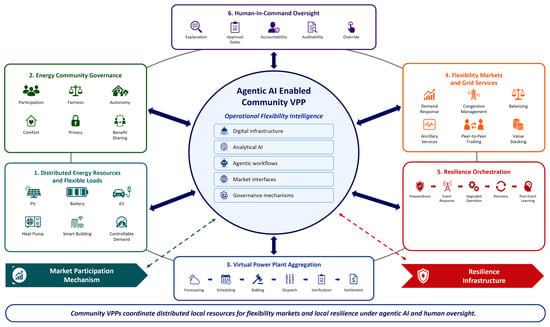
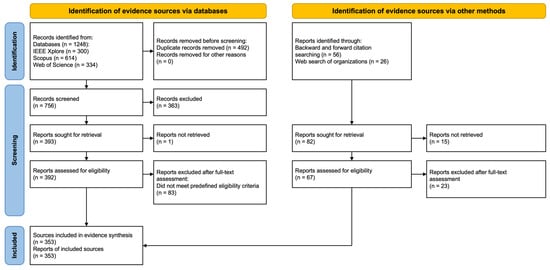
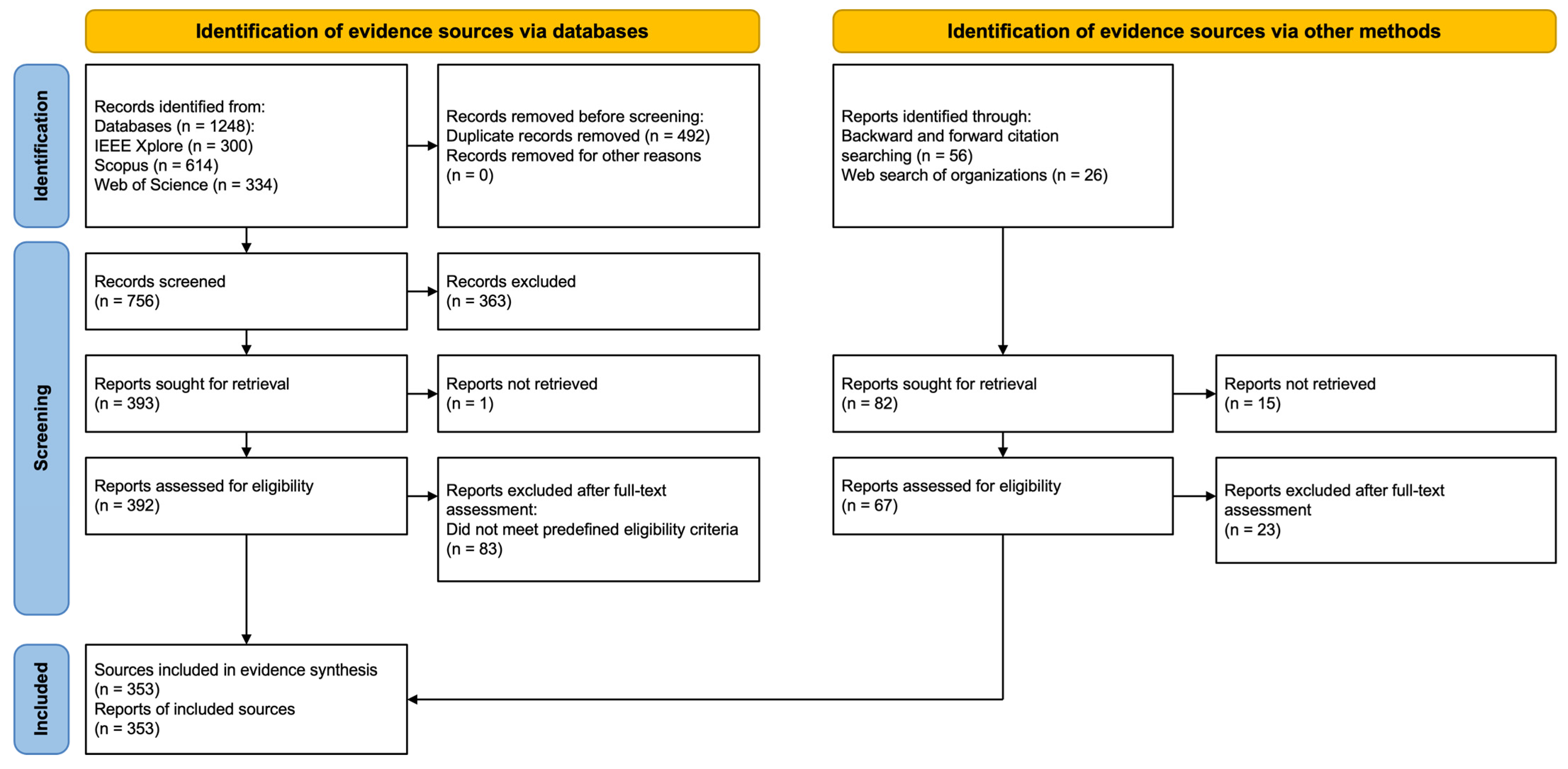
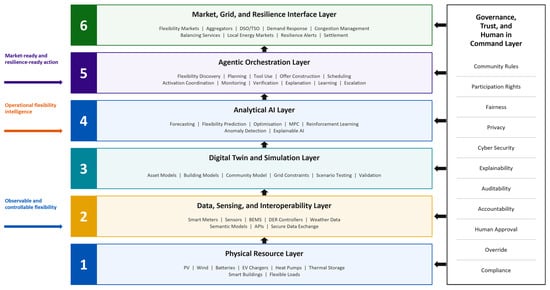
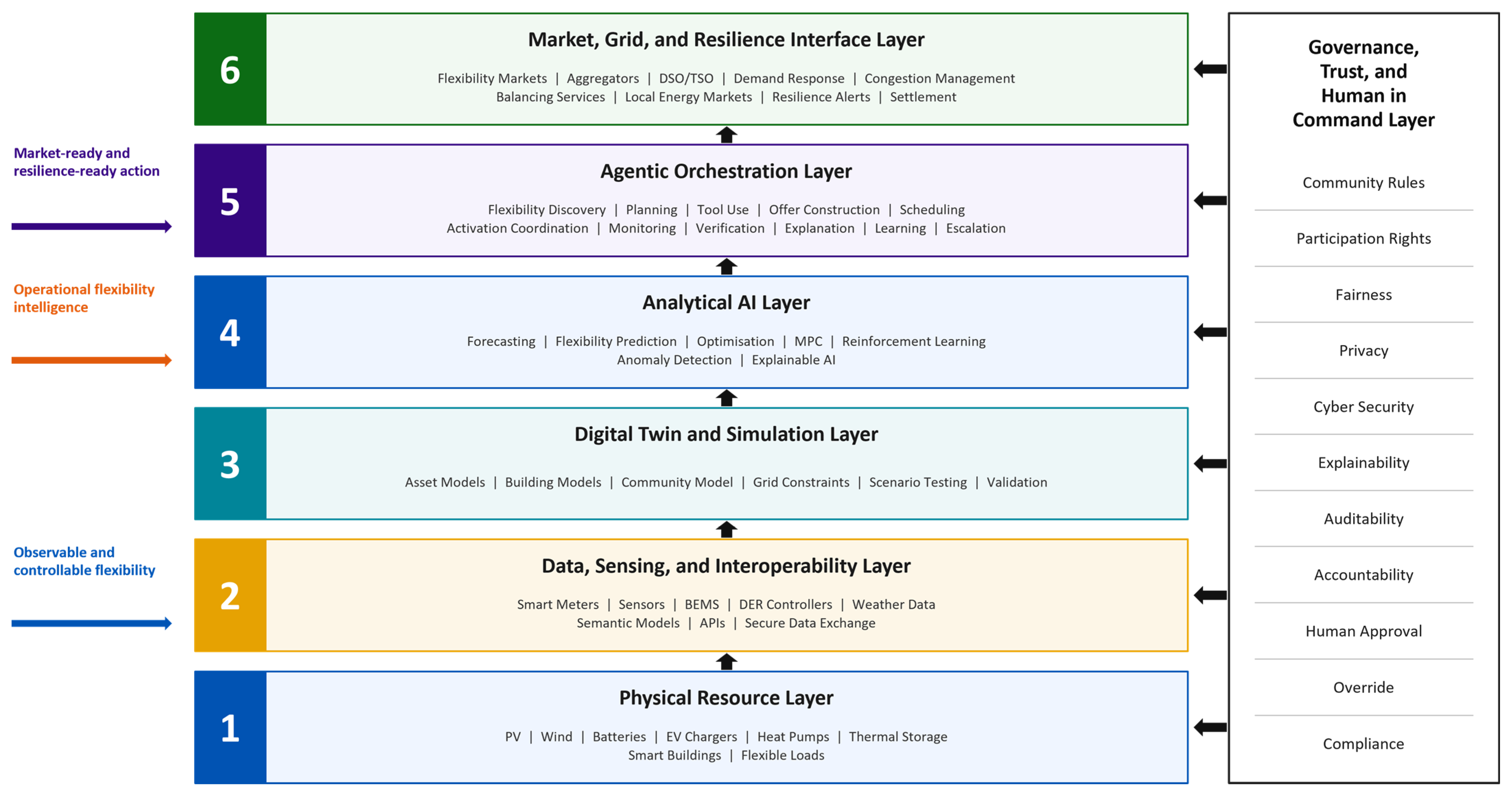

Disclaimer/Publisher’s Note: The statements, opinions and data contained in all publications are solely those of the individual author(s) and contributor(s) and not of MDPI and/or the editor(s). MDPI and/or the editor(s) disclaim responsibility for any injury to people or property resulting from any ideas, methods, instructions or products referred to in the content. |
© 2026 by the authors. Licensee MDPI, Basel, Switzerland. This article is an open access article distributed under the terms and conditions of the Creative Commons Attribution (CC BY) license.