


Abstract
An exorbitant amount of organic fractions of the municipal solid waste, i.e., fruit and vegetable waste (FVW), generated from farm to fork are being treated through anaerobic digestion (AD). Anaerobic digestion (AD) of FVW only achieves <60% methane potential due to methanogen loss and indirect electron transfer. Hence, the technology necessitates further improvements in performance to maximise the methane gas yield by stabilising the methanogens using a potential additive. Magnetic biochar is a budding and promising additive in anaerobic digestion that amplifies biomethanation performance. This study focuses on the role of magnetic biochar in enhancing the viability of the AD system in biogas production from organic waste fractions. Herein, the magnetic biochar was produced using a FeCl3-impregnated walnut shell and then characterized. The derived magnetite was identified as the major crystalline phase in biochar with the presence of several oxygenated functional groups. The specific surface area, pore volume, and pore diameter were found to be 360.99 m2 g−1, 0.089 cm3 g−1, and 0.98 nm, respectively. The SEM and TEM images illustrated a good dispersion of the material, with size ranging between 18.2 and 46.6 nm, thus indicating the porous nature of the magnetic biochar. The incorporation of magnetic biochar in the CN ratio modified the AD system with enhanced methane production and the highest volume (1523.4 mL) reported in treatment, with a CN ratio of 25:1 and 0.5% magnetic biochar. The resulted gas yield is 35% more than the control (1125 ML) with reduced lag phase (4 vs. 12 days). It concludes that walnut shell MBC uniquely combines DIET conduits and biofilm support and enhances methane production from FVW. However, 16S rRNA confirmations of syntrophs, continuous reactor validation, and magnetic biochar recovery and reuse potential studies are essential for further scaleup.
1. Introduction
An increasingly unavoidable food waste issue with the rising world population has triggered a challenge for the waste management industry regarding food’s processing and disposal. Transforming potential waste into renewable energy can address the dilemma for both the waste management industry and the energy sector to attain the demand of sustainable energy; hence, the organic waste stream can be valorised. Moreover, this will not only increase the commercial viability of the AD tool through a circular economy by increasing the fair share network of biogas in the national gas grid, but it also reduces the GHG emissions contributing to climate change by diverting the piling of treasured waste into landfills. Though there are various chemical, biological, and thermal treatment technologies for waste management, each method has its own constraints. Anaerobic digestion (AD) is one of the predominant and effective methods of waste management. However, problems such as low methane yield, process instability, and loss of methanogens limits this technology from wider application [1]. Co-digestion of solid waste can stabilise the process and magnify the methane yield by utilising the nutrients and microbial diversity in various wastes [2].
Biochar is a carbonized product with various microporous structures, obtained through thermal decomposition of biomass under complete or partial anaerobic condition [3]. The physical and chemical characteristic of the biochar depends upon the type of feedstock used and the activation conditions. This carbon-based porous substance can introduce numerous benefits, including improvement in crop productivity, soil fertility enhancement, enrichment of soil nutrients, and improved water-holding capacity [4]. A carbon-rich compound, biochar serves as a carbon sink in soils for many years, ultimately mitigating global warming [5]. A number of studies have reported using biochar as an adsorbent in wastewater treatment for removal of pollutants like heavy metals, nutrients, and organic compounds [6,7,8]. With its high aromatic nature, biochar can support various microorganisms and elevate the efficiency of the AD system [9,10]. Studies have also reported that biochar can improve methane production [10,11]. However, biochar alone cannot mitigate the problem of methanogen loss completely. Furthermore, this process is considered quite expensive since the AD system requires a large amount of biochar, which cannot be recycled after digestion [12].
Although biogas production through anaerobic digestion (AD) has been established in recent decades, there is still a need for optimization of this process in terms of process stability. The application of alkaline H2O2 is an efficient chemical pre-treatment approach for enhanced energy recovery from wastes and lignocellulosic residues. Through the process of swelling, salvation, and saponification, H2O2—an oxidant—eliminates or nullifies the acetyl, lignin, and other uronic substances in the hemicellulose portion, thereby enhancing its accessibility and digestibility by forming low molecular weight water soluble products [13]. Certainly, the catabolic reaction from acetogenic bacteria becomes energetic only if their syntrophic partners, namely the methanogenic archaea, effectively tailor the reduction equivalents generated [14]. This interspecies electron transfer (IET) process typically occurs by diffuse transport from the soluble electrons of acetogen transmitters to the methanogens [15,16]. Nevertheless, low electron transport concentrations also lead to slow diffusion rates, causing IET in the anaerobic treatment cycle to become the bottleneck. Currently, an alternate approach to this interspecies electron transfer (IET) is the direct interspecies electron transfer (DIET) wherein the reducing equivalents are shared between the microbial communities to direct the methanogenic degradation [17,18,19,20,21]. This direct interspecies electron transfer (DIET) can occur either through biological or non-biological electron transfer methods. Non-biological substances like carbon materials or mineral substances can donate electron conduits and escalate the DIET in the methanogenic cultures [18,22,23]. Several studies validated that semi-conducive materials like micro- or nano-magnetite and hematite particles can enhance DIET by reducing the lag phase and increasing the rate of methane production [24,25,26]. Similarly, the methanogens are enhanced in the presence of conducive carbon substances like granular activated carbon [27] (Lee, Lee and Park, 2016), graphite, carbon cloth [11,26,28,29], and carbon felt tube electrode [20,21,22,23,30].
A series of recent studies have shown that biochar also has an efficient role in redox biogeochemical and ecological reactions as electron transfer catalysts [31]. Biochar has been established to catalyse reductive organic contaminant transformation by facilitating electron transfer from bulk chemical electron donors to the accepting organic compounds [32,33]. The key element solely responsible for the electron-mediated reaction is the surface redox—active moieties and the bulk electrical conductivity of biochar [34]. Furthermore, incorporation of biochar in AD promotes the formation of biofilm due to its porous structure, thereby facilitating the DIET [35,36,37]. The reduced biochar serves as an electron donor for the reduction of magnetite and nitrate while the oxidised biochar acts as an electron acceptor to promote the degradation of organic compounds [38]. Furthermore, biochar amendment mitigates the inhibition of ammonia in the AD system and increases alkalinity [39]. The incorporation of biochar reduced the lag phase by absorbing the toxic limonene compounds and escalating the methane production in citrus peel waste [40]. Nevertheless, the primary processes are still hypothetical and so identification, screening, and design of appropriate biochar material for a suitable process is nearly unfeasible [41]. However, the use of engineered/modified biochar to remove multiple pollutants and improve the output of methane in AD systems has become popular in the literature [21,42,43,44,45,46]. Magnetic biochar, a ɣ-Fe2O3 composite of magnetic medium, solves the limitations of biochar. A wide range of waste material such as pine wood [47], corn cob [48], cottonwood [42], and chitosan [49] has already been roped into the production of magnetic biochar, which exceled in various applications. After incorporating magnetic biochar into the AD system, these composites can be magnetically recovered favouring the recycling of the magnetic biochar [12,42]. Meanwhile, ɣ-Fe2O3 particles have wide applications in information storage, ferro-fluids, biomolecule imaging, sensing, and clean energy. The incorporation of an ɣ-Fe2O3 composite on an AD system can unravel the issue of methanogen loss by strongly holding the methanogens onto magnetic biochar [43,44,45,49].Additionally, a few crystallized magnetic surfaces (e.g., magnetite and maghemite) have been documented to operate as electron conduits to encourage interspecies electron transfer and mutual catabolism that can further improve AD’s methanogenic efficiency [50,51,52]. A recent study evaluating the biomethanization performance in anaerobic digestion of OFMSW slurry augmented with four different types of magnetic biochar produced under different FeCl3 concentrations reported that the production of methane was maximum with the addition of magnetic biochar under 3.2 g FeCl3:100 g rice straw ratio [12]. This study hypothesizes that walnut-shell-derived magnetic biochar synthesized via FeCl3 thermal decomposition enhances methane production from fruit and vegetable waste (FVW) by promoting direct interspecies electron transfer (DIET), improving microbial immobilization and strengthening redox buffering capacity. By optimizing the C/N ratio to 25:1, the conductive Fe3O4-enriched biochar is expected to reduce the lag phase and accelerate methanogenesis. The porous nano-structured matrix and oxygen-containing functional groups are anticipated to provide favourable sites for microbial colonization and electron exchange. To test this hypothesis, the magnetic biochar was comprehensively characterized (XRD, SEM/TEM, FTIR, BET) and evaluated through controlled BMP assays at 0.5% dosage with prolonged sustained methane production. This integrated materials engineering and anaerobic digestion approach provides a scalable strategy for valorising agricultural residues into high-performance bio-additives for biogas intensification.
2. Materials and Methods
2.1. Precursor Characterization
2.1.1. Fruit and Vegetable Waste (FVW)
Fruit and vegetable waste was collected from discarded portions of strawberries, cauliflower, potatoes, mandarin oranges, and cabbage which were mixed in equal proportions. The FVW was diluted and filtered through a 1 mm stainless steel sieve [12]. and analysed for pH, total solids (TS), volatile solids (VS), soluble COD (sCOD), total ammoniacal nitrogen (TAN), total organic carbon (TOC), total nitrogen (TN), total phosphorus (TP), and total potassium (TK) using standard APHA methods with triplicate samples (Table 1).
Table 1.
Analytical methods for determining the physico-chemical properties of fruit and vegetable waste (FVW).
2.1.2. Walnut Shells (WS)
The waste walnut shells collected from a local market were washed thoroughly using deionized water to remove impurities, crushed, sieved into size fractions of about 2 mm, dried at 105 °C overnight, and stored in desiccators for later utilization [53]. The waste walnut shells were analysed for proximate and ultimate composition.
2.2. Pre-Treatment Using Alkaline H2O2 (WAHP)
The pre-treatment of walnut shells (10 g) was carried out in an airtight 250 mL serum bottle containing 3% H2O2 (100 mL) and biomass loading of 10% (w/v) at an adjusted pH of 11.5 using 2M of NaOH. The bottles were incubated in the dark at 35 °C for 24 h in a static condition. The solid residue was filtered using a 3–4 µm sieve, continuously rinsed with distilled water until attaining neutral pH, and dried at 45 °C for 48 h. The residual moisture was then oven dried at 105 °C and stored for further utilization [13].
2.3. Preparation of Magnetic Biochar/ɣ—Fe2O3 Composite (MBC)
The pre-treated walnut shells (40 g) were impregnated with the FeCl3 solution for 4 h and dried at 80 °C for 2 h. The FeCl3 solution was prepared by dissolving 40 g of analytical grade ferric chloride hexahydrate (FeCl3. 6H2O) in 60 mL of deionized water. The impregnated shells were subjected to carbonization at 375 °C (5 °C/min ramp) for 1 h in an inert nitrogen atmosphere (100 mL/min), rinsed with deionised water, oven dried at 105 °C, grounded, sieved through a 0.2 mm sieve to attain homogenisation, and stored in an air tight container for characterization [17].
2.4. Characterization of Magnetic Biochar
The iron type, crystallographic structure, and phase purity of the magnetic biochar were determined using a PANalytical Expert Pro X-Ray Diffraction (XRD) (Malvern Panalytical (Almelo, The Netherlands) analyser at 40 kV voltage, 40 mA current, and Cu Kα at 1.5418 A (5–80° 2θ range, 0.02° step size, 2 s/step dwell time, software: HighScore Plus v4.1). The surface morphology of the composite was investigated using a scanning electron microscope (SEM) M/s. FEI—Quanta 250, Czech Republic coupled to an energy-dispersive X-ray analyser (Brno, Czech Republic), and the structural features were determined using a transmission electron microscope (TEM) M/s. FEI—Quanta 250, Czech Republic operating at 120 KV (Brno, Czech Republic) [54]. The BET surface area, pore volume, and pore diameter were determined using a Smartsorb 92/93 surface area analyser (Smart Instruments Co. Pvt. Ltd. (Mumbai, India)) (N2 adsorption-desorption at 77 K, multipoint BET (0.05–0.30 p/p0), 6 h degassing at 200 °C under vacuum (N2 purge)). The surface functional groups and nature of chemical bonding were investigated using an FTIR Model 8400S of Shimadzu (Kyoto, Japan), Japan over the wavenumber range of 400–4000 cm−1 [55]. The zeta potential and particle size were measured using the Horiba Scientific Nanopartica SZ-100 (Kyoto, Japan), Japan particle size analyser [56].
2.5. Bio-Methane Production
The batch experiments at 5% total solids (TS) content were conducted to assess the potential role of magnetic biochar/ɣ-Fe2O3 composite in enhancing bio-methane production in an anaerobic digestion system (Table 2).
Table 2.
Treatment details for bio-methane production.
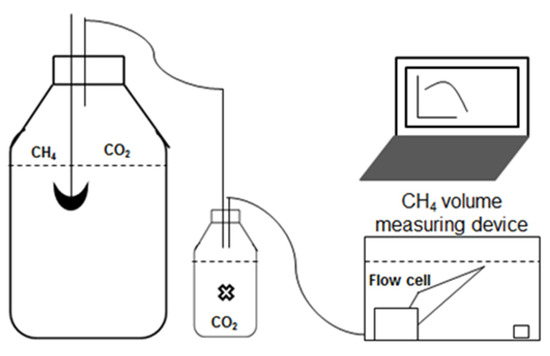
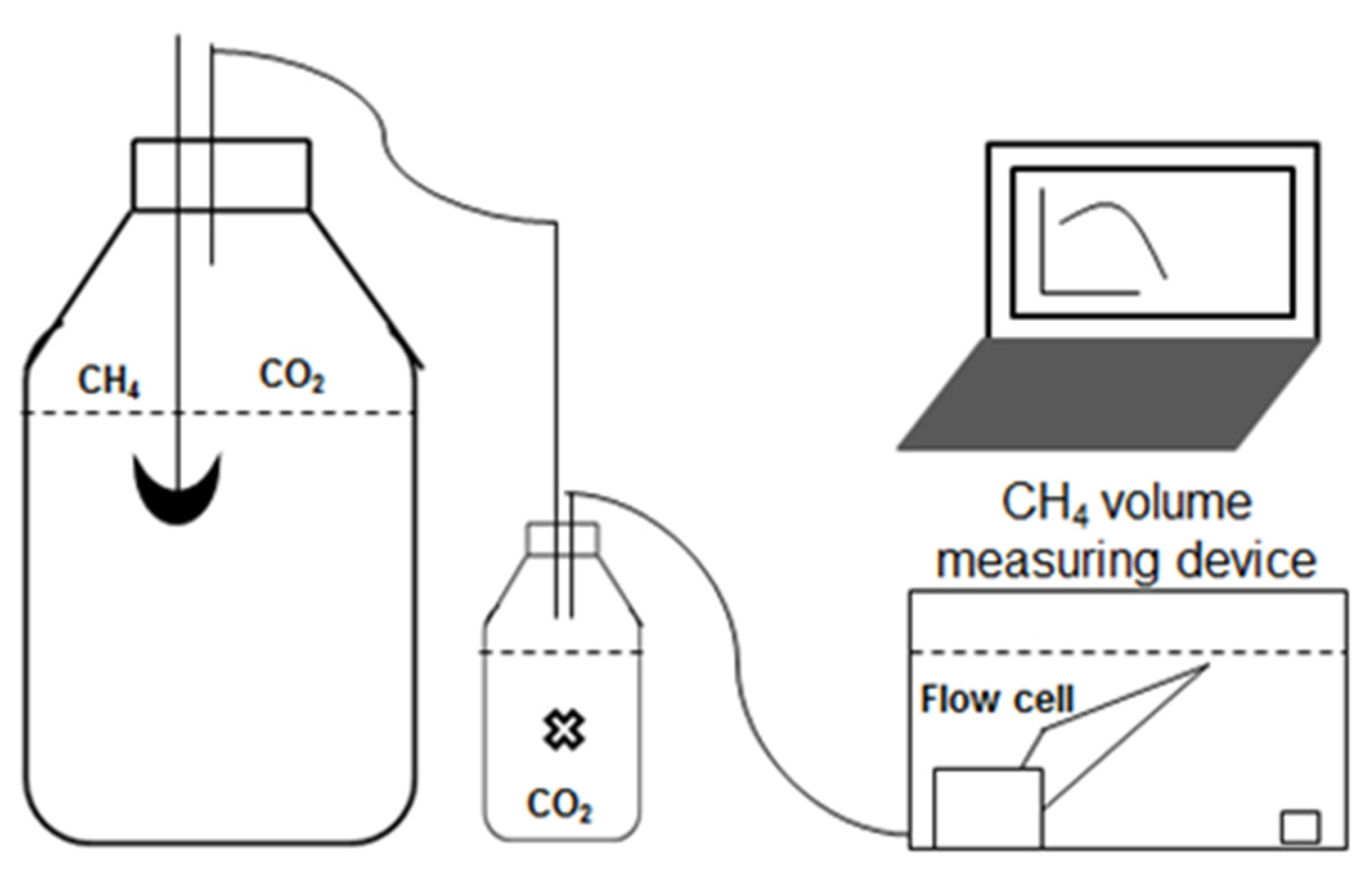
The Bio-Methane Potential (BMP) tests were conducted in triplicate with the Automatic Methane Potential Test System at 35 °C [12,57]. A mixture of N2 (65%) and CO2 (35%) gases with a 2.5 L min−1 flow rate was purged into serum bottles for 30 s to ensure a more than five-fold exchange of the entire headspace (100 mL) prior to incubation. The substrate and inoculum (1:1) of the slurry mixture of 400 mL for respective treatments were taken in 500 mL serum bottles and purged with N2 into the head space of each bottle to ensure an anaerobic condition; the bottles were then immediately sealed [58]. The sludge from a fruit and vegetable waste-based commercial anaerobic digester was used as an inoculum. Batch experiments were performed using an automatic methane potential test system II (AMPTS II) under a mesophilic condition (38 ± 1 °C), with a stirring rate of 100 rpm until daily gas production was less than 1% of the cumulative gas produced [59]. The AMPTS II machine consists of three major components: (i) the biogas producing unit, (ii) the CO2 fixing unit, and (iii) the gas collecting chamber (Figure 1). The serum bottles filled with the slurry were attached to a 3M NaOH solution (scrubber) with a pH indicator, thymolphthalein, in order to remove hydrogen sulphide and carbon dioxide. The gas departing from the CO2 fixing unit was passed to the flow cell (gas collection chamber), wherein the volume of methane was determined.
Figure 1.
Schematic representation of Automatic Methane Potential Test System II.
Adjustment of CN Ratio
FVW and WS were mixed in the pre-calculated weights to attain a CN ratio of 25:1 at 5% total solids content for 400 mL slurry volume.
3. Results and Discussion
3.1. Characterization of FVW
The characteristics of the fruit and vegetable waste in this work and the latest studies are presented in Table 3. The presence of high moisture content (80%) facilitates the anaerobic digestion process. Moreover, the desired C/N/P ratio for microbial activity for the biochemical conversion of waste materials to methane is 100–128:4:1 [60]. Hence, the C/N/P ratio of OFMSW satisfies the condition for anaerobic digestion.
Table 3.
Characteristics of FVW.
3.2. Characterization of Walnut Shells
The proximate and ultimate compositions of walnut shell and walnut-shell-derived Fe-biochar are presented in Table 4. The higher volatile matter content indicates the suitability for pyrolysis since the volatilisation is a representative factor. The ultimate analysis of the walnut shell exhibited a higher quantity of carbon, indicating its ability to produce biochar. Since cellulose, hemicellulose, and lignin are the major constituents in walnut shells, their decomposition occurs at different temperatures, thereby making the pyrolysis condition complex [63]. The characteristics were found to match with results obtained by [64,65].
Table 4.
Characteristics of walnut shell.
3.3. Characterization of MBC
3.3.1. X-Ray Diffraction
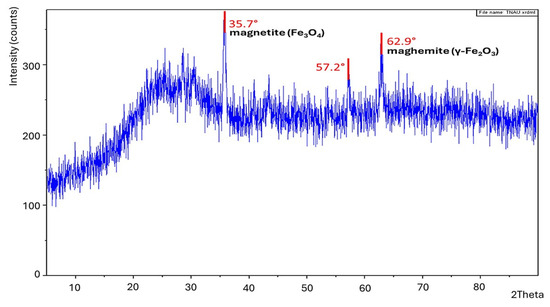
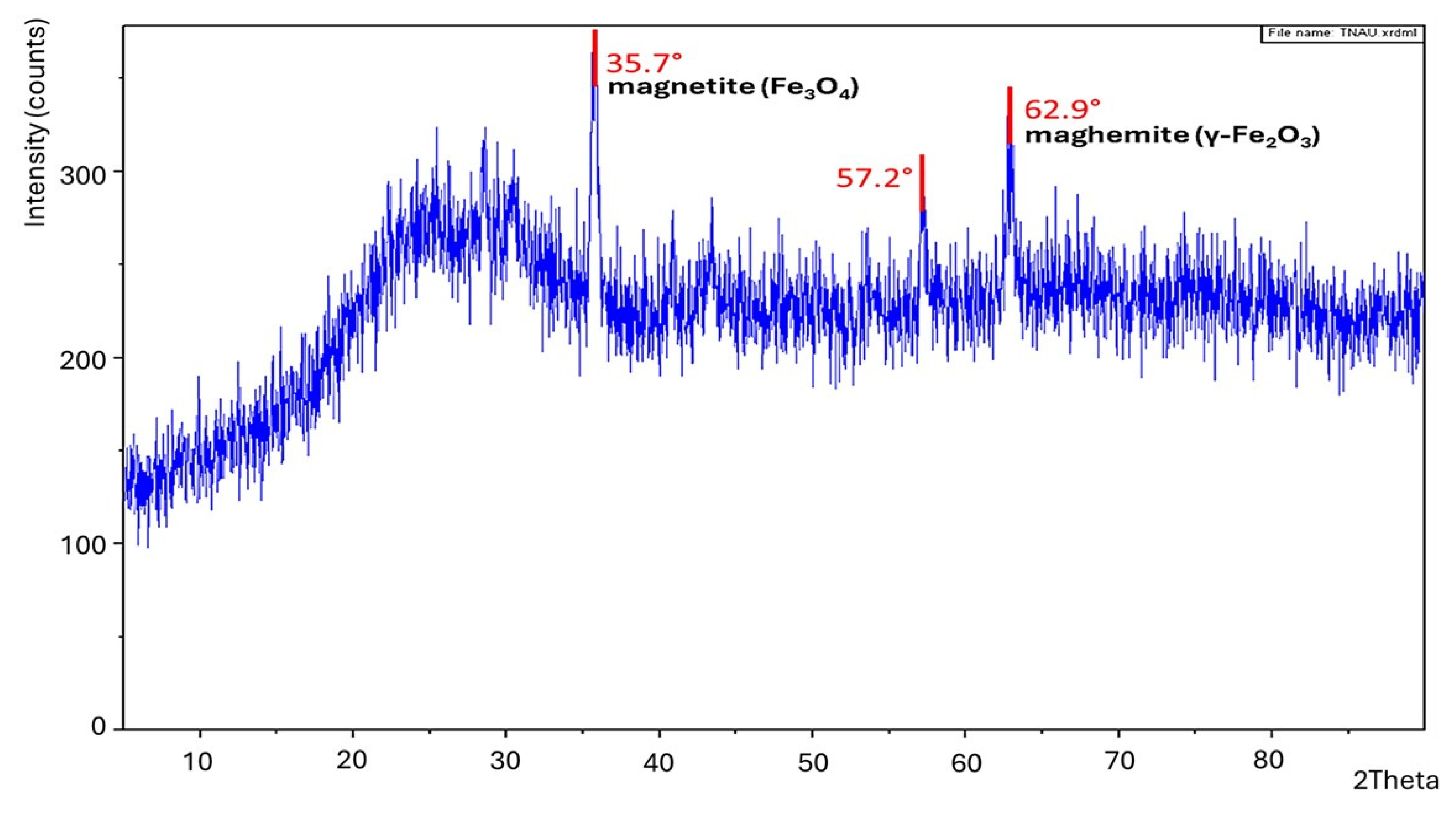
Magnetic biochar exhibited a spectrum of both crystalline and amorphous phases over an angular 2θ range of 0–80° (Figure 2). However, a strong and sharp reflection XRD peak indicates that the as-prepared iron oxides in the biochar composite were well crystallized [69], and magnetite was detected as the major crystalline phase in biochar with diffraction peaks at 2θ = 35.78°, 62.93°, 25.46°, 28.64°, and 57.29° [70,71,72]. The XRD peaks at 35.78° and 62.93° are very similar for magnetite (Fe3O4) and maghemite (γ-Fe2O3). However, in the pyrolysis process (under inert N atmosphere), the conversion of FeCl3 into iron oxides occurs primarily via the reduction of Fe (III) to mixed-valence Fe (II/III), favouring the formation of Fe3O4. The deep black colour of the resulting biochar supports the dominance of magnetite (Fe3O4). While a slight oxidation of γ-Fe2O3 on the surface may occur, Fe3O4 is the major crystalline phase. The magnetite crystallite size of 22.4 nm was calculated via the Scherrer equation (D = Kλ/βcosθ; K = 0.94, peak 35.78° 2θ) using PANalytical HighScore Plus v4.1. Nevertheless, a few other peaks also appeared due to the emergence of FeO. Since the carbon and carbon monoxide released during pyrolysis might decrease the high-valence Fe3O4 during thermal treatment, Fe3O4 would have evolved into FeO [73,74]. Hence, the annealing ambience significantly governs the oxidation states of iron oxides on carbon [75]. Similar peak intensities were reported in magnetic rice straw biochar by [12]. Moreover, pure ores like magnetite (Fe3O4) in saw-dust-based biochar [76], maghemite (ɣ—Fe2O3) in cotton wood biochar [42], and hematite (Fe2O3) and magnetite (Fe3O4) in walnut shell magnetic biochar [17] were formed during pyrolysis at 600 °C conventional heating. The variation in the form of iron in the biochar could possibly be due to the variation in the content of the raw material as well as the processing conditions.
Figure 2.
XRD of magnetic biochar.
3.3.2. Structural Morphologies
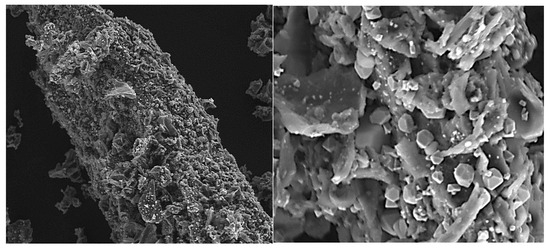
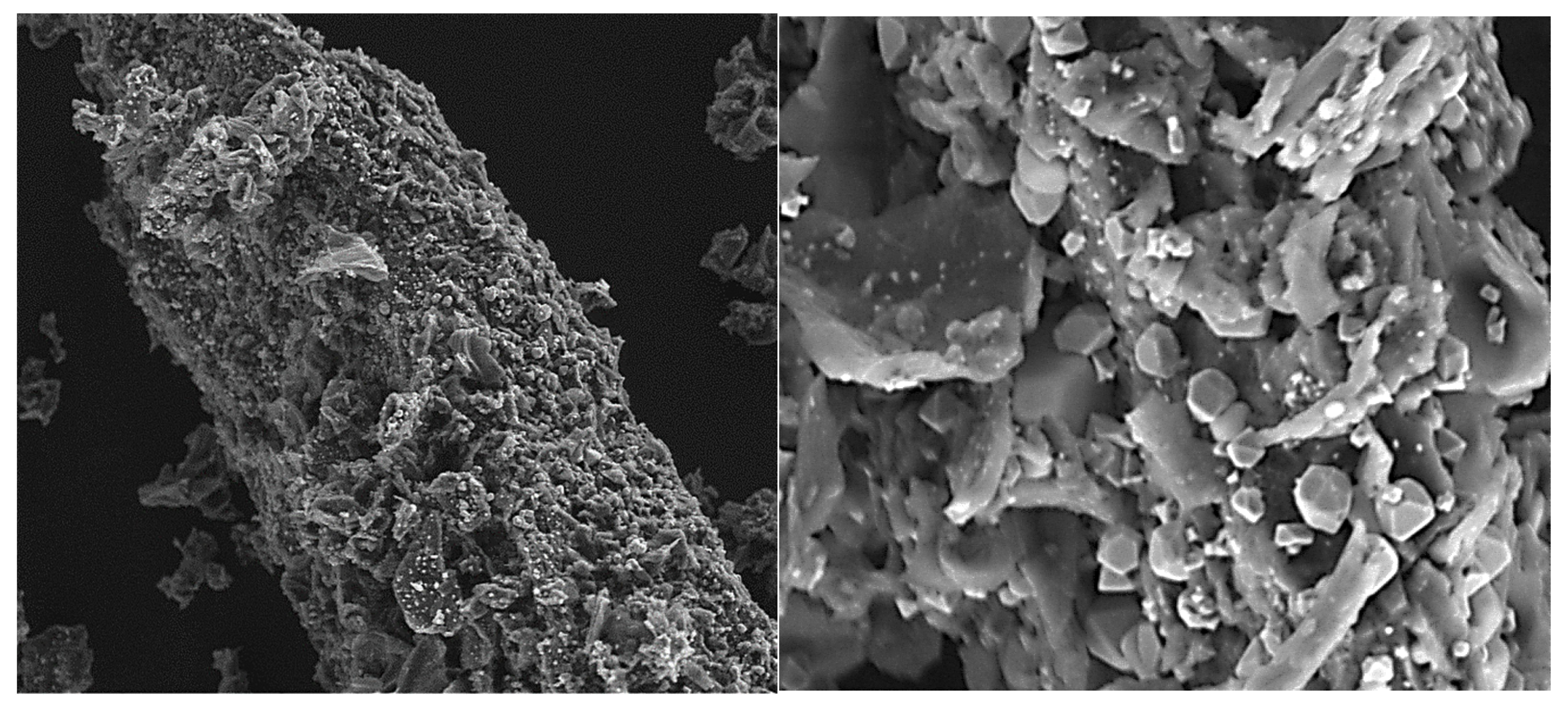
The morphology and microscopic structure of magnetic biochar is illustrated in Figure 3. A flat morphology and a good dispersion of Fe3O4 were attained on the surface where micro-sized Fe3O4 particles were formed without aggregations. The particles were found to be cubic or octahedral with a rough, porous surface due to the intrinsic nature of the biochar, and a strong mechanical bonding was observed between magnetic particles and the biochar [42,77,78]. It became evident that the surface of the biochar was evenly covered by globular particles of different sizes. The EDAX analysis revealed that the composition of white particles mainly corresponded to oxygen elements, which was in good agreement with the XRD analysis [17]. The surface area of the biochar was dependent on the particle size of the feedstock, reaction temperature, and operation conditions [79]. The increment pyrolysis temperature increased the escape of volatile substances and the formation of channel structures, thus improving the specific surface area and pore structure [80].
Figure 3.
SEM images of magnetic biochar.
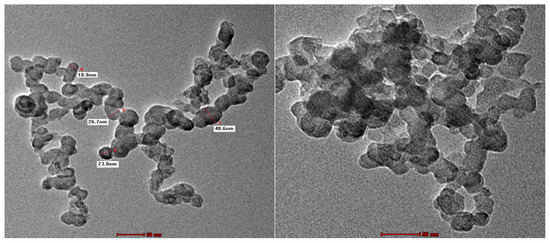
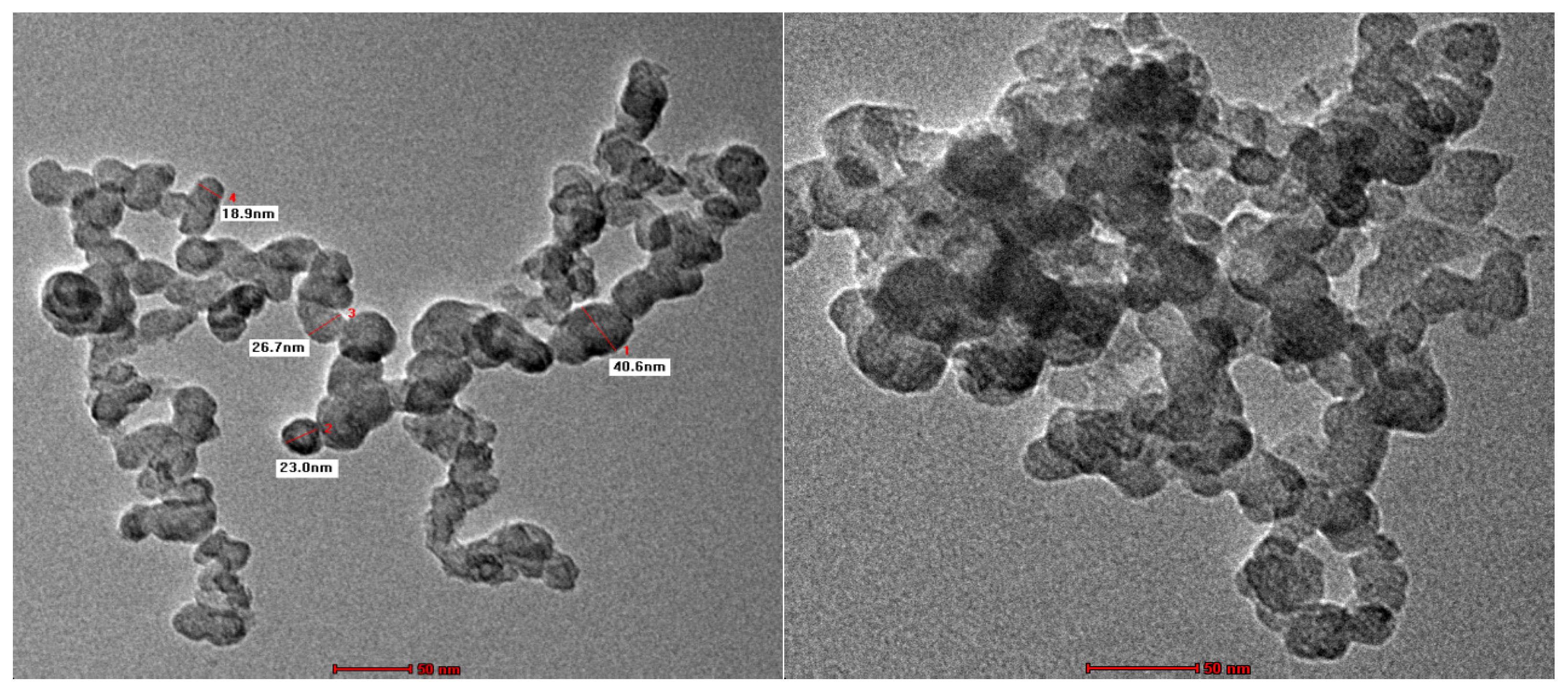
The SEM and TEM descriptions refer to distinct structural features in the hierarchical magnetic biochar composite. SEM images (Figure 3) capture the overall morphology at micro-scale resolution (~1–10 μm), revealing the biochar matrix as flat, porous sheets with apparent “micro-sized” Fe3O4 aggregates evenly dispersed on the surface without agglomeration. These clusters arise from FeCl3 impregnation and pyrolysis, forming mechanically bonded, cubic/octagonal particles with rough textures that enhance biofilm adhesion in AD. TEM images (Figure 4), at higher resolution (~1–100 nm), zoom into the internal structure, showing individual magnetite nanoparticles distinctly separated within the biochar matrix, sized 18.2–46.6 nm. This nano-dispersion provides high surface area and conductivity for DIET, as smaller particles act as efficient electron conduits between syntrophs. This multi-scale architecture is standard in FeCl3-activated biochars: SEM shows bulk composite features, while TEM resolves embedded nano-oxides.
Figure 4.
TEM images of magnetic biochar.
3.3.3. Molecular Functionalities
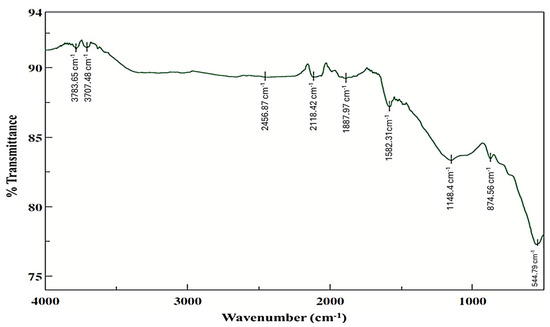
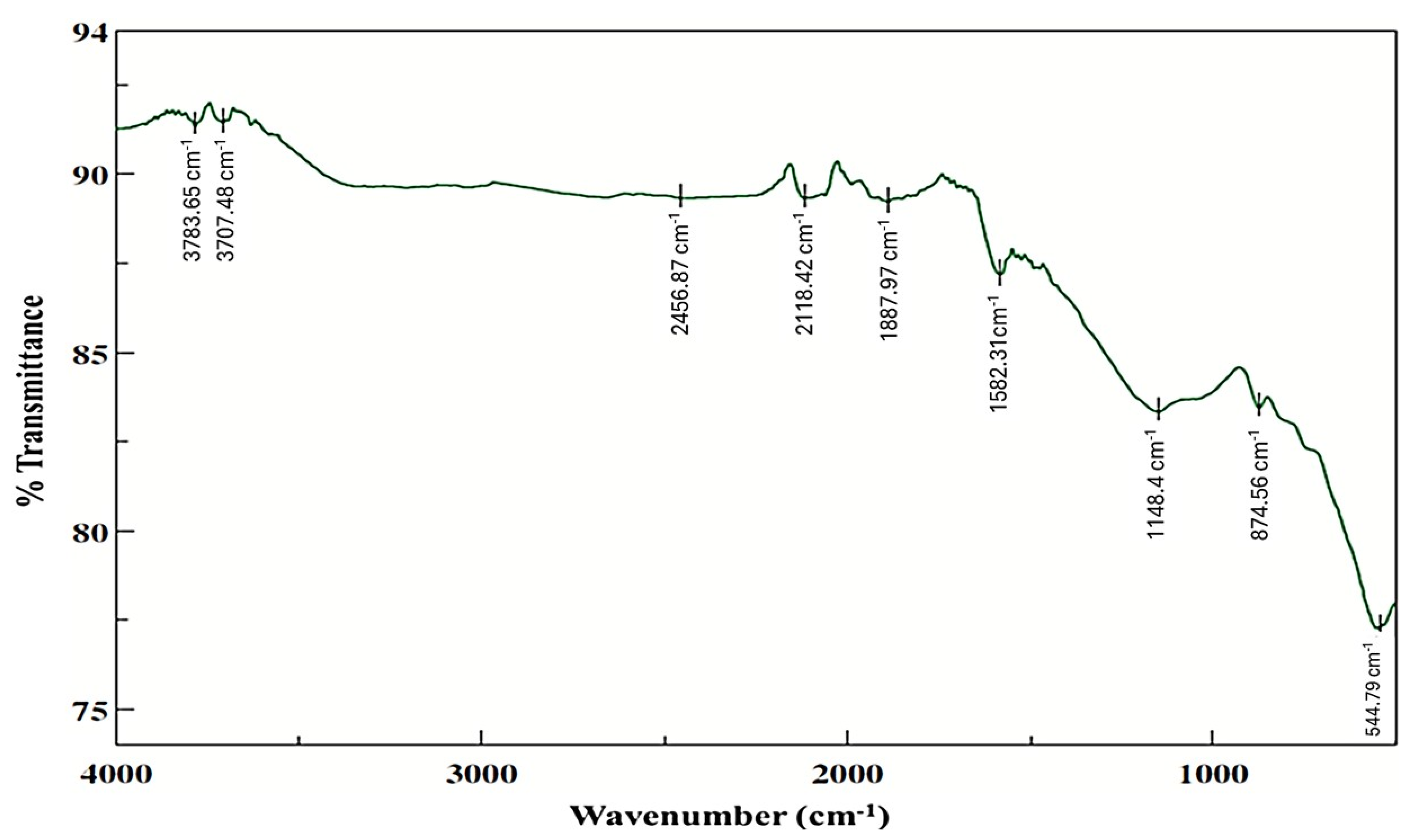
The surface functional groups of the fabricated magnetic biochar are shown in Figure 5. A strong stretching bond appeared at 544.79 cm−1, which may be attributed to the halo compound (C-Cl). A weak alkene (C-C) bond and a medium (N-H) stretching band were observed at 874.56 cm−1 and 1582.31 cm−1, respectively. Strong suphonates (S-O) and alcohol (C-O) stretching were found at 1148.40 cm−1. The prevalence of peaks at 3786.65, 3707.48, 2456.87, 2118.42, 1887.97, and 1582.31 cm−1 corresponded to alcohol (O-H), strong carbon dioxide (O=C=O), strong isothiocyanate (N=C=S), weak aromatic compound (C-H), and strong acid halide (C=O), respectively, revealing the presence of several oxygenated functional groups on the surface of the magnetic biochar. FTIR-oxygenated groups facilitate DIET: O-H (3707 cm−1)/C-O (1148 cm−1) enable microbial adhesion/biofilm; C=O (1888 cm−1) redox-active for e− shuttling.
Figure 5.
FTIR of magnetic biochar.
3.3.4. Surface Features
The BET surface area of magnetic biochar was 360.99 m2 g−1 with a pore volume of 0.089 cm3 g−1. The pore diameter was found to be 0.98 nm, indicating the porous structure of the magnetic biochar. The zeta potential of the magnetic biochar was –28 mV and particle size was 136.8 nm. This magnetic biochar exhibited a high surface area, microporous structure (<2 nm), and narrow pore diameter. It exhibited strong colloidal stability and dispersion potential due to a negative zeta potential and a consistent nanoscale particle size [36,37]. Similarly, the magnetic biochar derived from walnut shells exhibited a BET surface area of 418 m2 g−1 and pore volume of 0.35 mL g−1 [17]. Biochar prepared through conventional pyrolysis methods was known to be less porous with a surface area of no more than 100 m2/g. The formation of a higher surface area and enhanced pores was due to activation induced by FeCl3. Similar formation of a better pore structure was reported in palm-empty-fruit-bunch-derived FeCl3-activated biochar [81].
3.4. Bio-Methanation Performance
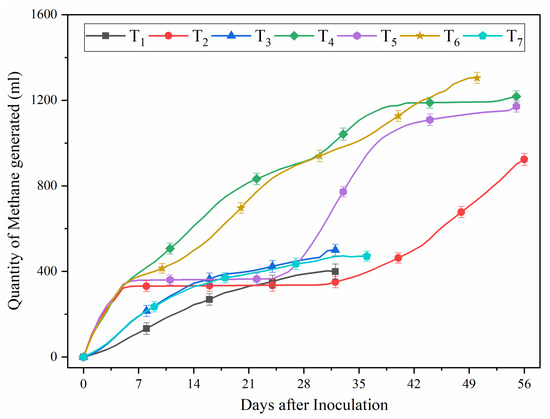
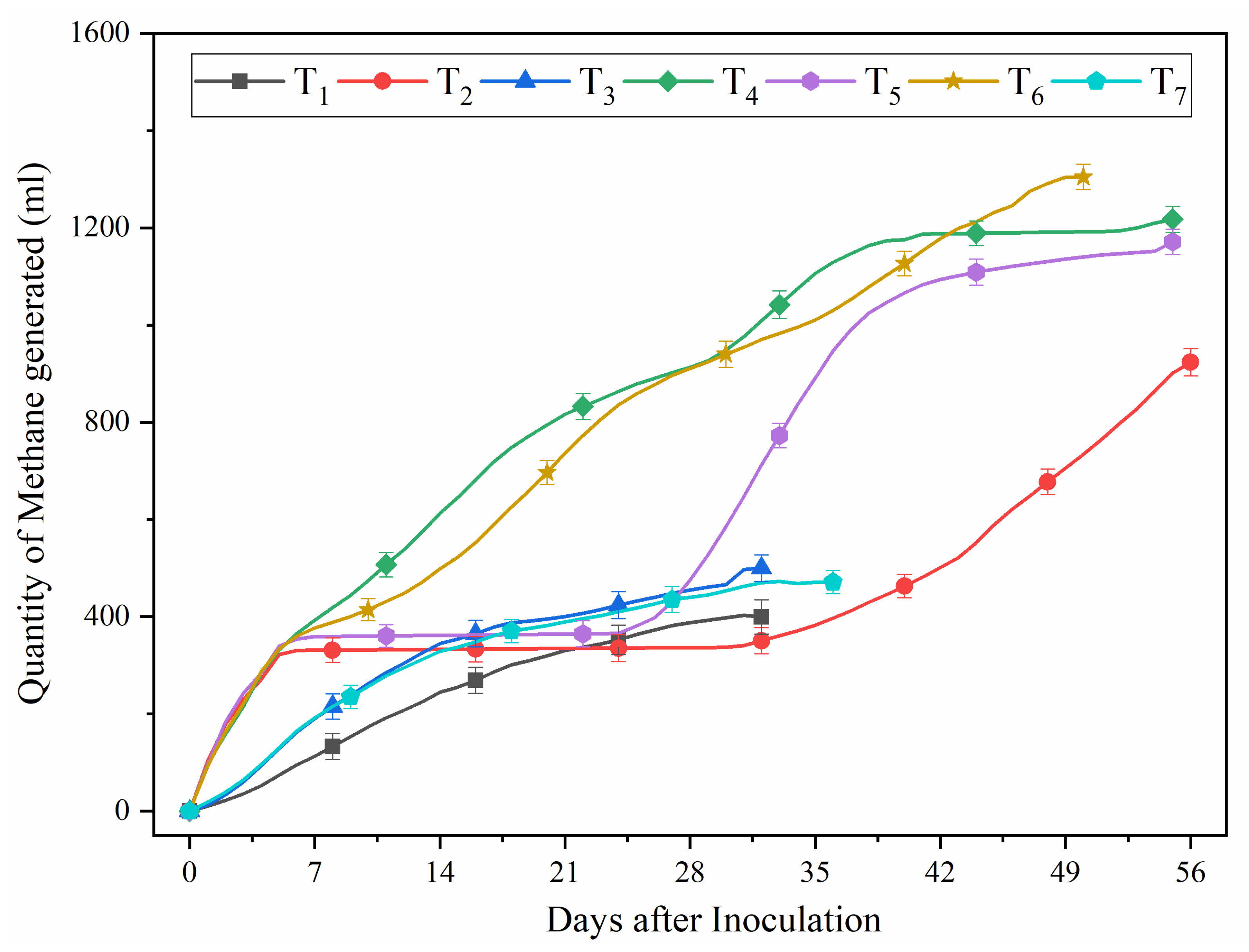
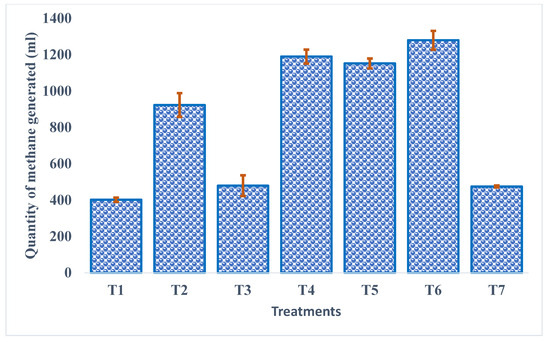
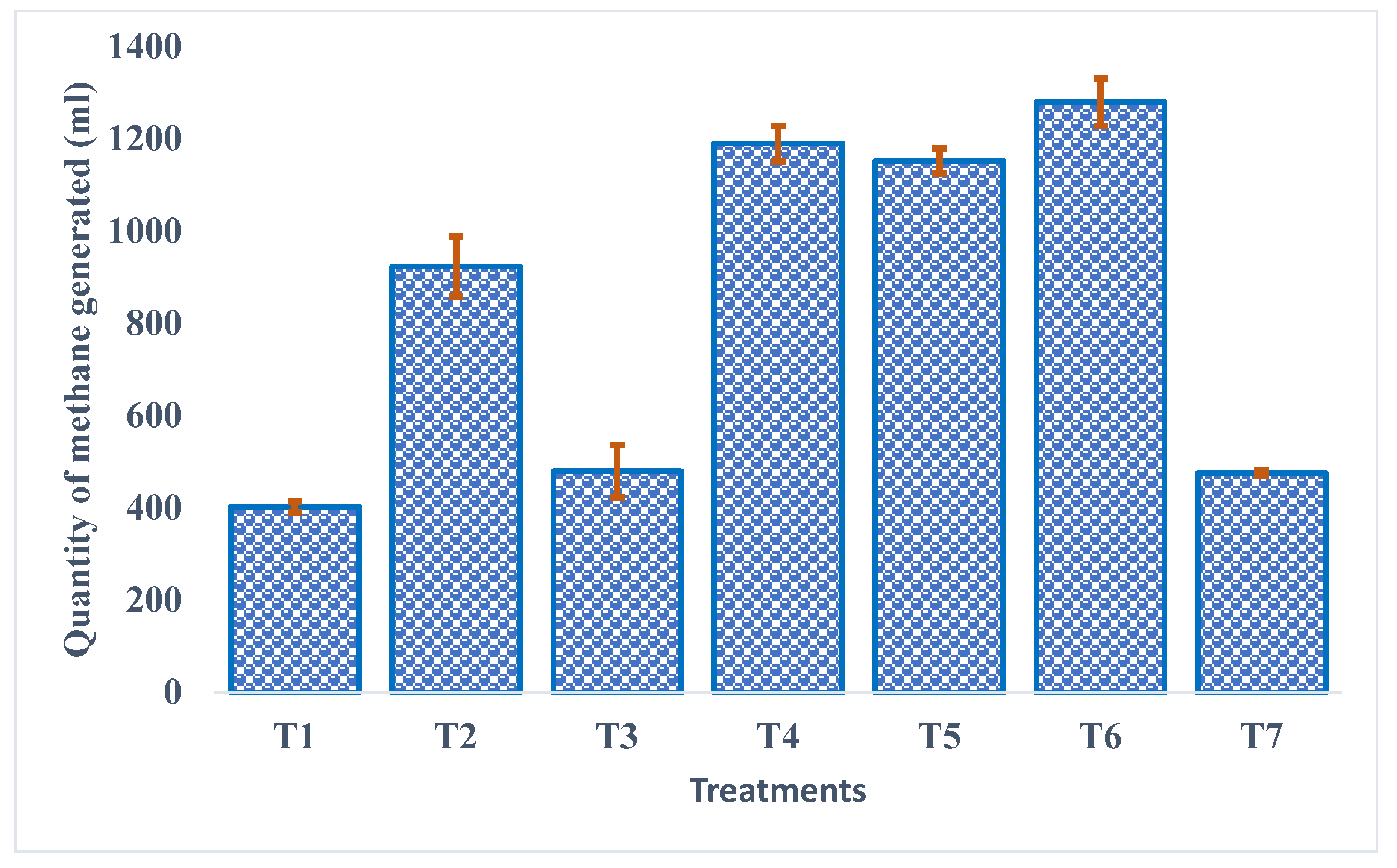
The influence of magnetic biochar in methane production is presented in Figure 6. Noticeably, the application of 0.5% MBC enhanced methane production in all treatments. Methane production in treatments without the application of magnetic biochar ceased at an earlier period, whereas the application of magnetic biochar increased production of methane for a longer period of time. The cumulative methane production (Figure 7) was highest in T4 (FVW and WS with adjusted CN ratio to 25:1 @ TS 5%), followed by T6 (FVW and WS with adjusted CN ratio to 25:1 + 0.5% MBC @ TS 5%) and T5 (FVW + 0.5% MBC @ TS 5%), respectively, because of the alteration of the CN ratio to 25:1. However, T6 produced a higher volume of methane within 50 days after inoculation. Cumulative CH4 yields differed significantly across treatments (Table 5) (one-way ANOVA, F = 12.4, p < 0.01; Tukey HSD: T6 vs. T2 p = 0.002), T6 achieved + 35% methane (1280.0 ± 42 mL) versus T2 control (923.5 ± 31 mL), with reduced lag phase (4 vs. 12 days). T6 performance aligned with semi-continuous studies where 0.5% magnetic biochar restored 95% of initial CH4 after NH4+ inhibition [82] and organic overload (15% VS increase; recovery <3 days vs. 10 + control), suggesting MBC stability under real-world hydraulic stress.
Figure 6.
Methane production of anaerobic digestion (AD) system.
Figure 7.
Cumulative methane production.
Table 5.
Cumulative methane yield.
This exhibited the effectiveness of using magnetic biochar in a CN-ratio-modified AD system. A CN ratio of approximately 20–30:1 is widely reported in anaerobic digestion literature as optimal for stable microbial activity and methane production. Our finding of 25:1 aligns well with established theoretical and experimental ranges, suggesting that the observed optimization is not incidental but biologically meaningful. It was selected because it provides a balanced nutrient environment for the anaerobic digestion of fruit and vegetable waste (FVW). FVW contains readily biodegradable carbohydrates and moderate nitrogen; thus, lower C/N ratios may lead to ammonia accumulation and methanogenic inhibition, whereas higher ratios may cause nitrogen limitation and VFA accumulation. The 25:1 ratio falls within the widely reported optimal range (20–30:1) and ensures sufficient nitrogen for microbial growth while minimizing ammonia toxicity [83,84]. This balance supports stable methanogenesis and enhanced methane yield in our system. The magnetic biochar derived from rice straw enhanced methane production in OFMSW by 11.69% due to selective enrichment of microorganisms participating in anaerobic digestion on magnetic biochar [12] (Qin et al., 2017). Moreover, the aromatization, surface area, and porosity of the magnetic biochar greatly influenced methane production [11]. The type of feedstock and pyrolysis conditions play a vital role in determining biochar properties [13]. Non-magnetic WAHP (T3) yielded 18–22% lower methane than the MBC treatment (T7) due to absent conductive phases for DIET. The treatment, T3 (WAHP) produced 1125 mL versus T7 (WAHP + 0.5% MBC) at 1345 mL, highlighting magnetism’s role in syntroph retention [21].
Rapid escalation of methane indicated the negligible role of inhibitors, which was due to: (i) low NH4—N inhibition at pH shift, (ii) easy adaption of microflora, and (iii) uptake of NH4—N by the microbes for its growth. The large surface area of the biochar promoted NH3 adsorption thereby mitigating ammonia inhibition [85]. The methane production rate was majorly influenced by several factors like the activity of microbes in the digester, surface area, microbes to substrate ratio, pH, and solid retention time [86]. Notably, the lag period prior to the start of the degradation of volatile fatty acids was nearly eliminated in all magnetic biochar amended treatments relative to control bottles. The pH remained stable between 7.0–7.5 in all treatments, regardless of biochar amendment, indicating its non-intervention in methane production. The enhanced methane production observed in T6 was due to the CO2 removal from the biogas through its reaction with magnetic biochar, an alkaline mineral to form carbonates [87]. This prevented the reduction of pH due to the formation of organic acids during the degradation process. Moreover, the DIET between the syntrophic microorganisms facilitated the conversion of CO2 to CH4 by aceticlastic methanogens or hydrogenotrophic methanogens favouring higher methane production [88]. FVW decomposes fast and produces VFAs, which cause a long lag phase. The magnetic biochar acts as a buffer and provides a surface for methanogens to quickly consume these acids, reducing the lag phase. The microporous structure (0.98 nm); a stable, negatively charged surface (−28 mV); and a high specific surface area (360.99 m2 g−1) of the walnut shell biochar provides an excellent stable environment, and it acts as a habitat for microbial immobilization, facilitating the proliferation of essential bacteria, particularly hydrolytic and acidogenic bacteria, which break down FVW faster and shorten the lag phase. The magnetic biochar provides a high buffering capacity, reducing the acidification of the reactor during the early stages of FVW fermentation. Magnetic biochar, particularly Fe-based, acts as an electron conductor, promoting DIET between syntrophic bacteria and methanogenic archaea. The reduced lag phase strongly indicates that WS-MBC facilitates faster conversion of VFAs to methane [21,43,44,45,49].
The high crystallinity of magnetite (Fe3O4) detected in the magnetic biochar, as confirmed by XRD analysis, plays a significant role in enhancing methane production during anaerobic digestion. Conductive iron oxides such as magnetite facilitate DIET between syntrophic bacteria and methanogens, thereby accelerating methanogenesis and improving biogas yield [20,23]. The nano-sized (18–46 nm) cubic and octahedral magnetite particles well dispersed within the porous biochar matrix increase electrical conductivity and provide active redox sites, promoting faster electron shuttling compared to conventional interspecies hydrogen transfer. Furthermore, the high BET surface area (360.99 m2 g−1) and porous microstructure (0.98 nm pore diameter) offer abundant sites for microbial colonization and biofilm formation, which stabilizes the anaerobic microbial community and enhances substrate–microbe interactions [22,88,89]. The presence of oxygen-containing functional groups (–OH, C=O, C–O) improves surface hydrophilicity and buffering capacity, facilitating nutrient adsorption and reducing ammonia or volatile fatty acid inhibition during digestion [49]. Additionally, magnetite can participate in Fe2+/Fe3+ redox cycling, which enhances enzymatic activity and supports methanogenic archaea metabolism. Therefore, the synergistic effects of conductivity, high surface area, redox-active iron phases, and surface functional groups likely explain the improved bio-methane potential results observed at 0.5% MBC addition.
Uniform mixing of MBC through slurry methods, which possess the characteristics of both magnets and biochar, is feasible and presents a promising opportunity for the recovery of carbon materials via magnetic separation after anaerobic digestion (AD). This method is anticipated to yield advantages such as lower operating costs and a higher concentration of dominant microorganisms [51,90]. Research indicates that iron-modified biochar can enhance DIET [23] and increase methane production by 11–16% [91]. Jin and his co-workers found that recycled MBC facilitated microbial community evolution, improved electron transfer capabilities, and boosted methane production by 6.5–7.0% compared to original MBC during anaerobic digestion of waste-activated sludge [51]. Moreover, recovering MBC would support the retention of a greater number of dominant microorganisms [92]. Similar enhanced methane production was also reported by Zhang [23].
Magnetism enables >90% post-digestion recovery via simple magnets, reducing additive costs by 70% over five cycles. The magnetic property of the composite additive- MBC is explicitly utilized to aid in post-digestion recovery and recycling of the material. MBC’s ferromagnetism facilitates recovery, unlike plain biochar [93,94]. Furthermore, the electromagnetic biochar remained highly stable in strongly acidic and alkaline aquatic environments, indicating its potential as an effective tool for biogas production [95]. In brief, recycling MBC can provide a continuous boost to the AD system while improving cost-effectiveness [52].
4. Conclusions
This study successfully demonstrated the efficacy of FeCl3-impregnated walnut-shell-derived magnetic biochar (MBC) as a conductive additive in the anaerobic digestion (AD) of fruit and vegetable waste (FVW). The MBC exhibited superior physicochemical properties, including a magnetite-dominated crystalline structure, high BET surface area (360.99 m2 g−1), microporous architecture (pore diameter 0.98 nm), and abundant oxygenated functional groups with nanoparticle dispersion (18.2–46.6 nm). The incorporation of 0.5% MBC in C/N-optimized (25:1) AD systems significantly enhanced biomethanation, achieving peak cumulative methane yields of 1523.4 mL (T6 treatment) by facilitating direct interspecies electron transfer (DIET), reducing lag phases, stabilizing pH (7.0–7.5), and mitigating inhibitors like NH4+-N. These findings underscore MBC’s role in promoting syntrophic methanogenesis, biofilm formation, and process stability, offering a sustainable waste-to-energy solution. Although a CN ratio of 25:1 with 0.5% MBC yielded the highest methane production in this study, this optimization is substrate and inoculum-specific. Variations in feedstock composition, microbial community structure, and operational conditions may shift the optimal parameters. Therefore, further validation under different system configurations is recommended before large-scale, commercial application of magnetic biochar. Beyond technical performance, this approach provides a transformative perspective for the circular economy by offering measurable greenhouse gas (GHG) reductions. Diverting FVW from landfills prevents uncontrolled anaerobic decomposition, which typically generates 1.5 to 2.5 tonnes of CO2e per tonne of waste. By enhancing methane yields by 30–50%, the process significantly increases fossil fuel displacement, saving approximately 1.1 tonnes of CO2e for every 1000 m3 of biomethane produced. Additionally, the walnut shell biochar acts as a long-term carbon sink, sequestering between 0.8 and 1.2 tonnes of CO2e per tonne produced. When these factors are combined, the integrated system can achieve a net reduction of nearly 3.5 tonnes of CO2e per tonne of waste processed. Ultimately, bridging the gap between laboratory results and engineering scalability will be crucial for realizing the full potential of this sustainable waste-to-energy pathway.
5. Future Prospects
Future research should focus on continuous-flow AD reactors to validate the scalability and economic feasibility of MBC at pilot/commercial scales. Optimization of FeCl3 loading, pyrolysis parameters, and MBC dosage via response surface methodology could further maximize methane yields. Microbial community analyses (16S rRNA sequencing) will elucidate DIET mechanisms and provide syntrophic consortia enrichment. Techno-economic assessments and life-cycle analyses are essential to evaluate cost-effectiveness (~$50–100/ton biochar) versus traditional additives. Exploring MBC reusability (magnetic recovery > 90%) and multi-waste co-digestion (e.g., sewage sludge + FVW) will enhance circular economy applications. Integration with biogas upgrading (CO2 sequestration) and digestate valorisation as biofertilizer represents promising avenues for industrial adoption.
Author Contributions
Conceptualization, P.S.S. and T.P.; methodology, A.K., P.E. and P.R.; formal analysis, P.S.S., A.K. and S.O.; investigation, P.S.S. and A.K.; data curation, A.K. and I.T.; writing—original draft preparation, P.S.S., P.E. and A.K.; writing—review and editing, P.S.S., P.E., K.R., K.P. and T.P.; visualization, S.O. and K.P.; supervision, P.S.S. and T.P.; project administration, T.P.; funding acquisition, P.S.S. and T.P. All authors have read and agreed to the published version of the manuscript.
Funding
This study was financially supported by the Australian Endeavour Fellowship Programme. The study was conducted in the University of Newcastle, Australia. The authors would also like to acknowledge Tamil Nadu of Agricultural University, Coimbatore, India.
Informed Consent Statement
Not Applicable.
Data Availability Statement
The raw data supporting the conclusions of this article will be made available by the authors on request.
Conflicts of Interest
The authors declare that they have no known competing financial interests or personal relationships that could have appeared to influence the work reported in this paper.
References
- Chen, Y.; Cheng, J.J.; Creamer, K.S. Inhibition of anaerobic digestion process: A review. Bioresour. Technol. 2008, 99, 4044–4064. [Google Scholar] [CrossRef] [Scilit]
- Macias-Corral, M.; Samani, Z.; Hanson, A.; Smith, G.; Funk, P.; Yu, H.; Longworth, J. Anaerobic digestion of municipal solid waste and agricultural waste and the effect of co-digestion with dairy cow manure. Bioresour. Technol. 2008, 99, 8288–8293. [Google Scholar] [CrossRef] [Scilit]
- Liu, Z.; Liu, J.; Zhang, S.; Xing, X.H.; Su, Z. Microbial fuel cell based biosensor for in situ monitoring of anaerobic digestion process. Bioresour. Technol. 2011, 102, 10221–10229. [Google Scholar] [CrossRef] [Scilit]
- Lehmann, J.; Skjemstad, J.; Sohi, S.; Carter, J.; Barson, M.; Falloon, P. Australian climate–carbon cycle feedback reduced by soil black carbon. Nat. Geosci. 2008, 1, 832–835. [Google Scholar] [CrossRef] [Scilit]
- Wardle, D.A.; Nilsson, M.C.; Zackrisson, O. Fire-derived charcoal causes loss of forest humus. Science 2008, 320, 629. [Google Scholar] [CrossRef] [Scilit] [PubMed]
- Beesley, L.; Moreno-Jiménez, E.; Gomez-Eyles, J.L. Effects of biochar and greenwaste compost amendments on mobility, bioavailability and toxicity of inorganic and organic contaminants in a multi-element polluted soil. Environ. Pollut. 2010, 158, 2282–2287. [Google Scholar] [CrossRef] [Scilit]
- Inyang, M.; Gao, B.; Yao, Y.; Xue, Y.; Zimmerman, A.R.; Pullammanappallil, P.; Cao, X. Removal of heavy metals from aqueous solution by biochars derived from anaerobically digested biomass. Bioresour. Technol. 2012, 110, 50–56. [Google Scholar] [CrossRef] [Scilit] [PubMed]
- Yao, Y.; Gao, B.; Zhang, M.; Inyang, M.; Zimmerman, A.R. Effect of biochar amendment on sorption and leaching of nitrate, ammonium, and phosphate in a sandy soil. Chemosphere 2012, 89, 1467–1471. [Google Scholar] [CrossRef] [Scilit]
- Sunyoto, N.M.S.; Zhu, M.; Zhang, Z.; Zhang, D. Effect of biochar addition and temperature on hydrogen production from the first phase of two-phase anaerobic digestion of carbohydrate food waste. J. Energy Resour. Technol. 2018, 140, 062204. [Google Scholar] [CrossRef] [Scilit]
- Gotore, O.; Nguyen, T.T.; Masere, T.P.; Shumba, A.; Gumbo, A.; Sittisom, P.; Heritier, M.A.; Itayama, T. Biochar-synergy in anaerobic digestion of animal wastes for total pollution control and bioenergy production: A sustainable integrated perspective. Clean. Chem. Eng. 2025, 11, 100177. [Google Scholar] [CrossRef] [Scilit]
- Chen, S.; Rotaru, A.E.; Shrestha, P.M.; Malvankar, N.S.; Liu, F.; Fan, W.; Nevin, K.P.; Lovley , D.R. Promoting interspecies electron transfer with biochar. Sci. Rep. 2014, 4, 5019. [Google Scholar] [CrossRef] [Scilit]
- Qin, Y.; Wang, H.; Li, X.; Cheng, J.J.; Wu, W. Improving methane yield from organic fraction of municipal solid waste with magnetic rice-straw biochar. Bioresour. Technol. 2017, 245, 1058–1066. [Google Scholar] [CrossRef] [Scilit]
- Sun, C.; Liu, R.; Cao, W.; Yin, R.; Mei, Y.; Zhang, L. Impacts of alkaline hydrogen peroxide pretreatment on chemical composition and biochemical methane potential of agricultural crop stalks. Energy Fuels 2015, 29, 4966–4975. [Google Scholar] [CrossRef] [Scilit]
- Thauer, R.K.; Jungermann, K.; Decker, K. Energy conservation in chemotrophic anaerobic bacteria. Bacteriol. Rev. 1977, 41, 100–180. [Google Scholar] [CrossRef] [PubMed]
- Stams, A.J.M.; Plugge, C.M. Electron transfer in syntrophic communities of anaerobic bacteria and archaea. Nat. Rev. Microbiol. 2009, 7, 568–577. [Google Scholar] [CrossRef] [Scilit]
- Morris, B.E.; Henneberger, R.; Huber, H.; Moissl-Eichinger, C. Microbial syntrophy: Interaction for the common good. FEMS Microbiol. Rev. 2013, 37, 384–406. [Google Scholar] [CrossRef] [Scilit] [PubMed]
- Shrestha, P.M.; Rotaru, A.E. Plugging in or going wireless: Strategies for interspecies electron transfer. Front. Microbiol. 2014, 5, 237. [Google Scholar] [CrossRef] [Scilit]
- Kouzuma, A.; Kato, S.; Watanabe, K. Microbial interspecies interactions: Recent findings in syntrophic consortia. Front. Microbiol. 2015, 6, 477. [Google Scholar] [CrossRef] [Scilit] [PubMed]
- Lovley, D.R. Syntrophy goes electric: Direct interspecies electron transfer. Annu. Rev. Microbiol. 2017, 71, 643–664. [Google Scholar] [CrossRef] [Scilit]
- Yang, J.; Liu, K.; Yi, W.; Si, B.; Tian, C.; Yang, G. Effects of biochar, granular activated carbon, and magnetite on microbial electron transfer during the anaerobic digestion process: Insights into nitrogen heterocyclic compounds degradation. Fuel 2024, 358, 130079. [Google Scholar] [CrossRef] [Scilit]
- He, Z.W.; Jia, Y.L.; Tang, C.C.; Zhou, A.J.; Liu, W.; Ren, Y.X.; Wang, A.; Chen, R. Novel insights to the synergistic effects of magnetic biochar in anaerobic digestion while treating synthetic organic wastewater for biomethane recovery. Chem. Eng. J. 2025, 524, 169186. [Google Scholar] [CrossRef] [Scilit]
- Chen, J.; Zhang, P.; Zhang, J.; He, Y.; Tong, Y.W. Micro-nano magnetite-loaded biochar enhances interspecies electron transfer and viability of functional microorganisms in anaerobic digestion. ACS Sustain. Chem. Eng. 2022, 10, 2811–2821. [Google Scholar] [CrossRef] [Scilit]
- Zhang, Y.; Ye, Y.; Fang, M.; Xiang, Y.; Chen, J.; Tang, X.; Yang, Z.; Qian, Q. Biogas production enhancement from anaerobic digestion with magnetic biochar: Insights into the functional microbes and DIET. J. Environ. Manag. 2025, 381, 125347. [Google Scholar] [CrossRef] [Scilit]
- Baek, G.; Kim, J.; Cho, K.; Bae, H.; Lee, C. The biostimulation of anaerobic digestion with (semi) conductive ferric oxides: Their potential for enhanced biomethanation. Appl. Microbiol. Biotechnol. 2015, 99, 10355–10366. [Google Scholar] [CrossRef] [Scilit]
- Li, H.; Chang, J.; Liu, P.; Fu, L.; Ding, D.; Lu, Y. Direct interspecies electron transfer accelerates syntrophic oxidation of butyrate in paddy soil enrichments. Environ. Microbiol. 2015, 17, 1533–1547. [Google Scholar] [CrossRef] [Scilit]
- Yang, Y.; Zhang, Y.; Li, Z.; Zhao, Z.; Quan, X.; Zhao, Z. Adding granular activated carbon into anaerobic sludge digestion to promote methane production and sludge decomposition. J. Clean. Prod. 2017, 149, 1101–1108. [Google Scholar] [CrossRef] [Scilit]
- Lee, J.Y.; Lee, S.H.; Park, H.D. Enrichment of specific electro-active microorganisms and enhancement of methane production by adding granular activated carbon in anaerobic reactors. Bioresour. Technol. 2016, 205, 205–212. [Google Scholar] [CrossRef] [Scilit]
- Cai, J.; He, P.; Wang, Y.; Shao, L.; Lü, F. Effects and optimization of the use of biochar in anaerobic digestion of food wastes. Waste Manag. Res. 2016, 34, 409–416. [Google Scholar] [CrossRef] [Scilit]
- Zhao, Z.; Zhang, Y.; Quan, X.; Zhao, H. Evaluation on direct interspecies electron transfer in anaerobic sludge digestion of microbial electrolysis cell. Bioresour. Technol. 2016, 200, 235–244. [Google Scholar] [CrossRef] [Scilit]
- Zhao, Z.; Zhang, Y.; Holmes, D.E.; Dang, Y.; Woodard, T.L.; Nevin, K.P.; Lovley, D.R. Potential enhancement of direct interspecies electron transfer for syntrophic metabolism of propionate and butyrate with biochar in up-flow anaerobic sludge blanket reactors. Bioresour. Technol. 2016, 209, 148–156. [Google Scholar] [CrossRef] [Scilit] [PubMed]
- Klüpfel, L.; Keiluweit, M.; Kleber, M.; Sander, M. Redox properties of plant biomass-derived black carbon (biochar). Environ. Sci. Technol. 2014, 48, 5601–5611. [Google Scholar] [CrossRef] [Scilit]
- Oh, S.Y.; Son, J.G.; Chiu, P.C. Biochar-mediated reductive transformation of nitro herbicides and explosives. Environ. Toxicol. Chem. 2013, 32, 501–508. [Google Scholar] [CrossRef] [Scilit] [PubMed]
- Xu, W.; Pignatello, J.J.; Mitch, W.A. Role of black carbon electrical conductivity in mediating hexahydro-1,3,5-trinitro-1,3,5-triazine (RDX) transformation on carbon surfaces by sulfides. Environ. Sci. Technol. 2013, 47, 7129–7136. [Google Scholar] [CrossRef] [Scilit]
- Yu, L.; Yuan, Y.; Tang, J.; Wang, Y.; Zhou, S. Biochar as an electron shuttle for reductive dechlorination of pentachlorophenol by Geobacter sulfurreducens. Sci. Rep. 2015, 5, 16221. [Google Scholar] [CrossRef] [Scilit]
- Wang, G.; Li, Q.; Gao, X.; Wang, X.C. Synergetic promotion of syntrophic methane production from anaerobic digestion of complex organic wastes by biochar: Performance and associated mechanisms. Bioresour. Technol. 2018, 250, 812–820. [Google Scholar] [CrossRef] [Scilit]
- Santhosh, C.; Daneshvar, E.; Tripathi, K.M.; Baltrėnas, P.; Kim, T.; Baltrėnaitė, E.; Bhatnagar, A. Synthesis and characterization of magnetic biochar adsorbents for the removal of Cr(VI) and Acid Orange 7 dye from aqueous solution. Environ. Sci. Pollut. Res. 2020, 27, 32874–32887. [Google Scholar] [CrossRef] [Scilit]
- Cao, X.; Wang, R.; Peng, Q.; Zhao, H.; Fan, H.; Liu, H.; Liu, Q. Effect of pore structure on the adsorption capacities to different sizes of adsorbates by ferrocene-based conjugated microporous polymers. Polymer 2021, 233, 124192. [Google Scholar] [CrossRef] [Scilit]
- Yuan, P.; Wang, J.; Pan, Y.; Shen, B.; Wu, C. Review of biochar for the management of contaminated soil: Preparation, application and prospect. Sci. Total Environ. 2019, 659, 473–490. [Google Scholar] [CrossRef] [Scilit] [PubMed]
- Shen, Y.; Linville, J.L.; Urgun-Demirtas, M.; Schoene, R.P.; Snyder, S.W. Producing pipeline-quality biomethane via anaerobic digestion of sludge amended with corn stover biochar with in-situ CO2 removal. Appl. Energy 2015, 158, 300–309. [Google Scholar] [CrossRef] [Scilit]
- Fagbohungbe, M.O.; Herbert, B.M.; Hurst, L.; Li, H.; Usmani, S.Q.; Semple, K.T. Impact of biochar on the anaerobic digestion of citrus peel waste. Bioresour. Technol. 2016, 216, 142–149. [Google Scholar] [CrossRef] [Scilit]
- Barua, V.B.; Raju, V.W.; Lippold, S.; Kalamdhad, A.S. Electrohydrolysis pretreatment of water hyacinth for enhanced hydrolysis. Bioresour. Technol. 2017, 238, 733–737. [Google Scholar] [CrossRef] [Scilit]
- Zhang, M.; Gao, B.; Varnoosfaderani, S.; Hebard, A.; Yao, Y.; Inyang, M. Preparation and characterization of a novel magnetic biochar for arsenic removal. Bioresour. Technol. 2013, 130, 457–462. [Google Scholar] [CrossRef] [Scilit] [PubMed]
- Goswami, L.; Kushwaha, A.; Singh, A.; Saha, P.; Choi, Y.; Maharana, M.; Patil, S.V.; Kim, B.S. Nano-biochar as a sustainable catalyst for anaerobic digestion: A synergetic closed-loop approach. Catalysts 2022, 12, 186. [Google Scholar] [CrossRef] [Scilit]
- Zhao, W.; Hu, T.; Ma, H.; Li, D.; Zhao, Q.; Jiang, J.; Wei, L. A review of microbial responses to biochar addition in anaerobic digestion system: Community, cellular and genetic level findings. Bioresour. Technol. 2024, 391, 129929. [Google Scholar] [CrossRef] [Scilit]
- Hu, Z.; Zhao, H.; Wang, B.; Zhang, C.; Lu, H. Study on the performance of biochar prepared from walnut shell and traditional graphene electrode plate in the treatment of domestic sewage in microbial fuel cells. Water Sci. Technol. 2024, 89, 2880–2893. [Google Scholar] [CrossRef] [Scilit]
- Mun, S.P.; Cai, Z.; Zhang, J. Magnetic separation of carbon-encapsulated Fe nanoparticles from thermally-treated wood char. Mater. Lett. 2013, 96, 5–7. [Google Scholar] [CrossRef] [Scilit]
- Fang, J.; Gao, B.; Chen, J.; Zimmerman, A.R. Hydrochars derived from plant biomass under various conditions: Characterization and potential applications and impacts. Chem. Eng. J. 2015, 267, 253–259. [Google Scholar] [CrossRef] [Scilit]
- Meng, Y.; Chen, D.; Sun, Y.; Jiao, D.; Zeng, D.; Liu, Z. Adsorption of Cu2+ ions using chitosan-modified magnetic Mn ferrite nanoparticles synthesized by microwave-assisted hydrothermal method. Appl. Surf. Sci. 2015, 324, 745–750. [Google Scholar] [CrossRef] [Scilit]
- Jiang, L.; Zhang, Y.; Zhu, Y.; Huang, Z.; Huang, J.; Wu, Z.; Zhang, X.; Qin, X.; Li, H. Effects of magnetic biochar addition on mesophilic anaerobic digestion of sewage sludge. Int. J. Environ. Res. Public Health 2023, 20, 4278. [Google Scholar] [CrossRef] [Scilit] [PubMed]
- Kato, S.; Hashimoto, K.; Watanabe, K. Methanogenesis facilitated by electric syntrophy via (semi)conductive iron-oxide minerals. Environ. Microbiol. 2012, 14, 1646–1654. [Google Scholar] [CrossRef] [Scilit] [PubMed]
- Jin, H.Y.; He, Z.W.; Ren, Y.X.; Zou, Z.S.; Tang, C.C.; Zhou, A.J.; Liu, W.; Li, Z.; Wang, A. Revealing the roles of biochar derived from iron-rich fermented sludge residue in anaerobic digestion. Chem. Eng. J. 2024, 481, 148376. [Google Scholar] [CrossRef] [Scilit]
- Shao, Z.; Fan, Q.; Gao, F.; Xia, T.; Wang, Y.; Liang, Y.; Guo, X.; Yang, X.; Yao, Y.; Qiu, L.; et al. Sustained methane production enhancement by magnetic biochar and its recovery in semi-continuous anaerobic digestion with varying substrate C/N ratios. Chem. Eng. J. 2025, 514, 163050. [Google Scholar] [CrossRef] [Scilit]
- Duan, X.; Zhang, C.; Srinivasakannan, C.; Wang, X. Waste walnut shell valorization to iron loaded biochar and its application to arsenic removal. Resour.-Effic. Technol. 2017, 3, 29–36. [Google Scholar] [CrossRef] [Scilit]
- Kliewer, C.E. Electron microscopy and imaging. In Zeolite Characterization and Catalysis; Springer: Berlin/Heidelberg, Germany, 2009; pp. 169–196. [Google Scholar]
- Trakal, L.; Bingöl, D.; Pohořelý, M.; Hruška, M.; Komárek, M. Geochemical and spectroscopic investigations of Cd and Pb sorption mechanisms on contrasting biochars: Engineering implications. Bioresour. Technol. 2014, 171, 442–451. [Google Scholar] [CrossRef] [Scilit]
- Kuzniatsova, T.A.; Mottern, M.L.; Chiu, W.V.; Kim, Y.; Dutta, P.K.; Verweij, H. Synthesis of thin, oriented zeolite A membranes on a macroporous support. Adv. Funct. Mater. 2008, 18, 952–958. [Google Scholar] [CrossRef] [Scilit]
- Steffen, F.; Requejo, A.; Ewald, C.; Janzon, R.; Saake, B. Anaerobic digestion of fines from recovered paper processing—Influence of fiber source, lignin and ash content on biogas potential. Bioresour. Technol. 2016, 200, 506–513. [Google Scholar] [CrossRef] [Scilit]
- Chynoweth, D.P.; Turick, C.E.; Owens, J.M.; Jerger, D.E.; Peck, M.W. Biochemical methane potential of biomass and waste feedstocks. Biomass Bioenergy 1993, 5, 95–111. [Google Scholar] [CrossRef] [Scilit]
- Holliger, C.; Alves, M.; Andrade, D.; Angelidaki, I.; Astals, S.; Baier, U.; Bougrier, C.; Buffière, P.; Carballa, M.; de Wilde, V.; et al. Towards a standardization of biomethane potential tests. Water Sci. Technol. 2016, 74, 2515–2522. [Google Scholar] [CrossRef] [Scilit]
- Kivaisi, A.K.; Mtila, M. Production of biogas from water hyacinth (Eichhornia crassipes) in a two-stage bioreactor. World J. Microbiol. Biotechnol. 1997, 14, 125–131. [Google Scholar] [CrossRef] [Scilit]
- Silva Júnior, F.D.C.G.D.; Menezes, C.A.D.; Cavalcante, W.A.; Aragão, O.P.; Zaiat, M.; Leitão, R.C. Characterization of fruits and vegetables waste generated at a central horticultural wholesaler: A case study for energy production via biogas. Ind. Biotechnol. 2022, 18, 235–239. [Google Scholar] [CrossRef] [Scilit]
- Ambaye, T.G.; Rene, E.R.; Dupont, C.; Wongrod, S.; Van Hullebusch, E.D. Anaerobic digestion of fruit waste mixed with sewage sludge digestate biochar: Influence on biomethane production. Front. Energy Res. 2020, 8, 31. [Google Scholar] [CrossRef] [Scilit]
- Toshniwal, P.; Srivastava, V.C. Existence of synergistic effects during co-pyrolysis of petroleum coke and wood pellet. Int. J. Chem. React. Eng. 2017, 15, 20160046. [Google Scholar] [CrossRef] [Scilit]
- Dulger Irdem, S.; Parparita, E.; Vasile, C.; Uddin, M.A.; Yanik, J. Steam reforming of tar derived from walnut shell and almond shell gasification on red mud and iron–ceria catalysts. Energy Fuels 2014, 28, 3808–3813. [Google Scholar] [CrossRef] [Scilit]
- Rasool, T.; Srivastava, V.C.; Khan, M.N.S. Utilisation of a waste biomass, walnut shells, to produce bio-products via pyrolysis. Biomass Convers. Biorefinery 2018, 8, 647–657. [Google Scholar] [CrossRef] [Scilit]
- Li, H.; Lyu, X.; Ding, S.; Zhao, Y.; Abdullahi, S.A.; Wang, Y.; Su, S.; Hu, S.; Xiang, J.; Chi, H. Study on product distribution, physicochemical structure evolution, and energy flow in concentrated solar pyrolysis of walnut shells. Fuel Process. Technol. 2026, 282, 108396. [Google Scholar] [CrossRef] [Scilit]
- Aspiazu-Méndez, A.; Cisneros-Cárdenas, N.A.; Pérez-Rábago, C.; Pat-Espadas, A.M.; Manzini-Poli, F.; Estrada, C.A. Analysis of the solar pyrolysis of a walnut shell: Insights into the thermal behavior of biomaterials. Energies 2024, 17, 1435. [Google Scholar] [CrossRef] [Scilit]
- Kim, J.; Lee, Y.G.; Kim, H.; Chon, K.; Phae, C. One-step synthesis of magnetic biochar via co-pyrolysis of walnut shells and Fe-rich mine tails for adsorption capacity improvement of polystyrene sulfonate microplastics: Role of microplastic size. Environ. Technol. Innov. 2024, 34, 103624. [Google Scholar] [CrossRef] [Scilit]
- Kahle, M.; Kleber, M.; Jahn, R. Review of XRD-based quantitative analyses of clay minerals in soils: The suitability of mineral intensity factors. Geoderma 2002, 109, 191–205. [Google Scholar] [CrossRef] [Scilit]
- Xu, J.; Yang, H.; Fu, W.; Du, K.; Sui, Y.; Chen, J.; Zeng, Y.; Li, M.; Zou, G. Preparation and magnetic properties of magnetite nanoparticles by sol–gel method. J. Magn. Magn. Mater. 2007, 309, 307–311. [Google Scholar] [CrossRef] [Scilit]
- MacHala, L.; Tuček, J.; Zbořil, R. Polymorphous transformations of nanometric iron(III) oxide: A review. Chem. Mater. 2011, 23, 3255–3272. [Google Scholar] [CrossRef] [Scilit]
- Zhang, J.; Wang, Y.; Zhang, L.; Zhang, R.; Liu, G.; Cheng, G. Understanding changes in cellulose crystalline structure of lignocellulosic biomass during ionic liquid pretreatment by XRD. Bioresour. Technol. 2014, 151, 402–405. [Google Scholar] [CrossRef] [Scilit]
- Xiao, J.; Bian, X.; Liao, L.; Zhang, S.; Ji, C.; Liu, B. Nitrogen-doped mesoporous graphene as a synergistic electrocatalyst matrix for high-performance oxygen reduction reaction. ACS Appl. Mater. Interfaces 2014, 6, 17654–17660. [Google Scholar] [CrossRef] [Scilit] [PubMed]
- Shen, Y. Carbothermal synthesis of metal-functionalized nanostructures for energy and environmental applications. J. Mater. Chem. A 2015, 3, 13114–13188. [Google Scholar] [CrossRef] [Scilit]
- Chen, Y.D.; Bai, S.; Li, R.; Su, G.; Duan, X.; Wang, S.; Ren, N.Q.; Ho, S.H. Magnetic biochar catalysts from anaerobic digested sludge: Production, application and environmental impact. Environ. Int. 2019, 126, 302–308. [Google Scholar] [CrossRef] [Scilit]
- Liu, Z.; Zhang, F.S. Removal of lead from water using biochars prepared from hydrothermal liquefaction of biomass. J. Hazard. Mater. 2009, 167, 933–939. [Google Scholar] [CrossRef] [Scilit]
- Ma, Y.; Liu, W.J.; Zhang, N.; Li, Y.S.; Jiang, H.; Sheng, G.P. Polyethylenimine modified biochar adsorbent for hexavalent chromium removal from aqueous solution. Bioresour. Technol. 2014, 169, 403–408. [Google Scholar] [CrossRef] [Scilit] [PubMed]
- Singh, C. Impact of rice husk biochar on nitrogen mineralization and methanotroph community dynamics in paddy soil. Int. J. Pure Appl. Biosci. 2017, 5, 428–435. [Google Scholar] [CrossRef] [Scilit]
- Manyà, J.J. Pyrolysis for biochar purposes: A review to establish current knowledge gaps and research needs. Environ. Sci. Technol. 2012, 46, 7939–7954. [Google Scholar] [CrossRef] [Scilit]
- Tan, X.; Liu, Y.; Gu, Y.; Zeng, G.; Wang, X.; Hu, X.; Sun, Z.; Yang, Z. Immobilization of Cd(II) in acid soil amended with different biochars with a long-term incubation. Environ. Sci. Pollut. Res. 2015, 22, 12597–12604. [Google Scholar] [CrossRef] [Scilit]
- Mubarak, N.M.; Kundu, A.; Sahu, J.N.; Abdullah, E.C.; Jayakumar, N.S. Synthesis of palm oil empty fruit bunch magnetic pyrolytic char impregnating with FeCl3 by microwave heating technique. Biomass Bioenergy 2014, 61, 265–275. [Google Scholar] [CrossRef] [Scilit]
- Qin, Y.; Huang, L.; Jiang, Q.; Lu, T.; Xin, Y.; Zhen, Y.; Liu, J.; Shen, P. Anaerobic co-digestion of molasses vinasse and three kinds of manure: A comparative study of performance at different mixture ratio and organic loading rate. J. Clean. Prod. 2022, 371, 133631. [Google Scholar] [CrossRef] [Scilit]
- Wang, X.; Yang, G.; Feng, Y.; Ren, G.; Han, X. Optimizing feeding composition and carbon–nitrogen ratios for improved methane yield during anaerobic co-digestion of dairy, chicken manure and wheat straw. Bioresour. Technol. 2012, 120, 78–83. [Google Scholar] [CrossRef] [Scilit] [PubMed]
- Morales-Polo, C.; Cledera-Castro, M.D.M.; Moratilla Soria, B.Y. Reviewing the anaerobic digestion of food waste: From waste generation and anaerobic process to its perspectives. Appl. Sci. 2018, 8, 1804. [Google Scholar] [CrossRef] [Scilit]
- Taghizadeh-Toosi, A.; Clough, T.J.; Condron, L.M.; Sherlock, R.R.; Anderson, C.R.; Craigie, R.A. Biochar incorporation into pasture soil suppresses in situ nitrous oxide emissions from ruminant urine patches. J. Environ. Qual. 2011, 40, 468–476. [Google Scholar] [CrossRef] [Scilit]
- Raposo Bejines, F.; Fernández-Cegrí, V.; Rubia, M.; Borja Padilla, R.; Béline, F.; Cavinato, C.; Wilde, V.D. Biochemical methane potential (BMP) of solid organic substrates: Evaluation of anaerobic biodegradability using data from an international interlaboratory study. J. Chem. Technol. Biotechnol. 2011, 86, 1088–1098. [Google Scholar] [CrossRef] [Scilit]
- Shen, J.; Zhao, C.; Liu, G.; Chen, C. Enhancing the performance on anaerobic digestion of vinegar residue by sodium hydroxide pretreatment. Waste Biomass Valorization 2017, 8, 1119–1126. [Google Scholar] [CrossRef] [Scilit]
- He, Z.W.; Li, A.H.; Tang, C.C.; Zhou, A.J.; Liu, W.; Ren, Y.X.; Li, Z.; Wang, A. Biochar regulates anaerobic digestion: Insights to the roles of pore size. Chem. Eng. J. 2024, 480, 148219. [Google Scholar] [CrossRef] [Scilit]
- Wang, Z.K.; Liu, Q.H.; Yang, Z.M. Nano magnetite-loaded biochar boosted methanogenesis through shifting microbial community composition and modulating electron transfer. Sci. Total Environ. 2023, 861, 160597. [Google Scholar] [CrossRef] [Scilit]
- Choi, G.; Kan, E.; Lee, J.H.; Choi, Y. Insight into the performance and microbial community of anaerobic digestion treating cow manure with a novel iron-functionalized activated biochar. Chemosphere 2024, 364, 143058. [Google Scholar] [CrossRef] [Scilit]
- Baek, G.; Jung, H.; Kim, J.; Lee, C. A long-term study on the effect of magnetite supplementation in continuous anaerobic digestion of dairy effluent–Magnetic separation and recycling of magnetite. Bioresour. Technol. 2017, 241, 830–840. [Google Scholar] [CrossRef] [Scilit] [PubMed]
- Shao, Z.; Guo, X.; Qu, Q.; Kang, K.; Su, Q.; Wang, C.; Qiu, L. Effects of chlorine disinfectants on the microbial community structure and the performance of anaerobic digestion of swine manure. Bioresour. Technol. 2021, 339, 125576. [Google Scholar] [CrossRef] [Scilit]
- Zhang, F.; Qin, Y.; Zhao, C.; Wu, W. Soft magnetic ferrite for enhanced anaerobic digestion of food waste: Effects on methane production and magnetic recovery. Bioresour. Technol. 2023, 387, 129601. [Google Scholar] [CrossRef] [Scilit] [PubMed]
- Li, P.; Wang, Y.; He, X.; Liang, D.; Liu, X.; He, C.; Shen, D.; Jiao, Y. Investigation into the effects of different recycled magnetic additives on anaerobic co-digestion of sludge and straw. Fuel 2024, 358, 130245. [Google Scholar] [CrossRef] [Scilit]
- Rehman, H.; Rehman, W.; Qu, Z.; Ahmad, M.; Yousaf, S.; Jamal, A.; Iqbal, M. Electromagnetic biochar: A novel material for cadmium adsorption from industrial wastewater. Int. J. Environ. Sci. Technol. 2024, 21, 747–756. [Google Scholar] [CrossRef] [Scilit]

Disclaimer/Publisher’s Note: The statements, opinions and data contained in all publications are solely those of the individual author(s) and contributor(s) and not of MDPI and/or the editor(s). MDPI and/or the editor(s) disclaim responsibility for any injury to people or property resulting from any ideas, methods, instructions or products referred to in the content. |
© 2026 by the authors. Licensee MDPI, Basel, Switzerland. This article is an open access article distributed under the terms and conditions of the Creative Commons Attribution (CC BY) license.