


Abstract
Background/Objectives: Nocturnal glycemic variability in pediatric type 1 diabetes (T1D) disrupts caregiver sleep and quality of life; advanced hybrid closed-loop (AHCL) systems may be associated with reduced caregiver burden by providing more stable overnight glucose control. We aimed to evaluate changes in caregiver-reported sleep quality and continuous glucose monitoring (CGM) targets three months after transition to an AHCL system. Methods: We conducted a prospective single-center real-world study in a tertiary pediatric diabetes unit that included children aged 6–17 years with T1D who switched from continuous subcutaneous insulin infusion (MiniMed) and intermittently scanned CGM (FreeStyle Libre 2) to an AHCL system (MiniMed 780G) with Guardian 4 sensor. Caregivers completed the Pittsburgh Sleep Quality Index (PSQI) at baseline and after 3 months; CGM metrics (TIR 70–180 mg/dL, TAR1 180–250 mg/dL, TAR2 > 250 mg/dL, TBR1 54–70 mg/dL, TBR2 < 54 mg/dL) were extracted at the same time points. Analyses used Shapiro–Wilk, Wilcoxon signed-rank, Spearman correlations, and McNemar tests (α = 0.05). Results: Twenty-two caregivers completed baseline PSQI; 16 provided PSQI data at three months. The proportion with PSQI > 5 decreased from 56.3% to 18.8% (p = 0.034), and 81.3% showed lower global PSQI at 3 months (p = 0.018). The largest mean improvements were observed in daytime dysfunction (−0.94), subjective sleep quality (−0.81), and sleep duration (−0.63), with slight increases in sleep disturbance (+0.13) and sleep-medication use (+0.13). The proportion of participants meeting international CGM consensus targets improved: the percentage achieving TIR > 70% increased from 26.7% to 80.0% (p = 0.008); those meeting TAR > 180 mg/dL < 30% increased from 26.7% to 80.0% (p = 0.008); and those meeting TAR2 > 250 mg/dL < 5% increased from 20.0% to 53.3% (p = 0.008). Hypoglycemia-related targets showed no significant change, and no episodes of symptomatic or level 3 hypoglycemia were reported. Exploratory analyses suggested that poorer PSQI at 3 months was associated with greater Δ TBR1, and increases in TAR2 with higher sleep disturbance and sleep-medication use. Conclusions: Transition to an AHCL system was associated with improvements in caregiver-reported sleep and attainment of CGM consensus targets within three months. Residual nocturnal hyperglycemia was associated with features of ongoing sleep disturbance, highlighting the potential relevance of individualized alert settings, sleep-focused education, and inclusion of objective sleep measures in future studies.
1. Introduction
Type 1 diabetes (T1D) in childhood and adolescence represents a significant clinical and psychosocial challenge, particularly concerning nocturnal glycemic management and the sleep quality of both patients and their caregivers. Variability in insulin requirements and parental fear of nocturnal hypoglycemia are key factors contributing to sleep disruption and reduced family quality of life [1].
In Europe, T1D is one of the most common chronic diseases in childhood, with a steadily increasing incidence over recent decades. Recent population-based data indicate that pediatric incidence rates exceed 20 cases per 100,000 children per year in several European regions [2]. In Spain, epidemiological studies estimate a mean incidence close to 18 cases per 100,000 children per year, with notable regional variability and higher rates reported in some autonomous communities [3,4]. This rising epidemiological burden implies an increasing number of families exposed to the sustained daily and nocturnal demands of diabetes management during childhood and adolescence.
The introduction of advanced hybrid closed-loop (AHCL) systems has transformed the therapeutic approach by enabling more precise and sustained glycemic regulation overnight, reducing variability and the risk of nocturnal hypoglycemia [1,5,6,7]. Randomized controlled trials and multicenter studies have demonstrated that the use of AHCL systems in children and adolescents with T1D significantly increases Time In Range (TIR) and reduces episodes of nocturnal hyperglycemia and hypoglycemia, with benefits observed from the first day of use and sustained long-term [5,6,7].
These glycemic improvements have been associated with better subjective sleep perception, particularly among caregivers, who report fewer nocturnal awakenings, reduced hypoglycemia-related anxiety, and improvements in psychosocial well-being. Specifically, the use of advanced systems such as Control-IQ has been shown to improve parental sleep quality and reduce fear of hypoglycemia and the emotional burden associated with diabetes management [8].
However, evidence regarding objective changes in sleep parameters, such as duration and efficiency, is less conclusive, showing modest or non-significant improvements in most studies [9,10,11]. Data from actigraphy and sleep diaries suggest that while total sleep duration may not change significantly, subjective sleep quality and satisfaction with glycemic monitoring tend to improve with automated system use [9,10,11]. In caregivers, a trend towards improved sleep efficiency and reduced sleep latency is observed, although results do not always reach statistical significance [11].
Recent systematic reviews and meta-analyses confirm the superiority of AHCL systems in glycemic control and safety in adolescents, as well as their potential to improve the subjective sleep experience and reduce psychosocial burdens [12,13,14]. Nevertheless, these reviews also highlight a recurring discrepancy between subjective improvements and objective sleep measures, underscoring the complexity of sleep outcomes in the context of diabetes technology use. In newly diagnosed youth, early use of closed-loop systems shows a trend toward better sleep quality, though without significant differences in objective parameters compared to standard treatment [14,15].
Currently, the literature emphasizes the importance of addressing the psychosocial needs of patients and their families when initiating closed-loop systems and throughout follow-up, as well as establishing realistic expectations regarding the benefits and limitations of the technology [11,16]. Although AHCL systems have been associated with improvements in family quality of life and a reduction in perceived nocturnal burden, challenges remain in translating glycemic benefits into consistent improvements in objective sleep outcomes and in optimizing education and support during routine clinical implementation [10,11,12,13].
Despite robust evidence for glycemic benefits, the specific impact of real-world transitions to AHCL systems on caregiver sleep remains insufficiently characterized. Caregivers often continue to manage nocturnal alarms and monitor overnight glucose trends during routine clinical use, making caregiver-reported sleep quality a relevant and clinically meaningful outcome when evaluating AHCL implementation outside of controlled trial settings.
The primary objective of this study was to evaluate changes in caregiver-reported sleep quality following real-world transition of children and adolescents with T1D to an advanced hybrid closed-loop system. Secondary objectives were to assess concurrent changes in CGM consensus metrics and to explore associations between sleep quality dimensions and nocturnal glycemic parameters.
2. Materials and Methods
This prospective, single-center study was carried out in the diabetes unit of a tertiary hospital in Spain (Regional University Hospital of Malaga) and was based on data retrieved from digital medical records during the follow-up period (3 months). Inclusion criteria were patients aged 6 to 17 years, diagnosed with T1D, who were on combined treatment with continuous subcutaneous insulin infusion (CSII, MiniMed, Los Angeles, CA, USA) and intermittently scanned continuous glucose monitoring (isCGM, FreeStyle Libre 2®, Abbott Laboratories, Chicago, IL, USA) and had this system replaced by the MiniMed 780 G AHCL system with Guardian 4 sensor (G4S, Medtronic, Los Angeles, CA, USA). All the patients were followed by a multidisciplinary team comprising pediatric endocrinologists and diabetes nurses. Those with an interstitial glucose sensor system other than the one previously described were excluded.
Sleep quality was assessed using the Pittsburgh Sleep Quality Index (PSQI), a validated instrument composed of 19 self-reported items grouped into seven dimensions: subjective sleep quality, sleep latency, sleep duration, habitual sleep efficiency, sleep disturbances, use of sleeping medication, and daytime dysfunction. Each component is scored from 0 to 3, with higher values indicating greater impairment, yielding a global score ranging from 0 to 21. A total PSQI score greater than 5 indicates poor overall sleep quality [17,18]. Caregivers completed the validated Spanish version of the PSQI questionnaire [19,20] in person before installing the AHCL system and three months later (Supplementary File S1). Those who did not complete the follow-up assessment were excluded from comparative analyses.
Glucometric variables were extracted using the LibreView (Abbot) and CareLink (Medtronic) download platforms at baseline and 3 months. Baseline sensor and insulin pump data were downloaded for the 2 weeks prior to the installation of the AHCL using the Libreview and Carelink System platforms, respectively. Continuous glucose monitoring metrics included Time In Range (TIR; 70–180 mg/dL), Time Above Range (TAR1: 180–250 mg/dL; TAR2: >250 mg/dL), and Time Below Range (TBR1: 54–70 mg/dL; TBR2: <54 mg/dL), each expressed as a percentage of time.
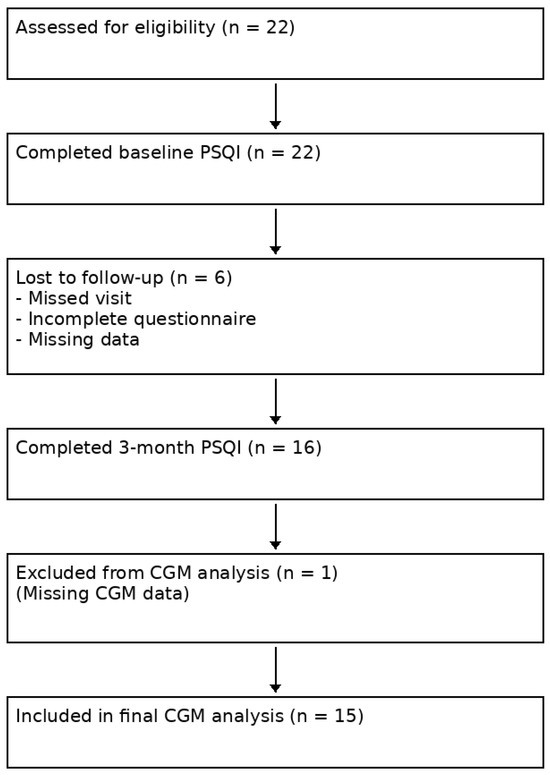
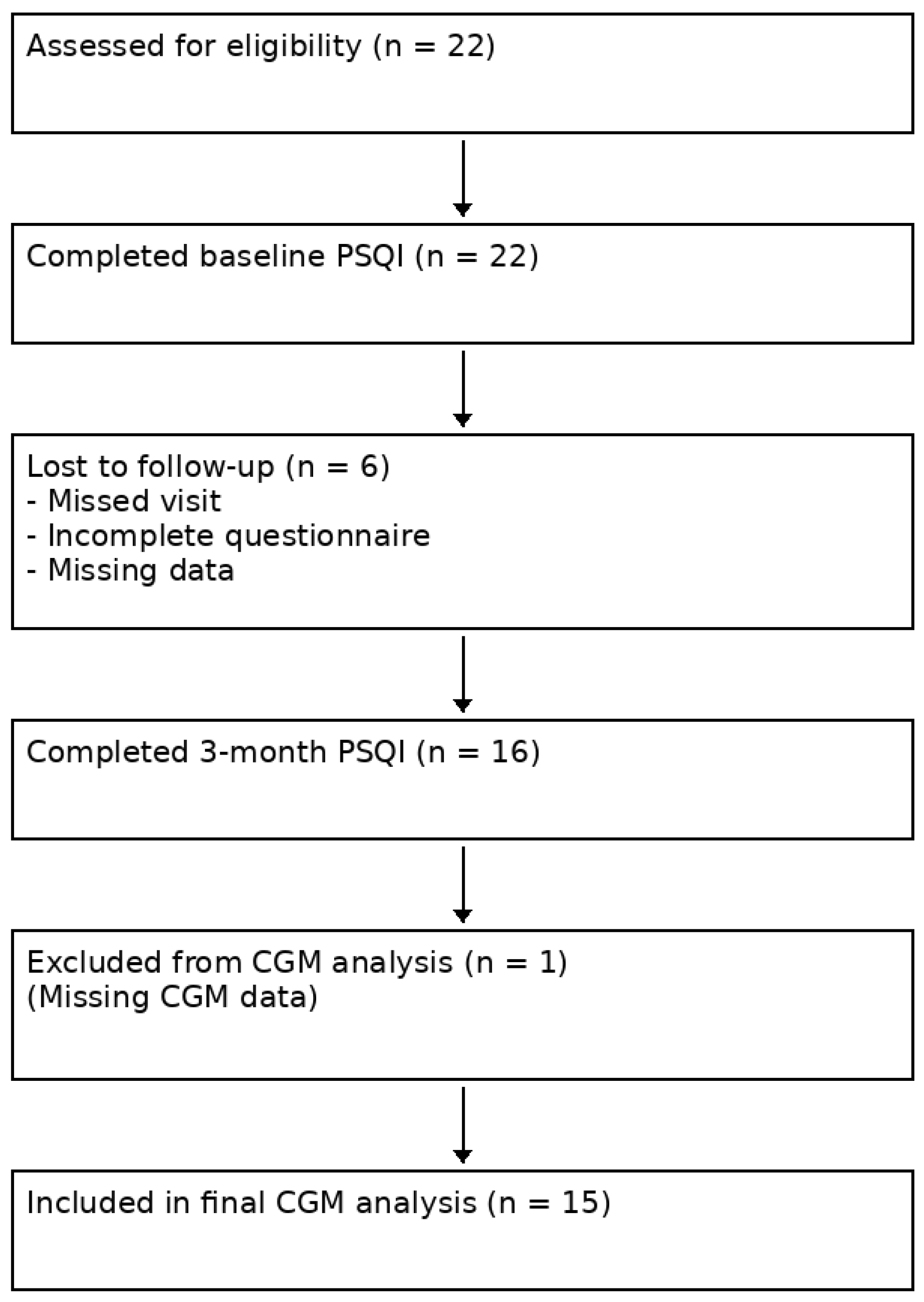
A STROBE-compliant participant flow diagram (Figure 1) is provided to detail participant enrolment, eligibility, follow-up, and reasons for attrition.
Figure 1.
STROBE flow diagram of participant enrolment, follow-up, and inclusion in analyses.
The study protocol was conducted in accordance with the Declaration of Helsinki and approved by the Provincial Research Ethics Committee (1299-N-23). All participants and their legal guardians were fully informed about the study procedures, and written informed consent was obtained prior to participation.
Data analysis was performed using R version 4.5.2 (R Core Team (2025)) and free RStudio software version 2025.05.0. As this was a prospective real-world study, all eligible patients transitioning to an AHCL system during the study period were included, and no formal a priori sample size calculation was performed. To provide context for the interpretation of results, a post hoc evaluation of statistical power and effect size was conducted. Based on the paired sample with complete follow-up (n = 16), the study had approximately 80% power to detect large within-subject effect sizes (Cohen’s d ≥ 0.7–0.8) at a two-sided α level of 0.05. For the primary outcome (change in PSQI), effect size was estimated using the Wilcoxon signed-rank test, yielding a large effect (r = 0.59) that corresponded to an approximate Cohen’s d of 1.4–1.5. The Shapiro–Wilk test was used to assess the normality of the data distribution. Non-parametric paired comparisons were performed using the Wilcoxon signed-rank test. Associations between PSQI scores and clinical or glucometric parameters were evaluated using Spearman correlation coefficients. Categorical variables were compared using McNemar tests. All tests were two-sided, and p-values ≤ 0.05 were considered statistically significant.
3. Results
A total of twenty-two caregivers completed the pre-installation PSQI questionnaire; among them, 12 individuals (54.5%) had a global PSQI score > 5. Sixteen caregivers also completed the questionnaire three months after system implementation, corresponding to a loss to follow-up of 27%. These losses were primarily attributable to missed follow-up visits and incomplete questionnaire data. One participant did not have corresponding 3-month glucometric data available; therefore, the glucometric subgroup analysis was performed on 15 participants.
Focusing on the 16 caregivers with complete PSQI follow-up, nine (56.3%) had a baseline PSQI score > 5 prior to AHCL initiation. This proportion significantly decreased to three out of 16 (18.8%) after three months of AHCL use (p = 0.034).
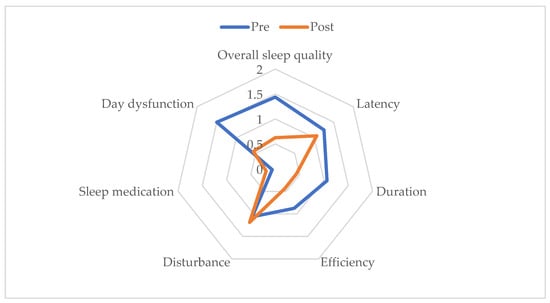
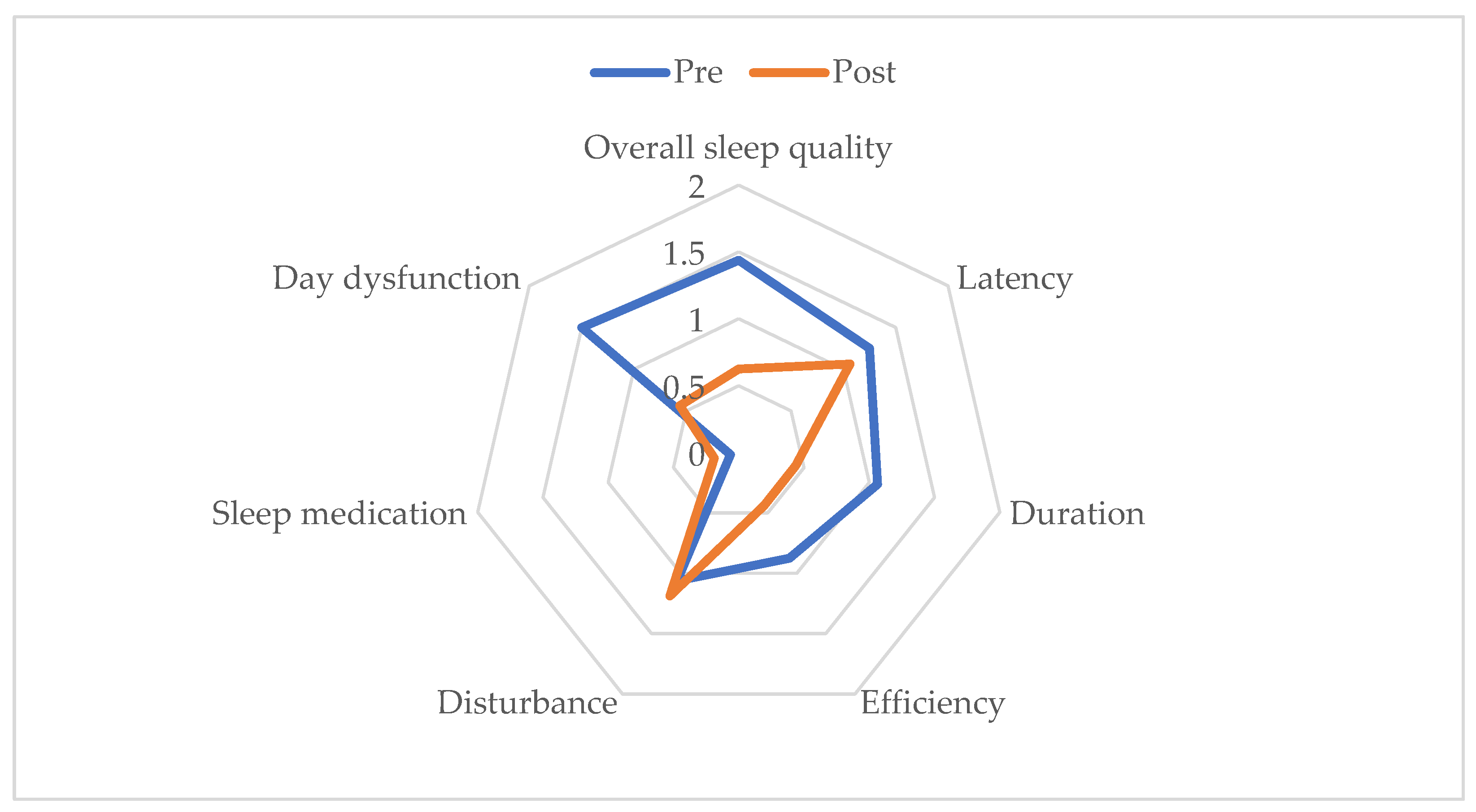
Overall, 13 of the 16 patients (81.3%) showed a reduction in their total PSQI score in the post-installation assessment (p = 0.018). Changes in individual PSQI components are presented in Figure 2. The largest mean improvements were observed in daytime dysfunction (−0.94), subjective sleep quality (−0.81), and sleep duration (−0.63). A slight worsening was detected in sleep disturbances (+0.13) and use of sleep medication (+0.13).
Figure 2.
Change in PSQI component scores from baseline to 3 months after AHCL initiation.
To explore potential relationships between sleep quality and glucometric control, Spearman correlation analyses were performed comparing PSQI global scores—assessed before AHCL initiation, after 3 months of use, and as change over time (Δ PSQI)—with clinical characteristics and a comprehensive set of glucometric parameters obtained at baseline, at 3 months, and as their respective deltas. Supplementary Table S1 summarizes the correlation coefficients and associated p values, highlighting both the direction and magnitude of associations across the different dimensions of sleep quality and metabolic control.
A positive correlation was observed between age at diagnosis and the PSQI score prior to AHCL initiation (Spearman Rho = 0.458, p = 0.032), indicating that participants diagnosed at an older age tended to report poorer sleep quality prior to AHCL initiation.
A positive correlation was found between the baseline PSQI score and the percentage of TBR1 at 3 months (Spearman Rho = 0.573, p = 0.007), indicating that patients with lower baseline PSQI scores exhibited less hypoglycemia (54–69 mg/dL) after AHCL initiation.
PSQI at 3 months showed a positive correlation with the change (Δ) in TBR1 from baseline to 3 months (Spearman Rho = 0.591, p = 0.020), suggesting that poorer sleep quality at follow-up was associated with a greater increase in moderate hypoglycemia over time.
Conversely, PSQI at 3 months was negatively correlated with baseline TBR1 (Spearman Rho = −0.518, p = 0.040), indicating that participants with poorer sleep quality after 3 months tended to have lower percentages of moderate hypoglycemia before AHCL initiation.
In the subgroup of patients whose caregivers completed the questionnaires at baseline and at the 3-month assessment, and for whom CGM data were available (n = 15), we analyzed the proportion meeting the international CGM consensus targets [21]. The percentage of participants achieving a TIR > 70% (70–180 mg/dL) increased significantly from 26.7% at baseline to 80.0% after three months of AHCL use (p = 0.008). A similar improvement was observed for TAR > 180 mg/dL < 30%, which increased from 26.7% to 80.0% (p = 0.008). The proportion achieving the stricter hyperglycemia target (TAR2 > 250 mg/dL < 5%) also rose significantly, from 20.0% to 53.3% (p = 0.008). Changes in hypoglycemia related metrics did not reach statistical significance. The proportion of patients meeting TBR < 70 mg/dL < 5% increased from 80.0% to 93.3% (p = 0.625), while those meeting TBR2 < 54 mg/dL < 1% decreased from 86.7% to 53.3% (p = 0.125). No episodes of symptomatic hypoglycemia or level 3 hypoglycemia were reported during the study period. The percentage fulfilling TBR1 (54–70 mg/dL < 4%) increased from 66.7% to 86.7% (p = 0.375). The proportion meeting TAR1 (180–250 mg/dL < 25%) increased from 40.0% to 93.3% (p = 0.063), although this change did not reach statistical significance (Table 1).
Table 1.
Proportion of patients meeting CGM consensus targets before AHCL initiation and after 3 months.
Further analyses explored the associations between glucometric parameters and individual PSQI components before and after AHCL initiation.
At baseline, the proportion of time spent in mild hypoglycemia (TBR1 54–70 mg/dL) correlated negatively with sleep latency measured after AHCL installation (Spearman Rho = −0.572, p = 0.026). At the 3-month assessment, TBR1 was positively correlated with daytime dysfunction scores at baseline (Spearman Rho = 0.570, p = 0.026) and negatively correlated with changes in sleep duration (Spearman Rho = −0.684, p = 0.005) and sleep efficiency (Spearman Rho = −0.684, p = 0.017).
Changes in mild hypoglycemia (Δ TBR1 54–69 mg/dL) were positively correlated with sleep latency after AHCL installation (Spearman Rho = 0.567, p = 0.028) and with daytime dysfunction scores at the 3-month follow-up (Spearman Rho = 0.632, p = 0.012).
Changes in moderate hyperglycemia (Δ TAR1 180–250 mg/dL) correlated positively with changes in sleep disturbances (Spearman Rho = 0.521, p = 0.046). Additionally, increases in severe hyperglycemia (Δ TAR2 > 250 mg/dL) correlated with higher sleep disturbance scores after AHCL initiation (Spearman Rho = 0.562, p = 0.029), greater sleep medication use after AHCL initiation (Spearman Rho = 0.573, p = 0.026), and increases in sleep medication use over the study period (Spearman Rho = 0.573, p = 0.026). All the correlation results are summarized in Table 2.
Table 2.
Correlations between glucometric variables and individual PSQI components at baseline and after 3 months of AHCL use.
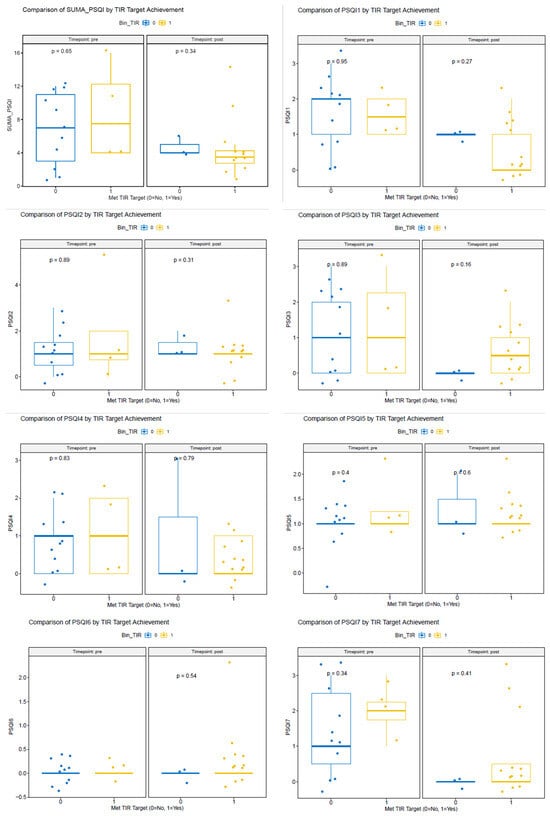
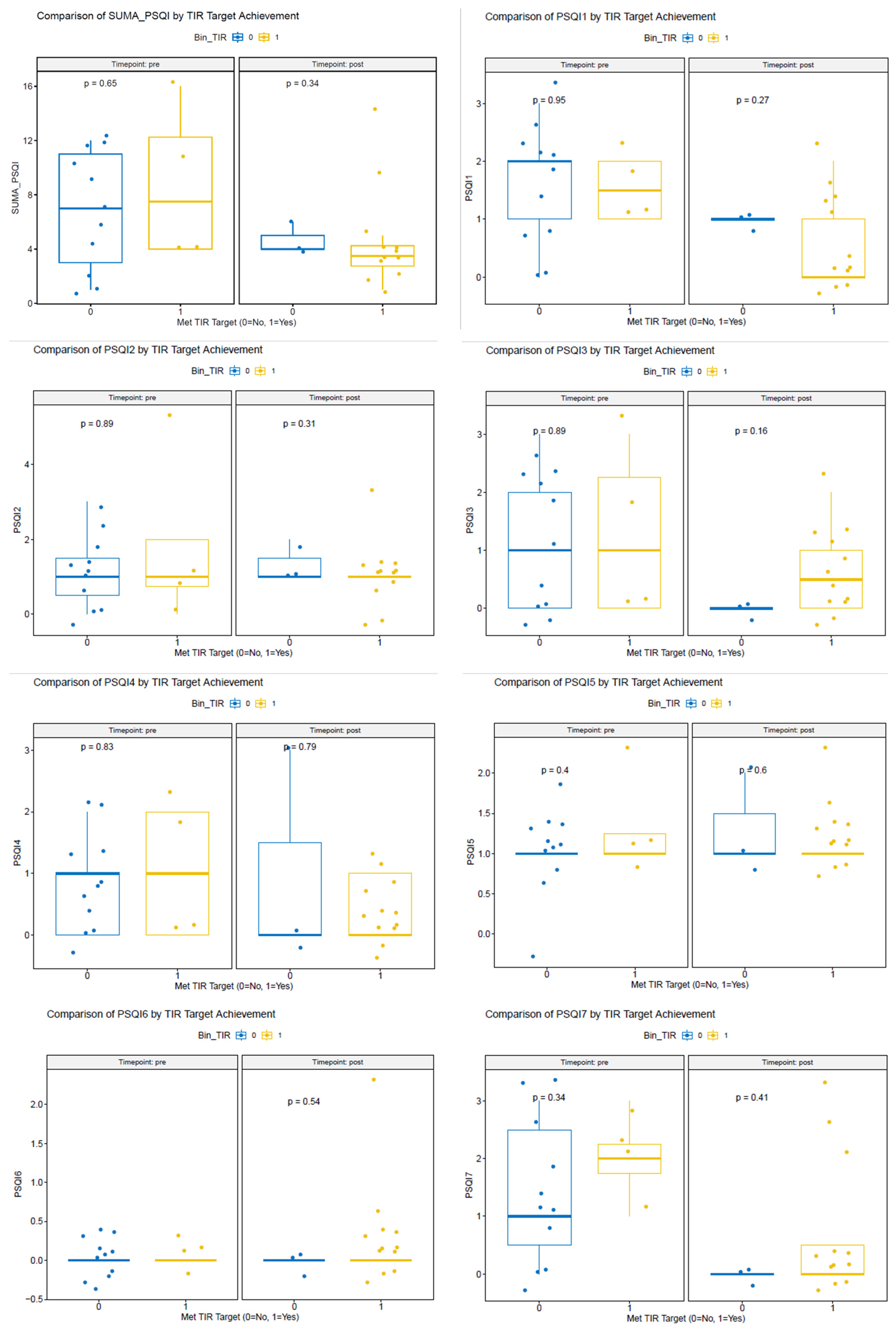
Using Wilcoxon rank sum tests, PSQI global and item scores were compared between participants who met the TIR target (>70%, 70–180 mg/dL) and those who did not, both at baseline and after 3 months of AHCL use. At baseline, there were no statistically significant differences between groups in PSQI global score or score for any component (all p values ≥ 0.64). After 3 months, between-group differences in global score (p = 0.34) and score for individual components (e.g., subjective sleep quality, p = 0.27; sleep latency, p = 0.31; sleep duration, p = 0.16; use of sleep medication, p = 0.66) did not reach statistical significance. A trend toward lower PSQI sleep efficiency scores among participants meeting the TIR target was observed at 3 months (PSQI4, p = 0.079), but this did not reach statistical significance. The median values for the group meeting the TIR target at 3 months were higher, consistent with the numerically lower PSQI scores across several components, as depicted in Figure 3.
Figure 3.
PSQI scores by achievement of the consensus TIR target at baseline and 3 months.
4. Discussion
In this prospective cohort of children and adolescents with T1D who transitioned from CSII + isCGM to an AHCL system, we observed a clinically meaningful improvement in caregivers’ sleep quality, with the proportion of participants scoring PSQI > 5 decreasing from 56.3% to 18.8% at three months, and 81.3% showing lower PSQI global scores (ρ = 0.018–0.034). We also found substantial gains in CGM consensus targets (e.g., TIR > 70% increasing from 26.7% to 80.0%; TAR2 > 250 mg/dL < 5% improving from 20.0% to 53.3%), whereas changes in hypoglycemia metrics did not reach significance. Exploratory correlations suggested that increases in TAR2 were associated with higher sleep disturbance and greater use of sleep medication, while TBR1 showed mixed, component specific relationships (e.g., latency, daytime dysfunction). Altogether, these findings indicate that AHCL systems may reduce nocturnal caregiving burden and improve perceived sleep even when objective hypoglycemia endpoints remain stable.
Our results are consistent with accumulated evidence showing that AHCL systems improve nocturnal glycemia, TIR, and glycemic variability across pediatric age groups, both in randomized trials and in real-world settings [1,5,6,7,22,23,24,25]. Recent reviews conclude that commercial AHCL systems are safe and effective in children as young as 2 years, leading to improvements in glycemia and in quality of life for both patients and caregivers [23,24,25]. These observations align with the significant increase we observed in the proportion of participants meeting TIR and hyperglycemia targets after three months.
Regarding sleep outcomes, our findings showing improvements in subjective sleep quality measured by the PSQI align with previous studies in parents and caregivers using automated insulin delivery (AID) or AHCL systems, which consistently report reduced fear of hypoglycemia, fewer nocturnal awakenings and better perceived sleep [8,11,12,13,14,22,26,27]. Two recent syntheses are particularly informative: a meta-analysis found significant, albeit small to moderate, improvements in self-reported outcomes (including sleep quality in observational cohorts) among AID users [26], and a 2026 systematic review and meta-analysis focused on sleep concluded that caregivers of pediatric T1D patients experience meaningful perceived sleep benefits with AID, whereas effects in adults are mixed and the evidence in children remains limited [27].
At the same time, a recurring disconnect between subjective and objective sleep measures has been reported. In youths, randomized and prospective studies using actigraphy often show modest or no changes in sleep duration or efficiency despite robust glycemic improvements (and in one RCT, even a small increase in Wake After Sleep Onset (WASO) and a decline in sleep efficiency at 13 weeks), suggesting that sleep architecture may not shift as readily as perceived sleep burden [9,15,28]. Findings in older adults echo this pattern [16]. Our exploratory correlations linking TAR2 with sleep disturbance and sleep medication use suggest that nocturnal hyperglycemia (and related symptoms or alarms) may be a salient driver of residual sleep fragmentation even when overall metabolic control improves. These mechanistic hypotheses are consistent with the broader literature demonstrating bidirectional links between hyperglycemia, glycemic variability, and sleep disruption in T1D [28,29].
Although the PSQI was originally developed in psychiatric populations [17], it has become the most widely used subjective instrument for assessing sleep quality across diverse clinical and research settings [30]. Its use has been extended to chronic disease populations and to caregivers, including non-professional caregivers in whom adequate psychometric properties have been demonstrated [31]. In the specific context of T1D, prior studies have applied the PSQI in parents of affected children and shown that it can capture impaired sleep quality related to nocturnal caregiving demands, such as glucose monitoring and fear of hypoglycemia [32]. However, the PSQI does not distinguish between pathological sleep disturbances and intentional nocturnal awakenings related to caregiving tasks. This distinction is particularly relevant in caregivers of children with T1D and may partially explain the observed discrepancy between subjective sleep improvements and the more modest or inconsistent changes in objective sleep parameters.
From an implementation perspective, translating AHCL-related glycemic gains into consistent sleep benefits requires careful attention to alarm burden, target and alert settings, and the development of trust in automation. Recent implementation guidance and user experience reviews emphasize proactive education and expectation setting, the practice of effective “alarm hygiene”, and iterative fine tuning of correction targets to minimize unnecessary nighttime awakenings and avoid counterproductive overrides [12,13,14,23,24,25,33].
Another key area for development is the human factor interface between algorithms and clinical pathways. Real world pediatric data show sustained improvements in HbA1c, Time In Range, and sleep-related well-being over 6 to 12 months [22], whereas qualitative research highlights alarm fatigue, override behaviors, and learning curves that may blunt sleep benefits if left unaddressed [34]. Implementation frameworks propose stepped education, expectation management, and equity-oriented access strategies, including time and training support, language appropriate materials, and device choice, to help families build trust in the system and avoid unnecessary night checks [23,24,25,33,34].
Finally, technology evolution may influence nocturnal outcomes. Trials and registries indicate that AID improves glycemia across a wide range of baselines (including direct transitions from multiple daily injections (MDIs)), but sleep effects remain heterogeneous and likely depend on insulin kinetics, target settings, and alarm design [15,35]. Ongoing and recent studies aim to optimize post prandial control within AHCL systems and could reduce late evening hyperglycemia that disrupts sleep [36,37]; importantly, sleep endpoints should be prospectively embedded [30]. Routine ambulatory glucose profile-guided reviews focused on flattening overnight curves and minimizing excursions offer a practical clinical approach to align glycemic and sleep goals during follow-up [38].
The strengths of this study include the prospective real-world design, which reflects routine clinical practice, the standardized assessment of caregiver-reported sleep using the PSQI at two time points, and the use of consensus-based CGM metrics. The PSQI, including its Spanish-language adaptations, is a widely validated tool, with established psychometric performance in both adult and youth populations, supporting its use in this context [17,19,30].
The limitations of this study include the single-center setting, the relatively small sample size and the participants that were lost to follow-up, which may introduce attrition bias. Given the limited sample size, formal comparisons between participants who completed follow-up and those were lost to follow-up were not performed, which limits the ability to fully exclude the presence of attrition bias. In addition, the number of correlations explored relative to the sample size increases the risk of type I errors; therefore, the correlation analyses should be interpreted with caution and considered hypothesis-generating. Additional limitations include the limited sample available for paired analyses at three months, the absence of objective sleep measures such as actigraphy, and potential selection bias among families adopting AHCL systems. Although each patient served as their own control in the pre–post comparison, the lack of a separate control group limits causal inference, as the observed changes cannot be definitively attributed to the intervention and may be influenced by temporal trends or unmeasured confounding factors. Because the PSQI primarily captures perceived sleep, future pediatric AHCL studies should complement subjective measures with objective sleep endpoints such as actigraphy or polysomnography, alongside device-derived analytics—including alarm counts, overnight corrections, and night-specific glycemic phenotyping (e.g., nocturnal variability or time-weighted hyperglycemia)—to better identify which nocturnal events most robustly fragment sleep. Harmonizing sleep endpoints across trials would further facilitate meta-analyses and strengthen causal inference [17,19,30]. Embedding implementation frameworks and equity strategies may enhance caregiver sleep benefits as AHCL access expands [23,24,25,33,39].
5. Conclusions
Early transition to AHCL systems in pediatric T1D was associated with improvements in caregiver-reported sleep quality and increased attainment of CGM consensus targets within three months. Residual hyperglycemia was also associated with greater sleep disturbance and sleep medication use in the exploratory analyses. These findings highlight the potential relevance of individualized alert settings and sleep-focused education during AHCL follow-up while emphasizing the need for further studies to confirm these observations.
Supplementary Materials
The following supporting information can be downloaded at: https://www.mdpi.com/article/10.3390/endocrines7020029/s1, Table S1: Correlation of global PSQI with clinical and glucometric parameters. File S1: Spanish version of the Pittsburgh Sleep Quality Index (PSQI).
Author Contributions
Conceptualization, A.L.-J. and A.G.-R.; methodology, I.L.-G. and F.G.-D.-C.; formal analysis, F.G.-D.-C.; investigation, A.G.-P., S.G.-G., C.F.-L. and C.L.-D.L.T.; resources, A.G.-P. and C.L.-D.L.T.; data curation, F.G.-D.-C. and I.L.-G.; writing—original draft preparation, A.L.-J., A.G.-R. and S.G.-G.; writing—review and editing, A.L.-J., A.G.-P. and C.F.-L.; visualization, A.G.-R.; supervision, A.L.-J. and I.L.-G.; project administration, A.L.-J. and F.G.-D.-C. All authors have read and agreed to the published version of the manuscript.
Funding
This research project is funded by the Andalusian Ministry of Health and Family (PIGE 0533-2019).
Institutional Review Board Statement
This study was conducted according to the guidelines of the Declaration of Helsinki and approved by the Provincial Ethics Committee of Malaga (1299-N-23, 27 July 2023).
Informed Consent Statement
Informed consent was obtained from all subjects involved in the study.
Data Availability Statement
The original contributions presented in this study are included in the article. Further inquiries can be directed to the corresponding authors.
Conflicts of Interest
The authors declare no conflicts of interest.
Abbreviations
The following abbreviations are used in this manuscript:
| T1D | Type 1 diabetes |
| AHCL | Advanced hybrid closed-loop |
| TIR | Time In Range |
| TAR1 | Time Above Range Level 1 |
| TAR2 | Time Above Range Level 2 |
| TBR1 | Time Below Range Level 1 |
| TBR2 | Time Below Range Level 2 |
| CSII | Continuous subcutaneous insulin infusion |
| CGM | Continuous glucose monitoring |
| isCGM | Intermittently scanned continuous glucose monitoring |
| PSQI | Pittsburgh Sleep Quality Index |
| AID | Automated insulin delivery |
| RCT | Randomized Controlled Trial |
| WASO | Wake after sleep onset |
| MDIs | Multiple daily injections |
References
- Ware, J.; Allen, J.M.; Boughton, C.K.; Wilinska, M.E.; Hartnell, S.; Thankamony, A.; de Beaufort, C.; Schierloh, U.; Fröhlich-Reiterer, E.; Mader, J.K.; et al. Randomized Trial of Closed-Loop Control in Very Young Children with Type 1 Diabetes. N. Engl. J. Med. 2022, 386, 209–219. [Google Scholar] [CrossRef] [Scilit]
- Ruiz-Grao, M.C.; Díez-Fernández, A.; Mesas, A.E.; Martínez-Vizcaíno, V.; Sequí-Domínguez, I.; Sebastián-Valles, F.; Garrido-Miguel, M. Trends in the Incidence of Type 1 Diabetes in European Children and Adolescents from 1994 to 2022: A Systematic Review and Meta-Analysis. Pediatr. Diabetes 2024, 2024, 2338922. [Google Scholar] [CrossRef] [Scilit]
- Conde Barreiro, S.; González Pelegrín, B.; Quevedo Beneyto, B.; Feja Solana, C.; Malo Aznar, C.; Rojo-Martínez, G.; Menéndez Torre, E.; Gómez Peralta, F. Estimation of the Incidence and Prevalence of Type 1 Diabetes Mellitus in Children under 15 Years of Age in Spain. Endocrinol. Diabetes Y Nutr. 2025, 72, 501591. [Google Scholar] [CrossRef] [Scilit]
- Conde Barreiro, S.; Rodríguez Rigual, M.; Bueno Lozano, G.; López Siguero, J.P.; González Pelegrín, B.; Rodrigo Val, M.P.; Compés Dea, M.L. Epidemiología de La Diabetes Mellitus Tipo 1 En Menores de 15 Años En España. An. Pediatr. 2014, 81, 189.e1–189.e12. [Google Scholar] [CrossRef] [Scilit]
- Wadwa, R.P.; Reed, Z.W.; Buckingham, B.A.; DeBoer, M.D.; Ekhlaspour, L.; Forlenza, G.P.; Schoelwer, M.; Lum, J.; Kollman, C.; Beck, R.W.; et al. Trial of Hybrid Closed-Loop Control in Young Children with Type 1 Diabetes. N. Engl. J. Med. 2023, 388, 991–1001. [Google Scholar] [CrossRef] [Scilit]
- Breton, M.D.; Kanapka, L.G.; Beck, R.W.; Ekhlaspour, L.; Forlenza, G.P.; Cengiz, E.; Schoelwer, M.; Ruedy, K.J.; Jost, E.; Carria, L.; et al. A Randomized Trial of Closed-Loop Control in Children with Type 1 Diabetes. N. Engl. J. Med. 2020, 383, 836–845. [Google Scholar] [CrossRef] [Scilit] [PubMed]
- Kanapka, L.G.; Wadwa, R.P.; Breton, M.D.; Ruedy, K.J.; Ekhlaspour, L.; Forlenza, G.P.; Cengiz, E.; Schoelwer, M.J.; Jost, E.; Carria, L.; et al. Extended Use of the Control-IQ Closed-Loop Control System in Children With Type 1 Diabetes. Diabetes Care 2021, 44, 473–478. [Google Scholar] [CrossRef] [Scilit]
- Cobry, E.C.; Bisio, A.; Wadwa, R.P.; Breton, M.D. Improvements in Parental Sleep, Fear of Hypoglycemia, and Diabetes Distress With Use of an Advanced Hybrid Closed-Loop System. Diabetes Care 2022, 45, 1292–1295. [Google Scholar] [CrossRef] [Scilit] [PubMed]
- Cobry, E.C.; Hamburger, E.; Jaser, S.S. Impact of the Hybrid Closed-Loop System on Sleep and Quality of Life in Youth with Type 1 Diabetes and Their Parents. Diabetes Technol. Ther. 2020, 22, 794–800. [Google Scholar] [CrossRef] [Scilit]
- Lendínez-Jurado, A.; Gómez-Perea, A.; Ariza-Jiménez, A.B.; Tapia-Ceballos, L.; Becerra-Paz, I.; Martos-Lirio, M.F.; Moreno-Jabato, F.; Leiva-Gea, I. Impact on Glucometric Variables and Quality of Life of the Advanced Hybrid Closed-Loop System in Pediatric and Adolescent Type 1 Diabetes. J. Diabetes 2023, 15, 699–708. [Google Scholar] [CrossRef] [Scilit]
- Madrid-Valero, J.J.; Ware, J.; Allen, J.M.; Boughton, C.K.; Hartnell, S.; Wilinska, M.E.; Thankamony, A.; de Beaufort, C.; Schierloh, U.; Campbell, F.M.; et al. Sleep Quality and Quantity in Caregivers of Children with Type 1 Diabetes Using Closed-Loop Insulin Delivery or a Sensor-Augmented Pump. Pediatr. Diabetes 2023, 2023, 7937007. [Google Scholar] [CrossRef] [Scilit]
- Jabari, M. Efficacy and Safety of Closed-Loop Control System for Type One Diabetes in Adolescents a Meta Analysis. Sci. Rep. 2023, 13, 13165. [Google Scholar] [CrossRef] [Scilit]
- Franceschi, R.; Mozzillo, E.; Di Candia, F.; Maines, E.; Leonardi, L.; Girardi, M.; Fedi, L.; Rosanio, F.M.; Marcovecchio, M.L. A Systematic Review on the Impact of Commercially Available Hybrid Closed Loop Systems on Psychological Outcomes in Youths with Type 1 Diabetes and Their Parents. Diabet. Med. 2023, 40, e15099. [Google Scholar] [CrossRef] [Scilit]
- Madrid-Valero, J.J.; Scott, E.M.; Boughton, C.K.; Allen, J.M.; Ware, J.; Wilinska, M.E.; Hartnell, S.; Thankamony, A.; Randell, T.; Ghatak, A.; et al. Closed-Loop Therapy and Sleep in Young People Newly Diagnosed With Type 1 Diabetes and Their Parents. J. Diabetes Sci. Technol. 2026, 20, 335–341. [Google Scholar] [CrossRef] [Scilit] [PubMed]
- Michaels, V.R.; Boucsein, A.; Haszard, J.J.; Galland, B.; Meredith-Jones, K.A.; Zhou, Y.; Jones, S.D.; Paul, R.G.; Wiltshire, E.; Jefferies, C.; et al. Impact of Automated Insulin Delivery on Subjective and Objective Sleep in Children and Young Adults with Very High HbA1c: Sleep Outcomes from the CO-PILOT Randomised Controlled Trial. Diabet. Med. 2025, 42, e70093. [Google Scholar] [CrossRef] [Scilit]
- Cobry, E.C.; Karami, A.J.; Meltzer, L.J. Friend or Foe: A Narrative Review of the Impact of Diabetes Technology on Sleep. Curr. Diabetes Rep. 2022, 22, 283–290. [Google Scholar] [CrossRef] [Scilit]
- Buysse, D.J.; Reynolds, C.F.; Monk, T.H.; Berman, S.R.; Kupfer, D.J. The Pittsburgh Sleep Quality Index: A New Instrument for Psychiatric Practice and Research. Psychiatry Res. 1989, 28, 193–213. [Google Scholar] [CrossRef] [Scilit] [PubMed]
- Mollayeva, T.; Thurairajah, P.; Burton, K.; Mollayeva, S.; Shapiro, C.M.; Colantonio, A. The Pittsburgh Sleep Quality Index as a Screening Tool for Sleep Dysfunction in Clinical and Non-Clinical Samples: A Systematic Review and Meta-Analysis. Sleep Med. Rev. 2016, 25, 52–73. [Google Scholar] [CrossRef] [Scilit] [PubMed]
- de la Vega, R.; Tomé-Pires, C.; Solé, E.; Racine, M.; Castarlenas, E.; Jensen, M.P.; Miró, J. The Pittsburgh Sleep Quality Index: Validity and Factor Structure in Young People. Psychol. Assess. 2015, 27, e22–e27. [Google Scholar] [CrossRef] [Scilit]
- Hita-Contreras, F.; Martínez-López, E.; Latorre-Román, P.A.; Garrido, F.; Santos, M.A.; Martínez-Amat, A. Reliability and Validity of the Spanish Version of the Pittsburgh Sleep Quality Index (PSQI) in Patients with Fibromyalgia. Rheumatol. Int. 2014, 34, 929–936. [Google Scholar] [CrossRef] [Scilit]
- Battelino, T.; Danne, T.; Bergenstal, R.M.; Amiel, S.A.; Beck, R.; Biester, T.; Bosi, E.; Buckingham, B.A.; Cefalu, W.T.; Close, K.L.; et al. Clinical Targets for Continuous Glucose Monitoring Data Interpretation: Recommendations from the International Consensus on Time in Range. Diabetes Care 2019, 42, 1593–1603. [Google Scholar] [CrossRef] [Scilit] [PubMed]
- Ng, S.M.; Wright, N.P.; Yardley, D.; Campbell, F.; Randell, T.; Trevelyan, N.; Ghatak, A.; Hindmarsh, P.C. Long-Term Assessment of the NHS Hybrid Closed-Loop Real-World Study on Glycaemic Outcomes, Time-in-Range, and Quality of Life in Children and Young People with Type 1 Diabetes. BMC Med. 2024, 22, 175. [Google Scholar] [CrossRef] [Scilit]
- Schoelwer, M.J.; DeBoer, M.D.; Breton, M.D. Use of Diabetes Technology in Children. Diabetologia 2024, 67, 2075–2084. [Google Scholar] [CrossRef] [Scilit] [PubMed]
- Boughton, C.K.; Hovorka, R. The Role of Automated Insulin Delivery Technology in Diabetes. Diabetologia 2024, 67, 2034–2044. [Google Scholar] [CrossRef] [Scilit] [PubMed]
- Kadiyala, N.; Hovorka, R.; Boughton, C.K. Closed-Loop Systems: Recent Advancements and Lived Experiences. Expert Rev. Med. Devices 2024, 21, 927–941. [Google Scholar] [CrossRef] [Scilit]
- Roos, T.; Hermanns, N.; Groß, C.; Kulzer, B.; Haak, T.; Ehrmann, D. Effect of Automated Insulin Delivery Systems on Person-Reported Outcomes in People with Diabetes: A Systematic Review and Meta-Analysis. eClinicalMedicine 2024, 76, 102852. [Google Scholar] [CrossRef] [Scilit]
- Zaucha Sørensen, M.; Andersen, T.H.; Suvitaival, T.; Svensson, J.; Nørgaard, K.; Christensen, M.B. The Effect of Automated Insulin Delivery Systems on Sleep Quality and Quantity in Type 1 Diabetes: A Systematic Review and Meta-Analysis. Diabetes Technol. Ther. 2026, 15209156251411924. [Google Scholar] [CrossRef] [Scilit]
- Arosemena, M.; Salguero, M.V.; Greeley, S.A.W.; Naylor, R.N.; Tasali, E.; Philipson, L.H. Sleep Patterns in Adults and Children with Less Common Forms of Diabetes. Front. Endocrinol. 2025, 16, 1388995. [Google Scholar] [CrossRef] [Scilit]
- Ji, X.; Wang, Y.; Saylor, J. Sleep and Type 1 Diabetes Mellitus Management among Children, Adolescents, and Emerging Young Adults: A Systematic Review. J. Pediatr. Nurs. 2021, 61, 245–253. [Google Scholar] [CrossRef] [Scilit]
- Carpi, M. The Pittsburgh Sleep Quality Index: A Brief Review. Occup. Med. 2025, 75, 14–15. [Google Scholar] [CrossRef] [Scilit]
- Otero, P.; Simón, M.A.; Bueno, A.M.; Blanco, V.; Vázquez, F.L. Factorial Structure and Psychometric Properties of the Spanish Version of the Pittsburgh Sleep Quality Index in Non-Professional Caregivers. Healthcare 2022, 11, 67. [Google Scholar] [CrossRef] [Scilit] [PubMed]
- Macaulay, G.C.; Boucher, S.E.; Yogarajah, A.; Galland, B.C.; Wheeler, B.J. Sleep and Night-Time Caregiving in Parents of Children and Adolescents with Type 1 Diabetes Mellitus—A Qualitative Study. Behav. Sleep Med. 2020, 18, 622–636. [Google Scholar] [CrossRef] [Scilit]
- Messer, L.H.; Forlenza, G.P.; Gonder-Frederick, L.; Hood, K.; Ebekozien, O.; Barnard-Kelly, K.; Laffel, L.M.; Sherr, J.L.; Lal, R.; Weinzimer, S.A. Practical Considerations and Implementation of Automated Insulin Delivery Systems. J. Diabetes Sci. Technol. 2025, 19, 950–957. [Google Scholar] [CrossRef] [Scilit]
- Bisio, A.; Gonder-Frederick, L.; McFadden, R.; Cherñavvsky, D.; Voelmle, M.; Pajewski, M.; Yu, P.; Bonner, H.; Brown, S.A. The Impact of a Recently Approved Automated Insulin Delivery System on Glycemic, Sleep, and Psychosocial Outcomes in Older Adults With Type 1 Diabetes: A Pilot Study. J. Diabetes Sci. Technol. 2022, 16, 663–669. [Google Scholar] [CrossRef] [Scilit] [PubMed]
- Wilmot, E.G.; Beltrand, J.; Guerci, B.; Berot, A.; Hanaire, H.; Bismuth, E.; Gillard, P.; Saade, M.-B.; Joubert, M.; Salet, R.; et al. 314-OR: Improved Outcomes across Baseline Time-in-Range Levels with the Omnipod 5 AID System Compared with Multiple Daily Injections (MDI) in Type 1 Diabetes (T1D)—Analysis of the RADIANT Study. Diabetes 2025, 74, 314-OR. [Google Scholar] [CrossRef] [Scilit]
- Haliloglu, B.; Boughton, C.K.; Lakshman, R.; Ware, J.; Nwokolo, M.; Thabit, H.; Mader, J.K.; Bally, L.; Leelarathna, L.; Wilinska, M.E.; et al. Postprandial Glucose Excursions with Ultra-Rapid Insulin Analogs in Hybrid Closed-Loop Therapy for Adults with Type 1 Diabetes. Diabetes Technol. Ther. 2024, 26, 449–456. [Google Scholar] [CrossRef] [Scilit]
- Morrison, D.J.; Lee, M.H.; Vogrin, S.; Hennessy, D.; Netzer, E.; Jones, H.M.; Robinson, L.; Smart, C.E.; Kurtz, N.; Roy, A.; et al. A Pilot Study Evaluating Meal Timing, Macronutrient Composition, and Faster-Acting Insulin Aspart Versus Insulin Aspart on Postprandial Glycemia with the Medtronic Advanced Hybrid Closed-Loop System. Diabetes Technol. Ther. 2026, 28, 38–46. [Google Scholar] [CrossRef] [Scilit]
- Martens, T.W.; Simonson, G.D.; Bergenstal, R.M. Using Continuous Glucose Monitoring Data in Daily Clinical Practice. Cleve. Clin. J. Med. 2024, 91, 611–620. [Google Scholar] [CrossRef] [Scilit]
- American Diabetes Association Professional Practice Committee for Diabetes. 7.Diabetes Technology: Standards of Care in Diabetes—2026. Diabetes Care 2026, 49, S150–S165. [Google Scholar] [CrossRef] [Scilit] [PubMed]

Disclaimer/Publisher’s Note: The statements, opinions and data contained in all publications are solely those of the individual author(s) and contributor(s) and not of MDPI and/or the editor(s). MDPI and/or the editor(s) disclaim responsibility for any injury to people or property resulting from any ideas, methods, instructions or products referred to in the content. |
© 2026 by the authors. Licensee MDPI, Basel, Switzerland. This article is an open access article distributed under the terms and conditions of the Creative Commons Attribution (CC BY) license.