


Abstract
Infertility is a major global public health concern that affects individuals throughout their reproductive years, with many cases remaining unexplained. Considering the increasing prevalence of infertility and its socioeconomic implications, understanding its underlying causes is essential. Among the numerous genetic contributors, polymorphisms in the methylenetetrahydrofolate reductase (MTHFR) gene have been studied extensively due to their influence on folate metabolism, DNA synthesis, and methylation. However, the reported association between MTHFR variants and infertility is inconsistent across populations due to differences in ethnicity, dietary folate intake, and methodological variation. This review summarizes recent evidence regarding MTHFR polymorphisms and their role in male, female, and idiopathic infertility. The C677T variant has been most consistently linked with male infertility, particularly in Asian populations. In women, MTHFR variants may contribute to infertility through altered homocysteine and folate levels, potentially affecting oocyte quality and endometrial receptivity. Genetic counseling and testing for MTHFR polymorphisms may be useful for couples with idiopathic infertility or a family history of such variants. Personalized management strategies, including folate supplementation, lifestyle modification, and targeted therapy, may improve reproductive outcomes. Further large-scale, well-designed studies are needed to clarify the clinical significance of MTHFR polymorphisms in infertility.
1. Introduction
Infertility is a significant public health concern affecting individuals during their reproductive lifespan. According to the most recent international glossary on infertility, this condition is defined as a disease characterized by the failure to achieve a clinical pregnancy after 12 months of regular, unprotected sexual intercourse or as a disorder of an individual’s reproductive capacity, whether alone or with a partner [1].
It is estimated that 17.5% of the world’s population will experience infertility at some point in their lifetime [2]. Infertility can be categorized into primary and secondary types. A female individual who has not undergone a clinical diagnosis of pregnancy and fulfills the established criteria for infertility is classified as experiencing primary infertility. Secondary infertility occurs in a woman who is unable to establish a clinical pregnancy after previously being diagnosed with one. Infertility may be classified into three distinct categories according to its etiology: female, male, and unexplained [1]. Genetic polymorphism is a single genetic locus with at least two alleles, each with a 1% or greater frequency [3]. Polymorphisms vary among individuals and have different applications in medical genetics [3]. For example, they are used in association studies for susceptibility to multifactorial diseases, as markers to identify fetal DNA in maternal serum in noninvasive prenatal testing, and for preimplantation genetic diagnosis (PGD) or drug prescriptions based on pharmacogenomics [4,5,6].
Various studies have examined the relationship between infertility and genetic polymorphisms [7,8]. One particular genetic polymorphism that researchers have studied is the methylenetetrahydrofolate reductase (MTHFR) gene [9,10]. The MTHFR gene is located at the end of the short arm of chromosome 1 (1p36.3), consists of 33 exons, and plays a crucial role in folate metabolism, which is essential for DNA synthesis and methylation [11]. MTHFR gene polymorphisms, specifically C677T and A1298C, have been correlated with a variety of health issues, including infertility [12,13]. The incidence of homozygous MTHFR polymorphisms exhibits variation across different demographic groups: 10–14% in Caucasians, 21% in Hispanics, 1–7% in Africans, and approximately 11% in Asians [14]. The prevalence of heterozygous C677T within the general population is estimated to be around 20–25% [15]. This specific point mutation synthesizes a dysfunctional and unstable MTHFR enzyme characterized by reduced enzymatic activity. Due to the diminished enzymatic function of the mutant MTHFR variant, there is an elevation in serum homocysteine concentrations. The MTHFR enzyme demonstrates functionality of only 19% in homozygotes and 71% in heterozygotes compared to individuals without mutations [16].
There is a limited number of investigations on the A1298C polymorphism; these investigations indicate that the CC genotype operates at a functional capacity equivalent to 79% of the AA genotype. A1298C homozygotes do not display elevated serum homocysteine levels [17]. Nevertheless, individuals possessing a combination of heterozygous A1298C and C677T polymorphisms, akin to C677T homozygotes, present with increased homocysteine levels and diminished folate concentrations [18].
Given rising global infertility rates and increasing demand for treatment, understanding modifiable causes like MTHFR polymorphisms becomes crucial [19]. These variants represent potentially manageable factors through folate/homocysteine modulation. This review evaluates current evidence on MTHFR polymorphisms in female, male, and idiopathic infertility, emphasizing their implications for personalized management strategies.
Beyond MTHFR, folate-mediated one-carbon metabolism is governed by an interconnected network of enzymes, including methionine synthase (MTR; e.g., A2756G variant), methionine synthase reductase (MTRR; e.g., A66G variant), and cystathionine beta-synthase (CBS). Functional polymorphisms across these secondary loci can synergistically attenuate transmethylation efficiency or aggravate hyperhomocysteinemia, modulating individual phenotypic susceptibility to MTHFR variants. A systemic reduction in the S-adenosylmethionine to S-adenosylhomocysteine (SAM/SAH) ratio suppresses cellular methyltransferase kinetics, directly interfering with de novo nucleotide synthesis, DNA repair fidelity, and dynamic epigenetic reprogramming [20]. Concurrently, cellular accumulation of homocysteine generates extensive reactive oxygen species (ROS), promoting vascular endothelial injury, reducing nitric oxide bioavailability, and triggering microvascular thrombosis [21]. Given that successful gametogenesis, fertilization, and early embryogenesis require high rates of cellular division and precise epigenetic fidelity, disruptions across this metabolic axis directly jeopardize reproductive outcomes [22].
2. Female Infertility
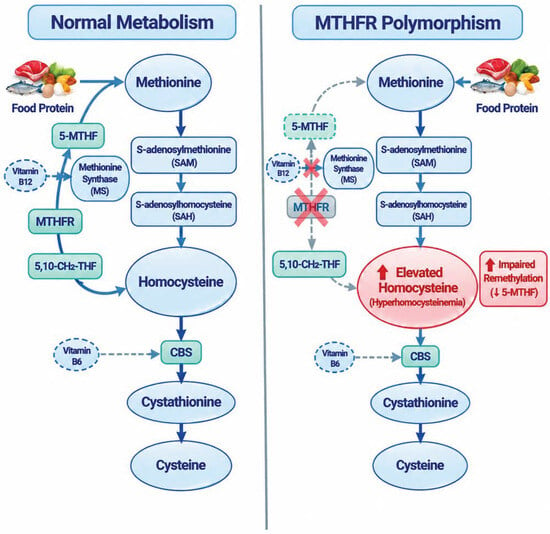
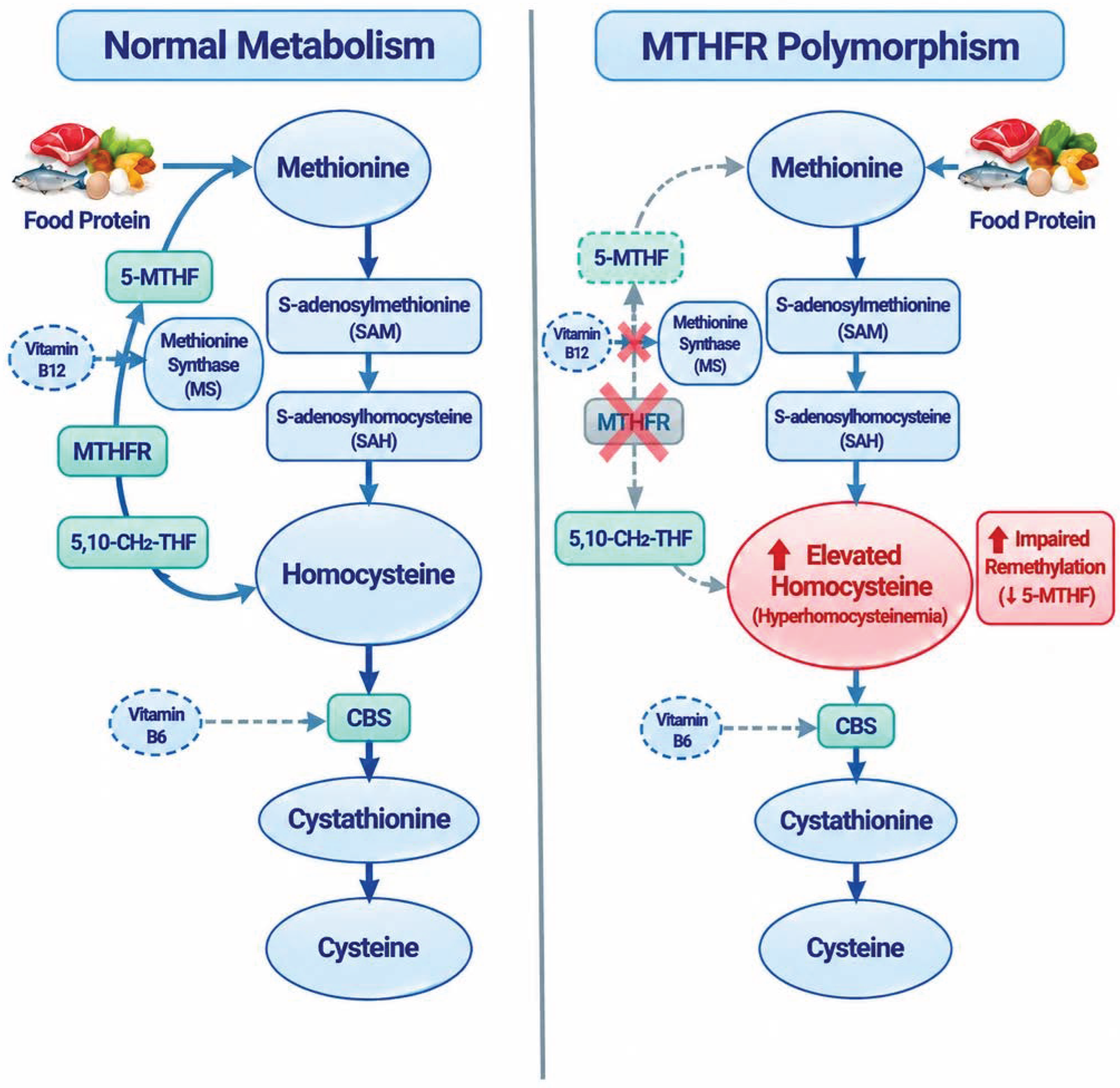
Female infertility encompasses multiple etiological factors, including ovulatory dysfunction, diminished ovarian reserve, anatomical abnormalities, and endocrine disorders [1]. The role of MTHFR gene polymorphisms in female infertility has been extensively investigated due to their impact on folate metabolism and homocysteine levels (Figure 1).
Figure 1.
Methionine–homocysteine metabolism in normal conditions and in MTHFR polymorphism. The left panel illustrates normal methionine metabolism in which dietary protein supplies methionine, which is converted to homocysteine and efficiently remethylated via the MTHFR-dependent methionine recycling pathway (requiring vitamins B6, B12, and folate). Homocysteine is further metabolized through the CBS pathway to form cysteine. The right panel shows impaired remethylation in individuals with MTHFR polymorphisms, resulting in reduced activity of the methionine recycling pathway, relative deficiencies of B vitamins, and increased circulating homocysteine despite intact downstream CBS conversion.
Current evidence suggests these genetic variants may influence fertility through several mechanisms. Research indicates that MTHFR polymorphisms, particularly the C677T variant, can lead to elevated homocysteine and reduced folate levels, potentially affecting oocyte quality and endometrial receptivity [23]. Specifically, women with homozygous C677T alleles undergoing ART demonstrate elevated anti-Müllerian hormone (AMH) levels, increased incidence of implantation failure (occurring in approximately 25% of C677T homozygous patients), and reduced ovarian responsiveness to stimulation [24]. Similarly, the A1298C polymorphism has been associated with poorer ART outcomes, including diminished follicle count during ovarian stimulation, lower estradiol (E2) levels, and reduced likelihood of achieving viable pregnancy [25,26]. However, other studies have failed to confirm consistent associations between MTHFR polymorphisms and infertility-related implantation failure, such as in some recurrent implantation failure (RIF) cases [27]. Importantly, RIF represents a specific subset of unexplained infertility where embryo implantation fails despite good-quality embryos, suggesting potential endometrial rather than embryonic factors.
Emerging evidence indicates that polymorphisms in folate-metabolizing genes, including but not limited to MTHFR, may contribute to various forms of unexplained infertility through multiple mechanisms. While individual variants may have modest effects [28], their clinical impact appears amplified in two key contexts: when multiple polymorphisms coexist (gene–gene interactions) and in conditions of nutritional deficiency (particularly folate). This gene-nutrient interaction may explain why some studies report significant associations with RIF and other forms of unexplained infertility only in populations with low folate status or specific genetic backgrounds [28]. The distinction between general unexplained infertility and RIF may reflect differences in study populations, diagnostic criteria, or the relative contribution of endometrial versus embryonic factors in each condition. Mechanistically, endometrial receptivity requires synchronized vascular remodeling, decidualization, and precise spatiotemporal expression of key receptivity markers, including homeobox A10 (HOXA10), leukemia inhibitory factor (LIF), vascular endothelial growth factor (VEGF), and integrin alpha-v beta-3 (αvβ3) [29]. Elevated systemic and local homocysteine concentrations induce endothelial dysfunction and inhibit decidual stromal cell differentiation via down-regulation of local VEGF transcription and impaired nitric oxide-mediated vasodilation [30,31,32].
Furthermore, reduced cellular methylation potential (decreased SAM/SAH ratio) leads to aberrant promoter methylation patterns of homeobox genes, blunting the decidual response to progesterone signaling. In patient cohorts undergoing in vitro fertilization (IVF) or intracytoplasmic sperm injection (ICSI), these molecular impairments manifest as reduced endometrial thickness, altered sub-endometrial blood flow indices on Doppler ultrasonography, and repeated failure of morphologically high-grade blastocysts to achieve stable nidatory adhesion. Consequently, maternal MTHFR deficiency creates an unfavorable endometrial microenvironment that impairs early trophoblast invasion and spiral artery remodeling prior to clinical placentation [32].
The relationship between MTHFR polymorphisms and female infertility remains inconclusive, with studies reporting conflicting results. These discrepancies likely stem from several key factors: (1) heterogeneous study designs, including varying definitions of infertility (e.g., clinical infertility vs. ART failure) and inconsistent adjustment for confounders like BMI or smoking status; (2) population-specific characteristics, where ethnic differences in folate intake (e.g., folate-fortified diets in Western countries vs. traditional diets in some Asian populations) and genetic background (e.g., linkage disequilibrium with other fertility-related loci) may modify associations; and (3) outcome measurement variability, particularly in studies of obstetric complications where diagnostic criteria for conditions like preeclampsia differ substantially between cohorts [23,33,34]. Research on obstetric complications (e.g., preeclampsia, pregnancy loss) provides mechanistic insights relevant to infertility, as these conditions share common pathways affected by MTHFR variants, including impaired trophoblast invasion and placental development, abnormal endometrial vascular remodeling, and dysregulated follicular microenvironment. These shared mechanisms suggest that MTHFR-related infertility may overlap with early reproductive failures such as implantation defects or poor endometrial receptivity [33,34]. Notably, systematic reviews have predominantly focused on male infertility, with fewer high-quality meta-analyses examining female outcomes—a gap that may contribute to the current uncertainty. The strongest associations appear in populations with both genetic susceptibility (e.g., C677T homozygosity) and environmental risk factors (e.g., low folate status), highlighting the need for gene-environment interaction analyses in future research.
3. Male Infertility
Male infertility attributable to male-specific factors encompasses deviations in seminal parameters or function, anatomical, endocrine, genetic, functional, or immunological irregularities within the reproductive system, chronic health conditions, and sexual disorders that hinder the effective deposition of semen in the vaginal canal [1]. It can be affected by genetic and environmental influences contributing to impairments in spermatogenesis [35]. Folic acid is a vital methyl donor, instrumental in nucleic acid synthesis, methylation, and amino acid metabolism. DNA methylation, a crucial epigenetic mechanism, plays a significant role in the modulation of gene expression, including spermatogenesis [36,37]. Variations in methylation patterns are expected to impact spermatogenesis; empirical studies demonstrate a positive association between serum folate levels and both the density and normative morphology of sperm [38]. Conversely, homocysteinemia has the potential to induce oxidative stress and DNA damage, which can compromise testicular perfusion by instigating vascular pathologies [39,40]. Consequently, the folate metabolic pathway holds significant importance in the context of male fertility [15].
The correlation between polymorphisms in folate-metabolizing genes and male fertility has been the subject of extensive investigation, although the findings have exhibited variability [41,42]. Clarifying this association can help understand the cause of male infertility and manage the condition. Many systematic reviews have tried to establish this relationship based on available data; some researchers have concluded that the MTHFR C677T polymorphism is correlated with an elevated risk of male infertility, whereas no association has been identified between the MTHFR A1298C variant and male sterility [13,43]. In a similar vein, another group of investigators posited that males possessing the MTHFR C677T polymorphism exhibit an augmented risk of infertility and abnormospermia, particularly within Asian demographics, with no associated risk noted in males with MTHFR A1298C polymorphisms [44]. The Chinese populace further corroborated these observations [45]. A separate study unveiled a significant correlation between the MTHFR C677T and A1298C gene polymorphisms and an elevated likelihood of male infertility within the Indian demographic [46]. These findings were substantiated by another group that reported an association with male infertility, including abnormospermia, for both the MTHFR C677T and A1298C polymorphisms [44]. Furthermore, the AA genotype of the newly identified MTHFR G1793A polymorphism was determined to confer protection against oligospermia; males possessing this polymorphism demonstrated higher sperm counts [47]. A review of these meta-analyses has indicated that the C677T polymorphism is significantly associated with male infertility, while the A1298C polymorphism has exhibited inconsistent results across various studies [48].
At the molecular level, spermatogenesis involves extensive genomic reorganization characterized by histone-to-protamine exchange and the establishment of male-specific epigenetic imprints [49]. During the post-meiotic phase, hyperhomocysteinemia-induced oxidative stress generates high levels of reactive nitrogen and oxygen species, which induce single- and double-strand DNA breaks, leading to a markedly elevated Sperm DNA Fragmentation Index (DFI) [50]. Concomitantly, insufficient folate bioavailability deprives developing spermatogenic cells of adequate methyl donors, perturbing the normal protamine-1 to protamine-2 (P1/P2) ratio and resulting in poorly condensed, vulnerable sperm chromatin [51].
Beyond structural chromatin anomalies, folate deficiency and MTHFR variants alter paternal epigenetic programming. Mammalian spermatogenesis requires the de novo establishment of DNA methylation at critical imprinted loci, such as H19, GTL2/MEG3, and MEST [52,53]. Defective one-carbon metabolism during the spermatogonial phase leads to incomplete remethylation or loss of imprinting at these differentially methylated regions (DMRs) [53,54]. Although spermatozoa bearing these epigenetic defects can successfully fertilize an oocyte, the resultant embryos frequently exhibit arrested development at the pre-implantation or early cleavage stages due to impaired paternal genomic activation [54]. Furthermore, clinical sub-analyses distinguish between obstructive and non-obstructive azoospermia (NOA), demonstrating that the prevalence of MTHFR 677TT and compound 677CT/1298AC genotypes is significantly higher in men with NOA and severe oligoasthenoteratozoospermia (OAT) compared to obstructive variants, highlighting that MTHFR deficiency directly affects testicular germ-cell maturation rather than ductal patency [55,56].
4. Idiopathic Infertility
Idiopathic infertility, defined as infertility in couples where no anatomical, hormonal, or genetic abnormalities are identified despite thorough evaluations, accounts for approximately 10–30% of infertility cases globally [57]. Its diagnosis is essentially one of exclusion, and emerging evidence suggests subtle molecular, immunological [58,59], and genetic contributors, notably MTHFR polymorphisms, may underlie some unexplained cases [60].
In men with idiopathic infertility, the MTHFR A1298C polymorphism (CC genotype) has been reported more frequently in azoospermic individuals compared to controls [12], while other studies identified a significant association between the homozygous C677T genotype and unexplained infertility in normokaryotypic males [55]. Reports indicate that hypermethylation of the MTHFR gene promoter in sperm is associated with idiopathic male infertility, observed both in men with normal semen analysis and more prominently in those with oligozoospermia [61].
Among women, MTHFR variants have been studied in the context of recurrent spontaneous abortion (RSA), a phenotype often considered part of the idiopathic infertility spectrum. The A1298C polymorphism has been associated with increased RSA risk in some populations [62], although not all studies corroborate these findings [63]. Research in couples with unexplained fertility problems has indicated a higher prevalence of the C677T allele in male partners, with a less clear pattern in female partners [64].
Collectively, these findings suggest that MTHFR polymorphisms may contribute to idiopathic infertility through genetic and epigenetic alterations affecting gamete quality, fertilization, or early implantation.
5. Treatment and Management
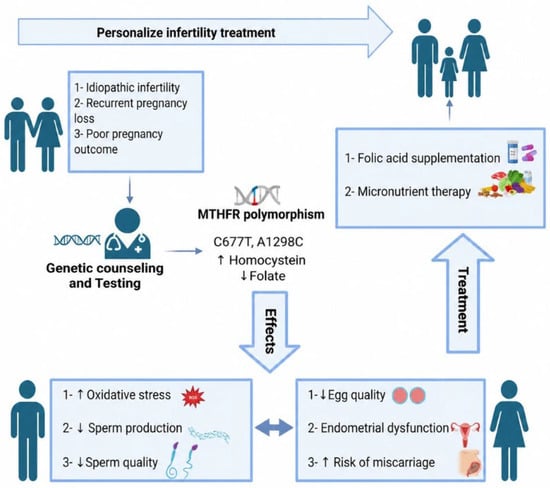
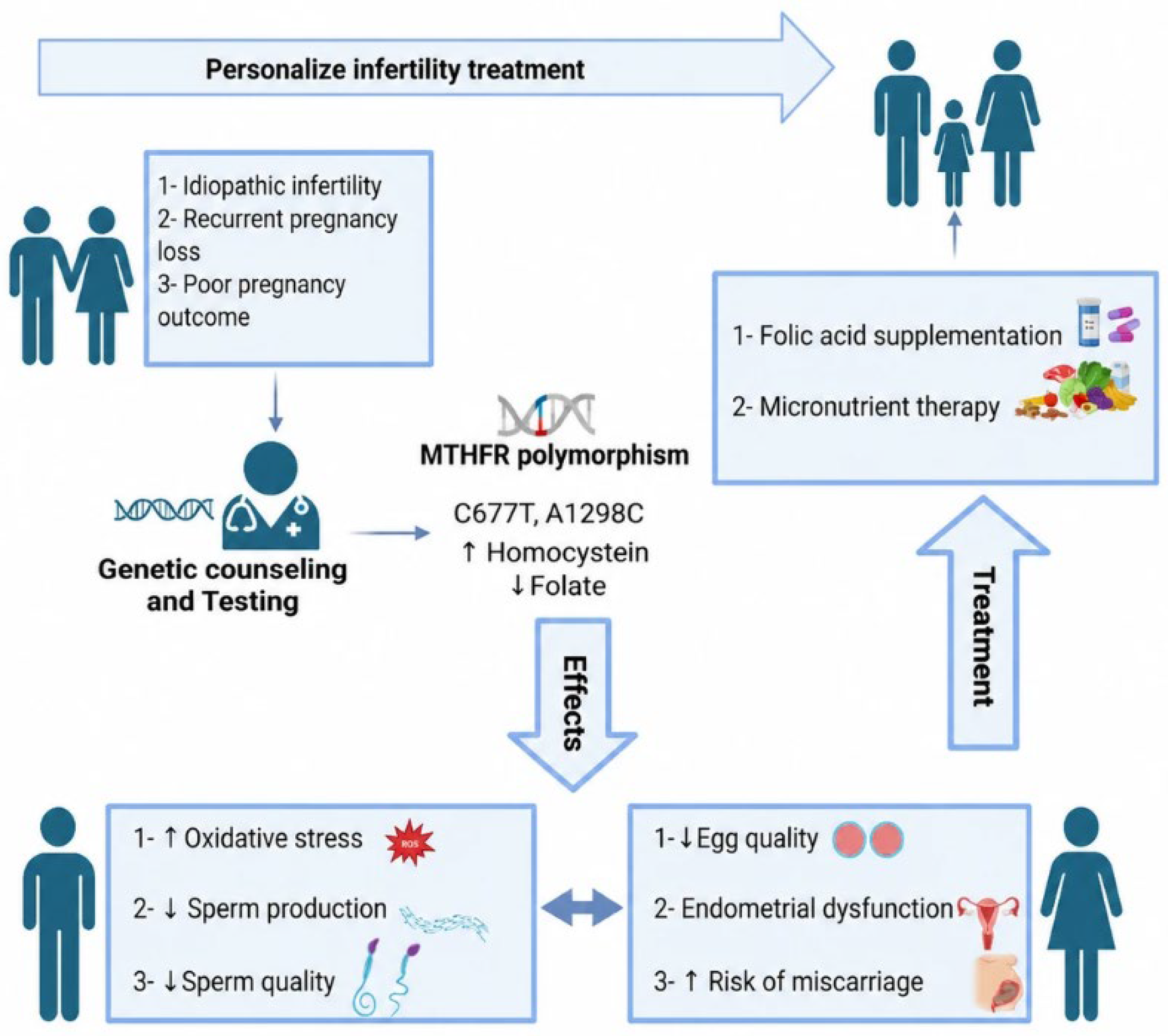
The management of infertility related to the MTHFR gene focuses primarily on addressing the implications of its polymorphisms, particularly the C677T variant, which has been associated with reproductive challenges. A summary of treatment strategies based on recent studies is provided in Table 1 and visualized in Figure 2.
Figure 2.
Personalized infertility treatment. Elevated homocysteine and reduced folate levels impair reproductive outcomes in both sexes; the image highlights personalized treatment strategies, including folic acid supplementation and micronutrient therapy.
5.1. Folic Acid Supplementation
Folic acid plays a crucial role in DNA synthesis and methylation, vital for successful conception and pregnancy maintenance. For individuals with MTHFR mutations, particularly the C677T variant, high doses of folic acid are often recommended to mitigate the risks associated with low folate levels [65]. A study indicated that women with recurrent miscarriages who carried the C677T mutation experienced significantly improved outcomes when treated with a combination of low-dose aspirin, enoxaparin (a low-molecular-weight heparin), and folic acid. This combination resulted in a delivery rate of 79.7% compared to 46.3% in those treated with aspirin and folic acid alone, highlighting the importance of tailored treatment protocols [66]. Although folic acid supplementation is commonly prescribed for fertility treatments such as IVF or male infertility, some studies suggest that it does not necessarily improve pregnancy rates or assist in achieving conception during or after fertility treatments [67,68]. This indicates a need for personalized approaches based on individual genetic profiles.
5.2. Micronutrient Therapy
Recent research has explored the efficacy of micronutrient therapy in patients with elevated homocysteine levels due to MTHFR mutations.
The biochemical superiority of active 5-methyltetrahydrofolate (5-MTHF) over synthetic folic acid is important in patients carrying MTHFR polymorphisms [69,70]. Synthetic folic acid is an unnatural provitamin requiring sequential reduction by dihydrofolate reductase (DHFR) in the liver before entering the one-carbon cycle. Because hepatic DHFR possesses low and variable activity in humans, supraphysiological doses of folic acid (such as standard 5 mg formulations) lead to the saturation of reduction pathways and the systemic accumulation of unmetabolized folic acid (UMFA) in serum [71,72]. A clinical intervention by Litynski et al. demonstrated that supplementation with 5-MTHF, a bioactive form of folate, significantly reduced homocysteine levels in patients with the 677TT genotype [73]. In the pregnancy field, couples experiencing metabolic disturbances in their gametes or embryos due to the presence of the C677T and A1298C isoforms of the MTHFR enzyme, the administration of a physiological dose of 5-MTHF can bypass the metabolic block imposed by MTHFR and serves as an effective therapeutic intervention [74,75].
While bioactive 5-MTHF offers a theoretically attractive biochemical rationale by bypassing the defective enzyme and reducing unmetabolized folic acid (UMFA) accumulation, some studies suggested no priority for 5-MTHF compared to folic acid [76]. Robust randomized controlled trials demonstrating that such tailored supplementation improves clinical pregnancy or live birth rates remain lacking. Therefore, these strategies should be viewed as exploratory rather than established standards of care.
To maximize the remethylation of homocysteine to methionine, therapeutic protocols increasingly utilize targeted multi-pathway cofactor supplementation [77,78]. Vitamin B12 (cobalamin) serves as an indispensable coenzyme for methionine synthase (MTR), and vitamin B6 (pyridoxine) acts as a critical cofactor for cystathionine beta-synthase (CBS) in the transsulfuration pathway, which diverts excess homocysteine into glutathione synthesis [78,79]. Furthermore, betaine (trimethylglycine) and choline support the alternate, MTHFR-independent hepatic remethylation pathway catalyzed by betaine-homocysteine S-methyltransferase (BHMT), ensuring robust metabolic clearance of homocysteine even under conditions of severe MTHFR enzymatic impairment [77]. A study showed that serum homocysteine levels in pregnant women varied significantly with MTHFR genotype and the serum B vitamin status. Higher serum folate and vitamin B12 concentrations may lessen the MTHFR genotypic effect on serum homocysteine levels in pregnant women [80].
5.3. Genetic Counseling
Genetic counseling and targeted genetic testing in cases of specific or idiopathic infertility, especially in high-risk populations, are highly logical steps when recommended by the treating physician [81,82]; genetic confirmation of MTHFR polymorphisms may provide actionable insights, enabling clinicians to tailor micronutrient protocols, adjust folate forms, and optimize homocysteine thresholds, ideally targeting plasma levels < 10 µmol/L, prior to the initiation of costly assisted reproductive cycles [83]. However, clinicians must exercise caution to avoid over-interpreting the presence of MTHFR C677T or A1298C as a definitive etiologic factor for infertility, ensuring that patients are not led toward unnecessary psychological distress or unproven therapeutic interventions.
5.4. Lifestyle Modifications
While pharmacological supplementation with active methylfolate and synergistic cofactors serves as the primary biochemical intervention for MTHFR deficiency, comprehensive preconception lifestyle modifications may play an adjunctive role in mitigating oxidative stress, optimizing one-carbon metabolic flux, and improving reproductive outcomes [84,85].
Table 1.
Metabolic considerations of MTHFR polymorphisms in the management of infertility and recurrent reproductive failure.
6. Future Directions and Clinical Implications
Although considerable progress has been made in understanding the association between MTHFR polymorphisms and infertility, significant knowledge gaps persist. Future research should prioritize large, multicentric studies with diverse ethnic representation to clarify population-specific effects of common variants such as C677T, A1298C, and G1793A. Moreover, well-designed randomized controlled trials evaluating the efficacy of targeted interventions (e.g., 5-MTHF, low-molecular-weight heparin, or combined nutrigenomic therapies) are required to establish evidence-based treatment protocols.
Clinically, understanding MTHFR variations can refine precision reproductive medicine. Routine genetic testing should not be universally recommended; however, selective screening may be valuable for couples with idiopathic infertility, recurrent implantation failure, or recurrent pregnancy loss, particularly when conventional causes are excluded. The interpretation of MTHFR genotypes must always consider homocysteine levels, nutritional folate status, and other endocrine factors.
Implementing a model of personalized preconception care integrating genetic counseling, nutritional optimization, and risk-adjusted therapy could substantially improve reproductive outcomes. Standardizing laboratory assays, harmonizing data reporting, and establishing clinical practice guidelines for MTHFR variant screening and management remain essential next steps. Ultimately, a translational framework linking molecular genetics to individualized therapy will bridge the current gap between MTHFR gene research and effective infertility management.
7. Conclusions
MTHFR polymorphisms, particularly C677T, exhibit significant biochemical interactions with one-carbon metabolism and homocysteine homeostasis. Given that ethnicity, environmental factors, and nutritional status modulate these effects, clinical management should move away from rigid, “one-size-fits-all” protocols. Instead, selective genetic counseling and targeted biochemical assessment can serve as useful, exploratory tools for well-defined patient subgroups such as those experiencing idiopathic infertility or recurrent reproductive failure, thereby guiding personalized preconception care, pending the results of definitive randomized clinical trials in this field.
Author Contributions
Conceptualization: M.R. Writing the manuscript: M.R., Z.K. (Zeinab Kanannejad) and Z.K. (Zahra Kanannejad). Figure preparation: Z.K. (Zahra Kanannejad). All authors read and approved the final version of the manuscript and take responsibility for the integrity of the data. All authors have read and agreed to the published version of the manuscript.
Funding
This research received no external funding.
Institutional Review Board Statement
Not applicable.
Informed Consent Statement
Not applicable.
Data Availability Statement
No new data were created or analyzed in this study. Data sharing is not applicable to this article.
Conflicts of Interest
The authors declare no conflicts of interest.
References
- Zegers-Hochschild, F.; Adamson, G.D.; Dyer, S.; Racowsky, C.; de Mouzon, J.; Sokol, R.; Rienzi, L.; Sunde, A.; Schmidt, L.; Cooke, I.D.; et al. The International Glossary on Infertility and Fertility Care, 2017. Hum. Reprod. 2017, 32, 1786–1801. [Google Scholar] [CrossRef] [Scilit]
- Cox, C.M.; Thoma, M.E.; Tchangalova, N.; Mburu, G.; Bornstein, M.J.; Johnson, C.L.; Kiarie, J. Infertility prevalence and the methods of estimation from 1990 to 2021: A systematic review and meta-analysis. Hum. Reprod. Open 2022, 2022, hoac051. [Google Scholar] [CrossRef] [Scilit]
- Harris, H. Genetic polymorphism. Sci. Basis Med. Annu Rev. 1972, 174–193. [Google Scholar]
- Ramezanzadeh, M.; Khosravi, S.; Salehi, R. Cell-free Fetal Nucleic Acid Identifier Markers in Maternal Circulation. Adv. Biomed. Res. 2017, 6, 89. [Google Scholar] [CrossRef] [Scilit]
- Ma, M.K.; Woo, M.H.; McLeod, H.L. Genetic basis of drug metabolism. Am. J. Health Syst. Pharm. 2002, 59, 2061–2069. [Google Scholar] [CrossRef] [Scilit]
- Khosravi, S.; Salehi, M.; Ramezanzadeh, M.; Mirzaei, H.; Salehi, R. Novel Multiplex Fluorescent PCR-Based Method for HLA Typing and Preimplantational Genetic Diagnosis of β-Thalassemia. Arch. Med. Res. 2016, 47, 293–298. [Google Scholar] [CrossRef] [Scilit]
- Corsini, C.; Pozzi, E.; Salonia, A. Genetics of male infertility. Curr. Opin. Urol. 2025, 35, 489–496. [Google Scholar] [CrossRef] [Scilit]
- Venkatesh, S.S.; Wittemans, L.B.L.; Palmer, D.S.; Baya, N.A.; Ferreira, T.; Hill, B.; Lassen, F.H.; Parker, M.J.; Reibe, S.; Elhakeem, A.; et al. Genome-wide analyses identify 25 infertility loci and relationships with reproductive traits across the allele frequency spectrum. Nat. Genet. 2025, 57, 1107–1118. [Google Scholar] [CrossRef] [Scilit]
- Liew, S.C.; Gupta, E.D. Methylenetetrahydrofolate reductase (MTHFR) C677T polymorphism: Epidemiology, metabolism and the associated diseases. Eur. J. Med. Genet. 2015, 58, 1–10. [Google Scholar] [CrossRef] [Scilit]
- Karimian, M.; Colagar, A.H. Association of C677T transition of the human methylenetetrahydrofolate reductase (MTHFR) gene with male infertility. Reprod. Fertil. Dev. 2016, 28, 785–794. [Google Scholar] [CrossRef] [Scilit]
- Crider, K.S.; Yang, T.P.; Berry, R.J.; Bailey, L.B. Folate and DNA methylation: A review of molecular mechanisms and the evidence for folate’s role. Adv. Nutr. 2012, 3, 21–38. [Google Scholar] [CrossRef] [Scilit]
- Singh, K.; Singh, S.K.; Raman, R. MTHFR A1298C polymorphism and idiopathic male infertility. J. Postgrad. Med. 2010, 56, 267–269. [Google Scholar] [CrossRef] [Scilit]
- Gong, M.; Dong, W.; He, T.; Shi, Z.; Huang, G.; Ren, R.; Huang, S.; Qiu, S.; Yuan, R. MTHFR 677C>T polymorphism increases the male infertility risk: A meta-analysis involving 26 studies. PLoS ONE 2015, 10, e0121147. [Google Scholar] [CrossRef] [Scilit]
- Botto, L.D.; Yang, Q. 5, 10-Methylenetetrahydrofolate Reductase Gene Variants and Congenital Anomalies: A HuGE Review. Am. J. Epidemiol. 2000, 151, 862–877. [Google Scholar] [CrossRef] [Scilit]
- Kurzawski, M.; Wajda, A.; Malinowski, D.; Kazienko, A.; Kurzawa, R.; Drozdzik, M. Association study of folate-related enzymes (MTHFR, MTR, MTRR) genetic variants with non-obstructive male infertility in a Polish population. Genet. Mol. Biol. 2015, 38, 42–47. [Google Scholar] [CrossRef] [Scilit]
- Frosst, P.; Blom, H.J.; Milos, R.; Goyette, P.; Sheppard, C.A.; Matthews, R.G.; Boers, G.J.; den Heijer, M.; Kluijtmans, L.A.; van den Heuvel, L.P.; et al. A candidate genetic risk factor for vascular disease: A common mutation in methylenetetrahydrofolate reductase. Nat. Genet. 1995, 10, 111–113. [Google Scholar] [CrossRef] [Scilit]
- Friedman, G.; Goldschmidt, N.; Friedlander, Y.; Ben-Yehuda, A.; Selhub, J.; Babaey, S.; Mendel, M.; Kidron, M.; Bar-On, H. A common mutation A1298C in human methylenetetrahydrofolate reductase gene: Association with plasma total homocysteine and folate concentrations. J. Nutr. 1999, 129, 1656–1661. [Google Scholar] [CrossRef] [Scilit]
- Yang, Y.; Luo, Y.Y.; Wu, S.; Tang, Y.D.; Rao, X.D.; Xiong, L.; Tan, M.; Deng, M.Z.; Liu, H. Association between C677T and A1298C polymorphisms of the MTHFR gene and risk of male infertility: A meta-analysis. Genet. Mol. Res. 2016, 15, 15027631. [Google Scholar] [CrossRef] [Scilit]
- Borumandnia, N.; Alavi Majd, H.; Khadembashi, N.; Alaii, H. Worldwide trend analysis of primary and secondary infertility rates over past decades: A cross-sectional study. Int. J. Reprod. Biomed. 2022, 20, 37–46. [Google Scholar] [CrossRef] [Scilit]
- Stover, P.J.; Field, M.S. Trafficking of intracellular folates. Adv. Nutr. 2011, 2, 325–331. [Google Scholar] [CrossRef] [Scilit]
- Ganguly, P.; Alam, S.F. Role of homocysteine in the development of cardiovascular disease. Nutr. J. 2015, 14, 6. [Google Scholar] [CrossRef] [Scilit]
- Korsmo, H.W.; Jiang, X. One carbon metabolism and early development: A diet-dependent destiny. Trends Endocrinol. Metab. 2021, 32, 579–593. [Google Scholar] [CrossRef] [Scilit]
- Moll, S.; Varga, E.A. Homocysteine and MTHFR Mutations. Circulation 2015, 132, e6–e9. [Google Scholar] [CrossRef] [Scilit]
- Shahrokhi, S.Z.; Kazerouni, F.; Ghaffari, F.; Rahimipour, A.; Omrani, M.D.; Arabipoor, A.; Lak, R.; Ghane, E.T. The Relationship Between the MTHFR C677T Genotypes to Serum Anti-Müllerian Hormone Concentrations and In Vitro Fertilization/Intracytoplasmic Sperm Injection Outcome. Clin. Lab. 2017, 63, 927–934. [Google Scholar] [CrossRef] [Scilit]
- Zhang, Y.; He, X.; Xiong, X.; Chuan, J.; Zhong, L.; Chen, G.; Yu, D. The association between maternal methylenetetrahydrofolate reductase C677T and A1298C polymorphism and birth defects and adverse pregnancy outcomes. Prenat. Diagn. 2019, 39, 3–9. [Google Scholar] [CrossRef] [Scilit]
- Nair, R.R.; Khanna, A.; Singh, R.; Singh, K. Association of maternal and fetal MTHFR A1298C polymorphism with the risk of pregnancy loss: A study of an Indian population and a meta-analysis. Fertil. Steril. 2013, 99, 1311–1318.e4. [Google Scholar] [CrossRef] [Scilit]
- Zeng, H.; He, D.; Zhao, Y.; Liu, N.G.; Xie, H. Association between MTHFR polymorphisms (MTHFR C677T, MTHFR A1298C) and recurrent implantation failure: A systematic review and meta-analysis. Arch. Gynecol. Obstet. 2021, 303, 1089–1098. [Google Scholar] [CrossRef] [Scilit]
- Altmäe, S.; Stavreus-Evers, A.; Ruiz, J.R.; Laanpere, M.; Syvänen, T.; Yngve, A.; Salumets, A.; Nilsson, T.K. Variations in folate pathway genes are associated with unexplained female infertility. Fertil. Steril. 2010, 94, 130–137. [Google Scholar] [CrossRef] [Scilit]
- Craciunas, L.; Gallos, I.; Chu, J.; Bourne, T.; Quenby, S.; Brosens, J.J.; Coomarasamy, A. Conventional and modern markers of endometrial receptivity: A systematic review and meta-analysis. Hum. Reprod. Update 2019, 25, 202–223. [Google Scholar] [CrossRef] [Scilit]
- Li, Y.; Gao, R.; Liu, X.; Chen, X.; Liao, X.; Geng, Y.; Ding, Y.; Wang, Y.; He, J. Folate Deficiency Could Restrain Decidual Angiogenesis in Pregnant Mice. Nutrients 2015, 7, 6425–6445. [Google Scholar] [CrossRef] [Scilit]
- Lai, W.K.; Kan, M.Y. Homocysteine-Induced Endothelial Dysfunction. Ann. Nutr. Metab. 2015, 67, 1–12. [Google Scholar] [CrossRef] [Scilit]
- Dai, C.; Fei, Y.; Li, J.; Shi, Y.; Yang, X. A Novel Review of Homocysteine and Pregnancy Complications. BioMed Res. Int. 2021, 2021, 6652231. [Google Scholar] [CrossRef] [Scilit]
- Stonek, F.; Hafner, E.; Philipp, K.; Hefler, L.A.; Bentz, E.K.; Tempfer, C.B. Methylenetetrahydrofolate reductase C677T polymorphism and pregnancy complications. Obstet. Gynecol. 2007, 110, 363–368. [Google Scholar] [CrossRef] [Scilit]
- Undas, A.; Chojnowski, K.; Klukowska, A.; Łętowska, M.; Mital, A.; Młynarski, W.; Musiał, J.; Podolak-Dawidziak, M.; Sąsiadek, M.; Treliński, J.; et al. Determination and interpretation of MTHFR gene mutations in gynecology and internal medicine. Pol. Arch. Intern Med. 2019, 129, 728–732. [Google Scholar] [CrossRef] [Scilit]
- Skakkebaek, N.E.; Rajpert-De Meyts, E.; Buck Louis, G.M.; Toppari, J.; Andersson, A.M.; Eisenberg, M.L.; Jensen, T.K.; Jørgensen, N.; Swan, S.H.; Sapra, K.J.; et al. Male Reproductive Disorders and Fertility Trends: Influences of Environment and Genetic Susceptibility. Physiol. Rev. 2016, 96, 55–97. [Google Scholar] [CrossRef] [Scilit]
- Rahiminia, T.; Farashahi Yazd, E.; Ghasemi-Esmailabad, S.; Talebi, A.R. Relation between sperm protamine transcripts with global sperm DNA methylation and sperm DNA methyltransferases mRNA in men with severe sperm abnormalities. Hum. Fertil. 2021, 24, 105–111. [Google Scholar] [CrossRef] [Scilit]
- Karimian, M.; Parvaresh, L.; Behjati, M. Genetic variations as molecular diagnostic factors for idiopathic male infertility: Current knowledge and future perspectives. Expert Rev. Mol. Diagn. 2021, 21, 1191–1210. [Google Scholar] [CrossRef] [Scilit]
- Aarabi, M.; San Gabriel, M.C.; Chan, D.; Behan, N.A.; Caron, M.; Pastinen, T.; Bourque, G.; MacFarlane, A.J.; Zini, A.; Trasler, J. High-dose folic acid supplementation alters the human sperm methylome and is influenced by the MTHFR C677T polymorphism. Hum. Mol. Genet. 2015, 24, 6301–6313. [Google Scholar] [CrossRef] [Scilit]
- Klein, R.; Pfitzer, P. Flow cytometry of postmortem human testicular tissue in cases of atherosclerosis. Cytometry 1984, 5, 636–643. [Google Scholar] [CrossRef] [Scilit]
- Tunc, O.; Tremellen, K. Oxidative DNA damage impairs global sperm DNA methylation in infertile men. J. Assist. Reprod. Genet. 2009, 26, 537–544. [Google Scholar] [CrossRef] [Scilit]
- Ménézo, Y.; Patrizio, P.; Alvarez, S.; Amar, E.; Brack, M.; Brami, C.; Chouteau, J.; Clement, A.; Clement, P.; Cohen, M.; et al. MTHFR (methylenetetrahydrofolate reductase: EC 1.5.1.20) SNPs (single-nucleotide polymorphisms) and homocysteine in patients referred for investigation of fertility. J. Assist. Reprod. Genet. 2021, 38, 2383–2389. [Google Scholar] [CrossRef] [Scilit]
- Ullah, N.; Mansoor, A.; Micheal, S.; Mirza, B.; Qamar, R.; Mazhar, K.; Siddiqi, S. MTHFR polymorphisms as risk for male infertility in Pakistan and its comparison with socioeconomic status in the world. Pers. Med. 2019, 16, 35–49. [Google Scholar] [CrossRef] [Scilit]
- Aliakbari, F.; Pouresmaeili, F.; Eshghifar, N.; Zolghadr, Z.; Azizi, F. Association of the MTHFR 677C>T and 1298A>C poly-morphisms and male infertility risk: A meta-analysis. Reprod. Biol. Endocrinol. 2020, 18, 93. [Google Scholar] [CrossRef] [Scilit]
- Li, F.; Qi, J.J.; Li, L.X.; Yan, T.F. MTHFR C677T、MTHFR A1298C、MTRR A66G and MTR A2756G polymorphisms and male infertility risk: A systematic review and meta-analysis. Reprod. Biol. Endocrinol. 2024, 22, 133. [Google Scholar] [CrossRef] [Scilit]
- Ren, Z.; Ren, P.; Yang, B.; Fang, K.; Ren, S.; Liao, J.; Liu, S.; Liu, L.; Peng, Z.; Dong, Q. MTHFR C677T, A1298C and MS A2756G Gene Polymorphisms and Male Infertility Risk in a Chinese Population: A Meta-Analysis. PLoS ONE 2017, 12, e0169789. [Google Scholar] [CrossRef] [Scilit]
- More, A.; Gajbe, U.; Olatunji, O.; Singh, B. MTHFR Gene-Polymorphism and Infertile Men in Indian Population: A Systematic Literature Review. Cureus 2022, 14, e27075. [Google Scholar] [CrossRef] [Scilit]
- Karimian, M.; Hosseinzadeh Colagar, A. Human MTHFR-G1793A transition may be a protective mutation against male infertility: A genetic association study and in silico analysis. Hum. Fertil. 2018, 21, 128–136. [Google Scholar] [CrossRef] [Scilit]
- Han, L.J.; He, X.F.; Ye, X.H. Methylenetetrahydrofolate reductase C677T and A1298C polymorphisms and male infertility risk: An updated meta-analysis. Medicine 2020, 99, e23662. [Google Scholar] [CrossRef] [Scilit]
- Bao, J.; Bedford, M.T. Epigenetic regulation of the histone-to-protamine transition during spermiogenesis. Reproduction 2016, 151, R55–R70. [Google Scholar] [CrossRef] [Scilit]
- Boxmeer, J.C.; Smit, M.; Utomo, E.; Romijn, J.C.; Eijkemans, M.J.; Lindemans, J.; Laven, J.S.; Macklon, N.S.; Steegers, E.A.; Steegers-Theunissen, R.P. Low folate in seminal plasma is associated with increased sperm DNA damage. Fertil. Steril. 2009, 92, 548–556. [Google Scholar] [CrossRef] [Scilit]
- Aoki, V.W.; Moskovtsev, S.I.; Willis, J.; Liu, L.; Mullen, J.B.; Carrell, D.T. DNA integrity is compromised in protamine-deficient human sperm. J. Androl. 2005, 26, 741–748. [Google Scholar] [CrossRef] [Scilit]
- Rotondo, J.C.; Selvatici, R.; Di Domenico, M.; Marci, R.; Vesce, F.; Tognon, M.; Martini, F. Methylation loss at H19 imprinted gene correlates with methylenetetrahydrofolate reductase gene promoter hypermethylation in semen samples from infertile males. Epigenetics 2013, 8, 990–997. [Google Scholar] [CrossRef] [Scilit]
- Rotondo, J.C.; Lanzillotti, C.; Mazziotta, C.; Tognon, M.; Martini, F. Epigenetics of Male Infertility: The Role of DNA Methylation. Front. Cell Dev. Biol. 2021, 9, 689624. [Google Scholar] [CrossRef] [Scilit]
- Kobayashi, H.; Sato, A.; Otsu, E.; Hiura, H.; Tomatsu, C.; Utsunomiya, T.; Sasaki, H.; Yaegashi, N.; Arima, T. Aberrant DNA methylation of imprinted loci in sperm from oligospermic patients. Hum. Mol. Genet. 2007, 16, 2542–2551. [Google Scholar] [CrossRef] [Scilit]
- Park, J.H.; Lee, H.C.; Jeong, Y.M.; Chung, T.G.; Kim, H.J.; Kim, N.K.; Lee, S.H.; Lee, S. MTHFR C677T polymorphism associates with unexplained infertile male factors. J. Assist. Reprod. Genet. 2005, 22, 361–368. [Google Scholar] [CrossRef] [Scilit]
- Khazamipour, N.; Noruzinia, M.; Fatehmanesh, P.; Keyhanee, M.; Pujol, P. MTHFR promoter hypermethylation in testicular biopsies of patients with non-obstructive azoospermia: The role of epigenetics in male infertility. Hum. Reprod. 2009, 24, 2361–2364. [Google Scholar] [CrossRef] [Scilit]
- Sadeghi, M.R. Unexplained infertility, the controversial matter in management of infertile couples. J. Reprod. Infertil. 2015, 16, 1–2. [Google Scholar]
- Azad, M.; Keshtgar, S.; Jahromi, B.N.; Kanannejad, Z.; Gharesi-Fard, B. T helper cell subsets and related cytokines in infertile women undergoing in vitro fertilization before and after seminal plasma exposure. Clin. Exp. Reprod. Med. 2017, 44, 214–223. [Google Scholar] [CrossRef] [Scilit]
- Kanannejad, Z.; Namavar Jahromi, B.; Gharesi-Fard, B. T Cell Subsets Profiling in Unexplained Infertile Women with Successful and Unsuccessful in Vitro Fertilization Outcome: Focus on the Effect of Seminal Plasma. Iran. J. Allergy Asthma Immunol. 2019, 18, 163–172. [Google Scholar] [CrossRef] [Scilit]
- Eloualid, A.; Abidi, O.; Charif, M.; El Houate, B.; Benrahma, H.; Louanjli, N.; Chadli, E.; Ajjemami, M.; Barakat, A.; Bashamboo, A.; et al. Association of the MTHFR A1298C variant with unexplained severe male infertility. PLoS ONE 2012, 7, e34111. [Google Scholar] [CrossRef] [Scilit]
- Wu, W.; Shen, O.; Qin, Y.; Niu, X.; Lu, C.; Xia, Y.; Song, L.; Wang, S.; Wang, X. Idiopathic male infertility is strongly associated with aberrant promoter methylation of methylenetetrahydrofolate reductase (MTHFR). PLoS ONE 2010, 5, e13884. [Google Scholar] [CrossRef] [Scilit]
- Wen, Y.; He, H.; Zhao, K. Thrombophilic gene polymorphisms and recurrent pregnancy loss: A systematic review and meta-analysis. J. Assist. Reprod. Genet. 2023, 40, 1533–1558. [Google Scholar] [CrossRef] [Scilit]
- Hohlagschwandtner, M.; Unfried, G.; Heinze, G.; Huber, J.C.; Nagele, F.; Tempfer, C. Combined thrombophilic polymorphisms in women with idiopathic recurrent miscarriage. Fertil. Steril. 2003, 79, 1141–1148. [Google Scholar] [CrossRef] [Scilit]
- Stangler Herodež, S.; Zagradišnik, B.; Erjavec Škerget, A.; Zagorac, A.; Takač, I.; Vlaisavljević, V.; Lokar, L.; Kokalj Vokač, N. MTHFR C677T and A1298C Genotypes and Haplotypes in Slovenian Couples with Unexplained Infertility Problems and in Embryonic Tissues from Spontaneous Abortions. Balk. J. Med. Genet. 2013, 16, 31–40. [Google Scholar] [CrossRef] [Scilit]
- Hecker, J.; Layton, R.; Parker, R.W. Adverse Effects of Excessive Folic Acid Consumption and Its Implications for Individuals with the Methylenetetrahydrofolate Reductase C677T Genotype. Cureus 2025, 17, e79374. [Google Scholar] [CrossRef] [Scilit]
- Merviel, P.; Cabry, R.; Lourdel, E.; Lanta, S.; Amant, C.; Copin, H.; Benkhalifa, M. Comparison of two preventive treatments for patients with recurrent miscarriages carrying a C677T methylenetetrahydrofolate reductase mutation: 5-year experience. J. Int. Med. Res. 2017, 45, 1720–1730. [Google Scholar] [CrossRef] [Scilit]
- Murto, T.; Kallak, T.K.; Hoas, A.; Altmäe, S.; Salumets, A.; Nilsson, T.K.; Skoog Svanberg, A.; Wånggren, K.; Yngve, A.; Stavreus-Evers, A. Folic acid supplementation and methylenetetrahydrofolate reductase (MTHFR) gene variations in relation to in vitro fertilization pregnancy outcome. Acta Obstet. Gynecol. Scand. 2015, 94, 65–71. [Google Scholar] [CrossRef] [Scilit]
- Huang, W.J.; Lu, X.L.; Li, J.T.; Zhang, J.M. Effects of folic acid on oligozoospermia with MTHFR polymorphisms in term of seminal parameters, DNA fragmentation, and live birth rate: A double-blind, randomized, placebo-controlled trial. Andrology 2020, 8, 110–116. [Google Scholar] [CrossRef] [Scilit]
- Scaglione, F.; Panzavolta, G. Folate, folic acid and 5-methyltetrahydrofolate are not the same thing. Xenobiotica 2014, 44, 480–488. [Google Scholar] [CrossRef] [Scilit]
- Obeid, R.; Holzgreve, W.; Pietrzik, K. Is 5-methyltetrahydrofolate an alternative to folic acid for the prevention of neural tube defects? J. Perinat. Med. 2013, 41, 469–483. [Google Scholar] [CrossRef] [Scilit]
- Bailey, S.W.; Ayling, J.E. The extremely slow and variable activity of dihydrofolate reductase in human liver and its implications for high folic acid intake. Proc. Natl. Acad. Sci. USA 2009, 106, 15424–15429. [Google Scholar] [CrossRef] [Scilit]
- Paniz, C.; Bertinato, J.F.; Lucena, M.R.; De Carli, E.; Amorim, P.; Gomes, G.W.; Palchetti, C.Z.; Figueiredo, M.S.; Pfeiffer, C.M.; Fazili, Z.; et al. A Daily Dose of 5 mg Folic Acid for 90 Days Is Associated with Increased Serum Unmetabolized Folic Acid and Reduced Natural Killer Cell Cytotoxicity in Healthy Brazilian Adults. J. Nutr. 2017, 147, 1677–1685. [Google Scholar] [CrossRef] [Scilit]
- Litynski, P.; Loehrer, F.; Linder, L.; Todesco, L.; Fowler, B. Effect of low doses of 5-methyltetrahydrofolate and folic acid on plasma homocysteine in healthy subjects with or without the 677C-->T polymorphism of methylenetetrahydrofolate reductase. Eur. J. Clin. Investig. 2002, 32, 662–668. [Google Scholar] [CrossRef] [Scilit]
- Servy, E.J.; Jacquesson-Fournols, L.; Cohen, M.; Menezo, Y.J.R. MTHFR isoform carriers. 5-MTHF (5-methyl tetrahydrofolate) vs. folic acid: A key to pregnancy outcome: A case series. J. Assist. Reprod. Genet. 2018, 35, 1431–1435. [Google Scholar] [CrossRef] [Scilit]
- Viot, G.; Clement, A.; Clement, P.; Elder, K.; Menezo, Y.J.R. Treatment with 5-MTHF to support the one-carbon cycle can overcome the deleterious impact of a triple SNP mutation in the male partner’s MTHFR gene for a couple with a history of repeated miscarriage. J. Assist. Reprod. Genet. 2025, 42, 541–544. [Google Scholar] [CrossRef] [Scilit]
- Ye, F.; Zhang, S.; Qi, Q.; Zhou, J.; Du, Y.; Wang, L. Association of MTHFR 677C>T polymorphism with pregnancy outcomes in IVF/ICSI-ET recipients with adequate synthetic folic acid supplementation. Biosci. Trends 2022, 16, 282–290. [Google Scholar] [CrossRef] [Scilit]
- Varga, E.A.; Sturm, A.C.; Misita, C.P.; Moll, S. Cardiology patient pages. Homocysteine and MTHFR mutations: Relation to thrombosis and coronary artery disease. Circulation 2005, 111, e289–e293. [Google Scholar] [CrossRef] [Scilit]
- Finkelstein, J.D. The metabolism of homocysteine: Pathways and regulation. Eur. J. Pediatr. 1998, 157, S40–S44. [Google Scholar] [CrossRef] [Scilit]
- Miles, E.W.; Kraus, J.P. Cystathionine beta-synthase: Structure, function, regulation, and location of homocystinuria-causing mutations. J. Biol. Chem. 2004, 279, 29871–29874. [Google Scholar] [CrossRef] [Scilit]
- Kim, K.N.; Kim, Y.J.; Chang, N. Effects of the interaction between the C677T 5,10-methylenetetrahydrofolate reductase polymorphism and serum B vitamins on homocysteine levels in pregnant women. Eur. J. Clin. Nutr. 2004, 58, 10–16. [Google Scholar] [CrossRef] [Scilit]
- Mousavinasab, S.M.; Khosravi, S.; Ramezanzadeh, M. Psychometric of Physicians’ Awareness, Attitudes and Performance Questionnaire about Genetic Counseling and Testing. Int. J. Prev. Med. 2022, 13, 134. [Google Scholar] [CrossRef] [Scilit]
- Nussbaum, R.L.; McInnes, R.R.; Willard, H.F. Thompson & Thompson. Genética en Medicina; Elsevier: Amsterdam, The Netherlands, 2016. [Google Scholar]
- Clément, A.; Menezo, Y.; Cohen, M.; Cornet, D.; Clément, P. 5-Methyltetrahydrofolate reduces blood homocysteine level significantly in C677T methyltetrahydrofolate reductase single-nucleotide polymorphism carriers consulting for infertility. J. Gynecol. Obstet. Hum. Reprod. 2020, 49, 101622. [Google Scholar] [CrossRef] [Scilit]
- Revelli, A.; Nuzzo, A.M.; Moretti, L.; Arduino, S.; Roero, S.; Scali, R.; Scali, L.; Gennarelli, G.; Gigliotti, F.; Gatto, M.; et al. Effects of Homocysteine Circulating Levels on Human Spontaneous Fertility and In Vitro Fertilization Outcomes: A Literature Review. Nutrients 2025, 17, 3211. [Google Scholar] [CrossRef] [Scilit]
- Cummings, A.M.; Kavlock, R.J. Gene-environment interactions: A review of effects on reproduction and development. Crit. Rev. Toxicol. 2004, 34, 461–485. [Google Scholar] [CrossRef] [Scilit]
Disclaimer/Publisher’s Note: The statements, opinions and data contained in all publications are solely those of the individual author(s) and contributor(s) and not of MDPI and/or the editor(s). MDPI and/or the editor(s) disclaim responsibility for any injury to people or property resulting from any ideas, methods, instructions or products referred to in the content. |
© 2026 by the authors. Licensee MDPI, Basel, Switzerland. This article is an open access article distributed under the terms and conditions of the Creative Commons Attribution (CC BY) license.