


Highlights
What are the main findings?
- Burn surgery exposure and opportunities for trainee autonomy varied substantially across UK burn services.
- Independent trainee involvement was generally limited to smaller burns, including within specialist burn centres.
What are the implications of the main findings?
- Competency assessment should retain differentiation between levels of experience while reflecting the availability and complexity of contemporary burn surgery.
- Recognising progressive operative competence and staged or alternative wound-cover strategies may provide a more representative assessment of burn surgery experience.
Abstract
Background: Opportunities to gain experience in major burn surgery may vary across UK burn services. This study aimed to describe consultant-reported burn case availability, theatre access, and trainee operative autonomy and explore how these findings relate to historical plastic surgery ST3 recruitment assessment requirements. Methods: An anonymous 12-item online questionnaire was circulated through the British Burn Association in 2025 to consultant plastic surgeons working in UK burn services. Responses were analysed descriptively. Official Freedom of Information (FOI) data describing self-reported burn surgery experience among the complete 2023–2024 UK plastic surgery ST3 applicant cohort were also examined. Results: Fifteen consultants from twelve burns facilities responded. Nine respondents (60%) worked in burns centres, five (33%) in burns units and one (6.7%) in a burn facility. Only one burn-centre respondent reported managing more than 50 acute burns exceeding 20% total body surface area (TBSA) annually. A total of 13 of 15 respondents (86.7%) would limit unsupervised excision and grafting by ST3–5 trainees to burns of 5% TBSA or less. Fourteen (93.3%) considered it unreasonable for a pre-ST3 trainee to undertake debridement and split-thickness skin grafting of a burn exceeding 50% TBSA with minimal supervision. In the FOI cohort of 264 applicants, 23 (8.7%) reported personally excising or debriding and grafting more than 50% TBSA of burn tissue, while 62 (23.5%) reported experience in the two highest categories (20% TBSA or greater). Conclusions: Consultant-reported opportunities for independent trainee involvement in larger burn surgery were limited, although this does not establish the extent of supervised operative experience available. The findings highlight the importance of distinguishing procedural exposure, supervised participation and independent competence. Future assessment frameworks should consider operative complexity, individual contribution and contemporary staged wound-management strategies alongside TBSA.
1. Introduction
Specialised burn services in the United Kingdom are organised across burn centres, burn units and burn facilities, with the most complex injuries concentrated within regional specialist services [1]. The organisation and sustainability of these services have important implications for the delivery of burn care and the availability of clinical and operative experience for surgical trainees [2]. Access to appropriate surgical training opportunities is also influenced by the wider structure of plastic surgery education, from undergraduate exposure through to postgraduate specialty training [3,4,5].
Entry into UK plastic surgery specialty training normally occurs at Specialty Training Year 3 (ST3), following completion of the two-year Foundation Programme and two years of Core Surgical Training (CT1–2), or demonstration of equivalent competencies. Recruitment is competitive and undertaken nationally, with applicants assessed against defined selection criteria [5,6]. Specialty training subsequently spans ST3–8, preparing trainees for independent consultant practice [7]. For this study, ST3–5 and ST6–8 denote earlier and more senior specialty trainees, respectively, reflecting the categories used in the survey rather than formal curriculum phases. Individuals who had not yet entered specialty training are referred to as pre-ST3.
Burn surgery is an important component of plastic surgery training, encompassing burn assessment and resuscitation, escharotomy, excision, debridement and wound coverage, including split-thickness skin grafting (STSG). Historically, burn surgery experience contributed to competitive ST3 recruitment through a portfolio-based self-assessment framework, with burn surgery included as a defined surgical competence domain [8]. The framework recognised applicants’ reported procedural experience through graded assessment criteria. For the purposes of interpreting the historical assessment, TBSA refers to the amount of burn tissue personally excised or debrided and grafted by the applicant, rather than the total TBSA of the patient’s burn. However, the amount of tissue treated does not necessarily establish the degree of individual operative responsibility or independently demonstrated competence.
Operative exposure, supervised participation and independent operative autonomy represent distinct aspects of surgical training. Trainees may undertake substantial components of major-burn procedures under consultant supervision without assuming responsibility for the entire operation. The extent of trainee participation and supervision may therefore vary considerably between procedures. Formal assessment of operative performance also involves consideration of the level of supervision and responsibility appropriate to a trainee’s stage of development, as reflected in the Intercollegiate Surgical Curriculum Programme’s guidance on workplace-based assessment [9]. Consequently, operative experience recorded through portfolios and logbooks should be considered alongside the quality and nature of the trainee’s contribution.
Previous UK research examined plastic surgery training experiences, including the availability of operative opportunities and the challenges associated with surgical training [5]. Other work considered the impact of the COVID-19 pandemic on the development and sustainability of the surgical workforce [3], while undergraduate plastic surgery education and student experiences were also explored [4]. Concerns have additionally been raised regarding differential attainment in specialty recruitment [6], the use and reliability of workplace-based assessments [10] and the recording of operative experience through surgical logbooks [11]. Together, these studies highlight the importance of transparent, consistent and meaningful approaches to assessing surgical experience and progression.
In burn surgery, opportunities for major-burn operative experience are likely to be influenced by service organisation, case availability, theatre provision and the complexity of individual injuries. The increasing use of staged excision, grafting and alternative wound-cover strategies, including dermal substitutes, may also influence how procedural experience is acquired and recorded. Assessment based predominantly on TBSA may therefore not fully reflect the range of operative contributions and progressive responsibilities undertaken by trainees.
This study aimed to describe consultant-reported major-burn case volumes, theatre access and trainee operative autonomy within UK burn services and to explore their relationship with the burn surgery experience recognised by the historical ST3 recruitment framework. Operative autonomy was examined as an indicator of the operative responsibility consultants considered appropriate for trainees, rather than as a direct measure of operative exposure, supervised participation or demonstrated competence.
2. Materials and Methods
2.1. Survey Design and Participants
In 2025, consultant plastic surgeons working in UK burn services were invited to complete an anonymous, 12-item online questionnaire using Google Forms (Google LLC, Mountain View, CA, USA; https://forms.google.com), distributed through the British Burn Association (BBA) newsletter. Voluntary convenience sampling was used, with individual consultants as the intended sampling unit. No a priori sample size calculation or recruitment targets were established for respondent numbers, geographical coverage or service designation, and recruitment was not stratified. The full questionnaire is provided in the Supplementary Material (Supplementary Table S1). Responses were collated and analysed descriptively using Microsoft Excel (Microsoft Corporation, Redmond, WA, USA; version 2610).
Fifteen consultants responded, representing 12 distinct burn facilities. Thirteen respondents were based in England, one in Scotland and one in Wales. Three facilities contributed two responses each, while the remaining nine contributed one response each. Responses were analysed at the individual consultant level rather than as independent facility-level observations.
The questionnaire collected respondent characteristics, estimated annual volumes of acute burns exceeding 20% total body surface area (TBSA), the number requiring surgical management, and access to dedicated burn theatre sessions.
Consultant perspectives on trainee operative autonomy were explored using the following question for each trainee grade (pre-ST3, ST3–5 and ST6–8): “What is the maximum size of burn you would feel comfortable letting a [trainee grade] level plastic surgery trainee debride and graft unsupervised, as the most senior surgeon in theatre?” Responses were categorised according to TBSA. This question assessed the maximum burn size for which respondents considered independent operative management appropriate, rather than the availability or extent of supervised trainee participation. It was not designed to measure objectively demonstrated trainee competence.
A separate question explored consultants’ views on the appropriateness of a pre-ST3 trainee undertaking debridement and split-thickness skin grafting (STSG) of a burn exceeding 50% TBSA with minimal supervision. This assessed the perceived appropriateness of undertaking a specific major burn procedure at an early stage of training with limited supervision, rather than independent operative autonomy. Responses to this question were analysed separately from those relating to unsupervised operative responsibility.
Free-text responses explored the feasibility of historical ST3 recruitment portfolio requirements, consultant supervision and contemporary burn wound management strategies. The questionnaire was reviewed by two consultant surgeons for clarity and appropriateness before circulation.
Participation was voluntary and without inducement. The survey was conducted in English. As the BBA newsletter distribution denominator was unavailable, a response rate could not be calculated.
2.2. Analysis
Responses were analysed descriptively using absolute frequencies and percentages, with the number of consultants answering each question as the denominator. Free-text responses were summarised narratively to identify recurring views on trainee supervision, operative exposure and recruitment criteria. Analyses were conducted at the respondent level, without adjustment for multiple respondents from the same facility. No inferential statistical testing was undertaken given the small sample size and exploratory study design.
3. Results
3.1. Respondent Characteristics and Service Activity
Fifteen consultant burn surgeons from UK services responded. Twelve (80%) had more than 10 years of consultant experience. Nine respondents (60%) worked in burn centres, five (33%) in burn units and one in a burn facility. One burn-centre respondent worked exclusively in a paediatric hospital.
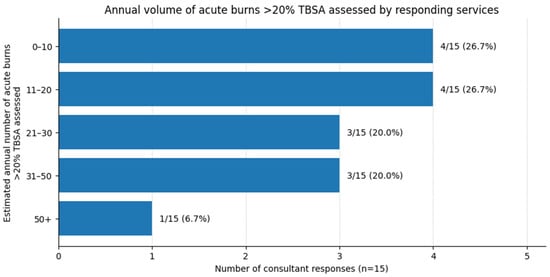
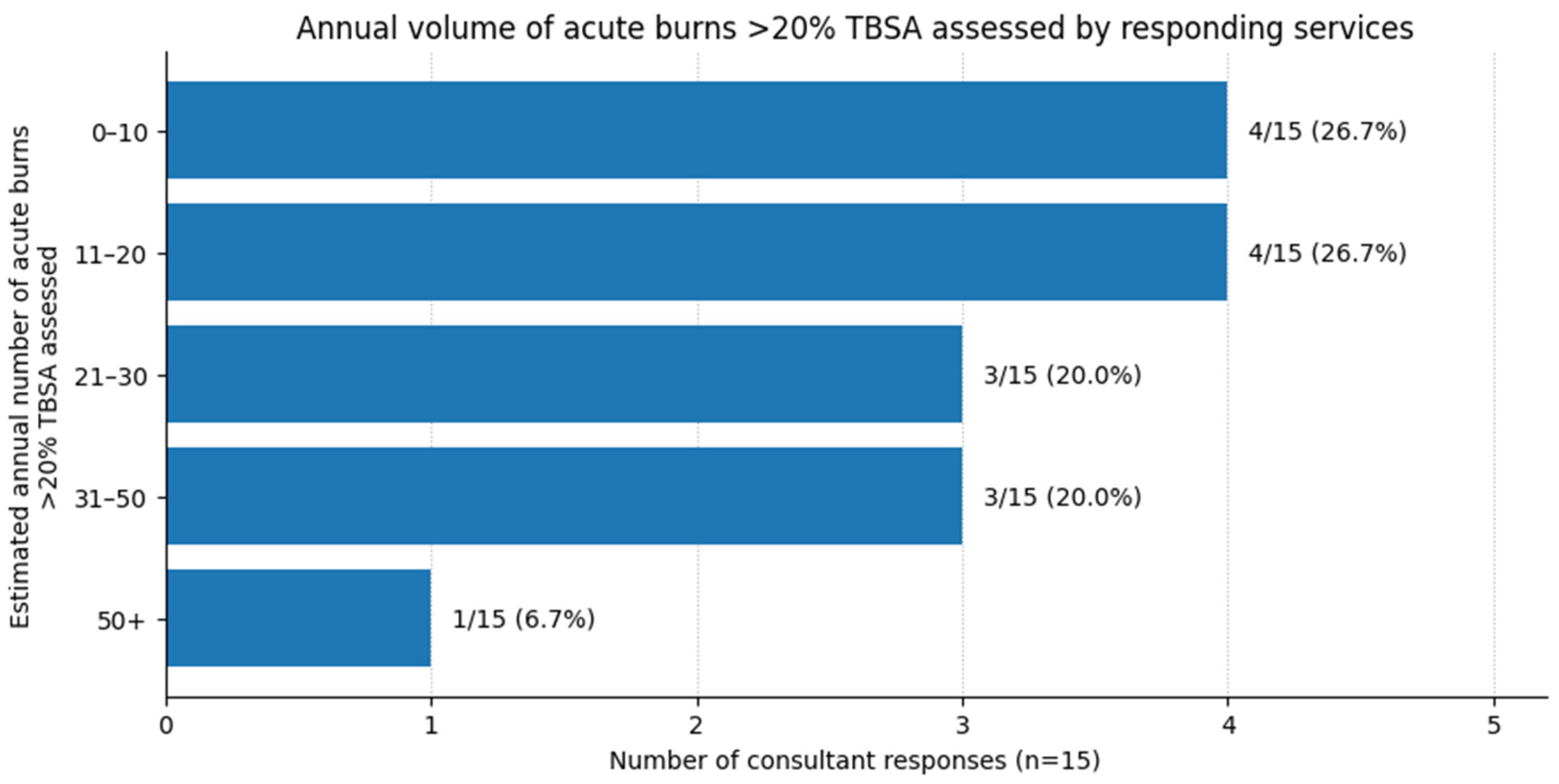
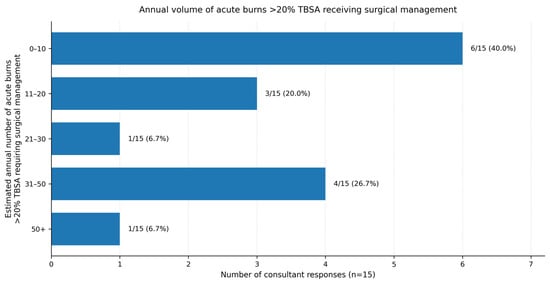
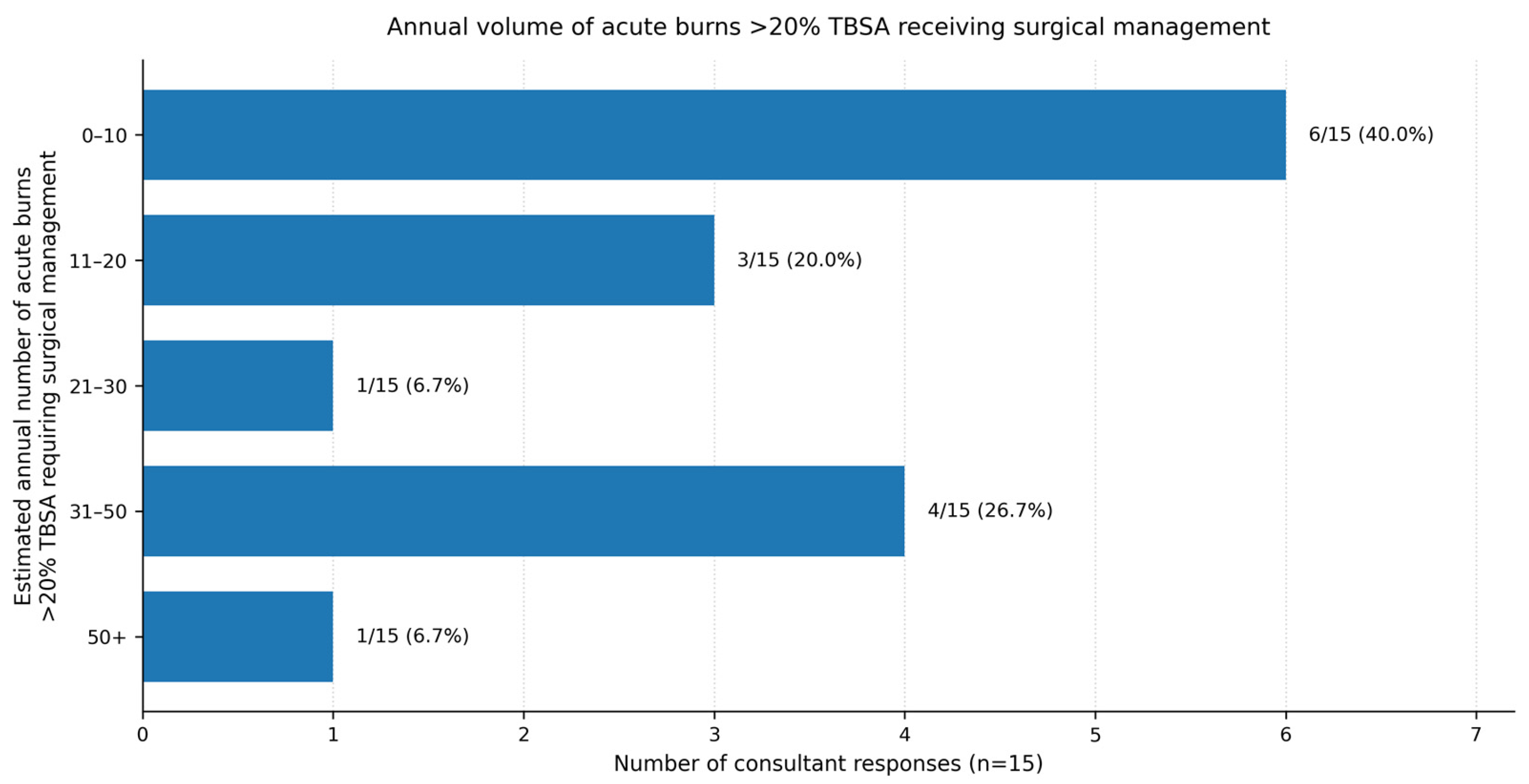
Reported annual volumes of acute burns >20% TBSA varied substantially. Among burn-centre respondents, only one reported managing more than 50 such cases annually. Other centre respondents reported between 0 and 50 cases, with several reporting fewer than 30 cases per year (Figure 1). Burn units and facilities generally reported lower volumes, with most reporting between 0 and 20 cases annually. Reported annual volumes requiring surgical management broadly followed the overall case-volume distribution (Figure 2). However, one respondent from a paediatric burn centre reported a significantly lower annual number of patients undergoing surgery than the number initially assessed with burns > 20% TBSA.
Figure 1.
Annual volume of acute burns exceeding 20% total body surface area (TBSA) assessed by responding burn services, as estimated by consultant respondents (n = 15). Results are presented as the number and percentage of respondents selecting each annual case-volume category.
Figure 2.
Annual volume of acute burns exceeding 20% total body surface area (TBSA) requiring acute surgical management, as estimated by consultant respondents (n = 15). Results are presented as the number and percentage of respondents selecting each annual case-volume category.
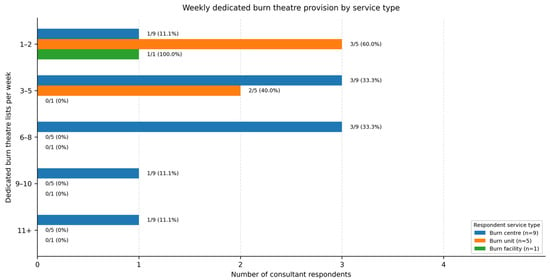
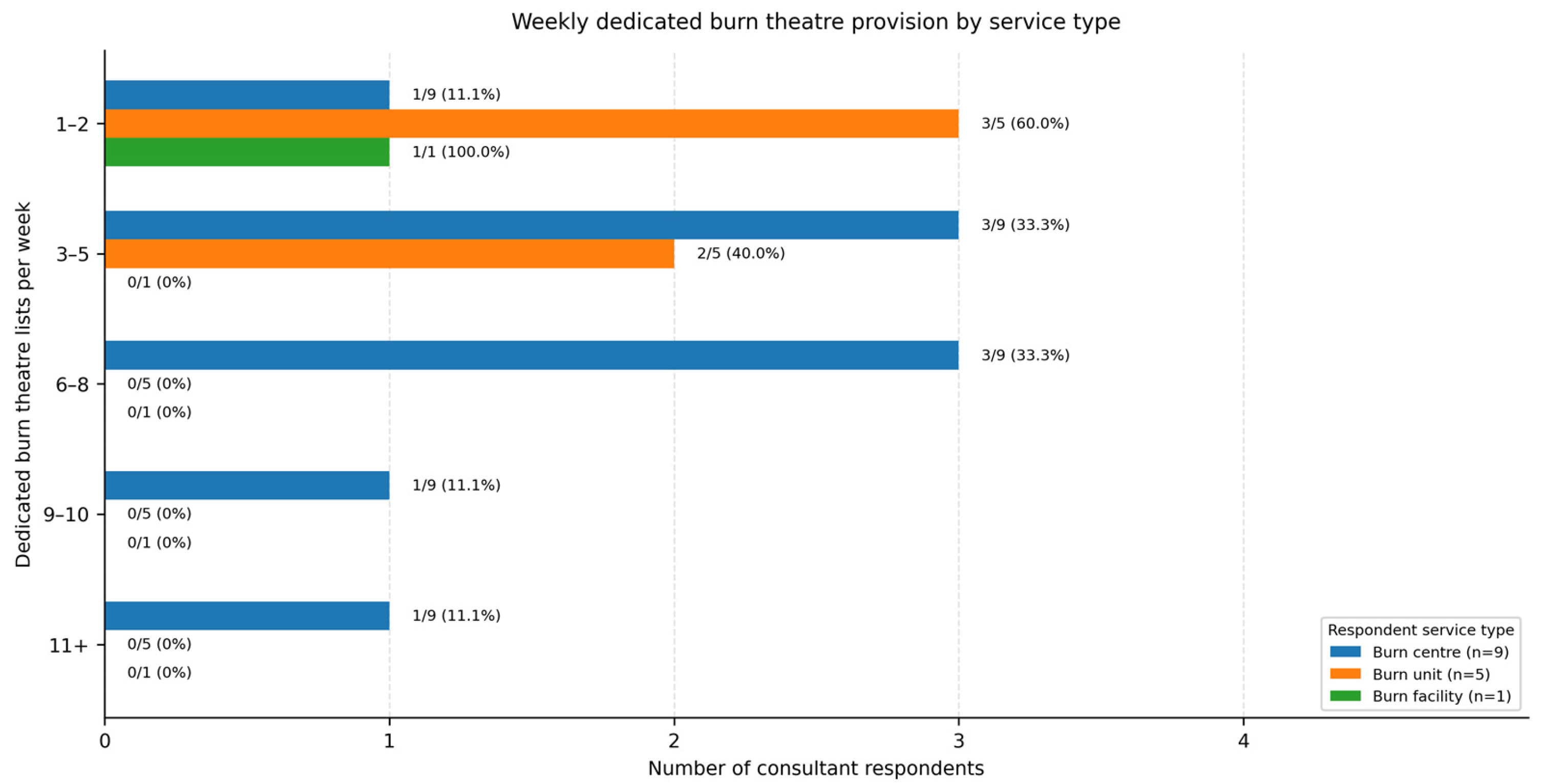
Dedicated burn theatre provision also varied by service type (Figure 3). Among burn-centre respondents, three of nine (33.3%) reported three to five dedicated theatre lists per week, while a further three (33.3%) reported six to eight lists. One respondent reported one to two lists, one reported nine to ten lists and one reported more than 11 lists per week. Among burn-unit respondents, three of five (60%) reported one to two dedicated lists per week and two (40%) reported three to five. The single respondent from a burn facility reported one to two dedicated lists per week.
Figure 3.
Number of dedicated burn theatre lists available per week, stratified by service type (burn centres, burn units and burn facilities). Results are presented as the number and percentage of consultant respondents within each service type reporting each category of weekly theatre provision: burn centres (n = 9), burn units (n = 5) and burn facility (n = 1).
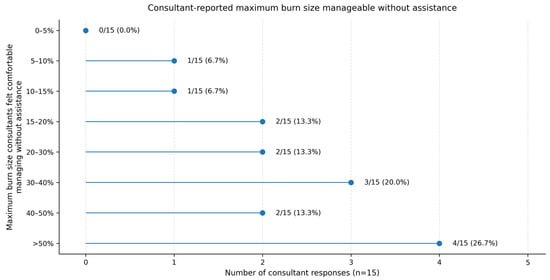
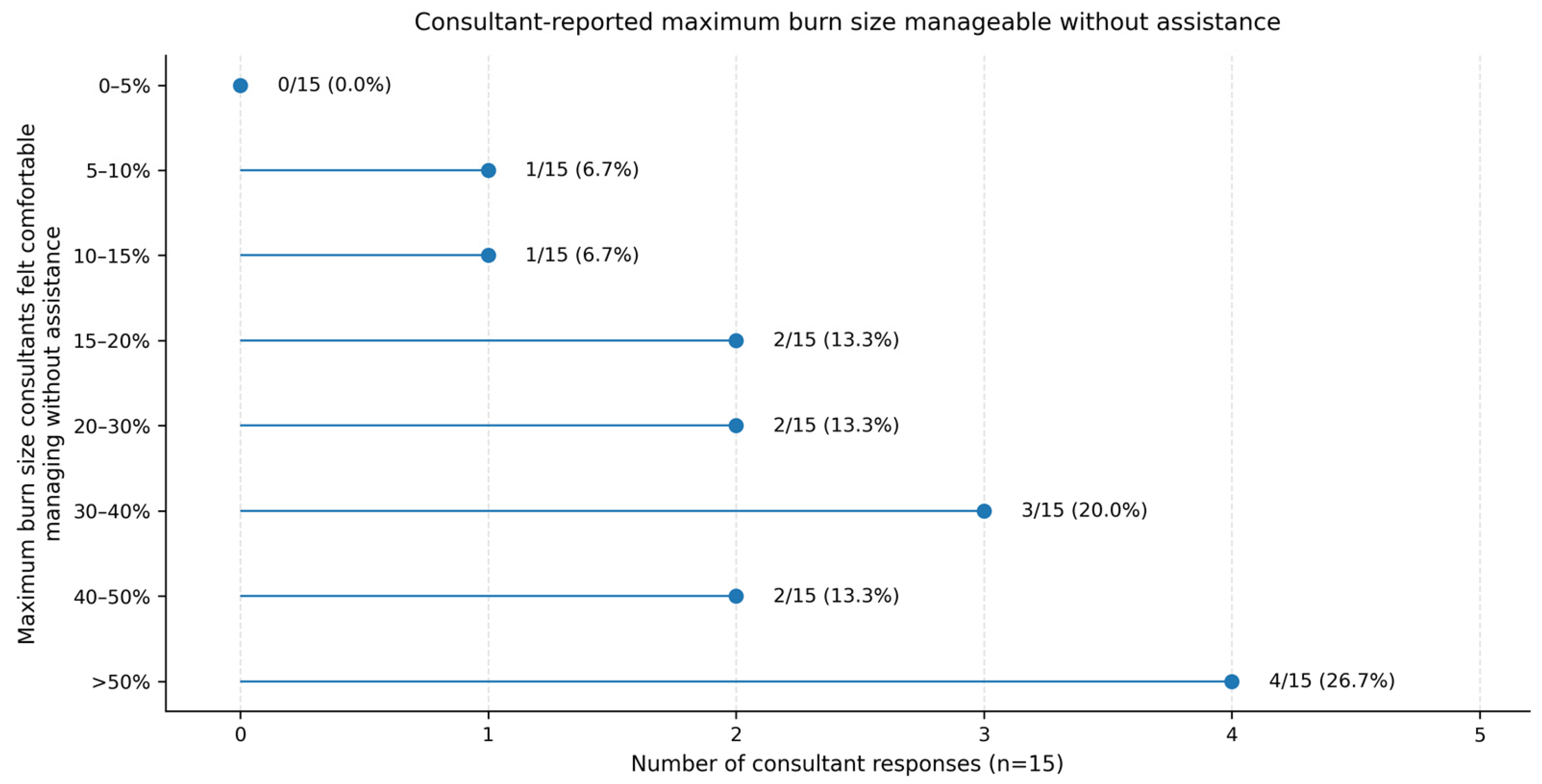
Consultant-reported confidence in independently excising/debriding and grafting burns varied across the cohort (Figure 4). A total of 4 of 15 respondents (26.7%) reported feeling comfortable managing burns exceeding 50% TBSA without assistance. Two respondents (13.3%) selected the 40–50% category, three (20%) selected 30–40%, two (13.3%) selected 20–30%, two (13.3%) selected 15–20%, one (6.7%) selected 10–15% and one (6.7%) selected 5–10%. No respondents selected the 0–5% category.
Figure 4.
Maximum burn size that consultant respondents reported feeling comfortable excising/debriding and grafting without assistance, within their current NHS working environment and with standard staffing and resources (n = 15). Results are presented as the number and percentage of respondents selecting each TBSA category.
3.2. Trainee Autonomy and Supervision
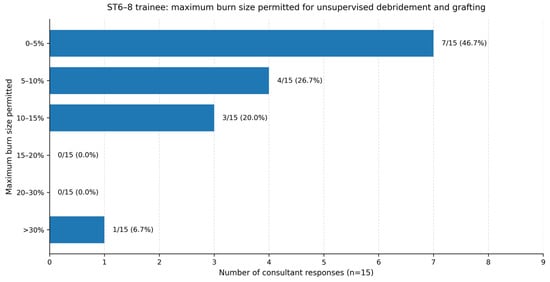
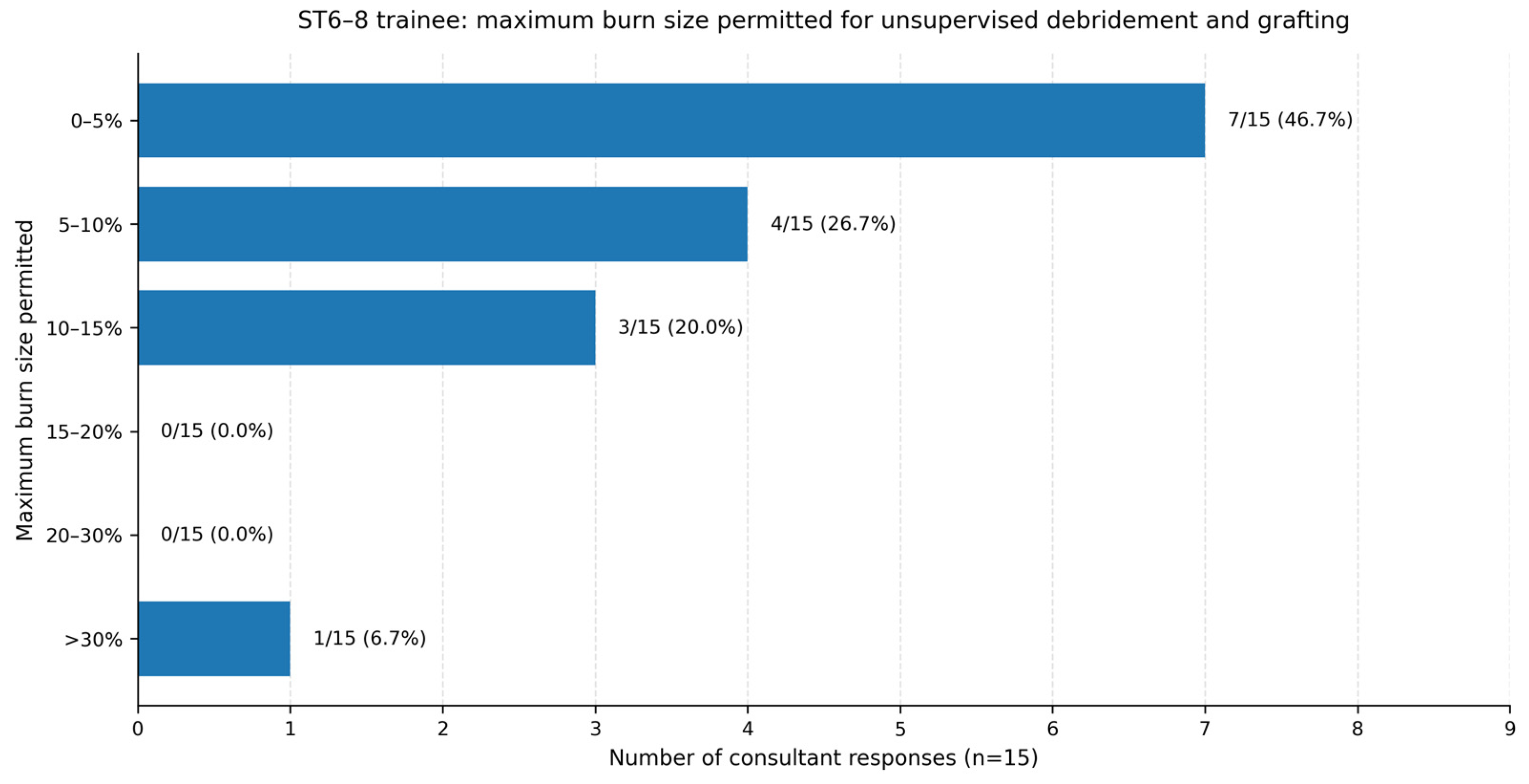
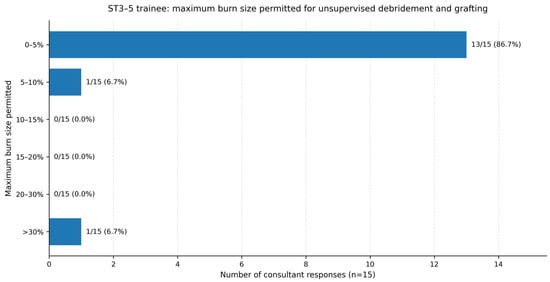
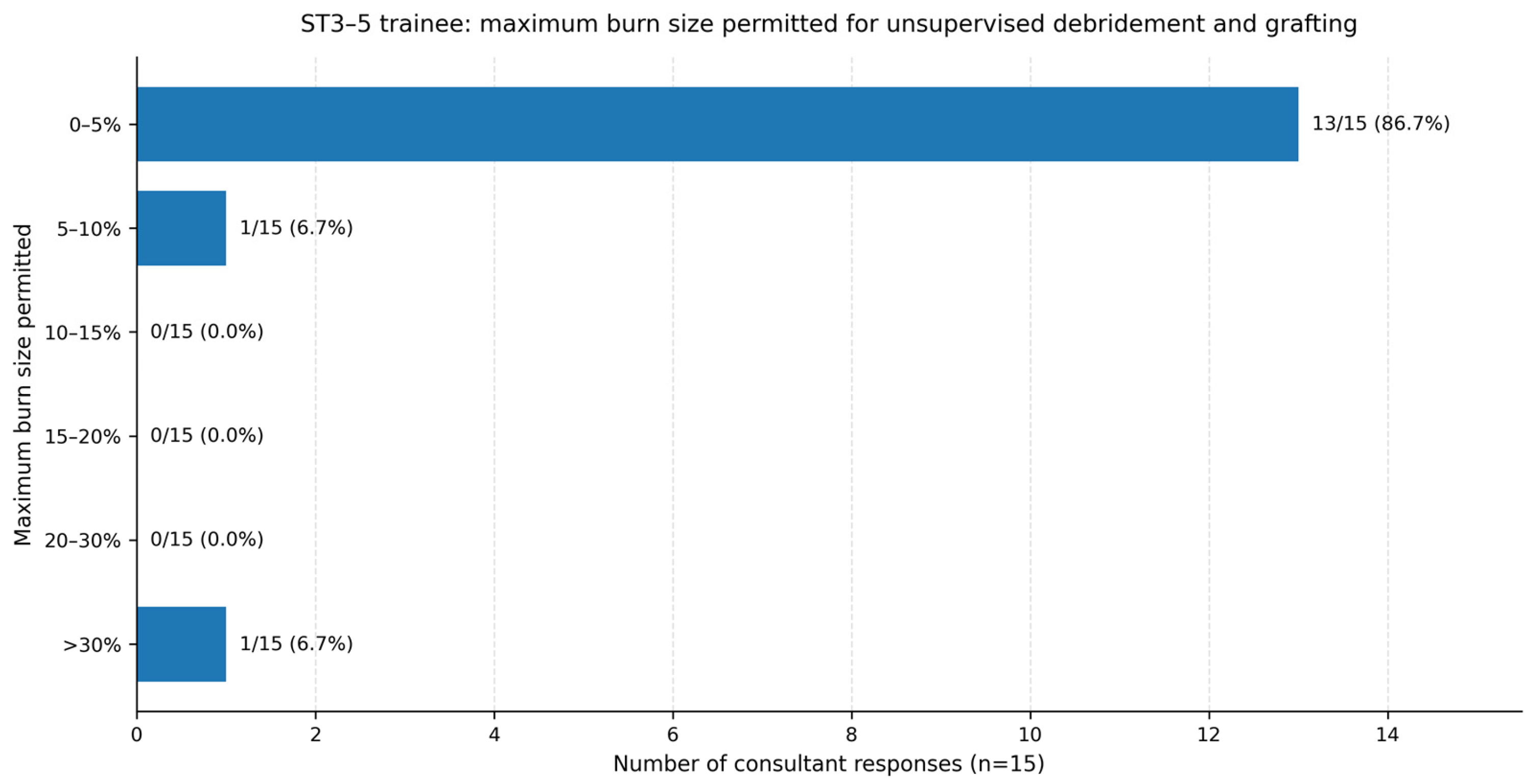
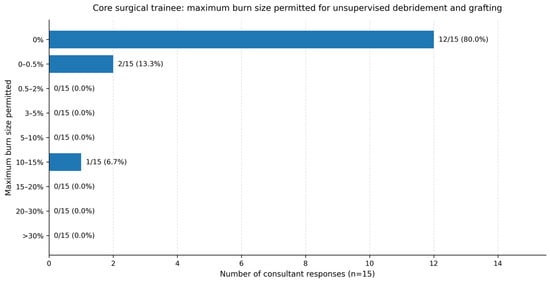
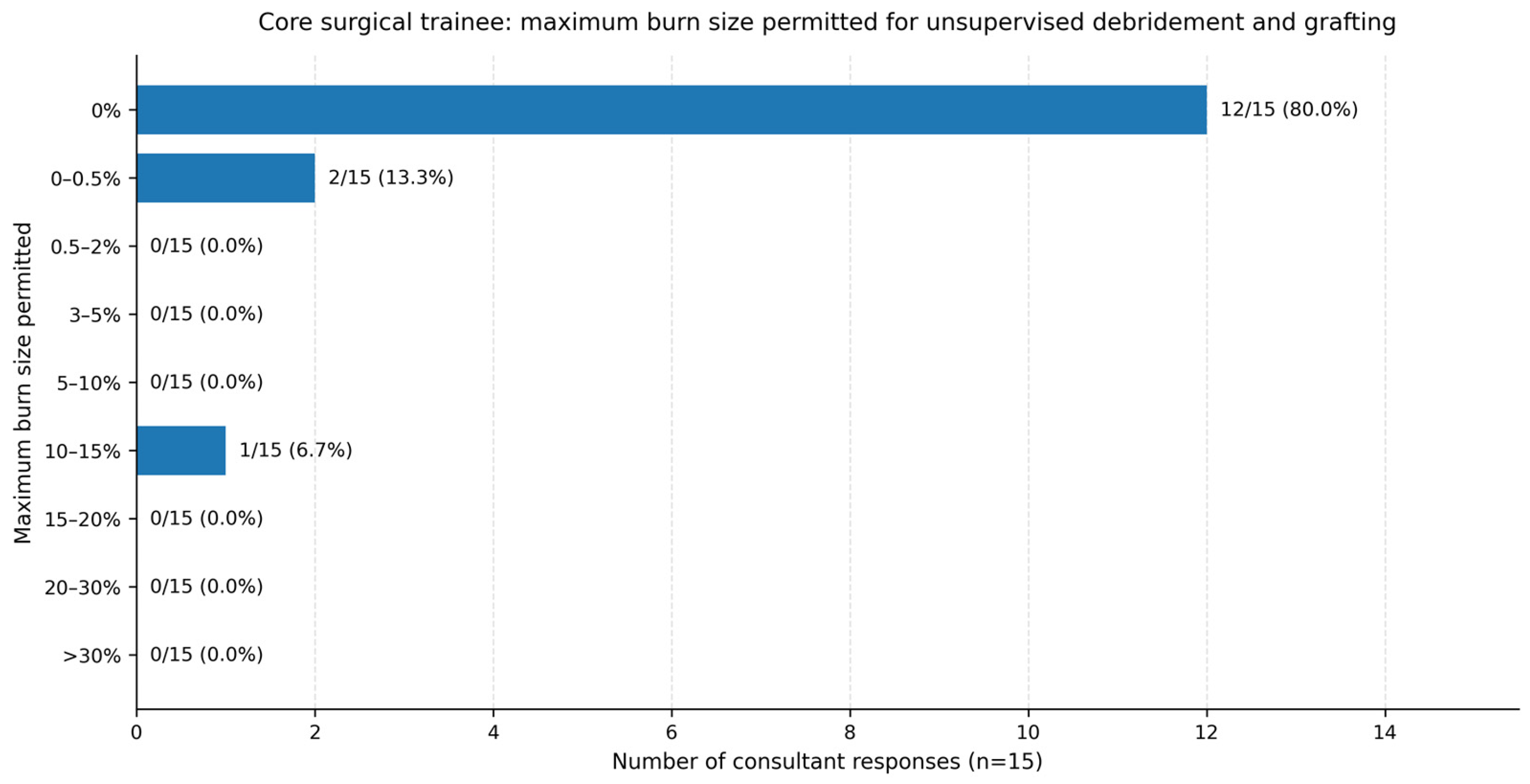
Consultant-reported willingness to permit unsupervised excision and grafting, with the trainee acting as the most senior surgeon in theatre, varied according to trainee grade and burn size. For ST6–8 trainees, 7 of 15 respondents (46.7%) would permit this level of responsibility for burns up to 5% TBSA, while only one (6.7%) would permit it for burns exceeding 30% TBSA (Figure 5). For ST3–5 trainees, 13 of 15 respondents (86.7%) limited this level of operative responsibility to burns of ≤5% TBSA (Figure 6). Pre-ST3 trainees were generally not considered suitable to undertake these procedures independently (Figure 7).
Figure 5.
Maximum burn size that consultants would permit ST6–8 plastic surgery trainees to excise/debride and graft without supervision, with the consultant acting as the most senior surgeon in theatre (n = 15). Results are presented as the number and percentage of respondents selecting each category.
Figure 6.
Maximum burn size that consultants would permit ST3–5 plastic surgery trainees to excise/debride and graft without supervision, with the consultant acting as the most senior surgeon in theatre (n = 15). Results are presented as the number and percentage of respondents selecting each category.
Figure 7.
Maximum burn size that consultants would permit core surgical trainees to excise/debride and graft without supervision, with the consultant acting as the most senior surgeon in theatre (n = 15). Results are presented as the number and percentage of respondents selecting each category.
Fourteen respondents (93.3%) considered it unreasonable for a pre-ST3 trainee to undertake debridement and STSG of a burn >50% TBSA with minimal supervision. Free-text responses highlighted the collaborative nature of major-burn surgery, the importance of consultant supervision and concerns regarding the feasibility of achieving higher TBSA-based portfolio categories. Some respondents also perceived that opportunities for major-burn operative exposure were declining, although the survey did not assess temporal trends.
4. Discussion
This survey provides an exploratory account of burn surgery exposure and training opportunities across participating UK burns services. Respondents described substantial variation in the availability of major burn cases, access to dedicated theatre provision and the level of operative responsibility considered appropriate for trainees at different stages of plastic surgery training. Although independent trainee involvement in the excision and grafting of larger burns was generally limited, this should not be interpreted as evidence that trainees lack opportunities to participate in these procedures under supervision. Rather, the findings highlight an important distinction between the procedural experience recognised by the historical recruitment framework and the degree of independent responsibility that consultants consider appropriate in clinical practice. These are related, but different, dimensions of operative development.
Previous UK studies have highlighted limitations in operative training opportunities and challenges in assessing surgical competence through workplace-based assessments and operative logbooks [5,10,11]. The present study adds a burn-specific perspective by examining consultant-reported case availability, access to dedicated theatre provision and perceptions of trainee autonomy across different stages of training, alongside national recruitment self-assessment data. In doing so, it explores whether the scale of procedural experience recognised during recruitment adequately reflects the progressive, supervised and often team-based nature of burn surgery. Importantly, the survey measured consultants’ willingness to permit trainees to undertake excision and grafting without supervision while acting as the most senior surgeon in theatre; it did not measure the amount of supervised operative participation available, the individual contribution made by trainees during team-based procedures or their demonstrated competence. The findings therefore do not establish that the recruitment requirements are unattainable but raise questions about how different forms of operative experience are recognised and assessed.
The concentration of complex burn care within specialist centres means that opportunities to encounter very large burns are likely to vary between services [1]. Even among respondents working in burn centres, only one reported managing more than 50 acute burns exceeding 20% TBSA annually. These figures represent consultant-reported estimates of annual service activity and should not be interpreted as the number of cases in which trainees had the opportunity to participate operatively. Furthermore, the availability of cases does not necessarily translate into opportunities for independent operating.
Free-text responses from some consultants described consultant-led or dual-consultant approaches to larger burns, including the use of two consultants for burns exceeding 10% TBSA, reflecting the technical complexity and physiological risks associated with these procedures [12]. Major burn excision and grafting are inherently team-based procedures, with operative responsibilities distributed according to the extent and complexity of the injury and the experience of individual team members. Published descriptions of major burn surgery highlight the involvement of multiple surgeons, alongside experienced anaesthetic and theatre nursing staff, with teams of 3–4 surgeons and trainees described for extensive excision, and larger teams reported for complex major burn procedures [12,13,14]. The presence of a trainee as the senior-most surgeon should therefore not necessarily be interpreted as operating in isolation or without wider team support. Rather, the degree of individual operative responsibility may exist within a broader, appropriately staffed and supported operative environment. Major burn excision and grafting require careful consideration of patient physiology, the extent of injury, operative planning and the risks associated with extensive surgical intervention [12].
The national Freedom of Information (FOI) dataset provides a complementary perspective on the burn surgery experience reported by applicants during the 2023–2024 UK plastic surgery recruitment cycle. The dataset included all 264 applicants and recorded their self-assessment of the amount of burn tissue they had personally excised or debrided and grafted, rather than the total TBSA of the patients’ burns (Table 1). A total of 60 applicants (22.7%) reported no burn surgery experience, while 66 (25.0%) selected the category below 5% TBSA, 76 (28.8%) selected 5–19% TBSA, 39 (14.8%) selected 20–49% TBSA and 23 (8.7%) selected 50% or higher TBSA. Thus, 62 applicants (23.5%) reported personally excising or debriding and grafting burn tissue within one of the two highest categories. These findings demonstrate variation in the level of procedural experience reported by applicants, with relatively few selecting the highest category. However, the data do not establish whether this experience was gained independently or under supervision, nor do they indicate the complexity of the procedures or the extent of each applicant’s contribution. They should therefore be interpreted as self-reported procedural experience, rather than a direct measure of operative autonomy or competence.
Table 1.
Distribution of applicant self-assessment responses for burn surgery experience during the 2023–2024 UK plastic surgery recruitment cycle (n = 264).
The historical recruitment framework may also not fully reflect the breadth of contemporary burn surgery. Requiring excision or debridement and split-thickness skin grafting (STSG) within the same procedure may not recognise experience gained through staged excision and grafting or the use of alternative wound-cover strategies [12]. In practice, the extent of tissue excised during an individual operation may be considerably smaller than the patient’s overall burn size, particularly when treatment is undertaken over multiple procedures. Staged excision may be required according to the patient’s physiological condition, the extent of the burn, available donor skin and the overall operative plan [12]. Consequently, the TBSA of the patient’s burn, the TBSA excised during an individual operation and the cumulative area excised across staged procedures represent distinct measures of operative experience. Assessment based predominantly on a single TBSA threshold may therefore fail to capture the complexity and extent of an individual’s contribution to major burn surgery.
Burn surgery also encompasses a broader range of clinical and professional competencies beyond technical operative skills. These include assessment of burn depth and wound progression, management of the physiological and critical care requirements of major burns, multidisciplinary coordination, rehabilitation and consideration of functional and long-term outcomes [15,16]. Comprehensive burn management extends beyond the acute operative episode, requiring coordinated input from surgical, critical care, nursing, rehabilitation and allied health professionals. Long-term care may also involve the management of scarring, contractures, functional impairment and the psychological consequences of burn injury [15,16]. Experience with contemporary wound management strategies, including staged excision, split-thickness skin grafting, dermal substitutes and other appropriate wound cover techniques, is also relevant to comprehensive burn care [12]. Although the present study focused on operative exposure and trainee autonomy, these wider competencies should be recognised when considering the development and assessment of burn surgery experience.
The FOI data represent applicants’ self-reported procedural experience rather than independently verified operative competence. They do not establish whether applicants undertook procedures independently, participated under supervision or observed them nor do they quantify the extent of each applicant’s individual contribution. Similarly, the consultant survey explored respondents’ willingness to permit trainees to undertake procedures without supervision, rather than measuring the total operative exposure available to trainees. These datasets therefore provide complementary perspectives on recruitment experience and consultant-reported clinical practice but should not be interpreted as directly equivalent measures of operative competence. Previous UK studies have also raised concerns regarding the selection, recording and verification of workplace-based assessments [10] and the accuracy of operative logbook data [11]. Although these findings do not establish that inaccurate recording occurred in the present study, they reinforce the importance of assessment systems that use clearly defined criteria and evidence that is transparent, observable and feasible to verify.
The findings suggest that future assessment of burn surgery experience will benefit from considering a broader range of domains alongside TBSA. These include burn assessment and management, the extent of tissue excised or debrided, experience gained through staged procedures, the use of contemporary wound-cover strategies, and the trainee’s individual contribution and level of operative responsibility. Wider competencies, including the management of major burns, critical care and multidisciplinary working, may also provide important context when assessing overall experience. Potential domains for consideration are summarised in Table 2. These are intended to illustrate components of a broader assessment framework rather than define a replacement scoring system. Any future framework would require clearly defined assessment criteria, agreement regarding the level of trainee participation required, and prospective validation involving trainees, trainers and national recruitment stakeholders.
Table 2.
Potential domains for consideration in assessment of burn surgery experience.
Limitations
This exploratory survey included 15 consultant respondents from 12 burn facilities across England, Scotland and Wales. Participants were recruited voluntarily through the British Burn Association (BBA) newsletter using convenience sampling, without predefined sample size targets or stratification by geography or service designation. As the total number of newsletter recipients was unavailable, a response rate could not be calculated, and non-response bias could not be excluded. The individual consultant was the unit of analysis; three facilities contributed two respondents each, potentially resulting in institutional over-representation. Consequently, the findings describe the perspectives of participating consultants rather than providing representative service-level estimates or evidence of national practice. Survey responses were based on consultant-reported estimates and perceptions, rather than independently verified activity data or directly observed practice.
The survey assessed consultants’ willingness to permit trainees to undertake excision and grafting without supervision while acting as the most senior surgeon in theatre. It did not quantify individual trainee exposure, supervised operative participation, personal procedural contribution or demonstrated competence. The cross-sectional design also cannot establish temporal changes in case volume or operative opportunities; reported perceptions of declining exposure should therefore not be interpreted as evidence of a demonstrated trend. Similarly, although the FOI dataset represented the complete 2023–2024 applicant cohort, TBSA categories reflected applicants’ self-reported estimates of the burn tissue they had personally excised or debrided and grafted. These data were not independently verified and did not establish the level of supervision, operative complexity or individual contribution. The survey and FOI datasets therefore provide complementary but distinct perspectives and should not be interpreted as direct measures of operative competence.
Finally, this study examined experience in the context of the historical ST3 recruitment framework used during the 2023–2024 application cycle. The recruitment process has since been revised for the 2026 round, including changes to its surgical assessment components [17]; findings should therefore be interpreted in relation to the framework applicable during the study period. As an exploratory study, the findings are insufficient to support changes to national recruitment policy in isolation. Any future revision of competency assessment would require broader consultation with trainees, trainers and recruitment stakeholders, alongside prospective evaluation and validation against clearly defined measures of operative experience and competence.
5. Conclusions
This exploratory survey identified variation in consultant-reported major burn case availability, theatre access and opportunities for trainee operative autonomy across participating UK burn services. Respondents generally considered independent excision and grafting of larger burns inappropriate for less experienced trainees, reflecting the complexity of major burn surgery and the importance of consultant supervision. However, limited independent autonomy should not be equated with limited supervised operative experience.
The findings highlight the importance of distinguishing procedural exposure, supervised participation and independent operative competence when assessing burn surgery experience. Although TBSA provides a useful measure of burn extent, it may not fully capture operative complexity, individual trainee contribution or experience gained through staged excision and contemporary wound-cover strategies. Future competency assessment frameworks should consider these complementary dimensions. Further work involving trainees, trainers and national recruitment stakeholders is required to develop and validate an approach that is clinically meaningful, feasible and reflective of contemporary burn practices.
Supplementary Materials
The following supporting information can be downloaded at: https://www.mdpi.com/article/10.3390/ebj7040058/s1, Table S1: Consultant burns surgeon survey questionnaire.
Author Contributions
Conceptualisation, S.J. and K.M.; methodology, S.J. and K.M.; software, K.M.; validation, S.J., K.M. and P.M.; formal analysis, K.M.; investigation, K.M.; data curation, K.M.; writing—original draft preparation, K.M.; writing—review and editing, K.M., S.J. and P.M.; supervision, S.J. and P.M.; project administration, K.M. All authors have read and agreed to the published version of the manuscript.
Funding
This research received no external funding.
Institutional Review Board Statement
The Health Research Authority (HRA) decision tools were completed for this study. The HRA ‘Is my study research?’ tool classified the project as research, while the ‘Do I need NHS REC review?’ tool indicated that NHS Research Ethics Committee (REC) review was not required in England. The Research Management and Support team at Mid Yorkshire Teaching NHS Trust was consulted regarding local governance requirements. The team advised that, based on the information initially provided, the project could be categorised as a service evaluation and directed the researcher to the HRA decision tools. The Trust confirmed that it does not provide retrospective governance reviews or approval for research. Accordingly, the correspondence does not constitute formal retrospective approval or an exemption letter.
Informed Consent Statement
Informed consent to participate was obtained from all survey participants before questionnaire completion. The introductory statement explained that the survey was voluntary and had been circulated through the British Burn Association (BBA) to consultant burn surgeons. Participants were informed that the purpose of the survey was to explore consultant perspectives on the current plastic surgery ST3 application portfolio, specifically whether the existing competency requirements were appropriate from a patient safety perspective and realistic for junior trainees to achieve. They were also informed that the information collected would be stored securely and that findings would be reported anonymously to protect participant confidentiality. Participants were provided with this information before deciding whether to complete the questionnaire, and completion was voluntary and without inducement.
Data Availability Statement
The survey dataset is not publicly available because the underlying participant-level responses are subject to confidentiality considerations. Data may be available from the corresponding author on reasonable request, subject to appropriate governance and confidentiality requirements.
Acknowledgments
The authors are grateful to the British Burn Association for circulating the survey and to all participants who voluntarily completed the questionnaire without incentive.
Conflicts of Interest
The authors declare no conflicts of interest.
References
- National Network for Burn Care (NNBC). National Burn Care Referral Guidance 2. 2012. Available online: https://www.britishburnassociation.org/wp-content/uploads/2018/02/National-Burn-Care-Referral-Guidance-2012.pdf (accessed on 5 October 2026).
- Brady, C.; Edmondson, S.J.; Murray, A. Ensuring Sustainability for UK Burns Services. Ann. Plast. Surg. 2019, 82, 274–276. [Google Scholar] [CrossRef] [Scilit] [PubMed]
- Tullie, S.; Weale, R.; Cooper, L. Peri-pandemic planning: Considerations for the next wave of plastics trainees. J. Plast. Reconstr. Aesthet. Surg. 2021, 74, 890–930. [Google Scholar] [CrossRef] [Scilit] [PubMed]
- Pasha, T.; Lumley, E.S.; Dwyer-Hemmings, L.; Fell, M. Undergraduate plastic surgery in the United Kingdom: The students’ perspective. J. Plast. Reconstr. Aesthet. Surg. 2020, 73, 2086–2102. [Google Scholar] [CrossRef] [Scilit] [PubMed]
- Fell, M.J.; Staruch, R.; Baker, B.G.; Nicholas, R.; Howes, R.; Amin, K.; Coelho, J.; Collins, M.; Concannon, E.; Din, A.; et al. Plastic surgery training in the UK: Results from a national survey of trainee experiences. JPRAS Open 2020, 25, 72–82. [Google Scholar] [CrossRef] [Scilit] [PubMed]
- Grover, S.; Raj, S.; Spazzapan, M.; Russell, B.; Kapila, A.K.; Malde, S.; Vig, S.; Fleming, S. DiffErential attainment and Factors AssoCiated with Training applications and Outcomes (DE FACTO) study: Plastic surgery in the United Kingdom. J. Plast. Reconstr. Aesthet. Surg. 2025, 103, 380–383. [Google Scholar] [CrossRef] [Scilit] [PubMed]
- Intercollegiate Surgical Curriculum Programme (ISCP). Plastic Surgery Curriculum: The Training Pathway and Duration of Training. Available online: https://www.iscp.ac.uk/iscp/curriculum/plastic-surgery-curriculum/2-purpose/ (accessed on 11 November 2026).
- NHS England. 2024 Plastic Surgery ST3: Supplementary Applicant Handbook; NHS England: London, UK, 2023; Available online: https://www.scribd.com/document/687823743/2024-Plastic-Surgery-Supplementary-Applicant-Handbook (accessed on 11 November 2026).
- Intercollegiate Surgical Curriculum Programme (ISCP). Guidance on the Revised PBA/DOPS Global Scale. 2017. Available online: https://www.iscp.ac.uk/static/public/Guidance%20on%20PBA%20global%20levels%20Feb2017.pdf (accessed on 5 October 2026).
- Beamish, A.J.; Johnston, M.J.; Harries, R.; Mohan, H.; Fitzgerald, J.F.; Humm, G.; Rabie, M.; Nally, D.M.; Gokani, V.J.; Ali, O.; et al. Real-world use of workplace-based assessments in surgical training: A UK nationwide cross-sectional exploration of trainee perspectives and consensus recommendations from the Association of Surgeons in Training. Int. J. Surg. 2020, 84, 212–218. [Google Scholar] [CrossRef] [Scilit] [PubMed]
- Beamish, A.J.; Johnston, M.J.; Harries, R.L.; Mohan, H.; Fitzgerald, J.E.F.; Humm, G.; Rabie, M.; Nally, D.; Ali, O.; Burke, J.; et al. Use of the eLogbook in surgical training in the United Kingdom: A nationwide survey and consensus recommendations from the Association of Surgeons in Training. Int. J. Surg. 2020, 84, 199–206. [Google Scholar] [CrossRef] [Scilit] [PubMed]
- ISBI Practice Guidelines Committee. ISBI Practice Guidelines for Burn Care. Burns 2016, 42, 953–1021. [Google Scholar] [CrossRef] [Scilit] [PubMed]
- Greenhalgh, D.G. Operative Management of Burns: Traditional Care. Eur. Burn J. 2023, 4, 262–279. [Google Scholar] [CrossRef] [Scilit] [PubMed]
- Leon-Villapalos, J.; Barret, J.P. Surgical Repair of the Acute Burn Wound: Who, When, What Techniques? What Is the Future? J. Burn Care Res. 2023, 44, S5–S12. [Google Scholar] [CrossRef] [Scilit] [PubMed]
- ISBI Practice Guidelines Committee. ISBI Practice Guidelines for Burn Care, Part 2. Burns 2018, 44, 1617–1706. [Google Scholar] [CrossRef] [Scilit] [PubMed]
- Bryarly, J.; Kowalske, K. Long-Term Outcomes in Burn Patients. Surg. Clin. N. Am. 2023, 103, 505–513. [Google Scholar] [CrossRef] [Scilit] [PubMed]
- NHS England. Self-Assessment and Verification: Plastic Surgery ST3. 2026 Recruitment Process. Available online: https://medical.hee.nhs.uk/medical-training-recruitment/medical-specialty-training/surgery/higher-surgery/plastic-surgery/overview-of-plastic-surgery/self-assessment-and-verification (accessed on 11 November 2026).

Disclaimer/Publisher’s Note: The statements, opinions and data contained in all publications are solely those of the individual author(s) and contributor(s) and not of MDPI and/or the editor(s). MDPI and/or the editor(s) disclaim responsibility for any injury to people or property resulting from any ideas, methods, instructions or products referred to in the content. |
© 2026 by the authors. Published by MDPI on behalf of the European Burns Association. Licensee MDPI, Basel, Switzerland. This article is an open access article distributed under the terms and conditions of the Creative Commons Attribution (CC BY) license.