Review

Systematic Analysis of Threats to Sea Turtles in Mexico: Trends, Knowledge Gaps, and Implications for Conservation


by
Ruth I. Ramírez-Villanueva
1,
Fernando Gumeta-Gómez
1,2 and
Gustavo Hinojosa-Arango
1,2,*
1
Centro Interdisciplinario de Investigación para el Desarrollo Integral Regional (CIIDIR), Instituto Politécnico Nacional, Unidad Oaxaca, Santa Cruz Xoxocotlán 71230, Mexico
2
Programa de Investigadoras e Investigadores por México, Secretaria de Ciencia, Humanidades, Tecnología e Innovación (SECIHTI), Alcaldía Benito Juárez, Ciudad de México 03940, Mexico
*
Author to whom correspondence should be addressed.
Oceans 2025, 6(4), 71; https://doi.org/10.3390/oceans6040071
Submission received: 1 August 2025 / Revised: 9 October 2025 / Accepted: 15 October 2025 / Published: 4 November 2025

Abstract

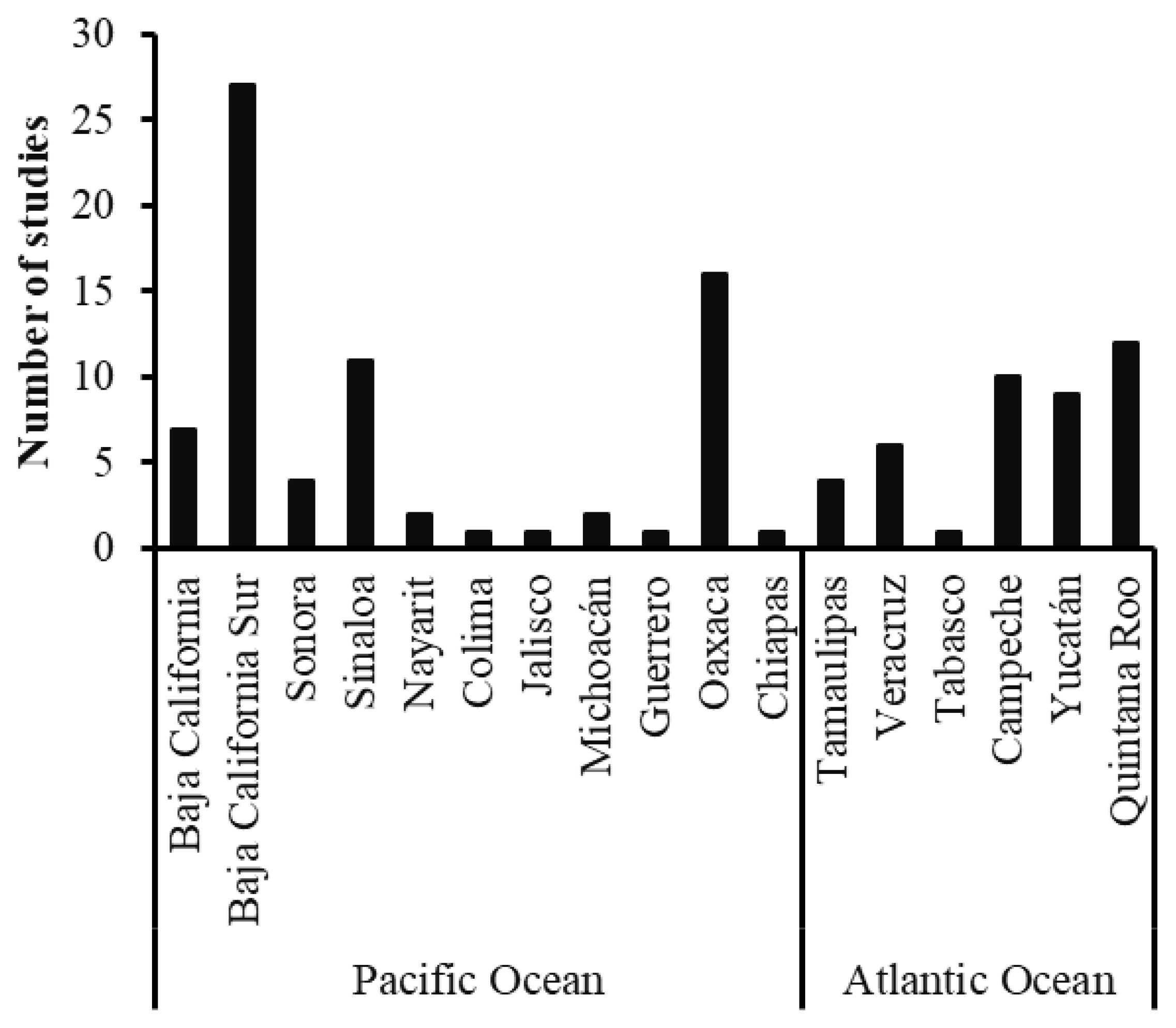
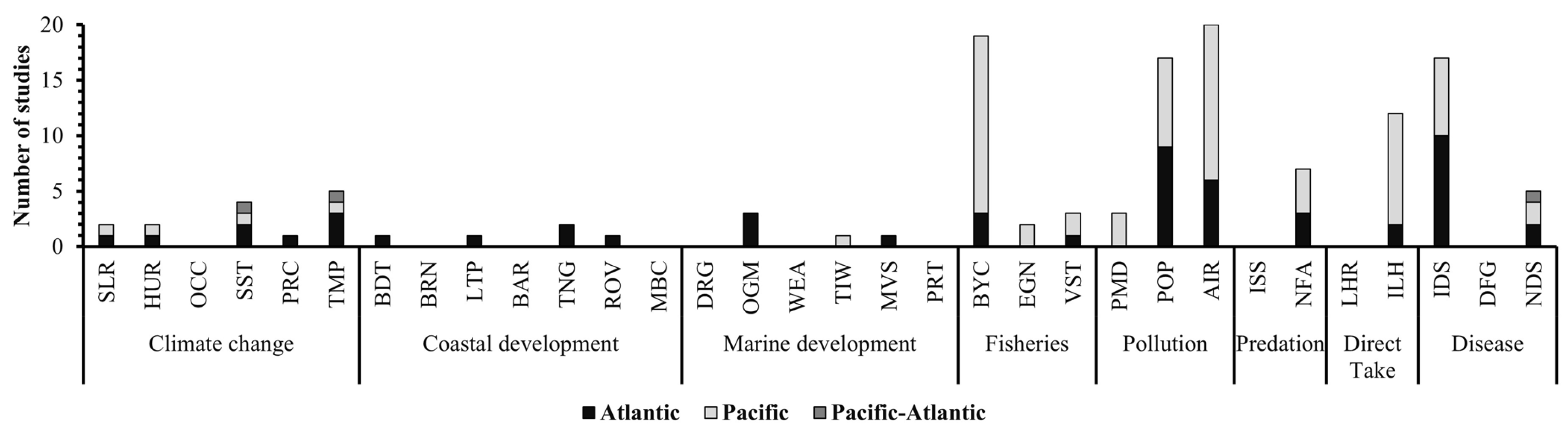
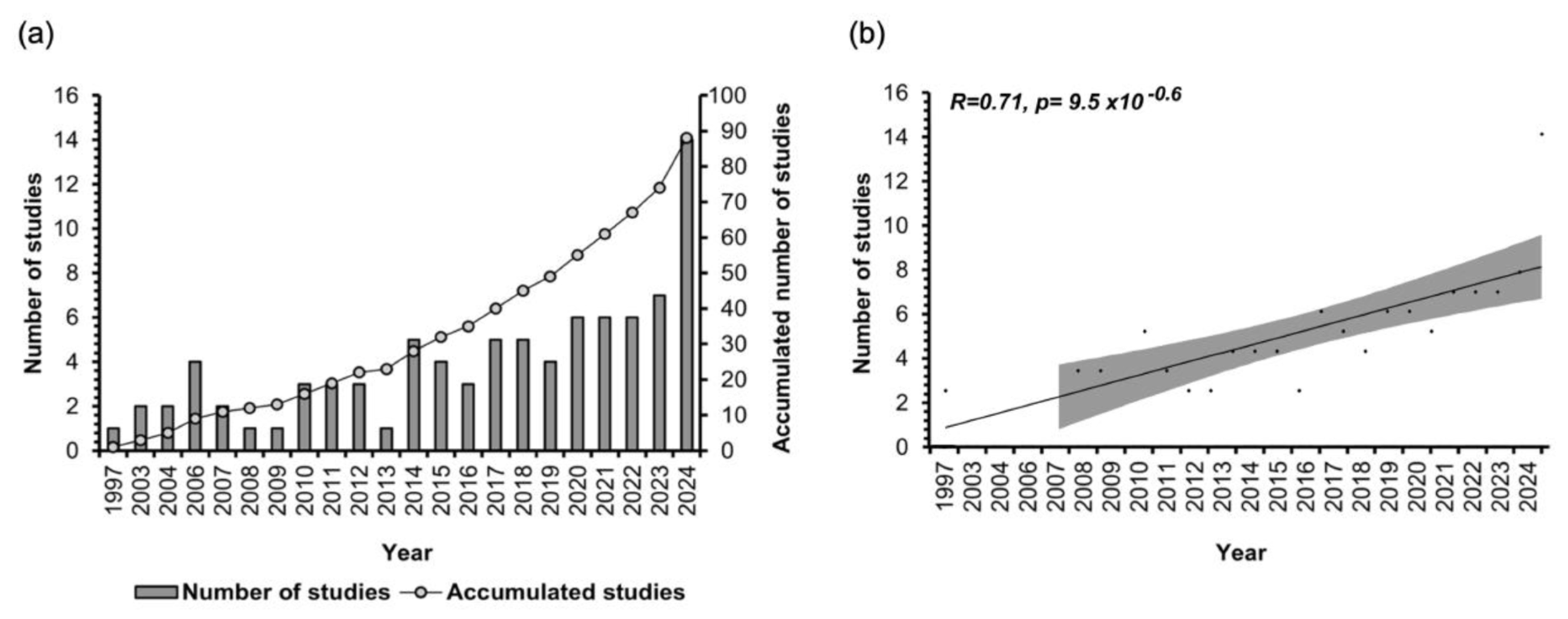
Current scientific knowledge about the threats jeopardizing the recovery of sea turtle populations in Mexico is essential for improving conservation strategies. This study presents the results of a systematic review of the scientific literature published between 1960 and 2024, with the aim of identifying the main threats contributing to the decline of sea turtle populations in Mexico, detecting trends in scientific production, identifying knowledge gaps, and offering a comprehensive view of the challenges and priority actions needed to improve conservation strategies by region in Mexico. The review revealed a significant increase in research since 1997, with a predominant focus on pollution, fishing, and disease, mainly in the Pacific region. While Chelonia mydas and Lepidochelys olivacea were the most studied species, Dermochelys coriacea and Lepidochelys kempii received less attention. A total of 22 stressors associated with 8 threats were identified, but knowledge gaps persist regarding emerging threats such as climate change, coastal and marine development, and marine noise pollution. The results underscore the need to expand research on less-studied species and regions, strengthen studies in marine ecosystems, and improve the alignment between research and conservation policies to ensure the long-term viability of sea turtles in Mexico.
Keywords: sea turtle conservation policies; threat assessment; endangered species; trends; PACE (Species Conservation Action Plans) sea turtle conservation policies; threat assessment; endangered species; trends; PACE (Species Conservation Action Plans)