


Abstract
This paper investigates the potential of localized air-curtain microclimate control to reduce HVAC energy consumption in electric vehicles while maintaining occupant thermal comfort. The study compares conventional full-cabin cooling with driver-focused and passenger-focused air-curtain configurations under controlled ambient conditions of 32 °C. The experimental framework combines analytical airflow and heat-transfer modeling with comparative HVAC performance evaluation using power consumption, time to reach thermal comfort, and Predicted Mean Vote (PMV) analysis. The results show that the air-curtain configurations reduce HVAC power consumption from 3.2 kW for conventional cooling to 2.3 kW and 2.5 kW for the driver- and passenger-focused configurations, corresponding to energy savings of approximately 22–28%. In addition, localized airflow significantly accelerates thermal comfort attainment, reducing stabilization time from 8 min to 4–5 min while maintaining PMV values within acceptable comfort limits. The findings demonstrate that occupant-centered air-curtain microclimate strategies can improve HVAC energy efficiency, reduce auxiliary energy demand, and support more sustainable and range-efficient operation of next-generation electric vehicles.
1. Introduction
The rapid adoption of electric vehicles (EVs) has intensified the need for energy-efficient auxiliary systems, as non-propulsion energy consumption directly impacts vehicle range and overall performance. Among these systems, heating, ventilation, and air conditioning (HVAC) is recognized as one of the most energy-demanding subsystems in EVs, particularly under extreme ambient conditions [1,2]. Unlike internal combustion engine vehicles, EVs lack waste heat recovery, making cabin thermal conditioning almost entirely dependent on electrical energy drawn from the battery pack [3].
Conventional HVAC strategies in vehicles are typically designed to condition the entire cabin uniformly, regardless of the number of occupants, their positions, or individual thermal requirements. While this approach ensures homogeneous thermal conditions, it often results in substantial energy inefficiencies, particularly in scenarios with single occupants or short driving cycles [4]. Previous studies have reported that HVAC operation can account for 30–40% of total energy consumption in electric vehicles under hot climatic conditions, thereby significantly reducing driving range and user confidence [5].
In response to these challenges, recent research has shifted toward localized and occupant-centered thermal management strategies, aiming to provide thermal comfort where it is most needed while minimizing unnecessary energy use [6]. Concepts such as zonal HVAC control, personalized ventilation, and microclimate generation have demonstrated promising potential in reducing HVAC energy demand without compromising perceived comfort [7,8]. Among these approaches, air-curtain-based cooling systems have attracted increasing attention due to their ability to create localized thermal envelopes around occupants through controlled airflow patterns.
Air-curtain systems operate by directing conditioned air in a focused stream, forming a thermal barrier that isolates the occupant from the surrounding cabin environment. This principle has been successfully applied to building entrances and refrigerated spaces to reduce thermal losses [9], and, more recently, to automotive applications to control the microclimate [10]. By limiting the conditioned volume and enhancing convective heat transfer at the occupant level, air-curtain strategies offer a pathway to faster attainment of comfort and reduced HVAC power consumption.
Thermal comfort in vehicle cabins is commonly evaluated using the Predicted Mean Vote (PMV) index, which integrates environmental and personal parameters, including air temperature, air velocity, metabolic rate, and clothing insulation [11,12,13,14]. Although PMV was originally developed for stationary indoor environments, it remains widely adopted in automotive thermal comfort studies and provides a valuable framework for comparative assessment of HVAC performance [15,16].
Despite growing interest in localized HVAC solutions, quantitative experimental studies directly comparing air-curtain microclimate strategies with conventional full-cabin cooling under controlled conditions remain limited. In particular, there is a lack of integrated analyses combining HVAC power consumption, time to thermal comfort, and PMV-based comfort evaluation within a unified experimental framework relevant to electric vehicle operation.
To better position the present work within the existing literature, Table 1 summarizes representative studies related to localized HVAC control, personalized ventilation, and energy-efficient thermal management strategies for electric vehicles, together with their main advantages and limitations.
Table 1.
Comparative overview of previously reported HVAC optimization and localized thermal management strategies for electric vehicles.
The novelty of the present study lies in the integration of an air-curtain-based microclimate concept with an occupant-centered HVAC strategy specifically developed for electric vehicle applications. Unlike conventional full-cabin conditioning approaches, the proposed strategy reduces the effective thermally conditioned volume through localized airflow confinement around the occupant. Furthermore, the study combines analytical airflow and heat-transfer modeling with controlled experimental PMV-based evaluation, enabling a unified assessment of HVAC energy consumption, thermal comfort response, and localized microclimate performance under identical operating conditions. The proposed approach provides new insight into the potential of localized airflow strategies to improve HVAC energy efficiency while maintaining rapid and effective thermal comfort in next-generation electric vehicles.
2. Materials and Methods
2.1. Experimental Design Overview
The present study was designed to evaluate energy efficiency and thermal comfort performance of a localized air-curtain HVAC strategy in an electric vehicle cabin, in comparison with a conventional full-cabin cooling approach. The experimental framework combined a mathematical model of cabin airflow and heat transfer with controlled testing conditions conducted at the Faculty of Mechanical Engineering, “Gheorghe Asachi” Technical University of Iași, Romania, enabling a systematic comparison of HVAC configurations under identical ambient constraints.
The experimental investigations were conducted using a Volkswagen e-up (2022), a production battery-electric passenger vehicle representative of the compact urban EV segment. The vehicle has overall dimensions of approximately 3600 mm in length, 1645 mm in width, and 1492 mm in height. The original vehicle cabin, including factory-installed glazing, interior trim components, insulation materials, door sealing systems, and HVAC ducts, was used without structural modifications. All experiments were carried out with the vehicle stationary, under controlled indoor conditions. Doors and windows remained closed throughout the tests to ensure repeatability and maintain the vehicle cabin’s original sealing and insulation characteristics. An anthropomorphic thermal manikin was positioned in the driver seat, while thermal imaging equipment was used to monitor localized airflow–occupant interaction and surface temperature distribution during HVAC operation.
During the experimental tests, the vehicle HVAC system was operated under identical settings for all investigated configurations. The supply air temperature was maintained at approximately 16–18 °C, corresponding to the cooling mode selected for high ambient operation. The average supply air velocity measured at the outlet level was approximately 2.0–2.5 m/s, while the estimated airflow rate was approximately 120–150 m3/h, depending on the selected blower setting. The front dashboard air outlets were used as the primary air supply points. For the conventional full-cabin cooling configuration, the outlets were oriented to distribute conditioned air toward the general cabin volume. For the driver-focused air-curtain configuration, the outlets were directed toward the upper torso and head region of the driver-side occupant zone. For the passenger-focused configuration, the airflow was redirected toward the corresponding passenger-side occupant zone. The same blower level and cooling setpoint were maintained across the configurations to ensure comparability between the tested HVAC strategies.
All analyses were conducted under hot ambient conditions, representative of summer operation, with a fixed external temperature of 32 °C. The evaluation focused on key performance indicators relevant to electric vehicle operation, namely HVAC power consumption, time to reach thermal comfort, and the predicted mean vote (PMV) index.
2.2. Theoretical Framework for Cabin Airflow and Heat Transfer
A theoretical framework was developed to describe the thermal behavior of the electric vehicle cabin and the airflow dynamics associated with both conventional full-cabin cooling and localized air-curtain operation. The model was designed to capture the coupled interactions among airflow distribution, heat-transfer mechanisms, and occupant-level thermal response under controlled ambient conditions representative of summer driving scenarios.
The modeling approach integrates fundamental principles of fluid flow and heat transfer to characterize the interaction between supplied conditioned air and the enclosed cabin environment. Particular emphasis was placed on representing the spatial distribution of airflow within the cabin, the mixing behavior between supply jets and surrounding air, and the convective heat exchange occurring at the occupant–air interface. These elements are essential for accurately describing how localized airflow strategies influence both global cabin temperature and perceived thermal comfort.
In the conventional full-cabin configuration, the conditioned air is assumed to be distributed throughout the entire cabin volume, resulting in relatively homogeneous temperature and velocity fields. In contrast, the air-curtain configuration was conceptualized as a directed airflow envelope forming a confined microclimate zone around the occupant. The air-curtain microclimate was therefore modeled as a reduced effective control volume within the cabin, in which enhanced airflow intensity promotes faster heat removal from the occupant region without requiring uniform cooling of the entire cabin space. By reducing the thermally conditioned volume and increasing localized air movement, the model accounts for the expected decrease in overall cooling load compared with conventional full-cabin conditioning.
The thermal behavior of the cabin was described considering convective heat exchange between supply air and internal cabin surfaces, heat transfer between air and the occupant, and heat gains from the external environment. The model assumes steady or quasi-steady ventilation conditions typical of automotive HVAC systems operating under moderate blower speeds. Air properties were considered uniform within the analyzed domain, and the flow regime was assumed to remain within the low-speed range characteristic of passenger comfort applications.
To ensure a consistent comparative framework, identical boundary conditions were imposed across all tested configurations. These included a fixed ambient temperature, a uniform initial cabin temperature, a constant supply-air temperature, and an equivalent occupant thermal load. By maintaining identical operating assumptions, the mathematical framework isolates the effect of airflow distribution strategy on thermal response and cooling demand.
The primary role of the model in the present study was not to perform high-resolution computational fluid dynamics simulations, but rather to establish a physically grounded analytical framework to support the experimental comparison of HVAC configurations. The framework provides a coherent description of how airflow confinement and localized velocity enhancement modify cabin thermal dynamics and cooling requirements.
This theoretical framework therefore forms the methodological basis for interpreting airflow behavior, heat-transfer mechanisms, and localized microclimate formation under the investigated operating conditions.
The governing equations associated with airflow continuity, momentum transport, and thermal energy conservation are presented and discussed in Section 3.1 together with the airflow behavior analysis and microclimate visualization results.
2.3. Testing Configurations Under Controlled Conditions
Three HVAC operating configurations were investigated under identical ambient conditions. The first configuration corresponded to conventional full-cabin cooling, in which conditioned air was uniformly distributed throughout the entire cabin volume and served as the baseline HVAC strategy. The second configuration implemented a driver-focused air-curtain approach, whereby the conditioned airflow was primarily directed toward the driver, creating a localized cooling microclimate around the driver’s seating position. The third configuration applied the air-curtain strategy to the passenger zone, delivering targeted cooling while limiting airflow to unoccupied regions of the cabin.
The experimental air-curtain system consisted of a custom-built perforated tubular air-distribution assembly mounted in the upper cabin region of the Volkswagen e-up (2022). The system was positioned above and alongside the driver’s seat to generate a localized airflow envelope around the occupant. The air-distribution structure was connected to the HVAC airflow supply and incorporated multiple evenly distributed outlet perforations along the tube length.
The tubular air-curtain assembly was installed approximately parallel to the occupant’s upper body and head region, with the outlet perforations directed toward the driver. The air-distribution network was designed to generate a continuous cooling envelope rather than a single concentrated jet, thereby improving airflow uniformity around the occupant.
All configurations were tested at an ambient temperature of 32 °C under identical initial cabin conditions, enabling direct, consistent comparisons of energy consumption and thermal comfort performance across the HVAC strategies.
2.4. Thermal Comfort Assessment
Thermal comfort was evaluated using the Predicted Mean Vote (PMV) index, a widely adopted metric for assessing thermal sensation based on environmental and personal parameters. PMV values were used to quantify occupant thermal comfort for each HVAC configuration, with particular emphasis on keeping PMV within the accepted comfort range. In addition to PMV, the time required to reach thermal comfort was recorded for each configuration, defined as the duration needed for PMV values to stabilize within the comfort interval. This metric provides insight into the responsiveness and effectiveness of localized air-curtain cooling compared with conventional full-cabin conditioning.
For the purposes of the present study, thermal comfort stabilization was considered achieved when the calculated PMV value entered and continuously remained within the accepted comfort interval of −0.5 ≤ PMV ≤ +0.5 for a minimum duration of 2 consecutive minutes. The timing procedure was initiated immediately after HVAC system activation under the prescribed ambient conditions. Consequently, the reported time-to-comfort is the elapsed time from HVAC activation to the first occurrence of a stable PMV condition that is maintained for at least 2 min. This criterion was adopted to avoid transient fluctuations and to ensure that thermal comfort had reached a stable operating condition rather than a momentary state.
PMV calculations were performed according to ISO 7730 [12] using experimentally measured thermal conditions where available and representative occupant-related parameters commonly adopted in automotive thermal comfort studies. The air temperature within the occupant zone was approximately 23–24 °C, while localized air velocity was estimated at approximately 0.3–0.5 m/s. Relative humidity was assumed to be 50%, representing typical indoor environmental conditions. Under the controlled indoor testing environment, the mean radiant temperature was assumed to be approximately equal to the cabin air temperature. A metabolic rate of 1.2 met, corresponding to a seated vehicle occupant, and a clothing insulation level of 0.7 clo were adopted for all PMV calculations. These parameters were applied consistently across all investigated HVAC configurations.
2.5. Performance Metrics and Comparative Analysis
The performance of each HVAC configuration was evaluated using a set of complementary and physically meaningful indicators, selected to characterize both energy demand and occupant thermal perception under controlled ambient conditions (32 °C). The primary energy-related metric was the average HVAC power consumption (kW), calculated over the stabilization period following system activation. This parameter reflects the electrical load imposed on the vehicle energy system and is particularly relevant in electric vehicles (EVs), where auxiliary consumption directly affects driving range.
Thermal response dynamics were quantified as the time to reach thermal comfort (minutes), defined as the interval from system activation to the attainment of a predefined thermal comfort threshold (PMV within ±0.5). This transient metric captures the system’s responsiveness and its ability to rapidly mitigate thermal stress under high ambient temperatures. Rapid stabilization is critical not only for perceived comfort but also for reducing prolonged high-power operation phases.
Steady-state comfort conditions were further assessed using the Predicted Mean Vote (PMV) index, calculated in accordance with ISO 7730. PMV integrates environmental parameters (air temperature, air velocity, relative humidity, and mean radiant temperature) and human-related factors (metabolic rate and clothing insulation), thereby providing a comprehensive thermophysiological representation of occupant comfort. The inclusion of PMV ensures that energy reductions are not achieved at the expense of perceived comfort.
Together, these metrics enable a multidimensional evaluation framework that simultaneously addresses energy efficiency (average HVAC power), transient performance (time-to-comfort), and steady-state thermal perception (PMV).
Comparative analysis across the three HVAC configurations—conventional full-cabin cooling, driver-focused air-curtain microclimate, and passenger-focused air-curtain microclimate enabled a quantitative assessment of absolute and relative performance differences. Percentage energy savings were calculated relative to the baseline conventional system, while improvements in transient comfort response were assessed through reductions in stabilization time.
This structured comparison provides a robust basis for evaluating the effectiveness of localized air-curtain strategies in reducing overall HVAC energy demand while maintaining or improving occupant comfort—an essential trade-off in next-generation electric vehicle climate control systems.
The present study was designed as a comparative proof-of-concept investigation to evaluate the relative performance of various HVAC airflow management strategies under controlled operating conditions. To assess experimental repeatability, each HVAC configuration was evaluated in three independent runs conducted under identical environmental and operating conditions. The repeated observations were conducted to verify the consistency of the observed trends and overall system behavior. The reported values therefore represent representative performance indicators obtained under controlled and repeatable testing conditions.
3. Results
3.1. Air-Curtain Microclimate and Airflow Behavior
Figure 1 illustrates the airflow distribution and microclimate formation associated with the air-curtain cooling strategy, as derived from the mathematical modeling framework. The air-curtain concept is based on the generation of a directed airflow jet that forms a localized cooling envelope around the occupant, thereby reducing the effective volume of conditioned air compared with conventional full-cabin cooling.
Figure 1.
Schematic representation of the air-curtain microclimate concept and localized airflow distribution around the vehicle occupant, as derived from the governing equations of airflow and heat transfer.
The airflow within the vehicle cabin is governed by the conservation of mass, expressed by the continuity equation:
where u denotes the airflow velocity vector, ensuring incompressible flow conditions consistent with low-speed ventilation regimes encountered in automotive HVAC applications.
In the present study, this equation is presented only as a theoretical representation of airflow continuity within the vehicle cabin. No numerical solution of the continuity equation was performed.
The momentum transport of the conditioned airflow jet forming the air curtain is described by the Navier–Stokes equation:
where represents air density, p the pressure field, and μ the dynamic viscosity, u = u(x, y, z, t) represents the transient airflow velocity field within the cabin domain.
The momentum equation is included solely to illustrate the physical mechanisms governing airflow transport and air-curtain formation. No CFD simulation or numerical solution was performed.
This formulation captures the interaction between the directed air jet and the surrounding cabin air, leading to the establishment of a stable localized airflow structure.
Thermal transport within the air-curtain microclimate is governed by the energy conservation equation:
where T = T(x, y, z, t) represents the transient temperature field associated with localized air-curtain cooling and occupant-level thermal transport, cp is the specific heat capacity, and k is the thermal conductivity of air.
The energy conservation equation is presented as a theoretical description of heat transfer processes in the cabin environment. It was not solved numerically and was not used for predictive calculations.
The coupled interaction between the airflow velocity field and temperature field governs the formation of the localized microclimate around the occupant and influences both transient thermal response and HVAC cooling demand. The localized thermal regulation mechanism associated with the air-curtain strategy is further influenced by convective heat transfer between the airflow jet and the occupant surface, which can be expressed as:
where q represents the convective heat-transfer rate, h is the convective heat-transfer coefficient, A is the effective heat-exchange surface area, Ts is the occupant surface temperature, and Tair is the local air temperature. The increase in localized airflow intensity enhances convective heat transfer around the occupant, accelerating thermal stabilization and improving perceived cooling effectiveness. In addition, the cooling demand associated with the conditioned airflow can be approximated through the relation:
where Q denotes the cooling load, ṁ is the airflow mass flow rate, cp is the specific heat capacity of air, and ΔT is the temperature difference between supply and cabin air. By reducing the effective thermally conditioned cabin volume, the proposed air-curtain strategy lowers overall HVAC cooling demand compared with conventional full-cabin conditioning.
q = hA(Ts − Tair)
Q = ṁcpΔT
The equations presented in this section are used only as schematic physical relations to describe the basic principles governing airflow continuity, momentum transport, convective heat transfer, and thermal energy exchange within the localized air-curtain microclimate. They were not solved numerically, and no CFD simulation or model-based quantitative prediction was performed in the present study. Therefore, the equations should be interpreted as a theoretical basis for understanding the observed experimental trends rather than as a validated computational model.
Overall, the coupled interaction between airflow momentum, convective heat transfer, and localized thermal transport plays a critical role in the formation of the air-curtain microclimate. The directed airflow jet enhances heat removal from the occupant region while limiting unnecessary conditioning of non-occupied cabin areas, thereby improving both HVAC energy efficiency and transient thermal comfort response.
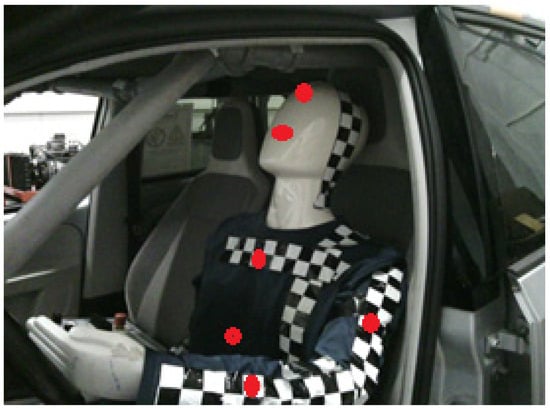
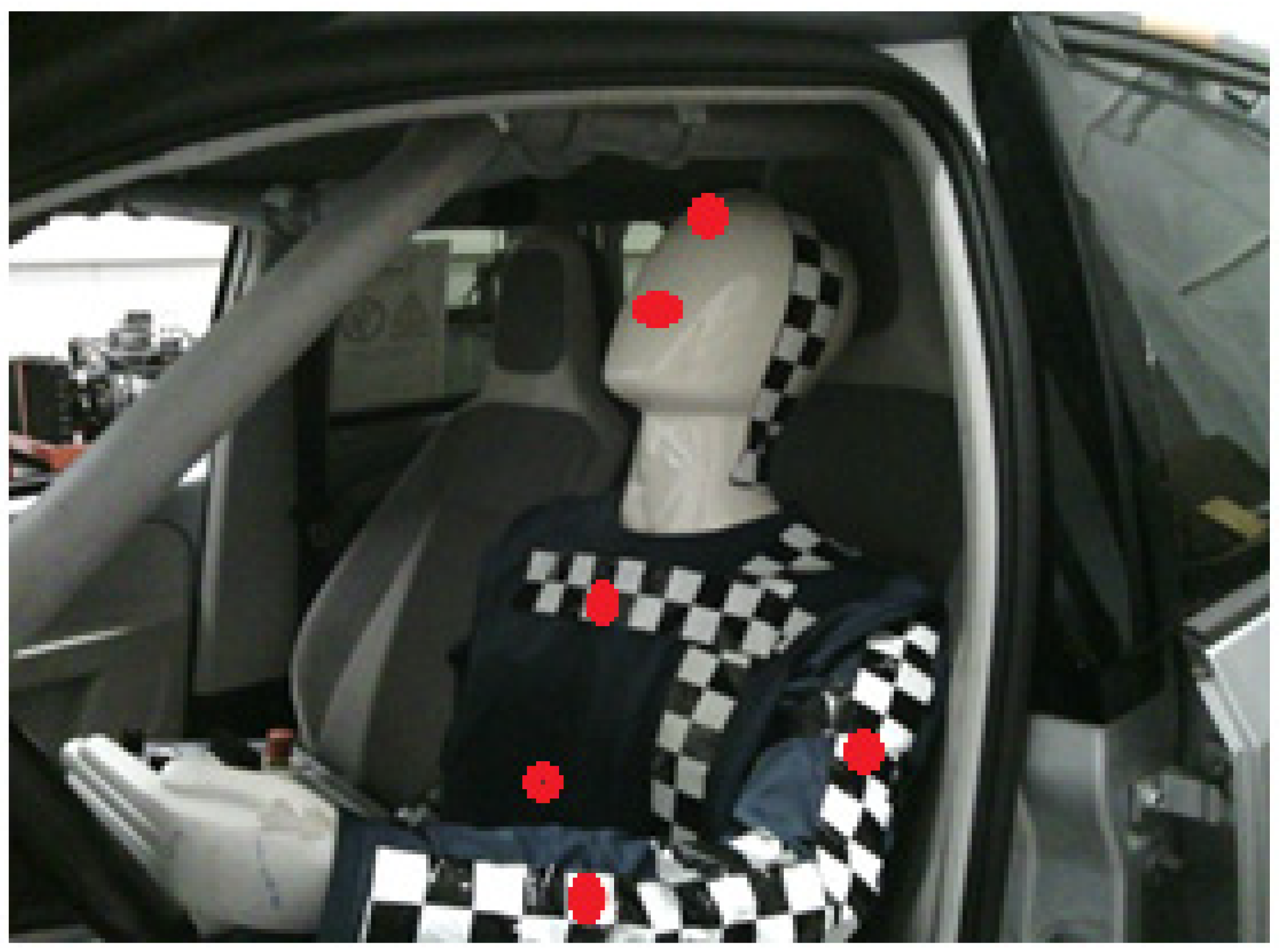
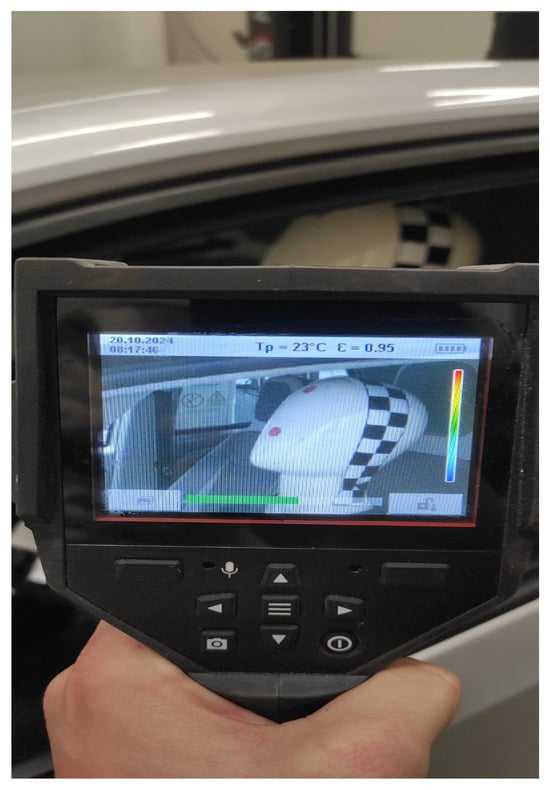
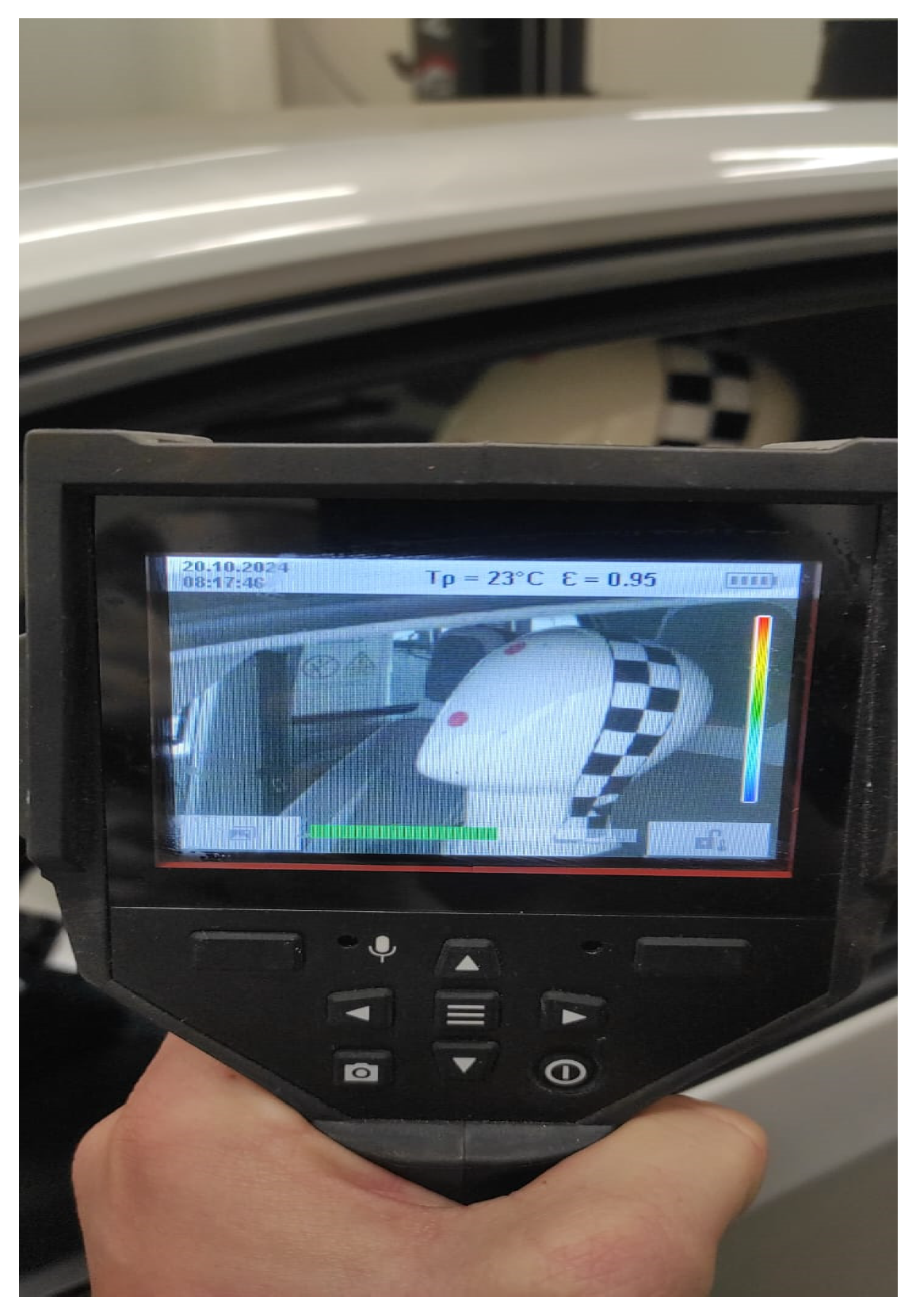
To complement the theoretical framework illustrated in Figure 1, the air-curtain microclimate concept was implemented and evaluated under controlled experimental conditions. Figure 2 presents the experimental cabin setup, including the anthropomorphic thermal manikin positioned in the driver seat and the thermal imaging system used to qualitatively visualize localized airflow behavior and surface temperature distribution during HVAC operation.
Figure 2.
Experimental setup for localized air-curtain cooling, showing the anthropomorphic thermal manikin positioned in the driver seat and the thermal imaging system used to monitor surface temperature distribution and airflow–occupant interaction during HVAC operation.
The red markers denote predefined reference locations on the anthropomorphic manikin, corresponding to key body regions considered in the airflow–occupant interaction analysis and microclimate modeling framework.
3.2. HVAC Power Consumption and Energy Efficiency
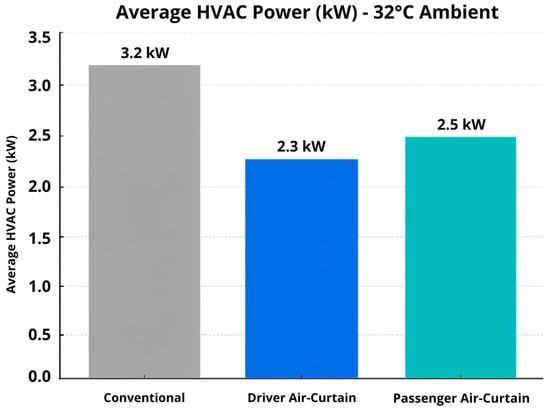
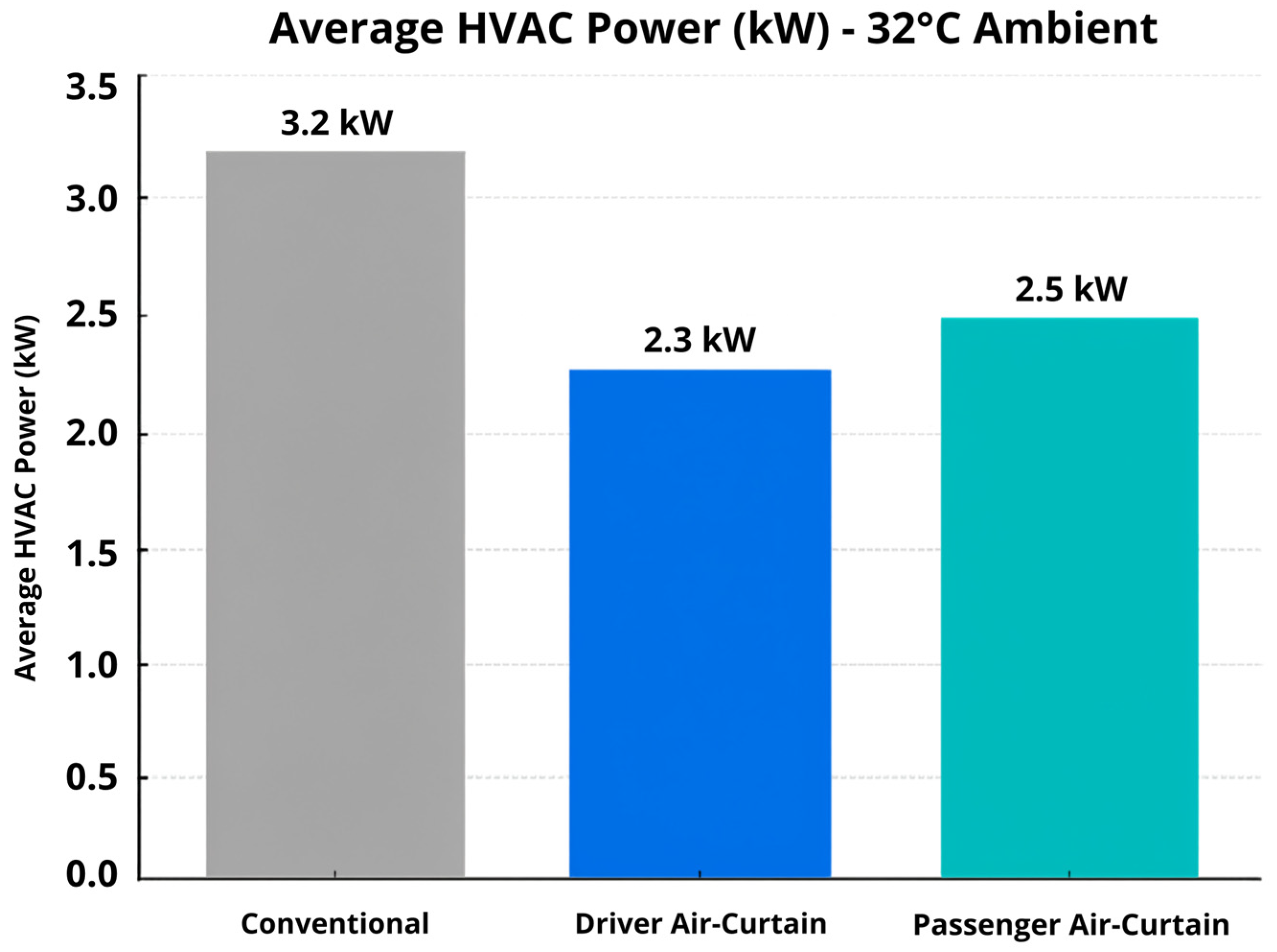
The impact of localized air-curtain cooling on HVAC energy demand was evaluated by comparing the average electrical power consumption required to achieve and maintain thermal comfort under identical ambient conditions (32 °C). Figure 3 shows the measured HVAC power consumption for the three configurations investigated.
Figure 3.
Average HVAC power consumption for conventional full-cabin cooling and localized air-curtain configurations at an ambient temperature of 32 °C.
Conventional full-cabin cooling exhibited the highest energy demand, with an average HVAC power consumption of 3.2 kW, reflecting the need to condition the entire cabin air volume uniformly. In contrast, the air-curtain-based configurations significantly reduced the required cooling power. The Driver Air-Curtain configuration consumed 2.3 kW, while the Passenger Air-Curtain configuration required 2.5 kW, corresponding to substantial reductions in HVAC energy demand.
The relative HVAC power savings achieved through localized cooling were quantified using the following expression:
where P_conv denotes the average HVAC power consumption of the conventional full-cabin cooling system, and P_AC represents the power consumption of the air-curtain configuration. Where EHVAC denotes HVAC energy consumption, PHVAC denotes the average HVAC power demand, and t denotes the operating time required to achieve thermal comfort.
EHVAC = PHVAC · t
Since the air-curtain strategy reduces both the required HVAC power and the time to reach thermal comfort, overall HVAC energy consumption is consequently lower than with conventional full-cabin conditioning.
Applying Equation (6), the Driver Air-Curtain configuration achieved an HVAC power reduction of approximately 28%, while the Passenger Air-Curtain configuration yielded a reduction of approximately 22%. These results demonstrate that directing conditioned airflow toward occupied zones effectively reduces the HVAC system’s thermal load by decreasing the volume of air requiring active conditioning.
This behavior is consistent with the heat-transfer mechanisms described in Section 3.1, where localized airflow confinement increases convective heat exchange around the occupant while reducing the effective thermally conditioned cabin volume. Consequently, the HVAC system’s cooling load decreases while maintaining acceptable thermal comfort.
As shown in Figure 3, localized air-curtain cooling strategies achieve a significant reduction in HVAC power consumption compared with conventional full-cabin cooling, with the most pronounced improvement observed for the driver-focused configuration.
The observed reduction in HVAC power consumption is consistent with the airflow confinement and convective heat-transfer mechanisms described in Section 3.1, confirming that localized conditioning enhances heat exchange around the occupant while reducing the effective thermally controlled cabin volume without compromising thermal comfort. From an electric vehicle perspective, the reduction in auxiliary HVAC power demand translates into improved energy efficiency and increased driving range. Given that HVAC systems account for a significant share of non-propulsion energy consumption in EVs, the observed 22–28% reduction in HVAC power consumption highlights the potential of air-curtain microclimate strategies to support more sustainable and range-efficient vehicle operation.
Assuming that HVAC systems can account for approximately 20–40% of auxiliary electrical energy consumption in electric vehicles under high ambient conditions, the observed 22–28% reduction in HVAC power demand suggests the potential for a measurable improvement in overall driving range, particularly during urban driving cycles and short-trip operation where HVAC usage is proportionally significant. From a practical implementation perspective, the proposed air-curtain strategy may offer advantages in system feasibility, as it relies primarily on airflow redistribution rather than on major modifications to the HVAC refrigeration architecture. Nevertheless, additional investigations are required to evaluate acoustic comfort, airflow-induced noise (NVH), occupant airflow perception, and long-term user acceptance under real driving conditions.
Future studies should therefore integrate driving-range estimation, cabin acoustic analysis, and occupant-centered user experience assessment in order to further validate the practical applicability of localized air-curtain HVAC systems in next-generation electric vehicles.
3.3. Time to Reach Thermal Comfort
The dynamic response of the HVAC system was further evaluated by analyzing the time required to reach thermal comfort under identical ambient conditions (32 °C).
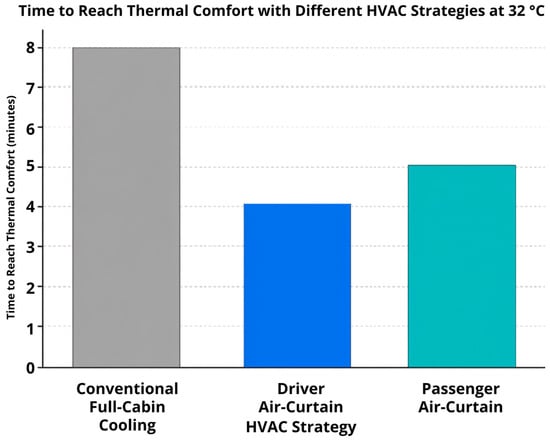
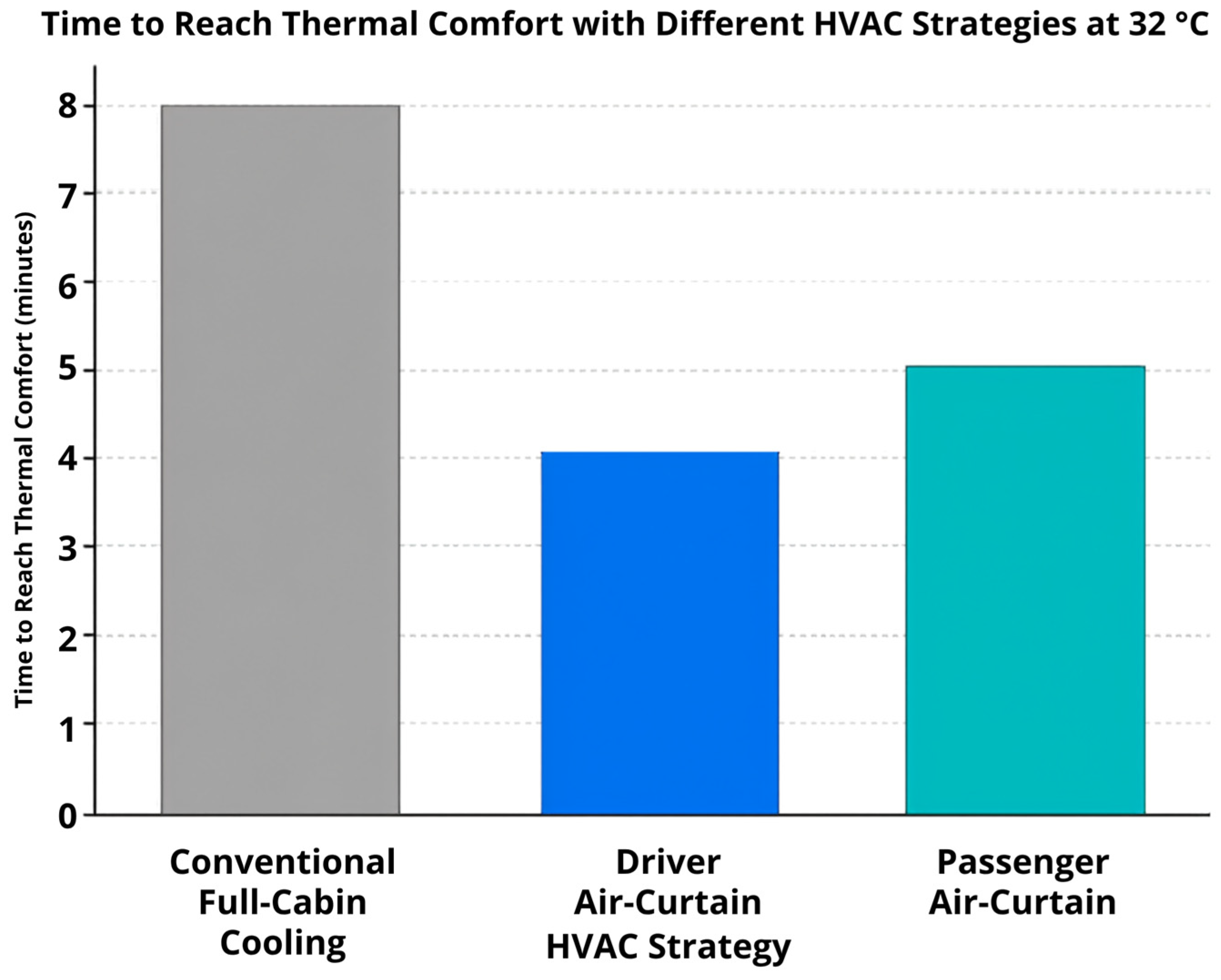
Figure 4 presents the time to thermal comfort for the three investigated HVAC configurations, highlighting the influence of localized air-curtain cooling on system responsiveness.
Figure 4.
Time to reach thermal comfort with different HVAC strategies at 32 °C ambient temperature.
Conventional full-cabin cooling required approximately 8 min to achieve thermal comfort, reflecting the need to cool and homogenize the entire cabin air volume. In contrast, both air-curtain-based configurations demonstrated a significantly faster comfort response. The Driver Air-Curtain configuration reached thermal comfort in approximately 4 min, while the Passenger Air-Curtain configuration required approximately 5 min.
The accelerated comfort attainment observed for localized air-curtain cooling can be attributed to the airflow and heat transfer mechanisms described in Section 3.1. Consequently, localized airflow enables rapid comfort stabilization without requiring uniform conditioning of the entire cabin volume.
Compared with conventional full-cabin cooling, the air-curtain configurations reduced the time to thermal comfort by 3–4 min, corresponding to approximately 40–50% less time. This improvement is particularly relevant for electric vehicle operation during short driving cycles, where rapid comfort attainment is essential for minimizing auxiliary energy consumption and improving overall system efficiency.
3.4. PMV vs. HVAC Power
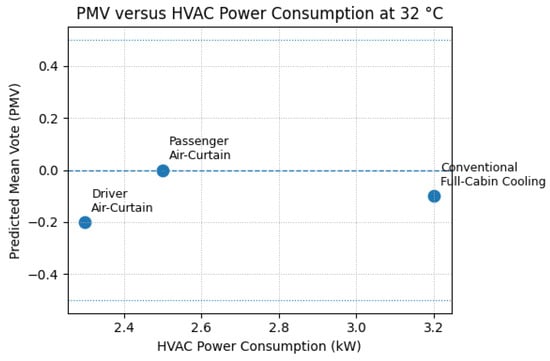
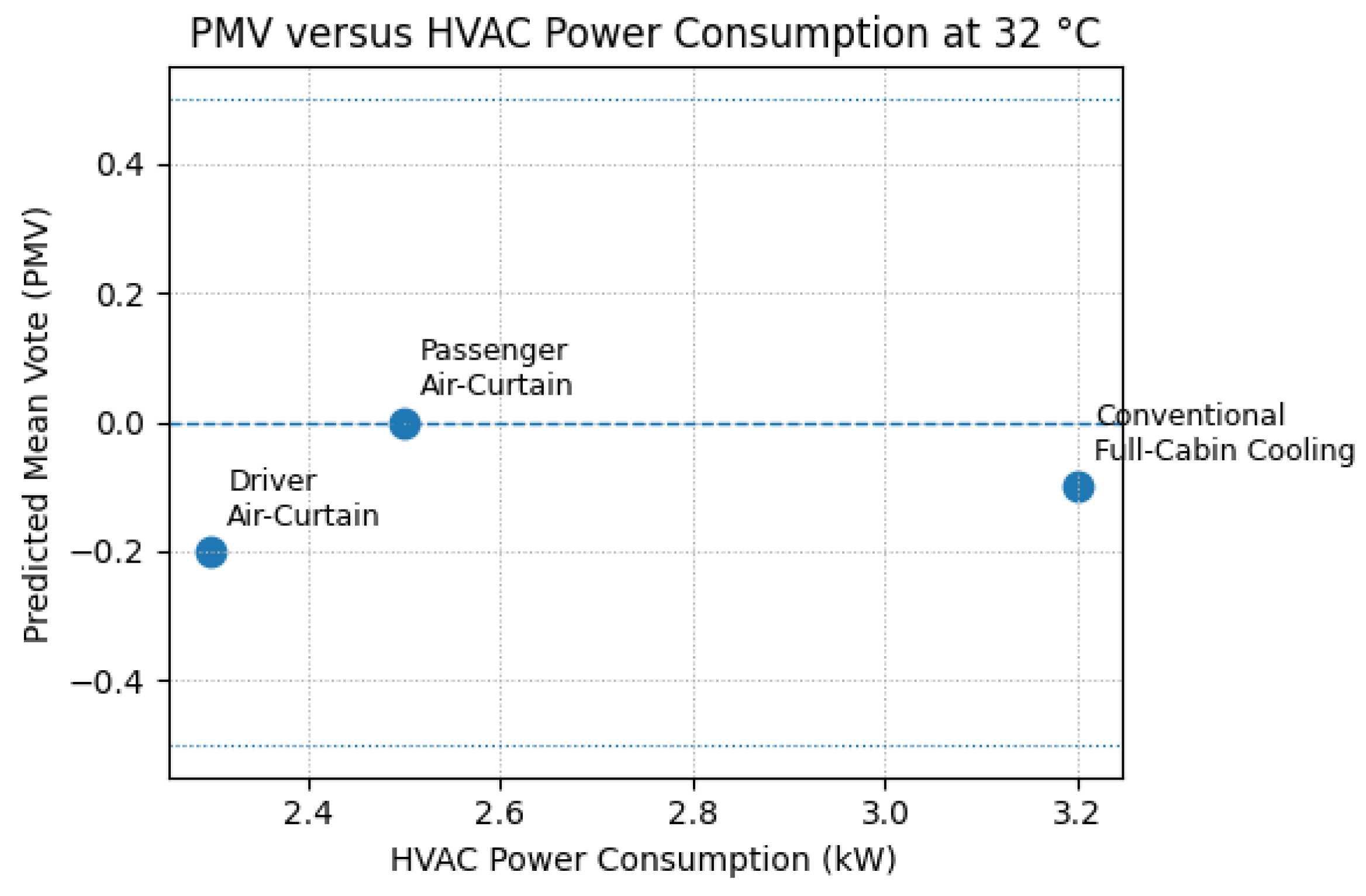
To further investigate the balance between thermal comfort and energy efficiency, the Predicted Mean Vote (PMV) index was analyzed in relation to HVAC power consumption for the three investigated configurations. This combined evaluation allows assessment of whether reduced energy input affects perceived thermal comfort.
As illustrated in Figure 5, the conventional full-cabin cooling system achieved a PMV value of approximately −0.1 while requiring an average HVAC power consumption of 3.2 kW. Although this configuration ensured acceptable thermal comfort, it had the highest energy demand because it uniformly conditioned the entire cabin volume.
Figure 5.
Relationship between predicted mean vote (PMV) and HVAC power consumption for conventional full-cabin cooling and localized air-curtain strategies at an ambient temperature of 32 °C.
In contrast, the Driver Air-Curtain configuration achieved a PMV of approximately −0.2 with substantially lower power consumption of 2.3 kW. This result indicates that localized airflow directed toward the driver effectively maintains thermal comfort while significantly reducing HVAC energy demand.
Similarly, the Passenger Air-Curtain configuration achieved a neutral PMV value of approximately 0.0 at an average HVAC power consumption of 2.5 kW. Despite the reduced energy input, thermal comfort remained within the optimal PMV range, comparable to that obtained with conventional full-cabin cooling.
Overall, the PMV–HVAC power relationship shows that air-curtain-based microclimate strategies maintain occupant thermal comfort while using markedly less energy. These findings confirm that localized HVAC control enables improved energy efficiency without compromising comfort perception.
4. Discussion
Recent literature has increasingly emphasized the importance of advanced cabin thermal modeling and intelligent HVAC strategies to mitigate the high auxiliary energy demand associated with electric vehicle operation. Comprehensive reviews on cabin thermal environment modeling highlight that conventional full-cabin conditioning approaches remain energetically inefficient, particularly under transient driving conditions and high ambient temperatures [13]. In this context, the present study contributes experimental evidence supporting the shift toward localized, occupant-centered HVAC solutions.
Several studies have demonstrated that reducing the effective conditioned volume is a key lever for improving HVAC efficiency in electric vehicles [14,15]. Advanced model-based and predictive control strategies have been proposed to dynamically adjust HVAC operation in response to cabin conditions and driving scenarios [15,16,17,18,19]. While such approaches rely heavily on complex control architectures and real-time sensing, the air-curtain microclimate strategy evaluated in this study offers a comparatively simple yet effective alternative by physically confining the conditioned airflow to the occupied zone.
Reviews focusing specifically on electric vehicle air conditioning systems underline that traditional optimization strategies often prioritize component-level efficiency improvements, such as compressor control or refrigerant cycle optimization [16,17,18,19]. In contrast, the present work addresses HVAC efficiency at the cabin–occupant interaction level, demonstrating that targeted airflow delivery can significantly reduce energy demand without compromising thermal comfort. This finding is consistent with reported benefits of personalized ventilation and zonal airflow strategies in vehicle cabins [13,16].
The experimentally observed 22–28% reduction in HVAC power demand is consistent with previously reported improvements associated with personalized ventilation and localized airflow control strategies in electric vehicle cabins [13,14,15,16,17,18].
Similarly, the accelerated thermal comfort response observed in the present study aligns with previous investigations reporting faster occupant-level thermal stabilization under localized airflow conditions [8,10].
The relevance of localized airflow control becomes particularly evident when compared with HVAC control strategies developed for hybrid and electric vehicles operating under urban conditions. Previous studies on optimized air conditioning control during urban drive cycles have reported energy savings but often at the expense of slower comfort attainment [17]. In the current study, the air-curtain configurations not only reduced HVAC power consumption by up to 28% but also shortened the time required to reach thermal comfort by approximately 40–50%, highlighting an advantage in transient operating conditions.
Thermal comfort preservation remains a critical constraint in HVAC optimization. Studies addressing PTC-based heating and integrated thermal management systems have shown that efficiency gains can be negated if occupant comfort thresholds are exceeded [18,19,20,21,22]. The PMV-based analysis presented here demonstrates that air-curtain microclimate strategies maintain PMV within the accepted comfort range, even at substantially lower HVAC power levels. This aligns with findings from integrated thermal management and heat-pump-based systems, where maintaining comfort neutrality is essential for user acceptance [21,22].
From a broader energy systems perspective, the interaction between vehicle thermal management and electrical energy demand has gained increasing attention, particularly in the context of smart grids and energy communities [23,24]. Reducing HVAC power demand through localized cooling strategies directly supports improved vehicle-level efficiency and can contribute to enhanced flexibility at the system level. Moreover, recent studies on cabin air quality optimization indicate that targeted airflow strategies can simultaneously improve air quality and reduce energy consumption [25,26,27], suggesting additional benefits beyond thermal comfort alone.
Model-based investigations into cabin thermal dynamics consistently emphasize the importance of accurately capturing airflow distribution and transient heat transfer phenomena [28,29]. The experimental and modeling framework employed in the present study complements these findings by demonstrating how controlled airflow confinement through an air-curtain can fundamentally alter cabin thermal behavior. Compared with predictive cabin conditioning strategies relying on pre-conditioning or route-based optimization [30,31], the air-curtain approach provides immediate comfort benefits with minimal system complexity.
Overall, the findings of this study support the growing consensus that next-generation electric vehicle HVAC systems should move beyond uniform cabin conditioning toward occupant-focused microclimate control. By combining reduced energy consumption, faster attainment of comfort, and preserved thermal comfort, the air-curtain microclimate strategy offers a practical, scalable solution aligned with current research directions in vehicle thermal management.
Compared with previous studies mainly focused on full-cabin HVAC, component-level optimization, or generalized personalized ventilation systems [13,14,15,16,17,18,19,20,21], the present study highlights the effectiveness of a localized air-curtain microclimate strategy for reducing HVAC energy demand while preserving occupant thermal comfort. The obtained results suggest that limiting the thermally conditioned zone to the occupant area can significantly improve energy efficiency and accelerate thermal comfort stabilization under high ambient conditions. The combined evaluation of HVAC power consumption, time-to-comfort response, and PMV-based thermal comfort under identical operating conditions provides a broader perspective on the interaction between localized airflow management and occupant comfort in electric vehicle cabins.
The proposed air-curtain strategy may offer practical advantages in feasibility due to its localised airflow approach and limited modification to the existing HVAC architecture.
The present study did not include a dedicated evaluation of airflow-induced noise (NVH), localised airflow sensation, or detailed user experience assessment, all of which may influence perceived thermal comfort under real driving conditions. The study evaluated localized cooling under simplified occupant configurations focused on either the driver or passenger zone. Under multi-occupant or fully occupied vehicle conditions, more complex airflow interaction and increased cooling demand may occur, potentially requiring adaptive multi-zone airflow management strategies.
Although repeated observations were performed during the experimental campaign, the present work primarily focused on the comparative evaluation of HVAC configurations rather than on a detailed statistical characterization of measurement variability. Future studies should therefore include a larger number of repeated trials, uncertainty quantification, and formal statistical analysis of the measured parameters.
Future investigations should therefore evaluate the effectiveness of air-curtain microclimate control under varying occupancy scenarios and real-world cabin loading conditions, potentially integrating high-resolution CFD approaches, such as Large Eddy Simulation (LES), to analyse transient airflow structures and localised turbulence behaviour within full-scale vehicle cabins.
Although the proposed strategy mainly relies on airflow redistribution rather than major HVAC hardware modifications, a detailed techno-economic assessment, including implementation and operational costs and long-term energy-saving potential over the vehicle lifetime, remains an important direction for future engineering analysis.
Future research should focus on validating the proposed air-curtain microclimate strategy under more representative real-world driving conditions, accounting for varying humidity levels, vehicle speed, multiple occupants, winter heating operation, variable ambient temperatures, solar radiation, and dynamic occupancy scenarios. Integrating air-curtain airflow control with adaptive HVAC management and occupant detection systems may further enhance energy efficiency and thermal comfort performance.
The studies are warranted to evaluate the interaction between localized airflow strategies and cabin air quality, as well as to quantify the impact of reduced HVAC power demand on overall vehicle driving range. Such investigations will support the development of intelligent, occupant-focused HVAC systems for next-generation electric vehicles.
While the present study was conducted under a single controlled ambient condition (32 °C), the selected scenario represents a high-thermal-load summer operating condition typical of electric-vehicle use and provides a conservative framework for evaluating HVAC performance.
5. Conclusions
It was demonstrated that an air-curtain-based microclimate HVAC strategy represents an effective energy-efficient alternative to conventional full-cabin cooling in electric vehicles. Under controlled high-ambient conditions, a reduction in HVAC power consumption of approximately 22–28% was observed for localized air-curtain cooling compared with conventional cabin conditioning.
In addition to the lower energy demand, the time required to reach thermal comfort was significantly shortened by the air-curtain approach, with comfort attainment reduced from 8 min to approximately 4–5 min. PMV-based analysis confirmed that thermal comfort was maintained within accepted comfort ranges despite the reduced HVAC power input. Overall, improved HVAC efficiency was achieved through occupant-centered airflow confinement without compromising perceived thermal comfort.
Author Contributions
Conceptualization, D.S., A.I.D., A.S., A.P., L.A. and G.A.; methodology, D.S.; software, A.I.D.; validation, A.S. and A.P.; formal analysis, D.S.; investigation, D.S., A.I.D., A.S., A.P., L.A. and G.A.; resources, A.S. and A.P.; data curation, D.S.; writing—original draft preparation, D.S.; writing—review and editing, D.S., A.S. and A.P.; visualization, A.P.; supervision, A.S. All authors have read and agreed to the published version of the manuscript.
Funding
This research received no external funding.
Institutional Review Board Statement
Not applicable.
Informed Consent Statement
Not applicable.
Data Availability Statement
The data presented in this study are available from the corresponding author upon reasonable request.
Conflicts of Interest
The authors declare no conflicts of interest.
Abbreviations
The following abbreviations are used in this manuscript:
| AC | Air Conditioning |
| AHU | Air Handling Unit |
| CFD | Computational Fluid Dynamics |
| COP | Coefficient of Performance |
| EV | Electric Vehicle |
| HVAC | Heating, Ventilation, and Air Conditioning |
| ICE | Internal Combustion Engine |
| kW | Kilowatt |
| PCM | Phase Change Material |
| PMV | Predicted Mean Vote |
| PPD | Predicted Percentage of Dissatisfied |
| RANS | Reynolds-Averaged Navier–Stokes |
| RH | Relative Humidity |
| T_air | Air Temperature |
| T_skin | Skin Temperature |
| ΔT | Temperature Difference |
| η | System Efficiency |
| ṁ | Mass Flow Rate |
References
- Ehsani, M.; Gao, Y.; Longo, S.; Ebrahimi, K. Modern Electric, Hybrid Electric, and Fuel Cell Vehicles; CRC Press: Boca Raton, FL, USA, 2018. [Google Scholar]
- Ahmed, H.A.; Megahed, T.F.; Mori, S.; Nada, S.; Hassan, H. Novel Design of Thermo-Electric Air Conditioning System Integrated with PV Panel for Electric Vehicles: Performance Evaluation. Appl. Energy 2023, 349, 121662. [Google Scholar] [CrossRef] [Scilit]
- Farrington, R.; Rugh, J. Impact of Vehicle Air-Conditioning on Fuel Economy, Tailpipe Emissions, and Electric Vehicle Range; NREL/CP-540-28960; National Renewable Energy Laboratory (NREL): Golden, CO, USA, 2000. [Google Scholar]
- Jeffers, M.A.; Chaney, L.; Rugh, J.P. Climate Control Load Reduction Strategies for Electric Drive Vehicles in Cold Weather. SAE Int. J. Passeng. Cars Mech. Syst. 2016, 9, 106–113. [Google Scholar] [CrossRef] [Scilit]
- Zhang, Z.; Liu, C.; Chen, X.; Zhang, C.; Chen, J. Annual energy consumption of electric vehicle air conditioning in China. Appl. Therm. Eng. 2018, 136, 154–162. [Google Scholar] [CrossRef] [Scilit]
- Schiavon, S.; Melikov, A.K. Energy saving and improved comfort by increased air movement. Energy Build. 2008, 40, 1954–1960. [Google Scholar] [CrossRef] [Scilit]
- Zhang, H.; Arens, E.; Zhai, Y. A review of the corrective power of personal comfort systems in non-neutral ambient environments. Build. Environ. 2015, 91, 15–41. [Google Scholar] [CrossRef] [Scilit]
- Liu, J.; Zhu, S.; Kim, M.K.; Srebric, J. A Review of CFD Analysis Methods for Personalized Ventilation (PV) in Indoor Built Environments. Sustainability 2019, 11, 4166. [Google Scholar] [CrossRef] [Scilit]
- Foster, A.M.; Swain, M.J.; Barrett, R.; D’Agaro, P.; James, S.J. Effectiveness and optimum jet velocity for a plane jet air curtain used to restrict cold room infiltration. Int. J. Refrig. 2006, 29, 692–699. [Google Scholar] [CrossRef] [Scilit]
- García Rodríguez, J.; Lopez Domene, P.; Camps Cabezas, A. Development of an Air Curtain to Improve Thermal Comfort in Cargo Aircraft. Eng. Proc. 2026, 133, 115. [Google Scholar] [CrossRef] [Scilit]
- Fanger, P.O. Thermal Comfort: Analysis and Applications in Environmental Engineering; McGraw-Hill: New York, NY, USA, 1970. [Google Scholar]
- ISO 7730:2005; Ergonomics of the Thermal Environment—Analytical Determination and Interpretation of Thermal Comfort Using Calculation of the PMV and PPD Indices and Local Thermal Comfort Criteria. International Organization for Standardization (ISO): Geneva, Switzerland, 2005.
- Zhao, L.; Zhou, Q.; Wang, Z. A systematic review on modelling the thermal environment of vehicle cabins. Appl. Therm. Eng. 2024, 257, 124142. [Google Scholar] [CrossRef] [Scilit]
- He, L.; Jing, H.; Zhang, Y.; Li, P.; Gu, Z. Review of thermal management system for battery electric vehicle. J. Energy Storage 2023, 59, 106443. [Google Scholar] [CrossRef] [Scilit]
- Karimshoushtari, M.; Kordestani, M.; Shojaei, S.; Dönmez, B.; Rashid, M.; Weslati, F.; Bouyoucef, K. On the applicability of advanced model-based strategies to control of electrified vehicle thermal systems. Energy 2023, 283, 128791. [Google Scholar] [CrossRef] [Scilit]
- Sam Jose, S.; Chidambaram, R.K. Electric vehicle air conditioning system and its optimization for extended range—A review. World Electr. Veh. J. 2022, 13, 204. [Google Scholar] [CrossRef] [Scilit]
- Warule, P.B.; Jadhav, V.V. Optimization of AC Control in Hybrid Electric Vehicles during Urban Drive Conditions. In Proceedings of the Symposium on International Automotive Technology 2017, Pune, India, 18 January 2017. [Google Scholar]
- Lopez-Sanz, J.; Ocampo-Martinez, C.; Alvarez-Florez, J.; Moreno-Eguilaz, M.; Ruiz-Mansilla, R.; Kalmus, J.; Gräeber, M.; Lux, G. Nonlinear Model Predictive Control for Thermal Management in Plug-in Hybrid Electric Vehicles. IEEE Trans. Veh. Technol. 2017, 66, 3632–3644. [Google Scholar] [CrossRef] [Scilit]
- Lesage, M.; Chalet, D.; Migaud, J. Optimising Ventilation Strategies for Improved Driving Range and Comfort in Electric Vehicles. World Electr. Veh. J. 2025, 16, 98. [Google Scholar] [CrossRef] [Scilit]
- Ma, X. Research on PTC heating system of electric vehicles. Int. Comb. Eng. Access. 2019, 23, 205–206. [Google Scholar]
- Zhao, Z.; Wang, T.; Zhang, B.; Wang, Y.; Bao, C.; Ji, Z. Analysis of an integrated thermal management system with a heat-pump in a fuel cell vehicle. AIP Adv. 2020, 11, 065101. [Google Scholar]
- Park, M.H.; Kim, S.C. Heating performance enhancement of high-capacity PTC heater with modified louver fin for electric vehicles. Energies 2019, 12, 2900. [Google Scholar] [CrossRef] [Scilit]
- Bohlender, F.; Reiss, H. Electric interior heating of E-cars with PTC system. ATZ Worldw. 2013, 115, 20–23. [Google Scholar] [CrossRef] [Scilit]
- Backe, S.; Korpås, M.; Tomasgard, A. Heat and electric vehicle flexibility in the European power system: A case study of Norwegian energy communities. Int. J. Electr. Power Energy Syst. 2021, 125, 106463. [Google Scholar] [CrossRef] [Scilit]
- Lesage, M.; Chalet, D.; Migaud, J.; Krautner, C. Optimization of air quality and energy consumption in the cabin of electric vehicles using system simulation. J. Environ. Manag. 2024, 358, 120861. [Google Scholar] [CrossRef] [Scilit] [PubMed]
- Gładyszewska-Fiedoruk, K.; Teleszewski, T.J. Modeling of Humidity in Passenger Cars Equipped with Mechanical Ventilation. Energies 2020, 13, 2987. [Google Scholar] [CrossRef] [Scilit]
- Lesage, M.; Chalet, D.; Migaud, J.; Krautner, C. Holistic Approach to Improve Cabin Air Quality in Electric Vehicles and Energy Savings. In Proceedings of the 36th International Conference on Efficiency, Cost, Optimization, Simulation and Environmental Impact of Energy Systems (ECOS 2023), Las Palmas De Gran Canaria, Spain, 25–30 June 2023; pp. 2402–2413. [Google Scholar]
- Marcos, D.; Pino, F.J.; Bordons, C.; Guerra, J.J. The development and validation of a thermal model for the cabin of a vehicle. Appl. Therm. Eng. 2014, 66, 646–656. [Google Scholar] [CrossRef] [Scilit]
- Tehertovskaia, N. Simulation Model for the Climate at the Windshield of a Passenger Car Compartment. Master’s Thesis, Lulea University of Technology, Goteborg, Sweden, 2002. [Google Scholar]
- Liu, Y.; Zhang, J. Electric Vehicle Battery Thermal and Cabin Climate Management Based on Model Predictive Control. J. Mech. Des. 2021, 143, 031705. [Google Scholar]
- Schutzeich, P.; Pischinger, S.; Hemkemeyer, D.; Franke, K.; Hamelbeck, P. A predictive cabin conditioning strategy for battery electric vehicles. World Electr. Veh. J. 2024, 15, 224. [Google Scholar] [CrossRef] [Scilit]

Disclaimer/Publisher’s Note: The statements, opinions and data contained in all publications are solely those of the individual author(s) and contributor(s) and not of MDPI and/or the editor(s). MDPI and/or the editor(s) disclaim responsibility for any injury to people or property resulting from any ideas, methods, instructions or products referred to in the content. |
© 2026 by the authors. Licensee MDPI, Basel, Switzerland. This article is an open access article distributed under the terms and conditions of the Creative Commons Attribution (CC BY) license.