
Article

Effect of Blackcurrant Juice Soaking on Anthocyanin Stability, Color Development, and Quality Characteristics of Semi-Hard Ripened Cheese

1
Department of Food Science, Sapientia Hungarian University of Transylvania, Libertății Sqr. 1, 530104 Miercurea Ciuc, Romania
2
Sustainable Biotechnologies, Sapientia Hungarian University of Transylvania, Libertății Sqr. 1, 530104 Miercurea Ciuc, Romania
*
Author to whom correspondence should be addressed.
Dairy 2026, 7(4), 66; https://doi.org/10.3390/dairy7040066
Submission received: 24 June 2026 / Revised: 11 August 2026 / Accepted: 13 August 2026 / Published: 17 August 2026
(This article belongs to the Topic Microbiological Drivers of Food Quality and Shelf-Life)

Abstract

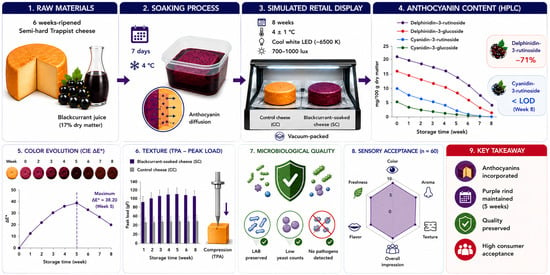
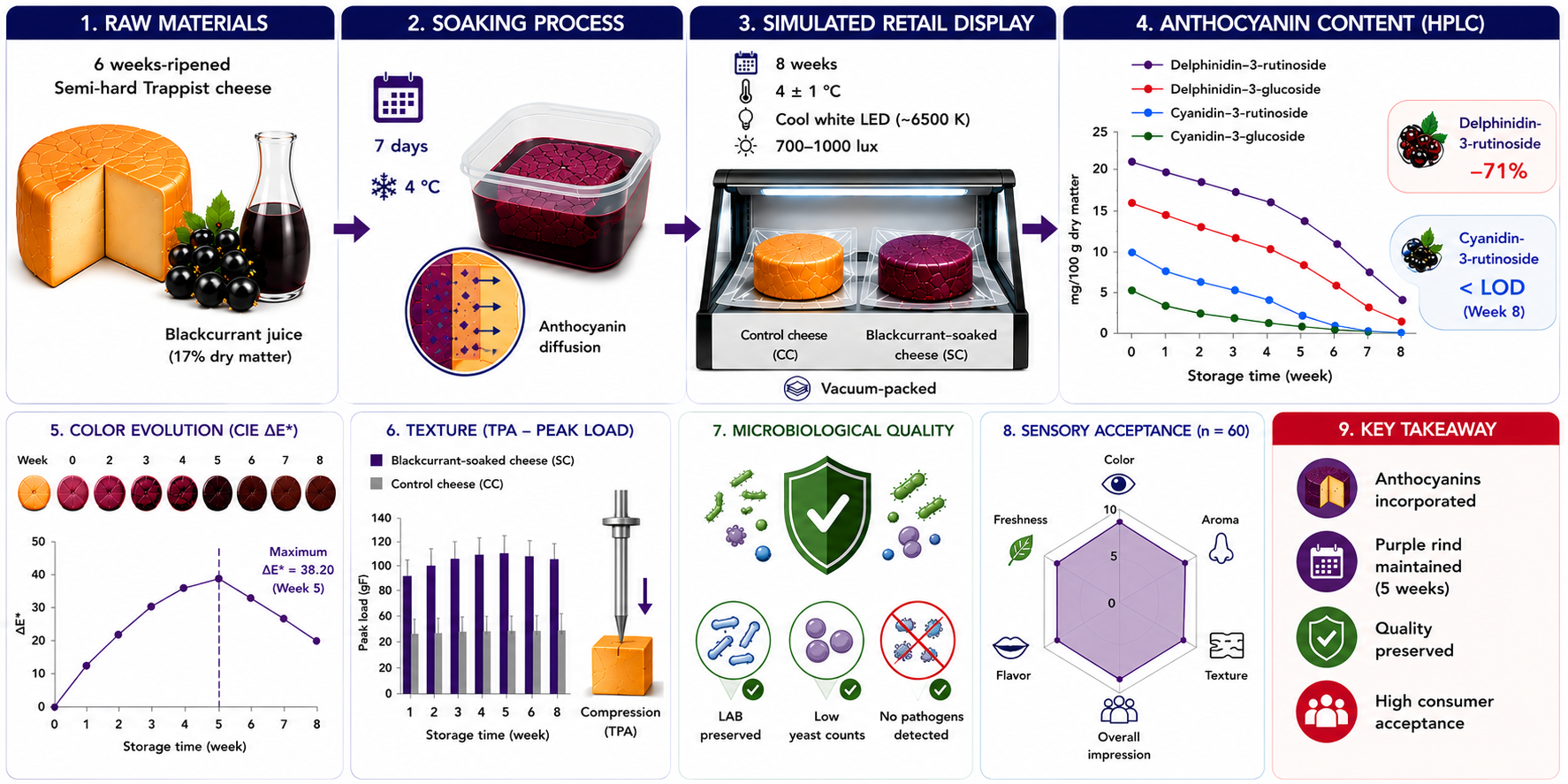
The application of natural colorants in cheese manufacture is gaining increasing interest as an alternative to synthetic additives. This study investigated the incorporation, stability, and technological effects of blackcurrant (Ribes nigrum L.) anthocyanins on semi-hard Trappist cheese during eight weeks of storage under simulated commercial refrigerated display conditions. Cheese samples were soaked in natural blackcurrant juice for seven days and subsequently evaluated for anthocyanin composition, color characteristics, texture properties, microbiological quality, and sensory acceptance. HPLC analysis confirmed the successful incorporation of blackcurrant anthocyanins into the cheese, with delphinidin-3-rutinoside(D-3-R) being the predominant compound. D-3-R concentration decreased from 20.23 to 5.88 mg/100 g dry matter during storage, corresponding to an approximately 71% reduction, while cyanidin-3-rutinoside content became below the detection limit by week 8. Significant changes were observed in all quantified anthocyanins (p ≤ 0.05), indicating progressive pigment degradation. The maximum image-based color difference reached ΔE = 38.20 under standardized imaging conditions. Interestingly, color development followed a biphasic pattern, characterized by initial pigment redistribution and color intensification despite decreasing anthocyanin concentrations, followed by progressive color fading associated with anthocyanin degradation. Texture analysis revealed significant storage-related changes in the mechanical properties of the rind, suggesting structural reorganization of the cheese matrix. Microbiological analyses demonstrated the persistence of technologically important lactic acid bacteria throughout storage, indicating compatibility of the treatment with the cheese microbiota. Sensory evaluation performed by 60 consumers showed high acceptance of blackcurrant-treated cheese. The results indicate that blackcurrant juice soaking is an effective strategy for producing naturally colored semi-hard cheeses enriched with anthocyanins while maintaining desirable microbiological, textural, and sensory characteristics. The observed degradation kinetics under the storage conditions applied in this study emphasize the importance of optimizing storage conditions for anthocyanin-enriched dairy products.

Graphical Abstract

1. Introduction

Cheese is one of the most widely consumed fermented dairy products worldwide and represents an important source of high-quality proteins, minerals, vitamins, and bioactive peptides. Beyond its nutritional value, cheese has increasingly been investigated as a carrier matrix for naturally occurring bioactive compounds, owing to its complex protein–fat structure, favorable sensory characteristics, and high consumer acceptance [1,2,3]. The incorporation of plant-derived ingredients into cheese provides opportunities to develop novel products with enhanced nutritional value, improved visual appearance, and increased market differentiation. Among plant-derived colorants, anthocyanins have attracted considerable attention because they simultaneously contribute natural coloration and biological activity. Anthocyanins are water-soluble flavonoid pigments responsible for the red, purple, and blue colors of many fruits and vegetables. In addition to their role as natural pigments, anthocyanins exhibit antioxidant, antimicrobial, anti-inflammatory, and cardioprotective properties, making them attractive ingredients for functional food development [4,5].
Blackcurrant (Ribes nigrum L.) is among the richest natural sources of anthocyanins, predominantly containing glycosylated derivatives of delphinidin and cyanidin. These compounds are responsible for the characteristic dark purple color and high antioxidant capacity of blackcurrant fruits and derived products [4,6,7]. Because of their intense color and natural origin, blackcurrant anthocyanins have considerable potential as alternatives to synthetic food colorants.
Despite their technological potential, anthocyanins are among the least stable naturally occurring pigments. Their stability is strongly influenced by pH, temperature, oxygen availability, enzymatic activity, and light exposure [4,8]. During storage, anthocyanins undergo degradation reactions that may lead to color fading and loss of functional properties. Light-induced degradation is particularly important in dairy products because naturally occurring photosensitizers, such as riboflavin, can generate reactive oxygen species that accelerate pigment oxidation and deterioration of product quality.
The dairy matrix may substantially influence anthocyanin stability. Casein proteins can interact with anthocyanins through hydrogen bonding and hydrophobic interactions, affecting pigment retention, diffusion, and degradation kinetics within the cheese matrix [9]. Previous studies investigating cheeses treated with wine-derived phenolics reported that colored compounds accumulated predominantly in the outer layers of the cheese and exhibited limited migration toward the core [10,11]. Such interactions may influence both the spatial distribution and long-term stability of anthocyanins in cheese.
In addition to color development, plant-derived compounds may influence the microbial ecology of cheese. The microbiota of ripened cheeses plays a key role in product safety, flavor development, and texture formation. Starter lactic acid bacteria and non-starter lactic acid bacteria (NSLAB) contribute to acidification, proteolysis, lipolysis, and the formation of aroma-active compounds during ripening [12,13,14,15,16].
Anthocyanin-rich plant materials have also been reported to exhibit antimicrobial activity against spoilage and pathogenic microorganisms, suggesting that berry-derived ingredients may influence both the technological and microbiological characteristics of cheese [5].
Although several studies have investigated the incorporation of fruit-derived ingredients into dairy products, information regarding the behavior of individual anthocyanins in semi-hard cheese matrices during storage remains limited. In particular, little is known about the effect of light exposure on anthocyanin retention and its relationship with color stability, texture evolution, microbial dynamics, and sensory quality. A comprehensive understanding of these interactions is necessary for the development of naturally colored cheeses enriched with berry-derived bioactive compounds.
Therefore, the aim of the present study was to investigate the incorporation and subsequent evolution of blackcurrant anthocyanins in semi-hard Trappist cheese during storage under illuminated conditions, simulating commercial refrigerated display conditions. Particular attention was given to changes in individual anthocyanin concentrations, color characteristics, texture properties, microbiological populations, and sensory attributes. We hypothesized that (i) blackcurrant juice soaking would result in measurable anthocyanin accumulation in the rind region of the cheese; (ii) anthocyanin concentrations and color characteristics would change progressively during storage under illuminated retail display conditions; (iii) anthocyanin degradation would be associated with changes in color and texture parameters; and (iv) blackcurrant-derived compounds would influence the microbial characteristics of the cheese without adversely affecting sensory acceptance.

2. Materials and Methods

2.1. Raw Materials and Sample Preparation

Commercial semi-hard Trappist-type cheese was obtained from a local dairy manufacturer (Cooperativa Agricolă Csengő in Frumoasa, Harghita County, Romania). The cheese was produced according to standard manufacturing protocols and had the following composition at the time of soaking: dry matter content 62.5% ± 1.5%, fat content 45% ± 2% (fat in dry matter), and salt content 1.8% ± 0.2%. The pH of the final product was 5.3 ± 0.1. The control cheese (CC) was ripened in 4 kg blocks for 6 weeks at 12 °C before the soaking experiments. After the ripening period, cheese blocks were cut into uniform rectangular pieces (4.5 cm × 4.5 cm × 3.0 cm) and soaked in natural blackcurrant juice (17% dry matter).
The cheese-to-liquid ratio was maintained at 1:1 (w/v). Soaking was performed for seven days at 4 °C in sealed containers to prevent contamination and evaporation. The soaking medium was not changed during the treatment period.
Pasteurized (at 68 °C) blackcurrant juice (pH 2.95) produced from the ‘Titania’ blackcurrant cultivar was supplied by Garden Proiect (Mădăraș, Harghita County, Romania). The juice was free of added sugars and preservatives. The initial anthocyanin content of the juice was determined by HPLC analysis before use. Blackcurrant juice was adjusted to 2.5% (w/v) salt concentration by adding food-grade sodium chloride (NaCl) to simulate typical cheese brining conditions and ensure microbiological safety during soaking.
After soaking, cheese samples were removed, gently blotted with sterile paper towels to remove excess surface liquid, and immediately analyzed (physicochemical and microbiological, color, texture analysis) or stored at 4 °C for storage effect evaluation.
The soaked cheese (SC) pieces were dried in a ripening chamber (Samaref STX 700SUP TN, Fabriano, Italy) at 4 ± 1 °C and 78 ± 2% relative humidity for eight hours, then vacuum packed and stored for evaluation.

2.2. Physicochemical Analyses

Dry matter (DM) was determined with KERN MLB 50-3N dry matter balance (Kern@Sohn GMBH, Balingen, Germany) in accordance with ISO 2920/2004 to monitor moisture changes during storage, which is essential for understanding texture and storage implications [17].
Before analysis, each cheese was cut into two equal halves. A 5 mm-wide cross-sectional slice (with rind) adjacent to the freshly cut surface was collected from each half. The slices were pooled and homogenized to obtain a representative sample for subsequent analyses. Consequently, anthocyanin concentrations are reported for rind-containing cheese samples rather than for isolated rind tissue.
Approximately 10 g of homogenized representative cheese sample was blended (Silvercrest, Neckarsulm, Germany) with 20 mL 70% methanol containing 2% (v/v) hydrochloric acid and sonicated (USC-TH, VWR International, Radnor, PA, USA) for 10 min. To ensure proper separation of the phases, the supernatant was centrifuged (Hettich EBA 20, Tuttlingen, Germany) at 3461 RCF (6000 rpm) for 10 min. The clear supernatant was filtered through a 0.45 μm syringe filter prior to HPLC analysis.
The anthocyanin content of the samples was analyzed using an Agilent 1260 Infinity Series HPLC system (Agilent Technologies, Waldbronn, Germany) equipped with a diode array detector. The compounds were separated on a Poroshell 120 C18 analytical column (150 × 4.6 mm, 2.7 μm particle size; Agilent Technologies, Waldbronn, Germany).
During the measurements, the column was operated at 50 °C with two elution solvents: A—2% formic acid in water, and B—100% methanol, at a flow rate of 0.8 mL/min. The gradient was: 0–4 min, 5–20% B; 4–8 min, 20–25% B; 8–10 min, 25–90% B, 10–10.15 min, 90% B; 10.15–10.30 min, 90–5% B, and finally reconditioning of the column (10.30–13 min, 5% B). The injection volume was 10 μL. The anthocyanins were detected at a wavelength of 520 nm [18]. The quantity of each anthocyanin was determined using the calibration curve of the external standards: cyanidin-3-rutinoside (C-3-R), delphinidin-3-rutinoside (D-3-R), delphinidin-3-glucoside (D-3-G), and cyanidin-3-glucoside (C-3-G). Concentrations were expressed in mg per dry matter. Each sample was prepared in triplicate to eliminate unexpected influences during sample preparation. The obtained equations of the calibration lines were C-3-R–Equation (1), D-3-R–Equation (2), D-3-G–Equation (3), and C-3-G–Equation (4).
y = 9.84543·x + 57.93103 (R2 = 0.9985)
y = 2.08298·x – 20.33458 (R2 = 0.9883)
y = 4.79004·x – 17.78604 (R2 = 0.9982)
y = 6.75064·x – 23.25033 (R2 = 0.9985)

2.3. Color Evaluation

Color penetration resulting from the soaking process was assessed visually. A caliper was used to measure the discoloration depth in millimeters, calculate the average from the data, and record the results.
The color characteristics of the CC and SC Trappist cheese were evaluated using digital image analysis. Cheese samples were photographed under standardized conditions in a custom-made closed imaging box to minimize variations in ambient lighting. Illumination was provided by the same LED strip for all samples, and images were captured through a fixed opening using the same Apple iPhone 14 Plus smartphone equipped with a 12 MP wide-angle camera (f/1.5 aperture). Photographs were acquired using the default camera settings with the flash disabled and saved in JPEG format. The distance between the camera and the samples, as well as the illumination conditions, were kept constant throughout the experiment.
Each cheese sample was cut longitudinally to expose the internal structure. Digital images of the cut surface were acquired and analyzed using the Image Color Picker application. RGB values were converted to CIE Lab* coordinates in Python 3.14.0 using the standard sRGB color space and D65 reference white.
For each sample, color measurements were obtained from two distinct regions: (i) the colored rind region and (ii) the internal cheese matrix. Twelve measurement points were selected within each region, resulting in 24 color measurements per sample. The color coordinates were expressed in the CIE Lab* color space, where L* represents lightness (0 = black, 100 = white), a* represents the red–green axis (positive values indicate redness), and b* represents the yellow–blue axis (positive values indicate yellowness).
Mean L*, a*, and b* values were calculated for each region. Color differences between samples and the control cheese were expressed as total color difference (ΔE), calculated according to the CIE76 equation:
Δ E a b * = L 2 * L 1 * 2 + a 2 * a 1 * 2 + b 2 * b 1 * 2
where L*, a*, and b* correspond to the color coordinates of the compared samples.
Because all images were acquired under identical illumination and camera settings, the obtained Lab* values were used for relative comparison among samples rather than as absolute colorimetric measurements. Although all samples were photographed under identical illumination and camera settings, the resulting CIE Lab* coordinates represent relative image-derived estimates and may vary between imaging devices. Consequently, the color data should primarily be interpreted for comparisons within the present study.

2.4. Texture Evaluation

The mechanical properties of cheese samples were evaluated using a texture analyzer (Brookfield CT3, AMETEK Brookfield, Middleboro, MA, USA) equipped with a needle probe.
Prior to analysis, cheese samples were equilibrated to room temperature (20 ± 1 °C) and cut into cubic specimens with dimensions of 20 × 20 × 20 mm. Needle penetration tests were performed on the cheese surface at a constant speed. The test parameters were as follows: test speed 1 mm/s, trigger force 20 g, and penetration depth 3 mm (15% of the sample height). The maximum penetration force (F_max), penetration depth, and work of penetration were recorded directly from the instrument display. Measurements were carried out at twelve different points on each sample (n = 3), and the mean values were calculated. To assess structural changes induced by blackcurrant juice treatment, penetration tests were performed throughout the storage period on both control and treated samples.

2.5. Sensory Evaluation

The cheese evaluation took place in the Food Technology Laboratory of the Sapientia EMTE Miercurea Ciuc Campus, which complied with the requirements of Romanian standard SR 6345:1995 [19] and ISO 22935-2:2009/IDF 99-2:2009 [20]. Among other things, the room was free of foreign odors, the walls were white, and the furniture was light in color. Natural light was available throughout the tasting, allowing for an accurate assessment of the cheeses’ colors.
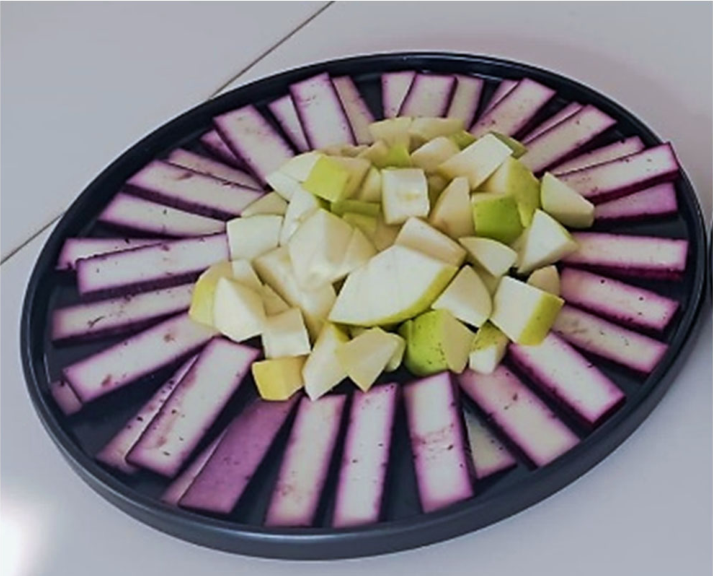
Before the sensory evaluation, the panelists received detailed information about the study, including the characteristic features of Trappist cheese and the production procedure of the blackcurrant juice-soaked cheese. Participants were informed that the samples contained milk and were asked to participate voluntarily after providing informed consent. Because the blackcurrant-treated cheese exhibited a distinct color compared with the control cheese, complete blinding was not feasible. The control cheese (CC) was therefore presented first, followed by the soaked cheese (SC). Approximately 10–15 g portions of each cheese were served monadically on individual plates at 10–12 °C. Golden Delicious apple slices were provided before the first sample and between samples to cleanse the palate (Figure A4).
The evaluation was conducted by completing a questionnaire in Google Forms, which took approximately 10–15 min to complete. The questionnaire is included at the end of this paper in Appendix B.
A total of 60 participants evaluated the control cheese and the fresh soaked cheese (right after seven days of soaking) using a 9-point hedonic scale, where 1 indicated ‘dislike extremely’ and 9 indicated ‘like extremely’ [21]. Assessment criteria included appearance, texture, aroma, and taste.
The sensory evaluation protocol was approved by the Bioethics Committee of Sapientia Hungarian University of Transylvania (approval number 543/30 October 2023), and all panelists provided informed consent before participation.

2.6. Microbiological Analyses

The microbiological quality of the cheese samples was evaluated in accordance with the applicable regulatory criteria set out in Regulation (EC) No 2073/2005 [22]. The microbiological analysis was performed using conventional methods [23,24]. Where necessary, confirmation was carried out in accordance with ISO 21528-2:2017, ISO 21527-1:2008 and ISO 11290-1:2017 [25,26,27]. The samples were analyzed for the presence of Staphylococcus aureus on HimediaTM Mannitol Salt Agar, coliform bacteria and Escherichia coli on VWR Chromogenic Coliform Agar (CCA), Listeria monocytogenes on Listeria mono Differential Agar acc. Ottaviani & Agosti (Base), and molds and yeasts on HimediaTM Rose Bengal Chloramphenicol Agar. From each cheese sample, 25 g was homogenized in 225 mL of sterile physiological solution under aseptic conditions. A total of 0.1 mL of each suspension was spread onto the respective selective media. The inoculated Petri dishes were aerobically incubated at 37 °C for 48 h, except for yeast determination, which was incubated at 25 °C for five days. The assays were carried out in two biological replicates, each with three technical replicates. During the storage period, the number of beneficial lactic acid bacteria was determined weekly on Himedia™ Lactobacillus de Man–Rogosa–Sharpe (MRS), and the number of streptococci on Streptococcus thermophilus isolation agar (obtained from: casein enzymic hydrolysate (10 g/L), yeast extract (5 g/L), sucrose (10 g/L), dipotassium phosphate (2 g/L) and agar (20 g/L)) as well as the number of pathogenic bacteria and yeasts. According to the above-mentioned sample preparation, a dilution of ten to four was made from the suspension, and 0.1 mL of this dilution was spread on the medium. The inoculated media were then incubated for 48 h at 37 °C in aerobic and anaerobic conditions in anaerobic jars with anaerobe container sachets. The presence of yeast was also determined on Himedia™ Rose Bengal agar. The results of the microbiological counts were expressed as Log CFU/g [23,24]. These microbiological assessments were essential for determining the effects of soaking and storage on microbial dynamics. The colonies that appeared in the highest numbers on MRS, Streptococcus thermophilus isolation agar and Rose Bengal agar were selected. Pure isolates were obtained. Identification of the isolates at the species level was performed using Matrix-Assisted Laser Desorption/Ionization–Time of Flight (MALDI-TOF).

2.7. Storage Effect Evaluation

The storage condition was designed to monitor changes in cheese quality and stability over time under conditions similar to those in a commercial refrigerated display case. The effect of blackcurrant-derived compounds on the structural and microbiological properties of the cheese matrix was evaluated.
Cheese samples (CC and SC) were stored vacuum-packed at 4 ± 1 °C in a maturing chamber (Samaref STX 700SUP TN, Fabriano, Italy) for eight weeks. The samples were kept constantly under continuous illumination provided by a 10 W LED T5 lamp (LBVN10W3CCT, Tracon Electric, Dunakeszi, Hungary) operating at 6500 K (cool white) with a luminous flux of 1000 lumen, to ensure conditions similar to those for storage in a commercial refrigerated display case. The estimated illuminance at the sample level was approximately 700–1000 lux. The white LED emitted a broad visible spectrum (approximately 400–700 nm) with a characteristic blue emission peak at approximately 450–460 nm and a broad phosphor emission extending from approximately 500 to 700 nm. Sampling was performed at weekly intervals throughout the storage period. At each sampling point, three independent samples were withdrawn and subjected to physicochemical, textural, and microbiological analyses.

2.8. Statistical Analysis

Statistical analyses were performed using IBM SPSS Statistics 25. All measurements were performed in triplicate, and the results are presented as mean ± standard deviation (SD).
Anthocyanin concentrations in the blackcurrant juice-soaked cheese samples were analyzed across storage time using one-way ANOVA followed by Tukey’s HSD post hoc test. Prior to ANOVA, data normality was assessed using the Shapiro–Wilk test, and homogeneity of variances was evaluated using Levene’s test. Statistical significance was accepted at p < 0.05. Values below the detection limit are reported as not detected (ND).
The effect of juice soaking time was analyzed using one-way ANOVA. When significant differences were detected, Tukey’s HSD post hoc test was applied for pairwise comparisons between soaking times. Differences were considered statistically significant at p < 0.05. Color data are presented as mean ± standard deviation.
Texture and microbiological data were analyzed using a two-way analysis of variance (ANOVA), with treatment (control vs. blackcurrant-treated cheese) and storage time as fixed factors. The interaction between treatment and storage time was also evaluated. Because destructive sampling was applied, independent cheese samples were analyzed at each storage time; therefore, repeated measurements of the same cheese blocks were not available, and cheese block was not included as a random effect. When significant effects were detected, Tukey’s honestly significant difference (HSD) test was used for post hoc comparisons. Statistical significance was accepted at p < 0.05. Sensory scores were analyzed using the Wilcoxon signed-rank test, with statistical significance accepted at p < 0.05.

3. Results and Discussion

3.1. Physicochemical Analysis Results

3.1.1. Dry Matter Content

The dry matter (DM) content of the cheese samples was monitored to evaluate the influence of soaking and storage period on physicochemical parameters. Dry matter content increased significantly compared to the untreated control (p ≤ 0.05). The highest dry matter values were observed in the fresh cheese soaked in natural blackcurrant juice. This increase is likely due to the diffusion of soluble solids from the soaking media into the cheese matrix, as well as partial moisture loss during the soaking period. The highest dry matter content, 72.19 ± 0.20%, was found in cheese after soaking, while the lowest, 62.71 ± 0.15%, was found in our untreated control cheese.

3.1.2. Anthocyanin Contents

The soaking treatment successfully introduced blackcurrant anthocyanins into the rind region of the cheese, confirming the semi-hard cheese matrix’s ability to retain berry-derived pigments.
The HPLC results showed that the measured anthocyanin compounds were below the detection limit in the control cheese. In SC samples (Table 1) the progressive degradation of anthocyanins during storage under illuminated conditions was confirmed. The predominance of rutinoside derivatives reflected the previously reported anthocyanin profile of blackcurrant juice by Bakowska-Barczak and Kolodziejczyk [4]. Immediately after soaking, D-3-R concentration reached 20.23 mg/100 g DM and gradually decreased to 5.88 mg/100 g DM by week VIII, corresponding to a reduction of approximately 71%. All quantified anthocyanins showed a progressive decline during storage, indicating ongoing degradation reactions within the cheese matrix. In the final sample, the concentration of C-3-R was below the limit of detection (LOD). Anthocyanin concentration decreased progressively during storage under illuminated simulated retail display conditions. Similar declines in anthocyanin stability have been reported in berry-based food systems during storage, although several factors, including light exposure, oxygen availability, temperature, pH, and matrix interactions, may contribute to pigment degradation [8]. Because no dark-stored control was included in the present study, the individual contribution of illumination could not be distinguished from these other factors. From a technological perspective, these findings indicate that anthocyanin stability should be considered when developing anthocyanin-enriched cheeses intended for retail display and storage [8,28]. Future studies should evaluate the effectiveness of light-protective packaging in improving anthocyanin stability during retail storage.

3.2. Effect of Blackcurrant Juice Soaking on Color Evolution and Its Relationship with Anthocyanin Degradation

Color is one of the most important quality attributes influencing consumer acceptance of cheese products. The incorporation of anthocyanin-rich blackcurrant juice resulted in substantial visual modifications of Trappist cheese, affecting both pigment penetration during soaking and subsequent color evolution during storage. The observed changes were closely associated with anthocyanin migration, redistribution, and degradation within the cheese matrix.
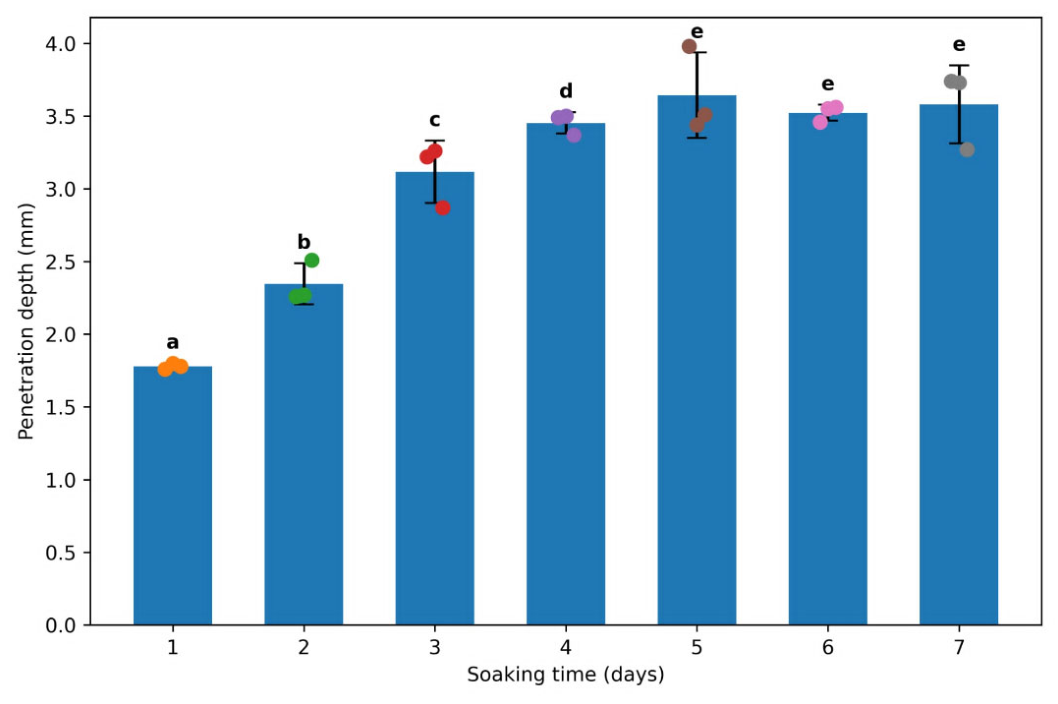
Visual inspection and digital image analysis confirmed effective diffusion of blackcurrant pigments into the cheese during the soaking process. One-way ANOVA revealed a significant effect of soaking time on penetration depth (F = 47.01, p < 0.001). Tukey’s HSD post hoc test showed that penetration depth increased significantly during the early soaking period, whereas no significant differences were observed among the final soaking days (days 6–8) (Figure 1), indicating stabilization of rind firmness during prolonged soaking.
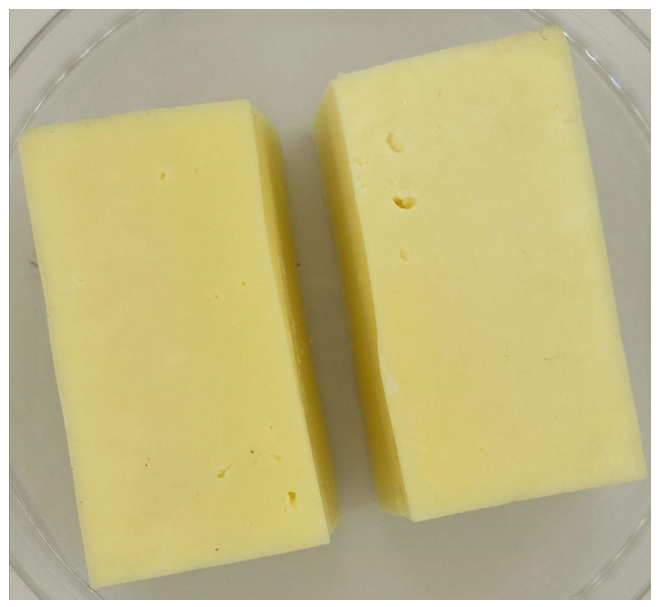
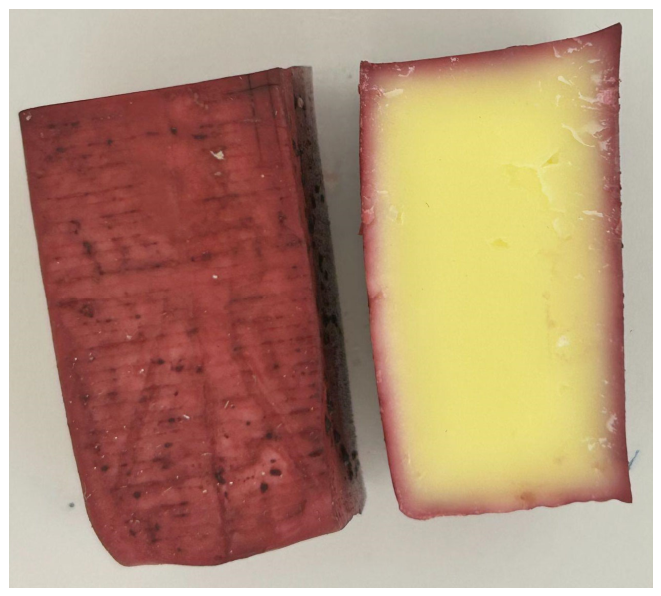
The color modifications induced by blackcurrant juice remained evident throughout storage and produced substantial differences compared with the control cheese (Table 2). The untreated control exhibited a homogeneous pale-yellow appearance characterized by L* = 75.38, a* = −5.56, and b* = 31.65, ΔE = 0.00 (Figure A1). In contrast, all soaked cheeses developed a distinct purple-red rind, indicating successful incorporation of anthocyanin pigments into the rind of the cheese (Figure A2).
The most pronounced color changes were observed in the outer rind region. Immediately after soaking, the rind exhibited a substantial color difference relative to the control cheese (ΔE = 32.62), demonstrating rapid adsorption of blackcurrant pigments onto the rind. During the first five weeks of storage, the color intensity continued to increase. The rind became progressively darker, as reflected by decreasing L* values, while redness intensified due to increasing positive a* values. The maximum within-study image-based color difference was observed in week V, when the rind reached the highest color difference (ΔE = 38.20) and the lowest lightness value (L* = 44.00). At the same time, a* values remained strongly positive, confirming the development of an intense red-purple coloration characteristic of blackcurrant anthocyanins.
Although color modifications were most evident in the rind, measurable changes were also detected in the cheese interior. Interior ΔE values ranged between 6.18 and 20.91, indicating that pigment migration extended beyond the surface. Nevertheless, the substantially lower color differences observed in the interior compared with the rind demonstrate that anthocyanin penetration remained limited. Visual examination of cheese cross-sections revealed a pronounced rind–core contrast, particularly in samples stored for two, three, five, and six weeks. The colored zone was generally restricted to the outer few millimeters of the cheese body, suggesting diffusion-limited transport of anthocyanins through the dense protein–fat matrix characteristic of semi-hard cheeses. Similar behavior has been reported for wine-soaked and phenolic-enriched cheeses, where phenolic compounds accumulated predominantly in the outer layers due to restricted diffusion through the casein network and interactions with milk proteins [10,11].
Another notable effect of blackcurrant treatment was the reduction in b* values in the rind region. Compared with the control cheese (b* = 31.65), treated rind samples displayed markedly lower b* values ranging from 14.84 to 26.40. This reduction indicates that the red-purple pigments partially masked the natural yellow color of Trappist cheese. Similar decreases in yellowness have been reported in dairy products enriched with anthocyanin-containing fruits and berry extracts, where red-purple pigments dominate the visual appearance of the product [18,29].
The temporal evolution of color revealed a characteristic biphasic pattern. During the first five weeks of storage, pigment redistribution within the cheese matrix appeared to partially compensate for the progressive loss of anthocyanins. Although the cheese was no longer in direct contact with blackcurrant juice, anthocyanins likely continued to diffuse through the moisture-rich rind, resulting in increased color intensity and expansion of the colored region. This interpretation is supported by the progressive increase in ΔE values and the simultaneous decrease in L* values observed during the first five weeks of storage. Similar post-processing migration of phenolic compounds has been reported in cheeses enriched with berry-derived ingredients and other plant extracts [10,11].
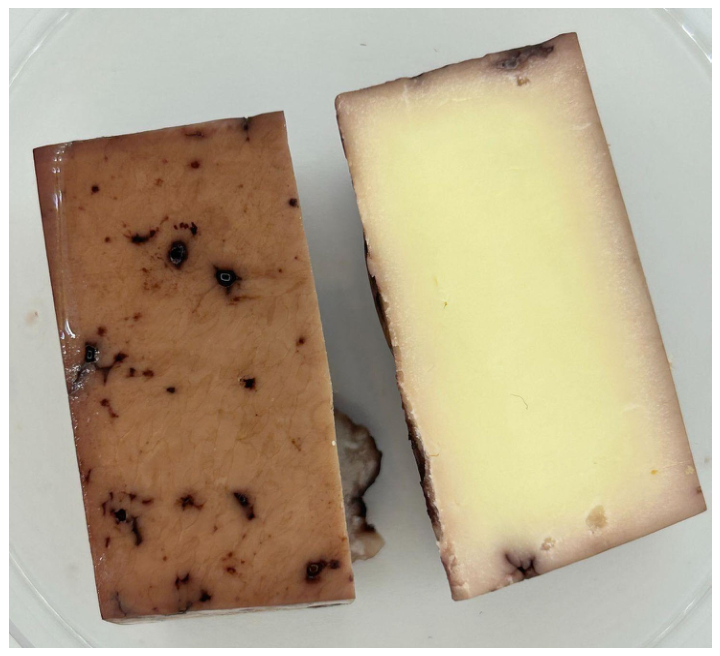
After week V, a different trend became evident. The rind gradually became lighter, with L* increasing from 44.00 to 57.64 by the end of storage. At the same time, redness decreased substantially, as indicated by the reduction in a* values from 15.15 to 8.28. The overall color difference also declined continuously, decreasing from 38.20 to 24.87 (Figure A3).
These observations suggest that anthocyanin degradation became the dominant process during prolonged storage under the illuminated storage conditions applied in this study. However, because no dark-stored control was included, the individual contributions of light exposure, storage time, oxygen availability, temperature, matrix interactions, and pH cannot be distinguished. Anthocyanins are generally susceptible to oxidation, light-induced degradation, temperature effects, and interactions with surrounding matrix components, all of which have been reported to contribute to pigment degradation in food systems. Their degradation typically results in a progressive loss of red-purple coloration accompanied by the formation of colorless or brown degradation products [8,28,29,30].
Interestingly, the evolution of color did not directly mirror the changes observed in anthocyanin concentration. HPLC analysis revealed a continuous decrease in all quantified anthocyanins throughout storage, whereas color intensity continued to increase during the initial weeks and reached its maximum only in week V. This apparent discrepancy suggests that color development may have been influenced by multiple concurrent processes rather than by anthocyanin concentration alone. In addition to anthocyanin degradation, the redistribution of pigments within the outer cheese layers may have contributed to the observed color changes. During the early stages of storage, such redistribution could have partially compensated for anthocyanin losses, resulting in enhanced visual color expression despite the declining anthocyanin concentrations.
Furthermore, interactions between anthocyanins and cheese proteins may have contributed to temporary stabilization of pigment molecules and enhancement of color intensity. Anthocyanin–protein interactions have previously been shown to influence pigment stability and color expression in dairy matrices [31,32]. Similar matrix-dependent behavior has also been reported for dairy products enriched with phenolic compounds, where color evolution was not always directly proportional to the concentration of individual anthocyanins [33,34].
Despite the gradual fading observed after week V, all treated cheeses remained visually distinct from the control throughout the entire storage period. Even at the final sampling point, ΔE values remained far above the threshold of visual perception, indicating that anthocyanin-derived pigmentation was still clearly detectable by consumers. From a technological perspective, this finding demonstrates that blackcurrant juice can serve as an effective natural coloring agent for semi-hard cheeses while simultaneously providing a source of bioactive compounds. The resulting rind–core color contrast may contribute positively to product differentiation and consumer appeal in the growing market of functional and specialty dairy products [34].
A limitation of the present color evaluation is that the reported ΔE values were derived from standardized digital image analysis rather than from instrumental color measurements using a colorimeter or spectrophotometer. Therefore, the maximum ΔE value (38.20) should be interpreted as a relative within-study indicator of color change under the applied imaging conditions and is not directly comparable with the instrumental CIE Lab color measurements reported in the literature. Nevertheless, the standardized image acquisition protocol enabled consistent monitoring of color evolution throughout the storage period.

3.3. Texture Analysis

The needle penetration measurements revealed substantial modifications in the mechanical properties of the cheese surface following soaking in blackcurrant juice (Table 3). The most pronounced differences were observed for the peak load (PL) parameter, which represents the maximum force required for probe penetration and reflects the mechanical resistance of the surface layer. Throughout the storage period, SC samples exhibited PL values that were considerably higher than those of CC samples. While the CC showed a gradual decrease in PL during storage, indicating progressive softening of the matrix, the SC samples maintained consistently elevated values.
The increased rind hardness observed in the SC may be associated with several simultaneous physicochemical processes. Blackcurrant juice contains high concentrations of organic acids, sugars, and phenolic compounds, particularly anthocyanins, which may contribute to structural modifications at the rind. The acidic environment may induce protein rearrangements and partial protein aggregation, while osmotic water migration from the rind toward the soaking medium may lead to localized dehydration and increased compactness of the rind. Similar structural changes associated with polyphenol-rich fruit enrichment in dairy matrices have previously been reported [35].
In addition, phenolic compounds are known to interact with milk proteins through hydrogen bonding and hydrophobic interactions, thereby altering the structural organization and mechanical behavior of dairy systems. Protein–polyphenol interactions may therefore contribute to the formation of denser, more mechanically resistant structures [35].
Two-way ANOVA confirmed that both blackcurrant juice treatment and storage time significantly affected Peak Load. A highly significant treatment effect was observed (F = 624.63, p < 0.0001), indicating that blackcurrant juice soaking consistently increased the firmness of the cheese compared with the control. Storage time also had a significant influence on Peak Load (F = 3.91, p = 0.00052), reflecting the progressive structural changes occurring during refrigerated storage. However, the treatment × storage time interaction was not statistically significant (F = 1.65, p = 0.124), suggesting that although both treatment and storage time independently affected cheese firmness, the magnitude of the treatment effect remained relatively constant throughout the storage period. These findings indicate that blackcurrant juice soaking established a stable increase in cheese firmness without altering the overall pattern of texture development during storage. The observed increase in Peak Load may be attributed to moisture redistribution and structural modifications within the cheese matrix induced by blackcurrant juice absorption, together with the gradual physicochemical changes associated with storage.
The deformation peak (DF) values further supported these observations. In the CC, DF decreased during storage, suggesting weakening of the surface structure during ripening. In contrast, SC maintained relatively stable deformation values throughout the storage period, indicating enhanced structural stability and greater resistance against penetration-induced rupture.
Similarly, the work (W) parameter was markedly higher in SC samples than in CC samples. Since W corresponds to the energy required for penetration, these results indicate that blackcurrant juice soaking increased not only the hardness, but also the overall mechanical resistance (“toughness”) of the rind.
Final load (FL) values also remained higher in SC samples; these findings suggest that soaking primarily promoted the formation of a mechanically resistant rind while also affecting the adjacent subsurface region. The adhesion energy (A) differed notably between treatments, with the SC samples generally exhibiting higher values than the control cheese. These differences may be associated with changes in the moisture distribution and composition of the cheese matrix following soaking in blackcurrant juice. The diffusion and retention of soluble juice components, including sugars and phenolic compounds, may have modified the interactions between the cheese matrix and the penetration probe, thereby increasing the energy required for probe withdrawal. In addition to surface stickiness, this parameter may reflect frictional resistance and structural interactions within the cheese surrounding the probe. Interactions between milk proteins and polyphenols may also contribute to changes in matrix organization and rheological behavior; however, their direct contribution to the measured adhesion energy cannot be established from the present results alone.

3.4. Sensory Evaluation

Sixty participants took part in the sensory evaluation and rated the freshly soaked SC immediately after completion of the seven-day soaking period, using a nine-point scale (1–9). Fifty-five percent of respondents consume cheese weekly, 40.0% daily, and the remaining 5% rarely. The questionnaire also revealed that 52.5% of respondents had tasted long-aged and flavored cheese, while the remaining 47.5% had not. The qualitative feedback obtained from the open-ended comments was consistent with the sensory scores. Most panelists appreciated the distinctive blackcurrant aroma, fruity character, and the harmonious balance between the cheese and blackcurrant flavors, indicating that the treatment successfully created a novel sensory profile. Although a few participants perceived a slightly sour or bitter aftertaste and suggested minor improvements in sweetness or texture, these comments were infrequent and did not affect the overall positive perception of the product. These qualitative comments were consistent with the quantitative sensory scores.
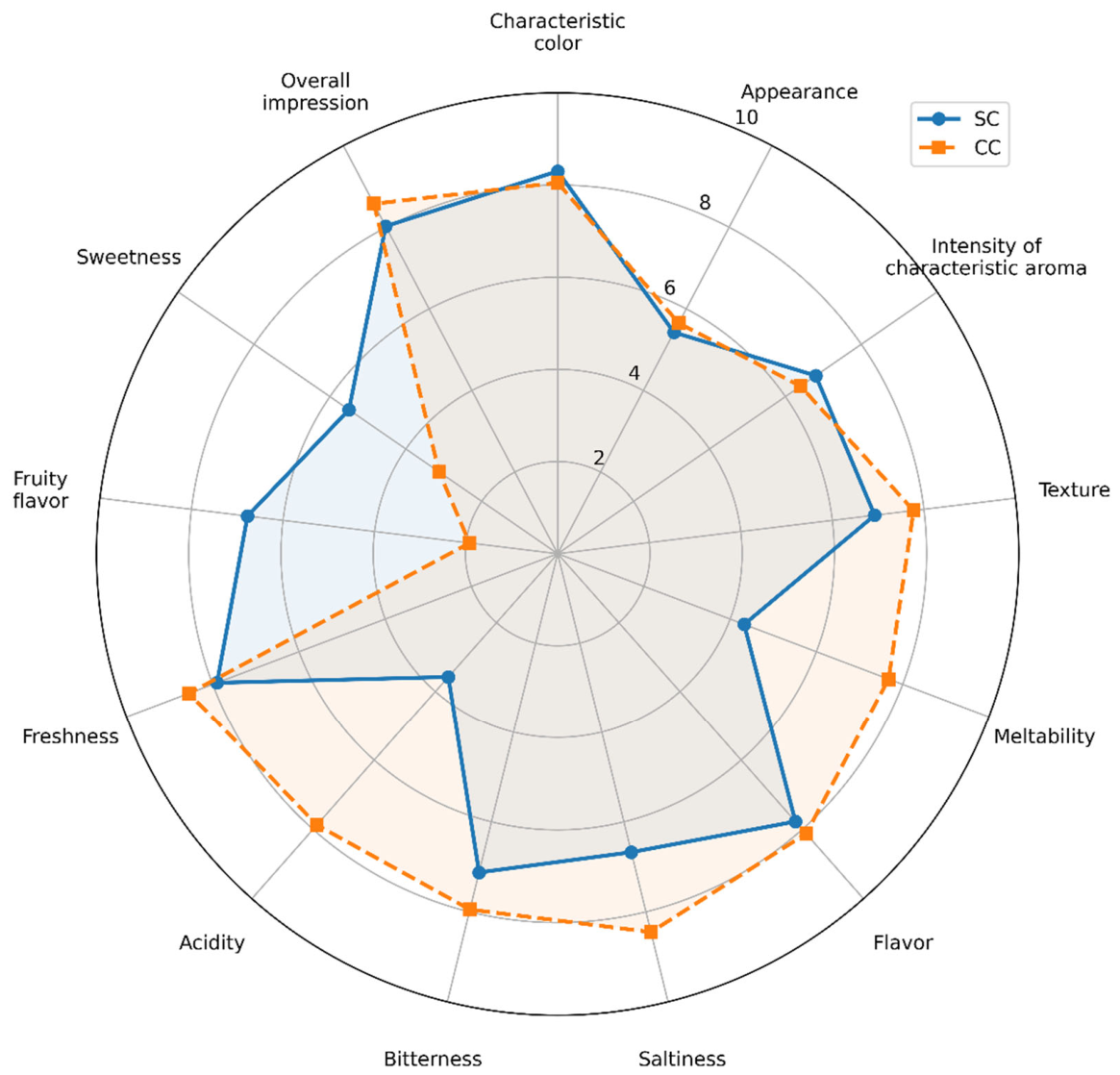
The spider chart in Figure 2 shows the summary of the sensory characteristics of our cheeses. The sensory evaluation demonstrated that both cheeses were well accepted by the panelists, with mean overall impression scores above 8.0. The SC received high scores for characteristic blackcurrant color (8.30 ± 1.29), characteristic aroma (6.80 ± 1.54), freshness (7.90 ± 1.87), flavor (7.77 ± 1.62), and overall impression (8.02 ± 1.49). In addition, the fruity flavor attribute was rated relatively high (6.77 ± 1.97), indicating that the blackcurrant treatment successfully imparted the desired fruit-related sensory characteristics. Sweetness was scored at a moderate level (5.50 ± 2.66), whereas acidity received a comparatively low score (3.58 ± 1.84).
The CC received high scores for overall impression (8.58 ± 0.78), freshness (8.55 ± 1.52), saltiness (8.45 ± 0.99), flavor (8.13 ± 1.36), characteristic color (8.05 ± 1.34), acidity (7.88 ± 1.88), and texture (7.78 ± 1.67). As expected, the fruity flavor score was considerably lower (1.93 ± 2.13) than that of the SC, reflecting the absence of blackcurrant treatment.
A Wilcoxon signed-rank test revealed (Table 4) significant differences between the SC and CC cheeses for characteristic color, characteristic aroma, texture, meltability, saltiness, bitterness, acidity, freshness, fruity flavor, sweetness, and overall impression (p < 0.05). In contrast, appearance and overall flavor did not differ significantly between the two samples (p > 0.05). The lack of difference in appearance may be attributed to the fact that this attribute reflects the overall visual quality of the cheese, including shape, surface integrity, and gloss, rather than color alone. Likewise, the absence of significant differences in flavor suggests that blackcurrant juice mainly influenced specific sensory attributes, such as characteristic aroma, fruity flavor, and sweetness, while preserving the characteristic flavor profile of the Trappist cheese.
Although the overall impression score of the control cheese was slightly higher, the SC also achieved a high level of consumer acceptance, demonstrating that the incorporation of blackcurrant juice produced a distinctive sensory profile while maintaining a high level of consumer acceptance.
A limitation of the present sensory evaluation was that all participants received the control cheese before the blackcurrant-treated cheese, and information about the products was provided prior to tasting. Consequently, the observed sensory differences cannot be attributed solely to the treatment, as serving-order, carryover, and expectation effects may also have influenced the panelists’ responses. Future studies should employ randomized or counterbalanced serving orders and blinded sample presentation to better isolate the effect of the treatment on sensory perception.

3.5. Microbiological Evaluation of Cheese

The microbiological analysis showed that Staphylococcus aureus, coliform bacteria, Escherichia coli, Listeria monocytogenes, and molds were not detectable in the cheese used for soaking. This indicates that the cheese is of high quality and microbiologically safe. LAB were present at 4.75 ± 0.40 Log CFU/g under aerobic conditions, whereas under anaerobic conditions, they were present at 5.74 ± 0.77 Log CFU/g (Table 5). In the CC, the LAB showed lower deviation, with no difference greater than 1 Log CFU/g. We observed a similar change in bacterial counts for presumptive Streptococcus isolates. However, in that case, the cell count in the control group was lower after the first week of storage (3.34 ± 0.03 log CFU/g) and exceeded 5 Log CFU/g by the eighth week.
In the CC, yeasts (Table 6) were detected in the third week at 1.92 ± 0.45 Log CFU/g, whereas in the SC, they were detected in the fourth week at 1.01 ± 0.02 Log CFU/g. By the end of the storage period, the yeast count had increased to 2.53 ± 0.08 Log CFU/g. The yeasts may contribute to cheese ripening by playing specific metabolic roles [36].
According to MALDI-TOF MS results, the species identified with high confidence in the first three weeks of storage was Lactococcus lactis from MRS medium. These originated from the starter culture. On streptococcus isolation agar, Streptococcus gallolyticus and Streptococcus salivarius subsp. thermophilus were identified as the predominant species. From the fourth week of storage, Latilactobacillus (Lt.) curvatus, Lacticaseibacillus paracasei and Enterococcus faecalis were present as prevalent LAB. Streptococcus salivarius subsp. thermophilus could also be identified on Streptococcus isolation agar. On Rose Benga agar, the yeast Torulaspora delbrueckii was identified during storage. All the identified microorganisms fall into the high-confidence identification category, with a score value higher than 2.00.
Two-way ANOVA was performed to evaluate the effects of treatment, storage time, and their interaction on the microbiological characteristics of the cheeses (Table 7). LAB counts were not significantly affected by treatment (p = 0.118), storage time (p = 0.141), or their interaction (p = 0.818). Likewise, Streptococcus counts were not significantly influenced by treatment (p = 0.785), although storage time had a significant effect (p < 0.001). The treatment × storage time interaction for Streptococcus was borderline significant (p = 0.050). In contrast, anaerobic LAB populations were significantly affected by treatment (p = 0.004), storage time (p = 0.004), and their interaction (p < 0.001). Similarly, anaerobic Streptococcus counts showed significant effects of treatment (p < 0.001), storage time (p < 0.001), and the interaction between these factors (p < 0.001). These results indicate that the response of anaerobic microbial populations to blackcurrant juice treatment depended on storage duration, whereas aerobic LAB populations remained comparatively stable throughout storage.
Similarly, yeast populations were significantly affected by treatment (F = 125.562, p < 0.0001), storage time (F = 211.113, p < 0.0001), and their interaction (F = 54.572, p < 0.0001), indicating that the response of yeasts also depended on storage duration.
In cheese ripening, the key factor in metabolic activity is the NSLAB. To exert this activity, they must withstand chemical and physical stresses during ripening. To achieve this, some of them have evolved different adaptation strategies, such as utilizing different energy sources or tolerating the adverse effects of the toxin–antitoxin system [37,38,39]. The results of the identification align with previous findings [16,40,41]. The identified bacterial species were also detected in the microbiota of traditional Turkish cheeses produced from different types of milk. Streptococcus spp., S. macedonicus and S. thermophilus were found to be the most abundant in cow’s milk cheese [16]. Lactococcus lactis, when used as a starter culture, plays a pivotal role in ripening. It is the main acid producer and contributes to the formation of aromatic compounds during this process, with endo-enzymes such as α-ketoglutarate resulting from cell autolysis. S. gallolyticus ssp. macedonicus, which belongs to the S. bovis/S. equinus complex (SBSEC), has been found in various artisanal cheeses. Members of this group can cause health problems in humans [41]. Ayanoğlu et al. (2026) [41] also identified Lcb. paracasei and Enterococcus spp. as part of the indigenous microbiota in traditional sheep’s and cow’s milk cheese. Lcb. paracasei was predominant in the cheese’s crust. These bacteria possess high esterolytic activity, contributing to the fruity flavors of the cheese. Enterococcus spp. are frequently present in artisanal cheeses and may contribute to the development of aromatic components due to their proteolytic and lipolytic enzymes. The sensory properties of cheese are determined by NSLAB. The cheese’s unique aroma, taste, and texture are influenced by the different metabolites synthesized during ripening.
The lactic acid produced by NSLAB is responsible for the sharp taste, whereas the diacetyl imparts a buttery aroma. The hydrolysis of proteins and fats by NSLAB enzymes gives cheese a smooth texture and complex flavor profiles [16,42]. Some Enterococcus faecalis strains can synthesize a type of bacteriocin called enterocin. These peptides have antimicrobial activity against spoilage bacteria and foodborne pathogens [16]. Another identified NSLAB, Lt. curvatus, was also confirmed as a dominant cheese microbiota with beneficial effects, such as the production of bacteriocin-like inhibitory substances [43].
However, members of the Enterococcus genus are technologically relevant strains, and a significant part of the microbiota of artisanal cheeses comprises Streptococcus strains [44,45]. They should be treated with caution because their technological properties are strain-specific. In the near future, it will be important to determine their identification at the strain level, as well as their virulence factors, antibiotic resistance, and biogenic amine production.

4. Conclusions

The present study provides evidence that blackcurrant juice soaking represents an effective approach for incorporating anthocyanins into the surface layers of semi-hard Trappist cheese. Based on the physicochemical, chromatographic, microbiological, textural, and sensory results, a conceptual mechanistic model describing the behavior of blackcurrant-derived anthocyanins within the cheese matrix during storage can be proposed.
Following soaking, anthocyanins diffused primarily into the outer layers of the cheese, where interactions with casein proteins and other matrix components likely influenced their retention. These interactions may contribute to pigment retention through hydrogen bonding and hydrophobic associations, while simultaneously limiting pigment migration toward the inner regions of the cheese. As a result, the rind became the principal reservoir of anthocyanins and the most important determinant of color development.
During storage under illuminated retail display conditions, anthocyanin concentrations progressively declined, and this decrease was accompanied by measurable changes in color parameters. These observations are consistent with the known instability of anthocyanins reported in previous studies. However, because the experimental design did not include dark-stored controls, the present study cannot distinguish the contribution of light from other storage-related factors such as oxygen exposure, temperature, matrix interactions or storage time. Controlled comparative studies will therefore be required to determine the specific role of photooxidative degradation.
The statistical analyses confirmed that treatment and storage time significantly influenced texture development, whereas their interaction was not significant, indicating a consistent effect of blackcurrant juice throughout storage.
The microbiological results further suggest that blackcurrant-derived compounds did not adversely affect the viability of technologically important lactic acid bacteria. No significant treatment effect was observed for LAB or Streptococcus populations, indicating that these microbial groups were not substantially affected by the soaking treatment. In contrast, significant effects of treatment, storage time, and their interaction were detected for anaerobic LAB, anaerobic Streptococcus, and yeast populations, indicating that the response of these microbial groups to the treatment varied throughout storage. Overall, these findings suggest that blackcurrant juice treatment influenced selected microbial populations without indicating a general disruption of the microbiological characteristics of the cheese during storage. From a technological perspective, the results indicate that blackcurrant juice can be successfully used as a natural source of anthocyanins for the development of visually distinctive semi-hard cheeses. Under refrigerated retail display conditions, the treated cheeses maintained their characteristic color and overall quality for up to five weeks of storage, supporting the practical application of this approach in commercial cheese production.

Author Contributions

Conceptualization, R.-V.S. and C.A.; methodology, R.-V.S., É.L. and C.A.; formal analysis, R.S., C.A. and É.L.; investigation, R.S., C.A. and É.L.; resources, R.-V.S.; data curation, R.S., C.A., É.L. and R.-V.S.; writing—original draft preparation, R.S., R.-V.S. and É.L.; writing—review and editing, R.-V.S., C.A. and É.L.; supervision, R.-V.S.; project administration, R.-V.S.; funding acquisition, R.-V.S. All authors have read and agreed to the published version of the manuscript.

Funding

This research was supported by Sapientia Foundation–Institute for Scientific Research (grant number 13/5/21.05.2025).

Institutional Review Board Statement

The authors declare that they have obtained the consent of the Bioethics Committee of Sapientia Hungarian University of Transylvania (approval number 543/30 October 2023), and all participants have consented to participate in the sensory evaluation of the product and to use their information. All procedures were performed in accordance with the Declaration of Helsinki and institutional guidelines. The appropriate protocols for protecting the rights and privacy of all participants were utilized during the execution of the research.

Informed Consent Statement

Informed consent was obtained from all subjects involved in the study.

Data Availability Statement

Dataset available upon request from the authors.

Acknowledgments

The staff at the Cooperativa Agricolă Csengő and Garden Proiect Srl. are thanked for providing technical advice and facilities throughout the research. During the preparation of this manuscript the authors used ChatGPT (GPT-5.6 Luna, OpenAI) for the purpose of creating and refining the Graphical Abstract. The authors have reviewed and edited the output and take full responsibility for the content of this publication.

Conflicts of Interest

The authors declare that they have no conflicts of interest.

Abbreviations

The following abbreviations are used in this manuscript:
CCControl cheese
SCSoaked cheese
DMDry matter
C-3-RCyanidin-3-rutinoside
D-3-RDelphinidin-3-rutinoside
D-3-GDelphinidin-3-glucoside
C-3-GCyanidin-3-glucoside
NSLABNonstarter Lactic acid bacteria
SBSECS. bovis/S. equinus complex
LAB an Anaerobic Lactic acid bacteria
LABLactic acid bacteria
CFUColony-forming unit
ColorCharacteristic color
L*Lightness
a*Red–green axis
b*Yellow–blue axis
Streptococcus anAnaerobic Streptococcus bacteria
F_maxMaximum penetration force
PLPeak load
DFDeformation peak
WWork
FLFinal load
AFAdhesive force
AAdhesion

Appendix A

Figure A1. Control cheese (CC).
Dairy 07 00066 g0a1
Figure A2. Cheese sample soaked seven days in blackcurrant juice.
Dairy 07 00066 g0a2
Figure A3. Cheese sample stored eight weeks under light conditions.
Dairy 07 00066 g0a3
Figure A4. Cheese sample soaked in blackcurrant juice, prepared for sensorial analysis.
Dairy 07 00066 g0a4

Appendix B

Sensory Evaluation of Semi-Hard Cheeses Soaked in Blackcurrant Juice Questionnaire

  • Dear Panelist, please respond to the following general questions.
    (1) How often do you consume cheese?......................................................................................
    (2) Have you ever tasted any flavored or aged cheeses?
        a) No     b) Yes
    (3) If you answered “Yes” to the previous question, please explain in a few words or sentences what makes this type of cheese more special to you than others. ………………………………………………………………………………………………………………………………………………………………………………………………………………

Please evaluate the cheese samples marked with numbers based on the listed criteria, using a score from 1 to 9.
Table A1. Questionnaire.
Criteria Sample Score
Control Cheese Soaked Cheese
Characteristic color
(1—do not like it, 9—like it very much)
Appearance
(1—do not like it, 9—like it very much)
Intensity of blackcurrant aroma
(1—do not like it, 9—like it very much)
Texture
(1—do not like it, 9—like it very much)
Meltability
(1–do not like it, 9–like it very much)
Flavor
(1—do not like it, 9—like it very much)
Saltiness
(1—do not like it, 9—like it very much)
Bitterness
(1—do not like it, 9—like it very much)
Acidity
(1—do not like it, 9—like it very much)
Freshness
(1–do not like it, 9–like it very much)
Fruity taste
(1—do not like it, 9—like it very much)
Sweetness
(1—do not like it, 9—like it very much)
Overall impression
(1—do not like it, 9—like it very much)

References

  1. López-Expósito, I.; Amigo, L.; Recio, I. A mini-review on health and nutritional aspects of cheese with a focus on bioactive peptides. Dairy Sci. Technol. 2012, 92, 419–438. [Google Scholar] [CrossRef] [Scilit]
  2. Marco, M.L.; Heeney, D.; Binda, S.; Cifelli, C.J.; Cotter, P.D.; Foligné, B.; Gänzle, M.; Kort, R.; Pasin, G.; Pihlanto, A.; et al. Health benefits of fermented foods: Microbiota and beyond. Curr. Opin. Biotechnol. 2017, 44, 94–102. [Google Scholar] [CrossRef] [Scilit] [PubMed]
  3. Beresford, T. Cheese and cardiovascular diseases. In Functional Foods and Their Implications for Health Promotion; Zabetakis, I., Tsoupras, A., Lordan, R., Ramji, D., Eds.; Academic Press: London, UK, 2023; pp. 235–257. [Google Scholar] [CrossRef] [Scilit]
  4. Bakowska-Barczak, A.M.; Kolodziejczyk, P.P. Black currant polyphenols: Their storage stability and microencapsulation. Ind. Crops Prod. 2011, 34, 1301–1309. [Google Scholar] [CrossRef] [Scilit]
  5. Rudrapal, M.; Khairnar, S.J.; Khan, J.; Dukhyil, A.B.; Ansari, M.A.; Alomary, M.N.; Alshabrmi, F.M.; Palai, S.; Deb, P.K.; Devi, R. Dietary Polyphenols and Their Role in Oxidative Stress-Induced Human Diseases: Insights into Protective Effects, Antioxidant Potentials and Mechanism(s) of Action. Front. Pharmacol. 2022, 13, 806470. [Google Scholar] [CrossRef] [Scilit] [PubMed]
  6. Punbusayakul, N. Bioactive compounds and antioxidant activity of wines from different currant cultivars. J. Reprocess. Energy Agric. 2018, 22, 27–30. [Google Scholar] [CrossRef] [Scilit]
  7. Huang, X.; Zheng, S.; Guo, Y.; Yu, B.; Zhao, M.; Guo, P.; Bai, J.; Yang, Y. Structure characterization of polysaccharide isolated from Ribes nigrum L. and it’s bioactivity against gout. Int. J. Biol. Macromolec. 2025, 306, 141359. [Google Scholar] [CrossRef] [Scilit] [PubMed]
  8. Castañeda-Ovando, A.; Pacheco-Hernández, M.d.L.; Páez-Hernández, M.E.; Rodríguez, J.A.; Galán-Vidal, C.A. Chemical Studies of Anthocyanins: A Review. Food Chem. 2009, 113, 859–871. [Google Scholar] [CrossRef] [Scilit]
  9. Cutrim, C.S.; Cortez, M.A.S. A review on polyphenols: Classification, beneficial effects and their application in dairy products. Int. J. Dairy Technol. 2018, 71, 564–578. [Google Scholar] [CrossRef] [Scilit]
  10. Innocente, N.; Biasutti, M.; Rita, F.; Brichese, R.; Comi, G.; Iacumin, L. Effect of Alternative Ripening Conditions on Composition, Proteolysis, and Sensory Properties of Montasio Cheese. Food Chem. 2007, 105, 1086–1090. [Google Scholar] [CrossRef] [Scilit]
  11. Garofalo, G.; Busetta, G.; Alfonzo, A.; Francesca, N.; Moschetti, G.; Settanni, L.; Gaglio, R. Effect of red wine soaking on the microbiological profile, total phenolic content and sensory aspects of an ovine pressed cheese. Sci. Tec. Latt. Casearia 2022, 72, 56–62. Available online: https://iris.unipa.it/handle/10447/548461 (accessed on 23 April 2025).
  12. Parente, E.; Cogan, T.M.; Powell, I.B. Starter cultures: General aspects. In Cheese: Chemistry, Physics and Microbiology, 4th ed.; Mcsweeney, P.L.H., Fox, P.F., Cotter, P.D., Everett, D.W., Eds.; Academic Press: London, UK, 2017; pp. 201–226. [Google Scholar] [CrossRef] [Scilit]
  13. Choi, J.; Lee, S.I.; Rackerby, B.; Goddik, L.; Frojen, R.; Ha, S.-D.; Kim, J.H.; Park, S.H. Microbial communities of a variety of cheeses and comparison between core and rind region of cheeses. J. Dairy Sci. 2020, 103, 4026–4042. [Google Scholar] [CrossRef] [Scilit] [PubMed]
  14. György, É.; Laslo, É. Microbial diversity of traditionally processed cheese from northeastern region of Transylvania (Romania). In Fermentation—Processes Benefits Risks; Laranjo, M., Ed.; IntechOpen: London, UK, 2021. [Google Scholar] [CrossRef] [Scilit]
  15. Laslo, É.; György, É.; Szabó, A. Technological aspects of lactic acid bacteria originated from artisanal cheeses. Acta Univ. Sapientiae. Aliment 2024, 17, 61–82. [Google Scholar] [CrossRef] [Scilit]
  16. Demir, F.H.; Kaptan, B. Identification of lactic acid bacteria isolated from the protected geographical indication Edirne white cheese using MALDI-TOF MS: Impact of ripening time and type of milk on microbial diversity. Int. Dairy J. 2025, 162, 106156. [Google Scholar] [CrossRef] [Scilit]
  17. ISO 2920:2004; IDF 58:2004; Whey Cheese—Determination of Dry Matter (Reference Method). International Organization for Standardization: Geneva, Switzerland, 2004.
  18. Šimerdová, B.; Bobríková, M.; Lhotská, I.; Kaplan, J.; Křenová, A.; Šatínský, D. Evaluation of Anthocyanin Profiles in Various Blackcurrant Cultivars over a Three-Year Period Using a Fast HPLC-DAD Method. Foods 2021, 10, 1745. [Google Scholar] [CrossRef] [Scilit] [PubMed]
  19. ASRO Standard SR—10055; Comitet Tehnic. Analiza Senzorială. ASRO: Bucharest, Romania, 1995. Available online: https://magazin.asro.ro/ro/standard/10055 (accessed on 23 April 2025).
  20. ISO 22935-2:2009/IDF 99-2:2009; Milk and Milk Products. Sensory Analysis. Part 2: Recommended Methods for Sensory Evaluation. International Organization for Standardization: Geneva, Switzerland, 2009.
  21. Delahunty, C.M.; Drake, M.A. Sensory character of cheese and its evaluation. In Cheese: Chemistry, Physics and Microbiology; Fox, P.F., McSweeney, P.L.H., Cogan, T.M., Guinee, T.P., Eds.; Academic Press: Cambridge, MA, USA, 2004; Volume 1, pp. 455–487. ISBN 978-0-12-263652-3. [Google Scholar]
  22. European Commission. Commission Regulation (EC) No 2073/2005 of 15 November 2005 on microbiological criteria for foodstuffs. Off. J. Eur. Union 2005, 338, 1–2. [Google Scholar]
  23. Laslo, É.; György, É. Evaluation of the microbiological quality of some dairy products. Acta Univ. Sapientiae. Aliment 2018, 11, 27–44. [Google Scholar] [CrossRef] [Scilit]
  24. Gyenge, L.; Erdő, K.; Albert, C.; Laslo, É.; Salamon, R.V. The effects of soaking in salted blackcurrant wine on the properties of cheese. Heliyon 2024, 10, e34060. [Google Scholar] [CrossRef] [Scilit] [PubMed]
  25. ISO 21528-2:2017; Microbiology of the Food Chain—Horizontal Method for the Detection and Enumeration of Enterobacteriaceae Part 2: Colony-Count Technique. International Organization for Standardization: Geneva, Switzerland, 2017.
  26. ISO 21527-1:2008; Microbiology of Food and Animal Feeding Stuffs—Horizontal Method for the Enumeration of Yeasts and Moulds—Part 1: Colony Count Technique in Products with Water Activity Greater than 0.95. International Organization for Standardization: Geneva, Switzerland, 2008.
  27. ISO 11290-1:2017; Microbiology of the Food Chain—Horizontal Method for the Detection and Enumeration of Listeria Monocytogenes and of Listeria spp.—Part 1: Detection Method. International Organization for Standardization: Geneva, Switzerland, 2017.
  28. Shahidi, F.; Ambigaipalan, P. Phenolics and Polyphenolics in Foods, Beverages and Spices: Antioxidant Activity and Health Effects—A Review. J. Funct. Foods 2015, 18, 820–897. [Google Scholar] [CrossRef] [Scilit]
  29. He, J.; Giusti, M.M. Anthocyanins: Natural Colorants with Health-Promoting Properties. Annu. Rev. Food Sci. Technol. 2010, 1, 163–187. [Google Scholar] [CrossRef] [Scilit] [PubMed]
  30. Patras, A.; Brunton, N.P.; O’Donnell, C.; Tiwari, B.K. Effect of Thermal Processing on Anthocyanin Stability in Foods; Mechanisms and Kinetics. Trends Food Sci. Technol. 2010, 21, 3–11. [Google Scholar] [CrossRef] [Scilit]
  31. He, Z.; Xu, M.; Zeng, M.; Qin, F.; Chen, J. Interactions of Milk α- and β-Casein with Malvidin-3-O-Glucoside and Their Effects on the Stability of Grape Skin Anthocyanin Extracts. Food Chem. 2016, 199, 314–322. [Google Scholar] [CrossRef] [Scilit] [PubMed]
  32. Chen, L.; Chen, N.; He, Q.; Sun, Q.; Zeng, W.-C. Effects of Casein on the Stability, Antioxidant Activity, and Bioavailability of Lotus Anthocyanins. J. Food Biochem. 2022, 46, e14288. [Google Scholar] [CrossRef] [Scilit] [PubMed]
  33. Cavalcanti, M.T.; Xavier, L.E.; Feitosa, B.F.; Alencar-Luciano, W.; Feitosa, V.A.; de Souza, E.L.; Gonçalves, M.C. Influence of Red Wine Marination on the Quality, Safety, and Stability of Goat Coalho Cheese Produced in the Brazilian Semi-Arid Region. Food Biosci. 2023, 53, 102727. [Google Scholar] [CrossRef] [Scilit]
  34. Soutelino, M.E.M.; Vieira, G.P.; Goulart, M.B.; Miranda, K.C.; da Conceição, R.P.; Pimentel, T.C.; da Cruz, A.G.; Rocha, R.S. Natural Food Dyes on Dairy Products: A Critical Approach between 2012–2023 Literature Regarding the Technological and Functional Aspects, Health Benefits and Future Trends. Trends Food Sci. Technol. 2024, 146, 104370. [Google Scholar] [CrossRef] [Scilit]
  35. Yildirim-Elikoglu, S.; Erdem, Y.K. Interactions between milk proteins and polyphenols: Binding mechanisms, related changes, and future trends in the dairy industry. Food Rev. Int. 2018, 34, 665–697. [Google Scholar] [CrossRef] [Scilit]
  36. Imre, A.; Crook, N. The emerging roles of non-Saccharomyces yeasts in fermented foods and human health. FEMS Yeast Res. 2025, 25, foaf056. [Google Scholar] [CrossRef] [Scilit] [PubMed]
  37. Coelho, M.C.; Malcata, F.X.; Silva, C.C. Lactic acid bacteria in raw-milk cheeses: From starter cultures to probiotic functions. Foods 2022, 11, 2276. [Google Scholar] [CrossRef] [Scilit] [PubMed]
  38. Bettera, L.; Levante, A.; Bancalari, E.; Bottari, B.; Gatti, M. Lactic acid bacteria in cow raw milk for cheese production: Which and how many? Front. Microbiol. 2023, 13, 1092224. [Google Scholar] [CrossRef] [Scilit] [PubMed]
  39. Neviani, E.; Gatti, M.; Gardini, F.; Levante, A. Microbiota of Cheese Ecosystems: A Perspective on Cheesemaking. Foods 2025, 14, 830. [Google Scholar] [CrossRef] [Scilit] [PubMed]
  40. Çetin, B.; Usal, M.; Aloğlu, H.Ş.; Busch, A.; Dertli, E.; Abdulmawjood, A. Characterization and technological functions of different lactic acid bacteria from traditionally produced Kırklareli white brined cheese during the ripening period. Folia Microbiol. 2024, 69, 1069–1081. [Google Scholar] [CrossRef] [Scilit] [PubMed]
  41. Ayanoğlu, E.; Tavşanlı, H.; Cibik, R. Identification of lactic acid bacteria from the crust and inner part of artisanally produced Mihaliç cheese sold with salty and low salty label by using MALDI-TOF-MS and 16S rDNA sequencing. Food Sci. Nutr. 2026, 14, e71489. [Google Scholar] [CrossRef] [Scilit] [PubMed]
  42. Pisana, C.; Caccamo, M.; Barbera, M.; Marino, G.; Serio, G.; Franciosi, E.; Settanni, L.; Gaglio, R.; Caggia, C. Comprehensive Characterization of the Microbiological and Quality Attributes of Traditional Sicilian Canestrato Fresco Cheese. Foods 2025, 14, 3123. [Google Scholar] [CrossRef] [Scilit] [PubMed]
  43. Burgos, C.; Melian, C.; Mendoza, L.M.; Salva, S.; Castellano, P. Probiotic Potential of Lactic Acid Bacteria Strains Isolated from Artisanal Cheeses: Impact on Listeria monocytogenes Infection. Fermentation 2025, 11, 343. [Google Scholar] [CrossRef] [Scilit]
  44. John, O.P.; Afolabi, K.O.; Ngene, A.C.; Tanimowo, W.O.; Adewoyin, M.A.; Osho, M.B.; Reuben, R.C. Enterococcus Species: Multifaceted Probiotic Potential and Safety Considerations. Microorganisms 2026, 14, 815. [Google Scholar] [CrossRef] [Scilit] [PubMed]
  45. Rodrigues, R.C.G.M.C.; Araújo, E.D.O.M.; Silva, S.T.D.; Sales, G.F.C.; Sales, D.C.; Ferreira, M.T.D.S.; Ribeiro, C.V.D.M.; Lucena, L.M.D.; Cipolat-Gotet, C.; Cavalcanti, M.T.H.; et al. Metataxonomic insights into lactic acid bacteria diversity in artisanal coalho cheese from the Caatinga biome. PLoS ONE 2026, 21, e0352903. [Google Scholar] [CrossRef] [Scilit] [PubMed]
Figure 1. Color penetration of blackcurrant juice over soaking time. Data are presented as mean ± SD (n = 3). Different lowercase letters (a, b, c, d, e) indicate significant differences between storage times according to Tukey’s HSD test (p < 0.05).
Dairy 07 00066 g001
Figure 2. SC and CC average scores for sensory evaluation. (Results represent mean values, n = 60).
Dairy 07 00066 g002
Table 1. Anthocyanin contents results of SC samples.
Storage Week/
Sample
D-3-R,
mg/100 g DM
C-3-R,
mg/100 g DM
D-3-G,
mg/100 g DM
C-3-G,
mg/100 g DM
I20.23 ± 0.12 a2.24 ± 0.02 a2.46 ± 0.04 a0.80 ± 0.02 a
II12.64 ± 0.11 b1.27 ± 0.11 b1.66 ± 0.03 b0.72 ± 0.02 a
III11.26 ± 0.08 c0.80 ± 0.05 c1.17 ± 0.08 c0.51 ± 0.01 b
IV10.88 ± 0.11 d0.78 ± 0.05 c1.15 ± 0.06 c0.50 ± 0.02 b
V10.52 ± 0.08 d0.72 ± 0.04 c1.02 ± 0.04 c0.46 ± 0.04 c
VI10.18 ± 0.12 d0.68 ± 0.06 d0.93 ± 0.16 c0.44 ± 0.03 c
VII8.10 ± 0.10 e0.41 ± 0.01 e0.72 ± 0.03 d0.39 ± 0.02 c
VIII5.88 ± 0.06 eND0.30 ± 0.02 d0.31± 0.01 d
Blackcurrant juice408.86 ± 1.5221.95 ± 0.7523.9 ± 0.7312.75 ± 0.25
Results represent mean values ± standard deviation (SD), n = 3; different letters (a, b, c, d, e) indicate that the results present significant differences in storage time at the p ≤ 0.05 level; ND—under detection limit.
Table 2. Color evaluation results of SC samples.
Storage, WeekCheese RegionsL*a*b*ΔE
Iinterior86.32 ± 10.36−8.85 ± 8.9749.17 ± 6.0720.91
rind56.66 ± 7.3115.20 ± 8.7414.84 ± 10.9932.62
IIinterior85.67 ± 22.16−0.54 ± 11.1728.08 ± 7.6911.98
rind49.57 ± 12.3916.94 ± 6.8718.20 ± 9.8336.79
IIIinterior80.53 ± 22.28−2.20 ± 9.3232.35 ± 5.976.18
rind46.35 ± 14.0112.65 ± 7.1317.31 ± 7.0037.15
IVinterior77.16 ± 14.031.84 ± 5.9225.15 ± 7.5510.01
rind52.84 ± 14.748.61 ± 8.1015.94 ± 10.6330.92
Vinterior67.99 ± 17.174.11 ± 7.5625.67 ± 7.3913.55
rind44.00 ± 15.4015.15 ± 6.7724.94 ± 6.7538.20
VIinterior77.82 ± 15.150.11 ± 7.2029.35 ± 4.686.58
rind45.63 ± 14.6813.22 ± 7.1422.75 ± 6.5836.29
VIIinterior75.98 ± 11.201.21 ± 7.7329.55 ± 8.827.11
rind53.57 ± 10.8112.39 ± 5.4326.40 ± 5.3728.73
VIIIinterior82.53 ± 11.55−4.16 ± 5.2427.42 ± 5.888.42
rind57.64 ± 6.708.28 ± 1.7421.05 ± 12.5624.87
Results represent mean values ± standard deviation (SD), n = 3.
Table 3. Texture analysis results.
Control Cheese (CC)
Storage, WeekIIIIIIIVVVIVIIVIII
Parameter
Peak load, gf65.23 ± 7.0456.66 ± 3.9248.92 ± 5.3149.08 ± 4.0243.41 ± 3.0947.16 ± 8.9030.35 ± 1.9243.16 ± 1.40
Deformation peak, mm3.00 ± 0.002.97 ± 0.042.86 ± 0.172.88 ± 0.162.87 ± 0.182.95 ± 0.121.64 ± 0.072.87 ± 0.14
Work, mJ1.19 ± 0.081.12 ± 0.041.03 ± 0.041.05 ± 0.060.98 ± 0.051.02 ± 0.110.60 ± 0.020.96 ± 0.04
Final load, gf64.76 ± 7.155.58 ± 4.6447.23 ± 5.7648.08 ± 4.4242.25 ± 2.8646.25 ± 8.7029.91 ± 2.2341.58 ± 1.32
Adhesion force, gf65.69 ± 2.8362.08 ± 4.2347.25 ± 3.3956.83 ± 1.3448.83 ± 2.4749.91 ± 3.7031.35 ± 8.2043.83 ± 1.06
Adhesion, mJ321.10 ± 51.41397.70 ± 49.83392.20 ± 82.69479.10 ± 61.47446.10 ± 40.01445.31 ± 74.73251.56 ± 195.45327.52 ± 25.40
Blackcurrant-juice-soaked cheese (SC)
Peak load, gf107.18 ± 4.63113.16 ± 8.1797.38 ± 8.16121.00 ± 12.2497.41 ± 5.89121.50 ± 29.00123.81 ± 4.06105.58 ± 6.98
Deformation peak, mm3.00 ± 0.003.00 ± 0.003.00 ± 0.003.00 ± 0.003.00 ± 0.003.00 ± 0.003.00 ± 0.003.00 ± 0.00
Work, mJ1.70 ± 0.071.80 ± 0.121.61 ± 0.091.87 ± 0.141.58 ± 0.101.88 ± 0.351.87 ± 0.051.69 ± 0.11
Final load, gf106.45 ± 4.49112.58 ± 8.3196.84 ± 8.24120.83 ± 12.2496.83± 5.72120.91± 28.93123.54 ± 3.88104.83 ± 7.03
Adhesion force, gf38.27 ± 3.7245.00 ± 13.1843.76 ± 13.6358.75 ± 32.5764.16 ± 8.1271.75 26.5045.18 ± 13.4924.91 ± 3.09
Adhesion, mJ455.37 ± 140.831029.60 ± 337.341335.36 ± 428.121434.56 ± 986.11529.95 ± 191.081414.70 ± 801.122044.70 ± 202.16529.43 ± 63.23
Results represent mean values (12 measurement points) ± standard deviation (SD), n = 3.
Table 4. Wilcoxon signed-rank test (n = 60).
Sensory Attributep-Value
Characteristic color0.0083
Appearance0.7907
Intensity of characteristic aroma0.0045
Texture<0.0001
Meltability<0.0001
Flavor0.0591
Saltiness<0.0001
Bitterness0.0386
Acidity<0.0001
Freshness0.0199
Fruity flavor<0.0001
Sweetness<0.0001
Overall impression0.0004
Sensory scores of the SC and CC cheeses were compared using the Wilcoxon signed-rank test. Statistical significance was accepted at p < 0.05.
Table 5. Mean counts of LAB incubated under aerobic and anaerobic conditions in CC and SC samples.
Storage Time, WeekLAB,
Log CFU/g
Streptococcus,
Log CFU/g
LAB an,
Log CFU/g
Streptococcus an, Log CFU/g
Control cheese
I4.71 ± 0.833.34 ± 0.035.00 ± 0.604.64 ± 0.03
II5.07 ± 0.364.53 ± 0.404.99 ± 0.594.75 ± 0.54
III4.07 ± 1.053.96 ± 0.574.98 ± 0.584.39 ± 0.36
IV5.23 ± 0.304.25 ± 1.145.26 ± 0.094.37 ± 0.29
V5.42 ± 0.653.26 ± 1.514.95 ± 0.055.26 ± 0.24
VI4.62 ± 0.583.84 ± 0.885.42 ± 0.495.00 ± 0.14
VII4.62 ± 0.585.30 ± 0.364.43 ± 0.535.35 ± 0.14
VIII5.17 ± 0.145.41 ± 0.364.41 ± 0.835.66 ± 0.00
Soaked cheese
I4.75 ± 0.404.47 ± 0.595.74 ± 0.773.62 ± 0.47
II4.63 ± 0.624.19 ± 0.174.70 ± 0.003.47 ± 0.25
III4.39 ± 0.793.87 ± 0.114.85 ± 0.013.86 ± 0.15
IV4.97 ± 0.265.18 ± 0.184.35 ± 0.045.33 ± 0.02
V4.51 ± 1.292.16 ± 0.153.42 ± 0.384.98 ± 0.02
VI4.21 ± 0.433.57 ± 0.493.27 ± 0.255.30 ± 0.49
VII4.03 ± 0.154.70 ± 0.014.42 ± 0.773.86 ± 0.66
VIII5.00 ± 0.715.34 ± 0.045.29 ± 0.105.95 ± 0.05
Results represent mean values ± standard deviation (SD), n = 3.
Table 6. Mean yeast count in control and blackcurrant juice-soaked cheese, under light storage.
Sample
Storage Time, Week
Yeast Count, Log CFU/g
Control CheeseSoaked Cheese
I<1<1
II<1<1
III1.92 ± 0.40<1
IV1.50 ± 0.181.01 ± 0.02
V2.26 ± 0.011.04 ± 0.04
VI1.51 ± 0.202.02 ± 0.08
VII2.10 ± 0.171.15 ± 0.16
VIII2.10 ± 0.092.53 ± 0.08
Results represent mean values ± standard deviation (SD), n = 3.
Table 7. Two-way ANOVA for microbiological parameters.
Microbiological
Parameter
TreatmentStorage TimeTreatment × Storage Time
LABF = 2.575, p = 0.118F = 1.712, p = 0.141F = 0.513, p = 0.818
StreptococcusF = 0.076, p = 0.785F = 11.710, p < 0.001F = 2.312, p = 0.050
LAB an.F = 9.523, p = 0.004F = 3.787, p = 0.004F = 7.259, p < 0.001
Streptococcus an.F = 17.686, p < 0.001F = 22.617, p < 0.001F = 11.182, p < 0.001
YeastF = 125.562, p < 0.001F = 211.113, p < 0.001F = 54.572, p < 0.001
Disclaimer/Publisher’s Note: The statements, opinions and data contained in all publications are solely those of the individual author(s) and contributor(s) and not of MDPI and/or the editor(s). MDPI and/or the editor(s) disclaim responsibility for any injury to people or property resulting from any ideas, methods, instructions or products referred to in the content.