


Abstract
Injectable trace mineral supplementation (ITMS) has been proposed to support physiological adaptation during critical stages in dairy cattle; however, field-based evidence from pasture-based seasonal-calving systems remains limited. This study evaluated the effects of ITMS, administered at birth in calves and approximately 30 days before fixed-time artificial insemination in early-lactation cows, primarily on erythrocyte glutathione peroxidase activity and plasma trace mineral concentrations, while health, growth, production, and fertility were monitored as secondary outcomes. Thirty newborn calves receiving isotonic saline control (CNTRL; n = 15) or ITMS (n = 15) and 50 early-lactation cows (CNTRL, n = 24; ITMS, n = 26) were enrolled. In calves, erythrocyte glutathione peroxidase activity was higher in ITMS calves (322 vs. 359 U/g Hb; p < 0.01), and plasma selenium was higher on day 15 (0.57 vs. 0.62 µmol/L; p = 0.03). A treatment × week interaction was detected for body weight, but overall body weight and average daily gain did not differ. In cows, plasma selenium was transiently higher in multiparous ITMS cows on day 15 (1.04 vs. 1.09 µmol/L; p = 0.03), while antioxidant and inflammatory biomarkers, production, mastitis incidence, and fertility were unaffected. Overall, a single ITMS administration elicited modest biochemical and selenium responses without statistically detectable improvements in growth, health, production, or fertility.
1. Introduction
Physiological and metabolic demands in dairy production can challenge immune competence, health, productivity, and reproductive performance, particularly when mineral supply is inconsistent. Trace minerals such as selenium (Se), copper (Cu), zinc (Zn), and manganese (Mn) are integral components of antioxidant and immune-related enzymes and are essential for maintaining cellular redox balance, immune responsiveness, and metabolic function [1]. Chromium (Cr) has also been associated with metabolic regulation through its role in enhancing insulin sensitivity and glucose utilization, which may support physiological adaptation during periods of increased metabolic demand [2]. Circulating trace mineral status is dynamically regulated through protein binding, tissue storage, redistribution, and excretion. Selenium is transported primarily by albumin and selenoprotein P [3], while GPx1 is particularly responsive to Se supply [4,5]. Accordingly, circulating mineral concentrations indicate mineral status, whereas GPx and SOD represent functional biomarkers [6]; neither alone demonstrates a clinical benefit. However, the effectiveness of dietary trace mineral supplementation can be influenced by variability in feed intake, mineral antagonisms within the rumen, and fluctuations in trace mineral availability and quality [7]. This is particularly relevant in pasture-based systems [8]. In Australian grazing systems, trace mineral supply from soils and pastures can be highly variable and regionally deficient. Large areas of southern Australia, including parts of Western Australia and western Victoria, have documented deficiencies in Se, Cu, and Zn, which may compromise mineral availability to grazing livestock [9,10,11]. As a result, achieving consistent and adequate trace mineral status through oral supplementation alone can be challenging, particularly during periods of increased physiological demand. Injectable trace mineral supplementation (ITMS) has therefore been developed as a strategic approach to rapidly elevate trace mineral availability by bypassing gastrointestinal interactions. Importantly, injectable formulations are not intended to replace basal dietary trace mineral supply, but rather to serve as a targeted supplementation strategy during critical physiological stages when requirements may temporarily exceed dietary provision or bioavailability [12,13].
In dairy cows, the early-to-peak lactation period is characterized by the highest sustained demands of milk synthesis, which continue to impose a considerable metabolic and oxidative burden [14,15]. The metabolic demands associated with the onset of lactation may increase oxidative challenge, and if antioxidant defenses are insufficient, oxidative stress (OS) may occur [14,16]. Persistent OS during this stage has been associated with impaired immune cell function, including compromised neutrophil and lymphocyte activity, which may increase susceptibility to infectious disease and subclinical health disorders [17]. Beyond these immune consequences, OS during early lactation may directly compromise reproductive outcomes through distinct physiological pathways: reactive oxygen metabolites generated within the corpus luteum can impair luteal cell integrity and precipitate premature luteolysis, thereby disrupting progesterone synthesis and luteal function [18], while a concurrent decline in antioxidant capacity may reduce uterine muscle tone and contractility, impairing sperm transport and increasing the risk of retained placenta [19,20]. This is particularly relevant in the context of fixed-time artificial insemination (FTAI), where the cow’s physiological status at the time of breeding directly determines fertility outcomes. Injectable trace mineral supplementation has been proposed as a means of supporting antioxidant and immune capacity during such periods, with reported benefits for health, productivity, and immune function in dairy cattle [21,22,23,24]. However, reproductive responses have been less consistent, ranging from no effect on conception or pregnancy outcomes [25,26] to tendency-level improvements in selected fertility measures under specific conditions [27,28].
In newborn dairy calves, the transition from the intrauterine to the extrauterine environment imposes a distinct but equally significant set of physiological demands. Although calves are born with the necessary immune cell machinery in place, they are unable to mount an effective immune response during the first weeks of life and are entirely dependent on the transfer of passive immunity via colostrum [29,30]. Compounding this immunological immaturity, the transition from the relatively hypoxic intrauterine environment to the oxygen-rich extrauterine environment increases ROS generation and contributes to neonatal OS [31]. The period of greatest disease vulnerability occurs between two and four weeks of age, when maternally derived passive immunity wanes concurrently with a still-developing active immune system [29,32]. Oxidative stress has been shown to specifically impair lymphocyte function, reducing cellular activation capacity, cytokine production, and antibody synthesis, thereby compounding the inherent immune limitations of the neonatal calf and contributing to the high morbidity and mortality observed pre-weaning [33,34]. Previous studies have reported variable responses to injectable supplementation in young calves, including increased GPx activity without corresponding changes in SOD [35] and improvements in selected health and immune outcomes [36,37,38]. More recently, injectable trace mineral and vitamin supplementation improved mineral status and antioxidant-related measures but did not affect pre-weaning performance in suckling Nellore calves [39].
Despite growing interest in ITMS, several important knowledge gaps remain. Most published studies have been conducted in confinement or partial mixed ration systems, where basal trace mineral supply is controlled and consistent. Evidence from pasture-based systems, where mineral intake is inherently variable, dependent on soil composition, pasture species, and season, and where dietary supplementation is more difficult to standardize, remains limited [12]. This distinction is particularly consequential in Australian seasonal calving systems, where the compressed mating period means that cows have a single, time-critical opportunity to conceive, and reproductive failure carries immediate culling consequences [40]. Within these systems, ITMS may have practical relevance at two biologically and operationally important stages: the neonatal period in calves, when susceptibility to infectious disease is increased [41], and the early-lactation pre-breeding period in cows, when physiological recovery must coincide with the seasonal mating window. Accordingly, the present experiments evaluated the same intervention at these two stages within a common pasture-based herd, while the inclusion of primiparous and multiparous cows allowed parity to be considered as a potential modifier of mineral status and supplementation response.
Therefore, this study evaluated ITMS at two distinct management stages within the same Australian pasture-based seasonal-calving dairy system: at birth in dairy calves and during early lactation, prior to FTAI, in dairy cows. The experiments were designed to assess biological responses to ITMS at these separate stages rather than to test a direct physiological linkage between calf and cow responses. Outcomes assessed included antioxidant status, trace mineral dynamics, and health in both studies, with production and fertility outcomes additionally examined in cows.
2. Materials and Methods
2.1. Experiment 1: Pre-Weaning Dairy Calves
2.1.1. Animal Care and Housing
Thirty newborn Holstein Friesian female calves were enrolled between August and October 2023. Calves were separated from dams within three hours of birth as part of standard farm management and housed in a group calf shed. During the first three days of life, calves were fed pooled colostrum at a rate equivalent to 10% of body weight per day. Colostrum was collected from recently calved cows at the milking parlor and pooled prior to feeding. From day 4 onward, calves received a combination of whole milk and milk replacer (5 L/calf/day) until six weeks of age, after which milk allowance was gradually reduced by 1 L/calf/week until weaning. At one week of age calves were transferred to an open paddock and provided rye-clover hay and calf starter pellets ad libitum, with intake not individually quantified. Chemical composition of feeds is presented in Table 1 and Table 2.
Table 1.
Chemical composition (mineral and vitamins) of calf starter pellets and rye clover hay.
Table 2.
Chemical composition of calf milk replacer.
2.1.2. Study Design and Treatment
Calves were stratified by body weight and day of birth and randomly assigned to either the injectable trace mineral supplementation group (ITMS; n = 15) or the isotonic saline control group (CNTRL; n = 15). The injectable trace mineral solution contained 40 mg Zn, 10 mg Mn, 3 mg Se, 15 mg Cu, and 5 mg Cr per mL (Multimin Chrome®, Virbac Australia Pty Ltd., Milperra, NSW, Australia) and was administered as a single subcutaneous injection at a dose of 1 mL/50 kg body weight in the neck region within 24 h of birth. Control calves received an equivalent volume of isotonic saline (0.9% NaCl).
2.1.3. Data Recording and Blood Sampling
Blood samples were collected by jugular venipuncture using sterile needles and vacuum tubes (BD Vacutainer®, Becton Dickinson, Macquarie Park, NSW, Australia). Samples were collected into lithium heparin tubes for plasma and serum separator tubes for serum. Sampling was conducted on day 0 (birth), day 15, and day 35. Calf blood samples were collected between 0800 and 1100 h under routine feeding conditions and were not standardized to a fixed post-feeding interval. Calves were monitored daily for health status, and body weight was recorded weekly to calculate average daily gain (ADG) until 50 days of age.
2.2. Experiment 2: Early Lactation Dairy Cows
2.2.1. Animal Care and Housing
Fifty Holstein Friesian dairy cows, including multiparous and primiparous animals, were enrolled between October and November 2023 and monitored until February 2024. Cows were managed under a pasture-based semi-intensive system, feeding on grazing pasture and concentrate received through an automatic milking system (Lely Astronaut; Lely Industries, Maassluis, The Netherlands). Concentrate allocation was adjusted according to individual milk yield and body weight. Chemical composition of pasture and concentrate is presented in Table 3.
Table 3.
Chemical composition (mineral and vitamins) of dairy cow concentrate feed and pasture feed.
2.2.2. Study Design and Treatment
Dairy cows (52.1 ± 1.56 days in milk; DIM) were stratified by parity and milk yield to ensure balanced distribution between treatment groups and were subsequently randomly assigned to either the injectable trace mineral supplementation group (ITMS) or the isotonic saline control group (CNTRL). The injectable trace mineral solution contained 40 mg Zn, 10 mg Mn, 3 mg Se, 15 mg Cu, and 5 mg Cr per mL (Multimin Chrome®, Virbac Australia Pty Ltd., Milperra, NSW, Australia) and was administered as a single subcutaneous injection at 1 mL/100 kg body weight in the neck region 30 days prior to FTAI, whereas primiparous cows younger than two years received 1 mL/75 kg body weight (ITMS, n = 26; 19 multiparous and 7 primiparous). Control cows (CNTRL, n = 24; 17 multiparous and 7 primiparous) received an equivalent volume of isotonic saline.
2.2.3. Data Recording and Blood Sampling
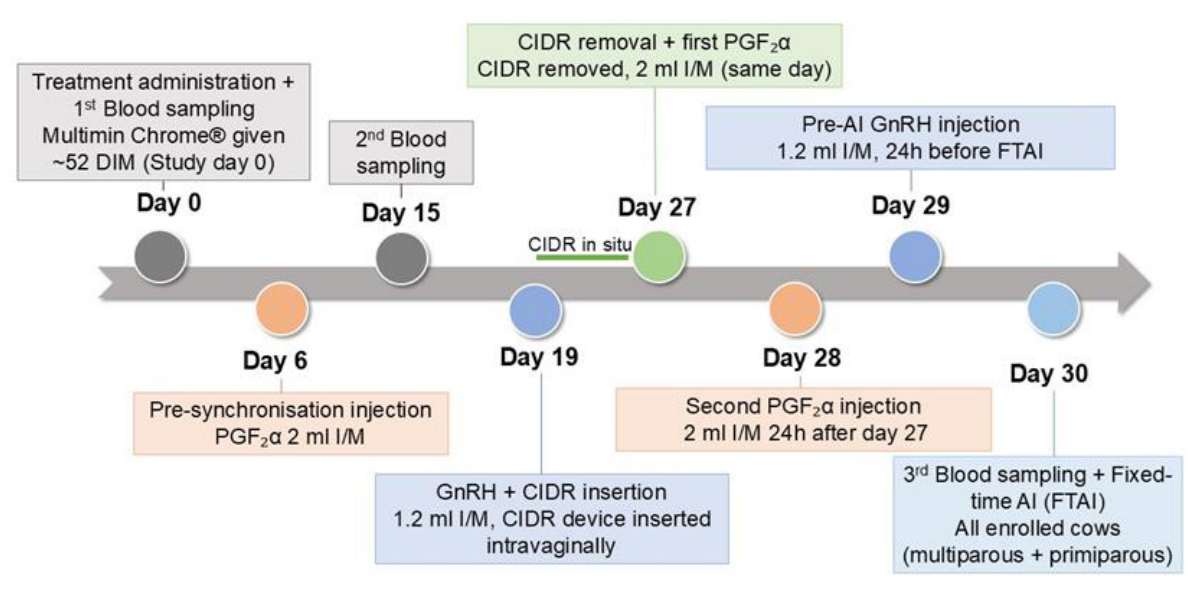
Blood samples were collected from the coccygeal vein using sterile needles and vacuum tubes (BD Vacutainer®, Becton Dickinson, Macquarie Park, NSW, Australia). Samples were collected into lithium heparin tubes for plasma, EDTA tubes for whole blood, and serum separator tubes for serum. Blood samples were collected relative to treatment administration at day 0 (prior to treatment administration; 30 days before FTAI), day 15 (15 days after treatment), and day 30 (30 days after treatment; on the day of FTAI) (Figure 1). A total of 30 mL blood was collected per animal at each sampling. All blood samples were collected between 0800 and 1100 h. Cows were not fasted, and sampling was not standardized to a fixed interval after feeding or milking because they were managed under pasture-based conditions with ongoing access to feed and voluntary robotic milking. Cows were monitored for health status for 90 days to record disease incidences. Milk yield data were automatically recorded for each cow and retrieved from the Lely Horizon management system.
Figure 1.
CIDR-Synch protocol and blood sampling timeline.
2.2.4. Reproductive Management
All enrolled cows were subjected to an FTAI program. Study day 0 was defined as the day of treatment administration and initial blood sampling, which occurred at ~52 DIM, corresponding to the voluntary waiting period of the herd. Study day 0 preceded FTAI by 30 days.
All cows, regardless of parity, followed an identical synchronization schedule (CIDR-synch protocol). On study day 6, cows received a pre-synchronization intramuscular injection of prostaglandin F2α (PGF2α; 2 mL; Ovuprost®, Elanco Australasia Pty Ltd., Macquarie Park, NSW, Australia). On study day 19, cows were administered gonadotrophin-releasing hormone (GnRH; 1.2 mL; Ovurelin®, Elanco Australasia Pty Ltd., Macquarie Park, NSW, Australia) via intramuscular injection, and a CIDR progesterone device (Eazi-Breed CIDR®, Zoetis Australia Pty Ltd., Rhodes, NSW, Australia) was concurrently inserted intravaginally. CIDR devices were removed on study day 27, at which time cows received a further intramuscular injection of PGF2α (2 mL). A second PGF2α injection (2 mL) was administered 24 h later (study day 28). On study day 29, a second GnRH injection (1.2 mL) was administered approximately 24 h prior to FTAI which was performed on study day 30 (Figure 1).
Following FTAI, all animals were exposed to bulls in an open paddock for natural service. After 17 days, bulls were removed and cows were monitored for estrous and re-inseminated upon detection. During the following cycle a similar combination of heat detection with AI and bull exposure in paddocks was used. Pregnancy diagnosis was performed 60 days after FTAI by transrectal ultrasonography by a veterinarian.
2.3. Laboratory Analysis
Blood samples from both experiments were processed using the same general procedures. Plasma and serum were separated by centrifugation at 2500× g for 15 min at 4 °C and 2000× g for 15 min at 4 °C, respectively, and stored at −80 °C until further analysis. Packed erythrocytes obtained following plasma separation were stored at −20 °C for subsequent determination of GPx activity. Samples were submitted to a commercial laboratory for analysis of erythrocyte GPx activity, plasma trace mineral concentrations, ceruloplasmin, haptoglobin, and whole blood count.
For Experiment 1, serum samples were used for determination of superoxide dismutase (SOD) activity using a commercial assay kit (Cayman Chemical, Cat. No. 706002; Ann Arbor, MI, USA) according to the manufacturer’s instructions. Total antioxidant capacity (TAC) of serum was assessed using the ferric reducing antioxidant power assay as described by [42].
2.4. Statistical Analysis
All statistical analyses were performed in R (version 4.3.2).
Linear mixed-effects models were fitted using the ‘lmer’ function (lme4 package) to account for repeated measurements within animals. Treatment group (CNTRL vs. ITMS) was included as a fixed effect in all models. For calf outcomes (Experiment 1), fixed effects included treatment group, week or sampling day, and their interaction, with calf ID included as a random effect. For cow outcomes (Experiment 2), fixed effects included treatment group, sampling day, parity, and interactions, with cow ID included as a random effect.
Baseline (day 0) values of respective response variables were included as covariates where appropriate. Estimated marginal means were calculated using the ‘emmeans’ package, and pairwise comparisons were adjusted using Tukey’s method for multiple testing.
Binary outcomes, including disease incidence in both experiments and fertility outcomes in Experiment 2, were analyzed using logistic regression models fitted with the ‘glm’ function with a binomial distribution and logit link. For each outcome, each animal contributed a single binary record indicating whether the event occurred at least once during the observation period; repeated episodes and time-to-event were not analyzed. Accordingly, these outcomes were not treated as repeated observations. Treatment group was included as the primary explanatory variable. Parity was not included in fertility and disease models in cows due to limited numbers within parity categories. Odds ratios were derived by back-transforming model coefficients using the ‘parameters’ package, and marginal probabilities with 95% confidence intervals were estimated using ‘emmeans’.
Model assumptions were confirmed through inspection of residual plots and assessment of normality and homoscedasticity.
3. Results
3.1. Experiment 1: Pre-Weaned Dairy Calves
- (a)
- Body weight and average daily gain
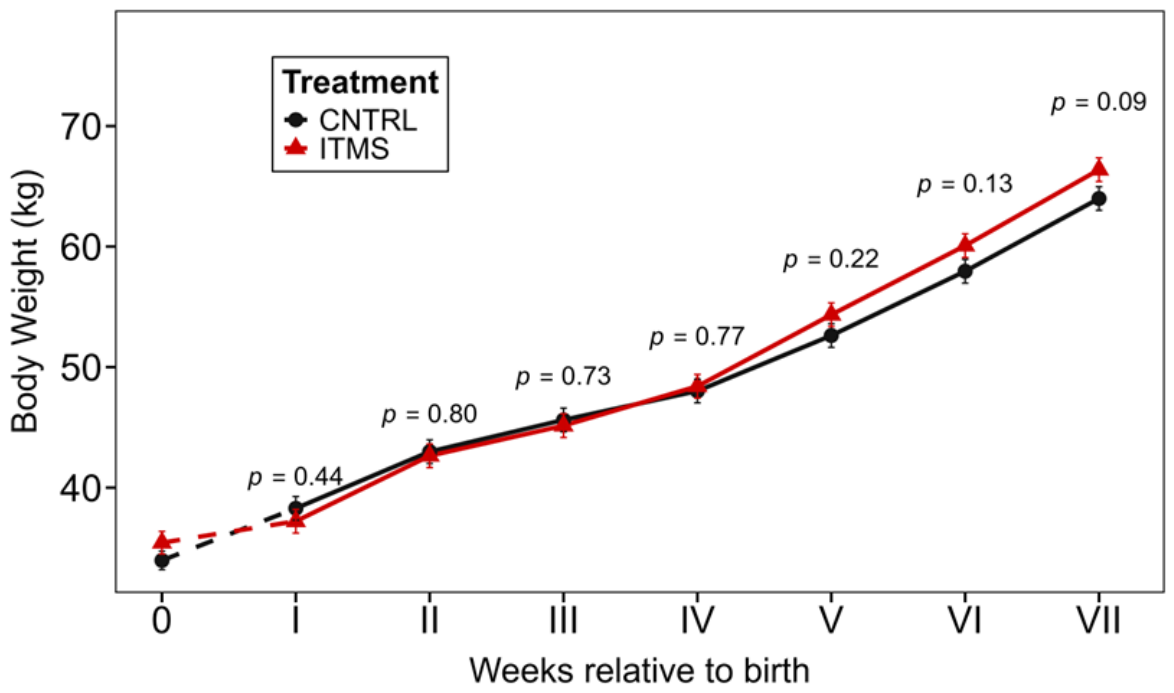
After adjustment for birth weight, calf body weight increased across weeks (p < 0.01). Overall body weight did not differ between CNTRL and ITMS calves (49.9 ± 0.76 vs. 50.6 ± 0.76 kg; p = 0.54); however, a treatment × week interaction was detected (p = 0.04), indicating different body-weight trajectories between groups. ITMS calves had numerically greater body weights during the later weeks, although pairwise comparisons detected no treatment difference at any individual week; a tendency was observed at week VII (64.0 ± 0.98 vs. 66.4 ± 0.98 kg; p = 0.09; Figure 2). Overall and week-specific ADG did not differ between treatments (all p > 0.05; Table 4).
Figure 2.
Effect of treatment on body weight in female dairy calves. Post-treatment values are presented as estimated marginal means ± SEM for calves receiving injectable trace mineral supplementation (ITMS; red line) or isotonic saline control (CNTRL; black line). Week 0 baseline values are arithmetic means ± SEM, were included as covariates in the statistical model, and are shown for descriptive comparison.
Table 4.
Effect of injectable trace mineral supplementation on overall and weekly average daily gain during the first seven weeks of life in dairy calves.
- (b)
- Antioxidant status
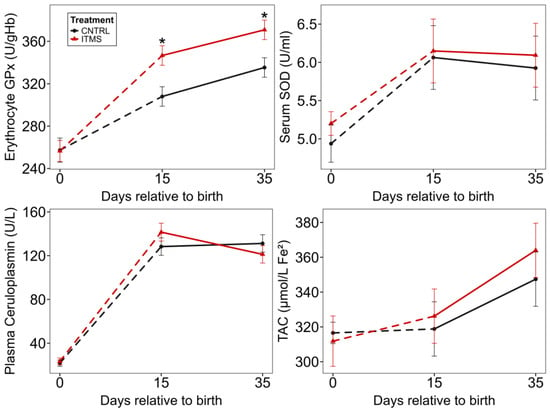
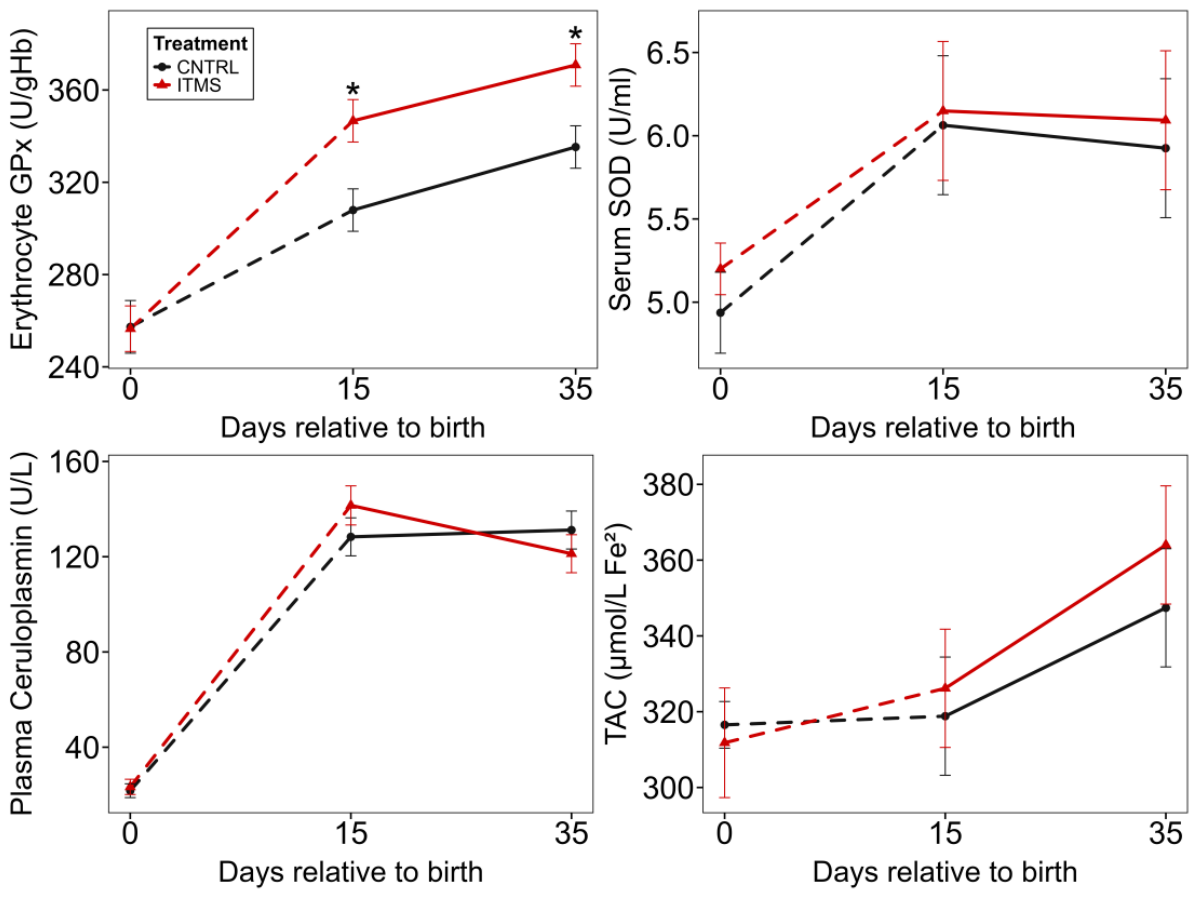
After adjustment for baseline GPx activity, ITMS calves had higher erythrocyte GPx activity than CNTRL calves across days 15 and 35 (322 ± 8.54 vs. 359 ± 8.54 U/gHb; p < 0.01). Pairwise comparisons confirmed higher GPx activity in ITMS calves on day 15 (308 ± 9.19 vs. 347 ± 9.19 U/gHb; p < 0.01) and day 35 (335 ± 9.19 vs. 371 ± 9.19 U/gHb; p < 0.01), with no treatment × day interaction (p = 0.74; Figure 3). GPx activity increased from day 15 to day 35 irrespective of treatment (p < 0.01).
Figure 3.
Effect of treatment on erythrocyte glutathione peroxidase (GPx) activity, serum superoxide dismutase (SOD) activity, plasma ceruloplasmin concentration, and serum total antioxidant capacity (TAC) in female dairy calves. Post-treatment values are presented as estimated marginal means ± SEM for calves receiving injectable trace mineral supplementation (ITMS; red lines) or isotonic saline control (CNTRL; black lines). Day 0 baseline values are arithmetic means ± SEM, were included as covariates in the respective statistical models, and are shown for descriptive comparison. * p < 0.01.
ITMS did not affect SOD activity, TAC, or plasma ceruloplasmin concentration across the study period (all treatment effects p ≥ 0.46). Total antioxidant capacity increased from day 15 to day 35 irrespective of treatment (p = 0.03), whereas no day effect was detected for SOD activity (p = 0.81). A tendency for a treatment × day interaction was observed for ceruloplasmin (p = 0.06); however, post hoc pairwise comparisons showed no differences between CNTRL and ITMS calves on day 15 or day 35 (p ≥ 0.25; Figure 3).
- (c)
- Plasma trace minerals
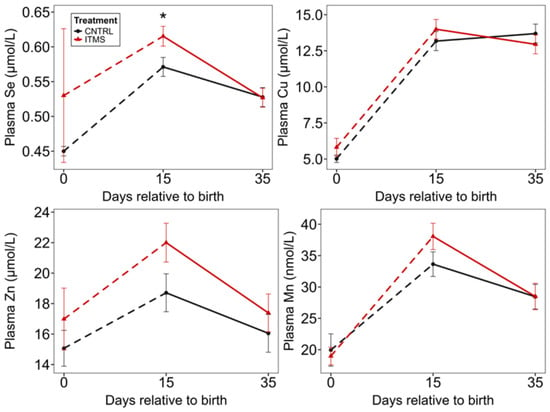
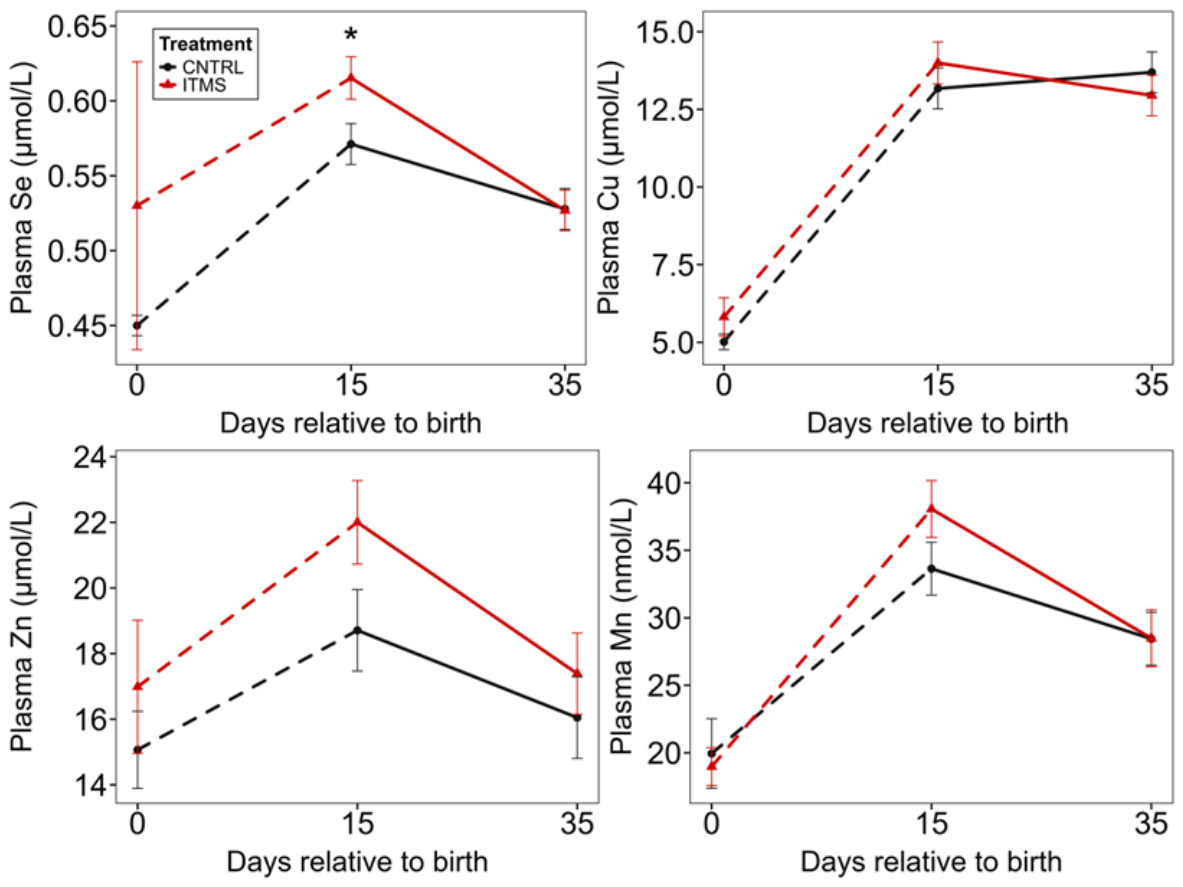
At baseline, plasma Se, Cu, Zn, and Mn concentrations were within reference ranges for healthy pre-weaned calves, indicating no clear evidence of overt trace mineral deficiency. No overall treatment effects or treatment × day interactions were detected for any plasma mineral (all p > 0.05). However, day-specific pairwise comparisons showed higher plasma Se in ITMS calves on day 15 (CNTRL vs. ITMS: 0.57 ± 0.01 vs. 0.62 ± 0.01 µmol/L; p = 0.03), whereas no difference was observed on day 35 (p = 0.96). Plasma Zn also tended to be higher in ITMS calves on day 15 (18.7 ± 1.24 vs. 22.0 ± 1.27 µmol/L; p = 0.07), with no difference on day 35 (p = 0.45). Irrespective of treatment, plasma Se, Zn, and Mn concentrations decreased from day 15 to day 35 (p < 0.01), whereas plasma Cu did not change over time (p = 0.57; Figure 4).
Figure 4.
Effect of treatment on plasma selenium (Se), zinc (Zn), copper (Cu), and manganese (Mn) concentrations in female dairy calves. Post-treatment values are presented as estimated marginal means ± SEM for calves receiving injectable trace mineral supplementation (ITMS; red lines) or isotonic saline control (CNTRL; black lines). Day 0 baseline values are arithmetic means ± SEM, were included as covariates in the respective statistical models, and are shown for descriptive comparison. * p < 0.05.
- (d)
- Disease incidence
No statistically significant differences were detected between CNTRL and ITMS calves in dermal infection, diarrhea, or overall disease incidence (Table 5). Mortality occurred in 2/15 CNTRL calves and 0/15 ITMS calves and was reported descriptively because of the small number of events.
Table 5.
Effect of ITMS on the incidence of health events in calves.
3.2. Experiment 2: Early Lactation Dairy Cows
- (a)
- Whole blood count
Injectable trace mineral supplementation did not affect Hb concentration, RBC count, PCV, MCV, MCHC, MCH, total protein concentration, platelet count, or total and differential leukocyte counts overall (all treatment effects p > 0.05; Table 6). Primiparous cows had higher Hb concentration (p = 0.03), RBC count (p = 0.02), PCV (p < 0.01), and total WBC count (p = 0.02) than multiparous cows, whereas MCV tended to be higher in multiparous cows (p = 0.08). Lymphocyte counts also tended to be higher in primiparous cows (p = 0.05), while the neutrophil-to-lymphocyte ratio was unaffected by treatment or parity.
Table 6.
Effect of injectable trace mineral supplementation on whole-blood cell counts in early-lactation cows.
Within multiparous cows on day 15, pairwise comparisons indicated tendencies for higher WBC and neutrophil counts in ITMS cows (p = 0.08 and p = 0.08, respectively). Monocyte counts showed a day × parity interaction (p = 0.01), decreasing from day 15 to day 30 in primiparous cows (p < 0.01), while remaining unchanged in multiparous cows (p = 0.41). Eosinophil counts showed a tendency for a treatment × day × parity interaction (p = 0.07), with a tendency for higher values in ITMS primiparous cows on day 15 (p = 0.07); no other pairwise differences were detected.
- (b)
- Antioxidant and inflammatory biomarkers
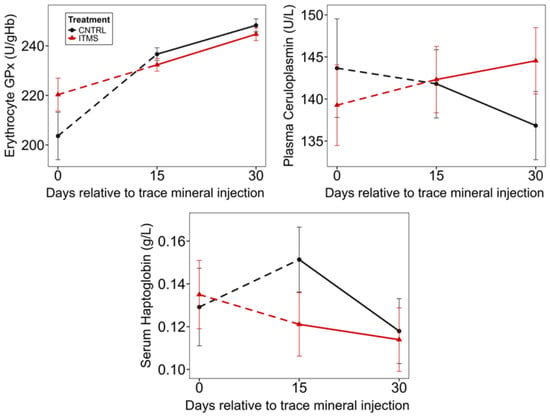
After adjustment for baseline values, ITMS did not affect erythrocyte GPx activity (CNTRL vs. ITMS: 242.00 ± 2.29 vs. 239.00 ± 2.27 U/gHb; p = 0.23), plasma ceruloplasmin concentration (139 ± 3.84 vs. 143 ± 3.72 U/L; p = 0.44), or serum haptoglobin concentration (0.14 ± 0.01 vs. 0.12 ± 0.01 g/L; p = 0.28; Figure 5).
Figure 5.
Effect of treatment on erythrocyte glutathione peroxidase (GPx) activity, plasma ceruloplasmin concentration, and serum haptoglobin concentration in early-lactation cows. Post-treatment values are presented as estimated marginal means ± SEM for cows receiving injectable trace mineral supplementation (ITMS; red lines) or isotonic saline control (CNTRL; black lines). Day 0 baseline values are arithmetic means ± SEM, were included as covariates in the respective statistical models, and are shown for descriptive comparison.
Erythrocyte GPx activity increased from day 15 to day 30 (p < 0.01) and was higher in primiparous than multiparous cows (p < 0.01). Ceruloplasmin and haptoglobin concentrations were not affected by day or parity. A tendency for a treatment × day interaction was observed for ceruloplasmin (p = 0.05); however, CNTRL and ITMS cows did not differ on day 15 (p = 0.92) or day 30 (p = 0.17), and neither treatment group changed significantly between sampling days.
- (c)
- Plasma trace minerals
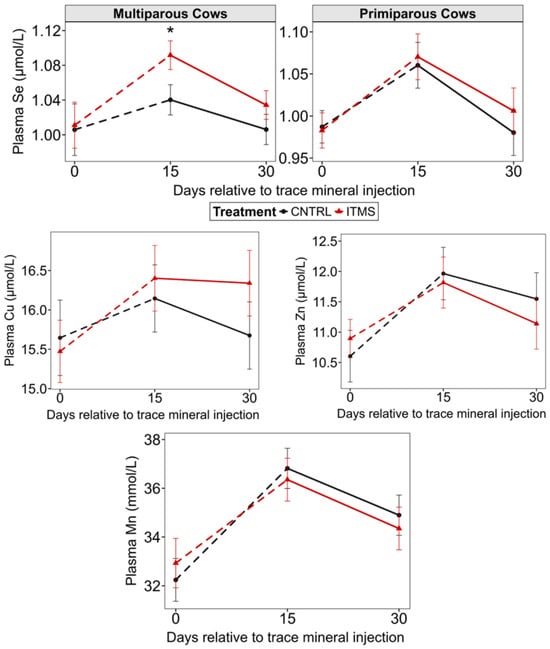
At baseline, plasma Se, Zn, Cu, and Mn concentrations were within the cited reference ranges, indicating no clear evidence of overt trace mineral deficiency. After adjustment for baseline concentrations, no overall treatment effects were detected for plasma Se (CNTRL vs. ITMS: 1.02 ± 0.01 vs. 1.05 ± 0.01 µmol/L; p = 0.16), Zn (11.80 ± 0.35 vs. 11.50 ± 0.34 µmol/L; p = 0.57), Cu (15.90 ± 0.39 vs. 16.40 ± 0.38 µmol/L; p = 0.40), or Mn (35.90 ± 0.67 vs. 35.40 ± 0.71 nmol/L; p = 0.60). No treatment × day, treatment × parity, or treatment × day × parity interactions were detected for any mineral (all p > 0.05; Figure 6).
Figure 6.
Effect of treatment on plasma selenium (Se), zinc (Zn), copper (Cu), and manganese (Mn) concentrations in early-lactation cows. Post-treatment values are presented as estimated marginal means ± SEM for cows receiving injectable trace mineral supplementation (ITMS; red lines) or isotonic saline control (CNTRL; black lines). Day 0 baseline values are arithmetic means ± SEM, were included as covariates in the respective statistical models, and are shown for descriptive comparison. * p < 0.05.
Among multiparous cows, plasma Se concentration was higher in ITMS than CNTRL cows on day 15 (CNTRL vs. ITMS: 1.04 ± 0.02 vs. 1.09 ± 0.02 µmol/L; p = 0.03), but not on day 30 (1.01 ± 0.02 vs. 1.03 ± 0.02 µmol/L; p = 0.24). When averaged across sampling days, plasma Se tended to be higher in ITMS than CNTRL multiparous cows (1.02 ± 0.02 vs. 1.06 ± 0.01 µmol/L; p = 0.07). Irrespective of treatment and parity, plasma Se decreased from day 15 to day 30 (p < 0.01).
Plasma Mn concentration was higher in multiparous than primiparous cows (37.30 ± 0.50 vs. 34.00 ± 0.85 nmol/L; p < 0.01) and decreased from day 15 to day 30 irrespective of treatment (p < 0.01). No treatment-related differences were detected for Zn, Cu, or Mn at either sampling day or within either parity group.
- (d)
- Production and behavioral responses
Injectable trace mineral supplementation did not affect milk yield, milk fat percentage, milk protein percentage, milk fat-to-protein ratio, somatic cell count, or rumination time, and no treatment × parity interactions were detected for these variables (all p > 0.05; Table 7).
Table 7.
Effect of injectable trace mineral supplementation on production parameters in primiparous and multiparous cows.
Parity affected several production-related variables. Multiparous cows produced more milk and had greater rumination time than primiparous cows (both p < 0.01). Milk protein percentage was higher in primiparous cows (p = 0.01), whereas the milk fat-to-protein ratio was higher in multiparous cows (p < 0.01). Somatic cell count tended to be higher in multiparous cows (p = 0.09).
- (e)
- Disease incidence and fertility outcomes
Acute mastitis incidence did not differ between CNTRL and ITMS cows (25.00% [6/24] vs. 19.23% [5/26]; p = 0.62). Chronic mastitis occurred in one CNTRL cow and no ITMS cows and was reported descriptively because of the small number of events. The proportions of cows conceiving at first service, second service, or following bull exposure, and overall conception, did not differ between treatments (all p > 0.05; Table 8). Overall conception occurred in 25.00% (6/24) of CNTRL cows and 30.77% (8/26) of ITMS cows (p = 0.65).
Table 8.
Effect of ITMS on acute mastitis and conception outcomes in early-lactation cows.
4. Discussion
The two experiments provide complementary evaluations of a single ITMS administration at distinct physiological stages within the same pasture-based seasonal-calving system: neonatal adaptation in calves and early-lactation pre-breeding management in cows. Because the experiments involved different animal populations and outcomes, their findings are discussed separately before being considered collectively.
4.1. Experiment 1: Pre-Weaned Dairy Calves
The clearest biological response in Experiment 1 was the increase in erythrocyte GPx activity in ITMS calves. GPx activity was higher overall in ITMS calves, with differences evident on days 15 and 35. GPx is an important enzymatic defense against hydrogen peroxide and lipid hydroperoxides in erythrocytes, and its activity is dependent on Se as a structural cofactor [43,44,45]. This response indicates enhanced Se-dependent antioxidant enzyme activity during the pre-weaning period, when transition to the oxygen-rich extrauterine environment increases reactive oxygen species generation and endogenous antioxidant systems continue to develop [16,31,46].
The persistence of higher GPx activity through day 35, despite plasma Se differing only on day 15, is consistent with the different time courses represented by these biomarkers. Overall erythrocyte GPx activity was 37 U/gHb higher in ITMS calves than in CNTRL calves, corresponding to an approximately 11.5% increase. Plasma Se reflects circulating mineral availability, whereas erythrocyte GPx provides a longer-term functional indicator of Se incorporation into antioxidant enzymes [47]. However, tissue Se storage and distribution were not measured and therefore cannot be confirmed. These findings are consistent with previous reports of increased GPx activity following injectable trace mineral supplementation in dairy calves, although that study administered two injections (at 3 and 30 d of age) compared with the single injection given at birth in the present study [35]. Importantly, the increase in GPx activity represents a biochemical response and does not itself demonstrate improved calf health, growth, or survival as the functional or clinical significance of this magnitude of change has not been established.
Plasma Se was higher in ITMS calves on day 15 (corresponding to an approximately 7.7% increase in ITMS calves) but no longer differed by day 35, indicating a transient circulating response under the single-administration protocol used in the present study, consistent with the expected short-term increase in circulating Se following injection [35]. Plasma Zn also tended to be higher on day 15, although this response did not reach statistical significance and should be interpreted cautiously because plasma Zn is a relatively insensitive indicator of whole-body Zn status [6]. Plasma Cu and Mn were unaffected, and baseline concentrations of Se, Cu, Zn, and Mn were within established reference ranges for healthy dairy calves [1,48,49]. This apparent baseline adequacy may have limited the magnitude of additional responses to supplementation. Circulating mineral concentrations is also subject to homeostatic regulation and may not directly reflect tissue stores or mineral-dependent enzyme activity [6,50]. Liver mineral analysis would have provided a more direct assessment of tissue mineral status [6].
Superoxide dismutase activity, plasma TAC and ceruloplasmin concentration were not affected by ITMS. Superoxide dismutase includes Cu/Zn- and Mn-dependent forms that catalyze the dismutation of superoxide anions [51,52], whereas ceruloplasmin contributes to redox-active metal homeostasis through its ferroxidase activity [53]. The absence of responses in these markers may be associated with the adequate baseline Cu, Zn, and Mn concentrations observed in the calves.
Injectable trace mineral supplementation did not affect overall body weight or ADG. A significant treatment × week interaction indicated that body weight trajectories differed between treatments, with ITMS calves showing a tendency during later weeks; however, final body weight and overall ADG did not differ significantly. Therefore, this pattern should be regarded as exploratory rather than evidence of a growth-promoting effect. Similar null growth responses have been reported in beef and dairy calves receiving three ITMS injections [38,54], although differences in dosing regimen and study conditions limit direct comparison. Responses may also depend on baseline mineral status, dietary supply, management conditions, and the degree of concurrent physiological challenge.
Feed analysis indicated that milk replacers and calf starters provided substantial quantities of trace minerals, with Zn and Mn concentrations generally meeting or exceeding NASEM (2021) [55] recommendations, whereas Se and Cu concentrations in some components were closer to or slightly below recommended levels. However, individual intakes of colostrum, milk replacer, starter, and hay were not recorded, and colostrum mineral composition was not measured. Consequently, total individual mineral intake and dietary adequacy could not be determined, limiting interpretation of the relationship between basal mineral supply and the response to ITMS.
Disease incidence did not differ significantly between ITMS and CNTRL calves. Mortality occurred in two CNTRL calves and no ITMS calves; however, the small number of events did not permit robust inference regarding treatment effect. Numerical differences in diarrhea, dermal infections, total disease incidence, and mortality should therefore be regarded as descriptive and exploratory observations. Although larger studies using repeated ITMS administrations have reported reductions in disease incidence or mortality [35,38], differences in dosing regimen and study design limit direct comparison with the single-administration protocol used here. The present findings therefore do not demonstrate a clinical health benefit. Larger, prospectively powered studies are required to determine whether the observed biochemical and mineral responses translate into measurable improvements in calf health, growth, or survival under pasture-based field conditions.
Overall, a single ITMS administration at birth produced a clear Se-related biochemical response in pre-weaned calves, characterized by increased erythrocyte GPx activity and a transient increase in plasma Se. However, these responses were not accompanied by statistically detectable improvements in growth or health. Larger, prospectively powered studies across animals with differing baseline mineral status are required to determine the practical relevance of these biochemical responses.
4.2. Experiment 2: Early Lactation Dairy Cows
Injectable trace mineral supplementation did not significantly alter total or differential WBC counts in early-lactation cows. Tendencies for higher total WBC and selected differential counts were observed in multiparous ITMS cows on day 15; however, these isolated responses should not be interpreted as evidence of altered immune function. Leukocyte populations change physiologically from calving into early lactation [56,57], and previous studies suggest that ITMS may influence leukocyte functions such as phagocytic activity and oxidative burst without necessarily altering circulating cell counts [21,23,24]. However, refs. [21,24] used three-injection protocols in TMR-fed housed cows, whereas [23] evaluated a single pre-calving injection in pasture-based cows. These differences in dosing regimen and management limit direct comparison among studies. Because functional immune responses were not assessed, no ITMS-mediated effect on immune function can be concluded.
The clearest response to ITMS in cows was the transient increase in plasma Se concentration in multiparous cows on day 15. The absolute difference of 0.05 µmol/L, corresponding to an approximately 4.8% increase in ITMS cows relative to CNTRL cows was no longer evident on day 30 and was not accompanied by changes in antioxidant enzyme activity or broader health and production outcomes, its practical significance remains uncertain. Similar short-term increases in circulating Se have been reported following a single ITMS administration in beef cattle [58] a two-injection protocol during late gestation in TMR-fed housed dairy cows [59]. Plasma concentrations of Cu, Zn, and Mn were unaffected, and baseline concentrations of all measured minerals were within established reference ranges. This apparent baseline adequacy may have limited the magnitude of the response to additional supplementation [48,49,60]. Because tissue mineral concentrations were not assessed, no conclusions can be drawn regarding mineral storage or redistribution beyond the circulating compartment.
Injectable trace mineral supplementation did not alter erythrocyte GPx activity, serum haptoglobin, or plasma ceruloplasmin concentrations. The absence of a GPx response may partly reflect adequate baseline Se status and differences in Se utilization and biomarker kinetics between calves and cows. Selenoproteins are regulated hierarchically, with GPx1 considered less strongly preserved than GPx4 under constrained Se availability; therefore, increased circulating Se may not immediately increase erythrocyte GPx activity [61,62]. In addition, erythrocyte GPx is incorporated during erythropoiesis, and postnatal erythrocyte renewal in calves may permit a more rapid response than in adult cows, whose erythrocytes have a longer lifespan [63,64,65,66]. Se allocation to milk and other demands of early lactation may also have contributed [67,68], potentially limiting its availability for erythrocyte selenoprotein synthesis. These mechanisms were not directly assessed and therefore remain plausible explanations rather than demonstrated causes. Thus, although plasma Se increased transiently in multiparous cows, this mineral response was not accompanied by a detectable increase in erythrocyte GPx activity. Similar null responses for selected antioxidants and inflammatory biomarkers have been reported previously in studies using repeated-injection protocols [24,59]. Although additional redox indices may have provided a broader assessment of oxidative status [69,70], the biomarkers measured in the present study provided no evidence of improved antioxidant or inflammatory status following ITMS.
Injectable trace mineral supplementation also did not affect milk yield, milk composition, somatic cell count, or rumination time. Similar null responses for production-related outcomes have been reported in TMR-fed housed dairy cows receiving three injections during the transition period [71], a single injection during mid-lactation [72], and three injections during the transition period [24]. Feed analysis indicated that the concentrate pellets contained trace mineral concentrations above NASEM (2021) [55] recommendations, whereas sorghum pasture alone may not have consistently supplied recommended concentrations of Se, Cu, and Zn. However, individual pasture and concentrate intakes were not measured; therefore, total dietary mineral intake and the contribution of concentrate supplementation to individual mineral supply could not be determined. This limitation restricts interpretation of the relationship between basal mineral intake, baseline mineral status, and responsiveness to ITMS.
No statistically significant effects were detected on first-service conception, overall conception, mastitis incidence, or other recorded clinical disease outcomes. Acute mastitis cases were numerically fewer in ITMS cows; however, the small number of events means that this difference should be regarded as an exploratory observation rather than evidence of a treatment effect. Overall conception rates were lower than historical herd targets, but treatment groups did not differ significantly. The sample size of 50 cows and the low frequency of mastitis, disease, and reproductive events limited the precision with which these binary outcomes could be evaluated. Previous studies have reported variable clinical and reproductive responses under different ITMS protocols, with some reporting improvements in udder health or reproductive performance and others detecting no treatment effect [24,25,26,27,71]. These studies included single-, double-, and repeated-dose regimens across dairy cows and beef heifers, and differences in animal category, physiological stage, management, and dosing protocol limit direct comparison with the present study. Accordingly, the present findings do not demonstrate improvements in udder health, disease incidence, or fertility. Larger, prospectively powered studies are required to evaluate these outcomes more reliably.
Overall, the response of cows to a single ITMS administration was limited primarily to a transient increase in plasma Se in multiparous cows on day 15. No statistically detectable improvements were observed in antioxidant or inflammatory biomarkers, milk production or composition, somatic cell count, rumination, mastitis, or fertility. Larger, prospectively powered studies are needed to determine whether ITMS-induced changes in mineral status translate into health, production, or reproductive benefits in pasture-based dairy cows.
5. Limitations and Future Prospects
As is typical of field-based trials conducted under commercial farm conditions, several limitations should be considered when interpreting these findings. Although the two experiments were conducted and analyzed independently, they were designed as complementary biological models evaluating the same intervention at two physiologically important stages within a common pasture-based seasonal-calving system. Nevertheless, differences in animal age, physiological status, outcome measures, and follow-up periods preclude direct comparison of treatment effects between calves and cows. Sample sizes (30 calves and 50 cows) were determined by animal availability rather than prospective power calculations; while sufficient to detect biochemical and mineral responses, they provided limited precision for evaluating lower-frequency outcomes such as morbidity, mortality, and mastitis, as well as production and fertility endpoints. Baseline plasma concentrations of Se, Cu, Zn, and Mn were within reference ranges, suggesting the animals were not markedly deficient, which may have limited the magnitude of response to supplementation; however, plasma concentrations do not fully represent tissue mineral stores. Interpretation was further constrained by two related gaps: individual intakes of colostrum, milk replacer, starter, pasture, and concentrate were not recorded, precluding assessment of total dietary mineral intake and its relationship to ITMS responsiveness, and tissue mineral concentrations were not measured, which, together with the antioxidant biomarker panel used, limited direct interpretation of mineral distribution and redox status. Biochemical follow-up was also limited to day 35 in calves and day 30 in cows, precluding assessment of longer-term responses. In addition, only a single ITMS administration was evaluated in each experiment; the effects of alternative dosing regimens or injection timings on the magnitude, duration, or clinical relevance of these responses could not be assessed in the present design. Nonetheless, the biochemical and antioxidant responses detected in this study, particularly the sustained erythrocyte GPx response in calves, indicate that ITMS produced measurable, biologically coherent effects even within this pragmatic field design, and provide a clear rationale for evaluating these questions further in larger, prospectively powered trials incorporating longer follow-up, individual feed-intake measurement, tissue mineral assessment, and comparison of alternative dosing regimens and injection timings.
6. Conclusions
Considered together, these complementary experiments evaluated a single ITMS administration at two physiologically important stages within the same pasture-based seasonal-calving system. Injectable trace mineral supplementation increased erythrocyte GPx activity in pre-weaned calves through day 35; however, this biochemical response was not accompanied by statistically detectable improvements in calf growth or health. In multiparous early-lactation cows, plasma Se concentration was transiently higher on day 15, but no corresponding improvements were detected in antioxidant or inflammatory biomarkers, milk production, udder health, rumination, or fertility. Across both biological models, responses to ITMS were therefore limited primarily to Se-related biochemical and mineral outcomes. Under the pasture-based, single-administration conditions evaluated, responses to ITMS were therefore limited primarily to Se-related biochemical and mineral outcomes. Larger, prospectively powered studies with longer follow-up and well-characterized dietary mineral intake are required to determine whether targeted supplementation produces measurable clinical, productive, or reproductive benefits.
Author Contributions
Conceptualization: P.A.G.-R. and S.S.C.; Methodology: M.J.A., P.A.G.-R., F.R.D., C.D.M. and S.S.C.; Formal analysis and investigation: M.J.A. and S.S.C.; Writing—Original draft: M.J.A.; Writing—Review and editing: P.A.G.-R., F.R.D., C.D.M. and S.S.C.; Visualization: M.J.A.; Supervision: P.A.G.-R., F.R.D., C.D.M. and S.S.C.; Funding acquisition: P.A.G.-R. and S.S.C. All authors have read and agreed to the published version of the manuscript.
Funding
This research was supported by a PhD scholarship jointly funded by The University of Melbourne, Australia, and Virbac Australia Pty Ltd. Virbac Australia Pty Ltd. also supplied the injectable trace mineral product used in the study. The authors declare that the funder was involved in experimental design, scientific supervision, and manuscript review through Paula A. Gonzalez-Rivas. The funder was not involved in data collection, statistical analysis, interpretation of the results, or the decision to submit the manuscript for publication.
Institutional Review Board Statement
This study was conducted at The University of Melbourne Dookie Campus Dairy, VIC, Australia from August 2023 until February 2024. All experimental procedures were approved by the University of Melbourne Animal Ethics Committee (AEC No. 26550) and conducted in accordance with the Australian Standards for the care and use of animals for scientific purposes.
Informed Consent Statement
Not applicable. The animals involved in this study were owned and managed by the University of Melbourne Dookie dairy farm; therefore, no private owner consent was required.
Data Availability Statement
The datasets presented in this study are not publicly available due to confidentiality and commercial agreements associated with the funding partner. Data may be made available from the corresponding author upon reasonable request and with permission from the funding organization.
Acknowledgments
The authors acknowledge Richard Osei-Amponsah, Department of Animal Science, University of Ghana, and William Gamble at the University of Melbourne, for assistance with sample collection. The authors also acknowledge the Dookie Dairy Farm, University of Melbourne, for providing animal and farm support, and Louie Minoza, William Galt, and Lily Higgs for assistance with animal handling and management of calves and cows during the research trial. The authors further acknowledge Luc Durel, Virbac, France, for their valuable scientific input and support during the study.
Conflicts of Interest
Paula A. Gonzalez-Rivas is affiliated with Virbac Australia Pty Ltd. The remaining authors declare no conflicts of interest.
Abbreviations
The following abbreviations are used in this manuscript:
| GPx | Glutathione peroxidase enzyme |
| SOD | Superoxide dismutase enzyme |
| ITMS | Injectable trace mineral supplementation |
| CNTRL | Control |
| FTAI | Fixed time artificial insemination |
| ADG | Average daily gain |
| NASEM | National Academies of Sciences, Engineering and Medicine |
References
- Suttle, N.F. Mineral Nutrition of Livestock, 5th ed.; CABI: Wallingford, UK, 2022; p. 600. [Google Scholar]
- Pal, R.P.; Mani, V.; Tariq, H.; Sarkar, S.; Sharma, A.; Gupta, D. Newer Trace Elements for Ruminants. In Feed Additives and Supplements for Ruminants; Mahesh, M.S., Yata, V.K., Eds.; Springer Nature: Singapore, 2024; pp. 87–118. [Google Scholar]
- Hambidge, M. Biomarkers of Trace Mineral Intake and Status. J. Nutr. 2003, 133, 948S–955S. [Google Scholar] [CrossRef] [Scilit] [PubMed]
- Becker, N.-P.; Martitz, J.; Renko, K.; Stoedter, M.; Hybsier, S.; Cramer, T.; Schomburg, L. Hypoxia reduces and redirects selenoprotein biosynthesis. Metallomics 2014, 6, 1079–1086. [Google Scholar] [CrossRef] [Scilit] [PubMed]
- Zoidis, E.; Seremelis, I.; Kontopoulos, N.; Danezis, G.P. Selenium-Dependent Antioxidant Enzymes: Actions and Properties of Selenoproteins. Antioxidants 2018, 7, 66. [Google Scholar] [CrossRef] [Scilit] [PubMed]
- Spears, J.W.; Brandao, V.L.N.; Heldt, J. Invited Review: Assessing trace mineral status in ruminants, and factors that affect measurements of trace mineral status. Appl. Anim. Sci. 2022, 38, 252–267. [Google Scholar] [CrossRef] [Scilit]
- Spears, J.W. Trace Mineral Bioavailability in Ruminants. J. Nutr. 2003, 133, 1506S–1509S. [Google Scholar] [CrossRef] [Scilit] [PubMed]
- Masters, D.G.; Norman, H.C.; Thomas, D.T. Minerals in pastures—Are we meeting the needs of livestock? Crop Pasture Sci. 2019, 70, 1184–1195. [Google Scholar] [CrossRef] [Scilit]
- Underwood, E.J. 12—Selenium. In Trace Elements in Human and Animal Nutrition, 4th ed.; Underwood, E.J., Ed.; Academic Press: Cambridge, MA, USA, 1977; pp. 302–346. [Google Scholar]
- Alloway, B.J.; Graham, R.D.; Stacey, S.P. Micronutrient Deficiencies in Australian Field Crops. In Micronutrient Deficiencies in Global Crop Production; Alloway, B.J., Ed.; Springer: Dordrecht, The Netherlands, 2008; pp. 63–92. [Google Scholar]
- Brennan, R.F.; Penrose, B.; Bell, R.W. Micronutrients limiting pasture production in Australia. Crop Pasture Sci. 2019, 70, 1053–1064. [Google Scholar] [CrossRef] [Scilit]
- Arthington, J.D.; Ranches, J. Trace Mineral Nutrition of Grazing Beef Cattle. Animals 2021, 11, 2767. [Google Scholar] [CrossRef] [Scilit] [PubMed]
- Palomares, R.A. Trace Minerals Supplementation with Great Impact on Beef Cattle Immunity and Health. Animals 2022, 12, 2839. [Google Scholar] [CrossRef] [Scilit] [PubMed]
- Ingvartsen, K.L.; Moyes, K. Nutrition, immune function and health of dairy cattle. Animal 2013, 7, 112–122. [Google Scholar] [CrossRef] [Scilit] [PubMed]
- Dahl, G.E. Chapter 7—Physiology of lactation in dairy cattle—Challenges to sustainable production. In Animal Agriculture; Bazer, F.W., Lamb, G.C., Wu, G., Eds.; Academic Press: Cambridge, MA, USA, 2020; pp. 121–129. [Google Scholar]
- Albera, E.; Kankofer, M. The Comparison of Antioxidative/Oxidative Profile in Blood, Colostrum and Milk of Early Post-partum Cows and Their Newborns. Reprod. Domest. Anim. 2011, 46, 763–769. [Google Scholar] [CrossRef] [Scilit] [PubMed]
- Sordillo, L.M.; Aitken, S.L. Impact of oxidative stress on the health and immune function of dairy cattle. Vet. Immunol. Immunopathol. 2009, 128, 104–109. [Google Scholar] [CrossRef] [Scilit] [PubMed]
- Sugino, N. Roles of reactive oxygen species in the corpus luteum. Anim. Sci. J. 2006, 77, 556–565. [Google Scholar] [CrossRef] [Scilit]
- Miller, J.K.; Brzezinska-Slebodzinska, E.; Madsen, F.C. Oxidative Stress, Antioxidants, and Animal Function. J. Dairy Sci. 1993, 76, 2812–2823. [Google Scholar] [CrossRef] [Scilit] [PubMed]
- Celi, P. Oxidative Stress in Ruminants. In Studies on Veterinary Medicine; Mandelker, L., Vajdovich, P., Eds.; Humana Press: Totowa, NJ, USA, 2011; pp. 191–231. [Google Scholar]
- Machado, V.S.; Oikonomou, G.; Lima, S.F.; Bicalho, M.L.S.; Kacar, C.; Foditsch, C.; Felippe, M.J.; Gilbert, R.O.; Bicalho, R.C. The effect of injectable trace minerals (selenium, copper, zinc, and manganese) on peripheral blood leukocyte activity and serum superoxide dismutase activity of lactating Holstein cows. Vet. J. 2014, 200, 299–304. [Google Scholar] [CrossRef] [Scilit] [PubMed]
- Bates, A.J.; Wells, M.; Laven, R.A. The effect of pre-calving injection of trace mineral supplements on periparturient disease incidence in pasture based dairy cows. Vet. J. 2022, 286, 105867. [Google Scholar] [CrossRef] [Scilit] [PubMed]
- Bates, A.J.; Wells, M.; Fitzpatrick, C.; Laven, R.A. Effect of a pre-calving injectable trace mineral supplement on white blood cell function in seasonally calving pastoral dairy cows. N. Z. Vet. J. 2025, 73, 87–99. [Google Scholar] [CrossRef] [Scilit] [PubMed]
- Silva, T.H.; Guimaraes, I.; Menta, P.R.; Fernandes, L.; Paiva, D.; Ribeiro, T.L.; Celestino, M.L.; Netto, A.S.; Ballou, M.A.; Machado, V.S. Effect of injectable trace mineral supplementation on peripheral polymorphonuclear leukocyte function, antioxidant enzymes, health, and performance in dairy cows in semi-arid conditions. J. Dairy Sci. 2022, 105, 1649–1660. [Google Scholar] [CrossRef] [Scilit] [PubMed]
- Vanegas, J.A.; Reynolds, J.; Atwill, E.R. Effects of an Injectable Trace Mineral Supplement on First-Service Conception Rate of Dairy Cows. J. Dairy Sci. 2004, 87, 3665–3671. [Google Scholar] [CrossRef] [Scilit] [PubMed]
- Stokes, R.S.; Volk, M.J.; Ireland, F.A.; Gunn, P.J.; Shike, D.W. Effect of repeated trace mineral injections on beef heifer development and reproductive performance. J. Anim. Sci. 2018, 96, 3943–3954. [Google Scholar] [CrossRef] [Scilit] [PubMed]
- Stokes, R.S.; Ralph, A.R.; Mickna, A.J.; Chapple, W.P.; Schroeder, A.R.; Ireland, F.A.; Shike, D.W. Effect of an injectable trace mineral at the initiation of a 14 day CIDR protocol on heifer performance and reproduction1. Transl. Anim. Sci. 2017, 1, 458–466. [Google Scholar] [CrossRef] [Scilit] [PubMed]
- Yazlık, M.O.; Çolakoğlu, H.E.; Pekcan, M.; Kaya, U.; Küplülü, Ş.; Kaçar, C.; Polat, M.; Vural, M.R. Effects of injectable trace element and vitamin supplementation during the gestational, peri-parturient, or early lactational periods on neutrophil functions and pregnancy rate in dairy cows. Anim. Reprod. Sci. 2021, 225, 106686. [Google Scholar] [CrossRef] [Scilit] [PubMed]
- Chase, C.C.L.; Hurley, D.J.; Reber, A.J. Neonatal Immune Development in the Calf and Its Impact on Vaccine Response. Vet. Clin. N. Am. Food Anim. Pract. 2008, 24, 87–104. [Google Scholar] [CrossRef] [Scilit] [PubMed]
- Arfuso, F.; Minuti, A.; Liotta, L.; Giannetto, C.; Trevisi, E.; Piccione, G.; Lopreiato, V. Stress and inflammatory response of cows and their calves during peripartum and early neonatal period. Theriogenology 2023, 196, 157–166. [Google Scholar] [CrossRef] [Scilit] [PubMed]
- Mutinati, M.; Pantaleo, M.; Roncetti, M.; Piccinno, M.; Rizzo, A.; Sciorsci, R.L. Oxidative Stress in Neonatology. A Review. Reprod. Domest. Anim. 2014, 49, 7–16. [Google Scholar] [CrossRef] [Scilit] [PubMed]
- Svensson, C.; Linder, A.; Olsson, S.O. Mortality in Swedish Dairy Calves and Replacement Heifers. J. Dairy Sci. 2006, 89, 4769–4777. [Google Scholar] [CrossRef] [Scilit] [PubMed]
- Abuelo, A.; Havrlant, P.; Wood, N.; Hernandez-Jover, M. An investigation of dairy calf management practices, colostrum quality, failure of transfer of passive immunity, and occurrence of enteropathogens among Australian dairy farms. J. Dairy Sci. 2019, 102, 8352–8366. [Google Scholar] [CrossRef] [Scilit] [PubMed]
- Cuervo, W.; Sordillo, L.M.; Abuelo, A. Oxidative Stress Compromises Lymphocyte Function in Neonatal Dairy Calves. Antioxidants 2021, 10, 255. [Google Scholar] [CrossRef] [Scilit] [PubMed]
- Teixeira, A.G.V.; Lima, F.S.; Bicalho, M.L.S.; Kussler, A.; Lima, S.F.; Felippe, M.J.; Bicalho, R.C. Effect of an injectable trace mineral supplement containing selenium, copper, zinc, and manganese on immunity, health, and growth of dairy calves. J. Dairy Sci. 2014, 97, 4216–4226. [Google Scholar] [CrossRef] [Scilit] [PubMed]
- Palomares, R.A.; Hurley, D.J.; Bittar, J.H.J.; Saliki, J.T.; Woolums, A.R.; Moliere, F.; Havenga, L.J.; Norton, N.A.; Clifton, S.J.; Sigmund, A.B.; et al. Effects of injectable trace minerals on humoral and cell-mediated immune responses to Bovine viral diarrhea virus, Bovine herpes virus 1 and Bovine respiratory syncytial virus following administration of a modified-live virus vaccine in dairy calves. Vet. Immunol. Immunopathol. 2016, 178, 88–98. [Google Scholar] [CrossRef] [Scilit] [PubMed]
- Bittar, J.H.J.; Hurley, D.J.; Woolums, A.R.; Norton, N.A.; Barber, C.E.; Moliere, F.; Havenga, L.J.; Palomares, R.A. Effects of injectable trace minerals on the immune response to Mannheimia haemolytica and Pasteurella multocida following vaccination of dairy calves with a commercial attenuated-live bacterin vaccine. Prof. Anim. Sci. 2018, 34, 59–66. [Google Scholar] [CrossRef] [Scilit]
- Bates, A.; Wells, M.; Laven, R.A.; Simpson, M. Reduction in morbidity and mortality of dairy calves from an injectable trace mineral supplement. Vet. Rec. 2019, 184, 680. [Google Scholar] [CrossRef] [Scilit] [PubMed]
- Silva Júnior, R.G.; Rennó, L.N.; Ferreira, M.F.L.; Della Lucia, C.M.; Veloso, C.M.; da Silva, A.G.; Marcos, N.A.; Lopes, S.A.; Gonçalves, M.A.; Oliveira, L.A.; et al. Effect of Trace Mineral and Vitamin Injections on Performance, Immunity, Mineral Status, and Antioxidant Responses of Nellore Calves During the Pre-Weaning Phase. Animals 2026, 16, 473. [Google Scholar] [CrossRef] [Scilit] [PubMed]
- Ooi, E.C.; Stevenson, M.A.; Beggs, D.S.; Mansell, P.D.; Pryce, J.E.; Murray, A.; Pyman, M.F. The impact of declining dairy fertility on calving patterns and farm systems: A case study from northern Victoria, Australia. Agric. Syst. 2021, 193, 103228. [Google Scholar] [CrossRef] [Scilit]
- Abuelo, A.; Hernández, J.; Benedito, J.; Castillo, C. Redox Biology in Transition Periods of Dairy Cattle: Role in the Health of Periparturient and Neonatal Animals. Antioxidants 2019, 8, 20. [Google Scholar] [CrossRef] [Scilit] [PubMed]
- Benzie, I.F.F.; Strain, J.J. The Ferric Reducing Ability of Plasma (FRAP) as a Measure of “Antioxidant Power”: The FRAP Assay. Anal. Biochem. 1996, 239, 70–76. [Google Scholar] [CrossRef] [Scilit] [PubMed]
- Rotruck, J.T.; Pope, A.L.; Ganther, H.E.; Swanson, A.B.; Hafeman, D.G.; Hoekstra, W.G. Selenium: Biochemical Role as a Component of Glutathione Peroxidase. Science 1973, 179, 588–590. [Google Scholar] [CrossRef] [Scilit] [PubMed]
- Martín-Alonso, J.-M.; Ghosh, S.; Coca-Prados, M. Cloning of the Bovine Plasma Selenium-Dependent Glutathione Peroxidase (GP) cDNA from the Ocular Ciliary Epithelium: Expression of the Plasma and Cellular Forms within the Mammalian Eye1. J. Biochem. 1993, 114, 284–291. [Google Scholar] [CrossRef] [Scilit] [PubMed]
- Margis, R.; Dunand, C.; Teixeira, F.K.; Margis-Pinheiro, M. Glutathione peroxidase family—An evolutionary overview. FEBS J. 2008, 275, 3959–3970. [Google Scholar] [CrossRef] [Scilit] [PubMed]
- Gaál, T.; Ribiczeyné-Szabó, P.; Stadler, K.; Jakus, J.; Reiczigel, J.; Kövér, P.; Mézes, M.; Sümeghy, L. Free radicals, lipid peroxidation and the antioxidant system in the blood of cows and newborn calves around calving. Comp. Biochem. Physiol. B Biochem. Mol. Biol. 2006, 143, 391–396. [Google Scholar] [CrossRef] [Scilit] [PubMed]
- Stefanowicz, F.A.; Talwar, D.; O’Reilly, D.S.J.; Dickinson, N.; Atkinson, J.; Hursthouse, A.S.; Rankin, J.; Duncan, A. Erythrocyte selenium concentration as a marker of selenium status. Clin. Nutr. 2013, 32, 837–842. [Google Scholar] [CrossRef] [Scilit] [PubMed]
- Underwood, E. The Mineral Nutrition of Livestock; Commonwealth Agricultural Bureaux: Slough, UK, 1981; p. ix + 180pp. ix + 180. [Google Scholar]
- Puls, R. Mineral Levels in Animal Health: Diagnostic Data, 2nd ed.; Clearbrook, B.C., Ed.; Sherpa International: Clearbrook, BC, Canada, 1994. [Google Scholar]
- Herdt, T.H.; Hoff, B. The Use of Blood Analysis to Evaluate Trace Mineral Status in Ruminant Livestock. Vet. Clin. North Am. Food Anim. Pract. 2011, 27, 255–283. [Google Scholar] [CrossRef] [Scilit] [PubMed]
- McCord, J.M.; Fridovich, I. Superoxide dismutase. An enzymic function for erythrocuprein (hemocuprein). J. Biol. Chem. 1969, 244, 6049–6055. [Google Scholar] [CrossRef] [Scilit]
- Keele, B.B., Jr.; McCord, J.M.; Fridovich, I. Superoxide Dismutase from Escherichia coli B: A New Manganese-Containing Enzyme. J. Biol. Chem. 1970, 245, 6176–6181. [Google Scholar] [CrossRef]
- Liu, Z.; Wang, M.; Zhang, C.; Zhou, S.; Ji, G. Molecular Functions of Ceruloplasmin in Metabolic Disease Pathology. Diabetes Metab. Syndr. Obes. 2022, 15, 695–711. [Google Scholar] [CrossRef] [Scilit] [PubMed]
- Arthington, J.D.; Moriel, P.; Martins, P.G.M.A.; Lamb, G.C.; Havenga, L.J. Effects of trace mineral injections on measures of performance and trace mineral status of pre- and postweaned beef calves1. J. Anim. Sci. 2014, 92, 2630–2640. [Google Scholar] [CrossRef] [Scilit] [PubMed]
- NASEM. Nutrient Requirements of Dairy Cattle: Eighth Revised Edition; The National Academies Press: Washington, DC, USA, 2021; p. 502. [Google Scholar]
- Meglia, G.E.; Johannisson, A.; Petersson, L.; Waller, K.P. Changes in some Blood Micronutrients, Leukocytes and Neutrophil Expression of Adhesion Molecules in Periparturient Dairy Cows. Acta Vet. Scand. 2001, 42, 139. [Google Scholar] [CrossRef] [Scilit] [PubMed]
- Lee EunKyung, L.E.; Kehrli, M., Jr. Expression of adhesion molecules on neutrophils of periparturient cows and neonatal calves. Am. J. Vet. Res. 1998, 59, 37–43. [Google Scholar] [CrossRef] [Scilit]
- Pogge, D.J.; Richter, E.L.; Drewnoski, M.E.; Hansen, S.L. Mineral concentrations of plasma and liver after injection with a trace mineral complex differ among Angus and Simmental cattle. J. Anim. Sci. 2012, 90, 2692–2698. [Google Scholar] [CrossRef]
- Bicalho, M.L.S.; Lima, F.S.; Ganda, E.K.; Foditsch, C.; Meira, E.B.S.; Machado, V.S.; Teixeira, A.G.V.; Oikonomou, G.; Gilbert, R.O.; Bicalho, R.C. Effect of trace mineral supplementation on selected minerals, energy metabolites, oxidative stress, and immune parameters and its association with uterine diseases in dairy cattle. J. Dairy Sci. 2014, 97, 4281–4295. [Google Scholar] [CrossRef] [Scilit] [PubMed]
- Suttle, N.F. Mineral Nutrition of Livestock, 4th ed.; CABI: Wallingford, UK, 2010. [Google Scholar]
- Burk, R.F.; Hill, K.E. Regulation of Selenium Metabolism and Transport. Annu. Rev. Nutr. 2015, 35, 109–134. [Google Scholar] [CrossRef] [Scilit] [PubMed]
- Hefnawy, A.E.G.; Tórtora-Pérez, J.L. The importance of selenium and the effects of its deficiency in animal health. Small Rumin. Res. 2010, 89, 185–192. [Google Scholar] [CrossRef] [Scilit]
- Perona, G.; Guidi, G.C.; Piga, A.; Cellerino, R.; Menna, R.; Zatti, M. In Vivo and In Vitro Variations of Human Erythrocyte Glutathione Peroxidase Activity as Result of Cells Ageing, Selenium Availability and Peroxide Activation. Br. J. Haematol. 1978, 39, 399–408. [Google Scholar] [CrossRef] [Scilit] [PubMed]
- Frei, Y.F.; Perk, K.; Danon, D. Correlation between osmotic resistance and fetal hemoglobin in bovine erythrocytes. Exp. Cell Res. 1963, 30, 561–568. [Google Scholar] [CrossRef] [Scilit] [PubMed]
- Golbeck, L.; Cohrs, I.; Scheu, T.; Grünberg, W. Changes of the erythrocyte phenotype and blood biochemistry in dairy calves during the first ten weeks of age. PeerJ 2019, 7, e7248. [Google Scholar] [CrossRef] [Scilit] [PubMed]
- Wood, R.D. Hematology of Bovids. In Schalm’s Veterinary Hematology; Wiley-Blackwell: Hoboken, NJ, USA, 2022; pp. 1004–1011. [Google Scholar]
- Mehdi, Y.; Dufrasne, I. Selenium in Cattle: A Review. Molecules 2016, 21, 545. [Google Scholar] [CrossRef] [Scilit] [PubMed]
- Phipps, R.H.; Grandison, A.S.; Jones, A.K.; Juniper, D.T.; Ramos-Morales, E.; Bertin, G. Selenium supplementation of lactating dairy cows: Effects on milk production and total selenium content and speciation in blood, milk and cheese. Animal 2008, 2, 1610–1618. [Google Scholar] [CrossRef] [Scilit] [PubMed]
- Celi, P. Biomarkers of oxidative stress in ruminant medicine. Immunopharmacol. Immunotoxicol. 2011, 33, 233–240. [Google Scholar] [CrossRef] [Scilit] [PubMed]
- Abuelo, A.; Hernández, J.; Benedito, J.L.; Castillo, C. Oxidative stress index (OSi) as a new tool to assess redox status in dairy cattle during the transition period. Animal 2013, 7, 1374–1378. [Google Scholar] [CrossRef] [Scilit] [PubMed]
- Machado, V.S.; Bicalho, M.L.S.; Pereira, R.V.; Caixeta, L.S.; Knauer, W.A.; Oikonomou, G.; Gilbert, R.O.; Bicalho, R.C. Effect of an injectable trace mineral supplement containing selenium, copper, zinc, and manganese on the health and production of lactating Holstein cows. Vet. J. 2013, 197, 451–456. [Google Scholar] [CrossRef] [Scilit] [PubMed]
- Ganda, E.K.; Bisinotto, R.S.; Vasquez, A.K.; Teixeira, A.G.V.; Machado, V.S.; Foditsch, C.; Bicalho, M.; Lima, F.S.; Stephens, L.; Gomes, M.S.; et al. Effects of injectable trace mineral supplementation in lactating dairy cows with elevated somatic cell counts. J. Dairy Sci. 2016, 99, 7319–7329. [Google Scholar] [CrossRef] [Scilit] [PubMed]

Disclaimer/Publisher’s Note: The statements, opinions and data contained in all publications are solely those of the individual author(s) and contributor(s) and not of MDPI and/or the editor(s). MDPI and/or the editor(s) disclaim responsibility for any injury to people or property resulting from any ideas, methods, instructions or products referred to in the content. |
© 2026 by the authors. Licensee MDPI, Basel, Switzerland. This article is an open access article distributed under the terms and conditions of the Creative Commons Attribution (CC BY) license.