


Abstract
Dewar–Chatt–Duncanson (DCD) model has been the celebrated model in describing metal–ligand donation and backdonation. However, this runs counter in the case of M-diborene and M-diboron complexes with early transition metals where B-B bond strengthening has been observed. However, the present study reveals that with late transition metals, the usual DCD model is preserved and the weakening of B-B bond in MB2 complexes (M = Ni, Pd, Pt) is observed. Electronic structure analysis has rationalized the opposite bonding scenario. Interestingly, all these MB2 (M = late transition metals) species are found to possess Möbius aromaticity while the early transition metal MB2 complexes are Hückel aromatic.
1. Introduction
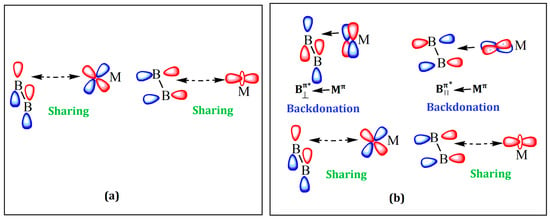
Ligand to metal donation and metal to ligand backdonation has served as the intriguing model to explain metal–ligand bonding [1]. This famous Dewar–Chatt–Duncanson (DCD) model has been the cornerstone of coordination chemistry [2]. One of the consequences of DCD model is the metal to ligand π-backdonation which generally serves the purpose of weakening element–element (E-E) bonds in ligands. This aspect of weakening the E-E bond has been one of the traits of transition metal catalysts. This concept holds for a countless number of transition metal complexes of unsaturated ligands such as π alkenes and π alkynes [1] where bond lengthening of the ligand due to π-backdonation is a usual phenomenon. Thus, a common consensus is that π-backdonation can only weaken the E-E bonds. However, the consensus has been challenged by Braunschweig and coworkers who showed the first violation of DCD model in π-diborene complex, (Et3P)2Pt(B2Duryl2), in 2013 [3]. Two π bonding singly occupied MOs (SOMO) of diborene combine with d orbital of Pt containing one electron. In this process, d electron density transfers to the bonding SOMOs of B2 ligand and thereby strengthens the B2 bond (Scheme 1) [3]. This has prompted theoretical studies in augmenting and replicating this bonding situation in other metallaboron complexes [4,5]. Morse and coworkers have demonstrated that early transition metal in MB2 complexes can also serve the same purpose of strengthening the B2 bond due to electron pair sharing bond formation with the degenerate bonding πu orbitals of B2 holding one electron each [6]. Thus, transition metal–B2 complexes are becoming regular examples of violation of DCD model. On the other hand, backdonation to the degenerate empty πg* orbital of B2 is expected to weaken the B2 bond. Electron-rich transition metals may achieve such a bonding situation. In principle, there is a delicate balance between the electron sharing M-B2 bond which strengthens the B2 bond and M to B2 back donation which weakens the B2 bond. If the latter, i.e., M to B2 back donation, predominates, then B2 bond will become weaker and hence DCD model will hold. On the other hand, if B┴π* ←Mπ backdonation occurs, a possibility of Möbius aromaticity [7,8] will arise. We, therefore, have undertaken a theoretical study on MB2 complexes involving late transition metals (Ni, Pd, Pt) to investigate whether transition metals make the B2 bond stronger or weaker. Is there a possibility of expecting the smallest three-membered Möbius aromatic [7,8] metallaborocycle? Our computations [8,9,10,11,12,13,14] have revealed that B2 bond weakens with late transition metals, implying that the position of transition metal matters in violating or maintaining DCD model in MB2 complexes. Interestingly, MB2 complexes with late transition metals show Möbius aromaticity [7,8], thus establishing the first example of smallest metallaborocycle with Möbius aromaticity.
Scheme 1.
Electron sharing bonding in (a) M-diborene complexes, and (b) sharing and backdonation in M-diboron complexes.
2. Computational Details
All the complexes were fully optimized at M06-2X/def2-QZVP and B3LYP/def2-QZVP levels [9,10,11]. Tight convergence criterion and ultrafine grid were applied during geometry optimizations. Harmonic vibrational frequency calculations were performed to confirm that they are true minima on the potential energy surface. Bonding nature of these complexes were investigated using natural bond orbital (NBO) scheme [12]. All these calculations were performed using Gaussian16 suite of program [13]. Adaptive natural density partitioning (AdNDP) analyses were also done [14] using Multiwfn program code [15] to investigate the nature of multicenter bonding scenario.
Aromaticity was gauzed by calculating ring current strength using GIMIC program [16] and the induced current density has been visualized using ParaView. The integrated ring current strength has been calculated using the integration grid with 0.1 bohr step as recommended [16], that is, over a cross-section bond. For the late transition metal (Ni, Pt, Pd) complexes, relativistic effect on ring current strength was also considered. This is done by NMR calculation using ORCA 4.2.1 version [17] using zeroth-order regular approximation (ZORA) and further analyzed using GIMIC code.
3. Results and Discussion
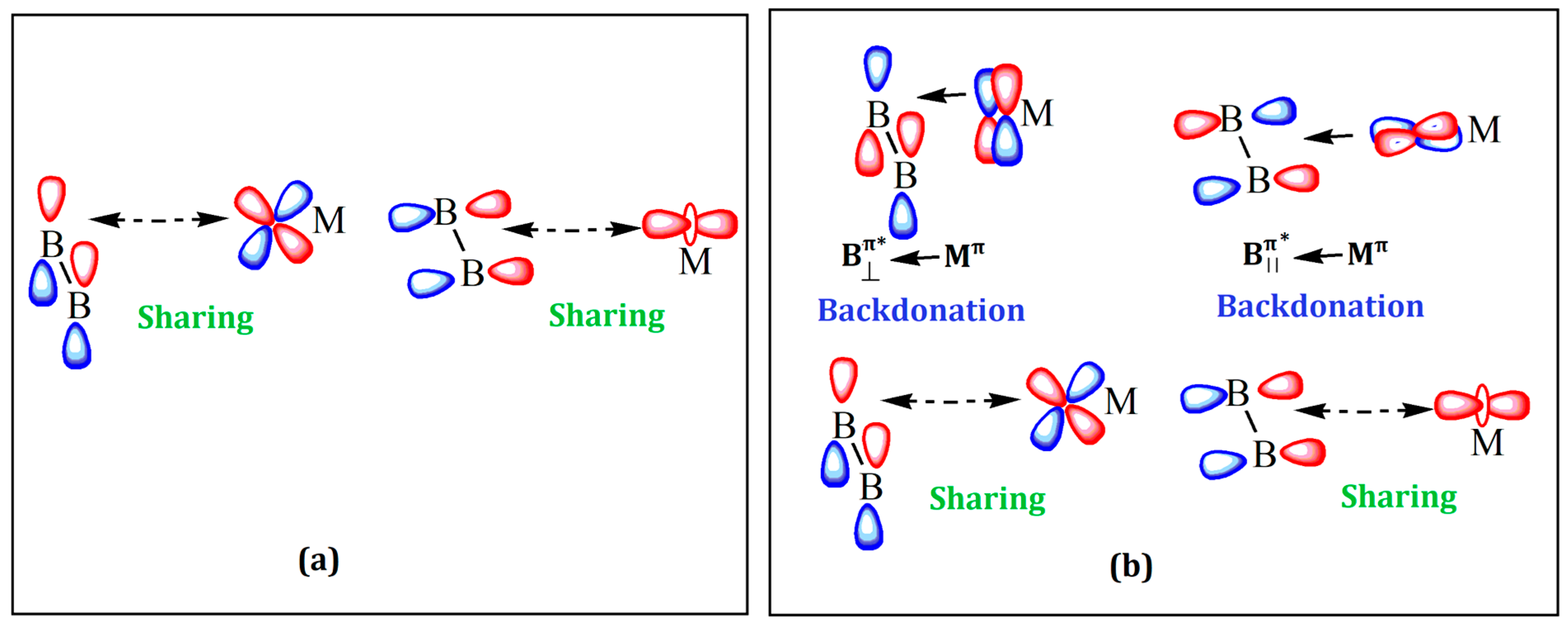
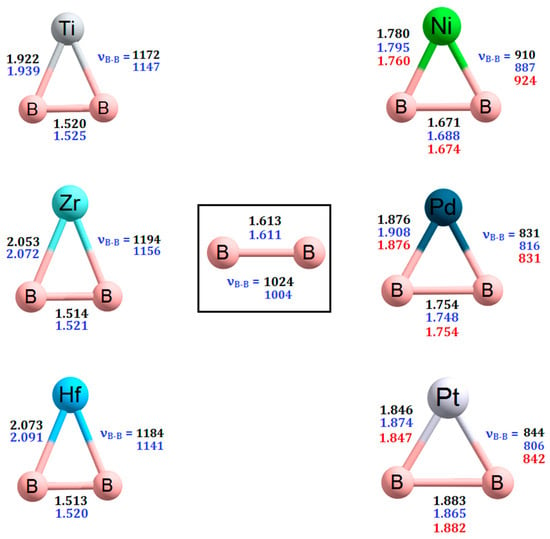
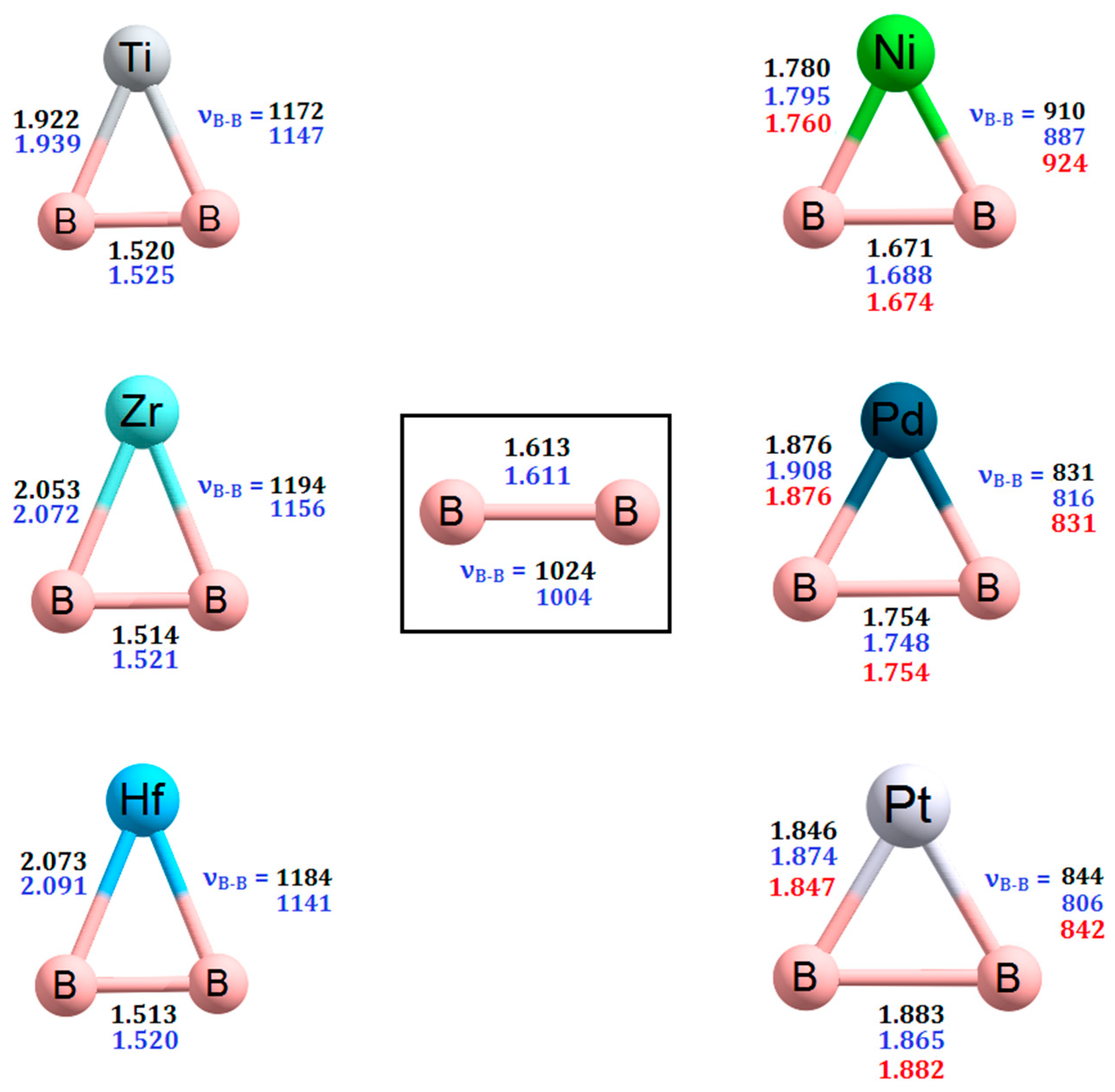
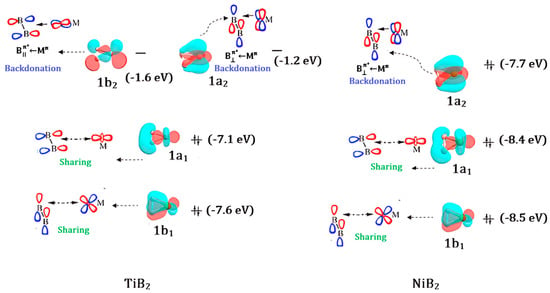
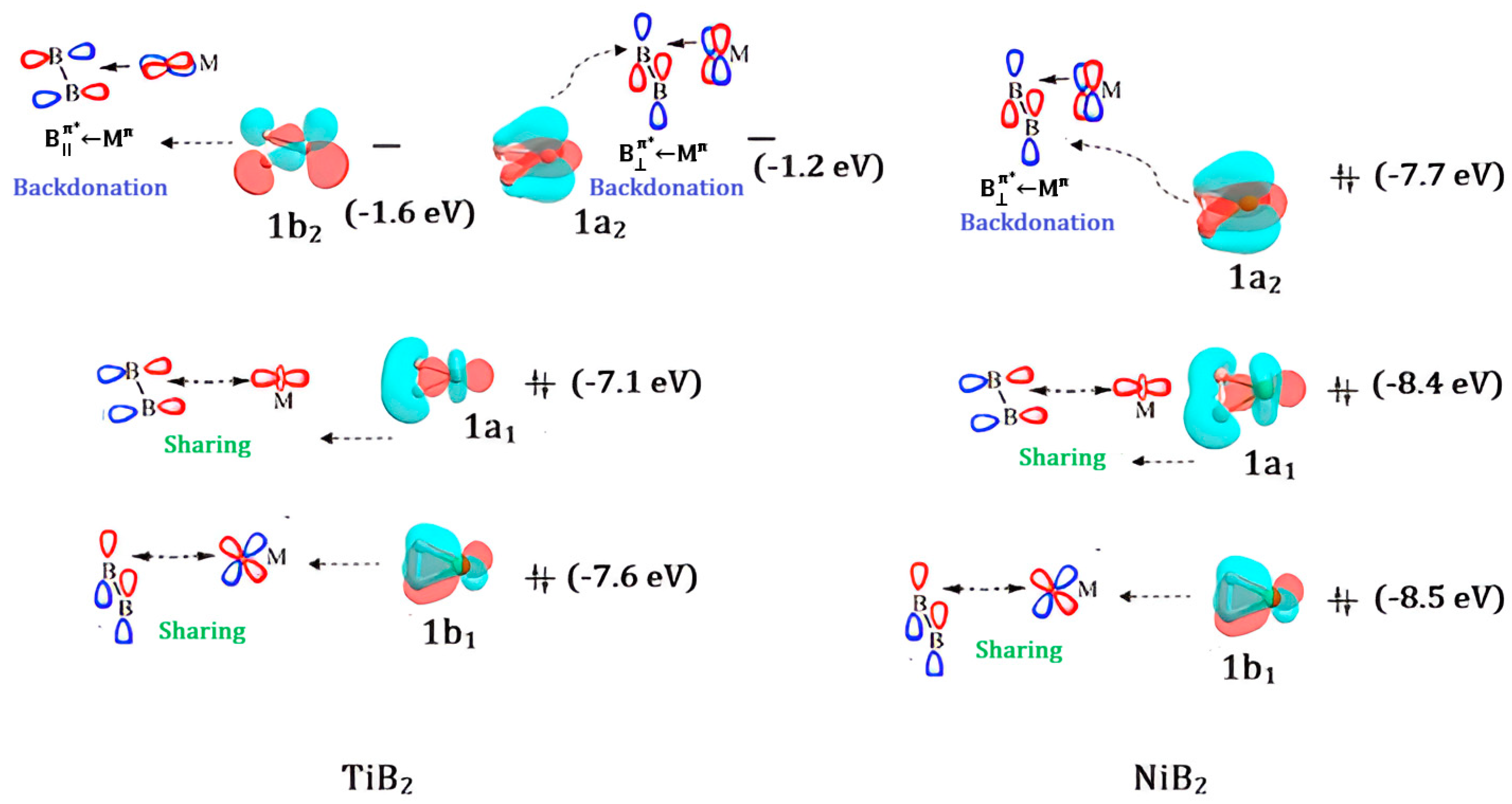
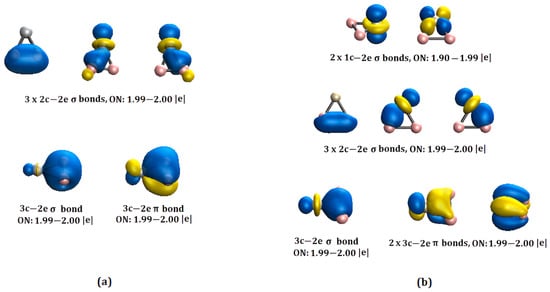
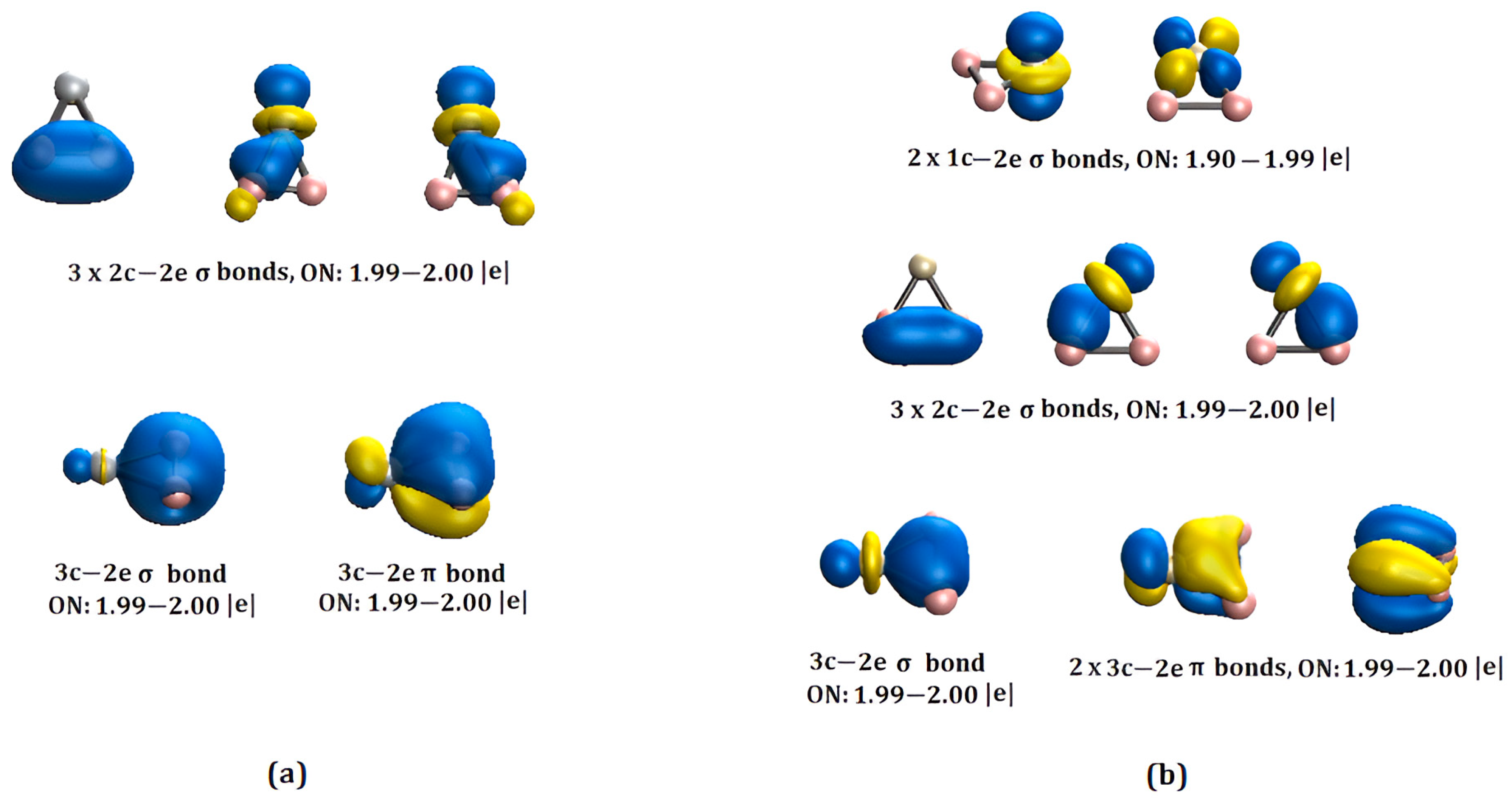
Figure 1 shows the optimized geometries of the MB2 complexes calculated at M06-2X/def2-QZVP level. Our recent study on the aromaticity of Zeise’s salt revealed that M06-2X/def2-QZVP produces reliable geometrical parameters and electronic structure [18]. Both M06-2X and B3LYP produced similar geometrical parameters and are in tune with the recent work of Morse and coworkers. The inclusion of relativistic effect using Douglas–Kroll–Hess (DKH2) Hamiltonian at M06-2X/def2-QZVP for NiB2, PdB2 and PtB2 produces almost similar geometrical parameters (Figure 1), indicating that the relativistic effect is playing a minor role. All these complexes adopt cyclic C2V symmetry in their lowest energy singlet ground state which is in tune with the recent study [6]. Linear singlet C∞V M-B-B and triplet C2V (3A1) structures are found to be higher in energy (Figure S1, supporting information). The calculated B-B distance in free 3∑g state is 1.613 Å with a B-B stretching frequency of 1024 cm−1. The calculated B-B distance is in very good agreement with an experimental value of 1.590 [19] and recently a reported result of (1.61 Å) [6]. There is a dramatic weakening of the B-B bonds in the late transition metal-B2 complexes. The B-B bond elongates to 1.883 Å in PtB2 complex compared to 1.613 Å in free B2. This is accompanied by a sharp decrease in B-B stretching frequency. Thus, late transition metals weaken the B-B bond which is in accordance with the normal DCD model. What causes this elongation of the B-B bond? To have an in-depth understanding of underlying cause, we analyzed the bonding situation in MB2, taking TiB2 and NiB2 as representative examples of early and late transition metal-B2 complexes, respectively. The molecular orbitals of these MB2 complexes are shown in Figure 2. The occupied 1a2 orbital of NiB2 is antibonding with respect to B-B bond. The occupied nature of this orbital may be responsible for the elongation of the B-B bond. On the other hand, 1a2 orbital in TiB2 is unoccupied and does not contribute to B-B bond weakening. Interestingly, this orbital in NiB2 represents a phase inversion of orbital overlap and is consistent with the Möbius topology. “Möbius aromaticity”, the presence of an odd number of out-of-phase overlaps or phase inversion in delocalized π orbitals of cyclic 4nπ electron system results in aromatic stabilization [7,8]. Adaptive natural density partitioning, AdNDP (Figure 3), also recovers two 1c−2e lone pairs at Ni, three 3c-2e σ bond, one 3c-2e σ bond and two 3c-2e π bond for NiB2, indicating 4π aromaticity according to Möbius 4n rule. Similar AdNDP results are also obtained for other metallaborocycles such as MB2 (Figure S2). The first Hückel molecular orbital treatment of Möbius aromaticity was conducted by Heilbronner and showed that such systems with 4nπ electrons are aromatic while 4n + 2π electrons are antiaromatic [7]. Thus, the presence of two π MOs makes the NiB2 complex a perfect example of the smallest Möbius aromatic species consistent with 4nπ-electrons. Möbius aromaticity has already been demonstrated for metallaborocycles. Wang and co-workers have reported Möbius aromatic planar five-membered metallaborocycle, ReB4, consistent with the 4nπ electron counting rule [20]. Similar molecular orbital showing Möbius topology are observed for PdB2 and PtB2 (Figure S3). The composition of the occupied molecular orbitals is further analyzed using natural population analysis (Table 1) which revealed that all three atoms are involved in bonding in 1a2 MO for NiB2, PdB2 and PtB2 complexes. Moreover, the calculated Mayer’s bond order for all the M-B bonds is greater than 1.00 (Table S1), indicating partial double character.
Figure 1.
Optimized geometries of the B2 and MB2 complexes. Bond lengths are in Å (black font: M06-2X, blue font: B3LYP) and harmonic B-B stretching frequencies (black font: M06-2X, blue font: B3LYP) are in cm−1. M06-2X-DKH2/def2-QZVP values are shown in red font.
Figure 2.
Relevant frontier Kohn–Sham molecular orbitals of TiB2 and NiB2 complexes. Orbital energies are in eV.
Figure 3.
Bonds recovered using AdNDP analysis for (a) TiB2 and (b) NiB2 complexes. Occupation numbers are given in |e|.
Table 1.
Natural population analysis of 1a1, 1b1 and 1a2 MOs.
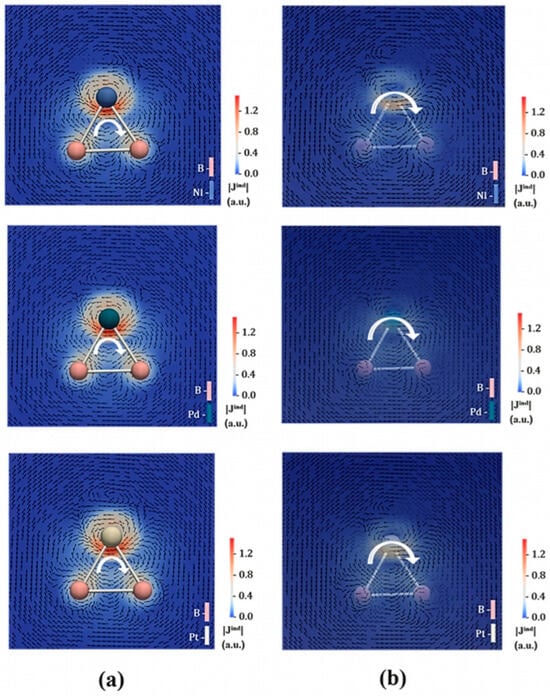
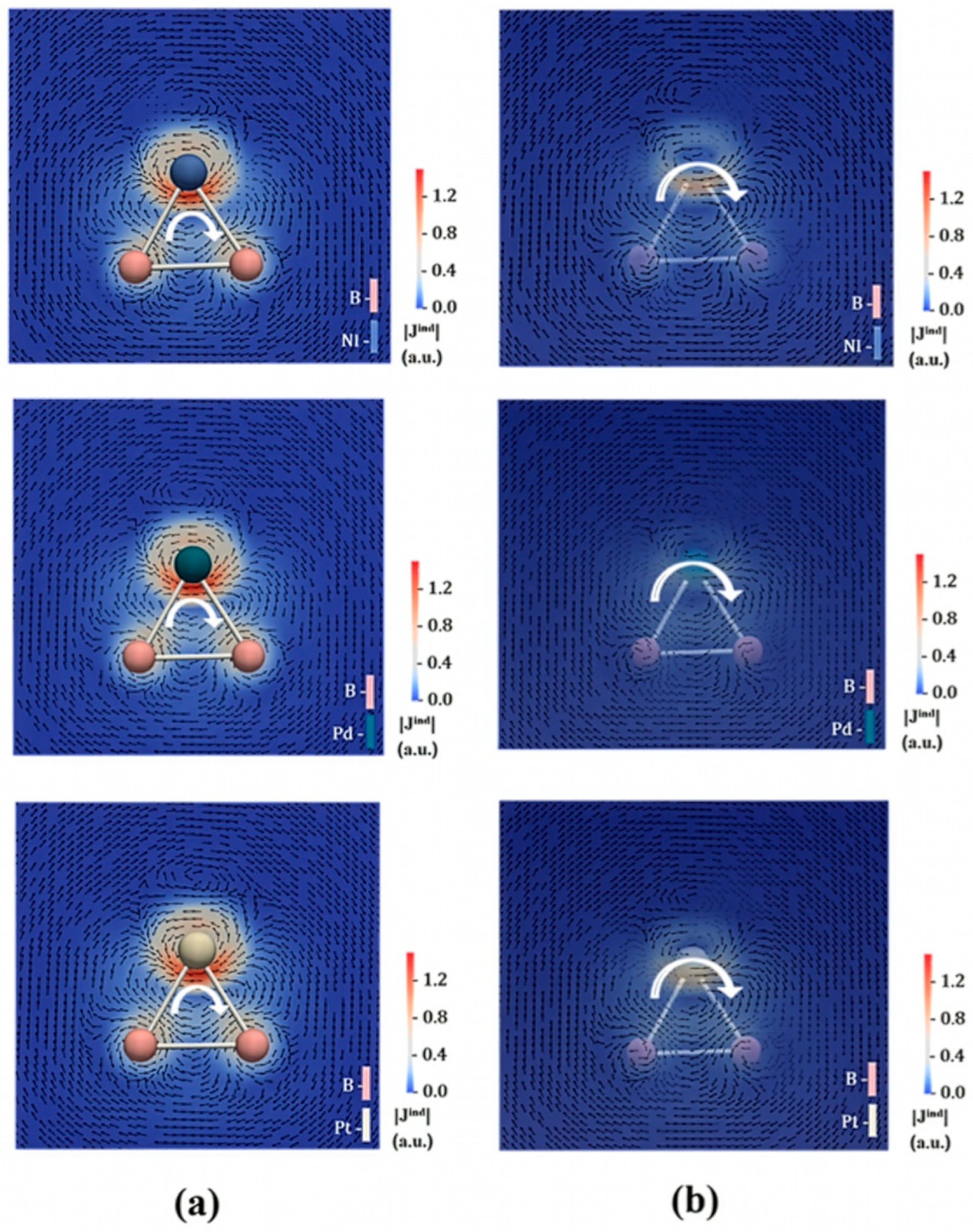
To quantify aromaticity, we have calculated the ring current strength at the same level using GIMIC code [16]. The line integral convolution (LIC) (Figure 4) visualization indicates a global clockwise current, confirming the π delocalization in these MB2 complexes. The animated ring current flow (Movie S1, supporting information) for PtB2 as a representative case clearly features clockwise movement of ring current. The integrated value of the induced current Jind using the center passing along the B-B bond for TiB2, ZrB2 and HfB2 are 25.8 nA/T and 21.3 and 11.9 nA/T, respectively, while they are 12.0, 10.7 and 9.2 nA/T for NiB2, PdB2 and PtB2, respectively. This indicates that all these MB2 complexes are aromatic. A recent study on double aromatic PrB2 shows similar value of Jind (7.0 nA/T) [21]. Isosurface of the anisotropy of the induced current density, AICD [22], is shown in Figure S5, which indicates that apart from the counter-clockwise paramagnetic current on the metal, there are also a global diamagnetic ring current in all cases, supporting π delocalization.
Figure 4.
Induced current streamline map of NiB2, PdB2 and PtB2 ring in (a) the molecular plane and (b) at 1.0 Å above. |Jind| values are given in a.u (1 a.u = 100.63 nAT−1 Å−2). Clockwise currents are represented by white arrows.
Furthermore, to investigate the role of relativistic effect on the ring current strength of these complexes, we performed NMR calculations using ORCA package by turning on zeroth-order regular approximation (ZORA) and switching it off for comparison. Ring current strengths of these complexes with and without relativistic correction are provided in Table 2. Inclusion of relativistic effect does not alter the ring current strengths of TiB2, ZrB2 and HfB2 significantly while it decreases the ring current strength from Ni to Pt. The effect is more pronounced in case of PtB2 where the ring current strength decreases by 1.4 nA/T. However, the ring current strengths with relativistic effect are still significant to qualify them as aromatic. It is to be noted that all these TMB2 complexes feature cyclic structure over linear ones. This geometrical feature may also be considered as a fate of aromaticity of these transition metal diboron complexes. Our recent study on the double Möbius aromatic ring PtO2 also showed preference for the cyclic structure due to aromaticity [23].
Table 2.
Calculated ring current strengths (in nA/T) using non-relativistic and relativistic corrections and their difference.
The calculated bond dissociation energies (BDE) (Table S2) of MB2 (M = Ni, Pd, Pt) complexes are also significant. The calculated BDE of NiB2, PdB2 and PtB2 are 50.7, 106.6 and 149.2 kcal/mol, respectively. This indicates that diboron can also form strong bonds with late transition metals, thereby suggesting a possibility of their experimental realization.
4. Conclusions
The present study reveals that B-B bond weakening or strengthening in MB2 complexes depends on the position of the transition metal. B-B bond strengthening occurs with early transition metals while bond weakening occurs with late transition metals. Interestingly, MB2 species (M = Ni–Pt) are 4π Möbius aromatic. The calculated BDEs of the MB2 species are significant, suggesting the possibility of their experimental realization. We, therefore, strongly feel that MB2 complexes with late transition metals are experimentally viable and should constitute the example of smallest Möbius aromatic metallaborocycle.
Supplementary Materials
The following supporting information can be downloaded at: https://www.mdpi.com/article/10.3390/chemistry8090122/s1; Figures S1–S5, Tables S1 and S2 and Cartesian coordinates of all the lowest energy structures and Movie S1.
Author Contributions
Methodology, software, A.D. and P.J.T., Conceptualization, writing review and editing, A.K.G. All authors have read and agreed to the published version of the manuscript.
Funding
No funding was received for this work.
Data Availability Statement
All data are available in supporting information.
Acknowledgments
Authors acknowledge the computational facility of Cotton University, Panbazar, Guwahati, Assam, INDIA-781001.
Conflicts of Interest
The authors declare no conflict of interest.
References
- Cotton, F.A.; Wilkinson, G. Advanced Inorganic Chemistry; Wiley: New York, NY, USA, 1988. [Google Scholar]
- Chatt, J.; Duncanson, L.A. Olefin co-ordination compounds. Part III. Infra-red spectra and structure: Attempted preparation of acetylene complexes. J. Chem. Soc. 1953, 586, 2939–2947. [Google Scholar] [CrossRef] [Scilit]
- Braunschweig, H.; Damme, A.; Dewhurst, R.D.; Var-gas, A. Bond-strengthening π backdonation in a transition-metal π-diborene complex. Nat. Chem. 2013, 5, 115–121. [Google Scholar] [CrossRef] [Scilit] [PubMed]
- Ghorai, S.; Jemmis, E.D. A DFT Study on the Stabilization of the B≡ B Triple Bond in a Metallaborocycle: Contrasting Electronic Structures of Boron and Carbon Analogues. Chem. Eur. J. 2017, 23, 9746–9751. [Google Scholar] [CrossRef] [Scilit] [PubMed]
- Reddy, K.H.K.; Jemmis, E.D. Stabilization of diborane(4) by transition metal fragments and a novel metal to π Dewar–Chatt–Duncanson model of back donation. Dalton Trans. 2013, 42, 10633–10639. [Google Scholar] [CrossRef] [Scilit] [PubMed]
- Merriles, D.M.; Tomchak, K.H.; Nielson, C.; Morse, D.M. Early Transition Metals Strengthen the B2 Bond in MB2 Complexes. J. Am. Chem. Soc. 2022, 144, 7557–7561. [Google Scholar] [CrossRef] [Scilit] [PubMed]
- Heilbronner, E. Hűckel Molecular Orbitals of Mőbius-Type Conformations of Annulenes. Tetrahedron Lett. 1964, 5, 1923−1928. [Google Scholar] [CrossRef] [Scilit]
- Rzepa, H.S. Möbius Aromaticity and Delocalization. Chem. Rev. 2005, 105, 3697−3715. [Google Scholar] [CrossRef] [Scilit] [PubMed]
- Zhao, Y.; Truhlar, D.G. The M06 suite of density functionals for main group thermochemistry, thermochemical kinetics, noncovalent interactions, excited states, and transition elements: Two new functionals and systematic testing of four M06-class functionals and 12 other functionals. Theor. Chem. Acc. 2008, 120, 215–241. [Google Scholar] [CrossRef] [Scilit]
- Weigend, F.; Ahlrichs, R. Balanced basis sets of split valence, triple zeta valence and quadruple zeta valence quality for H to Rn: Design and assessment of accuracy. Phys. Chem. Chem. Phys. 2005, 7, 3297–3305. [Google Scholar] [CrossRef] [Scilit] [PubMed]
- Becke, A.D. Density-functional thermochemistry. III. The role of exact exchange. J. Chem. Phys. 1993, 98, 5648–5652. [Google Scholar] [CrossRef] [Scilit]
- Reed, A.E.; Curtiss, L.A.; Weinhold, F. Intermolecular interactions from a natural bond orbital, donor-acceptor viewpoint. Chem. Rev. 1988, 88, 899–926. [Google Scholar] [CrossRef] [Scilit]
- Frisch, M.J.; Trucks, G.W.; Schlegel, H.B.; Scuseria, G.E.; Robb, M.A.; Cheeseman, J.R.; Scalmani, G.; Barone, V.; Petersson, G.A.; Nakatsuji, H.; et al. Gaussian 16, Revision B.01; Gaussian, Inc.: Wallingford, CT, USA, 2016. [Google Scholar]
- Zubarev, D.Y.; Boldyrev, A.I. Developing automated search for multi-center chemical bonds: Adaptive Natural Density Partitioning. Phys. Chem. Chem. Phys. 2008, 10, 5207−5217. [Google Scholar]
- Lu, T.; Chen, F. Multiwfn: A multifunctional wavefunction analyzer. J. Comput. Chem. 2012, 33, 580–592. [Google Scholar] [CrossRef] [Scilit] [PubMed]
- Sundholm, D.; Fliegl, H.; Berger, R.J.F. Calculations of magnetically induced current densities: Theory and applications. Wiley Interdiscip. Rev. Comput. Mol. Sci. 2016, 6, 639−678. [Google Scholar] [CrossRef] [Scilit]
- Neese, F. Software update: The ORCA program system, version 4.0. Wiley Interdiscip. Rev. Comput. Mol. Sci. 2018, 8, e1327. [Google Scholar] [CrossRef] [Scilit]
- Guha, A.K.; Kalita, A.J.; Orozco-Ic, M.; Herrera, M.A.F.; Merino, G. Aromaticity in Ancient Zeise’s Salt. Inorg. Chem. 2025, 64, 20157–20162. [Google Scholar] [CrossRef] [Scilit] [PubMed]
- Gurvich, L.V.; Veyts, I.V.; Alcock, C.B. Thermodynamic Properties of Individual Substances, 4th ed.; Hemisphere Pub. Co.: New York, NY, USA, 1989. [Google Scholar]
- Cheung, L.F.; Kocheril, G.S.; Czekner, J.; Wang, L.S. Observation of Möbius Aromatic Planar Metallaborocycles. J. Am. Chem. Soc. 2020, 142, 3356–3360. [Google Scholar] [CrossRef] [Scilit] [PubMed]
- Wang, Z.-L.; Chen, T.-T.; Chen, W.-J.; Li, W.-L.; Zhao, J.; Jiang, X.-L.; Li, J.; Wang, L.-S.; Hu, H.-S. The smallest 4f-metalla-aromatic molecule of cyclo-PrB2− with Pr–B multiple bonds. Chem. Sci. 2022, 13, 10082–10094. [Google Scholar] [CrossRef] [Scilit] [PubMed]
- Herges, R.; Geuenich, D. Delocalization of Electrons in Molecules. J. Phys. Chem. A 2001, 105, 3214–3220. [Google Scholar] [CrossRef] [Scilit]
- Das, A.; Thakuria, P.; Guha, A.K. Double Möbius Aromaticity in the Oxo-Platinum Complex. Inorg. Chem. 2026, 65, 16815–16820. [Google Scholar] [CrossRef] [Scilit] [PubMed]

Disclaimer/Publisher’s Note: The statements, opinions and data contained in all publications are solely those of the individual author(s) and contributor(s) and not of MDPI and/or the editor(s). MDPI and/or the editor(s) disclaim responsibility for any injury to people or property resulting from any ideas, methods, instructions or products referred to in the content. |
© 2026 by the authors. Licensee MDPI, Basel, Switzerland. This article is an open access article distributed under the terms and conditions of the Creative Commons Attribution (CC BY) license.