1. Introduction
Controlling the electronic structure of π-conjugated organic semiconductors remains a significant challenge in materials chemistry [
1], especially within the low-bandgap and spin-dependent regimes relevant to optoelectronic and spintronic applications [
2]. While systematic extension of conjugation length in polyacenes produces well-understood electronic trends, real-world device performance is determined at interfaces where molecular properties are altered by interactions with metals and substrates; this strategy alone offers limited control over excited-state energetics and spin–orbit interactions [
3,
4,
5]. Incorporating transition-metal centers introduces an additional degree of freedom, as metal–π coupling and relativistic effects enable access to electronic regimes that are not attainable in purely organic frameworks [
6]. However, predicting how these effects evolve across chemical space remains computationally demanding, especially for excited-state and spin-dependent properties of extended π-systems [
7,
8,
9,
10]. In terms of application, the S
1–T
1 energy separation, together with spin–orbit coupling, electronic-state character, and nonadiabatic interactions, constitutes a primary factor in governing excited-state and spin-dependent processes, including intersystem crossing, exciton dynamics, and spin coherence [
11,
12,
13,
14,
15,
16,
17]. Thus, identifying molecular systems where these energetic relationships break down offers a pathway to explore electronically complex regimes that are otherwise challenging to predict or design.
Recent advances in scientific machine learning (SciML) [
18,
19,
20], particularly the increased accessibility of large language models (LLMs) for code development, debugging, and execution, have significantly reduced longstanding computational barriers in scientific research [
21]. However, the effectiveness of these models in small datasets and their capacity to provide physical interpretation remain open questions [
22,
23,
24,
25,
26,
27]. Specifically, it is unclear whether global electronic properties can be accurately predicted using a minimal set of chemically interpretable descriptors, without direct inclusion of explicit electronic structure information (
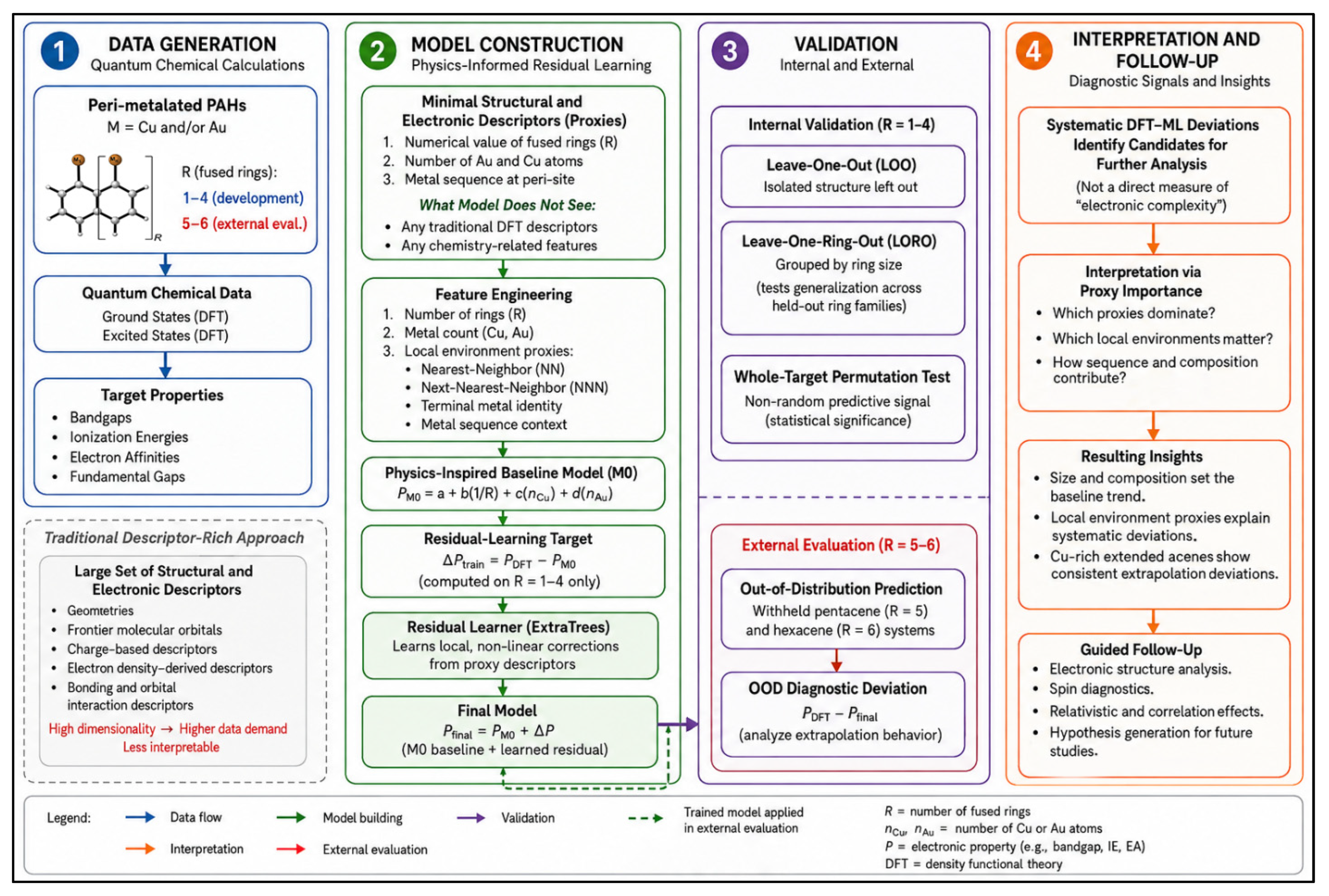
Figure 1). Its utility lies in extracting physics-aligned scaling laws and testing boundaries of chemical extrapolation. Fundamentally, it is not established whether deviations between such simplified models and quantum mechanical calculations reflect model limitations or instead signal the emergence of qualitatively different electronic regimes. Therefore, SciML is introduced as a tool for hypothesis generation and for identifying physically meaningful regimes for further investigation. SciML is not intended to replace quantum theory (
Figure 1), but rather to complement it in contexts where chemically well-defined systems allow for the systematic disentanglement of both global trends and local electronic effects.
In contrast to coordinate-free quantum machine learning approaches that require graph representations, latent embeddings, atomic coordinates, orbital energies, wavefunctions, or interaction energies [
20,
28,
29,
30,
31], the present framework remains coordinate-free at both modeling levels. The analytical baseline relies solely on conjugation length and metal counts, while the residual learner incorporates discrete metal sequence and topology descriptors. Two complementary residual representations are evaluated. The original 53-descriptor model explores a broad, chemically organized space that includes composition, adjacency, topology, and sequence information. The compact 4-descriptor model examines whether similar conclusions can be drawn after substantially removing correlated and redundant inputs.
In this context, polyaromatic hydrocarbons (PAHs), especially the homologous series from benzene to pentacene, provide a well-defined platform for exploring structure-property relationships in terms of electronic, optical, and excited-state properties [
3]. Systematic extension of π-conjugation leads to predictable reductions in KS bandgaps (Eg) and ionization energies (IEs), increases in electron affinity (EA), and a well-characterized evolution of singlet and triplet excited states. In larger acenes such as pentacene, these trends culminate in an excited-state landscape approaching the condition of singlet fission (S
1 ≈ 2T
1) [
32,
33,
34]. While this condition supports enhanced light-harvesting behavior, it typically limits radiative efficiency to a statistical 25% singlet yield [
5,
35].
Peri-metalated polyacenes functionalized with coinage metals (Au and Cu) provide such a platform. Previous studies have demonstrated that these systems, while preserving the qualitative bandgap trends of the parent hydrocarbons, exhibit significantly greater transition-metal-dependent bandgap narrowing compared to unsubstituted parent acenes [
6]. Transition metals, therefore, tend to accelerate this trend through metal–π and metal–metal interactions, rather than altering the overall direction of the underlying aromatic π-system. This behavior presents an opportunity to assess whether simple descriptor-based models can accurately capture global electronic properties such as KS bandgaps, ionization energies, and electron affinities, while remaining sensitive to the emergence of metal-dependent electronic phenomena. Although structurally distinct from the non-covalent interfaces typical of spintronic devices, peri-metalated acenes offer a complementary molecular platform for exploring low-bandgap and spin-sensitive behavior.
Given the limited yet chemically systematic dataset (N = 16), this study is positioned as a small-data, interpretability-driven scientific machine learning (SciML) investigation rather than a broadly general predictive modeling effort. The primary objective is to assess whether compact, coordinate-free descriptors can recover physically meaningful electronic trends in a controlled series of peri-metalated polyacenes and to identify regimes in which descriptor-based scaling becomes inadequate. Density functional theory (DFT) is integrated with an interpretable SciML framework to examine the evolution of electronic properties in peri-metalated gold– and copper–acenes. The results indicate that global properties, including KS bandgaps, ionization energies, and electron affinities, are predictable and extrapolatable using a concise set of chemically meaningful descriptors that capture conjugation length, metal composition, and sequence. Moreover, structured deviations between machine learning predictions and DFT calculations are not random but instead correlate with the onset of electronically complex regimes, particularly in copper-rich extended systems exhibiting strong highest occupied molecular orbital (HOMO) destabilization and near-degenerate singlet and triplet states. The broad and compact residual models serve complementary functions. The broad model assesses whether predictive information is distributed across a chemically inclusive descriptor space, whereas the compact model provides a rigorous test of parsimony and interpretability.
These findings establish a dual role for interpretable machine learning in chemical discovery. First, compact descriptor-based models capture the dominant, physically meaningful scaling behavior of electronic properties across conjugated systems. Second, systematic deviations from these models serve as indicators for identifying the boundaries of model applicability and, more importantly, for revealing the onset of new electronic regimes that require further quantum mechanical investigation.
3. Results and Discussion
Au- and Cu-peri-metalated acenes define a chemically well-controlled yet electronically diverse compounds for subsequent ML analysis. Using DFT, a broad set of ground-state and excited-state properties—including frontier orbital energies (HOMO/LUMO), fundamental (Eg) and Kohn–Sham (KS) band gaps, ionization energies (IEs), electron affinities (EAs), and dipole moments—was calculated for pure Au, pure Cu, and mixed Au/Cu acene derivatives containing up to four fused rings. These results were supplemented by time-dependent (TD-DFT) and Tamm–Dancoff approximation (TDA) calculations, and reorganization energies (λ) determined through a four-point method. An ML framework was constructed using a minimal set of chemically interpretable descriptors: the number of fused rings (R), metal composition (nCu, nAu), and metal sequence. This compact descriptor space functions as a proxy for key physical effects, such as π-delocalization, metal–π interactions, and relativistic stabilization, without the need for explicit electronic structure data. Residual learning was conducted using both the comprehensive 53-descriptor model and the streamlined 4-descriptor model.
Machine Learning Model Predicting KS Bandgaps:
The evolution of KS bandgaps in Au- and Cu-metalated acenes is primarily determined by π-conjugation length and metal composition. A physics-based model incorporating inverse conjugation length (1/R) and metal counts (nCu, nAu) captures the dominant trend of bandgap narrowing with increasing acene size and Cu content. Mixed-metal systems exhibit similar behavior, with only modest deviations resulting from metal sequence and local interactions.
Residual corrections were modeled using the ExtraTrees algorithm with chemically interpretable descriptors (
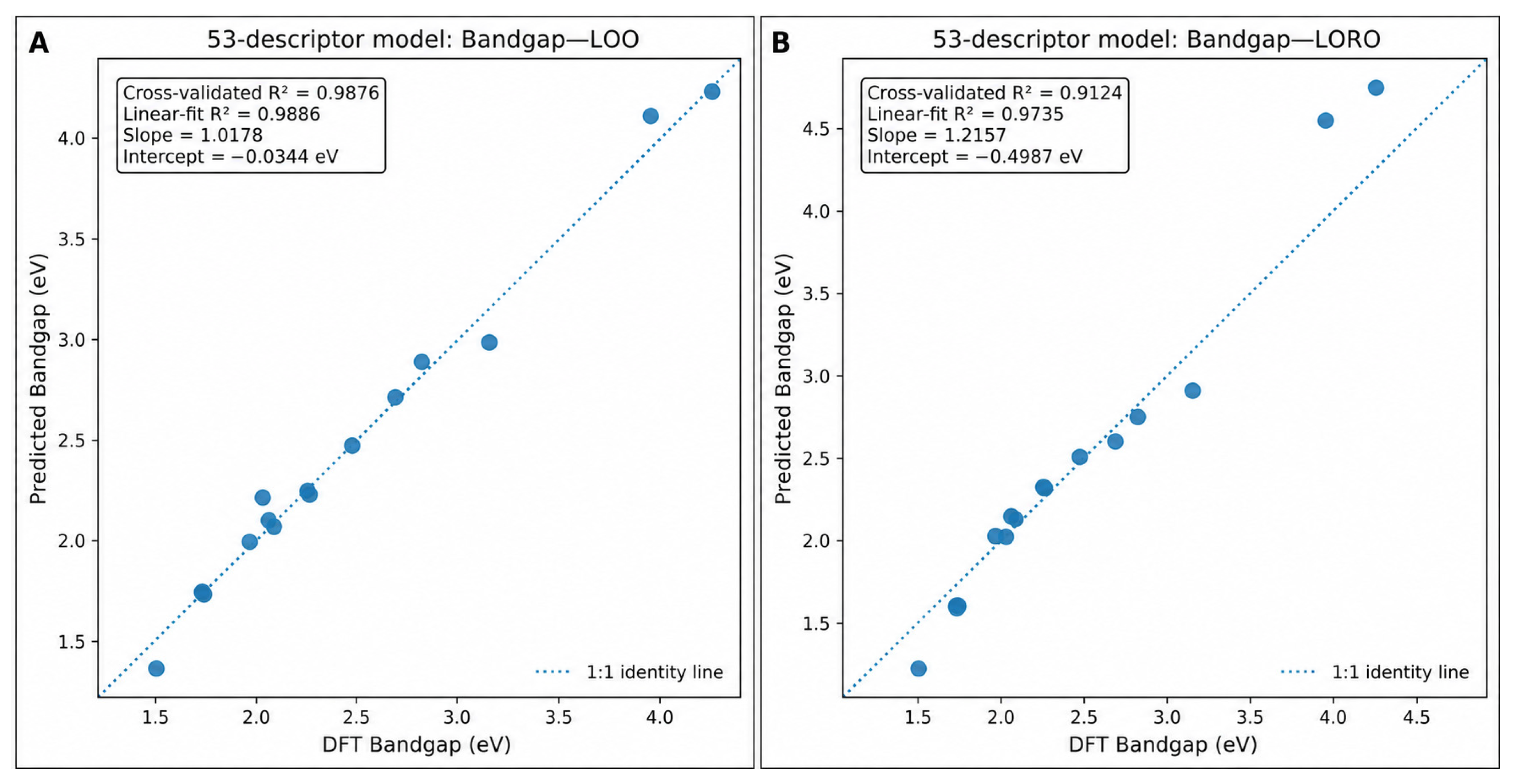
Figure S13). The original 53-descriptor model accurately reproduces DFT Kohn–Sham bandgaps under LOO validation (R
2 ≈ 0.99, MAE ≈ 0.058 eV, RMSE ≈ 0.085 eV) and LORO validation (R
2 ≈ 0.91, MAE ≈ 0.158 eV, RMSE ≈ 0.227 eV;
Figure 2A,B). A compact 4-descriptor model retains comparable LOO accuracy (R
2 ≈ 0.99, MAE ≈ 0.060 eV, RMSE ≈ 0.084 eV) and demonstrates improved LORO performance (R
2 ≈ 0.92, MAE ≈ 0.137 eV, RMSE ≈ 0.216 eV;
Figure S19). In the broad model, feature importance is distributed among composition, sequence topology, and nearest-neighbor/next-nearest-neighbor (NN/NNN) interaction density. In contrast, the compact model is primarily influenced by ring-size-dependent corrections specific to the pure Au and Cu series, with smaller contributions from NNN switching and terminal Cu chemistry (
Figures S14 and S22).
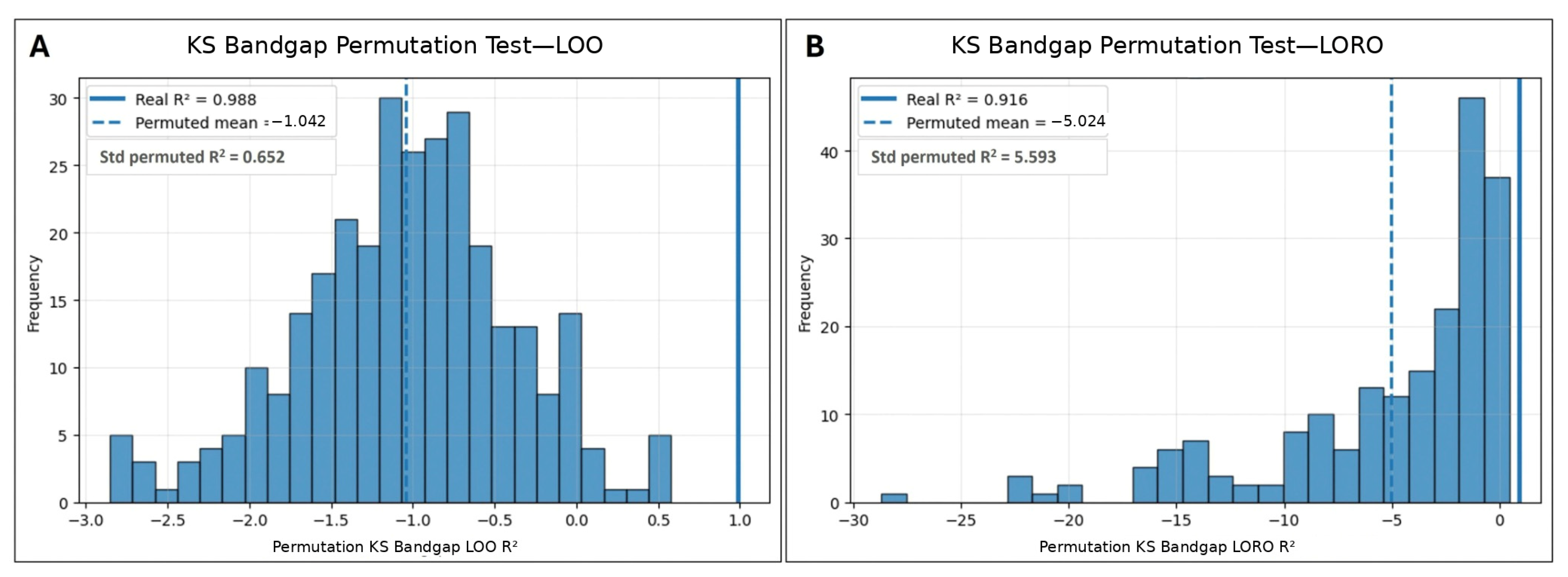
Permutation testing confirms that the observed predictive performance does not arise from chance correlations. Under LOO validation, the observed R
2 of 0.99 is far outside the permuted distribution (mean R
2 = −0.92), yielding an empirical
p-value of 0.003 (
Figure 3A). Similarly, for the more stringent leave-one-ring-out test, the observed R
2 of 0.91 exceeds all permuted baselines (mean R
2 = −5.02;
p = 0.005,
Figure 3B). These results show that the complete hybrid model captures a reproducible, non-random descriptor–bandgap relationship.
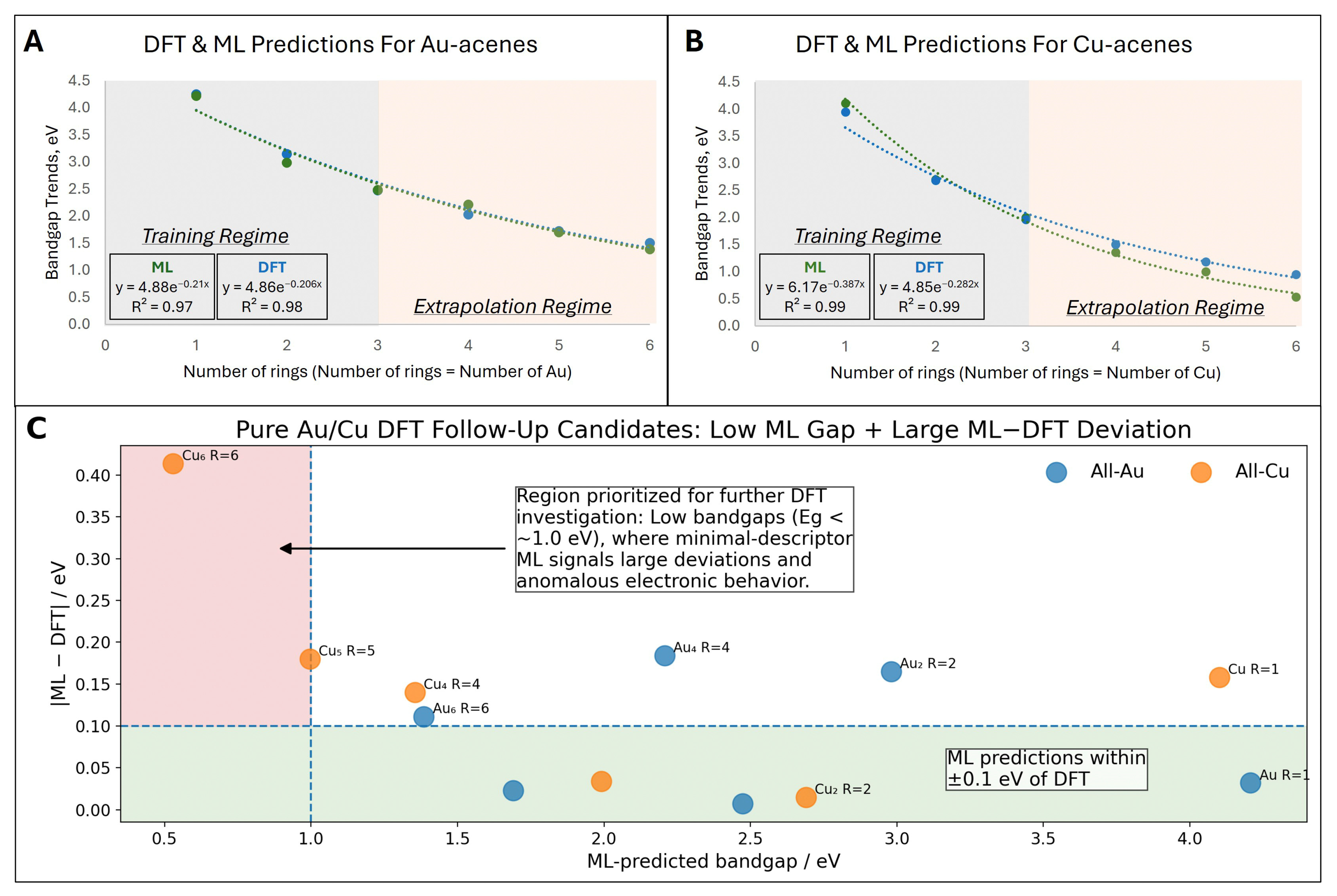
While leave-one-ring-out (LORO) extrapolation validates the model within the training chemical space, true chemical extrapolation was tested using metalated pentacenes and hexacenes that extend beyond both the descriptor and training domains. In this region, the model maintains the correct ordering and relative spacing of KS bandgaps across all gold and copper compositions, showing strong agreement with DFT trends (R
2 = 0.97; see
Figure S31 in the Supplementary Materials). This is especially evident for gold-rich and mixed-metal systems, where deviations are typically about 0.1 eV (
Figure 4A). For pentacene–Au
5 and hexacenes–Au
6, comparison with DFT KS bandgaps yields mean absolute errors (MAEs) of 0.023 and 0.112 eV, respectively. In contrast, copper-rich acenes, while following the same exponential decay of KS bandgaps as DFT calculations, systematically underestimate KS bandgaps, with absolute errors reaching 0.180 and 0.415 eV for pentacene–Cu
5 and hexacenes–Cu
6, respectively (
Figure 4B). A similar deviation is observed with the 4-descriptor compact model and is already evident in the analytical baseline-only predictions. Therefore, the Cu-rich divergence does not originate from the 53-descriptor residual representation. In both approaches, the residual correction reduces rather than produces the largest endpoint discrepancies (see the
Supplementary Materials for details regarding sensitivity to baseline form, residual learner, ExtraTrees hyperparameters, random seed, and categorical encoding). This structured deviation, particularly in larger copper–acenes, coincides with the smallest KS bandgaps (about 1.0 eV) and is interpreted not as a stochastic model breakdown but as an indicator of emergent electronic complexity that exceeds the representational capacity of compact, coordinate-free descriptors. These findings reveal a qualitative difference in the electronic response of copper- and gold-metalated frameworks and identify copper-rich extended acenes as promising candidates for further investigation into non-trivial electronic states (
Figure 4C).
To determine if the structured ML deviations in Cu-rich acenes result from limitations of the B3LYP/LANL2DZ reference, we recalculated the extrapolated pentacene series using a higher-level triple-zeta mixed-basis/ECP scheme (GENECP). While the GENECP calculations confirm a systematic Cu-dependent overestimation of KS bandgaps by the lower-level theory, these corrections (0.05 eV) remain substantially smaller than the corresponding ML residuals (0.18 eV) (
Table 1). Importantly, both the ML deviations and the GENECP corrections exhibit the same composition-dependent downward trend, indicating greater bandgap narrowing in the Cu-rich acenes relative to the LANL2DZ baseline. This qualitative agreement suggests that the ML model detects the underlying shift in electronic behavior for Cu-rich extended acenes, even as the descriptor space loses quantitative accuracy in this regime. Consequently, these structured residuals function as a physically meaningful diagnostic indicator of increasing electronic complexity, identifying chemical regimes in which simple additive scaling becomes insufficient and Cu-mediated non-additive interactions begin to dominate the electronic response.
We acknowledge that the B3LYP/LANL2DZ level of theory serves as a computationally efficient reference baseline and represents a modest choice for metal-containing ground and excited state systems. To assess whether the key conclusions depend on this basis-set choice, representative pentacene configurations were recalculated using a mixed triple-zeta general-basis/ECP scheme (GENECP). As shown in
Table 1, the resulting basis-set corrections remain relatively small, reaching approximately 0.05 eV, compared with the larger structured SciML–DFT residuals observed for Cu-rich pentacenes, which reach approximately 0.18 eV. Importantly, both levels of theory preserve the same composition-dependent trend, with increasing Cu content associated with stronger bandgap narrowing. Thus, while the absolute computed energies, particularly KS bandgaps, should be interpreted with appropriate caution, the qualitative conclusion that Cu-rich extended peri-metalated acenes enter a distinct low-gap, spin-sensitive regime is retained across the basis-set comparison.
3.1. Quantum Chemical Origins of Bandgap Trends: HOMO–LUMO Relationships
3.1.1. Bandgap Trends in Cu– and Au–Acenes
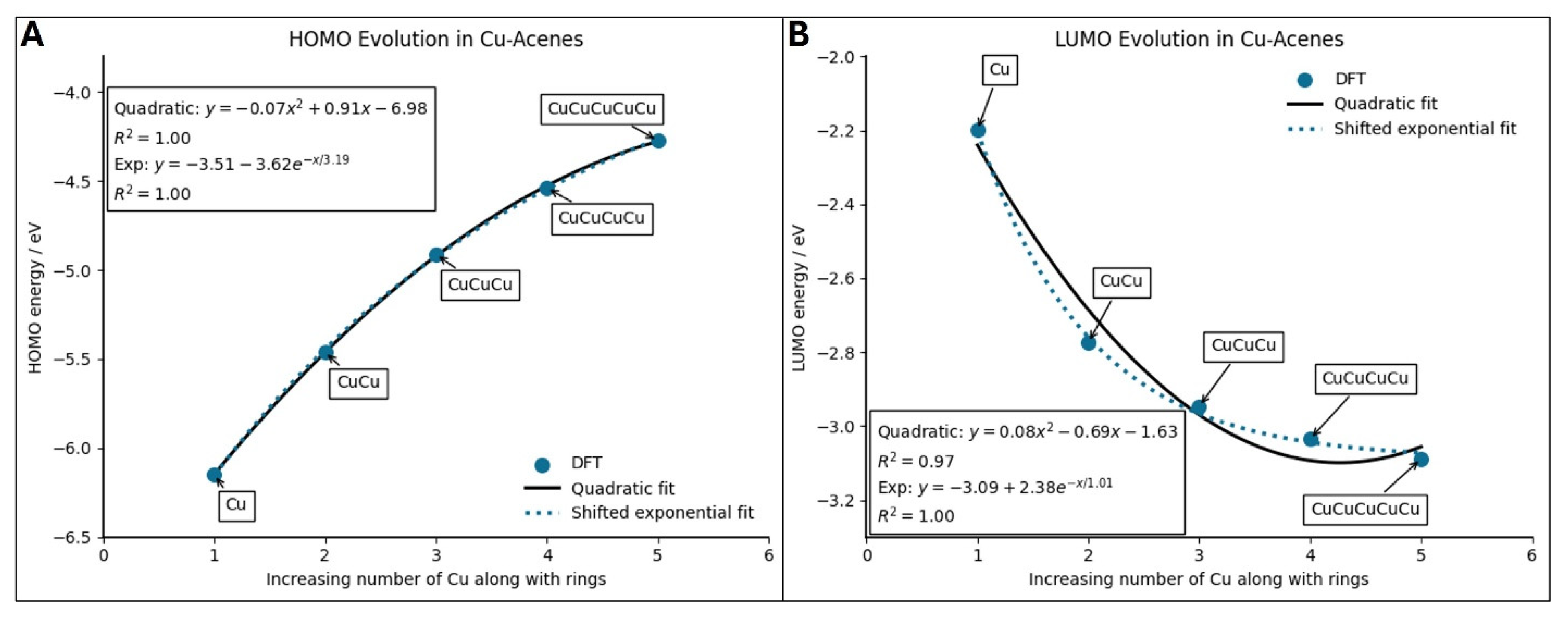
The Kohn–Sham (KS) gap, defined as the energy difference between HOMO and LUMO, decreases due to either destabilization (increase) of the HOMO or stabilization (decrease) of the LUMO. The evolution of this bandgap in metal-substituted polyacenes shows a systematic dependence on both the type and number of peri-metal centers. In both gold– and copper–acene series, the density functional theory (DFT)-computed bandgap decreases monotonically as the extent of metal incorporation increases along the polyacene framework, following a non-linear yet highly reproducible trend (
Figure 5 and
Figure 6). The copper–acenes exhibit a more pronounced narrowing of the bandgap, from benzene–Cu (3.9 eV) to pentacene–Cu
5 (1.2 eV), relative to unsubstituted polycyclic aromatic hydrocarbons (PAHs). This narrowing is primarily attributed to a destabilizing upshift of the HOMO from −6.148 to −4.271 eV (
Figure 5A). As conjugation increases, the HOMO evolves from a uniformly aromatic π orbital to one that is increasingly localized on terminal rings and peri-metalated regions, while internal rings serve as conduits for π-electron delocalization. In contrast, the LUMO stabilizes only modestly (−2.198 to −3.087 eV,
Figure 5B) and remains predominantly carbon-centered, with stabilization arising from π to π* interactions and weak copper to π* back-donation.
Quadratic fits offer an accurate local description of the HOMO and LUMO evolution within the finite polyacene range studied (N = 1–5). Concurrently, shifted exponential models were applied to capture the anticipated saturation behavior as system size increases. Although both approaches reproduce the observed trends, the exponential form introduces a physically meaningful decay length and reveals asymmetric convergence of the frontier orbitals. These two descriptions are thus complementary: the quadratic fit effectively models the computed data within the sampled range, whereas the exponential fit elucidates the underlying electronic scaling behavior.
Structurally, bond-length alternation (BLA), defined as the difference between alternating C–C bond lengths along the acene backbone and frequently associated with bandgap formation in conjugated π-systems, is negligible in neutral benzene–Cu (≈0.002 Å), which is consistent with a fully aromatic structure [
42,
43]. Naphthalene–Cu
2 and anthracene–Cu
3 exhibit modest, non-cumulative BLAs (~0.023–0.024 Å), indicative of weak Clar-type bond localization rather than pronounced quinoidal-type distortion. In contrast, BLA is strongly suppressed in tetracene–Cu
4 and pentacene–Cu
5 (≈0.004–0.005 Å), approaching bond length equalization along the conjugated backbone. Although BLA is often interpreted as a manifestation of Peierls-type symmetry breaking in one-dimensional π-systems, its near absence in the Cu–acene series indicates that the bandgap reduction in these systems is primarily determined by extended π-conjugation and metal-induced electronic effects, and classical Peierls-type bond-length-driven symmetry breaking plays at most a secondary role.
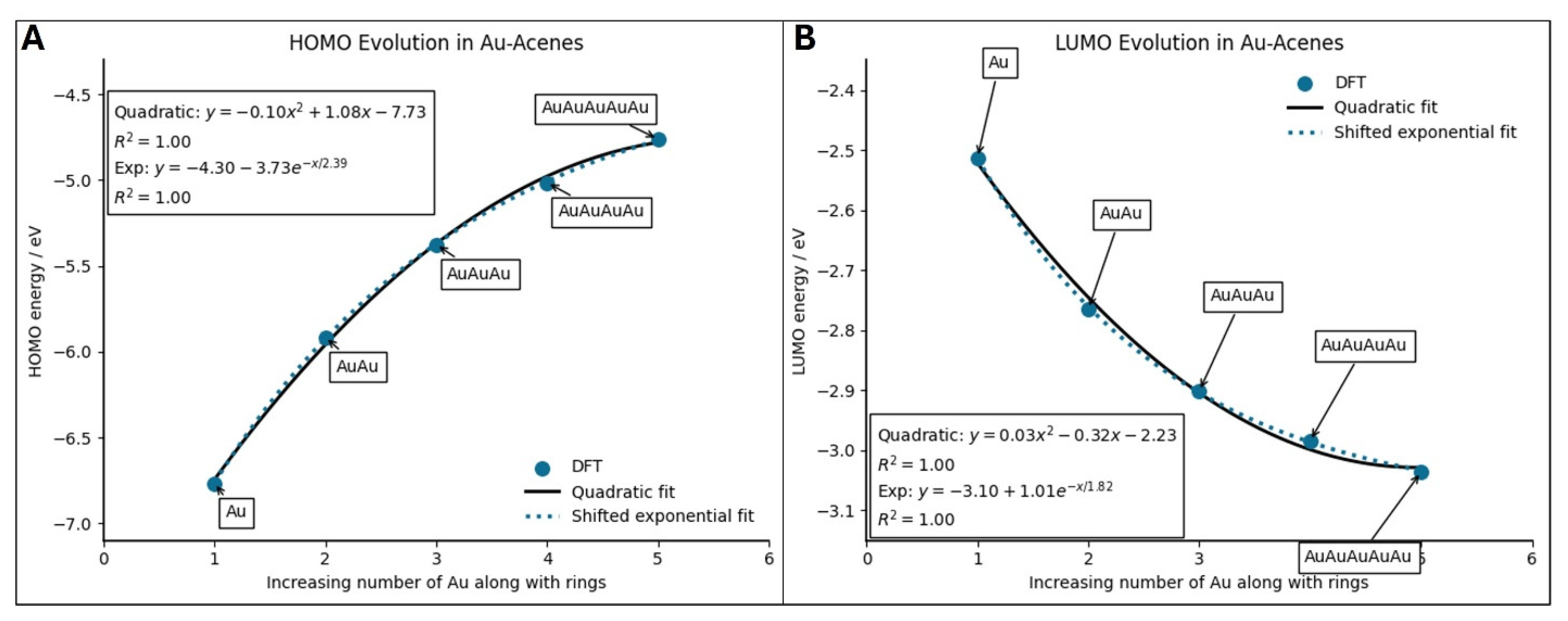
Au–acene complexes display a similar monotonic bandgap narrowing, decreasing from 4.2 to 1.7 eV. The HOMO and LUMO energies in Au–acenes display a smooth monotonic increase as conjugation length increases, and both quadratic and shifted-exponential models provide strong agreement (
Figure 6A,B). Analysis of the extracted decay lengths obtained from the exponential fit reveals that LUMO energies converge more rapidly than HOMO energies, although this difference is less pronounced than in Cu–acenes. These findings suggest a more uniform electronic scaling regime in Au systems, which aligns with weaker perturbation of the π-framework and diminished influence of localized metal–π interactions.
While the gold coordination significantly alters the frontier orbitals, particularly in anthracene–Au3 and tetracene–Au4, where the HOMO acquires substantial gold character, localizing on interior gold atoms, pentacene–Au5 shows the HOMO delocalized over multiple gold atoms. The LUMO exhibits a length-dependent shift, dominated by π*-carbon for smaller acenes up to anthracene–Au3, but with increasing contribution from gold in tetracene and pentacene. In comparison to pentacene–Cu5, Au coordination maintains a moderate BLA (0.06–0.08 Å) and sustains a persistent residual Peierls-type contribution. This structural feature contributes to a lower reduction in the KS band gap, yielding a larger gap of approximately 1.7 eV.
In both Cu- and Au-based systems, bandgap reduction is primarily driven by HOMO destabilization, with LUMO shifts playing a secondary role. Throughout the series, the HOMO increases by approximately 1.8 eV in Cu complexes and 2.0 eV in Au complexes, while the LUMO stabilizes by only about 0.8 eV (Cu) and 0.5 eV (Au) (
Figure 5B and
Figure 6B).
3.1.2. Bandgap Trends in Mixed Peri-Metal Systems Within Fixed Polyacenes
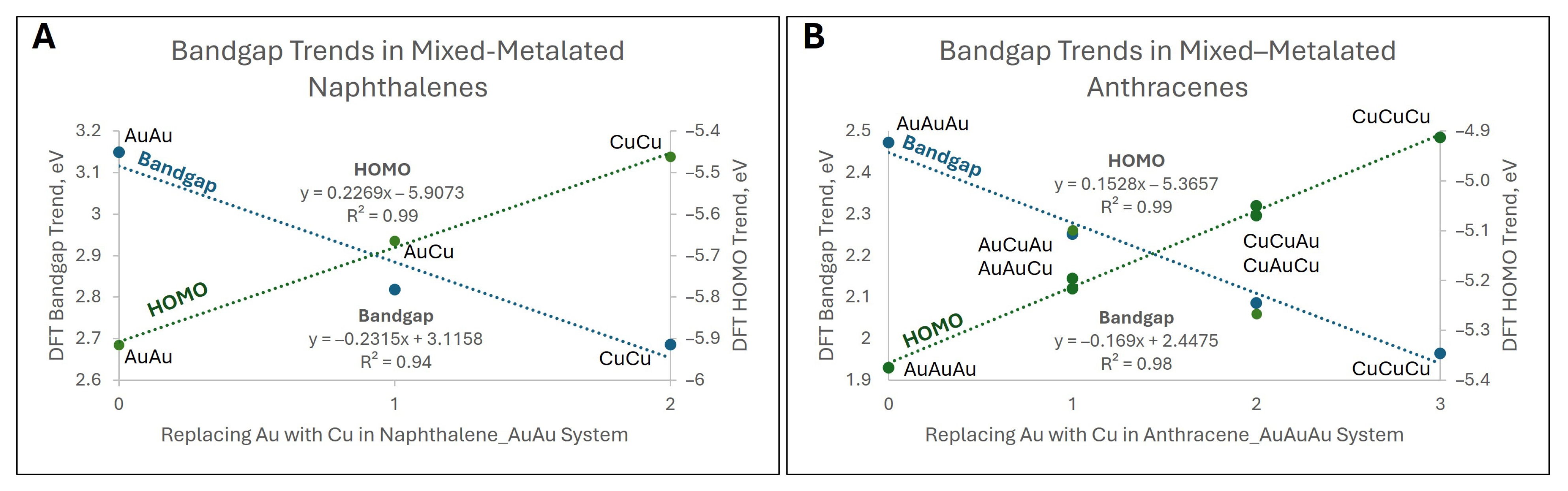
In mixed Au/Cu-metalated systems, progressive substitution of gold by copper in a given family systematically narrows the bandgap. This effect is primarily driven by destabilization of the HOMO, with minimal sensitivity to the peri-metal sequence. In the naphthalene system, the DFT bandgap decreases from approximately 3.15 eV (Au–Au) to 2.82 eV (Au–Cu) and 2.68 eV (Cu–Cu). This decrease is accompanied by an upward shift in the HOMO from −5.90 eV to −5.67 eV and −5.45 eV, respectively, indicating that HOMO destabilization governs the reduction in bandgap (
Figure 7A).
While the anthracene system presents multiple Au/Cu positional isomers, the electronic response remains nearly invariant. Non-adjacent and adjacent gold arrangements (AuCuAu vs. AuAuCu) differ by only about 0.03 eV in HOMO energy and 0.01 eV in bandgap (
Figure 7B). Similar behavior is observed for CuAuCu and CuCuAu, indicating that through-space interactions between peri-substituted metals weakly perturb frontier energetics. Tetracene-based mixed-metal systems exhibit the same trend, with Au→Cu substitution consistently reducing the bandgap, while isomeric effects remain secondary. The magnitude of bandgap change per metal substitution decreases with increasing π-extension, as indicated by progressively smaller slopes (−0.23 eV for naphthalene, −0.17 eV for anthracene, and −0.13 eV for tetracene,
Figure 7A,B). Structurally, all mixed-metal acenes from naphthalene to pentacene display minimal backbone BLA (≈0.005–0.026 Å), which is consistent with Clar-type aromatic bond differentiation and negligible quinoidal and Peierls-type distortions, regardless of metal composition or arrangement.
3.2. Machine Learning Model Predicting Ionization Energies
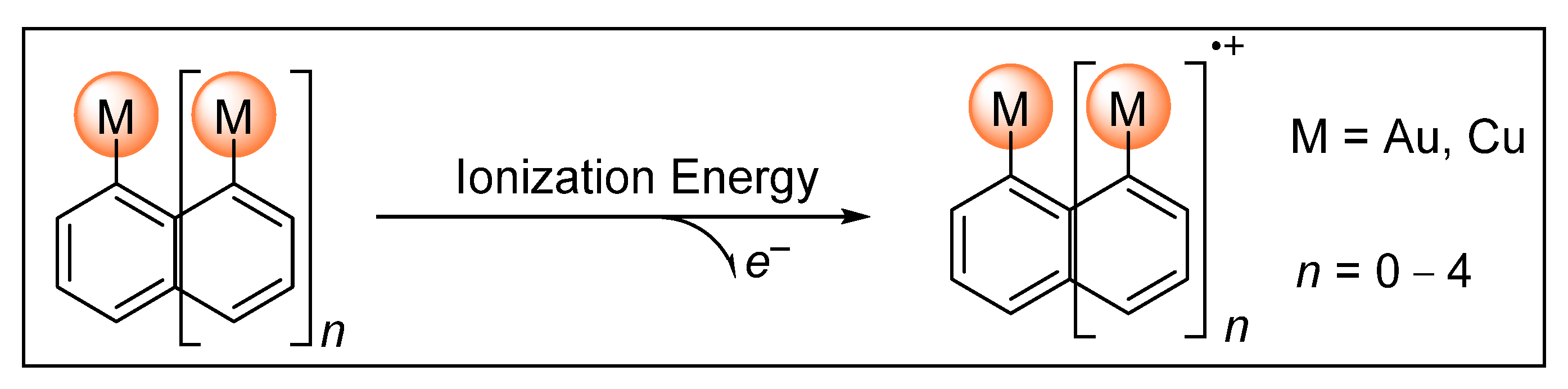
After the bandgap analysis, ionization energies (IEs) are examined using an ML framework that captures the energetics of hole formation in Au-, Cu-, and mixed-metalated acenes (
Figure 8). While band gaps reflect the combined behavior of both frontier orbitals, IE is determined mainly by HOMO and is thus sensitive to electronic and structural responses induced by oxidation. Consequently, IE serves as a more targeted probe of metal–π coupling, local metal environments, and sequence-dependent effects that may be partially obscured in bandgap trends.
Analogous to the bandgap model, a physics-based linear baseline that incorporates inverse conjugation length (1/R) and metal counts (nCu, nAu) captures the primary IE trends. Similarly, the residual deviations resulting from metal sequencing and positional effects are modeled using an ExtraTrees regressor with chemically interpretable descriptors (see
Figures S17 and S28 in the Supplementary Materials). The fitted coefficients indicate a stronger HOMO-destabilizing effect for Cu compared to Au, which aligns with enhanced Cu–π interaction and greater structural relaxation upon oxidation. Importantly, the metal-count coefficients are larger for IE than for band gaps, suggesting that oxidation energetics are more sensitive to metal identity than to electron addition.
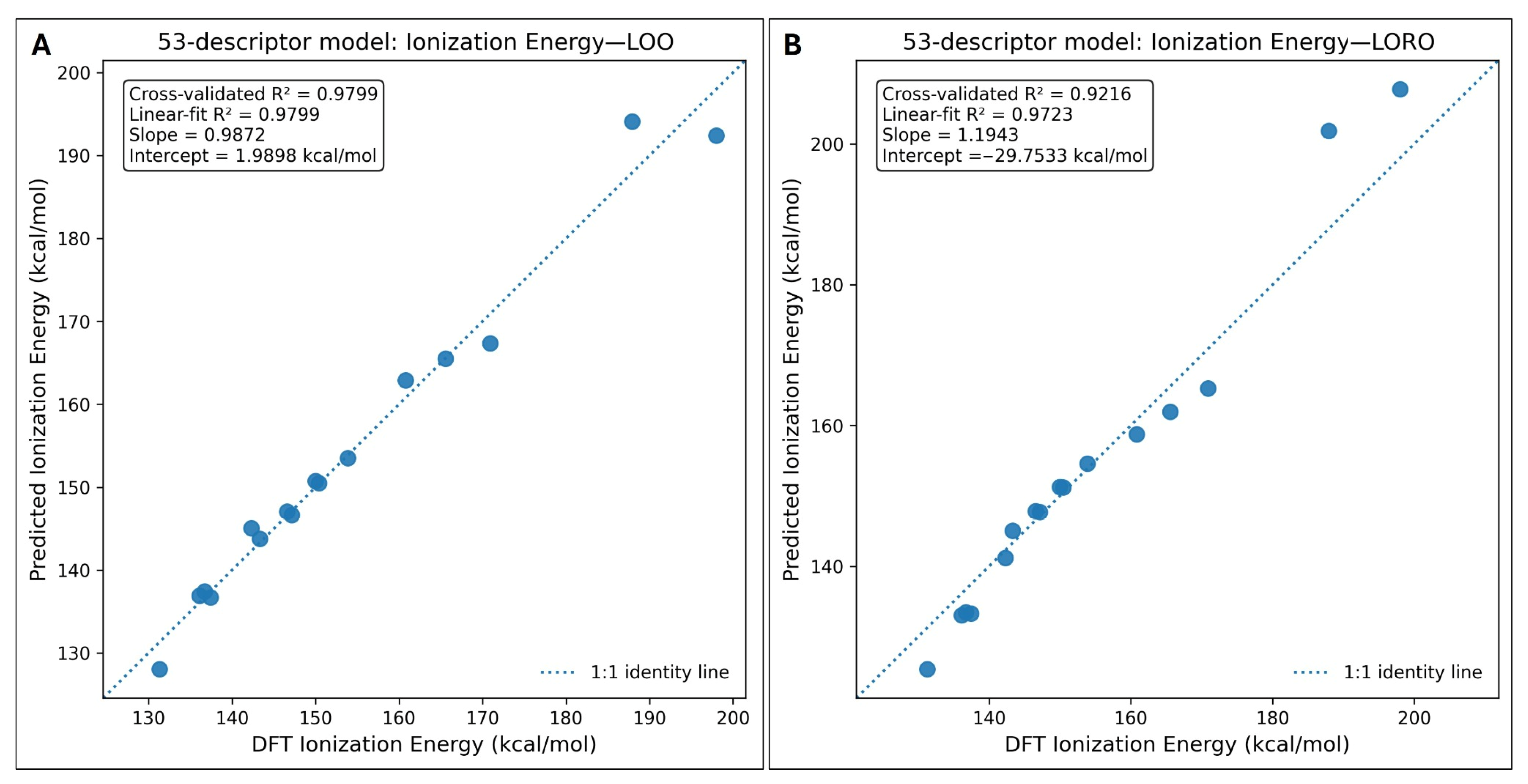
The resulting 53-descriptor model demonstrates strong predictive performance for ionization energies under leave-one-out (LOO) cross-validation (R
2 ≈ 0.98, MAE ≈ 1.79 kcal/mol, RMSE ≈ 2.61 kcal/mol,
Figure 9A) and maintains robust extrapolative capability under the more rigorous leave-one-ring-out (LORO) protocol (R
2 ≈ 0.92, MAE ≈ 3.69 kcal/mol, RMSE ≈ 5.11 kcal/mol,
Figure 9B). On the other hand, the compact 4-descriptor model marginally reduces the LORO error (R2 ≈ 0.93, MAE ≈ 3.26 kcal/mol, RMSE ≈ 4.87 kcal/mol) but does not enhance LOO accuracy compared to the 53-descriptor model. These results suggest that dimensionality reduction offers limited and inconsistent benefits for IE prediction (
Figure S27; Tables S22 and S23). Within the 53-descriptor model, pair-density and related interaction families are prominently utilized (see
Figure S18 in the Supplementary Materials). In contrast, the compact model’s impurity importance is primarily influenced by pure-series size corrections (see
Figure S30 in the Supplementary Materials). However, held-out grouped permutation analysis does not identify any compact model descriptor family as a consistently independent contributor to IE (
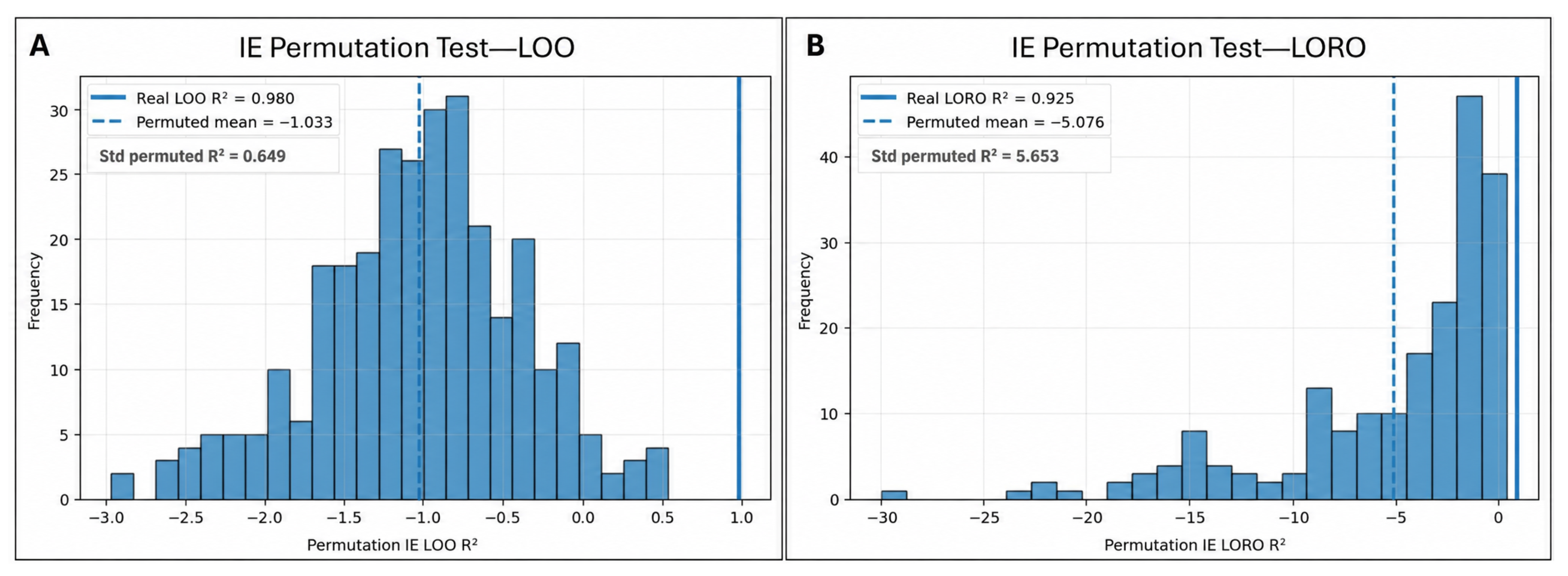
Table S34). Consequently, feature importance is interpreted as model utilization rather than as evidence of direct physical causality. Permutation tests further validate the statistical significance of the ionization-energy model. Under LOO validation, the observed R
2 of 0.98 is well outside the permuted distribution (mean R
2 = −1.03), resulting in an empirical
p-value of 0.003 (
Figure 10B). Similarly, for the leave-one-ring-out test, the observed R
2 of 0.93 surpasses all permuted baselines (mean R
2 = −5.08;
p = 0.005) (
Figure 10A). Thus, the IE model captures a reproducible, non-random descriptor–property relationship under cross-validation.
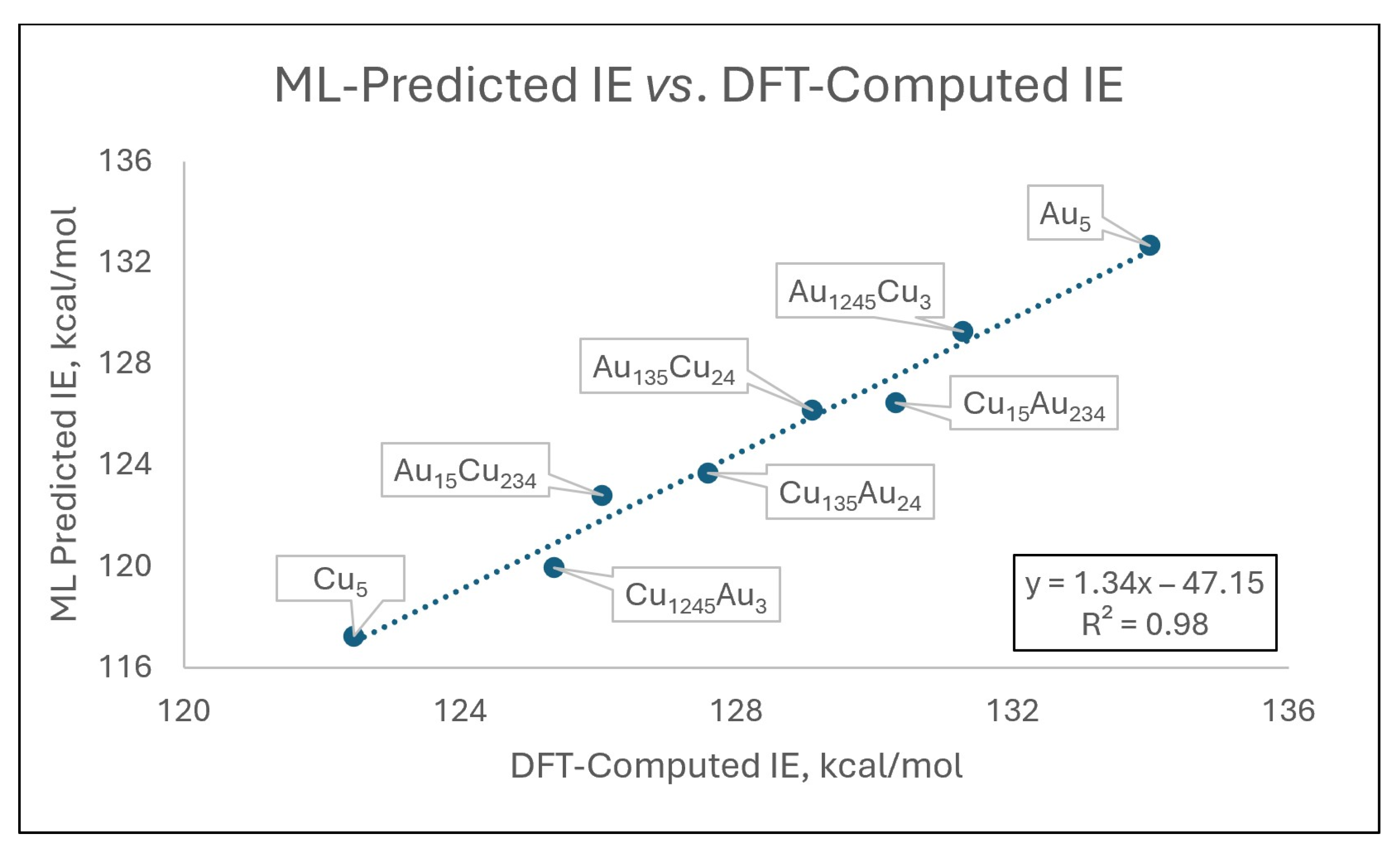
The extrapolative performance of the IE model was further assessed using metalated pentacene that had previously been excluded from the training set. Within the absolute range of pentacene DFT-computed IEs from 122 to 134 kcal/mol, the model exhibits a mean absolute percentage error of 2.74%, with a maximum relative error in the range of 3–4% for larger Cu-rich systems, a trend similar to that of KS bandgaps (
Figure 11). This error remains within the typical uncertainty associated with DFT-based IE calculations. Despite the systematic offset observed for Cu-rich systems, the model preserves the correct ordering and relative spacing of ionization energies across all metalated pentacene sequences. It accurately reproduces the monotonic decrease from Au-rich to Cu-rich compositions and distinguishes sequence-dependent differences among isomers with identical metal counts. As with KS bandgaps, the model shows strong agreement with DFT without structural or electronic inputs, indicating that IE is primarily determined by conjugation length and local metal environment.
3.3. Quantum Chemical Basis for Ionization Energy Trends in Metalated PAHs
3.3.1. Ionization Energy Trends in Cu– and Au–Acenes
Ionization energies offer a complementary perspective on the evolution of the electronic structure in metal–acenes by assessing the stability of the cationic state.
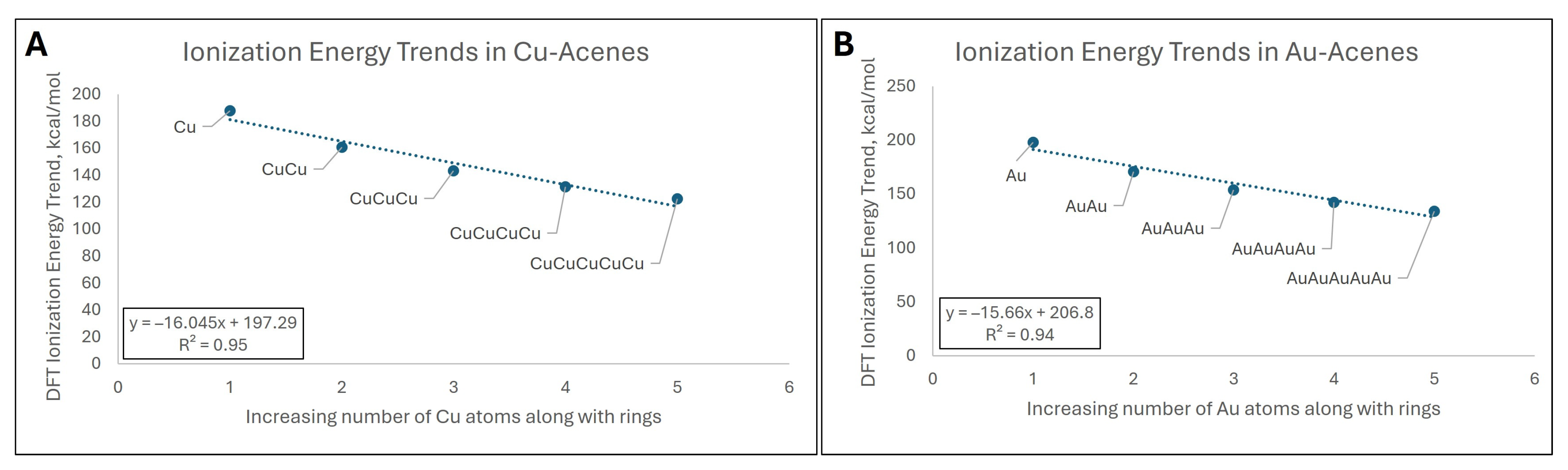
The Cu–acene series exhibit a systematic size-dependent influence on radical cation stability. As the acene extends from benzene–Cu to pentacene–Cu
5, the adiabatic IE decreases markedly from 188 to 122 kcal/mol, exhibiting a near-linear relationship with ring number (R
2 ≈ 0.95,
Figure 12A). This trend corresponds to a progressive destabilization of the HOMO, shifting from −6.15 eV in benzene-Cu to −4.27 eV in pentacene–Cu
5. Natural charge analysis reveals the mechanism underlying oxidative stabilization. In naphthalene–Cu
2, copper atoms exhibit nearly uniform charges, whereas anthracene–Cu
3 displays internal polarization at metal centers, with terminal copper atoms (+0.44e) more electropositive than the central copper atom (+0.26e). Upon ionization, the central copper atom in anthracene–Cu
3 shows a slightly greater increase in charge (+0.122e, reaching +0.39e) compared to the terminal copper atoms. A similar trend is observed for tetracene–Cu
4 and pentacene–Cu
5, with the latter showing an increased change in charge (Δq) of +0.18e at terminal copper sites, suggesting that peripheral metal atoms preferentially accommodate oxidative charge while interior copper atoms stabilize the C–Cu framework. Structural analysis indicates that larger acenes more effectively accommodate ionization-induced distortion. Oxidation leads to a substantial increase in BLA in benzene–Cu (1.9 × 10
−3 Å → 5.9 × 10
−2 Å), reflecting pronounced hole localization. In contrast, BLA decreases upon ionization from naphthalene-Cu
2 to pentacene–Cu
5, consistent with enhanced π-delocalization and partial restoration of bond equalization. This trend parallels the decrease in hole reorganization energies (
λh), from 0.234 eV in benzene–Cu to 0.189 eV in pentacene–Cu
5, with all values falling within the typical semiconductor range.
The Au–acene series exhibits a linear decrease in adiabatic IE as acene length increases, ranging from 198 to 134 kcal/mol. Both the trend and the slope are closely aligned with those observed for Cu–acenes (R
2 = 0.94,
Figure 12B). This decrease is associated with the progressive destabilization of the HOMO, shifting from −6.77 eV in benzene-Au to −4.76 eV in pentacene–Au
5. Natural population analysis indicates that gold atoms function as mild electron donors upon ionization, becoming more electropositive; however, the magnitude of this charge shift is significantly smaller than that observed in copper systems. For instance, terminal Au atoms in pentacene–Au
5 gain only +0.09e, approximately half the +0.18e observed in pentacene–Cu
5. As the π-conjugated framework expands, the Au–acene series exhibits an oxidative damping effect, with the average charge increase per Au atom systematically decreasing from naphthalene–Au
2 to pentacene–Au
5 (+0.18e → +0.08e). From a geometric perspective, Au–acenes display trends analogous to those of Cu–acenes. Oxidation of benzene–Au results in a pronounced quinoidal-type distortion (BLA = 0.058 Å), which is indicative of localized π-hole formation and a substantial structural penalty. In contrast, larger acenes show reduced BLA upon ionization, signifying increased π-hole delocalization along the conjugated backbone. Correspondingly, hole reorganization energies (
λh) decrease from benzene to pentacene (0.190 eV → 0.139 eV), values that are not only favorable for semiconductor applications but also lower than those of the analogous Cu complexes.
3.3.2. Ionization Energy Trends in Mixed Peri-Metal Systems Within Fixed Polyacenes
The IE trends in mixed Au/Cu–polyacene clusters arise from the electronegativity difference between gold (2.5) and copper (1.9), as well as site-specific polarization due to relativistic stabilization of the gold 6s orbital. In heterometallic naphthalene prototypes, gold functions as an electronic sink, significantly reducing the positive charge in the neutral state (qAu ≈ +0.19e) relative to copper (qCu ≈ +0.45e). Natural Bond Orbital (NBO) second-order perturbation analysis identifies two structurally connected donor–acceptor interactions consistent with peri-C→Cu→Au orbital delocalization, involving donation from a peri-carbon lone pair into a Cu-centered orbital, together with strong Cu–Au orbital mixing. The large E(2) values of approximately 69 and 96 kcal/mol are interpreted qualitatively as indicators of strong orbital interaction rather than as literal or sequential charge-transfer energies.
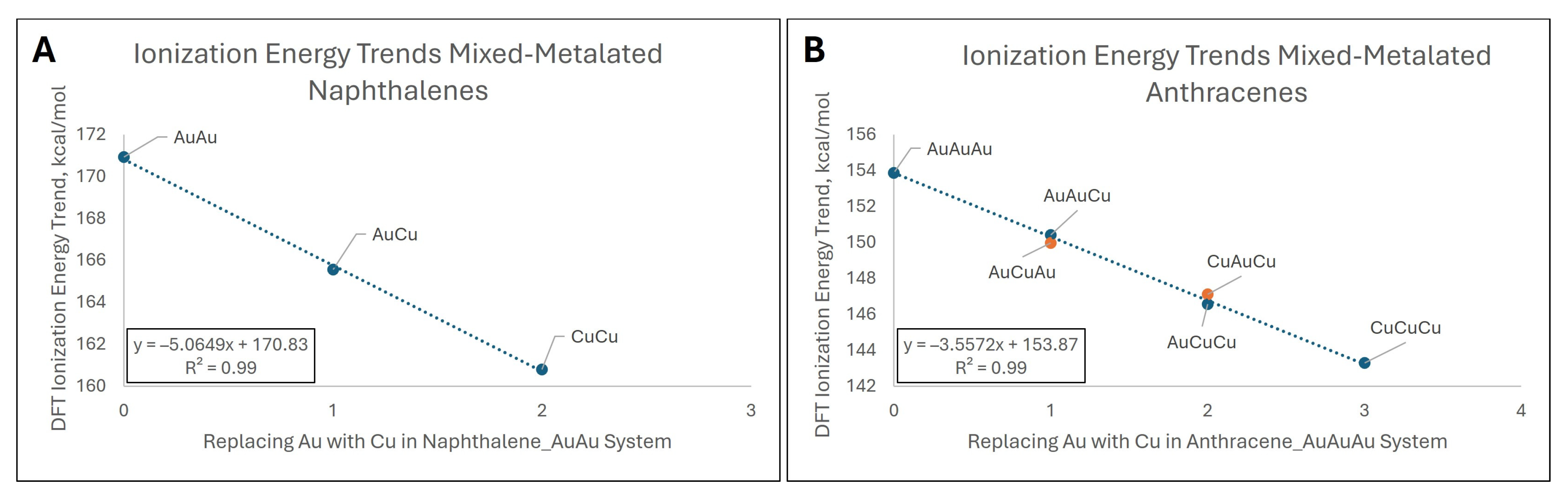
Substituting copper with gold results in a monotonic increase in IE (161 to 171 kcal/mol), reflecting the stabilization of gold-dominated frontier orbitals (
Figure 13A). In trimetalated anthracenes, increased π-delocalization lowers the IE compared to naphthalene. Nevertheless, gold content remains the primary determinant of oxidative stability, as IE decreases monotonically from anthracene–Au
3 (153 kcal/mol) to anthracene–Cu
3 (143 kcal/mol) (
Figure 13B). Isomeric variation in metal sequencing has minimal impact (ΔIE ≈ 1 kcal/mol,
Figure 13B). Larger tetracene and pentacene systems demonstrate a similar trend in ionization energies, with isomeric variations confined to within 2 kcal/mol. This observation suggests that comparable electronic factors govern their electronic structure (see
Figure S12 in the Supplementary Materials).
Structurally, mixed Au–Cu naphthalenes exhibit negligible BLA in both neutral and cationic states (~7 × 10⁻³ Å), indicating that oxidation is localized at the metal peri interface with minimal quinoidal distortion, unlike homometallic analogs. Mixed-metal anthracenes display intermediate neutral-state BLA (~0.023–0.026 Å), which diminishes upon oxidation, especially in copper-rich and heterometallic systems. This pattern suggests near-complete bond equalization and efficient π-hole delocalization facilitated by metal mediation. Comparable structural trends are observed in larger tetracene and pentacene compounds. Correspondingly, hole reorganization energies decrease markedly with increasing π-extension, from ~0.31 eV (mixed-metalated naphthalene) to ~0.13–0.15 eV (mixed-metalated tetracenes/pentacenes), approaching values typical of optimal semiconductors. At constant metal composition, isomeric ordering produces only minor variations in λh (≤0.02–0.03 eV), demonstrating that charge accommodation is governed primarily by Au/Cu content and π-framework length rather than metal sequence.
Overall, IE trends are governed primarily by the number of Au atoms rather than their specific arrangement. NPA and NBO analyses indicate enhanced charge delocalization and metal–metal coupling with increasing Au content, whereas Cu-rich frameworks tend to localize charge.
3.4. Machine Learning Model Predicting Electron Affinities
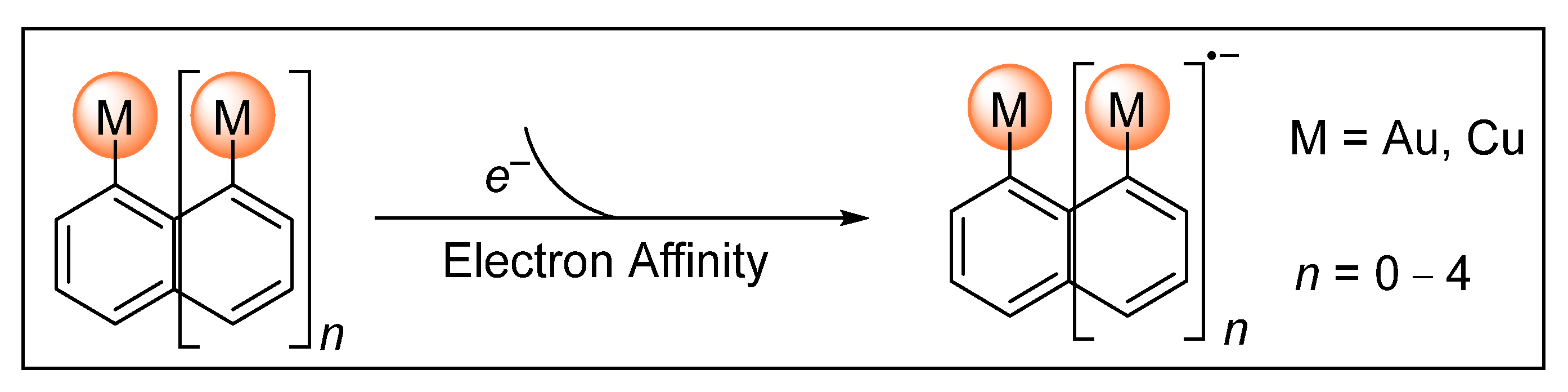
Electron affinity, which measures the stability of an anion formed by electron addition to a neutral molecule, is a key parameter for assessing a compound’s optoelectronic properties (
Figure 14).
The DFT-computed EA in gold- and copper-metalated acenes reveals a non-linear, length-dependent increase in EA across the acene series. Importantly, mixed-metal derivatives deviate from simple additive behavior, indicating that EA is controlled not only by overall metal composition but also by sequence-dependent cooperative interactions. The residual deviations resulting from metal sequencing and positional effects are modeled using an ExtraTrees regressor with chemically interpretable descriptors (see
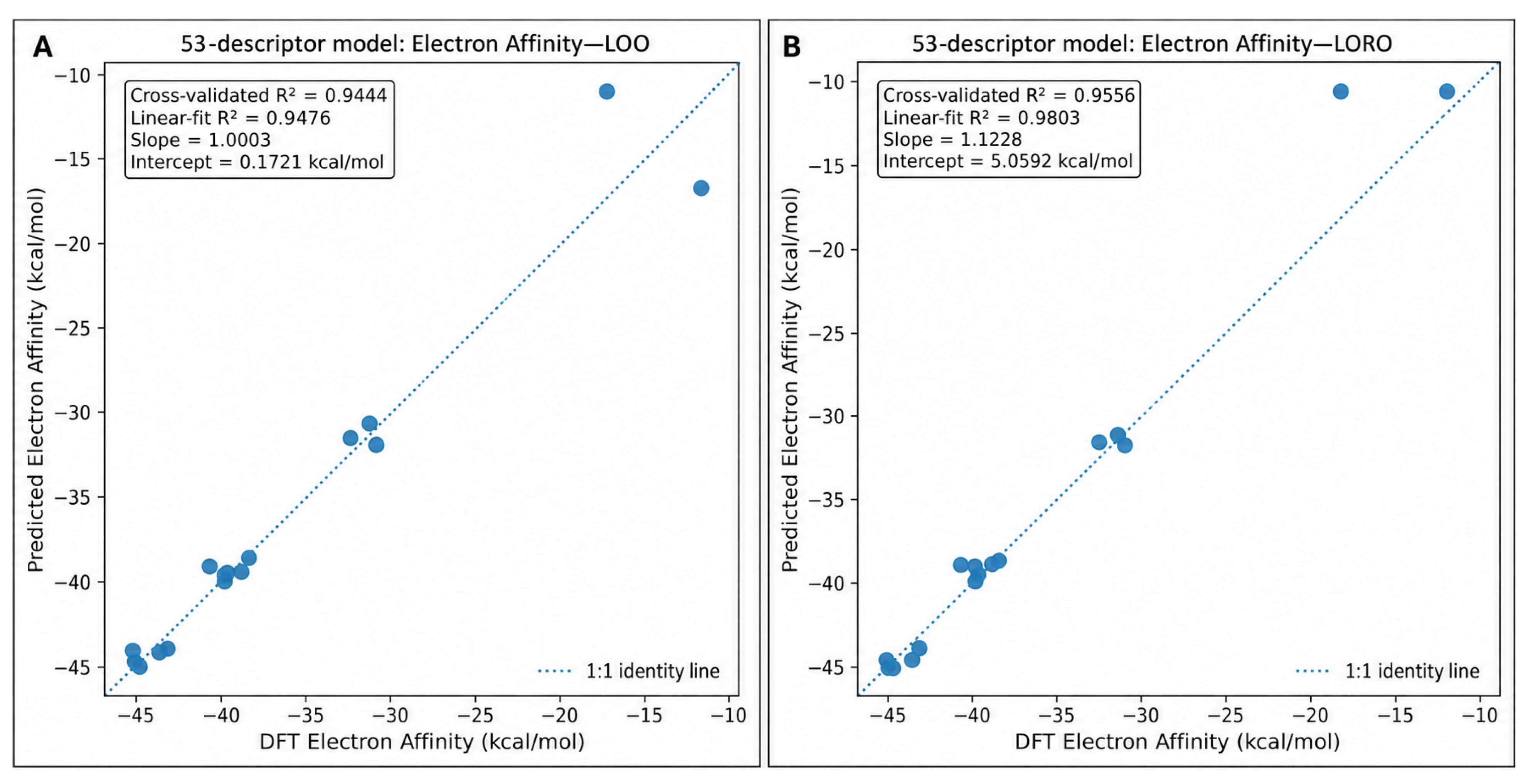
Figure S15 in the Supplementary Materials for residuals). Based on these considerations, the resulting 53-descriptor model demonstrated strong predictive performance under leave-one-out (LOO) cross-validation, achieving R
2 ≈ 0.94, MAE ≈ 1.26 kcal/mol, and RMSE ≈ 2.21 kcal/mol (
Figure 15A). The model also maintains excellent generalization under the more stringent leave-one-ring-out (LORO) protocol (R
2 ≈ 0.95, MAE ≈ 1.01 kcal/mol, RMSE ≈ 1.978 kcal/mol,
Figure 15B). On the other hand, the compact four-descriptor model showed a remarkable improvement by reducing errors in all systems, achieving LOO R
2 ≈ 0.94, MAE ≈ 1.16 kcal/mol, and RMSE ≈ 2.29 kcal/mol, as well as LORO R
2 ≈ 0.96, MAE ≈ 0.95 kcal/mol, and RMSE ≈ 1.82 kcal/mol (see
Figure S23 and Tables S20 and S21 in the Supplementary Materials).
Feature importance analysis reveals that EA residuals are primarily influenced by nearest-neighbor (NN) density, identity of the nearest neighbor, and length of a particular sequence (see
Figure S16 in the Supplementary Materials). Within the compact model, impurity-based feature importance indicates that terminal Cu chemistry and pure-series size corrections are the most influential variables (see
Figure S26 in the Supplementary Materials). Additionally, held-out grouped permutation analysis independently identifies terminal chemistry as the primary contributor to EA prediction (see
Table S34 in the Supplementary Materials).
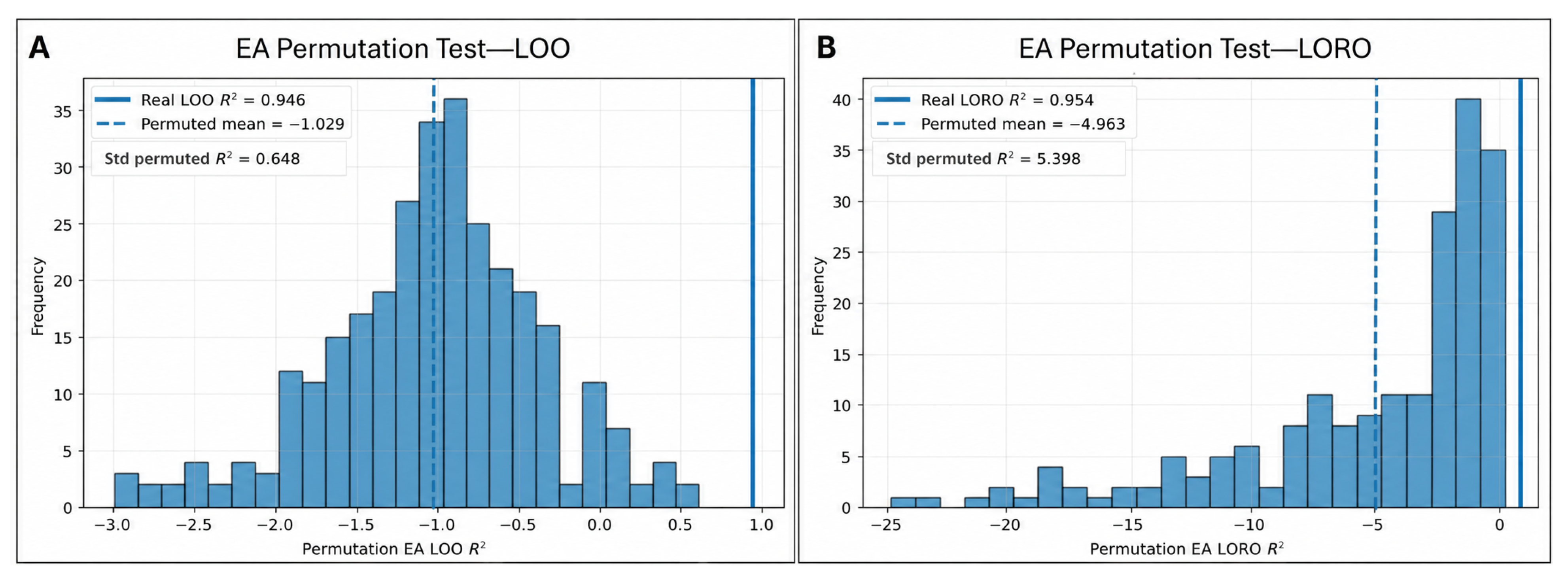
Permutation tests further confirm the statistical significance of the EA machine learning model. Under leave-one-out validation, the observed R
2 of 0.95 is substantially higher than the permuted distribution (mean R
2 ≈ −1.03), resulting in an empirical p-value of approximately 0.003 (
Figure 16A). Similarly, within the LORO framework, the observed R
2 of 0.95 exceeds all permuted baselines (mean R
2 ≈ −4.96;
p ≈ 0.005,
Figure 16B). These results demonstrate that the complete hybrid model captures a reproducible descriptor–electron affinity relationship beyond that expected from random target assignment.
Out-of-distribution extrapolation to pentacene derivatives, which were excluded from the training set, further validated the ML model’s predictive performance. Despite being trained solely on acenes with up to four rings, the model produces chemically consistent EA predictions for pentacene, with values clustering between −47 and −49 kcal/mol across all metal sequences, with a very low mean absolute error of 0.80 kcal/mol and mean absolute percentage error of 1.68%. The dominant effect arises from π-extension, while sequence-dependent residuals introduce a controlled, non-additive modulation of approximately ±1 kcal/mol. Copper-rich and asymmetric sequences yield the greatest anion stabilization, whereas gold-rich and symmetric motifs result in slightly lower EAs (see
Figure S32 in the Supplementary Materials). These trends are consistent with DFT findings regarding the balance between electronic stabilization and metal-induced structural reorganization. Similar to the results for band gaps and IE, the model closely matches DFT predictions despite not relying on structural or electronic information. This suggests that EA is mainly controlled by a few key descriptors, namely conjugation length and the local metal environment. Collectively, the EA-ML model exhibits generalizability beyond its training domain and accurately captures the emergent non-additive phenomena associated with electron addition in extended metalated acenes.
3.5. Complementary Roles of the Broad and Compact Coordinate-Free Models
The two residual representations fulfil complementary roles within a fully coordinate-free hybrid architecture. The original 53-descriptor model assesses whether predictive information is distributed across a chemically comprehensive space defined by composition, topology, and sequence descriptors. In contrast, the compact 4-descriptor model examines whether these trends persist after substantially removing correlated and redundant inputs. For all three targets, the compact model matches or surpasses four of the six all-system LOO/LORO MAE comparisons and yields an improved LORO MAE for the Kohn–Sham gap, electron affinity, and ionization energy. The broad model ensures comprehensive descriptor space coverage, whereas the compact model offers enhanced parsimony and interpretability. Neither model functions as a stand-alone direct property predictor; both maintain the same coordinate-free analytical baseline and differ solely in the residual correction applied.
3.6. Quantum Chemical Basis for Electron Affinity Trends in Metalated PAHs
3.6.1. Electron Affinity Trends in Cu– and Au–Acenes
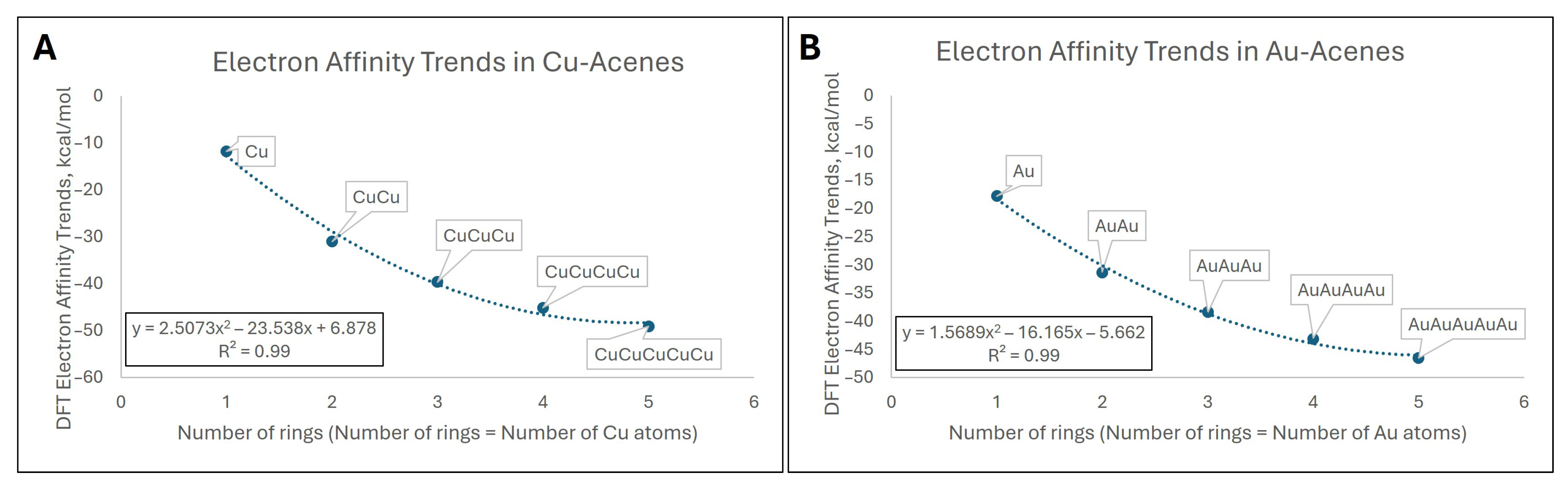
In copper-metalated acenes, EA increases nonlinearly with π-extension and metal–ligand coupling, following a quadratic trend (R
2 ≈ 0.99,
Figure 17A). EA values range from weak stabilization in benzene–Cu (approximately −12 kcal/mol) to strong stabilization in pentacene–Au
5, approaching −49 kcl/mol.
Natural charge analysis reveals a systematic evolution in reduction character as acene length increases. Benzene–Cu undergoes highly localized, metal-centered reduction, as indicated by a decrease in Cu charge from +0.45e to −0.27e, consistent with minimal π-system involvement and modest EA. In naphthalene–Cu2, EA increases sharply as reduction delocalizes between the Cu atoms, with equivalent charge decreases on both sites (+0.40e to +0.11e). Anthracene–Cu3 shows further EA enhancement, though with diminishing increments, and exhibits site-selective reduction: the central Cu atom becomes slightly negative (+0.262e to −0.035e), while terminal Cu atoms remain positively charged (+0.433e to +0.322e). In tetracene–Cu4 and larger systems, EA plateaus near 45 kcal/mol, with all Cu centers remaining formally positive but displaying persistent charge asymmetry favoring central sites. Structural responses to reduction also vary with acene length. Benzene–Cu exhibits localized Cu displacement (approximately 0.11 Å), minimal BLA increase, and low reorganization energy (λe = 0.127 eV). In contrast, naphthalene–Cu2 shows Cu–Cu contraction (0.17 Å), moderate BLA increase, and higher λe (0.199 eV). In anthracene–Cu3, electron addition suppresses BLA (0.023 → 0.0069 Å) but induces substantial Cu–Cu contraction (up to 0.31 Å), leading to a higher reorganization energy (λe) of 0.263 eV. Tetracene–Cu4 displays renewed backbone distortion (BLA: 0.005 to 0.019 Å) and the largest reorganization penalty (λe = 0.297 eV). Overall, these results demonstrate that while π-extension enhances EA, copper-driven structural relaxation increasingly determines the energetic cost of electron addition in larger acenes.
Similar to Cu–acenes, the DFT-computed EAs increase from benzene–Au to pentacene–Au
5, following a quadratic trend (R
2 ≈ 0.99,
Figure 17B). However, this series exhibits stronger metal participation, attributed to the relativistic stabilization of Au 6s and 6p orbitals. In benzene–Au, reduction is primarily metal-centered, as evidenced by the shift in Au charge from +0.22e to −0.41e, significant Au displacement (~0.16 Å), and a large electron reorganization energy (
λe = 0.292 eV). In naphthalene–Au
2, the EA increases sharply due to cooperative reduction, with Au atoms transitioning from weakly cationic (+0.24e) to slightly negative (−0.04 to −0.05e), indicating delocalization of the added electron over both Au atoms and the π system. Extension to anthracene–Au
3 and tetracene–Au
4 results in smaller EA increments and modest site differentiation in the neutral state. Upon reduction, the central Au atom preferentially accommodates electron density (q ≈ −0.07e), while terminal Au atoms remain positive, a trend that continues in larger acenes. Electron addition induces progressively smaller structural distortions with increasing acene length: Au–Au distances contract by approximately 0.10–0.21 Å, while backbone distortion remains minimal (ΔBLA ≈ 0.002–0.004 Å). As a result,
λe decreases monotonically, reaching a minimum in tetracene–Au
4 (0.16 eV), where reduced BLA reflects enhanced π-bond equalization. Although Au–acenes display lower EA values than their Cu analogs, relativistic stabilization in Au complexes enables more efficient charge accommodation and a continuous reduction in reorganization energy, contrasting with the increasing
λe observed in the Cu–acene series.
3.6.2. Electron Affinity Trends in Mixed Peri-Metal Systems Within Fixed Polyacenes
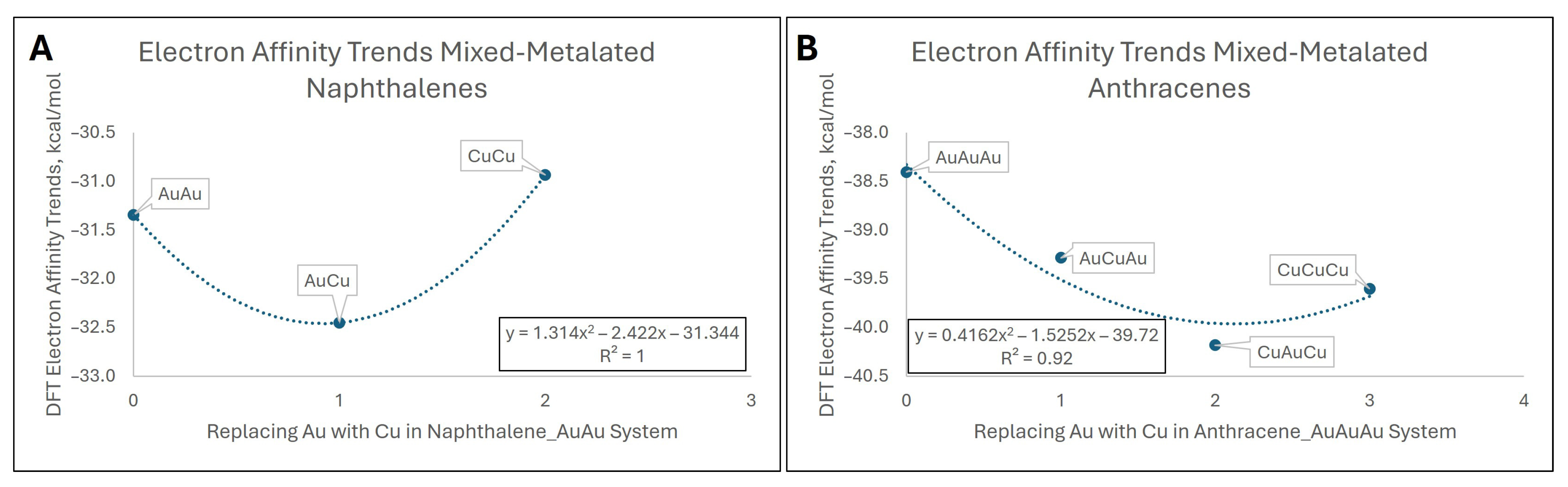
Mixed Au/Cu-metalated acenes display non-additive, length-dependent electron affinity (EA) behavior, indicating that metal effects are not simply additive. In shorter acenes, such as naphthalene and anthracene, EA exhibits a shallow non-linear dependence on the Au/Cu ratio (
Figure 18A,B). Heterometallic systems provide slightly greater anion stabilization compared to homometallic analogs. In the naphthalene–AuCu prototype, reduction is highly site-selective at Au (q: +0.19 to −0.22e), while Cu remains cationic but undergoes significant structural relaxation. The π backbone is largely unaffected (BLA ≈ 0.006–0.007 Å), whereas the Cu–Au distance contracts by 0.155 Å and Cu is displaced by approximately 0.17 Å, resulting in a substantial reorganization energy (
λe = 0.313 eV). The NBO analysis identifies a distinct Au–Cu through-space charge relay mechanism that is absent in homometallic systems.
A coupled π–Cu–Au donor–acceptor interaction pathway is identified by the ordering and connectivity of the dominant NBO interactions rather than by the absolute magnitude of individual E(2) values.
In this mechanism, Cu contributes through polarization and relaxation, while the excess electron is primarily stabilized on Au.
This balance between electronic stabilization and structural penalty continues in larger acenes. Beginning with anthracene, metal sequencing starts to influence both EA and
λe, although EA variations remain modest (approximately 1–1.5 kcal/mol). Copper-rich or symmetric configurations, such as CuAuCu, provide the greatest anion stabilization (EA ≈ −41.8 kcal/mol,
Figure 18B) but also result in the highest reorganization energies (
λe = 0.31–0.37 eV) due to significant metal displacements (0.25–0.30 Å) with minimal changes in BLA. In contrast, structures like AuCuAu partially alleviate electronic frustration, achieving moderately high EA (approximately −40.2 kcal/mol,
Figure 18B) with low
λe (approximately 0.13 eV), a favorable combination not observed in shorter polyacenes. Comparable trends are found in mixed-metalated tetracenes and pentacenes, where Cu-rich sequences display higher EA but also the largest reorganization penalties. Conversely, Au-rich or symmetric motifs maintain lower
λe values (0.16–0.21 eV). Overall, these findings indicate that in mixed-metal acenes, increased electron binding is often counterbalanced by significant metal-driven structural relaxation, and optimal electron acceptor performance is achieved only when charge localization and reorganization are effectively balanced.
3.7. ML–DFT Deviations Reveal Emergent Excited-State Spin Regimes
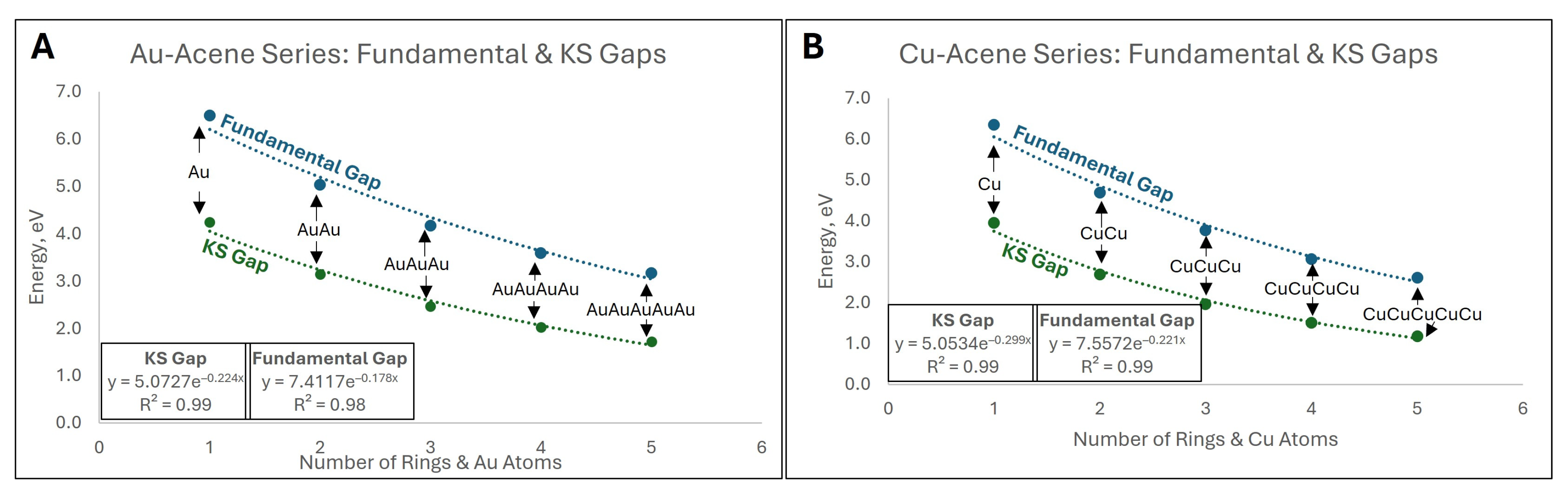
In developing a DFT-based dataset for ML models, a significant reduction in both the fundamental and KS bandgaps was observed compared to those of unsubstituted polyacenes. The bandgaps in both the gold–acenes (
Figure 19A) and copper–acenes (
Figure 19B) decreased, with the latter series exhibiting the most rapid decline. While accurately reproducing the DFT bandgap trends, the ML model also corroborated that the accelerated gap narrowing in Cu–acenes is an intrinsic electronic structure feature rather than a numerical artifact.
This observation motivated further investigation of the excited-state electronic structure using time-dependent density functional theory (TD-DFT). TD-DFT calculations were performed at the B3LYP/GENECP level, employing the 6-311++G(d,p) basis set for carbon and hydrogen, def2-TZVP for copper, and LANL2DZ for gold. These calculations revealed an unusual collapse of the singlet–triplet (S-T) gap in the copper–acene series. In contrast, the Au–acene series maintains a consistent S-T separation between 0.4 and 0.5 eV across all investigated acenes up to the pentacene–Au
5 system. To assess whether the near-degeneracy between the S
1 and T
1 states arises from response-level artifacts in TD-DFT [
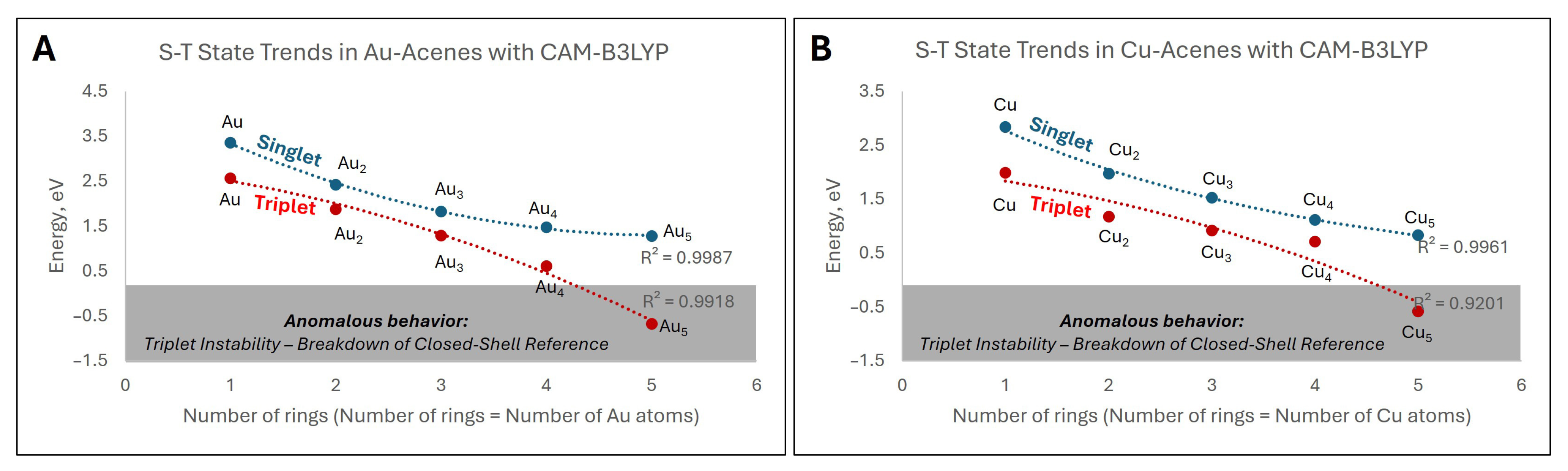
44], calculations were repeated using the Tamm–Dancoff approximation (TDA). The continued observation of singlet–triplet gap collapse in Cu–acenes, coupled with its absence in Au–acenes under the TDA framework, demonstrates that this phenomenon is intrinsic to the electronic structure representing two limiting singlet–triplet regimes rather than a consequence of the response formalism. To further evaluate methodological robustness, TD-DFT calculations were conducted with the range-separated hybrid functional CAM-B3LYP [
45,
46]. While S
1 energies decrease steadily as conjugation increases, the T
1 energies become anomalously negative in extended systems, such as approximately −0.67 eV in pentacene–Au
5 (
Figure 20A) and −0.58 eV in pentacene–Cu
5 (
Figure 20B). This indicates significant triplet instability in the closed-shell reference state. The consistent collapse of the singlet–triplet gap across different functionals suggests this behavior is due to intrinsic electronic structure rather than a computational artifact. Therefore, the following discussion focuses on B3LYP results, which provide qualitatively reliable singlet–triplet trends within a single-reference framework.
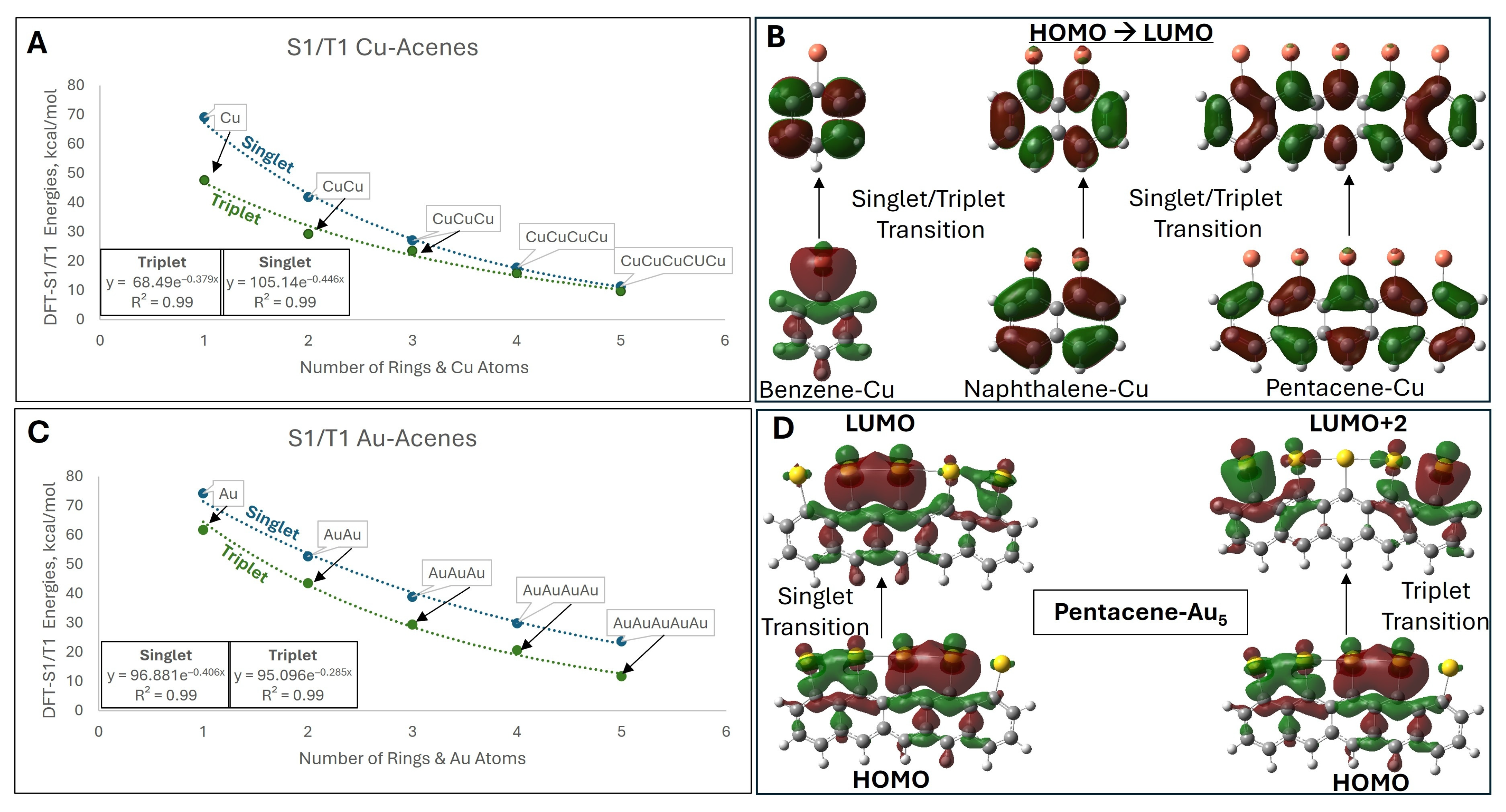
Cu–acenes display a regime in which both S
1 and T
1 states are consistently dominated by the same frontier HOMO → LUMO excitation across the series (
Figure 21B), thereby preserving the exchange-partner character (see
Table S43 in the Supplementary Materials). Nevertheless, the singlet–triplet gap decreases markedly with increasing conjugation, ranging from 0.93 eV in benzene–Cu to 0.05 eV in pentacene–Cu
5 (
Figure 21A). In contrast, Au–acenes exhibit relatively constant singlet–triplet separations across the series, ranging from approximately 0.40 to 0.52 eV from naphthalene–Au
2 to pentacene–Au
5 (
Figure 21C). Although the lowest singlet state remains primarily frontier-derived, the triplet manifold demonstrates increased metal-mediated orbital mixing (
Figure 21D).
Natural population analysis shows significant spatial charge differentiation in extended Cu–acenes. In the neutral state, terminal Cu centers remain strongly positive (~+0.44e), while interior sites are less positive (~+0.26–0.35e), resulting in a directional charge distribution along the metal chain. Upon excitation, charge redistribution becomes highly state-dependent. In the singlet state, Cu centers experience notable depolarization, with total metal charge decreasing by ~0.24e in benzene–Cu and ~0.16e in tetracene–Cu4. This effect is asymmetric: interior Cu atoms show the largest charge changes (Δq ≈ +0.10e in tetracene–Cu4), while terminal Cu sites remain mostly unchanged or slightly more positive. In contrast, triplet states display weaker and less consistent redistribution, with total Cu charge changes near zero or negative (e.g., −0.008e in naphthalene–Cu2 and −0.015e in anthracene–Cu3). NBO second-order perturbation analysis reveals strong metal-centered donor–acceptor and intermetal coupling interactions, while the main excitations are frontier-derived. The resulting asymmetry between singlet and triplet metal participation reduces effective exchange interactions, leading to a collapse of the singlet–triplet gap.
Natural population analysis reveals that Au–acenes exhibit relatively uniform metal polarization in the neutral state (qAu ≈ +0.23–0.27e), with only minor differences between terminal and interior sites. Upon singlet excitation, Au centers undergo significant charge redistribution, with total metal charge changes decreasing smoothly from benzene–Au (≈+0.27e) to tetracene–Au4 (≈+0.20e). This trend suggests that singlet-state stabilization results from collective Au participation rather than site-localized charge accumulation. Although this redistribution influences the entire metal framework, interior Au sites display somewhat greater charge changes than terminal sites. In contrast, the triplet state induces a weaker and compensatory metal response, with net Au charge changes ranging from approximately −0.11e in benzene–Au to −0.02e in tetracene–Au4, decreasing as conjugation increases. This moderate singlet–triplet asymmetry, together with the relatively uniform neutral-state polarization of the Au chain, facilitates effective exchange interactions and maintains finite singlet–triplet gaps in Au–acenes.
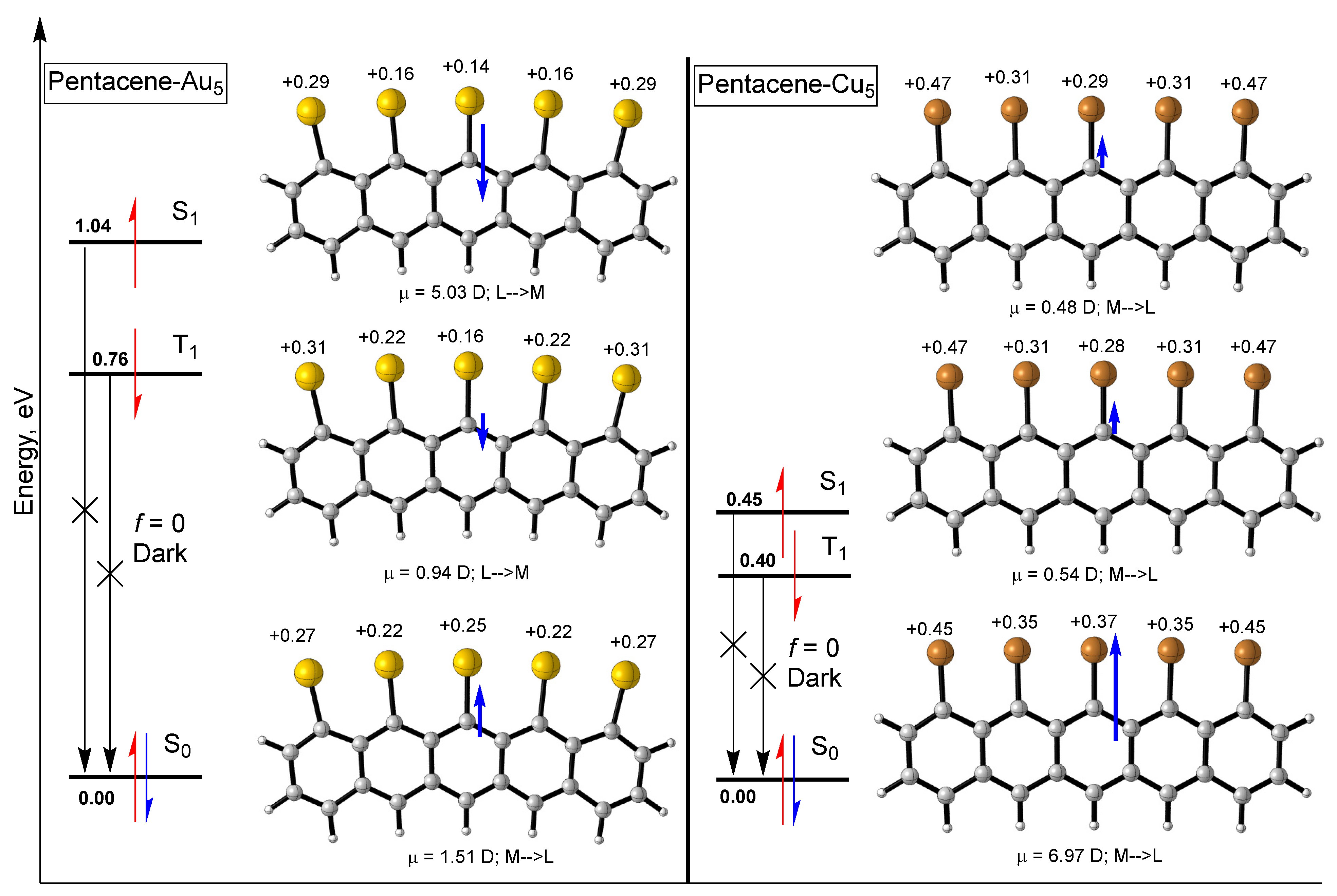
Metalated pentacenes illustrate the pronounced divergence in excited-state behavior dictated by metal identity. At the B3LYP level, Au
5 complexes maintain a distinct singlet–triplet energy gap, with S
1 and T
1 states displaying differentiated charge redistribution and dipole responses, consistent with polarized excited states (
Figure 22). In contrast, Cu substitution results in near-degeneracy of the S
1 and T
1 states in pentacene–Cu
5 (
Figure 22). This convergence is accompanied by significant depolarization: while the ground state is strongly polarized (μ ≈ 6.97 D), both excited states exhibit substantially reduced and nearly identical dipole moments (μ ≈ 0.54 and 0.48 D for S
1 and T
1, respectively), indicating that the singlet and triplet states adopt similar charge distributions despite differing spin symmetry. In both Au and Cu systems, the lowest excitations remain optically dark (f ≈ 0), indicating negligible transition dipole moments (
Figure 22). While optical inactivity, characterized by small transition dipole moments, necessitates explicit calculations of excited-state lifetimes and nonradiative decay rates to evaluate state longevity, it is also suggestive of reduced radiative decay, the formation of long-lived excitonic states, and potential significance for spin-based processes such as spintronics rather than light emission. These findings demonstrate the tunable control of singlet–triplet energetics and excited-state polarization within a single molecular framework. Notably, the near-degeneracy identifies Cu–acenes systems as promising candidates for future investigations of spin interconversion and excitonic dynamics, especially via explicit spin–orbit coupling and dynamical calculations. Conversely, the retention of finite singlet–triplet gaps and strongly polarized excited states in Au–acenes highlights the role of metal identity in modulating exciton character and charge redistribution. Overall, these results identify peri-metalated acenes as a chemically tunable platform for exploring spin–charge coupling and state-dependent polarization in hybrid organic–metal systems.




 ,
,