


Abstract
Imine reductases (IREDs) have emerged as valuable biocatalysts for the asymmetric synthesis of chiral amines, key intermediates in numerous active pharmaceutical ingredients. Their ability to operate under mild reaction conditions with high chemo- and stereoselectivity provides an attractive alternative to conventional metal-catalyzed or chemical reduction processes. However, the broader industrial application of wild-type IREDs is often constrained by their limited substrate scope and moderate catalytic efficiency. Recent advances in biocatalysis have demonstrated that engineered IREDs can catalyze the reduction of a wide range of natural and non-natural imines, significantly expanding their applicability in pharmaceutical and fine chemical synthesis. In parallel, enzyme immobilization strategies have proven highly effective for improving operational stability, facilitating enzyme reuse, and enabling continuous flow biocatalytic processes. Efficient cofactor regeneration systems have further enhanced the practical implementation of IRED-based transformations. Advances in protein engineering, including structure-guided design, semi-rational mutagenesis, and directed evolution, have generated enzyme variants with improved catalytic activity, stereoselectivity, and substrate tolerance. The integration of high-throughput screening technologies and machine-learning-assisted enzyme design has further accelerated the discovery and optimization of efficient IRED biocatalysts. This review summarizes recent progress in the protein engineering and immobilization of IREDs and discusses future perspectives for their industrial application.
1. Introduction
1.1. Pharmaceutical Importance and Synthetic Approaches to Chiral Amines
Chiral amines and amino acids constitute essential structural motifs in the pharmaceutical, chemical, and agrochemical industries [1]. Analyses estimate that chiral amine moieties are present in about 40% of active pharmaceutical ingredients (APIs) and 20% of agrochemicals [2]. An evaluation of the US Food and Drug Administration database revealed that 84% of approved small-molecule drugs contain at least one nitrogen atom [3], of which over 40% of the top 200 drugs in retail incorporate chiral amine functionalities, highlighting the pressing demand for efficient and convenient synthetic methodologies to access these scaffolds [4].
At the onset of the 21st century, the global market for these active pharmaceutical ingredients (APIs) was estimated to generate revenues exceeding $30 billion, with an annual growth rate projected at approximately 7–8% [5].
Enantiomers of biologically active chiral compounds often exhibit distinct pharmacological and toxicological effects, which can significantly influence therapeutic outcomes when such compounds are administered as racemic mixtures [6]. Owing to the differential physiological activities exerted by individual enantiomers of chiral compounds on organisms, the selective synthesis and isolation of pure enantiomers remains a central focus and ongoing challenge in medicinal chemistry and drug development [4].
Traditional chemical methods for the asymmetric synthesis of chiral amines include C–H insertion, diastereoisomeric crystallization, enantioselective reduction of imines or enamines, and nucleophilic addition, which commonly require the use of expensive transition-metal complexes or chiral ligands, coupled with side reactions, such as reduction of ketone/aldehyde or overalkylation, making them unsustainable in industrial processes [5,7].
In 2019, the global enzyme market size was worth 9.087 billion USD, and it is expected to grow to USD 13.8152 billion by 2027, with a compound annual growth rate of 6.4% during the period 2020–2027 [8]. Biocatalysis makes it possible to bypass some of the above problems in the preparation of chiral amines and has a significant advantage by enabling the sustainable and environmentally benign production of chiral amines by employing biodegradable enzymes, operating under benign conditions, and presenting a high degree of chemo-, regio-, and enantioselectivity [9]. These enzymes include transaminases, imine reductases, amine dehydrogenases, monoamine oxidases, Picter-Spenglerases, and lipases (Figure 1) [10].
Figure 1.
Examples of drugs containing chiral amine moiety intermediates, along with the respective biocatalysts that can be used for their synthesis.
ω-Transaminases (ω-TAs) catalyze the conversion of prochiral ketones to chiral amines using an amine donor, typically L-alanine or isopropylamine. Donors are used by the enzyme for the amination of the pyridoxal 5′-phosphate (PLP) cofactor, converting it into pyridoxamine 5′-phosphate (PMP), which subsequently transfers its amino group to the ketone substrate [11]. Despite their advantages, ω-TAs possess mechanistic limitations. Due to their dependence on the PLP cofactor, the enzymes are restricted to generating primary amines, thus requiring additional chemical transformations such as alkylation to obtain chiral secondary and tertiary amines [9]. Besides, the formal reductive amination of carbonyl compounds by ω-transaminases requires supra-stoichiometric amounts of an amine donor and strategies for shifting the unfavorable thermodynamic equilibrium, such as the use of an additional enzyme for removing the co-product or equipment for acetone evaporation [12].
The other type of enzymes for chiral amine synthesis are monoamine oxidases, flavin-dependent enzymes that catalyse oxidation of amines to imines using molecular oxygen, which is associated with FAD cofactor reduction and hydrogen peroxide generation [10]. One of the most well-known applications of monoamine oxidase in the pharmaceutical industry is the use of the enzyme derived from Aspergillus niger in the synthesis of an intermediate compound for boceprevir, a protease inhibitor that has been employed in the treatment of hepatitis C [13].
The asymmetric reduction of imines catalyzed by NAD(P)H-dependent enzymes represents a promising strategy for the biocatalytic synthesis of a wide range of primary, secondary, and tertiary amines [2]. The catalytic mechanisms of these classes of enzymes are similar, involving the formation of a carbinolamine intermediate, followed by hydride transfer from the nicotinamide [14].
Amine dehydrogenases (AmDHs) catalyze reductive amination between carbonyl compounds and ammonia, yielding valuable amines with excellent enantioselectivity. They belong to the NAD(P)H-dependent oxidoreductases [15]. The applicability of this class of enzymes for the efficient asymmetric synthesis of α-chiral amines was shown in the experiments of Mutti and co-workers [12].
Opine dehydrogenases catalyze the reversible reductive condensation of an α or ω-amino function of an α-amino acid with an α-keto acid, in the presence of a nicotinamide cofactor NAD(P)H, resulting in the formation of N-(carboxyalkyl) amino acids [16]. The fact that their natural substrates are chemically very different from the typical imine reductase or reductive aminase substrates, and that they can perform reductive amination with close to stoichiometric ratios of ketoacid/amino acid substrates, makes them promising candidates for industrial biocatalysis [17]. Opine dehydrogenase from Arthrobacter sp. 1C (CENDH) was subjected to extensive protein engineering studies to construct an enzyme variant that can accept substrates largely deviating from their natural ones and perform the synthesis of secondary and tertiary amines useful for the pharmaceutical industry [18].
1.2. Imine Reductases (IREDs)
Imine reductases (IREDs) are NAD(P)H-dependent oxidoreductases (EC 1.5.1.x) that catalyze the asymmetric reduction of imines to chiral amines and are often grouped with reductive aminases (RedAms), which catalyze both imine formation and reduction in a single catalytic cycle, whereas classical IREDs typically reduce preformed imines [2,6,14].
IREDs catalyze the enantioselective reduction of imines as well as the reductive amination of carbonyl compounds with ammonia or a variety of alkyl, aryl, and cyclic amines, enabling access to chiral primary, secondary, and tertiary amines. A distinct subset of IREDs, termed reductive aminases (RedAms), possesses the ability to bind both carbonyl and amine substrates within their active sites, thereby facilitating in situ imine formation before stereoselective hydrogenation [6]. For such transformations to proceed efficiently, IREDs must exhibit high chemoselectivity to prevent the undesired reduction of the carbonyl group to the corresponding alcohol [10]. The catalytic mechanism involves hydride transfer from NADPH to the imine carbon, followed by protonation of the nitrogen atom. Structurally, IREDs belong to the NAD(P)H-dependent dehydrogenase family and contain a Rossmann-fold domain for cofactor binding, usually functioning as homodimers with active sites located at the monomer interface [4,11,14].
IREDs were first reported in 2010 by Mitsukura et al., who identified two enantiocomplementary enzymes from Streptomyces sp. capable of producing both (R)- and (S)-2-methylpyrrolidine [19]. The first resolved crystal structure of imine reductase was that of R-IR from Streptomyces sp. GF3587 (PDB: 3ZHB), discovered in 2013 by Grogan’s research group. Solved structures of Q1EQE0 in native form, and in complex with the nicotinamide cofactor, NADPH, revealed that the enzyme functional unit is a homodimer. A helix of 28 amino acids is a linker between the N-terminal Rossman-fold motif and a helical C-terminal domain in the monomer unit. The dimer is formed through reciprocal domain sharing in which the C-terminal domains are swapped. The N-terminal domain of monomer A and the C-terminal domain of monomer B are included in the formation of a substrate-binding cleft [20].
Direct reductive amination of ketones by IRED was first reported by Huber and co-workers in 2014, who utilized S-selective imine reductase from Streptomyces as catalysts for the reductive amination of 4-phenyl-2-butanone using methylammonium as the amine donor [21]. This work marked a significant advancement, establishing IREDs as viable biocatalysts for imine reduction (IR) and direct reductive amination.
At the beginning, the synthetic applicability of IRED was limited because reductive amination reactions required large excesses of amine donor equivalents and were carried out at higher pH values, resulting in scopes that did not appear to be particularly broad [9]. These issues were partially overcome after the discovery of a reductive aminase from Aspergillus oryzae (AspRedAm) in 2017, marking the first fungal enzyme in the field, as reported by Turner and co-workers. A variety of primary and secondary amines and a broad set of carbonyl compounds could be reductively coupled with up to >98% conversion and >98% enantiomeric excess. If both carbonyl and amine showed high reactivity, it was possible to employ a 1:1 ratio of the substrates, with up to 94% conversion to amine product [22]. Since then, the field has expanded considerably, with IREDs and RedAms becoming central tools in the biocatalytic synthesis of chiral amines.
Recently, Turner and co-workers reported the discovery of a multifunctional biocatalyst, termed EneIRED, identified from a metagenomic imine reductase (IRED) library and originating from an unclassified Pseudomonas species, that exhibits dual functionality: it catalyzes both amine-activated conjugate reduction (CR) of α,β-unsaturated carbonyl compounds and subsequent reductive amination (RA) facilitating the efficient and stereoselective synthesis of structurally diverse chiral amines bearing up to three contiguous stereocenters [23]. In the research of Turner and collaborators, a facile high-throughput screening assay was developed to examine IREDs activity, which resulted in the discovery of more than 300 new imine reductases through a panel of 384 enzymes [24]. The results presented in this research highlight the importance of the metagenomic approach in the discovery of novel enzymatic activities and the development of a robust high-throughput screening platforms that further facilitate the rapid discovery of IREDs with desirable activity toward sterically demanding substrates.
Imine reductases share a common quaternary structure described previously. However, four catalytic reactions (IR, RA, CR, and CR-RA) have been reported for these enzymes, and varying catalytic residues within the active sites have been observed. These residues highlight the correlations and differences among catalytic mechanisms. A detailed explanation of the active site architecture, the mechanistic basis for the diverse catalytic activities of imine reductases (IREDs), and the similarities and differences in key amino acid residues involved in the aforementioned reactions is provided in the review paper by Shao et al. [25]. However, these aspects will not be discussed in detail herein, as they fall outside the primary scope of this work.
1.3. Protein Engineering and Immobilization as Strategies for Enzyme Modification Towards Industrial Application
The main limitations of enzymes isolated from natural sources are low solubility and stability, low catalytic efficiency, denaturation in the presence of organic solvents and at elevated temperatures, and inactivation by substrates, products, or other components [26]. The key factors in reducing costs when biocatalysts are used for industrial applications are the reusability and enzyme stability [27].
The ability to evolve enzymes is crucial for improving the scope of wild-type enzymes toward non-natural substrates, and to further enhance their activity and tolerance to the demanding process parameters [28]. Process of enzyme development includes optimization of chemo-, regio-, and stereoselectivity of biocatalysts, as well as properties related to the conditions in which the process takes place, like enhancing stability at certain temperatures, pH values, and in the presence of high concentrations of substrates or organic solvents [29].
In addition to protein engineering, the advancement of diverse enzyme immobilization techniques has significantly improved the productivity, economic feasibility, and technical performance of various industrial biocatalytic processes [30]. Advantages of immobilized enzymes lie in enhanced stability (in most cases, they exhibit greater stability and resistance to harsh environmental conditions), improved reactor performance (development of continuous flow reactors permits a better control of reaction conditions), reusability (enabling cost reductions), and increased specificity, making catalysis more precise [31].
1.4. Scope of the Review
In recent years, numerous comprehensive reviews have been published regarding the application of imine reductases (IREDs) in the synthesis of amine-containing pharmaceuticals [4,6,10,11,14]. This review aims to provide an overview of key advancements in the field, with particular emphasis on discoveries in protein engineering and the immobilization of IREDs for use in scalable pharmaceutical intermediate synthesis and in small-scale production of pharmaceutical metabolites, with potential for continued optimization and broader implementation. This review highlights the extensive application of protein modification strategies, including directed evolution, rational design, and immobilization, as pivotal approaches for developing efficient stereoselective pathways mediated by IREDs.
2. Engineering and Immobilization of Imine Reductases for Drug Synthesis
A broad spectrum of physiological and pharmacological activities exhibited by compounds accessible through imine reductase-catalyzed transformations underscores the importance of developing advanced strategies to engineer IREDs into robust, industrially applicable biocatalysts. Over the past decade, imine reductases (IREDs) have attracted considerable research interest, prompting extensive efforts to modify and optimize them for broad applications across the pharmaceutical industry.
2.1. Scalable Synthetic Reactions and Industrial Drug Manufacturing with Engineered Imine Reductases
Within this segment, the key details of modifications achieved through protein engineering of imine reductases are provided, to develop enzyme variants suitable for the preparative-scale synthesis of active pharmaceutical ingredient (API) intermediates.
In 2019, Roiban and colleagues developed an engineered imine reductase for the manufacture of the lysine-specific demethylase-1 inhibitor GSK2879552, which is used to treat small-cell lung cancer and acute leukemia. After screening the GSK IRED panel, they identified IR-46 (from Saccharothrix espanaensis) as the best variant, which showed 73% conversion and >99% ee after 2 h on a 1 g scale using cell-free lysate. When the reaction was scaled up to more than 5 g, it achieved 85.0% conversion, using more than 450% weight (w/w) of lyophilized enzyme, at pH 6.3, and yielded 42.9% of the isolated, pure product with 99.9% ee. The enzyme underwent extensive engineering. According to the structural homology model of IR-46, they initially targeted 256 out of 296 amino acid positions for single-site saturation mutagenesis. They screened ~4000 variants in cell lysates at 12 g/L of precursor compound in NaOAc buffer at pH 5.6. A 40-fold improvement in conversion over parent (FIOP) was achieved with the most active variant, Y142S. At the same time, identification of other beneficial mutations at that position, such as Y142V, Y142R, and Y142T, indicated position 142 as a key residue influencing IR-46’s activity and stability. Lyophilized mutant 1 resulted in a 87.8% conversion at a 68% yield with reduced enzyme loading (61.4% w/w) and maintained selectivity at 99.9% ee in a gram-scale reaction. Eight combinatorial libraries containing the beneficial mutations from round 1 were constructed, which gave 132 variants with FIOP > 10 after the screening of ~4000 variants with 20.1 g L−1 of precursor, reduced biocatalyst lysate loading, and preincubation of lysate to select for stable variants. A secondary screen gave a mutant for the next round of evolution containing mutations Y142S, L37Q, A187V, L201F, V215I, Q231F, and S258N. With lyophilized enzyme loading of 12% w/w, using NaOAc pH 5.0, mutant 2 gave 87.6% conversion, 5.6 g isolated yield (68.5%) with 99.4% ee. A total of ~1300 variants were screened in the third round of evolution and gave the best variant, which contained an additional six mutations over mutant 2 (Y142S, L37Q, A187V, L201F, V215I, Q231F, S258N, G44R, V92K, F97V, L198M, T260C, A303D). The reduced enzyme loading of 1.2% w/w of the lyophilized mutant 3 was used to scale up the reaction to 1 L (16.6 g of precursor compound) in NaOAc buffer at pH 4.6. A conversion rate of 91.4% was reached with an isolated product yield of 72.2% (99.7% ee). The melting temperature of the final variant was increased by 30 °C compared to the wild type, and a more than 5000-fold increase in half-life was achieved at pH 5.0. Specific activity increased 13-fold after three rounds of evolution. The final reaction was run in three batches to afford 1.4 kg of the GSK2879552 key intermediate, with an isolated yield of 84.4%, a purity greater than 99.9%, and an enantiomeric excess (ee) of 99.7%. A 38,000-fold improvement in TON over wild type was achieved [32]. A schematic representation of GSK2879552 intermediate synthesis using engineered imine reductase is shown in Figure 2.
Figure 2.
Schematic representation of GSK2879552 synthetic procedure using engineered imine reductase IR-46 from Saccharothrix espanaensis.
In the 2020 study by Zhu et al., a biocatalytic approach to 1,4-diazepanes via engineered imine reductase-catalyzed intramolecular asymmetric reductive amination was developed, providing an environmentally friendly and economical method for the synthesis of a Suvorexant intermediate (a dualorexin receptor antagonist for the treatment of primary insomnia). When a library of 48 IREDs was screened against the precursor compound at a substrate concentration of 10 mmol/L using cell-free extracts, an R-selective imine reductase (IR1) from Leishmania major was found to catalyze the synthesis of Suvorexant intermediate with a 99% ee value. An enantiocomplementary imine reductase, designated as IR25, from Micromonospora echinaurantiaca, exhibited the highest enantioselectivity (>99% ee). Determined specific activities of IR1 and IR25 were 0.065 and 0.418 U/mg, respectively. The catalytic activity of IR1 was enhanced through enzyme engineering. A twenty-five amino acid residues around the substrate and cofactor NADPH were selected to construct saturation mutagenesis libraries after docking of a cyclic imine of a precursor compound into the active center of IR1. Among five mutants that displayed increased catalytic efficiency (kcat/Km) over the wild-type enzyme, mutants D232H and Y194F showed a significant decrease in Km and an increase in kcat, resulting in a 17-fold and 12-fold improvement in the catalytic efficiency, respectively. The double-mutant Y194F/D232H showed an additional decrease in Km and an increase in kcat with a kcat/Km value of 1.646 s−1 mM−1, which was a 61-fold enhancement compared to the wild-type enzyme. Preparative-scale asymmetric reductive amination of the precursor compound was performed in a 100 mL reaction system using cell-free extracts of IR25, IR1, or its mutant Y194F/ D232H. The obtained results showed that using the cell-free extracts of the mutant Y194F/D232H (10 g/L wet cell weight), a 100 mM precursor could be completely converted to the suvorexant intermediate within 10 h (Figure 3).
Figure 3.
Schematic representation of Suvorexant synthetic procedure using engineered imine reductase IR1 from Leishmania major.
In comparison, the cell-free extracts of IR25 and IR1 (50 g/L wet cell weight) could only convert 50 mM of precursor to the (S)- or (R)-intermediate of Suvorexant within 10 or 6 h, respectively. Compared with the mutant Y194F/D232H, IR1 exhibited lower activity, and IR25 showed lower stability. The Tm’s of IR1, Y194F/D232H, and IR25 were 59, 58, and 43 °C, respectively [33].
Snajdrova and collaborators showed that machine-directed evolution can be used as an enzyme engineering strategy for creating a library of high-activity mutants with a drastically shifted activity distribution compared to that of traditional directed evolution. First, a wild-type IRED capable of catalyzing the reductive amination between the Cbz-protected 3-oxopyrrolidine and methylamine was identified to obtain an H4 receptor antagonist for the treatment of atopic dermatitis. When they tested the bulkier ketone that would give direct access to the desired amine, only (R)-selective IRED-22 from Mycobacterium mageritense catalyzed the reaction with a conversion of 12% but with a good enantioselectivity (ee (R) 97%), and (S)-selective IRED-13 with a conversion of 77% and >99% ee. Afterwards, they initiated genome mining to identify a wild-type IRED with higher activity toward the desired (R)-enantiomer. In the first round, they identified (R)-selective IRED-88 with a 70% conversion, but it showed decreased selectivity (ee (R) 30%) compared to IRED-22. In the second round of mining, they identified IRED-88-2 with the 83% conversion rate and ee (R) > 99%. IRED-88 was selected as a starting point for evaluating machine-directed evolution because it offers the opportunity to engineer both activity and enantioselectivity. After enzyme expression in 384-well microtiter plates, the wells expressing IRED-88 yielded approximately 10% conversion. They ordered a synthetic deep mutational scanning (DMS) library containing all 19 amino acid replacements with a single substitution at each individual position of the IRED-88 sequence. It was determined that residue 220 forms part of a helix at the entrance to a tunnel that leads to the nicotinamide cofactor group, and the S220T mutation was identified as the most efficient, yielding 70% conversion and 96% ee (R). They assumed that a preference for the (R)-product is a consequence of a change from Ser to Thr, which imposes greater steric restraints either on entry into the Pro-(S) conformer or on release of the (S)-product. In parallel with the deep mutational scanning, error-prone PCR was performed. After three rounds of error-prone PCR, they obtained mutant IRED-88-Q194L/S220T/H230Y, which was selected as the scale-up catalyst at a substrate concentration of 100 mM (1.36 g in 55 mL, 10% (v/v) DMSO). By applying an enzyme-to-substrate ratio of 1:5 (w/w), full conversion and 98% ee (R) were obtained. The product was isolated as a tartrate salt, with a 72% yield, proving this variant as a sufficiently robust catalyst for the gram-scale synthesis of the H4 receptor antagonist ZPL389 [34]. The synthetic procedure for the H4 receptor antagonist ZPL389 using engineered imine reductase is presented in Figure 4.
Figure 4.
Schematic representation of ZPL389 synthetic procedure using engineered imine reductase IRED 88.
The first application of RedAm technology for the commercial-scale manufacturing of a secondary amine via direct reductive amination of a ketone with methyl amine was demonstrated by Kumar and collaborators in 2021 during the synthesis of the drug Abrocitinib. Abrocitinib is a JAK inhibitor for the treatment of atopic dermatitis. An N-methylamine-substituted cis-cyclobutane headpiece of this compound was previously synthesized via chemical reductive amination at low temperature, yielding approximately an 80:20 mixture of cis:trans isomers. To identify an enzyme capable of performing reductive amination of a ketone precursor with methyl amine to give the desired N-methyl amine, a screening of the Pfizer in-house enzyme panel (80 wild-type IREDs from various sources) was performed. The SpRedAm from Streptomyces purpureus was selected as the best candidate with high selectivity (dr > 99:1) for the desired cis isomer. When SpRedAm was tested with 100 g/L ketone and 1.5 g/L enzyme loading, it achieved only 0.75% conversion over 24 h while retaining high selectivity. For initial site selection and library construction, they employed a computational and bioinformatics-based approach, combined with a data-driven approach to identify hotspots and their synergistic recombination, thereby achieving the desired performance.
Initial SSM libraries were screened at a substrate concentration of 20 g/L, with subsequent rounds at higher substrate loadings, resulting in the identification of more than 20 improved single-point variants. The top five round-1 variants achieved >75% conversion at 50 g/L substrate loading with >99:1 cis:trans selectivity. In round 2, libraries were screened at 75 g/L substrate using 2 equivalents of methylamine, and recombination of beneficial mutations produced double mutants (Q13R/A170M, Q13R/N131H, and A170C/F180M) that improved conversion by up to 3-fold while maintaining high selectivity. Multi-site random recombination of active variants yielded improved enzymes containing 4–6 mutations. In round 3, recombination of earlier hits led to the identification of SpRedAm-R3-V6 (N131H, A170C, F180M, G217D), of which F180M directly interacts with the substrate. At the same time, the remaining mutations reside in the secondary shell and influence active-site dynamics. The process was optimized for commercial scale (tens of kilograms per batch), with consistent reaction performance exceeding 91% conversion in 48 h. A total of >3.5 MT of Abrocitinib intermediate as the succinate salt was manufactured in >99% purity and >99:1 cis:trans. A schematic representation of Abrocitinib intermediate synthesis using engineered imine reductase is shown in Figure 5 [35].
Figure 5.
Schematic representation of Arocitinib synthetic procedure using engineered imine reductase SpRedAm from Streptomyces purpureus.
Zhang and associates successfully engineered an imine reductase (IR-G36) into a highly efficient variant (M5) using a strategy that combined rational cavity design, combinatorial active-site saturation mutagenesis (CAST), and thermostability engineering. During the screening of the 86 IREDs panel against 5 mM N-Boc-3-piperidinone and 5.5 mM benzylamine hydrochloride using a cell-free extract, nine IREDs were able to afford the desired product with low conversions (3–12%). Among them, they selected IR-G36, with the best R-selectivity (ee 78%), as the target for the evolution. After the enzyme crystallization, its three-dimensional structure in complex with NADP+ was solved by molecular replacement, and the docking of the imine intermediate of the desired product into the cavity was done. Structural analysis revealed that IR-G36 poorly accommodated the bulky intermediate, prompting mutation of the key amine-recognition residue N121 to smaller amino acids. Among these, N121T delivered a ~10-fold increase in conversion (77%) and improved stereoselectivity (88% (R)). Considering that loop 252–261 interacts with the nicotinamide moiety of NADP+ by forming hydrogen bonds at its residues V259, S260, and N261, it could form a bottleneck that may hinder the entering and coupling of the bulky substrates. Residue S260 was targeted and mutated based on sequence alignment of IREDs, resulting in S260F with improved conversion (56%) and enhanced enantioselectivity (98% (R)). Combining N121T and S260F gave M1 (79% conversion, >99% (R) ee), which was further evolved through NNK codon degeneracy for saturation mutagenesis. Subsequent rounds identified multiple beneficial mutations, culminating in enzyme M5 (N121T/S260F/F207I/M238A/M264H/A267H/L197I/N271K/H189A/G145K), which exhibited a 4193-fold increase in catalytic efficiency, a 16.2 °C gain in thermostability, and >99% (R) enantioselectivity) for the synthesis of (R)-3-benzylamino-1-Boc-piperidine. M5 also displayed a broad substrate scope, enabling the synthesis of diverse azacycloalkylamines under industrial-scale conditions (up to 47 g/L substrate loading, >99% conversion, and >99% enantiomeric excess). Optically active azacycloalkylamines are key ingredients in the creation of large quantities of pharmaceuticals, such as Linagliptin, Alogliptin, Ibrutinib, and Tofacitinib, which are widely used to treat hypertension, hyperglycemia, lymphoma, and rheumatoid arthritis, respectively. This is a powerful and streamlined method for developing robust and commercially viable IREDs, with broad implications for pharmaceutical manufacturing and synthetic biology [7].
Chiral pyrrolidines are fundamental components in the synthesis of pharmaceuticals such as Larotrectinib, a tropomyosin receptor kinase inhibitor approved by the U.S. Food and Drug Administration for cancer treatment. Zheng and co-workers identified WT imine reductase ScIRED from Streptomyces clavuligerus and used it for asymmetric reduction of cyclic imine 2-(2,5-difluorophenyl)-pyrroline to the desired enantiomer (R)-2-(2,5-difluorophenyl) pyrrolidine, an intermediate of Larotrectinib. The compound was synthesized by the enzyme with up to 99% enantiomeric excess but with low activity (0.18 U mg−1), and with the conversion of only 2 g L−1 of the substrate. After the substrate docking into the binding site, all 10 residues surrounding the substrate were selected for single-site saturation mutagenesis. The screening of the specific activity gave two hits (F177W and V122C) with enhanced activity over the wild-type enzyme, which were combined in a variant with further improved activity (10-fold improvement in activity over WT). With a substrate loading of 10 g L−1, using ScIRED-R1-V1, a full transformation to the target product could be achieved within 8 h. However, when the substrate loading was increased to 15 g L−1, only 44% conversion was achieved in 24 h, accompanied by a decrease in stereoselectivity. In the second round, ScIRED-R1-V1 was subjected to single-site saturation mutagenesis at 27 secondary-shell positions, identifying four beneficial mutations (M169W, W185L, S211G, and M270E) located at the dimer interface. Combination of these mutations yielded ScIRED-R2-V2, which exhibited a specific activity of 12.8 U mg−1, corresponding to a >70-fold improvement over the wild-type. After the additional two rounds of saturation mutagenesis for the remaining 23 residues, additional mutations, G214F and V232A, were identified, also located at the dimer interface. Combining all of the beneficial mutations resulted in variant ScIRED-R2-V3 that exhibited a specific activity of 17.7 U mg−1, almost 100-fold improvement over WT, over 25 °C increase in melting temperature (Tm), and a 138-fold enhancement in half-life at 40 °C. In the third round, three additional favorable mutations (E45A, D53T, and F265L) were identified and incorporated into ScIRED-R2-V3. The specific activity of the obtained variant ScIRED-R3-V4 was up to 19.2 U mg−1 (a 107-fold increase over WT), with an almost 32 °C increase in Tm (from 24.6 to 56.5 °C) and 119-fold increase in the catalytic efficiency (kcat/Km). Using the ScIRED-R3-V4, they assessed asymmetric reduction of initial substrate at loadings of 80 g L−1 in 82.5% yield within 5 h with >99.5% ee [36]. Synthetic procedure of Larotrectinib intermediate using engineered imine reductase is presented in Figure 6.
Figure 6.
Schematic representation of the Larotrectinib synthetic procedure using engineered imine reductase ScIRED from Streptomyces clavuligerus.
The same group of researchers reported the direct synthesis of a wide range of sterically demanding secondary amines via reductive amination of carbonyl substrates and bulky amine nucleophiles employing imine reductases from Penicillium camemberti. Cinacalcet is a calcimimetic approved by the US FDA and the EMA in 2004 for the treatment of secondary hyperparathyroidism and parathyroid carcinoma, which manifests its activity through lowering the levels of parathyroid hormone. After screening of 69 naturally existing IREDs with a 1:1 ratio of 3-[3-(trifluoromethyl)phenyl]propanal to (R)-1-(1-naphthyl)ethylamine [(R)-a], PcIRED was discovered with a 0.2% conversion to Cinacalcet. To further enhance the potential of PcIRED, iterative saturation mutagenesis was performed using 3-[3-(trifluoromethyl)phenyl]propanal and (R)-a as model substrates. After performing mutagenesis at seventeen residue sites around the active site into smaller residues (e.g., alanine, glycine, and valine), six mutants (L180V, S181A, W219L, Q244A, Q244V, and S247A) that displayed enhanced activity compared to the wild-type enzyme were identified. Among them, the mutation of Q244, located at a key α-helix forming the substrate-binding pocket, and close to the nicotinamide moiety of the NADPH, to Q244A exhibited the highest conversion of 28%. After combining Q244A with the other four beneficial mutations (L180V, S181A, W219, and S247A), mutant Q244A/L180V was found to exhibit a 101-fold increase in specific activity and a 6 °C improvement in melting temperature (Tm) over the wild-type enzyme, and it was selected as a template for the next round of evolution. The hotspots discovered in the first round of evolution (S181, W219L, and S247), four residue sites (I241, V243, D246, and H250) situated at the same α-helix with the key Q244 residue, and four residue sites (A205, V210, L213, and L220) located at the dimer interface were targeted for single-site saturation mutagenesis. Introduction of the mutations H250N and V210I resulted in mutant M2, which exhibited a 251-fold increase in activity compared to the wild-type enzyme. In the third round, after saturation mutagenesis of 19 amino acid sites, they obtained mutant M3 (Q244A, L180V, H250N, M216T, S247A, S181A, C174N, and V210I) with a 488-fold increase in activity, and enhanced stability over the wild-type enzyme (Tm increased from 41 to 52 °C). At a concentration of 500 mM (R)-1-(1-naphthyl)ethylamine with 3-[3-(trifluoromethyl)phenyl]propanal at only a 1:1.2 molar ratio, with the pH maintained at 7.0, by using PcIRED-M3, they afforded 15.1 g of the product Cinacalcet in >99% ee (R), at 84.7% isolated yield, and 75.6 g L−1 day−1 space-time yield (STY) (Figure 7) [37].
Figure 7.
Schematic representation of Cinacalcet synthetic procedure using engineered imine reductase PcIRED from Penicillium camemberti.
Building on these advances, another study explored the enzymatic asymmetric reduction of heteroaryl-substituted tetrahydroisoquinolines (THIQs) using a broad panel of 137 IREDs, leading to the identification of enantiocomplementary biocatalysts for the synthesis of key pharmaceutical intermediates, including the intermediate for kinase inhibitor TAK-981 (a first-in-class inhibitor of SUMO-activating enzyme used for the treatment of cancer). IR141 from Promicromonospora sp. CF082 exhibited the highest conversion (45%) of precursor compound into 7-chloro-1-(2-methylthiophen-3-yl)-1,2,3,4-tetrahydroisoquinoline. After docking of the precursor into the active pocket of IR141, 45 amino acid residues were selected to construct saturation mutagenesis libraries that resulted in finding three mutants (L172C, T235S, and Y267F) with higher activity than IR141. Among them, mutant L172C displayed a 35-fold improvement in the catalytic efficiency and conversion rate of >99% with 10 mM precursor compound by using cell-free extracts, with >99% ee. Six single-site saturation mutagenesis libraries were constructed, yielding double mutants L172C/T235S, L172M/Y267F, and L172C/Y267F, which showed a 136-, 98-, and 95-fold improvement in catalytic efficiency compared to the wild-type enzyme. To obtain the catalytic efficiency of single-site mutant L172M, this mutant was constructed by the site-directed mutation of the wild-type enzyme, and showed a higher kcat/ Km (11.940 min−1 mM−1). Triple mutants L172C/ T235S/Y267F and L172M/T235S/Y267F were constructed, and L172C/T235S/Y267F showed a considerably higher kcat/Km (68.031 min−1 mM−1) and a 170-fold enhancement compared with IR141. Double and triple mutants were screened against 50 mM precursor by using cell-free extracts, with stereoselectivities of 99% ee (R). Still, only the mutant L172M/Y267F achieved complete conversion within 20 h, due to its highest thermal stability, with a 13 °C improvement in melting temperature (Tm) over the wild-type enzyme. This variant enabled a preparative-scale reduction of substrate 7-chloro-1-(2-methylthiophen-3-yl)-3,4-dihydroisoquinoline (50 mM) to obtain product 7-chloro-1-(2-methylthiophen-3-yl)-1,2,3,4-etrahydroisoquinoline in >99% ee, providing a green and economically viable synthetic route. Additionally, L172M/Y267F and IR40 were successfully applied to the synthesis of a series of 1-heteroaryl-substituted THIQs, delivering high isolated yields (80–94%) and excellent enantioselectivities (82–>99% ee). These results further demonstrate the versatility of IREDs as valuable tools for the stereoselective synthesis of structurally diverse chiral amines [38].
In 2023, Steflik and co-workers reported the identification and engineering of a RedAm to catalyze the synthesis of a key intermediate for cyclin-dependent kinase (CDK) inhibitors, using benzylamine as an amine partner, which is relevant in the synthesis of highly water-soluble amine derivatives. The cyclin-dependent kinases (CDKs) comprise a 21-member family of serine-threonine kinases involved in a wide range of cellular processes, including transcriptional regulation, splicing, DNA repair, and the regulation of the cell cycle. After screening of Pfizer in-house IRED panel (88 wild-type IRED) to identify enzymes capable of the reductive amination of the initial ketone with benzylamine, IR007, a hypothetical protein identified initially in Amycolatopsis azurea, exhibited the desired selectivity, showing 21% conversion with 96% enantiomeric excess (ee). Using 200 mM of ketone substrate loading and 4.6 g/L of IR007 in the form of lyophilized cell-free lysate, the reaction was scaled to 0.5 g and gave 35% conversion to benzylamino alcohol with 97% ee after 50 h. After optimizing the reaction temperature and DMSO concentration, the conversion increased to 38% after 48 h while maintaining the high % ee. In the first round of engineering, 94 of 286 positions in IR007 were selected for single-site saturation mutagenesis (SSM), including both active site and secondary shell residues as well as other residues identified by bioinformatic analysis. Screening at 35 g/L ketone substrate and the enzyme load equivalent of 10 g/L of wet cell paste identified multiple beneficial single substitutions, yielding variants with 1.61–2.8 FIOP. In phase 2, structure-guided recombination of proximal residues produced improved double mutants, including IR007-41 (A213R/A214H, 3.17 FIOP), IR007-42 (A214H/Q217N, 3.57 FIOP), and the top variant IR007-49 (E120R/A213F, 5.53 FIOP). Phase 3 employed these variants as templates for targeted substitutions, iterative saturation mutagenesis (ISM), and combinatorial active site saturation testing (CASTing) libraries, as well as libraries randomly incorporating all the beneficial substitutions identified in phase 1. As they identified improved variants, they were subsequently used as templates for additional mutagenesis. The final engineered enzyme, IR007−143, was used for kilogram-scale manufacturing with a substrate load of 50 g/L, achieving 43% conversion, 98.4% ee, and an increased Tm by approximately 5 °C [39]. A schematic representation of CDK 2/4/6 intermediate synthesis using engineered imine reductase is shown in Figure 8.
Figure 8.
Schematic representation of CDK 2/4/6 inhibitor intermediate synthetic procedure using engineered imine reductase IR007 from Amycolatopsis azurea.
Among the notable contributions in this field, Zhu and co-workers developed an efficient biocatalytic process combining dynamic kinetic resolution with asymmetric reductive amination to produce β-branched chiral amines featuring two consecutive stereocenters. To optimize enzyme performance, they employed targeted saturation mutagenesis to pinpoint key amino acid residues, followed by an iterative combinatorial approach to combine the most promising mutations. β-Branched chiral amines containing contiguous stereocenters are prevalent in biologically active molecules, such as Tofacitinib, a protein tyrosine kinase inhibitor used to treat rheumatoid arthritis, active psoriatic arthritis, and ulcerative colitis. A direct DKR-ARA of racemic 1-benzyl-4-methylpiperidin-3-one (15 mM, 3 g L− 1) with methylamine (200 mM) was chosen as a model reaction. A library screening of 125 IREDs was performed, and only PocIRED, IRED-7, and IRED-18 afforded the desired (R)-enantiomer, but with low conversion, and insufficient diastereo- and enantioselectivity. Enantiomeric excess (from 74% to 88%) and diastereomeric ratio (from 90:10 dr to 92:8 dr) increased after increasing the ratio of substrate to enzyme (S/C) from 2:1 to 200:1, but the conversion dropped from 95–22%. Additionally, the enantiomeric excess increased from 82–89%, and the conversion increased from 84–91% after the pH was raised from 8.0 to 9.5. Since high pH accelerates substrate racemization, it was necessary to improve the tolerance of PocIRED under the high pH conditions. The first round of mutagenesis yielded mutant M1 (Q239G), which increased enantiomeric excess from 88% to >99.9%, improved the diastereomeric ratio from 9:1 to 13:1, and enhanced conversion 1.8-fold over the wild type. In the second round, a combinatorial library integrating beneficial single mutations and a CAST library identified mutant M2 (M1 + P125T), which achieved an excellent diastereomeric ratio (99:1) while maintaining >99.9% ee. In the third round, the 48 sites from the first round were chosen for mutagenesis using the NNK codon set, and 110 sites from the middle and outer layers of the enzyme active pocket were chosen for saturation mutagenesis that resulted in the discovery of various positive mutations, with a 1.2- to 4-fold improvement in conversion relative to M2. In the fourth round, these advantageous mutations were combined using multicodon combinatorial mutagenesis to improve enzyme performance further. After several iterative rounds of combinatorial mutation library screening, a 20-point mutant variant, PocIREDM6, was identified, displaying > 99.9% ee and >99:1 dr, compared with WT (88% ee and 9:1 dr), and enhanced thermostability (Tm 63.5 °C) compared to WT (Tm 48.1 °C). The resulting variant, M6, exhibited excellent performance, handling substrate concentrations of up to 110 g/L, achieving a 93% conversion and a 74% isolated yield, with exceptional stereoselectivity (Figure 9).
Figure 9.
Schematic representation of Tofacitinib synthetic procedure using engineered imine reductase PocIRED from Pochonia chlamydosporia.
Notably, M6 also displayed improved activity and substrate flexibility compared to the wild-type enzyme, enabling the synthesis of a broader range of β-branched chiral amines. These advancements underscore the potential of engineered IREDs in expanding the synthetic capabilities of dynamic kinetic resolution systems for pharmaceutical applications [40].
Another example is the directed evolution of IR61 from Jiangella muralis, which enabled the asymmetric reduction of a key intermediate in the synthesis of Dextromethorphan. (S)-1-(4-Methoxybenzyl)-1,2,3,4,5,6,7,8-octahydroisoquinoline ((S)-2a) was synthesized from 1-(4-methoxybenzyl)-3,4,5,6,7,8-hexahydroisoquinoline (1a). IR61 from Jiangella muralis was identified through the screening of 127 IREDs against 10 mM 1a using cell-free extracts, and exhibited the highest (S)-stereoselectivity (>99% ee) toward 1a. After docking 1a into the active pocket of IR61, 45 residues were selected to construct saturation mutagenesis libraries, and five mutants (P123A, P123G, W179A, W179G, and F182S) were identified with enhanced activity over WT. To further enhance the activity, they generated four double mutants, P123A/W179A, P123A/W179G (M1), P123G/W179A, and P123G/W179G, that showed 6-, 39-, 26-, and 8-fold improvements in catalytic efficiency over WT, respectively. The saturation mutagenesis of F182 was performed using the most prominent mutant, P123A/W179G (M1), which yielded two triple mutants, P123A/W179G/F182S and P123A/W179G/F182I (M2), with 61- and 160-fold improvements in catalytic efficiency, respectively. It was determined that residue P123 was cited at the substrate entrance tunnel, and its mutation led to favorable changes in activity. Saturation mutagenesis was performed at six additional positions (L212, D215, S216, E219, D232, and V233) located at the substrate entrance tunnel. This led to the identification of mutant M3 (P123A/W179G/F182I/L212V), which exhibited a 298-fold increase in catalytic efficiency and was subsequently subjected to further saturation mutagenesis at positions V69 and T238. Mutant (M4) containing mutations V69Y/P123A/W179G/F182I/L212V was obtained with a 766-fold improvement in catalytic efficiency compared to that of wild type IR61. When a preparative-scale asymmetric reduction of 1a at a 200 mM concentration in a 50 mL reaction mixture was performed using cell-free extracts (50 g/L wet cell weight) with 20% v/v glycerol, complete conversion to (S)-2a was achieved within 2 h. The conversion rate using IR61 under the same conditions was only 6%. The reaction was scaled up to 500 mL, achieving >99% conversion within 2 h, a 77% isolated product yield, >99% ee, and a space-time yield (STY) of 542 g L−1 d−1. Beyond this application, M4 also exhibited high activity toward various phenyl-substituted 1-benzyl-HHIQ derivatives, underscoring the broader utility of IREDs for the synthesis of pharmaceutically relevant chiral amines [41]. The synthetic procedure for the Dextromethorphan intermediate using an engineered imine reductase is presented in Figure 10.
Figure 10.
Schematic representation of Dextrometrophan synthetic procedure using engineered imine reductase IR61 from Jiangella muralis.
Li and co-workers investigated the asymmetric synthesis of chiral N-hydroxyethyl amino indane derivatives, including (S)-1-((2-hydroxyethyl)amino)-2,3-dihydro-1H-indene-4-carbonitrile ((S)-3a), a key intermediate in the synthesis of Ozanimod, an FDA-approved sphingosine-1-phosphate (S1P) receptor modulator for the treatment of relapsing forms of multiple sclerosis. First activity of 272 IREDs toward 1-((2-hydroxyethyl)imino)-2,3-dihydro-1Hindene-4-carbonitrile (2a) was determined. The (S)-IR262 from the Polyangiaceae bacterium was selected for further improvement of activity through enzyme engineering based on the obtained analytical yield. After docking 2a to the active pocket of IR262, 50 residues were selected for alanine scanning. Using cell-free extracts of all obtained mutants, the reduction of 2a (10 mM) was achieved with analytic yields from 48–60% (S110A, F185A, and T225A) and from 5–7% with M191A, F229A, and T248A. Further mutations of these six amino acid residues into the 19 other amino acid residues gave mutants F185E, M191H, M191L, M191T, F229L, F229Y, and T248Y. These mutants showed higher analytical yields (65–79%) than the wild-type enzyme (60%). When the enzyme loadings were reduced from 10 to 5 mg of wet cell weight/mL, markedly higher conversion yields were obtained with M191L, F185E, and F229L (61%, 55%, and 54%, respectively) compared to IR262 (39%), with >99% ee. In the last round, double mutants F185E/M191L, F185E/F229L, and M191L/F229L were constructed, and as a result, a mutant F185E/F229L with a 1.8-fold enhanced analytic yield (72%) compared to that of IR262 was obtained. Using cell-free extracts of F185E/F229L, a preparative scale asymmetric reduction of a key chiral intermediate of Ozanimod was performed in a 50 mL reaction system. Final reaction gave product in 70% (1.42 g) isolated yield and >99% enantiomeric excess (ee). Additionally, four (S)-N-hydroxyethyl amino indane derivatives were synthesized at a 1 mmol scale with high isolated yields (57–75%) and excellent stereoselectivities (>99% ee). This represents a green and scalable biocatalytic route to a pharmaceutically relevant compound [42]. The synthetic procedure for the Ozanimod intermediate using engineered imine reductase is presented in Figure 11.
Figure 11.
Schematic representation of Ozanimod synthetic procedure using engineered imine reductase IR262 from Polyangiaceae bacterium.
In another study, performed by Li and collaborators, a combination of computer-aided semi-rational design and experimental screening was applied to the imine reductase NaIRED from Nocardiopsis aiba to enable the efficient reduction of myosmine to (S)-Nornicotine, a pharmacologically active tobacco alkaloid that enhances cognition, regulates mood, manages pain, and assists in tobacco cessation. NaIRED achieved a conversion rate of 75.4% for 2.5 g/L myosmine, with an enantiomeric excess value of 96.10%. Based on the results from HotSpots analysis, molecular docking, three-dimensional protein structure coupling, and conservation analysis, 16 key sites (T99, I124, M125, A126, T127, M130, D174, L178, M181, Y182, L212, 246 W214, A215, M216, W241, and T242) were selected for modification. Exceptional conversion rates and ee exceeding 99.0% were achieved with mutants A126N, T127P, 273 D174E, and L178C. Conversion rates of 36.6% and 31.2% were achieved with mutants A126N and M181L, respectively, when the myosmine concentration was increased to 30 mg/mL. In the second round of combinatorial mutations, an increased conversion rate of up to 50.8% at a myosmine concentration of 30 mg/mL was reached with mutant A126N/M181. Structural analysis and molecular dynamics simulations revealed that reorganization of the hydrogen-bonding network, remodeling of the binding pocket, and increased conformational flexibility underpinned the improved catalytic activity and stereoselectivity. Furthermore, optimized bioprocessing enabled complete substrate conversion at 50 g/L using sarcosinase catalysis, allowing the gram-scale production of enantiopure (S)-Nornicotinic acid. These findings not only demonstrate the utility of NaIRED in asymmetric synthesis but also highlight its potential to reduce production costs of (S)- Nornicotine and related compounds in industrial applications [43].
2.2. Engineered Imine Reductases for API and API Intermediate Synthesis on a Small Scale
While several imine reductases (IREDs) have already found commercial applications in the large-scale synthesis of pharmaceuticals, many promising IREDs are still being explored at the laboratory or pilot scale, where their catalytic potential is being assessed under various process conditions. These lower-scale applications serve as a critical testing ground for evaluating enzyme performance, substrate scope, and scalability. Engineering efforts continue to focus on improving the efficiency, selectivity, and robustness of IREDs to meet the specific demands of active pharmaceutical ingredient (API) and intermediate synthesis. This phase of development is crucial for expanding the enzyme toolbox available to process chemists and for enabling more sustainable and cost-effective synthetic strategies in early-stage drug development and niche manufacturing.
Accessing complex chiral amines with multiple stereocenters remains a significant challenge in drug discovery. Casamajo et al. developed a biocatalytic method to selectively produce a specific (S,S,S)-diastereomer of a chiral amine building block from a racemic ketone, using an engineered reductive aminase (RedAm). In this case, the RedAm IR-09 was engineered via structure-guided mutagenesis, yielding the W204R variant, which achieved 45% conversion and 95% enantiomeric excess (ee) in the selective synthesis of the desired stereoisomer. The product was further processed via palladium-catalyzed deallylation, yielding the target primary amine in 73% yield. Notably, the engineered enzyme retained its stereoselectivity and catalytic efficiency on a preparative scale, demonstrating its potential for further optimization and industrial application [44].
RedAms have also been explored for the selective synthesis of cyclic tertiary amines through the reductive amination of cyclic secondary amines with aldehydes and ketones. This transformation, which remains challenging for traditional chemical methods, was enabled by engineered variants, such as RedAm-361, which showed significantly improved activity and enantioselectivity. Through directed evolution, RedAm-361 was engineered to efficiently couple cyclic amines with carbonyl compounds, enabling both dynamic kinetic resolution of α-functionalized aldehydes and enantioselective reductive amination of ketones. Notably, introducing just one or two mutations into RedAm-361 resulted in a 29-fold increase in activity, highlighting its high evolvability. These engineered variants proved effective in preparative-scale biotransformations, making them promising scaffolds for the development of industrial biocatalysts aimed at producing cyclic tertiary amines commonly found in bioactive compounds [45].
A chemoenzymatic synthesis of Rotigotine was developed using an engineered IR-36-M5 IRED mutant, optimized through structure-guided semi-rational design. By targeting two key active-site residues (F260 and M147), a double mutant F260W/M147Y was created, showing excellent S-selectivity (>99%) and good yield in the synthesis of (S)-2-aminotetralin from bulky amine donors. This biocatalytic reductive amination served as the key step in a three-step gram-scale synthesis of Rotigotine, achieving 62% overall yield and highlighting the mutant’s utility for producing chiral amines relevant to pharmaceuticals like Parkinson’s treatments [46].
Zhu and colleagues engineered an imine reductase (IRED) for the asymmetric synthesis of a key chiral intermediate of Evocalcet, addressing longstanding challenges in its chemical synthesis (Figure 12).
Figure 12.
Schematic representation of Evocalcet synthetic procedure using engineered imine reductase PcIRED from Penicillium camemberti.
Evocalcet, a second-generation calcimimetic used to treat secondary hyperparathyroidism, requires a complex, multistep synthesis of its chiral intermediate, (3S)-3-1-[(2-methylpropan-2-yl)oxycarbonyl]pyrrolidine (1a). Traditional synthetic routes involve multiple protection/deprotection steps, challenging chromatographic separations, and limited stereocontrol, making the process inefficient and industrially cumbersome. To overcome these limitations, Zhu et al. applied computational enzyme design to develop the PcIRED-M3 W219L variant, which demonstrated an 8.9-fold improvement in catalytic efficiency and an enantiomeric excess (S) of greater than 99%, compared to 63.15% with the wild-type enzyme. Molecular docking studies revealed that the W219L mutation reduces steric hindrance with the bulky naphthyl group and enhances hydride transfer by optimizing the substrate-cofactor geometry. Under optimized conditions, the W219L variant achieved 62.7% conversion within 48 h, establishing the first enzymatic route to Evocalcet intermediates. This study not only provides a more efficient and stereoselective alternative to traditional methods but also showcases the broader utility of rational IRED engineering in sustainable pharmaceutical manufacturing [47].
A concise two-step chemoenzymatic route was developed for the synthesis of (R)-Selegiline (Figure 13), a key medication for early-stage Parkinson’s disease.
Figure 13.
Schematic representation of (R)-Selegiline synthetic procedure using engineered imine reductase IR36-M5.
The key transformation involves a stereoselective biocatalytic reductive amination using the engineered imine reductase IR36-M5, which achieved 97% conversion and 97% ee in the reaction of phenylacetone and propargylamine, forming the chiral intermediate (R)-desmethylselegiline [48]. In their previous research, they had demonstrated that IR36-M5 could catalyze reductive amination reactions involving piperidine and azepane alkylamines, including the ability to enhance and invert stereocenters, depending on the substrate [49,50]. In particular, they developed a biocatalytic platform for the enantio-complementary synthesis of pyrrolidinamines using engineered IREDs from Actinoalloteichus hymeniacidonis, identifying two variants with opposite stereoselectivity (>99% ee) through structure-guided mutagenesis. This strategy enabled short syntheses of intermediates for drug candidates such as Leniolisib and a JAK1 inhibitor, showcasing the utility of tailored IREDs in pharmaceutical synthesis [49]. Building on this, they further engineered the IR36 scaffold to achieve, for the first time, asymmetric synthesis of chiral S-azepane-4-amines. By identifying three key residues (149, 200, and 234) through structure-guided design, they developed a triple mutant (I149Y/L200H/W234K) with high S-selectivity (>99% ee), offering valuable chiral building blocks for pharmaceutical development [50]. Encouraged by these advances, the researchers turned their attention to linear ketone substrates such as phenylacetone, aiming to improve stereoselectivity with propargylamine as the donor. Using a structure-guided semi-rational design strategy focused on active-site residues interacting with the ketone moiety, they identified five new IR36 variants with slightly improved R-selectivity (98% ee) compared to M5 (97% ee), albeit with lower conversion. Ultimately, IR36-M5 was selected as the optimal biocatalyst due to its balance of efficiency and stereoselectivity. The second step, a reductive amination of (R)-1a with formaldehyde, completed the synthesis of (R)-Selegiline [48].
Engineered IRED was used for the synthesis of both R- and S-alkylated amphetamines and their derivatives through asymmetric reductive amination. By combining structural analysis, semi-rational design, and mechanistic insights, key active-site residues were identified that control stereoselectivity, even with less bulky ketone substrates. Two enzyme variants, I149Y-W234L and L200M-F260M, were developed, exhibiting enhanced and reversed stereoselectivity with enantiomeric excesses of up to 99% S and 99% R, respectively. These variants also demonstrated high conversion and selectivity across a range of substrates. The platform’s synthetic utility was proven through the successful production of pharmaceutical intermediates such as benzphetamine, Selegiline, and Formoterol, offering a sustainable and green approach to chiral amine synthesis [51].
In another example, a biocatalytic dynamic kinetic resolution (DKR) approach was established for the atroposelective synthesis of axially chiral biaryl aminoalcohols. By engineering an imine reductase from Streptomyces sp. (variant S-IRED-Ss-M11) through directed evolution, the authors enabled a transient aza-acetal bridge-promoted racemization coupled with an IRED-catalyzed stereoselective reduction, effectively constructing the stereogenic axis under ambient conditions. The optimized enzyme exhibited a broad substrate scope, delivering products in up to 98% yield and >99:1 enantiomeric ratio under mild conditions. Molecular dynamics simulations helped elucidate the structural basis for the enzyme’s enhanced activity and selectivity. This study expands the synthetic utility of IREDs toward constructing challenging atropisomeric biaryls [52].
In another study, efforts were made to enhance the catalytic efficiency of IRED enzymes toward sterically demanding substrates, such as α-methylphenylethylamine. The engineered IRED M5 exhibited low activity with this bulky amine, prompting a rational design approach to enhance its performance. Two key mutations, F260A and M203V, were introduced. The F260A variant led to more than a twofold increase in tert-butyl 3-(((R)-1-phenylethyl)amino)piperidine-1-carboxylate yield and a significant improvement in stereoselectivity when applied to tert-butyl 4-(((S)-1-phenylethyl)amino)azepane-1-carboxylate, with enantiomeric excess rising from 9.03% to 86.40% for the (S)-enantiomer. M203V mutant also improved yields for 3-(((R/S)-1-phenylethyl)amino)piperidine-1-carboxylate. Additionally, the study provided insights into the possible molecular mechanisms behind these enhancements, contributing to a deeper understanding of rational IRED design for challenging substrates [53].
Developing sustainable and selective methods for synthesizing chiral hydrazines is of growing interest, particularly given their relevance as intermediates in pharmaceutical synthesis. A recent study presents a novel biocatalytic approach using imine reductases (IREDs) for the reductive amination of ketones with hydrazine hydrate, enabling the efficient formation of chiral hydrazines, a transformation not previously reported for this enzyme class. Starting from a wild-type IRED with almost no activity, the researchers applied a mechanism-driven protein engineering strategy, guided by transition state analogue (TSA) modeling, to redesign the enzyme’s active site. This rational approach led to the development of the M6 variant, which showed dramatically improved catalytic performance. The engineered M6 enzyme efficiently converted 3-cyclopentyl-3-oxopropanenitrile into a key chiral intermediate for Ruxolitinib, achieving high conversion and excellent enantioselectivity (Figure 14).
Figure 14.
Schematic representation of Ruxolitinib synthetic procedure using engineered imine reductase IRED from Streptosporangium roseum.
Beyond this specific application, the work demonstrates a generalizable framework for transforming non-reactive enzymes into highly active biocatalysts through precise active-site modifications [54].
Expanding the synthetic utility of IREDs further, this study demonstrated their ability to control two vicinal stereocenters within an N-heterocyclic scaffold, using a reversed oxidative mode. Specifically, PRO-IRED-128 was employed in an oxidative kinetic resolution (KR) of a racemic intermediate of Avacopan, selectively leaving the desired (2R,3S)-enantiomer intact (99.5% ee) while oxidizing the undesired one to an enamine byproduct. A 1 kg-scale biocatalytic process was developed that integrates alcohol dehydrogenase (ADH) for efficient cofactor regeneration, using acetone as a sacrificial substrate for the first time in this context. Importantly, the oxidized enamine was recycled via catalytic hydrogenation, enabling multiple KR-recycle cycles and thereby boosting the overall theoretical yield to 72%, which surpasses the typical 50% limit of classical resolution. Additionally, the enantio-complementary PRO-IRED-351 was utilized in a dynamic kinetic reduction of the enamine back to the desired diastereomer, achieving excellent stereoselectivity and further enhancing the process efficiency. This work highlights a highly innovative application of IREDs in oxidative resolution and dynamic kinetic transformations, especially valuable for complex pharmaceutical intermediates [55].
A distinct approach was taken in the engineering of Mesorhizobium imine reductase (MesIRED) to improve the synthesis of N-benzyl cyclo-tertiary amines, essential intermediates in the synthesis of natural products and pharmaceuticals. Unlike traditional methods, which often suffer from low activity and selectivity for these sterically hindered substrates, this study applied alanine scanning and consensus mutagenesis, leading to the identification of two highly active variants: mutant for conversion of N-benzylpyrrolidine MesIREDV212A/I213V (M1) and conversion of N-benzylpiperidine MesIREDV212A/I177A/A241I (M2). These mutants demonstrated notable improvements in conversion, from ~23% in the wild-type to 74.3% and 66.8%, respectively. Further analysis revealed that both variants possess more efficient tunnels, facilitating the transformation of bulkier amine products. The use of whole-cell biocatalysts coexpressing MesIRED and glucose dehydrogenase (GDH) in E. coli enabled high conversions of 75.1% for N-benzylpyrrolidine (M1) and 88.8% for N-benzylpiperidine (M2). A preparative-scale reaction with M2 yielded 86.2% conversion and 60.2% isolated yield, confirming the system’s practicality for scale-up [56].
Further expanding the synthetic utility of imine reductases and related reductive aminases (RedAms), a novel reductive aminase, SiRA, identified via genome mining from Streptomyces iridochromogenes, was shown to efficiently catalyze the formation of N-substituted β-amino esters, a valuable class of chiral amines used extensively in pharmaceutical synthesis. SiRA demonstrated outstanding diastereo- and enantioselectivity (up to >99% ee, 97% de) in the reductive amination of 2-oxocyclohexane-1-carboxylate with cyclopropylamine, operating optimally at pH 7.0 and 40 °C. Importantly, SiRA displayed substrate-dependent enantioselectivity, producing different stereoisomers when using alternative amine donors such as methylamine and pyrrolidine. Through alanine scanning, key residues M183 and H244 were identified as critical for controlling enantioselectivity towards methylamine and pyrrolidine. According to interaction analysis, enantioselectivity is highly influenced by the position of the ester group within the active site. These results highlight SiRA as promising RedAm biocatalysts for the tailored, enantioselective synthesis of structurally diverse N-substituted β-amino esters [57].
Another illustrative example is the engineering of the imine reductase SIR46 from Streptomyces sp. GF3546, which was initially limited by low stability and modest activity. Through directed mutagenesis, an improved variant, SIR46 M9, was obtained, exhibiting a twofold increase in activity compared to the wild type, enhanced thermostability (maintaining activity even at 50 °C), and remarkable storage stability at 4 °C for over one month. When implemented as a whole-cell biocatalyst in Rhodococcus erythropolis together with a glucose dehydrogenase gene from Bacillus subtilis (BsGDH) for cofactor regeneration, this system enabled efficient and scalable synthesis of (S)-2-methylpyrrolidine from high concentrations of 2-methyl-1-pyrroline (up to 500 mM). In addition, the variant exhibited improved activity toward other cyclic imines and reductive amination reactions, confirming its potential as a robust and versatile biocatalyst for industrial synthesis of valuable chiral amines [58].
Another significant advancement was achieved by engineering the Myxococcus stipitatus IRED to alter both (S)-selectivity and NADH specificity in the asymmetric reduction of 2-methylpyrroline. Through semi-rational mutagenesis of the NADH-dependent variant (NADH-IRED-Ms), a quintuple mutant (A241V/H242Y/N243D/V244Y/A245L) was obtained that completely inverted stereopreference, affording the (S)-amine product with >99% conversion and 91% ee. Crystal structures of the wild-type and engineered enzymes, together with molecular dynamics simulations, revealed how targeted changes in the substrate-binding pocket govern stereochemical outcome. This study represents the first report of an (S)-selective NADH-dependent IRED and illustrates how combining mutagenesis with structural and computational analysis can rationally guide stereoselectivity switching in these biocatalysts [59].
A summary of protein engineering efforts and results for imine reductase, developed for potential industrial application, is given in Table 1.
Table 1.
Summary of developed imine reductases using protein engineering methods with potential for industrial application.
2.3. Immobilized Imine Reductases in Drug Synthesis
Immobilization of enzymes enhances their stability across various temperatures and organic solvents, improving operational stability and reusability across consecutive cycles. This, in turn, makes the enzyme-catalyzed process more economically viable. There have been a few reports on the production of active substances using immobilized imine reductases. Benítez-Mateos et al. have studied the reduction of heterocyclic imines with N, S, or O substitution at C-4, compounds crucial for antibiotic synthesis, in the presence of six imine reductases and glucose dehydrogenase from Bacillus megaterium. Of the six IREDs, four were suitable for immobilization on porous microparticles, and their immobilization efficiency and reusability were investigated. IRED-4 from Goodfellowiella coeruleoviolacea immobilized on a methacrylate support EP400SS/EDA and IRED-5 from Labilithrix luteola immobilized on agarose-based carrier Ag/epoxy-metal have shown the most promising efficiency and reusability, and were further applied in combination with GDH immobilized on a support composed of methacrylate with long-chain amino-epoxy (HFA403/S, Figure 15).
Figure 15.
Schematic representation of imine substrate reduction by IRED-4 from Goodfellowiella coeruleoviolace immobilized on EP400SS/EDA or IRED-5 from Labilithrix luteola immobilized on Ag/epoxy-metal in combination with GDH immobilized on HFA403/S, in continuous flow mode.
The reaction conditions were optimized (37 °C, IRED: GDH ratio of 1:1, and 2 equiv of glucose). The conversion of 90% (±4.9) was achieved after 10 reaction cycles, each lasting 2 h. In the continuous-flow reactor, high conversions (98% and 91% for IRED-4 and IRED-5, respectively) of 5-methyl-3,6-dihydro-2H-1,4-thiazine into the corresponding amine were obtained at a substrate concentration of 10 mM. In contrast, lower conversions (61% for IRED-4 and 46% for IRED-5) were observed with 100 mM substrate. Both enzymes are stereoselective (>99% ee); with IRED-4, the corresponding (S)- amine was synthesized, whereas its (R)- form was obtained when IRED-5 catalyzed the process. Operational stability in the continuous flow was demonstrated over 20 column volumes, each corresponding to 30 min at 37 °C, with high conversions of nearly 90% maintained after each column volume [60].
Guan and co-workers have synthesized (S)-Nornicotine, an intermediate in Nicotine preparation, from myosmine using the enzyme IRED from Aeromonas veronii and GDH from Bacillus megaterium, co-immobilized on LXTE either with amino or epoxy resins (Figure 16).
Figure 16.
Schematic representation of myosmine conversion to (S)-nornicotine by using the enzyme IRED from Aeromonas veronii and GDH from Bacillus megaterium, co-immobilized on LXTE support in continuous flow mode.
Thirteen different resins were tested as carriers for the enzyme immobilization. LXTE-706 and LXTE-707 are the most promising, as the highest enzyme recovery and specific activity were achieved when IRED was immobilized on these carriers (39.66% and 21.54 U/g resin, respectively, for IRED@LXTE-706, and 26.62% and 14.44 U/g resin, respectively, for IRED@LXTE-707). The coimmobilized enzyme system IRED&GDH@LXTE-706 demonstrated the highest recovery rate and specific activity and was used in further experiments. The immobilization process was optimized with respect to the IRED:GDH ratio, pH, temperature, and time to achieve maximum catalytic activity (IRED:GDH = 3:1, pH 6, 25 °C, 4 h). The thermal stability of co-immobilized enzymes in the temperature range of 10 to 40 °C was substantially improved compared to that of free enzymes. Additionally, the pH tolerance of co-immobilized IRED and GDH was considerably enhanced across a wide pH range. Residual activities of IRED and GDH of 74.44% and 99.41%, respectively, were obtained when storing IRED&GDH@LXTE-706 at 4 °C for 22 days. The coimmobilized enzyme system IRED&GDH@LXTE-706 was employed for the synthesis of (S)-Nornicotine in batch mode. High conversion rates of more than 99.00% were obtained over 40 cycles of use. The prepared product had a high chiral purity (99.90%). However, the enzyme activity gradually decreased up to 61.00%. In continuous-flow mode at the optimal flow rate (2.99 mL/min) over 40 cycles, complete conversion was achieved upon addition of NADP. A space-time yield of the continuous flow reaction system was 289.7 times higher than that of the batch reaction system. The final yield of (S)-Nornicotine was 78.54% [61].
The reduction of 2-methylpyrroline with immobilized either IRED from Streptomyces GF3587 (IR-Sgf3587) or its K40A variant was studied by Gand and coworkers. Purified IRED and K40A variants were immobilized on six different EziGTM carriers with nickel chelated on the surface (Figure 17).
Figure 17.
Schematic representation of 2-methylpyrroline reduction by using the IRED from Streptomyces GF3587 or its K40A variant immobilized on an EziGTM E2 support in continuous flow mode.
The greatest protein binding, exceeding 90%, was achieved with the EziGTM E2 carrier and was substantially higher than that of other tested carriers. The enzyme leaked from 3 different carriers (E1, E2, and E3) was in the range of 4.4 ± 0.1 to 7.8 ± 1.4%. The reusability of immobilized IRED and K40A, prepared from crude extract or purified enzymes, was studied by reducing 2-methylpyrroline using these immobilisates over 13 cycles. Among the 3 tested carriers, EziGTM E2 has shown to be the most promising in terms of reusability. The highest conversion, nearly 100%, was achieved after 6 cycles when enzymes were immobilized on the EziGTM E2 carrier. After the sixth cycle, considerable loss of activity was observed. Higher conversion rates were achieved with the immobilized material from the crude extract than with the purified enzyme. The authors studied the effect of the cofactor on the conversion degree and reaction time. Complete conversion was achieved after 31 h when NADPH was used as a cofactor in conjunction with WT IRED. When using the NADH cofactor, 24% lower conversion was obtained after 66.5 h. When combining the K40A variant with NADH, improved conversion (88%) was achieved in a shorter time (51 h) [62].
In a combined approach, through site-directed mutagenesis of IR-G36-M5 and subsequent immobilization in ZIF-8, Ren et al. developed the process for chemoenzymatic synthesis of first-in-class SLC6A19 inhibitor JNT-517, which is undergoing Phase II clinical trials for phenylketonuria. This same research group previously engineered IRED (IR-G36-M5) capable of catalyzing the reductive amination of N-Boc-3-piperidinone with cyclopropylamine. In their latest research, the enzyme was subjected to further evolution, yielding double mutant M203A/S241L, whose enantioselectivity was enhanced from 87% to >99% ee for the R-configuration, and it showed 38% increase in catalytic efficiency (Figure 18).
Figure 18.
Schematic representation of (R)-N-cyclopropylpiperidin-3-amine synthesis by using the IRED-G36-M5 mutant M203A/S241L immobilized in ZIF-8.
They demonstrated that the obtained mutant immobilized within ZIF-8 retained 40% residual activity after 21 days at ambient temperature with a >80% conversion maintained after 5 reuse cycles, and a space–time yield of 4.7 g g−1 h−1 in batch operations. The enzymatically produced (R)-N-cyclopropylpiperidin-3-amine was converted to JNT-517 in three chemical steps, demonstrating a synthetic route with reduced reliance on hazardous reagents and offering a greener manufacturing alternative for this compound [63].
An overview of imine reductase immobilization methods and results is given in Table 2.
Table 2.
Overview of imine reductases immobilization methods and results.
3. Conclusions and Future Directions
Imine reductases have evolved from promising laboratory curiosities into powerful and broadly applicable biocatalysts for the sustainable synthesis of chiral amines. Over the past decade, advances in protein engineering have produced enzyme variants with markedly improved catalytic activity, stereoselectivity, thermostability, and tolerance to demanding process conditions. These improvements have enabled their application in preparative and even kilogram-scale synthesis of pharmaceutical intermediates. In parallel, developments in enzyme immobilization have facilitated the transition from laboratory studies to industrial implementation by improving operational stability, enabling enzyme reuse, and supporting integration into continuous-flow biocatalytic systems.
Future research will likely focus on expanding the substrate scope of IREDs, particularly toward sterically demanding imines. Structure-guided mutagenesis, directed evolution, and machine-learning-assisted library design are expected to accelerate the discovery of improved biocatalysts. Equally important will be the development of advanced high-throughput screening platforms that integrate microfluidics, automation, and real-time activity detection, allowing rapid evaluation of large mutant libraries under process-relevant conditions. Surface display technologies may further enhance both screening and immobilization strategies by enabling the direct presentation of enzyme variants on cell surfaces or synthetic carriers.
The discovery of novel IREDs from metagenomic resources will likely reveal enzymes with new catalytic properties, while enzymes derived from extremophilic organisms may provide improved robustness under challenging process conditions such as extreme pH, organic solvents, or elevated temperatures. In addition, the development of continuous-flow biocatalytic processes, combined with advanced immobilization supports, including metal–organic frameworks and functionalized resins, offers significant potential to improve space–time yields and process efficiency. Continued progress in cofactor regeneration strategies, including electrochemical approaches and the design of cofactor-efficient enzyme variants, will further enhance the industrial viability of IRED-based transformations.
Overall, the integration of protein engineering, high-throughput discovery, enzyme immobilization, and process intensification will play a key role in establishing IRED-catalyzed synthesis as a versatile and sustainable platform for the industrial production of chiral amines.
As the field of biocatalysis continues to advance, imine reductases are poised to become central tools in next-generation sustainable synthesis, integrating enzyme engineering, process intensification, and green chemistry principles to efficiently produce chiral amines.
Author Contributions
Conceptualization, N.K. and R.P.; writing—original draft preparation, N.K., N.P.K., A.S. and M.S.S.; writing- review and editing, N.K. and R.P.; visualization, M.S.S., N.S. and O.P.; funding acquisition, O.P. and N.S. All authors have read and agreed to the published version of the manuscript.
Funding
This work was supported by the Ministry of Science, Technological Development and Innovation of the Republic of Serbia. [Contract No. 451-03-136/2025-03/200026, University of Belgrade- Institute for Chemistry, Technology and Metallurgy, National Institute of the Republic of Serbia; Contract No. 451-03-136/2025-03/200168, University of Belgrade-Faculty of Chemistry; Contract No. 451-03-136/2025-03/200288, University of Belgrade-Innovative Centre of the Faculty of Chemistry; and Contract No. 451-03-33/2026-03/200053, University of Belgrade-Institute for Multidisciplinary Research, National Institute of the Republic of Serbia].
Data Availability Statement
No new data were created or analyzed in this study. Data sharing is not applicable to this article.
Acknowledgments
During the preparation of this manuscript, the author(s) used Grammarly PRO v1.2.242.1855 for the purposes of English language editing. The authors have reviewed and edited the output and take full responsibility for the content of this publication.
Conflicts of Interest
The authors declare no conflicts of interest.
References
- Heinks, T.; Merz, L.M.; Liedtke, J.; Höhne, M.; van Langen, L.M.; Bornscheuer, U.T.; Fischer von Mollard, G.; Berglund, P. Biosynthesis of Furfurylamines in Batch and Continuous Flow by Immobilized Amine Transaminases. Catalysts 2023, 13, 875. [Google Scholar] [CrossRef] [Scilit]
- Schrittwieser, J.H.; Velikogne, S.; Kroutil, W. Biocatalytic Imine Reduction and Reductive Amination of Ketones. Adv. Synth. Catal. 2015, 357, 1655–1685. [Google Scholar] [CrossRef] [Scilit]
- Vitaku, E.; Smith, D.T.; Njardarson, J.T. Analysis of the Structural Diversity, Substitution Patterns, and Frequency of Nitrogen Heterocycles among U.S. FDA Approved Pharmaceuticals. J. Med. Chem. 2014, 57, 10257–10274. [Google Scholar] [CrossRef] [Scilit]
- Wang, Z.; Gao, G.-S.; Gao, Y.-D.; Yang, L.-C. Application of Imine Reductase in Bioactive Chiral Amine Synthesis. Org. Process Res. Dev. 2024, 28, 3035–3054. [Google Scholar] [CrossRef] [Scilit]
- Ghislieri, D.; Turner, N.J. Biocatalytic Approaches to the Synthesis of Enantiomerically Pure Chiral Amines. Top. Catal. 2014, 57, 284–300. [Google Scholar] [CrossRef] [Scilit]
- Aleku, G.A. Imine Reductases and Reductive Aminases in Organic Synthesis. ACS Catal. 2024, 14, 14308–14329. [Google Scholar] [CrossRef] [Scilit]
- Zhang, J.; Liao, D.; Chen, R.; Zhu, F.; Ma, Y.; Gao, L.; Qu, G.; Cui, C.; Sun, Z.; Lei, X.; et al. Tuning an Imine Reductase for the Asymmetric Synthesis of Azacycloalkylamines by Concise Structure-Guided Engineering. Angew. Chem. Int. Ed. 2022, 61, e202201908. [Google Scholar] [CrossRef] [Scilit]
- Mao, S.; Jiang, J.; Xiong, K.; Chen, Y.; Yao, Y.; Liu, L.; Liu, H.; Li, X. Enzyme Engineering: Performance Optimization, Novel Sources, and Applications in the Food Industry. Foods 2024, 13, 3846. [Google Scholar] [CrossRef] [Scilit]
- Sangster, J.J.; Marshall, J.R.; Turner, N.J.; Mangas-Sanchez, J. New Trends and Future Opportunities in the Enzymatic Formation of C−C, C−N, and C−O bonds. ChemBioChem 2022, 23, e202100464. [Google Scholar] [CrossRef] [Scilit]
- Zawodny, W.; Montgomery, S.L. Evolving New Chemistry: Biocatalysis for the Synthesis of Amine-Containing Pharmaceuticals. Catalysts 2022, 12, 595. [Google Scholar] [CrossRef] [Scilit]
- Gilio, A.K.; Thorpe, T.W.; Turner, N.; Grogan, G. Reductive aminations by imine reductases: From milligrams to tons. Chem. Sci. 2022, 13, 4697–4713. [Google Scholar] [CrossRef] [Scilit]
- Knaus, T.; Böhmer, W.; Mutti, F.G. Amine dehydrogenases: Efficient biocatalysts for the reductive amination of carbonyl compounds. Green Chem. 2017, 19, 453–463. [Google Scholar] [CrossRef] [Scilit]
- Mijts, B.; Muley, S.; Liang, J.; Newman, L.M.; Zhang, X.; LaLonde, J.; Clay, M.D.; Zhu, J.; Gruber, J.M.; Colbeck, J.; et al. Biocatalytic Processes for the Preparation of Substantially Stereomerically Pure Fused Bicyclic Proline Compounds WO2010008828, 21 January 2010.
- Yuan, B.; Yang, D.; Qu, G.; Turner, N.J.; Sun, Z. Biocatalytic reductive aminations with NAD(P)H-dependent enzymes: Enzyme discovery, engineering and synthetic applications. Chem. Soc. Rev. 2024, 53, 227–262. [Google Scholar] [CrossRef] [Scilit]
- Tseliou, V.; Masman, M.F.; Knaus, T.; Mutti, F.G. Current Status of Amine Dehydrogenases: From Active Site Architecture to Diverse Applications Across a Broad Substrate Spectrum. ChemCatChem 2024, 16, e202400469. [Google Scholar] [CrossRef] [Scilit]
- Sharma, M.; Mangas-Sanchez, J.; Turner, N.J.; Grogan, G. NAD(P)H-Dependent Dehydrogenases for the Asymmetric Reductive Amination of Ketones: Structure, Mechanism, Evolution and Application. Adv. Synth. Catal. 2017, 359, 2011–2025. [Google Scholar] [CrossRef] [Scilit]
- Telek, A.; Molnár, Z.; Takács, K.; Varga, B.; Grolmusz, V.; Tasnádi, G.; Vértessy, B.G. Discovery and biocatalytic characterization of opine dehydrogenases by metagenome mining. Appl. Microbiol. Biotechnol. 2024, 108, 101. [Google Scholar] [CrossRef] [Scilit]
- Ducrot, L.; Bennett, M.; Grogan, G.; Vergne-Vaxelaire, C. NAD(P)H-Dependent Enzymes for Reductive Amination: Active Site Description and Carbonyl-Containing Compound Spectrum. Adv. Synth. Catal. 2021, 363, 328–351. [Google Scholar] [CrossRef] [Scilit]
- Mitsukura, K.; Suzuki, M.; Tada, K.; Yoshida, T.; Nagasawa, T. Asymmetric synthesis of chiral cyclic amine from cyclic imine by bacterial whole-cell catalyst of enantioselective imine reductase. Org. Biomol. Chem. 2010, 8, 4533–4535. [Google Scholar] [CrossRef] [Scilit]
- Rodríguez-Mata, M.; Frank, A.; Wells, E.; Leipold, F.; Turner, N.J.; Hart, S.; Turkenburg, J.P.; Grogan, G. Structure and Activity of NADPH-Dependent Reductase Q1EQE0 from Streptomyces kanamyceticus, which Catalyses the R-Selective Reduction of an Imine Substrate. ChemBioChem 2013, 14, 1372–1379. [Google Scholar] [CrossRef] [Scilit]
- Huber, T.; Schneider, L.; Präg, A.; Gerhardt, S.; Einsle, O.; Müller, M. Direct Reductive Amination of Ketones: Structure and Activity of S-Selective Imine Reductases from Streptomyces. ChemCatChem 2014, 6, 2248–2252. [Google Scholar] [CrossRef] [Scilit]
- Aleku, G.A.; France, S.P.; Man, H.; Mangas-Sanchez, J.; Montgomery, S.L.; Sharma, M.; Leipold, F.; Hussain, S.; Grogan, G.; Turner, N.J. A reductive aminase from Aspergillus oryzae. Nat. Chem. 2017, 9, 961–969. [Google Scholar] [CrossRef] [Scilit]
- Thorpe, T.W.; Marshall, J.R.; Harawa, V.; Ruscoe, R.E.; Cuetos, A.; Finnigan, J.D.; Angelastro, A.; Heath, R.S.; Parmeggiani, F.; Charnock, S.J.; et al. Multifunctional biocatalyst for conjugate reduction and reductive amination. Nature 2022, 604, 86–91. [Google Scholar] [CrossRef] [Scilit]
- Marshall, J.R.; Yao, P.; Montgomery, S.L.; Finnigan, J.D.; Thorpe, T.W.; Palmer, R.B.; Mangas-Sanchez, J.; Duncan, R.A.M.; Heath, R.S.; Graham, K.M.; et al. Screening and characterization of a diverse panel of metagenomic imine reductases for biocatalytic reductive amination. Nat. Chem. 2021, 13, 140–148. [Google Scholar] [CrossRef] [Scilit]
- Wu, K.; Huang, J.; Shao, L. Imine Reductases: Multifunctional Biocatalysts with Varying Active Sites and Catalytic Mechanisms. ChemCatChem 2022, 14, e202200921. [Google Scholar] [CrossRef] [Scilit]
- Ishak, S.N.H.; Saad, A.H.M.; Latip, W.; Rahman, R.N.Z.R.A.; Salleh, A.B.; Kamarudin, N.H.A.; Leow, A.T.C.; Ali, M.S.M. Enhancing industrial biocatalyst performance and cost-efficiency through adsorption-based enzyme immobilization: A review. Int. J. Biol. Macromol. 2025, 316, 144278. [Google Scholar] [CrossRef] [Scilit]
- Zhao, Z.; Zhou, M.-C.; Liu, R.-L. Recent Developments in Carriers and Non-Aqueous Solvents for Enzyme Immobilization. Catalysts 2019, 9, 647. [Google Scholar] [CrossRef] [Scilit]
- France, S.P.; Lewis, R.D.; Martinez, C.A. The Evolving Nature of Biocatalysis in Pharmaceutical Research and Development. JACS Au 2023, 3, 715–735. [Google Scholar] [CrossRef] [Scilit]
- Singh, R.K.; Tiwari, M.K.; Singh, R.; Lee, J.-K. From Protein Engineering to Immobilization: Promising Strategies for the Upgrade of Industrial Enzymes. Int. J. Mol. Sci. 2013, 14, 1232–1277. [Google Scholar] [CrossRef] [Scilit]
- Nguyen, H.H.; Kim, M. An Overview of Techniques in Enzyme Immobilization. Appl. Sci. Converg. Technol. 2017, 26, 157–163. [Google Scholar] [CrossRef] [Scilit]
- Grace, M. Enzyme Immobilization: Its Advantages, Applications and Challenges. Enz. Eng. 2024, 13, 248. [Google Scholar]
- Schober, M.; MacDermaid, C.; Ollis, A.A.; Chang, S.; Khan, D.; Hosford, J.; Latham, J.; Ihnken, L.A.F.; Brown, M.J.B.; Fuerst, D.; et al. Chiral synthesis of LSD1 inhibitor GSK2879552 enabled by directed evolution of an imine reductase. Nat. Catal. 2019, 2, 909–915. [Google Scholar] [CrossRef] [Scilit]
- Xu, Z.; Yao, P.; Sheng, X.; Li, J.; Li, J.; Yu, S.; Feng, J.; Wu, Q.; Zhu, D. Biocatalytic Access to 1,4-Diazepanes via Imine Reductase-Catalyzed Intramolecular Asymmetric Reductive Amination. ACS Catal. 2020, 10, 8780–8787. [Google Scholar] [CrossRef] [Scilit]
- Ma, E.J.; Siirola, E.; Moore, C.; Kummer, A.; Stoeckli, M.; Faller, M.; Bouquet, C.; Eggimann, F.; Ligibel, M.; Huynh, D.; et al. Machine-Directed Evolution of an Imine Reductase for Activity and Stereoselectivity. ACS Catal. 2021, 11, 12433–12445. [Google Scholar] [CrossRef] [Scilit]
- Kumar, R.; Karmilowicz, M.J.; Burke, D.; Burns, M.P.; Clark, L.A.; Connor, C.G.; Cordi, E.; Do, N.M.; Doyle, K.M.; Hoagland, S.; et al. Biocatalytic reductive amination from discovery to commercial manufacturing applied to abrocitinib JAK1 inhibitor. Nat. Catal. 2021, 4, 775–782. [Google Scholar] [CrossRef] [Scilit]
- Chen, Q.; Li, B.-B.; Zhang, L.; Chen, X.-R.; Zhu, X.-X.; Chen, F.-F.; Shi, M.; Chen, C.-C.; Yang, Y.; Guo, R.-T.; et al. Engineered Imine Reductase for Larotrectinib Intermediate Manufacture. ACS Catal. 2022, 12, 14795–14803. [Google Scholar] [CrossRef] [Scilit]
- Chen, F.-F.; He, X.-F.; Zhu, X.-X.; Zhang, Z.; Shen, X.-Y.; Chen, Q.; Xu, J.-H.; Turner, N.J.; Zheng, G.-W. Discovery of an Imine Reductase for Reductive Amination of Carbonyl Compounds with Sterically Challenging Amines. J. Am. Chem. Soc. 2023, 145, 4015–4025. [Google Scholar] [CrossRef] [Scilit]
- Liu, T.; Xu, Z.; Feng, J.; Yu, S.; Wang, M.; Yao, P.; Wu, Q.; Zhu, D. Enantiodivergent Synthesis of 1-Heteroaryl Tetrahydroisoquinolines Catalyzed by Imine Reductases. Org. Lett. 2023, 25, 2438–2443. [Google Scholar] [CrossRef] [Scilit]
- Steflik, J.; Gilio, A.; Burns, M.; Grogan, G.; Kumar, R.; Lewis, R.; Martinez, C. Engineering of a Reductive Aminase to Enable the Synthesis of a Key Intermediate to a CDK 2/4/6 Inhibitor. ACS Catal. 2023, 13, 10065–10075. [Google Scholar] [CrossRef] [Scilit]
- Zhu, Z.-Y.; Shi, M.; Li, C.-L.; Gao, Y.-F.; Shen, X.-Y.; Ding, X.-W.; Chen, F.-F.; Xu, J.-H.; Chen, Q.; Zheng, G.-W. An Engineered Imine Reductase for Highly Diastereo- and Enantioselective Synthesis of β-Branched Amines with Contiguous Stereocenters. Angew. Chem. Int. Ed. 2024, 63, e202408686. [Google Scholar] [CrossRef] [Scilit]
- Lin, X.; Li, Y.; Xu, Z.; Yu, S.; Feng, J.; Diao, A.; Yao, P.; Wu, Q.; Zhu, D. Engineered Imine Reductase for Asymmetric Synthesis of Dextromethorphan Key Intermediate. Org. Lett. 2024, 26, 4463–4468. [Google Scholar] [CrossRef] [Scilit]
- Li, J.; Xu, Z.; Feng, J.; Mao, S.; Yao, P.; Wu, Q.; Zhu, D. Asymmetric Synthesis of N-Hydroxyethyl Amino Indane Derivatives Catalyzed by an Engineered Imine Reductase. Org. Lett. 2025, 27, 4063–4067. [Google Scholar] [CrossRef] [Scilit]
- Du, Z.; Li, H.; Kuang, X.; Zhang, L.; Li, S. Semi-rational design and modification of imine reductases and their utilization for the synthesis of (S)-nornicotine. Bioorganic Chem. 2025, 163, 108705. [Google Scholar] [CrossRef] [Scilit]
- Casamajo, A.R.; Yu, Y.; Schnepel, C.; Morrill, C.; Barker, R.; Levy, C.W.; Finnigan, J.; Spelling, V.; Westerlund, K.; Petchey, M.; et al. Biocatalysis in Drug Design: Engineered Reductive Aminases (RedAms) Are Used to Access Chiral Building Blocks with Multiple Stereocenters. J. Am. Chem. Soc. 2023, 145, 22041–22046. [Google Scholar] [CrossRef] [Scilit]
- Burke, A.J.; Lister, T.M.; Marshall, J.R.; Brown, M.J.B.; Lloyd, R.; Green, A.P.; Turner, N.J. Engineered Biocatalysts for Enantioselective Reductive Aminations of Cyclic Secondary Amines. ChemCatChem 2023, 15, e202300256. [Google Scholar] [CrossRef] [Scilit]
- Tang, D.; Ma, Y.; Bao, J.; Gao, S.; Man, S.; Cui, C. Chemoenzymatic total synthesis of rotigotine via IRED-catalyzed reductive amination. Org. Biomol. Chem. 2024, 22, 3843–3847. [Google Scholar] [CrossRef] [Scilit]
- Zhu, M.; Lin, Q.; Zhong, M.; Dong, J.; Zhao, L.; Wu, Q.; Ren, H.; Du, W.; Li, J. Rational engineering of an imine reductase unlocks stereochemical gatekeeping for efficient synthesis of Evocalcet chiral intermediate. Mol. Catal. 2025, 586, 115415. [Google Scholar] [CrossRef] [Scilit]
- Hu, Y.; Bao, J.; Tang, D.; Gao, S.; Wang, F.; Ding, Z.; Cui, C. Chemoenzymatic Synthesis of Selegiline: An Imine Reductase-Catalyzed Approach. Molecules 2024, 29, 1328. [Google Scholar] [CrossRef] [Scilit]
- Zhang, J.; Ma, Y.; Zhu, F.; Bao, J.; Wu, Q.; Gao, S.-S.; Cui, C. Structure-guided semi-rational design of an imine reductase for enantio-complementary synthesis of pyrrolidinamine. Chem. Sci. 2023, 14, 4265–4272. [Google Scholar] [CrossRef] [Scilit]
- Zhu, F.; Zhang, J.; Ma, Y.; Yang, L.; Gao, Q.; Gao, S.; Cui, C. Semi-rational design of an imine reductase for asymmetric synthesis of alkylated S-4-azepanamines. Org. Biomol. Chem. 2023, 21, 4181–4184. [Google Scholar] [CrossRef] [Scilit]
- Ma, Y.; Gao, S.-S.; Li, X.; Wu, J.; Bao, J.; Wang, L.; Cui, C. Engineered Imine Reductase Catalyzed Enantiodivergent Synthesis of Alkylated Amphetamines. Org. Lett. 2024, 26, 7565–7570. [Google Scholar] [CrossRef] [Scilit]
- Hao, X.; Tian, Z.; Yao, Z.; Zang, T.; Song, S.; Lin, L.; Qiao, T.; Huang, L.; Fu, H. Atroposelective Synthesis of Axial Biaryls by Dynamic Kinetic Resolution Using Engineered Imine Reductases. Angew. Chem. Int. Ed. 2024, 63, e202410112. [Google Scholar] [CrossRef] [Scilit]
- Lin, Q.; Lv, X.; Zeng, X.; Zhong, M.; Wu, Q.; Ren, H.; Xu, S.; Chen, W.; Du, W.; Li, J. Rational design of imine reductase for asymmetric synthesis of α-methyl-benzylaminonitrogen heterocycles. Mol. Catal. 2024, 552, 113678. [Google Scholar] [CrossRef] [Scilit]
- Huang, A.; Zhang, X.; Yang, Y.; Shi, C.; Zhang, B.; Tuo, X.; Shen, P.; Jiao, X.; Zhang, N. Biocatalytic Synthesis of Ruxolitinib Intermediate via Engineered Imine Reductase. J. Org. Chem. 2024, 89, 11446–11454. [Google Scholar] [CrossRef] [Scilit]
- Juhász Pótáriné, Z.; Paál, T.; Mészáros, L.; Bánóczi, G.; Kondor, Z.; Kavalecz, N.; Ujvárosi, A.Z.; Végh, J.; Eszenyi, D.; Zahuczky, G.J.; et al. Imine Reductase-Catalyzed Synthesis of a Key Intermediate of Avacopan: Enzymatic Oxidative Kinetic Resolution with Ex Situ Recovery and Dynamic Kinetic Reduction Strategies toward 2,3-Disubstituted Piperidine. Org. Process Res. Dev. 2025, 29, 1093–1102. [Google Scholar] [CrossRef] [Scilit]
- Zhang, Z.-H.; Wang, A.-Q.; Ma, B.-D.; Xu, Y. Rational Engineering of Mesorhizobium Imine Reductase for Improved Synthesis of N-Benzyl Cyclo-tertiary Amines. Catalysts 2024, 14, 23. [Google Scholar] [CrossRef] [Scilit]
- Zheng, X.; Dou, Z.; Xiang, W.; Zhang, W.; Ni, Y.; Xu, G. Engineering the enantioselectivity of a novel imine reductase from Streptomyces viridochromogenes for the dynamic kinetic reductive amination of cyclic β-ketoester. Mol. Catal. 2024, 559, 114039. [Google Scholar] [CrossRef] [Scilit]
- Fukawa, Y.; Yoshida, K.; Degura, S.; Mitsukura, K.; Yoshida, T. Improvement of (S)-selective imine reductase GF3546 for the synthesis of chiral cyclic amines. Chem. Commun. 2022, 58, 13222–13225. [Google Scholar] [CrossRef] [Scilit]
- Stockinger, P.; Borlinghaus, N.; Sharma, M.; Aberle, B.; Grogan, G.; Pleiss, J.; Nestl, B.M. Inverting the Stereoselectivity of an NADH-Dependent Imine-Reductase Variant. ChemCatChem 2021, 13, 5210–5215. [Google Scholar] [CrossRef] [Scilit] [PubMed]
- Benítez-Mateos, A.I.; Lim, D.; Roura Padrosa, D.; Marchini, V.; Wu, H.; Buono, F.; Paradisi, F. Biocatalytic Reduction of Heterocyclic Imines in Continuous Flow with Immobilized Enzymes. ACS Sustain. Chem. Eng. 2025, 13, 5009–5018. [Google Scholar] [CrossRef] [Scilit]
- Guan, S.; Zhou, W.; Yue, Y.; Wang, S.; Chen, B.; Yang, H. Efficient Synthesis of (S)-Nornicotine using Co-Immobilized IRED and GDH in Batch and Continuous Flow Reaction Systems. Org. Process Res. Dev. 2024, 28, 2050–2060. [Google Scholar] [CrossRef] [Scilit]
- Gand, M.; Thöle, C.; Müller, H.; Brundiek, H.; Bashiri, G.; Höhne, M. A NADH-accepting imine reductase variant: Immobilization and cofactor regeneration by oxidative deamination. J. Biotechnol. 2016, 230, 11–18. [Google Scholar] [CrossRef] [Scilit] [PubMed]
- Ren, M.; Zhang, L.; Song, J.; Chen, W.; Zhang, L.; Liao, D.; Gao, S.-S.; An, H.; Xie, B.; Luo, D.-Q.; et al. Engineering and immobilization of imine reductase enable chemoenzymatic synthesis of SLC6A19 inhibitor JNT-517. Bioresour. Technol. 2026, 440, 133403. [Google Scholar] [CrossRef] [Scilit] [PubMed]
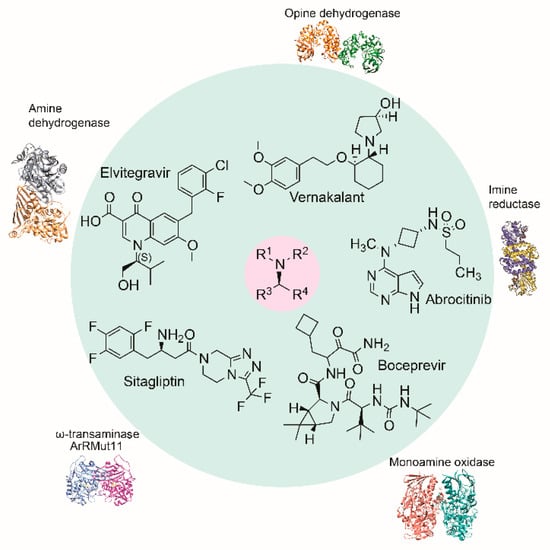
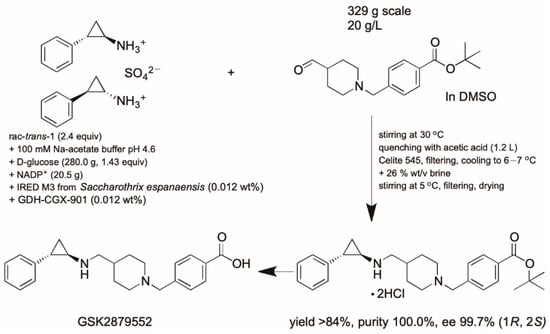


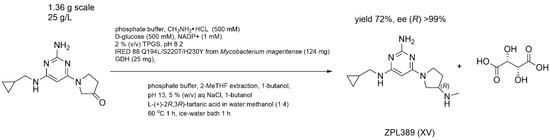
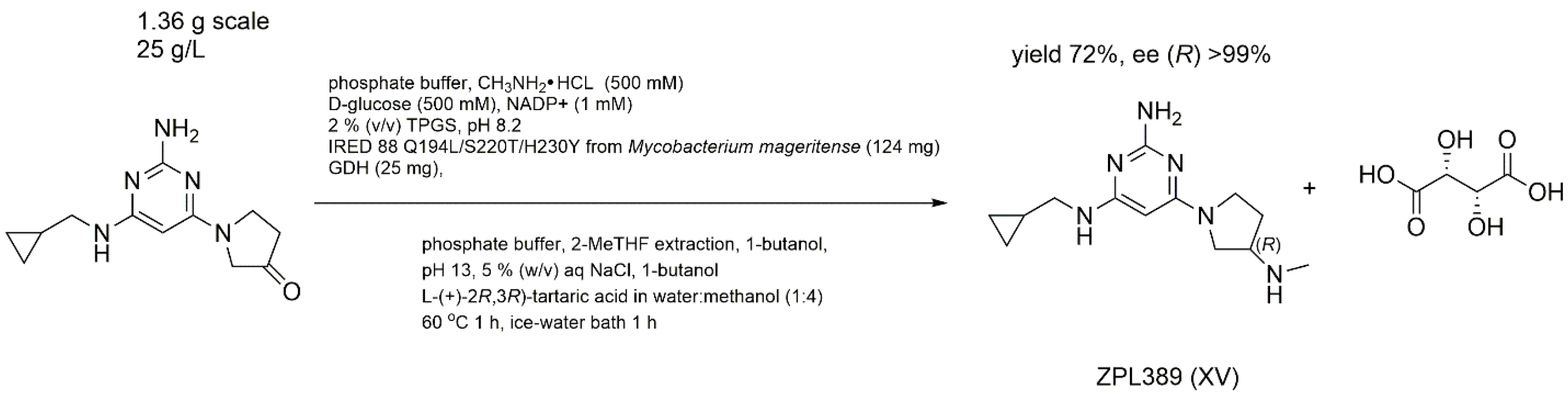
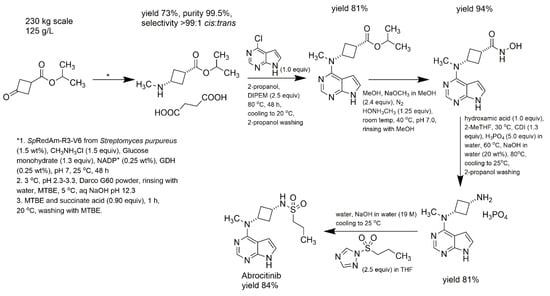
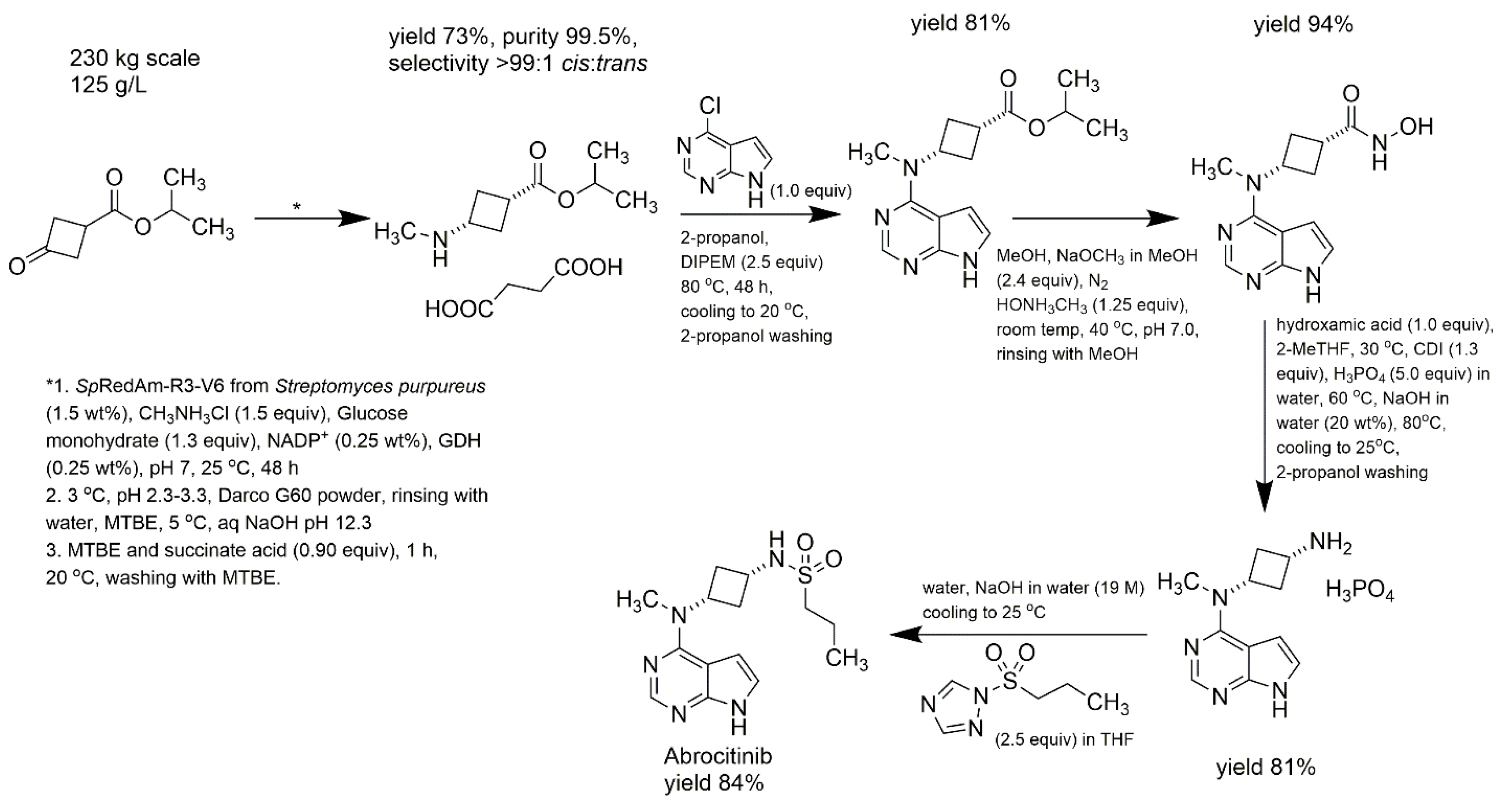
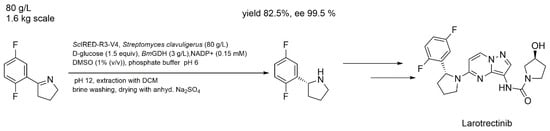
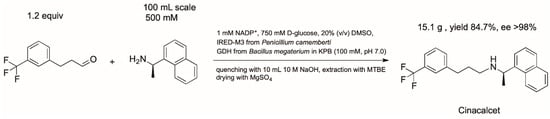
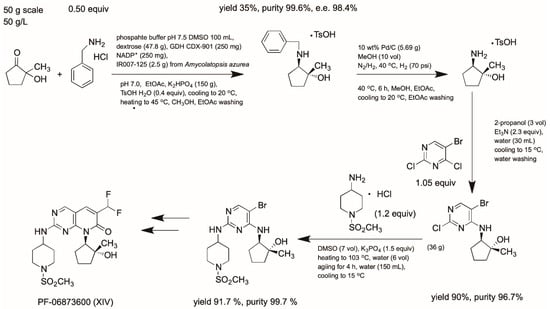
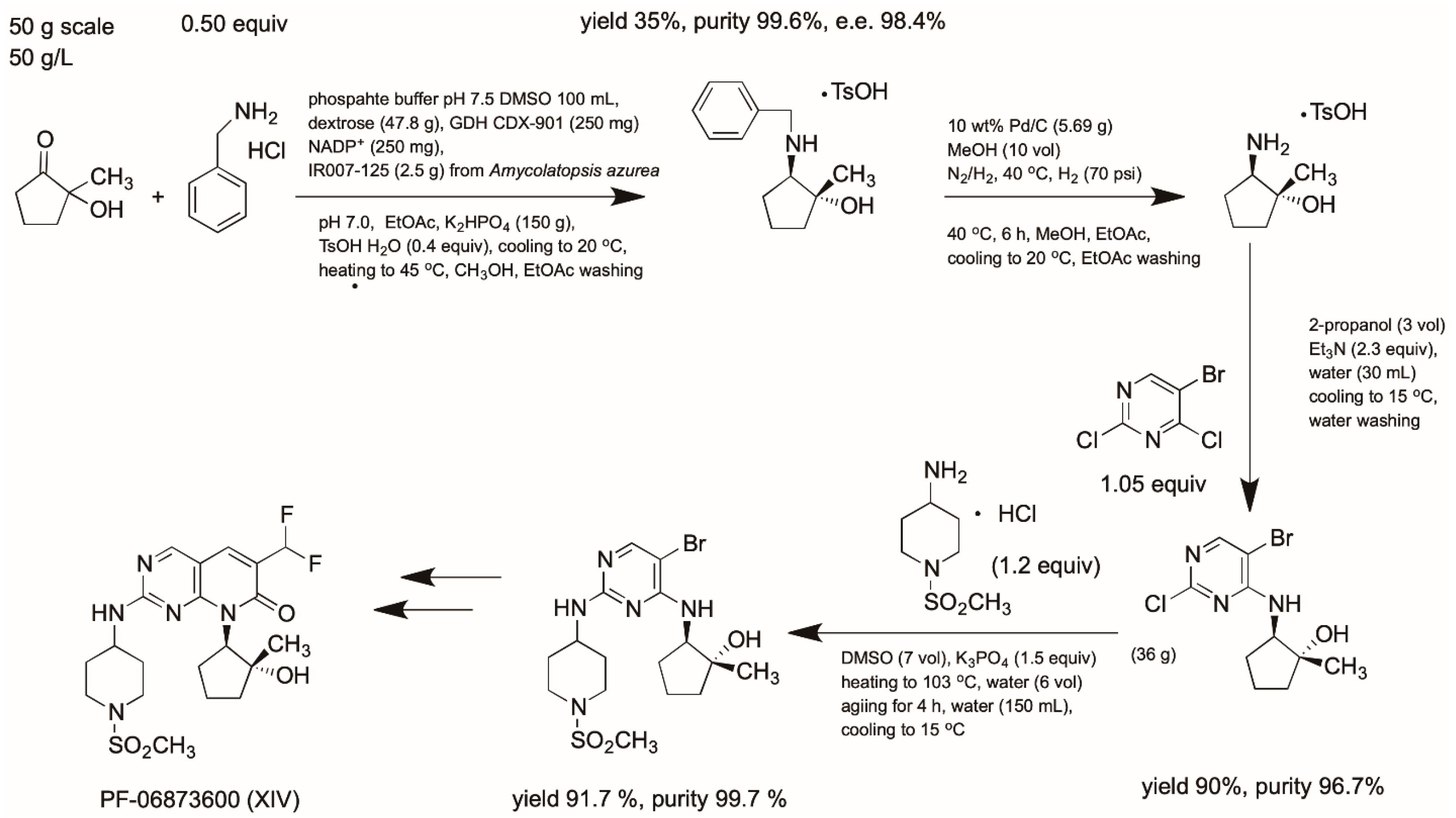








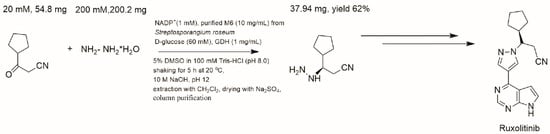
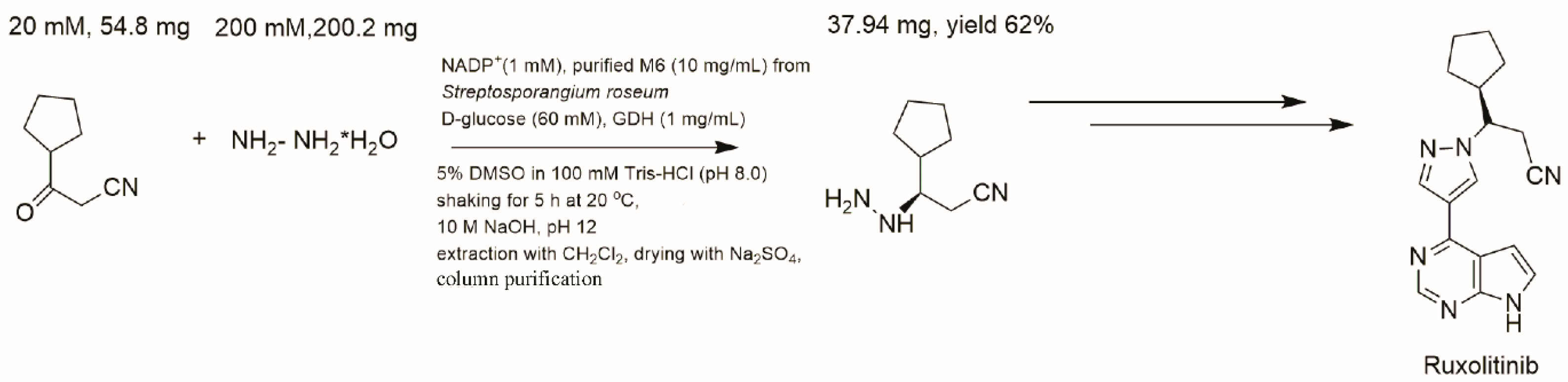
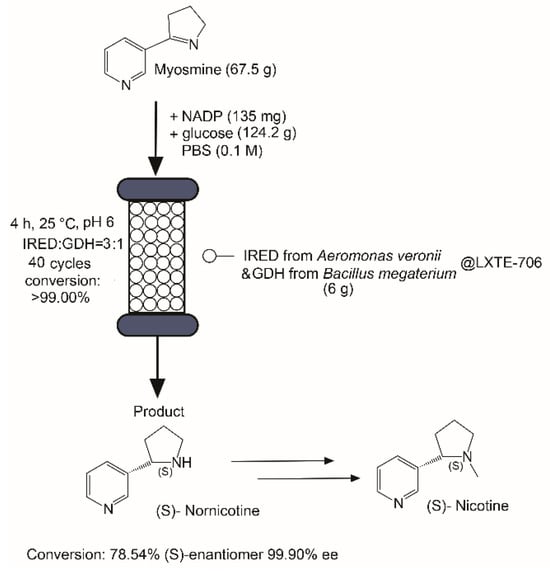
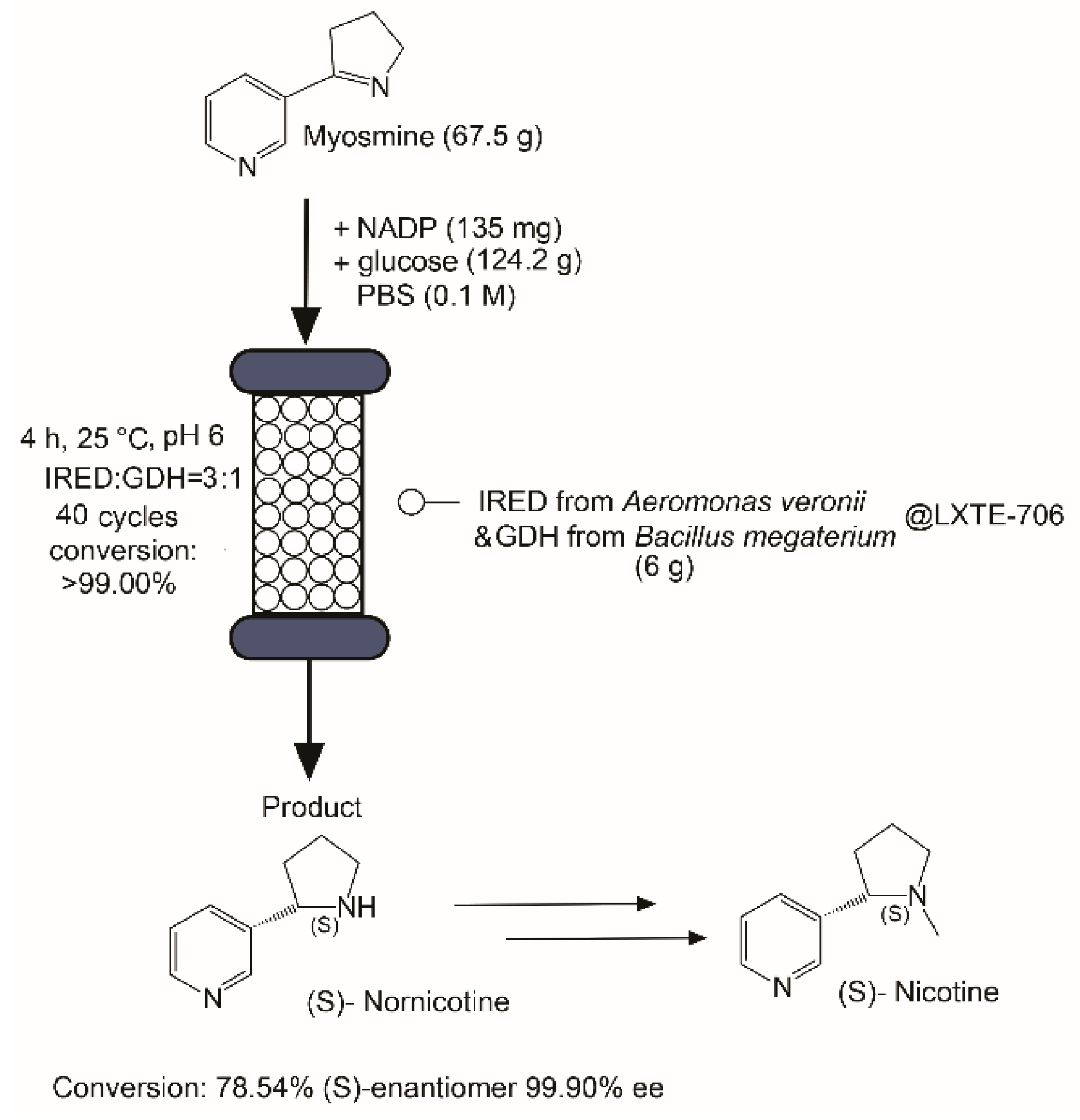
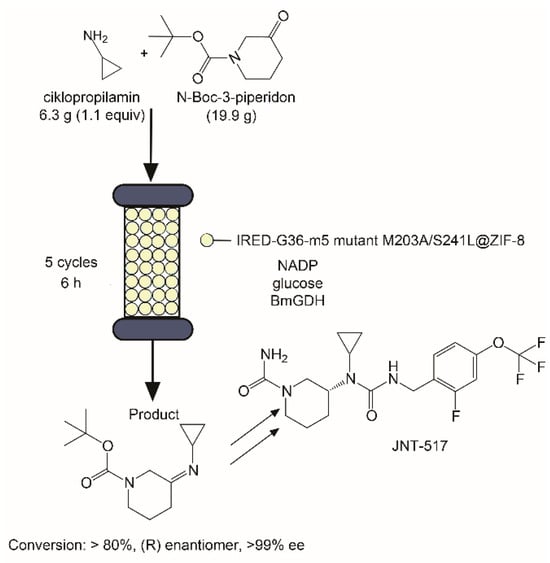
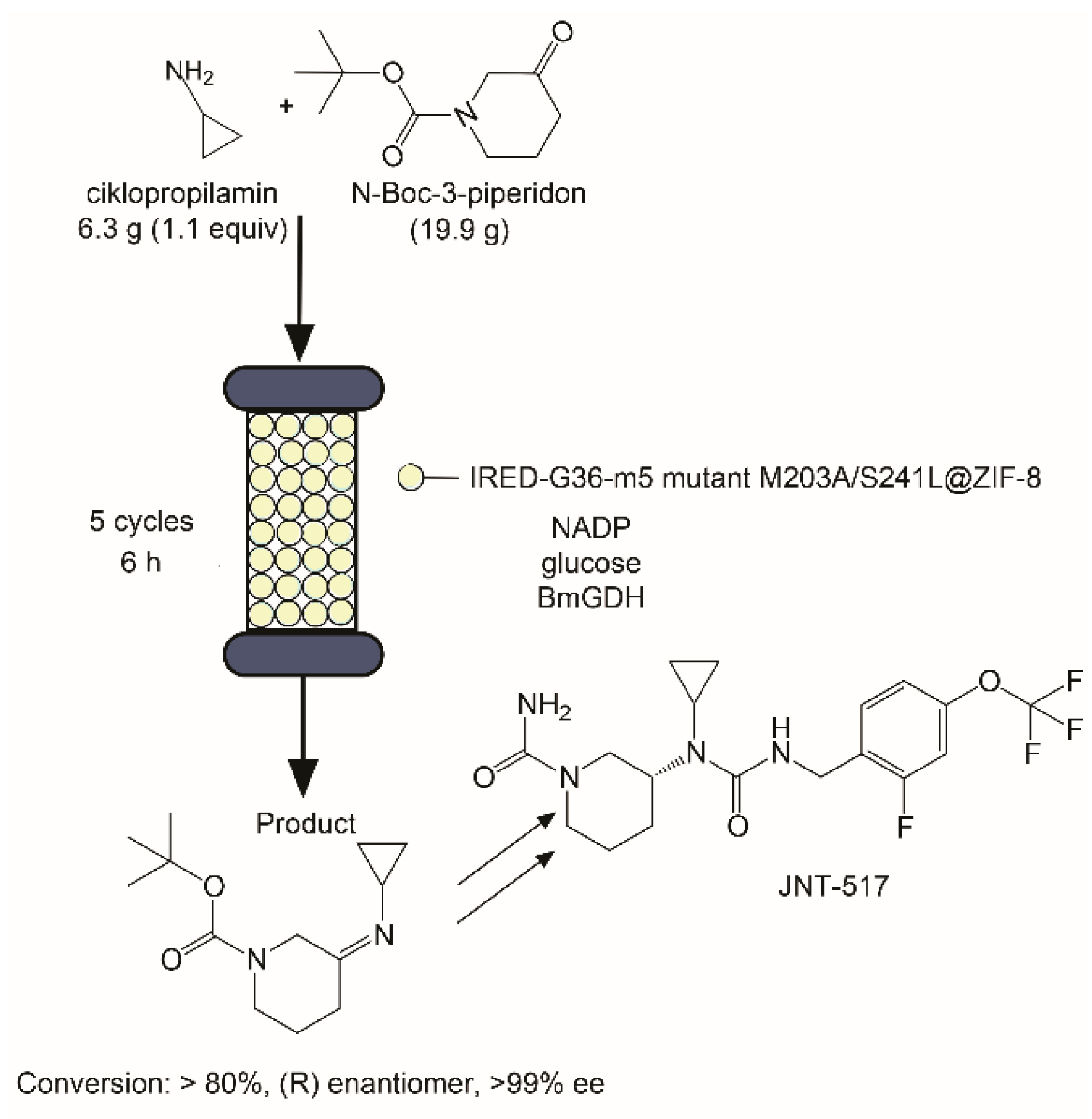

Disclaimer/Publisher’s Note: The statements, opinions and data contained in all publications are solely those of the individual author(s) and contributor(s) and not of MDPI and/or the editor(s). MDPI and/or the editor(s) disclaim responsibility for any injury to people or property resulting from any ideas, methods, instructions or products referred to in the content. |
© 2026 by the authors. Licensee MDPI, Basel, Switzerland. This article is an open access article distributed under the terms and conditions of the Creative Commons Attribution (CC BY) license.