


Abstract
Layered double hydroxides (LDHs) are functional anionic clays that belong to the family of two-dimensional (2D) materials. LDHs consist of positively charged brucite host layers separated by guest-exchangeable interlayer anions, which overall offer unique chemistry like flexible metal composition, ion-exchange capability, and structural reconstruction through memory effect property. These features provide exceptional opportunities for modulating the surface chemistry of LDHs through bottom-up synthetic strategies. By controlling chemical environment conditions and employing appropriate modulating agents, it is feasible to engineer morphology, introduce local structural imperfections such as oxygen and metal vacancies (Schottky defects), generate unsaturated coordination sites, and incorporate heteroatoms to enhance functionality. This review aims to examine recent advances in the chemical modulation and morphological control of LDHs. We summarize the principal bottom-up synthetic approaches and discuss how chemical doping, host–guest interactions, and defect engineering can be employed to tailor the structure and properties of LDHs. In particular, we emphasize the relationship between chemical modulation, morphology, and functional performance in environmental and energy-related applications. Specifically, we highlight recent progress in pollutant adsorption, degradation of organic contaminants, and hydrogen production, providing insights into the design of next-generation LDH-based materials for sustainable environmental and energy technologies.
1. Introduction
The layered double hydroxides (LDHs), also known as hydrotalcite-like materials or anionic clays, are a special member of the extensive 2D family, which were first described in 1842 [1]. Synthetic LDHs are currently attracting great attention since a vast variety of combinations can be obtained with diverse morphology, size, thickness, and chemical composition [2,3]. The most basic arrangement consists of layers of metal atoms coordinated to hydroxyl anions termed as brucite-like layers, showing a general formula M(OH)2 and assembled in a hexagonal crystal lattice with basal-plane distance in the range of 4.4 to 4.7 A (see Figure 1a) [4]. In this structure there is no excess of positive charges and thus no intercalant molecules are in the interlayer gallery. When the M-host cations of the brucite-like layers are partially substituted from M2+ to M3+ an excess of positive charges appears, and consequently intercalating anions and water molecules trend to occupy the interlayer gallery to maintain the overall neutrality of the structure (see Figure 1b) [5]. As a result of such replacement, three major components arise in the LDHs’ structure, which are M-host cations (M2+), M-guest cations (M3+), and intercalant anions attracted by electrostatic forces between in the brucite-like layers. LDHs are exemplified with the general formula where M2+ and M3+ stand for divalent and trivalent metal cations, respectively, An− denotes the intercalating anion, m represents the number of crystalline water molecules bonded to the structure, and x is the metal ratio that is estimated by , with values ranging from 0.2 up to 0.33 [6]. The LDHs formation is highly dependent on the M2+/M3+ ratio, in which ideally the metal ratio should be in the range of two up to four with materials being reasonably stable [7]. Higher M2+/M3+ ratios result in phase segregation and loss of crystallinity, while lower ratios might produce precipitation of separate M3+ hydroxides [8], although some exceptions have been recently reported concerning metal molar ratios lower than 0.5 [9,10]. Moreover, LDHs have been studied with a higher number of metal centers in their composition, forming ternary, quaternary, and even high-entropy-based LDHs [11,12]. Typically, LDHs are comprised of binary mixtures of divalent cations (Mg2+, Ni2+, Mn2+, and Zn2+) and trivalent cations (Al3+, Ga3+, Fe3+ and Cr3+) accomplished with carbonates (), nitrates (), or sulfates () as intercalating anions. Among them, LDHs show extreme affinity towards anions with high charge density like , and LDHs free of carbonate are obtained only when synthetizing under inert atmospheres [13]. Other anion intercalants can be integrated into LDHs with the trend > > OH− > F− > Cl− > Br− > > [14]. Furthermore, inorganic and organic anions have been reported in the literature as intercalants such as organic surfactants [15], biomolecules [16], or polymers [17].
Figure 1.
(a) Schematic representation of Mg(OH)2 brucite layers and (b) schematic representation of LDHs with hydrotalcite-like arrangement.
In the LDHs’ structure, hydroxyl ions are octahedrally coordinated by M2+ and M3+ cations forming an octahedral unit, where the basal spacing (d) represents the total thickness of the brucite-like sheet along with the interlayer region, as depicted in Figure 1b. A remarkable property of LDHs is their capability of reconstruction, also known as memory effect. Under relatively high-temperature, LDHs are readily decomposed due to hydroxyl-group detachment along with water and intercalating hosts release, resulting in the formation of mixed oxides or double layered oxides (LDOs). The LDHs can be reconstructed when exposing the LDOs counterpart to water solution in presence of an anionic agent, thereby raising the so-called memory effect. However, the calcination temperature and composition of LDHs play a key role in this method because high temperatures can conduct to an irreversible process. The memory effect property of LDHs has been recently exploited for water treatment and catalysis due to reformed materials showing different features in composition, basal-plane distance, morphology, and texture, providing higher surface area and accessibility to active sites [18,19].
Currently, LDHs have attracted tremendous interest in the research community because of their intrinsically flexible chemistry that makes them attractive across diverse fields. Factors such as tunable properties associated to affordable synthesis routes, along with vast chemical composition where multiple combinations of metal cations can be reached, modulation of interlayer space, exchangeable anions, and the unique memory effect, have driven the LDHs to achieve a widespread landscape of possible application, including but not limited to energy storage [20], catalysis [21], environmental remediation [22], food packing [23], flame retardants [24], water splitting [25], sensors [26], fertilizer technology [27], and beyond.
The inherent chemical potential of LDHs has prompted an extensive collection and summary of different strategies to modify their chemistry, structure, and morphology [28,29,30]. Recent reviews have analyzed the advances in their applications [31,32]; meanwhile, other have established fundamental basis to understand the nature of LDHs [2,33]. In an attempt to disrupt the study of the LDHs, the present review aims to summarize the latest advances in the design of LDHs, with special emphasis on the concepts of defect modulation and morphology control. We navigate from bottom-up and top-down synthetic routes for preparing LDHs, summarizing the principles of the methods and discussing the key parameters that drive morphology and defect engineering. We analyze the different types of defects that can be found in LDHs and the strategies to tailor them including the memory effect property that is barely exploited. Finally, we discuss the chemistry behind chemical modulation of LDHs to prepare novel building blocks for applications in the environment and energy-related fields.
2. Synthesis of LDHs
The rational design of LDHs is directly dependent on the synthesis route selected for their preparation. Two distinct strategies are widely known for the LDHs preparation that consists in the top-down exfoliation and bottom-up construction. In the top-down strategy, the bulky LDHs are intercalated to increase the basal plane distance followed by mechanical delamination until obtaining few-layered materials [34]. Conversely, in the bottom-up approach, all the constituents of the LDHs are placed together under one-pot synthesis that further undergoes a chemical reaction to assemble the atoms to create the respective LDHs [35]. Meanwhile, the top-down method offers the possibility to obtain few-layered materials with control over the intercalant agents, the bottom-up approach provides the versatility to obtain bulk quantities, with control over morphology and coordination chemistry due to the incorporation of modulator agents.
In the bottom-up approach, the synthesis conditions directly influence the morphology, thickness, and chemical composition of the resulting LDHs. These characteristics are mainly governed by the pH of the reaction medium, concentration of the intercalant in the base solution (i.e., , , , etc.), nature of the base solution (i.e., sodium hydroxides, urea or ammonium fluoride/hydroxide), aging time, temperature, and total cation concentration [14,36]. In the following sections we aim to review the two distinct strategies to assemble LDHs and finally evaluate the influence of the parameters on the structure, chemical composition, and morphology.
2.1. Hydrothermal
The hydrothermal method is employed as the core preparation route for LDHs because it enables precise and scalable control of the physicochemical parameters that dictate LDH performance. In this approach, metal precursors are dissolved in water, and the pH is often regulated in the range of 9–10 by adding NaOH/Na2CO3, the last one as source of intercalant anion. Later, the solution precursor is placed in autoclave reactors where the reaction is conducted above the boiling point of the solvent for several hours, typically from 8 up to 48 h (Figure 2) [37]. The method provides well-defined hexagonal platelets with the required stoichiometry and in the interlayer gallery. The hydrothermal method possesses multiple advantages for the LDH preparation such as controlled crystallization process, high versatility to prepare LDHs with complex compositions and structures, along with possibility to achieve tunable morphologies due to incorporation of modulating agents [5,38]. Since is naturally formed in water, LDHs free of carbonates are normally obtained only when synthesized under inert atmospheres [14]. In the hydrothermal synthesis, urea and ammonium fluoride (NH4F) can be used as modulating agents and sources of alkaline environment, which permits to control the phase composition, crystallinity, interlayer spacing, defect density, and nanosheet morphology [39]. During the hydrothermal synthesis, urea slowly hydrolyzes driving ammonia formation that consequently increases the pH of the medium, inducing a controlled precipitation of a large amount of metal hydroxides [40]. On the other hand, NH4F acts as a structure-directing agent (SDA) because fluorine anions (F−) create weak M–F bonds that induce control over a variety of shapes like urchin-like structures, nano needles, and 3D ball structures [41,42]. Other agents employed as an SDA include but are not limited to carboxylic acids, sulfonic acids, amino acids, and surfactants like cetyltrimethylammonium bromide (CTAB) and hexamethylenetetramine (HMT) [38,43,44].
Figure 2.
Schematic representation of hydrothermal and coprecipitation methods, highlighting key parameters that can lead to morphology control and defects in LDHs.
2.2. Coprecipitation
As compared to the hydrothermal synthesis, in the coprecipitation strategy the formation of the LDH occurs when dissolving divalent and trivalent cations with a source of alkaline medium driving to nearly instantaneous formation of the 2D structure (Figure 2). In the coprecipitation method three steps govern the process: (i) mixing of the cations with the base, (ii) homogeneous nucleation due to salt supersaturation, and (iii) seed-assisted growth of LDH on the nucleus [45]. Consequently, the high synthesis window of the coprecipitation method leads to agglomeration tendency, ultimately producing particles with diverse size distributions [38]. The coprecipitation can be coupled to hydrothermal process or aging to control morphology, size of the particles or a multi-layered stack structure, offering a low-cost and scalable method that yields uniform nanosheets. Coprecipitation method can be performed under two different modes that are low-supersaturation and high-supersaturation [28]. In the low-supersaturation approach, the aqueous solutions of the divalent and trivalent metal salts are added to an alkaline medium while the pH is kept above 8. This ensures rapid nucleation and growth of the layered hydroxide phase. Meanwhile, the high-supersaturation variant injects an alkaline solution with the intercalant anion included into a solution that comprises the metal–ion mixture, where the pH is raised until a value above eight is reached [46].
2.3. Electrodeposition
LDHs prepared by the electrochemical deposition technique offer unique advantages such as timesaving, easy to conduct while avoiding harsh conditions, no need of SDA to control chemical composition or morphology, along with being an eco-friendly process due to the low amount of energy needed [47]. In this strategy, the design of 2D nanostructured LDHs in terms of morphology and thickness can be easily achieved by regulating the potential, current density, temperature, working time, and pH, meanwhile the chemical composition is adjusted by tuning the molar proportion M2+/M3+ in the electrolyte solution (see Figure 3a). The method consists of conductive substrates which are employed as working electrodes submerged in the metal precursors derived from and salts that are solubilized in the electrolyte. Then, a negative bias is applied for the indirect precipitation of metal hydroxides due to electrogenerated OH− ions originated from the parallel water reduction (). Furthermore, other electrolytic reactions might occur simultaneously that increase local pH at the electrode surface such as reduction of [48]. This process is often selected to prepare self-supported LDH films on the top of conductive substrates through a two- or three-electrode set-up.
Figure 3.
Schematic representation of: (a) electrodeposition and (b) microwave methods for construction of LDHs.
2.4. Microwave
Recently, microwave-assisted method has attracted high interests owing to the demand for greener chemistries to synthetize nanomaterials [49]. Microwave approach permits a higher heat distribution than in conventional heating due to its unique volumetric behavior [50]. Additionally, the microwave-assisted heating is a cost-efficient approach that is accessible for laboratory synthesis [51]. The principle of this method is based on the microwave radiation absorbed into the solution precursor of the LDHs, conducting to particles formation with higher temperatures in the core than in the surface, where the temperature gradient moves from the center to the LDHs’ surface (see Figure 3b). This process differs from conventional heating, where a temperature gradient occurs from the surface to the center [52]. Microwave-assisted LDHs preparation is extremely dependent on diverse factors such as the nature of the material, solvent, and possible susceptors—when heterojunctions are gown—due to the reflection, absorption and transmittance characteristics [53]. The LDHs nucleate similarly as described by the classical nucleation theory in which clusters are formed to later induce growth of nanoparticles and ultimately form nanocrystals. This method offers important advantages over conventional hydrothermal and coprecipitation techniques, for example, the nucleation is not limited by equilibrium conditions [54]; it is easy to be coupled with other methods; increased LDHs crystallinity due to collision of particles and controlled heating rates and temperature [55]; and tunable chemical environment due to facile incorporation of modulating agents such as urea and citrates in the reaction medium [56]. The main limitations of the microwave method include specialized set-up instrumentation, aggregations due to hot spots that cannot be controlled, loss of crystallinity due to over exposition of microwave radiation, and limitations for scaling-up the preparation of LDHs [57,58].
2.5. Sol–Gel
The construction of LDHs by the sol–gel method is a straightforward and low-cost approach that requires minimal energy input and enables the production of high-purity materials. Moreover, the sol–gel process is an effective route for the preparation of LDHs thin films with enhanced chemical homogeneity ascribed to the molecular-level mixing of the precursors [59]. This method also offers flexibility in controlling size, morphology, and chemical composition of LDHs by adjusting aging time, precursor type, metal cation ratios, and the use of modulating agents [5]. The sol–gel synthesis involves the formation of a sol, consisting of a colloidal suspension of solid particles in a liquid medium, using metal alkoxides or metal salts as precursors. The proper selection of solvent plays a key role due to a series of chemical reactions, primarily hydrolysis and condensation, which promote the formation of a three-dimensional gel network [60]. The resulting gel is subsequently dried and, when required, calcined to obtain the final LDHs. The synthesis conditions, including drying and thermal treatment, can vary depending on the precursor chemistry and the desired properties of the material. A wide variety of LDHs compositions can be obtained by varying the concentration and relative proportions of the metal cations, thereby controlling the M2+/M3+ ratio [61,62]. Furthermore, parameters such as solvent, precursor concentration, pH, and reaction conditions can be adjusted to tailor the morphology, particle size, and structural characteristics of the resulting LDHs. This method brings simplicity, high homogeneity and purity through mild conditions, control over texture and crystallinity, and LDHs with high specific area and narrow pore distribution [63]. However, in terms of disadvantages, the sol–gel method presents important limitations, mainly associated with the usage and selection of organic solvents, a diverse set of chemical reaction that directly affects the long-term stability of the sol, and effectively controlling the gel-to-solid conversion process, consequently compromising the reproducibility and consistency of the synthesis [64].
2.6. Exfoliation: A Top-Down Approach
Compared with other 2D materials, LDHs are much more complex for exfoliation due to their high layer charge density, and unstable exfoliated materials, thereby it is easy to self-assemble to restore the bulky LDHs [65]. The exfoliation method is a top-down synthesis route to swell and delaminate bulky LDHs particles or crystals to yield separated nanosheets that can be conducted in a liquid or solid medium (see Figure 4). The liquid phase exfoliation (LPE) is a two-step general approach where first LDHs are intercalated with anionic surfactants, followed by delamination/exfoliation that occurs in the presence of an appropriate solvent using mechanical stirring or ultrasonication, which is capable of solvating the hydrophobic tails of the intercalated anionic surfactant [34]. The exfoliation method to prepare isolated LDH nanosheets has been extensively explored and thus, diverse anionic compounds such as carboxylates, sulfonates, and amino acids have been investigated as intercalants, being used as organic-solvent alcohols, formamide, toluene, xylene, chloroform, etc., in the exfoliation [66,67,68]. Very recently, the LPE was modified to introduce the intercalant agent during the coprecipitation synthesis of LDHs [69]. In this strategy, sodium anthraquinone-2-sulfonate (AQS) is added during the coprecipitation of NiFe-LDH, using HMT, and protective N2 atmosphere. The bulky NiFe-LDH is then delaminated in the presence of formamide accomplished to an anion exchange using sodium dodecyl sulfate (SDS), until obtaining a single-layer material, reducing the number of steps for the exfoliation.
Figure 4.
Schematic representation of the classical liquid-phase exfoliation of LDHs.
Alternatively to the typical LPE, the solid-phase exfoliation (SPE) was proposed by Shana Wang and coworkers where a wide gamma of LDHs (CoAl-LDH, MgAl-LDH, ZnAl-LDH, and NiFe-LDH) underwent a mechanical treatment by ball milling until obtaining water-dispersible nanosheets [70]. In this approach, bulky LDHs were prepared via coprecipitation and hydrothermal methods, and the resulting materials were subsequently subjected to a ball milling process with steel balls of 10 mm, under sucrose and ammonium chloride as milling media. This process permitted to obtain LDHs nanosheets around 1 up to 3 nm with a simultaneous functionalization with the amino groups coming from the milling media.
2.7. Structural Parameters Governing the Morphology, Size, and Thickness of LDHs
The rational design of LDHs is closely associated with the control of key experimental parameters, including pH, reaction time, temperature, and metal salt concentration. These variables determine the nucleation and crystal-growth processes, consequently, influencing the morphology, particle size, layer thickness, and crystallinity of the resulting LDHs. For instance, Maegawa et al. [71] investigated the effect of aging time on the hydrothermal synthesis of NiAl-LDHs in which the authors identified a two-stage structural evolution. During the first 24 h, crystallization was the dominant process, whereas at longer aging times, stacking and planar expansion became progressively more pronounced as the crystallization process approached equilibrium. During the initial stage, the crystallite size increased from 14.2 to 50.6 nm, while the interlayer distance increased slightly from 2.28 to 2.31 nm. Therefore, the hydrothermal treatment can promote further stacking and planar expansion of the LDHs layers during excess aging time.
Despite the extensive usage of hydrothermal and coprecipitation methods because of their relative simplicity and suitability for producing bulk LDHs quantities, uncontrolled nucleation and crystal growth can lead to aggregation, stacking layered material, and broad particle-size distributions. These synthetic routes have been modified through the incorporation of modulating agents and tuning reaction parameters to achieve enhanced control over morphology and surface chemistry. For example, Liu and coworkers [39] employed a hydrothermal method to synthesize NiFe-LDHs by systematically varying the Ni/Fe atomic ratio, reaction time, and temperature, while NH4F was used to increase the pH. All the resulting LDHs exhibited a hierarchical flower-like morphology that is attributed to F− species, which interact with cationic metal centers and slow down the nucleation process, ultimately favoring the hierarchical assembly [42]. Optimization of the reaction temperature and aging time resulted in highly crystalline nanoflower-like LDHs, whereas the Ni/Fe ratio affected mainly the distribution of the metal cations within the structure. This example demonstrates that, in hydrothermal synthesis, temperature and reaction time are critical parameters governing crystallization, while morphology is strongly influenced by the nucleation rate, which is itself affected by the chemical environment and pH.
Similarly, the coprecipitation method can be adapted to control preferential-layer orientation and growth of LDHs, thereby tailoring morphology and surface chemistry. Yang et al. [72] reported the controlled synthesis of flower-like NiCo-LDHs by coprecipitation under low-supersaturation conditions. In their approach, triethanolamine (TEA) acted as bifunctional modulating agent by providing an alkaline environment while also acting as intercalant molecule, whereas hydrogen peroxide (H2O2) ruled over the particle size. The resulting materials exhibited a flower-like morphology and a high density of structural defects associated with oxygen vacancies generated upon H2O2 addition. This example illustrates the strong interdependence between morphology, chemical composition, particle size, and defect concentration, making the independent control of these structural characteristics complicated.
In another example, CoAl-LDH nanosheets were synthesized by coprecipitation under high-supersaturation mode while varying the interlayer anions and the concentration of modulating agents [44]. The optimized composition, corresponding to a Co:Al:urea ratio of 3:1:10, followed by aging at 90 °C for 48 h, was conducted to well-defined hexagonal platelets. The interlayer nitrate anions influenced the interlayer spacing and the tendency of the LDHs layers to undergo exfoliation, whereas the urea hydrolysis provided a controllable pH environment, thereby regulating the nucleation rate. Furthermore, in this example, the authors studied the addition of formamide at different concentrations which in turn inhibited crystal growth, enabling control over the lateral dimensions and thickness of the CoAl-LDH layers. These modifications further demonstrate the versatility of coprecipitation for tuning the size and thickness of LDHs, through the combined control of nucleation, thickness growth, and interlayer interactions.
In contrast to conventional hydrothermal and coprecipitation methods, microwave-assisted synthesis offers a substantially faster route for controlling LDHs morphology and hierarchical assembly. For example, hierarchical porous NiCo-LDHs can be obtained by adjusting the irradiation time, which promotes rapid volumetric heating and accelerated nucleation [73]. Under these conditions, nanoparticles aggregate and self-assemble into porous nanospheres with diameters of approximately 100–300 nm. The significantly shorter reaction times (210 s) associated with microwave irradiation provided an alternative to the prolonged aging treatments typically required in conventional hydrothermal and coprecipitation processes. Moreover, microwave-assisted synthesis enables the preparation of Li–M–Al LDHs (M = Mg, Co, Ni, Cu, Zn, and Cd), assisting the straightforward Li incorporation as compared with conventional coprecipitation or hydrothermal methods [54]. The rapid and homogeneous heating provided by microwave irradiation modified the reaction kinetics, facilitating access to cation combinations and coordination environments that are less readily achieved under conventional heating conditions. Therefore, microwave-assisted synthesis expands the compositional and morphological control available for the preparation of LDHs.
3. Chemistry of Defects in LDHs
Defects are defined as any perturbation in the owning nature of LDHs such as doping, oxygen and metal vacancies (Schottky defects), and host–guest defects. All of them modulate the chemical coordination environment of the LDHs and lead to enhanced electronic properties, and catalytic and absorption sites which are valuable for the rational design of LDHs. It is important to mention that all of them are intimately connected and thereby, more than one type of defect can be simultaneously generated. In this section we aim to describe the chemistry behind these defects to later introduce different strategies to tailor them.
3.1. Doping and Isomorphic Substitution
Doping refers to inserting foreign atoms into the pristine structure of the hydrotalcite-like LDHs as depicted in Figure 5, and it is characterized by a narrow variety and low-concentration quantities of foreign elements into the structure. Opposite, isomorphic substitution involves replacing a major framework element such as M3+ atoms for M2+ and others with an incoming ion of a familiar ionic radius [6]. The difference between isomorphic substitution and doping is highly relevant since it brings key understanding related to structure–activity. Doping and isomorphic substitution are two fundamental strategies used to alter the chemistry of the brucite-like host layers. Both techniques introduce foreign-metal cations to tailor the material’s properties, but differ drastically in concentration, structural intent, and final material stability [74]. Therefore, clear advantages and disadvantages are distinguished in derived materials from both techniques. While isomorphic substitution yields materials with high structural and phase stability with layered host frame and high long-range crystalline order [75], doping generates structures with rich defects due to triggers of local lamellar disorder, structural strains, and oxygen vacancies [76]. The main advantages of isomorphous substitution are stoichiometric shift of metal cations with controlled positive layer charge [77], homogeneous dispersion of cations across the entire LDH, and creating predictable bulk changes in structural parameters, thermal stability, and basicity [78]. However, among the disadvantages we highlight diluted localized activity and strict geometrical constraints [74].
Figure 5.
Schematic representation of chemistry of defects related to LDHs highlighting heteroatom doping, vacancies, and host–guest interactions.
Conversely, doping offers flexibility in cation selection, including larger or mismatched ions that cannot form a pure bulk isomorphic structure. The material can target electronic band engineering because minor dopants can drastically alter light absorption capabilities and compress the bandgap (the boosting electron–hole separation during photocatalysis without needing to rewrite the core framework) [79]. However, the main disadvantages are the risk of phase separation and degraded bulk crystallinity from minor variations above the doping threshold, which can precipitate secondary, inactive metal oxide/hydroxide impurity phases. Additionally, the introduction of mismatched dopants often causes poor long-range structural order, resulting in lower crystallinity and higher overall layer disorder [80].
3.2. Vacancies
Vacancies are considered as the absence of oxygen (VO) or cationic metal (VM,) across the brucite-like layer, also termed as Schottky defects (see Figure 5) [80]. These two types of defects are intimately linked due to the control of VO, which evokes diverse charge-valence environments in the layers that must be compensated by either withdrawing atoms from the LDHs arrangement or adding/removing intercalants of diverse size and charges [81]. The tailoring of VO has been explored very recently in the LDHs because it alters the electron transfer process, which is usually associated with enhanced activity towards electrocatalytic and photocatalytic applications. The Vo significantly facilitates the adsorption of diverse species by modulating the absorption energies of intermediate species. Similarly, when VO is introduced some VM are collaterally created in the M-OH layers, producing abundant unsaturated coordination sites, and high-energy dangling bonds that further tune the local electronic configurations around active metal sites [82]. VO can be generated by distinct strategies in which the most representatives are: (i) chemical etching of OH− [83], (ii) LDHs reconstruction [84,85], (iii) introducing metal cations with higher oxidation states creating unsaturated coordination centers [86], (iv) electrochemical oxidation [87], (v) plasma etching [88], and (vi) regulating pH during the coprecipitation method [89]. However, the tailoring of excess of vacancies VO or VM can lead to unstable lamellar structure due to vacancies removes M-host atoms, disrupting the coordination bonds and significantly increasing the surface-free energy of the crystal domain [90]. Furthermore, the energetic stress might impact on the stability of the LDHs during the application causing early corrosion of the components of the host-layer. Particularly, VM are less stable than VO due to a dynamic phase transition that involves the generation of parallel VO, further accelerating the instability of the lamellar structure [91]. Moreover, irreversible structural distortions and phase transitions can occur in the LDHs structure due to possible redox reactions that reduce the concentration of metal vacancies through metal leaching.
3.3. Host–Guest Defects
The host–guest defect emerges from the lattice strain generated in the interlayer of the LDHs sheets due to excess of VO or for the interaction that emerges between the intercalant and brucite-like layer. The host–guest-type defects in LDHs conduct to a chemical manipulation of their electronic structure, which in turns modifies the basal spacing (as remarked in Figure 5), and changes the electron transfer between metal sites and intercalated species in nanosheets [92]. The new anionic guests (e.g., NO3−, CO32−, Cl−, SO42−, acetate, lactate, dodecyl sulfate, and oleate, etc.) are connected with the M–OH layers by complex interactions such as hydrogen bonding with the hydroxyl groups of the brucite-like host layer, and electrostatic interactions [93]. LDHs possess a low-lattice energy that is associated with the required energy to separate cationic layers, which results from the monovalent valence state of hydroxide ions [94]. Therefore, enough physical stress might result in the formation of crystal defects as well as delamination due to the elastic deformation of the LDHs lattice. Conversely, the introduction of anionic vacancies in LDHs (VO) can induce an increased strain of the crystal lattice, arising to charge density variations of the host layers with counter anions. The introduction of such host–guest defects has been observed as an effective strategy to enhance the electronic, catalytic, and adsorption properties of LDHs [95,96].
4. Strategies to Tailor Rich-Defective LDHs
4.1. Heteroatom Doping and Isomorphous Substitution
Metal doping in LDHs has been widely investigated because its favorable electronic configurations enhance electron transport, tune surface-adsorption energies, and reduce leaching of other species. For instance, Su et al. [97] studied the Fe doping in the reconstruction of NiCr-LDH during the oxygen-evolution reaction (OER) in an alkaline medium. The authors fabricated the Fe-doped NiCr-LDH via a hydrothermal method, followed by electrochemical activation to achieve surface reconstruction into metal oxyhydroxides. Strategic variations in the incorporation of Fe doping can effectively improve OER performance by shifting the O 2p band towards the Fermi levels, that facilitates the loss of electrons from the oxygen ligand and consequently leads to the lattice oxygen mechanism (LOM). Simultaneously, by using operando Raman spectroscopy, the authors reveal that Fe moieties contribute to the formation of CrOOH when a bias is applied, that in turn avoids Cr leaching from the structure of the LDHs.
A key point in chemically modifying LDH materials is designing them by selecting ions and considering their interactions with the LDH surface, beyond the modification method used. Varga et al. [78] developed LDHs containing Ce(III) and Ce(IV) with high efficiency heterogeneous catalysts to promote Meerwein–Ponndorf–Verley reduction using isomorphic substitutions. The incorporation of cerium centers into LDHs was complemented by the formation of surface/subsurface defects modifying the Lewis acidity of LDHs. The catalytic activity was determined by amount of Ce(III) and Ce(IV) centers and the hydroxyl groups on the surface (defects). Despite, isomorphic substitution yields order structures due to replacing cations, this study highlights the importance of ions selection used to modify LDHs beyond the method.
Emerging catalysts seek to replace or reduce the usage of noble metals belonging to the platinum group metals (PGMs) [98]. In this context, a bifunctional Ru-NiFe-LDH electrocatalyst was prepared in a conventional hydrothermal method in the presence of urea as a chemical modulator and nickel foam (NF) as a substrate. In a facile and straightforward approach, the Ru doping was conducted by immersing the NiFe-LDH catalysts in 10 mg/mL Ru solution during different times. Although Ru atoms decorated the top of the catalysts, a metal-semiconductor composite structure was achieved in which Ru alters electronic rearrangement at Ni and Fe sites. This was reflected in the work function of the Ru-NiFe-LDH that reduced from 4.29 eV to 4.48 eV, confirming that the nature of the Ru permitted the electrons to be more prone to escaping. Ru doping modulated the adsorption free energy of Ni active sites toward OER intermediates such as OH*, O*, and OOH*; meanwhile, they served as highly active HER sites, forming a dual-center structure synergistically coupled with Ni atoms.
Nonmetal doping consists of introducing atoms with unpaired electrons that can benefit the electronic structure of the LDHs. Typical atoms involved in the nonmetal doping include but are not limited to nitrogen, sulfur, phosphorus, boron, and halogens. For instance, supercapacitor based on boron-doped NiCo-LDH was successfully synthesized by using a smart two-in-one approach consisting of the NiCo-ZIF denaturalization in presence of potassium borohydride (KBH4) as an etching compound and dopant agent [99]. After denaturalization of the NiCo-MOF, the resulting LDHs exhibited the Co–B and Ni–B bonds, confirming coordination of the B atoms in the hydrotalcite-like structure. These new bonds benefited the distribution of the density of states of the newly formed LDHs, improving the electronic conductivity, mainly due to Ni–B bonds.
Yang et al. [100] developed a novel phase-interface plasma-discharge strategy in a gas–water interface to prepare an F-doped NiFe-LDH electrocatalyst for OER. In this method, Ni and Fe precursors were dissolved in water along with NH4F and 2-methylimidazole as precursors of F and N atoms. Highly electronegative F influenced the electronic rearrangement of Ni-F(O)-Fe but also induced spin-state reconfiguration of Ni/Fe sites, promoting parallel spin alignment of lattice oxygen (see Figure 6). Thereby, the F atoms embedded in the NiFe-LDH accelerated surface reconstruction to active (oxy)hydroxides that triggered the *O–O* coupling needed in the LOM during OER.
Figure 6.
Schematic representation of Ni foam substrate decorated with NiFe-LDH where F atoms provide favorable energy sites to boost the electron-transfer process during the OER.
A synergistic effect between metal and nonmetal doping can bring a simultaneous electronic modulation due to metal doping, and structural benefits imparted by free electrons provided by nonmetal atoms. In this context, Zhang et al. [101] studied the simultaneous Fe and P doping in NiFe-LDH self-supported on NF by the molten-salt method as an electrocatalyst for the OER. Fe atoms were varied in diverse concentrations in the NiFe-LDH, meanwhile the P concentration was modulated by immersing the electrode in Na3PO4 solution. The Fe and P atoms introduced in the NiFe-LDH structure permitted a decrease in the grain size and modulated the chemical states from Ni3+ → Ni2+. More importantly, the nonmetal atom contributed to shaping Ni(OH)2 semiconductor catalyst into an electrical conductor catalyst with enhanced electronic state density with proximity to the Fermi level. Additionally, the Fe atoms enhanced the density of states by incorporating more electronic states into the conduction band and consequently lowering the *O → *OOH reaction-energy barrier.
4.2. Chemical Etching
Tailoring defects in 2D nanomaterials through chemical etching is the most widely employed route since it permits building of materials with new exotic physicochemical properties in a straightforward post-synthetic treatment. In the chemical etching, two main approaches emerge, which are acid and alkaline treatment. In alkaline conditions, the rich-defective LDHs structures are thinner due to the elimination of hydroxyl anions (Schottky defects), resulting in an increased attraction with the interlayer anions (typically ), and thereby reducing the interlayer distance along with a reduced crystallinity [102]. Additionally, alkali treatment can also induce Schottky defects due to unsaturated coordination sites. This is exemplified by the studies of Li and coworkers [103] where an NiAl-LDHs was grown on Ni foam by hydrothermal method, using urea and NH4F as modulating agents. As post-synthetic treatment, the LDHs underwent an alkali treatment in 6 M KOH at 60 °C for 3 h leading to etching of Al atoms of the structure. The tailored Schottky defects were observed by High-Resolution Transmission-Electron Microscopy (HRTEM), which revealed locally vacant atoms, meanwhile X-Ray-Photoelectron Spectroscopy (XPS) results evidenced a lower binding energy of 0.2 eV in Al 2p region of NiAl LDHs, showing that Al-vacancies have the lower valence state of Al on the surface.
Similarly, chemical etching can be performed under acidic environments with the benefit that, if a proper acid is used, intercalation, exfoliation, and VO can be readily tailored. Zhou et al. [104] investigated the tailoring of defects in CoFe-LDH by using 1 M HNO3, which results in indicating multiple VO accompanied by the intercalation of . The authors found similar results to those in reference [102], where the crystallinity of the LDHs was seen to be reduced due to an exfoliation process along with an anion exchange between and . Furthermore, the acidic treatment led to VM in the structures and expansion of the interlayer distance because are much larger than . The VO allows tailoring electronic states in CoFe-LDH, improving active sites and charge transfer for excellent electrochemical OER performance.
The chemical modulation during the acid etching is influenced by the contact time where the morphology, crystallinity, and content of Schottky defects are dependent. Karádi and Varga illustrated this observation studying CaAl-LDH and MgAl-LDH treated with organic acids (i.e., oxalic acid, acetic acid, adipic acid, and citric acid) as a function of time [105]. The contact time was monitored from 15 to 300 min in 0.5 M aqueous solution. Interestingly, the LDHs intercalated with carbonates and nitrates showed superior resistance to the acid etching. Furthermore, the chemical etching altered the crystallinity of the 2D materials reducing the interlayer distance and the morphology evolved from a hexagonal platelet-like structure towards nest-like assemblies consisting of perpendicularly stacked LDHs. In terms of chemical composition, the contact time influenced the release of M2+ cations from the brucite layer, leading to Schottky defects which, in turn, promoted M3+ Lewis acid sites in the neighboring of cation vacancies. Overall, the LDHs etched with organic acids offered an enhanced catalytic performance with high selectivity, due to a synergistic effect of the morphology with increased porosity and more catalytic sites available due to increase of -OH terminations with strong basic features.
Alternatively, the tailoring of VM was studied in a smart approach by employing a complex extraction (CE) method in which the complexing ligands are prone to removing strategic metal cations from LDHs (see Figure 7). Gao et al. [106] reported this method for the synthesis of engineered Ni-vacancy-rich NiFe-LDH deposited on NF through a hydrothermal synthesis, followed by a room-temperature CE treatment using citrate, thiocyanate, oxalate, and ammonia to selectively remove Ni2+ and generate isolated Ni vacancies. This extraction strategy enabled the formation of isolated VM while preserving the original nanoflake morphology. The existence of VM was evidenced by HRTEM where holes in the LDHs structure were shown, along with inductively coupled plasma-optical emission spectrometric (ICP-OES) results that revealed only the dissolution of Ni2+ and not Fe3+ after CE. The authors argued that the resulting rich-defective LDHs turned to be chemically stable due to Ni-vacancies that triggered Ni2+ → Ni3+ formation, which aids in stabilizing the LDHs and improved conductivity and charge-transfer behavior. The modulation of VM benefited by lowering the activation energy of key intermediates such as *OH, *O, and thus accelerating the OER kinetics.
Figure 7.
Complex extraction process for the construction of vacancies in LDHs. Continuous extractions conduct to holes in the brucite-like layer.
4.3. Plasma Etching
Defect engineering by atmospheric plasma processing enables tailoring selective surface properties of LDHs, while offering unique advantages such as high efficiency, rapid processing, versatility, surface morphology manipulation, and small environmental impact [107]. Compared with conventional activating methods like chemical etching, the atmospheric plasma method reduces the need of chemical reagents and post purification-separation-drying steps, it is a time-saving technique, is highly controllable and efficient, and it can prevent the oxidation of divalent metal cations in LDHs, and has aggregation and sintering effects [108]. The plasma technique takes advantage of excited high-energy electrons that can disrupt existing chemical bonding (vacancies and holes) or generate new chemical bonds by plasma bombardment in LDHs (see Figure 8) [109]. Baby et al. [110] employed a fast plasma-surface-tailoring technique to modified ZnNi-LDH prepared by coprecipitation as a starting material. The optimized plasma treatment allowed to effectively modify the morphology and crystallinity of the ZnNi-LDH, meanwhile producing an enrichment of VO. The improved surface functionalities of the plasma-treated LDHs resulted in an enhanced energy-storage device capable to deliver 385C g−1. Plasma treatment can also modify chemical states of the metals present on the surface of the LDHs. This is the case of an NiFe-LDH prepared by coprecipitation and a hydrothermal approach followed by impregnation of Ru3+ atoms on the top of the surface [111]. The plasma treatment consisted of nitrogen-glow plasma that reduced Ru from R3+ → Ru0, leading to a simultaneous anchoring of Ru nanoparticles in the lattice confinement of the NiFe-LDH. The resulting material showed excellent catalytic hydrogenation of N-ethylcarbazole. In another example, Li et al. [112] synthesized Mg-doped NiMn-LDH nanosheets deposited on 3D graphene using a conventional hydrothermal method. Later, abundant VO were introduced to the LDHs via argon plasma-etching, resulting in the rich-defective material. Interestingly, the NiMn-LDH nanosheets maintained the 3D hierarchical flower morphology even after the plasma treatment. In terms of surface chemistry, the authors found a loss of crystallinity as the VO content increased. This example confirms plasma technique enables the chemical surface modification of material, without sacrificing the bulk integrity, although crystallinity and thickness might be altered. Furthermore, the versatility of the technique permits to couple different strategies to tailor defects such as doping.
Figure 8.
Illustrative representation of LDHs treated with plasma energy where high-energy electrons remove -OH and metal cations coordinated to the LDHs, ultimately forming a rich-defective structure.
4.4. Host–Guest Exchange
Recently, the tailoring of host–guest defects was studied by Kim et al. [113] where they analyzed the influence of Cl−, Br−, I−, and NO3− on delamination, intercalation, and re-stacking of CoAl-LDHs. Their process was conducted using a simple method where the exfoliative synthesis of monolayered Co–Al-LDH nanosheets was achieved by dispersing the bulky counterparts in formamide with vigorous stirring under an N2 atmosphere. Their findings highlighted that the newly inserted anionic intercalants led to an increase in the basal spacing along with significant elastic deformation (as illustrated in Figure 9). This outcome reveals the introduction of local structural distortion and the creation of crystal defects. This conclusion was probed by Co K-edge-extended X-ray absorption (EXAFS), which revealed depressed Co–O bonds, resulting in a reduction in coordination numbers due to bulky intercalant species that influenced oxidation state, oxygen vacancies, and lattice strain. The intercalant species also influenced the oxygen defect content where the authors very interestingly found a linear relation between the size of the intercalant and the tailoring of the VO. This defect engineering approach permits to finely tune the chemical interaction between LDHs layers to improve the electrochemical power of CoAl-LDH for OER.
Figure 9.
Schematic representation of the exfoliation of LDHs with diverse anions with increasing atomic radii and their influence in the elastic deformation of the basal plane.
Modulation of the assembly of host layers with interlayer anions permits the study of the variation in the lattice strain in M–OH groups, affecting metal valence and surface charge redistribution. When the surface charge redistribution is modified in host layers, the binding strength between layers and interlayer anions guests is weakened, enhancing the mobility of the anionic guest. As reported recently by Li et al. [114], the induction of low-valence Cu+/Fe2+ in Cu0.5Mg1.5Fe1-LDHs reduces the lattice’s positive charge density. This reduction is vital because it prevents catalyst poisoning by weakening the adsorption of CO32− intermediates. By facilitating their transformation and migration away from active sites to improve CO2-CO32− mobility, a continuous CO2 capture and in situ conversion cycle is successfully sustained. Similarly, Zhu et al. [115] reported the effect of the host–guest intercalant Fe(III)-Oxalate in the CuNi2Al-LDH to boost photo-assisted Fenton reaction for the degradation and mineralization of organic pollutants. For this, CuNi2Al-LDH nanosheets were prepared by a conventional hydrothermal method in the presence of hexamethylene tetramine as a chemical modulator and source of alkaline media, to be later incorporated into different amounts of iron oxalate precursor (FeIII(C2O4)33−). Here, the host–guest interaction was constructed by the ion-exchange reaction between from the CuNi2Al-LDH and FeIII(C2O4)33−. The FeIII(C2O4)33− trapped in the LDHs structure created a notable enlargement of the interlayer space of hydrotalcite from 0.765 nm to 0.988 nm. The intimate contact between the intercalated anions and the LDHs enhanced the metal-to-metal charge transfer (MMCT) transitions of Cu2+ → Fe3+ and Ni2+ → Fe3+ during the photo-Fenton degradation of phenol. According to the authors, the photo-Fenton reactions were enhanced due to Cu+ species in the host sheet and the FeII(C2O4)22– in the confined space, which acted as active sites to activate H2O2 to trigger •OH formation; meanwhile, the increased light-adsorption of the LDHs lead to the production of more photogenerated electrons, which accelerated Cu2+/Cu+ cycling on the sheets and Fe3+/Fe2+ cycling, giving a long-lasting Fenton reaction.
4.5. Memory Effect
The memory effect is one of the most praised properties that LDHs present due to allowing the reconstruction of the original LDHs leading to partial chemical modifications and recovery of the material. In this process, the LDHs first undergo thermal annealing to decompose the intercalated species and release the hydroxyl groups, leading to the formation of LDOs. These new compounds (also termed LDOs) are formed at moderate temperatures (400–600 °C) and can act as precursors to reconstruct LDH counterparts when they are placed in contact with an aqueous solution containing pristine anions or new intercalant agents (see Figure 10) [116]. It is important to highlight that the regenerated properties of LDHs after calcination and successive rehydration cannot be completely reversible due to a change in the local environment in the octahedral sites [117]. Thereby, the structural evolution towards reconstituted architectures drives modifications in the lattice orientation and confinement, crystal formation, morphology, chemical composition, and surface area. The latter makes the memory effect a strategy to either produce reusable materials for environmental or energy applications or tailor the chemistry of LDHs. For instance, Ioana-Maria Popa et al. [118] studied the memory effect property of CuZnAl-LDH, where small Cu nanoparticles (<5 nm) were induced to grow in situ during the LDHs reconstruction leading to the formation of Cu/CuZnAl-LDH by repeating cycles of calcination and rehydration. In this straightforward approach, CuZnAl-LDH was first prepared using a coprecipitation method followed by calcination at 550 °C for 5 h in an electric furnace under static air and redispersing the solid in a solution containing Cu2+. The tailored chemical composition was achieved through successive calcination and rehydration processes in the presence of anions and Cu2+ cations.
Figure 10.
Schematic representation of memory effect of LDHs by iterative calcination and rehydration processes and potential intercalant exchange.
In another example, MgAl-LDH intercalated with was employed as electrolyte additive to stabilize lithium–metal anodes in carbonate electrolyte, by promoting uniform Li deposition and suppressing dendrite formation and side reactions [119]. In this approach, calcination of MgAl-LDHs generates MgAl-LDOs with accessible anionic vacancies. Owing to the memory effect of LDHs, -intercalated MgAl-LDHs were subjected to a mild calcination, ultimately forming anionic vacancies. These calcined materials can spontaneously incorporate from the electrolyte and reconstruct their layered structure, forming nitrate-containing MgAl-LDHs. Overall, this process enables LiNO3 dissolution and provides a sustained nitrate reservoir. The stored nitrate can be preferentially reduced to form a Li3N-rich solid electrolyte interphase (SEI), facilitating Li+ transport and contributing to more uniform lithium deposition.
The memory effect enables fine modulation of LDH chemistry to construct complex architectures and improving the performance relative to its counterparts. In an inquiring example, metal-organic frameworks were used as sacrificial templates to derive into LDHs [120]. Firstly, Ni-MOF was produced in a solvothermal approach using nickel nitrate hexahydrate as a metallic center precursor and 1,3,5-benzenetricarboxylic acid as organic ligand. The Ni-MOF produced was employed as a sacrificial template to derive into LDHs by dispersing the MOF in ethanol and adding an Fe metal precursor as the source of the second metallic center. The NiFe-LDH/MOF was calcined in a furnace for 2 h at 350 °C, producing an NiFe-LDO supported on carbon. This study takes an advanced step toward applying the memory effect property in LDHs, as the resulting NiFe-LDO was used for water desalination.
5. Applications of LDHs in Environment and Energy-Related Systems
5.1. Strategic Adsorption of Organic and Inorganic Compounds
LDHs show excellent adsorption capability to retain toxic pollutants from wastewater due to their exchangeable properties by replacing the host intercalant with the pollutant target. Additionally, LDHs possess a water-resistant structure, excellent acid–base buffering capacity, reusability for multiple adsorption-desorption cycles, and a large surface area with plenty of active sites that enhance the interaction with the analyte to adsorb. Table 1 summarizes the LDHs application towards adsorption of organic and inorganic anions (entries one to seven). These examples highlight key features in the design of LDH-based composites for wastewater treatment: (i) hydrothermal and coprecipitation methods are commonly employed although agglomerates are potentially obtained, (ii) modulating agents are barely employed, and (iii) the substrate play an important role in the design of the composite to boost active-site exposition and surface area. Bulky LDHs are typically employed for the adsorption of pollutants, although this is juxtaposed by incorporating a proper substrate. For instance, carbon-based materials are excellent substrates because they provide additional active sites that synergistically improve the LDHs’ performance (Table 1, entries 1–3 and 6–7). A strategic example of incorporating biomass as substrate is presented in entry 2 of Table 1, where an MgAl-LDH@hydrochar was prepared by a simple one-pot hydrothermal approach using rice husks as the hydrochar precursor. The hydrochar derived from rice-husk increased the available surface area of the composite (76.19 m2/g). Meanwhile a large amount of exchangeable interlayer anions provided stronger adsorbent–adsorbate electrostatic interactions leading to adsorption capacities (qm) of 56.3 and 33.2 mg g−1 for arsenate and phosphate, respectively. A competitive study revealed phosphate as a preferable adsorbate rather than arsenate anions. The latter was argued based on the smaller radius of phosphate than of arsenate, different partial charge densities on the oxygen atoms (−0.892, HAsO42−and −0.952, HPO42−), and differences in the coordinate bonding characteristics, where phosphate had higher affinity towards Mg(OH)2 by forming monodentate and bidentate complexes as illustrated in Figure 11. In a similar action line, an MgAl-LDH@starch was employed for the adsorption of anionic and cationic colorants (Table 1, entry 3), where the composite was prepared by a coprecipitation method, incorporating directly amylose/amylopectin (molar ratio of 27/73) in the metal-solution precursor. The starch substrate led to a surface area of 89.27 m2 g−1, meanwhile the reported qm was 167.2 mg g−1, which is comparable with the results obtained in entry 2 of Table 1. Moreover, in this work the authors showed that a preferential adsorption of anionic dyes onto the MgAl-LDH@starch due to dye adsorption is driven by mainly electrostatic attractions between the terminated--dye molecule, and the metal cations (M3+/M2+) that occupy octahedral sites.
Figure 11.
Adsorption mechanisms of arsenate and phosphate on the MgAl-LDH@hydrochar composite. Taken from [121].
Alternatively, carbon nanostructures have been reported to be effective in the removal of diverse pollutants. The main actors employed in the literature are multiwalled-carbon nanotubes (MWCNTs) and graphene derivatives (Table 1, entries 1, 6, and 7). Although these structures are highly attractive from a research perspective, their reduced availability and elevated cost directly impact in the potential price of the final materials, reducing the attractiveness of LDHs. What is a fact is that nanostructured composites such as MgAl-LDH@MWCNT (entry 1) provided an extra surface area of 424.60 m2 g−1, which is much larger than carbon-based natural derivatives (Table 1, entries 2 and 3). This outcome was attributed to the dual interaction between the carbon structure and the LDH using a polymer as coupling agent. This composite, for instance, was used to adsorb Cd2+ and Pb2+, achieving a qm of 1106.19 mg g−1 associated to maximum dosage of 3 g L−1, and which excellent performance was attributed to the synergistic effect between rich-active-sites carbon materials and the owning nature of LDHs.
The high competitiveness of carbon nanostructures is also seen when graphene derivatives are employed. In this regard, a 3D flower-like architecture was prepared for the adsorption of methylene blue (MB) and ciprofloxacin (CIP) using reduced graphene oxide (rGO) as a substrate for grown MgAl-LDH (MgAl-LDH@rGO). The 3D material with controlled morphology was evidenced by SEM studies, exhibiting a surface area of 138.44 m2 g−1, with a qm value of 487.8 mg g−1 (MB) and 775.2 mg g−1 (CIP) (Table 1, entry 7). The adsorption efficiency of the composite was associated with the rGO substrate that provided extra active sites such as π–π interaction, hydrogen bonds, and complexation and pore-filling, boosting the inherent potential of the MgAl-LDH. This was confirmed via XPS characterization post-adsorption process where the survey and C1s’ high resolution verified the extra contributions coming from MB and CIP.
The reusability of the LDHs is essential for realizing efficient, economical, and environmentally friendly adsorbents which depend on the capability to separate the material from the treated water. In this context, magnetic CoAl-LDH@Fe3O4 (Table 1 entry 5) was used as a powerful platform to assess the removal rate of MB and reactive orange 16 (RO16) from effluent wastewater. The obtained material showed a qm of 54.01 (MB) and 53.04 (RO16) mg g−1, with 80% removal after 100 min. The adsorption of MB and RO16 was attributed to the partial deprotonation of the LDHs since MB adsorption took place at basic pH, resulting in accelerated electrostatic interaction with MB. Meanwhile, the optimum RO16 adsorption process was found under an acidic environment due to the π electrons’ density of LDHs benefiting the adsorption of RO16. Ultimately, the CoAl-LDH@Fe3O4 was easily separated using an external magnet, enabling effortless recovery of the magnetic adsorbent and providing a facile platform for eliminating dyes from wastewater.
5.2. Catalytic Degradation of Organic Compounds
Beyond their ability to adsorb pollutants from wastewater, these 2D materials can also act as catalysts for degrading organic compounds. Table 1 (entries 8 to 17) summarizes recent examples that have exploited the catalytic properties of LDHs to trigger Advanced Oxidation Processes (AOPs). Conversely, the design of LDHs for this application involves the simultaneous modification of morphology and surface chemistry (Table 1, entries 8, 10, and 14). Altering the reaction conditions to tailor LDHs brings simultaneous variation of morphology, chemical surface, crystallinity, and thickness. Often, these properties are discussed as LDHs with higher surface area and single-layered materials having greater access to active sites, while local changes in the chemical environment and crystallinity boost catalytic activity. Indeed, all these changes are intimately linked, but it is rarely clear which one matters most in practice. In this section we summarize examples that constructively guide the readers to understand the relevance of the diverse factors that can be tailored in LDHs. When discussing the morphology importance of the catalyst, Ghasemi et al. [122] studied the CuFe-LDHs nanoflakes supported in carbon nanotubes (CNTs) as Fenton catalysts for cefazolin degradation. The CuFe-LDH exhibited a nanoflake composition assembled into microspheres that decorated the CNTs. Here, the synergistic effect between the LDH and the substrate enhanced the electrocatalytic generation of H2O2 and oxidation-reduction of Fe3+ → Fe2+, which in turn promoted 90% of cefazolin degradation with a current of 300 mA. Similarly, Wang et al. [123] studied an NiAl-LDH grown on a conductive cloth made of copper-decorated polyethylene terephthalate (PET) fibers by a hydrothermal method. The NiAl-LDH showed hierarchical flower-like spheres comprised of nanosheets and vertically aligned on the conductive cloth. The highly porous photocatalyst enabled the effective removal of methyl orange (MO), where Ag+ cations aided the MO degradation because they acted as electron scavenger and reduced the work function of the catalyst. This increased the surface area and enhanced the synergistic effect between the substrate and catalyst. In another example, CuxNiyCo-LDH nanosheets were grown on graphene oxide (GO) for tetracycline (TC) degradation prepared via coprecipitation method (Table 1, entry 12). The resulting material exhibited flower-like morphology where the LDHs layers grown orientally aligned with the GO sheets. The good dispersion of the architecture along with the intimate contact between the two distinct 2D nanomaterials permitted the enhancement of the interaction between TC and GO, where electrons provided by carbon–oxygen–metal coordination bonds promoted the formation of ·OH. With that interaction, the catalyst showed 96.5% of TC degradation with 80.4% of mineralization, and reusability for up to five cycles associated with an optimum catalyst dosage of 60 mg L−1. These examples highlight that morphology and substrate can assist the efficient catalysts performance. Nonetheless, the substrate does not always produce well-defined morphologies. In a representative example, CoAl-LDH@GO was prepared by coprecipitation for the degradation of textile colorants under visible-light irradiation (Table 1, entry 14). As compared to the results reported in entry 12, the resulting material exhibited poor morphology control and big agglomerates. Indeed, the authors reported that an excessive amount of GO hindered performance and drove to poor degradation of MB, meanwhile a maximum degradation of 71% of MB was achieved, which is much lower than the results obtained in Table 1, entry 12.
Chemical doping and host–guest intercalants are strategies to tailor the electron transfer processes that commonly boost the catalytic performance of LDHs (Table 1, entries 10 and 11). Xu et al. [124] studied a CoFe-LDH prepared by the hydrothermal method where Ce was incorporated to tailor chemical doping along with active VO to promote Fenton reaction for antibiotics degradation in wastewater. The CoFeCe-LDH reflected a high content of VO after the Ce incorporation when analyzed by XPS, which was responsible for the generation of chemisorbed oxygen species to increase H2O2 generation. The amount of VO in CoFeCe-LDH manifested the highest current density (0.54 mA cm−2) at −1.0 V associated with a low charge-transfer resistance. Thereby, the catalyst showed a 95.2% degradation efficiency of doxycycline with an electro-generated H2O2 accumulation of 63.6 mg L−1. In another work, Costa-Serge et al. [125] studied the influence of intercalants in an isomorphous substituted CuMgFe-LDH catalyst prepared by the coprecipitation method where , , and were systematically incorporated. The effect of the intercalants commenced with an expansion of the d003 space which ranged from 0.78 nm up to 0.81 nm. Later, the intercalant permitted the regulation of the chemical states of the metal cations that comprised the LDHs, where boron species mainly acted as reducing agents of copper and iron moieties located at the surfaces. With these findings, the as-produced catalysts led to 100% degradation of 5-fluorouracil after 90 min at neutral pH, using a dosage of 0.5 g L−1 in the solution. The authors proposed a direct trend > > , > , of the intercalant with respect the efficiency of the catalysts (see Figure 12). This was attributed to inserted in the interlamellar space that modified the charge density on the surface material and facilitated Fe3+ → Fe2+ along with Cu2+ → Cu+ redox couple conversion, improving degradation kinetics. These examples precisely highlight that—beyond morphology—the chemical surface modification such as doping and anionic intercalant can serve as key strategies to tailor catalytic activity of LDHs.
Figure 12.
Effect of the host–guest defects on CuMgFe-LDH in the photocatalytic degradation of 5-fluorouracil. The anionic intercalants induced reduction of cations in the brucite–host layer, favoring the catalytic activity.
Persulfate-based advanced oxidation process (PS-AOP) is a different type of Fenton-like technology that has gained attention due to sulfate radicals () that have higher redox potential (E0 = 2.60–3.10 eV), a longer lifetime (t1/2 = 30–40 µs), and broader operative pH range (pH 2.0–8.0) [126]. In this context, LDHs are prepared by simultaneously tuning morphology and memory effect property to tailor catalytic active LDHs. Zhang et al. [127] studied a strategic approach based on a metal-organic framework (MOF) template-assisted method to prepare Fe3O4@CoNi-LDO to degrade lamivudine (3-TC) by PS-AOP. ZIF-67-coated magnetic Fe3O4 particles served as a template to derive into CoNi-LDH, following calcination and ultimately forming Fe3O4@CoNi-LDO. The obtained CoNi-LDO retained the morphology of the box-like structure of the MOF template and ensured access to more active sites and deep penetration of the sulfate precursors. Additionally, the MOF template approach served to regulate VO in the resulting material benefiting the catalyst performance. The magnetic particles exhibited 100% 3-TC degradation with a catalyst dosage of 0.1 g L−1, and four cycles of reusability with more than 80% efficiency thanks to the memory effect property.
Table 1.
Summary of LDHs employed in wastewater treatment. Four distinct applications are covered: adsorption processes (entries 1–7), Fenton-like catalysis for degradation of organic pollutants (entries 8–12), photocatalysis (entries 13 and 14), and persulfate AOP (entries 15–17).
5.3. Energy Related: Hydrogen Production
Efficient electrocatalysts for hydrogen production require chemical modulation of 2D materials such as defect tailoring and heteroatom doping to boost the electronic-transfer process by tuning the number of active sites [139,140]. In Table 2, we show representative examples of the construction of LDHs-based catalysts for the alkaline water-splitting reaction. Notably, the advancements in LDH chemical modulation are based on heteroatom doping, tailoring VO and VM, accelerating electron-transfer processes because of heterojunctions, along with highly porous materials that provide access to active sites. All this progress has conducted to develop highly active electrocatalytic materials for anode and cathode sides for the water-splitting reaction. Table 2 summarizes some examples of bifunctional catalysts for water splitting, but emphasizing the OER side since it remains the main bottleneck to achieving a sustainable hydrogen economy [141].
The OER side is a complex four-electron process that faces a trade-off between stability for activity, with highly active materials showing accelerated corrosion processes [142]. Interestingly most of the LDHs examples found to be state-of-the-art are dominated by Ni, Fe, and Co and in a lesser extent Mn, Zn, and Cu. Table 2 entries 1 and 3 denote two examples of NiFe-LDHs with tunable morphology and enriched VO. In entry 1, the catalyst was prepared via electrodeposition at the top of a Co-doped nanoarray (Co-NC). The ultrathin NiFe-LDH with rich VO and unsaturated sites (VM) was achieved by controlling the electrodeposition time, as evidenced by XPS. Furthermore, electron paramagnetic resonance (EPR) confirmed the high concentration of VO in the NiFe-s@Co-NC catalyst with an intense EPR signal at g = 2.003, which was indicative of structural defects coming from VO. The VO not only regulates the surface chemical and electronic structure but also acted as efficient adsorption sites and catalytic centers for achieving an OER onset potential at 50 mA cm−2 (η50) of 269 mV associated to a Tafel slope of 49.1 mV dec−1. On the other hand, entry 3 highlights an NiFe-LDH with a holey structure and deposited on NF via the hydrothermal method. The XPS and EPR characterizations confirmed the high density of VO and Ni3+ in the NiFe-LDH. The OER catalyst exhibited a η10 = 170 mV, a Tafel slope of 39.3 mV dec−1 and an electrochemical surface area (ECSA) of 9.53 mF cm−2. Although in this example XPS and EPR indicate that Schottky defects were obtained, it is important to highlight that not necessarily new or more active site are created or available during the construction of LDHs. Therefore, the OER catalytic activity should be normalized in terms of ECSA or active sites via turnover-frequency determination. The later section will permit to understand the rational relation that coexists between surface-area chemical composition and catalytic performance.
During the LDHs design, modulating agents permit to control morphology and defects, which in turn provides more access to active sites. For instance, in entry 4 in Table 2 an NiFe-LDH is presented that is prepared via the hydrothermal method leading to a well-defined and ultrathin-layered nanoflower morphology that enhanced the accessibility of active sites and maximized catalytic performance. The composition of the Ni:Fe ratio impacted the nature of the catalyst in which the atomic ratio 2:1 outperformed among the other combinations with an onset potential at 10 mA cm−2 (η10) of 253 mV and Tafel slope of 90.4 mV dec−1, while on the HER side η10 was 375 mV and a Tafel slope of 137.2 mV dec−1, with the deprotonation of OH* to form O* as a rate-determining step (RDS). DFT studies showed that Ni, which served as the main active site since the d-band center in 2:1 atomic ratio, was closer to the Fermi Level compared to the Fe sites.
In another work, chemical doping of NiFe-LDH with La (Table 2, entry 8) yielded comparable OER performance, exhibiting an overpotential (η10) of 257 mV and a Tafel slope of 73 mV dec−1. However, the HER showed a remarkable enhancement, requiring an overpotential (η50) of only 223 mV and a Tafel slope of 60 mV dec−1. In this composite, La cations successfully replaced the Ni species within the lattice. This substitution promoted optimized charge redistribution across the Ni and Fe sites, driven by a strong, simultaneous electronic Ni–La–Fe interaction, with Ni atoms acquiring a more positive oxidation state. Consequently, the adsorption of hydroxide ions is facilitated, and the activation energy of the adsorbed oxygen intermediates decreases, shifting the rate-determining step (RDS) of the OER process to the *OH → *O transformation. Although both entries 4 and 8 showed a similar OER path, in the La-doped example the LDHs was grown by electrodeposition, which increased interfacial contact with the current collector and accelerated the OER process.
Chemical doping can also enhance the charge transfer ability of O by inserting atoms with empty d-orbital such as Mo. This is the case of the example shown in Table 2 entry 2, where an NiCo-LDH doped with Mo was successfully produced via hydrothermal method and by adding HMT as a chemical modulator. The resulting catalysts exhibited 3D honeycomb nanoflakes with reduced crystallinity and lattice distortion after the introduction of Mo moieties. The EPR confirmed the formation of abundant VO with an intense signal at g = 2.0, with multivalence cationic species and Mo6+ validated by XPS. In terms of electrochemical activity, the Mo-NiCo-LDH presented an HER of η50 of 264 mV with a Tafel slope of 79.8 mV dec−1, and an OER onset of η50 of 331 mV with a Tafel slope of 94.5 mV dec−1. An intriguing analysis based on valence-electronic configurations performed by the authors allowed to understand that Mo6+ with a configuration 4d0(t02ge0g) and empty d-orbital caused a strong π-symmetry and the formation of Ni–O–Co–O–Mo coupling structure, which significantly enhanced the electron transfer in Mo-NiCo-LDHs.
An alternative approach to modulate the electrochemical activity of NiFe-LDHs consisted of constructing a heterojunction. Table 2 entries 9 and 10 show two examples where the NiFe-LDH was assembled with CoP nanosheets and RuO2 nanoparticles where the NiFe-LDH@CoP showed an impressive η100 of 244 mV while NiFe-LDH@ RuO2 reached 10 mA cm−2 at a similar voltage (226 mV). The outperforming activity was also evidenced by comparing Tafel slopes where NiFe-LDH@CoP revealed much lower values (43 mV dec−1) as compared to NiFe-LDH@ RuO2 (77.4 mV dec−1). Furthermore, in terms of stability, the NiFe-LDH@CoP catalyst showed a durability of 24 h at 100 mA cm−2, while NiFe-LDH@RuO2 proved to be stable only 12 h at 50 mA cm−2. The remarkable OER activity of NiFe-LDH@CoP can be explained firstly by the homogeneous coating with flower-like morphology obtained by electrodeposition, facilitating the access to active sites (Figure 13). Furthermore, operando Raman spectroscopy results highlighted the role of CoP nanosheets in lowering the overpotential needed to transform Ni(OH)2 into the real active center that is Ni3+αOOH. DFT calculations confirmed the *O to *OOH as RDS in NiFe-LDH@CoP, meanwhile density of states (DOSs) results verified that the three-dimensional orbital of Ni contributed more to the state of electrons near the Fermi Level. Juxtaposed with CoP, the RuO2 embedded in bulky flower-like NiFe-LDH was achieved via a hydrothermal method, which differs from NiFe-LDH@CoP that was prepared by electrodeposition. The NiFe-LDH@ RuO2 heterojunction resulted in the formation of LDH with a low content of RuO2 nanoparticles and a flower-like morphology that grew more densely, which could benefit the specific surface area. The XPS characterization revealed the formation of RuOx with Ru exhibiting diverse oxidation states (4+ and 6+). Moreover, the binding energy of Fe 2p was lower-shifted and was associated with strong Ru–Fe interactions. However, the lower performance of NiFe-LDH@ RuO2 versus NiFe-LDH@CoP can be associated with the low amount of RuO2 along with the presence of multi-valence Ru atoms that produce an easier leaching of Ru [143].
Figure 13.
Synthesis of NiFe-LDH@CoP with hierarchical flower-like structure and CoP embedded in the LDH. The intimate contact between the interfaces of LDH and CoP triggers a highly active OER catalyst.
In another example, a heterojunction of NiMn-LDH with La0.4Sr0.4Ti0.9Ni0.1O3-δ (LSTN) is presented in Table 2 entry 7 where the use of chemical modulators tuned the morphology into a 3D hierarchical structure with interlinked nanosheets orientated according to the NF substrate. The catalysts showed excellent electrocatalytic activity with η15 = 31.3 mV and η100 = 125 mV in the HER side and η15 = 125 mV in the OER side, along with a stability of 24 h when applying 100 µA. The exceptional performance was related to a synergistic effect between rich defective LSTN and the addition of NiMn-LDH in electrode material that improved the OER performance. The NiMn-LDH incorporated conductive pathways where the efficient intercalation and deintercalation of made faster the ions transportation through the interface of electrode/electrolyte.
Recent progress in catalyst for hydrogen production is dedicated to use seawater since it accounts 96.5% of the planet’s water reserves. However, Cl− exists in large concentrations in seawater and thus a competition between chloride oxidation reaction (ClOR) and OER appears as the main issue along with accelerated catalyst corrosion due to the strong interaction between Cl− and metal atoms. Additionally, host–guest defect engineering plays a key role during the rational design of LDHs-based electrocatalysts due to the strong correlation that exists between the water-oxidation activity and the pKa values of the conjugate acids of the interlayer anion [144]. This is explained as a base-assisted deprotonation step determined with an apparent pKa lower than seven, which will make stable oxo complexes on the LDH surface, whereas too basic can be easily attacked by electrophiles and reduce the stability of intermediaries. In Table 2 entry 11, the preparation of NiFe-LDH is presented, where carbonates and sulfates are studied as interlayer anions during the seawater oxidation. In this example, an innovative ambient etching-hydrolysis of Fe foam in NiSO4 was conducted, resulting in NiFe-LDH intercalated with (see Figure 14). The catalyst also underwent an ion exchange between and where both exhibited a uniform lamellar morphology, and the anion replacement was further verified by diverse spectroscopy characterization tools (i.e., Raman spectroscopy, FTIR and XPS). In terms of catalytic activity, the authors found that NiFe-LDH- yielded superior seawater OER activity (η100 = 237) as compared with NiFe-LDH- (η100 = 260) associated with Tafel slopes of 37 () and 26 () mV dec−1. The stability of NiFe-LDH- also confirmed its potential in real seawater processes showing stable operation for 1000 h at 500 and 1000 mA cm−2. The NiFe-LDH- catalyst was also assessed in a two-electrode system in 6 M KOH + 1 M Na2CO3 + Seawater. At 25 °C the voltages required to drive water splitting at 500 and 1000 mA cm−2 were merely 1.759 and 1.900 V, respectively. The authors explained via DFT calculations that the improved activity with resulted from etching-hydrolysis that enhanced the bonding force between catalysts and carriers, along with the intercalated carbonate ions, which provided weaker absorbability of chlorine into de metal sites (improved Brønsted basicity) (see Figure 14e).
Figure 14.
(a) Fabrication process of NiFe-LDH-, (b) anion exchange to produce NiFe-LDH-, (c) SEM images of NiFe-LDH-, (d) OER curves at 1 M KOH and 0.5 M NaCl, and (e) Ead on the Fe (110), Ni(OH)2 (001), NiFe LDH (001), NiFe-LDH- (001), and NiFe-LDH- (001) surfaces. Taken Ref. [145].
In a similar host–guest chemical design of LDHs, an NiFe-LDH with sponge-like morphology and intercalated with terephthalic acid (TPA) was prepared via electrodeposition for seawater OER (Table 2, entry 5). TPA intercalation is achieved by directly combining a metal solution precursor with a DMF containing TPA and applying a constant potential of −1.2 V vs. RHE for 1600 s. The host–guest interaction enabled to strengthen the lattice through TPA coordinated to metal centers and linking with metal active sites (C–O–Fe) as seen in the high-resolution Fe 2p. The NiFe-LDH-TPA exhibited η10 = 216 mV with Tafel slope of 59 mV dec−1, and with stability up top 700 h at 500 mA cm−2. XPS analysis confirmed peaks associated to Fe species involved in C–O–Fe coordination along with a pronounced BE shift suggesting charge redistribution between TPA and the NiFe-LDH framework mediated by the C–O–Fe bridges. Operando Raman spectroscopy revealed accelerated phase transition to NiOOH in NiFe-LDH-TPA versus its counterpart. This was attributed to TPA coordinated to metal centers that enhanced electronic coupling and charge delocalization within the LDH lattice. On top of that, NiFe-LDH-TPA reduced ClO− concentration, indicating efficient suppression of the competing ClOR.
A highly competitive electrocatalyst for seawater water splitting was prepared with NiFe-LDH and Ce(OH)3 via electrodeposition followed by a hydrothermal method (Table 2, entry 12). The resulting catalysts showed a nanoarray conformation with NiFe-LDH uniformly grown on the NF substrate, while Ce(OH)3 nanoparticles were densely distributed on the LDHs, and with remarkably OER activity needing 312 mV for delivering 1 A cm−2 associated to a Tafel slope of 39.1 mV dec−1. Furthermore, the NiFe-LDH@ Ce(OH)3 also had exceptional stability under an industrial-level of 1.0 A cm−2 for over 1000 h. Practical applicability of NiFe-LDH@ Ce(OH)3 in alkaline seawater electrolysis using an MEA electrolyzer was also evaluated, with stable electrolysis maintained for more than 300 h at 0.5 A cm−2, with negligible degradation. By operando Raman spectroscopy the authors found that above 1.45 V vs. RHE, the in situ oxidation of Ce(OH)3 to oxygen-vacancy-induced modes in CeOx formation suppressed CLOR.
Table 2.
Summary of recent examples related to engineering LDHs for water-splitting reaction.
6. Summary and Perspectives
This review presents a comprehensive guide to the rational control of morphology and chemical modulation in LDHs, indicating how bottom-up synthetic strategies can control their structural and physicochemical properties. Hydrothermal, coprecipitation, electrodeposition microwave and sol–gel methods have successfully allowed precise morphological control, yielding structures such as plate-like nanosheets, flower-like assemblies, and hierarchical three-dimensional architectures. These setups greatly improve the accessible surface area, porosity, and exposure of catalytically active sites. In terms of surface chemistry, the intrinsic flexibility of the LDHs’ metal composition allows for isomorphic substitution of metal cations, which commonly generates unsaturated coordination environments with finely tuned catalytic properties. Chemical modulators—such as urea, NH4F, and HMT—play a dual role by regulating metal–ion hydrolysis and crystal growth while also influencing defect formation and crystal size. These bottom-up strategies enable the detailed engineering of the LDHs’ chemical structure through heteroatom incorporation, oxygen/metal vacancy formation, and the modulation of host–guest intercalant interactions with metal sites. These chemical modifications ultimately optimize charge distribution, electronic structures, adsorption energies, and interfacial reaction pathways, enhancing LDHs performance in pollutant adsorption, advanced oxidation processes, and electrocatalytic water oxidation. Furthermore, host–guest interactions not only improve adsorption capacity but also contribute to long-term catalyst stability by mitigating active-site poisoning while facing challenging processes like seawater electrolysis.
Despite significant progress over the past decade, turning laboratory discoveries into reliable, industrial-grade functional materials still faces key bottlenecks in synthesis chemistry and advanced characterization methods. For instance, electrodeposition, microwave, and sol–gel still face the limiting scalability of the reaction conditions to produce bulk quantities of LDHs. Reproducible control and quantification of defects are challenging, as defect control can boost activity, but achieving precise, reproducible defect concentrations is difficult. Many current methods rely on stochastic thermodynamic or kinetic disruptions. Future work should develop deterministic synthesis procedures to precisely tune vacancy densities and adopt standardized multi-technique quantification methods such as EPR, X-ray absorption, and operando techniques to evaluate the intrinsic performance of the LDHs. Decoupling vacancy creation from morphological changes is vital, as vacancies often alter LDHs nanosheet size or thickness. Developing methods that add localized defects without changing the overall structure allows study of vacancies’ true electronic effects without confounding factors. Differentiating genuine isomorphic substitution from phase segregation is challenging, especially when surface doping and nano-heterojunctions are present.
Future research should go beyond bulk methods like XRD and combine atomic-resolution imaging with coordination-sensitive spectroscopy to verify single-phase atomic substitution. Tuning parameters like crystallinity, morphology, and active-site density during bottom-up growth is difficult because they are coupled. Changing conditions such as temperature, pH, or aging time for active-site density can harm crystallinity or alter facets. Overcoming this requires non-equilibrium, kinetically restricted synthesis methods—like microfluidic synthesis or topotactic transformations—to control these properties independently. Many efficient LDHs structures depend on high-dilution or specific substrate-growth methods unsuitable for large-scale production. Scaling up without aggregation, surface-area loss, or defect degradation remains a major challenge and requires continuous-flow or high-throughput reactors. Establishing causal relationships between synthesis, structure, and activity requires other techniques (in situ TEM, Raman, XAS) to monitor real-time changes and catalyst stability, transforming LDHs design into a predictive science.
In brief, the next generation of LDHs-based materials will not emerge from merely restating the importance of combining morphology, defects, and composition. Instead, it will depend on solving these concrete synthetic and analytical contradictions. Establishing strong, predictable synthesis–structure–property principles will not only accelerate the deployment of highly efficient LDHs technologies but also supply a transferable blueprint for rationally designing other emerging classes of two-dimensional functional materials.
Funding
This research was funded by Universidad de las Américas Puebla.
Data Availability Statement
No new data were created or analyzed in this study. Data sharing is not applicable to this article.
Acknowledgments
The authors acknowledge to Universidad de las Américas Puebla for its support in carrying out this work.
Conflicts of Interest
The authors declare no conflict of interest.
References
- Rives, V. Layered Double Hydroxides: Present and Future; Nova Publishers: Hauppauge, NY, USA, 2001. [Google Scholar]
- Jijoe, P.S.; Yashas, S.R.; Shivaraju, H.P. Fundamentals, synthesis, characterization and environmental applications of layered double hydroxides: A review. Environ. Chem. Lett. 2021, 19, 2643–2661. [Google Scholar] [CrossRef] [Scilit]
- Kovalenko, V.; Kotok, V.; Murashevych, B. Layered Double Hydroxides as the Unique Product of Target Ionic Construction for Energy, Chemical, Foods, Cosmetics, Medicine and Ecology Applications. Chem. Rec. 2024, 24, e202300260. [Google Scholar] [CrossRef] [Scilit] [PubMed]
- Ma, R.; Liang, J.; Liu, X.; Sasaki, T. General insights into structural evolution of layered double hydroxide: Underlying aspects in topochemical transformation from brucite to layered double hydroxide. J. Am. Chem. Soc. 2012, 134, 19915–19921. [Google Scholar] [CrossRef] [Scilit] [PubMed]
- Zhang, T.; Li, Y.; Zheng, W. Morphological control synthesis of layered double hydroxides for energy applications. Discov. Mater. 2025, 5, 191. [Google Scholar] [CrossRef] [Scilit]
- Saito, K.; Morita, M.; Okada, T.; Wijitwongwan, R.P.; Ogawa, M. Designed functions of oxide/hydroxide nanosheets via elemental replacement/doping. Chem. Soc. Rev. 2024, 53, 10523–10574. [Google Scholar] [CrossRef] [Scilit] [PubMed]
- Sherryna, A.; Zerga, A.Y.; Zakaria, Z.Y.; Tahir, M.; Jusoh, M. Advances in the Morphological Design and Dimensional Approaches of Layered Double Hydroxides for Photocatalytic Applications: A Critical Review. Energy Fuels 2025, 39, 4565–4609. [Google Scholar] [CrossRef] [Scilit]
- Gomes Silva, C.; Bouizi, Y.; Fornes, V.; Garcia, H. Layered double hydroxides as highly efficient photocatalysts for visible light oxygen generation from water. J. Am. Chem. Soc. 2009, 131, 13833–13839. [Google Scholar] [CrossRef] [Scilit] [PubMed]
- Mozammel, T.; Dumbre, D.; Selvakannan, P.R.; Sadasivuni, K.K.; Bhargava, S.K. Calcined hydrotalcites of varying Mg/Al ratios supported Rh catalysts: Highly active mesoporous and stable catalysts toward catalytic partial oxidation of methane. Emergent Mater. 2021, 4, 469–481. [Google Scholar] [CrossRef] [Scilit]
- Ramos-Ramírez, E.; Gutiérrez-Ortega, N.; Tzompantzi, F.; Gómez, C.M.; del Angel, G.; Herrera-Pérez, G.; Serafín-Muñoz, A.H.; Tzompantzi-Flores, C.; Dumur, F. Activated Hydrotalcites Obtained by Coprecipitation as Photocatalysts for the Degradation of 2,4,6-Trichlorophenol. Adv. Mater. Sci. Eng. 2018, 2018, 8267631. [Google Scholar] [CrossRef] [Scilit]
- Mahar, D.; Semwal, N.; Arya, M.C. Comparative adsorption behavior of quaternary LDH-derived mixed metal oxides for methylene blue removal: Mechanistic studies, process optimization, and reusability. Appl. Surf. Sci. 2026, 727, 166023. [Google Scholar] [CrossRef] [Scilit]
- Hu, X.; Zheng, W.; Wu, M.; He, Q.; Zhan, F.; Chen, L. Ternary layered double hydroxide cathode materials for electrochemical energy storage: A review and perspective. Sustain. Energy Fuels 2022, 6, 4551–4581. [Google Scholar] [CrossRef] [Scilit]
- Singha Roy, A.; Kesavan Pillai, S.; Ray, S.S. Layered Double Hydroxides for Sustainable Agriculture and Environment: An Overview. ACS Omega 2022, 7, 20428–20440. [Google Scholar] [CrossRef] [Scilit] [PubMed]
- Velazquez-Herrera, F.D.; Zarazua-Aguilar, Y.; Garzon-Perez, A.S.; Alvarez-Gomez, K.M.; Fetter, G. Composites formed by layered double hydroxides with inorganic compounds: An overview of the synthesis methods and characteristics. MethodsX 2024, 13, 102912. [Google Scholar] [CrossRef] [Scilit] [PubMed]
- Yang, H.; Zhang, R.; Hou, M.; Li, D.; Cao, J.; Xu, X.; Zhou, W.; Wen, G.; Huang, X.; Wang, D. Organic anion-intercalation boosting intrinsic Cl− capture capability of layered double hydroxide anode for enhanced capacitive deionization. Green Energy Environ. 2026, 11, 1080–1095. [Google Scholar] [CrossRef] [Scilit]
- Xie, J.; Kim, K.-M.; Park, J.; Kim, Y.S.; Park, W.; Jung, B.C.; Chandrabose, V.; Khalid, Z.; Kim, T.-I.; Oh, J.-M. Dimensional precision in DNA affinity by layered double hydroxides with length and size selectivity. Appl. Clay Sci. 2025, 273, 107852. [Google Scholar] [CrossRef] [Scilit]
- Yang, N.; Ma, J.; Shi, J.; Li, Z. Developing Ecofriendly Chrome-Free Leather Processing-Based Polymer-Intercalated Layered Double Hydroxide Supramolecules. ACS Sustain. Chem. Eng. 2023, 11, 15060–15071. [Google Scholar] [CrossRef] [Scilit]
- Li, D.; Wang, J.; Ren, Y.; Wu, B.; Zhao, T.; Cao, X.; Gu, D.; Xu, M.; Ma, J.; Lin, Z. Unraveling Sub-Nanostructure Variability in Amorphous Silicon: Mechanisms of Short-Range Order and Defect Dynamics via In Situ Raman Spectroscopy. Adv. Funct. Mater. 2025, 35, 2423198. [Google Scholar] [CrossRef] [Scilit]
- Chen, M.; Li, S.; Li, L.; Jiang, L.; Ahmed, Z.; Dang, Z.; Wu, P. Memory effect induced the enhancement of uranium (VI) immobilization on low-cost MgAl-double oxide: Mechanism insight and resources recovery. J. Hazard. Mater. 2021, 401, 123447. [Google Scholar] [CrossRef] [Scilit] [PubMed]
- Nair, K.M.; Ajith, S.; Paul, F.; Pallilavalappil, S.; Thomas, N.; Hinder, S.J.; Manjakkal, L.; Pillai, S.C. Spindle-Shaped Ni-Fe-Layered Double Hydroxide: Effect of Etching Time on Flexible Energy Storage. Small 2025, 21, e2409959. [Google Scholar] [CrossRef] [Scilit] [PubMed]
- Polycarpo, J.M.; Torquato, M.; Zotin, F.M.Z.; Rangel, M.d.C.; Faro, A.d.C.; Palacio, L.A. Ni-Mn-Al catalysts obtained from layered double hydroxides for CO2 hydrogenation. Mol. Catal. 2025, 578, 114965. [Google Scholar] [CrossRef] [Scilit]
- Tan, X.; Liu, Q.; Li, Y.; Lv, X.; Guo, Z.; Duan, G.; Lin, A. Reduction-stabilization characteristics, long-term stability and biotoxicity evaluation of Fe(II)/Al layered double hydroxides on Cr(VI) in contaminated soil. Environ. Pollut. 2025, 373, 126122. [Google Scholar] [CrossRef] [Scilit] [PubMed]
- Huang, S.; Deng, C.; Zhang, H.; Yue, X.; Qiu, F.; Zhang, T. Antibacterial cellulose-based membrane with heat dissipation and liquid transportation for food packaging applications. Food Bioprod. Process. 2025, 149, 284–293. [Google Scholar] [CrossRef] [Scilit]
- Guo, B.; He, Y.; Chen, Y.; Yang, T.; Peng, C.; Luo, W.; Zeng, B.; Xu, Y.; Dai, L. Layered Double Hydroxide Nanosheets Incorporated Hierarchical Hydrogen Bonding Polymer Networks for Transparent and Fire-Proof Ceramizable Coatings. Nanomicro Lett. 2025, 17, 116. [Google Scholar] [CrossRef] [Scilit] [PubMed]
- Wang, K.; Shuai, Y.; Deng, S.; Lian, B.; Zhao, Z.; Chen, J.; Zhuang, Z.; Sun, K.; Yan, W.; Zhang, J. Cation vacancy engineering in medium-entropy NiFeCoZn layered double hydroxides electrocatalysts for boosting oxygen evolution reaction in water-splitting. Chem. Eng. J. 2025, 508, 161153. [Google Scholar] [CrossRef] [Scilit]
- Zhu, S.; Wei, C.; Xia, Y.; Yu, K.; Chen, M.; Zhao, Y.; Luo, X. Portable paper-based sensing device by bimetallic layered hydroxide immobilization for visual analysis of uric acid on a smartphone platform. Microchem. J. 2025, 208, 112428. [Google Scholar] [CrossRef] [Scilit]
- Xiang, A.; Li, Y.; Hu, T.; Liu, K. Synthesis and mechanism of Mg/Al layered double oxides-silica nanocomposites for sustainable multi-nutrient delivery in agricultural applications. J. Control. Release 2024, 376, 816–828. [Google Scholar] [CrossRef] [Scilit] [PubMed]
- Dazon, C.; Taviot-Guého, C.; Prévot, V. Layered double hydroxides: Where should research stress on for massive scaling up? Mater. Adv. 2023, 4, 4637–4645. [Google Scholar] [CrossRef] [Scilit]
- Vaccari, A. Preparation and catalytic properties of cationic and anionic clays. Catal. Today 1998, 41, 53–71. [Google Scholar] [CrossRef] [Scilit]
- Malherbe, F.; Besse, J.-P. Investigating the Effects of Guest–Host Interactions on the Properties of Anion-Exchanged Mg–Al Hydrotalcites. J. Solid State Chem. 2000, 155, 332–341. [Google Scholar] [CrossRef] [Scilit]
- Mousty, C.; Prevot, V. Advances in Layered double Hydroxide-based Materials for CO2 Electroreduction: A Comprehensive Review of recent Research Progress. Appl. Clay Sci. 2024, 253, 107362. [Google Scholar] [CrossRef] [Scilit]
- Trujillano, R. 30 Years of Vicente Rives’ Contribution to Hydrotalcites, Synthesis, Characterization, Applications, and Innovation. ChemEngineering 2022, 6, 60. [Google Scholar] [CrossRef] [Scilit]
- Yu, J.; Wang, Q.; O’Hare, D.; Sun, L. Preparation of two dimensional layered double hydroxide nanosheets and their applications. Chem. Soc. Rev. 2017, 46, 5950–5974. [Google Scholar] [CrossRef] [Scilit] [PubMed]
- Wang, Q.; O’Hare, D. Recent advances in the synthesis and application of layered double hydroxide (LDH) nanosheets. Chem. Rev. 2012, 112, 4124–4155. [Google Scholar] [CrossRef] [Scilit] [PubMed]
- Laipan, M.; Yu, J.; Zhu, R.; Zhu, J.; Smith, A.T.; He, H.; O’Hare, D.; Sun, L. Functionalized layered double hydroxides for innovative applications. Mater. Horiz. 2020, 7, 715–745. [Google Scholar] [CrossRef] [Scilit]
- Bukhtiyarova, M.V. A review on effect of synthesis conditions on the formation of layered double hydroxides. J. Solid State Chem. 2019, 269, 494–506. [Google Scholar] [CrossRef] [Scilit]
- Chaillot, D.; Bennici, S.; Brendle, J. Layered double hydroxides and LDH-derived materials in chosen environmental applications: A review. Environ. Sci. Pollut. Res. 2021, 28, 24375–24405. [Google Scholar] [CrossRef] [Scilit] [PubMed]
- Di Michele, A.; Boccalon, E.; Costantino, F.; Bastianini, M.; Vivani, R.; Nocchetti, M. Insight into the synthesis of LDH using the urea method: Morphology and intercalated anion control. Dalton Trans. 2024, 53, 12543–12553. [Google Scholar] [CrossRef] [Scilit] [PubMed]
- Liu, D.; Xue, B.; Li, F. Optimization of hydrothermal parameters and multifunctional catalytic activity of NiFe-LDH electrocatalyst. Int. J. Hydrogen Energy 2025, 143, 44–58. [Google Scholar] [CrossRef] [Scilit]
- Wang, X.; Zhao, A.; Yu, S.; Song, Z.; Zhang, N.; Zhang, H.; Ye, C.; Du, Y. Flower-like trimetallic layered double hydroxides modified by iron oxyhydroxide for efficient alkaline oxygen evolution. Chin. Chem. Lett. 2026, 112453. [Google Scholar] [CrossRef] [Scilit]
- Xu, M.; Yang, J.; Wang, Y.; Lu, B.; Chen, R.; Liu, H. Novel urchin-like Co5Mn-LDH hierarchical nanoarrays: Formation mechanism and its performance in PMS activation and norfloxacin degradation. Sep. Purif. Technol. 2022, 300, 121822. [Google Scholar] [CrossRef] [Scilit]
- Sun, F.F.; Guan, X.; Huang, Z.H.; Han, X.; Li, H.; Ma, T. Fluoride-based hydrogen bond chemistry in a layered double hydroxide cathode toward high-performance aqueous NH4+ storage. Proc. Natl. Acad. Sci. USA 2025, 122, e2414112122. [Google Scholar] [CrossRef] [Scilit] [PubMed]
- Yokoi, T.; Tsukada, K.; Terasaka, S.; Kamitakahara, M.; Matsubara, H. Morphological control of layered double hydroxide through a biomimetic approach using carboxylic and sulfonic acids. J. Asian Ceram. Soc. 2018, 3, 230–233. [Google Scholar] [CrossRef] [Scilit]
- Ghanbari, N.; Ghafuri, H. Design and preparation of nanoarchitectonics of LDH/polymer composite with particular morphology as catalyst for green synthesis of imidazole derivatives. Sci. Rep. 2022, 12, 11288. [Google Scholar] [CrossRef] [Scilit] [PubMed]
- Li, Y.J.; Chen, Y.; Liu, Y.; Chu, G.W.; Sun, B.C.; Chen, J.F. Growth mechanism and process intensification of Ni-Al-layered double hydroxide synthesized via coprecipitation. AIChE J. 2024, 71, e18672. [Google Scholar] [CrossRef] [Scilit]
- Wei, C.; Yan, X.; Zhou, Y.; Xu, W.; Gan, Y.; Zhang, Y.; Zhang, N. Morphological Control of Layered Double Hydroxides Prepared by Co-Precipitation Method. Crystals 2022, 12, 1713. [Google Scholar] [CrossRef] [Scilit]
- Sahoo, D.P.; Das, K.K.; Mansingh, S.; Sultana, S.; Parida, K. Recent progress in first row transition metal Layered double hydroxide (LDH) based electrocatalysts towards water splitting: A review with insights on synthesis. Coord. Chem. Rev. 2022, 469, 214666. [Google Scholar] [CrossRef] [Scilit]
- Shen, Z.; Chen, G.; Cheng, X.; Xu, F.; Huang, H.; Wang, X.; Yang, L.; Wu, Q.; Hu, Z. Self-enhanced localized alkalinity at the encapsulated Cu catalyst for superb electrocatalytic nitrate/nitrite reduction to NH(3) in neutral electrolyte. Sci. Adv. 2024, 10, eadm9325. [Google Scholar] [CrossRef] [Scilit] [PubMed]
- Zhou, Y.; Li, J.; Yang, Y.; Luo, B.; Zhang, X.; Fong, E.; Chu, W.; Huang, K. Unique 3D flower-on-sheet nanostructure of NiCo LDHs: Controllable microwave-assisted synthesis and its application for advanced supercapacitors. J. Alloys Compd. 2019, 788, 1029–1036. [Google Scholar] [CrossRef] [Scilit]
- Omoriyekomwan, J.E.; Tahmasebi, A.; Dou, J.; Wang, R.; Yu, J. A review on the recent advances in the production of carbon nanotubes and carbon nanofibers via microwave-assisted pyrolysis of biomass. Fuel Process. Technol. 2021, 214, 106686. [Google Scholar] [CrossRef] [Scilit]
- Chandrasekaran, S.; Ramanathan, S.; Basak, T. Microwave food processing—A review. Food Res. Int. 2013, 52, 243–261. [Google Scholar] [CrossRef] [Scilit]
- Omoriyekomwan, J.E.; Tahmasebi, A.; Zhang, J.; Yu, J. Formation of hollow carbon nanofibers on bio-char during microwave pyrolysis of palm kernel shell. Energy Convers. Manag. 2017, 148, 583–592. [Google Scholar] [CrossRef] [Scilit]
- Fan, J.; Wu, X.; Piñeiro-García, A.; Boulanger, N.; Panecatl-Bernal, Y.; Ashok, A.; Koroidov, S.; Gracia-Espino, E. β-Mo2C Nanoparticles Produced by Carburization of Molybdenum Oxides with Carbon Black under Microwave Irradiation for Electrocatalytic Hydrogen Evolution Reaction. ACS Appl. Nano Mater. 2021, 4, 12270–12277. [Google Scholar] [CrossRef] [Scilit]
- Yadav, D.K.; Uma, S.; Nagarajan, R. Microwave-assisted synthesis of ternary Li-M-Al LDHs (M = Mg, Co, Ni, Cu, Zn, and Cd) and examining their use in phenol oxidation. Appl. Clay Sci. 2022, 228, 106655. [Google Scholar] [CrossRef] [Scilit]
- Silva, A.F.d.; Duarte, J.L.d.S.; Meili, L. Different routes for MgFe/LDH synthesis and application to remove pollutants of emerging concern. Sep. Purif. Technol. 2021, 264, 118353. [Google Scholar] [CrossRef] [Scilit]
- Hao, Y.; Qiao, C.; Zhang, S.; Zhu, Y.; Ji, L.; Cao, C.; Zhang, J. Constructing Cation Vacancy Defects on NiFe-LDH Nanosheets for Efficient Oxygen Evolution Reaction. Energy Mater. Adv. 2023, 4, 0040. [Google Scholar] [CrossRef] [Scilit]
- Huang, J.; Liu, T.; Zhang, Y.; Hu, P. Comparative study of microwave-assisted and hydrothermal hydroxyapatite synthesis from neutralization slag: Optimization, energy, and adsorption. Ceram. Int. 2024, 50, 42157–42168. [Google Scholar] [CrossRef] [Scilit]
- Cosano, D.; Esquivel, D.; Romero, F.J.; Jiménez-Sanchidrián, C.; Ruiz, J.R. Microwave-assisted synthesis of hybrid organo-layered double hydroxides containing cholate and deoxycholate. Mater. Chem. Phys. 2019, 225, 28–33. [Google Scholar] [CrossRef] [Scilit]
- Smalenskaite, A.; Kaba, M.M.; Grigoraviciute-Puroniene, I.; Mikoliunaite, L.; Zarkov, A.; Ramanauskas, R.; Morkan, I.A.; Kareiva, A. Sol-Gel Synthesis and Characterization of Coatings of Mg-Al Layered Double Hydroxides. Materials 2019, 12, 3738. [Google Scholar] [CrossRef] [Scilit] [PubMed]
- Mersagh Dezfuli, S.; Sabzi, M. Deposition of self-healing thin films by the sol–gel method: A review of layer-deposition mechanisms and activation of self-healing mechanisms. Appl. Phys. A 2019, 125, 557. [Google Scholar] [CrossRef] [Scilit]
- Klydziute, G.; Gliaudyte, L.; Sokol, D.; Vasiliauskiene, D.; Yang, T.C.-K.; Kareiva, A. Sol-gel synthesis, characterization and application of metal-substituted Mg2-xZnxAl1 and Mg2Al1-xLax layered double hydroxides. J. Sol-Gel Sci. Technol. 2025, 116, 1984–1994. [Google Scholar] [CrossRef] [Scilit]
- Valeikiene, L.; Kriukaite, K.; Grigoraviciute-Puroniene, I.; Popov, A.; Kareiva, A. Influence of ultrasound and cation substitution on the intercalation of organic anions to the Mg3/Al1 layered double hydroxide. EFB Bioeconomy J. 2022, 2, 100024. [Google Scholar] [CrossRef] [Scilit]
- Prince, J.; Montoya, A.; Ferrat, G.; Valente, J.S. Proposed General Sol−Gel Method to Prepare Multimetallic Layered Double Hydroxides: Synthesis, Characterization, and Envisaged Application. Chem. Mater. 2009, 21, 5826–5835. [Google Scholar] [CrossRef] [Scilit]
- Altalhi, A.A.; Mohamed, E.A.; Negm, N.A. Recent advances in layered double hydroxide (LDH)-based materials: Fabrication, modification strategies, characterization, promising environmental catalytic applications, and prospective aspects. Energy Adv. 2024, 3, 2136–2151. [Google Scholar] [CrossRef] [Scilit]
- Zhang, Y.; Xu, H.; Lu, S. Preparation and application of layered double hydroxide nanosheets. RSC Adv. 2021, 11, 24254–24281. [Google Scholar] [CrossRef] [Scilit] [PubMed]
- Koilraj, P.; Kalusulingam, R.; Srinivasan, K.; Sasaki, K.; Shim, J.H. Alkali-free single-step synthesis of delaminated layered double hydroxides in water via an amino acid-assisted hydrothermal method. Mater. Adv. 2025, 6, 2503–2506. [Google Scholar] [CrossRef] [Scilit]
- Xie, J.; Khalid, Z.; Oh, J.M. Recent advances in the synthesis of layered double hydroxides nanosheets. Bull. Korean Chem. Soc. 2022, 44, 100–111. [Google Scholar] [CrossRef] [Scilit]
- Chen, C.; Tao, L.; Du, S.; Chen, W.; Wang, Y.; Zou, Y.; Wang, S. Advanced Exfoliation Strategies for Layered Double Hydroxides and Applications in Energy Conversion and Storage. Adv. Funct. Mater. 2020, 30, 1909832. [Google Scholar] [CrossRef] [Scilit]
- Li, H.; Pang, H.; Ma, W.; Tang, D.M.; Sakai, N.; Ma, N.; Picheau, E.; Jevasuwan, W.; Fukata, N.; Sugahara, Y.; et al. Delamination of NiFe layered double hydroxides into perforated monolayers for efficient water splitting. J. Colloid Interface Sci. 2025, 692, 137478. [Google Scholar] [CrossRef] [Scilit] [PubMed]
- Wang, S.; Qin, S.; Yang, G.; Liu, Y.; Yang, T.; Wang, Z.; Li, X.; Liu, D.; Lei, W. Fast Solid-Phase Exfoliation of Layered Double Hydroxides with Tunable Functionalization. ACS Appl. Mater. Interfaces 2024, 16, 69725–69732. [Google Scholar] [CrossRef] [Scilit] [PubMed]
- Maegawa, K.; Zhang, F.; Johnson, Q.; Jitianu, M.; Kian Tan, W.; Kawamura, G.; Matsuda, A.; Jitianu, A. Control of Micro- and Nanostructures of Layered Double Hydroxides by Hydrothermal Treatment. Cryst. Growth Des. 2023, 23, 2128–2137. [Google Scholar] [CrossRef] [Scilit]
- Yang, K.; Huang, Y.; Wang, P.; Tang, Y.; Zhu, Y.; Zhu, X.; Xu, Y.; Jiang, W.; Pan, L.; Li, Q.; et al. LDH nanocrystal@amorphousness core–shell structure derived from LDH → LDO transformation: Synergistically enhanced energy stored for LIBs anode. Chem. Eng. J. 2024, 486, 150416. [Google Scholar] [CrossRef] [Scilit]
- Yang, X.; He, Q.; Hu, L.; Wang, W.; Chen, W.; Fang, X.; Liu, J. Ultrafast Microwave-Assisted Synthesis of Porous NiCo Layered Double Hydroxide Nanospheres for High-Performance Supercapacitors. Molecules 2024, 29, 2546. [Google Scholar] [CrossRef] [Scilit] [PubMed]
- Bouziane, Z.; Amor, F.; Fatine, S.; Nunzi, J.M.; Laghzizil, A. Layered double hydroxide materials for environmental applications: Insights on key properties from synthesis and structure. RSC Adv. 2026, 16, 22114–22129. [Google Scholar] [CrossRef] [Scilit] [PubMed]
- Knorpp, A.J.; Zawisza, A.; Huangfu, S.; Borzi, A.; Clark, A.H.; Kata, D.; Graule, T.; Stuer, M. Hydrothermal synthesis of multi-cationic high-entropy layered double hydroxides. RSC Adv. 2022, 12, 26362–26371. [Google Scholar] [CrossRef] [Scilit] [PubMed]
- Zhu, Y.; Liu, L.; Xu, L.; Ji, T.; Ding, X.; Qin, H.; Tang, S.; Song, F. Recent Advances in Anion-Doping Transition Metal Layered Double Hydroxide for Water Oxidation to Hydrogen Evolution. Catalysts 2026, 16, 141. [Google Scholar] [CrossRef] [Scilit]
- Zheng, M.; Du, H.; Cao, X.; Xu, S.M.; Chen, W.; Shi, W.; Kong, X.; Shao, M.; Duan, X. Spatiotemporally ordered topological transformation in layered double hydroxides enables synergistic mineralization of AsIII/Cd2+. Nat. Commun. 2026, 17, 1619. [Google Scholar] [CrossRef] [Scilit] [PubMed]
- Varga, G.; Nguyen, T.T.; Wang, J.; Tian, D.; Zhang, R.; Li, L.; Xu, Z.P. Isomorphic Insertion of Ce(III)/Ce(IV) Centers into Layered Double Hydroxide as a Heterogeneous Multifunctional Catalyst for Efficient Meerwein-Ponndorf-Verley Reduction. ACS Appl. Mater. Interfaces 2024, 16, 11453–11466. [Google Scholar] [CrossRef] [Scilit] [PubMed]
- Seliverstov, E.S.; Golovin, S.N.; Lebedeva, O.E. Layered Double Hydroxides Containing Rare Earth Cations: Synthesis and Applications. Front. Chem. Eng. 2022, 4, 867615. [Google Scholar] [CrossRef] [Scilit]
- Park, Y.H.; Sun, Y.; Lee, D.W.; Kim, I.Y.; Jin, X.; Hwang, S.-J. Recent trends in combinative defect engineering and hybridization approach to develop efficient energy-functional layered double hydroxide-based materials. Nano Res. Energy 2025, 4, e9120163. [Google Scholar] [CrossRef] [Scilit]
- Guo, W.; Dun, C.; Yu, C.; Song, X.; Yang, F.; Kuang, W.; Xie, Y.; Li, S.; Wang, Z.; Yu, J.; et al. Mismatching integration-enabled strains and defects engineering in LDH microstructure for high-rate and long-life charge storage. Nat. Commun. 2022, 13, 1409. [Google Scholar] [CrossRef] [Scilit] [PubMed]
- Zhai, Y.; Ren, X.; Sun, Y.; Li, D.; Wang, B.; Liu, S. Synergistic effect of multiple vacancies to induce lattice oxygen redox in NiFe-layered double hydroxide OER catalysts. Appl. Catal. B Environ. 2023, 323, 122091. [Google Scholar] [CrossRef] [Scilit]
- Tang, X.; Guo, L.; Wang, B.; Chi, J.; Qin, J.; Cao, Q.; Xiao, Z.; Wu, Z.; Liu, X.; Wang, L. Tailoring Oxygen Vacancy-Rich NiFe-LDH to Realize Seawater Oxidation with a High Efficiency and Selectivity. ACS Sustain. Chem. Eng. 2025, 13, 15027–15037. [Google Scholar] [CrossRef] [Scilit]
- Zhang, J.; Gao, M.; Wang, R.; Li, X.; Wang, J.; Li, S.; Cao, K.; Li, J.; Wang, Y.; Zheng, Z. Bifunctional role of oxygen vacancy in LDH supported Au nanoparticles catalyst for selective photocatalytic hydrogenation of cinnamaldehyde. Fuel 2024, 365, 131235. [Google Scholar] [CrossRef] [Scilit]
- Liang, J.; Zeng, Y.; Huang, H.; Deng, D.; Li, G.; Fan, X.; Tao, M.; Wei, B.; Qi, Z.; Liang, H.; et al. Reconstruction Induced Dynamic Incorporation of Zn Into Cobalt Hydroxide via Synergistic Structural Evolution for Efficient Hydrogen Evolution Reaction. Small 2026, 22, e13281. [Google Scholar] [CrossRef] [Scilit] [PubMed]
- Huo, J.M.; Wang, Y.; Xue, J.N.; Yuan, W.Y.; Zhai, Q.G.; Hu, M.C.; Li, S.N.; Chen, Y. High-Valence Metal Doping Induced Lattice Expansion for M-FeNi LDH toward Enhanced Urea Oxidation Electrocatalytic Activities. Small 2024, 20, e2305877. [Google Scholar] [CrossRef] [Scilit] [PubMed]
- Zhang, L.; Liang, J.; Zhang, Y.; Lei, T.; Yang, G.; Li, Y. Hierarchical Ce-doped NiMn-LDH nanoflowers: Tailoring active sites via electrodeposition towards superior overall water splitting. New J. Chem. 2025, 49, 20490–20499. [Google Scholar] [CrossRef] [Scilit]
- Peng, K.; Cui, P.; Miao, F. Plasma-driven oxygen vacancies engineering in high-entropy layered double hydroxide catalyst for enhanced oxygen evolution reaction catalysis. Int. J. Hydrogen Energy 2025, 158, 150578. [Google Scholar] [CrossRef] [Scilit]
- Li, S.; Shao, J.; Ma, B.; Wu, B.; Hu, C. Oxygen defects of MgLa-LDH enhancing electrostatic attraction and inner-sphere complexation during phosphate adsorption from wastewater. Chem. Eng. J. 2023, 464, 142589. [Google Scholar] [CrossRef] [Scilit]
- Sun, L.; Zhao, S.; Gao, S.; Zhu, R.; Tan, Y.; Tang, X.; Yi, H. Recent advances of metal vacancies in energy and environmental catalysis: Synthesis, characterization, and roles. Green Energy Environ. 2025, 10, 84–108. [Google Scholar] [CrossRef] [Scilit]
- Wang, H.; Zhang, J.; Hang, X.; Zhang, X.; Xie, J.; Pan, B.; Xie, Y. Half-Metallicity in Single-Layered Manganese Dioxide Nanosheets by Defect Engineering. Angew. Chem. 2014, 127, 1211–1215. [Google Scholar] [CrossRef] [Scilit]
- Zhou, D.; Li, P.; Lin, X.; McKinley, A.; Kuang, Y.; Liu, W.; Lin, W.F.; Sun, X.; Duan, X. Layered double hydroxide-based electrocatalysts for the oxygen evolution reaction: Identification and tailoring of active sites, and superaerophobic nanoarray electrode assembly. Chem. Soc. Rev. 2021, 50, 8790–8817. [Google Scholar] [CrossRef] [Scilit] [PubMed]
- Chen, Z.; Fan, Q.; Huang, M.; Colfen, H. The Structure, Preparation, Characterization, and Intercalation Mechanism of Layered Hydroxides Intercalated with Guest Anions. Small 2023, 19, e2300509. [Google Scholar] [CrossRef] [Scilit] [PubMed]
- Galvão, T.L.P.; Neves, C.S.; Zheludkevich, M.L.; Gomes, J.R.B.; Tedim, J.; Ferreira, M.G.S. How Density Functional Theory Surface Energies May Explain the Morphology of Particles, Nanosheets, and Conversion Films Based on Layered Double Hydroxides. J. Phys. Chem. C 2017, 121, 2211–2220. [Google Scholar] [CrossRef] [Scilit]
- Sk, S.; Jamma, A.; Gavali, D.S.; Bhasin, V.; Ghosh, R.; Sudarshan, K.; Thapa, R.; Pal, U. Modulated Ultrathin NiCo-LDH Nanosheet-Decorated Zr3+-Rich Defective NH2-UiO-66 Nanostructure for Efficient Photocatalytic Hydrogen Evolution. ACS Appl. Mater. Interfaces 2023, 15, 55822–55836. [Google Scholar] [CrossRef] [Scilit] [PubMed]
- Li, J.; Jiang, S.; Shao, M.; Wei, M. Host-Guest Engineering of Layered Double Hydroxides towards Efficient Oxygen Evolution Reaction: Recent Advances and Perspectives. Catalysts 2018, 8, 214. [Google Scholar] [CrossRef] [Scilit]
- Su, Q.; Liu, Q.; Wang, P.; Ding, J.; Cheng, W.; Huang, Y. Fe doping regulates the surface reconstruction and activates lattice oxygen of NiCr LDH for water oxidation. Chem. Eng. J. 2024, 483, 149383. [Google Scholar] [CrossRef] [Scilit]
- Piñeiro García, A.; Perivoliotis, D.; Wu, X.; Gracia-Espino, E. Benchmarking Molybdenum-Based Materials as Cathode Electrocatalysts for Proton Exchange Membrane Water Electrolysis: Can These Compete with Pt? ACS Sustain. Chem. Eng. 2023, 11, 7641–7654. [Google Scholar] [CrossRef] [Scilit]
- Zhang, X.; Tian, Y.; Liu, Z.; Lu, W.; Jin, X.; Ma, X.; Liu, F.; Liu, A. Two-in-one strategy for the construction of folded boron-doped NiCo-layered double hydroxides for electrochemical energy storage. J. Energy Storage 2023, 73, 108942. [Google Scholar] [CrossRef] [Scilit]
- Yang, Q.; Li, Y.; Kong, A.; Li, Y.; An, T.; Yang, C.; Zhao, Y.; Lai, L.; Feng, C.; Zhou, X.; et al. F-Doping-driven spin reconfiguration in NiFe LDH: Unlocking lattice oxygen for high-efficiency oxygen evolution reaction. Appl. Catal. B Environ. Energy 2026, 383, 126130. [Google Scholar] [CrossRef] [Scilit]
- Zhang, W.; Hou, X.; Nie, M.; He, C. Mechanistic insight into phosphorus and iron synergy for improved oxygen evolution reaction in Ni-based LDH electrocatalysts. Appl. Surf. Sci. 2026, 716, 164758. [Google Scholar] [CrossRef] [Scilit]
- Xie, Q.; Cai, Z.; Li, P.; Zhou, D.; Bi, Y.; Xiong, X.; Hu, E.; Li, Y.; Kuang, Y.; Sun, X. Layered double hydroxides with atomic-scale defects for superior electrocatalysis. Nano Res. 2018, 11, 4524–4534. [Google Scholar] [CrossRef] [Scilit]
- Li, Y.; Wang, X.; Li, C.; Han, X.; Yin, S.; Xia, J.; Li, H. Al-etching-induced defect engineering in NiAl LDHs for promoting multifunctional electrocatalytic oxidations: Water oxidation and urea oxidation. Int. J. Hydrogen Energy 2024, 90, 1041–1050. [Google Scholar] [CrossRef] [Scilit]
- Zhou, P.; Wang, Y.; Xie, C.; Chen, C.; Liu, H.; Chen, R.; Huo, J.; Wang, S. Acid-etched layered double hydroxides with rich defects for enhancing the oxygen evolution reaction. Chem. Commun. 2017, 53, 11778–11781. [Google Scholar] [CrossRef] [Scilit] [PubMed]
- Karádi, K.; Varga, G. Acid-etched layered double hydroxides with defect sites as mesoporous acid/base bifunctional catalysts for aldol condensation reactions. Mater. Today Chem. 2024, 42, 102440. [Google Scholar] [CrossRef] [Scilit]
- Gao, Q.; Lin, C.; Lin, Z.; Liu, X.; Zhang, Q.; Diao, P. Engineering isolated cationic vacancies on nickel–iron layered double hydroxides for efficient oxygen evolution reaction. Chem. Eng. J. 2025, 504, 158970. [Google Scholar] [CrossRef] [Scilit]
- Wu, X.; Pineiro-Garcia, A.; Rafei, M.; Kuzhikandathil, A.; Canto-Aguilar, E.J.; Gracia-Espino, E. Highly Active and Durable Nanostructured Nickel-Molybdenum Coatings as Hydrogen Electrocatalysts via Solution Precursor Plasma Spraying. ChemistryOpen 2025, 14, e202400069. [Google Scholar] [CrossRef] [Scilit] [PubMed]
- Tan, K.; Lu, X.; Wang, Y.; Wang, Y.; Wang, M.; Zhang, M.; Kong, W.; Feng, Y. Shooting three birds with one arrow: Air-plasma induced exfoliation, etching and phase transition of layered double hydroxides nanosheets for capacitive deionization. Sep. Purif. Technol. 2026, 418, 140237. [Google Scholar] [CrossRef] [Scilit]
- Luo, Y.; Wu, Y.; Huang, C.; Menon, C.; Feng, S.P.; Chu, P.K. Plasma modified and tailored defective electrocatalysts for water electrolysis and hydrogen fuel cells. EcoMat 2022, 4, e12197. [Google Scholar] [CrossRef] [Scilit]
- Baby, A.; Martinčič, L.; Zavašnik, J.; Zidanšek, A.; Santhosh, N.M.; Cvelbar, U. Plasma-tailored ZnNi-layered double hydroxides with ultrashort processing for supercapacitors. Chem. Eng. J. 2025, 525, 170415. [Google Scholar] [CrossRef] [Scilit]
- Shi, J.; Liu, X.; Bai, X. Effect of N-doping, exfoliation, defect-inducing of Ni-Fe layered double hydroxide (Ni-Fe LDH) nanosheets on catalytic hydrogen storage of N-ethylcarbazole over Ru/Ni-Fe LDH. Fuel 2021, 306, 121688. [Google Scholar] [CrossRef] [Scilit]
- Li, T.; Hu, Y.; Zhang, J.; Li, H.; Fang, K.; Wang, J.; Wang, Z.; Xu, M.; Zhao, B. Doping effect and oxygen vacancy engineering in nickel-manganese layered double hydroxides for high-performance supercapacitors. Nano Energy 2024, 126, 109690. [Google Scholar] [CrossRef] [Scilit]
- Kim, N.; Gu, T.H.; Shin, D.; Jin, X.; Shin, H.; Kim, M.G.; Kim, H.; Hwang, S.J. Lattice Engineering to Simultaneously Control the Defect/Stacking Structures of Layered Double Hydroxide Nanosheets to Optimize Their Energy Functionalities. ACS Nano 2021, 15, 8306–8318. [Google Scholar] [CrossRef] [Scilit] [PubMed]
- Li, X.; Zhang, X.; Dong, H.; Han, X.; Wang, Q.; Li, D.; Feng, J. Tuning host-guest interaction of layered material to boost carbon negative biomass upgrading. Appl. Catal. B Environ. Energy 2026, 381, 125857. [Google Scholar] [CrossRef] [Scilit]
- Zhu, Z.; Wang, L.; Wang, C.; Zhao, J. Coupled Nanoconfinement Effect and Host–Guest Interaction in the Fe(III)-Oxalate/LDH System for a Highly Efficient Photoassisted Fenton Reaction. ACS ES T Eng. 2025, 5, 2007–2018. [Google Scholar] [CrossRef] [Scilit]
- Ali Khan, A.; Tahir, M.; Khan, N. LDH-based nanomaterials for photocatalytic applications: A comprehensive review on the role of bi/trivalent cations, anions, morphology, defect engineering, memory effect, and heterojunction formation. J. Energy Chem. 2023, 84, 242–276. [Google Scholar] [CrossRef] [Scilit]
- Jin, L.; Zhou, X.; Wang, F.; Ning, X.; Wen, Y.; Song, B.; Yang, C.; Wu, D.; Ke, X.; Peng, L. Insights into memory effect mechanisms of layered double hydroxides with solid-state NMR spectroscopy. Nat. Commun. 2022, 13, 6093. [Google Scholar] [CrossRef] [Scilit] [PubMed]
- Popa, I.M.; Pischetola, C.; Krumeich, F.; van Bokhoven, J.A.; Carja, G.; Artiglia, L. Exploiting the LDH Memory Effect in the Carbon Dioxide to Methanol Conversion. Adv. Funct. Mater. 2025, 35, 2502812. [Google Scholar] [CrossRef] [Scilit]
- Wang, F.; Wen, Z.; Zheng, Z.; Fang, W.; Chen, L.; Chen, F.; Zhang, N.; Liu, X.; Ma, R.; Chen, G. Memory Effect of MgAl Layered Double Hydroxides Promotes LiNO3 Dissolution for Stable Lithium Metal Anode. Adv. Energy Mater. 2023, 13, 2203830. [Google Scholar] [CrossRef] [Scilit]
- Hu, J.; Xi, W.; Zhang, Y.; Wang, R.; Wang, H.; Gong, Y.; He, B.; Jin, J. Rational design of LDH-Derived NiFe layered double oxides as capacitive deionization anode for efficient chlorine ion storage with a “memory effect”. Appl. Surf. Sci. 2025, 687, 162289. [Google Scholar] [CrossRef] [Scilit]
- Jung, K.-W.; Lee, S.Y.; Choi, J.-W.; Hwang, M.-J.; Shim, W.G. Synthesis of Mg–Al layered double hydroxides-functionalized hydrochar composite via an in situ one-pot hydrothermal method for arsenate and phosphate removal: Structural characterization and adsorption performance. Chem. Eng. J. 2021, 420, 129775. [Google Scholar] [CrossRef] [Scilit]
- Ghasemi, M.; Khataee, A.; Gholami, P.; Soltani, R.D.C.; Hassani, A.; Orooji, Y. In-situ electro-generation and activation of hydrogen peroxide using a CuFeNLDH-CNTs modified graphite cathode for degradation of cefazolin. J. Environ. Manag. 2020, 267, 110629. [Google Scholar] [CrossRef] [Scilit] [PubMed]
- Wang, Z.; Zhang, L.; Fang, P.; Wang, L.; Wang, W. Study on Simultaneous Removal of Dye and Heavy Metal Ions by NiAl-Layered Double Hydroxide Films. ACS Omega 2020, 5, 21805–21814. [Google Scholar] [CrossRef] [Scilit] [PubMed]
- Xu, M.; Wei, J.; Cui, X.; Li, J.; Pan, G.; Li, Y.; Jiang, Z.; Niu, X.; Cui, N.; Li, J. High-efficiency electro-Fenton process based on in-situ grown CoFeCe-LDH@CFs free-standing cathodes: Correlation of cerium and oxygen vacancies with H2O2. Chem. Eng. J. 2023, 455, 140922. [Google Scholar] [CrossRef] [Scilit]
- Costa-Serge, N.d.M.; Lima Gonçalves, R.G.; Ramirez-Ubillus, M.A.; Li, C.; Hammer, P.; Chiron, S.; Pupo Nogueira, R.F. Effect of the interlamellar anion on CuMgFe-LDH in solar photo-Fenton and Fenton-like degradation of the anticancer drug 5-fluorouracil. Appl. Catal. B Environ. 2022, 315, 121537. [Google Scholar] [CrossRef] [Scilit]
- Yan, Y.; Wei, Z.; Duan, X.; Long, M.; Spinney, R.; Dionysiou, D.D.; Xiao, R.; Alvarez, P.J.J. Merits and Limitations of Radical vs. Nonradical Pathways in Persulfate-Based Advanced Oxidation Processes. Environ. Sci. Technol. 2023, 57, 12153–12179. [Google Scholar] [CrossRef] [Scilit] [PubMed]
- Zhang, H.; Jiang, H.-L.; Zhao, L.-X.; Chai, R.-Y.; Xie, M.; Chen, X.-F.; Zhao, R.-S. Magnetic hollow Fe3O4@Co-Ni layered double oxide for efficient degradation of lamivudine via peroxymonosulfate activation: Mechanism and synergistic effects. Emerg. Contam. 2026, 12, 100618. [Google Scholar] [CrossRef] [Scilit]
- Rostami, M.S.; Khodaei, M.M. Preparation and characterization of CS/PAT/ MWCNT@MgAl-LDHs nanocomposite for Cd(2+) removal and 4-nitrophenol reduction. J. Environ. Health Sci. Eng. 2024, 22, 179–195. [Google Scholar] [CrossRef] [Scilit] [PubMed]
- Grover, A.; Mohiuddin, I.; Malik, A.K.; Aulakh, J.S.; Vikrant, K.; Kim, K.H.; Brown, R.J.C. Magnesium/aluminum layered double hydroxides intercalated with starch for effective adsorptive removal of anionic dyes. J. Hazard. Mater. 2022, 424, 127454. [Google Scholar] [CrossRef] [Scilit] [PubMed]
- Farghali, M.A.; Selim, A.M.; Khater, H.F.; Bagato, N.; Alharbi, W.; Alharbi, K.H.; Taha Radwan, I. Optimized adsorption and effective disposal of Congo red dye from wastewater: Hydrothermal fabrication of MgAl-LDH nanohydrotalcite-like materials. Arab. J. Chem. 2022, 15, 104171. [Google Scholar] [CrossRef] [Scilit]
- Kheradmand, A.; Negarestani, M.; Kazemi, S.; Shayesteh, H.; Javanshir, S.; Ghiasinejad, H. Adsorption behavior of rhamnolipid modified magnetic Co/Al layered double hydroxide for the removal of cationic and anionic dyes. Sci. Rep. 2022, 12, 14623. [Google Scholar] [CrossRef] [Scilit] [PubMed]
- Amri, A.; Wibiyan, S.; Wijaya, A.; Ahmad, N.; Mohadi, R.; Lesbani, A. Efficient Adsorption of Methylene Blue Dye Using Ni/Al Layered Double Hydroxide-Graphene Oxide Composite. Bull. Chem. React. Eng. Catal. 2024, 19, 181–189. [Google Scholar] [CrossRef] [Scilit]
- Han, X.-W.; Guo, S.; Gao, X.; Lu, C.; Wang, S. Three-dimensional Mg Al layered double hydroxide decorated reduced graphene oxide nanocomposite: An efficient adsorbent for the removal of methylene blue and ciprofloxacin. Appl. Clay Sci. 2024, 250, 107280. [Google Scholar] [CrossRef] [Scilit]
- Xue, C.; Cao, Z.; Tong, X.; Yang, P.; Li, S.; Chen, X.; Liu, D.; Huang, W. Investigation of CuCoFe-LDH as an efficient and stable catalyst for the degradation of acetaminophen in heterogeneous electro-Fenton system: Key operating parameters, mechanisms and pathways. J. Environ. Manag. 2023, 327, 116787. [Google Scholar] [CrossRef] [Scilit] [PubMed]
- Wu, Z.; Gu, Y.-y.; Xin, S.; Lu, L.; Huang, Z.; Li, M.; Cui, Y.; Fu, R.; Wang, S. CuxNiyCo-LDH nanosheets on graphene oxide: An efficient and stable Fenton-like catalyst for dual-mechanism degradation of tetracycline. Chem. Eng. J. 2022, 434, 134574. [Google Scholar] [CrossRef] [Scilit]
- Asif, M.; Saeed, M.; Zafar, M.; Amjad, U.-E.-S.; Razzaq, A.; Kim, W.Y. Development of Co-Al LDH/GO composite photocatalyst for enhanced degradation of textile pollutant under visible light irradiation. Results Phys. 2022, 42, 105997. [Google Scholar] [CrossRef] [Scilit]
- Adly, A.; Galal, M.M.; Matta, M.E. Catalytic degradation of norfloxacin using persulfate activation by Ni-Fe layered double hydroxide catalyst supported on activated carbon. Sci. Rep. 2025, 15, 5132. [Google Scholar] [CrossRef] [Scilit] [PubMed]
- Wang, Z.; Tan, Y.; Duan, X.; Xie, Y.; Jin, H.; Liu, X.; Ma, L.; Gu, Q.; Wei, H. Pretreatment of membrane dye wastewater by CoFe-LDH-activated peroxymonosulfate: Performance, degradation pathway, and mechanism. Chemosphere 2023, 313, 137346. [Google Scholar] [CrossRef] [Scilit] [PubMed]
- Rafei, M.; Piñeiro-García, A.; Wu, X.; Perivoliotis, D.K.; Wågberg, T.; Gracia-Espino, E. Hydrogen evolution mediated by sulfur vacancies and substitutional Mn in few-layered molybdenum disulfide. Mater. Today Energy 2024, 41, 101524. [Google Scholar] [CrossRef] [Scilit]
- Kagkoura, A.; Karamoschos, N.; Perivoliotis, D.K.; García, A.P.; Gracia-Espino, E.; Tasis, D.; Tagmatarchis, N. Bifunctional Nanostructured Palladium/MoSx Electrocatalyst for Cathode Hydrogen Evolution Reaction PEM Water Electrolysis and Oxygen Reduction Reaction. Adv. Sustain. Syst. 2023, 7, 2200518. [Google Scholar] [CrossRef] [Scilit]
- Pineiro-Garcia, A.; Wu, X.; Canto-Aguilar, E.J.; Kuzhikandathil, A.; Rafei, M.; Gracia-Espino, E. Quaternary Mixed Oxides of Non-Noble Metals with Enhanced Stability during the Oxygen Evolution Reaction. ACS Appl. Mater. Interfaces 2024, 16, 70429–70441. [Google Scholar] [CrossRef] [Scilit] [PubMed]
- Gracia-Espino, E.; Wagberg, T.; Ustunel, T.; Canto-Aguilar, E.J.; Puentes-Prado, E.; Minadakis, M.P.; Tagmatarchis, N.; Gusmão, R.; Sofer, Z.; Pang, K.; et al. Roadmap on nanomaterials and processes for renewable energy devices—State of the art and challenges. Nano Futures 2026, 10, 032001. [Google Scholar] [CrossRef] [Scilit]
- Piñeiro-García, A.; Wu, X.; Rafei, M.; Mörk, P.J.; Gracia-Espino, E. A Quaternary mixed oxide protective scaffold for ruthenium during oxygen evolution reaction in acidic media. Commun. Eng. 2023, 2, 28. [Google Scholar] [CrossRef] [Scilit]
- Hunter, B.M.; Hieringer, W.; Winkler, J.R.; Gray, H.B.; Müller, A.M. Effect of interlayer anions on [NiFe]-LDH nanosheet water oxidation activity. Energy Environ. Sci. 2016, 9, 1734–1743. [Google Scholar] [CrossRef] [Scilit]
- Deng, P.J.; Liu, Y.; Liu, H.; Li, X.; Lu, J.; Jing, S.; Tsiakaras, P. Layered Double Hydroxides with Carbonate Intercalation as Ultra-Stable Anodes for Seawater Splitting at Ampere-Level Current Density. Adv. Energy Mater. 2024, 14, 2400053. [Google Scholar] [CrossRef] [Scilit]
- Guo, T.; Chen, L.; Li, Y.; Shen, K. Controllable Synthesis of Ultrathin Defect-Rich LDH Nanoarrays Coupled with MOF-Derived Co-NC Microarrays for Efficient Overall Water Splitting. Small 2022, 18, e2107739. [Google Scholar] [CrossRef] [Scilit] [PubMed]
- Chen, K.; Cao, Y.-H.; Yadav, S.; Kim, G.-C.; Han, Z.; Wang, W.; Zhang, W.-J.; Dao, V.; Lee, I.-H. Electronic structure reconfiguration of nickel–cobalt layered double hydroxide nanoflakes via engineered heteroatom and oxygen-vacancies defect for efficient electrochemical water splitting. Chem. Eng. J. 2023, 463, 142396. [Google Scholar] [CrossRef] [Scilit]
- Zhao, Z.; Shao, Q.; Xue, J.; Huang, B.; Niu, Z.; Gu, H.; Huang, X.; Lang, J. Multiple structural defects in ultrathin NiFe-LDH nanosheets synergistically and remarkably boost water oxidation reaction. Nano Res. 2021, 15, 310–316. [Google Scholar] [CrossRef] [Scilit]
- Li, X.; Zhu, Y.; Huang, Y.; Cai, Y.; Liu, K.; Wang, L.; Wang, Z.; Zhu, D.; Liu, D. Terephthalic acid intercalation strengthens NiFe-layered double hydroxide for durable and efficient seawater electrolysis. Chem. Commun. 2026, 62, 3352–3356. [Google Scholar] [CrossRef] [Scilit] [PubMed]
- Abdelfattah, S.A.; Omran, M.M.; Mohamed, A.; Matloob, A.M.; Mahmoud, O.E. In-situ preparation of NiCo-LDH/NF electrode for green hydrogen production through alkaline water electrolysis. Mater. Chem. Phys. 2025, 332, 130097. [Google Scholar] [CrossRef] [Scilit]
- Khan, R.; Mehran, M.T.; Baig, M.M.; Sarfraz, B.; Naqvi, S.R.; Niazi, M.B.K.; Khan, M.Z.; Khoja, A.H. 3D hierarchical heterostructured LSTN@NiMn-layered double hydroxide as a bifunctional water splitting electrocatalyst for hydrogen production. Fuel 2021, 285, 119174. [Google Scholar] [CrossRef] [Scilit]
- Xu, R.; Wang, X.; Yang, Z.; Chang, Y.; Chen, X.; Wang, J.; Li, H. Electrodeposition Fabrication of La-Doped NiFe Layered Double Hydroxide to Improve Conductivity for Efficient Overall Water Splitting. ACS Appl. Energy Mater. 2024, 7, 3866–3875. [Google Scholar] [CrossRef] [Scilit]
- Zhang, Z.; Ye, K.; Du, H.; Li, X. In situ electrodeposition synthesis of CoP@NiFe LDH heterostructure as high-performance electrocatalyst for enhanced seawater electrolysis. Int. J. Hydrogen Energy 2024, 62, 722–731. [Google Scholar] [CrossRef] [Scilit]
- Chen, Q.; Kang, Z.; Luo, S.; Li, J.; Deng, P.; Wang, C.; Hua, Y.; Zhong, S.; Tian, X. Boosting NiFe-LDH by ruthenium dioxide for effective overall water splitting. Int. J. Hydrogen Energy 2023, 48, 8888–8897. [Google Scholar] [CrossRef] [Scilit]
- Fang, X.; Ye, C.; Zhuang, W.; Yang, Y.; Hong, S.; Sun, S.; He, X.; Ibrahim, F.A.; Hamdy, M.S.; Gong, F.; et al. High-Coverage Ce(OH)3-Decorated NiFe Layered Double Hydroxide for Durable Seawater Oxidation at Ampere-Scale Current Densities. Small 2025, 21, e2505219. [Google Scholar] [CrossRef] [Scilit] [PubMed]
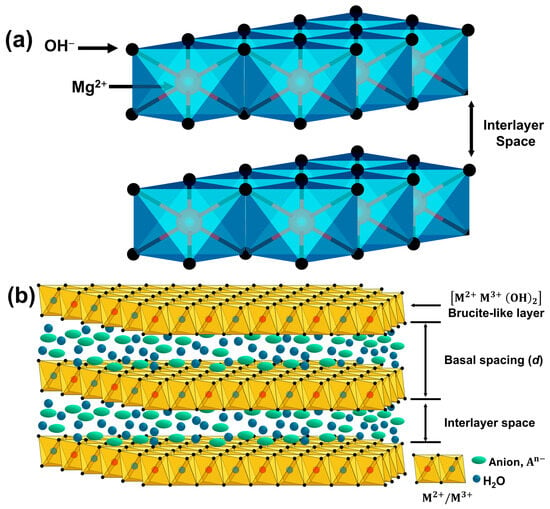
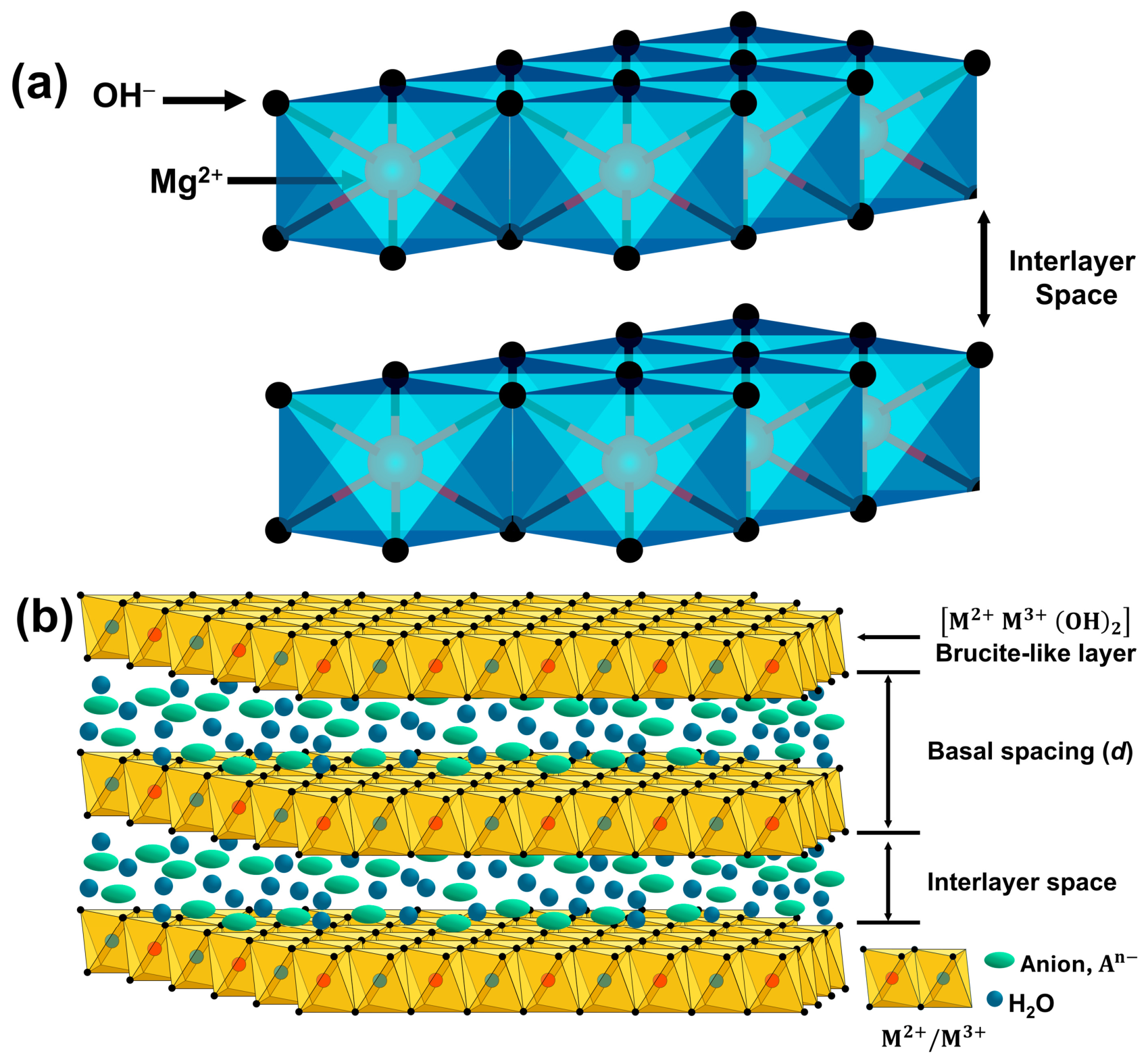
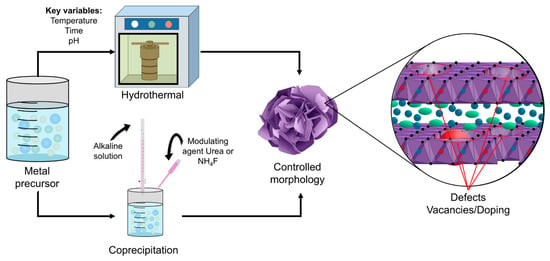
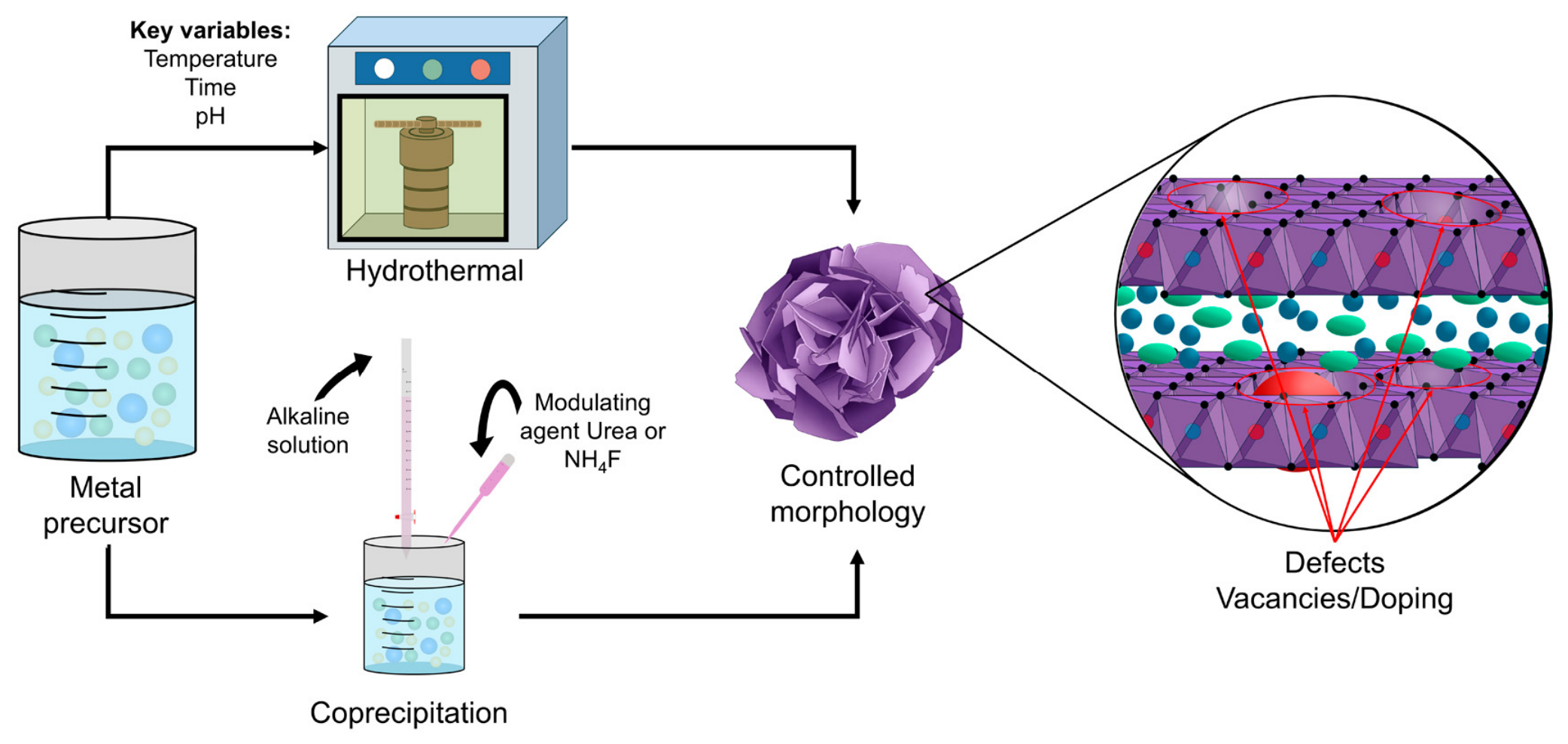
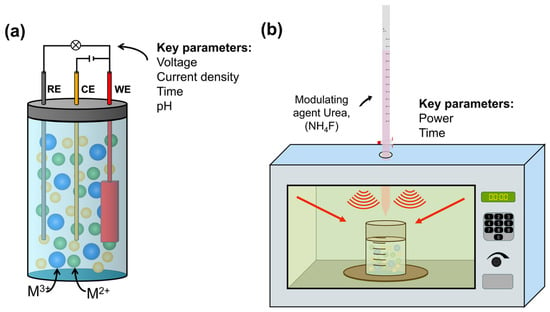
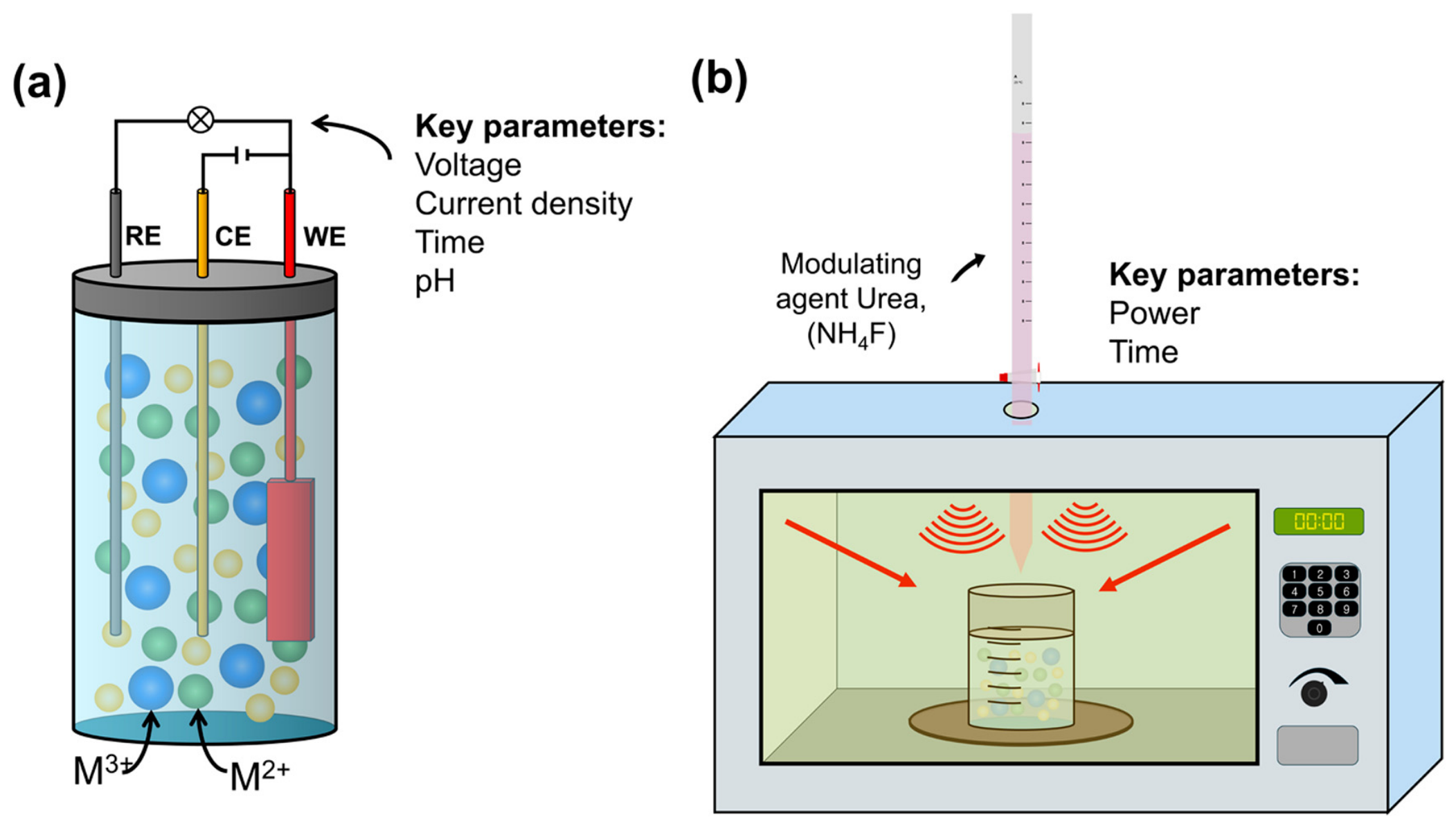
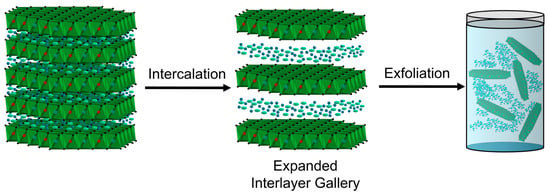
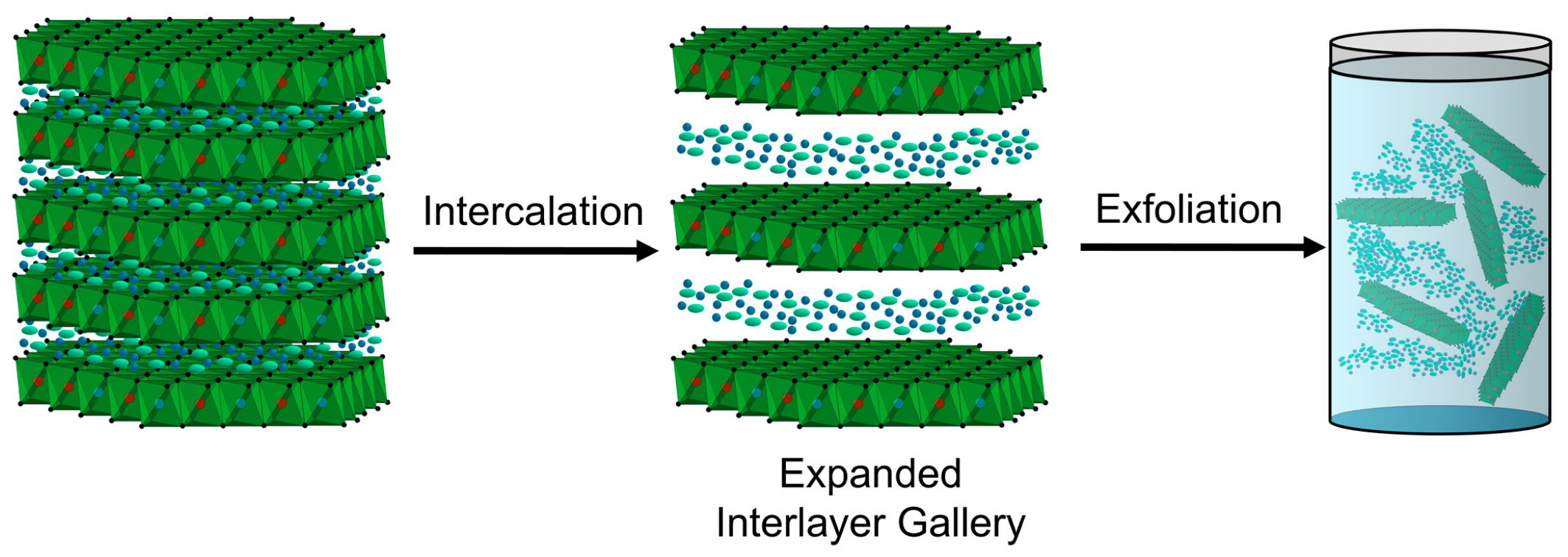
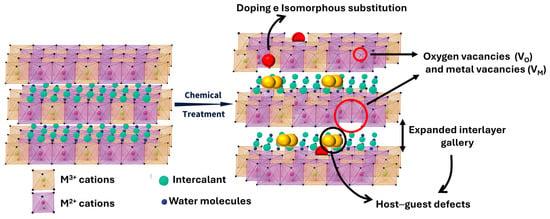
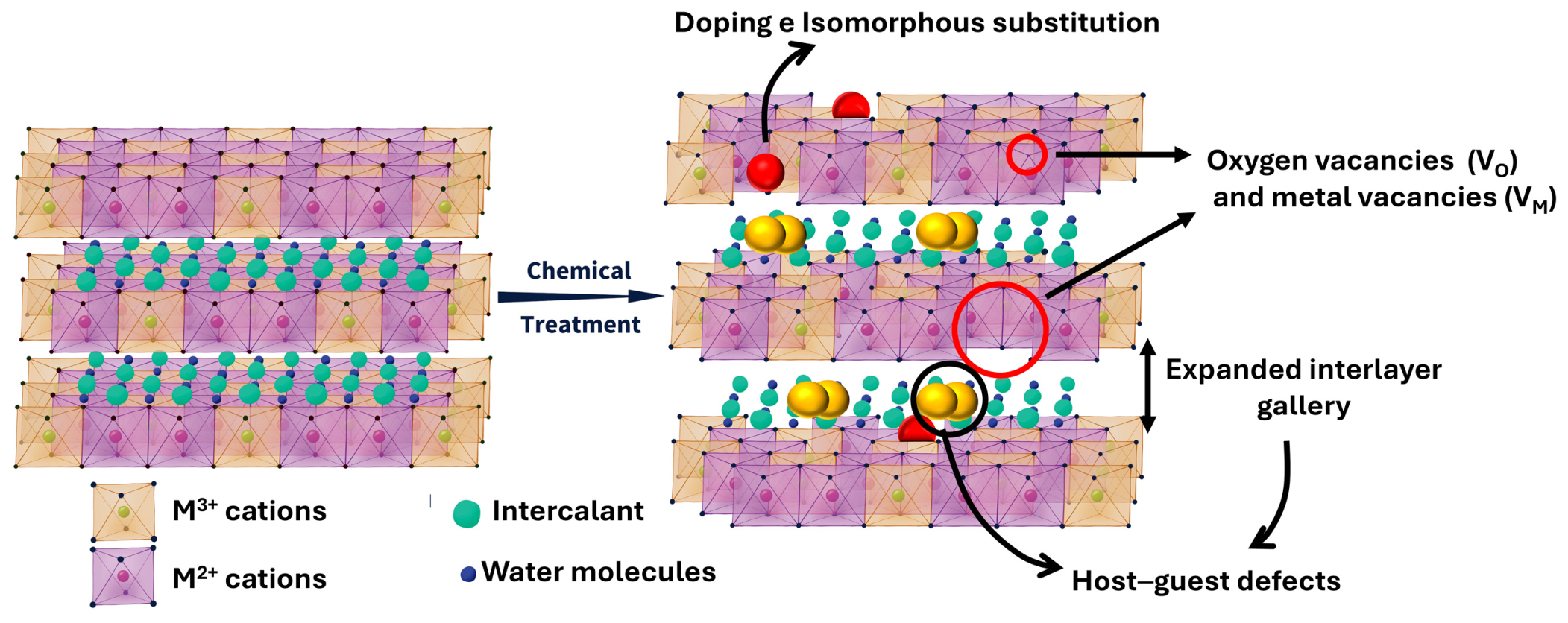
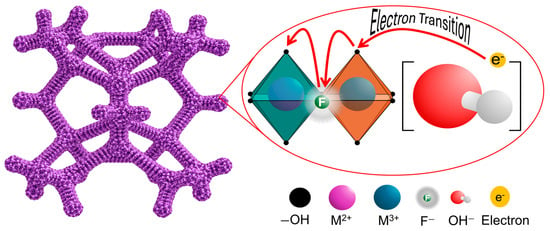
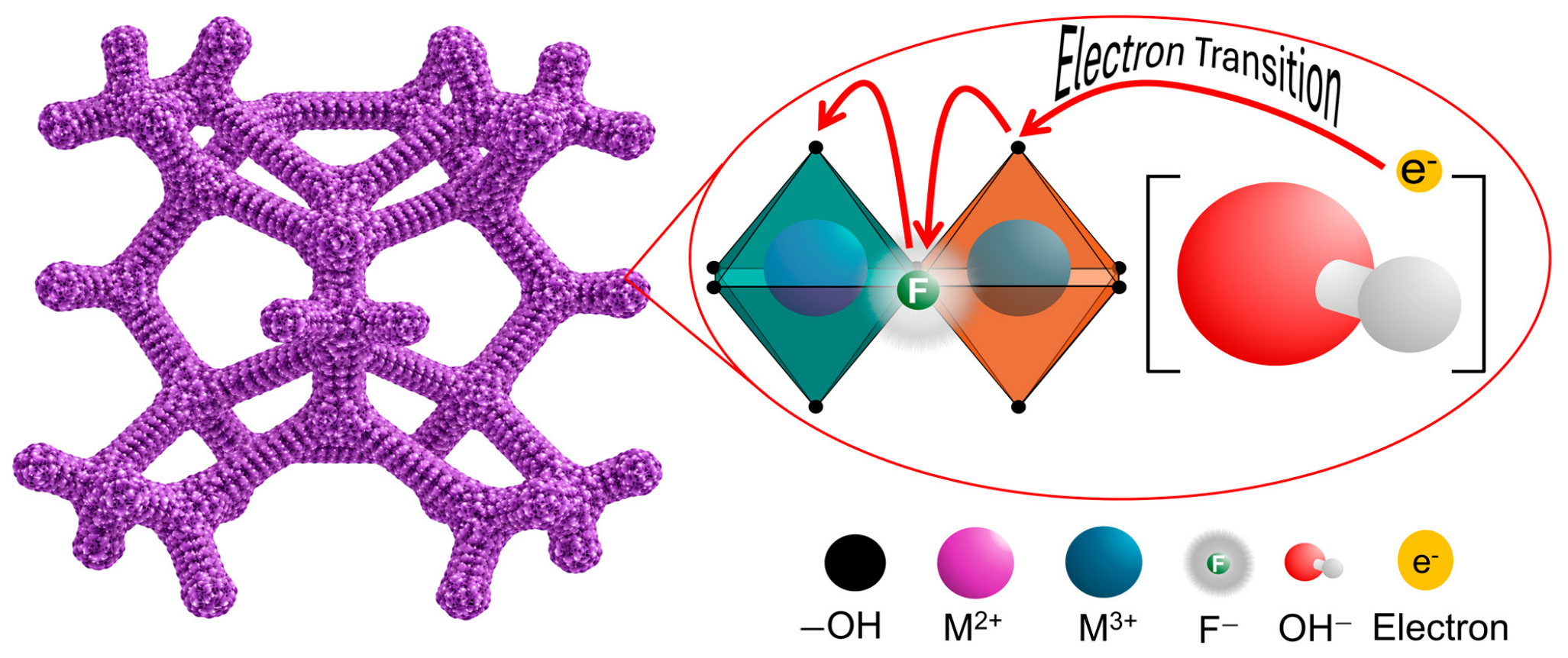
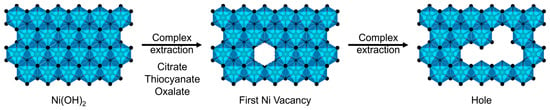

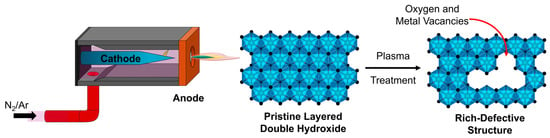
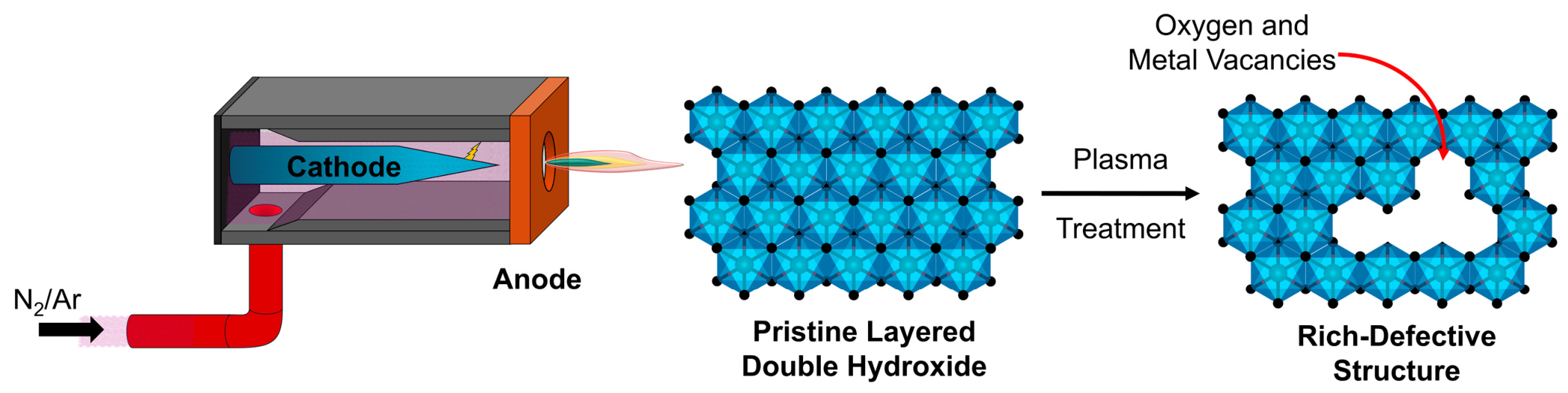
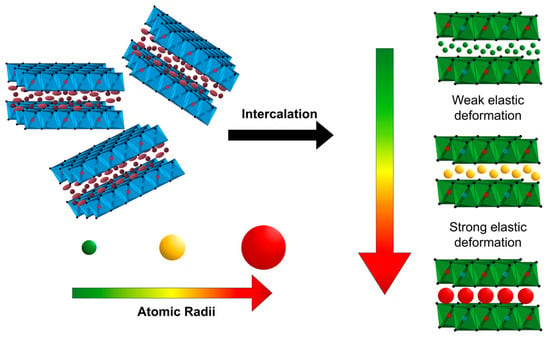
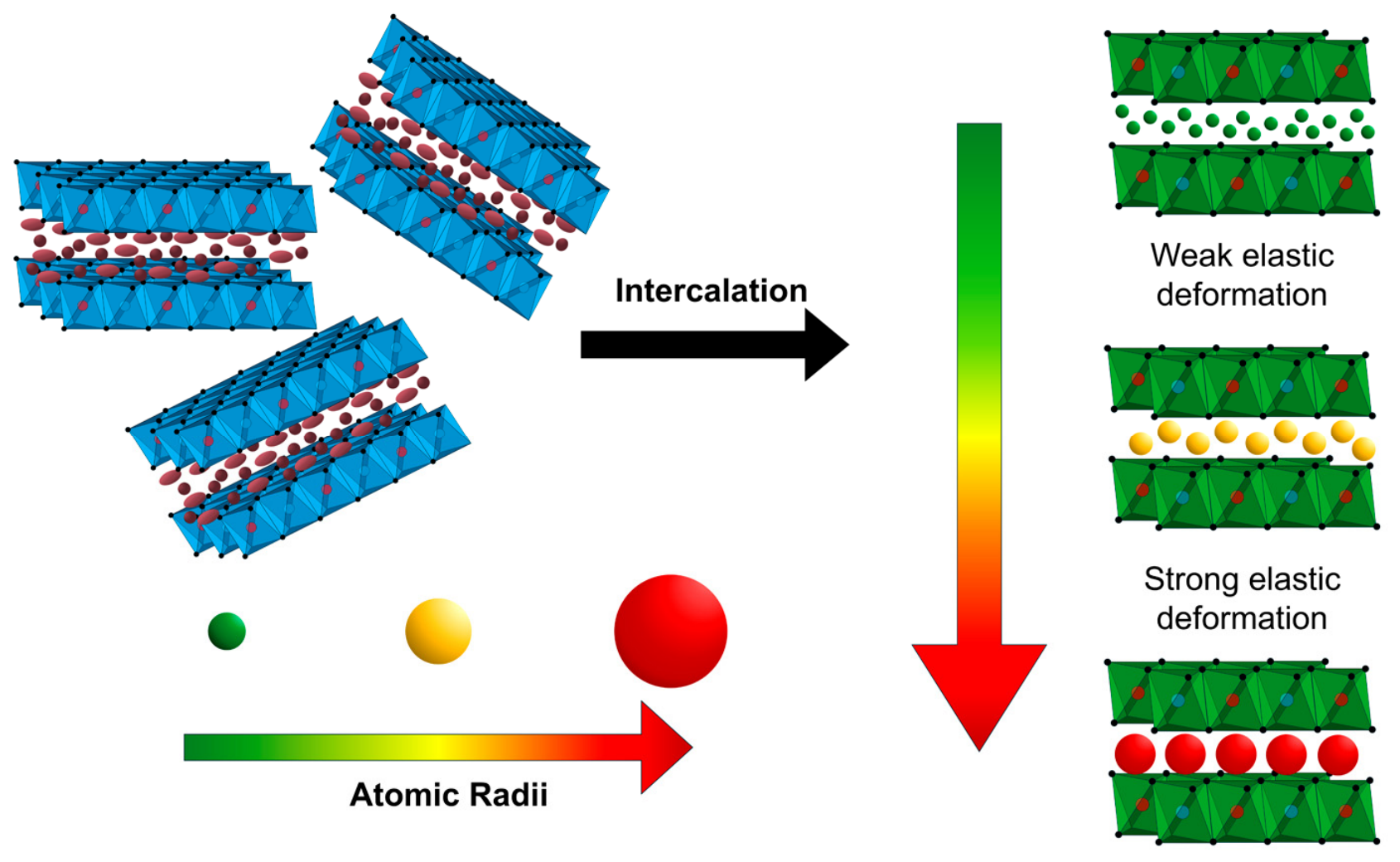
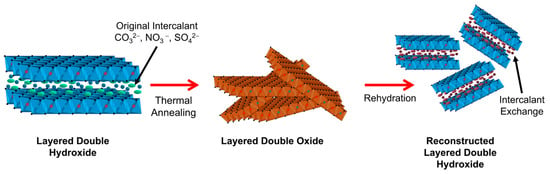
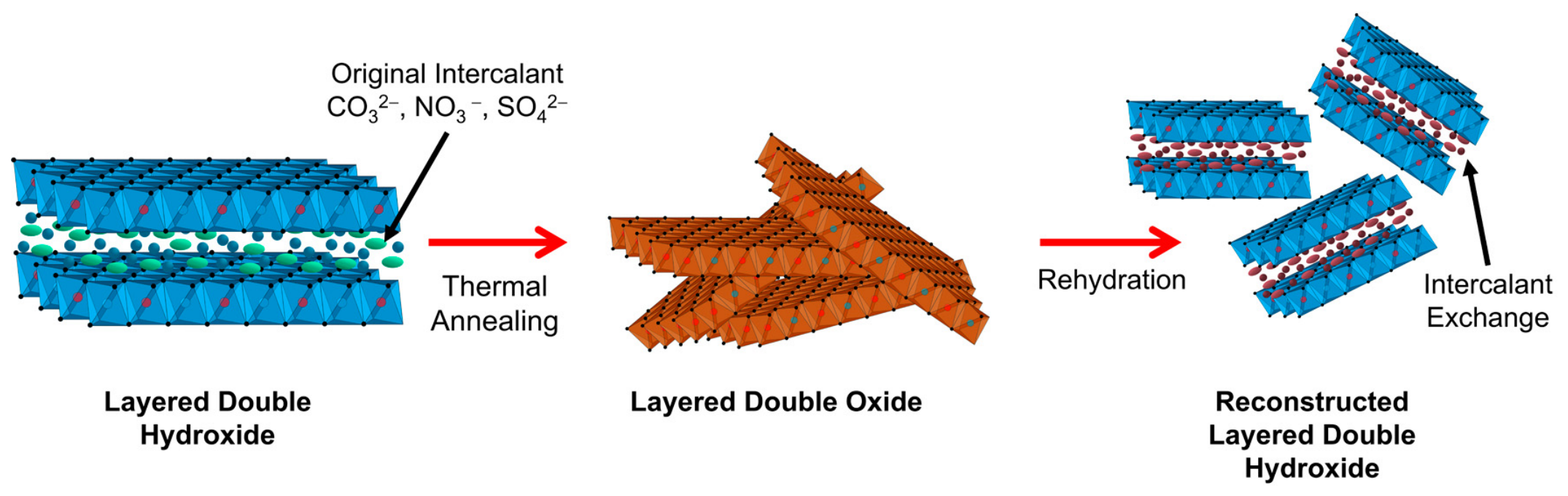
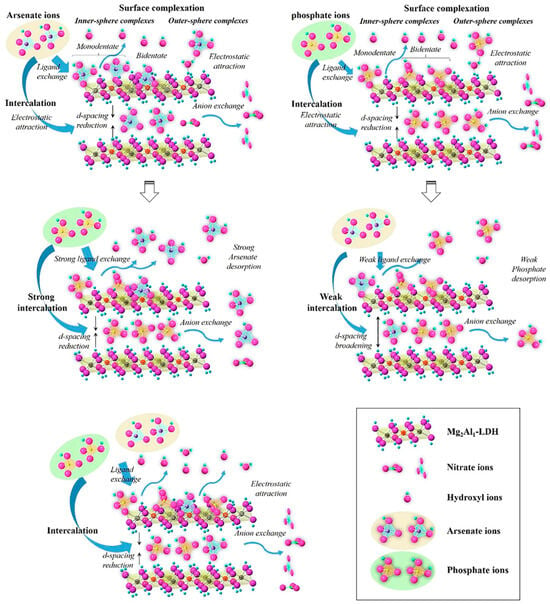
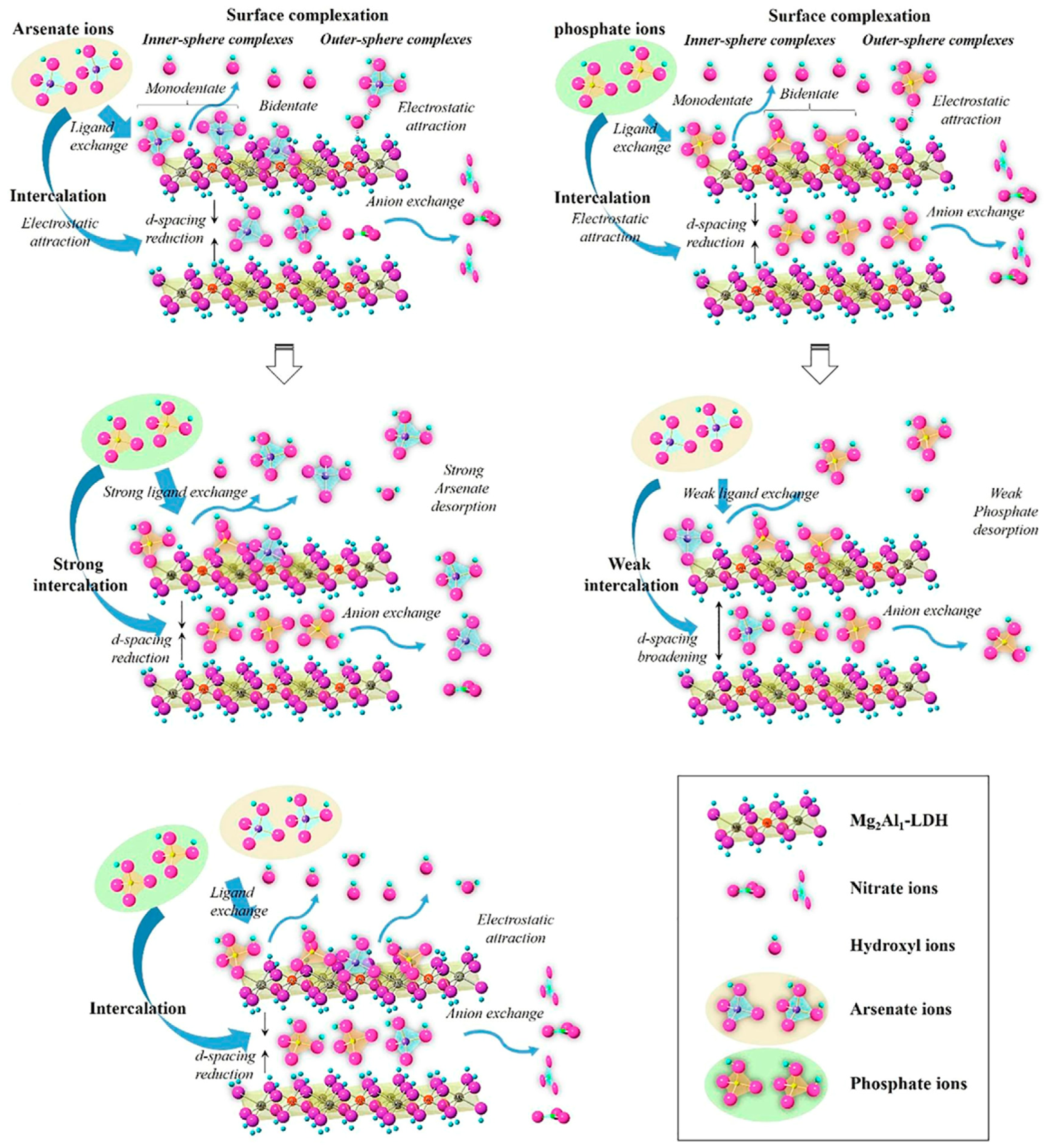
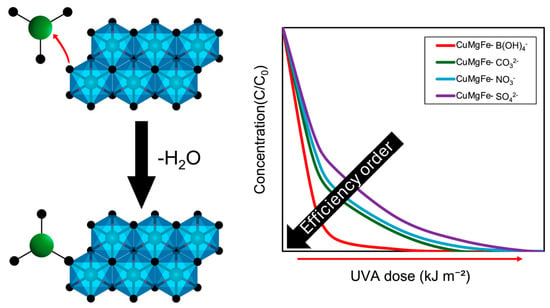
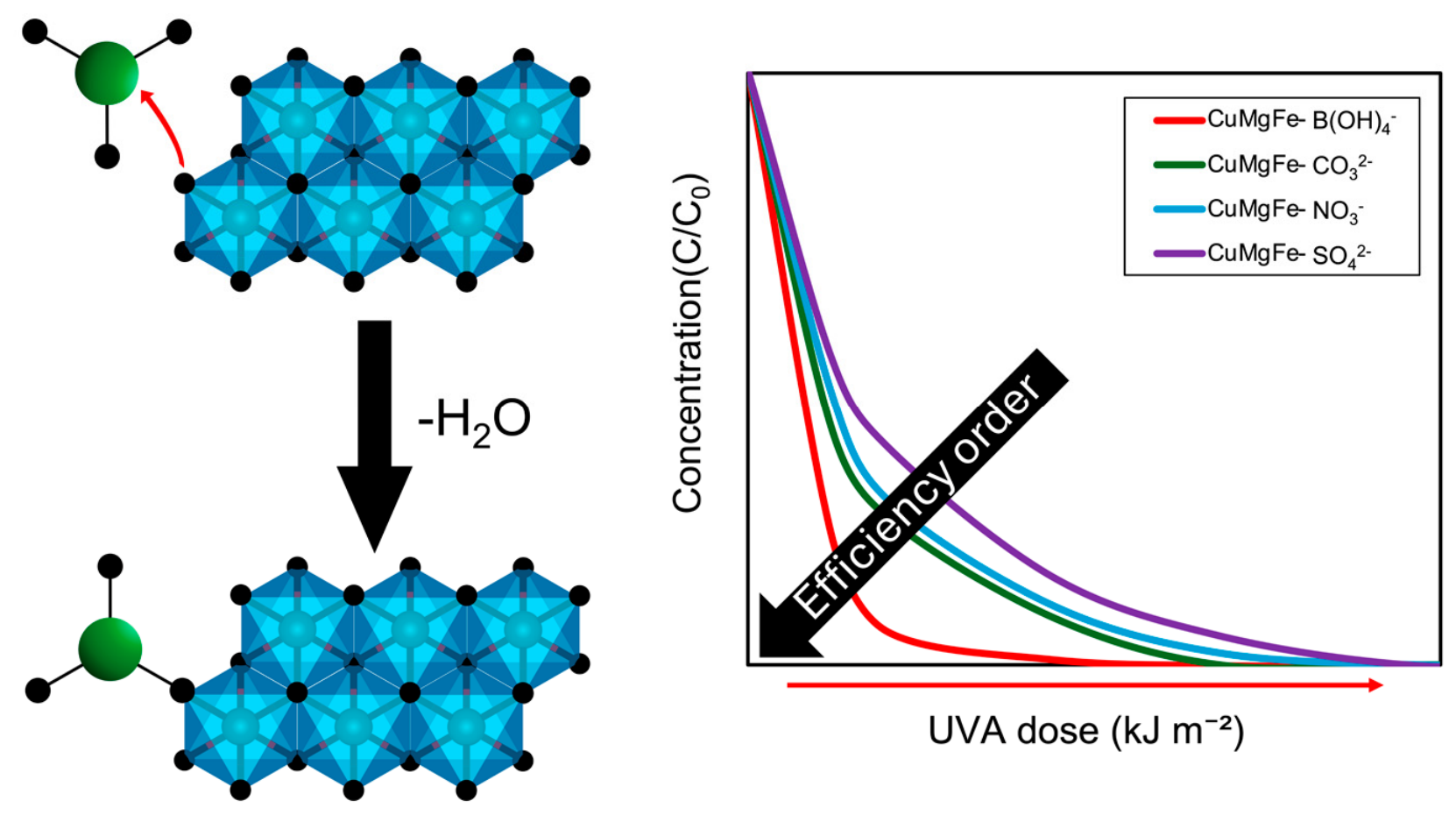
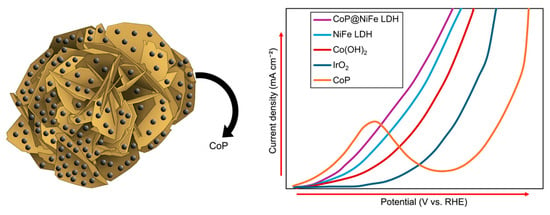
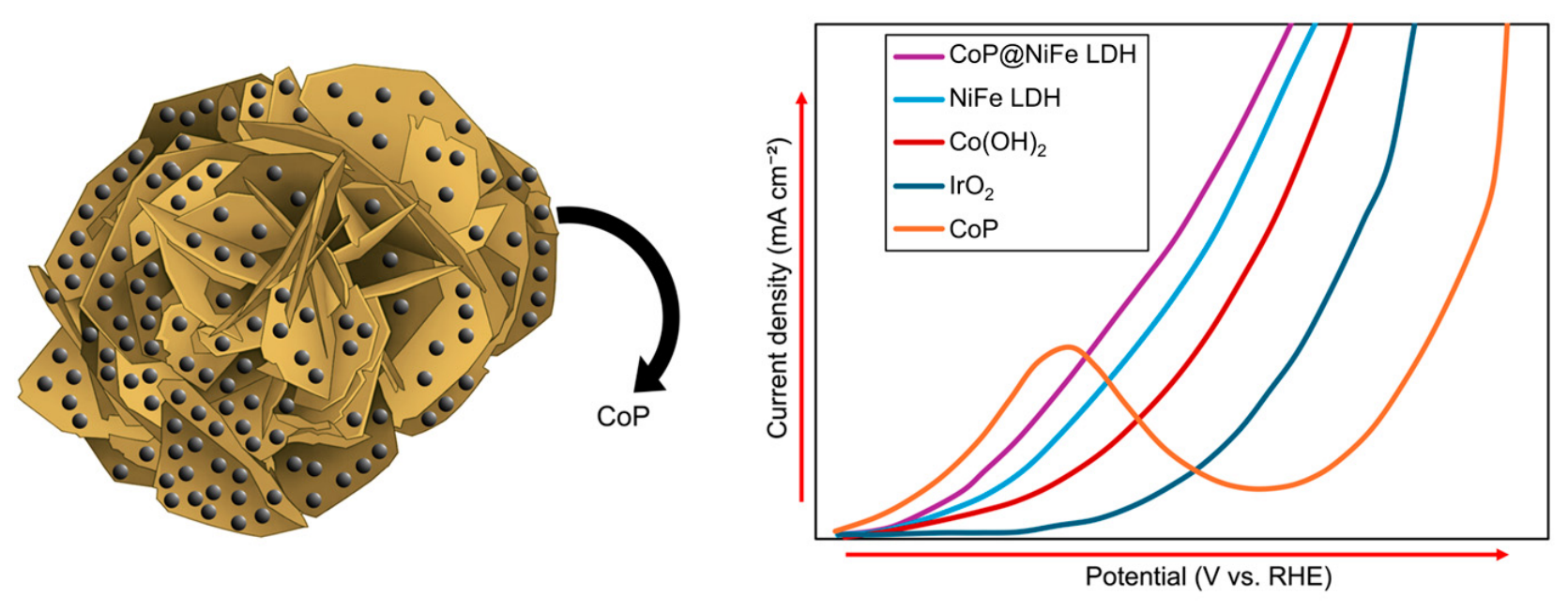
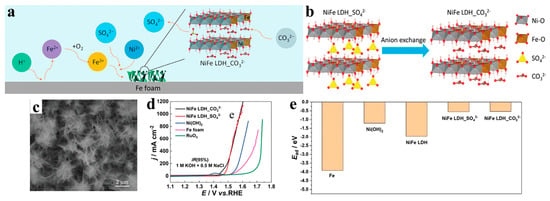
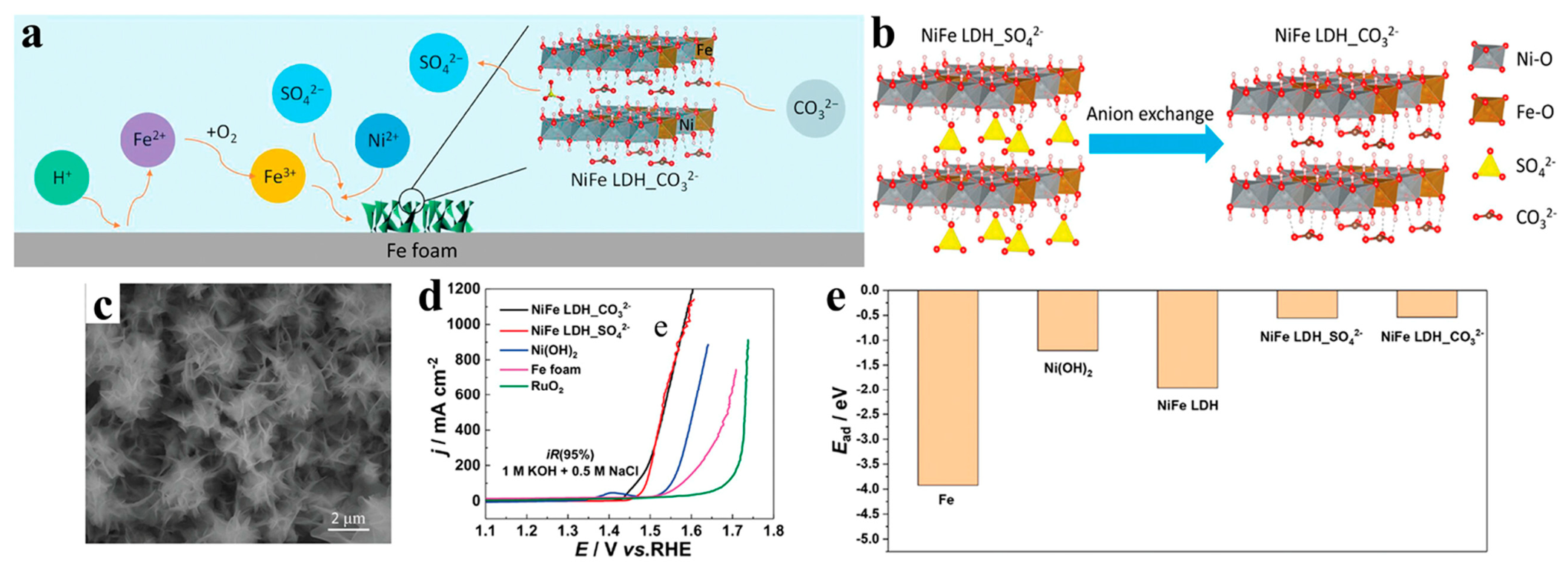
Disclaimer/Publisher’s Note: The statements, opinions and data contained in all publications are solely those of the individual author(s) and contributor(s) and not of MDPI and/or the editor(s). MDPI and/or the editor(s) disclaim responsibility for any injury to people or property resulting from any ideas, methods, instructions or products referred to in the content. |
© 2026 by the authors. Licensee MDPI, Basel, Switzerland. This article is an open access article distributed under the terms and conditions of the Creative Commons Attribution (CC BY) license.