


Abstract
This study presents an Internet of Things (IoT)-assisted semi-open hydroponic system for cultivating Andrographis paniculata under tropical conditions, aiming to enhance biomass productivity, andrographolide (AG) yield, and production efficiency. IoT-assisted hydroponics, non-IoT hydroponics, and soil-based cultivation were compared in 10 m2 greenhouses. The IoT system enabled real-time monitoring and adaptive regulation of temperature, relative humidity, light intensity, nutrient solution pH, and electrical conductivity (EC). IoT-assisted hydroponics achieved earlier harvest (≈90 days) and the highest fresh biomass yield (0.409 ± 0.014 kg m−2) while maintaining per-plant productivity (15.74 ± 0.54 g plant−1) comparable to soil-based cultivation. Andrographolide concentration reached 25.58 ± 3.36 mg g−1 DW (2.56% w/w), meeting pharmacopeial requirements. Owing to stable environmental regulation and tolerance to high planting density, the IoT system produced the highest areal AG productivity (209.5 mg m−2), representing a four- to tenfold increase over the other systems. Despite higher operational costs, IoT-assisted hydroponics achieved the lowest AG unit cost (≈6.77 USD g−1). While most previous studies emphasize tissue-level AG concentration, system-level productivity and cost efficiency under realistic cultivation conditions remain insufficiently explored. Overall, IoT-enabled semi-open hydroponics provides a scalable and economically viable approach for medicinal plant production, bridging the gap between open-field cultivation and fully controlled plant factory systems.
1. Introduction
Due to the numerous pharmacological properties of andrographolide, including its antiviral, anti-inflammatory, and immunomodulatory activities, Andrographis paniculata (Burm.f.) Wall. ex Nees has emerged as an increasingly important medicinal species [1,2,3]. Global demand for standardized herbal raw material continues to rise [4]; however, conventional field cultivation methods of A. paniculata often result in inconsistent biomass yield, prolonged crop cycles, and highly variable andrographolide content (0.5–4.0% DW) due to environmental and agronomic constraints. This variability poses significant challenges to meeting pharmacopeial specifications and Good Agricultural and Collection Practices (GACP) requirements for medicinal plant production [5,6,7].
Soilless cultivation systems, particularly hydroponics, offer notable advantages for medicinal crops, including improved resource-use efficiency and reduced exposure to soil-borne contaminants, pesticide residues, and heavy metals [8,9]. These characteristics are especially relevant for meeting pharmacopeial minimum requirements, where chemical residue thresholds and quality testing are strictly regulated. The integration of Internet of Things (IoT) technologies further enhances hydroponic systems by enabling the real-time monitoring and control of environmental variables such as temperature, humidity, light, and nutrient supply [10,11,12]. This capability allows for more predictable crop development and consistent phytochemical accumulation.
Semi-open greenhouse cultivation is a practical compromise between open-field agriculture and fully enclosed plant factories [13]. Compared with closed systems, semi-open designs require lower investment and energy input, utilize natural light and ventilation, and are well-suited to tropical regions [14,15]. For small- to medium-scale producers, these advantages translate into reduced operational costs, improved climate resilience, and year-round production potential without the technical complexity and expense of high-tech facilities. Moreover, semi-open systems provide environmental buffering and protection against extreme weather while retaining affordability—factors critical for farmer adoption and scalability.
Despite these opportunities, research on A. paniculata in controlled-environment soilless systems remains limited. Most existing studies have focused on pharmacology and field-based production [1,2,3,5], with little attention paid to how environmental manipulation influences secondary metabolite content and pharmaceutical quality [16,17,18,19]. Recent supply disruptions and heightened demand during the COVID-19 pandemic have further underscored the need for stable, traceable, and high-quality raw materials.
In this context, IoT-enabled semi-open hydroponic cultivation may offer a promising approach to improving yield, resource efficiency, and phytochemical consistency while reducing contamination risks and supporting regulatory compliance. In this study, we develop and evaluate one such system for A. paniculata, examining its growth performance, productivity and andrographolide content under controlled environmental conditions. By integrating concepts from plant science, controlled environmental horticulture, and precision agriculture, this work addresses current production limitations and establishes a scalable framework for pharmaceutical-grade cultivation.
2. Background and Related Works
Andrographis paniculata (Burm.f.) Wall. ex Nees is a high-value medicinal plant that is widely used in Asian traditional medicine and is increasingly being incorporated into modern phytopharmaceutical products due to its well-documented antioxidant, anti-inflammatory, anticancer, antihypertensive, antimicrobial, and hepatoprotective properties [20,21]. These therapeutic properties are primarily attributed to diterpenoid lactones, particularly andrographolide, which is recognized as the principal bioactive compound and pharmaceutical quality marker of A. paniculata [22,23,24]. Consequently, cultivation systems must not only maximize biomass yield but also ensure reproducible andrographolide content at the pharmaceutical level.
Despite strong pharmacological consensus, andrographolide content exhibits substantial variability across cultivation systems and supply chains. Its presence in field-grown materials commonly ranges from 0.28 to 5.45% dry weight, with variation across plant parts, growth stages, and geographic origins [7,8,9,10,11,12,13,14,15,16]. Market-level surveys also reveal extreme inconsistency, with andrographolide levels spanning from trace amounts to over 7% dry weight, underscoring weaknesses in upstream cultivation control and standardization [17,18,25]. From a pharmaceutical perspective, such variability compromises batch reproducibility, dosage reliability, and compliance with WHO-GACP and pharmacopeial standards [17]. The validated methodologies for andrographolide determination—including RP-HPLC, HPTLC, HPLC-UV, ATR-FTIR, and UHPLC-MS, often integrated with chemometric fingerprinting—are routinely applied for quality control and regulatory verification [26,27]. While these frameworks ensure reliable post-harvest assessment, they primarily function as detection tools and do not address the biological origins of phytochemical variability, which arise during plant growth under fluctuating environmental conditions.
Conventional open-field cultivation of A. paniculata is intrinsically vulnerable to environmental heterogeneity, including fluctuations in temperature, rainfall, light intensity, soil moisture, and nutrient availability. These factors destabilize secondary metabolite biosynthesis and lead to inconsistent batch quality, as reflected by the wide andrographolide ranges reported across multiple studies [26,27]. Agronomic interventions such as organic amendments or biofertilizers may locally enhance biomass production but show limited capacity to stabilize andrographolide accumulation at the pharmaceutical level. Precision irrigation and physiological monitoring improve water-use efficiency but rarely incorporate phytochemical endpoints, limiting their relevance for medicinal plant production [28,29,30,31]. Controlled Environment Agriculture (CEA) has therefore emerged as a strategy for decoupling medicinal plant cultivation from external climatic variability [31,32,33,34,35]. Plant Factories with Artificial Lighting (PFALs) are notable examples, combining artificial lighting with continuous IoT-based sensing and AI-assisted regulation of temperature, humidity, vapor pressure deficit, CO2 concentration, and nutrient delivery. Recent PFAL-based hydroponic studies have demonstrated stable biomass production and reproducible andrographolide accumulation in A. paniculata, with reported values of 21.11–32.27 mg g−1 dry weight, alongside genotype–phenotype resolution under standardized environments [31]. These values approach or exceed the upper ranges reported in field-grown specimens, highlighting the effectiveness of full environmental stabilization in reducing phytochemical variability.
However, fully controlled plant factories require substantial capital investment and continuous energy input, constraining their economic feasibility to niche, high-margin applications. Their scalability for broader agricultural or SME deployment remains limited. Between the extremes of open-field cultivation and fully controlled factories lies a strategically important intermediate category: IoT-enabled semi-control environmental control systems. Semi-control systems combine soilless cultivation with continuous IoT sensing and adaptive regulation, while allowing partial exchange with ambient conditions. This architecture significantly reduces infrastructure and energy costs relative to PFAL, yet retains precise control over root-zone nutrition, irrigation timing, and local microclimate—parameters known to influence both biomass accumulation and secondary metabolite biosynthesis.
Currently, most IoT-enabled semi-open cultivation systems are primarily being developed for food crops, with optimization objectives centered on yield maximization, growth rate, and resource-use efficiency rather than pharmaceutical quality. As summarized in Table 1, existing studies provide robust quantitative evidence demonstrating three key patterns for Andrographis paniculata: pronounced andrographolide (AG) variability under open-field conditions, strong inducibility of AG biosynthesis under laboratory-scale elicitation, and high stability of AG accumulation in fully controlled Plant Factories with Artificial Lighting (PFALs). However, with the exception of PFAL systems, these approaches either lack scalability for practical agricultural deployment or fail to integrate adaptive environmental control strategies aligned with pharmaceutical-grade quality minimum requirements.
Table 1.
Pharma-focused studies on A. paniculata utilizing various levels of environmental control.
Open-field surveys [5,23,28] consistently report wide variability in AG content due to uncontrolled environmental factors, while plant-part analyses demonstrate intrinsic heterogeneity even within the same cultivation site. Laboratory-based in vitro elicitation studies demonstrate that AG levels can be enhanced by up to ~8–9-fold under tightly regulated conditions, yet these systems are inherently limited to small-scale experimental settings and cannot support continuous agricultural production [32,33,34,35]. PFAL-based hydroponic systems are the most advanced form of environmental control, achieving stable AG concentrations (21.11–32.27 mg g−1 dry weight) and enabling genotype–phenotype resolution under standardized conditions [31]. Nevertheless, these systems remain capital-intensive, energy-demanding, and insufficiently flexible when linking real-time phytochemical outcomes to adaptive control logic, restricting their scalability beyond niche applications.
Cumulatively, the evidence summarized in Table 1 highlights a critical gap between high-quality but economically constrained fully controlled systems and scalable but chemically unstable conventional cultivation. IoT-enabled semi-open hydroponic systems occupy a strategic middle ground, offering the potential to stabilize root-zone nutrition and microclimate at substantially lower costs while remaining deployable in real agricultural contexts. However, to date, such systems have rarely been designed or evaluated with metabolite-driven optimization in mind, particularly for pharmaceutical marker compounds such as andrographolide.
Despite extensive investigations into andrographolide accumulation in A. paniculata under open-field, soil-based, hydroponic, and fully controlled plant factory systems, several critical gaps remain. Existing studies largely focus on andrographolide concentration at the tissue or plant level, whereas system-level productivity metrics, particularly areal AG yield and production cost, are rarely addressed. In addition, while IoT technologies have been increasingly adopted for environmental monitoring or rule-based automation, their role in adaptive, plant-responsive control for medicinal plant cultivation has not been systematically examined. Specifically, empirical evidence linking IoT-enabled environmental stability, tolerance to high planting density, and economically viable andrographolide production under semi-open greenhouse conditions remains limited. To address these gaps, the present study evaluates an IoT-assisted NFT hydroponic system with emphasis on system-level productivity, adaptive environmental control, and cost-normalized andrographolide output.
3. Materials and Methods
3.1. Experimental Site, Cultivation System, and Environmental Management
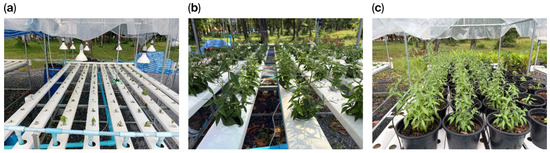
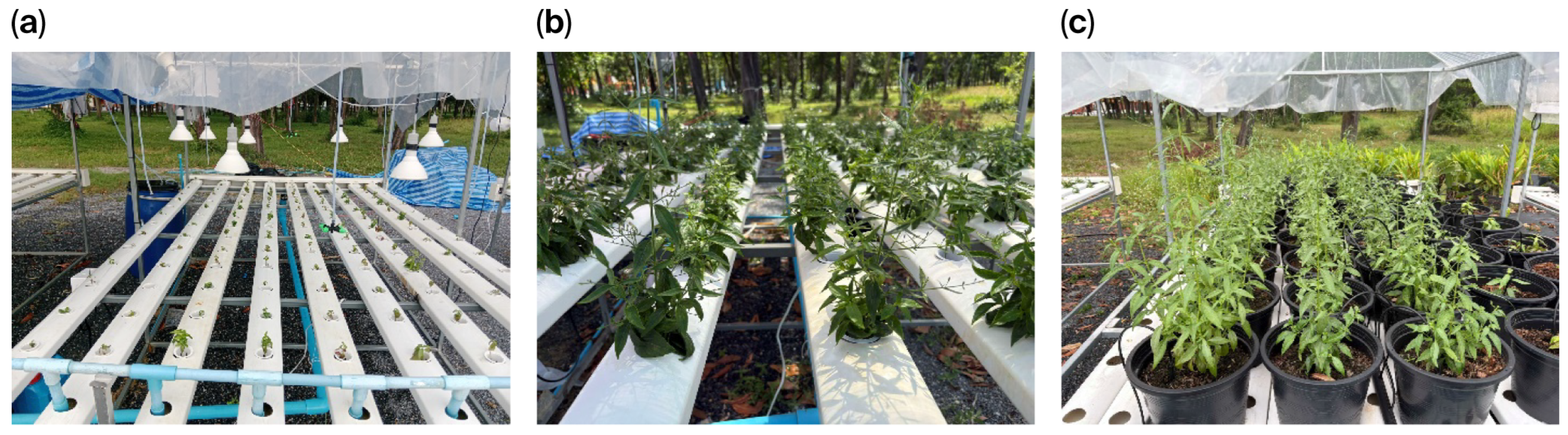
The experiment was conducted in six greenhouses (10 m2 area each) constructed with steel frames and covered with UV-stabilized polyethylene film (Figure 1). All greenhouses were designed as semi-open structures with side ventilation to allow natural air exchange. Two greenhouses were equipped with IoT-based climate monitoring and control systems and operated as semi-open hydroponic units. Two additional greenhouses were used for hydroponic cultivation without IoT-based monitoring, while the remaining two served as conventional soil-based controls. Seedlings of Andrographis paniculata were propagated from certified disease-free seeds and transplanted at the 3–4-leaf stage (approximately one month after germination).
Figure 1.
The open greenhouses used in this experiment consisted of a simple steel frame structure covered with UV-stabilized polyethylene film. Each greenhouse provided an effective cultivation area of approximately 10 m2 with side ventilation to allow natural air exchange. (a) IoT hydroponic greenhouse; (b) non-IoT hydroponic greenhouse; (c) soil-based greenhouse.
For soil-based cultivation, planting density strictly followed the official recommendation of the Department of Agriculture, Thailand, which specifies a spacing of 30 × 60 cm per plant to facilitate crop management, maintain an open canopy structure, and reduce the risk of fungal disease. Based on the experimental greenhouse area, this guideline resulted in approximately 50 plants per greenhouse.
Hydroponic cultivation employed commercially available standard NFT channels commonly used in practice. Given the greenhouse dimensions, this configuration accommodated 260 plants per greenhouse with a spacing of 15–20 cm, representing a realistic and scalable hydroponic production setup.
In the hydroponic systems, the Nutrient Film Technique (NFT) was employed by using food-grade PVC channels connected to 200 L nutrient reservoirs, with continuous nutrient circulation provided by submersible pumps. Electrical conductivity (EC) was maintained within the range of 0.8–2.0 mS cm−1, and pH was maintained within the range of 5.5–6.5, following growth-stage-specific adjustments. Real-time EC and pH monitoring were implemented only in the IoT-enabled systems, while non-IoT systems relied on manual measurements. EC adjustments were not limited to predefined growth-stage targets but were occasionally implemented as corrective responses to observed plant physiological conditions or disease symptoms, following standard hydroponic management practices. Prior to transplantation, all hydroponic components were disinfected using sodium hypochlorite. Environmental conditions were maintained at approximately 15,000 lux light intensity, 80% relative humidity, and a 12 h photoperiod, following Department of Agriculture recommendations [36]. Light intensity, photoperiod, and relative humidity were dynamically adjusted in the IoT-enabled greenhouses based on real-time sensor feedback and seasonal variation. During periods of reduced natural irradiance, particularly in the rainy season, supplemental lighting duration was automatically extended from approximately 12 to 14 h. Relative humidity was regulated using a fogging system, with increased misting frequency during hot-season conditions to alleviate heat stress and stabilize transpiration.
3.2. IoT System Architecture
This study focused on the design and development of an IoT-based hydroponic system for A. paniculata cultivation. A distributed architecture comprising multiple microcontrollers (MCUs) was adopted to monitor and control environmental and nutrient parameters within the growing environment. Each MCU operated as an autonomous field device while communicating within a unified framework to ensure coordinated system operation.
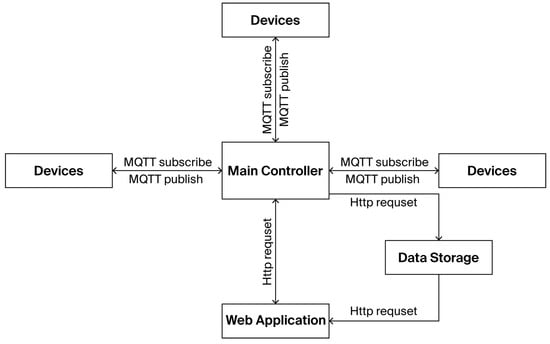
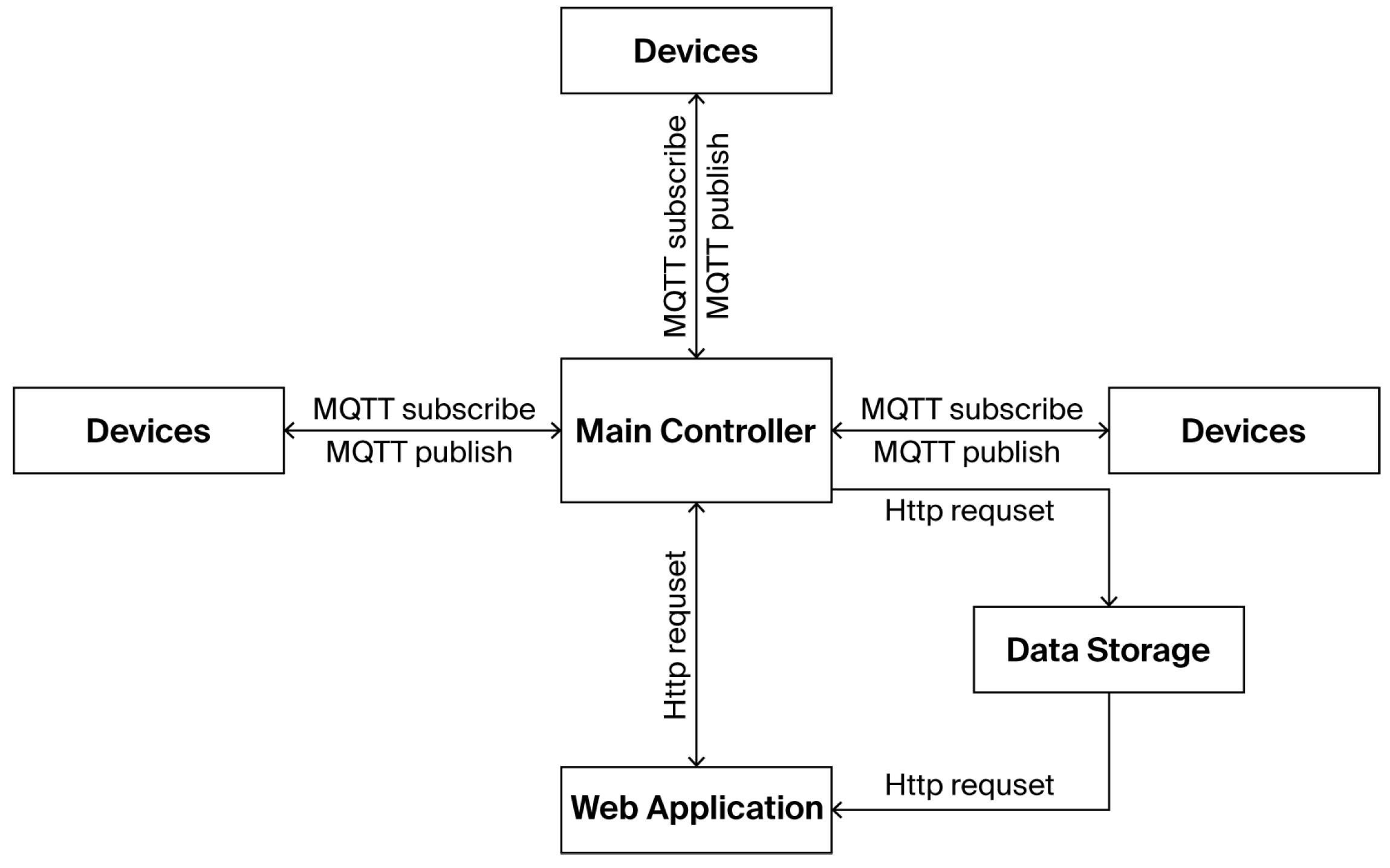
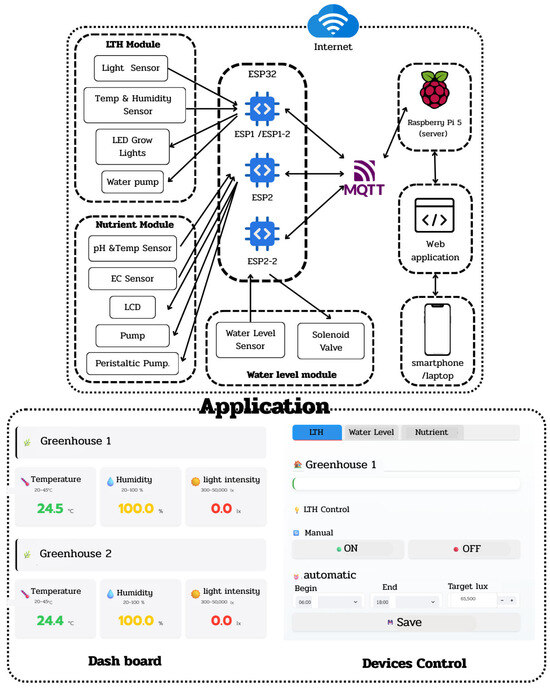
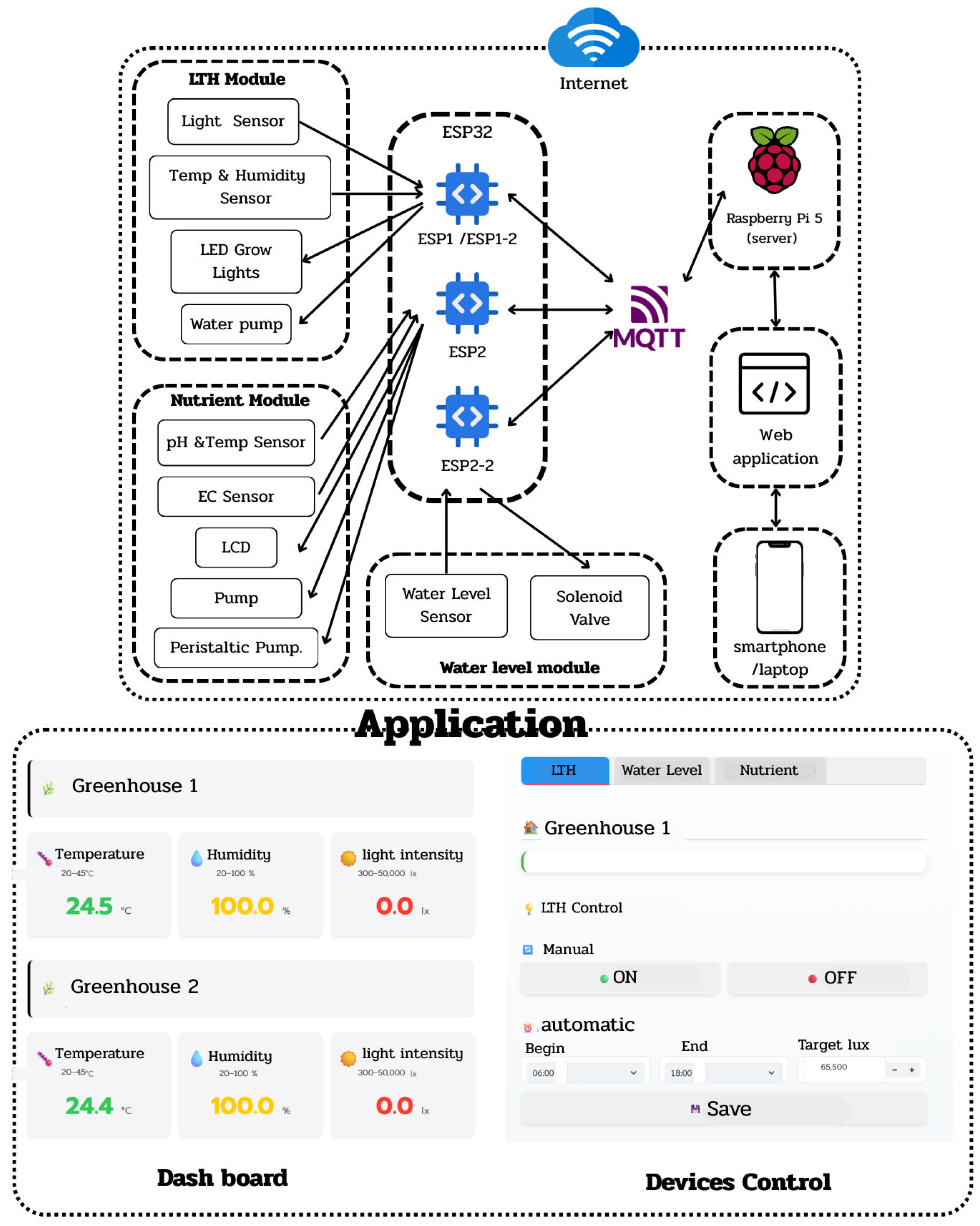
Inter-device communication was implemented using the Message Queuing Telemetry Transport (MQTT) protocol [37], which is widely applied in IoT-based smart agriculture due to its low latency, low power consumption, and reliability. Previous studies have demonstrated its effectiveness in the remote monitoring and control of agricultural systems: Syafaat et al. [38] integrated MQTT with a smart garden to enable bidirectional communication between sensors and actuators, while Promput et al. [39] reported its stable multi-device connectivity and control in greenhouse applications. Similarly, Safitri and Priambodo [40] showed that MQTT effectively supports hydroponic systems that require reliable communication between numerous devices. As illustrated in Figure 2, the system architecture consists of distributed field MCUs and a main controller. The main controller functions as the central coordination unit, managing data exchange among field devices, the web-based monitoring and control interface, and the data storage system, thereby enabling scalable deployment with centralized supervision.
Figure 2.
Architecture of the distributed IoT cultivation system, in which a main controller coordinates multiple microcontrollers and facilitates communication between field devices, the web-based system, and data storage.
3.3. IoT System Workflow
Figure 3 presents the detailed workflow of our IoT system for soilless A. paniculata cultivation. Field devices equipped with ESP32 microcontrollers measure temperature, humidity, and irradiance and automatically control lighting, pumps, pH, and electrical conductivity (EC) in response to environmental variations. Each field MCU communicates bidirectionally with the main controller via MQTT, acting as both publisher and subscriber, while the main controller operates as the MQTT broker, aggregates sensor data, performs computation and preliminary analysis, stores processed data in the data storage system, and transmits control commands back to the field devices. User interaction is enabled through a web-based application connected via the HTTP protocol, which enables real-time visualization and parameter configuration. The data storage system maintains sensing data, calculated parameters, system status, and historical records.
Figure 3.
IoT system workflow for soilless cultivation of A. paniculata. Note: Green: Normal (Within range); Yellow: Warning (Threshold approach); Red: Critical (Limit exceeded).
Monitoring and control functions were divided between three modules: (i) the light, temperature, and humidity (LTH) module; (ii) the nutrient management module; and (iii) the water level module. Sensor data were transmitted via MQTT to a Raspberry Pi 5 server, which functioned as the MQTT broker, data processor, and dashboard host. Consistent with previous reports demonstrating efficient deployment of MQTT brokers on resource-constrained platforms [41,42], the developed system supports both automated and user-directed operation, providing flexibility and scalability for semi-controlled hydroponic cultivation.
3.4. Intensity, Temperature, and Humidity Monitoring Module
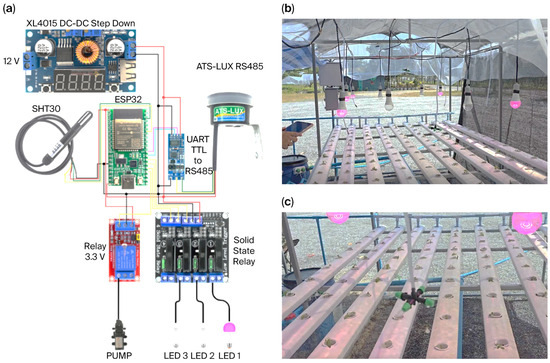
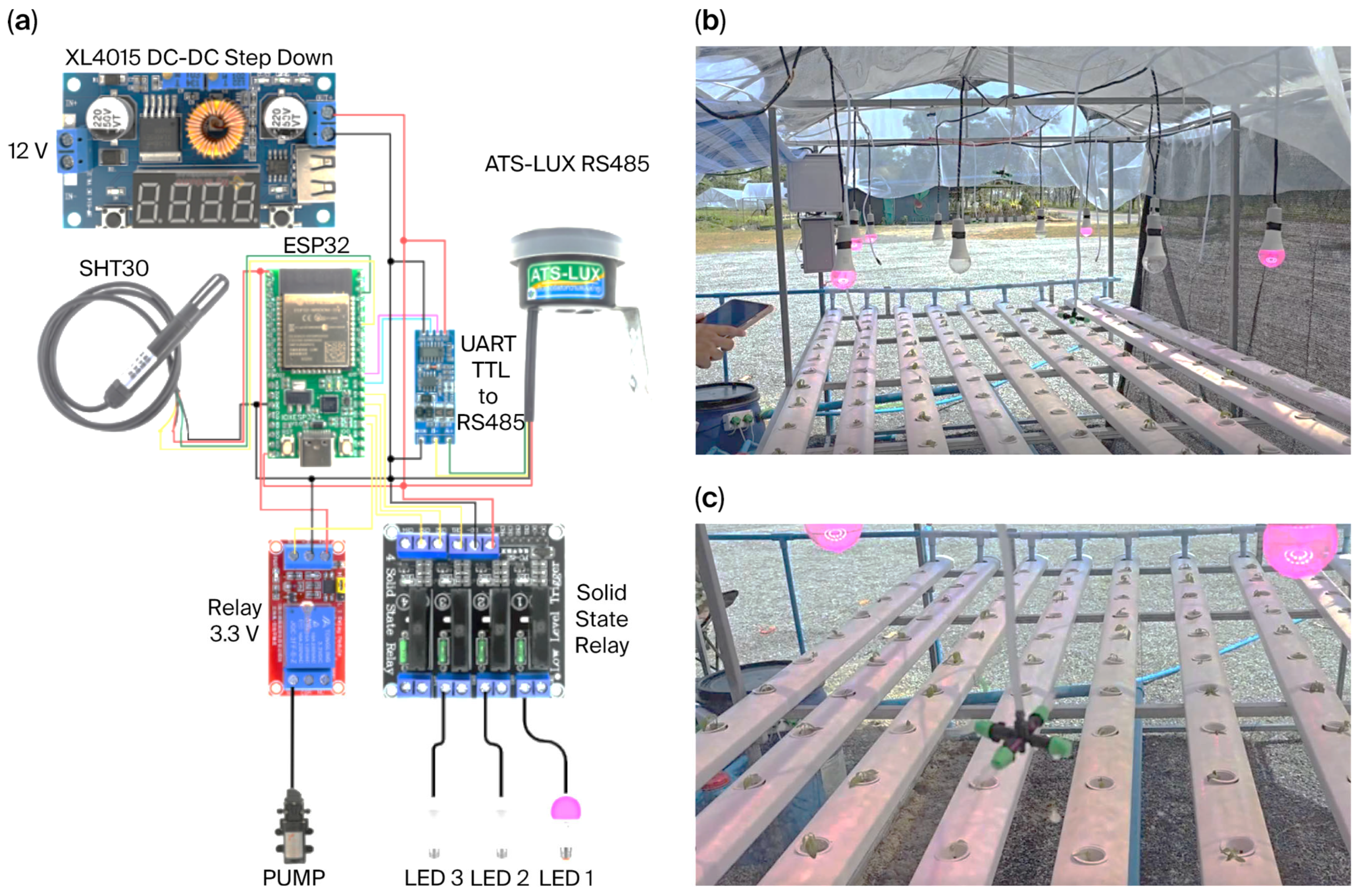
Light intensity was continuously monitored with an ATS-Lux sensor, with LED grow lights activated when illumination was insufficient. Red and white light were combined to support plant growth: the red light was used to support photosynthetic efficiency and biomass accumulation, and the white light to provide a broad spectrum that supports overall plant development. The SHT30 humidity and temperature sensor was used to continuously monitor environmental conditions, activating the mist pump when temperature or humidity exceeded threshold values. The mist created fine evaporative droplets that absorbed heat from the surrounding air, lowering temperature and stabilizing humidity. All sensor data were collected with the ESP32 microcontroller, which served as the main processing device for operating the system, including switching lights on and off, activating the mist pump, and sending data to storage (Figure 4).
Figure 4.
Light intensity, temperature, and humidity monitoring module. (a) Architecture; (b) operation of humidity monitoring module; (c) operation of light intensity module.
3.5. Water Level and Nutrient Solution Control Module
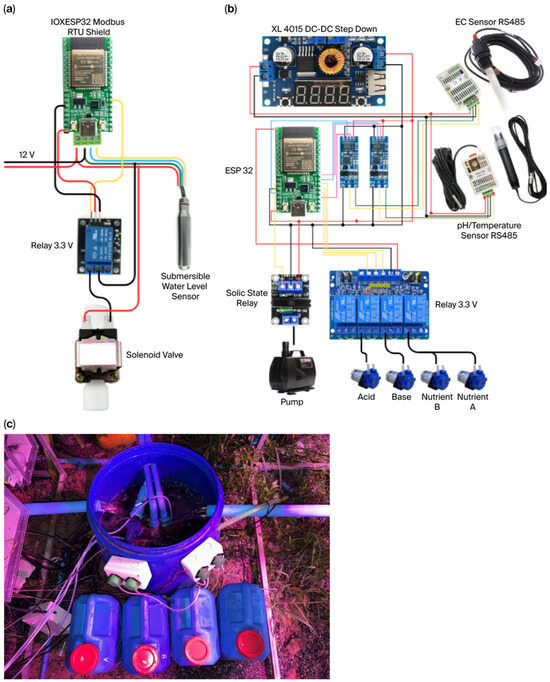
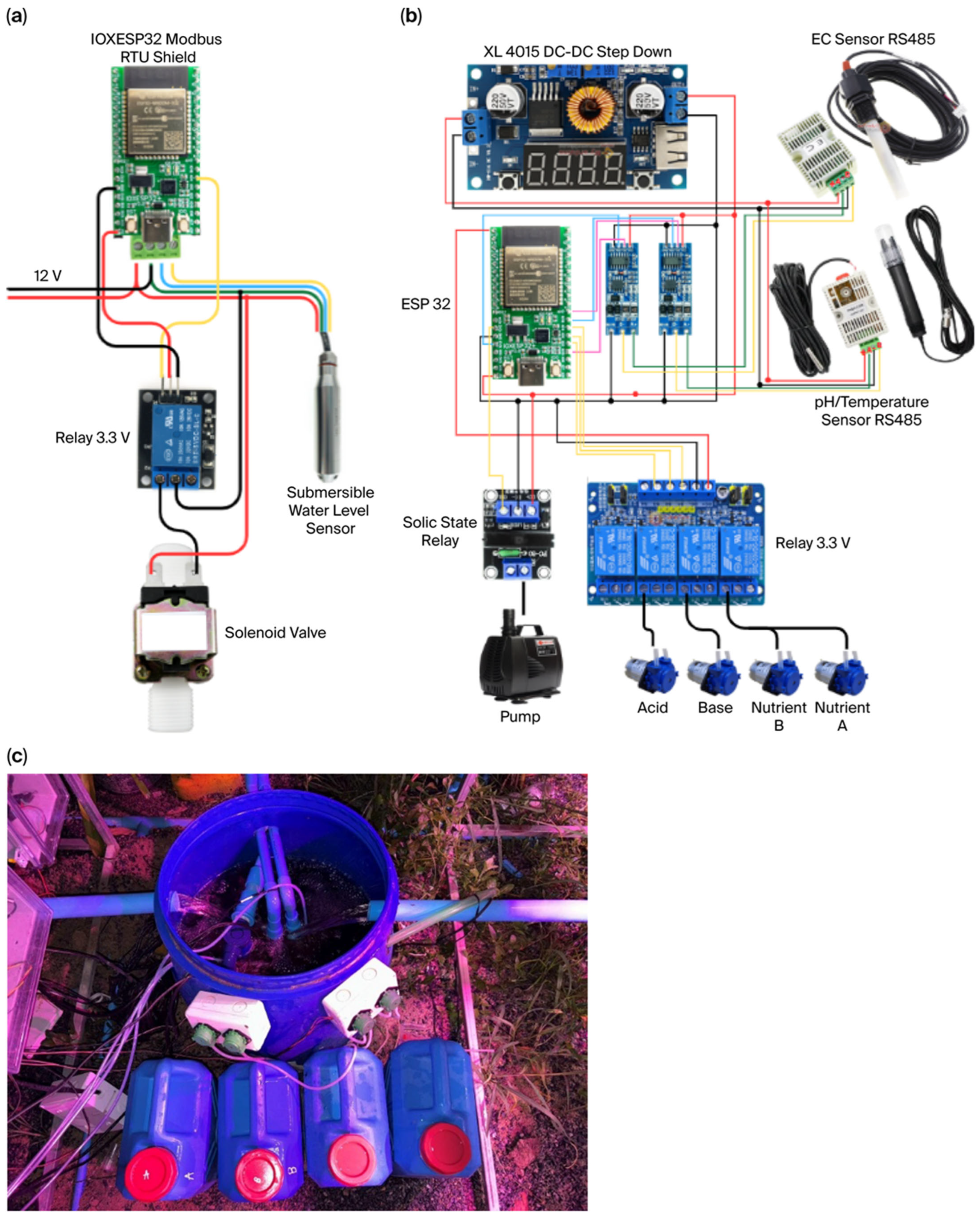
The hydroponic system was used to disperse a liquid nutrient fertilizer solution. The solution is mixed in a reservoir tank, with its concentration and pH measured using EC and pH sensors. A peristaltic pump was used to mix fertilizers A and B together, and to control pH value by adding acid when base levels exceeded the limit and vice versa (Figure 5a). When the water level was below the threshold, a sensor activated solenoid valves to automatically refill it. As with the light intensity, temperature, and humidity monitoring module, the sensor data, such as temperature, pH, and EC, were continuously monitored and logged with an ESP32 microcontroller (Figure 5b).
Figure 5.
Water level and nutrient solution control module. (a) Water level module architecture; (b) nutrient solution control module architecture; (c) water level and nutrient solution control in operation.
3.6. System Testing, Growth Performance, and Quality Assessment
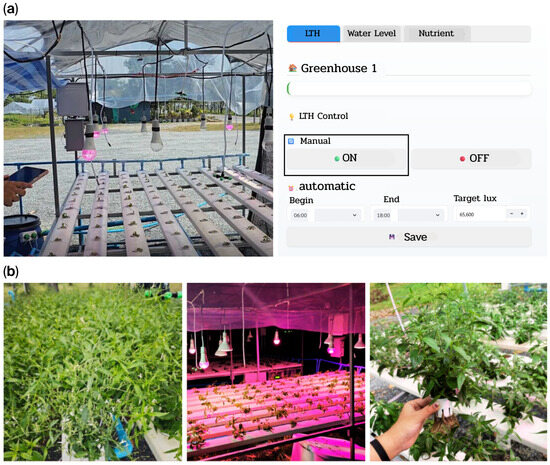
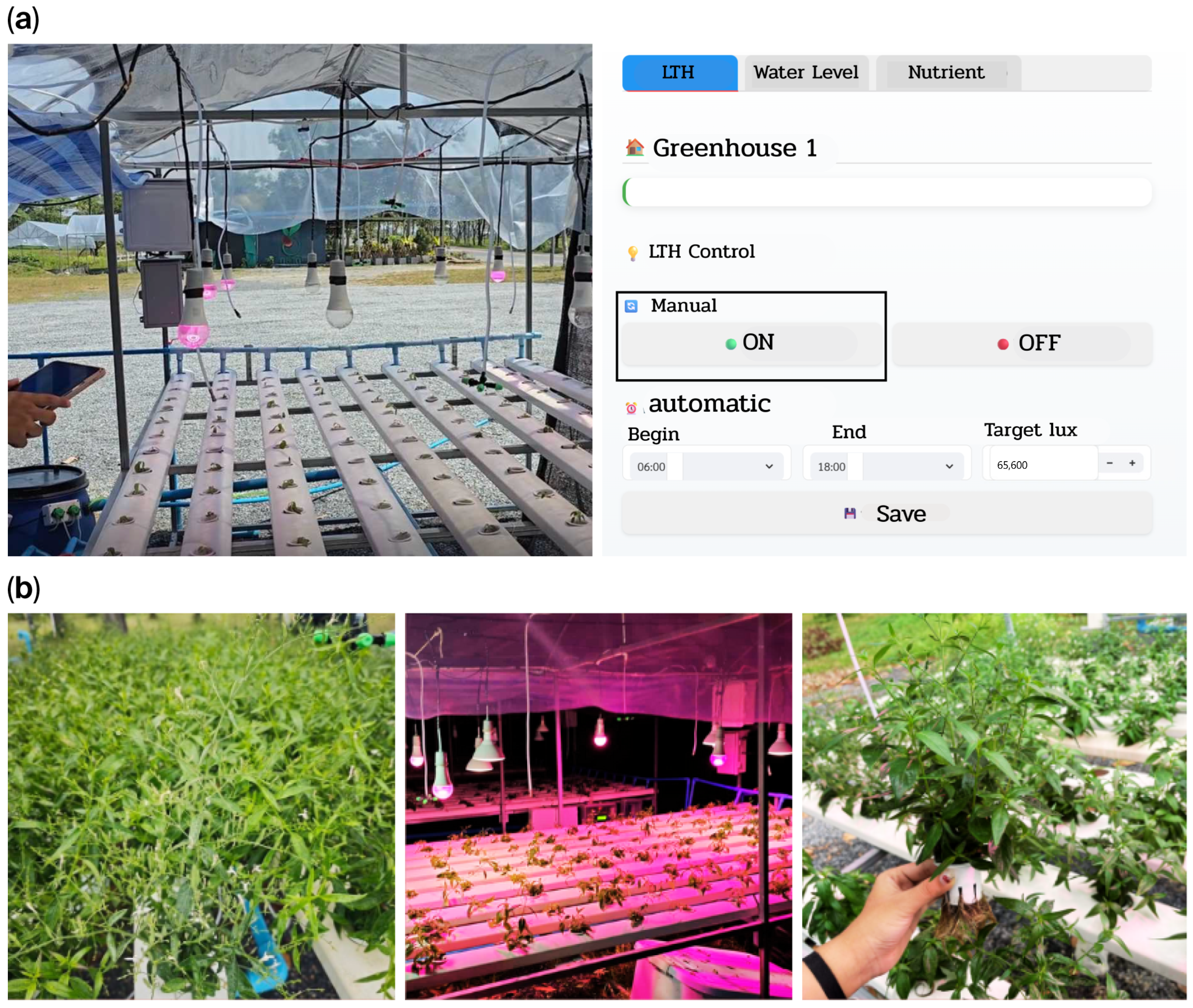
System testing was conducted to verify sensor accuracy, automated control reliability, remote operation, and system stability under continuous 24 h operation. Key test scenarios included water pump activation, pH regulation, lighting control under low-light conditions, and user authentication via the application interface. The system operated reliably throughout testing, with built-in error handling to detect abnormal sensor readings and communication failures (Figure 6).
Figure 6.
Application-based control and automation interface. The application enables both manual control and automated configuration of the system, allowing users to issue control commands, set operational parameters, and monitor the real-time status of various system modules through a unified dashboard. (a) Application-based control and automation interface; (b) the growth of Andrographis paniculata under the system.
Growth performance was monitored weekly from 3 June to 28 August 2025 (13 weeks) in terms of plant height, number of leaves, stem diameter, and stem circumference. Thirty plants per greenhouse were randomly selected for measurement. Yield was evaluated at harvest as net fresh biomass (kg m−2), calculated by dividing the total fresh weight by the effective cultivation area.
Phytochemical quality was assessed by quantifying andrographolide (AG) content using HPLC–DAD [43], with external calibration curves ranging from 20 to 140 µg mL−1. Plant samples were extracted using 50% methanol, and AG concentrations were determined based on standard calibration. Dried samples were further analyzed for color attributes (CIELAB), moisture content, water activity, pH, and microbial quality, including total viable count (TVC) and yeast and mold counts. All analyses were performed in triplicate, and results are reported as mean ± standard deviation [44,45].
Plants were harvested when approximately 25% had reached the flowering stage, following Department of Agriculture guidelines [36]. Post-harvest processing involved two drying methods: (i) tray drying at 60 °C for 15 h and (ii) microwave-assisted drying at 1200 W and 60 °C for 3 h. Both methods achieved effective dehydration while preserving andrographolide content for subsequent quality analysis.
Electrical conductivity (EC) data were recorded at fixed intervals and used to compute descriptive statistics. Periods exhibiting zero or negative EC values were identified as sensor zero-drift events, primarily caused by long-term probe immersion and fouling. These values were retained for transparency but interpreted separately from operational EC ranges, which were defined by target setpoints and management logs. No plant performance metrics were calculated based on instantaneous EC values during these drift periods.
3.7. Statistical Analysis
The greenhouse was defined as the experimental unit (n = 2 greenhouses per cultivation system), consistent with the objective of evaluating cultivation performance at the system level under realistic semi-open greenhouse conditions. Plant-level measurements (30 plants per greenhouse) were treated as subsamples and were used to reduce within-greenhouse variability rather than to increase replication. Accordingly, all quantitative results are reported as mean ± standard deviation at the greenhouse level. Differences among cultivation systems were primarily evaluated using one-way analysis of variance (ANOVA) conducted at the greenhouse level. Given the limited number of experimental units, formal tests of normality and homogeneity of variances were not emphasized, as such tests are not statistically informative at very small sample sizes. Instead, statistical inference was supported by the combined interpretation of p-values, effect size metrics, and biological plausibility.
To quantify the magnitude of treatment effects independently of sample size, effect sizes (η2 and ω2) were calculated for key outcome variables. Post hoc comparisons using the least significant difference (LSD) approach were applied in an exploratory manner to aid interpretation of pairwise differences among systems. In addition, permutation-based sensitivity analyses were conducted at the greenhouse level to validate the robustness of significant findings without reliance on distributional assumptions. Given the pilot-scale nature of the experiment, reported p-values should be interpreted as indicative rather than strictly confirmatory. Final conclusions are therefore supported by consistent effect directions across agronomic, phytochemical, environmental stability, and economic performance indicators. Future studies will incorporate larger numbers of experimental units and, where appropriate, fully non-parametric or mixed-effects modeling approaches to strengthen inferential robustness.
4. Results
4.1. System Performance and Environmental Stability
System performance was evaluated using continuous time-series data recorded by the IoT application. Environmental parameters (air temperature, relative humidity, light intensity, nutrient solution temperature, and electrical conductivity (EC)) were monitored in the IoT-controlled greenhouses. Descriptive statistics summarizing system stability are presented in Table 2.
Table 2.
Descriptive statistics of environmental and nutrient-solution parameters (mean ± SD and coefficient of variation; CV, %).
Air temperature exhibited relatively low variability (CV ≈ 18–19%), indicating effective thermal regulation despite diurnal fluctuations. Relative humidity showed moderate variability (CV = 22.6–30.3%), reflecting intermittent humidification events and partial interaction with ambient conditions typical of semi-open greenhouse designs. Light intensity displayed the highest variability due to natural day–night cycles and cloud shading. Nutrient solution temperature remained stable (CV ≈ 10.2%), supporting consistent root-zone conditions. Although EC exhibited an extremely high coefficient of variation, this variability was primarily attributable to sensor scaling and zero-drift artifacts, rather than true instability in nutrient concentration. In practice, EC adjustments were implemented as adaptive management actions, including short-term corrective responses to plant physiological conditions and disease symptoms. Consistent with this interpretation, the observed plant symptoms and corresponding corrective actions summarized in Table 3 indicate responsive and timely management under IoT control, rather than a lack of system controllability. Overall, the monitoring results confirm that the IoT-enabled system provided sufficiently stable environmental conditions for subsequent agronomic evaluation. Stage-specific EC and pH operating ranges are summarized in Table A1, while observed plant symptoms and corrective actions are documented in Table A2.
Table 3.
Plant growth of A. paniculata under different cultivation systems (mean ± SD, n = 2 greenhouses per system).
To further quantify the extent of EC sensor artifacts, all zero or negative EC readings were identified from the continuous time-series data. These abnormal periods accounted for only a small fraction of the total experimental duration and were temporally clustered, consistent with short-term sensor zero-drift events rather than sustained nutrient instability. A detailed summary of the number, duration, and cumulative proportion of these periods is provided in Appendix D Table A4.
4.2. Plant Growth, Yield, and Biomass Productivity
The growth performance of A. paniculata differed substantially between cultivation systems. Plants grown in both hydroponic systems reached harvest maturity at approximately 90–100 days, whereas soil-based cultivation required 110–120 days. Visual inspection revealed denser canopies and greater growth uniformity under IoT-controlled hydroponics.
The quantitative growth parameters are summarized in Table 3. The IoT hydroponics system produced the highest number of leaves (178.0 ± 9.9 leaves per plant), significantly greater than the non-IoT hydroponics (120.7 ± 16.5) and soil-based cultivation methods (74.9 ± 31.7; p < 0.05). Plant height, stem diameter, and stem circumference followed the general trend of IoT > soil > non-IoT; however, these differences were not statistically significant.
Fresh biomass yield per unit area showed clear differences between systems (Table 4). IoT hydroponics achieved the highest yield (0.409 ± 0.014 kg m−2), significantly exceeding the soil-based cultivation (0.094 ± 0.021 kg m−2) and non-IoT hydroponics methods (0.079 ± 0.0057 kg m−2; p < 0.05). These results indicate that hydroponic cultivation alone is insufficient to maximize yield without stable environmental and nutrient regulation.
Table 4.
Fresh yield per unit area of A. paniculata under different cultivation systems. Statistical analyses were conducted at the greenhouse level (n = 2 per system) to avoid pseudoreplication. In addition to ANOVA and post hoc testing, effect size metrics (η2, ω2) and permutation-based sensitivity analysis were applied to support inference under small sample size conditions.
To account for differences in planting density between systems, yield was additionally normalized at the plant level. When expressed as fresh biomass per plant, soil-based cultivation showed the highest mean value (18.80 ± 4.24 g plant−1), while IoT-assisted hydroponics achieved a comparable per-plant yield (15.74 ± 0.54 g plant−1). In contrast, non-IoT hydroponics exhibited substantially lower productivity (3.04 ± 2.18 g plant−1). These findings indicate that the superior greenhouse-level yield of the IoT system arises not solely from higher planting density, but from its ability to maintain near soil-level per-plant productivity while enabling substantially higher planting density, thereby enhancing overall production efficiency.
Because the greenhouse was defined as the experimental unit, statistical analyses were conducted at the greenhouse level (n = 2 greenhouses per cultivation system) to avoid pseudoreplication, with plant-level measurements treated as subsamples. One-way analysis of variance revealed a highly significant effect of cultivation system on fresh biomass yield (F = 54.12, p = 0.0044), indicating clear separation among systems despite the limited number of experimental units. To complement p-value-based inference under small-sample conditions, effect size metrics were calculated to quantify the magnitude of the cultivation system effect. The resulting values were extremely large (η2 = 0.97; ω2 = 0.95), indicating that nearly all observed yield variation at the greenhouse level was attributable to differences among cultivation systems. These effect sizes point to a strong and biologically meaningful agronomic effect that is unlikely to be explained by random variation alone.
Post hoc comparisons using the least significant difference (LSD) method showed that IoT-assisted hydroponics significantly outperformed both non-IoT hydroponic and soil-based cultivation systems (p < 0.01), whereas no statistically significant difference was detected between non-IoT hydroponic and soil-based systems. A permutation-based sensitivity analysis (10,000 random reallocations of greenhouse labels) was additionally performed to evaluate robustness under distribution-free assumptions. Although the permutation test did not reach statistical significance (p ≈ 0.19), this outcome reflects the inherently low power of permutation methods under extremely small sample sizes rather than inconsistency in the observed effect. Taken together, the convergence of very large effect sizes, consistent yield ranking across systems, and strong physiological plausibility provides robust evidence for the superior yield performance of the IoT-assisted hydroponic system at the greenhouse scale.
4.3. Andrographolide Content and Areal Productivity
The obtained values for extract yield, andrographolide (AG) concentration, and areal AG productivity are summarized in Table 5. The IoT hydroponics system produced the highest extract yield (201.33 ± 14.90 mg g−1 DW), followed by the non-IoT hydroponics and soil-based cultivation methods. AG concentration was comparable between IoT hydroponics (2.56% w/w) and soil-based cultivation (2.65% w/w), both higher than non-IoT hydroponics (1.41% w/w). When AG concentration was combined with biomass yield, IoT hydroponics achieved the highest areal AG productivity (≈209.5 mg m−2), substantially exceeding soil-based cultivation (≈49.8 mg m−2) and non-IoT hydroponics (≈22.2 mg m−2). Although all systems met pharmacopeial requirements (≥1.0% w/w), plants grown using the non-IoT hydroponics method approached the lower acceptance threshold.
Table 5.
Extract yield, andrographolide content, and areal productivity of different cultivation systems.
4.4. Post-Harvest Quality Attributes
Key physicochemical and microbiological quality attributes of the dried A. paniculata samples are summarized in Table 6. Product quality depended strongly on both the cultivation system and drying method. IoT hydroponics combined with microwave drying resulted in the lowest moisture content (≈2.1%), lowest water activity (aw ≈ 0.23), and acceptable microbial loads. Tray drying was suitable for the IoT and soil-grown samples but failed to adequately dehydrate non-IoT hydroponic material, resulting in excessive moisture and elevated microbial counts.
Table 6.
Physicochemical and microbiological quality attributes of dried A. paniculata samples under different cultivation systems and drying methods (mean ± SD).
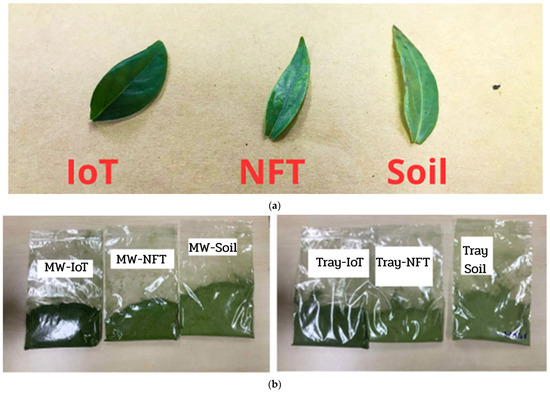
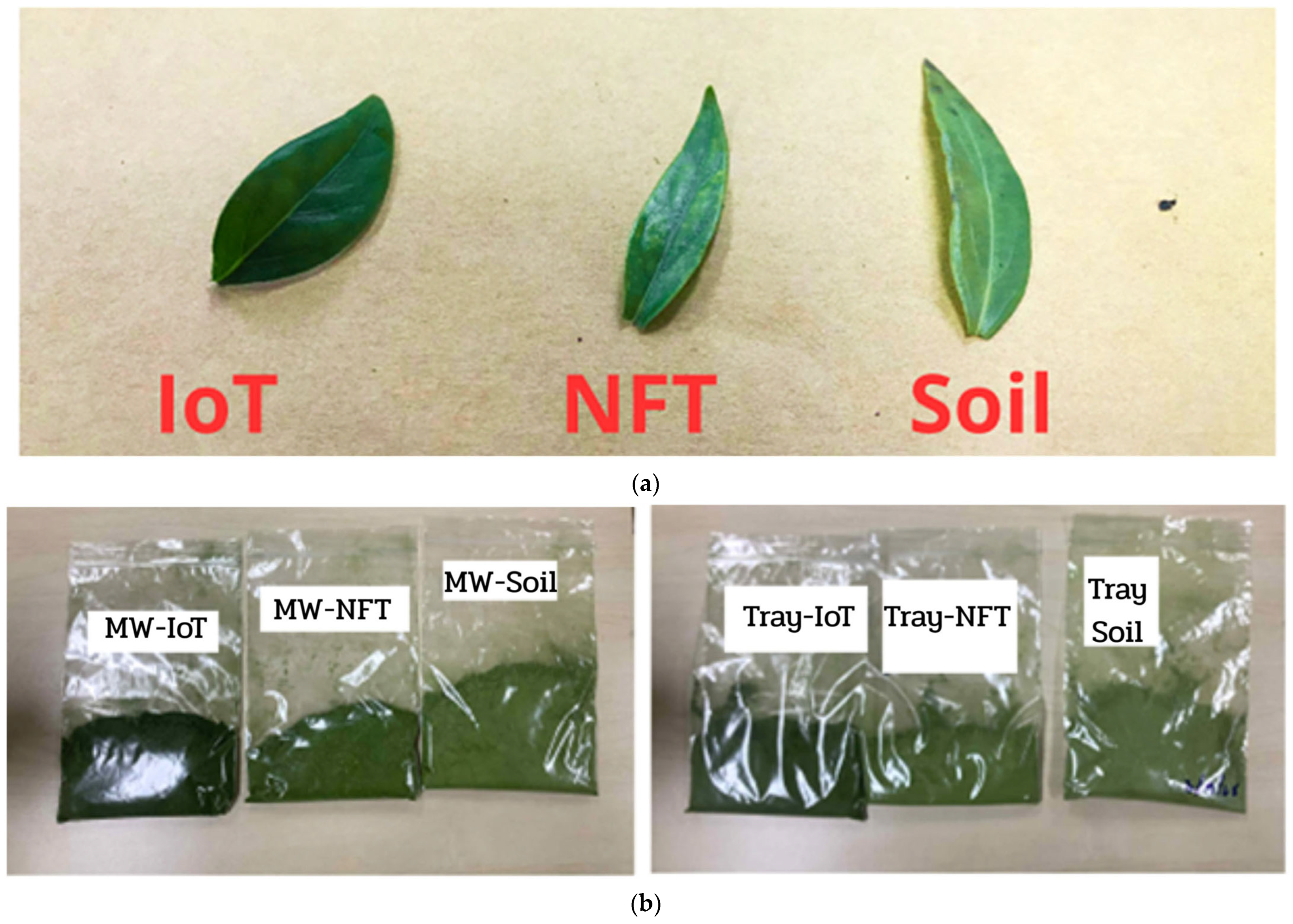
Figure 7 provides a visual comparison of the fresh and dried samples, further supporting our quantitative physicochemical and microbiological results. Fresh leaves from the IoT-controlled hydroponic system exhibited a darker and more uniform green color compared with those grown in the non-IoT NFT hydroponic system and in soil, reflecting healthier canopy status and better chlorophyll retention at harvest. Leaves from the non-IoT NFT system showed visible yellowing and mottling, while soil-grown leaves were lighter green, consistent with greater environmental stress and nutrient variability.
Figure 7.
Visual comparison of fresh and dried Andrographis paniculata samples obtained from different cultivation systems and drying methods. (a) Top panel shows representative fresh leaves grown under IoT-controlled hydroponics (IoT), non-IoT hydroponic NFT (NFT), and soil-based cultivation systems (Soil). (b) Bottom panels show dried powders produced using microwave drying (MW-IoT, MW-NFT, MW-Soil) and tray drying (Tray-IoT, Tray-NFT, Tray-Soil).
5. Discussion
The results demonstrate that environmental stability is the primary determinant of both vegetative growth and secondary metabolite biosynthesis in A. paniculata. Plants cultivated under IoT-controlled hydroponics reached harvest maturity earlier (≈90 days), produced higher biomass yield, and achieved substantially greater areal andrographolide (AG) productivity than plants grown under non-IoT hydroponics or soil-based cultivation. These findings highlight that productivity gains arise from the combined effects of stable microclimate regulation and adaptive management rather than cultivation method alone.
5.1. Physiological Basis of Growth and Yield Enhancement
Physiologically, the IoT system’s ability to continuously regulate temperature, relative humidity, nutrient EC, and pH supported sustained photosynthetic activity and reduced stress-related energy expenditure, thereby enhancing biomass accumulation. In contrast, non-IoT hydroponics experienced uncontrolled environmental fluctuations that reduced photosynthetic efficiency and limited AG biosynthesis. Soil-grown plants accumulated relatively high AG concentrations per unit biomass but required longer growth cycles, reflecting a classical growth–defense trade-off. Plant growth data (Table 3) further substantiate this interpretation. Among measured traits, leaf number per plant differed significantly, with IoT-assisted hydroponics producing the highest leaf number (178.0 ± 9.9 leaves), followed by non-IoT hydroponics (120.7 ± 16.5) and soil-based cultivation (74.9 ± 31.7). Leaf number directly determines photosynthetically active surface area and assimilate supply, providing a physiological explanation for the superior biomass yield and AG productivity observed under IoT control. In contrast, plant height, stem diameter, and stem circumference did not differ significantly, indicating that yield advantages were driven by enhanced canopy development rather than excessive structural growth.
5.2. Adaptive IoT Control Versus Conventional Automation
EC fluctuations observed in the IoT system should not be interpreted as instability, but rather as adaptive management decisions. Nutrient EC was adjusted not only according to growth stage but also in response to plant physiological symptoms and disease indicators, consistent with practical hydroponic management. Similarly, light intensity and relative humidity were dynamically regulated based on real-time sensor feedback and seasonal variation, including extended photoperiods during periods of low natural irradiance and increased fogging frequency during hot-season conditions. This adaptive, plant-centered control strategy enabled the system to maintain functional environmental stability under semi-open greenhouse conditions, rather than rigidly enforcing static setpoints. A comparison between literature-reported optimal conditions and the operating ranges applied in this study is provided in Table A3. Such behavior clearly differentiates IoT-based adaptive control from conventional automation, which typically relies on fixed setpoints or timer-based operation without plant-responsive feedback. By continuously integrating real-time sensor data and plant-condition cues, the proposed system aligns with the core principles of precision agriculture and smart farming.
5.3. Environmental Stress, Pigment Response, and AG Biosynthesis
Beyond growth effects, the collected IoT data revealed meaningful relationships between environmental stress and secondary metabolite allocation. High light intensity and nutrient imbalance—particularly phosphorus deficiency—were occasionally associated with purple or reddish leaf coloration, indicative of anthocyanin accumulation. Anthocyanins function as photoprotective pigments that mitigate photooxidative damage under excessive irradiance. However, excessive anthocyanin accumulation often coincided with reduced AG levels, suggesting a resource allocation shift from diterpenoid lactone biosynthesis toward stress-defense pathways.
This observation is consistent with previous reports showing that leaves with darker green coloration exhibit higher andrographolide concentrations than stress-discolored leaves [46,47]. These findings support the interpretation that controlled environmental stress, rather than uncontrolled stress, is critical for optimizing AG production. Consequently, IoT-enabled regulation of shading intensity and nutrient availability represents a practical strategy to balance photoprotection and secondary metabolite biosynthesis for commercial AG production.
5.4. Planting Density, Yield Metrics, and Fairness of Comparison
An additional factor influencing productivity comparisons is planting density and spacing strategy. Soil-based cultivation followed the official recommendation of the Department of Agriculture, Thailand (30 × 60 cm per plant), which prioritizes crop manageability, canopy aeration, and disease suppression. Although denser soil planting can increase biomass per unit area, such practices require intensive pruning, higher labor input, and are associated with elevated disease risk, making them less suitable for routine production. In contrast, the IoT-assisted NFT system accommodated substantially higher planting density using commercially available channels, while maintaining per-plant biomass and AG accumulation comparable to soil-grown plants under recommended spacing. Continuous regulation of temperature, humidity, EC, and pH enabled high-density cultivation without proportional increases in disease pressure or management complexity. Accordingly, yield was evaluated on both an areal basis and a per-plant basis to ensure a fair and interpretable comparison across systems with inherently different planting densities.
5.5. Statistical Interpretation and System-Level Inference
In this study, the greenhouse was defined as the experimental unit to reflect the primary objective of evaluating IoT-assisted cultivation performance at the system level under realistic semi-open greenhouse conditions. Replication was therefore implemented at the greenhouse level, while within-greenhouse subsampling was used to reduce measurement variability and capture biological heterogeneity. Although this experimental design inherently limits statistical power for formal population-level inference, it is well aligned with real-world production settings in which management decisions are made at the greenhouse scale rather than at the individual plant level.
Accordingly, the statistical results should be interpreted as evidence of system-level performance differences rather than precise estimates of population parameters. The consistently large effect sizes observed for key agronomic and yield indicators demonstrate that the benefits of IoT-assisted hydroponics are not marginal, but substantial and operationally meaningful. From a practical standpoint, such large system-level effects translate into higher yield per unit area, improved production stability, and more predictable harvest timing, all of which are critical for commercial and smallholder adoption. Importantly, the convergence of agronomic outcomes, physiological indicators, environmental stability metrics, and phytochemical productivity reinforces the robustness of the observed system-level advantages. This cross-indicator agreement suggests that the observed improvements arise from integrated environmental and nutrient regulation rather than from isolated or stochastic effects. For practitioners, this implies that IoT-based semi-control systems can deliver tangible gains in productivity and consistency even under semi-open greenhouse conditions and with limited infrastructural investment.
5.6. Economic Implications and Comparative Positioning
The comparative positioning of this study (Table 7 and Table 8) shows that IoT-assisted hydroponics achieved AG concentrations comparable to fully controlled PFAL systems [31] but with lower capital cost and higher scalability. When combined with adaptive environmental control and high-density cultivation, this resulted in the lowest cost per gram of andrographolide among evaluated systems.
Table 7.
Comparative positioning of the present study relative to previous research on A. paniculata.
Table 8.
Economic comparison of cultivation systems based on cost and andrographolide output (per crop per 10 m2 greenhouse).
The economic comparison presented in Table 8 is intended as a relative, assumption-controlled assessment rather than a full techno-economic analysis. Cost components include equipment investment with amortization, greenhouse structure, and operational expenses; however, labor intensity, detailed energy breakdown, and depreciation schedules may vary across sites. Therefore, results should be interpreted as comparative indicators under stated assumptions.
When vertical scalability was considered, the economic advantage of IoT-assisted hydroponics became substantially more pronounced. Under a conservative sensitivity analysis assuming two and three cultivation layers within the same 10 m2 greenhouse footprint, areal andrographolide productivity increased proportionally from ≈2.10 g crop−1 (single layer) to ≈4.20 g and ≈6.30 g per crop, respectively, while most capital and operational costs remained unchanged. As a result, the effective cost per gram of andrographolide declined from ≈6.77 USD g−1 (single layer) to ≈3.4 USD g−1 (two layers) and ≈2.3 USD g−1 (three layers). In contrast, soil-based cultivation, which is structurally constrained to a single productive layer, remained fixed at ≈12.9 USD g−1, while non-IoT hydroponics remained economically unfavorable (≈37.5 USD g−1) due to low and unstable yields. These results highlight vertical stacking as a critical economic multiplier uniquely accessible to hydroponic systems, enabling IoT-assisted greenhouses to approach PFAL-level areal productivity at a fraction of the capital cost, while soil-based systems lack comparable scalability under realistic production conditions.
6. Conclusions
This study demonstrates that IoT-assisted semi-controlled hydroponics can substantially enhance system-level productivity and economic efficiency in the cultivation of A. paniculata under tropical conditions. By integrating real-time sensing with adaptive environmental regulation, the proposed system achieved earlier harvest, higher fresh biomass yield, and markedly greater areal andrographolide productivity compared with non-IoT hydroponics and soil-based cultivation, while maintaining per-plant productivity comparable to conventional soil systems. Importantly, the results indicate that the principal advantage of IoT-assisted cultivation lies not solely in increased andrographolide concentration at the tissue level, but in the combined effects of environmental stability, tolerance to high planting density, and reduced unit production cost. Although operational costs were higher, IoT-assisted hydroponics achieved the lowest cost per gram of andrographolide among the evaluated systems, underscoring its potential for economically viable medicinal plant production. Quality assessment results are interpreted as meeting pharmacopeial minimum requirements for medicinal plant raw materials rather than regulatory pharmaceutical-grade certification. By positioning IoT-enabled semi-controlled hydroponics between open-field cultivation and fully controlled plant factory systems, this study addresses a key gap in the existing literature regarding system level productivity and cost-normalized output under realistic cultivation conditions. Future research will focus on scaling up replication, incorporating detailed techno-economic and sensitivity analyses, and integrating metabolite-informed feedback through direct sensing or predictive modeling into IoT control loops to enable precision regulation of andrographolide biosynthesis.
Author Contributions
Conceptualization, K.F., Y.S. and K.T.; methodology, K.F., Y.S., K.B., A.P. and K.T.; software, K.F., P.K., A.B., K.S. and K.T.; validation, K.F., Y.S., K.B., A.P., C.-Y.C. and K.T.; formal analysis, K.F., Y.S., K.B., A.P., C.-Y.C. and K.T.; investigation, K.F., Y.S., K.B., A.P. and K.T.; resources, K.T.; data curation, K.F., Y.S., K.B., A.P., C.-Y.C. and K.T.; writing—original draft preparation, K.F., Y.S., K.B., A.P., C.-Y.C. and K.T.; writing—review and editing, K.F., Y.S., K.B., A.P., C.-Y.C., P.K., A.B., K.S. and K.T.; visualization, K.F., Y.S. and K.T.; supervision, K.T.; project administration, K.T.; funding acquisition, K.T. All authors have read and agreed to the published version of the manuscript.
Funding
This research was funded by Walailak University through the Fundamental Fund, grant number WU-FF68-13. The APC was funded by the Research and Innovation Institute of Excellence, Walailak University.
Data Availability Statement
The data presented in this study are available from the corresponding author upon request.
Acknowledgments
This project was conducted under the Reinventing University Program and supported by the Ministry of Higher Education, Science, Research and Innovation (MHESI), Thailand. During the preparation of this manuscript, the authors used Paperpal (https://paperpal.com/) for English language editing and refinement. The authors have reviewed and approved the final version of the manuscript and take full responsibility for its content.
Conflicts of Interest
The authors declare no conflicts of interest.
Appendix A. Target EC and pH Ranges During Cultivation
Table A1.
Growth-stage-specific target ranges of electrical conductivity (EC) and pH applied during hydroponic cultivation of Andrographis paniculata.
Appendix B. Observed Plant Symptoms and Corrective Management Actions
Table A2.
Observed plant symptoms and corresponding corrective actions implemented under IoT control.
Appendix C. Comparison with Literature-Reported Optimal Growth Conditions
Table A3.
Comparison between literature-reported optimal growth conditions for A. paniculata and operating ranges applied in the present study.
Appendix D. Analysis of EC Sensor Zero-Drift
Table A4.
Summarizes all periods during which zero or negative EC readings were recorded, including start and end timestamps, duration (minutes), and cumulative proportion relative to the total experimental period.
References
- Chauhan, E.S.; Sharma, K.; Bist, R. Andrographis paniculata: A review of its phytochemistry and pharmacological activities. Res. J. Pharm. Technol. 2019, 12, 891–900. [Google Scholar] [CrossRef] [Scilit]
- Jayakumar, T.; Hsieh, C.Y.; Lee, J.J.; Sheu, J.R. Experimental and clinical pharmacology of Andrographis paniculata and its major bioactive phytoconstituent andrographolide. Evid. Based Complement. Alternat. Med. 2013, 2013, 846740. [Google Scholar] [CrossRef] [Scilit]
- Dai, Y.; Chen, S.R.; Chai, L.; Zhao, J.; Wang, Y.; Wang, Y. Overview of pharmacological activities of Andrographis paniculata and its major compound andrographolide. Crit. Rev. Food Sci. Nutr. 2019, 59, S17–S29. [Google Scholar] [CrossRef] [Scilit] [PubMed]
- Grand View Research. Herbal Medicine Market Size, Share & Trends Analysis Report by Product, by Indication, by Region, and Segment Forecasts, 2024–2030; Report ID: GVR-4-68039-933-2; Grand View Research: San Francisco, CA, USA, 2020; Available online: https://www.grandviewresearch.com/industry-analysis/herbal-medicine-market-report (accessed on 25 January 2026).
- Pholphana, N.; Rangkadilok, N.; Saehun, J.; Ritruechai, S.; Satayavivad, J. Changes in the contents of four active diterpenoids at different growth stages in Andrographis paniculata (Burm.f.) Nees (Chuanxinlian). Chin. Med. 2013, 8, 2. [Google Scholar] [CrossRef] [Scilit]
- Amala, D.; Kumar, M.; Kumar, A.; Kumar, B.; Gouthami, P. Effect of organic manures and biofertilizers on quality and soil analysis of Kalmegh (Andrographis panniculata Wall. Ex. Nees.) Var. CIM Megha. Int. J. Plant Soil Sci. 2023, 35, 491–500. [Google Scholar] [CrossRef] [Scilit]
- Murthy, H.N.; Lee, E.J.; Paek, K.Y. Production of secondary metabolites from cell and organ cultures: Strategies and approaches for biomass improvement and metabolite accumulation. Plant Cell Tissue Organ Cult. 2014, 118, 1–16. [Google Scholar] [CrossRef] [Scilit]
- Barbosa, G.L.; Gadelha, F.D.A.; Kublik, N.; Proctor, A.; Reichelm, L.; Weissinger, E.; Wohlleb, G.M.; Halden, R.U. Comparison of land, water, and energy requirements of lettuce grown using hydroponic vs. conventional agricultural methods. Int. J. Environ. Res. Public Health 2015, 12, 6879–6891. [Google Scholar] [CrossRef] [Scilit]
- Al-Kodmany, K. The vertical farm: A review of developments and implications for the vertical city. Buildings 2018, 8, 24. [Google Scholar] [CrossRef] [Scilit]
- Farooq, M.S.; Riaz, S.; Abid, A.; Umer, T.; Zikria, Y.B. Role of IoT technology in agriculture: A systematic literature review. Electronics 2020, 9, 319. [Google Scholar] [CrossRef] [Scilit]
- Pivoto, D.; Waquil, P.D.; Talamini, E.; Finocchio, C.P.S.; Dalla Corte, V.F.; de Vargas Mores, G. Scientific development of smart farming technologies and their application in Brazil. Inf. Process. Agric. 2018, 5, 21–32. [Google Scholar] [CrossRef] [Scilit]
- Shamshiri, R.R.; Kalantari, F.; Ting, K.C.; Thorp, K.R.; Hameed, I.A.; Weltzien, C.; Ahmad, D.; Shad, Z.M. Advances in greenhouse automation and controlled environment agriculture: A transition to plant factories and urban agriculture. Int. J. Agric. Biol. Eng. 2018, 11, 1–22. [Google Scholar] [CrossRef] [Scilit]
- Van Delden, S.H.; SharathKumar, M.; Butturini, M.; Graamans, L.J.A.; Heuvelink, E.; Kacira, M.; Marcelis, L.F.M. Current status and future challenges in implementing and upscaling vertical farming systems. Nat. Food 2021, 2, 944–956. [Google Scholar] [CrossRef] [Scilit]
- Kozai, T.; Niu, G.; Takagaki, M. Plant Factory: An Indoor Vertical Farming System for Efficient Quality Food Production, 2nd ed.; Academic Press: Cambridge, MA, USA, 2019. [Google Scholar]
- SharathKumar, M.; Heuvelink, E.; Marcelis, L.F.M. Vertical farming: Moving from genetic to environmental modification. Trends Plant Sci. 2020, 25, 724–727. [Google Scholar] [CrossRef] [Scilit]
- Resh, H.M. Hydroponic Food Production: A Definitive Guidebook for the Advanced Home Gardener and the Commercial Hydroponic Grower, 7th ed.; CRC Press: Boca Raton, FL, USA, 2012. [Google Scholar]
- World Health Organization. WHO Guidelines on Good Agricultural and Collection Practices (GACP) for Medicinal Plants; WHO Press: Geneva, Switzerland, 2003. [Google Scholar]
- European Medicines Agency. Guideline on Specifications: Test Procedures and Acceptance Criteria for Herbal Substances, Herbal Preparations and Herbal Medicinal Products/Traditional Herbal Medicinal Products; EMEA/CVMP/815/00 Rev. 1; European Medicines Agency: London, UK, 2006; Available online: https://www.ema.europa.eu/en/specifications-test-procedures-acceptance-criteria-herbal-substances-herbal-preparations-herbal-medicinal-products-traditional-herbal-medicinal-products-scientific-guideline (accessed on 25 January 2026).
- Sa-Ngiamsuntorn, K.; Suksatu, A.; Pewkliang, Y.; Thongsri, P.; Kanjanasirirat, P.; Manopwisedjaroen, S.; Charoensutthivarakul, S.; Wongtrakoongate, P.; Pitiporn, S.; Chaopreecha, J.; et al. Anti-SARS-CoV-2 activity of Andrographis paniculata extract and its major component andrographolide in human lung epithelial cells and cytotoxicity evaluation in major organ cell representatives. J. Nat. Prod. 2021, 84, 1261–1270. [Google Scholar] [CrossRef] [Scilit]
- Adiguna, S.P.; Panggabean, J.A.; Swasono, R.T.; Rahmawati, S.; Izzati, F.N.; Afifah, E.; Rizqianti, Y.; Permatasari, Y.I.; Wungu, T.D.K. Evaluations of andrographolide-rich fractions of Andrographis paniculata with enhanced potential antioxidant, anticancer, antihypertensive, and anti-inflammatory activities. Plants 2023, 12, 1220. [Google Scholar] [CrossRef] [Scilit] [PubMed]
- Villedieu-Percheron, E.; Ferreira, V.; Campos, J.F.; Destandau, E.; Pichon, C.; Imbert, C. Quantitative determination of andrographolide and related compounds in Andrographis paniculata extracts and biological evaluation of their anti-inflammatory activity. Foods 2019, 8, 683. [Google Scholar] [CrossRef] [Scilit]
- Champati, B.B.; Jena, S.; Ray, A.; Padhiari, B.M.; Haldar, T. Quality control and discrimination of Andrographis paniculata (Burm. f.) Nees based on high-performance liquid chromatography fingerprinting combined with chemometric approaches. Indian J. Pharm. Sci. 2021, 83, 868. [Google Scholar] [CrossRef] [Scilit]
- Sharma, S.; Sharma, Y.P.; Bhardwaj, C. HPLC quantification of andrographolide in different parts of Andrographis paniculata (Burm. f.) Wall. ex Nees. J. Pharmacogn. Phytochem. 2018, 7, 168–171. [Google Scholar]
- Karioti, A.; Timóteo, P.; Bergonzi, M.C.; Bilia, A.R. A validated method for the quality control of Andrographis paniculata preparations. Planta Med. 2017, 83, 1055–1062. [Google Scholar] [CrossRef] [Scilit]
- Syukri, Y.; Martien, R.; Lukitaningsih, E.; Nugroho, A. Quantification of andrographolide isolated from Andrographis paniculata Nees obtained from traditional market in Yogyakarta using validated HPLC. Indones J. Chem. 2016, 16, 190–197. [Google Scholar] [CrossRef] [Scilit]
- Indrati, O.; Martien, R.; Rohman, A.; Nugroho, A.K. Employment of ATR-FTIR and HPLC-UV method for detection and quantification of andrographolide. Int. J. Appl. Pharm. 2018, 10, 207–213. [Google Scholar] [CrossRef] [Scilit]
- Jana, S.N.; Banerjee, S.; Biswas, S.; Sing, D.; Kar, A.; Bandyopadhayay, R.; Haldar, P.K.; Sharma, N.; Mukherjee, P.K. Quantification and standardization of andrographolide in Andrographis paniculata samples by validated RP-HPLC and HPTLC methods. J. Chromatogr. Sci. 2023, 61, 557–565. [Google Scholar] [CrossRef] [Scilit] [PubMed]
- Champati, B.B.; Padhiari, B.M.; Ray, A.; Halder, T.K.; Jena, S. Application of a multilayer perceptron artificial neural network for the prediction and optimization of the andrographolide content in Andrographis paniculata. Molecules 2022, 27, 2765. [Google Scholar] [CrossRef] [Scilit] [PubMed]
- Phowong, S.; Srichanpiyom, K.; Puangploy, P.; Euafua, C.; Phothisonothai, M. A low-cost edge and cloud computing based smart agriculture platform for lifecycle Andrographis paniculata planting. In Proceedings of the 2023 20th International Conference on Electrical Engineering/Electronics, Computer, Telecommunications and Information Technology (ECTI-CON), Nakhon Phanom, Thailand, 9–12 May 2023; pp. 1–5. [Google Scholar] [CrossRef] [Scilit]
- Songneam, N.; Buapian, T.; Pochanakul, K. AI-Driven Growth Modeling of Andrographis paniculata for Smart Agriculture Applications. Available at SSRN 5700569. Available online: https://ssrn.com/abstract=5700569 (accessed on 25 July 2024).
- Wanichananan, P.; Janta, S.; Sueachuen, S.; Chiangklang, T.; Mosaleeyanon, K.; Korinsak, S.; Darwell, C.T.; Chutimanukul, P. Morphological characteristics and genome-wide association analysis among local Andrographis paniculata from Thailand under controlled environment in plant factory. PLoS ONE 2025, 20, e0320667. [Google Scholar] [CrossRef] [Scilit]
- Avgoustaki, D.D.; Xydis, G. Indoor vertical farming in the urban nexus context: Business growth and resource savings. Sustainability 2020, 12, 1965. [Google Scholar] [CrossRef] [Scilit]
- Graamans, L.; Baeza, E.; van den Dobbelsteen, A.; Tsafaras, I.; Stanghellini, C. Plant factories versus greenhouses: Comparison of resource use efficiency. Agric. Syst. 2018, 160, 31–43. [Google Scholar] [CrossRef] [Scilit]
- Gómez, C.; Currey, C.J.; Dickson, R.W.; Kim, H.-J.; Hernández, R.; Sabeh, N.C.; Raudales, R.E.; Brumfield, R.G.; Laury-Shaw, A.; Wilke, A.K.; et al. Controlled environment food production for urban agriculture. HortScience 2019, 54, 1448–1458. [Google Scholar] [CrossRef] [Scilit]
- Naik, P.M.; Al-Khayri, J.M. Abiotic and biotic elicitors–role in secondary metabolites production through in vitro culture of medicinal plants. In Abiotic and Biotic Stress in Plants—Recent Advances and Future Perspectives; Shanker, A.K., Shanker, C., Eds.; InTech: Rijeka, Croatia, 2016; pp. 247–277. [Google Scholar] [CrossRef] [Scilit]
- Department of Agriculture, Thailand. Guidelines for Cultivation and Harvest of Andrographis paniculata; Ministry of Agriculture and Cooperatives: Bangkok, Thailand, 2024. Available online: https://www.doa.go.th/oard2/wp-content/uploads/2021/08/ฟ้าทะลายโจร.pdf (accessed on 25 July 2024).
- Sirmayanti, S.; Fitri, K.; Dachlan, S.A.; Yuniarti. Watering Stimulation of Alliun cepa L. Plants Based on IoT through the ESP32 Microcontroller and MQTT Protocol. J. Inform. Telecommun. Eng. 2021, 4, 343–354. Available online: https://ojs.uma.ac.id/index.php/jite/article/view/4456/3093 (accessed on 25 July 2024). [CrossRef] [Scilit]
- Syafaat, M.; Ramadhan, A.N.; Syafiun, R.B.; Haerunnisa, D.A. IoT-Based Smart Garden Using MQTT Protocol with Adafruit IO App. J. Tek. Inform. 2023, 4, 723–732. [Google Scholar] [CrossRef] [Scilit]
- Promput, S.; Uraipan, N.; Klongdee, S. Smart Greenhouse System Based on Internet of Things using Information Flow Diagram and MQTT Connectivity. J. Appl. Inform. Technol. 2024, 7, 27–40. [Google Scholar] [CrossRef]
- Safitri, N.A.; Priambodo, A.S. MQTT and CoAP Communication Protocol Analysis in Internet of Things System for Strawberry Hydroponic Plants. J. Robot. Autom. Electron. Eng. 2023, 1, 45–56. [Google Scholar] [CrossRef] [Scilit]
- D’Ortona, C.; Tarchi, D.; Raffaelli, C. Open-Source MQTT-Based End-to-End IoT System for Smart City Scenarios. Future Internet 2022, 14, 57. [Google Scholar] [CrossRef] [Scilit]
- Ford, T.N.; Gamess, E.; Ogden, C. Performance Evaluation of Different Raspberry Pi Models as MQTT Servers and Clients. Int. J. Comput. Netw. Commun. 2022, 14, 1–18. [Google Scholar] [CrossRef] [Scilit]
- Ding, L.; Luo, X.B.; Tang, F.; Yuan, J.B.; Guo, M.; Yao, S.Z. Quality Control of Medicinal Herbs Fructus gardeniae, Common Andrographis Herb and Their Preparations for Their Active Constituents by High-Performance Liquid Chromatography–Photodiode Array Detection–Electrospray Mass Spectrometry. Talanta 2008, 74, 1344–1349. [Google Scholar] [CrossRef] [Scilit]
- Dawande, A.A.; Sahay, S. Copper Sulphate Elicitation of Optimized Suspension Culture of Andrographis paniculata Nees Yields Unprecedented Level of Andrographolide. J. Microbiol. Biotechnol. Food Sci. 2020, 9, 688–694. [Google Scholar] [CrossRef] [Scilit]
- Patuhai, A.; Wahab, P.E.M.; Yusoff, M.M.; Dewir, Y.H.; Alsughayyir, A.; Hakiman, M. Plant Growth Regulator- and Elicitor-Mediated Enhancement of Biomass and Andrographolide Production of Shoot Tip-Culture-Derived Plantlets of Andrographis paniculata (Burm.f.) Wall. (Hempedu Bumi). Plants 2023, 12, 2953. [Google Scholar] [CrossRef] [Scilit]
- Sing, D.; Banerjee, S.; Jana, S.N.; Mallik, R.; Dastidar, S.G.; Majumdar, K.; Bandyopadhyay, A.; Bandyopadhyay, R.; Mukherjee, P.K. Estimation of andrographolides and gradation of Andrographis paniculata leaves using near infrared spectroscopy together with support vector machine. Front. Pharmacol. 2021, 12, 629833. [Google Scholar] [CrossRef] [Scilit]
- Jiang, Z.; Wang, T.; Zhang, K.; Zhang, M.; Ma, L.; Ren, W.; Bao, Y.; Ma, W. Effect of light treatment on chemical composition of Andrographis paniculata seedlings. Front. Chem. 2022, 10, 889365. [Google Scholar] [CrossRef] [Scilit] [PubMed]

Disclaimer/Publisher’s Note: The statements, opinions and data contained in all publications are solely those of the individual author(s) and contributor(s) and not of MDPI and/or the editor(s). MDPI and/or the editor(s) disclaim responsibility for any injury to people or property resulting from any ideas, methods, instructions or products referred to in the content. |
© 2026 by the authors. Licensee MDPI, Basel, Switzerland. This article is an open access article distributed under the terms and conditions of the Creative Commons Attribution (CC BY) license.