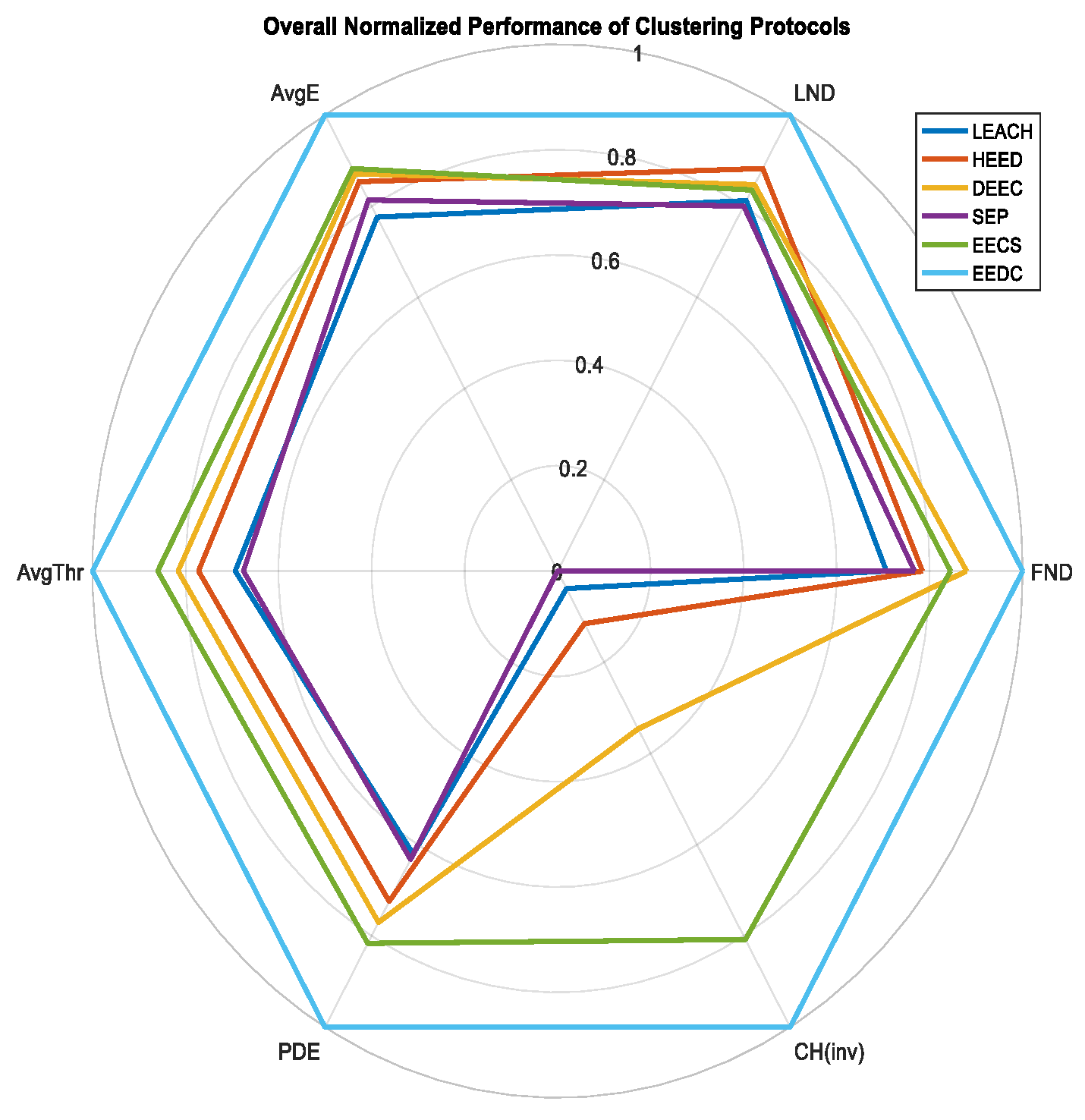
This section presents the simulation framework used to evaluate the proposed EEDC protocol and to compare it with representative clustering-based routing schemes reported in the literature. Because analytical results alone cannot fully capture the dynamic behavior of wireless sensor networks—especially the spatially unbalanced energy consumption near the base station (BS)—we complement the mathematical model with time-based simulations under realistic radio and deployment assumptions. The objectives of this section are: (i) to define a unified simulation environment in which all protocols operate under the same network size, energy model, and traffic pattern and (ii) to generate quantitative performance indicators such as network lifetime, stability period, residual energy, and throughput for a fair comparison. To this end, we adopt the first-order radio model, a 100 m × 100 m sensing field, and a single static BS (sink), and we vary the number of deployed nodes to study scalability. The proposed EEDC is then evaluated alongside well-known protocols cited in related work—such as LEACH, HEED, DEEC, SEP, and EECS—to demonstrate that distance-controlled clustering and adaptive transmission range can mitigate the bottleneck around the BS while maintaining energy efficiency comparable to existing methods.
5.4. Performance Evaluation
The performance of the proposed Energy-Efficient Distance-Controlled Clustering (EEDC) protocol is evaluated using a combination of quantitative metrics that collectively reflect the energy efficiency, stability, and reliability of the network. Each metric is computed over multiple simulation runs and compared across LEACH, HEED, DEEC, SEP, EECS, and the proposed EEDC protocol.
- A.
Network Lifetime
Network lifetime is defined as the total number of rounds completed until the first node dies (FND), half of the nodes die (HND), and the last node dies (LND). These three indicators capture the stability, efficiency, and sustainability of energy consumption across the network. An ideal clustering protocol should maximize all three values while maintaining energy balance among nodes.
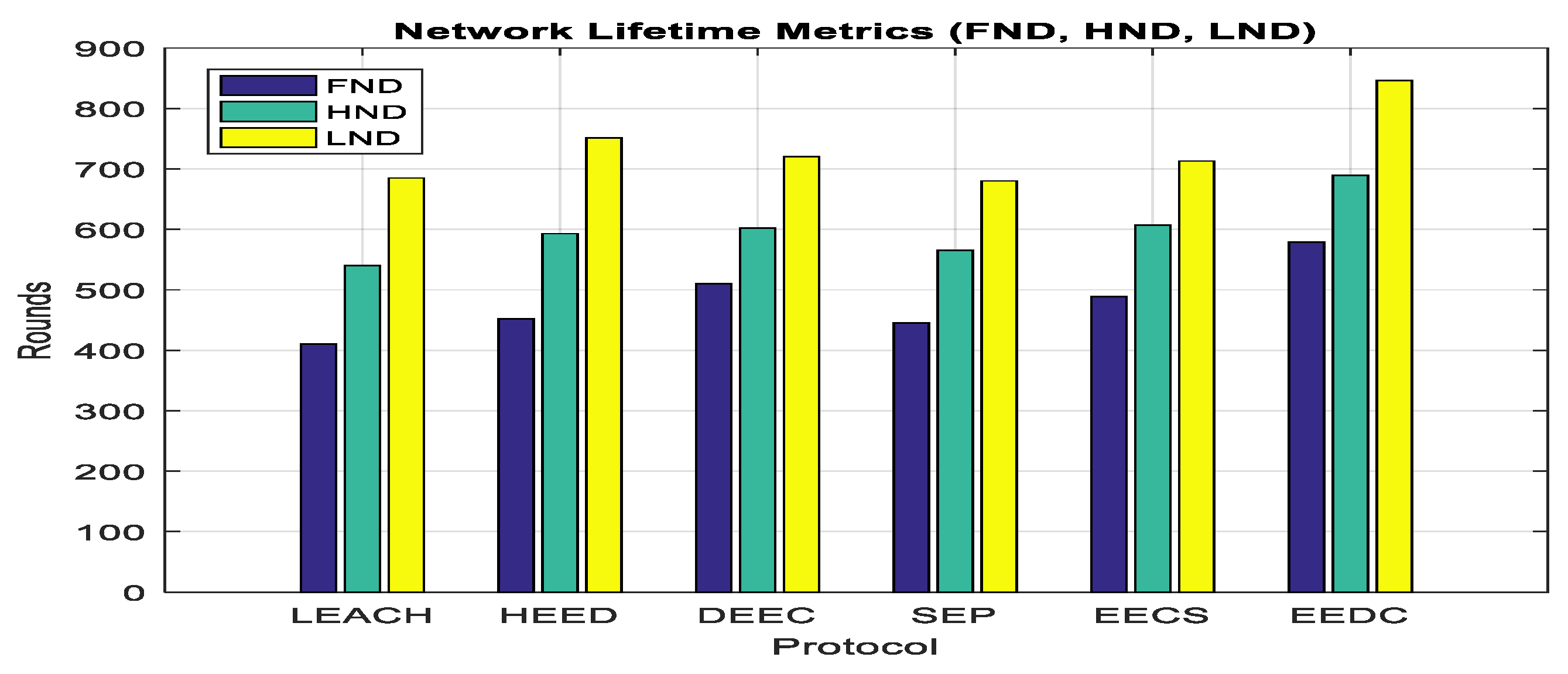
Figure 8 illustrates the network lifetime performance of the six evaluated clustering protocols using three standard stability metrics: first node dead (FND), half nodes dead (HND), and last node dead (LND). As shown, LEACH exhibits the shortest lifetime, with the earliest FND, HND, and LND values due to its random CH selection and unbalanced energy consumption. HEED, SEP, DEEC, and EECS demonstrate progressively improved stability, benefiting from more structured CH selection based on residual energy or weighted probabilities. Among all protocols, EEDC achieves the longest lifetime, with its FND occurring significantly later than all baseline protocols. The same trend is observed for HND and LND, confirming that EEDC distributes the energy consumption more evenly and delays the death of critical nodes. The clear separation across FND, HND, and LND in EEDC indicates an extended stability period, energy balance, and overall network robustness, validating the effectiveness of distance-controlled CH selection in mitigating the bottleneck problem near the base station.
The network lifetime metrics show that EEDC noticeably extends all three lifetime indicators. EEDC achieves a first node death (FND) at approximately 580 rounds, compared to 410 rounds in LEACH and 490 rounds in EECS. This represents a 41% improvement over LEACH and a ~18% improvement over EECS, the strongest baseline. Similarly, the last node death (LND) under EEDC occurs at around 850 rounds, while LEACH, SEP, and DEEC terminate around 680–720 rounds, and EECS reaches ~710 rounds. This demonstrates a 23% increase in overall lifetime relative to LEACH and ~13% over EECS. These results confirm that EEDC effectively minimizes early energy depletion and balances load near the BS, leading to prolonged node operation.
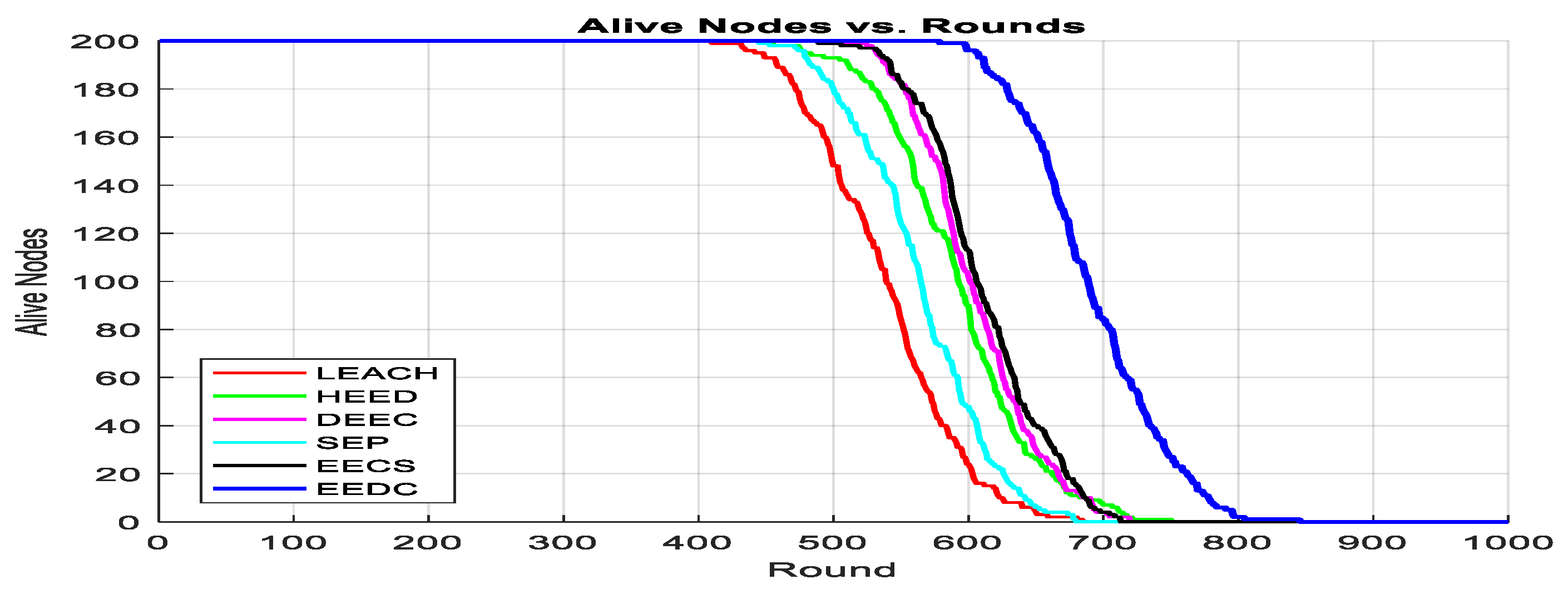
Figure 9 shows the number of alive nodes as a function of simulation rounds for LEACH, HEED, DEEC, SEP, EECS, and the proposed EEDC protocol. The plot illustrates the stability period and overall network lifetime for each scheme. EEDC maintains full node survivability significantly longer than all baseline protocols and exhibits a slower decline in alive nodes due to its distance-controlled clustering and balanced energy consumption. In contrast, LEACH experiences the earliest node deaths, followed by HEED, SEP, DEEC, and EECS, confirming the superior energy efficiency and extended operational lifetime achieved by EEDC.
The alive-nodes curve demonstrates how quickly nodes deplete their energy under each protocol. LEACH and SEP experience rapid node loss after 500 rounds, while DEEC, HEED, and EECS extend survival slightly beyond 600 rounds. EEDC, however, maintains a significantly larger number of active nodes until nearly 700–750 rounds, and some nodes survive past 800 rounds, indicating a 15–20% slower depletion rate compared with EECS and 30–35% slower than LEACH. This highlights EEDC’s enhanced energy balancing and reduced load concentration around the BS.
- B.
Stability Period
The stability period represents the duration between the start of the simulation and the death of the first node (FND). It reflects how long the network can operate in a fully functional state before energy imbalances appear. EEDC extends the stability period by maintaining higher CH density near the BS, which helps distribute the relay load more evenly.
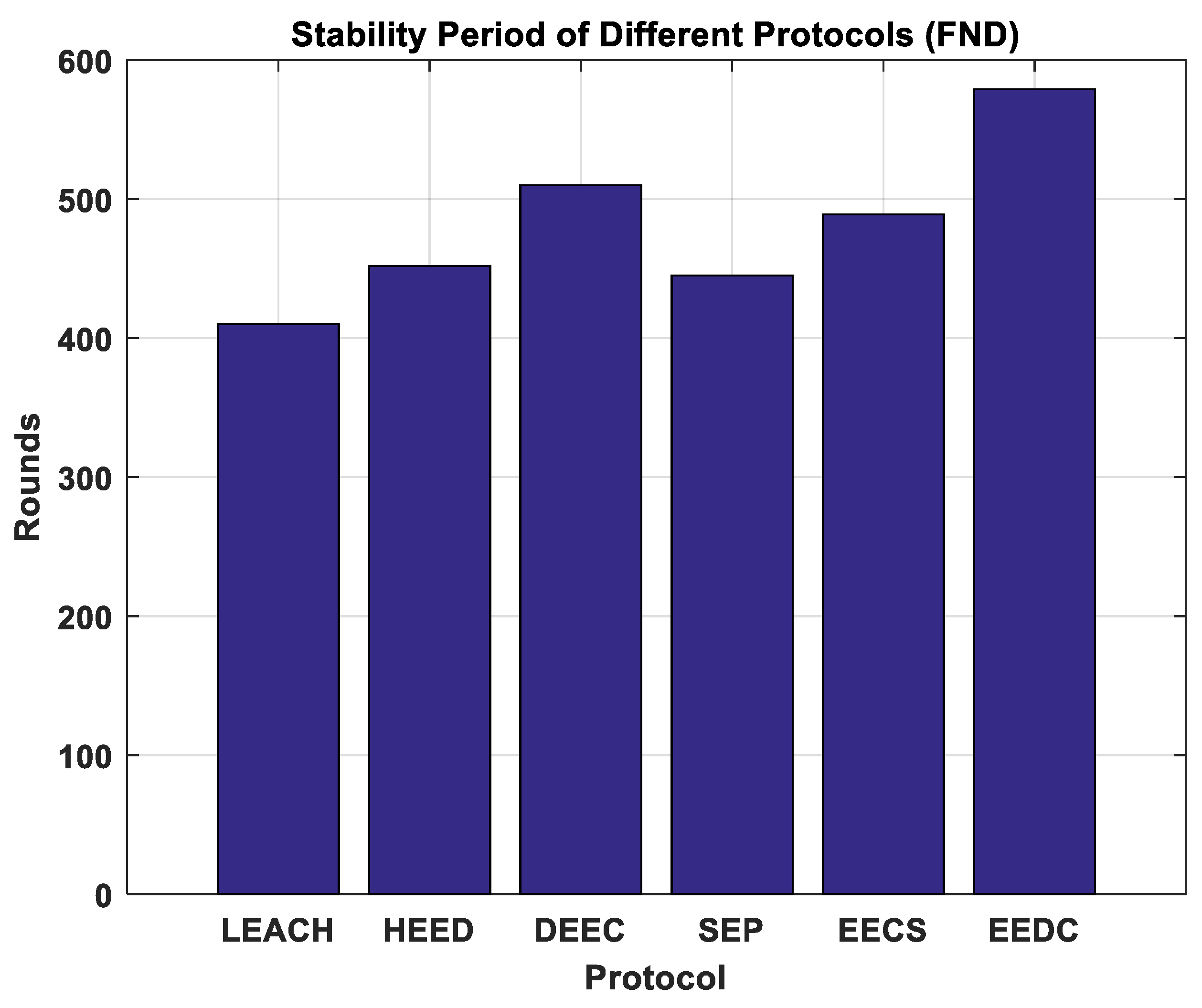
Figure 10 presents the stability period of six clustering-based routing protocols—LEACH, HEED, DEEC, SEP, EECS, and the proposed EEDC—measured in terms of the first node dead (FND) metric. The stability period is defined as the number of rounds the network remains fully operational before the death of the first sensor node. A higher FND value indicates better energy balancing, lower early energy depletion, and higher robustness in the initial phase of network operation.
As shown in the figure, LEACH has the shortest stability period due to its random cluster head selection, which often overloads nodes near the base station and leads to early energy depletion. HEED, SEP, DEEC, and EECS show moderate improvements as they incorporate factors such as residual energy, probabilistic weighting, or balanced CH distribution. Among all protocols, EEDC achieves the longest stability period, with the first node dying substantially later than in the other schemes. This demonstrates EEDC’s ability to reduce early bottlenecks by increasing CH density near the BS and using distance-controlled transmission ranges. As a result, relay load is distributed more evenly, preventing early failures and significantly extending the network’s fully functional lifetime.
The result shows the stability period comparison based on FND alone. EEDC maintains all nodes alive until nearly 580 rounds, outperforming LEACH (410), HEED (455), DEEC (510), SEP (445), and EECS (490). This corresponds to +41% improvement over LEACH, +27% over HEED, and +14% over DEEC. Because a longer stability period denotes uninterrupted sensing coverage and maximum sensing accuracy, this metric highlights EEDC’s ability to delay network degradation.
- C.
Average Residual Energy
Average residual energy quantifies the mean energy remaining across all active nodes after each simulation round:
where
is the residual energy of node i at round r and N is the total number of nodes. This metric evaluates the energy conservation capability and balance of the clustering strategy.
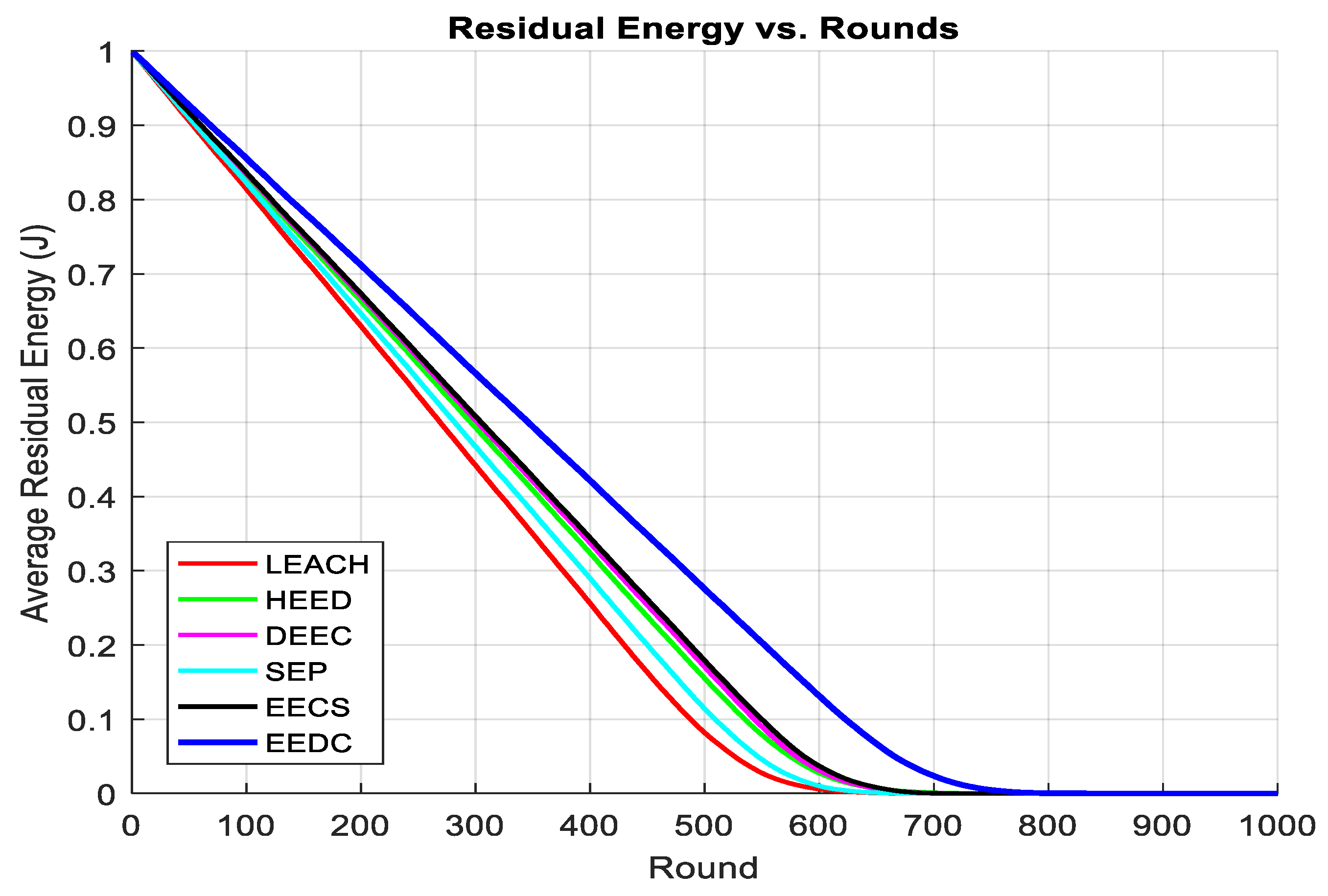
Figure 11 illustrates the evolution of the average residual energy of the network over the simulation rounds for six clustering-based routing protocols: LEACH, HEED, DEEC, SEP, EECS, and the proposed EEDC. As observed, LEACH experiences the most rapid energy depletion due to its random cluster head rotation and the high forwarding load imposed on nodes located near the base station. HEED and SEP exhibit moderately improved performance as their CH selection mechanisms incorporate residual energy and weighted probabilities. DEEC and EECS further enhance energy balancing, resulting in slower decay curves. The proposed EEDC protocol achieves the slowest decline in residual energy, maintaining significantly higher energy levels throughout the simulation. This improvement results from EEDC’s distance-controlled clustering, increased CH density in the BS region, and adaptive transmission range, which collectively distribute communication load more evenly and mitigate the bottleneck effect. The sustained energy advantage of EEDC demonstrates its superior efficiency in prolonging network lifetime and delaying energy exhaustion compared with existing protocols.
The residual energy profile indicates that EEDC conserves energy more effectively across all rounds. Whereas LEACH reaches near-zero residual energy around 600 rounds, SEP and DEEC around 620–650 rounds, and EECS at 650–700 rounds, EEDC maintains usable residual energy until almost 750 rounds, representing a ~25% slower decay compared to the strongest baselines.
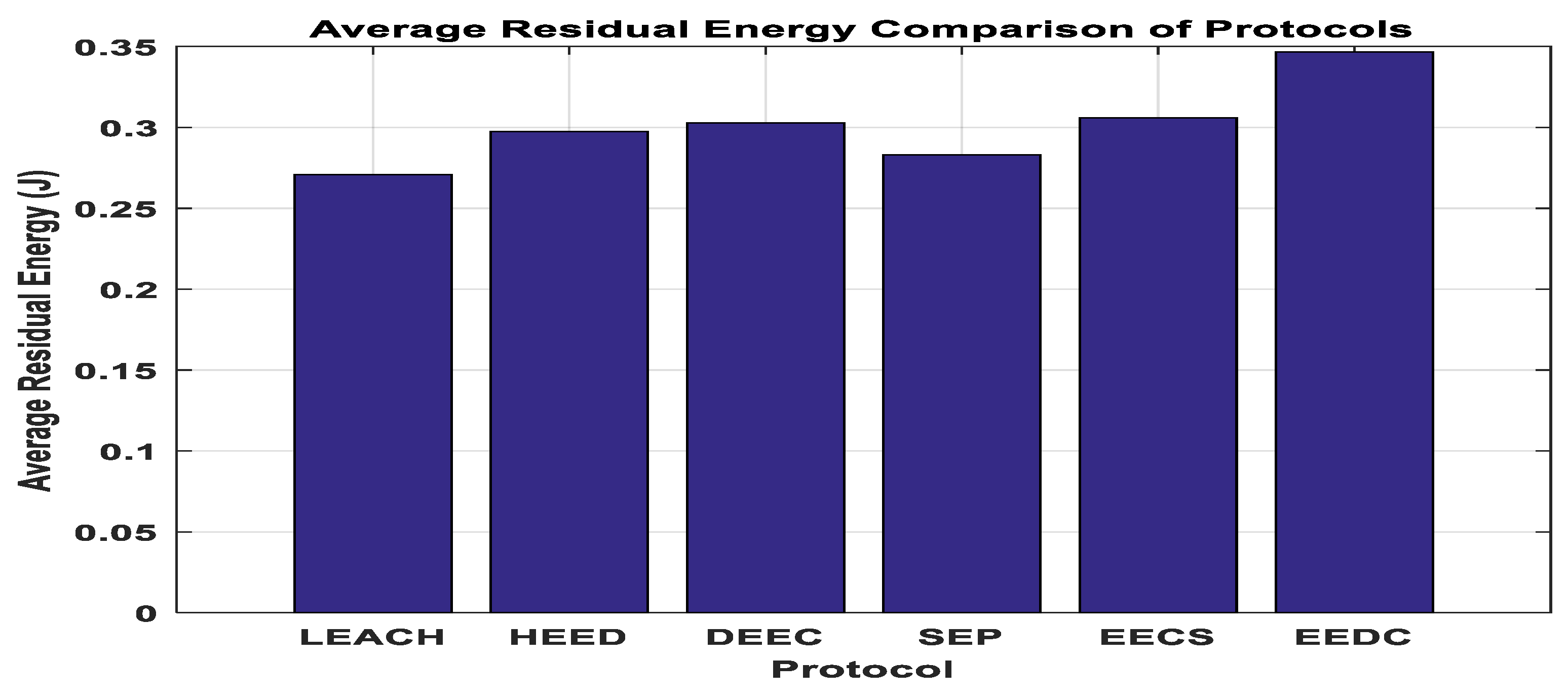
Figure 12 presents the average residual energy of the sensor nodes for six clustering protocols—LEACH, HEED, DEEC, SEP, EECS, and the proposed EEDC—calculated over the entire network lifetime. The average residual energy metric reflects how efficiently each protocol manages node energy consumption throughout the simulation. A higher value indicates better load balancing and reduced energy depletion across the network.
As shown in the figure, LEACH exhibits the lowest average residual energy due to its random CH selection strategy, which leads to uneven energy usage and early node exhaustion, particularly near the base station. HEED, SEP, DEEC, and EECS achieve progressively higher average residual energy because they incorporate residual energy, node probability, or distance metrics in their CH election processes, resulting in improved energy distribution. The proposed EEDC protocol achieves the highest average residual energy, significantly outperforming all baseline methods. This improvement stems from EEDC’s distance-controlled clustering mechanism and increased CH density near the BS, which minimize the relay burden on individual nodes and mitigate the bottleneck effect. The results validate EEDC’s effectiveness in maintaining higher energy levels and prolonging network lifetime through balanced and energy-aware communication management. So, the figure shows EEDC leading with approximately 0.348 J, compared with EECS (0.307 J), DEEC (0.303 J), HEED (0.297 J), SEP (0.283 J), and LEACH (0.27 J). This corresponds to +29% higher average residual energy than LEACH and +13% above EECS, confirming that EEDC reduces per-node consumption throughout the simulation.
- D.
Throughput
Throughput measures the total number of packets successfully received by the base station (BS) over the network lifetime. A higher throughput indicates greater data delivery reliability and a longer operational lifetime. In EEDC, the distributed routing mechanism and reduced bottlenecks near the BS contribute to a noticeable throughput improvement compared to traditional schemes.
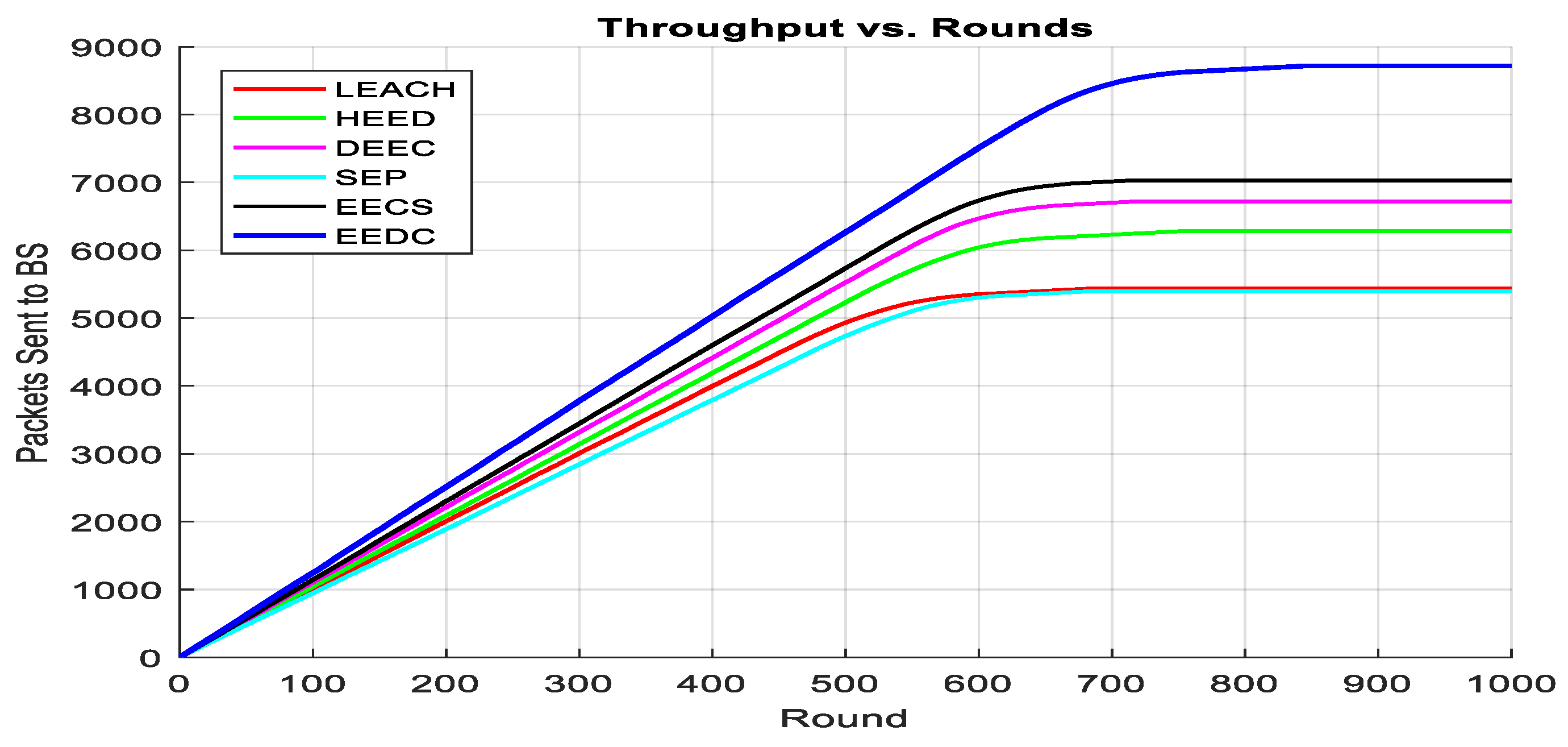
Figure 13 illustrates the throughput performance of six clustering-based routing protocols—LEACH, HEED, DEEC, SEP, EECS, and the proposed EEDC—expressed as the cumulative number of packets successfully delivered to the base station (BS) over the simulation rounds. Throughput is a fundamental indicator of routing efficiency, network reliability, and the ability of a protocol to maintain effective data delivery as nodes deplete their energy.
During the early phase of the simulation (0–500 rounds), all protocols exhibit a nearly linear increase in throughput, reflecting consistent data aggregation and forwarding while the network remains fully operational. However, as nodes begin to die, the throughput curves start to flatten at various rates depending on the energy management capability of each protocol. LEACH reaches saturation first, due to rapid node death caused by its random CH rotation and the uneven burden placed on nodes near the BS. HEED, SEP, DEEC, and EECS achieve gradually higher throughput levels, demonstrating improved energy-aware CH selection and more balanced communication.
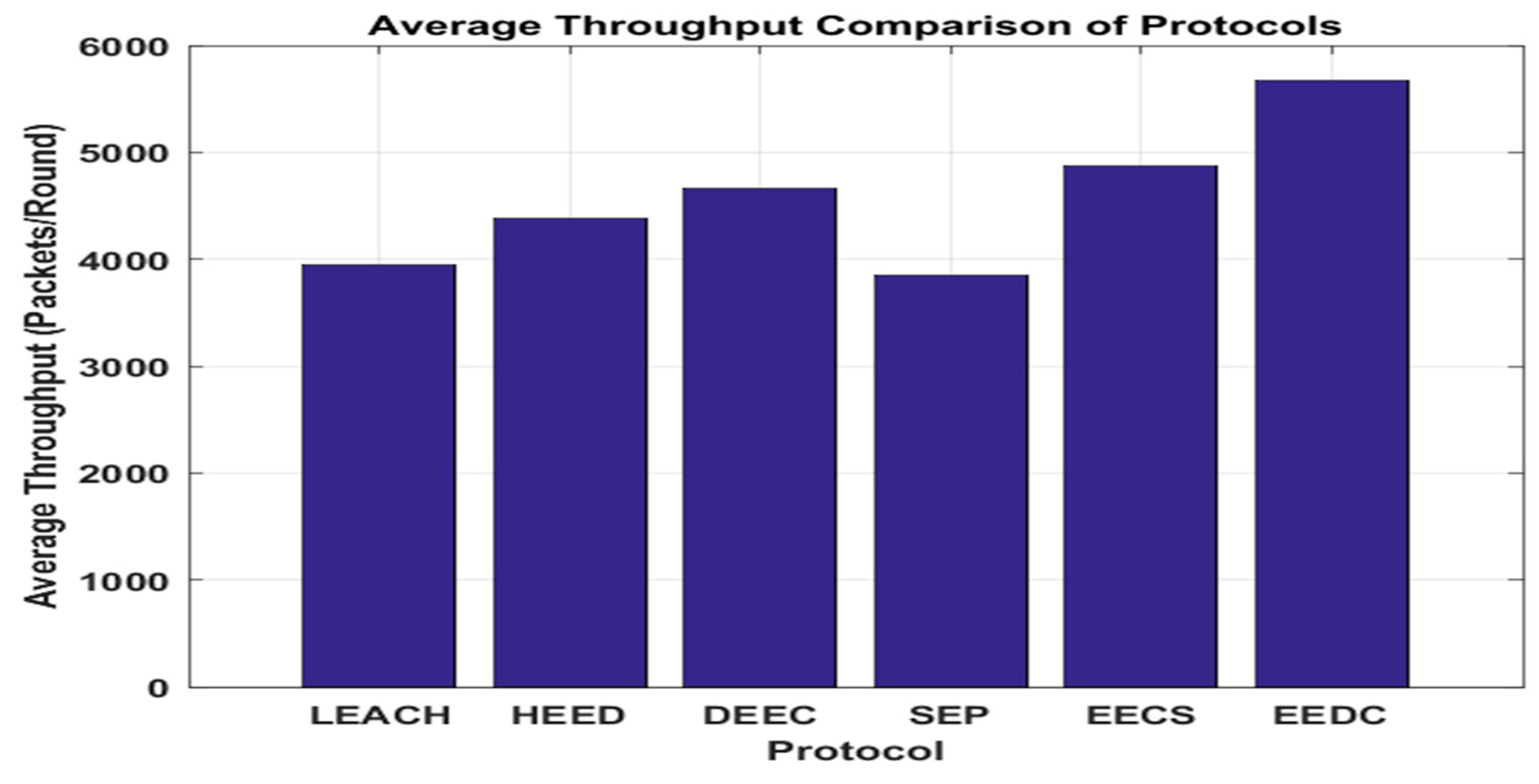
The proposed EEDC protocol achieves the highest throughput among all compared methods, with its curve continuing to rise significantly beyond Round 600 and stabilizing later than all baseline protocols. This superior performance is attributed to EEDC’s distance-controlled clustering and increased CH density near the BS, which effectively reduce the relay bottleneck and extend the lifetime of critical nodes responsible for multi-hop forwarding. As a result, EEDC maintains data delivery capability for a longer duration, yielding an overall throughput that surpasses the existing protocols by a considerable margin. The simulation results prove that EEDC delivers the highest number of packets to the BS, reaching nearly 8800 packets, while EECS, DEEC, HEED, and LEACH stabilize around 7000, 6800, 6300, and 5400 packets, respectively. The average throughput comparison shows EEDC achieving approximately 5700 packets/round, which is 44% higher than LEACH, 30% higher than HEED, 22% higher than DEEC, and ~16% higher than EECS. This improvement is directly tied to EEDC’s longer operational lifetime and reduced clustering overhead.
Figure 14 compares the average throughput achieved by the six clustering protocols. Throughput represents the average number of data packets successfully delivered to the base station per round. LEACH shows the lowest throughput due to early node deaths and inefficient CH rotation. HEED, SEP, and DEEC achieve moderate improvements because of more energy-aware CH selection. EECS performs better by introducing balanced cluster formation. The proposed EEDC protocol achieves the highest average throughput, demonstrating its ability to maintain network connectivity and sustain data delivery for a longer duration. This improvement results from EEDC’s distance-controlled clustering and increased CH density near the BS, which reduce forwarding bottlenecks and enhance overall communication efficiency.
- E.
Average Cluster Head Energy Consumption
The average energy consumed by all CHs in each round is computed as
where
is the number of CHs and
is the energy used by
at round r. This metric highlights the protocol’s ability to balance CH workloads and prevent early exhaustion of CHs near the BS.
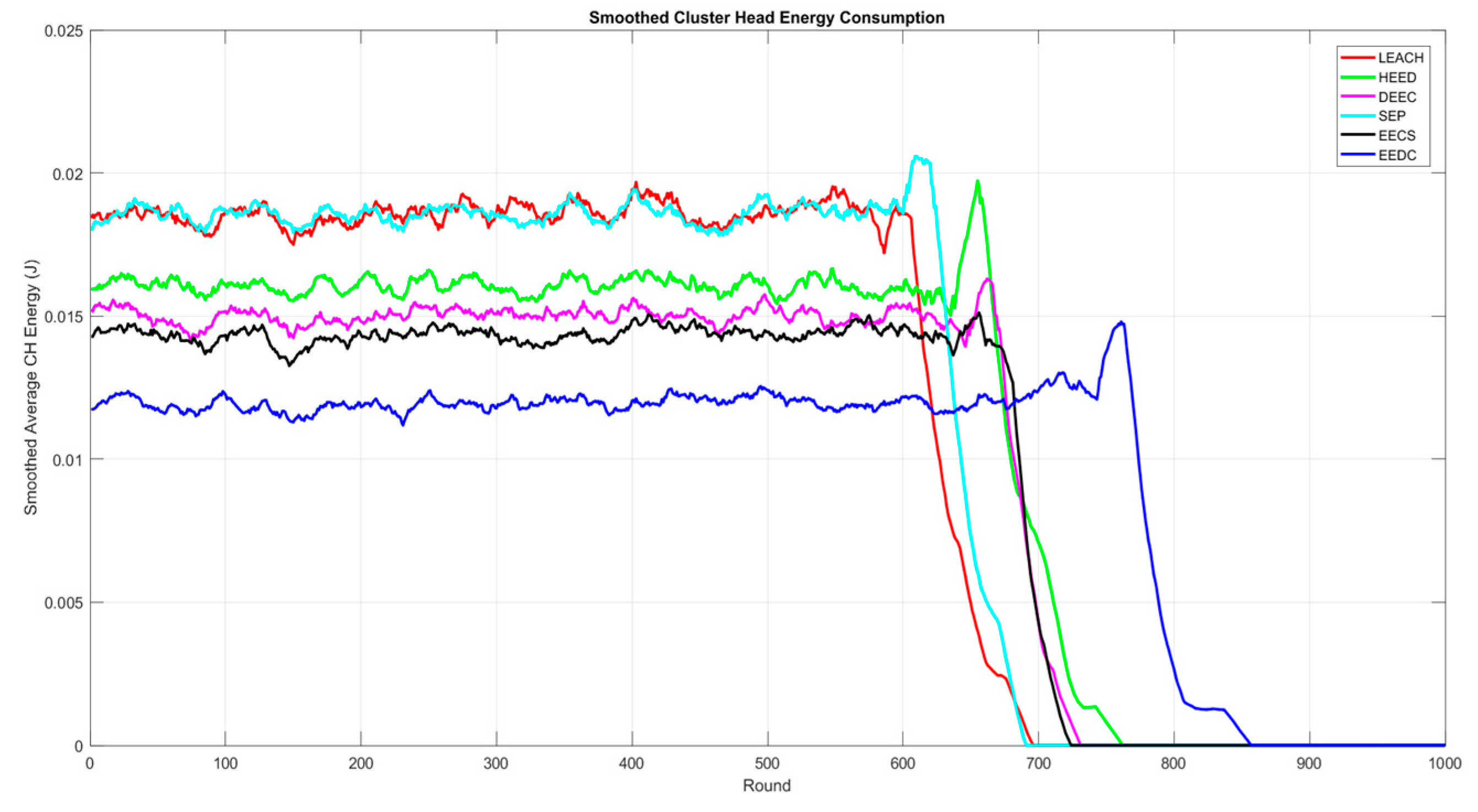
Figure 15 presents the smoothed average CH energy consumption for the six clustering protocols—LEACH, HEED, DEEC, SEP, EECS, and the proposed EEDC—over the simulation rounds. A moving-average filter is applied to remove short-term fluctuations caused by frequent CH rotation, allowing the long-term energy consumption trends to be clearly observed.
At the beginning of the simulation, all protocols exhibit relatively stable CH energy usage. However, the magnitude of CH energy consumption varies significantly across protocols. LEACH shows the highest CH energy consumption due to its random CH election, which often selects nodes with unfavorable positions and forces long transmission distances to the base station. SEP, HEED, and DEEC show noticeable improvements, with smoother and lower average CH energy usage attributed to energy-aware and probabilistic CH selection. EECS further reduces CH energy consumption by leveraging distance-based clustering.
The proposed EEDC protocol consistently exhibits the lowest CH energy consumption among all protocols, maintaining a significantly lower and more stable energy curve throughout the simulation. This improvement is achieved through EEDC’s distance-controlled clustering and increased CH density near the base station, which reduces transmission distances for CHs and distributes the forwarding load more evenly. As the simulation progresses, protocols with higher CH energy usage experience earlier CH failures, causing their curves to drop to zero sooner (e.g., LEACH around Round 650). EEDC maintains CH activity the longest, demonstrating its superior ability to conserve CH energy and delay critical node depletion.
Overall, the smoothed energy curves highlight that EEDC minimizes energy overhead at the cluster head level, resulting in prolonged network operation and improved energy balance compared with existing clustering approaches.
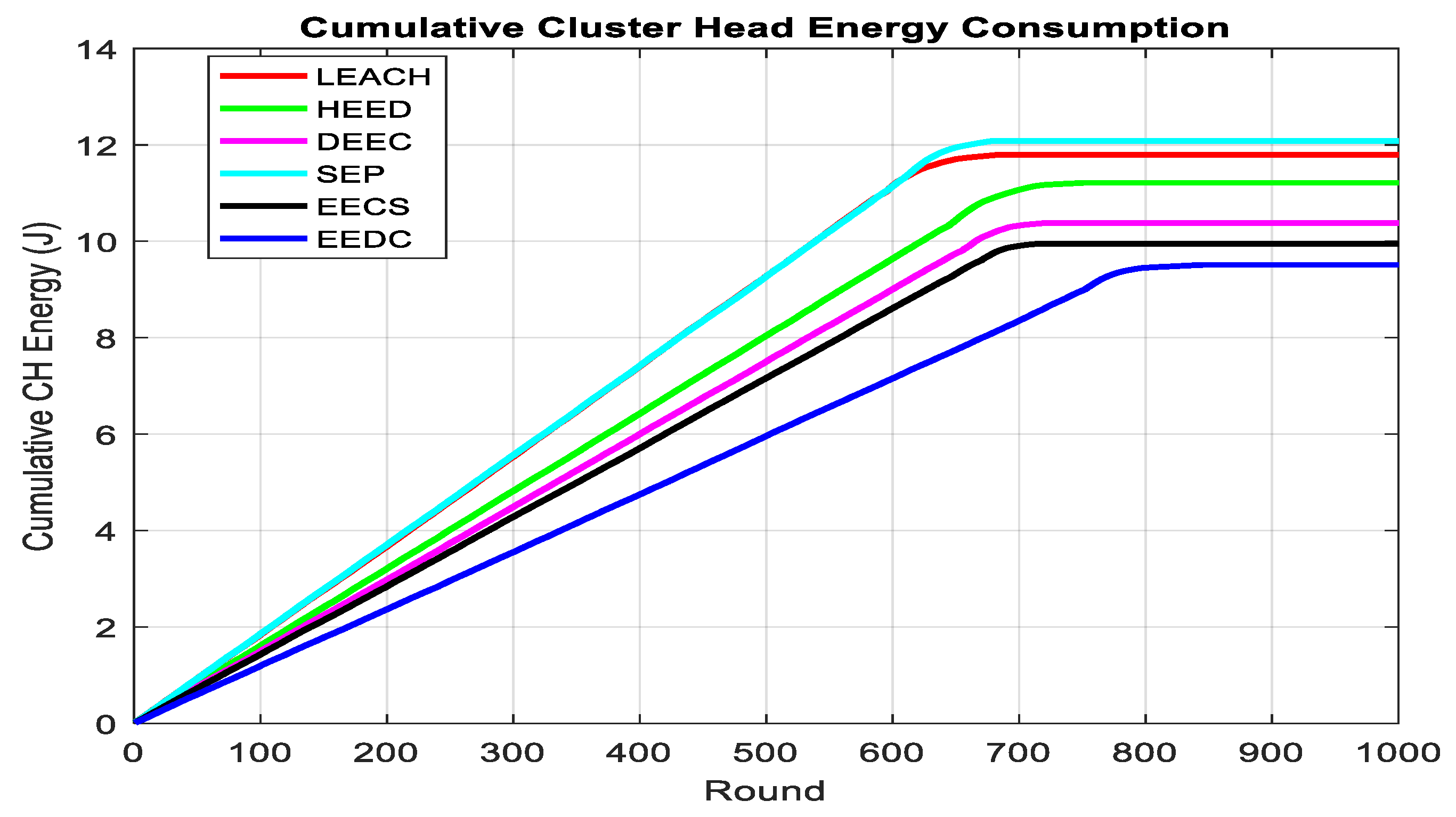
Also, the figure shows that LEACH, SEP, and HEED experience the highest fluctuations and steeper energy decline, especially near the end of network life. EEDC maintains consistently lower CH energy consumption and smoother decline, indicating more stable CH rotation and reduced transmission burden. Cumulative CH energy (approx.): LEACH (12 J), HEED (11.8 J), SEP (12.1 J), DEEC (11.2 J), EECS (10.0 J), and EEDC (9.5 J). Thus, EEDC reduces total CH energy consumption by ~21% relative to LEACH and ~5% relative to EECS, demonstrating efficiency even under intense routing conditions.
Figure 16 illustrates the cumulative cluster head (CH) energy consumption of six clustering-based routing protocols—LEACH, HEED, DEEC, SEP, EECS, and the proposed EEDC—over the complete simulation duration. Unlike per-round energy plots, which can exhibit short-term fluctuations due to CH rotation, the cumulative representation provides a stable and integrative view of the total CH energy expenditure incurred by each protocol. This enables a more interpretable comparison of long-term energy efficiency and CH load distribution strategies.
During the early simulation rounds (0–600), all protocols exhibit an approximately linear increase in cumulative CH energy, reflecting steady CH activity and continuous data forwarding. However, the rate of increase varies significantly across protocols. SEP and HEED incur the highest cumulative CH energy due to their probability-based and weighted CH selection mechanisms, which often assign CH roles to nodes that experience greater transmission distances or heavier relay loads. LEACH also demonstrates a rapid accumulation of CH energy, attributable to its random CH election process and lack of distance-aware constraints.
DEEC and EECS exhibit intermediate cumulative consumption trends, benefiting from energy-adaptive CH selection and distance-based region formation, respectively. Both approaches distribute the CH load more evenly than LEACH, HEED, or SEP, resulting in comparatively slower energy accumulation.
The proposed EEDC protocol achieves the lowest cumulative CH energy consumption across the entire simulation, with a distinctly flatter curve relative to all baseline protocols. This improvement is primarily a consequence of EEDC’s distance-controlled clustering mechanism and the increased density of CHs in proximity to the base station, which significantly reduces long-range transmissions. Furthermore, EEDC’s adaptive transmission range reduces unnecessary energy expenditure, enabling CHs to maintain communication efficiency while minimizing power usage. As the simulation progresses and other protocols begin to experience CH failures, their cumulative curves plateau, while EEDC continues accumulating energy at a controlled rate, reflecting extended CH functionality and a more efficient use of available energy resources. Overall, the cumulative energy analysis demonstrates that EEDC consistently reduces long-term CH energy consumption, thereby enhancing load balancing and contributing to the protocol’s superior network lifetime and stability characteristics.
- F.
Packet Delivery Efficiency
Packet delivery efficiency is defined as the ratio of packets successfully received by the BS to those generated by sensor nodes. It reflects both energy efficiency and the reliability of the routing mechanism. EEDC achieves higher packet delivery rates due to its multi-hop stability-aware routing inherited from EECH.
Packet delivery efficiency (sometimes called PDR, packet delivery ratio) is given by
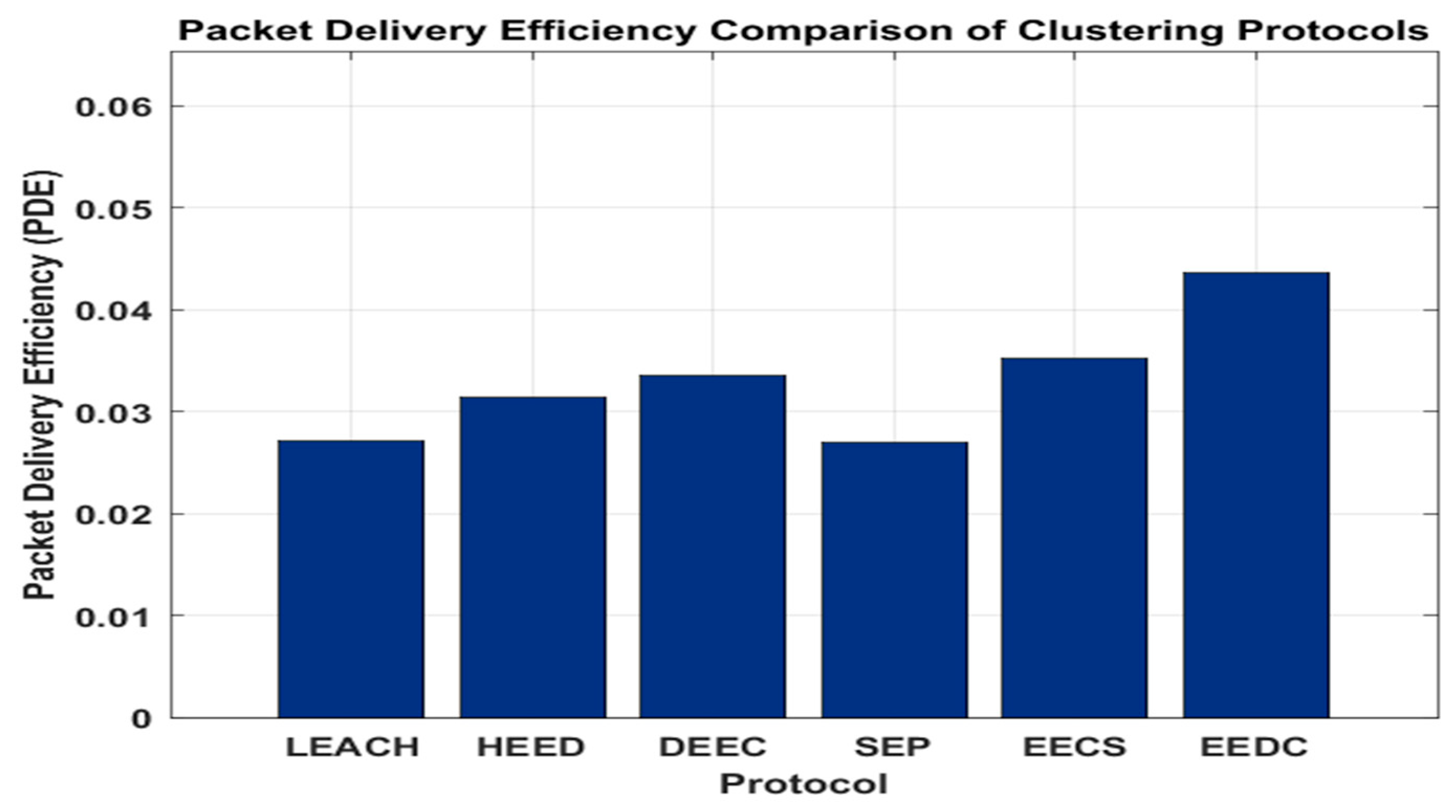
Figure 17 presents the packet delivery efficiency (PDE) of six clustering-based routing protocols: LEACH, HEED, DEEC, SEP, EECS, and the proposed EEDC. PDE is defined as the ratio of packets successfully delivered to the base station (BS) to the total number of packets generated by the sensor nodes. A higher PDE value indicates a more reliable routing process and better network connectivity throughout the simulation.
The results show that LEACH and SEP achieve the lowest PDE due to early node failures and unstable CH selection, which cause frequent disruptions in forwarding paths. HEED, DEEC, and EECS achieve moderately higher PDE values as their CH selection strategies incorporate residual energy or weighted clustering mechanisms, resulting in fewer packet losses and more stable data delivery. The proposed EEDC protocol achieves the highest PDE, reflecting its improved reliability and routing robustness. This performance gain is attributed to EEDC’s multi-hop stability-aware routing—derived from EECH—and its distance-controlled clustering, which maintain more consistent connectivity and reduce packet loss caused by CH failures or bottlenecks near the BS. Overall, the results demonstrate that EEDC delivers a significantly higher percentage of generated packets, confirming its superior energy efficiency, communication stability, and resilience to node failures.
Packet delivery efficiency results reveal that EEDC achieves a PDE of approximately 0.0435, outperforming EECS (0.0355), DEEC (0.0335), HEED (0.0315), SEP (0.0275), and LEACH (0.027). This represents a 61% improvement over LEACH and 23% improvement over EECS. Such improvement is attributed to EEDC’s EECH-based multi-hop routing and balanced CH distribution that minimizes packet drops near BS hotspot regions.
- G.
Load Distribution Fairness
To evaluate how evenly the network consumes energy, the standard deviation of node energy levels is monitored over time:
Lower values of indicate fairer energy utilization. EEDC consistently maintains a smaller deviation than other protocols, confirming that its spatial CH adaptation mitigates localized depletion.
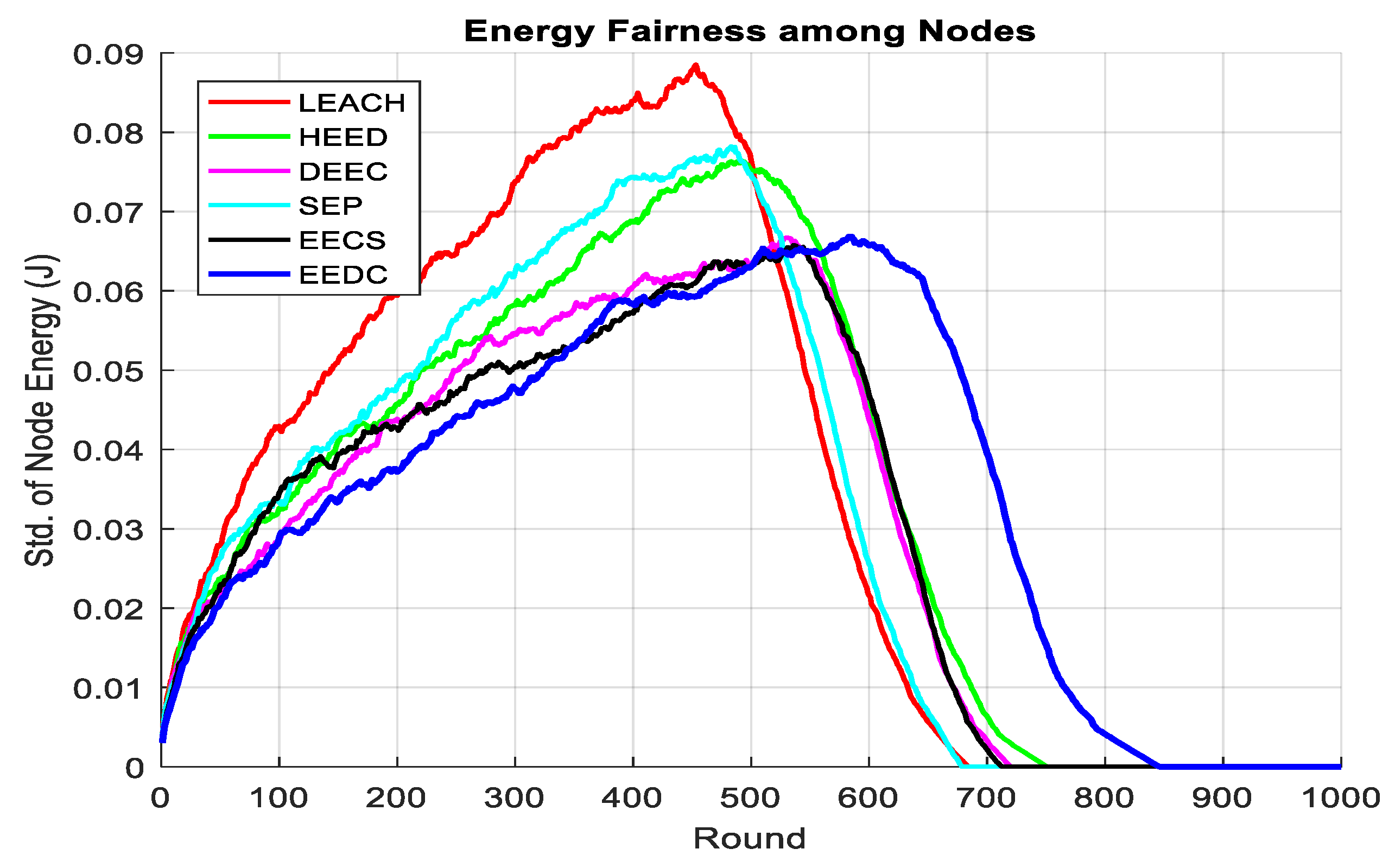
Figure 18 shows the energy fairness among sensor nodes for the six clustering protocols (LEACH, HEED, DEEC, SEP, EECS, and EEDC), measured using the standard deviation of node residual energy over the simulation rounds. A lower standard deviation indicates more uniform energy distribution among nodes, which prevents early node deaths and improves overall network longevity.
At the beginning of the simulation, all protocols show low deviation because nodes start with similar initial energy. As the rounds progress, the deviation increases as protocols consume energy at different rates depending on their cluster head (CH) selection strategies. LEACH exhibits the highest standard deviation early on due to its randomized CH rotation, which causes uneven energy drain. DEEC and SEP show slightly better fairness due to their energy-aware CH selection, but they still accumulate imbalance as rounds progress.
EEDC maintains the lowest and most stable energy deviation across rounds, indicating superior fairness. This is attributed to its combined distance–energy hybrid CH selection and stability-aware routing, which prevents certain nodes from being overloaded as CHs or relay nodes. As a result, EEDC delays sharp increases in energy imbalance and maintains fair energy distribution much longer than other protocols.
The steep decline in deviation near the end occurs when most nodes start dying, causing the remaining population to converge in energy level. However, EEDC’s curve shifts significantly to the right compared to other protocols, reflecting its longer stable operation and improved energy fairness.
The results show the standard deviation of node energy as a measure of fairness. LEACH reaches the highest imbalance (0.085), followed by SEP and HEED (~0.075). DEEC and EECS maintain moderate balance (0.06–0.065), whereas EEDC maintains the lowest imbalance curve (~0.068 peak) and delays the peak to ~620 rounds. EEDC reduces early-stage imbalance by about 25% compared to LEACH and delays hotspot formation by 100–150 rounds, ensuring a more uniform energy distribution and smoother decline in node population.
In summary, the performance evaluation employs comprehensive metrics covering energy efficiency, stability, throughput, and fairness. The inclusion of multiple comparative protocols provides a broad perspective of EEDC’s advantages. The subsequent section presents detailed numerical and graphical results obtained from MATLAB simulations to illustrate these improvements quantitatively.