


Abstract
Achieving stable seed placement under No-Till conditions remains challenging because the seeding units operate directly in undisturbed soil with spatially variable properties and surface residues. This study evaluated seed-placement quality and compliance with predefined seeder settings during field-scale No-Till sunflower sowing under three operating regimes. A CASE IH Quadtrac 620 tractor coupled with an AMAZONE Primera DMC 9001-2C pneumatic seeder was evaluated in three separate field areas. Each area was associated with one nominal operating regime: 8, 10, or 12 km h−1, designated as S8, S10, and S12, respectively. A total of 135 sampling positions were evaluated for displayed operating speed, sowing depth, seed spacing, missing placements, double placements, and soil moisture. The mean sowing depths recorded for the S8, S10, and S12 zone–regime combinations were 5.97, 9.42, and 6.02 cm, respectively. The S8 field area showed the highest compliance with the target depth, with 92.1% of the measured seeds positioned within 4–6 cm. The proportions of seed-spacing observations within the target range of 20–25 cm were 0% for S8 and S10 and 17.8% for S12. Missing and double placements were numerically more frequent in the areas associated with the higher nominal speeds. However, because each operating regime was evaluated in a separate field area, the observed differences cannot be attributed separately to operating speed, soil moisture, or spatial field variability. The findings are therefore limited to the sampled field areas and provide a descriptive assessment of seeder performance under the specific operating conditions.
1. Introduction
Sowing is one of the most critical field operations in crop production because the spatial and vertical distribution of seeds establishes the initial conditions for crop emergence, stand establishment, and subsequent plant development. Under conservation agriculture, and particularly under No-Till conditions, the requirements imposed on seeding machinery are increased because seeds must be placed directly into undisturbed soil, frequently in the presence of substantial crop residues and spatially variable soil conditions. Accordingly, the development of No-Till seeding technology has focused on improving opener systems, seed-delivery mechanisms, machine adjustment, and monitoring capabilities in order to maintain stable seed placement under variable operating environments [1,2,3]. Recent developments in adjustable and precision seeding machinery further demonstrate a transition toward more controllable machine configurations and improved adaptation to changing agronomic and field conditions [4,5].
Compared with conventionally prepared seedbeds, No-Till fields represent a mechanically heterogeneous environment for seeding units. Soil strength, compaction, moisture status, residue distribution, and previous machinery traffic may modify the resistance encountered by the working elements and consequently affect opener penetration, furrow formation, and seed placement. Differences in horizontal and vertical soil resistance have been reported between No-Till and tilled field conditions [6], while tillage systems can also modify the physical and hydraulic properties of the soil [7,8]. In addition, soil penetration resistance may vary considerably in both space and time under conservation tillage systems [9]. Such variability is particularly relevant for direct seeding because the opener assembly must maintain the prescribed working depth while simultaneously interacting with undisturbed soil and crop residues.
The configuration and dynamic behavior of the seeding unit also influence field performance. Furrow opener and disc coulter designs have been shown to affect seeding performance under different levels of residue cover [10]. Consequently, the ability of the working unit to form a stable furrow and maintain the prescribed penetration depth is a key engineering requirement. Recent developments in planter-unit design have therefore included improved furrowing-control mechanisms and dedicated sowing-depth measurement technologies [11]. Electro-hydraulic depth-control systems have been proposed for No-Till seeders [12], while high-speed precision planters increasingly incorporate multi-sensor systems for real-time sowing-depth monitoring [13]. Active control strategies based on sensor fusion and advanced controllers have also been investigated to improve the stability of sowing depth under changing operating conditions [14].
Mechanical disturbances of the planter unit may further reduce seed-placement precision. Vibration originating from the machine structure, soil interaction, or seed-delivery system can influence the dynamic response of the planting mechanism, particularly when operating speed increases. The reduction in vibration sources has therefore been considered as one approach for improving field seeding precision in pneumatic planters [15]. Earlier experimental investigations also demonstrated that sowing depth itself is related to precision-seeder uniformity [16]. These findings indicate that satisfactory sowing performance cannot be evaluated solely from nominal machine settings; actual field measurements are required to determine whether the prescribed depth and placement conditions are reproduced during operation.
This issue is particularly relevant for row crops such as sunflower, where consistent seed placement contributes to establishing a sufficiently uniform plant population. Recent developments in sunflower planting equipment illustrate continuing efforts to improve the functional performance of planting and associated fertilizer-placement systems [17]. At the same time, sowing precision is commonly evaluated under controlled or laboratory conditions, where machine behavior can be characterized with reduced environmental variability [18]. Such approaches are valuable for identifying the performance of individual mechanisms, but field-scale testing remains necessary because actual operating conditions introduce soil heterogeneity, crop residues, machine dynamics, and variation in travel speed that cannot be fully reproduced under laboratory conditions.
Among the operational parameters affecting precision seeding, forward speed is one of the most frequently investigated. Increasing travel speed can improve field capacity but may simultaneously alter the dynamic response of the planting unit and the timing of individual seed-delivery events. Earlier investigations of precision vacuum seeders showed that forward speed can influence hill-dropping uniformity [19]. Similar effects have been observed for pneumatic maize planters operating under different machine travel speeds and seedbed preparation conditions [20]. Studies of motor-driven precision seeding systems have also demonstrated relationships between operating conditions and planting uniformity [21], while high-speed seed-delivery mechanisms have been developed specifically to improve placement accuracy as travel speed increases [22].
More recent field studies confirm that the relationship between planting speed and seed-placement quality remains important even with modern precision-seeding technologies. Planting speed has been associated with changes in plant-spacing variability in vacuum planters [23]. Field evaluation of high-speed planting systems has further shown that planting speed interacts with factors such as downforce, seed-plate configuration, and seed-delivery technology in determining spacing uniformity and crop establishment [24]. Developments in electrically driven precision seeders [25] and seed-pressing mechanisms intended for high-speed operation [26] further demonstrate the need to coordinate metering, delivery, furrow formation, and seed fixation when operating conditions change. Mathematical modelling of seed-metering systems has likewise been used to identify operating conditions that improve metering performance and placement accuracy [27].
Despite the substantial research on individual components and performance indicators, a considerable part of the literature focuses separately on seed-metering accuracy, opener configuration, sowing-depth control, or spacing uniformity. Comparatively fewer studies combine these indicators in a single field-scale assessment under commercial No-Till conditions while simultaneously considering displayed operating speed, sowing depth, within-row seed spacing, missing and double seed placements, soil conditions, and compliance with predefined machine settings. Such an integrated evaluation is important because statistically different mean values do not necessarily indicate satisfactory machine performance. A seeder may produce an acceptable average value while exhibiting substantial variability or poor compliance with the prescribed agronomic setting.
The present study provides a field-scale assessment of seed-placement quality relative to predefined seeder settings during No-Till sunflower sowing. The analysis considers sowing depth, seed spacing, missing and double placements, soil moisture, and compliance with the selected settings. This approach provides a practical description of seeder performance under commercial field conditions.
Accordingly, the objective of this study was to characterize seed-placement quality during commercial No-Till sunflower sowing in three separate field areas, each associated with one nominal operating regime, using an AMAZONE Primera DMC 9001-2C pneumatic seeder. The assessment included: (i) observed sowing depth and within-row seed spacing; (ii) compliance with the predefined seeder settings; (iii) missing and double seed placements; and (iv) instrument-reported soil moisture. Because the operating regimes were evaluated in separate areas of the same field, the results are interpreted as descriptive comparisons among the three zone–regime combinations and not as independent effects of operating speed.
2. Materials and Methods
2.1. Experimental Site and Field Conditions
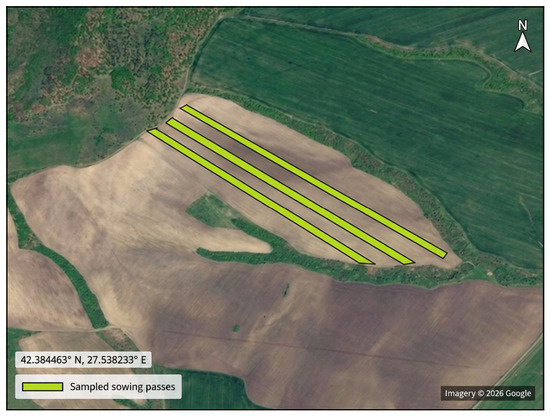
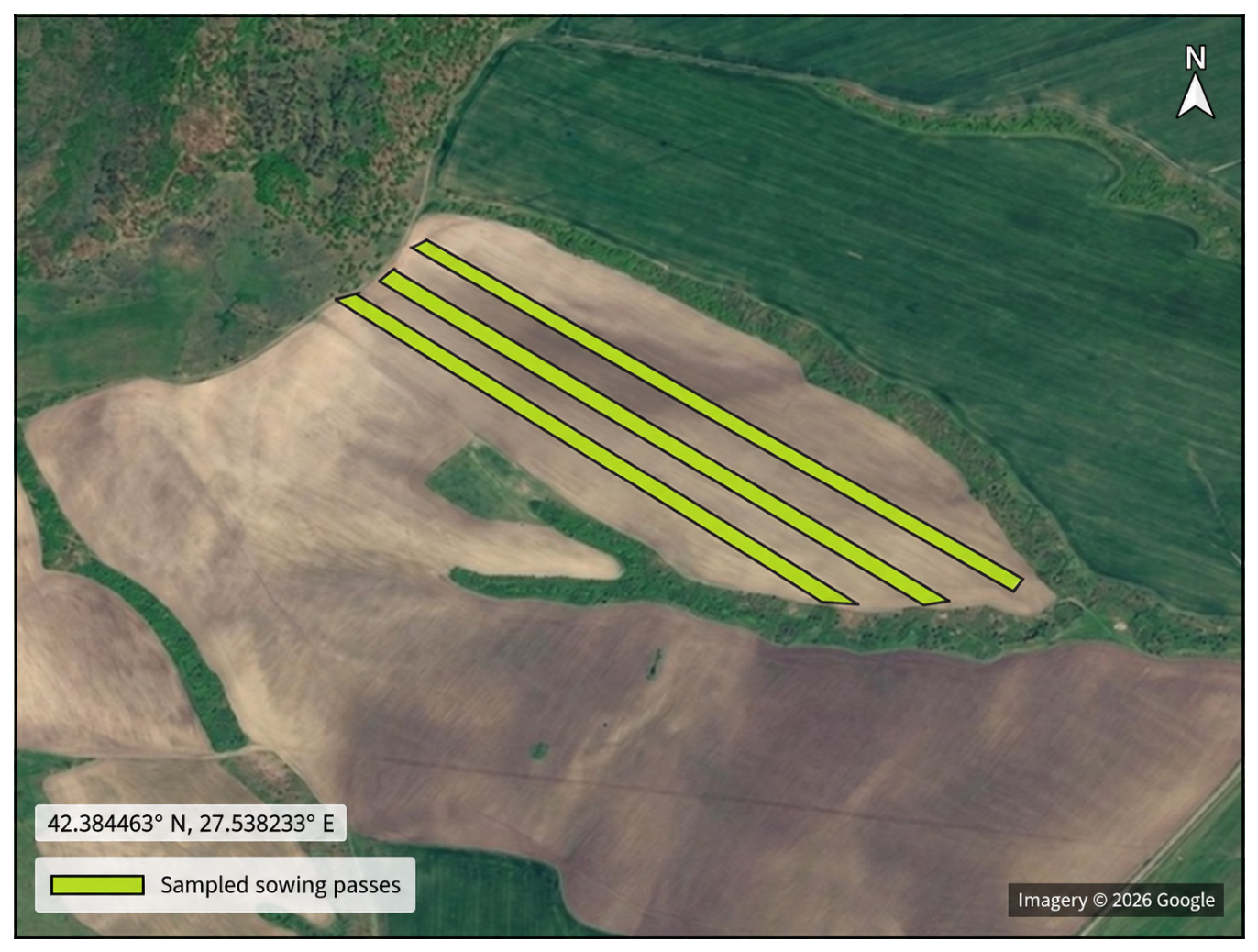
The field experiment was conducted in early May 2026 near Rosen, Sozopol Municipality, Burgas Province, southeastern Bulgaria (42.384463° N, 27.538233° E). The experimental field is located in an agricultural region where cereal production and conservation farming practices, including No-Till sowing, are applied. The geographical location of the experimental field is shown in Figure 1.
Figure 1.
Location of the experimental field and the sampled sowing passes associated with the three investigated zone–regime combinations near Rosen, Sozopol Municipality, Burgas Province, Bulgaria. Satellite imagery © 2026 Google.
The region is influenced by transitional continental climatic conditions modified by the proximity of the Black Sea. The surrounding area is characterized by brown-to-grey acidic soils and gently undulating terrain. The field had previously been cultivated with wheat, and crop residues from the preceding crop remained on the soil surface. Sunflower sowing was performed directly into the undisturbed soil without prior mechanical tillage.
The experiment was designed to evaluate differences in seed-placement quality under three machine operating regimes while accounting for soil moisture as an accompanying field variable. The evaluated quality indicators included sowing depth, within-row seed spacing, missing seed placements, and double seed placements.
2.2. Tractor–Seeder Unit and Seeder Configuration
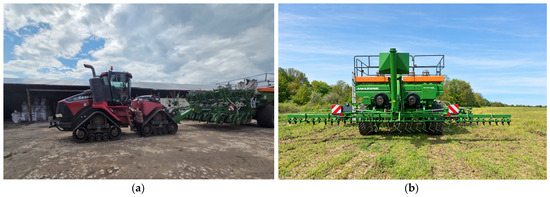
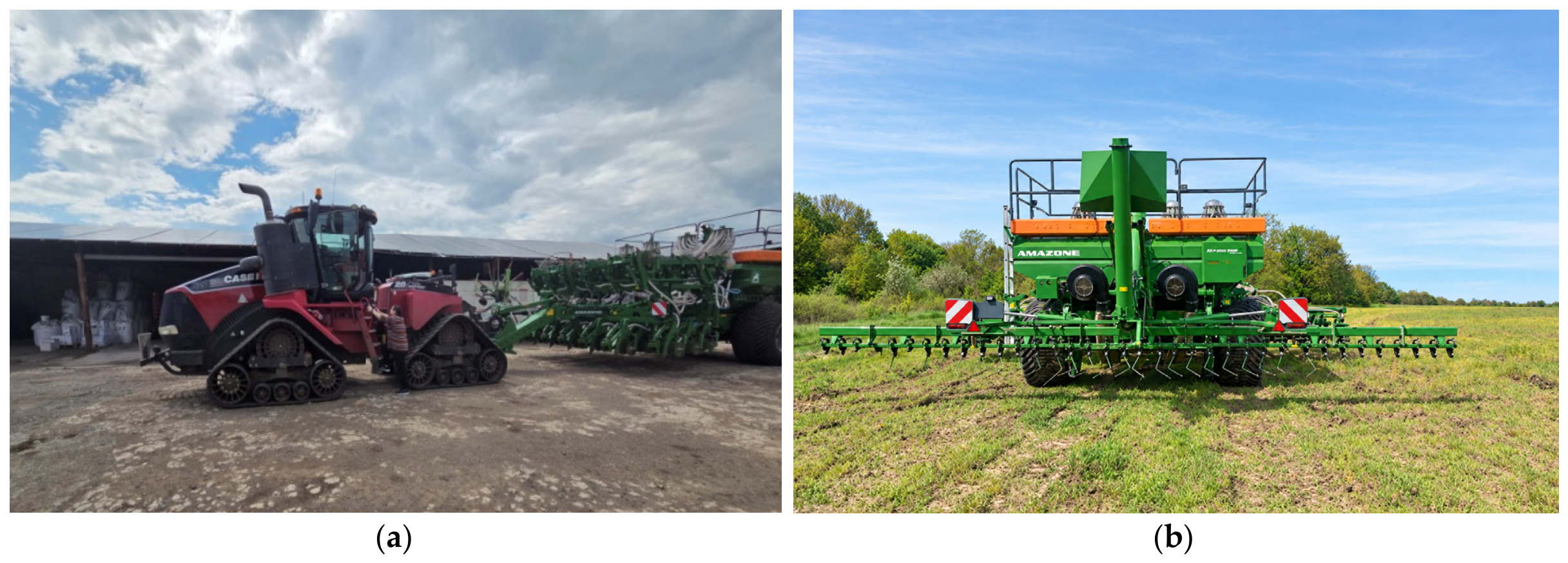
The field experiment was performed using a CASE IH Quadtrac 620 (CNH Industrial, Fargo, ND, USA) tracked tractor coupled with an AMAZONE Primera DMC 9001-2C (Amazonen-Werke H. Dreyer SE & Co. KG, Hasbergen-Gaste, Germany) pneumatic seeder. The tractor–seeder unit used during the field experiment is shown in Figure 2.
Figure 2.
Machinery used during the field experiment: (a) CASE IH Quadtrac 620 tractor coupled with the AMAZONE Primera DMC 9001-2C pneumatic seeder; (b) rear view of the seeder during field operation/preparation.
The CASE IH Quadtrac 620 has an articulated chassis and four independent track units, providing high traction capability and distributing the machine load over a comparatively large contact area. The AMAZONE Primera DMC 9001-2C is intended for direct and reduced-tillage sowing and uses a pneumatic seed transport and distribution system.
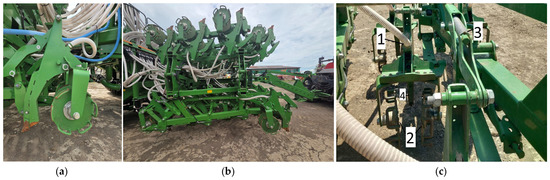
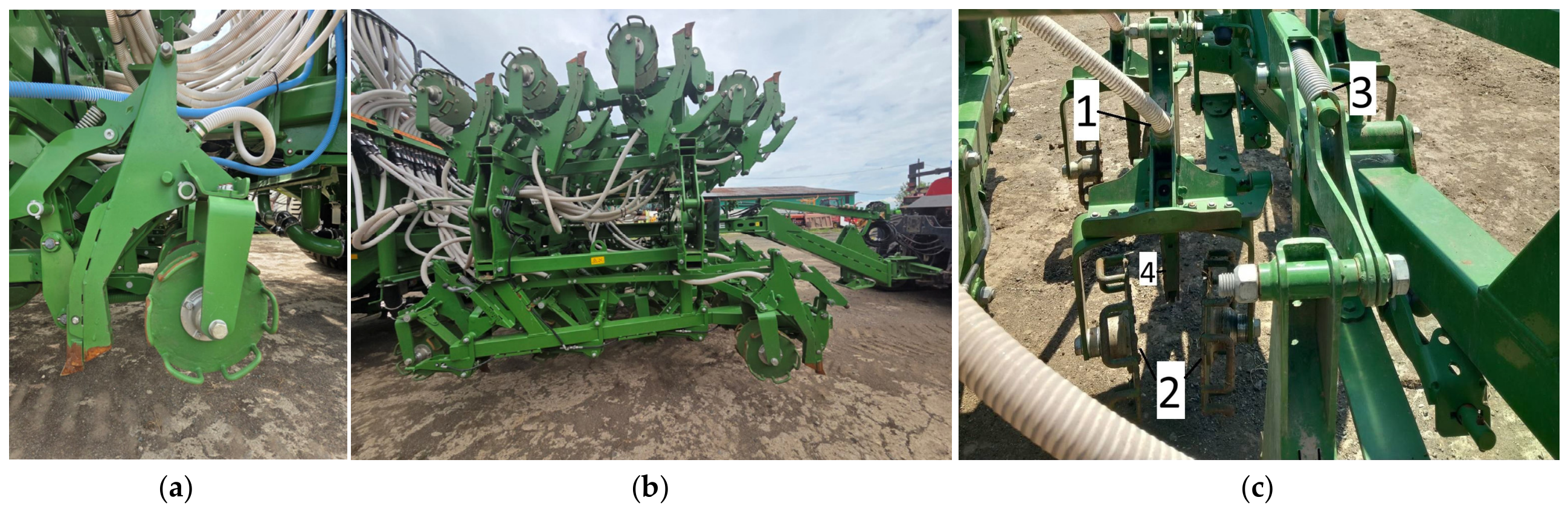
The construction of the seeding assemblies enables operation in soil containing substantial amounts of crop residue. Selected structural elements of the seeder are shown in Figure 3.
Figure 3.
Selected structural elements of the AMAZONE Primera DMC 9001-2C used for No-Till seed placement: (a) detailed view of an individual working assembly; (b) arrangement of the working units across the machine; and (c) main components of the working assembly: (1) seed tube; (2) covering wheels; (3) REVOMAT overload protection system; and (4) chisel openers.
The main technical characteristics of the AMAZONE Primera DMC 9001-2C used in the experiment are summarized in Table 1.
Table 1.
Technical characteristics and experimental configuration of the AMAZONE Primera DMC 9001-2C.
All technological settings of the seeder were maintained constant during the experimental runs. The three zone–regime combinations were evaluated while the seeder settings were maintained unchanged. Before sowing, the seed-metering system was calibrated by the machine operator as part of the routine machine preparation. Detailed calibration records were not collected because calibration was not an experimental variable. The settings were maintained unchanged during all investigated runs.
2.3. Experimental Design and Operating Regimes
Three nominal operating regimes were investigated:
- S8: Nominal forward speed of 8 km h−1;
- S10: Nominal forward speed of 10 km h−1;
- S12: Nominal forward speed of 12 km h−1.
In this study, nominal operating speed refers to the predefined speed assigned to each field area, whereas displayed operating speed refers to the values recorded manually from the tractor onboard display. The designations S8, S10, and S12 refer to the three investigated zone–regime combinations.
The manufacturer specifies a nominal operating-speed range of 10–18 km h−1. However, S8 was intentionally included as a low-speed reference regime. It also represented a more cautious operating condition under the locally high and variable soil moisture observed in the field. S8 was not considered a manufacturer-recommended speed or an optimal operating regime.
For each operating regime, 45 sampling positions were randomly selected after a single pass of the 12-row seeding unit, resulting in a total of 135 observations. The positions were distributed across the 12 sowing rows. Because the positions were selected randomly, no fixed number of observations was assigned to each individual row. The effective row spacing was 75 cm. No fixed distance was used between the sampling positions. The samples were not collected continuously along the same sowing row. The individual sampling positions were not georeferenced. The coordinates reported for the experimental site identify the general field location and were not used to link individual measurements to exact spatial coordinates.
At each sampling position, a row section of approximately 0.5–1.0 m was exposed. The distances between consecutive uncovered seeds were measured. A double placement was identified when two seeds were found at the same location. Missed placement and seed spacing were recorded as separate indicators. When an expected seed was absent, a miss was recorded, while spacing was determined from the seeds found within the inspected row section.
The three operating regimes were tested in separate areas of the same field. Consequently, the experiment represents a field-scale comparison under commercial operating conditions rather than a fully randomized block experiment. Spatial variation in soil conditions, particularly soil moisture, was therefore considered during the subsequent statistical analysis.
During each sowing pass, 45 readings of the displayed operating speed were recorded across the corresponding field area. The readings were taken at the randomly selected sampling positions and were not recorded at fixed spatial or time intervals. Speed was read manually from the tractor onboard display, which had a resolution of 0.1 km h−1. Continuous logging and independent verification of the displayed speed were not performed. The source of the speed signal used by the onboard system was not documented during the experiment.
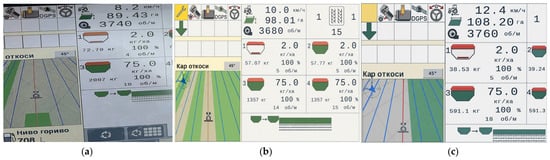
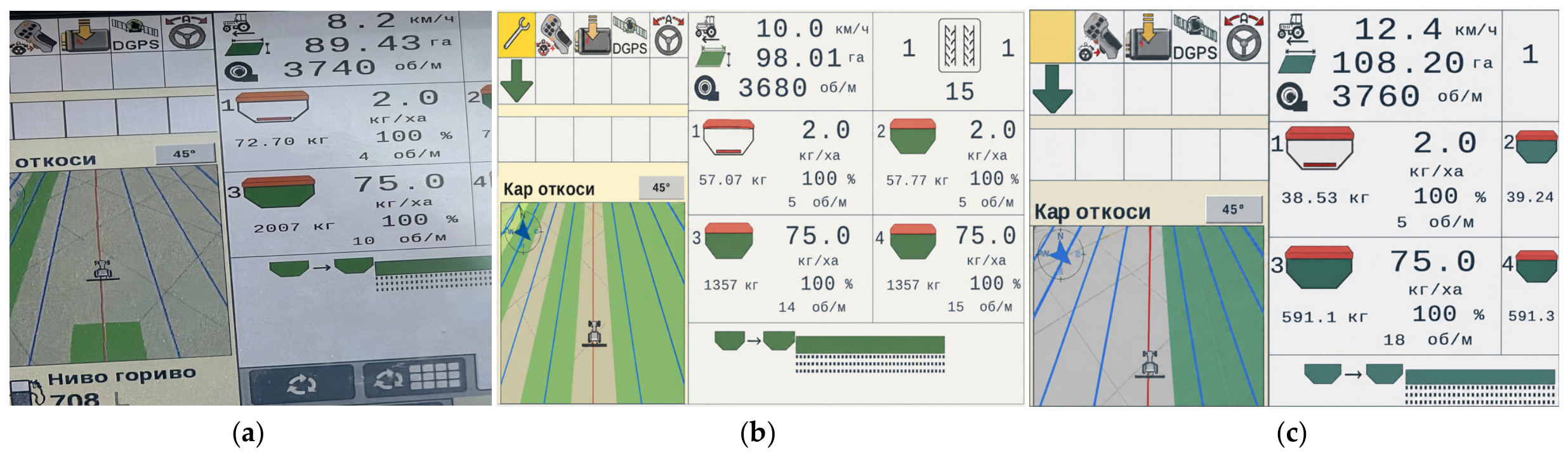
Figure 4 documents the onboard display from which the operating-speed readings were recorded manually. The images are illustrative and were not used directly in the statistical analysis. The quantitative results are based on 45 displayed-speed readings for each zone–regime combination and are summarized in Table 2.
Figure 4.
Representative onboard-display images documenting the displayed operating-speed readings for the S8 (a), S10 (b), and S12 (c) zone–regime combinations.
Table 2.
Descriptive seed-placement characteristics and instrument-reported soil moisture for the three sampled zone–regime combinations.
Immediately before the seeder passed, soil moisture was measured at a depth of 10 cm using an AM-128SOIL electronic soil moisture meter (Guangzhou Amittari Instruments Co., Ltd., Guangzhou, China). The instrument has a measurement range of 0–80%, a resolution of 0.1%, and an accuracy of ±(0.5% of the reading + 1 digit). It measures soil moisture through the electrical conductivity between two pins. Before each sowing pass, 45 soil-moisture measurements were taken within the corresponding field area. Thus, 135 measurements were obtained. One reading was taken at each measurement location, and no averaging was applied. The instrument-reported values were recorded as percentages and were subsequently included as an accompanying covariate in the statistical analysis. These readings were based on electrical conductivity rather than gravimetrically determined water content. The meter was used with its factory calibration, without additional laboratory calibration.
2.4. Seed-Placement Measurements and Quality Indicators
Following sowing, seed-placement quality was evaluated by carefully exposing the deposited sunflower seeds at the selected sampling positions.
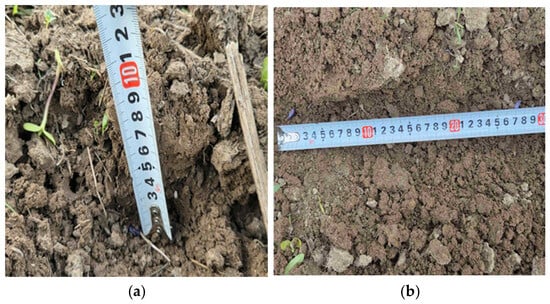
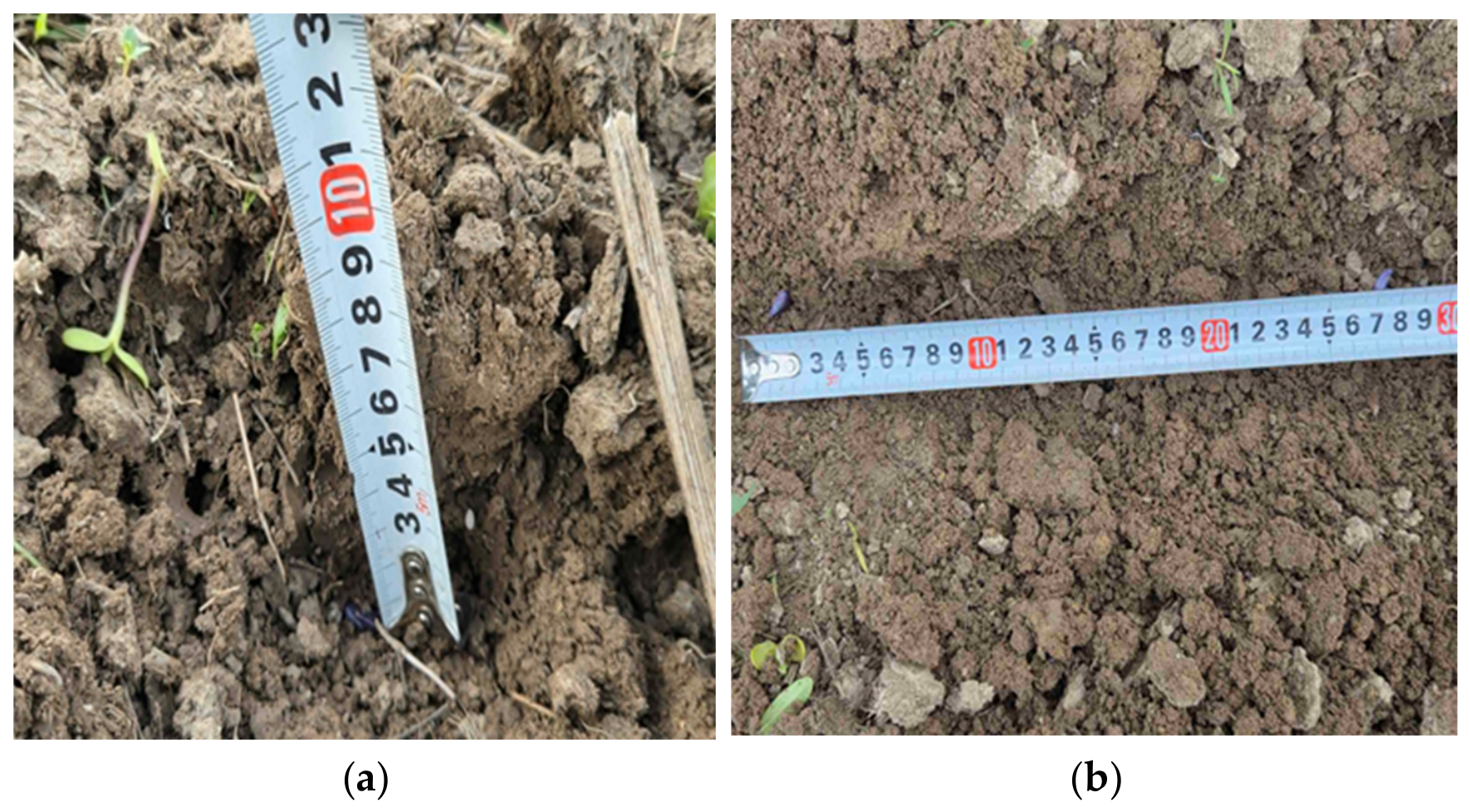
Sowing depth was determined as the vertical distance between the local soil surface and the deposited seed. Within-row seed spacing was measured as the distance between two consecutive deposited seeds. The field procedure used for measuring sowing depth and within-row seed spacing is illustrated in Figure 5.
Figure 5.
Field procedure used to determine seed-placement quality during No-Till sunflower sowing: (a) measurement of sowing depth after exposing the deposited seed; (b) measurement of the distance between consecutive seeds within the row.
The measurements were performed using a measuring tape. The following parameters were evaluated:
- Displayed operating speed, km h−1;
- Sowing depth, cm;
- Seed spacing within the row, cm;
- Missing seed placements, expressed through the Miss Index;
- Double seed placements, expressed through the Double Index;
- Soil moisture, %.
The Miss Index represents the proportion of inspected positions at which no seed was identified. The Double Index represents the proportion of observations containing at least one double seed placement.
In addition to conventional descriptive statistics, seed-placement performance was evaluated relative to the predefined seeder settings. The target sowing depth was 5 cm, and a practical compliance interval of 4–6 cm was adopted. The target seed-spacing range of 20–25 cm was based on the recommendation for the Pioneer P64LE280 hybrid. The recommended final stand density is 56,000–60,000 plants ha−1 [28]. At a row spacing of 0.75 m, this density corresponds to a theoretical within-row spacing of approximately 22.2–23.8 cm.
Depth compliance was calculated in two ways. First, the percentage of seeds within the 4–6 cm interval was calculated using only positions where a seed was identified and a valid depth measurement was obtained. Second, compliance was calculated relative to all 45 inspected positions per operating regime, thereby incorporating missing seed placements into the overall performance assessment.
The Miss Index (MI) was calculated according to Equation (1):
where is the number of inspected positions at which no seed was identified and is the total number of inspected positions.
The Double Index (DI) was calculated according to Equation (2):
where is the number of inspected positions containing a double seed placement.
Both indices were calculated separately for each operating regime using all 45 inspected positions as the denominator.
2.5. Statistical Analysis
Statistical analyses were performed using IBM SPSS Statistics 26.0 (IBM Corp., Armonk, NY, USA). Continuous variables were summarized using the mean, standard deviation (SD), 95% confidence interval, minimum, and maximum values.
Continuous variables were compared among the three zone–regime combinations on an exploratory basis. Welch’s test was used because the variances were unequal, and exploratory pairwise comparisons were performed using the Games–Howell procedure. The sampling positions were treated as observational units. However, these analyses cannot separate the effect of operating speed from differences among the field areas and do not provide confirmatory treatment-level inference. Effect sizes were used only to describe the magnitude of the observed differences within the present dataset.
Because soil moisture differed among the field areas corresponding to the three zone–regime combinations, exploratory analysis of covariance (ANCOVA) was used for sowing depth and seed spacing. The zone–regime combination was treated as a fixed factor and soil moisture as a covariate. Because unequal residual variances were detected, robust standard errors (HC3) were used. Adjusted means were compared using Bonferroni correction, and effect magnitude was described using partial eta squared (partial η2).
Linear associations among displayed operating speed, sowing depth, seed spacing, and soil moisture were evaluated using Pearson’s correlation coefficient. Missing values were excluded pairwise.
Linear and quadratic regression models were evaluated to describe the relationships between displayed operating speed and the continuous seed-placement variables. Displayed operating speed was centered before calculation of the quadratic term. Model performance was evaluated using R2, change in R2, statistical significance, and residual diagnostics, including Cook’s distance.
Missing and double seed placements were summarized descriptively as counts and percentages for each zone–regime combination. No inferential test was applied because the observations within each field area could not be assumed to be independent.
Statistical significance was accepted at p < 0.05. Missing values were not imputed.
3. Results
3.1. Operating Regimes, Sowing Depth, Seed Spacing, and Soil Moisture
The mean displayed operating-speed readings were 8.14 ± 0.06 km h−1 for S8, 10.00 ± 0.10 km h−1 for S10, and 12.23 ± 0.14 km h−1 for S12. The corresponding ranges were 8.1–8.3, 9.8–10.2, and 12.0–12.5 km h−1, respectively. The small within-zone standard deviations indicate that the values displayed by the onboard system varied little during the recorded observations. However, because no independent speed measurement was performed, these results do not demonstrate the accuracy of the actual ground speed.
The descriptive results for sowing depth, seed spacing, and soil moisture are presented in Table 2. Fewer valid observations were available for sowing depth because no seed could be identified at some inspected positions; therefore, depth could not be determined at those locations.
The largest mean sowing depth was observed under S10 (9.42 ± 1.02 cm). Considerably lower and similar mean values were obtained under S8 (5.97 ± 0.43 cm) and S12 (6.02 ± 1.46 cm). S8 also showed the smallest variability, whereas the measurements obtained under S12 were considerably more dispersed.
The highest mean soil-moisture reading was recorded in the S10 field area (71.70 ± 7.58%), followed by S8 (60.56 ± 6.46%) and S12 (53.32 ± 11.74%). These values describe the moisture conditions in the three sampled zone–regime combinations and should not be interpreted as independent effects of operating speed.
These results show that operating regime and field moisture conditions varied simultaneously. Consequently, the observed differences in seed placement should not be interpreted as effects of operating speed alone.
3.2. Exploratory Moisture-Adjusted Comparison of Sowing Depth
An exploratory ANCOVA was used to describe moisture-adjusted differences in sowing depth among the three zone–regime combinations. Because each nominal operating regime was applied in a separate field area, the model cannot distinguish the effect of operating speed from the effect of field location.
The interaction between the zone–regime combination and soil moisture was not statistically supported when robust standard errors were used (p = 0.945). The model explained 71.5% of the observed variance in sowing depth (R2 = 0.715). Within this exploratory model, the zone–regime term was associated with the observed differences in sowing depth (p < 0.001; partial η2 = 0.594), whereas the soil-moisture covariate was not statistically supported (p = 0.330). These results apply only to the sampled observations and do not represent an independent effect of operating speed.
The moisture-adjusted mean sowing depths were 5.99 cm for S8, 9.29 cm for S10, and 6.13 cm for S12. Exploratory Bonferroni-adjusted comparisons showed a greater adjusted mean for S10 than for S8 and S12 (p < 0.001), whereas S8 and S12 were similar (p = 1.000). These differences describe the sampled zone–regime combinations and should not be interpreted causally.
Importantly, greater sowing depth does not represent better seeding performance in the present experiment because the prescribed sowing depth was 5 cm. Therefore, the S10 zone–regime combination showed the largest deviation from the machine setting.
3.3. Exploratory Moisture-Adjusted Comparison of Seed Spacing
Mean seed spacing was 29.16 ± 1.13 cm for the S8 zone–regime combination, 28.80 ± 1.25 cm for S10, and 27.51 ± 4.35 cm for S12. The S12 observations had the lowest mean value but also showed substantially greater variability.
An exploratory ANCOVA was used to describe the observed seed-spacing values after considering soil moisture. The model explained 8.0% of the variability (R2 = 0.080). Using robust standard errors, the exploratory test for the zone–regime term yielded p = 0.040, whereas the soil-moisture covariate yielded p = 0.337. Because each nominal regime was applied in a separate field area, these results cannot be interpreted as an independent effect of operating speed.
The adjusted mean values were 29.11 cm for S8, 29.17 cm for S10, and 27.19 cm for S12. None of the exploratory pairwise comparisons was statistically supported after Bonferroni correction (S8–S12: p = 0.053; S10–S12: p = 0.229; S8–S10: p = 1.000). Most of the variability in seed spacing remained unexplained by the model.
3.4. Compliance with the Prescribed Seeder Settings
Seed-placement performance was also evaluated relative to the predefined machine settings and agronomic compliance ranges. The seeder was programmed using a seed application rate of 2.0 kg ha−1 rather than a single theoretical within-row spacing. Based on the recommended final stand density for Pioneer P64LE280 and a row spacing of 0.75 m, the calculated theoretical within-row spacing was approximately 22.2–23.8 cm. Therefore, a range of 20–25 cm was defined before the analysis as the seed-spacing compliance criterion.
The programmed sowing depth was 5 cm, with an adopted compliance interval of 4–6 cm. The seed-metering system was calibrated by the machine operator before sowing as part of the routine machine preparation. The machine configuration and available calibration information are summarized in Table 1, while the compliance results are presented in Table 3.
Table 3.
Compliance of measured seed-placement indicators with the predefined seeder settings.
Depth-setting compliance differed substantially among the operating regimes. Under S8, 92.1% of valid depth measurements were within the adopted 4–6 cm interval, corresponding to 77.8% of all inspected positions. No valid depth measurements under S10 complied with the target interval. Under S12, 41.2% of valid depth measurements were within the target interval, corresponding to 31.1% of all inspected positions.
For seed spacing, none of the observations in the S8 and S10 field areas were within the predefined range of 20–25 cm. In the S12 field area, 17.8% of the observations were within this range. Because no minimum acceptable percentage was defined before the analysis, these proportions are presented descriptively and are not classified as satisfactory or unsatisfactory.
3.5. Missing and Double Seed Placements
The frequencies of missing and double seed placements are summarized in Table 4.
Table 4.
Missing and double seed placements for the three zone–regime combinations.
The Miss Index was 15.6% for S8, 20.0% for S10, and 24.4% for S12. The corresponding Double Index values were 8.9%, 17.8%, and 20.0%. These frequencies are presented descriptively because the independence of the observations within each field area could not be established.
3.6. Correlation Analysis
Pearson correlation coefficients among displayed operating speed, sowing depth, seed spacing, and soil moisture are presented in Table 5.
Table 5.
Pearson correlation coefficients among the investigated parameters.
The pooled correlation between displayed operating speed and sowing depth was close to zero (r = −0.007; p = 0.947). However, this does not indicate similar depth performance among the three zone–regime combinations because the greatest mean depth was observed in the S10 area.
Displayed operating speed showed weak negative pooled correlations with seed spacing (r = −0.238; p = 0.005) and soil moisture (r = −0.287; p = 0.001). These relationships largely reflect differences among the three field areas and should not be interpreted as independent effects of operating speed.
A weak positive correlation was observed between sowing depth and seed spacing (r = 0.231; p = 0.016). The strongest pooled correlation was between soil moisture and sowing depth (r = 0.546; p < 0.001). In the exploratory ANCOVA, however, the soil-moisture covariate was not statistically supported after including the zone–regime combination (p = 0.330). This result does not demonstrate the absence of a relationship.
The pooled correlation between soil moisture and seed spacing was close to zero (r = 0.020).
3.7. Regression Analysis
3.7.1. Displayed Operating Speed and Sowing Depth
Linear and quadratic models were compared to evaluate the relationship between displayed operating speed and sowing depth. The linear model was not statistically significant and provided negligible explanatory capability.
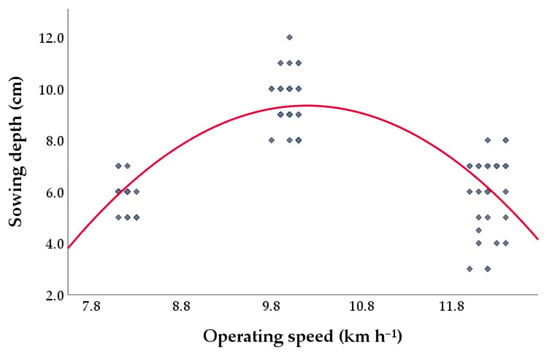
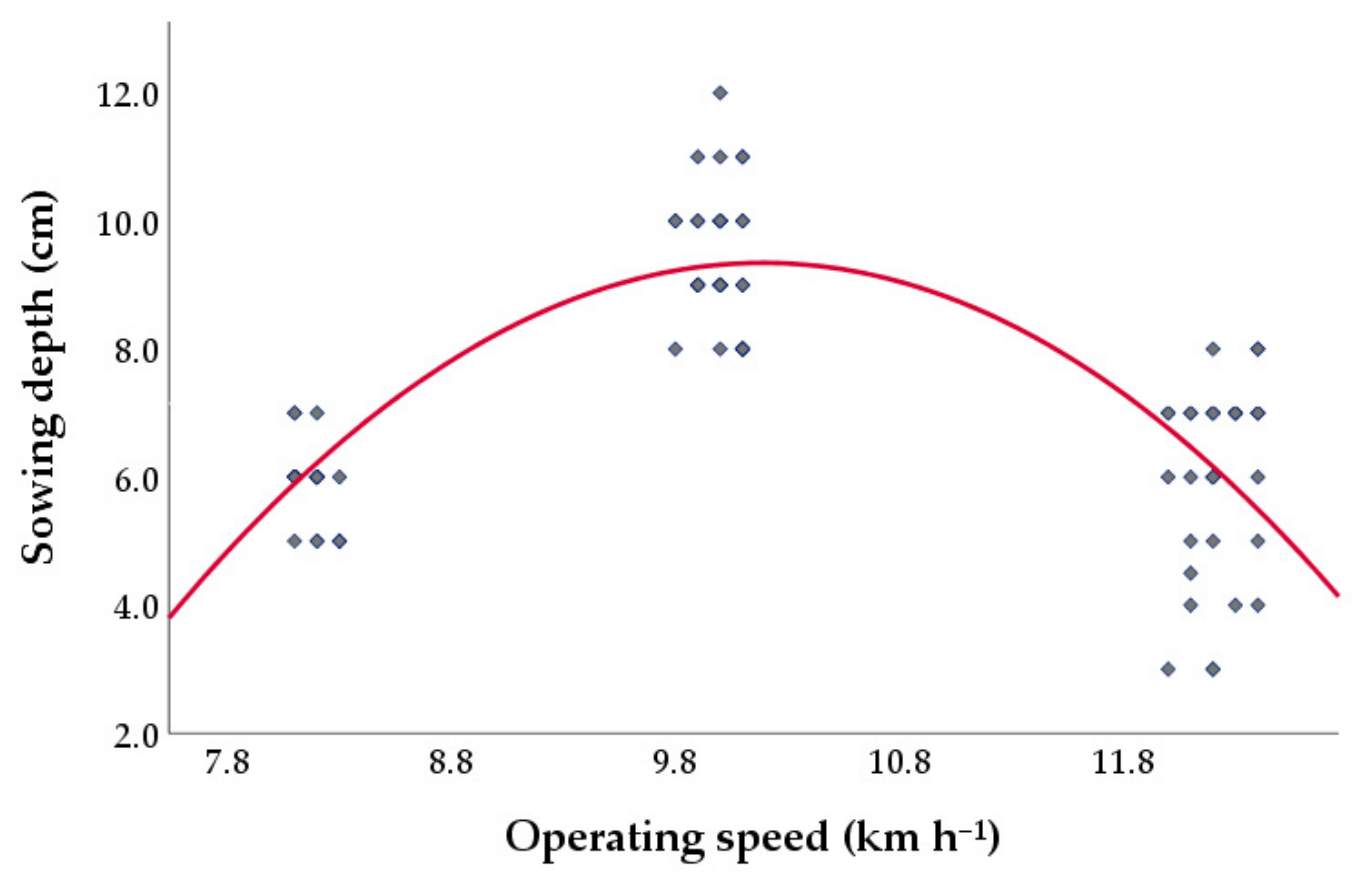
The quadratic model described the pooled observations substantially better and explained 66.4% of the variation in sowing depth (R2 = 0.664; p < 0.001):
where Y is the predicted sowing depth (cm) and X is the displayed operating speed (km h−1).
Y = −72.592 + 16.081X − 0.789X2
The negative quadratic coefficient (B = −0.789; p < 0.001) results in an inverted parabolic relationship. The fitted quadratic relationship between displayed operating speed and sowing depth is presented in Figure 6.
Figure 6.
Quadratic regression model describing the relationship between displayed operating speed and sowing depth under the investigated No-Till sunflower sowing conditions (R2 = 0.664; p < 0.001).
The mathematical vertex of the fitted curve occurred at approximately 10.19 km h−1 and corresponded to a predicted sowing depth of approximately 9.35 cm. This point must not be interpreted as an optimum operating speed, because the prescribed sowing depth was 5 cm and the largest deviation from that setting occurred around the S10 regime.
Residual diagnostics identified one observation with a comparatively large residual; however, the maximum Cook’s distance was 0.088, indicating no observation with a dominant influence on the fitted model.
The quadratic relationship was largely generated by the between-regime differences and particularly by the greater sowing depth observed under S10. No significant linear or quadratic relationships were detected within the individual operating regimes. Consequently, Equation (3) should be interpreted as an empirical description of the present dataset within the investigated speed range rather than as a general physical speed–depth relationship.
3.7.2. Displayed Operating Speed and Seed Spacing
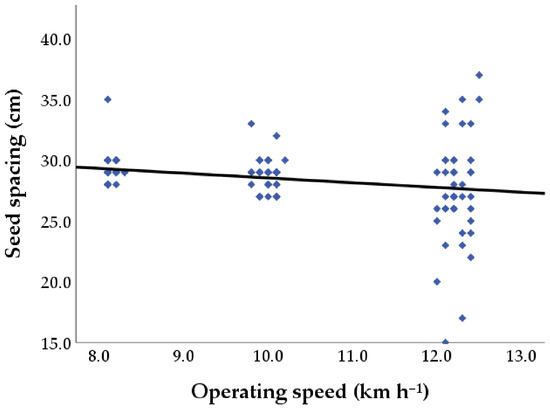
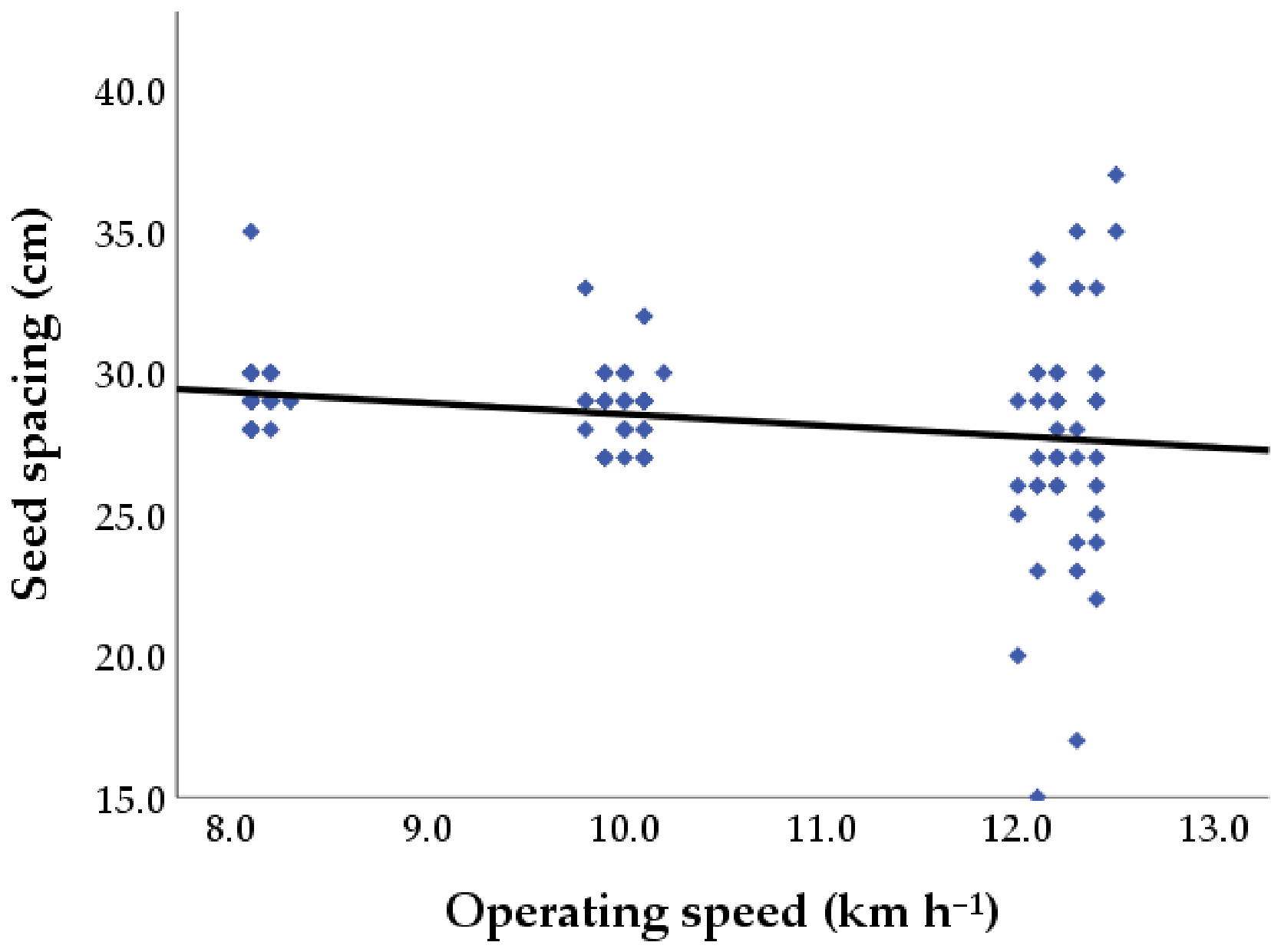
Linear and quadratic models were also evaluated for seed spacing. The linear model was statistically significant but explained only 5.7% of the observed variability (R2 = 0.057; p = 0.005).
The fitted relationship is given by Equation (4):
where Y is seed spacing (cm) and X is displayed operating speed (km h−1).
Y = 32.445 − 0.391X
Within the pooled dataset, the fitted slope corresponded to a decrease of approximately 0.39 cm in seed spacing per 1 km h−1 increase in displayed operating speed. This pattern should not be interpreted as an independent speed effect because the observations were obtained from different field areas. The fitted linear relationship between displayed operating speed and seed spacing is presented in Figure 7.
Figure 7.
Linear regression model describing the relationship between displayed operating speed and seed spacing under the investigated No-Till sunflower sowing conditions (R2 = 0.057; p = 0.005).
Several observations, mainly from S12, exhibited comparatively large residuals. Nevertheless, the maximum Cook’s distance was 0.147, indicating that no single observation had a dominant influence on the model.
The low R2 indicates that most of the observed variability in within-row seed spacing remained unexplained by the model and may be associated with factors that were not measured in the present study.
4. Discussion
4.1. Sowing Depth and Compliance with the Seeder Setting
The most pronounced descriptive differences among the three zone–regime combinations were observed for sowing depth. Mean sowing depth was 5.97 ± 0.43 cm in the S8 area, 9.42 ± 1.02 cm in the S10 area, and 6.02 ± 1.46 cm in the S12 area. The S10 area had the greatest mean sowing depth. However, these differences cannot be attributed independently to operating speed because each nominal regime was evaluated in a separate field area. Moreover, greater sowing depth does not indicate better performance because the programmed depth was 5 cm.
Depth compliance also differed among the three zone–regime combinations. In the S8 area, 92.1% of the valid measurements were within the adopted interval of 4–6 cm. No valid depth measurements in the S10 area were within this interval. The mean depth in the S12 area was close to that in the S8 area, but its variability was greater. These results describe the combined influence of the operating regime and local field conditions.
The observed variability is mechanically plausible under No-Till conditions because the working assemblies interact directly with undisturbed soil and surface residues. Previous studies have demonstrated that opener configuration and residue conditions can affect seeding performance, while soil resistance and penetration resistance vary substantially according to tillage history and field conditions [6,9,10]. Karayel et al. [10], for example, reported that increased residue cover increased variation in seed spacing, illustrating the sensitivity of seed-placement quality to the mechanical environment surrounding the working unit.
The importance of maintaining a stable furrowing depth is also reflected in the continuing development of dedicated depth-control and monitoring technologies [11,12,13,14]. Modern systems use electro-hydraulic control, multiple sensors, and active compensation to reduce the effects of terrain variation and planter-unit movement. In high-speed No-Till operation, mechanical vibration and unit bouncing have specifically been identified as sources of sowing-depth measurement and control errors [12,13]. Similarly, reducing vibration sources has been investigated as a means of improving pneumatic planter precision [15].
Nevertheless, the present results do not establish that the S10 depth response was caused by operating speed alone. S10 was evaluated in the field area with the highest measured soil-moisture values, and the operating regimes were not randomized among replicated plots. Local differences in soil mechanical resistance, residue distribution, surface geometry, or other unmeasured field properties may therefore have contributed to the pronounced depth increase. The S10 result should consequently be interpreted as a characteristic of the combined zone–regime conditions rather than as an isolated speed effect.
4.2. Seed Spacing and Metering Performance
Differences in within-row seed spacing were less pronounced than those observed for sowing depth. Mean spacing decreased from 29.16 ± 1.13 cm under S8 to 28.80 ± 1.25 cm under S10 and 27.51 ± 4.35 cm under S12. Although S12 produced the smallest mean spacing, it also exhibited markedly greater dispersion, indicating that the reduction in mean spacing was accompanied by poorer placement stability.
More importantly, seed-spacing compliance with the predefined range of 20–25 cm was 0% in the S8 and S10 areas and 17.8% in the S12 area. These values describe the observed performance of the three zone–regime combinations. The present study did not measure metering-unit calibration, pneumatic transport, drive synchronization, or component condition. Therefore, no conclusions can be drawn about their contribution to the observed spacing deviations. These factors may be examined in future studies.
This interpretation is consistent with the broader precision-seeding literature. Ahmad et al. [20] found that both seedbed preparation and travel speed significantly affected sowing-uniformity indicators in a pneumatic maize planter, including miss, multiple, quality-of-feed, and precision indices. Liu et al. [22] demonstrated that a dedicated high-speed seed-delivery mechanism improved seed-spacing uniformity compared with a conventional delivery arrangement. More recent field investigations have also shown that increasing planting speed can adversely affect spacing uniformity and increase spacing variability, while the response depends on the planter configuration and associated operating parameters [23,24].
In the present experiment, however, the speed–spacing relationship explained only a small proportion of the observed variation. This difference from studies showing stronger speed effects is important rather than contradictory. It indicates that, for the investigated machine and field conditions, forward speed represented only one component of a broader mechanical and environmental system. Modern electric-drive and optimized seed-metering systems are specifically designed to improve the synchronization between machine travel, metering rate, and seed delivery [25,27], further demonstrating that spacing performance depends on the entire delivery chain rather than on forward speed in isolation.
4.3. Missing and Double Seed Placements
The Miss Index increased numerically from 15.6% in S8 to 20.0% in S10 and 24.4% in S12. The Double Index showed a similar descriptive pattern, with values of 8.9%, 17.8%, and 20.0%, respectively. However, these observations originate from one field area for each nominal regime and may not be spatially independent. Therefore, the pattern should not be interpreted as an independent effect of operating speed.
The numerical trend is nevertheless relevant because missing and multiple placements are established indicators of precision-seeder performance. Ahmad et al. [20] reported significant effects of travel speed and seedbed preparation on miss and multiple indices in a pneumatic planter, with the highest miss index occurring under one of the combinations involving the highest investigated speed. This confirms that these indicators can respond to operating conditions, although the magnitude and direction of the response depend on machine design and field environment.
These descriptive patterns should be interpreted cautiously because the observations originated from one field area for each nominal operating regime and may not be spatially independent. Confirmation would require larger samples and replicated experiments across different fields.
4.4. Soil Moisture and Field Heterogeneity
Soil moisture differed substantially among the field areas assigned to the three operating regimes. The highest instrument-reported mean moisture occurred under S10 (71.70 ± 7.58%), followed by S8 (60.56 ± 6.46%) and S12 (53.32 ± 11.74%). The simultaneous variation in operating regime and soil moisture represents an important aspect of the experimental design because the largest sowing depth was also observed under S10.
The pooled observations showed a moderate positive correlation between soil moisture and sowing depth. In the exploratory ANCOVA, the soil-moisture covariate was not statistically supported after the zone–regime combination was included. This finding does not demonstrate the absence of a relationship. The pooled pattern may largely reflect the comparatively high soil-moisture readings and greater sowing depth observed in the S10 field area.
This does not imply that soil conditions are mechanically unimportant. Tillage history and No-Till management can modify soil physical and hydraulic characteristics, while soil penetration resistance varies spatially, temporally, and in response to machinery traffic [6,7,8,9]. Mojžiš et al. [6], for example, demonstrated measurable variation in both horizontal and vertical soil resistance under No-Till conditions and machinery traffic, while Jug et al. [9] emphasized the spatio-temporal character of penetration resistance. Such findings support the interpretation that soil–opener interaction under commercial field conditions cannot be represented adequately by a single environmental variable.
Accordingly, soil moisture should be considered an accompanying field descriptor in the present study rather than a complete representation of soil mechanical conditions. Direct measurements of penetration resistance, bulk density, residue density, and dynamic opener loading would be required to separate these contributions more effectively.
4.5. Interpretation of the Regression Models
The two regression analyses produced substantially different outcomes. The quadratic model relating displayed operating speed to sowing depth explained 66.4% of the pooled variation, whereas the linear model for seed spacing explained only 5.7%. These coefficients of determination should not be interpreted in the same way.
The apparently strong quadratic speed–depth relationship was largely generated by the unusually high sowing depth observed in the S10 zone–regime combination. The mathematical vertex near 10.19 km h−1 therefore represents a property of the fitted dataset rather than a technically or agronomically meaningful optimum. Separate analyses within the individual operating regimes did not provide statistical support for linear or quadratic relationships. The model should consequently be regarded as an empirical representation of the three zone–regime combinations rather than as evidence of a universal physical relationship between operating speed and sowing depth.
The seed-spacing model explained only 5.7% of the variability in the pooled dataset. The fitted slope describes the pattern observed under the present field conditions. However, it should not be interpreted as an independent effect of operating speed or used for prediction outside the investigated conditions.
Previous research clearly demonstrates that travel speed can influence precision-seeding performance [19,20,21,22,23,24]. However, these studies also show that speed operates in combination with seedbed condition, metering configuration, seed-delivery design, downforce, and other machine variables. The weak speed–spacing relationship obtained here is therefore consistent with a system in which multiple uncontrolled factors contribute to the observed field variability.
4.6. Practical Implications for No-Till Seeder Adjustment
Several practical implications arise from the results. First, field evaluation of a seeder should not be based only on mean sowing depth or mean seed spacing. Variability and compliance with prescribed machine settings provide additional information that may lead to a substantially different assessment of machine performance. In the present experiment, S8 and S12 produced similar mean sowing depths, yet their variability and depth-compliance characteristics were markedly different.
Second, acceptable depth performance does not imply acceptable seed-spacing performance. S8 provided the most stable sowing depth and the greatest agreement with the prescribed 5 cm setting, but the mean seed spacing remained outside the specified 20–25 cm interval. Depth-control and seed-metering subsystems should therefore be assessed separately during field calibration.
Third, because the mechanical and seed-delivery factors potentially contributing to the observed spacing deviations were not measured directly in the present study, no specific mechanical cause can be established. Future diagnostic checks could include the metering-unit calibration, pneumatic transport system, drive synchronization, seed-delivery components, and mechanical stability of the working assemblies. These factors should therefore be considered as possible sources of variability rather than as causes demonstrated by the present experiment.
Finally, S8 should not be interpreted as an optimum or generally recommended operating speed merely because it provided the best depth compliance in this experiment. Table 1 lists a nominal operating-speed range of 10–18 km h−1 for the investigated seeder, whereas S8 was intentionally evaluated at approximately 8 km h−1. Its result should therefore be reported as the performance of the investigated low-speed regime under the specific field conditions.
4.7. Limitations and Future Research
The principal limitation of this study is the allocation of the three operating regimes to separate areas of the same field. The experiment therefore does not constitute a fully randomized replicated design, and differences among S8, S10, and S12 cannot be attributed exclusively to operating speed. Although soil moisture was included as a covariate, ANCOVA can account only for the measured variable and cannot remove the effects of unmeasured spatial differences in soil penetration resistance, residue distribution, compaction, surface roughness, or other local field characteristics.
A second limitation is that soil moisture was represented by instrument-reported percentage values measured at a single depth. These measurements were useful for characterizing relative differences among field areas but did not provide a complete description of the soil physical state. Future studies should therefore combine soil-moisture measurements with penetration resistance or soil strength, bulk density, residue amount, and, where possible, soil texture and surface-condition measurements.
A third limitation concerns the experimental speed structure. Only three nominal operating regimes were investigated, with relatively narrow variation in displayed operating speed within each regime. The resulting pooled regression models therefore mainly represent between-regime differences. In addition, the lowest regime was below the nominal operating-speed range reported for the machine; future experiments should either provide a specific technical justification for this condition or concentrate additional treatment levels within the manufacturer-recommended range.
Missing and double seed placements were presented descriptively because the independence of observations within each field area could not be established. Moreover, the experiment was conducted with one tractor–seeder combination, in one field, and during one sowing period. Replication across fields, seasons, soil conditions, and machine settings is needed before the observed patterns can be generalized.
Future studies should consequently employ randomized block designs with several independent replications at each operating speed and additional speed levels. Simultaneous measurements of soil moisture, penetration resistance, residue density, tractor track slip, opener downforce, vibration, and vertical displacement would allow machine-induced effects to be separated more effectively from spatial field variability. Measurements of emergence uniformity, final plant population, and crop yield would further determine whether the observed deviations in seed placement translate into agronomically relevant effects.
Instrumented field measurements could also be complemented by structural, vibration, and wear analyses of the seeding assemblies. Combined experimental and numerical approaches may be used to investigate load-dependent mechanical response and component degradation [29,30,31]. Such work would provide a logical continuation of the present field study by linking measured seed-placement variability with the mechanical response of the opener and supporting structures.
5. Conclusions
This field-scale study characterized seed-placement quality during commercial No-Till sunflower sowing in three separate field areas, each associated with one nominal operating regime.
In the S8 area, 92.1% of the valid depth measurements were within the adopted interval of 4–6 cm. The S10 area had the greatest mean sowing depth, whereas the S12 area showed greater depth variability. Seed-spacing compliance with the predefined range of 20–25 cm was 0% in the S8 and S10 areas and 17.8% in the S12 area. Missing and double seed placements also varied among the three zone–regime combinations.
Each nominal operating regime was evaluated in a separate field area without independent field replication. Therefore, the observed differences cannot be attributed exclusively to operating speed. They may reflect the combined influence of operating regime, soil conditions, and other spatially variable factors. The exploratory statistical results should be interpreted within this limitation. A lack of statistical support should not be considered evidence that a relationship is absent. The results show the value of assessing mean seed-placement values together with their variability and compliance with the programmed machine settings. Future studies should use randomized and replicated field trials to separate operating-speed effects from differences among field areas.
Author Contributions
Conceptualization, G.H.; methodology, G.H. and Y.S.; validation, Y.S. and G.H.; formal analysis, Y.S.; investigation, Y.S.; resources, Y.S. and G.H.; data curation, Y.S.; writing—original draft preparation, Y.S.; writing—review and editing, Y.S. and G.H.; visualization, Y.S.; supervision, G.H.; project administration, Y.S. and G.H. All authors have read and agreed to the published version of the manuscript.
Funding
This research was funded by the European Regional Development Fund within the OP “Research, Innovation and Digitalization Programme for Intelligent Transformation 2021–2027”, Project No BG16RFPR002-1.014-0005 Center of Competence “Smart Mechatronics, Eco- and Energy Saving Systems and Technologies”.
Data Availability Statement
The original contributions presented in this study are included in the article. Further inquiries can be directed to the corresponding author.
Conflicts of Interest
The authors declare no conflicts of interest.
References
- Ma, Y.; Li, Z.; Xu, Y.; Li, C.; Ding, H.; Li, C.; Tang, Q.; Liu, M.; Hou, J. The Development of No-Tillage Seeding Technology for Conservation Tillage—A Review. Sustainability 2025, 17, 1808. [Google Scholar] [CrossRef] [Scilit]
- Failla, S.; Pirchio, M.; Sportelli, M.; Frasconi, C.; Fontanelli, M.; Raffaelli, M.; Peruzzi, A. Evolution of Smart Strategies and Machines Used for Conservative Management of Herbaceous and Horticultural Crops in the Mediterranean Basin: A Review. Agronomy 2021, 11, 106. [Google Scholar] [CrossRef] [Scilit]
- Bilgili, M.E.; Vurarak, Y.; Aybek, A. Determination of Performance of No-Till Seeder and Stubble Cutting Prototype. Agriculture 2023, 13, 289. [Google Scholar] [CrossRef] [Scilit]
- Guan, X.; Nie, S.; Ge, H.; Ding, Y.; Yang, J. Research Status and Development Trends of Adjustable Precision Seeders. Agronomy 2026, 16, 495. [Google Scholar] [CrossRef] [Scilit]
- Raveendran, G.; Narayanan, R.; Sul, J.-H.; Trotter, T. A Comprehensive Systematic Review of Precision Planting Mechanisation for Sesame: Agronomic Challenges, Technological Advances, and Integration of Simulation-Based Optimisation. AgriEngineering 2025, 7, 309. [Google Scholar] [CrossRef] [Scilit]
- Mojžiš, M.; Majdan, R.; Matejková, E.; Tkáč, Z.; Kollárová, K.; Abrahám, R.; Masarovičová, S.; Krilek, J.; Kováč, J.; Helexa, M. Comparing Horizontal and Vertical Soil Resistance in No-Till and Tilled Fields Following Multiple Tractor Passes. Agronomy 2026, 16, 821. [Google Scholar] [CrossRef] [Scilit]
- Castellini, M.; Fornaro, F.; Garofalo, P.; Giglio, L.; Rinaldi, M.; Ventrella, D.; Vitti, C.; Vonella, A.V. Effects of No-Tillage and Conventional Tillage on Physical and Hydraulic Properties of Fine Textured Soils under Winter Wheat. Water 2019, 11, 484. [Google Scholar] [CrossRef] [Scilit]
- da Silva, T.S.; Suzuki, L.E.A.S.; Tormena, C.A.; Schmidt, M.R.; Mazurana, M.; Levien, R. Soil Tillage and Cropping System Effects on the Physical-Hydric Properties of a Soil under No-Tillage. Sustainability 2023, 15, 15936. [Google Scholar] [CrossRef] [Scilit]
- Jug, D.; Jug, I.; Radočaj, D.; Wilczewski, E.; Đurđević, B.; Jurišić, M.; Zsembeli, J.; Brozović, B. Spatio-Temporal Dynamics of Soil Penetration Resistance Depending on Different Conservation Tillage Systems. Agronomy 2024, 14, 2168. [Google Scholar] [CrossRef] [Scilit]
- Karayel, D.; Jotautienė, E.; Šarauskis, E. The Effect of Furrow Opener and Disc Coulter Configurations on Seeding Performance under Different Residue Cover Densities. AgriEngineering 2024, 6, 1277–1288. [Google Scholar] [CrossRef] [Scilit]
- Li, H.; He, J.; Wang, C.; Yang, W.; Lin, H.; Wang, Q.; Yang, H.; Tan, L. Research Progress on the Development of the Planter Unit for Furrowing Control and the Depth Measurement Technology. Appl. Sci. 2023, 13, 11884. [Google Scholar] [CrossRef] [Scilit]
- Zhou, L.; Ma, Y.; Zhou, H.; Niu, K.; Zhao, B.; Wei, L.; Bai, S.; Zheng, Y.; Zhang, W. Design and Test of Sowing Depth Measurement and Control System for No-Till Corn Seeder Based on Integrated Electro-Hydraulic Drive. Appl. Sci. 2023, 13, 5823. [Google Scholar] [CrossRef] [Scilit]
- Wang, S.; Yi, S.; Zhao, B.; Li, Y.; Li, S.; Tao, G.; Mao, X.; Sun, W. Sowing Depth Monitoring System for High-Speed Precision Planters Based on Multi-Sensor Data Fusion. Sensors 2024, 24, 6331. [Google Scholar] [CrossRef] [Scilit]
- Li, Y.; Qi, B.; Bao, E.; Tang, Z.; Lian, Y.; Sun, M. Design and Analysis of a Sowing Depth Detection and Control Device for a Wheat Row Planter Based on Fuzzy PID and Multi-Sensor Fusion. Agronomy 2025, 15, 1490. [Google Scholar] [CrossRef] [Scilit]
- Mahapatra, J.; Tiwari, P.S.; Singh, K.P.; Nandede, B.M.; Sahni, R.K.; Pagare, V.; Singh, J.; Shrinivasa, D.J.; Mandal, S. An Adjustable Pneumatic Planter with Reduced Source Vibration for Better Precision in Field Seeding. Sensors 2024, 24, 3399. [Google Scholar] [CrossRef] [Scilit]
- Özmerzi, A.; Karayel, D.; Topakci, M. PM—Power Machinery: Effect of Sowing Depth on Precision Seeder Uniformity. Biosyst. Eng. 2002, 82, 227–230. [Google Scholar] [CrossRef] [Scilit]
- Fang, H.; Lu, J.; Wang, J.; Zhao, R.; Sheng, T.; Zhang, Q. Design and Experiment of a Sunflower Hole Fertilization Planter. Agriculture 2026, 16, 1576. [Google Scholar] [CrossRef] [Scilit]
- Cujbescu, D.; Găgeanu, I.; Persu, C.; Matache, M.; Vlăduț, V.; Voicea, I.; Paraschiv, G.; Biriș, S.Ș.; Ungureanu, N.; Voicu, G.; et al. Simulation of Sowing Precision in Laboratory Conditions. Appl. Sci. 2021, 11, 6264. [Google Scholar] [CrossRef] [Scilit]
- Karayel, D.; Özmerzi, A. Effect of Forward Speed on Hill Dropping Uniformity of a Precision Vacuum Seeder. HortTechnology 2004, 14, 364–367. [Google Scholar] [CrossRef] [Scilit]
- Ahmad, F.; Adeel, M.; Qui, B.; Ma, J.; Shoaib, M.; Shakoor, A.; Chandio, F.A. Sowing Uniformity of Bed-Type Pneumatic Maize Planter at Various Seedbed Preparation Levels and Machine Travel Speeds. Int. J. Agric. Biol. Eng. 2021, 14, 165–171. [Google Scholar] [CrossRef] [Scilit]
- Yang, S.; Zhai, C.; Gao, Y.; Dou, H.; Zhao, X.; He, Y.; Wang, X. Planting Uniformity Performance of Motor-Driven Maize Precision Seeding Systems. Int. J. Agric. Biol. Eng. 2022, 15, 101–108. [Google Scholar] [CrossRef] [Scilit]
- Liu, Q.; Cui, T.; Zhang, D.; Yang, L.; Wang, Y.; He, X.; Wang, M. Design and Experimental Study of Seed Precise Delivery Mechanism for High-Speed Maize Planter. Int. J. Agric. Biol. Eng. 2018, 11, 81–87. [Google Scholar] [CrossRef]
- Petrović, I.; Vučajnk, F.; Trdan, S.; Bernik, R.; Vidrih, M. The Influence of Planting Speed of a Maize Vacuum Planter on Plant Spacing Variability and Ear Parameters. Agronomy 2025, 15, 462. [Google Scholar] [CrossRef] [Scilit]
- Torresan, M.; Porter, W.; Hand, L.C.; Monfort, W.S.; Dal Ferro, N.; Mirzakhaninafchi, H.; Rains, G. Field Evaluation of the Effects of Planting Speed, Downforce, Seed-Plate Configuration, and High-Speed Seed Delivery Systems on Cotton Stand Establishment, Spacing Uniformity, and Lint Yield. AgriEngineering 2026, 8, 127. [Google Scholar] [CrossRef] [Scilit]
- Ling, L.; Xiao, Y.; Huang, X.; Wu, G.; Li, L.; Yan, B.; Geng, D. Design and Testing of Electric Drive System for Maize Precision Seeder. Agriculture 2024, 14, 1778. [Google Scholar] [CrossRef] [Scilit]
- Guo, P.; Shang, S.; Zheng, X.; Hou, J.; Zhang, J.; Yan, H.; Ding, Y.; Eltom, F.; Wang, D. Design of a Seed-Pressing Mechanism for Precision Peanut Planters and Verification of Optimal Operating Parameters Under High-Speed Seeding Conditions. Agriculture 2025, 15, 2246. [Google Scholar] [CrossRef] [Scilit]
- Da Costa, E.; Yazgi, A. Mathematical Modelling and Optimization of Seed Metering Unit Performance in Precision Peanut Seeding. Appl. Sci. 2024, 14, 7525. [Google Scholar] [CrossRef] [Scilit]
- Corteva Agriscience. P64LE280 Sunflower Hybrid: Product Information and Recommended Plant Density. Available online: https://www.corteva.com/bg (accessed on 9 September 2026).
- Ambarev, K.; Taneva, S. A Comparative Study of Vibrations in Front Suspension Components Using Bushings Made from Different Materials. Eng. Proc. 2025, 100, 42. [Google Scholar] [CrossRef] [Scilit]
- Ambarev, K.; Taneva, S. Thermal and Structural Analysis of Gasoline Engine Piston at Different Boost Pressures. Eng. Proc. 2025, 100, 38. [Google Scholar] [CrossRef] [Scilit]
- Tashev, A.; Nikolov, V.; Dochev, B.; Dimova, D.; Kandeva, M.; Zagorski, M. Comparative Study of Wear Behavior of Hypereutectic Al–Si Piston Alloys Using Experimental and Numerical Methods. Materials 2026, 19, 2253. [Google Scholar] [CrossRef] [Scilit]

Disclaimer/Publisher’s Note: The statements, opinions and data contained in all publications are solely those of the individual author(s) and contributor(s) and not of MDPI and/or the editor(s). MDPI and/or the editor(s) disclaim responsibility for any injury to people or property resulting from any ideas, methods, instructions or products referred to in the content. |
© 2026 by the authors. Licensee MDPI, Basel, Switzerland. This article is an open access article distributed under the terms and conditions of the Creative Commons Attribution (CC BY) license.