


Abstract
Circular economy is today a key driver of every transformation process aimed at reducing and optimizing the use of energy and materials. The production of solid biofuel from waste is a typical route to lower the potential impact of greenhouse-gas emissions. In this context, olive pomace is a relevant feedstock, as 4 million tonnes are generated worldwide each year alongside olive oil production. However, only a small fraction of olive pomace is currently valorized. Fresh olive pomace must first be quickly dried to a low, controlled moisture. This step is performed poorly and at a high energy cost. This paper presents an automation-based approach to enhance biomass production from olive pomace, thereby advancing circular-economy practices in olive oil production. The work is focused on four aspects. In the first part, a review of the state of automation in agricultural engineering with a focus on biomass and olive pomace is proposed. Then, the design and construction of an innovative drying system that integrates an infrared solution directly into the transporting screw conveyor is described, integrating real-time online microwave moisture sensing and PLC control. After that, a cloud-based service is presented for remote monitoring, data analysis, and optimization. The innovative and automated drying system was validated during a preliminary field campaign at an olive mill. After about sixteen hours of continuous, cloud-monitored operation, the resulting olive pomace moisture fell below the 5% threshold across a wide range of inlet-moisture conditions, with a stable electrical power demand of approximately 1.85 kW. Finally, an environmental analysis is provided to evaluate the environmental aspects related to the proposed system. The preliminary analysis confirms a significant avoided-carbon potential if the resulting olive pomace is reused as biomass for energy production. The impact associated with 1 kWh-eq produced from olive pomace is in the range of 0.006–0.033 kg CO2-eq.
1. Introduction
Italy and other Mediterranean areas are famous worldwide for olive oil production. Olive trees cover 4.6 million hectares in the EU, where around 2 million tons of olive oil are produced each year [1,2]. Even if the 2023/24 crop saw olive oil production decrease to about 1.5 million tons in the EU due to seasonal events [3], the impact of production waste remains relevant. Worldwide, there are about 11 million hectares of olive-tree crops, which produce around 20 million tonnes of olive oil per year and about 4 million tonnes of residual waste [4]. However, only a small percentage is used for biomass extraction.
Moreover, the agricultural sector still lacks the automation tools and methods already established in industry, such as programmable logic controllers (PLCs) and SCADA supervisory systems, industrial Internet-of-Things (IIoT) sensor networks, cloud-based monitoring and data analytics, predictive maintenance, digital twins and robotic material handling [5].
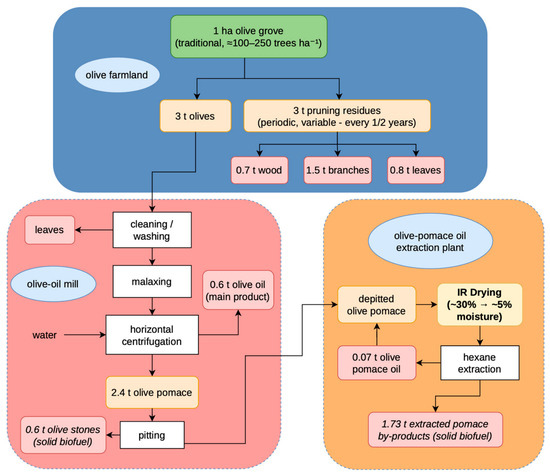
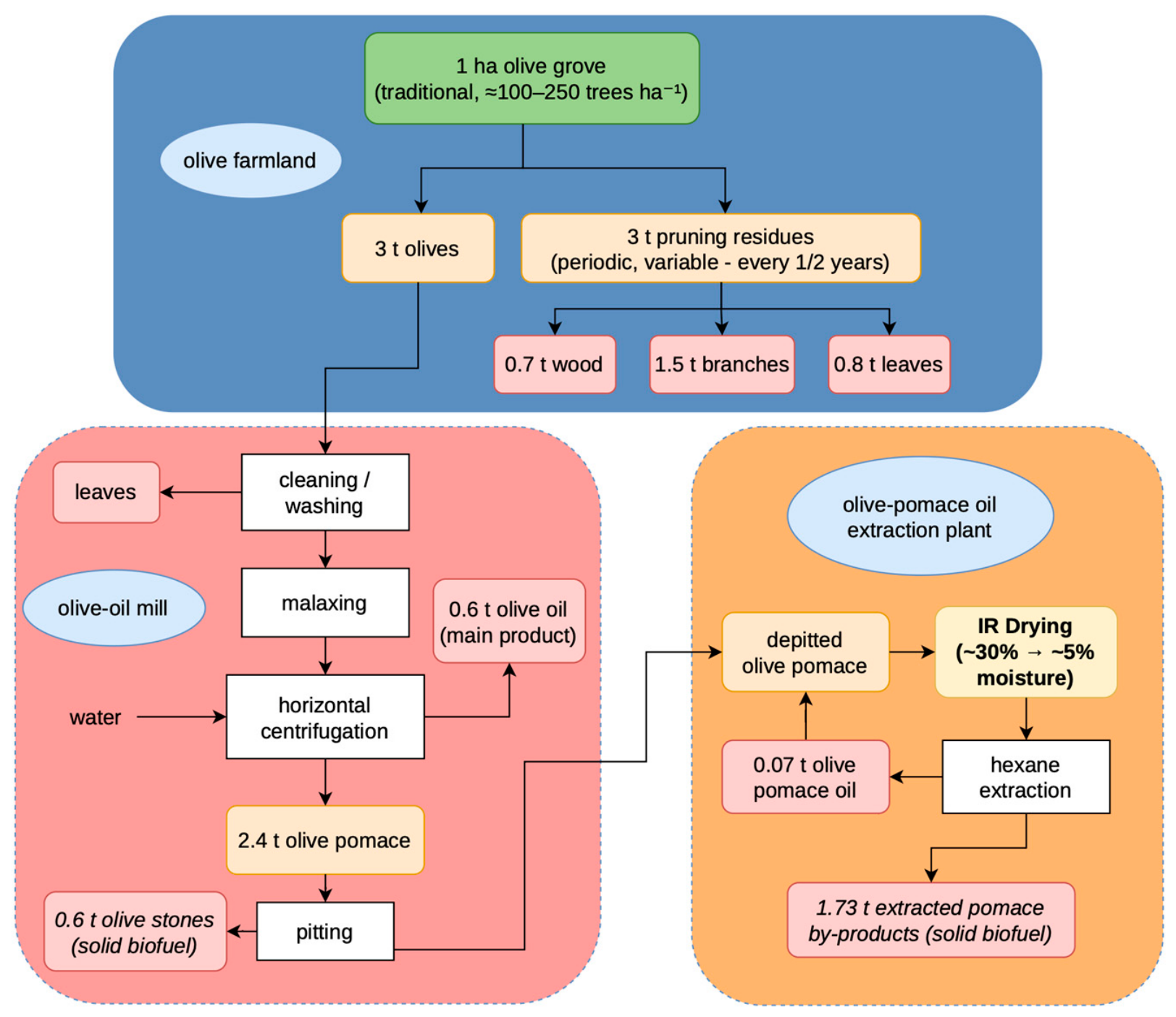
Olive oil extraction is an industrial activity of high economic and social relevance in Mediterranean countries. Almost all of the world’s olive production is concentrated in this area, with Spain, Italy and Greece holding more than 65% of the total output, followed by four non-EU countries: Syria, Turkey, Tunisia and Morocco. Generally, the oil extracted during processing is between 10 and 15% of the total mass of pressed olives, and the remainder consists of olive pomace and olive stones or pits. The olive residue accounts for roughly 20% of olive weight, and 100 kg of fresh olives contain about 22 kg of olive residue (4 kg of seeds plus 18 kg of endocarps) [6]. This residue still contains a significant oil content and an important, variable moisture content, depending on the extraction process: the two-phase, three-phase, and traditional-press techniques, which mainly differ in their process-water requirements [7]. Figure 1 summarises the material flow of the olive-oil production chain, highlighting the position of the pomace and stone by-products and their potential valorization routes.
Figure 1.
Material flow of the olive-oil production chain, from the olive grove to the by-products (olive pomace and olive stones) and their valorization routes. Data from “García Martín et al. (2020), Energetic Valorisation of Olive Biomass: Olive-Tree Pruning, Olive Stones and Pomaces, Processes, 8, 511” [4] under the Creative Commons CC BY 4.0 license.
In Italy, most of the fresh pomace is piled near the olive mills and remains there until the winter season is over, increasing its moisture because of rain and snow. The pomace can be considered an environmental burden because of the presence of phenolics and fatty acids, which can be phytotoxic, and because disposal without treatment, or leaving it in the open air, causes serious environmental problems for land and water [8]. In this context, it is important to reduce the amount of pomace discarded to the environment and, at the same time, to recover the compounds that, while harmful to the environment, are beneficial as a source of energy. From this viewpoint, the olive stone is an interesting fuel, thanks to its low nitrogen and sulfur content, which minimizes the NOx and SO2 emissions associated with acid rain [9]. Bioenergy is produced from organic material (biomass), which contains carbon absorbed by plants through photosynthesis. When this biomass is used to produce energy, the carbon is released during combustion and returns to the atmosphere, while an equivalent amount of carbon is absorbed as new biomass is produced, making modern bioenergy a near-zero-emission fuel. It is the largest source of renewable energy globally, accounting for about 55% of renewable energy and over 6% of the global energy supply [10]. The future of the olive-oil industry must therefore move towards a greater interrelation between olive-oil production, automation, environmental conservation, and energy generation, hence a circular economy approach. For these reasons, it is necessary to dry this agricultural waste quickly, before spoilage begins to occur; but the constraints that reduce the usage of drying systems are mainly high cost and high energy consumption. To increase the combustion efficiency of the pomace, it is necessary to obtain a biomass with about 5% moisture content through drying, whereas the traditional processes used for food are not automated to increase the efficiency of the agricultural sector. The common modes of heat transfer for drying are convection from a hot gas in contact with the material, conduction from a hot solid surface in contact with the material, radiation from a hot gas or surface, and heat generation within the material by dielectric, radiofrequency, or microwave heating [11].
1.1. Drying Techniques
Among the diverse drying techniques available for olive pomace and olive stones, infrared drying stands out because of its efficiency and its specific benefits for material quality and energy consumption. Infrared (IR) heating, either alone or combined with other methods, offers many advantages over conve ctive air drying under similar conditions:
- Enhanced drying efficiency. Infrared drying uses electromagnetic radiation to heat the olive stones directly, leading to a rapid temperature rise and a higher moisture evaporation rate. Unlike conventional methods, which rely on heat conduction and require longer processing times, IR drying minimizes the thermal gradient and ensures a uniform heat distribution throughout the material [12].
- Energy conservation. By transferring energy directly to the material, IR drying reduces heat loss to the surrounding environment and therefore energy consumption, an advantage that is particularly relevant for sustainable biomass processing [13].
- Quality preservation. The rapid process prevents the degradation of heat-sensitive compounds, preserving the structural and chemical integrity of the dried material for further processing, for instance, the production of activated carbon or biochar [14].
- Reduced processing time. Shorter drying times enhance the throughput of the processing facility and contribute to the overall cost-effectiveness of the operation [15].
- Operational flexibility. Adjustable wavelength and intensity allow the process to be tuned to the specific requirements of the material, balancing efficiency and quality [16].
- Environmental benefits. Lower energy consumption and shorter processing times reduce the environmental footprint of the operation, aligning it with sustainable-production goals [17].
1.2. Contributions
The objective of this work is to investigate the effectiveness of an automation system equipped with an IR drying module, in relation to the state of automation in agricultural engineering, with a focus on the biomass field and olive pomace. The proposed solution includes not only an innovative infrared automation system for drying the pomace, but also a cloud-based service to optimize the process through direct monitoring and data analysis. The main contributions of this work can be summarized as follows:
- a review of the state of the art of automation in the agricultural-engineering sector and of infrared drying of olive pomace and olive stones;
- an innovative pilot case based on an IR drying technique, in which screw conveyors, an IR heating section, measurement sensors and a data recording and control system are managed by a Programmable Logic Controller (PLC), and in which the material is dried while it is being transported;
- a cloud-based architecture that provides centralized aggregation, analysis and storage of the process data (temperature, humidity, drying rate, energy consumption), enabling the dynamic adjustment of the IR intensity and drying time.
- An early evaluation of the environmental gains using biomass from olive production.
The remainder of the paper is organized as follows. Section 2 reviews the state of the art on the circular economy in the olive-oil sector, the valorization of olive pomace and olive stone as biomass, infrared drying and its modeling frameworks, and automation in agricultural engineering. Section 3 describes the materials and the design and construction of the proposed system. Section 4 reports the pilot case and the preliminary results of the field campaign. Section 5 analyzes a preliminary environmental scenario on using biomass for energy within the proposed drying system. Section 6 draws the conclusions and outlines future work.
2. State of the Art
This section reviews the background against which the proposed system is positioned through four complementary perspectives. The first concerns the circular-economy paradigm applied to agriculture, with particular attention to the olive-oil supply chain. The second examines the valorization of olive pomace and olive stone as biomass and solid biofuel. The third focuses on infrared drying as an enabling technique, including the modeling frameworks adopted in the literature to describe drying kinetics. The fourth addresses the diffusion of automation and Industry 4.0 tools in agricultural engineering. Together, these define the gap that the present work addresses.
2.1. Circular Economy in the Agricultural and Olive-Oil Sector
The circular economy has become a reference framework for the agri-food sector, where the reuse and valorization of by-products replace the linear “produce–use–dispose” logic and reduce both the environmental burden and the demand for primary resources. The olive-oil industry is a paradigmatic case where it is a pillar of the Mediterranean economy, Spain, Italy and Greece alone account for more than 65% of world output, yet it generates very large by-product streams (olive pomace, olive stones, vegetation water) that are often piled near the mills and left untreated, becoming an environmental liability because of their phenolic and fatty-acid content [18]. A growing body of work has therefore proposed circular-economy strategies for the sector, ranging from the recovery of bioactive compounds and the production of activated carbon [19] to the energetic valorization of the solid residues, and has framed these routes within circular-business-model and bioeconomy analyses of the olive-oil chain [20,21]. Within this framework, converting a moist, perishable, and polluting residue into a stable, transportable solid fuel is one of the most direct ways to close the loop, provided the conversion step itself is efficient and low in its own environmental impact, which is precisely where process automation becomes relevant.
2.2. Biomass and Biofuel from Olive Pomace and Olive Stone
The worldwide production of olive oil is 3.4 million tons (2020 data); about 90% of the world production is concentrated in the Mediterranean area: Spain (40.2%), Tunisia (11.1%), Italy (9.8%), Greece (9.1%), Turkey (7.1%), Morocco (4.9%), Syria (4.1%), and Portugal (3.2%) [22]. The oil extracted during processing represents only 10–15% of the pressed-olive mass; the remainder is pomace, of which the olive-stone (or olive-pit) fraction is the most valuable from an energy standpoint [23]. Over 400,000 tons of olive pomace are generated worldwide; managing this waste is of primary environmental importance due to its phytotoxicity [24]. Thermochemical valorization of olive pomace, including its conversion into biofuels, offers a means of mitigating the environmental impacts associated with the phytotoxicity of the untreated residue [25]. The olive stone is an attractive solid biofuel because of its high heating value, of the order of 4 075 kcal/kg, comparable to that of carbohydrates and higher than that of dry pomace [26], its low nitrogen and sulfur content, which limits NOx and SO2 emissions, and its uniform size and high density. As a modern bioenergy source, it is, to a first approximation, carbon-neutral, since the carbon released on combustion was previously fixed by photosynthesis.
Two factors, however, govern whether the stone can be used as a quality fuel: moisture and particle size. Fresh pomace retains a high and variable moisture content, which lowers the combustion efficiency, accelerates microbiological decomposition and, in domestic appliances, causes uncontrolled combustion and emissions [27]. The literature and the applicable standards converge on a low target moisture content, on the order of 5% (w.b.), for the solvent extraction of the residual oil and for use as a graded solid biofuel [28]. Although no universal standard is dedicated to olive-stone fuel, the Spanish standard UNE 164003:2014 [29] and the ISO 17225 series for solid biofuels [30], together with the methods for moisture (ISO 18134), sampling (ISO 18135), bulk density (ISO 17828) and particle-size distribution (EN 15149-1) [31,32,33,34], provide the reference framework for characterizing the product. Drying the pomace quickly, before spoilage begins and to a controlled residual moisture, is therefore the key enabling step of the whole valorization chain, and the one that current practice, based on open-air piling or on non-automated food dryers, performs poorly and at high energy cost.
2.3. Infrared Drying and Drying-Kinetics Models
Among the available drying techniques, infrared radiation offers distinct advantages for agricultural products. Energy is transferred directly to the product by radiation, without the gas-side resistance of convection or the contact requirement of conduction; the radiation can be focused and rapidly modulated, giving high heat-transfer rates, low thermal inertia, and easy process control from compact emitters, and the process is clean compared with fossil-fuel heating. These features have made IR drying, alone or combined with convective, conductive or microwave heating, an established tool in food processing, applied extensively to fruit and vegetable slices, cereals and meat products [35,36,37,38]. The efficiency of the process depends on the match between the emitter wavelength and the absorption spectrum of the product, and on the uniformity of the radiant flux, which in turn requires flat, thin material layers and appropriate emitter-to-product spacing. Applications of IR drying to olive by-products are, by contrast, scarce. The most directly relevant study is that of Ruiz Celma et al., who investigated the thin-layer IR drying of wet olive husk at laboratory scale and modeled its drying behavior [39]. As is standard in the field, the drying kinetics are described through the dimensionless moisture ratio and fitted to semi-theoretical thin-layer models, among them the Page, Henderson–Pabis and Midilli models [40], whose goodness of fit is assessed through the coefficient of determination, the reduced chi-square and the RMSE [41]. It is important to stress that these models were developed and validated for static, thin, batch layers, in which the moisture history of the sample is followed over time. This is a different regime from a continuously fed conveyor operating at steady state, a distinction that directly motivates the measurement strategy and the future characterization discussed later in this paper. Crucially, no study in the reviewed literature addresses IR drying of olive pomace in a continuous, industrial in-line configuration with real-time moisture feedback, the configuration proposed here.
The drying kinetics of agricultural products are commonly described by semi-theoretical and empirical thin-layer models, which express the dimensionless moisture ratio, MR (= Mt/M0, the ratio of the moisture content at time t to the initial moisture content), as a function of the drying time. The thin-layer models most frequently adopted in the literature are summarized in Table 1, where k, k0, k1 are drying constants and a, b, c, n are model coefficients. These models constitute the reference framework adopted in the literature, and as discussed, their application to the present continuous, steady-state configuration is left to future work, once intermediate moisture sensors provide the transient moisture profile they require.
Table 1.
Thin-layer drying models commonly used in the literature.
2.4. Automation and Industry 4.0 in Agricultural Engineering
While automation, the Internet of Things, and data-driven control are now mature in manufacturing, their penetration into agriculture remains uneven, and manual labor is still a critical component of many operations, particularly at small scale [50].
A representative example of data-driven control is precision (variable-rate) irrigation, in which soil-moisture and micro-climate sensors continuously regulate the water supplied to each zone in order to track a target soil-moisture level. Analogous closed-loop schemes are applied to greenhouse climate control and to nutrient fertigation [51].
Recent reviews document rapid growth in smart-farming, robotics, and digitalization initiatives, and identify the automation of post-harvest and transformation processes as a major opportunity for efficiency and sustainability gains [52]. Applied to by-product valorization, automation allows a transformation step such as drying to be run continuously, monitored remotely, and optimized against a quality set-point, thereby maximizing the benefit of the circular-economy strategy while minimizing its energy cost. The system described in the following sections sits at this intersection: it brings an Industry-4.0 architecture, sensors, PLC control, gateway, and cloud analytics, to the specific, and so far, largely manual, problem of drying olive pomace for energy valorization.
3. Materials and Methods
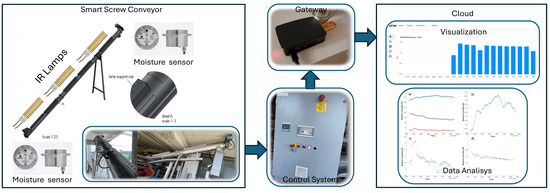
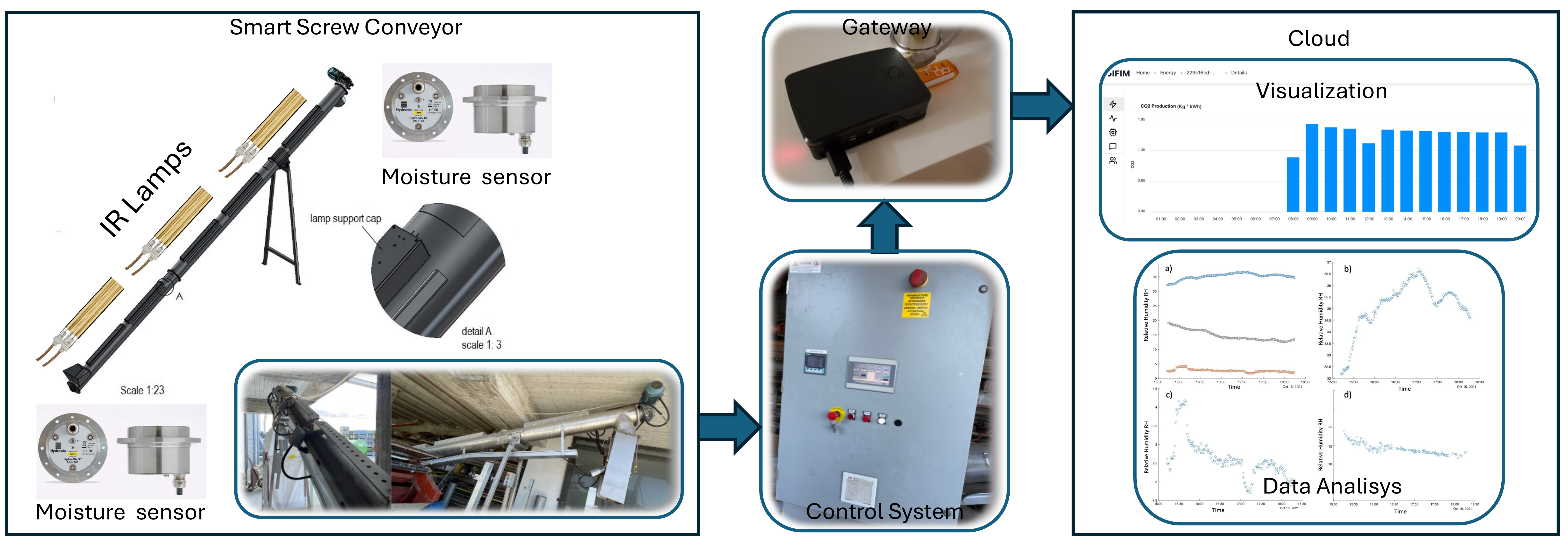
As highlighted in Figure 2, the proposed architecture for monitoring the drying process comprises three main layers: the automation plant, the gateway, and the cloud service. The automation plant corresponds to the set of sensors and actuators attached to the system to be monitored. The gateway converts messages from the machine into cloud-ready data. The cloud service consumes the transformed messages and, after evaluating the overall system conditions, can send back alerts. The solution can be grouped into two main blocks. The first is the drying system (screw conveyor, IR lamps, automation system), designed for interconnection and integration with external systems in order to exchange data and events, the second is the monitoring and data-saving system, consisting of an embedded PC dedicated to the plant, the software to read all the data produced by the machine’s PLC, and the cloud service used to log, analyze and visualize the data.
Figure 2.
Overall architecture for monitoring the drying process, organized in three layers, namely plant (automation), gateway, and cloud service. The cloud layer shows an illustrative example of the data-analysis dashboard where panels (a–d) re-port the relative humidity (RH) recorded over time during a monitored run (15 October 2021), with (a) the combined sen-sor signals and (b–d) the individual signals shown at their respective scales.
3.1. Infrared Drying Plant
The screw conveyors, characterized by their helical blades encased in a tube, transport the pomace through the machine and ensure a uniform feed into the drying chamber, preventing bottlenecks or uneven distribution that could compromise the drying efficiency. As the material progresses through the machine, it encounters the IR heating section, the nucleus of the drying process, where infrared heaters emit IR radiation and transfer heat directly to the pomace. The intensity of the radiation can be precisely controlled, enabling rapid moisture evaporation without overheating or damaging the material and ensuring uniform heat application. An array of sensors captures real-time data on temperature, chamber humidity, and the material’s moisture content; this continuous monitoring is essential for maintaining optimal drying conditions and adjusting the IR intensity or conveyor speed. The data recording and control system, integrated with a PLC, acts as the command center of the machine. It collates sensor data, makes real-time decisions about operational parameters, and records historical data for process optimization and quality control.
3.2. Screw-Conveyor Design
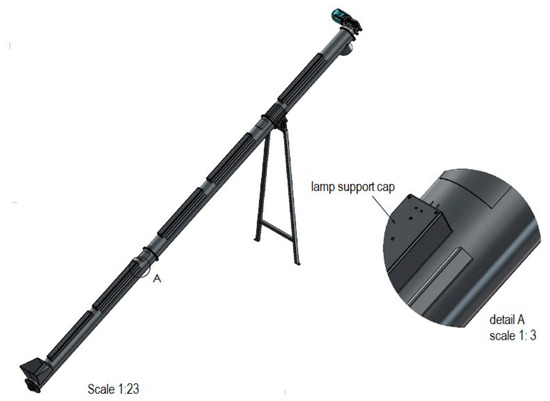
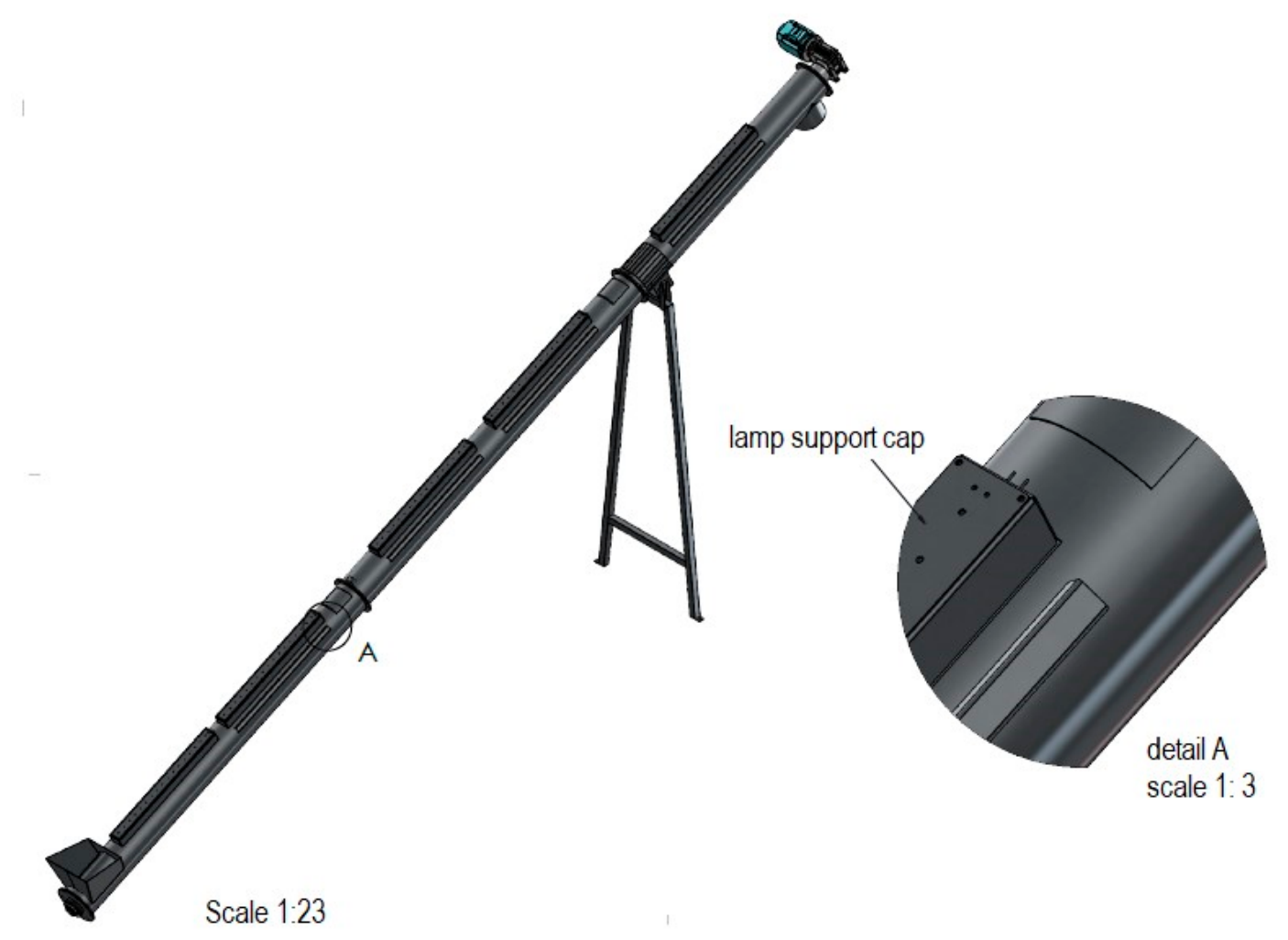
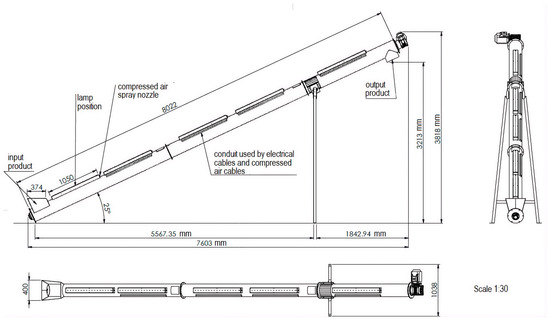
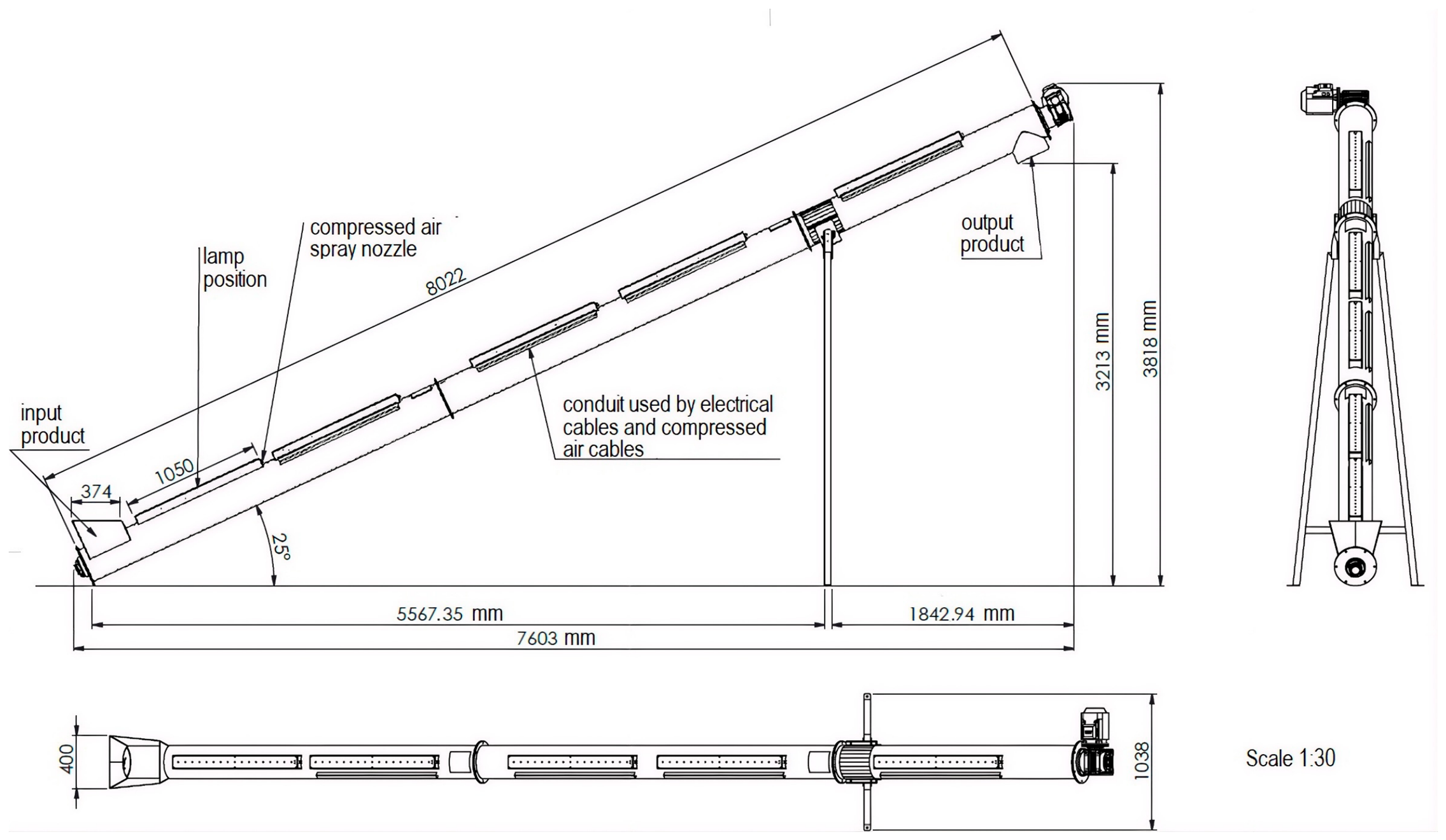
The screw conveyor is one of the oldest methods of conveying materials, with the original design dating back more than two thousand years; modern technology has made it one of the most efficient and economical methods of moving bulk material [53]. To improve efficiency, a new production line was designed to simultaneously transport and dry the raw material, based on the same transport system the farm was already using but equipped with IR lamps. The 3D design of the new conveyor is shown in Figure 3, while its main dimensions are reported in the technical scheme of Figure 4.
Figure 3.
Three-dimensional design of the screw conveyor, with details of the lamp support cap.
Figure 4.
Technical scheme of the screw conveyor with its main dimensions and the 25° inclination.
The design of the new version of the screw conveyor was based on some primary considerations:
- Type and condition of the bulk material. The bulk material lump size must be considered when designing a screw conveyor, since the diameter depends not only on capacity but also on the size and proportion of the lumps. In this case, the bulk material is in Class 3, meaning the mixture of lumps and fines is no more than 95% lumps ranging from the maximum size down to half the maximum size, with 5% lumps smaller than half the maximum size.
- Capacity or feed rate. This parameter is used to calculate the power required to convey the material a fixed distance. In this case, the design duty is to transport olive pomace with a bulk density of approximately 961 kg/m3 (60 lb ft−3).
- Distance and incline. As the degree of incline increases, conveying efficiency decreases and power requirements increase due to gravity and material fallback. However, a low degree increases the area occupied by the system. To maintain an optimized solution, an inclined configuration of 25° and a length of 7.5 m were chosen after pre-testing with early prototypes.
- Design conditions, such as construction materials, inlet feed conditions, and operating temperature, were considered.
3.3. Olive-Pomace Humidity Sensor
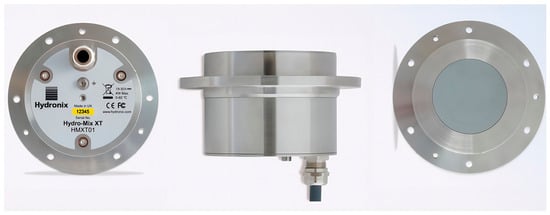
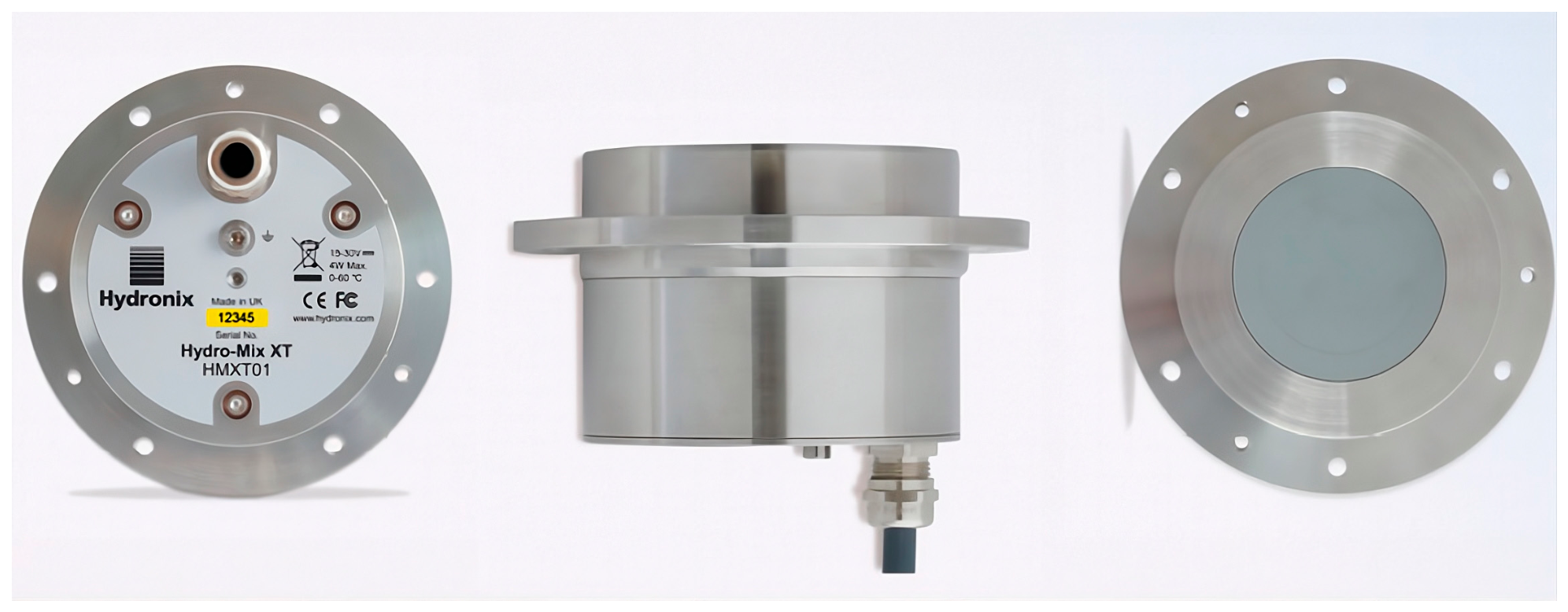
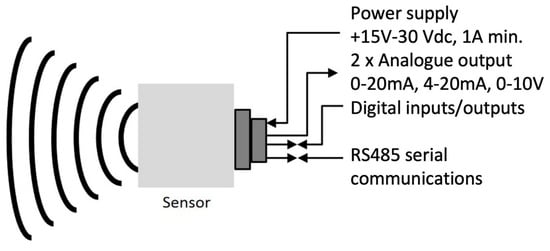
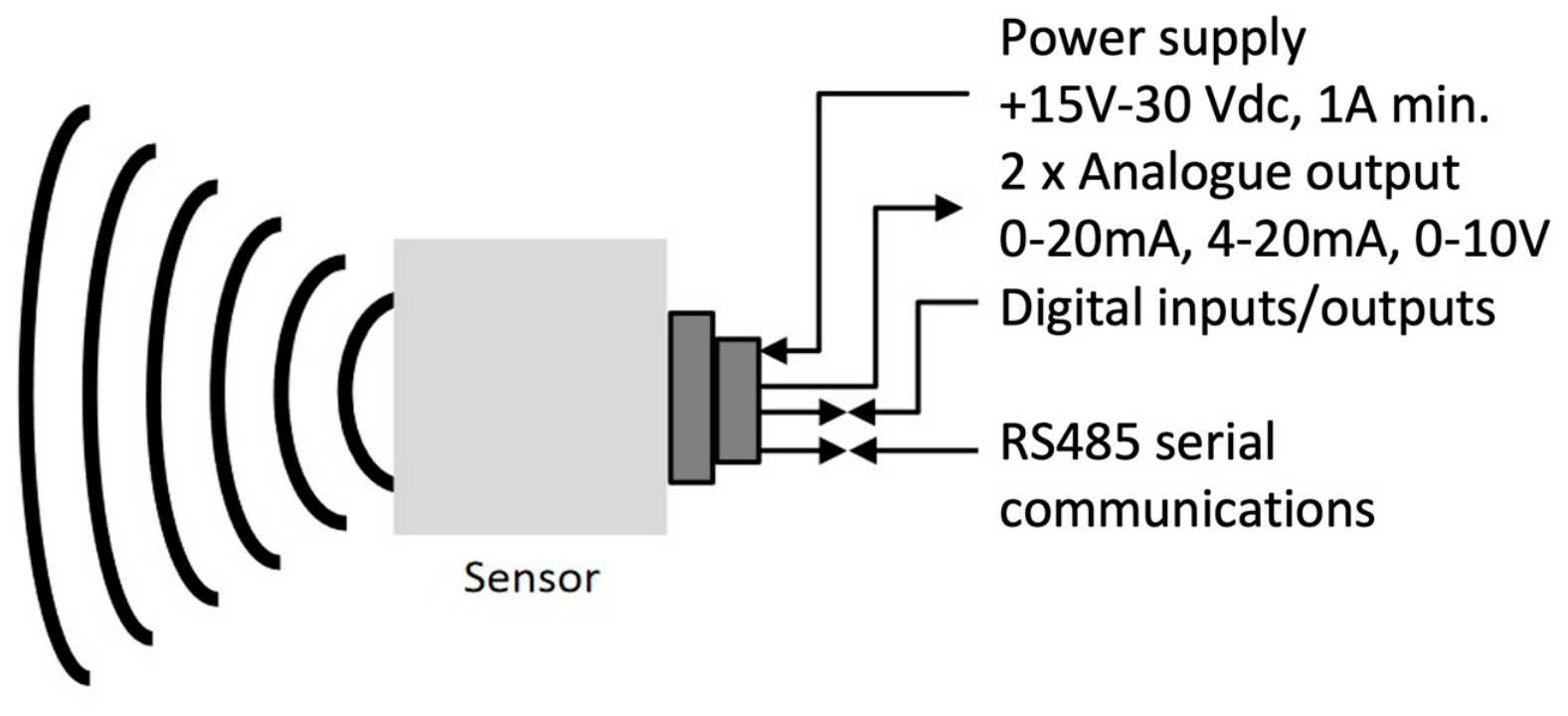
The proposed system acts on a continuous flow of bulk pomace, so measuring moisture becomes a key factor. Standard reference methods require oven-drying a few samples under prescribed conditions for hours or even days. They are destructive, time-consuming, and limited to static sample testing, and are therefore unsuitable for on-line sensing of moving materials. To acquire the pomace moisture in real time, the Hydro-Mix XT by Hydronix, Guildford, UK was used [54]. It employs the Hydronix digital microwave technique, which provides more sensitive, linear moisture measurements than analog techniques, with 25 readings per second. The sensor can be mounted where there is a continuous flow of material across its ceramic faceplate, in drying, ducting, conveying, and mixing systems, and provides on-board signal processing (smoothing, averaging) with Ethernet, USB, or RS-232/RS-485 interfacing, together with real-time moisture and temperature readings through the dedicated Hydro-Com software (version 1.6.0). The sensor is shown in Figure 5, and its interfacing and output signals are shown in Figure 6.
Figure 5.
The Hydro-Mix XT digital-microwave moisture sensor (rear, side and ceramic-faceplate views).
Figure 6.
Hydro-Mix XT interfacing: power supply, analog outputs and RS-485 serial communication.
3.4. Infrared Lamps
The wavelength of an infrared emitter has a major influence on the efficiency of the thermal process. In fact, the better the emitted wavelength fits the absorption spectrum of the object to be heated, the more efficient the process. In this context, medium-wave infrared emitters (2.3–4 µm) by Helios Quartz (Helios Quartz), Cambiago, MI, Italy, were chosen [55], optimized in terms of energy efficiency, thermal-energy diffusion, and power density. According to the datasheet, they feature two-wire pipes with electrical resistance of 18 × 9, 22 × 10 and 33 × 16 mm, a peak radiation range of 2.2–3.2 µm, a maximum nominal power density of 35 W cm−1 (up to 60 kW m−2 per unit area), a filament ignition time of 30–70 s and the possibility of applying a metal reflector to better direct the radiation. The medium-wave infrared emitters adopted are shown in Figure 7.
Figure 7.
Medium-wave infrared emitters (Helios Quartz) used in the drying section.
3.5. Cloud-Based System
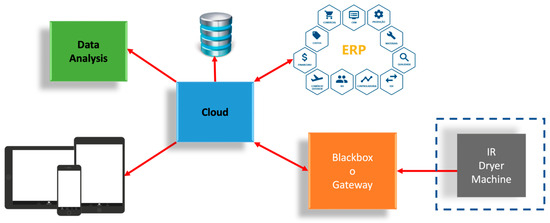
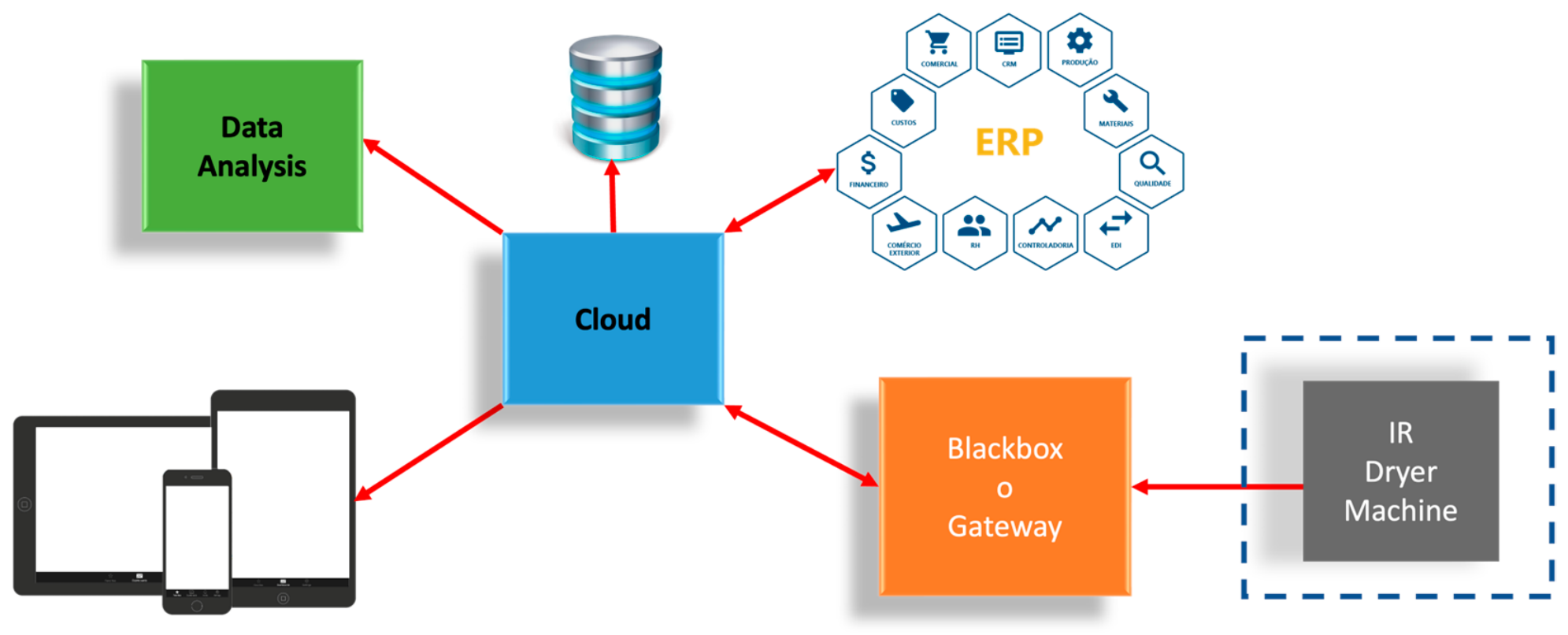
The deployment of cloud services enhances the accessibility and control of the IR drying system. The goal is not only to implement a cloud infrastructure to monitor and analyze the IR system, but also to generalize the digitization of agricultural applications, so that the solution can be reused in other commercial applications. Through cloud-enabled interfaces, operators can monitor and control the drying operation remotely, enabling swift adjustments to the drying protocol even from distant locations and supporting decentralized drying operations with centralized oversight (Figure 8).
Figure 8.
The proposed Cloud-Based System.
The scalability of cloud computing allows resources to be scaled up or down as demand for drying capacity fluctuates and expands in the future, including the incorporation of machine-learning and Artificial Intelligence models to further optimize the drying parameters and the energy usage. The overall architecture comprises the IR drying equipment (with its sensors), a set of APIs/a gateway for secure data exchange, a cloud computing platform hosting the database and the data-analytics module, and a user interface designed for accessibility on tablets and mobile devices. From the data-flow point of view, the equipment continuously transmits data to the platform, where it is stored and analyzed to generate insights on process optimization; operators access these insights through the interface and can remotely adjust the drying parameters, closing the monitoring-and-control loop.
3.6. Raw Material
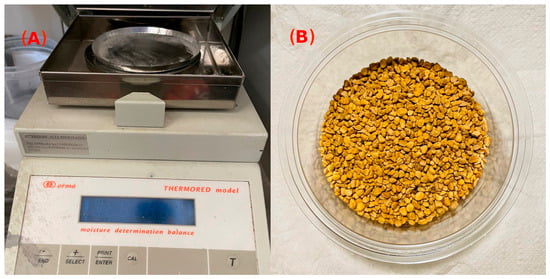
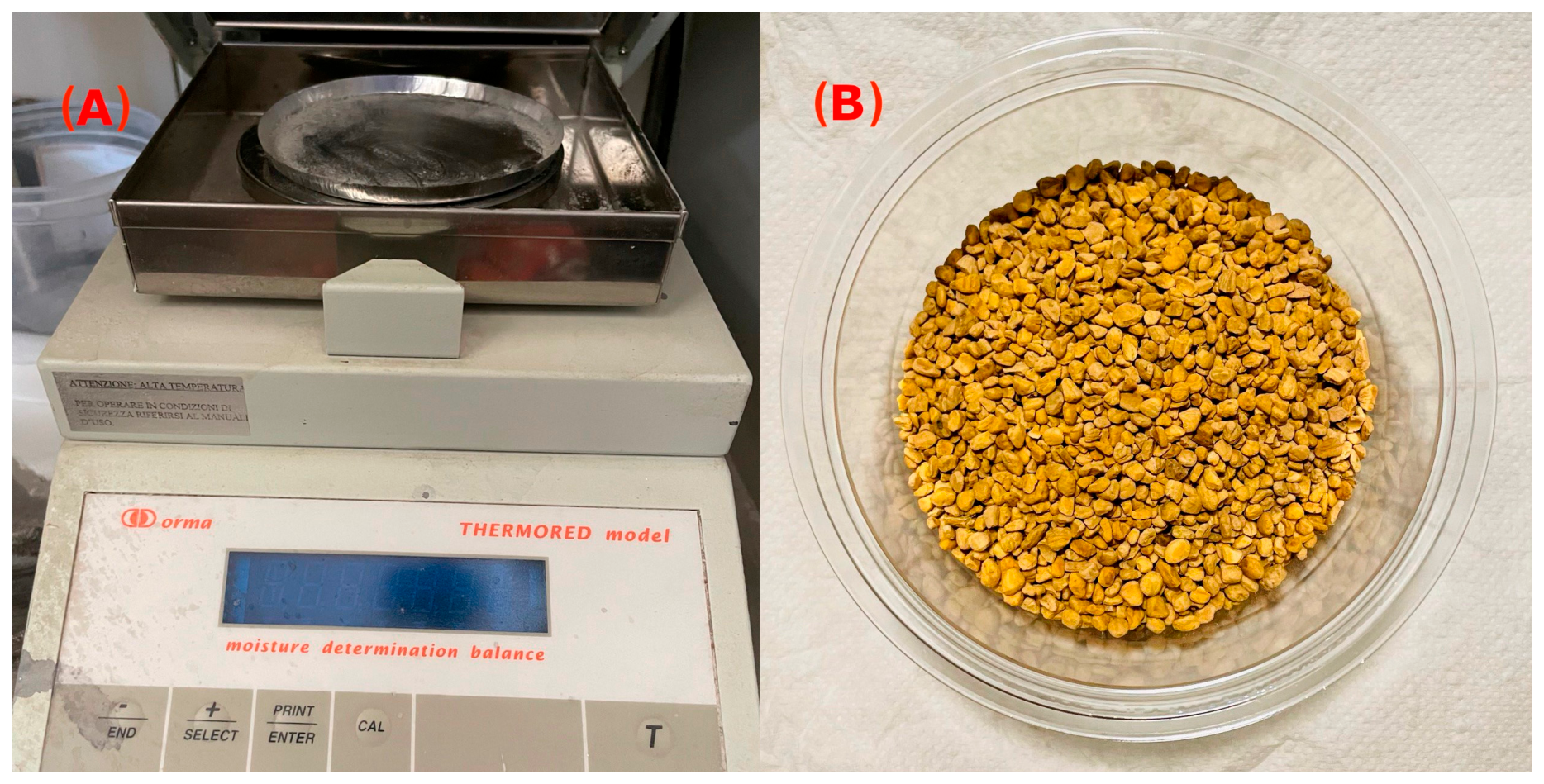
Wet pomace samples from a three-stage continuous centrifugation process were kindly supplied by Corradini SaS, a local olive oil producer in the province of Macerata, Italy. The samples exhibited an average particle size of 3–4 mm. The raw material is of the Piantone di Mogliano variety, a cultivar of Marche origin, widely cultivated in the province of Macerata. The pomace was collected immediately after pressing and fed directly to the drying system (a screw conveyor equipped with IR lamps), ensuring a continuous flow from the olive mill to the dried-pomace storage area. The drying system acts on the pomace as it passes through the conveyor screw, thereby reducing processing time and improving performance. The initial moisture content of the pomace was determined using a moisture sensor (a Hydro-Mix XT by Hydronix) and validated against a manual precision thermo-balance with a halogen lamp (Termored 64G by ORMA Srl, Assago, MI, Italy [56]). Figure 9 shows the reference instrument and the material, where (A) is the precision halogen thermo-balance used for the gravimetric validation of the moisture measurements and (B) the fresh olive-pomace samples.
Figure 9.
Raw material and reference instrument: (A) precision halogen thermo-balance (Termored 64G); (B) fresh olive-pomace samples.
4. Pilot Case and Preliminary Results
From an implementation point of view, the system is summarized as three main components: the automation system, the gateway, and the cloud service, described below. This section then reports the outcome of a preliminary pilot campaign carried out at the Corradini SaS olive mill (province of Macerata, Italy) on 15–17 October 2021, during the olive-harvest season.
4.1. Automation System
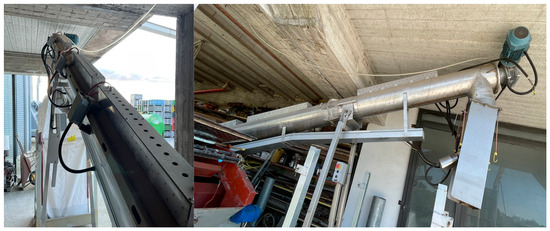
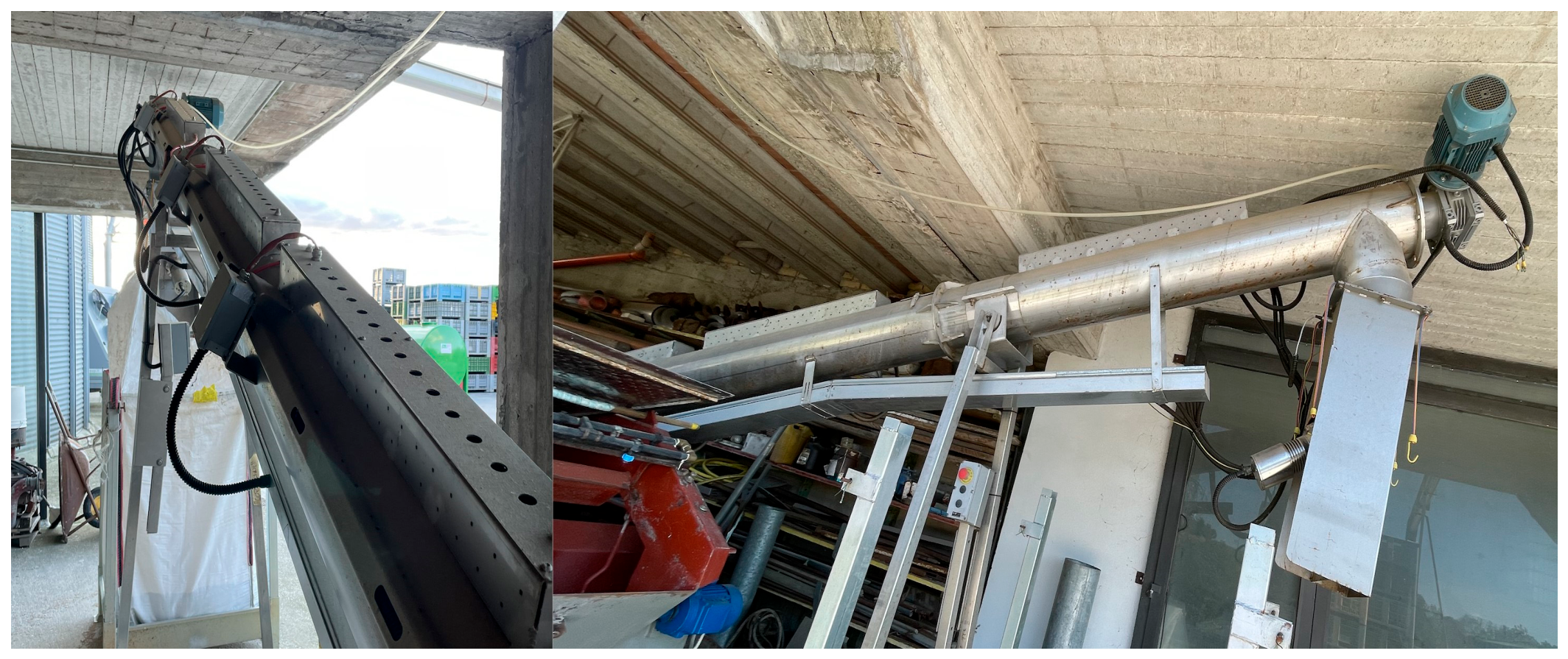
The pomace passes through the screw conveyor in a continuous flow, and the outlet moisture is mainly influenced by the conveyor’s rotational speed and the number of infrared lamps switched on (See Figure 10 and Figure 11). To optimize drying time, reduce moisture, and limit energy consumption, it is important to determine how many lamps to ignite, when, and for how long. Two operating modes were defined and controlled by the supervisor (See Figure 12):
Figure 10.
Two views of the infrared drying screw-conveyor system installed at the olive mill. On the left, the close-up of the inclined conveyor tube at the feed (inlet) end and on the right, the overall view of the installation, showing the inclined screw conveyor, the drive motor at the upper (outlet) end and the electrical control cabinet.
Figure 11.
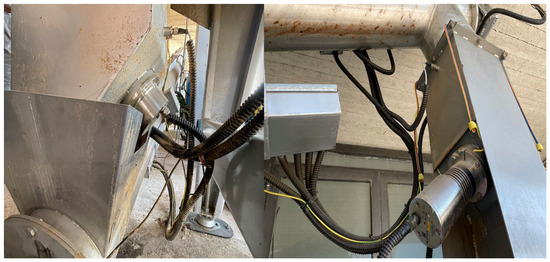
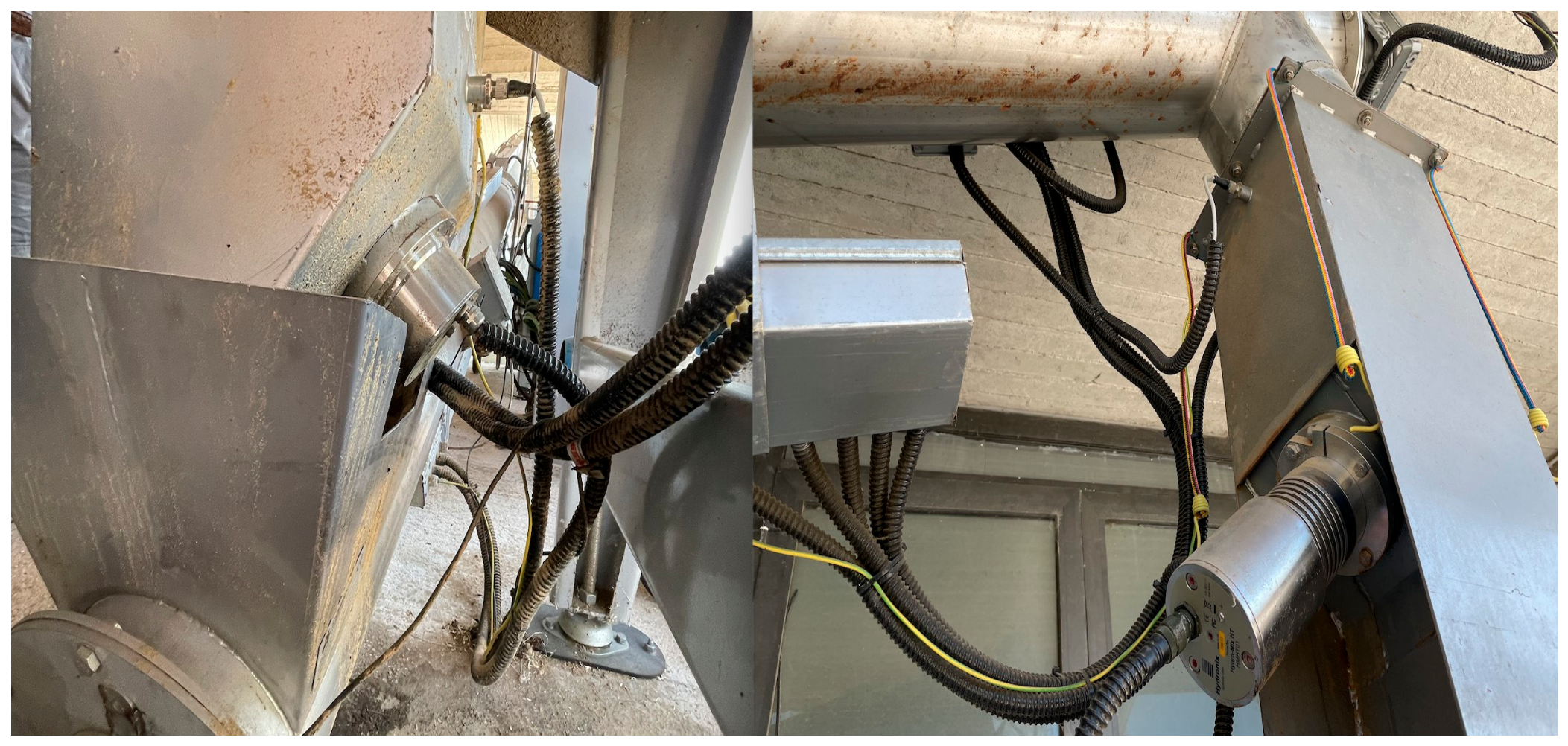
In-line installation of the two microwave moisture sensors (Hydro-Mix XT) on the screw conveyor. On the left, the inlet sensor, measuring the moisture of the incoming wet pomace, and on the right, the outlet sensor, measuring the moisture of the dried product at the discharge end. The associated cabling and junction boxes are also visible.
Figure 12.
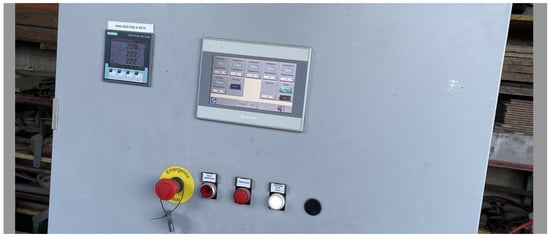
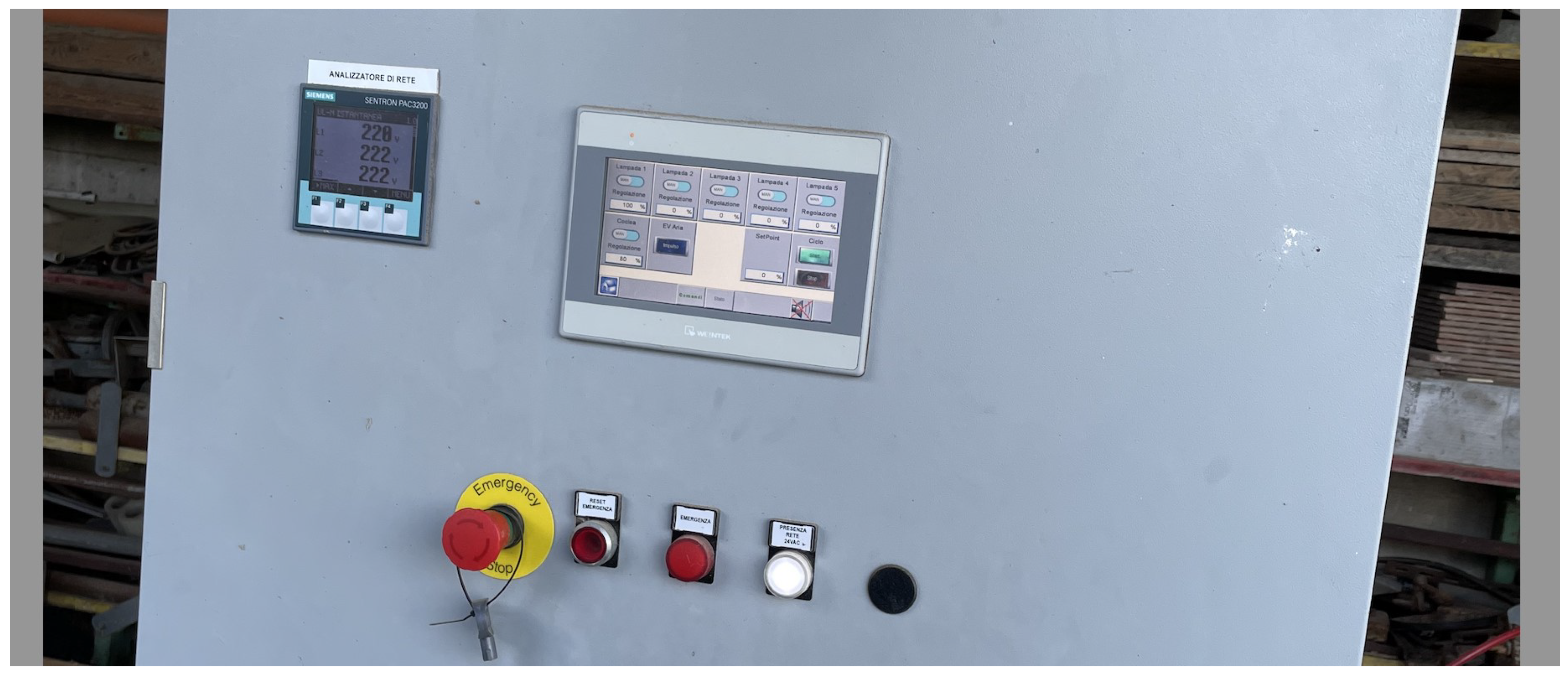
Electrical control cabinet of the drying system composed of the touch-screen human–machine interface (HMI) used to operate the plant and set the process parameters (centre), the multifunction energy meter that logs the electrical consumption of the conveyor motor and of the infrared lamps (top left), and the emergency-stop and control push-buttons (bottom).
- Automatic mode. Without direct operator action, the system independently manages the number of lamps switched on, their power, and the conveyor speed to bring the pomace moisture to the desired set point within a fixed amount of time. The moisture set-point, the humidity level expected at the conveyor outlet, is managed directly from the user interface.
- Manual mode. The user can carry out drying tests by varying both conveyor-speed parameters and the switching of individual lamps, while the interface displays all parameters and system variables and indicates whether the moisture set-point has been reached.
According to the design phase, the variables of interest acquired and sent to the cloud for further analysis are the pomace temperature at the inlet and outlet of the system, the air temperature, the pomace moisture at the inlet and outlet, the air moisture, the rotational speed of the conveyor, the state and energy consumption of the conveyor motor, the state and energy consumption of each lamp, the total energy consumption of the system, and the daily and total operating hours of the machine.
4.2. Gateway
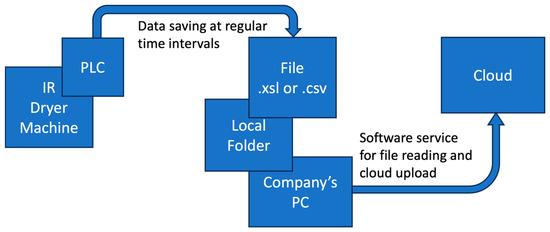
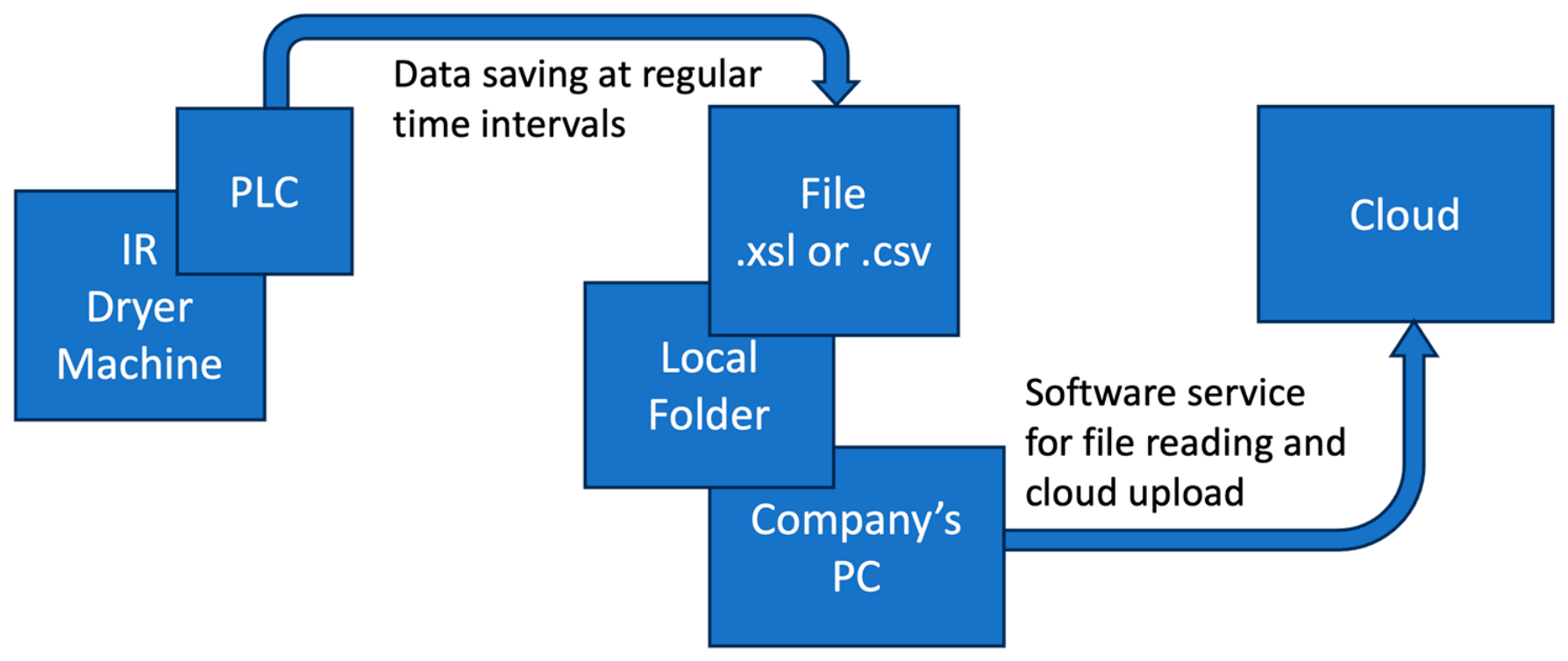
The communication between the automation system and the cloud is handled by a gateway, which reads the data from the machine PLC (saving it locally in case of communication problems) and exchanges data with the cloud. The gateway is built around an Intel Atom motherboard (1.83 GHz, x86 architecture, 2 GB RAM, 32 GB eMMC, 10 × 10 cm). The machine is connected to the gateway via an Ethernet cable and, using TCP/IP, logs all acquired data to a CSV file. The same script that reads the CSV file also authenticates the gateway to the cloud and starts sending the data. The data are collected via the PLC’s (S7-1500) dedicated logging function, which records them at fixed time intervals (Figure 13).
Figure 13.
Data flow between the plant and the cloud service. The PLC of the olive-stone drying machine saves the process data at regular time intervals as .xls/.csv files in a local folder on the company PC, and dedicated software then reads these files and uploads them to the cloud.
4.3. Cloud Service
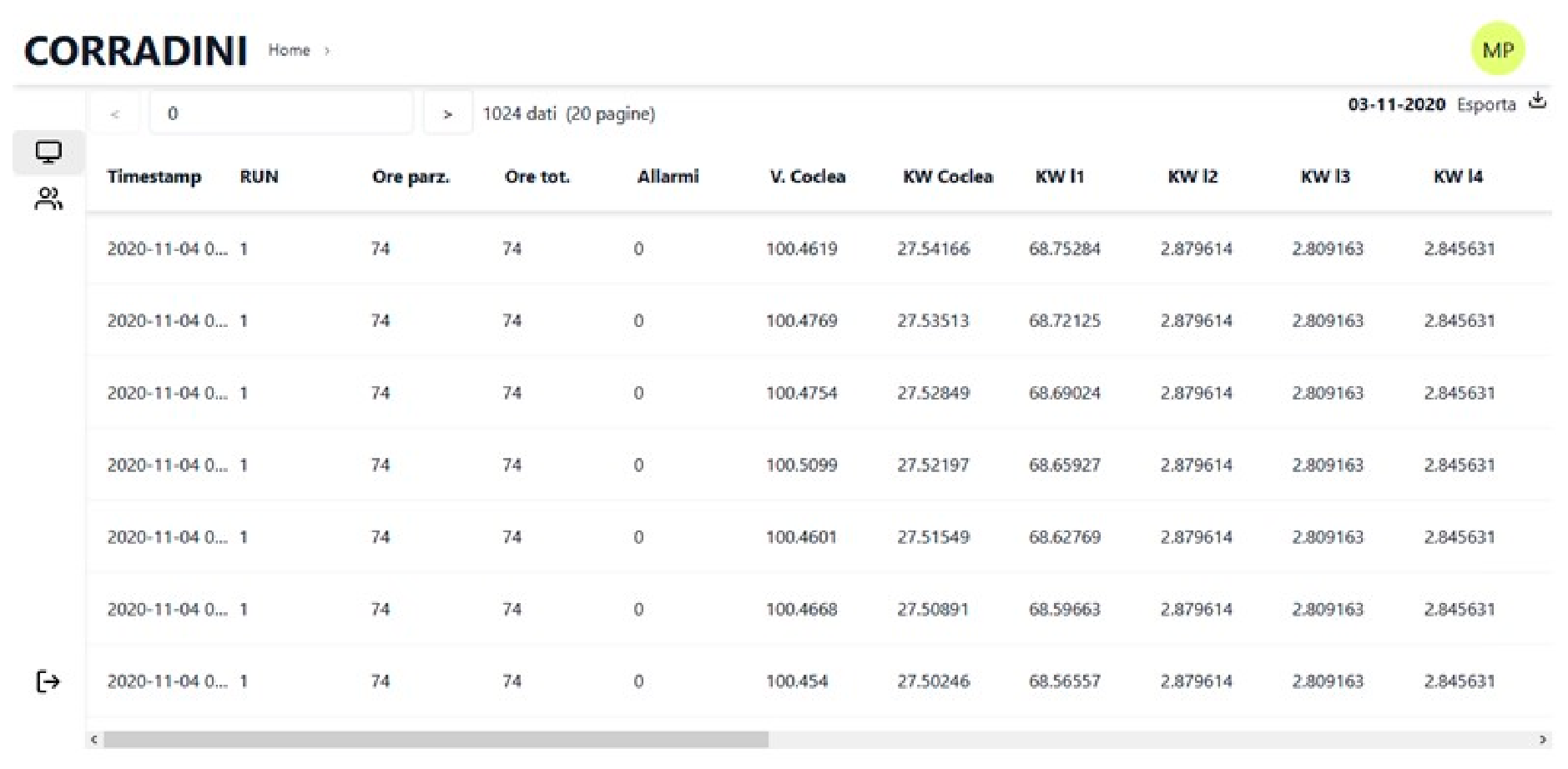
Cloud computing provides ubiquitous, convenient, and on-demand access to a shared pool of configurable computing resources and is an ideal platform to address the scalability and flexibility required for processing harvest data, whose demand varies greatly between on- and off-seasons. With the aid of the cloud, computation-intensive data processing and analysis can be carried out on powerful servers, easing the burden on the local devices; the web software is optimized for tablets and other mobile devices, with a touch-friendly design. The software includes a data analysis and visualization module that can display a variety of information, from the real-time machine state to a simple temperature history, and the server can send an alarm back to the machine site or a text message/email to any registered user. In the architecture, there are two types of connections. The first is between the machine and the gateway at the local site, and the second is between the gateway and the cloud server, with the cloud server managing the entire system and the gateway hosting select localized applications synchronized with the cloud. Figure 14 shows the cloud dashboard developed for the pilot plant, through which the acquired variables are monitored and analyzed.
Figure 14.
Cloud monitoring dashboard of the pilot plant (Corradini S.a.s.), showing the logged process variables.
4.4. Test Conditions
In this first testing stage, and due to technical constraints, the system was operated in a fixed configuration with a constant screw-conveyor speed, deliberately kept low to maximize the residence time of the pomace under the infrared field, an estimated throughput of about 10 kg/h of wet feed, and a fixed infrared-lamp configuration with a single active emitter (See Table 2).
Table 2.
Drying process and equipment operating parameters during the pilot campaign.
Under the fixed configuration reported in Table 3, a constant screw-conveyor set-point and a single active medium-wave IR emitter, the pomace is dried below the 5% threshold while the emitter draws about 1.7 kW and the screw motor about 0.3 kW, for a stable total electrical demand of about 1.85 kW. Referred to the processed mass, this corresponds to a specific consumption of about 0.25 kWh per kilogram of dried product (≈0.6–1.1 kWh per kilogram of evaporated water), directly linking the drying performance to the energy demand of the equipment. Two microwave moisture sensors (Hydro-Mix XT) measured the pomace moisture at the conveyor inlet and outlet, while three probes recorded the product temperature at the inlet, mid-length, and outlet of the drying section. All process variables (moisture, temperatures, conveyor speed, and the electrical energy of the motor and of each lamp) were logged once per minute and streamed to the cloud service. The three runs lasted approximately 3.1, 5.5, and 7.9 h, for a total of roughly 16 h of continuous, monitored operation and about 1000 logged records. Because the moisture is measured only at the inlet and outlet of the continuously fed conveyor, and not at intermediate positions, the data describe the steady-state input–output behavior of the dryer rather than the transient moisture history of an individual batch; the implications of this for drying-kinetics modeling are discussed in the next sections.
Table 3.
Summary of the three pilot runs (mean values). The table also reports the cumulative electrical energy consumption (for the conveyor motor and lamps) across the three runs. The average power remains at about 1.85 kW across all runs. Wet feed and dried pomace are estimated from the throughput of ≈10 kg h−1.
4.5. Drying Performance
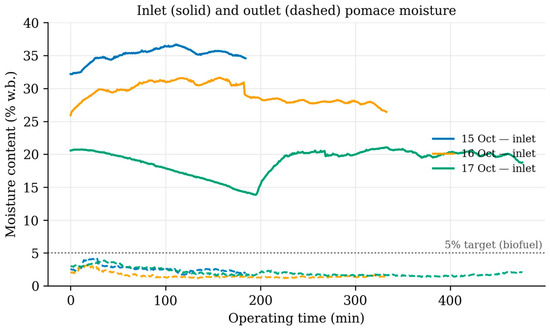
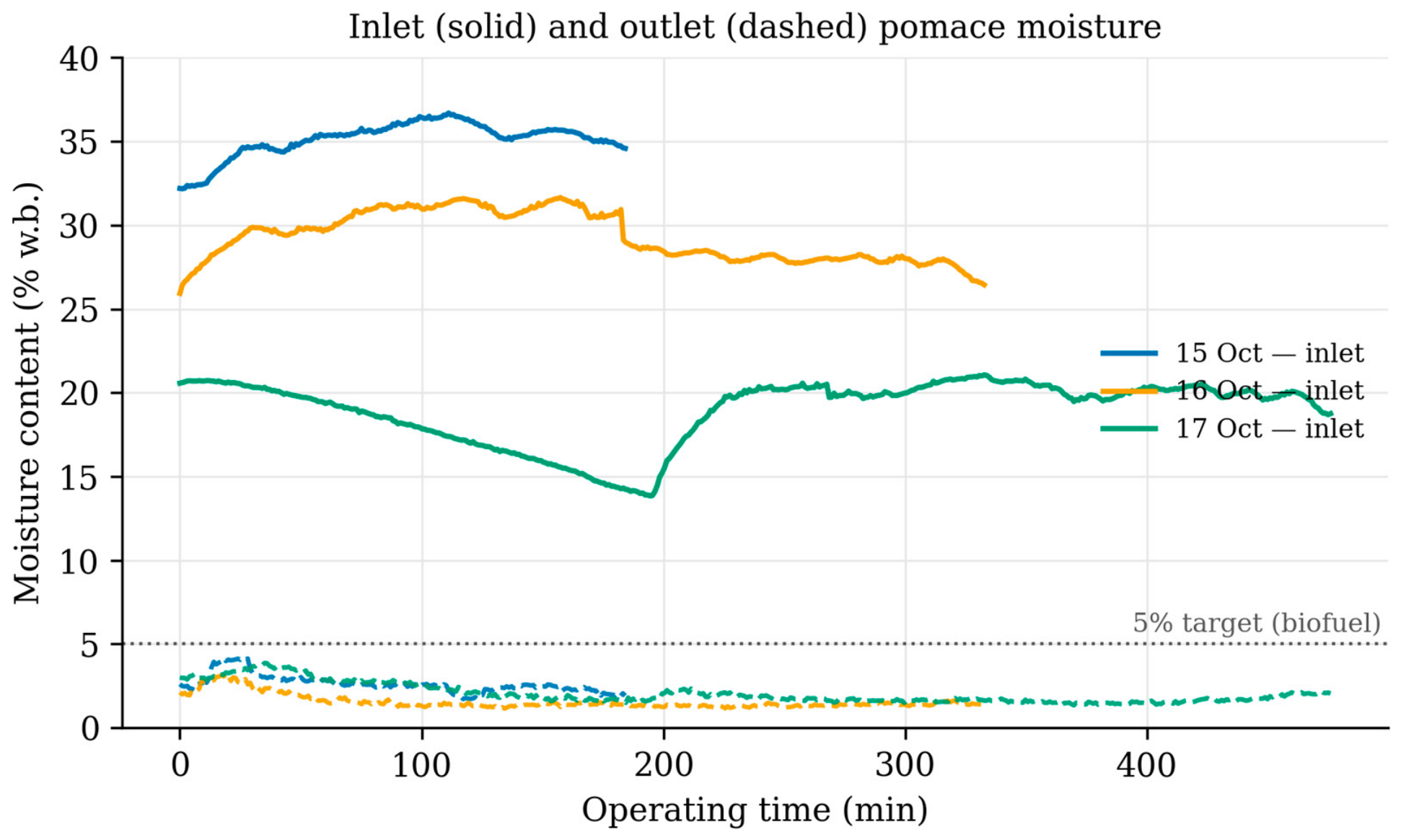
Figure 15 reports the inlet and outlet moisture content of the pomace over the operating time of the three runs. A first, practically relevant observation concerns the inlet material. The moisture content of the fresh pomace decreased markedly from one day to the next, from about 35% (wet basis, w.b.) on 15 October to about 29% on 16 October and 19% on 17 October, as the uncovered pile naturally lost water between harvest days. This spontaneous variability of the feed is representative of real olive-mill operating conditions and provides, within a single campaign, three distinct inlet levels spanning roughly 14–37% w.b.
Figure 15.
Inlet (solid) and outlet (dashed) pomace moisture content over the operating time of the three pilot runs. The outlet moisture stays well below the 5% biofuel threshold throughout, despite the wide day-to-day variation of the inlet moisture.
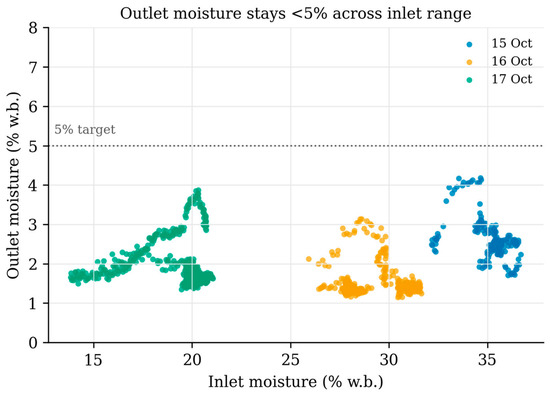
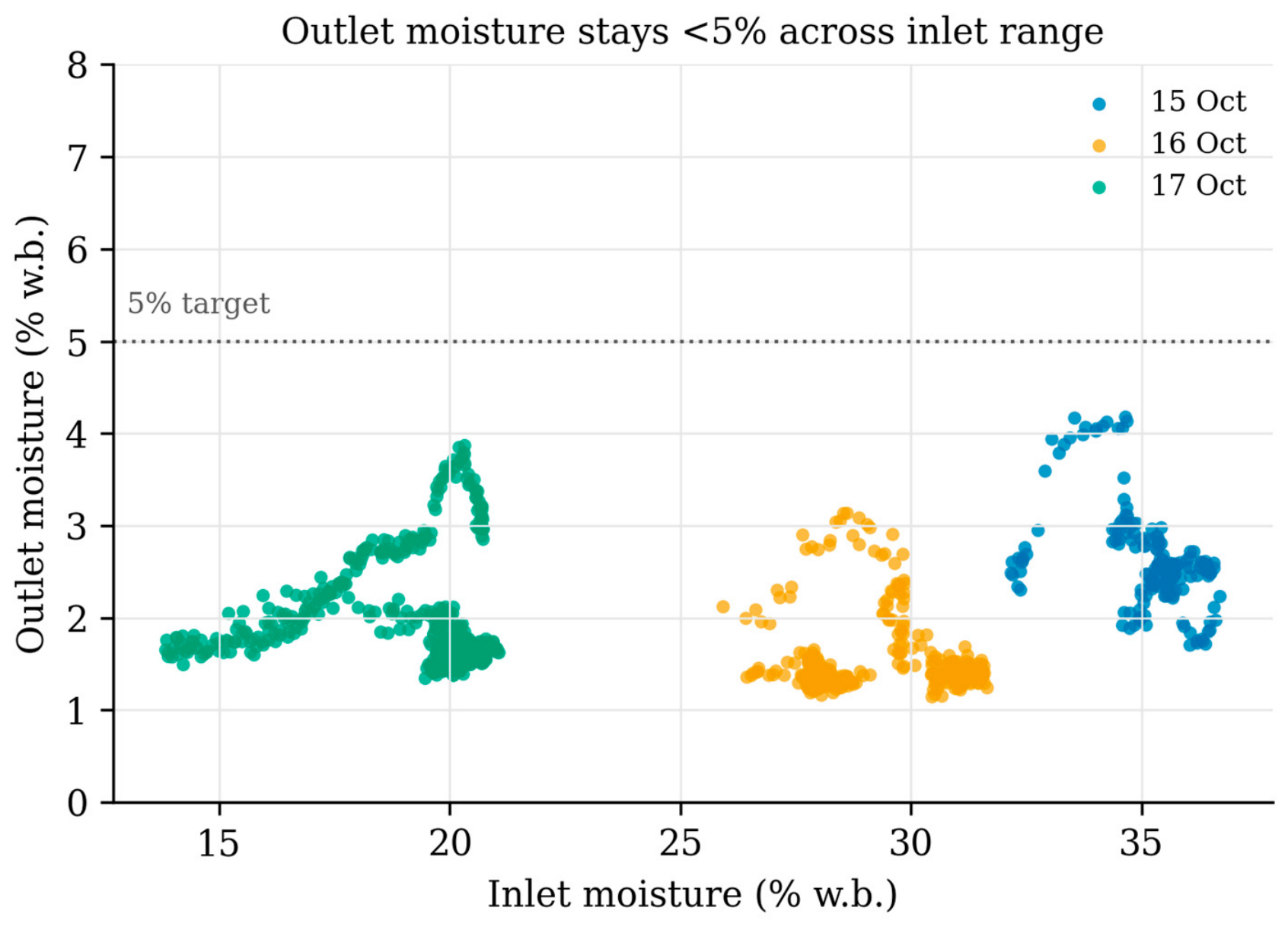
Despite this wide variation in inlet moisture, the outlet moisture remained consistently low and stable, in the range 1.1–4.2% w.b., with daily means of 2.63%, 1.55%, and 2.04% w.b. (Table 3). The outlet moisture stayed below the 5% w.b. threshold, the reference value required for the solvent extraction of the residual pomace oil and for the use of the stone fraction as a solid biofuel, for 100% of the operating time across all three runs. The corresponding moisture removal ranged from 89.3% to 94.7% of the inlet water content. Under the three tested conditions, the estimated amount of dried pomace produced was about 20.5, 39.9, and 65.6 kg (from 30.7, 55.5, and 79.3 kg of processed wet feed).
Figure 16 plots the outlet moisture against the inlet moisture and shows that the outlet value is essentially decoupled from the inlet within the tested range. The system reliably drives the pomace to a low, narrow outlet-moisture band regardless of the feed condition. In the adopted slow-conveyor configuration, the dryer therefore operates with a margin with respect to the 5% target; it even over-dries the material, which indicates headroom to increase the throughput, or to modulate the lamp power, without compromising the product specification. Exploiting this margin through the closed-loop automatic mode is one of the objectives of the ongoing work.
Figure 16.
Outlet moisture as a function of inlet moisture for the three runs. The outlet value remains in a narrow band below the 5% target and is essentially decoupled from the inlet condition.
4.6. Temperature Behaviour
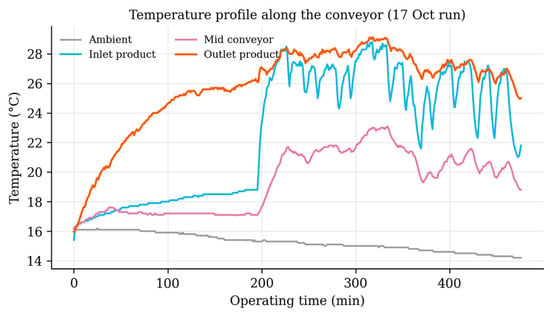
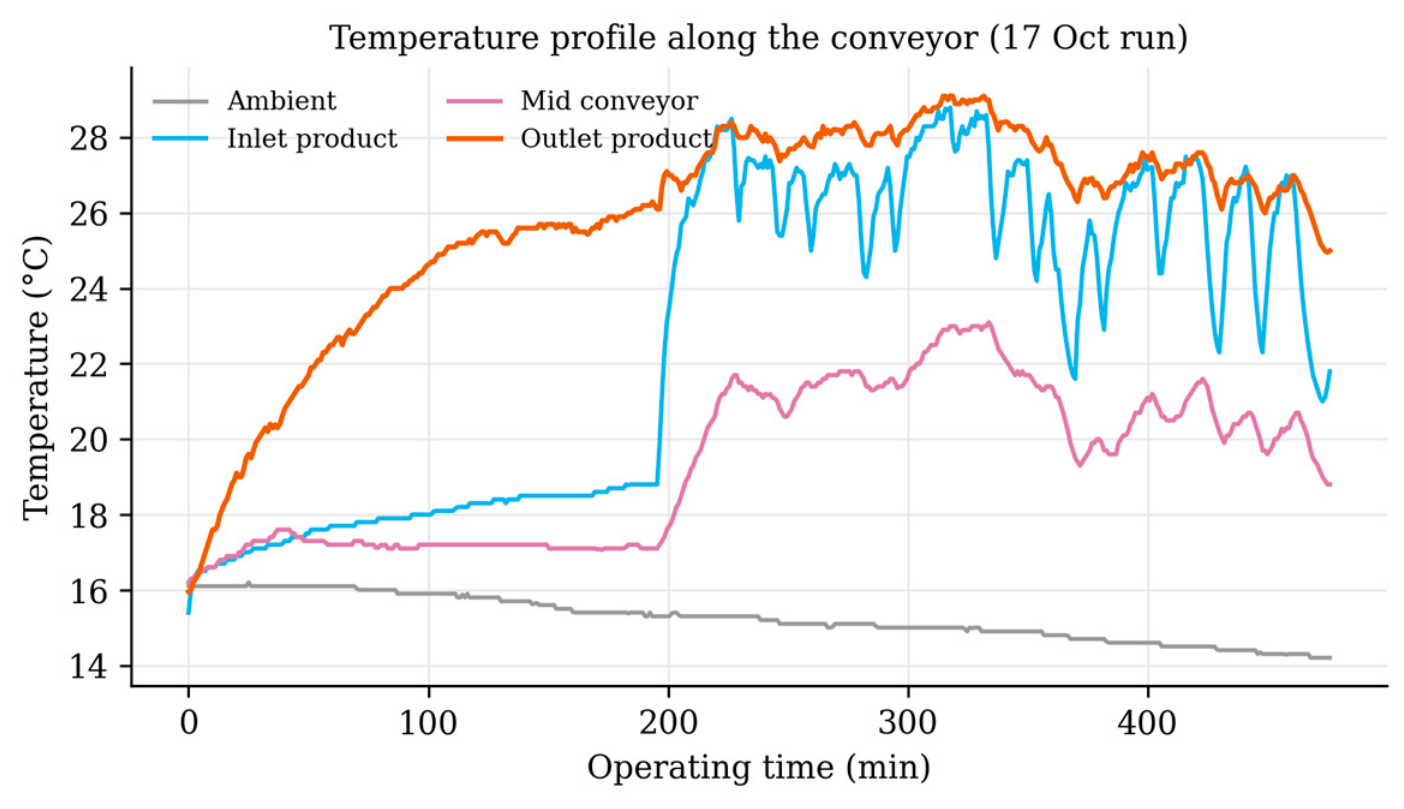
Figure 17 shows the temperature profile recorded during the 17 October 2021 run (representative of the three). The product temperature rises only moderately along the conveyor, from an inlet value close to ambient to an outlet value a few degrees higher, and remains, throughout, well below the thresholds associated with the thermal degradation and browning of the material reported in the infrared-drying literature. This is consistent with the nature of infrared drying, in which energy is transferred directly to the surface of the product and moisture is removed rapidly without the bulk overheating that characterizes long convective cycles, and it supports the preservation of the material for its subsequent energy or extractive valorization. A full physicochemical characterization of the dried product was beyond the scope of this preliminary campaign, but its quality can be inferred from the process thermal history: the product temperature stayed only a few degrees above ambient, well below the thresholds for thermal degradation and browning. This preserves the residual oil and bioactive compounds better than convective hot-air drying (higher temperatures, longer residence, risk of overheating and case hardening) and avoids the microbial spoilage of uncontrolled open-air or solar drying. Together with the low, controlled outlet moisture (1.5–2.6% w.b.), this yields a stable product suitable for solvent oil extraction and as a graded solid biofuel. A quantitative characterization (calorific value, ash, color, residual phenolic/oil content) is planned as future work.
Figure 17.
Temperature profile (ambient, inlet, mid-conveyor and outlet product temperature) recorded during the 17 October run.
4.7. Energy Consumption and Cloud Monitoring
The total electrical energy drawn by the system (conveyor motor plus lamps) was logged cumulatively (Table 1). The average electrical power was remarkably stable across the three runs, at about 1.85 kW (1.88, 1.84 and 1.83 kW), corresponding to 5.8, 10.2 and 14.5 kWh over the three runs. Referred to the estimated throughput, the specific energy consumption is of the order of 0.25 kWh per kilogram of dried product and, expressed per unit of evaporated water, in the range 0.6–1.1 kWh/kg, i.e., of the same order as the latent heat of vaporization of water (≈0.63 kWh/kg), which confirms the physical consistency of the measurements and the efficient radiative coupling of the process. The higher specific value observed on 17 October reflects the lower inlet moisture of that day, where at equal installed power, a drier feed offers less water to remove per unit of processed mass. These energy figures should be regarded as indicative because the throughput was not logged during the 2021 campaign and was estimated a posteriori; their precise determination through controlled mass-flow measurement is part of the planned future work. Beyond the numerical values, the campaign demonstrates the operation of the digital layer of the system with the one-minute telemetry of moisture, temperature and per-lamp energy was acquired by the PLC, forwarded by the gateway and made available on the cloud dashboard throughout the 16 h of testing, enabling the remote inspection of the drying process and providing the data basis on which the closed-loop optimization and the environmental assessment of Section 5 are built.
5. Environmental Evaluation and Discussion
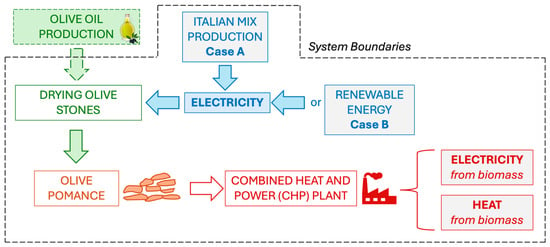
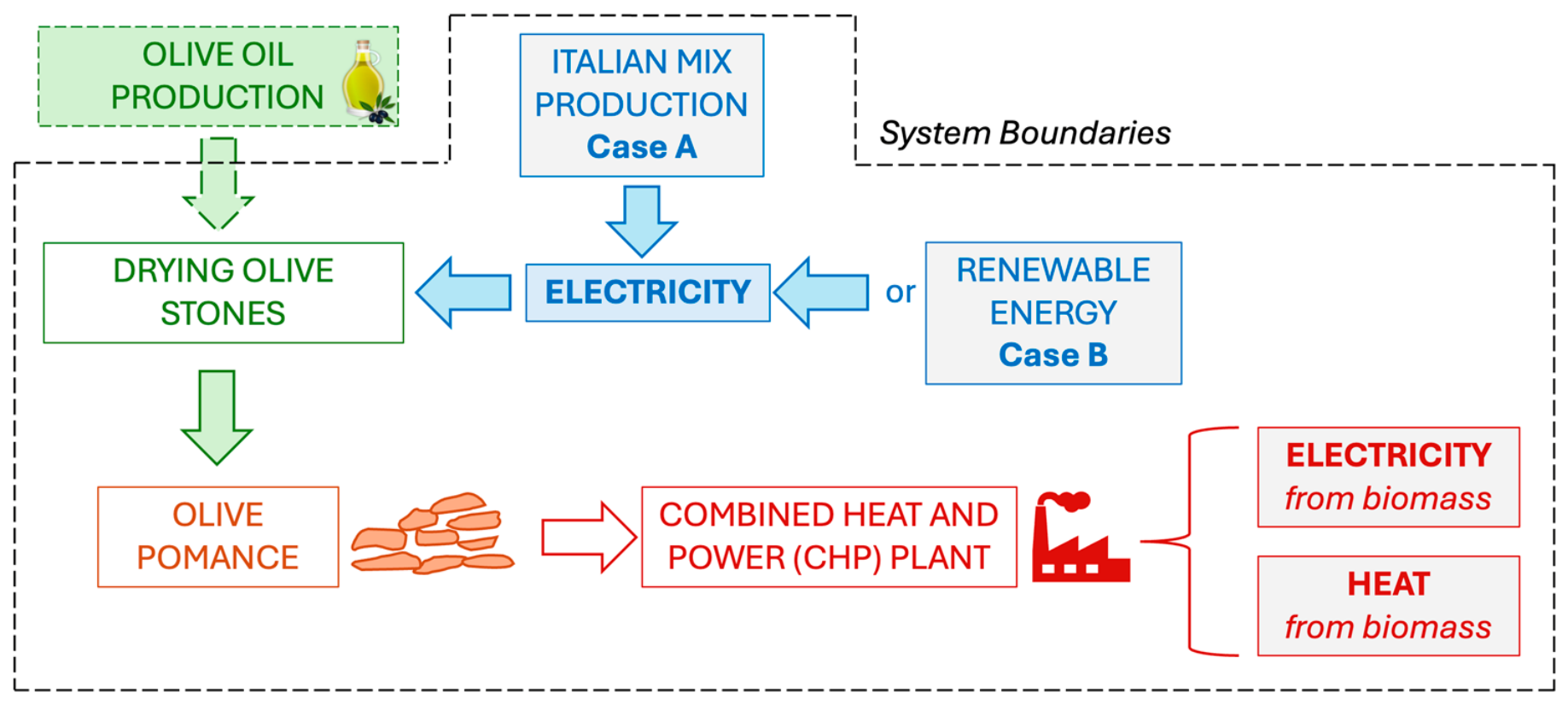
This section presents a preliminary environmental assessment of the proposed drying system. This assessment can be seen as a scenario analysis, rather than a full life-cycle assessment (LCA), to give an early evaluation of the possible environmental benefits considering the electrical consumption measured on the pilot system, the energy achieved by the combustion of olive pomace, and the energy conversion efficiency to achieve electricity and thermal power from olive pomace (Figure 18). This study analyzes the fossil CO2-eq avoided when olive pomace substitutes conventional fuel production. The study was evaluated in terms of CO2-eq over 100 years. Two cases were evaluated:
Figure 18.
Scenario with electricity and heat produced from olive pomace, a solid waste from olive oil production. Case A: electrical consumption sourced from the Italian electricity mix. Case B: electrical consumption from a photovoltaic plant.
- Case A: The electricity consumed for drying is sourced from the Italian electricity mix.
- Case B: The electricity used for drying is supplied by a small Photovoltaic Plant.
Figure 18 describes the analyzed scenario in which electricity and heat are produced from olive pomace, a solid waste from olive oil production. The comparison is between the electrical consumption sourced from the Italian electricity mix (Case A) and that from a photovoltaic plant (Case B). This comparison yields different CO2-eq/kWh impacts. As electrical and thermal energy are produced, both values were combined using the exergy formula (1) [57], where Etot is the total exergy (kWheq), Eel is the electrical energy (kWh), Eth is the thermal energy (kWh), T0 is the ambient temperature (273.15 K), and Th is the hot water delivery temperature (353.15 K). Therefore, the resulting impact can be evaluated in terms of CO2-eq/kWh-eq.
5.1. Assumptions
Following the main assumptions considered for the proposed early environmental evaluation:
- System boundaries: the study considers the drying and use phases, without analyzing the impact of tractors and the transport of biomass products.
- The study does not consider transport, equipment manufacturing, or the treatment of the liquid fractions of the pomace.
- The electrical consumption for drying olive stone is 0.25 kWh/kg, as observed by the pilot.
- The lower heating value of olive pomace is 4.74 kWh/kg [4,17].
- The carbon accounting treats the CO2-eq released when the stone is burned as biogenic and approximately carbon-neutral.
- The emission factor for the Italian electricity mix is 0.215 kg CO2-eq/kWh [58]
- Olive pomace electrical efficiency conversion: 23%
- Olive pomace thermal efficiency conversion: 60%
- Coefficient of Performance (COP) for equivalent heat pump (with electricity from grid): 3
- The photovoltaic electrical generation impact considered if the drying system is powered by photovoltaic panels is 0.04 kg CO2-eq/kWh [59]
5.2. Results
With the values above, one kilogram of dried olive stone delivers about 4.74 kWh of fuel energy, against roughly 0.25 kWh of electricity used for drying. Based on the efficiency values, 1 kg of dried olive pomace can produce 1.09 kWh of electricity and 2.84 kWh of thermal energy at 80 degrees Celsius (353.15 K), with a total exergy of about 1.61 kWh-eq. If the drying system is powered by the electrical grid, given the Italian electricity mix, an impact of 0.033 kg CO2-eq/kWh-eq is achieved using olive pomace as biofuel. If a photovoltaic plant is used as an electricity source, the impact decreases to 0.006 kg CO2-eq/kWh-eq. Both values are interesting and comparable in terms of the impact related to electricity produced from renewable sources.
Treating stone combustion as carbon-neutral, each kilogram of dried stone that displaces a fossil fuel for the same thermal duty avoids on the order of −0.384 kg CO2-eq/kWh-eq when used to substitute for the Italian grid mix. This result can be extended to plant scale by linearly scaling the intensive (per-kilogram) quantities defined above, specific electrical consumption, heating value, conversion efficiencies, and emission factors, by the pomace mass processed by a mill over a harvest season, since these quantities are independent of the processed mass. On this basis, a mill processing 100 t of wet pomace per season (from about 30% to 5% moisture) would yield roughly 74 t of dried stone, producing about 120 MWh-eq of energy considering total exergy, and avoiding about 28.50 t of CO2-eq.
Comparing the achieved results, the literature reports even −0.460 kg CO2-eq/kWh-eq in terms of emission savings when olive pomace is used for energy production, considering a different drying system including a hydrothermal treatment [60]. Moreover, in [61], emission savings of −0.47 kg CO2-eq/kg of virgin olive oil were reported when olive pomace is used as biofuel. They considered electricity generation of 0.88 kWh per kg of virgin olive oil; this could correspond to approximately −534 g CO2-eq/kWh-eq of renewable electricity generated. This comparison confirms the strong interest in this biofuel and the potential to achieve greater savings in mature projects, compared to the −0.384 kg CO2-eq/kWh-eq value evaluated in this paper. The possibility of achieving a range of 0.006–0.033 kg CO2-eq/kWh-eq is a relevant result that warrants further analysis through a complete LCA.
6. Conclusions
This work presented the design, construction, and first field testing of an automated infrared drying system for the valorization of olive pomace into solid biofuel, framed within a circular-economy approach to the olive-oil supply chain. Unlike the thin-layer, static and laboratory-scale IR-drying studies that dominate the literature, the proposed system integrates the infrared drying directly into the screw conveyor that transports the pomace, so that the material is dried while it is being moved, and couples it with real-time online microwave moisture sensing, PLC control and a cloud-based monitoring and data-analysis service.
These results can be positioned with respect to previous studies on the drying of olive by-products and other agricultural materials. Earlier works characterized the thin-layer and kinetic drying behaviour of wet olive husk and olive stone, and applied infrared drying mainly to thin, static layers of fruit, vegetable and cereal products, in all cases under batch, laboratory-scale conditions. In contrast, the present work demonstrates infrared drying of olive pomace in a continuous, in-line industrial configuration, in which the material is dried while being conveyed, and the process is closed-loop-ready through real-time online moisture sensing and cloud-based monitoring under real olive-mill operating conditions. The main contribution of this work is therefore not a new drying-kinetics model, but the integration and field demonstration of an automated, sensor-driven, continuous IR drying process that converts a variable and moist by-product into an on-specification solid biofuel.
A preliminary pilot campaign carried out at an olive mill over three days and about sixteen hours of continuous, cloud-monitored operation demonstrated the effectiveness of the concept. Despite a wide, naturally occurring variation of the inlet moisture (from about 14% to 37% w.b.), the system consistently reduced the pomace moisture to a stable outlet value of 1.5–2.6% w.b., below the 5% threshold required for biofuel use, for the entire operating time, with a moisture removal of 89–95% and a very stable electrical demand of about 1.85 kW. The measured specific consumption, on the order of 0.25 kWh per kilogram of dried stone, together with a preliminary environmental scenario, indicates an impact of 0.033 kg CO2-eq/kWh-eq if grid electricity is used for drying. This value can decrease to 0.006 kg CO2-eq/kWh-eq if the electricity for drying is sourced from a photovoltaic plant.
The study also has clear limitations that define the next steps. First, the pilot was operated in a single, fixed, and deliberately low-throughput configuration, and the throughput was not logged, so the specific-energy and environmental figures are indicative and require confirmation through controlled mass-flow measurement. Second, moisture was recorded only at the inlet and outlet of the continuously fed conveyor, which captures the steady-state input–output behavior but not the transient moisture profile needed to fit drying-kinetics models. Third, the automatic closed-loop operating mode, although implemented, was not yet exercised under load. Fourth, the campaign covered a single cultivar (Piantone di Mogliano), a single site, and about sixteen hours of operation, and the environmental analysis is a preliminary scenario rather than a full life-cycle assessment.
Future work will therefore (i) install additional moisture sensors at intermediate conveyor positions to obtain the spatial moisture profile needed to fit and validate drying-kinetics models; (ii) exercise the automatic, closed-loop operating mode that modulates the lamp power and the conveyor speed against a moisture set-point, and quantify its benefit on energy efficiency and throughput; and (iii) develop a full, field-validated life-cycle assessment, extended to the fate of the liquid and fine pomace fractions, from the scenario presented here. Beyond the specific application, the cloud architecture was designed to be generalizable, providing a template for digitalizing and optimizing other transformation processes in the agricultural sector.
Author Contributions
Conceptualization, M.P., A.M. and P.C.; methodology, M.P., P.C. and A.B.; software, M.P.; validation, M.P., P.C. and M.T.; formal analysis, M.P. and M.T.; investigation, M.P.; resources, A.M. and A.F.; data curation, M.P. and A.F.; writing—original draft preparation, M.P., P.C. and M.T.; writing—review and editing, all authors; visualization, M.P.; supervision, A.M., A.F. and A.B.; project administration, A.M. All authors have read and agreed to the published version of the manuscript.
Funding
This research was funded by PSR Marche 2014/2020, Misura 16.1—Support for the establishment and management of the EIP operational groups on agricultural productivity and sustainability. Project VA.S.O.—Valorization of the by-products derived from Piantone di Mogliano olives through the implementation of new IR drying processes, grant number 27813.
Institutional Review Board Statement
Not applicable.
Informed Consent Statement
Not applicable.
Data Availability Statement
The data presented in this study belong to third-party companies involved in the project and are therefore not publicly available due to confidentiality agreements. Data may be available from the corresponding author upon reasonable request and with permission of the third-party companies involved.
Conflicts of Interest
The authors declare no conflict of interest.
Abbreviations
The following abbreviations are used in this manuscript:
| COP | Coefficient of Performance |
| IR | Infrared Ray |
| LCA | Life-Cycle Assessment |
| MR | Moisture Ratio |
| PLC | Programmable Logic Controller |
| RMSE | Root Mean Square Error |
| SCADA | Supervisory Control and Data Acquisition |
| w.b. | wet basis |
References
- Eurostat. Olive Trees Cover 4.6 Million Hectares in the EU. 2019. Available online: https://ec.europa.eu/eurostat/web/products-eurostat-news/-/DDN-20190301-1 (accessed on 3 April 2024).
- European Commission. Olive Oil in the EU—Factsheet. Available online: https://agriculture.ec.europa.eu/ (accessed on 3 April 2024).
- Olive Oil Times. Olive Oil Production in Europe Expected to Reach 1.5M Tons in 2023/24. Available online: https://www.oliveoiltimes.com/ (accessed on 3 April 2024).
- García Martín, J.F.; Cuevas, M.; Feng, C.-H.; Álvarez Mateos, P.; Torres García, M.; Sánchez, S. Energetic Valorisation of Olive Biomass: Olive-Tree Pruning, Olive Stones and Pomaces. Processes 2020, 8, 511. [Google Scholar] [CrossRef] [Scilit]
- Liu, Y.; Ma, X.; Shu, L.; Hancke, G.P.; Abu-Mahfouz, A.M. From Industry 4.0 to Agriculture 4.0: Current Status, Enabling Technologies, and Research Challenges. IEEE Trans. Ind. Inform. 2021, 17, 4322–4334. [Google Scholar] [CrossRef] [Scilit]
- Arvanitoyannis, I.S.; Kassaveti, A.; Stefanatos, S. Olive Oil Waste Treatment: A Comparative and Critical Presentation of Methods, Advantages and Disadvantages. Crit. Rev. Food Sci. Nutr. 2007, 47, 187–229. [Google Scholar] [CrossRef] [Scilit] [PubMed]
- Roig, A.; Cayuela, M.L.; Sánchez-Monedero, M.A. An Overview on Olive Mill Wastes and Their Valorisation Methods. Waste Manag. 2006, 26, 960–969. [Google Scholar] [CrossRef] [Scilit] [PubMed]
- Dermeche, S.; Nadour, M.; Larroche, C.; Moulti-Mati, F.; Michaud, P. Olive Mill Wastes: Biochemical Characterizations and Valorization Strategies. Process Biochem. 2013, 48, 1532–1552. [Google Scholar] [CrossRef] [Scilit]
- González, J.F.; González-García, C.M.; Ramiro, A.; González, J.; Sabio, E.; Gañán, J.; Rodríguez, M.A. Combustion Optimisation of Biomass Residue Pellets for Domestic Heating with a Mural Boiler. Biomass Bioenergy 2003, 27, 145–154. [Google Scholar] [CrossRef] [Scilit]
- IEA. Biofuel Demand Growth by Fuel and Region, 2022–2024; International Energy Agency: Paris, France, 2022. [Google Scholar]
- Efremov, G. Infrared Drying. In Modern Drying Technology; Tsotsas, E., Mujumdar, A.S., Eds.; Wiley-VCH: Weinheim, Germany, 2014. [Google Scholar]
- Huang, D.; Yang, P.; Tang, X.; Luo, L.; Sundén, B. Application of Infrared Radiation in the Drying of Food Products. Trends Food Sci. Technol. 2021, 110, 765–777. [Google Scholar] [CrossRef] [Scilit]
- Sakare, P.; Prasad, N.; Thombare, N.; Singh, R.; Sharma, S.C. Infrared Drying of Food Materials: Recent Advances. Food Eng. Rev. 2020, 12, 381–398. [Google Scholar] [CrossRef] [Scilit]
- Riadh, M.H.; Ahmad, S.A.B.; Marhaban, M.H.; Soh, A.C. Infrared Heating in Food Drying: An Overview. Dry. Technol. 2015, 33, 322–335. [Google Scholar] [CrossRef] [Scilit]
- Krishnamurthy, K.; Khurana, H.K.; Jun, S.; Irudayaraj, J.; Demirci, A. Infrared Heating in Food Processing: An Overview. Compr. Rev. Food Sci. Food Saf. 2008, 7, 2–13. [Google Scholar] [CrossRef] [Scilit]
- Pawar, S.B.; Pratape, V.M. Fundamentals of Infrared Heating and Its Application in Drying of Food Materials: A Review. J. Food Process Eng. 2017, 40, e12308. [Google Scholar] [CrossRef] [Scilit]
- Rastogi, N.K. Recent Trends and Developments in Infrared Heating in Food Processing. Crit. Rev. Food Sci. Nutr. 2012, 52, 737–760. [Google Scholar] [CrossRef] [Scilit] [PubMed]
- Donner, M.; Erraach, Y.; López-i-Gelats, F.; Manuel-i-Martin, J.; Yatribi, T.; Radić, I.; El Hadad-Gauthier, F. Circular Bioeconomy for Olive Oil Waste and By-Product Valorisation: Actors’ Strategies and Conditions in the Mediterranean Area. J. Environ. Manag. 2022, 321, 115836. [Google Scholar] [CrossRef] [Scilit] [PubMed]
- Stavropoulos, G.G.; Zabaniotou, A.A. Production and Characterization of Activated Carbons from Olive-Seed Waste Residue. Micropor. Mesopor. Mater. 2005, 82, 79–85. [Google Scholar] [CrossRef] [Scilit]
- Vaccari, M.; Franzetti, A.; Sbaffoni, S.; Chebbi, A. A Methodology for Boosting Circular Economy in Olive Oil and Wine Sectors: Opportunities for the Italian Competitiveness through Eco-Innovation Strategies. In Proceedings of the 16th International Conference on Environmental Science and Technology (CEST), Rhodes, Greece, 4–7 September 2019. [Google Scholar]
- Donner, M.; Radić, I. Innovative Circular Business Models in the Olive Oil Sector for Sustainable Mediterranean Agrifood Systems. Sustainability 2021, 13, 2588. [Google Scholar] [CrossRef] [Scilit]
- Gómez-Cruz, I.; del Mar Contreras, M.; Romero, I.; Castro, E. Towards the Integral Valorization of Olive Pomace-Derived Biomasses through Biorefinery Strategies. ChemBioEng Rev. 2024, 11, 253–277. [Google Scholar] [CrossRef] [Scilit]
- Leone, A.; Romaniello, R.; Peri, G.; Tamborrino, A. Development of a New Model of Olives De-Stoner Machine: Evaluation of Electric Consumption and Kernel Characterization. Biomass Bioenergy 2015, 81, 108–116. [Google Scholar] [CrossRef] [Scilit]
- Balbay, S. Life Cycle Analysis of Carbon Foam Production from Olive Pomace by New Green Process. Mater. Today Sustain. 2026, 13, 101317. [Google Scholar] [CrossRef] [Scilit]
- Parascanu, M.M.; Puig Gamero, M.; Sánchez, P.; Soreanu, G.; Valverde, J.L.; Sanchez-Silva, L. Life Cycle Assessment of Olive Pomace Valorisation through Pyrolysis. Renew. Energy 2018, 122, 589–601. [Google Scholar] [CrossRef] [Scilit]
- Mata-Sánchez, J.; Pérez-Jiménez, J.A.; Díaz-Villanueva, M.J.; Serrano, A.; Núñez-Sánchez, N.; López-Giménez, F.J. Statistical Evaluation of Quality Parameters of Olive Stone to Predict Its Heating Value. Fuel 2013, 113, 750–756. [Google Scholar] [CrossRef] [Scilit]
- Mata-Sánchez, J.; Pérez-Jiménez, J.A.; Díaz-Villanueva, M.J.; Serrano, A.; Núñez, N.; López-Giménez, J. New Techniques Developed to Quantify the Impurities of Olive Stone as Solid Biofuel. Renew. Energy 2015, 78, 566–572. [Google Scholar] [CrossRef] [Scilit]
- Cuevas, M.; Martínez-Cartas, M.L.; Pérez-Villarejo, L.; Hernández, L.; García-Martín, J.F.; Sánchez, S. Drying Kinetics and Effective Water Diffusivities in Olive Stone and Olive-Tree Pruning. Renew. Energy 2019, 132, 911–920. [Google Scholar] [CrossRef] [Scilit]
- AENOR. UNE 164003; Solid Biofuels—Fuel Specifications and Classes—Graded Olive Stones. Spanish Association for Standardization: Madrid, Spain, 2014.
- ISO 17225:2021; Solid Biofuels—Fuel Specifications and Classes. International Organization for Standardization: Geneva, Switzerland, 2021.
- ISO 18134:2022; Solid Biofuels—Determination of Moisture Content. International Organization for Standardization: Geneva, Switzerland, 2022.
- ISO 18135:2017; Solid Biofuels—Sampling. International Organization for Standardization: Geneva, Switzerland, 2017.
- ISO 17828:2015; Solid Biofuels—Determination of Bulk Density. International Organization for Standardization: Geneva, Switzerland, 2015.
- EN 15149-1; Solid Biofuels—Determination of Particle Size Distribution—Part 1: Oscillating Screen Method Using Sieve Apertures of 1 mm and Above. European Committee for Standardization: Brussels, Belgium, 2010.
- Sharma, G.P.; Verma, R.C.; Pathare, P.B. Thin-Layer Infrared Radiation Drying of Onion Slices. J. Food Eng. 2005, 67, 361–366. [Google Scholar] [CrossRef] [Scilit]
- Nowak, D.; Lewicki, P.P. Infrared Drying of Apple Slices. Innov. Food Sci. Emerg. Technol. 2004, 5, 353–360. [Google Scholar] [CrossRef] [Scilit]
- Fasina, O.O.; Tyler, R.T.; Pickard, M.D. Modeling the Infrared Radiative Heating of Agriculture Crops. Dry. Technol. 1998, 16, 2065–2082. [Google Scholar] [CrossRef] [Scilit]
- Sheridan, P.; Shilton, N. Application of Far Infrared Radiation to Cooking of Meat Products. J. Food Eng. 1999, 41, 203–208. [Google Scholar] [CrossRef] [Scilit]
- Ruiz Celma, A.; Rojas, S.; López-Rodríguez, F. Mathematical Modelling of Thin-Layer Infrared Drying of Wet Olive Husk. Chem. Eng. Process. Process Intensif. 2008, 47, 1810–1818. [Google Scholar] [CrossRef] [Scilit]
- Midilli, A.; Kucuk, H.; Yapar, Z. A New Model for Single-Layer Drying. Dry. Technol. 2002, 20, 1503–1513. [Google Scholar] [CrossRef] [Scilit]
- Midilli, A. Determination of Pistachio Drying Behaviour and Conditions in a Solar Drying System. Int. J. Energy Res. 2001, 25, 715–725. [Google Scholar] [CrossRef] [Scilit]
- Lewis, W.K. The Rate of Drying of Solid Materials. J. Ind. Eng. Chem. 1921, 13, 427–432. [Google Scholar] [CrossRef] [Scilit]
- Page, G.E. Factors Influencing the Maximum Rates of Air Drying Shelled Corn in Thin Layers. Master’s Thesis, Purdue University, West Lafayette, IN, USA, 1949. [Google Scholar]
- Overhults, D.G.; White, G.M.; Hamilton, H.E.; Ross, I.J. Drying Soybeans with Heated Air. Trans. ASAE 1973, 16, 112–113. [Google Scholar] [CrossRef] [Scilit]
- Henderson, S.M.; Pabis, S. Grain Drying Theory II: Temperature Effects on Drying Coefficients. J. Agric. Eng. Res. 1961, 6, 169–174. [Google Scholar]
- Yagcioglu, A.; Degirmencioglu, A.; Cagatay, F. Drying Characteristics of Laurel Leaves under Different Drying Conditions. In Proceedings of the 7th International Congress on Agricultural Mechanization and Energy, Adana, Turkey, 26–27 May 1999; pp. 565–569. [Google Scholar]
- Henderson, S.M. Progress in Developing the Thin Layer Drying Equation. Trans. ASAE 1974, 17, 1167–1172. [Google Scholar] [CrossRef] [Scilit]
- Wang, C.Y.; Singh, R.P. A Single Layer Drying Equation for Rough Rice; ASAE Paper No. 78-3001; American Society of Agricultural Engineers: St. Joseph, MI, USA, 1978. [Google Scholar]
- Erbay, Z.; Icier, F. A Review of Thin Layer Drying of Foods: Theory, Modeling, and Experimental Results. Crit. Rev. Food Sci. Nutr. 2010, 50, 441–464. [Google Scholar] [CrossRef] [Scilit] [PubMed]
- Nath, D. Smart Farming: Automation and Robotics in Agriculture. In Emerging Trends in Agriculture; AkiNik Publications: New Delhi, India, 2023. [Google Scholar]
- Abioye, E.A.; Abidin, M.S.Z.; Mahmud, M.S.A.; Buyamin, S.; Ishak, M.H.I.; Rahman, M.K.I.A.; Otuoze, A.O.; Onotu, P.; Ramli, M.S.A. A Review on Monitoring and Advanced Control Strategies for Precision Irrigation. Comput. Electron. Agric. 2020, 173, 105441. [Google Scholar] [CrossRef] [Scilit]
- Misra, T.; Anwarul, S.; Srivastava, D.; Cheng, X. Automation Techniques for Smart and Sustainable Agriculture and Its Challenges. In Proceedings of the 4th International Conference on Computing and Data Science (CONF-CDS 2022), Virtual, 16–25 July 2022. [Google Scholar]
- Bates, L. Screw Conveyors. In Bulk Solids Handling: Equipment Selection and Operation; Wiley-Blackwell: Chichester, UK, 2008; pp. 197–220. [Google Scholar]
- Hydronix. Hydro-Mix XT Digital Microwave Moisture Sensor. Available online: https://www.hydronix.com/products/hydro-mix-xt (accessed on 3 April 2024).
- Helios Quartz. Medium-Wave Infrared Lamps. Available online: https://www.heliosquartz.com/prodotti/lampade-ir-onda-media/ (accessed on 3 April 2024).
- ORMA Scientific. Thermored Halogen Moisture Analyser—Datasheet. Available online: https://www.ormascientific.com/ (accessed on 3 April 2024).
- Shabgard, H.; Faghri, A. Exergy Analysis in Energy Systems: Fundamentals and Application. Front. Heat Mass Transf. 2019, 12, 1–16. [Google Scholar] [CrossRef] [Scilit]
- ISPRA. Settore Elettrico: Emissioni di CO2 e Altri Impatti; 2026 ed.; Rapporti 426/2026; Istituto Superiore per la Protezione e la Ricerca Ambientale (ISPRA): Roma, Italia, 2026. Available online: https://www.isprambiente.gov.it (accessed on 22 July 2026).
- Baltrocchi, A.P.D.; Maggi, L.; Zamperone, A.; Rada, E.C.; Romagnoli, F. From Cradle to Kilowatt: Environmental Sustainability of Modern Photovoltaic Systems. Circ. Econ. Sustain. 2026, 6, 298. Available online: https://link.springer.com/article/10.1007/s43615-026-01019-6 (accessed on 22 July 2026). [CrossRef] [Scilit]
- Ugolini, M.; Recchia, L.; Wray, H.E.; Dijkstra, J.W.; Nanou, P. Environmental Assessment of Hydrothermal Treatment of Wet Bio-Residues from Forest-Based and Agro-Industries into Intermediate Bioenergy Carriers. Energies 2024, 17, 560. [Google Scholar] [CrossRef] [Scilit]
- Fernández-Lobato, L.; Aguado, R.; Jurado, F.; Vera, D. Biomass Gasification as a Key Technology to Reduce the Environmental Impact of Virgin Olive Oil Production: A Life Cycle Assessment Approach. Biomass Bioenergy 2022, 165, 106585. [Google Scholar] [CrossRef] [Scilit]



Disclaimer/Publisher’s Note: The statements, opinions and data contained in all publications are solely those of the individual author(s) and contributor(s) and not of MDPI and/or the editor(s). MDPI and/or the editor(s) disclaim responsibility for any injury to people or property resulting from any ideas, methods, instructions or products referred to in the content. |
© 2026 by the authors. Licensee MDPI, Basel, Switzerland. This article is an open access article distributed under the terms and conditions of the Creative Commons Attribution (CC BY) license.