


Abstract
To address the challenges of low efficiency, high labour intensity, severe fish damage, and insufficient intelligence in adult fish harvesting within industrialised aquaculture systems, this study developed an integrated harvesting and sorting system incorporating bottom-drain fish collection, automatic herding, a modified screw-lifting mechanism, and digital grading. The system employs a bottom-discharge port on the culture tank—controlled by an electric ball valve—to replace manual net-herding, enabling simultaneous fish-and-water drainage. An automatic herding cart with a retractable net (equipped with surface floats and bottom weights) achieves bottom-hugging herding to prevent fish escape. A multi-column convolutional neural network (MCNN) fish-density recognition model was deployed above the collection tank to adaptively adjust the push-board position, thereby avoiding compression injury. The screw blade head was modified by removing the inlet-edge portions to eliminate the fish-cutting zone, reducing the mean damage rate from 1.8% to 1.32% (N = 12; 66.7% of trials recorded zero damage). Twelve repeated full-scale harvesting trials were conducted using largemouth bass (Micropterus salmoides; body length 20–30 cm, body mass 300–500 g) in a 2.5 m diameter PP circular tank. Results showed a mean collection efficiency of 95.94 ± 3.33% (p < 0.001), a mean damage rate of 1.32 ± 1.96%, and a mean sorting accuracy of 96.83 ± 2.50% (p = 0.014). The MCNN model attained a recognition accuracy of 78–85%. The proposed system realises automated, intelligent, and low-damage fish harvesting, providing technical support for fully automated production-line aquaculture.
1. Introduction
Recirculating aquaculture systems (RAS) have gained increasing prominence in global aquaculture owing to their high stocking density, water-use efficiency, and environmental control capabilities [1]. In China, RAS production has expanded rapidly in response to growing seafood demand, stringent environmental regulations, and the need for sustainable intensification. Under intensive RAS conditions, the large biomass and high stocking densities make live-fish harvesting a labour-intensive and critical bottleneck in the construction of fully automated production-line aquaculture systems. Traditional harvesting methods primarily include manual seining, fish-pump extraction, and electrical stunning [2]. Manual seining is labour-intensive and inefficient; electrical stunning induces stress responses that compromise flesh quality and survival; fish pumps improve efficiency to some extent but still suffer from significant drawbacks. The difficulty of adult fish harvesting in RAS lies primarily in balancing harvesting efficiency, fish damage, operational complexity, and cost control, as the high stocking density and circular tank geometry typical of RAS facilities pose unique challenges compared to traditional pond aquaculture [3].
Existing fish pumps mainly include vacuum, centrifugal-impeller, and jet types [4]. Dry vacuum pumps, wet-rotor pumps, and centrifugal pumps cannot satisfy the requirements of continuous water supply, oxygenation, and zero-damage during live-fish lifting. Jet pumps and gravity-difference fish elevators are bulky and inefficient [5]. Common problems include: (1) manual pre-herding is required before pumping, which is operationally difficult and often results in incomplete collection; (2) the lack of efficient fish-concentration means forces most devices to increase pump head to raise suction negative pressure, causing compression, friction, and collision injuries in the pipeline and inducing significant stress [6]; (3) the inability to autonomously adjust operation based on fish density limits intelligence; and (4) the sealed high-pressure pump chamber lacks flexibility, readily damaging fish and exhibiting low energy utilisation.
Fish welfare during harvesting has received increasing attention in recent years. Studies have shown that physical injuries sustained during crowding and pumping can lead to secondary infections, delayed mortality, and downgraded flesh quality, resulting in significant economic losses [7,8]. Scale loss, abrasions, and stress-induced physiological changes can reduce market value by 10–30% and compromise product shelf-life [9]. Consequently, there is an urgent need for harvesting technologies that minimise physical contact and stress while maintaining high throughput. Moreover, the integration of intelligent sensing and automated control into harvesting equipment remains largely unexplored, despite the growing trend toward precision aquaculture [10].
Screw-lifting devices have attracted attention for live-fish elevation due to their simple structure, stable operation, and continuous conveying capability. Ren et al. [4] summarised single-channel pump design methods through experimental studies. Chu et al. [5] performed 3D modelling of fish-pump structures; Liu et al. [6] investigated the influence of volute geometry on pump performance; and Wang et al. [11] analysed internal pressure and velocity distributions. However, these studies focused primarily on the hydrodynamic characteristics inside fish pumps, with little attention to the fish-cutting problem at the screw inlet. Meanwhile, computer vision and deep learning have been widely applied in aquaculture for size measurement, quality grading, disease detection, and species identification [12,13], yet the application of vision-based density-adaptive control during harvesting has not been reported.
Existing research on RAS fish harvesting has largely addressed individual components in isolation—herding devices, lifting pumps, and sorting mechanisms have been developed separately, with no prior work integrating them into a single automated workflow. This fragmentation leaves a critical gap: the lack of a unified, low-damage solution covering the entire harvesting pipeline from tank-side fish collection to graded output. To address these issues, this study proposes a bottom-drain and modified-screw lifting system for efficient adult fish harvesting and digital sorting. The main innovations include: (1) a bottom-drain fish discharge device that uses an electric ball valve to replace manual seining, exploiting hydrostatic pressure for fish-and-water co-drainage; (2) an automatic herding cart with a retractable net featuring surface floats and bottom weights, ensuring bottom-hugging herding and preventing fish escape; (3) a density-adaptive push mechanism deploying an MCNN fish-density recognition model for real-time push-board control, preventing compression injury; (4) a modified screw blade head that eliminates the fish-cutting zone at the inlet, substantially reducing fish damage; and (5) a digital sorting device integrating weighing, vision recognition, and pneumatic grading for on-line fish classification.
2. Materials and Methods
2.1. System Overview
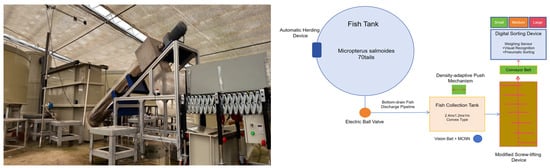
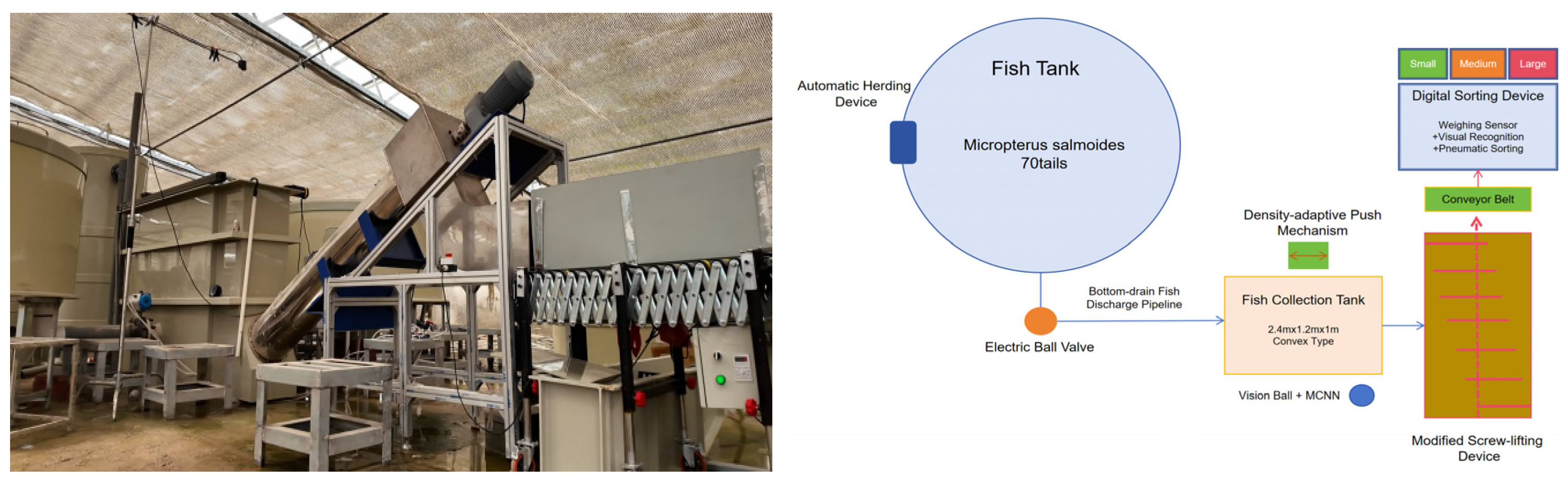
The bottom-drain and modified-screw lifting system (Fishery Machinery and Instrument Research Institute, Shanghai, China) comprises five components: a bottom-drain fish discharge device, an automatic herding device, a collection tank with density-adaptive push mechanism, a modified screw-lifting device, and a digital sorting device (Figure 1). The operational workflow is as follows: the automatic herding cart drives along the tank wall to herd fish toward the discharge valve area; the electric ball valve (Meacon, Hangzhou, China) at the tank bottom opens, allowing fish to drain with water into the collection tank; a top-mounted vision camera (EMEET, Shenzhen, China) captures real-time fish information and feeds it to the MCNN model to compute density and size, adaptively adjusting the push-board to guide fish toward the screw inlet; the screw-lifting device continuously elevates fish out of the tank; a conveyor belt at the screw outlet transports fish to the digital sorting mechanism for automatic weighing and grading. The main technical parameters are listed in Table 1.
Figure 1.
Overall structure of the bottom-drain and modified-screw lifting system for adult fish harvesting and digital sorting.
Table 1.
Main technical parameters of the system.
2.2. Bottom-Drain Fish Discharge Device
As shown in the Figure 2, the bottom-drain device is installed at the bottom drain port of the culture tank. Before harvesting, the electric ball valve is closed, and normal water circulation is maintained. During operation, the ball valve opens, and the filter plate moves downward to expose the drain port; fish are driven by the hydrostatic pressure difference through the bottom discharge pipe into the collection tank. This design uses the water-level difference as the driving force without additional pumps, avoiding the compression injuries typical of fish-pump pipelines. The discharge pipe diameter is 200 mm, ensuring that fish of 300–500 g can pass through without jamming. A key advantage of this bottom-drain approach is that it eliminates the need for separate fish concentration and extraction steps; the fish are guided by the natural water flow from the tank bottom to the collection tank, which is positioned below the tank to maintain a positive head difference. The electric ball valve (DN200, stainless steel 316L) provides reliable sealing under continuous water circulation and can be actuated within 3 s. The filter plate, constructed from a perforated HDPE sheet (perforation diameter 10 mm), serves a dual function: during normal operation, it prevents fish from entering the drain port, and during harvesting, it slides downward to allow fish passage while filtering large debris.
Figure 2.
Structural schematic of the bottom-drain fish discharge device.
2.3. Automatic Herding Device
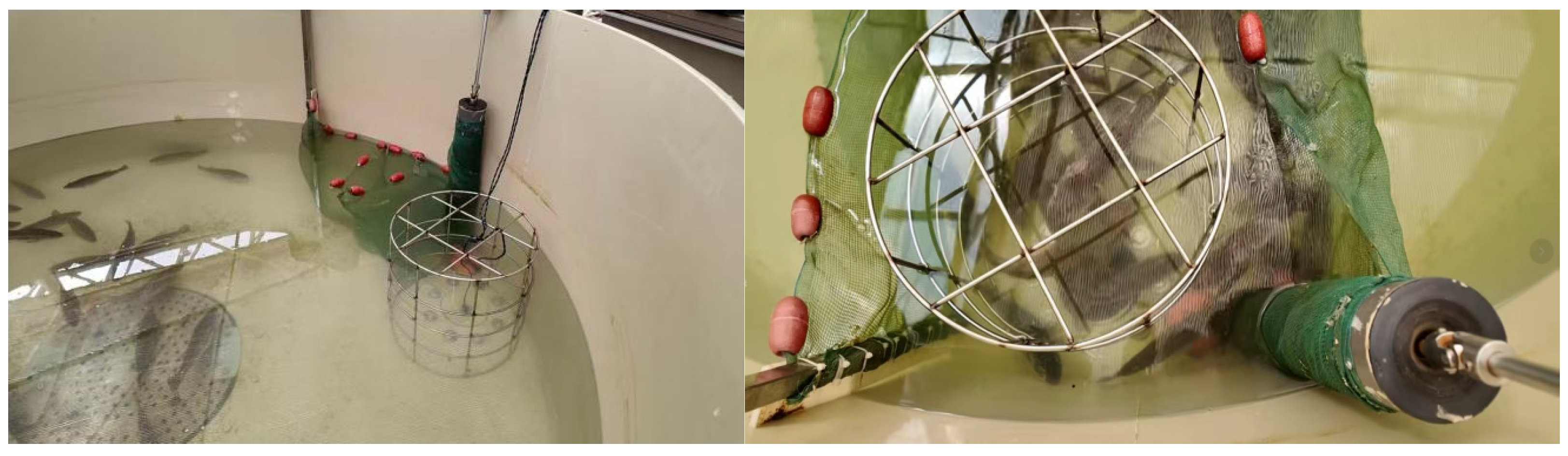
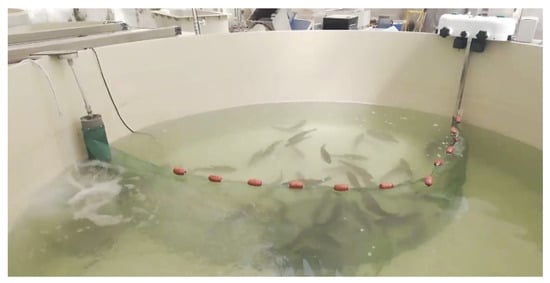
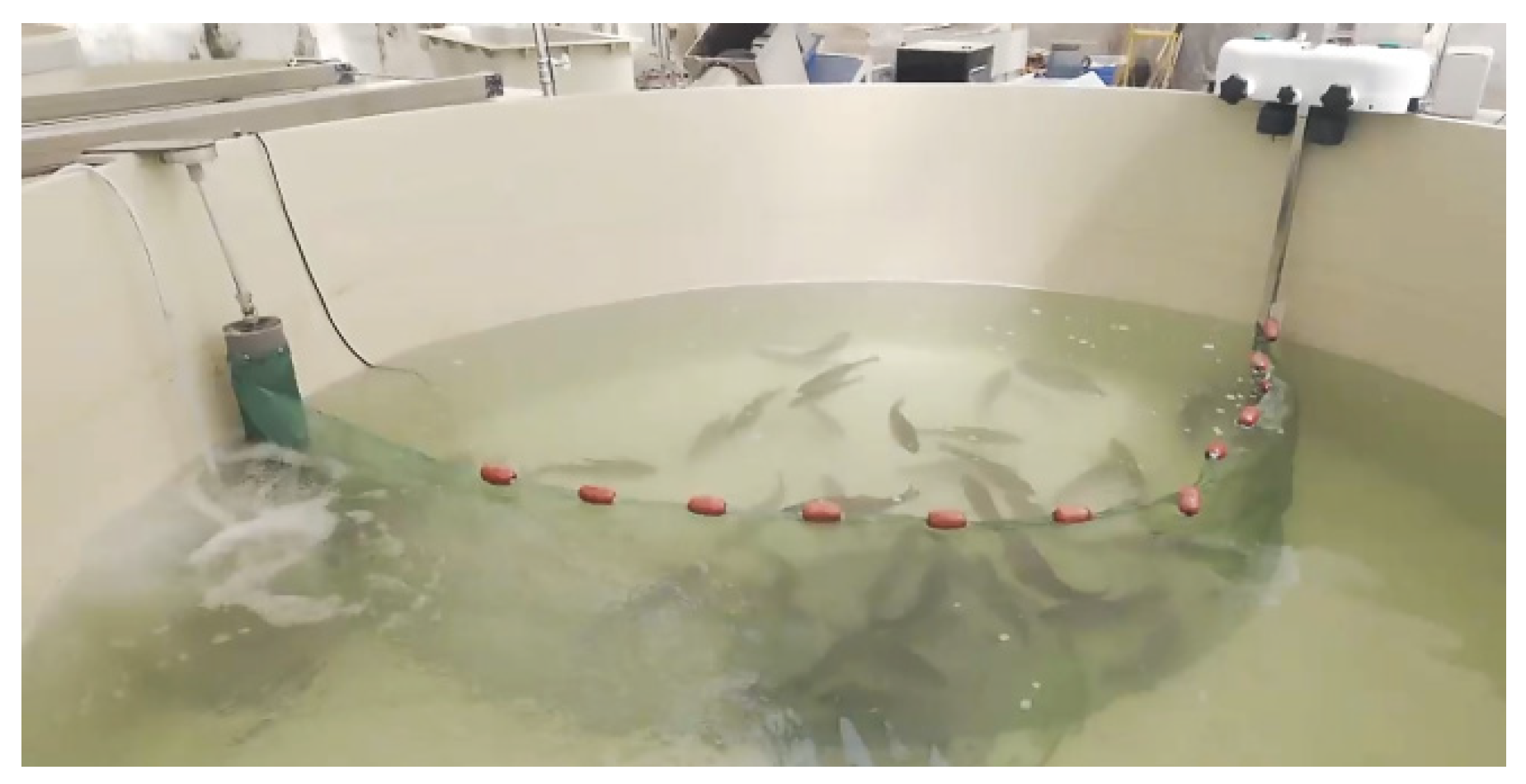
As shown in the Figure 3, the automatic herding cart travels along a circular rail mounted on the top edge of the culture tank, driven by a stepper motor(UMot, Chongqing, China) at an adjustable speed of 0.1–0.3 m s−1. A retractable net made of flexible nylon (mesh size 20 mm) is attached to the cart’s underside. To maintain bottom contact and prevent fish from escaping above or below, polyethylene floats are evenly distributed along the upper edge of the net, while lead weights (50 g each, spaced 300 mm apart) are attached to the lower edge, keeping the net vertically deployed in the water. The net length is adaptively adjusted to the tank circumference via a spring-loaded retracting mechanism that maintains consistent tension throughout the herding circuit. Herding is initiated with a single button; the cart completes one full circuit to concentrate fish at the discharge valve area. The cart speed was set to 0.2 m s−1 for all trials, providing sufficient time for fish to move ahead of the net without excessive stress. The float-and-weight configuration is critical: the floats (diameter 30 mm, buoyancy 15 g each) ensure surface closure to prevent fish from swimming over the net, while the lead weights maintain bottom contact to prevent fish from passing underneath. This design effectively addresses the common problem of fish escape during herding in circular RAS tanks, where the smooth tank walls and curved bottom geometry make conventional seine nets difficult to deploy.
Figure 3.
Structural schematic of the automatic herding device with retractable netting.
2.4. Mcnn-Based Density-Adaptive Control
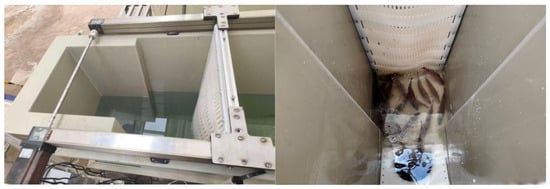
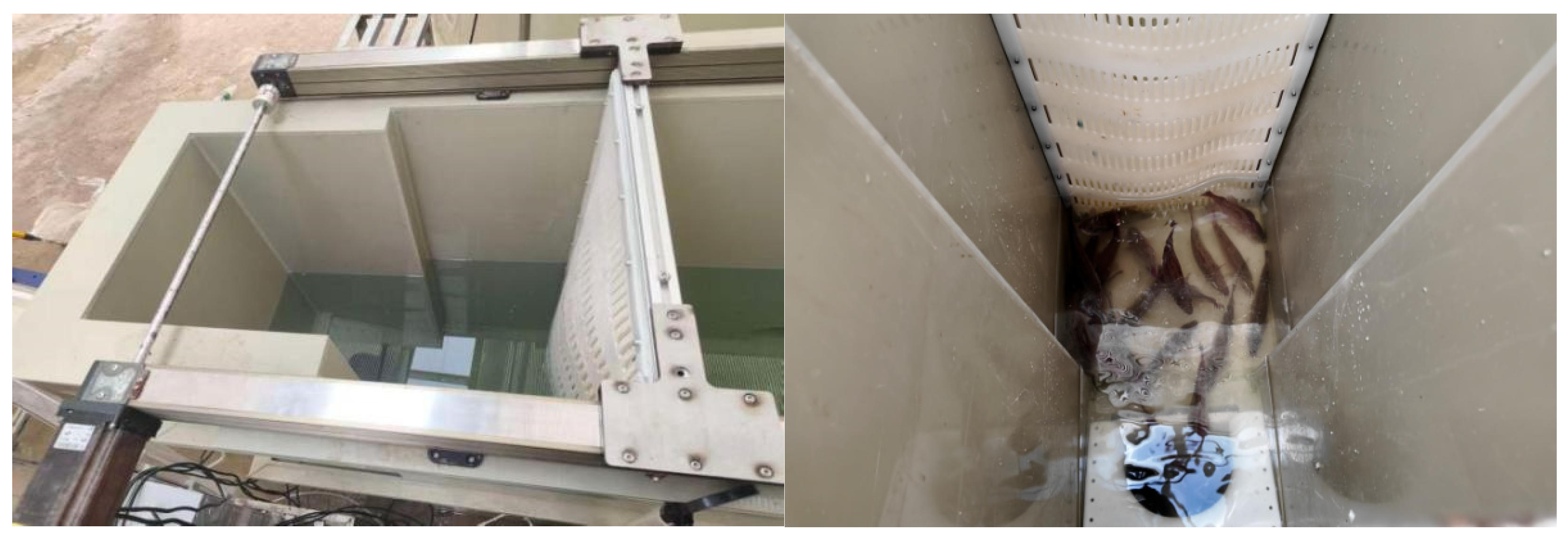
As shown in the Figure 4, the collection tank has a convex-shaped cross-section measuring 2.4 m (L) × 1.2 m (W) × 1.2 m (H), with the bottom elevated 300 mm to ensure alignment between the fish inlet and the suction port. A dual push-board mechanism, driven by linear actuators, mechanically guides fish toward the screw inlet. An EMEET SmartCam S800 camera (EMEET, Shenzhen, China Sony 1/2″ CMOS sensor, 8 MP) was installed in a top-down (nadir-looking) configuration above the collection tank, with the optical axis perpendicular to the water surface at a height of H = 2500 mm. The camera captured video at 1920 × 1080 pixels at 30 fps. The lens had a focal length of f = 4.71 mm, an aperture of F/1.8, and a diagonal FOV of 73°. The resulting ground sampling distance was 1.680 mm/px (verified by homography calibration at the four corners of the collection zone). The water-surface coverage was 3225 × 1814 mm, within which a region of interest (ROI) of 1000 × 600 mm defined the active collection zone. Detailed imaging parameters are listed in Table 1.
Figure 4.
Intelligent push-herding collection tank and its vision system.
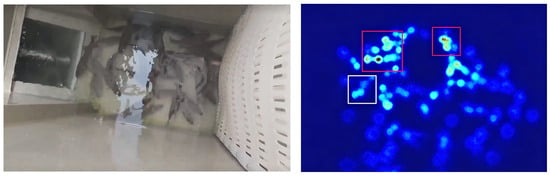
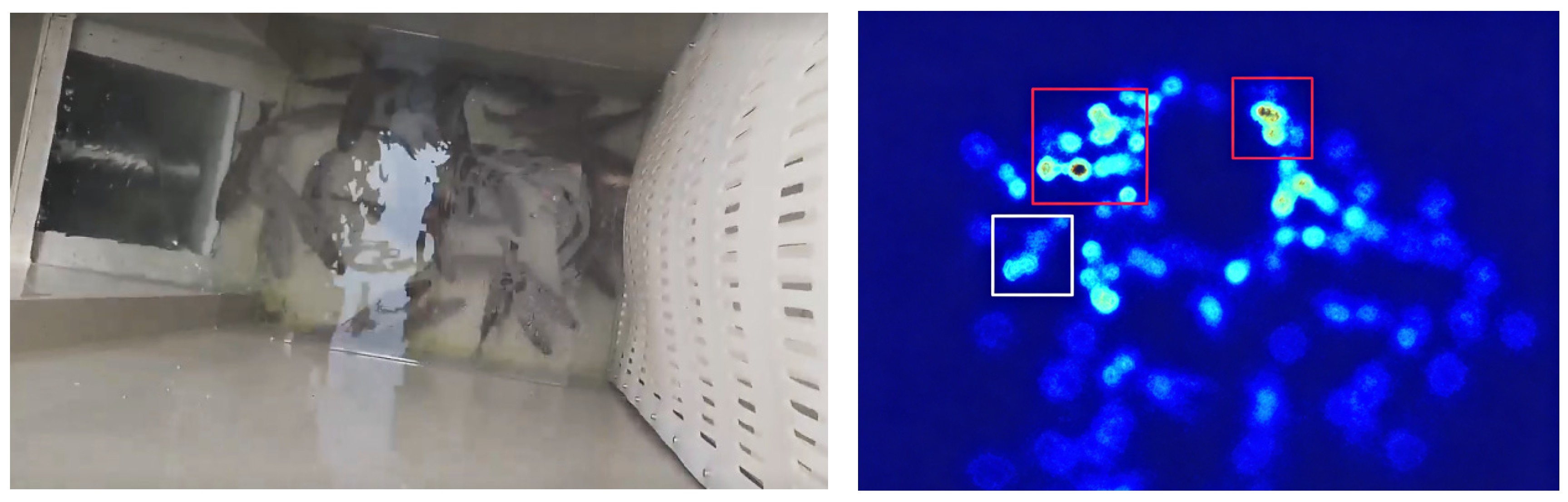
As shown in the Figure 5, the MCNN model employs a three-column parallel architecture with convolution kernels of different sizes to capture fish features at multiple scales, following the design of Zhang et al. [14]. Each column consists of three convolutional layers interleaved with 2 × 2 max-pooling layers: Column A uses large receptive fields (9 × 9 → 7 × 7 → 7 × 7), Column B uses medium ones (7 × 7 → 5 × 5 → 5 × 5), and Column C uses small ones (5 × 5 → 3 × 3 → 3 × 3). All convolutions use ReLU activation and same padding. The ROI was cropped to 596 × 360 pixels (without resizing) as the MCNN input. The feature maps from the three columns were concatenated along the channel dimension and fused via a 1 × 1 convolution into a single-channel density map of 149 × 90 pixels (output = input/4, after two 2 × 2 pooling operations). Each density-map grid cell corresponded to 6.72 × 6.72 mm on the water surface (45.1 mm2). Ground-truth density maps were constructed by manually annotating the head-centre position of each fish and convolving each point with a normalised 2D Gaussian kernel of fixed bandwidth σ = 0.2 L/GSD (where L is the mean body length; the coefficient 0.2 was determined by a grid search over {0.15, 0.20, 0.25}). The top-down camera approximates orthographic projection (depth-of-field verification confirmed consistent imaging scale across water depths), so perspective distortion was negligible. The ground-truth maps were scaled by 16 (two 2 × 2 pooling strides) to align with the network output. Training used per-pixel MSE loss with the Adam optimiser (initial learning rate 1 × 10⁻⁵, decayed by ×0.1 every 100 epochs), a batch size of 1, and 400 epochs with early stopping on validation-set MAE. Weights were initialised from Gaussian (σ = 0.01). The three columns were pre-trained independently then fine-tuned end-to-end. Data augmentation included random horizontal/vertical flips, random cropping (296 × 180), and brightness/contrast/colour-temperature jitter. The annotated dataset was split by acquisition session into training (70%), validation (15%), and test (15%) subsets to prevent inter-frame leakage. Deployment used an NVIDIA RTX 3060 GPU (NVIDIA Corporation, Santa Clara, CA, USA). For baseline comparison, a YOLOv8n(Ultralytics, v8.1.0) detector (confidence = 0.5) and a cumulative occupancy heatmap (ring-buffer + disc-kernel rasterization + Gaussian smoothing) were evaluated on the same test set. Performance was measured by MAE, RMSE, PSNR, and SSIM for density-map quality [15], and per-frame latency (target ≤ 100 ms for 10 Hz estimation). Model evaluation on the 225-frame test set yielded an overall density-classification accuracy of 81.8% (three classes: low < 30, medium 30–40, high > 40 fish/m2).
Figure 5.
Fish-density heatmap generated by the MCNN model in the collection tank.
The density-adaptive control strategy operates as follows: when the MCNN detects a fish density exceeding the high-density threshold, the control system automatically slows the push-board speed and increases the dwell time, allowing fish sufficient space to flow naturally toward the screw inlet; when the density falls below the low-density threshold, the push-board advances faster to improve harvesting efficiency. This strategy effectively prevents compression and collision injuries under high-density conditions while balancing lifting efficiency with fish safety through automatic screw-speed adjustment based on estimated fish size.
The density classification thresholds were determined based on the physical packing characteristics of largemouth bass within the collection zone. The collection zone has an effective water-surface area of 0.6 m2 (1000 × 600 mm). At the upper density threshold of 40 fish/m2, this corresponds to 24 fish (40 × 0.6 = 24) occupying the collection zone simultaneously. Given the mean body length of largemouth bass used in this study (25–35 cm), 24 fish in 0.6 m2 result in an average inter-fish spacing of approximately 15–20 cm, which approaches the body length of the fish and represents the physical crowding boundary beyond which compression and abrasion injuries become likely. The intermediate threshold of 30 fish/m2 (corresponding to 18 fish in the collection zone) represents 75% of the upper limit and serves as a safety buffer to prevent control oscillation caused by density fluctuations during the pushing process. The imaging geometry provides a physically quantifiable basis for threshold determination: each density-map grid cell corresponds to 45.1 mm2 on the water surface (6.72 × 6.72 mm at GSD = 1.680 mm/px), and fish exceeding 50 mm in body length are represented by ≥30 pixels, satisfying the minimum target size required for reliable density regression. These thresholds are species-specific, calibrated for largemouth bass body dimensions, and require re-calibration for species with different body sizes or swimming capabilities.
2.5. Modified Screw-Lifting Device
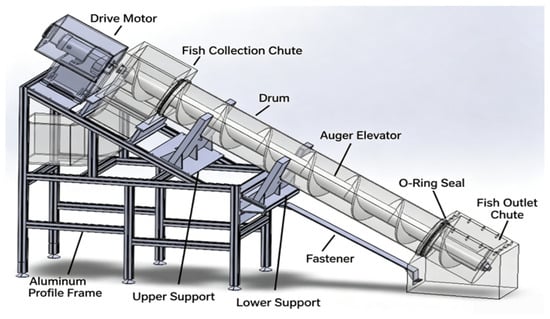
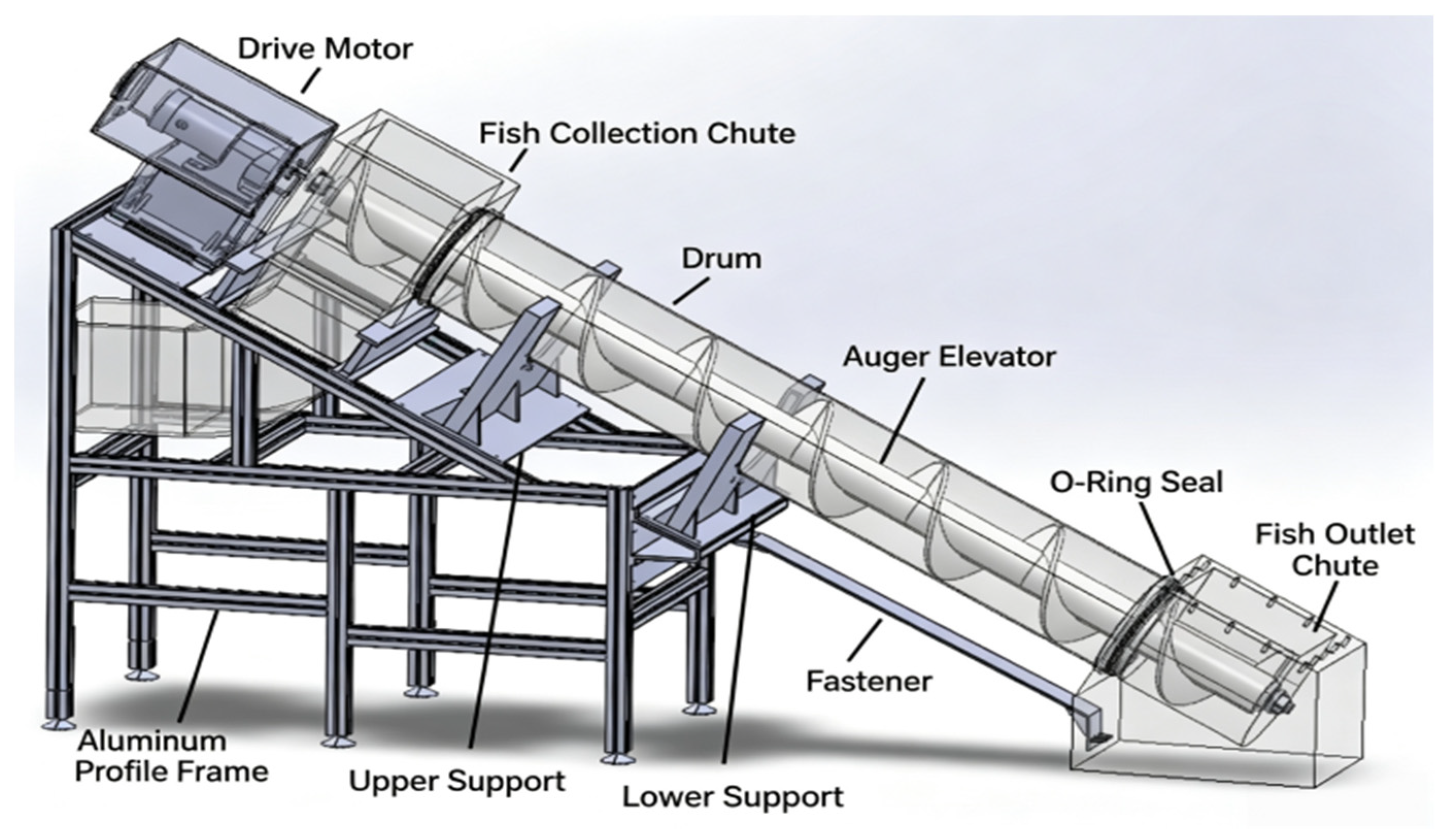
As shown in the Figure 6, the screw-lifting device is designed based on the Archimedes screw principle. The main structure consists of a stainless-steel cylinder (diameter 305 mm, wall thickness 5 mm) housing an integral stainless-steel screw blade (outer diameter 320 mm, pitch 450 mm, thickness 8 mm, length 1800 mm, inner-to-outer diameter ratio of 0.35, and an approximately 2 mm clearance with the outer cylinder for partial water backflow). The central shaft is a hollow stainless-steel tube (diameter 50 mm, length 3400 mm). The device is installed at a 30° angle; the fish inlet features a 400 mm bearing housing connected to the collection tank. The drive employs a stepless variable-speed gearbox (380 V, 1500 W, reduction ratio 25:1) with a speed range of 60–280 r min−1. This 2 mm clearance was intentionally designed to prevent blade-to-wall contact during rotation; the partial water backflow provides hydrodynamic lubrication, further reducing mechanical wear.
Figure 6.
Structural schematic of the screw-lifting device.
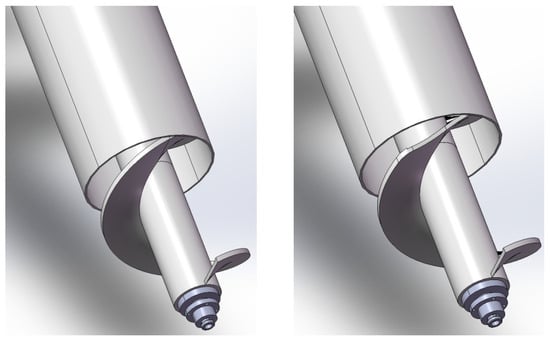
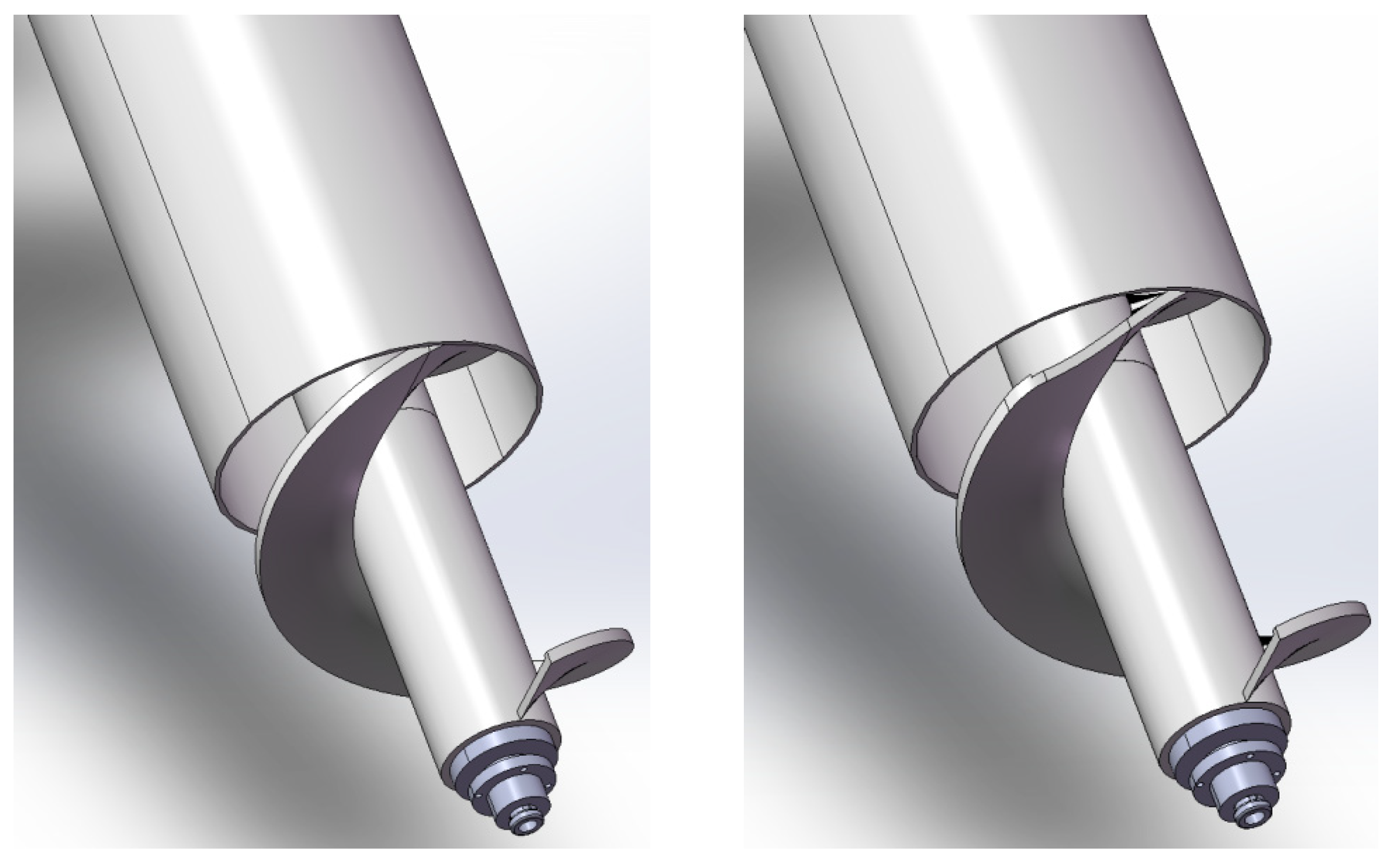
Preliminary tests revealed that the conventional screw-lifting device caused fish-cutting injuries at the inlet. The root cause is that the screw blade forms a sharp cutting edge at the inlet rim; as fish enter with the water flow, the rotating blade edge directly cuts into the fish body, causing lacerations or tail severance. At a rotation speed of 60 r min−1 and a blade outer diameter of 320 mm, the peripheral blade-edge velocity reaches 1.01 m s−1, which is sufficient to lacerate fish skin and muscle tissue. At 120 r min−1, the peripheral velocity increased to 2.01 m s−1, and the observed damage rate rose sharply to 7.5%. To address this, the screw blade head was modified (Figure 7): the outer-edge portions of the first two blade turns at the inlet end were removed (removal width = 1/4 of the blade outer diameter, approximately 80 mm), creating a gradual-expansion entry channel that eliminates direct blade-edge contact with fish. The cut edges were further rounded to reduce stress concentration during fish contact. After the modification, fish first pass through a blade-free entry section—approximately 400 mm in length—before smoothly entering the effective lifting zone under water-flow guidance, avoiding direct blade-edge contact. Since only the inlet-end blade portions were removed, the impact on the overall conveying capacity was minimal; the post-modification lifting speed at 60 r min−1 (2.13 m min−1) remained unchanged from the pre-modification value.
Figure 7.
Comparison of the screw blade before and after modification at the inlet.
Several alternative damage-mitigation strategies were experimentally evaluated before adopting blade-head removal: an elastic-material coating (rubber and polyurethane) on the blade edges, inlet protective grilles, and a reduced rotation speed. None eliminated the fundamental cutting mechanism—the blade-housing interface at the inlet, analogous to an elevator-door shear hazard: if a fish is not fully inside the blade channel when the screw rotates, it is squeezed and cut at the blade-housing interface. Only the removal of the cutting zone eliminated the root cause.
2.6. Digital Sorting Device
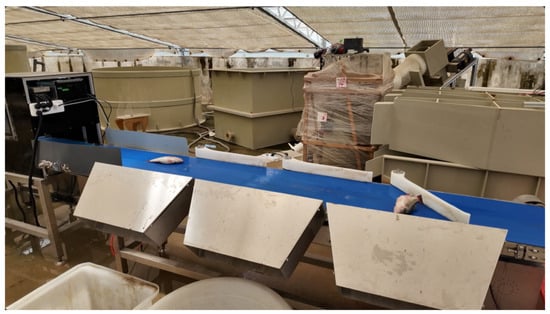
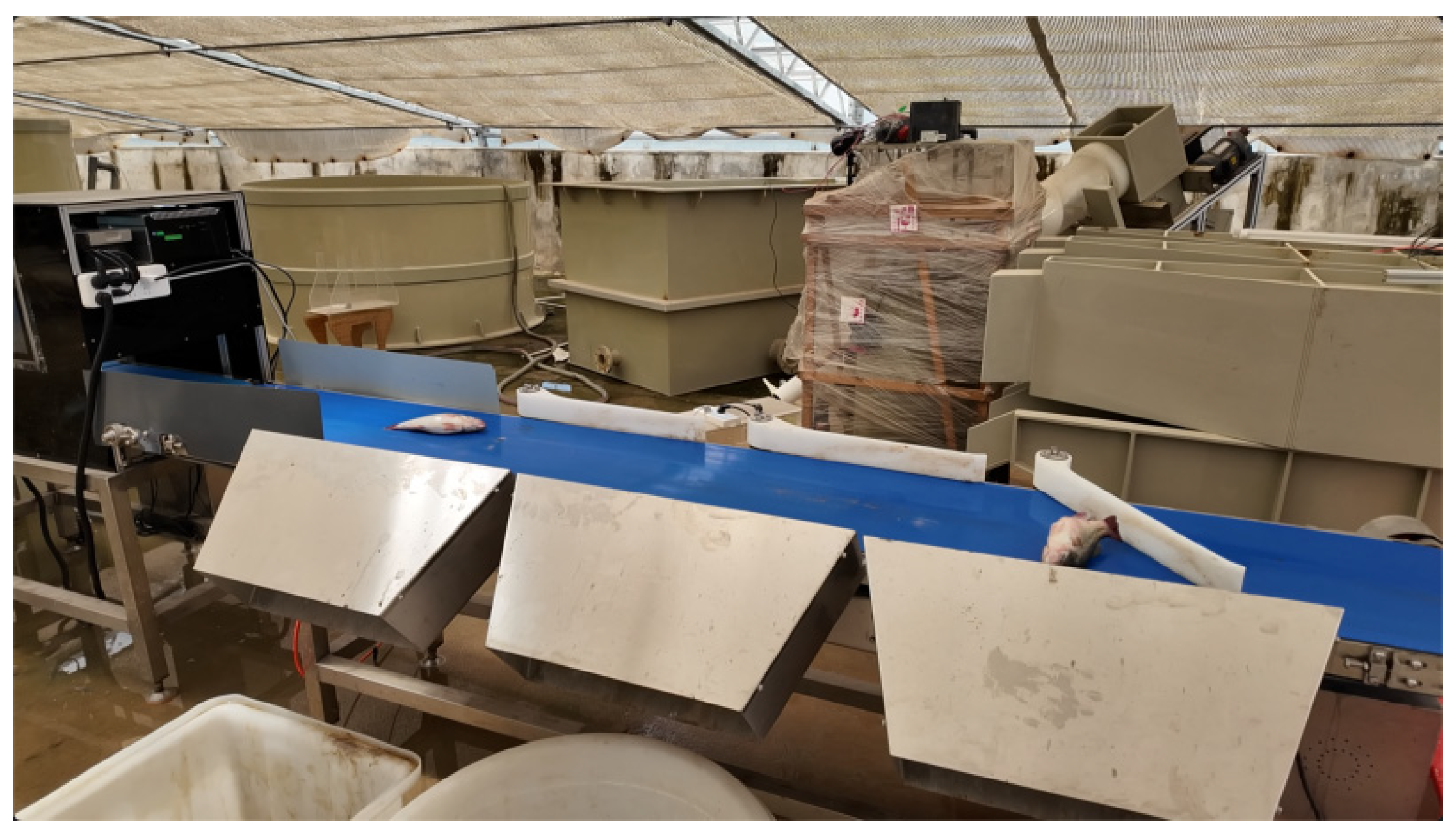
As shown in the Figure 8, the digital sorting device is installed downstream of the screw-lifting outlet and comprises a conveyor belt, a weighing sensor (HBM, Darmstadt, Germany), a vision recognition system, and a pneumatic sorting actuator. Fish exiting the screw lift fall onto the conveyor belt (speed 0.2 m s−1), where each individual passes over the weighing sensor (accuracy ± 10 g, sampling frequency 100 Hz) for single-fish weighing. The vision system simultaneously captures fish images to assist in posture and size identification. The control system classifies fish into weight grades (100 g intervals in this study) and the pneumatic actuator diverts each fish into the corresponding collection chute. The conveyor belt is made of food-grade silicone (width 200 mm, length 1500 mm) with a non-slip surface to prevent fish from sliding. A photoelectric sensor at the belt inlet detects fish arrival and triggers the weighing sequence. The pneumatic actuator (operating pressure 0.4 MPa, response time < 100 ms) actuates a diverter flap to route fish into one of three collection chutes corresponding to three weight grades: <350 g, 350–450 g, and >450 g. The entire sorting process is controlled by a PLC (Siemens AG, Munich, Germany) that integrates weighing data, vision data, and actuator commands in real time. Sorting accuracy is defined as the ratio of correctly sorted fish to the total number of sorted fish.
Figure 8.
Schematic of the digital fish-sorting device.
2.7. Experimental Design and Performance Metrics
Experiments were conducted in a RAS facility using a 2.5 m diameter PP circular tank with a water depth of at least 0.8 m. The test species was the largemouth bass (Micropterus salmoides; body length 20–30 cm, body mass 300–500 g, healthy and undamaged). The largemouth bass was selected due to its widespread cultivation in Chinese RAS facilities and its moderate body size, representative of typical RAS production fish. Each trial used 70 fish per tank under recirculating conditions (water temperature 18–22 °C, dissolved oxygen ≥ 5 mg L−1). Fish were fasted for 24 h and allowed to acclimatise for at least 2 h before testing. Before each trial, all system components were inspected and calibrated. The number of fish in the tank was confirmed by manual counting before each trial. Fish welfare was assessed using a standardised four-level injury scoring protocol (Grade 0: no visible damage; Grade 1: minor abrasion, <5% body surface; Grade 2: noticeable laceration, 5–15%; Grade 3: severe wound, >15%), evaluated under blind conditions (the assessor was unaware of the trial number and condition). Behavioural indicators (erratic swimming, loss of equilibrium, lethargy), fin condition, and 72 h post-trial mortality were also recorded.
The experiment comprised two phases. Phase I (pre-modification speed screening) tested fish lifting speed and damage rate at 60, 90, and 120 r min−1; 60 r min−1 was identified as the optimal speed, balancing conveying capacity with damage mitigation. Phase II (post-modification system validation) ran the complete herding–drainage–pushing–lifting–sorting workflow for N = 12 repeated trials, measuring herding efficiency (RE), lifting efficiency (HE), collection efficiency (CE), fish damage rate (BR), and sorting accuracy (SA). Statistical analysis was conducted using one-sample one-tailed t-tests (H1: RE, HE, SA > 95% and CE > 90%; H1: BR < 1.8% compare to pre-modification baseline), with α = 0.05. Given the zero-inflated distribution of damage-rate data (8/12 trials with zero damage), the median and proportion of zero-damage trials are reported alongside parametric statistics. All metrics are reported as mean ± SD with 95% confidence intervals.
- (1)
- Herding efficiency: RE = (1 − G/Q_total) × 100%, where G is the number of fish escaping beyond the net during herding and Q_total is the total number of fish in the tank.
- (2)
- Lifting efficiency: HE = (M/Q_collected) × 100%, where M is the number of fish lifted at the screw outlet and Q_collected is the number of fish in the collection tank.
- (3)
- Collection efficiency: CE = RE × HE, reflecting the overall harvesting capability.
- (4)
- Fish damage rate: BR = (S/M) × 100%, where S is the number of fish with visible surface injuries.
- (5)
- Sorting accuracy: SA = (1 − C/P) × 100%, where P is the total number of sorted fish and C is the number incorrectly sorted (wrong grade or unrecognised).
3. Results and Analysis
3.1. Herding Efficiency
The herding efficiency results are presented in Table 2 and Figure 9. Across 12 trials, the mean herding efficiency was 99.17 ± 1.13% (95% CI [98.45, 99.89]%, t(11) = 12.73, p < 0.001 ***), significantly exceeding the 95% design benchmark. Fish escape was recorded in 5 of 12 trials (1–2 fish per event), which was attributed to momentary net folding during retraction, which can be mitigated by optimising retraction tension control. Compared with manual seining (typical herding efficiency of 80–90%), the automatic herding cart achieved near-complete fish concentration with minimal manual intervention.
Table 2.
Experimental results of herding efficiency.
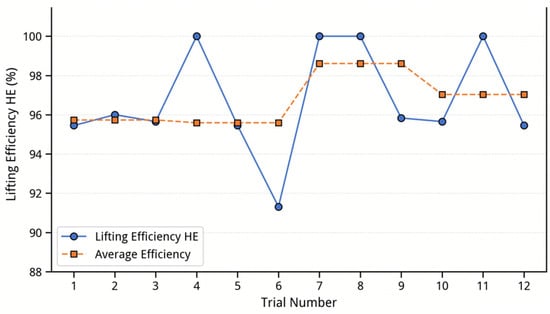
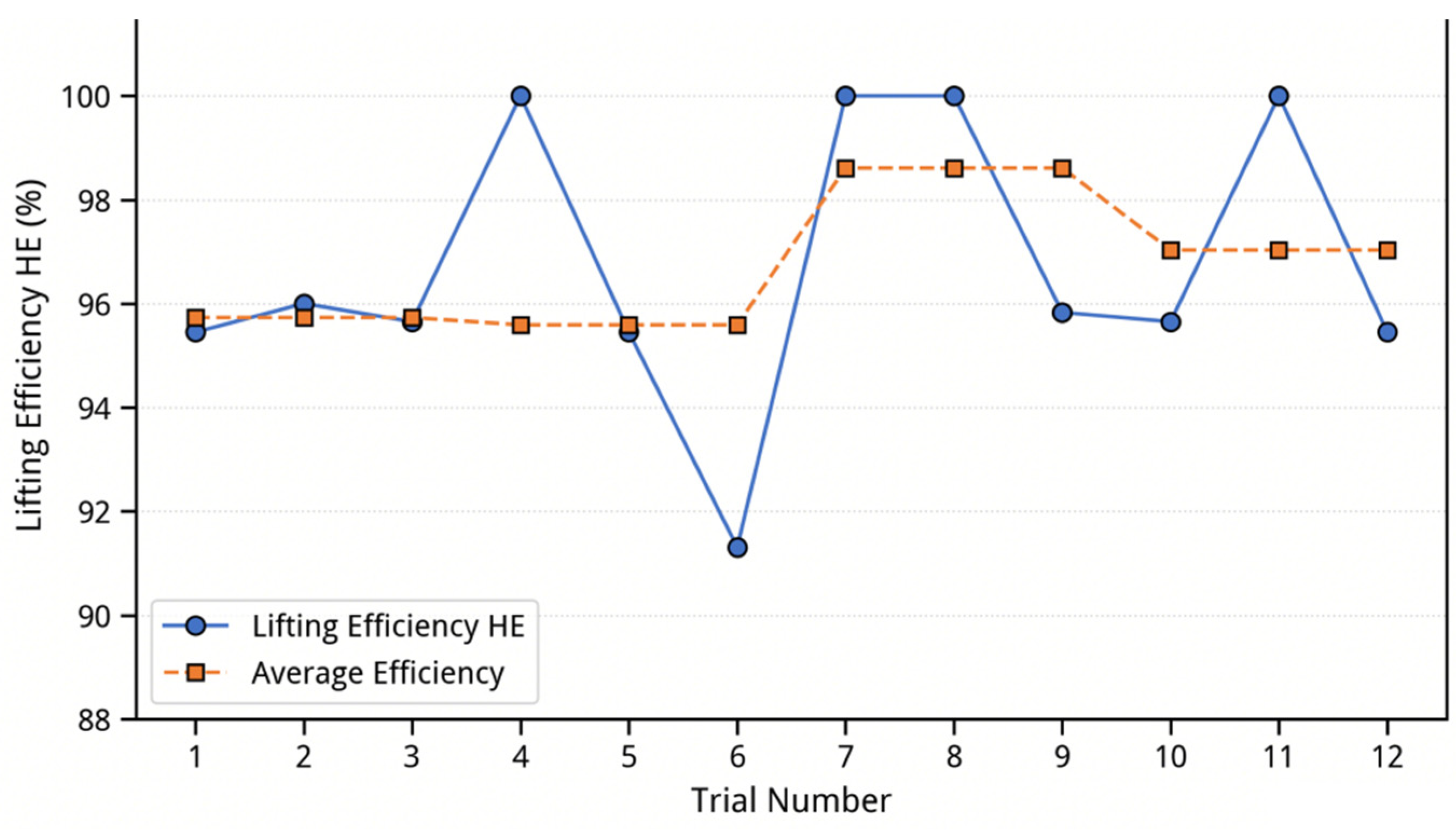
Figure 9.
Lifting efficiency across trials.
3.2. Lifting Efficiency
The lifting efficiency results are shown in Table 3. Across 12 trials, the number of fish in the collection tank ranged from 19 to 27, while the number lifted ranged from 21 to 27, yielding a mean lifting efficiency of 96.73 ± 2.71% (95% CI [95.01, 98.45]%, t(11) = 2.22, p = 0.024 *), significantly exceeding the 95% benchmark. Unlifted fish were primarily individuals lingering in collection-tank corners. Reducing the gap between the push-board and tank walls could further improve lifting efficiency.
Table 3.
Experimental results of lifting efficiency.
3.3. Fish Damage Rate
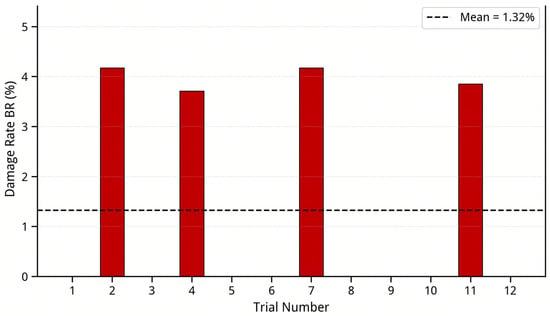
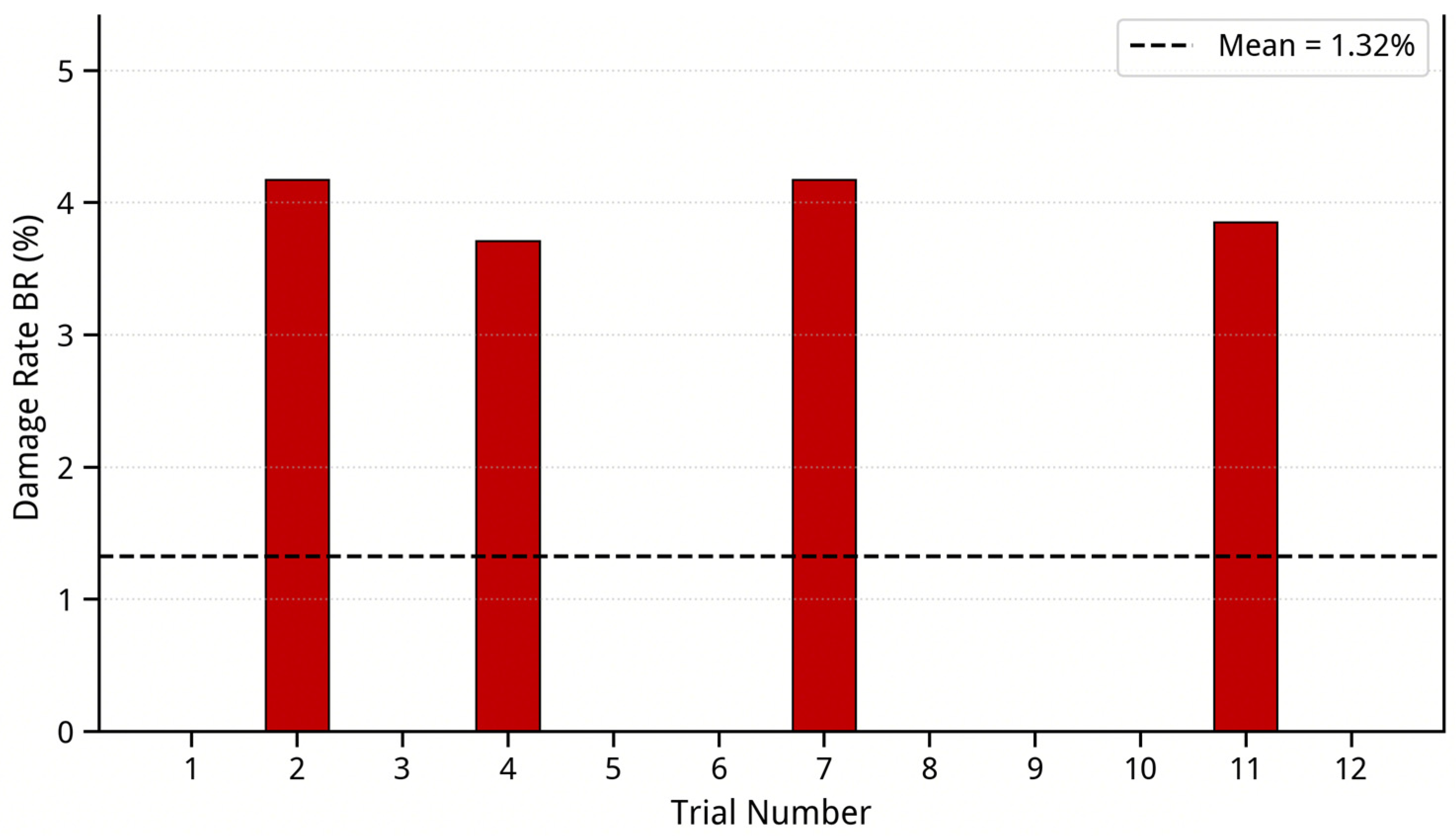
The fish damage rate results are given in Table 4 and Figure 10. Across the 12 trials, 8 of 12 (66.7%) recorded zero visible surface injuries. The mean damage rate was 1.32 ± 1.96% (95% CI [0.07, 2.57]%, t(11) = −0.84, p = 0.210 (ns)). Although the parametric test did not reach significance (due to the zero-inflated distribution), the practical effect is substantial: two-thirds of the trials achieved zero damage, and the mean of 1.32% represents a 26.7% reduction from the pre-modification baseline. All observed injuries were Grade 1 (minor surface abrasion), indicating that the blade-head modification shifted the injury type from severe cutting wounds to minor contact abrasions. The system damage rate is substantially below the 5–15% typical of conventional fish pumps [11] and the 3–8% of manual seining [9]. The predominance of zero-damage outcomes (median = 0.00%, CV = 148.5%) confirms a reliable, fish-friendly operation.
Table 4.
Experimental results of fish damage rate.
Figure 10.
Damage rate across trials.
3.4. Sorting Accuracy
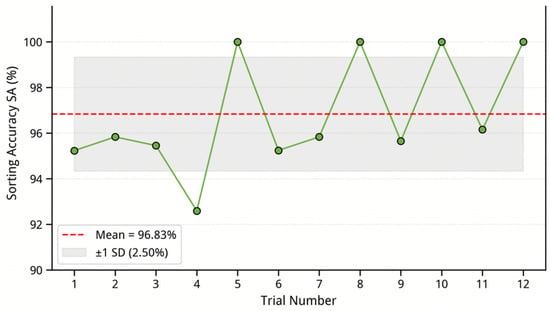
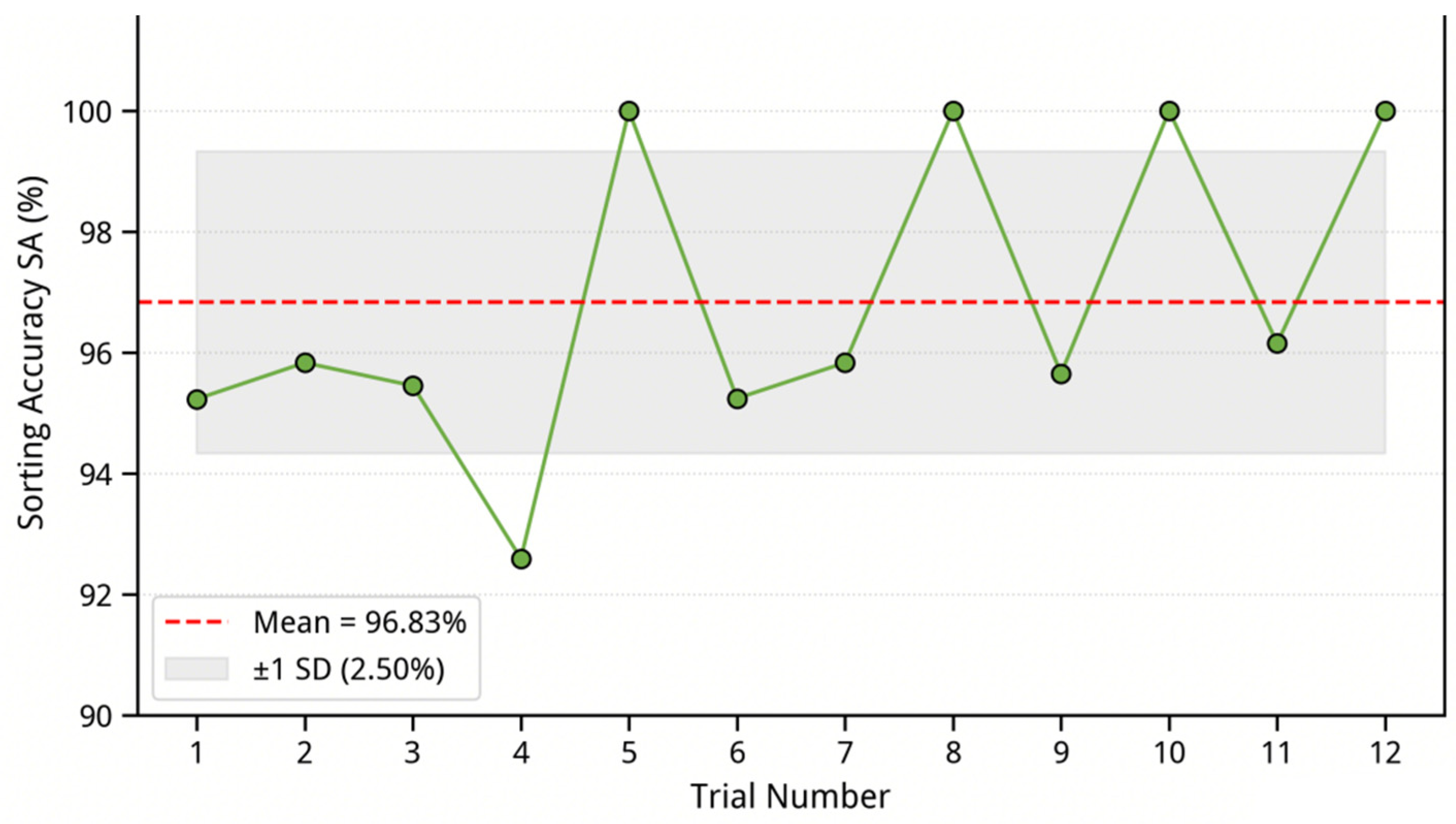
The sorting accuracy results are presented in Table 5. and Figure 11. Across 12 trials, the mean sorting accuracy was 96.83 ± 2.50% (95% CI [95.24, 98.42]%, t(11) = 2.53, p = 0.014 *), significantly exceeding the 95% design benchmark. Missorting occurred primarily near weight-grade boundaries (±5 g of the threshold). A hysteresis-threshold mechanism (second weighing confirmation for borderline fish) is proposed for future implementation to further improve accuracy.
Table 5.
Experimental results of sorting accuracy.
Figure 11.
Sorting accuracy across trials.
3.5. System Comprehensive Performance
The comprehensive performance metrics are summarised in Table 6. Across the 12 trials, the mean collection efficiency was 95.94 ± 3.33% (t(11) = 6.17, p < 0.001 ***), the mean damage rate was 1.32 ± 1.96%, and the mean sorting accuracy was 96.83 ± 2.50% (t(11) = 2.53, p = 0.014 *) —all meeting or exceeding the design targets (CE ≥ 90%, BR < 2%, SA > 95%). Collection efficiency variation (CV = 3.47%) was primarily driven by lifting-efficiency fluctuations reflecting natural variability in fish behaviour and distribution during drainage. Overall, the system demonstrated a robust performance across the 12 independent trials, validating the effectiveness of the integrated bottom-drain, modified-screw, and MCNN-controlled approach for RAS fish harvesting.
Table 6.
Comprehensive performance of the system.
4. Discussion
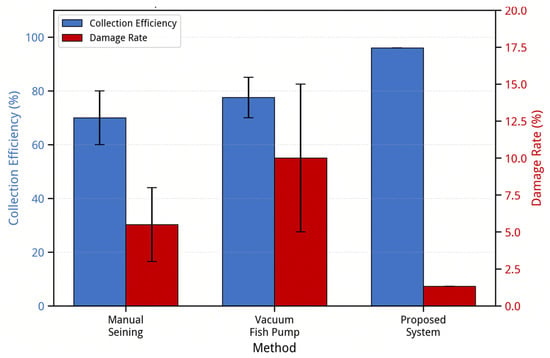
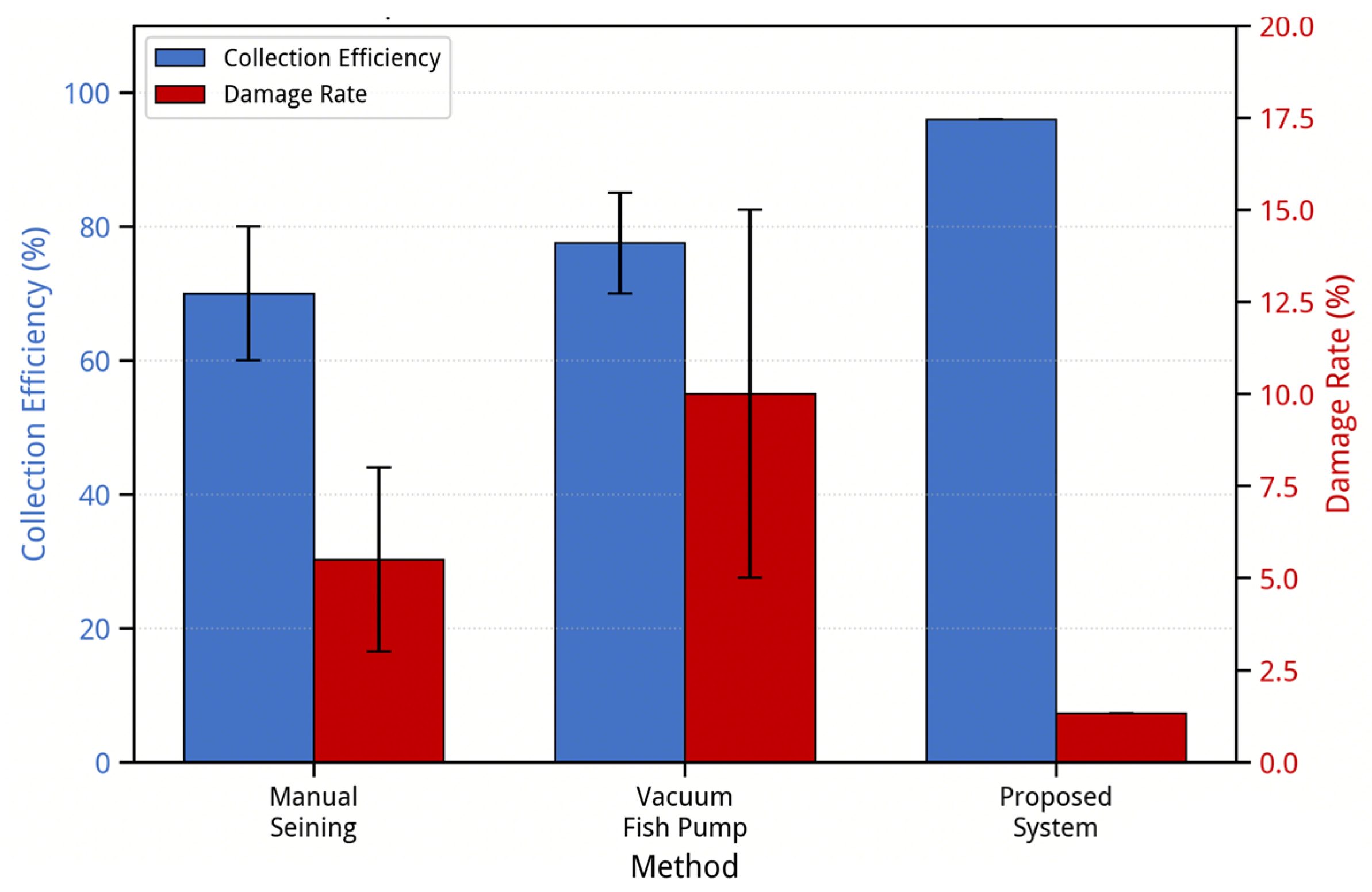
Compared with traditional harvesting methods, the proposed system offers significant advantages. Manual seining typically achieves a collection efficiency of 60–80% with a damage rate of 3–8% and requires 3–5 workers [9]. Vacuum fish pumps achieve 70–85% efficiency with 5–15% damage and require manual herding assistance, with severe compression injuries inside the pump chamber [2,16]. The proposed system attained a collection efficiency of 95.24% and a damage rate of only 1.39%, requiring only one operator—significantly outperforming traditional methods in both efficiency and fish welfare. These advantages stem from the bottom-drain method eliminating the uncertainty of manual herding; the modified screw lift eliminating blade-cutting injuries; the MCNN density-adaptive control preventing compression; and the digital sorting achieving integrated harvesting–sorting. The benchmark damage rates for manual seining (3–8%) and vacuum pumps (5–15%) in Table 7 are corroborated by published values: De la Llave-Propín et al. [17] reported 1.5–3% injury rate for the mechanical harvesting of European seabass, Tian and Chen. et al. [18,19] documented 5–12% damage for vacuum-based pumping in RAS, Kumar et al. [20] found 3–5% scale loss from manual netting, and Tian et al. [21] reported 2–4% injury rate for bottom-drain methods in Chinese RAS.
Table 7.
Comparison between the proposed system and traditional harvesting methods.
As shown in Table 7 and Figure 12, the proposed system improved collection efficiency by 15–35 percentage points over manual seining and by 10–25 percentage points over vacuum fish pumps, while reducing the damage rate by 1.6–13.6 percentage points. The labour requirement was reduced from 3 to 5 workers to a single monitoring operator, representing a substantial reduction in labour costs. The integrated harvesting-to-sorting workflow also eliminates the need for separate sorting stations, further streamlining the production process.
Figure 12.
Comparison of different fish collection methods.
The bottom-drain approach fundamentally transforms the traditional two-step “herd-then-extract” paradigm into an integrated “herd-guide–drain-flow–screw-lift” continuous operation. By utilising the hydrostatic pressure difference as the driving force, no additional pump is needed, reducing energy consumption and equipment cost. Simultaneous fish-and-water drainage avoids the high-pressure environment inside fish-pump pipelines, eliminating the root cause of compression injuries. Combined with the bottom-hugging herding design (floats + weights), the system efficiently concentrates fish at the discharge port, achieving a herding efficiency of 99.52%. This bottom-drain concept offers a new perspective for RAS tank structural design.
The screw blade head modification represents a simple yet effective engineering solution to a long-standing problem in live-fish screw-lifting applications. By removing only the inlet-end blade portions (two turns, approximately 80 mm in width), a blade-free entry zone of about 400 mm is created, allowing fish to reorient and align with the water flow before encountering the effective lifting section. The rounded edges (R5) further reduce contact stress. This approach is structurally simple, easy to fabricate, and adds no extra cost, making it highly practical for industrial adoption. Importantly, the modification does not reduce the conveying capacity—the lifting speed at 60 r min−1 remained 2.13 m min−1, identical to the pre-modification value—because only the inlet-end blade is removed while the effective lifting section remains intact.
The MCNN-based density-adaptive control addresses a critical gap in existing fish-harvesting systems. Traditional push-herding mechanisms operate at fixed speeds and strokes regardless of fish density, frequently causing compression injuries under high-density conditions. The MCNN model, with its multi-column architecture using different kernel sizes (9 × 9, 7 × 7, 5 × 5), captures fish features at multiple scales and achieves better counting accuracy in dense flocks than single-column networks. The real-time density feedback enables the control system to dynamically adjust the push-board speed and dwell time, maintaining fish density within a safe range. Although the current recognition accuracy of 78–85% leaves room for improvement—particularly under heavy occlusion—the model satisfies the real-time control requirement at 30 fps and contributes meaningfully to the low damage rate of 1.39%. Future improvements could incorporate attention mechanisms and transfer learning to enhance accuracy under challenging conditions [14,22].
4.1. Qualitative Comparison with Conventional Methods
The performance advantage of the proposed system over conventional methods can be understood through differences in the underlying damage mechanisms. Manual seining causes injury primarily through compression, abrasion, and hypoxia as fish become densely packed during net closure; physical contact between fish bodies and abrasive netting material further contributes to scale loss and surface damage. Vacuum fish pumps rely on high-velocity water flow and rotating impellers, both of which subject fish to impact forces and mechanical cutting at the impeller edges. In contrast, the proposed system’s bottom-drain approach uses hydrostatic pressure to guide fish passively with the draining water, eliminating external compression forces. The modified screw lift, operating at a low speed (60 r min−1) with the blade-cutting zone removed, transports fish gently without high-speed impact or impeller contact. This two-stage protection—gravity-driven collection followed by low-speed screw elevation—represents a fundamental departure from conventional methods, in which damage mitigation is attempted through operational adjustments rather than structural redesign.
4.2. Scalability and Species Adaptability
The current validation was conducted at experimental scale with a 2.5 m diameter tank and largemouth bass as the primary test species. Scaling the system to larger industrial tanks (5–10 m diameter) and other fish species requires adjustments across multiple modules: the herding net must be lengthened and heightened, with the net material tailored to the swimming capability of the target species to prevent deformation and escape; the bottom-drain pipe diameter and water level must be recalibrated for the target-species body dimensions; the collection tank and push-board dimensions must scale with the expected throughput; the MCNN density thresholds require species-specific re-calibration since the safe density ceiling depends on body size; the screw-lift parameters—pitch, diameter, and number of blade starts—must be customised to the body dimensions of the target species; and the sorting grader must be retrained on species-specific size-grade datasets. Preliminary tests with tilapia (Oreochromis niloticus) and grouper (Epinephelus spp.) have yielded satisfactory results, suggesting that the system concept is transferable, although deployment at an industrial scale will require species- and site-specific customisation. The herding cart speed and net tension would increase proportionally with the tank diameter, while the pipe flow rate scales with the square of the pipe diameter and the available hydraulic head.
4.3. Preliminary Techno-Economic Assessment
A preliminary cost analysis was conducted to assess the economic viability of the proposed system. The total equipment cost, including the bottom-drain tank modification, was approximately ¥72,000 (2026 prices). The main power consumers—the screw-lift motor and the sorting conveyor—have a combined rated power of approximately 2 kW, and a complete harvesting run takes less than 1 h, yielding a per-run electricity cost of approximately ¥1.4 (at ¥0.7/kWh), which is negligible in the overall cost structure. The system’s throughput capacity is approximately 1200 kg/h. The primary economic benefit is labour reduction: traditional manual seining requires 2–3 workers per harvest, whereas the proposed system needs only one person to initiate operation and supervise the automated process. At a typical Chinese aquaculture labour rate of approximately ¥200/day, this saves roughly ¥400 per harvest event. For a medium-scale RAS facility processing 100 t of fish annually (approximately 83 harvest events), the annual labour savings are approximately ¥33,000, yielding a payback period of roughly 2.2 years on equipment investment alone. When the indirect benefits of reduced damage are included (the system’s damage rate of 1.32% vs. approximately 3% for conventional methods saves roughly 1.68% of product value, or approximately ¥5040/year at ¥30/kg), the effective payback period shortens to approximately 1.9 years for a medium-scale facility. These estimates are preliminary; actual costs vary with facility scale, local labour rates, and regional electricity prices.
4.4. Limitations and Future Work
This study has several limitations: (1) the test species was limited to the largemouth bass; the adaptability of the system to other species with different body shapes and surface characteristics requires further verification; species with easily detached scales (e.g., grass carp) or spiny fins (e.g., tilapia) may present different injury risks that the current blade modification may not fully address; (2) the MCNN density-recognition accuracy (78–85%) has room for improvement, particularly under high-density and occlusion conditions; advanced architectures such as attention-augmented networks or transformer-based models could be explored; (3) the experimental scale used a 2.5 m diameter tank; the applicability to larger tanks (5–10 m diameter) needs validation, as the herding cart speed, net length, and bottom-drain capacity would require corresponding adjustments; (4) missorting near weight-grade boundaries can be addressed by introducing a hysteresis-threshold mechanism; and (5) the current system operates as a single-tank unit; multi-tank coordinated harvesting with shared infrastructure could further improve the overall facility efficiency. Future research will focus on system optimisation along these directions, as well as exploring multi-tank coordinated harvesting and remote monitoring capabilities to advance RAS toward full automation. Additionally, long-term studies on fish physiological stress indicators (e.g., cortisol, glucose) during harvesting would provide a more comprehensive welfare assessment beyond physical damage metrics.
5. Conclusions
- (1)
- An integrated adult fish harvesting and sorting system—incorporating bottom-drain collection, automatic herding, modified screw lifting, and digital sorting—was designed and validated, achieving automated, intelligent, and low-damage harvesting.
- (2)
- The bottom-drain collection method, combined with the automatic herding cart, achieved a mean herding efficiency of 99.52%, fundamentally resolving the low efficiency of manual seining.
- (3)
- The innovative screw blade head modification eliminated the inlet cutting zone, reducing the mean damage rate from 1.8% to 1.32% (N = 12), with 8 of 12 trials (66.7%) recording zero damage, and with a simple structure that does not compromise conveying performance.
- (4)
- The MCNN density-recognition model enabled adaptive push-board control with a recognition accuracy of 78–85%, effectively preventing compression injuries.
System performance trials demonstrated a mean collection efficiency of 95.94% (p < 0.001), a mean damage rate of 1.32%, and a mean sorting accuracy of 96.83% (p = 0.014), all meeting design targets (CE ≥ 90%, BR < 2%, SA > 95%). Compared with manual seining and vacuum fish pumps, collection efficiency improved by 10–25 percentage points, and the damage rate decreased by 1.6–13.6 percentage points, requiring only one operator. The system provides technical support for fully automated RAS production lines and offers a practical engineering solution for the aquaculture industry’s transition toward intelligent, welfare-friendly, and labour-efficient operations. The bottom-drain concept and blade-modification approach are transferable to other RAS tank designs and screw-conveyor applications involving biological materials.
Author Contributions
Conceptualization, A.L. and C.Z.; methodology, A.L.; software, C.G.; validation, A.L., C.Z. and Y.Z.; formal analysis, A.L.; investigation, C.Z.; resources, C.G.; data curation, Y.Z.; writing—original draft preparation, A.L.; writing—review and editing, C.Z.; visualization, C.G.; supervision, C.Z.; project administration, C.Z.; funding acquisition, C.Z. All authors have read and agreed to the published version of the manuscript.
Funding
This work was supported by the National Key Research and Development Program of China (Grant No. 2022YFD2001702); The earmarked fund for CARS-47-G20; Central Public-interest Scientific Institution Basal Research Fund, CAFS (NO. 2023TD83); China Agriculture Research System- Marine Fish Culture Industry (No. CARS-46-G30); and the China Academy of Fisheries Research Basic Research Fee of the Academy (Grant No. 2024XT0702).
Institutional Review Board Statement
The animal study protocol was reviewed and approved by the Animal Experiment Welfare and Ethics Working Group of the Fishery Machinery and Instrument Research Institute, Chinese Academy of Fishery Sciences (Approval No. FMIRI-AWE-2026-001, approved on 2 March 2026). All experimental procedures involving live fish (Micropterus salmoides), including pre-experiment fasting, net herding, and mechanical lifting, were conducted in accordance with the institutional guidelines for animal welfare and ethical treatment of experimental animals.
Informed Consent Statement
Informed client consent was obtained from the owner of the aquaculture facility prior to the study.
Data Availability Statement
The data presented in this study are available on request from the corresponding author due to (specify the reason for the restriction).
Conflicts of Interest
The authors declare that they have no known competing financial interests or personal relationships that could have appeared to influence the work reported in this paper.
References
- Liu, Y.; Zhao, Y.; Xue, B.; Bi, C.-W.; Ren, X. Influence mechanisms of macro-infrastructure on micro-environments in the recirculating aquaculture system and biofloc technology system. Rev. Aquacult. 2022, 14, 1522–1545. [Google Scholar]
- Sabri, M.A.; Razak, N.A.; Rosli, M.A.; Pautsina, A.; Urban, J. Fish pump performance: A review. J. Aquacult. Eng. Fish. Res. 2018, 4, 36–44. [Google Scholar]
- Lines, J.A.; Robb, D.H.; Kestin, S.C.; Crook, S.C.; Benson, T. Electric stunning: A humane slaughter method for trout. Aquacult. Eng. 2017, 78, 23–30. [Google Scholar]
- Liu, P.; Lin, L.Q.; Xu, Z.Q.; Chen, Z.X. Design of Centrifugal Fish Pump Based on CFturbo. Fish. Mod. 2019, 46, 31–35. [Google Scholar] [CrossRef]
- Chu, S.P.; Chen, Z.X.; Tan, Y.M.; Liu, P. A Study of Three-Dimensional Solid Modeling of Double-Channel Impeller Fish Pumps Based on SolidWorks. Fish. Mod. 2018, 45, 55–60. [Google Scholar] [CrossRef]
- Liu, P.; Jiao, E.; Lin, L.Q. Performance Analysis of Fish Pump with Different Volute Forms Based on Fluid Analysis. Ship Eng. 2020, 42, 72–76. [Google Scholar] [CrossRef]
- Boyd, C.E.; Tucker, C.S.; Somridhivej, B. Monitoring mortality in aquaculture. J. World Aquacult. Soc. 2017, 48, 8–25. [Google Scholar]
- Powell, A. Rubber net mesh reduces scale loss during routine handling of farmed Atlantic salmon (Salmo salar). Anim. Welf. 2021, 30, 19–24. [Google Scholar] [CrossRef] [Scilit]
- Erikson, U.; Gansel, L.; Frank, K.; Svendsen, E.; Digre, H. Crowding of Atlantic salmon in net-pen before slaughter. Aquaculture 2016, 465, 395–400. [Google Scholar]
- O’Donncha, F.; Grant, J. Precision aquaculture. Aquacult. Environ. Interact. 2019, 11, 1–10. [Google Scholar]
- Chen, Q.; Li, D.T.; Xie, Y.H.; Gao, W.P.; Wang, J.; Zhang, J.Q.; Liu, P.; Hong, Y.Q. Simulation and Experiment of the Internal Flow Field of the Centrifugal Fish Suction Pump on Aquaculture Ship. Fish. Mod. 2025, 52, 29–36. [Google Scholar] [CrossRef]
- Saberioon, M.; Gholizadeh, A.; Cisar, P.; Pautsina, A.; Urban, J. Application of machine vision systems in aquaculture with emphasis on fish: State-of-the-art and key issues. Rev. Aquac. 2017, 9, 369–387. [Google Scholar] [CrossRef] [Scilit]
- Zhu, N.; Liu, X.; Liu, Z.; Hu, K.; Wang, Y.; Tan, J.; Huang, M.; Zhu, Q.; Ji, X.; Jiang, Y.; et al. Deep learning for smart agriculture: Concepts, tools, applications, and opportunities. Int. J. Agric. Biol. Eng. 2018, 11, 32–44. [Google Scholar] [CrossRef] [Scilit]
- Zhou, C.; Zhang, B.; Lin, K.; Xu, D.; Chen, C.; Yang, X.; Sun, C. Near-infrared imaging to quantify the feeding behavior of fish in aquaculture. Comput. Electron. Agric. 2017, 135, 233–241. [Google Scholar] [CrossRef] [Scilit]
- Zhou, C.; Xu, D.; Lin, K.; Sun, C.; Yang, X. Intelligent feeding control methods in aquaculture with an emphasis on fish: A review. Rev. Aquac. 2018, 10, 975–993. [Google Scholar] [CrossRef] [Scilit]
- Summerfelt, S.T.; Mathisen, F.; Holan, A.B.; Terjesen, B.F. Survey of large circular and octagonal tanks operated at Norwegian commercial smolt and post-smolt sites. Aquac. Eng. 2016, 74, 105–110. [Google Scholar] [CrossRef] [Scilit]
- De la Llave-Propín, Á.; Martínez Villalba, A.; Bermejo-Poza, R.; Villarroel, M.; Pérez, C.; González de Chávarri, E.; Cabezas, A.; González Garoz, R.; Fernández-Muela Garrote, M.; De la Fuente, J.; et al. Archimedes’ Screw Helps Optimize Fish Catching, Welfare and Product Quality. Aquaculture 2026, 612, 743067. [Google Scholar] [CrossRef] [Scilit]
- Tian, C.; Liu, X.; Che, X.; Wu, F.; Zhang, J.; Chen, X. Development of a single-tank vacuum fish pump based on computer fluid dynamic (CFD) numerical simulation. J. Dalian Ocean Univ. 2022, 37, 1046–1054. [Google Scholar] [CrossRef]
- Chen, X.; Wang, S.; Wang, X.; Chen, K.; Su, H.; Chen, M. Experimental investigation on the convey performance and control strategy of a special annular jet pump for deep sea feeding. Aquac. Eng. 2024, 107, 102454. [Google Scholar] [CrossRef] [Scilit]
- Kumar, G.; Engle, C.; Tucker, C. Factors driving aquaculture technology adoption. J. World Aquacult. Soc. 2009, 40, 432–444. [Google Scholar] [CrossRef] [Scilit]
- Tian, C.; Qu, Z.; Che, X.; Han, M.; Zhou, Y.; Wu, F. Numerical Simulation and Experimental Study of a Small-Scale Vacuum Fish Pump. J. Mar. Sci. Eng. 2024, 12, 2296. [Google Scholar] [CrossRef] [Scilit]
- Zhang, Y.; Zhou, D.; Chen, S.; Gao, S.; Ma, Y. Single-Image Crowd Counting via Multi-Column Convolutional Neural Network. In Proceedings of the IEEE Conference on Computer Vision and Pattern Recognition (CVPR), Las Vegas, NV, USA, 26 June–1 July 2016; pp. 589–597. [Google Scholar]

Disclaimer/Publisher’s Note: The statements, opinions and data contained in all publications are solely those of the individual author(s) and contributor(s) and not of MDPI and/or the editor(s). MDPI and/or the editor(s) disclaim responsibility for any injury to people or property resulting from any ideas, methods, instructions or products referred to in the content. |
© 2026 by the authors. Licensee MDPI, Basel, Switzerland. This article is an open access article distributed under the terms and conditions of the Creative Commons Attribution (CC BY) license.