


Abstract
This study presents a comprehensive bibliometric analysis of research trends in grain cleaning devices from 1998 to 2025. Grain cleaning equipment plays a critical role in post-harvest processing by improving grain quality, reducing losses, and enhancing overall efficiency in agricultural systems. The analysis is based on bibliographic data retrieved from the Scopus database. Various bibliometric tools and indicators, including publication trends, citation analysis, co-authorship networks, and keyword co-occurrence, were employed to identify patterns of development, major contributors, and emerging research themes in this field. The results reveal a significant growth in publications in recent years, reflecting increasing global interest in advanced cleaning technologies, including energy-efficient systems, intelligent sorting, and automation. Key research hotspots include vibration-based separation, pneumatic systems, and smart sensor-based cleaning technologies. This study provides a systematic overview of the intellectual structure and evolution of grain cleaning device research, offering valuable insights for researchers and practitioners. The findings also highlight existing research gaps and suggest future directions for the development of more efficient, sustainable, and intelligent grain processing technologies.
1. Introduction
Grain cleaning equipment represents a fundamental element of post-harvest processing systems, as it plays a crucial role in determining the quality, safety, and commercial value of agricultural products. The application of efficient cleaning methods allows for effective removal of impurities, enhances storage conditions, and minimizes post-harvest losses, which remain key issues in contemporary agriculture.
Over the past few decades, considerable progress has been achieved in the development of and improvement in grain cleaning technologies. These advancements include the introduction of energy-efficient solutions, vibration-assisted separation techniques, and automated cleaning systems. Nevertheless, despite these innovations, the existing body of research is still dispersed, and a clear and comprehensive understanding of research development, emerging trends, and key thematic areas has not yet been fully established.
At the same time, machinery must comply with certain requirements such as high sorting and cleaning precision, optimal performance, a wide range of adjustable working parameters, and low noise levels [1]. Extensive theoretical and practical investigations have been carried out globally over the past decade to understand the impact of operating conditions on different types of separating equipment. In recent years, agricultural mechanized harvesting has developed rapidly worldwide [2]. Several important functions of the harvesting process have been combined into a single machine. These functions typically include cutting the crop, collecting and feeding cut crop into the machine, threshing and separating the grains from the material other than grain (MOG), cleaning, and finally, transporting the cleaned grains to a grain bin for temporary storage [3]. The performance of threshing, separating, and cleaning mechanisms is fundamental to the operational efficiency of combine harvesters. To enhance these systems, researchers have extensively explored their behavior through numerical simulations and experimental investigations. Agricultural production, productivity, and sustainable development depend on the advancement of science and technology, which enhances the production, processing, handling, transportation, distribution, and marketing processes of strategically important crops [4]. High-quality cleaning processes typically integrate several complementary methods to reach the required purity levels. These techniques utilize distinct physical characteristics of particles to efficiently isolate unwanted impurities from the primary grain mass.
Grain cleaning is a critical operation in crop production, as the safety, market value, and storage stability of grain largely depend on the effectiveness of the cleaning process. Weed seeds and other foreign impurities can cause self-heating, quality deterioration, and significant post-harvest losses. Studies have shown that grains and legumes harvested by combine harvesters often contain various impurities that must be removed before consumption or commercialization, and in many cases, size-based separation is required to meet quality standards. As a result, the performance of grain cleaning devices directly influences the overall efficiency of harvesting systems and the final quality class of grain, highlighting their essential role in modern agricultural production.
Given the growing scientific interest in improving grain and legume cleaning systems, a systematic evaluation of research trends in this field has become increasingly important [5]. In the context of grain cleaning devices, bibliometric analysis plays an important role in supporting research and development by providing a comprehensive overview of how scientific attention has evolved. Such analysis helps to identify shifts in research focus, from early mechanical and theoretical investigations to more recent studies emphasizing system integration, energy efficiency, modeling, and intelligent technologies. Bibliometric analysis provides an effective framework for mapping the development of scientific knowledge, identifying influential publications, and determining key thematic directions within a rapidly expanding body of the literature [6]. This method enables researchers to trace the evolution of technologies, understand collaboration networks among scholars and institutions, and reveal shifts in research priorities over time [7].
In the context of grain and legume cleaning technologies [8], bibliometric indicators can help clarify how scientific attention has transitioned from classical mechanical separation principles to modern aerodynamic, optical, and digitally controlled systems. Moreover, such an approach allows for the detection of emerging research fronts, frequently cited concepts, and technological innovations that shape the efficiency and sustainability of post-harvest processing [9]. By integrating bibliometric tools with a critical assessment of scientific outputs [10], it becomes possible to form a comprehensive picture of global research activity and its contribution to advancing agricultural engineering [11].
Accordingly, the present study conducts a comprehensive bibliometric investigation of research related to grain cleaning devices covering the period from 1998 to 2025. The main objective is to analyze publication dynamics, identify major contributors, examine collaboration networks, and explore thematic evolution, ultimately contributing to future research and technological advancements in agricultural engineering.
2. Materials and Methods
2.1. Data Source and Search Strategy
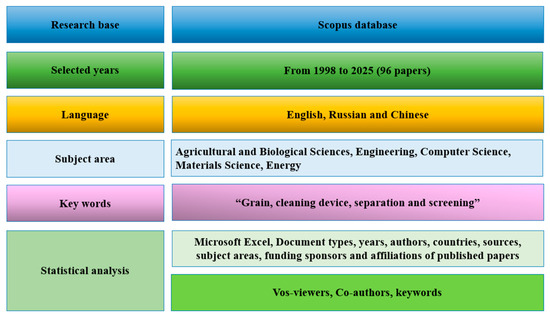
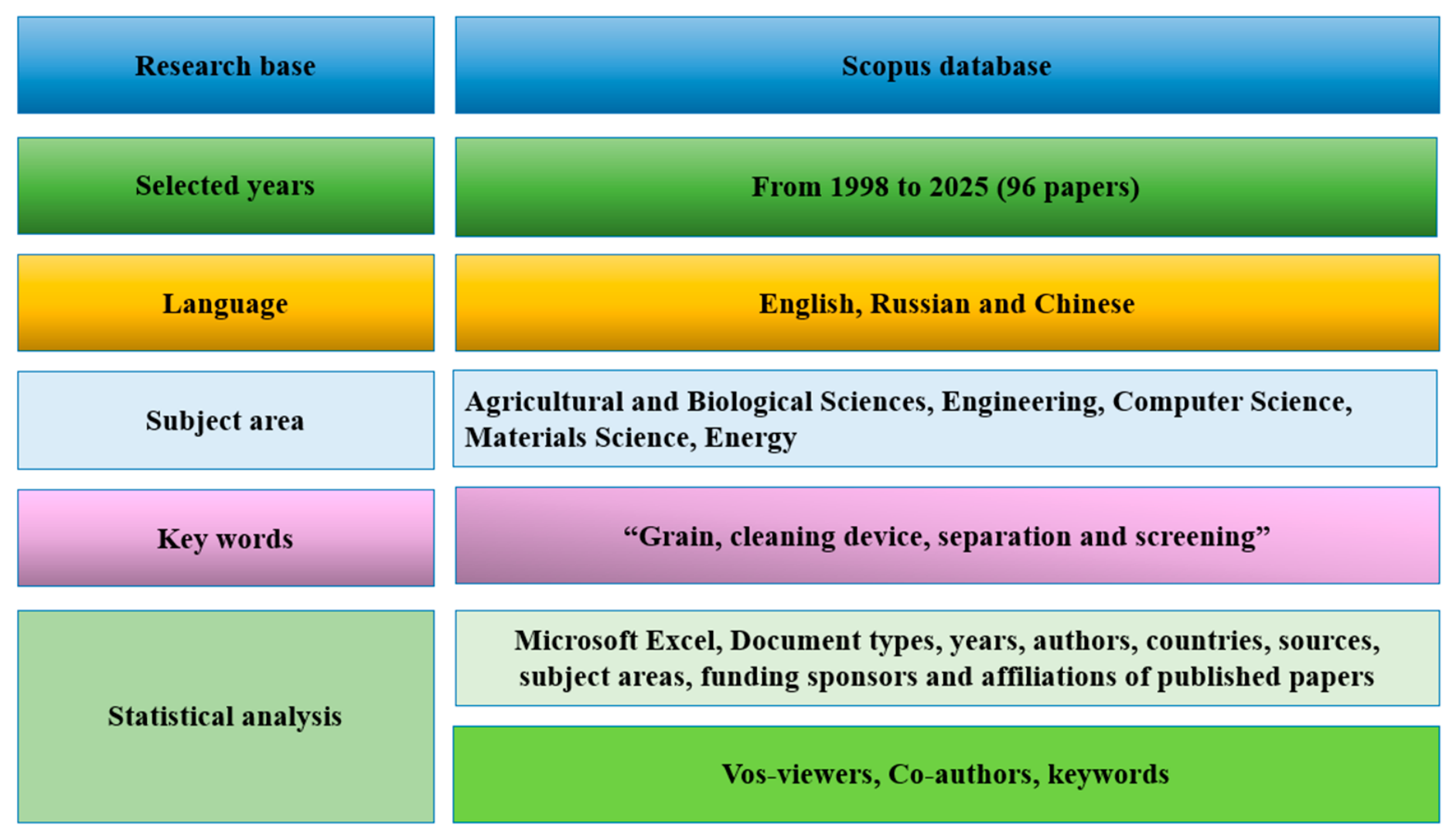
This study analyzes a carefully selected set of publications to map the evolution of research, identify emerging trends, and synthesize current knowledge in the field of grain cleaning. The dataset and methodology section outlines how the relevant literature was collected, filtered, and systematically examined to provide a comprehensive overview of scholarly activity. The search collects the academic literature retrieved from the Scopus database for the period 1998–2025. The analysis was held in January 2026. The search was applied to the TITLE-ABS-KEY fields using the following Boolean query: TITLE-ABS-KEY (“grain” AND “cleaning device” AND “separation” OR “screening”). The next process was to categorize articles according to year of publication, followed by authors’ names, countries, publication type, journal name, number of citations per paper, the number of citations per journal, the percentage of publications by the topic cluster name, and subject area. The analyses were presented using software, including Microsoft Excel 2021, VOSviewer (version 1.6.20), and Map chart. The types of methodology for the research are performed in the flowchart (Figure 1).
Figure 1.
Flowchart of the methodology.
2.2. Eligibility Criteria and Screening Procedure
To ensure relevance and reproducibility, explicit inclusion and exclusion criteria were defined before analysis.
- Inclusion criteria:
- -
- Peer-reviewed journal articles, conference papers, and conference reviews indexed in Scopus;
- -
- Publications focusing on grain cleaning devices, grain separation mechanisms, or related system-level technologies;
- -
- Studies addressing mechanical design, separation principles, modeling, optimization, or technological development of grain cleaning systems.
- Exclusion criteria:
- -
- Publications focusing on general harvesting machinery without specific emphasis on cleaning or separation units;
- -
- Studies related solely to grain quality, storage, drying, or post-harvest processing without relevance to cleaning mechanisms;
- -
- Editorials, book chapters, notes, and non-peer-reviewed documents;
- -
- Non-English, non-Russian, non-Chinese publications.
3. Results
3.1. Trend of Publications on Grain Cleaning Issues
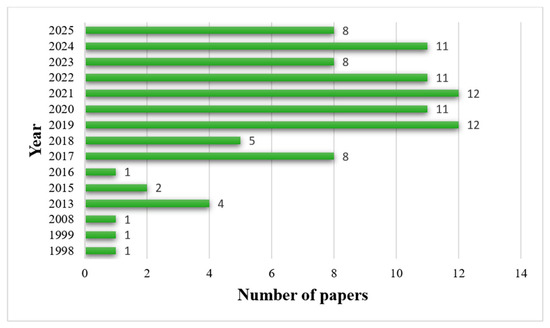
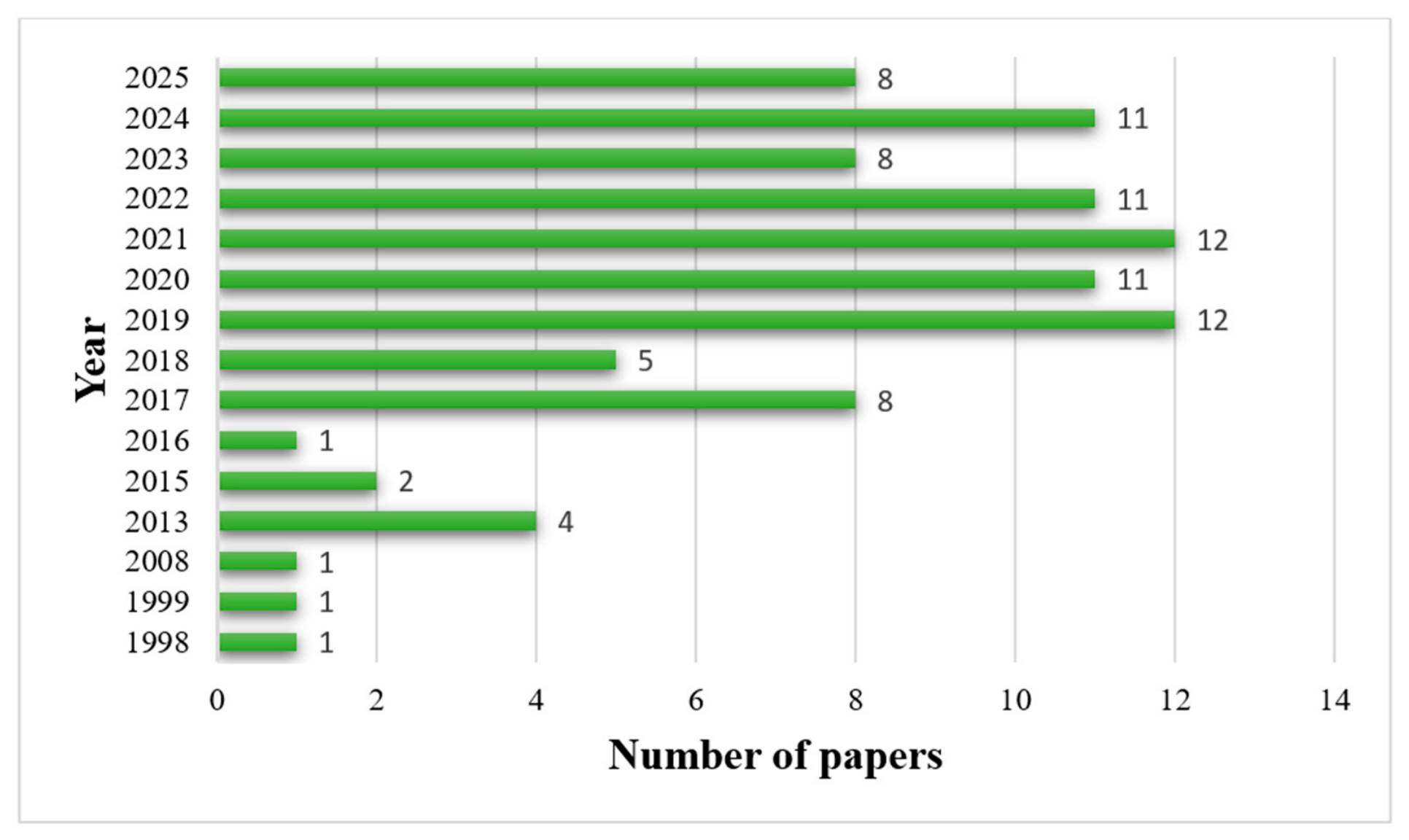
According to scrutiny of the topic, 96 papers were published from 1998 to 2025 in the Scopus database. Since the initial years, the number of published papers reveals a general rise in recent years, with noticeable fluctuations in certain periods. As shown in Figure 2, the top number of publications was observed in 2019 and 2021, both of which reached a high point of 12 papers, followed by years that showed the same number of 11 publications. On the other hand, in the earlier years, namely 1998 and 2008, research achievement was significantly lower, with only one paper published in each year.
Figure 2.
Number of papers on grain cleaning issues.
3.2. Publication Type on Grain Cleaning in the World
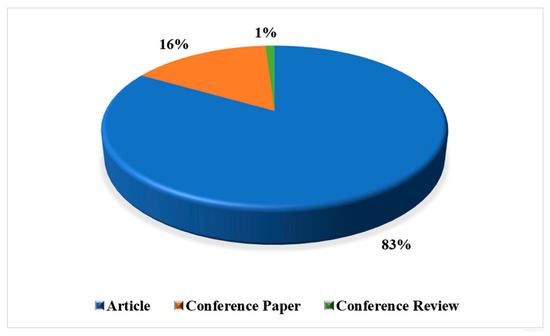
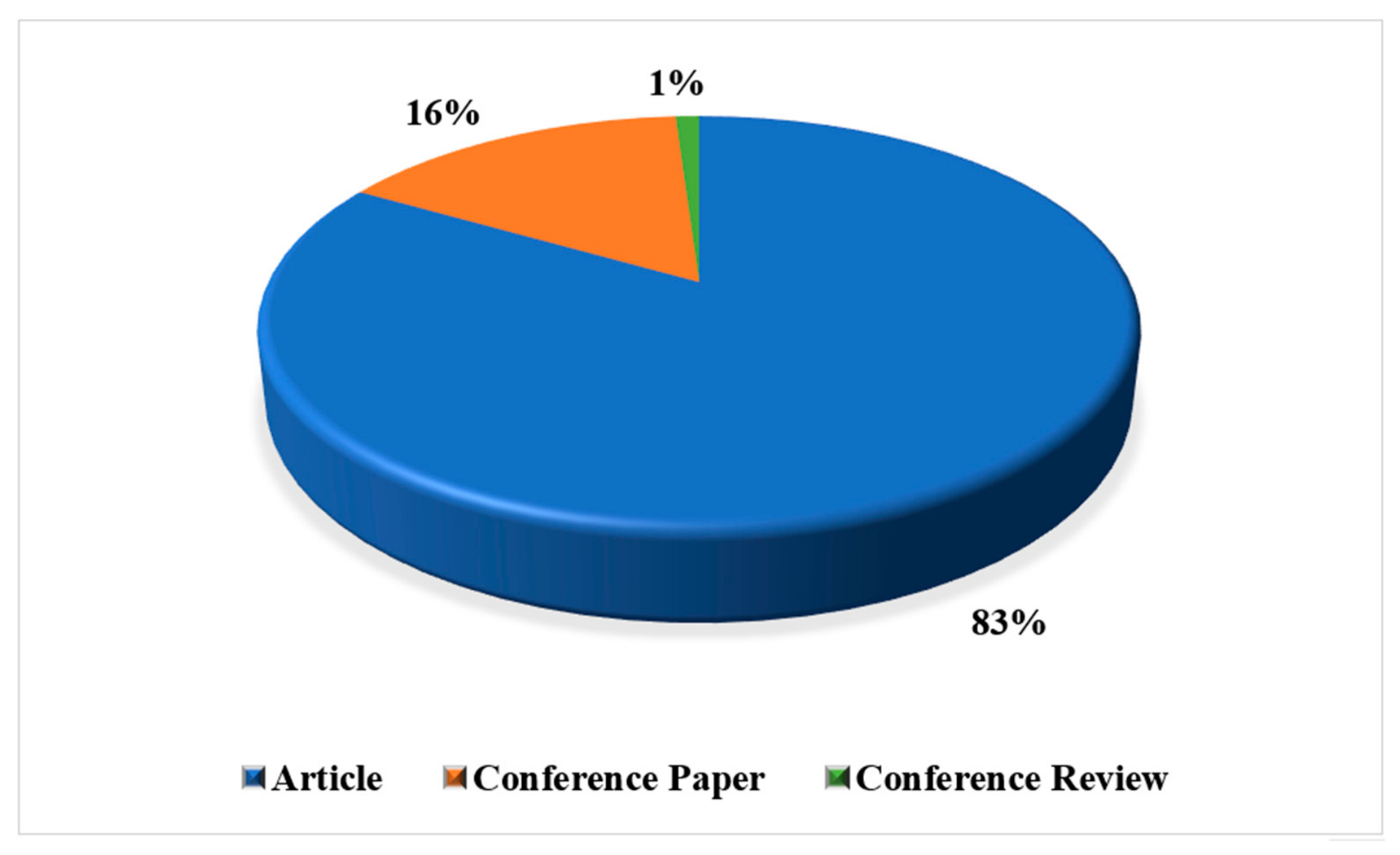
The following pie chart (Figure 3) shows that the abovementioned written papers in Scopus were divided into three document types: article, conference paper, and conference review. Most authors chose to present their scientific research as an article paper (80%), while a small number of conference papers, with only 15%, were accounted for by other scholars, and conference reviews represented a very small proportion of the dataset.
Figure 3.
Publication types on the grain cleaning issue.
3.3. Journals on the Grain Cleaning Issue
The bibliometric analysis highlights the most influential articles in agricultural engineering and machinery research, particularly focusing on grain cleaning devices. The journal distribution shows clear concentration patterns. Transactions of the Chinese Society for Agricultural Machinery leads with 22 publications, representing over one-third of all papers. Together with Transactions of the Chinese Society of Agricultural Engineering (11 papers), Chinese sources account for 52% of the total output.
Other journals contribute fewer papers: Inmateh Agricultural Engineering and Journal of Chinese Agricultural Mechanization (6 each), followed by Biosystems Engineering (3), and several outlets with two papers each.
This indicates that Chinese academic journals serve as the primary platforms for agricultural engineering research, while international journals play a secondary role in this dataset (Table 1).
Table 1.
List of journals on grain cleaning issues in the world.
3.4. Authors and Their Affiliated Countries or Regions
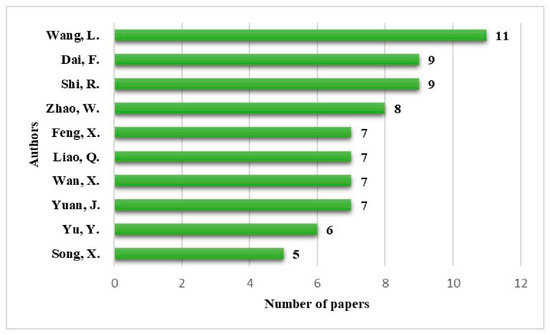
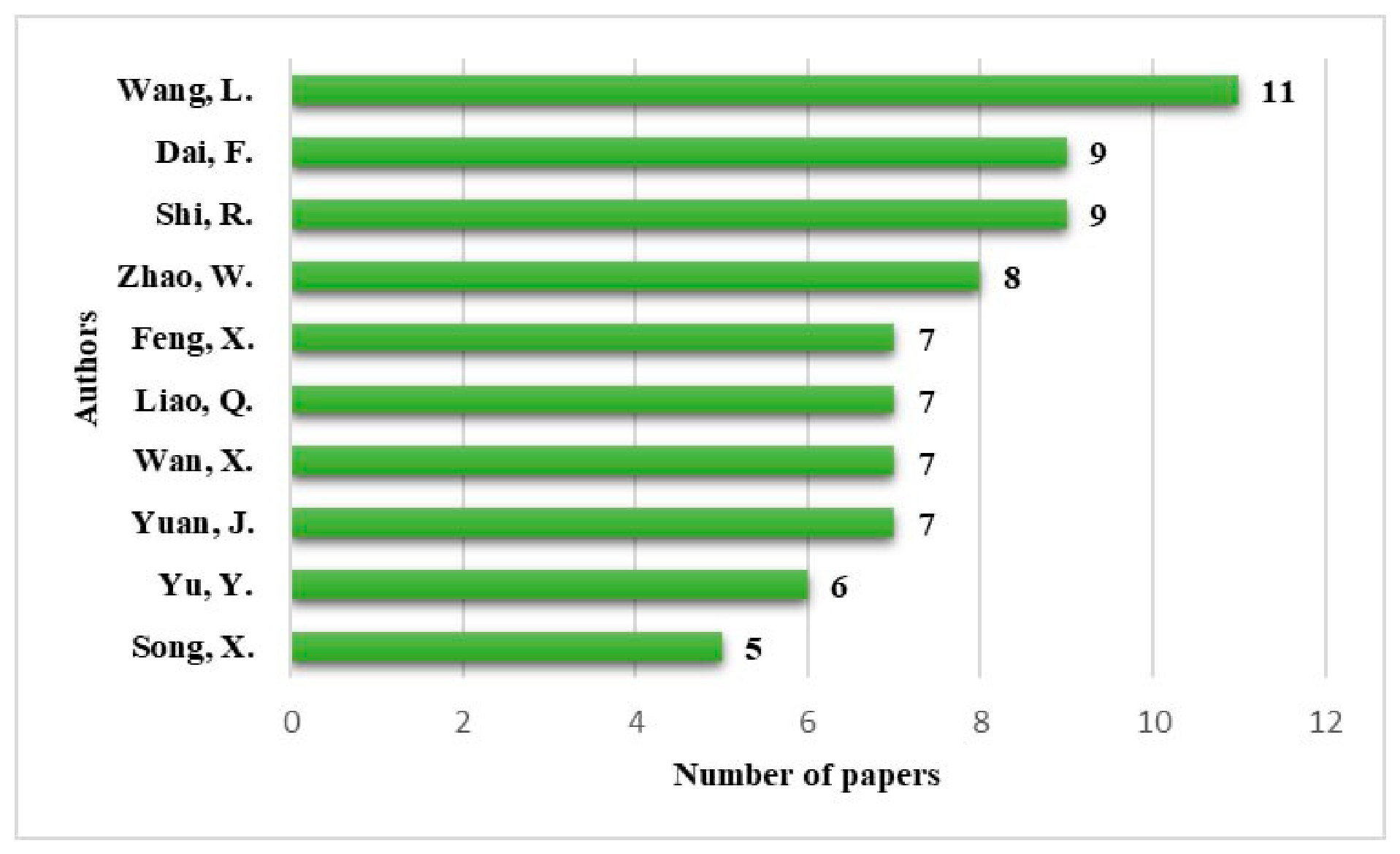
Figure 4 presents the distribution of publications by the most productive authors in the dataset. The horizontal axis shows the number of papers, while the vertical axis lists the authors’ names. Among all contributors, Wang, L. has the highest output with 11 publications, indicating a leading role in this research field. Dai F. and Shi, R. follow with nine papers, and Feng, X., Liao, Q., Wan, X., and Yuan, J. each contributed seven studies. Yu, Y., authored six papers, while Song X. produced five papers.
Figure 4.
List of top authors published on grain cleaning issues.
The chart highlights a noticeable variation in research productivity, with a small group of authors contributing a substantial share of the total publications. This pattern suggests the presence of key researchers who play a central role in advancing the topic, alongside several others with moderate or limited contributions.
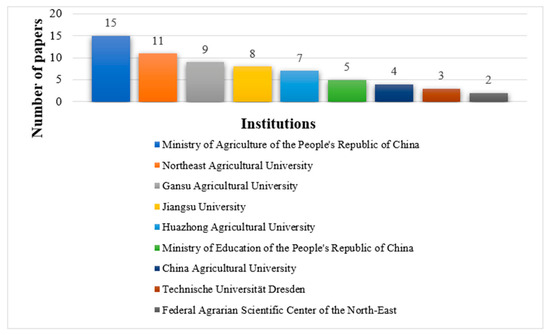
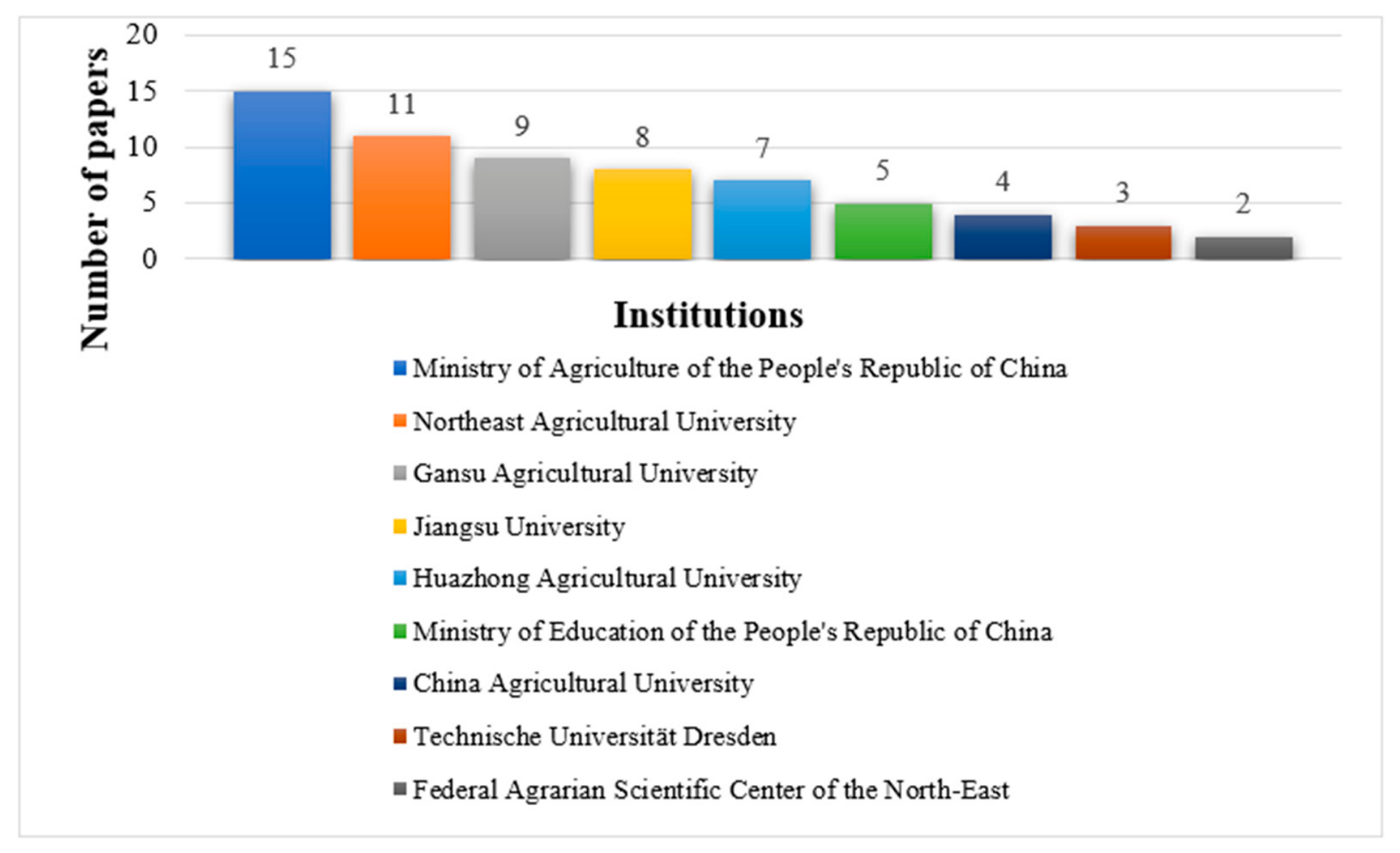
In Figure 5, the analysis of institutions describes that the Ministry of Agriculture has the highest number of publications, with 15 papers. Northeast Agricultural University follows with 11 publications, and Gansu Agricultural University occupies the third position with nine papers. Jiangsu University and Huazhong Agricultural University contributed eight and seven papers, respectively.
Figure 5.
List of top institutions on the grain cleaning issue.
3.5. Top-Cited Papers on the Grain Cleaning Issue
The bibliometric analysis highlights the most influential articles in agricultural engineering and machinery research, particularly focusing on cleaning devices for combine harvesters. The top 10 most-cited articles were analyzed based on their journals in Table 2, corresponding authors, country or region of origin, publication year (PY), total citations (TCs), and document type. Highly cited articles authored by Liang Z. and published in Biosystems Engineering in 2020 received 77 citations. This article focuses on the optimization of a multi-duct cleaning device for rice combine harvesters using CFD and experimental methods. The second most-cited article, by Wan X., was published in Nongye Gongcheng Xuebao/Transactions of the Chinese Society of Agricultural Engineering in 2018 and has 43 citations. This study examined the effect of rotational speed in cleaning systems for rape combine harvesters. Dai F. contributed multiple highly cited articles in Nongye Jixie Xuebao/Transactions of the Chinese Society for Agricultural Machinery, with citations ranging from 20 to 25, primarily focusing on separating and cleaning machines for flax threshing materials.
Table 2.
List of top-cited publications on the grain cleaning issue.
3.6. Top-Cited Journals on Grain Cleaning Issues
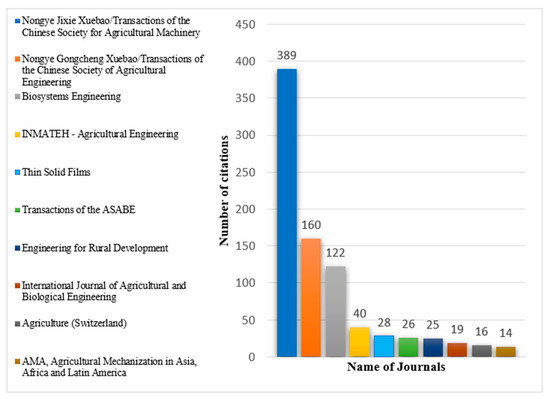
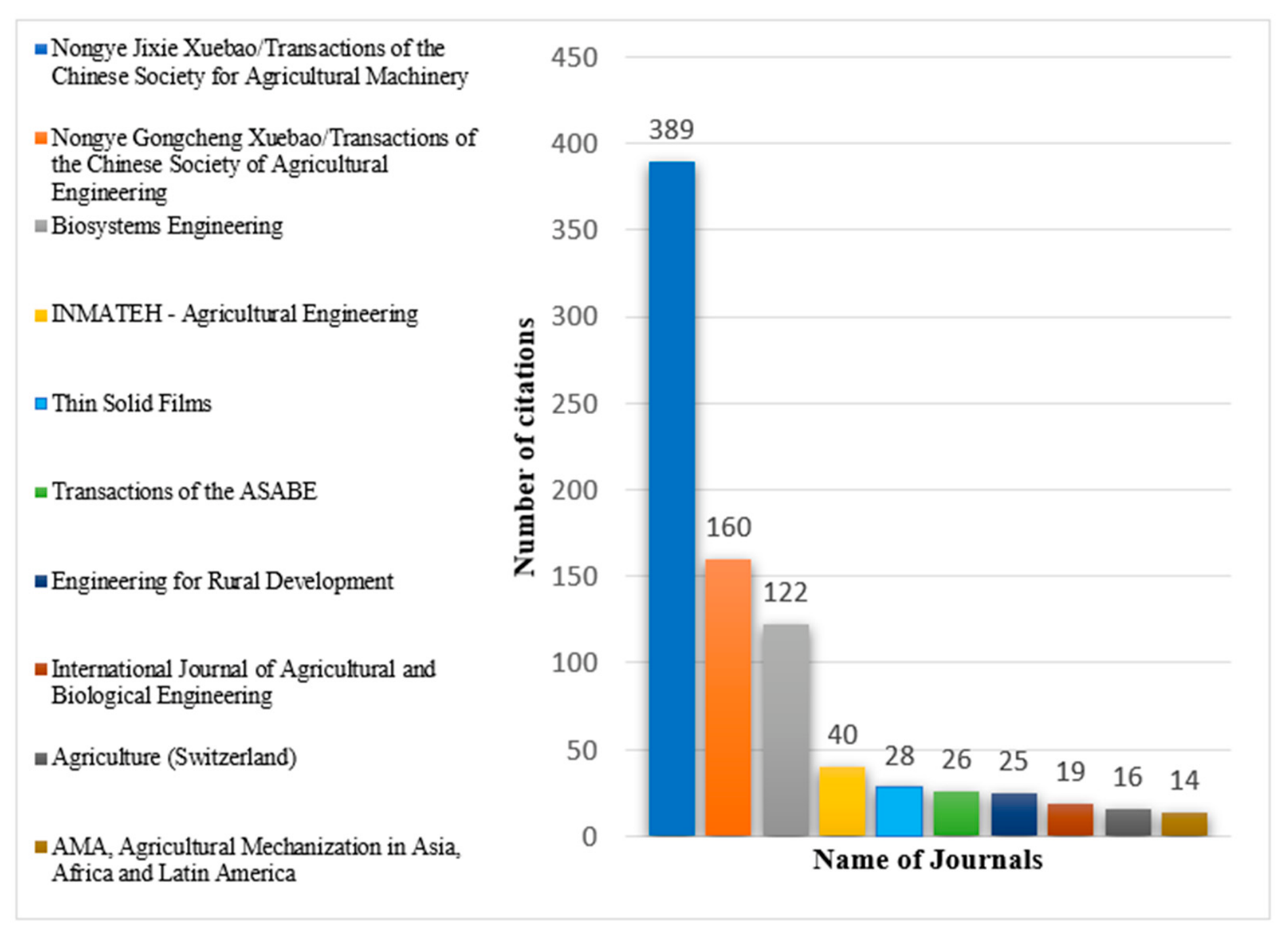
The bibliometric analysis reveals the most frequently cited journals in the field of agricultural engineering and machinery. The distribution of citations among different journals is illustrated in Figure 6. The journal Nongye JixieXuebao/Transactions of the Chinese Society for Agricultural Machinery received the highest number of citations, nearly 400. This highlights its significant influence in the research community and its role as a primary source for agricultural engineering studies. Following closely, Nongye Gongcheng Xuebao/Transactions of the Chinese Society of Agricultural Engineering had 160 citations, and Biosystems Engineering occupies the third position with 122 citations.
Figure 6.
Leading journals contributing to grain cleaning research from 1998 to 2025.
The remaining journals show comparatively lower citation influence. INMATEH—Agricultural Engineering received 40 citations, while Thin Solid Films, Transactions of the ASABE, and Engineering for Rural Development accumulated 28, 26, and 25 citations, respectively. The International Journal of Agricultural and Biological Engineering and Agriculture (Switzerland) obtained 19 and 16 citations, whereas AMA, Agricultural Mechanization in Asia, Africa, and Latin America, recorded the lowest value with 14 citations. The overall citation distribution indicates that citation impact is highly concentrated in a few core journals, while the majority of sources contribute at a moderate or lower level. This pattern suggests the presence of dominant publication outlets that play a crucial role in disseminating influential research within the discipline.
3.7. Leading Countries or Regions in Grain Cleaning Research
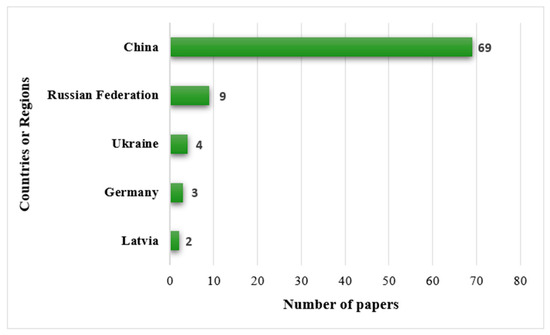
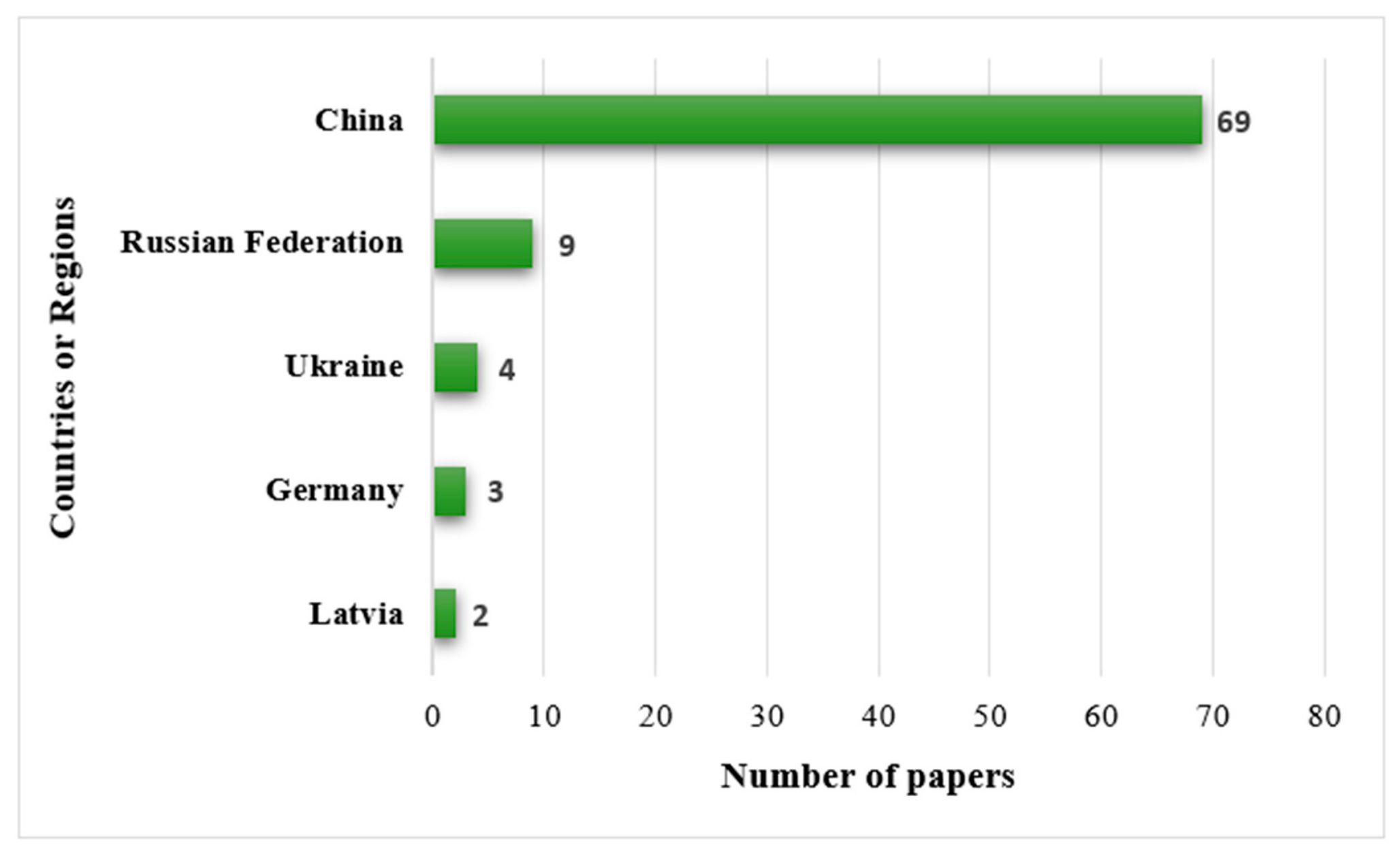
China leads the research output with 69 contributions, the Russian Federation follows with nine contributions, reflecting its active engagement in the field. Ukraine ranks third with four contributions, showcasing a moderate level of research activity. Germany and Poland contributed three and two studies, respectively, indicating their involvement in agricultural engineering research (Figure 7). These results indicate a strong concentration of research in China and Russia, with other contributions scattered across various countries or regions.
Figure 7.
List of top countries or regions on grain cleaning issues.
3.8. Top Co-Authorships and Keywords on the Grain Cleaning Machine
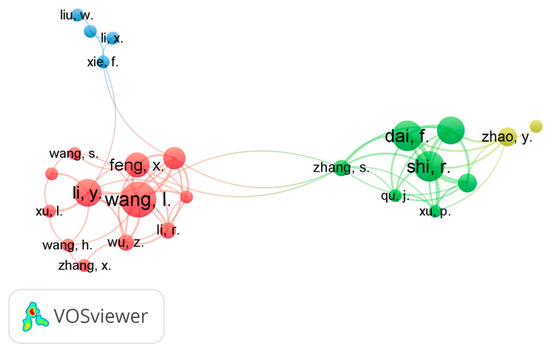
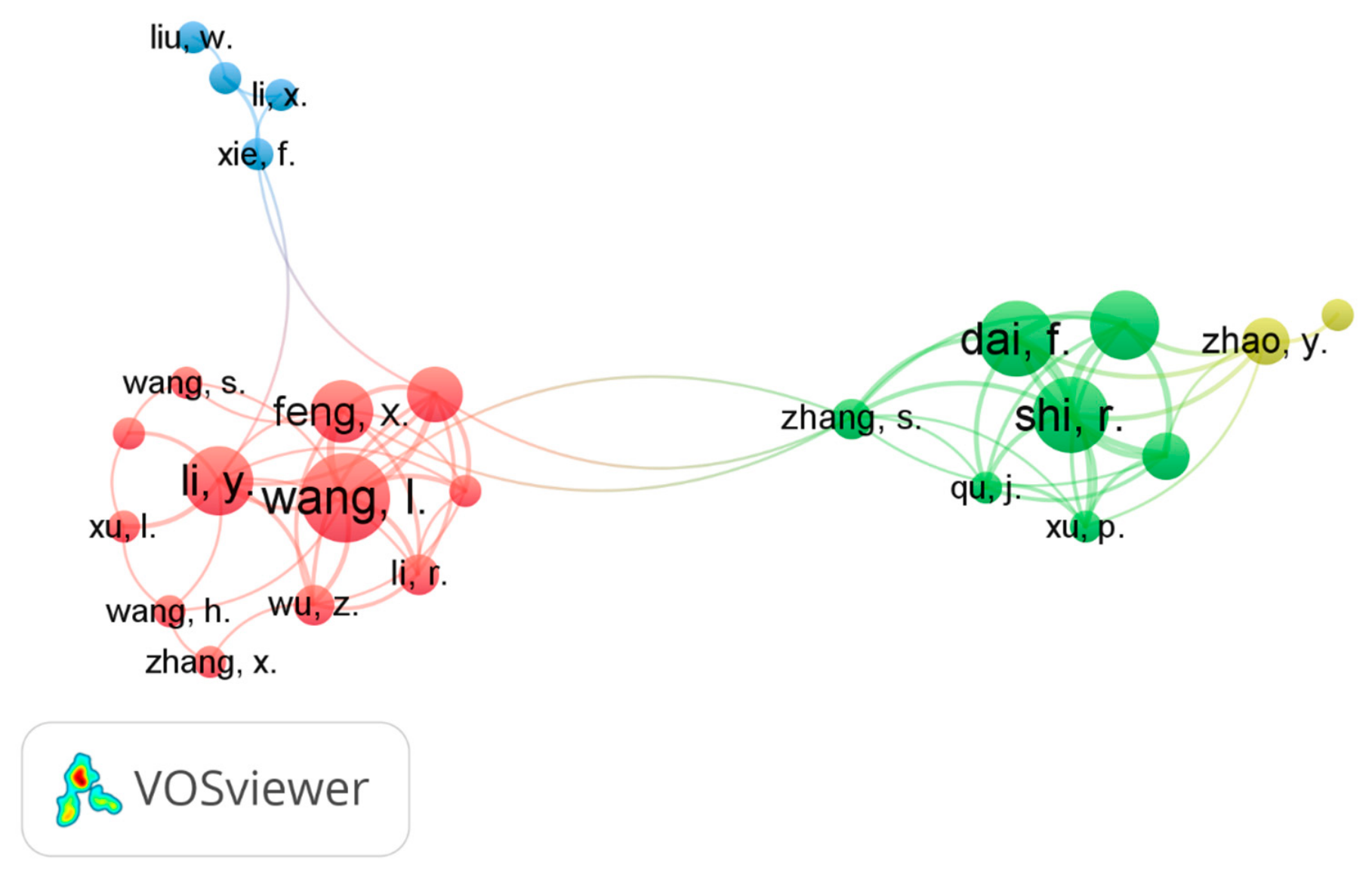
Figure 8 presents an author co-authorship network map generated using VOSviewer software. The visualization comprises three primary clusters, differentiated by color, representing distinct research collaborations. The blue cluster includes authors Liu, W., Li. X., and Xie, F. The red cluster features a larger collaborative group consisting of Wang, S., Feng, X., Xu, L., Li, Y., Wang, L., Wang, H., Wu, Z., Li, R., and Zhang X. The green cluster is composed of Dai.F., Zhao, Y., Shi.R., Qu, J., Zhang, S., and Xu.P. The connecting lines (edges) between nodes signify co-authorship relationships, with the proximity and thickness of links indicating the strength of collaborative ties. This network structure effectively delineates the core research groups and their interconnections within the studied field.
Figure 8.
Network map of top co-authorships based on the total link strength.
The absence of cross-links between these two clusters suggests independent research streams, potentially representing different institutions, laboratories, or thematic focuses. This separation may reflect specialized research directions within the broader discipline.
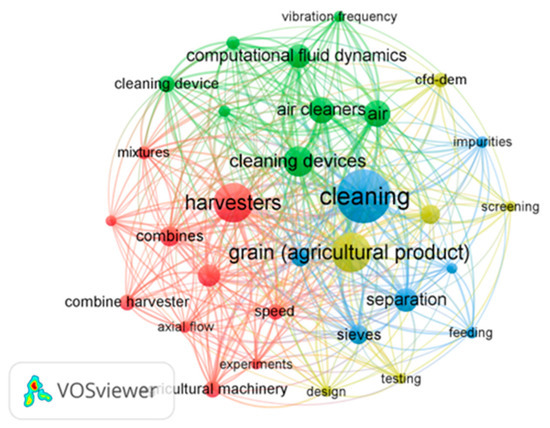
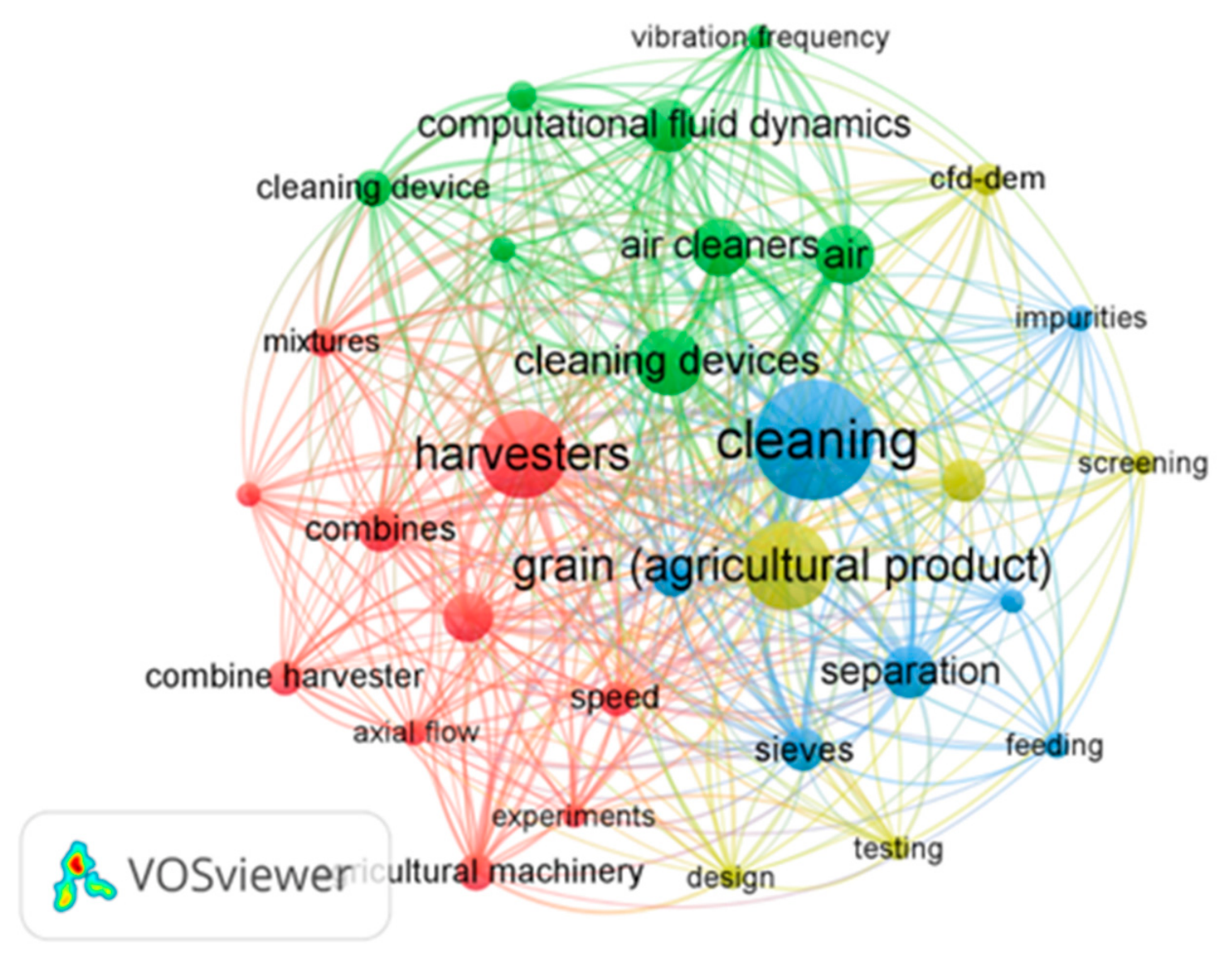
The keyword analysis identifies several interconnected thematic clusters, each represented by a distinct color. The central theme revolves around combine harvesters and cleaning devices, which are linked to terms such as separation, sieves, airflow, and impurities. These connections indicate a strong research focus on grain cleaning efficiency and mechanical separation processes. Key technical terms such as computational fluid dynamics (CFD), CFD-DEM, and vibration frequency suggest the integration of advanced simulation and modeling techniques in the design and optimization of harvesting equipment. Other prominent keywords include axial flow, speed, feeding, experiments, and testing, highlighting the importance of both theoretical analysis and empirical validation in this research domain. The term design also appears, reflecting the engineering aspect of developing agricultural machinery. The map reveals a multidisciplinary research landscape combining mechanical engineering, simulation science, and agronomy, with a strong emphasis on improving the performance of combine harvesters and cleaning systems (Figure 9).
Figure 9.
Network map of top keywords based on the total link strength.
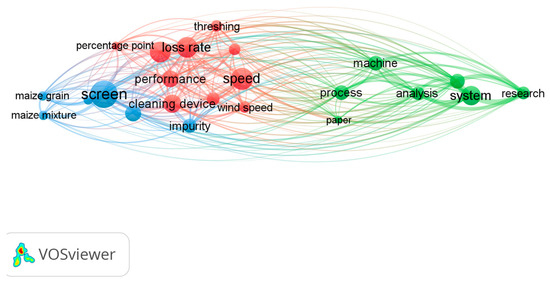
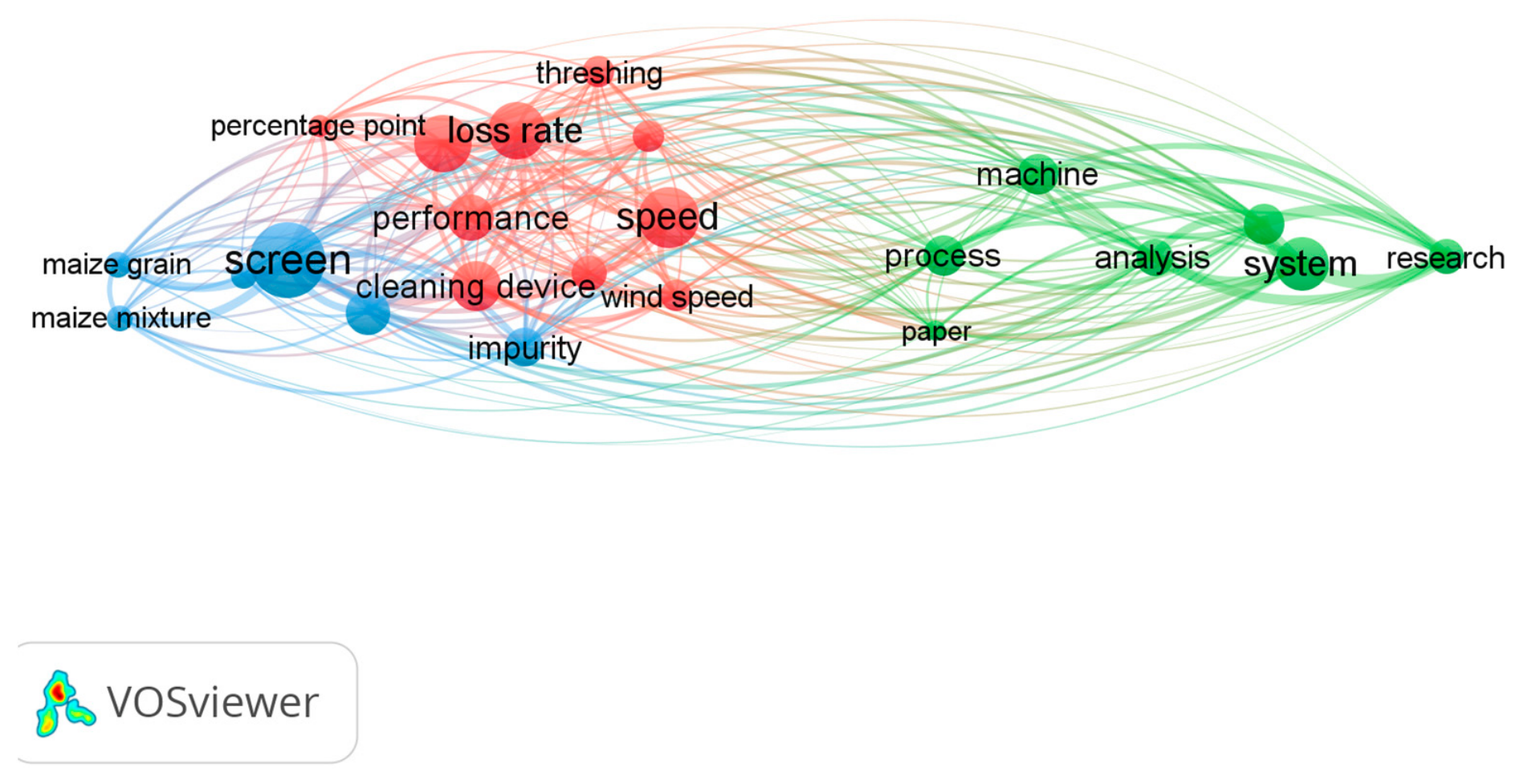
The abstract-based analysis identifies three core research themes in maize grain cleaning systems. The central focus remains on improving grain purity, as evidenced by the strong linkages between maize grain, screen cleaning device, and impurity. The close relationship among speed, performance, and loss rate indicates that optimizing operational parameters involves a trade-off between throughput and grain recovery. Higher speeds often increase impurity or grain loss, making this balance a key research challenge. The connection between threshing- and cleaning-related terms confirms that these processes are interdependent. Cleaning efficiency depends heavily on threshing output characteristics, supporting the need for integrated harvester design. Finally, the presence of a maize mixture highlights the complexity of field conditions, where grain is combined with various impurities. Future research should address energy efficiency and real-time monitoring, which remain underexplored. System Analysis Terms such as simulation, research, machine, system, and analysis indicate an orientation toward computational approaches, system-level assessments, and optimization studies in the domain. The connectivity between clusters highlights interdisciplinary research, where mechanical performance is linked to material processing and computational modeling. The presence of research as a central node in the blue cluster suggests a high level of analytical- and simulation-based studies in the field. These findings demonstrate a diverse research landscape, integrating experimental, theoretical, and computational perspectives. The results provide insights into the dominant research themes and potential future directions for further exploration (Figure 10).
Figure 10.
Network map of the abstract based on the total link strength.
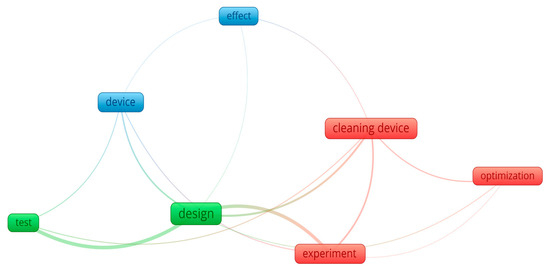
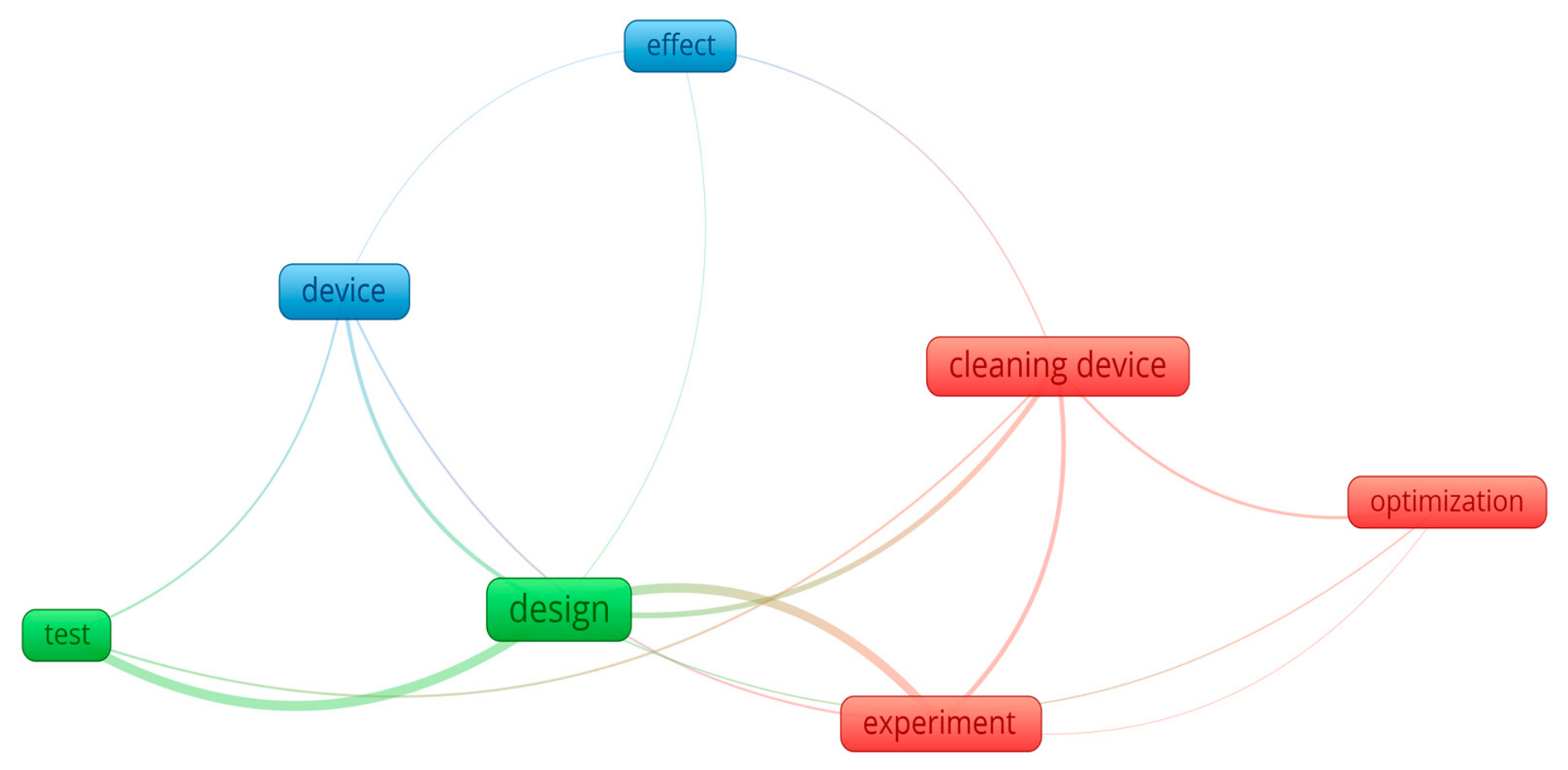
The co-occurrence map, shown in Figure 11, shows that title-based keyword analysis reveals that research on cleaning devices primarily focuses on design and optimization, suggesting that scholars are engaged in refining existing systems rather than developing entirely new technologies. This indicates a mature research field where incremental improvements are prioritized.
Figure 11.
Network map of the title based on the total link strength.
The frequent occurrence of test, experiment, and effect confirms that empirical validation remains the dominant methodological approach. Researchers systematically evaluate how design modifications influence cleaning performance through controlled experimentation, reflecting the practical, application-oriented nature of this discipline.
However, most studies are conducted under laboratory conditions that may not fully represent real-world agricultural settings. Future research should bridge this gap by validating optimized designs across diverse field conditions, thereby enhancing the practical relevance and translational impact of the findings.
Table 3 provides an integrated overview of the main bibliometric results derived from the analysis of Scopus-indexed publications related to grain cleaning devices between 1998 and 2025. It summarizes publication trends, document types, influential authors and institutions, leading journals, geographic distribution of research output, dominant research themes, and identified research gaps. The table is intended to highlight the most important outcomes of the bibliometric analysis and to support a clearer understanding of the current research landscape and future development directions in grain cleaning technology.
Table 3.
Overview of bibliometric findings in grain cleaning device research (1998–2025).
4. Discussion
According to a scrutiny scanning of the following table, 96 analyzed articles were divided into five groups, including Mechanical Cleaning Systems, Pneumatic & Aerodynamic Cleaning, Grain Quality & Post-Harvest Processing, Modeling & Optimization Studies, Smart & Automated and Grain Cleaning Technologies, which were dependent on theme, apparently, grain or grain cleaning. At the outset, the number of articles that were devoted to mechanical cleaning were 16 and called Mechanical Cleaning Systems. The second group was named Pneumatic & Aerodynamic Cleaning due to 30 research studies that were conducted with practical aerodynamic cleaning. The next row showed the quantity and names of authors of six articles related to grain quality * followed by 31 research works devoted to modeling and optimization. Last and least, seven articles were called Smart & Automated Grain Cleaning Technologies *, and the other five articles are not shown in the table because the publications’ ideas were not very close to the subject being studied (Table 4).
Table 4.
Thematic clusters identified in the literature on grain cleaning.
- Thematic Classification of Publications
To further clarify the thematic classification, representative examples are provided for each category. The Mechanical Cleaning Systems category includes studies on cleaning devices that rely on mechanical motion, such as vibrating screens, rotary sieves, and multi-stage screening structures, to separate grain from impurities. The research mainly focuses on the structural design of, motion parameters of, and performance improvement in mechanical separation units. Pneumatic & Aerodynamic Cleaning Publications in this group examine cleaning methods based on airflow, suction, or blowing. These studies analyze how air velocity, distribution, and aerodynamic interactions between particles influence the removal of light impurities and overall cleaning efficiency. The Grain Quality & Post-Harvest Processing category covers research addressing the impact of cleaning on grain quality, grading, and post-harvest handling. The emphasis is on impurity reduction, seed classification, and improving the market value and storage stability of cleaned grain. Modeling & Optimization Studies classified here primarily use numerical simulation, mathematical modeling, and optimization techniques (e.g., CFD, DEM, response surface methods) to investigate cleaning processes and determine the optimal design and operational parameters. The Smart & Automated Technologies group includes research integrating sensors, monitoring systems, and automated control into grain cleaning equipment. The goal is to enable intelligent operation, real-time adjustment, and improved efficiency through digital and smart technologies.
4.1. Mechanical Cleaning Systems
The category of Mechanical Cleaning Systems, comprising 15 publications, highlights the significant role of mechanical components in enhancing grain separation. Studies consistently demonstrate that parameters such as sieve structure, drum inclination, and motion mechanisms critically affect cleaning efficiency, grain quality, and loss reduction. For example, ref. [15] reported that a modified rotary cylindrical sieve with an internal coil improved seed distribution and processing capacity, while [18] emphasized the decisive influence of drum inclination on the separation of full grains and fine impurities. Similarly, ref. [12] achieved high cleaning efficiency for flax threshing material through an air screen machine, and [23] showed that a rotary screw threshing mechanism reduced energy consumption and minimized grain damage during legume harvesting.
Field-oriented and crop-specific designs further illustrate the practical impact of mechanical innovations. Ref. [19] developed a rice cleaning device combining oscillating sieves and directional airflow, achieving high separation efficiency for paddy and milled rice. Ref. [13] improved mechanization and cleaning efficiency in a Cyperus esculentus harvester, while [25,26] demonstrated effective cleaning and low loss in hilly-area quinoa and buckwheat harvesters, respectively. Additional innovations, such as the inclined transport board for soybean harvesting [20] or the MVS-1.0 machine for ergot separation in winter rye [21], highlight solutions for specialized challenges. Collectively, these findings indicate that careful design and adjustment of mechanical components, supported by laboratory and field validation, are essential for maximizing separation efficiency, preserving grain quality, and reducing harvest losses, emphasizing the continued relevance of mechanical cleaning systems in modern agricultural machinery.
4.2. Pneumatic & Aerodynamic Cleaning
The airflow-based cleaning systems category encompasses studies that focus on grain separation using aerodynamic forces, where particles are sorted according to terminal velocity, drag, and density differences. Unlike purely mechanical systems, separation in these studies is primarily achieved through the manipulation of airflow within aspiration channels, cyclones, or air screen devices. Research consistently highlights that careful design and optimization of airflow parameters, such as velocity, duct configuration, and suction pressure, directly influence cleaning efficiency, grain loss, and impurity removal. For example, ref. [39] demonstrated that optimizing tray movement and channel parameters in an air sieve cleaner for sunflower seeds improved efficiency by 20%, while [52] achieved low grain loss and impurity in a soybean combine harvester through optimized reel, threshing, and cleaning devices. Similarly, refs. [34,37] showed that multi-duct or multilayer feeding systems improve separation quality by ensuring uniform airflow and minimizing light impurities.
Many studies further combine experimental and modeling approaches to enhance system performance. CFD and CFD-DEM simulations have been widely applied to predict particle behavior in moving air, optimize bionic or biomimetic sieve designs, and refine air speeds and duct layouts. For instance, refs. [30,50] used CFD-DEM optimization to design flax and flax-seed cleaning devices, achieving over 97% cleaning efficiency with minimal losses. Bionic designs inspired by pigeon feathers or earthworm movement have been shown to improve separation under high feed rates, as demonstrated by [30,49,53]. Cyclone-based systems for rapeseed and legumes have been optimized to balance inlet and outlet velocities, ensuring high cleaning ratios while minimizing losses [27,42]. Studies also indicate that pre-separation of loose grains or layered air screen configurations can significantly reduce grain damage and improve throughput [52,56,57,85].
Across crops such as rice, wheat, soybean, maize, flax, barley, and rapeseed, these findings emphasize that aerodynamic separation benefits from both design innovation and rigorous optimization. Integrating modeling and experimental validation allows researchers to predict system behavior accurately and refine parameters for field applications, reducing reliance on manual labor and ensuring high-quality seed output. Overall, the studies underscore that modern airflow-based cleaning systems achieve efficient, low-loss, and crop-specific separation through a combination of aerodynamic principles, computational modeling, and targeted engineering design.
4.3. Grain Quality & Post-Harvest Processing
Although the cleaning step is crucial for maintaining grain quality, it is relatively underrepresented, with only six studies identified in the Scopus database. This category focuses on the effects of cleaning operations on grain characteristics after harvest rather than on machinery design. Research primarily assesses outcomes such as grain damage, impurity content, moisture changes, grading efficiency, and market quality, highlighting the importance of cleaning for preserving seed integrity and meeting storage or processing standards. For instance, ref. [58] developed a mathematical model for soybean threshing and separation in a two-phase combine, enabling evaluation of seed integrity, germination, and post-harvest processing efficiency. Ref. [59] demonstrated that ergot can be effectively removed from rye using a salt-water bath with a plate inclined at ≥65°, ensuring complete grain immersion. Screw-type cleaners, as reported by [61], achieved 98.5% cleaning efficiency with minimal breakage under optimized conditions. Ref. [60] showed that moisture significantly alters finger millet’s physical properties—such as size, sphericity, and porosity—impacting handling and processing design. Furthermore, preliminary separation or removal of light impurities in wheat, investigated by [56,57], improved combine efficiency, allowed over 90% of grain to pass intact, and reduced crushing compared to unseparated grain.
These studies collectively emphasize that proper post-harvest cleaning practices are essential for minimizing grain damage, maintaining quality, and supporting efficient downstream processing, even without major modifications to cleaning machinery.
4.4. Modeling & Optimization Studies
This category encompasses research focused on developing mathematical models, numerical simulations, and optimization techniques to analyze and predict the performance of grain cleaning devices. Unlike structural studies, these works emphasize methodological contributions, employing tools such as computational fluid dynamics (CFD), discrete element modeling (DEM), transfer path analysis, and statistical optimization to improve cleaning efficiency and guide equipment design. For example, ref. [77] modeled grain separation on an air-and-screen device, achieving approximately 0.1% loss, while [72] demonstrated CFD-DEM simulations of grain–MOG separation with good experimental agreement. Similar modeling approaches have informed the design of spiral step screens [75], axial-flow harvesters [67,68,71] and vibrating double screens [81,86], optimizing parameters such as drum speed, fan velocity, feed rate, and sieve geometry.
Simulation-driven optimization has also addressed high-feed-rate performance, impurity removal, and grain damage. For instance, refs. [69,99] reported near-complete cleaning efficiency with low loss using wave screen and segmented vibrating screen devices for maize. CFD-DEM studies have enabled the fine-tuning of airflow, spiral blade angles, and sieve arrangements to enhance cleaning uniformity and reduce clogging [65,73]. Field validations confirmed that optimized devices consistently meet national standards for cleaning efficiency, loss, and impurity [87,90]. Additional approaches, including transfer path analysis and vibrational monitoring [74,76], have been employed to detect defects in cleaning screens and ensure quality control. The conference [91] covers 547 papers on advanced design, manufacturing, automation, simulation, grain processing, and logistics, highlighting innovations in machinery, post-harvest processing, and industrial technology.
Collectively, these studies demonstrate that modeling and optimization provide critical insights for improving grain cleaning performance, allowing predictive evaluation of device behavior, reducing losses, and guiding the development of more efficient, crop-specific cleaning machinery. By integrating simulation with experimental validation, researchers can optimize design parameters, airflow distribution, and motion mechanisms, contributing to both mechanization efficiency and high-quality post-harvest outcomes.
4.5. Smart & Automated Grain Cleaning Technologies
This category covers studies on intelligent, sensor-based, and automated grain cleaning systems that integrate digital technologies into post-harvest processing. Articles in this group focus on machine vision, Internet of Things (IoT) applications, automated control, and precision monitoring to enhance cleaning performance. The emphasis is on real-time decision-making, adaptive operation, and minimizing human intervention, reflecting a transition from conventional mechanical systems toward data-driven and autonomous solutions. For example, ref. [95] demonstrated that an adjustable soybean threshing device with asymmetric clearance optimized airflow, reducing grain crushing to 2.64%, loss to 1.12%, and impurity to 1.97%, while improving harvesting quality for rice and maize. Ref. [94] evaluated combine harvester cleaning devices using optical grain sensors and hot-film air velocity sensors across sieves and chaffers, showing improved accuracy over conventional loss sensors and enabling real-time process-based control. Ref. [97] reviewed existing cleaning loss detection systems, highlighting their limitations and advocating for the integration of advanced sensors, signal processing, and automated cleaning control in future designs.
Recent developments include [92], who designed a smart device for fresh corn seeds that achieved 99.69% cleaning efficiency with low measurement errors (yield 0.41%, moisture 3.57%, grain weight 0.28%) using dual screens and airflow, reducing manual labor requirements. Similarly, Ref. [98] optimized a grain air sieve cleaner for small grains, achieving 2.42% impurity and 2.77% loss through precise monitoring of crank and fan speeds, validated via field tests.
Advancements in AI-based monitoring have also emerged. Ref. [96] proposed a method to analyze airflow within cleaning chambers, automatically evaluating wind distribution and grain cleaning performance based on crop and machine parameters. Such approaches demonstrate the potential for fully autonomous, intelligent grain cleaning systems that adapt to operational conditions while maintaining high efficiency and minimal losses.
4.6. Non-Relevant Publications Identified by Keyword Search
Finally, seven articles were classified as “other”, covering less traditional topics such as finger mills and engineering materials such as steel. These unusual studies may indicate new or interdisciplinary directions for research on grain processing.
Overall, this review demonstrates a strong scientific focus on grain separation, theoretical frameworks, and threshing mechanisms, while highlighting a research gap in grain cleaning systems. Future research may benefit from a greater emphasis on cleaning efficiency and contamination control to ensure higher product quality and reduce post-harvest losses, especially in the aspiration environment.
4.7. Future Research Directions
Despite the recent increase in academic interest, the bibliometric results reveal that research on grain cleaning systems remains limited in both volume and technological depth when compared with other subsystems of combine harvesters. In particular, relatively few studies address adaptive system design, real-time process monitoring, and automated control strategies, which present practical challenges for achieving stable cleaning performance under varying crop types, impurity compositions, and field conditions. The dominance of studies focusing on structural optimization and airflow analysis suggests that intelligent and data-driven approaches are still underexplored. This research gap simultaneously represents a significant opportunity for future development, as the integration of advanced sensors, automation technologies, and artificial intelligence methods—such as machine learning-based parameter optimization and predictive control—could substantially enhance cleaning efficiency, reduce grain loss, and improve system robustness. Therefore, future research should move beyond conventional mechanical optimization and focus on smart, adaptive, and autonomous grain cleaning systems aligned with the principles of precision and intelligent agriculture.
4.8. Technological Evolution and Emerging Trends in Grain Cleaning Devices
Bibliometric sources show that grain cleaning is closely related to the technological development of agricultural machinery and post-harvest processing systems. Studies have further developed the gradual transition of the industry from traditional mechanical technologies to simulation, intelligent, and highly integrated cleaning systems. This also reflects the increase in basic research activities, scientific stability, and the radical development of technical paths.
The mechanical cleaning systems of grain cleaning equipment have been grouped into a cluster, which supports the structural improvement in vibrating screens, rotary drums, cleaning sieves, and cleaning mechanisms. The project was carried out through empirical experiments and the optimization of geometric and kinematic parameters based on the provision of three projects. The main grain loss and cleaning by mechanical equipment were targeted.
As the volume of grain production increased and the variety of crops became more diverse, the scope expanded to pneumatic and aerodynamic cleaning clusters. Research shows that the cleaning is strongly influenced by the air supply, particle suspension, and impurity loading mechanisms. In the food industry, aspiration systems, cyclone separators, air-assisted screening equipment, and hybrid air curtain cleaning technologies have attracted more attention. The focus has gradually shifted from purely mechanical resources to controlling the air supply–particle interaction, which has become a decisive factor in contributing to high cleaning quality.
The widespread use of computational fluid dynamics (CFD), discrete element methods (DEMs), and CFD-DEM simulations has allowed researchers to study internal flow fields, particle trajectories, screening behavior, and separation mechanisms in unprecedented detail, and has had a significant technological impact on the emergence of a cluster of modeling and optimization studies. These numerical engineering tools have changed the design process from trial-and-error-based experiments to simulation-based optimization. As a result, innovative concepts such as wave screen, sinusoidal screen, segmented screen, spiral step cleaner, multilayer feeding separator, vortex cleaning, cylinder re-cleaning sieve, and Coanda effect separation devices were developed and validated through integrated numerical and experimental analyses.
Modern cleaning technologies are aimed at preserving grain quality, reducing mechanical damage, minimizing losses, and improving the quality of consumer and seed grain products. This trend has prompted the development of modular recleaning systems, secondary cleaning devices, anti-clogging mechanisms, and crop-specific processing technologies designed to meet the requirements of various agricultural products.
The emergence of the Smart and Automated Grain Cleaning Technologies cluster in recent years marks the beginning of a new technological paradigm. Current research increasingly includes airflow monitoring systems, sensor-assisted operation, remote parameter adjustment, and intelligent optimization algorithms. The integration of machine learning techniques, including neural networks and multi-objective optimization algorithms, has enabled predictive modeling of cleaning performance and adaptive parameter selection. These developments are an important step toward intelligent grain cleaning systems capable of autonomous decision-making and real-time process control. The chronological development of these clusters shows that grain cleaning technologies have evolved through several interrelated stages: mechanical separation technologies, mechanical–pneumatic integration, understanding of the physics of airflow and particle flow, simulation-based engineering, system-level optimization, and intelligent monitoring and control. This trajectory demonstrates a clear shift from the improvement in isolated components to integrated and data-driven cleaning architectures.
Future research is expected to accelerate the convergence of grain cleaning technologies in agriculture and smart farming. Potential areas include machine vision-based contamination detection, digital models of cleaning systems, real-time quality monitoring, adaptive airflow control, artificial intelligence-based parameter optimization, and autonomous cleaning control systems. Such technologies will allow cleaning devices to continuously adjust their operating conditions based on crop characteristics, admixture composition, and more. As a result, future grain cleaning systems are expected to be more accurate, efficient, energy-efficient, and meet the requirements of sustainable agricultural production. Overall, bibliometric evidence suggests that grain cleaning research has shifted from traditional mechanical separation approaches to intelligent, simulation-based, and precision-oriented cleaning systems. This shift highlights the increasing importance of digital engineering, smart sensor technologies, and artificial intelligence in shaping the next generation of grain cleaning devices.
5. Limitations
This study has several limitations that should be acknowledged. Firstly, although a systematic search strategy was applied, some relevant publications may have been omitted due to database coverage constraints, language restrictions, or differences in indexing practices across scientific databases. The analysis was limited to the peer-reviewed literature indexed in Scopus, which may exclude high-quality studies published in other databases or technical reports. Secondly, while bibliometric analysis is effective for identifying publication patterns, research trends, and influential contributors, it does not fully capture the practical implementation, performance, or field-level adoption of grain cleaning and separation technologies. Consequently, the findings primarily reflect academic research activity rather than real-world engineering application. Thirdly, bibliometric outcomes are sensitive to the choice of search strings, inclusion criteria, and parameter settings within visualization software such as VOSviewer. Different threshold values, clustering algorithms, or normalization methods may lead to variations in network structures and thematic groupings. Finally, although bibliometric tools assist in extracting quantitative insights from large datasets, the interpretation of results, synthesis of research themes, and identification of future research directions still rely on expert judgment. Therefore, the conclusions drawn in this study should be considered in light of these methodological constraints.
6. Conclusions
This bibliometric analysis of grain cleaning and separation research from 1998 to 2025 provides a comprehensive overview of publication trends, research focus, and document types. The early period shows very limited activity, with only two publications at the end of the twentieth century and a long hiatus of 13 years, reflecting the initial low attention to this field. In contrast, recent years, particularly 2019, witnessed a substantial increase in publications, signaling a growing global interest and renewed efforts in developing innovative grain cleaning and separation technologies. The dominance of articles (80%) emphasizes the focus on original experimental research. Importantly, the study highlights the critical role of grain cleaning in ensuring food quality, reducing post-harvest losses, and supporting agricultural sustainability, which explains its increasing relevance in current research. Overall, the findings indicate a maturing research landscape with considerable potential for future investigations, particularly in advanced cleaning devices, optimized separation processes, and automation in grain handling systems. This study not only maps the historical development but also identifies gaps and opportunities, serving as a useful reference for researchers and engineers engaged in the field of grain processing.
Furthermore, this analysis has highlighted clear technological developments in grain cleaning research. The field has moved from traditional mechanical cleaning systems based on sieves, drums, and vibrating mechanisms to increasingly sophisticated pneumatic separation technologies, simulation-based design approaches, and intelligent cleaning systems. The increasing use of CFD, DEM, and CFD-DEM modeling techniques and the emergence of sensor-based monitoring, machine vision, automation, and IoT-based control systems reflect the increasing integration of digital technologies into post-harvest processing. These developments indicate that future grain cleaning machines will increasingly integrate with industry, supporting the broader goals of precision agriculture and sustainable food production.
Author Contributions
Conceptualization, K.A. and B.K.; methodology, Z.K.; software, A.R.; validation, K.A., Z.K. and A.R.; formal analysis, Z.K.; investigation, B.K. and A.K.; resources, M.M. and F.K.; data curation, F.Y. and A.K.; writing—original draft preparation, S.M. and Z.K.; writing—review and editing, S.M. and K.A.; visualization, X.M. and F.K.; supervision, K.A.; project administration, S.M.; funding acquisition, M.M., F.Y. and X.M. All authors have read and agreed to the published version of the manuscript.
Funding
This research received no external funding.
Institutional Review Board Statement
Not applicable.
Informed Consent Statement
Not applicable.
Data Availability Statement
No new data were created or analyzed in this study. The data presented in this study were obtained from the Scopus database.
Acknowledgments
The authors express their sincere appreciation to the PhD course “Bibliometric Research and Scientific Writing,” organized under the leadership of Zulfiya Kannazarova, for her valuable guidance and supervision throughout the course.
Conflicts of Interest
The authors declare no conflict of interest.
References
- Panasiewicz, M.; Sobczak, P.; Mazur, J.; Zawiślak, K.; Andrejko, D. The technique and analysis of the process of separation and cleaning grain materials. J. Food Eng. 2012, 109, 603–608. [Google Scholar] [CrossRef] [Scilit]
- Liang, Y.; Tang, Z.; Zhang, H.; Li, Y.; Ding, Z.; Su, Z. Cross-flow fan on multi-dimensional airflow field of air screen cleaning system for rice grain. Int. J. Agric. Biol. Eng. 2022, 15, 223–235. [Google Scholar] [CrossRef] [Scilit]
- Liang, Z.; Wada, M.E. Development of cleaning systems for combine harvesters: A review. Biosyst. Eng. 2023, 236, 79–102. [Google Scholar] [CrossRef] [Scilit]
- Nadew, A.A. Design and Development of Tef Grain and Chaff Separating and Cleaning Machine. Master’s Thesis, Haramaya University, Dire Dawa, Ethiopia, 2015. [Google Scholar]
- Kannazarova, Z.; Juliev, M.; Muratov, A.; Abuduwaili, J. Groundwater in the commonwealth of independent states: A bibliometric analysis of scopus-based papers from 1972 to 2023, emphasizing the significance of drainage. Groundw. Sustain. Dev. 2024, 25, 101083. [Google Scholar] [CrossRef] [Scilit]
- Toshmamatov, N.; Eshpulatov, N.; Kannazarova, Z. Application of pulsed electric field technology in tomato processing: A bibliometric analysis. Discov. Food 2025, 5, 395. [Google Scholar] [CrossRef] [Scilit]
- Goyibova, N.; Muslimov, N.; Kannazarova, Z.; Kadirova, N.; Alautdinova, K.; Ismatullaeva, I. Exploring the Impact of Artificial Intelligence on Academic Writing: A Bibliometric Analysis of Trends, Advancements, and Ethical Challenges. Forum Linguist. Stud. 2025, 7, 342–360. [Google Scholar] [CrossRef] [Scilit]
- Mutalov, A.; Kalandarov, P.; Kannazarova, Z.; Gazieva, R.; Shavazov, K. Comprehensive strategies for managing stored grains: Tackling insect infestation and quality loss: A review. J. Stored Prod. Res. 2025, 112, 102624. [Google Scholar] [CrossRef] [Scilit]
- Xaliqulov, M.; Kannazarova, Z.; Norchayev, D.; Juliev, M.; Turkmenov, X.; Shermuxamedov, X.; Ibragimova, G.; Abduraxmonova, S. Root harvester machine: A review of papers from the Scopus database published in English for the period of 1982–2022. E3S Web Conf. 2023, 402, 10010. [Google Scholar] [CrossRef] [Scilit]
- Kannazarova, Z.; Juliev, M.; Muratov, A.; Astanakulov, K.; Shavazov, K. Bibliometric analysis of publications about soil salinity in Central Asia during 2000–2022 with a special look at the importance of drainage. Dokuchaev Soil Bull. 2025, 123, 273–299. [Google Scholar] [CrossRef] [Scilit]
- Kannazarova, Z.; Juliev, M.; Abuduwaili, J.; Muratov, A.; Bekchanov, F. Drainage in irrigated agriculture: Bibliometric analysis for the period of 2017–2021. Agric. Water Manag. 2024, 305, 109118. [Google Scholar] [CrossRef] [Scilit]
- Dai, F.; Fu, Q.; Zhao, W.; Shi, R.; Song, X.; Zhang, S. Design and Test of Double Duct System of Air-screen Separating and Cleaning Machine for Flax Threshing Material. Nongye Jixie Xuebao 2021, 52, 117–247. [Google Scholar] [CrossRef]
- Dong, R.; Xiao, J.; Liu, W.; Guo, W.; Wang, X.; Liu, F. Design and experiment of traction Cyperus esculentus harvester. J. Chin. Agric. Mech. 2024, 45, 21–27. [Google Scholar] [CrossRef]
- Fan, C.; Cui, T.; Yang, L.; Zhang, D.; Zhong, X.; Liu, Y. The design and test of cleaning device for double-channel vibratory corn seed harvester. In ASABE Annual International Meeting; American Society of Agricultural and Biological Engineers: St. Joseph, MI, USA, 2018. [Google Scholar] [CrossRef] [Scilit]
- Florin, F.; Mircea, C.; Vlăduţ, V.; Belc, N.; Lavinia, M.B. Evaluation of wheat seed separation performances for new design of rotating cylindrical sieve, equipped with customizable homogenization coil. Eng. Rural Dev. 2021, 26, 1478–1483. [Google Scholar] [CrossRef] [Scilit]
- Wang, J.; Li, H.; Yuan, J.; Ma, G.; Xiong, Y. Design and test of an all feed axial flow same diameter differential speed thresher. INMATEH Agric. Eng. 2018, 54, 73–80. [Google Scholar]
- Krzysiak, Z.; Samociuk, W.; Skic, A.; Bartnik, G.; Zarajczyk, J.; Szmigielski, M.; Dziki, D.; Wierzbicki, S.; Krzywonos, L. Effect of sieve drum inclination angle on wheat grain cleaning in a novel rotary cleaning device. Trans. ASABE 2017, 60, 1751–1758. [Google Scholar] [CrossRef] [Scilit]
- Krzysiak, Z.; Samociuk, W.; Zarajczyk, J.; Beer-Lech, K.; Bartnik, G.; Kaliniewicz, Z.; Dziki, D. Effect of sieve unit inclination angle in a rotary cleaning device for barley grain. Trans. ASABE 2020, 63, 609–618. [Google Scholar] [CrossRef] [Scilit]
- Ogunlowo, A.S.; Adesuyi, A.S. A low-cost rice cleaning/destoning machine. AMA Agric. Mech. Asia Afr. Lat. Am. 1999, 30, 20–24. [Google Scholar]
- Prisyazhnaya, I.; Sinegovskaya, V.; Prisyazhnaya, S.; Sinegovskii, M. Development of parameters of the harvester’s device for seed separation and cleaning on lip screen. J. Adv. Res. Dyn. Control Syst. 2020, 12, 380–386. [Google Scholar] [CrossRef]
- Saitov, A.; Kurbanov, R.; Saitov, V. Taring the unloading of grain material from the loading hopper. In Proceedings of the XIII International Scientific Conference on Architecture and Construction 2020; Lecture Notes in Civil Engineering; Springer Science and Business Media Deutschland GmbH: Berlin/Heidelberg, Germany, 2021; pp. 382–390. [Google Scholar] [CrossRef] [Scilit]
- Sobolev, M.O.; Tarasenko, B.F.; Mechkalo, L.F.; Voynash, S.A.; Sokolova, V.A. Threshing and Separating Device. Tract. Agric. Mach. 2021, 88, 61–67. [Google Scholar] [CrossRef] [Scilit]
- Tseplyaev, A.; Dugin, Y.; Tronev, S.; Tseplyaev, V.; Balabon, A.; Berdyshev, V.; Tyurin, I.; Komarov, Y.; Sharashov, A. Improvement of the design of the threshing machine for threshing leguminous crops. J. Adv. Res. Dyn. Control Syst. 2019, 11, 2685–2690. [Google Scholar]
- Wang, J.; Xiong, Y.; Xu, Z.; Ma, G.; Wang, Z.; Chen, D. Improved design and test of key components for longitudianl axial flow combine harvester. Nongye Gongcheng Xuebao 2017, 33, 25–31. [Google Scholar] [CrossRef]
- Wang, J.; Yu, X.; Zhang, J.; Zheng, D.; Li, Z.; Song, H. Design of Inner and Outer Roller Buckwheat Thresher and Field Test. INMATEH Agric. Eng. 2022, 66, 111–120. [Google Scholar] [CrossRef] [Scilit]
- Wang, T.; Dai, F.; Zhao, W.; Shi, R.; Zhao, Y.; Yang, F.; Xing, L.; Wang, G. Design and test of quinoa combine harvester in hilly and mountainous areas. Agric. Res. Arid Areas 2023, 41, 252–262. [Google Scholar] [CrossRef]
- Bizuneh, Y.E.; Abate, L.A. Experimental investigation on the separation and cleaning efficiency of pea & lentil split chaffs using cyclone cleaner. Case Stud. Therm. Eng. 2024, 61, 104875. [Google Scholar] [CrossRef] [Scilit]
- Dai, F.; Zhao, W.; Liu, G.; Zhang, S.; Shi, R.; Wei, B. Design and Experiment of Separating and Cleaning Machine for Flax Threshing Material. Nongye Jixie Xuebao 2019, 50, 140–147. [Google Scholar] [CrossRef]
- Dang, H.; Zhao, B.; Ma, X.; Hao, R.; Zhao, Z.; Cui, W. Simulating research on cyclone grain cleaning device based on CFD-DEM coupling. J. Chin. Agric. Mech. 2020, 41, 86–168. [Google Scholar] [CrossRef]
- Feng, X.; Gao, Y.; Wang, L.; Jiang, C.; Huang, W.; Wang, S. Investigation of the gas-solid two-phase motion in the cleaning device with imitating the pigeon feather sieve based on the CFD-DEM method. Biosyst. Eng. 2025, 257, 104233. [Google Scholar] [CrossRef] [Scilit]
- Li, G.; Xu, Z.; Li, G.; Li, X.; Lu, Z.; Yu, R.; Yang, C. Design and Mechanism Study of Auxiliary Plate of New High-efficiency Impurity Removal Device for Plot Harvester Based on Coanda Effect. Nongye Jixie Xuebao 2025, 56, 343–353. [Google Scholar] [CrossRef]
- Li, L.; Zhang, M.; Yin, W.; Li, Y. Optimization of airflow field on air-and-screen cleaning device based on CFD. Nongye Jixie Xuebao 2013, 44, 12–16. [Google Scholar] [CrossRef]
- Li, X.P.; Zhang, J.L.; Tao, J.J. Analysis of airflow velocity field characteristics of an oat cleaner based on particle image velocimetry technology. Appl. Eng. Agric. 2019, 35, 193–203. [Google Scholar] [CrossRef] [Scilit]
- Liang, Z.; Xu, L.; Ramos-Galán, J.; Li, Y.; Saeys, W. Optimisation of a multi-duct cleaning device for rice combine harvesters utilising CFD and experiments. Biosyst. Eng. 2020, 190, 25–40. [Google Scholar] [CrossRef] [Scilit]
- Liao, Q.; Wang, C.; He, K.; Yuan, J.; Wan, X. Design and Experiment on Re-cleaning Machine for Rapeseed after Combine Harvesting. Nongye Jixie Xuebao 2021, 52, 175–232. [Google Scholar] [CrossRef]
- Liu, W.; Zeng, S.; Chen, X. Vortex Cleaning Device for Rice Harvester: Design and Bench Test. Agriculture 2024, 14, 866. [Google Scholar] [CrossRef] [Scilit]
- Nesterenko, A.V.; Leshchenko, S.M.; Vasylkovskyi, V.; Petrenko, D.I. Analytical assessment of the pneumatic separation quality in the process of grain multilayer feeding. INMATEH Agric. Eng. 2017, 53, 65–70. [Google Scholar]
- Ni, K.; Du, X.; Chen, S.; Chen, J.; Zhao, Y. Study on Grain Distribution in a Cross-Flow Grain Separation Chamber Based on the Discrete Element Method. In American Society of Agricultural and Biological Engineers Annual International Meeting; American Society of Agricultural and Biological Engineers: St. Joseph, MI, USA, 2013; pp. 404–411. Available online: https://www.scopus.com/inward/record.uri?eid=2-s2.0-84881639349&partnerID=40&md5=2a72ab7f030d364b4028a7de1f311ab0 (accessed on 11 June 2026).
- Priporov, I.E. Mathematical model of the separation process of sunflower seeds iinnovative air-sieve grain-cleaning machine. Bulg. J. Agric. Sci. 2022, 28, 362–366. [Google Scholar]
- Ren, S.; Xie, F.; Wang, X.; Liu, D.; Li, X.; Chen, L. Gas-solid two-phase separation operation mechanism for 4LZ-0.8 rice combine harvester cleaning device. Nongye Gongcheng Xuebao 2015, 31, 16–22. [Google Scholar] [CrossRef]
- Shu, C.; Yi, P.; Wu, C.; Wan, X.; Liao, Q.; Yuan, J. Design and experiment of lightweight and simple threshing machine in hilly areas for rapeseed. Nongye Gongcheng Xuebao 2025, 41, 54–64. [Google Scholar] [CrossRef]
- Wan, X.; Liao, Y.; Yuan, J.; Wang, C.; He, K.; Liao, Q. Parameters Analysis and Experiment of Cyclone Separation Cleaning System with Replaceable Parts for Rapeseed Combine Harvester. Nongye Jixie Xuebao 2020, 51, 202–211. [Google Scholar] [CrossRef]
- Wan, X.; Liao, Y.; Yuan, J.; Yang, J.; Liao, Q. Numerical analysis of cyclone separator with different structural parameters for rapeseed combine harvester based on CFD. In American Society of Agricultural and Biological Engineers Annual International Meeting, ASABE; American Society of Agricultural and Biological Engineers: St. Joseph, MI, USA, 2021; pp. 533–546. [Google Scholar] [CrossRef] [Scilit]
- Wan, X.; Shu, C.; Xu, Y.; Yuan, J.; Li, H.; Liao, Q. Design and experiment on cylinder sieve with different rotational speed in cleaning system for rape combine harvesters. Nongye Gongcheng Xuebao 2018, 34, 27–35. [Google Scholar] [CrossRef]
- Wan, X.; Yuan, J.; Yang, J.; Liao, Y.; Liao, Q. Effects of working parameters on the performance of cyclone separator for rapeseed combine harvester based on CFD. Int. J. Agric. Biol. Eng. 2023, 16, 128–135. [Google Scholar] [CrossRef] [Scilit]
- Wang, H.; Li, Y.; Xu, L.; Huang, M.; Ma, Z. Simulation and experiment of air flow field in the cleaning device of ratooning rice combine harvesters. Nongye Gongcheng Xuebao 2020, 36, 84–92. [Google Scholar] [CrossRef]
- Wang, L.; Chai, J.; Wang, H.; Wang, Y. Design and performance of a countersunk screen in a maize cleaning device. Biosyst. Eng. 2021, 209, 300–314. [Google Scholar] [CrossRef] [Scilit]
- Wang, L.; Feng, X.; Wu, Z.; Li, R.; Cui, Y.; Li, Y. Design and Test of Stepped Vibrating Screen with Cross Air for Maize Harvester. Nongye Jixie Xuebao 2018, 49, 115–123. [Google Scholar] [CrossRef]
- Wang, L.; Yu, Y.; Zhang, S.; Song, L.; Feng, X. Motion Characteristics of Maize Mixture on Bionic Screen Based on Earthworm Motion Characteristics. Nongye Jixie Xuebao 2022, 53, 158–166. [Google Scholar] [CrossRef]
- Xu, P.; Dai, F.; Shi, R.; Zhang, S.; Zhao, Q.; Pan, H.; Qu, J. Design and optimization of air suction cleaning device for flaxseed based on NSGA-II algorithm and CFD-DEM simulation. Ind. Crops Prod. 2025, 236, 121866. [Google Scholar] [CrossRef] [Scilit]
- Xu, P.; Dai, F.; Zhao, W.; Shi, R.; Song, X.; Qu, J. Simulation Analysis and Experiment of Operation Process of Flax Threshing and Cleaning Device. Nongye Jixie Xuebao 2023, 54, 161–171. [Google Scholar] [CrossRef]
- Ni, Y.; Jin, C.; Wang, T.; Zhou, L.; Liu, Z. Design and experiments of the 4LZ-1.5 soybean combine harvester. Nongye Gongcheng Xuebao 2022, 38, 1–11. [Google Scholar] [CrossRef]
- Yu, Y.; Li, Y.; Xie, F.; Song, J. Experimentai Study on the Cleaning Performance of Bionic Screen Based on Earthworm Motion Characteristics. INMATEH Agric. Eng. 2024, 73, 834–844. [Google Scholar] [CrossRef] [Scilit]
- Yuan, J.; Yang, J.; Wan, X.; Liao, Y.; Liao, Q. Design and Experiment of Cylinder Sieve Type Re-cleaning Device for Rape Combine Harvester. Nongye Jixie Xuebao 2022, 53, 99–108. [Google Scholar] [CrossRef]
- Zhou, X.; Wang, Z.; Chen, N.; Chen, D. Numerical Simulation and Experiment of Airflow Field of Cleaning Room under Action of Conical Fan. Nongye Jixie Xuebao 2019, 50, 91–100. [Google Scholar] [CrossRef]
- Ozhereliev, V.N.; Nikitin, V.V.; Savin, V.Y.; Sinyaya, N.V. The influence of the composition of the combed grain heap on the preliminary separation of loose grain. Tract. Agric. Mach. 2024, 91, 553–561. [Google Scholar] [CrossRef] [Scilit]
- Ozhereliev, V.N.; Nikitin, V.V.; Sinyaya, N.V.; Chaplygin, M.Y.; Fedina, T.O. Combing the standing crops with preliminary separation of loose grains. Tract. Agric. Mach. 2022, 89, 73–79. [Google Scholar] [CrossRef] [Scilit]
- Prisyazhnaya, I.; Prisyazhnaya, S.; Sinegovskaya, V.; Sinegovskii, M. Checking the Validity of Soy Threshing and Separation Models Using Experimental Data. In Fundamental and Applied Scientific Research in the Development of Agriculture in the Far East (AFE-2021); Lecture Notes in Networks and Systems; Springer Science and Business Media Deutschland GmbH: Berlin/Heidelberg, Germany, 2022; pp. 230–237. [Google Scholar] [CrossRef] [Scilit]
- Saitov, V.; Farafonov, V.; Saitov, A.; Gataullin, R. Immersion of grains in a liquid along an inclined plane. E3S Web Conf. 2021, 244, 03016. [Google Scholar] [CrossRef] [Scilit]
- Singh, K.P.; Agrawal, K.N.; Hota, S.; Potdar, R.R.; Tiwari, P.S. Effect of moisture content on physical properties of finger (Eleusine coracana) millet. AMA Agric. Mech. Asia Afr. Lat. Am. 2017, 48, 24–32. [Google Scholar]
- Wang, Q.; Wu, W.; Zhu, H. Design and test of screw cleaning mechanism for corn. Nongye Gongcheng Xuebao 2018, 34, 12–19. [Google Scholar] [CrossRef]
- Adamchuk, V.; Bulgakov, V.; Gadzalo, I.; Ivanovs, S.; Stepanenko, S.; Holovach, I.; Ihnatiev, Y. Theoretical Study of Vibrocentrifugal Separation of Grain Mixtures on a Sieveless Seed-cleaning Machine. Rural Sustain. Res. 2021, 46, 116–124. [Google Scholar] [CrossRef] [Scilit]
- Adamchuk, V.; Bulgakov, V.; Ivanovs, S.; Holovach, I.; Ihnatiev, Y. Theoretical study of pneumatic separation of grain mixtures in vortex flow. Eng. Rural Dev. 2021, 20, 657–664. [Google Scholar] [CrossRef] [Scilit]
- Crépon, K.; Duyme, F. Efficiency of grain cleaner to increase test weight in wheat (Triticum aestivum). Cereal Chem. 2020, 97, 1263–1269. [Google Scholar] [CrossRef] [Scilit]
- Dai, F.; Xu, P.; Yuan, Z.; Shi, R.; Zhao, Y.; Song, X.; Zhao, W. Simulation and Optimization Experiment: Working Process of a Cleaning Device for Flax Combine Harvester. Agriculture 2023, 13, 2123. [Google Scholar] [CrossRef] [Scilit]
- Dai, F.; Zhao, W.; Song, X.; Shi, R.; Liu, G.; Wei, B. Parameters Optimization and Experiment on Separating and Cleaning Machine for Flax Threshing Material. Nongye Jixie Xuebao 2020, 51, 100–108. [Google Scholar] [CrossRef]
- Fan, C.; Cui, T.; Zhang, D.; Qu, Z. Design of feeding head spiral angle longitudinal axis corn threshing separation device based on EDEM. In ASABE Annual International Meeting; American Society of Agricultural and Biological Engineers: St. Joseph, MI, USA, 2019. [Google Scholar] [CrossRef] [Scilit]
- Fan, C.; Cui, T.; Zhang, D.; Qu, Z. Experiment on distribution of mixture in longitudinal axial flow threshing separation device for maize. In ASABE Annual International Meeting; American Society of Agricultural and Biological Engineers: St. Joseph, MI, USA, 2019. [Google Scholar] [CrossRef] [Scilit]
- Feng, X.; Wang, L.; Yu, K.; Gao, Y.; Bi, S.; Wang, B. Design and Experiment of Mechanism of Wave Screen for Maize Grain Cleaning. Nongye Jixie Xuebao 2023, 54, 142–154. [Google Scholar] [CrossRef]
- Hou, J.; Ren, Z.; Zhu, H. Design and Test of Double-layer Inclined Vibrating Air-screen Castor Cleaning Device. Nongye Jixie Xuebao 2022, 53, 39–51. [Google Scholar] [CrossRef]
- Hu, Y.; Tang, Z.; Wang, S.; Li, B.; Guo, X.; Chen, S. The Influence of the Distribution Law and Uniformity of a Threshed Mixture with the Working Parameters of a Soybean Threshing Device. Agronomy 2024, 14, 1581. [Google Scholar] [CrossRef] [Scilit]
- Korn, C.; Herlitzius, T. Coupled CFD-DEM Simulation of Separation Process in Combine Harvester Cleaning Devices. In VDI Berichte; VDI Verlag GMBH: Düsseldorf, Germany, 2017; pp. 199–209. Available online: https://www.scopus.com/inward/record.uri?eid=2-s2.0-85106047671&partnerID=40&md5=e4d044e44226dc2d2fdac0427b164910 (accessed on 11 June 2026).
- Leng, J.; Li, X.; Du, Y.; He, S.; Ding, X.; Niu, X. Analysis and optimization of internal flow field of cleaning device of single longtitudinal axial flow grain combine harvester. Nongye Gongcheng Xuebao 2020, 36, 39–48. [Google Scholar] [CrossRef]
- Li, Y.; Pang, J.; Xu, L.; Tang, Z.; Zhou, Y. Manufacturing defect location of cleaning screen of grain combine harvester based on vibration excitation tracing. Nongye Gongcheng Xuebao 2019, 35, 10–17. [Google Scholar] [CrossRef]
- Liu, W.; Zeng, S.; Chen, X. Design and experiment of spiral step cleaning device for ratooning rice based on CFD-DEM coupling. Comput. Electron. Agric. 2024, 224, 109207. [Google Scholar] [CrossRef] [Scilit]
- Muratova, E.; Muratov, D.; Makarenko, E.; Shepelev, S.; Korobeynikova, O.; Chegge, V.; Kabanova, Y. Methodology of grain heap quantity and structure determination and economic evaluation of harvester-thresher cleaning enhancement. E3S Web Conf. 2020, 175, 01009. [Google Scholar] [CrossRef] [Scilit]
- Tang, Z.; Li, Y.; Zhao, H.; Mei, R.; Hui, Y. Screening model and optimization of grains group by queuing theory on air-and-screen cleaning device. Int. Agric. Eng. J. 2017, 26, 103–111. [Google Scholar]
- Vasylkovskyi, V.; Vasylkovska, V.; Serhii, M.; Sviren, S.; Storozhyk, S. The influence of basic parameters of separating conveyor operation on grain cleaning quality. INMATEH Agric. Eng. 2019, 57, 63–70. [Google Scholar] [CrossRef] [Scilit] [PubMed]
- Wang, C.; Jin, C.; Yang, X.; Lei, C.; Li, P.; Zhao, Z. Research status and development trend of screening devices for grain combine harvesters. J. Chin. Agric. Mech. 2025, 46, 46–54. [Google Scholar] [CrossRef]
- Wang, L.; Feng, X.; Zheng, Z.; Yu, Y.; Liu, T.; Ma, Y. Design and Test of Combined Sieve of Maize Screening. Nongye Jixie Xuebao 2019, 50, 104–113. [Google Scholar] [CrossRef]
- Wang, L.; Li, R.; Yu, Y.; Shen, B.; Liu, T. Design and Test of Double-layer Non-parallel Vibrating Screens. Nongye Jixie Xuebao 2019, 50, 130–139. [Google Scholar] [CrossRef]
- Wang, L.; Li, Y.; Zheng, Z.; Wu, Z.; Yu, Y.; Liu, T. Design and Experiment of Mechanism of Throwing Impurity in Cleaning Device of Maize Grain Harvester. Nongye Jixie Xuebao 2019, 50, 124–136. [Google Scholar] [CrossRef]
- Wang, L.; Wu, Z.; Feng, X.; Li, R.; Yu, Y. Design and Experiment of Curved Screen for Maize Grain Harvester. Nongye Jixie Xuebao 2019, 50, 90–101. [Google Scholar] [CrossRef]
- Wang, L.; Zhang, C.; Ding, Z. Structure optimization of cleaning screen for maize harvester. Nongye Jixie Xuebao 2016, 47, 108–114. [Google Scholar] [CrossRef]
- Yang, G.; Chen, Q.; Xia, X.; Chen, J.; Song, Z. Design and optimization of the key components for 4DL-5A faba bean combine harvester. Nongye Gongcheng Xuebao 2021, 37, 10–18. [Google Scholar] [CrossRef]
- You, Z.; Wu, H.; Yan, J.; Wei, H.; Gao, X.; Gao, S. Design and Experiment of Separating and Cleaning Machine for Chinese Milk Vetch Combine Harvest Material. Nongye Jixie Xuebao 2023, 54, 181–190. [Google Scholar] [CrossRef]
- You, Z.; Yan, J.; Wu, H.; Wang, S.; Cao, M.; Wang, W. Design and Experiment of Seed Combine Harvester for Chinese Milk Vetch Green Manure in Paddy Field. Nongye Jixie Xuebao 2022, 53, 1–10+83. [Google Scholar] [CrossRef]
- Yuan, Z.; Dai, F.; Zhao, W.; Shi, R.; Zhao, Y.; Xin, S. Simulated analysis and test of air-screen cleaning device for flax based on CFD-DEM coupling. Agric. Res. Arid Areas 2023, 41, 281–290. [Google Scholar] [CrossRef]
- Zhang, C.; Lu, F.; Geng, L. Design and test on double cylinder screen with different rotational speed in cleaning device for oats. J. Chin. Agric. Mech. 2024, 45, 106–113. [Google Scholar] [CrossRef]
- Zhou, X.; Wang, Z.; Tian, L.; Su, Z.; Ding, Z. Innovative Design and Performance Test of Threshing-Separating Device for Horizontal Axial-Flow Combine Harvester. INMATEH Agric. Eng. 2022, 67, 497–508. [Google Scholar] [CrossRef] [Scilit]
- Zhao, H.; Liu, K.; Yu, X. Advanced design and manufacturing technology III. In Proceedings of the 3rd International Conference on Advanced Design and Manufacturing Engineering, ADME 2013, Anshan, China, 13–14 July 2013; Trans Tech Publications: Durnten, Switzerland, 2013; pp. 397–400. [Google Scholar]
- Bin, W.; Xuehu, D.; Wenlong, C. Research on high-purity cleaning and intelligent yield measurement device for fresh corn harvester. J. Chin. Agric. Mech. 2024, 45, 109–116. [Google Scholar] [CrossRef]
- Chen, T.; Xie, Y.; Zhang, J.; Ou, B.; Qin, Q.; Zhang, X.; Wang, H.; Tao, Y.; Xiong, K.; Fan, G.; et al. Design, Fabrication, and Performance Evaluation of Surface-Electrode Ion Traps for Scalable Quantum Computing (Invited). Guangxue Xuebao 2025, 45, 2. [Google Scholar] [CrossRef] [Scilit]
- Herlitzius, T.; Hübner, R.; Günther, A.; Korn, C.; Kirstein, S.; Müller, S.; Miunske, J. Sensor Study to Identify Process Characteristics of Crop and Air Flow in a Combine Harvester. In VDI Berichte; VDI Verlag GMBH: Düsseldorf, Germany, 2017; pp. 583–590. [Google Scholar]
- Kang, J.; Wang, X.; Xie, F.; Hou, J.; Li, Q.; Liu, A. Design and test of the independently-adjustable concave plate screen for a multi-crop combine harvester. Nongye Gongcheng Xuebao 2025, 41, 11–21. [Google Scholar] [CrossRef]
- Li, Q.; Wan, R.; Wu, Z.; Yan, Y.; Zhang, X. Intelligent Analysis of Flow Field in Cleaning Chamber for Combine Harvester Based on YOLOv8 and Reasoning Mechanism. Appl. Sci. 2025, 15, 2200. [Google Scholar] [CrossRef] [Scilit]
- Wang, S.-Z.; Lu, B.-C. Research and discussion on combine harvester cleaning loss detection technology. In International Workshop on Computer Science and Engineering: Information Processing and Control Engineering, WCSE-IPCE; Science and Engineering Institute: Hong Kong, China, 2015; Available online: https://www.scopus.com/inward/record.uri?eid=2-s2.0-84939491394&partnerID=40&md5=f11be51003303d35038dfea53140d4ec (accessed on 11 June 2026).
- Zhang, Z.; Tao, G.; Yi, S.; Wang, W.; Yue, Q.; Li, R. Design and experimental of a wind sieve type cleaning device for cereals. J. Chin. Agric. Mech. 2024, 45, 119–127. [Google Scholar] [CrossRef]
- Wang, L.; Ma, Y.; Feng, X.; Song, L.; Chai, J. Design and Experiment of Segmented Vibrating Screen in Cleaning Device of Maize Grain Harvester. Nongye Jixie Xuebao 2020, 51, 89–100. [Google Scholar] [CrossRef]

Disclaimer/Publisher’s Note: The statements, opinions and data contained in all publications are solely those of the individual author(s) and contributor(s) and not of MDPI and/or the editor(s). MDPI and/or the editor(s) disclaim responsibility for any injury to people or property resulting from any ideas, methods, instructions or products referred to in the content. |
© 2026 by the authors. Licensee MDPI, Basel, Switzerland. This article is an open access article distributed under the terms and conditions of the Creative Commons Attribution (CC BY) license.