
Article

Precision Planting for Smallholder Maize Crop in Pakistan—A Sustainable Mechanization and Engineering Design Approach


by
Hafiz Sultan Mahmood
1,
Hafiz Md-Tahir
1,*,
Muzammil Husain
1,
Muhammad Adnan Islam
1,2,
Badar Munir Khan Niazi
1,
Hadeed Ashraf
1,
Mahmood Ali
1 and
Ayesha Khalil
1
1
Agricultural Engineering Institute, National Agricultural Research Centre, Pakistan Agricultural Research Council, Islamabad 44000, Pakistan
2
College of Biosystems Engineering and Food Science, Zhejiang University, Hangzhou 310058, China
*
Author to whom correspondence should be addressed.
AgriEngineering 2026, 8(2), 42; https://doi.org/10.3390/agriengineering8020042
Submission received: 16 December 2025 / Revised: 19 January 2026 / Accepted: 22 January 2026 / Published: 1 February 2026
(This article belongs to the Special Issue Design and Optimization of Intelligent Planting Machinery)

Abstract

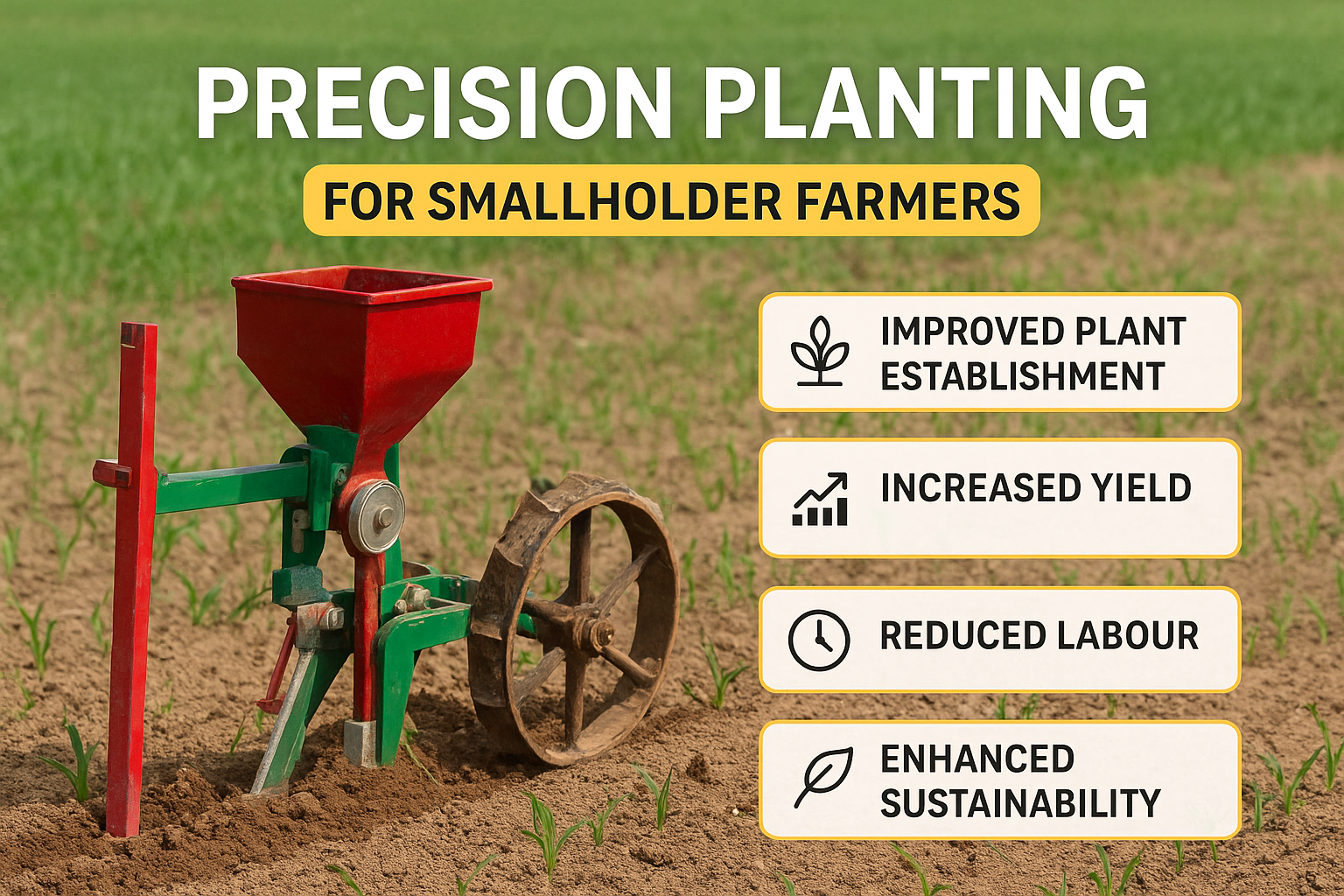
Precision planting is critical for improving crop establishment and productivity in smallholder farming systems in Pakistan, where manual seeding remains labour-intensive, imprecise, and inefficient. The limited availability of suitable small planters and the impracticality of larger precision seeders for fragmented holdings further constrain mechanization. This study addressed these limitations by redesigning and enhancing a vertical-plate, single-row precision planter through the integration of a straight seed delivery path and shutter mechanism and evaluating it alongside three other manually operated precision planters. Laboratory experiments quantified the seed physical properties, metering accuracy, calibration performance, and seed damage, while field trials assessed the spacing precision, plant population, labour demand, field efficiency, and operating costs across 1000 m2 test plots. The punch-wheel planter exhibited the best performance, achieving a spacing precision coefficient of 6.79%, a field efficiency of 88.2%, and the lowest operating cost (PKR 799 acre−1), while the remaining planters also met acceptable operational standards. In comparison with manual sowing (20–25 man-hours acre−1), precision planters reduced labour to 6–8 man-hours acre−1, saving PKR 7000–9000 acre−1. Enhanced spacing uniformity improved the stand establishment and yield potential. These low-cost precision planters reduce drudgery, particularly for women farmers, minimize soil disturbance, and contribute to the Sustainable Development Goals of the United Nations by promoting sustainable smallholder mechanization.

Graphical Abstract

1. Introduction

Maize (Zea mays L.) is Pakistan’s third most important cereal crop after wheat and rice. It is a staple for household consumption and livestock feed and a raw material for the starch, feed, and processing industries. In the 2023–24 period, maize was cultivated on 1.6 million hectares with production of about 9.8 million tonnes, contributing significantly to national food and industrial demands [1]. Despite its significance, maize productivity in Pakistan lags behind global benchmarks. A key reason is poor stand establishment, which is closely tied to traditional sowing practices dominated by smallholder farmers, which is a concern highlighted by the Food and Agricultural Organization of the United Nations (UN-FAO) [2].
The majority of maize growers in Pakistan are smallholders cultivating fragmented plots of one to five acres. These farmers typically rely on manual sowing methods, such as hand dibbling or broadcasting [3]. While simple, these practices are inefficient: they require 20–25 man-hours per acre, create inconsistent seed placement in terms of spacing and depth, and often necessitate replanting or thinning [4,5]. The outcome is poor stand uniformity, increased seed waste, higher operational costs, and ultimately, yield losses [6,7]. In addition, manual sowing is physically demanding, contributing to rural labour drudgery. This burden often falls disproportionately on women, who participate extensively in maize planting in many regions. The lack of ergonomic tools exacerbates fatigue, reduces efficiency, and limits women farmers’ capacity for timely planting [8].
At the other end of the spectrum, large-scale mechanized precision planters, widely used in developed agricultural economies, are ill suited to Pakistan’s conditions [3,9]. Tractor-mounted precision seeders require high horsepower, consolidated landholdings, and significant investment. Large seeders with heavy prime movers also add to the field traffic intensity, which causes soil compaction and increases soil health and environmental impacts [10,11]. For smallholders cultivating fragmented fields, such technologies are economically and technically inaccessible [2,12]. Thus, a mechanization gap exists; smallholders cannot remain competitive with manual planting, yet they cannot afford or utilize large, imported machinery either.
Bridging this gap requires small, affordable, and context-appropriate planters. Precision planting seeks to deliver seeds at uniform depth and spacing, reducing competition among plants, optimizing access to light and nutrients, and improving water use efficiency. Consistent crop stands translate into higher biomass, improved leaf area indexes (LAIs), and yield stability [13,14]. Research in Asia and Africa demonstrates that precision planters can reduce seed use by 5–10%, reduce labour time by up to 70%, and increase maize yields by 10–15% compared with manual sowing [15,16]. These benefits are particularly important in semi-arid Pakistan, where water and input efficiency are critical. Although advanced pneumatic and electronic high-speed planters exist globally, such machines are economically and technically inaccessible for Pakistan’s fragmented smallholder farms. Therefore, affordable, simple precision planters remain critical to bridge the mechanization gap.
Equally significant are the socioeconomic benefits. By reducing the drudgery of hand planting, small-scale precision planters free up labour for other farm and household tasks. Women farmers, who often shoulder the burden of planting, stand to benefit from reduced physical strain, improved ergonomics, and time savings. Affordable mechanization can enhance women’s participation in farm decision making, improve labour productivity, and contribute to rural empowerment [17,18].
In Pakistan, donor- and research-led initiatives, such as the International Maize and Wheat Improvement Centre (CIMMYT) introduction of push-row planters, have shown the promise of small-scale mechanization [19]. However, adoption remains low because existing designs often suffer from limitations such as seed bouncing, ground wheel slippage, or bulky frames. These design flaws reduce uniformity and efficiency, undermining farmer confidence [10,20]. Locally optimized and user-friendly precision planters are needed to ensure adoption at scale.
This study contributes by adapting and modifying the planter to optimize precision metering, reducing seed bouncing via a straight delivery path and shutter mechanism. Since both the shutter and metering plate are driven from the same sprocket train, phase alignment remains constant at normal walking speeds (1.5–3 km/h). No desynchronization was observed during laboratory or field operation. Four manually operated precision planters, the punch-wheel, vertical-plate, roller, and inclined-plate types, were evaluated. Performance was assessed both mechanically and agronomically, including the seed metering accuracy, spacing precision, seed damage, plant population, labour requirement, field efficiency, and operating cost.
By explicitly addressing the shortcomings of manual sowing and the inaccessibility of large machinery, this research highlights affordable mechanization options suited to smallholders. Beyond technical efficiency, the results underscore the social dimension: reduced labour drudgery, improved ergonomics, and enhanced adoption potential, especially for women farmers who are key contributors to maize cultivation. In doing so, precision planting emerges not only as an agronomic improvement but also as a sustainable pathway for inclusive rural development.

2. Materials and Methods

2.1. Precision Planting Characteristics

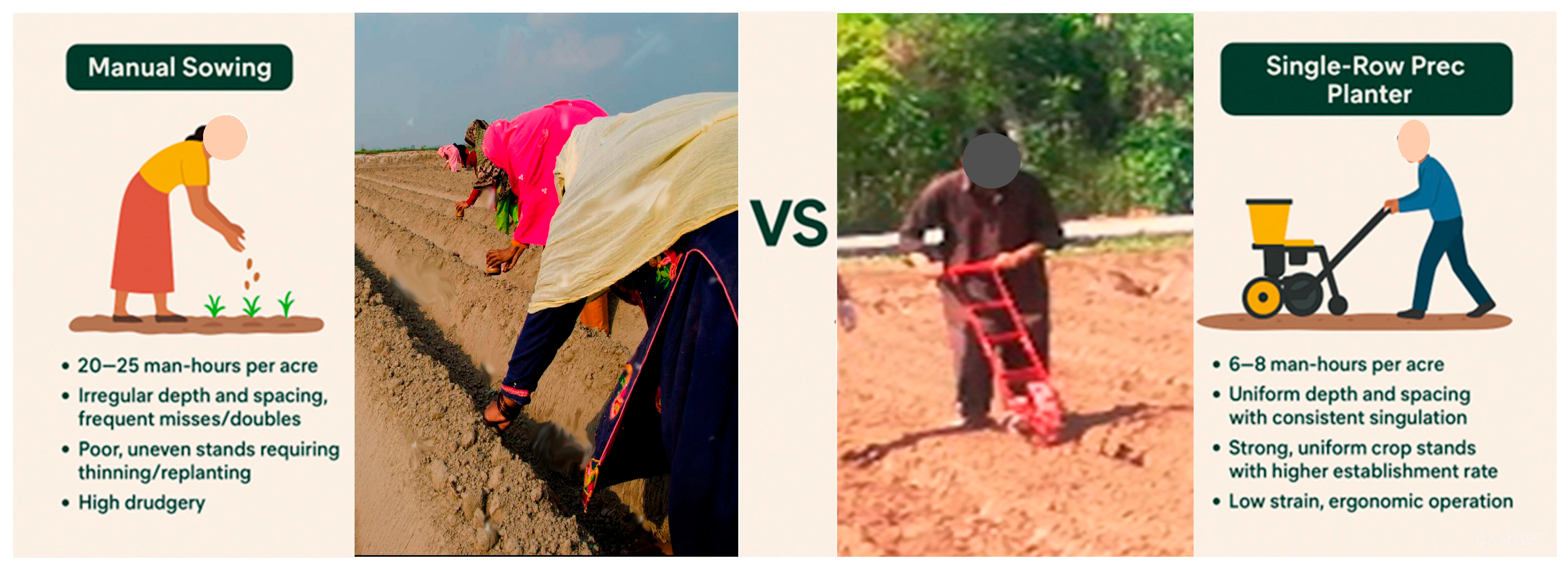
Planting methods play a crucial role in ensuring proper seed germination by influencing factors such as seed depth, spacing, soil contact, and moisture availability. They also significantly affect crop growth and development by determining nutrient uptake, plant populations, weed suppression, and overall yield potentials [21]. Precision planting is best suited, as it ensures uniform seed depth, spacing, and placement to obtain optimal crop stands, efficient use of inputs, and higher yields [22]. Precision planting is only possible by automated mechanical, pneumatic, and digital technology-oriented planters, while manual planting by labour faces challenges and cannot meet the efficient planting requirements as illustrated (Figure 1) with the support of generative artificial intelligence (GenAI).
For smallholders, low-cost, single-row, hand-pushed mechanical precision planters address these requirements by combining seed metering, furrow opening, and seed placement and covering into a single operation.

2.2. Engineering Design and Analysis

Common planting mechanisms in handheld mechanical precision planters include punch-wheel, slotted-roller, vertical-plate, and inclined-plate systems. However, issues such as inaccurate metering like seed doubling or missing, seed bouncing, and misplacement of seeds reduce the efficiency of planters.
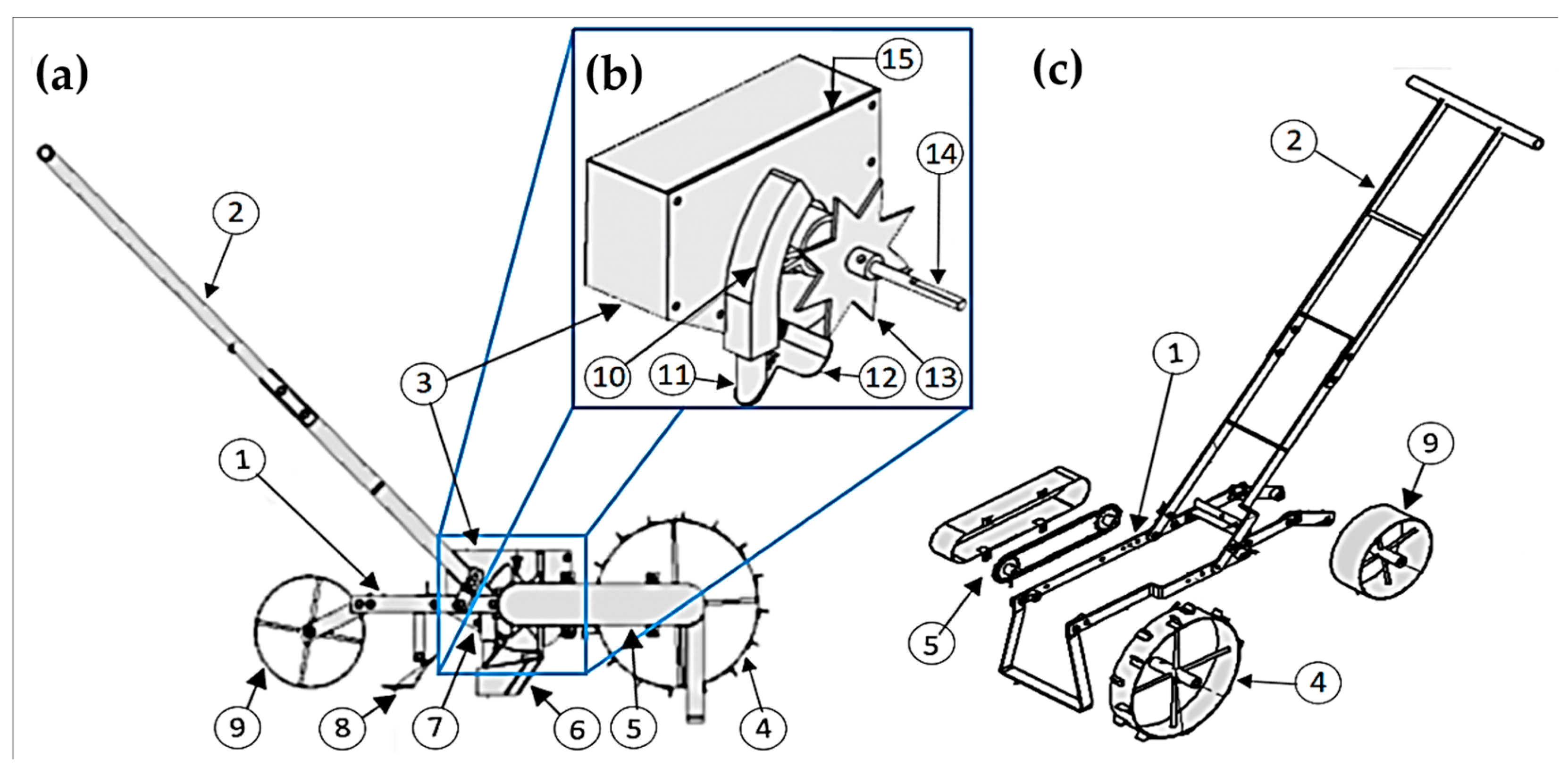
The engineering design, for efficient operations and utmost comfort with structure simplicity and robustness, emphasizes lightweight frames, ergonomic handles, ground wheel-driven seed metering, precise and efficient metering and seed placement mechanisms, and durable yet affordable materials. Computer-aided design (CAD) packages like AutoCAD 2023 and SolidWorks 2022 were employed for detailed 2D and 3D drawings, while MATLAB 2020 was used for theoretical analysis and design calculations. The schematic drawing of a precision planter with principal functions in the operational sequence is presented in Figure 2, with a comprehensive functional description of the principal components in Table 1.
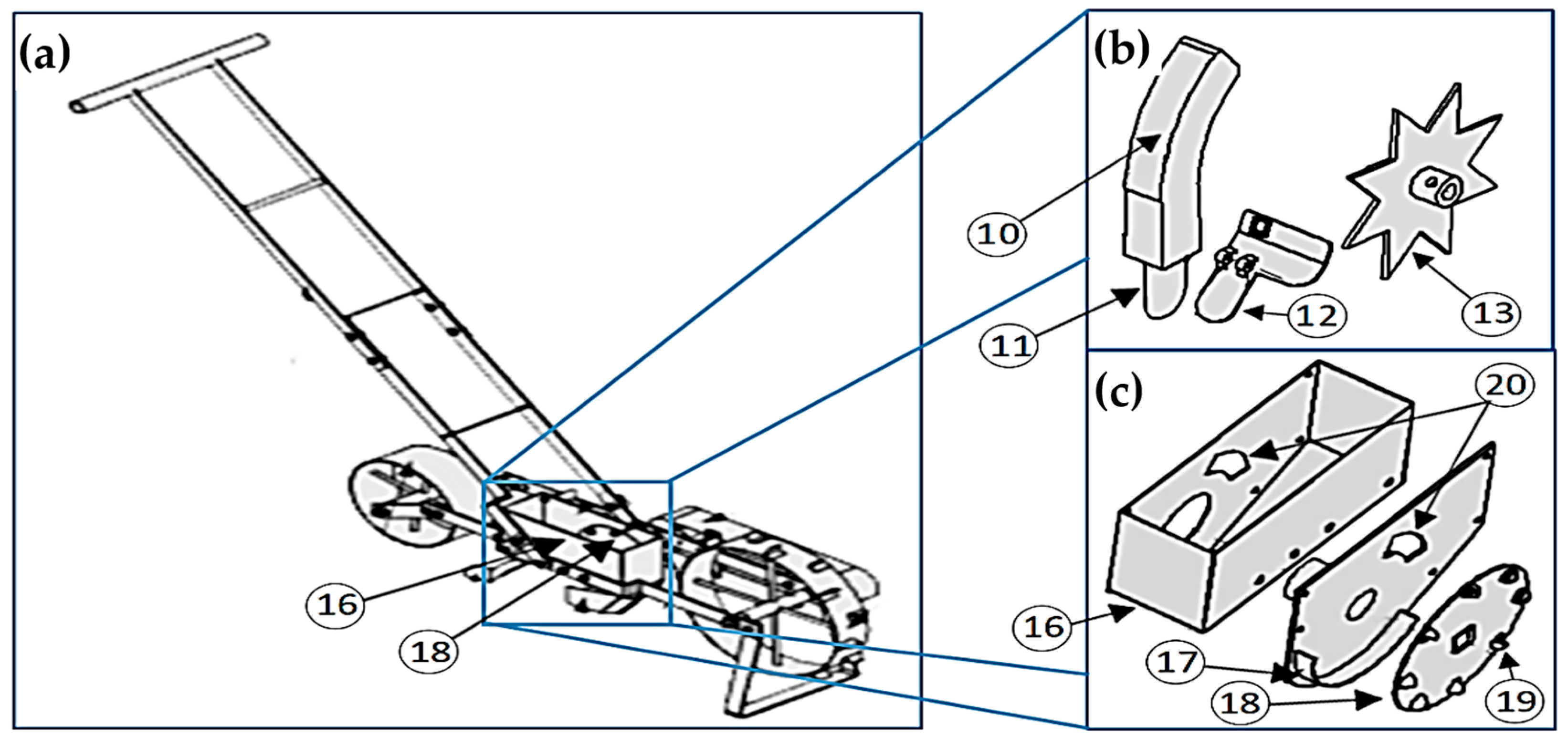
The designed portable precision seed planter plants seeds of various row crops with several working and supporting components and assemblies (Figure 2 and Figure 3), such as the 1. main frame; 2. handle; 3. seed hopper and metering chamber assembly; 4. drive wheel assembly; 5. inside cover of the chain sprocket drives; 6. furrow opener assembly with adjustable seed placement depth; 7. seed chute and delivery tube; 8. furrow-covering assembly; 9. compacting wheel; 10. seed delivery chute; 11. delivery tube; 12. Spring-loaded shutter; 13. star shutter opener; 14. drive shaft; 15. metering chamber plate; 16. seed hopper; 17. metering chamber plate with seed guide; 18 metering plate; 19. seed cup; 20. seed-dropping orifice. The listed are the principal components of the planter that perform specified operational functions and auxiliary components for the assembly of the principal components and support for operation.

2.2.1. Design of Metering Mechanism

The metering mechanism is the most critical component of all kinds of small to big planters, as it governs the seed-planting rate, seed singulation, and intra-row spacing. Mainly metering mechanisms are categorized as mechanical, pneumatic, and electronic or digital control, which include further subtypes. In smallholder-oriented implements, simplicity, durability, and low manufacturing costs are prioritized, which makes mechanical seed metering, such as the plate, roller, and punch-wheel types, widely adopted [7].
This study selected the vertical plate with cup seed picker, with the geometry of the seed plate and cups set to accommodate a kernel variability of 7–11 mm in length and provide an adequate pocket depth to capture a single seed while preventing doubles. Equally important is the pitch, or spacing, of the cups along the plate, which is synchronized with the ground wheel rotation to achieve the target plant population and is also controlled by a drive mechanism like a setting gear or sprocket ratio. The plate rotational speed is usually kept proportional to the forward speed through a ground-driven chain or gear mechanism, ensuring that variations in the operator walking speed translate directly to the seed release rate.
The gear ratio for the vertical-plate metering mechanism is important to obtain target intra-row seed placement spacing and is determined using the relationship between the drive wheel travel and plate rotation. The engineering design parameters involved in gear ratios and seed spacing include the drive (ground) wheel diameter (Dw); drive wheel circumference—distance moved per one wheel revolution (Cw); number of seed cups on the metering plate—cups per plate revolution (Nc); gear ratio—number of plate revolutions in one revolution of the drive wheel (r); teeth on the drive sprocket drive wheel side (tw); teeth on the driven sprocket metering plate side (tp); revolutions of the plate (Rp); revolutions of the drive wheel (Rw); desired intra-row seed spacing (Ss), specific to different crops and varieties; effective seed spacing actually achieved (seff); and seed rate per acre (Rs). The effective seed spacing surface traction factor used to account for wheel slip (a, 0 < a ≤ 1) is normally 0.9 and 1.0, depending on the soil conditions, like dry–wet and firm–loose.
The distance travelled (L) per drive wheel revolution is equal to the circumference of the drive wheel:
L = C w = π D w   ,
But the actual distance travelled (Leff) per drive wheel revolution (effective) is calculated by accommodating the slip factor in the drive wheel circumference:
L e f f = C w e f f = a C w = a π D w   ,
The gear/sprocket ratio (a dimensionless parameter) is as follows:
t w t p = R p R w r   ,
The actual intra-row seed placement spacing is as follows:
s e f f = C w e f f r   N c = a π D w r   N c   ,
Rearrange to get the required plate revolutions per wheel revolution (‘r’) for a target spacing (Ss):
r = a π D w S s N c   ,
If ignoring slip, use α = 1, but for accuracy and safety, the use of α = 0.95 or measured slip is recommended. In manually operated planters, slip cannot be actively controlled; however, field calibration inherently incorporates slip under actual soil moisture and operator-induced variability.
The seed rate (Rs) is the number of crop seeds planted per unit area (‘A’) calculated by the seed spacing inter-row/row-to-row (Sr) and intra-row/within-row seed to seed (Ss):
R s = A S r × S s   ,
The required sprocket combinations were selected to approximate the target spacing, and the accuracy was validated through calibration tests. The measuring units of all parameters should be the same and consistent throughout the calculations. The refinements and optimization reduce the coefficient of variation (CV%) of the seed spacing and improve the quality of the feed index, which reflects the proportion of seeds dropped at the desired spacing [7].

2.2.2. Metering and Delivery Optimization

Small scale, low-cost planters suffer from problems such as seed bouncing in the delivery path, frequent misses or doubles in seed placement, clogging in the seed tube, and poor depth uniformity, all of which reduce crop stand establishment and yields. To address these limitations, design modifications were introduced, including improved metering plates for consistent singulation, straight delivery paths to minimize seed bouncing, and shutter mechanisms to regulate flow. The shutter mechanism is synchronous with the metering mechanism: it is spring-loaded and operated with a star opener that exactly matches with the metering plate in rotation and timing [22,23]. Together, these refinements optimized the seed movement, enhanced the metering accuracy, and significantly improved the planting precision under smallholder conditions. A 3D-model drawing view of the complete planter (a) with metering components (c) and delivery components (b) is presented in Figure 3, and a detailed description of the principal functional components is given in Table 1.
Table 1 demonstrates the principal components of the present invention: the portable seed planter, which includes a straight seed delivery path below the hopper, which is imperative to avoid seed bouncing in the seed delivery chute. Another aim of this invention is the design of a mechanical shutter at the lower end of the seed delivery chute to drop seeds precisely at desired distances. This system is simple in construction, has a few parts, and is easily employable on the bottom of the seed delivery tubes of planters driven by ground wheels. The seed becomes stationary at the shutter surface, reduces its speed and momentum, and then drops slowly in the furrow upon opening of the shutter, reducing the seed rolling in the furrow. This particular and simple invention ensures the uniformity of seed placement in the furrow.

2.3. Development and Fabrication

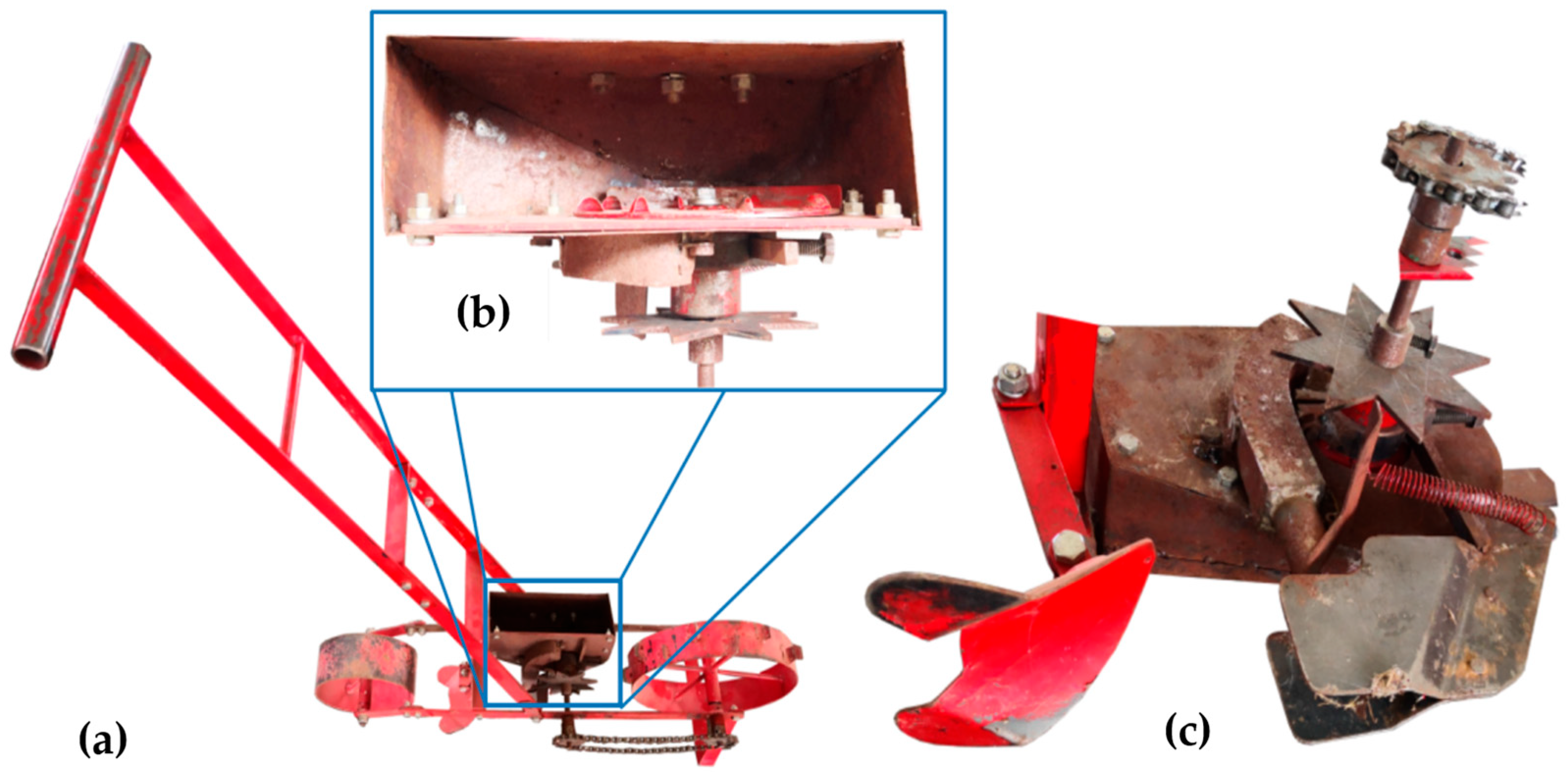
For achieving smooth operation and the desired level of planting precision and efficiency, the development and fabrication of the precision planter were undertaken with meticulous attention to detail. All stages of development—including the design, fabrication, and assembly—were carried out at the Agricultural Engineering Institute (AEI), National Agricultural Research Centre (NARC) fabrication and prototyping workshop. Precision machining and fabrication practices were employed to ensure the dimensional accuracy and true realization of the CAD model. The complete assembly of the planter is illustrated in Figure 4a, while Figure 4b,c highlight the principal functional components. Following assembly, the planter underwent rigorous inspection to verify the accurate functioning of its subsystems. Necessary adjustments were incorporated to correct minor discrepancies, ensuring the proper synchronization of the components prior to calibration and subsequent laboratory performance testing.

2.4. Calibration of Metering Mechanisms

Calibration of the metering units was essential to ensure accurate seed delivery under varying seed sizes, hopper fill levels, and operating speeds. The vertical-plate metering device consisted of eight seed cups around its periphery, rotating with the ground wheel. As the plate revolved, the cups picked up seeds from the hopper and released them through the delivery tube. The metering rate was adjusted by altering the velocity ratio between the plate and drive wheel.
Laboratory calibration was performed on a test stand by rotating the drive wheel manually over a 10 m equivalent distance. Seeds discharged were collected to determine the spacing uniformity across simulated forward speeds of 1.5–3.0 km·h−1. Manual rotation was deliberately selected to replicate human-driven variability, making the results more representative of smallholder operations. The metering accuracy was analysed using the following ASABE Standard indices [24,25]: the miss index, multiple index, and quality-of-feed index.
Field calibration accounted for the soil conditions, vibration, and operator variability. The planter was operated over 10–20 m test rows, and the actual spacing and depth were measured. Depth adjustment is performed mechanically through a slotted furrow-opener bracket and tightening bolt. The setting remains stable due to the rigid frame–opener interface, and uniformity was confirmed in field tests where 3–7 cm depth was consistently achieved. Deviations exceeding 5% from theoretical rates prompted adjustment of the seed plates, transmission ratios, or hopper fill levels. Calibration also provided data on the effective field capacity, efficiency, and coefficient of variation of the spacing, ensuring reliable seed placement and improved establishment for smallholder maize production.

2.5. Comparative Evaluation of Precision Planters

The performance assessment of precision planters under field conditions is vital for validating design efficiency and practical suitability in smallholder farming systems. While laboratory testing provides preliminary insights into metering accuracy, only field trials capture the complexities of soil variability, seedbed preparation, and operator influence.
In this study, the newly developed planter was evaluated alongside three other manually operated precision planters with different metering mechanisms to evaluate the spacing accuracy, seed placement uniformity, field efficiency, and operating costs, although manual planting remains an important reference, as precision planters generally demonstrate clear superiority by reducing labour drudgery, enhancing stand uniformity, and ensuring more consistent crop populations. Such a comparative evaluation provides robust evidence of their technical reliability, agronomic benefits, and economic viability for smallholder adoption.

Descriptions of Planters

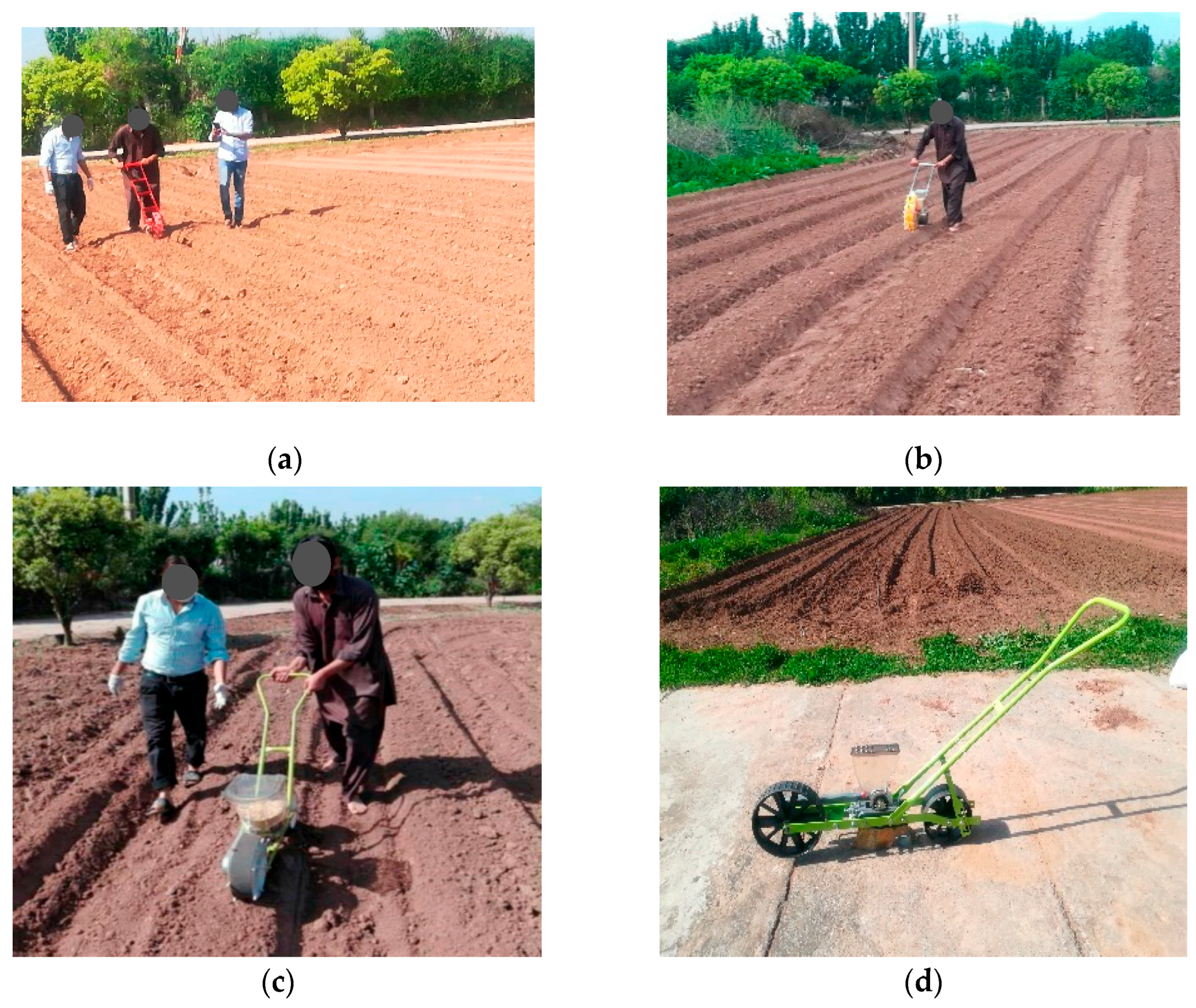
The four different manually operated maize planters that are presented in Figure 5, (a) vertical-plate planter (the newly designed and developed one); (b) punch-wheel planter; (c) roller-type planter; and (d) inclined-plate planter, were tested for maize sowing, detailed descriptions of planters are given here.
(i)
Vertical-Plate Planter
The working-principle description of the vertical-plate planter is already pre-sented in the design and development sections.
(ii)
Punch-Wheel Planter
The punch-wheel planter drops seeds in punched holes instead of furrows. It makes a hole in the soil and then drops a seed in the hole. The soil-engaging part leaves the hole as it moves forward. This planter is operated manually on the edges of the bed for sowing a crop. The planter consists of 12 radially mounted punches on the wheel, by which it drops seeds into the punched holes. The angle of push is 30–40° horizontally. The effective wheel diameter of the punch-wheel planter is 42 cm.
(iii)
Inclined-Plate Planter
The inclined-plate planter consists of a seed box, an inclined seed plate, and a delivery tube. There are eight holes in the inclined plate. In this planter, the inclined plate is exposed to the seed box, and as the plate rotates, seeds are dropped into the delivery tube by gravity. The effective diameter of the drive wheel is 26 cm.
(iv)
Roller-Type Planter
The roller-type planter employs a horizontally mounted rotating roller fitted with equally spaced seed grooves or cells around its circumference. As the roller rotates within the seed hopper, individual seeds are captured in the grooves and delivered through a short delivery chute into the opened furrow. Seed release occurs by gravity once each cell aligns with the outlet, ensuring continuous metering with minimal mechanical complexity, and the simplicity of its structure reduces manufacturing costs.

2.6. Field Performance Testing

2.6.1. Study Site Selection and Seedbed and Seed Preparation

The field performance testing of the manually operated precision planters was conducted at the experimental farm of the AEI-NARC, Islamabad. The site lies at 33.67° N latitude, 73.13° E longitude, is 540 m above sea level, and is characterized by a clay loam soil and an average annual rainfall of about 1100 mm. A well-prepared seedbed was used to ensure uniform testing conditions. Each planter was evaluated on a 1000 m2 plot to assess the functional reliability, planting precision, and operational efficiency under representative field conditions.
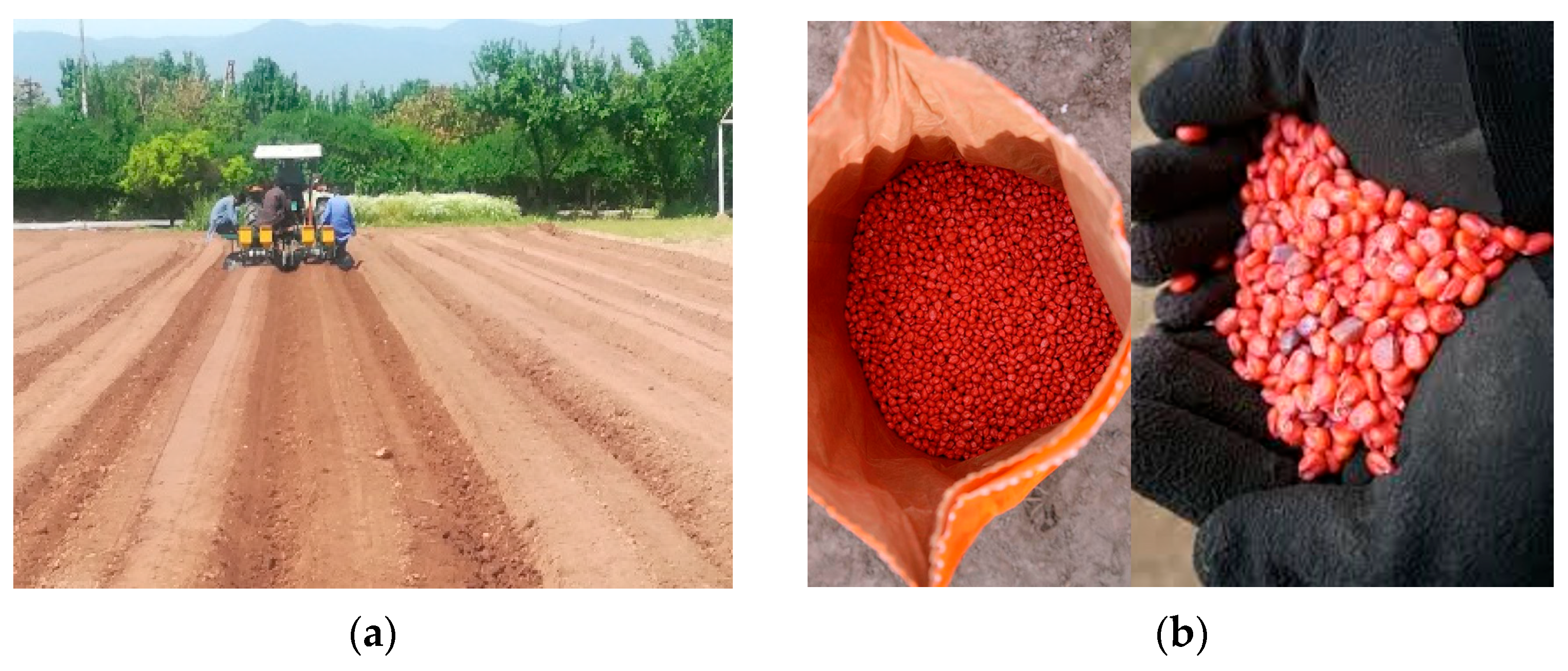
The experimental field was thoroughly prepared through deep ploughing followed by successive passes of a cultivator and rotavator to achieve a fine, well-pulverized seedbed. Planting beds were then formed using a bed planter, maintaining a uniform row spacing of 75 cm (Figure 6).
The maize hybrid ‘Corn 95W34’ was selected for the trial. Seeds were pre-cleaned and graded using a 9 mm sieve grader to ensure a uniform size and shape, as well-graded seeds enhance metering precision and minimize skips or doubles during planter operation.

2.6.2. Technical Parameters

Performance and efficiency indicators collected data on the efficiency of the seed-metering mechanism and planter’s performance aspects. The following parameters were measured under these attributes:
(a)
Laboratory Parameters
Lab data were collected on the efficiency of the seed-metering mechanism, and the physical properties of the seeds (length, width, thickness, geometric mean diameter, sphericity, and 1000-seed weight) were measured using Vernier Callipers.
(i)
Seed Physical Properties
The physical properties of the maize seeds were determined in the laboratory and are presented in Table 2. The mean seed length, width, thickness, and geometric mean diameter values presented are closely aligned with the findings in [26] for the maize genotype PIONEER-3396. Seed physical attributes are critical for precise metering, as irregularly shaped seeds often cause variable placement in mechanical planters. As reported in [27], the 1000-seed weight of the maize range is 232.87 g to 270.42 g due to a moisture content variation of 12–20% (wb), indicating a direct relationship between moisture and seed mass.
(ii)
Seed Rate:
It is important to determine the quantity of seed required for the specific area to plant the crop. Previously, the seed rate was calculated as the number of seeds required for test purposes, but for larger areas, the seed rate (kg ha−1) was calculated based on planter calibration using the following relation:
R s = 10,000 × W 1000 × N p R × P ,
where W1000 is the 1000-seed weight (kg), R is the row spacing (m), P is the plant-to-plant spacing (m), and Np is the number of seeds per hill. This formula accounts for the planting geometry of maize and the specific seed characteristics of the selected variety to estimate the seeding requirement per hectare.
(iii)
Seed Damage:
Data for seed damage was collected in the laboratory test bench by giving five revolutions of the metering unit of the planter. The number of damaged seeds was counted, and the percentage of damaged seeds was worked out. The percentage (%) of seed damage (Sd) was determined by recording the number of damaged seeds (Nsd) and total number of seeds (n) using the following equation:
S d =   N s d n   × 100
(b)
Field Performance Parameters
Field performance data were collected to evaluate the operational quality and efficiency of each planter. Observations included the ease of operation, furrow formation without seedbed disturbance, uniform seeding depth, plant-to-plant spacing, and row spacing [28]. The quantitative parameters measured were the effective working width, working depth, forward speed, seed spacing uniformity, plant population, theoretical and effective field capacity, field efficiency, and operating cost. The indices were determined and calculated as discussed below:
(i)
Forward Speed:
The planter speed was determined by measuring the time taken to cover a 30 m distance. The forward speed (S) was calculated as follows:
S = D t
where D is the distance travelled (m), and t is the time taken (s).
(ii)
Theoretical Field Capacity (TFC):
The theoretical field capacity, assuming ideal operating conditions, was computed as follows [28,29]:
T F C =   S   × S r 10
where S is the forward speed (km h−1), and Sr is the effective working width that is the inter-row or row-to-row spacing (m).
(iii)
Effective Field Capacity (EFC):
The actual field capacity or field performance was determined using the following equation [28,29]:
E F C = A T
where A is the actual area covered (ha), and T is the total time taken (h), which includes the productive time and nonproductive time, which is the time lost in turning or adjustments.
(iv)
Field Efficiency:
The field efficiency (η) in (%) of machines was determined as follows:
η = A F C T F C × 100
(c)
Seed-Metering Indices
The seed-metering performance was evaluated using standard indices as proposed in [30], which quantify the planter accuracy and uniformity of the seed placement. These indices include the miss index, multiple index, quality-of-feed index, and precision (coefficient of variation):
(i)
Miss Index (MI):
The miss index (%) represents the percentage of instances wherein the seed spacing is equal to or greater than 1.5 times the theoretical spacing, indicating skipped seed drops:
M I =   N m N t   × 100
where Nm is the number of observed spacings ≥ 1.5 times the theoretical spacing, and Nt is the total number of measured spacings.
(ii)
Multiple Index (MPI):
The multiple index (%) represents the percentage of instances wherein the spacing is less than or equal to 0.5 times the theoretical spacing, indicating double seed drops:
M P I =   N x N t   × 100
where Nx is the number of observed spacings ≤ 0.5 times the theoretical spacing, and N t is the total number of measured spacings.
(iii)
Quality-of-Feed Index (QFI):
The quality-of-feed index reflects the proportion of single, correctly spaced seed drops and is determined by the following equation:
Q F I = 100 M I + M P I
where a higher value of the QFI indicates better metering uniformity.
(iv)
Precision (CV):
The precision, expressed as the coefficient of variation (CV, %), measures the consistency of the inter-seed spacing within the main distribution:
C V =   S D Z m   × 100
where SD is the standard deviation of the actual spacing, and Zm is the mean seed spacing of the main seed distribution.
(d)
Operating Cost:
The operating cost was determined as the sum of fixed (depreciation, insurance, interest, housing) and variable (repairs, fuel, consumables, and labour) costs.

2.7. Data Analysis and Statistics

Field evaluation of the four manually operated precision planters was conducted using a Randomized Complete Block Design (RCBD) to minimize the influence of field variability. Each treatment (planter type) was replicated across uniformly prepared blocks, with a plot size of 1000 m2 per planter. Data on the spacing precision, seed placement uniformity, field efficiency, labour requirement, and operating cost were recorded. Analysis of variance (ANOVA) under the RCBD was applied to test treatment effects, and mean separation was performed using the Least Significant Difference (LSD) test at 5% significance.

3. Results and Discussion

This study comprised the design optimization and development of a vertical-plate planter and the performance evaluation and adoption of precision planting for smallholder maize farming. The design, fabrication, calibration, and preliminary testing of the newly developed vertical-plate-type planter is presented and discussed (Section 2.2 and Section 2.3). The performance evaluation of the four types of manually operated precision planters, namely, the vertical-plate planter, punch-wheel planter, inclined-plate planter, and roller-type planter, for maize crops was carried out. Together, these activities aimed to assess the mechanical efficiency and field suitability of low-cost precision planters for smallholder maize production.
Laboratory tests were conducted to assess the seed physical properties, seed rate, metering accuracy, and potential seed damage. Field evaluations focused on the operational and performance parameters, including the ease of operation, forward speed, seed spacing uniformity, effective working width, working depth, theoretical and actual field capacities, field efficiency, and operating cost. The detailed results and comparative analysis of these parameters are presented and discussed in the following sections.

3.1. Calibration and Seed Rate

Seed rate calibration determines the number of seeds placed per unit area and directly reflects the planter metering efficiency. The seed rates varied slightly among the four planters tested (Table 3), ranging from 7.09 to 10.28 kg acre−1. The inclined-plate planter used the smallest seed quantity due to frequent misses, while the vertical-plate planter had the highest seed rate, attributed to double seed drops per hill.
The punch-wheel planter achieved the most desirable rate (8.48 kg acre−1) due to its precise seed release from the cup-type mechanism without misses or doubles. These findings align with the recommended maize seed rates of 8–10 kg acre−1 for ridge sowing [31,32]. Calibration accuracy is essential to ensure uniform intra-row spacing and to minimize seed wastage, an especially critical factor in smallholder systems where input costs directly affect profitability. The metering cup geometry accommodates a range of seed shapes (sphericity: 65–80%). While flat seeds were not tested, the design supports their dimensions, although future work will evaluate the shape-specific performance.

3.2. Seed Damage

Seed damage during metering and delivery is a key performance indicator of mechanical precision planters. Results revealed minimal damage for the vertical-plate planter (1.03%) and punch-wheel planter (2.30%), while the roller-type and inclined-plate planters exhibited higher damage levels of 5.56% and 10.42%, respectively (Table 4). The seed damage evaluation used <100 seeds, as per RNAM mechanical test protocols for prototype planters; however, expanded trials will be incorporated into future studies.
Damage was mainly caused by impact and seed crushing between the plate cells and housing surfaces, particularly in systems lacking proper clearance or smooth flow. Low damage levels in the vertical-plate type correspond with findings in [7,10], which reported that optimized metering geometry and plate smoothness significantly reduce seed breakage.

3.3. Ease of Operation

Operational ease is crucial for smallholder adoption. The punch-wheel and vertical-plate planters were the most user-friendly, producing consistent furrows without damaging raised beds. Conversely, the roller and inclined-plate planters were more suitable for flat seedbeds, as their furrow openers tended to disrupt the bed structure during ridge sowing. A uniform seed depth and reduced physical strain during operation make the punch-wheel planter particularly advantageous for smallholders and women operators, reflecting practical ergonomics and design simplicity.

3.4. Seed Placement Accuracy

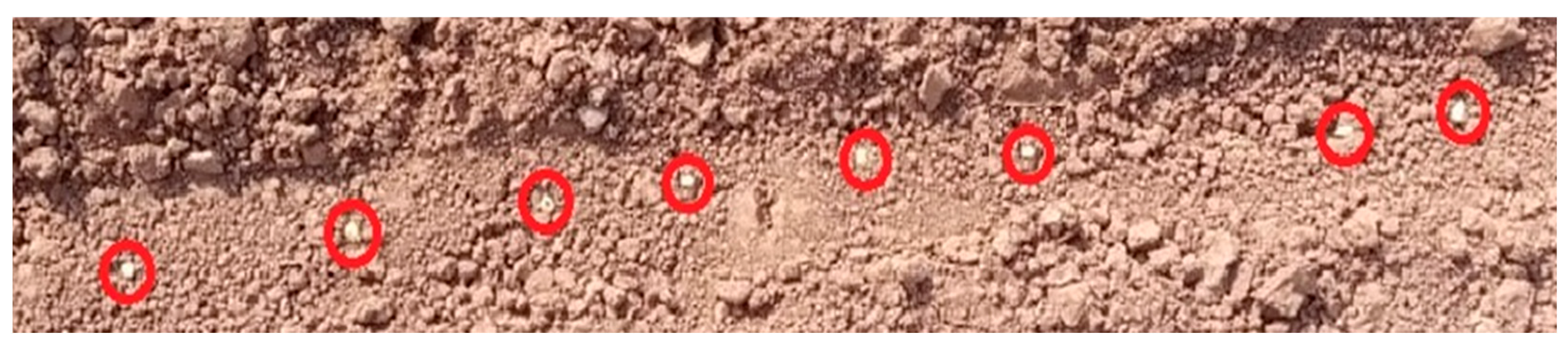
Seed spacing uniformity directly affects the plant stand and yield potential, as uniform seed spacing results in good plant populations and crop stands (Figure 7). The punch-wheel planter achieved the highest spacing evenness (93.17%) with a mean spacing of 14.35 cm, followed by the roller (84.24%), vertical-plate (75.65%), and inclined-plate (69.18%) planters (Table 5). The coefficient of precision for the punch-wheel planter (6.79%) was well below the acceptable threshold (<29–30%) [30], indicating excellent placement accuracy. The CV of the vertical-plate planter is influenced mainly by double seeding caused by cup overfill at certain hopper levels. The straight delivery path performed as intended and did not increase seed bounce in the furrow.
Variability in the seed spacing was attributed to differences in the metering design and seed release trajectory. Improved spacing uniformity enhances light interception and nutrient utilization, translating to better yield stability.

3.5. Plant Population

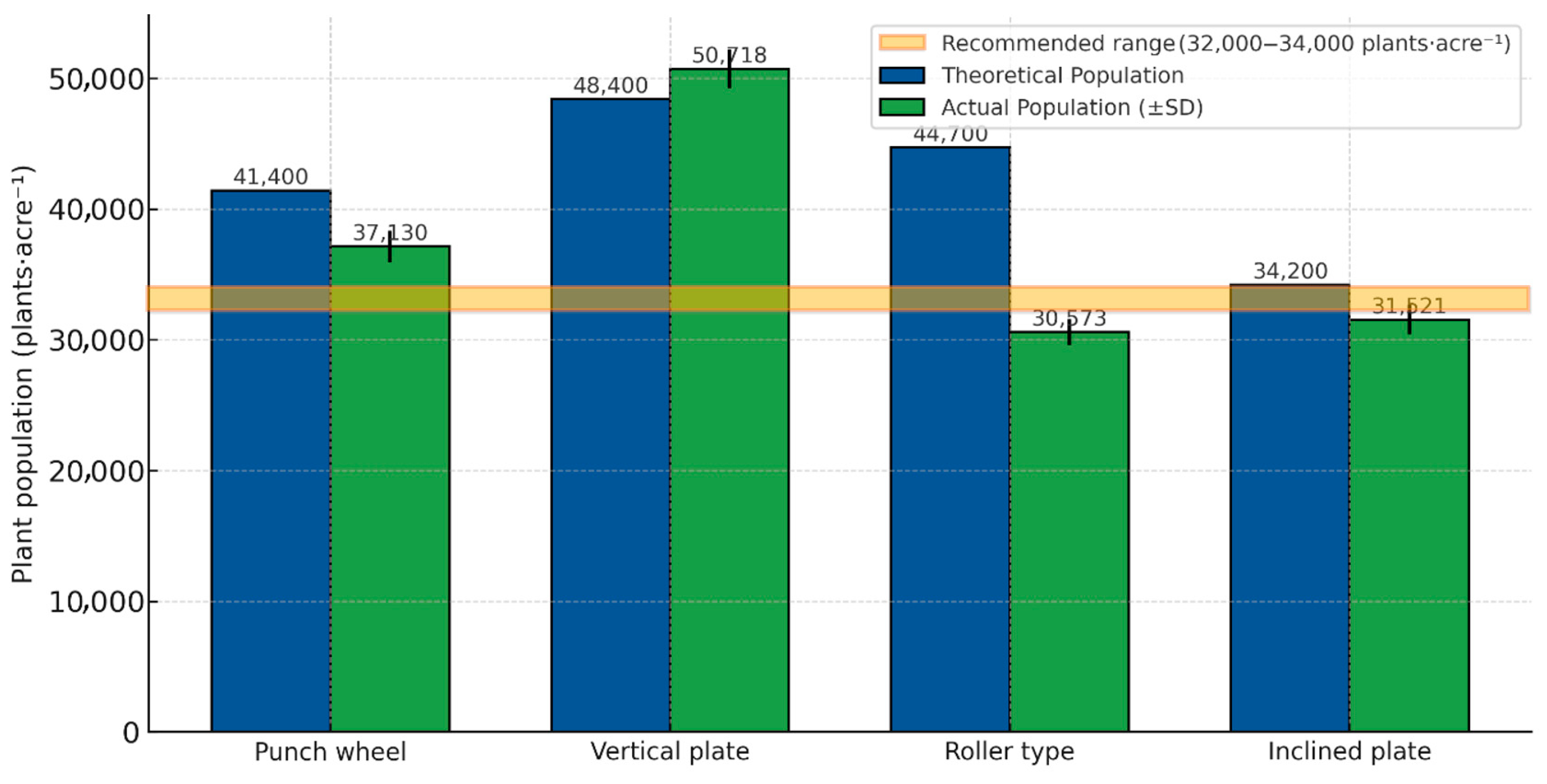
The plant populations of maize crops planted through different planters were determined, as shown in Table 6. The plant population estimates further confirmed the superior precision of the vertical-plate and punch-wheel planters (Table 5). The vertical-plate type achieved the highest stand (50,718 plants acre−1) and was closely followed by the punch-wheel planter (37,130 plants acre−1); both were within or above the recommended range of 30,000–33,000 plants acre−1 for hybrid maize [31].
Adequate population density ensures efficient resource use and uniform canopy development, supporting higher yield potential and validating the agronomic advantage of precision planting technologies over manual methods.
The comparison between theoretical and actual plant populations reveals clear differences in the metering accuracies and field performances among the four manually operated precision planters (Figure 8). The vertical-plate planter achieved the highest actual population (50,718 plants·acre−1), slightly exceeding its theoretical estimate, suggesting occasional double seeding due to plate overfill. The punch-wheel planter closely matched its theoretical population (41,400 vs. 37,130 plants·acre−1), indicating superior metering precision and minimal seed loss. In contrast, the roller and inclined-plate planters produced lower-than-expected populations, reflecting missed seed drops or seed bounce during delivery. The recommended maize density (32,000 to 34,000 plants·acre−1) served as a benchmark, highlighting that both the punch-wheel and vertical-plate types can meet or exceed ideal stand establishment. These findings underscore the significance of proper calibration and seed plate geometry and controlled delivery mechanisms for achieving uniform, optimal plant stands under smallholder field conditions.
Figure 8 shows the comparison of the theoretical and actual plant populations achieved by the four manually operated precision planters with the recommended maize population (33,000 plants·acre−1). Error bars represent ± SD based on replicate field measurements. Theoretical population values were derived from the planter geometry (row and plant spacing), while actual populations were recorded under field conditions.

3.6. Field Performances of Planters

Field testing is a decisive stage in evaluating the operational suitability and reliability of manually operated precision planters. The comparative results for the key performance indicators are summarized in Table 7. The TFC ranged between 0.20 and 0.21 ha·h−1, while the EFC was lower across all planters due to unavoidable turning, refilling, and handling losses. The punch-wheel planter exhibited the highest EFC (0.18 ha·h−1) and field efficiency (88.2%), followed by the vertical-plate type (85.5%), whereas the roller and inclined-plate planters showed lower efficiencies (78.4% and 81.3%, respectively). Variations in the field efficiencies were primarily attributed to operator fatigue, soil texture, and the need for frequent adjustments in certain metering systems.
These results are comparable to those in [13,33], which reported EFC values between 0.16 and 0.26 ha·h−1 for similar hand-pushed planters. The higher field efficiency of the punch-wheel planter may be attributed to its simple, direct seed placement mechanism that minimizes idle time and adjustment delays. Pneumatic planters achieve CV <5% at >8 km/h, but such systems cost >USD 10,000 and require tractors ≥60 hp, making them unsuitable for Pakistani smallholders [7].

3.7. Precision Indices and Seed Spacing Quality

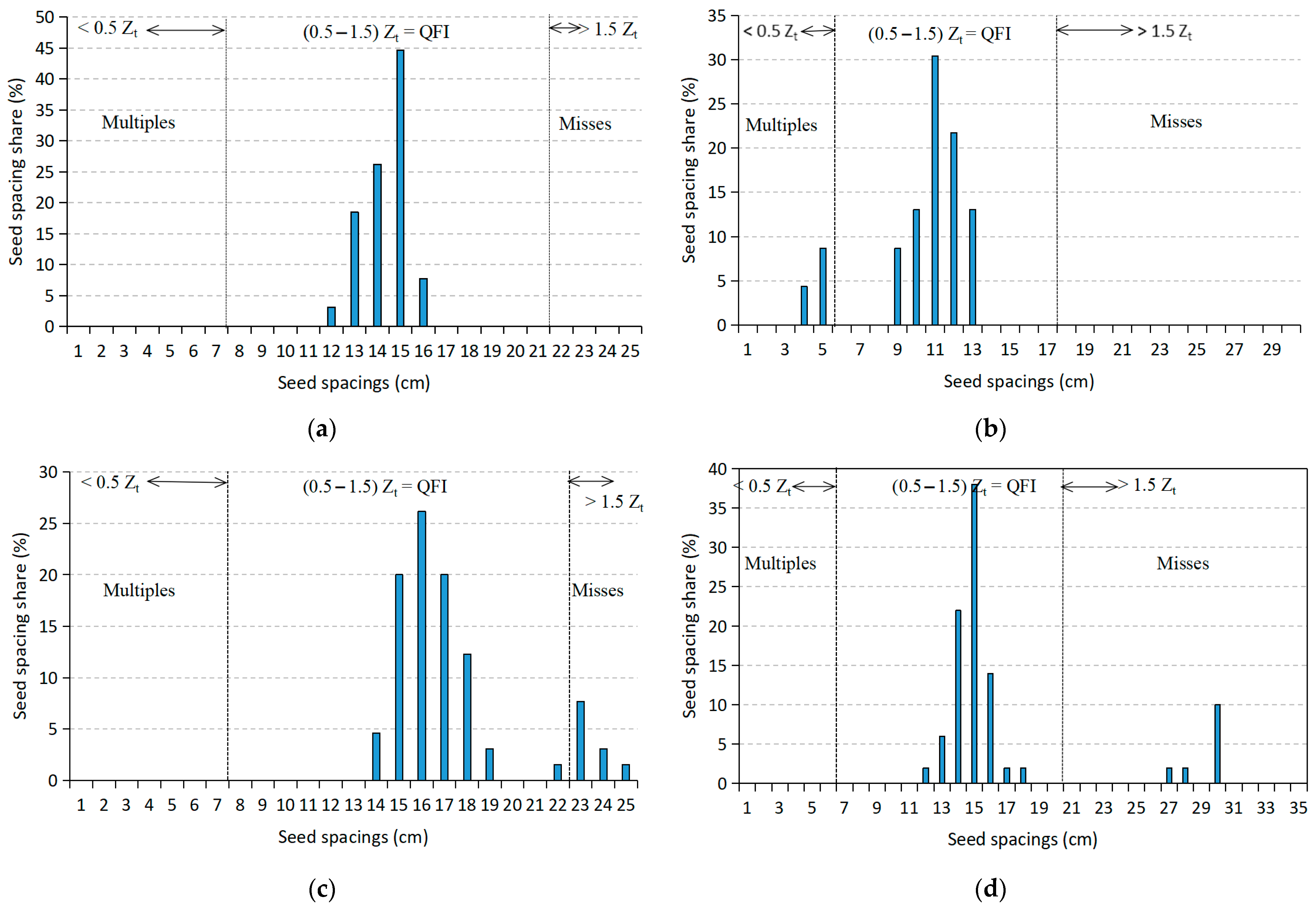
Precision indices quantify the metering accuracy and seed spacing uniformity of planters. The calculated indices, the MI, MPI, QFI, and CV, are summarized in Table 8. The punch-wheel planter achieved the optimal performance, showing QFI = 100%, MI = 0%, and CV = 6.79%, confirming highly uniform seed spacing. In contrast, the inclined-plate and roller planters exhibited higher miss indices (14.0% and 12.3%, respectively), reflecting irregular seed release. The vertical-plate type had moderate multiple drops (MPI = 13.0%) due to cup overlap at higher metering speeds and overfilling occasionally.
These results indicate that the metering uniformity was strongly influenced by the seed-handling design and seed plate geometry. The low CV (<10%) of the punch-wheel planter demonstrates precision well within the acceptable limits (<30%) established in [30].
Frequency histograms of measured seed-to-seed spacing provide a direct, intuitive window into the operational behaviour of different metering concepts and expose the mechanical causes of misses and multiples (Figure 9). Following the framework in [30], the distributions were partitioned into three classes, multiples (≤0.5× nominal), quality feed (≈0.5–1.5× nominal), and misses (≥1.5× nominal), to quantify the singulation performance. The punch-wheel meter produced a tight, near-normal cluster within the quality-feed band (12–16 cm), explaining its zero miss/multiple indices and low CV (6.8%), consistent with observations that cup-type meters yield high singulation when the cell geometry and delivery path are well matched to the seed size, as per precision planting studies [30]. By contrast, the vertical-plate meter’s histogram skews toward shorter spacing (peak at ~11 cm), indicating frequent doubles caused by plate overfilling or inadequate shuttering; such plate speed and hopper fill interactions are well documented as drivers of multiples [7,23]. The roller and inclined-plate charts show greater right-hand tails and elevated miss shares, implicating seed bounce, erratic release trajectories, and sensitivity to vibration mechanical phenomena that increase with the meter speed and poor seed flow geometry [34].
Practically, these histogram signatures identify corrective actions: reduce the plate/roller angular velocity or adopt a lower plate/wheel ratio to avoid over-release; add straightened delivery chutes and soft-closing shutters to dampen bounce; and standardize seed grading and hopper fill to minimize cell overfill. Routine bench and short-field histogram checks (≥500–1000 drops) provide rapid diagnostics and, when combined with ASABE indices, form a robust quality assessment protocol for smallholder planters aiming for QFI > 85% and CV < 10% [30,35].

3.8. Operating Cost Analysis

The operating cost represents the key economic determinant for smallholder mechanization adoption. It primarily depends on the man-hours required per acre and local labour wages. Among the tested planters, the punch-wheel planter had the lowest operating cost (PKR 799 ha−1), followed by the vertical-plate type (PKR 850 ha−1), whereas the roller and inclined-plate planters were relatively costlier (PKR 900 and 890 ha−1). Lower operational costs reflect better time efficiency and reduced energy demand per operator.
For context, traditional manual planting requires about 20–25 man-hours per acre, while these planters reduced it to 6–8 man-hours, reflecting over 70% labour savings. Such efficiency gains are particularly significant in Pakistan’s smallholder systems, where seasonal labour shortages and high wages limit timely sowing. These findings reinforce the economic feasibility of lightweight precision planters for resource-poor farmers [26].
Overall, the comparative evaluation demonstrated that the planter design and metering mechanism significantly influence the seed placement accuracy, field efficiency, and operational economy. Among the four planters tested, the punch-wheel type consistently exhibited a superior performance in terms of seed spacing uniformity, minimal seed damage, higher field efficiency, and lower operating costs. The vertical-plate-type planter also performed satisfactorily, with acceptable singulation and moderate efficiency, while the roller and inclined-plate planters showed greater variability due to seed bounce and inconsistent feed rates. The findings underscore the importance of precise metering geometry, controlled seed delivery, and proper calibration in enhancing planting accuracy. Overall, the results affirm that optimized small-scale precision planters can substantially improve crop establishment, reduce labour drudgery, and promote sustainable mechanization for smallholder agriculture.

4. Conclusions

This study confirms that the targeted engineering design and careful calibration of small, hand-operated precision planters materially improve maize establishment, operational efficiency, and farm economics for smallholders. Comparative tests showed that the punch-wheel planter delivered the best overall performance, uniform spacing, low seed damage, high field efficiency, and the lowest operating cost, while the modified vertical-plate design illustrated that modest mechanical refinements (straight delivery paths, shutters, plate tuning) can reduce misses and doubles and raise quality-of-feed indices. The key engineering insights are that the metering geometry, plate-to-wheel ratio, and seed delivery dynamics govern the singulation performance; simple fixes that control seed bounce and standardize hopper fill yield excellent agronomic gains.
From a systems perspective, improved planting precision reduces replanting and competition, stabilizes plant populations, and supports more efficient input use (seed, fertilizer, water), contributing to measurable productivity gains on small, fragmented holdings. Labour savings and reduced physical strain make these devices especially beneficial for women farmers, enhancing time use, lowering drudgery, and increasing opportunity for income-generating activities. Economically, modest capital and low operating costs produce rapid payback in labour-constrained contexts, enabling scaling through local fabrication, hire services, or cooperatives. Although advanced seeders exist globally, their cost and scale make them unsuitable for Pakistan’s smallholders, reaffirming the importance of locally optimized, low-cost precision planters.
In sum, appropriately engineered single-row precision planters represent a pragmatic, sustainable mechanization pathway between manual sowing and large tractorization, advancing productivity, gender-inclusive labour relief, and resilient smallholder intensification when paired with calibration training and localized support mechanisms.

5. Patents

The patent application has been submitted to the Intellectual Property Rights registration office in Pakistan and is undergoing the evaluation process.

Author Contributions

Conceptualization, H.S.M., M.H. and M.A.I.; methodology, H.S.M. and H.M.-T.; software, M.A. and H.A.; validation, B.M.K.N., H.A. and A.K.; formal analysis, H.M.-T., M.A. and A.K.; investigation, M.H. and B.M.K.N.; resources, H.S.M. and M.H.; data curation, H.S.M. and M.A.I.; writing—original draft preparation, H.S.M. and H.M.-T.; writing—review and editing, H.M.-T. and H.A.; visualization, H.M.-T. and A.K.; supervision, H.S.M.; project administration, H.S.M. and M.H.; funding acquisition, H.S.M. All authors have read and agreed to the published version of the manuscript.

Funding

This research was funded by the Agricultural Linkages Program–Pakistan Agricultural Research Council, grant number AE016, eighth batch, and is titled “Development and Adaptation of Manual and Tractor-Mounted Precision Planters for Maize Crop”.

Institutional Review Board Statement

Not applicable.

Informed Consent Statement

Not applicable.

Data Availability Statement

The original contributions presented in this study are included in the article. Further inquiries can be directed to the corresponding author.

Acknowledgments

The Agricultural Engineering Institute: the administrative and technical staff support and facilitation during the project period is appreciated and acknowledged. During the preparation of this manuscript, the authors used [GenAI, ChatGPT-4] for the purposes of graphical illustration and text refining. The authors have reviewed and edited the output and take full responsibility for the content of this publication.

Conflicts of Interest

The authors declare no conflicts of interest. The funders had no role in the design of this study; in the collection, analyses, or interpretation of the data; in the writing of the manuscript; or in the decision to publish the results.

Abbreviations

The following abbreviations are used in this manuscript:
CIMMYTInternational Maize and Wheat Improvement Centre
UN-FAOFood and Agricultural Organization of the United Nations
GenAIGenerative artificial intelligence
CADComputer-aided design
DwDiameter of ground (drive) wheel
CwCircumference of drive wheel
NcNumber of seed cups on metering plate—cups per plate revolution
rGear ratio
twTeeth on drive sprocket drive wheel side
tpTeeth on driven sprocket metering plate side
RpRevolutions of plate
RwRevolutions of drive wheel
αSlip factor
SsIntra-row seed spacing
seffEffective seed spacing actually achieved
SrRow spacing or inter-row seed spacing
RsSeed rate per acre
CVCoefficient of variation (coefficient of precision)
AEIAgricultural Engineering Institute
ASABEAmerican Society of Agricultural and Biological Engineering
NARCNational Agricultural Research Centre
LSeed length
WSeed width
TSeed thickness
GMDGeometric mean diameter of seed
SDStandard deviation
W1000Thousand-grain weight
NpNumber of seeds per hill
NsdNumber of damaged seeds
nTotal number of seeds
SForward speed
DDistance travelled
tTime to travel distance
TFCTheoretical field capacity
EFCEffective field capacity
AActual area covered
ηField efficiency
MIMiss index
NmNumber of seed-missing events in a given distance
NtTotal seeding events in a given distance
MPIMultiple index
NxNumber of multiple seed events (more seeds per hill) in a given distance
QFIQuality-of-feed index
ZmMean seed spacing
RCBDRandomized complete block design
ANOVAAnalysis of variance
LSDLeast significant difference

References

  1. Government of Pakistan. Economic Survey of Pakistan. Finance Division, Economic Advisory Wing; Government of Pakistan: Islamabad, Pakistan, 2024.
  2. Yasar, H.; Raza, M.H.; Faisal, M.; Nadeem, N.; Khan, N.; Kassem, H.S.; Mahmood, S. Does farm mechanization improve farm performance and ensure food availability at household level? Empirical evidence from Pakistan. Front. Sustain. Food Syst. 2024, 8, 1453221. [Google Scholar] [CrossRef] [Scilit]
  3. FAO. Agricultural Mechanization for Smallholder Farmers in Pakistan: Results of a Multistakeholder Policy Dialogue—Policy Brief; FAO: Rome, Italy, 2024. [CrossRef] [Scilit]
  4. FAO. Save and Grow in Practice: Maize, Rice, Wheat. A Guide to Sustainable Cereal Production; FAO: Rome, Italy, 2016. Available online: https://share.google/8bQXCOXjTTKL6pGyk (accessed on 15 September 2025).
  5. Chandel, R.; Kumar Narang, M.; Singh Thakur, S. Scaling Mechanization and Profitability in Maize Cultivation Through Innovative Maize Planters Along with Agroforestry Approach: Sustainable and Climate Smart Approach to Diversify Rice Based Cereal Systems in Various Regions; IntechOpen: London, UK, 2024. [Google Scholar] [CrossRef] [Scilit]
  6. Novak, L.K. Factors Impacting Corn Establishment and the Role of Uniform Stand Establishment on Yield; State University of Agriculture and Applied Science: Fargo, ND, USA, 2015. [Google Scholar]
  7. Virk, S.S.; Fulton, J.P.; Porter, W.M.; Pate, G.L. Row-crop planter performance to support variable-rate seeding of maize. Precis. Agric. 2020, 21, 603–619. [Google Scholar] [CrossRef] [Scilit]
  8. Pierotti, R.S.; Friedson-Ridenour, S.; Olayiwola, O. Women farm what they can manage: How time constraints affect the quantity and quality of labor for married women’s agricultural production in southwestern Nigeria. World Dev. 2022, 152, 105800. [Google Scholar] [CrossRef] [Scilit] [PubMed]
  9. Md-Tahir, H.; Zhang, J.; Xia, J.; Zhang, C.; Zhou, H.; Zhu, Y. Rigid lugged wheel for conventional agricultural wheeled tractors: Optimising traction performance and wheel–soil interaction in field operations. Biosyst. Eng. 2019, 188, 14–23. [Google Scholar] [CrossRef] [Scilit]
  10. Ani, O.A.; Uzoejinwa, B.B.; Anochili, N.F. Design, construction and evaluation of a vertical plate maize seed planter for gardens and smallholder farmers. Niger. J. Technol. 2016, 35, 647–655. [Google Scholar] [CrossRef] [Scilit]
  11. Md-Tahir, H.; Zhang, J.; Zhou, Y.; Sultan, M.; Ahmad, F.; Du, J.; Ullah, A.; Hussain, Z.; Xia, J. Engineering Design, Kinematic and Dynamic Analysis of High Lugs Rigid Driving Wheel, a Traction Device for Conventional Agricultural Wheeled Tractors. Agriculture 2023, 13, 493. [Google Scholar] [CrossRef] [Scilit]
  12. Cristian, I.; Octavian, P. A new concept of seed precision planting. Agric. Agric. Sci. Procedia 2015, 6, 38–43. [Google Scholar] [CrossRef] [Scilit]
  13. Li, Y.; Yan, B.X.; Yu, Y.M.; He, X.T.; Liu, Q.W.; Liang, Z.J.; Yin, X.W.; Cui, T.; Zhang, D.X. Global overview of research progress and development of precision maize planters. Int. J. Agric. Biol. Eng. 2016, 9, 9–26. [Google Scholar] [CrossRef]
  14. Wang, W.J.; Diao, P.S.; Jia, H.L.; Chen, Y.L. Design and experimental evaluation of furrow compaction device with opener for maize. Int. J. Agric. Biol. Eng. 2020, 13, 123–131. [Google Scholar]
  15. Oduma, O.; Ede, J.C.; Igwe, J.E. Development and performance evaluation of a manually operated cowpea precision planter. Int. J. Eng. Technol. 2014, 4, 4–7. [Google Scholar]
  16. Lv, X.; Zhang, Y.; Li, H.; Fan, S.; Feng, B.; Kong, L. Wheat belt-planting in China: An innovative strategy to improve production. Plant Prod. Sci. 2020, 23, 12–18. [Google Scholar] [CrossRef] [Scilit]
  17. Ansari, M.; Rana, K.; Arya, N.; Kandpal, A.S.; Kumar, A.; Bhatt, L.; Kamboj, A. Impact of drudgery reduction tools on the working of farm women: A study under farmers FIRST programme in mid hills of Uttarakhand, India. Int. J. Agric. Ext. Soc. Dev. 2025, 8, 42–50. [Google Scholar] [CrossRef] [Scilit]
  18. Md-Tahir, H.; Mahmood, H.S.; Husain, M.; Khalil, A.; Shoaib, M.; Ali, M.; Ali, M.M.; Tasawar, M.; Khan, Y.A.; Awan, U.K.; et al. Localized Crop Classification by NDVI Time Series Analysis of Remote Sensing Satellite Data; Applications for Mechanization Strategy and Integrated Resource Management. AgriEngineering 2024, 6, 2429–2444. [Google Scholar] [CrossRef] [Scilit]
  19. CIMMYT. Precision Planters Boost Maize Yields in Pakistan; CIMMYT: Islamabad, Pakistan, 2019. [Google Scholar]
  20. Nikolay, Z.; Nikolay, K.; Gao, X.; Li, Q.W.; Mi, G.P.; Huang, Y.X. Design and testing of novel seed miss prevention system for single seed precision metering devices. Comput. Electron. Agric. 2022, 198, 107048. [Google Scholar] [CrossRef] [Scilit]
  21. Yang, L.; Yan, B.X.; Zhang, D.X.; Zhang, T.L.; Wang, Y.X.; Cui, T. Research progress on precision planting technology of maize. Trans. CSAM 2016, 47, 38–48. [Google Scholar]
  22. Karayel, D.; Jotautienė, E.; Šarauskis, E. The Effect of Furrow Opener and Disc Coulter Configurations on Seeding Performance under Different Residue Cover Densities. AgriEngineering 2024, 6, 1277–1288. [Google Scholar] [CrossRef] [Scilit]
  23. Raveendran, G.; Narayanan, R.; Sul, J.-H.; Trotter, T. A Comprehensive Systematic Review of Precision Planting Mechanisation for Sesame: Agronomic Challenges, Technological Advances, and Integration of Simulation-Based Optimisation. AgriEngineering 2025, 7, 309. [Google Scholar] [CrossRef] [Scilit]
  24. Md-Tahir, H.; Zhang, J.; Xia, J.; Zhou, Y.; Zhou, H.; Du, J.; Sultan, M.; Mamona, H. Experimental investigation of traction power transfer indices of farm-tractors for efficient energy utilization in soil tillage and cultivation operations. Agronomy 2021, 11, 168. [Google Scholar] [CrossRef] [Scilit]
  25. S352.3; Terminology and Definitions for Agricultural Field Equipment Test Procedures. American Society of Agricultural and Biological Engineers: St. Joseph, MI, USA, 2015.
  26. Brar, G.S.; Singh, R.; Manes, G.S. Evaluation of different seed metering mechanisms for precision planting of maize. Agric. Eng. Int. CIGR J. 2017, 19, 93–101. [Google Scholar]
  27. Kumar, A.B.; Rao, P.V.; Edukondalu, L. Physical properties of maize grains. Int. J. Agric. Sci. 2017, 9, 4338–4341. [Google Scholar]
  28. Field, H.L.; Solie, J.B. Introduction to Agricultural Engineering Technology: A Problem Solving Approach, 3rd ed.; Springer: Berlin/Heidelberg, Germany, 2007. [Google Scholar]
  29. RNAM (Regional Network for Agricultural Machinery). Test Codes and Procedures for Farm Machinery; United Nations ESCAP: Bangkok, Thailand, 1995.
  30. Kachman, S.D.; Smith, J.A. Alternative measures of accuracy in plant spacing for planters using single seed metering. Trans. ASAE 1995, 38, 379–387. [Google Scholar] [CrossRef] [Scilit]
  31. Arain, M.A. Performance evaluation of manually operated maize planter. Pak. J. Agric. Eng. Vet. Sci. 2013, 29, 180–186. [Google Scholar]
  32. Mohamed, M.A.; Kheiry, A.N.O.; Rahma, A.E.; Yousif, H.A.B. Performance evaluation of two planter makes as affected by forward speeds. J. Agric. Sci. Pract. 2017, 2, 16–22. [Google Scholar] [CrossRef] [Scilit]
  33. Adisa, A.F.; Braide, F.G. Design and development of template row planter. Transnatl. J. Sci. Technol. 2012, 2, 2–6. [Google Scholar]
  34. Cujbescu, D.; Găgeanu, I.; Persu, C.; Matache, M.; Vlăduț, V.; Voicea, I.; Ipate, G. Simulation of sowing precision in laboratory conditions. Appl. Sci. 2021, 11, 6264. [Google Scholar] [CrossRef] [Scilit]
  35. Chen, J.; Guan, T.; Yuan, Z.; Xu, F.; Zhao, K.; Tang, H.; Zhao, J.; Wang, J. Development of high-speed precision maize metering device for dense planting pattern with standard ridges. Front. Plant Sci. 2024, 15, 1452699. [Google Scholar] [CrossRef] [Scilit]
Figure 1. Characteristics of planting methods, comparison of manual labour (mostly women labourers) planting and mechanized precision planting with small hand-pushed precision planters.
Agriengineering 08 00042 g001
Figure 2. Descriptive design view of (a) vertical-plate-type portable precision planter, (b) seed hopper with metering and delivery mechanism, and (c) main frame with handle, wheels, and drives.
Agriengineering 08 00042 g002
Figure 3. Vertical-plate-type portable precision planter (a) isometric design view of planter, (b) Deliver chute and shutter operating mechanisms and (c) seed hopper and metering system.
Agriengineering 08 00042 g003
Figure 4. Fabricated prototype of newly designed vertical-plate-type precision planter (a), seed hopper and metering mechanism (b), and principal working components (c) of planter as described.
Agriengineering 08 00042 g004
Figure 5. Maize sowing in process with (a) vertical-plate planter, (b) punch-wheel planter, (c) in-clined-plate planter and (d) roller-type planter.
Agriengineering 08 00042 g005
Figure 6. (a) Land preparation and shaping of seedbeds through bed shaper for maize planting by manual, single-row precision planters and (b) seed preparation for planting.
Agriengineering 08 00042 g006
Figure 7. Seed placement accuracy in field, marked by red circles.
Agriengineering 08 00042 g007
Figure 8. Comparison of theoretical and actual plant populations of maize crop planted by precision planters and recommended range of plant population.
Agriengineering 08 00042 g008
Figure 9. Histogram of seed spacing achieved by (a) punch-wheel planter, (b) vertical-plate-type planter, (c) roller-type planter, and (d) inclined-plate-type planter.
Agriengineering 08 00042 g009
Table 1. Engineering design specifications of single-row, vertical-plate-type precision planter.
ComponentSpecification RangeRemarks/Design Notes
Overall dimensionsLength: 1.2–1.4 m; width: 0.45 m; height: 0.9–1.1 mCompact, adjustable frame suitable for hand pushing and manoeuvrability in small fields
Frame material and total weightMild steel/angle iron/flat strip and hollow pipe; 13 to 16 kgProvides strength while minimizing cost, easily portable and operatable
Seed hopper3 kg capacity (maize seed)Sufficient for ~0.2 ac and easy refilling
Metering plateVertical seed plate (D = 150 mm, T = 4 mm) with eight equally spaced cupsEnsures seed singulation and minimizes misses/doubles
Drive wheel diameter300 mm with pegged profileGround-driven, pegs improve traction, powers to drive metering, and delivery mechanism through chain–sprocket/gear
Seed delivery tube, shutter, and star openerStraight path, smooth inner surface, shutter stopperReduces bouncing and ensures consistent delivery, shutter remains closed as spring-loaded, opened with metering synchronized star opener to ensure placement uniformity
Furrow opener depth3–7 cm adjustableEnsures uniform sowing depth depending on soil conditions
Furrow closerAn inverted concave platePuts excavated soil into furrow to ensure seed coverage
Pressing wheel200 mm diameter, smooth profileProvides firm seed–soil contact for rapid germination
Field capacity0.15–0.20 ac/hrDepends on operator speed, soil conditions, and planter type; still much more efficient than manual planting
Table 2. Physical properties of seed (Corn 95W34).
Physical PropertiesMean ValueSD (±) 1
Length, L (mm)9.990.99
Width, W (mm)8.520.84
Thickness, T (mm)4.290.51
Geometric mean diameter, GMD (mm)7.120.37
Sphericity, s (%)71.735.81
1000-seed weight, w (g)225.672.89
1 SD: standard deviation.
Table 3. Seed rate calculations of manually operated precision planters.
Performance ParametersVertical-Plate PlanterPunch-Wheel PlanterInclined-Plate PlanterRoller-Type Planter
1000-seed weight (kg)0.230.230.230.23
Average plant spacing (m)0.120.140.170.13
Average row spacing (m)0.750.750.750.75
Effective wheel diameter (m)0.300.420.260.26
Distance per rev. (π × Dw) 1 (m)0.941.320.820.82
Area per plant (Sr × Ss) (m2)0.090.110.130.09
Total nos. of seeds per ha.112,55192,79277,580106,667
Seed rate (kg ha−1)25.4020.9417.5124.07
Seed rate (kg acre−1)10.288.487.099.75
1 Dw: diameter of ground/drive wheel; Sr × Ss: row spacing × plant spacing.
Table 4. Seed damage rates of manually operated precision planters in maize planting.
Parameter TypeTotal (No.)Damaged (No.)Damage Rate (%)
Vertical-plate planter9711.03
Punch-wheel planter8722.30
Inclined-plate planter48510.42
Roller-type planter9055.56
Table 5. Field performance parameters of all planters.
Parameter TypeField Speed (m/s)Seed Spacing (cm)SD (±cm)Seed Spacing Evenness (%)
Vertical-plate planter0.7310.352.5275.65
Punch-wheel planter0.7614.350.9893.17
Inclined-plate planter0.7316.845.1969.18
Roller-type planter0.7617.262.7284.24
Table 6. Plant populations of maize achieved by planters in the field.
Parameter TypePlants Per AcrePlant Population Sampling Results
Vertical-plate planter50,718Agriengineering 08 00042 i001
Punch-wheel planter37,130
Inclined-plate planter31,521
Roller-type planter30,573
Table 7. Field performance parameters of manually operated precision planters.
Performance
Parameter
Vertical-Plate PlanterPunch-Wheel PlanterInclined-Plate PlanterRoller-Type Planter
Row spacing (m)0.750.750.750.75
Working depth (cm)3–553–53–5
Forward speed (m s−1)0.730.760.730.76
Th-field capacity (ha h−1)0.200.200.200.21
Ef-field capacity (ha h−1)0.170.180.160.16
Field efficiency (%)85.588.281.378.4
Operating cost (Rs ha−1)850799890900
Table 8. Seed placement accuracy, spacing uniformity and precision indicesof all planters in the field.
Parameter TypeMI 1 (%)MPI (%)QFI (%)CV (%)
Vertical-plate planter013.086.924.3
Punch-wheel planter001006.79
Inclined-plate planter14.0086.030.8
Roller-type planter12.3087.715.8
1 MI: miss index; MPI: multiple index; QFI: quality-of-feed index; CV: coefficient of precision.
Disclaimer/Publisher’s Note: The statements, opinions and data contained in all publications are solely those of the individual author(s) and contributor(s) and not of MDPI and/or the editor(s). MDPI and/or the editor(s) disclaim responsibility for any injury to people or property resulting from any ideas, methods, instructions or products referred to in the content.