


Abstract
Background/Objectives: Obesity can delay kidney-transplant listing, and metabolic and bariatric surgery (MBS) may help address this barrier, but its role, timing, and procedure choice are not established for every candidate. We evaluated transplant-access outcomes, failed pathways, bariatric safety, procedure-specific considerations, and evidence relevant to pretransplant referral. Methods: PubMed/MEDLINE, Embase, and Google Scholar were searched through 6 August 2026. The review and protocol were prospectively registered in PROSPERO. Reports were mapped to access/pathway, bariatric-safety, post-transplant, and procedure/timing/pharmacokinetic/enteric-oxalate domains. Cumulative transplantation proportions were synthesized as an exploratory outcome using a restricted maximum likelihood random-effects model with Hartung–Knapp confidence intervals. Results: Forty-seven reports from 30 source clusters were included. Across 10 independent bridge cohorts (180/531 transplants), the pooled proportion over heterogeneous study-specific follow-up was 39.6% (95% CI, 28.2–52.3%; I2 = 77.4%), with a 95% prediction interval of 12.9–74.4%. This pooled estimate was descriptive and non-comparative. Adjusted observational estimates favored MBS for waitlisting, active listing, or kidney transplantation but were not pooled because their estimands and pathway structures differed. The two randomized trials had some concerns and high risk of bias, respectively, and all 23 nonrandomized comparative results were at serious or critical risk of bias. No validated treatment-effect modifier or referral prediction model was identified. Conclusions: MBS may facilitate transplant access when obesity is a principal reversible barrier. However, very-low-certainty evidence establishes neither a causal effect of MBS on transplant access nor referral criteria, an individual transplantation probability, optimal timing, or superiority of sleeve gastrectomy over gastric bypass. Referral and procedure choice should remain individualized and multidisciplinary.
1. Introduction
Obesity is a chronic, relapsing disease and an increasing global health burden. In 2022, approximately 16% of adults worldwide were living with obesity, and prevalence had more than doubled since 1990 [1]. Obesity and kidney disease frequently coexist through shared metabolic and cardiovascular pathways, complicating care as patients approach kidney failure.
Kidney transplantation is the preferred kidney-replacement therapy for suitable patients and offers a survival advantage over continued dialysis, including for many recipients with obesity [2,3]. Obesity is nevertheless associated with reduced transplant access, delayed graft function, wound and metabolic complications, and concerns regarding graft and patient outcomes [4,5,6,7]. Contemporary guidance discourages exclusion on obesity alone, although center-specific body mass index (BMI) thresholds remain common [8]. Consequently, some candidates are required to achieve substantial weight loss before listing or transplantation can proceed.
Weight-management strategies include lifestyle and nutritional treatment, anti-obesity pharmacotherapy, endoscopic interventions, and metabolic and bariatric surgery (MBS). MBS generally produces the greatest and most durable weight loss, but kidney-transplant candidates represent a particularly complex bariatric population. In this setting, surgery may serve both as treatment for severe obesity and as a means of removing a potentially reversible barrier to transplantation. This potential benefit must be balanced against perioperative risk, treatment delay, dialysis and fluid-management considerations, nutritional consequences, and future immunosuppressive therapy. The KDIGO obesity and chronic kidney disease conference report emphasized both the promise of medical and surgical obesity treatment and major evidence gaps regarding timing and patient selection [9].
Procedure choice further complicates decision-making. Sleeve gastrectomy (SG) and Roux-en-Y gastric bypass (RYGB) predominate in the kidney-transplant literature but differ in gastrointestinal anatomy and their potential metabolic consequences. SG avoids intestinal bypass, whereas RYGB may have greater implications for nutrient absorption, enteric-oxalate handling, and exposure to orally administered immunosuppressive medications. Comparative evidence in patients with advanced chronic kidney disease (CKD) or end-stage kidney disease (ESKD), however, remains limited, and the procedure that best balances durable weight loss, perioperative safety, and post-transplant considerations has not been established.
The clinical question is therefore broader than whether MBS produces sufficient weight loss for transplantation. Some patients progress successfully from surgery to waitlisting and transplantation, whereas others remain ineligible because of competing medical, functional, psychosocial, or pathway-related barriers. Prior reviews have primarily examined whether MBS enables waitlisting or transplantation and whether it is safe. The present review instead evaluated what the available evidence can support regarding referral decisions while integrating transplant access, failed bariatric-to-transplant pathways, procedure choice, perioperative safety, timing, pharmacokinetic considerations, enteric-oxalate risk, post-transplant outcomes, and potential predictors of pathway success. The intended product was an evidence-gap map and a set of provisional referral considerations rather than a validated candidate-selection algorithm.
2. Materials and Methods
2.1. Design and Reporting
This systematic review used structured narrative synthesis and an exploratory meta-analysis restricted to outcomes judged sufficiently comparable for quantitative pooling, and was reported according to the Preferred Reporting Items for Systematic Reviews and Meta-Analyses (PRISMA) 2020 [10]. No institutional case series or newly collected patient cohort was included. The review was prospectively registered in PROSPERO on 4 August 2026 (CRD420261470190). Eligibility criteria, outcome definitions, overlap-resolution rules, and quantitative analysis decisions were specified in the review protocol that was submitted with the PROSPERO registration.
2.2. Search Strategy
PubMed/MEDLINE, Embase, and Google Scholar were searched on 6 August 2026. PubMed was additionally limited to English-language records and records carrying the PubMed full-text availability filter. These PubMed restrictions were pragmatic retrieval constraints rather than review-level eligibility criteria; relevant reports could also enter the review through Embase, Google Scholar, or backward citation searching. For Google Scholar, the first 80 results ordered by relevance were screened as a pragmatic screening limit because of the very large and relevance-ranked result set. Earlier reports were sought through backward citation searching; no separate forward-citation search was conducted.
The complete PubMed and Embase strategies and the Google Scholar query and screening rule are provided in the Supplementary Materials.
2.3. Study Selection
Two reviewers independently screened titles and abstracts against the eligibility criteria and assessed the full texts of potentially eligible reports. Disagreements were resolved through discussion and, when required, adjudication by a senior reviewer. Screening decisions were made at the report level, while cohort overlap was resolved separately for each endpoint. Every retrieved full text was rechecked, one primary exclusion reason was assigned when applicable, and inaccessible reports were recorded as not retrieved rather than as scientific exclusions.
2.4. Eligibility Criteria
Eligible evidence was organized into four domains defined before final synthesis: (1) pretransplant access and pathway studies enrolling adults with obesity and advanced chronic kidney disease (CKD), kidney failure, or dialysis dependence who were being evaluated for kidney transplantation; (2) bariatric perioperative-safety studies in CKD/end-stage kidney disease (ESKD); (3) post-transplant outcome studies among recipients with prior or subsequent MBS; and (4) clinically informative procedure-choice, timing, immunosuppressant pharmacokinetic, or enteric-oxalate studies. Comparative cohorts, single-arm cohorts, case series, registry studies, and randomized trials were eligible when they reported extractable kidney-specific outcomes relevant to a defined domain. Conference abstracts and posters with insufficient extractable data, mixed-organ reports without kidney-specific outcomes, studies focused on living kidney donors, pediatric-only populations, economic models, editorials, and reviews were excluded as primary evidence. Post-transplant-only MBS studies and simultaneous sleeve gastrectomy (SG) plus kidney transplantation were retained as ancillary evidence and were not combined with staged pretransplant access cohorts.
2.5. Outcomes and Predictor Domains
The primary evidence domain was transplant access, including formal approval, waitlisting, activation, time-to-listing, and kidney transplantation. Failed-pathway outcomes included nonlisting, removal, death, deterioration, malignancy, inadequate weight loss, weight regain, loss to follow-up, nonadherence, donor or waiting-time barriers, deferred evaluation, and direct transplantation without MBS. Predictor evidence was classified before final synthesis as: (1) baseline prognostic factors measured before MBS; (2) post-treatment response markers or mediators, such as achieved weight loss and postoperative BMI; and (3) potential treatment-effect modifiers requiring a comparative interaction or subgroup effect relative to a control. The cumulative proportion transplanted during each study’s reported follow-up was a secondary exploratory outcome rather than the principal causal estimand.
2.6. Data Extraction and Cohort Overlap
Data were extracted independently by two reviewers using a standardized extraction form. Extracted fields included events, denominators, follow-up, baseline listing status when reported, living-donor information when reported, outcome definitions, adjusted and unadjusted estimates, and reasons for pathway noncompletion. Each quantitative extraction was linked to its location in the primary report, and all inputs used in the exploratory meta-analysis or comparative displays were rechecked against the primary report during final analysis verification. Derived values were labeled as calculated; percentages reported without exact numerators were not reverse-engineered, and unreported events were recorded as not reported rather than zero. Disagreements were resolved through discussion and, when required, adjudication by a senior reviewer. The 47 included reports were mapped to 30 analytic source clusters. For each endpoint and follow-up window, one report per overlapping family was selected according to documented source-selection rules. A USRDS/Medicare conference abstract was removed from the included evidence set because it provided insufficient extractable data.
2.7. Risk of Bias and Certainty
Randomized assignment effects were assessed with the 22 August 2019 version of RoB 2 [11]. Nonrandomized comparative intervention results were assessed with the original 2016 ROBINS-I tool [12], prognostic-factor analyses with QUIPS [13], uncontrolled descriptive clinical cohorts with the JBI case-series checklist [14], and the risk-selected prevalence study with the JBI prevalence checklist [15]. Formal pharmacokinetic reports underwent a structured appraisal of dosing, sampling, assay methods, completeness, comparator choice, and applicability. Judgments were result-specific when a report contributed to more than one evidence domain. JBI items were reported individually and were not converted to an additive quality score. All risk-of-bias assessments were reviewed by a second reviewer, with no disagreements requiring adjudication. Certainty was rated across GRADE domains [16], with single-arm proportions interpreted descriptively rather than as causal treatment effects.
2.8. Statistical Analysis
Single-arm cumulative transplantation proportions were synthesized only when studies contributed independent, transplant-intent denominators and exact event counts.
To keep the primary pooled denominator as clinically coherent as possible, the strict primary set was limited to independent cohorts in which MBS was undertaken within a clearly defined kidney-transplant-candidate pathway and the operated denominator and subsequent KTx count were directly interpretable. The expanded sensitivity analysis additionally included one cohort in which transplant intent was not explicit for every operated dialysis patient [17], one cohort with a broader CKD stage 3–5 referral population that included some operated patients who had not yet reached kidney-replacement therapy [18], and three very small explicit bridge cohorts [19,20,21], to assess whether broader cohort inclusion materially altered the descriptive pooled estimate.
A random-effects model was fitted on the logit scale using restricted maximum likelihood (REML). Exact Clopper–Pearson study intervals, unmodified Hartung–Knapp pooled confidence intervals, a 95% prediction interval using a t distribution with k−2 degrees of freedom, I2, and Cochran Q were reported [22]. Continuity correction was prespecified only for studies with 0% or 100% events; none of the included primary studies required it. The REML variance estimate was independently reproduced by bounded restricted-likelihood optimization and by solving the restricted-likelihood score equation. Paule–Mandel and DerSimonian–Laird estimator sensitivities, leave-one-out analyses, alternative source-family selection, and denominator sensitivities were also examined. Comparable person-time denominators and time-to-transplant survival data were not available across cohorts, precluding standardized incidence-rate or time-to-event pooling. Accordingly, the pooled cumulative proportion was treated only as a descriptive cross-study summary over heterogeneous study-specific follow-up and not as a time-standardized rate or predictive probability. Adjusted hazard ratios were displayed without a pooled summary because outcome definitions and time origins differed. Analyses were performed in Python 3.13.5 using NumPy 2.3.5, SciPy 1.17.0, and Matplotlib 3.10.8; statsmodels 0.14.6 was used for the Paule–Mandel and DerSimonian–Laird sensitivity estimators. Formal assessment of reporting bias or small-study effects was not performed because the primary meta-analysis included only ten clinically heterogeneous single-arm cohorts.
3. Results
3.1. Study Selection and Characteristics
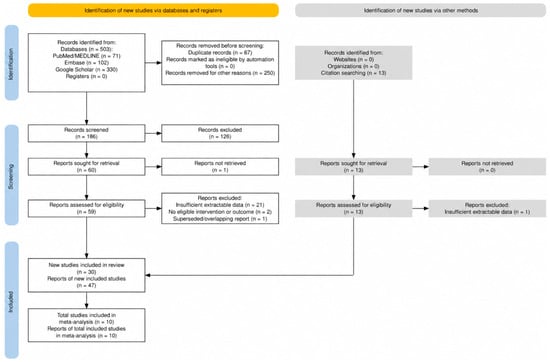
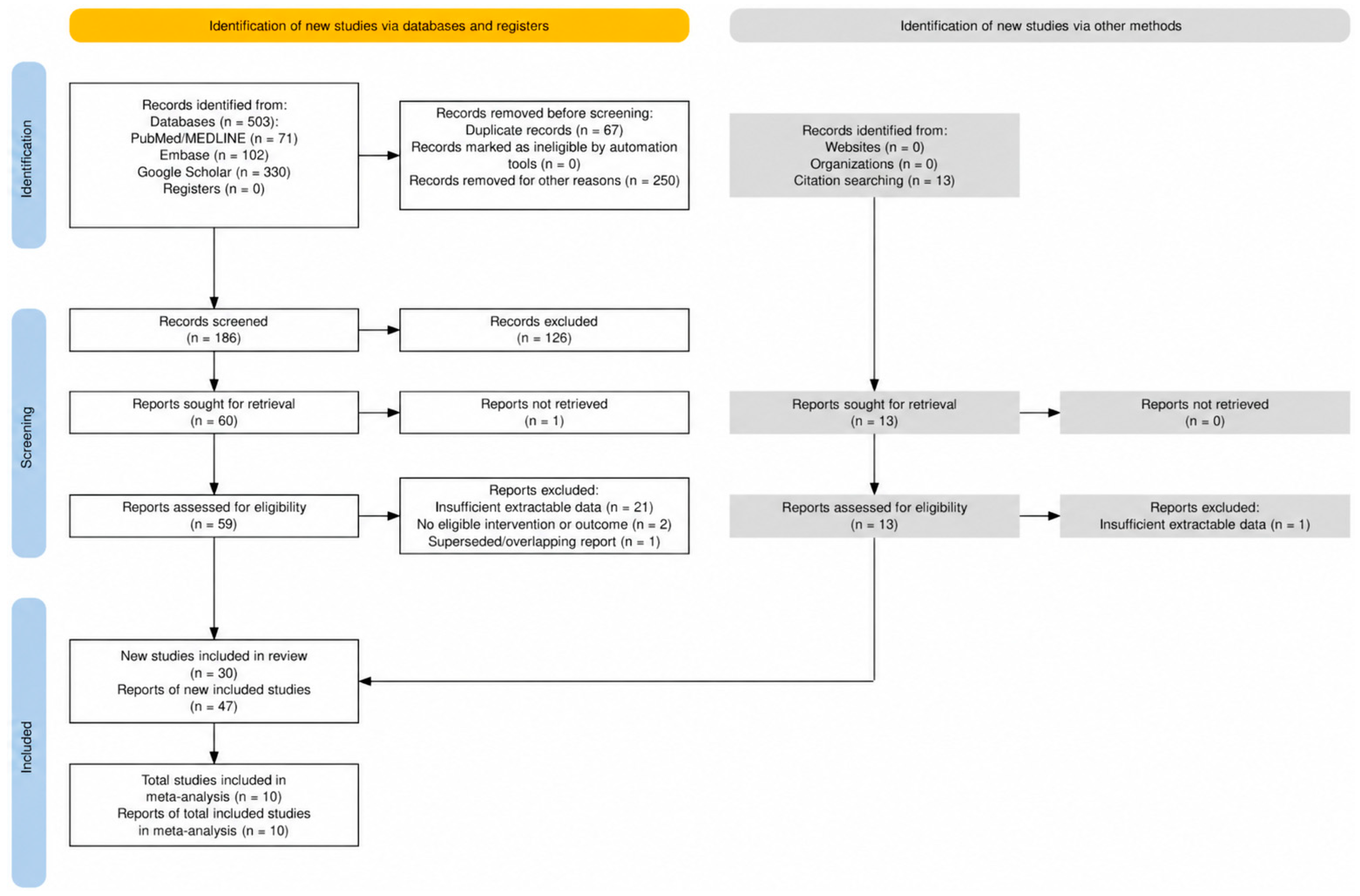
The database searches returned 71 records from PubMed/MEDLINE, 102 from Embase, and 330 from Google Scholar, from which only the first 80 relevance-ranked results were taken forward, yielding 253 database records for deduplication. After removal of 67 duplicates, 186 records were screened, and 126 were excluded at title/abstract level. Sixty database reports were sought; one was not retrieved, and 59 full texts were assessed; 24 were excluded, leaving 35 database-identified reports. Backward citation searching identified 13 additional reports, of which one conference abstract was excluded for insufficient extractable data, and 12 were included. The final evidence set comprised 47 reports mapped to 30 analytic source clusters. Analysis-specific independent cohort counts were used throughout; ten independent bridge cohorts contributed to the exploratory cumulative-transplantation meta-analysis. The study-selection process is summarized in Figure 1.
Figure 1.
PRISMA 2020 flow diagram [10].
The evidence base comprised two small randomized trials, national and multicenter administrative cohorts, comparative single-center cohorts, uncontrolled bridge cohorts, case series, and pharmacokinetic studies. The 47 reports were mapped to 30 analytic source clusters to prevent duplicate use of overlapping cohorts (Table 1).
Table 1.
Characteristics of the 30 analytic source clusters.
3.2. Risk of Bias
The two randomized trials were assessed with RoB 2: the simultaneous kidney-transplantation plus sleeve gastrectomy trial had some concerns, whereas the randomized pathway trial was at high risk of bias. Twenty-three nonrandomized comparative results were assessed with ROBINS-I; 18 were at serious risk and five at critical risk. Four prognostic-factor analyses assessed with QUIPS were judged at moderate risk (n = 1) or high risk (n = 3). Among 19 descriptive clinical cohorts assessed with the JBI case-series checklist, one was judged at low risk, 16 at moderate risk, and two at high risk. The risk-selected enteric-hyperoxalosis prevalence study was at high risk of bias for inference beyond its screened population, and four of five pharmacokinetic studies were at high risk. Recurring concerns included treatment selection related to transplant fitness and donor availability, survivor or immortal-time conditioning, claims-based exposure and outcome misclassification, incomplete follow-up, and sparse events.
3.3. Exploratory Cumulative Kidney-Transplant Proportions During Reported Follow-Up
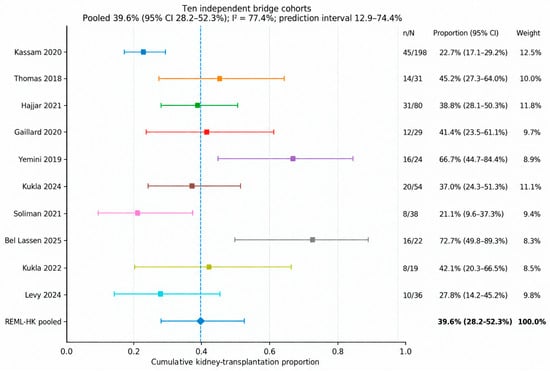
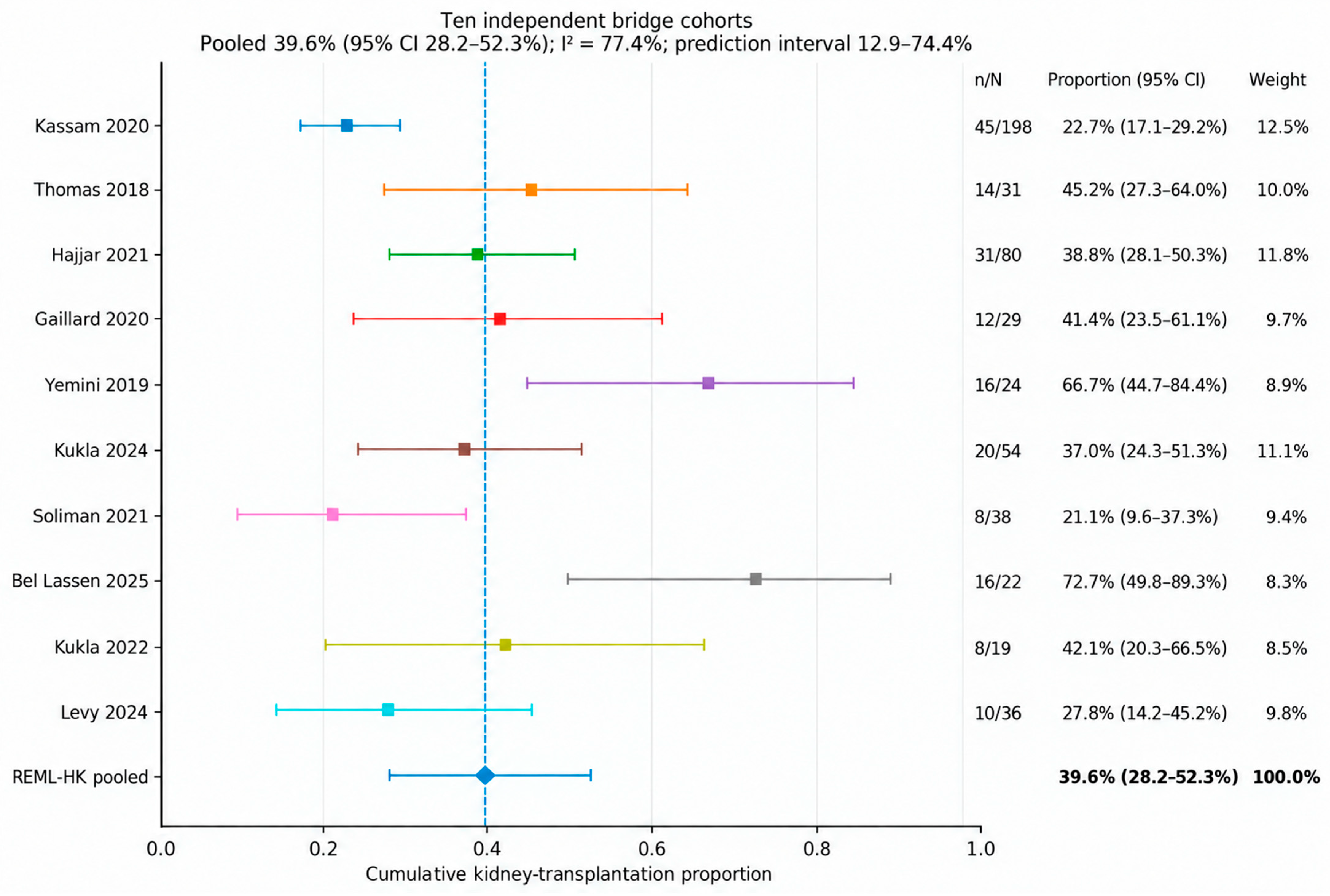
Ten independent bridge cohorts [23,28,32,34,45,48,49,51,53,55] contributed 180 kidney transplants among 531 operated candidates. In the secondary exploratory synthesis of cumulative proportions during heterogeneous reported follow-up, the pooled transplantation proportion was 39.6% (Hartung–Knapp 95% CI, 28.2–52.3%). Heterogeneity was substantial (I2 = 77.4%; τ2 = 0.365; Q = 39.82; p < 0.001), and the 95% prediction interval was 12.9–74.4%. The estimate is descriptive and should not be used to estimate an individual patient’s probability of transplantation or as a patient-counseling estimate, given the substantial between-study heterogeneity and wide prediction interval. Because the contributing bridge cohorts were predominantly single-arm, the pooled proportion lacks a contemporaneous counterfactual and cannot quantify the incremental effect of MBS on transplant access relative to similar untreated candidates. The contributing cohorts and forest plot are presented in Table 2 and Figure 2, respectively.
Table 2.
Cohorts included in the primary exploratory cumulative-transplantation meta-analysis.
Figure 2.
Exploratory cumulative kidney-transplantation proportions during heterogeneous study-specific follow-up. Points and horizontal lines show study proportions with exact Clopper–Pearson 95% confidence intervals; the diamond shows the REML–Hartung–Knapp pooled estimate. The pooled result is descriptive, not a causal effect or individual probability. The vertical dashed line marks the pooled estimate, and bold text identifies the pooled summary [23,28,32,34,45,48,49,51,53,55].
When the five additional sensitivity cohorts [17,18,19,20,21] were added, 15 studies contributed 231 kidney transplants among 612 operated patients; the pooled cumulative proportion was 45.4% (95% CI, 34.0–57.2%; I2 = 79.7%), with a prediction interval of 14.3–80.5%. The primary estimate was stable with Paule–Mandel and DerSimonian–Laird τ2 estimators (39.7% and 39.6%, respectively). Leave-one-out estimates ranged from 36.3% to 42.3%. Replacing, rather than adding to, the overlapping Montreal-family source with the later Zaminpeyma report yielded 43.3% (95% CI, 29.5–58.3%). Full sensitivity analyses are provided in Supplementary Figure S1 and Supplementary Table S5A,B. No formal reporting-bias or small-study-effect assessment was performed for the exploratory meta-analysis.
3.4. Comparative Access Outcomes
Four adjusted observational studies reported associations favoring MBS for transplant access. Attia et al. [52] reported a higher hazard of waitlisting (HR, 1.80; 95% CI, 1.64–1.98) and kidney transplantation (HR, 1.71; 95% CI, 1.58–1.85). Kukla et al. [32] reported higher hazards of active listing (HR, 3.84; 95% CI, 1.81–8.14) and kidney transplantation (HR, 3.03; 95% CI, 1.11–8.26) in the TRANSMET cohort. Chandler et al. [17] reported an adjusted kidney-transplantation HR of 4.39 (95% CI, 2.59–7.47), and the earlier Mayo cohort reported an HR of 8.39 (95% CI, 1.71–41.19) [34]. These estimates were not pooled because outcomes, time origins, populations, exposure definitions, and pathway structures differed. Chandler et al. [17] reported discrepant raw control-group transplant counts: 22/117 in the narrative versus 26/117 in Table 1. Because the BMI-stratified counts and an earlier conference report both supported 26/117, this was considered the better-supported raw count; comparative inference nevertheless relied on the reported adjusted HR. The adjusted estimates are summarized in Table 3.
Table 3.
Adjusted comparative transplant-access effects. Estimates were not pooled.
3.5. Failure to Complete the Bariatric-to-Transplant Pathway
Detailed reasons for nonprogression remained incompletely reported, but the review identified clinically important pathway information. To make these evidence gaps explicit, Table 4 also identifies studies in which reasons for nonprogression were not systematically reported, or pathway status remained incomplete. Kukla et al. [34] documented loss of candidacy through new or worsening cardiovascular and infectious comorbidity during conservative delay, together with two dialysis-related deaths. Bel Lassen et al. [55] distinguished achievement of the weight target without transplantation, death unrelated to MBS, and failure to achieve the target among six nontransplanted patients. Levy et al. [53] documented substantial referral-stage attrition: 36 of 183 referred candidates underwent MBS, 29 were referred back to transplant evaluation, 25 reached the transplant waitlist, and 10 study-reported kidney-containing transplants were completed; reported barriers included incomplete workup, insurance, refusal, medical unsuitability, inadequate weight loss, and loss to follow-up. Mitchell et al. [19] captured referral-stage alternatives including direct transplantation without MBS, operative abandonment because of encapsulating peritoneal sclerosis, clinical deterioration/nonadherence, and deferred reassessment after valve surgery. Chandler et al. [17] reported 30 transplants among 41 operated dialysis patients but did not provide reasons for the remaining 11. Ongoing evaluation, active listing, donor or waiting-time barriers, direct transplantation, definitive medical exclusion, and death were therefore maintained as distinct states; nontransplantation at censoring was not treated as permanent failure (Table 4).
Table 4.
Reported bariatric-to-transplant pathway states and reporting gaps.
3.6. Prognostic Factors, Response Markers, and Treatment-Effect Modifiers
3.6.1. Baseline Prognostic Factors
Hajjar et al. [28] provided the principal formal predictor model. Higher initial BMI and coronary artery disease were associated with lower odds of the study-defined weight-loss outcome, whereas male sex and predialysis status produced unstable favorable signals. Khan et al. [63] found that pretransplant plasma oxalate > 30 µmol/L was associated with one-year eGFR < 30 mL/min/1.73 m2 in univariable analysis but not after multivariable adjustment in a clinically risk-selected cohort. The small samples, sparse events, selection, and wide confidence intervals precluded clinical use as referral prediction tools.
3.6.2. Post-Treatment Response Markers
Postoperative BMI and achieved weight loss were associated with pathway progression in Kassam et al. [23], but these are post-treatment response markers rather than baseline referral predictors.
3.6.3. Potential Treatment-Effect Modifiers
No study demonstrated a validated treatment-effect modifier showing that a baseline subgroup derived greater causal benefit from MBS than from an alternative strategy (Table 5).
Table 5.
Separation of baseline prognostic factors, post-treatment response markers, and treatment-effect modifiers.
3.7. Procedure Choice, Timing, Pharmacokinetics, and Post-Transplant Outcomes
Evidence directly comparing SG and Roux-en-Y gastric bypass (RYGB) remained limited. In overlapping MBSAQIP reports, procedure-specific short-term outcomes were available for dialysis and broader CKD populations, but the shared database years precluded treating these reports as independent [39,42]. Matar et al. [47] reported no clear procedure-stratified difference in short-term rejection, thrombosis, or one-year mortality after transplantation. Ishaque et al. [37] and Ku et al. [36] compared procedures with separate nonsurgical controls rather than providing a direct SG-versus-RYGB effect. Mejia et al. [60] identified enteric hyperoxalosis after both restrictive and malabsorptive procedures in a risk-selected transplant-candidate cohort; those prevalence estimates are not generalizable to all candidates. Khan et al. [63] identified RYGB as a common enteric risk among candidates with elevated plasma oxalate and found more calcium-oxalate crystals on allograft biopsy than in matched controls, while overall one-year graft function was similar; the clinically risk-selected design precludes procedure-specific causal inference.
The pharmacokinetic evidence was derived from patients with kidney failure and/or kidney transplant recipients rather than extrapolated from general bariatric cohorts. The SG study enrolled 23 adults with ESRD after LSG and found broadly comparable tacrolimus and mycophenolic acid exposure under standardized conditions [26], whereas the small RYGB pilot included four dialysis patients and two renal transplant recipients and reported high variability and lower exposure per dose than historical non-bypass data [27]. Neither study provides a direct SG-versus-RYGB comparison or establishes a procedure-specific transplant effect. Post-transplant comparative and case-series evidence was expanded by studies of MBS after kidney transplantation, prior MBS among subsequent recipients, cancer outcomes, graft function, and monitoring [38,56,57,58,59,63]. Frederick et al. [64] compared nine MBS-first with 11 kidney-transplant-first patients who completed both procedures and found no detectable sequencing difference in one-year weight loss, 30-day morbidity, graft failure, mortality, or tacrolimus goal attainment; however, the outcome-conditioned nonrandomized design was at critical risk of bias. The randomized simultaneous KT + SG trial found greater weight loss and longer operative duration without a clear difference in one-year graft function or major surgical outcomes; the later overlapping UIC report contributed unique timing and acceptance information only [61,62]. These studies were not used to estimate pretransplant access.
3.8. Safety
Safety reporting remained heterogeneous and was interpreted by clinical context. Alothman et al. [39] remained the principal dialysis-specific MBSAQIP safety source; Aboueisha et al. [42] overlapped substantially and was retained only for broader CKD and unique procedure-comparison information. Operative mortality was usually zero in staged bridge cohorts, although one surgery-related death followed a staple-line leak in Yemini et al. [45]. Bel Lassen et al. [55] added long-term safety and pathway data in an independent obesity-barrier cohort. Levy et al. [53] reported dialysis-specific postoperative issues after MBS, including hypotension requiring midodrine in 9/36 patients, changes from peritoneal dialysis to hemodialysis in 3/36, and two readmissions related to inadequate fluid intake. Frederick et al. [64] reported a 30-day MBS complication in 5/20 patients and no perioperative mortality in its sequencing cohort. Simultaneous SG plus kidney transplantation was analyzed separately because all participants had already reached transplantation and the operation differed fundamentally from staged referral pathways [41,61,62]. Detailed safety data are provided in Supplementary Table S2.
4. Discussion
This review examined the role of metabolic and bariatric surgery in kidney-transplant candidates by integrating transplant-access outcomes, failed pathways, and evidence relevant to referral. In the secondary exploratory synthesis, approximately 40% of operated candidates in ten independent bridge cohorts underwent kidney transplantation during heterogeneous reported follow-up. Adjusted observational studies consistently reported associations favoring MBS for waitlisting, active listing, or kidney transplantation, but every nonrandomized comparative access result was at serious risk of bias. These findings support a potential role for MBS in selected candidates but do not establish a causal treatment effect or a fixed probability of transplantation.
The pooled transplantation proportion should be interpreted as a program-level descriptive outcome rather than an individual counseling probability. Transplantation is time-dependent, and the included cohorts differed substantially in follow-up duration, baseline waitlist status, living-donor availability, allocation systems, and competing risks. The prediction interval of approximately 13% to 74% illustrates how strongly outcomes may vary across programs and clinical settings.
Taken together, the evidence suggests that MBS referral may be reasonable when obesity is a principal reversible barrier and a credible path to transplant eligibility remains. In this setting, the clinical question is not simply whether surgery can produce sufficient weight loss, but whether weight reduction is likely to remove the barrier that is preventing transplantation. Before surgery, transplant and bariatric teams should therefore identify which barrier weight loss is expected to modify and which independent contraindications may remain.
The failed-pathway analysis is a central contribution of this review. Weight regain and inadequate weight loss were only part of the problem. Cardiovascular disease, clinical deterioration, death, malignancy, nonadherence, loss to follow-up, insurance and workup barriers, threatened dialysis access, and unfavorable abdominal anatomy were recurrent obstacles. Levy et al. [53] demonstrated substantial attrition before MBS and again during post-MBS transplant reassessment. Moreover, nontransplantation at censoring was often not a permanent failure: some candidates remained under evaluation or active on the waiting list, while one patient in the Mitchell cohort appropriately underwent direct transplantation without MBS.
The findings also suggest a potential role for earlier parallel transplant and weight-management evaluation. Predialysis and preemptive-transplant signals were directionally favorable but may reflect better baseline health, donor access, and treatment selection rather than a true timing effect. A small outcome-conditioned sequencing cohort likewise did not identify a clear advantage of MBS-first versus kidney-transplant-first surgery [64]. Current evidence therefore favors avoiding unnecessary sequential delays when feasible but does not define an optimal CKD stage, dialysis duration, or timing threshold for MBS.
4.1. Comparison with Previous Systematic Reviews
Previous systematic reviews have reported substantial weight loss after MBS and subsequent waitlisting or transplantation in selected patients [65,66,67,68,69,70]. The present review extends this literature by examining not only whether MBS facilitates transplant access, but also how bariatric procedure choice, perioperative safety, gastrointestinal and metabolic consequences, pharmacokinetic considerations, and failed bariatric-to-transplant pathways may influence clinical decision-making. We also used endpoint-specific handling of overlapping cohorts, distinguished baseline prognostic factors from post-treatment response markers, incorporated recent 2025–2026 evidence, and treated pathway attrition and unresolved pathway status as clinically relevant outcomes. This broader approach shifts the focus from whether MBS can enable transplantation toward how it may be used selectively and safely within the transplant pathway.
Two recent 2026 reviews are particularly relevant to the present study. Bananis et al. [69] focused on bariatric surgery performed explicitly as a bridge to kidney transplantation in patients with advanced CKD or ESKD, with formal transplant listing as the primary outcome and descriptive synthesis of transplantation, weight-loss, and safety outcomes. El Hennawy et al. [70] addressed a different clinical question by directly comparing SG and RYGB in kidney-transplant candidates and recipients and developing an exploratory transplant-specific framework for bariatric procedure selection. The present review is complementary to both: its primary focus is the pretransplant referral pathway rather than bridge efficacy alone or selection between bariatric procedures. It therefore integrates successful access with referral-stage attrition, failed and unresolved pathways, competing barriers to transplantation, bariatric safety, procedure and timing considerations, pharmacokinetic and enteric-oxalate evidence, and the distinction between baseline prognostic factors, post-treatment response markers, and treatment-effect modifiers. These differences are summarized in Table 6.
Table 6.
Comparison with recent systematic reviews and the distinct focus of the present review.
4.2. Bariatric Surgical Considerations in Kidney-Transplant Candidates
Kidney-transplant candidates with advanced CKD or ESKD represent a distinct bariatric surgical population in whom operative planning extends beyond weight-loss efficacy alone. Registry-based studies suggest that dialysis-dependent and broader CKD populations experience higher rates of several short-term complications than patients without kidney disease, including readmission, reintervention, transfusion, and intensive-care utilization, although perioperative mortality remained low overall [39,42]. Smaller clinical cohorts additionally identified dialysis-specific postoperative issues such as hypotension requiring pharmacologic support, fluid-management difficulties, and conversion from peritoneal dialysis to hemodialysis [53]. These findings support the feasibility of MBS in appropriately selected patients but emphasize the importance of perioperative coordination between bariatric, nephrology, and transplant teams.
Procedure choice is also clinically important. Sleeve gastrectomy (SG) predominates in contemporary transplant-bridge cohorts and avoids intestinal bypass, whereas Roux-en-Y gastric bypass (RYGB) introduces a malabsorptive component with potential implications for nutritional status, drug absorption, and enteric-oxalate handling. Direct comparative evidence in kidney-transplant candidates remains limited and strongly affected by treatment selection. Available studies have not established a transplant-specific superiority of SG over RYGB, and observed differences in perioperative or post-transplant outcomes may reflect baseline renal function, procedure selection, center practice, and calendar era rather than the operation itself [36,37,47,49]. Accordingly, procedure choice should remain individualized, taking into account the magnitude and durability of weight loss required, operative risk, gastrointestinal and nutritional consequences, and the anticipated transplant pathway.
Long-term considerations may be particularly relevant once transplantation occurs. Pharmacokinetic studies suggest that immunosuppressant exposure can vary after bariatric surgery, with more reassuring standardized data after SG and greater variability reported after RYGB [26,27]. Enteric hyperoxalosis and elevated plasma oxalate have also been described in risk-selected transplant-candidate populations following bariatric procedures, including associations with calcium-oxalate deposition in the renal allograft [60,63]. Thus, the pharmacokinetic evidence was derived from kidney failure or transplant populations, whereas the oxalate evidence was transplant-specific but clinically risk-selected. The latter should be interpreted as a risk signal rather than as population prevalence or evidence of a generalizable procedure effect. These findings do not justify a universal preference for one procedure, but they reinforce the need for procedure-specific nutritional, metabolic, and pharmacologic surveillance. The evidence identified in this review was overwhelmingly concentrated on SG and RYGB, with only very limited data for other contemporary bariatric procedures, leaving an important gap for future study in kidney-transplant candidates.
4.3. Proposed Evidence-Informed Referral Considerations
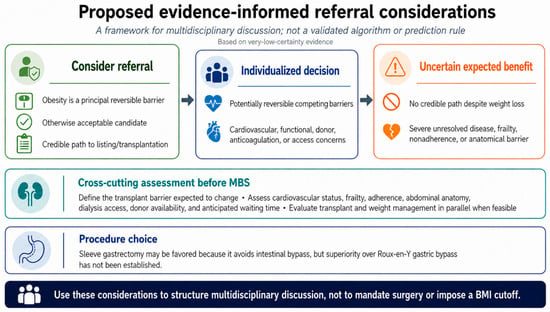
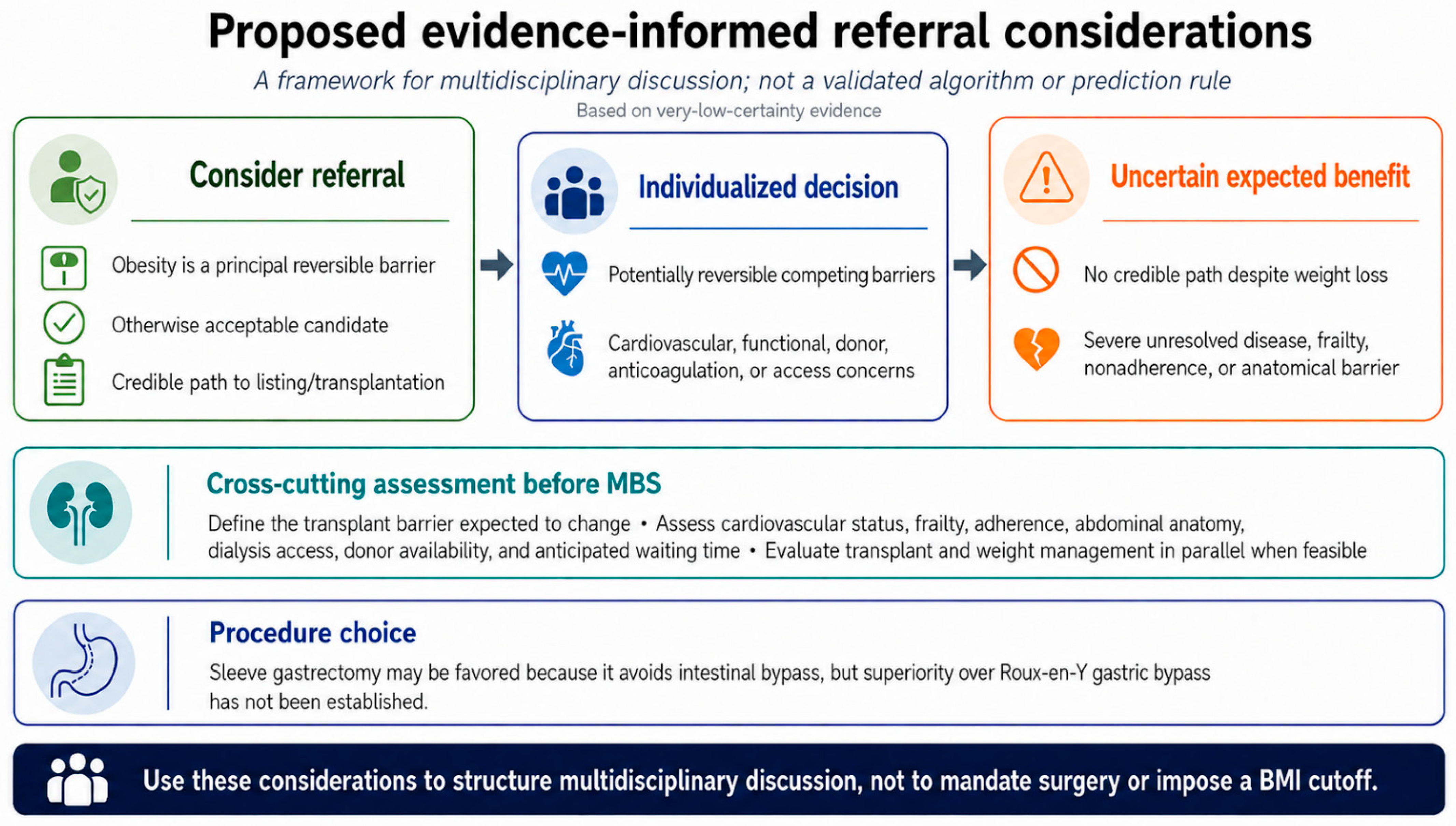
When obesity is the principal reversible barrier to kidney transplantation, MBS may reasonably be considered if the patient is otherwise an acceptable transplant candidate and a credible route to listing and transplantation remains. Transplant and weight-management assessments should proceed in parallel, and the multidisciplinary team should define in advance which barrier is expected to change after weight loss. The supporting referral evidence is predominantly descriptive and observational and remains at serious risk of bias.
Contemporary anti-obesity pharmacotherapy should also be considered within the pretransplant weight-management pathway. Modern incretin-based therapies provide a nonsurgical treatment option and may be used as an alternative or adjunct to MBS in selected patients. However, direct comparative evidence between contemporary pharmacotherapy and MBS in kidney-transplant candidates remains limited. Recent reviews have similarly highlighted the absence of prospective comparative trials establishing the relative effectiveness of these strategies in this population [69,70]. Accordingly, pharmacotherapy and MBS should be considered within individualized multidisciplinary weight-management and transplant planning rather than as universally competing approaches.
Earlier parallel evaluation may be appropriate, particularly before marked dialysis-related cardiovascular or functional deterioration occurs. Small predialysis and preemptive-transplant signals were directionally favorable [28,33], but these findings may reflect better baseline health, donor availability, and treatment selection. Taken together, the available evidence favors avoiding unnecessary sequential delays when feasible, although it does not define an optimal CKD stage, dialysis duration, or timing threshold for MBS.
Decision-making should be individualized when competing barriers remain. Potentially reversible cardiovascular, functional, psychosocial, donor-related, anticoagulation, dialysis-access, insurance, or evaluation-workup concerns should be assessed alongside obesity [19,23,28,53]. In these situations, MBS should be considered alongside medical weight management, direct transplantation when appropriate, or treatment of the competing contraindication. Weight loss alone may not restore transplant candidacy.
The expected benefit of MBS is more uncertain when no credible transplant pathway remains despite weight loss. Severe unresolved comorbidity, active malignancy, major frailty, persistent nonadherence, or an anatomical contraindication to bariatric surgery may make MBS unlikely to facilitate transplantation. Because failed-pathway evidence remains sparse and inconsistently reported, these factors should prompt individualized multidisciplinary assessment rather than automatic referral or exclusion. The resulting discussion framework is summarized in Figure 3.
Figure 3.
Proposed evidence-informed considerations for MBS referral before kidney transplantation. The framework is derived from very-low-certainty evidence and is intended to structure multidisciplinary discussion; it is not a validated algorithm or prediction model. Abbreviations: MBS, metabolic and bariatric surgery.
4.4. Certainty of Evidence
The certainty of evidence was very low across the major outcome domains. Most available evidence was derived from retrospective, single-center, and nonrandomized studies, with important risks of treatment selection, confounding, incomplete follow-up, and selective pathway reporting. Although adjusted comparative studies generally reported associations favoring MBS for waitlisting, active listing, or transplantation, residual confounding remained likely because patients selected for surgery may have differed systematically in transplant fitness, comorbidity, donor availability, motivation, and access to multidisciplinary care.
In the exploratory meta-analysis, the pooled transplantation proportion was 39.6% (95% CI, 28.2–52.3%), but heterogeneity remained substantial (I2 = 77.4%), and the prediction interval was wide (12.9–74.4%). Differences in baseline transplant eligibility, waitlist status, follow-up duration, donor availability, allocation systems, and center practice limit interpretation of this estimate as a standardized probability of transplantation.
For procedure choice, timing, pharmacokinetics, and baseline predictors, evidence was indirect and affected by procedure-selection bias, overlapping data sources, small samples, and incomplete adjustment. The simultaneous-procedure randomized trial had some concerns, whereas nonrandomized timing evidence included a critically biased outcome-conditioned comparison [64]. No reliable direct pooled comparison established superiority of sleeve gastrectomy over Roux-en-Y gastric bypass, and no validated candidate-level model, cutoff, or treatment-effect interaction was identified.
Accordingly, the available evidence can support multidisciplinary referral considerations but not mandatory BMI thresholds, procedure-selection rules, or a universal indication for MBS before kidney transplantation. Prospective multicenter studies using standardized, time-dependent transplant-pathway outcomes are needed before candidate-level referral or treatment algorithms can be validated.
4.5. Limitations
This review has several limitations. The evidence base is dominated by nonrandomized and uncontrolled studies affected by treatment selection, differences in transplant fitness, donor availability, center practice, survivor conditioning, and incomplete pathway reporting. Definitions of eligibility, active listing, transplantation intent, and follow-up differed across centers, and several post-transplant cohorts were conditioned on successful transplantation or survival to MBS. Reasons for nontransplantation were often incompletely reported, while formal predictor and treatment-effect-modifier evidence was sparse, unstable, and unvalidated.
Procedure-specific evidence was also limited. Most transplant-candidate data involved sleeve gastrectomy or Roux-en-Y gastric bypass; direct comparisons between procedures were uncommon and vulnerable to selection bias, and evidence for other contemporary bariatric procedures was sparse or absent. Accordingly, the available literature does not support firm conclusions regarding an optimal bariatric procedure for kidney-transplant candidates.
The exploratory meta-analysis also combined cumulative transplantation proportions reported over heterogeneous follow-up periods, limiting interpretation of the pooled estimate as a standardized probability of transplantation. In addition, the PubMed search used English-language and full-text-availability filters, Google Scholar screening was limited to the first 80 relevance-ranked results, and no separate forward-citation search was conducted. Although the PubMed filters were retrieval constraints rather than review-level eligibility criteria and additional reports could be identified through the other search routes, these pragmatic choices may nevertheless have reduced search completeness and introduced language or retrieval bias.
5. Conclusions
Metabolic and bariatric surgery represents an important but clinically complex treatment option for patients with obesity being evaluated for kidney transplantation. Pretransplant MBS may facilitate access when obesity is the principal reversible barrier. In the exploratory synthesis, the pooled transplantation proportion was approximately 40% over heterogeneous study-specific follow-up and was descriptive and non-comparative; the wide prediction interval indicates substantial between-program variability and limits the use of this estimate for individual counseling. Comparative studies generally reported associations favoring waitlisting, active listing, or transplantation, but all nonrandomized comparative access results were at serious or critical risk of bias, and no causal treatment effect of MBS on transplant access has been established. Referral should therefore be individualized and multidisciplinary, based on whether weight loss is expected to remove a decisive barrier within a realistic transplant timeline rather than on BMI alone. Procedure choice should likewise be individualized, as current evidence does not establish superiority of sleeve gastrectomy over Roux-en-Y gastric bypass or define an optimal bariatric procedure for transplant candidates. MBS should not be mandatory or presented as guaranteeing listing or transplantation. Current evidence is insufficient to define a referral rule, candidate-level prediction model, or optimal timing threshold. Prospective multicenter studies should use standardized time-dependent pathway outcomes and directly evaluate procedure-specific bariatric and transplant outcomes.
Supplementary Materials
The following supporting information can be downloaded at: https://www.mdpi.com/article/10.3390/gidisord8030057/s1, Table S1: Detailed post-kidney-transplant outcomes; Table S2: Detailed bariatric-surgery safety outcomes; Table S3: Procedure choice, timing, pharmacokinetic, and enteric-oxalate evidence; Table S4: Detailed GRADE Summary of Findings; Table S5A: Prespecified and diagnostic sensitivity analyses; Table S5B: Leave-one-out analysis of the strict primary set; Figure S1: Expanded sensitivity forest plot; Table S6: Included reports and analytic roles. Supplementary Data File S1 contains the complete extraction, source locations, source-selection rationale, primary and sensitivity meta-analysis data, item-level risk-of-bias assessments, and GRADE assessments.
Author Contributions
Conceptualization, M.A. and F.K.; Data curation, M.A., C.K., Y.B.A., N.V., R.H., A.S., A.M.S., M.S. (Murtaja Satea) and A.G.L.; Formal analysis, M.A., C.K., Y.B.A., N.V., M.S. (Murtaja Satea) and A.G.L.; Investigation, M.A., C.K., A.G., Y.B.A., N.V., A.S. and A.M.S.; Methodology, M.A., F.K., E.N. and A.G.; Project administration, M.A., F.K., E.N. and M.S. (Mordechai Shimonov); Resources, E.N. and M.S. (Mordechai Shimonov); Supervision, M.A., F.K., E.N., M.S. (Mordechai Shimonov) and A.G.L.; Validation, M.A., C.K., A.G., Y.B.A., N.V., R.H., A.S., A.M.S. and M.S. (Murtaja Satea); Visualization, A.S., A.M.S., M.A., R.H., C.K. and M.S. (Murtaja Satea); Writing—original draft, M.A. and C.K.; Writing—review and editing, all authors. M.A. and C.K. contributed equally and share first authorship; E.N. and F.K. contributed equally and share senior authorship. All authors have read and agreed to the published version of the manuscript.
Funding
This research received no external funding.
Institutional Review Board Statement
Not applicable.
Informed Consent Statement
Not applicable.
Data Availability Statement
All extracted data supporting the findings and analyses of this systematic review are provided within the article, Supplementary Materials, and Supplementary Data File S1.
Acknowledgments
During the preparation of this manuscript, the authors used Microsoft 365 Copilot in Word (Microsoft Word for Microsoft 365, Version 2606, Build 20131.20154; Microsoft Corporation, Redmond, WA, USA) and Grammarly for Windows (version 1.2.281.1928) for language editing, manuscript structuring, and figure design assistance to improve clarity and organization of the manuscript, based on author-provided data. The authors have reviewed and edited the output and take full responsibility for the content of this publication.
Conflicts of Interest
The authors declare no conflicts of interest.
References
- Obesity and Overweight. Available online: https://www.who.int/news-room/fact-sheets/detail/obesity-and-overweight (accessed on 6 August 2026).
- Wolfe, R.A.; Ashby, V.B.; Milford, E.L.; Ojo, A.O.; Ettenger, R.E.; Agodoa, L.Y.C.; Held, P.J.; Port, F.K. Comparison of Mortality in All Patients on Dialysis, Patients on Dialysis Awaiting Transplantation, and Recipients of a First Cadaveric Transplant. N. Engl. J. Med. 1999, 341, 1725–1730. [Google Scholar] [CrossRef] [Scilit] [PubMed]
- Gill, J.S.; Lan, J.; Dong, J.; Rose, C.; Hendren, E.; Johnston, O.; Gill, J. The Survival Benefit of Kidney Transplantation in Obese Patients. Am. J. Transplant. 2013, 13, 2083–2090. [Google Scholar] [CrossRef] [Scilit] [PubMed]
- Segev, D.L.; Simpkins, C.E.; Thompson, R.E.; Locke, J.E.; Warren, D.S.; Montgomery, R.A. Obesity Impacts Access to Kidney Transplantation. J. Am. Soc. Nephrol. 2008, 19, 349–355. [Google Scholar] [CrossRef] [Scilit] [PubMed]
- Molnar, M.Z.; Kovesdy, C.P.; Mucsi, I.; Bunnapradist, S.; Streja, E.; Krishnan, M.; Kalantar-Zadeh, K. Higher Recipient Body Mass Index Is Associated with Post-Transplant Delayed Kidney Graft Function. Kidney Int. 2011, 80, 218–224. [Google Scholar] [CrossRef] [Scilit] [PubMed]
- Nicoletto, B.B.; Fonseca, N.K.O.; Manfro, R.C.; Gonçalves, L.F.S.; Leitão, C.B.; Souza, G.C. Effects of Obesity on Kidney Transplantation Outcomes: A Systematic Review and Meta-Analysis. Transplantation 2014, 98, 167–176. [Google Scholar] [CrossRef] [Scilit] [PubMed]
- Lafranca, J.A.; IJermans, J.N.; Betjes, M.G.; Dor, F.J. Body Mass Index and Outcome in Renal Transplant Recipients: A Systematic Review and Meta-Analysis. BMC Med. 2015, 13, 111, Erratum in BMC Med. 2015, 13, 141. [Google Scholar] [CrossRef] [Scilit] [PubMed]
- Chadban, S.J.; Ahn, C.; Axelrod, D.A.; Foster, B.J.; Kasiske, B.L.; Kher, V.; Kumar, D.; Oberbauer, R.; Pascual, J.; Pilmore, H.L.; et al. KDIGO Clinical Practice Guideline on the Evaluation and Management of Candidates for Kidney Transplantation. Transplantation 2020, 104, S11–S103. [Google Scholar] [CrossRef] [Scilit] [PubMed]
- Furth, S.L.; Colhoun, H.M.; Kanbay, M.; Kukla, A.; Lim, L.-L.; MacLaughlin, H.L.; Navaneethan, S.D.; Shroff, R.; Stenvinkel, P.; Cheung, M.; et al. The Relationship between Obesity and Chronic Kidney Disease: Conclusions from a Kidney Disease: Improving Global Outcomes (KDIGO) Controversies Conference. Kidney Int. 2026, 109, 442–464. [Google Scholar] [CrossRef] [Scilit] [PubMed]
- Page, M.J.; McKenzie, J.E.; Bossuyt, P.M.; Boutron, I.; Hoffmann, T.C.; Mulrow, C.D.; Shamseer, L.; Tetzlaff, J.M.; Akl, E.A.; Brennan, S.E.; et al. The PRISMA 2020 Statement: An Updated Guideline for Reporting Systematic Reviews. BMJ 2021, 372, n71. [Google Scholar] [CrossRef] [Scilit] [PubMed]
- Sterne, J.A.C.; Savović, J.; Page, M.J.; Elbers, R.G.; Blencowe, N.S.; Boutron, I.; Cates, C.J.; Cheng, H.-Y.; Corbett, M.S.; Eldridge, S.M.; et al. RoB 2: A Revised Tool for Assessing Risk of Bias in Randomised Trials. BMJ 2019, 366, l4898. [Google Scholar] [CrossRef] [Scilit] [PubMed]
- Sterne, J.A.; Hernán, M.A.; Reeves, B.C.; Savović, J.; Berkman, N.D.; Viswanathan, M.; Henry, D.; Altman, D.G.; Ansari, M.T.; Boutron, I.; et al. ROBINS-I: A Tool for Assessing Risk of Bias in Non-Randomised Studies of Interventions. BMJ 2016, 355, i4919. [Google Scholar] [CrossRef] [Scilit] [PubMed]
- Hayden, J.A.; Van Der Windt, D.A.; Cartwright, J.L.; Côté, P.; Bombardier, C. Assessing Bias in Studies of Prognostic Factors. Ann. Intern. Med. 2013, 158, 280–286. [Google Scholar] [CrossRef] [Scilit] [PubMed]
- Munn, Z.; Barker, T.H.; Moola, S.; Tufanaru, C.; Stern, C.; McArthur, A.; Stephenson, M.; Aromataris, E. Methodological Quality of Case Series Studies: An Introduction to the JBI Critical Appraisal Tool. JBI Evid. Synth. 2020, 18, 2127–2133. [Google Scholar] [CrossRef] [Scilit] [PubMed]
- Munn, Z.; Moola, S.; Lisy, K.; Riitano, D.; Tufanaru, C. Chapter 5: Systematic Reviews of Prevalence and Incidence. In JBI Manual for Evidence Synthesis; JBI: Adelaide, Australia, 2020; ISBN 978-0-6488488-0-6. [Google Scholar]
- Guyatt, G.H.; Oxman, A.D.; Vist, G.E.; Kunz, R.; Falck-Ytter, Y.; Alonso-Coello, P.; Schünemann, H.J. GRADE: An Emerging Consensus on Rating Quality of Evidence and Strength of Recommendations. BMJ 2008, 336, 924–926. [Google Scholar] [CrossRef] [Scilit] [PubMed]
- Chandler, S.; Palamuthusingam, D.; Hawley, C.M.; Pascoe, E.M.; Johnson, D.W.; McDonald, S.; Boudville, N.; Jose, M.D.; Cross, N.B.; Fahim, M. Bariatric Surgery Outcomes in Patients on Chronic Kidney Replacement Therapy in Australia and New Zealand. Br. J. Surg. 2024, 111, znae251. [Google Scholar] [CrossRef] [Scilit] [PubMed]
- Bosch, K.D.; Harrington, C.; Sulutaura, L.; Lacea, E.; Burton, K.; Fernandez-Munoz, N.; Dugal, N.; Sufi, P.; Al Midani, A.; Parmar, C. Bariatric Surgery as a Bridge to Facilitate Renal Transplantation in Patients with End-Stage Renal Disease. Obes. Surg. 2024, 34, 355–362. [Google Scholar] [CrossRef] [Scilit] [PubMed]
- Mitchell, S.; Wu, D.A.; Cheah, M.; Mekhail, P.; Nanthakumaran, S.; MacVicar, E.; Gibson, S.; Ghita, R.; Joyce, B.; Drummond, G.; et al. Metabolic Bariatric Surgery to Facilitate Access to Renal Transplantation for Patients with Obesity and End-Stage Renal Disease: A National Case Series and Focused Review. J. Clin. Med. 2026, 15, 5500. [Google Scholar] [CrossRef] [Scilit] [PubMed]
- Kienzl-Wagner, K.; Weissenbacher, A.; Gehwolf, P.; Wykypiel, H.; Öfner, D.; Schneeberger, S. Laparoscopic Sleeve Gastrectomy: Gateway to Kidney Transplantation. Surg. Obes. Relat. Dis. 2018, 13, 909–915. [Google Scholar] [CrossRef] [Scilit] [PubMed]
- Zahran, M.H.; Khewater, T.; Ayyad, M.; Ali, A.; Ghazi, M.; Serageldeen, A.; Omar, A.; Aljohni, Z.S.; Albalawi, W.; Fourtounas, K.; et al. Bariatric Surgery as a Bridge for Renal Transplantation. An Age and BMI-Matched Pair Analysis. Transplant. Proc. 2025, 57, 746–751. [Google Scholar] [CrossRef] [Scilit] [PubMed]
- IntHout, J.; Ioannidis, J.P.; Borm, G.F. The Hartung-Knapp-Sidik-Jonkman Method for Random Effects Meta-Analysis Is Straightforward and Considerably Outperforms the Standard DerSimonian-Laird Method. BMC Med. Res. Methodol. 2014, 14, 25. [Google Scholar] [CrossRef] [Scilit] [PubMed]
- Kassam, A.-F.; Mirza, A.; Kim, Y.; Hanseman, D.; Woodle, E.S.; Quillin, R.C.; Johnson, B.L.; Govil, A.; Cardi, M.; Schauer, D.P.; et al. Long-Term Outcomes in Patients with Obesity and Renal Disease after Sleeve Gastrectomy. Am. J. Transplant. 2020, 20, 422–429. [Google Scholar] [CrossRef] [Scilit] [PubMed]
- Kim, Y.; Jung, A.D.; Dhar, V.K.; Tadros, J.S.; Schauer, D.P.; Smith, E.; Hanseman, D.; Cuffy, M.; Shah, S.; Woodle, E.S.; et al. Laparoscopic Sleeve Gastrectomy Improves Renal Transplant Candidacy and Post-Transplant Outcomes in Morbidly Obese Patients. Am. J. Transplant. 2017, 18, 410–416. [Google Scholar] [CrossRef] [Scilit] [PubMed]
- Freeman, C.M.; Woodle, E.S.; Shi, J.; Alexander, J.W.; Leggett, P.L.; Shah, S.A.; Paterno, F.; Cuffy, M.C.; Govil, A.; Mogilishetty, G.; et al. Addressing Morbid Obesity as a Barrier to Renal Transplantation with Laparoscopic Sleeve Gastrectomy. Am. J. Transplant. 2015, 15, 1360–1368. [Google Scholar] [CrossRef] [Scilit] [PubMed]
- Diwan, T.S.; Lichvar, A.B.; Leino, A.D.; Vinks, A.A.; Christians, U.; Shields, A.R.; Cardi, M.A.; Fukuda, T.; Mizuno, T.; Kaiser, T.; et al. Pharmacokinetic and Pharmacogenetic Analysis of Immunosuppressive Agents after Laparoscopic Sleeve Gastrectomy. Clin. Transplant. 2017, 31, e12975. [Google Scholar] [CrossRef] [Scilit] [PubMed]
- Rogers, C.C.; Alloway, R.R.; Alexander, J.W.; Cardi, M.; Trofe, J.; Vinks, A.A. Pharmacokinetics of Mycophenolic Acid, Tacrolimus and Sirolimus after Gastric Bypass Surgery in End-Stage Renal Disease and Transplant Patients: A Pilot Study. Clin. Transplant. 2008, 22, 281–291. [Google Scholar] [CrossRef] [Scilit] [PubMed]
- Hajjar, R.; Lafrance, J.; Tchervenkov, J.; Gingras, S.; Boutin, L.; Elftouh, N.; Andalib, A.; Pescarus, R.; Garneau, P.Y.; Chan, G. Successful Surgical Weight Loss with Laparoscopic Sleeve Gastrectomy for Morbid Obesity Prior to Kidney Transplantation. Transpl. Int. 2021, 34, 964–973. [Google Scholar] [CrossRef] [Scilit] [PubMed]
- Bouchard, P.; Tchervenkov, J.; Demyttenaere, S.; Court, O.; Andalib, A. Safety and Efficacy of the Sleeve Gastrectomy as a Strategy towards Kidney Transplantation. Surg. Endosc. 2020, 34, 2657–2664. [Google Scholar] [CrossRef] [Scilit] [PubMed]
- Yang, X.Y.; Brazeau-Porrello, P.; Hajjar, R.; Badrudin, D.; Pescarus, R.; Chan, G. Decision Regret and Long-Term Weight Evolution Following Laparoscopic Sleeve Gastrectomy as Bridge to Kidney Transplantation. Front. Transplant. 2025, 4, 1627504. [Google Scholar] [CrossRef] [Scilit] [PubMed]
- Zaminpeyma, R.; Claus, M.; Paraskevas, S.; Court, O.; Tchervenkov, J.; Andalib, A. Outcomes of Kidney Transplant Recipients Who Underwent Pre-Transplant Bariatric Surgery for Severe Obesity: A Long-Term Follow-up Study. Surg. Endosc. 2023, 37, 494–502. [Google Scholar] [CrossRef] [Scilit] [PubMed]
- Kukla, A.; Sahi, S.S.; Navratil, P.; Benzo, R.P.; Smith, B.H.; Duffy, D.; Park, W.D.; Shah, M.; Shah, P.; Clark, M.M.; et al. Weight Loss Surgery Increases Kidney Transplant Rates in Patients with Renal Failure and Obesity. Mayo Clin. Proc. 2024, 99, 705–715. [Google Scholar] [CrossRef] [Scilit] [PubMed]
- Navratil, P.; Sahi, S.S.; Smith, B.H.; Denic, A.; Issa, N.S.; Heyer, D.; Marzlof, T.; Shaik, A.A.; Schinstock, C.A.; Ghanem, O.M.; et al. Impact of Sleeve Gastrectomy on Kidney Function and Preemptive Transplant in Kidney Transplant Candidates with Obesity. Mayo Clin. Proc. 2025, 100, 942–953. [Google Scholar] [CrossRef] [Scilit] [PubMed]
- Kukla, A.; Diwan, T.; Smith, B.H.; Collazo-Clavell, M.L.; Lorenz, E.C.; Clark, M.; Grothe, K.; Denic, A.; Park, W.D.; Sahi, S.; et al. Guiding Kidney Transplantation Candidates for Effective Weight Loss: A Clinical Cohort Study. Kidney360 2022, 3, 1411–1416. [Google Scholar] [CrossRef] [Scilit] [PubMed]
- Abi Mosleh, K.; Sample, J.W.; Belluzzi, A.; Bartosiak, K.; Buttar, D.; Betancourt, R.S.; Kukla, A.; Diwan, T.S.; Ghanem, O.M. Bariatric Surgery and the Diseased Kidney: A 5-Year Assessment of Safety and Postoperative Renal Outcomes. Surg. Endosc. 2024, 38, 4014–4023. [Google Scholar] [CrossRef] [Scilit] [PubMed]
- Ku, E.; McCulloch, C.E.; Roll, G.R.; Posselt, A.; Grimes, B.A.; Johansen, K.L. Bariatric Surgery Prior to Transplantation and Risk of Early Hospital Re-Admission, Graft Failure, or Death Following Kidney Transplantation. Am. J. Transplant. 2021, 21, 3750–3757. [Google Scholar] [CrossRef] [Scilit] [PubMed]
- Ishaque, T.; Massie, A.B.; Stewart, D.; Li, Y.; Chen, Y.; Menon, G.; Ghildayal, N.; Montgomery, J.R.; Seckin, T.; Chhabra, K.R.; et al. Outcomes After Bariatric Surgery in Older Adults with Obesity and End-Stage Kidney Disease. World J. Surg. 2025, 49, 3448–3458. [Google Scholar] [CrossRef] [Scilit] [PubMed]
- Ku, E.; McCulloch, C.E.; Roll, G.R.; Adey, D.; Sood, P.; Posselt, A.; Grimes, B.A.; Johansen, K.L. Association between Bariatric Surgery after Kidney Transplantation and Graft and Survival Outcomes. Am. J. Transplant. 2025, 25, 1274–1278. [Google Scholar] [CrossRef] [Scilit] [PubMed]
- Alothman, S.; Cornejo, J.; Adrales, G.; Li, C.; Sebastian, R. Comparative Outcomes of Bariatric Surgery in Patients with ESRD on Dialysis in the Modern Era of Renal Transplantation: Analysis Using the 2015–2020 MBSAQIP Database. Surg. Endosc. 2023, 37, 7106–7113. [Google Scholar] [CrossRef] [Scilit] [PubMed]
- Montgomery, J.R.; Waits, S.A.; Dimick, J.B.; Telem, D.A. Risks of Bariatric Surgery Among Patients with End-Stage Renal Disease. JAMA Surg. 2019, 154, 1160. [Google Scholar] [CrossRef] [Scilit] [PubMed]
- Elamin, D.; Mocanu, V.; Wills, M.V.; Strong, A.; Navarrete, S.; Corcelles, R.; Kroh, M.; Dang, J. 30-Day Outcomes of Simultaneous Sleeve Gastrectomy and Kidney Transplantation: An Analysis from the Metabolic and Bariatric Surgery Accreditation and Quality Improvement Program (MBSAQIP) Database. Obes. Surg. 2026, 36, 4035–4041. [Google Scholar] [CrossRef] [Scilit] [PubMed]
- Aboueisha, M.A.; Evans, L.; Allotey, J.K.; Biagini, E.K.; Freeman, M.; Caposole, M.Z.; Baker, J.W.; Galvani, C.; Levy, S. A 5-Year Propensity-Matched Analysis of Perioperative Outcomes in Patients with Chronic Kidney Disease Undergoing Bariatric Surgery. Surg. Endosc. 2023, 37, 2335–2346. [Google Scholar] [CrossRef] [Scilit] [PubMed]
- Outmani, L.; Kimenai, H.J.A.N.; Roodnat, J.I.; Leeman, M.; Biter, U.L.; Klaassen, R.A.; IJzermans, J.N.M.; Minnee, R.C. Clinical Outcome of Kidney Transplantation after Bariatric Surgery: A Single-center, Retrospective Cohort Study. Clin. Transplant. 2021, 35, e14208. [Google Scholar] [CrossRef] [Scilit] [PubMed]
- Fang, Y.; Outmani, L.; de Joode, A.A.E.; Kimenai, H.J.A.N.; Roodnat, J.I.; Hart, J.W.H.; Biter, U.L.; Klaassen, R.A.; de Bruin, R.W.F.; IJzermans, J.N.M.; et al. Bariatric Surgery before and after Kidney Transplant: A Propensity Score–Matched Analysis. Surg. Obes. Relat. Dis. 2023, 19, 501–509. [Google Scholar] [CrossRef] [Scilit] [PubMed]
- Yemini, R.; Nesher, E.; Carmeli, I.; Winkler, J.; Rahamimov, R.; Mor, E.; Keidar, A. Bariatric Surgery Is Efficacious and Improves Access to Transplantation for Morbidly Obese Renal Transplant Candidates. Obes. Surg. 2019, 29, 2373–2380. [Google Scholar] [CrossRef] [Scilit] [PubMed]
- Golomb, I.; Winkler, J.; Ben-Yakov, A.; Benitez, C.C.; Keidar, A. Laparoscopic Sleeve Gastrectomy as a Weight Reduction Strategy in Obese Patients After Kidney Transplantation. Am. J. Transplant. 2014, 14, 2384–2390. [Google Scholar] [CrossRef] [Scilit] [PubMed]
- Matar, A.J.; Aydin, M.C.; Waller, D.; Helgeson, E.; Vock, D.; Wright, M.; Ramanathan, K.; Humphreville, V.; Finger, E.B.; Pruett, T.; et al. Kidney Transplantation after Bariatric Surgery—Outcomes from a 30-Year Experience. Surg. Obes. Relat. Dis. 2026, 22, 57–65. [Google Scholar] [CrossRef] [Scilit] [PubMed]
- Gaillard, M.; Tranchart, H.; Beaudreuil, S.; Lebrun, A.; Voican, C.S.; Lainas, P.; Courie, R.; Perlemuter, G.; Parier, B.; Hammoudi, Y.; et al. Laparoscopic Sleeve Gastrectomy for Morbid Obesity in Renal Transplantation Candidates: A Matched Case–Control Study. Transpl. Int. 2020, 33, 1061–1070. [Google Scholar] [CrossRef] [Scilit] [PubMed]
- Thomas, I.A.; Gaynor, J.J.; Joseph, T.; De La Cruz-Munoz, N.; Sageshima, J.; Kupin, W.; Chen, L.J.; Ciancio, G.; Burke, G.W.; Mattiazzi, A.D.; et al. Roux-en-Y Gastric Bypass Is an Effective Bridge to Kidney Transplantation: Results from a Single Center. Clin. Transplant. 2018, 32, e13232. [Google Scholar] [CrossRef] [Scilit] [PubMed]
- Samuels, J.M.; English, W.; Birdwell, K.A.; Feurer, I.D.; Shaffer, D.; Geevarghese, S.K.; Karp, S.J. Medical and Surgical Weight Loss as a Pathway to Renal Transplant Listing. Am. Surg. 2025, 91, 99–106. [Google Scholar] [CrossRef] [Scilit] [PubMed]
- Soliman, B.G.; Tariq, N.; Law, Y.Y.; Yi, S.; Nwana, N.; Bosetti, R.; Kash, B.; Moore, L.W.; Gaber, A.O.; Sherman, V. Effectiveness of Bariatric Surgery in Increasing Kidney Transplant Eligibility in Patients with Kidney Failure Requiring Dialysis. Obes. Surg. 2021, 31, 3436–3443. [Google Scholar] [CrossRef] [Scilit] [PubMed]
- Attia, A.; Toraih, E.A.; Ardis, C.; Omar, M.; Abdelmaksoud, A.; Tatum, D.; Killackey, M.; Levy, S.; Paramesh, A. Metabolic and Bariatric Operation and the Path to Kidney Transplantation. J. Am. Coll. Surg. 2025, 240, 564–575. [Google Scholar] [CrossRef] [Scilit] [PubMed]
- Levy, S.; Attia, A.; Omar, M.; Langford, N.; Vijay, A.; Jeon, H.; Galvani, C.; Killackey, M.T.; Paramesh, A.S. Collaborative Approach Toward Transplant Candidacy for Obese Patients with End-Stage Renal Disease. J. Am. Coll. Surg. 2024, 238, 561–572. [Google Scholar] [CrossRef] [Scilit] [PubMed]
- Tan, S.Y.T.; Lee, P.C.; Ganguly, S.; Kek, P.C.; Kee, T.; Ho, Q.Y.; Thangaraju, S. Bariatric Surgery in Kidney Transplant Candidates and Recipients: Experience at an Asian Center. J. Obes. Metab. Syndr. 2022, 31, 325–333. [Google Scholar] [CrossRef] [Scilit] [PubMed]
- Lassen, P.B.; Bedock, D.; Vinh, J.D.; Arzouk, N.; Galichon, P.; Tourret, J.; Genser, L.; Ourahma, S.; Barrou, B.; Oppert, J.-M.; et al. Accessibility to Kidney Transplant and Long-Term Outcomes in Patients with Severe Obesity after Bariatric Surgery. Diabetes Obes. Metab. 2025, 27, 438–441. [Google Scholar] [CrossRef] [Scilit] [PubMed]
- Dongur, L.; Samman, Y.; Golovko, G.; Botnar, K.; Kueht, M.L.; Moffett, J.; Samreen, S. Cancer Incidence Following Bariatric Surgery in Renal Transplant Recipients: A Retrospective Multi-Center Analysis. Surg. Obes. Relat. Dis. 2024, 20, 1198–1205. [Google Scholar] [CrossRef] [Scilit] [PubMed]
- Higgins, M.S.; Ismail, S.; Chen, M.; Agala, C.B.; Detwiler, R.; Farrell, T.M.; Hodges, M.M. Evaluating the Safety of Bariatric Surgery as a Bridge to Kidney Transplant: A Retrospective Cohort Study. Surg. Endosc. 2024, 38, 5980–5991. [Google Scholar] [CrossRef] [Scilit] [PubMed]
- AlEnazi, N.A.; Ahmad, K.S.; Elsamahy, I.A.; Essa, M.S. Feasibility and Impact of Laparoscopic Sleeve Gastrectomy after Renal Transplantation on Comorbidities, Graft Function and Quality of Life. BMC Surg. 2021, 21, 235. [Google Scholar] [CrossRef] [Scilit] [PubMed]
- Kostro, J.Z.; Bzoma, B.; Proczko-Stepaniak, M.; Hellmann, A.R.; Hać, S.; Kaska, Ł.; Dębska-Ślizień, A. Kidney Transplantation in Patients After Bariatric Surgery: High-Volume Bariatric and Transplant Center Experience. Transplant. Proc. 2022, 54, 955–959. [Google Scholar] [CrossRef] [Scilit] [PubMed]
- Mejia, C.; Tariq, A.; Alotaibi, M.; Lakhani, L.; Greenspan, W.; Naqvi, F.; Alasfar, S.; Brennan, D.C. Prospective Assessment of the Prevalence of Enter Hyperoxalosis in Kidney Transplant Candidates. Transplant. Direct 2023, 9, e1464. [Google Scholar] [CrossRef] [Scilit] [PubMed]
- Spaggiari, M.; Di Cocco, P.; Tulla, K.; Kaylan, K.B.; Masrur, M.A.; Hassan, C.; Alvarez, J.A.; Benedetti, E.; Tzvetanov, I. Simultaneous Robotic Kidney Transplantation and Bariatric Surgery for Morbidly Obese Patients with End-Stage Renal Failure. Am. J. Transplant. 2021, 21, 1525–1534. [Google Scholar] [CrossRef] [Scilit] [PubMed]
- Spaggiari, M.; Martinino, A.; Bencini, G.; Masrur, M.A.; Petrochenkov, E.; Lian, A.; Olazar, J.; Di Cocco, P.; Almario-Alvarez, J.; Benedetti, E.; et al. Timing Considerations for Sleeve Gastrectomy in Kidney Transplant Patients: A Single Center Evaluation. Transplant. Int. 2024, 37, 12690. [Google Scholar] [CrossRef] [Scilit] [PubMed]
- Khan, D.; Zhang, N.; Abu Jawdeh, B.G.; Swaminathan, S.; Nair, S.; Keddis, M.T. Characteristics and Graft Outcomes of Kidney Transplant Candidates with Enteric Risk Factors and Elevated Plasma Oxalate Levels. Am. J. Nephrol. 2023, 54, 42–49. [Google Scholar] [CrossRef] [Scilit] [PubMed]
- Frederick, A.B.; Pathak, R.; Taber, D.J.; Davidson, T.M.; Bryant, M.K. Comparable Outcomes Following Bariatric Surgery Before or After Kidney Transplantation Support Individualized Sequencing. Am. Surg. 2026, 00031348261474177. [Google Scholar] [CrossRef] [Scilit] [PubMed]
- Lee, Y.; Raveendran, L.; Lovrics, O.; Tian, C.; Khondker, A.; Koyle, M.A.; Farcas, M.; Doumouras, A.G.; Hong, D. The Role of Bariatric Surgery on Kidney Transplantation: A Systematic Review and Meta-Analysis. Can. Urol. Assoc. J. 2021, 15, E553–E562. [Google Scholar] [CrossRef] [Scilit] [PubMed]
- Khajeh, E.; Aminizadeh, E.; Dooghaie Moghadam, A.; Sabetkish, N.; Abbasi Dezfouli, S.; Morath, C.; Zeier, M.; Nickel, F.; Billeter, A.T.; Müller-Stich, B.P.; et al. Bariatric Surgery in Patients with Obesity and End-Stage Renal Disease. Surg. Obes. Relat. Dis. 2023, 19, 858–871. [Google Scholar] [CrossRef] [Scilit] [PubMed]
- Fernando, S.; Varma, J.; Dengu, F.; Menon, V.; Malik, S.; O’Callaghan, J. Bariatric Surgery Improves Access to Renal Transplantation and Is Safe in Renal Failure as Well as after Transplantation: A Systematic Review and Meta-Analysis. Transplant. Rev. 2023, 37, 100777. [Google Scholar] [CrossRef] [Scilit] [PubMed]
- Pencovich, N.; Long, J.J.; Smith, B.H.; Kinzelman-Vesely, E.A.; Sudhindran, V.; Ryan, R.J.; Stegall, M.D.; Kukla, A.; Diwan, T.S. Outcomes of Kidney Transplantation in Patients That Underwent Bariatric Surgery: A Systematic Review and Meta-Analysis. Transplantation 2024, 108, 346–356. [Google Scholar] [CrossRef] [Scilit] [PubMed]
- Bananis, K.; Mor, R.; Voros, C.; Gandhi, R.; Kandiah, K.; Chaudhari, P.; Ramar, S. Bariatric Surgery as a Bridge to Kidney Transplantation in Patients with Obesity and Advanced Chronic Kidney Disease or End-Stage Renal Disease: A Systematic Review. Obes. Surg. 2026, 36, 4914–4923. [Google Scholar] [CrossRef] [Scilit] [PubMed]
- El Hennawy, H.; Safar, O.; Aboalsamh, G.; Marzouk, M.; El Hennawy, M.; Khedr, A.; Sharab, A.; Alharthi, A.; Aesh, R.; Jaber, T. Sleeve Gastrectomy Versus Roux-En-Y Gastric Bypass for Obese Kidney Transplant Candidates: A Systematic Review, Meta-Analysis, and Development of a Transplant-Specific Decision Framework. Obes. Surg. 2026, 36, 4481–4496. [Google Scholar] [CrossRef] [Scilit] [PubMed]

Disclaimer/Publisher’s Note: The statements, opinions and data contained in all publications are solely those of the individual author(s) and contributor(s) and not of MDPI and/or the editor(s). MDPI and/or the editor(s) disclaim responsibility for any injury to people or property resulting from any ideas, methods, instructions or products referred to in the content. |
© 2026 by the authors. Licensee MDPI, Basel, Switzerland. This article is an open access article distributed under the terms and conditions of the Creative Commons Attribution (CC BY) license.