1. Introduction
After an actual learning episode, newly encoded information is gradually transferred into long-term memory. This consolidation process allows recently acquired memory traces to be stabilized and/or reinforced [
1,
2,
3,
4]. Sleep is known to contribute offline consolidation [
5,
6]. In particular, slow-wave sleep (SWS) plays a critical role in the consolidation of hippocampus-dependent spatial and declarative memories [
3,
7,
8]. SWS provides a period of minimal external interference, during which the neurophysiological mechanisms coordinating slow oscillations, spindles, and ripples favor the spontaneous reactivation of memory traces in this offline state [
3,
7,
9,
10,
11,
12].
There are also conditions during wakefulness when cognitive input is minimized and the brain, at least partially, enters an offline mode. Brief periods of quiet wakeful rest following learning have been shown to enhance ulterior memory performance, presumably by reducing ongoing learning practice interference, allowing offline processing mechanisms to develop [
13,
14,
15]. Neural activity observed during wakeful rest has been suggested to resemble some aspects of sleep-like reactivation [
16,
17], and may thus benefit memory consolidation. However, findings are inconsistent, with some studies reporting strong benefits and others no measurable effects [
18,
19,
20,
21,
22]. These discrepancies suggest that rest may support consolidation under specific conditions only, highlighting the need to determine not only whether those pauses are beneficial, but also when they are most effective in the learning process. On these premises, it can be hypothesized that the effectiveness of offline pauses depends on the time point at which the learner disengages from encoding. During prolonged wakefulness, increasing sleep pressure leads to reduced alertness and a decline in performance [
23,
24,
25], a phenomenon explained in the framework of the Borbély’s Process S component of sleep regulation, in which accumulation of sleep pressure corresponds to a rising homeostatic load that increases the likelihood of slow-wave expression during sleep [
23]. Expanding to sustained cognitive activity, theoretical accounts proposed that local neural fatigue within task-relevant networks may trigger transient offline states during wakefulness, a phenomenon referred as local sleep [
26,
27,
28,
29]. Local sleep was associated with slow-wave activity (SWA) in the delta range (0.5–4 Hz) and reduced behavioral performance [
27,
30,
31,
32]. During post-training sleep, SWA locally increases in brain regions engaged during learning, and greater SWA was found to predict enhanced memory performance the following day [
6,
31].
Although elevated SWA may be considered a neural state that favors consolidation, its presence during wakefulness is usually viewed as behaviorally detrimental, being associated with attentional lapses, slower responses, and increased error rates [
27,
28,
29,
30,
32,
33,
34]. Local build-up of homeostatic sleep pressure has also been proposed a key mechanism in triggering mind-wandering (MW) [
27,
35], defined as a shift in attention away from the ongoing task toward internally directed thought. Accordingly, the occurrence of MW was correlated to attentional lapses, increased error rates and SWA [
36,
37,
38,
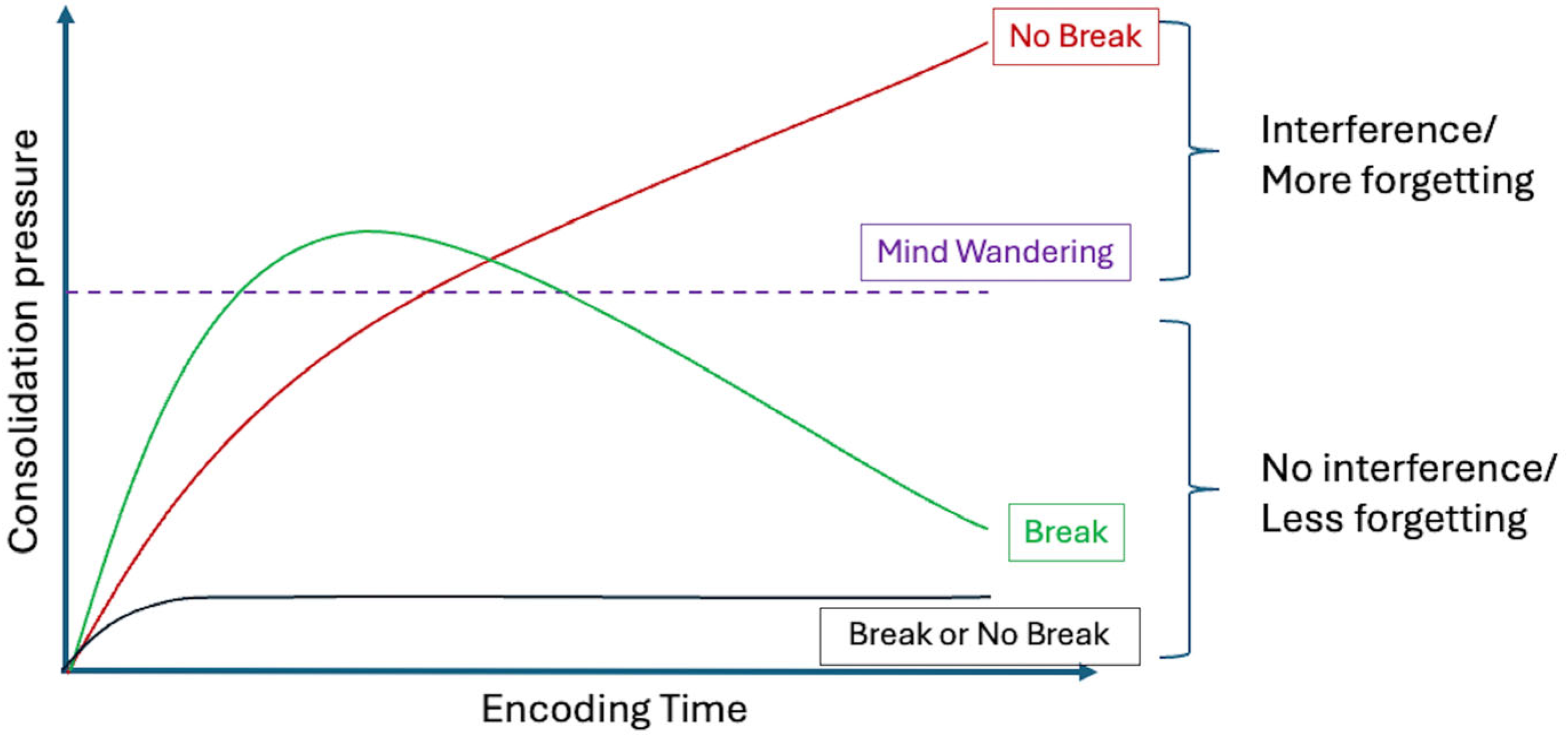
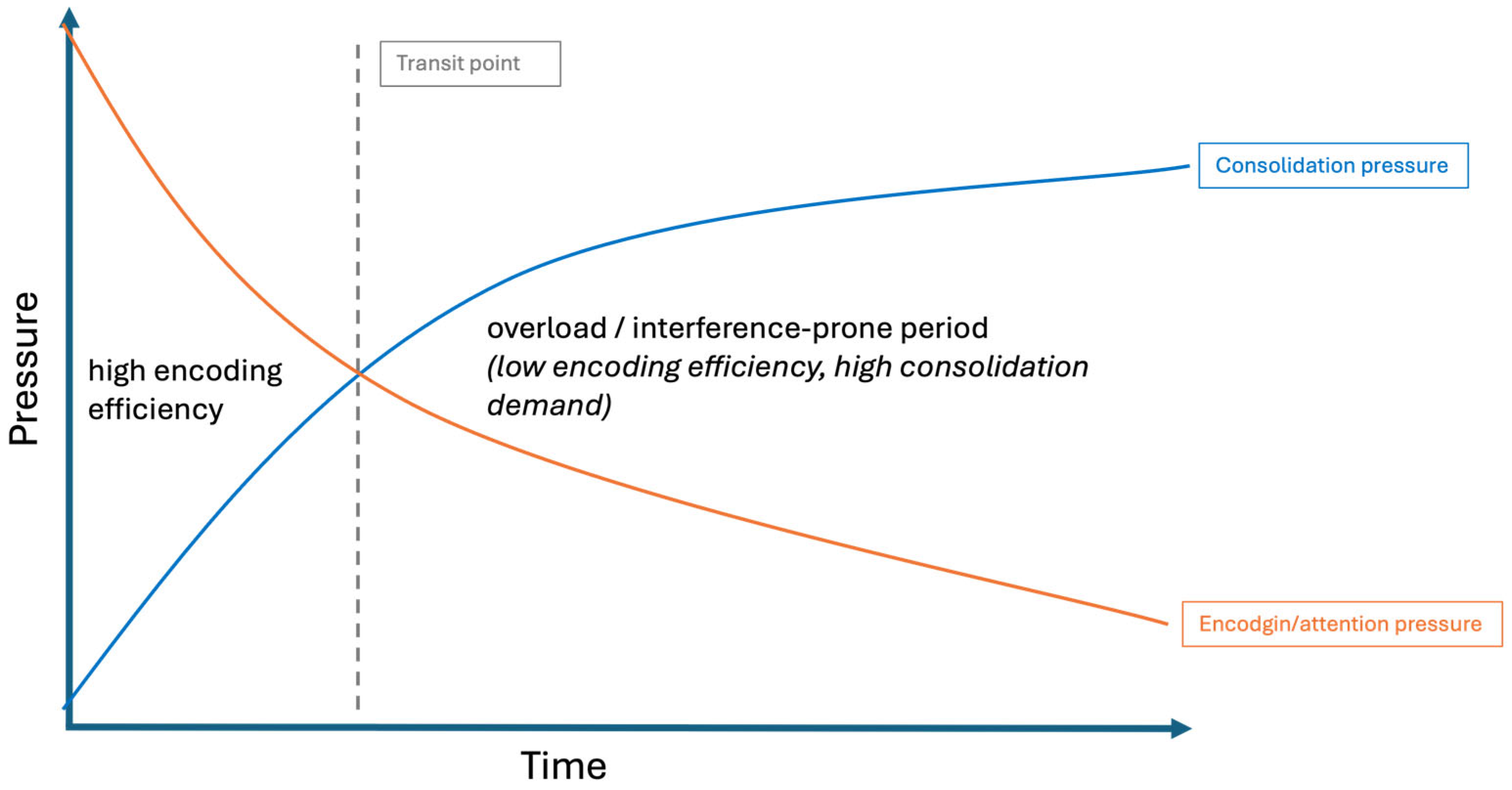
39]. In this respect, MW can also be viewed as a correlate of local sleep-like need and promotes an offline learning mode that would be beneficial for memory consolidation mechanisms. Hence, MW may reflect moments when local sleep need increases and encoding efficiency declines. Building on this framework, we hypothesized that sustained encoding would generate increasing consolidation demands (in other words, a consolidation pressure) such that continuing to input new information would eventually become less efficient than briefly disengaging (see
Figure 1). In a nutshell, we propose that a transient offline disengagement state emerges when consolidation pressure increases over a specific threshold. If, at this point, learning continues, consolidation pressure will continue rising and impair performance. If, on the contrary, a break is provided when disengagement manifests (e.g., through increased MW), it will relieve consolidation pressure, both restoring learning capabilities and allowing memory consolidation mechanisms to unfold during the break.
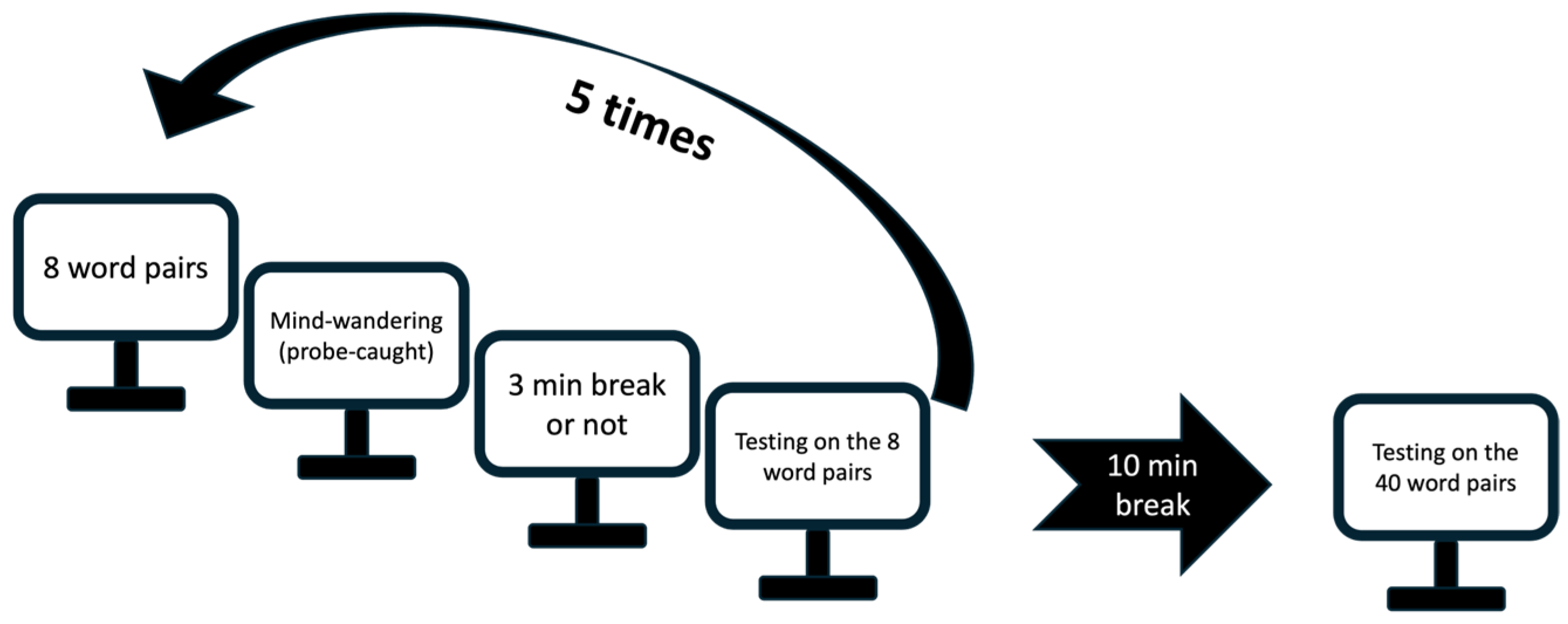
To test this hypothesis, we used a paired-associate learning paradigm with probe-caught MW thoughts sampling (
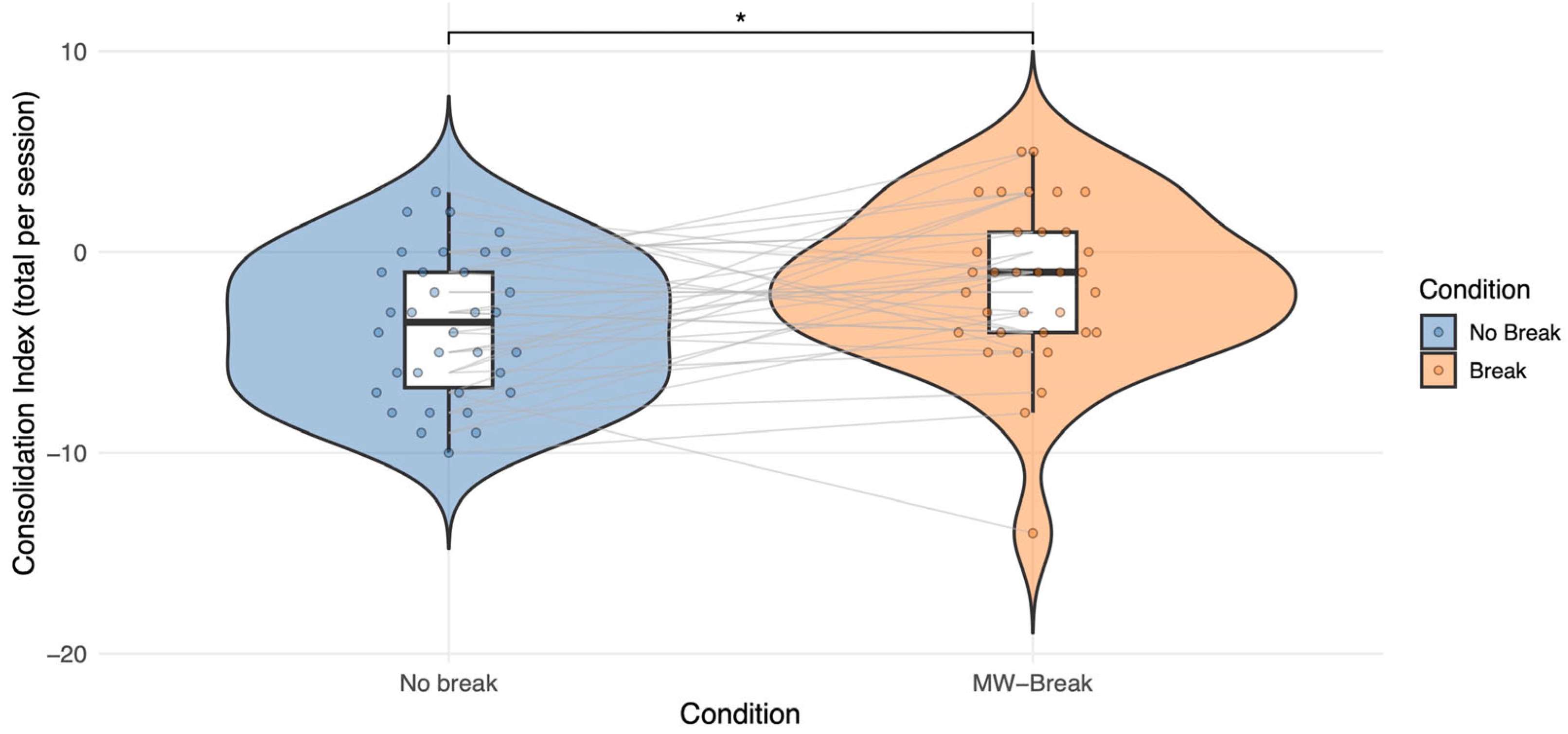
Figure 2) across two successive experiments. In Experiment 1, we tested whether pauses introduced immediately after MW reports during the learning phase improved memory at delayed recall as compared to a continued encoding condition. Experiment 2 tested whether MW-associated pause benefits were genuinely specific to MW by comparing pauses following MW versus pauses following focused-attention episodes (see
Section 4 for methodological details).
3. Discussion
3.1. Interpretation of Empirical Findings
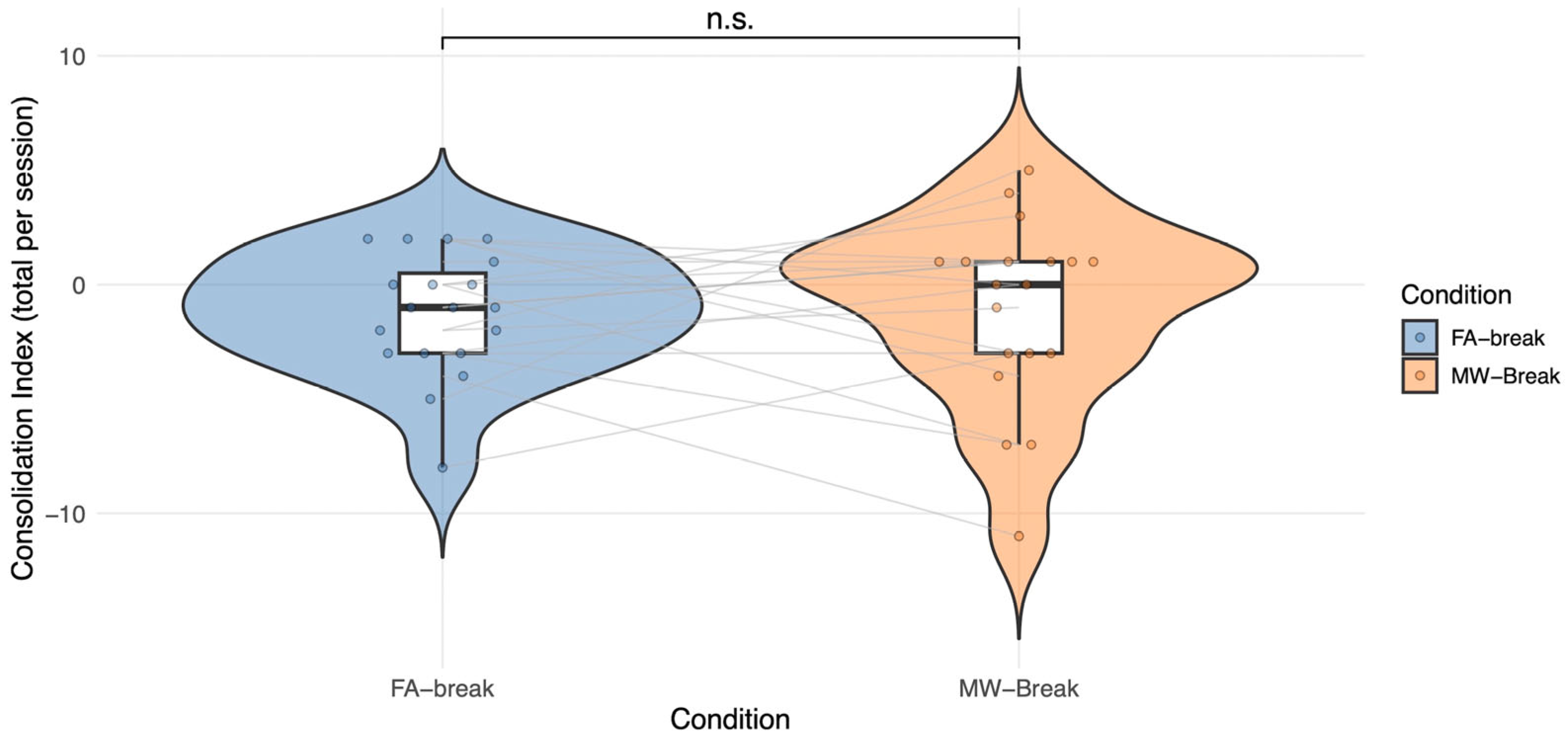
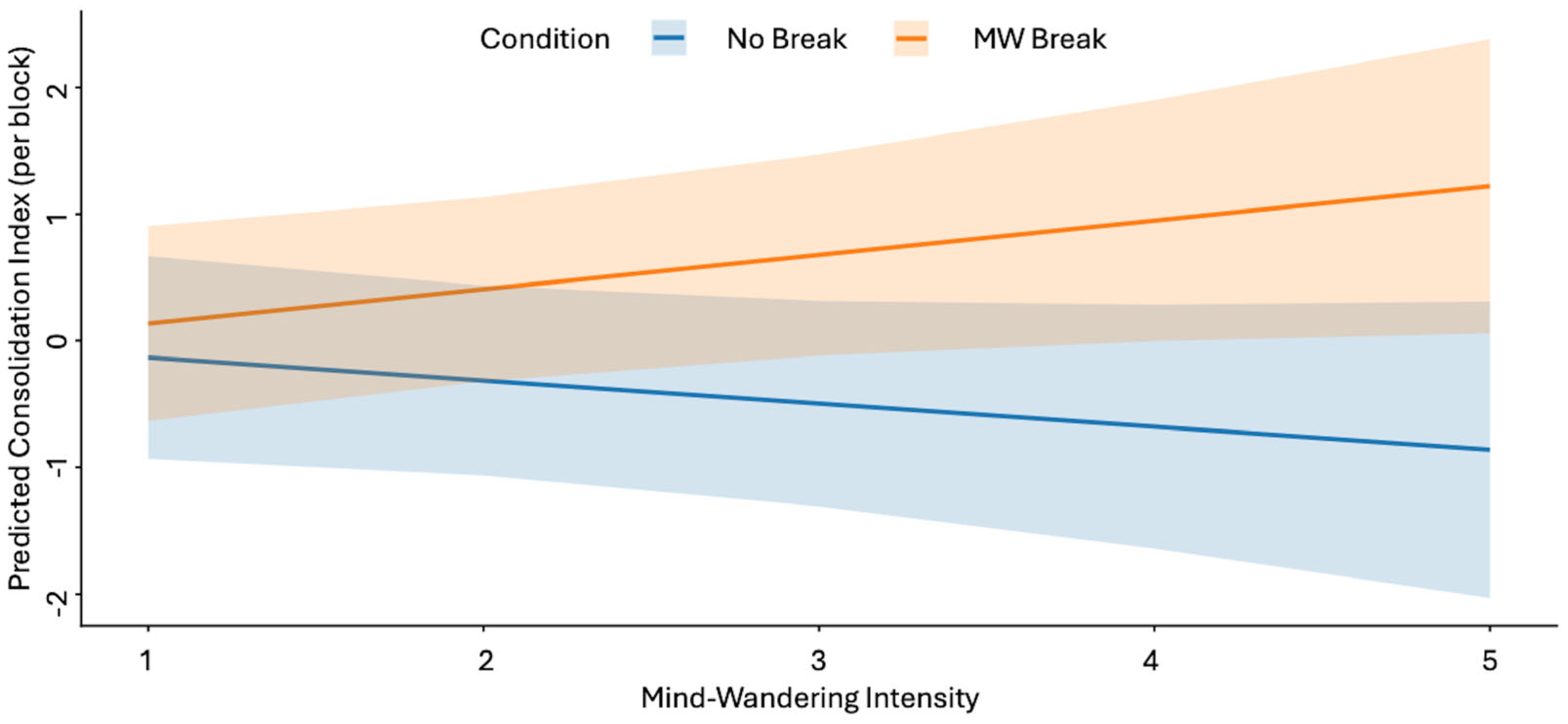
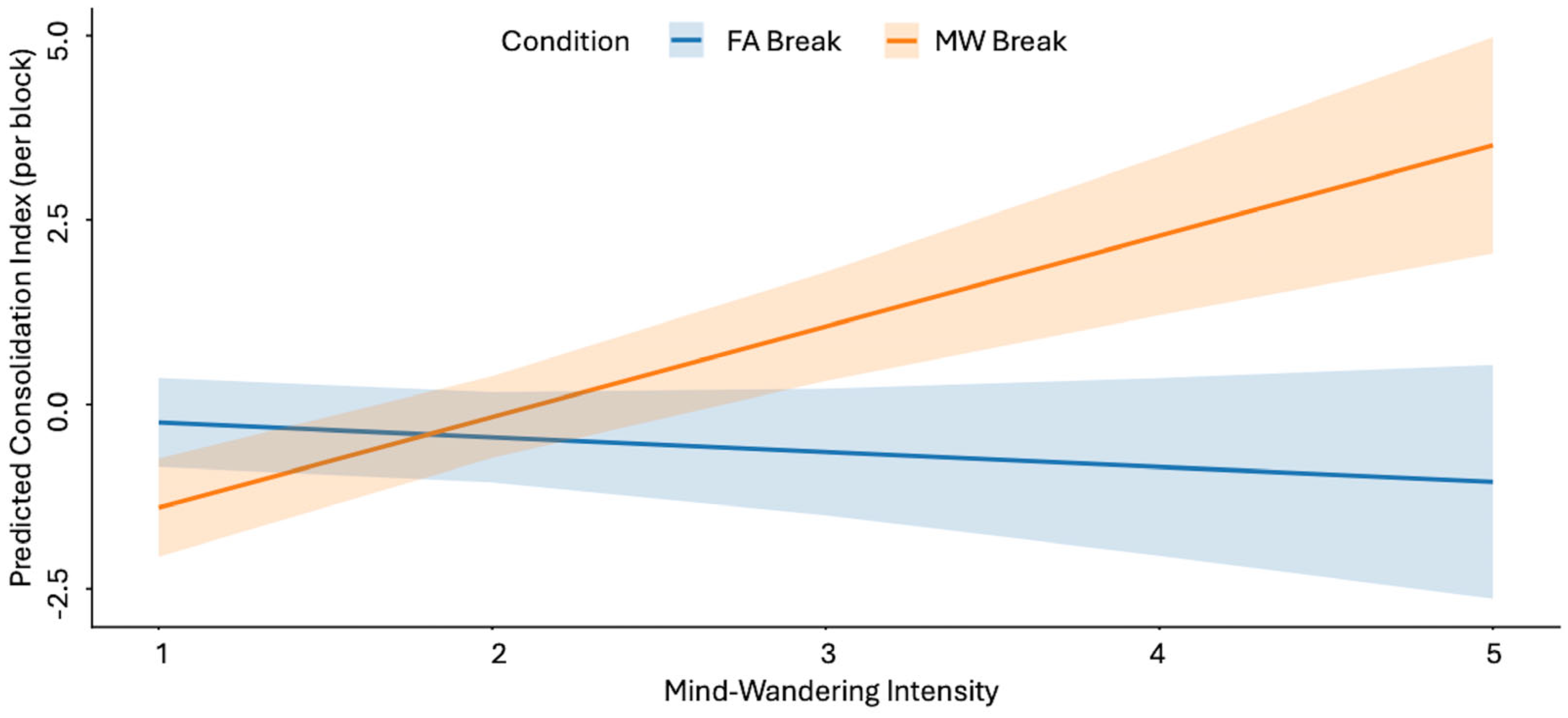
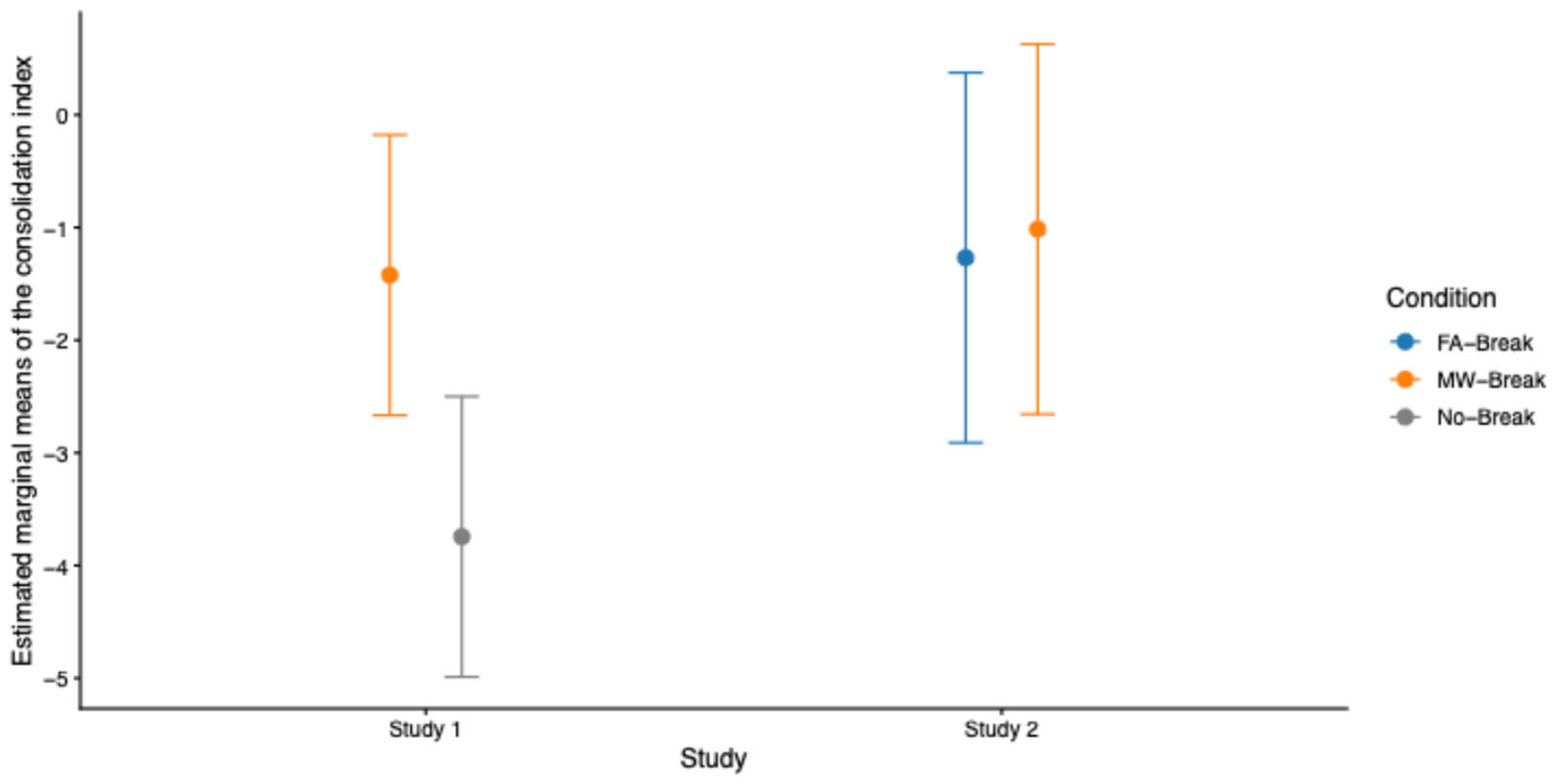
Across two experiments, we examined whether brief pauses inserted immediately after internally reported attentional disengagement (i.e., mind-wandering [MW]) selectively benefit declarative memory consolidation for verbal material. Although Study 1 showed evidence for improved delayed recall performance and memory consolidation when a pause was allowed during the learning session after a mind-wandering (MW) report, Study 2 demonstrated that this advantage was not specific to the MW state in itself since performance equally improved when pauses were allowed either after a mind-wandering or after a focused attention report. Notwithstanding, intensity analyses suggested that the effect of pauses may vary with MW intensity; the higher the MW intensity, the higher the consolidation index. Thus, our results do not entirely support our initial assumption that MW reports would signal a privileged window for disengagement, linked to the development of local sleep needs. Instead, it mostly suggests an unspecific beneficial effect of short quiet resting breaks during the learning process, beyond mind-wandering effects.
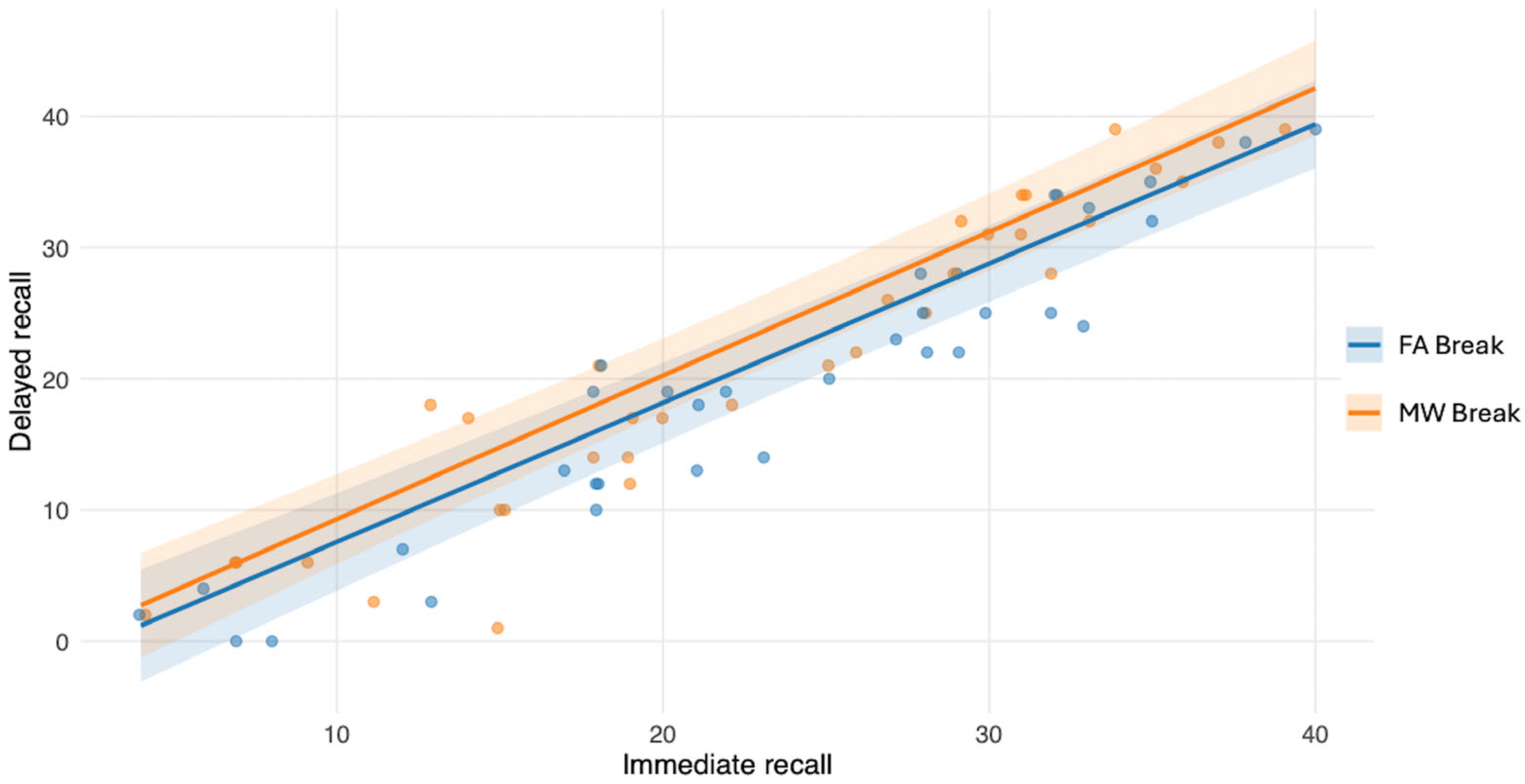
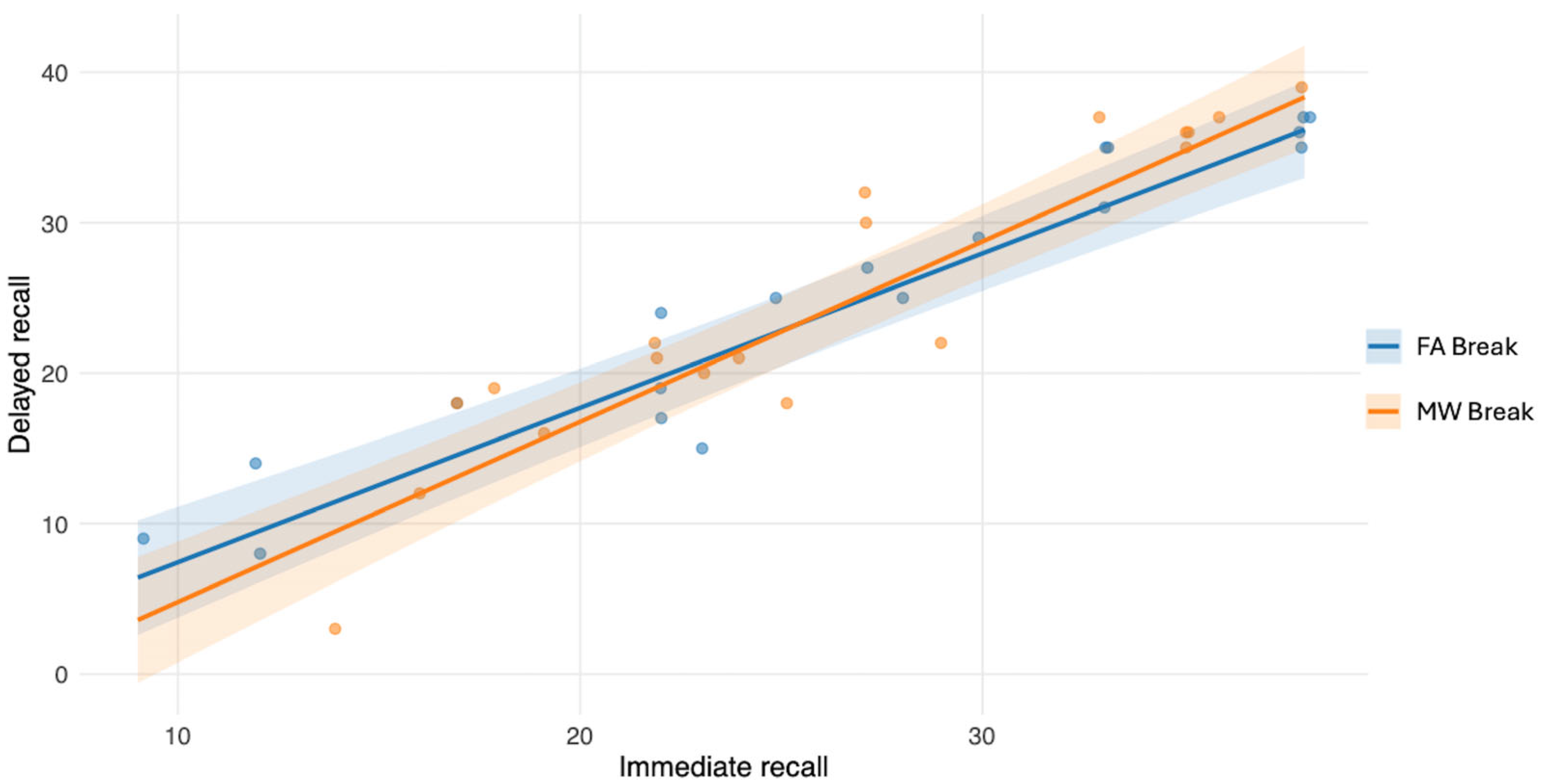
Importantly, additional analyses examining encoding performance indicated that the observed memory effects could not be explained by differences in initial learning levels. In both studies, immediate recall performance did not differ between break conditions, suggesting comparable encoding efficiency. Although encoding strength strongly predicted delayed recall, it did not interact with the break condition (either in Study 1 No-Break vs. MW-Break, or in Study 2 FA- vs. MW-Break), indicating that the relationship between encoding and later retrieval remained stable across experimental manipulations. These findings therefore support the interpretation that post-learning pauses primarily influence offline memory processes rather than encoding itself.
Our results contribute to the ongoing debate about offline processing mechanisms taking place during wakefulness. Prior studies showed that wakeful rest can protect newly acquired traces from interference [
12,
13,
14], yet mixed findings have raised questions regarding the boundary conditions of such benefits [
18,
19,
20,
21]. The present data suggest that the main critical factor may not be the internal state triggering the pause. Rather, the cessation of ongoing input due to presentation of the learning material may be sufficient to support memory consolidation mechanisms. Although MW has been associated with behavioral lapses and reduced cortical responsiveness in other paradigms [
33,
34,
35,
36], the present findings do not allow us to infer a mechanistic link between attentional drift, putative offline states, and consolidation. Moreover, MW is a complex and multimodal phenomena [
42,
43,
44], and self-reported attentional states may capture heterogeneous underlying processes.
The present findings may also be discussed in relation to the literature on massed versus spaced learning. The insertion of brief pauses during encoding may share functional similarities with spacing effects, i.e., improved long-term retention performance when learning episodes are distributed over time [
45,
46]. From this perspective, the pauses we introduced could have temporarily reduced ongoing encoding demands and allowed partial stabilization or refreshing of recently encoded representations, even if spacing effects are usually tested with longer intervals than the 3 min breaks in the present study. Also, this interpretation remains tentative since pause duration was not experimentally controlled here. Beyond long-term memory consolidation accounts, the present findings may also be discussed considering time-based models of working memory, such as the Time-Based Resource-Sharing (TBRS) framework [
47]. According to the TBRS model, processing and maintenance compete for limited attentional resources, such that memory traces decay when attention is continuously engaged, but can be refreshed when brief temporal windows become available. Although our study targeted long-term memory consolidation rather than working memory maintenance, a conceptual parallel may exist whereby pauses during encoding temporarily reduce processing demands, potentially allowing stabilization processes to occur. These similarities should nevertheless be interpreted cautiously, as the present paradigm was not designed to directly test working memory mechanisms. Future studies are needed to systematically test these potentially contributing factors.
3.2. A Speculative Theoretical Framework
The following framework is intended as a speculative conceptual interpretation designed to organize the present behavioral findings rather than as a directly tested mechanistic model.
Beyond the general benefit of pauses observed in this experiment, our findings raise the question of how internal cognitive dynamics determine the optimal moment to disengage from encoding. We propose here a hypothetical framework in which two pressures evolve jointly over the course of learning: an attentional (or encoding) pressure, reflecting the system’s ability to maintain task-oriented processing, and a consolidation pressure, corresponding to a growing need to stabilize recently encoded traces (
Figure 10).
This dual-dynamics perspective may help with contextualizing variability in pause-related outcomes across studies, suggesting that the efficacy of rest periods during the learning process depends less on its duration than on its temporal alignment with internal processing demands. When consolidation pressure remains low, pauses may confer little measurable benefit; once consolidation demands exceed encoding efficiency, continued input may generate interference, and brief disengagement may reduce it. Under overload conditions, however, even pauses may not be sufficient to prevent decay.
This framework conceptually aligns with the Complementary learning systems account [
10] that distinguishes rapid hippocampal encoding from slower neocortical integration that requires interference reduction. It also converges with opportunity-cost approaches to attention and effort in which withdrawal reflects adaptive recalibration rather than breakdown [
48]. In this perspective, local sleep may not mark a mechanism of consolidation, but rather a potential reallocation cue under conditions of diminishing encoding return. Although speculative, this proposal resonates with reports of local sleep intrusions following cognitive load [
27,
32] and with accounts linking attentional decline to consolidation requirements [
49]. Crucially, however, the present data do not allow mechanistic inference. While our analyses suggest that the benefit of breaks may vary with the reported intensity of mind-wandering, this factor was not experimentally controlled and should therefore be interpreted with caution. Future research combining real-time MW sampling with neural slow-wave markers, pupillometry, and temporally resolved modeling will be required to test whether offline disengagement and consolidation-related pressures co-evolve dynamically, and whether the effectiveness of brief pauses depends on their timing within broader circadian and cognitive dynamics, potentially opening the way for a chronobiological account of when pauses are most effective.