


Abstract
Butyl stearate and polyurea resin polymerized via toluene-2, 4-diisocyanate (TDI) and diethylene triamine (DETA) were respectively used as the core material and the shell material in preparing MicroPCMs. The phase change properties, chemical structure, surface morphology and particle size and size distribution of microcapsules were investigated by using DSC, FTIR, SEM and Malvern laser particle size analyzer. The results show that the prepared MicroPCMs were smooth and compact. Their melting temperature and enthalpies were 23.3 °C and 79.7 J · g−1 respectively. The average diameter of microencapsulated PCM (MicroPCMs) is in the range of 4.5∼10.2 µm under the stirring speed of 3000∼6000 rpm. Furthermore, a two-step method of adding DETA was firstly presented, through this method, the heat stability and ethanol wash stability of the MicroPCMs has been greatly improved, and the shell of MicroPCMs prepared by the two-step method has better stability and compactness than one-step method.
1. Introduction
Communicated by editor Dr. Tahir Shah. Microcapsule is a kind of small particle that contains an active agent or core material surrounded by a coating or shell [1]. Microencapsulated phase change materials (MicroPCMs) are microcapsules that contain Phase Change Materials (PCM) [2]. Due to the protection of the shell, MicroPCMs are not easily affected by the surrounding environment due to the protection of the shell, they can absorb, store and release large amounts of latent heat over a certain temperature range when experiencing a phase transition [3]. MicroPCMs can be conveniently applied in solar and nuclear heat storage systems [4], building energy saving [5], textile fibers [6], garments [7], foam plastics [8], coating and composite materials [9].
At present, Melamine Formaldehyde (MF), Urea-formaldehyde (UF), and polyurea are usually selected as shell materials for MicroPCMs [10,11,12]. Although there are more research achievements for MF and UF, and the prepared microcapsules have high strength and good heat resistance, there is a formaldehyde releasing problem, and can bring harmful effects on the environment and health. Polyurea shell on the other hand does not contain formaldehyde, and therefore has attracted the attention of more and more researches, as it can improve the preparation and use environmental characteristics in the environment. Unfortunately, there are some problems; the reaction rate between the diisocyanate and the diamine compound is quick, and its reaction control is difficult, as well as side reactions between diisocyanate and water. All these causes the instability of the phase change material content, which is from the core material of the microcapsule shell, and also causes enthalpy to be generally low. Moreover, studies show that the diisocyanate and diamine reaction in the aqueous phase can form a shell with high permeability significantly, cannot play a good protection object of the core material, and the prepared microcapsules have poor stability and compactness.
Therefore MF and UF have been widely used as wall material microencapsulated phase change material. Although polyurea shell MicroPCMs is conducive to health and environmental protection, its application has been largely restricted because of the poor stability and compactness problem. Specifically, for some areas of the stability and relatively high density of the microcapsule, its application is more limited. For example, the preparation of coated thermo-regulating textiles requires prepared MicroPCMs with a high temperature resistance, while the polyurea needs to have strong permeability, especially when heated at high temperatures (for example at 130 °C and above) in a dry state, which may be necessary for fabrics coating in the curing stages.
There are some reports about MicroPCMs containing octadecane prepared through interfacial polymerization [13,14,15]. However, the encapsulation effect is not satisfied due to poor intersolubility for octadecane and Toluene-2, 4-diisocyanate (TDI). To improve the intersolubility, cyclohexane is usually added. However, the improvement of solubility is limited because cyclohexane and octadecane are all non-polar materials. In addition, cyclohexane decreased the energy storage density of MicroPCMs. In this investigation butyl stearate was selected as PCM. As a polar material, it has complete miscibility with TDI and has a high latent heat, and its phase change temperature is close to that of the octadecane.
In recent years, workers in this field have paid more attention to improve the core contents, thermal stability and compactness of MicroPCMs [15,16,17,18]. In the related reports increase in reaction temperature, prolonging reaction time and higher stirring speed are all helpful to improve the stability of microPCMs but the effect is limited.
Aqueous phase reactive monomer DETA in previous studies was one-step added, while DETA was two-step added in this paper. That is, a part of DETA solution was firstly added to conduct an interfacial polymerization reaction. Then, another portion of DETA solution was added until the reaction was carried out to a certain extent, the DETA further increased to the surface of the capsule shell and internal diffusion, so that the unreacted isocyanate groups was fully reacted, and the polymerization reaction was completed. As verified by the results, the method we proposed can greatly improve heat stability and solvent stability of the microcapsules. Meanwhile, the microcapsules we prepared have good thermal storage performance, and no harmful substances were released. (i.e. formaldehyde) Furthermore, the microcapsules are environment-friendly materials, and can be used for the temperature controlling medium in many areas.
2. Experimental
2.1. Materials
Butyl stearate (Sinophram Chemical Reagent Co. LTD, China), DETA (Shantou Xilong Chemical Factory, China), TDI (Chengdu United Chemical & Phamaceutical Co. LTD., China) and SMA (Scripset520, Hercules) were employed throughout the investigation. All these chemicals were reagent grade and used without further purification.
2.2. Preparation of Microcapsules
5 g of TDI and 23.4 g of butyl stearate were mixed well at around 30 °C to form a hydrophobic solution. 1.5 g of SMA was dissolved in 200 ml of distilled water and was used as the emulsifier. The pH of the solution was then adjusted to 8 using a 0.1 M NaOH aqueous solution. 3 g of DETA were dissolved in 20 ml distilled water to form a DETA solution. Firstly the SMA solution was added to a 500 ml beaker and then the hydrophobic solution was gradually added to the former system under stirring at 5000 rpm and the stirring was continued for 8 minutes in order to form the oil-in-water emulsion. 15 ml of the DETA solution was slowly added to the emulsion with stirring at 800 rpm to initiate the interfacial polymerization and the reaction was carried out for 30 minutes at 30 °C, then the remaining 5 ml of DETA solution was added to the system. The reaction was continued for another 45 minutes. The reaction of TDI with DETA is shown in Eq. (1). The formed microcapsules were filtered, washed thoroughly in distilled water at 60 °C to remove the unreacted monomers and core materials and then dried at 40 °C in an oven for 12 h.

2.3. Characterization of Microcapsules
2.3.1. FTIR Spectra
The chemical structure of the microcapsules was obtained using a Nicolet 5700 Fourier transform infrared spectrophotometer.
2.3.2. Distribution of Particle Size
The size and diameter size distribution of the microcapsules was obtained by using a Malvern MS2000 laser particle size analyzer.
2.3.3. Core Content
The core content of microcapsules (Ca) is defined by Eq. (2).
where, ΔHm and ΔHPCM represent respectively the phase transition heat of the microcapsules (J/g) and the phase transition heat of the pure Phase Change Material (PCM). In this case PCM is butyl stearate. The phase transition property was measured using TA Q100 Differential Scanning Calorimeter. The samples were scanned at a rate of 3°/min. in N2 atmosphere.
2.3.4. Surface Characterization
The morphology of the microcapsules was examined using an optical microscope (OLYMPUS CX41-32RFL) and a KYKY-2008B Scanning Electron Microscopy (SEM).
3. Results and Discussion
3.1. Differential Scanning Calorimetry (DSC) Measurement of the Microcapsules
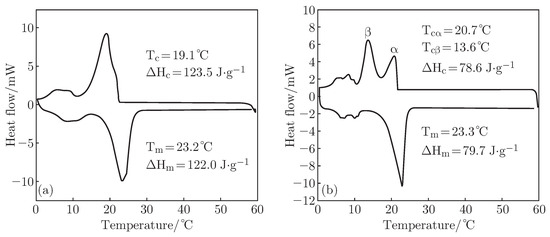
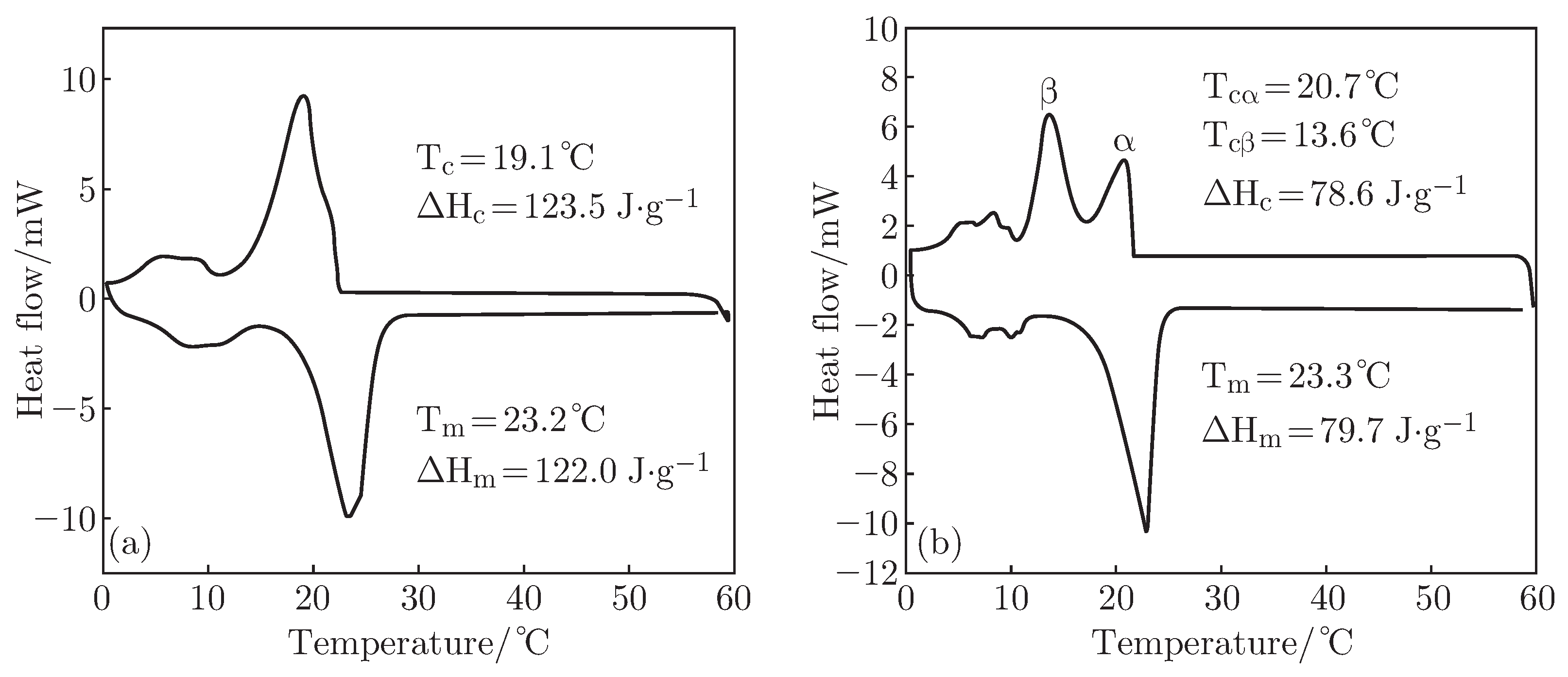
The DSC melting and cooling curves of butyl stearate and the related MicroPCMs are show in Fig. 1.
Figure 1.
DSC curve of (a) pure butyl stearate and (b) MicroPCMs.
As seen in Fig. 1, the enthalpies of the melted butyl stearate and the enthalpies of butyl stearate crystal are 122.0 J/g and 123.5 J/g respectively. The enthalpies of the microcapsules containing both liquid and solid PCM are about 78∼80 J/g. Both the peak melting temperature of butyl stearate and the microcapsules are approximately 23.2 °C. The DSC results make it clear that the polymer shell of microcapsules does not influence the phase change properties of the PCM. There is only one exothermic peak in the DSC cooling curve for butyl stearate and two peaks were observed in the DSC cooling curve for the related microcapsules. The sole exothermic peak in the DSC cooling curve of butyl stearate is attributed to the heterogeneous nucleation of the liquid-crystal transition [19]. H Kraack et al found that multiple crystallization peak appears due to the change of crystallization mechanism [20]. The peak alpha corresponds to the heterogeneously nucleated liquid-rotator transition and peak beta is attributed to the homogeneously nucleated liquid-crystal transition [21].
3.2. FTIR Spectra of the Microcapsules
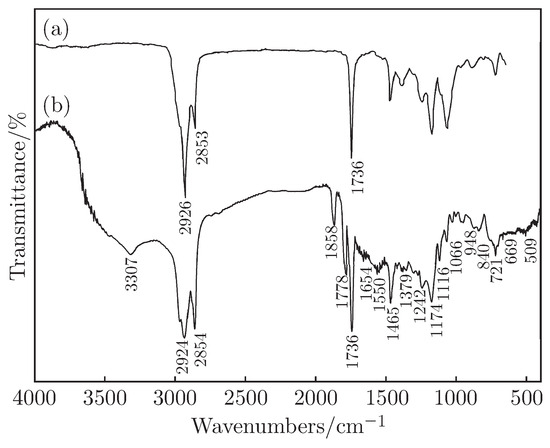
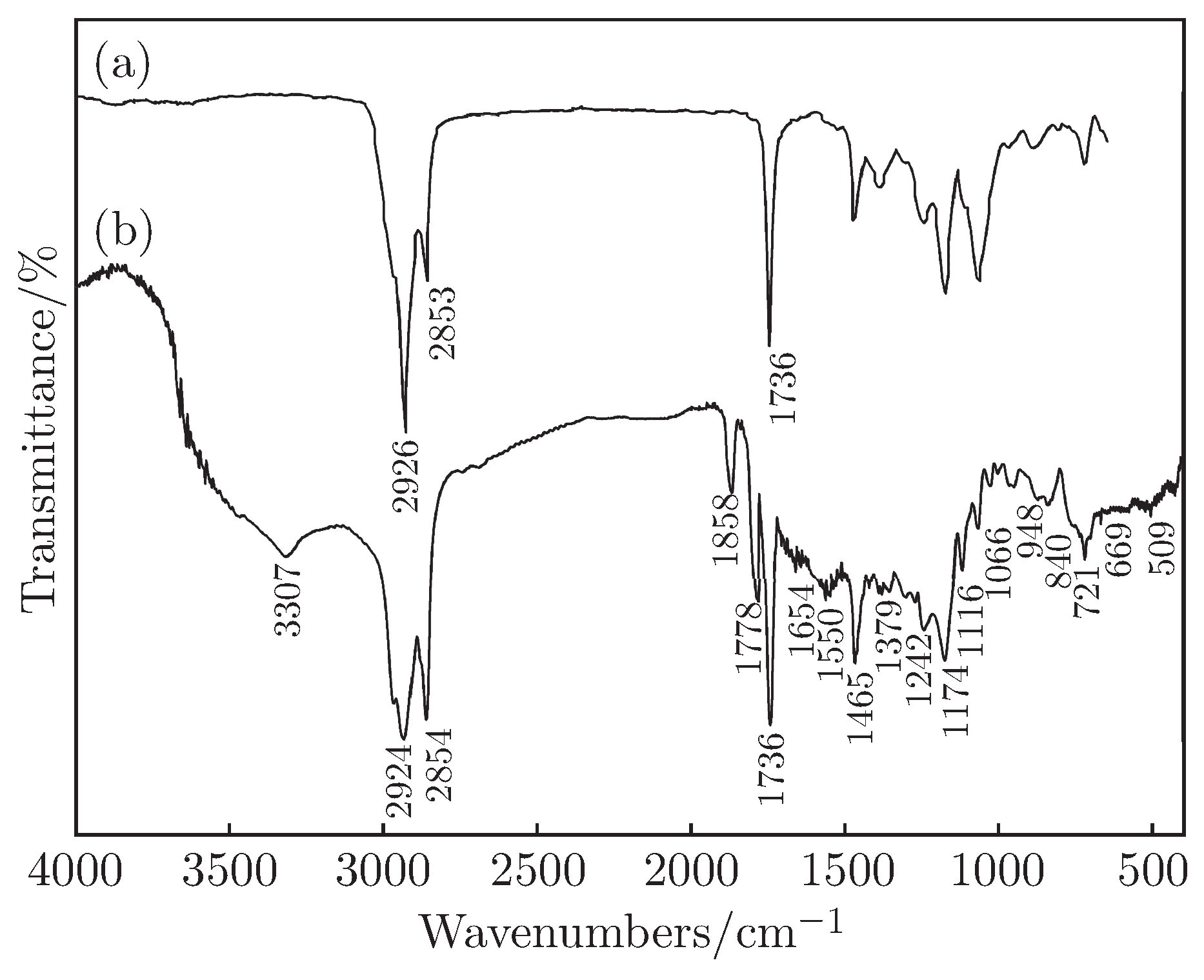
The FTIR spectra of the pure PCM and the related MicroPCMs are illustrated in Fig. 2.
Figure 2.
FT-IR spectrum of (a) butyl stearate, and (b) MicroPCMs.
Fig. 2(a) shows stretching vibration of C=O at 1736 cm−1. In Fig. 2(b) 3307 cm−1 peak is due to the stretching vibration of N-H, 1654 cm−1 is due to the bending vibration of N-H and there are no obvious peak present at 2220∼2280 cm−1, which suggests that N=C=O was completely reacted. 948 cm−1 and 840 cm−1 are characteristic stretching vibration of 1, 2, 4 triple substitution on benzene ring. 721 cm−1 and 1066 cm−1 are in-plane bending vibration and out-of-plane bending vibration of C-H at benzene ring, respectively. 2926 cm−1 and 2853 cm−1 are stretching vibrations of C-H in methyl and methylene. 1242 cm−1 is the stretching vibration of C-O-C. These FTIR results confirm that the shell of microcapsules is composed of polyurea.
3.3. Particle Size and Size Distribution
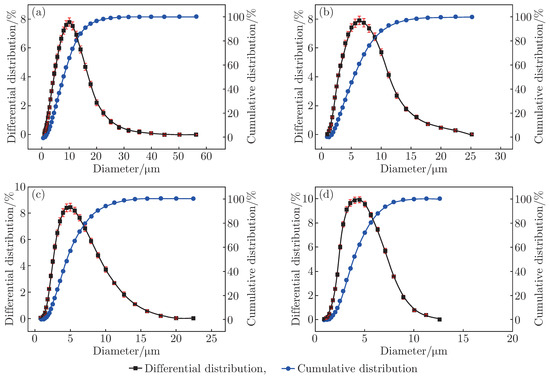
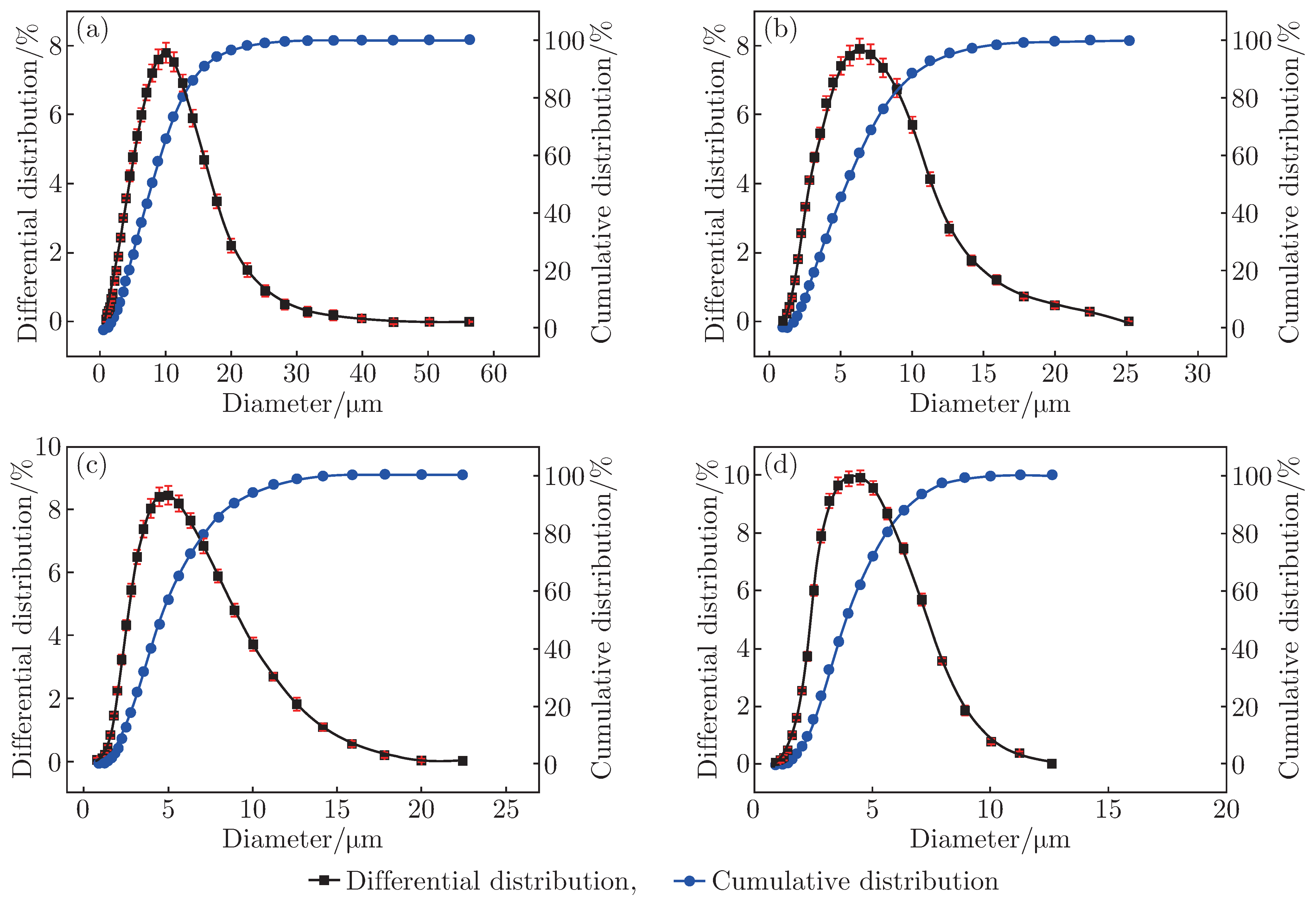
The particle diameter size distribution and cumulative distribution of the prepared microcapsules at different stirring rates are shown in Fig. 3.
Figure 3.
Particle size and particle size distribution of prepared MicroPCMs at different stirring rate (a) 3000 rpm; (b) 4000 rpm; (c) 5000 rpm; (d) 6000 rpm. The error bar represents the means±standard error of three experiments.
The results show that the average diameter was different at different stirring speeds. As shown in Fig. 3(a), the average particle diameter was 10.2 µm and cumulative distribution was 90% at 15.7 µm, by stirring at the rate of 3000 rpm. By contrast, the average particle diameter size was 4.5 µm and cumulative distribution was 90% at 6.7 µm, by stirring at the rate of 6000 rpm as illustrated in Fig. 3(d). The size distribution of the prepared microcapsules was narrow when the stirring rate above 4000 rpm, as is shown in Fig. 3(b), (c) and (d). Therefore it is possible to control the average diameter of the microcapsules by varying the stirring speed. We also can see from Fig. 3(c) that the diameters of most of the microcapsules were between 3 and 7 µm. The results show that the prepared microcapsules were relatively small and uniform.
3.4. Surface Morphology of Microcapsules
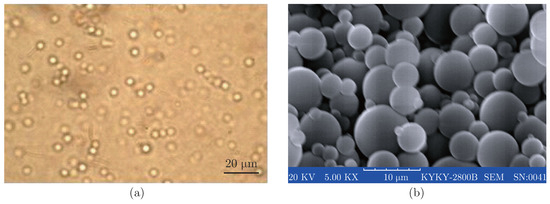
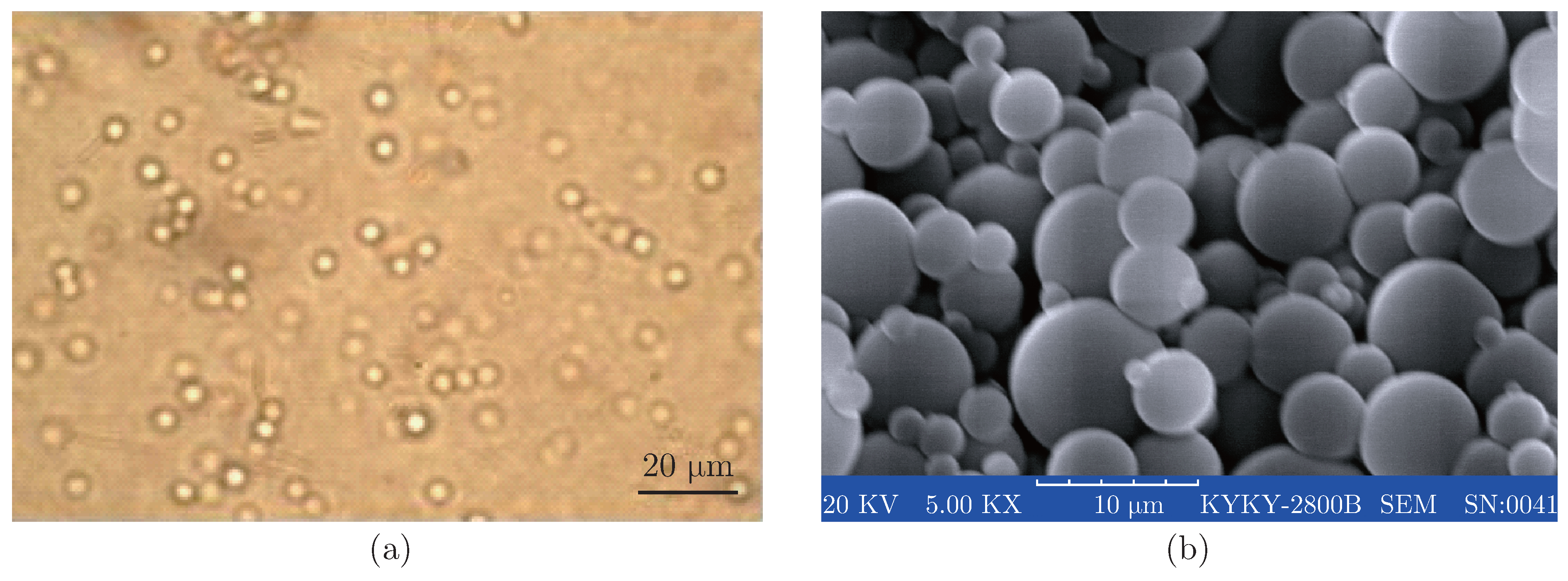
Fig. 4(a) shows an optical photograph of the microcapsules in the slurry state and (b) a SEM photograph of the microcapsules in the powder state. The optical photograph was taken after polymerization in water. It shows that the diameter of the MicroPCMs is uniform, the agglomeration between particles of the microcapsules was not observed in the slurry states. It can be clearly seen from the SEM micrograph in Fig. 4(b) that most of the microcapsules were spheres with a smooth and compact surface.
Figure 4.
Surface morphologies of MicroPCMs (a) optical photograph and (b) SEM photograph.
3.5. Stability of MicroPCMs
3.5.1. Stability to Hot Water Wash
There was no leakage of butyl stearate while the microcapsules were washed in 60 °C hot water (higher than the melting point of butyl stearate, 23.2 °C). This suggests that the shell of microcapsules has good stability for hot water washing.
3.5.2. Stability to Ethanol Wash
A comparison was made between the ethanol wash stability of the microcapsules prepared using the one-step DETA addition method and the two-step method. The prepared microcapsules were washed with ethanol at room temperature to test their solvent resistance.
The results given in Table 1 show that all MicroPCM samples exhibit a drop in the core content after washing by ethanol. This can be explained since butyl stearate has good ethanol solubility thus even a good encapsulation process cannot prevent the loss of core material. However, the MicroPCMs prepared by the improved method, where DETA was added in two steps, have more core content retention than the MicroPCMs prepared by the one-step method. This suggests that the shell of MicroPCMs prepared by the two-step method has better compactness and better solvent resistance than the MicroPCMs prepared by the one-step method.
Table 1.
The effect of DETA adding method on solvent wash stability of MicroPCMs.
The solvent resistance of MicroPCMs is a very important factor in their usage. Siddhan et al [22] prepared MicroPCMs with diameter size of 4∼14 µm containing n-octadecane by interfacial polymerization of TDI and DETA monomers. The core material showed a weight loss up to 45%∼62% after cyclohexane wash. It was observed that the loss mainly occurred in those MicroPCMs which had defective or thin shell structure [22].
3.5.3. Stability to Heat
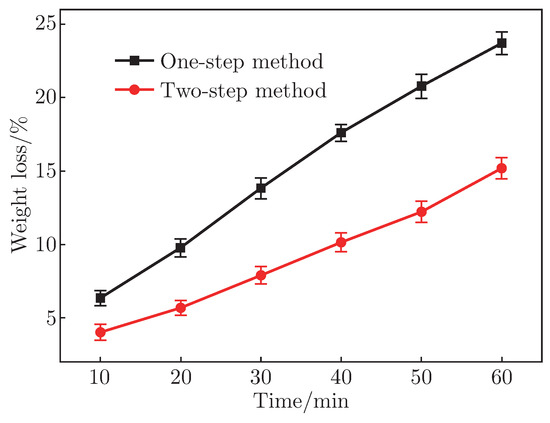
The microcapsules on a tissue paper was put in an oven and dried at 120 °C for around 1 hour. The net weights of microcapsules before and after drying were measured and the heat stability of microcapsules can be estimated according to the weight loss. The weight loss measured in different time intervals are shown in Fig. 5.
Figure 5.
The effect of DETA adding method on heat stability of MicroPCMs.
It can be seen from Fig. 5 that during the drying process, the weight loss increased continuously and it was caused by the leakage of core material at high temperature. It can be seen that the weight loss of the MicroPCMs prepared by the two-step method is considerably lower than the MicroPCMs prepared by the one-step method. This suggests that the microcapsules prepared by the two-step method are more robust.
Table 2 is the core content changing of prepared microcapsule before and after drying at 120 °C for 1 hour.
Table 2.
The core content of MicroPCMs before and after drying at 120 °C for 1 hour.
As can be seen from Table 2, drying at 120 °C for 1 hour, the prepared microcapsules’ core content has a significant declination, this further indicates that the microcapsules leak in the core material occurred after drying, that is, when DETA was added in two-step method, the core content retention ratio of the microcapsules is higher than the one-step method. This suggests that the shell’s protection ability is raised when DETA added in the two-step method, and the prepared MicroPCMs has good heat stability.
4. Conclusions
In this study polyurea MicroPCMs were prepared through interfacial polymerization. Butyl stearate and SMA were respectively used as the core material and emulsifier. The chemical structures, particle size and size distribution, phase change behavior, surface morphology and stability of the prepared MicroPCMs were investigated using FTIR, Malvern particle size analyzer, Differential Scanning Calorimetry (DSC), optical microscope and Scanning Electron Microscopy (SEM). The FTIR results have confirmed that the shell of microcapsules is composed of polyurea. The prepared microcapsules were relatively small and uniform, and the diameter of most of the microcapsules were between 3 and 7 µm. DSC results indicates that the MicroPCMs have useful thermal properties with melting temperature of 23.3 °C and latent heat value of 79.7 J · g−1. Optical microscope and SEM analysis show that the surface of the MicroPCMs was smooth and compact. The MicroPCMs prepared by the two-step DETA addition method exhibited better solvent resistance and heat stability then the MicroPCMs prepared by the conventional one-step method.
Acknowledgments
This work was supported by Scientific Research Program Funded by Shaanxi Provincial Education Department (Program No. 2013JK0743). This research is also supported by Special Foundation Item of the Key Academic Subjects Development of Shaanxi Province ([2008]169) and supported by Doctoral Scientific Research Foundation of Xi’an Polytechnic University.
References
- Pascu, O.; Garcia-Valls, R.; Giamberini, M. Interfacial polymerization of an epoxy resin and carboxylic acids for the synthesis of microcapsules. Polym. Int. 2008, 57(8), 995–1006. [Google Scholar] [CrossRef] [Scilit]
- Bayés-García, L.; Ventolà, L.; Cordobilla, R.; et al. Phase change materials (PCM) microcapsules with different shell compositions: preparation, characterization and thermal stability. Sol. Energy Mater. Sol. Cells 2010, 94(7), 1235–1240. [Google Scholar] [CrossRef] [Scilit]
- Song, Q.; Li, Y.; Xing, J.; Hu, J.; Marcus, Y. Thermal stability of composite phase change material microcapsules incorporated with silver nano-particles. Polym 2007, 48(11), 3317–3323. [Google Scholar] [CrossRef] [Scilit]
- Hawlader, M.; Uddin, M.; Zhu, H.J. Preparation and evaluation of a novel solar storage material: microencapsulated paraffin. Int. J. Sol. Energy 2000, 20(4), 227–238. [Google Scholar] [CrossRef] [Scilit]
- Tyagi, V.; Kaushik, S.; Tyagi, S.; et al. Development of phase change materials based microencapsulated technology for buildings: a review. Renew. Sustain. Energy Rev. 2011, 15(2), 1373–1391. [Google Scholar] [CrossRef] [Scilit]
- Sánchez, P.; Sánchez-Fernandez, M.; Romero, A.; et al. Development of thermo-regulating textiles using paraffin wax microcapsules. Thermochim. Acta 2010, 498(1), 16–21. [Google Scholar] [CrossRef] [Scilit]
- Kim, J.; Cho, G. Thermal storage/release, durability, and temperature sensing properties of thermostatic fabrics treated with octadecane-containing microcapsules. Text. Res. J. 2002, 72(12), 10931098. [Google Scholar] [CrossRef] [Scilit]
- You, M.; Wang, X.C.; Jiang, B.N.; Zhang, X.X. Fabrication and characterization of polyurethane foam containing microPCMs. New Chem. Mater. 2007, 35(10), 53–55. [Google Scholar]
- Hittle, D.C.; Andre, T.L. A new test instrument and procedure for evaluation of fabrics containing phase-change material. ASHRAE Trans. Res. 2002, 108, 175–182. [Google Scholar]
- Su, J.F.; Wang, S.B.; Zhang, Y.Y.; et al. Physicochemical properties and mechanical characters of methanol-modified melamine-formaldehyde (MMF) shell microPCMs containing paraffin. Colloid Polym. Sci. 2011, 289(2), 111–119. [Google Scholar] [CrossRef] [Scilit]
- Li, J.; Wang, S.; Liu, H.; et al. Preparation and application of poly (melamine-urea-formaldehyde) microcapsules filled with sulfur. Polym. Plast. Technol. Eng. 2011, 50(7), 689–697. [Google Scholar] [CrossRef] [Scilit]
- Liang, C.; Lingling, X.; Hongbo, S.; et al. Microencapsulation of butyl stearate as a phase change material by interfacial polycondensation in a polyurea system. Energy Convers. Manag. 2009, 50(3), 723–729. [Google Scholar] [CrossRef] [Scilit]
- Cho, J.S.; Kwon, A.; Cho, C.G. Microencapsulation of octadecane as a phase-change material by interfacial polymerization in an emulsion system. Colloid Polym. Sci. 2002, 280(3), 260–266. [Google Scholar] [CrossRef] [Scilit]
- Torini, L.; Argillier, J.; Zydowicz, N. Interfacial polycondensation encapsulation in miniemulsion. Macromol 2005, 38(8), 3225–3236. [Google Scholar] [CrossRef] [Scilit]
- Siddhan, P.; Jassal, M.; Agrawal, A.K. Core content and stability of n-octadecane containing polyurea microencapsules produced by interfacial polymerization. J. Appl. Polym. Sci. 2007, 106(2), 786–792. [Google Scholar] [CrossRef] [Scilit]
- Lu, S.F.; Xing, J.W.; Zhang, Z.H.; et al. Preparation and characterization of polyurea/polyurethane double-shell microcapsules containing butyl stearate through interfacial polymerization. J. Appl. Polym. Sci. 2011, 121(6), 3377–3383. [Google Scholar] [CrossRef] [Scilit]
- Fan, Y.; Zhang, X.; Wu, S.; Wang, X. Thermal stability and permeability of microencapsulated noctadecane and cyclohexane. Thermochim. Acta 2005, 429(1), 25–29. [Google Scholar] [CrossRef] [Scilit]
- Lu, S.F.; Xing, J.W.; Zhang, Z.H.; et al. Characterization of Polyurea Microencapsulated Phase Change Materials Prepared by Interfacial Polycondensation. Polym. Mater. Sci. Engi 2010, 12, 014. [Google Scholar]
- Oliver, M.J.; Calvert, P.D. Homogeneous nucleation of n-alkanes measured by differential scanning calorimetry. J. Cryst. Growth 1975, 30, 343–351. [Google Scholar] [CrossRef] [Scilit]
- Kraack, H.; Sirota, E.B.; Deutsch, M. Measurements of homogeneous nucleation in normal-alkanes. J. Chem. Phys. 2000, 112, 6873–6885. [Google Scholar] [CrossRef] [Scilit]
- Zhang, X.X.; Fan, Y.F.; Tao, X.M.; et al. Crystallization and prevention of supercooling of microencapsulated n-alkanes. J. Colliod Int. Sci. 2005, 281, 299–306. [Google Scholar] [CrossRef] [Scilit] [PubMed]
- Siddhan, P.; Jassal, M.; Agrawal, A.K. Core content and stability of n-octadecane containing polyurea microencapsules produced by interfacial polymerization. J. Appl. Polym. Sci. 2007, 106(2), 786–792. [Google Scholar] [CrossRef] [Scilit]

© 2013 Textile Bioengineering and Informatics Society. This article is an open access article distributed under the terms and conditions of the Creative Commons Attribution (CC BY) license (https://creativecommons.org/licenses/by/4.0/).