


Abstract
The biosorption characteristics of mercury ions from aqueous solution using jute nanofibers, a cellulosebased natural fiber, were explored as a function of pH, nanofiber concentration, contact time and temperature. Jute nanofibers were obtained after wet milling the jute fibers and subsequently their morphology was assessed by various spectroscopy and microscopy techniques. The maximum biosorption capacity of the fiber calculated by the Langmuir model was found to be 85.5 mg g−1. The adsorption experiments revealed that ion-exchange and complexation mechanisms were principal role in the biosorption process. The present experimental evidence implies that jute nanofibers could be a potential natural biomaterial for the removal of environmental contaminations from textile and chemical industries.
1. Introduction
Jute fiber is composed primarily of the plant materials cellulose, lignin, and pectin. These are agro-based, renewable, biodegradable and low-cost materials. Jute fiber is the second place after cotton in commercial importance. Jute is copiously grown in Indian sub-continent, China and Thailand. The global production of jute, kenaf and allied fibers is presently around 3.3 million tons per year [1]. It is extensively used for the manufacturing of flexible packaging fabrics besides its potential use as carpet backing and decorative fabrics. It has high tensile strength, low extensibility, and ensures better breathability of fabrics [2].
Environmental pollution due to different types of industries is one of the vital global problems presently. Waste generated in textile and chemical industries is essentially based on water- based effluent generated in various processes. Mercury pollution is a worldwide problem due to its wide application in industries thereby creating effluents and its toxicity effect to all living organisms. The major effects of mercury poisoning are in kidney, brain and lungs [3]. The maximum permissible limit of mercury in drinking water is 0.001 mg/L [4]. It is mandatory to remove mercury and other toxic metals contamination from aqueous and industrial effluents before these toxic effluents are released into the environment.
Biosorption is a process that employs economical biomaterials to impound toxic heavy metals and is predominantly useful for the removal of contaminants from aqueous and industrial effluents [5]. Evaluated with conventional methods of eradicating toxic metals from industrial effluents with various techniques such as precipitation, ion exchange and electrochemical process, the biosorption process recommends the advantages of low working cost, minimization of the volume of chemical and /or biological sludge to be disposed. Different types of biomass have been used for the tidying of industrial wastes such as fly ash, silica gel, zeolites, lignin, wool wastes, agricultural wastes, algae, bacteria, fungi, yeasts, crosslinked chitin, chitosan and plant polysaccharides [6,7,8,9]. The use of dead biomass is of particular economic interest, because the biomaterials are used in the same way as synthetic adsorbents or ion exchangers [10]. Diverse metal binding methods are contemplation to be involved in the biosorption process including ion-exchange, surface adsorption, chemisorptions, complexation and adsorption-complexation [11]. However, there is an unrelenting interest in classifying innovative biosorbents that are competent of reducing toxic metal concentrations to environmentally good enough levels at inexpensive cost. One of the approaches to mitigate the environmental pollution is by employing novel bioremediation technologies that are based on the principles of green chemistry.
The endeavour of the present experimental study was to investigate and explore the potential application of Jute Nanofibers (JNF) as a novel biosorbent for removal of the industrially relevant toxic heavy metal such as mercury. This communication describes the ability of JNF to bind toxic heavy metal and its quantitative evaluation and kinetic study. The metal adsorption was assessed based on Langmuir and Freundlich adsorption isotherm model. The interaction of JNF with Hg2+ ion was established by Fourier Transform Infrared Spectroscopy (FTIR) and morphological changes due to mercury biosorption was assessed by Scanning Electron Microscopy (SEM) technique.
2. Materials and Methods
2.1. Preparation of Jute Nanofibers (JNF)
Jute fibers were collected from the Gloster Jute Mill, Howrah, India. In order to remove waxy substances from jute fibers, they were sequentially treated with 4% sodium hydroxide (NaOH) at 80 °C for 1 hour and with 7 g/L sodium hypochlorite (NaOCl) at room temperature for 2 hours under pH 10-11. The fibers were subsequently antichlor treated with 0.1% sodium sulphite at 50 °C for 20 min and transferred in ball mill for pulverization in dry and wet conditions. Highenergy planetary ball mill of Fritsch pulverisette 7 was used with sintered corundum container of 80 ml capacity and zirconium balls of 10 mm diameter for initial 3 min of dry milling. The bigger balls were replaced by smaller balls of 3 mm diameter for further extended milling in wet condition in distilled water up to one hour. The ball mill was loaded with Ball to Material Ratio (BMR) of 10:1. The rotation speed of the planet carrier was 850 rpm.
2.2. Particles Size and Surface Area Determination
Particle size distributions after one hour of wet milling was measured on Malvern zeta-sizer nano series based on dynamic light scattering principle of brownian motion of particles. The surface area and adsorption average pore width of the synthesized JNF was determined by the N2 gas BET (Brunauer-Emmett-Teller) analysis using Quantacrome Instrument.
FT-IR spectra were obtained using a spectrophotometer (Nicolet IZ10, Thermo Scientific, USA), in the spectral region of 4000–400 cm−1 using resolutions of 4 cm−1 and 64 co-added scans. JNF was freeze-dried in the form of nanopowders and palletized with KBr for FT-IR studies.
2.3. Morphological Characterization
Morphologies of jute particles after wet milling was observed on scanning electron microscope TS5130-Tescan at 30 KV accelerated voltage. Jute particles of 0.01 g were dispersed in 100 ml acetone, and then a drop of the dispersed solution was placed on aluminum foil and gold coated after drying.
2.4. Batch Bio-sorption Procedure
Analytical reagent grade chemicals were used in this study. Double deionised water (Milli-Q) was used for all dilutions. ICP-MS (ELAN DRC 11, Perkin-Elmer SCIEX, Toronto, Canada) was used to carry out the mercury analysis. A 1000 mg L−1 stock solution of Hg (II) was prepared by dissolving HgCl2 in de-ionized water (Milli-Q). Bio-sorption experiments were conducted using the solutions having 10 mg L−1 of Hg (II) with the optimum biomass concentration (1 g L−1). The solutions (100 mL) including the biomass were shaken for the desired contact time in an electrically thermostatic reciprocating shaker (Innova-43, New Brunswick scientific Co. LTD, NJ, USA) at 120 rpm. The batch studies were performed at different experimental conditions such as initial metal concentration (100–500 mg L−1), contact time (5–120 min), pH (2–10), biopolymer concentration (0.1–5.0 g L−1), and temperature (25 °C–55 °C). The equilibrium time was estimated by drawing samples at regular intervals of time till equilibrium was reached. Each determination was replicated three times and the mean results are considered in the analysis. The (%) biosorption and adsorption capacity of mercury ion was calculated by using the equations.
where, Ci and Cf are the initial and final metal ion concentrations, respectively. The extent of adsorption was calculated based on the difference of metal ion concentration in the aqueous solution before and after adsorption, as follows.
where C0 is the initial metal ion concentration (mg/L), Ceq is the final or equilibrium concentration (mg/L), V is the volume of the metal ion solution (L), W is the weight of the JNF (g)
2.5. Adsorption Isotherm Model
Langmuir adsorption isotherm model was used to characterize the interactions of Hg2+ ion with the JNF. The Langmuir model is based on the assumption that maximum adsorption occurs when a saturated monolayer of solute molecules is present on the adsorbent surface, the energy of adsorption being a constant and there is no migration of adsorbate molecules in the surface plane. This is represented by the following equation,
where qeq and qmax are the equilibrium and maximum uptake capacities (mg/g biosorbent), Ceq the equilibrium concentration (mg/L), b is the Langmuir constant. It can be rearranged to its linear form
where, Ceq is the equilibrium or final concentration of metal (mg/L), qeq is the amount of metal adsorbed per unit weight of JNF at equilibrium concentration (mg/g). qmax is the maximum adsorption at monolayer coverage (mg/g) and b is the Langmuir adsorption equilibrium constant (L/mg) which is a measure of the energy of adsorption. According to Langmuir model, sorption occurs uniformly on the active sites of the sorbent, and once a sorbate occupies a site, no further sorption can take place at this site [12].
3. Results and Discussion
3.1. Characteristics of the JNF
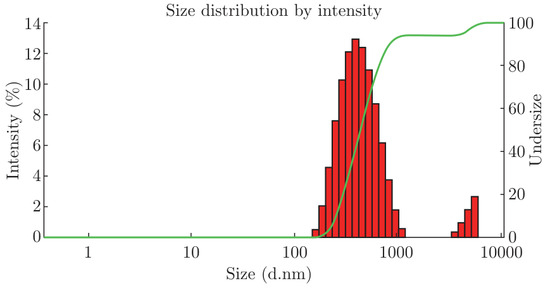
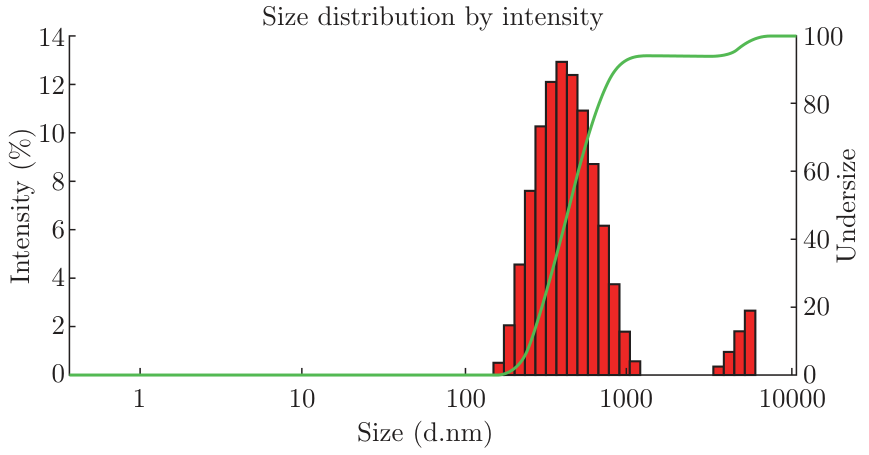
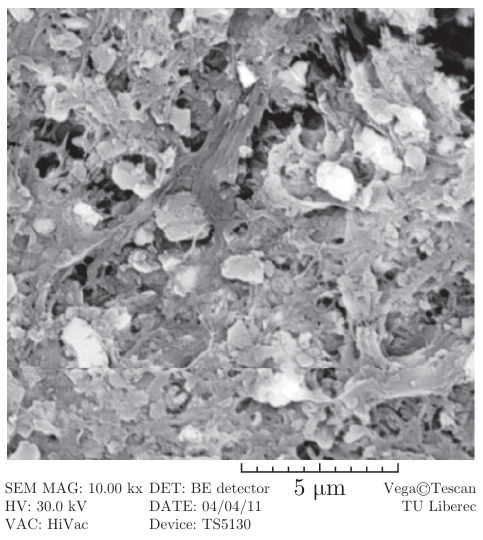
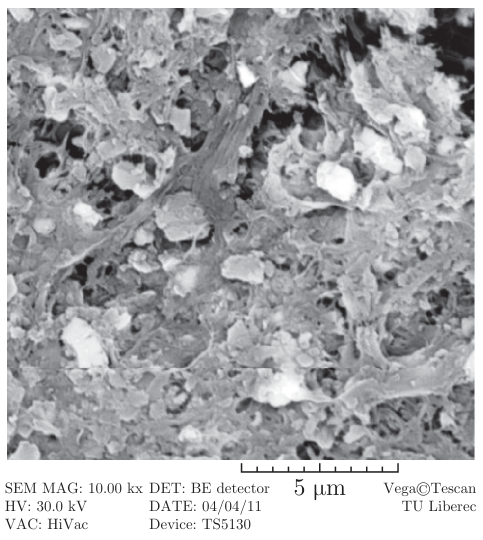
Milled jute fiber nanoparticles of sizes below 500 nm as measured on DLS (Fig. 1) were used as adsorbents in the present study [21,22,23]. The surface area, pore volume and pore diameter of the JNF were determined by BET analysis and were found to be 15.48 Sq. m/g, 0.075 cc/g and 7.42 nm, respectively. Fig. 2 shows the morphology of jute nanofibers by SEM and it shows a gristly structural appearance with high porous composition on the surface.
Figure 1.
Particle size distribution of JNF.
Figure 2.
SEM image of JNF.
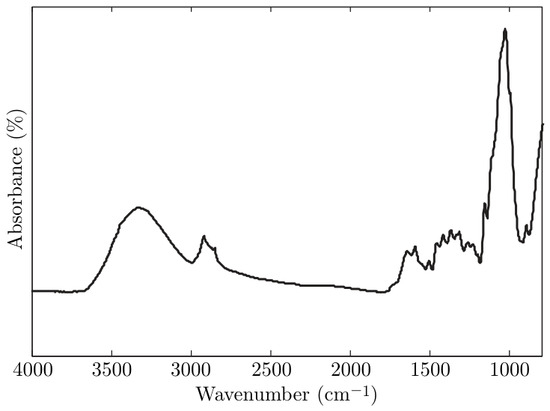
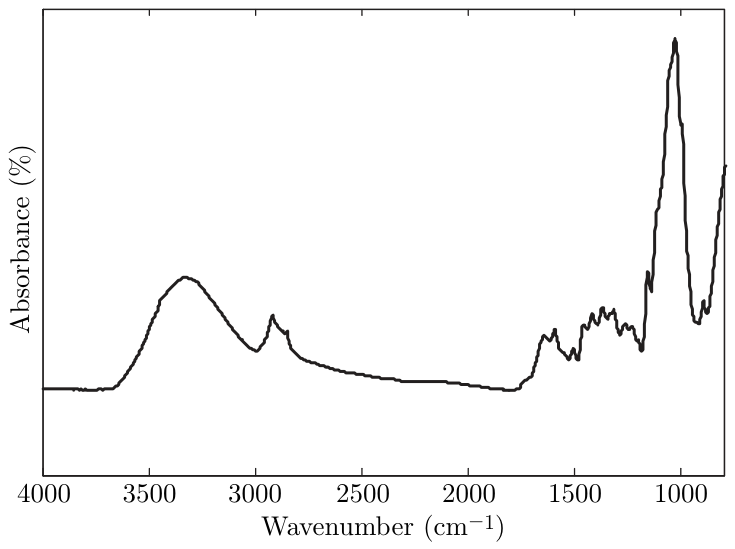
Fig. 3 shows the FTIR plot of jute nano fibers. The broad and strong bands at 3329 cm−1 were due to bonded hydroxyl (—OH) or amine groups (–NH) of the jute nano fibers respectively. The peak at 1643 cm−1 is attributed to the carboxyl group (—C==O) stretching vibration. The peak at 1739 cm−1 for stretching of C-O bonds in carboxylic acid and ester components and 1240 cm−1 for C—O stretching in the acetyl groups in hemicelluloses. It was earlier reported that these functional groups in jute are capable of adsorbing various heavy metal ions [13].
Figure 3.
FTIR spectrum of JNF.
3.2. Adsorption Experiments
3.2.1. Effect of pH on Biosorption
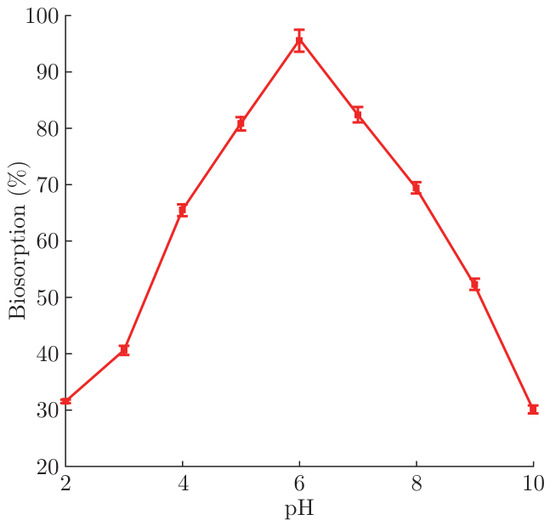
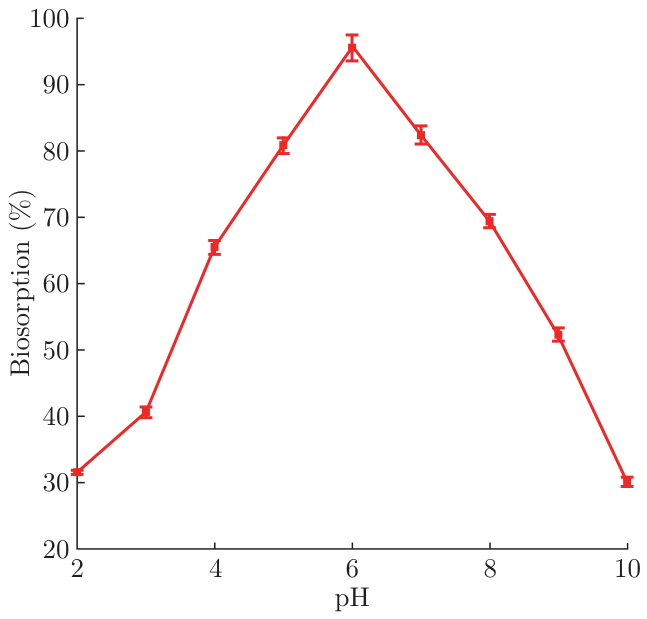
Previous studies on heavy metal biosorption have shown that the pH of the solution is the main important factor influencing the adsorption process [11]. Batch adsorption experiments are con-ducted at different pH (2–10) values and the results are depicted in Fig. 4.
Figure 4.
Effect of pH on Hg2+ biosorption(%) onto JNF.
There was an increase in biosorption capacity of JNF with increasing pH from 2.0 to 6.0 for Hg2+ ion and maximum adsorption capacity was observed at pH-6.0. The pH dependency may be due to the binding of the metal through an ion-exchange mechanism through functional groups or positively charged ligands with JNF. The increased biosorption in the range of pH 2–6 is due to the less competition from protons to reaction sites, to an increase in concentration of Hg (OH)+ species. At higher pH values (7–10), the decrease of biosorption is due to the formation of soluble Hg (OH)2. It also may be due to the decrease in the forces of repulsion between adsorbent and increase in the electrostatic forces of adsorbate and positively charged adsorbents. JNF possesses significant amount of cellulose (58–63%), which is a natural polymer made up of glucose units with abundant primary and secondary hydroxyl groups. It also possesses lignin (12–14%), having a network type of structure with majority of methoxy and free hydroxyl groups and provide functional groups such as hydroxyl, carboxyl, carbonyl and acetyl, which are responsible for metal biosorption [13]. It was reported that the alkali treatment breaks hydrogen bonds and increases the number of free hydroxyl groups on the surface of the fibers [14]. The interaction with the free hydroxyl groups with Hg2+ through ion-exchange mechanism. The maximum biosorption (%) of Hg2+ was found to be 98% at pH 6 and hence all the biosorption experiment were conducted at this pH value.
3.3. Effect of JNF Concentration
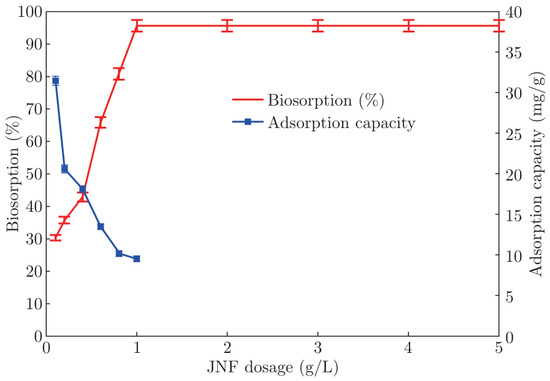
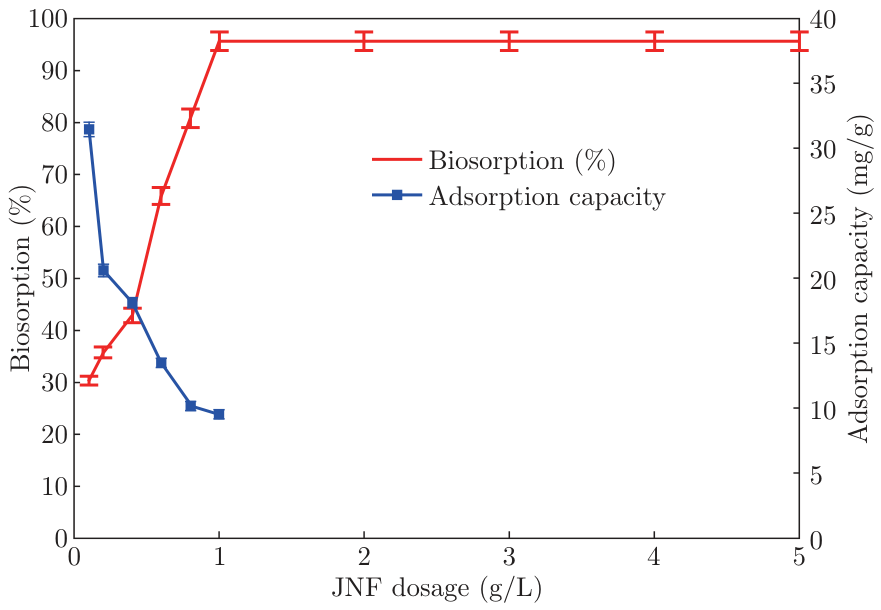
The percent of biosorption and adsorption capacity for Hg2+ ions as a function of JNF was investigated and are depicted in Fig. 5. The result shows that with the increase in the JNF concentration, the metal removal efficiency was also found to be enhanced. The % metal biosorption increased from 31.5±0.55% to 95.6±1.85% for Hg2+. However, the adsorption capacity decreased from 31.5±0.25 mg g−1 to 9.6±0.05 mg g−1 for Hg2+, when JNF concentration was increased from 100 mg L−1 to 1000 mg L−1. Results show that the biosorption efficiency is highly dependent on the increase in biomass dosage of the solution. This is predictable because the higher dose of adsorbent in the solution, the greater accessibility of exchangeable sites for the ions. The drop in adsorption capability is basically due to the sites remaining unsaturated during the adsorption process.
Figure 5.
Effect of adsorption capacity and Biosorption(%) on JNF.
3.4. Effect of Contact Time and Temperature
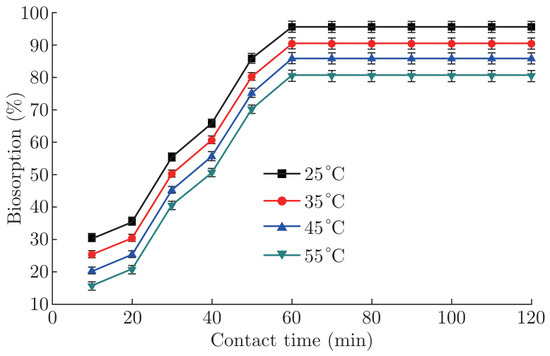
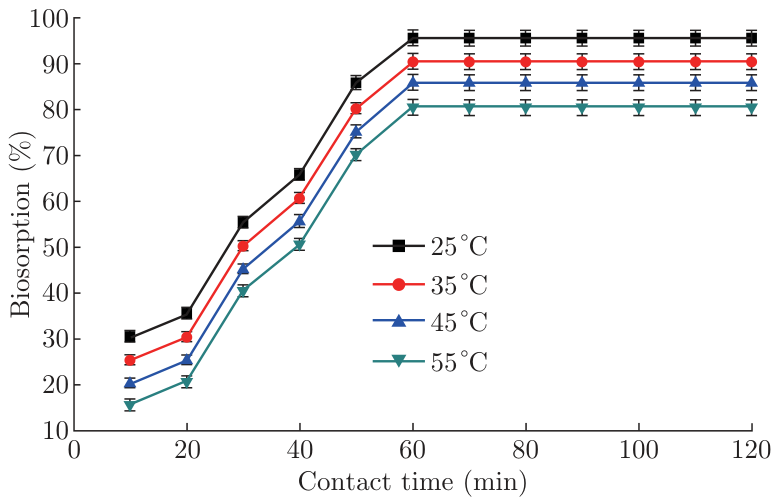
The effect of contact time on mercury (Hg2+) biosorption on JNF was studied and is depicted in Fig. 5. It was observed that the adsorption capacity of mercury (Hg2+) by JNF was found to be increased as the contact time increases and the equilibrium point was achieved after 60 min. The initial rapid adsorption gives away a very slow approach to equilibrium. The nature of adsorbent and its available sorption sites affected the time needed to reach equilibrium. Hence, in the experimental condition, 60 min was chosen as the equilibrium time. Temperature of the medium affects the removal efficiency of the pollutant from aqueous solution. Fig. 6 also shows the biosorption of Hg2+ ion as a function of the temperature. The biosorption (%) decreased from 95.6±1.85% to 80.5±0.45% for Hg2+ as temperature (Fig. 6) was increased from 25 °C to 55 °C, for the equilibrium time (60 min). These results indicated that exothermic nature of Hg2+ biosorption onto JNF.
Figure 6.
Effect of temperature on % biosorption of Hg2+ by JNF.
3.5. Adsorption Isotherms (Langmuir and Freundlich Isotherm Models)
Biosorption isotherms are important for the description of how biosorbate will interact with a biosorbent and critical in optimizing the use of biosorbent. These adsorption model parameter values of these two equilibrium adsorption models are determined. The Langmuir model represents one of the first theoretical treatments of non-linear sorption and suggests that uptake occurs on a homogenous surface by monolayer sorption without interaction between adsorbed molecules. The maximum amounts of metals adsorbed (Qm) were found to be 85.5 mg g−1 JNF for Hg2+ ions. The value of b for Hg2+ was 0.010 L mg−1. The applicability of Langmuir isotherm to the adsorption of Hg 2+ ions onto JNF yielded high correlation coefficients (R2 > 0.999) compared to Freundlich isotherm.
3.6. Comparison of Hg2+ Removal with Different Adsorbents
The adsorption capacities and other successful biosorbents for the removal of mercury have been compared with those of reported in literature and the values of maximum adsorption capacities (Qm) and pH are presented in Table 1. The values are based on Langmuir adsorption capacity. The experimental data of the present investigation are comparable with the reported values in literature. The biosorption capacity of JNF for mercury is comparable to that of the majority of the biosorbents reported in literature (Table 1), therefore, it is remarkable that JNF has significant potential for the removal of mercury from aqueous solutions.
Table 1.
Comparison of biosorption capacity of JNF for Hg2+ with that of different natural biosorbents effectively used for bioremediation.
4. Conclusions
The experimental investigations show the capacity of JNFs to biosorb mercury ions from aqueous solution. The biosorption of Hg2+ by JNF was influenced by contact time, pH of the medium, biopolymer content and temperature. The experimental data had a good-fit with the Langmuir isotherm (R2 > 0.999). The FT-IR analysis indicates the involvement of hydroxyl and carbonylin the binding of Hg2+ ions. The experimental results contribute to a better understanding of the biosorption phenomena and aid in the development of potential new biosorbents using natural products of commercial importance. The experimental results contribute to a better understanding of the biosorption phenomena and aid in the development of potential new biosorbent using derived natural product. The JNF being biodegradable can be complimentary for environmental safety.
Acknowledgement
The research reported in this paper was financially supported under SGS-48011 project by Department of Material Engineering, Technical University of Liberec, Czech Republic. The authors are also thankful for partial support from the project Development of Research Teams of R&D Projects at the Technical university of Liberec CZ.1.07/2.3.00/30.0024.
References
- Statistics FAO. Jute, Kenaf, Sisal, Abaca, Coir and Allied Fibres; Food and Agriculture Organization of the United Nations: Rome, 2005; p. 20. [Google Scholar]
- Basu, G.; Dey, S.S.; Samanta, A.K. Effect of bio-friendly conditioning agents on jute fibre spinning. Ind. Crops Prod. 2009, 29, 281–288. [Google Scholar] [CrossRef] [Scilit]
- Clarkson, T.W. Mercury: major issues in environmental health. Environ. Health Perspect. 1992, 100, 31–38. [Google Scholar] [CrossRef]
- USEPA. EPA-452/R-97-005; Mercury study Report to Congress. 1997.
- Kratochvil, D.; Volesky, B. Advances in the biosorption of heavy metals. Trends Biotechnol. 1998, 16, 291–300. [Google Scholar] [CrossRef] [Scilit]
- Varma, A.J.; Deshpande, S.V.; Kennedy, J.F. Metal complexation by chitosan and its derivative: A review. Carbohydr. Polym. 2004, 55, 77–93. [Google Scholar] [CrossRef] [Scilit]
- Volesky, B. Biosorption and me. Water Res. 2007, 41, 4017–4029. [Google Scholar] [CrossRef] [Scilit] [PubMed]
- Trimukhe, K.D.; Varma, A.J. Complexation of heavy metals by cross linked chitin and its deacetylated derivatives. Carbohydr. Polym. 2008, 71, 66–73. [Google Scholar] [CrossRef] [Scilit]
- Klimmek, S.; Stan, H.J.; Wilke, A.; Bunke, G.; Buchholz, R. Comparative analysis of the biosorption of cadmium, leads, nickel, and zinc by algae. Environ. Sci. Technol. 2001, 35, 4283–4288. [Google Scholar] [CrossRef] [Scilit]
- Matheickal, J.T.; Yu, Q.; Woodburn, G.M. Biosorption of cadmium (II) from aqueous solutions by pre-treated biomass of marine algae Durvillaea potatorum. Water Res. 1999, 33, 335–342. [Google Scholar] [CrossRef] [Scilit]
- Akar, T.; Tunali, S. Biosorption performance of Botrytis cinerea fungal by-products for removal of Cd (11) and Cu (11) ions from aqueous solutions. Miner. Eng. 2005, 18, 1099–1109. [Google Scholar] [CrossRef] [Scilit]
- Shukla, S.R.; Pai, R.S. Removal of Pb (II) from solution using cellulose containing materials. J. Chem. Technol. Biotechnol. 2005, 80, 176–183. [Google Scholar] [CrossRef] [Scilit]
- Ray, D.; Sarkar, B.K.; Basak, R.K.; Rana, A.K. Study of the thermal behavior of alkali-treated jute fibres. J. Appl. Polym. Sci. 2002, 85, 2594–2599. [Google Scholar] [CrossRef] [Scilit]
- Vieira, R.; Beppu, M. Dynamic and static adsorption of Hg (II) ions on chitosan membranes and spheres. Water Res. 2006, 40, 1726–1734. [Google Scholar] [CrossRef] [Scilit]
- Barriada, J.L.; Herrero, R.; Rodrguez, D.P.; Sastre de Vicente, M.E. Interaction of mercury with chitin: A physicochemical study of metal binding by a natural biopolymer. React. Funct. Polym. 2008, 68, 1609–1618. [Google Scholar] [CrossRef] [Scilit]
- Tuzen, M.; Sari, A.; Mendil, D.; Soylak, M. Biosorptive removal of mercury (II) from aqueous solution using lichen (Xanthoparmelia conspersa) biomass: Kinetic and equilibrium studies. J. Hazard. Mater. 2009, 169, 263–270. [Google Scholar] [CrossRef] [Scilit]
- Edelio, T.; Cardenas, G.; Orlando, P. Synthesis and applications of chitosan mercaptanes as heavy metal retention agent. Int. J. Biol. Macromol. 2001, 28, 167–174. [Google Scholar] [CrossRef] [Scilit]
- Meena, A.K.; Kadirvelu, K.; Mishra, G.K.; Rajagopal, C.; Nagar, P.N. Adsorptive removal of heavy metals from aqueous solution by treated sawdust (Acacia arabica). J. Hazard. Mater. 2008, 150, 604–611. [Google Scholar] [CrossRef] [Scilit]
- Bayramoˇglu, G.; Tuzun, I.; Celik, G.; Yilmaz, M.; Arica, Yakup. Biosorption of mercury (II), cadmium (II) and lead (II) ions from aqueous system by micro algae Chlamydomonas reinhardtii immobilized in alginate beads. Int. J. Miner. Process 2006, 81, 35–43. [Google Scholar] [CrossRef] [Scilit]
- Vinod, V.T.P.; Sashidhar, R.B.; Sivaprasad, N.; Sarma, U.V.M.; Satyanarayana, N.; Kumaresan, R.; Nagaeswara Rao, N.; Raviprasad, P. Bioremediation of mercury (II) from aqueous solution by gum karaya (Sterculia urens): A natural hydrocolloid. Desalination 2011, 272, 270–277. [Google Scholar] [CrossRef] [Scilit]
- Baheti, V.; Militky, J. Reinforcement of wet milled jute nano/micro particles in polyvinyl alcohol films. Fibers Polym. 2013, 14, 133–137. [Google Scholar] [CrossRef] [Scilit]
- Baheti, V.; Abbasi, R.; Militky, J.; Dobias, J. Barrier properties of poly lactic acid packaging films reinforced with jute micro/nano particles. Vlak. A Text. 2012, 19, 10–16. [Google Scholar]
- Baheti, V.; Abbasi, R.; Militky, J. Ball milling of jute fibres wastes to prepare nanocellulose. World J. Eng. 2012, 9, 45–50. [Google Scholar] [CrossRef] [Scilit]
- Baheti, V.; Marsalkova, M.; Abbasi, R.; Militky, J. Comparison of wet milling action for fibrous and solid materials. Vlak. A Text. 2012, 19, 3–7. [Google Scholar]

© 2013 Textile Bioengineering and Informatics Society. This article is an open access article distributed under the terms and conditions of the Creative Commons Attribution (CC BY) license (https://creativecommons.org/licenses/by/4.0/).