


Abstract
The aim of this work is to research the performance of nano TiO2 photocatalyst on physical & chemical properties of cotton fiber. Different concentration of photocatalyst was finished on the cotton fabric by finishing process. The UV light and the natural light were used as the light source to irradiate the fabric. By determining the fiber’s polymerization degree, crystallinity, as well as the fabric’s breaking strength, tear strength and K/S value, the influence of the nano TiO2 photocatalyst on the physical & chemical properties and the colour of the cotton fiber were measured.
1. Introduction
Nano-TiO2 is a kind of N-type semiconductor material [1,2] with wide forbidden bandwidth (3eV or so). When nano-TiO2 is treated with ultraviolet (UV) irradiation, due to higher energy level of the UV light than nano-TiO2, the electrons of nano-TiO2 are excited and transited from the valence band onto the conduction band to form electron (e-) hole (h+) pair. The relevant formula is as follows:
TiO2 + hv → TiO2 + h+ + e-
When TiO2 is absorbed by air and water vapor,, the hole (h+) reacts with H2O and hydroxyl free radical ·OH is formed:
H2O + h+ →·OH + H+
The electron (e-) will react with oxygen molecule absorbed on the surface and produce superoxide anion free radical ·O2-:
e- + O2 →·O2-
In addition, the following reaction occurs:
·O2- + H+ = ·OOH
Wherein, the reaction products such as ·OH, ·O2- and ·OOH are active free radicals with strong oxidizability. They can destroy chemical bonds such as C-C, C-H, C-O, O-H, N-H in organic compounds and decompose organic macromolecules into small molecule such as CO2, H2O, which leads to the conclusion that nano photocatalyst TiO2 possesses the ability to oxidize and decompose various organic compounds and some inorganic compounds. Consequently it can destroy cell membrane of bacteria, solidify the virus proteins, and form permanent antibacterial and antifouling coating on the surface of the materials. Therefore it possesses strong antifouling, sterilizing and deodorizing functions [3]. In the field of air pollution, photocatalysis technology can also effectively treat pollutants such as nitrogen oxides, sulfur oxide, VOC etc. [4]. Therefore, nano photocatalyst can be widely used in the areas of air purification, sewage treatment, anti-bacteria and antifouling, textile fibers etc. [5].
The normal way to apply nano TiO2 photocatalyst (PC) onto fabrics is to utilize solution blending and melt blending methods to mix nano particles with polymers to prepare functional fibers and fabrics. Alternatively nano particles can be painted using adhesives evenly on fiber or fabric surface to produce functional textile [4]. Both of these exhibit problems such as how to make textile surface display photocatalyst functions and the possible deterioration of the fiber materials due to the presence of the photocatalysts. Because of the strong oxidizability of the photocatalyst, the fiber macromolecules can be easily broken so that the end group number of molecular chain of amorphous part of fiber increases and the supermolecular structure of the fiber weakens. This finally results in a decrease of macro mechanical property of the fibers [6,7,8].
At present, the other studies for functional finishing of textile with the nano-TiO2 photocatalyst are not related to the modified nano-titanium dioxide, but also not related to the article in which it was published.
This article mainly focuses on the change of the polymerization degree, crystallinity, breaking strength, tearing strength and color of the cotton fiber after being treated with nano photocatalysts and it provides a foundation for developing textile products with photocatalytic functions.
2. Experimental materials and methods
2.1. Materials
Fabrics: pure grey cotton cloth 20×20 (piece number), 60×60 (density).
Reagents: self-made modifier nano-TiO2 photocatalyst Nano-PC hydrosol fabric finishing agent, color and flavor free, particle diameter is <100nm, and the concentration is 10%; the rest of the reagents are of commercial grade AR and CP.
2.2. Fabric finishing method with photo-catalyst
The fabric was treated with Nano-PC photocatalyst finishing solution with a Nano-PC concentration of 0.2%~1.0%. It was treated with double-dip and doublenip technology (picking up ratio is controlled at 80%), pre-baked for 5 minutes at 65°C, and bake for 10 minutes at 80~100°C.
2.3. Test methods
2.3.1. Irradiation treatment of the fabric finished with photocatalyst with different light sources
2.3.1.1. Irradiation with natural light as a light source
The cotton cloth finished with photocatalyst reagent was spread flat on the experimental bench, irradiated directly with sunlight. The irradiation time ranged from one week to several months.
2.3.1.2. Irradiate with UV light as a light source
The cotton cloth finished with photocatalyst reagent was spread flat on a clean bench, irradiated with 15W UV light tube. The irradiation time ranged from 24 hrs to 120 hrs according to JIS standard.
2.3.2. Determination of the polymerization degree of cotton fiber [9,10]
Cuprammonium solution method was used. The viscosity of the solution was determined with Ubbelohde viscosity meter, and the polymerization degree of cotton fiber was calculated:

Wherein: ϕ-fiber moisture regain with experimental determination; t1, t2–the sample solution and blank solution through the capillary viscometer Ubisch time respectively.
Formula for calculating the average degree of polymerization:

Wherein: is the average degree of polymerization of cotton fiber; K is constant of cotton fiber in cuprammonium solution.
2.3.3. Determination of K/S value
Color Quest XE-type color measuring and matching apparatus was used to determine the K/S value.
2.3.4. Breaking strength and tearing strength
The breaking strength of the fabric was determined using the YG (B) 026D-250 type electronic fabric strength tester. The tearing strength of fabric was determined with YG033 fabric tearing apparatus.
2.3.5. Determination of the crystallinity of the cotton fiber
The fiber crystallinity was determined using D/MAX2000 X-ray diffractometer of Japan Rigaku Company. An X-ray tube was used as copper target. It was used to radiate copper Kα, the voltage was 40kV, the current was 40mA, and the wave length λ was 0.15406 nm. The fiber crystallinity was calculated using Segal [11] emiridal method:

Wherein: CrI% is the percentage of the relative crystallinity; I002 is the maximum strength of (002) crystal lattice diffraction angle (arbitrary unit); when 2θ angle is close to 18°, Iam is the scattering strength diffracted by non-crystalline background (its unit is the same as I002).
3. Results and discussion
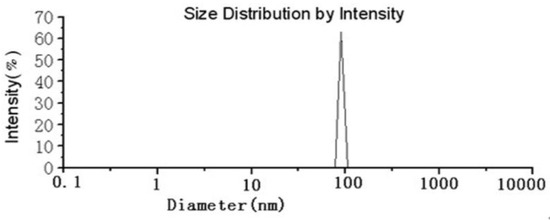
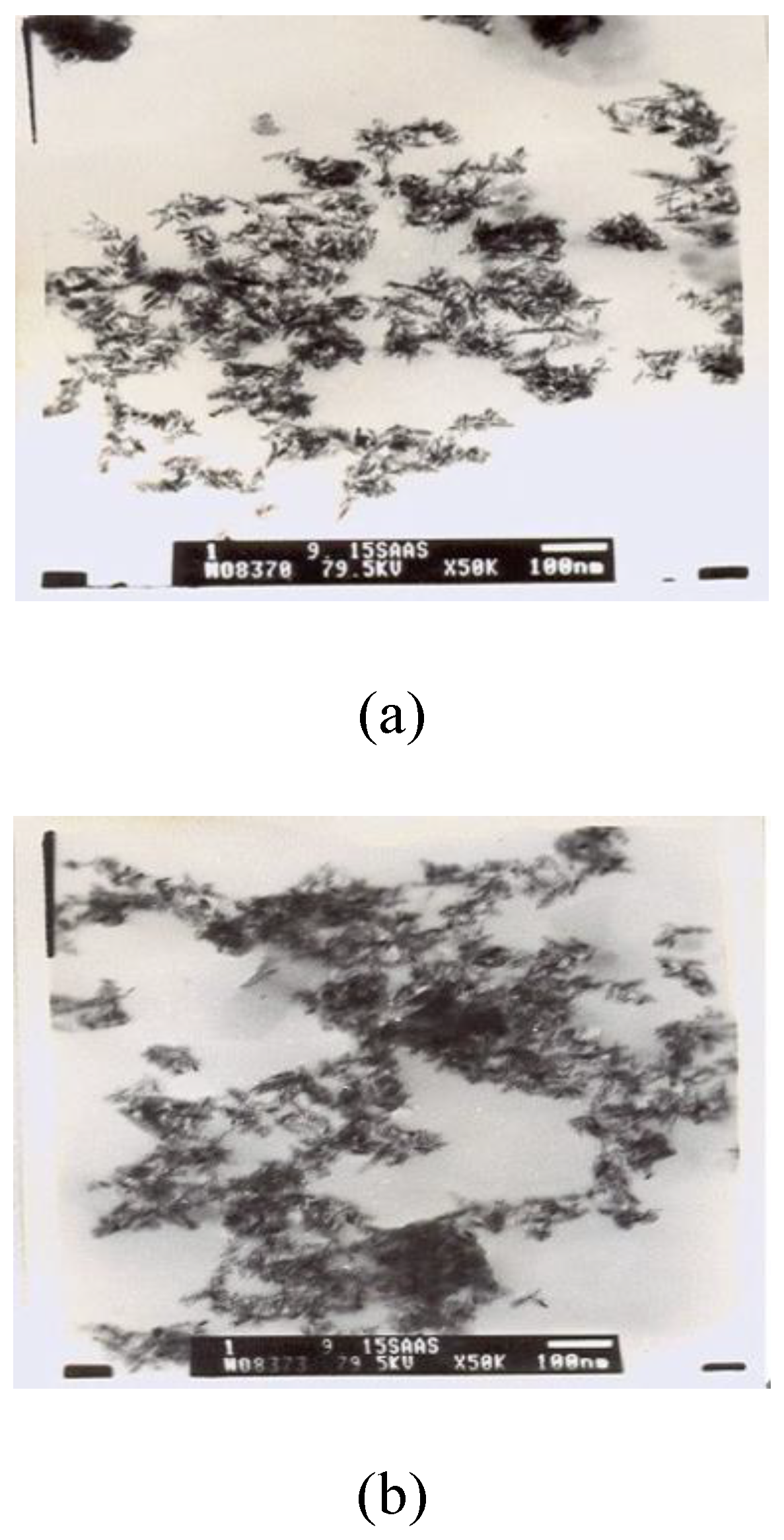
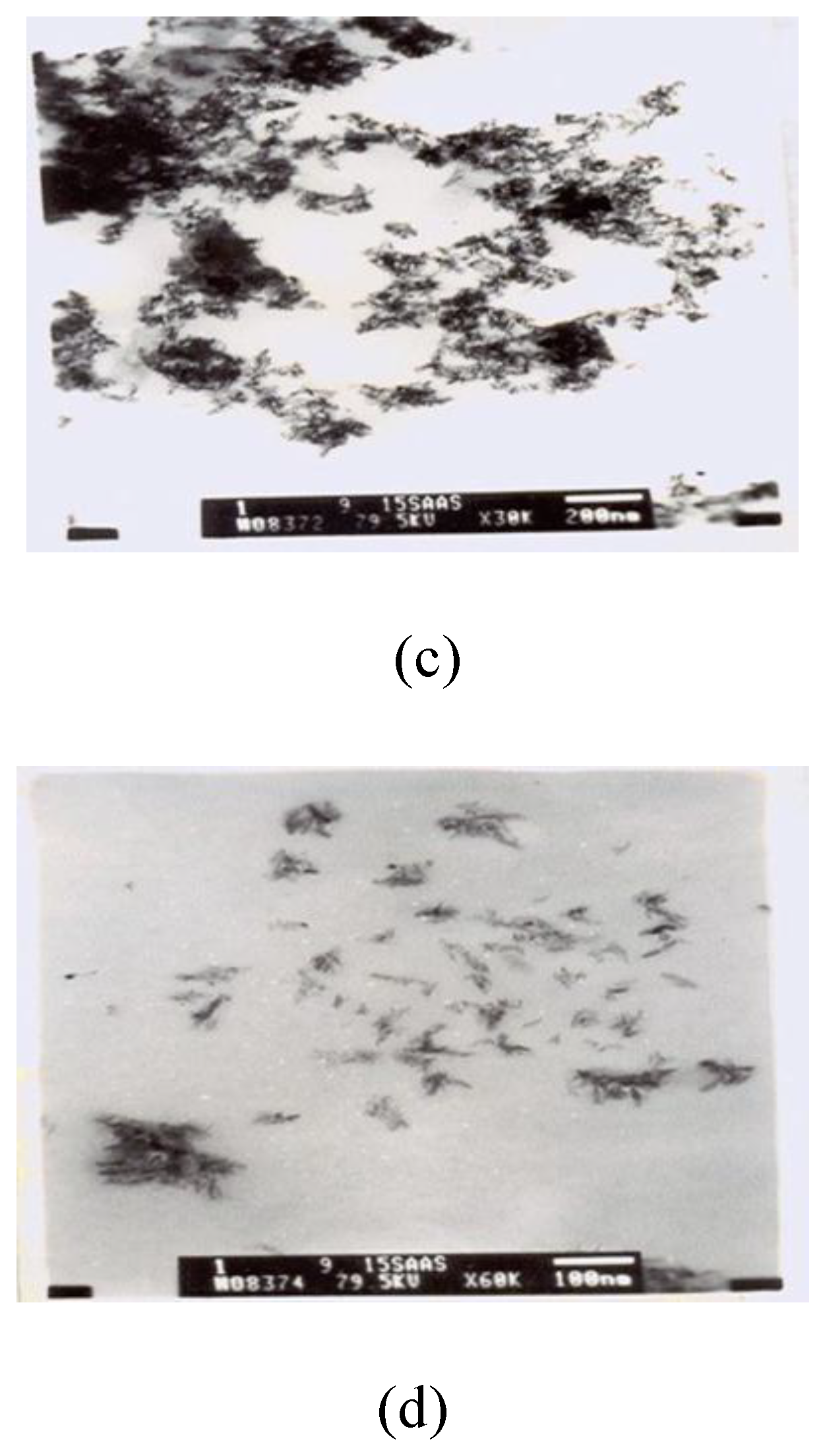
3.1. Particle diameter of modified nano-TiO2
Figure 1.
Particle size distribution of modified nano-TiO2.
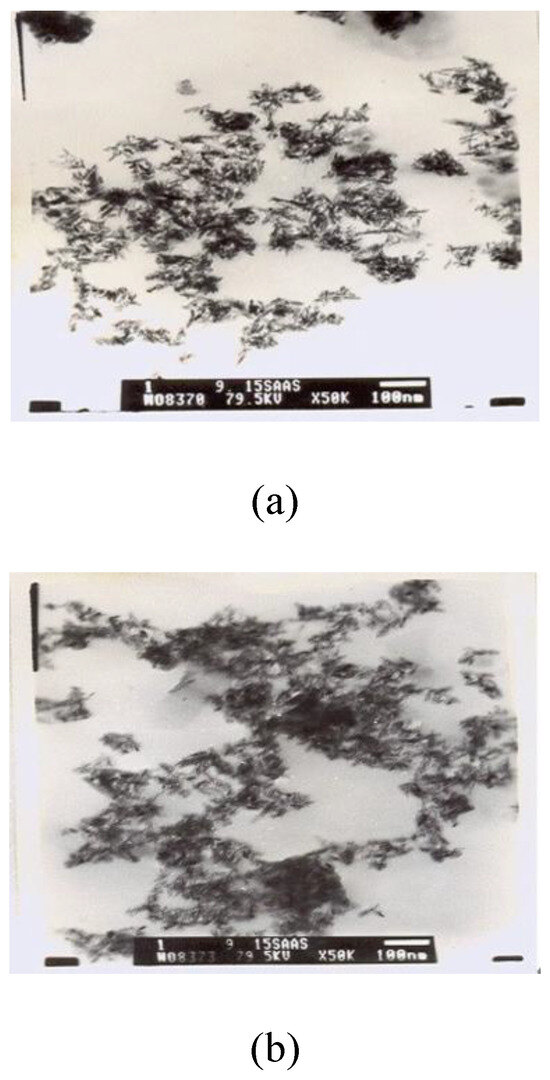
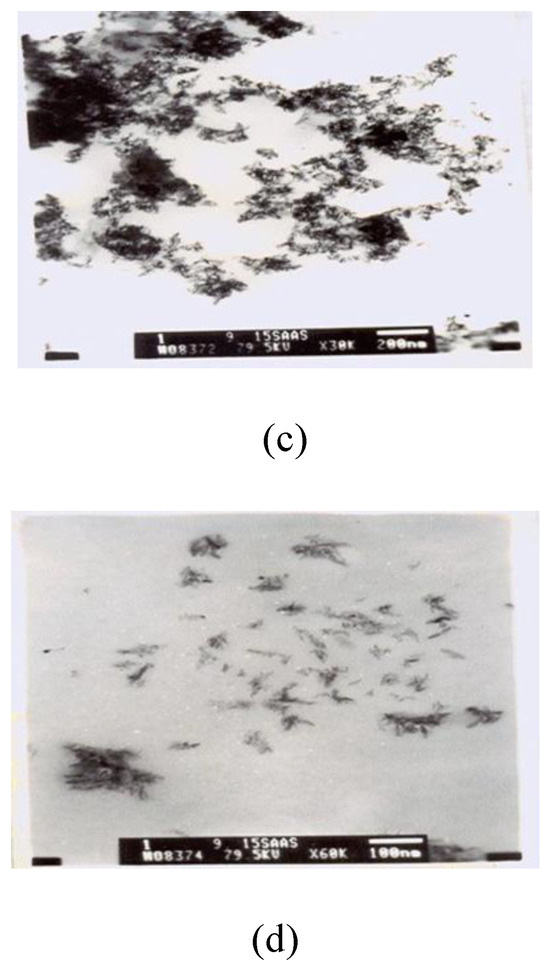
Figure 2.
TEM Photos of Modified Nano-TiO2 (a~d).
3.2. Effect of the concentration of photo-catalyst load reagent on mechanical property and polymerization degree of the cotton
The cotton fabrics were padded with Nano-PC photocatalyst finishing agent with a Nano-PC concentration of 0%-1%. It was treated for 10 min at 80°C. After the fabrics being irradiated with sunlight and UV light for 30 days and 72 hrs respectively, the changes in mechanical property of the fabric and polymerization degree of the fiber were determined; the results are listed in Table 1 and Table 2.
Table 1.
Effect of different photocatalyst concentration under irradiation of sunlight on mechanical property of cotton fabric and polymerization degree of fiber.
Table 2.
Effect of different photocatalyst concentration under irradiation of ultraviolet on mechanical property of cotton fabric and polymerization degree of fiber.
It can be concluded from Table 1 that after being treated with Nano-PC photocatalyst finishing agent and 30days sunlight irradiation, the warp-wise breaking strength, warp-wise tearing strength and fiber polymerization degree of the cotton fabric decreased to certain extent, the degree of which increases with the increase of the concentration of photocatalytic finishing agent. With sunlight irradiation time (30 days), the concentration of Nano PC photocatalytic finishing agent utilized increases from 0% - 1.0% and the fiber polymerization degree decreases by 4% or so, while the warp-wise breaking strength and warp-wise tearing strength of the fabric decrease about 15%. Such phenomenon may be caused by free radical with strong oxidizability formed by Nano-PC photocatalyst during photo-catalysis. When contacting with fiber, the chemical bonds of cotton fiber macromolecule are destroyed, which leads to the decrease of the fiber polymerization degree, warp wise breaking strength, as well as the warp-wise tearing strength, the higher the dosage of photocatalyst is, the greater the oxidation, and hence the loss to cotton fiber.
Similarly, it can be concluded from Table 2 that after being treated with Nano-PC photocatalytic finishing agent and UV light irradiation, the fiber polymerization degree as well as the mechanical property of cotton fabric also decreases. In addition, the extent of the decrease is greater than that treated with sunlight under a certain conditions.
3.3. Effect of photocatalyst on mechanical property and polymerization degree of cotton at different light irradiation time points
Two pieces of cotton fabrics were taken as one group. One piece of the fabrics in each group was padded with Nano PC photocatalyst finishing agent, and then treated for 10 min at 80°C, while the other piece was used as reference sample. Two pieces of cotton fabric in each group were irradiated with sunlight and UV light respectively for the same period of time, and the mechanical properties of the fabric as well as the polymerization degree of the fiber were measured at regular intervals. The results are listed in Table 3 and Table 4.
Table 3.
Effect of different sunlight irradiation time on mechanical property of cotton fabric and polymerization degree of fiber.
Table 4.
Effect of different ultraviolet irradiation time on mechanical property of cotton fabric and polymerization degree of fiber.
It can be concluded from Table 3 that the warp-wise breaking strength, warp-wise tearing strength, light irradiation time, shows the tendency of slowing down gradually. After 35-days of sunlight irradiation, the warp-wise breaking strength, warp-wise tearing strength and polymerization degree of the fabric finished with photocatalyst decreased by 13.6%, 14.2% and 7.43% respectively compared with that of the reference sample, and the tendency slows down gradually later.
Table 4 shows that covalent bond in macromolecule structure of cotton fiber of untreated reference cotton fabric under ultraviolet irradiation will be broken, which leads to the decrease of the breaking strength and tearing strength. However, the warp-wise breaking strength, warp-wise tearing strength and polymerization degree of cotton fabric treated with nano-TiO2 photocatalyst and after irradiation of ultraviolet for 120 hours decreased by 18.1%, 19.1% and 9.50% respectively compared to that of the reference sample treated with UV light for the same irradiation time. It can be concluded that NanoPC photocatalyst damages cotton fiber under UV irradiation, and the longer the irradiation time, the more damage it causes.
3.4. Effect of photocatalyst on cotton crystallinity under different light irradiation conditions
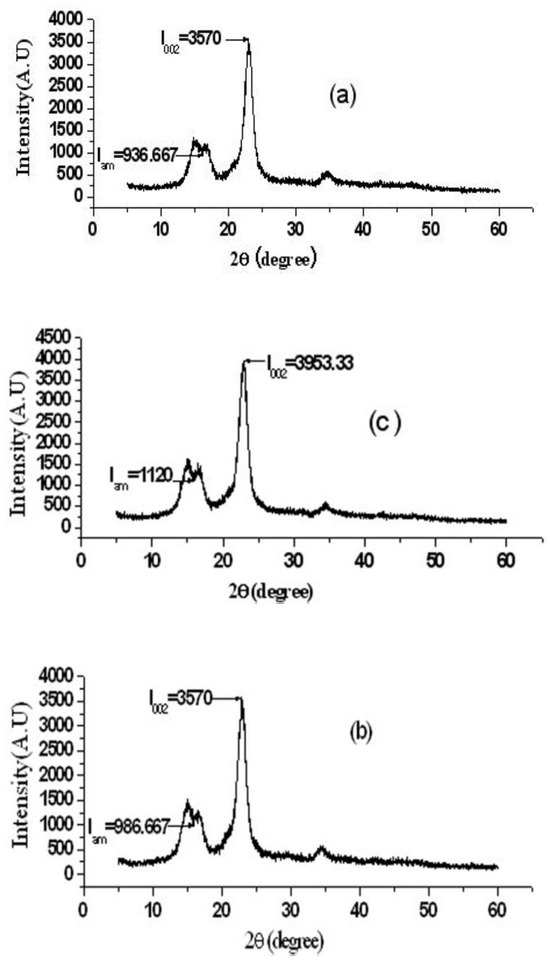
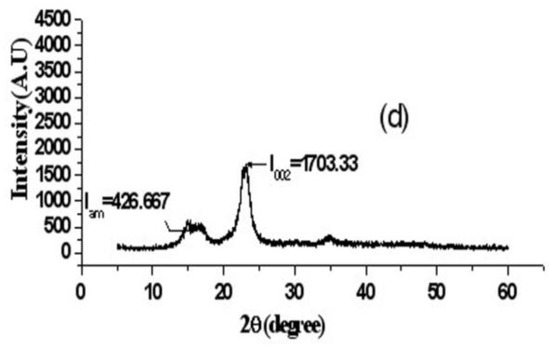
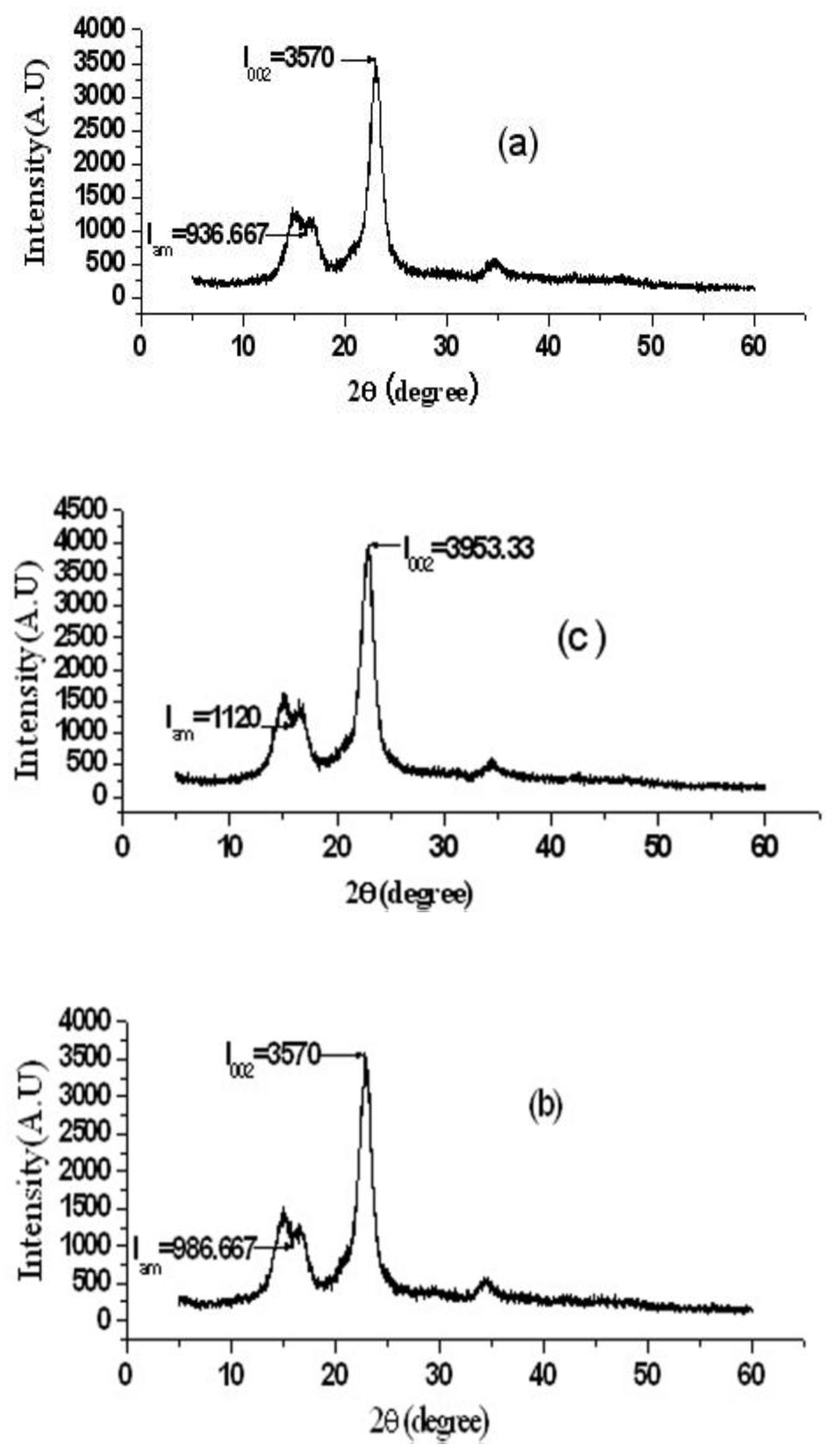
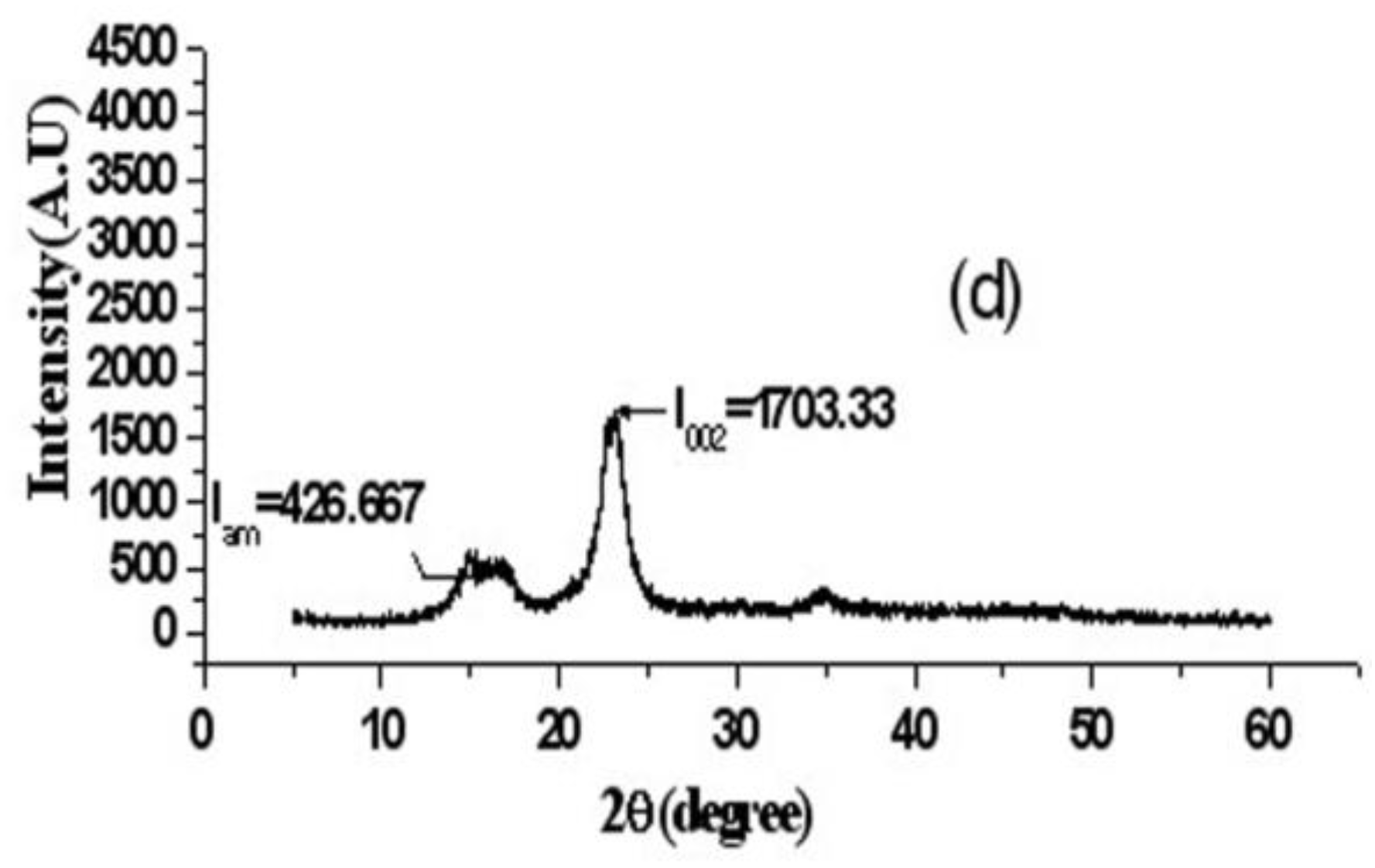
Figure 3 shows that the distribution maps of X-ray diffraction strength of fiber of cotton fabric treated with 1% Nano PC photocatalyst after irradiation of sunlight for 49 days and ultraviolet irradiation for 120 hours respectively.
Figure 3.
Comparison of X-Ray Diffraction Strength of Treated and Untreated Cotton Fiber after Irradiation of Sunlight and Ultraviolet. (a): the untreated reference sample; (b): test sample treated and irradiated by sunlight for 49 days; (c): test sample untreated and irradiated by ultraviolet for 120 hours; (d): test sample treated and irradiated by ultraviolet for 120 hours.).
Figure 3 shows the typical distribution of X-ray diffraction strength of cellulose I [12]. The test data show that the relative crystallinity values of the nano-TiO2 photocatalyst untreated reference sample (a) and the nano-TiO2 photocatalyst untreated reference sample irradiated with UV light for 120-hour (c) are 73.76% and 74.95% respectively. There is minor difference between the two values. Therefore, UV irradiation does not destroy the crystalline structure of cotton cellulose [12]. The values of the relative crystallinity of nano-TiO2 photocatalyst treated cotton fabric irradiated with sunlight for 49 days (b) and with UV light for 120 hours (d) are measured to be 72.36% and 71.67% respectively. Thus it can be concluded that the chain fragmentation of the molecules caused by the oxidation of cotton fiber macromolecule by Nano- PC photocatalyst during photocatalysis is only confined to the surface and amorphous region of fiber, and its effect on crystalline structure of cotton cellulose is very limited.
3.5. Effect of photocatalyst on color of cotton fiber at different light irradiation time
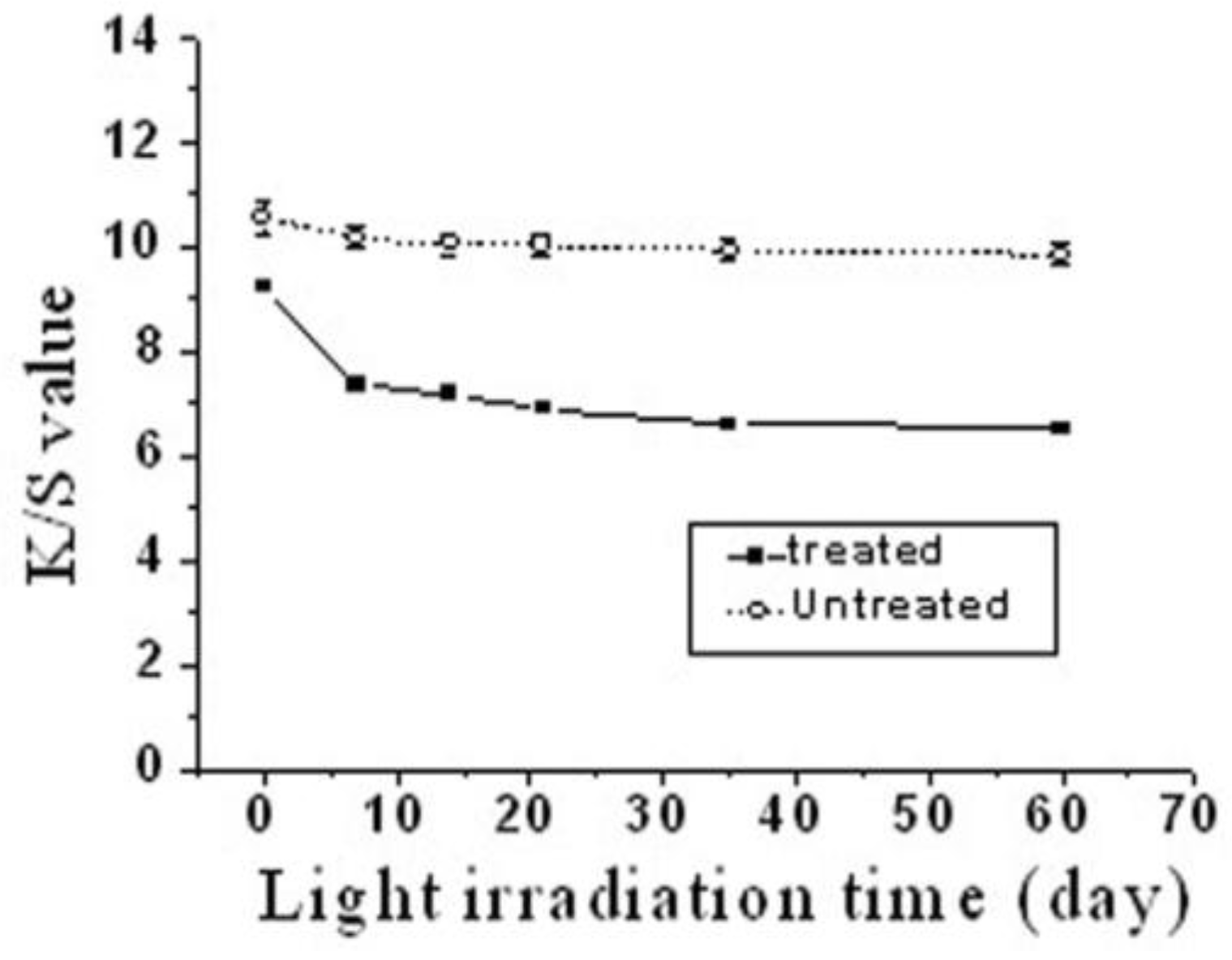
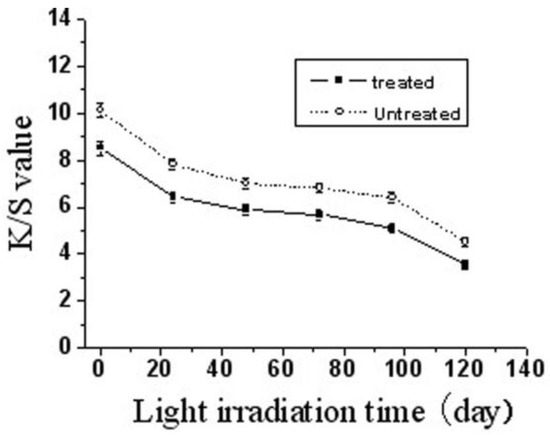
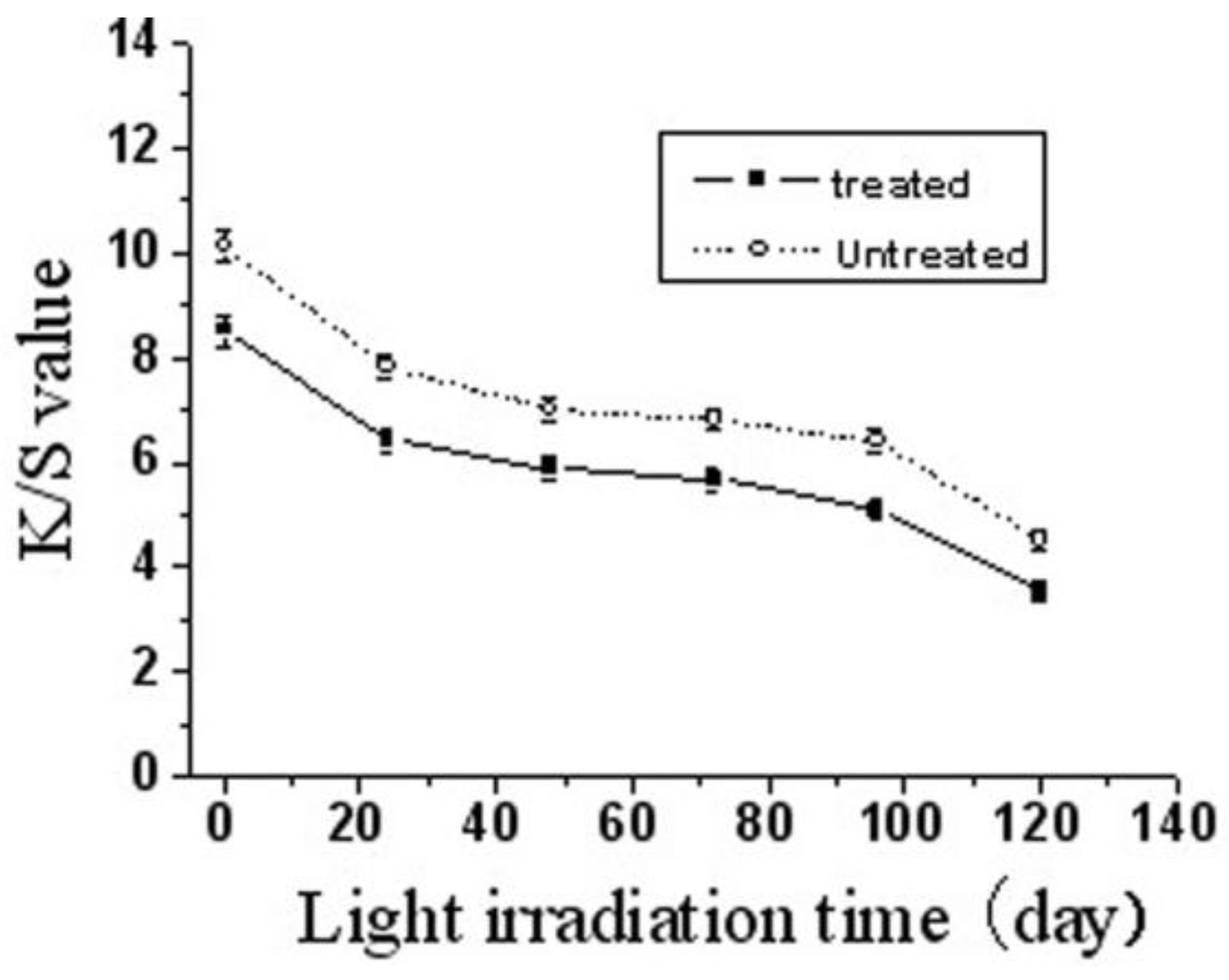
Two pieces of cotton fabric dyed with Ciba reactive blue FN-R were taken as one group. One piece of fabric in each group was taken and padded with Nano PC photocatalyst finishing agent and then treated for 10min at 80°C. The other piece served as reference sample. The two pieces of dyed cotton fabric in each group were radiated simultaneously with sunlight and ultraviolet respectively, and the changes of K/S value of fabric were measured at regular intervals; The results are shown in Figure 4 and Figure 5.
Figure 4.
Comparison of K/S value of treated and untreated dyed cotton fabric under irradiation of sunlight.
Figure 5.
Comparison of K/S value of treated and untreated dyed cotton fabric under irradiation of ultraviolet.
Figure 4 shows that the K/S value of dyed fabric treated with photocatalyst under irradiation of sunlight has a tendency to decrease, with a decreasing rate of 6.94% after 60 days. The extent of decrease of K/S value of dyed fabric treated with Nano-PC photocatalyst is higher than that of untreated fabric, and the decreasing rate after 60-days sunlight irradiation reaches 29.4%. This is probably caused by the photocatalytic reaction that occurred after the photocatalyst was excited by light which destroyed the chromophores of a part of the dyes to cause the decrease in color. It can be derived from Figure 5 that the K/S values of untreated and treated dyed fabric with Nano- PC photocatalyst after irradiation of ultraviolet decreased significantly. The decreasing rate reaches 55.4% and 58.5% respectively after 120 hour irradiation time, and the decreasing tendency is the same between the two. Under such conditions, change of structure of dye chromophore group [13] caused by long-time radiation of ultraviolet is the major reason for color fading of dyed fabric, and the effect of photocatalyst is relatively minor.
4. Conclusions
(1) When Nano-PC photocatalyst is loaded onto cotton fiber, there are free radicals with strong oxidizabillity formed during the photocatalysis. When contacting with fibers, chemical bonds of cotton fiber macromolecule are oxidized to cause the fragmentation of the molecules, which induces decrease of the polymerization degree of fibers. In addition, the breaking strength, and the tearing strength of the fabric also decrease. The higher the dosage of photocatalyst, the longer the irradiation time of sunlight and UV light is, the stronger the oxidation is, and the more damages caused to the cotton fiber.
(2) There are no obvious changes in crystallinity and crystalline structure of cotton fiber finished with Nano-PC photocatalyst after irradiation of sunlight and UV light.
(3) K/S values of dyed fabric treated with photocatalyst and untreated dyed fabric decrease to some extent under the irradiation of sunlight and ultraviolet, and the decreasing range of K/S value of dyed fabric treated with photocatalyst is a bit higher than that of untreated dyed fabric.
(4) When treating cotton fabric with Nano-PC photocatalyst and developing textile products with photocatalyst function, great importance is always attached to the issue that photocatalyst will deteriorate fiber materials. Screening of photocatalysts and proper protection methods should be employed. With the prerequisite of ensuring the finishing effect of the photocatalyst, efforts should be made to reduce damage to cotton fiber as much as possible.
References
- Fujishima A, Honda K. Electrochemical photolysis of water at a semiconductor electrode. Nature 1972: 238: 37-38.
- Cermenati L, Dondi. DL. Maurizio Fagnoni and Angelo Albini. Titanium dioxide photocatalysis of adamantine. Tetrahedron 2003; 59: 6409-6414.
- Wang YH, Xu GT. Development and Application of Photocatalyst Technology. Chemical engineer, 2004; 111 (12): 38-41.
- Yang JL. Application of Nano-TiO2 in Post-Finishing of Fabric. Journal of Textile 2006; 27 (1): 99-102.
- Xu WH, Liu YX. Research Progress in High-Efficiency Photocatalyst. Journal of North China Institute of Science and Technology 2006; 3 (1): 98-100.
- Chen H, et al. Modification and Dispersion of Nanosilica. Journal of Dispersion Science and TechnoLogy 2004; 25(6): 837-848.
- Li XW, et al. Surface modification of TiO2 nanoparticles by polyaniline. Applied Surface Science 2003; (217): 16-22.
- Ichnose H, Terasaki M, Katsuki H. Aroperties of peroxotitanium acid soLution and peroxo-madified anatase sol derived from peroxotitanium hydrate. J Sol-Gel Tech 2001; (22): 33.
- Jin XR. Experiment of Dyeing and Finishing Engineering. Beijing: Textile Industry Press, 1987; 9-13.
- Chen Y. Experimental Textbook of Dyeing and Finishing Engineering. Beijing: China Textile Press, 2004, 1-6.
- Segal L, Creely JJ, Mattin AE, et al. An empirical method for estimating the crystallinity of native cellulose using the X-ray diffractometer. Journal of Textile Research 1959; 29: 786.
- Chang DH, Gong NR, Liu JH, et al. Effect of Radiation on Crystallinity of Cotton Fiber. Journal of Beijing Institute of Technology 1997; 17(5): 579-583.
- Wang JS, Sun K. Principle of Dyeing and Finishing Engineering (the Third Volume). Beijing. Textile Industry Press 1985; 131-155.

© 2010 Textile Bioengineering and Informatics Society. This article is an open access article distributed under the terms and conditions of the Creative Commons Attribution (CC BY) license (https://creativecommons.org/licenses/by/4.0/).