


Abstract
The strain rate sensitivity of Oxygen plasma treated Nano Silicon Dioxide particles sol-gel coated Vectran and concurrent microstructural evolution was investigated. Both the materials are strain rate sensitive and the change in index parameter of strain rate sensitivity with strain reflects the change in micromechanisms of deformation and modes of fracture. Helium plasma can reduce the surface energy of vectran fiber. Oxygen plasma and nano SiO2 particles will enhance the surface energy. The activation volumes rise with Oxygen. Although either Helium or Oxygen has made the activation volumes exceed that of the neat Vectran, the SiO2 nano-particle makes the activation volume rise rapidly.
1. Introduction
Vectran is a thermoplastic liquid crystal polymer. In addition, these polymers are particularly suitable for high strength applications ranging from high performance fibers to reinforcement components of composite materials [1]. Extensional flow (e.g. during extrusion) results in significant orientation of the nuematic regions along the direction of flow [2], which yields higher mechanical strength and modulus [3].
The interest in developing novel organic–inorganic hybrid coatings in recent years is due to their unique properties derived from the inorganic and organic components. These coatings offer the opportunity to combine the desirable properties of organic polymers (toughness, elasticity) with those of inorganic solids (hardness, chemical resistance). Therefore, sol–gel methodology provides an easy, cost-effective and excellent way to incorporate inorganic compounds into an organic binder. Sol–gel processing can be used to produce a wide range of oxide and multi-component oxide coatings [4]. Sol–gels prepared from organofunctional silanes have been widely used to improve the adhesive bonding of different surfaces and to enhance the resistance to metal corrosion by means of surface coating [5]. From the previous study, many researchers had focused on using the SiO2 coating [6].
As other nano-materials, agglomeration of SiO2 nanoparticles has experienced the most obstacles in their wide applications [7] since the unsaturated dangling bonds and hydroxyl groups are extremely active and they saturate as soon as the SiO2 is exposed to air. Therefore, the modifiers find it difficult to react with the active groups of SiO2. Moreover, partial agglomeration usually occurs before the modification. With the APPJ treatment, SiO2 nanoparticles are distributed homogeneously [8,9,10,11].
In order to determine what deformation mechanisms operate in nano-structured material, there has been a resurgent interest in equations of state involving activation energies and activation volumes. Activation volume is an important parameter if one is concerned with the time and temperature stability of recording inter-phase effect on strength in nano SiO2 coated Vectran. By taking advantage of the simple kinetics in a nano-crystal system, we obtain insight into the mechanisms and microscopic processes of structural phase transitions.
The purpose of this paper is to report the effect of APPJ treatment on microstructure and tensile deformation of nano SiO2 coated Vectran at room temperature. Tensile tests were performed to evaluate the mechanical performance. The SEM micrographs were used to investigate the surface morphologies, and FTIR tests to find out the chemical structure. In order to know the surface energy, contact angle tests were done.
2. Experimental methods
2.1. Material
Silicon dioxide (SiO2,) was obtained from Hong Sheng Materials Technology Co., Ltd. Vectran is a manufactured fibre, spun from a liquid crystal polymer created by Celanese Acetate LLC and now manufactured by Kuraray Co., Ltd. Chemically it is an aromatic polyester.
2.2. Preparation of Vectran
The surface of Vectran filaments was deposited with Nano-SiO2 particles by sol-gel dip-coating technique. Nano-SiO2 sol-gel with a primary size of 14 nm in acetone was employed. After filtering the diluted solution, it was coated on the surface of Vectran filaments by dip coating. By changing the concentration of SiO2 sol-gel and the speed of dip coating, the coverage of SiO2 nanoparticles on Vectran filaments can be tuned. In this paper, the concentration of SiO2 colloid was about 0.5 wt %, and the speed of dip-coating was 0.13 mm/s.
After coating, these filaments were treated by an APPJ (Atomflo-R, Surfx Company, USA) with 100% helium+O2 gas. The APPJ is a small plasma jet with a length of around 15cm, consisting of two concentric electrodes with a 1.6mm gap through which the working gas helium+O2 flows. The gas discharge was ignited by applying a low 13.56MHz radio frequency power, which enabled the jet to produce a stable discharge and avoid the arc transition.
The distance between the nozzle and the top of the filament was 5mm. The substrate circumrotated underneath the plasma jet at a speed of 10mm/s. Other plasma treatment parameters were set as follows: flow rate of helium gas was 20L/min, output power was 40W, treatment nozzle temperature was 60 C and sample treatment or stationary time was 3.3s.
2.3. Scanning electron microscope (SEM)
The surface morphology and microstructure of coatings composite was observed with scanning electron microscopy (SEM).
2.4. Fourier transforms infrared (FT-IR) spectroscopy
The surface chemical compositions of the Vectran filaments were studied using an FTIR spectrometer model Nexus-670 (Nicolet, USA).
2.5. Contact angle measurements
Contact angles of Vectran fibers were done with POWEREACH JC 2000A contact angle meter (Shanghai zhongchen digital technic apparatus co., ltd.). Care was taken to ensure that the contact angles were measured inside the Vectran fibers. The deionized water was loaded in a watering can, and while spraying the water to the testing fiber, real-time pictures were captured by digital camera. The contact angle was tested with JC200A software.
2.6. Mechanical measurements of a single fiber
The stress–strain curves for the fibers were measured on a tensile testing machine (YG001A) at strain rates of 0.02083 s−1, 0.1 s−1, 0.20833 s−1 and 0.625 s−1. The reported values of all the mechanical properties were averaged over at least 50 independent measurements.
3. Results and discussions
3.1. Morphological studies
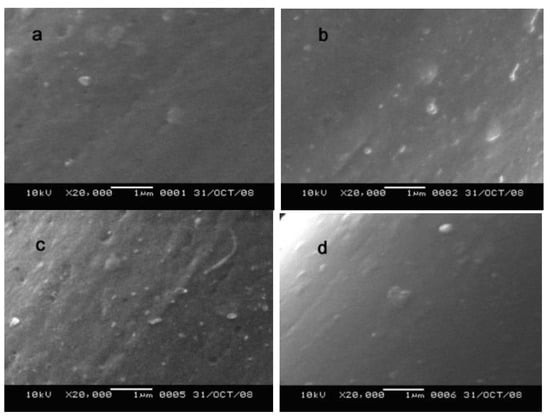
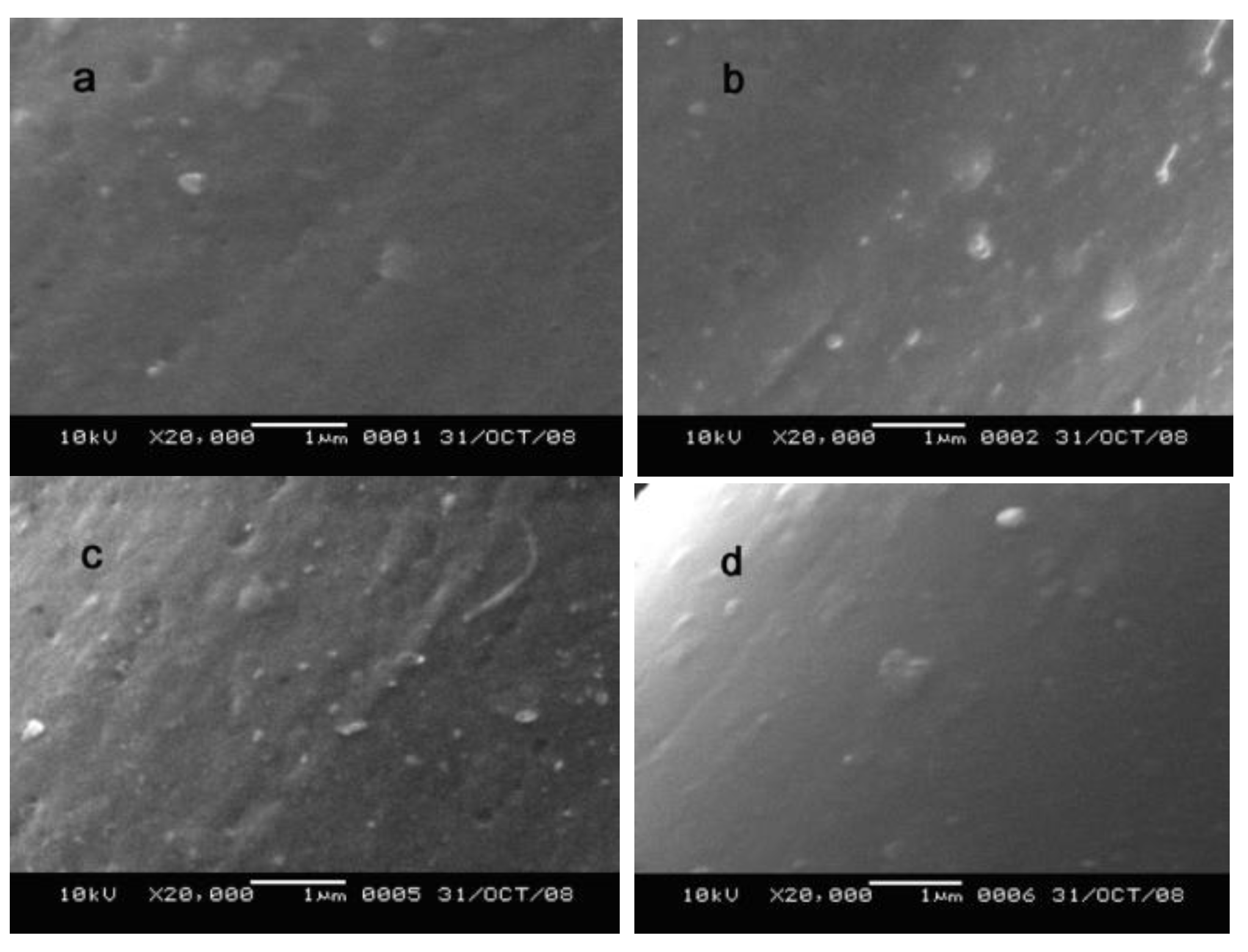
Figure 1 (a-d) show the SEM micrographs of the surface of the treated and untreated Vectran fiber in 20,000X. Figure 1 (b) show the Vectran with helium plasma treatment, with the electrons sprayed to the surface, and made the surface rougher than before. Figure 1 (c) is the picture of Vectran with helium and oxygen plasma treatment, the surface of the fiber is much smoother than the untreated Vectran. Comparing these pictures, Figure 1 (d) shows the photo of Vectran with helium and oxygen plasma treatment and nano SiO2 coating, where the nano SiO2 particles are spread evenly. It is clear that the reactions happened at the time of treatment.
Figure 1.
SEM of sample. Neat and treated Vectran fiber in 20,000X (a)Neat Vectran (b)Vectran with helium plasma treatment (c) Vectran with oxygen plasma treatment (d) nano SiO2 coating Vectran with oxygen plasma treatment.
3.2. Fourier transforms infrared (FT-IR) spectroscopy
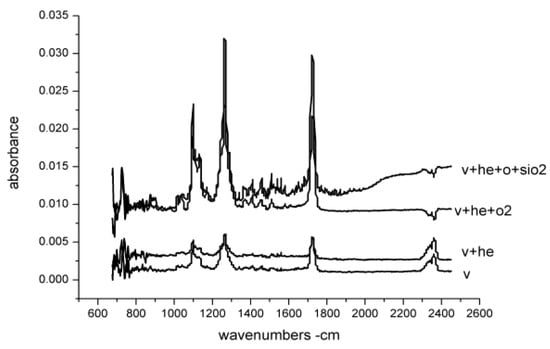
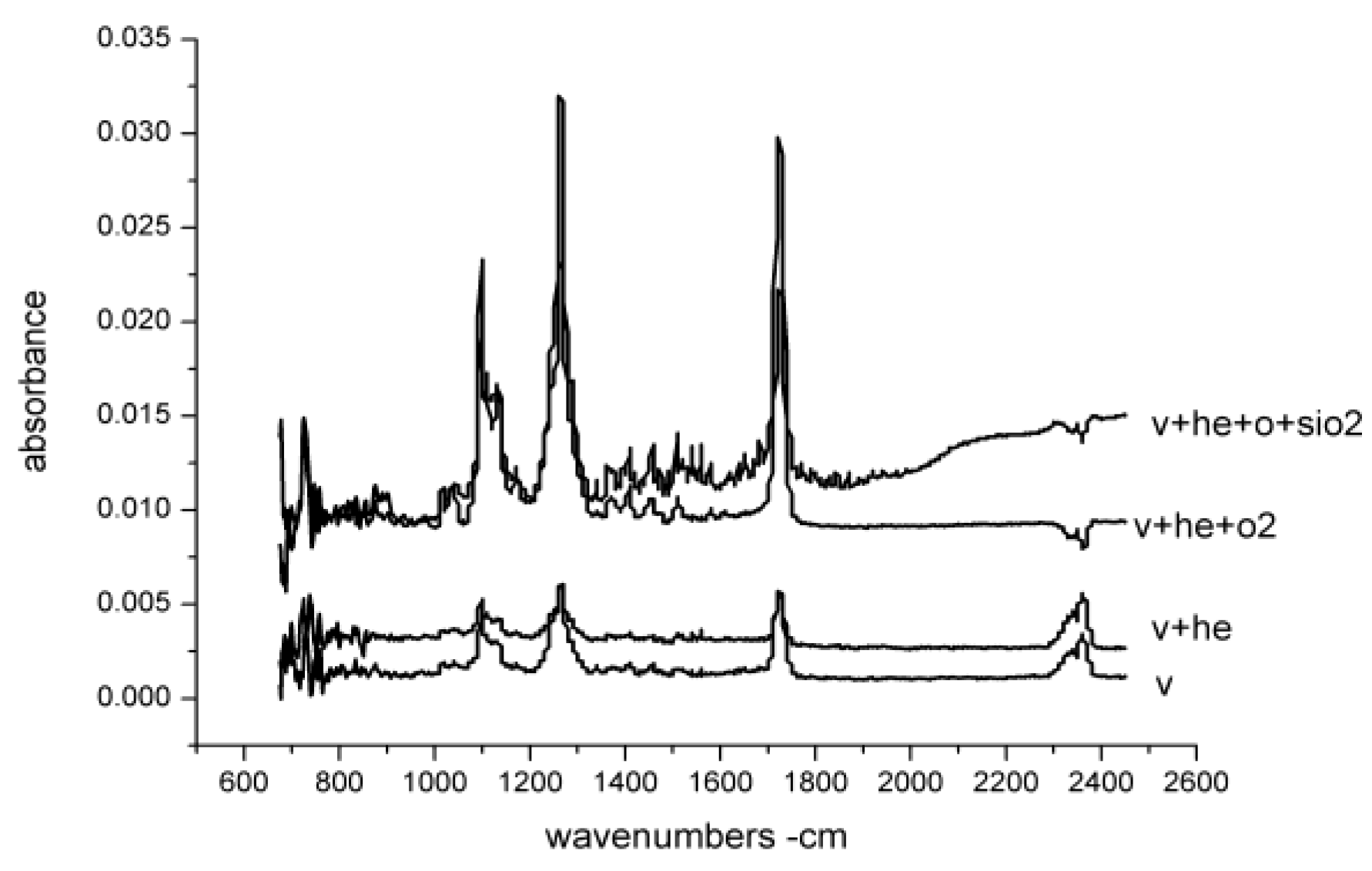
In order to investigate the chemical structure of Vecrtan fiber with different treatments, the FTIR test was done, the spectra obtained is shown in Figure 2. The helium plasma treated Vectran is compared with helium and oxygen plasma treated Vecrtan, it can be seen that 3560-3903cm−1 and 2361, 2341cm−1 are vanished, which attributed to O-H and CO2, respectively. In addition, the H2CO, the stretching vibration situated at 2967 cm−1 is shown. This is due to the treatment of oxygen plasma, and the oxygen plasma must react with the fiber.
Figure 2.
FTIR absorbance spectra of different treated Vectran filaments.
3.3. Contact angle results
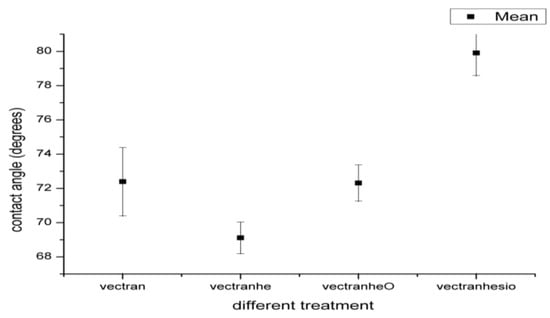
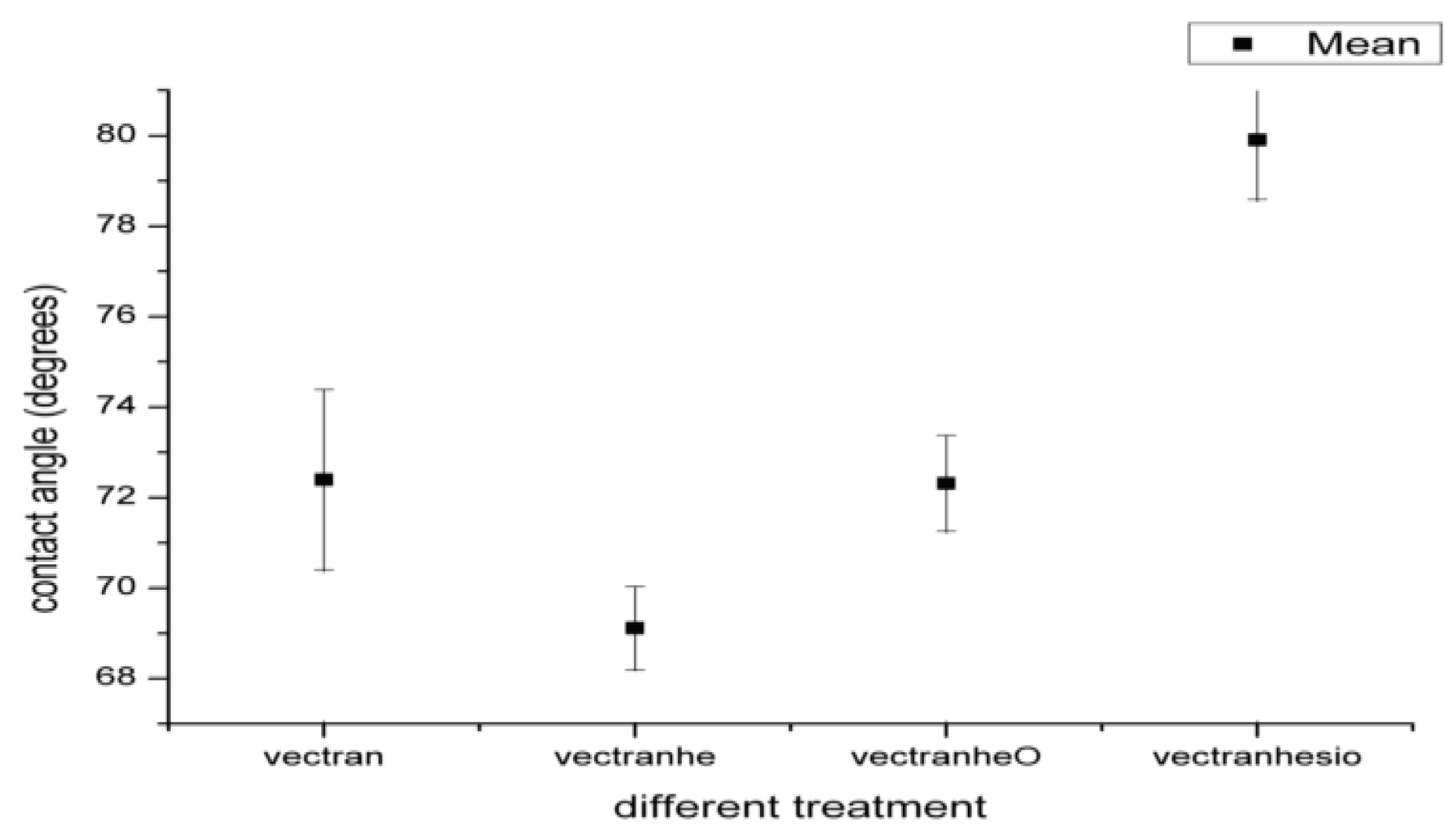
In order to find out the difference of the surface energy, the test of contact angle was done. It can be found that with the helium plasma treatment, the mean of contact angle is 4.53% smaller than the mean of neat Vectran, however, the mean of Vectran with helium and oxygen plasma treatment is 4.63% greater than the one treated only by helium plasma. With the coating of SiO2, the mean of contact angle is 10.37% higher than neat Vectran. The helium and oxygen plasma treatment will enhance the surface energy of Vectran, which was only treated by helium plasma. From Figure 3, it is clear that the smallest standard error, standard deviation and confidence is due to the helium plasma treated Vectran.
Figure 3.
Values of treated and untreated vectran fiber represented with error bars.
3.4. Stress–strain diagrams
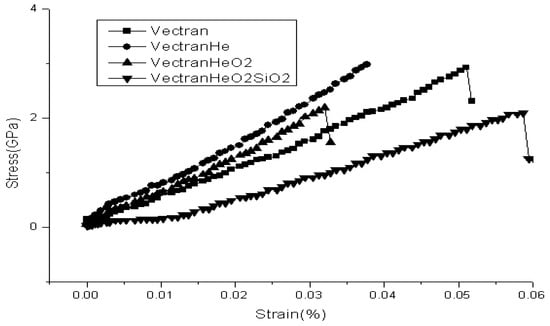
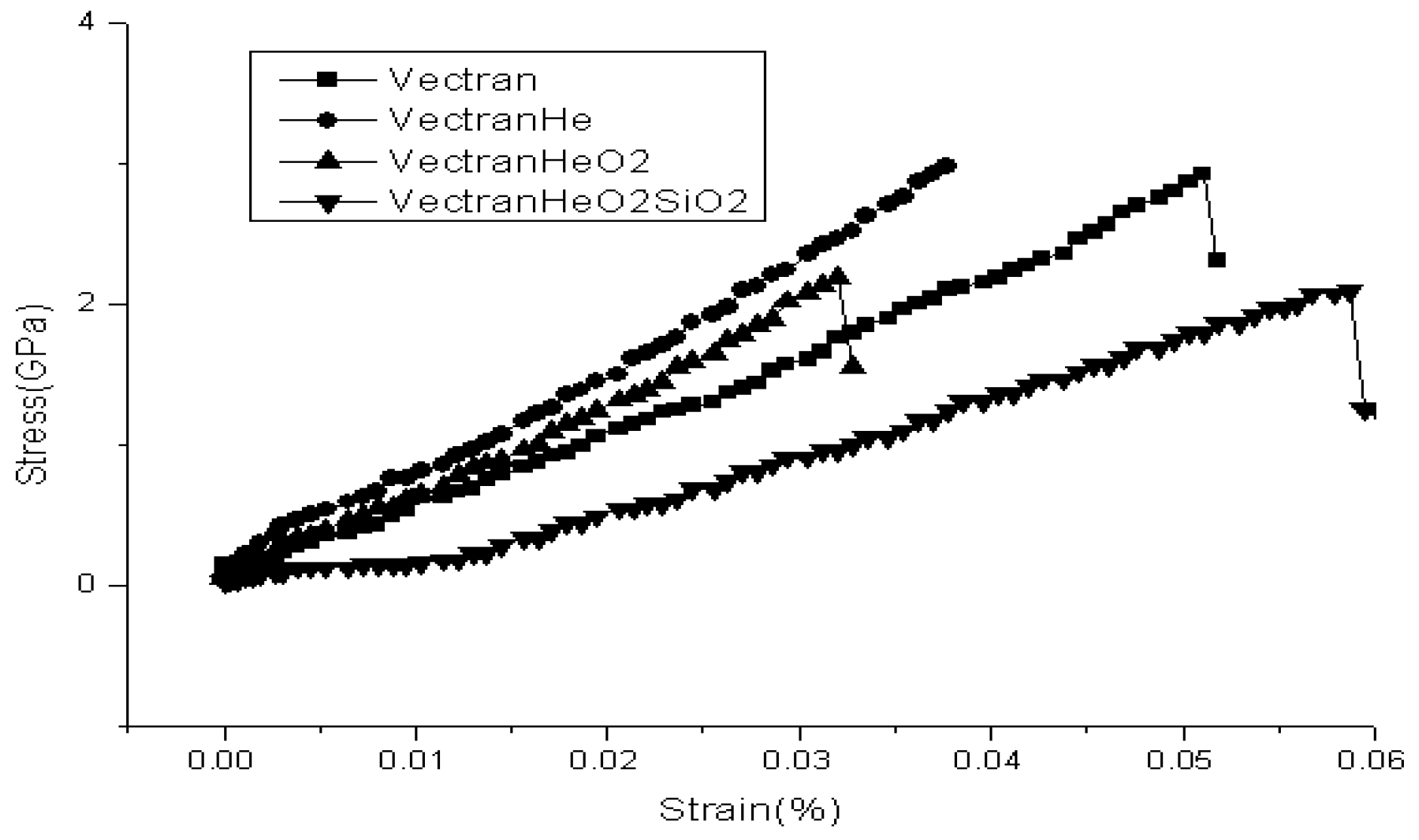
Figure 4 is the indicated tensile stress–strain curves of the treated and untreated Vectran at different strain rates. For the neat Vectran, the yield strength decreased with the increase in strain rate. However, hardening modulus, modulus and tensile strength are different; they all have peaks, and peaks are show at the strain rate of 0.20833/s. For the Helium plasma treated Vectran, as the strain rate rises, modulus, yield strength, tensile strength and hardening modulus reflect the same trend, the strain rate of 0.20833/s show up the highest data. For the helium and oxygen plasma treated Vectran, the more rapid the strain rate is, the higher yield strength is. For the tensile strength, the highest one is at the strain rate of 0.20883/s, for modulus and hardening modulus, the highest ones are at the strain rate of 0.1/s. For the Helium and Oxygen plasma treated nano-phased Vectran, the more rapid the strain rate is, the higher the yield strength is, tensile strength, modulus and hardening modulus are higher.
Figure 4.
The stress-strain curves of the differently treated Vectran fibers at a strain rate of 0.20833/s.
According to the Eyring equation, the activation volume of the material can be obtained from the strain rate-strengthening coefficient as follows:
where V is activation volume, R (Gas constant), and T (the temperature). The activation volumes of the neat Vectran and the Helium plasma treated Vectran was calculated using the yield strength data. Table 1 shows that the activation volumes have been decreased about 82.39% for Helium plasma treated Vectran and 56.56% for Helium and Oxygen plasma treated Vectran, and increased about 18.44% for Helium and Oxygen plasma treated nanophased Vectran, compared to neat Vectran.
V =RT/λ2
Table 1.
Constitutive parameters of samples.
4. Conclusions
Based on the experimental results, the following conclusions are derived: Helium plasma can reduce the surface energy of vectran fiber. Oxygen plasma and nano SiO2 particles will enhance the surface energy of the same. Both helium and helium/oxygen plasma treatment will reduce both the tensile strength and the yield strength. Meanwhile the SiO2 nano-particle can increase the tensile strength. All of these materials are strain rate sensitive materials. Nanophase and Oxygen will reduce the strain rate sensitivity for the neat Vectran, and Helium plasma treatment can enhance the strain rate sensitivity. The activation volumes increase with Oxygen. Although either Helium or Oxygen has made the activation volumes exceed that of the neat Vectran, the SiO2 nano-particle makes the activation volume rise rapidly.
References
- Crist, B. The ultimate strength and stiffness of polymers. Ann. Rev. Mater. Sci. 1995, 25, 295323. [Google Scholar] [CrossRef]
- Yoshiaki, I.; Zohar, O. Orientation development in thermotropic liquid crystal polymers. Polym. Eng. Sci. 1983, 23, 261–265. [Google Scholar] [CrossRef] [Scilit]
- Chung, T.S. Fluid behavior and orientation developments during extrusion of liquid-crystal polymeric rods. J. Polym. Sci. Part C 1986, 24, 299–303. [Google Scholar] [CrossRef] [Scilit]
- Ronald, W.J. Fundamental Principles of Sol–Gel Technology; Institute of Metals: London, 1989. [Google Scholar]
- Kang, H.M.; Yoon, T.H.; Ooij, W.J. Enhanced adhesion of aramid tire cords via argon plasma etching and acetylene plasma polymerization. J. Adhes. Sci. Techn 2006, 11, 1155–1169. [Google Scholar] [CrossRef] [Scilit]
- Koscielska, B.; Jurga, W. Superconducting properties of an NbN-SiO2 disordered system obtained by ammonolysis of NbN-SiO2 sol-gel derived coatings. J. Non-Cryst. Solids 2008, 354, 4345–4348. [Google Scholar] [CrossRef] [Scilit]
- Zhang, M.L.; Ding, G.L.; Jing, X.Y.; Hou, X.Q. Preparation, modification and application of nanoscal SiO2. Appl. Sci. Technol. 2004, 6, 64–66. [Google Scholar]
- Zhu, H.Y.; Zhang, Y.C.; Qiu, Y.P. The Microstructural Deformation of the Montmorillonite Particles/Polypropylene/Polylactic Acid Nanocomposite Filaments Infused with Plasma Treated Montmorillonite. Mater. Sci. FORUM 2009, 620-622, 469–472. [Google Scholar] [CrossRef] [Scilit]
- Zhang, Y.C.; Qiu, Y.P. Crystallization and Mechanical Properties of Nano ZnO/PP/PLA Composite Filaments. Mater. Sci. FORUM 2009, 620-622, 485–488. [Google Scholar] [CrossRef] [Scilit]
- Zou, J.; Zhang, Y.C.; Qiu, Y.P. Preparation and Properties of PP/PLA/multiwall Carbon Nanotube Composites Filaments Obtained by Melt Compounding. Mater. Sci. FORUM 2009, 620-622, 465–468. [Google Scholar] [CrossRef] [Scilit]
- Huang, J.N.; Zhang, Y.C.; Qiu, Y.P. The Strain Rate Sensitivity of Plasma Treated Nano TiOx Particles/PP/PLA Nano-composites Filaments. Mater. Sci. FORUM 2009, 620-622, 481–484. [Google Scholar] [CrossRef] [Scilit]

© 2009 Textile Bioengineering and Informatics Society. This article is an open access article distributed under the terms and conditions of the Creative Commons Attribution (CC BY) license (https://creativecommons.org/licenses/by/4.0/).