


Abstract
A series of novel type temperature and pH responsive hydrogels were synthesized by using hydroxypropylcellulose (HPC) as temperature sensitivity material and sodium alginate (SA) as pH sensitivity material. The effect of SA on lower critical solution temperature (LCST) has been studied and the influence mechanism is presented. In addition, the swelling ratio and control factors of swelling process are all researched in this paper. The main results obtained are as follows: the LCST of HPC/SA hydrogel decreased gradually as SA was added into HPC; this kind of hydrogel responded temperature and pH being double-sensitive; the swelling ratio reached the maximum value at pH of 6.
1. Introduction
In recent years, considerable research attention has been given to the environment-sensitive materials, hydrogel as a kind of intelligent soft material, whose unique characteristic was environment response abilities, has been regarded extensively by many research groups because of their great potential applications in many aspects, including robotics, chemical industries, drug delivery system, enzyme immobilization and biomaterials separation and purification, etc. However, major hurdles in their development have been slow response velocity, low efficiency swelling/deswelling ratios, and poor mechanical properties due to difficulty in processing them into mechanically strong and fine structures [1,2] In the last few decades, several researchers paid attention to develop quickly responsive intelligent hydrogel materials. Hansen, Smith and Reneker [3] studied the electrospun nanofibers structured hydrogel, excellent strength and elasticity of these structured hydrogels were displayed in many uses, including wound care, drug delivery and sanitary goods. Zhang [4] developed the macroporous structure hydrogel with fast response rate and temperature-sensitive. And found that these macroporous hydrogels have higher swelling ratios at the temperatures lower than the LCST and exhibit much faster response rates when the transitions occur.
Among those smart polymers that can respond to external stimuli, HPC has been examined as a smart drug delivery material due to its unique reversible phase separation behavior stimulated by external temperature [5]. Petrrov’s research group [6] synthesized super-macroporous hydrogels by UV-assistance. It was found that due to the macroporous structure, the cryogels exhibited a very rapid water uptake and, in the case of temperature-responsive polymers, ultra-rapid volume phase transition. Mezdour [7] reported that oil/water surface rheological properties of hydroxypropyl cellulose (HPC) alone and mixed with lecithin, and demonstrated that HPC was a thickening biopolymer having surface active properties both at air/water and oil/water interfaces, HPC exhibited a surface activity which was observed even at low bulk concentrations, and a few chains of HPC were on the water side of the oil/water interface and would contribute to a higher steric repulsion effect than for lecithin alone. HPC hydrogels are well known for their phase separation near their phase transition temperature or called lower critical solution temperature (LCST), exhibited a sudden shrinking in volume at a temperature just above LCST, only few minutes are needed for this phase separation behavior. In this paper, a series of novel HPC/SA hydrogels with fast temperature-response rate and heterogeneous macroporous structure were synthesized by carrying out the polymerization/crosslinking in aqueous solutions with different concentrations. The results illustrated that these hyudrogels have higher swelling ratios at temperature below the LCST, and exhibit faster response rates to temperature changes.
2. Experimental Section
Materials: The HPC employed in this study was kindly donated by Hercules Inc. (Wilmington, DE, USA). Its molecular weight was 80,000 g/mol, and its molar substitution (according to the manufacturer) is between 3.4 and 4.4. Reagent grade SA was purchased from sigma-aldrich, Biochemical reagents glutaraldehyde (25% pure) as the crosslinking agent of HPC and SA, and analytical reagent hydrochloride of crosslinking reaction catalyst, were both purchased from Sinopharm Chemcial Reagent Company Shanghai China respectively. Experimental water was deionized water.
Approach: HPC and SA sample were dried in vacuum at 45 °C for 12 hrs to remove the free water from samples before use. The double-sensitive hydrogels composed of HPC and SA were prepared as follows: HPC and SA samples were dissolved in aqueous solution firstly based on the required concentration respectively. Secondly, crosslinking reaction of HPC was carried out by magnetic stirring by adding glutaraldehyde as crosslinking agent and a few drops of hydrochloric acid as catalyst under nitrogenous atmosphere at 25 °C reacting for 6hrs. After this, SA solution was instillated into pre-crosslinking HPC at calculated amounts, and continued reacting for 12 hrs at 25 °C. Resulting hydrogels were of the same disc cut with puncher, and marked as HS0, HS1, HS3 and HS5 and HS7 according to difference in amount of SA such as HS3 represents the weight ratio of SA, relative amount of HPC in hydrogel is 3%. In this paper, the phase transition temperature was tested using UV-VIS spectrophotometer at λ = 500 nm warmed for 0.3 °C/min from 20 °C to 60 °C. Swelling ratios were investigated by weighting methods under different temperature and pH value conditions. The swelling ratio was calculated using the Eq. (1).
where SR is the swelling ratio defined as one which doesn’t change with time. mt is swelling hydrogels’ mass as it reaches the swelling balanced state in medium solutions. md is dry hygrogels’ mass after it is dried in vacuum.
SR = (mt − md)/md
3. Results and Discussions
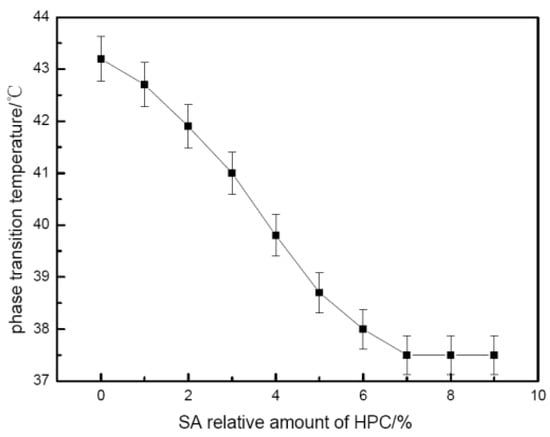
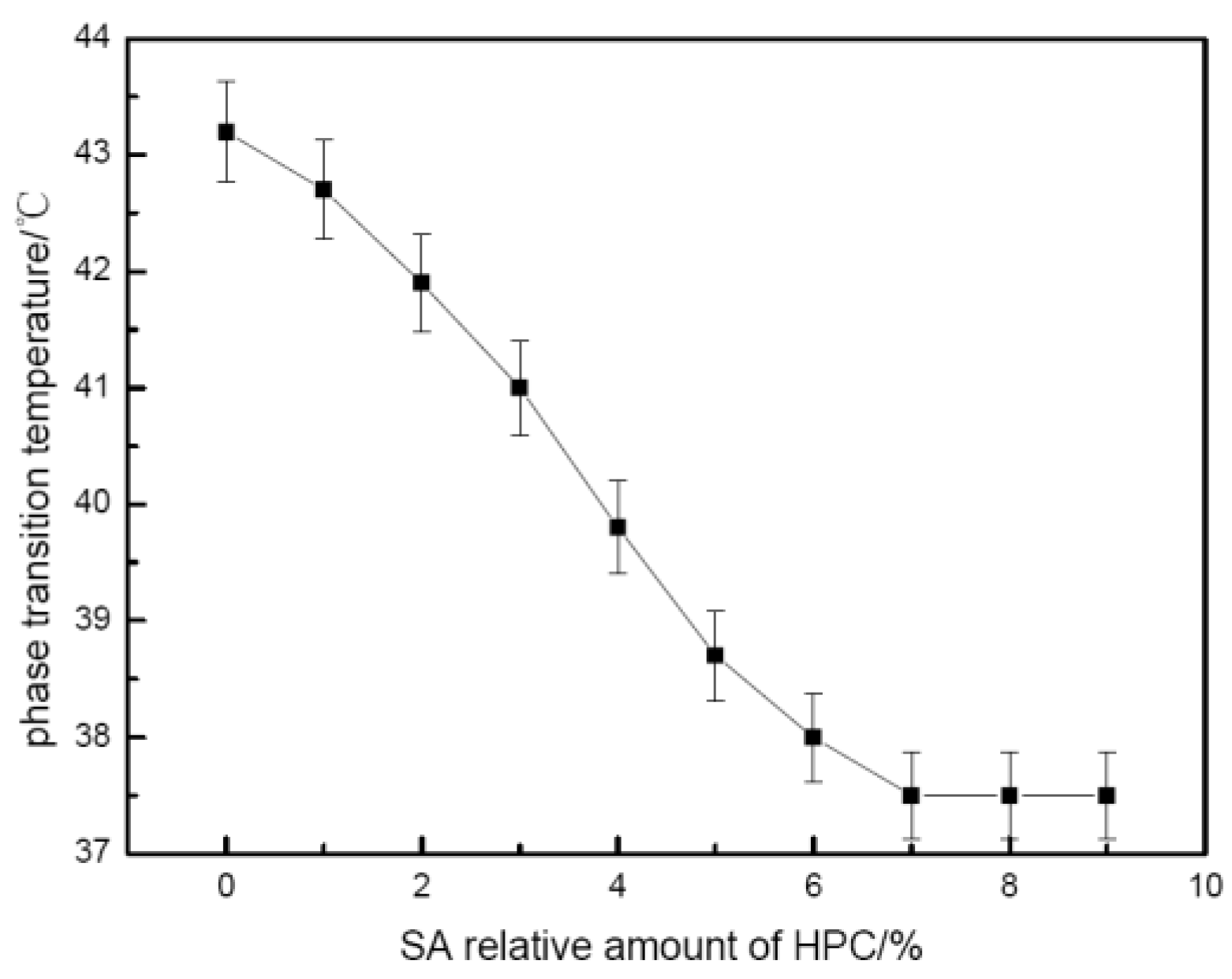
The effect of SA amount on LCST: The phase transition temperature of HPC/SA blend system was measured by adding different dosage of SA into HPC solution, and by using UV-vis spectrophotometer with a heating rate of 0.3 °C/min at λ = 500 nm from 20 °C to 60 °C. The temperature transition point, at which absorbency changes suddenly, is defined as the phase transition temperature. The results are shown in Figure 1. The phase transition temperature reduces gradually with addition of SA into HPC solutions firstly, and then, it reaches a balance when SA is 7%. It indicates that hydrophilicity ability of the blend system decreases with the addition of SA into HPC. Experimental phenomenon shows that viscosity of blend system increases while adding SA into HPC, at this time, HPC macromolecular chain activity is confined by gradually increasing viscosity, the solubility of HPC macromolecular reduces.
Figure 1.
Effect of SA amount on phase transition temperature of HPC/SA blends.
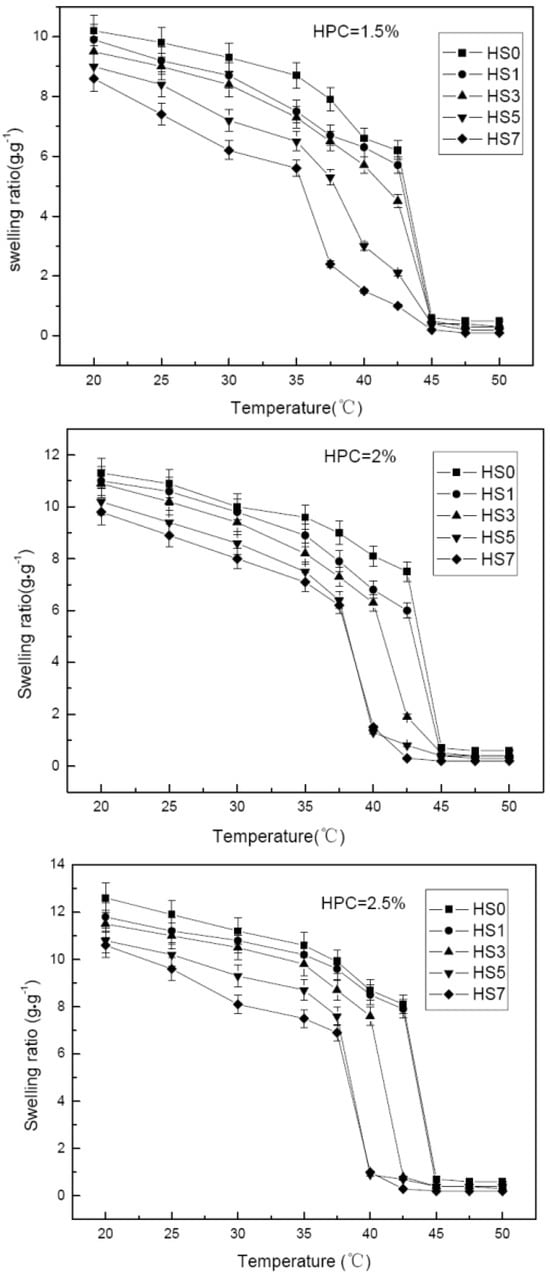
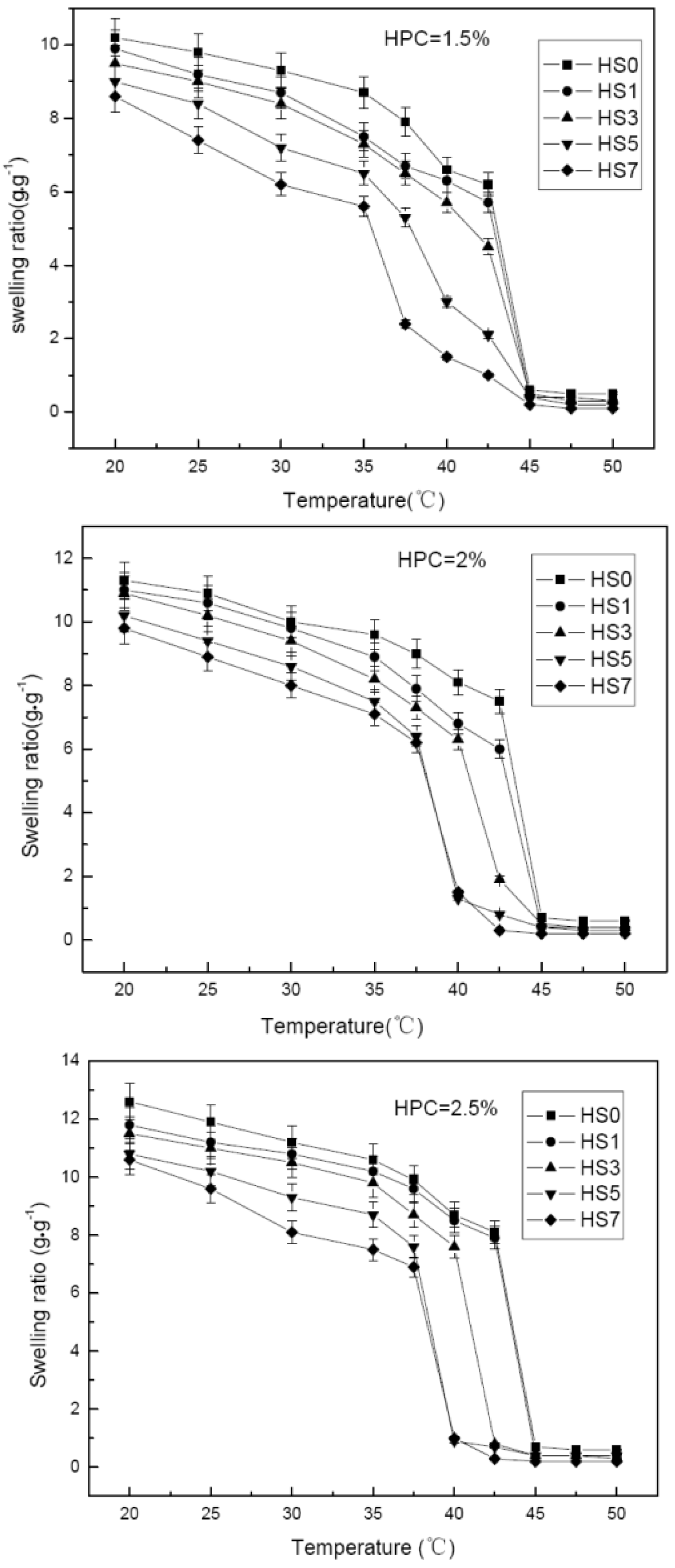
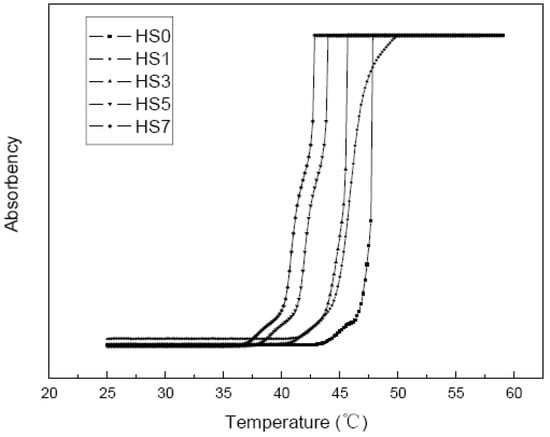
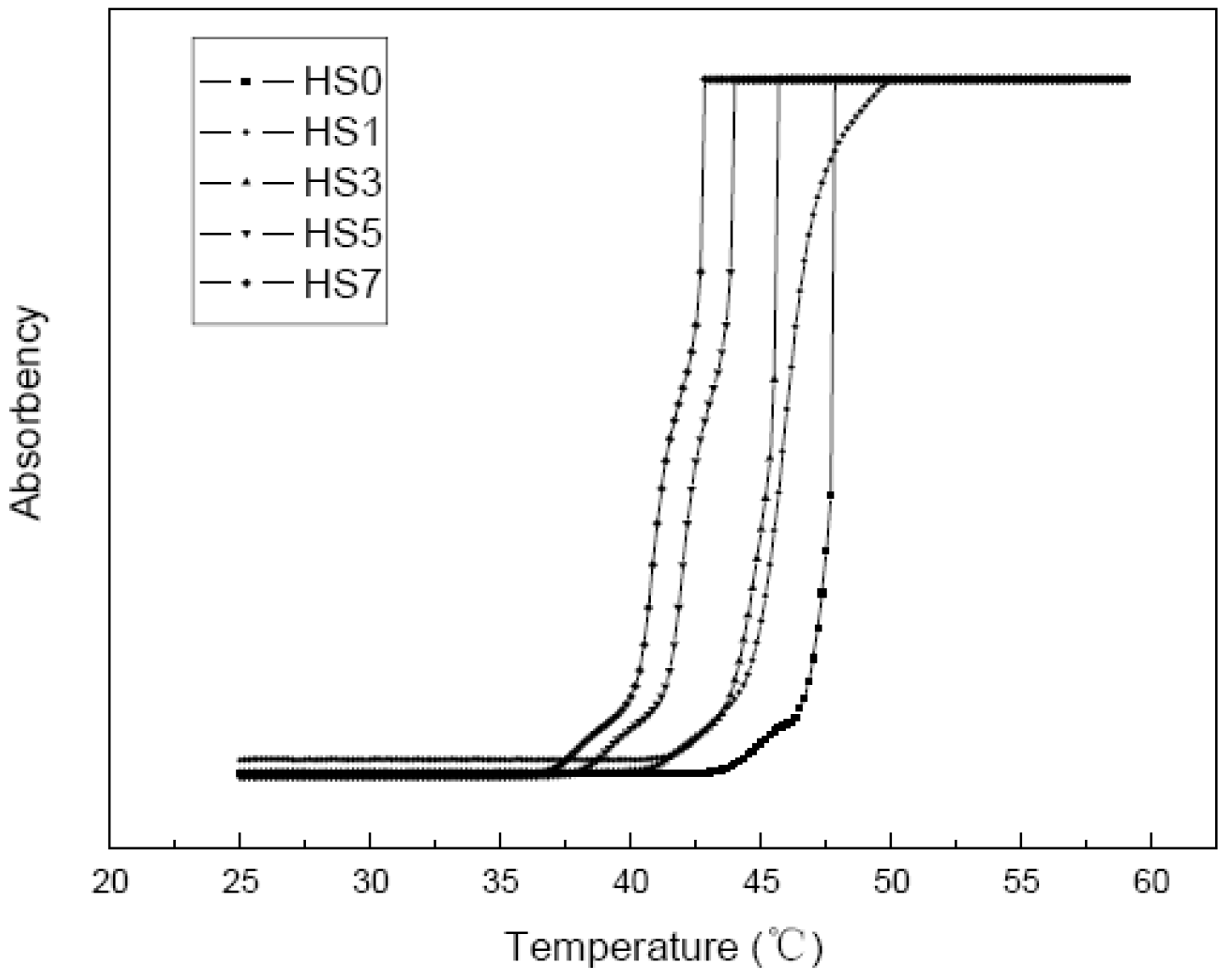
The effect of temperature on swelling ratio of HPC/SA hydrogel: The effect of temperature on swelling ratio of series HPC/SA hydrogel was investigated. The results are shown in Figure 2. Seen from the results, the swelling ratios are all decreased as the temperature elevates. The turning point of SR occurred just at the HPC/SA blend solutions transition temperature. As temperature higher than LCST, HPC macromolecular chains show globule chains state in aqueous solution. As a result of this, hydrophobicity of HPC increase, swelling ratios of HPC/SA hydrogel decrease. However, the swelling ratios of HPC/SA hydrogels increased with the increase of HPC. This is because the hydrophilicity of HPC/SA hydrogel enhanced with the increase of HPC. Figure 3 demonstrates the LCST of HPC/SA hydrogel tested with a heating rate 0.3℃/min by UV-vis from 20 °C to 60 °C. Comparing with the Figure 2, the temperatures of absorbency increase sharply as shown in Figure 3 are almost similar with the turning point temperature shown in Figure 2. It indicates that LCST of HPC/SA hydrogel could be measured accurately by UV-vis spectrophotometer corresponding to the absorbency value.
Figure 2.
Effect of temperature on the swelling ratios of HPC/SA hydrogel.
Figure 3.
The LCST of HPC/SA hydrogel measured by UV-vis.
The effect of pH value on HPC/SA hydrogel:
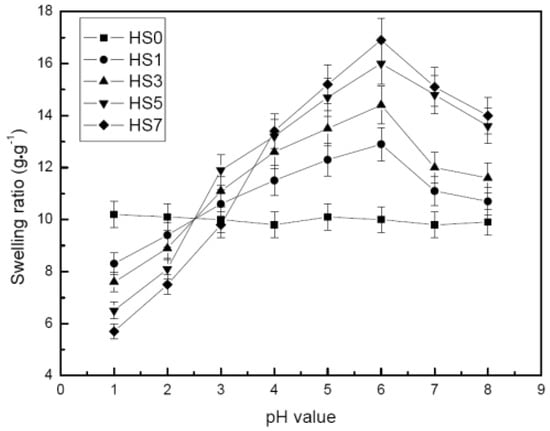
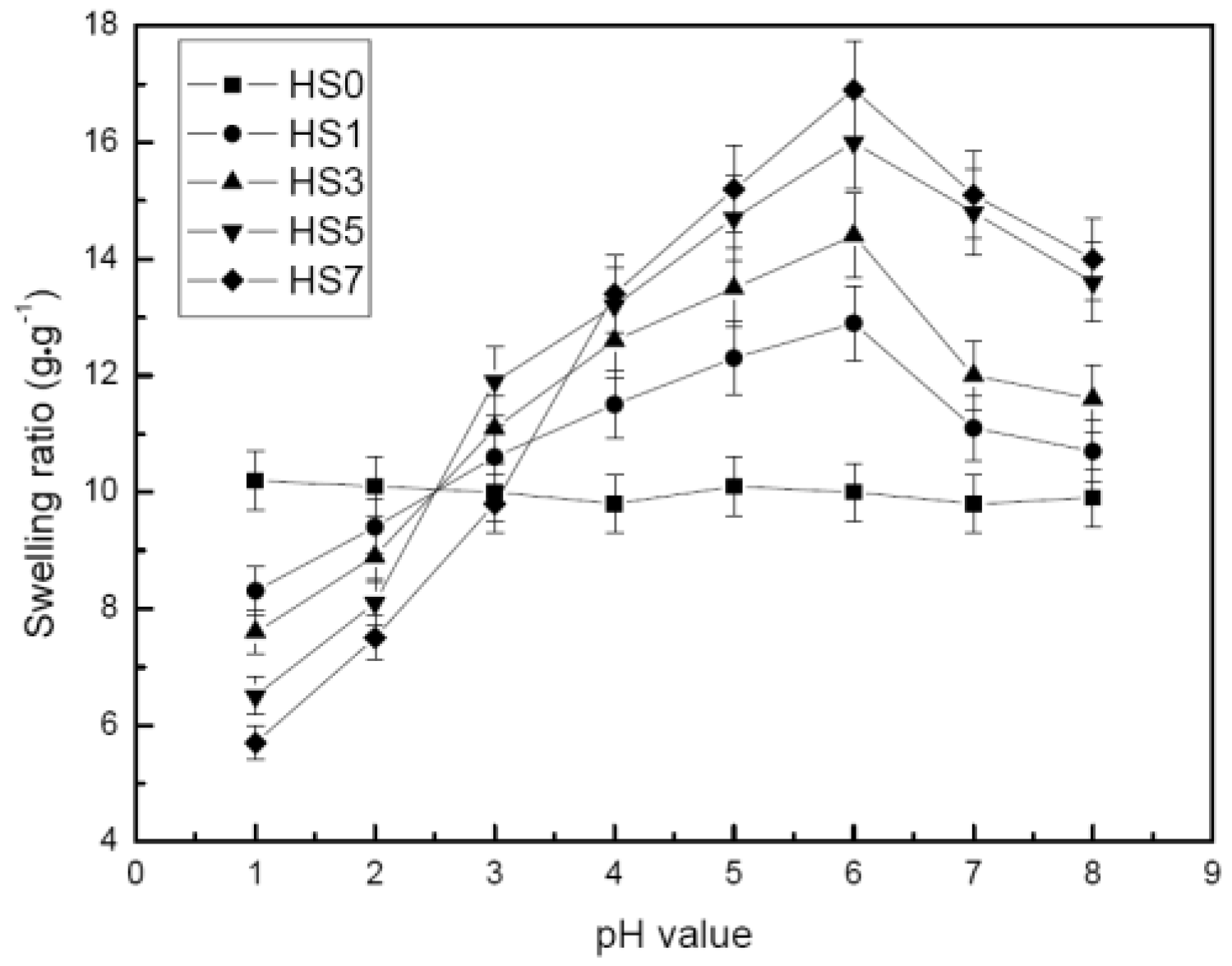
Sodium alginate has been given considerable attention because of its pH response properties, biodegradability, biocompatibility, renewability and nontoxicity [8]. It is used in a variety of commercial applications because of its capacity for gelatinization. The pH sensitive ability of HPC/SA hydrogel was characterized, and the results are as shown in Figure 4. The swelling ratios increase gradually as pH value increases, and reach the maximum value when pH value is 6, except for the hydrogel marked HS0. In strong acidic mediums whose pH value is 1-2, -COO-dissociates from SA and is associated with H+, and becomes –COOH, intermolecular hydrogen bond is formed between HPC and SA, HPC/SA hydrogel networks structure shrinks, water molecules expel by the contraction of the hydrogels. So, the swelling ratio of HPC/SA hydrogel reduces. However, as pH value is 6, a large amount of -COOH dissociates completely, and becomes -COO-, macromolecular chains fully extended caused by electrostatic, osmotic pressure enhances within the hydrogel network. Water molecules diffuse into hydrogel more easily. The greatest swelling ratio was generated at a pH value of 6. While, pH value is more than 6, the swelling ratio decreases, this is because ionic strength increases and hydrogel network structure shrinks again in this condition.
Figure 4.
Effect of pH value on HPC/SA investigated at T = 25 °C.
The surface and cross-section morphology examined with SEM.
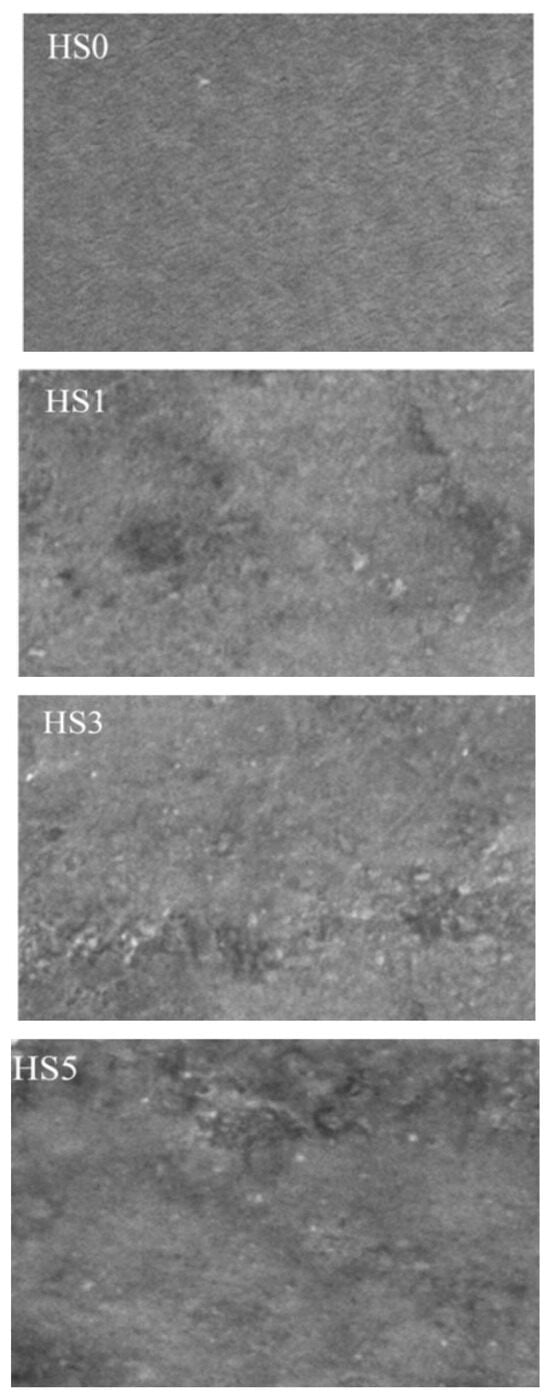
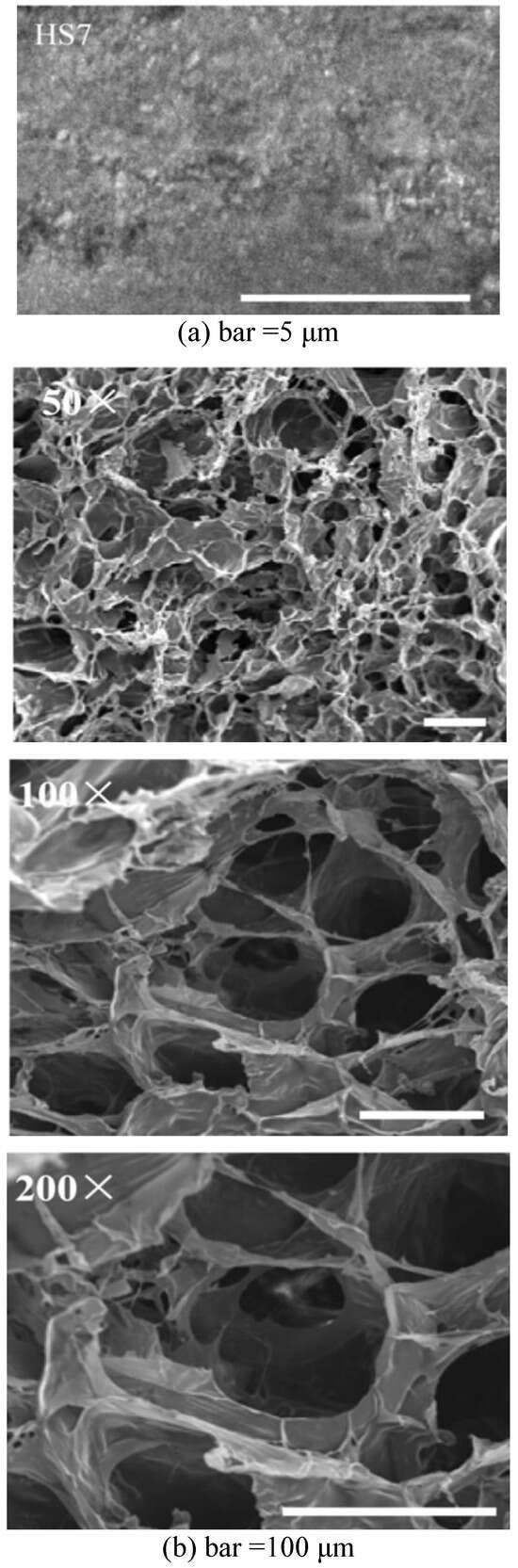
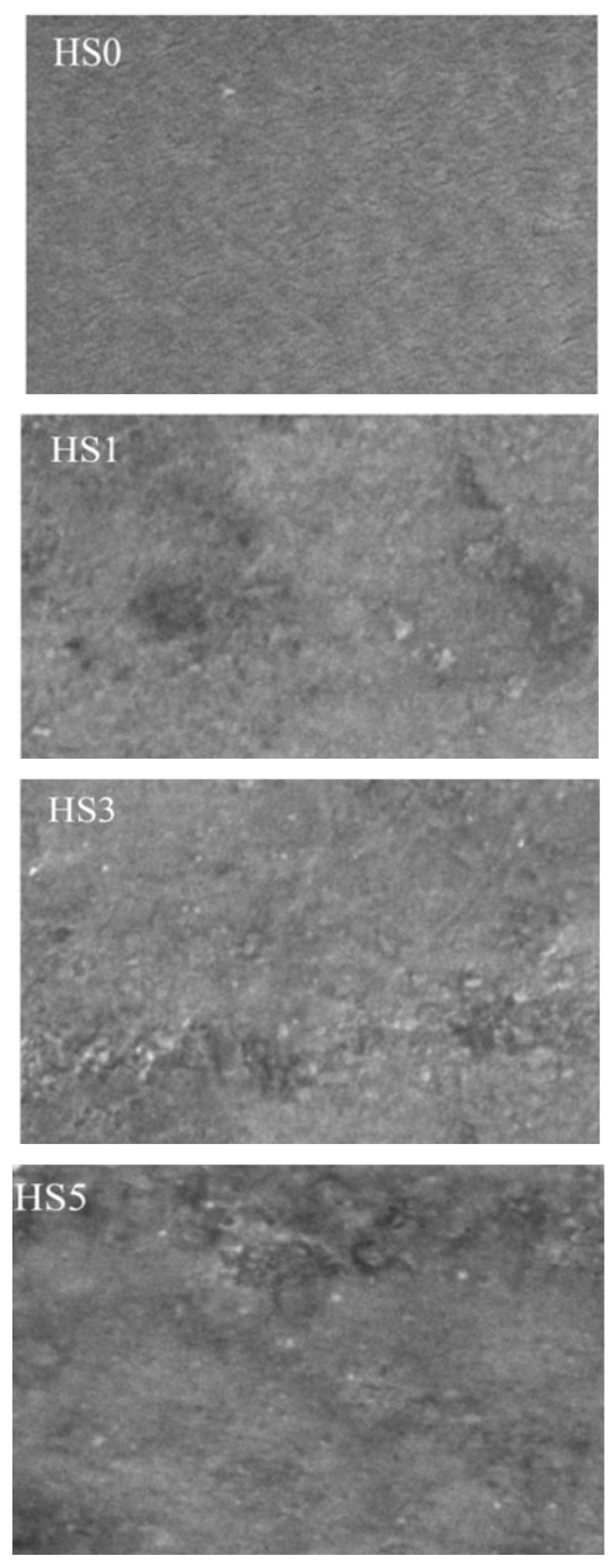
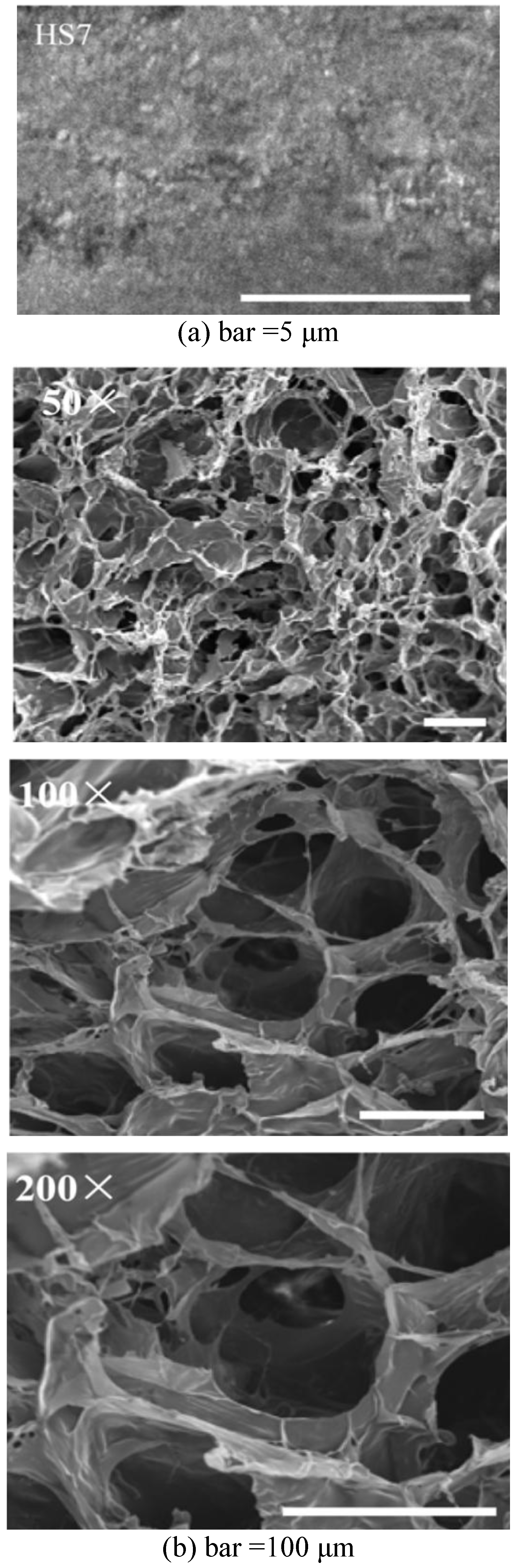
The samples were examined with a JEOL JSM-5600LV scanning electron microscope at an accelerating voltage of 15 KV. The images were taken at magnifications of 5000 times after the samples were coated with a gold-palladium target using a vacuum evaporator for 30 min. Figure 5a is the surface morphology and Figure 5b is the cross-section morphology which was magnificated 50, 100, 200 times respectively. The degree of phase domain increases with the increase of SA, this contributes to the rough surface morphology. Mocroporous hydrogel can be observed from Figure 5b, this was another cause for the serials of HPC/SA hydrogel to have faster and larger swelling velocity and swelling ratio than HS0 hydrogel.
Figure 5.
The SEM image of HPC/SA hydrogel (a) showing surface morphology; (b) showing cross-section morphology from HS3.
4. Conclusions
A series of macroporous HS hydrogel was synthesized from HPC and SA by solution polymerization. The LCST of HPC/SA hydrogel was reduced gradually by adding SA into HPC, HS hydrogel was both sensitive to temperature and pH, the swelling ratio of HS hydrogel has a sudden turning point when pH was 6, it is attributed to the pH sensitivity of SA. It has a potential application value to develop intelligent soft materials with faster response ability in drug delivery system.
Acknowledgments
This work was supported by the Special Foundation for the Natural Science of the Shaanxi Province Department of Education, Grant No. 09JK351, and by the Scientific Research Foundation for Doctor of Shaanxi University of Science and Technology, Grant No. BJ09-02.
References
- Kuckling D, Hoffman J, Plotner M, Ferse D, Kretschmer K, Adler HJ, Arndt KF, Reichelt R. Microscopic implication of rapid shrinking of comb-type grafted poly(N-isopropylacrylamide) hydrogels. Polymer 2003; 44: 4455–4409.
- Agrawal AK, Jassal M, Vishnoi A, Save NS. Temperature responsive fibers with anisotropic transitional behavior. J Appl Polym Sci 2005; 95: 681–688.
- Hansen LM, Smith DJ, Reneker DH, Kataphinan W. Water absorption and Mechanical Properties of Electrospun Structured Hydrogels. J Appl Polym Sci 2005; 95: 427–434.
- Zhang JT, Cheng SX, Huang SW, Zhuo RX. Temperature-sensitive poly(N-isopropylacryl amide) hydrogels with macroporous structure and fast response rate. Macromol Rapid Commun 2003; 24: 447–451.
- Lu XH, Hu ZB, Schwartz J. Phase Transition Behavior of Hydroxypropylcellulose under Interpolymer Complexation with Poly (acrylic acid). Macromolecules 2002; 35: 9164–9198.
- Petrov P, Petrova E, Tsvetanov CB. UV-assisted synthesis of super-macroporous polymer hydrogels. Polymer 2009; 50: 1118–1123.
- Mezdour S, Lepine A, Majewicz PE, Ducept F, Michon C. Oil/water surface rheological properties of hydroxypropyl cellulose (HPC) alone and mixed with lecithin: Contribution to emulsion stability. Colloids Surf A 2008; 331: 76–83.
- Hua SB, Wang AQ. Synthesis, characterization and swelling behaviors of sodium alginate-g-poly(acrylic acid)/sodium humate superabsorbent. Carbohydr Polym 2009; 75: 79–84.
© 2009 Textile Bioengineering and Informatics Society. This article is an open access article distributed under the terms and conditions of the Creative Commons Attribution (CC BY) license (https://creativecommons.org/licenses/by/4.0/).